Vienna, 12 July 2023
My wife and I recently completed our annual hike in the Dolomites. It was, as usual, a wonderful trip. I throw in a couple of photos to give readers a taste of what we saw.

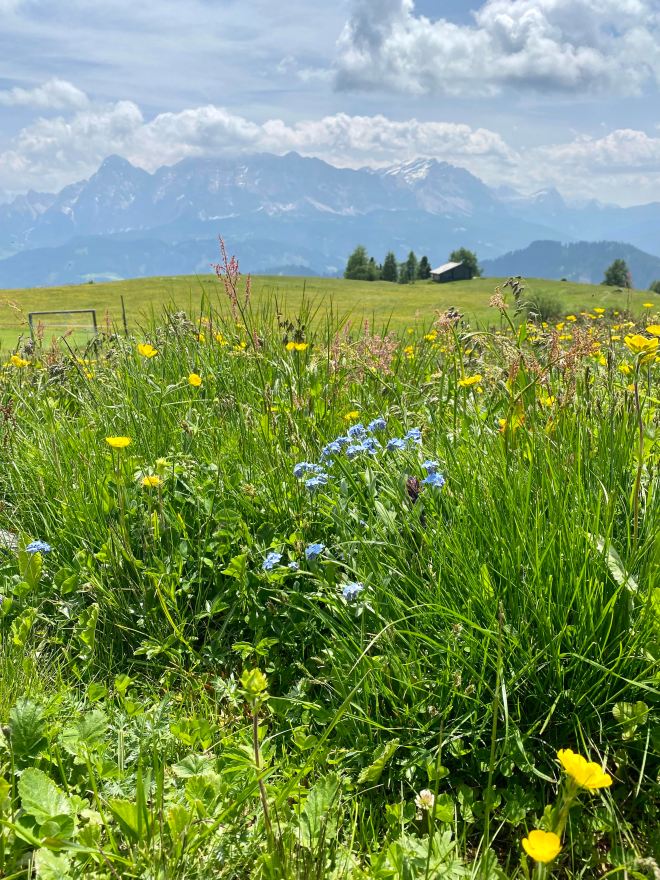

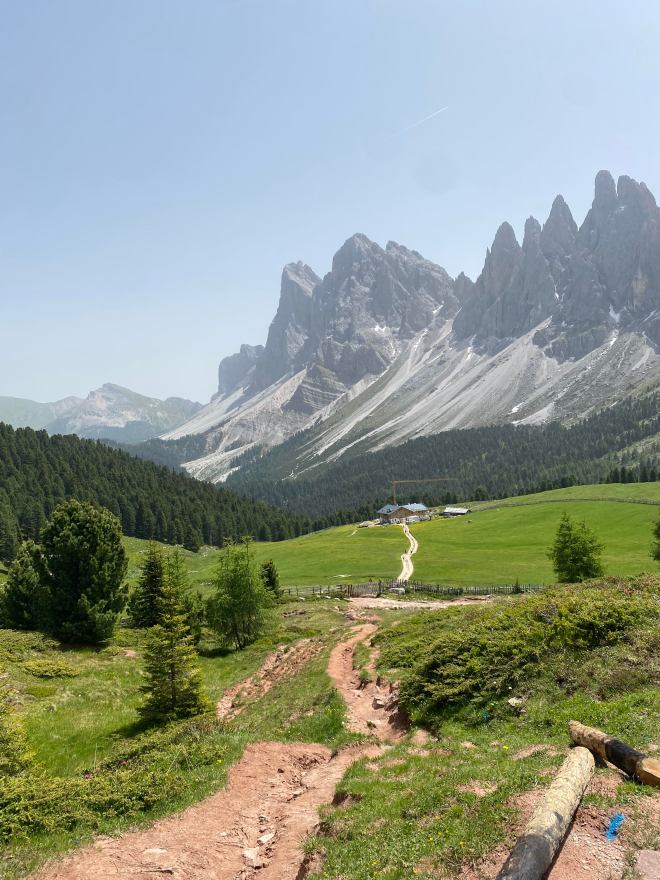
But, wonderful though it was, the hike is not the subject of this post. The subject is a flower.
It was on our last day and we were heading down back into the valley. We had passed the tree line and were walking through woods when we came across this stand of lupins, the flowers glistening blue, pink, and white in the sun.
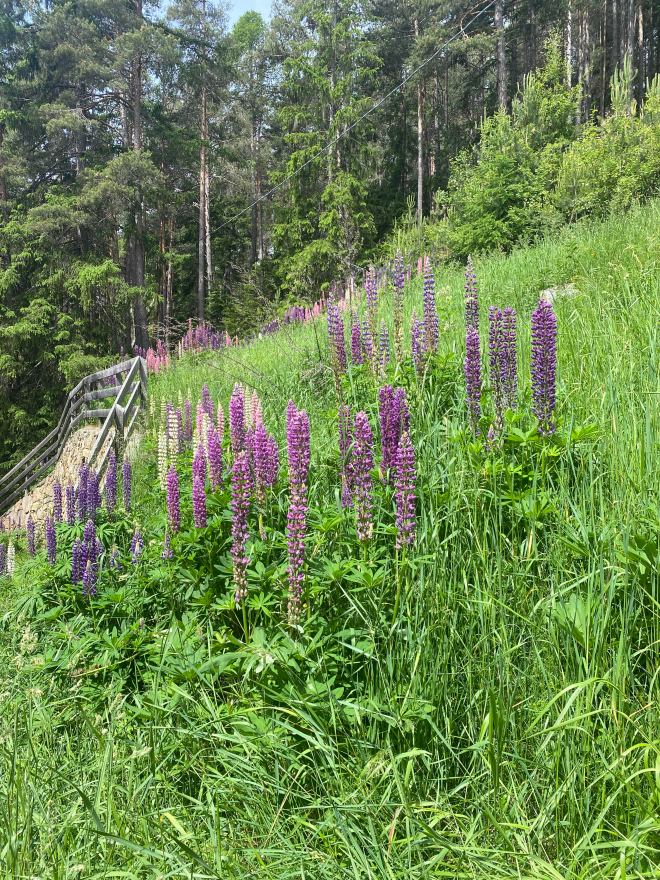
I have to tell readers that lupins are one of my favourite flowers, especially when they grow wild like this on the side of the road. Upon seeing them, I was immediately reminded of a similar stand of lupins we drove past one summer holiday when my wife and I (the children had already flown the coop) were driving around the north of Scotland. I don’t think I took a photo, and even if I did I have no idea where it is, so this photo from the internet will have to stand in for that Scottish vision of yesteryear.
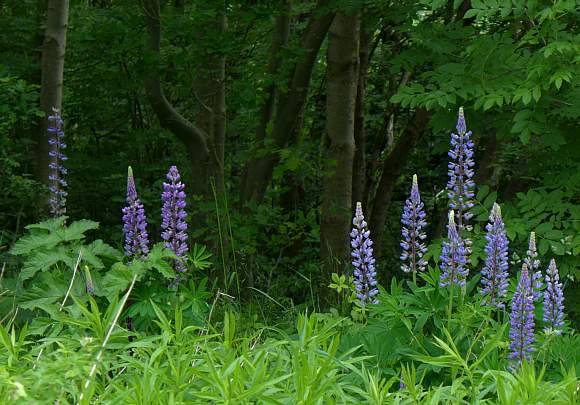
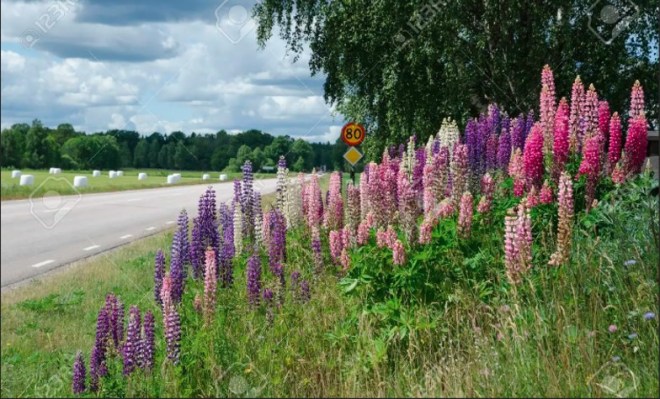
It also reminded me of an incident from a long, long time ago when I was a boy – maybe 12 years old? – at boarding school. We were on our way back by bus from an away game of cricket when I spotted, close to the roadside and not far from the turn-off to the school, a lupin or two. I decided I would try to dig one of them up and put it in the little patch of land I had been assigned to grow things in (I remember carrots but also marigolds and sweet williams). But the lupins being off school property, I had to get permission from the headmaster. He looked at me doubtfully if not downright suspiciously, but he eventually gave me permission. Thinking about it, I don’t think I would have got permission today. It required me to cross and walk along a main road for 50-100 metres. I suppose school authorities were more lackadaisical then. They trusted us students more, parents were much less likely to sue, and there were considerably less cars on the roads sixty years ago. In any event, off I went, armed with a spade, up through the little wood where we did our scouting on Sundays, crossed the road and walked along it till I reached the patch of lupins, and got to work with my spade. It was a complete washout. I hadn’t reckoned with the stone-hard ground and the plant’s very long tap root. After sweating away ineffectually for 20 minutes, I gave up and went back to the school. I just hope I didn’t fatally wound the lupin which I had targeted. In memory of this incident, I throw in a photo of lupins on the verge of a road.
Of course, lupins have been used as ornamentals in formal gardens for a long, long time. Here is a modern example, lupins in the gardens of Chatsworth House in England.

Personally, I prefer them wild: “We were born / Born to be wild / We can climb so high / I never wanna die”, as Steppenwolf sang a year or so after my futile attempt to dig up that roadside lupin.
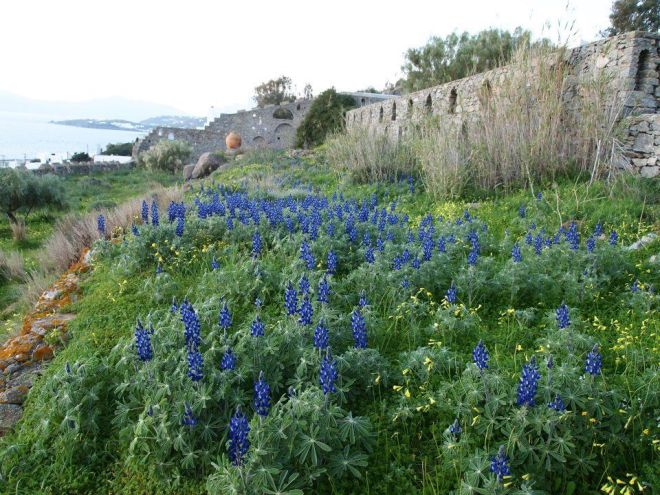
I may find lupins beautiful, but I’m not sure that this was an emotion which stirred early inhabitants of the Balkan peninsula who domesticated Lupinus graecus some time before 2000 BC, more or less at the time of the transition to the Bronze Age. Here is a photo of L. graecus in modern Greece.
I would imagine that these Balkan inhabitants, rather than saying “wow! that’s a lovely patch of flowers” would have said something like “hmm, can this plant feed me?”, “can it cure my ills?” or maybe even (given that I’m reading a book about fungi) “can it bend my mind and let me commune with the gods?” Food seems to have been the main reason lupins were domesticated: after the flowers come the beans – not as beautiful but certainly more useful, loaded as they are with plant-based protein.

Or at least potentially more useful, because the beans are actually difficult and possibly even dangerous to eat! Unlike other beans in the legume family, they contain alkaloids which make them bitter to the taste and even toxic. Somehow, though, our early ancestors figured out that if they soaked the beans and washed them well they became edible.

And so started a habit which continues to this day throughout the Mediterranean region, the eating of brined or pickled lupin beans.

I discovered through a colleague of mine who works in Egypt that eating lupin beans is very popular there, especially during the very ancient Sham el-Nessim festival, which marks the beginning of spring. Here, we have Egyptians going out for the traditional picnic, in which lupin beans play a role along with many other foodstuffs.

But my colleague, who is from the south of Italy, told me that they also eat lupin beans in her part of the world, commonly as a snack to be served with a beer, rather than peanuts as might be the case elsewhere. And Peroni beer is the go-to beer.

And you will find lupin bean eaters from Spain to Portugal, from Morocco to Algeria, from Lebanon to Israel and Palestine. And of course in Greece, the original European source of this foodstuff.
I say “European” because it wasn’t only in Europe that people figured out a way of eating lupin beans. The European lupins have a lot of distant cousins in the Americas. They got separated from each other when plate tectonics broke up the ancient continent of Laurasia and the pieces that later became North America and Europe drifted away from each other. Later still, the North American lupins migrated into South America. Which allowed the inhabitants of the high Andes in what is today Peru to domesticate their local lupin some time in 600-700 BC.

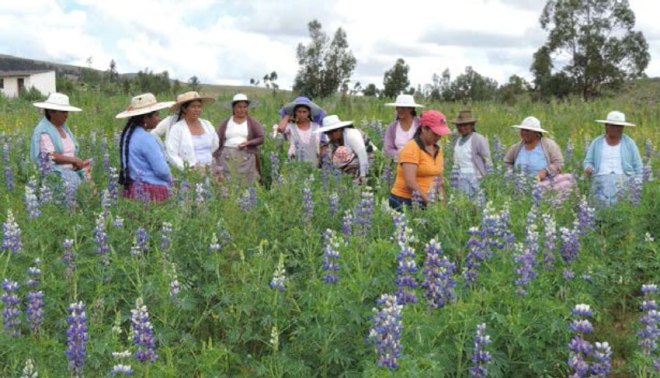
Like the Europeans, they learned to eat the beans by washing them thoroughly. The habit of eating lupin beans spread to other parts of the Americas. For instance, there were tribes in Arizona which grew and ate the beans. Eating lupin beans in the Americas nearly died out – it seems the European colonisers and their descendants weren’t particularly interested in this particular crop – but there is now a bit of a comeback. We have here a photo from a project by the Inter-American Development Bank promoting the lupin.
I could witter on at length about the other ways we have made lupins useful to us: as a green manure (like all legumes, lupins have the ability to fix nitrogen from the air), as a source of feed for farm animals (but only after scientists were able to crack the problem of producing a form of lupin with alkaloid-free beans in the 1920s and ’30s). I could also trill on about how they might be even more useful to us in the future: as an alternative to soybean as a feed (this hopefully helping to reduce deforestation rates in the Amazon, where much of the world’s soybean is now grown), as a raw material for making vegan alternatives to meat, egg, and dairy products (lupin beans contain high levels of plant-based protein). But I won’t, because in the end what I love about lupins is their beauty and not their utility (I can now confess to never having eaten a single lupin bean in my life). So I invite any readers who are interested in knowing more about the utilitarian aspects of the lupin to read this post, and I finish with another photo of beautiful lupins, this time from Prince Edward Island in Canada.


 the heart thrills
Dear Abellio, Whenever I see a new post from you my heart does thrill. I’m glad to see someone who finds lupins (British spelling) as extraordinarily beautiful as I do. Bravo! Floriat!
Prue
LikeLike
Hello Prue, So glad you like my posts!
LikeLike