Vienna, 15 February 2025
Updated Sori, 10 March 2025
Updated again Vienna, 14 August 2025
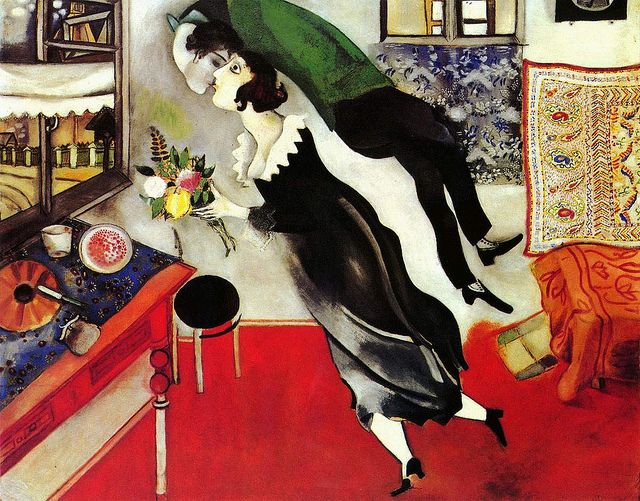
My wife and I have just seen an exhibition of Marc Chagall’s paintings at the Albertina in Vienna (we’re normally not here at this time of the year, but I have to give a course on circular economy at the Central European University). I’m sure it was an excellent exhibition, although in truth what really has stayed with me is the crowds. It was just a few days before the end of the exhibition, so everyone who had been putting off going to see it had piled in. It’s really not possible to enjoy what’s on offer when you have to spend most of your time manoeuvring around other people to catch a quick glimpse of the paintings before your view is obscured by someone’s head. At least it was nice to see the original of a poster we have hanging in our apartment, although it’s depressing to think that the painting probably just sits in a bank vault in Japan most of the time (the label mentioned that it was owned by some anonymous Japanese).
In any event, one of the things I learned as I ducked and weaved through the crowds was that Chagall had, late in his career, designed a number of stained glass windows. Now that intrigued me, because I have a great love of stained glass. I should quickly qualify that statement, though. It is Medieval stained glass that I love, because of its quasi-abstract nature; it’s not the scenes which are depicted in the windows that matter, it’s the sense of being flooded in multi-coloured light. I still remember vividly the first time I saw the stained glass windows in Chartres Cathedral, which my wife and I visited when we lived in Paris in the early 1980s.
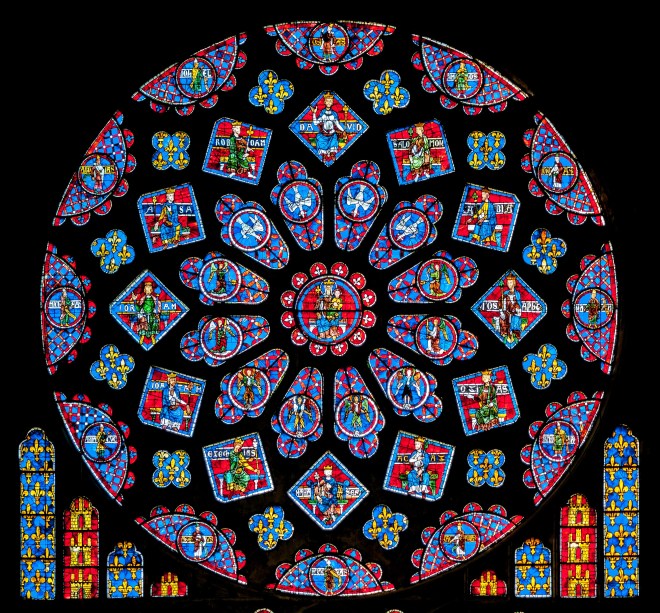

I remember just as vividly the first time I saw the stained glass windows in La Sainte Chapelle in Paris, which my sister had taken me to see some ten years earlier.

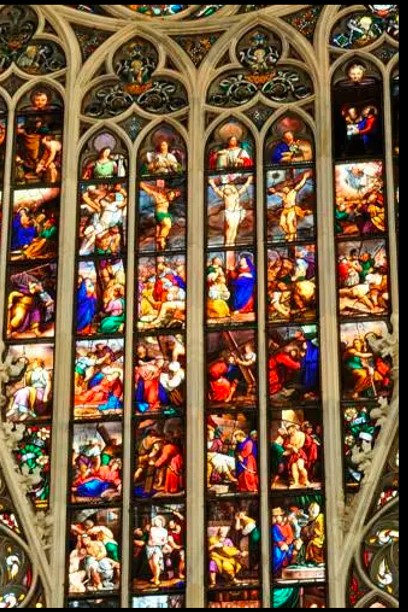
I don’t find later stained glass windows nearly as interesting, because the scenes in the glass intrude too much and that feeling of being bathed in colour is lost. Just look at the stained glass in the Duomo of Milan, considered “an extraordinary testament to the history of the art of stained glass windows from the early 15th to late 20th centuries”, yet really quite boring.
So, as I say, I was intrigued by the idea that Chagall had designed stained glass windows. His love of colour and the semi-abstract flavour of much of his work suggested to me that perhaps he could do something interesting. Once back home, I began to dig a little, to see where my wife and I would have to go to see his stained glass windows. He designed stained glass windows in Europe, Israel, and the USA. I decided to knock the latter two countries off the list: one day, maybe, we can visit his windows there, but only if we happen to be in the right place at the right time. The stained glass windows in Europe were more promising. By chance, I came across a map that helpfully indicated all the places in Europe where Chagall had designed stained glass windows. Looking at that map, I came to the exciting conclusion that my wife and I could make an interesting 11-day tour of all his European stained glass windows! I will use this post to persuade my wife that this could be an excellent project for the late Spring, when the days are getting long but are not too hot yet.
We would start the tour in Milan. I was initially thinking of travelling by bus and train, as we usually do, but it would be too complicated. So car it would have to be. Our first port of call would be the church of Notre-Dame de Toute Grâce, located in the village of Passy in Haute Savoie, in France, just on the other side of the Mont-Blanc road tunnel (looks pretty, but I would make sure we would be there after the snow was gone; I’m not driving in any snow).

According to Google Maps, it would take us a little over three hours to get there, so if we set off in the morning we could be visiting the church in the afternoon. It would actually be a good place to start the tour because the church holds the first two windows which Chagall ever designed, back in 1956-57. Truth to tell, there wouldn’t be much to see. The two windows, which are located in the baptistery, are quite nice.

However, as readers can see in this photo, which is an overview of the whole baptistery, they are really quite modest in size.
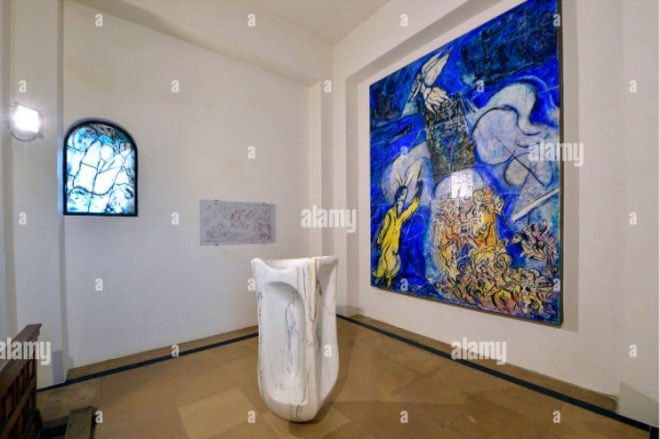
Of considerably greater interest is the ceramic “painting” on the wall – also by Chagall – of the passage of the Israelites through the Red Sea.

In fact, I would say that the rest of the church is probably much more interesting, filled as it is by artworks by other major 20th Century artists: Pierre Bonnard, Fernand Léger, Georges Rouault, Henri Matisse, Georges Braque, Jacques Lipchitz, just to name the ones I’m familiar with. Here is the façade, graced by a mosaic by Léger.
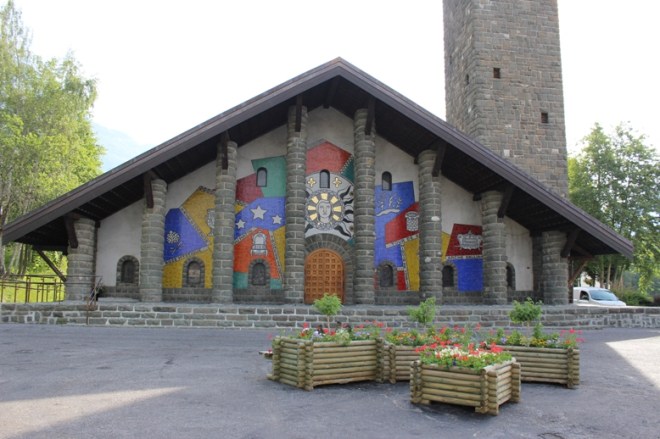
And here is a view of the choir, with what looks to be a magnificent tapestry.

I’m thinking that there is more than enough in this church – even if it isn’t Chagall – to keep us occupied for a couple of hours, so we should probably just spend the night in Passy and leave the next day for Zürich, our next stop on the tour.
According to Google Maps, it would take us four hours to get Zürich from Passy. We would be visiting the Fraumünster.

Chagall designed five large windows for the choir of the church between 1967 and 1970. You can see three of them in the far distance in this photo.

This photo shows the three windows up close (it’s almost impossible to get a photo of all five together since the other two are to the side of these three).

Chagall also designed a small rose window at the other end of the nave, installed in 1978.

I’m guessing that we could easily visit this church in the afternoon and then stay the night in Zürich.
On Day 3, our final destination would be Mainz, in Germany, where we would be visiting the church of Saint Stephen. It would take us a little over four hours to get there, but I’ve noticed that the route which Google Maps suggests would take us via Strasbourg. I’m thinking that we should take the occasion to make a quick detour to visit Strasbourg Cathedral.

It has some fine late Medieval stained glass windows. The rose window is especially remarkable.

We could make an early start from Zürich, plan a late morning visit to Strasbourg Cathedral, and then, after eating what would no doubt be an excellent Alsatian choucroute for lunch, we could continue on our way to Mainz in the afternoon. Once in Mainz, rather than squeezing in a hurried visit to the church of St. Stephen we could just check into the hotel and stroll around Mainz, which seems to have a very pleasant old town.
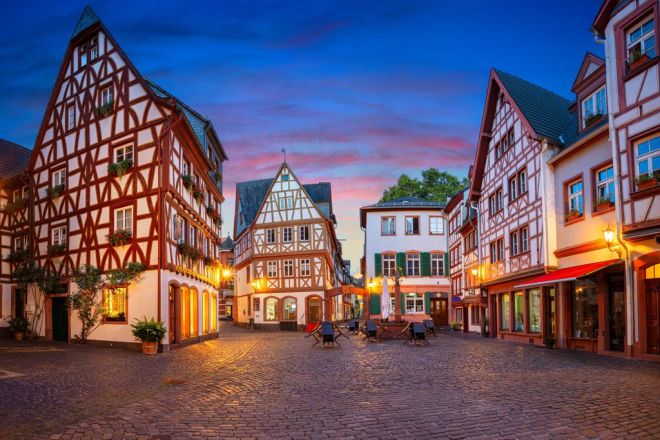
Day 4 would start bright and early, at the church of Saint Stephen.

Chagall designed nine windows here between 1978 and 1985, the year he died (and further windows were designed after his death by Charles Marq, Chagall’s glassmaker for many of his windows, in Chagall’s style). This photo gives a sense of the blue light which visitors will find themselves bathed in (like in the Sainte-Chapelle in Paris).

This photo instead is a close-up of the three windows in the choir, which show Chagall’s inimitable style.

After this bath of blue, we would drive some two and a half hours back south into France, to Sarrebourg, where we would visit the small chapelle des Cordeliers.
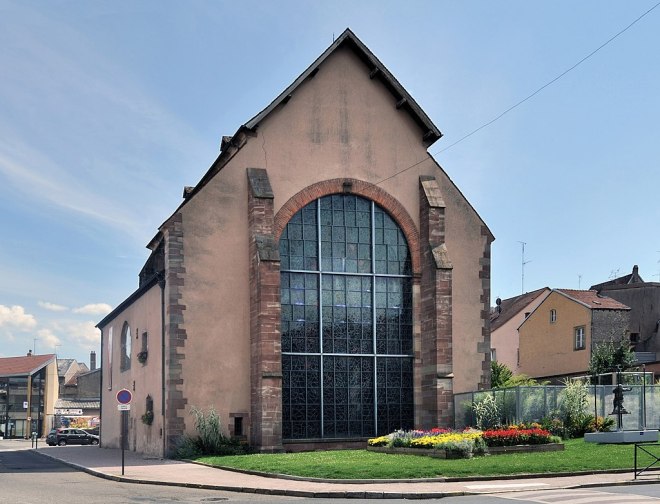
Chagall designed five windows for this chapel, although as readers might imagine, looking at the photo of the chapel, it is only one, very large, magnificent window that captures all the attention.

At first glance, the window seems to be made up of an enormous posy of flowers. But as a reader pointed out to me, that posy actually seems to be the Tree of Life that grew in the Garden of Eden. In fact, we see what appear to be Adam and Eve in, or maybe above, the tree. The rest of the window is full of scenes from the Bible. The other small windows designed by Chagall are on the left-hand wall.
I’m thinking that we should easily have the time after our visit to push on to Metz (an hour and a half away) and spend the night there.
The next morning (we are now on day 5), we would visit Metz cathedral.
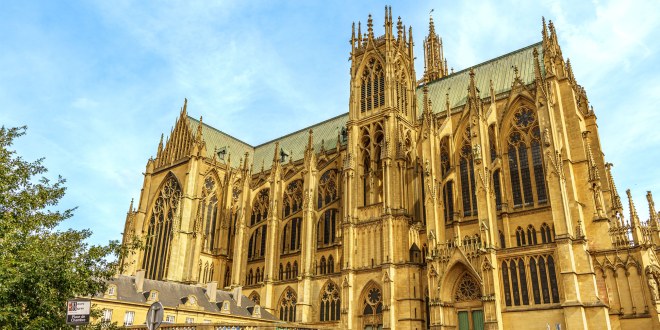
Chagall designed three windows for the cathedral over a period of ten years, between 1958 and 1968.


But what is perhaps more interesting about the cathedral is that it is stuffed with stained glass – some 6,500 square metres of it – ranging from the 13th to the 20th centuries. I’m sure this will be an interesting place to compare Chagall’s work to earlier stained glass windows. To whet our appetites, I throw in here a photo of a window from the 13th Century.

This window instead was installed in the 16th Century (and those clearly visible figures of saints are now crowding out the colour of the glass).
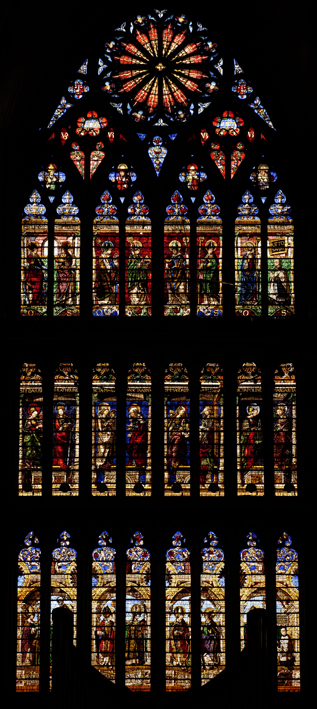
There’s not just the windows to see in the cathedral, so I’m sure the visit would take up the whole morning. So I see ourselves leaving for our next destination, Rheims, in the afternoon. It would take us two hours to get there, so we would arrive in the late afternoon and be ready for a nice dinner in town (with a glass of champagne, no doubt) after checking into our hotel.
The morning of day 6 would see us visiting Rheims cathedral. The cathedral was very badly damaged during the First World War and – among other things – lost nearly all of its original stained glass windows (some had been taken down for safekeeping at the beginning of the war).
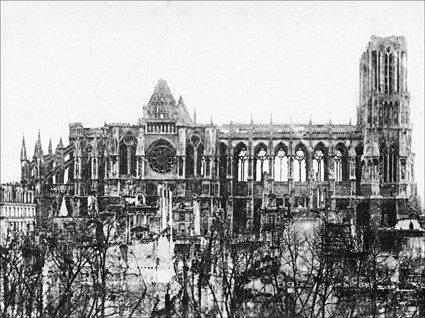
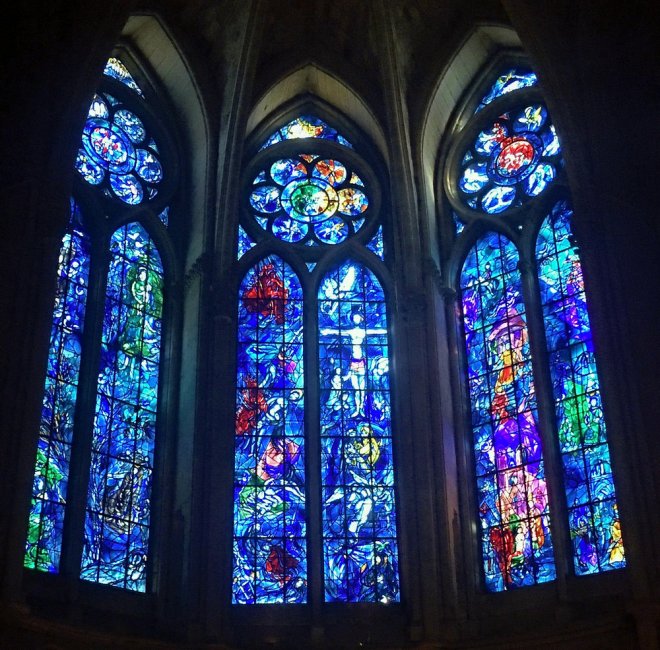
The cathedral chapter reinstalled what it could and decided to replace lost windows. The three windows designed by Chagall and installed in 1974 were part of this renewal effort.
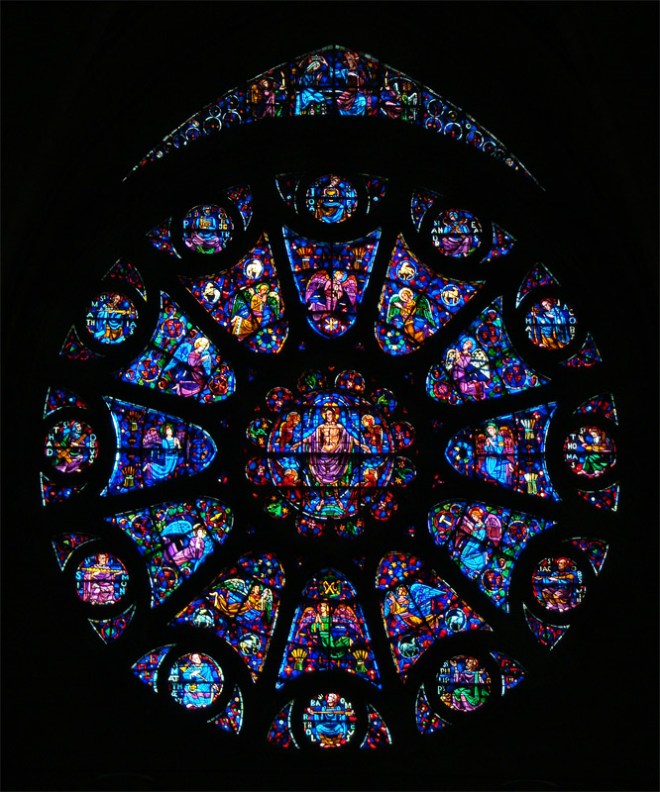
But here, too, we would need to spend some time looking at the cathedral’s other windows, like these two rose windows (which are actually modern windows, installed in the 1930s).

The next two stops in our tour are in the south-east of England, so after visiting Rheims cathedral we would need to head over to Calais and catch Le Shuttle train over to Dover, passing through the Channel Tunnel. We would drive out of Dover to Royal Tunbridge Wells and spend the night there. I’ve read that it’s a nice place to visit, although a bit on the twee side.
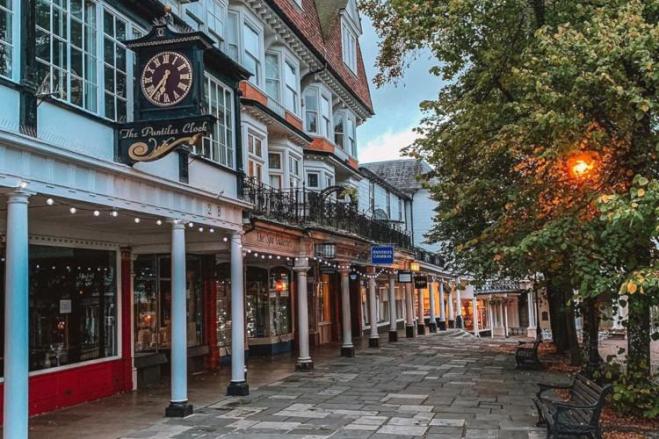
The next morning (at this point, we are in day 7 of our tour), we would take a 15-minute drive to All Saints Church in the neighbouring village of Tudeley.
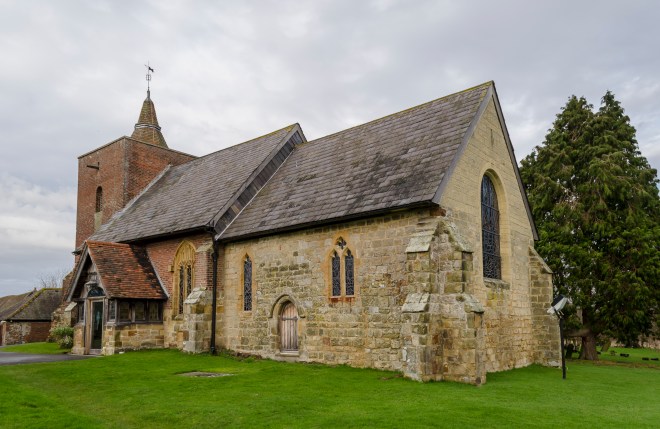
All twelve windows of this small church were designed by Chagall, between 1963 and 1978.
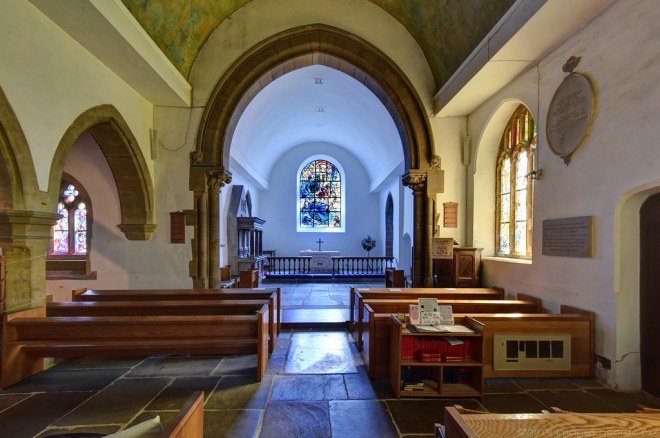
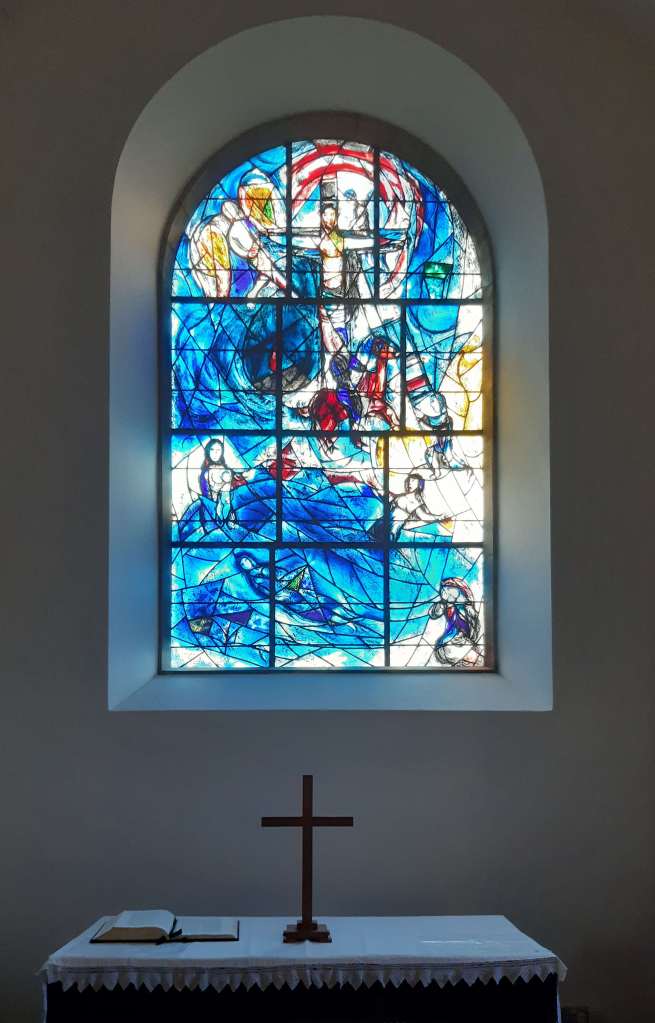
But it is the East window that stands out.
By mid morning, I reckon we would be on our way to our next destination, Chichester cathedral, which it would take us an hour and a half to reach.
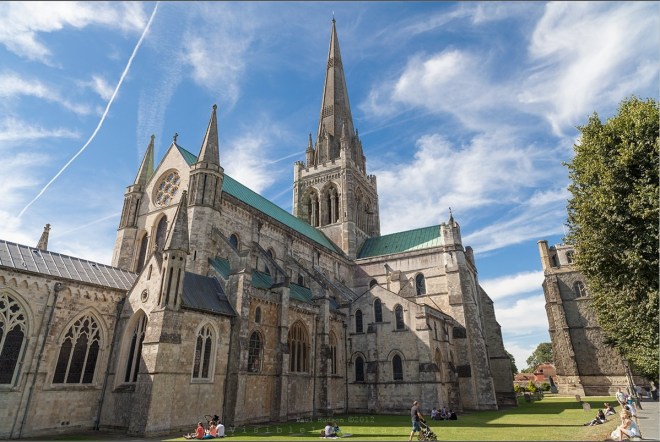
Chagall designed one window in the cathedral, between 1975 and 1978.

It is quite a modest-sized window, and as far as I can tell is tucked away in a corner. The remaining windows in the cathedral don’t look particularly interesting, being mostly Victorian. There are a few other things to see. But, all in all, I think we would be finished quite quickly.
We would now need to go back to France. Looking at Google Maps, I’m thinking we should drive to Portsmouth (a mere 20-minutes’ drive from Chichester), catch a late ferry to Cherbourg, and spend the night there.
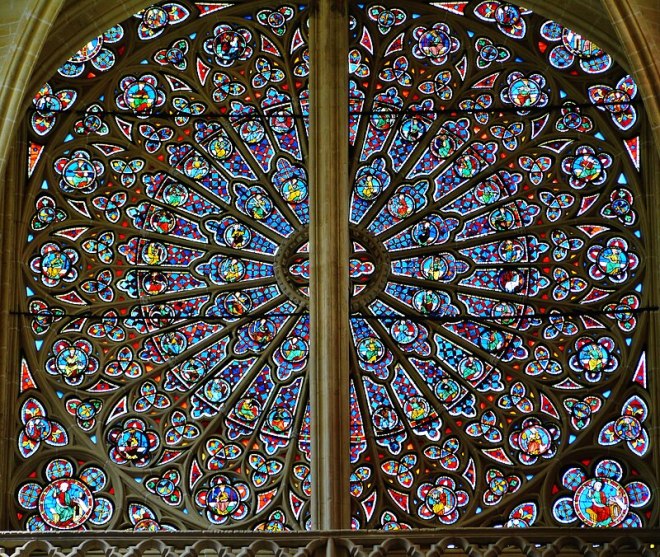
The next destination, la Chapelle du Saillant, is a full day’s drive from Cherbourg. Rather than do one long drive, though, it would be nicer to break the trip about half way. Looking at the map, I’m therefore thinking that on day 8 we could make a stop-over at Tours, on the Loire river, where we could usefully spend the afternoon visiting the cathedral.

It has some splendid Medieval stained glass windows.

Day 9 would then see us driving down to the chapelle du Saillant, a three and a half hours’ drive from Tours.
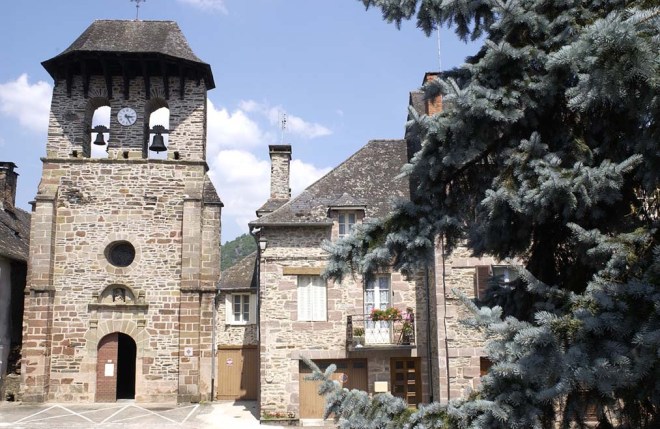
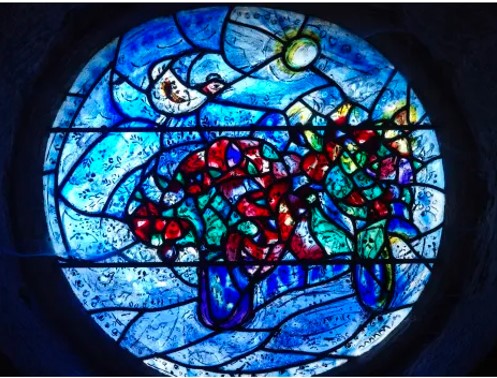
We would visit the chapel, all six of whose windows were designed by Chagall between 1978 and 1982.

But it’s only two windows which are worth seeing, the window in the choir and the occulus above the door; the other four are just grisaille.

Our visit would be quite quick, and then it would be on to the next location. By rights, if we were to really visit all the places where Chagall designed windows, that should be Moissac, near Toulouse. But the church there has only one window by Chagall and it’s really small. On top of it, Moissac would be quite a detour. So I’ve made an executive decision: our last destination on this tour would be the Marc Chagall National Museum in Nice.
That being said, Nice would be too far away to reach after our visit to the chapelle du Saillant. Looking at Google Maps, I’m thinking that we could drive to Rodez, about two and a half hours’ away, and spend the night there. We might even be able to squeeze in a visit to Rodez cathedral.

It has little Medieval glass, lost over the ages. On the other hand, it has some remarkable windows which were installed some 15 years ago.

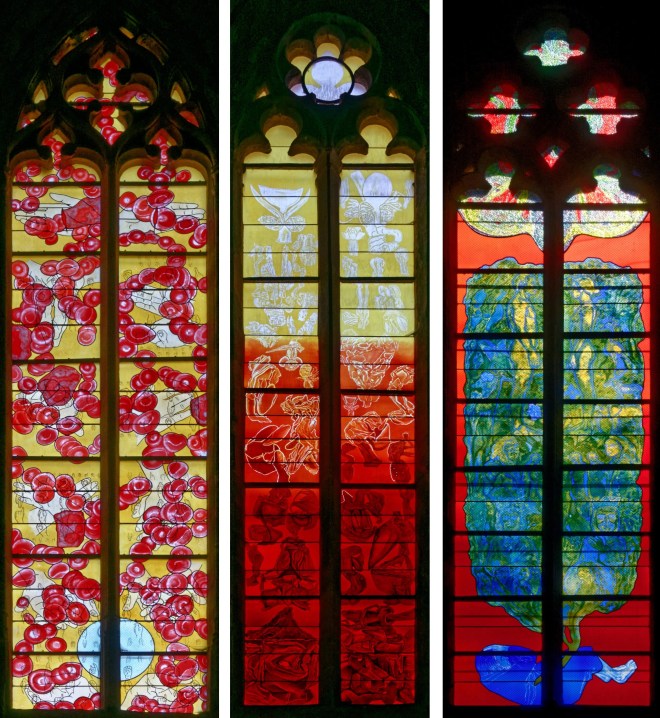
Day 10 would bring us to Nice. That’s still a five hours’ drive from Rodez, too long a drive to then follow up with a visit to a museum. So I’m thinking that we can take our time getting there – maybe take a side trip to Avignon or Aix-en-Provence on the way – and arrive in Nice in the evening.
Which brings us to day 11 with its visit to the Marc Chagall National Museum.

The museum is actually primarily a collection of Chagall’s paintings.


But it does have four, very large, Chagall windows. They grace the museum’s auditorium.
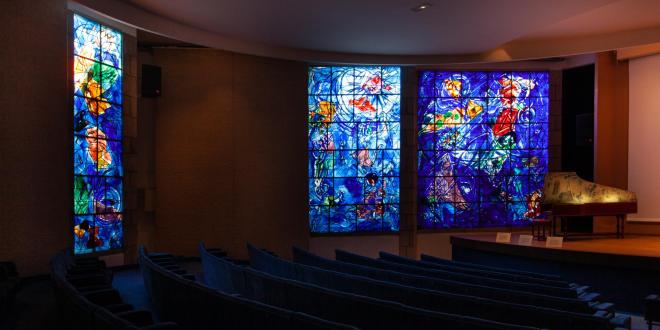
Anyway, given that the germ for this tour was planted in an exhibition of his paintings, it would be a satisfying closure of the circle to see some of his windows against a backdrop of his paintings.
I reckon we could “do” the museum in a morning. So after a quick lunch, we could head back to our starting point in Milan. It’s a three and a half hours’ drive, manageable in an afternoon.
Well, I think this would be a very enjoyable little trip. But have I done a good enough job to persuade my wife? We shall see.
POST SCRIPTUM 10 March, 2025
Well, we’ve just come back from a weekend trip to Nice, where we visited the Chagall museum. Very beautiful! But it looks like the big trip I’ve been proposing is out. We’ll use the salami approach instead: whenever we happen to be going close to one of these windows we’ll go and visit them. Such is life …

 the heart thrills


We went to the exhibition twice. Once with a guided tour and the second time with a tour and it made such a big difference of maneuvering through the crowds and also all the details that you wouldn’t have seen without our great guide’s expertise.
May I ask which course you are teaching at CEU? I think they have great events there.
LikeLike
Glad to know that you were able to see the exhibition under favourable conditions! Maybe we should have done the same.
The course I’m teaching at CEU is “Introduction to the Circular Economy”.
LikeLike
What a delightful post! I’d never seen any Chagall glass before. Amazing how the large, monochromatic areas are full of motion because of the shades and shapes of the panes.
LikeLike
Yes indeed. One day, hopefully, we’ll see all of Chagall’s windows.
LikeLike
“As readers can see, the window does not have a religious subject, it depicts a posy of flowers.” Seriously? It’s full of religious imagery – Adam and Eve are clearly visible, as are Moses and Jesus The ‘posy’ is the tree of life.
LikeLike
Hi there,
Thanks for putting me straight! I’ve amended the post accordingly.
LikeLike