Sori, 31 January 2026
One of the gentler walks my wife and I take from Como is one which takes us along the lakeside all the way to Cernobbio. We choose it when one (or both) of us are feeling tired or have a pain somewhere in our ageing bodies or when it’s really too cold to venture higher up on the hills around the lake.
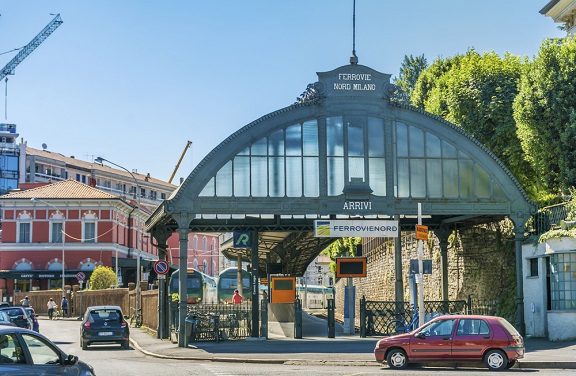
We start at the train station of Como Lago (which is a charming rinky-dink little station with an entrance in Liberty style, much nicer than the rather grim main station at Como).
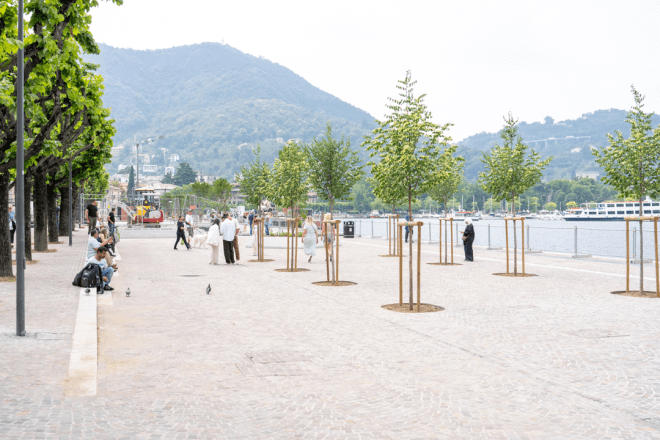
We walk along Como’s newly developed lake front (which will look very nice when the newly-planted trees have grown).
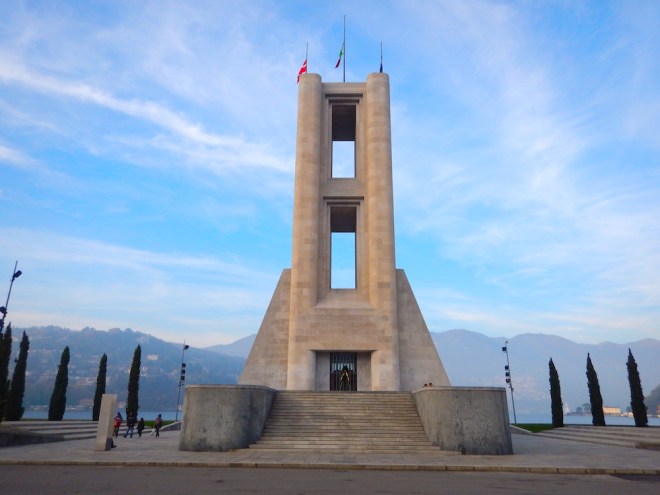
We pass the town’s war memorial (which I must confess I find rather brutalist).
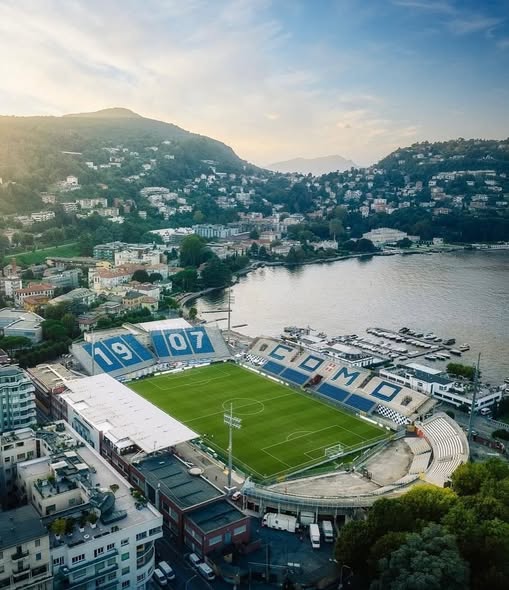
We pass the soccer stadium which is home to the town’s home team, Como 1907 (which looks quite nice in this aerial view, although all we see are the forbidding outer walls).
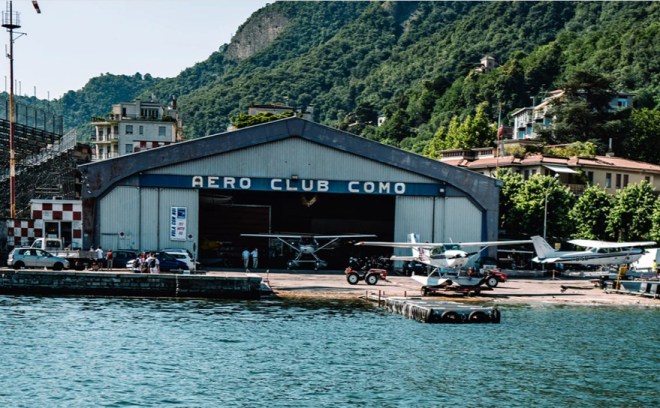
We pass the site of the Aero Club Como, which offers scenic flights around the lake in seaplanes.
We then walk along a walkway that hugs the lakeside and takes us past a series of neoclassical villas giving onto the lake.
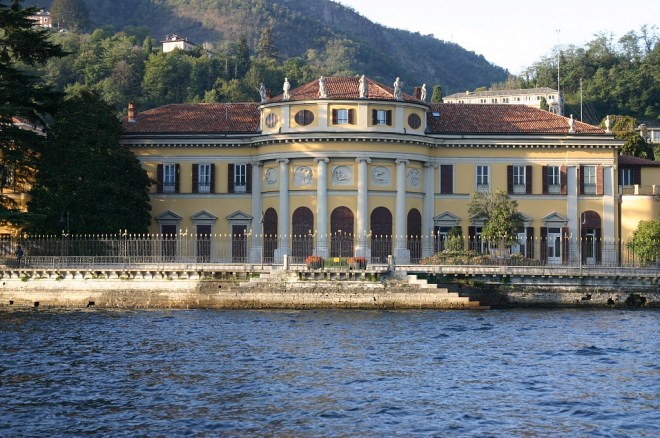
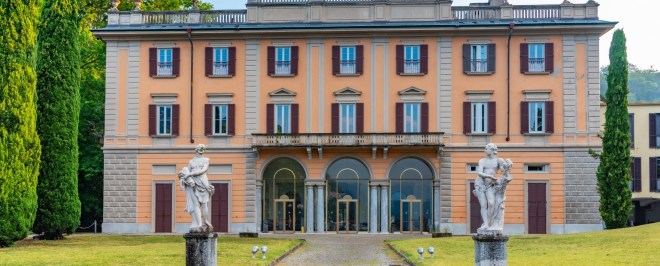
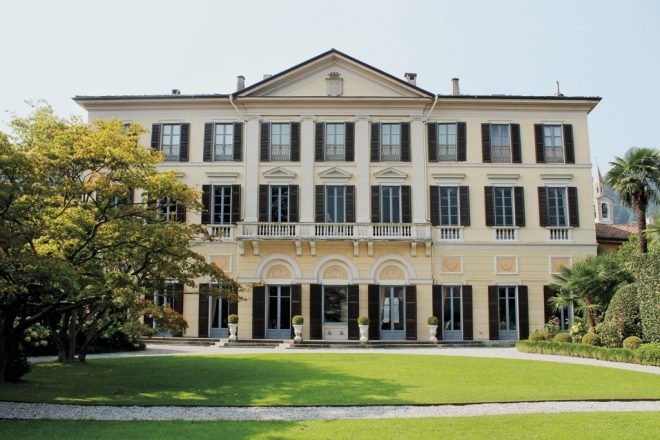
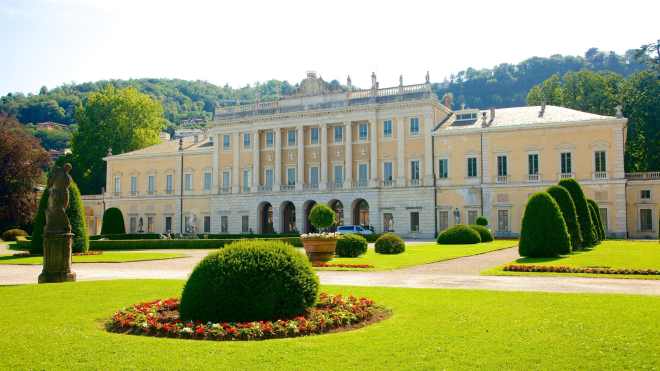
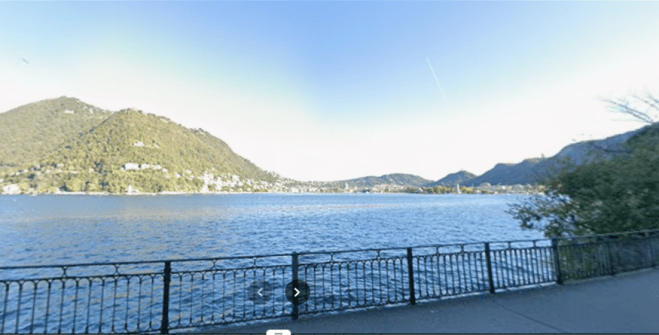
The walkway ends at a busy main road. We walk along the road, with lovely views across the lake to our right.
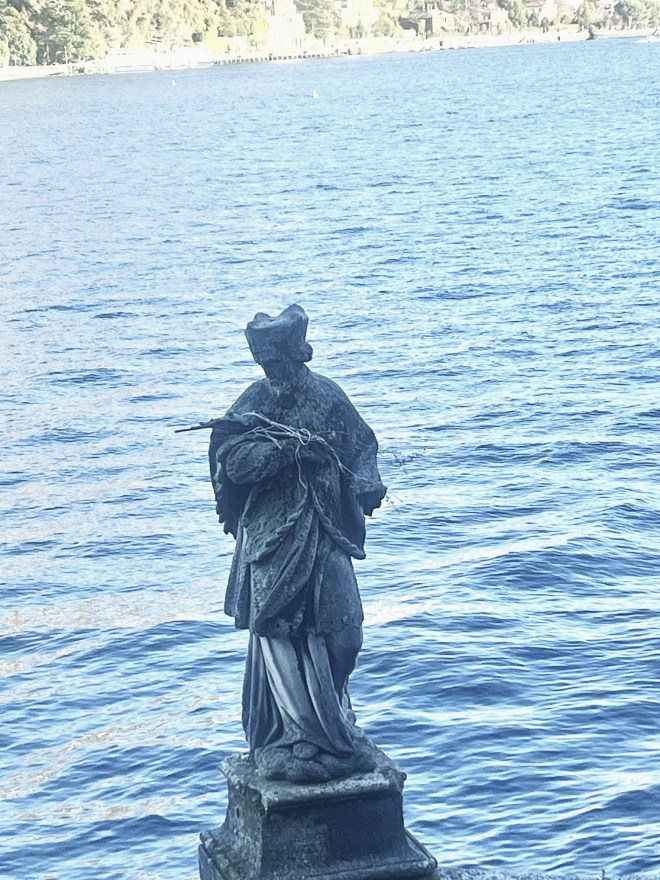
I nod at a statue of our old friend St. John Nepomuk, standing rather forlornly on the lake’s edge.
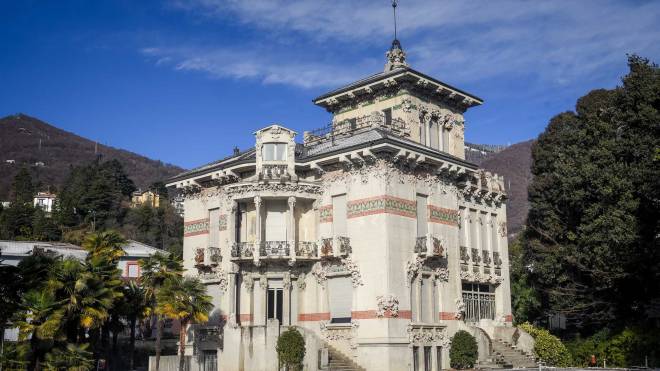
The road brings us to the old village of Tavernola (now a drab suburb of Como), where we branch off along a long straight road that passes the Liberty-style villa Bernasconi, once the property of a rich manufacturer of silk and now a museum.
After which we finally arrive in Cernobbio.
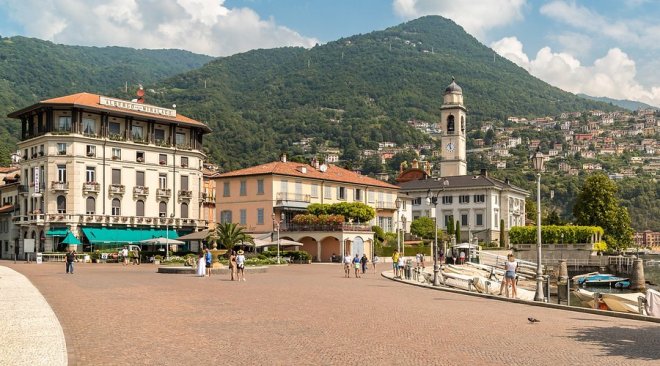
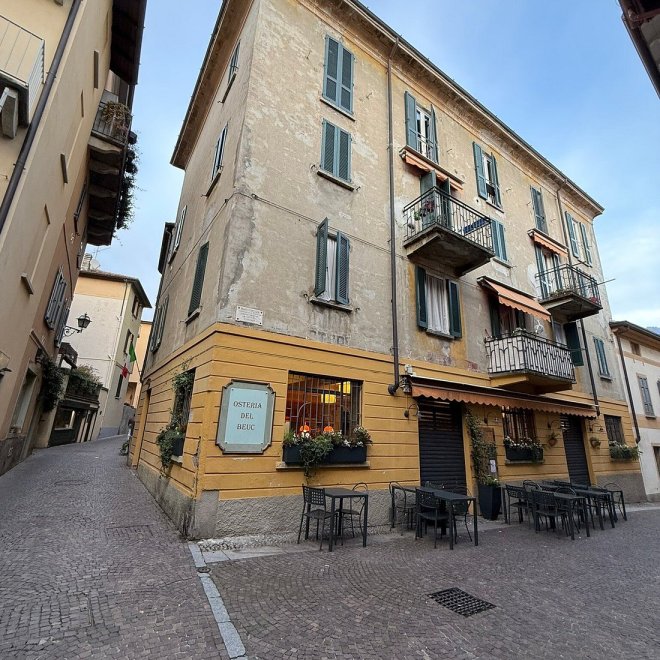
At this time of the year, when it’s too cold to eat a picnic outside, we’ll often treat ourselves to lunch at the Osteria del Beuc.
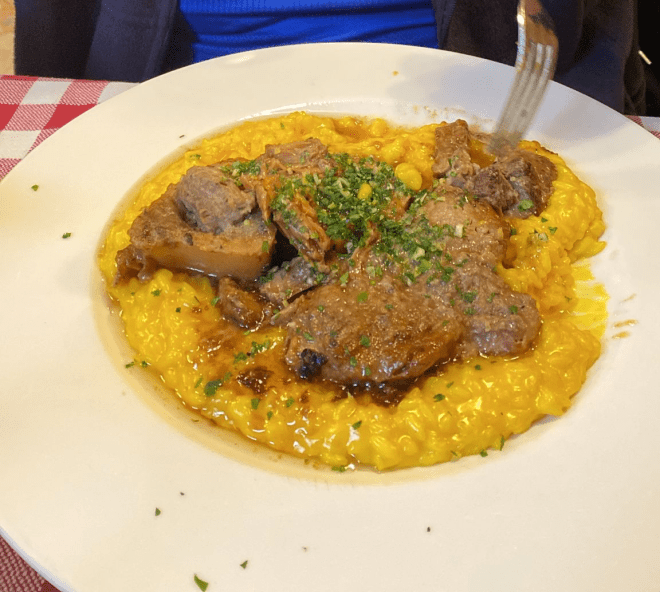
The last time I was there, I had a magnificent osso buco with risotto.
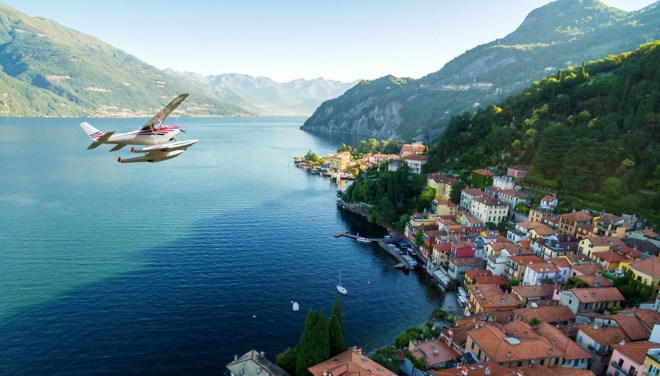
One of the pleasures of the section of the walk along the busy main road (apart from getting to nod hello to a mouldering statue of St. John Nepomuk down by the water’s edge) is watching the seaplanes from Aero Club Como taking off and landing.
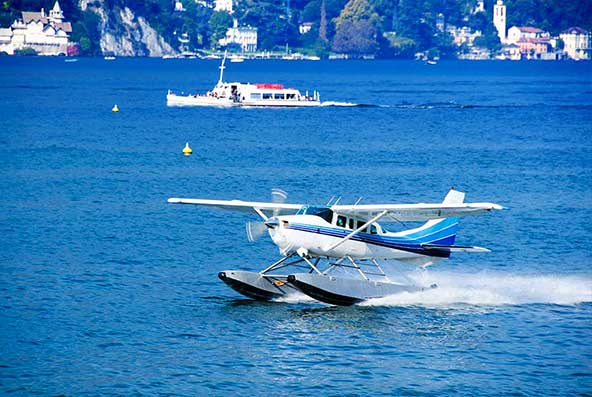
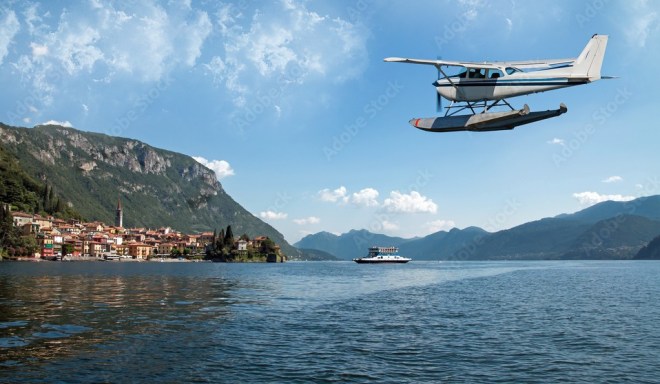
I’m very fond of these seaplanes. There’s something quite beautiful about these little planes skimming across the water, their engines at full throttle, finally rising off the water surface and soaring up, up, up
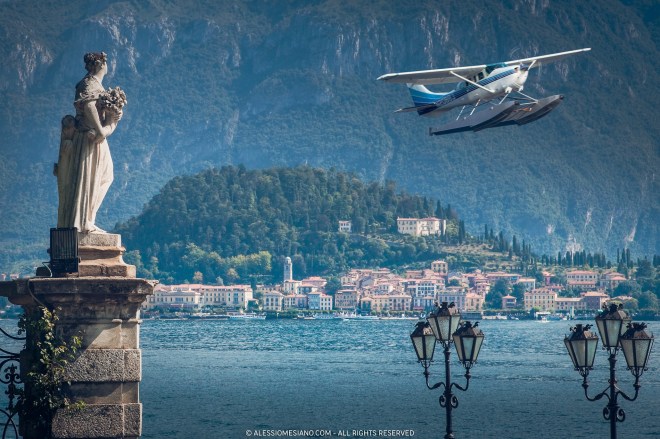
and then banking to fly along the lake, the drone of their engines bouncing off the hills (I love the noise of prop engines, so much nicer than the ear-splitting whine of jet engines).
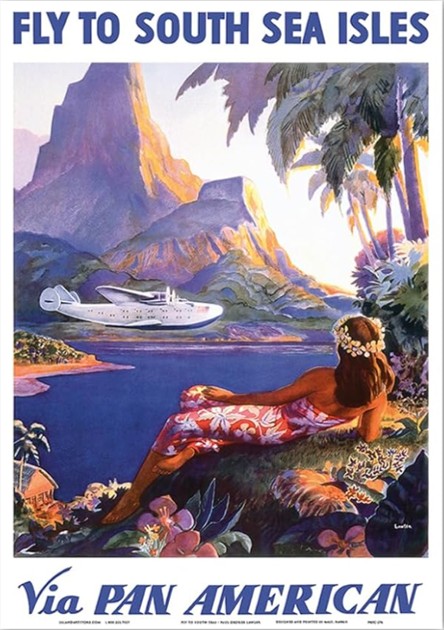
During the years between World Wars I and II, the use of seaplanes flourished: the “airfields” were free, compared to the high cost of building airfields on land. Various commercial lines were established, giving rise to some wonderful poster art.
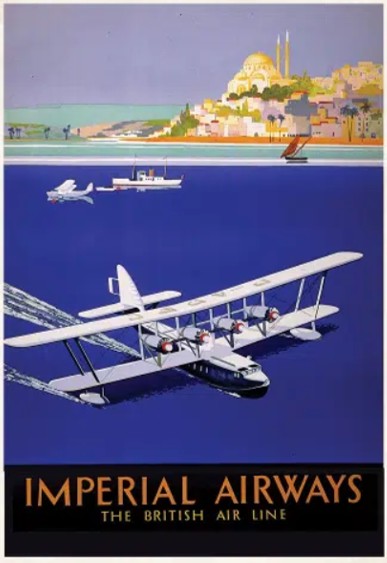
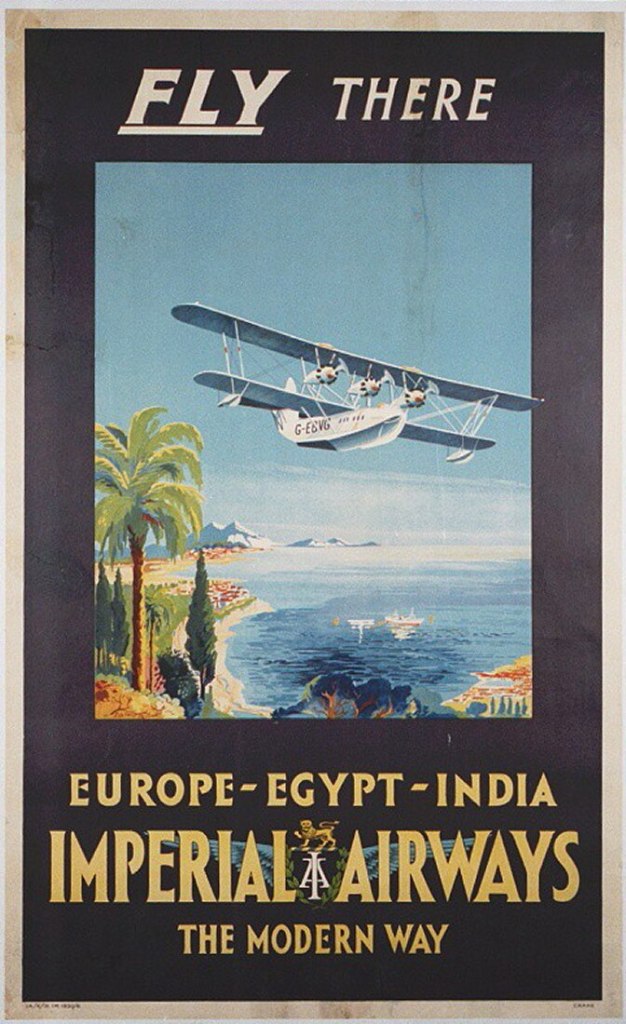
Things changed dramatically after the Second World War. Many of the military airfields which had been built during the war were no longer needed and could be turned over to civilian use. Suddenly, land-based airfields were available cheap, and so the main competitive advantage of seaplanes disappeared. On top of that, land-based planes were much less affected by weather (even small waves could halt seaplane flights) and they flew faster (the aerodynamics of seaplanes are poorer). The result was a swift decline in the use of seaplanes, which are now squeezed into a few niche uses, like aerial firefighting, access to undeveloped or roadless areas which have numerous lakes, air transport around archipelagos …
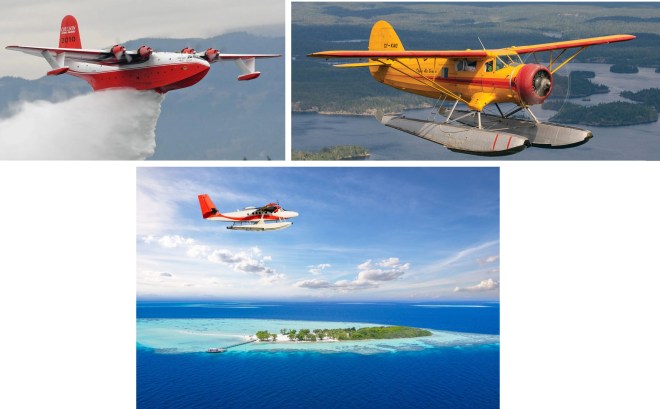
… as well, of course, as the offering of scenic flights over dramatic lakes.
In the late 1940s, 1947 I’m guessing, My parents took what was probably one of the last long-distance seaplane flights offered by BOAC, which ran between Sydney and Southampton. They boarded at Karachi and stopped off at Bahrain, Cairo, Augusta in Sicily, and Marseilles, before arriving in Southampton.
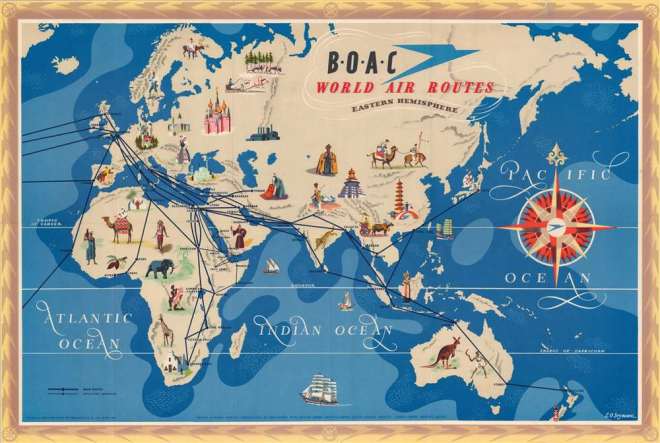
The scene of their arrival in Southampton would have looked something like this.
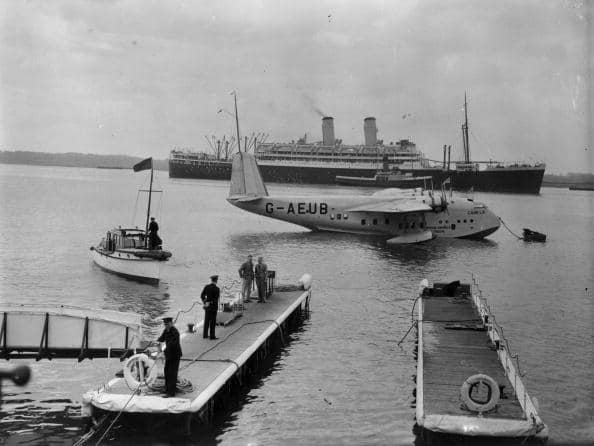
Once, in a moment of madness, as we watched a seaplane gracefully lift off Lake Como, I excitedly suggested to my wife that we take one of the scenic flights offered by the Aereo Club. A check of the prices soon put paid to that idea. Ah well, another experience of my parents which I will never share.

 the heart thrills
.jpg)