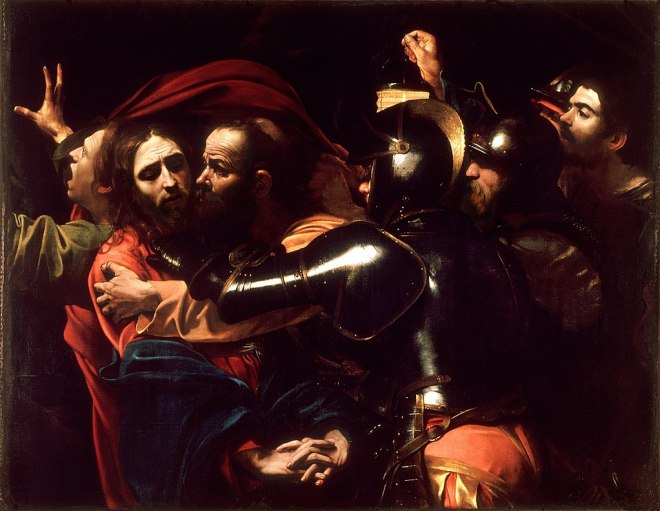
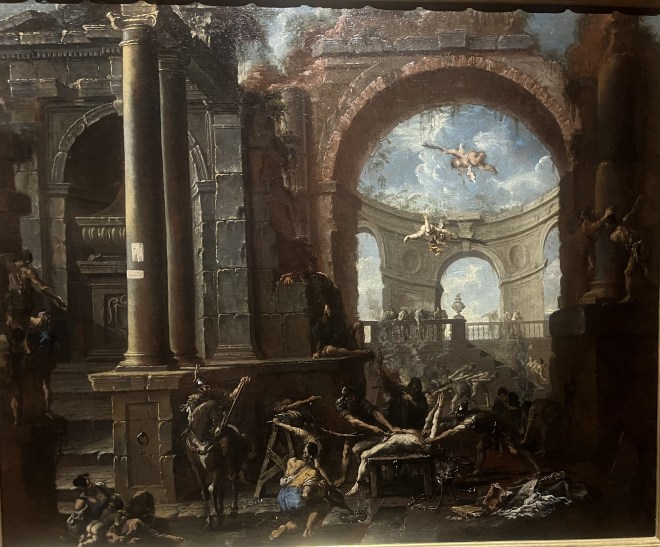
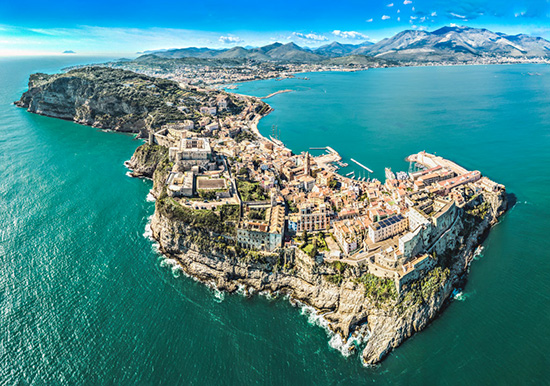
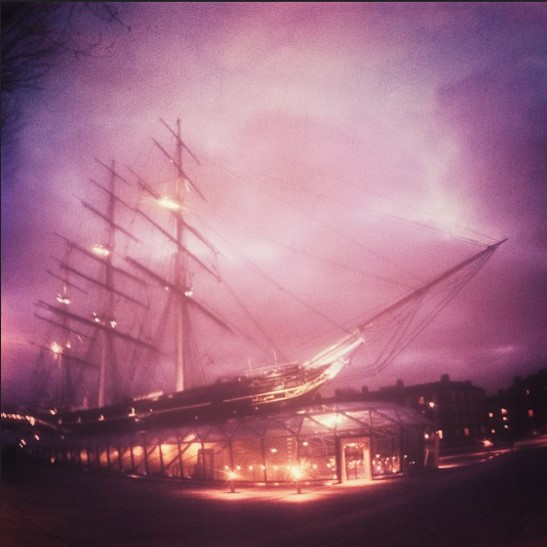
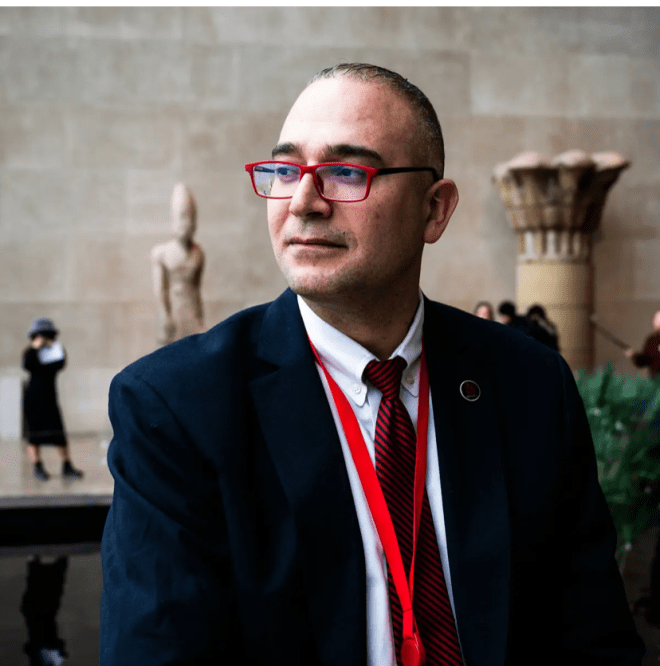
My wife and I were recently listening to an article from the New York Times about an Egyptian immigrant to New York, by the name of Armia Khalil. Mr. Khalil had been an artist in Egypt. He liked to create pieces that echoed the country’s ancient artefacts. He did so using tools he had created that were similar to those used by the Ancient Egyptians themselves. Of course, when Mr. Khalil arrived in New York, with a suitcase crammed with his tools but with hardly two nickels to rub together, he didn’t have the luxury to use them; he needed a job. But he didn’t want any old job. He wanted a job that brought him close to art. So he applied over and over again for jobs as a museum guard to the city’s many museums; he reasoned that at least this would allow him rub shoulders with art all day. Finally, after six years of trying, he managed to unhook a museum guard job at the Metropolitan Museum of Art.
Readers can read (or hear) the rest of his delightfully heart-warming story in the original New York Times article, if they can get around the paper’s firewall. If not, they can visit his WordPress blog – it gives me great pleasure to advertise a fellow WordPress blogger.
Mr. Khalil’s repeated attempts to be hired as a museum guard to get close to art brought back fond memories for me. Because I had tried to do the same many, many years ago. It was January, I was 18, I was staying with my parents in Ottawa for five months until the beginning of June, I needed to find something to do. Whenever I had spent the holidays with my parents, I had always found the time to visit Canada’s National Gallery. This is the building I used to visit, back in the early 1970s, although I see it has now moved into a sparkling new building somewhere else in Ottawa.
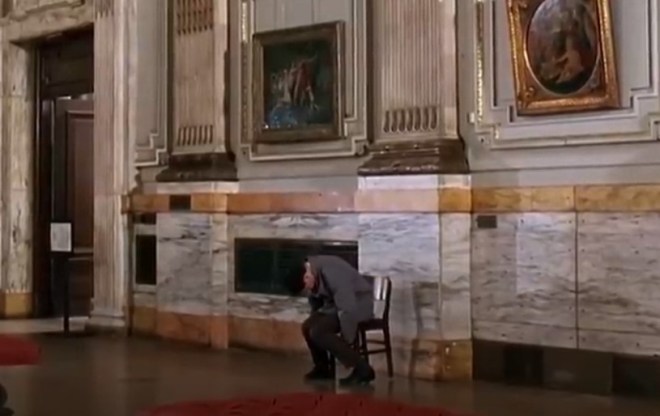
I found the time I spent there most soothing. I thought, why not spend my five months in Ottawa, sitting on a chair in the Gallery’s exhibition rooms and admiring the art around me? So I got myself an appointment with the head of the guards and arrived promptly for the interview. It was in a dreary, windowless office somewhere in the basement of the building. He was sitting at his desk, flanked by one of his guards. He invited me to sit down. He looked me over. Then, with great frankness, he told me why he doubted that I was right for the job. He pointed out that I was much more educated than the other guards, so had I thought about what my social interactions with them would be like? (the implication being, no doubt, that I would be awfully lonely during the working day, with no colleagues to really speak to). Did I not think, he continued, that I was far too young to get stuck in what was, at the end of the day, a pretty boring job? His basic message, I felt, was that it was best to be ignorant, probably stupid, and old before accepting a dead-end job as a museum guard. His side-kick nodded throughout this analysis, which was sad because at the end of the day his chief was talking about him. Thinking about it now, he could have been describing Mr. Bean working at the Royal National Gallery in London, in the film Bean.
My interview was terminated with a final parting shot. The chief pointed to my fashionably long hair and regretfully informed me I would have to cut it, to conform to the short-back-and-sides style sported by the (male) guards. Crestfallen, I left without a job. Unlike Mr. Khalil, I did not try other museums or art galleries in Ottawa.
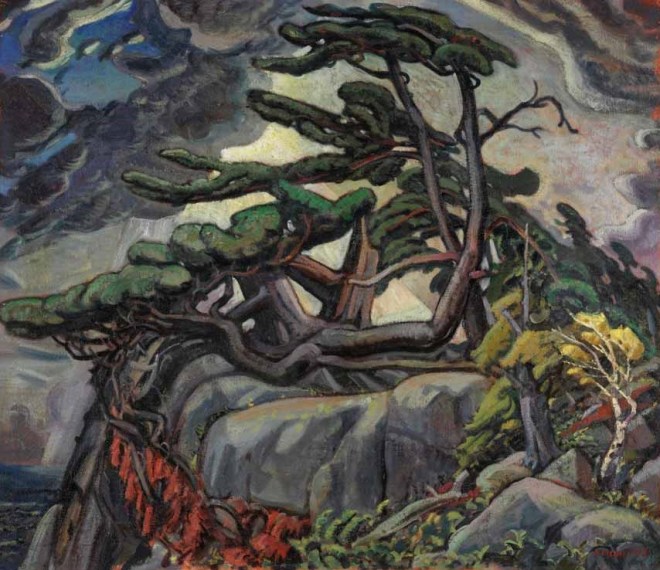
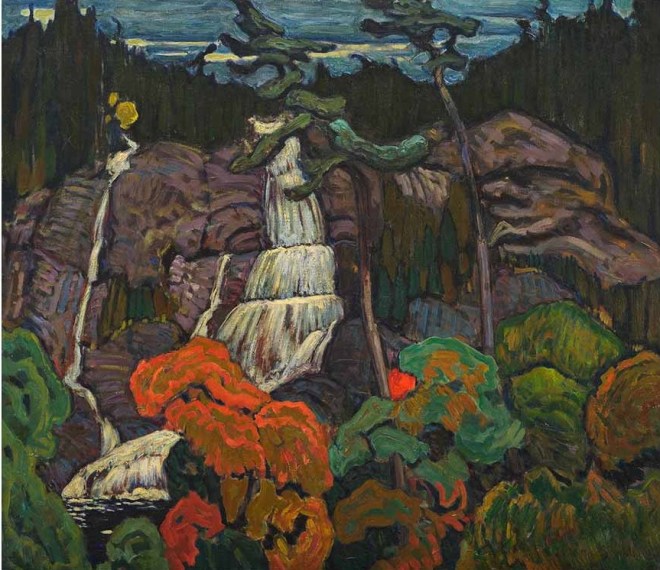
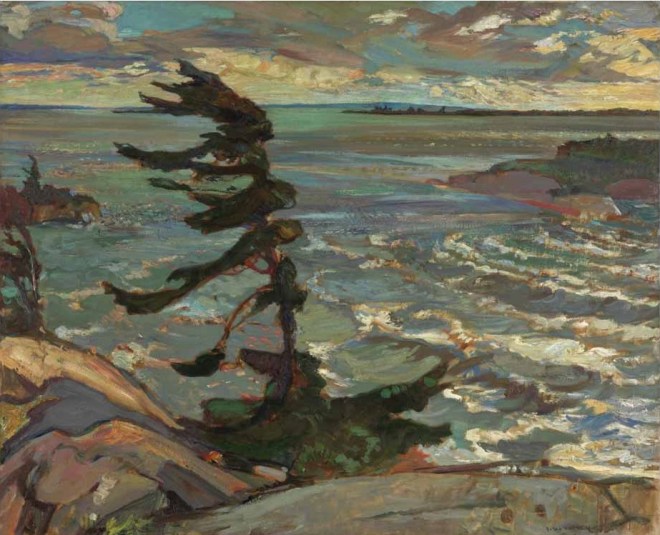
It was actually just a couple of rooms in the National Gallery that I would particularly have wanted to sit in as a guard, using my time to admire the paintings. They were dedicated to the Group of Seven, a coalition of Canadian painters who came together from shortly after World War I to the early 1930s. They were looking for a style of landscape painting that was distinctly Canadian and modern. To my mind, they succeeded brilliantly, with Lawren Harris being the jewel in the crown. His iconic painting, North Shore, Lake Superior, painted in 1926, is in the National Gallery.
But he painted many other wonderful paintings. Here is a selection. This first painting, Northern Lake, is from around 1923, early on in the Group of Seven’s life.
At some point in the late 1920s and early 1930s, Harris went to Canada’s far north and even to Greenland. The results of these expeditions were a long series of almost abstract paintings of great beauty. I show only three here. The first two hang on our walls in Vienna in the form of prints (I am not, alas, rich enough to be able to afford an original Lawren Harris).
Perhaps not surprisingly, in later decades Harris veered off into abstraction. I haven’t followed him there; abstract art is not really my thing.
While I particularly admire Harris, the paintings of the other members of the Group of Seven are not be sniffed at. I give one example for each of them.
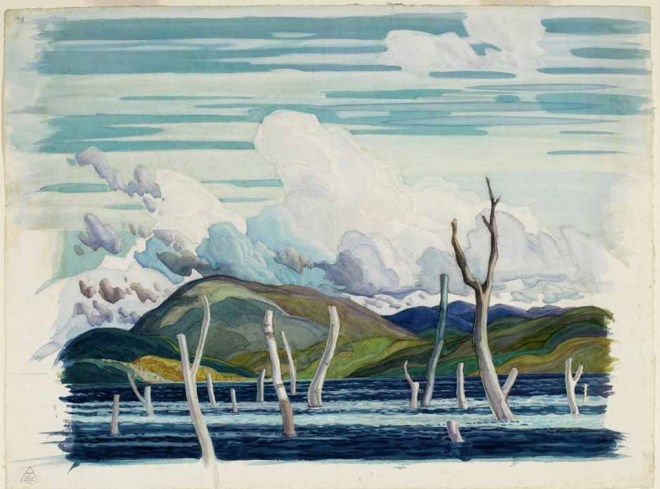
Franklin Carmichael, Wabajisik Drowned Lake, from 1929.
After all these years, I still don’t know if I would have enjoyed spending five months next to the paintings of this group of artists, or if I would have been bored to tears by the company of my fellow guards, or both. For any readers who might be asking themselves what I did end up doing those five months, I can reveal that I went to work for the YM/YWCA. I replaced a guy who had to go on a long sick leave, so it was a perfect fit. My job was to hand out stationary to the staff and to print the various flyers which they produced. I became a dab hand at offset printing, even if I say so myself – a skill, alas, I was never able to put to good use again.
Today is 6 January, the day of the Epiphany! The day when the Three Wise Men arrive in Bethlehem to find the Child Jesus. Momentous event! In the words of St. Matthew’s Gospel (I cite the King James version)
And when they were come into the house, they saw the young child with Mary his mother, and fell down, and worshipped him: and when they had opened their treasures, they presented unto him gifts; gold, and frankincense and myrrh.
Or, as the Christmas carol puts it
Three Wise Men
We Three Kings of Orient are,
Bearing gifts we traverse afar,
Field and fountain,
Moor and mountain,
Following yonder Star. Refrain
O Star of Wonder, Star of Night,
Star with Royal Beauty bright,
Westward leading,
Still proceeding,
Guide us to Thy perfect Light.
Gaspard
Born a King on Bethlehem plain,
Gold I bring to crown Him again,
King for ever,
Ceasing never
Over us all to reign. Refrain
Melchior
Frankincense to offer have I,
Incense owns a Deity nigh:
Prayer and praising
All men raising,
Worship Him God on High. Refrain
Balthazar
Myrrh is mine; its bitter perfume
Breathes a life of gathering gloom;—
Sorrowing, sighing,
Bleeding, dying,
Sealed in the stone-cold tomb. Refrain
Three Wise Men
Glorious now behold Him arise,
King, and God, and Sacrifice;
Heav’n sings Hallelujah:
Hallelujah the earth replies. Refrain
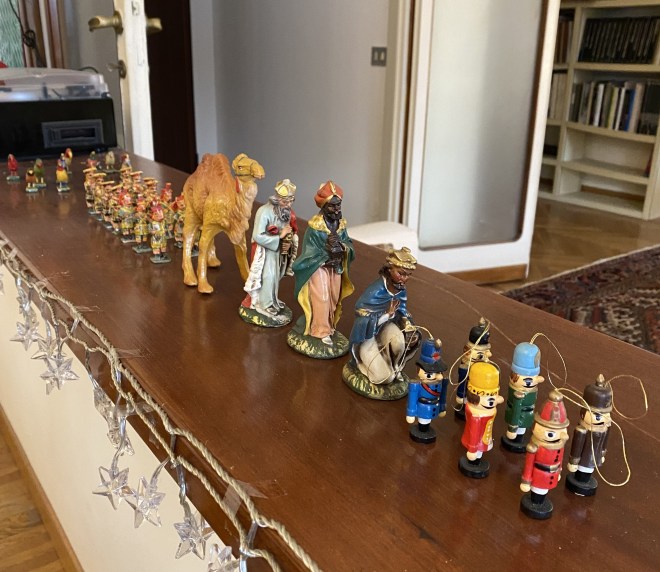
The Three Wise Men are, of course, important characters in our annual crèche. Ever since Christmas Day, they have been travelling across the furniture of our living room, on their way to Bethlehem. This year, I have had them accompanied by a retinue worthy of their rank.
My photo
I found the figurines of the retinue in a box where they had been carefully stored away by my mother-in-law many years ago. It seemed a pity not to bring them out into the light of day. I think it all looks pretty impressive! (But we have to do something about the camels; I’ve been telling my wife for years that we need to find some more camels, one camel simply isn’t enough. And we have to get a statue to replace the kneeling Wise Man; kneeling before the Baby Jesus is OK, but he can’t be on his knees the whole trip to Bethlehem …).
Here, we can see the tail-end of the cortege.
My photo
I added the birds because they were also in the box. A bit odd, but why not? Maybe the Wise Men were like St. Francis, they were listened to by the birds (boy, are we going to have fun when we set up the crèche with our grandson, possibly grandchildren, in a few years’ time! Who knows what interesting additions we could come up with!).
And now the Three Wise Men have arrived at the manger and are adoring the Baby Jesus!
My photo
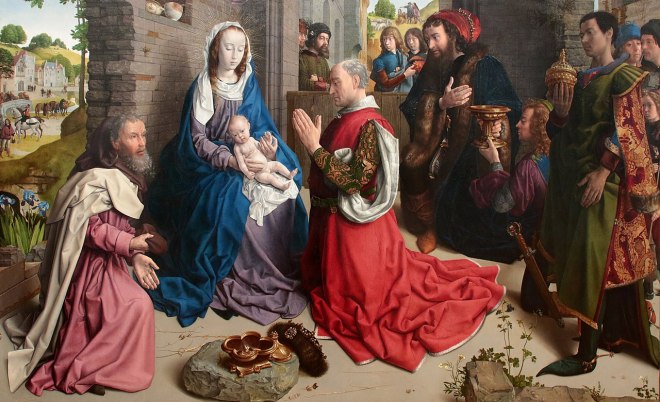
This scene of the Adoration of the Magi has been painted over and over again by European artists. I pick here just one of the many offerings. It is by the Flemish painter Hugo van der Goes, who painted it in about 1470.
Dressed as they are as Persians, wearing the Phrygian cap which Romans seemed to think all Persians wore, they fit better with what the Gospel of St. Matthew had to say: “behold, there came wise men from the east”. Now Matthew didn’t actually say how many Wise Men there were, but pretty quickly most Christian sects settled for three, one for each gift. Matthew also didn’t say how old they were, but clearly by the time these mosaics were laid down it was generally agreed that they represented the three ages of Man, so we have one old one, one middle-aged one, and one young one. It was only later that it was decided that they also represented the three races known to Europeans: the Europeans themselves, the peoples of the Middle-East, and the peoples of Africa. Paintings of the Magi are some of the earliest representations of Black people in European art. Here is a lovely example from an Adoration of the Magi by Hieronymus Bosch.
Painters don’t seem to have been much interested in what was happening to the Three Wise Men on their way to Bethlehem. But T.S. Eliot, in his poem Journey of the Magi, did try to imagine what the trip was like. I cite here the first twenty lines of the poem.
A cold coming we had of it,
Just the worst time of the year
For a journey, and such a long journey:
The ways deep and the weather sharp,
The very dead of winter.’
And the camels galled, sore-footed, refractory,
Lying down in the melting snow.
There were times we regretted
The summer palaces on slopes, the terraces,
And the silken girls bringing sherbet.
Then the camel men cursing and grumbling
And running away, and wanting their liquor and women,
And the night-fires going out, and the lack of shelters,
And the cities hostile and the towns unfriendly
And the villages dirty and charging high prices:
A hard time we had of it.
At the end we preferred to travel all night,
Sleeping in snatches,
With the voices singing in our ears, saying
That this was all folly.
Compared to this description, our Three Wise Men have had it pretty easy: nice, warm living room, easy travel across the furniture, respectful entourage …
As told in St. Matthew’s Gospel, the arrival of the Three Wise Men was like a poke in a hornet’s nest. In Jerusalem, they asked, “Where is he that is born King of the Jews? for we have seen his star in the east, and are come to worship him.” Matthew goes on, “When Herod the king had heard these things, he was troubled, and all Jerusalem with him. And … he demanded of them where Christ should be born. And they said unto him, In Bethlehem … Then Herod … said, Go and search diligently for the young child; and when ye have found him, bring me word again, that I may come and worship him also.” But, Matthew tells us, after giving Jesus his gifts, “being warned of God in a dream that they should not return to Herod, they departed into their own country another way.” He goes on, “behold, the angel of the Lord appeareth to Joseph in a dream, saying, Arise, and take the young child and his mother, and flee into Egypt, and be thou there until I bring thee word: for Herod will seek the young child to destroy him. When he arose, he took the young child and his mother by night, and departed into Egypt.” The Flight to Egypt was also a popular theme for European painters. I show one example, by my favourite painter, Caravaggio, Rest on the Flight to Egypt, where one of the painter’s luminous angels is playing music on a viol to soothe Mary and Jesus in their slumber (the music held by Joseph is readable; it is a motet by the Flemish composer Noel Bauldeweyn dedicated to the Madonna, with a text from the Song of Songs, Quam pulchra es, “How beautiful you are”; nice touch).
Alas, Herod was not a man to be crossed. Matthew tells us, “Then Herod, when he saw that he was mocked of the wise men, was exceeding wroth, and sent forth, and slew all the children that were in Bethlehem, and in all the coasts thereof, from two years old and under.” This Massacre of the Innocents was, too, a popular theme for European artists. I show here an example of the genre by Peter Breughel the Elder.
I’m actually being a little economical with the truth. This is really a copy of Breughel’s painting, by his son Peter Breughel the Younger. The original was once owned by the Holy Roman Emperor, Rudolf II. For some reason – queasiness? – he had the dead children painted over. This copy retains the dead children.
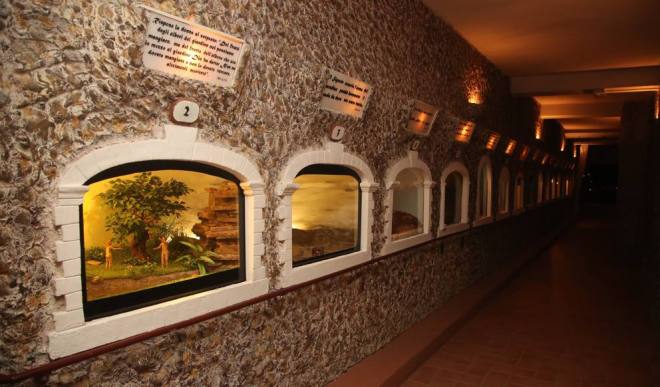
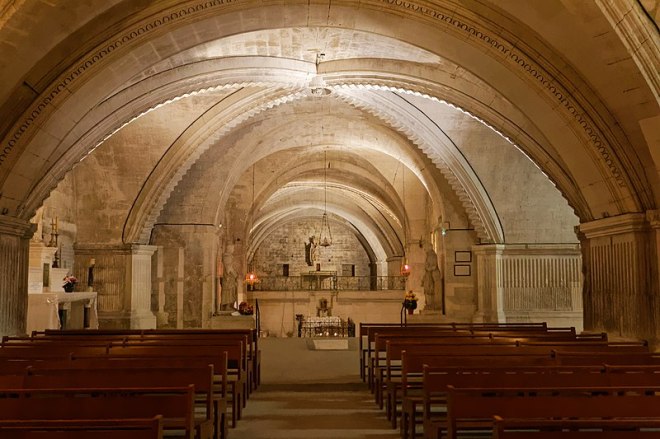
Quite by chance, just before Christmas, we stumbled across a very sophisticated crèche, in a place called Baggio, which once was a village but then got swallowed up by Milan some 150 years ago. There, in the crypt of a church, over the last forty years or so, dedicated local volunteers have created 58 scenes from the Bible, with the Nativity being the central scene. Some of the scenes have running water, others have moving figurines, … it’s very impressive. Here is a shot of the first scene, Adam and Eve in the Garden of Eden (with a delightfully slithery snake in the tree).
As I say, very impressive … although I will admit to having been just a teeny-weeny bit jealous. We’ll soon be packing away the crèche and its figurines for another year, but I’m already thinking how we could expand the offerings next year. Running water and moving figurines is a bit beyond me. But maybe Herod in a palace in Jerusalem? The Massacre of the Innocents? Some “snow” for the Wise Men to trudge wearily through? At least let’s fix the camel problem!
Ever since 2016, when I wrote a post about Saint Radegund I’ve been meaning on and off – more off than on, I should say – to write a post about Saint Tecla, as part of my sub-category of posts on obscure saints whose names still dot the European landscape; in this particular case, a small road behind Milan’s Duomo is called after her. The last post in the series, from this summer, was about Sankt Ilgen. Two days ago, at the end of a hike which my wife and I did on Lake Como, I came across a church dedicated to Saint Tecla, in the village of Torno. It’s not a particularly interesting church. This is what the exterior looks like.
Nevertheless, I took my bumping into this church as A Sign that I should finally get my finger out and write this post.
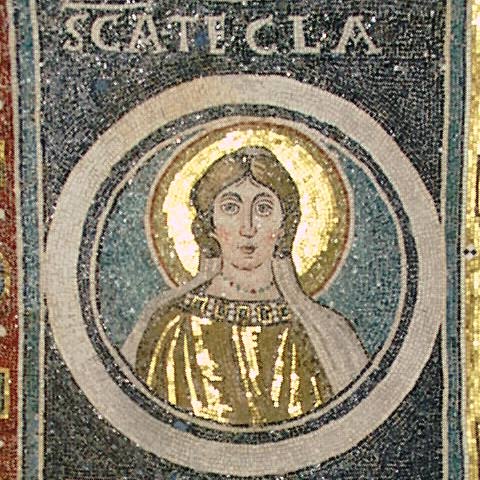
So who was this Saint Tecla? (and by the way, I prefer to use the Italian – and Spanish and Portuguese – spelling of her name rather than the English Thecla) Let me start by inserting a photo of a 6th Century mosaic portrait of her which graces the Basilica Eufrasiana in the town of Poreč in Istria, in Croatia.
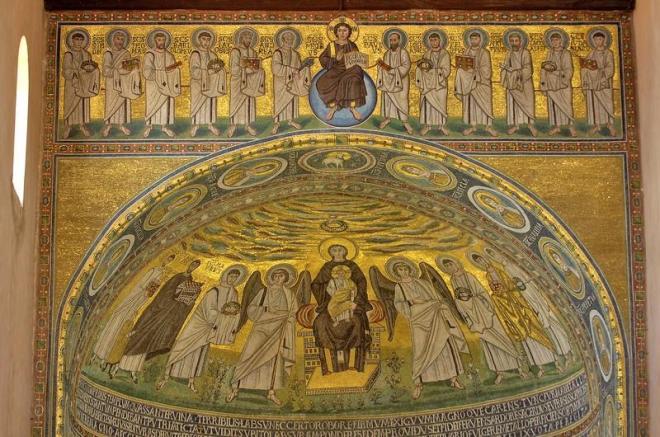
For any of my readers who are interested in early Christian mosaics and have never visited the Basilica Eufrasiana, I suggest that you do so. I throw in a couple of photos of the mosaics there to whet their appetite.
Readers with good eyesight will see that the portrait of Saint Tecla is one of the portraits on the inside of the arch, to the right.
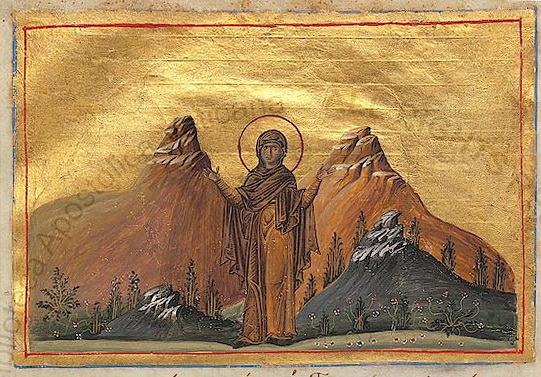
Given her great popularity in Christian Orthodox religions (probably much greater now than it is in Western Christian religions), I also throw in a photo of a depiction of her in a manuscript produced for the Eastern Roman Emperor Basil II in the 11th Century.
Of course, neither of these portraits is from life. And in fact, there is a good chance that Tecla never had a life – the Roman Catholic church quietly dropped her from its official Martyrology back in 1969, which normally occurred because there was a lack of historical evidence that the saint or martyr in question ever existed. But let us put this cavil aside, and see what her various hagiographers had to say about her.
Tecla was believed to have come from Iconium in the Roman province of Galatia (now Konya in the modern country of Türkiye). The story goes that when St. Paul passed through Iconium on his second missionary journey, Tecla was transfixed by his sermons. Here is the scene depicted in an altar carved in the 15th Century for a chapel in the cathedral of Saragossa in Spain, but which now resides in New York’s Metropolitan Museum of Art’s Cloisters. That’s Saint Tecla at the the window of her house. Note the man (I think) stroking his chin pensively down at the right; a nice touch.
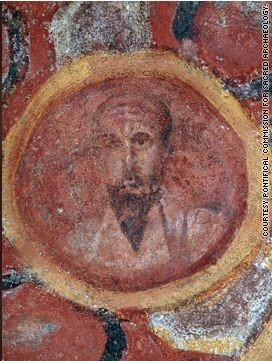
Unfortunately, Saint Paul seems to have lost his head. No worries, let me throw in a photo here of a fresco of St. Paul’s head, recently uncovered through the clever use of a laser-based technology, in a 4th Century catacomb named after St. Tecla, in Rome. This, I read, is the oldest extant solo portrait of the Apostle. I’m intrigued by the very pointy beard; I have never imagined Paul with that kind of beard.
Continuing on with Tecla’s story, she declared to her mother Theocleia and her fiancé Thamyris that she was abandoning her marriage plans and would join Paul. Both Theocleia and Thamyris were alarmed at this attempt at independence and decided to drag both Paul and Tecla before the city governor. Paul was merely sentenced to scourging and expulsion, but Tecla was to be burned at the stake. Turning again to that altar which once resided in Saragossa’s cathedral, we have the scene sculpted in alabaster. The sources say she was stripped naked, but that clearly didn’t play well with the sculptor and/or the donor.
Miraculously, a storm blew up, which doused the pyre. Personally, I would have put her back in gaol, built another pyre, and had a second go. But no, she was freed, whereupon she joined Paul, cut off her hair (I always find it interesting that hair is considered – by male authors? – such a sign of femininity, the cutting of which signifies renunciation of physical attraction), and followed him. And off they went to Antioch in Pisidia (nowadays called Yalvaç). There – even without her hair – she drew the lascivious attention of one Alexander, a nobleman of the city. He attempted to take her by force, but she fought him off, tearing off his cloak and knocking the coronet off his head in the process, much to the amusement of the townspeople. Seemingly, then, Alexander attempted this rape of Tecla, for that is what it seems to have been, in public, which is a little odd. Or maybe the writer of the story wanted to show the arrogance of power.
In any event, Alexander felt greatly injured in his aristocratic pride and had her dragged – yet again – in front of the city’s governor for assaulting a nobleman. This time, the governor condemned her to be thrown to the wild beasts (as an aside, I have to say that hagiographers of the early Christian martyrs all seem to have been working off the same playbook; martyrs were either burned at the stake, tortured in hideous ways, thrown into rivers with heavy weights around them, or thrown to wild beasts, or some combination of these). Interestingly, the women of Antioch rose up as one against the sentence, although it changed nothing (I think the hagiographers’ intention was to intimate that Tecla was a natural leader of women).
And so she was paraded through the streets of Antioch, stripped of her clothes (again), and thrust into the arena. The men in the crowds were baying for blood, the women were weeping for poor Tecla (taken by the spirit of the story, I have added this bit; as far as I know, none of the hagiographers said it, although they do make clear that the women in the crowd were rooting for Tecla). Miracle! Some of the wild animals (female) protected her from other (male) animals. A lioness was especially active in defending Tecla. We see the scene here in a 15th Century altar from the chapel of the Cathedral of Tarragona in Spain (in passing, I should note that Saint Tecla is the patron saint of Tarragona). In this case, the sculptor had no problems making Tecla at least half naked. Note all the animals lying meekly at her feet. I like, too, the crowd pressing in to see what’s happening.
At this point, the story gets somewhat muddled for me. Reading between the lines, and giving my fervid imagination free rein, I’m guessing that the organizers of this spectacle had thought up the idea of having a large vat in the arena full of ravenous seals. They must have thought they could throw the remains of Tecla, once she had been ripped to pieces by the wild beasts, into the vat (although I wonder if seals would eat human remains; but hey, what do I know?). But Tecla had other ideas. She had asked Paul to baptize her, although for some reason he had temporized. Standing in that arena, surrounded by wild – but currently meek – animals, she decided that before she died in that arena, she would baptize herself. Note once again her streak of independence: baptizing yourself?! impossible; only men can baptize people! Nevertheless, she threw herself into the vat. The altar in Tarragona’s cathedral gives us once again a vision of this scene.
I’m not sure what has happened to the arena and its crowds, we seem to have a more sylvan scene. I also get the impression that the sculptor had no idea what seals looked like, he seems to have come up with a bunch of eels. But le’s not niggle, because another miracle occurred! The vat was struck by lightning, which killed all the seals – but of course not Tecla.
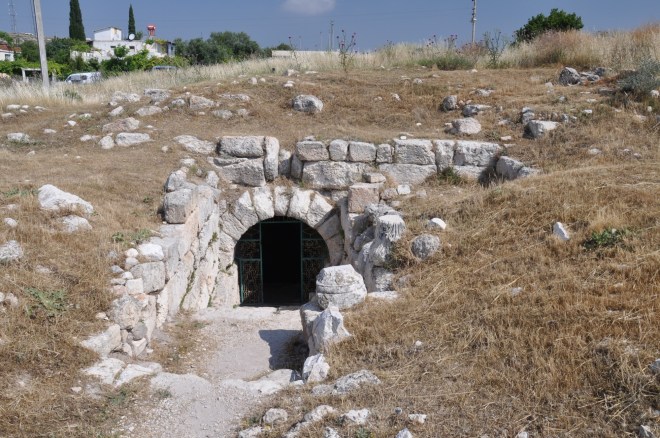
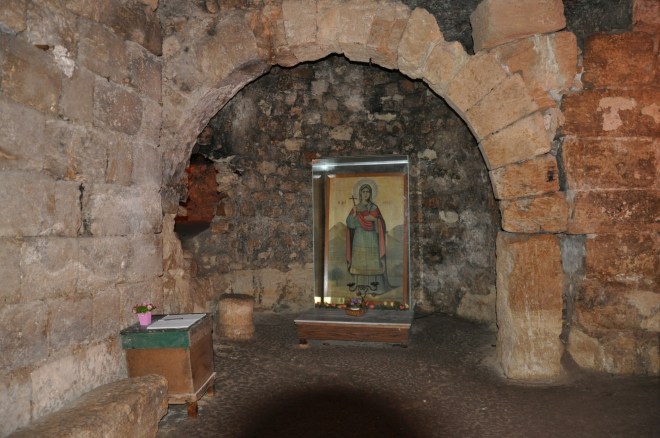
All these miracles were too much for the governor. He ordered her clothed and released her to the rejoicing women of the city. She returned to Paul, “wearing a mantle that she had altered so as to make a man’s cloak” (an important phrase for future generations of some women, who looked to Tecla as an example of breaking the eternal glass ceiling for women). She went on to convert many people, including her mother, to Christianity, and then retired to a cave near Seleucia (today’s Silifke) where she lived for many decades. This is the exterior of the cave.
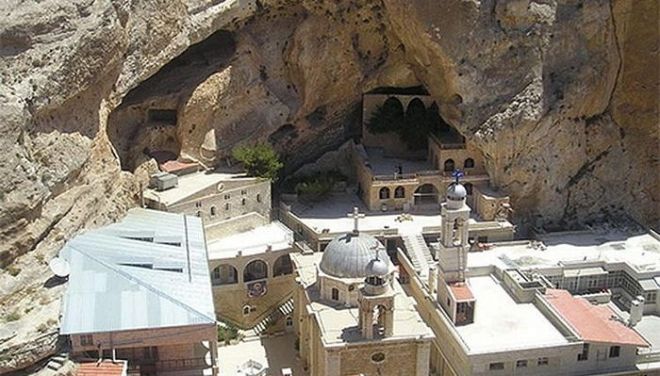
I would be remiss if I didn’t point out that there is a rival story that Tecla did indeed spend her last years in a cave, but in the small town of Maaloula in what was then the kingdom of the Nabateans, close allies of the Romans, and in what is now Syria. It seems a far more dramatic site, and has a Christian Orthodox church and nunnery built next to it.
The site, alas, has fallen prey to modern religious wars. ISIS fighters invaded Maaloula in 2013, going on a rampage against Christian people and buildings, destroying all religious sites in the town. 3,000 fled the city, leaving only Muslims and the nunnery’s forty nuns. Twelve of them were kidnapped, and after negotiations were release in 2014. The nuns were dispersed and were only able to come back to the town in 2018. Horrors continue to be committed in the name of religion …
There’s further bits and pieces to Tecla’s hagiography, but I’ll skip them. Given the story, it’s a bit of a mystery why Tecla was such a popular saint. As far as I can make out, her popularity rested on the fact that she offered early Christian women a strong example, equal to, not subordinate to, men. She offered a female equivalent to the – male – Apostles; she went around converting people just as much as Paul did. She threw off the bonds of what was a strongly patriarchal society – she broke off an engagement arranged by her family, in fact she turned her back altogether on marriage; she didn’t wait to be baptized by a man but just did it herself; she took to the road without a protecting male presence (although she seems to have had to pretend she was a man in order to do this). The Church Fathers, notably Ambrose of Milan, lauded her for her virginity – but I always suspect this approval of virginity by the Church, since it always seems to be tied to retiring from the world into a nunnery and being Wedded to Christ; the idea of being in this world on equal terms with men was anathema to the Church (and to society more generally). I suspect she could easily be the patron saint of this new B4 Movement coming out of South Korea.
Well, I’ll leave readers with a somewhat more modern take on Saint Tecla by El Greco, in his late 16th Century painting “The Virgin and Child with St. Martina and St. Tecla”. It was painted for the Oratory of St. Joseph in the city of Toledo, but is now in the National Gallery of Art in Washington, D.C.
We will, of course, immediately recognize Tecla because of the lioness which is protecting her. She also, rather oddly, is holding a martyr’s palm – oddly, because she actually was never martyred. One of the many strange things about Tecla.
It had to happen. On our latest wandering across the Austrian landscape, this time in Styria, my wife and I came across yet another obscure saint, Saint Ilgen. This good saint had given his – or was it her? – name to a village located in the similarly named Ilgental, the valley of Ilgen, along which we were walking to get to the jump-off point for our three-day hike around the Hochshwab. I throw in a photo of the jump-off point, the Bodenbauer inn. As readers can see, it’s a popular place.
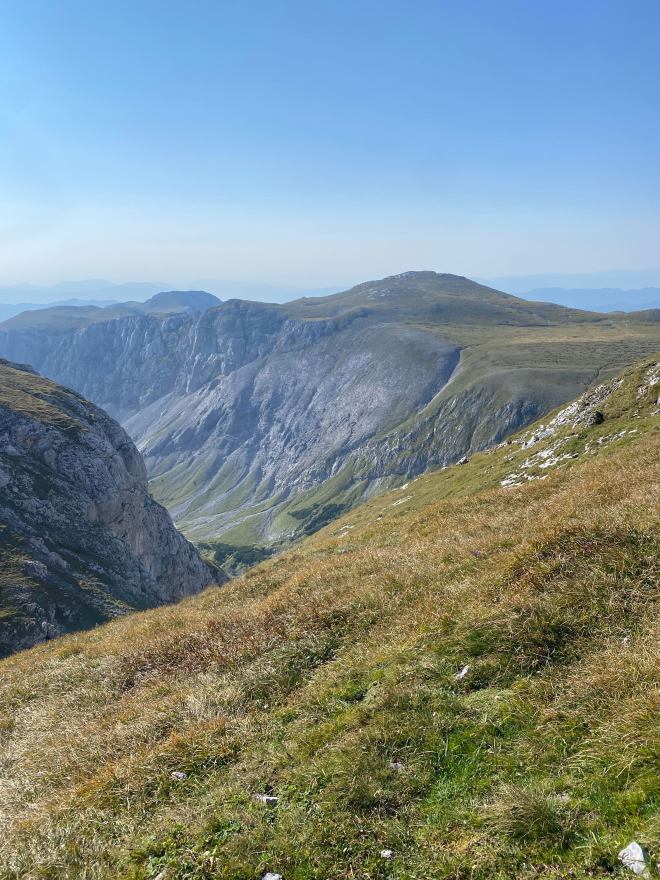
And here are a couple of photos of the mountains we climbed over.
My wife’s photoMy wife’s photoMy photomy wife’s photoMy photo
But now, settled in the train back to Vienna, I have had the time to investigate this mysterious Saint Ilgen. My first inkling of who we might be talking about came about this morning, as we walked back through the village of Saint Ilgen. I noticed a small shrine on the side of the road that I had missed the first time we came passed through the village.
My photo
For readers whose sight, like mine, is not quite what it used to be, the writing above the statue says, in German, “Saint Aegidius pray for us”. Ah! So Ilgen was probably the same as Aegidius! A little bit of train-based internetting has confirmed this.
Aegidius was a name that rang a bell. And indeed, a little bit of e-riffling through my past posts has confirmed this. Last year, I had come across Saint Aegidius when researching another obscure saint, Saint Veit, whose name my wife and I would quite often come across on our wanderings across the Austrian landscape. Saint Aegidius, like Saint Veit, was one of the fourteen Holy Helpers who Medieval Europeans turned to, to deal with life’s many miseries. Here is a photo of those Holy Helpers from a chapel in Baden-Württemberg. Saint Aegidius is in the third row from the top, the second from the right, wearing a monk’s brown tunic but holding a bishop’s crozier. I only know this because I blew up the photo enough to be able to read the names helpfully added to the base of each statue. Readers will notice that the statue is decked out in very much the same way as the statue in the photo above. This was no doubt the standard way of depicting the saint.
I don’t know why the saint was called Aegidius, because most Medieval Europeans didn’t call him that. The British knew him as Giles, and many other Europeans knew him by variants of that name. For instance, the French knew him as Gilles – as we shall see in a minute, he was a French saint. And since our story starts in Austria, I feel I ought to mention some of the German variants: Jillies, but also Gilg or Gilgen which in some places – like that valley which my wife and I had been walking up and down – morphed into Ilg or Ilgen. So I shall drop Aegidius and continue with Giles.
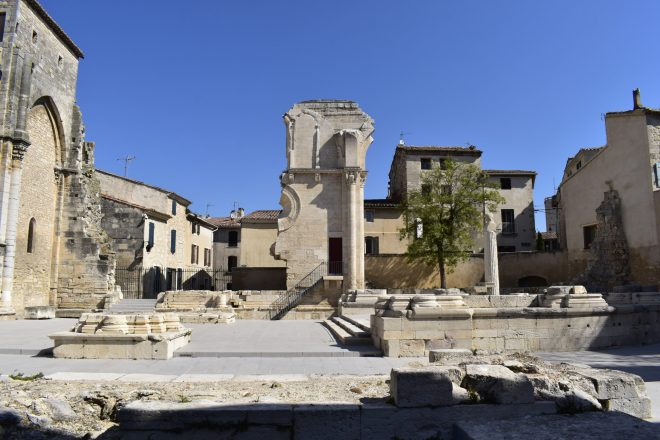
Who exactly was this saint Giles? Quite honestly, I’m not sure he ever existed. But the story put out by the monastery of Saint-Gilles, which lay between Nîmes and Arles in the south of France and whose tomb the monks claimed to have in their church crypt, was that he was a hermit who in the 7th Century AD was living a saintly life in the thick forests around Nîmes. His only companion was a female deer, to whom he was very attached. One day, hunters of the local king – or maybe the king himself – were pursuing the deer, which ran to Giles for protection. Giles put himself between the hunters and the deer and got wounded in the hand by an arrow. Full of remorse for having wounded such a holy man, the king gave him land and money to build a monastery, which Giles proceeded to do. He then became its first abbot, leading the monastery until his death, carrying out miracles etc. along the way. There are other, more fanciful details in his hagiography, but I’ll leave it at that. Here, we have a painting by an unknown, possibly French, possibly Dutch, painter from about 1500 depicting our good saint.
We see him protecting the deer, with the arrow in his hand and presumably the chastened king kneeling at his feet.
Saint Giles was one of the Medieval Europe’s most popular saints. As far as I can make out, this can be traced back to the fact that the monastery of Saint-Gilles was strategically placed at the crossroads of a number of pilgrim routes. One of the branches of the Camino de Santiago de Compostela, used by pilgrims from Provence and northern Italy, passed by the monastery. I throw in a map of the three main routes in France for the Camino de Santiago. The one which passed by Saint-Gilles is the bottom, maroon-coloured, one.
The same route could of course be used in the opposite direction, and indeed was so used by Spanish pilgrims going to Rome. At Saint-Gilles they could either go overland through northern Italy or they could sail to central Italy, embarking at a port located close the monastery. French pilgrims, and Northern European pilgrims more generally, on their way to Rome also often used this marine route. The same with pilgrims on their way to the Holy Land, who would frequently pass through Rome first. I mention all of this because I want to use this occasion to see if I can’t persuade my wife to do some hiking in this part of the world. To whet her appetite, I insert a photo here of a pensive hiker near the Col du Mont Genèvre, which pilgrims from northern Italy would have crossed. I’m sure we could find a hiking trail which would take us down the French side maybe as far as Sisteron.
But back to Saint Giles. I don’t think I’m being too cynical if I suspect that the good monks of Saint-Gilles, watching all this pilgrim traffic going by, felt the need to more effectively tap into the riches it represented. They therefore created the backstory of Giles the saintly hermit, with the requisite tomb and relics, et voila! Pilgrims began to stop at the monastery’s church to pray and leave a few pence in the offerings box. Of course, the pilgrims also needed places to stay and eat, so a small town sprang up around the monastery to service these (and no doubt other) needs, giving the monastery another source of income via tithes, taxes, and whatnot.
Over the next few centuries, the fame of the monastery of St-Gilles grew to such a degree that it became an important pilgrimage destination in its own right, up there with with Jerusalem, Rome, and Santiago de Compostela. It’s not surprising, then, that Giles was such a popular saint – and that so many boys came to be called after him.
Of course, with all this pilgrim traffic the monastery grew rich and powerful, and large building programmes were undertaken. But, as Giles the Hermit could have told them if he had ever really existed, all power, all riches are transitory. The fashion of pilgrimages passed and the port silted up, so the monastery’s main source of income dried up. The number of monks dropped off, so those large monastic buildings were half empty. And then vicious religious wars were fought, with Huguenot forces burning the monastery buildings to the ground. Whatever was left of them were razed during the French Revolution. Only a few mouldering remains are left.
Maybe I could persuade my wife to make a quick visit to the church after we’ve hiked down from the Col du Mont Genèvre …
And the name of the goodly hermit, once so popular? Well, I’m afraid it has dropped way down in the rankings. In the UK, only 8 baby boys were given the name Giles in 2023. In France, it was slightly better, with 50 little Gilles being registered. As for the German-speaking lands, Ilgen seems to be only a surname these days. Like the hermit, the name seems to have retreated far, far away from human societies.
I guess that means my wife and I will have to leave future sightings of the name to our wanderings across the face of Europe.
No-one under the age of 40 will remember a world where most of the shoes we wore were made of leather. As I look around the subway carriage where I’m writing this, I can only see one pair of leather shoes among perhaps 70 pairs of feet. I, on the other hand, being well over the age of 40, still remember a time when we mostly wore leather shoes – and remember the concomitant joys and anguish of shoe polishing. At my boarding primary school (prep school in British parlance), a specific period of every week was set aside for shoe polishing. We all had to go to a room dedicated to this task, where we picked up a cloth – to spread the polish – and a brush – to put a high gloss on our shoes – before getting to work. As I picked up the tin, there was that ineffable smell of the polish. That was the joy – or at least the pleasant sensation. No doubt it was caused by the solvent which the manufacturers used to keep their polish pasty. After the spreading of the polish on my shoes came the vigorous polishing. That was the agony, as my arm very soon began to ache. But I couldn’t slow down, there was always a master on hand to bark at me to put my back into it. And then came again the joy, as I admired my well-polished shoes glowing on my feet. Of course, I have no photo of this weekly exercise. I did find this photo, though, which will give readers a sense of what it was like – although the boy in question looks to be enjoying it far too much.
After the passage of so many decades, I can’t remember the brand of polish we used. I’m guessing it was Kiwi; that was certainly the brand that my English grandmother used, and it seems to have been the most popular brand in the UK.
In passing, I should say that I learned to my surprise that Kiwi was originally an Australian brand (and was given its name by the owner to honour his wife who hailed from New Zealand). Merely another example of my unconscious Euro-centric biases …
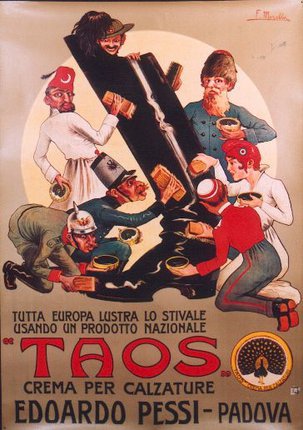
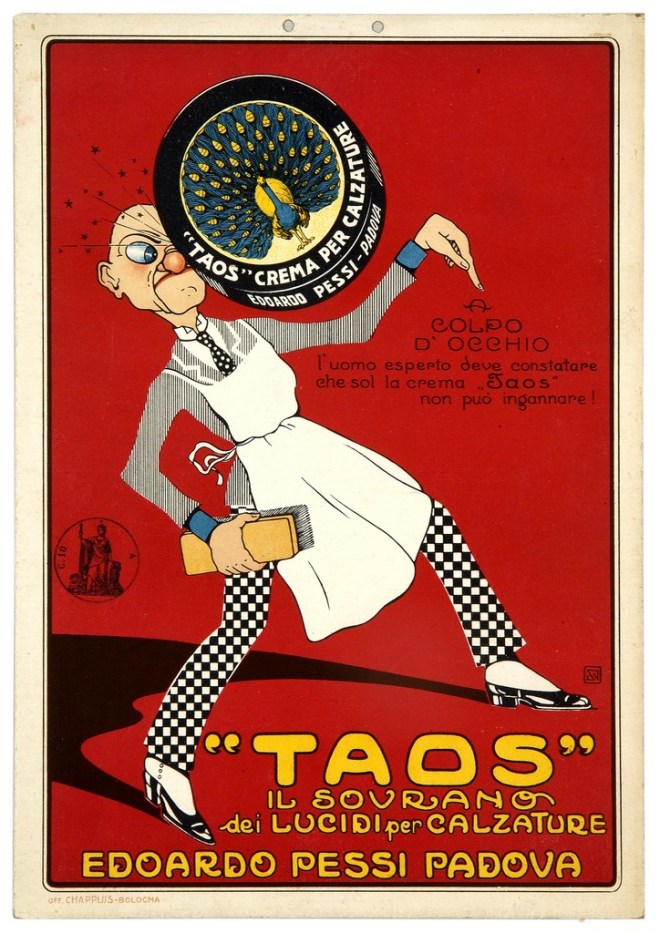
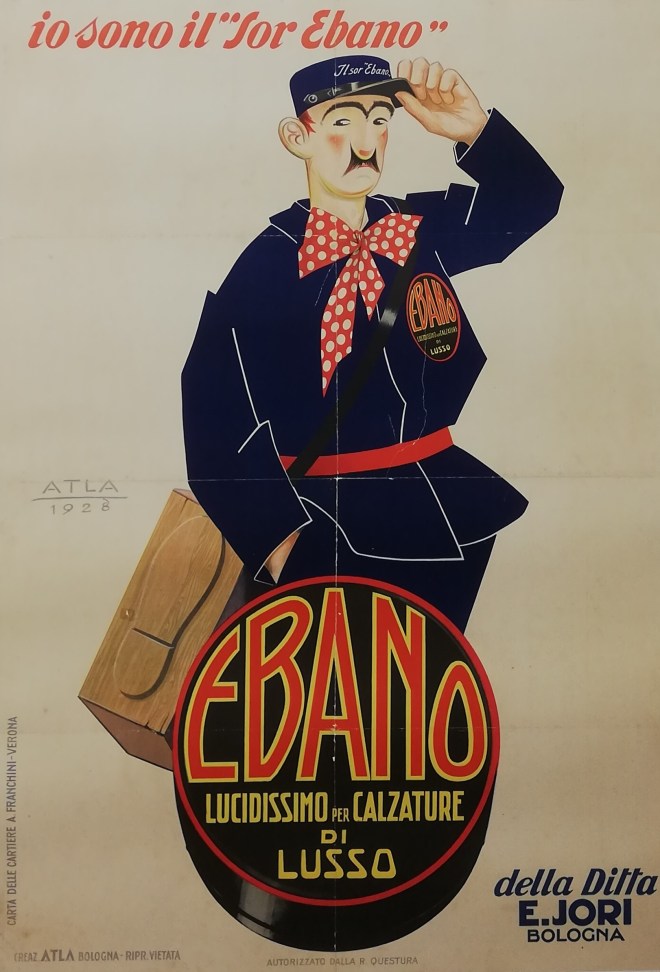
Old brands of consumer products always have me searching for the posters they used in their advertising campaigns. I find these old posters a fascinating sub-genre of popular art. In another life I would have been an avid collector of old posters. In this case, though, I didn’t find any really scintillating Kiwi posters online. The best I found was this one.
Not so in the case of a now extinct brand of Italian shoe polish called Taos, manufactured by the now also extinct company Edoardo Pessi. Look at this lovely poster! It’s a riff on the fact that the biggest purchaser of Pessi’s shoe polish was the Italian army.
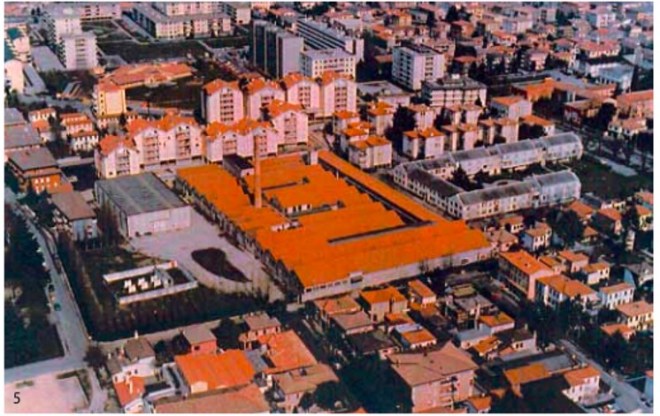
At this point, I have to admit to having played a very small part in Edoardo Pessi’s demise. It was early on in my career as an environmental consultant. My company was hired by the multinational corporation Sara Lee (now also extinct) to carry out an environmental assessment of the Pessi factory. Sara Lee was in negotiations to purchase Edoardo Pessi, and the idea was to figure out what environmental liabilities Sara Lee might also be buying and bring down the purchase price by a corresponding amount. This is the factory where I carried out my assessment.
I don’t think I’m giving away any trade secrets when I say that there were some problems with underground tanks leaking solvents (out in the back yard there, next to that sliver of lawn; I remember it well). I guess a couple of 100,000 dollars were knocked off the purchase price because of that.
In any event, the purchase by Sara Lee went through. But it was really just an exercise in asset stripping. Quite quickly after the purchase, Sara Lee concluded that this factory had no future – which made a lot of sense; I mean, look at it, hemmed in as it is on all sides by houses. So they closed the factory down. But they didn’t shift operations to an industrial site on the outskirts of town as they could have done. Instead, the packed all the equipment off to their other factories, they laid off the workers, and sold the land to a developer, who proceeded to raze the factory to the ground and put up some swanky apartment buildings in its place. Sara Lee even stopped making the Taos shoe polish – who polishes their shoes anymore? (and they already owned Kiwi; one shoe polish brand was more than enough).
Well, all of this, although an enjoyable little trip down Memory Lane, still doesn’t explain why, when I breathe in the scent of lime tree flowers, I think shoe polish. The mysteries of olfactory chemistry …
It’s flowering time for the rockrose. This is a lovely flower that we come across at this time of the year on our hikes close to the sea.
My photo
Wikipedia tells me that the plant is typical of the Mediterranean maquis. And indeed, we tend to find it on the dry, stony slopes giving directly on the sea, particularly where the Monte di Portofino plunges down into the sea.
The plant’s formal botanical name is cistus salviifolius, and as readers can see from the photo above its leaves are indeed quite sage-like (salvia in Latin – and in Italian). Its formal Italian name – the one you use when you’re with the urban elites – is cisto femmina; I can see where “cisto” comes from, but what is feminine about this plant? Mystery. More interestingly, ordinary Italians – country folk and such like – call it scornabecco. The Dizionario Treccani – the Italian equivalent to the Oxford English Dictionary – tells me the word is derived from scornare, to unhorn or to break horns, and becco, a name for a ram: so, ram unhorner. As I look at this small plant with its pretty flower, I can’t quite imagine how it got that name. Another mystery. Perhaps it can grow into a tough, tangled bush, which rams can get their horns caught in and broken off. Here is another photo of the plant, which is looking more bushy and tangled.
My photo
All this makes me think of the story in the Bible, of Abraham and his son Isaac. Abraham is about to sacrifice Isaac when an angel stops his hand; I leave the original text take up the story: “[The angel] said, “Do not lay your hand on the boy or do anything to him, for now I know that you fear God, seeing you have not withheld your son, your only son, from me. And Abraham lifted up his eyes and looked, and behold, behind him was a ram, caught in a thicket by his horns. And Abraham went and took the ram and offered it up as a burnt offering instead of his son.” This gives me an excuse to throw in a photo of a painting of the scene, by my favourite artist Caravaggio.
Wikipedia also tells me that the plant is drought-resistant and likes sunshine. A perfect candidate for our terrace here! The sun can beat down mercilessly, especially in the summer, and we are away for long periods and so we cannot ensure a steady supply of water. It was for these reasons that decades ago my mother-in-law planted various succulents in a couple of vases on the terrace wall; they have survived all these years.
My photo
They may have survived but as readers can see they’re rather modest, boring even. For many years now, my wife and I have wanted to complement them with something a little more cheerful. Rockroses might be just the thing! I must nose around the local florist, to see if they sell packets of rockrose seeds. If not, just before we flee Italy for the summer (it really gets too hot here), we’ll go for a hike on the Monte di Portofino and collect seeds from the wild.
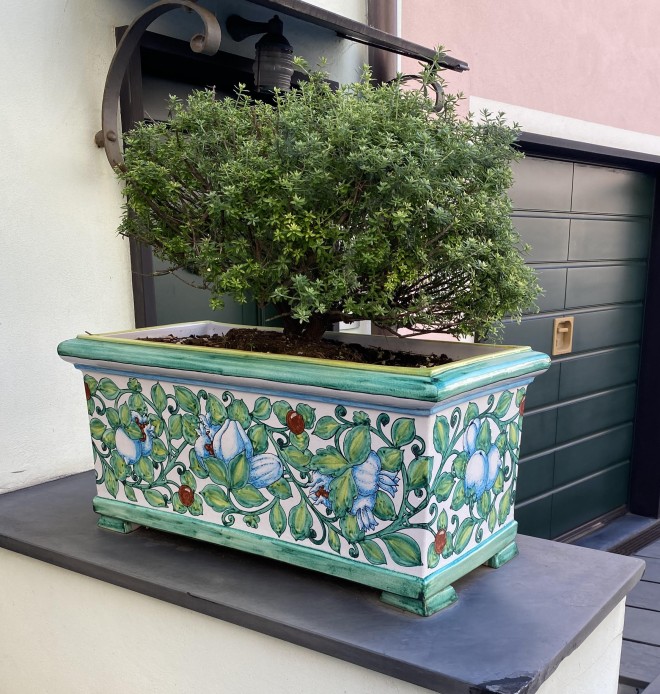
And what vase to put them in? Someone down in the village has this magnificent vase outside their front door.
My photo
After we were let out from the first Covid confinement, and finally were were able to travel down to the sea again, my wife asked the owners of that vase where they had bought it. Armed with this information, she had sent the manufacturers an email, requesting prices, delivery times, etc.. They never replied, we assume because of all the disruptions caused by Covid. We’ve never tried again, but I’m thinking that, now that I have an idea of what we could plant in that vase other than succulents, I should egg her on to have another go. Because that vase would really look magnificent on our terrace wall.
Los Angeles, 24 March 2024
Updated, Vienna, 27 September 2025
“Tutto cambia, tutto si trasforma”, everything changes, everything is transformed. My wife intones this popular Italian saying, half jokingly, every time we come across something that has changed since we last passed this way. It seems to be happening more and more frequently now, I suppose a sign that we have clocked up decades of memories and experiences on which to draw on as we move inexorably towards the exit door (cue to my wife rolling her eyes at this latest meditation of mine on the transience of all life).
In any event, I was forcefully reminded of this saying a few weeks ago when an urban walk of ours led us past one of Milan’s earliest churches, the so-called paleochristian basilicas built before the fall of the western Roman Empire. I did what I exhort all my readers to do when a church hoves into view; I popped in to have a look around. Aïe! How much had changed since this church was first built in the 380s CE: “tutto cambia, tutto si trasforma”. In a somewhat melancholy mood, I returned home and started researching the fate of Milan’s other paleochristian basilicas.
I need to give a bit of context here. Many people think that Rome was the only capital of the Roman Empire. This, as any Milanese will proudly tell you, is not so. In 286 CE, after the Roman Empire was carved into two, Milan became the capital of the western part and remained so for a little over 100 years, until 402 CE, when the capital was moved again, this time to Ravenna. There aren’t of course any pictures from that period, so I’ll throw in here a reconstruction of Milan (then known as Mediolanum) in about 300 CE.
Readers will make out the white rectangle of the forum, the circus along the edge of the city walls, to which was attached the imperial palace complex (so that the Emperor could step out into the Imperial box without leaving the palace grounds and mix with the hoi polloi), and the amphitheatre down to readers’ left. Just to get down among the hoi polloi, here’s another reconstruction of a typical day in the forum.
And in a rush of enthusiasm, I throw in another reconstruction of the hoi polloi doing their shopping along the cardo, the north-south street that passed through all fora in the Roman Empire.
In any event, Mediolanum now being the capital city, it was here, in 313 CE, that the two Emperors, Constantine and Liceus, promulgated what has come to be called the edict of Milan, which allowed the free exercise of religion throughout the Empire. While the edict formally covered all religions, it was actually aimed primarily at Christianity. The result was that Christians could finally come out of the shadows and worship freely (we’ll skip over the fact that a mere seventy years later, in 380 CE, Christians imposed their religion on everyone else in the Empire, with all other religions being forced (back) into the shadows).
Among other things, the edict of Milan meant that Christians could finally stop meeting in secret in people’s houses and build their own places of worship. They were quick to take advantage of this new-found freedom. In Milan alone, and focusing just on the big churches, within a year of the promulgation of the edict the city had its first Christian basilica. In the photo below, we have a reconstruction, in the top right, of that first basilica, while the building at the bottom left, which had been a temple dedicated to the Goddess Minerva, was converted into another basilica, which some 30 years later was knocked down to make space for a much larger church.
By the time St. Ambrose became bishop of Milan in 374 CE, the city had added two more basilicas to the list. During his tenure, St. Ambrose ordered the construction of another four basilicas, I suppose to cater to all the newly-minted Christians now that Christianity had become the State religion. And not to be outdone by St. Ambrose, the imperial household decided to build their own basilica. So by 402 CE, the year that Milan stopped being the capital of the western Roman Empire, the city had another five basilicas on the rolls. The construction of basilicas went on even after Milan’s demotion as capital, with two more basilicas being built before the final collapse of the Western Roman Empire in 476 CE.
Of course, churches continued to be built in Milan in the centuries thereafter. But I want to focus on these eleven earliest, paleochristian, churches to show that indeed “all changes, all is transformed”.
Let me first give readers a framework for these tides of change. Any of us with the minutest interest in history will know that over the arc of history we humans have been repeatedly subjected to the four horsemen of the apocalypse: Death, Famine, War, and Conquest. Here is Albrecht Dürer’s take on these four horsemen; I leave it to the readers to work out which horseman is which.
But buildings have also been subject to their own horsemen of the apocalypse. Two they share with us: War and Conquest, whole cities having been wiped out by both – and not just centuries ago. Here is a photo of Hiroshima after the atom bomb was dropped on it.
A third has been Fire, a frequent companion of War and Conquest (Dresden is an eloquent memorial to that), but also a horseman that can strike alone. It, too, has wiped out whole cities. The Great Fire of London stands out in my mind, although many other cities have been laid low by fire.
Since my subject is churches, readers should note Old Saint Paul’s burning fiercely (and that is London Bridge that we see, although it is not “falling down, falling down”, as the nursery rhyme has it).
For religious buildings in particular, I would add a fourth horseman of the apocalypse: Fanaticism, religious or otherwise. These buildings are particularly targeted, both by the mobs and by the State, as symbols of the Religious Other or of Religious Obscurantism. Here we have the Dutch Protestants smashing up one of their Catholic churches.
While here we have the French Revolutionaries being even more thorough in their destruction of a church (the church of Saint-Barthélemy), in the name of the Cult of Reason.
But buildings are also victims to the horsemen’s running dogs, to use a Maoist turn of phrase – which gives me an excuse to throw in an example from 1971 of Maoist propaganda posters: compelling art, if nothing else. The phrase at the bottom reads, I am told: “People of the world unite to defeat the American invaders and their running dogs!”
These running dogs are less extreme but no less harmful forces which have disappeared buildings (to borrow a term from the violent rule in Chile and Argentina by right-wing Army putschists back in the 1970s – I wish to show myself being even-handed in my comments of Left and Right).
One is Urban Improvement. Buildings which have had the bad luck to be in the way of some Big Man’s vision of A New City, or just the municipal government’s decision to have a wider avenue for more cars, have been unceremoniously torn down.
Another running dog is Impoverishment; buildings put up when their owners had money then slowly rot and collapse when their descendants have fallen on hard times and can’t maintain them any more. Closely related has been the running dog of Indifference. The descendants have simply preferred to spend their money, inherited or otherwise, in other ways than on maintaining old buildings.
Finally, and often most damagingly for religious buildings, there is Changes in Taste. A building considered beautiful when it was put up is thought, several centuries later, to be ugly, or embarrassingly old-fashioned, or both. It absolutely needs a make-over! Closely related, again mostly for religious buildings, is Showing Off: the desire by the rich and powerful to preen their social feathers by paying for the addition of extra elements such as chapels to existing venerable structures, often to the aesthetic detriment of the whole.
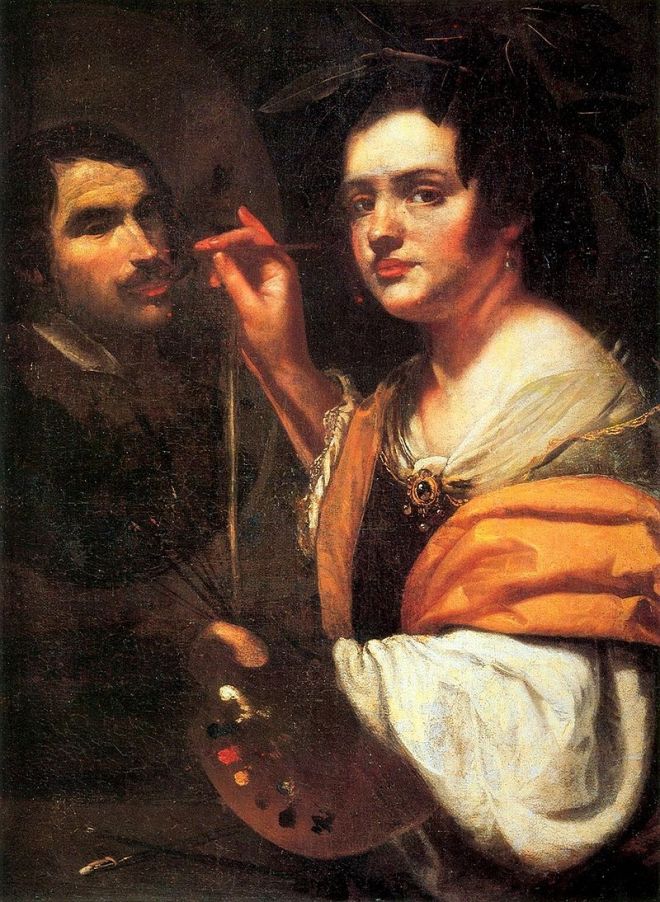
So how have our eleven basilicas fared in the face of their four horsemen of the apocalypse and the five lesser running dogs? Before answering that, I think it is time to give a name to these eleven churches, to make this more personal. We have:
The basilica vetus (the old basilica), built in 314 CE, later renamed the basilica of Santa Maria Maggiore;
The basilica nova (the new basilica), built in about 350 CE, later renamed the basilica of Santa Tecla;
The basilica portiana (the Portian basilica), built in the first half of the 4th Century CE, later renamed the basilica of San Vittore al Corpo;
The basilica trium magorum (basilica of the three Wise Men), built around 344 CE, later renamed the basilica of Sant’Eustorgio;
The basilica prophetarum (basilica of the Prophets), built in the late 370s CE, later renamed the basilica of San Dionigi;
The basilica martyrum (basilica of the Martyrs), built in the early 380s CE, later renamed the basilica of Sant’Ambrogio;
The basilica apostolorum (basilica of the Apostles), also built in the early 380s, later renamed the basilica of San Nazaro in Brolo;
The basilica virginum (basilica of the Virgins), built in the 380s-390s CE, later renamed the basilica of San Simpliciano;
The basilica palatina (the Palatine basilica), built in the 390s-410s, later renamed the basilica of San Lorenzo Maggiore;
The basilica evangeliorum (basilica of the Evangelists), built in the first half of the 5th Century CE, later renamed the basilica of San Giovanni in Conca;
The basilica sancti Calimerii (basilica of Saint Calimerius), also built in the first half of the 5th Century CE, which kept the Italianised name of Santo Calimero.
Well, the first thing to say is that within no more than 150 years of being built, the eleven original buildings were all razed to the ground by the horseman of War, in the form of Attila the Hun. As part of his rampage through northern Italy in 451-452 CE, his army besieged Milan, broke through its defensive walls, and laid the city to waste. Of course, no-one at the time recorded this momentous event pictorially, so I throw in here a re-construction of the Huns looking suitably menacing under the walls of a city.
As I’ve mentioned in a previous post, prior to arriving beneath the walls of Milan, Attila had completely destroyed the city of Aquileia. He moved on from there and meted out the same fate to the city of Padova. He richly deserved his nickname the Scourge of God. Aquileia never recovered, but Milan (and Padova) did. Among other things, the basilicas were rebuilt.
Alas! A mere 90 years later, in 538 CE, the horseman of War came galloping over the horizon again, this time in the form of an army of Ostrogoths and Burgundians under the command of a certain Uraiah. Once again, the city was besieged, the walls were eventually pierced, and the city was razed. Worse, all the male citizens were killed and all the female citizens handed over as slaves to the Burgundians, as payment for their part in the siege. Again, no-one at the time recorded these hideous events pictorially, but there is a painting in the basilica di Sant’Eustorgio from the 17th Century which formally is about the Massacre of the Innocents but is thought to actually be about the massacre of the Milanese by the Ostrogoths and Burgundians.
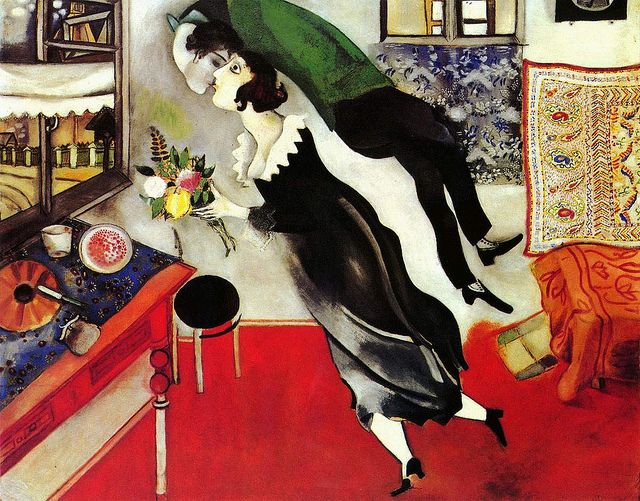
Not surprisingly, it took Milan much longer to recover from this devastation, several centuries actually. But it did, and the basilicas were once again rebuilt.
Next on the scene was the horseman of Fire. In 1071 and 1075 CE, Milan suffered two devastating fires which burned down whole swathes of the city, much of whose houses were close-packed and built of wood. We have here a picture from an illuminated manuscript of a town going up in flames.
In the ensuing conflagrations, the basilicas of San Lorenzo Maggiore, in 1071, and, in 1075, San Nazaro in Brolo and Santa Tecla were badly damaged.
If I use these churches’ later names it’s that by now naming habits had changed. Churches were named after a particular saint rather than a group of saints as had been the case when these churches were first built – “tutto cambia, tutto si trasforma”.
Once again, the Milanese rose to the challenge and rebuilt the burnt basilicas. But – “tutto cambia”, etc. – building styles had evolved in the intervening centuries. The churches were now being rebuilt in the Romanesque style. Here is a reconstruction of Santa Tecla from around this time. As readers can see, the basilicas all probably looked very much like the basilicas in Ravenna, with beautiful mosaics running along the walls. Given my predilection for early Christian mosaics, I personally grieve that Milan has lost nearly all of these mosaics.
A mere 90 years after these devastating fires, in 1161, the horseman of War came riding again, this time in the form of Frederick Barbarossa (Red Beard), Holy Roman Emperor. As we shall see, he also brought with him the horseman of Fire.
He had already laid siege to the city two years earlier, had starved its populace into submission, and had forced them to accept humiliating terms. Here is a painting from 1891 by a Polish artist, Jan Czeslaw Moniuszko, which shows Barbarossa and his troops attacking the walls of Milan.
Once Frederick was gone, the Milanese had quickly reneged on the terms and taken up arms again. This time, Barbarossa was determined to grind Milan’s face into the dirt. In this, he was actively supported by the nearby cities of Lodi, Novara, Como, Cremona, and Vercelli, whose citizens were both afraid of, and jealous of, Milan’s growing power; they had allied themselves with Barbarossa in the hope that he would cut Milan down to size. Once again, the city was besieged, and once again its citizens were starved into submission. Here, in a 19th century imagining, we have the consuls of Milan coming before Barbarossa begging for mercy.
But this time, not only did Frederick impose even more humiliating terms on the Milanese, he also had his allies burn Milan to the ground, with each allied city being responsible for one district (very methodical …). But he decreed one exemption, the places of worship – he was a Christian, after all. So our basilicas more or less got through this one unscathed (more or less because some of them do seem to have got badly singed).
The basilicas now got a break from the horseman of War for 800 years, but the running dogs got to work. Because of them, four basilicas never made it down to us. Two, Santa Tecla and Santa Maria Maggiore (which were very close to each other), fell victim to the running dog of Urban Improvement, in this case in the form of a desire by the City Fathers to build in their place a much bigger and more splendid cathedral, the current Duomo of Milan (the centuries-long story of its construction is the subject of an earlier post). For reasons which will become apparent in a minute, I choose a photo of a painting of the Duomo as it was in 1819.
Sant Maria Maggiore was completely destroyed. A very small part of Santa Tecla survived as part of the shops that crowded in on the Duomo (those shops we see on the left of the painting), but that finally also disappeared after the running dog of Urban Improvement came along again in 1865, when the city fathers decided that there was a need for a grand, and large, piazza in front of the Duomo. The buildings in the painting above were all torn down to make the grand – but rather barren – piazza that we have today.
Source
Two other basilicas fell victim to the double whammy of, first, the horseman of Fanaticism, and then the running dog of Urban Improvement. Fanaticism led to the monasteries which had become attached to the basilicas being closed down and to the monks who had looked after them being kicked out. This was done by Emperor Joseph II of Austria (Milan was in Austrian hands at this time) in the name of bringing the Catholic Church to heel and modernising it. Urban improvement took different forms. In the case of the basilica of San Dionigi, it meant that church and monastery completely disappeared as all its lands were turned into a very pleasant public park which is still with us today, the giardini Indro Montanelli.
In the case of the basilica of San Giovanni in Conca, Urban Improvement meant a widening of streets and a mad plan, dreamed up after World War II, to drive a new avenue right through the old city centre. The church being in the way, it was unceremoniously torn down. The new avenue was never built (luckily for us; by my calculations it would have gone right through where our apartment building is). But by then it was too late for the church. All that’s left of it is this miserable-looking ruin sitting forlornly in the middle of a busy road.
Source
At this point, I’m reminded of the American children’s counting-out rhyme “Ten Little Injuns”, whose first couple of lines go like this:
Ten little Injuns standin’ in a line,
One toddled home and then there were nine;
Nine little Injuns swingin’ on a gate,
One tumbled off and then there were eight.
And it goes on until there are no little injuns left.
To paraphrase the song:
Eleven basilicas built way back when,
Two were eaten up and then there were nine.
Nine basilicas still around,
Two were in the way and then there were seven.
So seven of Milan’s original eleven paleochristian basilicas have managed to stagger on into our modern age. But … “tutto cambia, tutto si trasforma”! None of them look anything like the original Roman-era basilicas. Not all of them even look like the Romanesque churches that replaced them after the disasters of Attila, the Ostrogoths, Barbarossa, and various fires. And even if they appear Romanesque, what we see today is someone’s guess as to what the Romanesque versions of the churches looked like. Let’s look at them one by one.

I start with the basilica di Sant’Ambrogio because it is a mere 10 minutes’ walk from where my wife and I live in Milan, and we often go by it on our various walks. It is also the one that at first glance seems to have changed the least since its rebuilding in the Romanesque style in the 1090s CE. And even in the Romanesque rebuild we see the ghost of the original Roman basilica; the 11th Century builders scrupulously maintained the original building’s floor plan. Here we have some photos of this delightful building. This first shot shows how the church is seen from the road in front of it.
As readers can see, the façade of the church is obscured by some building whose immediate purpose is not clear. The visitor first has to enter this building to enter the church proper. It turns out to be an enclosed courtyard, or – to give it its Latin name – atrium.
It’s interesting that this atrium has come down to us. When the original Roman basilica was built, the atrium had a precise function. At some point during the Liturgy, the catechumens, people who were not “full” Christians yet because they had not yet been baptised, had to file out into the atrium because they were not allowed to be present for the full Liturgy. By the time the church was rebuilt in Romanesque style, this function was meaningless because by then all Christians were baptised at birth. Luckily, it was decided to keep it and use it instead to hold various meetings. So this very early Christian architectural element has managed to make it down to us.
The interior shows the clean, simple lines of the Romanesque style.
In this last photo, readers can glimpse the magnificent mosaic in the apse. Here is a closer look at it – because of the ciborium over the high altar, it’s difficult to get a clean view.
It was originally laid down in the 8th Century, some three centuries after the disaster of the Ostrogoths. From a century later comes the main altar, a magnificent piece of Carolingian goldsmithing.
The ciborium under which the altar sits is equally magnificent, but readers will have to go and visit Sant’Ambrogio to hear about it. I want instead to take readers to a small side chapel, San Vittore in Ciel d’Oro, where some even earlier mosaics, laid down between the sacks of the city by the Huns and the Ostrogoths, by some miracle managed to survive. We see here the cupola of this little chapel, with its mosaic field of gold surrounding a portrait of Saint Victor.
Sharp-eyed readers will have noted that the walls below the cupola carry mosaics of some serious-looking fellows dressed in togas. These are various saints and early martyrs. I show one of these, the mosaic of Saint Ambrose, because contrary to the others it is said to be an actual likeness of the saint, the oldest in existence.
Yes indeed, the basilica of Sant’Ambrogio doesn’t seem to have changed terribly much since its Romanesque incarnation. But alas! It has changed. Because a mere 80 years ago the horseman of War came riding back to Milan in the form of massive bombing raids during World War II. The first of these was on the night of 24/25 October of 1942. There was a second such raid in mid-February of 1943. The climax was four nights in August. These were all raids which, like the infamous bombing raid on Dresden in 1945, a photo of which I give above, deliberately tried to burn the city down by creating a fire storm. Luckily, by the 20th Century there wasn’t that much wood left in Milan’s buildings so a fire storm wasn’t started. Nevertheless, 50% of the city’s buildings were destroyed or damaged. And one of the buildings which was badly damaged was Sant’Ambrogio.
Restorers did a good job after the war in putting the basilica back together again, but you can tell that much of the brickwork is new, as are many of the tesserae in that magnificent mosaic in the apse.
“Tutto cambia, tutto si trasforma”.
Normally, we would next look at the basilica of San Lorenzo. It’s even closer to our apartment in Milan, a mere five minutes’ walk away, and we go by it very often on our way down to Milan’s canals. In fact, we go by it so often that I wrote a whole post about it a few years back, so I will refer readers back to that post.
Logically, the next basilica to consider is the basilica of Sant’Eustorgio. I say logically because there is now a park, il parco delle Basiliche (or, to give it its new name, parco Giovanni Paolo II), which runs between San Lorenzo and Sant’Eustorgio (a park whose creation was much helped by the bombing during World War II; the houses standing on what is now the park were so badly damaged that it was decided to simply tear them all down and create a park in their place). When you enter the park at its northern end, you have this wonderful sight of the venerable pile of San Lorenzo behind you. But very, very little of what we see comes from the original Roman-era basilica, and even from the Romanesque version.
Then the walk southwards through the park brings you to Sant’Eustorgio, which stands at the southern end of the park. There’s no striking view of the church from the park itself, so it’s best to make one’s way round to the front, where one is confronted with this view.
The first thing one notices are the accretions on the church’s side. Unfortunately, the church has suffered badly from the running dog of Showing Off: chapels have been added to the side of the original Romanesque church, paid for by rich Milanese families who wanted to add lustre to their family name. They may be quite pretty in and of themselves; indeed, there is a very lovely one at the back of the church which has been the subject of a previous post of mine. But they have destroyed the original harmony of the church.
The second thing to notice is the façade. It looks quite original, but actually it is the result of a restoration carried out in the mid-1860s. The restoration was certainly done in the spirit of what we know Romanesque façades looked like in northern Italy from the few original examples still with us, but it’s unknown what the original façade of Sant’Eustorgio actually looked like. When all is said and done, though, it was probably better to carry out this restoration than not – this is what the façade looked like prior to the restoration.
It was the subject of a sensitive restoration in the late 19th Century, where the restorers simply stripped away the Baroque and Neoclassical accretions and tried to bring the structure back as closely as possible to its Romanesque forms. Of course, the Romanesque builders would never have left the church as naked as it is now, they would have covered everything with frescoes. But those are pretty much all gone. As readers can see in the photo above (especially visible on the columns), the restoration brought to light a few shards of the original frescoes. But of the original mosaics which must have graced the Roman-era basilica, nada, all gone.
“Tutto cambia, tutto si trasforma”.
There is one curious artefact in the basilica, and it is this:
“This” is claimed to be the sarcophagus of the Three Wise Men (“We three kings of Orient”, as the well-loved Christmas carol goes). It is fundamental to the basilica’s foundational story. It is said that Eustorgius went to Constantinople when the Milanese chose him to be their bishop, to obtain the approval of the Emperor. Not only did the Emperor approve the choice, but he also gave Eustorgius this enormous sarcophagus which contained the relics of the Three Wise Men, to take back to Milan. Eustorgius’s original idea was to place the relics in the basilica of Santa Maria Maggiore. But the poor oxen which were pulling the cart on which this humongously heavy sarcophagus had been placed “inexplicably” came to a stop where the basilica is now and refused to go any further. Given the weight of the sarcophagus, I think the oxen’s refusal to move another hoof is perfectly explicable, but Eustorgius took this to be a divine sign that a new basilica should be built on this spot to house the relics. Thus was the original Roman-era basilica built.
If I tell this little story, it is because in the succeeding centuries those relics made the basilica famous, attracting flocks of pilgrims (and their money, the cynical me thinks to himself). Which allows me to highlight one of the side-effects of the passage of the horsemen of War and Conquest: looting. In this case, the looting took place during the burning to the ground of Milan by Frederick Barbarossa. One of Barbarossa’s principal advisors during this campaign was Rainald von Dassel, who also happened to be the Archbishop of Cologne. He carried the relics off as war booty to grace his cathedral in Cologne, where they were brought in with much pomp and subsequently housed in this magnificent reliquary (made by Nicolas de Verdun, who also made a magnificent altarpiece housed in the Abbey church of Klosterneuberg near Vienna, which I’ve written about in an earlier post).
For centuries, the religious leaders of Sant’Eustorgio pleaded to have their relics back, but successive archbishops of Cologne turned a deaf ear. It was only in 1903, after a cardinal brokered a deal, that a small portion of the relics were given back.
I shall quickly pass through the fate of the remaining four basilicas.
For the basilica of San Simpliciano, I refer readers to a post I’ve already written about it. Suffice to say that it went through the same treatment as Sant’Eustorgio: accretions of chapels in a completely different style, a restyling of the whole church in baroque and neoclassical style, and then a restoration – this time in the 20th Century – trying to bring it back to its essential Romanesque simplicity. I throw in a photo of the exterior and interior.
The best thing in this church is the painting in the apse; you can just see it in the photo. Any readers who are interested in that painting should go to my post on San Simpliciano, where I tell its story.
It was a visit to the basilica of San Nazaro in Brolo that started me on this post. Its Romanesque version endured the same fate as Sant’Eustorgio and San Simpliciano: remodelling and remodelling and remodelling of the interior with each successive Change in Taste (that running dog really ran wild here), followed by a stripping back during the late 20th Century to the original simple lines. But in addition, the running dog of Showing Off really sunk its teeth into the church’s structure. During the Renaissance, a family from Milan’s elites decided to attach their mausoleum to the church. And they didn’t just attach it to the side of the church, like a chapel. They attached it to the façade! So the poor church has permanently lost its façade, its place being taken by a square building housing the tombs of this elite family. To enter the church, one has to pass through the mausoleum.
It’s all very well to say that the Mausoleum was designed and built by Bramantino, it’s still a terrible desecration of the church!
As for the basilica of Santo Calimero, it is a poster child to bad restoration. Like the others, its Romanesque version went through various remodellings as tastes changed. It was then “restored” in the late 19th Century into someone’s idea of Romanesque, which is more pre-Raphaelite than anything else. In great distress, I throw in a photo of the mosaic that was laid down in the apse.
Which leaves the basilica San Vittore al Corpo. Well, there it wasn’t a question of remodelling. When the church, in a rather pitiful state it has to be said, was handed over to the Olivetans in 1507, they decided to simply tear down the whole building and rebuild it in the “modern” style. They also completely turned it around, with the choir where the entry used to be and the entry where the choir used to be. So it’s difficult to say that anything of the original church has remained. It is therefore with great sadness that I insert a photo of the church’s hideous façade and of its equally hideous interior.
“Tutto cambia, tutto si trasforma”. My wife is indeed right (as always). We cannot freeze things as they used to be, much as I sometimes would like to. We just have to be grateful that some of the wonderful things our ancestors created have come down to us in not too bad a shape and can only fervently hope that they will still be there for our descendants to admire in 2,000 years’ time.
I’ve been meaning to write this post for a while. But for reasons that I cannot explain, I have procrastinated. Nevertheless, I have finally got myself to put pen to paper and get to work.
The germ for the post was planted several years ago during a hike my wife and I were taking along the edges of Lake Como. We dropped into a café to have ourselves a cappuccino. There, on a shelf, the café owner had lovingly placed a long row of bottles of gin, all of them some strange colour: pastel yellow, blue, or even – I think – pink. I say “I think”, because the memory of it all is somewhat fuzzy now. At the time, I took a photo of that row of bottles to show to my readers – as I say, I thought immediately of writing a post about gin – but somewhere along the line I decided to delete it, convincing myself I would never get around to writing the post. This photo, which I created with a bit of photoshopping, will have to stand in for that initial vision of mine.
many sources
All those coloured gins startled me. I have since read on the internet that this is the latest fad in gin making – or perhaps, to put it a little more cynically, the latest way for gin makers to differentiate themselves from their competitors. As one internet entry puts it, “coloured gins are having a moment, the latest phase in the great craft gin revival. You can now choose from a whole spectrum, including pink grapefruit gin, Amalfi lemon gin the colour of a pale sunrise, bitter orange gin like alcoholic marmalade and lavender gins that change colour on contact with tonic. But the most popular is violet.”
I dislike to think of myself as a traditionalist, I’ve always been suspicious of tradition, but hello! coloured gin! what is the world coming to?! I am firmly of the opinion that gin should be a colourless liquid to which you add things to enhance its basic taste and possibly – just possibly – add colour.
Talking of gin’s basic taste, I think we all know that this primarily comes from the addition of juniper berries, from juniper trees like this beautiful example.
Juniper is after all in the drink’s name. The ancestor of British gin is Flemish/Dutch jenever. Jenever making was brought to England by traders or by English soldiers returning from fighting in the Low Countries. Linguistic laziness eventually shortened jenever to gin. But my surfing has shown me that today’s gin makers add other “botanicals” to their gin, to distinguish it from everyone else’s. Citrus “notes” seem to be important, imparted by the addition of the peels of lemon, or bitter orange, or lime, or grapefruit. Then small amounts of all manner of spices can be added: anise, fennel, caraway, coriander, licorice, orris, longan, baobab, savory, angelica, cardamom, grains of paradise, cubeb, cinnamon, cassia, nutmeg, almond, saffron … the mind whirls in front of this veritable cornucopia of spices.
And it doesn’t finish there. Even pine needles and cones can be added, or frankincense! Of course, which extra “botanicals” are added are closely guarded secrets.
I wouldn’t want readers to think I am a frequent drinker of gin – unlike the late Queen Elizabeth, who was, I was somewhat astonished to learn, still knocking back two gin-based drinks daily in her nineties: a gin and Dubonnet with lots of ice before lunch, and a dry martini after it.
Several sources
I will just have a gin and tonic from time to time, when the fancy takes me – and when the ingredients are available. Harking back to my earlier harrumphing, readers will see that a G&T is satisfactorily colourless.
I am glad to see that I am in good company in my fondness for G&T. Philip Larkin, a poet whom I greatly admire, was an aficionado. We have him here nursing a G&T.
He once wrote to his lover: “life is very narrow without glasses OF GIN AND TONIC”. Note the capital letters and the plural “glasses” – he imbibed considerably more gin and tonic than I do. He even devoted several lines of one of his poems, Sympathy in White Major, to the making of a gin and tonic:
When I drop four cubes of ice
Chimingly in a glass, and add
Three goes of gin, a lemon slice,
And let a ten-ounce tonic void
In foaming gulps until it smothers
Everything else up to the edge,
I lift the lot in private pledge:
He devoted his life to others.
But in my mind the G&T is also firmly anchored to the colonial period of India, where it was particularly popular among the British colonialists. I’ve read that their excuse for quaffing large amounts of G&T was to ingest quinine as a prophylactic against malaria – tonic water contains quinine. Malaria was certainly a problem in India – my father contracted it while a colonialist in India – but I’ve also read that actually this can only have been an excuse, because there isn’t enough quinine in tonic water to work as a prophylactic. In any event, I throw in a photo of two British colonialists languidly seated and being fanned by an Indian servant. On the table, one can make out what seems to be a glass of G&T.
Although I am now firmly in the G&T camp, my gin drinking habit didn’t start there. I began knocking back gin when I was 17, maybe even 16 – yes, it was easier to get served in pubs when I was young – and my gin drink of choice was what I remember being called a gin and lime, although the proper name for this drink seems to be a gimlet. Again, I am pleased to know that I was in good company. Gimlets play a not insignificant role in Raymond Chandler’s book “The Long Goodbye”.
Early on in the story, the hero, or maybe we should call him the anti-hero, the “hard-boiled” detective Philip Marlowe, meets a friend, who happens to be British, in a bar:
We sat in a corner of the bar at Victor’s and drank gimlets. “They don’t know how to make them here,” he said. “What they call a gimlet is just some lime or lemon juice with a dash of sugar and bitters. A real gimlet is half gin and half Rose’s Lime Juice and nothing else. It beats martinis hollow.”
My British grandmother often had a bottle, but not for making gimlets; I don’t remember her ever drinking anything stronger than a dry sherry. She would make lime drinks for us grandchildren, adding water to a generous portion of Rose’s Lime Juice. Yes, I have very fond memories of that cordial. My reading tells me, though, that today’s mixologists (strange word …) pooh-pooh on Rose’s Lime Juice in its modern form, considering it far sweeter than the Lime Cordial made by the original Mr. Rose. As a result, there is a cottage industry in the production of lime cordials considered to be closer to the Real Thing, and the gimlets made with these revisited cordials are claimed to taste much better. If ever I end up in some bar offering one of these alternative lime cordials, I might try a gimlet. Otherwise, I’ll stick with my G&T, thank you.
Chandler’s tales of Marlowe are great, by the way. If any of my readers have never dipped into them, I highly recommend they pick up a copy. And of course, a good number of his books have been turned into films over the decades. Liam Neeson is the latest well-known actor to play Marlowe, but there have been a number of others before him: Elliott Gould, Robert Mitchum, James Garner, Robert Montgomery. But to my mind by far the best Marlowe was Humphrey Bogart, who back in 1946 played him in “The Big Sleep”.
It was also Bogart who, in “Casablanca”, after Ingrid Bergman has entered his nightclub, talked to him, and left, utters the anguished phrase: “of all the gin joints in all the towns in all the world, she walks into mine.”
Marlowe’s friend in “The Long Goodbye” says gimlets beat martinis hollow. I wouldn’t know, I don’t think I’ve ever had a martini. But I’m sure James Bond – who must be the best known martini drinker in the world – would have disagreed. Here, turning to films again, we have Sean Connery, the greatest of all the James Bonds (at least that’s what I think), preparing himself a martini.
Mind you, I don’t think Bond’s martini is quite the Real Thing, which I read should be a mix of gin and dry vermouth – the precise ratio is of course a source of heated debate in certain mixological circles but the current consensus seems to be around 5 parts gin to one part vermouth. The two should be poured onto ice cubes, stirred not shaken, strained into a chilled cocktail glass, and served with a green olive or twist of lemon peel as garnish.
In his book “Casino Royale”, however, Ian Fleming has Bond ordering another kind of dry martini at the bar in the casino:
‘A dry martini,’ he said. ‘One. In a deep champagne goblet.’
‘Oui, monsieur.’
‘Just a moment. Three measures of Gordon’s, one of vodka, half a measure of Kina Lillet. Shake it very well until it’s ice-cold, then add a large thin slice of lemon peel. Got it?’
Sounds like a bit of a Frankenstein martini, if you ask me. And Bond’s well known comment “shaken, not stirred” has mixologists shaking their head in disapproval; it should be the other way around. I’m sure that other famous martini drinker, the late Queen, would have pursed her lips in disapproval, even though, as we know since the 2012 London Olympics, she and Bond were BFFs.
This mention of the House of Windsor lets me segue smoothly to another gin-based drink which I have also never tried, a fruit-based punch using Pimm’s No. 1 Cup as the base. To make it, get a bottle of Pimm’s No. 1 Cup.
This is basically gin in which a whole lot of herbs and some citrus have been macerated; quite what herbs and citrus we are talking about is – of course, as usual – a closely guarded secret. Pour a slug of this potion into a jug, add a generous portion of lemonade, and then bung in sliced and diced vegetables and fruit; which vegetables and fruit exactly is up to you, but I’ve seen mention of cucumbers and celery on the vegetable side and orange and strawberries on the fruit side. The end result will look something like this.
This seems to be quite a posh drink. For instance, we see here King Charles, at a time when he was still a young Prince Charles, gulping down a Pimm’s at a polo game – note polo game, not a football game or rugby game or some other game which we normal mortals take part in or watch.
Following suit from the Royals, the other race goers deck themselves out in their finest, the ladies with those ridiculous hats English women love to wear, the gents in morning suits, which are equally ridiculous.
It’s also very popular at the Henley Royal Regatta, where anyone who is anyone wears a blazer (I think to signal that they belong to a boat club somewhere).
Although not quite in the same posh league these days, Pimm’s is also quaffed in large quantities at Wimbledon. Just because I find him very simpatico, I throw in a photo of Stanley Tucci at Wimbledon clutching his Pimm’s.
I think readers will get the general idea from what I have written above that gin is a very respectable drink these days. Which was certainly not the case a mere three hundred years ago. In the early 1700s, the British government decided – as an anti-French move (so what’s new…) – to greatly increase import duties on French brandy. At the same time, it made it much, much easier for people to get into the business of making gin: it broke the monopoly of the London Guild of Distillers on the making of spirits, it reduced taxes on the distillation of spirits, and it revoked the need for a license to make spirits. Add to this the fact that this was a period which saw a drop in the prices of barley – used to make the mash, which was then distilled to obtain the spirits – which very much helped to make the final product cheap. Add also to this the fact that there was a general rise in salaries (from absolutely wretched to slightly less so) and a concomitant general drop in food prices, which meant that the poor had somewhat more disposable income to spend on liquor. Add all of that up and you have the makings of a perfect storm. Thousands of people all over the country got themselves a pot still and started making gin. This is a pretty simple type of pot still.
Many of these new gin makers opened gin-shops to sell their rot-gut. Here, we have a print of a gin shop made towards the end of the 1700s (note that it’s all women and one child; commentators of the time were particularly exercised that this was not just a problem with men).
Many others simply made it at home in their kitchen for their personal consumption.
And rot-gut it was! Pot stills produced a very coarse product, and some pretty awful things were added to make it more palatable. Turpentine was one, to give the stuff “woody notes”. Sulphuric acid was another, although luckily the acid didn’t distill over with the ethanol; it merely reacted with it to form diethyl ether, which added a sweetish taste to the product.
The awful taste didn’t seem to matter very much. People, especially the poor, began drinking huge amounts of gin. What came to be known as the Gin Craze had started. Quite soon, the authorities realised they had a serious social problem on their hands as drunkenness and disorderly behaviour – especially among the poor and involving women as much as men – became endemic. William Hogarth’s print, “Gin Lane”, gives an idea of how the governing classes saw the problem.
By 1736, the Middlesex Magistrates had this to say: “It is with the deepest concern your committee observe the strong Inclination of the inferior Sort of People to these destructive Liquors, and how surprisingly this Infection has spread within these few Years … it is scarce possible for Persons in low Life to go anywhere or to be anywhere, without being drawn in to taste, and, by Degrees, to like and approve of this pernicious Liquor.”
Already in 1734, the story of one Judith Defour had shocked the nation – or at least the superior Sort of People. Judith had taken her two year old daughter out of the workhouse, where she had placed her earlier, for a visit of a few hours, and had met up with her friend Sukey. The court records document what followed:
“On Sunday night we took the child into the fields, and stripp’d it, and ty’d a linen handkerchief hard about its neck to keep it from crying, and then laid it in a Ditch. And after that, we went together and sold the coat and stay for a shilling, and the petticoat and stockings for a groat. We parted the money, and join’d for a quartern of gin.”
The little girl died in the ditch. Defour was found guilty of murder and sentenced to death, and hanged at Tyburn (note the grandstands; this was spectacle indeed).
The public outrage over this story forced Parliament to act. Over the next fifteen years, various laws were passed which eventually brought gin drinking under control.
It’s hard not to read about the Gin Craze and think about today’s opioid crisis, or the crack epidemic of the 1980s, or the many previous epidemics of heroin, amphetamines, morphine, and on and on. Different chemicals, same problem: the desire – the need – to dull the pain of living, and a ready supply of cheap chemicals to do it.
And on that sombre note, I will finally crack open a bottle of – colourless – craft gin someone gave us, aromatised – so the label informs me – with juniper of course, but also orange peel, cardamom, angelica root, coriander, ginger, cinnamon, and maybe a few other things, and, more or less in Larkin’s words:
I’ll drop four cubes of ice / Chimingly in a glass, and add / Three goes of gin, a lemon slice, / And let a ten-ounce tonic void / In foaming gulps until it smothers / Everything else up to the edge. / And then I’ll lift the lot and ask myself:
“Am I a superior Sort of Person or an inferior Sort of Person?”
On this day when we celebrate the birth of a child, I send an electronic Christmas card to my readers. It is a bas-relief of a Madonna and Child. My wife and I saw it last year at the exhibition which was held of Donatello’s work in Florence. It looks so modern, yet Donatello sculpted it nearly 600 years ago, in 1425-1430.
At the end of October, my wife and I did a two-day hike from Gubbio to Assisi, along the Via di San Francesco. As the trail’s name suggests, it centres around the life and times of St. Francis of Assisi. As befits any saint from the Middle Ages, he was the protagonist of a great number of stories, many of which became the subject of the late 13th Century frescoes painted in Assisi and elsewhere after his death in 1226. I will choose some of these to illustrate stories which took place in the localities linked by the trail.
To the north of Assisi, the trail starts at La Verna, where Francis received the stigmata.
As for the southern portion of the trail, it starts in Rome, where Francis went a number of times to keep his movement on the right side of the Church authorities – this fresco depicts his critical first meeting with Pope Innocent III, to receive the pope’s blessing for his nascent movement.
It goes on to Rieti, where Francis came many times. His last visit was shortly before his death, to have an operation on his eyes – he had become nearly blind (the operation failed, alas).
Nearby, while resting and preparing for his operation, he worked on his Canticle of the Sun:
“Be praised, my Lord, through all your creatures,
especially through my lord Brother Sun,
who brings the day; and you give light through him.”
He goes on to praise “Sister Moon”, “Brother Wind”, “Sister Water”, “Brother Fire”, “Sister Mother Earth”. He completed the last verse on “Sister Bodily Death” as he lay dying in Assisi soon after.
In nearby Greccio, he created the first living crèche, using locals as the actors in the drama. It was his way of telling the Christmas story to rural folk, who couldn’t understand the Latin in which the story was normally told.
And it, too, of course ends in Assisi, where Francis’s spiritual journey began and ended. Of the many stories about him that happen in the town, I choose two:
His renunciation of his father and family, stripping himself naked in the town’s piazza and giving his clothes back to his father;
And then there is the tiny church of Porziuncola down in the valley below the town, which Francis had rebuilt and where he loved to spend time. Here is an artist’s rendering of what it looked like in his day. Those two rows of little huts are where the friars stayed.
It was in that church – chapel, really – that Francis heard the priest read out from the Gospel of Matthew the passage where Christ sends his disciples far and wide to proclaim the Good News, with the following instructions: “You received without charge, give without charge. Provide yourselves with no gold or silver, not even with coppers for your purses, with no haversack for the journey or spare tunic or footwear or a staff, for the labourer deserves his keep.” Then and there, he decided that he and his followers would do the same. Thus was born the order of mendicant friars which was to take his name, the Franciscan Order.
Funnily enough, this momentous decision doesn’t feature in any of the frescoes about him – at least, none that I have found. But other stories involving Porziuncola have been the subject of frescoes. I choose three:
His welcoming of Clare when she ran away from her family to join Francis’s movement and eventually established the Order of Poor Clares;
After our two days of hiking, my wife and I spent a day in Assisi. Alas, I can’t say that I liked the town in its modern guise. It’s just a tourist trap, crowded, full of shops selling tourist tat and restaurants selling overpriced food.
Francis would have been horrified at all these shops pushing tourists to consume – and in his name at that. I rather think – I hope – that like Jesus in the Temple in Jerusalem he would have gone after all these sellers of tat. Turning once again to Matthew: “Jesus then went into the Temple and drove out all those who were selling and buying there; he upset the tables of the money-changers and the seats of the dove-sellers. He said to them, ‘According to scripture, my house will be called a house of prayer; but you are turning it into a bandits’ den.'” I throw in a painting by El Greco of Jesus wielding the whip in the Temple, one that always comes to my mind when I see these shops in places that are supposed to be havens of religion.
But even the basilica of St. Francis, which one reaches after braving the tourist shops and overpriced restaurants, disappointed me. Yes, it is full of art whose creation supposedly kick-started the Italian Renaissance, and I’ve used many of its frescoes above as illustrations. But I was struck by something I read. In his testament, Francis had specified where he wanted to be buried in Assisi. It was at the far end of the town, its lower end. It was here that convicts were executed and the town’s lepers and other outcasts congregated. Its noisome reputation led to the area being called the “collis Inferni”, the hill of Hell. Francis had often spent time on that hill, ministering to the wretched who eked out a living there. It was of a piece with his beliefs to want to be put to rest in a humble grave among the lowest of the low. Yet, the Church authorities, actively supported by the Franciscan Order’s hierarchy, were having none of that. It was decreed that a splendid basilica would rise on the collis Inferni, turning it into the “collis Paradisi”, the hill of Paradise.
Poor Francis must have been spinning in his coffin when he was finally interred in that basilica, four years after he died. It was a betrayal of everything he stood for.
As for Porziuncola, that humble chapel so beloved by Francis, Pope Pius V in the 16th Century ordered a huge church to be built, Santa Maria degli Angeli.
The ostensible reason for building the church was to better control the flow of pilgrims. The guide books are at pains to point out the bareness of the interior of this mastodontic church, as proof of its respect for Francis’s vows to Lady Poverty. But, standing on the square in front of the church, it is difficult not to see this as one more example of the Church authorities glorifying themselves. I’m certain that Francis would have been horrified.
As I’ve said in an earlier post, I am a great admirer of Francis – not the religious side of him; as I’ve said in another post, I am an atheist and have been since I fell off the straight-and-narrow as a student at University. But his turning away from the material side of life – a core part of the Rule he wrote for his friars being that they should own nothing – makes him truly a man for our times.
I hardly ever allow my professional work to leak into my posts, but today will be different; I suppose it’s because I’m writing this post in Kyoto where I am giving my annual course to university students on precisely this: how we can build a society that has a much smaller footprint. What I tell my students is that after working for 45 years in the environmental field, I have become convinced that our excessive consumption is literally destroying our planet. Look at these photos taken by Peter Menzel. He travelled to different countries and invited households whom he met to put everything they owned out on the street in front of where they lived. This photo is of a family somewhere in North America, a place with one of the highest levels of per capita consumption in the world.
This is all worrying enough. But what’s even more worrying is that people who live in less developed countries, whose levels of ownership and consumption of stuff are still modest, like South Africa
they want to have the same levels of consumption as the richer countries.
That impulse is perfectly understandable. But it cannot be. We cannot all consume at the levels of that North American family, or even of that Japanese family. We must heed Francis’s call to adopt a life shorn of stuff. We must – we must – reduce our levels of consumption, or else we will face an ecological catastrophe. Here, too, Francis is a man for our times because of his views on Nature. Unlike most of his contemporaries, and indeed unlike most of humanity even today, he saw the rest of Nature as equal to us humans. His Canticle to the Sun is an ode to Nature, as relevant today as it was when he wrote it 800 years ago. Of course, his reverence of Nature sprang from his reverence of God – if God created Nature, his argument went, we should revere Nature as God’s work. My position is rather different. Whether we like it or not, we are an intimate part of the world’s biosphere, and if it dies we die. Yet, because of our huge levels of consumption, growing ever huger with every passing year, we are ripping our biosphere apart, one result being that the Earth is losing species at rates which have not been seen in the last 10 million years. Francis, I’m sure, would have been appalled. If we go on like this, we are going towards a general collapse of the world’s ecosystems, which will sweep away our civilisations – for all our cleverness, we will not survive breakdowns in our biological life-support systems.
And finally Francis is a man for our times because he felt closest to the poor, the outcasts, the lowest of the low. Today, we live in a world riven by inequalities. In the photos above, I showed one type of inequality, the inequality between countries. Seemingly, this type of inequality is narrowing, but only to be replaced by a much more insidious inequality, the inequality between the citizens of these countries. Already rich individuals are getting ever richer at the expense of everyone else and don’t care anymore about their fellow citizens. We have to change that. We must – we must – pay more attention to the greater societal good rather than to our own individual desires. Frankly, this is not – as was the case for Francis – a disinterested decision, an “act of love for our fellow men”; it is very self-interested. If we don’t look after those who have been left behind, they will eventually come for us with their pitchforks.
And this should not be an average. Every one of us should have this level of consumption, from the Bezoses and Musks of this world to the homeless that haunt our streets.