This past Christmas, my wife and I were debating what we should cook for Christmas lunch. We finally decided to adopt a programme in honour of our children, whereby over the coming years we will use Christmas lunches to celebrate our children’s rich and varied heritage. This will mean that over the course of the next six Christmases we will prepare typical Christmas lunches starting with Puglia in the south of Italy, going on to Lombardy, Beaujolais, England, Scotland, and finally Norway. After Norway, we will extend the programme at least several more years, by celebrating the extra heritage of our currently only grandchild, which will take us to Ireland and to Lithuania and Bielorussia. If there are further grandchildren with other heritages to bring – literally – to the table, we will tack on more years to the programme (assuming we haven’t popped our clogs before that).
With this multi-year framework programme agreed upon, we got to work and started our research: what would be a typical Christmas lunch in Puglia? Just to get us into an Apulian mood, I throw in here a photo of an Apulian olive grove with millenarian olive trees.
Unfortunately, my wife had never been brought up in Apulian traditions: it was her maternal grandfather who had been the Apulian of the family; he had immigrated to Milan as a young man before World War I, and like many immigrants before and after him he had wanted to blend in to the local, northern Italian, culture. So we had to fall back on the internet. Our initial surfing showed us that there are actually several traditional Apulian Christmas lunches to choose from, broadly divided between fish and meat. After some to-ing and fro-ing, we plumped for roast lamb and potatoes, with something called lampascioni on the side, and we left hanging the question of what to do about dessert.
Well, lamb and potatoes aren’t particularly Apulian, nor did any of the articles we read say that a particular cut of lamb was required for the Apulian Christmas lunch, so we took whatever cuts of lamb were available at our local supermarket. What was truly Apulian about the lunch were the lampascioni. No doubt like us, many of my readers will have no idea what these lampascioni are. I certainly had no idea whatsoever, and my wife had only heard of them but had never tried them. They are the bulb of a flower which goes by the English name of tassel hyacinth. Its natural range is the Mediterranean basin, although it is also found as far east as Iran and as far west as the Canary Islands. It naturalizes quite easily, though, and over the centuries it has moved northward to Poland. Now, of course, with globalisation, it’s also found in many other parts of the world. As this photo shows, the flower is really quite handsome.
They may be handsome flowers, but the inhabitants of the heel, instep, and toe of Italy’s boot, namely the regions of Puglia, Basilicata and Calabria, have other ideas. They have taken to eating the bulb of the plant (a habit, I should say in passing, that they share with the inhabitants of the island of Crete).
The bulbs are not an obvious candidate for the dining table since in their natural state they have an unpleasantly bitter taste. But at some point in the distant past (there is evidence that the bulbs were already being eaten in Neolithic times), this problem was solved. To be edible, the bulbs have to be left to steep in water for a significant period of time (one day should do it, with a change of water in between) and then cooked. At which point, they look like this.
It was all very well to want to have lampascioni for lunch, but where were we going to buy them? A very regional foodstuff like this was only going to be sold in a specialist shop. As luck would have it, I discovered that a long urban walk we had planned (to a modern church on the outskirts of Milan – perhaps the subject of a later post) happened to take us by a small shop selling Apulian foodstuffs. So I persuaded my wife to make a small detour to check the shop out. When we reached it, we entered with our hearts in our mouths – and there on the shelf were jars of lampascioni! They were immersed in a lovely Apulian olive oil.
This is the normal way of selling lampascioni; the bulbs are only harvested in the early months of the year. So, to be able to eat them all year round, they are kept in olive oil (the Cretans instead, I can once again mention in passing, keep them in vinegar on which is floated a thin layer of olive oil).
So we had our lampascioni to accompany the lamb and potatoes! We were moving along nicely. Most satisfactorily, the same shop also solved our dessert problem. They were selling trays of something called cartellate con vincotto di fichi. I had certainly never heard of these cartellate, and neither had my wife. Nevertheless, they were obviously Apulian and obviously a dessert. So a decision was rapidly taken and a tray of cartellate joined the jar of lampascioni.
I think I need to explain what these cartellate are. I had to look it up on the internet because just looking at them didn’t help. They are made with thin, long and narrow slices of dough (with, interestingly enough, a local white wine taking the place of water). These are rolled up into the shape of rosettes, and the rosettes are then deep-fried in oil. Into the little cups of the rosettes is poured a thick syrup made by boiling figs over a long, long time and sieving out the solids. I think I should add in a photo of the these cartellate out of the packaging, so that readers can get a better idea of what they look like (in passing, I find it strange that they call this syrup vincotto di fichi, which translates as “cooked wine of figs”, because no wine is involved).
So now we had all the ingredients we needed! 25 December dawned, and it was time to start cooking the lamb and potatoes. Our son, who was going to eat lunch with us, joined us for the preparations.
Since our internet sources hadn’t mentioned a typically Apulian way of roasting the lamb, we chose a recipe from the Italian cookery site Giallo Zafferano. The only thing which, to us at least, was untoward about this recipe was its insistence on adding a lot of water to the pan in which the lamb and potatoes were being roasted.
After an hour or so, the lamb and potatoes were ready.
It was time for us to sit ourselves down at the table. The lamb and potatoes were ceremoniously brought to the table, my wife served us, we fished the lampascioni out of their jar, and we tucked in.
The lamb was delicious. The addition of water worked really well. The lamb was juicy and tender, with just a bit of crispiness on the top where the meat was above the water, and the potatoes were done to perfection.
And how about the lampascioni? What did they taste like? Well, they tasted slightly bitter, as one might imagine, but also slightly sweet. So there was an interesting sweet-and-sour thing going on with the taste buds. They also had a most interesting texture, almost melting in the mouth. I have to say, they were an excellent accompaniment to the lamb and spuds. And the oil that was left after we had polished off the lampascioni was exquisite. Apulian olive oil is anyway very good, but now it had a slight umami taste to it, which made it an excellent oil to put on my post-Christmas salads, adding an evanescent flavour to otherwise rather staid vegetables. I would buy another jar of lampascioni just for its oil.
I’m afraid the cartellate were a different story. I don’t want to badmouth them, but we won’t be buying them again, at least not if they are made with fig syrup. All that boiling meant that the syrup actually had a somewhat bitter taste to it, which rather ruined the experience of eating the cartellate. Internet sites suggest that alternatives can be used: grape syrup (but I suspect there would be the same problem of bitterness), honey, or icing sugar. If ever we come across cartellate made with any of these alternatives, we might give the dish a second chance.
So there we have it. Apulian Christmas lunch: done! Next year: Lombard Christmas lunch.
Getting a coffee in Italy is a rapid affair. I go into a bar, I order my coffee (normally a cappuccino but it could be an espresso, corto, lungo, macchiato, corretto, and who knows what other combination), and I pay.
I pass the order to the barman, who, with a few rapid movements, fills the portafilter with ground coffee (no idea what coffee, whatever the bar buys), and snaps it into place onto the coffee-making machine.
That’s the yang of coffee making. Now we come to the yin.
Japan doesn’t have much of a culture of coffee drinking. When we’re in Kyoto, it’s hard to find places that sell coffee on the go. We normally have to repair to international chains like Starbucks or McDonalds to get one. We have also gone into a small number of Japanese cafes which sell coffee, but that is a completely different experience.
First, we have to choose our beans from a long list of various coffee beans from all around the world, each with different roasting levels. It’s so complicated it gives me a headache. I normally choose at random.
By the time my coffee is placed carefully in front of me in Japan, in Italy I would already have left the bar and be half way to Turin.
I have to say, I am irresistibly reminded of Japanese tea ceremonies when I see those Kyoto baristas going through their routine – the same attention to the minutest detail, the same choreographed moves, the same solemnity.
But hey! The world is beautiful because it’s varied, as the Italians like to say. If people want to wait 20 minutes to have a coffee made in a quasi-ceremonial way, why not? Just please point me to the nearest Italian bar.
On this day when we celebrate the birth of a child, I send an electronic Christmas card to my readers. It is a bas-relief of a Madonna and Child. My wife and I saw it last year at the exhibition which was held of Donatello’s work in Florence. It looks so modern, yet Donatello sculpted it nearly 600 years ago, in 1425-1430.
At the end of October, my wife and I did a two-day hike from Gubbio to Assisi, along the Via di San Francesco. As the trail’s name suggests, it centres around the life and times of St. Francis of Assisi. As befits any saint from the Middle Ages, he was the protagonist of a great number of stories, many of which became the subject of the late 13th Century frescoes painted in Assisi and elsewhere after his death in 1226. I will choose some of these to illustrate stories which took place in the localities linked by the trail.
To the north of Assisi, the trail starts at La Verna, where Francis received the stigmata.
As for the southern portion of the trail, it starts in Rome, where Francis went a number of times to keep his movement on the right side of the Church authorities – this fresco depicts his critical first meeting with Pope Innocent III, to receive the pope’s blessing for his nascent movement.
It goes on to Rieti, where Francis came many times. His last visit was shortly before his death, to have an operation on his eyes – he had become nearly blind (the operation failed, alas).
Nearby, while resting and preparing for his operation, he worked on his Canticle of the Sun:
“Be praised, my Lord, through all your creatures,
especially through my lord Brother Sun,
who brings the day; and you give light through him.”
He goes on to praise “Sister Moon”, “Brother Wind”, “Sister Water”, “Brother Fire”, “Sister Mother Earth”. He completed the last verse on “Sister Bodily Death” as he lay dying in Assisi soon after.
In nearby Greccio, he created the first living crèche, using locals as the actors in the drama. It was his way of telling the Christmas story to rural folk, who couldn’t understand the Latin in which the story was normally told.
And it, too, of course ends in Assisi, where Francis’s spiritual journey began and ended. Of the many stories about him that happen in the town, I choose two:
His renunciation of his father and family, stripping himself naked in the town’s piazza and giving his clothes back to his father;
And then there is the tiny church of Porziuncola down in the valley below the town, which Francis had rebuilt and where he loved to spend time. Here is an artist’s rendering of what it looked like in his day. Those two rows of little huts are where the friars stayed.
It was in that church – chapel, really – that Francis heard the priest read out from the Gospel of Matthew the passage where Christ sends his disciples far and wide to proclaim the Good News, with the following instructions: “You received without charge, give without charge. Provide yourselves with no gold or silver, not even with coppers for your purses, with no haversack for the journey or spare tunic or footwear or a staff, for the labourer deserves his keep.” Then and there, he decided that he and his followers would do the same. Thus was born the order of mendicant friars which was to take his name, the Franciscan Order.
Funnily enough, this momentous decision doesn’t feature in any of the frescoes about him – at least, none that I have found. But other stories involving Porziuncola have been the subject of frescoes. I choose three:
His welcoming of Clare when she ran away from her family to join Francis’s movement and eventually established the Order of Poor Clares;
After our two days of hiking, my wife and I spent a day in Assisi. Alas, I can’t say that I liked the town in its modern guise. It’s just a tourist trap, crowded, full of shops selling tourist tat and restaurants selling overpriced food.
Francis would have been horrified at all these shops pushing tourists to consume – and in his name at that. I rather think – I hope – that like Jesus in the Temple in Jerusalem he would have gone after all these sellers of tat. Turning once again to Matthew: “Jesus then went into the Temple and drove out all those who were selling and buying there; he upset the tables of the money-changers and the seats of the dove-sellers. He said to them, ‘According to scripture, my house will be called a house of prayer; but you are turning it into a bandits’ den.'” I throw in a painting by El Greco of Jesus wielding the whip in the Temple, one that always comes to my mind when I see these shops in places that are supposed to be havens of religion.
But even the basilica of St. Francis, which one reaches after braving the tourist shops and overpriced restaurants, disappointed me. Yes, it is full of art whose creation supposedly kick-started the Italian Renaissance, and I’ve used many of its frescoes above as illustrations. But I was struck by something I read. In his testament, Francis had specified where he wanted to be buried in Assisi. It was at the far end of the town, its lower end. It was here that convicts were executed and the town’s lepers and other outcasts congregated. Its noisome reputation led to the area being called the “collis Inferni”, the hill of Hell. Francis had often spent time on that hill, ministering to the wretched who eked out a living there. It was of a piece with his beliefs to want to be put to rest in a humble grave among the lowest of the low. Yet, the Church authorities, actively supported by the Franciscan Order’s hierarchy, were having none of that. It was decreed that a splendid basilica would rise on the collis Inferni, turning it into the “collis Paradisi”, the hill of Paradise.
Poor Francis must have been spinning in his coffin when he was finally interred in that basilica, four years after he died. It was a betrayal of everything he stood for.
As for Porziuncola, that humble chapel so beloved by Francis, Pope Pius V in the 16th Century ordered a huge church to be built, Santa Maria degli Angeli.
The ostensible reason for building the church was to better control the flow of pilgrims. The guide books are at pains to point out the bareness of the interior of this mastodontic church, as proof of its respect for Francis’s vows to Lady Poverty. But, standing on the square in front of the church, it is difficult not to see this as one more example of the Church authorities glorifying themselves. I’m certain that Francis would have been horrified.
As I’ve said in an earlier post, I am a great admirer of Francis – not the religious side of him; as I’ve said in another post, I am an atheist and have been since I fell off the straight-and-narrow as a student at University. But his turning away from the material side of life – a core part of the Rule he wrote for his friars being that they should own nothing – makes him truly a man for our times.
I hardly ever allow my professional work to leak into my posts, but today will be different; I suppose it’s because I’m writing this post in Kyoto where I am giving my annual course to university students on precisely this: how we can build a society that has a much smaller footprint. What I tell my students is that after working for 45 years in the environmental field, I have become convinced that our excessive consumption is literally destroying our planet. Look at these photos taken by Peter Menzel. He travelled to different countries and invited households whom he met to put everything they owned out on the street in front of where they lived. This photo is of a family somewhere in North America, a place with one of the highest levels of per capita consumption in the world.
This is all worrying enough. But what’s even more worrying is that people who live in less developed countries, whose levels of ownership and consumption of stuff are still modest, like South Africa
they want to have the same levels of consumption as the richer countries.
That impulse is perfectly understandable. But it cannot be. We cannot all consume at the levels of that North American family, or even of that Japanese family. We must heed Francis’s call to adopt a life shorn of stuff. We must – we must – reduce our levels of consumption, or else we will face an ecological catastrophe. Here, too, Francis is a man for our times because of his views on Nature. Unlike most of his contemporaries, and indeed unlike most of humanity even today, he saw the rest of Nature as equal to us humans. His Canticle to the Sun is an ode to Nature, as relevant today as it was when he wrote it 800 years ago. Of course, his reverence of Nature sprang from his reverence of God – if God created Nature, his argument went, we should revere Nature as God’s work. My position is rather different. Whether we like it or not, we are an intimate part of the world’s biosphere, and if it dies we die. Yet, because of our huge levels of consumption, growing ever huger with every passing year, we are ripping our biosphere apart, one result being that the Earth is losing species at rates which have not been seen in the last 10 million years. Francis, I’m sure, would have been appalled. If we go on like this, we are going towards a general collapse of the world’s ecosystems, which will sweep away our civilisations – for all our cleverness, we will not survive breakdowns in our biological life-support systems.
And finally Francis is a man for our times because he felt closest to the poor, the outcasts, the lowest of the low. Today, we live in a world riven by inequalities. In the photos above, I showed one type of inequality, the inequality between countries. Seemingly, this type of inequality is narrowing, but only to be replaced by a much more insidious inequality, the inequality between the citizens of these countries. Already rich individuals are getting ever richer at the expense of everyone else and don’t care anymore about their fellow citizens. We have to change that. We must – we must – pay more attention to the greater societal good rather than to our own individual desires. Frankly, this is not – as was the case for Francis – a disinterested decision, an “act of love for our fellow men”; it is very self-interested. If we don’t look after those who have been left behind, they will eventually come for us with their pitchforks.
And this should not be an average. Every one of us should have this level of consumption, from the Bezoses and Musks of this world to the homeless that haunt our streets.
All along the arc of the Alps, the farmers must be bringing their cattle down from the high Alpine pastures where they’ve been grazing all summer. Or maybe they’ve been down a few weeks already. A couple of years ago, in late September, my wife and I went hiking up one of the side valleys of the Inn valley, near Innsbruck, and we were lucky enough to catch the ceremony of the cows being brought down from their high pastures. And it really is a ceremony. The cows are decorated with floral wreaths, while the herders wear traditional dress. I only managed to take one rather poor photo of a cow with her floral wreath.
This ceremony is of course meant to signal that bringing the cows home is a joyful occasion, but this summer my wife and I came across a story which shows that it cannot always have been so joyful. We were starting a hike up into the Totes Gebirge (the Dead Mountains; strange name) from the shores of Altaussee lake. My wife later took this very Japanese-looking photo of the lake.
My wife’s photo
As we walked along the lakeshore, there came a point where the path narrowed dramatically, with a steep drop into the lake. And there, on the side of the path, we passed this memorial nailed to a tree.
My photo
The picture gives us a pretty clear idea of what happened, but the German text removes any doubt. It says:
On 17 October 1777, Anna Kain, aged 32, died here. During the cattle drive she was pushed by a cow into the lake and drowned. Lord, grant her eternal rest and a joyful resurrection. Amen
At the lake’s end, we swung left onto a trail that took us 1,000 metres up to the high pastures of the Totes Gebirge. As we crossed them, making for the mountain hut we would be staying the night at, we came across cows placidly munching away.
My wife’s photo
Judging by the old cowpats on the trail up, these cows had used the same trail we used to get to the high pastures in the early Summer, and will be going down the same way – like those cows back in 1777 – round about now, if they haven’t already done so. Given the narrowness and roughness of the path, it’s a miracle that more Anna Kains – and cows – didn’t fall off the path to a sure death. Perhaps they did but got no memorial.
Taking cows to and from the Alp’s high pastures seems to be a very old tradition, maybe 6,000 years old. It has been a key element in the economies of the Alpine valleys, so key that I can hazard to state that Switzerland exists because of it. As readers can imagine, locals living in Alpine valleys saw the surrounding high pastures as theirs and didn’t take too kindly to outsiders trying to cut in. In the early 1300s, a long-simmering feud between the people of Schwyz and Eisiedeln Abbey over grazing rights erupted into active fighting. Settlers from Schwyz had moved into unused parts of territories claimed by the Abbey, where they established farms and pastures. The abbot complained to the bishop of Constance, who excommunicated Schwyz. In retaliation, a band of Schwyz men raided the abbey, plundered it, desecrated the abbey church, and took several monks hostage. The abbot managed to escape and alerted the bishop, who extended the excommunication to Uri and Unterwalden (I suppose they had loudly applauded the exploits of their Schwyz neighbours, or maybe even taken part). It so happened that the abbey was under the formal protection of the Hapsburgs, so Leopold I, Duke of Austria, decided to show who was the boss. In 1315, he sent in an army to teach these Swiss peasants a lesson. But the clever men of Schwyz, supported by their allies from Uri and Unterwalden, ambushed the Austrian army near the shores of Lake Ägeri in Schwyz. After a brief close-quarters battle, the army was routed, with numerous slain or drowned. This illustration from the Tschachtlanchronik of 1470 shows the Austrians being skewered on land and drowning in the lake. Amen
This victory led to the consolidation the so-called League of the Three Forest Cantons, which formed the core of the Old Swiss Confederacy, which in turn eventually became the Swiss Confederation that we know today.
As I said, grazing cattle on the high pastures is an old, old tradition. So for millennia now we have had cattle eating fresh Alpine grass all summer long and making what German-speakers call heumilch, or haymilk. Milk aficionados say haymilk tastes different from normal, valley bottom milk, where the cows also eat fermented feed. I bow to the experts, never having drunk haymilk in my life (although maybe I should check the local supermarket shelves; it wouldn’t surprise me if the Austrians offer heumilch as a local delicacy). But in the days before refrigeration, the milk which the cows produced all summer long in the high pastures couldn’t just be drunk; it had to be turned into a more durable product. Thus we have the creation of that glorious, glorious category of cheeses, the Alpine cheeses. I’m sure we’ve all heard of some of the more famous Swiss entries to the category: Emmental, Gruyère, Raclette, Appenzeller. But every country with Alpine territory has their champion Alpine cheeses: Beaufort and Comté in France, the various Almkäse, Alpkäse and Bergkäse in Austria and Bavaria, Fontina in Italy. I use a wheel of Gruyère as a stand-in for all these wonderful Alpine cheeses.
In the old days, those holes, or “eyes” in the technical jargon, were considered unfortunate imperfections in the cheesemaking process. But then some Swiss PR whiz kid turned the imperfections into a Unique Selling Point and fortunes were made in the Emmen valley and beyond. Several other Alpine cheeses have eyes, although not as big as those in the photo above. They are caused by the presence during the cheesemaking process of a bacterium which produces carbon dioxide – the holes are actually bubbles of carbon dioxide.
The presence of this bacterium is due to a particularity in the process for making Alpine cheeses. Unlike most cheeses, where salt is liberally used during the cheesemaking process, the herders up in the high pastures used very little if any salt, simply because it was heavy and thus a pain in the ass to haul up to the high pastures (having carried moderately heavy backpacks up mountains, I can sympathise). Instead, timber was plentiful up there.
So the herders chopped trees down, made fires, and cooked the curds in copper kettles. Even though things are considerably easier now, low salt and cooking on copper is still an important part of the Standard Operating Procedure for making these cheeses, and it is the low salt levels (and low acidity levels) that allow the bubble-making bacterium to flourish.
Once the herders had made those large wheels of cheese, they had to also bring them down to the valley bottom. I wonder how they did that? When they were bringing the cows down, did they roll them down like those crazy people in Gloucestershire who take part in the annual Cooper’s Hill Cheese Roll?
You can see these mad people charging down a hill after a cheese wheel.
I can’t believe herders would have rolled the wheels, even in a more temperate way. It would have ruined them. They were valuable products (indeed, a number of those pesky abbeys had their peasants pay their annual tribute in cheese wheels). I have to guess that the herders loaded them up on the cows when they brought them down, or maybe they had a team of mules for this. Or maybe there were people who spent the whole summer going up to the high pastures and then staggering back down with wheels of cheese on their backs.
Well, I can think of no better way for me and my wife to salute those Alpine cows and the haymilk they produce than for us to break our boring diet and get ourselves a nice slice of Alpkäse or Bergkäse (or both? in for a penny, in for a pound!) and eat it (or them) one of these evenings, with a big chunk of bread and a nice glass of wine. And why not throw in some nuts while we’re at it? In for a penny etc.
We took our grandson to Milan’s Museo dei Bambini a few weeks ago (our daughter and her partner came over from Los Angeles to attend the wedding of a very dear friend of hers and left us their boy – one year old already! – to babysit; a key bullet point in the job descriptions of all grandparents). It’s not actually a museum, it’s a place where – at a price – toddlers and little children can have fun for 75 minutes playing around with industrial scrap: lots of plastic pieces left over from various industrial operations. It sounds terrible, like the urban poor in developing countries sifting through landfills.
But actually it works beautifully. The kids can have great fun with these various bits and bobs – who needs toys, for Lord’s sake?! A nice example of the repurposing of waste; I think I shall use it in my next lecture on circular economies.
But that’s not what I want to talk about in this post. I want to recount something that occurred as we wheeled our grandson home. Just to change things, I took the second of the routes suggested to me by Google Maps, having taken the first to get there. It so happened that this made us pass close to the Università degli Studi, Milan’s most venerable university established hundreds of years ago.
Suddenly, I remembered the street we were walking along from long, long ago, 1975 to be exact, the year when I first came to Italy and was staying with one of my university flatmates who, a few years later, was to become my wife. One day, she took me to this street, into a little shop which made and sold panzerotti. She got two and passed me one. I took a bite …. ah, my friends, what a revelation!
As I bit through the crisp pastry, my taste buds encountered tomatoes and mozzarella. Nothing else. But it was soooo good! I was in a trance until I had finished it. Here are two, much younger, Italians, also savouring their panzerotti.
I knew then and there that for the rest of my life I had to be part of the culture which created such delights. Two weeks later, my future wife and I were an item (it wasn’t just because of the panzerotto, I should clarify).
(And eleven years after we had made our vows we had a daughter, who one year ago gave birth to that son who I was now wheeling home).
To those of my readers who aren’t familiar with the panzerotto, I suppose the easiest way to describe it is that it looks like a small calzone. Now, I am here assuming that all my readers are familiar with pizza. I mean, is there any angle of the world where pizza isn’t known? maybe in the depths of the Amazon jungle; I show here the most traditional of pizzas, the pizza Margherita (tomato, mozzarella, a couple of basil leaves).
I am further assuming – and this may be a bit more of a stretch than my last assumption – that my readers are familiar with that rather particular form of pizza, the calzone, which is basically a pizza which has been folded over and closed along the edges.
I think this photo shows the superficial similarity between the panzerotto and the calzone. But apart from the size difference, there is actually one big – one enormous – difference between the two. The calzone, like all pizzas, is cooked in an oven (preferably fired with wood).
The panzerotto’s origins lie somewhere in the south of Italy, probably Puglia. Food historians think it was invented by a baker or a housewife who had a small amount of dough left over from their bread making. Rather than throwing the dough away, they made a casing of it, stuffed it with tomato sauce and mozzarella, and deep-fried it. Ecco! A simple, cheap food was born, and its design – easy to hold in one hand while walking – made the panzerotto an obvious candidate for street food. Which is what it became, and which was why I ate that panzerotto where I did nearly fifty years ago; that venerable university just around the corner was the home to hordes of poor, hungry students, who were the shop’s primary clients.
Alas! In the intervening decades, the panzerotto has become chic. That little shop has disappeared and I suppose the students go to the local supermarket to buy ready-made sandwiches. On the other hand, a smart shop has sprung up not too far away, near Milan’s Duomo, where the tourist hordes swirl through the little streets. Every time I go by, it has a long line of tourists in front of it, patiently waiting for their panzerotti.
I have vowed never to buy a panzerotto there. But where, then, will we introduce our grandson to the panzerotto when he is old enough? I still have a few years left in which to do the necessary research.
My wife and I recently completed our annual hike in the Dolomites. It was, as usual, a wonderful trip. I throw in a couple of photos to give readers a taste of what we saw.
My photoMy photoMy photoMy photo
But, wonderful though it was, the hike is not the subject of this post. The subject is a flower.
It was on our last day and we were heading down back into the valley. We had passed the tree line and were walking through woods when we came across this stand of lupins, the flowers glistening blue, pink, and white in the sun.
my photo
I have to tell readers that lupins are one of my favourite flowers, especially when they grow wild like this on the side of the road. Upon seeing them, I was immediately reminded of a similar stand of lupins we drove past one summer holiday when my wife and I (the children had already flown the coop) were driving around the north of Scotland. I don’t think I took a photo, and even if I did I have no idea where it is, so this photo from the internet will have to stand in for that Scottish vision of yesteryear.
It also reminded me of an incident from a long, long time ago when I was a boy – maybe 12 years old? – at boarding school. We were on our way back by bus from an away game of cricket when I spotted, close to the roadside and not far from the turn-off to the school, a lupin or two. I decided I would try to dig one of them up and put it in the little patch of land I had been assigned to grow things in (I remember carrots but also marigolds and sweet williams). But the lupins being off school property, I had to get permission from the headmaster. He looked at me doubtfully if not downright suspiciously, but he eventually gave me permission. Thinking about it, I don’t think I would have got permission today. It required me to cross and walk along a main road for 50-100 metres. I suppose school authorities were more lackadaisical then. They trusted us students more, parents were much less likely to sue, and there were considerably less cars on the roads sixty years ago. In any event, off I went, armed with a spade, up through the little wood where we did our scouting on Sundays, crossed the road and walked along it till I reached the patch of lupins, and got to work with my spade. It was a complete washout. I hadn’t reckoned with the stone-hard ground and the plant’s very long tap root. After sweating away ineffectually for 20 minutes, I gave up and went back to the school. I just hope I didn’t fatally wound the lupin which I had targeted. In memory of this incident, I throw in a photo of lupins on the verge of a road.
Of course, lupins have been used as ornamentals in formal gardens for a long, long time. Here is a modern example, lupins in the gardens of Chatsworth House in England.
Personally, I prefer them wild: “We were born / Born to be wild / We can climb so high / I never wanna die”, as Steppenwolf sang a year or so after my futile attempt to dig up that roadside lupin.
I may find lupins beautiful, but I’m not sure that this was an emotion which stirred early inhabitants of the Balkan peninsula who domesticated Lupinus graecus some time before 2000 BC, more or less at the time of the transition to the Bronze Age. Here is a photo of L. graecus in modern Greece.
I would imagine that these Balkan inhabitants, rather than saying “wow! that’s a lovely patch of flowers” would have said something like “hmm, can this plant feed me?”, “can it cure my ills?” or maybe even (given that I’m reading a book about fungi) “can it bend my mind and let me commune with the gods?” Food seems to have been the main reason lupins were domesticated: after the flowers come the beans – not as beautiful but certainly more useful, loaded as they are with plant-based protein.
Or at least potentially more useful, because the beans are actually difficult and possibly even dangerous to eat! Unlike other beans in the legume family, they contain alkaloids which make them bitter to the taste and even toxic. Somehow, though, our early ancestors figured out that if they soaked the beans and washed them well they became edible.
And so started a habit which continues to this day throughout the Mediterranean region, the eating of brined or pickled lupin beans.
Source
I discovered through a colleague of mine who works in Egypt that eating lupin beans is very popular there, especially during the very ancient Sham el-Nessim festival, which marks the beginning of spring. Here, we have Egyptians going out for the traditional picnic, in which lupin beans play a role along with many other foodstuffs.
But my colleague, who is from the south of Italy, told me that they also eat lupin beans in her part of the world, commonly as a snack to be served with a beer, rather than peanuts as might be the case elsewhere. And Peroni beer is the go-to beer.
And you will find lupin bean eaters from Spain to Portugal, from Morocco to Algeria, from Lebanon to Israel and Palestine. And of course in Greece, the original European source of this foodstuff.
I say “European” because it wasn’t only in Europe that people figured out a way of eating lupin beans. The European lupins have a lot of distant cousins in the Americas. They got separated from each other when plate tectonics broke up the ancient continent of Laurasia and the pieces that later became North America and Europe drifted away from each other. Later still, the North American lupins migrated into South America. Which allowed the inhabitants of the high Andes in what is today Peru to domesticate their local lupin some time in 600-700 BC.
Like the Europeans, they learned to eat the beans by washing them thoroughly. The habit of eating lupin beans spread to other parts of the Americas. For instance, there were tribes in Arizona which grew and ate the beans. Eating lupin beans in the Americas nearly died out – it seems the European colonisers and their descendants weren’t particularly interested in this particular crop – but there is now a bit of a comeback. We have here a photo from a project by the Inter-American Development Bank promoting the lupin.
I could witter on at length about the other ways we have made lupins useful to us: as a green manure (like all legumes, lupins have the ability to fix nitrogen from the air), as a source of feed for farm animals (but only after scientists were able to crack the problem of producing a form of lupin with alkaloid-free beans in the 1920s and ’30s). I could also trill on about how they might be even more useful to us in the future: as an alternative to soybean as a feed (this hopefully helping to reduce deforestation rates in the Amazon, where much of the world’s soybean is now grown), as a raw material for making vegan alternatives to meat, egg, and dairy products (lupin beans contain high levels of plant-based protein). But I won’t, because in the end what I love about lupins is their beauty and not their utility (I can now confess to never having eaten a single lupin bean in my life). So I invite any readers who are interested in knowing more about the utilitarian aspects of the lupin to read this post, and I finish with another photo of beautiful lupins, this time from Prince Edward Island in Canada.
In our wanderings across the Austrian landscape, my wife and I have from time to time come across villages (or, in the case of Vienna, districts) called Sankt Veit. Here’s one such village in the region of Salzburg.
In the past, there has been no more than a flicker in my subconscious as some neurones somewhere registered the name. But the last time it happened, a neurone or two formulated the question, “who was this Sankt Veit?”, a question which led me to my usual desultory surfing of the web. The conclusion has been this post, which can be added to my various past posts on obscure saints whose names pepper the Austrian landscape and end up being our companions on our hikes across it.
Sankt Veit was originally Saint Vitus, a martyr from the late 3rd Century-early 4th Century. His story – or rather his hagiography – is quickly told. He was born in the far west of Sicily, in the town of Mazara del Vallo (and so, of course, in his italianised form San Vito, he is the town’s patron saint). I’ve never been there, but judging from photos on the web it has a nice central piazza.
In any event, Vitus’s mother died when he was a child. The times being what they were, his father wasn’t going to bring him up. Instead, he delegated this task to a nanny, Crescenzia, and a teacher, Modestus. Unbeknownst to him, the pair were Christians and converted Vitus when he was 12. Even though just a young lad, Vitus was of course very holy and began performing miracles. One such miracle took place in a locality near Catania on the eastern side of the island. Quite what he was doing there when he lived in the far west of the island isn’t explained. In any event, he met some shepherds who were in a frenzy because some dogs had torn a child to pieces. Vitus called the dogs over, had them hand over the remains of the child, and then brought the child back to life. This story explains why it’s common for him to be depicted with dogs. We see him here, for instance, on a capital in the church which was built on the site where Vitus met the shepherds, bringing those wild dogs to heel.
I presume being a Christian was a big no-no at the time, because when Vitus’s father found out, he had the three of them arrested and brought before the local judge, who ordered Vitus to recant. When Vitus refused, the judge invited his father to punish him severely, which he was glad to do, beating him to within an inch of his life. Still Vitus refused to recant. So his father imprisoned all three of them. At this point, an angel intervened and got them out of jail. Whereupon they fled, taking a ship to the ancient Roman province of Lucania, which more or less corresponds to today’s Italian region of Basilicata. There, all three continued their work of proselytism, with Vitus continuing to cure people.
Vitus’s fame as a healer grew to the point where the Emperor Diocletian up in Rome heard about him. We have here a bust of Diocletian. I must say, he looks rather grim, which fits nicely with the rest of the story.
It so happened that Diocletian’s son was possessed by a demon. Diocletian had Vitus and his two companions brought to Rome, where he implored Vitus to cure his son. This Vitus did, but the only reward he got was a demand from Diocletian that the three of them give up their faith (the ingratitude of it! but what could you expect from a pagan?). Vitus of course refused, so then started all those grisly tortures which hagiographers love to pile onto martyrs: see the tortures inflicted on Saint Blaise, Saint Florian, and Saint Pancras. First, Diocletian had Vitus and his two companions thrown into cauldrons of boiling pitch, which gave painters and sculptors of later centuries a very satisfying subject to work on.
But they remained unharmed! So then Diocletian had them thrown to the lions. But these ferocious beasts suddenly became meek and mild, licking Vitus’s feet!
But even though their bodies were close to breaking they survived! And so angels carried them off back to Lucania, where they died.
The End.
I won’t bother readers with a secondary complicated story of a princess who some four centuries after Vitus’s death was involved in carrying his remains from Lucania to San Polignano a Mare, some 30 km south of Bari, on the other side of Italy. I rather suspect that the story was a complete fabrication which nevertheless allowed the monks of a monastery in San Polignano to claim that they had the saint’s relics. This encouraged a vigorous relics-based tourism from which the monastery no doubt profited. The monastery has gone through many rebuilds in the intervening centuries, but it is still a rather arresting building, at least from a distance.
Whatever the truth is about the historical Vitus, assuming he even existed, the fact is that his veneration spread rapidly in Sicily and southern Italy. And then, once the great craze for relics started in the 3rd Century or so, his relics started circulating in Europe. In the 490s, Pope Gelasius I mentions a reliquary of Saint Vitus in the chapel of a deaconry dedicated to him in Rome. In 756, Fulrad, one of the great Abbots of the Abbey of Saint-Denis in what is now the outskirts of Paris, brought relics of St. Vitus to the Basilica there. This is what the abbey church looks like now, after its gothic makeover in the 12th Century.
About a century later, in 836, these relics were presented to Abbot Warin of Corvey on the river Weser. Founded in 822, this was the first Benedictine monastery in Saxony. It later became a princely Imperial Abbey in the political crazy quilt that was the Holy Roman Empire. The abbey has survived the vicissitudes of time, and is an imposing set of buildings. And Saint Vitus is still the patron saint of the abbey today.
The abbey of Corvey played a very important role in the Christianisation of eastern and northern Germany. Monks fanned out from the mother house, and to help along in their missionary work they took with them parts of the relics of Saint Vitus, thus also spreading the veneration of the saint throughout the German lands.
The same proselytising impetus brought Saint Vitus to the Slav lands, where he became extremely popular. It’s been theorised that this is because the German Sankt Veit was translated as Sveti Vid, which sounded very similar to Svetovid, the name of the Slav god of abundance and war.
Sveti Vid certainly became very popular in Prague after king Henry I of Germany gifted to Wenceslaus, Duke of Bohemia, the bones of one of Saint Vitus’s hands in 925. As a result, he became patron saint of Prague’s cathedral. To this hand was added Vitus’s head in 1355, when Charles, King of Bohemia (the Dukes had traded up to Kings in 1212) became the Holy Roman Emperor Charles IV. He filched it from a church in Pavia – the town “belonged” to the Holy Roman Emperors at that time (in turn, the head had been brought to Pavia in 755 by the Longobard King Astulfus, God knows where from; I’m sure many PhDs have been written about the European trade in relics). This same Charles IV, by the way, was the man behind Prague cathedral’s Gothic makeover, which is more or less the version of the cathedral that we see today.
Relics don’t carry the same weight these days – at least, they don’t with me – but some of the reliquaries that were made to house relics are wonderful works of gold and silversmithing. Here’s one such reliquary holding a relic of Saint Vitus from the Treasury of the Cathedral. The artist even gave the young man a dimple in his chin!
Quite why Saint Vitus was plucked out from among all the martyrs of the early church and became so popular is not clear to me. Nevertheless, something in the stories and legends that accreted to his person got him connected to diseases where convulsive, uncoordinated movements were part of the symptoms. Thus, he became the go-to saint when you had epilepsy, chorea, and ergotism, all illnesses giving rise to uncoordinated movements. Chorea especially gives rise to rapid, jerky movements in the face, hands and feet, and so it was often called Saint Vitus’s dance. He was also your saint when you had been bitten by rabid or venomous animals, a fate which can also lead to convulsions. Somewhat more randomly, it seems to me, his intercession was also invoked in cases of bedwetting.
His connection to cases of uncoordinated, jerky movements also led him to be invoked in the strange European phenomenon of dancing mania. Although the first episodes were recorded in the 8th century and occurred intermittently in the succeeding centuries, there was an enormous increase in incidences between the 14th and 17th centuries, after which it disappeared abruptly. I’m not sure dancing mania is really such a good term. Dancing requires music, while here people were just hopping and writhing around. The phenomenon involved groups of people, sometimes numbering in the thousands, who went on “dancing” sometimes for days on end, until they collapsed from exhaustion or injuries. The condition was often considered a curse sent by Saint Vitus, and was therefore also, somewhat confusingly, called St. Vitus’s Dance. Victims of dancing mania often made their way to places dedicated to the saint, who was prayed to in an effort to end the “dancing”. Here, we have a drawing by Pieter Bruegel the Elder of women overtaken by dancing mania being taken to a church.
Not surprisingly, outbreaks often started around the time of the feast of Saint Vitus, on 15th June.
Even today, there is no consensus about what was going on here. It is speculated to have been a mass psychogenic illness, also known as epidemic hysteria, in which physical symptoms with no known physical cause affect a group of people, as a form of social influence. But what started off these bouts of epidemic hysteria? To my mind, the most reasonable suggestion that has been made is that people started “dancing” when their stress levels, induced by chronic poverty and political instability, got too high – although why, then, did the phenomenon abruptly disappear in the 17th Century? People were just as stressed in the succeeding centuries. Mystery …
Of course, people at the time had no idea how to stop an outbreak of dancing mania once it caught hold – other than praying to Saint Vitus. One possible remedy that was tried was music – in the drawing above, one can see a couple of men playing bagpipes. It was theorised that music would get people to channel their chaotic flailing around into a regular rhythm and so bring them down from their hysterical high. The type of music was important; as one writer put it, “lively, shrill tunes, played on trumpets and fifes, excited the dancers; soft, calm harmonies, graduated from fast to slow, high to low, prove efficacious for the cure” (one unintended side-effect of playing music, though, was that sometimes onlookers would now join in, swelling the numbers dancing). It’s not really relevant, but I thought this would be a good place to throw in a wonderful painting (by Pieter Bruegel the Elder again) of peasants dancing.
In the south of Italy, dancing mania was known as tarantism (because it was believed to be caused by the bite of a poisonous spider, the tarantula – confusingly, not a member of the well-known family of tarantulas). The music used there to tame the dancers was thus called the tarantella, which in the intervening centuries has become a well-known musical export from Italy. Many twee paintings of people dancing the tarantella have been produced, normally in a Neapolitan context, like this one.
But back to Saint Vitus after this interesting digression into phenomena of mass hysteria!
In the 14th Century, largely because of the shocks caused by the Black Death, Germans in the Rhineland created a collection of fourteen saints called the Nothelfer, or Helpers in times of need; their formal name in English is the Holy Helpers. Basically, these fourteen saints were tasked with helping people with all the ills they suffered from. We’ve already seen what Saint Vitus was meant to help you with. Another of the Holy Helpers which I’ve dealt with in a previous post, Saint Blaise, was to help with any illnesses of the throat. Staying with the head, Saint Catherine of Alexandria was charged with illnesses of the tongue, Saint Ciriac of Rome with illnesses of the eye, Saint Acacius with migraines, Saint Denis with normal headaches, Saint Barbara with fevers, and Saint Giles with mental illnesses (and with nightmares, I suppose by extension of his powers over mental illnesses). Moving to other parts of the body, Saint Erasmus (or Saint Elmo) was invoked in cases of stomach and intestinal illnesses and Saint George when it came to diseases of the skin. Saint Margaret of Antioch was prayed to when backaches were the problem and when childbirth was looming (this was by extension, I suppose, since many pregnant women suffer from backaches). Meanwhile, Saint Pantaleon was the go-to saint when cancers and consumptive diseases were the problem.
But requests for help from our fourteen Holy Helpers didn’t stop there. They were also invoked to prevent risks to life and limb caused by events in the outside world. You prayed to Saint Barbara to avoid a sudden and violent death at work. When travel was necessary, you prayed to Saint Christopher to avoid the many dangers of travelling. I suppose by extension you also prayed to him to avoid the plague – a sensible thing; we all saw during Covid how plagues spread through travel. For good measure, terror of the plague being great, you also prayed to Saint Giles to avoid the plague. Storms and lightning must have been a common problem because you also prayed to Saint Christopher to avoid the consequences of storms (a good extension of his powers since storms are a common enough danger when travelling), to Saint Vitus to avoid both storms and lightning (a sensible combination) and to Saint Barbara to avoid lightning. Fire, too, must have been an ever-present threat when houses were made primarily of wood, because two of the saints looked after the risk of fire for you: Saint Barbara (by extension, no doubt, of her protective powers against lightning) and Saint Eustace. Interestingly enough, Saint Eustace was also the saint to go to for protection from family discord – this must have been quite a common problem if it warranted a Holy Helper. And of course, since this was a time when the great majority of people were peasants, and since much of their wealth was tied up in livestock and domestic animals, no less than five of the Holy Helpers could be invoked to protect these animals: Saint Blaise, Saint Elmo, Saint George, Saint Pantaleon, as well as our friend Saint Vitus. In fact, in the small Italian town of San Gregorio Magno in the province of Salerno, there is still an annual festival when people come with their animals and go round the local church of St. Vitus three times, followed – given the saint’s connection to dogs – by dog owners with their dogs. We have here goats doing the rounds.
But the help requested from the Holy Helpers didn’t end there. People were profoundly Christian and specifically believed in the afterlife, where depending on how good or bad you had been in this life you would either go to heaven or to hell. Here is a mosaic from the church on the island of Torcello in the Venice Lagoon of the Last Judgement, where parishioners could see just what would happen to them if they were judged to be bad.
And it was for all eternity! So it was incredibly important to end up on the right side of Divine Judgement. The Holy Helpers were duly invoked to help here. You prayed to Saints Barbara and Catherine of Alexandria to avoid a sudden death (i.e, one where you had not confessed your sins and received extreme unction). You prayed to Saint Giles to make a good confession: generally a desirable thing, but especially desirable just before you died. You prayed to Saint Ciriac of Rome to avoid temptation on your death-bed, which would indeed be a very ill-judged moment to give in to temptation since you might not have time to confess (but who on their death-bed would have the energy to be tempted, I ask myself?). You also prayed to Saint Ciriac as well as to Saint Denis to avoid demonic possession. I suspect in Saint Ciriac’s case this was as an extension of his powers to protect you from diseases of the eye (the eye could be an entry point for the devil, the Evil Eye) while in Saint Denis’s case, I see it as an extension of his powers to prevent headaches (I mean, when I’ve had bad headaches it’s often felt as if some small monster was pounding on the insides of my head). Saint Barbara of Antioch, meanwhile, was invoked for escape from the clutches of devils in general. Finally, you prayed to Saint Eustace to prevent you ending up in the eternal fires of Hell, a very natural extension, it seems to me, of his powers to protect people from fires in the terrestrial realm.
So there you have, in a nutshell, the fears that wracked the great majority of Europeans in the 14th and later centuries. The idea of a bevvy of saints who could help you with all the trials and tribulations of life proved to be so popular that it spread rapidly from its point of origin in the Rhineland to the rest of Europe, with local additions and subtractions from the basic list. Here is a collection of statuettes of the fourteen Holy Helpers from a chapel in Baden-Württemberg, where centuries ago you could have gone and asked the relevant saint, or saints, for help with your problems.
However, all I can say is, thank God for modern medicine, and thank God for governments which enact (and hopefully enforce) laws to protect us, and thank God for insurance companies which can cushion us from the risks of everyday life – as long as we read the fine print. As for fears of Hell, all I can say is, thank God Europe is dechristianising – although the fear of death is still there, in a different form, but still there.
Let me end this post with some examples of well-known people who have been named after Saint Vitus.
For Vitus, I tried to find a well-known Roman who was called that but failed to find one. So I choose Vitus Bering.
Bering was a Dane but spent most of his working life in the Russian Imperial Navy. His explorations in the northern Pacific Ocean gave us the Bering Strait, the Bering Sea, and Bering Island (on which he died and was buried).
For Vito, I choose the very famous fictional character Vito Corleone, as played by Marlon Brando in the film The Godfather.
I’m sure it’s no coincidence that Mario Puzo, who wrote the book on which the film is based, chose the name Vito for his character. As readers can imagine, it is a popular name in Sicily since Saint Vitus hailed from there (assuming, of course, that he ever really existed).
For Veit, I had difficulties finding someone who was really, really famous. So I choose Veit Bach, for the simple reason that he founded the Bach family, one of the most important musical families in history. There is no portrait of him, so I choose instead a portrait of Johann Sebastian Bach, who was his great-great grandson.
I also choose Veit Bach because he was a victim of Europe’s religious wars. He was a Protestant who lived in the Kingdom of Hungary, then ruled by the staunchly Catholic Hapsburgs. Religious persecution drove him to relocate his family to the Protestant state of Thuringia. He will contrast neatly with another personage I will mention in a second.
For Vid, I had even more difficulties finding someone who is even modestly famous. For lack of anything better, I choose Petar Vid Gvozdanović, a Croatian who was born at a time when Croatia was part of the Hapsburg Empire.
He joined the army, where his name was Germanified to Peter Vitus Quosdanovich, and he fought in the Seven Years’ War, then the War of the Bavarian Succession, then the Austro-Turkish war, rising steadily through the ranks. By the time the wars with the French revolutionaries started, he was a major-general and had been made a baron. After successfully fighting the French on their northern frontiers, he was made Field Marshall Lieutenant and sent to Italy to fight Napoleon. Alas! Napoleon was his nemesis, beating him repeatedly and leaving his reputation in tatters. After his final defeat at the battle of Rivoli, he was “retired”; he does look a little mournful in his photo.
The name game doesn’t end there! At some point during the invasions of Italy by the Germanic Longobards, the Latin name Vitus got inextricably mixed up with the Longobard name Wito or Wido and was transmuted into the name Guido. The French turned that into Guy, today pronounced very much like the Indian clarified butter ghee. The Normans brought the name with them when they invaded England, but its pronunciation over the centuries changed to the same as “buy” or “hi!” or “lie”. So now we have three more variants!
For Guido, I choose Guido Reni, a baroque painter from Italy. Here is a self portrait.
He is a Famous Author, and as a result I have never read any of his stuff. If any of my readers are curious to read him, Wikipedia informs me that his first published story, “Boule de Suif”, or “The Dumpling”, is often considered his most famous work. I welcome anyone who has read it to tell me what it’s like. Who knows, one day, at the next pandemic-induced lockdown, I might get around to read it.
For the English Guy, I choose Guy Fawkes. He, like Veit Bach, was a victim of Europe’s religious wars, although his situation was the mirror image of Veit Bach’s: he was a Catholic in a Protestant kingdom. He was also definitely more militant than Bach was in his response. He was one of the main conspirators in the Gunpowder Plot, where the plan was to blow up King James I and the House of Lords. His role was to light the fuse which would set off the barrels of gunpowder which the conspirators had stashed away under the House of Lords. He was caught red-handed at the last minute, tortured, and hanged, drawn, and quartered. He is the third to the right in this contemporary engraving of eight of the thirteen conspirators (he was also known as Guido, because he had fought many years on the continent in Spanish armies).
Ever since, on 5th November, the day Guy Fawkes was caught, big bonfires are burned all over the UK on which are perched effigies, originally of the Pope but later of Guy Fawkes, and nowadays of just about any public figure whom the bonfire-makers dislike (in case readers don’t recognise her, it’s Margaret Thatcher in the photo).
So there we have it. I’ve taken my readers through quite a wander of things related to Vitus – sometimes rather remotely. And now my wife and I can wander over the Austrian landscape in our hikes, knowing that the next time we come across a village called Sankt Veit or a church dedicated to Sankt Veit we’ll be able to say “Ah yes! Remember that post?”
POSTSCRIPT
A week or so after writing this post, my wife and I went down to the Dorotheum auction house for tea and a nose around to see what was new. In a small section they have devoted to religious art, I came across this painting on glass.
My photo
It was a painting of the fourteen Holy Helpers plus God the Father with the Holy Ghost, Mary with the Baby Jesus, and Jesus with his cross. I can’t figure out who is who except in a few cases. The young man at the very bottom holding a palm must be St. Vitus; he’s always depicted as a boy. The bishop holding a candle must be St. Blaise (see my post about him to understand the meaning of the candle). The fellow with a baby on his shoulder must be St. Christopher. After that, I’m a bit lost. I leave it to my readers to figure out the rest.
The painting was being sold with a companion piece depicting the Last Judgement.
My photo
Somewhat more succinct than the mosaic in Torcello, it nevertheless passes on the vital message: “if you’re bad, you burn”.
I had to have them! So I forked out the €166 being requested, and they now hang proudly on our wall, on either side of another painting on glass I bought several years ago of God the Father blessing all and sundry.
I don’t understand it, my wife and I have not yet received our invitation to attend King Charles III’s coronation in Westminster Abbey! It’s taking place very soon, on 6 May!
Source
This is a huge problem, because I won’t get a chance to surreptitiously inspect the Cosmatesque pavement laid in front of the Abbey’s High Altar while the assembled Archbishops drone their way through the coronation liturgy.
The fact is, the pavement is covered up almost all the time, to protect it. It’s only during a coronation or other exceptional events that it is uncovered. In fact, the last time it was uncovered was when William and Kate were married in the Abbey back in 2011 (another event to which my wife and I were not invited; have they mislaid our address, I wonder?)
Why my anxiety to inspect the pavement? Well, the Abbey’s Cosmatesque pavement is quite remarkable, simply because it really shouldn’t be there. One finds this style of pavement primarily in and around Rome, where it was developed from the end of the 11th Century to the 13th Century by a number of families of artisans, the most well-known of which were the Cosmati, who have given their name to the style. As a rule, Cosmatesque pavements have white or light-coloured marbles for background, into which have been inlaid triangles, squares, parallelograms, and circles of darker stones. These are surrounded by ribbons of mosaic composed of coloured and gold-glass tesseræ. The result are lovely geometrical designs of swirling colours over the floor. Here are some of the best examples that have come down to us.
The artisans laying down these pavements recycled much of the stones they used from the copious ancient Roman ruins that still littered Rome and its environs; the circles in particular were sliced off columns that couldn’t be used as columns any more. The artisans would dig through old ruins, looking for marble to salvage (with one of their side businesses being selling off the statues which they came across during their digs). This painting by Canaletto is from many centuries later, and it just shows people visiting the ruins in Rome rather than digging into them, but it gives a nice impression of what it must have been like to live with all those ruins around one.
The sources I’ve read talk airily about examples of Cosmatesque work also existing north of the Alps, although the only example they ever cite is Westminster Abbey. I haven’t been able to find a single other example of Cosmatesque pavement outside of the Roman heartlands, not even in the north of Italy (if any readers know of examples outside Italy, please let me know). So the presence of a Cosmatesque pavement in Westminster Abbey is indeed pretty remarkable. How come there is this one isolated example north of the Alps?
The answer to that question lies in the history of Westminster Abbey. The Abbey has always had a special relationship with the English (and later, British) crown, ever since King Edward the Confessor in the 1040s established his royal palace by the banks of the river Thames west of the city of London and decided to re-endow and greatly enlarge a small Benedictine monastery already located there. This included building the first cathedral, the “west minster” (as opposed to the “east minster”, St. Paul’s cathedral, in the city of London). Here, we have a scene from the Bayeux tapestry, showing the funeral procession of Edward the Confessor, bringing him to his cathedral where he was buried.
Thereafter, the English kings patronised the abbey and its cathedral, with all the coronations of English (and then British) monarchs from 1066 onwards (bar two) taking place in the cathedral.
Presumably as a reflection of its special royal status, in the period we’re interested in, namely the second half of the 13th Century, the Abbot reported directly to the papacy and not to any local bishop as would normally have been the case. This meant that it was the Pope who approved the choice of abbot made by Westminster’s monks. Which explains why, in 1258, a certain Richard de Ware, whom the monks of Westminster had chosen as their new abbot, travelled down to Rome to obtain the necessary papal approval. It just so happened that the pope and his court were residing in the town of Agnani, some 60 km south-east of Rome, when Richard arrived (for a while, it was a popular place for Popes to spend their summers). So Richard made his way there. He of course visited the cathedral in Agnani, where he was captivated by its Cosmatesque pavement. I deliberately left this pavement out from the examples I gave above so that I could show it here in all its splendour and imagine Richard de Ware’s feelings when he set eyes on it. The first photo shows the pavement in the main church, the second the pavement in the crypt.
It seems that Richard lusted after this pavement: “I must have it in my abbey church!”, I can hear him cry (in Latin) to the assistants who travelled with him (ever since the beginning of time, Important People have had what the Italians call portaborse, or bag carriers, to accompany them wherever they go).
Richard was probably encouraged to have these lustful thoughts because Westminster Abbey was in the middle of a total makeover. In 1245, England’s king, Henry III, had launched a rebuilding programme of the cathedral, adopting the-then ultramodern Gothic style. I presume that when Richard got back from Agnani, he persuaded Henry that a Cosmatesque pavement in front of the high altar was de rigeur if the cathedral was to be fully at the architectural cutting edge. But it took another ten years for the pavement to be laid. Work on the cathedral’s makeover proceeded fitfully; Henry was always chronically short of funds, and he was constantly at war with his Barons (at one point, he was even their prisoner). But finally, in 1268, after Richard got a team of artisans headed by a certain Odoricus to come from Rome to do the work, the pavement in front of the high altar was finished.
If I’ve repeated the photo of Westminster Abbey’s pavement, it’s to allow readers to compare it better to the pavement in the cathedral of Agnani and the other Roman and Lazian examples which I gave earlier. One fundamental difference jumps out: in Westminster, the background stone – the stone in which the rest of the stones are inlaid – is dark while in the Roman and Lazian examples it is white. I have to say, personally I feel that the Abbey’s pavement suffers from this change in background colour. A white background allows the geometric patterns and swirls to stand out much more effectively. The only reason I’ve found in my readings for this change of colour is that the white Carrara marble used in Italy suffers in damp climates – and heaven knows the UK is damp! But maybe English tastes were anyway for dark stone. Certainly the stone used – Purbeck marble, which comes from a quarry near Bournemouth in Dorset – was popular in English church architecture; it’s to be found in virtually all of the cathedrals in the south of England. Here, we have quarriers of Purbeck marble from 150 or so years ago.
Considering now the design of the pavement, I can assure readers that there is a meaning to the way it was laid out. Cutting through all the symbolic froth, it evokes a sacred centre of the world, what the Ancient Greeks called the omphalion, the navel of the world, which in turn is at the centre of the universe. And it is on that omphalion in the centre of Westminster Abbey’s pavement that the clergy will place coronation chair on which Charles will sit to be crowned, as they have for all the English and British monarchs (bar two, as I said earlier) who have come before him. I show here a photo of the previous coronation, of Queen Elizabeth II – as readers will note, the pavement was covered up that time.
There’s more heavy symbolism to the pavement’s design, alluded to by the Latin inscription which ran around it but of which very little is left today. Luckily, several hundred years ago, someone transcribed it while it was still legible. It said (translated from the original Latin):
In the year of Christ one thousand two hundred and twelve plus sixty minus four, the third King Henry, the city [of London, presumably], Odoricus [the head of the crew which laid the pavement] and the abbot [Richard de Ware] put these porphyry stones together. If the reader wisely considers all that is laid down, he will find here the end of the primum mobile; a hedge [lives for] three years, add dogs and horses and men, stags and ravens, eagles, enormous whales, the world: each one following triples the years of the one before.
According to scholars who have spent many hours parsing this gobbledygook, it shows that the pavement was meant to symbolise not only the world and the universe, but also to predict the number of years to its end. Very reminiscent of Dan Brown’s “Da Vinci Code”!
The stones set into the dark Purbeck marble tell us another story, a story of trade, one of the many which I have recounted in these posts. Looking at the Westminster pavement, we can trace a story of a trade in stones across the Roman Empire, the breakdown of that trade as the Roman Empire collapsed, and – as Europe developed economically – its replacement by a European trade in stones. To appreciate these trade flows, readers have to know that the pavement we see today in the Abbey is not exactly the original. Three limited restorations have been carried out over the ages – one in the mid-17th Century, one at the turn of the 18th Century, and a final one in the mid-19th Century – where some of the original stones, worn or lost, were replaced by other stones.
In the original parts of the pavement, purple and green porphyry are the most abundant inlaid stones. Purple porphyry was the “imperial” stone in the Roman and Byzantine Empires (purple being the imperial colour), and it could only be used in connection with the Emperors and their closest family.
That’s why, for instance, the sculpture of the four Tetrarchs (who between them reigned over the Roman Empire in the late 290s, early 300s AD), which today is set into the corner of St. Mark’s Basilica in Venice, is made with porphyry.
This stone is found in only one set of quarries, located in Egypt’s harsh Eastern Desert. The Romans, and the Byzantines after them, mined it there and transported it all over the Empire. This is a photo of the mountain that the Romans called Mons Porphyris, with remains of the Roman mining town in the foreground.
When the Byzantines lost control of Egypt to the Arabs in the 7th Century, they lost access to porphyry. Thereafter, they were forced to recycle the porphyry already scattered around the Empire.
The green porphyry, on the other hand, originally came from quarries in the Greek Peloponnese.
This stone too was traded all over the Empire, a trade that sputtered to a halt after the 5th Century AD as the Empire began to fall apart. The location of the quarries was forgotten and they were only recently rediscovered.
Surprisingly, given the highly symbolic nature of the pavement, porphyry was not used in the central roundel, where the monarchs are crowned. Instead, an alabaster stone was used.
The precise provenance of this alabaster (also used in several other places in the pavement) is not known, but in all probability it was mined somewhere in what is now Turkey but what was in Roman times called Asia Minor.
Odoricus and his crew used a few other stones in minor quantities: africano, a red and black marble breccia, which was also quarried in Asia Minor near what is today Izmir; breccia corallina, a breccia of white marble in a coral-pink matrix, also quarried in Asia Minor, but in what used to be the ancient kingdom of Bythinia; and gabbro, another stone that was quarried in Egypt’s Eastern Desert.
By the time the Westminster pavement was laid down, the trade in these stones had been dead for some 800 years. So contemporary trade was not their source. Just as the stones in the Cosmatesque pavements in Rome were extracted from the Roman ruins scattered around the city, they could have come as spolia from England’s sparse Roman ruins. But Richard de Ware left us a message which suggests that Rome was the source. His grave (which lies on the north side of the pavement) once carried an inscription, which read (in Latin): “Abbot Richard de Ware, who rests here, now bears those stones which he himself bore hither from the City”, in this case the Eternal City, Rome. I can’t believe that Richard’s entourage personally carried the stones back from Rome, like bags of swag slung over their shoulders. I take the inscription to mean that when he got Odoricus and his crew to come from Rome, they brought with them the necessary stones, excavated from the Roman ruins in and around the city.
Interestingly enough, one stone which is common in Rome’s Cosmatesque pavements, but which for some reason Odoricus brought very little of, is giallo antico, a yellow limestone. Here is a nice example of a Cosmatesque use of this stone, in a roundel in the church of San Benedetto in Piscinula.
The few pieces of this stone in the Westminster pavement have been supplemented by an English stone, Tadcaster limestone from North Yorkshire.
Fast-forward 3½-4 Centuries, to when repairs needed to be carried out to the pavement, and the picture had changed. Stones were being traded once again across Europe. And so, to fill in pieces of missing purple porphyry, ammonitico rosso from the Alps near Verona was used, as was rouge royale, a red limestone from the area around Dinant in Belgium. Any missing green porphyry was substituted either by verde genova, which comes from the mountains lying between Piedmont and Liguria, or verde di Prato, which is mined on the Tuscan side of the Appenines. Where dark-coloured stones needed replacing, a couple of black/grey-black limestones from Belgium were used.
So many interesting things to ponder on! Medieval symbolism, international trade through the ages, political ties between England and Rome in the Middle Ages, and who knows what else! But I can’t do any of this pondering if my wife and I don’t get invited to Charles’s coronation! What can I do to unhook an invite? What favours owed to me can I call in? Let me check my list of contacts for Important Persons whom I can importune to help me get invites. Two measly invites is all I’m looking for!
STOP THE PRESSES! I have just learned that for a limited period just after the coronation, tours are being offered of Westminster Abbey which will include visiting the pavement (shoeless, of course). Unfortunately, all the tickets are already sold out. Who can I buy tickets from, no doubt at highly inflated prices?
I love serendipity, those moments in life when, quite by chance, something wonderful happens to you. Such a moment occurred a month or so ago now, when my wife and I, free for the day from our babysitting duties, headed off to LA’s Chinatown, to have our hair cut and to nose around a little. Pleasant as this all was, it was not where the serendipitous moment occurred. It was later, when we decided to walk from Chinatown to Bunker Hill, hoping to catch an exhibition at the Broad Museum or the Museum of Contemporary Art, which both sit on that hill. There was indeed a wonderful exhibition at MOCA, but fascinating as it was, it was also not there that the serendipitous moment occurred. It happened on the way; by sheer chance, I chose a route which took us past LA’s Catholic Cathedral of Our Lady of the Angels.
I cannot stress strongly enough, one should never go past a church without visiting it. For two thousand years, churches have been the repositories of some of the best art our cultures have produced (as indeed have temples and other sites of worship the world over), so there are very good chances that there will be something interesting to see in every church. The Cathedral of our Lady of the Angels was a brilliant example of the truth of my injunction, “Enter that church! Do not walk past it!”
The cathedral itself, opened in 2002, is certainly an interesting example of postmodern design by the Spanish architect Rafael Moneo (who also designed the fantastic museum of Roman Art in Merida, Spain, which my wife and I visited some 15 years ago; but that is another story). These two photos give an idea of what the cathedral looks like inside and out.
As I said, interesting. But the real jewel – that serendipitous moment – were the tapestries that lined the two walls of the nave. They were magnificent. They were designed by the Californian artist John Nava and woven in Belgium, a country with a centuries-old tradition in the making of tapestries.
Readers with good eyes will be able to see that the tapestries depict a procession of people – women, men, children – moving towards the cross above the high altar. Closer inspection shows that most of these people are saints (or in certain cases blesseds). These photos show some of the panels (there are 26 of them in all).
Some of the tapestries on the southern wall:
With the more modern saints, Nava used photos or contemporary paintings to create their likeness, otherwise he used family members, acquaintances, and models. He wanted his saints to look like real people, where we the viewers could say “hey, that looks awfully like so-and-so”.
The tapestries show quite a mix of saints and blesseds, from all over the world (although Europe does predominate) and across all ages. A good number I’m familiar with. My mother, may she rest in peace, used to ply me with comic books (graphic novels might be a more respectable term, given the subject matter) of the lives of various saints, to give me good examples to live up to. So, for instance, I’m familiar with Jean Vianney, the Curé d’Ars (the saint on the far right in this photo). Source
Then there’s Saint Francis, a saint I am particularly fond of as I’ve written about in an earlier post (again, the saint on the far right of this photo).
Then there’s San Carlo Borromeo; you cannot live in Milan for any length of time without coming across him multiple times (he’s the second from the left in the photo below).
I’ve mentioned San Carlo a few times in my posts, and I think Nava has made his nose too small – all the paintings of the saint I’ve ever seen show that he had a monstrous conk.
Some are saints who were alive during my lifetime and with whom I have a certain familiarity – Mother Theresa and Pope John XXIII, for instance.
I like the fact that Nava has mixed in a number of anonymous people with his saints and blesseds – mostly children, as we see in the first of these close-up photos – to remind us that we can all be saints (although, as history has sadly taught us, we can all be devils too; but we’ll draw a veil over that today).
Readers will see that while the faces which Nava created are intact, the clothes of many show gaps and scars, reminiscent of old frescoes which have been partly destroyed; a nice touch, I found.
Stumbling across these tapestries was wonderful enough. But what was even more delightful was that this modern procession of saints immediately brought to my mind another such procession, in a church nearly 10,000 km away and erected some 1,500 years before the cathedral of our Lady of the Angels: Sant’Apollinare Nuovo in Ravenna, a church which has been the subject of several of my earlier posts.
Ravenna is one of my most favorite places in the world, filled as it is with early Christian churches whose interiors house mosaics. Any long-term readers of my blog will know that early Christian mosaics hold a special place in my heart. I still remember that morning in early July of 1975 when I walked into Sant’Apollinare Nuovo for the first time: another serendipitous moment. Callow youth that I was, I had put Ravenna on my itinerary because the Michelin Green Guide, which I was religiously following, assigned the town its maximum of three stars. I had no idea what to expect, and I was overcome by what I found before me. The walls of Sant’Apollinare glitter with wonderful mosaics showing a line of virgins and martyrs processing solemnly towards the high altar. In a sign of how things have changed in the intervening 1,500 years, whereas in the tapestries all the saints are mixed companionably together, in Ravenna they are rigorously segregated by gender, with the virgins processing down one wall and the martyrs (all male) processing down the other (they are also all white, showing the much more local reach of the Christian church then than now).
I throw in a couple of close-ups to give readers a better sense of what the mosaics are like. Here, are some of the virgins, with names that we would recognize today – Christina, Caterina, Paulina.
And here are some of the martyrs, with names like Clement and Laurence but also others which are far less familiar to us today – Sistus, Hypolitus, Cornelius.
The other mosaics I discovered that day – in the churches of Sant’Apollinare in Classe and of San Vitale, in the Mausoleum of Galla Placidia, in the Baptistery of Neon and the Arian Baptistery – were just as magnificent and are forever etched in my mind.
Ah, the thrill of serendipity! Remember, readers: never pass a church (or a mosque, or a synagogue, or a temple, or a gurdwara) without going in! (if they allow you, that is) Chances are you’ll see something interesting, and sometimes you’ll find something wonderful.
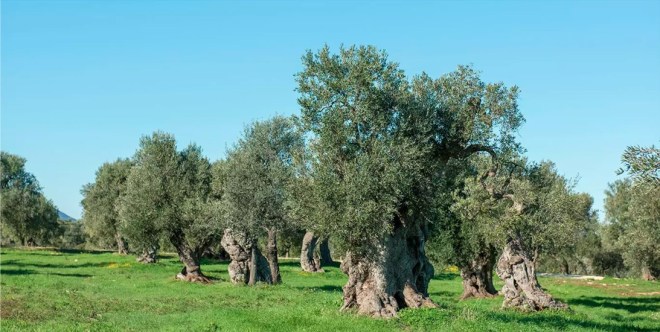



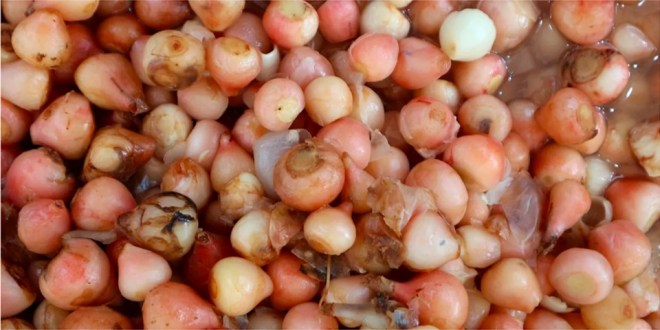
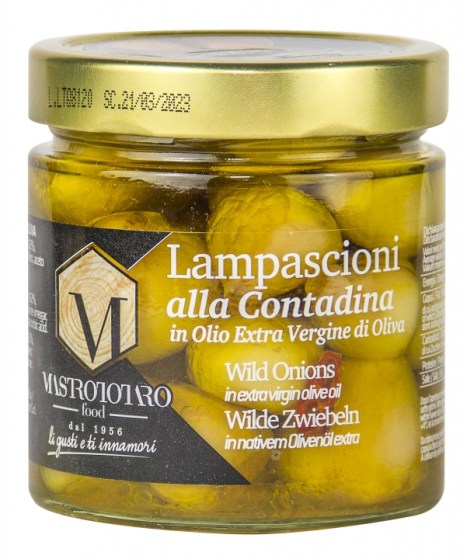

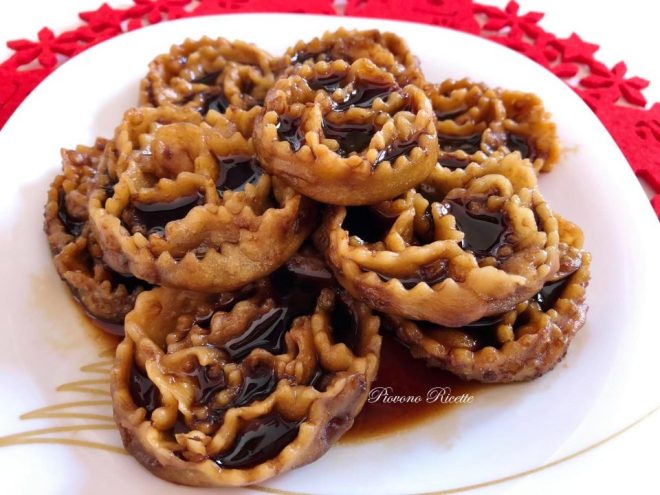








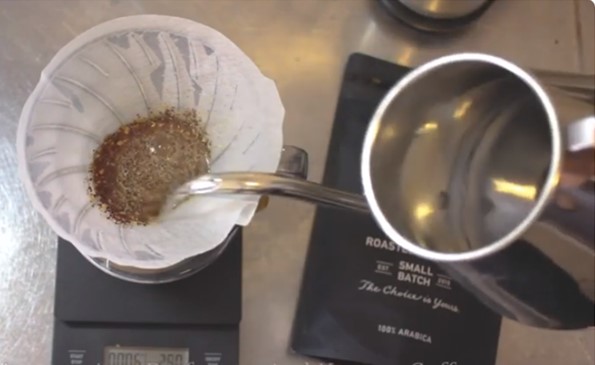


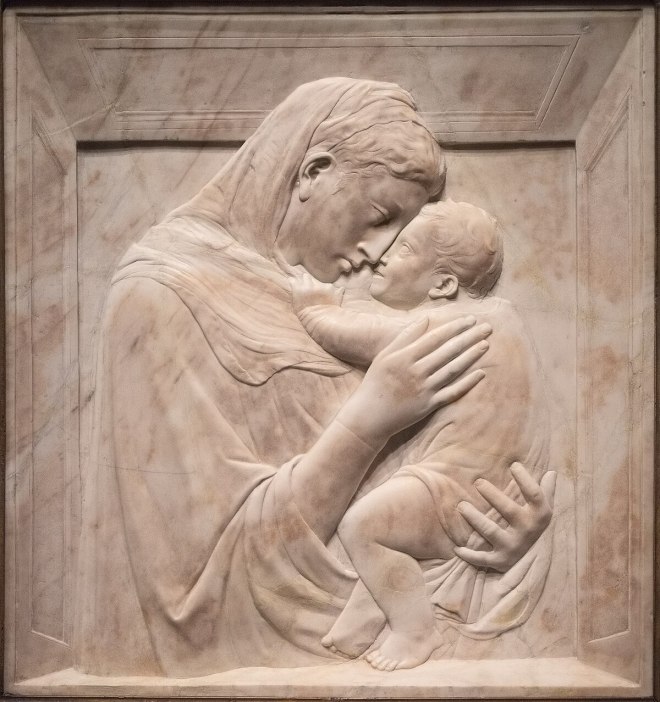

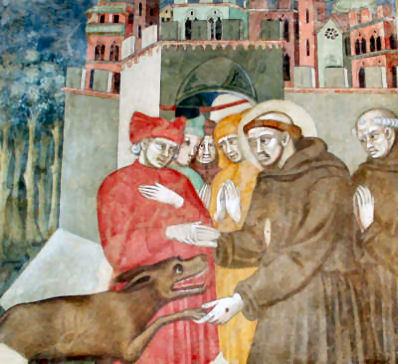

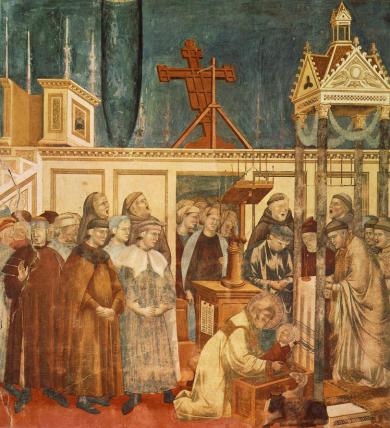
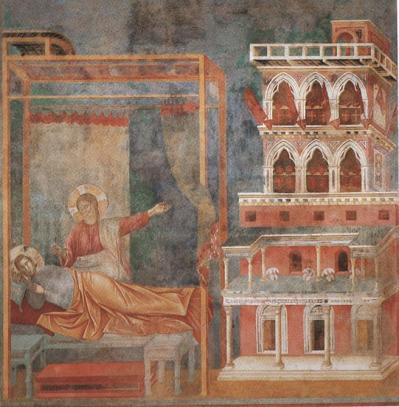
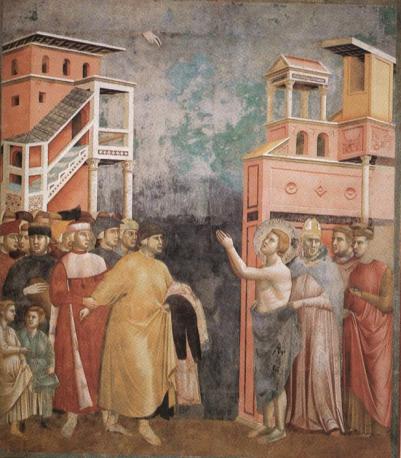


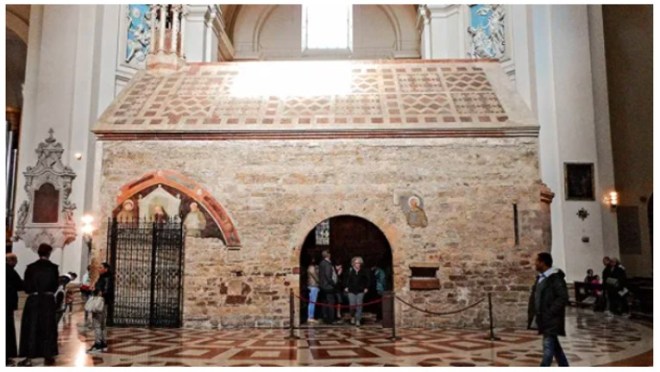
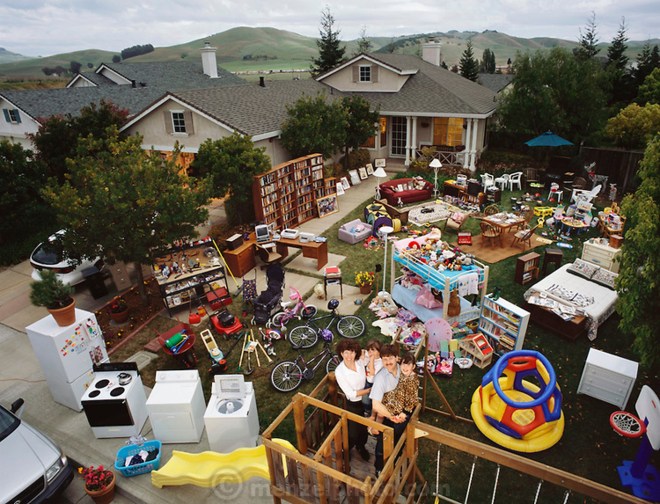

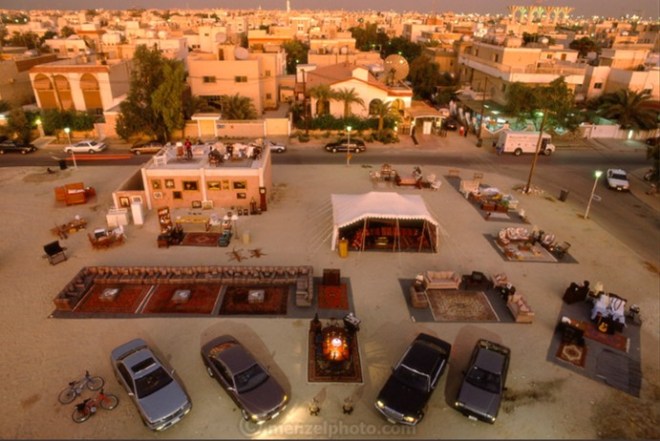
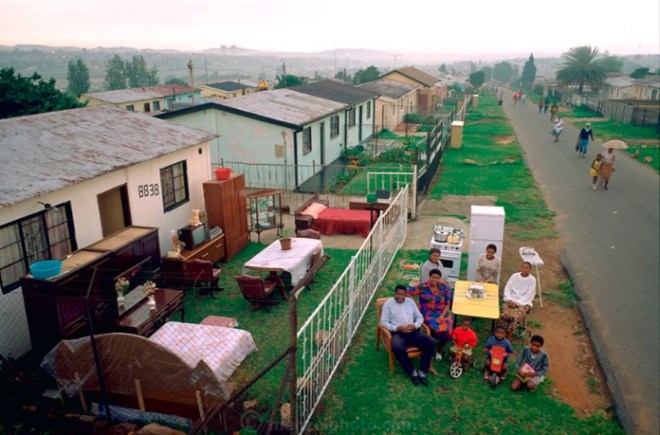

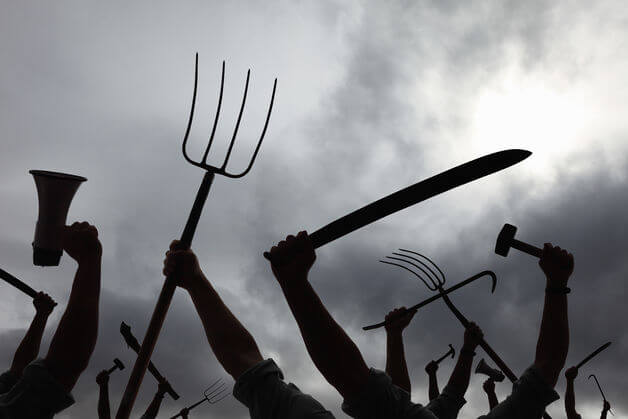

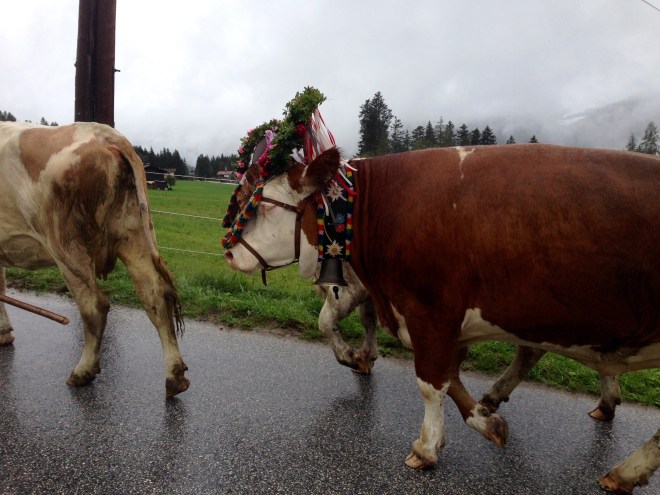

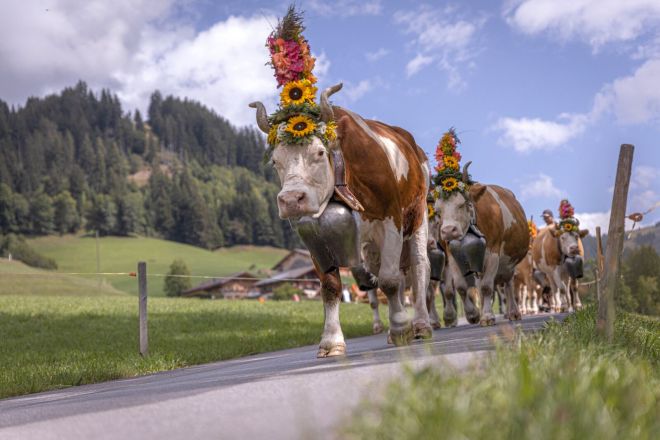


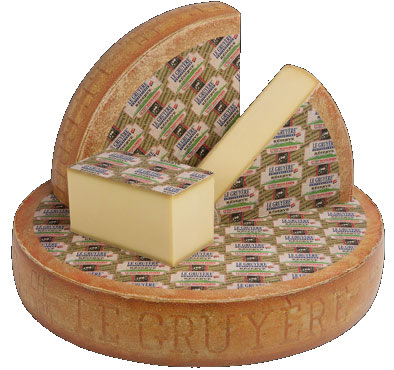


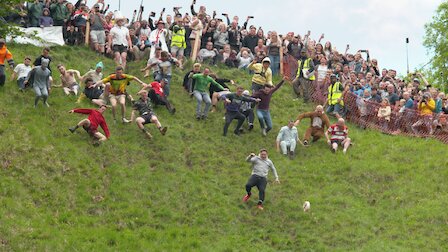


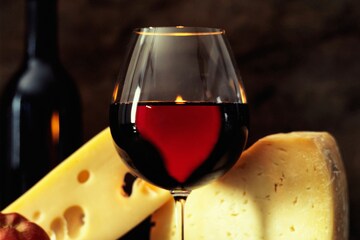





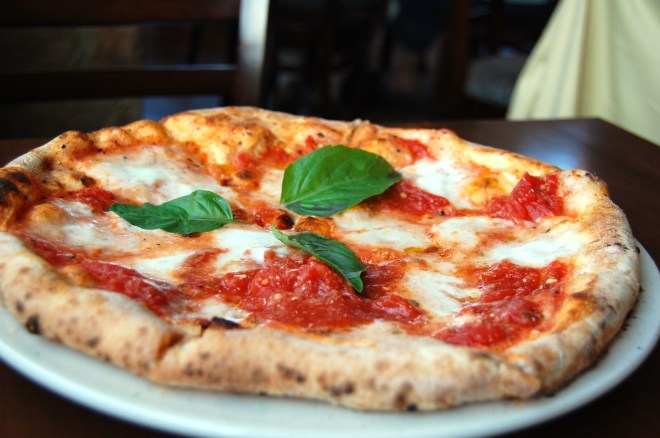
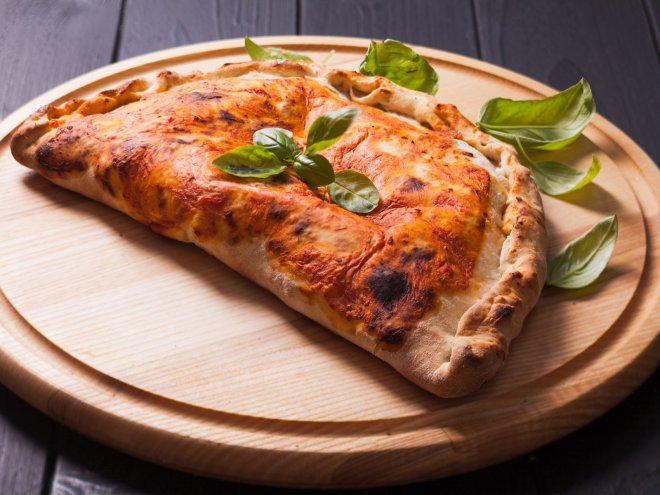





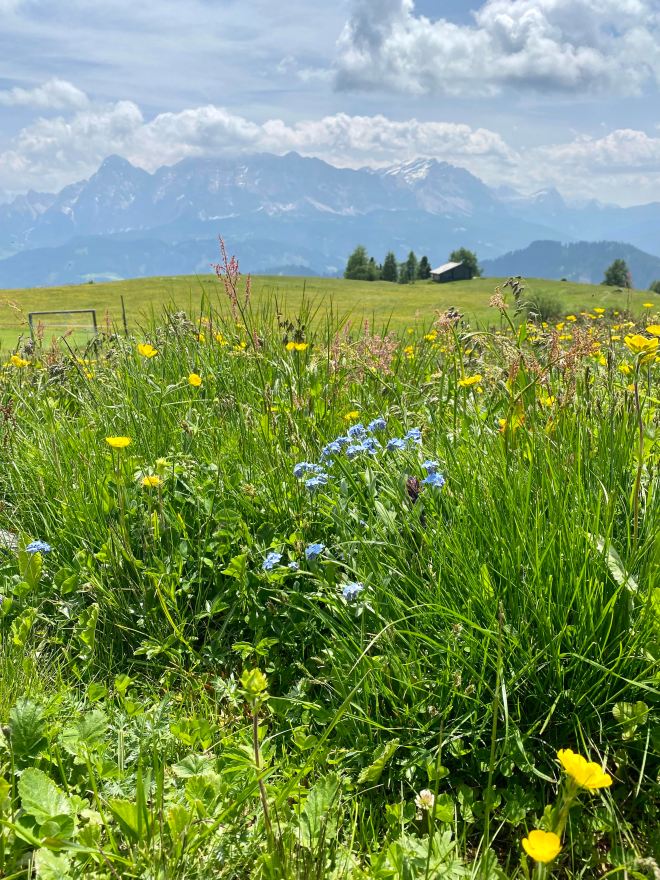

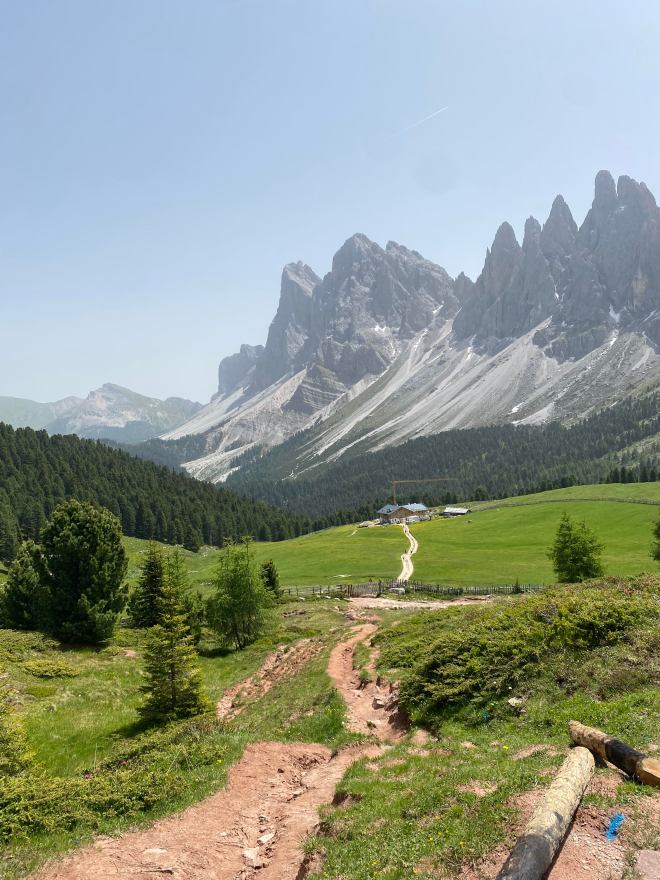


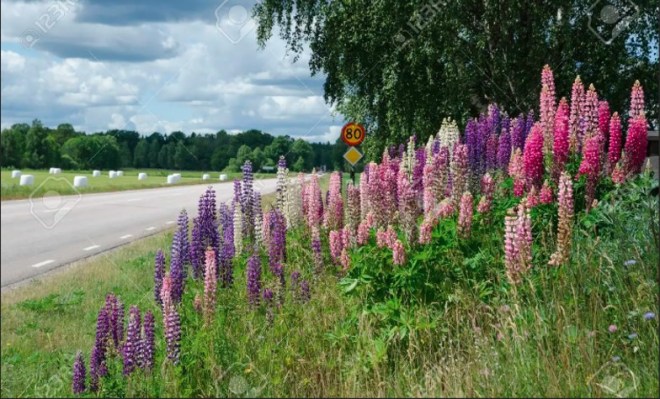

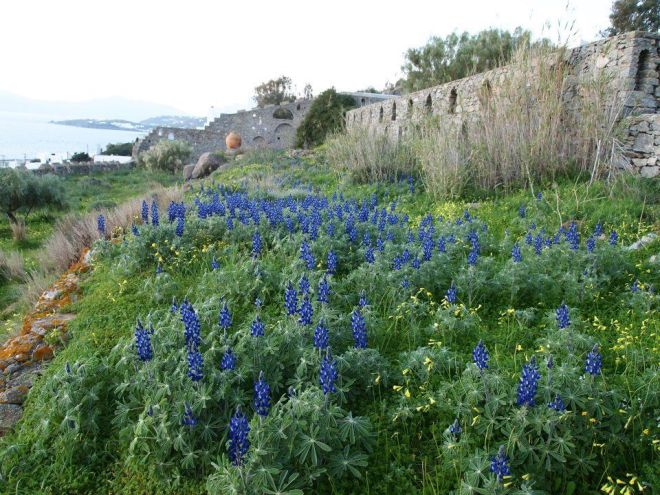


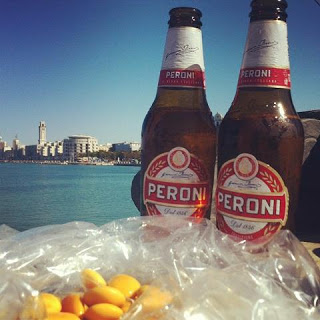



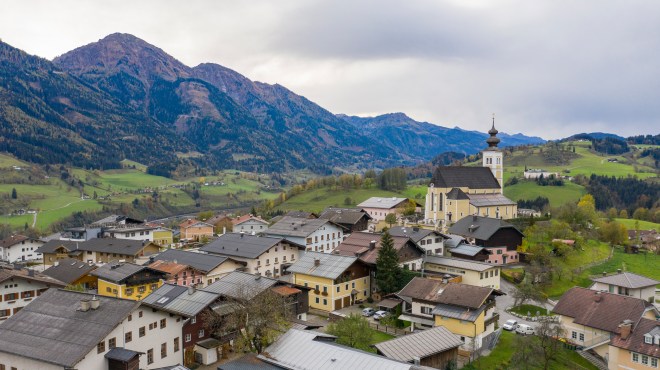


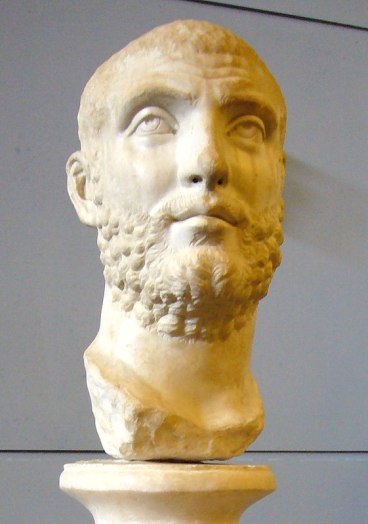

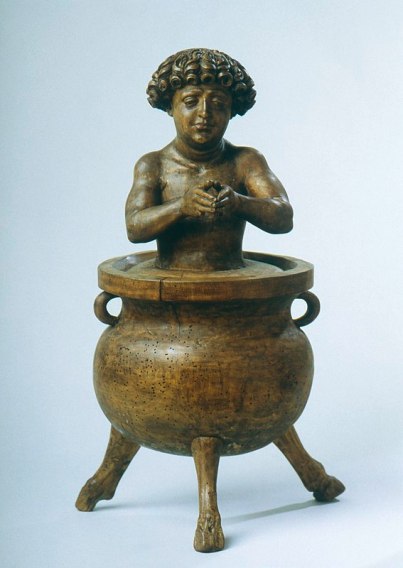


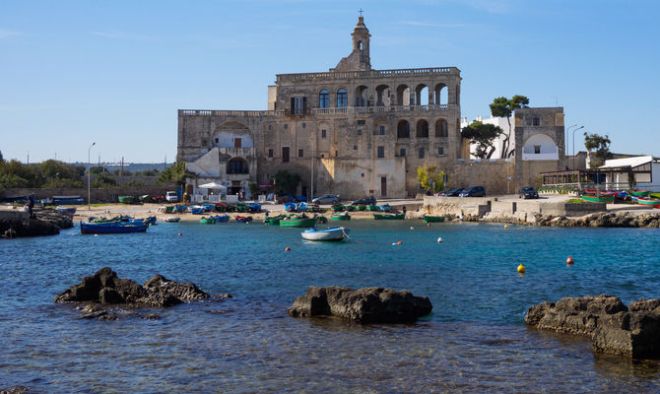
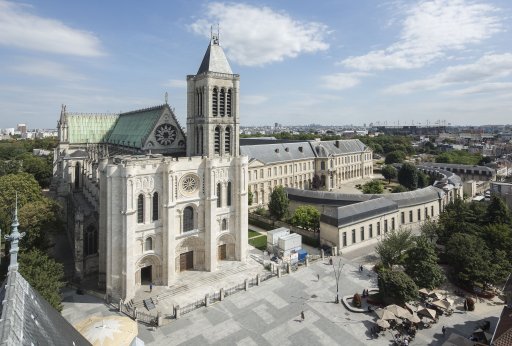
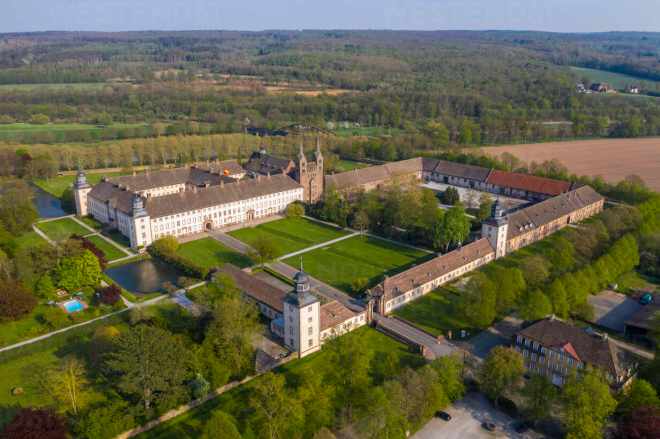


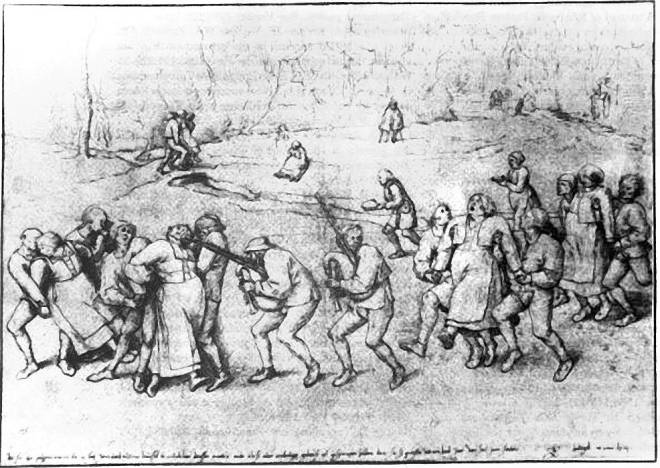


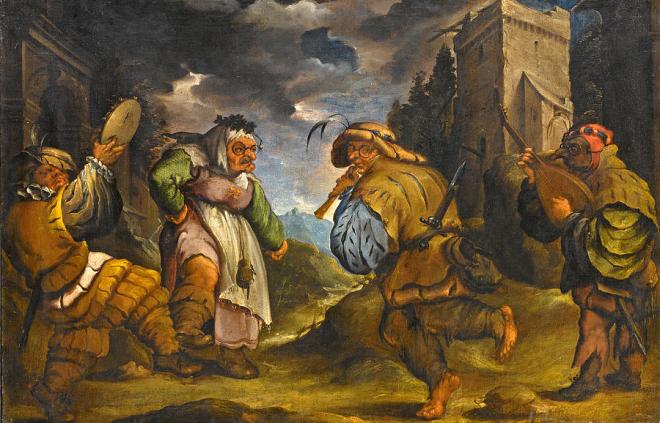

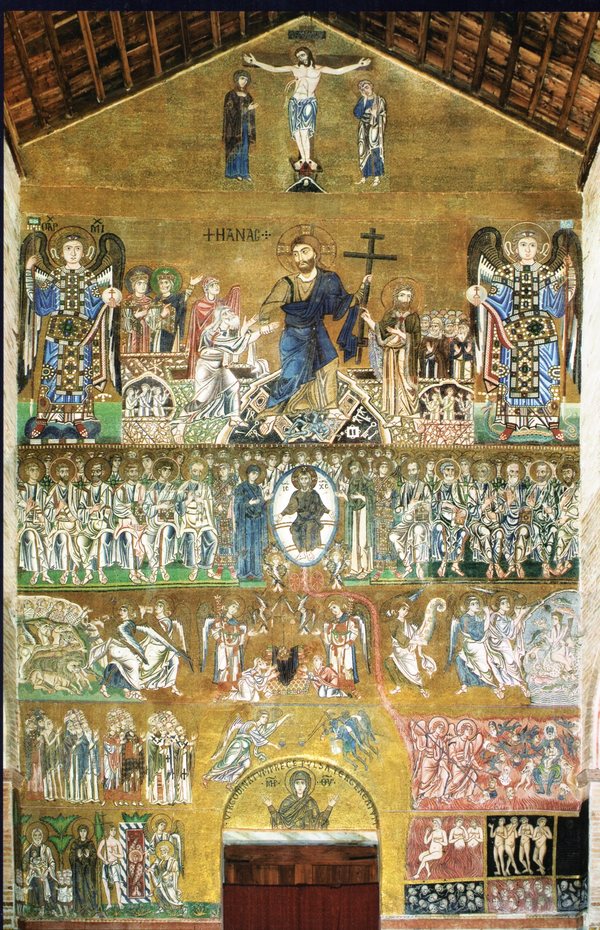
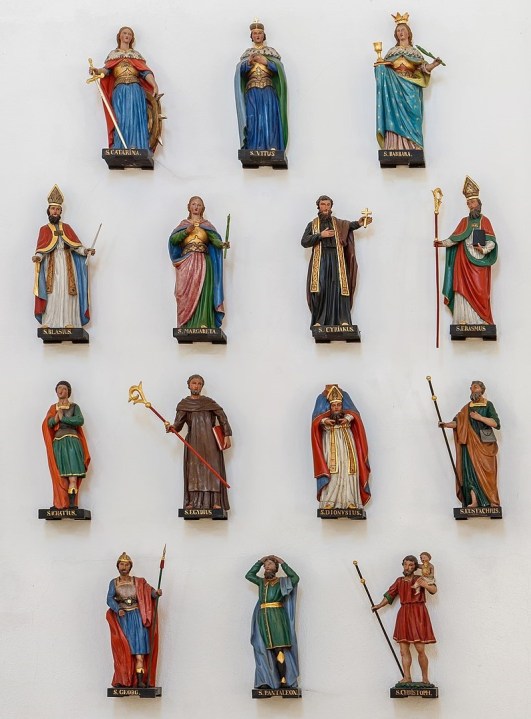
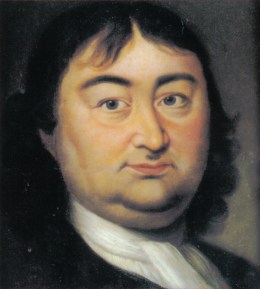


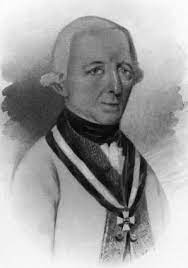


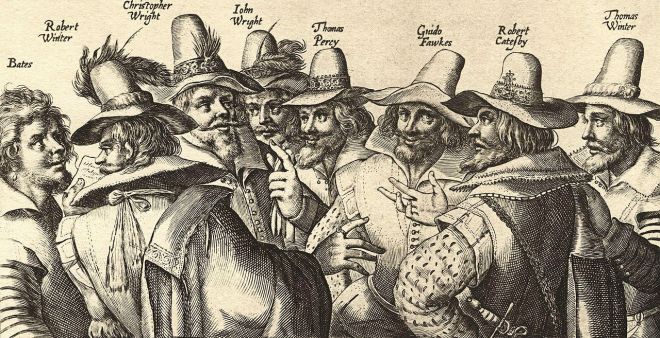

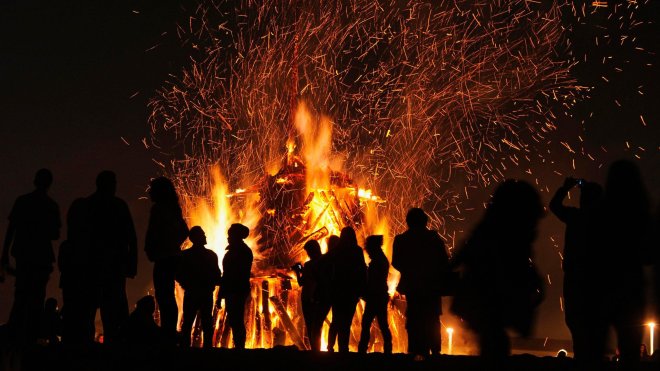


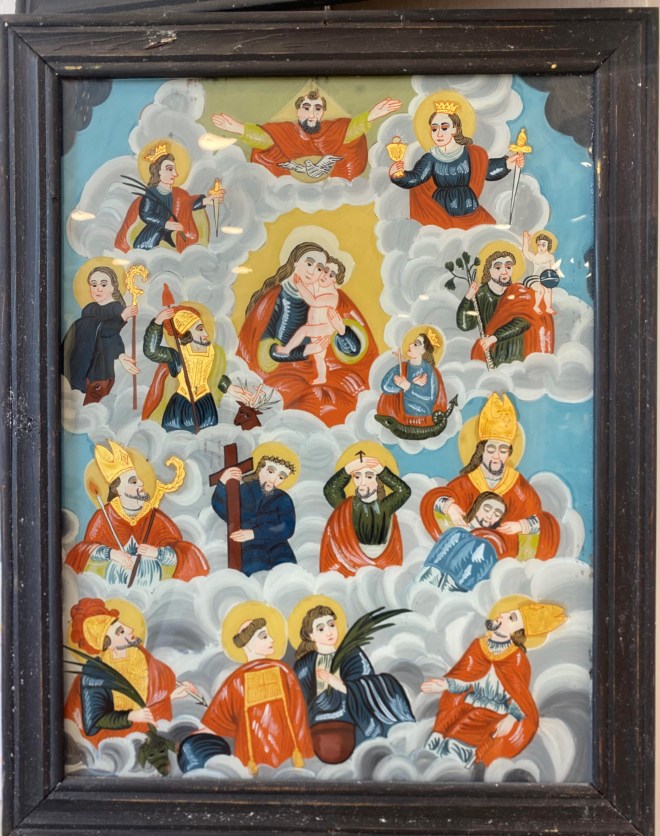


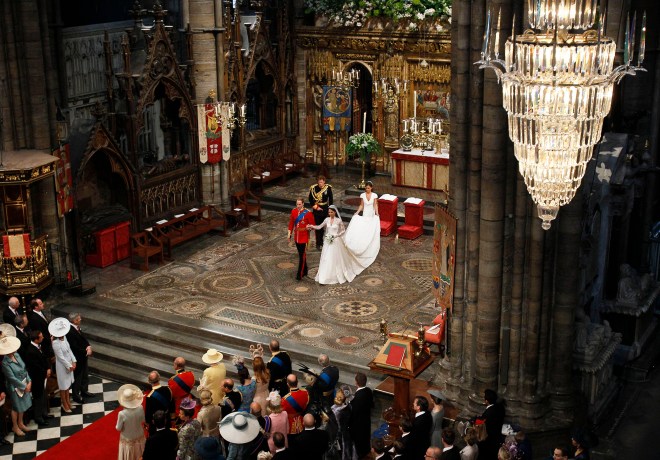

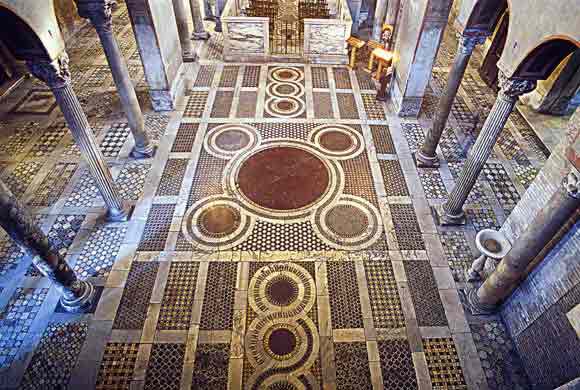
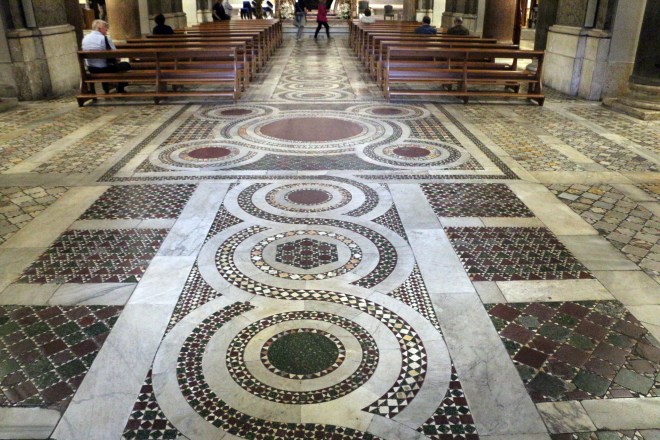


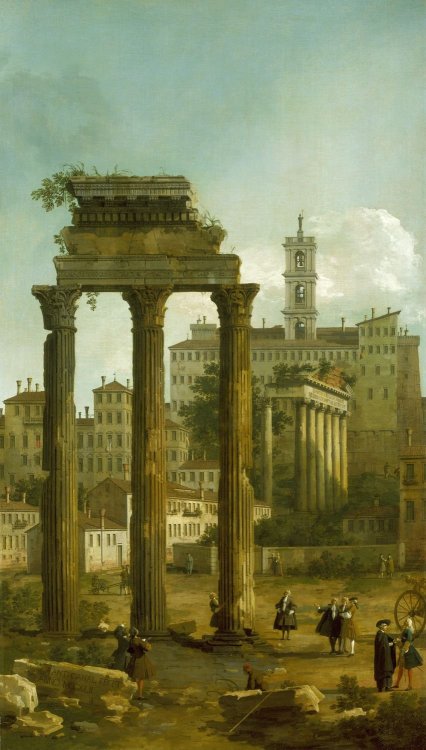



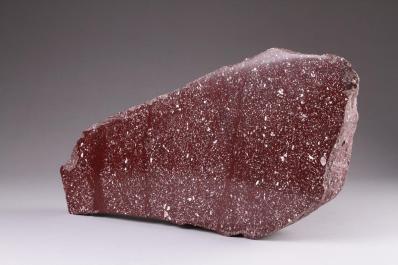
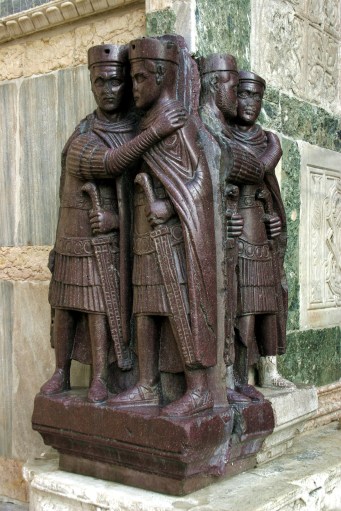


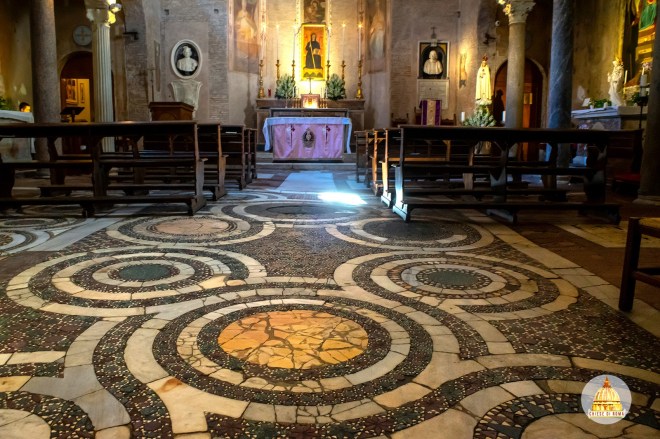





 the heart thrills


