The genesis of this post was a hike my wife and I did back in May, around the Danube not too far from Linz. As I relate in the post I wrote about that hike, one stop we made was at the small church in the village of Pupping. And there I found, among other things, this wooden statue of Saint Christopher.
My photo
The statue caught my attention because of Saint Christopher’s expression; as I wrote in the post, the Saint looks less than pleased with the Child Jesus sitting on his shoulder. In fact, I would go so far as to say that he looks downright grumpy. A nice take, I thought, on the traditional story about St. Christopher, and normally the only story that most people have ever heard about the Saint. So I made a mental note to come back one day to this Saint’s story. On a drizzly afternoon in Milan, that day has come.
So what is the story that most people have heard about St. Christopher? I think a quick recap might be useful. I should start by noting a little-known fact, that at the beginning of the story our Saint was actually called Reprobus. He was a big, brawny man – a giant in many tellings of his life – and he was in this period of his life spending his time carrying people across a deep ford at a river somewhere in Asia Minor. In case any readers might think this surely was not a job people did in the old days – they would use a boat or a raft, right? – I throw in here a print of people doing precisely this in Japan in the 1860s.
In any event, one night Reprobus heard a young voice calling out. It turned out to be a child asking to be carried to the other side. So even though it was late Reprobus put the child on his shoulder, seized his trusty staff, and started crossing. To his consternation, as he waded across, the child got heavier and heavier. So heavy did the child get that this huge, strong man found himself struggling mightily to make it across. When he finally made it to the other side, he said to the child: “You put me in the greatest danger. I don’t think the whole world could have been as heavy on my shoulders as you were.” To which the child replied: “Don’t be surprised, Christopher [which in Greek means Carrier of Christ], you had on your shoulders not only the whole world but Him who made it. I am Christ your king, whom you are serving by this work.” Thus did Reprobus become Christopher. And no wonder Reprobus-about-to-become Christopher is looking so grumpy in that statue in the church in Pupping!
It is a charming story which got painted many times by numerous artists in Western Europe. I throw in here an assortment:
By the Master of the Pearl of Brabant
In fact, it’s just about the only story of Christopher’s life that ever got painted in Western Europe, crowding out all the other stories associated with him.
I must confess, the precise theological messages of the story elude me, even though I have perused several posts trying to help me out. In fact, I read elsewhere that the story was actually made up by various churchmen to “normalise” what was a widespread practice by the “little people” of painting enormous portraits of St. Christopher with Christ, first inside their churches and then later on their outer walls. When I read that, I had a jolt of recognition. A couple of weeks before that hike around the Danube, my wife and I had hiked for a couple of days in the south of Austria in the hills around Villach. In some of the small villages we walked through I had noticed these giant St. Christophers painted on the outside of three of the village churches which we passed. I was so struck by them that I took several photos.
This is a general view of the church where I saw the first one
My photo
Here is a close-up of the fresco
My photo
This was in the next village we passed through
My photo
This was at the church where we sat down to have our sandwiches for lunch.
My photoMy photo
At the time, I had found these frescoes charming. I was now reading that they actually had a precise meaning. They were showing St. Christopher in his role as the “guardian from a bad death”, and especially a sudden and unexpected death. We have to plunge into the Christian mindset of the Middle Ages to understand why this was so vital. Any person who died “unshriven”, that is to say without having confessed and been absolved of their sins, was condemned to spend eternity in Hell without any possibility of salvation. And the torments of Hell were always well represented in church frescoes in case people forgot. Here is one such example, painted by Giotto in the Scrovegni chapel in Padova.
Source
Under the circumstances, it made perfect sense for everyone to do whatever they could to avoid an unshriven death. Somehow, the belief sprang up that if you saw the image of St. Christopher you wouldn’t die that day. Thus the huge size of the St. Christophers as well as their location on the outside walls of village churches; like that, all villagers, even those living far from the church, avoided the risk of not seeing the image during the day. As one can imagine, the popularity of these images soared during the Black Death, when the risk of dying unshriven increased enormously. Continuing bouts of the plague over the centuries maintained their popularity.
I rather like this role of St. Christopher as a Gentle Giant keeping an eye on your lifespan. However, by the 15th Century, when huge St. Christophers had proliferated everywhere, theological and ecclesiastical authorities had become less enthusiastic, considering this trust of the “little people” in St. Christopher to be mere superstition. They were far more comfortable with the Saint’s role as the protector of travelers and all things travel-related (it was of course his role of carrying travelers across the river that led to travelers invoking his protection). And the coming of the automobile, where the dangers it posed to life and limb became immediately obvious, saw a huge increase in the Saint’s popularity. Even now, miniature statues of the Saint are frequently displayed in cars; sign of the times, you can buy one on Amazon. Yours for a mere $8.99!
Meanwhile, in Orthodox Christianity, things took a different path for Christopher. The whole story of him carrying the Boy Christ across a river was ignored (at least until relatively recently). Instead, the focus was on his good, Christian life after his baptism and his martyrdom. So the icons of him have a young man, normally dressed as a soldier. Here is an example from Saint Paraskevi Church in Adam.
So far, so bog-standard. But then, there is a startling alternative in his iconography, one where he is depicted as having a dog’s head (at least, I find this startling; showing saints with dog-heads seems rather disrespectful to me).
I find these icons so strange that I am moved to throw in the photo of another one, where St. Christopher is cheek by jowl with a perfectly normal St. Stephen.
This strand of iconography came about from a rather too literal reading of the legends about Christopher’s origins. It was said that he had been captured by Roman troops in combat against tribes dwelling to the west of Egypt in Cyrenaica. Already back in the 5th Century BCE the Greek historian Herodotus had written that in these parts, on the edges of the civilised world, lived dog-headed men as well as headless men whose eyes were in their chests. This belief in Europe that the edges of Europeans’ known world were populated by strange hybrid human species continued well into the early modern times, as this woodcut from the 1544 book Cosmographia shows.
As a consequence, some icon painters believed that Christopher (or Reprobus as we have seen he was then known) was dog-headed, and they painted him as such.
Not surprisingly, there was pushback on this depiction of Christopher from the Higher-Ups. In a 10th Century hagiography about the Saint, its author, Saint Nikodemos the Hagiorite, wrote: “Dog-headed means here that the Saint was ugly and disfigured in his face, and not that he completely had the form of a dog, as many uneducated painters depict him. His face was human, like all other humans, but it was ugly and monstrous and wild.” For its part, in the 18th century the Russian Orthodox Church forbade the depiction of the Saint with a dog head because of the association of such a representation with stories of werewolves or monstrous races.
Poor Christopher! Giant, dog-headed, and now cancelled. Because, back in 1969 the Catholic Church struck him from the General Roman Calendar, deeming that there wasn’t enough evidence to show that he had ever existed. I still remember the general consternation this caused at the time. What about all those miniature statues in cars (and medallions around necks)? How could they protect you if Christopher had never existed? I guess the fact that people continue to buy them shows that the “little people” will still believe in these images’ magical ability to protect, whatever the Higher-Ups say or do.
My wife and I have just finished a long weekend in the little town of Waidhofen an der Ybbs. We were actually using it as a base from which to carry out a number of very pleasant hikes over the surrounding hills. These are impossibly beautiful: broad swathes of light and dark green draped over the hills, dotted here and there with farmsteads.
My photo
The weather was glorious, which certainly helped.
As I looked through the various brochures which we picked up to figure out what hikes to do, I came across the following brief write-up about the church in a village some 10 km away, the village of St. Leonhard am Walde:
“Fiakerkirche St. Leonhard/Wald: The traditional place of pilgrimage for Viennese hackney carriage drivers since 1826. St. Leonhard is the patron saint of cattle, sheep – and horses. In 1908, the Viennese hackney carriage drivers donated the Marian altar. A few decades ago, the Viennese cab drivers also joined the pilgrimage.”
Now that really intrigued me! Hackney carriages, fiaker in German, are a picturesque sight down in the centre of Vienna, although nowadays, of course, they are only for tourists.
But, being an early form of taxi, there was a time when hackney carriages were ubiquitous throughout the city, as indeed they were in all European cities. Here is a colourised copperplate engraving from the 1830s of a smart set of Viennese and their carriages.
I suspect, though, the carriages and their drivers didn’t look quite so smart when they were merely acting as taxis, ferrying people around town. This looks more like the typical hackney carriage driver; the photo is taken from an engraving in a book of 1844.
Hackney carriage drivers have always struck me as a hard-boiled lot, not taken to making pilgrimages. I have a hard time seeing them doing this (this is a modern pilgrimage, but I don’t suppose pilgrimages have changed much, apart from the clothes the pilgrims wear).
But it could be that I am being influenced by various books I’ve read and films I’ve seen where hackney carriage drivers seemed to be a sinister and semi-criminal lot. This is an example from one of the Sherlock Holmes stories.
Maybe the majority were God-fearing, devout, family men.
Source
Of course, given the way my mind works, I started wondering why hackney carriage drivers would have chosen a church dedicated to St. Leonard as the church to which they would make their annual pilgrimage. The little blurb I quoted above suggests an answer: he was the patron saint of horses, and of course horses were key to hackney carriages, being their motor as it were. But how, my mind was asking, did Saint Leonard become the patron saint of horses?
Since I knew nothing about Saint Leonard, I had to do some reading. I should note in passing that there have been various Saint Leonards over the centuries; the one we are interested in is St. Leonard of Noblac. Assuming he ever actually existed, his story is quickly told.
Leonard was a Frankish nobleman, coming from a family that was closely allied to Clovis, the first Frankish king of what was later to become France. Clovis was young Leonard’s godfather when he was baptised, along with Clovis himself and all his court, by St. Remi, bishop of Reims, on Christmas Eve of 496. As Leonard grew up, he became much exercised by prisoners, to the point where he asked Clovis to have the right to visit prisoners and free those he considered worthy of it. Clovis granted the request. We have the scene played out here in a French work from the 14th Century.
Many prisoners were thereafter liberated by Leonard.
Much impressed, I presume, by his holiness, Clovis offered him a bishopric, but Leonard turned the honour down, preferring to join a monastery near Orléans, whose abbot was another saint, St. Mesmin. After the latter went the way of all flesh, Leonard decided to strike out on his own. He moved to a forest in a place called Noblac (Noblat today) near Limoges, where he set up a hermitage. His preaching, good works, etc. led to a multitude of people flocking to his hermitage, including many prisoners whose chains miraculously flew off their hands and legs after they had prayed to St. Leonard for his intercession. Here, we have a print from 1600 giving us a rather fanciful vision of this scene.
I do believe that the monk working the land behind Leonard in the print is one of these prisoners now living an honest life.
At some point in all of this, the-then Frankish king Clotaire I (Clovis having died in the meantime) and his heavily pregnant wife came to visit Leonard in his forest hermitage – we have to remember that Clovis’s family and Leonard’s family were close. The royal couple decided – like the good aristos that they were – to use the occasion to go for a hunt in the forest. To get us into the spirit of things, I throw in here a miniature from the 15th-Century Book of Hours of Marguerite d’Orleans showing Lords and Ladies off to the hunt.
During the hunt, however, the queen suddenly went into labour. It was turning into a difficult and dangerous birth. Leonard rushed to her side and his prayers saved queen and baby. In gratitude – especially since it was a baby boy – the king wanted to shower Leonard with loads of money. But Leonard only asked for as much forest area around his hermitage as he could ride around on his donkey in one night. The king granted this wish. On the land that Leonard was subsequently given he built a church and monastery. He became its first abbot and died there peacefully, mourned by all. The Romanesque version of that church still stands, in a place called Saint-Léonard-de-Noblat.
Given his involvement with prisoners, it is not surprising to learn that St. Leonard is the patron saint of prisoners. Given that story with the pregnant queen, it’s also not surprising that he is considered a helper of women in childbirth. But patron saint of cattle, sheep and horses? How did that come about?
For that, we have to know that from the earliest times St. Leonard was often depicted as an abbot with a crosier and holding a chain or fetters or manacles, symbolising the liberation of prisoners achieved by him. In fact, in one of those serendipitous moments I love so much, I came across just such a representation of him in a church in Waidhofen, down the road from where my wife and I were staying.
My photo
Over time, rural folk mistakenly thought that the chains which St. Leonard was holding were cattle chains – these are commonly used to tether cattle or to control them during walks, or even to help birthing calves.
By extension he became the patron saint of all farm animals, which of course also included horses.
Given this swerve of patronage towards livestock, I suppose it’s not surprising that Saint Leonard became a popular saint throughout the Alpine regions of Europe. After all, as I’ve mentioned in a previous post, cattle was pretty central to the rural economies of all Alpine communities. This devotion to the saint means that his feast day – November 6th – is celebrated with enthusiasm in many places in the Alpine regions, especially the German-speaking ones. Here, for example, are photos of the celebrations in Bad Tölz in Bavaria (which got a mention in an earlier post because of its rather naughty statue of St. Florian).
It also gave rise to the intriguing phenomenon of chain churches in the Alpine regions. These are churches dedicated to St. Leonard which have chains running around them, either put up temporarily on his feast day or mounted permanently. The Fiakerkirche is not a chain church, alas. Here is a nice example from Tholbath in Bavaria (the church also has a quite respectable onion dome, the subject of an earlier post).
But if we’re going to visit a church dedicated to St. Leonard, it won’t be one of the chain churches. It will be the one I’ve already mentioned in Saint-Léonard-de-Noblat. What a fine-looking Romanesque church! I have to say, I am partial to Romanesque churches. I’ve already inserted a photo of the church’s exterior. Here is a photo of its interior.
What a wonderfully bare church! No annoying accretions to cover the spare, simple lines of the architecture.
But the photo shows an additional reason why I will try to persuade my wife to travel all the way to France to see this church: the rucksacks and the walking sticks. This church is situated on one of the four Ways of St. James of Compostela through France. I’ve mentioned one of these, the Via Tolosana, in an earlier post. The church of Saint-Léonard-de-Noblat is on another, the Via Lemovicensis, the Way of Limoges. There must surely be some good hiking to be done in the area.
It’s summer time! And summer time, for my wife and me in Vienna at least, means it’s time to go hiking around the city and beyond. And that means studying guides, electronic and hard-copy, to find new hikes for us to do. So it was that a month ago now I bought a guide to the Jakobsweg, the pilgrim routes (or at least modern versions of these; so many of the original routes have been overlain by the asphalt of large roads) that wend across Austria and eventually lead the walker (after crossing Italy or Germany and then France and Spain) to the cathedral of St. James in Compostela.
Here we have a Medieval miniature of St. James as a pilgrim on his way to Compostela – note the scallop shell on his satchel, the symbol of this pilgrimage.
Although in my mind’s eye I see the road snaking out before me over hill and dale all the way to Compostela (Google Maps tells me that the town is 2,760 km away from my living room), I’ve been looking more modestly at the stages which are not too, too far from Vienna. Specifically, I’ve been looking at the stages beyond the great monastery of Melk.
Source
(The reason for that is simply that we’ve already walked the stages between Vienna and Melk.)
As I followed the stages in my new guide and figured out where we might stay for the night along the way, my eye was caught by the name of a village we would walk through: Sankt Pantaleon. I throw in a photo of the village which I found online. It looks like a nice, typical Austrian village.
Readers of these posts will know that I have a fondness for obscure saints whose names still pepper our landscape – although I have to say that the name Pantaleon is thin on the ground. Google Maps – once again – informs me that there are only a couple of villages in Austria which go by that name, as well as a handful of churches and streets. The same is true for France, Italy, and Spain. He has a somewhat greater presence in Greece and other Orthodox lands under the name Pantaléémon. In Switzerland, Germany, Belgium, and Portugal he has hardly any presence, and in the Netherlands and the UK none at all. My wife and I will not be coming across him very often on our hikes, it seems.
What do we know of this saint? Well, not much at all, as is usually the case with these saints from the earliest centuries of Christianity. If he existed at all, he hailed from Asia Minor as most of these early saints seem to have done. His various hagiographies tell us that he was born in the late 200s AD and brought up a Christian by his mother (his father was a pagan). But he fell away from the faith when he studied medicine. He was brought back to the straight-and-narrow by an even shadowier saint, who – if I’ve understood the sub-text correctly – basically said “Jesus did better than you, by healing through faith alone”. And in fact, Pantaleon converted his pagan father after healing a blind man by invoking the name of Jesus over him.
In any event, he continued being a doctor; and he must have been a very good one, because he became the personal physician to successive Emperors. But he must also have continued dispensing care – for free – to those who needed it, which has earned him in Orthodox Christianity the delightful title of Holy Unmercenary Healer. This is an epithet that has been given to various saints who offered their medical services for free, contrary to the (still) prevailing practice by doctors of charging (often a lot) for their services. The National Health Service in the UK, which still manages (just) to offer its services free at the point of delivery, should take Pantaleon as its patron saint.
Things came to a head when Diocletian started his persecution of Christians in 305 AD. Doctors, envious of Pantaleon’s success as a court physician – and of course pissed off that he was offering his services gratis – denounced him to the Emperor. Since the latter rather appreciated Pantaleon’s skills he tried to get our hero to abjure his faith, which of course Pantaleon did not do. So the Emperor handed him over to the torturers. They subjected him to the usual menu of hideous tortures which hagiographers delighted to write up in minute detail. I won’t bother readers with even a summary of them. I’ll just throw in a photo of a relatively recent painting depicting one of his tortures, being put in a bath of molten lead (which, according to the hagiographers, immediately went cold when he stepped into it, so I’m not sure how he was meant to get out of the now-solidified lead; but I guess I’m just being picky).
I’ll also mention one other torture to which he was subjected – because it is important for later in our story – namely the nailing of his hands to his head. Ouch! In the end, it’s only when he gave his tormentors permission to cut off his head that they managed to do so.
As usual, when the veneration of relics became popular in Christianity, various relics of Saint Pantaleon popped up: a head here, an arm there, a finger bone somewhere else. More unusually, a vial of his blood ended up in the town of Ravello, near Amalfi. Like the more famous case of Saint Gennaro’s blood in Naples, which is just around the corner from Ravello, the blood in the vial liquifies once a year. Here we have a photo of that vial when it is apparently liquifying in 2022.
So popular was Saint Pantaleon that he was made one of the Fourteen Holy Helpers, who, from the late Middle Ages on, were invoked to help with people’s everyday problems, especially health problems. I’ve written about a number of the Holy Helpers in earlier posts, so it’s nice to be able to add to the list with this post. I guess it made a lot of sense to include Pantaleon in the group; he was a doctor after all. And in fact, he was the patron saint of doctors and midwives. He was invoked specifically in cases of cancer and tuberculosis; why those two diseases rather than any other is not clear to me. What makes perfect sense to me, however, is that he was also invoked in cases of headaches and any other pains in the head, or even mental illnesses. This photo of a panel which I stumbled across in the church of Eferding during our recent hike along the Danube – I kept the photo back for this post – shows very clearly why. The saint to the right is Pantaleon, and we can see the nail which has been hammered through his hands into his head. To a mere mortal like me it looks incredibly painful, although the sculptor has Pantaleon looking very stoic.
My photo
This story of the nail in the head has also meant that I’ve identified one more of the fourteen Holy Helpers in my painting on glass of them, which pleases me no end!
My photo
As I wrote earlier, a fair number of churches have been named after Saint Pantaleon. I will only mention one, the church of San Pantalon in Venice.
If I mention it, it’s because my wife and I checked it out during a brief trip we made recently to Venice, to visit the Biennale (architecture is the theme this year). The church’s exterior is not much to write home about. The church’s main claim to fame is its ceiling, which depicts the martyrdom and glory of Saint Pantaleon. It is indeed quite breathtaking.
It is not, as might seem at first sight, a fresco; it is a vast painting on canvas, which has then been stuck to the ceiling. Apparently, these were quite popular in Venice; quite why, I don’t know.
This mention of Venice allows me to segue smoothly from the sublime to the ridiculous. San Pantaleone (or Pantalon in Venetian dialect) was once a very popular saint in Venice. No-one has given me an explanation for this. Nevertheless I have one, born of my fervid imagination. To explain my theory, I have to jump to the countries in the southern cone of Latin America. It is a tradition there to eat gnocchi on the 29th of each month (and so the tradition is called los ñoquis del 29). It is a festive occasion, as this photo – one of many on the internet – attests.
It was also the custom – perhaps not so much now – to place some money under your plate to bring you luck and prosperity. It was the Italian immigrants to this part of the world, many of them from the Veneto region, who brought this charming tradition with them. It was based on a legend about San Pantalon (to give him his Venetian name) which made the rounds in the Veneto. Even though he lived in Asia Minor, it was said that he had once come to northern Italy on a pilgrimage. One day, the twenty-ninth day of the month, he asked some poor peasants near Venice for bread; they generously invited him to share their meagre meal. In gratitude, San Pantalon announced that they would enjoy a whole year of abundant fish catches and harvests, which was indeed the case. The custom of placing some money under one’s plate of gnocchi – a simple dish, one for poor people – on the 29th of each month is therefore intended to obtain the renewal of this prosperity once granted by the saint.
Lovely story. But what I see in this legend is that for the Venetians – whose whole livelihood, indeed whose whole State, depended completely and totally on trade – San Pantalon would have been the go-to saint: “dear San Pantalon, here’s a lovely candle for you and some money in the offerings box. I’ve also put my life’s savings in this ship going to Constantinople [=the money under the plate]. Please, please, please make it come back with mounds of fantastic stuff that I can make a fortune off.”
Whatever the reason for his popularity in Venice, in the minds of other Italians Venetians became inextricably linked with San Pantalon. And so, when Commedia dell’Arte was born in the 16th Century, one of the stock characters in the plays was Pantalone. Pantalone is basically a caricature of Venetian merchants and just to underline this fact the character is meant to speak in Venetian dialect, at least in the Italian versions of the plays. He is retired, so he’s played as a wizened old man. He’s miserly and loves his money. Despite his age, he’s a lech and a smooth talker, and makes numerous passes at women, although he is always rejected. Given the high social standing of merchants he also represents those at the top of the social order, and he feels that this allows him to meddle in the affairs of others. In sum, the character of Pantalone is entirely based on money and ego, but at every step he becomes the butt for every conceivable kind of trick. Rereading this, which is based on a composite of many descriptions I found of the character, I get the distinct impression that the rest of Italy didn’t much like the Venetians. Quite a comedown from our heroic martyr Pantaleone.
But it gets worse! To understand why, I show here a couple of depictions of what the Pantalone character typically looked like on stage. By one of those wonderful acts of serendipity, my wife and I saw the first of these depictions just yesterday at the Kunsthistorisches Museum in an exhibition they are currently holding entitled “Arcimboldo-Bassano-Breughel” (for any readers in Vienna, hurry up to see it, it finishes on 29 June!). This particular painting is by Leandro Bassano. It was one of a series that depicted the months of the year, in this case the month of February, which of course is carnival time in Italy, which was a popular time for putting on plays.
My photo
The set of characters on the far left of the painting (minus the boy and the dog) are all characters from commedia dell’arte plays. Pantalone is on the very far left. I throw in a blow-up of that part of the painting.
My photo
It’s a pity that Bassano put Pantalone half out of the painting, but you can make out his sartorial particularities – red doublet and hose, slippers, a black cloak, a black hat, and a sword. And of course a mask. You can see these much better in this painting by an unknown artist in the Carnavalet Museum in Paris.
This painting, on the other hand, by the French painter François Bunel the younger, from the late 16th Century, shows what a figure of mockery Pantalone was.
It’s actually quite pertinent that I chose depictions by French artists of old Pantalone, because commedia dell’arte took the rest of Europe by storm. Every country had their shows, with the names of the characters modified to fit local ears: in German our foolish old man stayed as Pantalone, but in French he became Pantalon and in English Pantaloon. So well-known was he that even Shakespeare, in his famous monologue in As You Like It about the seven ages of man, mentions him as the sixth age:
The sixth age shifts
Into the lean and slippered Pantaloon,
With spectacles on nose and pouch on side;
His youthful hose, well saved, a world too wide
For his shrunk shank …
In both Britain and France, that “youthful hose” was eventually given the character’s name: “pantaloon” on one side of the Channel, “pantalon” on the other. Even though this type of clothing (“covers the lower part of the body from the waist to the feet, consisting of two cylinder-shaped parts, one for each leg, that are joined at the top”, as one dictionary definition has it) has gone through considerable redesign over the centuries, the French have kept their name for it, and the North Americans have kept the English form of the name, although under the shortened form of “pants” (the British quite quickly opted for “trousers” instead as their name for this type of fashion statement). So in many parts of the world our heroic martyr has been debased to a vulgar piece of clothing. But it gets even worse! Because another piece of clothing, which covers our private parts, has become called “underpants”. Poor Pantaleon, from this:
My wife and I recently went to an exhibition at the Gallerie d’Italia, a relatively new museum in Milan which is situated right next to the Scala. The exhibition’s title, “The Genius of Milan. Crossroads of the Arts from the Cathedral Workshop to the Twentieth Century”, didn’t really reveal what the exhibition was about, and I’m not sure I had any better idea after our visit. I think it was trying to show how many non-Milanese artists had come to Milan over the centuries and flourished there, but I wouldn’t swear to it.
In any event, at some point I was suddenly transfixed by this painting, which shows in horrible, gory detail some poor guy having his entrails pulled out of him and wound around some contraption or other.
My photo
The painting’s label helpfully informed me that the poor guy in question was Saint Erasmus and he was being martyred. It was clearly a popular subject, because there was another painting just across the way about the same thing.
My photo
I’ve mentioned in past posts that early and Medieval Christians loved dreaming up horrible deaths for martyrs, but this one really took the biscuit! What sadistic mind came up with this one? And how did this particular form of torture even cross their mind?! I had, of course, to do some research.
As usual, as written up in the various pious hagiographies which appeared from at least the 5th Century onwards, St. Erasmus’s life seems to be one long muddle. So I’m going to more or less ignore these and sketch out what I think happened, not so much to Erasmus himself as to the legends which clustered around him and to the way he was portrayed in paintings.
It would seem that Erasmus started out as a local saint in the city of Formiae, a Roman port city some 90 km up the coast from Naples. Perhaps he was a bishop there. Bishop or no, there is a good chance that he was martyred in the city during Emperor Diocletian’s campaign of persecution, which ran with differing degrees of intensity from 303 AD to 313 AD. In later centuries, when relics of martyrs and saints became so important, his remains must have been reverently kept by the citizens of Formiae. Probably, too, to bolster the importance of his relics, legends about wondrous deeds performed by Erasmus began to circulate. One of these, which is important for our story, has him continuing to preach even after a thunderbolt struck the ground beside him. By the 5th Century, manuscripts also relating his nasty, vicious martyrdom at the hands of various Emperors were already circulating.
In the meantime, back in the real world, things were not going too well for Formiae. After suffering badly at the hands of the barbarians who flowed into Italy during the death throes of the western Roman Empire, it was razed to the ground in 842 AD by “Saracen” pirates who came from the sea. Its citizens ran – literally – for the hills, and that was the end of Formiae. Luckily, before the city was finally trashed, Erasmus’s precious relics were transported over the bay to nearby Gaeta, which was located on a much more defensible position, as this photo shows, and managed to hold off the pirates.
The relics are held to this day in Gaeta’s cathedral, along with the relics of four or five other saints, in a large crypt built in the early 17th Century.
In the 9th Century, when the relics were transferred from Formiae, and for a few centuries thereafter, Gaeta was a marine republic, like the ones on the Sorrentine peninsula further south, and very much in competition with them. Shipping was the backbone of the city’s prosperity, and the city’s sailors adopted Erasmus – one of Gaeta’s patron saints now that they owned his relics – as their personal patron saint. It seems that they chose him on the basis of that story I mentioned earlier, of him being unperturbed by a lightning bolt hitting the ground next to him. One of the perils which sailors ran (and still run) were violent storms. It’s not surprising that so many of the ex-votos found in churches in port cities have as their subject a sailor who was saved during a storm.
During such storms their boats could get hit by lightning. And so Erasmus became one of the patron saints of sailors. In this guise, he was often associated with the crank of a windlass. This may seem odd to readers, but windlasses were used on boats to pull up or let out an anchor or other heavy weights. The heavy weight is tied to a rope, the rope – maybe threaded through a winch – is wound around a barrel, which sailors turn using a crank (K in the diagram below).
It looks like people simplified everything by just associating the crank with Erasmus.
St. Erasmus’s connection in the minds of sailors to lightning got them to also connect him to another electrical phenomenon which sailing ships were (and still are) subject to. In brief, during thunderstorms, when high-voltage differentials are present between the clouds and the ground, oxygen and nitrogen molecules in the air can get ionized around the point of any rod-like object and glow faintly blue or violet. Well, of course, sailing ships in the old days had lots of rod-like objects, like masts or spars or booms, and when conditions were right there would be a faint glow at the end of all these. Here is a print of an old sailing ship with these ghostly “flames” on the ends of its masts and spars.
Well, of course, sailors knew nothing of the physics behind the phenomenon. They interpreted those little flames as meaning that St. Erasmus was protecting their ship, especially since the phenomenon often occurred before the thunder and lightning started. And so the phenomenon become known as St. Elmo’s Fire (Elmo being an Italian corruption of Erasmus).
In a parallel universe, various martyrologies continued to be published over the ages, full of the usual hideous tortures meted out to martyrs. But nothing yet about poor Erasmus’s entrails being pulled out of him. Then, in about 1260, a certain Jacobus de Voragine published his martyrology under the title The Golden Legend. His story about Erasmus recycled many of the tortures covered in previous martyrologies to which the saint had been subjected. But then, Jacobus slipped in a brand new torture. In his words (translated into English by Wynken de Worde in 1527):
“[…] the emperor […] waxed out of his wit for anger, and called with a loud voice like as he had been mad, and said: This is the devil, shall we not bring this caitiff to death? Then found he a counsel for to make a windlass, […] and they laid this holy martyr under the windlass all naked upon a table, and cut him upon his belly, and wound out his guts or bowels out of his blessed body.”
Here is how the scene was depicted in one of the early editions of the Golden Legend (in case any readers are interested, the two fellows on the left having their heads chopped off are Saints Processus and Martinian).
Now, I said at the beginning, how did this particular form of torture ever cross Jacobus’s or someone else’s mind? Well, it has been suggested – and it doesn’t sound improbable – that whoever dreamed it up found inspiration (if that’s the word) from the association of Erasmus with the crank of a windlass. Presumably they assumed that the windlass had to have something to do with his martyrdom. After all, the depictions of many martyrs have them holding the instruments of their torture. Saint Lawrence, for instance, leaning on the grill he was roasted on:
But what could the torture be in Erasmus’s case? Well, what do we humans have that looks like ropes? Entrails! And so this novel form of torture was dreamed up.
Now, Jacobus’s list of tortures inflicted on poor Erasmus is really long: I count 19 in all. Many of them would have made very appropriate subjects for the gory paintings of martyrs so beloved by painters until quite recent times. And yet, the entrails being pulled out on the windlass really caught on; I have to assume it’s because that was the one torture that Jacobus had a picture of in his book. Here’s just a few examples I found on the internet.
This first version is a more sophisticated variant of the picture in The Golden Legend and had added the emperor, “waxed out of his wit for anger”, looking on.
Other paintings, perhaps trying to avoid all the gruesomeness of these kinds of paintings, just had a thoughtful-looking Erasmus, dressed as a bishop, holding his crank around which his entrails have been tastefully wound. This next painting is an excellent example of the genre.
Source
This focus on Erasmus’s guts and the acute pain he no doubt suffered having them drawn out had an interesting side-effect. I’ve mentioned in a previous post the Fourteen Holy Helpers who helped Medieval people deal with their physical trials and tribulations – the headaches, or the sore throats, or the epileptic fits, or … they suffered from. Well, Erasmus fit very well into this scheme of things! He was obviously the go-to Holy Helper for cases of stomach and intestinal illnesses.
I related in the postscript to a previous post that in a moment of weakness I had bought a painting on glass of the Fourteen Holy Helpers. All this research has allowed me to identify which of the Helpers in my painting is St. Erasmus. Here he is, with his crank and some of his intestines rolled around it. All this research I do does sometimes have benefits …
It was freezing cold in Vienna this last month we were there, far too cold for my wife and I to go hiking. So we spent our spare time visiting Vienna’s nice, warm museums. One museum we visited was the Paintings Gallery of the Academy of Fine Arts; I don’t think we’ve been back to it since a visit we made shortly after we arrived here, back in 1998. As the name indicates, we are actually dealing with an arts school, but it has quite a worthy collection of paintings donated to it by various aristocrats over the centuries. It has a particularly good collection of paintings by Lucas Cranach the Elder, and it was one of these that caught my attention, St. Valentine and a Kneeling Donor, painted in 1502-1503.
What a magnificent face St. Valentine has! Not a handsome face at all, but it still had me gazing at it in fascination. A face full of character! If I were to meet this person in real life, my staring at him would probably provoke him into demanding what the hell I was looking at and to scarper before he took a swing at me. His face reminds me of the actor Walter Matthau at his most scowling.
From today’s perspective, what with the saint’s feast day of 14 February being irremediably lodged in our collective memories as the day of lovers, I think many people would be surprised by Cranach’s choice of model. They might have someone more sucrose in mind, like this painting in the church of Santa Maria degli Angeli in Rome.
Source
But that is to forget that in Cranach’s time, St. Valentine was also the saint to whom epileptics would pray, and in fact down at St. Valentine’s feet in Cranach’s painting one can see a man having an epileptic fit. Perhaps this rugged face fits better a saint who was meant to be dealing with epilepsy.
By coincidence, a few days later, at the Museum of the Lower Belvedere, I came across another painting with equally interesting faces. It is of three saints, Jerome, Leonard, and Nicholas. It is from the late 15th Century, painted by an unknown artist.
my photo
As I’ve noted in previous posts, I have a fascination for faces in art. When I visit most collections of Old Masters, after enduring a long series of paintings of classical figures prancing around in sylvan scenes or of various members of the nobility hamming it up in their best clothes, it comes as a relief for me to gaze upon portraits from times past. These are faces I can relate to, faces of people whom I could be seeing on any street corner on any day of the week, just dressed in different clothes. It reminds me that history is not some colourful story in a book but was the lived experience of people just like me.
Most of the faces I gaze on are pleasant; I look, I note, I move on. But sometimes – like St. Valentine’s – they are arresting. There is something about the face that holds my gaze, that makes me stop and look more closely, that makes me wonder what the person was like. Let me use the rest of this post to celebrate some of these arresting faces in art.
A good example is Maximilian I, Holy Roman Emperor. I am particularly fond of this portrait of him, by Albrecht Dürer, painted a few years after Cranach’s St. Valentine.
It’s another painting my wife and I saw as we took refuge from the cold in Vienna’s museums, this time in the Kunsthistorisches Museum.
There are many other portraits of Maximilian, and in some of them he is frankly ugly, like this one of him and his family. With this side pose, his very prominent nose stands out.
Maximilian certainly looks better than many of his successors, who sported the monstrous Hapsburg jaw. It seems to have started with his grandson Charles V, who is in that last painting, bottom centre. It continued down the generations. Here is a portrait of Charles V when young.
Source
In later life, he grew a beard, presumably to camouflage the chin.
But I don’t want to focus on ugly people, even though they are the subject of many, many paintings. So my next candidate for arresting faces is Federico da Montefeltro, Duke of Urbino. Probably the most well-known portrait of him is this one in the Uffizi, in a double portrait with his wife Battista Sforza.
That is a really interestingly craggy face! It certainly mirrors his life, a man who was a brilliant condottiero but also a very cultured man: in the last painting, he is dressed in armour but he is reading a book, an allusion to his humanist interests. Of course, the thing most people almost immediately notice about his face is that notch at the top of his prominent nose. He lost his right eye in a joust (and probably smashed up the right side of his face in the process; he always had himself painted from the left). To be able to see better with his one remaining eye, especially when fighting, he had the top of his nose cut away. A tough, tough guy …
Staying in Italy, the next arresting face I pull up is that of Lorenzo de Medici, il Magnifico. Of the many representations that were made of him, I choose this terracotta statue, whose brooding look captures me. What dark secrets are hidden there!
Other arresting faces come from Caravaggio. It’s the faces of the secondary characters in his paintings who most draw my eye. A prime example is the Incredulity of Saint Thomas. Look at the weatherbeaten faces of those three apostles! They could truly be fishermen walking the shores of the Sea of Galilee, or indeed any shores anywhere.
Michelangelo’s badly broken nose adds to the allure of his face. I read a while back that it got broken after he mocked the drawings of the artist Pietro Torrigiano, who in a rage took a swing at him.
I can’t leave Italy without including a portrait of San Carlo Borromeo, cardinal archbishop of Milan.
Source
His large nose led the Milanese to nickname him Il Nason, Big Nose.
Readers will see that it’s all been men up to now. Indeed, it’s been very hard to find paintings of women’s faces which are arresting: beautiful yes, haughty yes, homely yes, motherly yes, careworn yes, but arresting …
After a considerable amount of searching, I came up with a few examples. This is Mary, Queen of England.
Now that is the face of a very determined woman! And determined she was. She suffered through all the travails of her father Henry VIII declaring her illegitimate, banishing her from court, and refusing to let her be with her mother when she died, and, once on the throne, she tried with all her might to bring England back into the Catholic fold.
She, too, suffered under Henry VIII, nearly losing her head at one point, and when she was queen had to navigate tempestuous religious factional fighting. She was not a woman to be pushed around.
Perhaps I could add this self-portrait of Artemisia Gentileschi. It’s not a face that necessarily arrests me, but knowing her background – raped when she was young by another painter, tortured during his trial for rape to see if she kept to her story, having to see her rapist’s meagre two-year sentence reversed after a short prison term – I sense a steeliness in her.
I finish with the face of a peasant woman in an early painting by Van Gogh, before he went to Paris. It’s from the Potato Eaters, a really dark painting (literally).
Ever since 2016, when I wrote a post about Saint Radegund I’ve been meaning on and off – more off than on, I should say – to write a post about Saint Tecla, as part of my sub-category of posts on obscure saints whose names still dot the European landscape; in this particular case, a small road behind Milan’s Duomo is called after her. The last post in the series, from this summer, was about Sankt Ilgen. Two days ago, at the end of a hike which my wife and I did on Lake Como, I came across a church dedicated to Saint Tecla, in the village of Torno. It’s not a particularly interesting church. This is what the exterior looks like.
Nevertheless, I took my bumping into this church as A Sign that I should finally get my finger out and write this post.
So who was this Saint Tecla? (and by the way, I prefer to use the Italian – and Spanish and Portuguese – spelling of her name rather than the English Thecla) Let me start by inserting a photo of a 6th Century mosaic portrait of her which graces the Basilica Eufrasiana in the town of Poreč in Istria, in Croatia.
For any of my readers who are interested in early Christian mosaics and have never visited the Basilica Eufrasiana, I suggest that you do so. I throw in a couple of photos of the mosaics there to whet their appetite.
Readers with good eyesight will see that the portrait of Saint Tecla is one of the portraits on the inside of the arch, to the right.
Given her great popularity in Christian Orthodox religions (probably much greater now than it is in Western Christian religions), I also throw in a photo of a depiction of her in a manuscript produced for the Eastern Roman Emperor Basil II in the 11th Century.
Of course, neither of these portraits is from life. And in fact, there is a good chance that Tecla never had a life – the Roman Catholic church quietly dropped her from its official Martyrology back in 1969, which normally occurred because there was a lack of historical evidence that the saint or martyr in question ever existed. But let us put this cavil aside, and see what her various hagiographers had to say about her.
Tecla was believed to have come from Iconium in the Roman province of Galatia (now Konya in the modern country of Türkiye). The story goes that when St. Paul passed through Iconium on his second missionary journey, Tecla was transfixed by his sermons. Here is the scene depicted in an altar carved in the 15th Century for a chapel in the cathedral of Saragossa in Spain, but which now resides in New York’s Metropolitan Museum of Art’s Cloisters. That’s Saint Tecla at the the window of her house. Note the man (I think) stroking his chin pensively down at the right; a nice touch.
Unfortunately, Saint Paul seems to have lost his head. No worries, let me throw in a photo here of a fresco of St. Paul’s head, recently uncovered through the clever use of a laser-based technology, in a 4th Century catacomb named after St. Tecla, in Rome. This, I read, is the oldest extant solo portrait of the Apostle. I’m intrigued by the very pointy beard; I have never imagined Paul with that kind of beard.
Continuing on with Tecla’s story, she declared to her mother Theocleia and her fiancé Thamyris that she was abandoning her marriage plans and would join Paul. Both Theocleia and Thamyris were alarmed at this attempt at independence and decided to drag both Paul and Tecla before the city governor. Paul was merely sentenced to scourging and expulsion, but Tecla was to be burned at the stake. Turning again to that altar which once resided in Saragossa’s cathedral, we have the scene sculpted in alabaster. The sources say she was stripped naked, but that clearly didn’t play well with the sculptor and/or the donor.
Miraculously, a storm blew up, which doused the pyre. Personally, I would have put her back in gaol, built another pyre, and had a second go. But no, she was freed, whereupon she joined Paul, cut off her hair (I always find it interesting that hair is considered – by male authors? – such a sign of femininity, the cutting of which signifies renunciation of physical attraction), and followed him. And off they went to Antioch in Pisidia (nowadays called Yalvaç). There – even without her hair – she drew the lascivious attention of one Alexander, a nobleman of the city. He attempted to take her by force, but she fought him off, tearing off his cloak and knocking the coronet off his head in the process, much to the amusement of the townspeople. Seemingly, then, Alexander attempted this rape of Tecla, for that is what it seems to have been, in public, which is a little odd. Or maybe the writer of the story wanted to show the arrogance of power.
In any event, Alexander felt greatly injured in his aristocratic pride and had her dragged – yet again – in front of the city’s governor for assaulting a nobleman. This time, the governor condemned her to be thrown to the wild beasts (as an aside, I have to say that hagiographers of the early Christian martyrs all seem to have been working off the same playbook; martyrs were either burned at the stake, tortured in hideous ways, thrown into rivers with heavy weights around them, or thrown to wild beasts, or some combination of these). Interestingly, the women of Antioch rose up as one against the sentence, although it changed nothing (I think the hagiographers’ intention was to intimate that Tecla was a natural leader of women).
And so she was paraded through the streets of Antioch, stripped of her clothes (again), and thrust into the arena. The men in the crowds were baying for blood, the women were weeping for poor Tecla (taken by the spirit of the story, I have added this bit; as far as I know, none of the hagiographers said it, although they do make clear that the women in the crowd were rooting for Tecla). Miracle! Some of the wild animals (female) protected her from other (male) animals. A lioness was especially active in defending Tecla. We see the scene here in a 15th Century altar from the chapel of the Cathedral of Tarragona in Spain (in passing, I should note that Saint Tecla is the patron saint of Tarragona). In this case, the sculptor had no problems making Tecla at least half naked. Note all the animals lying meekly at her feet. I like, too, the crowd pressing in to see what’s happening.
At this point, the story gets somewhat muddled for me. Reading between the lines, and giving my fervid imagination free rein, I’m guessing that the organizers of this spectacle had thought up the idea of having a large vat in the arena full of ravenous seals. They must have thought they could throw the remains of Tecla, once she had been ripped to pieces by the wild beasts, into the vat (although I wonder if seals would eat human remains; but hey, what do I know?). But Tecla had other ideas. She had asked Paul to baptize her, although for some reason he had temporized. Standing in that arena, surrounded by wild – but currently meek – animals, she decided that before she died in that arena, she would baptize herself. Note once again her streak of independence: baptizing yourself?! impossible; only men can baptize people! Nevertheless, she threw herself into the vat. The altar in Tarragona’s cathedral gives us once again a vision of this scene.
I’m not sure what has happened to the arena and its crowds, we seem to have a more sylvan scene. I also get the impression that the sculptor had no idea what seals looked like, he seems to have come up with a bunch of eels. But le’s not niggle, because another miracle occurred! The vat was struck by lightning, which killed all the seals – but of course not Tecla.
All these miracles were too much for the governor. He ordered her clothed and released her to the rejoicing women of the city. She returned to Paul, “wearing a mantle that she had altered so as to make a man’s cloak” (an important phrase for future generations of some women, who looked to Tecla as an example of breaking the eternal glass ceiling for women). She went on to convert many people, including her mother, to Christianity, and then retired to a cave near Seleucia (today’s Silifke) where she lived for many decades. This is the exterior of the cave.
I would be remiss if I didn’t point out that there is a rival story that Tecla did indeed spend her last years in a cave, but in the small town of Maaloula in what was then the kingdom of the Nabateans, close allies of the Romans, and in what is now Syria. It seems a far more dramatic site, and has a Christian Orthodox church and nunnery built next to it.
The site, alas, has fallen prey to modern religious wars. ISIS fighters invaded Maaloula in 2013, going on a rampage against Christian people and buildings, destroying all religious sites in the town. 3,000 fled the city, leaving only Muslims and the nunnery’s forty nuns. Twelve of them were kidnapped, and after negotiations were release in 2014. The nuns were dispersed and were only able to come back to the town in 2018. Horrors continue to be committed in the name of religion …
There’s further bits and pieces to Tecla’s hagiography, but I’ll skip them. Given the story, it’s a bit of a mystery why Tecla was such a popular saint. As far as I can make out, her popularity rested on the fact that she offered early Christian women a strong example, equal to, not subordinate to, men. She offered a female equivalent to the – male – Apostles; she went around converting people just as much as Paul did. She threw off the bonds of what was a strongly patriarchal society – she broke off an engagement arranged by her family, in fact she turned her back altogether on marriage; she didn’t wait to be baptized by a man but just did it herself; she took to the road without a protecting male presence (although she seems to have had to pretend she was a man in order to do this). The Church Fathers, notably Ambrose of Milan, lauded her for her virginity – but I always suspect this approval of virginity by the Church, since it always seems to be tied to retiring from the world into a nunnery and being Wedded to Christ; the idea of being in this world on equal terms with men was anathema to the Church (and to society more generally). I suspect she could easily be the patron saint of this new B4 Movement coming out of South Korea.
Well, I’ll leave readers with a somewhat more modern take on Saint Tecla by El Greco, in his late 16th Century painting “The Virgin and Child with St. Martina and St. Tecla”. It was painted for the Oratory of St. Joseph in the city of Toledo, but is now in the National Gallery of Art in Washington, D.C.
We will, of course, immediately recognize Tecla because of the lioness which is protecting her. She also, rather oddly, is holding a martyr’s palm – oddly, because she actually was never martyred. One of the many strange things about Tecla.
It had to happen. On our latest wandering across the Austrian landscape, this time in Styria, my wife and I came across yet another obscure saint, Saint Ilgen. This good saint had given his – or was it her? – name to a village located in the similarly named Ilgental, the valley of Ilgen, along which we were walking to get to the jump-off point for our three-day hike around the Hochshwab. I throw in a photo of the jump-off point, the Bodenbauer inn. As readers can see, it’s a popular place.
And here are a couple of photos of the mountains we climbed over.
My wife’s photoMy wife’s photoMy photomy wife’s photoMy photo
But now, settled in the train back to Vienna, I have had the time to investigate this mysterious Saint Ilgen. My first inkling of who we might be talking about came about this morning, as we walked back through the village of Saint Ilgen. I noticed a small shrine on the side of the road that I had missed the first time we came passed through the village.
My photo
For readers whose sight, like mine, is not quite what it used to be, the writing above the statue says, in German, “Saint Aegidius pray for us”. Ah! So Ilgen was probably the same as Aegidius! A little bit of train-based internetting has confirmed this.
Aegidius was a name that rang a bell. And indeed, a little bit of e-riffling through my past posts has confirmed this. Last year, I had come across Saint Aegidius when researching another obscure saint, Saint Veit, whose name my wife and I would quite often come across on our wanderings across the Austrian landscape. Saint Aegidius, like Saint Veit, was one of the fourteen Holy Helpers who Medieval Europeans turned to, to deal with life’s many miseries. Here is a photo of those Holy Helpers from a chapel in Baden-Württemberg. Saint Aegidius is in the third row from the top, the second from the right, wearing a monk’s brown tunic but holding a bishop’s crozier. I only know this because I blew up the photo enough to be able to read the names helpfully added to the base of each statue. Readers will notice that the statue is decked out in very much the same way as the statue in the photo above. This was no doubt the standard way of depicting the saint.
I don’t know why the saint was called Aegidius, because most Medieval Europeans didn’t call him that. The British knew him as Giles, and many other Europeans knew him by variants of that name. For instance, the French knew him as Gilles – as we shall see in a minute, he was a French saint. And since our story starts in Austria, I feel I ought to mention some of the German variants: Jillies, but also Gilg or Gilgen which in some places – like that valley which my wife and I had been walking up and down – morphed into Ilg or Ilgen. So I shall drop Aegidius and continue with Giles.
Who exactly was this saint Giles? Quite honestly, I’m not sure he ever existed. But the story put out by the monastery of Saint-Gilles, which lay between Nîmes and Arles in the south of France and whose tomb the monks claimed to have in their church crypt, was that he was a hermit who in the 7th Century AD was living a saintly life in the thick forests around Nîmes. His only companion was a female deer, to whom he was very attached. One day, hunters of the local king – or maybe the king himself – were pursuing the deer, which ran to Giles for protection. Giles put himself between the hunters and the deer and got wounded in the hand by an arrow. Full of remorse for having wounded such a holy man, the king gave him land and money to build a monastery, which Giles proceeded to do. He then became its first abbot, leading the monastery until his death, carrying out miracles etc. along the way. There are other, more fanciful details in his hagiography, but I’ll leave it at that. Here, we have a painting by an unknown, possibly French, possibly Dutch, painter from about 1500 depicting our good saint.
We see him protecting the deer, with the arrow in his hand and presumably the chastened king kneeling at his feet.
Saint Giles was one of the Medieval Europe’s most popular saints. As far as I can make out, this can be traced back to the fact that the monastery of Saint-Gilles was strategically placed at the crossroads of a number of pilgrim routes. One of the branches of the Camino de Santiago de Compostela, used by pilgrims from Provence and northern Italy, passed by the monastery. I throw in a map of the three main routes in France for the Camino de Santiago. The one which passed by Saint-Gilles is the bottom, maroon-coloured, one.
The same route could of course be used in the opposite direction, and indeed was so used by Spanish pilgrims going to Rome. At Saint-Gilles they could either go overland through northern Italy or they could sail to central Italy, embarking at a port located close the monastery. French pilgrims, and Northern European pilgrims more generally, on their way to Rome also often used this marine route. The same with pilgrims on their way to the Holy Land, who would frequently pass through Rome first. I mention all of this because I want to use this occasion to see if I can’t persuade my wife to do some hiking in this part of the world. To whet her appetite, I insert a photo here of a pensive hiker near the Col du Mont Genèvre, which pilgrims from northern Italy would have crossed. I’m sure we could find a hiking trail which would take us down the French side maybe as far as Sisteron.
But back to Saint Giles. I don’t think I’m being too cynical if I suspect that the good monks of Saint-Gilles, watching all this pilgrim traffic going by, felt the need to more effectively tap into the riches it represented. They therefore created the backstory of Giles the saintly hermit, with the requisite tomb and relics, et voila! Pilgrims began to stop at the monastery’s church to pray and leave a few pence in the offerings box. Of course, the pilgrims also needed places to stay and eat, so a small town sprang up around the monastery to service these (and no doubt other) needs, giving the monastery another source of income via tithes, taxes, and whatnot.
Over the next few centuries, the fame of the monastery of St-Gilles grew to such a degree that it became an important pilgrimage destination in its own right, up there with with Jerusalem, Rome, and Santiago de Compostela. It’s not surprising, then, that Giles was such a popular saint – and that so many boys came to be called after him.
Of course, with all this pilgrim traffic the monastery grew rich and powerful, and large building programmes were undertaken. But, as Giles the Hermit could have told them if he had ever really existed, all power, all riches are transitory. The fashion of pilgrimages passed and the port silted up, so the monastery’s main source of income dried up. The number of monks dropped off, so those large monastic buildings were half empty. And then vicious religious wars were fought, with Huguenot forces burning the monastery buildings to the ground. Whatever was left of them were razed during the French Revolution. Only a few mouldering remains are left.
Maybe I could persuade my wife to make a quick visit to the church after we’ve hiked down from the Col du Mont Genèvre …
And the name of the goodly hermit, once so popular? Well, I’m afraid it has dropped way down in the rankings. In the UK, only 8 baby boys were given the name Giles in 2023. In France, it was slightly better, with 50 little Gilles being registered. As for the German-speaking lands, Ilgen seems to be only a surname these days. Like the hermit, the name seems to have retreated far, far away from human societies.
I guess that means my wife and I will have to leave future sightings of the name to our wanderings across the face of Europe.
In my previous post, I wrote about the sad end of the earliest paleochristian basilica in Roman-era Milan, the basilica vetus or – as it later came to be called – the basilica of Santa Maria Maggiore. It was torn down to make way for an even more splendid – and bigger – cathedral, today’s Duomo of Milan. What is important for my story today, the basilica’s baptistery, the baptistery of San Giovanni alle Fonti, was also torn down. All that remains of it are a few ruins buried under the Duomo’s floor.
One of the most famous people to be baptised in that baptistery was Saint Augustine of Hippo. He was baptised on Easter Sunday 386 C.E., at the age of 32, by Saint Ambrose, bishop of Milan. It was Ambrose who had finally persuaded Augustine to become a Christian after a lifetime of resistance. Here, we have a fresco painting of that scene by Benozzo Gozzoli from 1464, to be found in the church of Sant’Agostino in San Gimignano.
It is actually the woman at the back who interests us. She is Saint Monica, Augustine’s mother. She was from Rome’s North African province, from a city which today is in Algeria. Christian from an early age, she was married off young to an older man who was violent and unfaithful. To make matters worse, she had to keep house with her mother-in-law, who was as dissolute as her son. But she bore all her trials and tribulations with Christian fortitude. She had three children who survived infancy, Augustine, Navigius, and Perpetua. She wanted them all to be good Christians, and tried to set them on the path of righteousness. But from an early age, Augustine caused her much anguish. He was wayward, lazy, loose in his morals – at the age of 17, he started living with a woman by whom he had a child but whom never married – and worst of all he joined a heretical sect of Christianity. At some point during all these trials and tribulations, she went to see her local bishop and poured out her heart to him. He consoled her with the words, “the child of those tears shall never perish.” Mark those words, dear readers, we will come back to them.
But Augustine had one thing going for him: he was intelligent. After studying in Carthage, he taught rhetoric there, then moved to Rome to set up a school of rhetoric, and then moved again to Milan when he was offered a professorship in rhetoric by the Imperial court. Monica, now widowed, followed him, pushing him to give up his “concubine” (which he did), get properly married with a woman from a good family (which he nearly did), and – last but not least – become a Christian (which, as we’ve seen, he did, thanks to Saint Ambrose). Having become a Christian, Augustine gave up teaching rhetoric and decided to return home. Monica of course accompanied him, but having finally achieved her aim and with nothing left to live for, she died in Ostia while they were waiting for the ship to take them across to North Africa. We see her death depicted here, in the same church in San Gimignano and by the same artist
Not surprisingly, given her history, Monica is the patron saint of difficult marriages, disappointing children, victims of adultery or unfaithfulness, and of lapsed Catholics (I wonder if my mother ever prayed to Saint Monica à propos of my lapsed status?). From the Middle Ages on, her cult grew and spread throughout Christendom. The story of her crying her eyes out over Augustine became part of the popular stories about her. In fact, one can still buy statues of her in tears; here is a modern example: yours, courtesy of the gift shop of the Norbertine sisters, for a mere $180.
In 1768, as part of its attempts to shore up its claims over the Pacific coast of North America, the Spanish government ordered an expedition to set out from Baja California and lay stake to all of the territories lying between San Diego and Monterey. The expedition set out from San Diego in July 1769 and reached Monterey in October. They actually failed to recognise Monterey (the bay had been previously described by a Spanish navigator sailing up the coast, but they couldn’t match his descriptions with what they were seeing) and kept marching northwards, which led the expedition to its most momentous discovery in November, the huge bay of San Francisco. Somewhat astonishingly, ships from various nations had sailed past the mouth of the bay in the past without ever noticing it – the fog which commonly envelops the area has been given as the reason. Its job done, the expedition marched back to San Diego. The Franciscans who accompanied the expedition used it to lay the groundwork for a string of 21 Missions which they built over the next several decades all the way from San Diego to Sonoma just north of San Francisco. Here’s a photo of the mission church in Santa Barbara.
Source
But it’s not these large-scale events that interest me, it’s a small incident that happened in early August 1769 as the expedition force moved northward. On 2 August, the force arrived at the confluence of the Los Angeles river and the Arroyo Seco, very close to what is now downtown Los Angeles. The next day, the men moved on and camped a mere 4 km from where I’m writing this, at the Tongva village of Kuruvungna. The village was located close to a pair of springs which were sacred to the Tongvta people. The village has vanished, as have all the villages of the First Nations who lived in this part of California, but the springs still exist, now located in the grounds of the University High School on Texas Avenue in Los Angeles.
Juan Crespí, a Franciscan friar who was with the expedition, renamed the springs San Gregorio. But the new name didn’t stick. Someone in the following decades, someone with a poetic bent, saw in those two springs the eyes of Saint Monica with tears continuously welling out of them, and so they became known as the fuentes de las Lágrimas de Santa Mónica, the springs of the Tears of Saint Monica. From there, by a sort of geographical osmosis, the general area around the springs became known as Santa Mónica. So when, in 1839, the Mexican governor of Alta California gave a certain Francisco Sepúlveda II a grant of 33,000 acres of land for a rancho, a grant which included the springs, Señor Sepúlveda called his rancho San Vincente y Santa Mónica (the San Vincente part of the name presumably came from another location on the rancho).
Fast forward another thirty years, to 1872 – California was now a US State – and the Sepúlveda family sold half of the rancho’s lands to a Col. Robert Baker, a businessman with a finger in many pies. In turn, two years later, Col. Baker sold three-quarters of his part of the rancho to another businessman, John Percival Jones, who had made a fortune in silver mining out in Nevada. In 1875, the two agreed to create a new town on part of their land holdings. Again, by geographical osmosis, they decided to call the town Santa Monica (even though the springs are not part of the township). Thus started the town which is now part of the sprawling metropolis of Los Angeles. My wife and I are on the bus from Santa Monica as I write this, having just visited the Cayton Children’s Museum with our grandson, where great fun was had by all. The bus is passing street after street of houses, which have all been built over the 33,000 acres of the rancho of Francisco Sepúlveda II. A lot of people have made a lot of money in real estate.
-o0o-
Over its lifetime, the town of Santa Monica has given its name to a variety of other things in the town. Perhaps the best known is the Santa Monica Pier, which has housed an amusement park out on the ocean’s edge since the 1920s.
Who hasn’t thrilled at the idea of travelling along Route 66? I certainly have. I’ve told my wife that one of these days, once we’ve finished visiting our daughter in LA, we’ll roar off down Route 66 all the way to Chicago. I think we’ll have to do this trip in a Corvette, a red one if possible.
And of course we’ll be listening to Nat King Cole’s “Route 66” on the radio.
Source
Although we’ll do the trip in the opposite direction to Nat King Cole’s lyrics: LA – San Bernadino – Barstow – Kingman – Winona – Flagstaff, Arizona – Gallup, New Mexico – Amarillo – Oklahoma City – Joplin, Missouri – Saint Louis – Chicago
“Get your kicks
On Route sixty-six”
At the end of October, my wife and I did a two-day hike from Gubbio to Assisi, along the Via di San Francesco. As the trail’s name suggests, it centres around the life and times of St. Francis of Assisi. As befits any saint from the Middle Ages, he was the protagonist of a great number of stories, many of which became the subject of the late 13th Century frescoes painted in Assisi and elsewhere after his death in 1226. I will choose some of these to illustrate stories which took place in the localities linked by the trail.
To the north of Assisi, the trail starts at La Verna, where Francis received the stigmata.
As for the southern portion of the trail, it starts in Rome, where Francis went a number of times to keep his movement on the right side of the Church authorities – this fresco depicts his critical first meeting with Pope Innocent III, to receive the pope’s blessing for his nascent movement.
It goes on to Rieti, where Francis came many times. His last visit was shortly before his death, to have an operation on his eyes – he had become nearly blind (the operation failed, alas).
Nearby, while resting and preparing for his operation, he worked on his Canticle of the Sun:
“Be praised, my Lord, through all your creatures,
especially through my lord Brother Sun,
who brings the day; and you give light through him.”
He goes on to praise “Sister Moon”, “Brother Wind”, “Sister Water”, “Brother Fire”, “Sister Mother Earth”. He completed the last verse on “Sister Bodily Death” as he lay dying in Assisi soon after.
In nearby Greccio, he created the first living crèche, using locals as the actors in the drama. It was his way of telling the Christmas story to rural folk, who couldn’t understand the Latin in which the story was normally told.
And it, too, of course ends in Assisi, where Francis’s spiritual journey began and ended. Of the many stories about him that happen in the town, I choose two:
His renunciation of his father and family, stripping himself naked in the town’s piazza and giving his clothes back to his father;
And then there is the tiny church of Porziuncola down in the valley below the town, which Francis had rebuilt and where he loved to spend time. Here is an artist’s rendering of what it looked like in his day. Those two rows of little huts are where the friars stayed.
It was in that church – chapel, really – that Francis heard the priest read out from the Gospel of Matthew the passage where Christ sends his disciples far and wide to proclaim the Good News, with the following instructions: “You received without charge, give without charge. Provide yourselves with no gold or silver, not even with coppers for your purses, with no haversack for the journey or spare tunic or footwear or a staff, for the labourer deserves his keep.” Then and there, he decided that he and his followers would do the same. Thus was born the order of mendicant friars which was to take his name, the Franciscan Order.
Funnily enough, this momentous decision doesn’t feature in any of the frescoes about him – at least, none that I have found. But other stories involving Porziuncola have been the subject of frescoes. I choose three:
His welcoming of Clare when she ran away from her family to join Francis’s movement and eventually established the Order of Poor Clares;
After our two days of hiking, my wife and I spent a day in Assisi. Alas, I can’t say that I liked the town in its modern guise. It’s just a tourist trap, crowded, full of shops selling tourist tat and restaurants selling overpriced food.
Francis would have been horrified at all these shops pushing tourists to consume – and in his name at that. I rather think – I hope – that like Jesus in the Temple in Jerusalem he would have gone after all these sellers of tat. Turning once again to Matthew: “Jesus then went into the Temple and drove out all those who were selling and buying there; he upset the tables of the money-changers and the seats of the dove-sellers. He said to them, ‘According to scripture, my house will be called a house of prayer; but you are turning it into a bandits’ den.'” I throw in a painting by El Greco of Jesus wielding the whip in the Temple, one that always comes to my mind when I see these shops in places that are supposed to be havens of religion.
But even the basilica of St. Francis, which one reaches after braving the tourist shops and overpriced restaurants, disappointed me. Yes, it is full of art whose creation supposedly kick-started the Italian Renaissance, and I’ve used many of its frescoes above as illustrations. But I was struck by something I read. In his testament, Francis had specified where he wanted to be buried in Assisi. It was at the far end of the town, its lower end. It was here that convicts were executed and the town’s lepers and other outcasts congregated. Its noisome reputation led to the area being called the “collis Inferni”, the hill of Hell. Francis had often spent time on that hill, ministering to the wretched who eked out a living there. It was of a piece with his beliefs to want to be put to rest in a humble grave among the lowest of the low. Yet, the Church authorities, actively supported by the Franciscan Order’s hierarchy, were having none of that. It was decreed that a splendid basilica would rise on the collis Inferni, turning it into the “collis Paradisi”, the hill of Paradise.
Poor Francis must have been spinning in his coffin when he was finally interred in that basilica, four years after he died. It was a betrayal of everything he stood for.
As for Porziuncola, that humble chapel so beloved by Francis, Pope Pius V in the 16th Century ordered a huge church to be built, Santa Maria degli Angeli.
The ostensible reason for building the church was to better control the flow of pilgrims. The guide books are at pains to point out the bareness of the interior of this mastodontic church, as proof of its respect for Francis’s vows to Lady Poverty. But, standing on the square in front of the church, it is difficult not to see this as one more example of the Church authorities glorifying themselves. I’m certain that Francis would have been horrified.
As I’ve said in an earlier post, I am a great admirer of Francis – not the religious side of him; as I’ve said in another post, I am an atheist and have been since I fell off the straight-and-narrow as a student at University. But his turning away from the material side of life – a core part of the Rule he wrote for his friars being that they should own nothing – makes him truly a man for our times.
I hardly ever allow my professional work to leak into my posts, but today will be different; I suppose it’s because I’m writing this post in Kyoto where I am giving my annual course to university students on precisely this: how we can build a society that has a much smaller footprint. What I tell my students is that after working for 45 years in the environmental field, I have become convinced that our excessive consumption is literally destroying our planet. Look at these photos taken by Peter Menzel. He travelled to different countries and invited households whom he met to put everything they owned out on the street in front of where they lived. This photo is of a family somewhere in North America, a place with one of the highest levels of per capita consumption in the world.
This is all worrying enough. But what’s even more worrying is that people who live in less developed countries, whose levels of ownership and consumption of stuff are still modest, like South Africa
they want to have the same levels of consumption as the richer countries.
That impulse is perfectly understandable. But it cannot be. We cannot all consume at the levels of that North American family, or even of that Japanese family. We must heed Francis’s call to adopt a life shorn of stuff. We must – we must – reduce our levels of consumption, or else we will face an ecological catastrophe. Here, too, Francis is a man for our times because of his views on Nature. Unlike most of his contemporaries, and indeed unlike most of humanity even today, he saw the rest of Nature as equal to us humans. His Canticle to the Sun is an ode to Nature, as relevant today as it was when he wrote it 800 years ago. Of course, his reverence of Nature sprang from his reverence of God – if God created Nature, his argument went, we should revere Nature as God’s work. My position is rather different. Whether we like it or not, we are an intimate part of the world’s biosphere, and if it dies we die. Yet, because of our huge levels of consumption, growing ever huger with every passing year, we are ripping our biosphere apart, one result being that the Earth is losing species at rates which have not been seen in the last 10 million years. Francis, I’m sure, would have been appalled. If we go on like this, we are going towards a general collapse of the world’s ecosystems, which will sweep away our civilisations – for all our cleverness, we will not survive breakdowns in our biological life-support systems.
And finally Francis is a man for our times because he felt closest to the poor, the outcasts, the lowest of the low. Today, we live in a world riven by inequalities. In the photos above, I showed one type of inequality, the inequality between countries. Seemingly, this type of inequality is narrowing, but only to be replaced by a much more insidious inequality, the inequality between the citizens of these countries. Already rich individuals are getting ever richer at the expense of everyone else and don’t care anymore about their fellow citizens. We have to change that. We must – we must – pay more attention to the greater societal good rather than to our own individual desires. Frankly, this is not – as was the case for Francis – a disinterested decision, an “act of love for our fellow men”; it is very self-interested. If we don’t look after those who have been left behind, they will eventually come for us with their pitchforks.
And this should not be an average. Every one of us should have this level of consumption, from the Bezoses and Musks of this world to the homeless that haunt our streets.
In our wanderings across the Austrian landscape, my wife and I have from time to time come across villages (or, in the case of Vienna, districts) called Sankt Veit. Here’s one such village in the region of Salzburg.
In the past, there has been no more than a flicker in my subconscious as some neurones somewhere registered the name. But the last time it happened, a neurone or two formulated the question, “who was this Sankt Veit?”, a question which led me to my usual desultory surfing of the web. The conclusion has been this post, which can be added to my various past posts on obscure saints whose names pepper the Austrian landscape and end up being our companions on our hikes across it.
Sankt Veit was originally Saint Vitus, a martyr from the late 3rd Century-early 4th Century. His story – or rather his hagiography – is quickly told. He was born in the far west of Sicily, in the town of Mazara del Vallo (and so, of course, in his italianised form San Vito, he is the town’s patron saint). I’ve never been there, but judging from photos on the web it has a nice central piazza.
In any event, Vitus’s mother died when he was a child. The times being what they were, his father wasn’t going to bring him up. Instead, he delegated this task to a nanny, Crescenzia, and a teacher, Modestus. Unbeknownst to him, the pair were Christians and converted Vitus when he was 12. Even though just a young lad, Vitus was of course very holy and began performing miracles. One such miracle took place in a locality near Catania on the eastern side of the island. Quite what he was doing there when he lived in the far west of the island isn’t explained. In any event, he met some shepherds who were in a frenzy because some dogs had torn a child to pieces. Vitus called the dogs over, had them hand over the remains of the child, and then brought the child back to life. This story explains why it’s common for him to be depicted with dogs. We see him here, for instance, on a capital in the church which was built on the site where Vitus met the shepherds, bringing those wild dogs to heel.
I presume being a Christian was a big no-no at the time, because when Vitus’s father found out, he had the three of them arrested and brought before the local judge, who ordered Vitus to recant. When Vitus refused, the judge invited his father to punish him severely, which he was glad to do, beating him to within an inch of his life. Still Vitus refused to recant. So his father imprisoned all three of them. At this point, an angel intervened and got them out of jail. Whereupon they fled, taking a ship to the ancient Roman province of Lucania, which more or less corresponds to today’s Italian region of Basilicata. There, all three continued their work of proselytism, with Vitus continuing to cure people.
Vitus’s fame as a healer grew to the point where the Emperor Diocletian up in Rome heard about him. We have here a bust of Diocletian. I must say, he looks rather grim, which fits nicely with the rest of the story.
It so happened that Diocletian’s son was possessed by a demon. Diocletian had Vitus and his two companions brought to Rome, where he implored Vitus to cure his son. This Vitus did, but the only reward he got was a demand from Diocletian that the three of them give up their faith (the ingratitude of it! but what could you expect from a pagan?). Vitus of course refused, so then started all those grisly tortures which hagiographers love to pile onto martyrs: see the tortures inflicted on Saint Blaise, Saint Florian, and Saint Pancras. First, Diocletian had Vitus and his two companions thrown into cauldrons of boiling pitch, which gave painters and sculptors of later centuries a very satisfying subject to work on.
But they remained unharmed! So then Diocletian had them thrown to the lions. But these ferocious beasts suddenly became meek and mild, licking Vitus’s feet!
But even though their bodies were close to breaking they survived! And so angels carried them off back to Lucania, where they died.
The End.
I won’t bother readers with a secondary complicated story of a princess who some four centuries after Vitus’s death was involved in carrying his remains from Lucania to San Polignano a Mare, some 30 km south of Bari, on the other side of Italy. I rather suspect that the story was a complete fabrication which nevertheless allowed the monks of a monastery in San Polignano to claim that they had the saint’s relics. This encouraged a vigorous relics-based tourism from which the monastery no doubt profited. The monastery has gone through many rebuilds in the intervening centuries, but it is still a rather arresting building, at least from a distance.
Whatever the truth is about the historical Vitus, assuming he even existed, the fact is that his veneration spread rapidly in Sicily and southern Italy. And then, once the great craze for relics started in the 3rd Century or so, his relics started circulating in Europe. In the 490s, Pope Gelasius I mentions a reliquary of Saint Vitus in the chapel of a deaconry dedicated to him in Rome. In 756, Fulrad, one of the great Abbots of the Abbey of Saint-Denis in what is now the outskirts of Paris, brought relics of St. Vitus to the Basilica there. This is what the abbey church looks like now, after its gothic makeover in the 12th Century.
About a century later, in 836, these relics were presented to Abbot Warin of Corvey on the river Weser. Founded in 822, this was the first Benedictine monastery in Saxony. It later became a princely Imperial Abbey in the political crazy quilt that was the Holy Roman Empire. The abbey has survived the vicissitudes of time, and is an imposing set of buildings. And Saint Vitus is still the patron saint of the abbey today.
The abbey of Corvey played a very important role in the Christianisation of eastern and northern Germany. Monks fanned out from the mother house, and to help along in their missionary work they took with them parts of the relics of Saint Vitus, thus also spreading the veneration of the saint throughout the German lands.
The same proselytising impetus brought Saint Vitus to the Slav lands, where he became extremely popular. It’s been theorised that this is because the German Sankt Veit was translated as Sveti Vid, which sounded very similar to Svetovid, the name of the Slav god of abundance and war.
Sveti Vid certainly became very popular in Prague after king Henry I of Germany gifted to Wenceslaus, Duke of Bohemia, the bones of one of Saint Vitus’s hands in 925. As a result, he became patron saint of Prague’s cathedral. To this hand was added Vitus’s head in 1355, when Charles, King of Bohemia (the Dukes had traded up to Kings in 1212) became the Holy Roman Emperor Charles IV. He filched it from a church in Pavia – the town “belonged” to the Holy Roman Emperors at that time (in turn, the head had been brought to Pavia in 755 by the Longobard King Astulfus, God knows where from; I’m sure many PhDs have been written about the European trade in relics). This same Charles IV, by the way, was the man behind Prague cathedral’s Gothic makeover, which is more or less the version of the cathedral that we see today.
Relics don’t carry the same weight these days – at least, they don’t with me – but some of the reliquaries that were made to house relics are wonderful works of gold and silversmithing. Here’s one such reliquary holding a relic of Saint Vitus from the Treasury of the Cathedral. The artist even gave the young man a dimple in his chin!
Quite why Saint Vitus was plucked out from among all the martyrs of the early church and became so popular is not clear to me. Nevertheless, something in the stories and legends that accreted to his person got him connected to diseases where convulsive, uncoordinated movements were part of the symptoms. Thus, he became the go-to saint when you had epilepsy, chorea, and ergotism, all illnesses giving rise to uncoordinated movements. Chorea especially gives rise to rapid, jerky movements in the face, hands and feet, and so it was often called Saint Vitus’s dance. He was also your saint when you had been bitten by rabid or venomous animals, a fate which can also lead to convulsions. Somewhat more randomly, it seems to me, his intercession was also invoked in cases of bedwetting.
His connection to cases of uncoordinated, jerky movements also led him to be invoked in the strange European phenomenon of dancing mania. Although the first episodes were recorded in the 8th century and occurred intermittently in the succeeding centuries, there was an enormous increase in incidences between the 14th and 17th centuries, after which it disappeared abruptly. I’m not sure dancing mania is really such a good term. Dancing requires music, while here people were just hopping and writhing around. The phenomenon involved groups of people, sometimes numbering in the thousands, who went on “dancing” sometimes for days on end, until they collapsed from exhaustion or injuries. The condition was often considered a curse sent by Saint Vitus, and was therefore also, somewhat confusingly, called St. Vitus’s Dance. Victims of dancing mania often made their way to places dedicated to the saint, who was prayed to in an effort to end the “dancing”. Here, we have a drawing by Pieter Bruegel the Elder of women overtaken by dancing mania being taken to a church.
Not surprisingly, outbreaks often started around the time of the feast of Saint Vitus, on 15th June.
Even today, there is no consensus about what was going on here. It is speculated to have been a mass psychogenic illness, also known as epidemic hysteria, in which physical symptoms with no known physical cause affect a group of people, as a form of social influence. But what started off these bouts of epidemic hysteria? To my mind, the most reasonable suggestion that has been made is that people started “dancing” when their stress levels, induced by chronic poverty and political instability, got too high – although why, then, did the phenomenon abruptly disappear in the 17th Century? People were just as stressed in the succeeding centuries. Mystery …
Of course, people at the time had no idea how to stop an outbreak of dancing mania once it caught hold – other than praying to Saint Vitus. One possible remedy that was tried was music – in the drawing above, one can see a couple of men playing bagpipes. It was theorised that music would get people to channel their chaotic flailing around into a regular rhythm and so bring them down from their hysterical high. The type of music was important; as one writer put it, “lively, shrill tunes, played on trumpets and fifes, excited the dancers; soft, calm harmonies, graduated from fast to slow, high to low, prove efficacious for the cure” (one unintended side-effect of playing music, though, was that sometimes onlookers would now join in, swelling the numbers dancing). It’s not really relevant, but I thought this would be a good place to throw in a wonderful painting (by Pieter Bruegel the Elder again) of peasants dancing.
In the south of Italy, dancing mania was known as tarantism (because it was believed to be caused by the bite of a poisonous spider, the tarantula – confusingly, not a member of the well-known family of tarantulas). The music used there to tame the dancers was thus called the tarantella, which in the intervening centuries has become a well-known musical export from Italy. Many twee paintings of people dancing the tarantella have been produced, normally in a Neapolitan context, like this one.
But back to Saint Vitus after this interesting digression into phenomena of mass hysteria!
In the 14th Century, largely because of the shocks caused by the Black Death, Germans in the Rhineland created a collection of fourteen saints called the Nothelfer, or Helpers in times of need; their formal name in English is the Holy Helpers. Basically, these fourteen saints were tasked with helping people with all the ills they suffered from. We’ve already seen what Saint Vitus was meant to help you with. Another of the Holy Helpers which I’ve dealt with in a previous post, Saint Blaise, was to help with any illnesses of the throat. Staying with the head, Saint Catherine of Alexandria was charged with illnesses of the tongue, Saint Ciriac of Rome with illnesses of the eye, Saint Acacius with migraines, Saint Denis with normal headaches, Saint Barbara with fevers, and Saint Giles with mental illnesses (and with nightmares, I suppose by extension of his powers over mental illnesses). Moving to other parts of the body, Saint Erasmus (or Saint Elmo) was invoked in cases of stomach and intestinal illnesses and Saint George when it came to diseases of the skin. Saint Margaret of Antioch was prayed to when backaches were the problem and when childbirth was looming (this was by extension, I suppose, since many pregnant women suffer from backaches). Meanwhile, Saint Pantaleon was the go-to saint when cancers and consumptive diseases were the problem.
But requests for help from our fourteen Holy Helpers didn’t stop there. They were also invoked to prevent risks to life and limb caused by events in the outside world. You prayed to Saint Barbara to avoid a sudden and violent death at work. When travel was necessary, you prayed to Saint Christopher to avoid the many dangers of travelling. I suppose by extension you also prayed to him to avoid the plague – a sensible thing; we all saw during Covid how plagues spread through travel. For good measure, terror of the plague being great, you also prayed to Saint Giles to avoid the plague. Storms and lightning must have been a common problem because you also prayed to Saint Christopher to avoid the consequences of storms (a good extension of his powers since storms are a common enough danger when travelling), to Saint Vitus to avoid both storms and lightning (a sensible combination) and to Saint Barbara to avoid lightning. Fire, too, must have been an ever-present threat when houses were made primarily of wood, because two of the saints looked after the risk of fire for you: Saint Barbara (by extension, no doubt, of her protective powers against lightning) and Saint Eustace. Interestingly enough, Saint Eustace was also the saint to go to for protection from family discord – this must have been quite a common problem if it warranted a Holy Helper. And of course, since this was a time when the great majority of people were peasants, and since much of their wealth was tied up in livestock and domestic animals, no less than five of the Holy Helpers could be invoked to protect these animals: Saint Blaise, Saint Elmo, Saint George, Saint Pantaleon, as well as our friend Saint Vitus. In fact, in the small Italian town of San Gregorio Magno in the province of Salerno, there is still an annual festival when people come with their animals and go round the local church of St. Vitus three times, followed – given the saint’s connection to dogs – by dog owners with their dogs. We have here goats doing the rounds.
But the help requested from the Holy Helpers didn’t end there. People were profoundly Christian and specifically believed in the afterlife, where depending on how good or bad you had been in this life you would either go to heaven or to hell. Here is a mosaic from the church on the island of Torcello in the Venice Lagoon of the Last Judgement, where parishioners could see just what would happen to them if they were judged to be bad.
And it was for all eternity! So it was incredibly important to end up on the right side of Divine Judgement. The Holy Helpers were duly invoked to help here. You prayed to Saints Barbara and Catherine of Alexandria to avoid a sudden death (i.e, one where you had not confessed your sins and received extreme unction). You prayed to Saint Giles to make a good confession: generally a desirable thing, but especially desirable just before you died. You prayed to Saint Ciriac of Rome to avoid temptation on your death-bed, which would indeed be a very ill-judged moment to give in to temptation since you might not have time to confess (but who on their death-bed would have the energy to be tempted, I ask myself?). You also prayed to Saint Ciriac as well as to Saint Denis to avoid demonic possession. I suspect in Saint Ciriac’s case this was as an extension of his powers to protect you from diseases of the eye (the eye could be an entry point for the devil, the Evil Eye) while in Saint Denis’s case, I see it as an extension of his powers to prevent headaches (I mean, when I’ve had bad headaches it’s often felt as if some small monster was pounding on the insides of my head). Saint Barbara of Antioch, meanwhile, was invoked for escape from the clutches of devils in general. Finally, you prayed to Saint Eustace to prevent you ending up in the eternal fires of Hell, a very natural extension, it seems to me, of his powers to protect people from fires in the terrestrial realm.
So there you have, in a nutshell, the fears that wracked the great majority of Europeans in the 14th and later centuries. The idea of a bevvy of saints who could help you with all the trials and tribulations of life proved to be so popular that it spread rapidly from its point of origin in the Rhineland to the rest of Europe, with local additions and subtractions from the basic list. Here is a collection of statuettes of the fourteen Holy Helpers from a chapel in Baden-Württemberg, where centuries ago you could have gone and asked the relevant saint, or saints, for help with your problems.
However, all I can say is, thank God for modern medicine, and thank God for governments which enact (and hopefully enforce) laws to protect us, and thank God for insurance companies which can cushion us from the risks of everyday life – as long as we read the fine print. As for fears of Hell, all I can say is, thank God Europe is dechristianising – although the fear of death is still there, in a different form, but still there.
Let me end this post with some examples of well-known people who have been named after Saint Vitus.
For Vitus, I tried to find a well-known Roman who was called that but failed to find one. So I choose Vitus Bering.
Bering was a Dane but spent most of his working life in the Russian Imperial Navy. His explorations in the northern Pacific Ocean gave us the Bering Strait, the Bering Sea, and Bering Island (on which he died and was buried).
For Vito, I choose the very famous fictional character Vito Corleone, as played by Marlon Brando in the film The Godfather.
I’m sure it’s no coincidence that Mario Puzo, who wrote the book on which the film is based, chose the name Vito for his character. As readers can imagine, it is a popular name in Sicily since Saint Vitus hailed from there (assuming, of course, that he ever really existed).
For Veit, I had difficulties finding someone who was really, really famous. So I choose Veit Bach, for the simple reason that he founded the Bach family, one of the most important musical families in history. There is no portrait of him, so I choose instead a portrait of Johann Sebastian Bach, who was his great-great grandson.
I also choose Veit Bach because he was a victim of Europe’s religious wars. He was a Protestant who lived in the Kingdom of Hungary, then ruled by the staunchly Catholic Hapsburgs. Religious persecution drove him to relocate his family to the Protestant state of Thuringia. He will contrast neatly with another personage I will mention in a second.
For Vid, I had even more difficulties finding someone who is even modestly famous. For lack of anything better, I choose Petar Vid Gvozdanović, a Croatian who was born at a time when Croatia was part of the Hapsburg Empire.
He joined the army, where his name was Germanified to Peter Vitus Quosdanovich, and he fought in the Seven Years’ War, then the War of the Bavarian Succession, then the Austro-Turkish war, rising steadily through the ranks. By the time the wars with the French revolutionaries started, he was a major-general and had been made a baron. After successfully fighting the French on their northern frontiers, he was made Field Marshall Lieutenant and sent to Italy to fight Napoleon. Alas! Napoleon was his nemesis, beating him repeatedly and leaving his reputation in tatters. After his final defeat at the battle of Rivoli, he was “retired”; he does look a little mournful in his photo.
The name game doesn’t end there! At some point during the invasions of Italy by the Germanic Longobards, the Latin name Vitus got inextricably mixed up with the Longobard name Wito or Wido and was transmuted into the name Guido. The French turned that into Guy, today pronounced very much like the Indian clarified butter ghee. The Normans brought the name with them when they invaded England, but its pronunciation over the centuries changed to the same as “buy” or “hi!” or “lie”. So now we have three more variants!
For Guido, I choose Guido Reni, a baroque painter from Italy. Here is a self portrait.
He is a Famous Author, and as a result I have never read any of his stuff. If any of my readers are curious to read him, Wikipedia informs me that his first published story, “Boule de Suif”, or “The Dumpling”, is often considered his most famous work. I welcome anyone who has read it to tell me what it’s like. Who knows, one day, at the next pandemic-induced lockdown, I might get around to read it.
For the English Guy, I choose Guy Fawkes. He, like Veit Bach, was a victim of Europe’s religious wars, although his situation was the mirror image of Veit Bach’s: he was a Catholic in a Protestant kingdom. He was also definitely more militant than Bach was in his response. He was one of the main conspirators in the Gunpowder Plot, where the plan was to blow up King James I and the House of Lords. His role was to light the fuse which would set off the barrels of gunpowder which the conspirators had stashed away under the House of Lords. He was caught red-handed at the last minute, tortured, and hanged, drawn, and quartered. He is the third to the right in this contemporary engraving of eight of the thirteen conspirators (he was also known as Guido, because he had fought many years on the continent in Spanish armies).
Ever since, on 5th November, the day Guy Fawkes was caught, big bonfires are burned all over the UK on which are perched effigies, originally of the Pope but later of Guy Fawkes, and nowadays of just about any public figure whom the bonfire-makers dislike (in case readers don’t recognise her, it’s Margaret Thatcher in the photo).
So there we have it. I’ve taken my readers through quite a wander of things related to Vitus – sometimes rather remotely. And now my wife and I can wander over the Austrian landscape in our hikes, knowing that the next time we come across a village called Sankt Veit or a church dedicated to Sankt Veit we’ll be able to say “Ah yes! Remember that post?”
POSTSCRIPT
A week or so after writing this post, my wife and I went down to the Dorotheum auction house for tea and a nose around to see what was new. In a small section they have devoted to religious art, I came across this painting on glass.
My photo
It was a painting of the fourteen Holy Helpers plus God the Father with the Holy Ghost, Mary with the Baby Jesus, and Jesus with his cross. I can’t figure out who is who except in a few cases. The young man at the very bottom holding a palm must be St. Vitus; he’s always depicted as a boy. The bishop holding a candle must be St. Blaise (see my post about him to understand the meaning of the candle). The fellow with a baby on his shoulder must be St. Christopher. After that, I’m a bit lost. I leave it to my readers to figure out the rest.
The painting was being sold with a companion piece depicting the Last Judgement.
My photo
Somewhat more succinct than the mosaic in Torcello, it nevertheless passes on the vital message: “if you’re bad, you burn”.
I had to have them! So I forked out the €166 being requested, and they now hang proudly on our wall, on either side of another painting on glass I bought several years ago of God the Father blessing all and sundry.

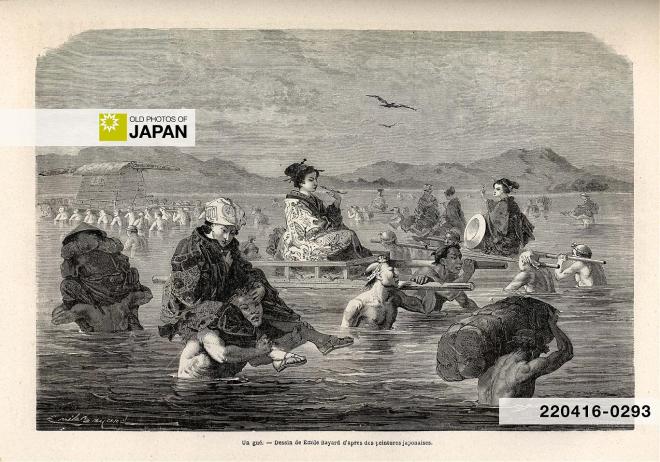
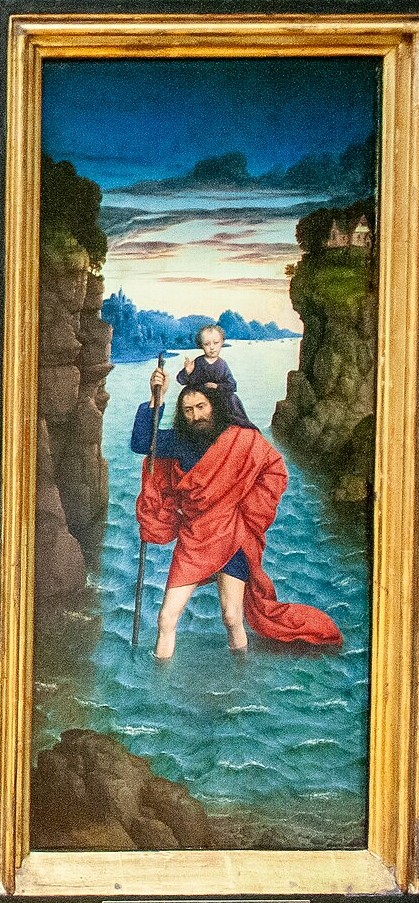
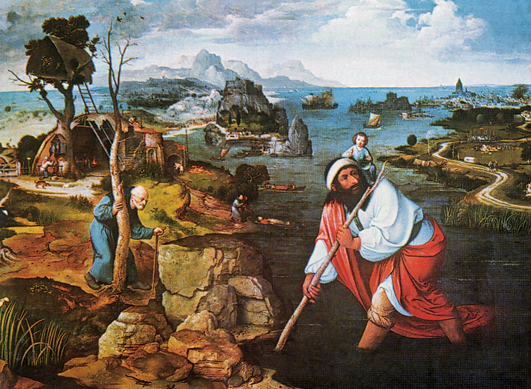

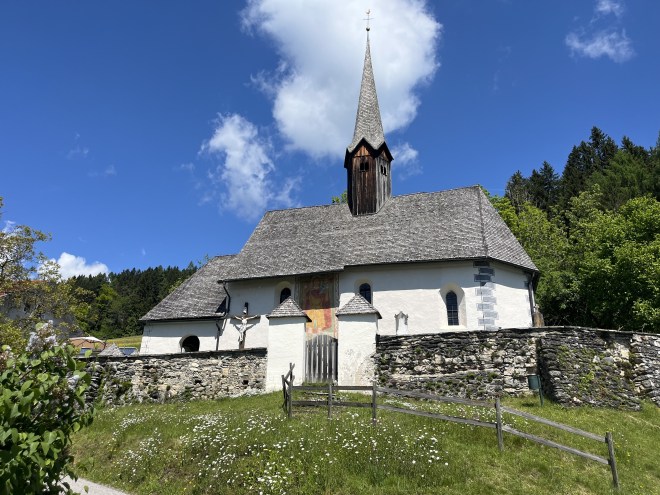

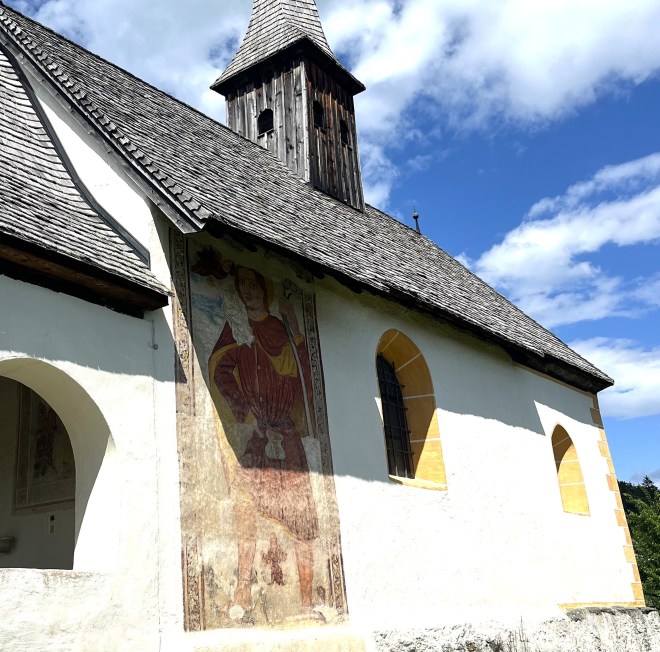

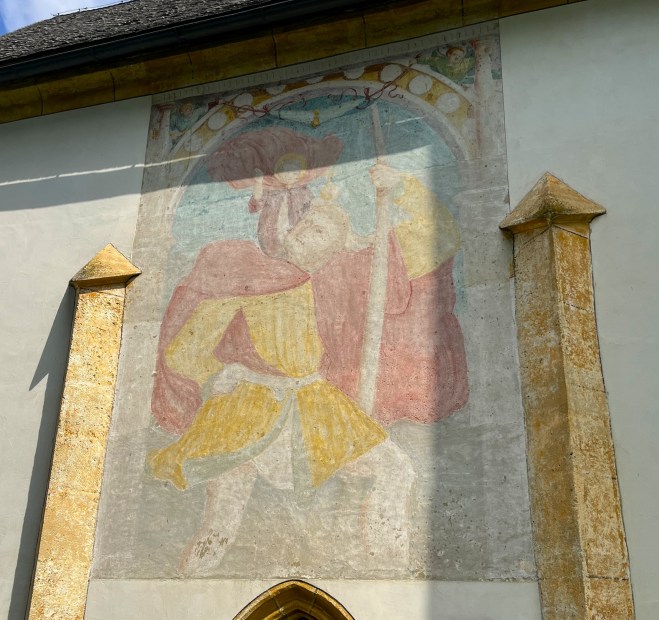
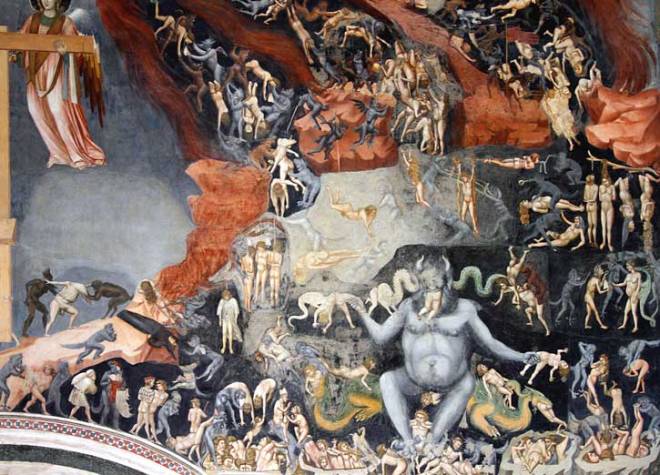


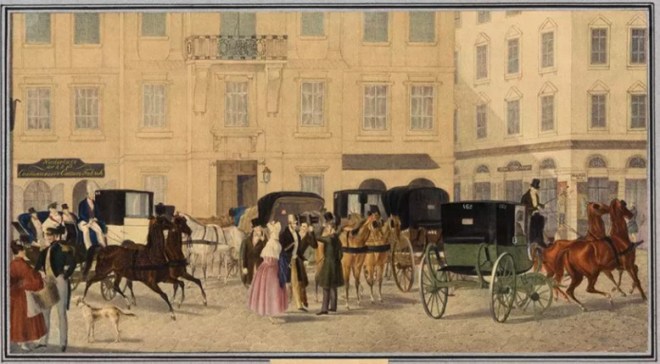

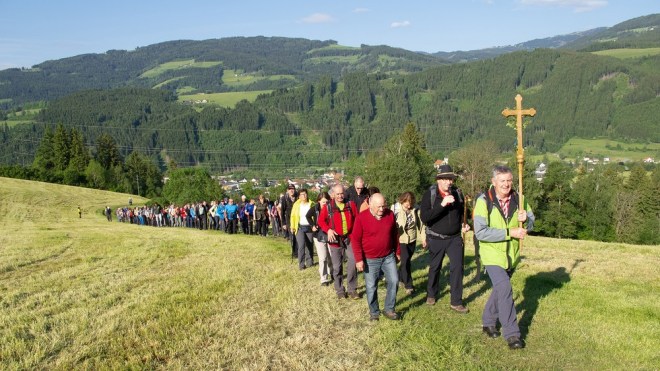
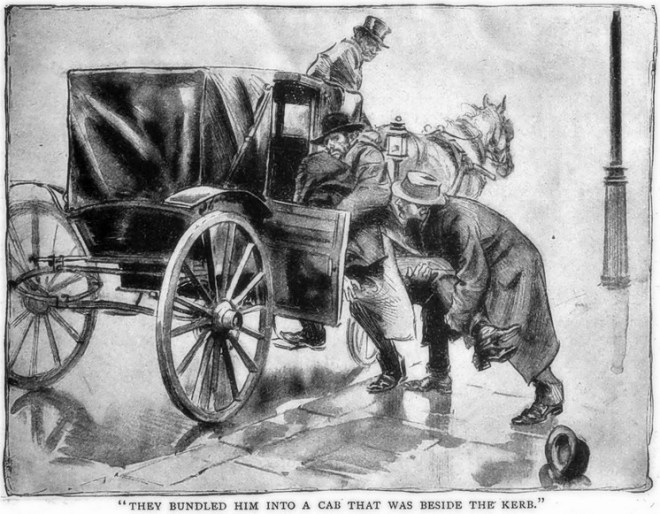
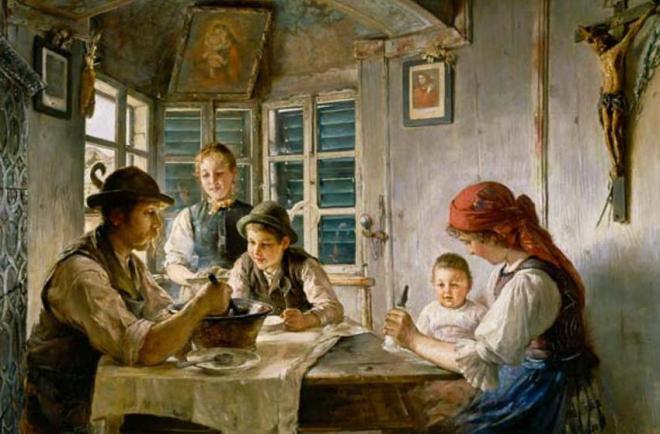
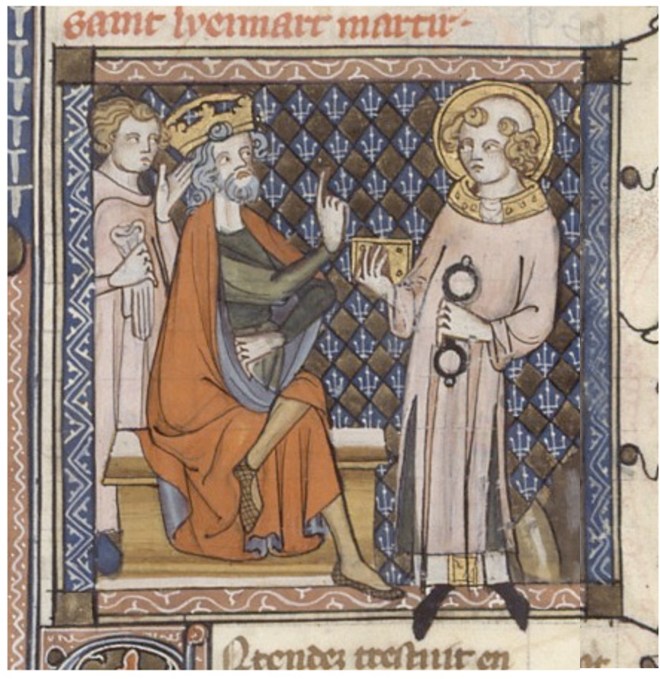
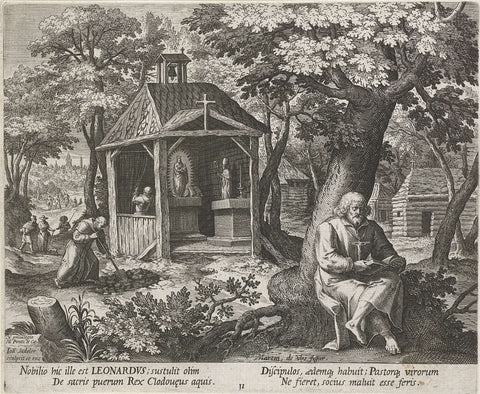
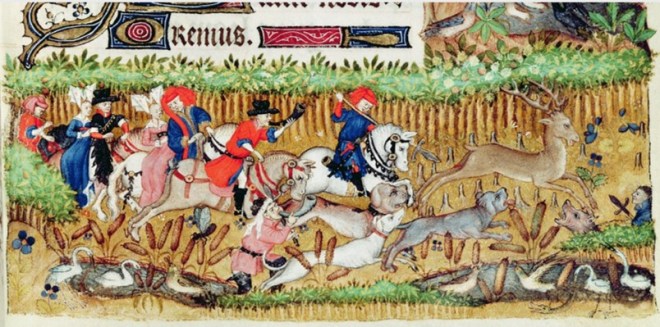

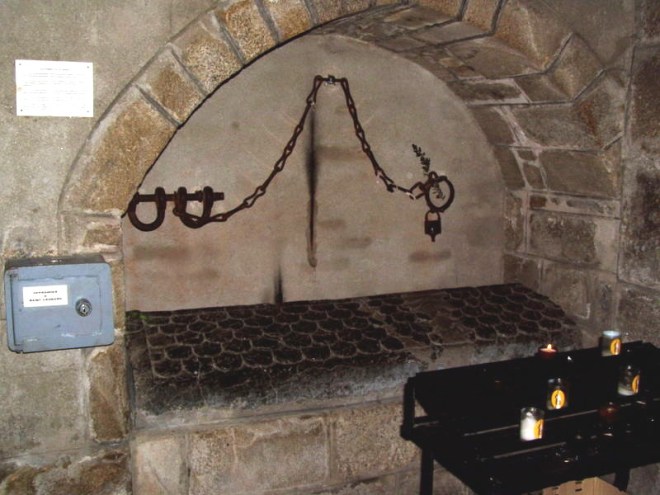
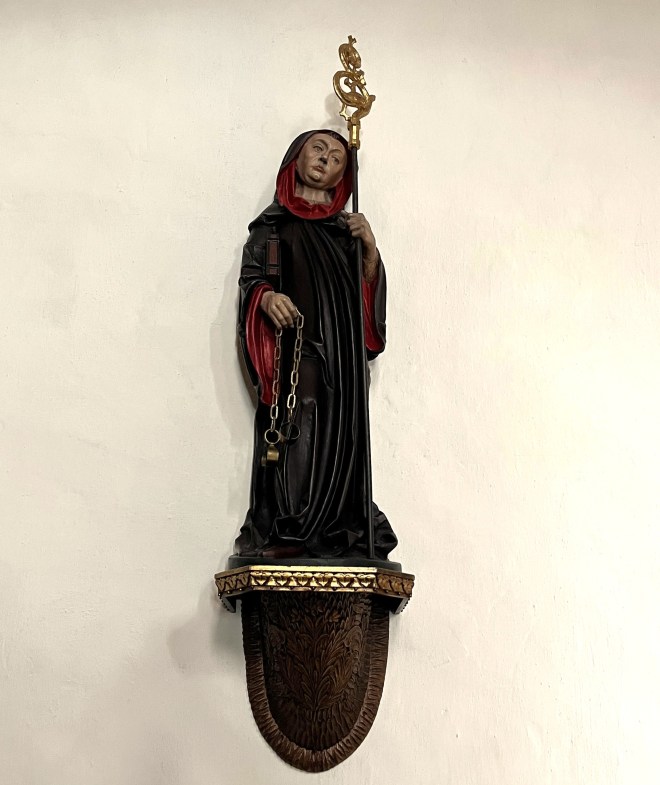


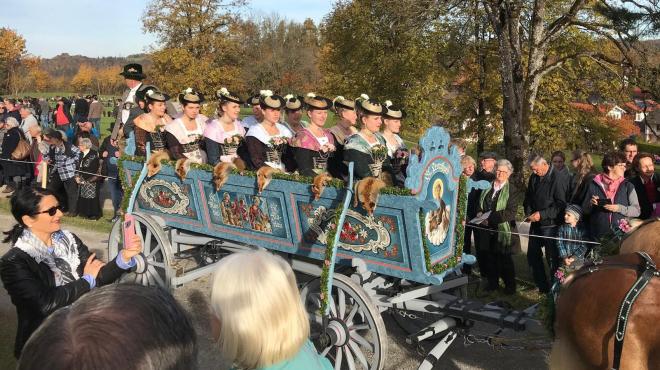


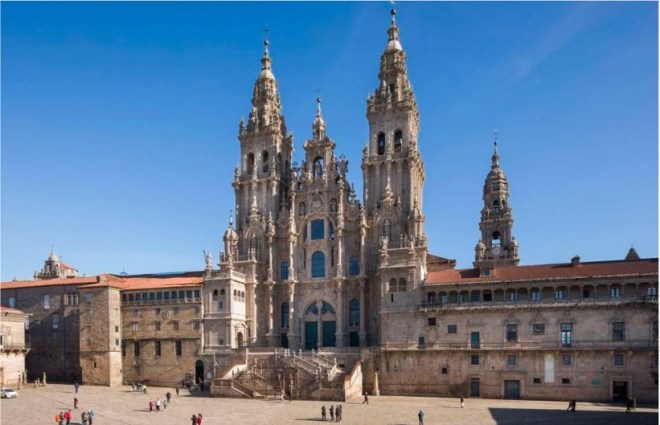


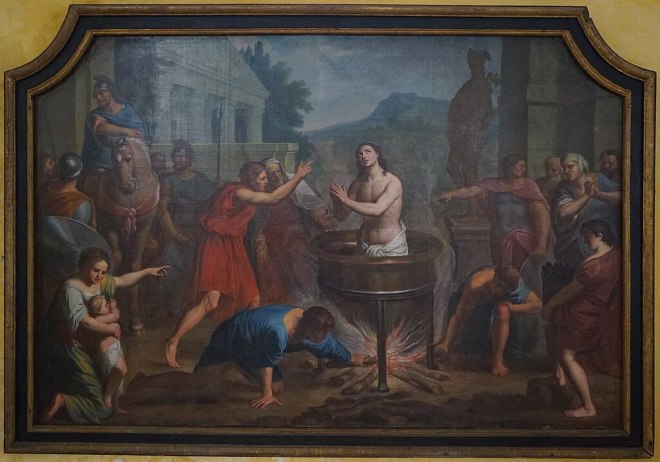
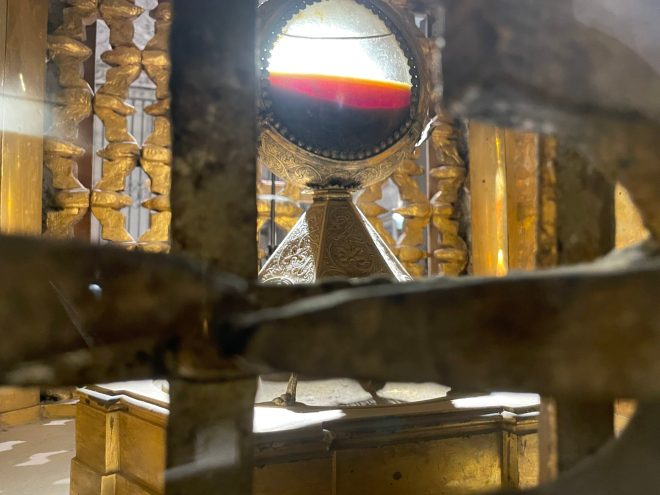

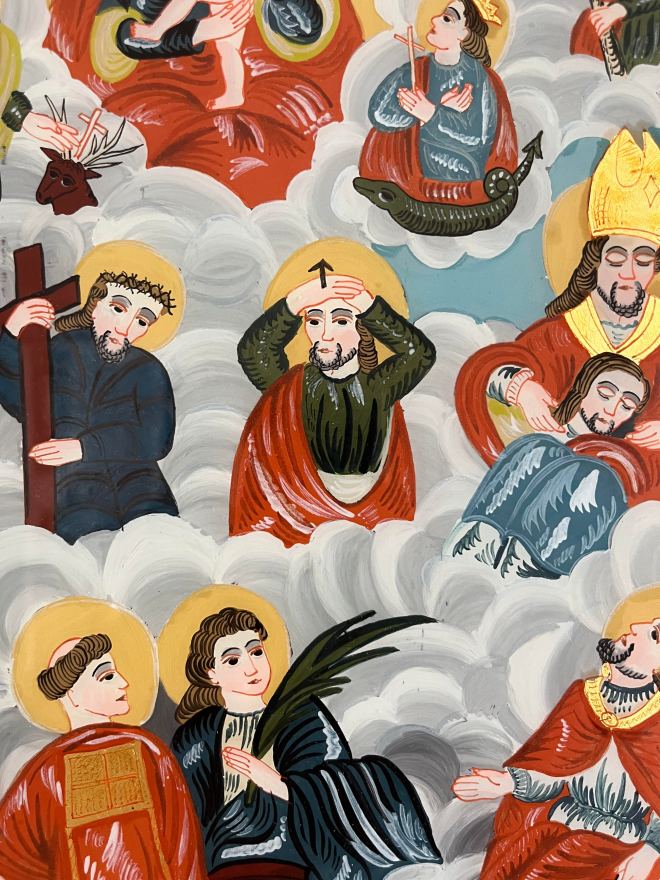
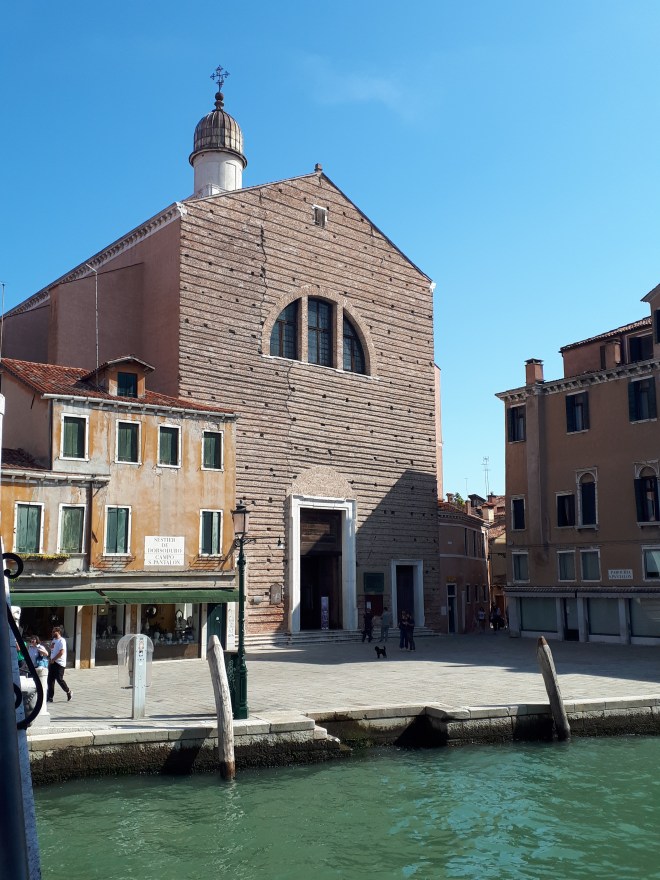
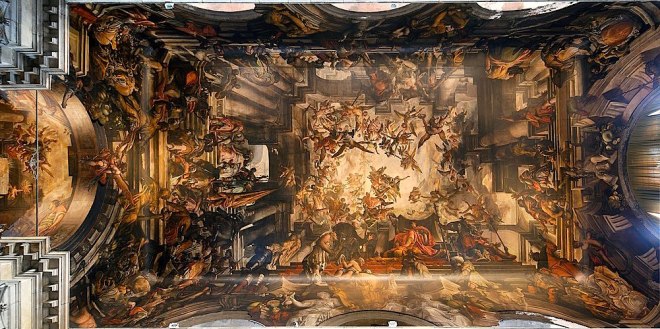
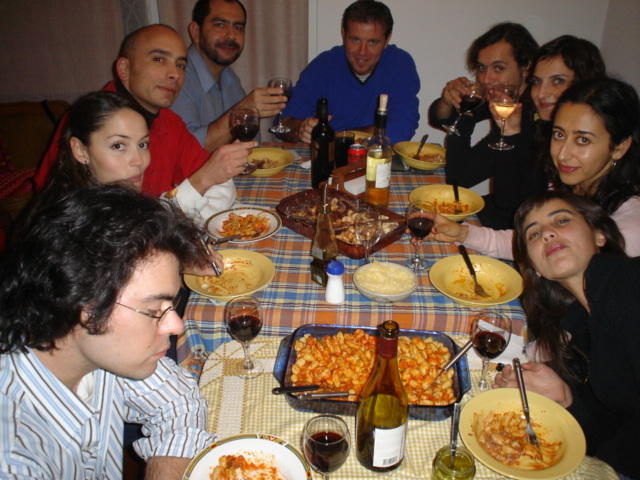
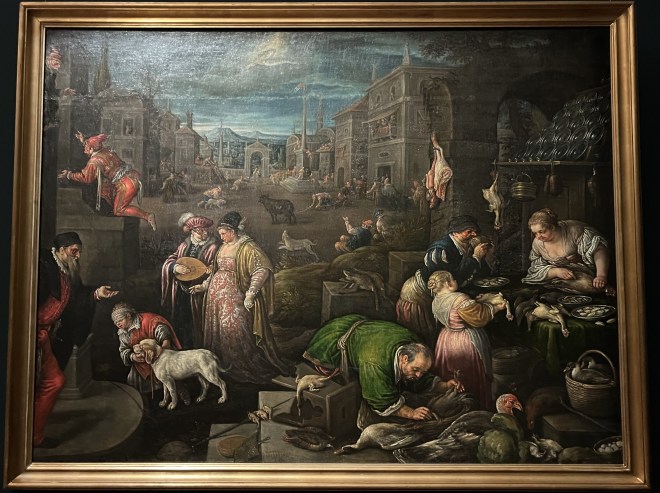

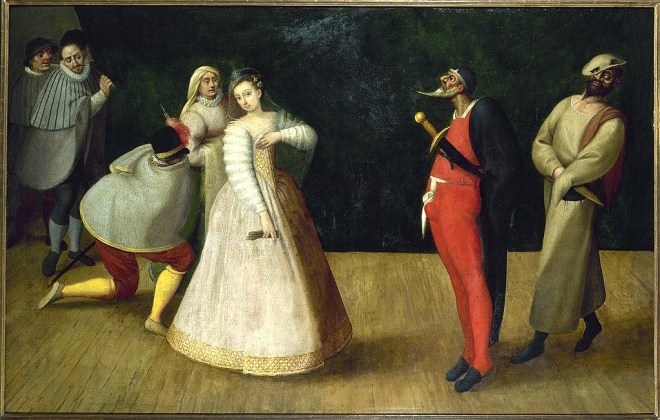
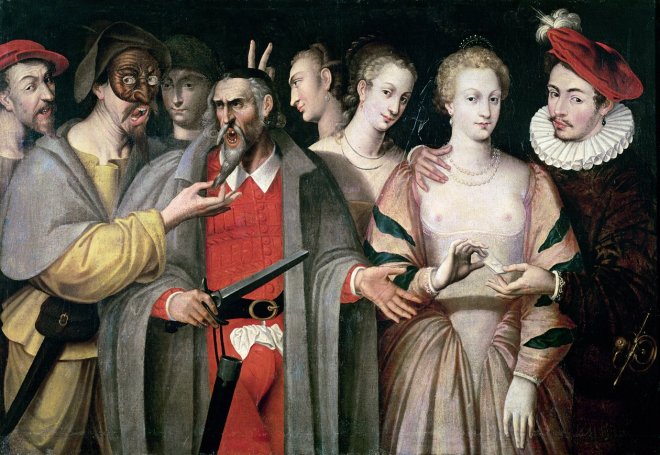


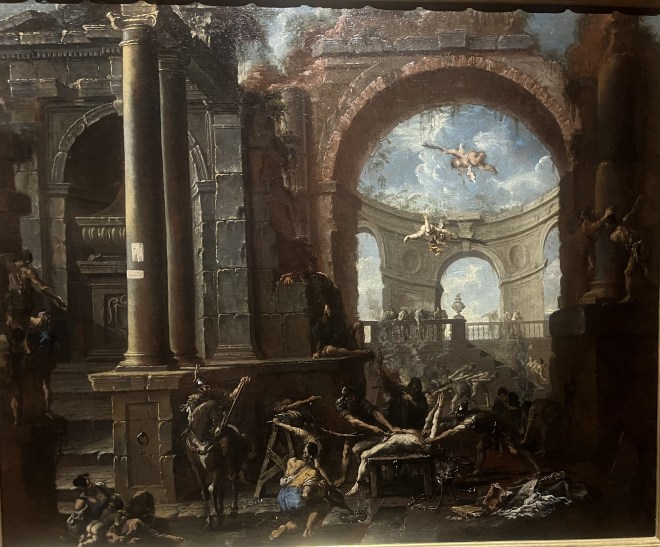
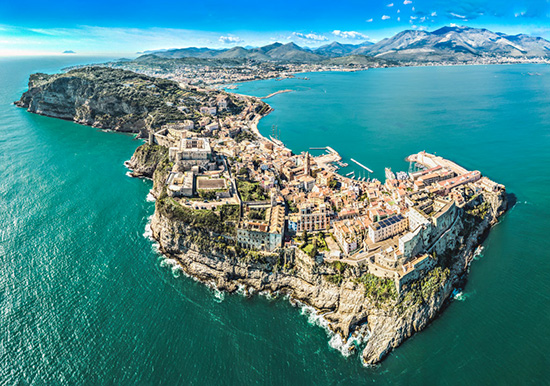




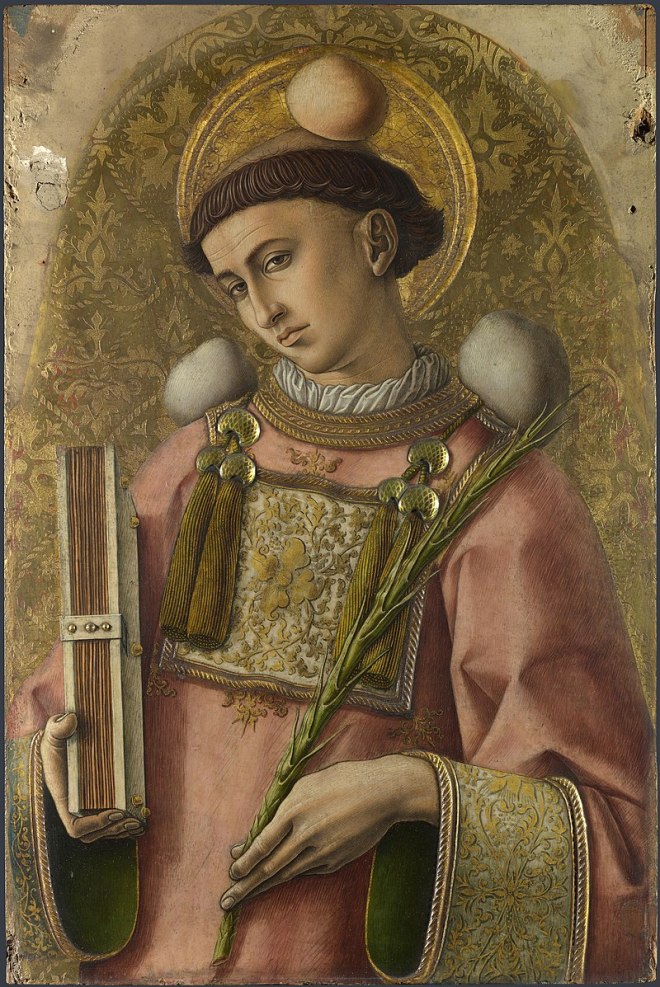
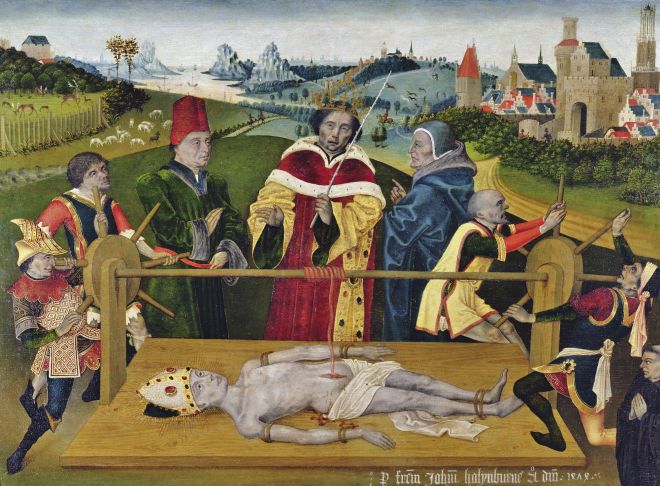
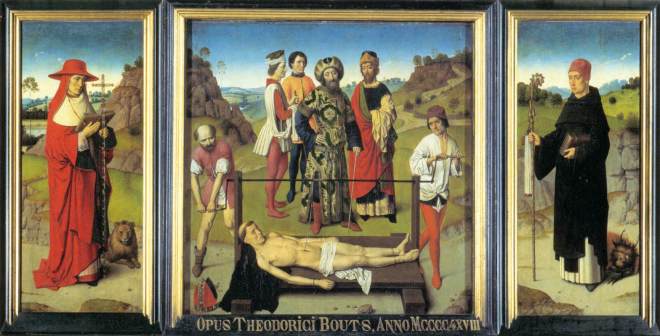



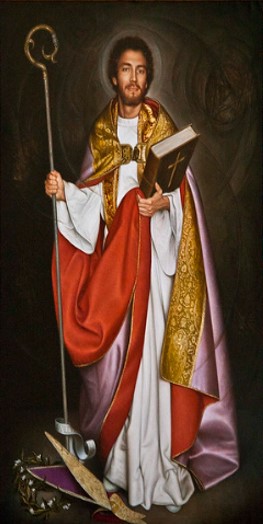
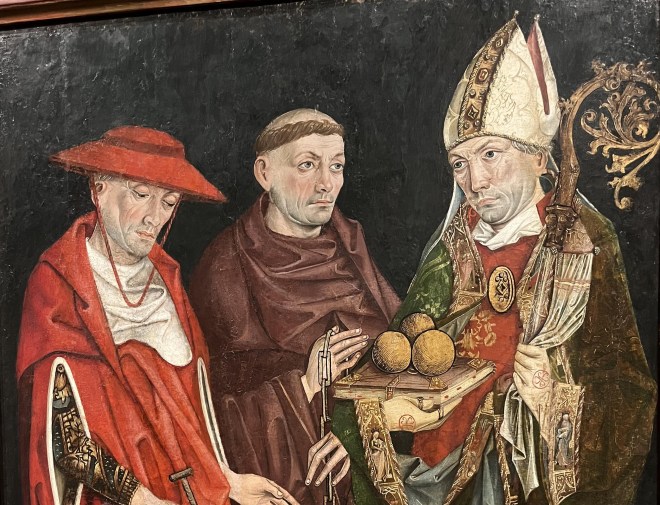
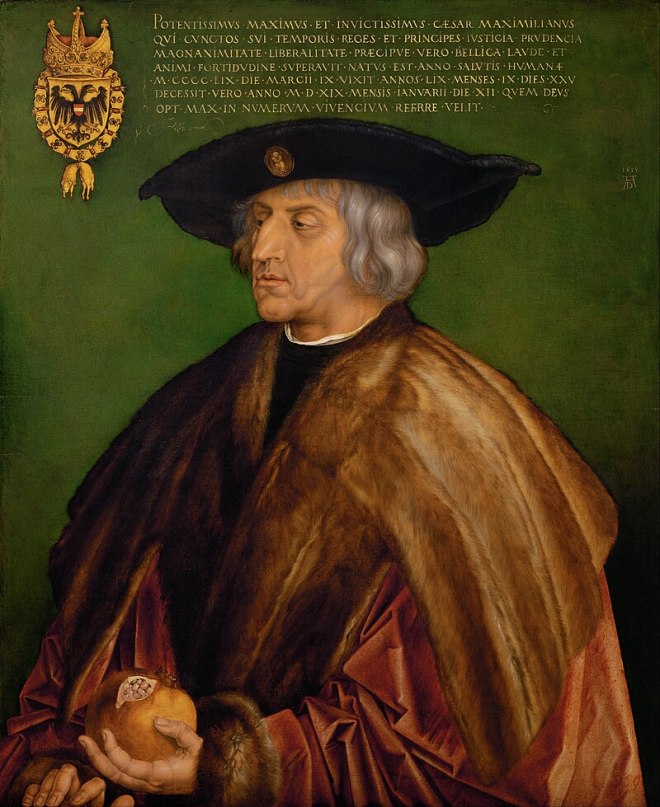
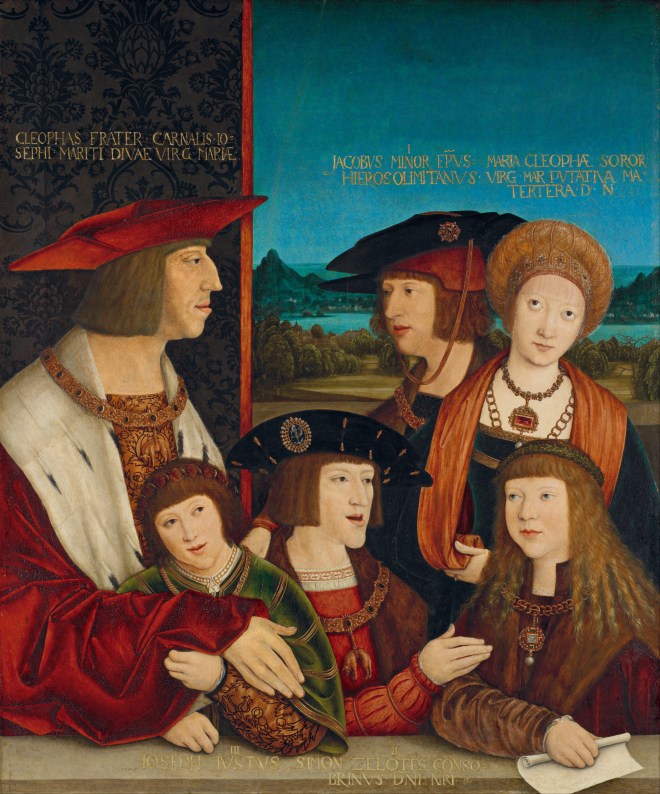
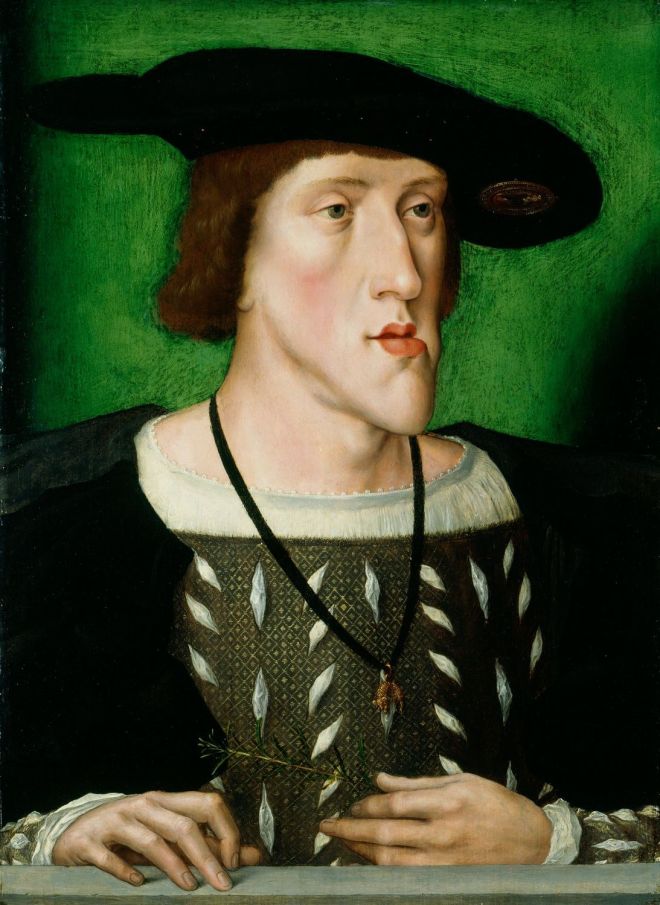
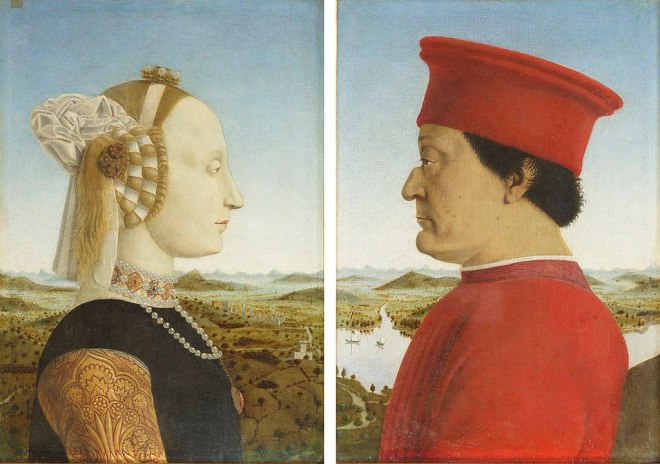


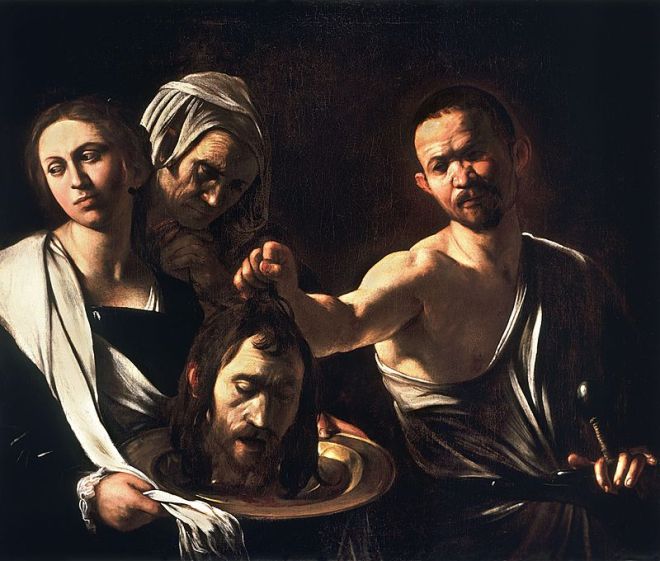


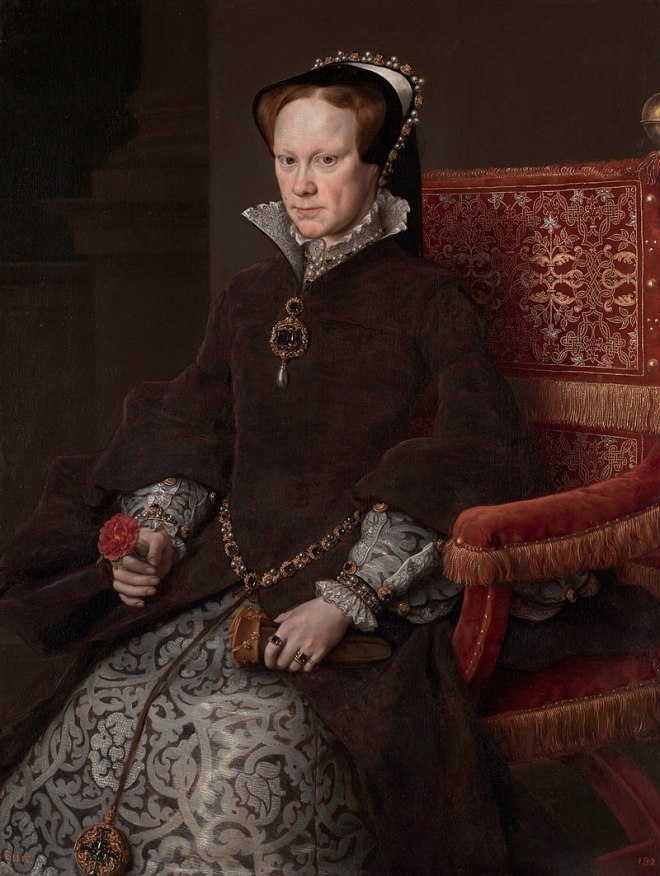

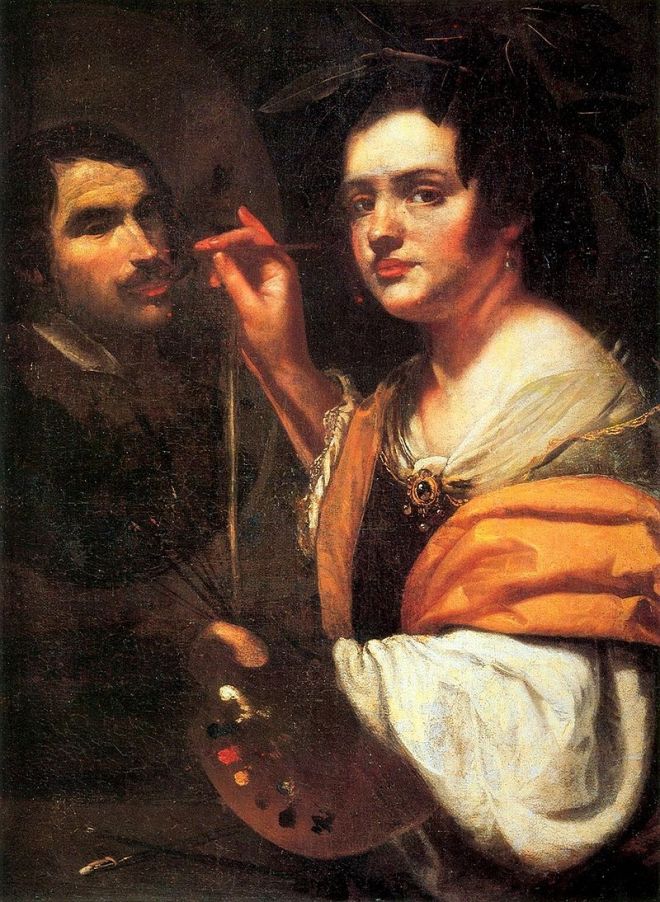
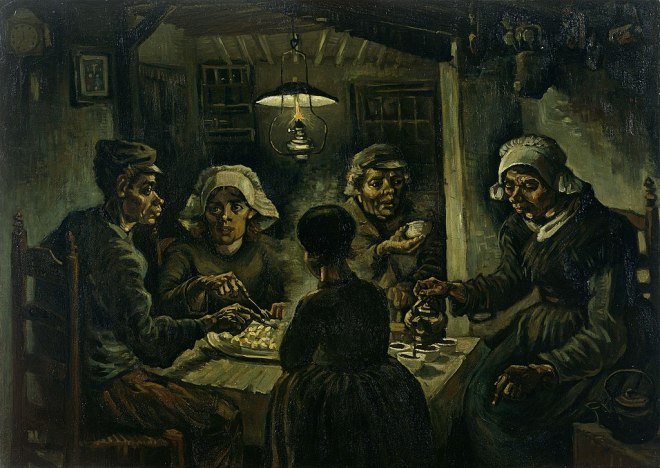


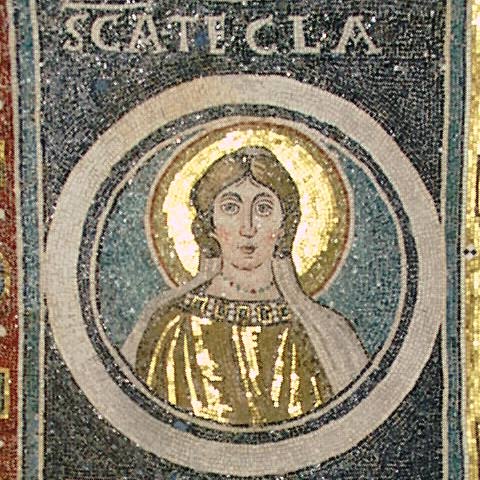

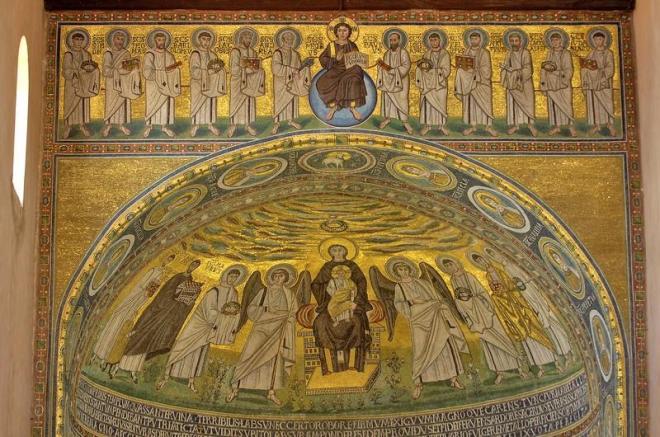

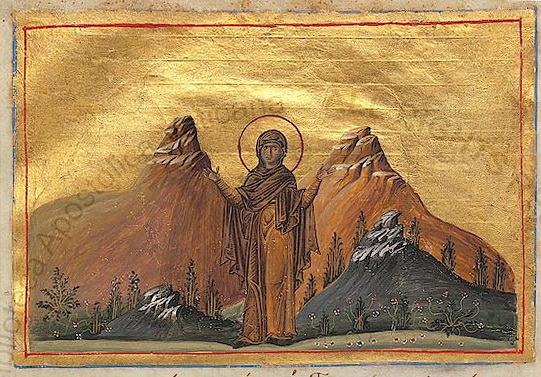

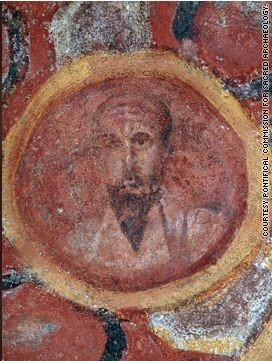


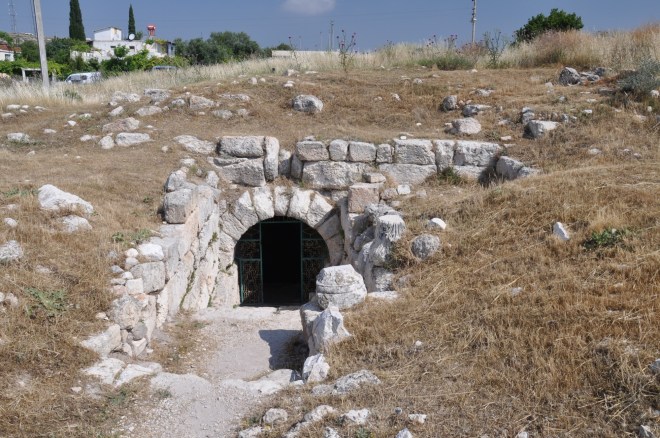
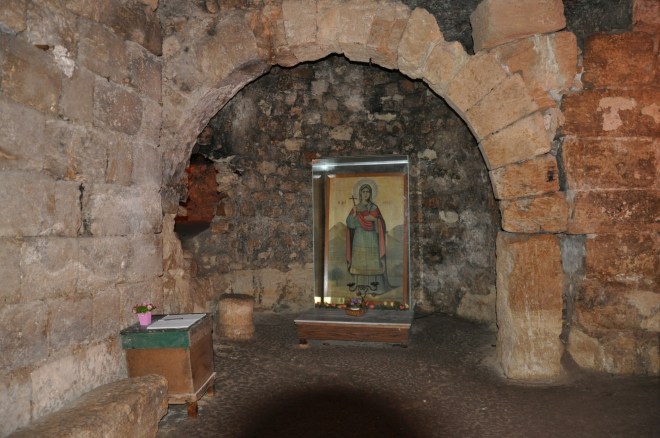
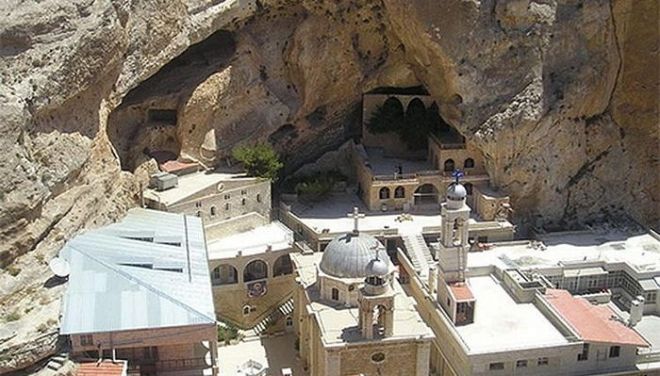





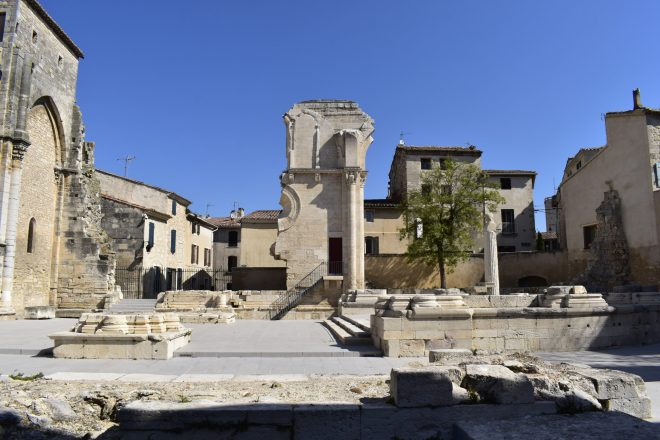


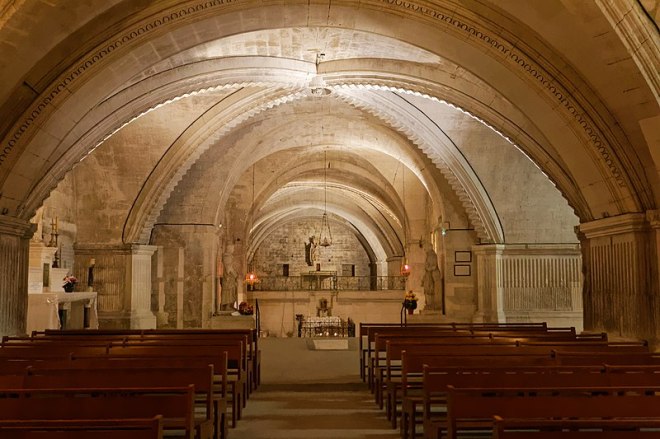


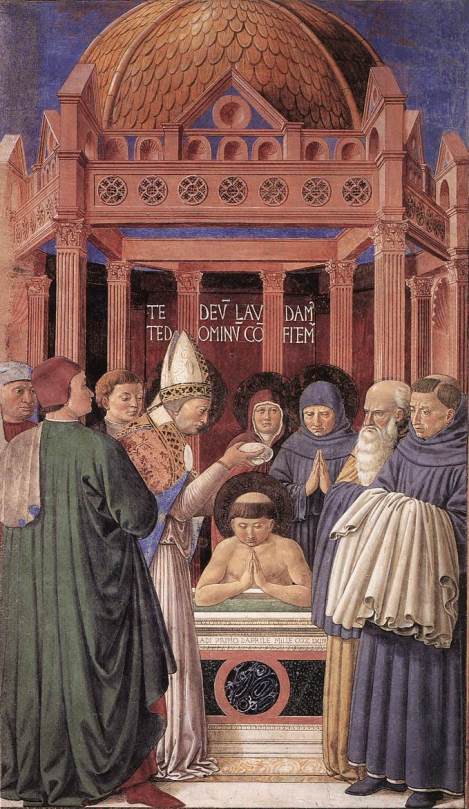
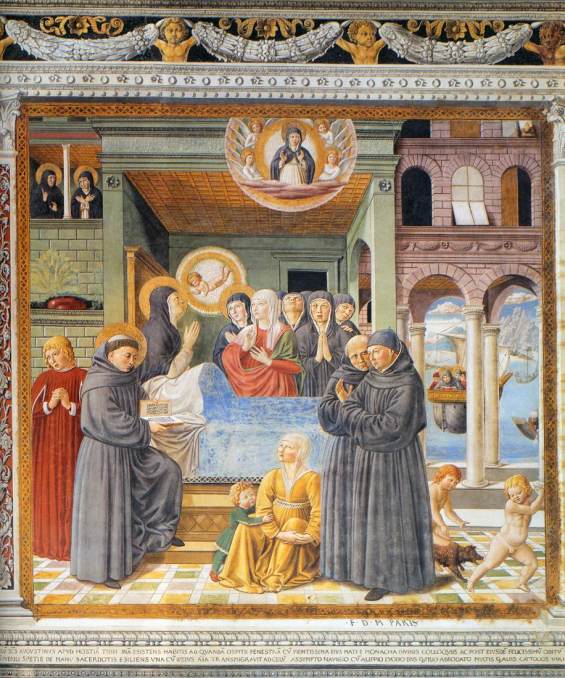
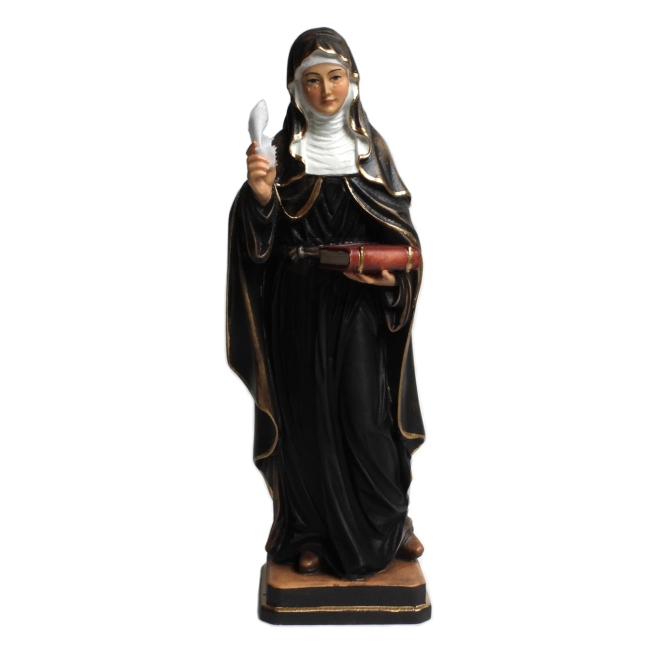
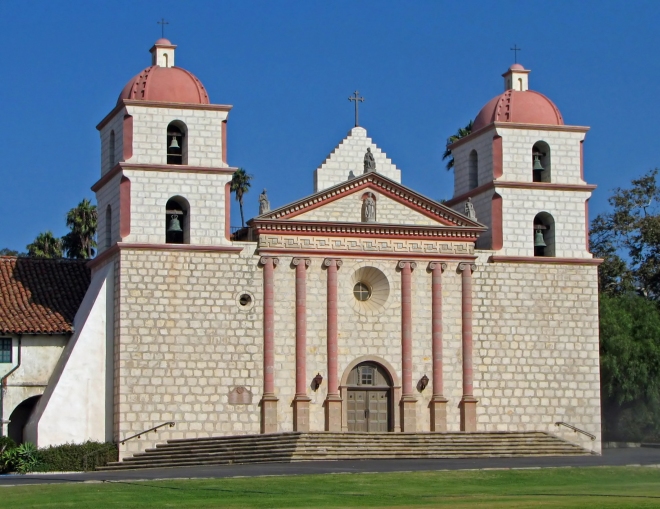




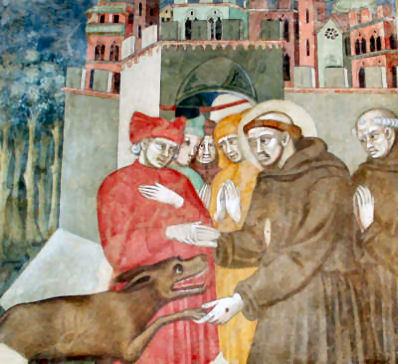

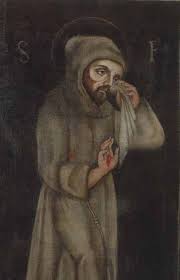
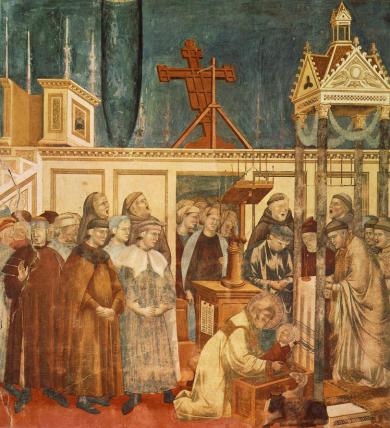
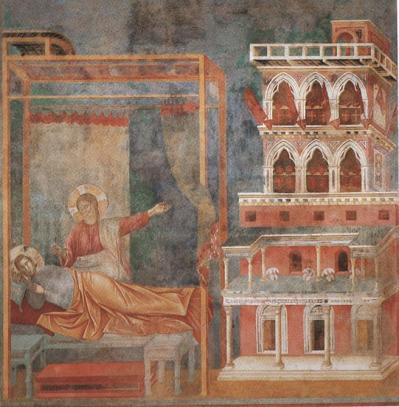
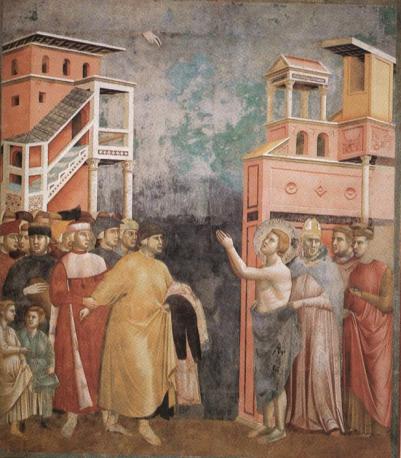


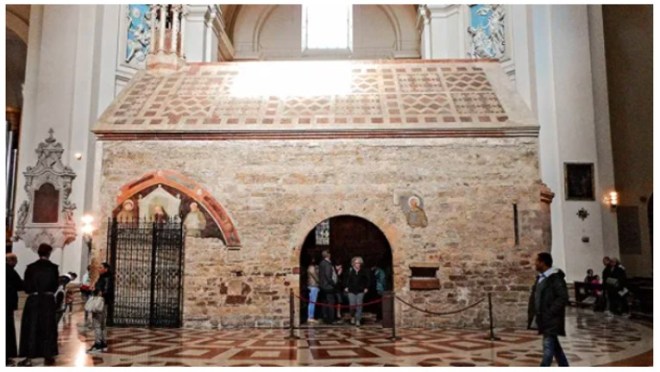
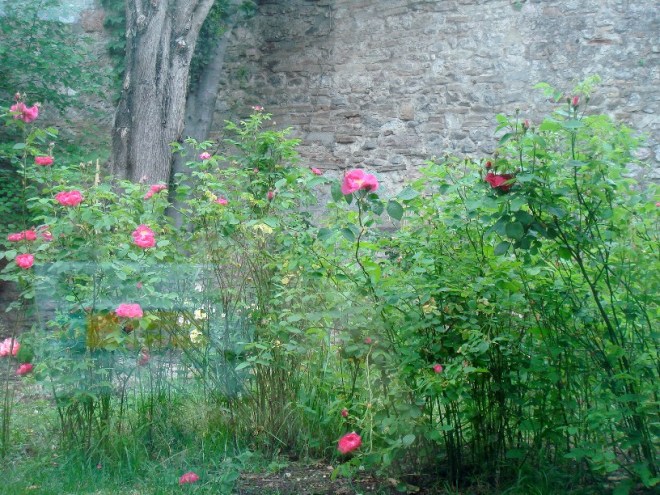


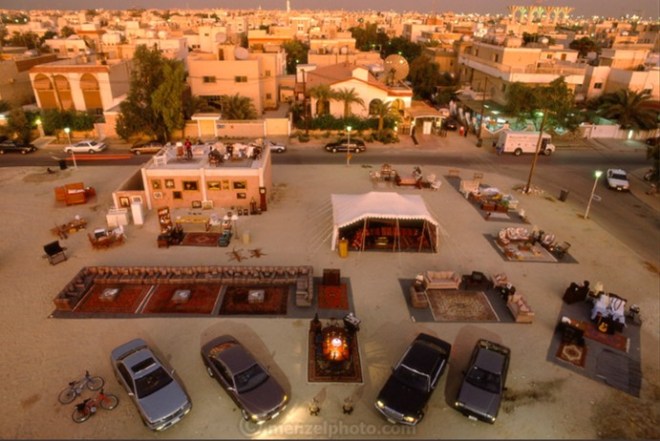




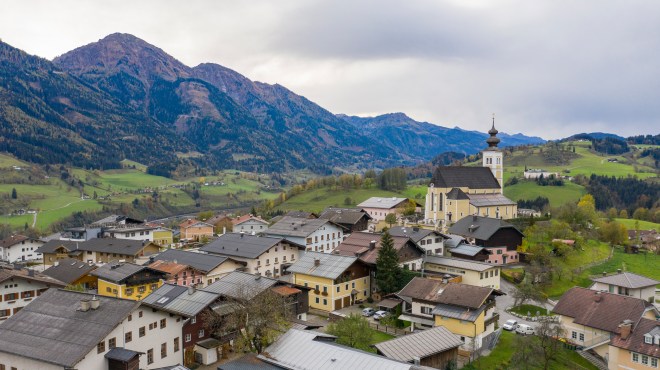


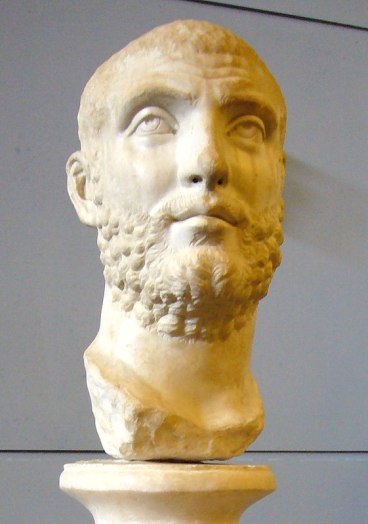

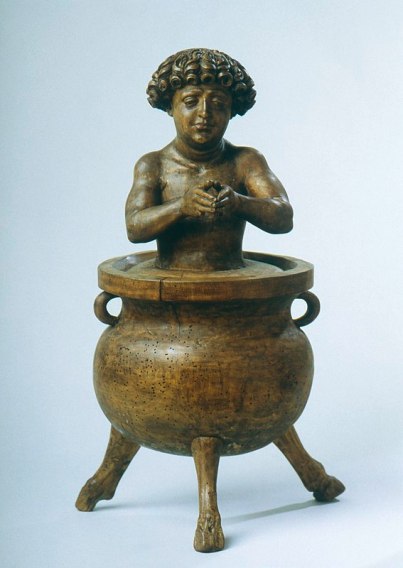


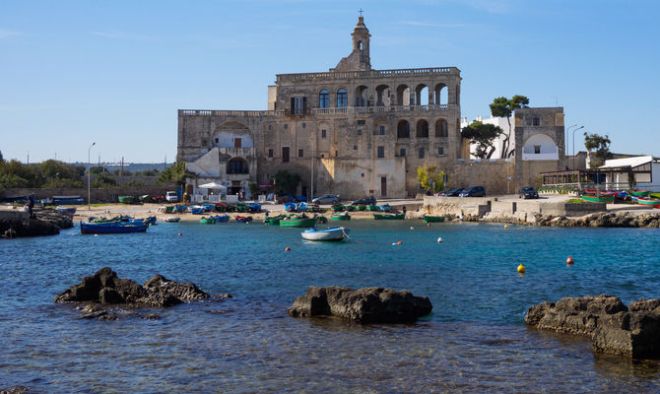
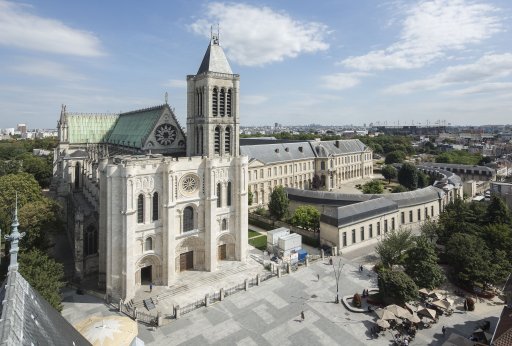
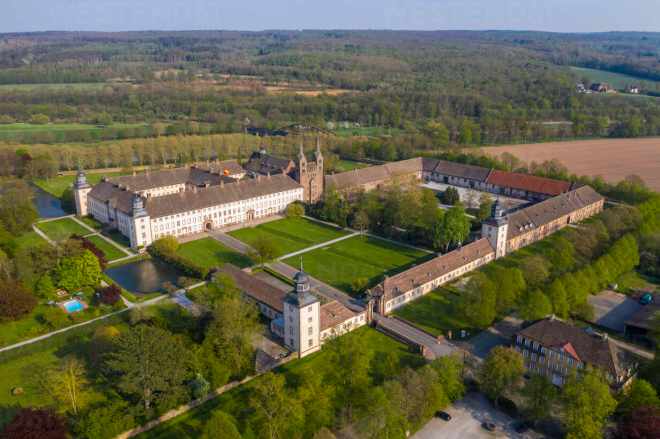


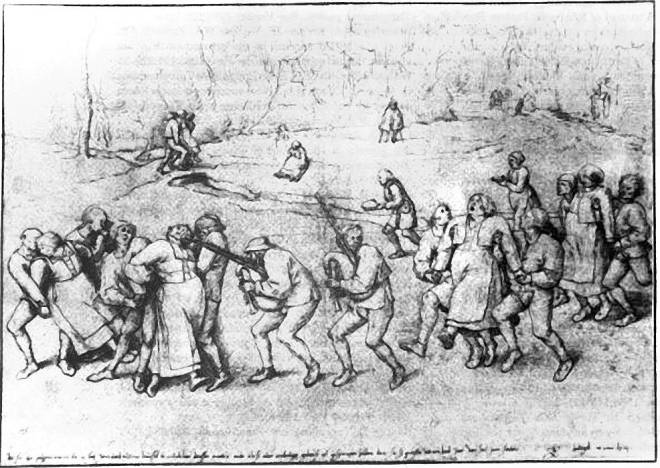


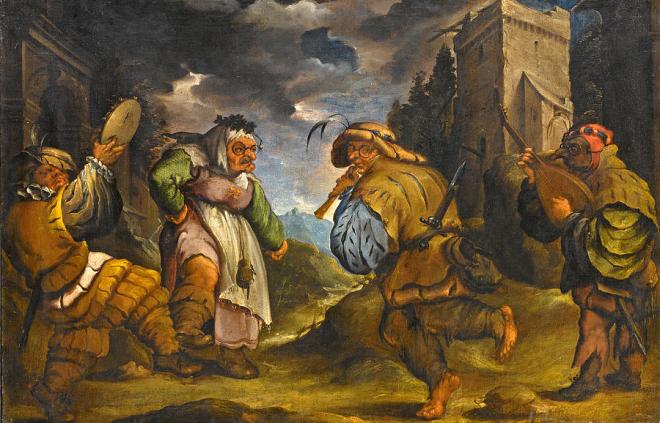

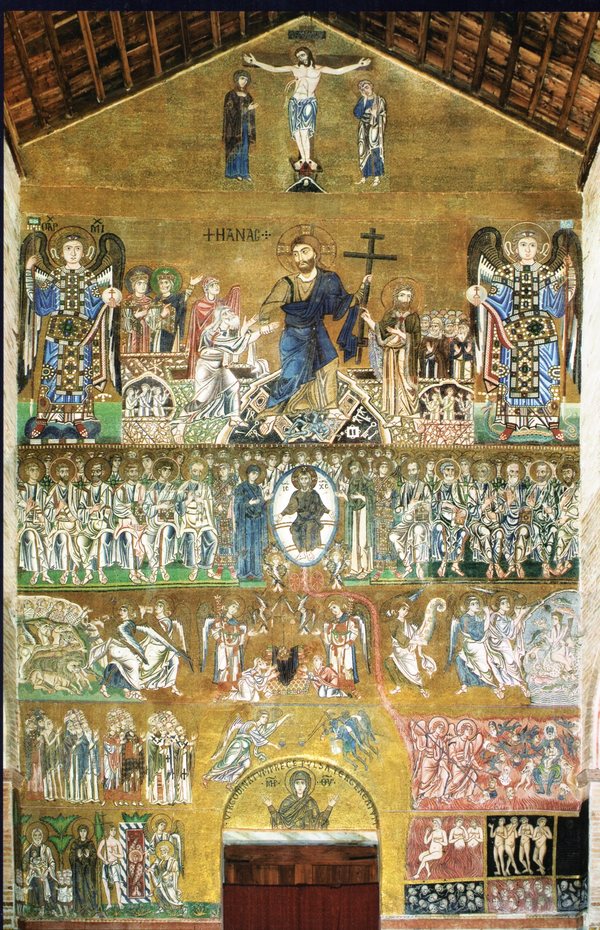
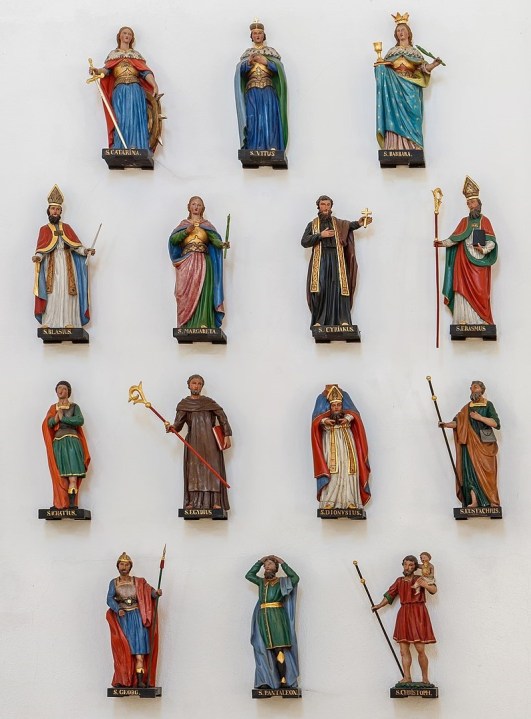








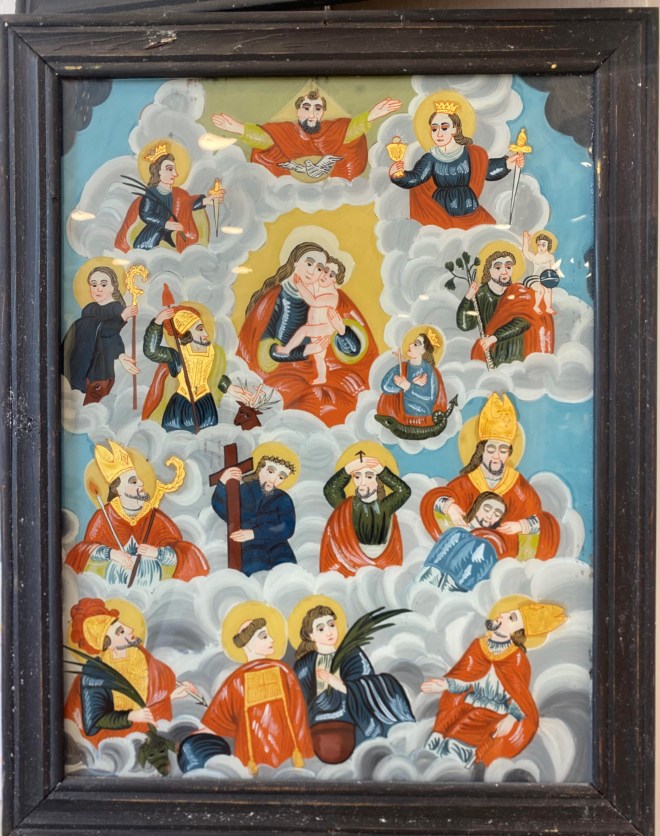

 the heart thrills


