THREE WISE MEN

Milan, 6 January 2025

Today is 6 January, the day of the Epiphany! The day when the Three Wise Men arrive in Bethlehem to find the Child Jesus. Momentous event! In the words of St. Matthew’s Gospel (I cite the King James version)

And when they were come into the house, they saw the young child with Mary his mother, and fell down, and worshipped him: and when they had opened their treasures, they presented unto him gifts; gold, and frankincense and myrrh.

Or, as the Christmas carol puts it

Three Wise Men
We Three Kings of Orient are,
Bearing gifts we traverse afar,
Field and fountain,
Moor and mountain,
Following yonder Star.
Refrain
O Star of Wonder, Star of Night,
Star with Royal Beauty bright,
Westward leading,
Still proceeding,
Guide us to Thy perfect Light.

Gaspard
Born a King on Bethlehem plain,
Gold I bring to crown Him again,
King for ever,
Ceasing never
Over us all to reign.
Refrain

Melchior
Frankincense to offer have I,
Incense owns a Deity nigh:
Prayer and praising
All men raising,
Worship Him God on High.
Refrain

Balthazar
Myrrh is mine; its bitter perfume
Breathes a life of gathering gloom;—
Sorrowing, sighing,
Bleeding, dying,
Sealed in the stone-cold tomb.
Refrain

Three Wise Men
Glorious now behold Him arise,
King, and God, and Sacrifice;
Heav’n sings Hallelujah:
Hallelujah the earth replies.
Refrain

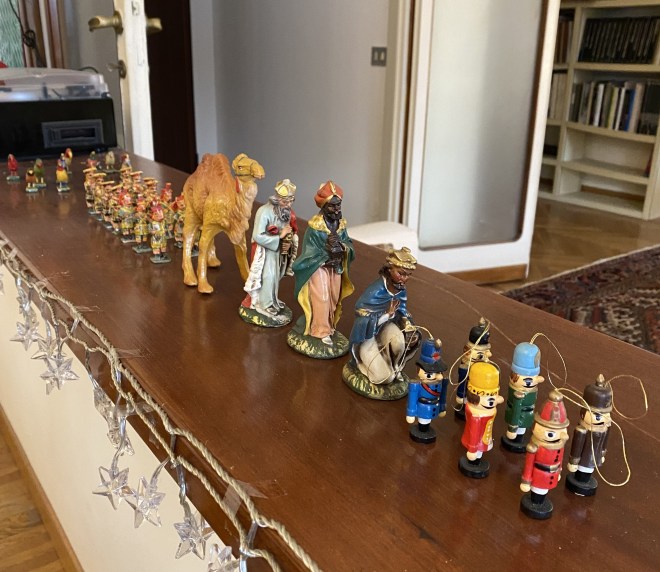
The Three Wise Men are, of course, important characters in our annual crèche. Ever since Christmas Day, they have been travelling across the furniture of our living room, on their way to Bethlehem. This year, I have had them accompanied by a retinue worthy of their rank.
My photo

I found the figurines of the retinue in a box where they had been carefully stored away by my mother-in-law many years ago. It seemed a pity not to bring them out into the light of day. I think it all looks pretty impressive! (But we have to do something about the camels; I’ve been telling my wife for years that we need to find some more camels, one camel simply isn’t enough. And we have to get a statue to replace the kneeling Wise Man; kneeling before the Baby Jesus is OK, but he can’t be on his knees the whole trip to Bethlehem …).

Here, we can see the tail-end of the cortege.

My photo

I added the birds because they were also in the box. A bit odd, but why not? Maybe the Wise Men were like St. Francis, they were listened to by the birds (boy, are we going to have fun when we set up the crèche with our grandson, possibly grandchildren, in a few years’ time! Who knows what interesting additions we could come up with!).

And now the Three Wise Men have arrived at the manger and are adoring the Baby Jesus!

My photo

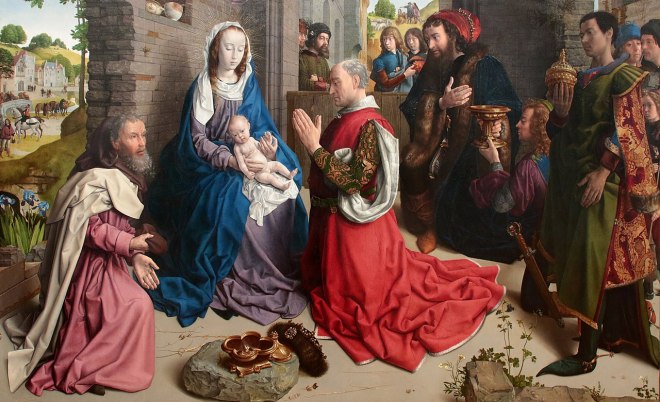
This scene of the Adoration of the Magi has been painted over and over again by European artists. I pick here just one of the many offerings. It is by the Flemish painter Hugo van der Goes, who painted it in about 1470.
Source

In truth, though, I prefer the rendering of the Three Wise Men in the mosaics of Sant’Apollinare Nuovo in Ravenna.

Source

Dressed as they are as Persians, wearing the Phrygian cap which Romans seemed to think all Persians wore, they fit better with what the Gospel of St. Matthew had to say: “behold, there came wise men from the east”. Now Matthew didn’t actually say how many Wise Men there were, but pretty quickly most Christian sects settled for three, one for each gift. Matthew also didn’t say how old they were, but clearly by the time these mosaics were laid down it was generally agreed that they represented the three ages of Man, so we have one old one, one middle-aged one, and one young one. It was only later that it was decided that they also represented the three races known to Europeans: the Europeans themselves, the peoples of the Middle-East, and the peoples of Africa. Paintings of the Magi are some of the earliest representations of Black people in European art. Here is a lovely example from an Adoration of the Magi by Hieronymus Bosch.

Source

Painters don’t seem to have been much interested in what was happening to the Three Wise Men on their way to Bethlehem. But T.S. Eliot, in his poem Journey of the Magi, did try to imagine what the trip was like. I cite here the first twenty lines of the poem.

A cold coming we had of it,
Just the worst time of the year
For a journey, and such a long journey:
The ways deep and the weather sharp,
The very dead of winter.’
And the camels galled, sore-footed, refractory,
Lying down in the melting snow.
There were times we regretted
The summer palaces on slopes, the terraces,
And the silken girls bringing sherbet.
Then the camel men cursing and grumbling
And running away, and wanting their liquor and women,
And the night-fires going out, and the lack of shelters,
And the cities hostile and the towns unfriendly
And the villages dirty and charging high prices:
A hard time we had of it.
At the end we preferred to travel all night,
Sleeping in snatches,
With the voices singing in our ears, saying
That this was all folly.

Compared to this description, our Three Wise Men have had it pretty easy: nice, warm living room, easy travel across the furniture, respectful entourage …

As told in St. Matthew’s Gospel, the arrival of the Three Wise Men was like a poke in a hornet’s nest. In Jerusalem, they asked, “Where is he that is born King of the Jews? for we have seen his star in the east, and are come to worship him.” Matthew goes on, “When Herod the king had heard these things, he was troubled, and all Jerusalem with him. And … he demanded of them where Christ should be born. And they said unto him, In Bethlehem … Then Herod … said, Go and search diligently for the young child; and when ye have found him, bring me word again, that I may come and worship him also.” But, Matthew tells us, after giving Jesus his gifts, “being warned of God in a dream that they should not return to Herod, they departed into their own country another way.” He goes on, “behold, the angel of the Lord appeareth to Joseph in a dream, saying, Arise, and take the young child and his mother, and flee into Egypt, and be thou there until I bring thee word: for Herod will seek the young child to destroy him. When he arose, he took the young child and his mother by night, and departed into Egypt.” The Flight to Egypt was also a popular theme for European painters. I show one example, by my favourite painter, Caravaggio, Rest on the Flight to Egypt, where one of the painter’s luminous angels is playing music on a viol to soothe Mary and Jesus in their slumber (the music held by Joseph is readable; it is a motet by the Flemish composer Noel Bauldeweyn dedicated to the Madonna, with a text from the Song of Songs, Quam pulchra es, “How beautiful you are”; nice touch).

Source

Alas, Herod was not a man to be crossed. Matthew tells us, “Then Herod, when he saw that he was mocked of the wise men, was exceeding wroth, and sent forth, and slew all the children that were in Bethlehem, and in all the coasts thereof, from two years old and under.” This Massacre of the Innocents was, too, a popular theme for European artists. I show here an example of the genre by Peter Breughel the Elder.

Source

I’m actually being a little economical with the truth. This is really a copy of Breughel’s painting, by his son Peter Breughel the Younger. The original was once owned by the Holy Roman Emperor, Rudolf II. For some reason – queasiness? – he had the dead children painted over. This copy retains the dead children.

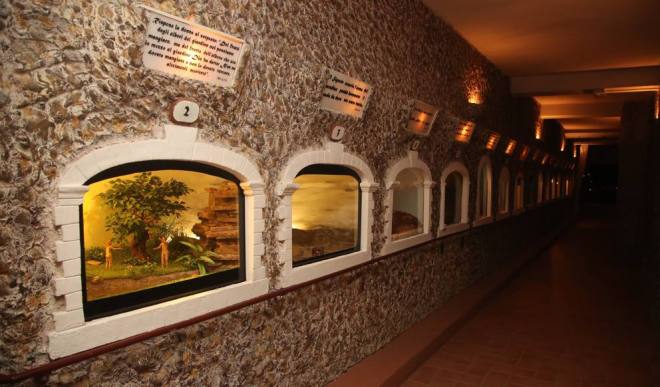
Quite by chance, just before Christmas, we stumbled across a very sophisticated crèche, in a place called Baggio, which once was a village but then got swallowed up by Milan some 150 years ago. There, in the crypt of a church, over the last forty years or so, dedicated local volunteers have created 58 scenes from the Bible, with the Nativity being the central scene. Some of the scenes have running water, others have moving figurines, … it’s very impressive. Here is a shot of the first scene, Adam and Eve in the Garden of Eden (with a delightfully slithery snake in the tree).
Source

Here is one of Moses and the parting of the waters of the Red Sea.

Source

And here is a shot of the central scene of the Nativity.

Source

As I say, very impressive … although I will admit to having been just a teeny-weeny bit jealous. We’ll soon be packing away the crèche and its figurines for another year, but I’m already thinking how we could expand the offerings next year. Running water and moving figurines is a bit beyond me. But maybe Herod in a palace in Jerusalem? The Massacre of the Innocents? Some “snow” for the Wise Men to trudge wearily through? At least let’s fix the camel problem!
FRANKINCENSE AND MYRRH

Milan, 19 April 2017

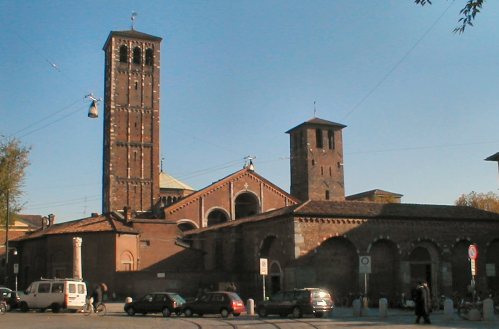
Some forty years ago, when my wife and I were just beginning our journey together through life, I came down to Milan to spend Easter with her. At her mother’s suggestion, we went to a late-night service in the nearby basilica of Sant’Ambrogio.


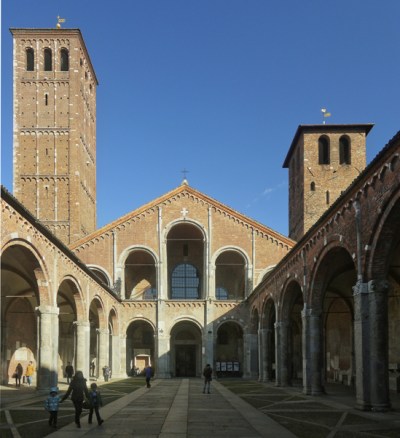
It was either on Good Friday night or Easter Saturday night (my memory is clouded on this detail). Either way, at the end of the ceremony we all trooped out into the church’s atrium.

There, the presiding bishop put a light to a nice big bonfire which had been laid down earlier, and intoned loudly several times “Christus Resurrexit!”, “Christ is Resurrected!”. Now, since the resurrection of Christ is the central tenet of Christianity – without it, there would be no Christianity – you would think that the bishop would have shouted out this message with joy and gladness, or at least with a mild level of satisfaction. Not a bit of it! The fellow intoned it so mournfully as to make you wonder if he was sorry that the resurrection had ever taken place at all. Or maybe he enjoyed Lent a lot, fasting and praying and beating his breast, and was sorry that it was all over for another year. Or perhaps his hemorrhoids were acting up. Whatever the reason, the three of us agreed afterwards that the Bish had been a douche-bag, resurrection-wise.

Ever since that ceremony long ago, it has been in the back of my mind to attend it again, if only to see if succeeding bishops were a bit more joyful about it all. But as the Italians say, fra il dire e il fare c’è di mezzo il mare, between the saying and the doing lies the sea (it sounds better in Italian, if only because it rhymes). This year I thought the time was finally ripe, but alas! either the ceremony was on Good Friday night, when we had just arrived back from Los Angeles and were in no fit state to take part in anything, or some boringly politically correct entity like the City of Milan Health & Safety Services had decided in the intervening years that open bonfires in church atria were a no-no. Whatever it was, the bottom line was that there was no ceremony on Easter Saturday.

My wife decreed that nevertheless we should at least step into Sant’Ambrogio on Easter Sunday – something to do with a sort of atavistic belief that this would be a good day and place to receive a dose of sympathetic magic – and I grouchily agreed. So some time in the afternoon of Easter Sunday we made our way to the church, weaving our way through the few Milanese left in the city who were going for their Sunday stroll. We walked through the atrium where there should have been the bonfire, and we entered the church.

Ahh! My nose was immediately greeted by the smell of incense which had been burned in earlier ceremonies, and I was transported back to my youth. I saw the boy that was me inhaling that fragrance, pungent but with sweet overtones, watching the smoke curling towards the ceiling, and generally enjoying one of the few bright spots during those weekly masses which I had to endure.

I also thought that swinging that thingy (which I later learned was called a thurible) from which all that thick smoke poured out was pretty cool.

In my teenage years, when I was finally considered responsible enough, I got to serve in High Masses as an altar boy and to swing the thurible (the idea being to pass air over the incense to keep it burning). Luckily, I never got into trouble as Edward Norton did in the film “Keeping the Faith”. Readers may remember the scene where as a young priest just starting out he gets to swing the thurible, which he does with such enthusiasm that he sets his robes alight and has to jump into the font of holy water to douse the flames.

A quick search of my favourite source of information – Wikipedia – informs me that the incense used in the Roman Catholic rites of my youth contains a varying mix of frankincense, myrrh, gum benjamin, copal, and a few other odds and ends.

Frankincense and myrrh …

The Three Wise Men
We three kings of Orient are;
Bearing gifts we traverse afar,
Field and fountain, moor and mountain,
Following yonder star.

Gaspard
Born a King on Bethlehem’s plain
Gold I bring to crown Him again,
King forever, ceasing never,
Over us all to reign.

Melchior
Frankincense to offer have I;
Incense owns a Deity nigh;
Prayer and praising, voices raising,
Worshiping God on high.

Balthazar
Myrrh is mine, its bitter perfume
Breathes a life of gathering gloom;
Sorrowing, sighing, bleeding, dying,
Sealed in the stone cold tomb.

The Three Wise Men
Glorious now behold Him arise;
King and God and sacrifice;
Heav’n sings Hallelujah:
Hallelujah the earth replies.
(I have cut the refrains)

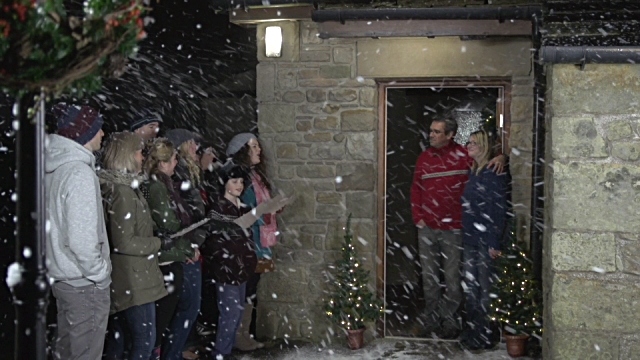
That conjures up another image of my childhood, me in the school choir at primary school, doing the rounds of houses in the neighborhood, our choir master ringing the doorbell, and us launching into this and other Christmas carols when the occupants opened.

At the end of it all, we trooped over to the choir master’s house where his wife had prepared a buffet supper for us all, and where we got to taste just a little bit of the choir master’s home brew … Good times, those were.

Frankincense and myrrh …

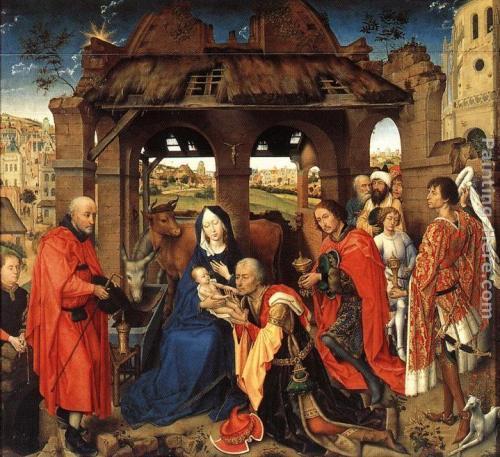
The gifts, along with gold, that those three wise men with such mysterious names – Balthazar, Caspar, and Melchior – are proffering to the child Jesus in those countless paintings of the Adoration of the Magi produced in centuries past.

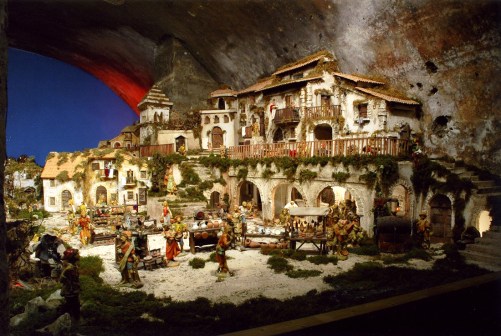
They are also players in the crèches which appear every year at Christmastime in Italian churches, ranging from the simple

to the very elaborate.

As young children we prepared one at home under the overall theological supervision of our mother – the latter meaning that we were allowed to place in the background other figurines in our possession, such as cowboys and Indians or various animals, but not in such quantities as to crowd out the essential Christian message. The three wise men on their camels were placed far away from the manger in which Baby Jesus lay, and then every day after Christmas we children brought them a little closer, to end up at the manger on 6 January, the Day of the Epiphany.

It all looked all so easy to us, but T.S. Eliot, in his poem The Journey of the Magi suggests otherwise (I quote the first twenty lines or so).

A cold coming we had of it,
Just the worst time of the year
For a journey, and such a long journey:
The ways deep and the weather sharp,
The very dead of winter.’
And the camels galled, sorefooted, refractory,
Lying down in the melting snow.
There were times we regretted
The summer palaces on slopes, the terraces,
And the silken girls bringing sherbet.
Then the camel men cursing and grumbling
and running away, and wanting their liquor and women,
And the night-fires going out, and the lack of shelters,
And the cities hostile and the towns unfriendly
And the villages dirty and charging high prices:
A hard time we had of it.
At the end we preferred to travel all night,
Sleeping in snatches,
With the voices singing in our ears, saying
That this was all folly.

Frankincense and myrrh …

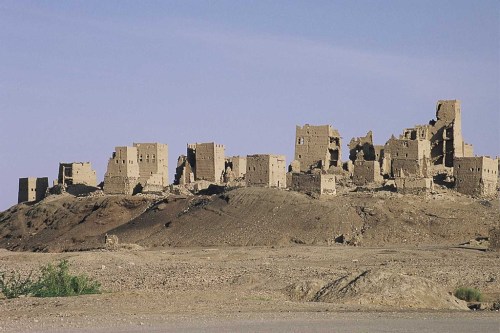
So desired throughout the Middle East and the broader Mediterranean world that its production centuries ago brought untold wealth to the Yemeni tribes which controlled the resin-bearing trees, allowing them to build cities like Shabwa, Marib, Baraqish.

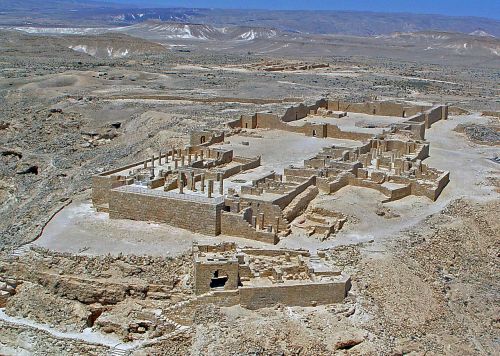
They also brought untold riches to the tribes which controlled access to the incense route. This snaked its way up the western side of the Arabian peninsula, skirting the Empty Quarter and the Nafud desert, and culminating in Gaza. The wealth generated by the trade built cities like Avdat in the Negev

and helped build Petra in Jordan.

One day, if they stop hating and killing each other in this part of the world, my wife and I will go and visit the groves of frankincense trees.

And we will travel the incense route, preferably on a camel.

____________________

Sant’Ambrogio: http://www.itmap.it/milano/basilica-di-santambrogio/
Atrium of Sant’Ambrogio: http://muse-garret.cocolog-nifty.com/blog/2018/04/index.html
Incense smoke in church: https://www.pinterest.ph/pin/321233385899973661/
Swinging thurible: http://www.diariodejerez.es/semanasanta/Lunes-Santo-Jerez_3_575672440.html
Christmas carolling: https://www.gettyimages.de/video/choir?sort=mostpopular&offlinecontent=include&phrase=choir
Adoration of the Magi: http://en.artsdot.com/@@/8BWV5K-Rogier-Van-Der-Weyden-Adoration-of-the-Magi
Simple creche: https://ask.fm/matteotesselli99_
Elaborate creche: https://collinadeiciliegi.wordpress.com/2016/12/23/er-presepe/
Ruins of Baraqish: https://en.wikipedia.org/wiki/Baraqish
Ruins of Avdat: http://weekend.knack.be/lifestyle/reizen/israel-restaureert-antieke-stad-avdat/diaporama-normal-450517.html
Ruins of Petra: https://magdalatravel.com/detalles.php?id=82
Frankincense trees: http://holistictoolbox.co.nz/product/frankincense-boswellia-rivae-organic/
Camel riding: http://thesandysnowman.com/5-lessons-life-travel/