SAINT LEONARD OF NOBLAC

Vienna, 24 September 2025

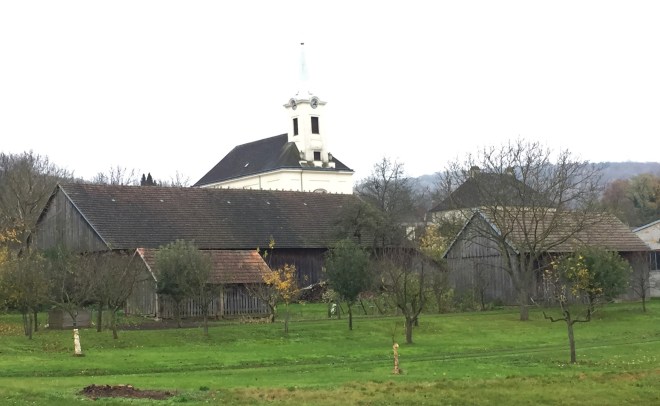
My wife and I have just finished a long weekend in the little town of Waidhofen an der Ybbs. We were actually using it as a base from which to carry out a number of very pleasant hikes over the surrounding hills. These are impossibly beautiful: broad swathes of light and dark green draped over the hills, dotted here and there with farmsteads.

My photo

The weather was glorious, which certainly helped.

As I looked through the various brochures which we picked up to figure out what hikes to do, I came across the following brief write-up about the church in a village some 10 km away, the village of St. Leonhard am Walde:

“Fiakerkirche St. Leonhard/Wald: The traditional place of pilgrimage for Viennese hackney carriage drivers since 1826. St. Leonhard is the patron saint of cattle, sheep – and horses. In 1908, the Viennese hackney carriage drivers donated the Marian altar. A few decades ago, the Viennese cab drivers also joined the pilgrimage.”

Now that really intrigued me! Hackney carriages, fiaker in German, are a picturesque sight down in the centre of Vienna, although nowadays, of course, they are only for tourists.

Source

But, being an early form of taxi, there was a time when hackney carriages were ubiquitous throughout the city, as indeed they were in all European cities. Here is a colourised copperplate engraving from the 1830s of a smart set of Viennese and their carriages.
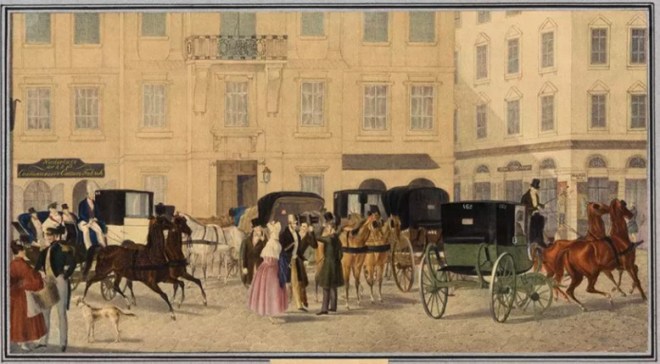
Source

I suspect, though, the carriages and their drivers didn’t look quite so smart when they were merely acting as taxis, ferrying people around town. This looks more like the typical hackney carriage driver; the photo is taken from an engraving in a book of 1844.

Source

Hackney carriage drivers have always struck me as a hard-boiled lot, not taken to making pilgrimages. I have a hard time seeing them doing this (this is a modern pilgrimage, but I don’t suppose pilgrimages have changed much, apart from the clothes the pilgrims wear).
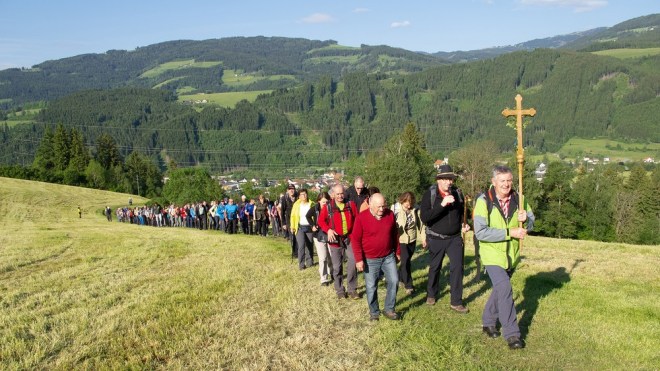
Source

But it could be that I am being influenced by various books I’ve read and films I’ve seen where hackney carriage drivers seemed to be a sinister and semi-criminal lot. This is an example from one of the Sherlock Holmes stories.
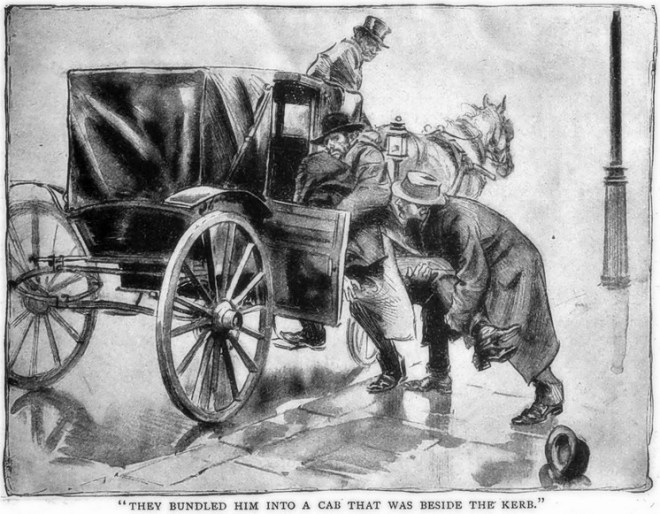
Source

Maybe the majority were God-fearing, devout, family men.
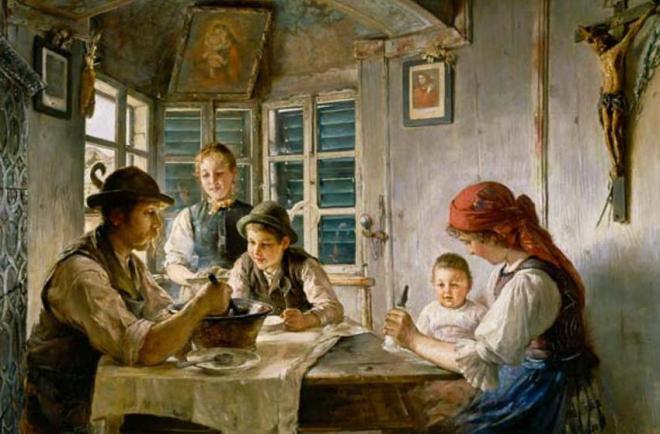
Source

Of course, given the way my mind works, I started wondering why hackney carriage drivers would have chosen a church dedicated to St. Leonard as the church to which they would make their annual pilgrimage. The little blurb I quoted above suggests an answer: he was the patron saint of horses, and of course horses were key to hackney carriages, being their motor as it were. But how, my mind was asking, did Saint Leonard become the patron saint of horses?

Since I knew nothing about Saint Leonard, I had to do some reading. I should note in passing that there have been various Saint Leonards over the centuries; the one we are interested in is St. Leonard of Noblac. Assuming he ever actually existed, his story is quickly told.

Leonard was a Frankish nobleman, coming from a family that was closely allied to Clovis, the first Frankish king of what was later to become France. Clovis was young Leonard’s godfather when he was baptised, along with Clovis himself and all his court, by St. Remi, bishop of Reims, on Christmas Eve of 496. As Leonard grew up, he became much exercised by prisoners, to the point where he asked Clovis to have the right to visit prisoners and free those he considered worthy of it. Clovis granted the request. We have the scene played out here in a French work from the 14th Century.
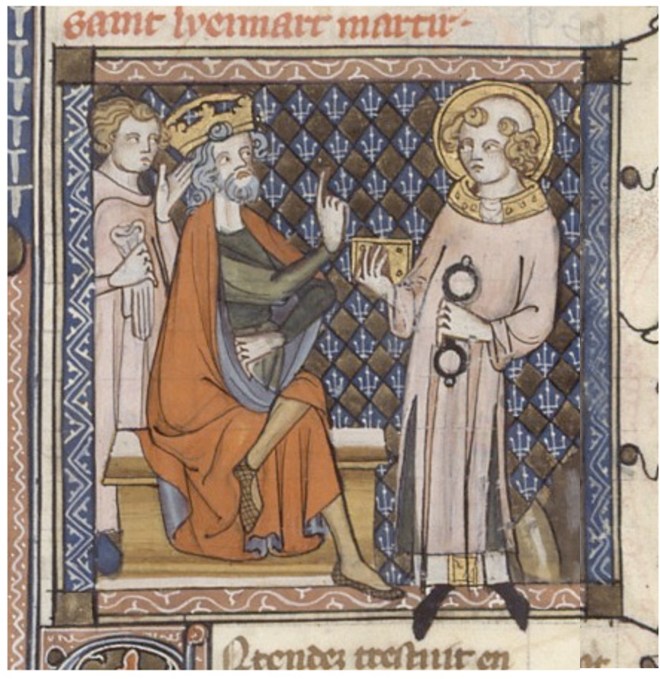
Source

Many prisoners were thereafter liberated by Leonard.

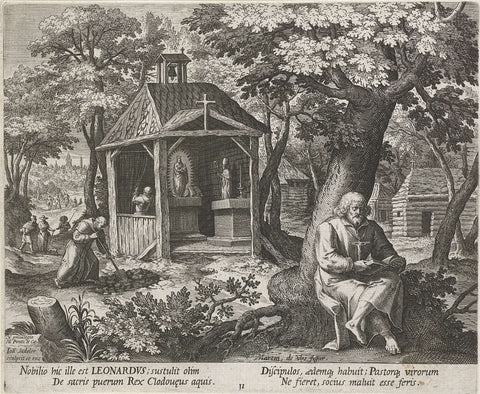
Much impressed, I presume, by his holiness, Clovis offered him a bishopric, but Leonard turned the honour down, preferring to join a monastery near Orléans, whose abbot was another saint, St. Mesmin. After the latter went the way of all flesh, Leonard decided to strike out on his own. He moved to a forest in a place called Noblac (Noblat today) near Limoges, where he set up a hermitage. His preaching, good works, etc. led to a multitude of people flocking to his hermitage, including many prisoners whose chains miraculously flew off their hands and legs after they had prayed to St. Leonard for his intercession. Here, we have a print from 1600 giving us a rather fanciful vision of this scene.
Source

I do believe that the monk working the land behind Leonard in the print is one of these prisoners now living an honest life.

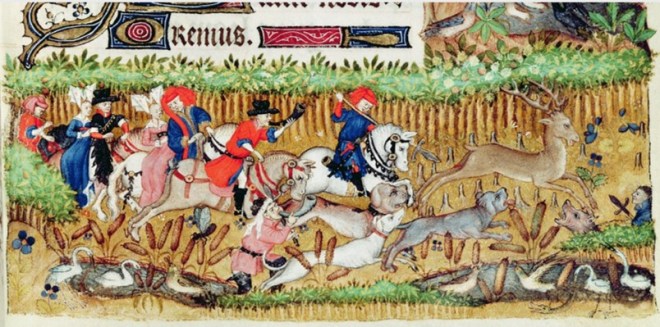
At some point in all of this, the-then Frankish king Clotaire I (Clovis having died in the meantime) and his heavily pregnant wife came to visit Leonard in his forest hermitage – we have to remember that Clovis’s family and Leonard’s family were close. The royal couple decided – like the good aristos that they were – to use the occasion to go for a hunt in the forest.  To get us into the spirit of things, I throw in here a miniature from the 15th-Century Book of Hours of Marguerite d’Orleans showing Lords and Ladies off to the hunt.
Source

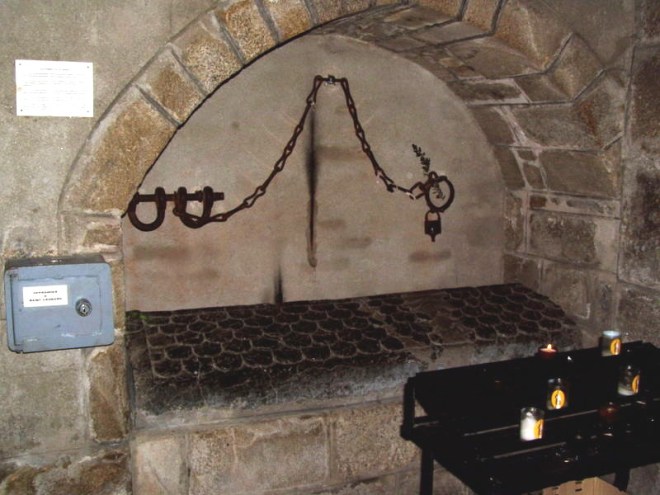
During the hunt, however, the queen suddenly went into labour. It was turning into a difficult and dangerous birth. Leonard rushed to her side and his prayers saved queen and baby. In gratitude – especially since it was a baby boy – the king wanted to shower Leonard with loads of money. But Leonard only asked for as much forest area around his hermitage as he could ride around on his donkey in one night. The king granted this wish. On the land that Leonard was subsequently given he built a church and monastery. He became its first abbot and died there peacefully, mourned by all. The Romanesque version of that church still stands, in a place called Saint-Léonard-de-Noblat.

Source

And that church contains what is purported to be Saint Leonard’s tomb.
Source

Given his involvement with prisoners, it is not surprising to learn that St. Leonard is the patron saint of prisoners. Given that story with the pregnant queen, it’s also not surprising that he is considered a helper of women in childbirth. But patron saint of cattle, sheep and horses? How did that come about?

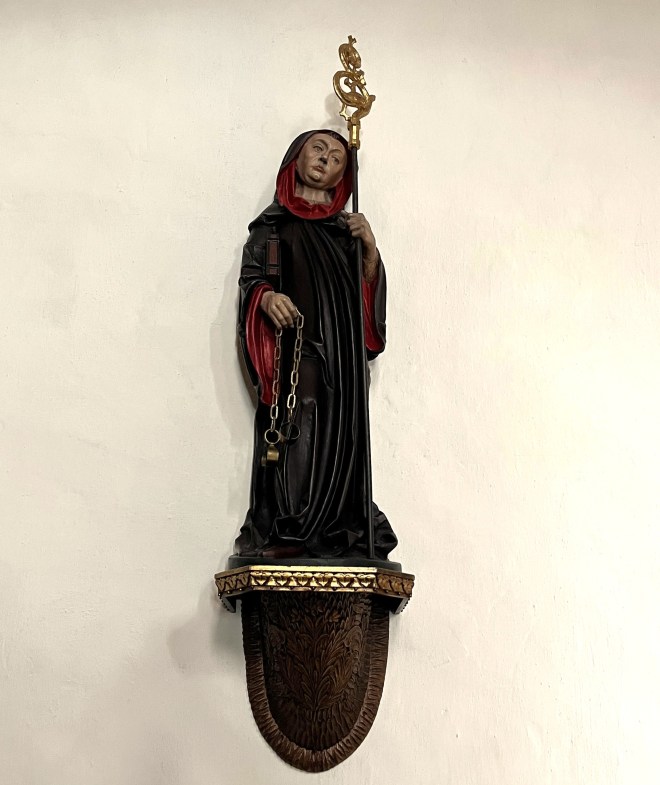
For that, we have to know that from the earliest times St. Leonard was often depicted as an abbot with a crosier and holding a chain or fetters or manacles, symbolising the liberation of prisoners achieved by him. In fact, in one of those serendipitous moments I love so much, I came across just such a representation of him in a church in Waidhofen, down the road from where my wife and I were staying.
My photo

Over time, rural folk mistakenly thought that the chains which St. Leonard was holding were cattle chains – these are commonly used to tether cattle or to control them during walks, or even to help birthing calves.

Source

By extension he became the patron saint of all farm animals, which of course also included horses.

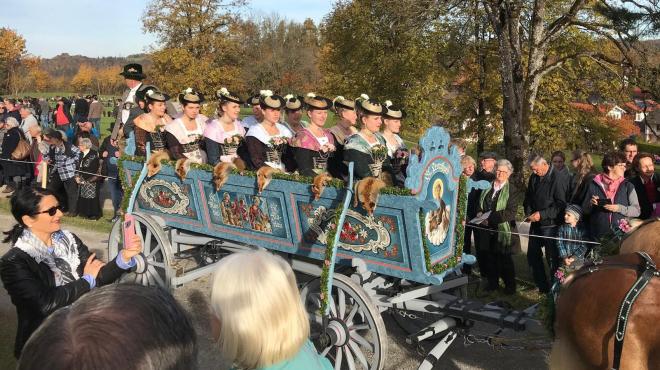
Given this swerve of patronage towards livestock, I suppose it’s not surprising that Saint Leonard became a popular saint throughout the Alpine regions of Europe. After all, as I’ve mentioned in a previous post, cattle was pretty central to the rural economies of all Alpine communities. This devotion to the saint means that his feast day – November 6th – is celebrated with enthusiasm in many places in the Alpine regions, especially the German-speaking ones. Here, for example, are photos of the celebrations in Bad Tölz in Bavaria (which got a mention in an earlier post  because of its rather naughty statue of St. Florian).

Source
Source

It also gave rise to the intriguing phenomenon of chain churches in the Alpine regions. These are churches dedicated to St. Leonard which have chains running around them, either put up temporarily on his feast day or mounted permanently. The Fiakerkirche is not a chain church, alas. Here is a nice example from Tholbath in Bavaria (the church also has a quite respectable onion dome, the subject of an earlier post).

Source

But if we’re going to visit a church dedicated to St. Leonard, it won’t be one of the chain churches. It will be the one I’ve already mentioned in Saint-Léonard-de-Noblat. What a fine-looking Romanesque church! I have to say, I am partial to Romanesque churches. I’ve already inserted a photo of the church’s exterior. Here is a photo of its interior.

Source

What a wonderfully bare church! No annoying accretions to cover the spare, simple lines of the architecture.

But the photo shows an additional reason why I will try to persuade my wife to travel all the way to France to see this church: the rucksacks and the walking sticks. This church is situated on one of the four Ways of St. James of Compostela through France. I’ve mentioned one of these, the Via Tolosana, in an earlier post.  The church of Saint-Léonard-de-Noblat is on another, the Via Lemovicensis, the Way of Limoges. There must surely be some good hiking to be done in the area.
WOOD AND FIRE

Vienna, 14 November 2020
Updated: 13 June 2025
Updated again: 23 September 2025

As befits a mountainous country with a coolish climate, Austria has acres of forests covering its many hills and mountains. As a consequence, it once had a vibrant tradition of building in wood. Nowadays, of course, wood as a building material has been almost completely superseded by stone, brick and concrete. The only places you still see wooden buildings are in the small villages which dot the countryside, wooden barns being still quite common there. My wife and I come across them quite often on our hikes, as these photos taken on a couple of recent hikes attest.

my photo
my photo
my photo

I love these old barns. My French grandmother had one just like them attached to the side of her house. We went in there often because that was where the bicycles and the ping-pong table were kept. It was – to the small me – a vast, cavernous place. All sorts of weather-beaten garden tools and other odds-and-ends lurked in the shadows. There was a pile of hay – quite why I don’t know; my grandmother had no animals. But it made the barn smell of hay, into which was mixed the smell of beaten earth rising from the floor. Then one summer I arrived for the summer holidays, only to find the barn gone. My grandmother told me that it had been sagging sideways and threatening to pull the rest of the house down with it. But this perfectly rational explanation didn’t take away the desolation I felt at the disappearance of this wonderful building.

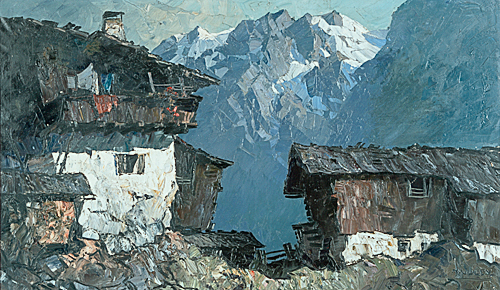
As I say, there was a time when many more buildings in this country were made of wood, especially in the mountain regions. A number of Austrian artists have captured them on their canvases. Oskar Mulley was especially assiduous in his painting of mountain huts and barns, partly or wholly made of wood.

Source
Source

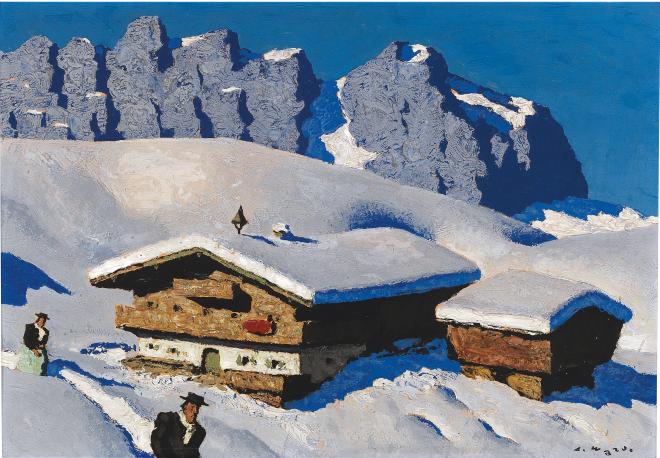
Alfons Walde also often included these buildings in his paintings, although snow was more his thing.

Source
Source

Alas, as we all know only too well, wood burns very well. The older and drier it is, the better it burns, as we all learnt watching the roof of the cathedral of Notre-Dame in Paris go up in smoke.

Source

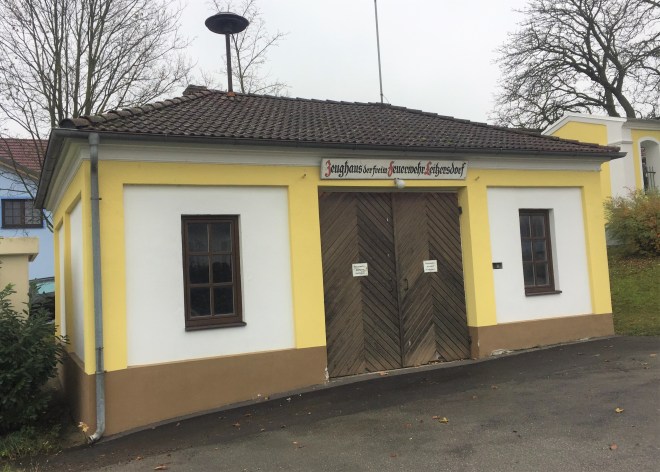
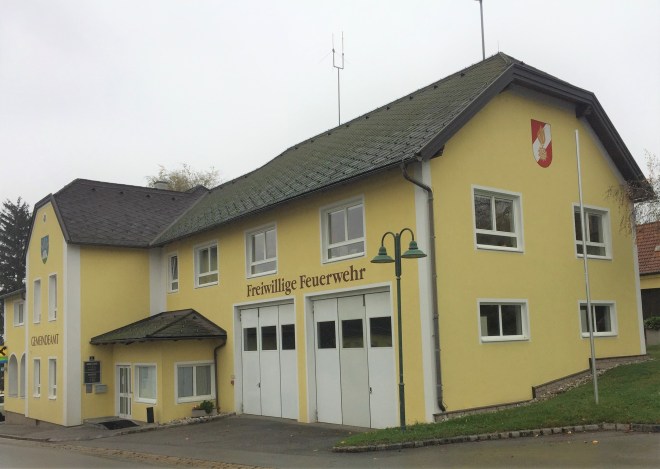
The previously common use of wood in construction in Austria and its tendency to burn well must explain why every municipality in this country, down to the smallest village it would seem, has a fire station. As an extreme example, a couple of days ago my wife and I passed through a small village on one of our hikes, which had not one

my picture

not two

my photo

but three fire stations!

my photo

And each one is bigger than the last. Are fires getting bigger in this village, I wonder, or is it that fire engines are getting bigger and need a more spacious building to house them, or (a somewhat uncharitable thought) have municipal budgets been growing?

Of course, as befits a traditionally Catholic country, Austrians have a saint whom they can invoke to protect them from fire: St. Florian. Austrians should be particularly proud of this saint since he is a native son. The annals tell us that he was born in the latter part of the 3rd Century C.E. in Lorch, near Linz, on what was then the edges of the Roman Empire – the Danube River, which flows just north of Lorch, was the frontier of that Empire. Since so many Roman army units were garrisoned along the frontier his father could have been an army officer. Florian was active, possibly also as an army officer, in St. Pölten (or Aelium Cetium, as it was then called) when one of the periodic rounds of persecution against Christians broke out. This one occurred in 303–304 C.E., under the Emperor Diocletian (the same round of persecution that put paid to St. Pancras, about whom I wrote an earlier post). Without going into the details, which are anyway of dubious validity, it is recorded that Florian was arrested as a Christian. After a trial and various tortures, he was drowned in the Danube by being thrown off a a bridge with a stone tied around his neck. Thus did he become a martyr and a saint.

Sensibly enough, Florian was initially invoked to protect people from the dangers of water. At some point, though, he was pivoted (to use that most modern of terms) and used instead to protect people from fire. My theory – for which I have absolutely no evidence – is that another saint, John of Nepomuk, about whom I’ve written in an earlier post and who died in almost exactly the same way as Florian – thrown from a bridge and drowned – won the competition for protecting people from the dangers of water, leaving Florian without a role. Well of course, one critical use of water was to put out fires, so hey presto! he became the protector from the dangers of fire.

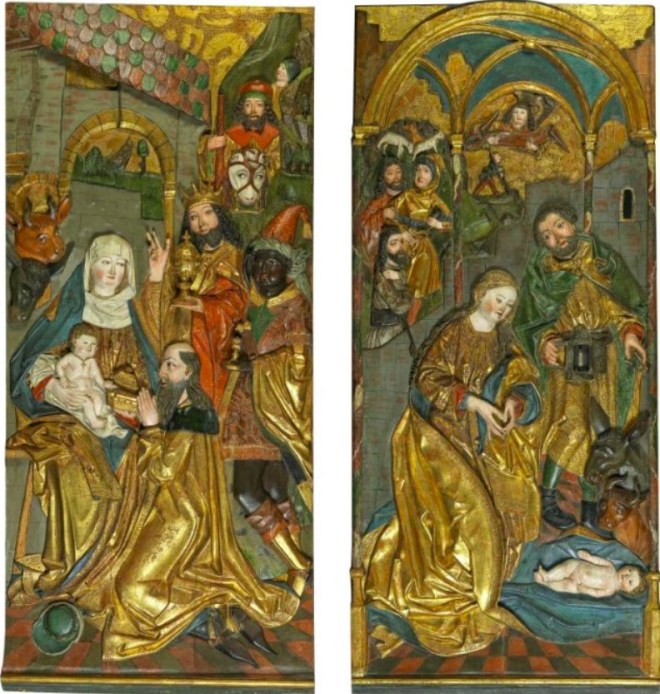
The Austrians have not only used wood to build, they have used it to carve, and their churches (and museums) are full of wonderfully carved statues and bas-reliefs. I throw in here a couple of bas-reliefs (from southern Germany in this case) which were recently auctioned at Vienna’s Dorotheum auction house.

Source

Naturally enough, the saints who got a place in churches tended to be people’s favourites, ones whom they prayed to regularly. Given the ever-present danger of fire, one of these is St. Florian. My wife and I came across this lovely example of a St. Florian statue during one of our hikes this Autumn, down by Neusidler See (the same hike where we picked up bagfuls of walnuts).

my photo

We see here all the typical attributes of such a statue. Florian is dressed as a Roman soldier and gripping a banner, he is holding a bucket of water, and he is thoughtfully pouring that water over a little burning house situated at his feet. Delightful! My wife and I have come across scores of such statues during our wanderings over Austria’s hills and dales. In fact, we came across a fresco of him on the wall of a house just this afternoon.

my photo

One statue of St. Florian which we haven’t seen, though, and which I have put on my bucket list stands in the town of Bad Tölz in Upper Bavaria. The statue was set up in a square, in front of the town’s tax office. Since the statue gave its back to the tax office the sculptor thought it fitting to have the saint flash his bum to the tax men, to show them what he – and the rest of the town – thought of them.

Source

I think we can all sympathize with the citizens of Bad Tölz, especially since St. Florian’s feast day is 4th May, a few days after 30th April, which for many in the world is the deadline for turning in their income tax returns.

Luckily, making statues of St. Florian has continued into the modern age. Down the street from us is a modern church dedicated to St. Florian. Outside the parish offices is this bronze statue of the saint.

My photo

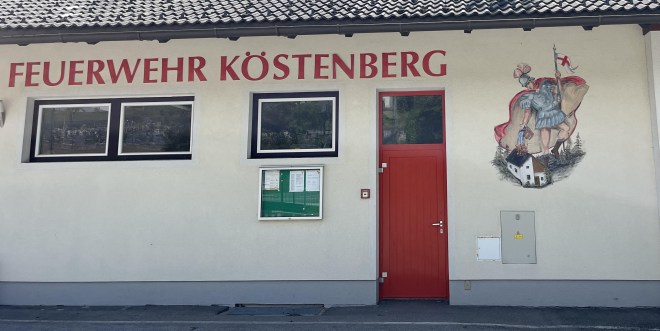
It must be obvious by now that the firemen and women of Austria (and I’m guessing Germany) have Saint Florian as their patron saint. And in fact many of Austria’s fire stations have a depiction of Saint Florian on their walls. Here’s a very traditional depiction.

My photo

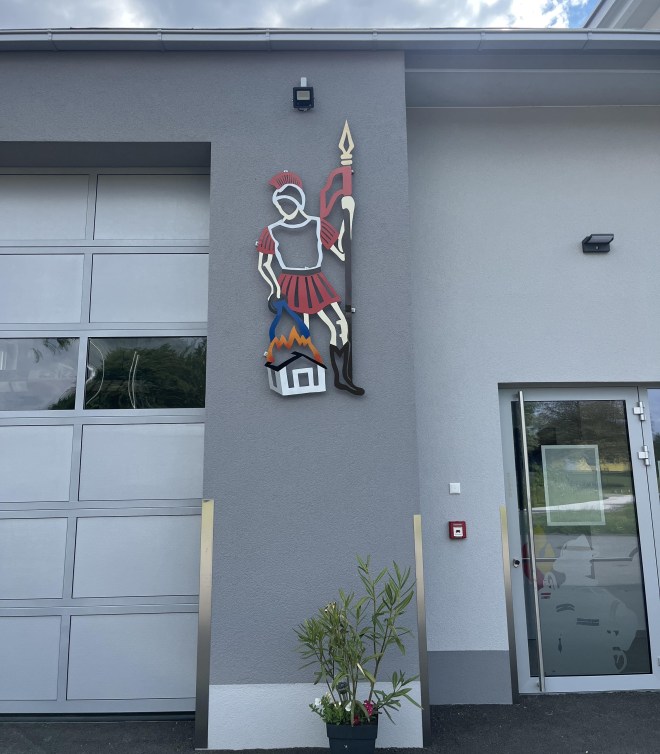
Here’s a more modern take.

My photo

By extension of his duties as heavenly fireman, St. Florian is also the patron saint of many trades where fire was once used: bakers, brewers, coopers (the staves which coopers used to make barrels were steamed to make them pliable), potters, forges, soap boilers (who knew that was once a profession?). He is also, naturally enough, the patron saint of chimney sweeps, which, dear readers, contrary to coopers, soap boilers, and the rest is not a profession that has disappeared – not in Austria, at least. They are alive and well and thriving here.

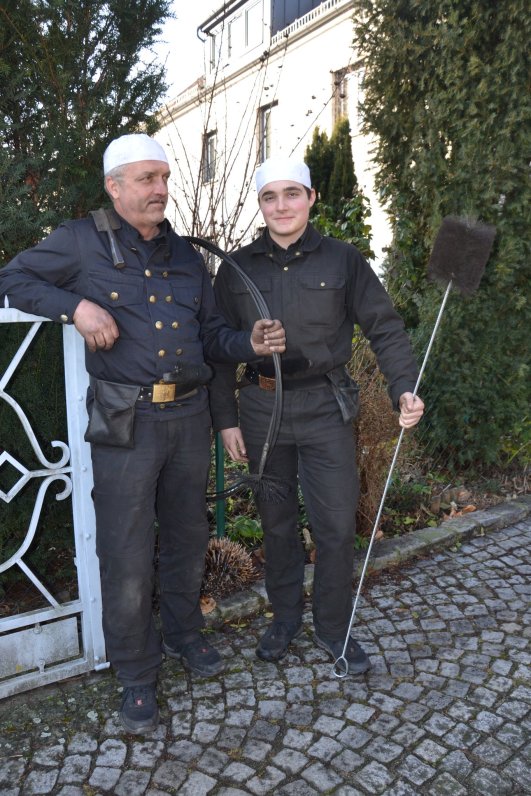
When my wife and I first came to Austria, we were struck by these young blokes we would see (there have also been some young ladies in recent years) walking the streets and wearing this strange outfit: black overalls with a white head covering.

Source

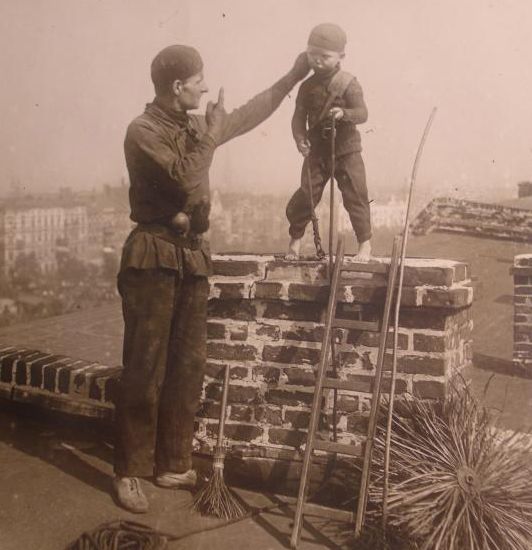
Upon enquiry, we were told that they were chimney sweeps. Chimney sweeps?! Well, both my wife and I have been around the block a couple of times (I won’t admit to how many) and neither of us have any memory of our parents calling in chimney sweeps. I don’t know about my readers, but to me the term “chimney sweeps” conjures up a Dickensian vision of little boys being forced to climb down narrow chimneys by a nasty master and getting stuck and dying.

Source

At a minimum, chimney sweeps should be dirty-looking, like coal miners.

Source

In fact, they should have died out along with the coal industry. But no, these Austrian fellows are around in large numbers and are lick-spittle clean; they don’t give the impression of ever getting within a mile of an actual chimney. What is going on here?

I don’t want to be uncharitable, but I rather get the impression that we have here a great example of a union using its political muscle to avoid extinction. The way I see it, when chimney sweeps saw that their days were numbered, they got the governments – municipal, for the most part – to pass laws requiring homeowners to have their chimneys – used for gas water heaters for the most part these days – as well as the water heaters themselves checked at least once a year by a “chimney sweep”. As a homeowner in Vienna, I have had the doubtful pleasure of having Viennese “chimney sweeps” come over, solemnly open a little trap door in the wall, perfunctorily take a look in, declare all to be well, and require to be paid handsomely for this service. And on top of it all they expect a tip at Christmas! This year, I found this “service” particularly grating because just a few days before the “chimney sweep” had come around we’d had the water heater maintained by a man who spent a good deal more time on the job and got paid proportionately a good deal less. But we can’t get out of it, because if we were to have a fire – Oh St. Florian, spare us this disaster! – and if it turned out to have been due to something the chimney sweep would have checked if we had called him, then the insurance wouldn’t pay – they have you over a barrel (made by one of those coopers who have since disappeared).

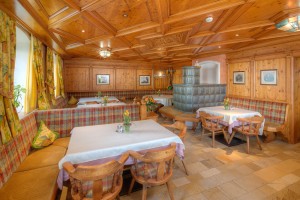
Not wishing to end on this sour note, writing about chimney sweeps reminds me that in the old days, when they really did sweep chimneys out, they would have cleaned chimneys connected to those wonderful tiled stoves which they used to have here in Austria. Some places actually still have them. We came across one this summer while staying in a hotel on a hike near Innsbruck; the stove is at the back of the room in the picture.

Source

As readers can see, they have a bench around the bottom where one can sit with one’s back against the stove wall keeping nice and warm. I understand people would even sleep on these benches. But what is really lovely about these stoves is their decoration. I throw in a few pictures of such stoves.

Source
Source
Source

Once, when we were looking for an apartment in Vienna to rent, my wife and I were shown one with such a stove. For one mad moment, we thought of taking the apartment just for the stove. But good sense prevailed; it would have been too small, the children wouldn’t have had their own rooms. Sometimes, though, my wife and I reminisce about that stove we never had. Another thing on our bucket list.