WEAVERS FROM GHANA

Milan, 21 April 2024

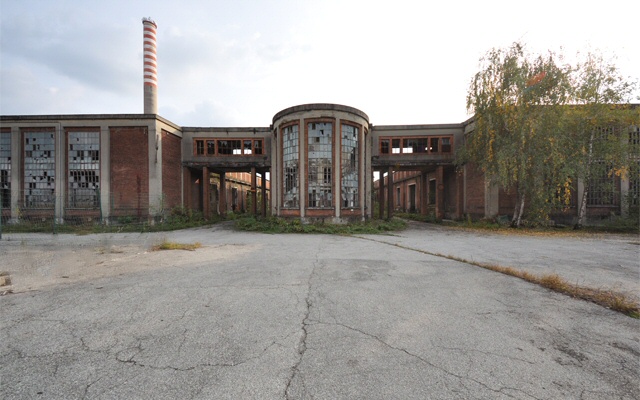
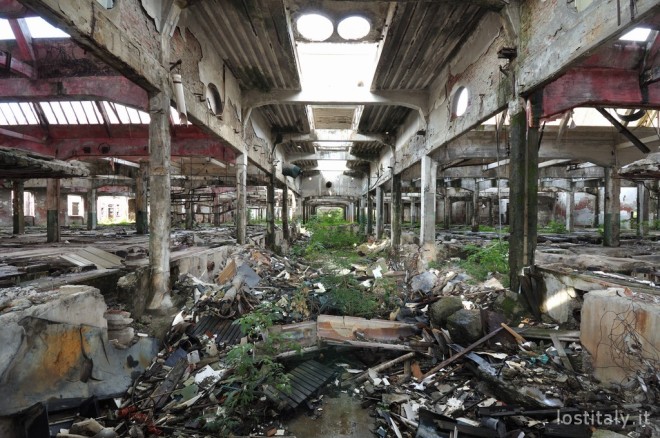
It’s the Salone del Mobile this week in Milan, the annual furniture and furnishings fair that the city hosts. As proud citizens of Milan (well, adopted citizen in my case) my wife and I take part in the fair – but only marginally, because there’s a huge amount of events all over town, and outside of town as we shall see, and hordes of people visiting each event. In fact, this year we have only visited one exhibition, which is taking place in Varedo, a small town on the outskirts of Milan. Varedo is best known for a huge factory it once hosted which made artificial textile fibres until it folded in 1999. It was part of the SNIA Viscosa group, which itself went belly-up in 2010 after a long agony. All that is left of the Varedo factory are mouldering industrial buildings: a sad reminder of the deindustrialisation of Europe.
Source
Source

The exhibition was taking place at the other end of the town, in the villa Bagatti Valsecchi, which 100 years ago had been the country house of one of the elite families of Milan, the Bagatti Valsecchi.

Source

It didn’t look too bad from the outside, but that statue gives a premonition of what the inside looked like: it too was a mouldering mess, although at least the floors were still in place.

Source
Source

I haven’t managed to find out what happened exactly to the villa, but I assume it’s the same as what happened to many country houses in the UK: it simply became too expensive for the Bagatti Valsecchi family to maintain it. They “generously” donated the house and property to the municipal government, but I suspect this was a poisoned gift. The municipality certainly has done very little if anything to maintain it.

Of course, it’s edgily chic, is it not, to showcase new, shiny, cutting-edge design in mouldering rooms. Here’s the thing, though. The furniture and furnishings my wife and I were confronted with as we wandered from room to room might have been newly minted, straight from the designers’ workshops, but to my mind the design ideas behind them were as mouldering as the rooms they sat in. Nothing new, just the same old ideas we’ve been seeing for 30 years or more recycled, endlessly recycled.

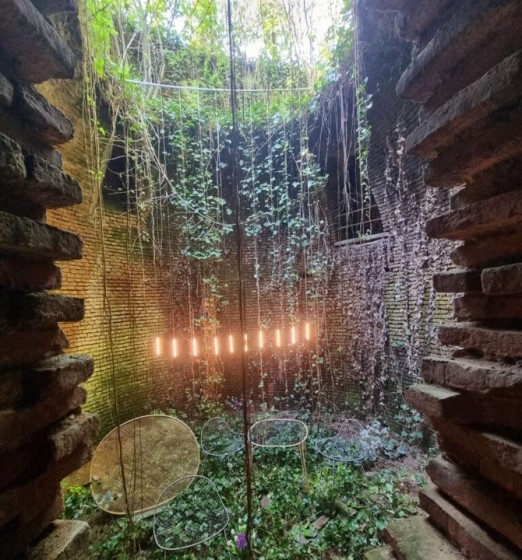
The one fresh design we came across was down in the basement, in a dark, dank room. Which was OK, since the product in question was lighting. Here is what we found ourselves in front of.

My wife’s photo

Some words of explanation are required here. The design group behind this is Spanish, going by the name Fernando Diaz de Mendoza 9, or FDdM9 for short. This particular design idea came about through the merging of the need to find ways to cleverly recycle PET bottles, on the one hand, and the desire to support traditional weaving skills still in existence in various parts of the world, on the other. The result was a project which the group calls PET Lamps.

The project started by making lampshades for single ceiling lights. The clever thing was that they were using PET bottles as the lampshades’ basic infrastructure: a component that is now free pretty much everywhere in the world since we are drowning in waste PET bottles. The mouth and shoulders of the PET bottles play the role of the fitting at the top of a traditional lampshade. Through it runs the wire and light bulb socket. What’s more interesting is what happens to the rest of the bottle. It is sliced into thin strips, and then the strips are used as the initial warp for weaving the weft across. What type of weft gets used depends on the weavers with whom the group is working.

The group started by working with weavers from the Eperara-Siapidara indigenous community in Colombia, who use the stripped down leaves of the Paja Tetara palm tree dyed with natural pigments and adopted traditional motifs.

Source

They also worked with a community which weaved with wicker, a plant imported by the Spaniards.

Source

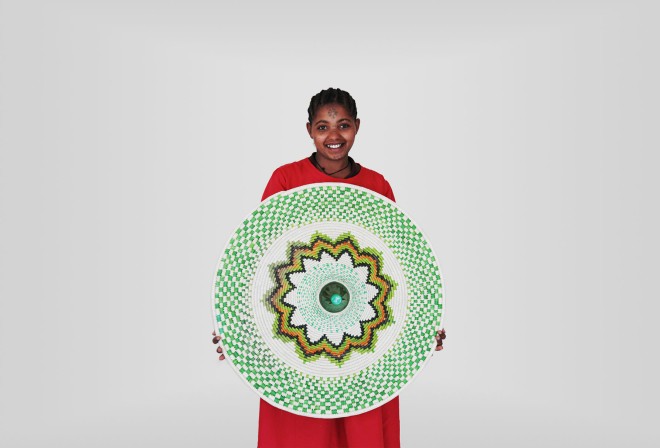
They worked, too, with other communities in Colombia and Chile, but I’ll jump to Ethiopia, where FDdM9 collaborated with weavers of traditional coiled baskets from the city of Harar, to make lampshades like this.
Source

Here’s an example of a cluster of these lamps being used in a restaurant.

Source

I’ll skip the lampshade designs which the group collaborated on with weavers in Japan and Thailand; readers who are interested can go to the Pet Lamp website. I’ll go on to the designs they created with the Gurunsi people who live in the far north of Ghana. Together with them, they came up with a modern take on their basket weaving designs to create “wavy” lampshades. Here are the weavers at work (the weft in this case is elephant grass, by the way).

Source

And here is an example of the final product.

Source

While here we have a cluster of these lamps being used over a table.

Source

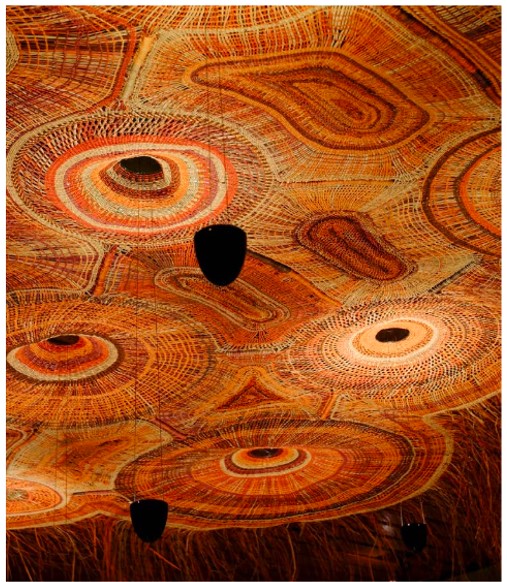
Before going on with Ghana, I want to jump to Australia, where to my mind things started to get really interesting. There, FDdM9 started collaborating with weavers in Arnhem Land, in the far north of the country (I mentioned other Australian weavers in a previous post). The weavers started by making individual lampshades with designs based on their traditional mats.

Source

But then one of the weavers began linking two lampshades together, which led the weavers to link all their lampshades together, in a way that reflected their kinship relations.

Source
Source

It gave this as a final product.

Source

This is what it looks like when it is put up.
Source

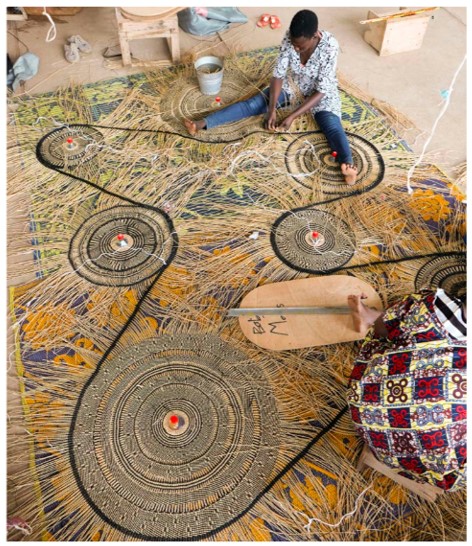
Which brings me back to Ghana. Several years after their initial collaboration with the Gurunsi people, FDdM9 went back to create large-scale “lamp tapestries” (I can’t think what else to call them) similar to those they had helped to create in Australia. Whereas the design of the tapestries in Australia were based on kinship relationships between the weavers, the designs in Ghana were based on aerial views of the houses where the weavers lived (which is actually also a representation of kinship relations if you think about it, since children built their houses next to their parents’).

Source

Here we have the weavers at work.

Source

And here we have a final product.

Source

I suppose FDdM9 would expect these lamp-tapestries to be used like this.

Source

But that’s not the way my wife and I would like to use them. We would prefer to eliminate the lamps and use the tapestry as a wall hanging, as we saw in that damp, dank cellar in Villa Bagatti Valsecchi. And we have just the wall where we could put it! Of course, the price might be an issue: one of these lamp tapestries would set us back a cool €17,800. But you have to suffer for great art! (still, though, €17,800 …)

ROCKY OUTCROPS

Milan, 28 January 2018
Amended 5 June 2024

I’ve just come back from Yangon, where I was giving a training course on the implementation of cleaner production methods. An interesting topic, but not actually the subject of this post. It so happens that on the first night I was there I stumbled across this picture.

This is Popa Taung Kalat, a monastery perched atop an old volcanic plug some 50 km away from Bagan. I immediately sent my wife a WhatsApp asking why we had not visited this place on our visit to Bagan. The question was rhetorical since I know the answer: we didn’t go because neither of us knew that Popa Taung Kalat existed until I came across this photo.

Which is a great pity, because I have a certain fascination for places perched on knolls, buttes, tors, or other rocky outcrops, especially if they sit in a flat plain and are visible from miles around. My wife and I recently spent a very pleasant evening in a similar place to Popa Taung Kalat, the small town of Laon close to Reims, when we did our tour of French battlefields of the First World War.

In this case, although it sports a wonderful 12th Century cathedral

the outcrop’s original use by the Gauls was martial rather than religious; they built a fortress on the top. The outcrop’s military vocation continued for centuries thereafter. Given its position, this is not really surprising. Whoever commanded Laon controlled one of the major entry points into the Île de France.

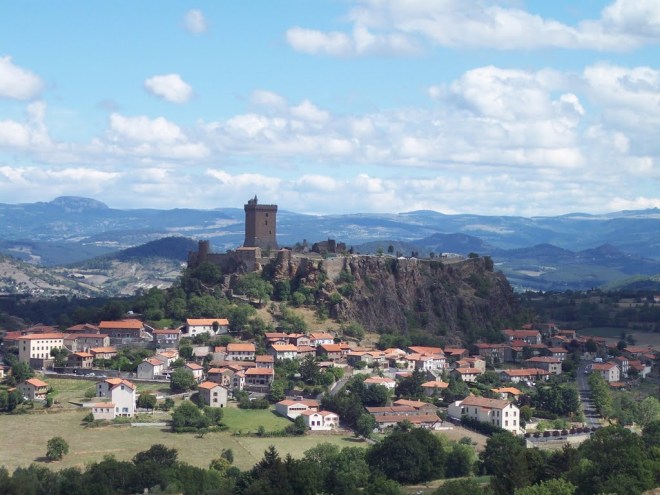
Polignac, in the Auvergne, is another rocky outcrop where military considerations seem to have been paramount in its original colonization. The Velay family built the first castle in the 11th Century and continued to live there and rule the surrounding country for some six centuries.

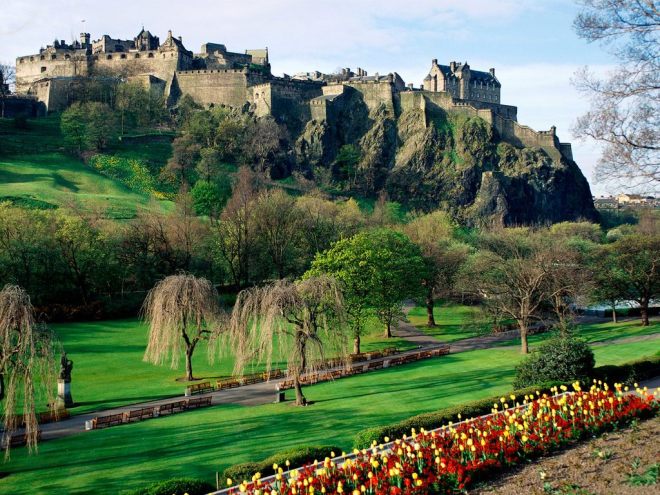
Edinburgh, too, where my wife and I met more years ago than I care to remember, when we were both university students there, sports a magnificent castle atop an ancient volcanic plug.

Here, though, that rather special effect of being able to see it from miles away is lost, the old sight lines having been obscured by the urban jumble that has spread out from the historic core of the city which lay huddled at the base of the castle or which clustered along the long road, the Royal Mile, that led down from the castle to the royal palace below.

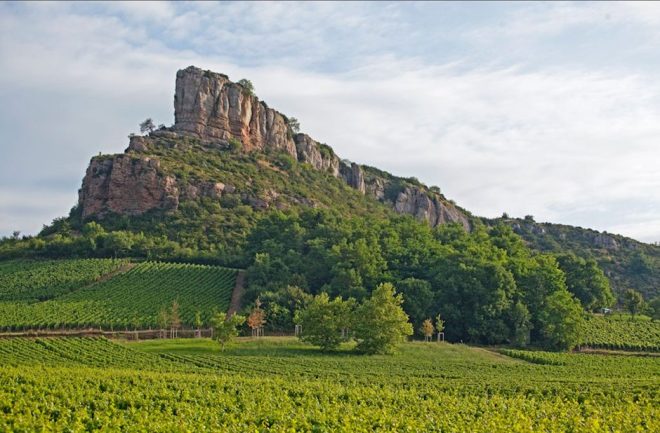
A similar stony promontory lies close to my French grandmother’s (now my sister’s) house near Mâcon, the Roche de Solutré, one which I spent many happy hours in my youth climbing.

It was first used by our ancestors 20,000 years ago to kill wild animals in large numbers. They would drive the poor beasts up towards the edge where, in their panic, they would fall off to their deaths below, to be butchered on the spot. The archaeological finds gave the name Solutrean to a phase in the Upper Paleolithic. But coming back to our martial theme, it is of greater interest that a certain Raoul de Bourgogne built a castle on its top in 930, and his descendants used its dominating position to harass those passing by and demand protection money. Philip the Fair, Duke of Burgundy, finally decided that enough was enough and ordered its destruction in 1434. Popular jubilation was such that several people were killed in the crazed desire to rip the castle apart, stone from stone. Since then, no human constructions have gone up on the Roche; as the picture above shows it only sports vineyards on its lower slopes, vineyards which, I may say, make excellent wines – Pouilly-Fuissé, Saint-Véran, Mâcon-Solutré – and which have made millionaires of the local viticulturists.

Thousands of kilometers away, in Sri Lanka, another outcrop similar to that of Popa Taung Kalat, Sigiriya, is now the site of peaceful gardens.

There was a time, though, back in the 5th Century, when it was a fortress built by King Kashyapa. But it seems he was also a lover of the arts. There is only a small piece of fresco left now in a concavity

but apparently the whole western side of the rock was once frescoed. It must have been an incredible sight. Perhaps for the good of his soul King Kashyapa turned his palace over to monks at his death, who installed a monastic community. They stayed until the 14th Century, then moved on. It’s a pity that the last time I was in Sri Lanka the country was still being torn apart by the civil war, making travel outside of the capital Colombo risky. Who knows, one day maybe I’ll go back there with my wife and we can go and visit this enchanting place.

But actually, coming back to where I started this piece, at Popa Taung Kalat in Myanmar, while I understand the cold logic which drove warlords to view these outcrops as natural fortresses, I prefer the more mystical impulses which have driven men, and sometimes women if they have been allowed to, to perch a monastery, a church, or just a simple hermitage on top of such outcrops, where they can pray in peace far from the madding crowd. It’s given us some wonderful blends of nature and architecture. There are the Orthodox monasteries in Meteora in Greece.

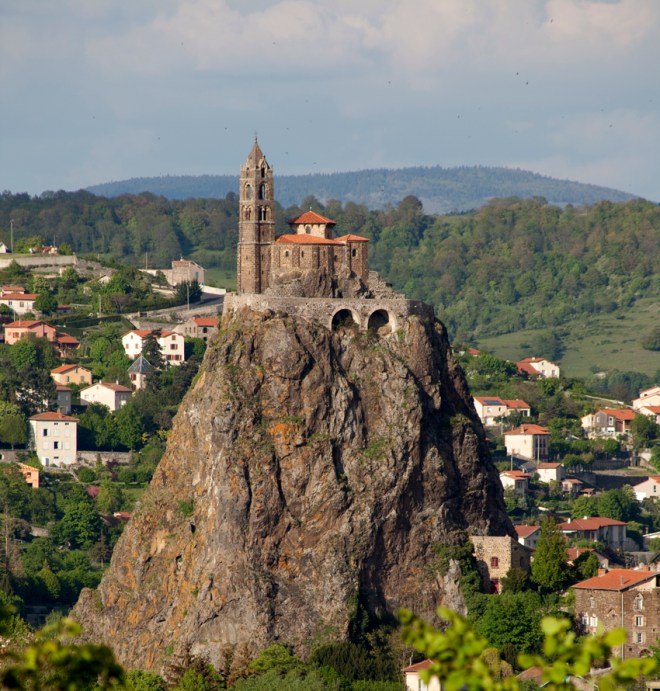
There is the chapel of Saint Michel d’Aiguilhe in Le Puy-en-Velay, in France, which was first established in 969.

There is the little hermitage/monastery in Katskhi, Georgia.

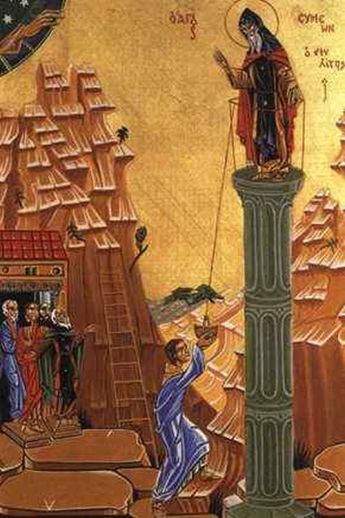
The last picture makes me think of Simeon Stylites, the 5th Century Christian monk who, it is reported, spent some 30 years on top of a column, and who started quite a craze in holy men perching themselves on columns. There is of course no picture from the period but this is an imaginative rendering.

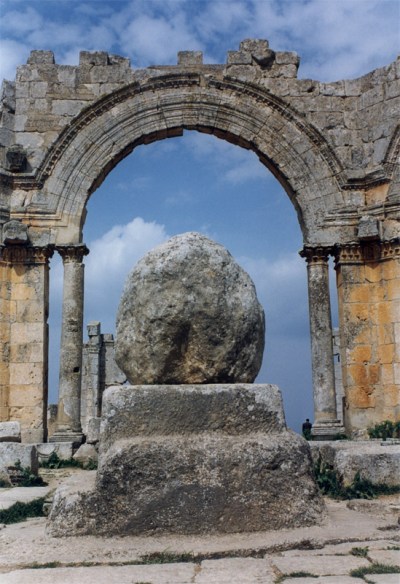
As for his column, this is all that is left of it after centuries of devout pilgrims chipping off pieces as relics.

Over the ages, monks have shown an enduring enthusiasm to climb up to inaccessible places to be left alone, leaving behind wonderful creations in the process. When my wife and I were in China, we once visited the Hanging Temple near Datong, a Buddhist monastery literally clinging to the side of a cliff.

The monks had excavated a series of caves in the cliff face, connected by a series of suffocatingly narrow internal staircases or alarmingly rickety walkways pegged to the rock, and then had clamped a temple facade onto the exterior. The effect is quite magical.

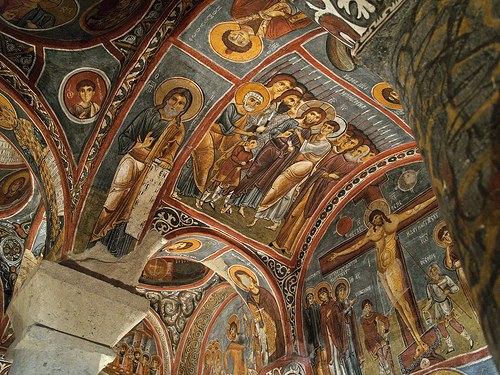
Meanwhile, in Cappadocia in what is now Turkey, Christian monks had also burrowed into mountain sides to create their communities far from the world.

Some of the churches they dug out of the rock still carry their frescoes.

And up in the Ethiopian highlands monks have built their churches high up on cliff faces, like the Abuna Yemata Guh church in Tigray province, which can only be reached after an arduous climb

and some sphincter-clenching shuffling along narrow ledges with long, long, long falls if you take a false step.

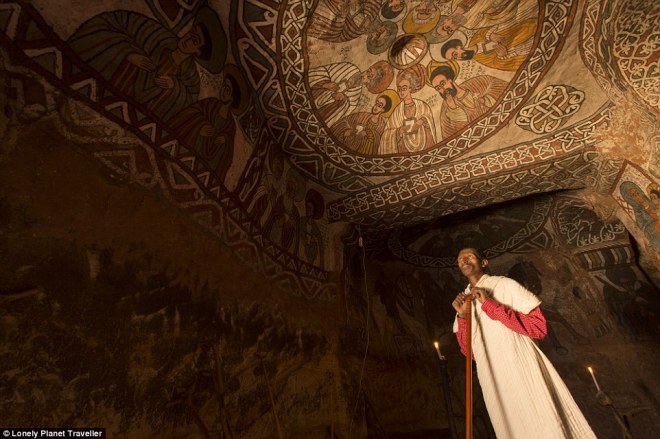
But once there, you are greeted with delightful frescoes in the Ethiopian style.

How much trouble those monks went to to get away from it all! I can’t complain since they created such wonderful places for me to visit one day. But surely they could have made their lives a little bit easier and still managed to pray and contemplate to their heart’s content. But hey, who am I to judge? The contemplative life never attracted me; the real world, with all its troubles and vicissitudes, but also with all its joys and satisfactions, is much more my scene.

____________________

Popa Taung Kalat: http://www.wondermondo.com/Countries/As/Burma/Mandalay/PopaTaungKalat.htm
Laon: https://www.tourisme-paysdelaon.com/Cote-histoire/Historique-du-Pays-de-Laon/La-mutation-en-ville-prefectorale
Laon cathedral exterior: https://it.wikipedia.org/wiki/Cattedrale_di_Laon
Polignac: http://www.panoramio.com/photo/33272295
Edinburgh Castle: https://erasmusu.com/en/erasmus-edinburgh/erasmus-photos/princes-street-gardens-and-edinburgh-castle-75483
Old print of Edinburgh: https://phrenologyandcrime.com/2014/08/31/edinburgh/
Solutre: https://www.geo.fr/environnement/france-nature/les-paradis-nature-de-bourgogne/solutre-rocher
Sigiriya: http://www.gocaribou.com/blog/2015/7/4/the-cultural-triangle-of-sri-lanka
Sigiriya frescoes: https://en.wikipedia.org/wiki/Sigiriya#Frescoes
Holy Trinity Monastery, Meteora, Greece: http://www.touropia.com/meteora-monasteries/
St-Michel de l’Aiguilhe: https://commons.wikimedia.org/wiki/File:Le_Puy-en-Velay,_%C3%89glise_Saint-Laurent_et_Aiguilhe_PM_48569.jpg
Katskhi Pillar Church: http://orthochristian.com/89130.html
Simeon Stylites: https://www.vimaorthodoxias.gr/theologikos-logos-diafora/agios-simeon-o-stilitis/
Remains of the column of Simeon Stylites: https://en.wikipedia.org/wiki/Church_of_Saint_Simeon_Stylites
Hanging temple, China: https://en.wikipedia.org/wiki/Hanging_Temple
Cave churches of Cappadocia: https://www.expedia.com/things-to-do/full-day-tour-of-cappadocia-region-goreme-open-air-museum-with-lunch.a395058.activity-details
Cappadocia cave church frescoes: http://www.aydinligoremetravel.com/goreme-open-air-museum/
Climbing to Abuna Yemata Guh: https://www.youtube.com/watch?v=pN67Zsxx-Vo
Arriving to the Abuna Yemata Guh: https://www.youtube.com/watch?v=y_GxzdGS84M
Abuna Yemata Guh inside: http://www.dailymail.co.uk/travel/travel_news/article-2823326/Abuna-Yemata-Guh-church-sky-Ethiopia-world-s-inaccessible-place-worship.html