MOSS

Milan, 16 December 2024

I’ve been meaning to write this post for a while, but I could never figure out what my angle should be. The thing is, I want to write about mosses, but once you’ve said that mosses can be really beautiful, there’s nothing much more to say about them. I could blather on about their biology and ecology, but only muscophiles would find that interesting. Looking at them from a historical point of view doesn’t help much, either: as far as I can tell, they haven’t played a significant role in anyone’s history. They do have some practical uses, like bedding and wound dressings, but nothing that really stands out. And forget the dietary angle: no-one eats moss unless they are starving, so there are no interesting dishes to report on. So the post has remained unwritten.

But now, finally, I’ve decided. Since there’s not much to write about on mosses, I’ll focus on photos instead. This post will be a photo essay celebrating their beauty! (That being said, I’ll still write some stuff – I can’t stop myself – but it will be more like extended titles to the photos).

I have to start in Japan, because it is moss country par excellence: something like 1,800 species of moss, or around 15% of the world’s total, grow on its islands. It was there, back in 1985 when my wife and I toured the country for a month, that we first appreciated the beauty of mosses. Our first experience was on the island of Hokkaido, where we were taken to visit the Moss Canyon in Shikotsu-Tōya National Park. It’s more of a gorge, really, about 200 metres long with walls some 5 metres high. These walls are covered in velvety green moss.

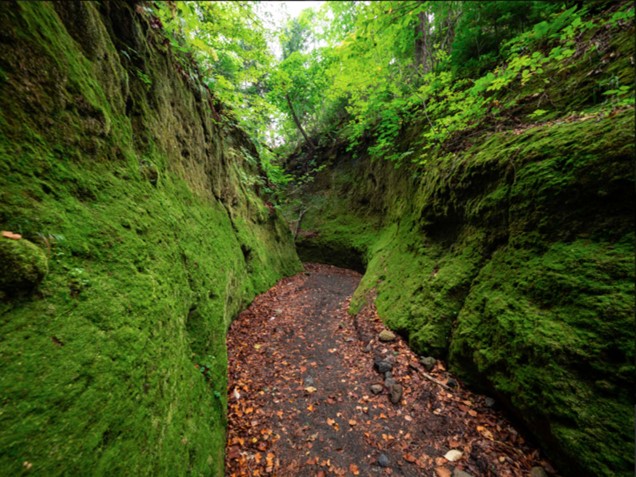
Source
Source
Source

Later, when we went to Kyoto, one of the temples we visited was Saihōji, whose entire garden is cloaked in moss.
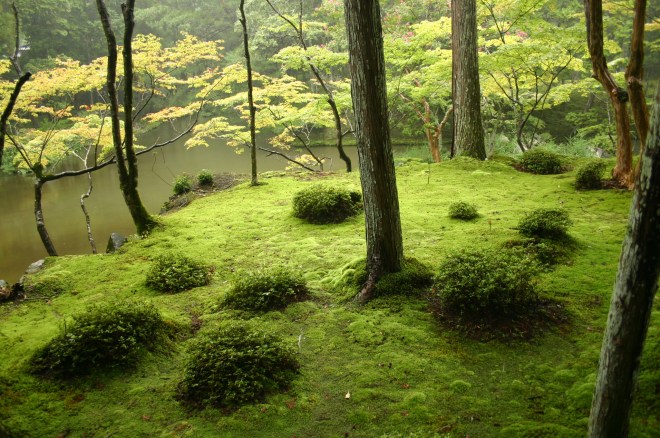
Source
Source
My photo

Other temples we have visited in Kyoto over the years have integrated moss into the overall design of their gardens. This example, from Tofukuji temple, is one of the more intriguing.
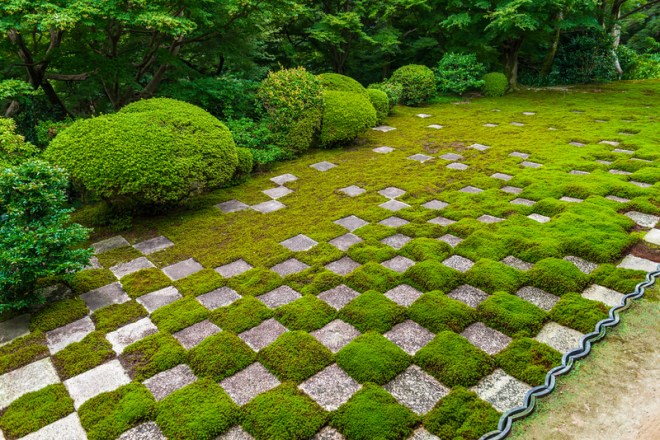
Source

Many have even integrated moss into what you might think of as a most unmossy place, their dry rock gardens, where moss is often used to create islands in the sea of pebbles, like this example, also from Tofukuji temple.

my photo

Here are the islands up close.

My photo

Here is another example, from Ryoanji temple.

Source

But moss found out in Japan’s nature can be just as beautiful. Here are various photos I’ve taken over the last few years during our annual stay in Japan.

A moss-covered log on the flanks of mount Kurama, north of Kyoto.
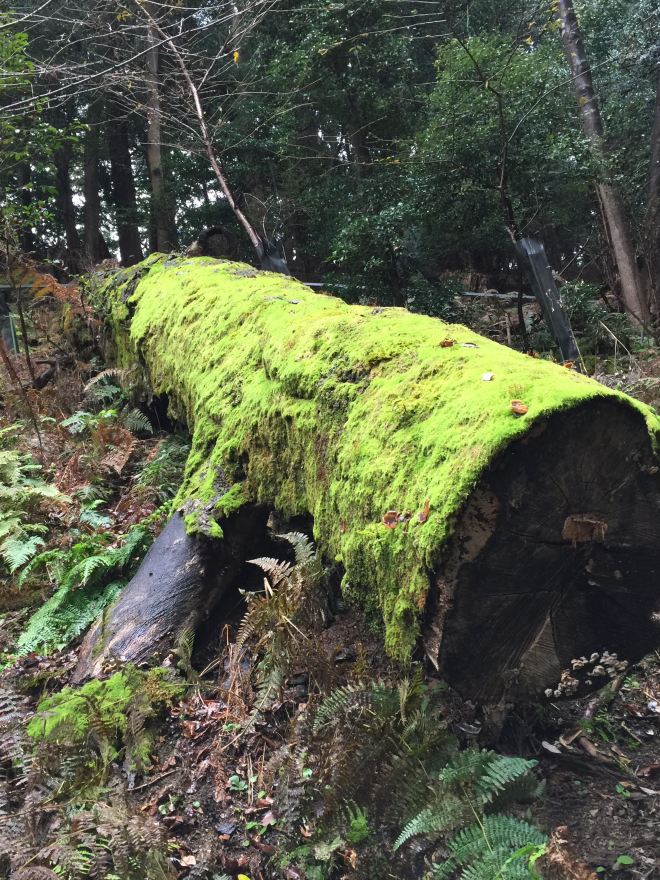
My photo

Fallen Japanese maple leaves smothering a field of moss, out in Ararshiyama in the north-west of Kyoto.

My photo

A tree stump crowned with moss, on the Kumano kodo trail.

My photo

A stone basin with a moss-covered rim, seen on the same trail.
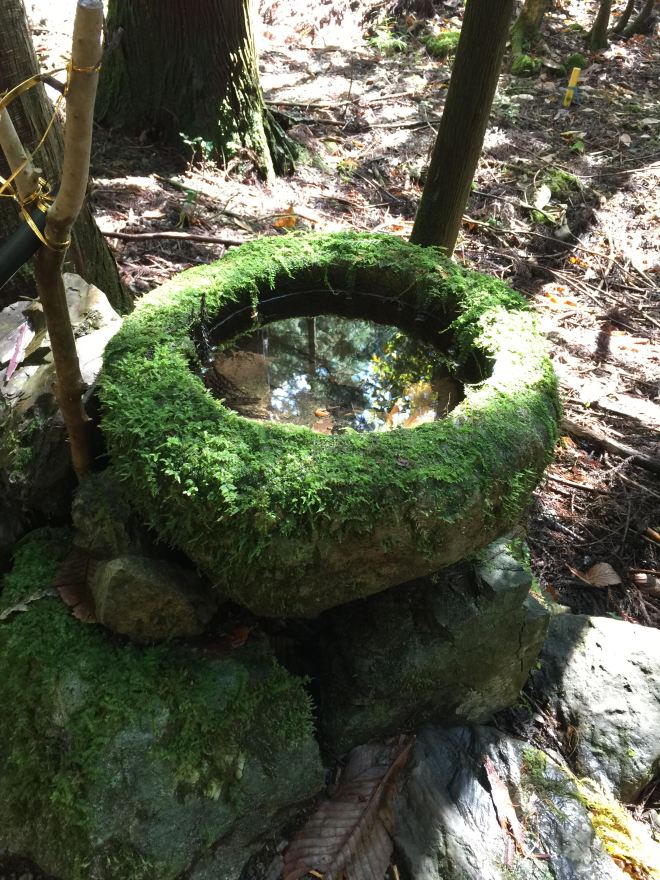
My photo

A stone lantern, being slowly colonized by moss.

my photo

An abandoned motorbike, also being slowly colonized by moss.

my photo

Japan is the land of moss, but it is also the land of fire, as we saw up close on that visit to Hokkaido’s Shikotsu-Tōya National Park
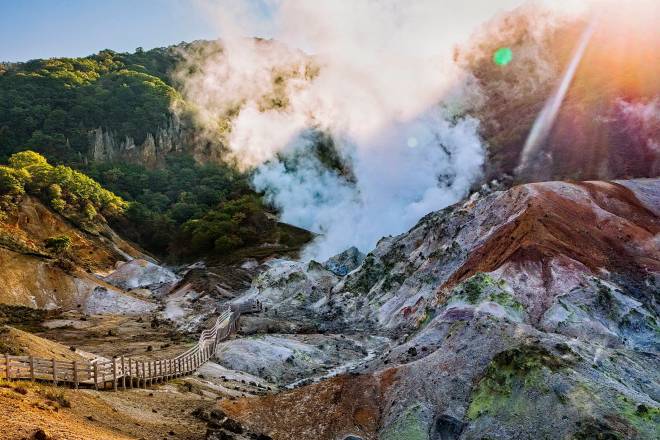
Source

Iceland, too, is a land of fire, as we have recently been reminded.
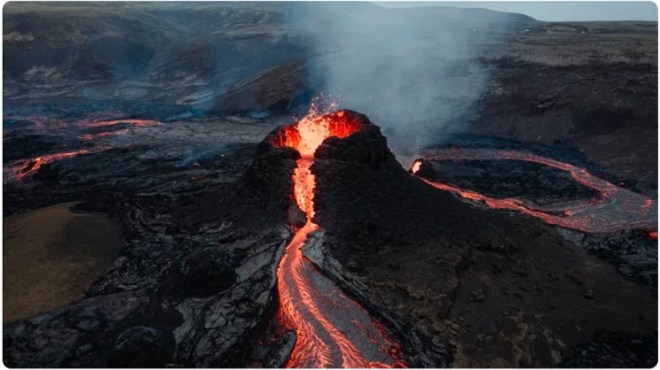
Source

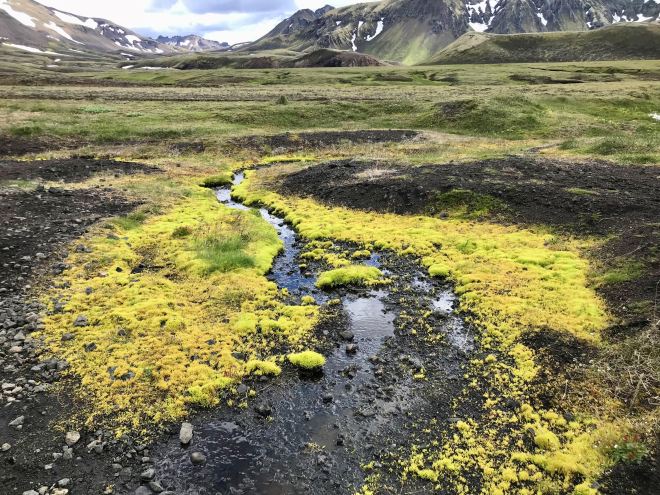
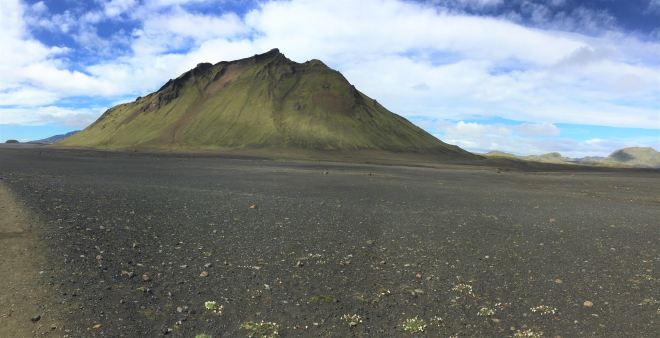
But, as my wife and I discovered when we hiked the Laugavegur trail a few years ago, Iceland is also a land of moss.

The contrast could not be starker. One island country has lush vegetation of which moss is but a part. The other has little vegetation, its climate being too harsh. And yet mosses manage to thrive. Which was just as well for us because wherever there was water they covered with ethereal green the otherwise denuded landscape which we hiked past.

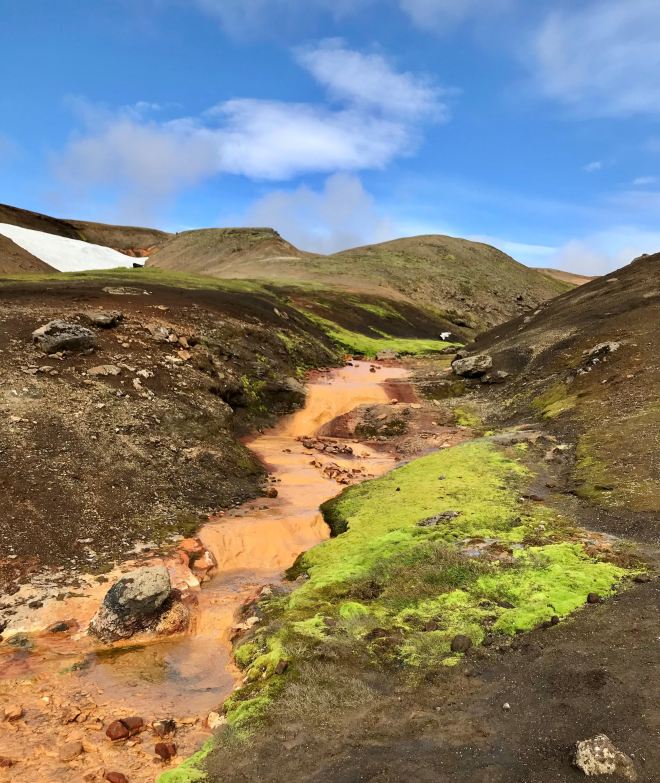
My photo
My photo
My photo
My photo
My photo
My photo

Well, that’s our photo album with mosses. If we ever come across beautiful mosses elsewhere, I will add photos to the album.
AUTUMN LEAVES

Beijing, 23 October 2013

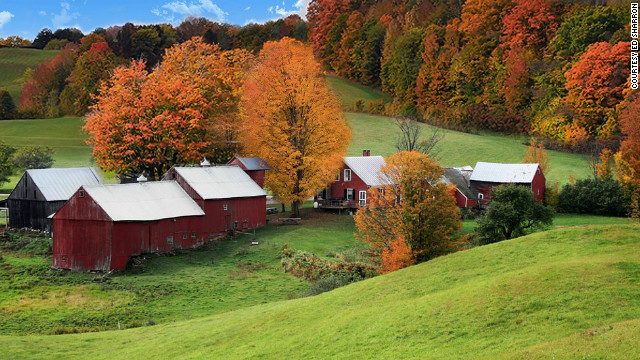
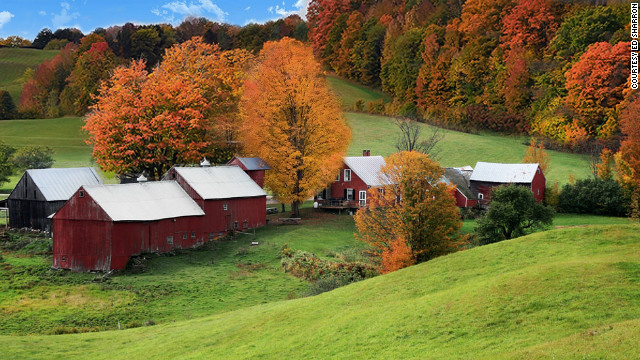
It’s that time of the year in the northern hemisphere when the trees begin to lose their leaves. If we’re lucky, depending on where we’re perched on that hemisphere, we can witness the glorious spectacle of leaves turning intensely red, orange or yellow before they expire and finally float to the ground. My wife and I had such luck some thirty years ago, when we went “leaf peeping” in Vermont.

vermont fall foliage

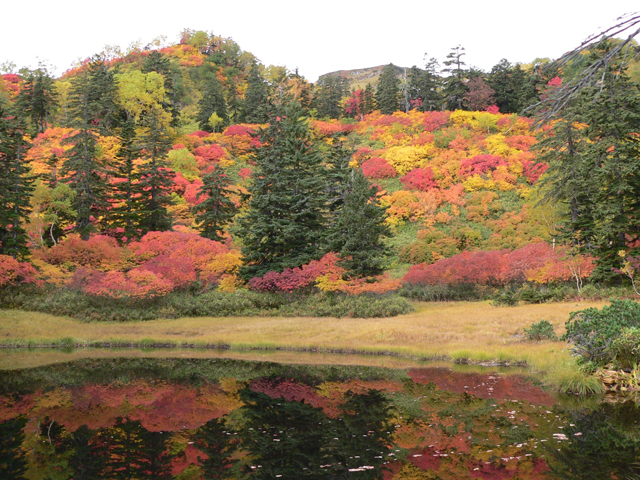
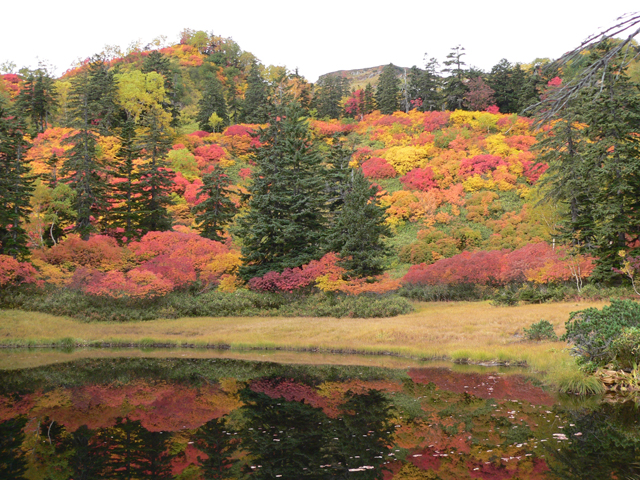
We had such luck an equally long time ago in Hokkaido, the northern island of Japan

hokkaido fall foliage

And I had such luck, alone this time, on my recent trip to Qinghai province, where the poplars were turning bright, golden yellow.

trees in fall

Alas, we have no such luck in dirty, dusty, smoggy Beijing. The leaves here go a little bit yellow, or just plain brown, before dropping miserably to the ground.

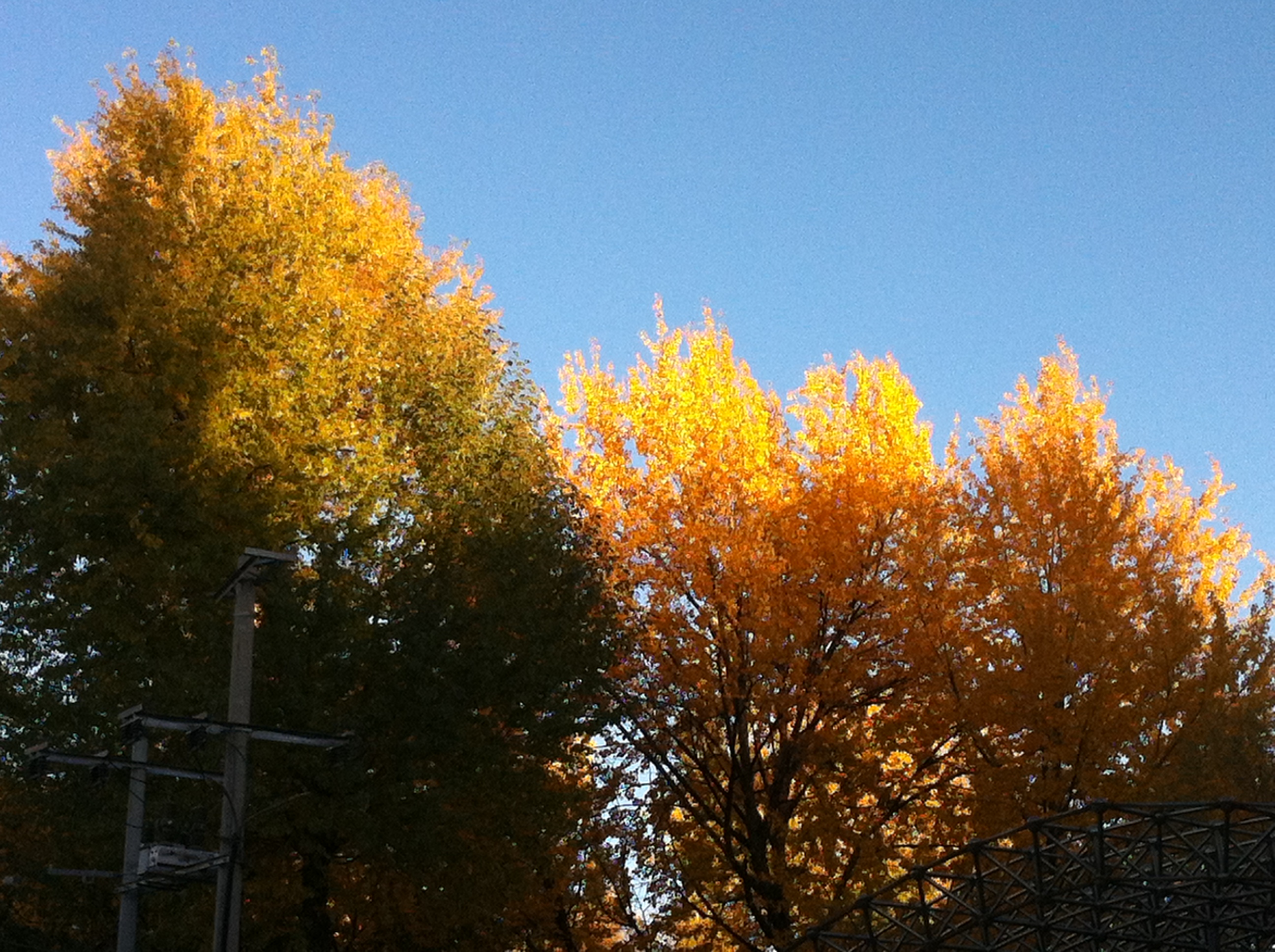
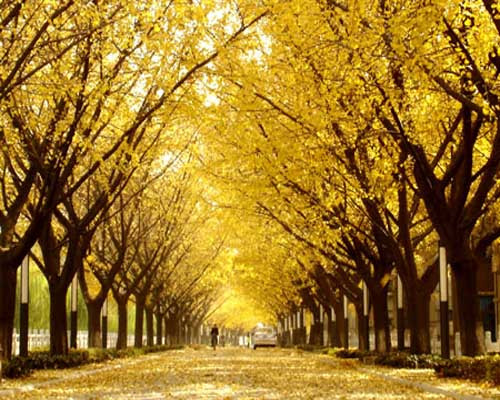
The partial exception is the ginkgo.  Ginkgos are popular trees to plant along streets. They tolerate well pollution and confined soil space, admirable traits for a tree growing in Beijing. And they look handsome, in the summer

ginkos 001

but even more so in the autumn

gingkgo trees autumn

Strange trees, ginkgos. The name already is odd. It was years before I realised that the “k” actually comes before the “g”. Who on earth came up with that spelling? A Dutchman called Engelbert Kaempfer, that’s who, back in the late 17th Century. He was the first European to see a gingko – sorry, ginkgo – in Japan. When he reported it to the European world, he seems to have stumbled over his transcription of the Japanese name ginkyō: what should have been written “ginkio” or “ginkjo” somehow got written as ginkgo.

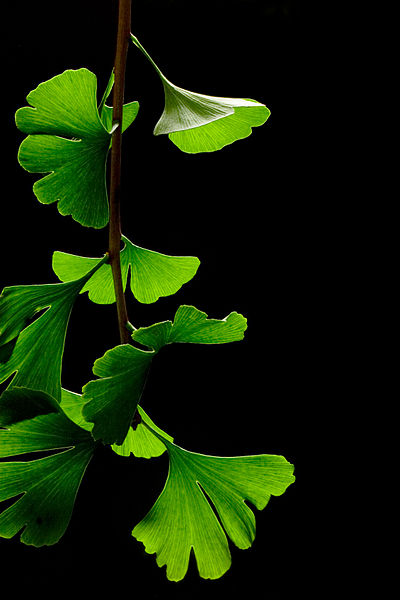
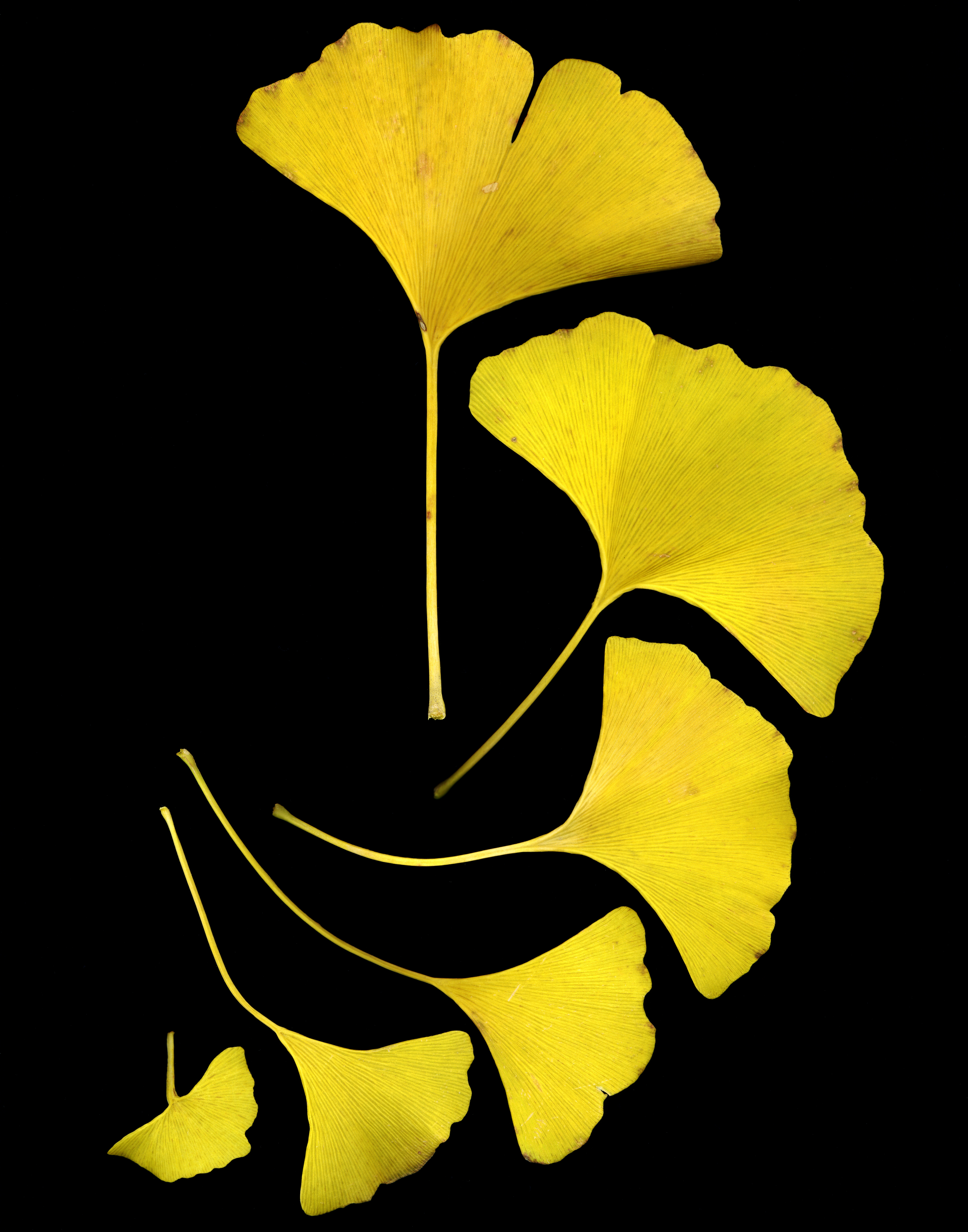
That double-lobed leaf is odd, too.

Ginkgo Leaves summer

In fact, it’s unique among seed plants. Unique, because the ginkgo is a living fossil. This fossilized ginkgo leaf

fossil ginkgo leaf

is 40 million year old, although the ginkgo is far older. It first appears in the fossil record some 200 million years ago. It did nicely for the first 100 million years or so but then it went into terminal decline. Its range shrank and shrank, the various ginkgo species disappeared, until only ginkgo biloba survived, and survived only in China.

In fact, even the ginkgo biloba probably wouldn’t have survived if it hadn’t been for Buddhism coming to China. There’s a lot of debate about whether or not the ginkgo trees currently found in the wild in China are truly wild or simply feral, that is, grown from seeds that wafted away from domesticated trees. What is sure is that Buddhist monks took to planting ginkgos in their temples as their local version of the bo-tree, the sacred fig tree under which it is said that the Buddha attained enlightenment.

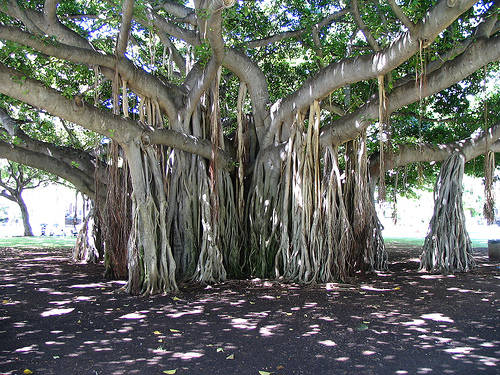
sacred fig

and of course the ginkgo then got included in the Chinese Buddhist iconography – look at those ginkgo leaves peeping behind the buddha:

maitreya buddha under ginkgo

The ginkgo, having thus gained enormously in stature as a sacred tree, was carefully nurtured by all and sundry and survived – and got carried by Buddhism to Korea and Japan, where our friend Engelbert saw it.

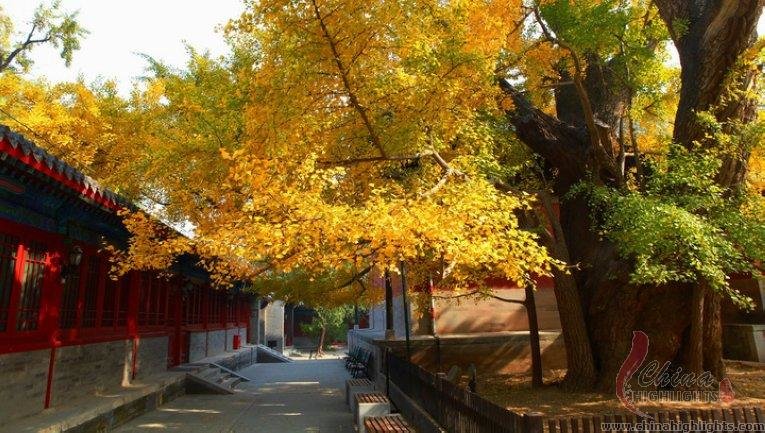
So I suppose it’s really best to admire the ginkgo in the environment which saved it from probable extinction, a Buddhist temple like this one, Dajue temple in the western hills near Beijing.

ginkgo fall dajue temple

___________________

Vermont fall foliage: http://i2.cdn.turner.com/cnn/dam/assets/120911072551-leaf-peeping-vt-jenne-farm-ed-sharron-story-top.jpg [in http://www.cnn.com/2012/09/21/travel/fall-leaf-peeping-autumn/%5D
Hokkaido fall foliage: http://4.bp.blogspot.com/-HK-XCKr055I/UGvr1pwda3I/AAAAAAAAGc8/oe2ckytpNRk/s1600/%E7%A7%8B%E3%81%AE%E9%AB%98%E5%8E%9F%E6%B8%A9%E6%B3%892.jpg [in http://talk-hokkaido.blogspot.com/2012/10/autumnal-foliage-around-daisetsu.html%5D
Qinghai fall foliage: my picture
Ginkgo trees along the street: my picture
Ginkgo trees autumn: http://chinatour.net/member/wp-content/uploads/2012/09/gingkgo.jpg [in http://chinatour.net/beijing/tour/autumn/%5D
Ginkgo leaves summer: http://upload.wikimedia.org/wikipedia/commons/thumb/f/f5/Ginkgo_Biloba_Leaves_-_Black_Background.jpg/400px-Ginkgo_Biloba_Leaves_-_Black_Background.jpg [in http://en.wikipedia.org/wiki/Ginkgo_biloba%5D
Ginkgo leaves autumn: http://upload.wikimedia.org/wikipedia/commons/7/78/GinkgoLeaves.jpg [in http://en.wikipedia.org/wiki/Ginkgo_biloba%5D
Fossil gingko leaf: http://upload.wikimedia.org/wikipedia/commons/c/c5/Ginkgo_biloba_MacAbee_BC.jpg [in http://en.wikipedia.org/wiki/Ginkgo%5D
Sacred fig: http://img.xcitefun.net/users/2009/09/117740,xcitefun-sri-maha-bodhi-tree-2.jpg [in http://forum.xcitefun.net/sri-maha-bodhi-sacred-fig-tree-sri-lanka-t38289.html%5D
Maitreya Buddha sitting under ginkgo: http://www.asia.si.edu/collections/zoom/F1911.411.jpg
Ginkgo Dajue temple: http://images.chinahighlights.com/2012/11/4c1ed9eaebda4d74a20d96f4.jpg [in http://www.chinahighlights.com/beijing/article-see-golden-ginkgoes.htm%5D