IT SHOULD FIT OVER MY SOFA

New York, 28 December 2015

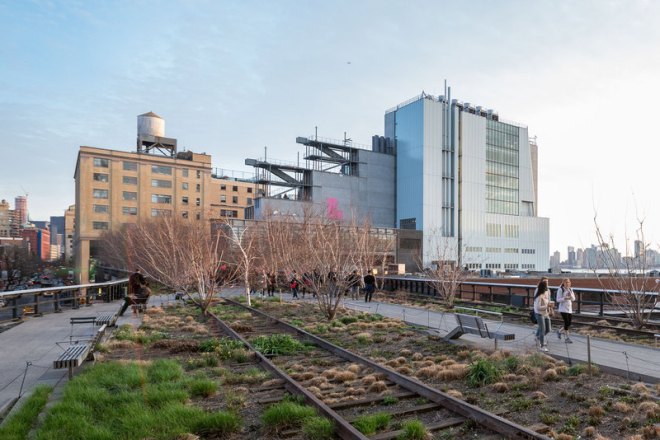
I’ve described in a previous post the beautiful, and really very unique, High Line Park in New York. On our first visit to the park, we heard that the Whitney museum was planning to relocate from uptown to new premises bang on the High Line. Now, two years later, the plans have come to fruition, and since we are once again in town to celebrate Christmas and New Year with the children we decided to go and visit.

The building itself was designed by the architect Renzo Piano, he of the Centre Pompidou in Paris (along with fellow architect Richard Rogers)
image
and, less felicitously, of the Shard in London
image
along with a string of projects in between. The new Whitney is not as spectacular as these two, giving the impression of being more of a workmanlike project – how to give the museum lots of exhibition space – and blending in quite well with its surroundings.
image
image
One also gets beautiful views across the Hudson River from its windows.
image
Perhaps it’s just as well. I mean, the main purpose of going to a museum is not so much to see the container as to see what is contained (I grant, though, that a handsome packaging can add lustre to what’s in the package). So let me focus on the contents.

Actually, I don’t really want to focus on the contents as such, but rather use them to meditate on something which gets under my skin when it comes to really modern art – let’s say, stuff produced in the last sixty years i.e., during my lifetime.

I happen to think that the primary purpose of any piece of art should be to adorn one’s abode in a way that gladdens the heart and puts a spring in one’s step. The key, though, is that the piece of art should fit through the door of one’s abode and, once in, should fit on a wall of that abode (or, if a sculpture, on a small table or shelf). The core of the Whitney’s collection, from the ’30s and ’40s, would do this admirably. For instance, there was a lovely Hopper on view which would could be passed through the door of our apartment quite easily and would fit quite nicely on one of its walls.
image
It’s one of several delectable Hoppers in the collection. Or I wouldn’t mind at all putting this painting by Charles Demuth on our wall.
image
Getting it into the apartment would be a breeze – I think it could probably even fit it into the small elevator we have in our building, thus avoiding us having to carry it up three flights of stairs.

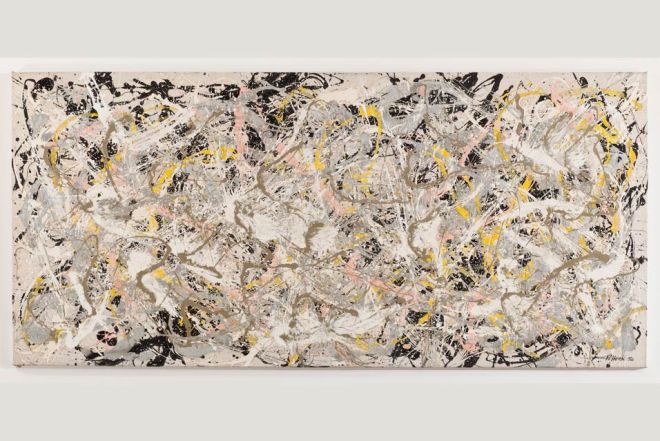
But as we get into the late ’50s, early ’60s, the pieces begin to grow. We would just about be able to manhandle this Pollock which the Whitney has through our apartment door, but I think we would have difficulty finding a place for it on the wall.
image
And this painting by his wife Lee Krasner would be impossible to hang in our apartment, it’s just too damned big let alone of a size to get through the door.
image
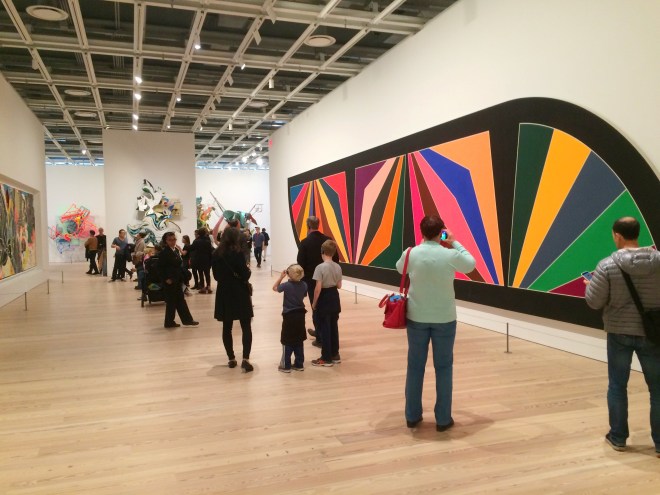
The pieces in the Frank Stella show which the Whitney is currently organizing were even worse. They were huge lumbering monsters, which would not even fit through the front doors of our apartment building, leave alone through the door of our apartment.
image

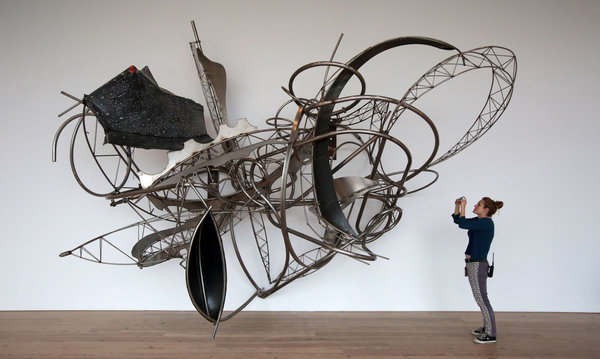
And even if by some miracle we got them into the apartment, many of his pieces jut out, making it hard to have any furniture around them.
image
Of course, given the stellar prices for modern art, only plutocrats can afford to buy these pieces. But do even they live in such palatial abodes as to make it possible for such a piece to fit snugly in the living room, say? I find it hard to believe.

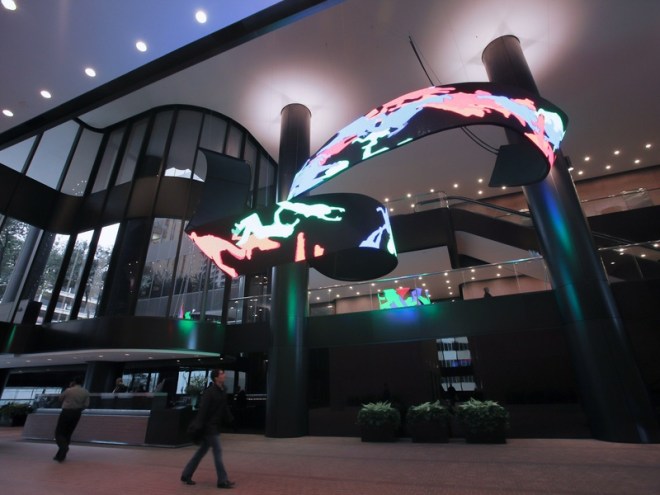
I can only assume that much modern art is either made for large and powerful multinational corporations, whose huge atriums or corporate boardrooms in their Headquarters have enough space for such pieces
image

image

or it is made for museums such as the Whitney which have large exhibition spaces. Either way, art for the people it is not. And that’s a pity, because at the end of the day art should be for us, something which we can hang on our wall and admire for decades or even centuries before perhaps donating it to a museum.

I think it’s time for a new art movement, the FOTS (“Fits Over The Sofa”) movement.

image

_____________________
Centre Pompidou: http://www.leparis.pl/centre-georges-pompidou-muzeum-sztuki-wspolczesnej/
The Shard: https://en.m.wikipedia.org/wiki/Renzo_Piano
The Whitney (both views): http://whitney.org/About/NewBuilding
View across the Hudson: http://elizabethbarton.blogspot.com
Edward Hopper “Early Sunday Morning”: http://collection.whitney.org/artist/621/EdwardHopper
Charles Demuth “My Egypt”: http://collection.whitney.org/object/635
Jackson Pollock “Number 27, 1950”: http://www.allartnews.com/pollock-and-the-irascibles-the-new-york-school-opens-at-palazzo-reale-in-milan/
Lee Krasner “The Seasons”: http://www.brooklynstreetart.com/theblog/2015/04/30/the-new-whitney-opens-may-1-america-is-hard-to-see/#.VoE8i3o8KrU
Frank Stella: http://www.nytimes.com/2015/10/30/arts/design/tracking-frank-stellas-restless-migrations-from-painting-and-beyond.html?_r=0
Frank Stella: http://www.hedgefundintelligence.com/Article/3503103/Steve-Cohen-sponsors-Frank-Stella-exhibition-at-the-Whitney-Museum.html
Headquarter atrium art: http://houston.culturemap.com/news/entertainment/03-02-13-image-bending-spanish-artist-transforms-downtown-houston-office-atrium-with-iwavesi/slideshow/
Corporate boardroom art: http://www.artworks-solutions.com/news/view/corporate-art-works
Space over sofa: http://www.utrdecorating.com/blog/hanging-pictures-sofa/

ALL THOSE SQUIGGLES …

Beijing, 21 October 2012

For my fiftieth birthday my wife took me to revisit the mosaics at Ravenna. I had seen them for the first time during that first magic visit to Italy which I have written about in an earlier post, and many times since then I had emitted the desire to see them again. Our two children were with us, and an extraordinary thing happened to them when we entered the first church. It was as if they had entered a parallel world whose gravity was ten times that of Earth. They collapsed onto every horizontal surface and were as if glued to them, hardly able to drag themselves to the next church …

If I mention this it’s because it is exactly the way I feel every time I enter a room in a museum dedicated to Chinese calligraphy. Partly it’s the light, which is always subdued, no doubt to protect the fragile materials on which the texts have been written. But mostly it’s because the texts do not touch me in any way. They are merely squiggles on pieces of paper. As I stand there, willing myself to see something in the scrolls in front of me, a terrible lassitude overcomes me and my eyes start cutting left and right, searching desperately for a bench to sit on.

I have been with Chinese when they start to wax lyrical about the penmanship of the calligraphy on a scroll: the brush strokes, the ink, the I don’t-know-what-else. Apart from not understanding what is written, which I think makes it difficult to appreciate good penmanship, handwriting is an art form that touches me not a bit. I put it down to being the first generation – in the West, anyway – for whom writing became strictly utilitarian. My first years were spent struggling with ink pens, different colours of ink, different nibs, and cursive writing – all made more difficult by my being left-handed – but at the age of 12 came the liberation of the ballpoint pen, at the age of 17 the further liberation of the typewriter, and at the age of 25 the even greater liberation of electronic word processing. The squiggles on the sheet of paper are strictly functional to me (although I will admit to sometimes critically comparing different fonts in my word processing).

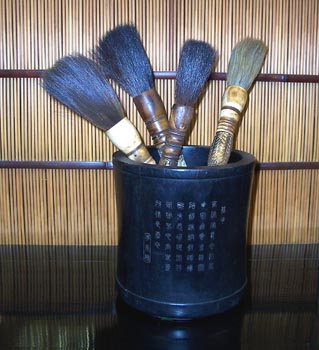
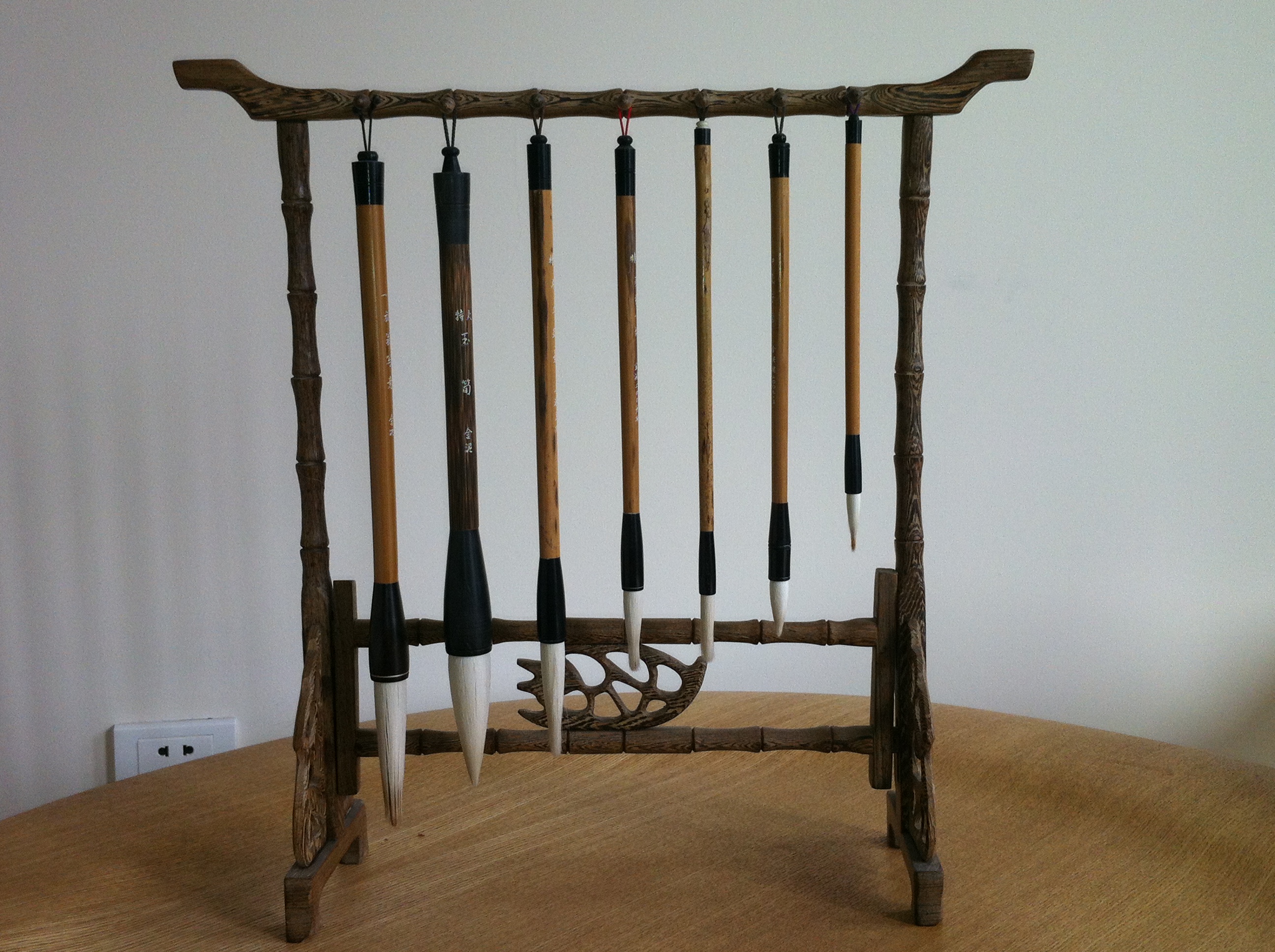
The divide between me and the Chinese on this is symbolized by the rack of writing brushes which I have purchased here in China. My rack has the brushes arranged so that they run from the biggest to the smallest, emphasizing the strict geometry of my composition. Even more important, I have kept the bristles in the point which they had when I bought them (bar a few which distressingly have fallen off the rack and had the point blunted). I find the shape of the brush, coming to a point in the bristles, quite beautiful to look at.

But for a Chinese this is meaningless. The brush is there to be used so it must have the bristles undone, flowing, possibly slightly bent from use. Mine is a sterile composition to them. They delight to keep their brushes untidily in a mug, bristle-side up, ready to be snatched up and used.

And yet … in different contexts, I have found Chinese writing quite beautiful to look at, just as a composition of abstract lines. For instance, I’m often attracted by the boards which hang over the entrance to temples with a phrase carved on them; the meaning of the phrase is of no matter to me, it’s just the composition I find striking. This is an example from South Korea.

Or I’ve sometimes seen just a character or two written on a wall which I feel “says” something to me as a composition, like in this example.

Or I have seen sculptures of characters; Chinese characters seem to lend themselves very well to being sculpted. Here are a couple of examples.

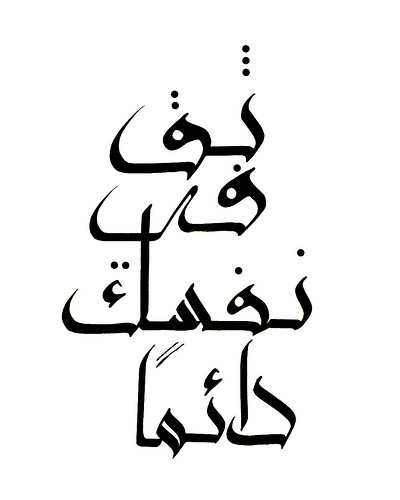
I have the same occasional attraction to Arabic, another script in which I am illiterate. Here’s a nice example I found surfing the web.

I suppose I am heir to a hundred years of abstract art, which tells me that it’s “alright” to just enjoy squiggles on a canvas as long as the overall composition has balance, a good colour scheme, and generally “works” for me. I mean, what’s a Jackson Pollock but an infinity of squiggles on a canvas? I show again here the Pollock I showed in an earlier post.

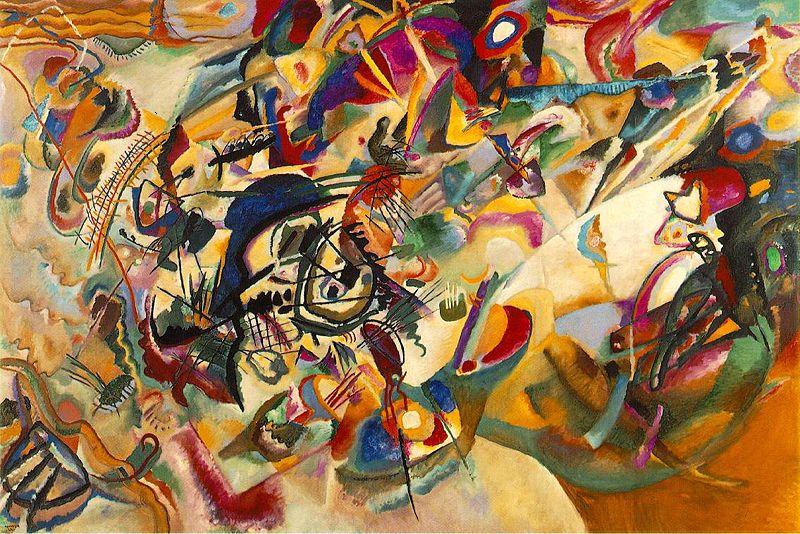
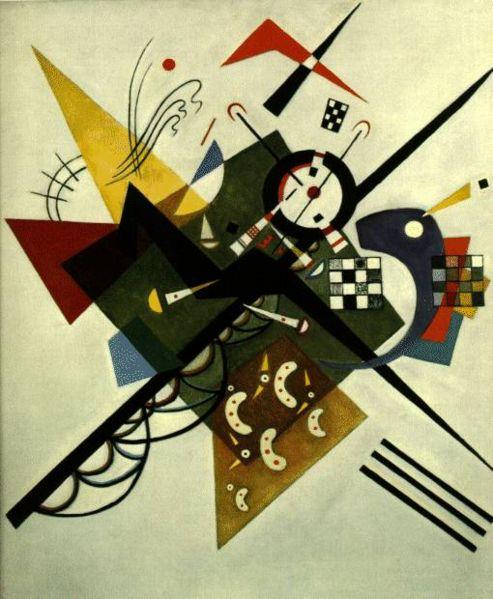
Wassily Kandinsky was also quite fond of squiggles.

Paul Klee was also into squiggles

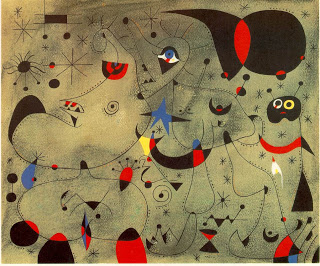
As of course was Joan Miro, who must be the squiggler-in-chief.

And I haven’t even started on the sculpture …

So with that, I will go out and seek more Chinese writing compositions that I like … but I will keep away from those dimly-lit calligraphy rooms in museums. All those scrolls hanging there one after another are just too much for me.

POSTSCRIPT

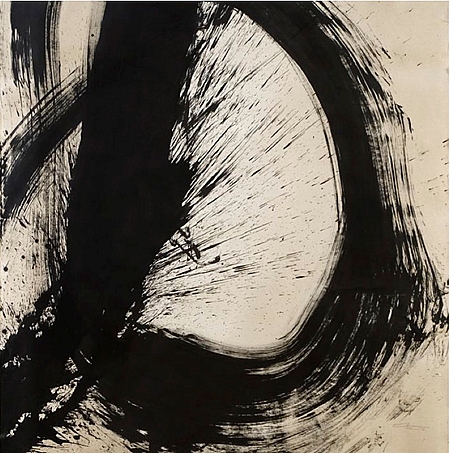
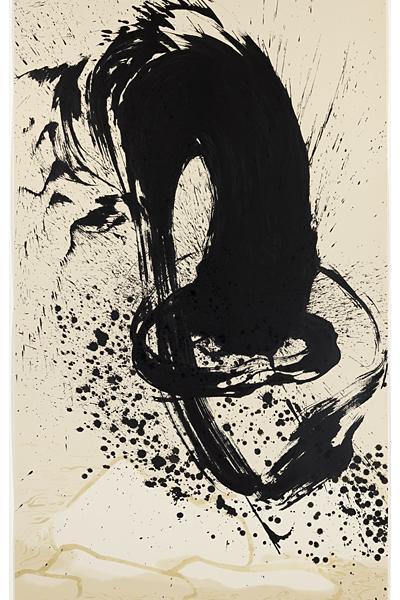
Since writing this, I have come across the Chinese artist Qin Feng. In at least one period of his life he brought together calligraphy and abstract art. Here’s a couple of his paintings from that period:

______
Pix (except for my brush rack):
Calligraphy rooms in museums: http://www.sfgate.com/art/article/Out-of-Character-Asian-Art-Museum-3936470.php
brushes in a holder: http://www.lovellhall.com/product_list.php?cat=40&start=10
plaques at temples: http://tripwow.tripadvisor.com/slideshow-photo/chinese-characters-in-korean-temples-by-travelpod-member-akrn-seoul-south-korea.html?sid=12667092&fid=tp-7
Chinese characters on walls: http://www.flickr.com/photos/35464002@N08/6124930840/
Chinese character sculptures: http://www.shho.cuhk.edu.hk, http://www.flickr.com/photos/fotofish64/7292747450/sizes/m/in/photostream/
Arabic calligraphy: http://jchristinahuh.blogspot.com/2010/08/arabic-calligraphy.html
Pollock painting: http://www.metmuseum.org/toah/works-of-art/1982.147.27
Kandinsky paintings: http://en.wikipedia.org/wiki/Wassily_Kandinsky
Klee painting: http://en.wikipedia.org/wiki/Paul_Klee
Mirò painting: http://mercoledis.blogspot.com/2010/10/joan-miro-palazzo-blu-pisa.html
Qin Feng’s paintings:

http://asimg.artsolution.net/tsmedia/GoedhuisGoephoto/goedhuis692011T1437.jpg?qlt=100&ftr=4&cell=450,480&cvt=jpeg