SAINT TECLA

Milan, 18 November 2024

Ever since 2016, when I wrote a post about Saint Radegund I’ve been meaning on and off – more off than on, I should say – to write a post about Saint Tecla, as part of my sub-category of posts on obscure saints whose names still dot the European landscape; in this particular case, a small road behind Milan’s Duomo is called after her. The last post in the series, from this summer, was about Sankt Ilgen. Two days ago, at the end of a hike which my wife and I did on Lake Como, I came across a church dedicated to Saint Tecla, in the village of Torno. It’s not a particularly interesting church. This is what the exterior looks like.

Source

And this is a view of its interior.

Source

Quite honestly, the view from the church’s door across Lake Como is more interesting.

Source

Nevertheless, I took my bumping into this church as A Sign that I should finally get my finger out and write this post.

So who was this Saint Tecla? (and by the way, I prefer to use the Italian – and Spanish and Portuguese – spelling of her name rather than the English Thecla) Let me start by inserting a photo of a 6th Century mosaic portrait of her which graces the Basilica Eufrasiana in the town of Poreč in Istria, in Croatia.
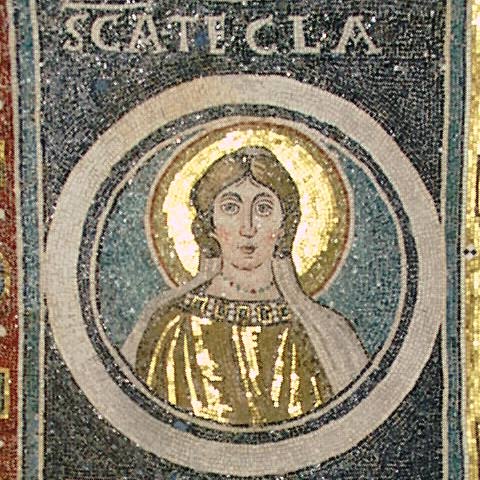
Source

For any of my readers who are interested in early Christian mosaics and have never visited the Basilica Eufrasiana, I suggest that you do so. I throw in a couple of photos of the mosaics there to whet their appetite.

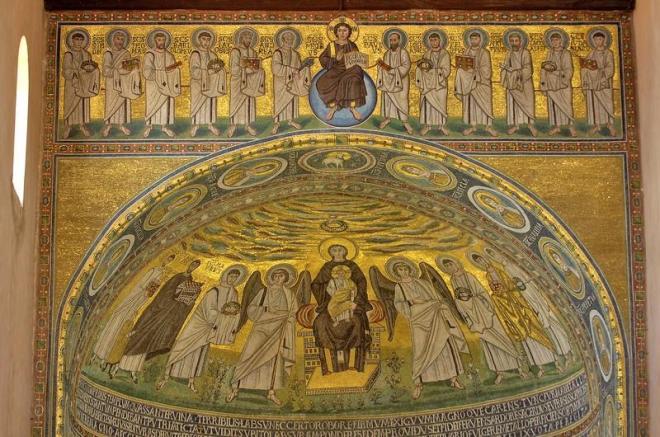
Source
Source
Source

Readers with good eyesight will see that the portrait of Saint Tecla is one of the portraits on the inside of the arch, to the right.

Given her great popularity in Christian Orthodox religions (probably much greater now than it is in Western Christian religions), I also throw in a photo of a depiction of her in a manuscript produced for the Eastern Roman Emperor Basil II in the 11th Century.
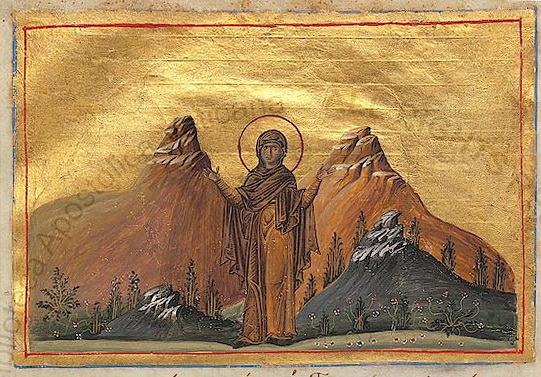
Source

Of course, neither of these portraits is from life. And in fact, there is a good chance that Tecla never had a life – the Roman Catholic church quietly dropped her from its official Martyrology back in 1969, which normally occurred because there was a lack of historical evidence that the saint or martyr in question ever existed. But let us put this cavil aside, and see what her various hagiographers had to say about her.

Tecla was believed to have come from Iconium in the Roman province of Galatia (now Konya in the modern country of Türkiye). The story goes that when St. Paul passed through Iconium on his second missionary journey, Tecla was transfixed by his sermons. Here is the scene depicted in an altar carved in the 15th Century for a chapel in the cathedral of Saragossa in Spain, but which now resides in New York’s Metropolitan Museum of Art’s Cloisters. That’s Saint Tecla at the the window of her house. Note the man (I think) stroking his chin pensively down at the right; a nice touch.

Source

Unfortunately, Saint Paul seems to have lost his head. No worries, let me throw in a photo here of a fresco of St. Paul’s head, recently uncovered through the clever use of a laser-based technology, in a 4th Century catacomb named after St. Tecla, in Rome. This, I read, is the oldest extant solo portrait of the Apostle. I’m intrigued by the very pointy beard; I have never imagined Paul with that kind of beard.
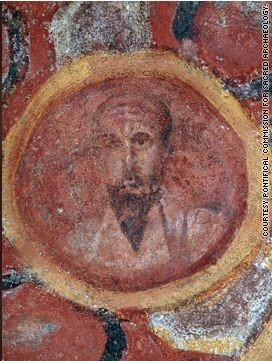
Source

Continuing on with Tecla’s story, she declared to her mother Theocleia and her fiancé Thamyris that she was abandoning her marriage plans and would join Paul. Both Theocleia and Thamyris were alarmed at this attempt at independence and decided to drag both Paul and Tecla before the city governor. Paul was merely sentenced to scourging and expulsion, but Tecla was to be burned at the stake. Turning again to that altar which once resided in Saragossa’s cathedral, we have the scene sculpted in alabaster. The sources say she was stripped naked, but that clearly didn’t play well with the sculptor and/or the donor.

Source

Miraculously, a storm blew up, which doused the pyre. Personally, I would have put her back in gaol, built another pyre, and had a second go. But no, she was freed, whereupon she joined Paul, cut off her hair (I always find it interesting that hair is considered – by male authors? – such a sign of femininity, the cutting of which signifies renunciation of physical attraction), and followed him. And off they went to Antioch in Pisidia (nowadays called Yalvaç). There – even without her hair – she drew the lascivious attention of one Alexander, a nobleman of the city. He attempted to take her by force, but she fought him off, tearing off his cloak and knocking the coronet off his head in the process, much to the amusement of the townspeople. Seemingly, then, Alexander attempted this rape of Tecla, for that is what it seems to have been, in public, which is a little odd. Or maybe the writer of the story wanted to show the arrogance of power.

In any event, Alexander felt greatly injured in his aristocratic pride and had her dragged – yet again – in front of the city’s governor for assaulting a nobleman. This time, the governor condemned her to be thrown to the wild beasts (as an aside, I have to say that hagiographers of the early Christian martyrs all seem to have been working off the same playbook; martyrs were either burned at the stake, tortured in hideous ways, thrown into rivers with heavy weights around them, or thrown to wild beasts, or some combination of these). Interestingly, the women of Antioch rose up as one against the sentence, although it changed nothing (I think the hagiographers’ intention was to intimate that Tecla was a natural leader of women).

And so she was paraded through the streets of Antioch, stripped of her clothes (again), and thrust into the arena. The men in the crowds were baying for blood, the women were weeping for poor Tecla (taken by the spirit of the story, I have added this bit; as far as I know, none of the hagiographers said it, although they do make clear that the women in the crowd were rooting for Tecla). Miracle! Some of the wild animals (female) protected her from other (male) animals. A lioness was especially active in defending Tecla. We see the scene here in a 15th Century altar from the chapel of the Cathedral of Tarragona in Spain (in passing, I should note that Saint Tecla is the patron saint of Tarragona). In this case, the sculptor had no problems making Tecla at least half naked. Note all the animals lying meekly at her feet. I like, too, the crowd pressing in to see what’s happening.

Source

At this point, the story gets somewhat muddled for me. Reading between the lines, and giving my fervid imagination free rein, I’m guessing that the organizers of this spectacle had thought up the idea of having a large vat in the arena full of ravenous seals. They must have thought they could throw the remains of Tecla, once she had been ripped to pieces by the wild beasts, into the vat (although I wonder if seals would eat human remains; but hey, what do I know?). But Tecla had other ideas. She had asked Paul to baptize her, although for some reason he had temporized. Standing in that arena, surrounded by wild – but currently meek – animals, she decided that before she died in that arena, she would baptize herself. Note once again her streak of independence: baptizing yourself?! impossible; only men can baptize people! Nevertheless, she threw herself into the vat. The altar in Tarragona’s cathedral gives us once again a vision of this scene.

Source

I’m not sure what has happened to the arena and its crowds, we seem to have a more sylvan scene. I also get the impression that the sculptor had no idea what seals looked like, he seems to have come up with a bunch of eels. But le’s not niggle, because another miracle occurred! The vat was struck by lightning, which killed all the seals – but of course not Tecla.

All these miracles were too much for the governor. He ordered her clothed and released her to the rejoicing women of the city. She returned to Paul, “wearing a mantle that she had altered so as to make a man’s cloak” (an important phrase for future generations of some women, who looked to Tecla as an example of breaking the eternal glass ceiling for women). She went on to convert many people, including her mother, to Christianity, and then retired to a cave near Seleucia (today’s Silifke) where she lived for many decades. This is the exterior of the cave.
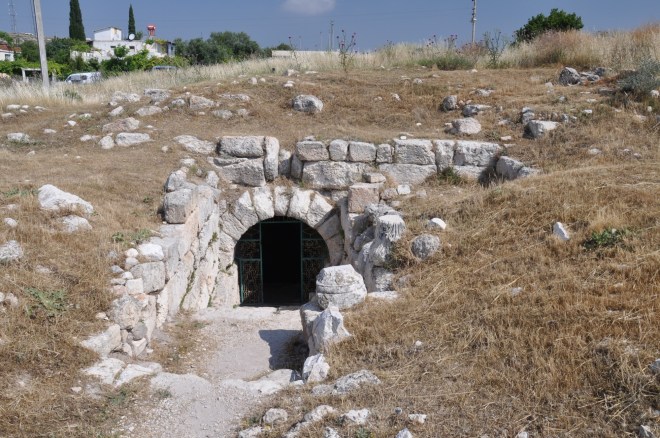
Source

And this is a shot of its interior, which has been turned into a church.
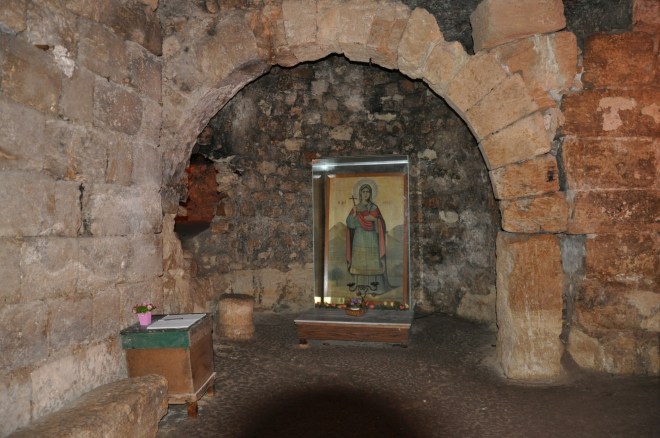
Source

I would be remiss if I didn’t point out that there is a rival story that Tecla did indeed spend her last years in a cave, but in the small town of Maaloula in what was then the kingdom of the Nabateans, close allies of the Romans, and in what is now Syria. It seems a far more dramatic site, and has a Christian Orthodox church and nunnery built next to it.
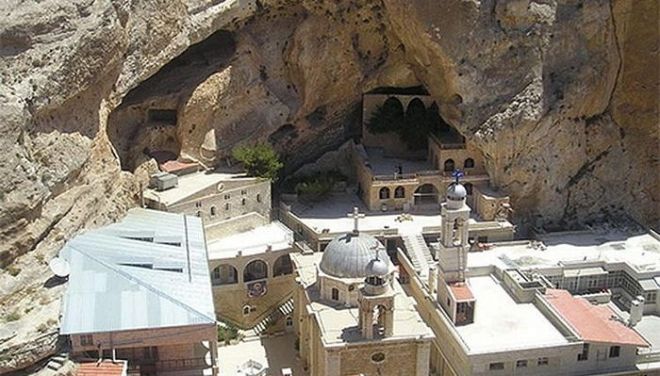
Source

The site, alas, has fallen prey to modern religious wars. ISIS fighters invaded Maaloula in 2013, going on a rampage against Christian people and buildings, destroying all religious sites in the town. 3,000 fled the city, leaving only Muslims and the nunnery’s forty nuns. Twelve of them were kidnapped, and after negotiations were release in 2014. The nuns were dispersed and were only able to come back to the town in 2018. Horrors continue to be committed in the name of religion …

There’s further bits and pieces to Tecla’s hagiography, but I’ll skip them. Given the story, it’s a bit of a mystery why Tecla was such a popular saint. As far as I can make out, her popularity rested on the fact that she offered early Christian women a strong example, equal to, not subordinate to, men. She offered a female equivalent to the – male – Apostles; she went around converting people just as much as Paul did. She threw off the bonds of what was a strongly patriarchal society – she broke off an engagement arranged by her family, in fact she turned her back altogether on marriage; she didn’t wait to be baptized by a man but just did it herself; she took to the road without a protecting male presence (although she seems to have had to pretend she was a man in order to do this). The Church Fathers, notably Ambrose of Milan, lauded her for her virginity – but I always suspect this approval of virginity by the Church, since it always seems to be tied to retiring from the world into a nunnery and being Wedded to Christ; the idea of being in this world on equal terms with men was anathema to the Church (and to society more generally). I suspect she could easily be the patron saint of this new B4 Movement coming out of South Korea.

Well, I’ll leave readers with a somewhat more modern take on Saint Tecla by El Greco, in his late 16th Century painting “The Virgin and Child with St. Martina and St. Tecla”. It was painted for the Oratory of St. Joseph in the city of Toledo, but is now in the National Gallery of Art in Washington, D.C.

Source

We will, of course, immediately recognize Tecla because of the lioness which is protecting her. She also, rather oddly, is holding a martyr’s palm – oddly, because she actually was never martyred. One of the many strange things about Tecla.

A CELEBRATION OF THE HUMAN FACE, PART II

Milan, 15 April 2020

Some seven years ago (Goodness me, in my mind’s eye it doesn’t seem that long ago), I wrote a post about a visit which my wife and I made to New York’s Metropolitan Museum. The post was made up of a collection of photos which I took of human faces, from all periods and all regions of the world, looking out at us from the art spread out before us, as we criss-crossed the museum going from one exhibition to another.

Now, in this period of lockdown, I have done the same thing, wandering from room to room in the apartment and taking photos of pieces which my wife and I – and my mother-in-law before us – have collected of the human face.

I start my wanderings in the living room, with this piece from Canada.
my photo

I went there with my wife (who was then still my girlfriend) during the summer of 1977. It was she who spotted the piece in a shop close to the National Art Gallery in Ottawa which sold Inuit art, called the Snow Goose. The blurb we were given at the time of purchase gave its title as Face Spirit and stated that it was handmade by an Inuit artist called Sharky who lived in Cape Dorset in Canada’s far north. When we brought it back, my mother-in-law fell in love with it. Since we were both going on to graduate school that Autumn and therefore by definition would be “of no fixed abode”, living in cheap, rented accommodation, we were happy to give it to her on a long-term loan. We took back possession of it some 15 years later when our life was finally on a more even keel. Some 15 years after that, when I was in Montreal for a conference, I spotted a gallery which sold Inuit pieces and visited it. The pieces were all quite modern. When I said that I had bought a piece of Inuit art back in 1977, the lady exclaimed, “Oh, you have an antique!” Readers can imagine how that made me feel about myself.
My wife bought this next piece for me as a birthday present in Vienna in the Noughties.

My photo

There was at the time a shop behind the Kunsthistorisches Museum which sold copies of pieces from various world-famous museums (sadly, the shop has stopped offering such pieces). One of these was the Metropolitan Museum of Art, where the original of this piece is located. In fact, as I report in the post I mentioned earlier, I came nose to nose with the original during our 2013 visit to the Met, which gave me a bit of a shock. The blurb from the museum’s website has this to say about the original: “This magnificent head portrays a king of the late third millennium BC. Its heavy-lidded eyes, prominent but unexaggerated nose, full lips, and enlarged ears all suggest a portrait of an actual person. While the date and place of manufacture of this piece have been much debated, its close similarity to the magnificent bronze head found at Nineveh make a late third millennium date most likely.”

This next piece is also a copy, but this time of a piece in the Musée Guimet in Paris.

My photo

I bought the piece online (probably the first thing I ever bought online, come to think of it). It is the head of Jayavarman VII, who was a king in the Khmer Empire. He reigned at the end of the 12th/beginning of the 13th Centuries. He is probably best known for the Bayon temple at Angkor Wat, where this same face is repeated over an over, and on a much large scale, all across the temple.

source

In fact, I bought this piece after my wife and I had visited Angkor Wat, also during the Noughties. I had found this slightly smiling face totally fascinating.

After Asia we go to Africa. This group of pieces were give as presents to my mother-in-law by an old boyfriend of my wife’s.

my photo

They are of wood, but of a wood so dense that they seem to be made of iron. Appropriately enough, they are probably made from a type of ironwood, although which type I have no idea. One day, I’ll try putting them in a basin of water to see if they sink: true ironwoods are denser than water.

This next piece is also from Africa, but is in a completely different, quasi abstract, style.

my photo

The unknown artist who made it wound copper wire around a wooden core and used copper parts to make the eyes and nose. It is a really striking piece. I bought it in Ghana in the dying years of the 20th Century during a business trip there.

The next piece brings us back to Europe, although it actually refers to the wars between Europeans and “Africans”.

my photo

They were bought by my mother-in-law. They are modern copies of the heads of “Saracens” (i.e., peoples from North Africa) which were used in the Sicilian puppet shows of the 19th Century.

source

These shows retold the stories of the wars between European knights and their Saracen adversaries (guess who always won), and were roughly based on Medieval classics such as the Chanson de Roland, Gersualemme liberata and Orlando furioso. To the heads of the puppets, normally elaborately carved, would  be attached clothes and a reticulated set of arms and legs.

My mother-in-law also bought the next piece. My wife thinks she bought it in Sardinia in the second half of the 1970s.

my photo

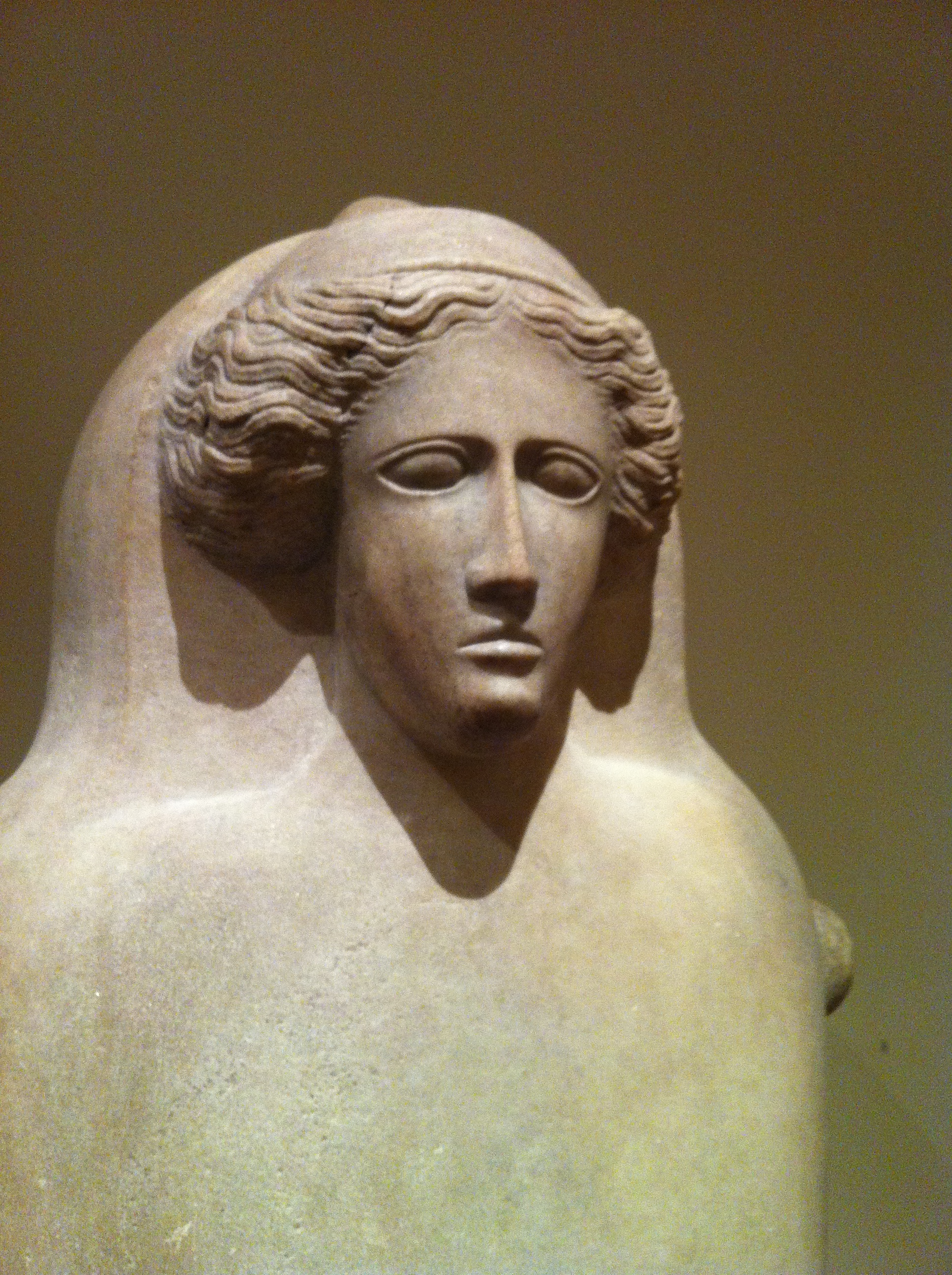
It’s a very small piece, only some 10 cm high, and very dark, so it’s quite easy to miss on our cluttered shelves. It represents a woman whose face is hidden in the deep folds of a very big shawl she has wrapped around her head. I find the mystery which emanates from it quite tantalizing. Who was she? Why was she so anxious to hide her face?

You couldn’t miss this next piece, even if you tried.

my photo

I bought it for my wife a few years ago, as a present for her first birthday in our retirement. The artist, Caterina Zacchetti, entitled it “Vento tra i Capelli”, Wind in her Hair.

Which sort of brings us to the world of ceramics (the last piece being terracotta). My wife and I bought this next piece in Vienna.

my photo

The shop we bought it at is Harro Berger Keramik, located in the old town, which specializes in bright and cheerful ceramic objects.

Source

However, the shop’s most spectacular offerings are modern copies of the old ceramic stoves which you find in Austria (two of which are in the photo).

source

I have always lusted after these stoves. Once, when we were apartment hunting in Vienna, we were shown one which had just such a stove in the corner of the living room. I was sorely tempted to take the apartment just for the stove, but good sense prevailed – it was too small for us.

My wife made this next piece during the one and only ceramics class we have ever taken together, in Vienna.

my photo

She made some excellent pieces during that course, which are now scattered here and there. From an inscription on the bottom of this piece I rather think that my wife made it for our daughter. As our mother-in-law did for us, I think we can keep it on a long-term loan and our daughter can take it back when we finally shuffle off this mortal coil.

Talking of my mother-in-law, it was she who bought the next two pieces, in New York as I recall, when she was visiting us there once.

my photo

They are wonderful cups, so precious that we never use them for their intended purpose. I’ve no idea who their maker was. There is a mark on the bottom, OCI (I think), and a date, 1984. My memory tells me that there were originally three cups. If there were, one has disappeared along the road of life.

My mother-in-law also bought the next three pieces, which – at least formally – were all made for the same purpose, to hold liquids.

my photo

The piece on the far right is a typical Toby jug, from the Royal Doulton porcelain works. My mother-in-law picked it up during a trip she made to the UK with my wife in the mid-1970s. The other two pieces are Italian. We’ve seen very similar jugs to the one in the middle being sold at the Dorotheum auction house in Vienna, so it must be a popular design. It is Sicilian, if my memory serves me right. I have no information on the piece to the far left.

Sometimes, a face is used to hide your face. I mean, of course, masks.  We have a few of those. My wife and picked up this typical set of Venetian masks on one of our trips to Venice – there was a time in our lives when we went there quite frequently.

my photo

The top-left mask, the baùtta, was a mask frequently worn, by both men and women of the Venetian aristocracy, as this painting by the Venetian painter Pietro Longhi attests.

source

The other three masks are from characters in Venice’s commedia dell’arte. From top right clockwise, we have the Plague Doctor, Brighella, and Arlecchino. Here, we have a line-up of the many characters that populated commedia dell’arte.

source

We go back to Africa for the next mask.

my photo

My wife bought it at the Dorotheum. The brief blurb that accompanied the piece states: “Helmet mask, Tribe: Ibo, Nigeria. Wood, polychrome, hints of facial features, towering, tapering top, jagged ornaments, dark crusty patina, original repairs, 2nd half of the 20th century”.  Quite what ceremony this mask would have been worn in I don’t know. Perhaps one day, if and when I buy a thick tome on African masks, I will find out.

I finish where I started, in Canada. We bought this mask on that same trip of 1977.

my photo

It is a modern copy of a corn husk face, which would have been used in the Mohawk Tribe’s Gajesa Society rituals as the mask of a medicine man. It was made by Ga’haur (I’m not sure I got the spelling right, the original label has faded during the intervening decades), a woman from the Mohawks’ Turtle clan.

Well, that’s taken me around the whole apartment as I’ve scoured it for examples of the human face. By my reckoning, we have only two and a half weeks to go before they let us out (if they let us out), time enough to wander a few more times around the apartment and report back on some of the other things we’ve collected here.

Stay safe.

A CELEBRATION OF THE HUMAN FACE

Beijing, 25 May 2013

Many, many (many…) years ago, as a fresh-faced engineering undergraduate, I was introduced to the concept of the Random Walk. My memory is hazy now, but as I recall it had something to do with a way of modelling the behaviour of molecules in a gas. The idea was that molecules could be considered as little ping pong balls taking random paths as they whizzed around colliding with each other chaotically.

If I bring this up, it is because during the visit which my wife and I made two weeks ago to the Metropolitan Museum in New York I rather felt that we had unwittingly gone on a random walk of our own. I should explain that whenever we are in New York we always try to slip in a visit to the Met. It is really the most wonderful museum, with an amazingly extensive collection. We normally just go along and wander around in a rather purposeless way, but this time I decided to be slightly more ordered about it. I checked on the museum’s web site to see what exhibitions were on and drew up a list of those which sounded interesting. My list included, in no particular order, “Impressionism, Fashion, and Modernity”, “The Roof Garden Commission: Imran Qureshi”, “PUNK: Chaos to Couture”, “Photography and the American Civil War”, “African Art, New York, and the Avant-Garde”, “Street”, “Cambodian Rattan: The Sculptures of Sopheap Pich”, “Objects from the Kharga Oasis”, “Plain or Fancy? Restraint and Exuberance in the Decorative Arts”. A rich diversity, I think you will agree. Once arrived, we decided to visit these various exhibitions as the fancy took us, interspersed by two visits to the cafeteria. The result was that we criss-crossed the museum quite randomly, finding ourselves walking unwittingly through many different parts of the permanent collections and bumping into admirable pieces along the way.

So it was that at one moment early on in our random walk we found ourselves in the Cypriot Antiquities section – not a section I would normally have ever thought of visiting. And there, I suddenly found myself nose to nose with this statue.

faces at the met 001

He was someone from the 4th Century BC, I learned from the label, but my immediate thought was “Good Lord, it could be one of my children’s friends”, and suddenly the 24 centuries which separated us disappeared. This was no longer a piece of art to be studied respectfully but someone I could have known and passed the time of day with. In some muddled way, I decided there and then that as we walked the various corridors of the museum, I would take photos of some of the more interesting faces we came across, as a testimony to all that humanity lying just below the surface of paint and wood and stone and paper that surrounded us. Here is my resulting photo album, shown in the random order that I came across them:

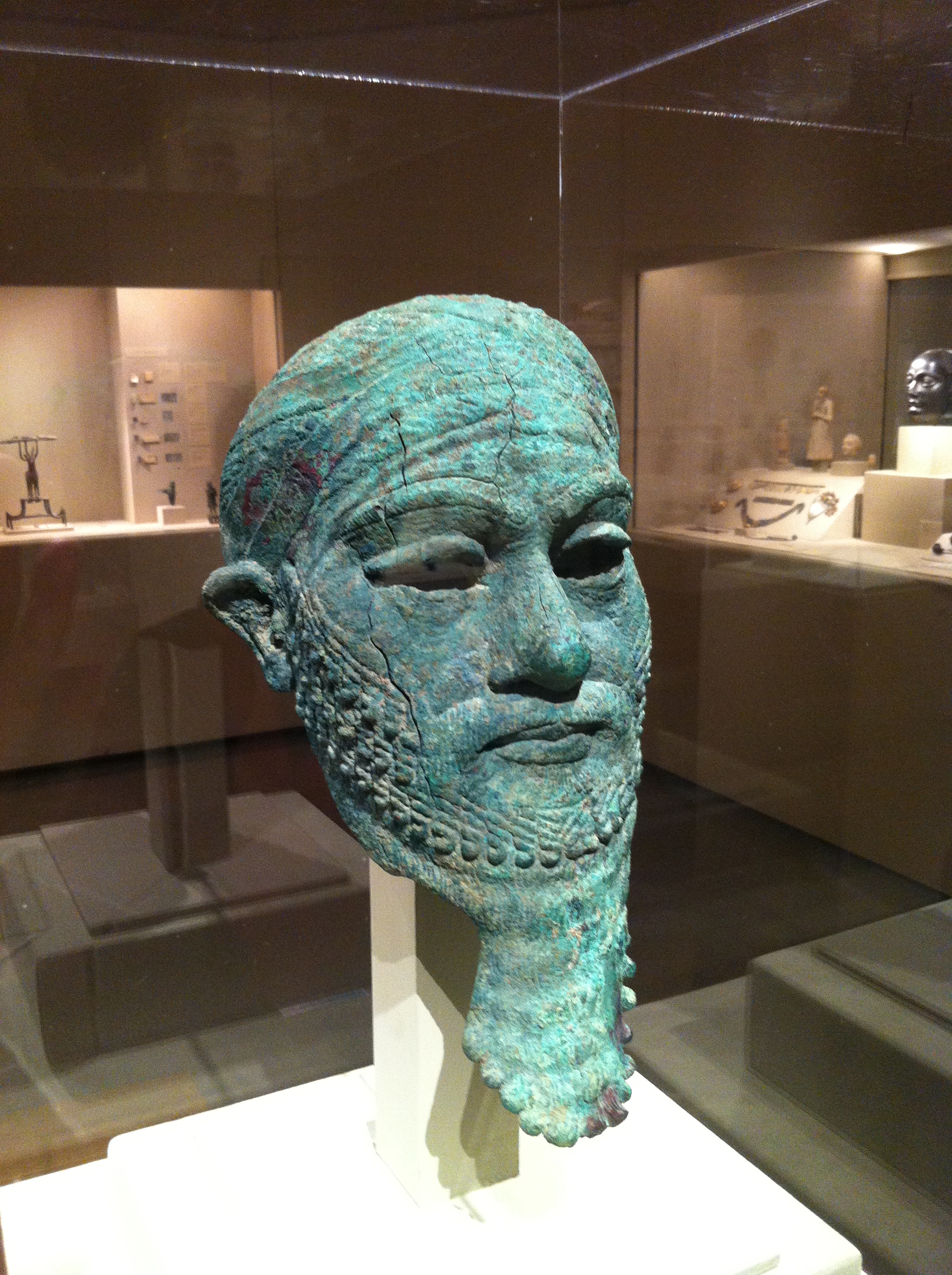
A ruler from the area of Iran, 40 centuries ago. This one gave me goose-bumps because I have a copy of it buried in my warehoused stuff in Vienna.

faces at the met 004

A governor, by the name of Gudea, of the city of Lagash in Mesopotamia (I like the way he holds his hands):

faces at the met 010

Our random walk is bringing us into East Asia.

A bodhisattva from Shanxi province. A mere 15 centuries separate us. Is it unfair to say that he looks rather self-satisfied?

faces at the met 012

We jump forward 15 centuries, give or take, with this timid Korean scholar from the early 20th century:

faces at the met 016

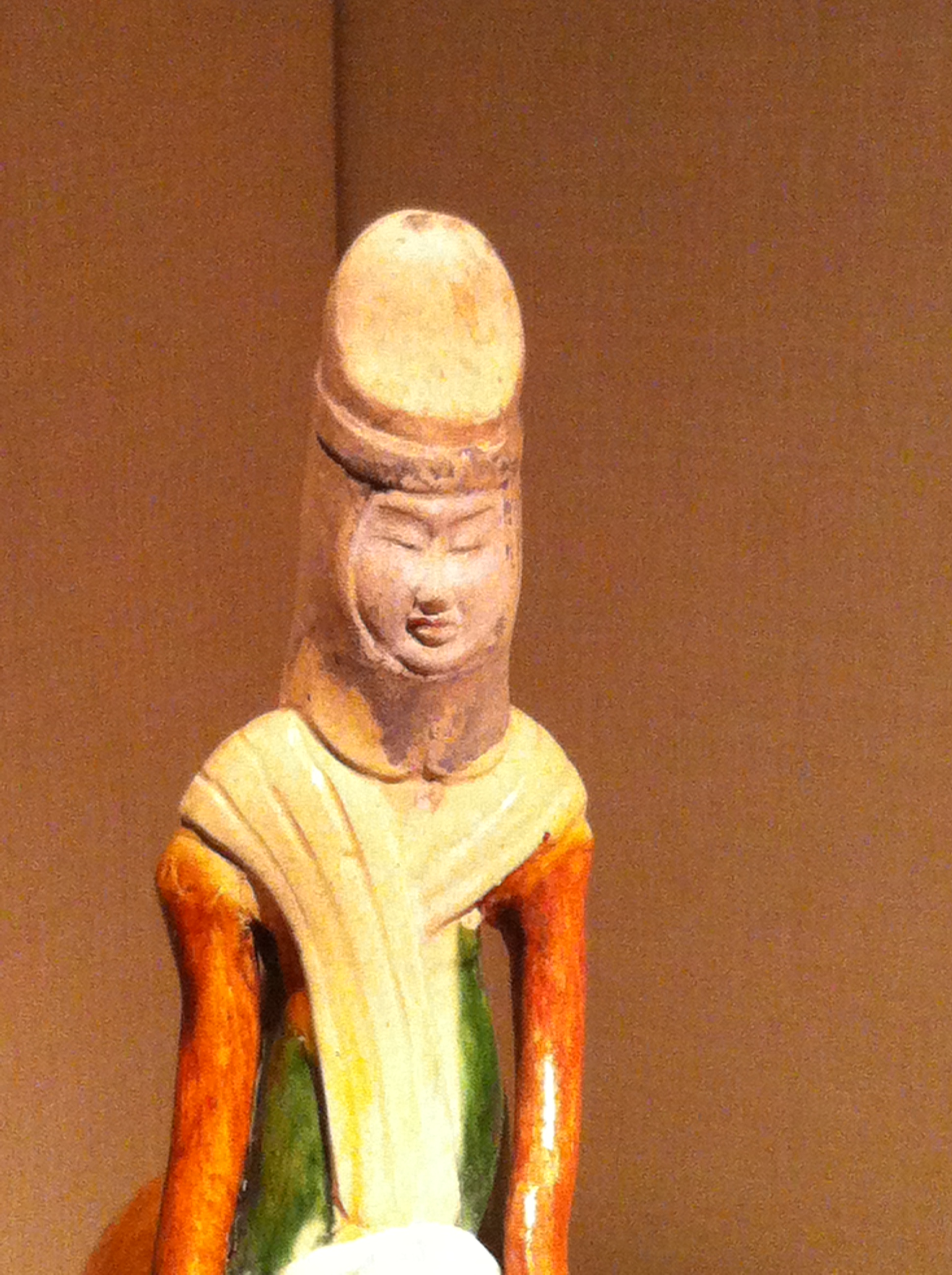
A female horse rider, from the western reaches of the Tang Empire I would guess from her clothes, and very tired after a long journey I would think from the expression on her face.  13 centuries separate us.

faces at the met 020

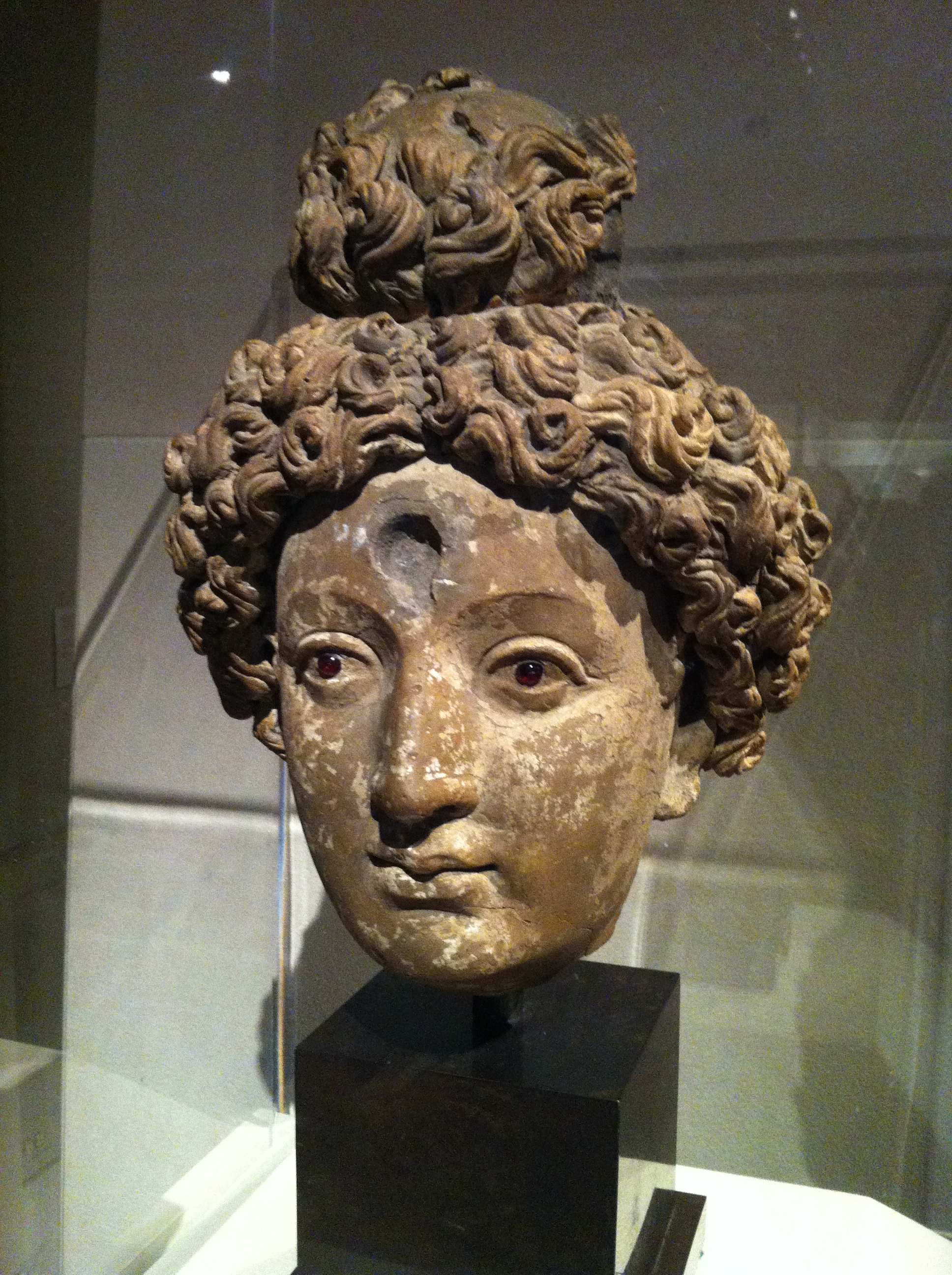
A buddha from the area of Afghanistan when it was still buddhist, 15 centuries ago. Are we seeing the Greek influence which came from this area being conquered by Alexander the Great?

faces at the met 025

Those cupid lips! A bodhisattva from Shanxi province, 14 centuries back.

faces at the met 027

Our random walk is making us transition brutally to Medieval Europe.

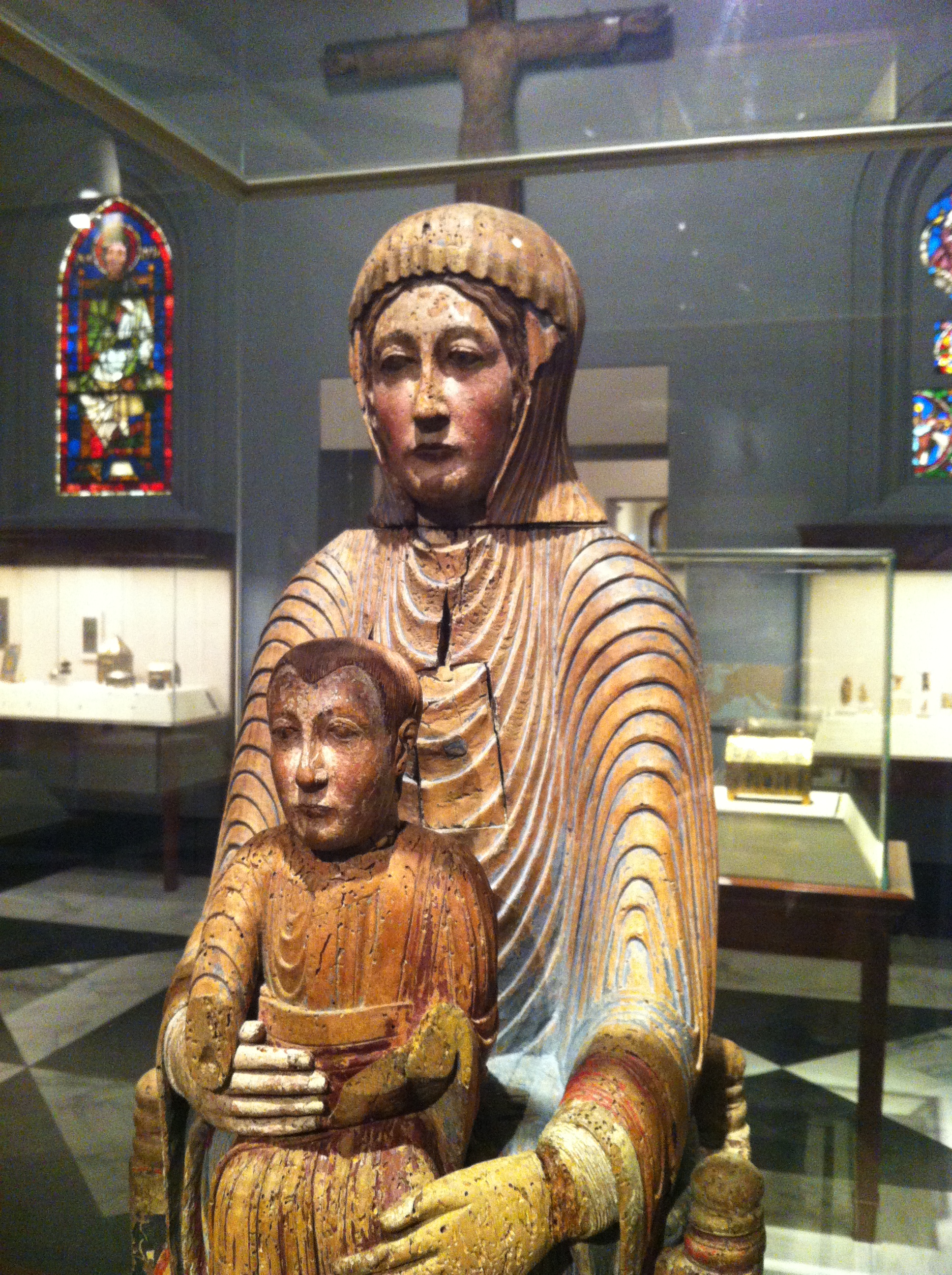
A brooding Virgin Mary from 10 centuries ago.

faces at the met 078

A stern-looking saint (Saint Yrieix … who is that?), a face from 10 centuries ago.

faces at the met 030

A mourning Virgin Mary at the crucifixion from 6 centuries ago

faces at the met 032

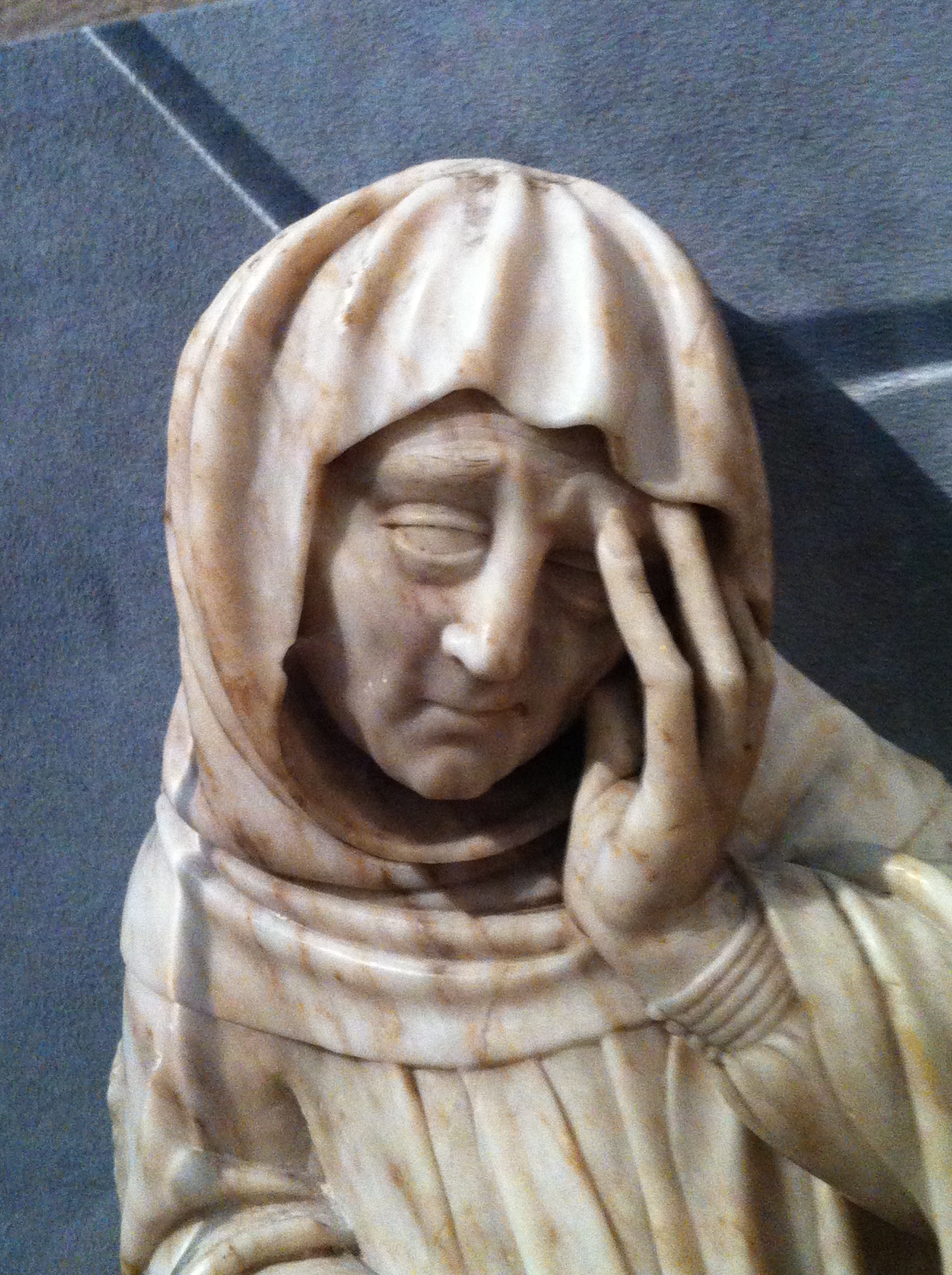
Her mourning is German, sober and contained. This Virgin’s mourning, from the same period, is more Mediterranean. She is Spanish.

faces at the met 038

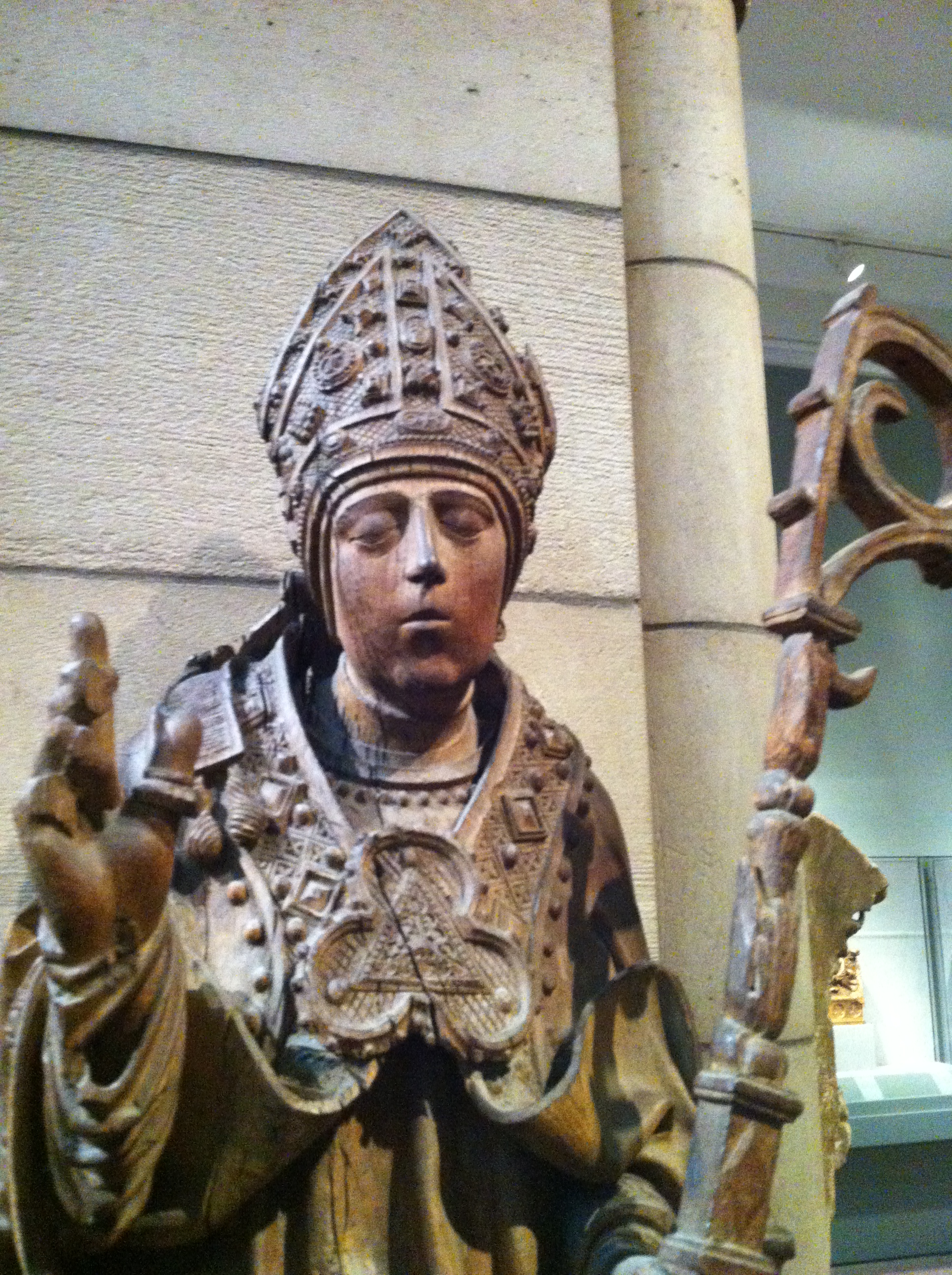
A rather foolish-looking bishop from 6 centuries ago.

faces at the met 034

The random walk is now taking us through the print and photo section.

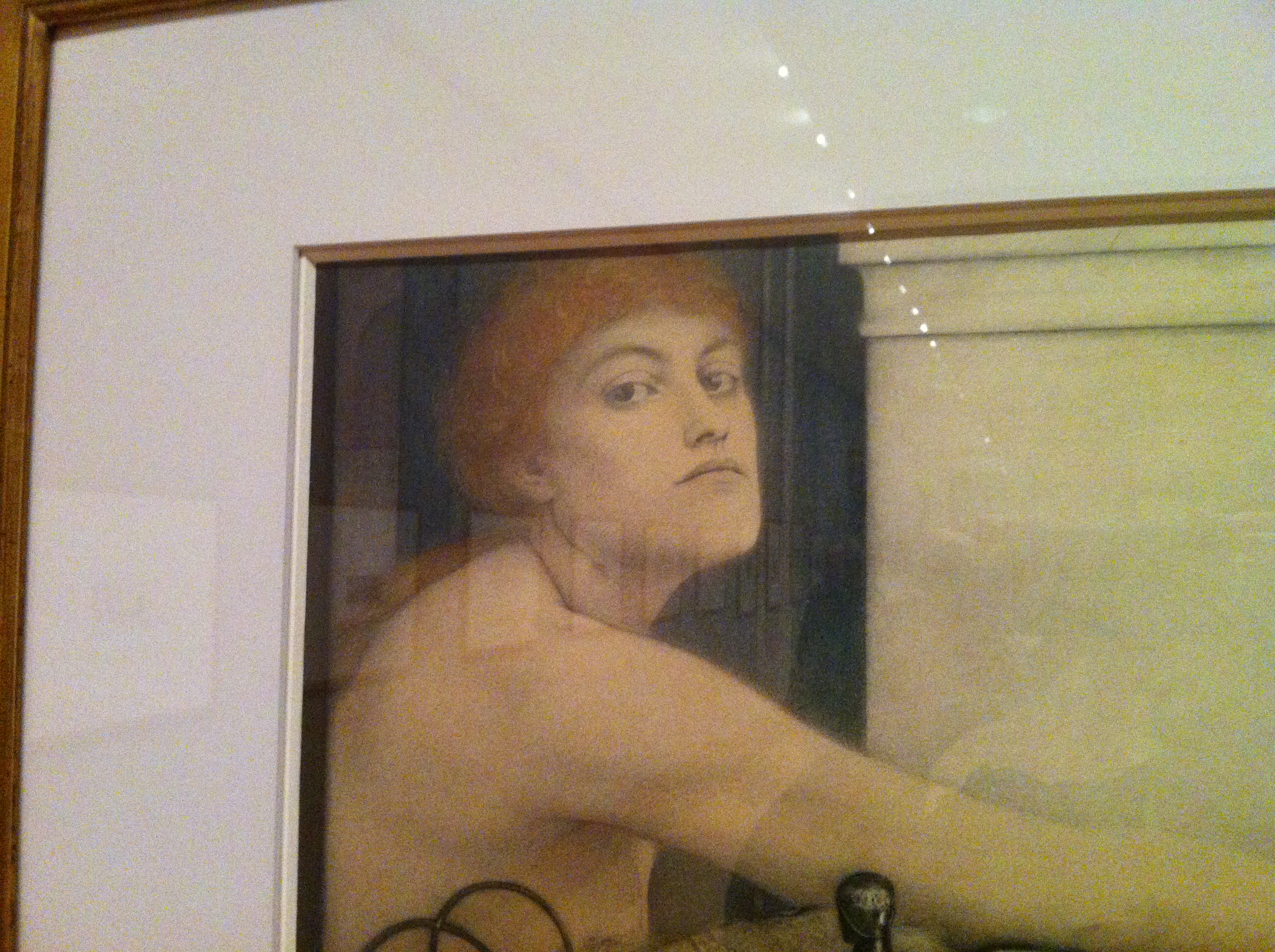
A woman from the 1890s.

faces at the met 040

A woman from the 1930s. It’s a Pollock, which is intriguing.

faces at the met 042

Another woman from the 1930s, on the Paris boulevards.

faces at the met 047

We are suddenly back in the Cypriot section, although in a different room.

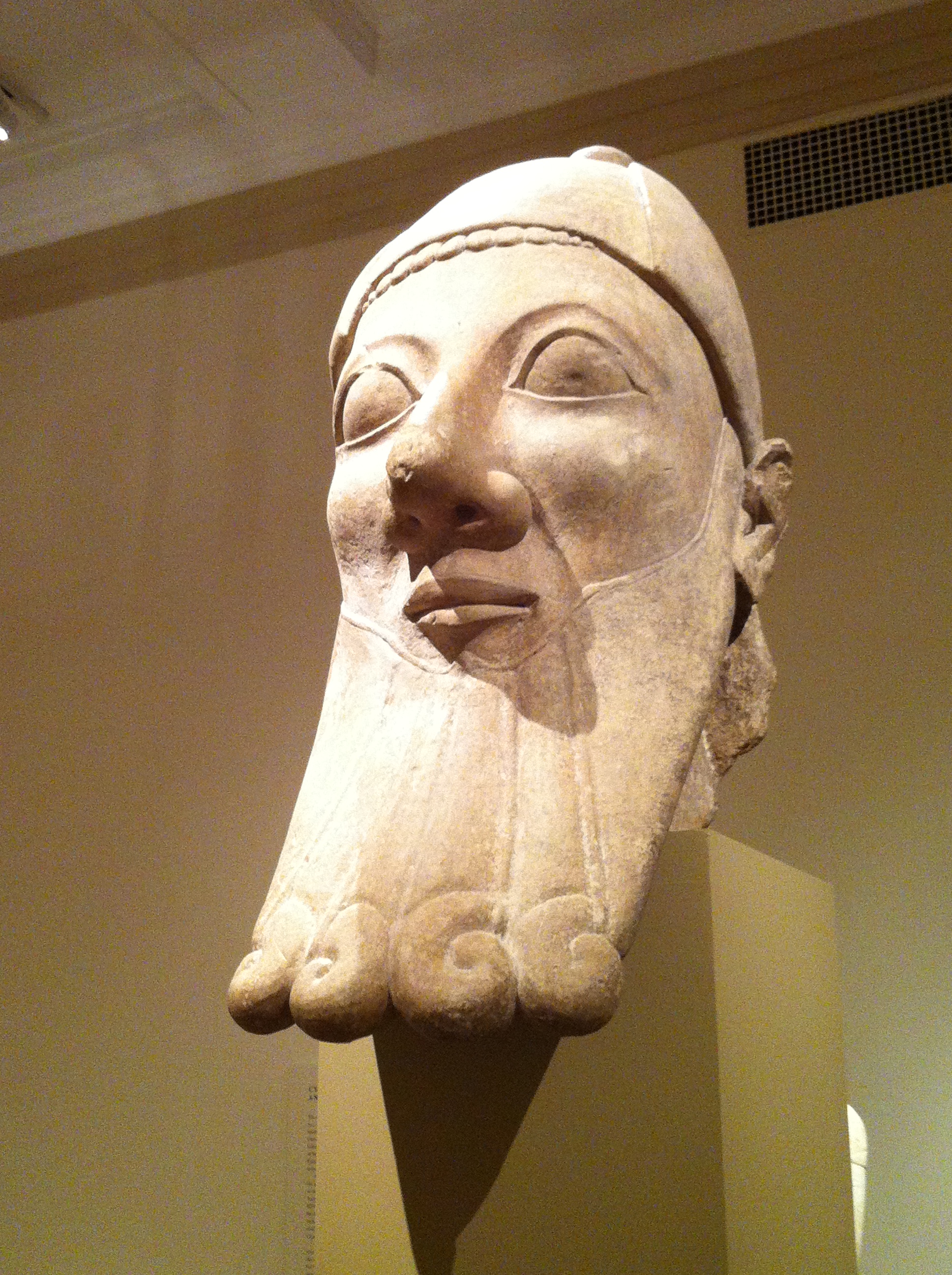
A man with a wonderful beard, from 27 centuries ago.

faces at the met 056

A woman staring death in the face, from a little later.

faces at the met 062

And now our random walk is bringing us to meso-America.

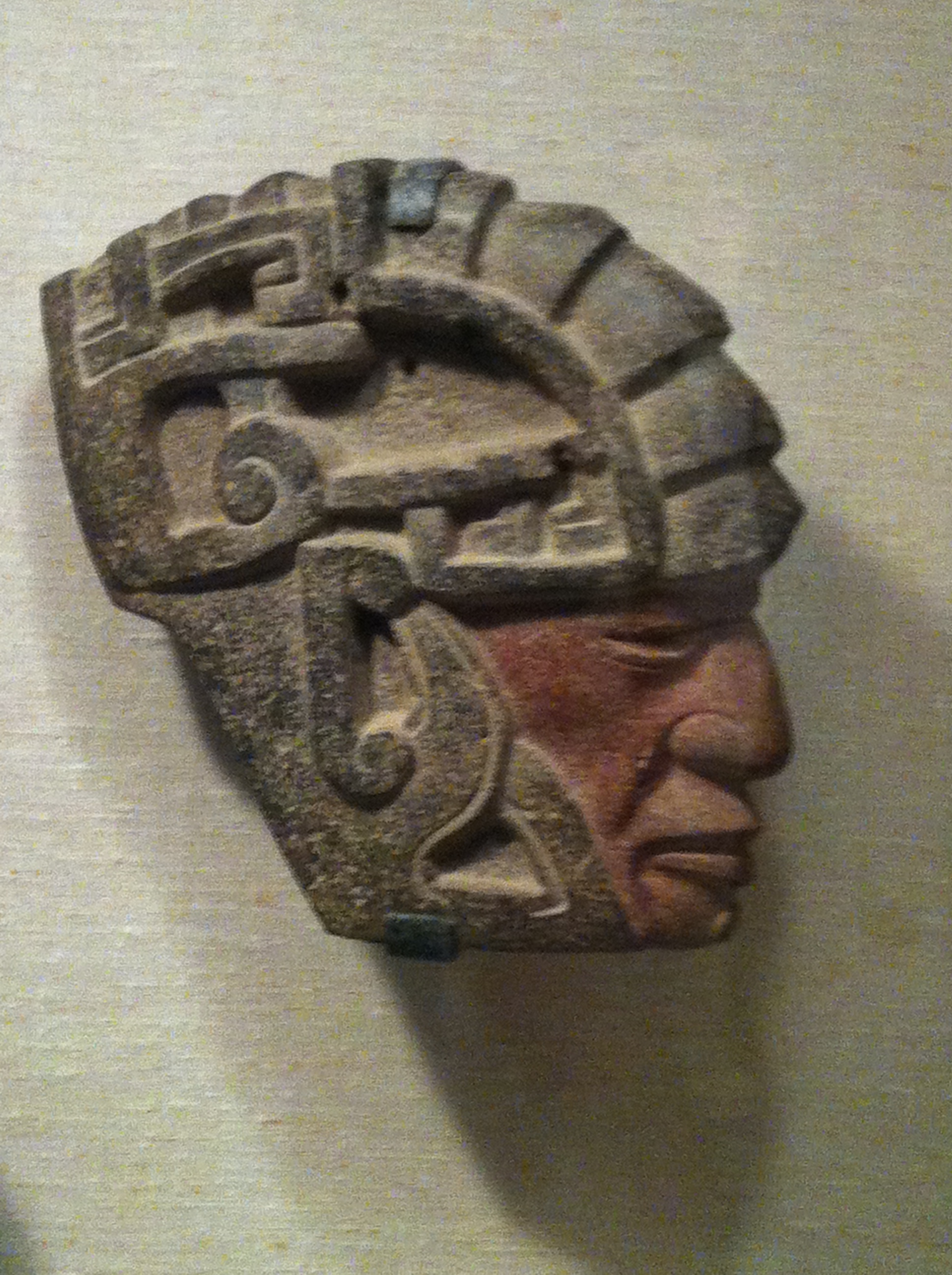
A pensive face from Mexico, 14 centuries ago.

faces at the met 066

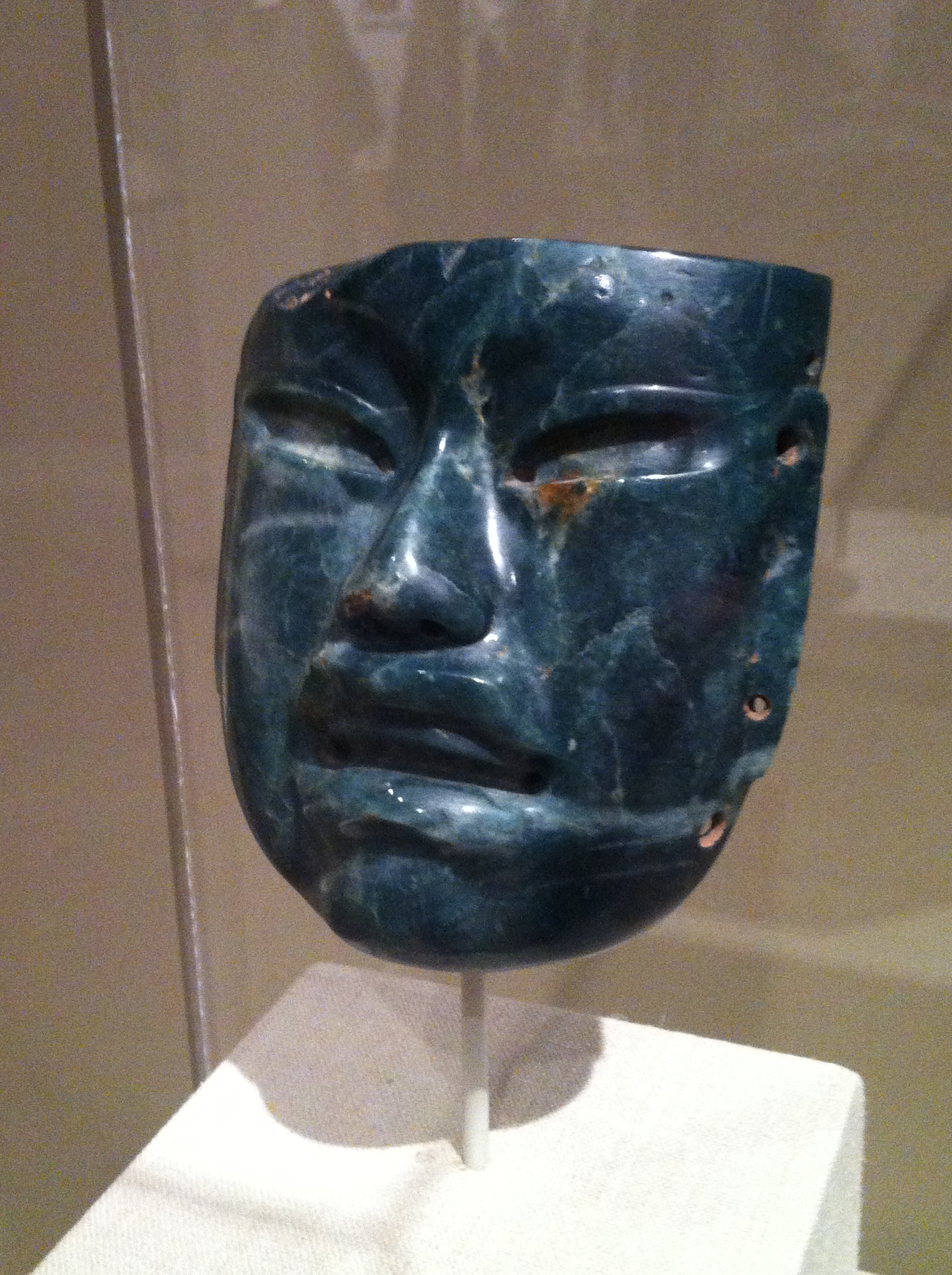
An anguished face from 30 centuries ago, from Mexico again.

faces at the met 074

Suddenly, we lurch into Africa.

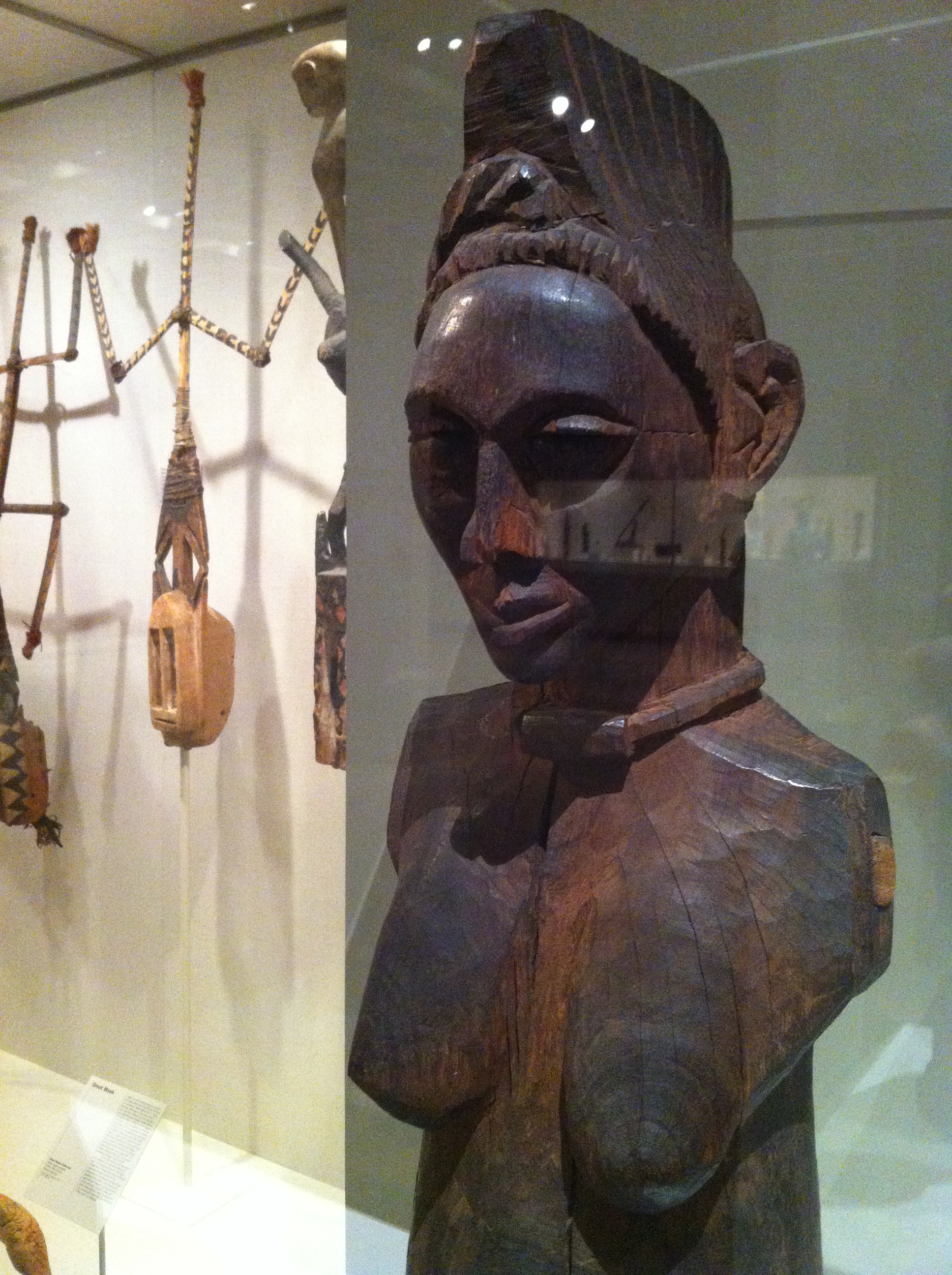
A West African woman, from a century ago.

faces at the met 070

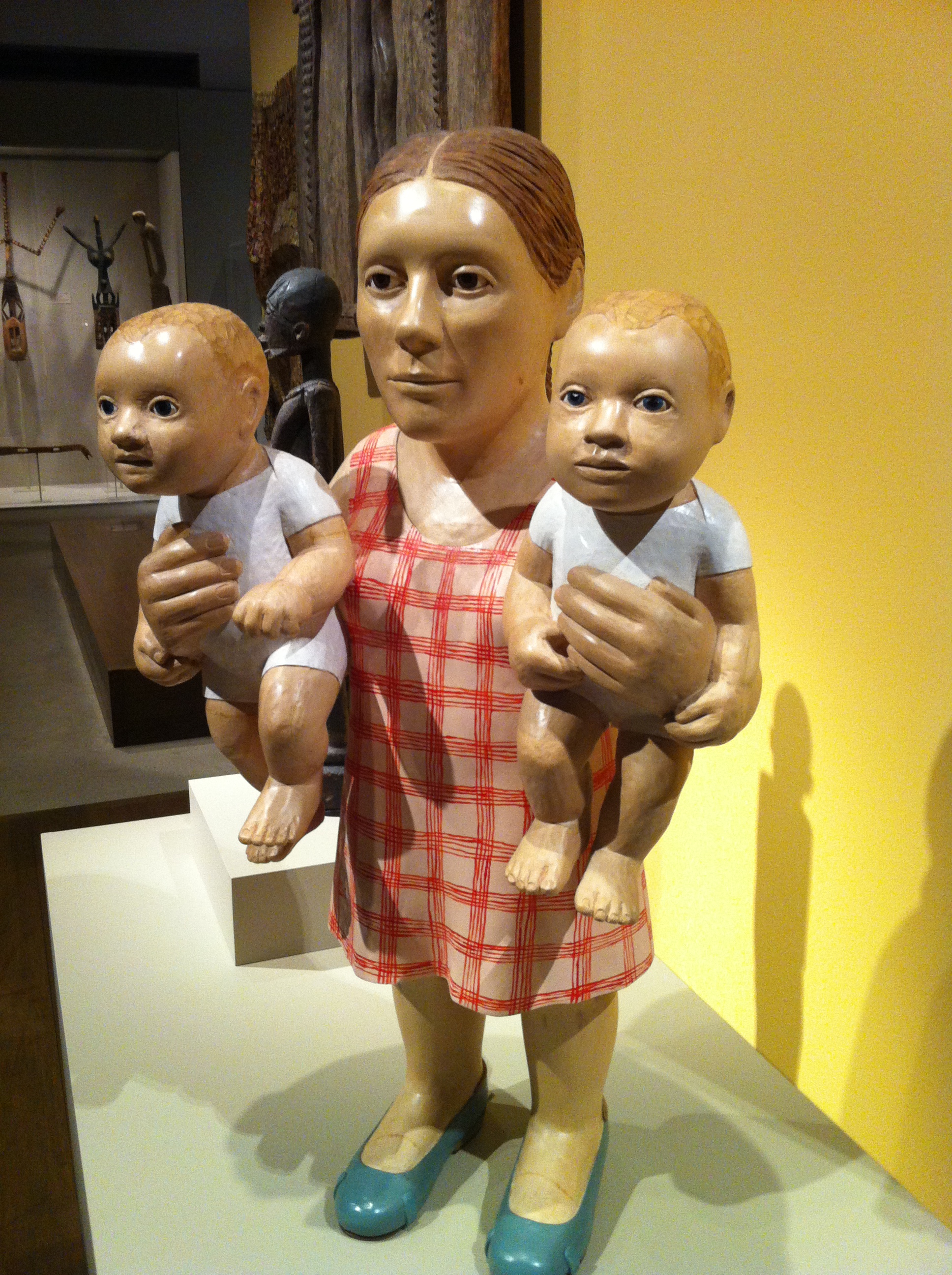
A South African woman from just a few decades ago.

faces at the met 068

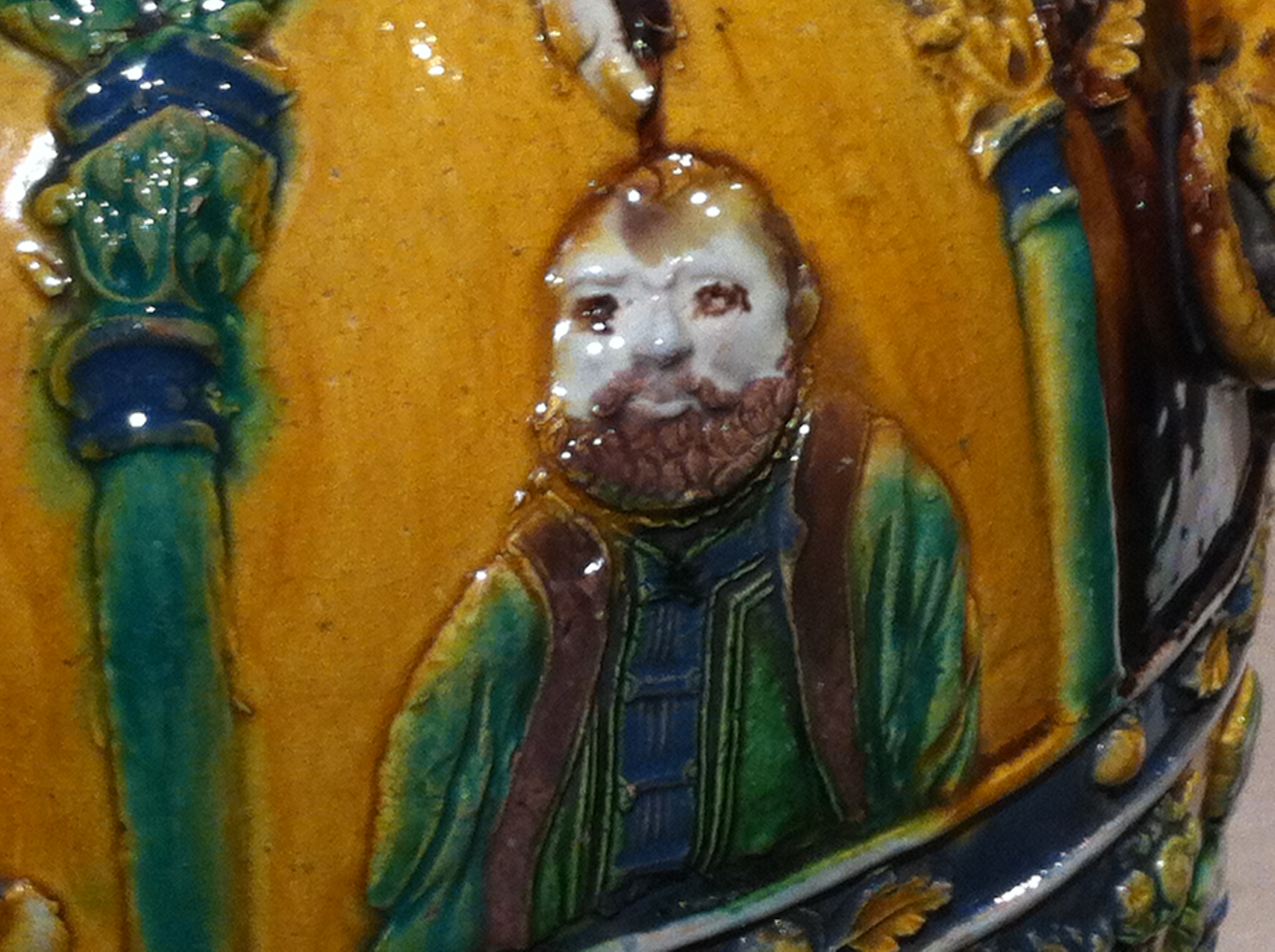
And finally as we are making for the exit, a small face on a German jug of the 16th Century catches my eye and camera.

faces at the met 076

_________________

Pictures: all mine