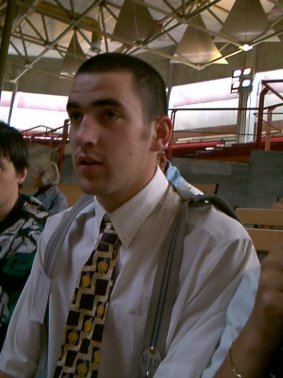
SAINT LEONARD OF NOBLAC

Vienna, 24 September 2025

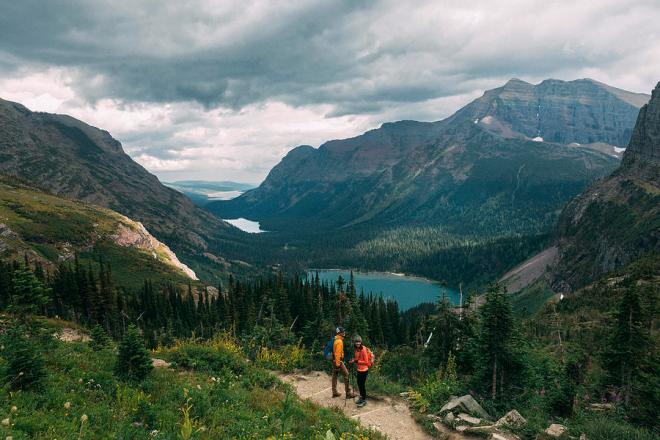
My wife and I have just finished a long weekend in the little town of Waidhofen an der Ybbs. We were actually using it as a base from which to carry out a number of very pleasant hikes over the surrounding hills. These are impossibly beautiful: broad swathes of light and dark green draped over the hills, dotted here and there with farmsteads.

My photo

The weather was glorious, which certainly helped.

As I looked through the various brochures which we picked up to figure out what hikes to do, I came across the following brief write-up about the church in a village some 10 km away, the village of St. Leonhard am Walde:

“Fiakerkirche St. Leonhard/Wald: The traditional place of pilgrimage for Viennese hackney carriage drivers since 1826. St. Leonhard is the patron saint of cattle, sheep – and horses. In 1908, the Viennese hackney carriage drivers donated the Marian altar. A few decades ago, the Viennese cab drivers also joined the pilgrimage.”

Now that really intrigued me! Hackney carriages, fiaker in German, are a picturesque sight down in the centre of Vienna, although nowadays, of course, they are only for tourists.

Source

But, being an early form of taxi, there was a time when hackney carriages were ubiquitous throughout the city, as indeed they were in all European cities. Here is a colourised copperplate engraving from the 1830s of a smart set of Viennese and their carriages.
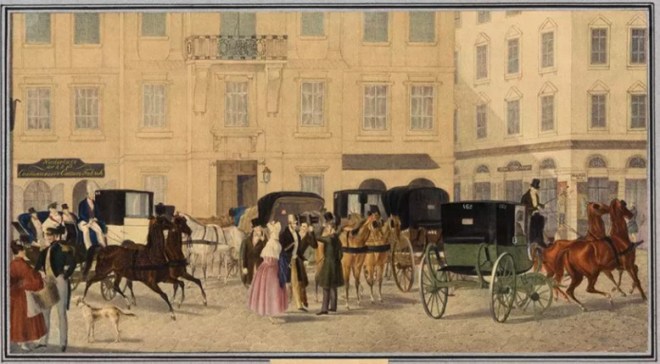
Source

I suspect, though, the carriages and their drivers didn’t look quite so smart when they were merely acting as taxis, ferrying people around town. This looks more like the typical hackney carriage driver; the photo is taken from an engraving in a book of 1844.

Source

Hackney carriage drivers have always struck me as a hard-boiled lot, not taken to making pilgrimages. I have a hard time seeing them doing this (this is a modern pilgrimage, but I don’t suppose pilgrimages have changed much, apart from the clothes the pilgrims wear).
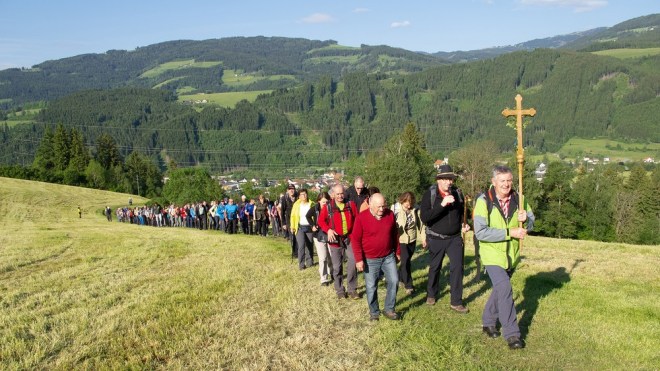
Source

But it could be that I am being influenced by various books I’ve read and films I’ve seen where hackney carriage drivers seemed to be a sinister and semi-criminal lot. This is an example from one of the Sherlock Holmes stories.
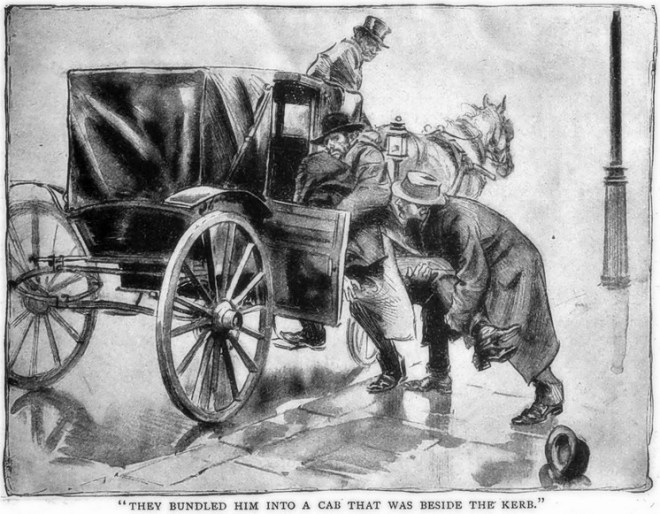
Source

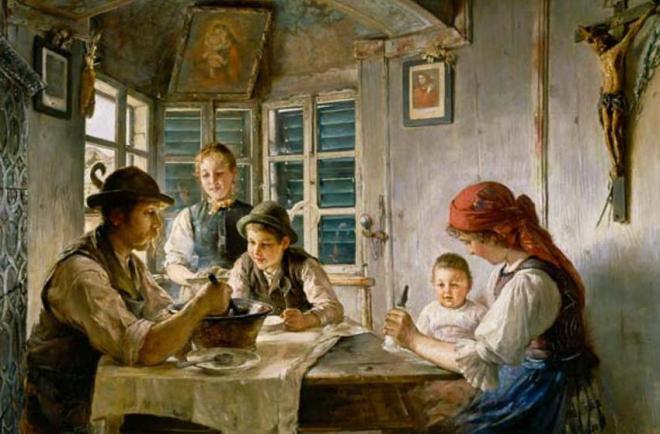
Maybe the majority were God-fearing, devout, family men.
Source

Of course, given the way my mind works, I started wondering why hackney carriage drivers would have chosen a church dedicated to St. Leonard as the church to which they would make their annual pilgrimage. The little blurb I quoted above suggests an answer: he was the patron saint of horses, and of course horses were key to hackney carriages, being their motor as it were. But how, my mind was asking, did Saint Leonard become the patron saint of horses?

Since I knew nothing about Saint Leonard, I had to do some reading. I should note in passing that there have been various Saint Leonards over the centuries; the one we are interested in is St. Leonard of Noblac. Assuming he ever actually existed, his story is quickly told.

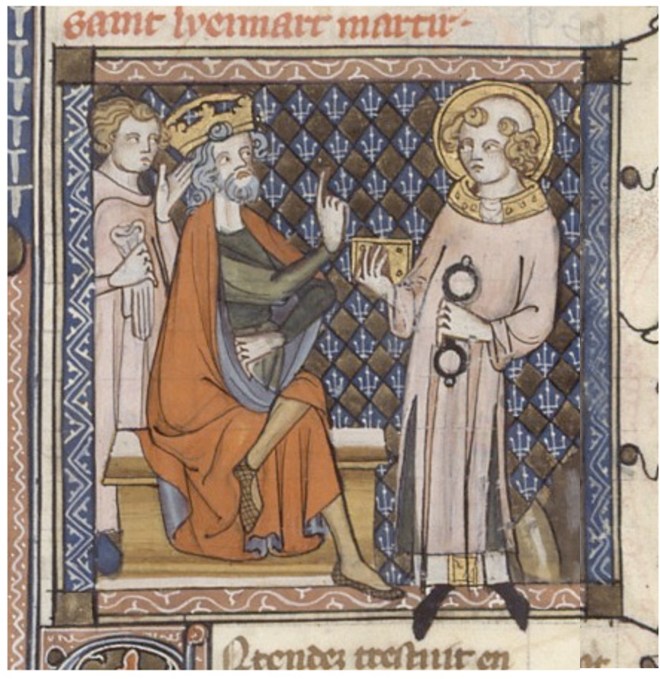
Leonard was a Frankish nobleman, coming from a family that was closely allied to Clovis, the first Frankish king of what was later to become France. Clovis was young Leonard’s godfather when he was baptised, along with Clovis himself and all his court, by St. Remi, bishop of Reims, on Christmas Eve of 496. As Leonard grew up, he became much exercised by prisoners, to the point where he asked Clovis to have the right to visit prisoners and free those he considered worthy of it. Clovis granted the request. We have the scene played out here in a French work from the 14th Century.
Source

Many prisoners were thereafter liberated by Leonard.

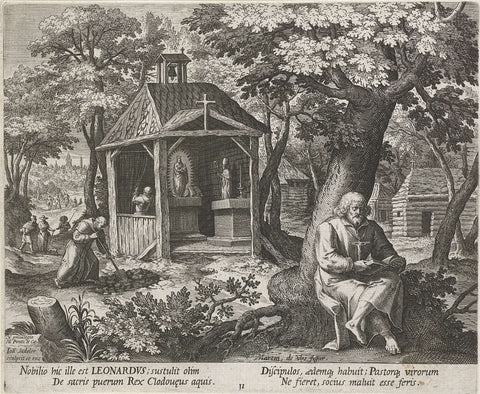
Much impressed, I presume, by his holiness, Clovis offered him a bishopric, but Leonard turned the honour down, preferring to join a monastery near Orléans, whose abbot was another saint, St. Mesmin. After the latter went the way of all flesh, Leonard decided to strike out on his own. He moved to a forest in a place called Noblac (Noblat today) near Limoges, where he set up a hermitage. His preaching, good works, etc. led to a multitude of people flocking to his hermitage, including many prisoners whose chains miraculously flew off their hands and legs after they had prayed to St. Leonard for his intercession. Here, we have a print from 1600 giving us a rather fanciful vision of this scene.
Source

I do believe that the monk working the land behind Leonard in the print is one of these prisoners now living an honest life.

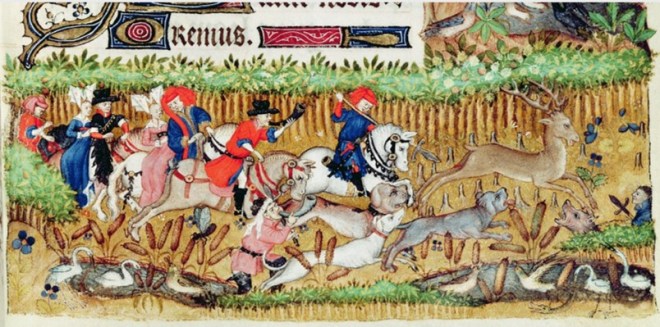
At some point in all of this, the-then Frankish king Clotaire I (Clovis having died in the meantime) and his heavily pregnant wife came to visit Leonard in his forest hermitage – we have to remember that Clovis’s family and Leonard’s family were close. The royal couple decided – like the good aristos that they were – to use the occasion to go for a hunt in the forest.  To get us into the spirit of things, I throw in here a miniature from the 15th-Century Book of Hours of Marguerite d’Orleans showing Lords and Ladies off to the hunt.
Source

During the hunt, however, the queen suddenly went into labour. It was turning into a difficult and dangerous birth. Leonard rushed to her side and his prayers saved queen and baby. In gratitude – especially since it was a baby boy – the king wanted to shower Leonard with loads of money. But Leonard only asked for as much forest area around his hermitage as he could ride around on his donkey in one night. The king granted this wish. On the land that Leonard was subsequently given he built a church and monastery. He became its first abbot and died there peacefully, mourned by all. The Romanesque version of that church still stands, in a place called Saint-Léonard-de-Noblat.

Source

And that church contains what is purported to be Saint Leonard’s tomb.
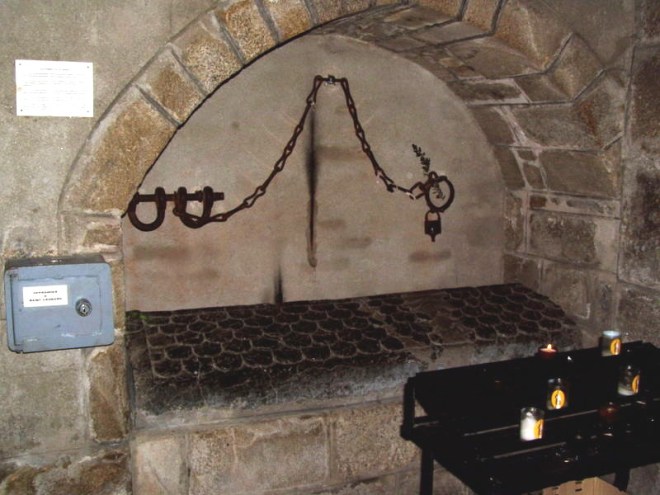
Source

Given his involvement with prisoners, it is not surprising to learn that St. Leonard is the patron saint of prisoners. Given that story with the pregnant queen, it’s also not surprising that he is considered a helper of women in childbirth. But patron saint of cattle, sheep and horses? How did that come about?

For that, we have to know that from the earliest times St. Leonard was often depicted as an abbot with a crosier and holding a chain or fetters or manacles, symbolising the liberation of prisoners achieved by him. In fact, in one of those serendipitous moments I love so much, I came across just such a representation of him in a church in Waidhofen, down the road from where my wife and I were staying.
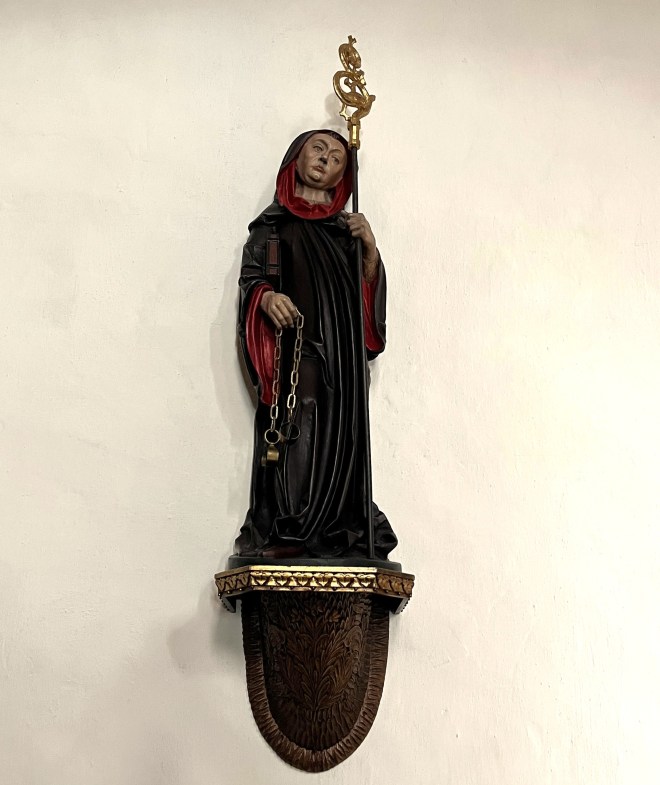
My photo

Over time, rural folk mistakenly thought that the chains which St. Leonard was holding were cattle chains – these are commonly used to tether cattle or to control them during walks, or even to help birthing calves.

Source

By extension he became the patron saint of all farm animals, which of course also included horses.

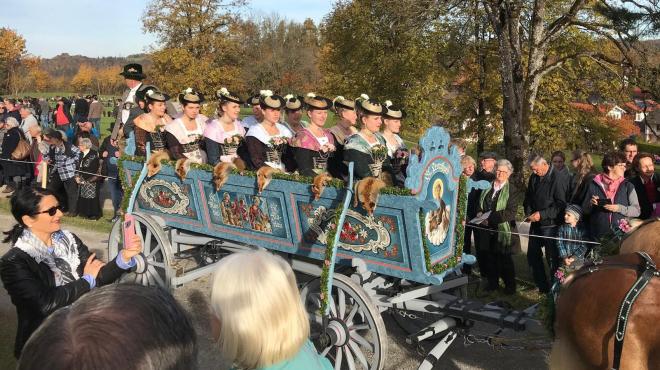
Given this swerve of patronage towards livestock, I suppose it’s not surprising that Saint Leonard became a popular saint throughout the Alpine regions of Europe. After all, as I’ve mentioned in a previous post, cattle was pretty central to the rural economies of all Alpine communities. This devotion to the saint means that his feast day – November 6th – is celebrated with enthusiasm in many places in the Alpine regions, especially the German-speaking ones. Here, for example, are photos of the celebrations in Bad Tölz in Bavaria (which got a mention in an earlier post  because of its rather naughty statue of St. Florian).

Source
Source

It also gave rise to the intriguing phenomenon of chain churches in the Alpine regions. These are churches dedicated to St. Leonard which have chains running around them, either put up temporarily on his feast day or mounted permanently. The Fiakerkirche is not a chain church, alas. Here is a nice example from Tholbath in Bavaria (the church also has a quite respectable onion dome, the subject of an earlier post).

Source

But if we’re going to visit a church dedicated to St. Leonard, it won’t be one of the chain churches. It will be the one I’ve already mentioned in Saint-Léonard-de-Noblat. What a fine-looking Romanesque church! I have to say, I am partial to Romanesque churches. I’ve already inserted a photo of the church’s exterior. Here is a photo of its interior.

Source

What a wonderfully bare church! No annoying accretions to cover the spare, simple lines of the architecture.

But the photo shows an additional reason why I will try to persuade my wife to travel all the way to France to see this church: the rucksacks and the walking sticks. This church is situated on one of the four Ways of St. James of Compostela through France. I’ve mentioned one of these, the Via Tolosana, in an earlier post.  The church of Saint-Léonard-de-Noblat is on another, the Via Lemovicensis, the Way of Limoges. There must surely be some good hiking to be done in the area.

SANKT ILGEN

Vienna, 10 September 2024

It had to happen. On our latest wandering across the Austrian landscape, this time in Styria, my wife and I came across yet another obscure saint, Saint Ilgen. This good saint had given his – or was it her? – name to a village located in the similarly named Ilgental, the valley of Ilgen, along which we were walking to get to the jump-off point for our three-day hike around the Hochshwab. I throw in a photo of the jump-off point, the Bodenbauer inn. As readers can see, it’s a popular place.

Source

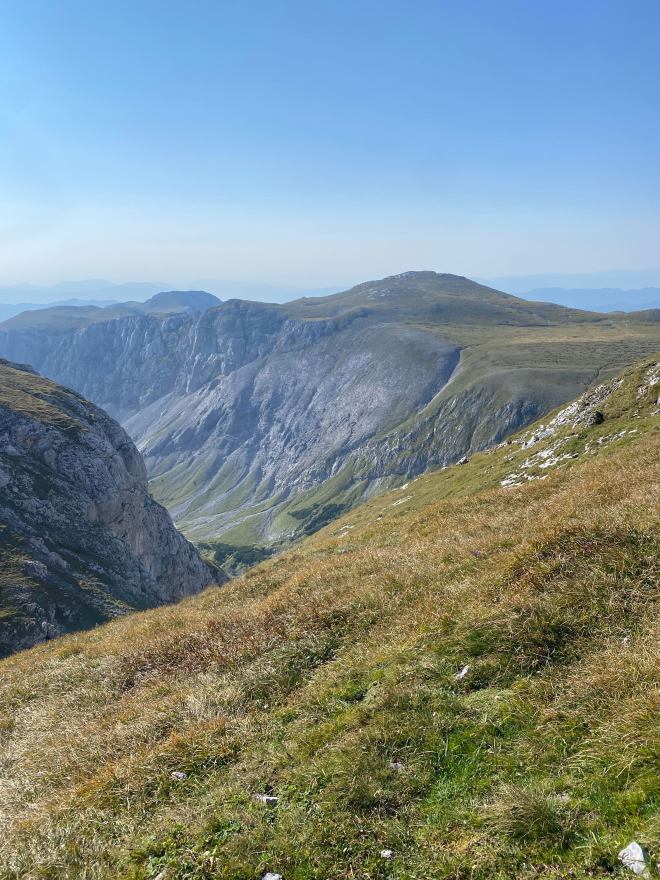
And here are a couple of photos of the mountains we climbed over.

My wife’s photo
My wife’s photo
My photo
my wife’s photo
My photo

But now, settled in the train back to Vienna, I have had the time to investigate this mysterious Saint Ilgen. My first inkling of who we might be talking about came about this morning, as we walked back through the village of Saint Ilgen. I noticed a small shrine on the side of the road that I had missed the first time we came passed through the village.

My photo

For readers whose sight, like mine, is not quite what it used to be, the writing above the statue says, in German, “Saint Aegidius pray for us”. Ah! So Ilgen was probably the same as Aegidius! A little bit of train-based internetting has confirmed this.

Aegidius was a name that rang a bell. And indeed, a little bit of e-riffling through my past posts has confirmed this. Last year, I had come across Saint Aegidius when researching another obscure saint, Saint Veit, whose name my wife and I would quite often come across on our wanderings across the Austrian landscape. Saint Aegidius, like Saint Veit, was one of the fourteen Holy Helpers who Medieval Europeans turned to, to deal with life’s many miseries. Here is a photo of those Holy Helpers from a chapel in Baden-Württemberg. Saint Aegidius is in the third row from the top, the second from the right, wearing a monk’s brown tunic but holding a bishop’s crozier. I only know this because I blew up the photo enough to be able to read the names helpfully added to the base of each statue. Readers will notice that the statue is decked out in very much the same way as the statue in the photo above. This was no doubt the standard way of depicting the saint.

Source

I don’t know why the saint was called Aegidius, because most Medieval Europeans didn’t call him that. The British knew him as Giles, and many other Europeans knew him by variants of that name. For instance, the French knew him as Gilles – as we shall see in a minute, he was a French saint. And since our story starts in Austria, I feel I ought to mention some of the German variants: Jillies, but also Gilg or Gilgen which in some places – like that valley which my wife and I had been walking up and down – morphed into Ilg or Ilgen. So I shall drop Aegidius and continue with Giles.

Who exactly was this saint Giles? Quite honestly, I’m not sure he ever existed. But the story put out by the monastery of Saint-Gilles, which lay between Nîmes and Arles in the south of France and whose tomb the monks claimed to have in their church crypt, was that he was a hermit who in the 7th Century AD was living a saintly life in the thick forests around Nîmes. His only companion was a female deer, to whom he was very attached. One day, hunters of the local king – or maybe the king himself – were pursuing the deer, which ran to Giles for protection. Giles put himself between the hunters and the deer and got wounded in the hand by an arrow. Full of remorse for having wounded such a holy man, the king gave him land and money to build a monastery, which Giles proceeded to do. He then became its first abbot, leading the monastery until his death, carrying out miracles etc. along the way. There are other, more fanciful details in his hagiography, but I’ll leave it at that. Here, we have a painting by an unknown, possibly French, possibly Dutch, painter from about 1500 depicting our good saint.

Source

We see him protecting the deer, with the arrow in his hand and presumably the chastened king kneeling at his feet.

Saint Giles was one of the Medieval Europe’s most popular saints. As far as I can make out, this can be traced back to the fact that the monastery of Saint-Gilles was strategically placed at the crossroads of a number of pilgrim routes. One of the branches of the Camino de Santiago de Compostela, used by pilgrims from Provence and northern Italy, passed by the monastery. I throw in a map of the three main routes in France for the Camino de Santiago. The one which passed by Saint-Gilles is the bottom, maroon-coloured, one.

Source

The same route could of course be used in the opposite direction, and indeed was so used by Spanish pilgrims going to Rome. At Saint-Gilles they could either go overland through northern Italy or they could sail to central Italy, embarking at a port located close the monastery. French pilgrims, and Northern European pilgrims more generally, on their way to Rome also often used this marine route. The same with pilgrims on their way to the Holy Land, who would frequently pass through Rome first. I mention all of this because I want to use this occasion to see if I can’t persuade my wife to do some hiking in this part of the world. To whet her appetite, I insert a photo here of a pensive hiker near the Col du Mont Genèvre, which pilgrims from northern Italy would have crossed. I’m sure we could find a hiking trail which would take us down the French side maybe as far as Sisteron.

Source

But back to Saint Giles. I don’t think I’m being too cynical if I suspect that the good monks of Saint-Gilles, watching all this pilgrim traffic going by, felt the need to more effectively tap into the riches it represented. They therefore created the backstory of Giles the saintly hermit, with the requisite tomb and relics, et voila! Pilgrims began to stop at the monastery’s church to pray and leave a few pence in the offerings box. Of course, the pilgrims also needed places to stay and eat, so a small town sprang up around the monastery to service these (and no doubt other) needs, giving the monastery another source of income via tithes, taxes, and whatnot.

Over the next few centuries, the fame of the monastery of St-Gilles grew to such a degree that it became an important pilgrimage destination in its own right, up there with with Jerusalem, Rome, and Santiago de Compostela. It’s not surprising, then, that Giles was such a popular saint – and that so many boys came to be called after him.

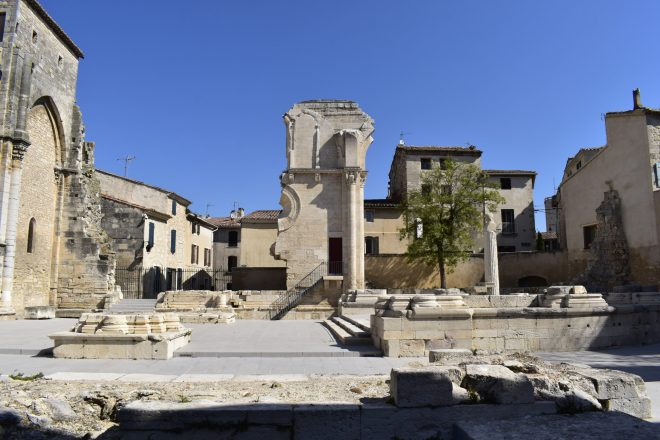
Of course, with all this pilgrim traffic the monastery grew rich and powerful, and large building programmes were undertaken. But, as Giles the Hermit could have told them if he had ever really existed, all power, all riches are transitory. The fashion of pilgrimages passed and the port silted up, so the monastery’s main source of income dried up. The number of monks dropped off, so those large monastic buildings were half empty. And then vicious religious wars were fought, with Huguenot forces burning the monastery buildings to the ground. Whatever was left of them were razed during the French Revolution. Only a few mouldering remains are left.

Source

The Abbey church, although also badly damaged a few times, has remained. Here we see the beautiful Romanesque portico.

Source

While here we have the interior, where the gothic style has begun to intrude.

Source

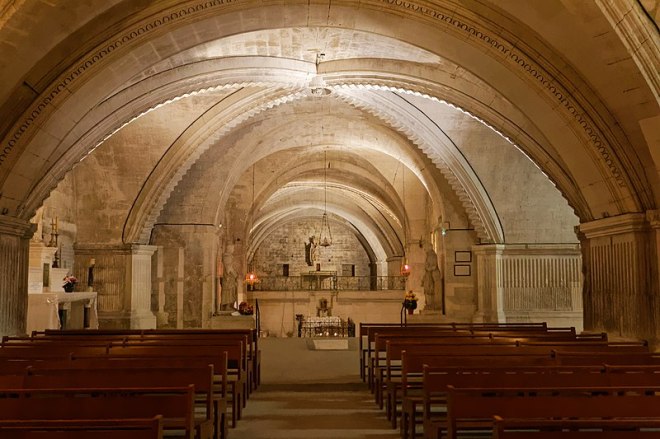
And here we have the crypt, where the Saint’s tomb – rediscovered in 1865 – is located.

Source

Maybe I could persuade my wife to make a quick visit to the church after we’ve hiked down from the Col du Mont Genèvre …

And the name of the goodly hermit, once so popular? Well, I’m afraid it has dropped way down in the rankings. In the UK, only 8 baby boys were given the name Giles in 2023. In France, it was slightly better, with 50 little Gilles being registered. As for the German-speaking lands, Ilgen seems to be only a surname these days. Like the hermit, the name seems to have retreated far, far away from human societies.

I guess that means my wife and I will have to leave future sightings of the name to our wanderings across the face of Europe.

Source

LOURDES

Sori, 18 July 2015

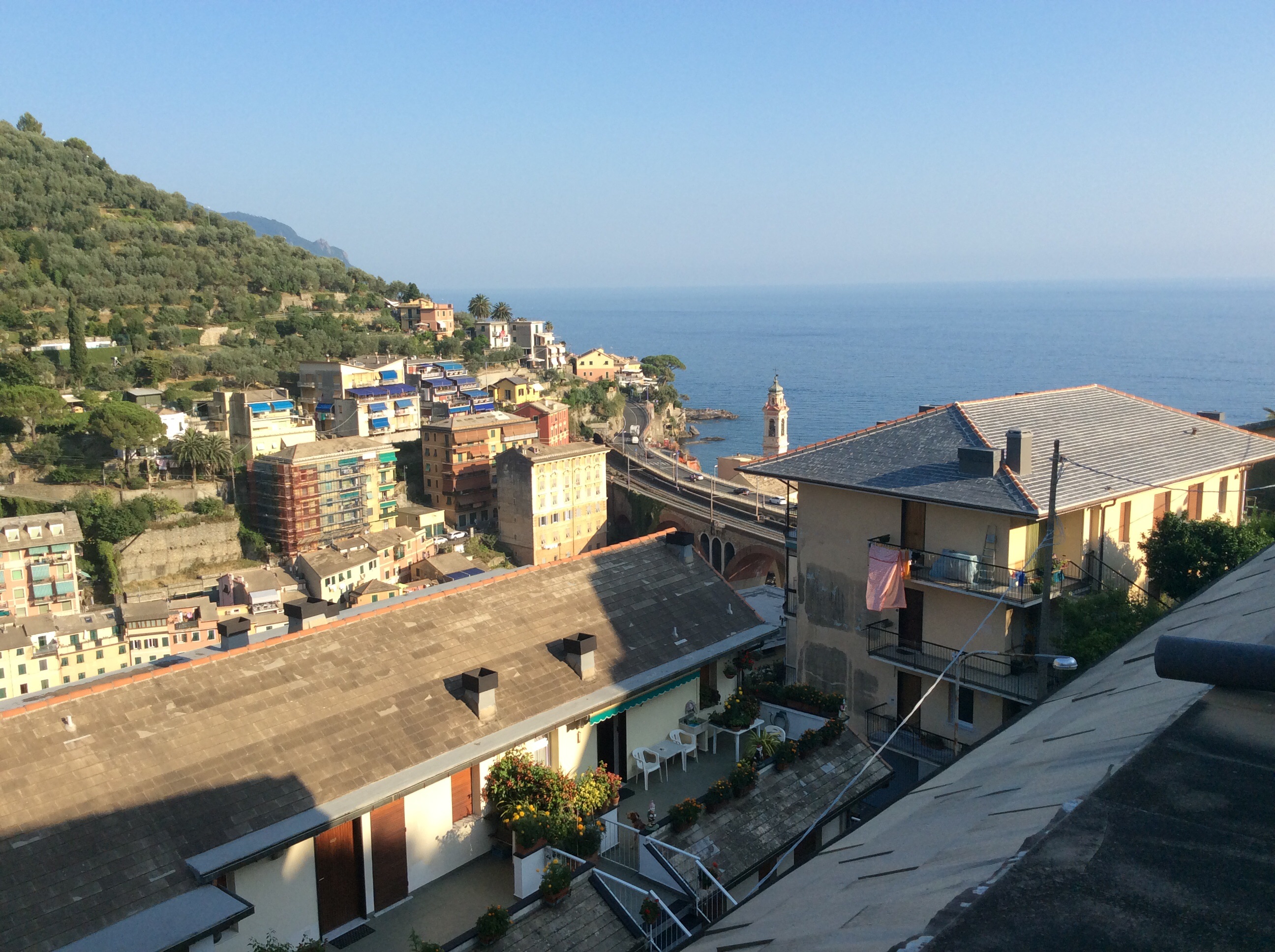
From the balcony of our little apartment in Liguria, if we look a little obliquely to the right we have a view of the sea.

image

Rather than admiring the sea, I invite readers to focus on the campanile of the village church, which we can see just behind the roof of the house in the foreground. At certain times – I haven’t really fixed in my mind when – the campanile’s bells ding out a rather out-of-tune version of the chorus to the Lourdes hymn: “Ave, Ave, Ave Maria. Ave, Ave, Ave Mari-i-a”. For the musically inclined, I attach a music sheet below with the music of the hymn (along with the lines to one of its many, many verses – sixty, I’m told). The music dinged out by the campanile is the last two bars.
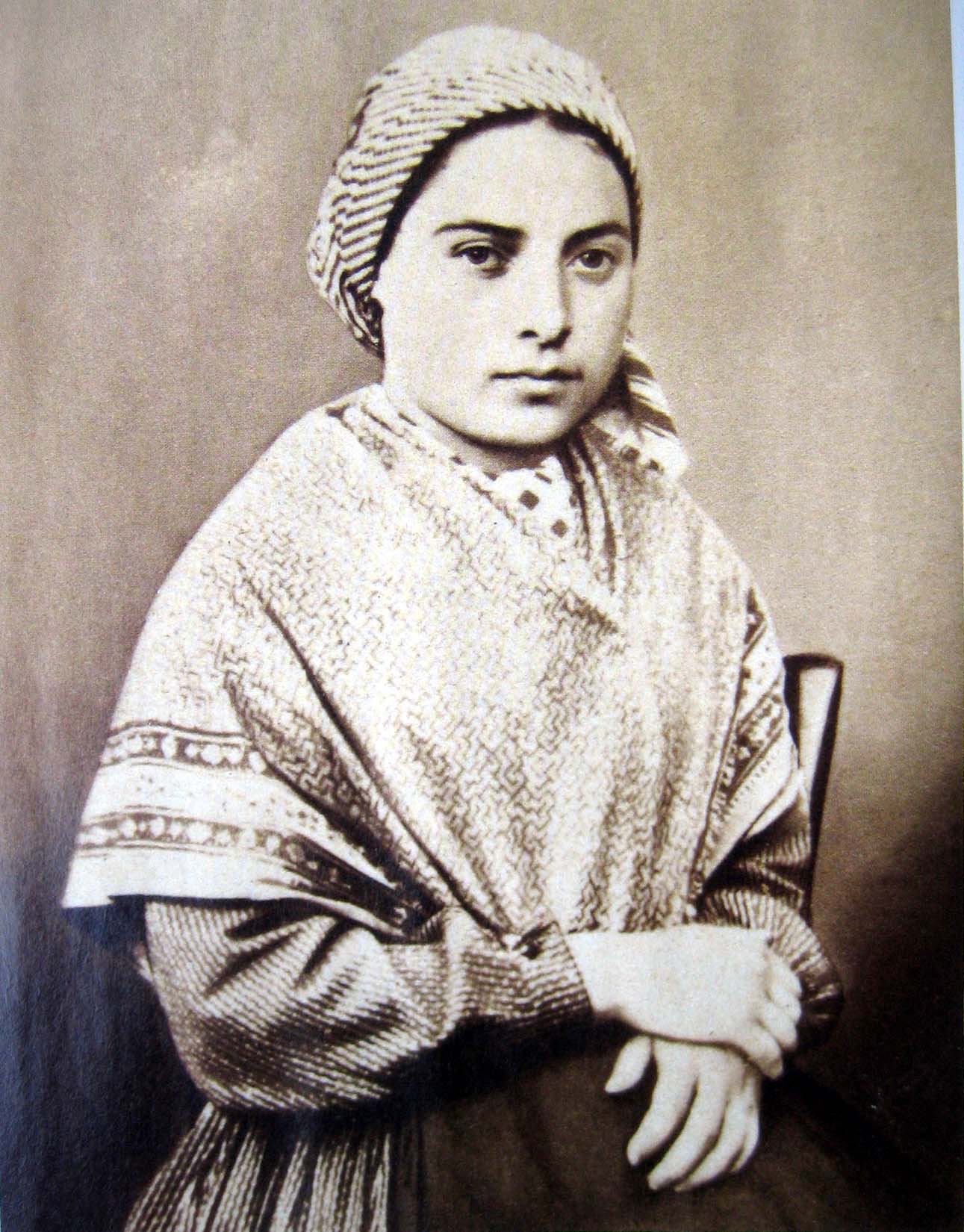
image For those of my readers who are not familiar with the Lourdes hymn, it is the “national anthem”, if I can put it that way, of the pilgrim city of Lourdes, which is located in the lower Pyrenees in France. It is there that in 1858 a 14-year old girl of humble origin, by the name of Bernadeta Sobirós
image
claimed to have seen visions in a grotto by the side of the river of uo petito damizelo (“a small young lady”; Bernadeta spoke Gascon Occitan). She was to have 18 such visions in the grotto, between February and July. In the 16th vision, after repeatedly asking the small young lady who she was, the lady finally replied Qué soï era immaculado councepcioũ (“I am the Immaculate Conception”).

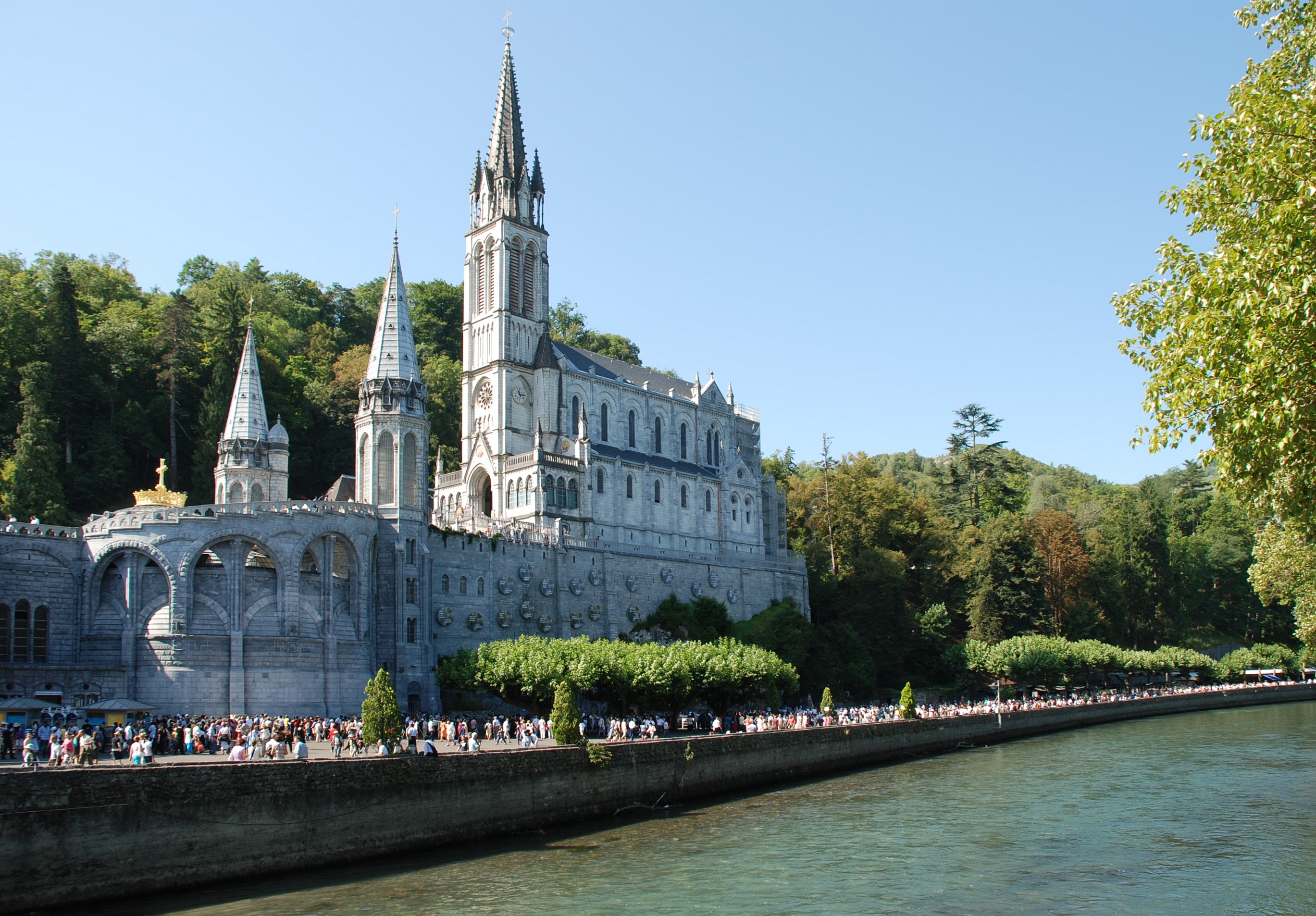
To cut a very long story short, after a good deal of initial skepticism the Catholic Church accepted Bernadeta’s visions as authentic visitations of the Virgin Mary. Pilgrimages began, cures of sick people from the spring water near the grotto were claimed, some of which were accepted by the Church as miraculous, the Lourdes hymn was penned in the 1870s, a large basilica was built
image
along with hospices for the sick, another even larger basilica was later built underground. The town itself got into the act, building hundreds of hotels to house the the ever growing number of visiting pilgrims – six million a year and counting; this, in a town of 15,000 inhabitants (as well, of course, as opening hundreds of shops selling religious tat).

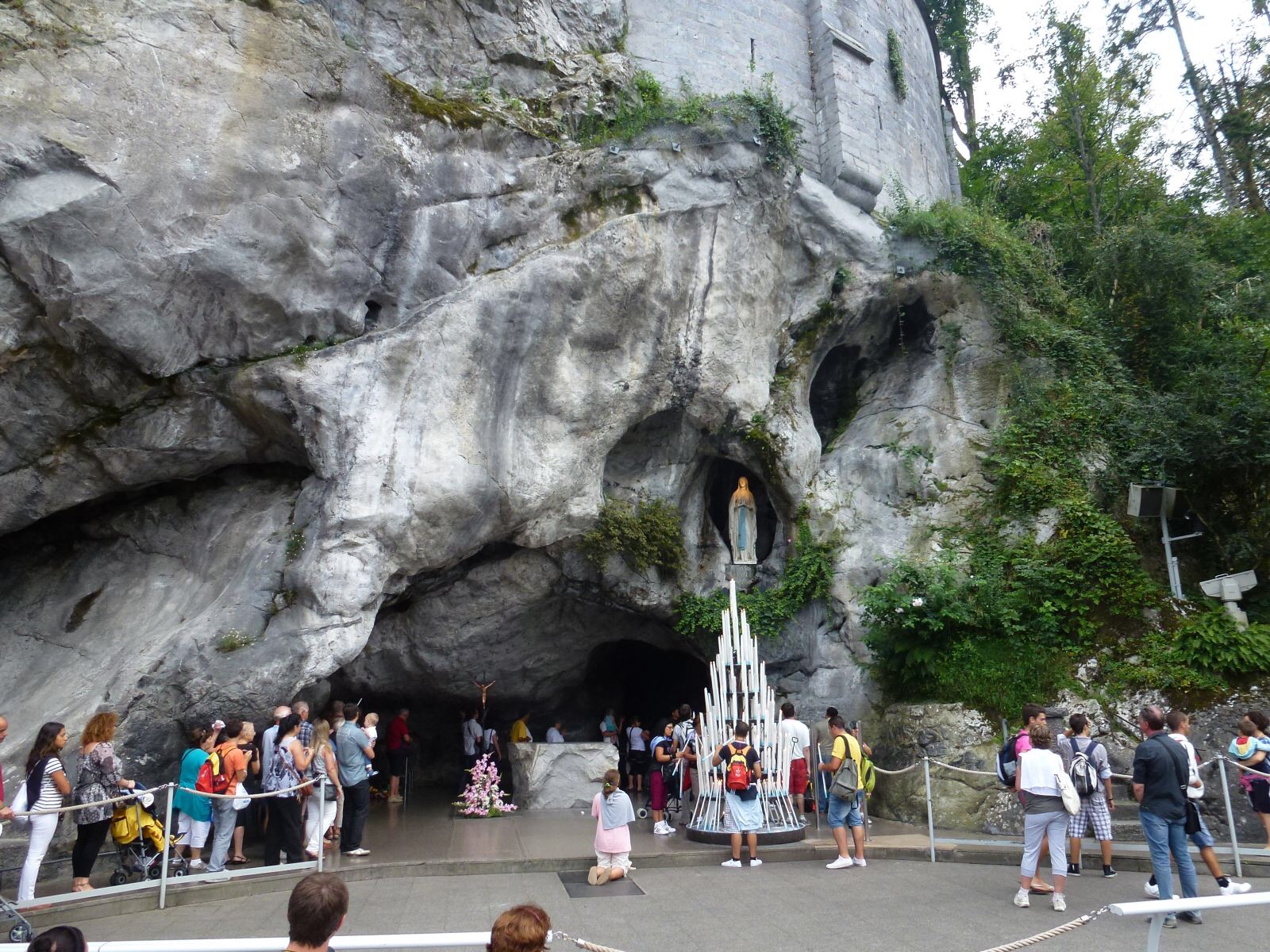
Pilgrims flock to the grotto
image
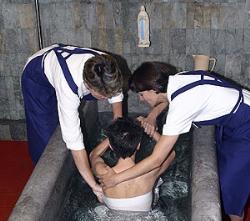
the sick take baths in the grotto’s spring water
image
and everyone joins the daytime and evening processions
image

image

during which the Lourdes hymn, among many others, is sung.

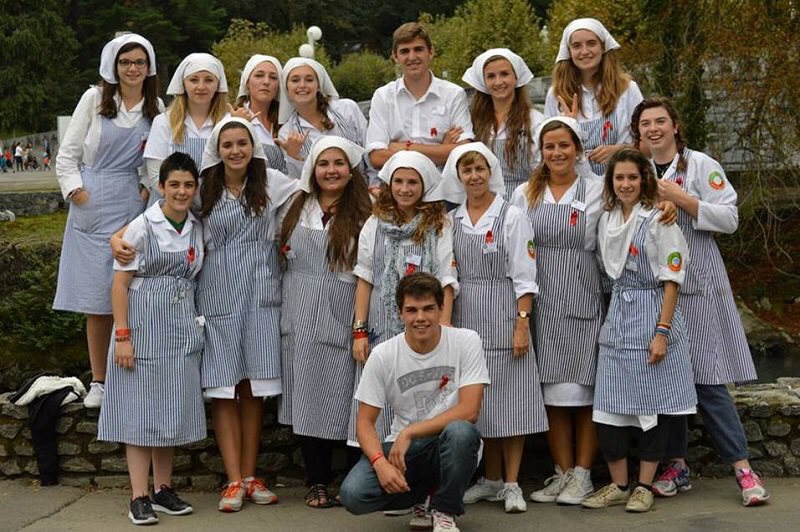
Two summers running, 1972 and 1973, I was one of those pilgrims. My school organized an annual pilgrimage during the summer holidays, and we students were encouraged to take part. They needed our strength and youthfulness to move the sick from place to place: from grotto to baths, from baths to church, from church to hospice; to literally carry into the baths those who could not walk; to do the night watch in the hospices. And I think the sick were helped by being surrounded by the innate cheerfulness of our youth.
image
We were brancardiers, literally stretcher bearers, which I suppose was how the badly sick were moved around in the early days of Lourdes, although nowadays the sick are moved around in those nifty little wheeled chairs shown in the picture above. As a sign of our status, we wore “bretelles”, a sort of harness
image
It was a great honour to be a brancardier. Ordinary pilgrims would look at us admiringly as we walked past, something which at the age of 18 pleased me quite a bit: I was an Important Person! Of course, it meant that any sick person could call us over to help at any time and in any place: the price of fame …

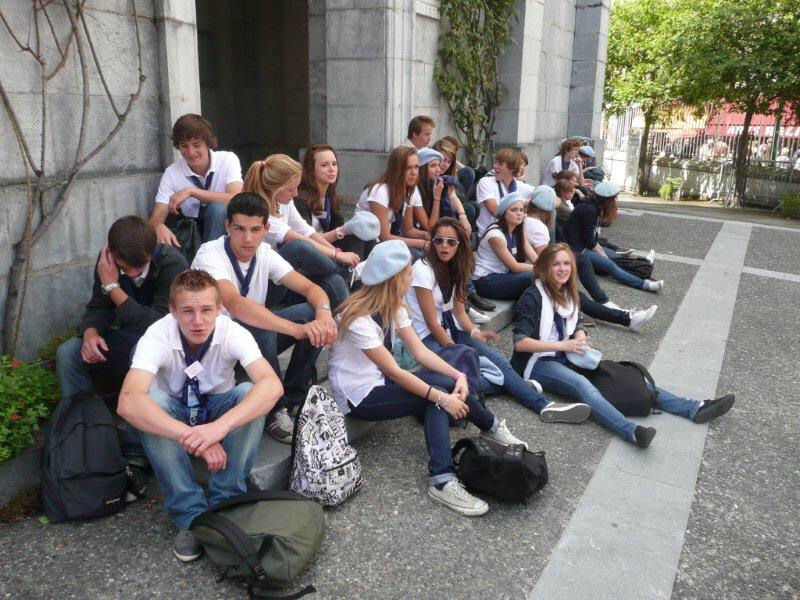
My two pilgrimages were a very intense experience for me, something which I will remember all my life. At the time, I was relatively callow, finding it all great fun like these young people from other pilgrimages did.
image

image
But I find that it marked me deeply. I am unmoved by the miraculous side of Lourdes. I have been too steeped in the natural sciences to believe in miracles. These are simply something we do not yet understand but quite likely will when the sciences have advanced enough. No, to me the real miracle of Lourdes is that it is perhaps the only place on Earth where the sick are centre stage, not on the periphery of our societies which is where they are usually relegated. Lourdes is their place, the rest of us are just guests.
image
So readers can understand why I pause and listen every time I hear the village campanile ring out, even if tinnily, the chorus lines to the Lourdes hymn.

___________________

View of the campanile: my picture
Lourdes hymn music: http://gauterdo.com/ref/aa/ave.maria.de.lourdes.html
Bernadeta Sobirós: https://en.m.wikipedia.org/wiki/Bernadette_Soubirous#/media/File:Bernadette_Soubirous.jpg (in https://en.m.wikipedia.org/wiki/Bernadette_Soubirous#Visions)
Lourdes basilica: https://upload.wikimedia.org/wikipedia/commons/3/33/Lourdes_Basilique_et_gave.jpg (in https://en.m.wikipedia.org/wiki/Our_Lady_of_Lourdes)
Lourdes grotto: https://bundytomadrid.files.wordpress.com/2011/08/grotto1.jpg (in https://bundytomadrid.wordpress.com/2011/08/24/day-2021-burgos-and-lourdes/)
The baths: http://media01.radiovaticana.va/imm/1_0_659979.JPG (in http://www.news.va/en/news/world-day-of-the-sick-a-privileged-moment-of-praye
Lourdes procession during the day: http://www.catholic-convert.com/wp-content/uploads/lourdes.jpg (in http://www.catholic-convert.com/blog/2013/07/30/stay-tuned-wednesday-teresa-tomeo-show-on-lourdes-and-my-video-tour-of-all-of-lourdes/)
Lourdes procession at night: https://fratres.files.wordpress.com/2008/01/procession_1024x768.jpg (in https://fratres.wordpress.com/2008/02/19/place-your-prayer-petitions-here-at-the-grotto-of-lourdes/comment-page-35/)
Brancardiers: http://www.jeune-catholique-moulins.cef.fr/wp-content/uploads/2013/08/L103946_HD0390545.jpg (in http://www.jeune-catholique-moulins.cef.fr/blog/category/lyceens/)
Young man with bretelles: http://pinguisite.chez.com/Image079.jpg (in http://pinguisite.chez.com/lourdes.html)
Brancardiers-2: http://pastorale.stemariebeaucamps.fr/sites/pastorale.stemariebeaucamps.fr/files/images/Lycée/Lourdes/P1030587.jpg (in http://pastorale.stemariebeaucamps.fr/?q=node/71)
Brancardiers-3: http://www.saintjo64.fr/saintjo64WP2013/wp-content/uploads/2014/10/Lourdes2014-1.jpg (in http://www.saintjo64.fr/saintjo64WP2013/actualites/aumonerie/pelerinage-a-lourdes-2014/)
A pilgrimage: http://dioceseofmenevia.org/photos/129_sick_to_lourdes.jpg (in http://dioceseofmenevia.org/news/archive07.htm)