Vienna, 11 March 2026
Of my very modest collection of paintings, this is the one I am most fond of.
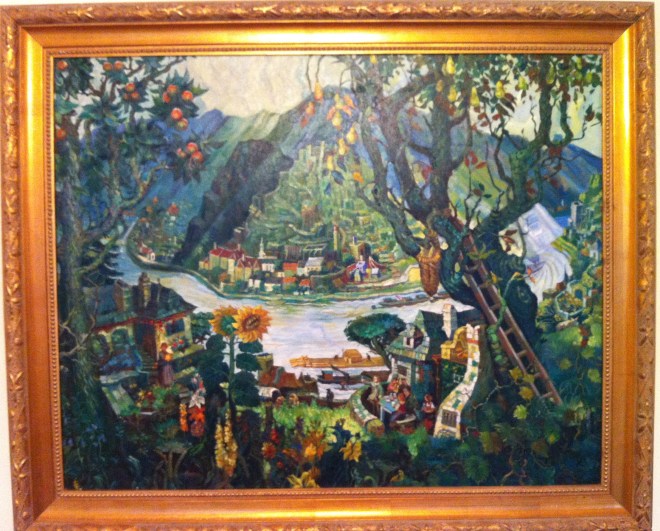
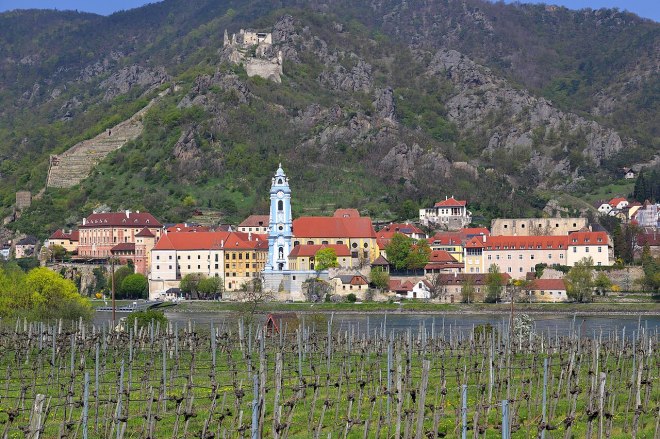
It is a view of the little town and castle of Dürnstein, which sit in a bend of the Danube river some 8 km upstream of the city of Krems. The town lies a little above the waterline, the castle sits atop the dry, rocky hill which rises behind the town. This photo, taken from the other side of the river, shows both the town and the castle very clearly.
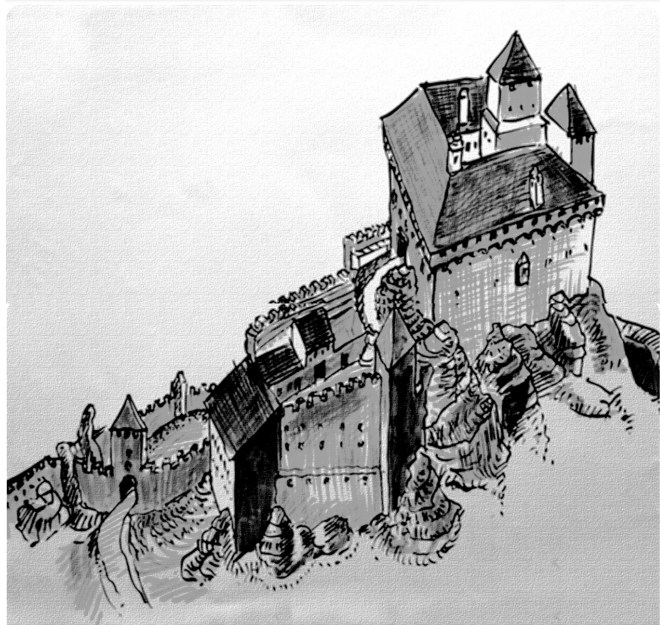
The castle was once a strong fortress. This is an artist’s rendering of what it looked like in the 15th Century.
But as the modern photo shows, it is a ruin now. Its downward spiral started in the final years of the Thirty Years’ War, when Swedish troops had captured the castle on their way to trying to take Vienna. That attempt failed and they moved on to Brno, now the capital of Slovakia. The Swedes laid siege to the city.
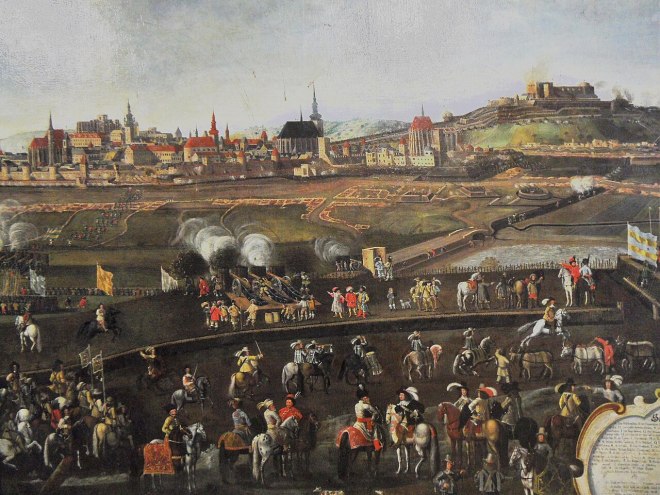
But that failed, too, and the Swedes retreated back into Bohemia. As they left Dürnstein castle, they partially blew it up to render it unusable. Later owners didn’t bother to patch it up and live there anymore, so it slowly fell to pieces.
In its early days, though, back in 1192-93, Dürnstein castle became famous throughout Europe as the place where Richard the Lionheart, King of England, was imprisoned.
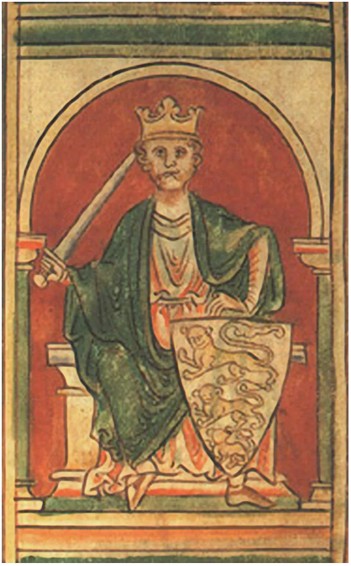
Richard was trying to get back to England from the Crusades. He had made a lot of enemies over the years, who were all intent on capturing him as he crossed their lands to get home. He chose to take a circuitous route, which saw him land on the northern shores of the Adriatic Sea, and then pass through the lands of the count of Gorizia, the Duke of Carinthia, and Leopold V, Duke of Austria – all enemies of his – before making it into Bohemia, whose king was an ally. From there, he planned to go on into Saxony, whose Duke was his brother-in-law, and take a ship over to England. By late December 1192, he had got as far as a village on the outskirts of Vienna, where he decided to hole up to rest for a few days. Unfortunately for him, Duke Leopold’s men got wind of his presence and he was duly arrested. Leopold held him for a few months in Dürnstein castle before passing him on to Henry VI, Holy Roman Emperor, who also had a few axes to grind with Richard. Henry imprisoned him in another castle and demanded a huge ransom for his release. By imposing a ferocious set of taxes on one and all, England’s regents, aided by Richard’s mother, Eleanor of Aquitaine, managed to raise the ransom, and he was duly released. We have here a photo of one of the illustrations in the “Book in honour of the Augustus”, a propaganda piece for Henry VI, showing Richard humbly kissing Henry’s feet.
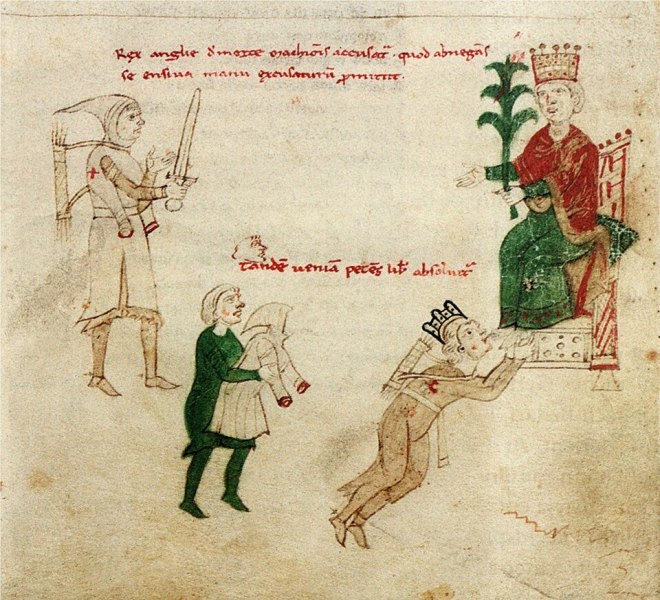
I’m sure Richard loudly denied that any such humiliating submission had taken place – although he did have himself re-crowned when he got back to England, to wipe away the shame of imprisonment and to counteract any whispers there might have been that his being imprisoned meant he was no longer king.
The good citizens of Dürnstein have milked this story for all it’s worth, littering the town with interpretive markers giving information on the main actors in the drama as well as a few more.
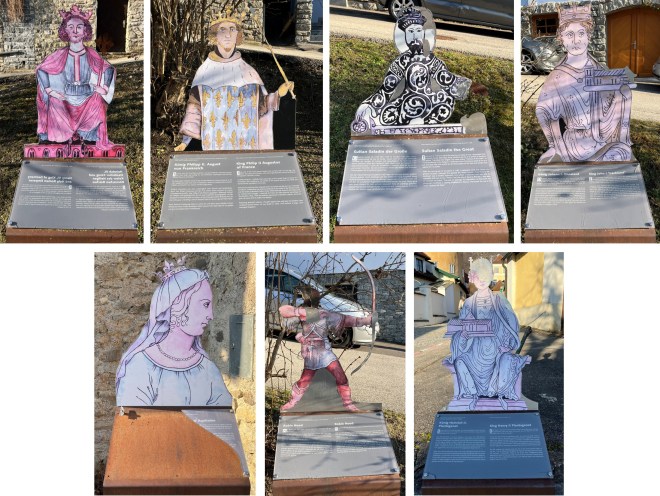
To spice up the tourist experience, they give space to legends as well as to facts. In particular, they have a marker reporting on the minstrel Blondel de Nesle.
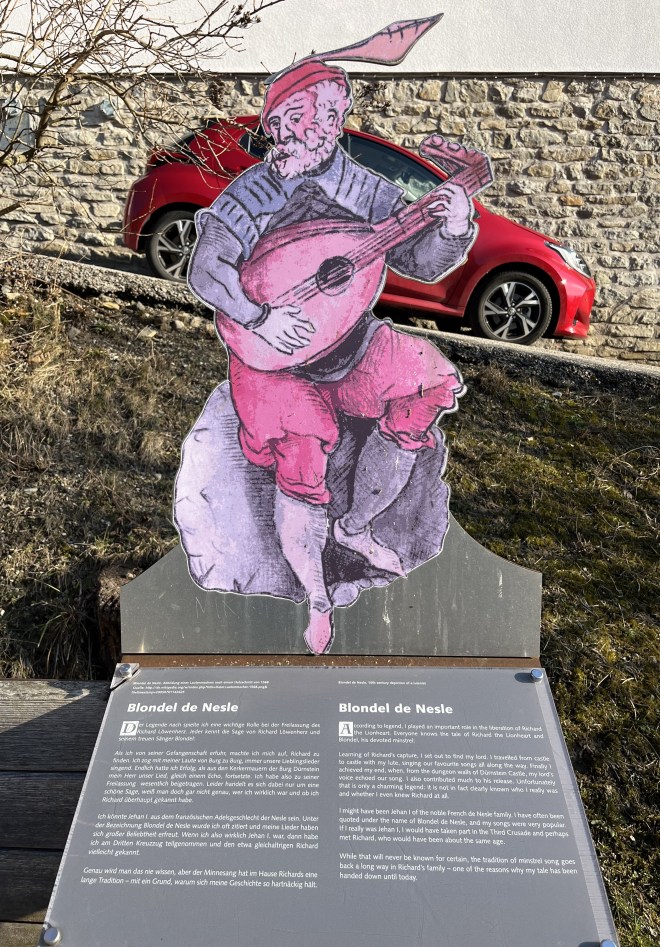
A story was invented in the 18th Century, which went like this: no-one knew in which castle Richard was being kept prisoner, so Blondel, who knew Richard, went from castle to castle singing a song only he and Richard knew. Finally, at Dürnstein Richard sang along with him. At last, Richard had been found! Here’s a coloured lithograph by a certain Joseph Martin Kronheim from the mid-1850s, which has Blondel singing at the foot of the castle’s walls.
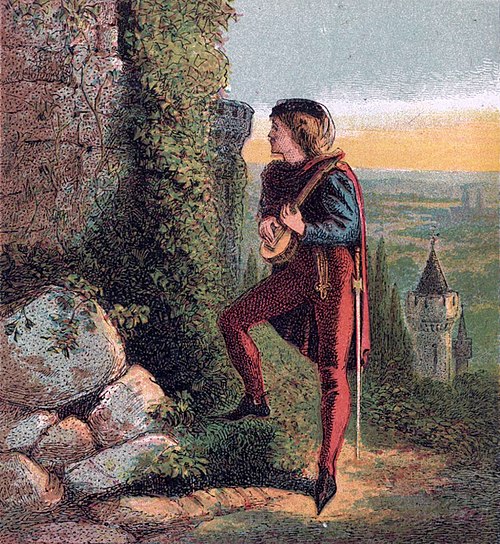
As I say, all invented. But, like all good legends, the story contains a kernel of truth. Richard was brought up in Aquitaine, the beating heart of troubadour culture.
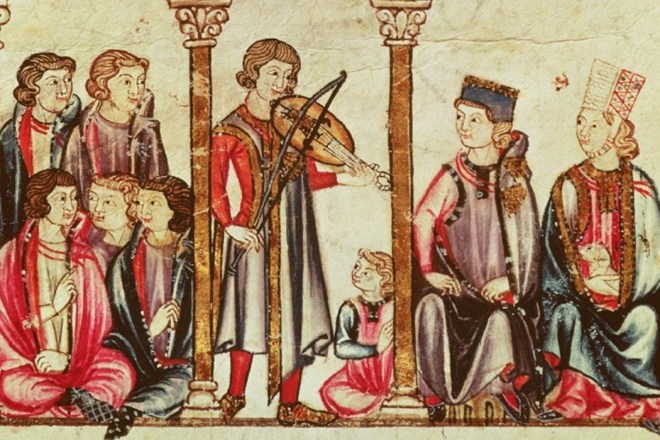
As Duke of Aquitaine, he encouraged and supported the troubadours. He also wrote and sang his own songs, one of which – composed during his imprisonment in Dürnstein – has come down to us. He wrote it in Langue d’Oc, the old language of the south of France. I cite here the first two verses (it’s a bit too long to quote in full).
Ja nuls hom pres non dira sa razon
Adrechament, si com hom dolens non;
Mas per conort deu hom faire canson.
Pro n’ay d’amis, mas paure son li don;
Ancta lur es si, per ma rezenson,
Soi sai dos ivers pres.
Or sapchon ben miei hom e miei baron,
Angles, norman, peitavin e gascon,
Qu’ieu non ay ja si paure companhon
Qu’ieu laissasse, per aver, en preison.
Non ho dic mia per nulla retraison,
Mas anquar soi ieu pres.
Since I presume that, like me, most if not all of my readers do not speak Langue d’Oc, I give here a translation in English of these two verses.
No prisoner can tell his honest thought
Unless he speaks as one who suffers wrong;
But for his comfort as he may make a song.
My friends are many, but their gifts are naught.
Shame will be theirs, if, for my ransom, here
— I lie another year.
They know this well, my barons and my men,
Normandy, England, Gascony, Poitou,
That I had never follower so low
Whom I would leave in prison to my gain.
I say it not for a reproach to them,
— But prisoner I am!
He was clearly trying to guilt trip his vassals into paying the ransom. If any of my readers want to hear the song they can do no worse than go to this link.
My wife and I pass through Dürnstein at least once a year. There is a hike that goes all the way up the left side of Wachau river valley from Krems to Melk and then back down the other side of the river to Krems. The first stage runs from Krems to Dürnstein. The path hugs the hills between the two places.
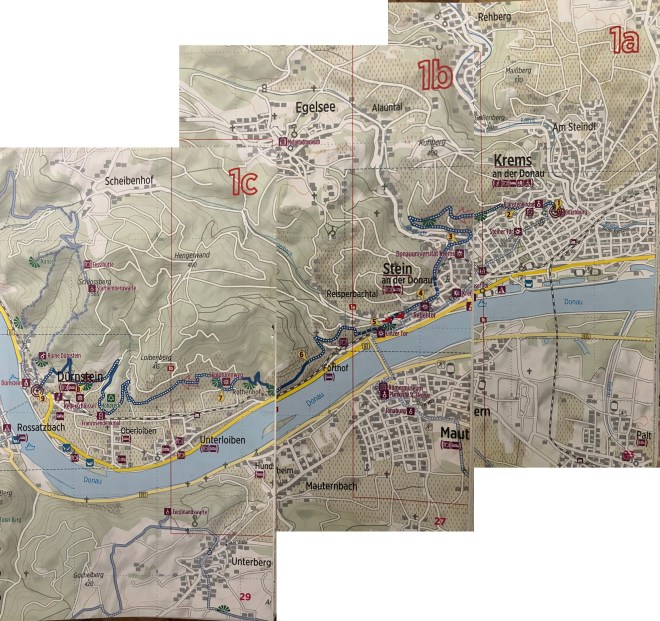
As you amble along, you get beautiful views onto the Danube River flowing below.
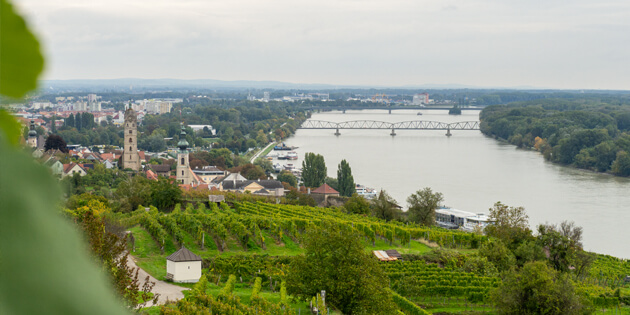
And of Göttweig Abbey on its hill on the other side of the river.
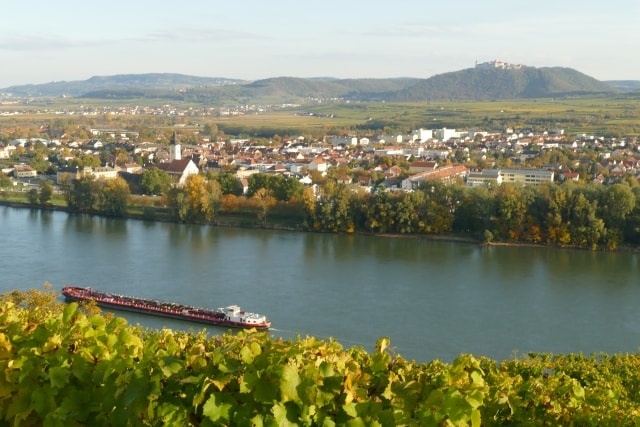
And of the vineyards of the Domäne Wachau around the villages of Unterloiben and Oberloiben.
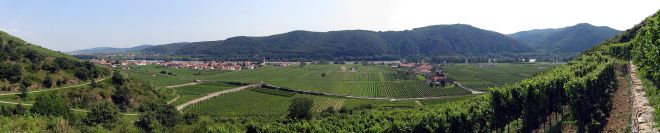
Above these two villages, you pass by a large monument.
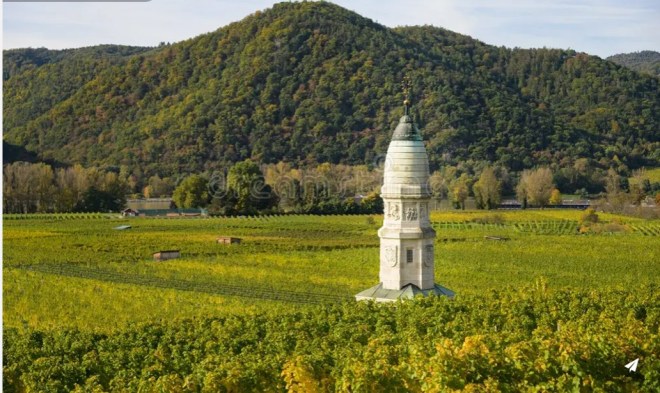
It was built in 1905, to commemorate the 100th anniversary of the battle of Dürnstein-Loiben, one of the many battles of the Napoleonic wars. The fighting took place where those vines now peacefully grow their grapes. It pitched about 7,000 French troops against some 11,000 Russian and Austrian troops. Fighting went on well into the night before it ground to a halt with no obvious winner, although both sides claimed victory. The losses were heavy: about 3,000 men on both sides. This is the only illustration I can find of the battle. I suppose that is meant to be Dürnstein castle in the background.
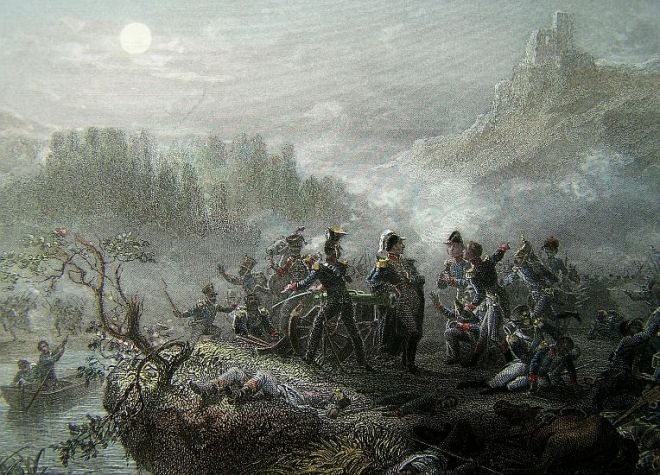
The battle was completely overshadowed by Napoleon’s brilliant victory in the battle at Austerlitz three weeks later. Years ago, a friend of ours took my wife and me to one the annual reenactments of that battle, the one and only time we’ve ever been to a battle reenactment.
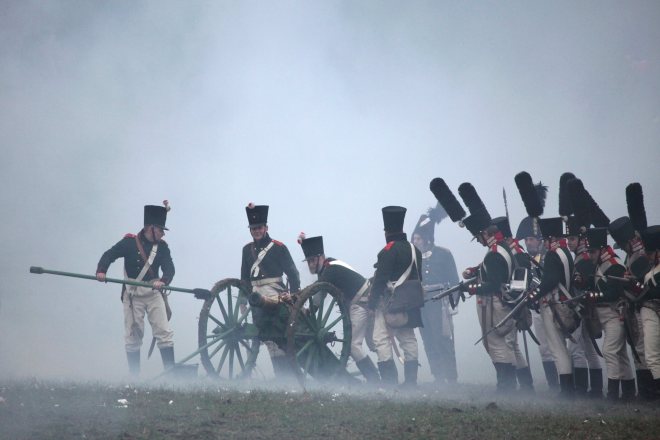
But no-one reenacts the battle of Dürnstein-Loiben. It resolved nothing and no-one remembers it anymore. The 6,000 soldiers who lost their lives did so for no good reason.
Ah, this land, steeped in history – and drenched in blood.
 the heart thrills