MY FATHER AND POETRY

Milan, 26 March 2023

A few days ago, I realised with a start that it was my father’s birthday. He would have been 106 years old had he made it this far – a venerable age indeed. But he shuffled off this mortal coil some twenty years ago already, and hopefully is singing with the choirs invisible (although he was terribly tone deaf; hearing him sing was a sufferance).

I am now at an age when I can reflect on my father more as an equal than as a Father Figure. We were never really that close: a generational thing, I think – he was a child of the severe, repressed, melancholic post-War 1930s, I was a child of the optimistic 1960s. But the gap between us was intensified by our different characters – he was a brooder, I never brood. I don’t suppose it helped that I hardly grew up with him. From the ages of 8 to 18 I spent three-quarters of the year away from the family. Most of that was in boarding school, but one school holiday a year was also spent with relations; for all of my life my father worked outside the UK.

But in one thing, I recognise a deep similarity; he was, and I am, a romantic. In my case, I feel it is of a piece with my cheerful character. But in his case, it was quite surprising. Normally, he was a measured man, carefully balancing all things, and pronouncing well argued verdicts; not surprisingly, he had spent much of the first half his working life as a judge and spent the second half ensconced in a law school as a professor. But when it came to poetry, my father’s romantic side emerged into the light and he was floridly, lushly, ridiculously romantic. It seems to me that his 106th birthday is a good excuse to pay tribute to his poetic inclinations (very different from mine, I have to say), through flashbacks of moments when he bared his romantic soul to me through poetry.

Omar Kahyam’s Rubaiyat, or rather Edward Fitzgerald’s translation of it, was a favourite of his. I still have memories, fond ones now, pleasantly blurred by the passage of time, of my father declaiming quatrains from Edward Fitzgerald’s – very loose – translation of the Rubaiyat. This was one of his favourite quotes – I still see him in my mind’s eye declaiming it at lunch one day.

A Book of Verses underneath the Bough,
A Jug of Wine, A Loaf of Bread—and Thou
Beside me singing in the Wilderness—
Oh, Wilderness were Paradise enow!

He once asked me what I thought of Fitzgerald’s poetry. In the callowness of my youth, I found it precious and somewhat ridiculous, but I smiled diplomatically and I think – at least, I hope – I managed not to sound too, too negative (although I have to say that even with the wisdom of old age I find Fitzgerald’s poetry too precious for my tastes). After his death, when my mother invited me to go through his books and take those I wanted, I took his copy of the Rubaiyat. It still graces my shelves.

My photo

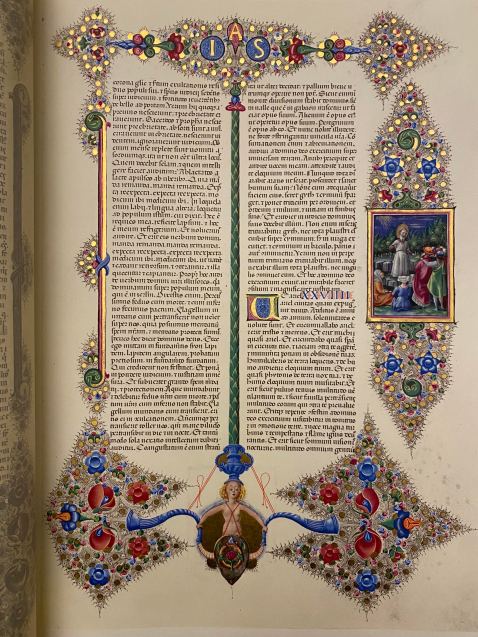
Once my father retired, he gave freer rein to his poetic inclinations. On one of my infrequent trips to visit my parents, he confessed to me an adoration of Dante’s Inferno and Paradiso. He declared that when he read Dante – in the original, old Italian; he was a gifted linguist – the verse would grip him in his vitals. I was rather startled by this turn of phrase from such a measured man. One of my sisters bought him a large, expensive, limited edition, book of Dante’s Inferno and Paradiso, complete with pictures. But that I didn’t take. In the first place, it weighed a ton. But in addition I was also mindful of what my father said to my mother-in-law when my parents came down to Milan to meet her for the first time. She had proudly shown him one of her treasured possessions, an exact replica of the Bible of Borso d’Este. It’s a beautiful book, enlivened throughout with lovely miniatures.
My photo

But my father told her that he was interested in reading books rather than admiring them. The poor woman was quite deflated.

I join him in loving Dante – although in my case, in modern Italian “translation” – but our differing characters brought us to diverge on which parts we liked most. Thoroughly romantic as he was, it was the parts where Dante dwells on his impossible love for Beatrice in Paradise which he delighted in most.
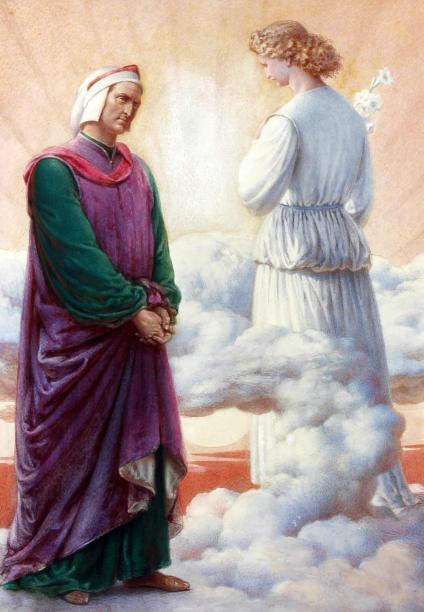
Source

I, instead, found Dante’s Paradise really boring. But his Hell was wonderful, full of fantastic and fun characters.
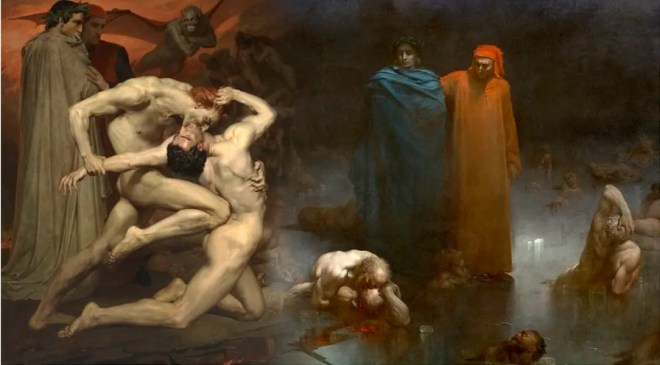
Source

There was also a time when the opening lines of Inferno resonated with me:

When half way through the journey of our life
I found that I was in a gloomy wood,
because the path which led aright was lost.

Have we not all asked ourselves at some point in the later years of our lives if we have strayed from the path we should have taken? What if I had taken that other job, gone to that other university? … What if … what if …?

Another set of books – notebooks, actually – that I took after my father’s death was the diary he wrote from the ages of 16 to 22. This is the first volume.
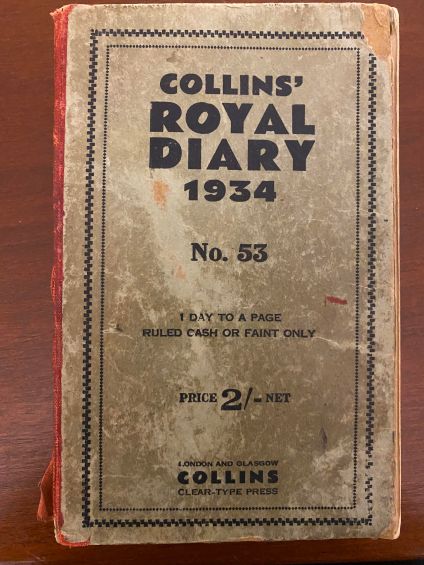
My photo

The diaries start abruptly at the beginning of 1934 – perhaps the result of a New Year’s resolution – and finish equally abruptly in 1939, a piece of blotting paper still sitting between the pages waiting to dry the next entry. Reading them was wonderful. Suddenly, the older man with such gravitas that I had known became a young lad doing silly things with his friends. It is really quite endearing. In the later diaries, when he’s at University, he tells of how he meets my mother, the French friend of his sister’s who is in the UK to brush up her English. Knowing how the story ends (and personally very thankful that it ends that way, allowing me as it does to be born!), it’s a treat to read “hot off the press” how their relationship unfolded. The first thing my father did was to take my mother up to his rooms for tea and cake (I was quite surprised he was allowed to do this, perhaps he smuggled her in) and they read poetry out loud. He chose to read “The Isles of Greece” by Byron.

The isles of Greece! the isles of Greece
Where burning Sappho loved and sung,
Where grew the arts of war and peace,
Where Delos rose, and Phoebus sprung!
Eternal summer gilds them yet,
But all, except their sun, is set.

The Scian and the Teian muse,
The hero’s harp, the lover’s lute,
Have found the fame your shores refuse:
Their place of birth alone is mute
To sounds which echo further west
Than your sires’ ‘Islands of the Blest’.

The mountains look on Marathon—
And Marathon looks on the sea;
And musing there an hour alone,
I dream’d that Greece might still be free;
For standing on the Persians’ grave,
I could not deem myself a slave.

It goes on a good deal longer but I think my readers get the picture. Definitely not a poem I would have chosen, but my father was overwhelmed with emotion, confiding to his diary that “there were tears in my eyes most of the time and I was quivering all over when I had finished.”

My father writes that my mother read a French poem, although he doesn’t report which one she chose. I’m sure it was in a romantic vein; my mother also had a wide romantic streak running through her soul.

My father’s diaries show that the Young Him imagined himself as quite the man about town. Even while building the relationship with my mother, he continued flirting outrageously with other women. In some cases, he was even moved to turn his hand to writing poems about them. As I went through his papers after his death, I came across a cache of these poems, typed up; my father was an intensive user of the typewriter, the rapid click of its keys being a constant soundtrack to my youth. In truth, the poems are not very good, but I treasure them. And at least he tried to write poetry. I have never dared, except for one light-hearted “poem” (rhyming doggerel, really) which I wrote many years ago in response to a poem my son had written at primary school – both poems hang on the wall, side by side, in our apartment.

In his fifties, my father turned back to an earlier love, that of Latin poetry; he had studied Latin and Greek at school and did Classics at University, and he had never lost his deep admiration of the Classics (an admiration he tried to instil in me with embarrassing results; I barely scraped a pass in Latin and Greek at O-levels and then escaped from these hated subjects forever). He was particularly fond of the love poems of Catullus and dedicated his spare moments in his later years to translating them. I remember him trying out one of his translations on me. I think it was of this poem, which is one of Catullus’s better known love poems (I give it in translation, although not translated by my father).

Let us live, my Lesbia, let us love,
and all the words of the old, and so moral,
may they be worth less than nothing to us!
Suns may set, and suns may rise again:
but when our brief light has set,
night is one long everlasting sleep.
Give me a thousand kisses, a hundred more,
another thousand, and another hundred,
and, when we’ve counted up the many thousands,
confuse them so as not to know them all,
so that no enemy may cast an evil eye,
by knowing that there were so many kisses.

I remember that his version had the line “Kiss me, Kate” in it somewhere. I suppose he was trying to modernise the poem, Lesbia not being a name one hears nowadays. Why Kate? Maybe it gave him a rhyme, maybe he found the double K pleasing. In any event, I smiled and murmured something noncommittal before escaping. Quite recently, I laughed out loud when on a family WhatsApp group my younger sister confessed to doing the same when my father buttonholed her to try out one of his translations on her. Where did those translations go, I wonder? I found no trace of them among his papers. Perhaps he despaired and threw them away.

I wanted to finish this post with a poem written by a son to his father, but the only one I could find which was half-way satisfying was the poem by Dylan Thomas where he is talking to his dying father. It starts:

Do not go gentle into that good night,
Old age should burn and rave at close of day;
Rage, rage against the dying of the light.

Alas, the poem is too late for my father, the dying of the light happened twenty years ago for him. And anyway I’m not sure he would have burned and raved at the close of his day. He believed in God and an afterlife (another difference between him and me) and I’m sure he saw Death as merely a doorway to be passed through to another life.

So let me finish instead with a poem which I dedicate to my wife – my Lesbia, my Kate, my Beatrice. It is a sonnet written by Shakespeare, and it speaks of the love one has in the late autumn of our lives. More satisfying, I think, than the lush romance my father delighted in.

That time of year thou mayst in me behold
When yellow leaves, or none, or few, do hang
Upon those boughs which shake against the cold,
Bare ruined choirs, where late the sweet birds sang.
In me thou see’st the twilight of such day
As after sunset fadeth in the west;
Which by and by black night doth take away,
Death’s second self, that seals up all in rest.
In me thou see’st the glowing of such fire,
That on the ashes of his youth doth lie,
As the death-bed, whereon it must expire,
Consum’d with that which it was nourish’d by.
This thou perceiv’st, which makes thy love more strong,
To love that well, which thou must leave ere long.
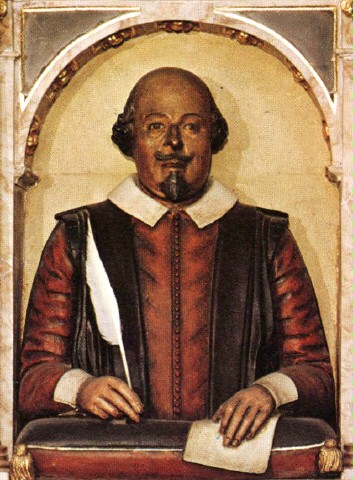
WILL AND I

Bangkok, 30 April 2016

One of the problems of living abroad is that issues of great moment back home have little if any echo here in Bangkok. So it was with the 400th anniversary of Will Shakespeare’s death, which fell on 23rd April last week. It was only when I was catching up with news from home (to Brexit or not to Brexit?) that I saw the huge amount of chatter on line and realized this.

Well! I cannot let this anniversary go by, even though I am already a week late in celebrating it. I mean, Will and I go back a long way! Before I start my breathless recollections, though, let me throw in a picture of one of the few portraits of Shakespeare which are thought to probably be a good likeness, from his funerary monument in his home town, Stratford-upon-Avon.
image
(my alert readers will have noticed much circumspection in that last phrase; so little is known about the real-life Will)

I saw my first piece of Shakespeare – a mere snippet – when I was a seven-year old. My parents had taken me along to visit my elder brother at his school’s Sports Day. As the name suggests, the day was primarily about sports, but to show some high-browsedness among all this low-browsedness the Headmaster also put on a few scenes from Shakespeare, played by the boys. One of these boys was my brother, who played a scene from Henry VIII. Although I don’t know which scene it was exactly, I do remember sitting next to him afterwards and – pesky child that I was – pulling off strands of his stuck-on beard.

A year later, I was packed off to the same school, and at one of the next Sports Days I got my first role, a walk-on part as a page of Macbeth’s. My moment in the spotlight was short. I preceded Macbeth onto the stage, who then ordered me off to do something. I bowed with dignity and exited left. After which Macbeth launched into that great soliloquy:

“Is this a dagger which I see before me,
The handle toward my hand? Come, let me clutch thee.
I have thee not, and yet I see thee still.
Art thou not, fatal vision, sensible
To feeling as to sight? or art thou but
A dagger of the mind, a false creation,
Proceeding from the heat-oppressed brain?”

It goes on for several more fevered lines, but we’ll leave it at that.

In later years, I was a regular at these theatrical events on Sports Days, but I never got to do any more Shakespeare. The best I managed was the lead role, as a waiter, in some farce to do with a coconut being mistaken for a bomb. No matter! I was hooked on the acting life.

My school might have been buried in the wilds of Somerset, but that did not stop the Headmaster from trying to expose us to Culture. One way he did this was by taking us to theatrical events. Thus it was that one beautiful summer’s day (“Shall I compare thee to a summer’s day?”) we were bussed off to a local Stately Home and watched the Winter’s Tale on its manicured gardens. I can’t say I was terribly impressed by the play, certainly none of the text has remained with me. I appreciated more the strawberries and cream served at the interval. I was probably too young to appreciate the play (I must have been all of eleven at the time). But I did very much appreciate the al fresco setting, and so a number of years later, when I was at high school, I was an enthusiastic member of a small audience watching Waiting for Godot, sitting on the grass watching as Vladimir and Estragon acted out their empty lives on a lonely dirt road.

At that same high school, I acted in my first full-length Shakespeare play, Richard II, as the Duke of York. I’ve mentioned this in an earlier post, so will not elaborate. What has stayed with me all these years, though, apart from dying John of Gaunt’s paeon to England (“This other Eden, demi-paradise … this precious stone set in the silver sea … this blessed plot, this earth, this realm, this England”) is Henry Bolingbroke’s icy remark to the captive Richard II, who is wallowing in self-pity: “The shadow of your sorrows hath destroyed the shadow of your face”.

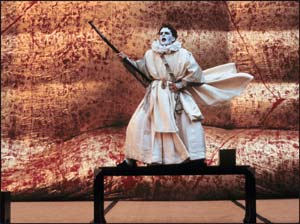
If I’m to be honest, our Richard II was no great shakes. It was a good attempt by amateurs, no more. To prep us, our Director had hired a van and taken us down to Stratford, to see the Royal Shakespeare Company put on Richard II. It was certainly better than what we did, but it was no more than workmanlike, I would say. I had to wait some ten years to see a truly splendid production of Richard II, directed by Ariane Mnouchkine in a large space in the Bois de Vincennes in Paris. Ah, what a wonderful production that was! Mnouchkine used a style that mixed Japanese theatrical traditions with mime, on a large set uncluttered by any of the traditional theatrical props. It was truly magic, one of those theatrical experiences that stays with you forever.
image
Back to my own theatrical career at high school! It reached its zenith when I acted in Tom Stoppard’s brilliant comedy Rosencrantz and Guildenstern are Dead. I played Rosencrantz (or maybe Guildenstern, I forget; the characters themselves were always getting confused about who they were). This hilarious play is a riff on Shakespeare’s Hamlet, in which R&G play minor and totally inglorious roles. To my great regret, I never acted in Hamlet itself. The closest I got was playing a few scenes on the portico of the Scottish National Gallery in Edinburgh, during the University’s charity week. I played Polonius as a completely senile old twerp, unashamedly hamming it up for the audience: a disgraceful exhibition – but fun!

In truth, my days treading the theatre boards were even then numbered. I quickly realized at University that I was a mediocre actor and it was time for me to get serious. But before my final curtain call, I did manage get a modest part in Measure for Measure, playing Claudio, a young man sentenced to death for getting his girlfriend pregnant. It’s a strange play, aptly titled a “problem play”, categorized as a comedy but being no such thing. None of the characters are that nice either, so it’s difficult to feel much sympathy for anyone. My character Claudio gets some wonderful lines as he sits in gaol, bathed in a total funk at the idea of dying:

“Ay, but to die, and go we know not where;
To lie in cold obstruction, and to rot;
This sensible warm motion to become
A kneaded clod; and the delighted spirit
To bathe in fiery floods, or to reside
In thrilling region of thick-ribbed ice;
To be imprisoned in the viewless winds
And blown with restless violence round about
The pendant world; or to be worse than worst
Of those that lawless and incertain thought
Imagine howling – ’tis too horrible!
The weariest and most loathed worldly life
That age, ache, penury, and imprisonment
Can lay on nature is a paradise
To what we fear of death.”

And as I grow older, the lines of Duke Vincentio, spoken in his disguise as a monk to Claudio in prison, resonate ever more strongly with me: “when thou art old and rich, thou hast neither heat, affection, limb, nor beauty to make thy riches pleasant”. So true, alas!

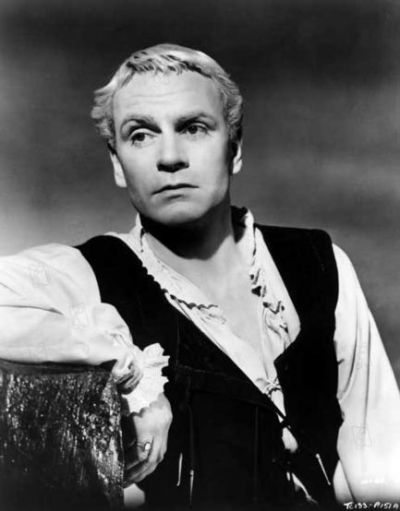
And that was the end of my days on the proscenium. From then on, my engagement with Shakespeare was through films and other people’s theatrical productions. The most vivid of my recollections centre around Laurence Olivier. There was a poky little cinema on the Left Bank of Paris which one year when we lived there held a festival of Olivier’s Shakespeare films. My wife and I first watched Olivier’s film version of Hamlet, the first proper Hamlet I had ever seen. Olivier started with his voiced-over summary of Hamlet: “This is the tragedy of a man who could not make up his mind”.

Hamlet 1948 rŽal : Laurence Olivier Laurence Olivier Collection Christophel

It was masterly, no doubt about it. Of course, there were all the hoary Hamlet quotes: “Alas, poor Yorrick, I knew him”, “get thee to a nunnery”, “neither a borrower nor a lender be”, and of course probably the hoariest of all hoary Shakespeare quotes, “To be or not to be, that is the question”. Actually, behind all that hoariness lies one of Shakespeare’s most profound, and profoundly beautiful, soliloquies, of which I cite here only some lines, those which have always resonated with me the most:

“………..To die: to sleep;
No more; and, by a sleep to say we end
The heart-ache and the thousand natural shocks
That flesh is heir to, ’tis a consummation
Devoutly to be wish’d. To die, to sleep;
To sleep: perchance to dream: ay, there’s the rub.
For in this sleep of death what dreams may come
When we have shuffled off this mortal coil,
Must give us pause …”

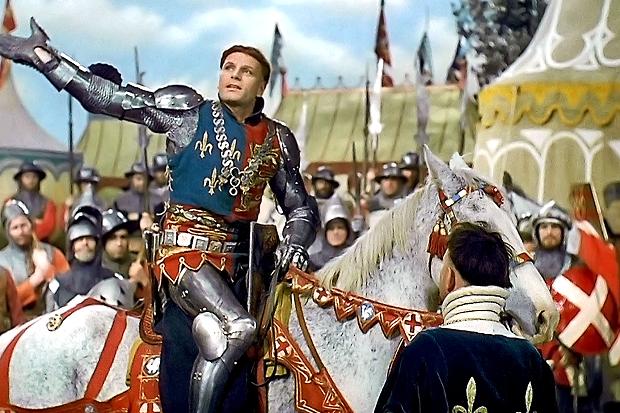
In that same poky little cinema on the Left Bank, we got to see Olivier’s wonderful Richard III, which I have commented on in an earlier post, but also his sublime Henry V, a wonderful propaganda piece made in 1944 as a morale booster and dedicated to the “Commandos and Airborne Troops of Great Britain, the spirit of whose ancestors it has been humbly attempted to recapture”. So it is that we have great, reverberating lines like these:

“Once more unto the breach, dear friends, once more;
Or close the wall up with our English dead!

I see you stand like greyhounds in the slips,
Straining upon the start. The game’s afoot:
Follow your spirit; and, upon this charge
Cry ‘God for Harry! England and Saint George!'”

“We few, we happy few, we band of brothers;
For he to-day that sheds his blood with me
Shall be my brother; be he ne’er so vile
This day shall gentle his condition:
And gentlemen in England, now a-bed
Shall think themselves accursed they were not here,
And hold their manhoods cheap whiles any speaks
That fought with us upon Saint Crispin’s day.”

image
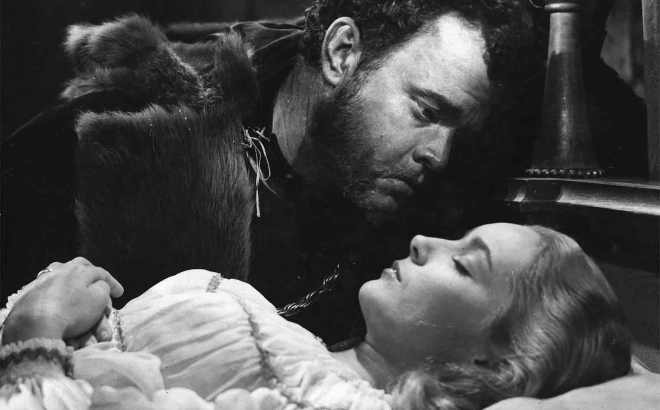
To my great regret, we missed the showing of Olivier’s film of Othello. But we did later see, in an equally poky cinema somewhere else, Orson Welle’s Othello, filmed in some exotic castle in Morocco. Ah, the terrible torments of jealousy! “beware, my lord, of jealousy; It is the green-ey’d monster which doth mock the meat it feeds on”.
image
“I kissed thee ere I killed thee, no way but this, killing myself, to die upon a kiss.”

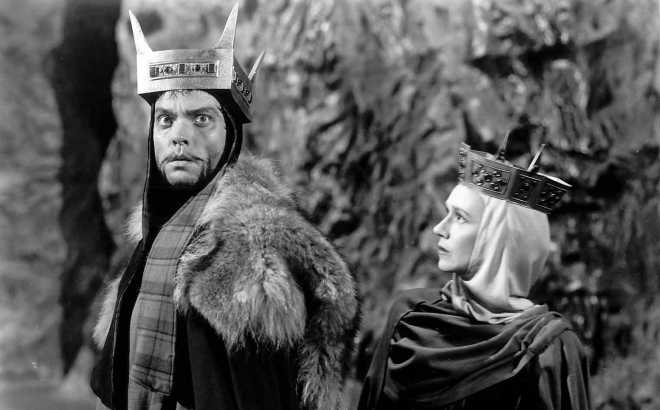
And then there was Orson Welles as Macbeth! Rather over the top – a cross, as Welles himself put it, between Wuthering Heights and Bride of Frankenstein
image
but home of some of the most sublime of Shakespeare’s lines, uttered by Macbeth as the power he has sold his soul for crumbles away around him.

“To-morrow, and to-morrow, and to-morrow,
Creeps in this petty pace from day to day,
To the last syllable of recorded time;
And all our yesterdays have lighted fools
The way to dusty death. Out, out, brief candle!
Life’s but a walking shadow, a poor player
That struts and frets his hour upon the stage
And then is heard no more: it is a tale
Told by an idiot, full of sound and fury,
Signifying nothing.”

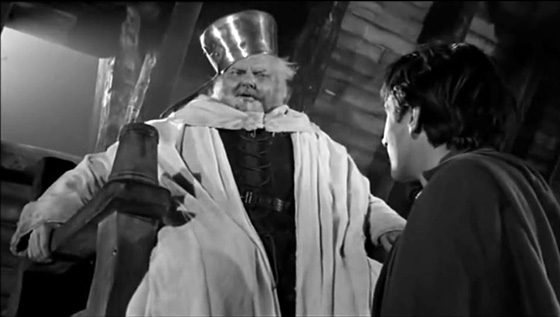
Orson Welles did another great Shakespeare film, The Chimes at Midnight, a medley from Henry IV Parts I and II, Henry V, Richard II, and even The Merry Wives of Windsor, and focusing on Sir John Falstaff, to my mind the only Shakespearean character who is really comic in the modern sense.

image
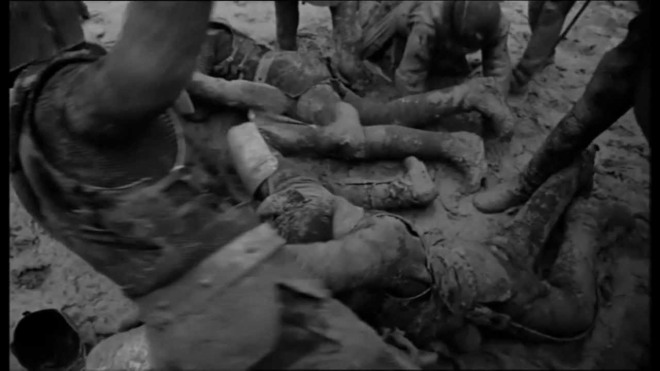
It’s a truly funny film. It’s also the film which brought home to me how Medieval battles were just brutal slugfests, with men bludgeoning each other to death with heavy, and sharp, pieces of metal.
image
But it’s ultimately a film about betrayal. Prince Hal, a Crown Prince who cannot bear to take his responsibilities seriously, strings Falstaff along, making him believe that they are fast friends. But when Prince Hal becomes Henry V and Falstaff thinks he is now in the clover (“My King! My Jove! I speak to thee my heart”), the newly crowned King rejects him, literally turning his back on him (“I know thee not, old man; fall to thy prayers! How ill white hairs become a fool and jester!”).

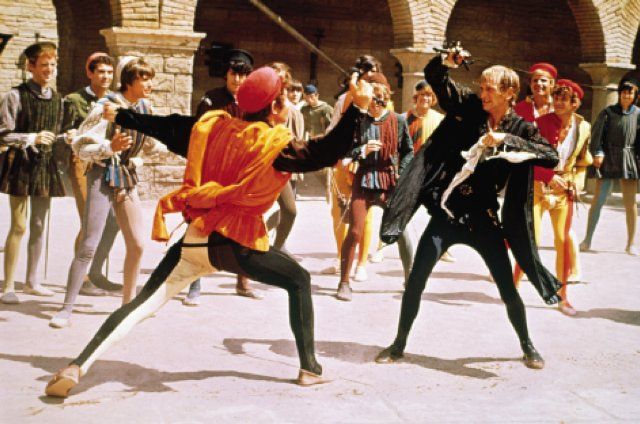
Over the years, my wife and I have seen a number of other Shakespeare plays in film or theatre. Most, alas, have left little or no mark. Two, though, have stayed with me. One is a stage production of The Tempest directed by Giorgio Strehler, which was visually absolutely stunning. The other is Franco Zefirelli’s lush Romeo and Juliet. I don’t remember it so much for the love story – to my modern, cynical, ear, it all sounds very twee – as for the way Zeffirelli beautifully captured the edgy, ultimately tragic, banter between Mercutio and the Capulets.

image
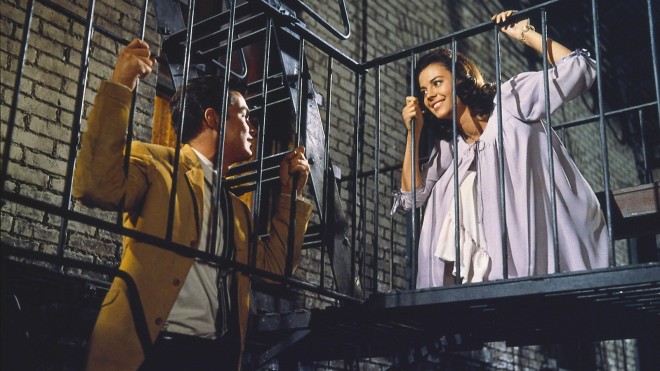
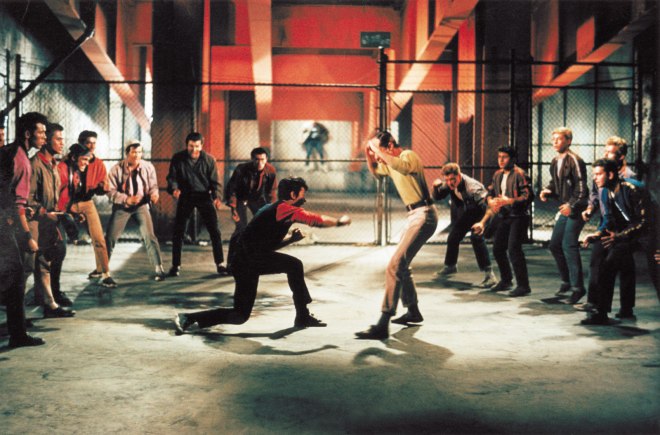
I may be a cynical old fart, but it’s undeniable that the drama of love across forbidden barriers resonates. There’s Leonard Bernstein’s West Side Story, an adaptation of Romeo and Juliet to New York’s gangs
image
image
and just recently I was watching an Al Jazeera show following the production of a Romeo and Juliet adaptation in Mali, a country where it is still the norm for parents to decide whom you marry; the, mostly female, audience were captivated. 400 years on, Shakespeare is still relevant.

I’ve focused on Shakespeare the dramatist. There is also Shakespeare the writer of the sonnets. One sonnet in particular is close to my heart at this time of my life:

“That time of year thou may’st in me behold
When yellow leaves, or none, or few, do hang
Upon those boughs which shake against the cold,
Bare ruin’d choirs, where late the sweet birds sang.
In me thou see’st the twilight of such day,
As after sunset fadeth in the west,
Which by-and-by black night doth take away,
Death’s second self, that seals up all in rest.
In me thou see’st the glowing of such fire
That on the ashes of his youth doth lie,
As the death-bed whereon it must expire
Consum’d with that which it was nourish’d by.
This thou perceivest, which makes thy love more strong,
To love that well which thou must leave ere long.”

Like I said, Shakespeare still speaks to us 400 years on. I just hope to have a few more goose-bump moments with Will before the sixth and seventh ages of man which he clinically describes kick in:

“The sixth age shifts
Into the lean and slippered pantaloon,
With spectacles on nose and pouch on side;
His youthful hose, well saved, a world too wide
For his shrunk shank, and his big manly voice,
Turning again toward childish treble, pipes
And whistles in his sound. Last scene of all,
That ends this strange eventful history,
Is second childishness and mere oblivion,
Sans teeth, sans eyes, sans taste, sans everything.”

___________________________
Shakespeare’s funerary monument: http://www.hollowaypages.com/Shakespearemonument.htm
Théatre du Soleil, Richard II: https://jeffberryman.com/2009/07/20/finishing-the-story-le-theatre-du-soleil/
Olivier Hamlet: http://www.fanpop.com/clubs/laurence-olivier/images/5111432/title/hamlet-photo
Olivier Henry V: http://hayhistorygroup.co.uk/new-events/2015/9/11/hay-history-weekend-henry-v-at-booths-cinema-olivier-version
Welles Othello: http://filmforum.org/film/othello-welles-film
Welles Macbeth: http://filmforum.org/film/macbeth-scottish-version-welles-film
Welles Chimes at Midnight: http://www.midnightonly.com/2015/04/12/chimes-at-midnight-1965/
Battle Chimes at Midnight: https://www.youtube.com/watch?v=3bWraOy6Kw4
Romeo and Juliet: https://www.pinterest.com/pin/186125397070342206/
West Side Story love: https://www.filmlinc.org/events/west-side-story/
West Side Story fight: http://cityartsonline.com/blog/2010/06/siff-review-seeing-west-side-story-first-time

A HORSE! A HORSE! MY KINDGOM FOR A HORSE!

Beijing, 5 February 2013

I was all atwitter this morning when I saw the news. The skeleton found under the car park in Leicester, England, is indeed that of Richard III, last of England’s Plantagenet kings! OK, there are some sour-puss academics raising doubts, but that’s probably because the skeleton wasn’t found under their car park.

I spent the early morning skittering around the house with one shoulder up and shouting “A horse! A horse! My kingdom for a horse!” instead of getting ready for work. My wife looked on and rolled her eyes. But what Englishman has not at least heard of Shakespeare’s play Richard III? What person, who – like me – has thespian pretensions, has not dreamed of prancing about a stage as a mediaeval version of Quasimodo, murdering all and sundry with devilish glee and getting the beautiful women into the bargain? If it wasn’t for Shakespeare, who would remember King Richard III?

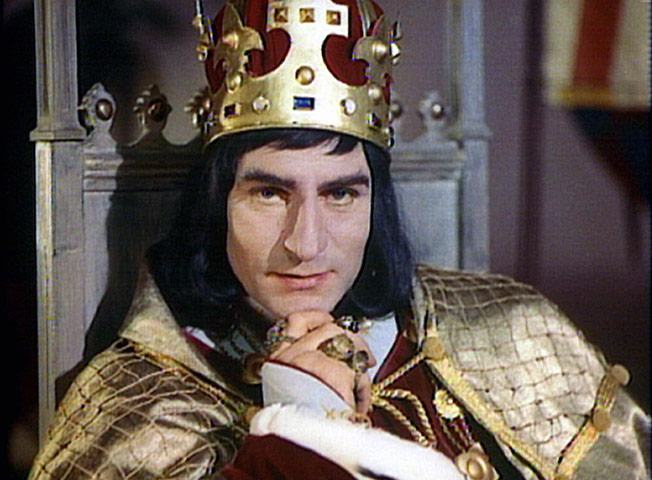
I did most of my acting at school. To my great regret, we never put on Richard III. But I’ve seen it a number of times, both in film as well as on the stage. I first saw it years ago with my wife, in some poky cinema on Paris’s rive gauche. That was the 1955 film version, with Laurence Olivier doing a marvelously over-the-top evil characterization of Richard.

laurence olivier

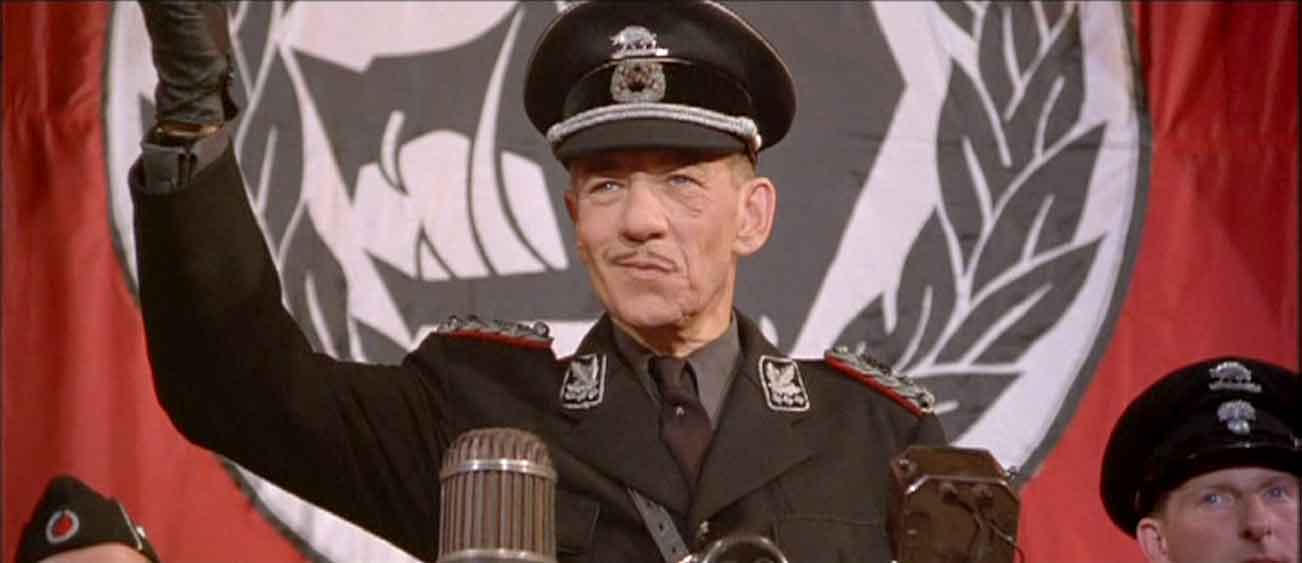
This film stayed in some sort of medieval setting. The next version I saw, with Ian McKellen playing Richard III, was made 40 years after Olivier’s movie. It tried to be clever and set the story in some sort of 1930s fascist version of Britain where the king’s deformity was moral rather than physical.

ian mckellen

We saw this film in Milan. As you can imagine, given Italy’s history

mussolini

the fascist overtones of the film had a certain resonance there.

And then, about a year ago, through sheer serendipity – we just happened to be visiting Hong Kong when the play was running – we saw Kevin Spacey play Richard III with a manic savageness.

kevin spacey

One of the amazing things about Shakespeare is the sheer number of quotes he has generated. Half the quotes people use, or so it seems, come from one Shakespeare play or another. Richard III has its fair share. There’s the quote which I’ve used as my title, which must be one of the most famous quotes in the English language. Then there is this quote:

“Now is the winter of our discontent
Made glorious summer by this sun of York”

which seems to be one of those quotes that everyone knows. Then there is this quote:

“Off with his head!”

which my father was very fond of using  whenever I was naughty.

Apart from these, the play has some deliciously cynical lines:

“Conscience is but a word that cowards use
Devis’d at first to keep the strong in awe”

“And thus I clothe my naked villainy
With odd old ends stolen out of holy writ;
And seem a saint, when most I play the devil.”

“Why, I can smile and murder while I smile,
And cry ‘content’ to that which grieves my heart,
And wet my cheeks with artificial tears,
And frame my face for all occasions”

Yes, we never did put on Richard III at school. But we put on Shakespeare’s Richard II; the events it recounts were the original cause of the War of the Roses, whose final act was the unhorsing of Richard III on Bosworth Field outside of Leicester and his killing with several savage blows to the head as shown by that skull beneath the car park.  I played the Duke of York (I should have played King Richard II, of course, but we’ll pass over that). As usual, the play has many memorable lines, but one set in particular remains with me, uttered by my elder brother John of Gaunt, Duke of Lancaster, as he lies dying in Act I:

This other Eden, demi-paradise;
This fortress, built by nature for herself,
Against infection, and the hand of war;
This happy breed of men, this little world;
This precious stone set in the silver sea,
Which serves it in the office of a wall,
Or as a moat defensive to a house,
Against the envy of less happier lands;
This blessed plot, this earth, this realm, this England

I don’t go back to the UK very often, but those lines echo with me when I stand in the countryside and see how so very lovely it can be.

english-countryside

_______________________________-

Laurence Olivier: http://3.bp.blogspot.com/-Z1o-IQnC1nE/UK8xybvIJ7I/AAAAAAAABCU/OJcjGS2QOzE/s1600/tumblr_m3xc1hNXLZ1rrfb56o1_1280.jpg

Ian McKellen: http://www.mckellen.com/images/r3/ban-15.jpg

Mussolini: http://757f8ed9aaa522dde29d-4c07cfa4f788be17c79661948c0f2477.r99.cf1.rackcdn.com/5728_1323465695_july-25th-benito-mussolini-deposed.jpg

Kevin Spacey: http://i.telegraph.co.uk/multimedia/archive/01934/Richard_a_1934160b.jpg

English countryside: http://www.style-passport.com/style/wp-content/uploads/2012/10/english-countryside.jpg