Los Angeles, 31 May 2026
Since the new grandson’s arrival, heralded in my previous post, my wife and I have been busy doing our grandparently duties. One of these has been to walk the baby around the back garden, the one that contains the whole wide world, tapping his back to make him burp or tapping his behind to get him to go to sleep. In my case, this has allowed me to watch the local hummingbirds flit around the flowers in the garden in search of nectar.
Hummingbirds are wonderful to behold. Watching them hovering in front of a flower which they are feeding from is magic.
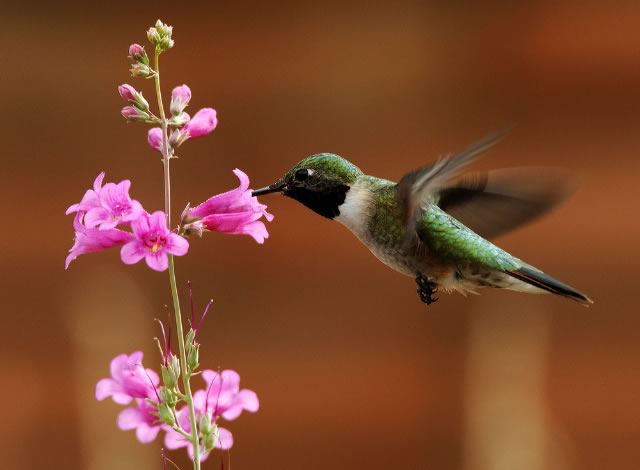
But the way they dart sideways from flower to flower, or drop vertically, or soar upwards to sit on a branch for just an instant before returning to their search for nectar, is also a delight. Such neat, graceful birds. And so small! The ones I see are a mere 10 cm or so long. So small that my iPhone won’t capture them at all, even assuming that they were to accept to stay still long enough to allow me to fumble around with my iPhone and point it at them. 10 cm may be small to you and me, but this is a typical size for these birds. I read that the smallest species of hummingbird is half that size, at 5 cm! The length of my pinky finger. And their eggs are correspondingly tiny, the size of a pea.
As usual, my ignorance is vast. Before doing some reading for this post, I had thought hummingbirds could be found in all the tropical parts of the world. But no, they are only found in the Americas. And not just in the tropical regions, as I had thought, although it is there that one finds the most species.
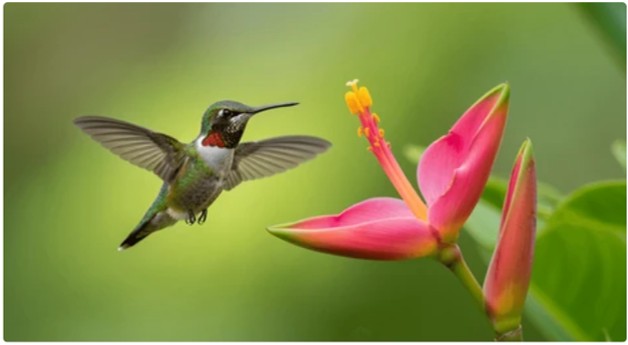
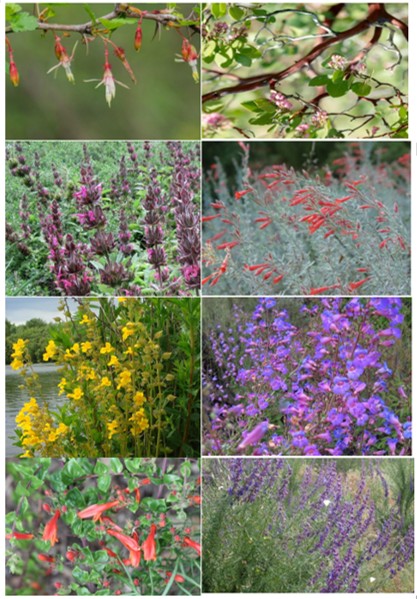
Species of hummingbirds have ventured as far north as Alaska and as far south as Tierra del Fuego. As for Los Angeles, five species of hummingbirds can be found in its environs. I’m guessing that the species I see in the back garden is Anna’s hummingbird, for no better reason than it is the most common species in these parts. And on that hangs a tale. Before modern Los Angeles existed, Anna’s hummingbird ate the nectar from local flowering plants such as California gooseberry, Manzanita, Hummingbird sage, California fuchsia, Monkeyflower, Showy Penstemon, Climbing Penstemon, and Woolly Blue Curls.
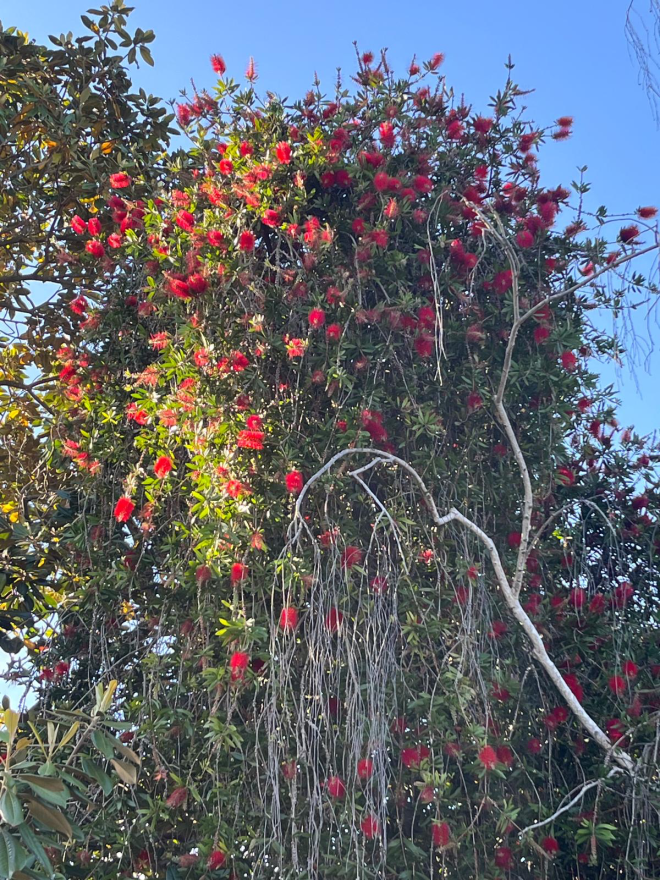
But then people flocked to Los Angeles after the Second World War, they built hundreds of thousands of houses – like our daughter’s house – in what essentially is a semi-desert, they surrounded the houses with gardens full of exotic plants from all over the world – like our daughter’s garden. Anna’s hummingbird thrived in this new environment, full of new flowers with yummy nectar. The ones that flit around our daughter’s house, for instance, have been particularly active around the neighbour’s bottle-brush tree, whose original home happens to be Australia.
The populations of Anna’s hummingbird have consequently seen a steady increase since the 1970s, reaching about 8 million today.
But not all the local hummingbirds have managed to adapt to the new conditions. For instance, Allen’s hummingbirds, another local species of hummingbird, have not been able to take advantage of this profusion of exotic flowers. They cannot tolerate all the buildings, the noise, the pollution. As a consequence, their populations have crashed, falling by some 80% since the 1960s. It looks like they will be displaced by Anna’s hummingbirds – until the water runs out and all the thirsty foreign plants in the gardens here wilt and die. Who knows what will happen then to the hummingbirds? And what will happen to the Angelenos?


