THE WESTERN FRONT

Beijing, 3 August 2012

These last few evenings I’ve been sorting through the photographs we took during our summer vacation. Much of our time was taken up with doing necessary things – checking repairs to our apartment, visiting relatives, that sort of thing – but we managed to squeeze in a three-day visit to the battlefields of the Western Front. It’s something I’ve been wanting to do for at least forty years, since I first started reading the English poetry and prose of the War.

Because my knowledge of the War is primarily British, our visit ran along the line of the British sector, from the Ypres Salient – the battles of Passchendaele, Ypres, Messines Ridge – to the battlefields of Neuve-Chapelle, Loos, Vimy Ridge, and finally to the battlefields of the Somme.

I’m not a military historian; I’m not interested in the lay of the land, nor do I want to know which regiment swept over this hill to take that objective, or what weapons they used to do it. In any event, as you gaze across today’s peaceful countryside it’s hard to imagine the scenes of a hundred years ago. Even at Vimy Ridge, or Delville Wood, or the Newfoundland Memorial, where the land has been left as it was at the end of hostilities, the ground does not speak to you.

No, what really drew me to this strip of land is the iconography of death. How did the belligerents deal with the enormity of their military dead after the guns fell silent? 2 million dead in Germany, 1.4 million in France, 1.1 million in the British Empire.

Wilfred Owen wrote:

What passing-bells for these who die as cattle?
Only the monstrous anger of the guns
Only the stuttering rifles’ rapid rattle
Can patter out their hasty orisons.
No mockeries now for them; no prayers nor bells;
Nor any voice of mourning save the choirs, –
The shrill, demented choirs of wailing shells;
And bugles calling for them from sad shires.

But each country made sure that there would be memorials for their dead. Indeed, the length of the Western Front is thickly dotted with memorials and cemeteries. We visited only a handful of the bigger ones, mostly British Empire but also a few French and German. As we drove, signs to many, many others beckoned: Le Trou Aid Post Cemetery, Post Office Rifles Cemetery, Crump Trench British Cemetery, L’Homme Mort British Cemetery, Dud Corner Cemetery, Happy Valley British Cemetery … “so many, I had not thought death had undone so many”.

How did Governments choose to present these dead millions to their citizens? As I flip through my photos, in the British Empire cemeteries I see a predominance of white and green: white stone and green grass, leavened by splashes of colour from the roses and other flowers planted at the base of each gravestone. I see few trees.

07 Tyne Cot memorial-cropped

The buildings echo those of that other, Roman, Empire that the British so aspired to emulate: columns, rounded arches, cupolas, brick mixed with stone.

Thiepval_Memorial-3

And I see grand phrases written on the walls, commemorating victory, heroic sacrifice, eternal remembrance, and the gratitude of a nation. But I also see scrolling on and on, from one wall to another, the names of the missing, those with no known grave, whose macerated flesh disappeared into the mud of the Western Front. And I see the ages of those who died – so young most of them, my children’s age.

Menin_Gate_names

The colours white and green are echoed in the French memorials. But here the Christian motifs are stronger: white crosses for the buried (or white gravestones for the non-Christians) and churches or church-like structures for the memorials. Here too grass dominates the green – trees are rare. And here too the grass’s green is splashed with colour from flowers at the base of the crosses. And here too grand rhetoric is carved into the walls.
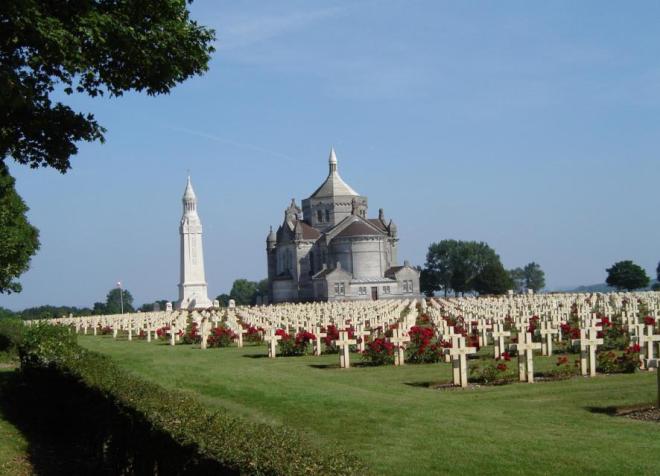
notre_dame_de_lorette

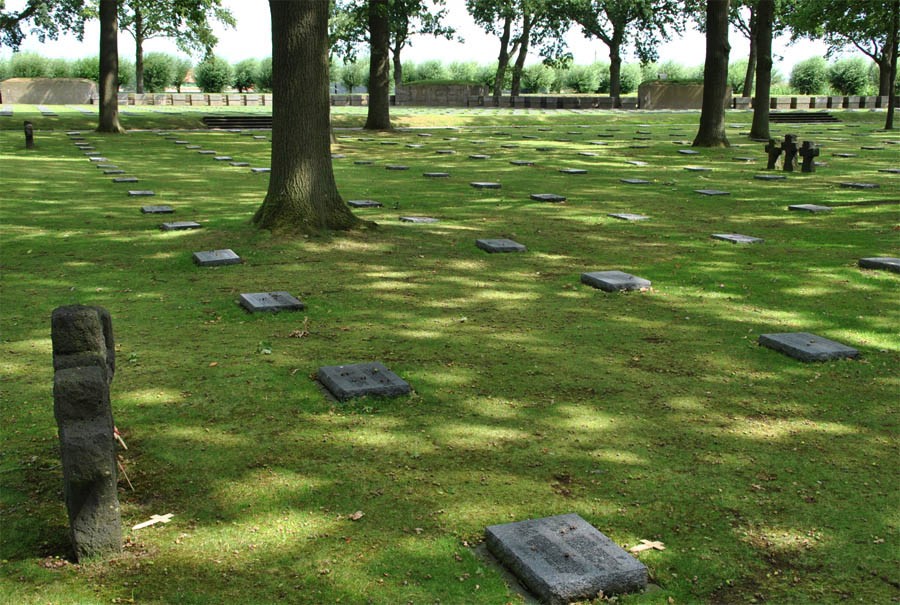
German cemeteries differ radically. Everything about them is much more sombre. Black, not white, is the dominant colour of crosses, gravestones and buildings. Although as elsewhere green is ever present, it is a darker green, for trees grow throughout the cemeteries. Their leaves, their bark, their shadows darken hues throughout the enclosures. And there are no flowers to brighten the scene, no triumphant language on the walls.

Langemark_German_cemetery

I suppose the sombre tone of the German cemeteries reflects their defeat. The British and the French could at least claim that their dead were justified by their victory. But the Germans had nothing to show for their dead. Yet to me, the Germans show the better sensibility. For are the deaths of so many young people ever justifiable? They represent a terrible loss for us all, echoing down through the decades. And despite all the protestations to the contrary, they will be forgotten. Already now, how many of the soldiers lying in the soil of northern France and Belgium are remembered by family members or friends? They are just becoming names on a wall or gravestone, and even those names will one day erode away.  The poet Carl Sandburg caught the idea well in his poem “Grass”:

Pile the bodies high at Austerlitz and Waterloo,
Shovel them under and let me work –
I am the grass; I cover all.

And pile them high at Gettysburg
And pile them high at Ypres and Verdun.
Shovel them under and let me work.
Two years, ten years, and passengers ask the conductor:
What place is this?
Where are we now?

I am the grass.
Let me work.

77 Neuville St Vaast cemetery

__________________
Pictures:
Tyne cot memorial: mine
Thiepval memorial: http://www.euro-t-guide.com/See_Photo/France/NW_Amiens/Thiepval_Memorial_2011_16.jpg
Menin Gate names: http://upload.wikimedia.org/wikipedia/en/e/ee/Menin_Gate_names.jpeg
Notre dame de Lorette: http://arras-france.com/wp-content/uploads/2008/05/notre_dame_de_lorette.JPG
Langemark:  http://www.euro-t-guide.com/See_Photo/Belgium/NW_Ypres/Langemark_German_War_Graves_2011_08.jpg
Neuville St. Vaast: mine

MY PIECE OF CANAL

Beijing, 31 July 2012

I am lucky enough to live so close to work that I can walk to the office in the mornings and back in the evenings. It’s the first time I’ve been able to do this in the 30-some years I have been working. I can even go home for lunch!

The walk is that much more pleasant because most of it is along a canal. Many of the canals in Beijing are sorry affairs, either dry or filled with pestilential water. This is true for this canal too, except for the stretch I walk along. For some reason, this reach of the canal has been thoughtfully developed. Willows have been planted along the edge, reed beds too; a small reed island has been formed in the middle; during the spring irises, first blue then yellow, come and go; and a bed of lotuses has been planted.

I treasure that morning walk. It puts my heart at peace and allows me to face the slings and arrows of the day with fortitude. And I am not the only one. From spring to autumn, the edges of the canal are sprinkled with fishermen (and sometimes fisherwomen), meditating on the state of the world and catching a small fish from time to time. In summer, some of the older inhabitants from the nearby apartment blocks sally forth and swim slowly up, down, and across the canal.

Two autumns ago, we woke up to find that my piece of the canal was being emptied. After a brief period where mudlarks waded through the resulting black sludge picking up stranded fish and other strange things, excavators arrived, dug a large trench down the middle of the canal’s bottom, and then a swarm of migrant workers appeared to lay down a large plastic pipe – a sewer line, I would guess. What has taken me two lines to recount, it took the pipe layers a dreary six months to accomplish. But finally, the pipe was covered and silence returned. But not the water. And we waited. Another six months passed. I was terribly afraid that the canal would disappear, that they would fill it in and build a road.

But at last the water reappeared. And slowly, the old canal-side rhythms came back, and my walks to and from the office once again soothed my harried soul. But I was worried about the lotuses. I was worried that the long drought would have killed them. When we left for our vacation there was no sign of them. On my first walk to the office after coming back, I looked out anxiously for them. And they were there, flowering already, their delicate pinks and whites standing out against the dark matte green of their leaves. And all was right in the world.

flowering lotus-1

PLANE TREES

Beijing, 30 July 2012

Until a few years ago, plane trees were not high on my list of favourites. The memories of my youth were of leprous-looking trees in a ragged line along anonymous city streets, with long strands of dirty bark peeling off them, a pathetic crown often savagely chopped to allow the passage of telephone and other wires, and every passing dog peeing on them. My grandmother would say that they were used because they were the only trees that could survive in cities. But what a life, I thought. Better no life than this …

plane trees in streets-4

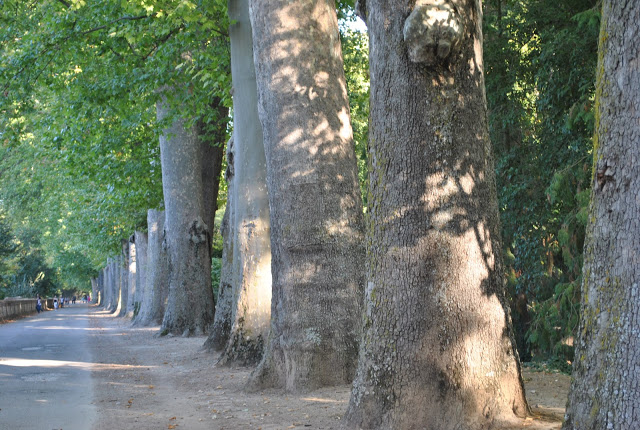
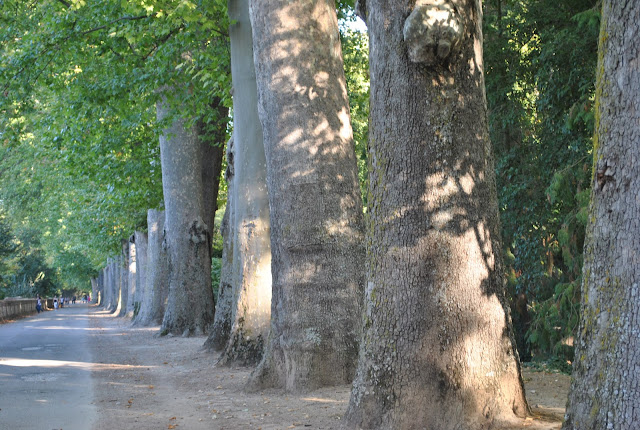
And then one day, on a holiday with my wife in Spain, we were walking through the Jardín del Príncipe in Aranjuez, near Madrid, when we came across a row of absolutely magnificent plane trees, of vast girth, with huge spreading crowns of light green sparkling leaves, and whose bark ranged in colour from pale beige through pale green to ivory white.  Simply ravishing. If we took photos, I have no record of them here. So I insert this picture of a plane tree in these gardens which I found on the web, to give the reader an idea of the beauty of these trees.

plane trees jardin del principe Aranjuez-6

I add this picture of a row of the trees in the gardens to give an idea of their girth.

plane trees jardin del principe Aranjuez-1

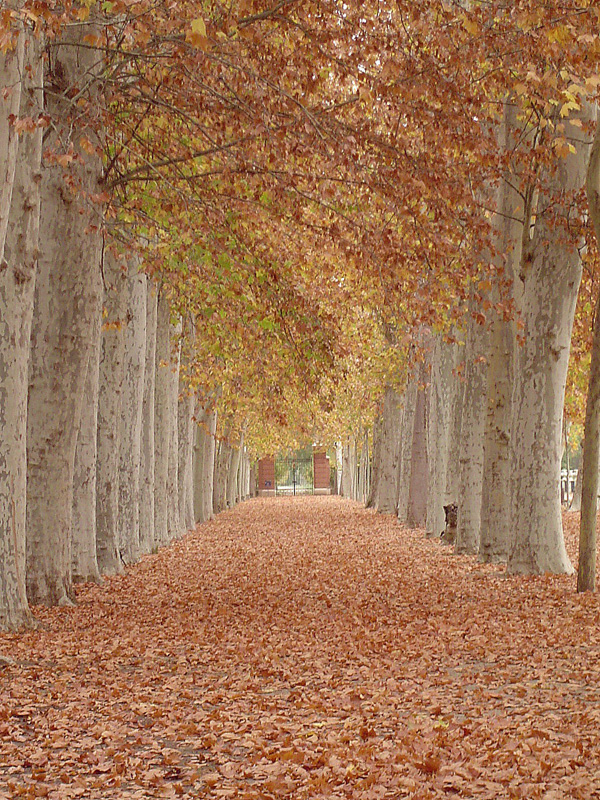
And I add this one simply because I like the colours!

plane trees jardin del principe Aranjuez-4

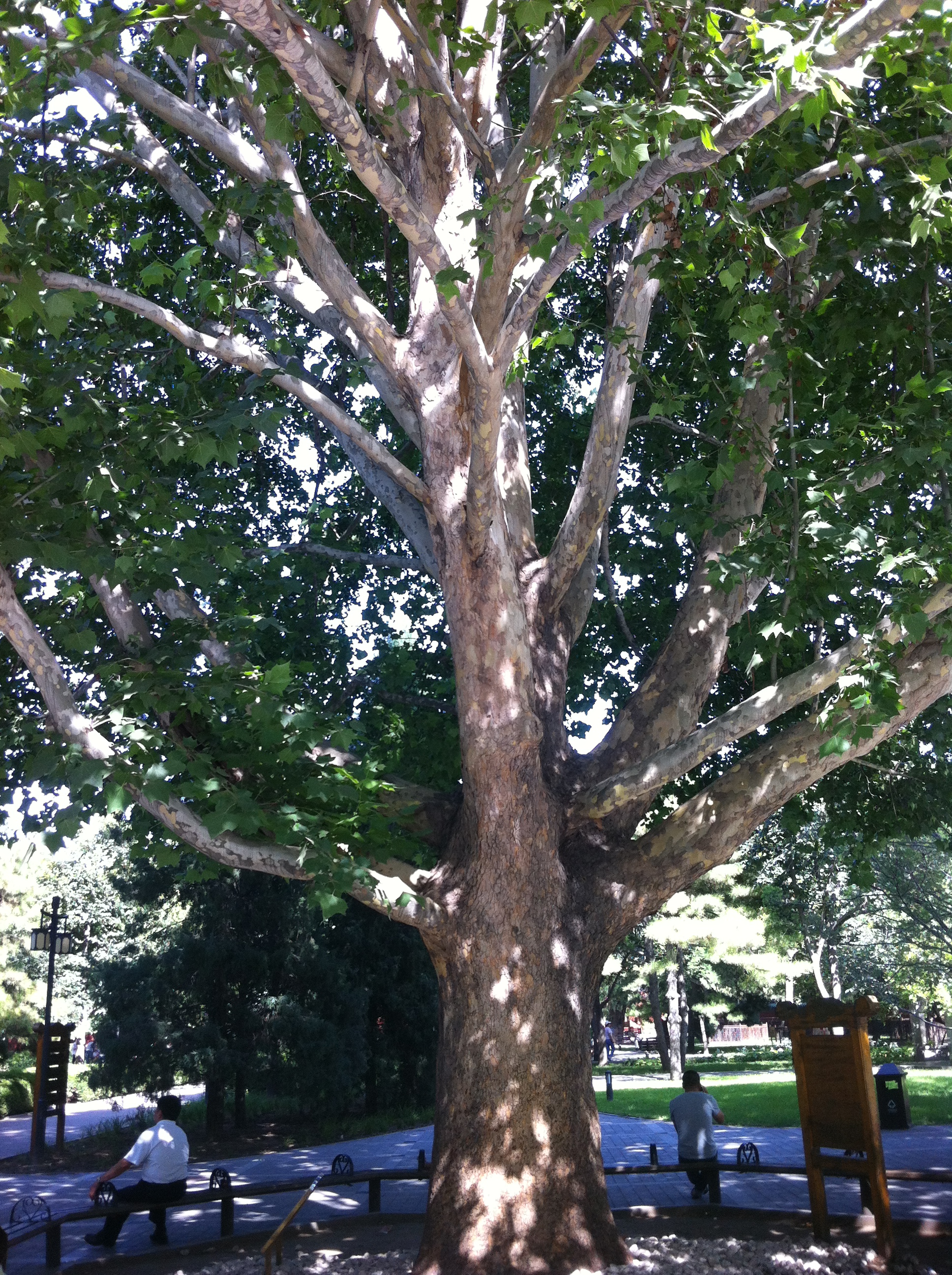
I remembered that glorious moment of discovery yesterday when, visiting Ritan Park in Beijing on a beautiful day with a blue and – that rarest of things in this city – clear sky, we found ourselves sitting in the shade of a lovely plane tree.  It was not as majestic as the specimens we had discovered in Spain, but it was still arresting. It had been manicured so that it grew more regularly in all directions, and a bench had been arranged around it in a wide circle.

ritan park 002

ritan park 003

We just sat there, drinking in the quiet beauty of it all.

POSTCRIPT:

One year on from writing this, I must report the saddest of news. Seventy years ago, US soldiers disembarked in Italy, carrying with them munitions boxes made with wood of the American plane tree. That wood contained a fungus, Ceratocystis platani, unknown to the plane trees in Europe and against which they have no defence. It has left Italy now and is slowly spreading throughout the rest of Europe. Eventually, it will kill millions of plane trees throughout Europe. This was reported by the BBC, where they were saying that the thousands of beautiful plane trees planted along the Canal du Midi

canal du midi plane trees

are becoming infected and will have to be cut down and burned.

Canal du midi plane trees being burned

I fear that the same fate will soon be shared by those lovely old plane trees in the Jardin del Principe. One more tragedy caused by the global movement of goods and people – and bugs that go with them for the ride.

_____________________________
plane trees on a street: http://animestoi.midiblogs.com/media/02/01/2964573664.jpg
photos of the Plane trees in the Jardin del Principe, Aranjuez:
first: http://mw2.google.com/mw-panoramio/photos/medium/14735886.jpg
second: http://2.bp.blogspot.com/-sCRByt2Qd6s/UUsvkfma43I/AAAAAAAAZ10/eTOTJ_kaYxQ/s640/Platanos+de+sombra+Aranjuez+01.JPG
third: http://turismoenaranjuez.com/sites/default/files/otonojardinprincipe_0.jpg
photos of the plane tree in Ritan Park: mine
Canal du Midi: http://news.bbcimg.co.uk/media/images/56128000/jpg/_56128150_canalview624.jpg
Canal du Midi-plane trees being burned: http://4.bp.blogspot.com/-4yIXXHCnDRY/UYN1Ru6K3yI/AAAAAAAAAuM/16Cdm8bNqT4/s1600/Canal+du+midi+abattage+PK+143+%25287%2529.JPG

THE OLYMPIC FLAME

Beijing, 29 July 2012

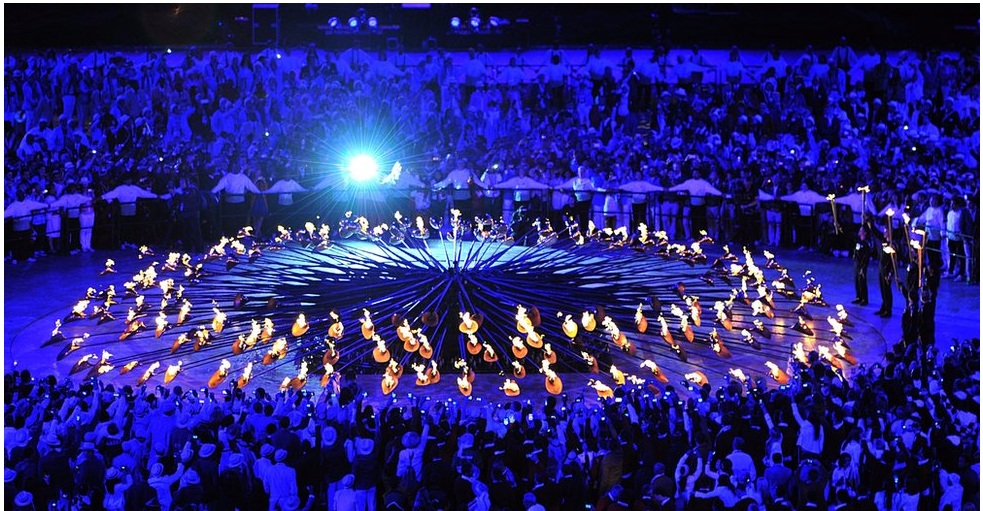
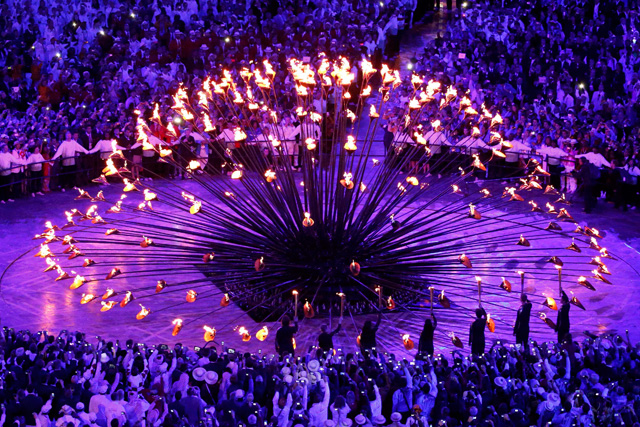
My wife and I managed to crawl out of bed at around 4 am to watch the opening ceremony of the Olympic Games. It had already started, and by the time we joined the billion or so people watching, the show was celebrating the NHS. We missed the Green and Pleasant Land, the Dark Satanic Mills, the Forging of the Olympic Rings, and – worst of all! – the Queen and James Bond parachuting. No matter, we watched the rest, letting ourselves ride along with the slightly manic fun of it all (I don’t know what non-Brits made of it; I’m British but I’ve been out of the country for nigh on 40 years and found a good number of the references quite baffling). We patiently watched as all the country teams filed into the stadium, commenting on costumes and trying to guess which would be the next country, listened politely to the various speeches and Olympic oaths, until we finally got to the lighting of the Olympic flame, or should I say Olympic cauldron.

We had vaguely followed the discussions on who might be the person honoured to light the flame, but I must say I was deeply touched by the – very Olympic – decision  to go for inclusion, to have the honour shared between seven athletes. And not just shared, but shared by young, promising athletes each chosen by a respected past Olympian.  It gave real meaning to the Games’s slightly cheesy motto Inspire a Generation. And that cauldron! That is truly a beautiful piece of design. It was breathtaking to watch those seven initial flames spread and spread in ever smaller circles until all 204 flames were lit. But I’m always stirred by design with a deeper meaning, and I loved this idea of 204 separate flames, each representing a nation competing in the Games, once lit slowly coming together as one flame: we compete individually, but we are one world.

Olympic-Cauldron-1

Olympic-Cauldron-2

Olympic-Cauldron-3

Olympic-Cauldron-4

Olympic-Cauldron-5

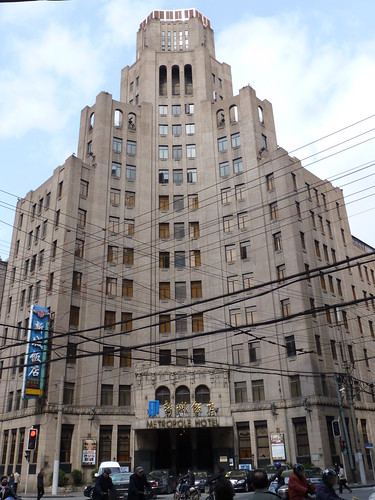
P.S. For those of you interested in design, Thomas Heatherwick, the designer of the Olympic cauldron, also designed the UK Pavilion at the 2010 Shanghai Expo, the so-called Seed Cathedral. I had to visit the Expo as part of my work. Much of it I found dreary and superficial. The UK pavilion was one of the few that made the experience worthwhile.

uk-pavillon-expo-shanghai

_____________
pix come from:
Olympic cauldron:
http://www.doubleglazingblogger.com/2012/07/the-olympic-opening-ceremony-proud-to-be-british/
http://www.interaksyon.com/interaktv/seven-teenagers-light-olympic-cauldron
http://www.designboom.com/weblog/cat/8/view/22698/heatherwick-studio-2012-london-olympics-cauldron.html
UK pavilion:
http://architecture.mapolismagazin.com/heatherwick-studio-uk-pavillon-expo-shanghai-2010-shanghai

MANIFESTO

28 July 2012

There is so much beauty around us! Through my whole life my heart has thrilled at this beauty, which comes in so many forms: the arrestingly beautiful object, the bars of music that stir the soul, the words that transfix, a gesture that holds the gaze. It can come in set pieces, but often it is just a fleeting view, a momentary splash of colour on colour at the turn of the road, no more. Now finally, as I near the age of 60, I have decided to record this beauty as I come across it, to share it with others who love beauty.