MY PSYCHEDELIC TIES

New York, 1 January 2013

My last post has brought back a memory from when I was a teenager. I went to a boarding school that was located some twenty miles from the nearest major train station, so at the beginning and end of each term buses would bring us to and from the station. The bus ride back to school at the beginning of the term was a staid affair, everyone quietly talking or just meditating. The bus ride back home at the end of term was an altogether more riotous event. Bawdy rugby songs were sung at high volume, starting from the back of the bus where the bad boys sat, and what in a different era were called “off-colour” jokes were retold loudly and with relish. This album cover conveys the general idea, although we did keep our clothes on.

rugby songs

One element of the journey home was that we would all wear the loudest possible ties. I should explain that while we did not wear uniforms as such at our school, sports jackets were de rigeur along with a tie. Not just any old tie; a black tie. All of us, all term, wore a black tie.

black-tie-2

The only exceptions were school and house monitors as well as the sporty types who won their cricket, rugby or other colours for exceptional gamesmanship.  We had many theories about why we all had to wear ties of such a lugubrious colour; the one I remember has to do with commemorating the deaths of several boys in a fire decades ago in one of the school houses (no girls; this was a boys’ school).

Whatever the reason, on the last day of term we threw off that horrible black tie and marched onto the bus each with a tie louder and – given the times – more psychedelic than the last. These photos give an idea of the sudden blast of colour we offered each other:

sixties-ties-3

sixties-ties-2

Getting onto the bus was to take part in a fashion cat walk, with comments about each tie and loud cheers for the brightest. We all came back to school with a secret hoard of bright ties, from which we selected one to parade that last morning in front of our peers. And then off we went, singing our bawdy rugby songs.

What happened to my psychedelic ties? Gone, I think, with other mementos of my youth when my sister, tired of seeing me not collect that suitcase which I had asked her to store in her attic, threw it and its contents out.

suitcase in trash

So goes life.

____________________
Rugby songs album: http://farm4.static.flickr.com/3126/3086393712_13bffb7baa.jpg
Black-tie: http://100days100ties.files.wordpress.com/2011/01/black-tie.jpg
Sixties-ties-1: http://img.ehowcdn.com/article-new/ehow/images/a06/q3/of/men_s-fashion-60s-1.1-800×800.jpg
Sixties-ties-2: http://t1.gstatic.com/images?q=tbn:ANd9GcSLL3ymfg76pRMQkN79f7YMTuTYx8Ftz4I_Srr46O7eIhIHs48IAxr5HDgs
Suitcase in a trash can: http://hilariousnyc.com/wp-content/uploads/2010/12/Suitcase-Trash-Can.jpg

A COLOURFUL MAN IMPRISONED IN A GREY MAN, WILDLY SIGNALLING TO BE LET OUT

New York, 31 December 2012

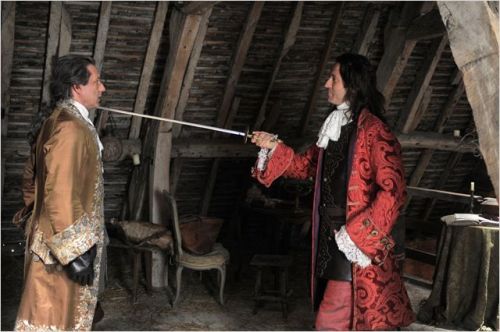
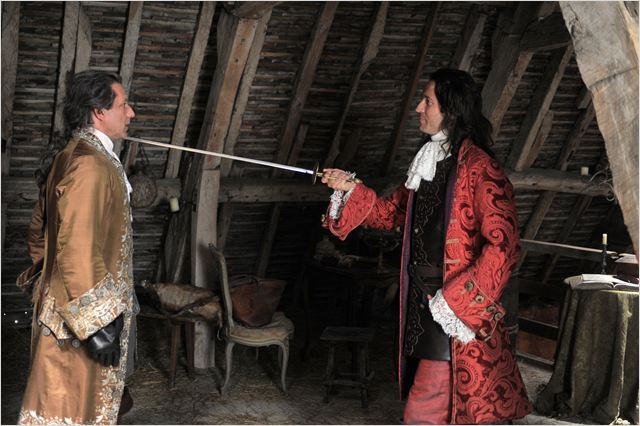
A few weeks ago, I was watching a French TV show in Beijing called Nicolas Le Floch. This is a detective series set in France in the late 1700’s. It’s really quite amusing to see the detective genre unfolding in such an incongruous setting. But actually I mention the show for an altogether different reason: as I followed the tortuous plot, I was struck en route by how colourful the men’s clothes were in that period, as this still from one of the shows attests

floch-colourful clothes

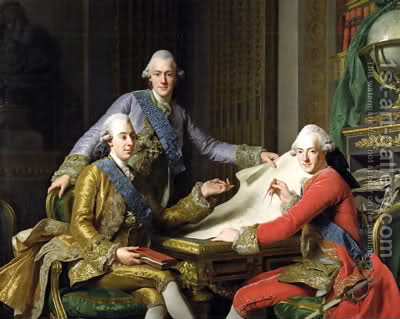
Just to make the point, I throw in a few photos of portrait paintings from the period:

17thC-1

17thC-2

17thC-3

17thC-4

And to top it all, in France at least the men wore make-up! This still is of Le Floch’s boss, the chief of police:

floch-made-up-man

Quite a change from Inspector Japp of the Poirot series …

inspector japp

This blaze of bright men’s clothing made me reflect on the dullness of my own wardrobe. All my official clothes – those I wear for work – are of subdued colouration: grey or discrete browns, greens and dark blues. The vast majority of my shirts are white, with one or two blue ones. The only way I can exhibit my love of colour in an official setting is through my ties, of which I have collected a large assortment over my career. Even the clothes I wear in my private life are modest in their colouration; I can boast of a few brightly coloured T-shirts and that’s it.

I merely reflect the sartorial conventions of our times. Today’s serious men do not wear colours, as these pictures of the powerful bear out.

The new Chinese leadership (although note the discrete dash of colour in the ties):

Politburo

A lineup of the G8:

G8: TUTTI LEADER A COPPITO, VERTICE L'AQUILA

A lineup of the EU heads of state:

EU

Why this greyness, this dullness, this soberness? I am no historian of fashion, but I am sure that the answer lies in this: serious men, the thinking goes, do not wear colours. Brightly coloured clothes denote ditziness, frivolity and general silliness. A man in brightly coloured clothes cannot possibly balance a budget or write a piece of legislation or do any of those other serious things required of him. I mean, can you imagine these men running a company or a government? Please!

red suit

light blue suit

indian colourful jacket

coloured clothes

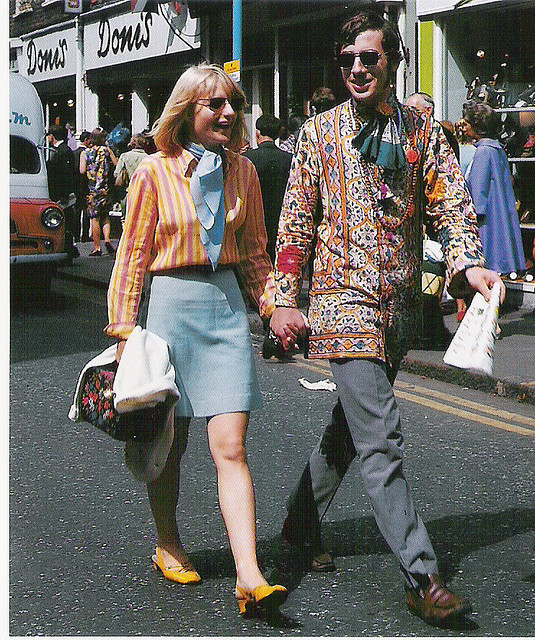
The only time I can think of in my lifetime when men went around in clothes vaguely resembling those of the eighteenth century was the 1960s when flower power burst upon the scene:

carnaby street-1

carnaby street-2

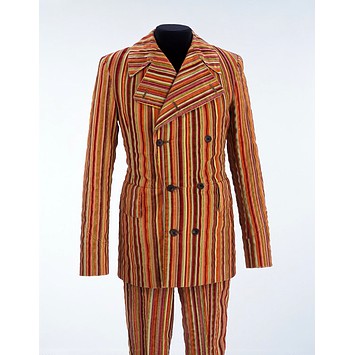
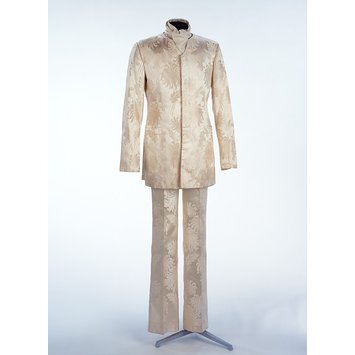
These two suits come from the Victoria and Albert’s collections:

sixties-suit-2

sixties-suit-4

But the people who wore these clothes were completely unserious people, people who were into drugs, sex, and rock and roll, as the album covers of the time amply demonstrate:

beatles-sgt pepper album cover

beatles-yellow submarine

rolling stones

Jimi Hendrix

PinkFloyd-album-piperatthegatesofdawn

So I suppose in my lifetime, if I want to be taken seriously, which I do, I will be condemned to wearing dull coloured clothes, with only a dash of colour in my ties. I will, paraphrasing Cyril Connolly’s famous phrase, be a colourful man imprisoned in a grey man, wildly signalling to be let out.

___________________
Floch colourful clothes: http://images.allocine.fr/r_640_600/b_1_d6d6d6/medias/nmedia/18/81/96/02/19955662.JPG
18thC-1: http://i47.tinypic.com/2j4tvl0.jpg
18thC-2: http://i47.tinypic.com/mwz14n.jpg
18thC-3: http://i48.tinypic.com/atp6l2.jpg
18thC-4: http://i50.tinypic.com/e6q1d1.jpg
Floch made-up face: http://cdn.static.ovimg.com/episode/3270971.jpg
Inspector Japp: http://ic.pics.livejournal.com/phantomphan1990/11963571/118817/118817_original.gif
Politburo: http://l2.yimg.com/bt/api/res/1.2/afKIpJHhH4TpWmLewt8S6A–/YXBwaWQ9eW5ld3M7Zmk9aW5zZXQ7aD0xMDI0O3E9Nzk7dz0xNjYw/http://media.zenfs.com/en_us/News/Reuters/2012-11-15T044703Z_283609896_GM1E8BF0ZB101_RTRMADP_3_CHINA-CONGRESS.JPG
G8: http://www.google.com/imgres?q=G8+photo&hl=en&tbo=d&biw=1280&bih=683&tbm=isch&tbnid=SPoOXwx3iorBWM:&imgrefurl=http://www.g8italia2009.it/G8/Home/Media/Foto/G8-G8_Layout_locale-1199882116809_1246708086733.htm&docid=_9F5adpgS1UWjM&imgurl=http://www.g8italia2009.it/static/G8_Foto/_MB24968.jpg&w=3000&h=1870&ei=z1rgUM6-LNO40AHFtIC4Ag&zoom=1&iact=hc&vpx=161&vpy=295&dur=8059&hovh=177&hovw=284&tx=173&ty=111&sig=109352013111727269517&page=1&tbnh=141&tbnw=215&start=0&ndsp=24&ved=1t:429,r:7,s:0,i:108
EU: http://i.dailymail.co.uk/i/pix/2012/05/24/article-2149193-13413A49000005DC-413_634x252.jpg
Red suit: http://kontraplan.com/site/wp-content/uploads/2012/04/Lanvin-Mens-SS12-Collection-kontraPLAN-magazine-6.jpg
Light blue suit: http://www.thestyleking.com/wp-content/uploads/2011/07/Coloured-Suits.jpg
Indian colourful jacket: http://timesofindia.indiatimes.com/photo/10019988.cms
Coloured clothes: http://4.bp.blogspot.com/-QuyZgxyFQ70/T-xNoZ-tloI/AAAAAAABK3M/5orvLpQt_0o/s1600/Milan+Mens+Fashion+Week+Salvatore+Ferragamo+Spring:Summer+2013+Runway+Show_0143.JPG
Carnaby street-1: http://media.vam.ac.uk/media/website/uploads/images/2006BE8980_carnaby_street.jpg
Carnaby street-2: http://farm3.staticflickr.com/2082/2128638387_ae4fb5b36a_z.jpg?zz=1
Sixties suit VA-2: http://media.vam.ac.uk/media/thira/collection_images/2006AW/2006AW4489_jpg_ds.jpg
Sixties suit VA-4: http://media.vam.ac.uk/media/thira/collection_images/2006AB/2006AB6007_jpg_ds.jpg
Sgt Pepper album cover: http://greatalbumcovers.files.wordpress.com/2012/02/album-covers-bealtes-1.jpg
Yellow submarine album cover: http://3.bp.blogspot.com/-YgGhq-2XQ8E/T9kztOsJPwI/AAAAAAAAC4k/VeHN6M72Tqg/s1600/The+Beatles+-+Yellow+Submarine.jpg
Rolling stones: http://pokingsmot.net/wp-content/uploads/2012/02/The-Rolling-Stones-Their-Satanic-Majesties-Request-Album-Art-468×411.jpg
Jimi Hendrix: http://www.rockstargallery.net/wp-content/uploads/2011/12/Hendrix-AYE-Front-Cover.jpg
Pink Floyd: http://upload.wikimedia.org/wikipedia/en/3/3c/PinkFloyd-album-piperatthegatesofdawn_300.jpg

MELANCHOLY

Beijing airport, 7 December 2012

Perhaps it is the tiredness that is seeping into my bones as I wait at the airport to take my third flight this week, or perhaps it is the piercing cold that has descended on the north of China these last few days, but I find myself in a melancholy mood. My last post on red hair is making my mind wander off to a sad tale of a young woman who lived and died long ago, decades before I was born.

My mother was the source of the tale, which she in turn had received from her mother. The events took place in the early 1900s, when my grandmother was in her early twenties. It was that moment in the lives of young women of a certain class – to which my grandmother firmly belonged – when their attention was increasingly taken up by their matrimonial prospects. If a woman was not married by her mid-twenties, she was considered an old maid and condemned to spinsterhood, which meant living with her parents for the rest of their lives and eking out a modest living thereafter off the kindness of her family; working was of course unthinkable. It was a fate to be avoided at all costs.

My grandmother was very friendly with the girl next door, who was close to her in age. This girl’s main claim to beauty was her wonderfully long, auburn, hair. The girl’s father was a wine merchant, as were many in that region. Perhaps too many, because he went out of business and was bankrupted. This was a catastrophe for the whole family, never more so than for the girl. For now there was no money for her dowry, and in those days a girl without a dowry simply could not marry (or could only marry beneath her station, which was unthinkable). The father compounded the calamity by committing suicide, to save his honour it was said.

A solution was found for the girl’s younger brother. He was placed with an uncle who was working in Romania, in the wine industry. But as I said, work was not a solution for the girl. She was faced with the prospect of passing the rest of her life with her mother, with no likelihood of ever marrying, living off some miserable amount of money.

But in this dark time, she met a man, who made promises. And she succumbed to his blandishments. He got what he wanted, but he reneged on his promises. She came to see my grandmother one evening to tell her all this. She stood in front of the mirror and looked at her hair, and said “No-one will ever be able to enjoy this hair after all.” My grandmother tried to comfort her, telling her that things would look better in the morning. The girl thanked her, hugged her and left. She was found a few days later floating in the river than ran through town.

I think of her every time I see the painting of Ophelia drowned, by the pre-Raphaelite Millais.

ophelia-drowned

But I don’t suppose the girl looked nearly so nice when they hauled her out of the river.

Ah, they’re calling the flight. I might get to bed before midnight.

_________________

Ophelia drowned: http://2.bp.blogspot.com/-NsRjraTWfLI/TmDuDyK05LI/AAAAAAAAATs/XzybC5ru9uk/s1600/Drowning%253F.jpg

BLUE EYES: PERSONAL MEMORIES

Beijing, 18 November 2012

In my last posting, I did not reveal if I am or not one of the millions who carry that little mutation in my DNA which codes for blue eyes. Well, … I think I do. My mother certainly carried the mutation because she had beautiful baby blue eyes, as did her brother. She once told me that her father also had blue eyes, although I have no direct confirmation of this. He died in the 1930s of tuberculosis. The only indirect confirmation I could have would be from photos. But photos with him in them are black and white and taken from a distance, and all I can see is his illness in his hollowed face. In any event, he must have carried the blue-eye gene, because otherwise my mother could not have had blue eyes. The gene for blue eyes is recessive and must be inherited from both parents to be expressed. So my maternal grandmother must have carried it too, although she definitely did not have blue eyes. As I dig into my memory for her face, I think I see hazel eyes.

My father’s eyes were brown, as were those of his brother and sisters. He inherited the gene for that from his father, although here too I have to depend on indirect evidence: a painting of him that hung in my paternal grandmother’s living room, in which his eyes were definitely brown. He also died in the 1930s, from leptospirosis, which he caught on the Norfolk Broads. From my grandmother my father inherited a blue-eye gene because she had beautiful blue eyes. By the time I knew her they had faded a little and her hair had turned completely white. But as a younger woman, she had dark hair: blue eyes and dark hair, she must have been a striking woman.

So my father had one brown-eye gene and one blue-eye gene, while my mother had two blue-eye genes. One of my sisters inherited my father’s brown-eye gene because her eyes are brown. My two brothers inherited the blue-eye genes from both sides pure and unadulterated, because they both have blue, blue eyes. The rest of my sisters have eyes with varying shades of green: I guess part of their DNA is pushing for some level of melanine in their irises.

As for me, my mother used to say that the colour of my eyes was caca d’oie, or goose poop. Anyone who has looked closely at defecations from geese will immediately recognize the allusion: green with brown streaks.

my eyes

THE SCENT OF WATER

Beijing, 12 October 2012

How would you describe the scent of water? This evening, as I reached the bridge which crosses my piece of canal a gentle breeze lifted the scent off the water’s surface and wafted it over to me. And I asked myself that question.

Let me take a leaf out of wine reviews and try a little of their purple prose: “I sense a hint of moss, with an undercurrent of peat, perhaps a whiff of algal respiration”. But actually what I was smelling was my childhood. Don’t you find that scents are a powerful trigger of memories? I do: a drift of scent will suddenly have me awash in memories. And so it was that as I crossed the bridge I was suddenly ten years old again, on my grandmother’s sail boat on the Norfolk Broads, moored at her buoy on Barton Broad. The sun has set, a light breeze is blowing off the water bringing me the scent of the Broad’s peaty water, and small waves are slapping quietly at the boat’s hull. A grebe calls out in the night.

I loved the Broads. My grandmother spent most of her summer on the boat, taking her numerous grandchildren in shifts of two weeks. I must have gone five years in a row. The sailing didn’t really excite me; it was kayaking among the rushes and in the little creeks on the edges of the Broads that I loved, watching the wildlife and discovering small marsh flowers at every turn.

But I grew up, and my grandmother grew old, and life moved on.  I stopped going and haven’t been back since. Yet I am sure that the Broads made me what I am today: an environmental engineer who for more than thirty years has tried to push back the tide of waste threatening to wash away the natural beauties that are around us.
__________________
pix from:
http://maalie.blogspot.com/2010/08/kayaking-on-norfolk-broads.html
http://news.bbc.co.uk/local/norfolk/hi/people_and_places/nature/newsid_8090000/8090224.stm

A CARPET OF NASTURTIUMS

San Francisco, 24 September 2012

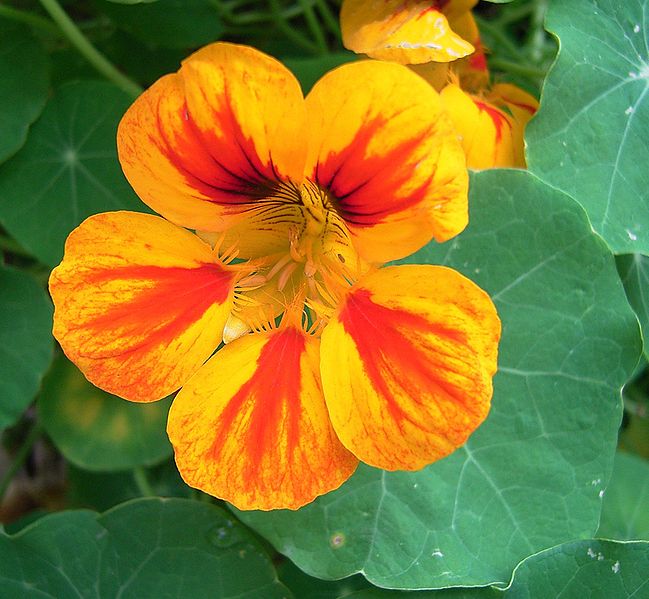
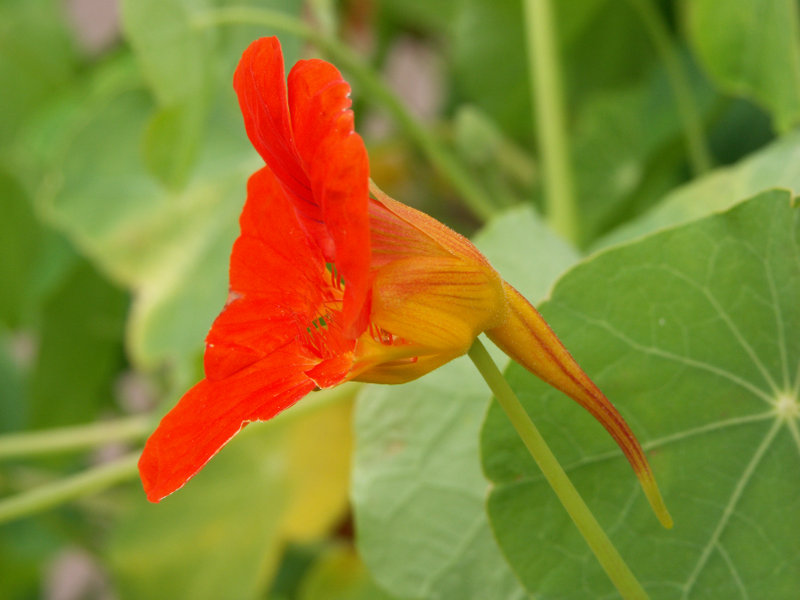
While in San Francisco (see the previous post), we did a few touristy things. One of these was a bus tour of the city. Our guide and driver, a chatty fellow prone to making politically incorrect comments, took us down to the bay shore below the Golden Gate Bridge. From there, he invited us to take advantage of the only toilet stop on the tour and admire what he intriguingly called an excellent example of industrial art nouveau – never heard of that category of art. But what I admired more was a veritable carpet of tropaeolum majus, or garden nasturtiums, tumbling down the slope on the side of the road. I had never seen so many nasturtiums before.

I love nasturtiums. In my previous post, I mentioned my childhood memory of morning glories. Another memory from the same period is of nasturtiums growing luxuriantly up the wall of our house, under my elder sister’s bedroom window (the window through which I spied on her “carrying on” with her boyfriend, who proceeded to give me money for an ice-cream to get rid of me). I fell in love with the flower’s fiery colour scheme, red, orange and yellow, against a background of smooth round green leaves. And at some point, I had learned to pick a flower and suck the nectar out of the nectar spur at its base. It gives your taste buds a delightfully tiny burst of soft sweetness.

I loved nasturtiums so much that when my mother gave me a small strip of land in the garden to plant as I wished I chose to plant nasturtium seeds. I watched carefully as the little plants emerged and started to grow. And I still remember sharply my concern when my parents decided to have a nearby tree cut down. It looked alarmingly like the tree was going to fall on my nasturtiums. I sat there with the whole family, watching the tree cutters proceed. My siblings found the whole thing exciting and chattered along happily. But I was in an agony of apprehension for my nasturtiums. Sure enough, the tree fell on them and flattened them. What misery!

I close with a recipe. I discovered recently that both the flowers and the leaves of nasturtium are edible. This particular recipe is from the following web site: http://fruitandveggieville.blogspot.com/2008/06/flowers-you-can-eat-nasturtiums.html.

“Recipe for a Nasturtium Salad
­       1 lettuce – iceberg, butter or cos
­       small bunch of nasturtiums – leaves and flowers
­       ripe red tomatoes
­       1 tablespoon capers
­       feta cheese

Decide quantities to your own taste. The nasturtium leaves are peppery and the more you put in the hotter the salad gets. Wash and dry the lettuce and tear into the size pieces you prefer. Rinse the nasturtium leaves, and tear or chop into rough strips. If you’re using baby tomatoes halve them, chop bigger ones into cubes. Cube the feta cheese and sprinkle over the salad with the capers. Top with the whole flowers and maybe one or two whole leaves. This peppery, bright salad is just right to accompany pizza, cold meats or as a starter on its own.”

Enjoy!

A CLUSTER OF MORNING GLORIES

San Francisco, 23 September 2012

We left this morning for San Francisco, to visit our son. We were up early, and since it was a beautiful morning – the sky was a cloudless clear blue – we decided to walk to the station to catch the train to the airport. The walk took us past our local supermarket, the modest housing estates that cluster around it, past the smart office buildings along the Third Ring Road, and finally along a rough semi-constructed path that follows the highway out to the airport until the stairs to the station are reached. The last stretch of our walk reminded us that Beijing is still constructing itself. It is one of those pieces of land that get left behind in urban renewal projects, stuck between new constructions – in this case, the highway on one side, modern office buildings on the other – and are fast going feral. Weeds were growing in abundance along the side of the path and covering the construction rubble underfoot, rogue trees were beginning to push up through the cracks, the fencing along the path was rusting and bent. We picked our way along, weaving to avoid the commuters streaming in to work, with the suitcase stumbling behind us over the rough paving.

Suddenly, there, in the shade of the early morning sun, was a cluster of morning glories flowering on the fence. The plant itself is nothing much to write home about; it has the weak tendril-like stalk of a climbing plant and the leaves are a drear matte green. But the flowers were magnificent – a cool, dark violet colour, almost phosphorescent in its intensity. I’m guessing they were Ipomoea purpurea, the purple or common morning glory. We stopped for a minute to admire them, but we were in a hurry now and had to move on.

As I write this, my mind’s eye suddenly whirls off half a world away and I find myself walking down the main coast road south of Genova, just as it enters the village where we used to spend our summers when the children were young. I am next to the cemetery; the village dead have the best view, out over the coast to the distant promontory. It’s a beautiful summer morning. Down in the cleft where a creek runs off the hills behind me, the morning glories have run amok, covering and smothering everything. But the flowers are open, beautiful in the morning light, cool, dark, violet.

And my mind’s eye whirls off again, this time alighting in the town in Africa where I was born. More than fifty years have passed and the memory is fading. But I see a wall – is it in a park, in a garden? – covered in morning glories, glowing in the morning light, cool – dark – violet.

OLYMPUS DIGITAL CAMERA

_____________

picture: http://georgeswebpage.com/almanac

PASSION FOR NORTHERN SONG PORCELAIN

Beijing, 6 September 2012

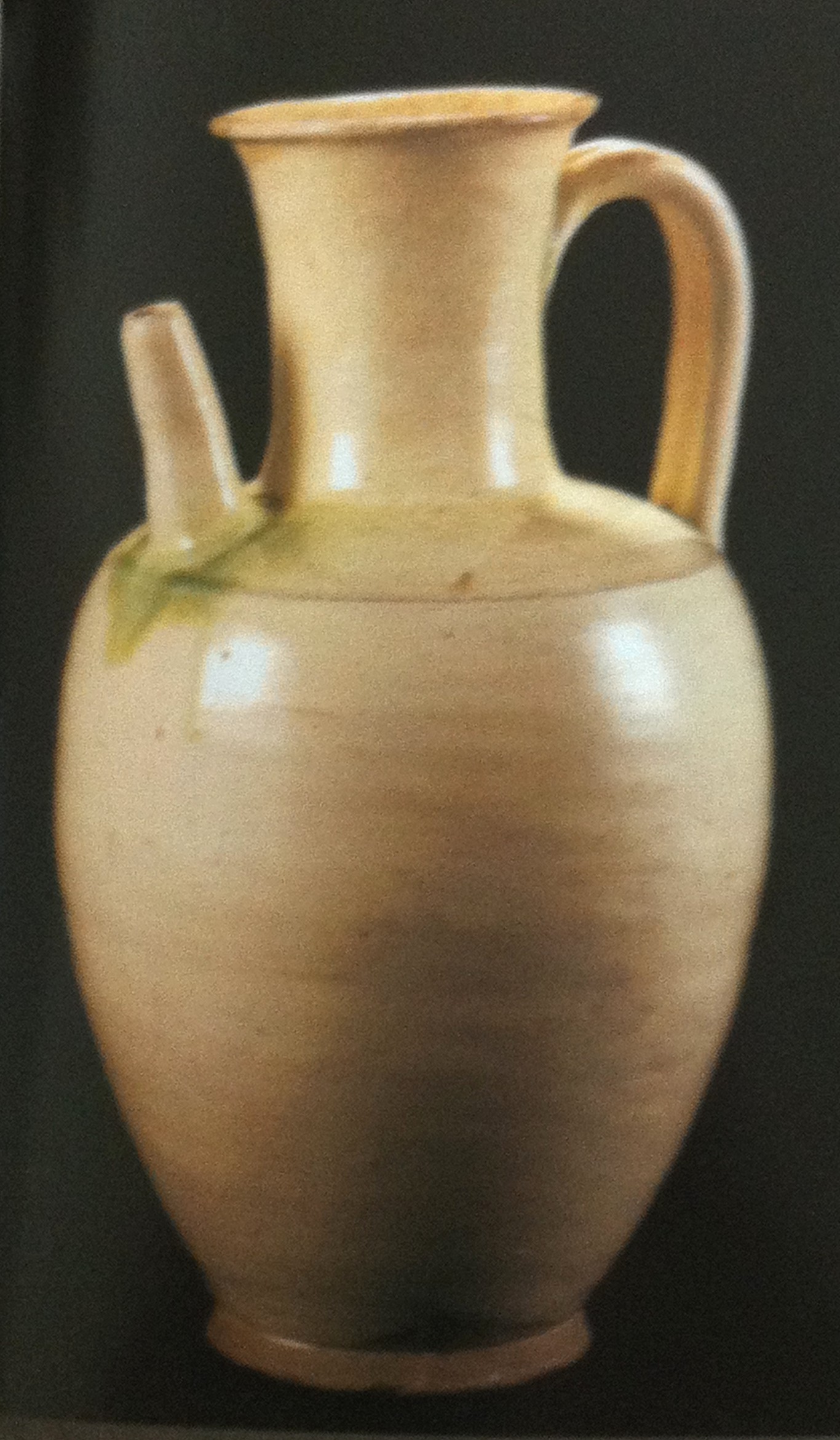
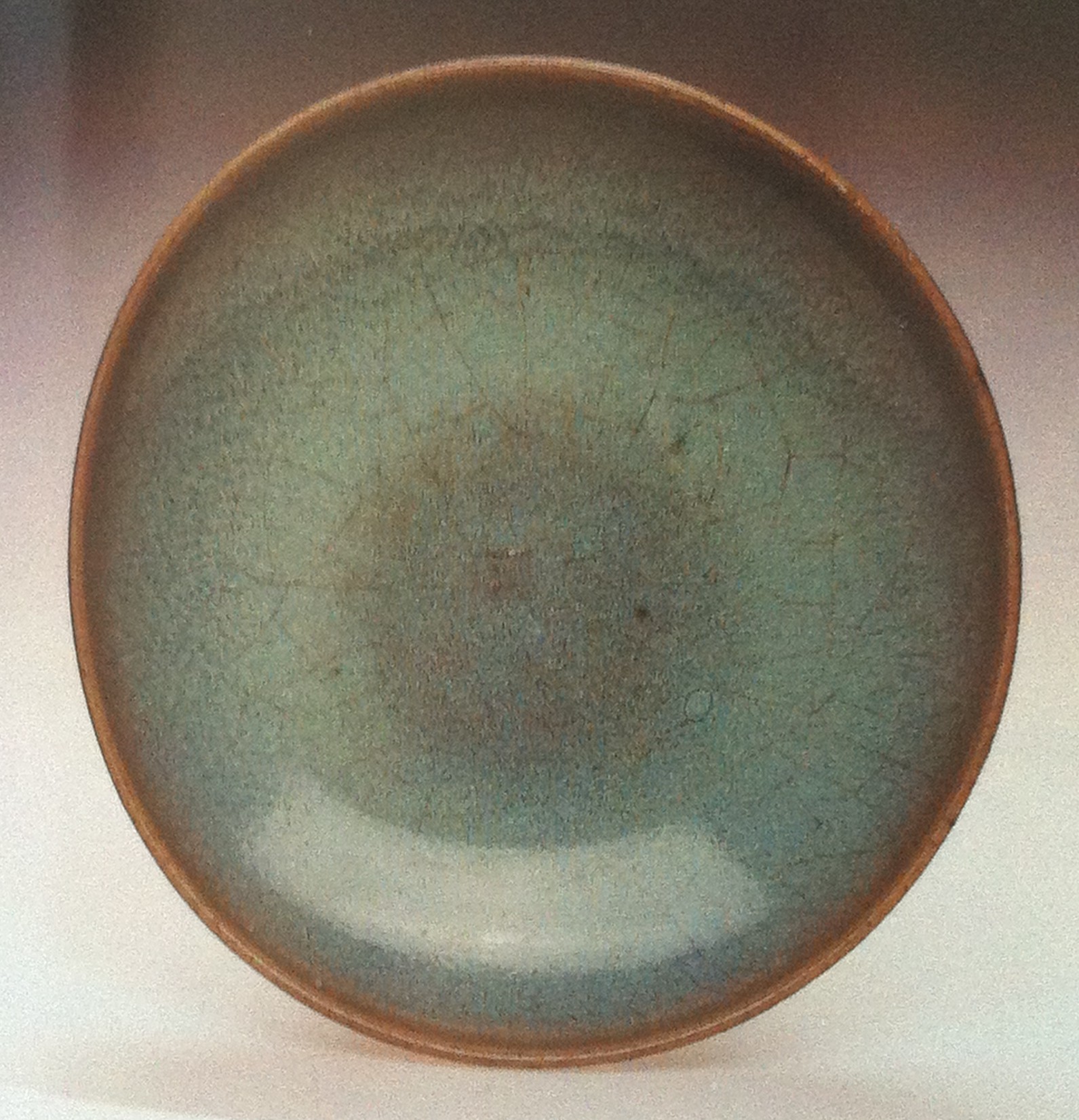
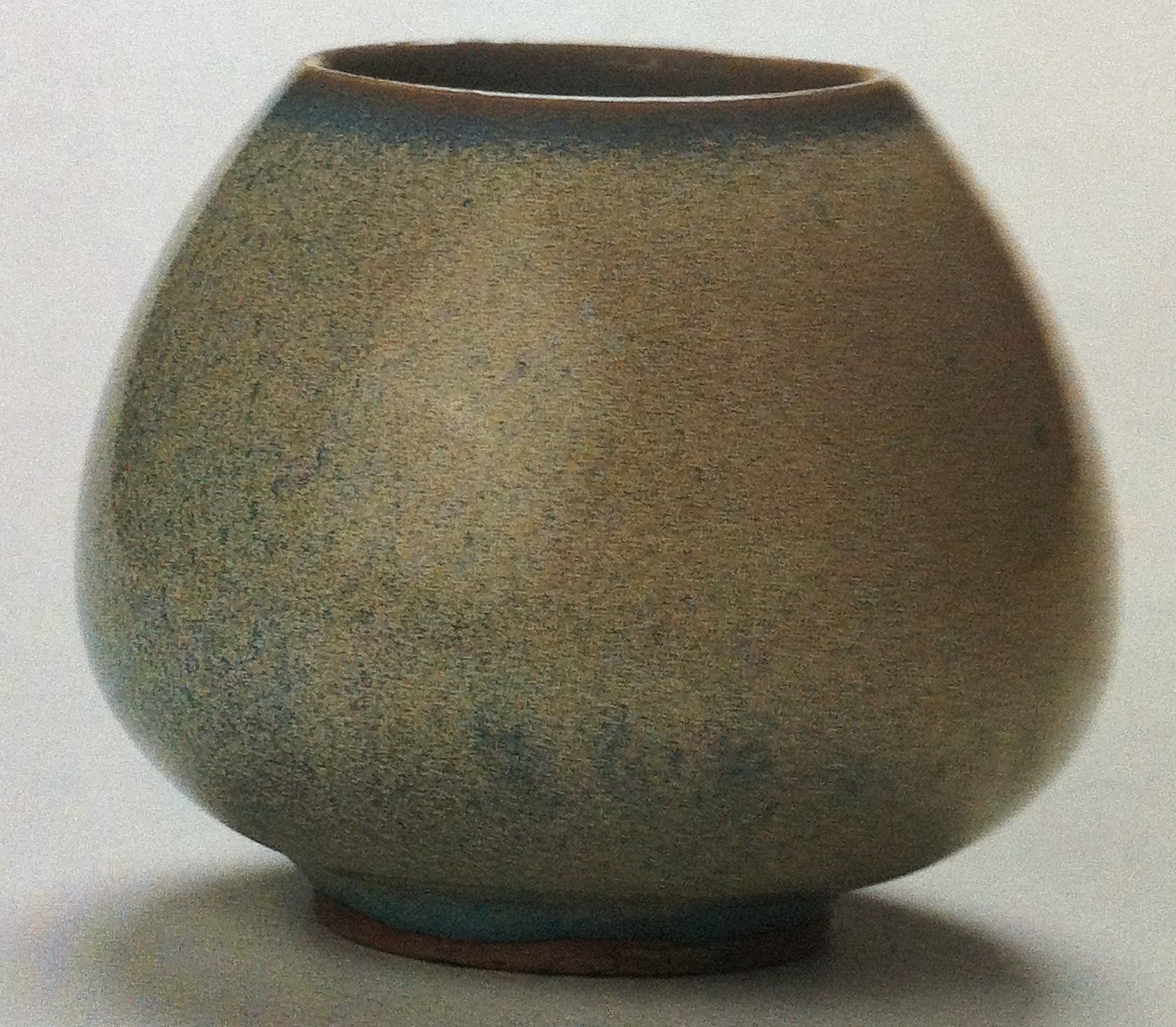
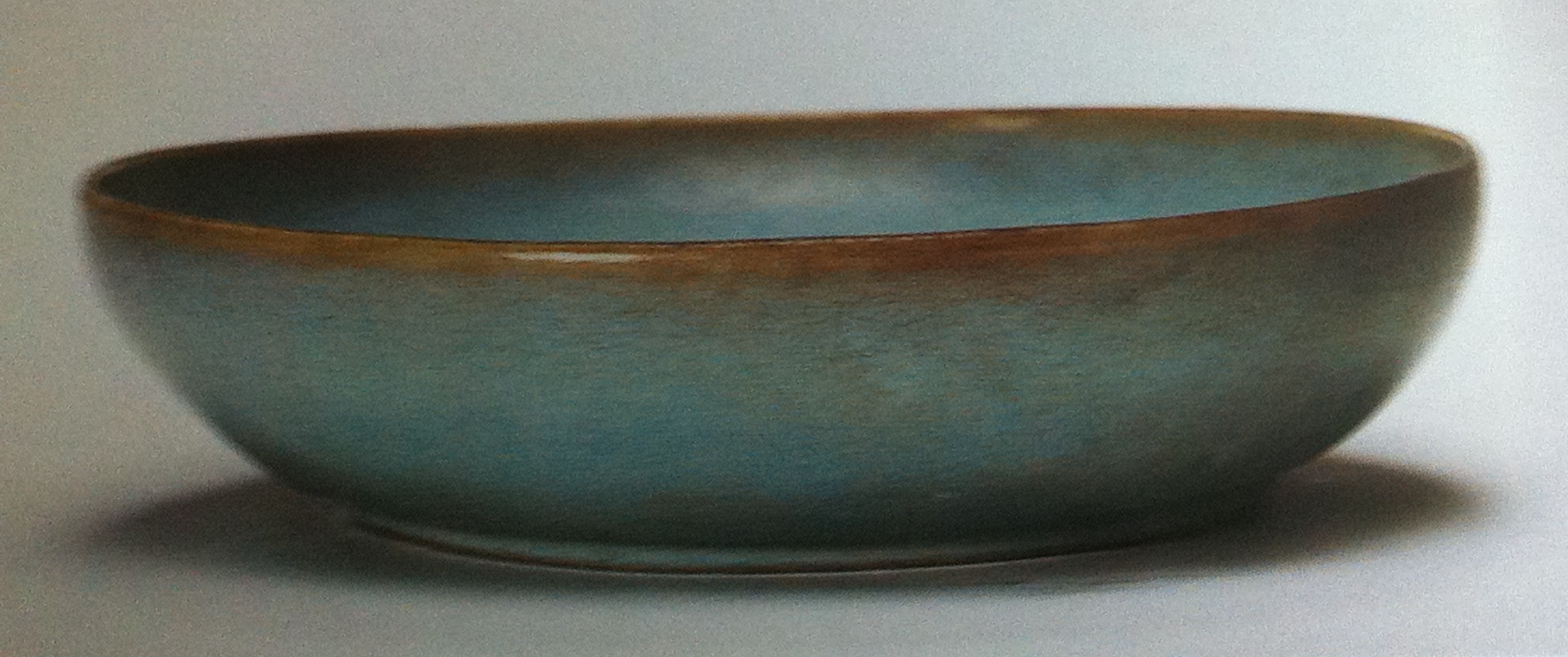
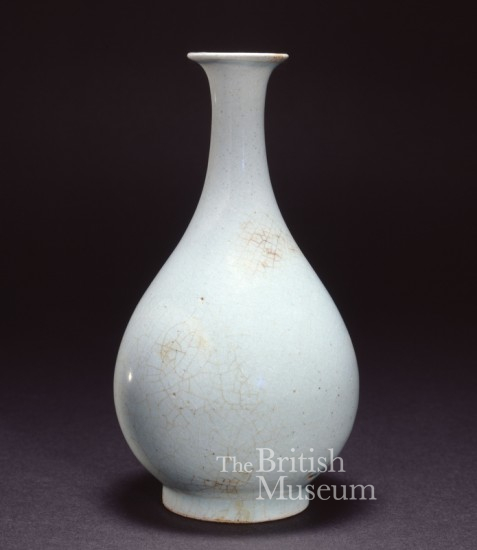
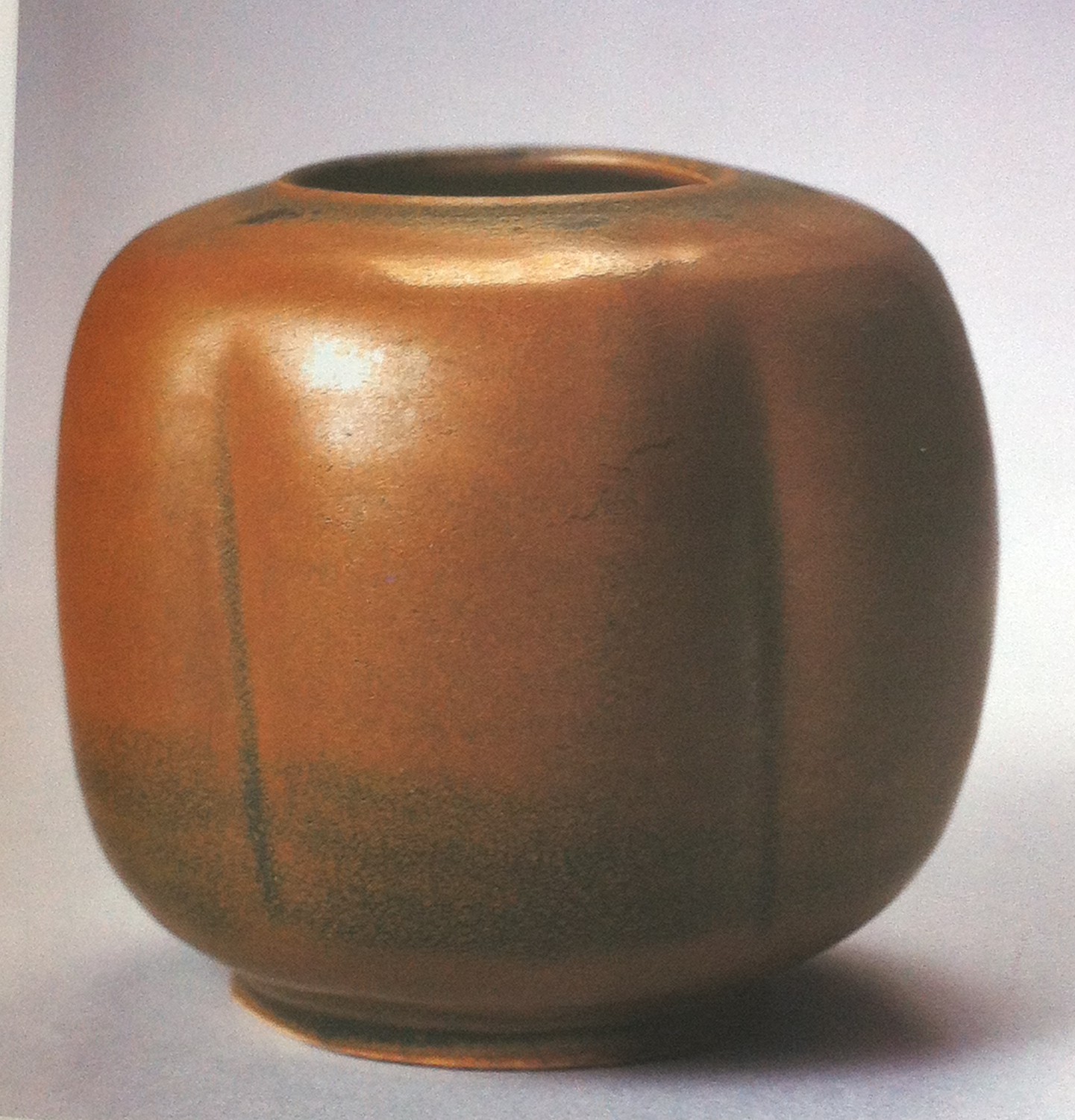
I intimated in my last post, on the exhibition “Passion for Porcelain”, that the exhibition’s coda reduced the rest of the exhibition to nothing. In the main, the final pieces were from earlier periods.  I was especially entranced by two pieces, made during the Northern Song dynasty, 960-1127 AD.


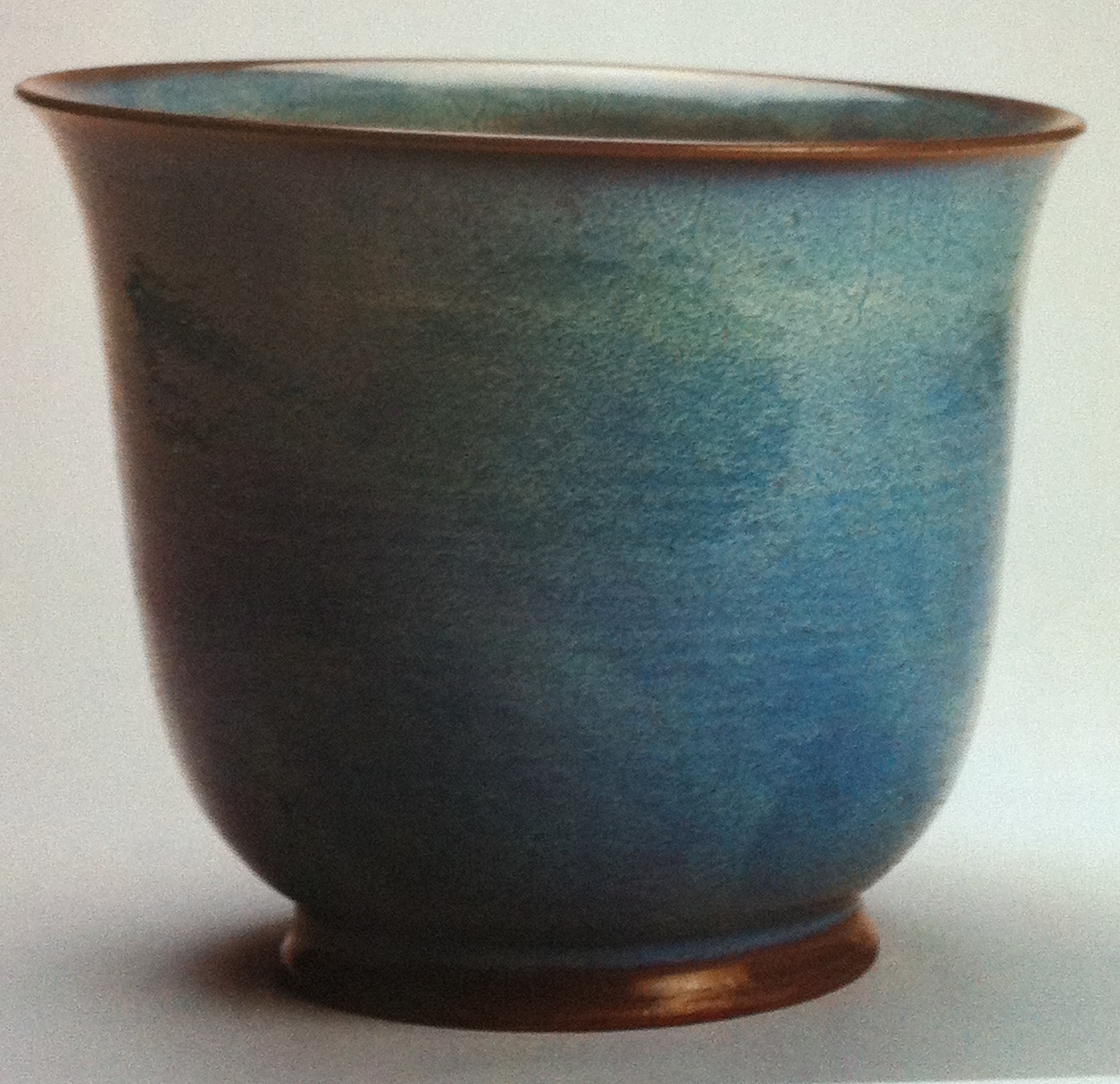
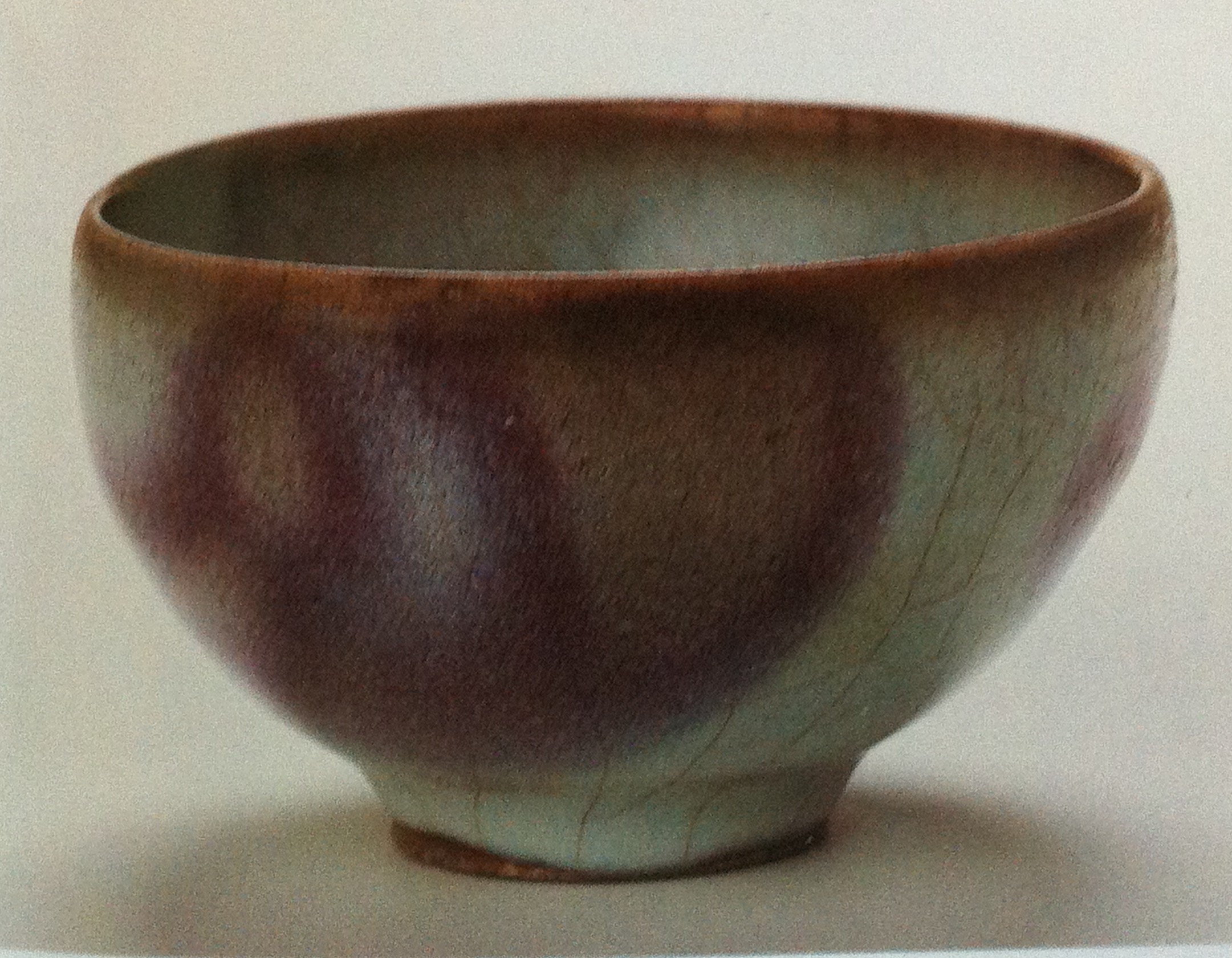
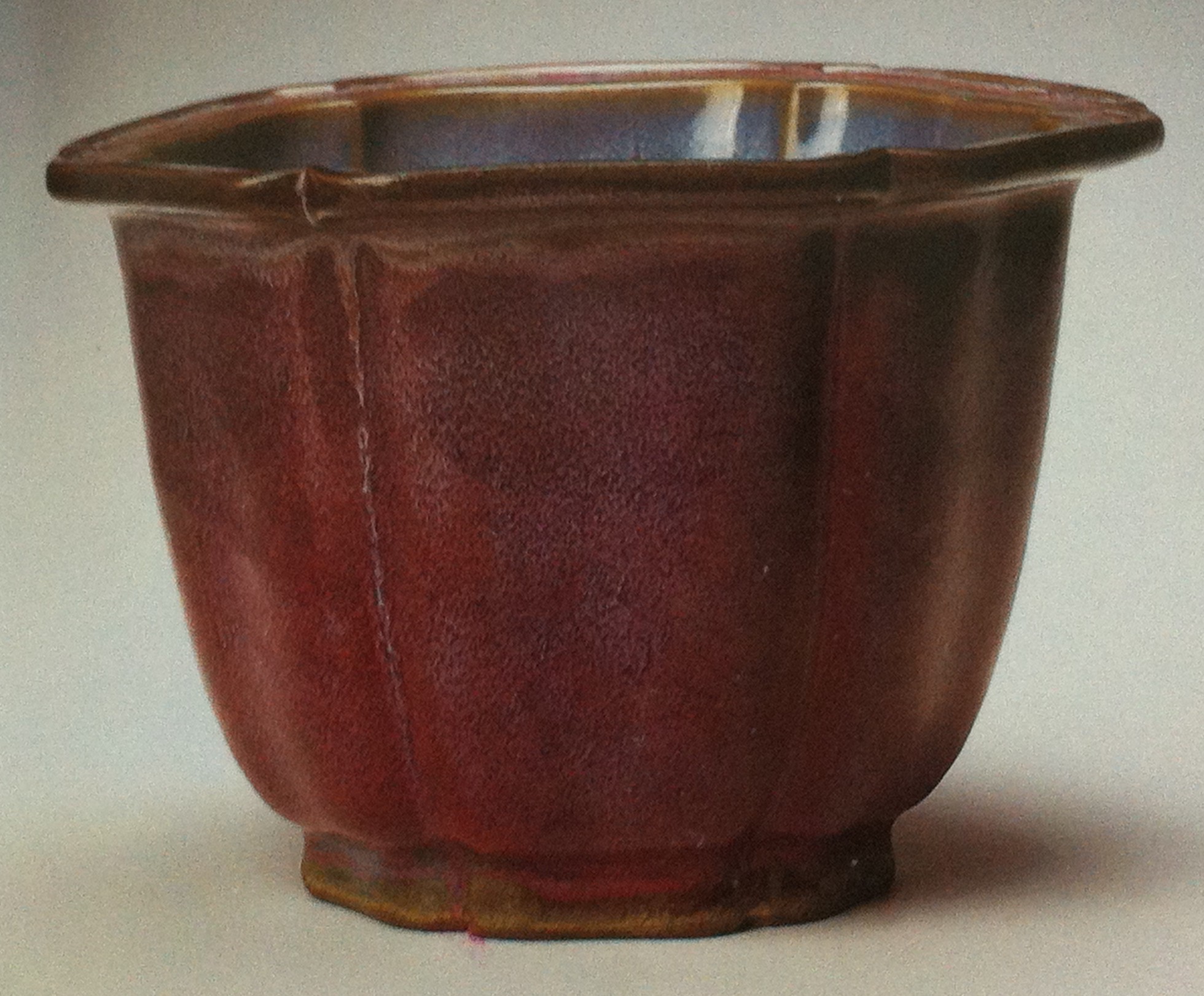
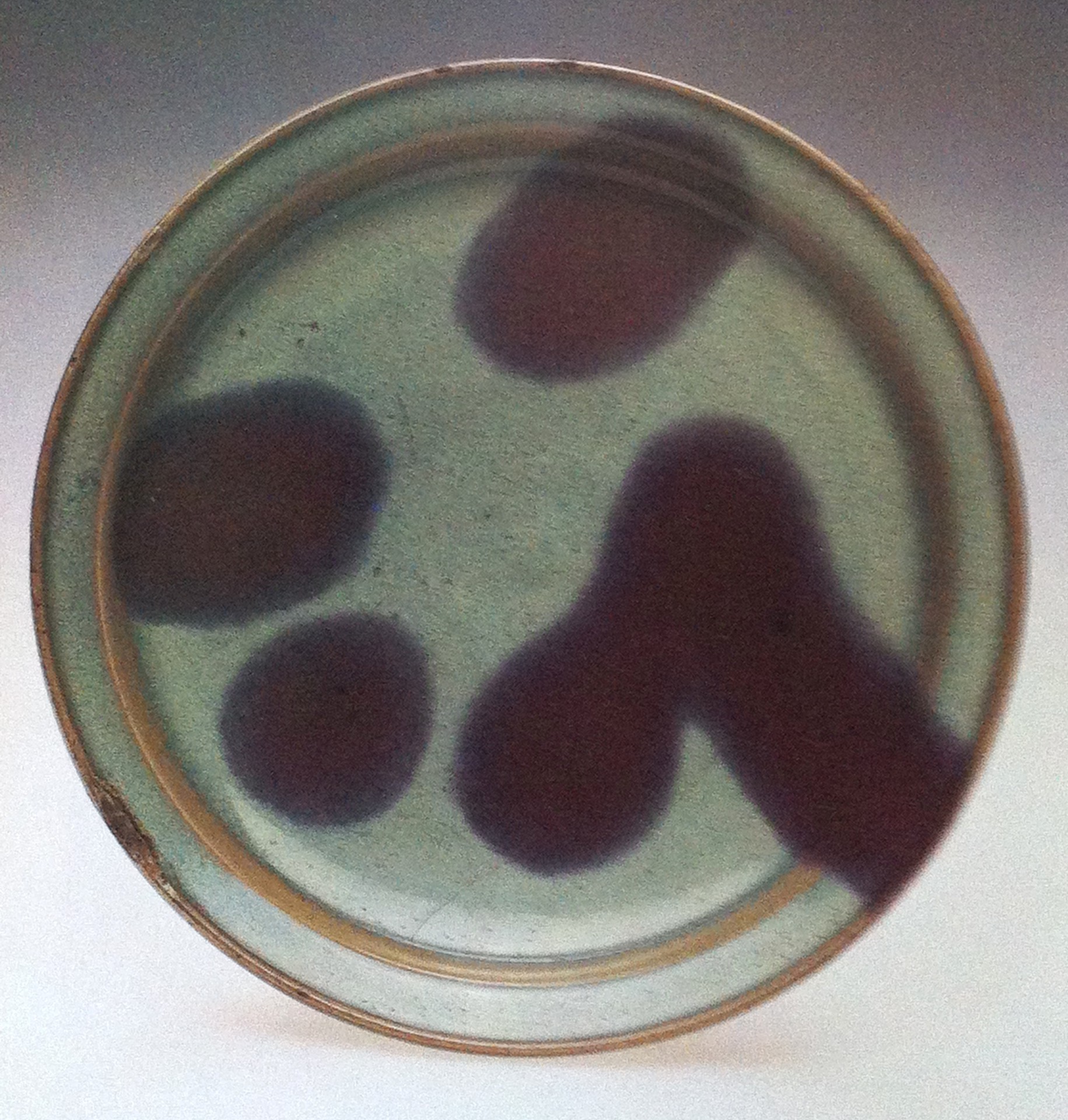
Look at them: such pure shapes, so simple, so harmonious, … so modern! And look at the glazing, one colour but with subtly different shadings, and in the case of the flask with craquelure enhancing the overall effect.

I was so taken by these pieces that I was moved to work my way through my copy of the book “Chinese Ceramics” by He Li (ed. Thames & Hudson, 2006)  and study all the pieces from this period. Here is a sampling, in no particular order


Now look at those dates again: 960-1127 AD.  These pieces were made when William the Conqueror and Harold Godwinson were fighting it out in the Battle of Hastings!

And this is the pottery they were making …

Truly, Chinese ceramics are awesome.

_______________________
Bayeux tapestry picture: http://larsbrownworth.com/blog/2010/08/11/is-the-bayeux-tapestry-reliable/
Norman pottery picture: http://www.potweb.org/PotChron1-01.html
The V&A and British Museum pictures are from the website of the National Museum of China

PASSION FOR PORCELAIN

Beijing, 6 September 2012

Last weekend, my wife and I visited the exhibition “Passion for Porcelain” at the National Museum of China on Tiananmen Square. Through pieces from the collections of the Victoria & Albert Museum and the British Museum, the exhibition celebrates the discovery by Europe of Chinese porcelain, that wonderful moment in the seventeenth century when chinaware began pouring into Europe as ballast in the holds of the East India companies’ ships. Europeans were dazzled by what they saw, for compared to Chinese porcelain the European ceramics of the time were rough, crude articles.

Chinese potters first exported ware with purely Chinese designs

Passion-for-Porcelain 008-dragon plate

Then they started exporting wares with European designs. Some of them are hilariously bad, like this example.

Passion-for-Porcelain 006-jesus baptism plate

It takes a moment to understand that the two blobs in the plate’s centre are John baptizing Jesus. Obviously, the Chinese designer had no feel for what he was copying. Or take these two figurines, which the label insists are figurines in French court costumes.

Passion-for-Porcelain 012-french figurines

Some are simply odd when seen in a Chinese context. Plates with the armorial bearings of some English aristocrat, for instance, sound a strange note on Tiananmen Square.

Passion-for-Porcelain 013-armorial plate

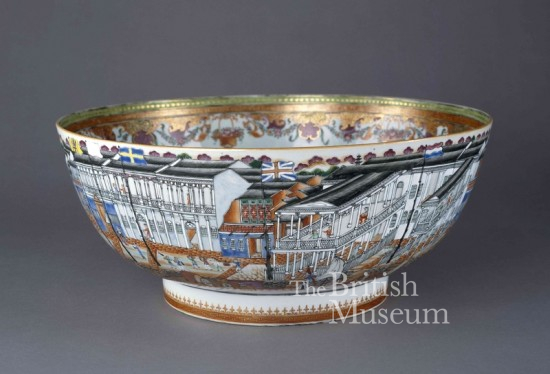
But I suppose it is no stranger than Christmas decorations pouring out of a modern Chinese factory ready for shipment to the US or Europe. In all fairness, some designs have merged Chinese sensibilities exceedingly well with European-driven designs, like this plate picturing the trading hongs in Canton.

Passion-for-Porcelain 009-hongs plate

Then the Europeans started to make copies. And some of these are hilariously awful in their depiction of Chinese scenes.

Passion-for-Porcelain 015-english chinese mug

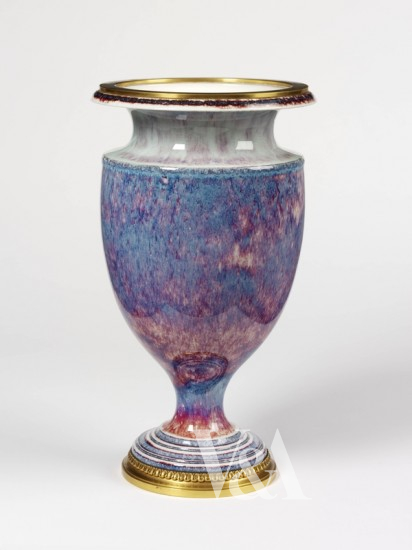
Others are technically poor copies of Chinese techniques, like these two articles which are both using the flambée technique; the European version suffers distinctly from the comparison.


Once the Europeans had mastered the technique of porcelain-making, they could cut the cord with China and make wares of purely European design.

An interesting journey indeed through Europe’s love affair with porcelain. But the exhibition’s postscript made all the previous showings “full of sound and fury signifying nothing”.  But I will deal with this in my next post.