TRICYCLE, WORKHORSE OF CHINA

Beijing, 29 January 2013

There was a time when China was famous the world over for its bicycles. To the few who were able to get into China, it seemed that the roads were just a torrent of bicycles.

File photo of people pushing their bicycles across a railway track during rush hour in Shanghai

That torrent has dried up to a mere trickle. Some of the older expats whom I meet talk with a certain wistfulness of the bicycle culture that still existed when they first arrived in China ten-fifteen years ago, a culture where it seemed that every able-bodied Chinese had a bike. Now, there is just a torrent of cars, a torrent which is growing exponentially with every passing year and fast becoming a flood.
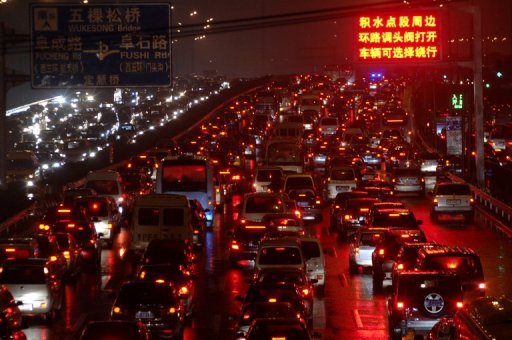
car jam-2

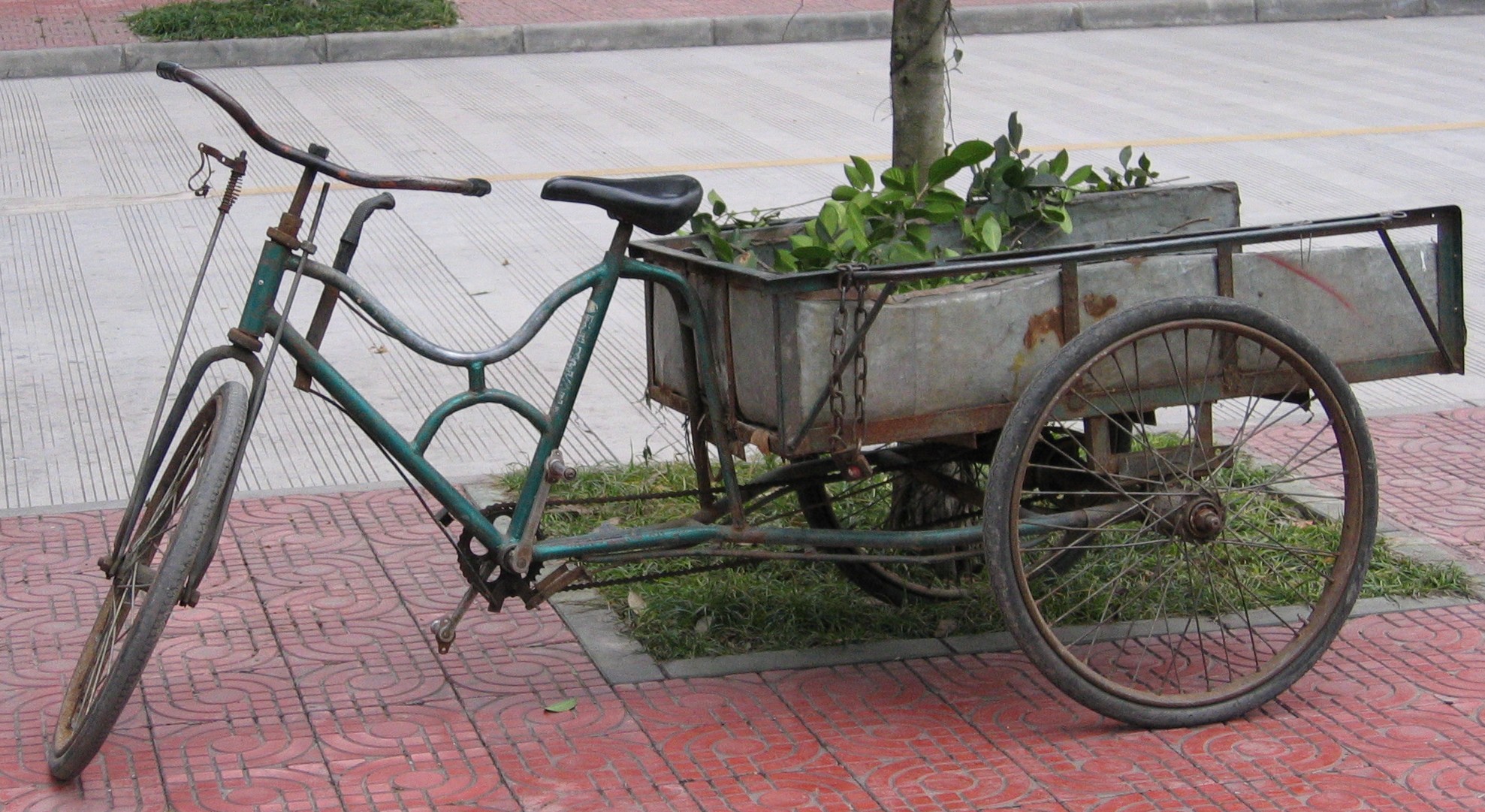
So it looks like China’s bike culture has effectively vanished. But there is one sub-species of bicycle, if I may put it that way, which still flourishes in China, in the form of a tricycle which I have only ever seen here in China.
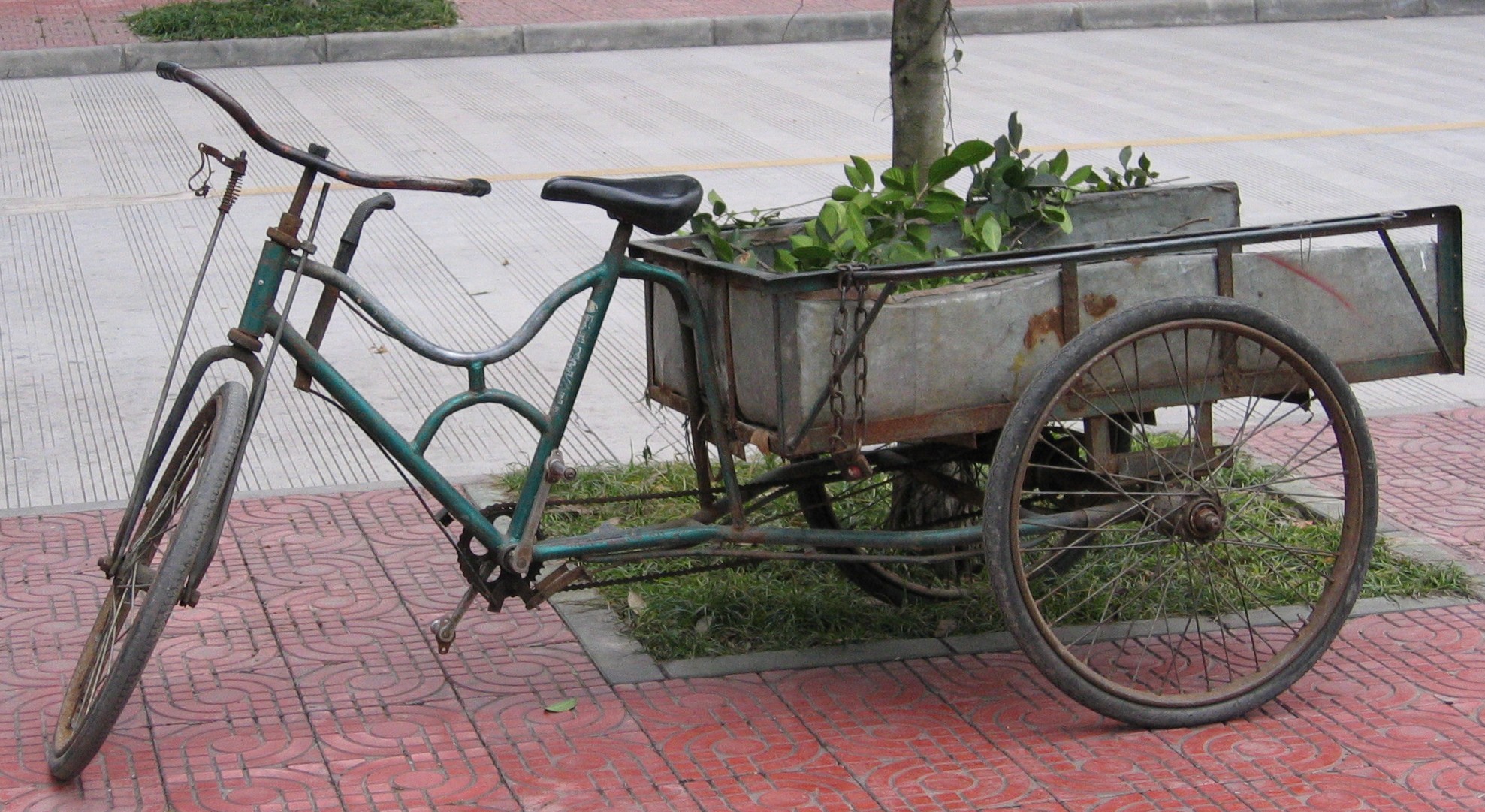
tricycle-traditional

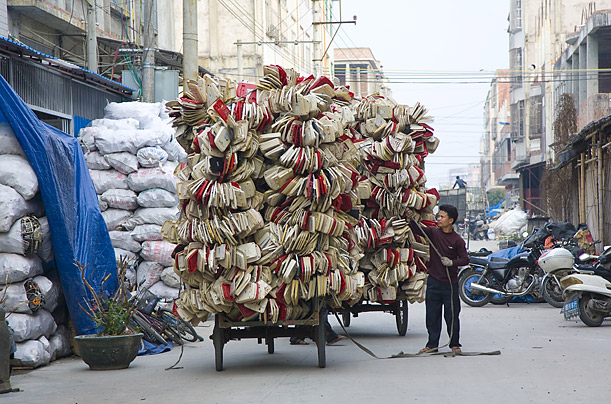
The design is really very basic. Absolutely nothing fancy here, one has the feeling that a series of pipes have been soldered together and three bicycle wheels have been added. As you can see, the key to this bicycle is the barrow at the back, which is used to carry. And boy, does this humble machine carry! All day, every day, you will see hundreds if not thousands of these tricycles criss-crossing every city of China, most often being pedalled by one of China’s army of migrant workers, carrying every blessed item you could possibly imagine. And sometimes, the volumes being carried are awesomely ginormous, from furniture:
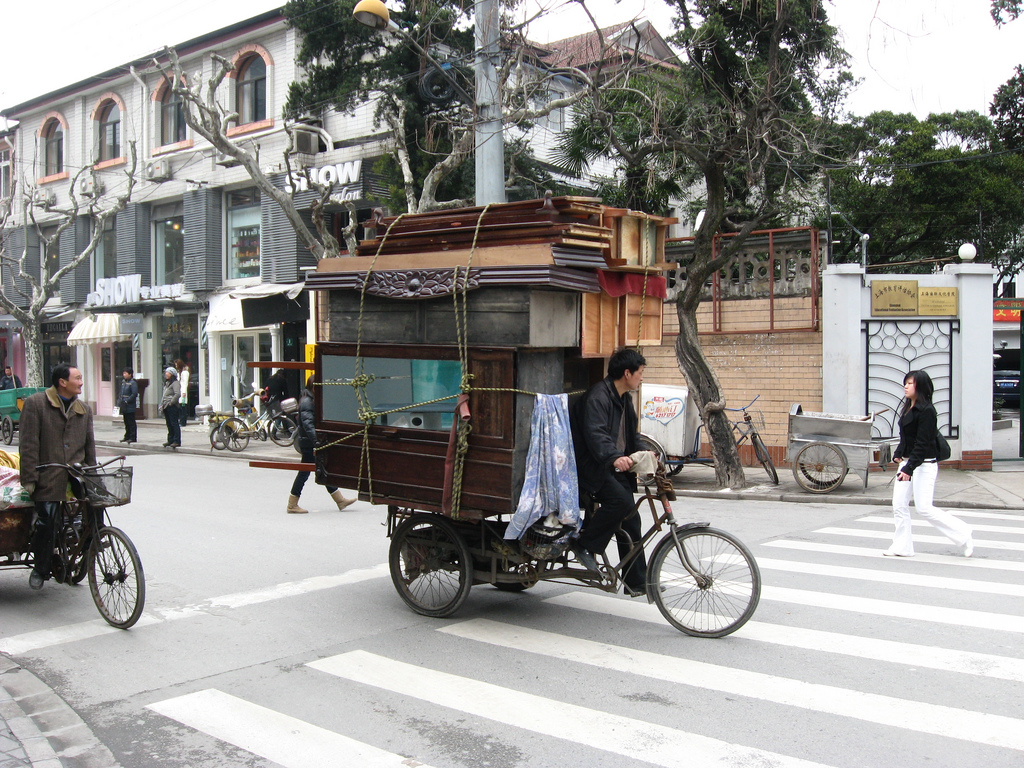
furnituretrike

to cardboard:

tricycle carrying cardboard

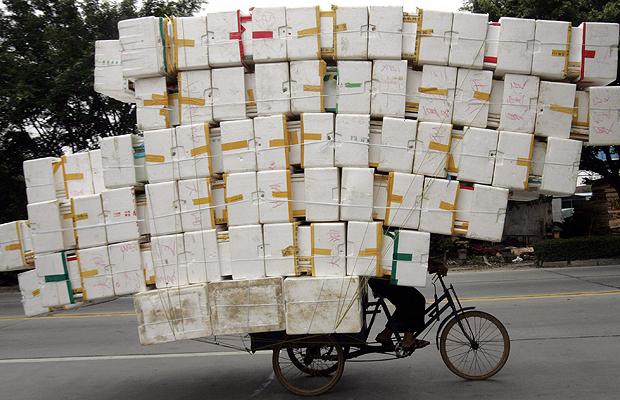
to polystyrene:

tricycle carrying polystyrene

To old telephone casings:

tricycle carrying phone casings

To car parts:

tricycle carrying car pieces

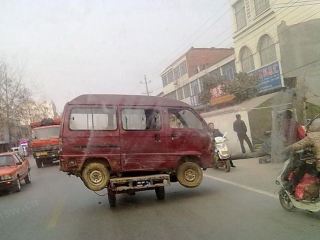
to a whole van, for Lord’s sake!

tricycle carrying minivan

Inanimate objects aren’t the only things carried. Farmers use them to carry their pigs:

tricycle carrying pig

their ducks:

tricycle carrying ducks

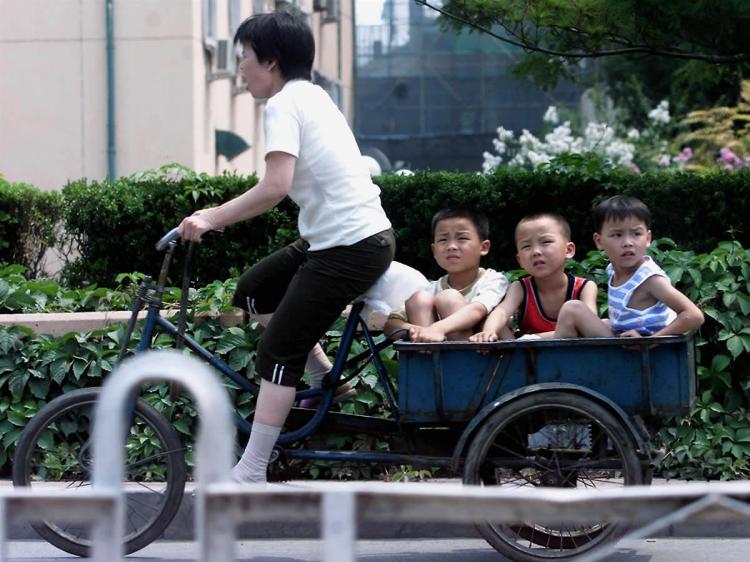
and who knows what else, while this woman is using it to carry kids
tricycle carrying children

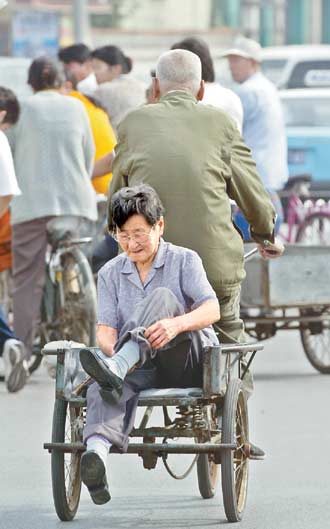
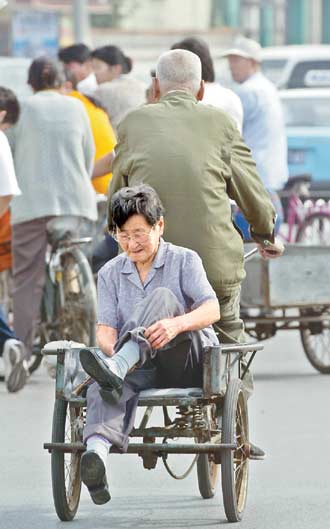
and this husband his wife.

tricycle old couple

I have to say, I do find that this particular husband is treating his wife rather cavalierly. There is a version of this mode of travel where the wife rides as would a queen, sitting regally on a throne-like armchair while her husband pedals slowly in front of her.

tricycle old couple-7

I’ve noticed that the couples always seem to be retirees. Young Chinese don’t go around like this. But that’s fine by me; I’m almost retired. I have decided that I will buy one of these throne-tricycles and bring it back to Milan. Like that, when my wife and I have finally joined the ranks of the retirees, I will be able to slowly pedal my lady wife around Milan in the style that she deserves and is accustomed to.

________________________

Bicycles in Beijing: http://heckeranddecker.files.wordpress.com/2011/04/bicycles-in-beijing.jpg
Car traffic jam: http://www.intellasia.net/en/wp-content/uploads/2012/11/china.car-market201211afp.jpg
Tricycle: http://www.tariksaleh.com/moscaline/chinabike/cargobig.jpg
Tricycle with furniture: http://cargocycling.org/wp-content/uploads/2009/09/furnituretrike.jpg
Tricycle carrying cardboard: http://ph.cdn.photos.upi.com/collection/upi/sb/2870/a5da8edd413c5f72aba13e80f2d0dc3a/Trash-trawling-as-a-career-in-China_2.jpg
Tricycle carrying polystyrene: http://i.telegraph.co.uk/multimedia/archive/01410/tricycle-polystyre_1410326i.jpg
Tricycle carrying phone parts: http://www.mutanteggplant.com/vitro-nasu/wp-content/uploads/2009/05/ewaste.jpg
Tricycle carrying car parts: http://i.telegraph.co.uk/telegraph/multimedia/archive/01410/Tricycle-car-bumpe_1410335i.jpg
Tricycle carrying minivan: http://bitcast-a.v1.dfw1.bitgravity.com/nightmobile/cars/images2/120000/1000/800/121834.jpg
Tricycle carrying pig: http://i.telegraph.co.uk/multimedia/archive/01551/pig-tricycle_1551633i.jpg
Tricycle carrying ducks: http://i.telegraph.co.uk/multimedia/archive/01410/Tricycle-ducks_1410329i.jpg
Tricycle carrying children: http://www.theepochtimes.com/n2/images/stories/large/2009/08/31/abortions-china-51343014-small.jpg
Tricycle husband carrying wife: http://www.chinadaily.com.cn/en/focus/xin_7c24924aea7a11d7b21c0001030784d9_bike.jpg
Tricycle old couple in fine style: my photo

LA MICHELINE CHUGGING ACROSS THE COUNTRYSIDE

New York, 2 January 2013

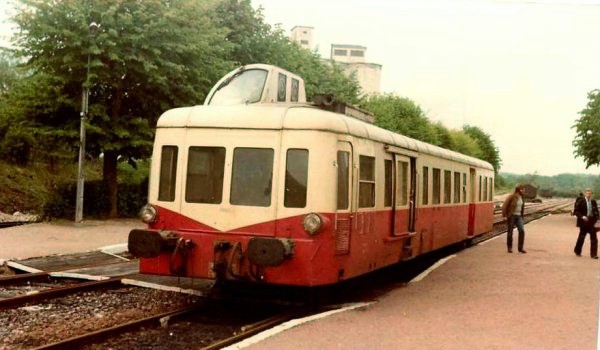
Down at the end of my French grandmother’s property ran a little train, the Micheline we called it. It was a rinky-dink train, one carriage (on rare occasions two), which chugged along at a venerable speed across the countryside from one market town to another, winding its way through vineyards and meadows, stopping at toy-town stations where stationmasters with moustaches, who smoked filterless gauloises and no doubt drank un petit rouge corsé in evenings, would agitate green flags and blow shrill whistles to let the Micheline continue on. This photo captures the rural idyll nicely.

micheline

I used to accompany my grandmother on her visits to town. We would walk down a long alley flanked first by peach and apple trees and then by black locusts, down to the end of the property where there was a big iron gate, which swung ponderously open; from there, it was a short five-minute walk to the station. In came the Micheline

micheline-5

I would help my grandmother in, the stationmaster would agitate his flag and blow his whistle, and off we went.

My mother used to tell me that during the Second World War, people were sent to my grandmother by the French Resistance for her to hide for a while; they would quietly slip in with the Micheline. My memory is instead of two old ladies, two sisters, Tante Chlothilde and Tante Marcelle, coming to visit via the train. They were first cousins to my grandmother. Both of them being widows, they always wore black. We would first see the Micheline chug by, then some ten minutes later two black silhouettes would be sighted slowly walking up the long alley. My grandmother would then walk down to greet them, speaking very loudly because one of the sisters was as deaf as a post.

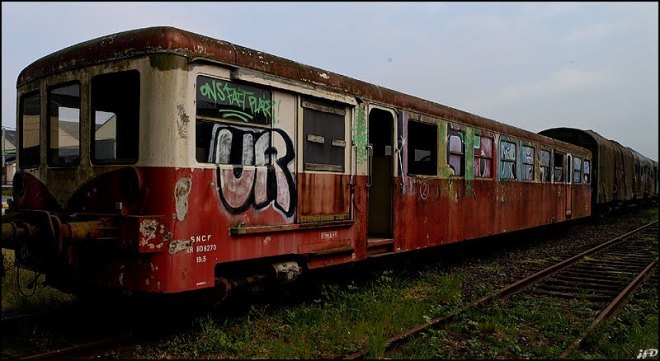
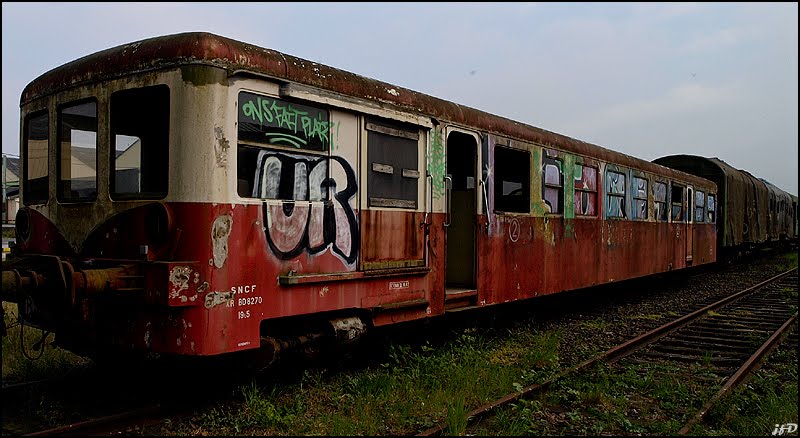
Well, things changed. The road network got better, buses took over, and the line was finally closed down. I suppose the Michelines were retired like this one was

micheline-3

The rails were pulled up, and the weeds took over.

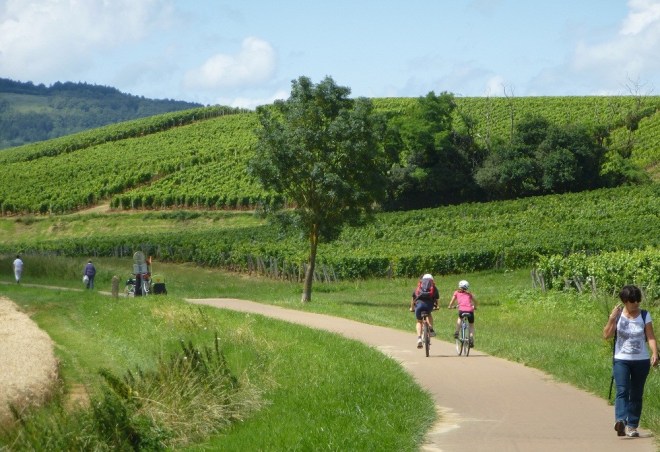
After a long period of neglect, the municipalities got their collective acts together and turned the railway line into a “Green Way”, for people to walk and cycle along. So now we have a quiet, carless, path that allows us to enjoy some of the most beautiful countryside on Earth (I admit, I’m biased).

voie-verte-1

voie-verte-3

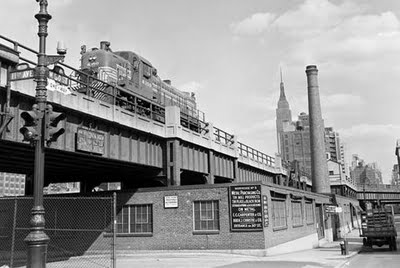
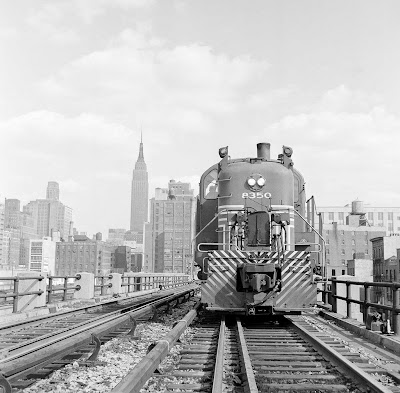
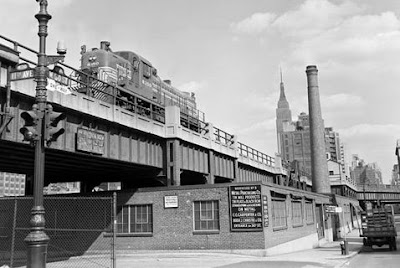
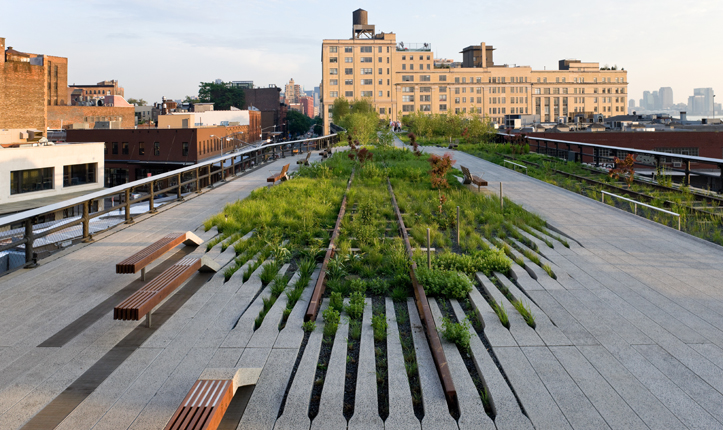
All of this came back to me yesterday while my wife and I strolled along the High Line in Manhattan. We are talking of a very different context – urban rather than rural, large-scale rather than small-scale – but the historical trajectory is the same: a rail line that was once a vital artery of the city

high-line-old-1

high-line-old-2

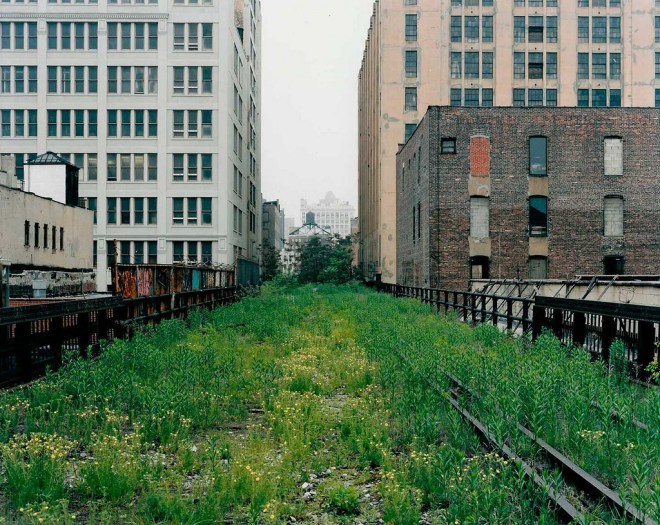
falls victim to roads and trucks and is finally abandoned. It becomes derelict, overgrown by weeds

high-line-5

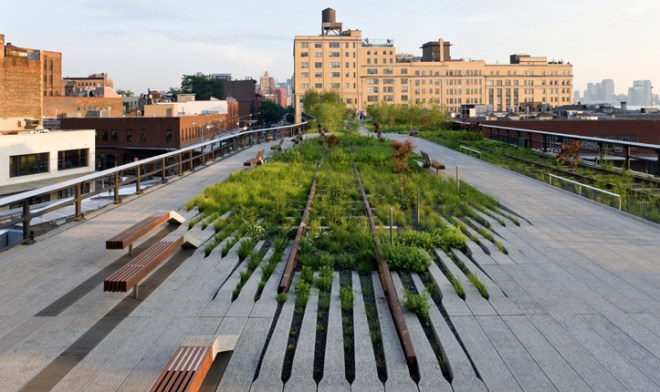
and is threatened with demolition. But good sense eventually prevails and the elevated line is turned into an elevated garden.

high-line-2

high-line-4

high-line-1

high-line-6

Magic.

____________

Micheline-1: http://www.google.fr/imgres?q=micheline+train&num=10&hl=fr&tbo=d&biw=1280&bih=683&tbm=isch&tbnid=QbpsYHDZWoAGgM:&imgrefurl=http://www.worldofstock.com/stock-photos/france-ardeche-mirabel-village-surroundings-local-micheline/TRT1500&docid=307ZNJAoHh-JTM&imgurl=http://www.worldofstock.com/slides/TRT1500.jpg&w=500&h=332&ei=hIXjUMDvFuXQ0wGh84HQCg&zoom=1&iact=rc&dur=684&sig=113446295457090783361&page=1&tbnh=140&tbnw=202&start=0&ndsp=22&ved=1t:429,r:10,s:0,i:118&tx=96&ty=67

Micheline-2: http://c1.img.v4.skyrock.net/1729/16641729/pics/3080416001_1_3_WEG0CElV.jpg

Micheline-3: Micheline-3: http://1.bp.blogspot.com/-C8L1231bJ-o/TbhQHR6dc_I/AAAAAAAAEAQ/FvpTQts0R0I/s1600/micheline01-1.jpg

Green Way-1: http://www.sortiramacon.com/media/news/voie-verte-velo.jpg

Green Way-2: http://www.velo-ravel.net/2009/2009-08-17_Bourgogne_sud_files/image020.jpg

High line 1-historical: http://1.bp.blogspot.com/-X8IIsMIF7GY/TmlooRzMZ9I/AAAAAAAAF9M/_PpGNN3xJEU/s400/Highline_train.jpg

High line 2-historical: http://4.bp.blogspot.com/-0FEWcWopww8/TmlooMh8vlI/AAAAAAAAF9E/SuXL4wcu6To/s400/HIghline_historical.jpg

High line derelict: http://2.bp.blogspot.com/-iD76YXAA-Uw/TffNNuz4gXI/AAAAAAAAAYU/KWHnUGbYjPU/s1600/High+Line+2.jpg

High line 1: http://www.asla.org/sustainablelandscapes/images/highline/Highline_6.jpg

High line 2: http://4.bp.blogspot.com/-usnFjgnfQc4/TffNIgAV6xI/AAAAAAAAAYQ/XMQA0bZJAb4/s1600/High+Line.jpg

High line 3: http://www3.pictures.gi.zimbio.com/New+York+New+High+Line+Park+Opens+Public+3B45D1SYEJcl.jpg

High line 4: http://1.bp.blogspot.com/-WbybGegkYX0/Tmlon5yO-1I/AAAAAAAAF88/LyBQFC8kMpo/s1600/Highline_above.jpg

0 + 0 0 0 km

Beijing, 21 December 2012

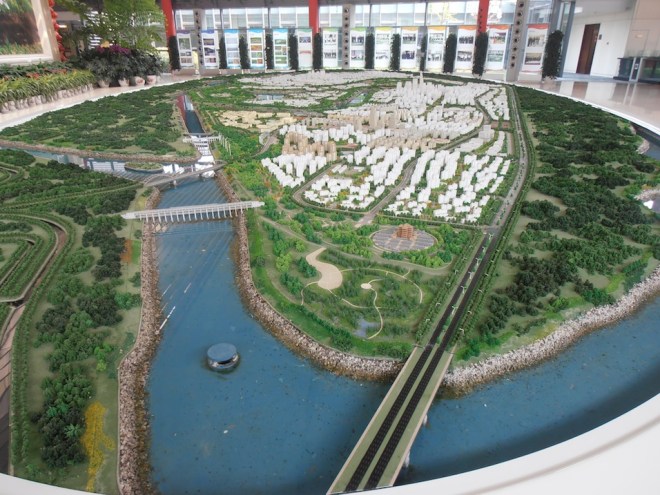
Model builders in China must be very busy people – and very rich. I am referring to the models of new city quarters, new industrial zones, and similar which are being developed all over China. Here are a few examples of what I mean, from the large:

model-EDZ-6

To the more modest:

OLYMPUS DIGITAL CAMERA

To the very modest:

model-EDZ-2

There must be literally millions of these all around the country – hence my feeling that model making must be a thriving business in China.

I have just come back from Lianyungang, a modest (by Chinese standards) port in the province of Jiangsu, opposite Japan and South Korea. Over the arc of one day, I saw three such models, which went from big, to very big, to huge. The pictures above don’t really give justice to what I saw. The pattern of my visit was always the same. First, I was taken to a temporary building, most times in the middle of a construction site, where an official of some sort was on hand to warmly welcome me. The official, usually with a number of hangers-on, first escorted me down a corridor with photos of various high-level worthies beaming their appreciation about this latest development. Then he brought me to a platform from which I could admire from on high a panoramic view of the model of what was to come in the sea of mud outside. With a flick of a switch, he turned on a son et lumière and I was bombarded with a high-tech video show on the wall of the future to come, with coloured searchlights racing back and forth across the model below me and triumphant voices describing the glories before me. At the end, befuddled by all the loud noise and flashing lights I murmured my appreciation of this vision of the future and everyone beamed. Then we headed for the door and after more warm handshakes I was on my way to the next model and the next son et lumière.

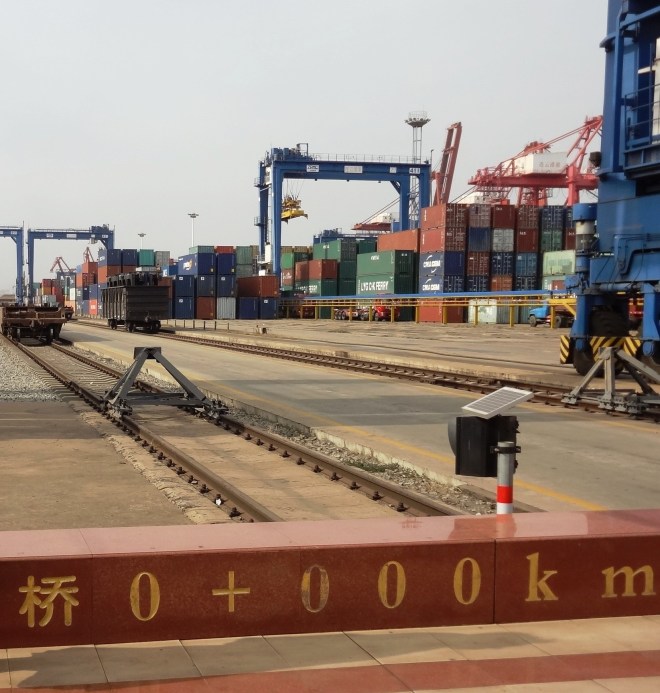
What actually caught my attention was something altogether different. At some moment in my itinerary, I was taken down to the docks to watch the containers being loaded and unloaded by their hundreds. Then the van pulled up in front of this:

port-2a

This is point zero for the New Eurasian Land Bridge, or the New Silk Road, a skein of rail lines that will run from Lianyungang across China to the Kazakh border, unreel across Kazakhstan, then after a short skip across southern Russia on through Ukraine, into Poland, then Germany, and finally come to a halt in the Netherlands at the port of Amsterdam. And suddenly in my mind’s eye I’m off along that rail line, with the train wheels clickety-clacking in my ears, whirling across the rice bowl of China all the way to Xi’an, home of the terracotta army, then whooshing along the Hexi corridor of Gansu, hemmed in by the Gobi desert on one side and the Qilian mountains on the other, barreling through the northern reaches of Xinjiang along the far edges of the Taklamakan desert … then suddenly I’m called back to reality. So with a sigh, I move on to the next son et lumière.

__________________________
the big model: http://www.thenational.ae/deployedfiles/Assets/Richmedia/Image/AD200810523775761AR.gif
the middle-sized model: http://wanderinggaia.files.wordpress.com/2012/05/scale-model-of-tianjin-e-c.jpg
the small model: http://www.saintcairon.com/en/webedit/UploadFile/20085895920773.jpg