MOSS

Milan, 16 December 2024

I’ve been meaning to write this post for a while, but I could never figure out what my angle should be. The thing is, I want to write about mosses, but once you’ve said that mosses can be really beautiful, there’s nothing much more to say about them. I could blather on about their biology and ecology, but only muscophiles would find that interesting. Looking at them from a historical point of view doesn’t help much, either: as far as I can tell, they haven’t played a significant role in anyone’s history. They do have some practical uses, like bedding and wound dressings, but nothing that really stands out. And forget the dietary angle: no-one eats moss unless they are starving, so there are no interesting dishes to report on. So the post has remained unwritten.

But now, finally, I’ve decided. Since there’s not much to write about on mosses, I’ll focus on photos instead. This post will be a photo essay celebrating their beauty! (That being said, I’ll still write some stuff – I can’t stop myself – but it will be more like extended titles to the photos).

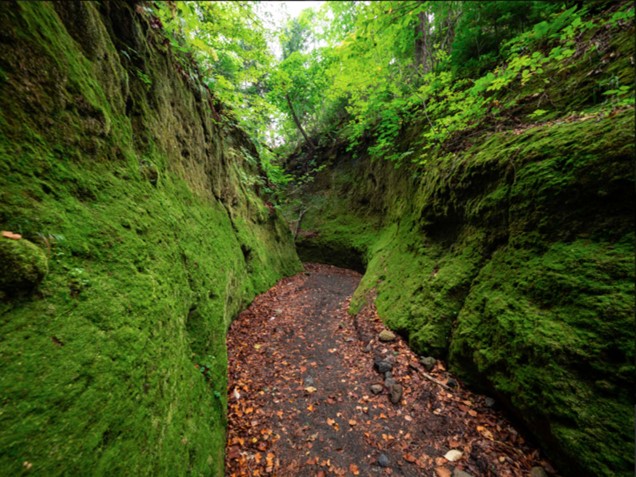
I have to start in Japan, because it is moss country par excellence: something like 1,800 species of moss, or around 15% of the world’s total, grow on its islands. It was there, back in 1985 when my wife and I toured the country for a month, that we first appreciated the beauty of mosses. Our first experience was on the island of Hokkaido, where we were taken to visit the Moss Canyon in Shikotsu-Tōya National Park. It’s more of a gorge, really, about 200 metres long with walls some 5 metres high. These walls are covered in velvety green moss.

Source
Source
Source

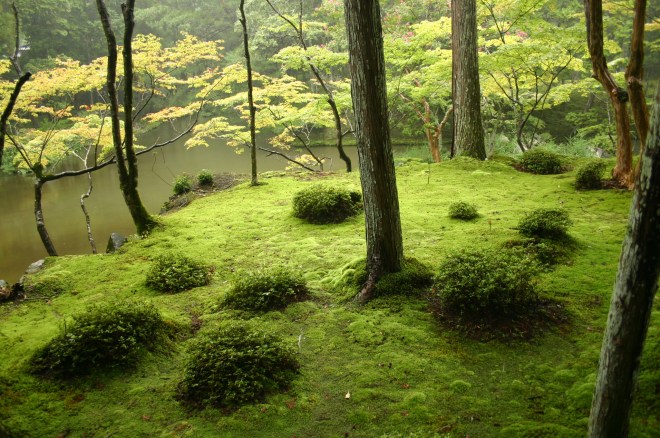
Later, when we went to Kyoto, one of the temples we visited was Saihōji, whose entire garden is cloaked in moss.
Source
Source
My photo

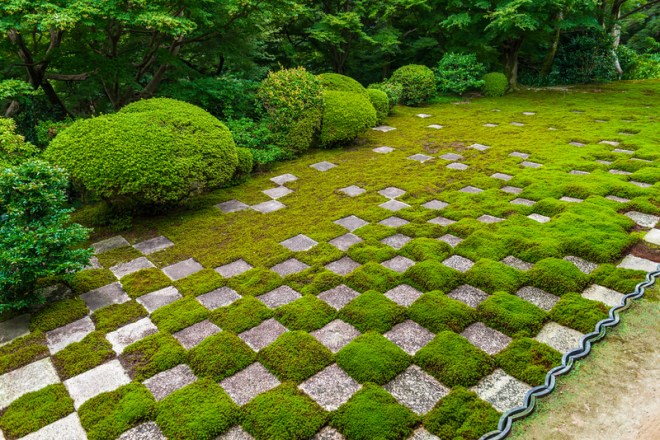
Other temples we have visited in Kyoto over the years have integrated moss into the overall design of their gardens. This example, from Tofukuji temple, is one of the more intriguing.
Source

Many have even integrated moss into what you might think of as a most unmossy place, their dry rock gardens, where moss is often used to create islands in the sea of pebbles, like this example, also from Tofukuji temple.

my photo

Here are the islands up close.

My photo

Here is another example, from Ryoanji temple.

Source

But moss found out in Japan’s nature can be just as beautiful. Here are various photos I’ve taken over the last few years during our annual stay in Japan.

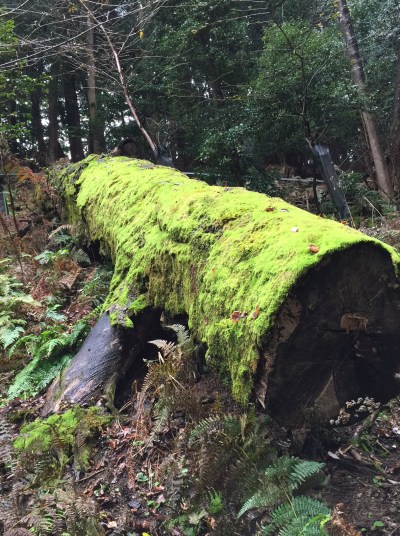
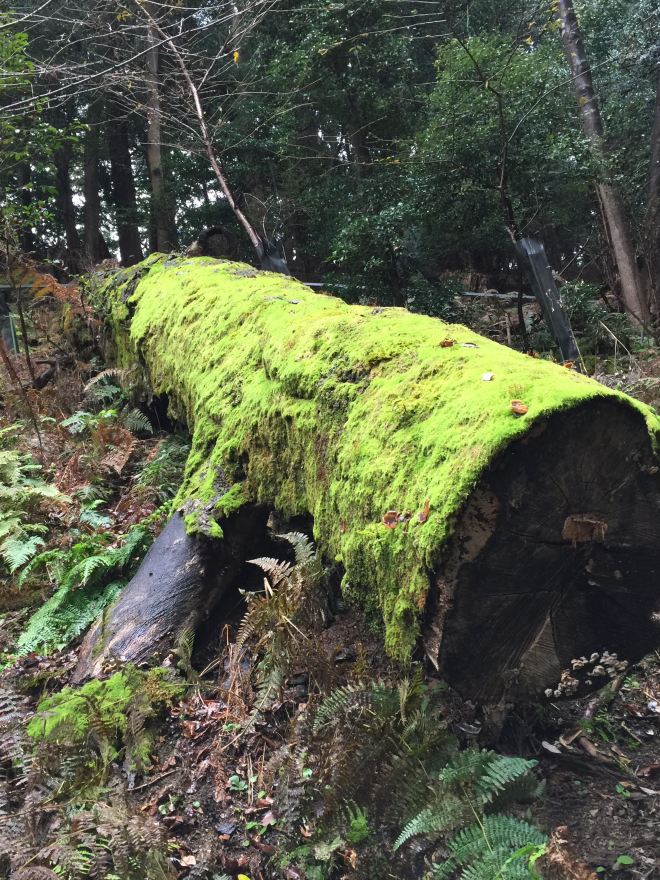
A moss-covered log on the flanks of mount Kurama, north of Kyoto.
My photo

Fallen Japanese maple leaves smothering a field of moss, out in Ararshiyama in the north-west of Kyoto.

My photo

A tree stump crowned with moss, on the Kumano kodo trail.

My photo

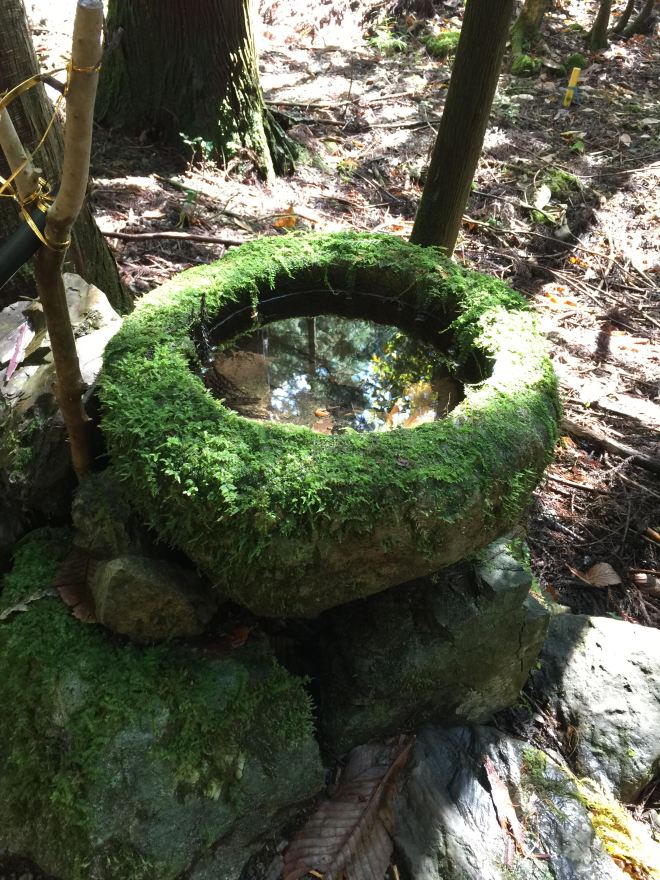
A stone basin with a moss-covered rim, seen on the same trail.
My photo

A stone lantern, being slowly colonized by moss.

my photo

An abandoned motorbike, also being slowly colonized by moss.

my photo

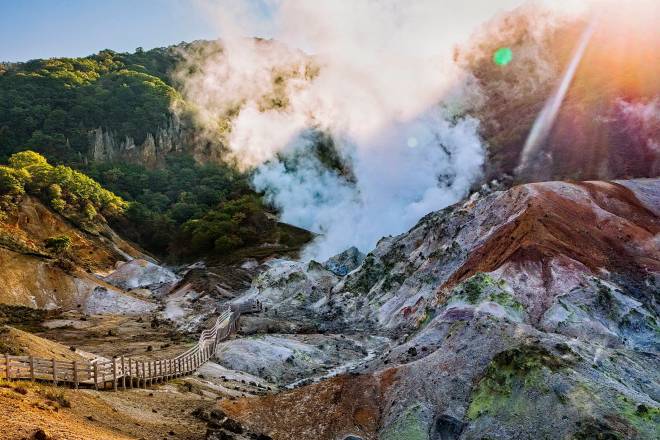
Japan is the land of moss, but it is also the land of fire, as we saw up close on that visit to Hokkaido’s Shikotsu-Tōya National Park
Source

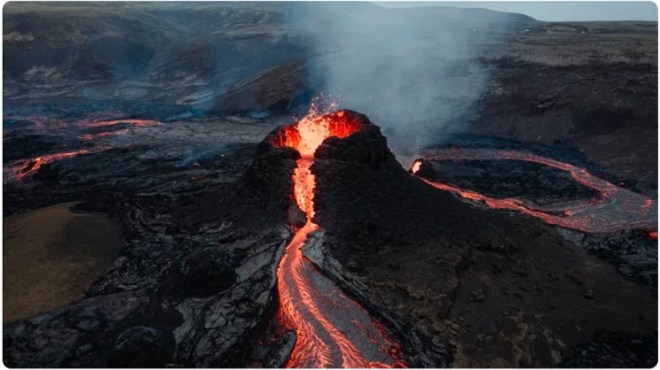
Iceland, too, is a land of fire, as we have recently been reminded.
Source

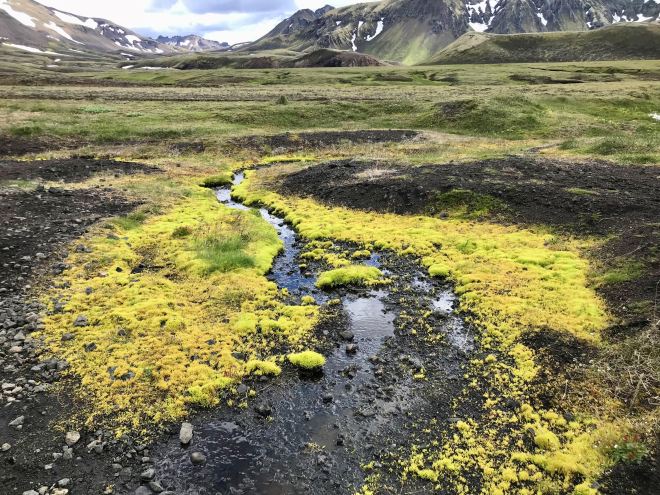
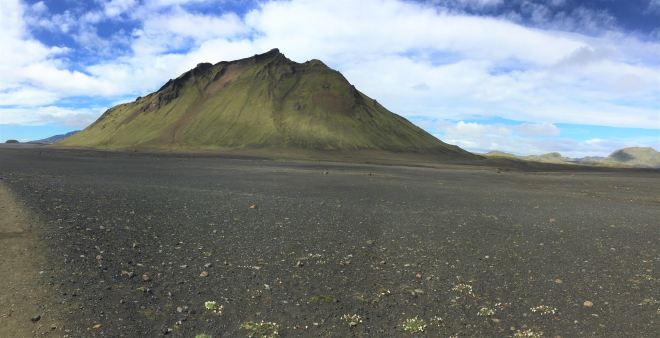
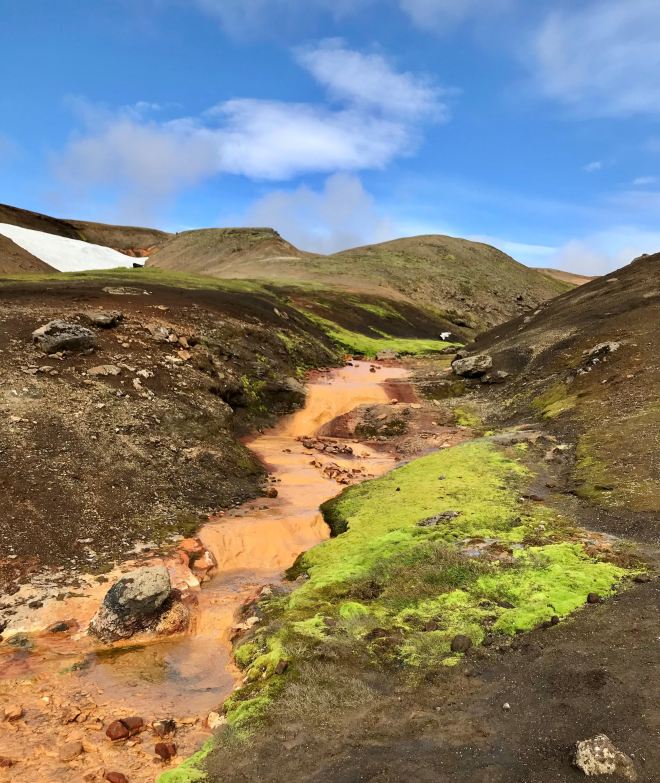
But, as my wife and I discovered when we hiked the Laugavegur trail a few years ago, Iceland is also a land of moss.

The contrast could not be starker. One island country has lush vegetation of which moss is but a part. The other has little vegetation, its climate being too harsh. And yet mosses manage to thrive. Which was just as well for us because wherever there was water they covered with ethereal green the otherwise denuded landscape which we hiked past.

My photo
My photo
My photo
My photo
My photo
My photo

Well, that’s our photo album with mosses. If we ever come across beautiful mosses elsewhere, I will add photos to the album.
SACRI MONTI

Kyoto, 26 November 2016

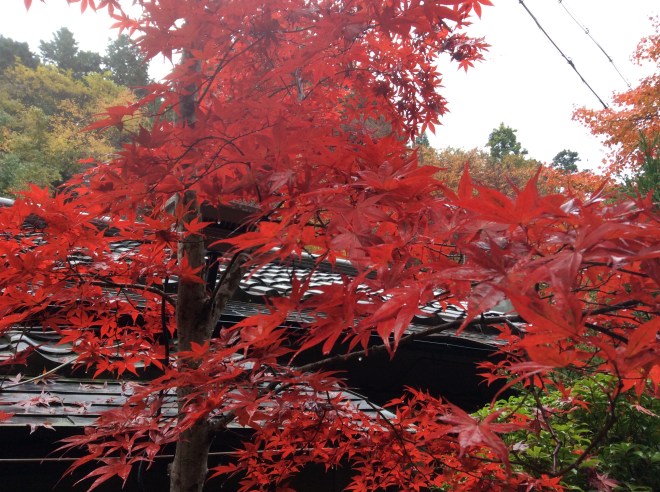
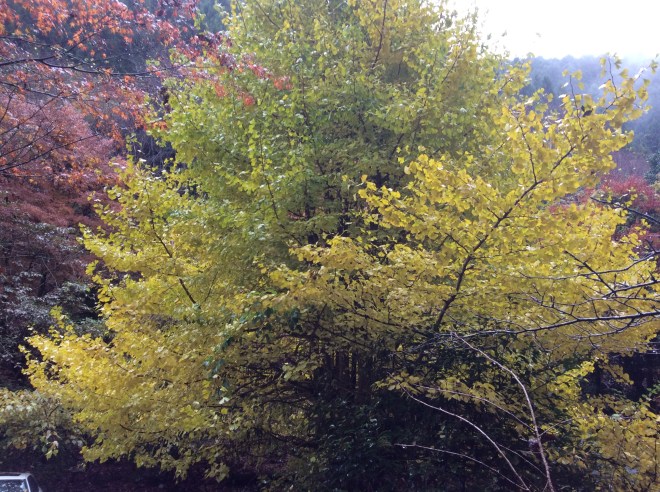
Two weeks ago, my wife and I visited the temple on mount Kurama, a mountain on the outskirts of Kyoto. We took the train to the mountain’s foot and then climbed to the top – well, “climbed” is perhaps misleading, since rather than toil all the way up using the path that snakes its way to the top we took a cable car to very near the summit and toiled lightly the rest of the way. It was the Fall colours which had brought us there, and indeed the red of the Japanese maples and the yellow of the ginkgoes were a sight to behold.
mount-kurama-2

mount-kurama-3
Since it was a cool, rainy day, the surrounding landscape was enveloped in drifting cloud and mist, strongly reminiscent of painted Japanese landscapes.
misty-japanese-landscape
At the top, we walked around the temple

and enjoyed the view.
mount-kurama-1
After which, we walked down the other side of the mountain
mount-kurama-4
to take a well-deserved lunch at the bottom.
mount-kurama-5
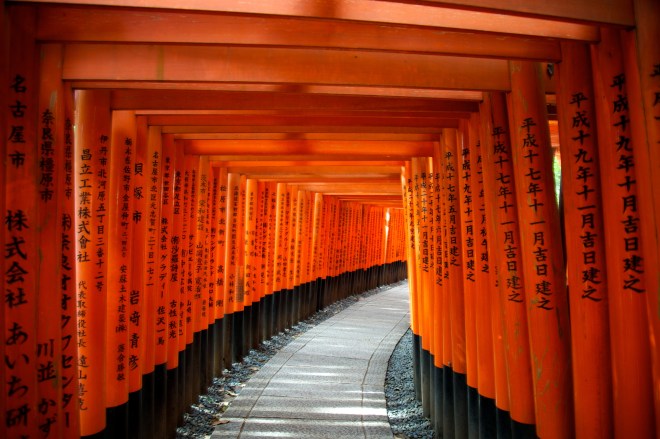
A week later, when our daughter joined us for Thanksgiving, we took her to the Fushimi Inari Shrine on the hilly eastern edge of Kyoto and hiked up the mountain behind the shrine, passing through the famed tunnel of torii on the way
Torii gates—Fushimi Inari Shrine
(although when we passed through the tunnel, it was packed with people – the disadvantage of visiting Kyoto at this time of the year).

After admiring the view at the top and inspecting the small shrines sprinkled along the path, all of which were smothered in small votive torii
http://regex.info/blog/2008-06-19/841
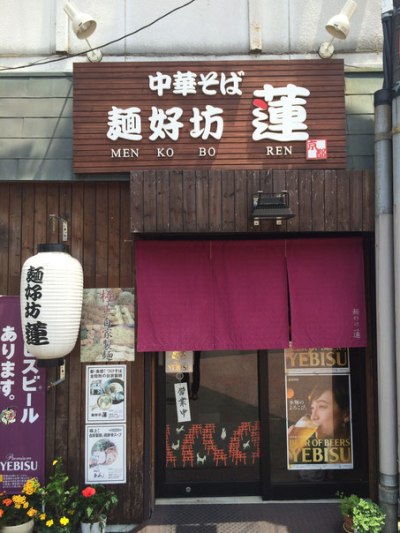
we made our way down again and had a well-deserved bowl of rahmen at the mountain’s foot.
noodle-shop-inari
Ours was an admittedly very secular version of a pastime as ancient as civilization itself, the climbing of mountains to pray to the gods. I suppose it makes sense. Gods often have been thought to reside up in the sky somewhere, and mountains were as close to the sky as we humans could get before the age of aviation. And before there were 7 billion of us, working our presence into every nook and cranny of the planet, mountains were remote, mysterious places, where our ancestors could more easily commune with the divine.

So it comes as no surprise to see that all religions have their mountains. Several degrees of longitude to the west of Kyoto, the Chinese had their Four Sacred Mountains of Buddhism and their Four Sacred Mountains of Daoism, and scholars sitting at the foot of mountains is a common scene on scrolls.
scholars-under-mountain
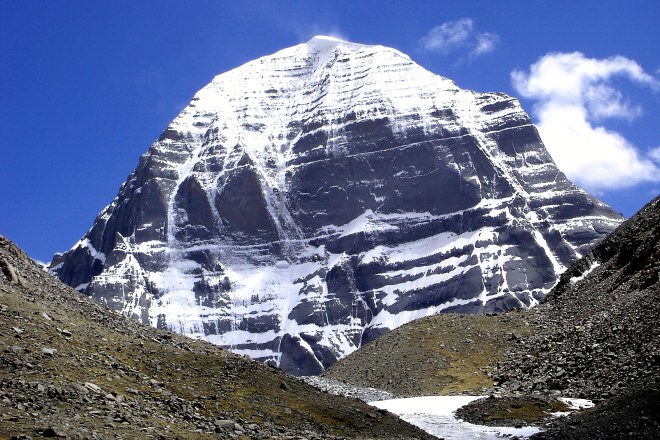
Hinduism, along with Jainism and Buddhism, has its Mount Meru, a mythological mountain, which for many believers, though, finds its material incarnation in Mt. Kailash in Tibet.

Processed by: Helicon Filter;

Many Hindus and Buddhists make the arduous journey to the mountain. Once they reach it they will reverently circle it (I highly recommend the book “To A Mountain In Tibet”, in which that great travel writer Colin Thubron relates his journey on foot to this mountain up through the high valleys of Nepal).

Moving further west, Judaism has its Mount Sinai, traditionally thought to be this mountain.
mount-sinai
The Bible tells us that Moses climbed it to commune with Yahweh in the Burning Bush, and from its top he brought down the Ten Commandments to the people of Israel. Charlton Heston gave a great performance as Moses in the Hollywood film epic “The Ten Commandments”
charlton-heston-as-moses-in-the-ten-commandments
although I personally prefer Michelangelo’s splendid Moses.
michelangelo-moses
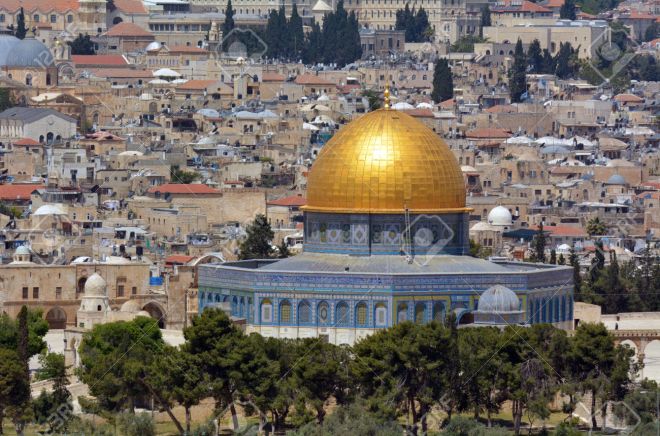
Islam also has its holy mountains; since it is a religion of the Book, many of these are linked to stories in the Bible: Mt. Sinai because of its link to Moses, Al-Judi, reputed to be where Noah’s Ark came to rest after the Flood, the mount of Olives, where the righteous will be chosen and evil abolished. But it also has mountains which are holy because of events in the life of the Prophet Muhammad. One such is the Temple Mount, the scene for Muslims of the Prophet’s ascent to heaven in his Night Journey, and on which they built the beautiful Dome of the Rock.

dome-of-the-rock

Another is Jabal Al-Nour, on the outskirts of Mecca.
jabal-al-nour
This mountain houses the Hira Cave in which Muhammad began receiving the revelations which became the Qu’ran. The cave is extremely popular with Muslim pilgrims who make the arduous trek up the mountain to reach it.

As for Christianity, Jesus was crucified on a hill, Mount Golgotha, outside Jerusalem. It’s really quite a modest hill, a hillock really, which in Christian art, though, grew into a respectable hill, as shown in this painting by Pieter Bruegel the Elder.
procession-to-calvary-by-pieter-bruegel-the-elder
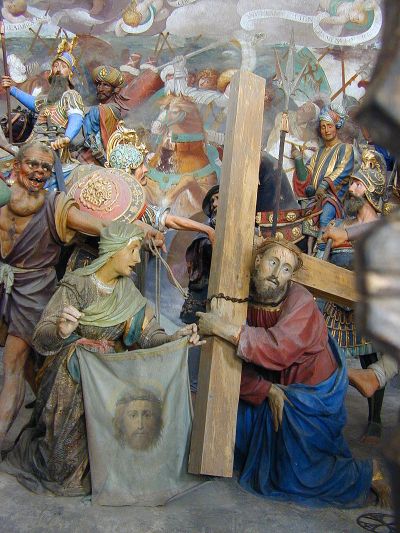
Imagining a good-sized hill gave later generations of Christians an excuse to bedeck local hills with a Via Crucis, or Way of the Cross, which would wend its way up to the top of the hill and along which would be dotted the fourteen stations. The faithful would climb the Via Crucis, stopping and praying at each station (I remember well doing this as a young boy). UNESCO has canonized as a World Heritage Site nine such hills, the Sacri Monti or Sacred Hills, which are strung along the alpine foothills of Lombardy and Piedmont, not too far from Milan where we currently reside. Their Vie Crucis were all created in the 16th-17th centuries.
sacri-monti-1
sacri-monti-2
I’m trying to persuade my wife that we should go and climb a couple. To make the suggestion more palatable, I’m suggesting that we now wait until Spring – and that we choose sacri monti that have good restaurants at their foot to which we can repair after the climbs.

____________________
Misty Japanese landscape: https://loganbalstad.wordpress.com/2013/07/20/japanese-landscape-painting/
Mount Kurama temple: http://apdl.kcc.hawaii.edu/roads/18_temples.html
Other pix of Mount Kurama: ours
Scholars under mountain: http://www.sothebys.com/en/auctions/2013/fine-classical-chinese-paintings-n09009.html
Mount Kailash: https://en.wikipedia.org/wiki/Mount_Kailash
Torii Fushimi Inari Shrine: https://commons.wikimedia.org/wiki/File:Torii_gates%E2%80%94Fushimi_Inari_Shrine_(9977683204).jpg
Fushimi Inari mouintainside shrine: http://regex.info/blog/2008-06-19/841
Noodle shop, Fushimi Inari shrine: http://www.picrumb.com/best-restaurants/inari/
Mount Sinai: https://www.lds.org/media-library/images/mount-sinai-egypt-moses-1244104?lang=eng
Charlton Heston as Moses: https://theiapolis.com/movie-20AU/the-ten-commandments/gallery/charlton-heston-as-moses-in-the-ten-commandments-1081961.html
Michelangelo’s Moses: http://syndrome-de-stendhal.blogspot.jp/2012/04/der-moses-des-michelangelo.html
Dome of the Rock: http://www.123rf.com/photo_42141970_aerial-view-the-dome-of-the-rock-on-the-temple-mount-from-the-mount-of-olives-in-jerusalem-israel.html
Jabal Al-Nour: http://dreamzs338.tumblr.com/post/132478018857/jabal-al-noor-the-mountain-of-light-in-makkah
Pilgrims to Hira Cave: http://mapio.net/pic/p-16183166/
“Procession to Calvary” by Peter Breugel the Elder: https://mydailyartdisplay.wordpress.com/2011/03/07/the-procession-to-calvary-by-pieter-bruegel-the-elder/
Sacri Monti-1: http://www.unescovarese.com/Sacri-monti-in-Piemonte-e-Lombardia
Sacri Monti-2: https://en.wikipedia.org/wiki/Sacro_Monte_di_Varallo