AN APULIAN CHRISTMAS LUNCH

Vienna, 12 January 2024

This past Christmas, my wife and I were debating what we should cook for Christmas lunch. We finally decided to adopt a programme in honour of our children, whereby over the coming years we will use Christmas lunches to celebrate our children’s rich and varied heritage. This will mean that over the course of the next six Christmases we will prepare typical Christmas lunches starting with Puglia in the south of Italy, going on to Lombardy, Beaujolais, England, Scotland, and finally Norway. After Norway, we will extend the programme at least several more years, by celebrating the extra heritage of our currently only grandchild, which will take us to Ireland and to Lithuania and Bielorussia. If there are further grandchildren with other heritages to bring – literally – to the table, we will tack on more years to the programme (assuming we haven’t popped our clogs before that).

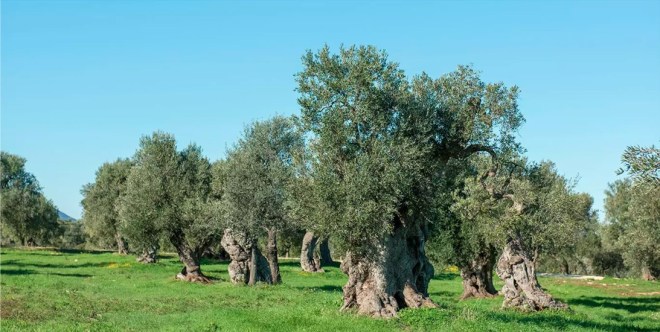
With this multi-year framework programme agreed upon, we got to work and started our research: what would be a typical Christmas lunch in Puglia? Just to get us into an Apulian mood, I throw in here a photo of an Apulian olive grove with millenarian olive trees.
Source

Unfortunately, my wife had never been brought up in Apulian traditions: it was her maternal grandfather who had been the Apulian of the family; he had immigrated to Milan as a young man before World War I, and like many immigrants before and after him he had wanted to blend in to the local, northern Italian, culture. So we had to fall back on the internet. Our initial surfing showed us that there are actually several traditional Apulian Christmas lunches to choose from, broadly divided between fish and meat. After some to-ing and fro-ing, we plumped for roast lamb and potatoes, with something called lampascioni on the side, and we left hanging the question of what to do about dessert.

Well, lamb and potatoes aren’t particularly Apulian, nor did any of the articles we read say that a particular cut of lamb was required for the Apulian Christmas lunch, so we took whatever cuts of lamb were available at our local supermarket. What was truly Apulian about the lunch were the lampascioni. No doubt like us, many of my readers will have no idea what these lampascioni are. I certainly had no idea whatsoever, and my wife had only heard of them but had never tried them. They are the bulb of a flower which goes by the English name of tassel hyacinth. Its natural range is the Mediterranean basin, although it is also found as far east as Iran and as far west as the Canary Islands. It naturalizes quite easily, though, and over the centuries it has moved northward to Poland. Now, of course, with globalisation, it’s also found in many other parts of the world. As this photo shows, the flower is really quite handsome.

Source

This has led to its being planted in many a garden, although I think I prefer them in the wild, like these tassel hyacinths in an olive grove.

Source

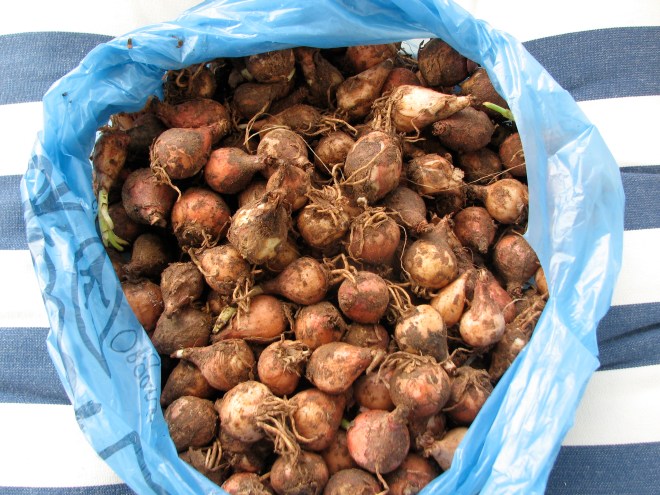
They may be handsome flowers, but the inhabitants of the heel, instep, and toe of Italy’s boot, namely the regions of Puglia, Basilicata and Calabria, have other ideas. They have taken to eating the bulb of the plant (a habit, I should say in passing, that they share with the inhabitants of the island of Crete).
Source

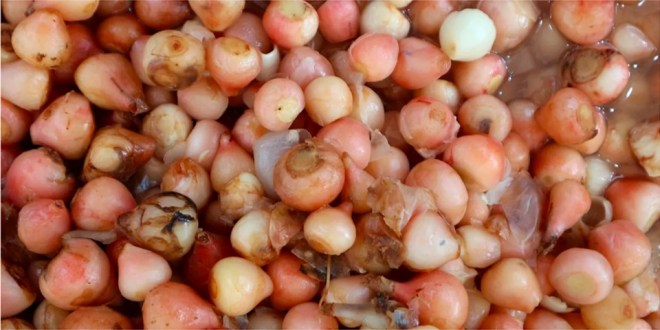
The bulbs are not an obvious candidate for the dining table since in their natural state they have an unpleasantly bitter taste. But at some point in the distant past (there is evidence that the bulbs were already being eaten in Neolithic times), this problem was solved. To be edible, the bulbs have to be left to steep in water for a significant period of time (one day should do it, with a change of water in between) and then cooked. At which point, they look like this.
Source

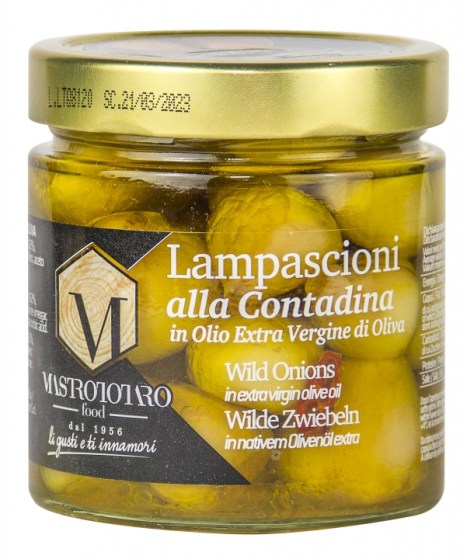
It was all very well to want to have lampascioni for lunch, but where were we going to buy them? A very regional foodstuff like this was only going to be sold in a specialist shop. As luck would have it, I discovered that a long urban walk we had planned (to a modern church on the outskirts of Milan – perhaps the subject of a later post) happened to take us by a small shop selling Apulian foodstuffs. So I persuaded my wife to make a small detour to check the shop out. When we reached it, we entered with our hearts in our mouths – and there on the shelf were jars of lampascioni! They were immersed in a lovely Apulian olive oil.
Source

This is the normal way of selling lampascioni; the bulbs are only harvested in the early months of the year. So, to be able to eat them all year round, they are kept in olive oil (the Cretans instead, I can once again mention in passing, keep them in vinegar on which is floated a thin layer of olive oil).

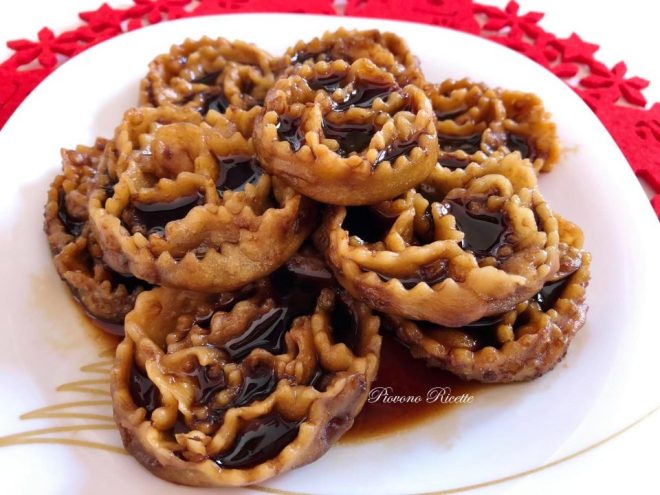
So we had our lampascioni to accompany the lamb and potatoes! We were moving along nicely. Most satisfactorily, the same shop also solved our dessert problem. They were selling trays of something called cartellate con vincotto di fichi. I had certainly never heard of these cartellate, and neither had my wife. Nevertheless, they were obviously Apulian and obviously a dessert. So a decision was rapidly taken and a tray of cartellate joined the jar of lampascioni.

Source

I think I need to explain what these cartellate are. I had to look it up on the internet because just looking at them didn’t help. They are made with thin, long and narrow slices of dough (with, interestingly enough, a local white wine taking the place of water). These are rolled up into the shape of rosettes, and the rosettes are then deep-fried in oil. Into the little cups of the rosettes is poured a thick syrup made by boiling figs over a long, long time and sieving out the solids. I think I should add in a photo of the these cartellate out of the packaging, so that readers can get a better idea of what they look like (in passing, I find it strange that they call this syrup vincotto di fichi, which translates as “cooked wine of figs”, because no wine is involved).
Source

So now we had all the ingredients we needed! 25 December dawned, and it was time to start cooking the lamb and potatoes. Our son, who was going to eat lunch with us, joined us for the preparations.

Since our internet sources hadn’t mentioned a typically Apulian way of roasting the lamb, we chose a recipe from the Italian cookery site Giallo Zafferano. The only thing which, to us at least, was untoward about this recipe was its insistence on adding a lot of water to the pan in which the lamb and potatoes were being roasted.

After an hour or so, the lamb and potatoes were ready.

Source

It was time for us to sit ourselves down at the table. The lamb and potatoes were ceremoniously brought to the table, my wife served us, we fished the lampascioni out of their jar, and we tucked in.

The lamb was delicious. The addition of water worked really well. The lamb was juicy and tender, with just a bit of crispiness on the top where the meat was above the water, and the potatoes were done to perfection.

And how about the lampascioni? What did they taste like? Well, they tasted slightly bitter, as one might imagine, but also slightly sweet. So there was an interesting sweet-and-sour thing going on with the taste buds. They also had a most interesting texture, almost melting in the mouth. I have to say, they were an excellent accompaniment to the lamb and spuds. And the oil that was left after we had polished off the lampascioni was exquisite. Apulian olive oil is anyway very good, but now it had a slight umami taste to it, which made it an excellent oil to put on my post-Christmas salads, adding an evanescent flavour to otherwise rather staid vegetables. I would buy another jar of lampascioni just for its oil.

I’m afraid the cartellate were a different story. I don’t want to badmouth them, but we won’t be buying them again, at least not if they are made with fig syrup. All that boiling meant that the syrup actually had a somewhat bitter taste to it, which rather ruined the experience of eating the cartellate. Internet sites suggest that alternatives can be used: grape syrup (but I suspect there would be the same problem of bitterness), honey, or icing sugar. If ever we come across cartellate made with any of these alternatives, we might give the dish a second chance.

So there we have it. Apulian Christmas lunch: done! Next year: Lombard Christmas lunch.

RED WINES FROM SOUTHERN ITALY

Milan, 24 May 2021

In an earlier post, I confessed that the amount of wine my wife and I consumed during the two lockdowns which we have endured over the past year was considerable. In that same post, I said that we focused much of our wine drinking on red wines from the south of Italy – Sicily, Sardinia, Puglia, some Calabria, some Basilicata. I always prefer red wines – white wines give me stomach burns. My wife is quite happy to follow me in my choices, although from time to time she’ll splash out and get herself a bottle of white wine.

I chose to buy wines from southern Italy because I didn’t know them very well, which fed into my general tendency to support the underdog and be contrarian. After sampling a few bottles, I also felt that the red wines of southern Italy had more oomph to them than wines from northern and central Italy – I beg readers not to ask me to translate that into the flowery language of the wine connoisseur because I can’t. As I once confessed in an earlier post, my general method of assessing wines is “mmh! that’s a nice wine!” or “mm … not a good wine”.

Source

Also – and this was important with the tightening of household budgets under lockdown – they were generally cheaper than other Italian wines.

I also felt virtuous in supporting local grape varieties. Not for me the Cabernet Sauvignon, Merlot, Chardonnay, Syrah, Grenache Noir, Sauvignon Blanc, Pinot Noir, and the few others which dominate wine-making worldwide! No sirree, I was going to support the more than 1,500 grape varieties (yes, I kid you not, 1,500) which exist in Italy.

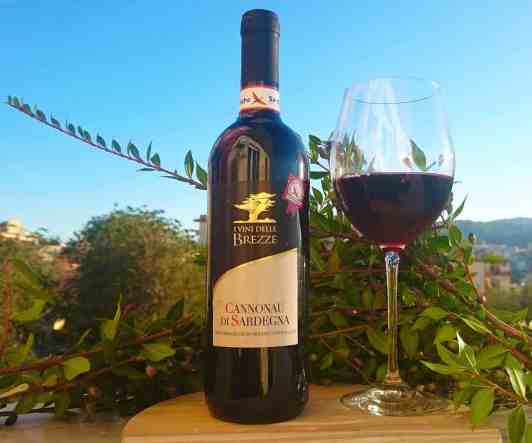
So from Sardinia I was buying wines made with Cannonau grapes (or to be more precise, where the Cannonau made up the largest share; the great majority of Italian wines are blends).

Source

From Sicily, it was wines made with Nero d’Avola grapes.

Source

From Puglia, it was wines made with Primitivo grapes.

Source

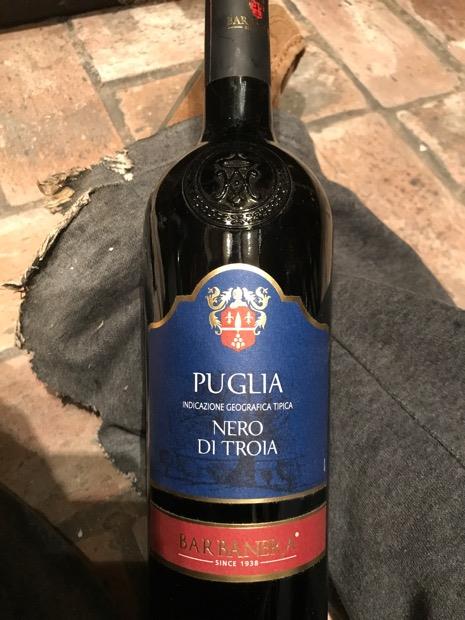
From time to time, though, we branched out into wines made with Nero di Troia grapes.

Source

From Basilicata, it was wines made with Aglianico grapes.

Source

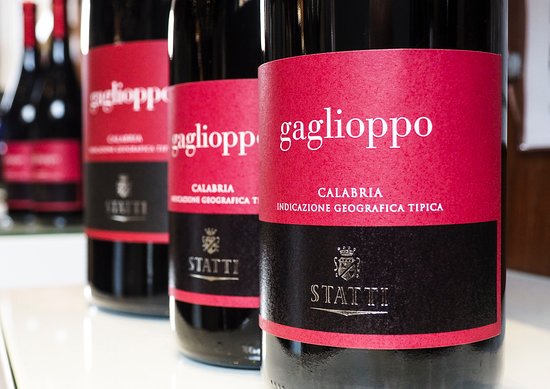
From Calabria, it was wines made with Gaglioppo grapes.

source

(For reasons which are now not clear to me through the haze of history, I chose few if any wines from Campania – a lapse to be rectified in any future lockdowns!)

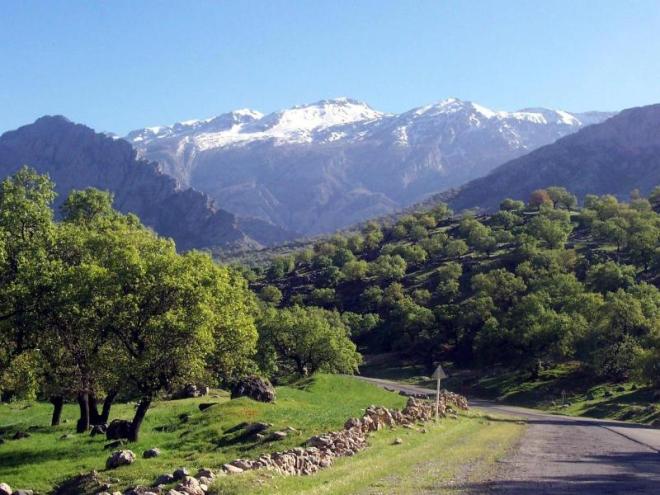
At some point, though, through the wine fumes, I began to wonder how many of these grape varieties really were local. One can make the case that actually no domesticated grape varieties are really autochthonous. Archaeologists tell us that domestication and the related discovery of wine-making took place somewhere in the region between the Black Sea and Iran, between the seventh and the fourth millennia BC. The earliest evidence of domestication has been found in Georgia (the country, not the US state) and of wine production in Iran in the northern Zagros Mountains.

source

Subsequently, domesticated vines and wine-making knowledge spread to other civilizations in the region, first Egypt and Lower Mesopotamia, and then to the Assyrians, Phoenicians and Greeks (at a later period vine and wine-making moved along the Silk Road to China and Japan, but that is a story for another day). The Greeks and the Phoenicians, continues this story, transferred the domesticated grape vine and wine-making technologies further west, to Italy, Spain, and the south of France. The Romans then carried the vine and wine-making further north in Europe to what are more-or-less its northernmost borders today. And then when Europe colonized the rest of the world, the Europeans took their vine and wine-making knowledge with them. So in this view of history, no domesticated grape vines are really autochthonous.

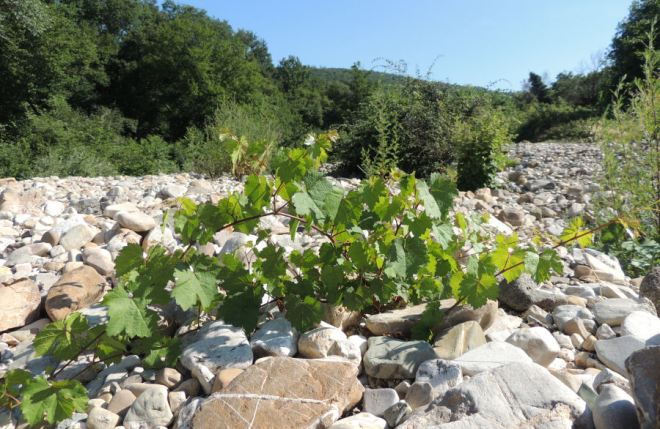
But that’s one Creation Story. Another Creation Story points to the fact that the vine species which was domesticated for wine-making (called, appropriately enough, Vitis vinifera) grows wild from Georgia to Portugal.

Source

So why could wine-making not have been independently discovered in several places?

A third Creation Story, and the one – for what it’s worth – that I feel is most credible, is that wine-making did indeed start in Iran or thereabouts, and cuttings of the domesticated vines were indeed carried westwards. But in their new homes, these vines could well have crossed spontaneously with local wild forms of the vine (or have been made to cross with them by the local viticulturists), thus shaking up their DNA a little and possibly affecting berry size, ripening time, sweetness, and whatever other characteristics viticulturists prized at the time. In this view of history, each locality can have vines which are hybrids of immigrant vines and local ones, which makes them pretty local. And anyway, even if a vine was brought in from somewhere else, if it’s been around in one locality for a long time surely it’s become local? (a bit like all Americans of immigrant stock nevertheless considering themselves locals) And anyway, the grape vine’s DNA is subject to spontaneous mutations (like American immigrants), which over time will distinguish it from its neighbors. All excellent reasons, I think, for declaring that grape vines which have been grown in one locality long enough can be considered autochthonous.

Of course, one could argue that all these Creation Stories are irrelevant because of the American pest phylloxera which devastated vineyards planted with Vitis vinifera in the late 19th Century (we have here a cartoon of the time, whose caption was “The phylloxera, a true gourmet, finds out the best vineyards and attaches itself to the best wines”)

Source

Ever since then, pretty much all commercial vineyards are Frankensteins, with Vitis vinifera grafted onto a root stock of one of the American members of the grape vine family which are resistant to the pest. Under the circumstances, I can hear some people ask, can one really call any commercial vine autochthonous?

I reject this latter argument because first, if I did accept it I wouldn’t have a story to tell, and second, because even with an American rootstock the grapes still express only the DNA of the grafted Vitis vinifera. Just as a person who has had their heart replaced is still expressing their old DNA.

So with all that out of the way, we can now focus on those wines which my wife and I (and not infrequently our son) were imbibing during lockdown, and ask ourselves the question: are the grapes that went into making them local or not? As usual in life, the answer is yes in some cases, no in others.

As one might expect, many of the local vines in southern Italy have their own Creation Stories. The cynic in me suggests that a good number of these were invented to increase a wine’s marketability, although I could well imagine that there is a desire on the part of the local people to have the stories of their vines reflect their own Creation Stories. Thus, many of the Creation Stories reflect the south of Italy’s ancient history as Magna Graecia, that arc of Ancient Greek colonies which stretched from Puglia all the way to Sicily. They suggest that the vines were brought from Greece by these early colonists. Others look to the Phoenicians as the source of their vines; Phoenicians also had colonies in Sicily and further afield. This map shows the situation in about 500 BC.

Source

If these Creation Stories are true, they would place the original migration episodes for the vines in question at some two and a half thousand years ago, quite long enough to claim that they are now fully local. Other Creation Stories suggest instead that the local vines are crosses between local wild stock and immigrant stock. Who can deny that such vines are fully local? Ampelographers have weighed in (these are experts in the study and classification of cultivated varieties of grape). They have given savant judgements on the heredity of countless vines by comparing the shape and colour of their leaves and their grape berries. Wonderful word, ampelographer! It rolls off the tongue like a good wine rolls down the throat. In my next life, I want to be an ampelographer, it must look so cool on a CV.

Anyway, along have come DNA studies, to cut through all the bullshit. We finally have a scientific basis for making judgements about a vine’s genealogy.

Source

And the white-coated scientists in their labs have discovered some very interesting things.

Take Cannonau, the grape variety that is the Sardinian grape par excellence (editorial note: since photos of bunches of grapes get pretty boring pretty quickly, I will instead be throwing in nice photos of the places where the various grapes grow).

Source

DNA studies have shown that actually, it is none other than Garnacha from Spain! (which, by the way, is also none other than Grenache; the French brought the vine from Spain and then frenchified the name) The most likely Creation Story in this case is that the Spaniards brought Garnacha to the island some time during their centuries-long dominion, from 1324 to 1718. Some Sardinians have tried to claim that the move was actually in the other direction, from Sardinia to Spain, but I don’t think that will wash, especially since a number of other “local” Sardinian grape varieties have also turned out to have a Spanish origin. On the one hand, I’m saddened by the fact that although I thought I was supporting a local variety when I bought Cannonaus in fact I wasn’t. On the other hand, I was pleased to learn of this Spanish connection, because I recall thinking, when I first tried Cannonau, that it reminded me of Rioja, and Garnacha grapes are one of the constituent grapes of Rioja.

Skipping to the island of Sicily, what about the Nero d’Avola grape?

source

Well there, I’m happy to say, I have been supporting an autochthonous variety – that is to say, a variety which could well have been introduced several thousands of years ago by the Dorian Greeks who colonized the part Sicily where the town of Avola is located; the town does indeed seem to be the center of this grape’s distribution. The original immigrant grape could actually have been a forefather of today’s Nero d’Avola, since DNA studies have revealed a cousin-like relationship between it and two other ancient Sicilian grapes, Catarratto and Inzolia. As far as I know (although the white-coated scientists publish many of their DNA studies in scientific journals which I don’t have access to), no relationship has (yet) been found between Nero d’Avola and Greek grape vine varieties. It could well be that the forefather has vanished, as old vine varieties were replaced with newer ones; phylloxera also put paid to a large number of varieties.

Vaulting now over to Puglia, in Italy’s heel, we can have a look at the Primitivo grape.

source

And here I must start by admitting that my wine choices were not supporting autochthonous grapes; Primitivo is not an Italian variety. Nevertheless, we have a fascinating story here. DNA studies have shown that actually Primitivo is a Croatian grape variety, more specifically one from the Dalmatian coast. Unfortunately, the devastations of phylloxera mean that there is hardly anything left now of the variety in its homeland – a few vines here and there. We can imagine some adventurous southern Italian sailing across the Adriatic Sea to Dalmatia and bringing cuttings back home. As far as can be judged, this was quite recent, some time in the 18th Century. The grape’s Italian name points to why viticulturists were interested in it – it was an early (“primitive”) ripener.

What makes the Primitivo story really fascinating is that DNA studies have also confirmed that it is pretty much the same as the “Californian” grape Zinfandel! (bar a mutation or two) How a Dalmatian grape variety ended up in southern Italy is not hard to imagine. But how on earth did it end up in California?! The best guess is by quite a circuitous route. Step 1 is that the variety was transferred to the Hapsburgs’ greenhouses in Vienna, when Dalmatia was part of the Austrian Empire. Step 2 is that, as part of a burgeoning global trade in plant species, horticulturalists living on the US’s eastern seaboard requested the Imperial greenhouses to send them cuttings, which they did. They probably also requested cuttings from British greenhouses, which had earlier requested them from the Viennese greenhouses. Step 3 is that one or more of these horticulturalists from the Eastern US joined the gold rush to California but took care to take vine cuttings with them. Presumably, they found that in the end it was more profitable to make wine in California than to pan for gold. (As a quick aside, one of my French cousins many times removed, who came from our family of vignerons in the Beaujolais, did something similar. He joined the gold rush to Australia but ended up making wine; I don’t know if he took cuttings with him or used the vine varieties which others had already brought to Australia. In any event, I have a whole bunch of Franco-Australian cousins whom I have never met)

But let’s get back to Puglia, to consider the Nero di Troia grape variety, which we tried from time to time during lockdown.

Source

DNA studies have shown that this grape has an equally fascinating genealogy – and luckily for me and my determination to support autochthonous grape varieties, I think I can safely say that it is definitely an Italian variety. DNA studies have shown that Nero di Troia’s mother is Bombino bianco, an ancient white grape variety found all along the Adriatic coast but especially in Puglia, while its father is Uva rosa antica, now only found as a very minor variety in the province of Salerno in Campania.

So far, so good. But what makes Nero di Troia more interesting than most varieties is that DNA studies have also shown that it has two full siblings (same father vine, same mother vine): Bombino nero and Impigno. Which just goes to show that grapes are like humans: you and your siblings can have the same parents but you can be quite different from each other.

What’s even more interesting is that comparisons of the DNA profile of the father, Uva rosa antica, to those in DNA libraries have revealed that this minor variety from Salerno is one and the same with another minor variety called Quagliano found only in a few Alpine valleys in Piedmont, in the very north of Italy, which in turn is one and the same with a variety called Bouteillan noir found in Provence, in France. Which just goes to show that there must have been quite a vigorous, though completely informal and unmonitored, trade in vine cuttings throughout southern Europe.

Moving on to Basilicata, the wines we tried from that region during the long months of lockdown were based mostly on the Aglianico grape.

Source

This is definitely one of the grapes where the locals have a Creation Story involving its introduction to the region by the Ancient Greeks through their colonies in Basilicata. Alas, DNA studies have revealed little if any relation to other existing Greek varieties, so if Aglianico was imported to Basilicata the original Greek plantings have all disappeared. Which suggests that perhaps Aglianico is actually a cross between some immigrant vine from somewhere and local wild stock. In any event, I think we can count this one as an autochthon.

Finally, Calabria. The wines we were drinking from this region are mostly made with the Gaglioppo grape.

Source

This is another grape variety that the local inhabitants wish to believe came originally from Greece, through the Ancient Greek colonies on the Calabrian coast. However, DNA studies have clarified that Gaglioppo is a very Italian grape, being a cross of the Sangiovese and Mantonico grapes. The latter is a very typical and ancient Calabrian grape. As for Sangiovese, viticulturists have used this grape to sire a whole series of grape varieties. At least ten are known at the moment, including Gaglioppo. There must have been something about Sangiovese grapes that viticulturists liked; if any ampelographer reads this, please tell me what it was. It doesn’t finish there, because in turn DNA studies have revealed that Sangiovese is itself the product of a cross between the Ciliegiolo and Calabrese Montenuovo grape varieties. Ciliegiolo is an ancient variety from Tuscany. Calabrese Montenuovo, on the other hand, has its origins in Calabria; sadly, it is now an almost-extinct relic. We have here another example of the vigorous trade in vine cuttings, this time up and down the Italian peninsula.

I could go on. For instance, each of these grape varieties is blended with various other grapes, and many of these have had their DNA studied. But I’m running out of steam and I fear that I will soon be losing my readers – there’s a limit to how much information about DNA one can absorb before one’s mind begins to whirl like a double helix.

Source

I leave my readers with a final plea: considering that there are 1,500 varieties of grape in Italy, please ignore any wines made with the Top Ten grape varieties and concentrate on trying out all 1,500 Italian varieties. Cin-cin!

Source