Beijing, 24 June 2014
My wife and I were having our usual chat with our daughter via FaceTime when she announced that she and her flat mate had been discussing the vital question of why cheeses were different from each other.
Well! That was more than enough bait for a nerd like myself to rise to. With eyes a-shinin’ and lips a-lickin’, I started to research the topic. It was actually a question I had also often posed myself: how on earth did you get so many different-tasting products out of the same rather bland starting material, milk?
I am proud to announce the results of my research. The answer is …. “The most important agents include the four following elements: rennet, starter bacteria and associated enzymes, milk enzymes, second starter bacteria and associated enzymes, and non-starter bacteria”. OK, that’s not very clear, so let me expand a little.
The first step in cheese making is curdling. In fresh, unpasteurized milk, curdling happens naturally. Attack by bacteria floating around in the air and settling on the milk leads to the formation of lactic acid, and it is heightened acidity that causes milk to curdle, separating out into solid curds and liquid whey. But we humans have learned to help the process along. Rennet, which is a complex of enzymes, seems to have been an early favourite for inducing curdling. An interesting theory I read is that our ancestors discovered the milk-curdling properties of rennet when they used animal stomachs as storage vessels for milk. FYI, mammalian stomachs naturally contain rennet as an evolutionary response to milk drinking (which is what makes a mammal a mammal rather than, say, a bird or a reptile). It allows young mammals to digest their mothers’ milk.
Or you can use acids. Given that you want to eat the result, you probably don’t want to use sulphuric acid or hydrochloric acid, even though I’m sure they would do the trick. Naturally-occurring (and edible) acids like vinegar and lemon juice will do nicely.
Or you don’t wait for some random bacteria floating around to attack the milk. Instead, you deliberately inoculate milk with so-called starter bacteria (often adding rennet in a second step). Presumably from previous trials and errors which occurred who knows how many centuries ago in monastery cellars or elsewhere

these various strains of bacteria are known to give specific tastes to the final cheese. They will chemically attack the milk, and later the curds, in differing ways, giving rise to chemical products with different tastes.
In any event, one way or the other you will end up with curds

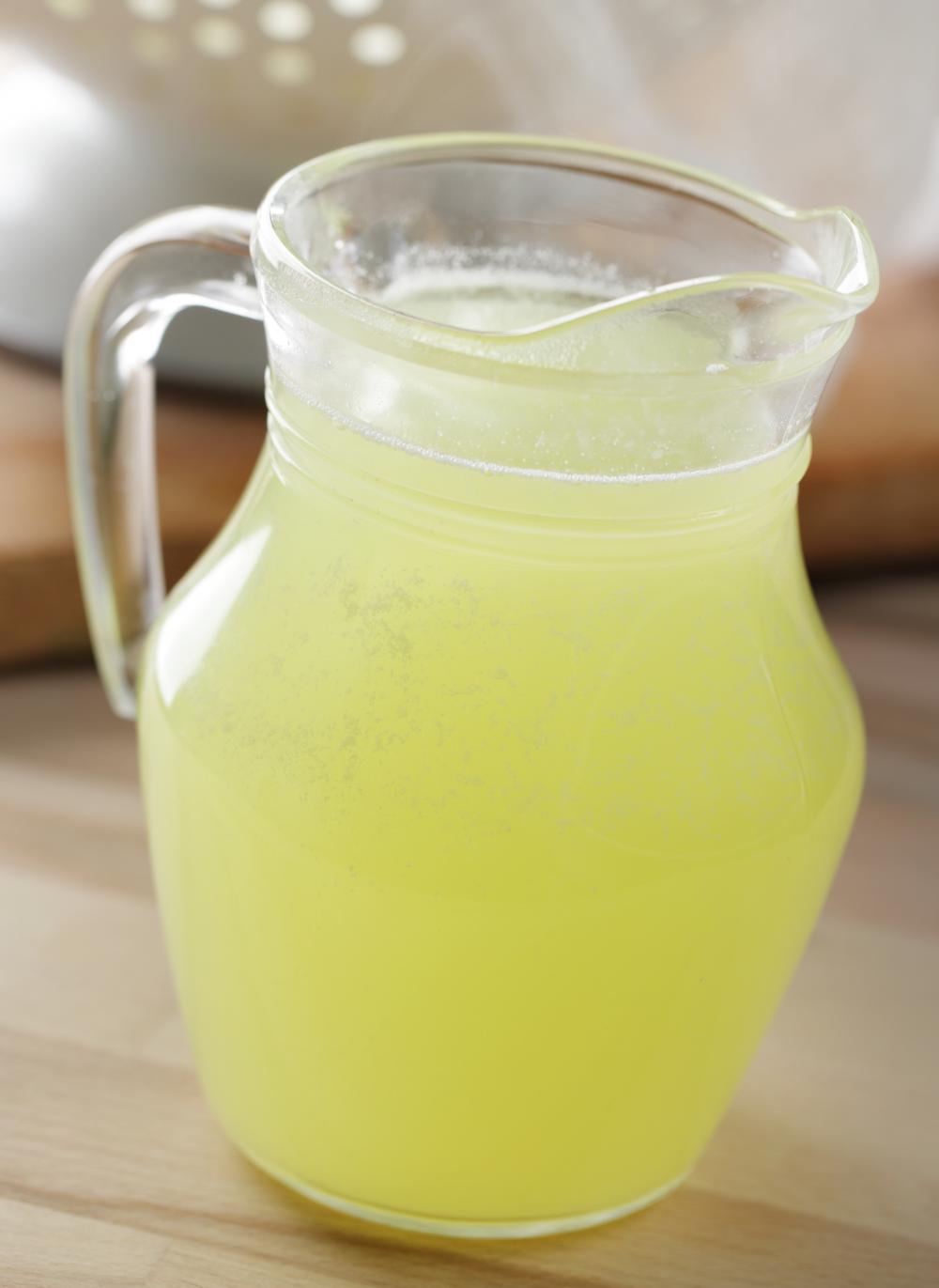
and whey

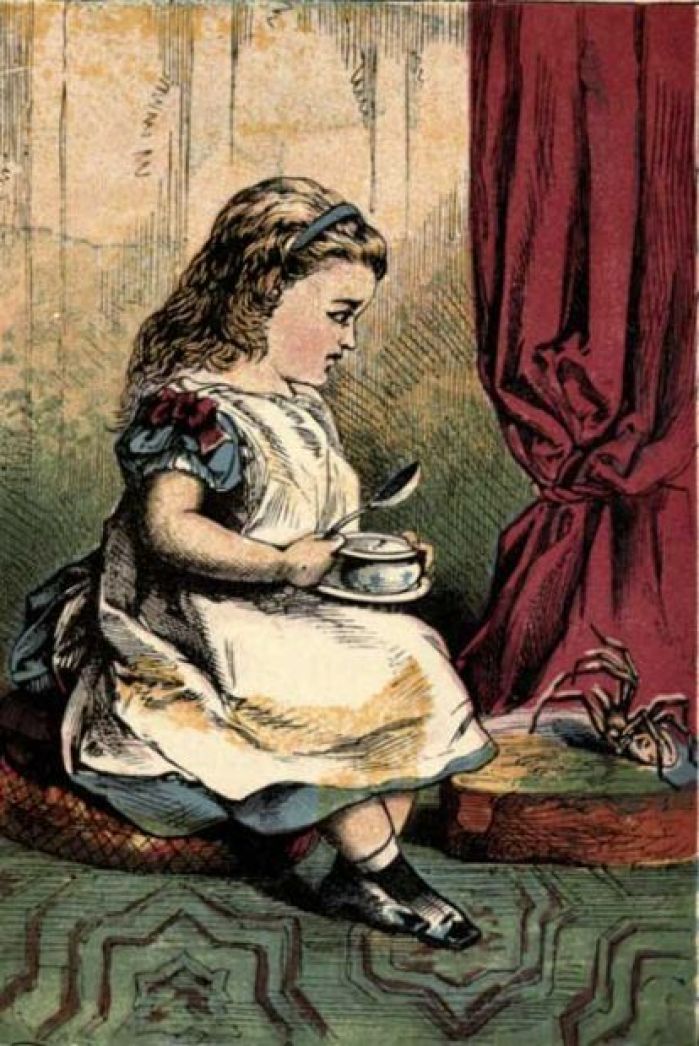
Like little Miss Muffet who sat on a tuffet, you can already eat the curds and whey if you so wish, preferably before a spider turns up and spoils your appetite.

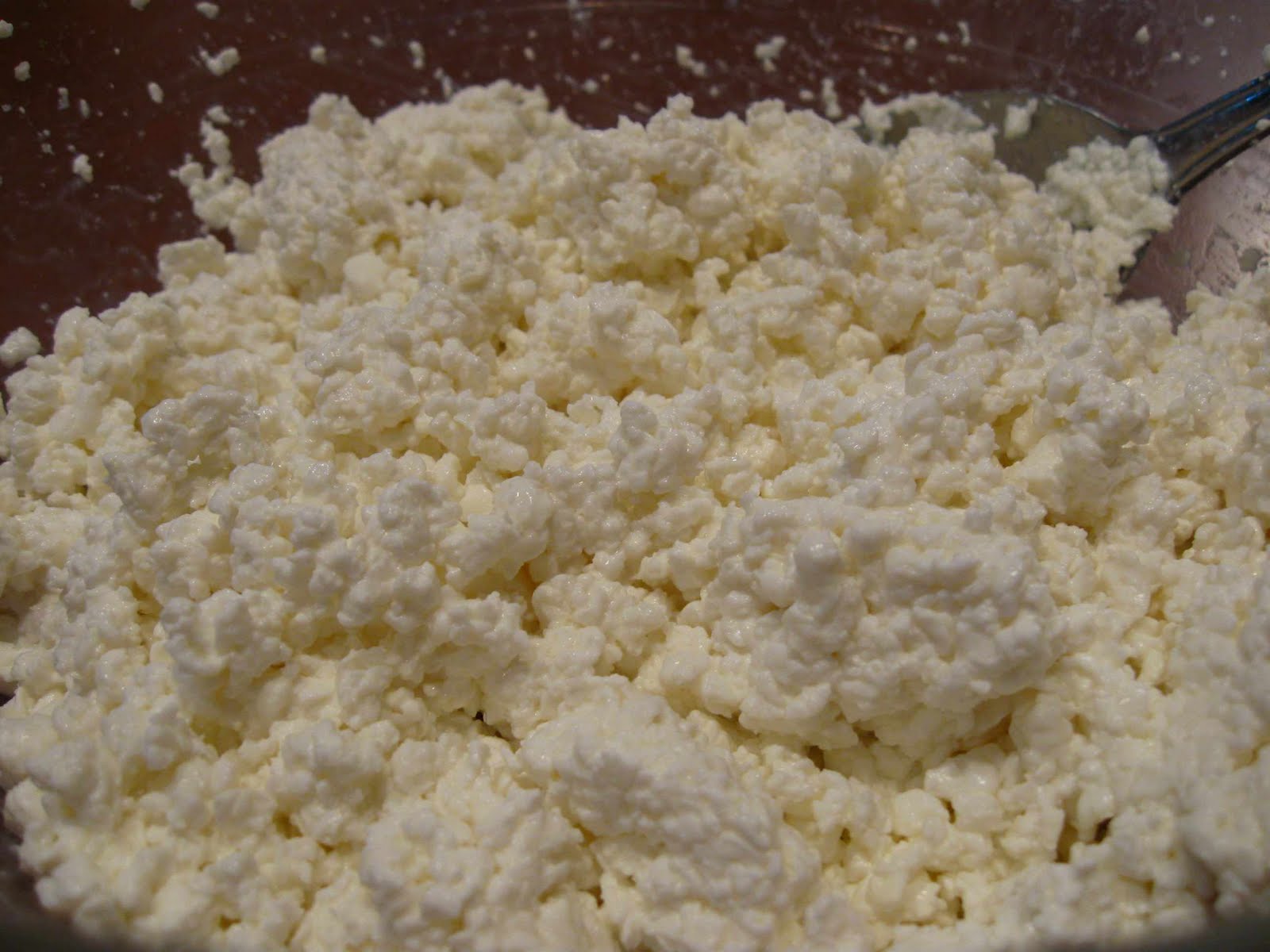
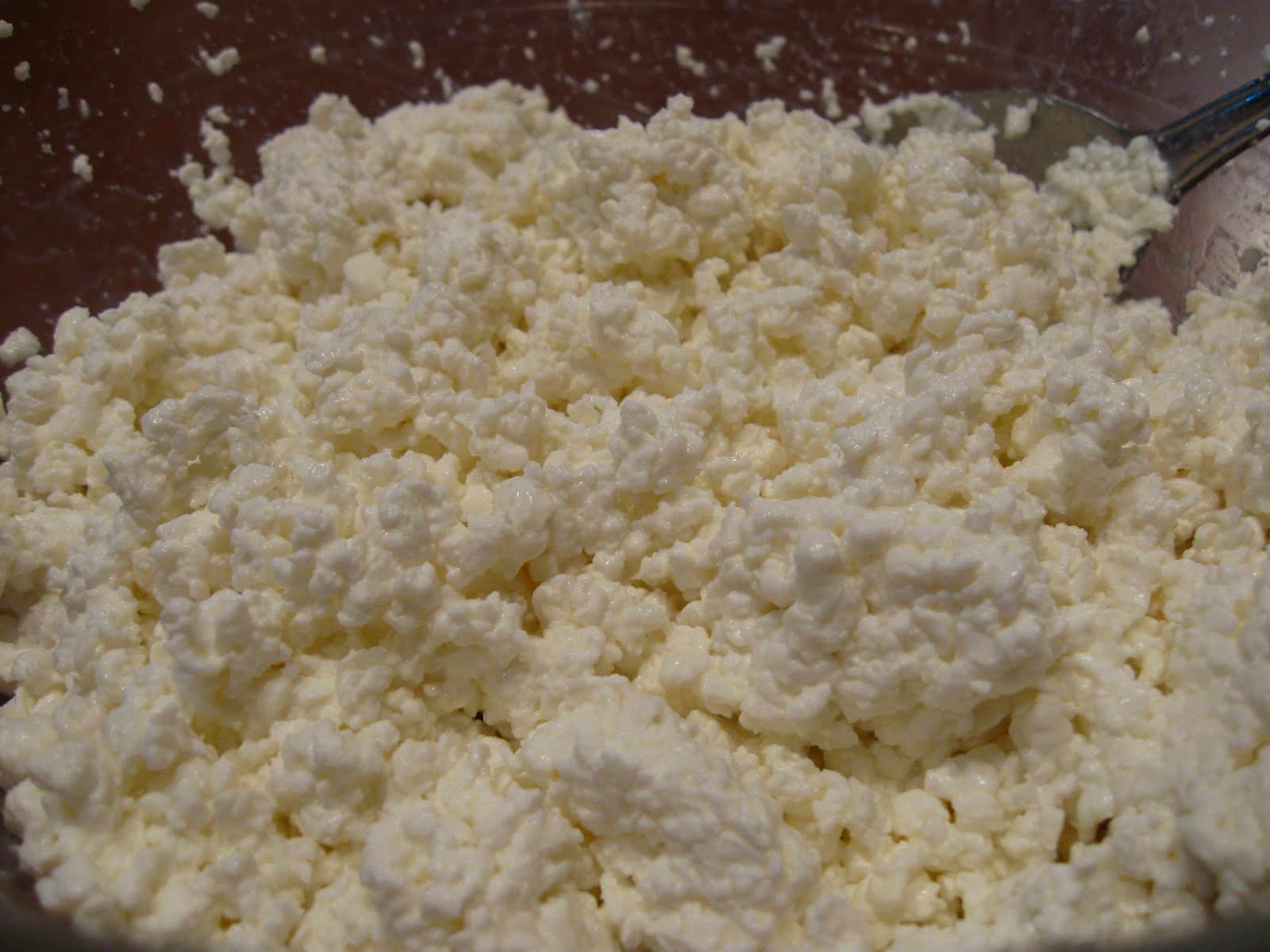
That is basically what cottage cheese is, loose curds

while after a period when whey was considered only good for poor peasants, whey-based drinks are gaining a certain popularity with the health conscious.

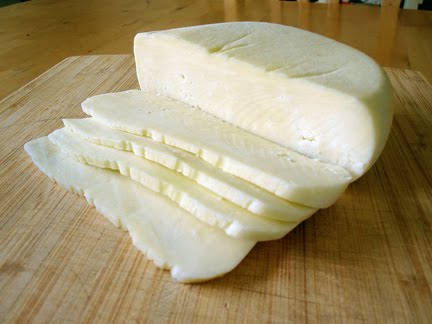
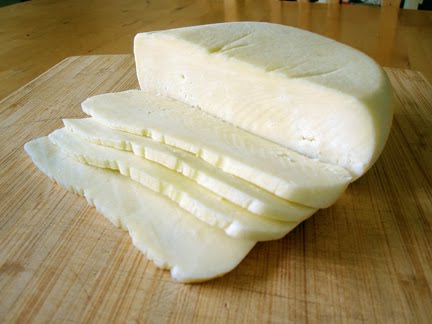
Alternatively, you can take the curds and start pressing them to get rid of liquid. Depending on how much you press them and process them thereafter, you’ll get a whole series of fresh cheeses: pot cheese, farmer’s cheese, hoop cheese, sour milk cheese, curd cheese, cream cheese, and a thousand others made in non-English cultures. I will mention three of these, the Italian mozzarella (where the curds are actually stretched and kneaded), the French fromage blanc, and the Austrian topfen: mozzarella, because it has to be the best cheese in the world; fromage blanc, because my French grandmother used to serve it when I was young and I always have it when I go back to France; topfen, because I discovered this cheese in the form of the dish topfenstrudel when we moved to Vienna. I will let this photo of farmer’s cheese stand for the whole class of fresh cheeses.
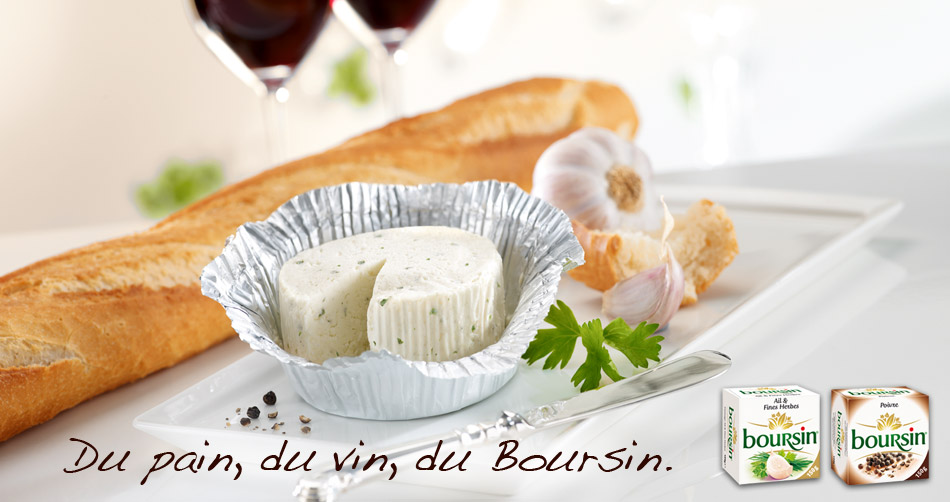
Let me also mention boursin cheese, because (a) my daughter, who set me off on this posting, likes it, (b) it is a good example of the mixing of other ingredients – in this case garlic and fines herbes – with fresh cheese to make a new product (walnuts is another popular ingredient in this category) and (c) when I was young it had a really cool advertising line, “Du pain, du vin, du boursin”

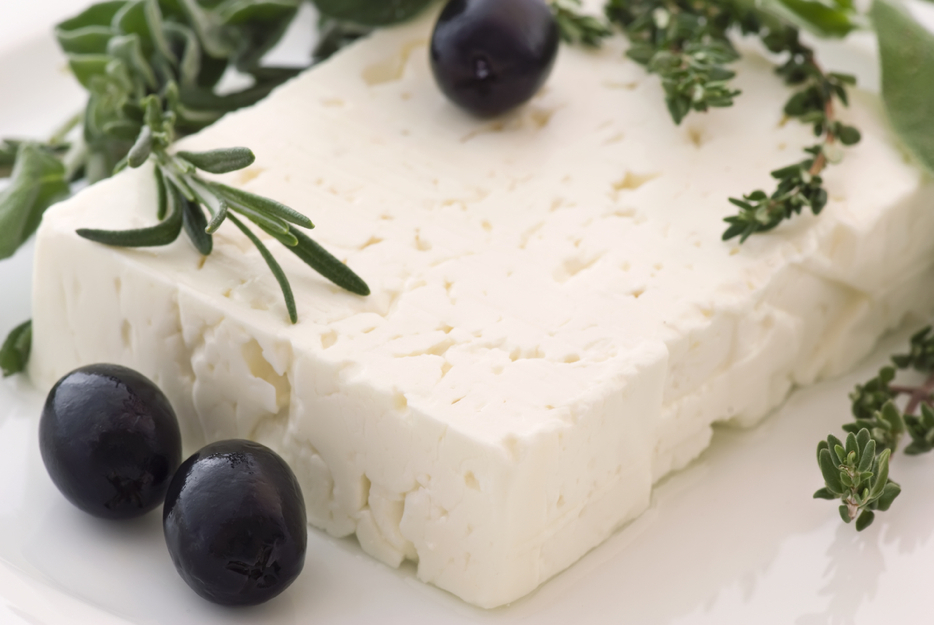
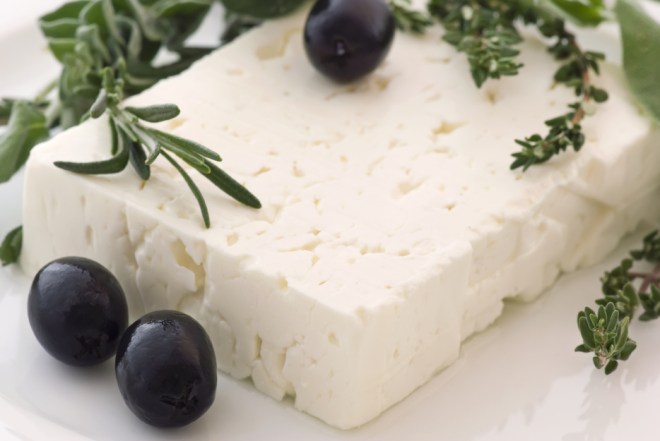
Fresh cheese is just that, fresh. If you don’t process it further, it will spoil. The most basic preserver of cheese is salt, which has been used for millennia to preserve all sorts of food (salt also firms up the texture of cheese, by the way). So as a salute to salt, let me first deal with brined cheeses, which are cheeses that are matured in a brine solution. This is the main type of cheese produced in the Middle East and the Mediterranean areas: Greek feta, Cypriot halloumi, South-Eastern European sirene, Romanian telemea, Middle Eastern akkawi, Egyptian mish (which is also pickled), …. I will let a photo of feta cheese stand in for the class of brined cheeses.
In other cases, … well, the pressed curds seem to be processed in a bewilderingly different number of ways. They will always be salted (to put off spoilage). Some will be heated (which will kill off some, but not all, bacteria). Others will be washed (getting rid of acid and so making them milder to eat). Some are gently set in moulds (soft cheeses), others have the curds ruthlessly crumbled before being subject to moulding (hard cheeses). Then the cheeses are left to ripen for anything from three weeks to several years. But they aren’t left alone, oh no! Many are regularly washed, which helps to form the rinds and keep the cheese moist and no doubt to impart specific tastes. Brine is a common washing solution. In some cases, just to complicate things, the brine is aromatized with herbs. Alcoholic beverages are also popular rinses: wine, cider, beer, and just about any other alcoholic drink known to man. Or the cheeses are sprayed or injected with molds, or smeared with bacteria or molds or yeasts. Or some are smoked. And after all of this, cheese makers still keep fiddling: with humidity levels, with temperature, and with I don’t know what else. All of which gives rise to a dizzying variety of cheeses: they can be soft, or semi-soft, or medium-firm, or firm, or hard; their texture can be brittle, chalky, chewy, creamy, crumbly, flaky, grainy, runny, sticky; they can taste ammoniated, buttery, clean, complex, fermented, herbal, mild, musty, nutty, ripe, robust, salty, smoky, sour, spicy, sweet, tangy, tart, yeasty.
And I haven’t mentioned the effect on taste and texture of what is really the very, very first step in cheese-making, the choice of milk. I think you can make cheese from any mammalian milk (some clever fellows have even made cheese from human milk), but in practice cow’s milk dominates. Goat’s milk is also popular in many parts of the world, while sheep’s milk gets an honourable mention. Water buffalo’s milk is a must for mozzarella. Yak’s milk is used by the Mongolians and Tibetans. The Mongolians also use horse mare’s milk, while Afghanis and Pakistanis use camel’s milk. The Finns use reindeer’s milk, while Serbians have a tradition of making cheese with donkey’s milk. As anyone knows who has eaten goat’s cheese, for instance, the choice of milk sure changes the taste of the cheese. And of course milk isn’t just milk! There are those who insist that what the animals ate – hay versus grass versus any old crap – will affect the milk and therefore the taste of the cheese, so there are cheeses where – it is claimed – only milk from cows eating grass is used. And the time of the year in which the milk is produced, others say, affects its biochemical makeup, so there are cheeses which, I read, should only be made in March, or October, or …
All of this is enough to give one a strong headache …
Out of all of this seeming chaos, I have managed to extract a few categories of ripened cheeses to describe in more detail. Let me start with those cheeses which have molds sprayed onto them, principally of the penicillin family, and which give rise to rinds with white blooms on them. The best known of these has to be the French Camembert, whose surface is sprayed with a mold that is so linked to the cheese that it is named after it, Penicillium camemberti.

After years of eating it too, I feel I should also mention the French Brie.
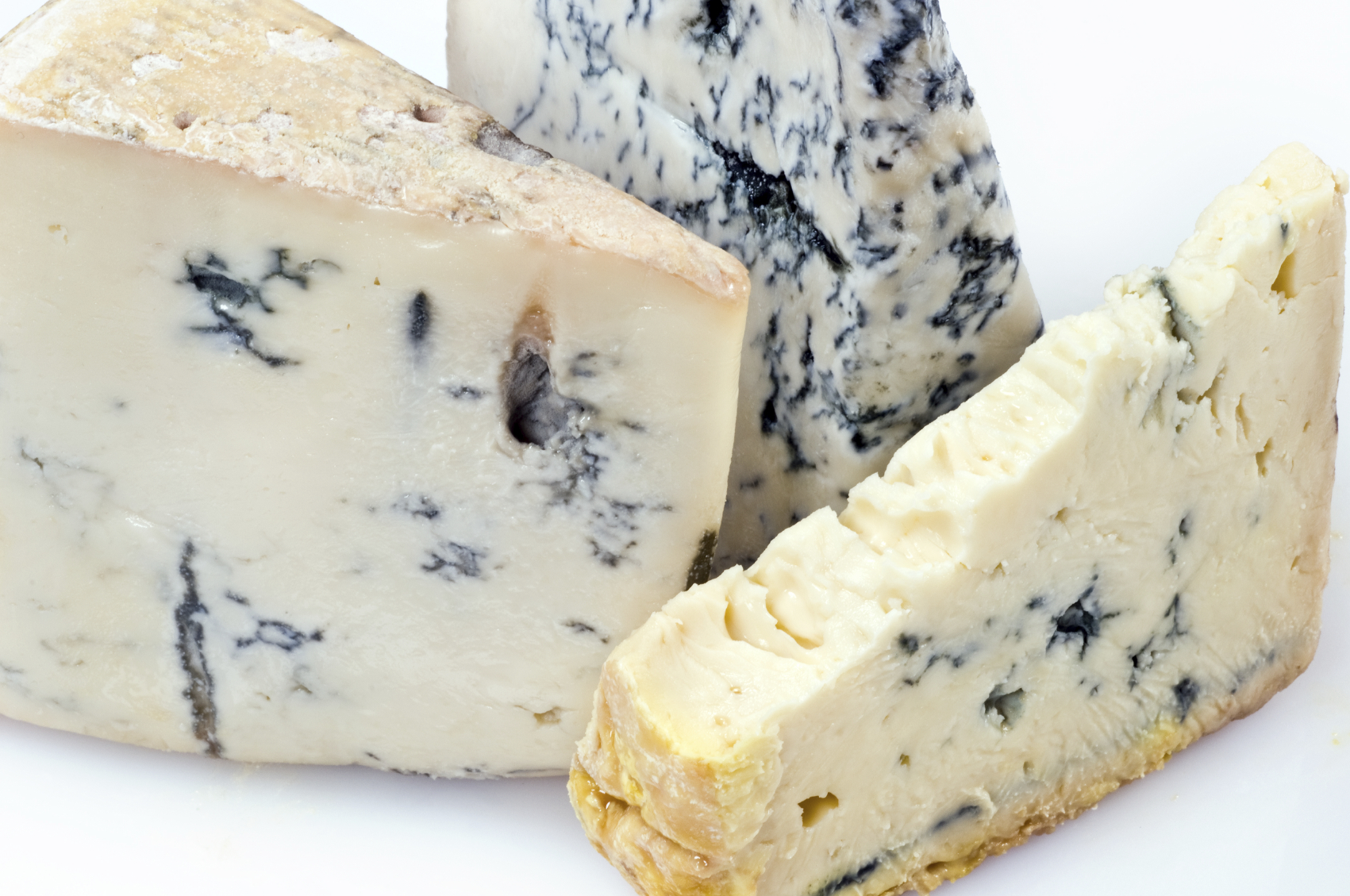
Then there are the cheeses where the mold is injected into them. The French Roquefort and English Stilton fall into this category, although I will have a picture of the Italian Gorgonzola stand in for this group

for the completely trivial reason that when I drove through the village of Gorgonzola (which is near Milan) for the first time, I belatedly realized that actually the cheese was named after a real place.
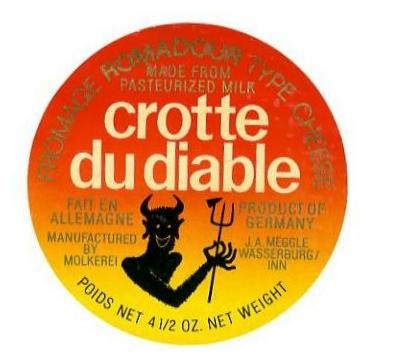
Then there are the cheeses whose rinses encourage the growth on the rinds of another bacterium, Brevibacterium linens, which gives these cheeses their characteristic pinkish-reddish tint. This bacterium is ubiquitous on the human skin, so no prizes for guessing how it ended up on the cheeses. It is also why our feet smell when sweaty, which no doubt explains why the cheeses in this category tend to stink (it looks like we weren’t so wrong when as boys at school we accused each other of having socks which smelled of old cheese). There are some well-known cheeses in this category like Munster, Limburger, and Port-du-Salut, but I will use as a stand-in for this group a cheese that sadly no longer seems to exists but was a family favourite when I was young: crotte du diable, devil’s droppings (I have mentioned this cheese in a previous post).

The cheese was very aptly named, having an incredibly foul-smelling rind, so foul that you had to wash your hands very thoroughly after eating it. But the cheese itself was wonderfully smooth.
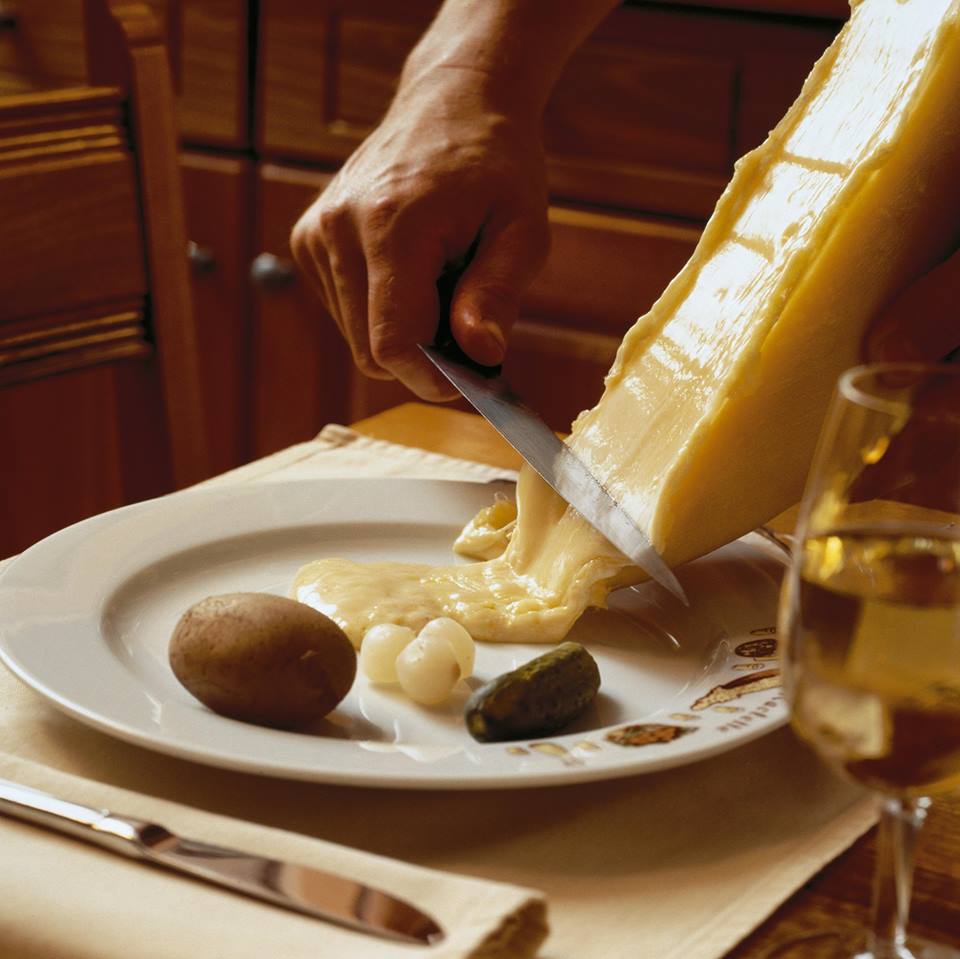
I have to mention another cheese in this category, the Swiss Raclette. My wife introduced me to this cheese. She had got to know it well during her skiing days in the Alps. During our time in Paris, in the early 1980s, we discovered a little restaurant just off the Champs Elysées where you could get a glorious raclette, served just the way it should be, scraped (raclé) onto your plate and served with gherkins, pickled onions, and potatoes in their jacket.

When we went back to Paris many years later, we homed in on the place for lunch like bees for their hive. Alas! the restaurant was gone. Glumly, we wandered into a nearby restaurant and had ourselves a totally non-descript lunch. Sic transit gloria mundi.
I can’t think what other categories to extract from this mass of cheeses (over 700 of them according to www.cheese.com). So I’ll just salute a few cheeses which I personally consider deserve special mention:
The great, the glorious, the incomparable, Parmigiano Reggiano

not to be grated onto some anonymous pasta, and not to be shaved onto some anonymous salad, but to be eaten alone, flake by grainy flake, slowly and with hushed reverence. When, a few years ago, my wife and I saw that a rare earthquake in Emilia Romagna had wrecked a couple of Parmigiano Reggiano storehouses, we briefly toyed with the idea of jumping onto the first airplane back to Italy and picking up some slightly damaged wheels of the cheese on the cheap. Good sense eventually prevailed.
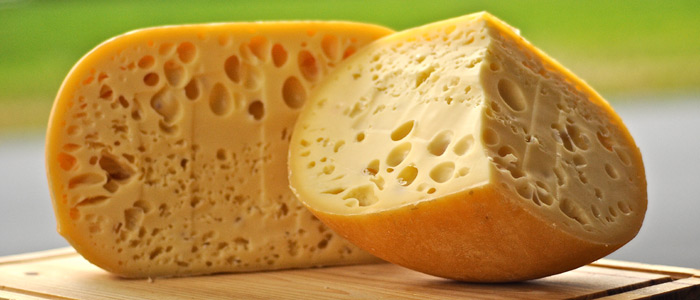
Emmental

which for me somehow is my youth (my mother was a generous purchaser of the cheese), and whose holes (which I have just learned are called “eyes” in the trade) fascinated me. With old age, I have become boringly scientific and now know that the eyes are caused by the use in the starter bacteria of the bacterium Propionibacterium freudenreichii, which consumes lactic acid and excretes CO2; the latter creates bubbles, which we see as eyes (if you get my drift). In the old days, these eyes were considered defects to be avoided, but no doubt after seeing how the eyes made the cheese popular with children and therefore with their parents, emmental makers began to encourage their presence.
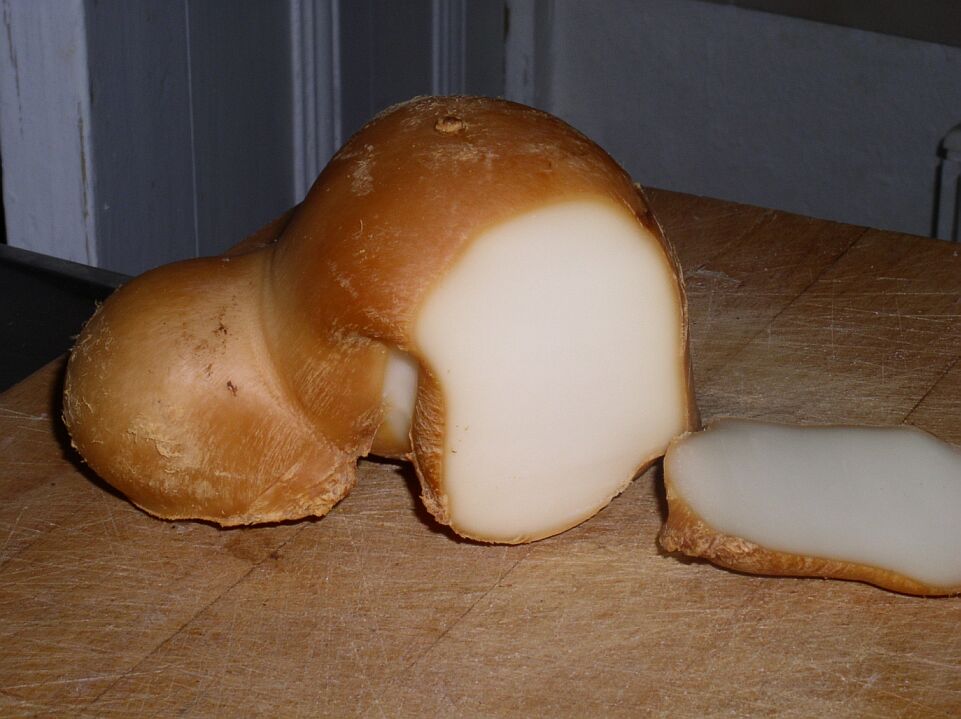
Then I pass on to scamorza affumicata, which is not that well-known outside of Italy. Like mozzarella, it’s a stretched curd cheese which is then allowed to ripen. Makers form a ball and then tie a string around it to hang up in the store room, which explains its “strangled” shape.

It looks like this inside.

It is best when smoked, and best eaten grilled on bread. It was one of the Italian foodstuffs which my wife introduced me to when we first met.
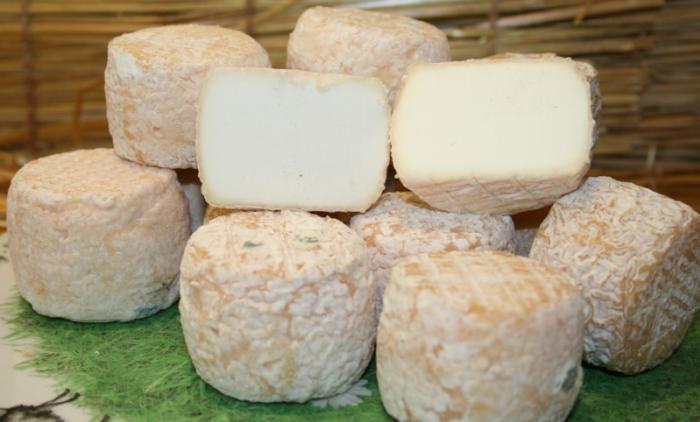
And finally, goat’s cheese. Not those fussy little rolls you find in upscale shops, often covered in herbs or pepper or some other thing. No, I mean the goat’s cheese which I would eat at my grandmother’s house in France, which looked like this
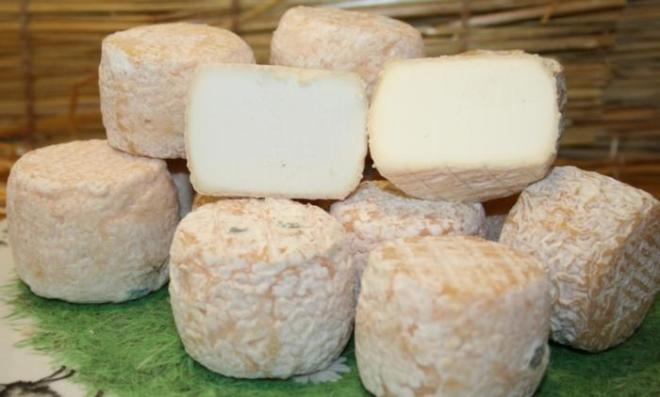
The ones I ate were made by the farmer’s wife down the road. When we needed some, my mother or grandmother would give me the money, I would hop on my Solex and speed over to the farm, and after a little chit-chat – “how are you? how are the children?’ – she would take me out to the yard, where in an old bird cage sat a number of goat cheeses of differing ages. After some thoughtful discussion, I would choose a few, ranging from the fresh to the somewhat aged. Ah, those cheeses were soooo good!
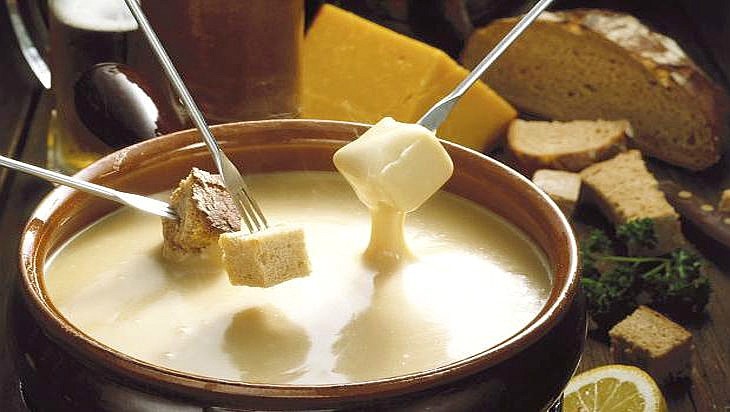
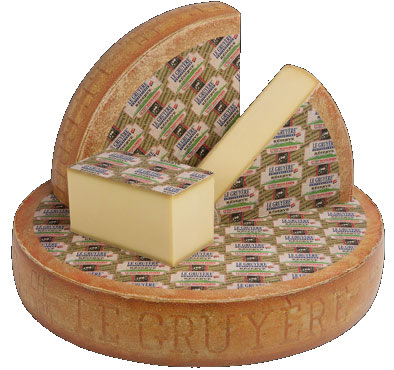
I cannot end without a mention of Fondue, even though it’s a cheese dish rather than a cheese, because it’s just so … damned … good. It can be made from quite a number of cheeses, often mixed together, produced in the Alps or in the nearby Jura mountains: the Swiss Gruyère, Emmental, Vacherin, Sbrinz, and Appenzeller; the French Comté, Beaufort, and Reblochon; or the Italian Fontina. The key, of course, is the white wine. Here’s how you prepare a fondue: (1) Rub the inside of the pot with garlic. (2) Lightly heat the white wine with cornstarch (used to prevent separation of wine and cheese). (3) Add the grated cheese or cheeses and stir until it is all melted. (4) Top off with a bit of kirsch. Start eating, dipping chunks of bread into the pot.

Fondue has become so linked with Switzerland that Astérix, that bellwether of popular European culture, has fondue playing a prominent part in the album Astérix chez les Hélvètes. But in a bout of creative delirium the writer, Goscinny, and the illustrator, Uderzo, laced this most Swiss of traditions with debauchery borrowed from Federico Fellini’s much-discussed film Satyricon, which came out a year before the Asterix album was published and scandalized many. Satyricon included a series of Roman orgies, full of painted faces, feelings of ennui, mechanical gorging of elaborate food, and sado-masochistic punishments. So the fondue parties organized by Goscinny-Uderzo’s Roman governor of Helvetia take the form of orgies – although, to the governor’s great irritation, they are much too clean; this is Switzerland, after all.

The scenes pick up on a tradition that if you lose your bread in the fondue pot, you are punished in some way: for instance, a man has to buy a round of drinks, while a woman has to kiss her neighbours. In the case of Asterix, the young fool is thrown into Lake Geneva with weights attached to his feet, another nod to the casual brutality which filled Satyricon.
Anyway, these are my choices. I’m sure each one of my readers has his or her own list of favourites. I earnestly suggest that they immediately rush out, buy one or more of their favourites, and gorge themselves in a wild bout of cheese-eating.
And I hope I’ve answered my daughter’s question about how cheese is made.
_________________________
Monks in a cellar: http://p9.storage.canalblog.com/95/74/180464/28709536.jpg [in http://toutinfrimage.canalblog.com/archives/2008/08/07/10163569.html%5D
Curds: http://3.bp.blogspot.com/-e_yg4m7wR4g/Toy0E_DhaOI/AAAAAAAAChs/Qmjyg7II6Gw/s1600/salting_curds.jpg [in http://cooking-from-scratch.blogspot.com/2011/10/cottage-cheese.html
Whey: http://4.bp.blogspot.com/-n-UC59ZGNzg/T7sTeo1GtWI/AAAAAAAABCM/9qzvn0wQ3U0/s1600/Whey.jpg [in http://www.hybridrastamama.com/2012/05/making-whey-protein-and-cream-cheese-try-these-unique-food-products.html%5D
Little Miss Muffet: http://bloximages.chicago2.vip.townnews.com/nwitimes.com/content/tncms/assets/v3/editorial/e/b6/eb652bda-d380-5344-a681-06a4de4af8d6/52e7fed631b22.preview-699.jpg [in http://www.nwitimes.com/lifestyles/food-and-cooking/from-the-farm-reader-looking-for-healthy-blender-drink-recipe/article_e8c2a9b9-4658-54a3-9d24-8f00640a8484.html%5D
Cottage cheese: http://uptownmagazine.com/files/2014/05/uptown-kraft-cottage-cheese-recall.jpe [in http://uptownmagazine.com/2014/05/kraft-recall-cottage-cheese/%5D
Whey-based drink: http://www.ebperformance.com/wp-content/uploads/2011/05/proteinjuice-bottles.png [in http://www.ebperformance.com/products/protein-drinks/%5D
Farmer’s cheese: http://3.bp.blogspot.com/_a-oLImtGrzM/S_Mpn-DOErI/AAAAAAAAAr0/ivqGKz6av4s/s1600/Blog+Raw+Milk+Farmer+Cheese+8.jpg [in http://artistta.blogspot.com/2010/05/homemade-raw-milk-farmer-cheese.html%5D
Feta cheese: http://www.yiannislucacos.gr/sites/default/files/ingredient318_feta2.jpg [in http://www.yiannislucacos.gr/en/ingredient/2404/feta-cheese%5D
Boursin publicity: http://www.boursin.ch/uploads/pics/Indexbild_ganze_Breite_2011_01.jpg [in http://www.boursin.ch/%5D
Camembert: http://upload.wikimedia.org/wikipedia/commons/8/88/Camembert.JPG [in http://en.wikipedia.org/wiki/Camembert%5D
Gorgonzola: http://blog.fairwaymarket.com/wp-content/uploads/2011/10/GorgonzolaCheese.jpg [in http://blog.fairwaymarket.com/2011/10/blue-cheese-moldy-cheese-day/%5D
Crotte du diable: http://p1.storage.canalblog.com/18/34/180464/7469035.jpg [in http://toutinfrimage.canalblog.com/archives/2006/10/15/2911082.html
Raclette: http://www.gentlemansgazette.com/wp-content/uploads/2013/12/Traditional-Raclette.jpg [in http://www.gentlemansgazette.com/dinner-party-ideas-how-to-host/%5D
Parmigiano Reggiano: http://upload.wikimedia.org/wikipedia/commons/5/5b/Parmigiano_reggiano_piece.jpg [in http://en.wikipedia.org/wiki/Parmigiano-Reggiano%5D
Emmental: http://cheesecrafters.ca/wp/wp-content/uploads/2012/06/full_Emmental.jpg [in http://cheesecrafters.ca/products/emmental/%5D
Scamorza affumicata: http://www.lascelta.com/media/catalog/product/cache/1/image/700×477/9df78eab33525d08d6e5fb8d27136e95/f/o/for022aff.jpg [in http://www.lascelta.com/formaggi/semi-stagionati/scamorza-bianca-1.html%5D
Scamorza-inside: http://upload.wikimedia.org/wikipedia/commons/8/85/Scamorza.jpg [in http://en.wikipedia.org/wiki/Scamorza%5D
Goat’s cheese: http://www.fromagerie-martin.com/photos/crottindechevre_23071.jpg [in http://www.fromagerie-martin.com/fiche_produit.php?id=23071%5D
Fondue: http://postfiles15.naver.net/20140430_30/cheesemarket_1398825823552cruRM_JPEG/%C6%FE%B5%E04.JPG?type=w2 [in http://blog.naver.com/PostView.nhn?blogId=cheesemarket&logNo=90194981830&categoryNo=0&parentCategoryNo=21&viewDate=¤tPage=1&postListTopCurrentPage=1%5D
Asterix and fondue: http://3.bp.blogspot.com/-94znst74TRI/TwEM1x4890I/AAAAAAAAPzA/OoSEUFiQkN0/s1600/asterix+chez+les+helvetes.jpg [in http://heavenlypalate.blogspot.com/2012/01/cheese-fondue-great-cheesy-meal-during.html%5D


















 the heart thrills