PETRA

Milan, 29 August 2023

It rained the day we visited Petra. Not a huge amount, just a sprinkle. But it was enough to keep the skies covered and the temperatures moderate. This was the one time in my life that I’ve been pleased to have rain when I visited somewhere. It was the last days of May, and my wife and I had been worried that we would be visiting the site under a burning sun.

Source

We entered the site through the Siq, that long, long gash in the mountains.

my photo

We followed its meanderings, hopping out of the way of the electric vehicles ferrying tourists back and forth, all the while craning our necks backwards to look at the walls of rock soaring above us.

my wife’s photo

And so we came to the end of the Siq and found ourselves in front of the Khazneh, the Treasury, the building that “is” Petra. It was a gradual unfolding, as we exited from the narrowness of the Siq.

My wife’s photo
My wife’s photo
My wife’s photo

It wasn’t actually a treasury. That’s what the local Bedouins believed. They thought there was treasure hidden in that urn on the very top of the rotunda, as witnessed by the pockmarks on it caused by Bedouins firing at it to try to break it open – a waste of time and bullets since the urn is solid sandstone. In reality, it was a mausoleum for the Nabatean king Aretas IV Philopatris (“friend of his people”, which probably means he wasn’t their friend at all). We have – possibly – a likeness of this friend of the people on one of his coins.

Source

Anyone with a passing knowledge of the New Testament will be interested to know that Aretas’s daughter married Herod Antipas, and it was the latter’s decision to divorce her and marry his stepbrother’s wife Herodias that eventually led to the beheading of John the Baptist. Here’s Caravaggio’s take on this execution.

Source

I actually first came across the Treasury in the Tintin album “Coke en Stock”. For reasons which are too convoluted to explain, Tintin, with Captain Haddock in tow, is crossing the fictional Middle Eastern country of Khemed on horseback to get to the Red Sea. On the way, they pass through a narrow gorge. The relevant page from the album recounts the rest of the incident.

my photo
my photo

As I say, the story is highly convoluted, and I invite curious readers to go back to the original album to understand who is who and what is going on. Let’s just focus on the Treasury (although I have to say, I’ve always asked myself what that lady was saying to Captain Haddock).

When I read the album, I had no idea that this was the Treasury in Petra. Neither it nor Petra itself is mentioned by name. Captain Haddock says it is a Roman temple, and that is all we are told. It was only years later, when I happened to see a guidebook on Petra, that I realised where Hergé had got his inspiration. Here is one of the many, many guidebooks on Petra with the Treasury on its cover.

Source

The official photos of the plaza in front of the Treasury normally have few if any people. But as my wife’s photo above shows, when we there it was like a souk, although a very modern one. Large crowds of tourists were milling around, taking photos, taking selfies, reading guide books, listening to guides they had rented, or chattering among themselves, before they moved on to the next ruin. In the middle of all this, and rather getting in the way, camels and donkeys waited patiently, with the local Bedouins hawking a ride on them down to the rest of the ruins. Other Bedouins called out from the cliffs above, inviting tourists to climb up and have a drink. Others still manned the stalls lining the side of the canyon which brought us all to the rest of Petra, selling tourist tat.
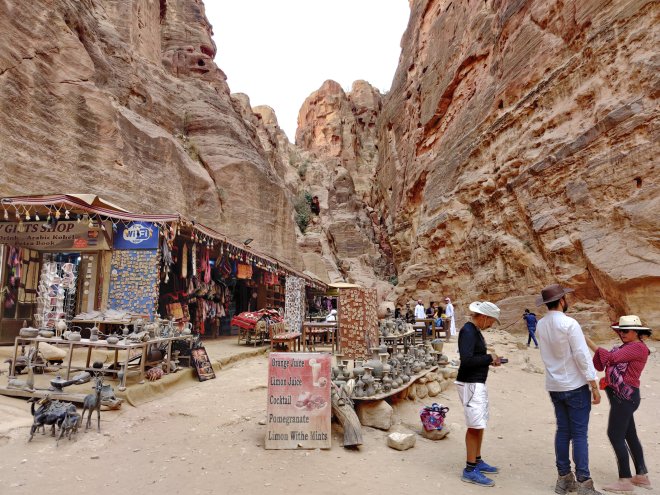
Source

I noticed that getting one’s eyes lined with kohl was a popular offering when we were there, with all the Bedouins – men and women – heavily eyelined in kohl to advertise the service.

Source

We ignored the tourist tat and the calls to climb onto a camel, or donkey, or horse, and walked down the Street of Facades, the canyon leading away from the Treasury with buildings cut into the canyon walls.
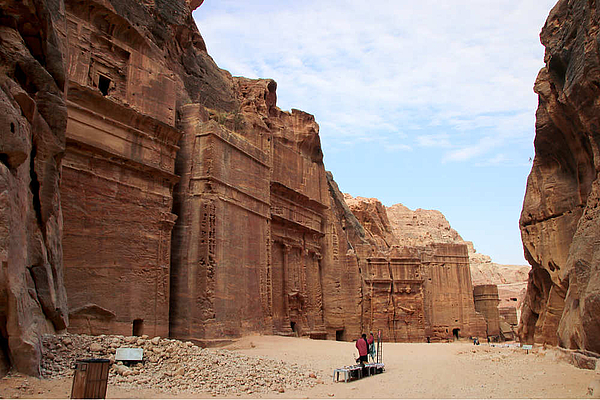
Source

The facades had once been very ornate, but water and wind have taken their toll.

my wife’s photo

At some point, we climbed up the wall of the canyon to admire the royal tombs cut into the rock farther up on one side

Source

and the theatre cut into the rock on the other side.

My wife’s photo

We climbed back down and walked along what had once been Petra’s main drag, the Colonnaded Street.

Source

At some point, we passed through the remains of the Temenos Gate.

Source

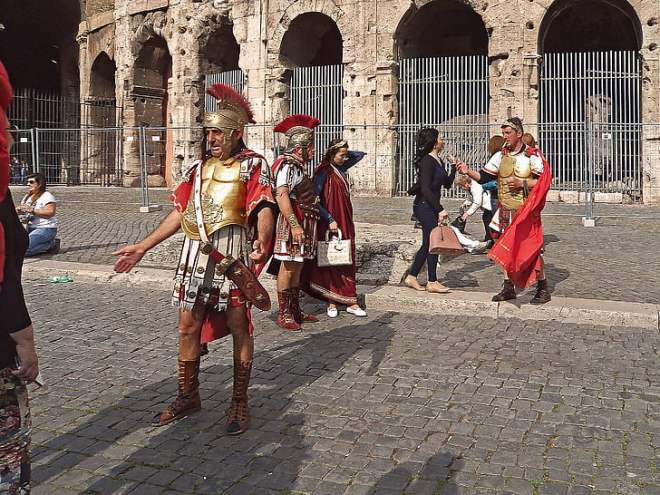
It was “guarded” by two Bedouins dressed up as Nabatean soldiers.

Source

No doubt they were offering a photo opportunity for a donation, like all those Roman legionnaires haunting the Colosseum, saying “Ave” to each other.
Source

But we declined the offer and moved on.

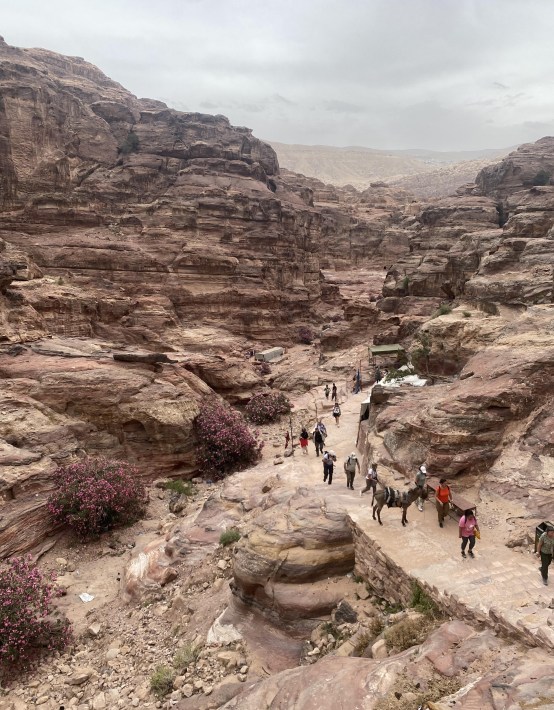
We finally made it to the path leading to the Monastery and then slowly made our way up the long, long – 850-steps-long – climb, part of a steady stream of tourists struggling upwards in panting silence (thank God for the cloud cover!).
My photo

As we climbed we had to squeeze our way through yet more tourist stalls jammed onto the narrow path, with their Bedouin owners loudly advertising their wares.

We finally emerged onto the plaza abutting the Monastery.

Source

It was of course never a monastery, although quite what it was is not clear. Experts’ best guess is that it was dedicated to the cult of the deified King Obodas I. Once again, we can possibly get an idea of what he looked like through his coinage.

Source

Obodas’s people deified him because he was a Mighty Kicker of Ass. He gave the Hasmonean king Alexander Jannaeus, who ruled over Judea, a severe drubbing near the Sea of Galilee, from which Alexander barely managed to escape alive (I’ve mentioned Alexander before; he was the High Priest who was pelted by the faithful with citrons). Then a few years later, after the Seleucid king, Antiochus XII Dionysus, had invaded the Nabatean kingdom, Obodas attacked his army. Antiochus was killed and the remains of his army perished miserably in the desert.

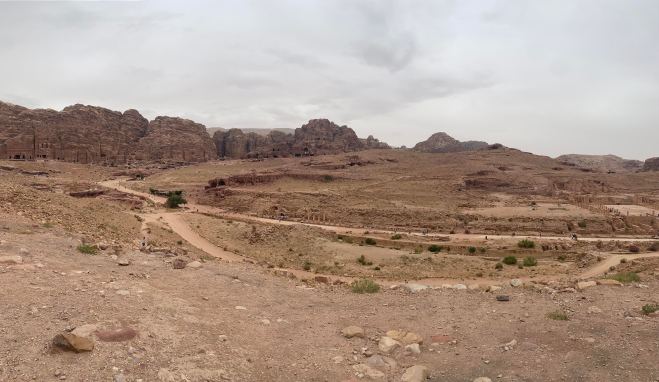
After a well-deserved rest and drink, we joined the stream of tourists going back down, now skipping along and chattering as they went. Once back down to the Colonnaded Street, we headed up onto the hillside to the north, to have a view down on the site.
My photo

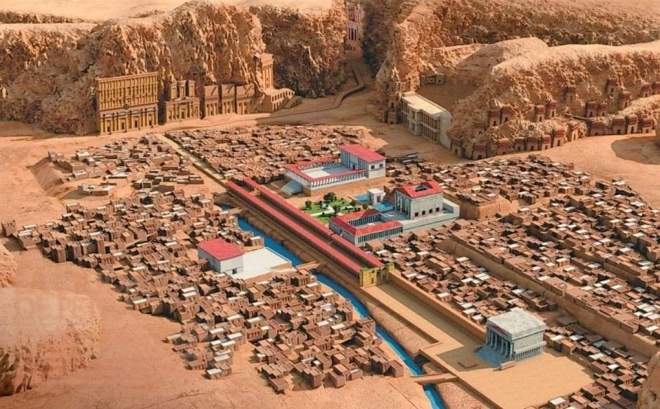
Looking at all these dusty ruins, it’s difficult to understand what Petra looked like when it was a living, thriving city, so I have resorted to showing a reconstruction.
Source

At the very top of the photo, in the middle, one can just make out the Treasury. Coming down the canyon from the Treasury, we have the royal tombs to the right and the theatre to the left. We are looking down at the red roofs of the Colonnaded Street, with the colonnades finishing at the Temenos Gate. The path to the Monastery, which is not visible here, is off at the bottom right of the photo.

The water in the stream running along the Colonnaded Street is ridiculously blue, like a swimming pool. I wonder how much water there even was in that stream bed. Water was a precious resource in Petra, and its citizens had created a complex network of dams, reservoirs, cisterns, and basins, the whole connected by some 200 km of channels and pipes, to collect, store, and distribute the little amount of rain which fell in the environs.

Source

It’s all gone now, victim of time and neglect (and of a powerful earthquake in 363 CE), but you can still see remains of the network here and there.

Source

In its heyday, this network was able to support a population of some 20-30,000 people, about the same size as the small town of Wadi Musa situated on the edge of Petra, where we stayed the night. Not large by today’s standards, but populations were much, much smaller back then.

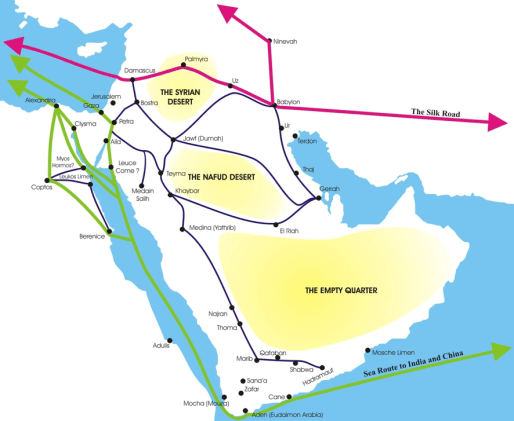
There was also an important transient population – of both man and beast – to supply water to, for Petra’s importance – and wealth – came from it being at the crossroads of important trade routes.
Source

From Yemen in the south came frankincense and myrrh, those precious incenses so desired for religious ceremonies throughout the Middle East and beyond. It’s no coincidence that in his Gospel, Matthew has the Three Wise Men bringing frankincense and myrrh, along with gold, as presents fit for Christ the King.

Source

From the south too came ivory and other goods which had originated in Africa.

Sources

From the Persian Gulf to the east came pepper and other fabled spices transported there from India and beyond.

Source

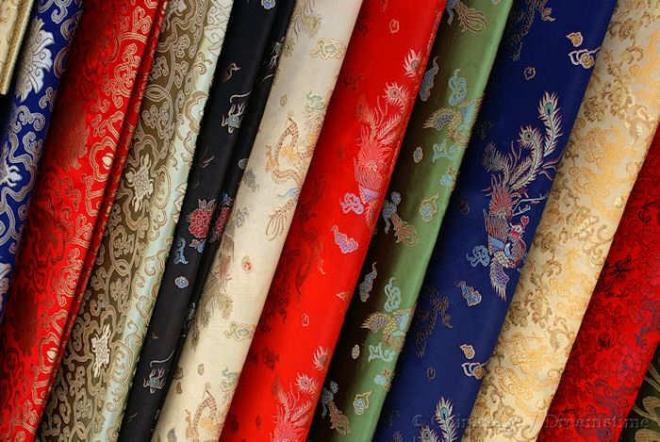
From Damascus to the north came its famous damask textile, but also silk which had been brought from China along the Silk Road.
Source

From various places to the east and north came bitumen, used as a glue, a binder, a water repellent, and – in Egypt – in embalming.

Source

Gold, silver, and precious stones also came to Petra from all points of the compass.

Source

The goods moved west to Gaza, or north to Damascus and then west to the coast of what is now Lebanon, from whence they were shipped across the Mediterranean. The Nabateans welcomed all these traders who crossed their kingdom and offered them protection, shelter, and water – for a price. And that price paid for all the buildings and infrastructure in Petra.

Nearly all gone now. The earthquake of 363 CE did massive damage, changes in trade routes did the rest. Once sailors understood how to sail the monsoons in the Arabian Sea, ships from India could sail up the Red Sea and transit through Alexandria, cutting out the Nabateans, while Palmyra to the north drew away much of the rest of the east-west trade. By the time of the Muslim conquest of the Levant in 634 CE, Petra had been forgotten. Sic transit gloria mundi.

We slowly made our way back to the Siq and left the site. Tomorrow, we were on our way to Amman, where I was going to give a training course on green industry policies.

My photo

LAND OF WATER, LAND OF MOSS

Milan, 30 October 2019

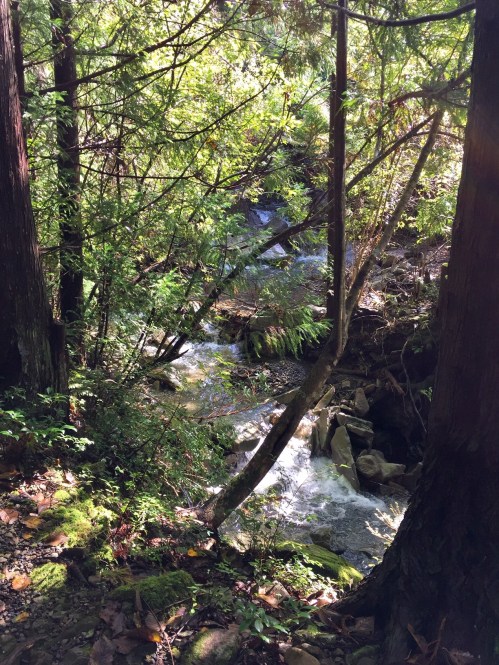
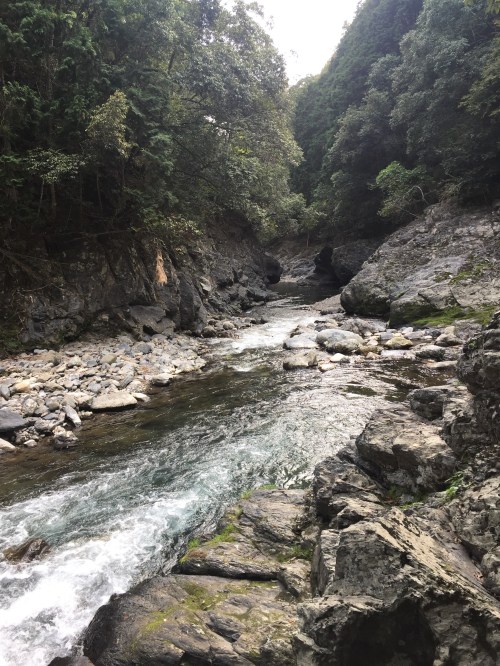
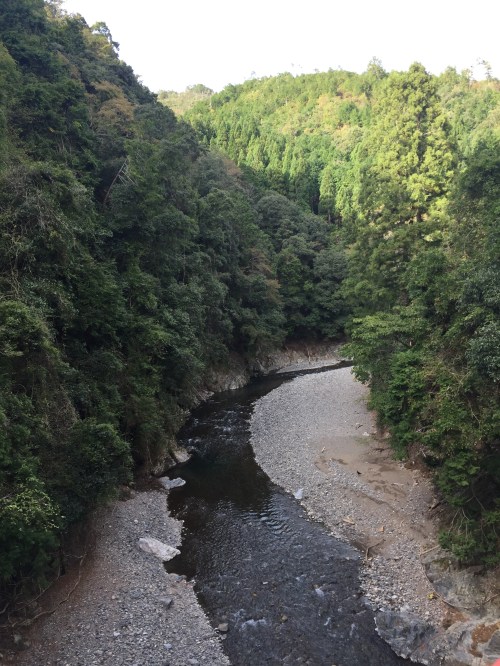
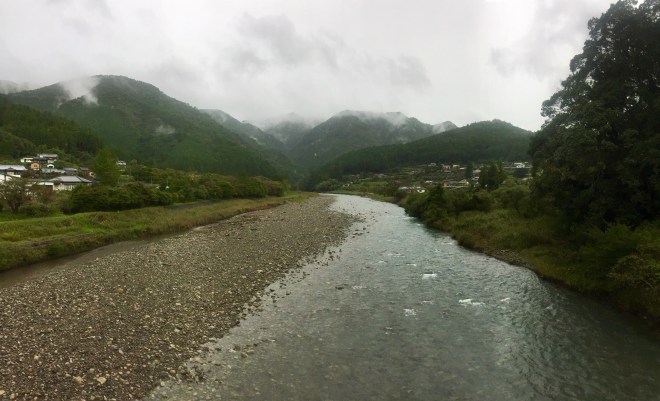
After I had finished giving my course on sustainable industrial development at Kyoto University, my wife and I took a week off to walk the woods of Japan. Last year, we walked the Nakasendo Way. This year, we hiked along the old Kumano Kodo pilgrim trail. Just as had been the case when we walked the Nakasendo Way, we were struck by just how much water Japan has. In all its forms – rills, brooks, streams, rivers, waterfalls – the water welled out of the mountains we traversed and trickled, ran, poured off their flanks. The noise of water running across rock and stone was our constant companion.

our photo
our photo
our photo
our photo
Our photo

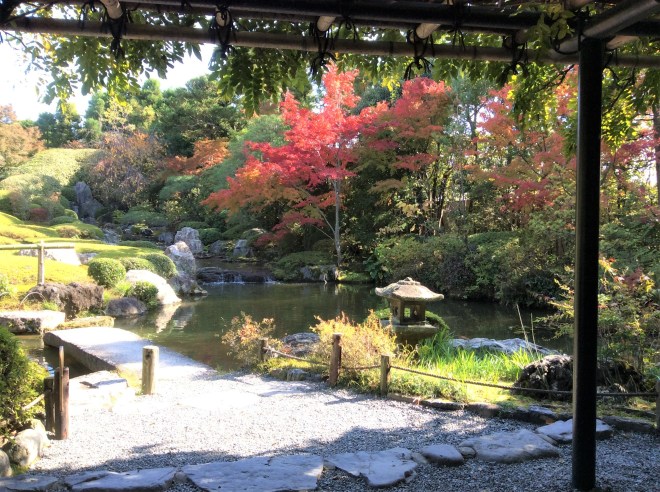
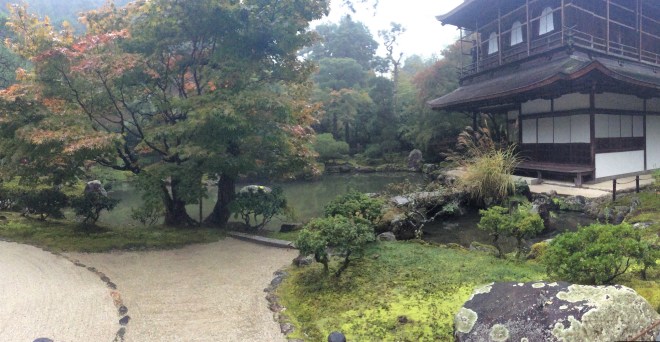
No wonder water is such an integral part of Japanese gardens, from falls

source

to streams and ponds

our photo

to small water elements.

our photo

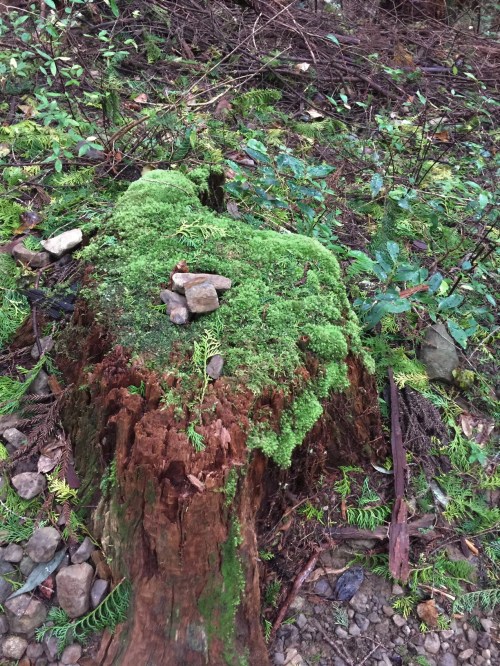
All this water, and the rain which is the source of it, means that there are high levels of humidity in Japan, excellent conditions for the growing of moss. I have read that of the roughly 12,000 species of moss known worldwide, some 2,500 varieties are found in Japan alone: one-fifth! That’s pretty good going. And they certainly beautify Japan. Moss casts a lovely green sheen on everything it touches. This is true everywhere but it is particularly true in Japan. On our walks there, we’ve seen it growing luxuriantly on felled trees and tree stumps.

our photo
our photo

We’ve seen it clustering thickly around the base of standing trees.
our photo

and throwing a gauzy veil over their trunks.

our photo

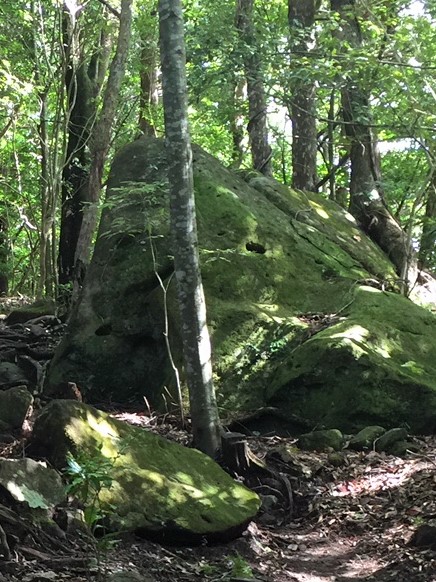
We’ve seen it throw a light mantle over rocks.

our photo

It doesn’t stay in the forests. It will colonize the artifacts created by man.

Our photo

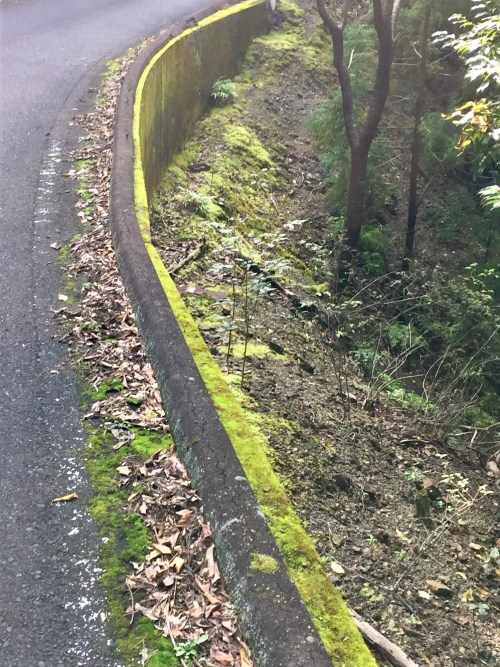
We’ve even seen it make the ugly concrete edges of a road look lovely!

Our photo

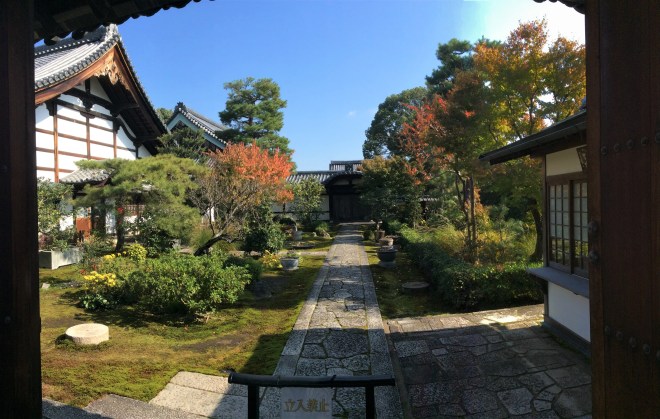
The genius of Japanese garden designers is to have fought off the instinct, which we seem to have in the West, of banishing moss from their gardens. Instead, they have welcomed it in with open arms and integrated it into their designs. As a result, no self-respecting Japanese garden is without its moss.

Our photo
our photo

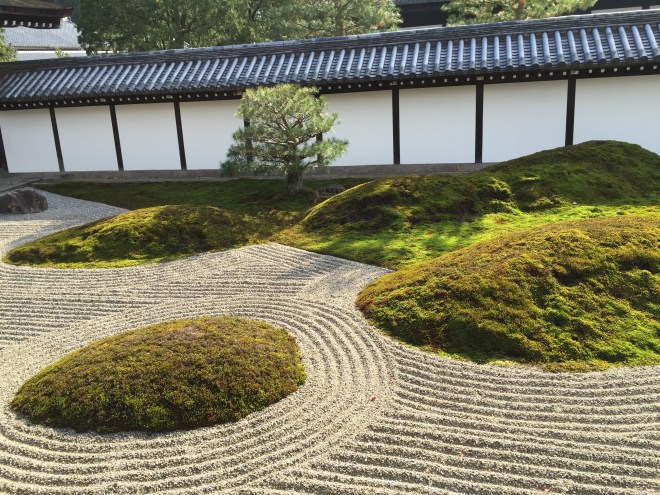
Given my weakness for Zen gardens, I love the way the designers of these gardens have incorporated moss into their designs.

our photo
our photo
our photo

Some gardens use moss the way we would use grass, creating “lawns” of moss.

our photo
our photo

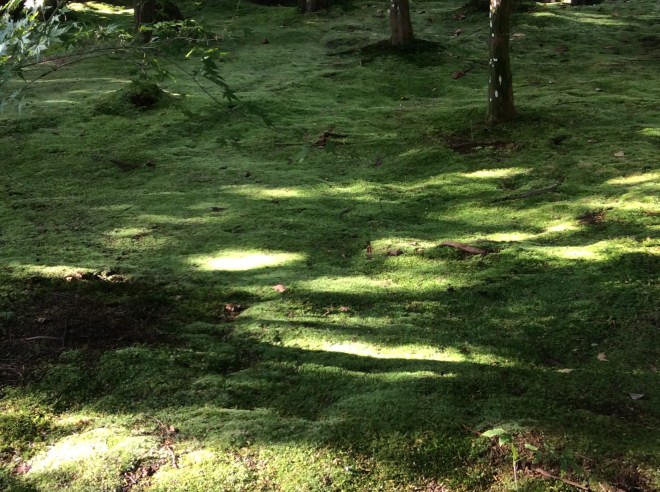
If the light is right, the effect can be quite magical.

our photo

A good number of temples have extensive moss gardens, where moss covers the floor of the whole garden. The most famous of these is Saiho-ji temple in the western outskirts of Kyoto. It’s become a UNESCO World Heritage Site. It’s difficult to visit. You have to book months in advance, using a system of return postcards, which is really primitive in this day and age and very difficult to do if you don’t live in the country. But we managed it this time.

our photo

A good number of years ago, as I relate in a previous post, I built my own Zen garden in a corner of our balcony. I had no moss, though, in that garden. The micro-climate on the balcony was too dry and harsh. But maybe, one day, somewhere, I’ll make myself another Zen garden, and this time I will try to incorporate moss.

WATER

Bangkok, 7 May 2016

It’s hot here in Bangkok at the moment, very hot.

And it’s humid, very humid.

We drag ourselves through the day, stumbling from one air-conditioned space to another.

We scout the horizon for clouds. Will the cooling rains ever come?

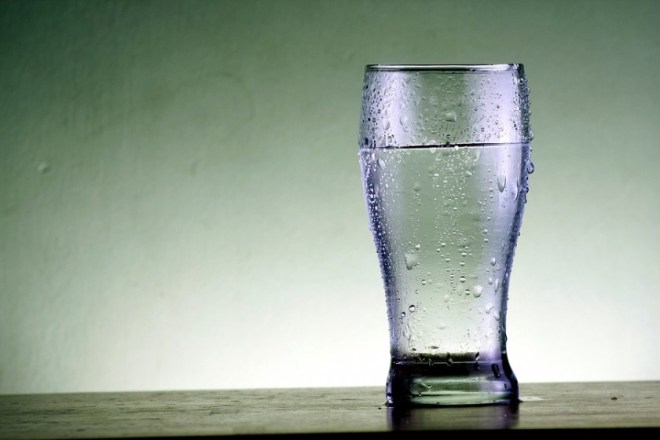
We sweat, we’re thirsty. We go to the fridge to get that bottle of cold, cold water. We pour ourselves a glass. A film of water immediately forms on it.

We drink. Aaaah, sooooo good …

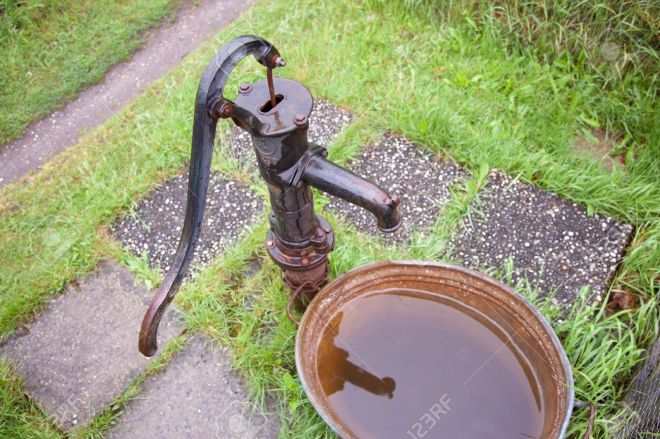
In her garden, my French grandmother had a water pump which looked like this.
image
When we were children, half a century ago, my cousins and I would amuse ourselves by pumping the handle vigorously till the water poured out. Watching us one day, my mother told us that when she had been a child our age, so some time in the late 1920s, early 1930s, before refrigerators were common, on hot summer days she was sent out by various uncles and aunts who were visiting to get a glass of water from that pump. But she was not to take the first water to gush out, no, she was to pump and pump until the water was “bien frappé”, well chilled, enough to form a film on the glass …

That pump stopped pumping 30 years ago. As ever more water was sucked from the aquifer the level dropped, until one day it dropped so far that the pump ran dry. It never pumped a drop of water again.

At my old primary school in Somerset, whose halls I graced half a century ago, there was a bubbling little stream that ran along the edge of the playing fields. We played for hours on it, floating sticks and leaves, building dams, and generally mucking about. It looked like this, minus the horses.
image
30 years ago, when I visited one summer, it was gone, dried up. The aquifer had dropped too far.

A larger stream ran along the valley floor not too far from my French grandmother’s house. It was a quick bike ride away, and my cousins and I would often go there to catch freshwater crayfish in its clean, clear waters and bathe in a deep, blue pool that had formed in the middle reaches. 20 years later, when I visited, it was turgid and scummy, with froth floating on it.

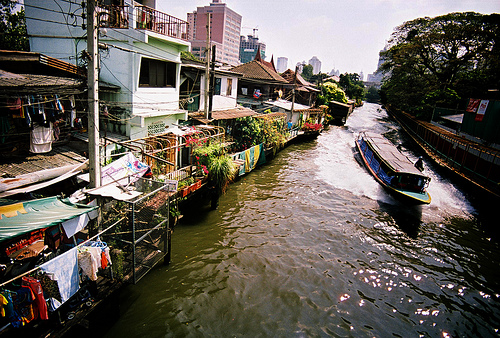
Bangkok is a water city. It sits on a river and is laced with canals. It should be lovely to travel on its waterways. Instead, it’s like cruising along stinking, fetid sewers. We take a water bus from time to time, when the traffic is really bad, from the Golden Mount Temple to the modern downtown.
image
Instead of enjoying the passing scenery, I live in dread of spray from the canal landing on my face; God knows what viruses and bacteria populate the water. I always scrub my face vigorously when I get off. As for the river, from our apartment terrace we look down on the rubbish of the city which floats by every day.
image
Recently, we visited Halong Bay, in Viet Nam, a World Heritage Site. We gazed on the unutterable beauty of the surroundings. But we also gazed at the rubbish floating around us and at the locals’ pathetic attempts to get rid of it.
image
Are we mad? We guzzle water like there was no tomorrow and treat it like a rubbish dump. Yet we need water, it’s vital to our lives. How can we treat so badly something we absolutely cannot do without?

________________
Glass of water: http://www.healthydietbase.com/does-drinking-ice-cold-water-help-you-lose-weight/
Old water pump: http://fr.123rf.com/photo_20440985_fonte-ancienne-pompe-a-eau-de-fer-humide-dans-le-jardin.html
Small stream: http://www.gettyimages.com/image/photo-2-tarpan-horses-crossing-a-small-brook/508354517
Bangkok canal: http://aspiringwriter.ca/tag=bangkok
Rubbish in Chao Praya River: https://bangkok2birmingham.org/2013/05/30/deteriorated-water-so-what/
collecting rubbish in Halong bay: https://www.pinterest.com/pin/27725353931017487/

WATER AND I

Beijing, 30 March 2013

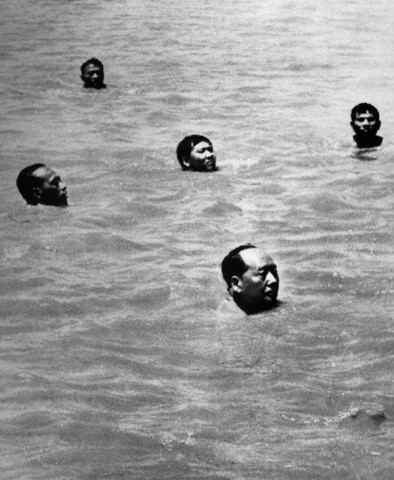
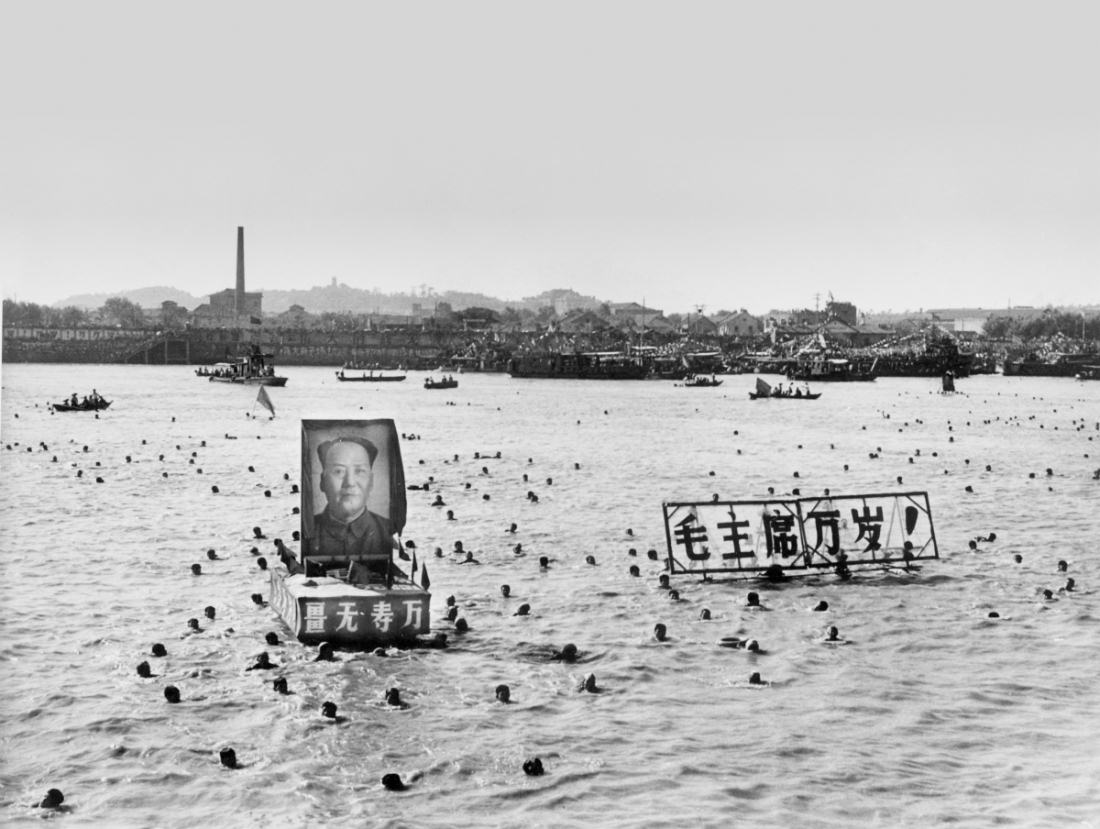
There is a famous photo of Chairman Mao swimming across the Yangtze River at Wuhan in the summer of 1966.

mao-swimming-2

He joined the annual Cross-Yangtze swimming competition, which had been going since the 1930s (and continues to this day). Actually, he had already taken part in this competition twice before, in 1956 and in 1958. But this time, the locals really pulled out the stops for the Chairman, dragging this huge picture of him across the river along with a placard wishing him 10,000 years of life (I wonder if they made it to the other side or if they sank like a stone halfway across):

mao-swimming-4

The photo is famous because it signaled the start of that national catastrophe that was the Cultural Revolution. With this swim, Mao was signaling that even though he was 72 he was still strong and healthy enough to lead the country. After it, he went up to Beijing and unleashed the Revolutionary Guards.

This photo came to my mind last weekend, when my wife and I went for a walk, which after several random turns to the left and right brought us to Qianhai lake, one of the string of small lakes that lie to the north-west of the Forbidden City. There, we came across a group of pensioners (it always seems to be pensioners; I have never seen young people doing it) who were swimming to an island in the middle of the lake and back. The poor fellows were having to contend with pesky pedalos – these in the hands of young people; much more fun than swimming – which swarm over these lakes during weekends.

Qianhai lake swimmer 001

We joined the curious crowds watching the swimmers, and I followed their progress with horrified fascination. Professional deformation made me mentally compute all the pollutants that were probably in the water and what they could be doing to the swimmers. But the waters in these lakes are actually much cleaner than the water in that stretch of canal near our apartment which I’ve written about several times in previous posts. The water there is often of a dubious hue, and the sight of dead fish floating on its surface is common. Yet even here, once the ice has gone and the weather gets a little warmer, a group of pensioners emerge from the nearby housing estate and go for stately swims in the canal.

swimmers in canal summer 2013 004

I usually avert my eyes when I see them, since their fate is too terrible for me to contemplate. On this point, I am moved to insert a photo from the summer of a few years ago in Qingdao when there was a terrible algal bloom. Even the Chinese thought this was a bit much.

chinese boy with algae

Yet the pensioners seem to survive. Come to think of it, when I was a young lad and accompanied my English grandmother on her boat on the Norfolk Broads (I have written an earlier post on this), we used to happily swim in lakes and rivers which were uniformly a brown peaty colour and into which all the boats would discharge their … well, you understand where I’m going with this one. My grandmother lived to a ripe old age and I am still alive to tell the tale.

Even so, I would not swim in the canal or in the Beijing lakes for all the money in Christendom. Not because of the pollution but because of the temperature. The Chinese – again, the older folk, as far as I can tell, not the young – feel that cold water is invigorating. The ice is barely broken that they are swimming. In fact, in the north they take a pride in swimming even when there is ice!

chinese swimming Harbin-1

This is definitely not for me. I am, I freely admit it, a wimp when it comes to cold water. Cold water and I do not mix. I have two memories from my youth, seared into my brain. One is swimming in the outdoor swimming pool at primary school. It had just opened, so it must have been early May. I was among the first to go in. I could hardly breathe it was so cold, and by the time I got to the other end of the pool I could not feel anything in any part of my body. The second memory is of a trip to the North Sea beaches of Norfolk with my grandmother – a day off from sailing on the Broads. Entering the water was like being flailed alive. Years later, watching the film Titanic I could viscerally empathize with those poor people who landed in the icy waters of the Atlantic and lasted no more than a few minutes.

titanic sinking

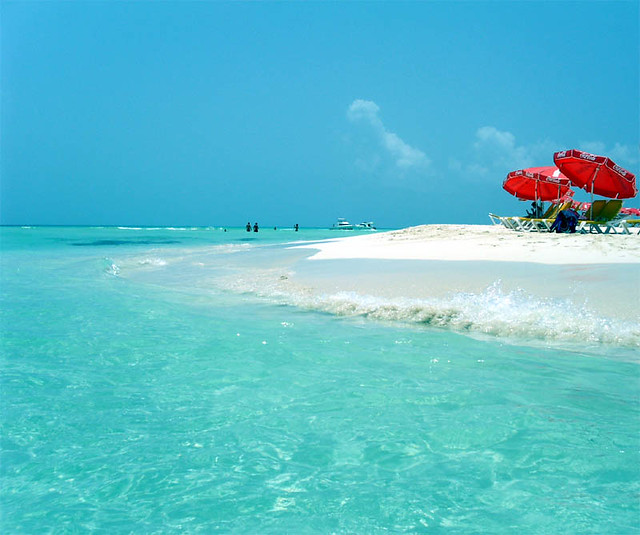
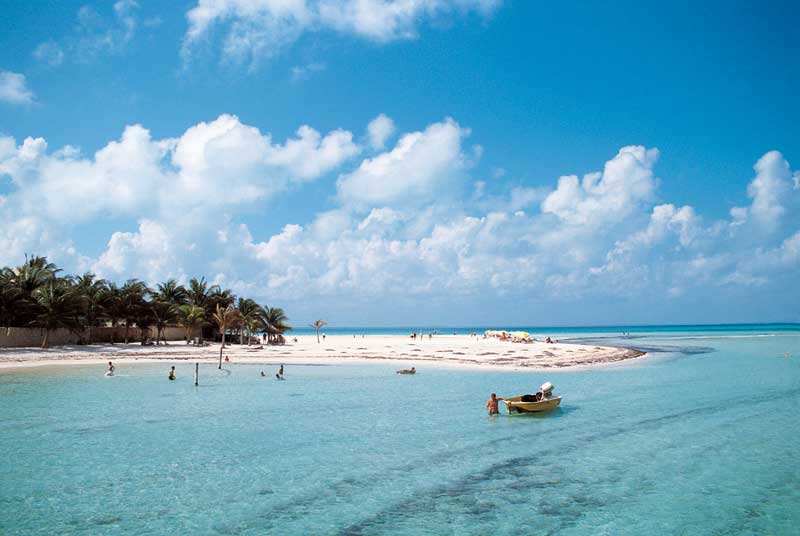
I find even the waters of the Mediterranean in August cold. My children would mock my skittishness about entering the water during our summer holidays in Liguria. The only time I have ever felt really relaxed in seawater was during a trip many, many years ago to Mexico with my wife and mother-in-law, when we went to Isla Mujeres, an island just off the coast from Cancún.

isla muheres-2

isla muheres-1

My knees go weak just thinking about that deliciously warm water. It was just like taking a bath. Wonderful.

___________________________

Mao swimming-1: http://www.china360online.org/wp-content/gallery/history/maoswimming.jpg
Mao swimming-2: http://www.historytoday.com/sites/default/files/mao_0.jpg
Swimmer in Qianhai lake: my pic
Swimmer in canal: my pic
Chinese boy with algae: http://www.trust.org/resize_image?path=/dotAsset/2c48ca45-6959-4bc0-8172-15165d151805.jpg&w=649
Chinese swimming Harbin: http://msnbcmedia.msn.com/j/MSNBC/Components/Photo/_new/pb-121217-winter-swim-china-jsa-2.photoblog900.jpg
Titanic sinking: http://0.tqn.com/d/movies/1/0/n/n/Y/titanic-sinking2.jpg
Isla muheres-1: http://www.luxuriousmexico.com/wwwluxuriousmexico/Luxurious%20Mexico/PicsQuintanaRoo/Quintana%20Roo,%20Isla%20Mujeres,%20Beach,%20Playa%20Norte,%20view%20-%20Photo%20by%20Fideicomiso%20Isla%20Mujeres.jpg
Isla muheres-2: http://farm2.staticflickr.com/1258/776340728_2b813a7873_z.jpg?zz=1