SWEET POTATOES AND CATAMARANS

Bangkok, 22 November 2015

I was in Vanuatu recently, which, for those readers not familiar with the Pacific, is one of those many little island states that dot the Pacific Ocean, like Tuvalu or Palau or Kiribati. I was there on business, for reasons which are too long to explain here. In any event, as is my habit, when I had a little bit of spare time I went down to the local market in the capital, Port Vila, to see what fruits, veggies, and other local delicacies they might be selling.

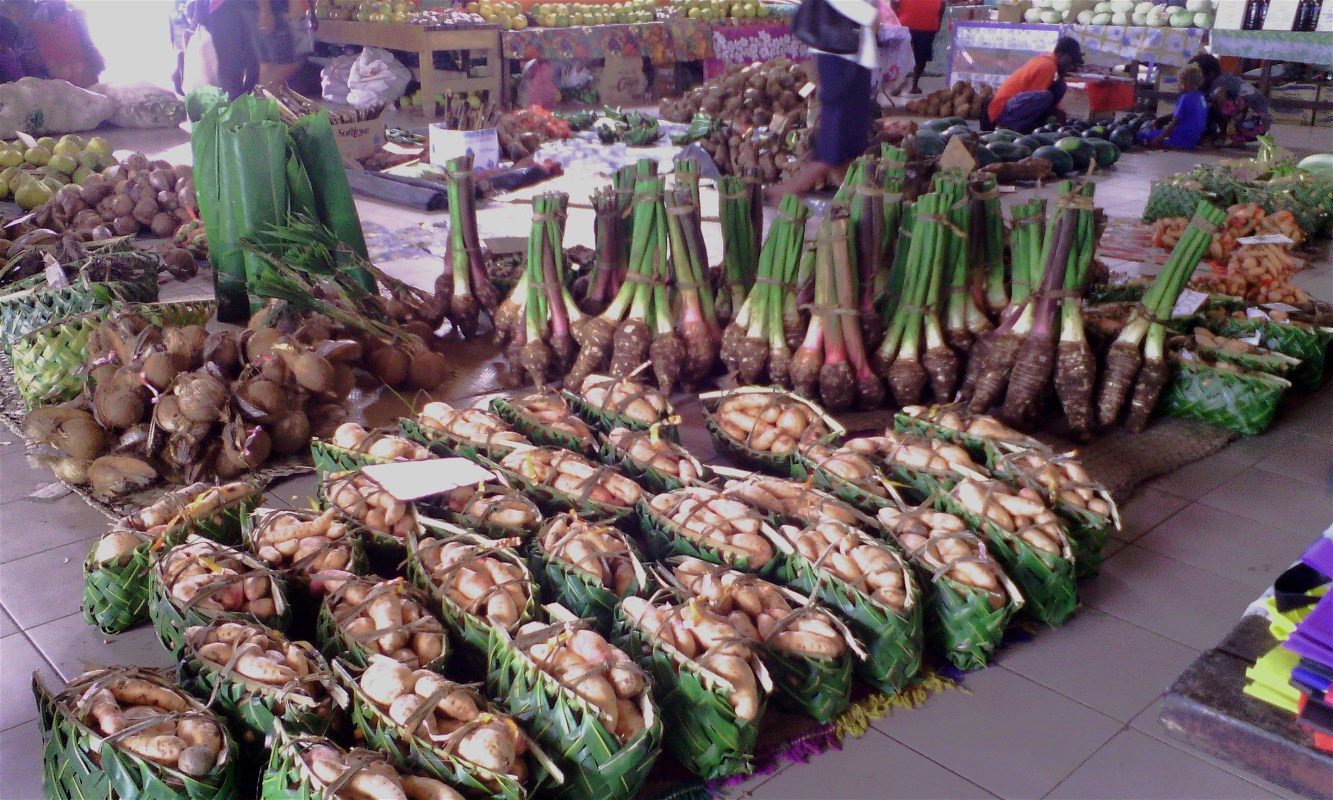
market port vila

Much of what I saw was familiar, although I don’t think I’ve ever seen taro before (those neat little bunches behind the potatoes)

taro

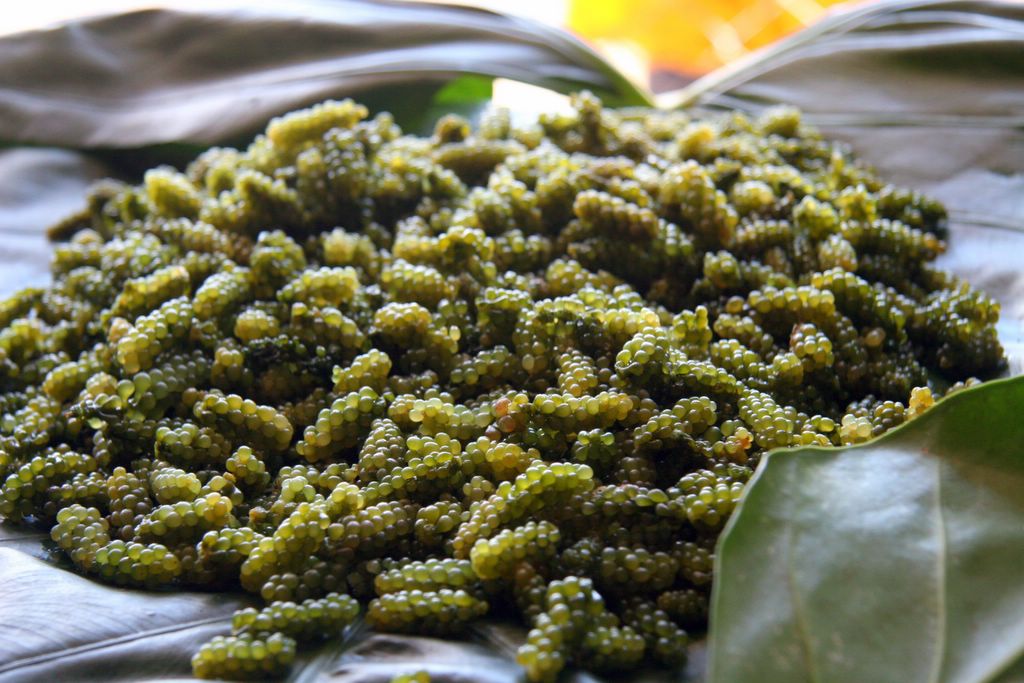
and I’ve definitely never seen sea grapes, which is a kind of seaweed if I’ve understood correctly (no idea how you eat them).

sea grapes

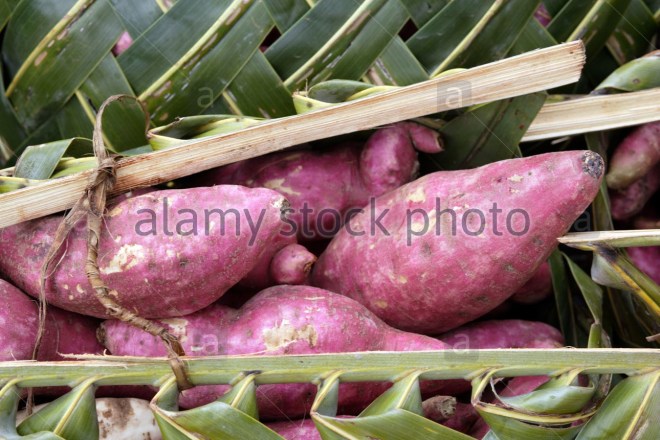
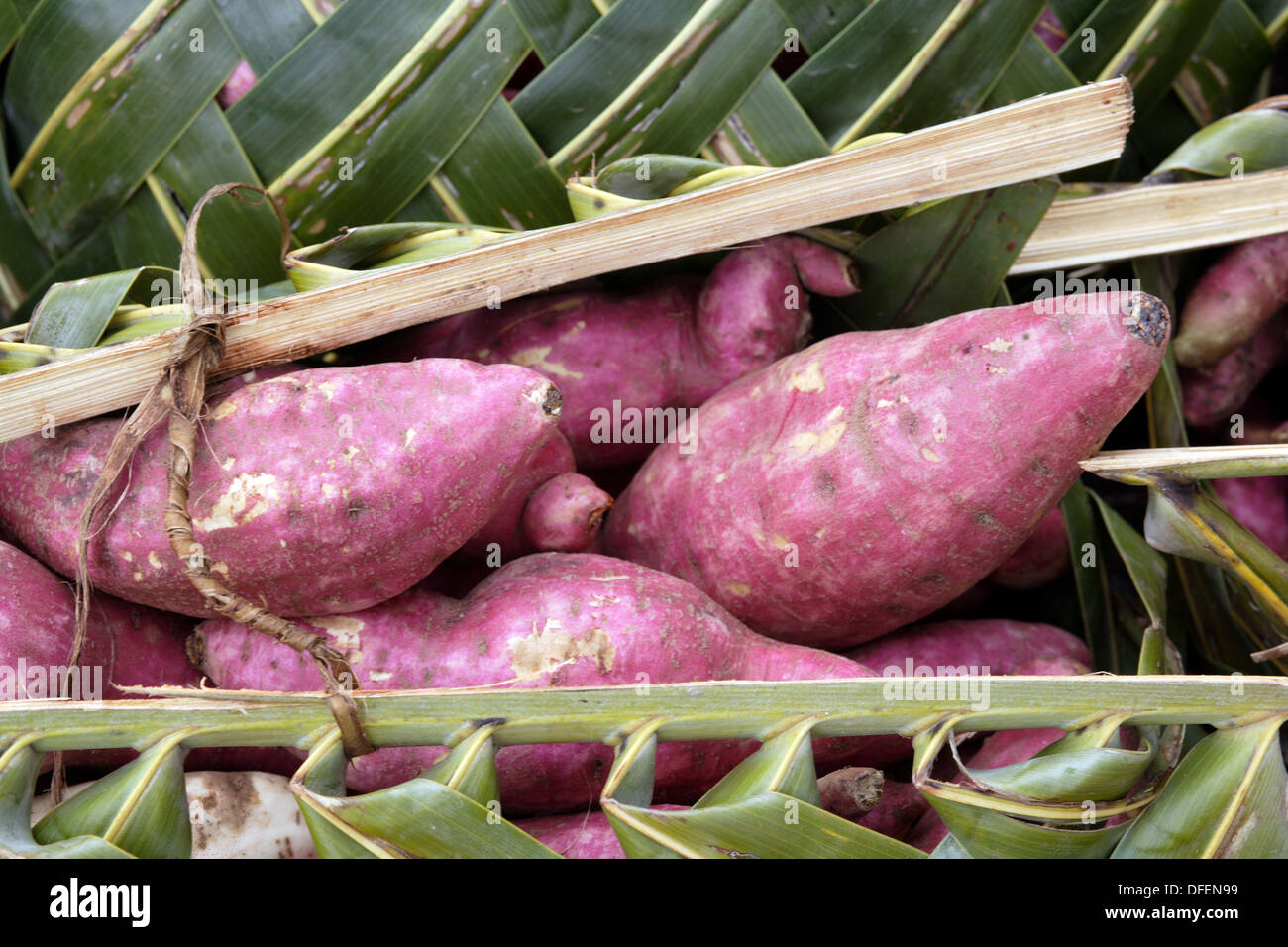
Sweet potatoes fall into the category of the known. Nevertheless, I did pause in front of them and go dreamy.

sweet potato market port vila

It wasn’t so much for the sweet potatoes – I’m not a great fan of this tuber, to be honest – but rather for its story here in the Pacific. Let me explain.

As previous posts attest, I have a great interest in the movement of foodstuffs around the world, so whenever I go to markets I always mentally map how the fruits and vegetables (and sometimes meat) must have originally ended up on the counters before me. True to form, I went through the same exercise in that market in Port Vila. Much of what I was seeing was brought into the Pacific Islands from the West, either brought along for the ride by the original inhabitants of the islands when they migrated out of South-East Asia, or through later regional trade between the Pacific Islands and South-East Asia, or even later through the colonial masters when they took over the islands. But the sweet potato was different. As I’m sure my readers know, the sweet potato originally comes from northern South America and possibly Central America. So how did it make it to the Pacific Islands? Well, it could definitely have come with the Spaniards after they conquered Latin America and set up a long distance trading system between Mexico and the Philippines – and in fact, at least one type of sweet potato was introduced to the Pacific Islands this way. It could also have come from the other direction, via Europe – and this is indeed the way that the Portuguese introduced the sweet potato to this part of the world, mostly to the islands of South-East Asia rather than the Pacific itself, as they sniffed around the area for spices. But there was another route of introduction of the sweet potato to the Pacific Islands, one which is much more fascinating, and this was by the Pacific Islanders themselves, who sailed all the way to South America and brought the sweet potato back with them (and may have left the chicken, although this is much debated). Since I’ve been talking about maps, here’s one which summarizes nicely the spread of the sweet potato in the Pacific:

map of sweet potato spread

The blue line is the Spanish introduction, the yellow line is the Portuguese introduction, and the red line is the introduction by the Polynesians. The evidence for a Polynesian introduction is archaeological (remains of sweet potato in Polynesian tombs datable to a time long before the colonial period), linguistic (as the map shows, there is a definite similarity between the Polynesian/Melanesian name of the sweet potato and its original South American name), and more recently DNA-related, through comparison of gene sequence mappings of the DNA of South American varieties with old specimens kept in European herbariums collected during the first trips of exploration by James Cook, Louis de Bougainville, and others.

The map also shows the most probable route taken by the Polynesians to reach South America, via Easter Island. But now, let me tell you, East Island is far away from South America. It’s about 3,500 km far away. And on the other side it’s far away from other Pacific Islands. It’s about 3,600 km far away from the islands of French Polynesia, which are the closest biggish islands. Yet, the Polynesians sailed these vast distances – and not on some big comfy ship running on oil and crammed full with the latest navigation equipment but on a boat like this, powered by sail, and where they could only rely on their reading of stars, cloud formations, sea swells, and bird flight patterns to navigate.

polynesian ship

This picture clearly romanticizes the vessel. It must have been a cramped, dangerous voyage. Many times, the ships must have got lost at sea – James Cook writes of coming across a boatful of Polynesians in the middle of nowhere, who had been driven off course by a storm and were asking where they were.

This is a modern version of one of these ships, built in the 1970s,

modern polynesian ship

which clearly shows the unique aspect of their design, the use of two hulls. In fact, this design inspired modern ocean-going catamarans and eventually the truly amazing catamarans that now race in the America’s Cup.

image

These beauties can go up to 80 km/hr, but a more typical speed on a modern ocean going catamaran would be 15 km/hr. Doing a little maths here, it would therefore take a modern catamaran about 10 days to sail from Easter Island to South America. So if luck was with them, if the winds stayed steady and did not get too boisterous, if there were no nasty storms to drive them off course, the Polynesians probably would have had to last 10 days-two weeks out in the Pacific before hitting South America, which seems doable. Getting back, though, must have been considerably harder. I mean, on the way there, the Polynesians just had to hit South America, which is kinda big. On the way back, though, they would have had to hit these tiny specks in the ocean, specks which on top of it were much further away – taking the trade winds out of South America would have meant their having to aim for the French Polynesian islands for their first landfall, and these are 8,000 km away, or something like three weeks’ sailing if all went well.

But some Polynesians made it to South America and a few others made it back, with the sweet potato in tow. Because of these very skillful and very courageous sailors, I was looking at sweet potatoes in the market at Port Vila. No wonder I paused and smiled when I saw these not very tasty tubers.

______________

Port Vila market: https://scottmathiasraw.com/wp-content/uploads/2015/02/img_4446.jpg (in https://scottmathiasraw.com/vanuatu-welcomes-australian-raw-food-chef/)
Taro, Port Vila market: http://www.asiapacificnazarene.org/wp-content/uploads/s_Market-food.jpg (in http://www.asiapacificnazarene.org/five-months-post-cyclone-pam-vanuatu-recovering-thank-you-for-your-prayers-and-partnership/)
Sea grapes: http://photos1.blogger.com/img/164/977/1024/IMG_0110.jpg (in http://becksposhnosh.blogspot.com/2005/09/nama.html)
Sweet potato, Port Vila market: http://c8.alamy.com/comp/DFEN99/purple-colored-sweet-potatoes-in-a-basket-made-of-palm-leaves-on-a-DFEN99.jpg (in http://www.alamy.com/stock-photo-purple-colored-sweet-potatoes-in-a-basket-made-of-palm-leaves-on-a-61174997.html)
Map of spread of sweet potato in Pacific: http://www.pnas.org/content/110/6/2205/F1.large.jpg (in http://www.pnas.org/content/110/6/2205/F1.expansion.html)
Polynesian ship: http://cdn.arstechnica.net/wp-content/uploads/2013/01/kane_waa_small10-640×422.jpeg (in http://arstechnica.com/science/2013/01/polynesians-reached-south-america-picked-up-sweet-potatoes-went-home/)
Modern Polynesian ship: http://pvs.kcc.hawaii.edu/images/canoes/hokulea_circa_1975.jpg (in http://pvs.kcc.hawaii.edu/index/founder_and_teachers/nainoa_thompson.html)
America Cup boat: http://www.examiner.com/article/america-s-cup-event-authority-launches-new-sailing-simulation-app

WORLD TOUR WITH MINT

Bangkok, 11th October 2015

A little while back, my wife, bored with the usual round of cooking in the tiny, stuffy, hot kitchen of our apartment and longing to spice things up a bit with some change, espied a fresh herb in the vegetable section of our local supermarket which turned out to be mint. She brought it back and for several weeks now, we have been trying chicken à la mint, pork à la mint, fresh mint in green salad, and – the subject of this post – mint in tomato-based sauce for pasta.

Let me interject here that a basic difference between me and my wife is that she is adventurous, ready to try new things, and I am timorous, fearful of the new and comfortable with the true and the tried. This is as true for food as it is for any other sphere of life. I therefore approached these experiments in our usual cuisine with some diffidence if not suspicion. Actually, apart from the fresh mint in green salad, which I forcefully suggested we not try again, it worked rather well. In the case of mint in tomato-based sauce for pasta, it worked really well. The mint added a sweet overtone to the acidity of the tomato which did wonders to the palate. I have graciously allowed this variation on a theme to be added to our culinary repertoire. It’s very easy to prepare, by the way: replace basil leaves with mint, et voilà! (or you can just add the mint to the basil leaves)

A quick whip around the internet shows me that my wife is not the only one to have stumbled onto this use of mint. Martha Stewart, no less, offers a recipe where the tomato sauce contains mint. I throw in a picture from another recipe – readers are going to have to take it on faith that the little green bits in the sauce are finely chopped mint leaves.
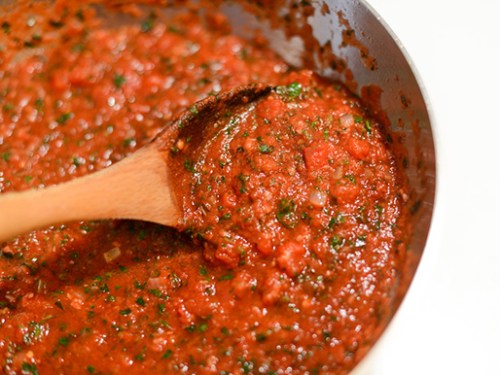
tomato-mint sauce

One thread in these posts of mine has been to salute the humbler ingredients in our food, those which never get much publicity but are actually the ones that make each of our dishes so special. I’ve written on lemongrass recently, and capers and anise a while back (and, at the other end of the spectrum, I’ve written very disapprovingly about the use of hot spices). So I will use this occasion to also sing the praises of mint, reviewing some of its better uses in food.

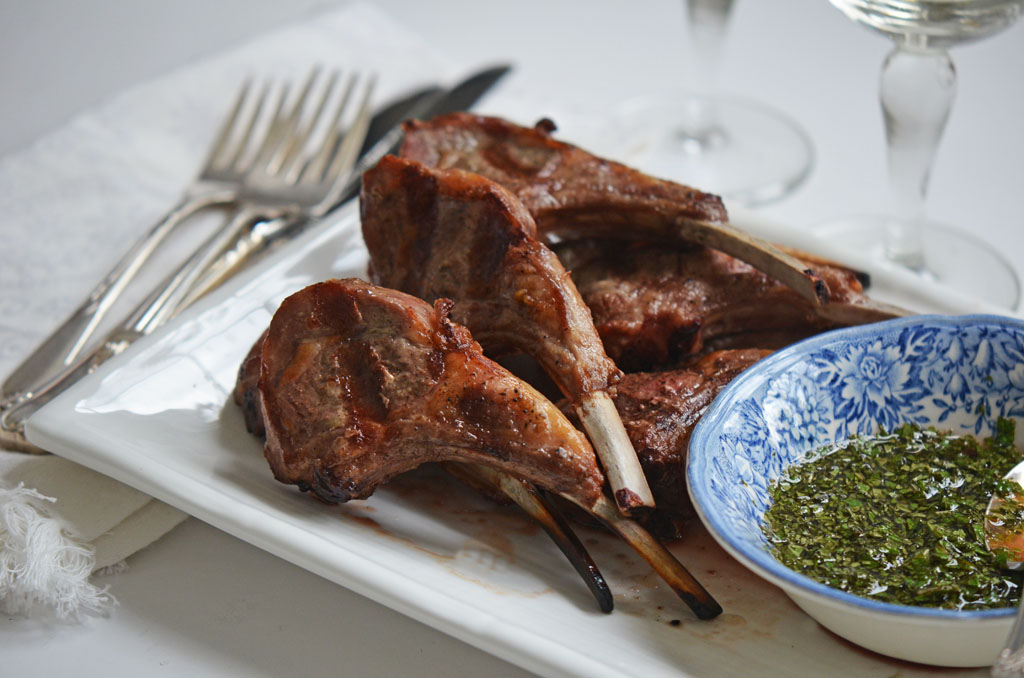
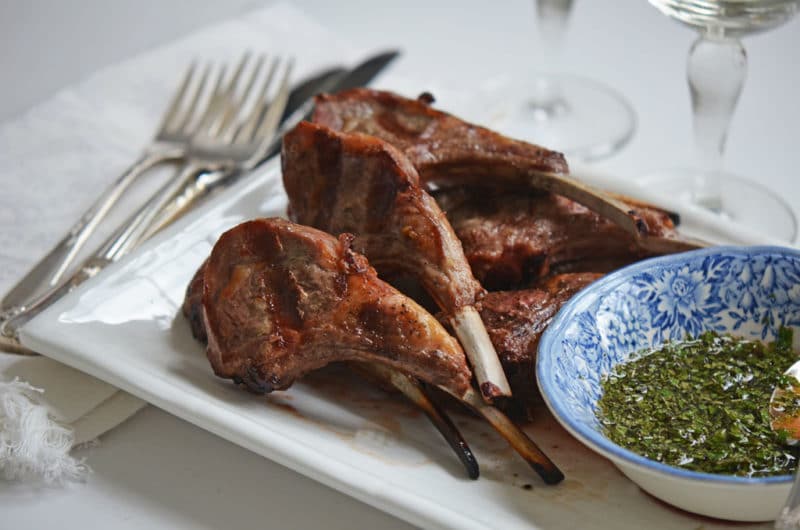
As I usually do, I began surfing around the internet to see what I could find. I was surprised to not come across a huge use of mint, at least in my part of Europe (Western Europe, to use the Cold War parlance). Of course, there is that most English of dishes, mint sauce, a wonderful, wonderful sauce to put on lamb chops. But this dish has already been the subject (or one of the subjects) of a previous post, in which I sing the praises of the sweet-and-salt combination, so I don’t feel I can go on about it again. I will leave readers to refer to that post and move on – but not before throwing in a picture of mint sauce with lamb chops.
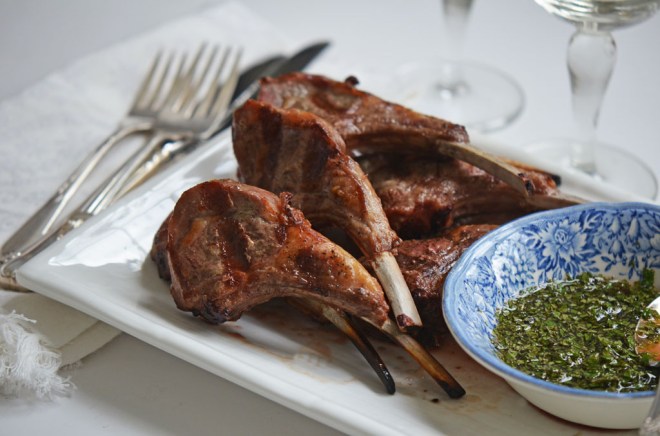
lamb sauce and lamb

In my electronic wanderings, I stumbled across the following dish, which also seems incredibly English – at least, it involves peas, and since peas are in my mind as English as Big Ben or HM the Queen (one of the veggies in every meat and two veggies which I had in my youth seemed to be peas), I include it. We are talking of pea soup with mint (I give thumbnail recipes for this and other dishes that I mention at the end of the post).
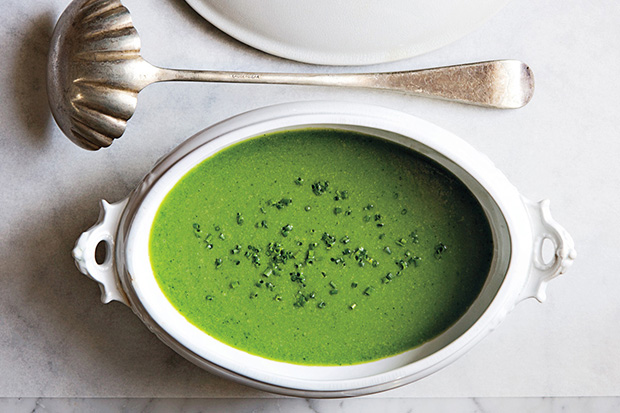
pea and mint soup

I have a feeling that this soup would be good chilled, like gazpacho.

I also want to add here another dish that I came across as I went around raising electronic rocks to see what was hidden below them. It’s actually an eggplant dish from 16th Century Italy. I add it because I think it’s kind of cool to look at what our ancestors were eating. But it’s also an intriguing dish because it looks to be an ancestor of the modern dish we know as eggplant parmigiana. The big difference between the two is the absence of a tomato-based sauce in the old recipe. I suppose this difference reflects the fact that tomatoes were not yet current in Italian cuisine in the 16th Century. Instead, a mix of herbs (mint, sweet marjoram, salad Burnet, parsley, fresh fennel tips), crushed garlic, a couple of spices (cinnamon and cloves), pepper, and salt, are spread over the eggplant, and the whole is splashed with verjuice (I will let readers look that one up, as I had to) and sprinkled with sugar. Then, like eggplant parmigiana, cheese is spread over the whole. Here’s what it looks like, and the thumbnail recipe is at the end.

pomi sdegnosi

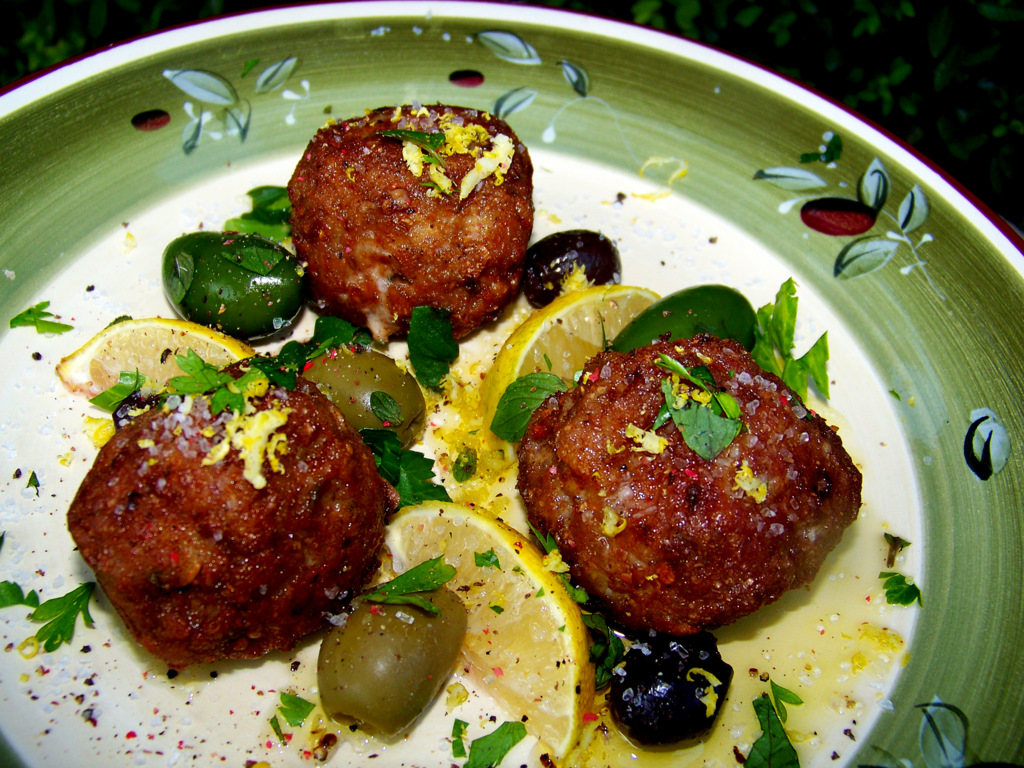
It was at this point that luck came to the rescue. As I was surfing disconsolately around the internet, I came across an interesting article entitled “Mints in Ethnic Cuisines”, written by two ladies from Texas, Madalene Hill and Gwen Barclay. I am indebted to them for much of what follows. It was they, for instance, who taught me that Greek cuisine bucks the (modern?) European trend of using little mint. It seems that Greeks use mint with wild abandon in their cuisine. The two authors mention several dishes in particular: keftedes meatballs, the yoghurt-based tzatziki sauce, the bean stew gigantes plaki, dolmas (stuffed grape vine leaves), hortopita, which is a vegetable and rice pie; even that best known of Greek dishes, moussaka, has mint in it! I give thumbnail recipes of all these dishes at the end, but here I will only post pictures of keftedes meatballs

keftedes

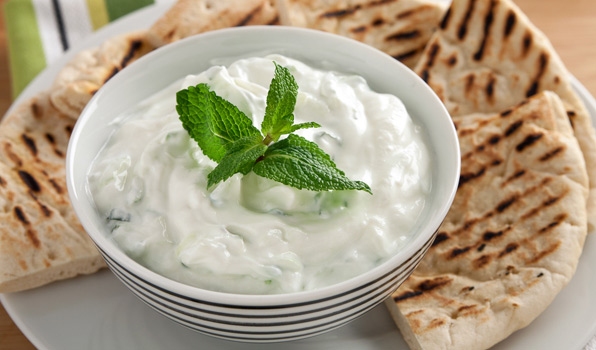
which can be served with the yoghurt-based tzatziki sauce as a dip

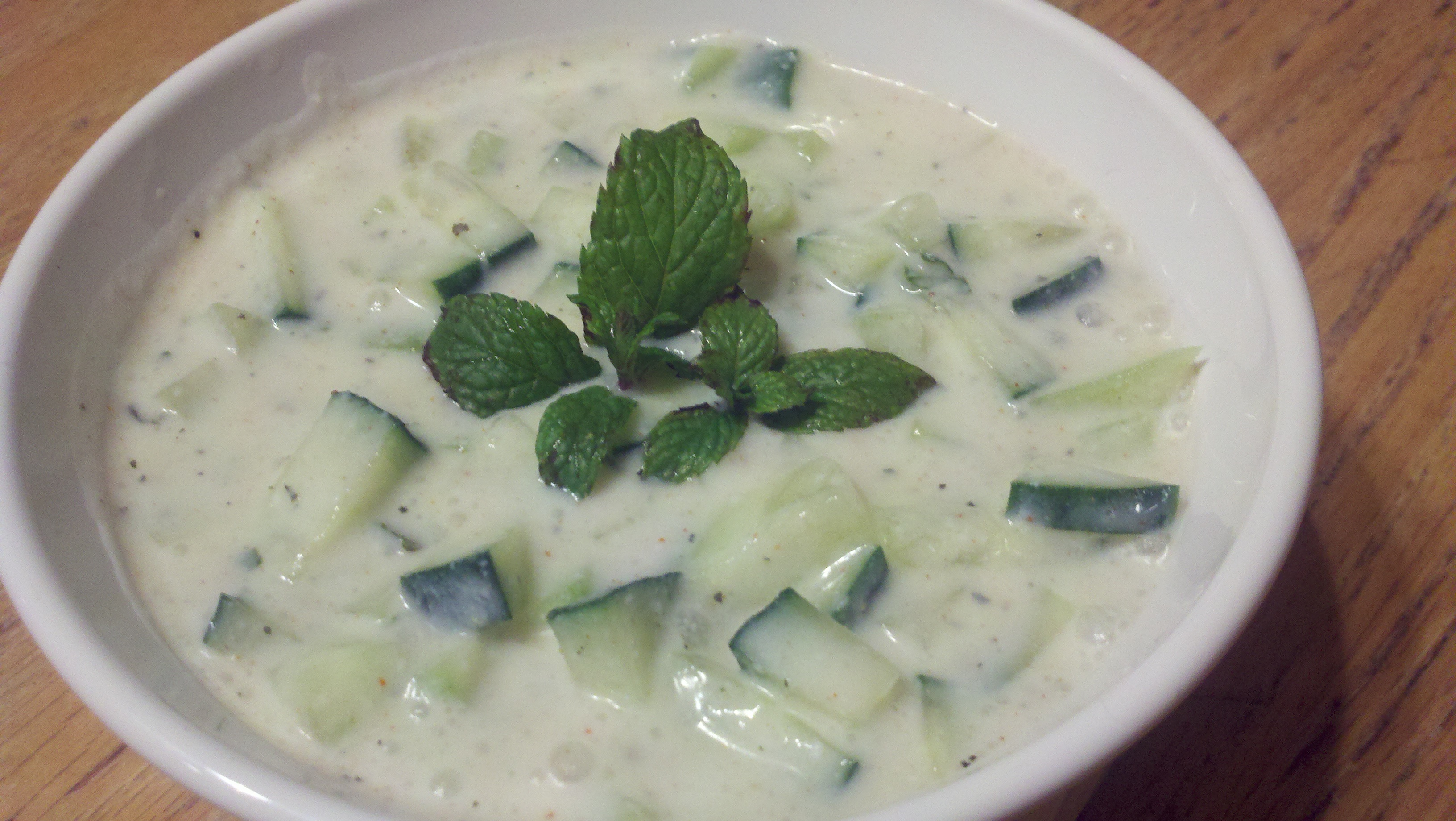
Tzatziki

I chose to put pictures of these two dishes with the hope that my wife (and I) can try to make them …

I now leave Europe behind, skimming over the waves of the Aegean Sea to the land of Lebanon, because I want to raise a cheer for that most Lebanese of dishes, tabouleh.
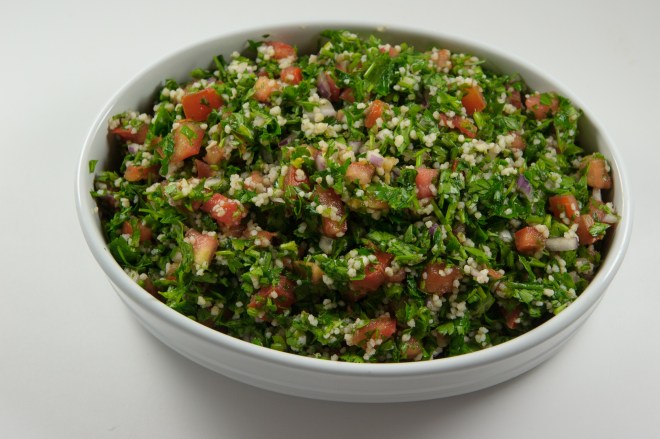
tabouleh

I have very fond memories of eating tabouleh in Beijing – yes, Beijing. There was a little Lebanese restaurant down the road from where we lived, run by a small, tubby Lebanese man with a twinkle in his eye. When Spring came rolling round, it was incredibly pleasant for my wife and I to sit outside the restaurant, under the barely budding trees, in the tepid heat of the midday sun, slowly working our way through a plate of tabouleh. I must say, though, I’m a little surprised that not only chopped parsley but also chopped mint is added. I’m not sure that our tubby Lebanese restaurateur was putting mint in his tabouleh. I will need to hunt down a restaurant which serves tabouleh with both mint and parsley. While I’m at it, I will also see if it serves Arab or Middle-East salad.

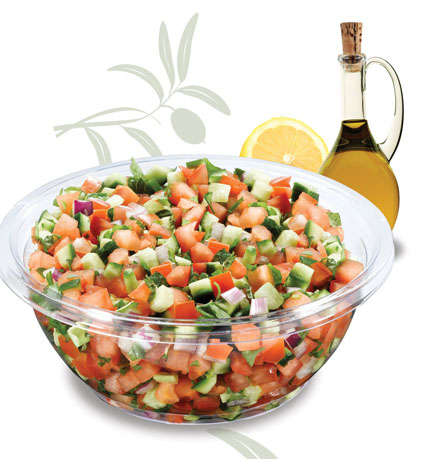
arabic-saladLemon segments, diced cucumber and tomatoes, the whole mixed with chopped onions, mint, and parsley. Sounds sooooo good …

I now want to arc over to the Indian subcontinent, but not before pausing for a minute in modern-day Iraq. I’m actually stopping here for Iraq’s Babylonian past. Like any self-respecting university, Yale University has a collection of cuneiform tablets, some of which, like this one, list recipes.

YBC4644

These have been translated by a Frenchman, Jean Botéro (this immediately makes me think of the Egyptologist, Professor Philémon Siclone, in the Tintin album “Les Cigares du Pharaön”

egyptologue-siclone-jpg

but I digress).

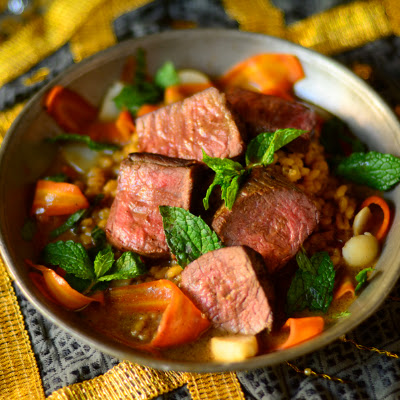
One of these, Recipe XXIII, contains mint, to whit: “Leg (of mutton) (?) meat is used. Prepare water; [add] fat […] samidu, coriander (?), cumin (?), and kanašû. Assemble (all the ingredients in the cooking vessel) and sprinkle with crushed garlic. (After cooking,) blend into the pot šuhutinnû and mint […]” As you can see, words are missing, the translation of some of the ingredients is unknown, and to make matters worse the recipe is exceedingly brief compared to our modern ones, leaving much to the skill – and imagination – of the cook. Nevertheless, Laura Kelley and a band of hardy cooks have been piecing together these telegraphic recipes from 4,000 years ago and trying them out. Many of the results are described on the web site “The Silk Road Gourmet”  I post here the picture of a modern take on Recipe XXIII, after someone concluded that šuhutinnû is probably carrot or possibly parsnip, and samidu is barley:

babylonian lamb and mint

I have added the modern version of the recipe to the thumbnail recipes below, for those who might want to try connecting gastronomically with our remote Babylonian ancestors.

After that pit stop in the fertile crescent, we go on to the Indian subcontinent, the land of chutneys – not so much the fruit-based chutneys which the colonial Brits brought back to the UK, but more vegetable-based chutneys. Here is a chutney, mint-coriander chutney, where mint takes pride of place.

mint-coriander chutney

One of the recipes I perused helpfully informs the reader that this chutney can be served with pakoras, samosas, chaat, chole, or even potato chips.

This chutney allows me to segue smoothly into another popular dish from that part of the world, raita, a cold yogurt condiment served to cut the heat of spicy dishes. And here I will throw in a picture of a cucumber-mint raita (with thumbnail recipe at the end).

cucumber-mint raita

Being based on yoghurt (or strictly speaking curds) and looking at how raitas are made, I have to think that they are (perhaps not so) distant cousins of the Greek tzatziki (which itself is part of a broader family of yoghurt-based dishes to be found from the Balkans to the Caucasus). Maybe one day I should write a post on yoghurt …

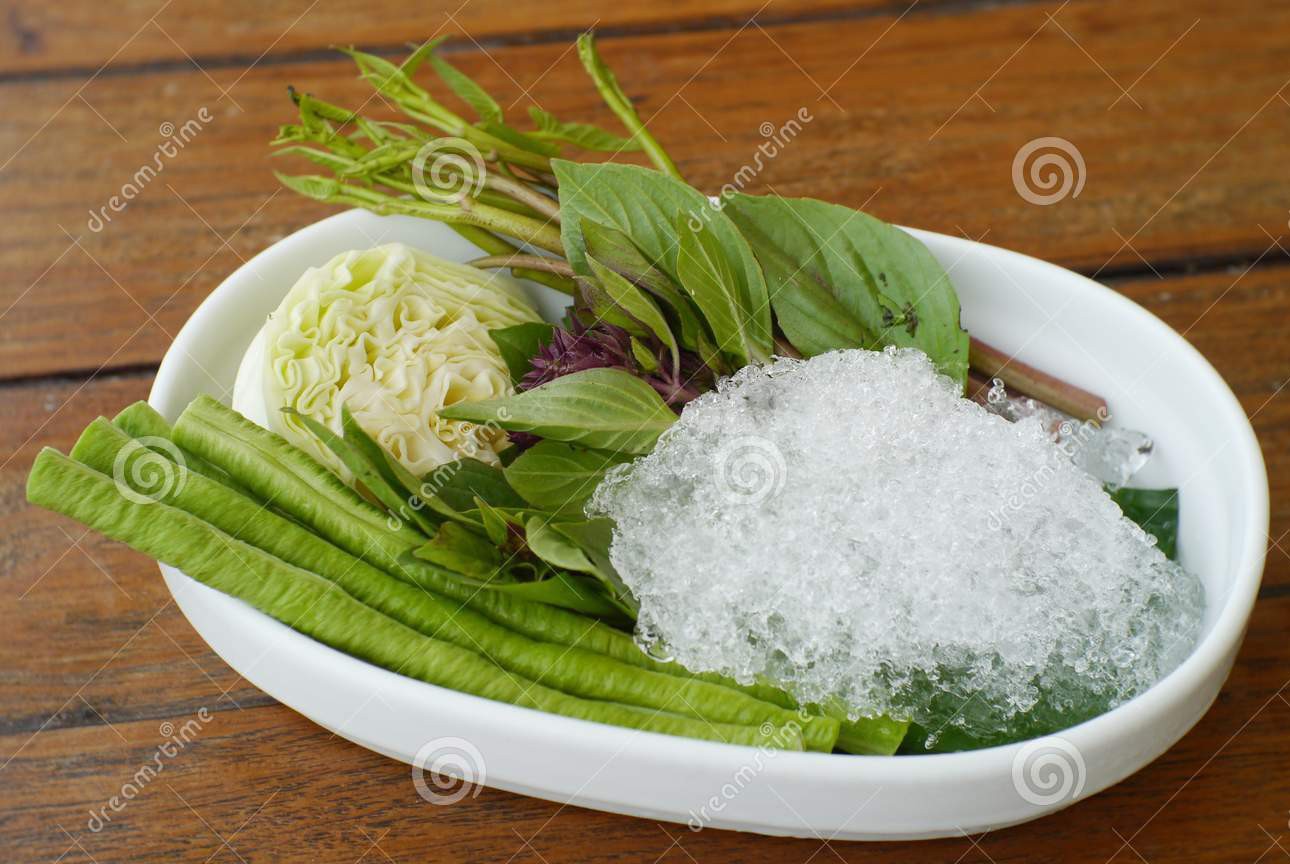
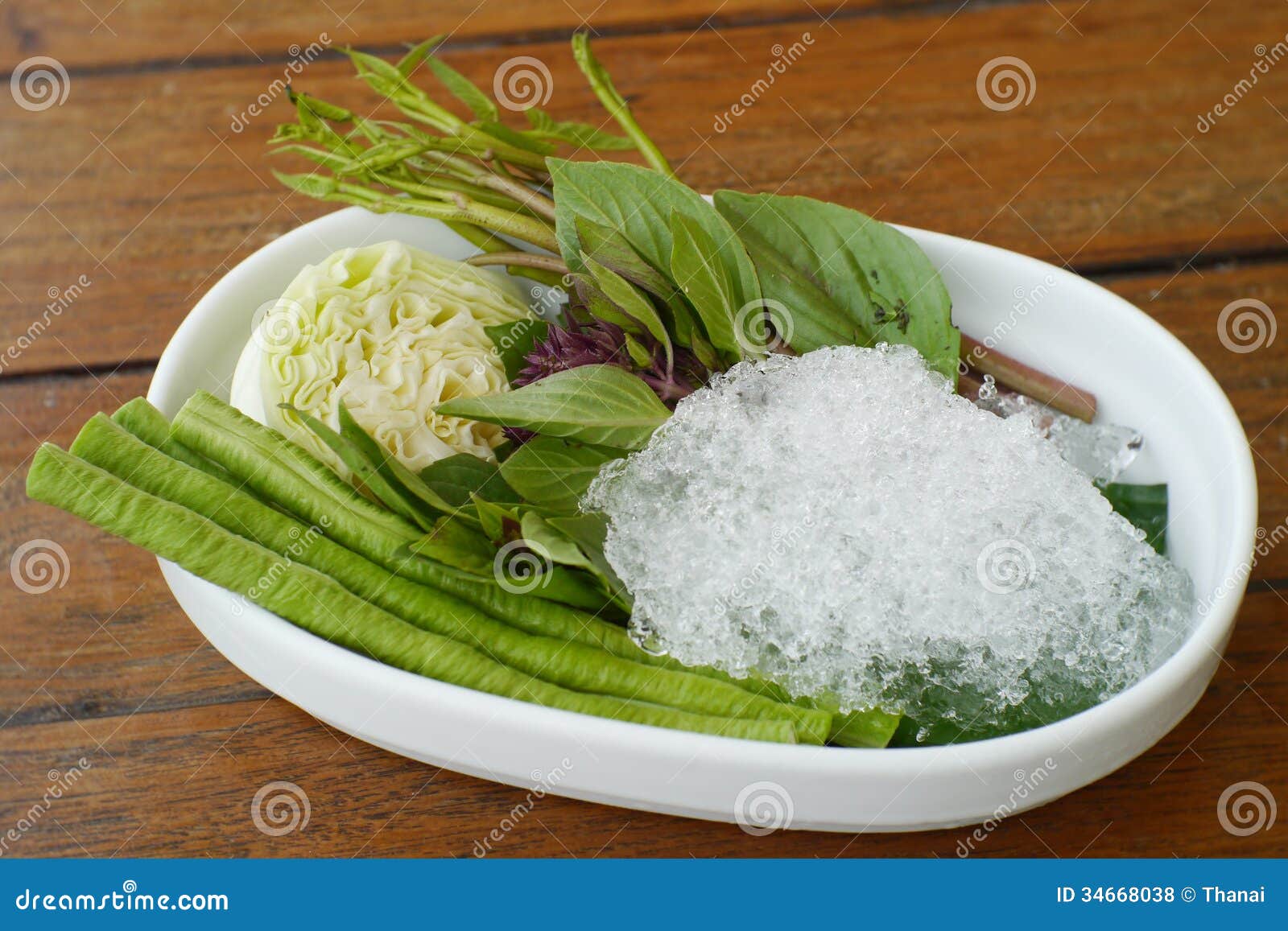
After this, I soar over the Bay of Bengal back to Thailand. Madalene Hill and Gwen Barclay say that mint is a very popular ingredient in Thai cuisine and in South-East Asian cuisine more generally. Certainly, I recently had a taste of a common use of mint here, where it joins a number of fresh vegetables being served as a side dish to be added to noodle dishes or just eaten along with other main dishes.
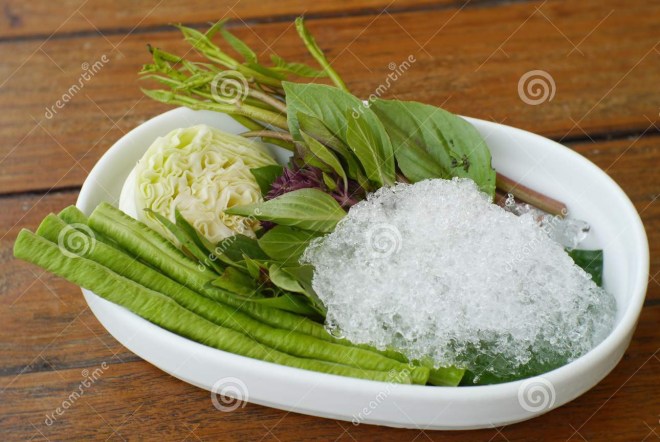
side dish fresh vegetables

We were saying bye-bye to a colleague and had lunch together in the office. The food was ordered from outside. My Thai colleagues informed me that most of the dishes I was trying were from the north of the country. I found it interesting to eat fresh mint leaves with some of the spicier dishes. This side dish of fresh vegetables is also common in Vietnam, and I suspect throughout South-East Asia.

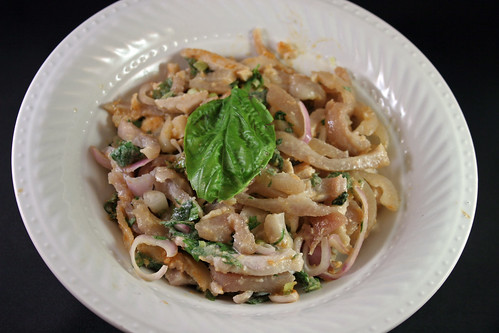
I’ll finish with a dish from Thailand, yam nang mu (pork skin salad). This is actually one of many Thai “salads” in which various cuts of meat or offal are sliced small, seasoned with spicy/sour/sweet sauces, and then mixed with herbs of one variety or another. In this particular case, you season boiled, defatted pork skin (there is a cousin to this dish using pig’s ears) with fish and shrimp sauce, lime juice, sugar, and mix it all with a large amount of mint leaves, some lemongrass, some roasted rice, and a number of other ingredients (thumbnail recipe at the end).

pork skin salad

Well, that brings me to the end of my world tour following the trace of mint. There are a lot of dishes which use mint that I’ve not mentioned. I’ve also not touched on the use mint in drinks, for instance Moroccan mint tea with its spectacular pouring technique

moroccan mint tea

or the somewhat more alcoholic mint julep, a favourite of the Kentucky Derby.

mint julep

But I’ll leave these for another day. Right now, my wife is looking at her watch and at the door. Time to go.

THUMBNAIL RECIPES

Pea and mint soup: Soften some onions in a heavy pot over medium heat. Add broth and bring to a boil. Add peas, reduce heat, and simmer gently until tender. Add chopped mint leaves (and parsley if you want). Add more broth. Purée in a blender until smooth. Season with salt and pepper.

Pomi sdegnosi, or braised eggplant: Slice the eggplant lengthwise and let them steep in in lukewarm water for 30 minutes. Rinse. Submerge the eggplant slices in boiling water for about 8 minutes. Remove and drain. Dredge the eggplant slices in flour and layer the bottom of an oiled dish. Chop all of the herbs – fresh mint, marjoram, parsley, salad Burnet, fennel tips – and mix them with minced garlic, spices – cinnamon, cloves, pepper – salt, sugar, and verjuice (for which lemon juice can be substituted). Cover the eggplant with breadcrumbs, drizzle with olive oil, cover with herb/spice mixture and then with provatura cheese (mozzarella, another pulled cheese, can be substituted). Repeat for each layer of eggplant. Bake in the oven for 30 minutes. (Adapted from http://atasteofhistorywithjoycewhite.blogspot.com/2014/08/to-braise-eggplant-historic-food.html)

Keftedes: Combine ground beef, bread dunked in milk, minced onion, minced garlic, finely chopped mint and oregano, some vinegar, some beaten eggs, a small amount of grated nutmeg, salt, and pepper, and mix well. Roll the mixture into balls. Dust the balls with flour. Put them in hot oil in a pan. Brown on all sides.

Tzatziki: Peel cucumbers and dice. To draw out their water, sprinkle them with salt and let them sit for 30 minutes. Drain well. Put them in a blender, along with minced garlic, some lemon juice, some chopped mint (and some chopped dill if you wish), and a little ground black pepper. Process until well blended. Stir the result into Greek yogurt. Salt to taste. Let it stand for at least two hours before serving so flavours can blend.

Gigantes Plaki: Soak gigantes beans (giant butter beans) overnight. Cover with fresh water and bring to the boil. Simmer for a couple of hours until the beans are just tender. In parallel, gently soften chopped onions and garlic for a few minutes. Then stir in some sweet paprika, tinned tomatoes, 100ml water. Salt and pepper. Bring to the boil, then simmer for half an hour. Stir in sea kale or dandelion leaves (or chard as an alternative). Mix the cooked beans with the sauce, adding some more olive oil and chopped mint and parsley. Transfer to a casserole pan, and bake for half an hour or so until the beans are tender and the sauce thickened and bubbling. Can be served hot, warm or at room temperature.

Dolmas: In a little broth, mix ground beef and lamb with uncooked rice, minced onion and garlic, some pine nuts, chopped mint and parsley. Place rinsed grape leaves on a work surface. Place a dollop of the mixture at the center of each leaf. Tuck in the ends and roll tightly toward the leaf point. Layer the wrapped leaves in a large saucepan Cover them with broth mixed with lemon juice. Cook over low heat for three-quarters of an hour.

Moussaka: Place minced lamb, minced onions, crushed garlic, chopped mint and oregano, a couple of bay leaves and a cinnamon stick in a large frying pan and cook over a medium heat for a quarter of an hour. Stir in some flour. Add a glass of wine, canned tomatoes, some tomato purée, and bring to a simmer. Cook for half an hour, until the lamb is tender and the sauce has thickened. Season with salt and freshly ground black pepper to taste. Set aside this meat sauce. Fry eggplant slices for a couple of minutes. Set them aside. Cook potatoes in boiling water for five minutes, then cool under running water. Prepare a white sauce as follows. Melt butter in a saucepan, stir in some flour. Cook for a few seconds, then gradually stir in milk. Add some grated parmesan and grated nutmeg. Simmer the sauce gently for 5 minutes. Season to taste with salt and pepper. Remove from the heat and stir in a beaten egg. Spoon some of the meat sauce into a shallow dish. Cover with a layer of potatoes and a layer of eggplant. Repeat the layers twice more, finishing with the eggplant. Pour over the white sauce to cover the whole in a thick, even layer. Sprinkle with a bit more parmesan. Bake in the oven until deep golden-brown and bubbling.

Hortopita: Peel, seed, and shred some pumpkin. Weight it to drain its liquid. Cook it in a skillet until it wilts and most or all of its liquid has evaporated. Transfer to a bowl. Cook in the same skillet a chopped leek and onion until also wilted. Transfer to the bowl with the pumpkin. Cook chopped chard and spinach until wilted; add to the bowl. Add the herbs – mint, sorrel, hartwort, chervil, dill, fennel leaves, parsley, and oregano – to the bowl. Season to taste with salt and pepper. Roll out a first phyllo dough ball and place it inside an oiled roasting pan. Brush with olive oil. Repeat with the second piece of dough. Spread the filling evenly over the dough. Repeat with a third sheet of dough, placing it over the filling. Brush with olive oil. Roll out the last piece of dough to a slightly smaller piece, and place it over the surface of the pie. Join the bottom and top layers of dough. Brush the top of the pie generously with olive oil. Bake until the pastry is golden and crisp. Remove and serve warm or at room temperature.

Tabouleh: Stir together some bulgur and olive oil. Pour boiling water over, and let stand for a quarter of an hour. Drain well. Toss with finely chopped mint and parsley, a couple of chopped tomatoes, half a cucumber, several tablespoons of lemon and of olive oil. Season with salt and pepper.

Arab salad: Cut segments from half of lemon free from membranes and transfer segments to a cutting board, then squeeze juice from the remaining half a lemon into bowl. Put a couple of tablespoons of lemon juice in a bowl. Add finely chopped segments of lemon. Add salt, pepper, and several tablespoons of olive oil. Whisk to combine. Stir in the remaining ingredients: diced cucumber and tomatoes, finely chopped onion, finely chopped mint and parsley.

Babylonian lamb with barley and mint: Marinate lamb steaks in soy sauce for half an hour. Sauté in oil, along with the trimmings. Remove, leaving the trimmings in the pan. Stir barley into the oil and toast for a few moments. Add cumin, coriander, and chopped garlic. Simmer until the barley is cooked. Place the lamb steaks in the pan and cook the desired degree. Add finely sliced carrots and chopped mint for a few minutes. Remove the lamb and slice. Place the carrots in a serving dish, spoon the barley over carrots, add the sliced lamb, and spoon over with the sauce. (adapted from http://lostpastremembered.blogspot.com/2011/07/onions-onions-everywhere.html)

Mint-coriander chutney: In a blender, grind together chopped mint leaves, chopped coriander, a chopped green chili (personally, I would cut out the chili, but can it be Indian without it?), a piece of ginger, a small amount of cumin, and some lemon juice, until smooth, using a little water if necessary. Salt to taste.

Cucumber-mint raita: Coarsely grate a cucumber. Squeeze dry. Whisk curds (yogurt can substitute), chopped mint, a little cumin, even less cayenne pepper in medium bowl to blend. Add cucumbers and mix well. Season to taste with salt and pepper.

Yam nang mu (Pork skin salad): Boil pork skin until soft. Cool. Remove any fat from the skin. Slice the skin into thin, short slices. Mix well with a large handful of chopped mint leaves, finely minced lemongrass, lime juice, fish sauce, palm sugar, and ground roasted rice.

_______________________________

Tomato-mint sauce: http://www.seriouseats.com/images/2013/03/20130302-242913-tomato-mint-sauce.jpg (in http://www.seriouseats.com/2013/03/sauced-tomato-mint-sauce.html)
Mint sauce and lamb: http://www.maureenabood.com/wp-content/uploads/2012/03/Grilled-chops-platter-POST.jpg (in http://www.maureenabood.com/2012/03/29/grilled-lamb-lollipops-with-fresh-mint-sauce-chine-on/)
Pea and mint soup: http://www.epicurious.com/images/recipesmenus/2013/2013_april/51154900.jpg (in http://www.epicurious.com/recipes/food/views/minty-pea-soup-51154900)
Pomi sdegnosi: http://i.ytimg.com/vi/MgcFEo-S8WI/hqdefault.jpg (in https://www.youtube.com/watch?v=MgcFEo-S8WI)
Keftedes: https://rencooks.files.wordpress.com/2009/11/100_4063.jpg (in http://ediblearia.com/2009/11/05/lamb-keftedes/)
Tzatziki: http://www.cbc.ca/inthekitchen/assets_c/2012/02/Tzatziki4563-thumb-596×350-174210.jpg (in http://www.cbc.ca/inthekitchen/2012/02/tzatziki-sauce.html)
Tabouleh: http://almarahgrill.com/wp-content/uploads/2015/06/tabouleh.jpg (in http://almarahgrill.com/product/tabouleh/)
Arabic salad: http://suzyeats.com/wp-content/uploads/2011/05/arabic-salad.jpg (in http://www.snipview.com/q/Arab_salad)
Cuneiform tablet YBC 4644: http://babylonian-collection.yale.edu/sites/default/files/images/New%20Images/YBC4644_OBV_0004.jpg (in http://babylonian-collection.yale.edu/highlights)
Egyptologist in Tintin: http://s1.e-monsite.com/2009/04/06/06/46230270a-siclone-jpg.jpg (in http://univers-tintin.e-monsite.com/pages/les-personnages/philemon-siclone.html)
Babylonian lamb and mint: http://1.bp.blogspot.com/-h-K2nSXnfys/TiNFcYNVuzI/AAAAAAAACSI/5JHqnYlNzv4/s400/DSC_2266.JPG (in http://lostpastremembered.blogspot.com/2011/07/onions-onions-everywhere.html)
Mint-coriander chutney http://crumbsandtales.com/wp-content/uploads/2013/07/Hari-Green-Chutney-made-with-cilantro-and-mint-21.jpg (in http://crumbsandtales.com/mint-and-coriander-chutney/)
Cucumber-mint raita: https://familynaturally.files.wordpress.com/2012/02/2012-02-26_19-55-59_782.jpg (in https://familynaturally.wordpress.com/2012/02/26/raita-yogurt-with-cucumber-and-mint/)
Side dish fresh vegetables: http://thumbs.dreamstime.com/z/side-dish-vegetable-thai-restaurants-you-see-serves-hot-spicy-food-e-g-som-tam-green-papaya-salad-34668038.jpg (in http://www.dreamstime.com/royalty-free-stock-photos-side-dish-vegetable-thai-restaurants-you-see-serves-hot-spicy-food-e-g-som-tam-green-papaya-salad-image34668038)
Pork skin salad: https://c2.staticflickr.com/4/3038/3047383176_dbdea9103c.jpg (in https://www.flickr.com/photos/jakeslagle/3047383176)
Moroccan mint tea: http://lcmt.topdesert.com/content/photos/travel-guide/authentic-culinary-experiences/pouring-your-mint-tea-without-spilling-a-drop//lowcost-morocco-travel-pouring-your-mint-tea-without-spilling-a-drop1.jpg (in http://lcmt.topdesert.com/index.php?ref=ait-ben-haddou-and-ouarzazate-one-day)
Mint julep: http://ccattache.com/wp-content/uploads/2014/04/k17_18865809.jpg (in http://chuckcowdery.blogspot.com/2015/04/brown-forman-has-kentucky-derby-locked.html)

LEMONGRASS

Bangkok, 20 August 2015

One of the things I always do when I go to a new country is to inspect the vegetable section of the local markets or supermarkets, to see what fruits and vegetables they have on display which I have never seen before, and then I try to figure out how the locals eat them. I also play this game with fish, where one can see interesting variations around the world. I normally don’t bother with meats, since there is much less variety here. Chicken, pork, and beef probably cover more than 95% of all meat products sold over the counter. Throw in a few other fowl, like turkey and goose, and you’re probably up at 99%. I’ve never seen meat aisles where you can buy camel or llama or hamster or dog (although I was once in a place where I could have bought kangaroo).

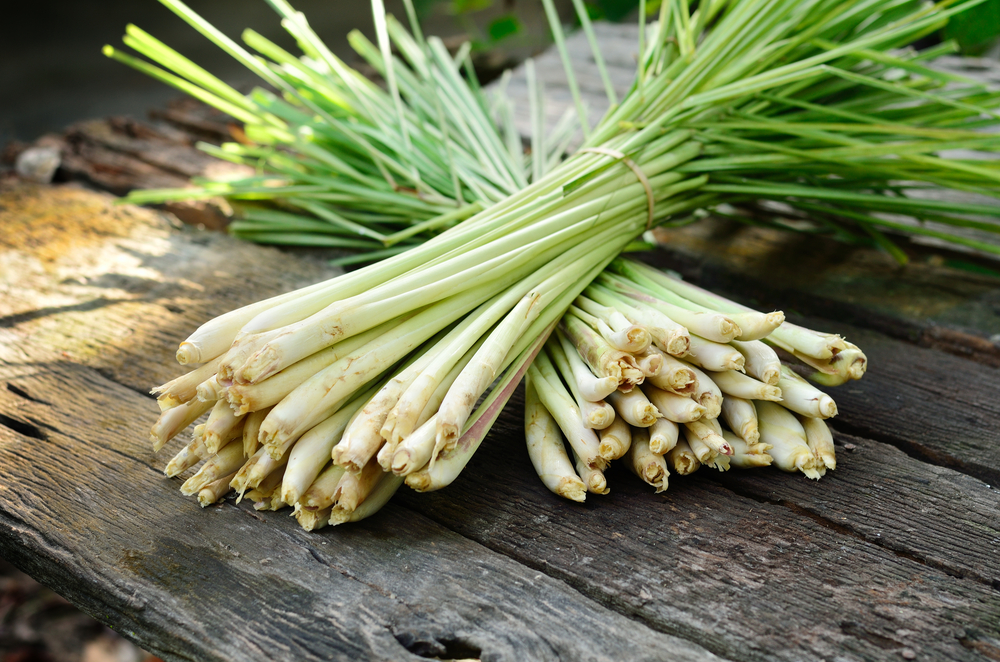
In any event, I played the game when we arrived here in Thailand, and one of the things that immediately jumped out from the vegetable aisles was lemongrass – it’s not a vegetable really, more a spice, but it tends to sit alongside the vegetables, so that’s where I saw it.

lemongrass bunch

Anyone who has lived in Thailand for more than a couple of months will quickly realize that lemongrass plays an important role in Thai cuisine. I’ve mentioned in a previous post one Thai dish in which lemongrass plays a not unimportant role, Tom Yum soup.

tom yum soup

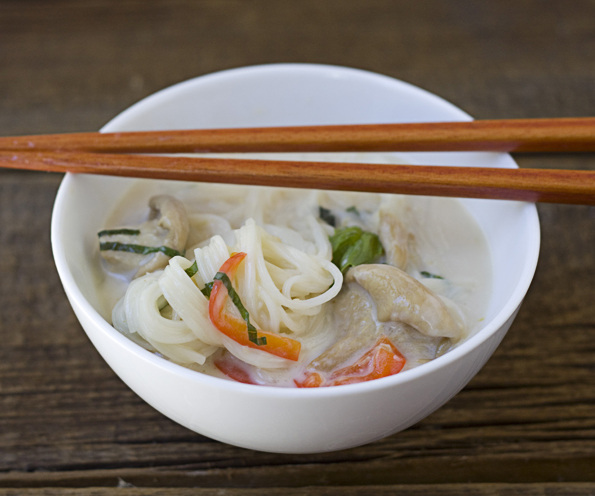
There are other Thai soups which have lemongrass in their recipe, lemongrass coconut noodle soup for instance.

Coconut Lemongrass Noodle Soup

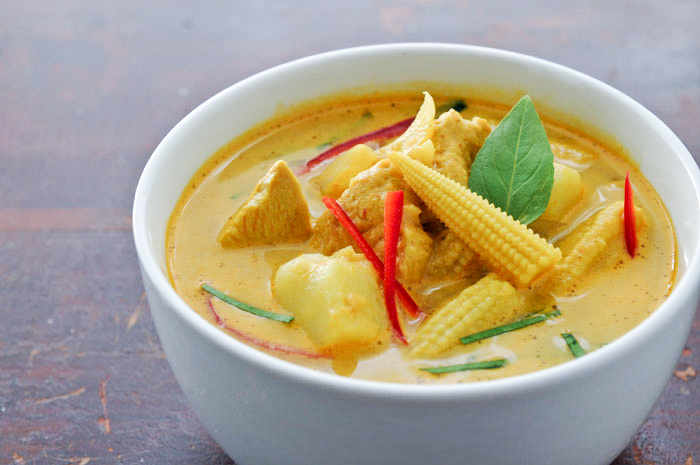
It also finds its place in the green and yellow curries which are omnipresent in Thailand and which Thais will eat with various meats and vegetables. Here they are accompanying chicken.

chicken green currychicken yellow curry

Lemongrass also plays an important role in various sauces, in this case as a coconut and lemongrass sauce accompanying mussels.

mussels in coconut and lemongrass sauce

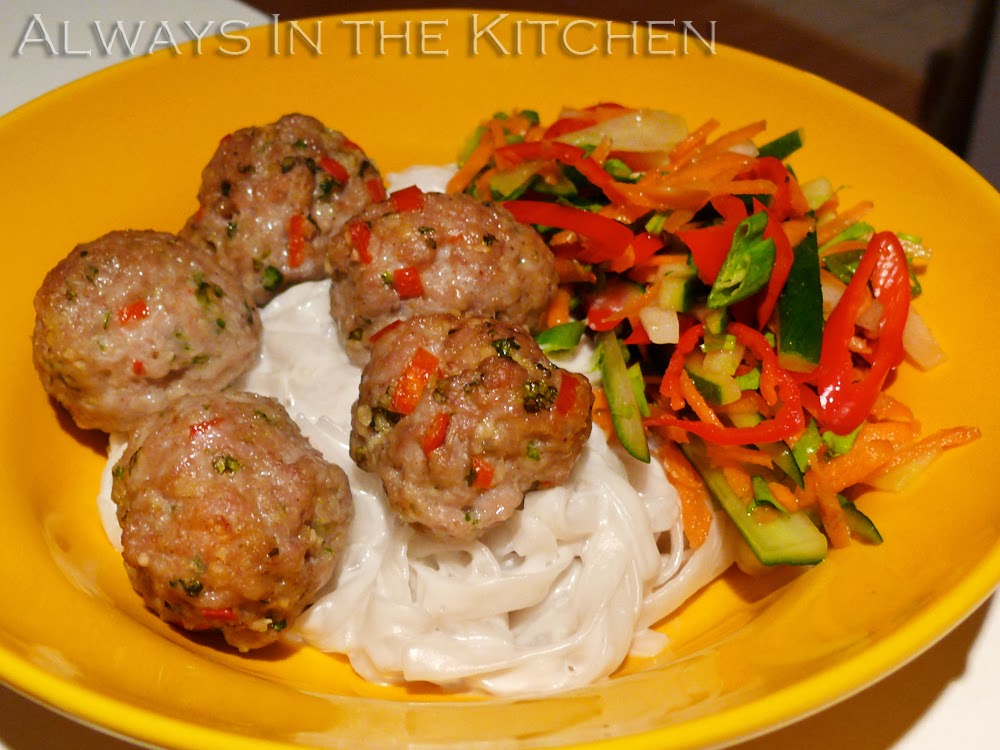
In truth, it is not only in Thai cuisine that lemongrass finds a role. It is common to much South-East Asian cuisine. In Viet Nam, for instance, in pork meatballs the meat is mixed with lemongrass and other herbs.

Vietnamese Lemongrass Pork Meatballs

Or there is Indonesia’s beef rendang, where beef is cooked slowly in a mix of spices which includes lemongrass.

Indonesian beef-rendang

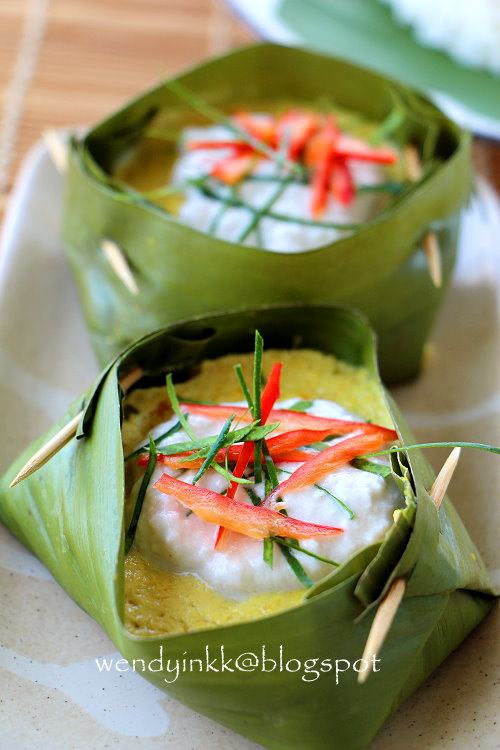
In Cambodia, there’s the national spice-mix paste called Kroeung, which almost always includes lemongrass, and which is used in many dishes, for instance in the fish-based Amok trey

cambodian fish amok trey

For Laos, I cite stuffed lemongrass, the one dish where lemongrass plays a star role.

Laotian stuffed lemongrass

Myanmar gives us as one among many examples Mont Di soup, from Rakhine state

Myanmar Mon Di soup

And let’s not forget the Philippines, from which I’ll cite Lechon Cebu. Lechon, a national dish, is a whole roasted pig. Among its many regional variations there is Cebus’s, where the pig is stuffed with a mix of spices and herbs which includes lemongrass.

Philippine lechon cebu

This enthusiasm for lemongrass is not surprising really. The two forms of the plant which are edible, C. citratus and C. flexuosus, both have their tap root buried deep in this part of the world. Anyway, it’s super for me because I have a great fondness for lemongrass. This affection goes back a long way; I first came across the plant some 50 years ago, as a ten, eleven year-old child. It was in Cameroon, in West Africa. My father had moved there after his stint in Eritrea. One afternoon, at tea time at someone else’s place, I was served this delicious pale yellow infusion, which smelled and tasted softly lemon-like.

lemongrass infusion

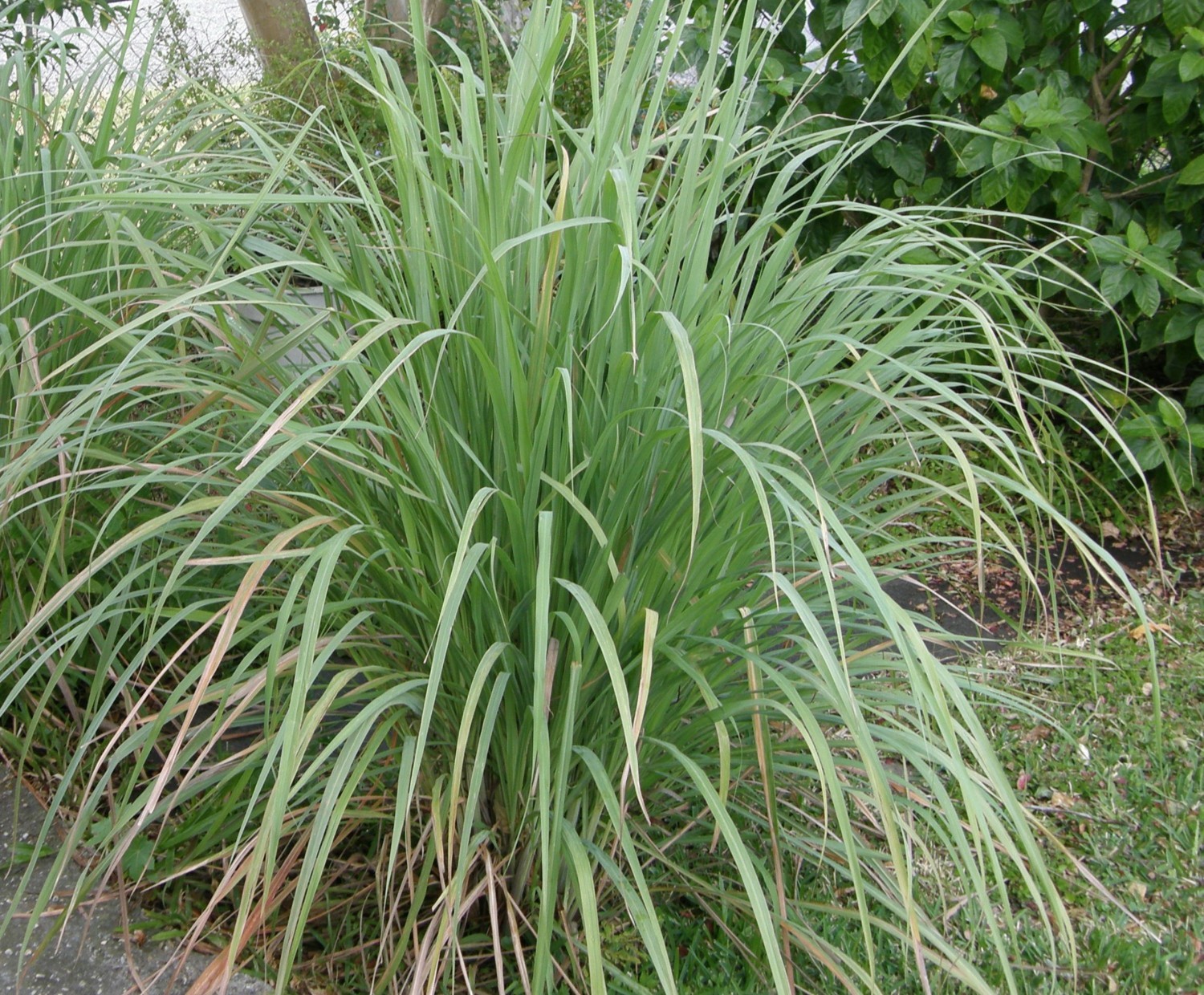
After I’d oohed and aahed about it for a bit, I was shown the plant, a rather spiky big grass

Lemongrass Plant

whose leaves gave off this wonderful lemon scent when you rubbed them between your fingers.

I did not consume lemongrass in any other form while in Cameroon, nor did I ever consume it any other way until I came to Thailand. In fact, an exhaustive search on the internet has led me to conclude that nowhere between Cameroon and S-E Asia does any traditional cuisine include lemongrass (I stress traditional cuisine; with the globalization of cuisines many people are now trying S-E Asian recipes, either straight or fusing it with their own cuisines). Everywhere in the world, there is much enthusiasm to consume lemongrass but only in the form of infusions. I had high hopes to find traces of lemongrass in the Berber regions of North Africa, where their traditional form of cooking, the tajine, is very much a form of stewing, which is quite close to the way lemongrass is used in this part of the world.

tajine

But no, I found no trace of cooking with lemongrass in the shadow of the Atlas Mountains. Not even in India have I found any trace of lemongrass being used in traditional cuisine, even though the subcontinent shares many culinary traits with S-E Asia – curries being the obvious one

south indian curry

and even though the lemongrass plant grows well there (to the extent that C. citratus is known as West Indian lemongrass while C. flexuosus is known as East Indian lemongrass).

I was somewhat astonished by this finding, but also rather disappointed – I had been looking forward to showing pictures of yummy dishes from around the world in which lemongrass plays a role. My first thought was that the consumption of lemongrass infusions the world over was a result of colonialism. In this narrative (a favourite word these days among the chattering classes), Europeans would have discovered the lemongrass infusion (I suspect in India, given the name we Europeans gave the plant)

english lady drinking tea in India

and carried the plant off around the world and hooked our colonial subjects on the drink (the plant’s anti-mosquito properties may also have helped in this diffusion; more on this in a minute).

english lady serving west indians tea

(OK, my pictures show the imbibing of the even more famous herbal infusion, tea, but the general process would have been the same.)

This tidy narrative of mine got a rude shock, however, when I picked up another, insistent, narrative on the internet, which held that already 3,000 years ago the Ancient Egyptians, and through them later the Ancient Greeks and Romans, were familiar with the plant. And there was a big difference. The Egyptians did not eat it, they used it for incense mixes. Incense was big business in Egypt (as it was indeed in all ancient religions). We have here, for instance, Ramses I burning incense as a ritual offering

Rmases I burning incense

and what the Pharaoh did, every man, woman, and probably child, did the length of the country (the country did not have much breadth).

If the Egyptians used lemongrass for incense, I suspect they also used it for their perfumes and perfumed oils. After all, this is also how lemongrass is used today, especially by our friends the aromatherapists.

lemongrass oilI couldn’t find an Egyptian mural showing someone using oils or perfumes, so instead I throw in a picture of ladies using cosmetics more generally.

ancient egyptians using cosmetics

But now the question is, if the Ancient Egyptians were indeed using lemongrass, how did they get it from its place of origin, S-E Asia? I have to think that the answer lies in the spice trade, which was already flourishing in the time of the Pharaohs. Spices like cinnamon and cassia were finding their way to Egypt from Sri Lanka, so it takes no great leap of the imagination to think that lemongrass and other spices were being picked up in S-E Asia and shipped westwards, eventually coming up the Red Sea.

egyptian ship

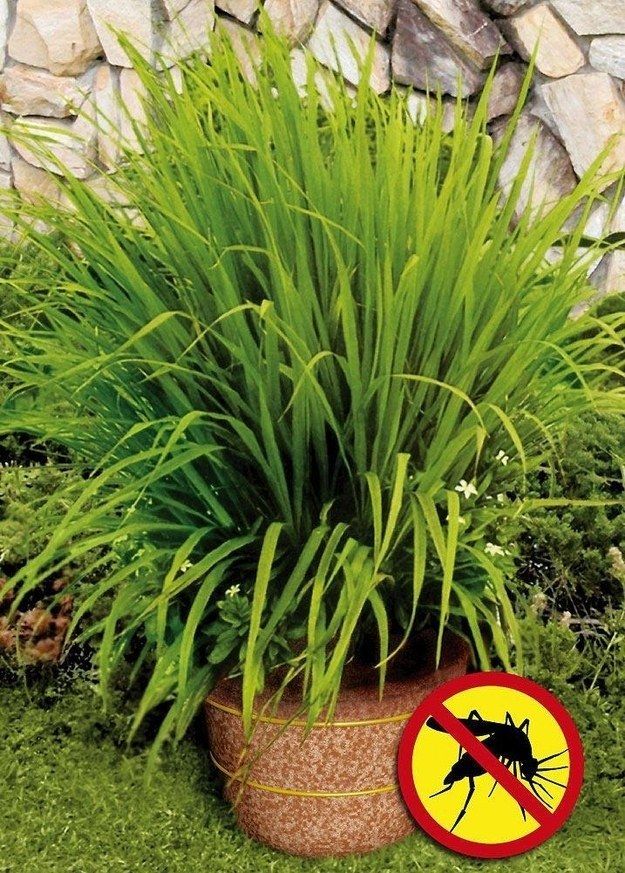
My personal view is that contrary to many spices, where the product and never the plant was shipped (the plant being treated almost like a state secret), the live plant also eventually made its way to Egypt, perhaps overland through India and Iran, along the Fertile Crescent, and then down into Egypt (and from there I would guess eventually along the coast of North Africa). I say this, because lemongrass has another very valuable use, one which I alluded to earlier, and that is as a deterrent to mosquitoes. The little buggers don’t seem to like the odour given off by the plant, and a strategy still in common use today is to plant lemongrass around a house to keep them away.

lemongrass with mosquito

Where does that leave us? Well, with a gigantic culinary opportunity. The S-E Asian countries should plunge in and promote the use of lemongrass in cooking everywhere where the plant is now growing, which is just about anywhere where there is no frost (the plant is not frost hardy). I’ll be happy to help out, throwing lemongrass into anything I find cooking.

______________

Lemongrass bunch: http://www.ashlyns.co.uk/wp-content/uploads/2013/10/shutterstock_107826104.jpg (in http://www.ashlyns.co.uk/shop/lemongrass-bunch/)
Tom yum soup: http://greenpawpaw.efe.com.vn/wp-content/uploads/2014/05/ctg-amb-128.jpg (in http://greenpawpawthai.com.au/menu/)
Coconut lemongrass noodle soup: http://www.lafujimama.com/wp-content/uploads/2010/09/Bowl-of-Coconut-Lemongrass-Somen-Noodle-Soup.jpg (in http://www.lafujimama.com/2010/09/coconut-lemongrass-somen-noodle-soup/)
Chicken green curry: http://sushibeveren.com/online/image/cache/catalog/05.%20kip-500×500.jpg (in http://sushibeveren.com/online/index.php?route=product/product&product_id=90)
Chicken yellow curry: http://rachelcooksthai.com/wp-content/uploads/2011/07/yellow-curry-5.jpg (in http://www.rachelcooksthai.com/yellow-curry-with-chicken-and-potato/)
Mussels in a coconut and lemongrass soup: http://www.taste.com.au/images/recipes/nb/2010/09/25589_l.jpg (in http://www.taste.com.au/recipes/25589/mussels+in+coconut+and+lemongrass+broth)
Vietnamese meatballs with lemongrass: http://3.bp.blogspot.com/-Asn6_ojGAY4/UxzHHvW1oAI/AAAAAAAABLQ/XGg1oUmlMf8/s1600/Vietnamese+Lemongrass+Pork+Meatballs.JPG (in http://alwaysinthekitchen.blogspot.com/2014/03/vietnamese-inspired-lemongrass-pork.html)
Indonesian beef rending: http://cdn.noshon.it/wp-content/uploads/2012-10-17-r-beef-rendang.jpg (in http://noshon.it/recipes/beef-rendang/)
Cambodian Amok Trey: http://3.bp.blogspot.com/-nWM9m8GUofk/U6r1rqzgBMI/AAAAAAAAPH8/TBOl0hNPnXA/s1600/cambodian+fish+amok+trey+8.jpg (in http://wendyinkk.blogspot.com/2014/06/amok-trey-cambodian-fish-mousse-aff.html)
Laotian stuffed lemongrass: https://gallivance.files.wordpress.com/2012/11/stuffed-lemongrass.jpg (in http://gallivance.net/2012/11/10/a-global-gumbo-ethnic-food-adventures/stuffed-lemongrass/)
Myanmar Mont Di soup: http://www.hsaba.com/wp-content/uploads/2008/12/rakhine_moti.jpg (in http://www.hsaba.com/recipes/rakhine-moti)
Philippine Lechon Cebu: http://tenminutes.ph/wp-content/uploads/2013/11/Cebu-Ayers-Lechon-Order-Online-Manila-Shipping-Contact.jpg (in http://ww90.trafficads10.com/)
Lemongrass infusion: 5240254223_8f0879e852_z.jpg (in https://farm6.staticflickr.com)
Lemongrass plant: http://www.herbalteasonline.com/wp-content/uploads/2015/06/Lemongrass-Plant.jpg (in http://www.herbalteasonline.com/lemongrass-tea.php)
Tajine: http://blog.zingarate.com/wanderlustt/wp-content/uploads/2015/01/tajine.png (in http://acquisto.acquea.com/s/tajine)
South Indian curry: http://www.chillimix.com/images/stories/easygallery/resized/0/1212337046_meen%20khatta.jpg (in http://www.chillimix.com/indian-recipe/fish-and-sea-food/meen-khatta.html)
English lady drinking tea in India: http://media.npr.org/assets/img/2015/04/07/vv1190_custom-2fb3f28e67d8197b7555bed3a80833675d5ff748-s900-c85.jpg (in http://www.npr.org/sections/thesalt/2015/04/07/396664685/tea-tuesdays-how-tea-sugar-reshaped-the-british-empire)
English lady serving West Indians tea: http://cache3.asset-cache.net/gc/3228476-21st-september-1944-west-indian-ats-volunteers-gettyimages.jpg?v=1&c=IWSAsset&k=2&d=v9WwiBskt0bjdeMIS%2fO97bO7qBvmTdPLrPrzxlLhIMyq9QGXYV1QZzXet54z3qgP (in http://www.gettyimages.com/detail/news-photo/west-indian-ats-volunteers-being-served-tea-at-the-colonial-news-photo/3228476)
Ramses I burning incense: http://cache1.asset-cache.net/gc/112187026-egyptian-antiquities-pharaoh-ramesses-i-gettyimages.jpg?v=1&c=IWSAsset&k=2&d=bGR6JCu8pZbf%2b2sqs4ajC3pr1O6j4GFGzEmSgJKUFx%2fwR1Oa4nADTEaQuSTwZMs0 (in http://www.gettyimages.com/detail/illustration/egyptian-antiquities-pharaoh-ramesses-i-burning-incense-stock-graphic/112187026)
Lemongrass oil: http://38.media.tumblr.com/c2faea8d8070dc30761b84931745bdbe/tumblr_inline_nifdirPvOm1snpbkm.jpg (in http://blog.massagetablesnow.com/page/3)
Egyptian ladies using cosmetics: http://www.notorious-mag.com/wp-content/uploads/2015/08/ladies.jpg (in http://www.notorious-mag.com/2015/08/05/beauty-tips-ancient-egypt/)
Egyptian ship: http://cache3.asset-cache.net/gc/98952627-mural-painting-depicting-scene-of-carriage-of-gettyimages.jpg?v=1&c=IWSAsset&k=2&d=0njLr93epyP%2fp14uTH5hjWyeKg7%2bNmMNGiew1vRXySmP3uh4n3I9GzP5Xf2kYAzW (in http://www.gettyimages.com/detail/photo/mural-painting-depicting-scene-of-carriage-high-res-stock-photography/98952627)
Lemongrass with mosquito: http://www.jewanda-magazine.com/wp-content/uploads/2015/08/98a5997abe901c1f53505e529852c4d7.jpg (in http://www.jewanda-magazine.com/2015/08/lifestyle-10-moyens-naturels-pour-eloigner-les-moustiques/)

HOT PASTRAMI SANDWICH

Bangkok, 12 August 2015

Last weekend, my wife informed me excitedly that she had discovered a restaurant downtown which claimed to serve Reuben and pastrami sandwiches. Goodness me, we chirruped to each other, it had been years since we’d eaten either. We had to go back to the late 1980s, when we lived in New York for a while, for our last Reuben and pastrami sandwiches. The seminal initiation event was in a small deli to the south of Central Park, one of those places with booths where you slide into your seat (although unfortunately it didn’t have the really cool little juke box that you can see in this picture).

diner booth

We had actually gone in there because we happened to be in the neighbourhood and it happened to be lunch time. Since it also happened to be a Jewish deli, we found ourselves scanning a menu listing Jewish delicacies. After some rumination, we plumped for this thing called a Reuben sandwich and this other thing called a hot pastrami sandwich. What an experience! The deli owner looked on amusedly as we oohed and aahed over our two sandwiches. Thereafter, we ate them regularly during the rest of our stay in New York.

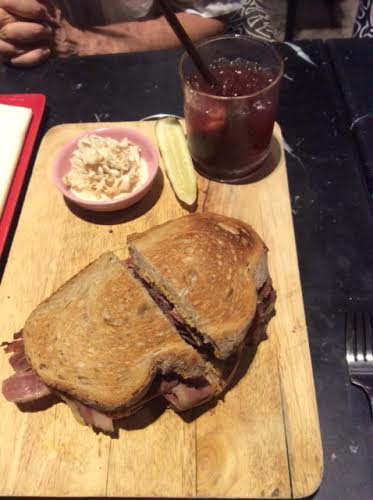
So even though we had had a traumatizing experience two months ago with coq au vin, we decided to risk it. This time, we were not disappointed. We were served very creditable Reuben and pastrami sandwiches. I have a picture of the Reuben sandwich we ate.

reuben sandwich

But in our haste to devour the pastrami sandwich we forgot to take a photo of it. Which is a pity, because if I have to choose between the two, I would plump for the pastrami sandwich, and in fact the rest of this post is about pastrami.

No matter, I can throw in here a photo of a pastrami sandwich from Katz’s Deli.

pastrami sandwich katz deli

This deli, which is on Houston Street in New York, is claimed in certain quarters of the internet to be “the keeper of the Jewish culinary flame” in the city.

katz deli

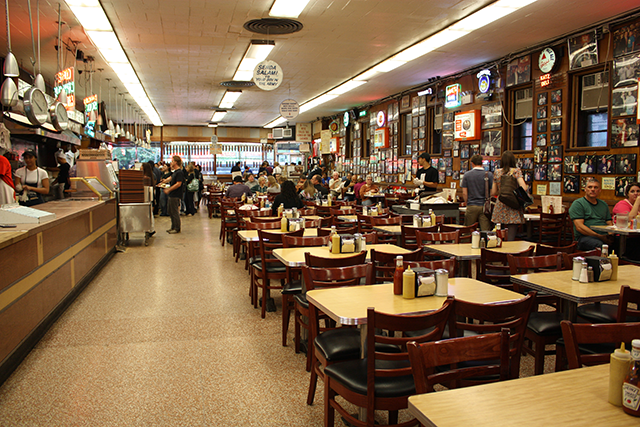
katz deli inside

Strong claim indeed! Never having been to the establishment myself, I can’t tell you if this claim is reasonable (although I will note that my daughter has been there and was not that impressed by their pastrami sandwich – but then, she doesn’t much care for pastrami in the first place).

Before I get into rival claims, of which there are many in this field, let me quickly review the making of pastrami (something which I’d always vaguely asked myself about but had never bothered to check until I decided to write this post). Start with a cut of beef from around the animal’s navel, the so-called plate cut (you can also use brisket – more of this choice in a minute). Cure it with salt and saltpeter and let it dry for several weeks (you can also throw some herbs into the curing mix). Once cured, rub and coat your meat with a mix of herbs (as you can imagine, the precise make-up of this coating is a trade secret, jealously guarded by rival delis, but onion, garlic, black pepper, coriander seed, possibly sugar, all seem to be common ingredients). Once nicely coated, smoke it at low heat for several days (the precise wood used for the smoke being again a closely guarded trade secret).

So far, so good. This is no different from the preparation of many dried, cured meats around the world, and before the advent of refrigeration these methods had been used by human beings in one combination or another for thousands of years to preserve meat. It’s the next steps where it gets interesting. After smoking, you first boil the meat to cook it, and then steam it for some 15 minutes. These last steps seem to have to do with the cut of beef used. Initially, pastrami was a poor man’s dish. People used the plate and brisket cuts because they were the cheapest, and they were the cheapest because they are fatty and gristly. Boiling and steaming was used to soften both the meat and all those difficult-to-chew parts in the meat.

Then you serve it, fresh from the steamer, on rye bread; actually, it’s a wheat-rye bread, of a kind that the not-too-poor people used to eat in Europe (wheat bread was only eaten by the rich, while the poorest people ate horsebread, so called because it was made of the cheaper grains fed to rich men’s horses). The sandwich should always be served with a pickle (or two or three) on the side. To me, this is capital; the sharp astringency of the pickle offsets nicely the fattiness of the pastrami. It’s often served with coleslaw, but frankly that can be left out, at least the kind of commercial gooey coleslaw that tends to be served nowadays. It adds no real value to the dish that I can see.

The alert reader may have noted a stress in the last couple of paragraphs on poverty. This allows me to segue smoothly into a discussion of pastrami’s history. Pastrami researchers have concluded that its roots are to be found in New York’s community of Romanian Jews, who emigrated to the States in the late 1800s. They were escaping from Romania’s increasingly organized and ethnically-tainted anti-Semitism as well as looking for better economic opportunities. Like millions of other people, they would have transited through Ellis Island

immigrants at Ellis Island

and then been sucked into the slums of New York.

Mulberry street NYC

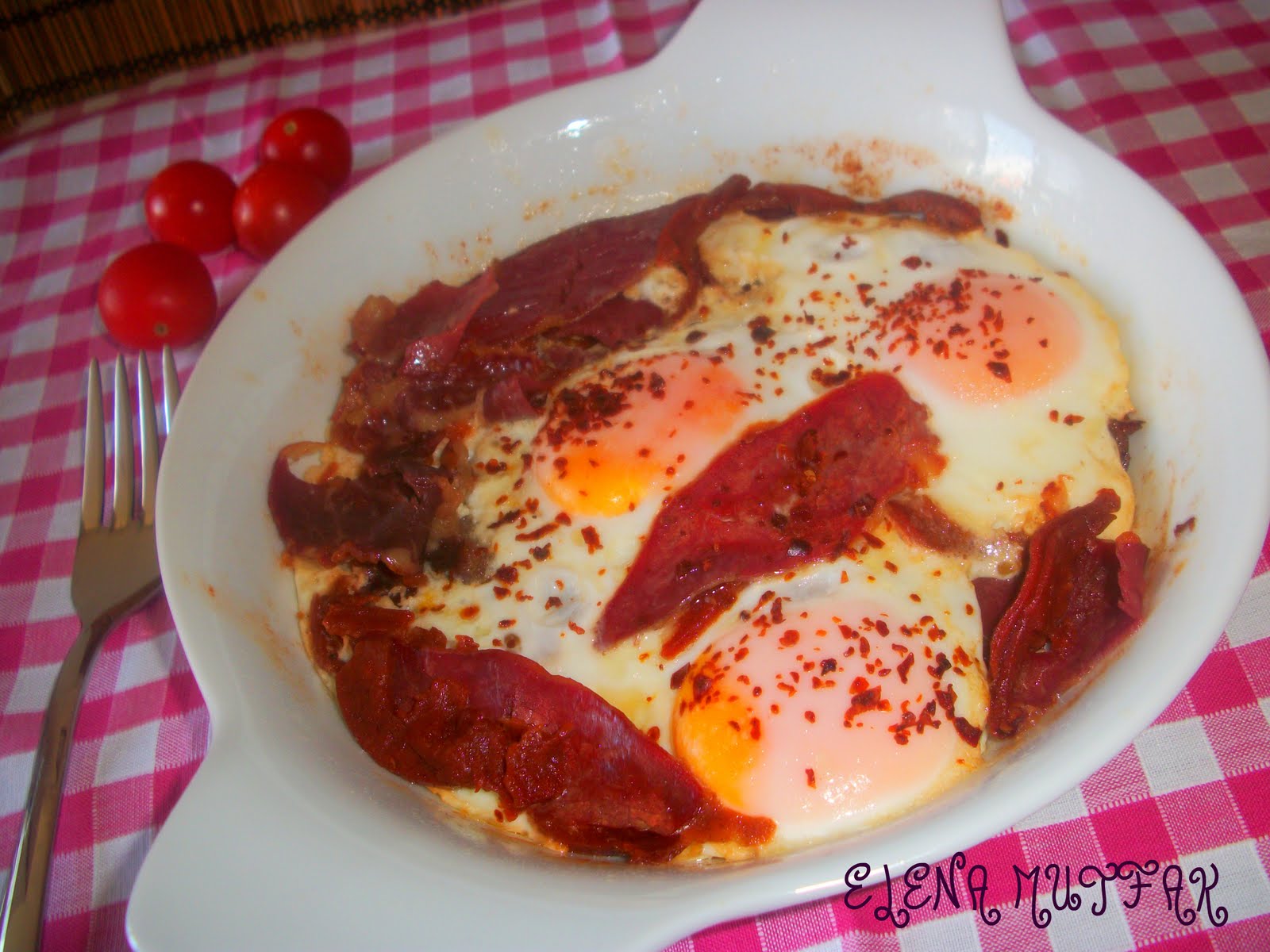
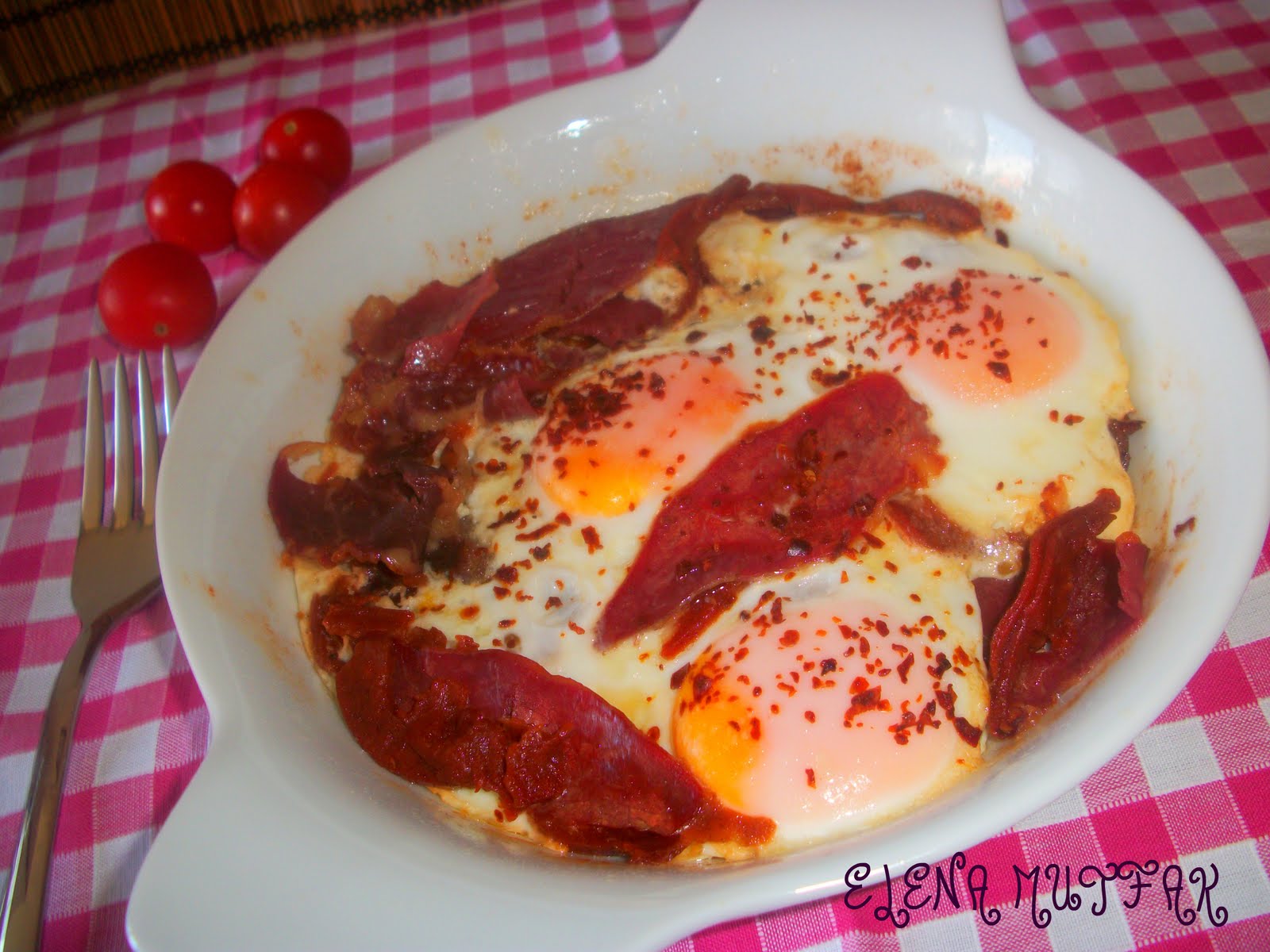
There, like all immigrants everywhere and at all times, they would have tried to maintain their culinary traditions, and one of these was a dried, cured meat called pastramă (in the early days, New York’s version was called pastrama, which was then changed to pastrami so that it could rhyme with salami, the idea being that this would help people remember it – an early form of the marketing jingle). But as is also often the case, they would have had to modify it to fit the ingredients they could find in their new homeland. And here the change was radical. In Romania, pastramă tended to be made with mutton or goose or even veal (but that must have been a rich man’s version; poor people didn’t eat veal). But what Romanians found in New York was beef (pork also, but that was non-kosher), so beef-based their pastramă became. And because they were poorer than poor, they used the cheapest cuts of beef, the plate and brisket. I suppose it was the fact that pastramă made this way was really chewy that led them to take the extra steps of boiling and steaming. The common Romanian way of eating pastramă is grilled. In fact, pastramă sounds to me like the Romanian version of bacon. Bacon, which is also a cured and dried meat (pork in this case), is also grilled before eating, and it is often eaten with eggs, as is grilled pastramă.

pastrama and eggs

Or was it maybe this gentleman (at the back with the white headgear) who introduced the boiling and steaming steps?

sussman volk

This gentleman is Sussman Volk, an Orthodox Jew of Lithuanian ancestry. He is credited with having introduced pastrami to New York, and through New York to the rest of the world. He had emigrated to the States and had eventually opened a small butcher’s shop on Delancey Street. One day, so the story goes, a Romanian Jew came in and asked if he could store a trunk in the shop’s basement while he went back to Romania. Rab Volk agreed, and in return he got the recipe for pastrami. So Rab Volk started making pastrami, and then people wanted it on a slice of bread, and then he put chairs and tables in, and suddenly he was running a delicatessen. And the rest is history, as they say (just to close the circle, the following year Katz’s Deli opened). It could be that the recipe given to Rab Volk already included the boiling and steaming steps, or it could be that Rab Volk – reaching back into his Lithuanian culinary roots, or maybe other immigrant culinary roots – introduced the boiling and steaming steps himself.

Who knows? In the end, it doesn’t matter. This is the way pastrami is made, and that’s that.

If readers were to think that the story ends here, they would be wrong. Because Romanian Jews also emigrated to Canada, settling in Montreal. And there they also introduced Montrealers to another son-of pastramă, in this case just called smoked meat. The two – relatively small – differences between the two products are the cut of beef used (smoked meat tends to use more brisket) and the mix of herbs used to rub and coat the meat (the fact that both boil/steam the meat suggests to me that these were introduced by the Romanian émigrés rather than by Rab Volk). Schwartz’s Deli in Montreal seems to be a good candidate for “the keeper of the Jewish culinary flame” in Montreal, so I’ll throw in a photo of the deli.

Schwartz deli

And here is the product

smoked meat Schwartz deli

Mmm, that looks gooood!

And now the Montrealers have boldly brought the fight to New York. A Canadian couple has set up a new Jewish deli in New York, the Mile-End deli. They’ve opened one shop in Brooklyn and another in Manhattan, in Bond Street.

mile end deli

Well, the next time my wife and I go to New York, we (or at least I) will forget about visiting the Metropolitan Museum or any other worthy institution. First stop will be Katz’s Deli and then Mile End Deli. To compare and contrast the two products.

_______________

Empty booth in a diner: https://hautevitrine.files.wordpress.com/2011/11/empty-booth-rockin-johnnys-diner-ottawa-2007.jpg (in http://hautevitrine.com/page/17/)
Reuben sandwich: our pic
Pastrami sandwich, Katz’s deli: http://ilovekatzs.com/wp-content/uploads/2011/11/pastrami1.jpg (in http://ilovekatzs.com/)
Katz’s Deli: http://animalnewyork.com/wp-content/uploads/katz_artgalll.jpg (in http://animalnewyork.com/2013/katzs-deli-opening-an-art-gallery-and-pop-up-shop/)
Katz’s Deli inside: http://www.sheilazellerinteriors.com/wp-content/uploads/2011/02/00-20-Inside-Katz.png (in https://carileee.wordpress.com/2011/11/05/dining-101-new-york-katzs-deli/)
Immigrants at Ellis Island: http://history105.libraries.wsu.edu/fall2014/wp-content/uploads/sites/3/2014/08/Ellis-Island.jpg (in http://history105.libraries.wsu.edu/fall2014/2014/08/28/jewish-immigration-in-the-1940s/)
Mulberry street NYC: https://theselvedgeyard.files.wordpress.com/2011/02/mulberry_street_new_york_city_loc_det-4a08193.jpg (in http://piedader-letspractiseenglish.blogspot.com/2011/11/jacob-riis.html)
Pastramă and fried eggs: http://3.bp.blogspot.com/_GzvYAGoAhKY/TH5bioNE7PI/AAAAAAAACW0/bto1mheJNDM/s1600/oua.jpg (in http://elenamutfak.blogspot.com/2010/09/pastrama-cu-oua-ochiuri.html)
Sussman Volk: http://astro.temple.edu/~bstavis/family/oldstavins.jpg (in http://astro.temple.edu/~bstavis/family/oldstavin.htm)
Schwartz deli: http://gottakeepmovin.com/wp-content/uploads/2013/10/20130914_151229.jpg (in http://gottakeepmovin.com/classic-montreal-schwartzs-smoked-meat-sandwiches/)
Smoked meat sandwich Schwartz deli: https://travelloafers.files.wordpress.com/2013/06/montreal-schwartz-deli-680×680.jpg (in https://travelloafers.wordpress.com/2013/06/11/celine-dion-is-the-queen-of-cured-salted-meats/)
Mile End deli Manhattan: http://mileenddeli.com/wp-content/uploads/2012/01/photo-for-web_SANDWICH.jpg (in http://mileenddeli.com/)

EAST, WEST, HOME’S BEST

Milan, 14 July 2015

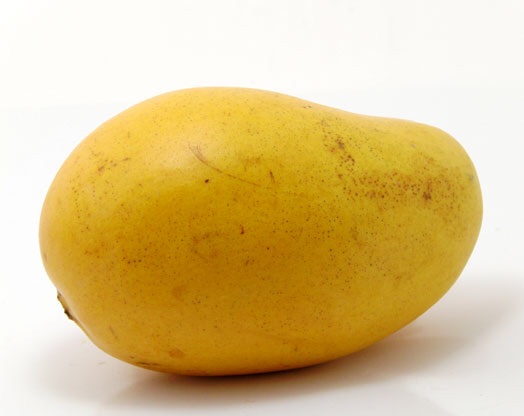
In our short time in Thailand, my wife and I have had the pleasure of trying many wonderful tropical fruits. Some are now known enough in Europe to regularly populate the supermarket shelves: bananas of course, coconuts too, and more recently mangoesimage

pomeloes

image

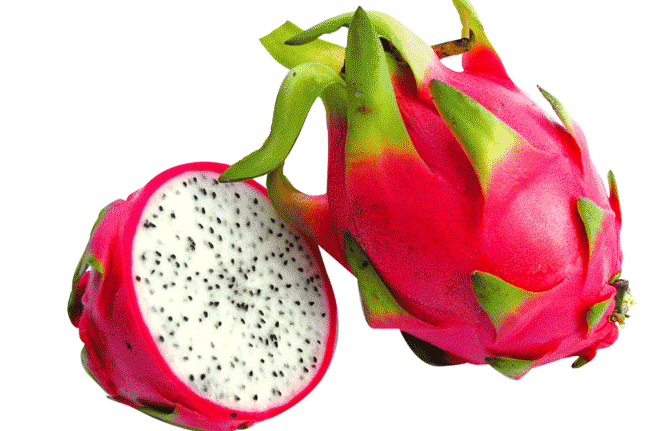
and dragon fruit

image

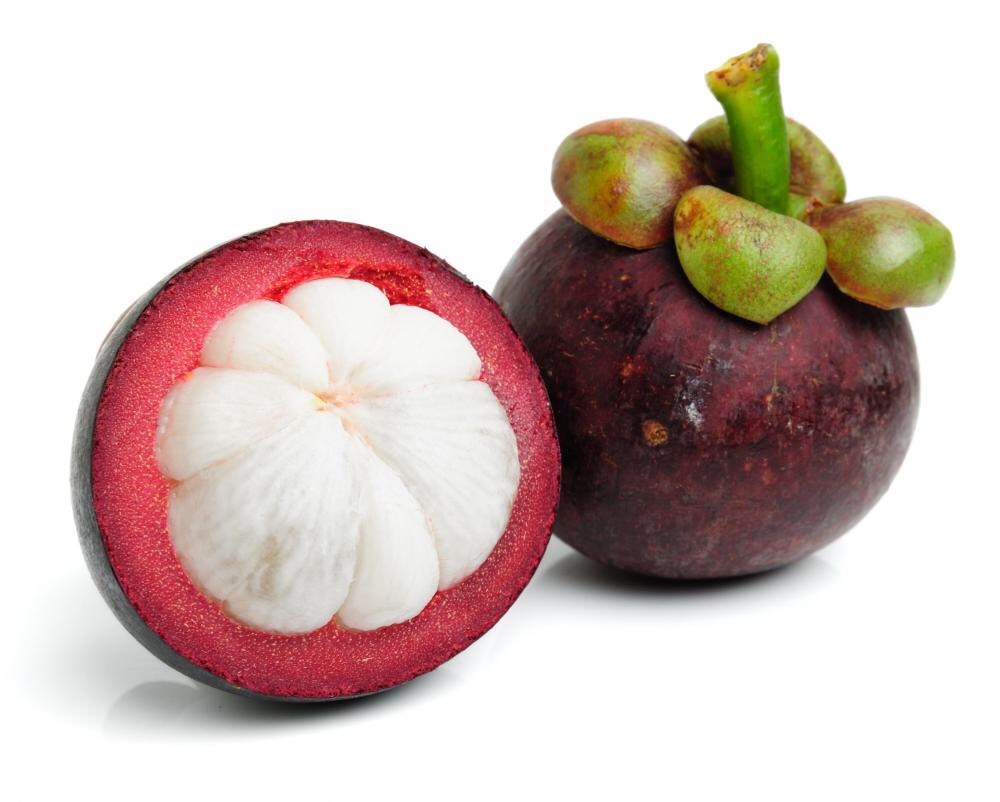
Others, though known to Europeans – primarily through tourism to SE Asia – have not (yet) made it into our supermarkets: the mangosteen, for instance

image

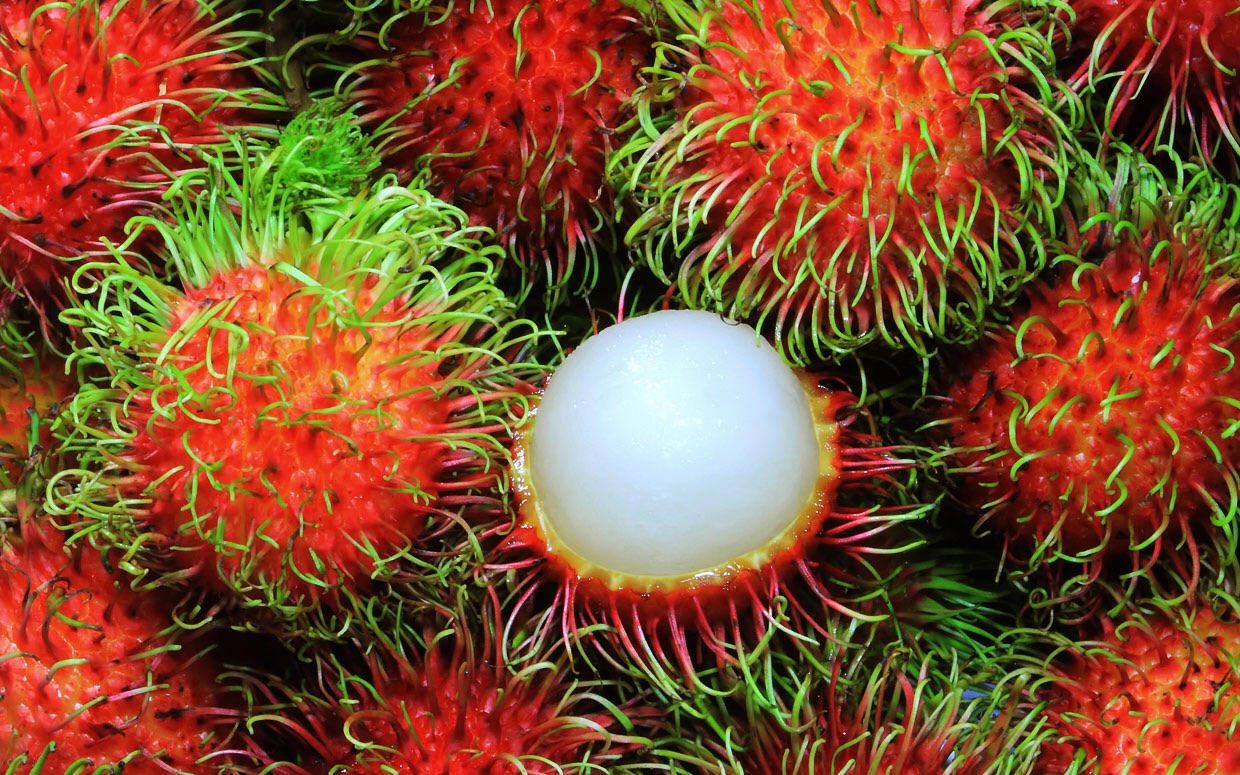
or the rambutan

image

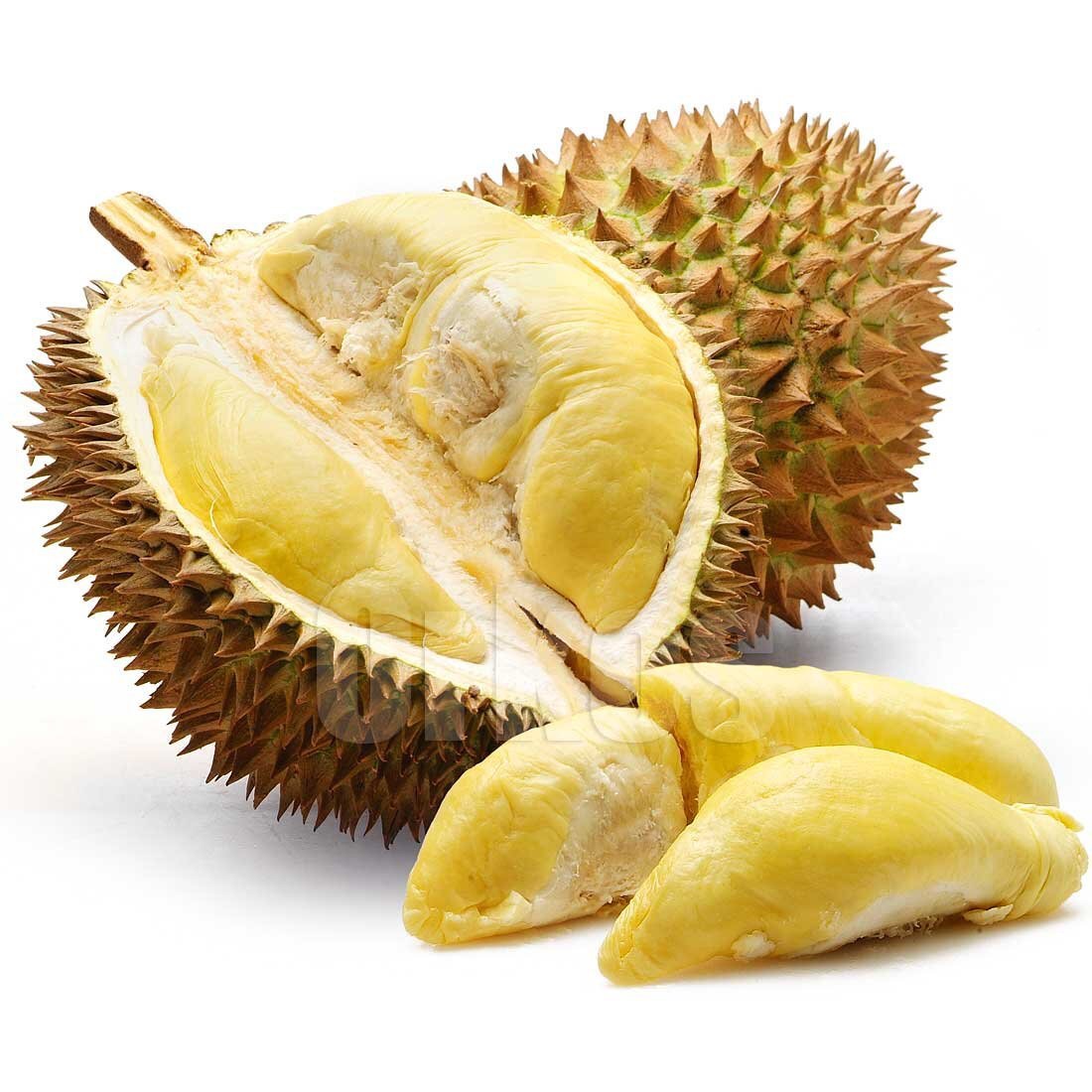
both of which I’ve written about earlier, or the durian, that horribly smelly fruit which I’ve also had a rant about in the same post and which I hope never reaches our supermarkets.

image

And then there are fruits which, as far as I can tell, are quite unknown in Europe. There’s the sala, a fruit about as large as an apricot, which has a ruddy-brown brittle skin covered in sharp scales (these earn it its English name of snake fruit). The white flesh consists of three lobes, rather like the mangosteen, each of which contains a seed. It has a sweet taste with astringent overtones.

image

Or there’s the sathon, which from a distance looks like a large yellow apple except that the rind has a matt, velvety look to it and which, when split open, is found to house several seeds encased in a very sweet sticky white goo that itself is ensconced in a yellow, very sour flesh: it is the interplay of sweet and sour as you scoop all this out that makes this fruit so interesting.

image

Or what about the lamyai (longan in China)? It’s the “other lychee”. Longans come in big bunches. When you shuck the light brown shell, you find something that looks, and tastes, very much like a lychee.

image

We haven’t been through a full annual cycle yet in Thailand, so maybe a few more fruits unknown to us will pop up in the local markets over the coming months.

I have always been more than ready to try strange, exotic fruits, which proudly affirm that even in this era of globalization the world can still offer us the excitement of discovering new foodstuffs in the corner of some foreign land. But then, on a recent trip to Budapest to give my annual training course, I experienced the old rather than the new. I found a couple of raspberries in my salad at dinner one night and popped them in my mouth … Aah, my friends, that taste … Incomparable … As it coursed through my taste buds to my brain, I found myself in seventh heaven; those soft, velvety beads which, when bitten down on, release that sweetly delicate juice, with a slightly musty aftertaste.

image

It was as much the memory as the taste which had me floating on clouds. This companion of my youth! I was transported back fifty years, to my French grandmother’s house, to that untidy patch of raspberry bushes which had colonized a corner of her vegetable garden. My cousins and I would sneak over there, despite strict grandmotherly prohibitions, and quickly pop a few into our mouths before tearing off to avoid detection and grandmotherly wrath. Sometimes, just to play with fire, we would also grab in passing a few sprigs of red currants. But that was just boyhood defiance; their acidity did not sit well in our young mouths.

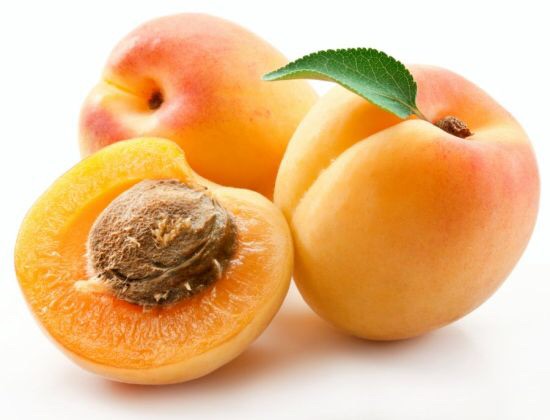
As if this wasn’t enough, the next course of my dinner in Budapest was a dish of braised veal cooked with fennels and fresh apricots. Apricots! As I spooned the slices of the fruit into my mouth, yet another series of sensations coursed through my taste buds and set my nerve synapses afiring. Mmm, that … that … well, that apricoty taste, how else to describe it? Soooo good!

image

Here too I was transported back in time, to my grandmother’s orchard, which stood next to the vegetable garden, and where she had apricot trees, plum trees, peach trees, pear trees, apple trees. My cousins and I would also raid those trees, keeping a wary eye out for our grandmother, who might come around the corner of the vegetable garden at any moment and be instantly transformed from a gentle old soul into a spitfire, running after us, yelling, and threatening to tell our parents.

As I near retirement, as I start becoming the gentle old soul my grandmother was (most of the time), I realize more and more the truth of Oliver Goldsmith’s dictum (and title of one of his poems) “East, West, home’s best”. After years of globe-trotting, of experiencing the exotic splendours of distant lands, I feel ever more strongly with every passing month the pull of home, that part of the world which is in my genes, where there are seasons of moderate heat and moderate cold, where I understand the languages, where the foodstuffs are old friends and not experiences. No offense, but at the end of the day I prefer to be eating raspberries and apricots rather than salas and sathons.

___________

Mango: http://www.mangomaven.com/wp-content/uploads/2011/02/manilla1.jpg (in http://www.mangomaven.com/tasty-tasty-tasty/)
Pomelo: http://previews.123rf.com/images/norgal/norgal1208/norgal120800007/14768629-Green-pomelo-fruit-on-white-Backgorund-Stock-Photo.jpg (in http://it.123rf.com/archivio-fotografico/pomelo.html)
Dragon fruit: http://24.media.tumblr.com/eb843c799502fd0235accc3efe4f3bd2/tumblr_mh0aj3T6Yn1qg5xklo1_r1_1280.gif (in https://theotheri.wordpress.com/2014/09/16/dragon-fruit/)
Mangosteen: http://www.healthyfig.com/wp-content/uploads/2015/02/purple-mangosteen.jpg (in http://www.healthyfig.com/purple-mangosteen/)
Rambutan: http://www.meteoweb.eu/wp-content/uploads/2014/06/RAMBUTAN.jpg (in http://www.meteoweb.eu/2014/06/rambutan-frutto-tropicale-dal-fascino-esotico-simile-ad-piccolo-riccio-mare-giallo-acceso-rosso/289011/)
Durian: http://ecx.images-amazon.com/images/I/71z16SFzrbL._SL1100_.jpg (in http://steven-universe.wikia.com/wiki/Durian_Juice)
Longan: https://lh6.googleusercontent.com/vqe9GQ0UOugxvtYh4V5Fd5kLV-BdriZsJKb1gb2spvxyCwT0rk1u7U75gXjApDU9598LyLC4_Wnzu8__4ygBcwnDHisDpNzj5_dLq82bRHMZ1ADGdb-i67pBSkQeiXso4Q (in http://share.psu.ac.th/blog/general-sarabun/38151)
Sala: https://en.m.wikipedia.org/wiki/Salak#/media/File:Salak_(Salacca_zalacca),_2015-05-17.jpg (in https://en.m.wikipedia.org/wiki/Salak)
Sathon: http://previews.123rf.com/images/panda3800/panda38001205/panda3800120500019/13601415-Santol-fruit-isolated-on-white-background-Stock-Photo-santol.jpg (in https://www.123rf.com/photo_13601415_santol-fruit-isolated-on-white-background.html)
Raspberry: http://www.viper-vapor.com/uploads/4/2/9/8/42981083/s165799847266067809_p13_i1_w1000.jpeg (in http://www.viper-vapor.com/store/p13/RASPBERRY.html)
Apricot: http://sabzi.pk/wp-content/uploads/2015/06/Apricot3.jpg (in http://sabzi.pk/shop/fruits/apricot/)


COQ AU VIN

Bangkok, 8 June 2015

Yesterday evening, my wife and I went over to the Central World mall to see a film (“Spy”, a hilarious film, well worth seeing). Afterwards, feeling peckish, we decided to stay and have dinner in the mall – at least it was well refrigerated there, a decided plus in this hot season when the promised rains are failing to come to cool us. The problem is, most of the restaurants in the mall are of Asian extraction – Japanese is a definite favourite, followed by Korean, and then trailing far behind a few Chinese, Thai, and “international” (i.e., mixed Asian) – and that’s not what I felt like eating. I wanted something “different”, although I wasn’t quite sure what that “different” might be. We made a bee line for a French restaurant advertised on the information board, but it had disappeared since they had last updated the board. We sighted an Italian restaurant, although something called “Spaghetti Factory” surely is to be avoided like the plague. We got a fleeting glimpse of a Mexican restaurant tucked away in a corner, but Mexican food didn’t entice me … You get the picture. I was being finicky, and time was passing. Eventually, we saw a bar-cum-restaurant called “1881”, which looked nice enough. We rapidly checked the menu, and since it looked suitably international we went for it.

Ensconced at our table, we scanned the menu more closely. For the main course, we both happily plumped for the coq au vin. It had been an age since we had eaten this, we both exclaimed. To keep us going while we waited, we ordered some starters, and of course a glass of red wine. The starters were delicious, the wine was good, everything looked set for a memorable dinner. Alas! it was not to be. When the coq au vin arrived, we found ourselves faced with a chicken leg, deep fried à la manière KFC, sitting on some sort of thick tomato-based sauce peppered with carrots and onions, maybe something which had been recycled from an osso buco dish, and which had obviously never seen a drop of vin. We glumly ate our poulet à une sauce indéfinie, agreeing with each other that something had definitely got lost in translation. The dessert, a great pannacotta with some sort of balsamic-strawberry gelée, partially made up for the very disappointing main dish, but it was undeniable that the coq au vin had been a black hole in our sensory experiences of the evening.

I feel I owe it to my genes, to my heritage, to right the balance, to advertise from the rooftops the greatness of coq au vin. At least describing how the dish is made might allow me to partially enjoy, if only in my imagination, the taste of the Real Thing.

Let me start by saying that in the olden days coq au vin was not a dish that would have been served to the Great Sun King, Louis XIV

Louis_XIV_of_France

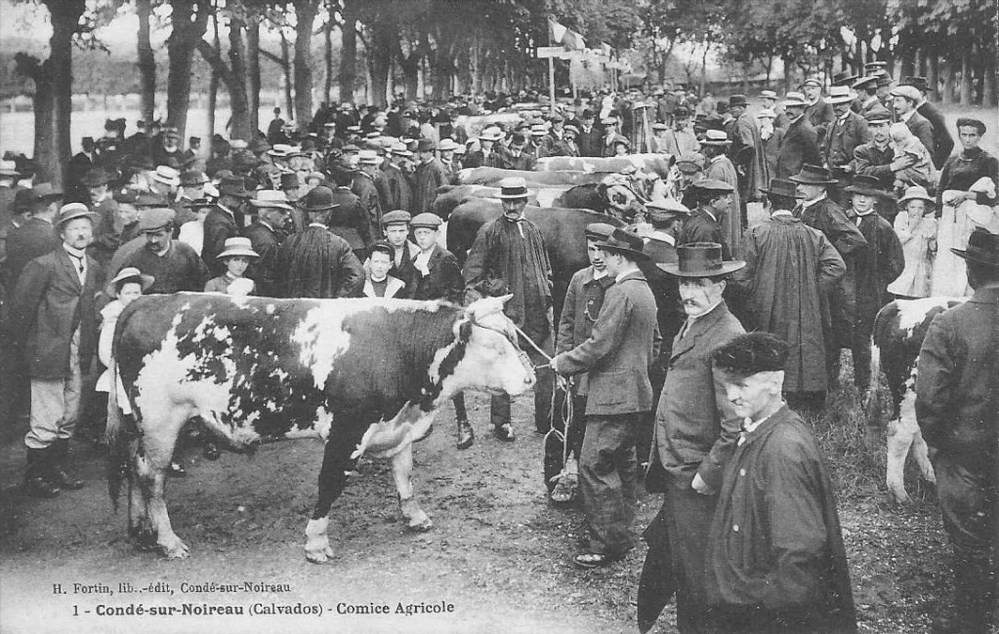
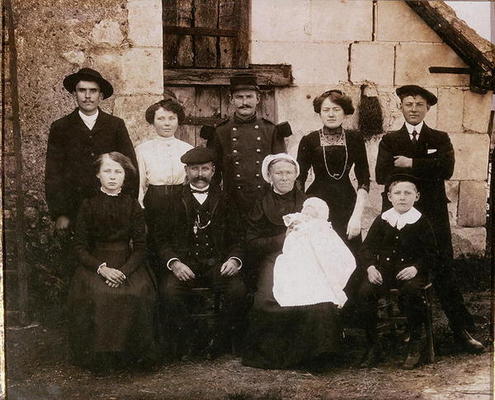
or some other such august personage, unless of course you wanted to be sent to the Mediterranean galleys or to rot away on L’île du Diable. The great French chef of the mid-19th Century, Marie-Antoine Carême, author of the encyclopedic L’Art de la Cuisine Française and other works, never mentioned it, nor did the even greater French chef of the late 19th-early 20th Century, Auguste Escoffier, in his various publications. No, this was above all a peasant’s dish, a way of recycling that rooster in the yard which had reached the end of the rooster road. It was people like these who created coq au vin, making a virtue out of necessity.

french peasants-2

french peasants-3

CHT216766 Peasant family of the Sarthe area at a baptism, late 19th century (photo); by French Photographer, (19th century); photograph; Private Collection; Archives Charmet; French, out of copyright

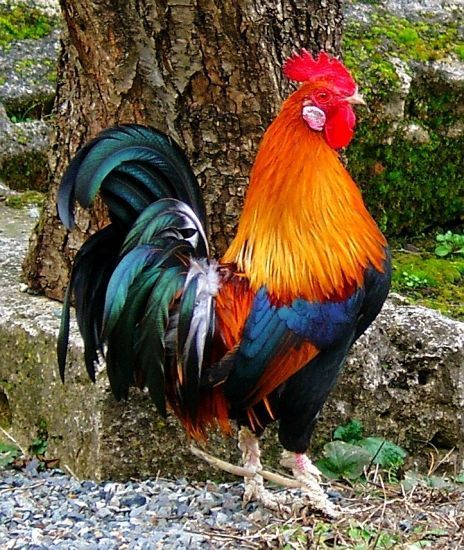
So now let us see how this wonderful dish is made. The paysan (or paysanne) will first have laid his (or her) hands on a rooster like this one

https://i0.wp.com/monia2009.m.o.pic.centerblog.net/gg7spkhz.jpg

and wrung its neck. We modern men and women are squeamish about killing to eat, but what to do: unless you hang around prides of hunting lions and scavenge what they are kind enough to leave behind, to eat meat you need to kill; simple as that. Oh, and by the way, it’s good to slit the rooster’s throat and drain its blood, which you will use later in making the dish. If you can’t bring yourself to do all this, you can subcontract the task to a butcher. You can also subcontract him the task of plucking the bird, which the paysanne would have done herself (I remember my French grandmother doing this, while she sat on the balcony discussing this, that, and the other with my mother). The wonderful feathers of the rooster should be conserved, although I’m not quite sure what to do with them. In any event, in one way or another you should end up with something like this:

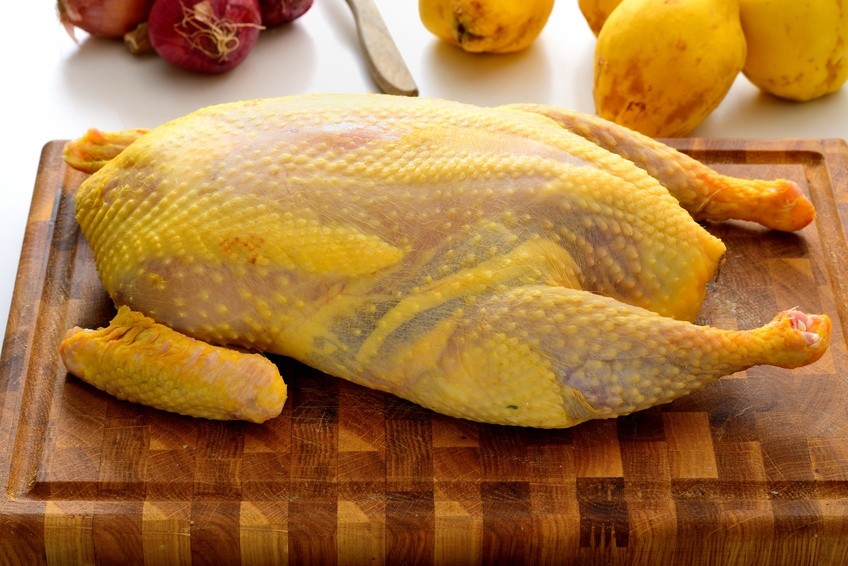
coq-fermier-pret-a-cuire

Personally, to support the Home Team, that is to say Burgundy, where the French side of me comes from, I would want a rooster from Bresse, which is on the other side of the River Saône from Burgundy: the Burgundians gave the people of Bresse their wine and in return got farm products like chickens.

Now we can start the cooking.

First, you will cut up the rooster. Place the pieces in some container, to which you will add diced carrots, onions, and shallots, and – if you really must – chopped garlic (personally, I would drop the garlic; I’m not a fan of this particular bulb). The paysan would have collected these from his vegetable garden like the one my French grandmother had hidden behind her lilac bushes, but I recognize that in our modern, highly urbanized society most of us do not have access to vegetable gardens, so we will have to make do with the local grocery store, or even the local supermarket. Add laurel, thyme and parsley. Add a little stock. Salt and pepper. And now we come to the wine.

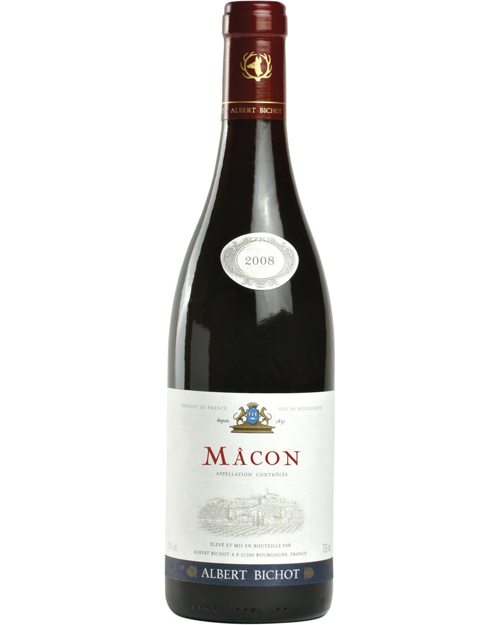
Obviously, this is a key ingredient, so some thought needs to go into its choice. Nothing too fancy, of course – not going to waste a $100 bottle of wine to cook our rooster. Something with a good body but not too tannic should do the trick. I would go for a red wine, although there are parts of France (Alsace, for instance, or the Jura) where the dish is made with white. Since, as I’ve mentioned, I’m batting for the Home Team, I would personally go for a red Burgundy, maybe shading into a Beaujolais, something just down the road from where my Grandmother lived.

macon rouge

Our paysanne would have gone down into the cellar of the kind my Grandmother had and taken a bottle of wine made from grapes growing in one of the surrounding vineyards and bottled in that very cellar or at least locally. But we – with a sigh – will make do with what we find at our local wine store.

In any event, pour in enough wine to just cover the rooster. Cover the container and leave it in a cool place. You will let the rooster and the vegetables marinate for a full 24 hours.

The next day, fresh from a good night’s sleep, you will begin the next phase.

As a first step, fish the rooster pieces out of the marinade, draining them well. Do the same for the vegetables. Do not throw away the marinade! Very important.

Put all these aside, and take a large skillet, in which you will heat a little butter and oil. Frankly, I don’t think the paysanne would have used oil, at least not in Burgundy. Traditionally, Burgundy was not an oil country. I would guess, from a perusal of an old French cookery book from 1651, that she would have used butter and/or lard. Nevertheless, we will go with butter and oil since nowadays oil you find in shops but lard only with difficulty.

Once the butter-cum-oil is hot enough, slide in the rooster pieces, together with some chunks of bacon, and let the whole brown nicely. Throw in the vegetables from the marinade and let them colour a bit. Sprinkle with flour and let it all cook a moment. Move the skillet off any open flame, take a small glass of cognac, sprinkle it over the rooster pieces, and light it up with a match – taking care, of course, that your face is not too close; the last thing you need is to find yourself eating the final product without eyebrows. In Burgundy, the paysanne would probably have used a Marc de Bourgogne, which is a brandy made with the solid leftovers from the grape presses. But unless you actually live in Burgundy, you probably do not have this at hand, so go with cognac. Once the flames have died down, add in the marinade, and bring the whole back to a boil for a few minutes.

You will now let the mix simmer slowly for a long, long time: aim for six hours. Let it fill your kitchen with a gorgeous aroma, but don’t hang around there because otherwise you will soon no longer be able to stand it and you will throw yourself on the cooking rooster and wolf it down. As would have done the paysanne, go and busy yourself in the garden, in the studio, anywhere that is some distance from the kitchen. Keep your mind and hands busy with other things, just popping in from time to time to check. As the hours pass, the meat softens and falls off the bone, it absorbs the wonderful aromas it is basting in, and the sauce itself slowly thickens. Towards the end of this long simmering period, you will take the blood you collected when you killed the rooster (remember that?) and add it to the sauce to thicken it. You will also prepare boiled potatoes a little while before the end, to accompany the coq au vin.

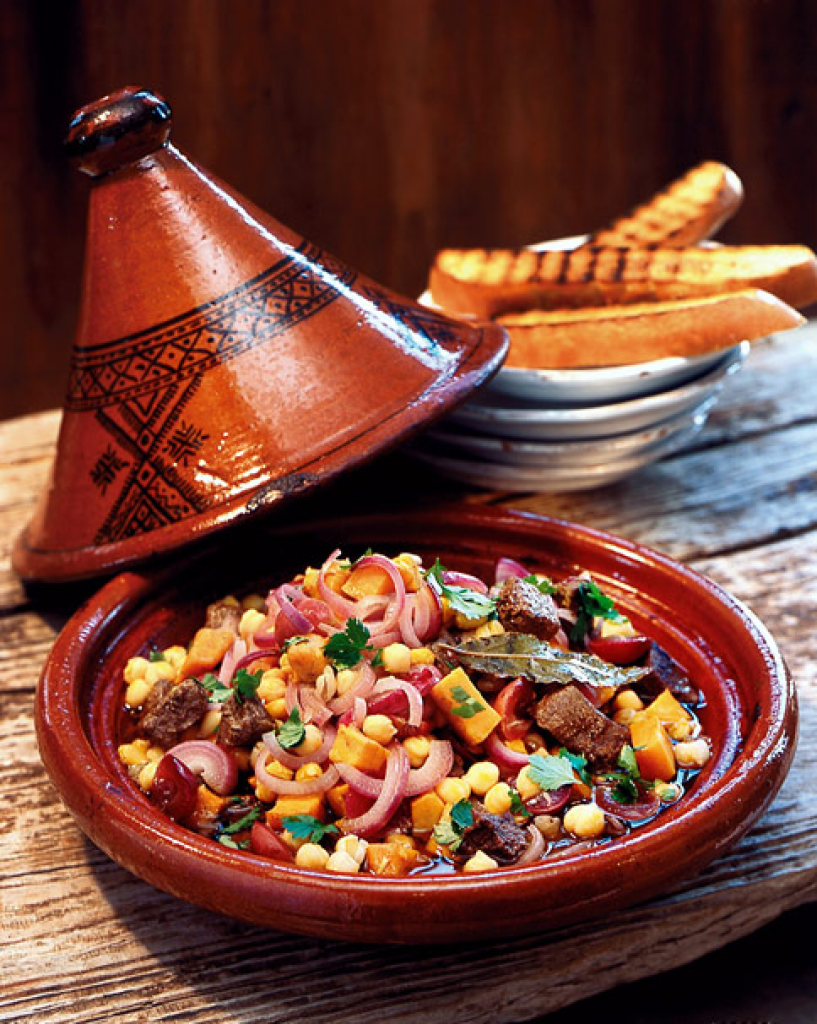
The coq au vin is now ready to eat. Lay out the pieces of coq in a serving plate, pour the sauce au vin over them.

coq au vin

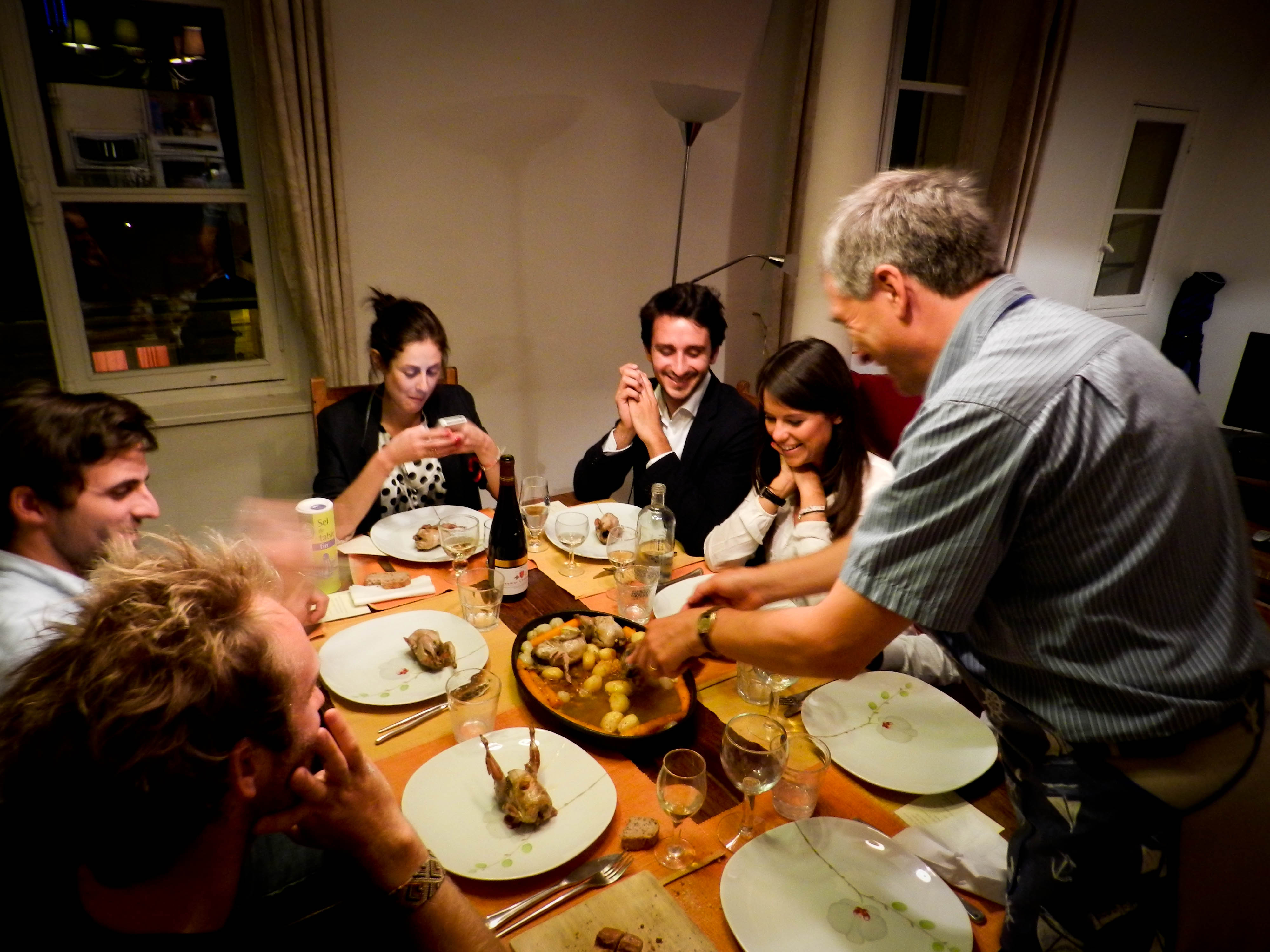
Place the potatoes on the side, bring out that special bottle of Burgundy you’ve been keeping for an exceptional moment, call in the family and your special friends, and enjoy!

meal-2

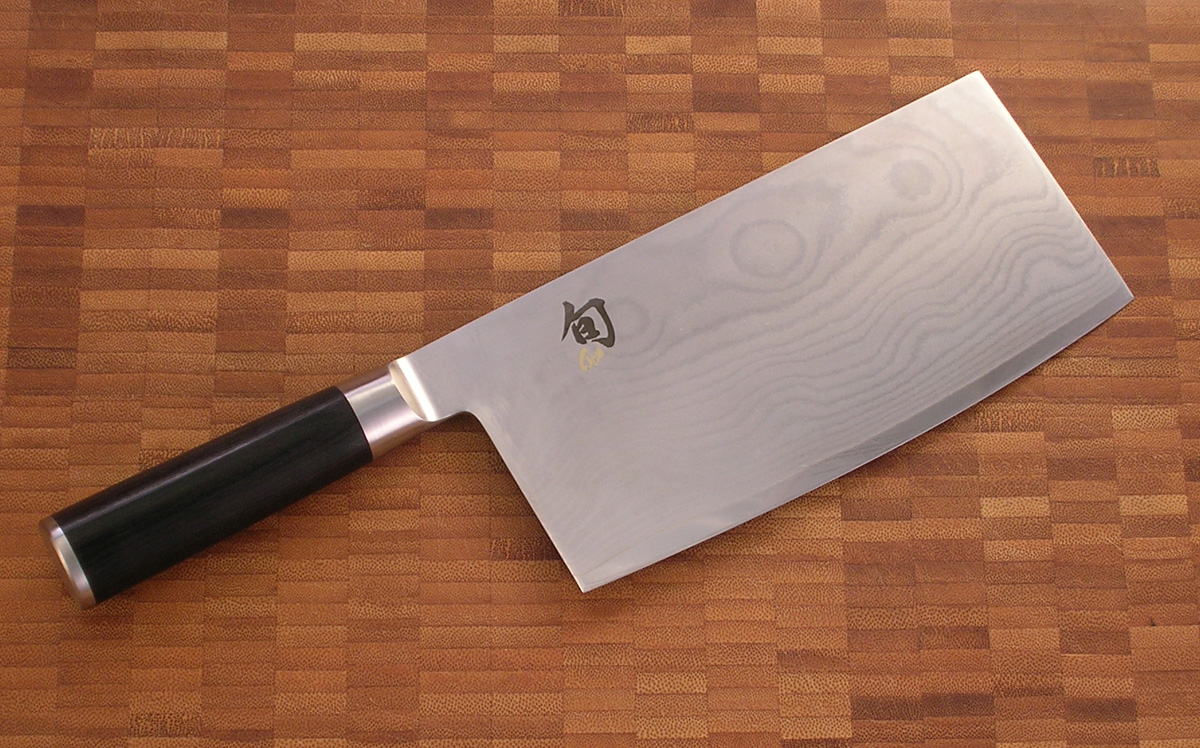
Mmm, there’s a rooster I keep hearing over the other side of the lane, in a building site. Maybe tonight, I’ll go out with this cleaver which we bought in China

cleaver

And find me a rooster for a nice coq au vin

______________________

Louis XIV: http://media.tumblr.com/tumblr_lkzid3Jvkb1qggdq1.jpg (in http://wtfarthistory.com/post/5361387982/red-high-heels-for-him)
French peasants-1: http://www.myartprints.co.uk/kunst/french_photographer_19th_century/peasant_family_of_the_sarthe_a_hi.jpg (in http://www.myartprints.co.uk/a/frenchphotographer19thcen/peasantfamilyofthesarthea.html)
French peasants-2: http://img.over-blog-kiwi.com/0/81/05/67/201311/ob_9bbe36_conde-sur-noireau-calvados-comice-agricole.jpg (in http://stephane.guillard.over-blog.com/2013/11/l-histoire-des-comices-agricoles-en-france-xixe-xxe-si%C3%A8cles.html)
French peasants-3: http://tnhistoirexix.tableau-noir.net/images/scene-de-moissons.jpg (in http://tnhistoirexix.tableau-noir.net/pages/campagnes-xix-siecle.html)
Rooster: http://monia2009.m.o.pic.centerblog.net/gg7spkhz.jpg (in http://lenissa.musicblog.fr/3467011/France-Allemagne-C-est-fini/
Rooster ready to cook: http://www.lesplaisirsdegargantua.com/419/coq-fermier-pret-a-cuire.jpg (in http://www.lesplaisirsdegargantua.com/sitemap.xml)
Mâcon rouge: http://sohowine.co.uk/import/images/B-MACON.jpg (in http://sohowine.co.uk/?c=products&deptno=2&country=France&region=Burgundy&page=2)
Coq au vin: http://www.joyce-farms.com/topics/wp-content/uploads/2014/09/coqauvin.jpg (in http://www.mairie-reffannes.fr/news/soireecoqauvinaumuguet)
Meal: https://labelleassiette.fr/blog/wp-content/uploads/2012/09/DSCN0568.jpg (in https://labelleassiette.fr/blog/diner-lba-3-avec-philippe-engammare/)
Cleaver: http://img92.imageshack.us/img92/7854/shun9wy.jpg (in http://www.knifeforums.com/forums/showtopic.php?tid/771029/)

SALT AND SWEET

Bangkok, 5 February, 2015

A few weeks ago, I visited a couple of electric arc furnaces which were recycling scrap steel. It was a very interesting visit, the first time I had seen this type of furnace in action.

EAF

They are a nice example of a vital step in what the Chinese call a “circular economy”, an economy in which the materials we use do not simply get thrown away after we’ve finished with them, but are collected, recovered, and reused.

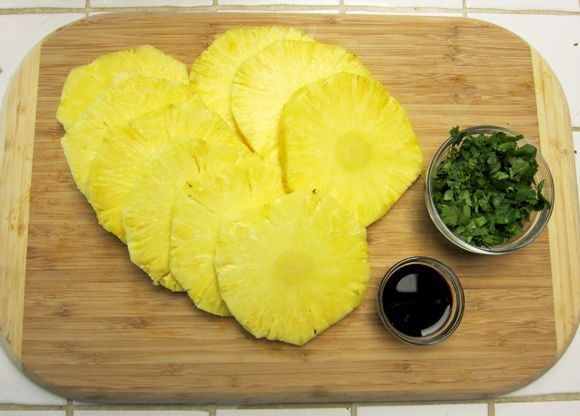
But actually, what I want to focus on in this post is the dinner we were served during the visit, or rather on one course of that dinner. I should explain that since these furnaces work on electricity and since electricity is expensive in Thailand during the day, the furnaces are run at night. So the visit of the furnaces started at 8 o’clock in the evening, and the first company we visited kindly offered us dinner to fortify us for the hot and dusty visit which awaited us. Since this was a Chinese-owned company, we were served a Chinese-style dinner which, after my five years spent in China, brought a nostalgic mist to my eye. As is usual in China, the dinner ended with fresh fruit. But this fruit course had an interesting twist. We were served fresh pineapple with a soy sauce dip. Soy sauce! That is not something I had ever thought of combining with pineapple. But actually it was delicious.

Pineapple and Soy Sauce

This is the only photo I could find on the (English-language) web which in any way resembled what we found before us at dessert time, but even this is for a recipe where the pineapple is fried, which explains the presence in the photo of the coriander (to be used as a final garnish). I take this lack of photos to be an indicator that I may be one of the few in the English-speaking world who has tried this particular combination of sweet and salt. But readers are free to disabuse me of my belief.

In any event, as I let my taste buds deal with this interesting sweet-salt combination, I remembered a conversation we had had around the Christmas lunch table about precisely this issue: the mixing of salt and sweet. Our son had maintained that it was not natural to mix sweet and salt, and more generally that different flavours should be kept separate. Our daughter maintained that there were many dishes where salt and sweet were combined, which suggested that actually it was quite natural to mix sweet and salt. I was torn. As my long-suffering wife knows only too well, I object to mixing things on my plate: the vegetables are to be kept neatly separated from the meat and from each other, the dressing from the salad should not be allowed to leak over to the meat, etc. So on these grounds, I also feel that sweet and salt should not mix. Yet I have to acknowledge that there are dishes where the sweet and salt combination is exceedingly pleasing. After the pineapple and soy sauce dip experience, I resolved to do some research (a.k.a. web browsing) on the topic.

I’ve now done the research and am ready to report back, although I must confess to not having much to report. All agree that “common sense” suggests that salt and sweet do not mix, yet all agree that actually many of us do like to mix the two. Why is this? As far as I can make out, no-one has really figured it out. One possible answer is biochemical. The sodium ions of salt somehow enhance all taste buds: “there’s evidence that applying a sodium-channel blocker (TTX) can dramatically inhibit the activity of all taste receptors, suggesting that sodium plays a key role in the cellular detection of every taste (and not just the taste of salty things) … This would explain why food without any salt is so hopelessly boring: it might be literally harder for our various taste receptors to get excited.” So mixing salt with sweet enhances sweet because of a biochemical pathway we are born with. Just to make the whole discussion sound even more scientific, I throw in here a close-up of a taste bud on a tongue, which is what sodium ions seem to be enhancing.

tongue-taste-bud

But why would we have evolved to have that biochemical pathway? One possible answer is that because we humans are omnivores, we’re wired to desire many different foods and tastes. It’s bad for us to eat just one thing, so our sense of taste has evolved to give us greater gratification if we mix tastes. My wife will be very pleased to hear that there is a scientific underpinning to her insistence on mixing foods and tastes.

Let me celebrate this new understanding on my part of my biological processes by sharing with readers some of the wonderful sweet-salt dishes which I have stumbled across in my life. Where to start? Well, at the beginning, I guess, with the first such dish I ever remember trying, lamb with mint sauce. My English grandmother had taken me to visit an uncle and aunt and assorted cousins, and my aunt served us lamb with mint sauce for lunch.

lamb and mint

She served it with two veg, as is de rigeur for any English meat dish. In this case, I remember distinctly that the veg in question were that most English of combinations, peas and potatoes (she also made a magnificent apple crumble, by the way; no apple crumble I have ever eaten since has tasted so good).

Mint sauce is really easy to make, by the way, about as easy as lamb chops. I give an executive-summary recipe at the end of the post for those readers who are interested. What I think is important to point out here is that the recipe calls for a mix of sugar and vinegar. In my humble opinion the best combination is actually sweet, salt, and acid or tartness. To my mind, that’s what made the pineapple and soy sauce so good, the fact that the pineapple is also tart. Dragon fruit, a much milder fruit, was being served along with the pineapple. When I asked if that too should be dipped in the soy sauce, our hosts pursed their lips and gave it as their considered opinion that it wouldn’t work.

Lamb with mint sauce is incredibly English (and I mean English. I don’t think the Scots or the Welsh eat it). It is so English that the French made fun of Les Anglais because of it – the French consider the use of mint sauce to be beyond the cooking pale. Our friends Goscinny and Uderzo, who wrote the Asterix and Obelix stories, had mint sauce play a major role in our heroes’ adventures in Britain, with the governor of province at one point shouting that if his men did not find the pair (who had just disappeared from prison) he would have his commanders boiled and served with mint sauce to the lions. To which the commanders commented how horrible that would be – for the lions.

asterix sauce a la menthe

The French loved it, lapping up the fun being poked at English cuisine. But I will ignore the smirking French and concentrate on another great example of English cuisine which is also a sweet-salt dish, roast pork and apple sauce. I first had this delicious dish as a boy scout. It was summer, the end of the school year, that time in the calendar when England can often be bathed in golden light rather than be grey and sodden.  For our last outing of the year, the scout master had the brilliant idea of buying a whole pig and roasting it on a spit in the woods. I have this crystal clear memory of sitting around the spit, listening to the fat crackle, breathing in the smell of cooking meat, watching the scout master sharpen the large carving knife, while the sunlight dappled the ground all around us. It’s the closest I have ever felt to being a Cro-Magnon man.

roasted pig

And then there was the discovery of the exquisite taste of roast pork and apple sauce, a large dollop of which was dumped onto our metal field plates along with a big slab of pork meat and crackling.

roast pork and apple sauce

Those readers interested in knowing how to make this sauce should scroll down to the end of the post. I just want to note that cooking apples should be used. They are tarter than eating apples. It’s the tartness thing again. One can also add lemon zest, presumably to add yet more tartness.

Of course, the English do not have a monopoly in Europe on sweet-salt dishes. Allow me to introduce here a dish I discovered and came to love when we moved to Vienna: Tafelspitz. There is a venerable ritual to cooking Tafelspitz, but when you reduce it to its essentials it is beef meat (topside or top round) boiled slowly over many hours with a medley of root vegetables – carrot, celeriac, parsnip and the like – and a piece of marrow bone. It is normally served like this:

tafelspitz

You can start with a cup of the broth which is engendered by the boiling of the meat, just to whet your appetite. You can then turn your attention to the meat proper, which you will eat with the vegetables, possibly some fried grated potatoes, and – to spice up what is otherwise a rather bland dish – two types of sauce, a cream-based chive sauce and apple-horseradish sauce.

tafelspitz sauces

My earnest suggestion is that you ignore the chive sauce in the front of the photo and go with the apple-horseradish sauce behind it. It is just a variant of the apple sauce I described earlier; you simply add grated horseradish. If you make this sauce at home, my further suggestion is to be generous with the amount of horseradish you add. The best Tafelspitz I ever had was served with an apple-horseradish sauce that made my eyes water slightly. I don’t want to sound like a broken record, endlessly repeating myself, but tartness really helps appreciation of the sweet-salt taste.

Both the French and the Italians have a similar dish of boiled meat, pot-au-feu in the first case and bollito misto in the second. My French grandmother made an excellent pot-au-feu and I am very fond of it, but since it is normally eaten with mustard I will drop it from this discussion. We shall focus instead on bollito misto, a dish which is very popular in northern Italy and (as the name suggests) consists of a variety of boiled meats: cuts of beef and veal, cotechino (a pork-based sausage), and sections of hen or capon.

bollito misto

My wife reminisces from time to time that her father was very fond of bollito misto, eating it like most northern Italians do with a sauce called mostardaactually, mostarda di Cremona. In a country known for the fierce independence of its cities, it will come as no surprise to the readers that probably every city in northern Italy has its own variety of mostarda. Despite its name, the sauce has only a little to do with mustard. It is really a mix of candied fruit which is given a kick by the addition of mustard powder (that tartness thing again…). Those slices of fruit in the photo above are the mostarda, but I give here a more direct picture.

mostarda di cremona

My wife confesses to never having liked mostarda; she can’t even stand the smell. Personally, I have never tried it, but a number of sites do support my wife’s assertion, mentioning that the taste of mostarda is an “acquired taste”. This is normally code for saying that something tastes revolting the first several/many times you try it. In any event, if my wife says it’s not nice, then that’s good enough for me! No spoonful of it shall ever pass my lips. For those readers who will ignore these warnings and wish to try it, though, I give a brief recipe at the end of the post.

I feel that I cannot move away from mostarda without mentioning the somewhat similar chutney sauce one finds in the UK, or at least one found when I was a boy. Although “chutney” as a word has Indian roots, what I ate as a boy was several removes from things Indian. The most popular brand back then was a mango chutney which went by the name of Major Grey’s Chutney and was sold by Crosse & Blackwell. The story went that a certain Major Grey, a British officer in India, had surveyed the local Indian chutneys and then invented his own, more British, chutney, which he proceeded to bring back to the motherland when he retired, to remind him of the Good Old Days. When I was a boy I rather imagined this Major Grey to look like this

British soldier India-1

fighting heroically against savage natives on the Northwest frontier and getting a VC for his –quite literal – pains. But alas! this appears to be pure legend. It seems that something similar to mostarda, some sort of fruit conserve, existed already in the UK and the Brits in India took the idea with them and adapted it to local ingredients. So what this chutney will usually have as ingredients is mangoes, raisins, vinegar, onions, sugar, and spices. Crosse & Blackwell also include lime juice and tamarind juice. As you can imagine from the ingredients, this chutney is both sweet and tart. Again, for heroic readers who want to make this sauce from scratch, scroll to the end of the post.

I haven’t eaten this kind of chutney in many decades, but when I was young my favourite way of eating it was with slices of cold meat (the chutney is in the round bowl to the left of the photo below).

cold meat and chutney

This was an especially popular dish in pubs, where this photo was taken. Sitting here in Thailand, I feel a sudden nostalgia for the English country pubs whose bars I propped up in my youth, so I am moved to throw in a photo of a nice country pub.

Bridge Inn

Like Superman, I now vault over to the US and alight somewhere in the open ranges of the Midwest, for no better reason than having this feeling that my next salt-sweet sauce – barbecue sauce – was invented around there somewhere. That being said, my wife and I didn’t try it there. We were just discussing this point and we reckon that it was somewhere between Boston and Washington in the early 1980s. Wherever it was, we stared open-mouthed at these large racks of ribs smothered in this dark reddish brown sauce.

ribs and barbecue sauce

But very soon we were closing our mouths over those ribs. Ah, that sauce! … But I should say: those sauces. In this little research I’ve done I have discovered that there are dozens of different barbecue sauces. I thought the Italian quarrels about where the best mostarda is made were fierce, but boy! the arguments about what place in the US makes the best barbecue sauce are right up there. I’m going to keep my head low without backing any particular sauce. I’m merely going to say that wherever the sauces are made they all seem to have sugar (preferably brown), tomato ketchup, vinegar, and some salt, to which various spices are added in varying levels and in different combinations (Worcestershire sauce, pepper, paprika, mustard, chili, cayenne, and on and on). That combination of sweet and tart again, to challenge the salt of the meat. Readers can look at the end of a post for condensed recipe of an excellent sauce from Kansas City (but don’t tell anyone I said it).

Deary me, I seem to have gone on for quite a while here, and I’m sure I haven’t covered one-hundredth of the sweet-salt dishes enjoyed around the world. On top of it, I’ve only mentioned meat dishes; it makes me sound a total carnivore, red in tooth and claw. But there was that fish dish in Shanghai … and there are all those sweet salad sauces to pour on vegetables … But I have to stop. I’ll just add two final combinations of salt and sweet which show that meat (or fish) is not the only food the delight of which is heightened by the salt-sweet experience: one which probably every person on the planet has enjoyed by now, what with the prevalence of fast food joints, french fries and ketchup

french fries and ketchup

and one which I’ve mentioned in an earlier post, chocolate and French baguette

chocolate and baguette

Mmm, so good!

So give your taste buds a whirl and douse them with sugar and salt – and a dash of vinegar, or horseradish, or something tart. Enjoy!

-o0o-

Mint sauce: Strip the leaves off a bunch of mint, sprinkle them with a pinch of salt, and chop finely. Place the result in a bowl, add 1 level tablespoon of caster sugar and pour over the mix 4 tablespoons of boiling water. Stir and leave to cool. Stir in 4 tablespoons of vinegar. Add more water or vinegar to suit your taste.

Apple sauce: Take a number of cooking apples, peel them, core them, and chop them up. Put the apples in a saucepan and add water. Once can also add lemon zest. Cover and cook over a low heat until the apples have gone soft and mushy. At which point take off the heat and beat in a knob of butter and a teaspoon of sugar. Cool.

Mostarda di Cremona: Begin by washing the various fruit: pears, quinces, cherries, apricots, figs, and peaches (although I’m sure you can vary the fruit as you wish). Cut the apricots and peaches into halves or quarters (depending on their size) and remove their stones, peel. Core and quarter the pears and quinces. Dry all the fruit after preparation. Add the sugar – a lot of sugar! half a kilo for every kilo of fruit, more if you want your mostarda sweet (but for reasons suggested above, I would go easy on the sweetness and maybe go heavier on the mustard powder). Pour some squeezed orange juice over it. Let the whole rest for 24 hours, gently turning the pieces a couple of times. By the end of this time the sugar will have dissolved. Drain the fruit well – without losing the syrup! Bring the syrup slowly to a boil, and let it boil gently until its volume is reduced by half. Pour the remaining syrup back over the fruit. The sugar in the now-concentrated syrup will extract more moisture from the fruit, which will begin to shrink and firm up. Concentrate the syrup again and steep the fruit in it overnight again. Dissolve several tablespoons of mustard powder in some white wine vinegar. Bring the mixture gently to a boil and let it bubble for a few minutes. In the meantime, drain the fruit again, and concentrate the syrup again. Put the candied fruit into jars, add the mustard powder infusion, and then add the hot syrup. The amount of infusion you add will determine of course how much of a kick your mostarda will have. Cover the jars and put them on a cool dark shelf. The mostarda will be ready to eat in two weeks’ time.

Major Grey’s chutney: (this is one of many recipes for this kind of chutney) Combine 4 cups of 5-6 medium-sized chopped mangoes, 1 cup of brown sugar, half a cup of molasses, 1 cup of vinegar, 1 cup of coarsely chopped onions, three-quarters of a cup of golden raisins, half a cup of seeded and chopped limes, half a cup of peeled, seeded and chopped orange, a quarter of a cup of peeled, seeded and chopped lemon, and finally a bunch of spices: half a cup of grated ginger root , 3 cloves of minced garlic, 1 tablespoon of mustard seed, 1 tablespoon of dried red pepper flakes. Cook for about 30 minutes, stirring often. Add 2 tablespoons finely chopped fresh cilantro, 1 teaspoon of ground cinnamon, a quarter of a teaspoon of ground cloves, a quarter of a teaspoon of ground allspice. Cook for another 10 minutes or so, until chutney starts to thicken. Ladle chutney into a jar and close it air-tight.

Barbecue sauce: (from Kansas City) In a saucepan over medium heat, stir together ½ cup of ketchup, 2 tablespoons of brown sugar, 1 tablespoon of cider vinegar, 2 tablespoons of Worcestershire sauce, ¼ teaspoon of salt, ¼ teaspoon of mustard powder, 1 teaspoon of garlic powder, and a dash of hot pepper sauce. Bring to a simmer, then remove from heat and allow to cool.

_________________

Electric arc furnace: http://ih.constantcontact.com/fs163/1101151826392/img/505.jpg (in http://ricorant.blogspot.com/2014/11/fwd-dominance-of-steel-111114.html)
Pineapple and soy sauce: http://static.squarespace.com/static/51107688e4b0e3b888c1183b/t/519f0a2ee4b0bb6d74d9bdcf/1369377327493/Grilled+Soy-Sauce+Pineapple (in http://larkspurcompany.com/blog/2013/5/20/grilled-soy-sauce-pineapple)
Taste bud closeup: http://cdn1-www.webecoist.momtastic.com/assets/uploads/2010/01/tongue-taste-bud1.jpg (in http://webecoist.momtastic.com/2010/01/11/biological-photography-magnificent-microscopic-ultraminiature-photos/)
Lamb and mint sauce: http://www.thetimes.co.uk/tto/multimedia/archive/00050/table_townsend_74217_50069c.jpg (in http://www.thetimes.co.uk/tto/life/food/recipes/article2701689.ece)
Asterix sauce a la menthe: http://www.prise2tete.fr/upload/NickoGecko-Saucementhe.jpg (in
Roasted pig: http://previews.123rf.com/images/azlightning/azlightning0908/azlightning090800003/5315340-whole-golden-roasted-pig-on-a-spit-spit-roasting-is-a-traditional-hawaiian-luau-method-of-cooking-a-.jpg (in http://www.123rf.com/photo_5315340_whole-golden-roasted-pig-on-a-spit-spit-roasting-is-a-traditional-hawaiian-luau-method-of-cooking-a-.html)
Roast pork and apple sauce: http://www.growingagreenerworld.com/wp-content/uploads/2010/10/123-dishAppleSauce_Pork.jpg (in http://www.growingagreenerworld.com/pork-tenderloin-spiced-applesauce-recipe/)
Tafelspitz: http://www.plachutta.at/typo3temp/pics/1115b4ecd0.jpg (in http://www.plachutta.at/en/about/)
Tafelspitz sauces: http://thepassionatecook.typepad.com/sauces.jpg (in http://thepassionatecook.typepad.com/thepassionatecook/traditional_austrian_food/page/2/)
Bollito misto: http://www.buonissimo.org/archive/borg/XRqDUZ2JX8O3MtcV7PuMgNvG9IvTytvNm6Rhlcw8yOzcxGV4vWA1kg%253D%253D (in http://www.buonissimo.org/lericette/5685_Bollito_misto)
Mostarda di Cremona: http://www.cremonacitta.it/intranet/immagini/_resized/1/scheda/58/w/490x/Prodotti_De_Co_di_Cremona_la_Mostarda_cremonese-img58-01-1.jpg (in http://www.cremonacitta.it/it/gusto_e_sapori_a_cremona/prodotti_de_co_a_cremona_mostarda_tradizionale_sc_58.htm)
Cold meat and chutney: http://media-cdn.tripadvisor.com/media/photo-s/07/0d/d8/5a/blairs-inn.jpg (in http://www.tripadvisor.ie/LocationPhotoDirectLink-g186599-d2014376-i118347866-Blairs_Inn-Blarney_County_Cork.html)
Bridge Inn: http://www.hallflatfarm.co.uk/IMAGES/The%20local%20-%20the%20Bridge%20Inn.jpg (in http://www.hallflatfarm.co.uk/location.html)
British officer in India: http://i80.photobucket.com/albums/j199/matteaston/Afghan1.jpg (in http://www.fioredeiliberi.org/victorian/)
Ribs and sauce: http://www.cooldeals.es/Images/deal-images/eef5c31f-f992-46a5-8993-db0198715a35/20140818133044604.jpg (in http://www.cooldeals.es/Deals/Marbella-Estepona/9fd8ffad-612a-42de-8755-55153751c9e6)
French fries and ketchup: http://scms.machteamsoft.ro/uploads/photos/652×450/652x450_7b63084e7d5012a126811947191414.jpeg (in http://stiri.acasa.ro/social-125/afla-ce-alimente-ascund-sute-de-kilocalorii-110745.html)
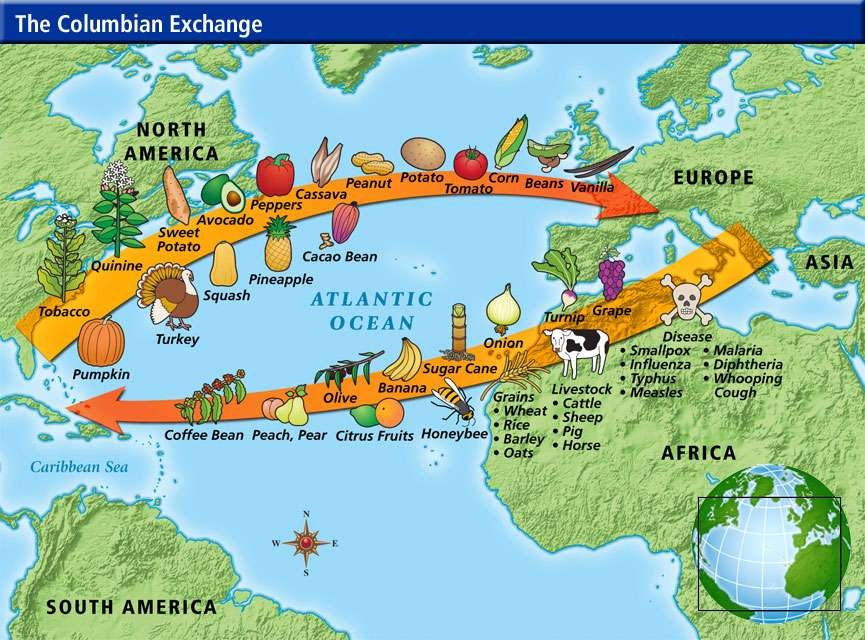
Baguette with chocolate: http://a142.idata.over-blog.com/600×449/2/90/63/97/Autrefois-./Chocolat/Le-Bon-Chocolat–13-.JPG

PRICKLY PEAR AND THE COLUMBIAN EXCHANGE

Bangkok, 23 January, 2015

One of the most far-reaching effects of Christopher Columbus’s discovery of the Americas was the so-called Columbian Exchange, the exchange of plants and animals (and bacteria and viruses) between the Americas and the rest of the world. This map shows some of the major crops and livestock which made the journey in either direction between the Americas and Europe.
image
We see, for instance, that the tomato crossed to Europe from the Americas, along with the turkey and corn (and possibly syphilis), while the cow, the horse, and the onion, went the other way, along with smallpox, measles, typhus, and a whole series of other diseases (the diseases nearly wiping out the Amerindian populations).

But I want to focus on a plant which normally doesn’t get mentioned in discussions of the Columbian Exchange: the prickly pear, a plant whose history is very much centered on Mexico. Here, we have an exemplar standing guard, as it were, at the site of Teotihuacan.
image
In fact, the prickly pear is so centered on Mexico that it graces the Mexican flag as part of the latter’s central emblem (for those with “mature” eyesight like mine, it’s what the eagle is grasping with its talons at the same time as it grasps that snake in its beak).
image
Maybe the prickly pear’s low profile in Columbian Exchange discussions is because it’s such a nasty, spiny plant, which really doesn’t endear itself to anyone.
image
Or maybe because it’s not much of a commercial crop; the Food and Agricultural Organization, which collects global statistics on some 160 crops, collects no statistics on the prickly pear, for instance.

Whatever the reason, I wish to right this injustice and pay tribute to the prickly pear and its role in the great Columbian Exchange. It may perhaps have played a modest economic role, but it helped to fill many an empty stomach, and it sure as hell has played an important ecological role, sometimes wreaking havoc in the ecosystems into which it was thoughtlessly thrust.

I first met our prickly friend in the country of my birth, Eritrea. Here, you see a specimen in front of the delightful little train which runs from Asmara down to the seaport of Masawa on the Red Sea.
image
I have a vivid memory of taking that train to go down to the coast for a holiday on the beach.

It was the Italians who, as colonial masters
image
introduced the prickly pear (please note the plant waving at us from behind the colonial troops and their Italian officer). The Italian colonialists brought it from the mother country, of course, where it grows in profusion in the more arid southern regions of the country. We have here an example gracing the ruins of Agrigento in Sicily.
image
But southern Italy was just a later stop on the prickly pear’s journey out of Mexico. It must surely have reached Italy from Spain, which was the first port of call for many of the biological journeys out of the Americas. Here we have a Spanish prickly pear, nudging its way into a photo of Sagunto castle in the province of Valencia.
image
In truth, I have chosen pictures which show off the prickly pear to advantage, but normally the plant is much more unprepossessing. This photo of a ragged, messy patch of prickly pear in a village of Ethiopia is much more typical of how the plant presents itself
image
especially when its population levels begin to explode out of control in some foreign ecosystem which has no natural biological defenses against it. The Global Invasive Species Database lists several countries where the prickly pear is now considered an invasive species. Eritrea is one of them, along with the neighboring countries of Ethiopia and Somalia – the Italians, who colonized all three countries had little idea of the damage they were wreaking. But South Africa also considers it an invasive species (here is a picture of prickly pear invading the Kruger national park).
image
And Australia had a catastrophic invasion. The prickly pear was initially introduced as an ornamental plant for gardens. Then some bright spark thought of using the plant as natural fencing (sensibly enough, cattle and other animals desist from pushing through breaks of prickly pear because of the nasty spines, and they don’t eat them for the same reason) and to start a cochineal dye industry (the little beasties from which the dye is extracted munch the prickly pear’s pads). But the prickly pear went crazy. It eventually converted some 260,000 square kilometers of farmland (which for those readers, who like me don’t think in square kilometers, is more or less equivalent to a square 500 km by 500 km) into an impenetrable green jungle. Farmers were driven off their land by this “green hell” and their abandoned homes were crushed under the cactus growth.
image
The authorities finally managed to get the plague under control in the 1920s by introducing a South American moth, the Cactoblastis cactorum, whose larvae feast on prickly pear. This led to a crash in prickly pear populations, and while the plant has not been eradicated from Australia it has been brought under control (the Australians were lucky, by the way; there is always a risk in this kind of biological control that the agent will find another native plant much more to its liking and wipe that out instead, or once it’s dealt with the original pest will turn its hungry eye on to something else and become an invasive species in its own right).

Why did some Spaniard ever bring the prickly pear back to Europe in the first place? Because, as far as I can tell, he thought he could brighten up a Spanish garden somewhere. But it cannot have been because of the beauty of the plant itself. More likely it was the flowers, for indeed the web is full of pictures of the flower of the prickly pear. Here are a few of the more pleasing examples.
image
image
image
At some point, though, people, especially the poor with bellies to fill, began to also focus on the fruit, the “figs” of the prickly pear
image
These had been enjoyed by the Mesoamericans for millennia before Hernan Cortes and his conquistadores arrived and have been enjoyed by the Mexicans ever since.
image

I add here a close-up of the fruit
image
first because it’s a nice photo, but second because the sharp-eyed reader will notice the hair-thin spines which nestle lovingly around the crown of the fruit. Their scientific name is glochids. They are the nastiest little buggers imaginable. They come off easily and lodge under the skin of the unwary picker, where they cause exquisite and unending agony as the said picker tries and tries and tries again to extract them, always in vain. Bloody little bastards … Readers may have gathered from this little burst of ill humour that I have personally experienced this exceedingly painful trial. It was in Eritrea as a matter of fact, where as a young and foolish lad I tried picking the fruit.  I then ran to my Mummy to get the horrible little things out, which she eventually did after much wailing on my part and cross admonitions on her part for me to keep still. I had tried picking the fruit because my mother had earlier bought some, perhaps from a lady like this
image
and I had liked them – a little too many seeds perhaps but nicely fresh and sweet.

Personally, while I like the taste, that early brush with glochids has always made me wary of the fruit. The pain in the hands was bad enough but the thought of those things getting stuck in your tongue or gums because the fruit was badly cleaned is dreadful. And the thought of them getting stuck in your throat is simply too horrible to contemplate.

But others around the world consume the fruit without a second thought, especially around the Mediterranean rim. Here, we have some cheerful young lads selling the fruit in Egypt

image
While here we have a more solemn Moroccan doing the same
image
And here a smiling Sicilian ditto
image
As readers can imagine, over the centuries people in the countries where the prickly pear was introduced eventually got around to putting the fruit into alcoholic drinks – at least in those countries where such drinks are tolerated. Thus, we have a prickly pear-flavoured liqueur called “Ficodi” in Sicily, we have a prickly-pear flavored herbal liqueur called “bajtra” in Malta (another country, by the way, where the prickly pear has been declared an invasive species), out in the lonelier reaches of the Atlantic, on the island of St. Helena (where Napoleon Bonaparte was banished), the potent “Tungi Spirit” is produced with the fruit, while prickly pear fruit is the main ingredient of a popular Christmas beverage in the British Virgin Islands called “Miss Blyden”. Looking at how all these various drinks are made, I think I would plump for Miss Blyden: prickly pear steeped in rum and sweetened with sugar. Mmm, sounds good …Yohoho, and a bottle of Miss Blyden, is what I say.

But actually, these drinks are all derivative, if I can put it that way: you just plunk prickly pear fruit in an alcoholic medium; it could actually be any fruit that is plunked. The Mesoamericans, on the other hand, came up millennia ago with colonche, an alcoholic drink using just the juice of the prickly pear fruit, fermenting it over a number of days. I have read that it is a sweet, fizzy, red beverage. Here’s a photo of a glass of colonche, together with the fruit from which it is derived.
image
I regret to say that I did not try the drink while I was in Mexico. However, I have asked my son to try it and report back. If the feedback is good, we can discuss about getting into the business of exporting it!

What I will not promote, through export or otherwise, is the eating of the pads (that is to say the fleshy leaves) of the prickly pear. They eat them in Mexico – and in New Mexico too (and perhaps some of the other southwestern States of the US). The original peoples of Mexico were eating them when Cortes burst in on the scene, and it’s still quite popular. I saw them sold in the supermarket around the corner from where we were staying in Mexico City and took a photo, but I prefer this more sympathetic photo of a Mexican lady on the street selling them.
image
I mentioned in an earlier post that I had tried the pads, cooked and with melted cheese, in a taco. I also tried them, with cheese but without the taco. It didn’t change the taste much.
image
I’m all for trying things once (with the exception of insects). But not necessarily more than once. Pads of the prickly pear fall into the latter category.

But who knows? As the Mediterranean countries slowly go down the economic drain, and more generally as we 99 percenters slowly get poorer, perhaps we will join our Mesoamerican friends and start eating prickly pear pads – as the poor of the Mediterranean lands turned to the fruits of the prickly pear some three hundred years ago to fill their empty stomachs.

_______________
Columbian exchange: http://globerove.com/wp-content/uploads/2010/03/Columbian-Exchange.jpg (in http://www.slideshare.net/mobile/cbgobble/columbian-v-triangle)
Prickly pear in Teotihuacan: https://farm1.staticflickr.com/214/444712763_0a91a8353e.jpg (in https://www.flickr.com/photos/eternal_sunshine_of_the_spotless_mind/444712763/
Mexican flag: http://www.freepressers.com/wp-content/uploads/2011/10/mexican-flag-640.jpg (in http://www.worldtribune.com/worldtribune/WTARC/2011/k1302_10_21.asp)
Prickly pear: https://seekraz.files.wordpress.com/2012/10/prickly-pear-cacti-in-tucson-desert.jpg (in https://seekraz.wordpress.com/tag/prickly-pear-cactus/)
Prickly pear by Asmara-Masawa railway: https://c1.staticflickr.com/9/8633/16089064905_44b9e68e48_b.jpg (in https://www.flickr.com/photos/dave-hill/16089064905/)
Italian colonial masters: http://upload.wikimedia.org/wikipedia/it/6/6c/Ascari_penne_di_falco.jpg (in http://it.m.wikipedia.org/wiki/Regio_corpo_truppe_coloniali_d’Eritrea)
Prickly pear in Sicily: https://c1.staticflickr.com/9/8299/7826141194_33f0e36a8d_b.jpg (in https://www.flickr.com/photos/mari-mora/7826141194/)
Prickly pear in Spain: https://themostbeautifulplacesineurope.files.wordpress.com/2013/07/dsc_0048.jpg (in https://themostbeautifulplacesineurope.wordpress.com/tag/castle/)
Prickly pear in Ethiopian village: http://4.bp.blogspot.com/-YutF1G9Qjbo/Up44cIZUf_I/AAAAAAAAMPA/fydBOTfLCNY/s1600/00041775.jpg (in http://jhodgesagame.blogspot.com)
Prickly pear in Kruger National Park: http://academic.sun.ac.za/cib/news/images/20120611_opuntia_stricta_impacts_fig1.jpg (in http://academic.sun.ac.za/cib/news/20120611_opuntia_stricta_impacts.htm)
Prickly pear in Australia – the green hell: http://chinchillalibrary.chinchilla.org.au/Images/Local%20History/johnty%20turner’s.jpg (in http://chinchillalibrary.chinchilla.org.au/HTML/HeritagePricklyPear.html)
Prickly pear in flower-1: http://www.fotothing.com/photos/4aa/4aa38f6709881bcb9b0dc2f7bce87dea.jpg (in http://www.fotothing.com/AzViper/photo/4aa38f6709881bcb9b0dc2f7bce87dea/)
Prickly pear in flower-2: http://photosbygarth.com/travels/DesertGardens4-23-11/prickly_pear_cactus_flowers_0887.jpg (in http://photosbygarth.com/wordpress/)
Prickly pear in flower-3: http://www.summitpost.org/prickly-pear-cactus-flower/294673
Prickly pear fruit-1: http://2.bp.blogspot.com/-_NFH_ZhWJCU/T1kjB-HTOWI/AAAAAAAAA84/rBf30_8f5qg/s1600/5.jpg (in http://docsfitnesstips.blogspot.com/2012/03/prickley-pear.html)
Mexicans selling prickly pear fruit:
http://i.gonoma.net/i/destinations/1106/zacatecas-images/prickly.jpg (in http://gonomad.com/destinations-xxx/3205-zacatecas-mexico-rsquo-s-overlooked-colonial-gem)
Prickly pear fruit-2: http://cdn.c.photoshelter.com/img-get/I0000O2m8f8jI.vU/s/600/600/PPCA-021548.jpg (in http://rolfnussbaumer.photoshelter.com/image/I0000O2m8f8jI.vU)
Ethiopian lady selling prickly pear: http://jamminglobal.com/2012/05/ethiopia-part-6-historical-axum-and-mountainous-twisties.html
Prickly pear seller Egypt: http://weekly.ahram.org.eg/Media/NewsMedia/2013/7/16/2013-635095893366005272-600_resized.jpg (http://weekly.ahram.org.eg/News/3357/25/The-fruit-beneath-the-thorns.aspx)
Prickly pear seller Morocco: http://upload.wikimedia.org/wikipedia/commons/b/b1/Prickly_pear_seller.jpg (in http://en.m.wikipedia.org/wiki/Opuntia_ficus-indica)
Prickly pear seller Italy: http://www.fotografieitalia.it/foto/3126/3126-08-20-44-1557.jpg (in http://www.fotografieitalia.it/foto.cfm?idfoto=65383&idfotografo=3126&crono=1)
Colonche: http://173.236.14.43/fotos/nota/2014/9/18/4d68094af571428.jpg (in http://www.am.com.mx/aguascalientes/especiales/espiritus-de-la-republica-144117.html)
Seller of cactus pads: http://holeinthedonut.com/wp-content/uploads/2010/06/Nopal_Cactus_Seller_Mercado_Hidalgo_Guanajuato.jpg (in http://holeinthedonut.com/2010/06/01/mexico-food-nopal-cactus/)

Cactus pad and cheese: http://s3.amazonaws.com/foodspotting-ec2/reviews/846163/thumb_600.jpg?1315336866 (in http://www.foodspotting.com/150802-amandahugnkiss)/)


TOM YUM SOUP – WITHOUT THE CHILLIES!

Bangkok, 23 November 2014

I must say, I am feeling very pleased with myself. When my wife and I first arrived in Bangkok, we did the time-honored thing of scouting out local culinary delicacies to taste. One that intrigued me was Tom Yum soup. It is described as a “clear spicy and sour soup”. It was the sour part that interested me. Sour soup …. What a fascinating concept, I had to try that. But the spicy part made me hesitate. As I have pointed out forcefully in a previous post, I hate spices, or at least hot spices like chilli. But my desire to experience the sour part trumped my distaste of the spicy part. And so I tried it.

Delicious, absolutely delicious! OK, with every spoonful I was making strange rasping sounds at the back of my throat to counteract the chillies, which after a while had my wife drumming her fingers on the table, and I had to drink iced water by the gallon to calm the fires in my mouth. But behind all this mayhem, I could sense the wonderful sourness of the soup. How was this done? I started scouring the web. The answer is: fish sauce meets lime (fruit and leaf), supported by lemongrass. As usual, different recipes add various other bits and pieces, the most common of which are shrimps, tomatoes, mushrooms, galangal (a sort of root like ginger), and coriander (as a final garnish). And of course, always, without fail, chillies.

I took a momentous decision. I was going to make Tom Yum soup WITHOUT chillies. I was going to show the correctness of a fundamental belief of mine, that hot spices actually add nothing to dishes, that food can be enjoyed quite as much without these terrible ingredients.

Today was the day. Yesterday, my wife took me to an upscale supermarket to find the necessary ingredients. I knew I was on the right track when we found that the supermarket helpfully offered packets of the core ingredients. The remaining ingredients were quickly rounded up.

This morning, after a good night’s rest, I got to work. After reviewing a number of recipes again, I decided on the course I would take, to whit:
1. Boil the water.
2. Cut several stalks of lemongrass into short segments. Bruise them so that they more easily exuded their lemony oils. Cut a few slices of galangal. Destalk the lime leaves and cut them up a bit. Squeeze the limes and collect the juice.
3. Ostentatiously throw away the chillies, the ones that the supermarket had added to the pre-packed set of ingredients.
4. Add 2 tablespoons of fish sauce to the boiling water. Add the juice of 2 squeezed limes. Add the lemongrass segments, the slices of galangal, the lime leaves. Bring to a boil. let simmer for a while.
5. Add the mushrooms and the tomatoes. Bring back to a boil and let simmer a bit.
6. Taste. Feel the panic rise because the soup is not nearly sour enough. Add 3 more tablespoons of fish sauce and the juice of 2 more limes. Let simmer. Taste again. Better, but not there yet. Add 2 tablespoons of fish sauce and 1 more lime. Simmer. Taste. That’s better! Now we have that sourness!
7. Add half a dozen shrimps, cook briefly.
8. Serve, spreading chopped coriander on the surface as garnish.

We ate it with a side-dish of rice my wife made.

My wife was the official taster. She pronounced the soup to be absolutely delicious, and declared that the chillies weren’t missed at all. She concluded that henceforth I could be considered the official family provider of (chilliless) Tom Yum soup, along with mashed potatoes (my speciality). My breast swelled with pride.

Now that a few hours have passed and I have reflected on the experience, I would say a few things. First and foremost, I was right: you don’t need chillies! I will now attack various other dishes which I would like very much were it not for the spices that cooks insist on adding (maybe I should make a web-site of this culinary crusade of mine). Second, I think I panicked and made the soup too sour. It was really good at the first spoonful but beginning to get too much by the last. A lighter touch would have carried me through effortlessly to the end. Third, I wonder if something other than shrimps could be used. Their taste really gets lost in the sourness. I have to think about this one a bit. Fourth, I think I have to adopt the European habit of putting the ingredients you won’t eat in a muslin bag. It kind of takes away from the pleasure of eating to have to pile up the lemongrass segments, galangal slices, and lime leaves on the table cloth as you go along. Fifth, I think I should go easy on the coriander the next time. In fact, I might try parsley instead. Sixth and lastly, when I get back to Europe what am I going to use instead of limes? Lemon? Mandarin? Orange? I’m going to have to think about this one too.

Oh, in all the excitement, I haven’t added a photo of the soup. In our haste to try it, neither my wife nor I took a photo of my creation. And I hesitate to take one from the web, because they all are of soups made with chillies. But what the hell, here is a photo.

image

Also, one day I will write a post on how I make mashed potatoes. Promised.

_________________

Tom Yum soup: http://2.bp.blogspot.com/-oRNilG7HYh8/T7-q1Kg0suI/AAAAAAAAA_k/Z8gykr2ZYtU/s1600/tom-yam-soup-chef-duminda-2012.jpg (in http://cook-with-chef-duminda.blogspot.com/2012/05/tom-yam-soup.html)

筷子, OR CHOPSTICKS TO YOU AND ME

Beijing, 6 September 2014

In our dying days in China – we leave for good in a week – it seems appropriate that I should write my last posting from Beijing about that most Chinese of utensils, the chopstick. I have a feeling that chopsticks and the Chinese food they pick up are probably the first contact which most Europeans have with Chinese culture (in the very broadest sense of that term), down at their local Chinese restaurant

Chinese restaurant UK

where much fun is had by all trying to figure out how to use these two sticks

trying to use chopsticks

and where in recent years helpful instructions are printed on the paper wrapping around the chopsticks to help us ignoramuses figure this out.

instructions to use chopsticks

Certainly, I rapidly found out when I arrived here that the Chinese generally didn’t expect me to be able to manipulate chopsticks and always solicitously asked me at the beginning of meals if I wanted a knife and fork. But after years of experimentation in my local Chinese restaurants back home and after hours of carefully studying the instructions on my chopsticks’ paper wrappings, I felt that my chopstick skills were good enough and I would grandly wave away these offers of help. Generally speaking, it’s worked and I have not made too much of a fool of myself, although slippery food still defeats me completely, and I do tend to end up with numerous stains on my trousers.
Although I am a firm believer in the adage “When in Rome do as the Romans”, and will therefore use chopsticks when in Beijing, in my heart of hearts I think forks are so much better than chopsticks. I mean, it seems so much more efficient to spear pieces of food

Picture 566

rather than tweeze them

Cooked tiger shrimp with thyme twig in chopsticks

while also having available the secondary possibility of scooping if needed (for peas, for instance).

peas on a fork

And twinning a fork with a knife means that cooks can turn over the pesky work of cutting up the food to the eaters rather than have to do this work themselves in the kitchen.

But I will admit that chopsticks are aesthetically more pleasing than forks. Or at least they are to me (and here I pull out another venerable adage: “beauty is in the eye of the beholder”). Used to the grotty pieces of balsa-like wood offered to us in Chinese restaurants, it came as something of a shock to my wife and I when we were offered two beautiful sets of chopsticks on our first trip to Japan. They looked something like this.

wakasa chopsticks

mother of pearl chopsticks

That was some thirty-odd years ago. They have travelled with us everywhere we’ve gone, like talismans. When we first got to Beijing, we visited Qianmen, which is a pedestrianized road to the south of Tiananmen Square. It’s very touristy, full of shops, generally pretty awful. But there was one shop which drew me like a magnet, a clearly high-end shop which sold chopsticks

chopstick-shop in qianmen

I went in and looked around. Beautiful, so beautiful – but hideously expensive. I was staggered by the prices and left empty-handed. I beg to differ with yet another adage, “beauty has no price”.

The shop taught me something I hadn’t known. Chinese chopsticks are bluntChinese chopstickswhile Japanese chopsticks are pointed

Japanese chopsticks

Weighing it all up, I think pointed chopsticks are more pleasant on the eye than blunt ones – and you can spear things if necessary.

I leave you with a beautiful sunburst of chopsticks. Enjoy!

circle of chopsticks

_____________________

Chinese restaurant UK: http://junk4lunch.files.wordpress.com/2013/08/wpid-img_20130808_hingloong.jpg [in http://junk4lunch.wordpress.com/2013/08/12/beef-brisket-noodle-soup-hing-loong-borough-high-street/%5D
Trying to use chopsticks: https://lh4.googleusercontent.com/-GjkRDYGgO3Q/TWmPeRm9UMI/AAAAAAAADTc/CAllPWrsOCc/s1600/DSCN2786.JPG [in http://memoriesexpress.blogspot.com/2011/02/day-46-54cancun-vacation.html%5D
How to use chopsticks: http://www.askjohnenglish.com/wp-content/uploads/2010/10/chopsticks.jpg [in http://www.askjohnenglish.com/conversation/how-to-use-chopsticks%5D
Forks: https://retail.libbey.com/var/libbey/storage/images/retail-home/product-repository/appetizer-fork/211460-1-eng-US/Appetizer-Fork.jpg [in https://retail.libbey.com/Product-Repository/Appetizer-Fork/%28language%29/eng-US%5D
Chopsticks and shrimp: http://static5.depositphotos.com/1000383/493/i/950/depositphotos_4934044-Cooked-tiger-shrimp-with-thyme-twig-in-chopsticks.jpg [in http://depositphotos.com/4934044/stock-photo-cooked-tiger-shrimp-with-thyme-twig-in-chopsticks.html%5D
Peas on a fork: http://thumbs.dreamstime.com/x/peas-fork-15791390.jpg [in http://www.dreamstime.com/stock-photo-peas-fork-image15791390%5D
Wakasa chopsticks: http://blog.everythingchopsticks.com/wp-content/uploads/2013/03/315-700_LS.jpg [in http://blog.everythingchopsticks.com/wakasa-chopsticks/%5D
Mother of pearl chopsticks: https://www.everythingchopsticks.com/images/CHP194.jpg [in https://www.everythingchopsticks.com/bone-chopsticks-with-scattered-mother-pearl-pi-361.html?image=0%5D
Chopstick shop in Qianmen: http://1.bp.blogspot.com/-kGrxQQwS1ZM/Tx0jpZHQnuI/AAAAAAAAA5Y/bgbpkFFt0Yo/s1600/chopstick-shop.jpg [in http://englishcoffeedrinker.blogspot.com/2012/01/happy-new-year.html%5D
Chinese chopsticks: http://www.silvermagpie.co.uk/media/catalog/product/cache/1/image/9df78eab33525d08d6e5fb8d27136e95/c/h/chopsticks.jpg [in http://www.silvermagpie.co.uk/chinese-chopsticks.html%5D
Japanese chopsticks: http://blog.everythingchopsticks.com/wp-content/uploads/2013/03/315-709.jpg [in http://blog.everythingchopsticks.com/all-about-asian-chopsticks/%5D
A circle of chopsticks: http://www.thecuriouscreature.com/wp-content/uploads/2013/01/32.jpg [in http://www.thecuriouscreature.com/tag/sushi/%5D