A BLAST OF MY TRUMPET AGAINST THE MONSTROUS REGIMENT OF HOT SPICES

Beijing, 3 November 2012

Dedicated to my dearest daughter who, like me, dislikes hot spices

In 1558, John Knox, one of the founders of the Protestant faith in Scotland, wrote The First Blast of the Trumpet against the Monstrous Regiment of Women, a diatribe against women rulers. He wrote choice rants such as these:

“Wonder it is, that amongst so many pregnant wits as the isle of Great Britain has produced, so many godly and zealous preachers as England did sometime nourish, and amongst so many learned, and men of grave judgment, as this day by Jezebel are exiled, none is found so stout of courage, so faithful to God, nor loving to their native country, that they dare admonish the inhabitants of that isle, how abominable before God is the empire or rule of a wicked woman (yea, of a traitress and bastard) … We see our country set forth for a prey to foreign nations; we hear of the blood of our brethren, the members of Christ Jesus, most cruelly to be shed; and the monstrous empire of a cruel woman (the secret counsel of God excepted) we know to be the only occasion of all those miseries … And therefore, I say, that of necessity it is that this monstiferous empire of women (which amongst all enormities that this day do abound upon the face of the whole earth, is most detestable and damnable) be openly revealed and plainly declared to the world, to the end that some may repent and be saved … we are debtors to more than princes: to wit, to the multitude of our brethren, of whom, no doubt, a great number have heretofore offended by error and ignorance, giving their suffrages, consent, and help to establish women in their kingdoms and empires, not understanding how abominable, odious, and detestable is all such usurped authority in the presence of God.”

The book goes on in this vein for many pages. Boiling it down to its essentials, his thesis was that women should be in the kitchen and not running countries.

Knox was fond of diatribes and had a nasty habit of whipping people up into a frenzy of destruction with them. The picture below captures nicely what he must have been like when he was in full spate, beady-eyed, beetled brow, and frothing at the mouth.

He reminds me of another tribe of hirsute religious leaders who are currently whipping people into frenzies. I’m sure he would have got on with them like a house on fire – and then promptly burned them at the stake for heresy.

I would have disliked him intensely. I have an aversion to people who shout and scream and hate. And yet … when it comes to the use of hot spices in food I feel my beard growing, my eyes beading, my brow beetling, and froth forming in the corners of my mouth.

By hot spices, I mean those spices that numb your mouth, that put your tongue, palate, inner cheeks and throat on fire and have you groping for water, that make you cry, that make you choke, and generally that kill all enjoyment of the food you are eating.

What in the name of God got into the human species to add this stinking scum to their food??!! What did we do that we now have to punish ourselves for eternity in this way??!! And no-one can tell me that they add taste, because they DO NOT!!!! As for people who actually enjoy hot spices, they are like drug addicts, their enjoyment of this filth is a deviancy; they need to be locked up until they have cold turkeyed!!

I NAME – and SHAME – the Piper genus: 1,000 species! The genus has spread its evil tentacles far and wide. Asia has given the world black pepper, P. nigrum; may a curse fall on those who spread it around the world! But in Asia, deluded, lost souls also eat the Indian long pepper, P. longum, Balinese long pepper, P. retrofractum, Cubeb, P. cubeba, and Prik Nok, P. caninum. In Latin America, poor fools eat Mecaxochitl, P. amalgo, and Matico, P. aduncum. As for Africa, miserable inhabitants of that miserable continent eat West African pepper, P. guineense, and Voatsiperifery pepper, P. borbonense. And who knows how many of the other 1,000 species are eaten only locally by poor, benighted villagers who know no better.

I NAME – and SHAME – the Zanthoxylum genus: only (thank God) 250 species! But at least two of these, Z. simulans and Z. bungeanum, I curse again and again for producing Sichuan pepper, which makes my life a misery at every banquet I go to in Sichuan and other western provinces of China! I emerge from these with numbed mouth and lips, having enjoyed not a whit of the food on offer. The Chinese use other species for the same foul purpose: xiang-jiao-zi (“aromatic peppercorn”), Z. schinifolium, chun ye hua jiao (“Ailanthus-leaved pepper”), Z. ailanthoides, while the Japanese use sanshō (the Japanese pricklyash), Z. piperitum. I am horrified to see that the genus is also present in the Americas and Africa, where no doubt there are wretches who eat the fruits.

But my heaviest, longest, most profound curses of all fall on the Capsicum genus, home of the dreaded chili pepper. There is C. annuum, whose varieties include banana pepper, cayenne pepper, jalapeño pepper, and the ferocious chiltepin; C. frutescens, which contains malagueta pepper, tabasco pepper, and the African piri piri; C. sinense, which incorporates hideously hot peppers like the naga, habanero, Datil, and Scotch bonnet peppers; C. pubescens, whose most notorious variety is the rocoto; and finally C. baccatum, which includes the deceptively named but nastily hot Lemon drop pepper and the Aji Amarillo as varieties. May Diego Álvarez Chanca, a physician on Christopher Columbus’s second voyage who first brought chili peppers to Spain, reside in the deepest circles of Hell for eternity!! And may the Portuguese forever beat their breast for spreading chili peppers to the rest of the world through their rapacious traders!!! And may the idiots who boast of being able to eat the hottest of hot chili peppers have their mouths (and the other end of their alimentary canals) on fire forever and ever!!!!

Amen.

________
pix:
http://revhelio.blogspot.com/2011/02/john-knox-o-reformador-da-escocia.html

http://www.wikipaintings.org/en/hans-memling/the-last-judgment-triptych-right-wing-casting-the-damned-into-hell-1470

IN PRAISE OF OFFAL

Beijing, 27 August 2012

I am currently reading a book on the Catholic Church’s campaigns against heresies in the Middle Ages, which culminated in the Albigensian Crusade against the peoples of Provence (1). I am at the point in this sorry tale where the heretics – whose only heresy seems to be not to have liked priests very much – were forced to furtively meet in the woods at the dead of night as the forces of the Church Universal raged and ravaged all around them.

I rather feel like one of these heretics when it comes to eating offal.  In the more developed countries, when I say that I love eating liver, or kidneys, my interlocutors normally look at me as if I have confessed to eating newborn babes in some hideous satanic rite.
heretic eating babies
Even my wife, who has followed me down many culinary paths, will not accompany me down these – with one or two notable exceptions as we shall see. So I am reduced to furtively scanning restaurant menus when I am on business trips, to see if I might strike lucky this time and find a dish of offal to feast on.

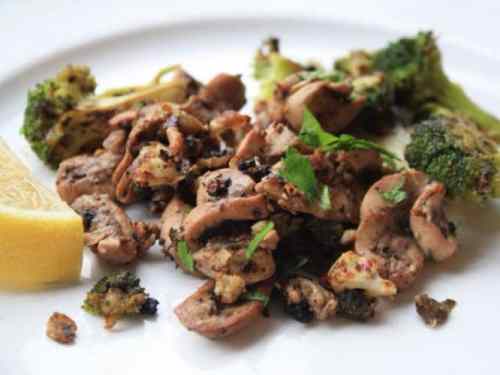
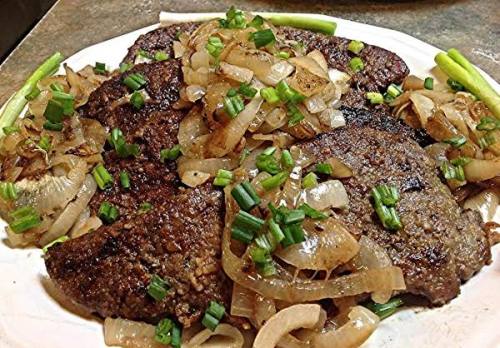
Liver is often on menus, as are kidneys. They are best sautéed quickly so that they are nice and brown on the outside but still pink inside, and the liver should come with fried onions on the side. Mmm, so good …


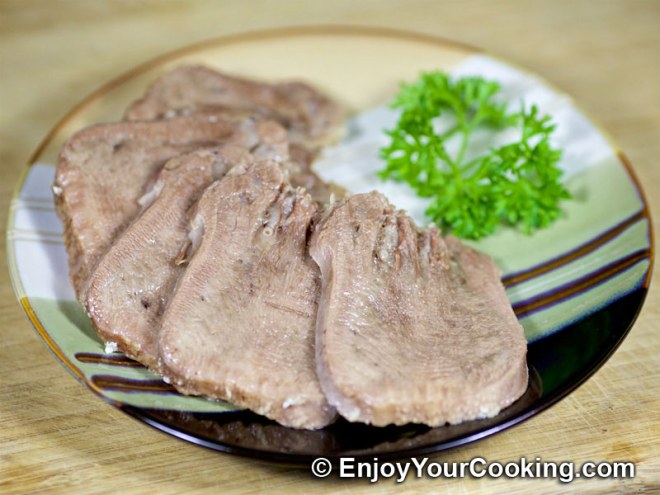
After that, the search becomes difficult. I come across tongue from time to time. Boiled and eaten with mustard, and with boiled potatoes on the side, it’s one of the few offal dishes I’ve got my wife to like.

After that, it’s almost always in France that I have found other offal dishes. For instance, I can still find tripe on menus there. I’ll find tripes à la provençale, which is tripe cooked with carrots, onions, tomatoes, white wine and a few spices.

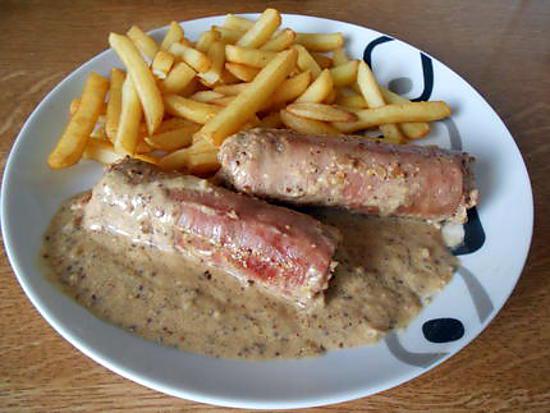
Or there’s tripes à la mode de Caen, which differs from the provencal version only by the replacement of tomatoes with calves trotters and a glass of calvados. Still on tripe, there’s andouillette, which is a sausage made with pork tripe (sometimes mixed with veal tripe), seasoned with onions, pepper and other spices; it has to be eaten with a mustard sauce. This is another offal dish which I’ve got my wife to like! I made it a point to eat it whenever I went to visit my mother in France, because the andouillettes of Burgundy are extra good; now that she’s dead I’m not sure what I’ll do …

I also used to find ris de veau, veal sweetbreads, on French menus, but it’s been a while since I’ve seen them. Cooked in a creamy mushroom sauce, they are absolutely delicious.

Many, many years ago, my French grandmother served us grandchildren brains, deep-fried. That was a little difficult to eat, I must admit; brains are very rich and quite quickly become rather nauseating.

But another dish she made, which was absolutely exquisite, was pot au feu made with marrow bones. Digging out the marrow from the bone, spreading it on bread, adding a little salt, popping it into the mouth. Ahhh, s-o-o-o-o good!

France has sustained my love of offal, but even in the UK I’ve found some excellent dishes. Not in England, mind you, where they are prissy about the meat they eat, but in Scotland. When my wife and I were university students in Edinburgh we discovered haggis, which is a pudding containing a minced-up mixture of sheep’s heart, liver and lungs, onion, oatmeal, suet, and spices. It is imperative that it be eaten with “neaps and tatties”, turnip and potatoes; their sweetness and smoothness are the perfect counterpoint to the haggis’s sharpness.

I think haggis must be the only offal dish about which a poem has been written. In his Address to a Haggis, Robert Burns exclaimed:

Fair fa’ your honest, sonsie face,
Great chieftain o’ the puddin’-race!
Aboon them a’ ye tak yer place,
Painch, tripe, or thairm:
Weel are ye wordy o’ a grace
As lang’s my airm.

(The poem goes on for several more verses, but we can skip them)

Scotland also introduced me to blood pudding (but not my wife; she didn’t follow me on this one). Blood pudding is made by cooking blood with fillers and then letting the whole congeal; in Scotland, I think the fillers were oatmeal and fat. I know it doesn’t sound very appetizing, but it is really very good; it has a sweet taste that is very soothing.

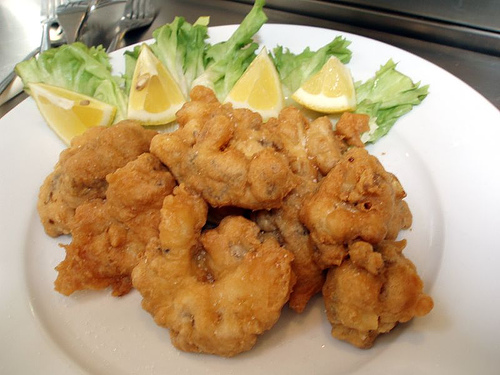
And finally, once, in a restaurant in Slovakia, I noticed that they were serving beef testicles on the menu. I had a colleague in the office who raved about them, telling me that they were absolutely delicious. He also told me – one of those strange factoids that stick in one’s head unbidden – that they are called Rocky Mountain oysters in the American West. They are a common dish out there, the prevalence of ranching and thus castration of young bulls leading to a healthy supply of them. I understand they eat them deep-fried. Mine were cooked in some sort of heavy sauce. Good, but nothing special.

There’s lots of offal I haven’t eaten, but it’s not for want of trying. Out of curiosity, while writing this I checked to see if there are recipes for other types of offal – lungs, for instance, or intestines (chitterlings), or other bits and pieces – and it looks like human beings used to eat everything from any animal they killed. As they should have; apart from everything being good to eat, it’s a sign of disrespect to mother nature that we disdain what she offers. We have become ridiculously fastidious and picky about our food. So come on, follow me and become offal-eaters!

____________________
1. R.I. Moore, The War on Heresy, Profile Books, 2012
Heretic eating babies: http://theyelessowl.net/2011/02/
Liver and onion: https://www.justapinch.com/recipes/main-course/beef/pan-seared-beef-liver-onions.html
Kidneys: https://greatperformersacademy.com/health/ketogenic-diet-grocery-list-21-keto-foods-you-need-to-have-on-it
Boiled tongue: https://www.enjoyyourcooking.com/cooking-tips/boiled-beef-tongue.html
Tripes provencales: http://www.recettes.net/recettes-et-idees/plat/tripes-a-la-provencale,,1026.html
Andouillette: http://www.lesfoodies.com/myma/recette/andouillette-troyes-moutarde-meaux-1
Ris de veau: http://www.marieclaire.fr/cuisine/ris-de-veau-croustifondants-aux-salsifis-parfum-tonka,1212284.asp
Fried brains: http://spaceamigos.com/2764605/que-voce-acharia-de-comer-um-cerebro-na-proxima-refeicao
Marrow bone: http://unmetiercasappend.hautetfort.com/archives/category/histoire_de_la_medecine/index-2.html/
Haggis: http://www.thepinsta.com/haggis-neeps-and-tatties_9RnBOfoMGJRG21fi*1CZ0jyyuXwXy7MWsPGUng7Ktrg/
Blood pudding: http://www.shawmeats.co.uk/product/gluten-free-black-pudding/
Testicles: http://chefdepaprika.com/2012/05/hungarian-veal-testicles-stew-paprikas-recipe/

ITALIAN FOOD

Beijing, 5 August 2012

My wife and I once compiled a list of the foods and recipes we each brought to our marriage as culinary dowry from our mothers’ kitchens: she is Italian and I am Franco-British. Without a possible shadow of doubt, her contribution has dwarfed mine. Through her, I entered a magical land of taste which I have never left nor ever wish to.

I had my first glimpse of it when I visited Italy as an impecunious student in the 1970s. In those days, simply by flashing a student card one could access University cafeterias, where for a ridiculously cheap price one got a three-course meal, a small bottle of wine, and a coffee. Mmm, even now, after all these years, I still remember with crystal clarity those few weeks of initial revelation. The pasta, just a little hard – al dente – with velvety tomato-based sauces and a sprinkling of parmesan cheese! The meat – veal, beef, pork, chicken, whatever was on the day’s menu – grilled to juicy, tender perfection! Accompanied by a simple tossed green salad, with perhaps a few slices of tomato, drizzled with a little wine vinegar, a generous portion of virgin olive oil, and a pinch of salt. Then just a piece of fresh, ripe fruit of the season to round it off. Washed down with a simple, robust wine, no fuss, no pretensions. And to cap it all, a strong expresso. After such a meal, I had been revitalized and was more than ready to endure another round of museums and churches.

This was just the start. My wife took me by the hand and led me through a fairytale land of food: pastas of all dimensions and geometric complexities accompanied by an astonishingly wide spectrum of sauces; dried and cured meats from every animal and every part of the animal; pizzas and foccaccias; cheeses, whose variety leaves my French cheeses in the dust (let’s not even mention British cheeses); fruits whose names even now I know only in Italian – nespole, cachi, fichi d’India; wines of a breathtaking range which all those fussy French wines can never hope to emulate. And the food always cooked with a minimum of artifice, allowing its essential goodness to come to the fore. Lord, may the cooks in Paradise be Italian!

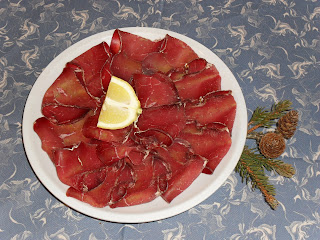
I was reminded of this cornucopia – indeed, became quite homesick – when my wife served up bresaola for supper last night. From time to time, we feel the need for food from home, and last night was one of those times. For those of you who do not know bresaola it’s a dried beef meat from one of the Italian Alpine valleys, the Valtellina. It’s difficult to find in Beijing, and – even more important – to find of good quality. It has to have the right ratio of fat to lean, it has to be sliced very thin, it must not be too salty. Last night’s bresaola was of excellent quality. And we ate it with a drizzle of olive oil and lemon juice. That’s all. Nice and simple. And delicious.

plate of bresaola

__________________

bresaola and lemon: http://1.bp.blogspot.com/_KYIV6yDsmVc/TT8vBvfQjkI/AAAAAAAAAQw/CON9w_ZJAQs/s320/SDC12179.JPG