Of my very modest collection of paintings, this is the one I am most fond of.
My photo
It is a view of the little town and castle of Dürnstein, which sit in a bend of the Danube river some 8 km upstream of the city of Krems. The town lies a little above the waterline, the castle sits atop the dry, rocky hill which rises behind the town. This photo, taken from the other side of the river, shows both the town and the castle very clearly.
But as the modern photo shows, it is a ruin now. Its downward spiral started in the final years of the Thirty Years’ War, when Swedish troops had captured the castle on their way to trying to take Vienna. That attempt failed and they moved on to Brno, now the capital of Slovakia. The Swedes laid siege to the city.
But that failed, too, and the Swedes retreated back into Bohemia. As they left Dürnstein castle, they partially blew it up to render it unusable. Later owners didn’t bother to patch it up and live there anymore, so it slowly fell to pieces.
In its early days, though, back in 1192-93, Dürnstein castle became famous throughout Europe as the place where Richard the Lionheart, King of England, was imprisoned.
Source
Richard was trying to get back to England from the Crusades. He had made a lot of enemies over the years, who were all intent on capturing him as he crossed their lands to get home. He chose to take a circuitous route, which saw him land on the northern shores of the Adriatic Sea, and then pass through the lands of the count of Gorizia, the Duke of Carinthia, and Leopold V, Duke of Austria – all enemies of his – before making it into Bohemia, whose king was an ally. From there, he planned to go on into Saxony, whose Duke was his brother-in-law, and take a ship over to England. By late December 1192, he had got as far as a village on the outskirts of Vienna, where he decided to hole up to rest for a few days. Unfortunately for him, Duke Leopold’s men got wind of his presence and he was duly arrested. Leopold held him for a few months in Dürnstein castle before passing him on to Henry VI, Holy Roman Emperor, who also had a few axes to grind with Richard. Henry imprisoned him in another castle and demanded a huge ransom for his release. By imposing a ferocious set of taxes on one and all, England’s regents, aided by Richard’s mother, Eleanor of Aquitaine, managed to raise the ransom, and he was duly released. We have here a photo of one of the illustrations in the “Book in honour of the Augustus”, a propaganda piece for Henry VI, showing Richard humbly kissing Henry’s feet.
I’m sure Richard loudly denied that any such humiliating submission had taken place – although he did have himself re-crowned when he got back to England, to wipe away the shame of imprisonment and to counteract any whispers there might have been that his being imprisoned meant he was no longer king.
The good citizens of Dürnstein have milked this story for all it’s worth, littering the town with interpretive markers giving information on the main actors in the drama as well as a few more.
My photos
To spice up the tourist experience, they give space to legends as well as to facts. In particular, they have a marker reporting on the minstrel Blondel de Nesle.
My photo
A story was invented in the 18th Century, which went like this: no-one knew in which castle Richard was being kept prisoner, so Blondel, who knew Richard, went from castle to castle singing a song only he and Richard knew. Finally, at Dürnstein Richard sang along with him. At last, Richard had been found! Here’s a coloured lithograph by a certain Joseph Martin Kronheim from the mid-1850s, which has Blondel singing at the foot of the castle’s walls.
As I say, all invented. But, like all good legends, the story contains a kernel of truth. Richard was brought up in Aquitaine, the beating heart of troubadour culture.
As Duke of Aquitaine, he encouraged and supported the troubadours. He also wrote and sang his own songs, one of which – composed during his imprisonment in Dürnstein – has come down to us. He wrote it in Langue d’Oc, the old language of the south of France. I cite here the first two verses (it’s a bit too long to quote in full).
Ja nuls hom pres non dira sa razon
Adrechament, si com hom dolens non;
Mas per conort deu hom faire canson.
Pro n’ay d’amis, mas paure son li don;
Ancta lur es si, per ma rezenson,
Soi sai dos ivers pres.
Or sapchon ben miei hom e miei baron,
Angles, norman, peitavin e gascon,
Qu’ieu non ay ja si paure companhon
Qu’ieu laissasse, per aver, en preison.
Non ho dic mia per nulla retraison,
Mas anquar soi ieu pres.
Since I presume that, like me, most if not all of my readers do not speak Langue d’Oc, I give here a translation in English of these two verses.
No prisoner can tell his honest thought
Unless he speaks as one who suffers wrong;
But for his comfort as he may make a song.
My friends are many, but their gifts are naught.
Shame will be theirs, if, for my ransom, here
— I lie another year.
They know this well, my barons and my men,
Normandy, England, Gascony, Poitou,
That I had never follower so low
Whom I would leave in prison to my gain.
I say it not for a reproach to them,
— But prisoner I am!
He was clearly trying to guilt trip his vassals into paying the ransom. If any of my readers want to hear the song they can do no worse than go to this link.
My wife and I pass through Dürnstein at least once a year. There is a hike that goes all the way up the left side of Wachau river valley from Krems to Melk and then back down the other side of the river to Krems. The first stage runs from Krems to Dürnstein. The path hugs the hills between the two places.
My photos
As you amble along, you get beautiful views onto the Danube River flowing below.
It was built in 1905, to commemorate the 100th anniversary of the battle of Dürnstein-Loiben, one of the many battles of the Napoleonic wars. The fighting took place where those vines now peacefully grow their grapes. It pitched about 7,000 French troops against some 11,000 Russian and Austrian troops. Fighting went on well into the night before it ground to a halt with no obvious winner, although both sides claimed victory. The losses were heavy: about 3,000 men on both sides. This is the only illustration I can find of the battle. I suppose that is meant to be Dürnstein castle in the background.
The battle was completely overshadowed by Napoleon’s brilliant victory in the battle at Austerlitz three weeks later. Years ago, a friend of ours took my wife and me to one the annual reenactments of that battle, the one and only time we’ve ever been to a battle reenactment.
But no-one reenacts the battle of Dürnstein-Loiben. It resolved nothing and no-one remembers it anymore. The 6,000 soldiers who lost their lives did so for no good reason.
Ah, this land, steeped in history – and drenched in blood.
My wife and I were down in Sicily recently. Our daughter and her partner came over with the grandson and they decided to spend a week down in the very far south of the island, near one of Sicily’s three promontories, Capo Passero (if I mention this detail, it’s because it plays a role later). The house they rented gave directly onto the beach and our grandson spent many happy hours digging holes, making sandcastles, and braving the – relatively small – waves that broke onto the beach.
In between these sessions on the beach, we managed to get in brief visits to Noto and Syracuse, both UNESCO World Heritage Sites. Here’s a photo of the cathedral in Noto.
I discovered that it is the official flag of the region of Sicily (which is why I normally saw it flying along with the Italian national flag and the EU flag).
I’m a bit of a flag man – many years ago, quite soon after I started this blog, I wrote a post about what I considered to be the most elegant national flags. So of course I focused in on this flag. What really intrigued me about it was that symbol in the middle: a face from which emanate three legs bent at the knee.
Source
I quickly established that this symbol is called a triskeles, Greek for three-legged. It was a popular symbol on coins. The earliest numismatic representation of it (from around 465 BCE) is on coins from the Greek statelet of Pamphylia, in what is now southern Turkey.
The triskeles was used in varying formats on Greek coins for several centuries thereafter, but it was most closely associated with the coins of Agathocles, Tyrant of Syracuse from 317 BCE, and self-proclaimed king of Sicily from 304 BCE, until his death in 289 BCE. On this coin, it is the main decoration on the reverse side of the coin, because Agathocles adopted it as a personal symbol of his reign.
Agathocles brought an important modification to the design, placing a Gorgon’s head as the central hub from which the legs emanate. He also added wings to the feet.
On this Syracusan coin, instead, it is used as the mint mark.
The Greek name for the island was Trinacria, which means three headlands. The three headlands in question were those at the “corners” of the island: Capo Peloro, to the north of Messina, Capo Passero, all the way down south of Syracuse (and close to where we spent our little Sicilian holiday), and Capo Lilibeo, close to Marsala. The choice by Agathocles of the triskeles as his personal symbol was no doubt meant to underline his ambition – realised in the last years of his life – to be ruler of the whole of Sicily.
None of Agathocles’s heirs who were still alive when he died managed to succeed him as king of Sicily. In fact, he was formally reviled after his death, with all statues of him throughout Sicily being destroyed. Nevertheless, his triskeles continued to be used as a symbol for the island. After the Romans had turned the island into a province of its Empire, they added three ears of wheat to the Sicilian triskeles, apparently to underline the province’s role as a granary for Rome (and took the wings off the feet).
With the collapse of the Western Roman Empire, the use of the triskeles seems to have disappeared in Sicily. But it came roaring back in 1282, when, in what has become known as the War of Sicilian Vespers, the Sicilians rebelled against their French Angevin overlords and invited the King of Aragon to take their place. The Sicilians created a flag to carry into battle.
It was made up of the red and yellow colours of Aragon (but also the colours of the communes of Palermo and Corleone, where the revolt started) with a triskeles at its centre (where the Roman ears of wheat had disappeared and the wings brought back, but this time attached to the head).
After twenty years, peace was concluded and the House of Aragon ruled Sicily for the next 400 years or so.
In 1848, some 600 years after that first burst of rebelliousness, and when the whole of Europe was being shaken by revolutionary outbursts, the Sicilians had another bout of rebellion and ousted their Bourbon overlords. The movement of course needed a flag, so the triskeles was rolled out again, but this time it was affixed to the red, white and green tricolour, itself created in 1789 by Italian revolutionaries copying their counterparts in France.
Alas, the revolt, and the flag, lasted only a year, until the Bourbons took back control of the island. But then, a mere ten years or so later, in 1860, when Garibaldi and his thousand volunteers disembarked in Sicily on his way to conquering the island and the boot of Italy, the Sicilian rebels dusted off this flag to fight behind. That rebellion was successful this time. Or maybe it wasn’t, because Sicily shucked off its Bourbon overlords but only to become part of the new Italian State, where national unity was strongly promoted and regional diversity quashed. So of course the triskeles disappeared from the tricolour flag.
Then, at the tail end of the Second World War and after 80 years as part of the new Italian State, separatism reared its head in Sicily. In the chaos created by the Allies’ invasion of Sicily and the collapse of the national government, the Movement for the Independence of Sicily was formed. Of course, it created its own flag which naturally enough sported a triskeles, a bright red one in this case. I’ve no idea why the separatists chose this colour for its triskeles, or the colour of the flag’s background – perhaps simply the red and yellow now traditionally seen as Sicily’s colours?
It was a strange movement, which pulled in people from the left and the right of the political spectrum but also had links with the mafia and the island’s traditional bandits. Indeed, the darker, criminal elements of the movement spawned an armed force, the Volunteer Army for the Independence of Sicily. It, too, created its own, triskeles-bearing, flag.
This “army” attacked Carabinieri barracks and made general mayhem but was eventually crushed. In the meantime, the national government bought off the separatists by promising Sicily a special autonomous status (as it did to other regions on the rim of the country: Sardinia, Val d’Aosta, and Trentino-Alto Adige).
In the decades after the War, Italy’s regions, which had been politically moribund since the country’s unification, slowly clawed back their political importance. Finally, in 1970, the country’s first regional elections took place, while in 2001 a constitutional amendment gave the regions greater say in policy-making.
With the regions’ increasing political importance came the desire to create their own flags, banners, armorial bearings, and so on. Sicily was no different. Its regional parliament approved a first flag in 1995.
Its design explicitly harked back to the flag created by the rebels in 1282 (although the colours of the background were switched around), but instead of the triskeles the region’s coat of arms was placed in the flag’s centre. This did include the triskeles but quartered it with the arms of the Normans, the Swabians, and the Aragonese, who had all been overlords of Sicily at some point.
Finally, in 2000 good sense prevailed and the regional parliament approved today’s flag with only the triskeles in the centre.
So there we are. An ancient symbol created back in the mists of time has managed to survive down through the centuries as a symbol of Sicily’s desire to shake off its overlords and now has been given a new lease of life as a symbol of – hopefully – a vibrant region in a more federalist national state.
It was our last hike in Austria this year. We hiked across the hills between Sankt Veit an der Gölsen (another Sankt Veit) and Wiesenfeld, in the pre-Alps behind St. Pölten. During the final walk into Wiesendorf, I spotted this flowering bush on the roadside.
My photo
I’d seen the plant before, but this time I decided to identify it. I did my usual trick of using my iPhone’s plant identifier programme, but it was a complete failure. It first suggested “hawthorne”, which even I knew was wrong, and then, on two other try’s, it simply suggested “plant”, which was really not very helpful. So I turned to the internet. And there I got my answer: I was looking at a Euonymus europaeus, the European or common spindle tree (or bush to some people – it seems to fall between being a small tree and a big bush).
The plant has a rather lovely fruit, which is why I’d spotted the plant in the first place. I throw in a close-up of the fruit.
It is a lovely pink, and then, as the photo shows, when it ripens it splits open to reveal a bright orange seed (actually, what you see is an orange aril, a “fleshy” material in which the seed is buried; the edible aril attracts birds and other animals, which helps in seed dispersal).
To my eye, this combination of pink and orange is a bit jarring, but hey! that’s the colour combination the plant “chose” (is there some scientific reason behind the colours you find on plants? A question for another day).
The fruit’s pink colour, and the fact that it is four-lobed, has led to one of the plant’s French names: bonnet d’évêque, bishop’s cap. I don’t know if bishops wear them anymore, but the hat they wore in the past was four-sided and pink.
All very nice, but as I said in my previous post, while our ancestors might have admired the colours of nature, they were highly utilitarian in their approach to plants: how can I use them? Well, the fruits of the spindle tree are toxic – indeed, every part of the plant is toxic – so there was no nutrition to be had from this particular plant. But our ancestors did manage to eke various uses out of it. Two stand out for me.
As the plant’s English name indicates, the plant’s wood was used to make spindles. Women (for the most part) used spindles to spin wool or flax fibres into yarn or thread. In this picture, the spindle is in the woman’s right hand (and the distaff in her left).
Spindles are a very ancient technology. The oldest evidence of their use goes back 12,000 years. But at least in the developed countries, they were eliminated by the Industrial Revolution, when automation destroyed the cottage industry of spinning. Their use lingered on here and there; this photo, for instance, from 1901, shows a peasant woman in Greece still spinning by hand.
And I still remember watching a housewife in Eritrea, where I was born, sitting at the door of her house spinning with a distaff and spindle. This would have been in the late 1950s.
One of the plant’s French names – fusain – indicates the second of the plant’s intriguing uses. Fusain is a charcoal made from the wood of the spindle tree, which is used in drawing. It’s much appreciated by artists for its exceptional strength and density. This is a good excuse for me to throw in a few charcoal drawings by famous artists, although I will start with an artist I personally have never heard of, François Bovin, simply because the subject of his drawing connects us back to what I was just writing about, spinning.
My wife and I have just finished a long weekend in the little town of Waidhofen an der Ybbs. We were actually using it as a base from which to carry out a number of very pleasant hikes over the surrounding hills. These are impossibly beautiful: broad swathes of light and dark green draped over the hills, dotted here and there with farmsteads.
My photo
The weather was glorious, which certainly helped.
As I looked through the various brochures which we picked up to figure out what hikes to do, I came across the following brief write-up about the church in a village some 10 km away, the village of St. Leonhard am Walde:
“Fiakerkirche St. Leonhard/Wald: The traditional place of pilgrimage for Viennese hackney carriage drivers since 1826. St. Leonhard is the patron saint of cattle, sheep – and horses. In 1908, the Viennese hackney carriage drivers donated the Marian altar. A few decades ago, the Viennese cab drivers also joined the pilgrimage.”
Now that really intrigued me! Hackney carriages, fiaker in German, are a picturesque sight down in the centre of Vienna, although nowadays, of course, they are only for tourists.
But, being an early form of taxi, there was a time when hackney carriages were ubiquitous throughout the city, as indeed they were in all European cities. Here is a colourised copperplate engraving from the 1830s of a smart set of Viennese and their carriages.
I suspect, though, the carriages and their drivers didn’t look quite so smart when they were merely acting as taxis, ferrying people around town. This looks more like the typical hackney carriage driver; the photo is taken from an engraving in a book of 1844.
Hackney carriage drivers have always struck me as a hard-boiled lot, not taken to making pilgrimages. I have a hard time seeing them doing this (this is a modern pilgrimage, but I don’t suppose pilgrimages have changed much, apart from the clothes the pilgrims wear).
But it could be that I am being influenced by various books I’ve read and films I’ve seen where hackney carriage drivers seemed to be a sinister and semi-criminal lot. This is an example from one of the Sherlock Holmes stories.
Maybe the majority were God-fearing, devout, family men.
Source
Of course, given the way my mind works, I started wondering why hackney carriage drivers would have chosen a church dedicated to St. Leonard as the church to which they would make their annual pilgrimage. The little blurb I quoted above suggests an answer: he was the patron saint of horses, and of course horses were key to hackney carriages, being their motor as it were. But how, my mind was asking, did Saint Leonard become the patron saint of horses?
Since I knew nothing about Saint Leonard, I had to do some reading. I should note in passing that there have been various Saint Leonards over the centuries; the one we are interested in is St. Leonard of Noblac. Assuming he ever actually existed, his story is quickly told.
Leonard was a Frankish nobleman, coming from a family that was closely allied to Clovis, the first Frankish king of what was later to become France. Clovis was young Leonard’s godfather when he was baptised, along with Clovis himself and all his court, by St. Remi, bishop of Reims, on Christmas Eve of 496. As Leonard grew up, he became much exercised by prisoners, to the point where he asked Clovis to have the right to visit prisoners and free those he considered worthy of it. Clovis granted the request. We have the scene played out here in a French work from the 14th Century.
Many prisoners were thereafter liberated by Leonard.
Much impressed, I presume, by his holiness, Clovis offered him a bishopric, but Leonard turned the honour down, preferring to join a monastery near Orléans, whose abbot was another saint, St. Mesmin. After the latter went the way of all flesh, Leonard decided to strike out on his own. He moved to a forest in a place called Noblac (Noblat today) near Limoges, where he set up a hermitage. His preaching, good works, etc. led to a multitude of people flocking to his hermitage, including many prisoners whose chains miraculously flew off their hands and legs after they had prayed to St. Leonard for his intercession. Here, we have a print from 1600 giving us a rather fanciful vision of this scene.
I do believe that the monk working the land behind Leonard in the print is one of these prisoners now living an honest life.
At some point in all of this, the-then Frankish king Clotaire I (Clovis having died in the meantime) and his heavily pregnant wife came to visit Leonard in his forest hermitage – we have to remember that Clovis’s family and Leonard’s family were close. The royal couple decided – like the good aristos that they were – to use the occasion to go for a hunt in the forest. To get us into the spirit of things, I throw in here a miniature from the 15th-Century Book of Hours of Marguerite d’Orleans showing Lords and Ladies off to the hunt.
During the hunt, however, the queen suddenly went into labour. It was turning into a difficult and dangerous birth. Leonard rushed to her side and his prayers saved queen and baby. In gratitude – especially since it was a baby boy – the king wanted to shower Leonard with loads of money. But Leonard only asked for as much forest area around his hermitage as he could ride around on his donkey in one night. The king granted this wish. On the land that Leonard was subsequently given he built a church and monastery. He became its first abbot and died there peacefully, mourned by all. The Romanesque version of that church still stands, in a place called Saint-Léonard-de-Noblat.
Given his involvement with prisoners, it is not surprising to learn that St. Leonard is the patron saint of prisoners. Given that story with the pregnant queen, it’s also not surprising that he is considered a helper of women in childbirth. But patron saint of cattle, sheep and horses? How did that come about?
For that, we have to know that from the earliest times St. Leonard was often depicted as an abbot with a crosier and holding a chain or fetters or manacles, symbolising the liberation of prisoners achieved by him. In fact, in one of those serendipitous moments I love so much, I came across just such a representation of him in a church in Waidhofen, down the road from where my wife and I were staying.
My photo
Over time, rural folk mistakenly thought that the chains which St. Leonard was holding were cattle chains – these are commonly used to tether cattle or to control them during walks, or even to help birthing calves.
By extension he became the patron saint of all farm animals, which of course also included horses.
Given this swerve of patronage towards livestock, I suppose it’s not surprising that Saint Leonard became a popular saint throughout the Alpine regions of Europe. After all, as I’ve mentioned in a previous post, cattle was pretty central to the rural economies of all Alpine communities. This devotion to the saint means that his feast day – November 6th – is celebrated with enthusiasm in many places in the Alpine regions, especially the German-speaking ones. Here, for example, are photos of the celebrations in Bad Tölz in Bavaria (which got a mention in an earlier post because of its rather naughty statue of St. Florian).
It also gave rise to the intriguing phenomenon of chain churches in the Alpine regions. These are churches dedicated to St. Leonard which have chains running around them, either put up temporarily on his feast day or mounted permanently. The Fiakerkirche is not a chain church, alas. Here is a nice example from Tholbath in Bavaria (the church also has a quite respectable onion dome, the subject of an earlier post).
But if we’re going to visit a church dedicated to St. Leonard, it won’t be one of the chain churches. It will be the one I’ve already mentioned in Saint-Léonard-de-Noblat. What a fine-looking Romanesque church! I have to say, I am partial to Romanesque churches. I’ve already inserted a photo of the church’s exterior. Here is a photo of its interior.
What a wonderfully bare church! No annoying accretions to cover the spare, simple lines of the architecture.
But the photo shows an additional reason why I will try to persuade my wife to travel all the way to France to see this church: the rucksacks and the walking sticks. This church is situated on one of the four Ways of St. James of Compostela through France. I’ve mentioned one of these, the Via Tolosana, in an earlier post. The church of Saint-Léonard-de-Noblat is on another, the Via Lemovicensis, the Way of Limoges. There must surely be some good hiking to be done in the area.
It’s summer time! And summer time, for my wife and me in Vienna at least, means it’s time to go hiking around the city and beyond. And that means studying guides, electronic and hard-copy, to find new hikes for us to do. So it was that a month ago now I bought a guide to the Jakobsweg, the pilgrim routes (or at least modern versions of these; so many of the original routes have been overlain by the asphalt of large roads) that wend across Austria and eventually lead the walker (after crossing Italy or Germany and then France and Spain) to the cathedral of St. James in Compostela.
Here we have a Medieval miniature of St. James as a pilgrim on his way to Compostela – note the scallop shell on his satchel, the symbol of this pilgrimage.
Although in my mind’s eye I see the road snaking out before me over hill and dale all the way to Compostela (Google Maps tells me that the town is 2,760 km away from my living room), I’ve been looking more modestly at the stages which are not too, too far from Vienna. Specifically, I’ve been looking at the stages beyond the great monastery of Melk.
Source
(The reason for that is simply that we’ve already walked the stages between Vienna and Melk.)
As I followed the stages in my new guide and figured out where we might stay for the night along the way, my eye was caught by the name of a village we would walk through: Sankt Pantaleon. I throw in a photo of the village which I found online. It looks like a nice, typical Austrian village.
Readers of these posts will know that I have a fondness for obscure saints whose names still pepper our landscape – although I have to say that the name Pantaleon is thin on the ground. Google Maps – once again – informs me that there are only a couple of villages in Austria which go by that name, as well as a handful of churches and streets. The same is true for France, Italy, and Spain. He has a somewhat greater presence in Greece and other Orthodox lands under the name Pantaléémon. In Switzerland, Germany, Belgium, and Portugal he has hardly any presence, and in the Netherlands and the UK none at all. My wife and I will not be coming across him very often on our hikes, it seems.
What do we know of this saint? Well, not much at all, as is usually the case with these saints from the earliest centuries of Christianity. If he existed at all, he hailed from Asia Minor as most of these early saints seem to have done. His various hagiographies tell us that he was born in the late 200s AD and brought up a Christian by his mother (his father was a pagan). But he fell away from the faith when he studied medicine. He was brought back to the straight-and-narrow by an even shadowier saint, who – if I’ve understood the sub-text correctly – basically said “Jesus did better than you, by healing through faith alone”. And in fact, Pantaleon converted his pagan father after healing a blind man by invoking the name of Jesus over him.
In any event, he continued being a doctor; and he must have been a very good one, because he became the personal physician to successive Emperors. But he must also have continued dispensing care – for free – to those who needed it, which has earned him in Orthodox Christianity the delightful title of Holy Unmercenary Healer. This is an epithet that has been given to various saints who offered their medical services for free, contrary to the (still) prevailing practice by doctors of charging (often a lot) for their services. The National Health Service in the UK, which still manages (just) to offer its services free at the point of delivery, should take Pantaleon as its patron saint.
Things came to a head when Diocletian started his persecution of Christians in 305 AD. Doctors, envious of Pantaleon’s success as a court physician – and of course pissed off that he was offering his services gratis – denounced him to the Emperor. Since the latter rather appreciated Pantaleon’s skills he tried to get our hero to abjure his faith, which of course Pantaleon did not do. So the Emperor handed him over to the torturers. They subjected him to the usual menu of hideous tortures which hagiographers delighted to write up in minute detail. I won’t bother readers with even a summary of them. I’ll just throw in a photo of a relatively recent painting depicting one of his tortures, being put in a bath of molten lead (which, according to the hagiographers, immediately went cold when he stepped into it, so I’m not sure how he was meant to get out of the now-solidified lead; but I guess I’m just being picky).
I’ll also mention one other torture to which he was subjected – because it is important for later in our story – namely the nailing of his hands to his head. Ouch! In the end, it’s only when he gave his tormentors permission to cut off his head that they managed to do so.
As usual, when the veneration of relics became popular in Christianity, various relics of Saint Pantaleon popped up: a head here, an arm there, a finger bone somewhere else. More unusually, a vial of his blood ended up in the town of Ravello, near Amalfi. Like the more famous case of Saint Gennaro’s blood in Naples, which is just around the corner from Ravello, the blood in the vial liquifies once a year. Here we have a photo of that vial when it is apparently liquifying in 2022.
So popular was Saint Pantaleon that he was made one of the Fourteen Holy Helpers, who, from the late Middle Ages on, were invoked to help with people’s everyday problems, especially health problems. I’ve written about a number of the Holy Helpers in earlier posts, so it’s nice to be able to add to the list with this post. I guess it made a lot of sense to include Pantaleon in the group; he was a doctor after all. And in fact, he was the patron saint of doctors and midwives. He was invoked specifically in cases of cancer and tuberculosis; why those two diseases rather than any other is not clear to me. What makes perfect sense to me, however, is that he was also invoked in cases of headaches and any other pains in the head, or even mental illnesses. This photo of a panel which I stumbled across in the church of Eferding during our recent hike along the Danube – I kept the photo back for this post – shows very clearly why. The saint to the right is Pantaleon, and we can see the nail which has been hammered through his hands into his head. To a mere mortal like me it looks incredibly painful, although the sculptor has Pantaleon looking very stoic.
My photo
This story of the nail in the head has also meant that I’ve identified one more of the fourteen Holy Helpers in my painting on glass of them, which pleases me no end!
My photo
As I wrote earlier, a fair number of churches have been named after Saint Pantaleon. I will only mention one, the church of San Pantalon in Venice.
If I mention it, it’s because my wife and I checked it out during a brief trip we made recently to Venice, to visit the Biennale (architecture is the theme this year). The church’s exterior is not much to write home about. The church’s main claim to fame is its ceiling, which depicts the martyrdom and glory of Saint Pantaleon. It is indeed quite breathtaking.
It is not, as might seem at first sight, a fresco; it is a vast painting on canvas, which has then been stuck to the ceiling. Apparently, these were quite popular in Venice; quite why, I don’t know.
This mention of Venice allows me to segue smoothly from the sublime to the ridiculous. San Pantaleone (or Pantalon in Venetian dialect) was once a very popular saint in Venice. No-one has given me an explanation for this. Nevertheless I have one, born of my fervid imagination. To explain my theory, I have to jump to the countries in the southern cone of Latin America. It is a tradition there to eat gnocchi on the 29th of each month (and so the tradition is called los ñoquis del 29). It is a festive occasion, as this photo – one of many on the internet – attests.
It was also the custom – perhaps not so much now – to place some money under your plate to bring you luck and prosperity. It was the Italian immigrants to this part of the world, many of them from the Veneto region, who brought this charming tradition with them. It was based on a legend about San Pantalon (to give him his Venetian name) which made the rounds in the Veneto. Even though he lived in Asia Minor, it was said that he had once come to northern Italy on a pilgrimage. One day, the twenty-ninth day of the month, he asked some poor peasants near Venice for bread; they generously invited him to share their meagre meal. In gratitude, San Pantalon announced that they would enjoy a whole year of abundant fish catches and harvests, which was indeed the case. The custom of placing some money under one’s plate of gnocchi – a simple dish, one for poor people – on the 29th of each month is therefore intended to obtain the renewal of this prosperity once granted by the saint.
Lovely story. But what I see in this legend is that for the Venetians – whose whole livelihood, indeed whose whole State, depended completely and totally on trade – San Pantalon would have been the go-to saint: “dear San Pantalon, here’s a lovely candle for you and some money in the offerings box. I’ve also put my life’s savings in this ship going to Constantinople [=the money under the plate]. Please, please, please make it come back with mounds of fantastic stuff that I can make a fortune off.”
Whatever the reason for his popularity in Venice, in the minds of other Italians Venetians became inextricably linked with San Pantalon. And so, when Commedia dell’Arte was born in the 16th Century, one of the stock characters in the plays was Pantalone. Pantalone is basically a caricature of Venetian merchants and just to underline this fact the character is meant to speak in Venetian dialect, at least in the Italian versions of the plays. He is retired, so he’s played as a wizened old man. He’s miserly and loves his money. Despite his age, he’s a lech and a smooth talker, and makes numerous passes at women, although he is always rejected. Given the high social standing of merchants he also represents those at the top of the social order, and he feels that this allows him to meddle in the affairs of others. In sum, the character of Pantalone is entirely based on money and ego, but at every step he becomes the butt for every conceivable kind of trick. Rereading this, which is based on a composite of many descriptions I found of the character, I get the distinct impression that the rest of Italy didn’t much like the Venetians. Quite a comedown from our heroic martyr Pantaleone.
But it gets worse! To understand why, I show here a couple of depictions of what the Pantalone character typically looked like on stage. By one of those wonderful acts of serendipity, my wife and I saw the first of these depictions just yesterday at the Kunsthistorisches Museum in an exhibition they are currently holding entitled “Arcimboldo-Bassano-Breughel” (for any readers in Vienna, hurry up to see it, it finishes on 29 June!). This particular painting is by Leandro Bassano. It was one of a series that depicted the months of the year, in this case the month of February, which of course is carnival time in Italy, which was a popular time for putting on plays.
My photo
The set of characters on the far left of the painting (minus the boy and the dog) are all characters from commedia dell’arte plays. Pantalone is on the very far left. I throw in a blow-up of that part of the painting.
My photo
It’s a pity that Bassano put Pantalone half out of the painting, but you can make out his sartorial particularities – red doublet and hose, slippers, a black cloak, a black hat, and a sword. And of course a mask. You can see these much better in this painting by an unknown artist in the Carnavalet Museum in Paris.
This painting, on the other hand, by the French painter François Bunel the younger, from the late 16th Century, shows what a figure of mockery Pantalone was.
It’s actually quite pertinent that I chose depictions by French artists of old Pantalone, because commedia dell’arte took the rest of Europe by storm. Every country had their shows, with the names of the characters modified to fit local ears: in German our foolish old man stayed as Pantalone, but in French he became Pantalon and in English Pantaloon. So well-known was he that even Shakespeare, in his famous monologue in As You Like It about the seven ages of man, mentions him as the sixth age:
The sixth age shifts
Into the lean and slippered Pantaloon,
With spectacles on nose and pouch on side;
His youthful hose, well saved, a world too wide
For his shrunk shank …
In both Britain and France, that “youthful hose” was eventually given the character’s name: “pantaloon” on one side of the Channel, “pantalon” on the other. Even though this type of clothing (“covers the lower part of the body from the waist to the feet, consisting of two cylinder-shaped parts, one for each leg, that are joined at the top”, as one dictionary definition has it) has gone through considerable redesign over the centuries, the French have kept their name for it, and the North Americans have kept the English form of the name, although under the shortened form of “pants” (the British quite quickly opted for “trousers” instead as their name for this type of fashion statement). So in many parts of the world our heroic martyr has been debased to a vulgar piece of clothing. But it gets even worse! Because another piece of clothing, which covers our private parts, has become called “underpants”. Poor Pantaleon, from this:
Vienna, 15 February 2025
Updated Sori, 10 March 2025
Updated again Vienna, 14 August 2025
My wife and I have just seen an exhibition of Marc Chagall’s paintings at the Albertina in Vienna (we’re normally not here at this time of the year, but I have to give a course on circular economy at the Central European University). I’m sure it was an excellent exhibition, although in truth what really has stayed with me is the crowds. It was just a few days before the end of the exhibition, so everyone who had been putting off going to see it had piled in. It’s really not possible to enjoy what’s on offer when you have to spend most of your time manoeuvring around other people to catch a quick glimpse of the paintings before your view is obscured by someone’s head. At least it was nice to see the original of a poster we have hanging in our apartment, although it’s depressing to think that the painting probably just sits in a bank vault in Japan most of the time (the label mentioned that it was owned by some anonymous Japanese).
In any event, one of the things I learned as I ducked and weaved through the crowds was that Chagall had, late in his career, designed a number of stained glass windows. Now that intrigued me, because I have a great love of stained glass. I should quickly qualify that statement, though. It is Medieval stained glass that I love, because of its quasi-abstract nature; it’s not the scenes which are depicted in the windows that matter, it’s the sense of being flooded in multi-coloured light. I still remember vividly the first time I saw the stained glass windows in Chartres Cathedral, which my wife and I visited when we lived in Paris in the early 1980s.
I remember just as vividly the first time I saw the stained glass windows in La Sainte Chapelle in Paris, which my sister had taken me to see some ten years earlier.
I don’t find later stained glass windows nearly as interesting, because the scenes in the glass intrude too much and that feeling of being bathed in colour is lost. Just look at the stained glass in the Duomo of Milan, considered “an extraordinary testament to the history of the art of stained glass windows from the early 15th to late 20th centuries”, yet really quite boring.
So, as I say, I was intrigued by the idea that Chagall had designed stained glass windows. His love of colour and the semi-abstract flavour of much of his work suggested to me that perhaps he could do something interesting. Once back home, I began to dig a little, to see where my wife and I would have to go to see his stained glass windows. He designed stained glass windows in Europe, Israel, and the USA. I decided to knock the latter two countries off the list: one day, maybe, we can visit his windows there, but only if we happen to be in the right place at the right time. The stained glass windows in Europe were more promising. By chance, I came across a map that helpfully indicated all the places in Europe where Chagall had designed stained glass windows. Looking at that map, I came to the exciting conclusion that my wife and I could make an interesting 11-day tour of all his European stained glass windows! I will use this post to persuade my wife that this could be an excellent project for the late Spring, when the days are getting long but are not too hot yet.
We would start the tour in Milan. I was initially thinking of travelling by bus and train, as we usually do, but it would be too complicated. So car it would have to be. Our first port of call would be the church of Notre-Dame de Toute Grâce, located in the village of Passy in Haute Savoie, in France, just on the other side of the Mont-Blanc road tunnel (looks pretty, but I would make sure we would be there after the snow was gone; I’m not driving in any snow).
According to Google Maps, it would take us a little over three hours to get there, so if we set off in the morning we could be visiting the church in the afternoon. It would actually be a good place to start the tour because the church holds the first two windows which Chagall ever designed, back in 1956-57. Truth to tell, there wouldn’t be much to see. The two windows, which are located in the baptistery, are quite nice.
In fact, I would say that the rest of the church is probably much more interesting, filled as it is by artworks by other major 20th Century artists: Pierre Bonnard, Fernand Léger, Georges Rouault, Henri Matisse, Georges Braque, Jacques Lipchitz, just to name the ones I’m familiar with. Here is the façade, graced by a mosaic by Léger.
I’m thinking that there is more than enough in this church – even if it isn’t Chagall – to keep us occupied for a couple of hours, so we should probably just spend the night in Passy and leave the next day for Zürich, our next stop on the tour.
According to Google Maps, it would take us four hours to get Zürich from Passy. We would be visiting the Fraumünster.
This photo shows the three windows up close (it’s almost impossible to get a photo of all five together since the other two are to the side of these three).
I’m guessing that we could easily visit this church in the afternoon and then stay the night in Zürich.
On Day 3, our final destination would be Mainz, in Germany, where we would be visiting the church of Saint Stephen. It would take us a little over four hours to get there, but I’ve noticed that the route which Google Maps suggests would take us via Strasbourg. I’m thinking that we should take the occasion to make a quick detour to visit Strasbourg Cathedral.
We could make an early start from Zürich, plan a late morning visit to Strasbourg Cathedral, and then, after eating what would no doubt be an excellent Alsatian choucroute for lunch, we could continue on our way to Mainz in the afternoon. Once in Mainz, rather than squeezing in a hurried visit to the church of St. Stephen we could just check into the hotel and stroll around Mainz, which seems to have a very pleasant old town.
Chagall designed nine windows here between 1978 and 1985, the year he died (and further windows were designed after his death by Charles Marq, Chagall’s glassmaker for many of his windows, in Chagall’s style). This photo gives a sense of the blue light which visitors will find themselves bathed in (like in the Sainte-Chapelle in Paris).
After this bath of blue, we would drive some two and a half hours back south into France, to Sarrebourg, where we would visit the small chapelle des Cordeliers.
Source
Chagall designed five windows for this chapel, although as readers might imagine, looking at the photo of the chapel, it is only one, very large, magnificent window that captures all the attention.
At first glance, the window seems to be made up of an enormous posy of flowers. But as a reader pointed out to me, that posy actually seems to be the Tree of Life that grew in the Garden of Eden. In fact, we see what appear to be Adam and Eve in, or maybe above, the tree. The rest of the window is full of scenes from the Bible. The other small windows designed by Chagall are on the left-hand wall.
I’m thinking that we should easily have the time after our visit to push on to Metz (an hour and a half away) and spend the night there.
The next morning (we are now on day 5), we would visit Metz cathedral.
But what is perhaps more interesting about the cathedral is that it is stuffed with stained glass – some 6,500 square metres of it – ranging from the 13th to the 20th centuries. I’m sure this will be an interesting place to compare Chagall’s work to earlier stained glass windows. To whet our appetites, I throw in here a photo of a window from the 13th Century.
There’s not just the windows to see in the cathedral, so I’m sure the visit would take up the whole morning. So I see ourselves leaving for our next destination, Rheims, in the afternoon. It would take us two hours to get there, so we would arrive in the late afternoon and be ready for a nice dinner in town (with a glass of champagne, no doubt) after checking into our hotel.
The morning of day 6 would see us visiting Rheims cathedral. The cathedral was very badly damaged during the First World War and – among other things – lost nearly all of its original stained glass windows (some had been taken down for safekeeping at the beginning of the war).
The cathedral chapter reinstalled what it could and decided to replace lost windows. The three windows designed by Chagall and installed in 1974 were part of this renewal effort.
But here, too, we would need to spend some time looking at the cathedral’s other windows, like these two rose windows (which are actually modern windows, installed in the 1930s).
The next two stops in our tour are in the south-east of England, so after visiting Rheims cathedral we would need to head over to Calais and catch Le Shuttle train over to Dover, passing through the Channel Tunnel. We would drive out of Dover to Royal Tunbridge Wells and spend the night there. I’ve read that it’s a nice place to visit, although a bit on the twee side.
The next morning (at this point, we are in day 7 of our tour), we would take a 15-minute drive to All Saints Church in the neighbouring village of Tudeley.
It is quite a modest-sized window, and as far as I can tell is tucked away in a corner. The remaining windows in the cathedral don’t look particularly interesting, being mostly Victorian. There are a few other things to see. But, all in all, I think we would be finished quite quickly.
We would now need to go back to France. Looking at Google Maps, I’m thinking we should drive to Portsmouth (a mere 20-minutes’ drive from Chichester), catch a late ferry to Cherbourg, and spend the night there.
The next destination, la Chapelle du Saillant, is a full day’s drive from Cherbourg. Rather than do one long drive, though, it would be nicer to break the trip about half way. Looking at the map, I’m therefore thinking that on day 8 we could make a stop-over at Tours, on the Loire river, where we could usefully spend the afternoon visiting the cathedral.
Our visit would be quite quick, and then it would be on to the next location. By rights, if we were to really visit all the places where Chagall designed windows, that should be Moissac, near Toulouse. But the church there has only one window by Chagall and it’s really small. On top of it, Moissac would be quite a detour. So I’ve made an executive decision: our last destination on this tour would be the Marc Chagall National Museum in Nice.
That being said, Nice would be too far away to reach after our visit to the chapelle du Saillant. Looking at Google Maps, I’m thinking that we could drive to Rodez, about two and a half hours’ away, and spend the night there. We might even be able to squeeze in a visit to Rodez cathedral.
Day 10 would bring us to Nice. That’s still a five hours’ drive from Rodez, too long a drive to then follow up with a visit to a museum. So I’m thinking that we can take our time getting there – maybe take a side trip to Avignon or Aix-en-Provence on the way – and arrive in Nice in the evening.
Which brings us to day 11 with its visit to the Marc Chagall National Museum.
Anyway, given that the germ for this tour was planted in an exhibition of his paintings, it would be a satisfying closure of the circle to see some of his windows against a backdrop of his paintings.
I reckon we could “do” the museum in a morning. So after a quick lunch, we could head back to our starting point in Milan. It’s a three and a half hours’ drive, manageable in an afternoon.
Well, I think this would be a very enjoyable little trip. But have I done a good enough job to persuade my wife? We shall see.
POST SCRIPTUM 10 March, 2025
Well, we’ve just come back from a weekend trip to Nice, where we visited the Chagall museum. Very beautiful! But it looks like the big trip I’ve been proposing is out. We’ll use the salami approach instead: whenever we happen to be going close to one of these windows we’ll go and visit them. Such is life …
It had to happen. On our latest wandering across the Austrian landscape, this time in Styria, my wife and I came across yet another obscure saint, Saint Ilgen. This good saint had given his – or was it her? – name to a village located in the similarly named Ilgental, the valley of Ilgen, along which we were walking to get to the jump-off point for our three-day hike around the Hochshwab. I throw in a photo of the jump-off point, the Bodenbauer inn. As readers can see, it’s a popular place.
And here are a couple of photos of the mountains we climbed over.
My wife’s photoMy wife’s photoMy photomy wife’s photoMy photo
But now, settled in the train back to Vienna, I have had the time to investigate this mysterious Saint Ilgen. My first inkling of who we might be talking about came about this morning, as we walked back through the village of Saint Ilgen. I noticed a small shrine on the side of the road that I had missed the first time we came passed through the village.
My photo
For readers whose sight, like mine, is not quite what it used to be, the writing above the statue says, in German, “Saint Aegidius pray for us”. Ah! So Ilgen was probably the same as Aegidius! A little bit of train-based internetting has confirmed this.
Aegidius was a name that rang a bell. And indeed, a little bit of e-riffling through my past posts has confirmed this. Last year, I had come across Saint Aegidius when researching another obscure saint, Saint Veit, whose name my wife and I would quite often come across on our wanderings across the Austrian landscape. Saint Aegidius, like Saint Veit, was one of the fourteen Holy Helpers who Medieval Europeans turned to, to deal with life’s many miseries. Here is a photo of those Holy Helpers from a chapel in Baden-Württemberg. Saint Aegidius is in the third row from the top, the second from the right, wearing a monk’s brown tunic but holding a bishop’s crozier. I only know this because I blew up the photo enough to be able to read the names helpfully added to the base of each statue. Readers will notice that the statue is decked out in very much the same way as the statue in the photo above. This was no doubt the standard way of depicting the saint.
I don’t know why the saint was called Aegidius, because most Medieval Europeans didn’t call him that. The British knew him as Giles, and many other Europeans knew him by variants of that name. For instance, the French knew him as Gilles – as we shall see in a minute, he was a French saint. And since our story starts in Austria, I feel I ought to mention some of the German variants: Jillies, but also Gilg or Gilgen which in some places – like that valley which my wife and I had been walking up and down – morphed into Ilg or Ilgen. So I shall drop Aegidius and continue with Giles.
Who exactly was this saint Giles? Quite honestly, I’m not sure he ever existed. But the story put out by the monastery of Saint-Gilles, which lay between Nîmes and Arles in the south of France and whose tomb the monks claimed to have in their church crypt, was that he was a hermit who in the 7th Century AD was living a saintly life in the thick forests around Nîmes. His only companion was a female deer, to whom he was very attached. One day, hunters of the local king – or maybe the king himself – were pursuing the deer, which ran to Giles for protection. Giles put himself between the hunters and the deer and got wounded in the hand by an arrow. Full of remorse for having wounded such a holy man, the king gave him land and money to build a monastery, which Giles proceeded to do. He then became its first abbot, leading the monastery until his death, carrying out miracles etc. along the way. There are other, more fanciful details in his hagiography, but I’ll leave it at that. Here, we have a painting by an unknown, possibly French, possibly Dutch, painter from about 1500 depicting our good saint.
We see him protecting the deer, with the arrow in his hand and presumably the chastened king kneeling at his feet.
Saint Giles was one of the Medieval Europe’s most popular saints. As far as I can make out, this can be traced back to the fact that the monastery of Saint-Gilles was strategically placed at the crossroads of a number of pilgrim routes. One of the branches of the Camino de Santiago de Compostela, used by pilgrims from Provence and northern Italy, passed by the monastery. I throw in a map of the three main routes in France for the Camino de Santiago. The one which passed by Saint-Gilles is the bottom, maroon-coloured, one.
The same route could of course be used in the opposite direction, and indeed was so used by Spanish pilgrims going to Rome. At Saint-Gilles they could either go overland through northern Italy or they could sail to central Italy, embarking at a port located close the monastery. French pilgrims, and Northern European pilgrims more generally, on their way to Rome also often used this marine route. The same with pilgrims on their way to the Holy Land, who would frequently pass through Rome first. I mention all of this because I want to use this occasion to see if I can’t persuade my wife to do some hiking in this part of the world. To whet her appetite, I insert a photo here of a pensive hiker near the Col du Mont Genèvre, which pilgrims from northern Italy would have crossed. I’m sure we could find a hiking trail which would take us down the French side maybe as far as Sisteron.
But back to Saint Giles. I don’t think I’m being too cynical if I suspect that the good monks of Saint-Gilles, watching all this pilgrim traffic going by, felt the need to more effectively tap into the riches it represented. They therefore created the backstory of Giles the saintly hermit, with the requisite tomb and relics, et voila! Pilgrims began to stop at the monastery’s church to pray and leave a few pence in the offerings box. Of course, the pilgrims also needed places to stay and eat, so a small town sprang up around the monastery to service these (and no doubt other) needs, giving the monastery another source of income via tithes, taxes, and whatnot.
Over the next few centuries, the fame of the monastery of St-Gilles grew to such a degree that it became an important pilgrimage destination in its own right, up there with with Jerusalem, Rome, and Santiago de Compostela. It’s not surprising, then, that Giles was such a popular saint – and that so many boys came to be called after him.
Of course, with all this pilgrim traffic the monastery grew rich and powerful, and large building programmes were undertaken. But, as Giles the Hermit could have told them if he had ever really existed, all power, all riches are transitory. The fashion of pilgrimages passed and the port silted up, so the monastery’s main source of income dried up. The number of monks dropped off, so those large monastic buildings were half empty. And then vicious religious wars were fought, with Huguenot forces burning the monastery buildings to the ground. Whatever was left of them were razed during the French Revolution. Only a few mouldering remains are left.
Maybe I could persuade my wife to make a quick visit to the church after we’ve hiked down from the Col du Mont Genèvre …
And the name of the goodly hermit, once so popular? Well, I’m afraid it has dropped way down in the rankings. In the UK, only 8 baby boys were given the name Giles in 2023. In France, it was slightly better, with 50 little Gilles being registered. As for the German-speaking lands, Ilgen seems to be only a surname these days. Like the hermit, the name seems to have retreated far, far away from human societies.
I guess that means my wife and I will have to leave future sightings of the name to our wanderings across the face of Europe.
Vienna, 29 August 2024
updated Sori, 10 March 2025
My wife and I were walking along some street a few weeks ago when I spotted a gorgeous red FIAT 500 driving past. Of course, I didn’t have the gumption to take a photo, so this one which I’ve lifted from the web will have to do.
I have a doubt, though. Was it a FIAT 500, or was it a FIAT 600? I must confess to never having been able to distinguish very well between the two. So just in case, I also throw in a photo of a red 600.
I think readers will agree that they really are very similar, with the 600 being slightly longer to allow passengers to (more or less) sit comfortably in the back seat.
I’ve always had a fondness for quirky little cars. The VW Beetle comes to mind.
My excuse for doing so is that my mother had as friends two old ladies who were twins, and they would always come and visit us in a deux-chevaux. While they didn’t drive quite as badly as Dupont and Dupond, their arrival was always accompanied by a mini-drama when they were parking.
I think I can go so far as to add the Morris Mini-Minor to the list of quirky cars, although, while having a fairly high quirkiness coefficient, it is not, in my humble opinion, as quirky as the other cars I’ve mentioned.
In my opinion, though, they’re not quirky, they’re just weird, like Trump.
I might be fond of quirky cars, but I’ve never actually owned one. The closest I’ve ever been to quirky-car ownership is through my wife, when she co-owned a white FIAT 600 with her flatmate while doing her graduate studies in Bologna. It must have been twenty-fifth hand, that car. We took it on a long road trip over a Christmas holiday to Puglia. My mother-in-law accompanied us; the saintly woman spent the whole trip wedged in the back. Being rather old, the car had a problem of leakage from the radiator. Every 100 km or so, we had to stop and top up the water. At these moments, my mother-in-law would ask out loud if we would ever make it to our destination. To capture a little of that drive to Puglia, I throw in a photo of a FIAT 600 rockin’ down the highway, as the Doobie Brothers sang way back in 1972.
That one trip is the only time I’ve ever driven one of these quirky cars. I once accompanied a University flat mate of mine on a long, long trip from London to her mother’s place in Austria (I mentioned this trip in my last post). She was driving a Dyane, not quite as quirky as the original deux-chevaux but close enough.
I didn’t drive because I didn’t have my license yet (I’m not sure she would have let me drive anyway; she was very possessive of her Dyane). Apart from the length of the trip, the only notable thing that happened is that a Frenchman wearing a beret (I kid you not) drove into my side of the Dyane about half an hour after we had left Dunkirk. Classic British-French misunderstanding. My friend thought she had priority because she was on a large main road and the bereted Frenchman was coming in from a small road on the right. He, on the other hand, was strictly applying that quirky French rule of the road “Priorité à droite”, regardless of relative road sizes.
In contrast, a FIAT 500 (or maybe FIAT 600) was part of a scene of Italian-British cultural exchange earlier in my life. The one and only cruise I’ve ever been on (it is the subject of an an earlier post) stopped off in Brindisi on the way back to Venice. It was 1968 or ’69. A group of us youngsters on the ship went for a stroll through town. We were of course noticed by the local population, especially since one of us was a very pretty blue-eyed, blonde-haired teenager. Within minutes of us beginning our walk, this white 500 (or maybe 600) came careening around the corner on two wheels and came screeching to a halt next to us. The car’s driver and passengers all hopped out and after much hand waving and some words we managed to understand that they were inviting us to a café for a drink. Since none of us spoke Italian and none of them spoke English, the conversation was exceedingly limited. Nevertheless, a good time was had by all. Eventually, we went our separate ways, they in the 500 (or 600?), which careened away around the corner on two wheels. To celebrate this moment of entente cordiale in Italy, I throw in a photo of a bar in Brindisi from perhaps 10 years earlier, with what definitely looks like a FIAT 600 parked outside it.
These quirky cars are of course collectibles now. One fellow who I worked with – the one who once spent more time getting local salted capers than doing the work, as I’ve mentioned in an earlier post – recounted to me in excruciating detail his efforts to do up an old 500 he had bought. Maybe it looked something like this when he bought it; this particular FIAT 500 has been quietly mouldering away for at least ten years now in a parking space down the road from our apartment at the seaside.
My photo
He told me that all he needed to find was the original of one small part (some sort of knob) and he was done. The car would be worth millions! (of liras) I never did find out if he managed to lay his hands on that small part …
Of course, it comes with my age to say that they don’t make things the way they used to anymore. But in the case of quirky cars, it’s really true. Modern cars are so boring, no character, just boxes on wheels. Even the modern cars whose manufacturers exploit the mythic status of the old quirky cars by giving them the same name are but pale imitations of the originals – if they look like the original at all.
The new FIAT 500 EV looks quite like the old 500, just pumped up, as if it has been attending a body-builders’ gym.
Now that is a car with character! You can see in the photo one of its quirky characteristics, that it can be parked head onto the pavement.
My wife and I once stayed at a hotel which offered a free drive in a Smart. No idea why, but we said “what the hell, why not?” and we took it for a spin. A most delightful experience! If I had to own a car, which I most definitely do not, I would try to persuade my wife to buy a Smart. Actually, instead of buying why not join a car sharing scheme? Car2go offers Smarts.
My wife and I were recently hiking in the Vienna woods, which at one point required crossing a large open field. We were halfway across it when I was startled to see an emerald green tree on its edge. It was certainly not leaves which were making it green at this time of year. And what was strange was that all the branches were emerald green. Luckily for my sanity, the path we were taking passed close by it, so I was able to inspect the tree more closely. It turned out that all the branches of the tree were thickly covered with a bright green lichen. Foolishly, I didn’t take a photo of the tree, so I’m afraid this photo will have to do.
This vision got me thinking about lichen. They’re very modest beings for the most part, clinging closely to their rock or branch, so I’ve never given them much thought. They give us some gentle splashes of colour on our winter hikes, when all the trees are bare, wildflowers are still asleep, and the skies are grey.
my photomy photoMy photoMy photo
Lichens might be modest beings but they are fascinating. I’m bursting with desire to tell my readers all about them, but I already see my wife shifting around in her seat at the thought of hearing all sorts of biological details that she never wanted to hear about. So, since vibrant colour is what started this post, I’ll just focus on lichens’ connection to dyeing. Which, as readers will see in a minute, will also lead me to write about trade, a topic which I’ve written about many times in these posts.
Let me start by saying that I am really filled with admiration for our remote ancestors. They looked around their ecosystems and tried to find a use for everything that Nature offered them. I, a pampered product of an oversupplied culture, who can get anything I want from anywhere in the world with a mere click of my mouse, would never, ever dream of trying to use lichens as a dye. But our ancestors did, particularly those who lived in ecosystems which did not support a huge amount of biodiversity and so didn’t have that many plants or animals to exploit.
Most of them used lichens as dye sources in the easiest way. They collected them, simmered them in boiling water, waited a while for the lichen to leach out the colour, then added the yarns, simmered, and waited some more (I simplify, but not by much). Modern artisanal dye masters have replicated the processes, with which you can get some quite nice colourings. These photos show some of the lichens used as well as the yarns they have coloured.
But pride of place in lichen dyeing goes to the various species which give us orchil dyes. These are dyes in the red-mauve to dark purple spectrum – this photo shows the range of colours which modern artisanal masters have managed to tease out of these lichens.
Since they are the source of these lovely colours, I feel I should honour the main species of lichen from which orchil dyes are extracted. Lasallia pustulata
Unless some of my readers are passionate lichenologists, I think we can all agree that these lichens are not terribly, terribly beautiful. But by the wonders of biochemistry, they can deliver us lovely dyes. Beauty out of the beasts, as it were.
Anyway, the process to extract orchil dyes is much more complex than the simple boil-it-up-and-dunk-the-yarn-in-it process which I just described. One has to crush the lichen in a solution of ammonia and keep the mix well oxygenated for several weeks. The ammonia slowly reacts with chemicals in the lichens, with the product of these reactions being the purple dye. This effect of ammonia was discovered a long, long time ago, at least in Roman times and very probably before. And in those days the source of the ammonia was … stale urine. Yes, the lichen was steeped in stale urine.
Again, I’m just filled with amazement. How on earth did our ancestors figure this one out? I try imagining scenarios of how someone stumbled across this urine effect by accident – because it had to be by accident. The only thing I can think of is this. Did readers know that in the olden days people used stale urine to “dry clean” their clothes? – ammonia, it seems, is a good stain remover. I came across this … err … interesting procedure when I randomly found myself reading an article about a house which had been excavated in Pompeii. It was a fullery, owned by a fellow called Stephanus. Since the photos of the ruins themselves are not very interesting, I throw in here a reconstruction which some enterprising soul has made.
Readers with good eyes can see the various baths where cloth was fulled. In addition to fulling cloth, Stephanus (or rather his slaves) was dry-cleaning clothes with urine. Given my childish sense of humour (I already see my wife rolling her eyes at this point), I was delighted to read that Stephanus had vases placed in the lane on which the fullery abutted, into which (presumably male) passers-by were invited to pee; I wonder if they ever demanded a payment for their liquid contribution to Stephanus’s business? As for the cleaning itself, this was carried out by some poor bastards whom Stephanus had bought in Pompeii’s slave market. They had to stomp on the urine-soaked clothes for hours. For some reason, another fuller in Pompeii, Veranius Hypsaeus, thought that this operation was a good subject for a fresco in his workshop.
I can’t think of a worse job (well, if I thought hard enough about it, I probably could). But some sources I read brightly informed me that the urine was good for the skin of the feet – a small consolation … And just in case any readers are asking themselves, after the stomping session the clothes were washed in water, to rid them of the smell of urine.
Anyway, my theory is that one day, somewhere, someone used a urine-dry-clean on some clothes which had been dyed with orchil-creating lichens in the traditional way (boil-yarn-and-lichen-and-water-together). For some reason, they left the clothes stewing in the urine for a while – perhaps they were called off to some emergency somewhere and didn’t come back for a week or two – and saw to their astonishment that the clothes had turned purple. It’s a wild guess but it satisfies my fervid imagination.
Orchil really delivers quite a lovely colour. But even more important, that colour is purple. At the time, the best purple dye on the market was Tyrian purple. It was extracted from the gland of a number of shellfish, and it took a huge number of molluscs to extract modest amounts of dye. So readers can understand that it was a very expensive dye. Which meant that only the upper crust could afford it, and eventually in the period of the Roman Empire it was decreed that only the Emperor and his family could wear clothes dyed with Tyrian purple. Unfortunately, the statues we have of Roman Emperors have all lost the colouring they used to have. Luckily, though, we have a coloured picture of one Emperor, Justinian, in the mosaics of the church of San Vitale in Ravenna. As readers can see, his cloak (and even maybe his shoes?) do indeed seem to be purple.
Note, too, the two fellows to Justinian’s right. They were high-level courtiers and were generously allowed to have a broad purple stripe in their cloak. Ah, the complexities of sumptuary regulations …
In this world of strict social hierarchies, orchil allowed society’s wannabes to swan around in purple clothes, aping the manners of their social superiors (it also allowed dyers to use orchil as an initial, or “bottom”, dye, and then use much smaller amounts of the eye-wateringly expensive Tyrian purple to finish the job – and no doubt sell the cloth as 100% dyed with Tyrian purple).
With the collapse of the Roman Empire in the West, the use of orchil dyes, along with the knowledge of how to make them, pretty much disappeared in Europe. One place where that was not the case was Florence. In the Middle Ages, the city was a major textiles manufacturing centre. Raw wool, and later raw silk, came into the city from all over Europe and beyond, it was processed into cloth – which meant among other things dyeing the yarn – and then the finished cloth was exported all over Europe and beyond. Here we have a photo of Florentine dyers at work.
Florence’s famous banking system, created by the Medici and other families, was basically created to finance this international trade in textiles. Here we have Florentine bankers working at their banco.
In the 1100s, one of the men working in Florence’s textile industry, a certain Alemanno, rediscovered the techniques of making and using orchil dyes. Quite how he did this is a matter of speculation; business trips to the Levant are invoked, or to the Balearic Islands. Or maybe the techniques hadn’t actually disappeared completely in Italy; he just knew a good business opportunity when he saw one and exploited it effectively. However he did it, Alemanno built a fortune on the purple cloth he made, and his descendants, the Rucellai, became Florentine grandees in the succeeding generations. The family name reflected the original source of their wealth; it is thought to be derived from oricello, the Italian name for the dye (which might in turn be derived from the Italian name for urine, orina). By the 1300s, their wealth and status got them a side chapel in the basilica di Santa Maria Novella. The original frescoes are sadly deteriorated, but there is a rather nice statue of a Madonna with Child by Nino Pisani on the altar.
By the time the 1400s rolled around, Giovanni Rucellai was the head of the family. While he continued to make money hand over fist from the textile business, like all good Florentines of this golden age he was also a patron of the arts. He paid for the completion of the façade of the Basilica di Santa Maria Novella.
And finally he commissioned his tomb, a small-scale copy of the so-called edicule in the church of the Holy Sepulchre in Jerusalem (any reader interested in comparing the two can do no worse than go to this link).
As befits a Great Man, someone – his heirs, no doubt – commissioned a posthumous portrait of him (note the façade of the Basilica di Santa Maria Novella and his tomb in the background).
By then, the world was about to change for the worse for Florence and the Mediterranean world in general. A few years after Giovanni’s death, the Portuguese finally reached the Cape of Good Hope, and then a few years after that they crossed the Indian Ocean and reached India, while Christopher Columbus, in an effort to beat the Portuguese to the Indies, crossed the Atlantic Ocean and stumbled across the Americas. Trade patterns were to change profoundly, with the trade and use of orchil-producing lichens being one modest part of those changes.
Already things were changing when Giovanni was born, in 1403. The year before, a Frenchman by the name of Jean de Béthencourt was conquering the Canary Islands in the name of the King of Spain.
Like all conquistadors, he might have been in it for the glory but he was definitely in it for his own personal gain. One of the things he made his money with was orchil-producing lichens, creating a monopoly, controlled by him of course, in the lichen harvesting business. It was not easy harvesting the lichens. They grew close to the sea, and once the easy bunches had been picked the only source left was lichens growing on the sea cliffs. This photo shows a bunch of Rocella tinctoria hanging over a cliff edge.
To get to these lichen, harvesters had to dangle precariously on ropes over cliff edges, hoping no doubt that sudden strong gusts of wind wouldn’t blow them off, and trying not to look into the abyss below.
As readers can imagine, it was only slaves or other poor sods who did this work.
Jean had the harvested lichen shipped back to his domains in Normandy, where there happened to be a village which specialised in textile manufacturing. With the Canarian lichen, the village’s manufacturers were now able to dye their cloth purple; clearly, the secret – if it ever really was a secret – of using urine to make orchil dye was out. The village grew into a prosperous little town on the back of the dye (and let’s not forget the urine), in recognition of which it is now called Grainville-la-Tinturière, or Grainville-the-Dyer (the village is also twinned with two towns in the Canary Islands in recognition of its historic ties to these islands). As far as I can make out, there seems to be absolutely nothing left of the textile industry in the town, so I shall just throw in a photo of an old postcard of the place.
About 50 years later, in 1456, as the Portuguese crept down the coast of western Africa, they discovered and took over the islands of Cabo Verde. There, too, the same orchil-producing lichens clung to sea cliffs, and there, too, poor bastards hung precariously over the cliff edges to harvest them. In this case, the lichens were shipped back to Lisbon, for onward export to Antwerp and other places. I throw in photos of Lisbon and Antwerp, respectively, in this general period.
As the Portuguese kept creeping down the coast of western Africa, they discovered another source of orchil-producing lichens in Angola, although there – luckily for the harvesters – the lichens grew on trees and were easier to harvest. This photo is from a completely different part of the world, but it gives a good idea of what Angolan harvesters were faced with.
All this meant that for several centuries large quantities of orchil-producing lichens poured into Europe from European colonies. In the meantime, as the science of chemistry progressed, there were improvements to the manufacturing process which led to the production of better dyes. All was going swimmingly until a young English chemist called Henry Perkin kick-started the artificial dye industry by serendipitously creating a completely new dye, which he called mauveine, from coal tar residues. I’ve covered this story in my post on Indigo dye and insert again here the photo I used of this beautiful dye. That discovery was the death knell of the natural dye industry: artificial dyes were more colour fast, light fast and cheaper. And so making orchil from lichen, and dyeing with lichens more generally, pretty much disappeared. Which actually is probably a good thing. Lichens grow very slowly, so the dye business was decimating them. I never thought I would say this, but for once I’m grateful to chemicals made from fossil fuels. Without them, who knows what would have been the status of lichens today? As it is, they are under threat. Lichens are very sensitive to pollution (one of their modern uses is as indicators of pollution levels), and a good number of species are on the IUCN’s list of endangered species.
So, – ooh, this is hard for me to say – three cheers for the organic chemicals industry!
All along the arc of the Alps, the farmers must be bringing their cattle down from the high Alpine pastures where they’ve been grazing all summer. Or maybe they’ve been down a few weeks already. A couple of years ago, in late September, my wife and I went hiking up one of the side valleys of the Inn valley, near Innsbruck, and we were lucky enough to catch the ceremony of the cows being brought down from their high pastures. And it really is a ceremony. The cows are decorated with floral wreaths, while the herders wear traditional dress. I only managed to take one rather poor photo of a cow with her floral wreath.
This ceremony is of course meant to signal that bringing the cows home is a joyful occasion, but this summer my wife and I came across a story which shows that it cannot always have been so joyful. We were starting a hike up into the Totes Gebirge (the Dead Mountains; strange name) from the shores of Altaussee lake. My wife later took this very Japanese-looking photo of the lake.
My wife’s photo
As we walked along the lakeshore, there came a point where the path narrowed dramatically, with a steep drop into the lake. And there, on the side of the path, we passed this memorial nailed to a tree.
My photo
The picture gives us a pretty clear idea of what happened, but the German text removes any doubt. It says:
On 17 October 1777, Anna Kain, aged 32, died here. During the cattle drive she was pushed by a cow into the lake and drowned. Lord, grant her eternal rest and a joyful resurrection. Amen
At the lake’s end, we swung left onto a trail that took us 1,000 metres up to the high pastures of the Totes Gebirge. As we crossed them, making for the mountain hut we would be staying the night at, we came across cows placidly munching away.
My wife’s photo
Judging by the old cowpats on the trail up, these cows had used the same trail we used to get to the high pastures in the early Summer, and will be going down the same way – like those cows back in 1777 – round about now, if they haven’t already done so. Given the narrowness and roughness of the path, it’s a miracle that more Anna Kains – and cows – didn’t fall off the path to a sure death. Perhaps they did but got no memorial.
Taking cows to and from the Alp’s high pastures seems to be a very old tradition, maybe 6,000 years old. It has been a key element in the economies of the Alpine valleys, so key that I can hazard to state that Switzerland exists because of it. As readers can imagine, locals living in Alpine valleys saw the surrounding high pastures as theirs and didn’t take too kindly to outsiders trying to cut in. In the early 1300s, a long-simmering feud between the people of Schwyz and Eisiedeln Abbey over grazing rights erupted into active fighting. Settlers from Schwyz had moved into unused parts of territories claimed by the Abbey, where they established farms and pastures. The abbot complained to the bishop of Constance, who excommunicated Schwyz. In retaliation, a band of Schwyz men raided the abbey, plundered it, desecrated the abbey church, and took several monks hostage. The abbot managed to escape and alerted the bishop, who extended the excommunication to Uri and Unterwalden (I suppose they had loudly applauded the exploits of their Schwyz neighbours, or maybe even taken part). It so happened that the abbey was under the formal protection of the Hapsburgs, so Leopold I, Duke of Austria, decided to show who was the boss. In 1315, he sent in an army to teach these Swiss peasants a lesson. But the clever men of Schwyz, supported by their allies from Uri and Unterwalden, ambushed the Austrian army near the shores of Lake Ägeri in Schwyz. After a brief close-quarters battle, the army was routed, with numerous slain or drowned. This illustration from the Tschachtlanchronik of 1470 shows the Austrians being skewered on land and drowning in the lake. Amen
This victory led to the consolidation the so-called League of the Three Forest Cantons, which formed the core of the Old Swiss Confederacy, which in turn eventually became the Swiss Confederation that we know today.
As I said, grazing cattle on the high pastures is an old, old tradition. So for millennia now we have had cattle eating fresh Alpine grass all summer long and making what German-speakers call heumilch, or haymilk. Milk aficionados say haymilk tastes different from normal, valley bottom milk, where the cows also eat fermented feed. I bow to the experts, never having drunk haymilk in my life (although maybe I should check the local supermarket shelves; it wouldn’t surprise me if the Austrians offer heumilch as a local delicacy). But in the days before refrigeration, the milk which the cows produced all summer long in the high pastures couldn’t just be drunk; it had to be turned into a more durable product. Thus we have the creation of that glorious, glorious category of cheeses, the Alpine cheeses. I’m sure we’ve all heard of some of the more famous Swiss entries to the category: Emmental, Gruyère, Raclette, Appenzeller. But every country with Alpine territory has their champion Alpine cheeses: Beaufort and Comté in France, the various Almkäse, Alpkäse and Bergkäse in Austria and Bavaria, Fontina in Italy. I use a wheel of Gruyère as a stand-in for all these wonderful Alpine cheeses.
In the old days, those holes, or “eyes” in the technical jargon, were considered unfortunate imperfections in the cheesemaking process. But then some Swiss PR whiz kid turned the imperfections into a Unique Selling Point and fortunes were made in the Emmen valley and beyond. Several other Alpine cheeses have eyes, although not as big as those in the photo above. They are caused by the presence during the cheesemaking process of a bacterium which produces carbon dioxide – the holes are actually bubbles of carbon dioxide.
The presence of this bacterium is due to a particularity in the process for making Alpine cheeses. Unlike most cheeses, where salt is liberally used during the cheesemaking process, the herders up in the high pastures used very little if any salt, simply because it was heavy and thus a pain in the ass to haul up to the high pastures (having carried moderately heavy backpacks up mountains, I can sympathise). Instead, timber was plentiful up there.
So the herders chopped trees down, made fires, and cooked the curds in copper kettles. Even though things are considerably easier now, low salt and cooking on copper is still an important part of the Standard Operating Procedure for making these cheeses, and it is the low salt levels (and low acidity levels) that allow the bubble-making bacterium to flourish.
Once the herders had made those large wheels of cheese, they had to also bring them down to the valley bottom. I wonder how they did that? When they were bringing the cows down, did they roll them down like those crazy people in Gloucestershire who take part in the annual Cooper’s Hill Cheese Roll?
You can see these mad people charging down a hill after a cheese wheel.
I can’t believe herders would have rolled the wheels, even in a more temperate way. It would have ruined them. They were valuable products (indeed, a number of those pesky abbeys had their peasants pay their annual tribute in cheese wheels). I have to guess that the herders loaded them up on the cows when they brought them down, or maybe they had a team of mules for this. Or maybe there were people who spent the whole summer going up to the high pastures and then staggering back down with wheels of cheese on their backs.
Well, I can think of no better way for me and my wife to salute those Alpine cows and the haymilk they produce than for us to break our boring diet and get ourselves a nice slice of Alpkäse or Bergkäse (or both? in for a penny, in for a pound!) and eat it (or them) one of these evenings, with a big chunk of bread and a nice glass of wine. And why not throw in some nuts while we’re at it? In for a penny etc.
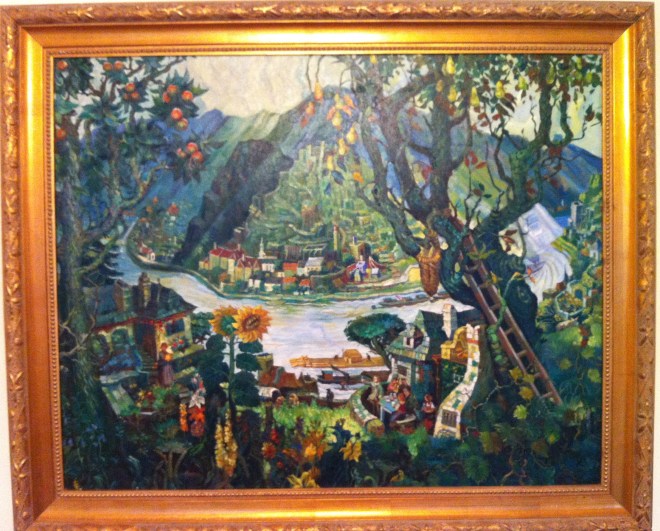
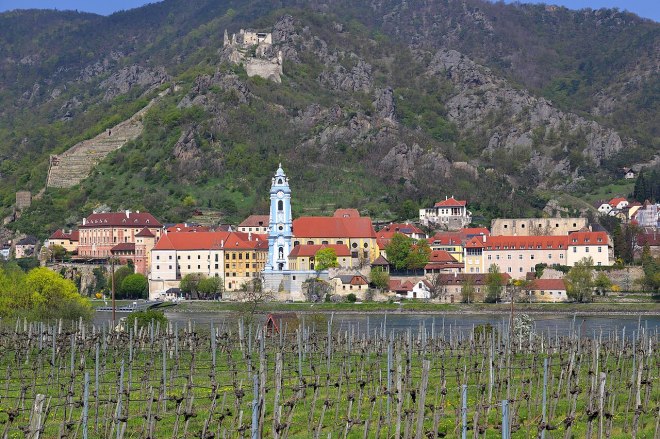
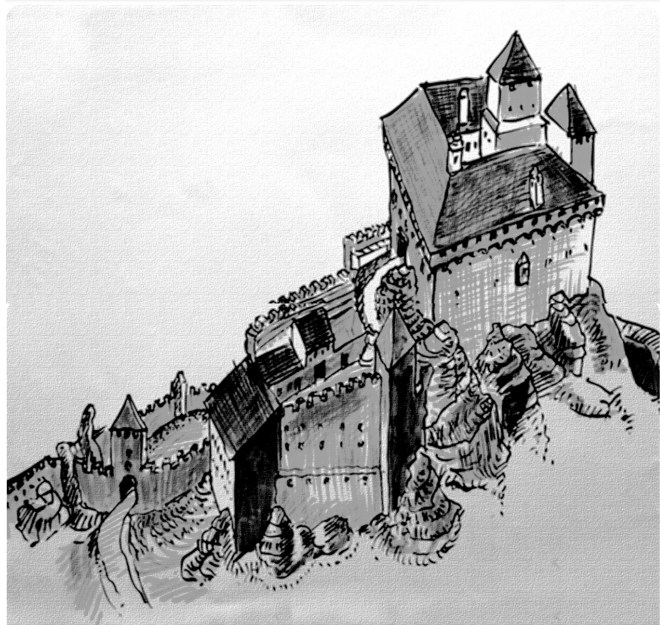
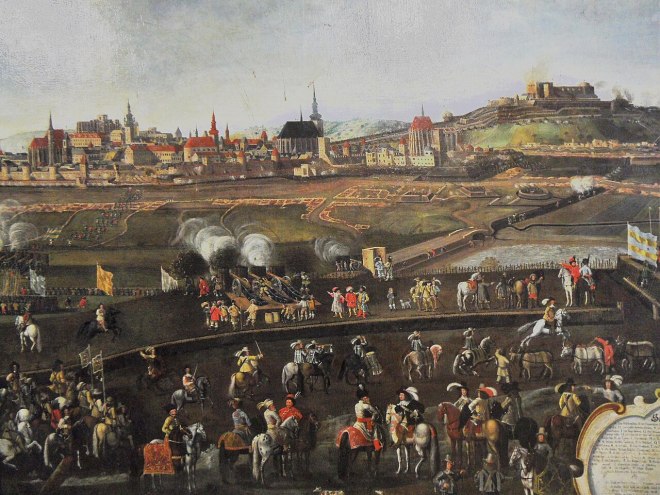
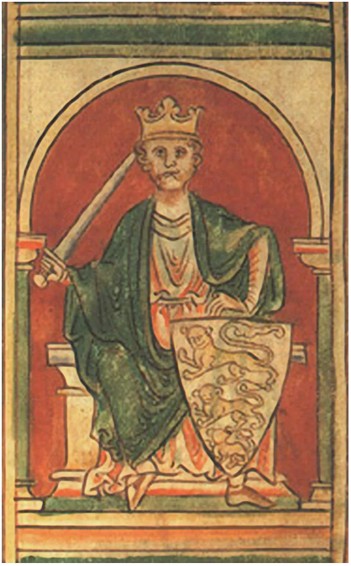
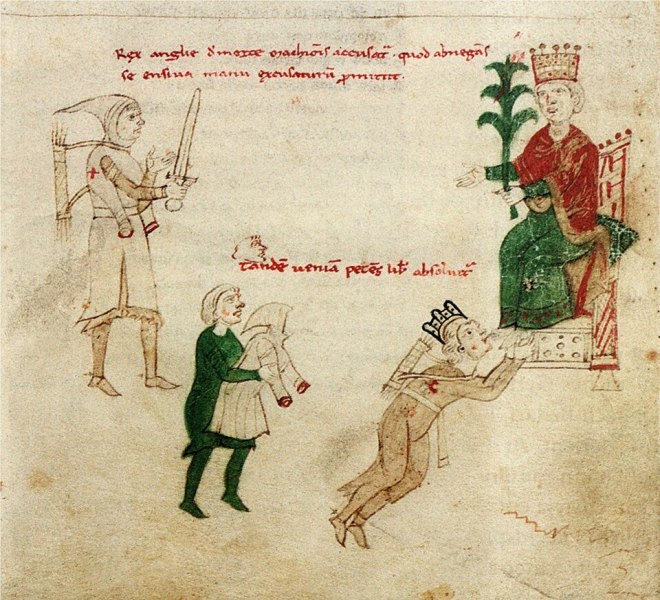
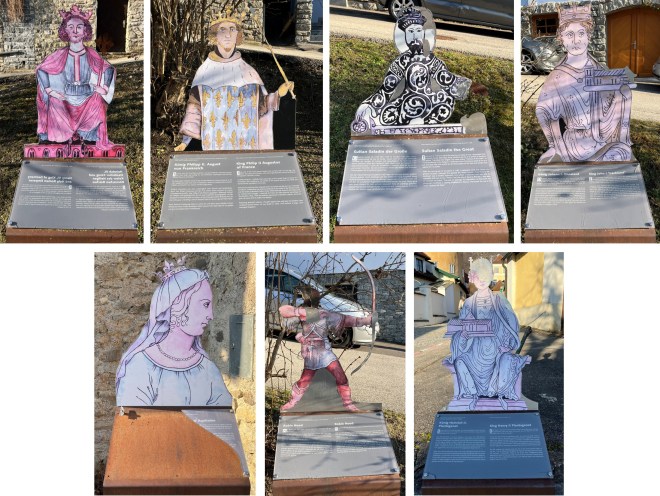
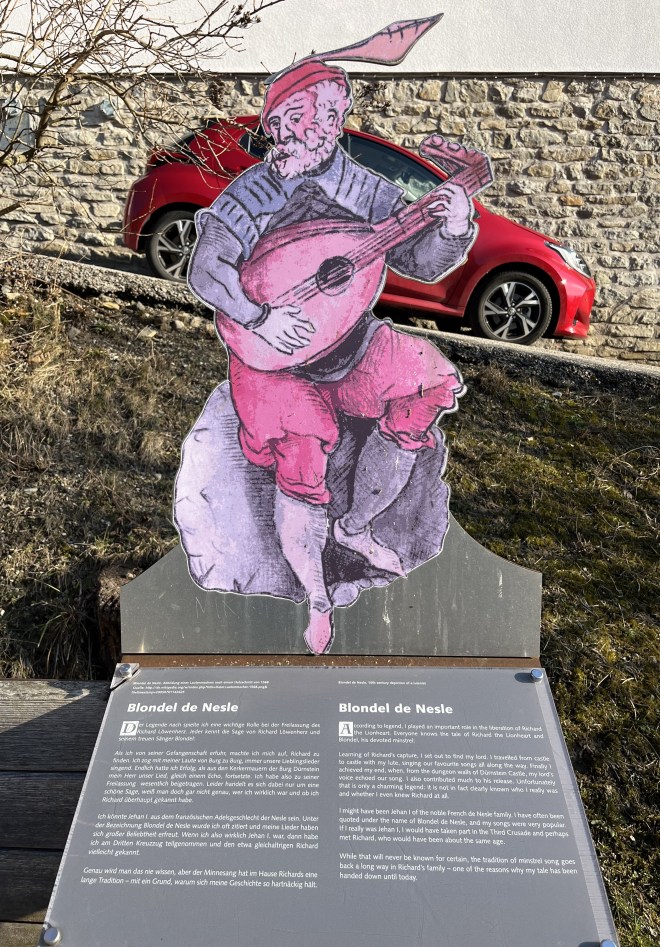
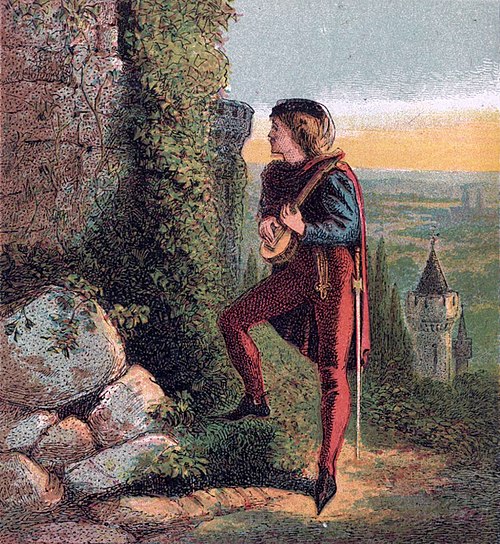
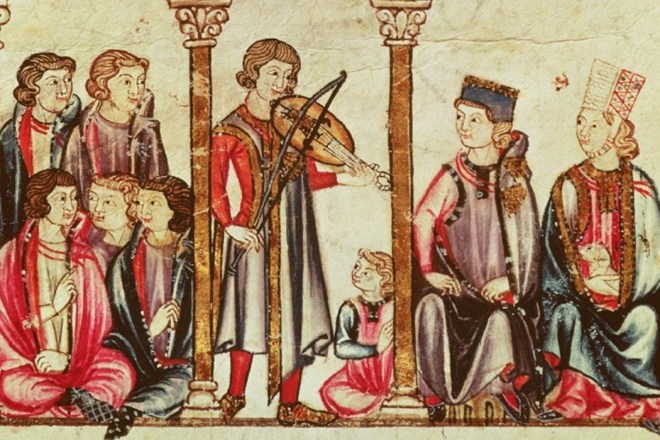
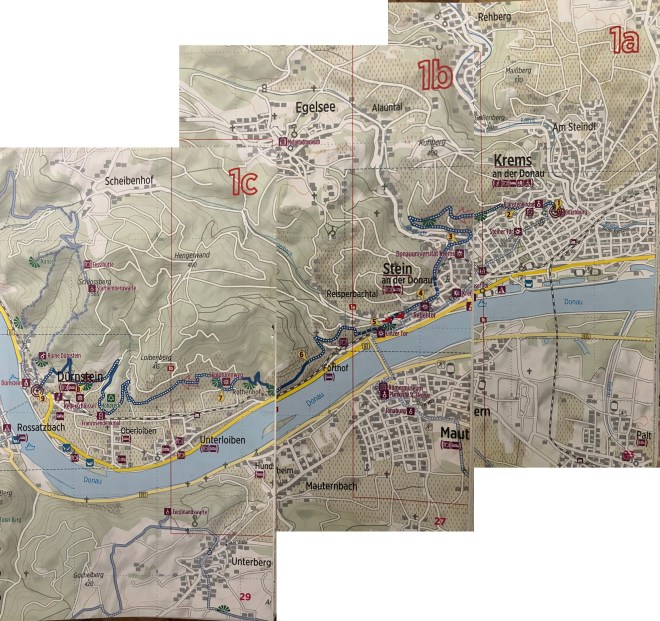
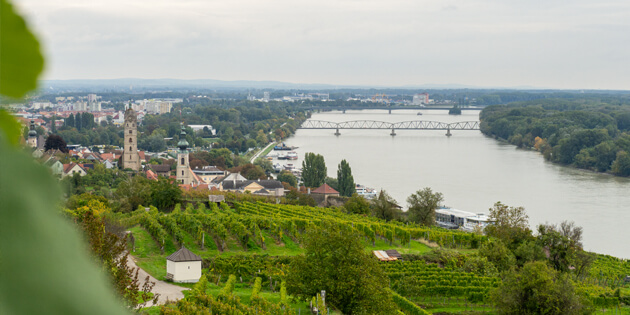
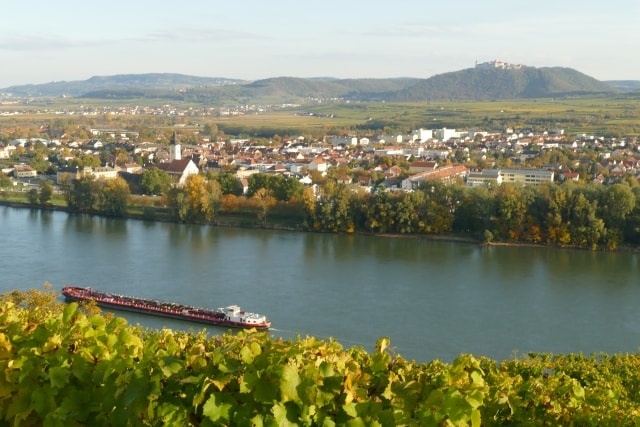
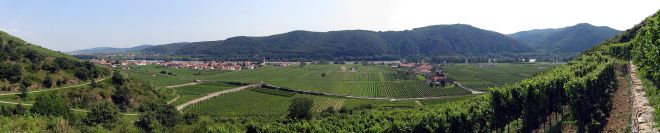
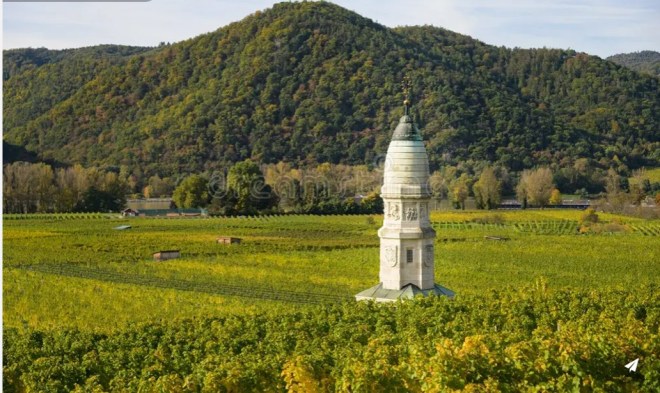
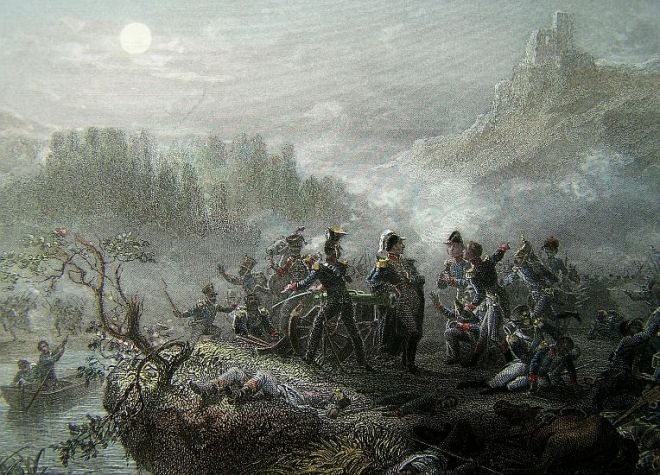


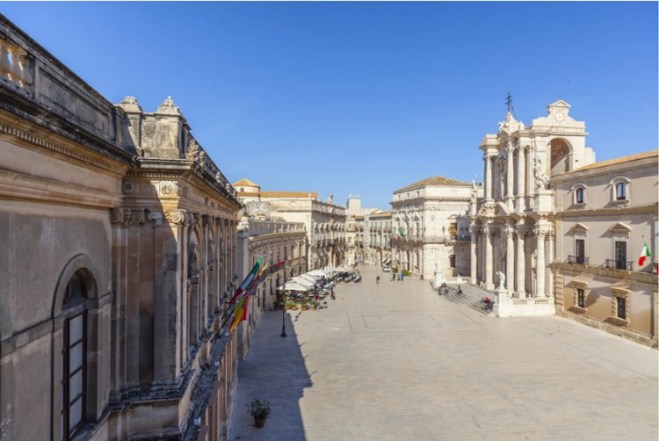

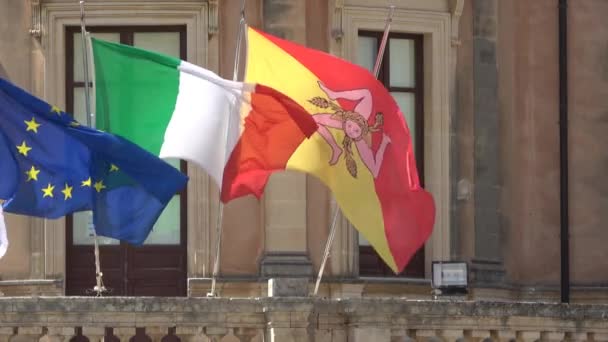
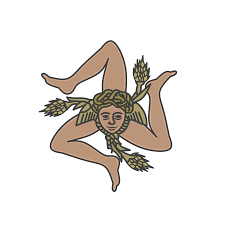
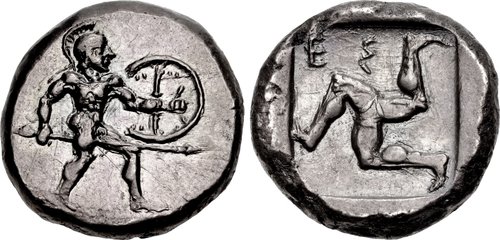
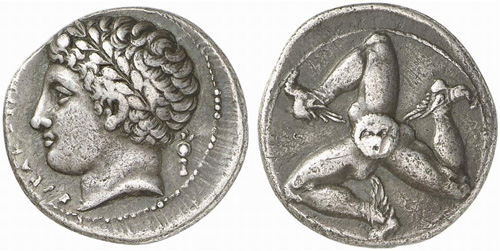


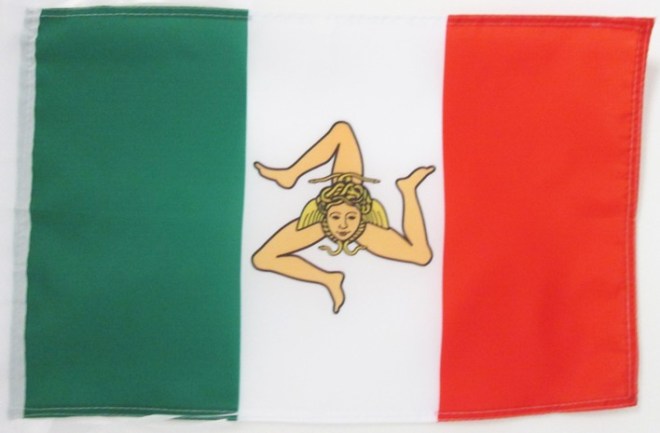

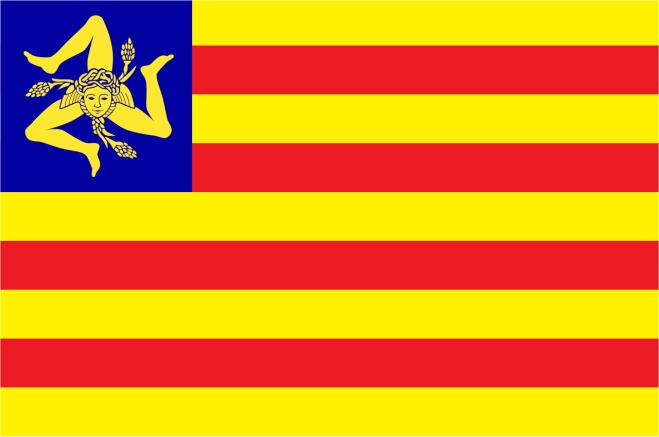


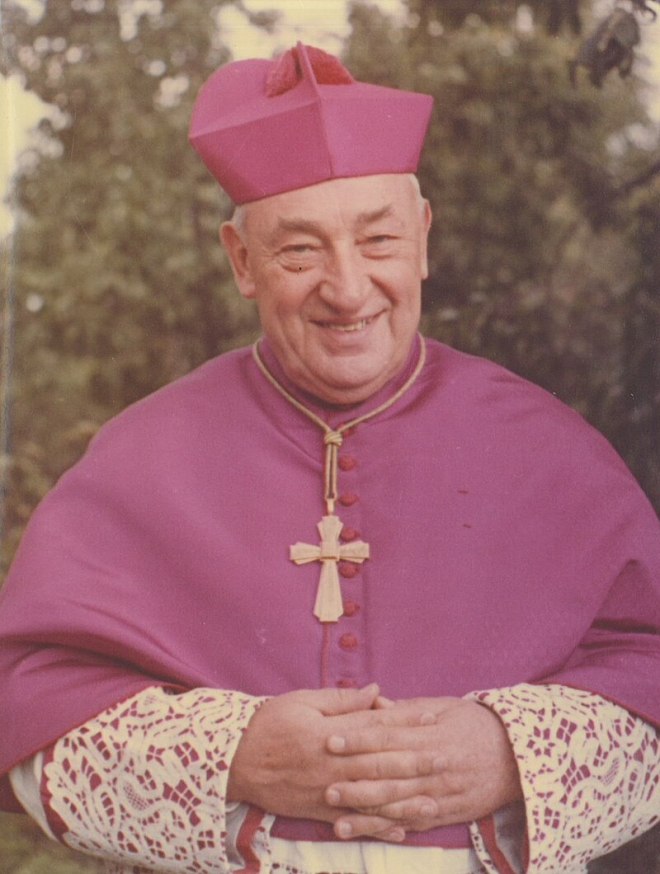


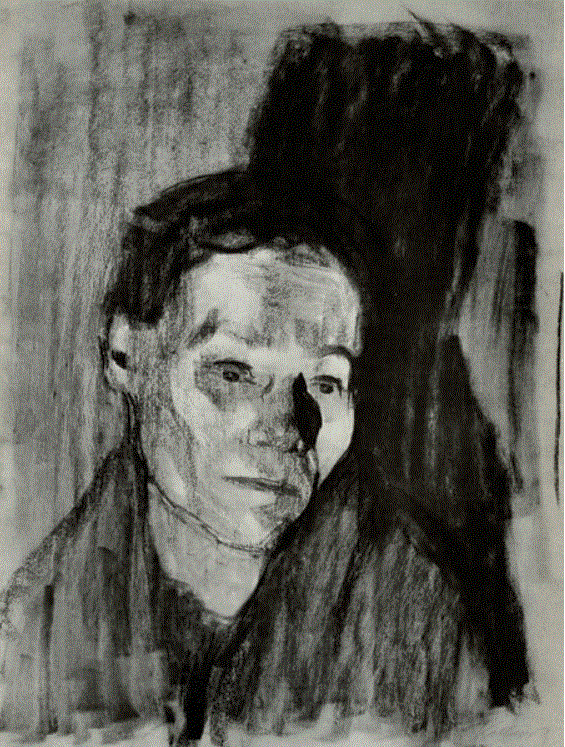


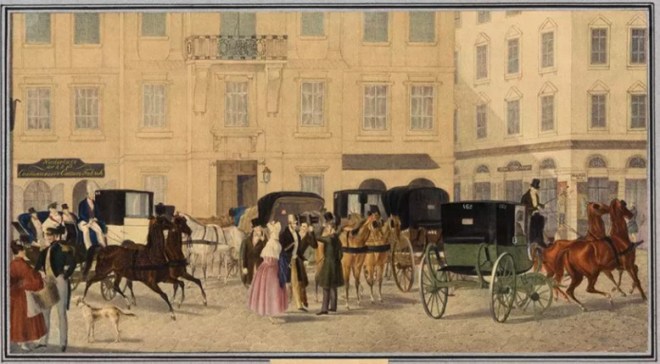

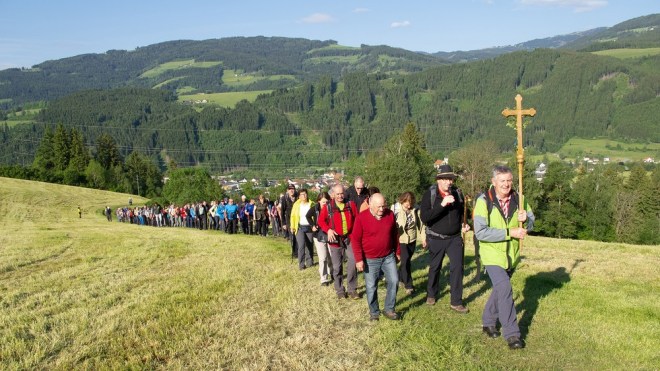
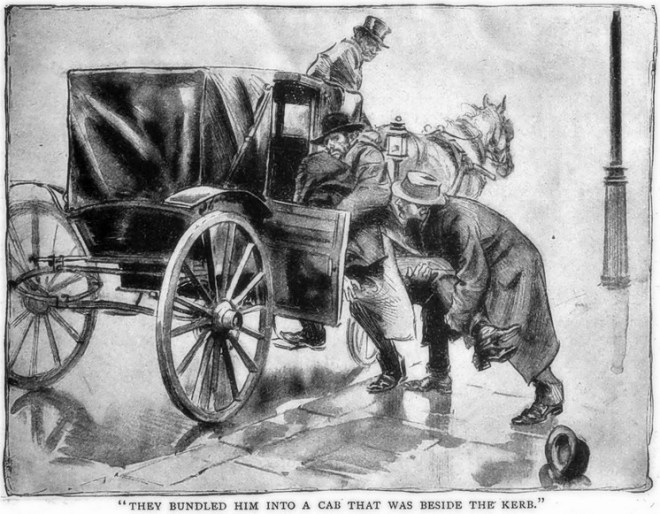
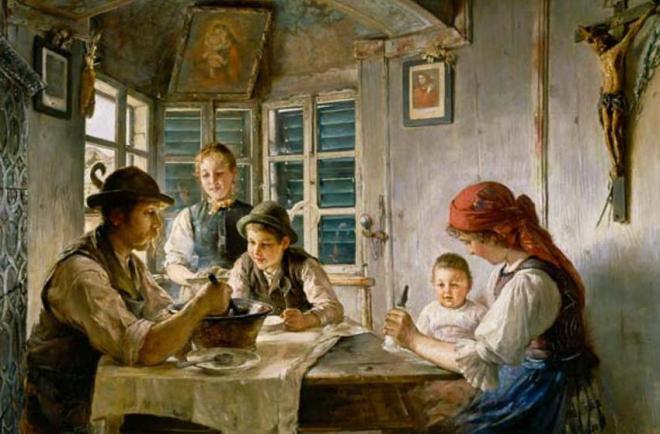
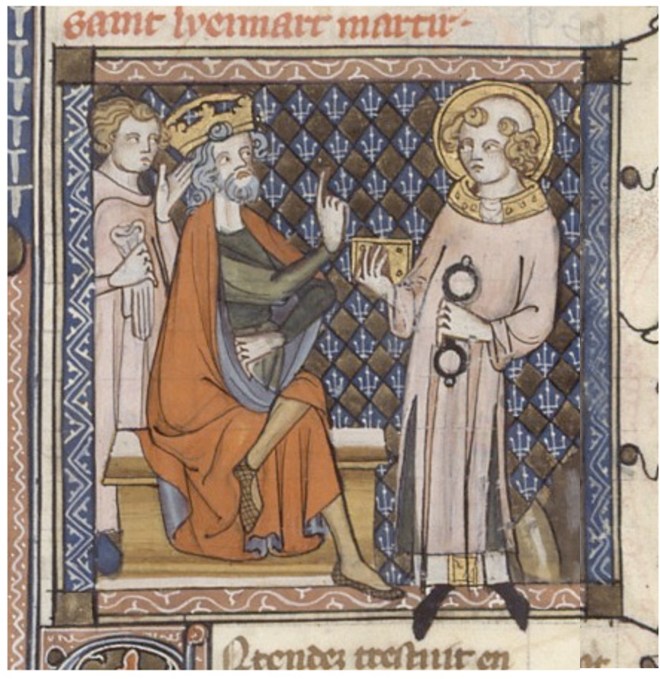
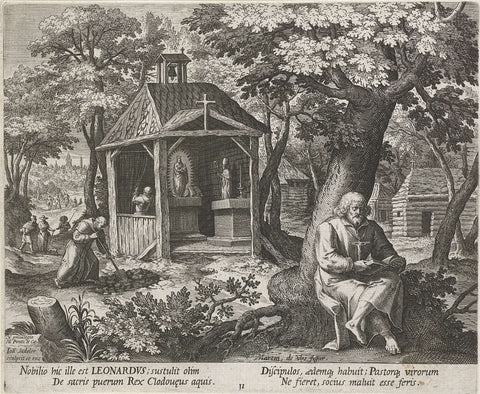
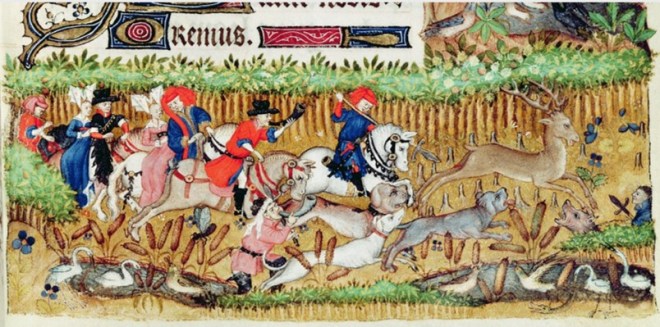

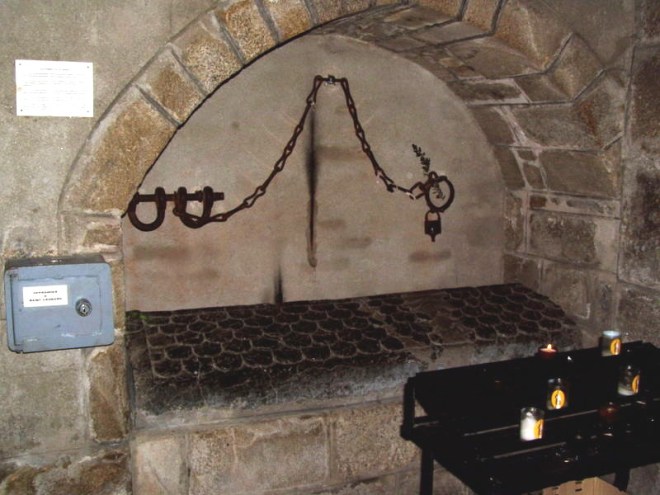
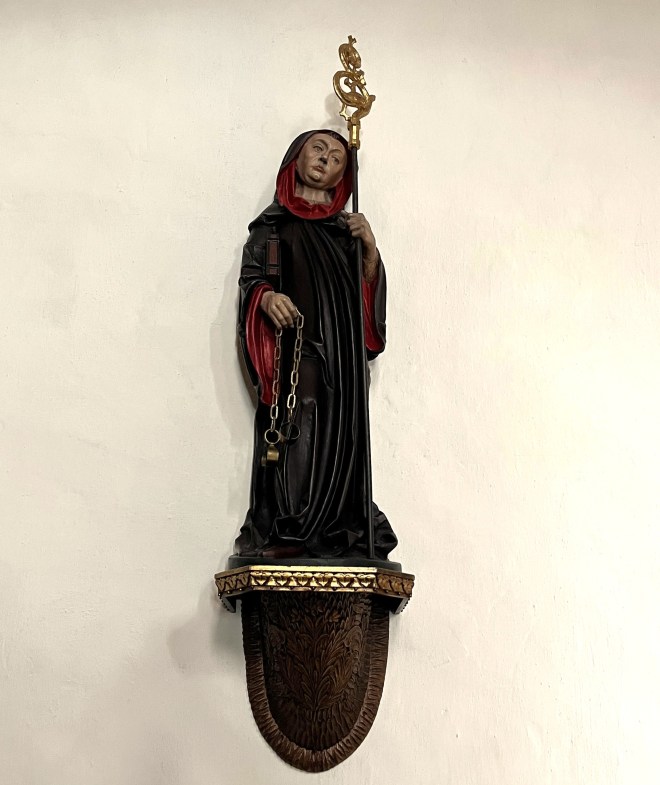


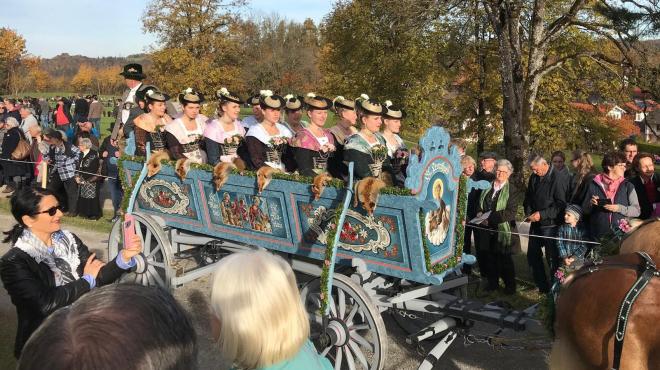


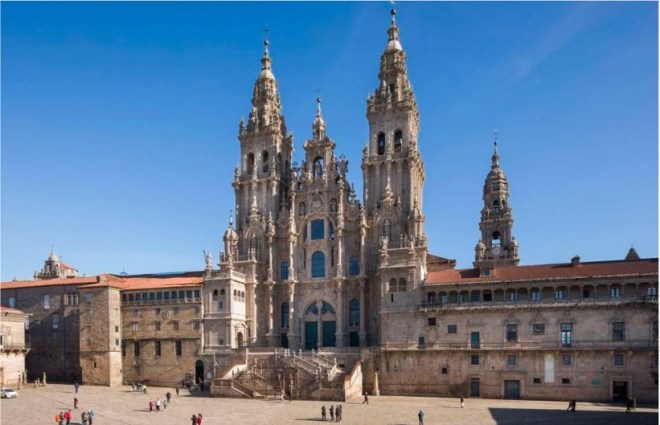


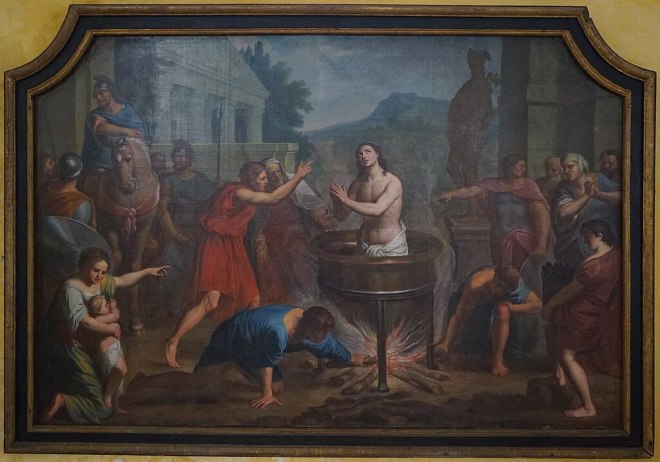
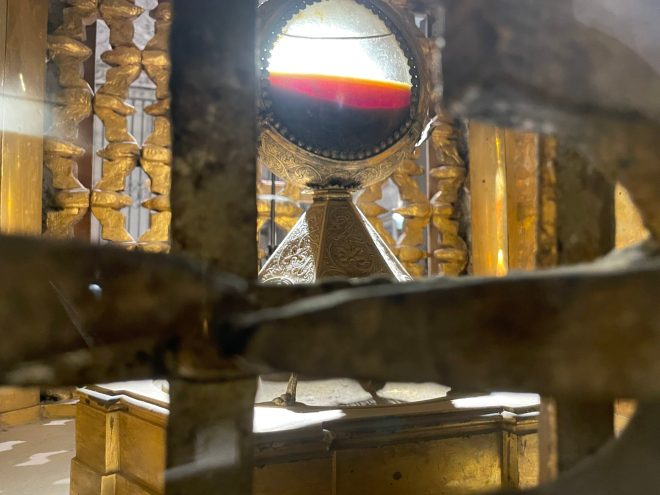

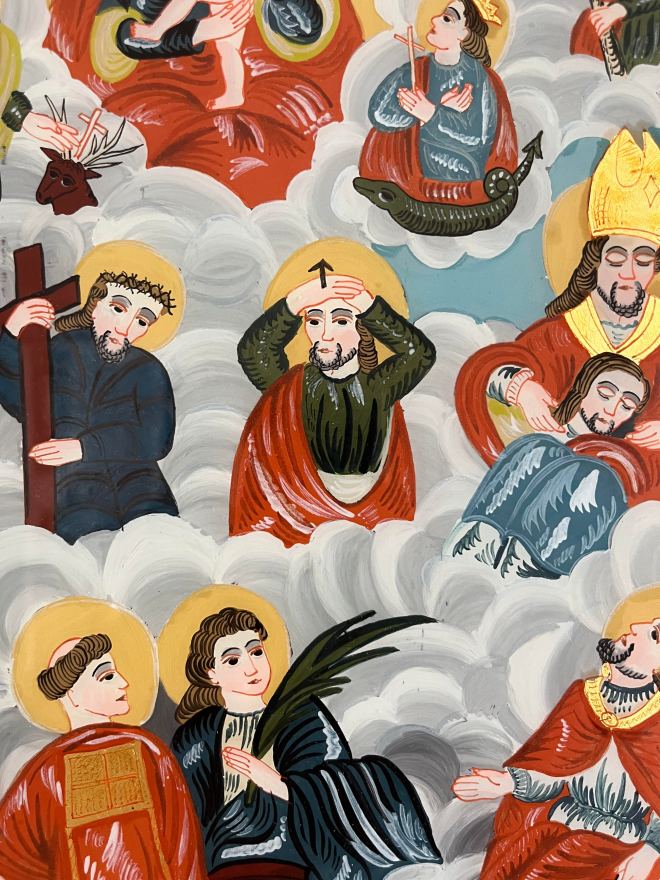
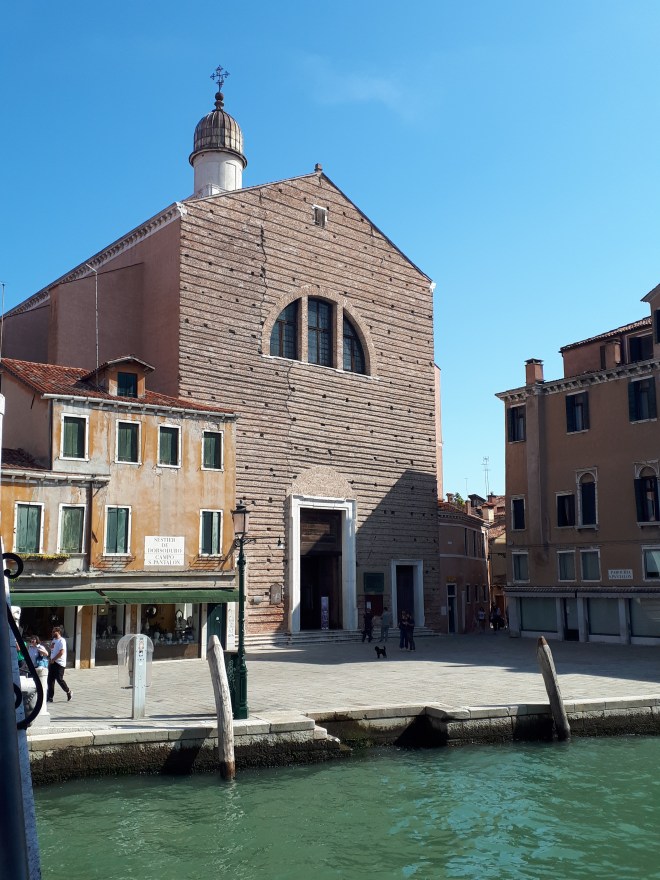
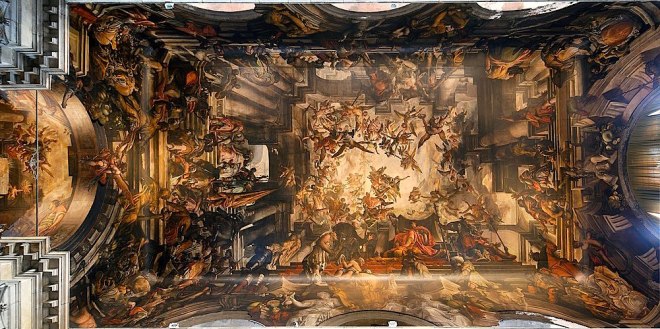
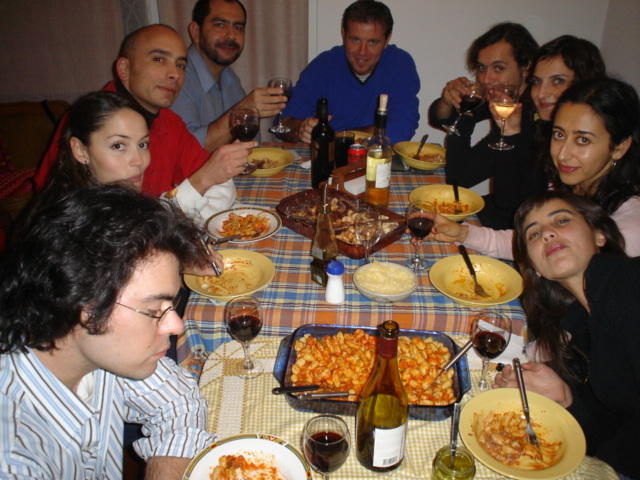
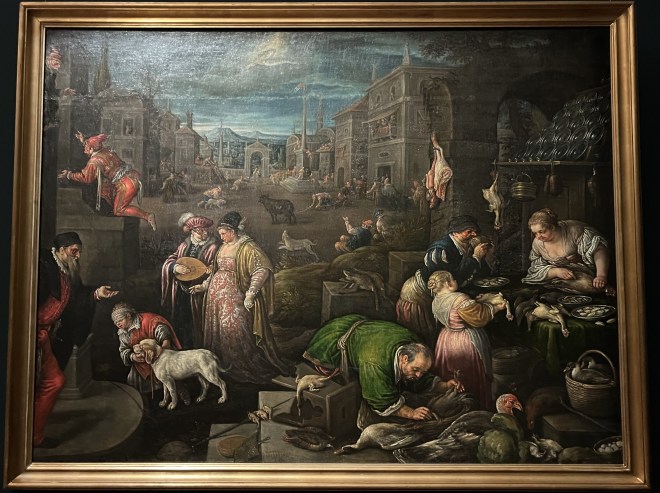

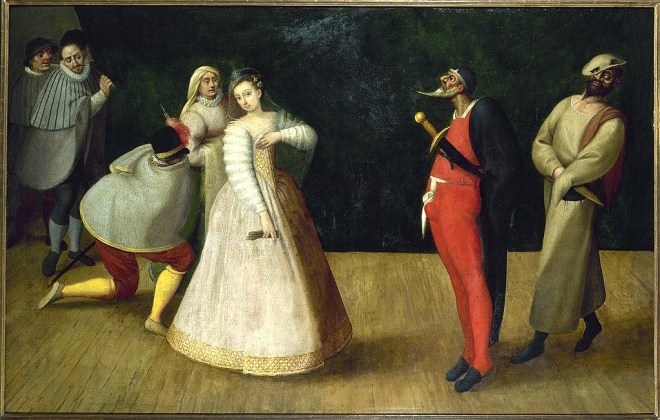
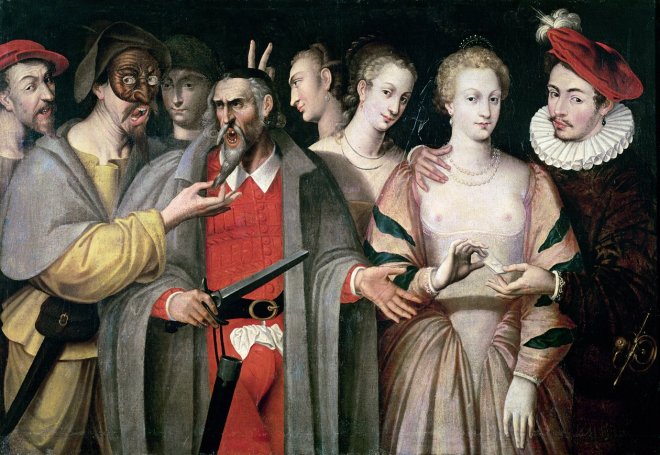


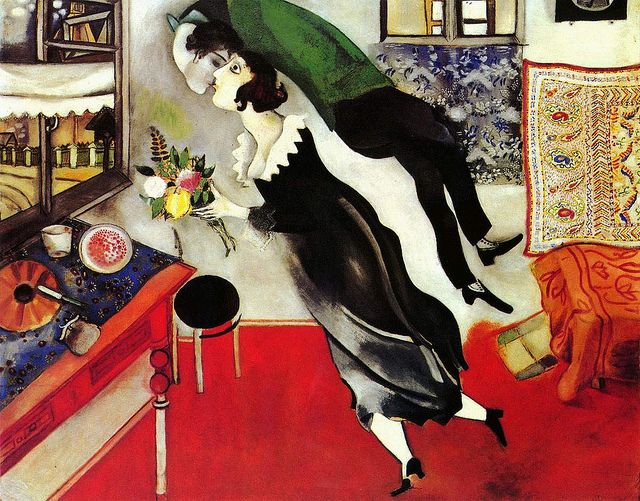
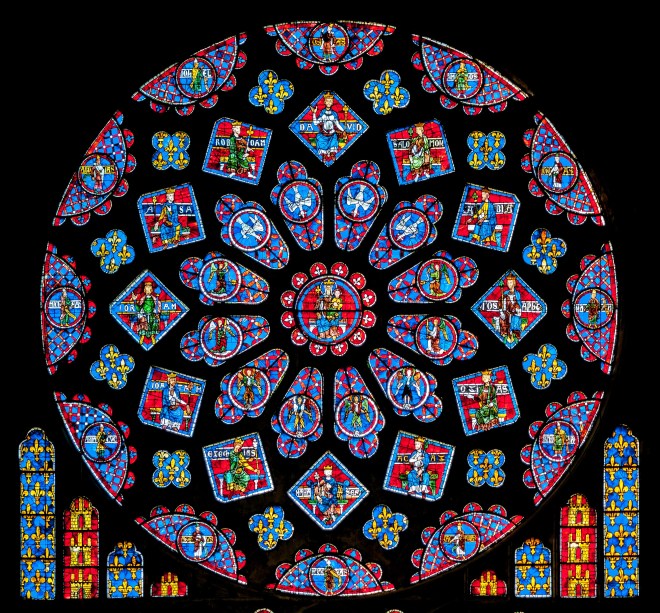


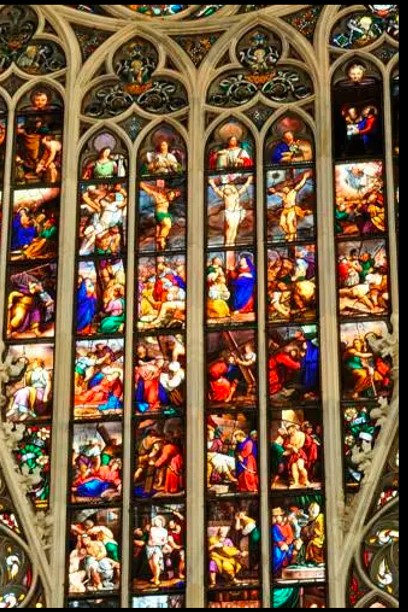


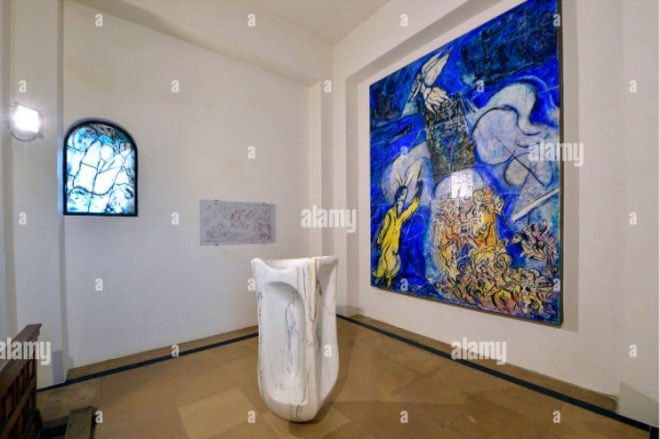

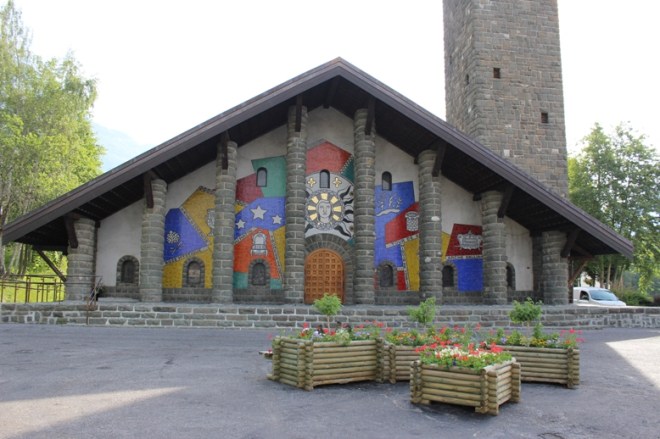


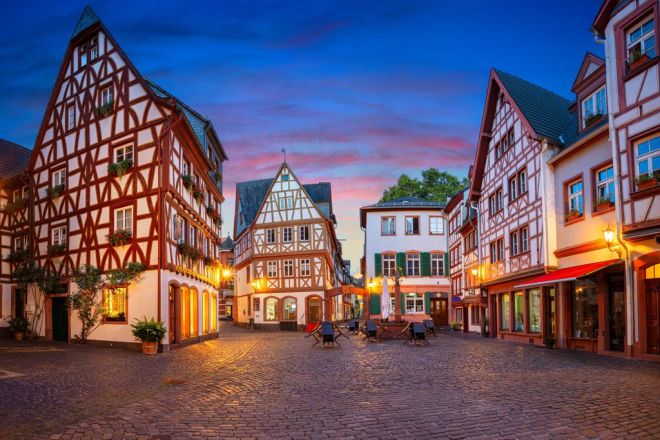


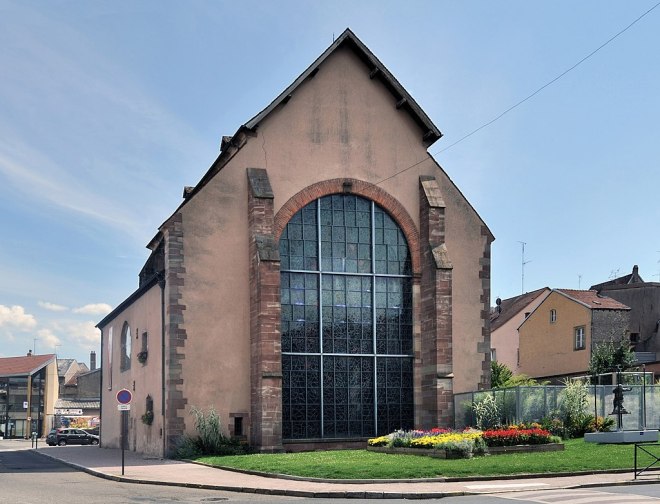

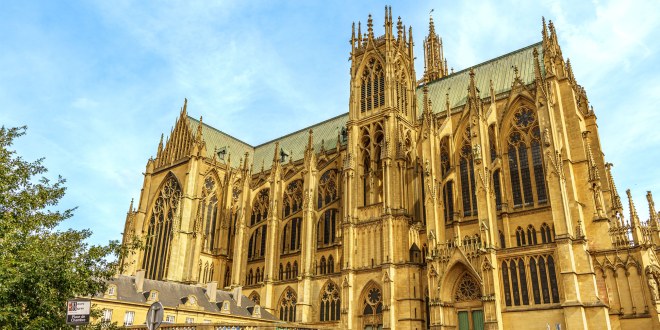


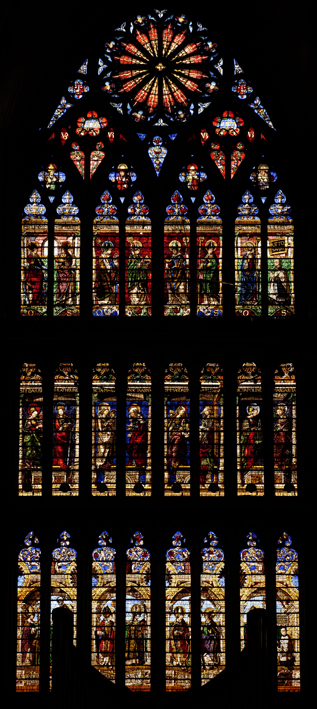
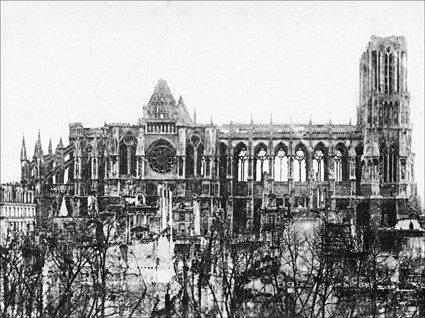
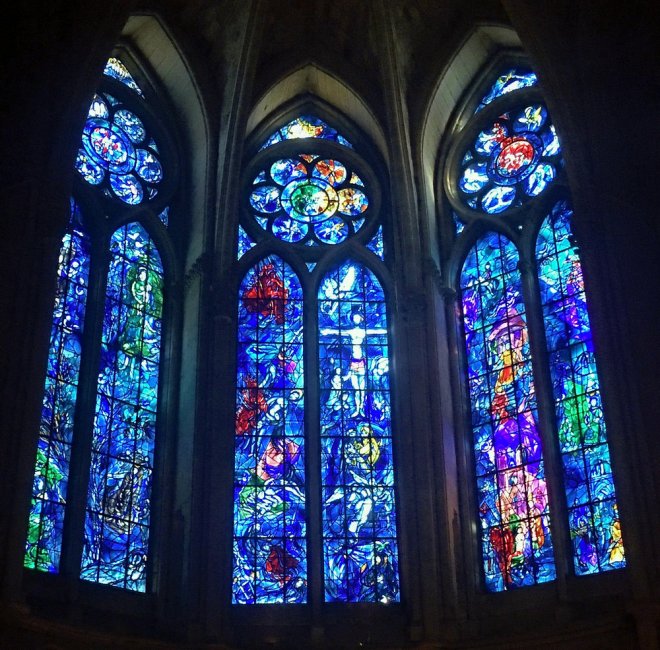

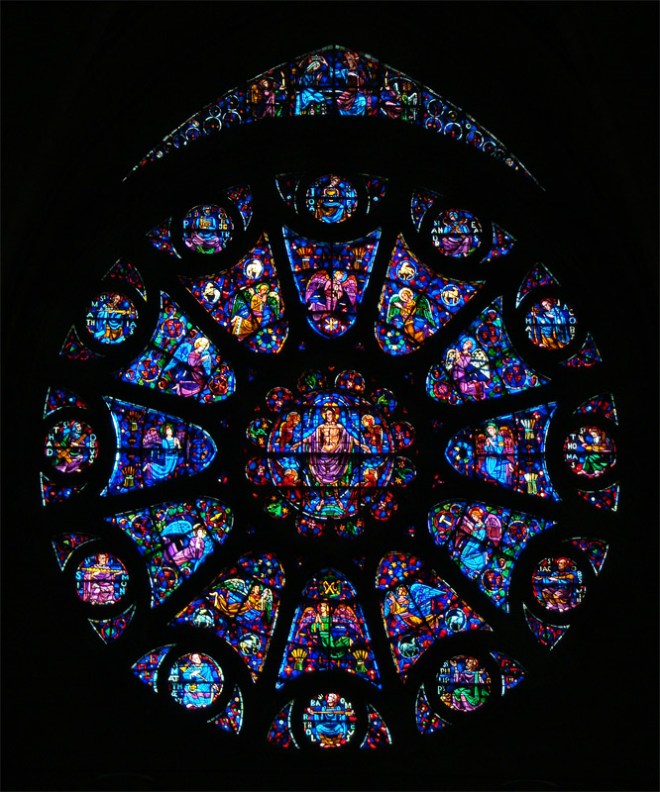
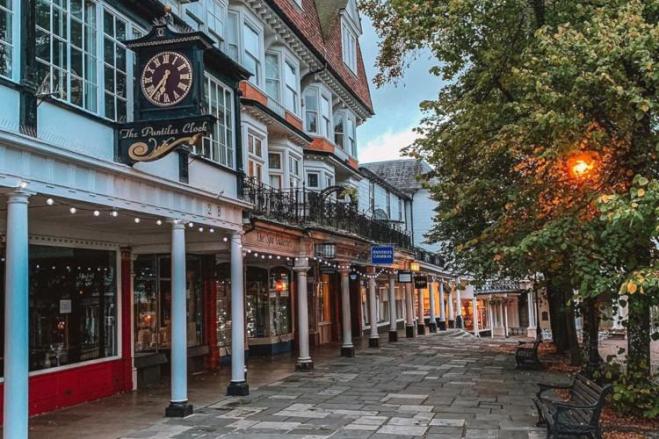
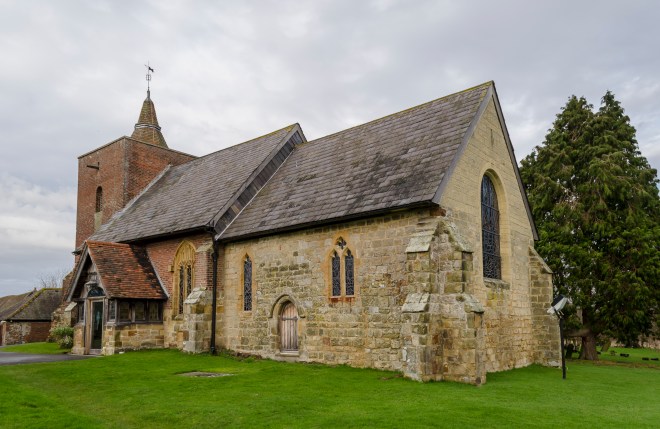
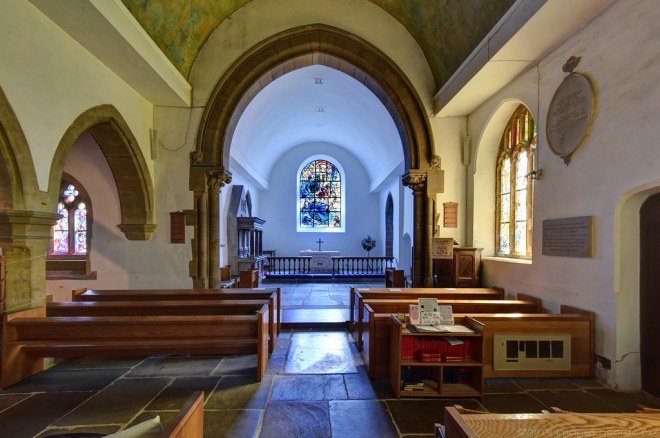
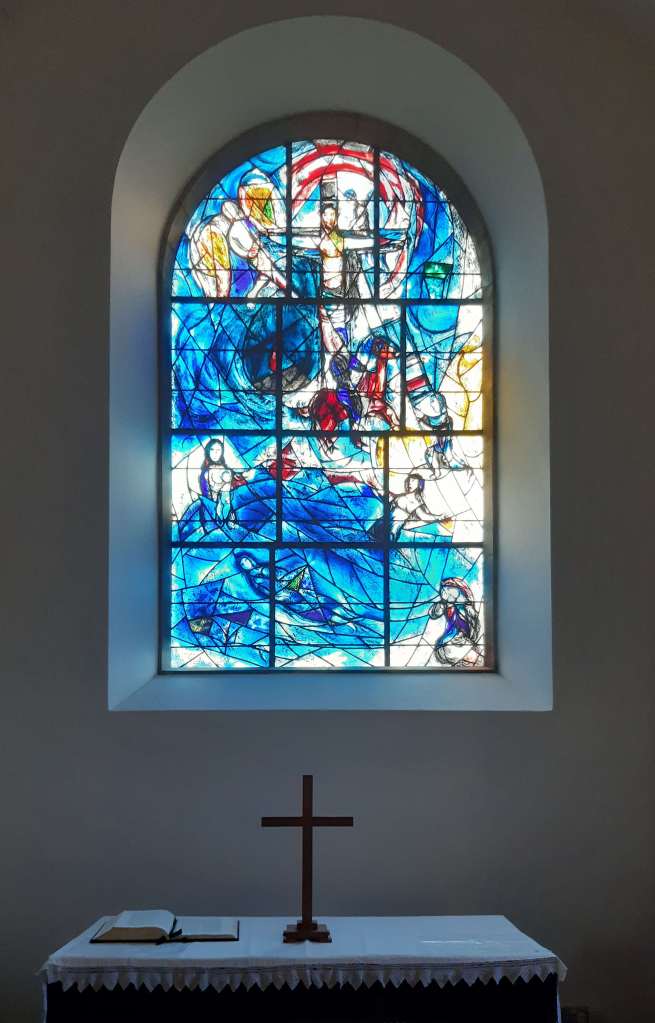
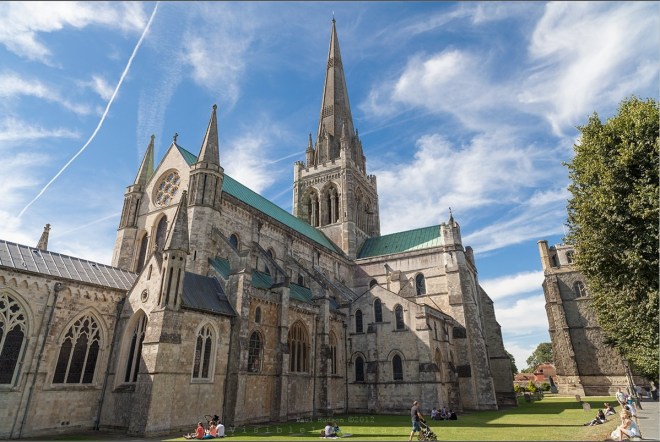


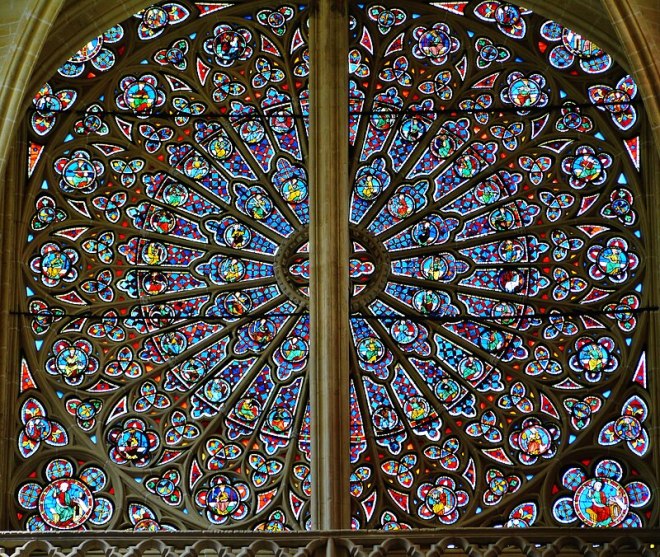

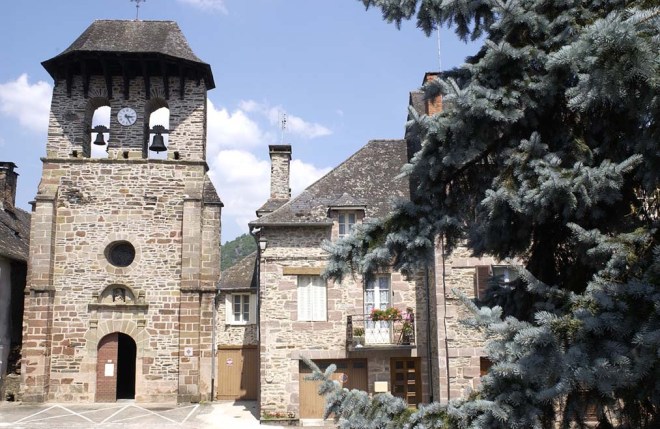


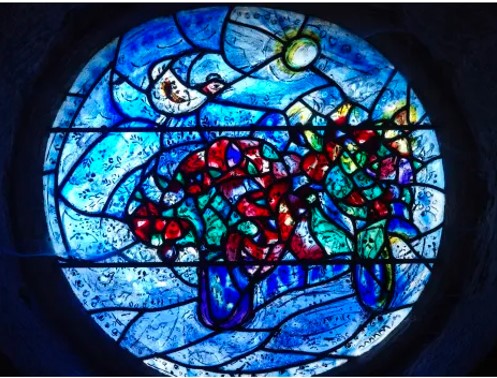


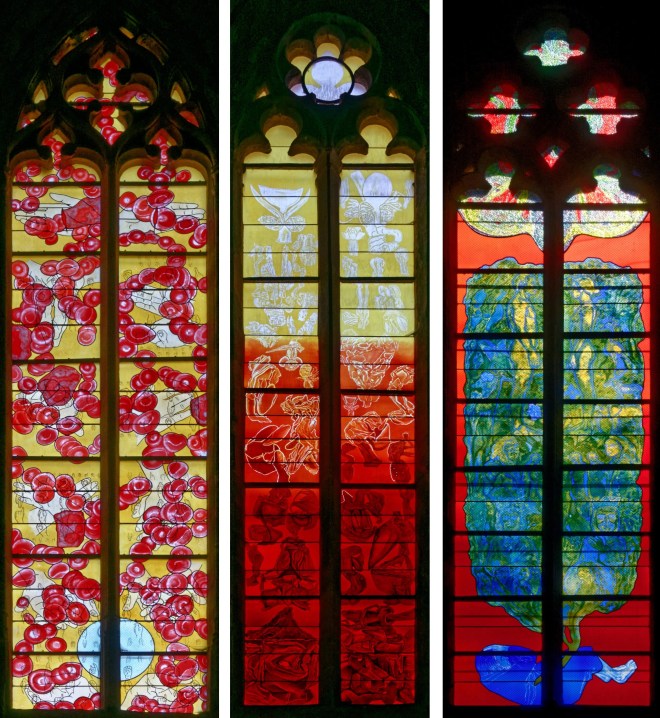


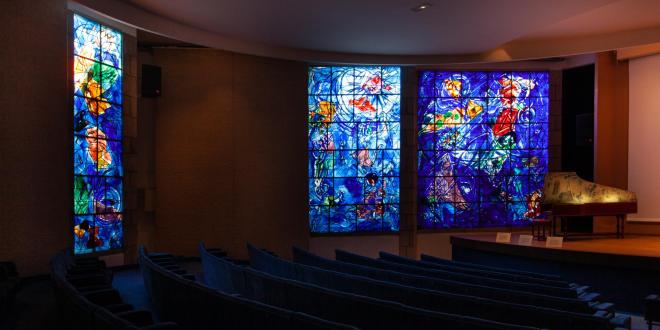




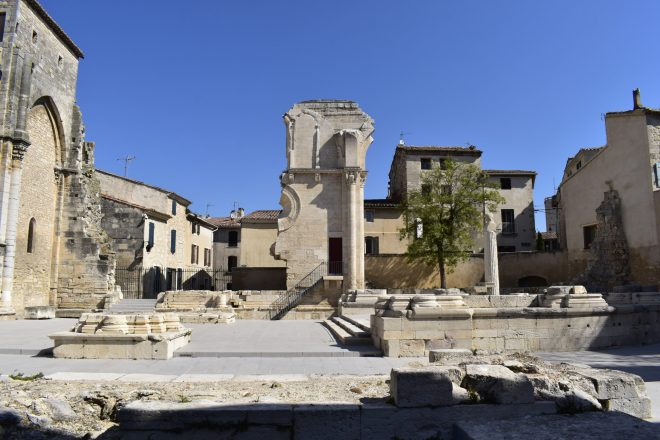


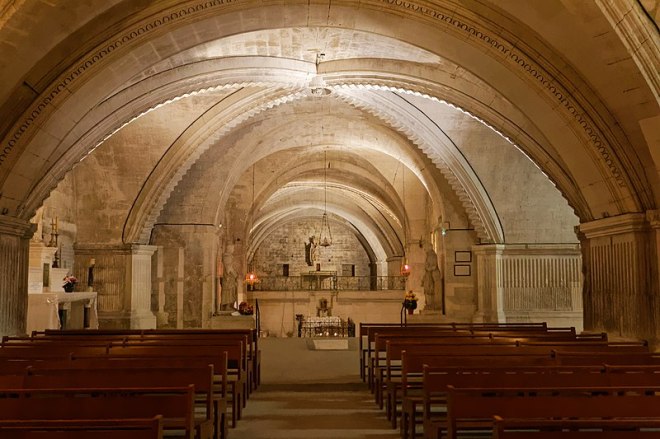

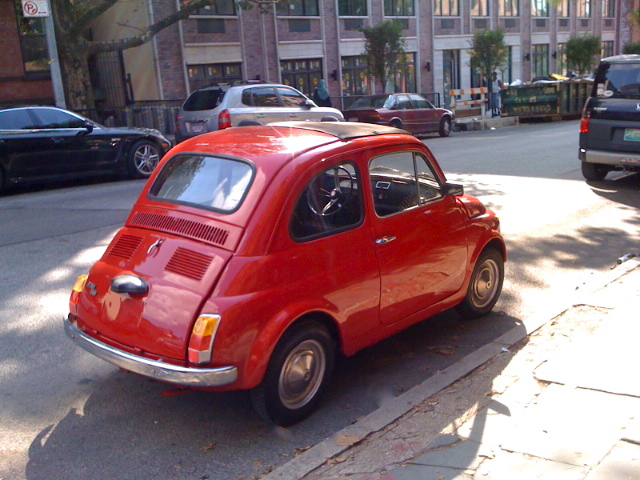

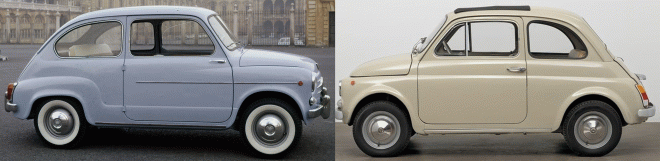



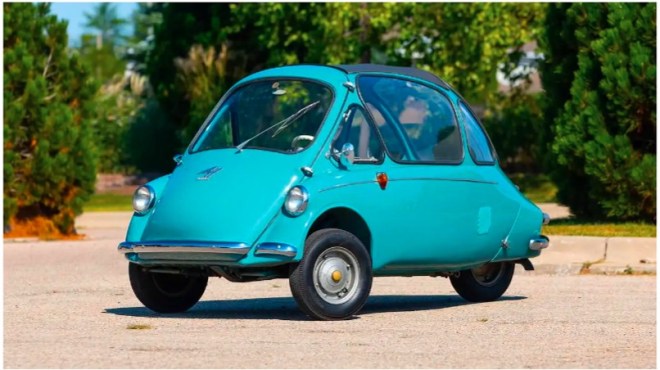


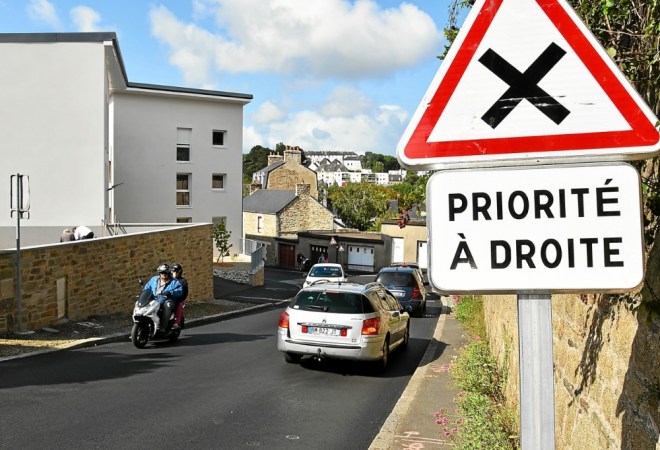
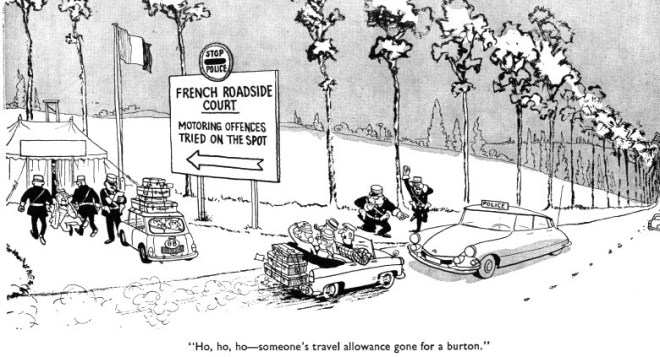
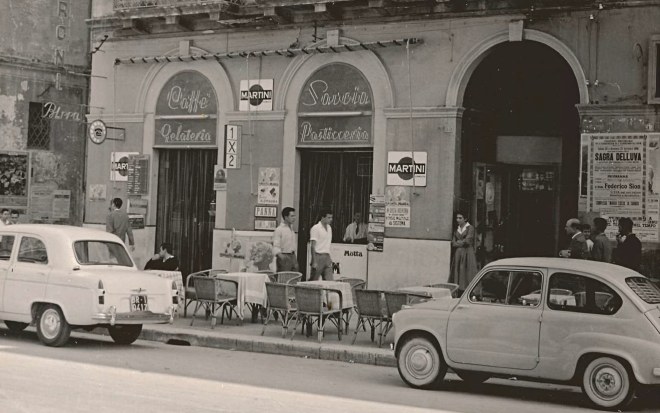
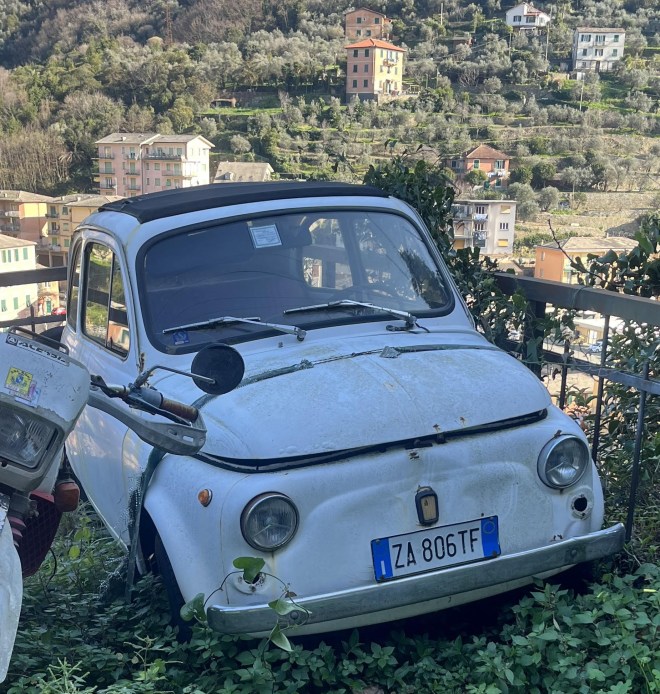






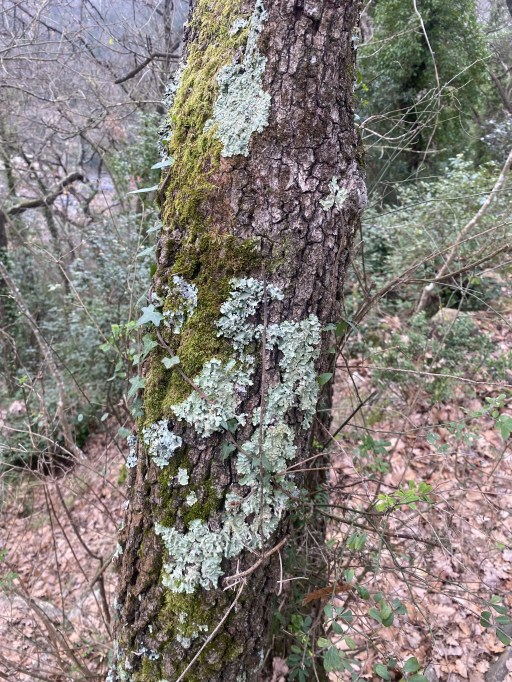


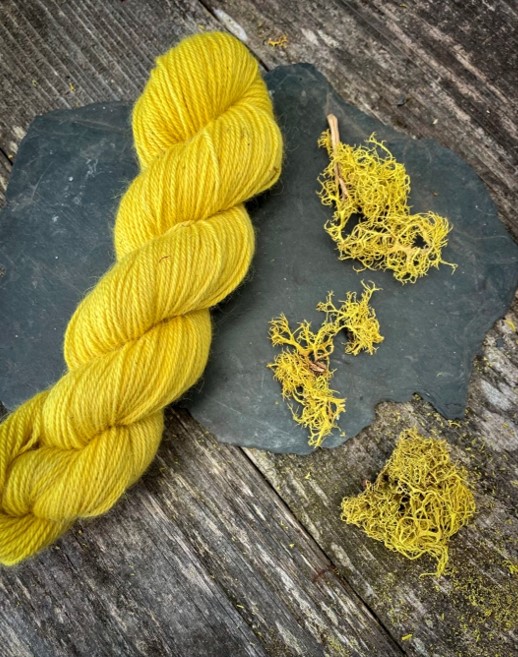


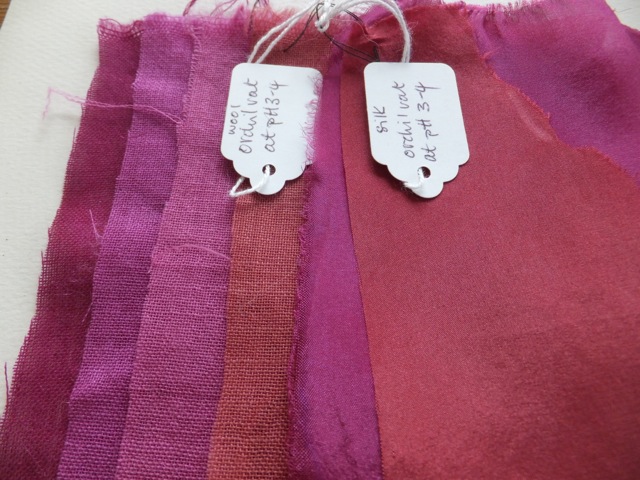


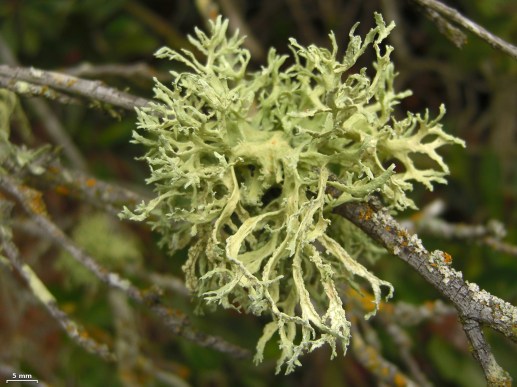

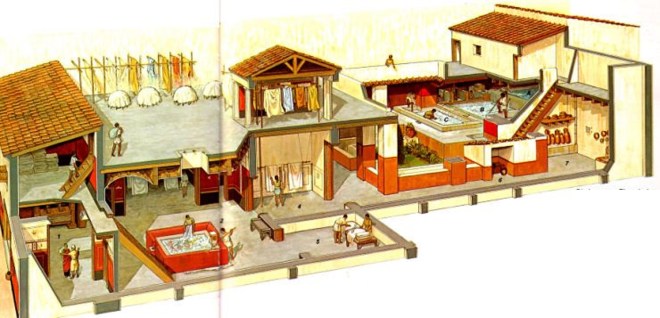


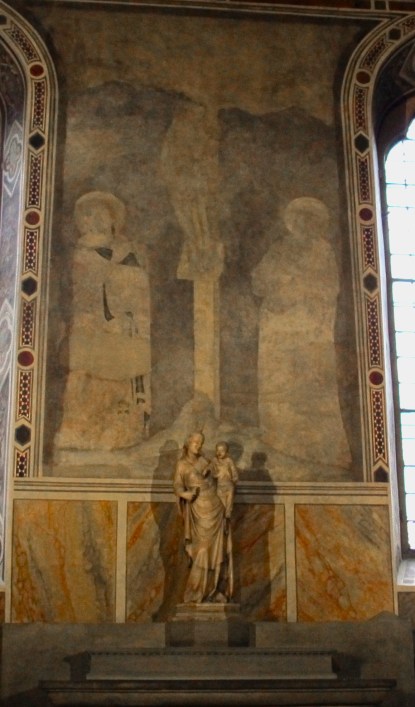
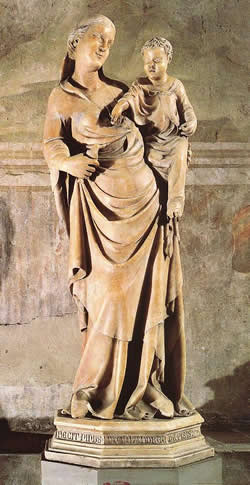


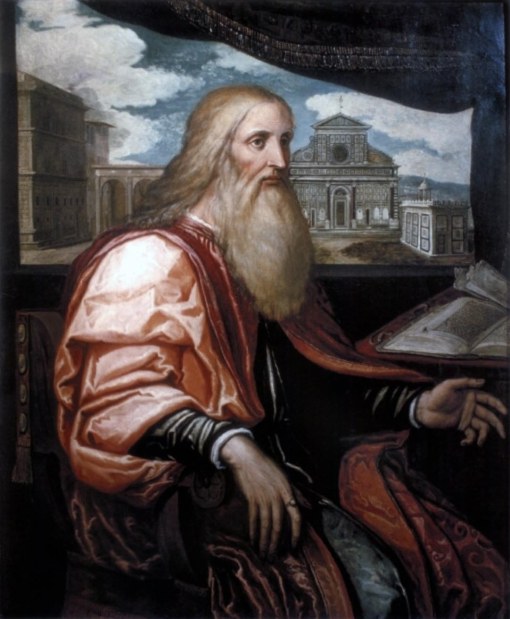

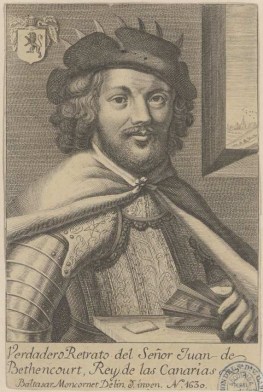


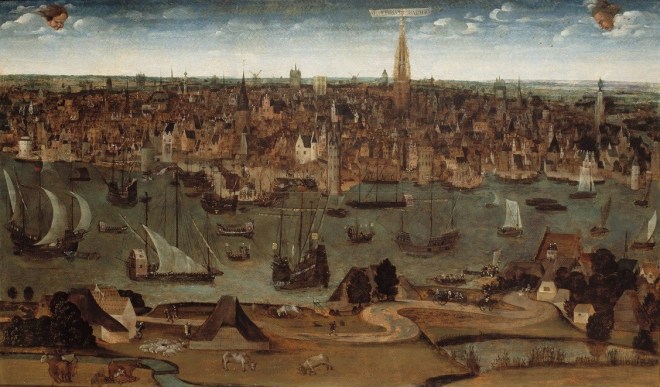


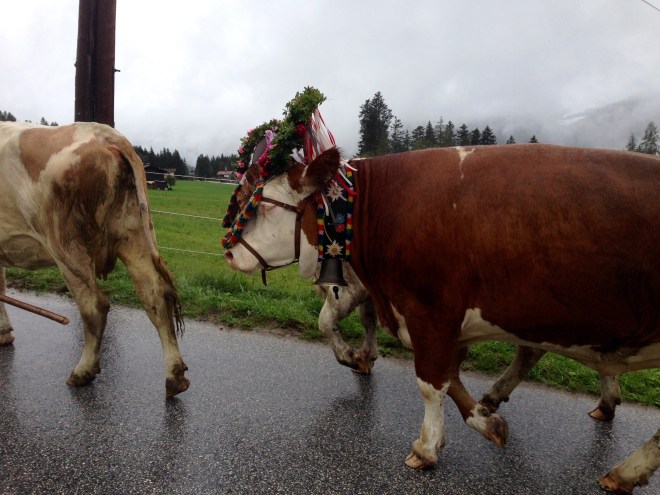

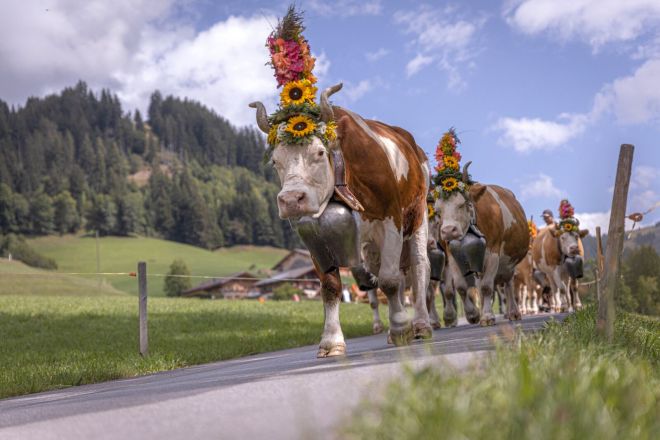






 the heart thrills


