MUSIC, FOOD FOR THE SOUL

Beijing, 9 March 2013

Whenever my wife and I come across a CD section in a store, we’ll normally spend a happy half hour browsing through the offerings. My wife only begins to nervously look at her watch and comment loudly on the rest of the shopping we have to do when I drift into the ethnic music section. You know the type of music I mean: songs from the Nenet and Orok peoples of Siberia, Traditional Samburu Warrior Songs from Kenya, laments of the Cherokee Nation and so on.

I have a strange fascination for this type of music. I always feel that I am about to find a music that will speak to my soul. After all, I have read that music has played a central role in our development as human beings. Music is deep, deep within our psyche, it activates the most primitive parts of our brain.  Surely, then, the music of our remote past is the most “authentic” of musics, and these ethnic musical forms must be closest to the Real Thing. In my enthusiasm I have bought some of these CDs, normally when I am not with my wife, and they now languish in our CD collection, unlistened-to after the first go around. Because they’re always a crushing disappointment. Normally, they’re just plinkety-plonk and wailing voices. The most glaring example of this was not actually from a CD but from a live performance which we attended many years ago in Paris. With much fanfare it was announced that a troupe from Korea would be performing traditional Korean music in the French capital. We decided that we had to take part in this Cultural Event.  As the house lights dimmed, we could see three traditional-type instruments sitting on the stage, starkly beautiful under the lights. Three elderly gentlemen dressed in traditional Korean garb silently walked on and slowly settled down in front of their respective instruments. After a pause, they leaned forward, played plink-plank-plonk (I kid you not; literally three notes), and then leaned back, leaving us in dead silence for what seemed an eternity. My wife and I got the giggles, which I’m sure those around us did not appreciate. The rest of the show was all downhill thereafter. We left at the break.

The problem is, classical music is one of those things that society strongly suggests is Good for You, like cod liver oil. So when I was young – and indeed not so young – I instinctively rejected it.  I had the same reaction to all those classics of English literature that society keeps pressing upon you as Good to Read. As a result, I have read hardly any of the Canon of English literature: some Shakespeare plays, normally the ones that I have acted in, Chaucer’s Canterbury Tales (after I’d seen a theatrical version of them; wonderfully ribald stuff), one novel by Thomas Hardy (I had to do it for O-level English, I hated it; his poetry is better by far), half of Dickens’s “Pickwick Papers” (because there was absolutely nothing else to read and it was raining outside), and that’s about it. Oh yes, I read Jane Austin’s “Pride and Prejudice” after I saw the film (wonderful, wonderful first line: “It is a truth universally acknowledged, that a single man in possession of a good fortune, must be in want of a wife.” It is certainly a truth acknowledged here in China). My wife is the same with Italian literature. Mention Dante to her and she will rant on about the hellish hours spent at school analyzing every single word in the Divina Commedia.

But to come back to music. Until I was in my third decade, my instinct was to head for the door any time one of the Greats of classical music was put on the record player (still no CDs in those days). And I hardly ever went to a concert hall, much to the despair of my mother-in-law who had a season ticket at the Scala and lived for music.  I was constantly on the look-out for alternatives. When I was a boy, I enthusiastically followed the Beatles and then as a teenager the more intellectual of the Rock ’n Roll groups – Emerson Lake and Palmer, Pink Floyd, King Crimson, and a smattering of others. But I soon tired of what was on offer. I keep telling my children that it’s been downhill ever since the mid-seventies in the world of Rock ’n Roll, but of course they deny this self-evident truth.

And so I fell back on ethnic music, with the disappointing results I have just described.

But all is not dark and dismal. I have sometimes stumbled across pieces of music that have really spoken to my soul. I mentioned in an earlier posting a Christmas carol by John Tavener. On the strength of that one piece I bought a CD of his music. I have never had cause to regret it. I have always had a fondness for Benjamin Britten since as a boy singing his Missa Brevis in the school choir. So I snapped up his “War Requiem” when I came across it during a visit to Coventry Cathedral. It has been a joy in my life. What else? For my wife’s fiftieth birthday, we decided to spend a few days in Paris. On the long drive there from Vienna we played a new set of CDs my wife had just bought: eight CDs from Harmonia Mundi France – a sort of summary of Western classical music; only the French would have the guts, or maybe the intellectual arrogance, to try that. I fell in love with the first piece on CD 1, a piece of very early Church music sung by the Lebanese Sister Marie Keyrouz, of the Melkite Greek Catholic Church. On the strength of this one piece I later bought a CD of her songs. Wonderful, all of them. We got to CD 2 round about Linz, and out floated the haunting Kyrie from the thirteenth Century Gradual of Eleanor of Brittany. I’m still looking for the whole set of music contained in that Gradual. One day, I read a review in the Economist of a “Passion according to St. Mark” by the contemporary Argentinean composer Osvaldo Golijov. I was intrigued. I managed to find the CD in a specialist music shop in Vienna. I was hooked. He weaves Spanish musical forms together with more traditional classical forms and musical forms from his Romanian Jewish heritage. On the strength of this CD, my wife bought his CD “Ainadamar”, a musical reflection on the life of the Spanish poet Federico Garcia Lorca, murdered by Nationalist militia during the Spanish Civil War. More Spanish, this one, which feeds into my fascination with flamenco, an absolutely fantastic form of music. Now that is an ethnic music which speaks to the soul! I have several CDs of flamenco music, and if I could be born again I would want to be born a singer of flamenco. Or maybe a dancer of flamenco. Flamenco’s roots are in Muslim music, and some people in Spain are exploring the links. When my wife and I were on a holiday in Spain a few years ago, I came across a CD in Toledo which was a medley of Muslim, old Spanish, and Jewish songs. Two of the Muslim songs in particular were ravishing; I can’t give you the titles because the CD is sitting in our storage boxes in Vienna. I could go on – certain pieces of Indian music, one or two Jazz songs which are absolutely bewitching, Bob Marley’s “Jerusalem” … Even some of those classical music pieces that I ran away from when I was young!  For every piece of plinkety-plonk I’ve fallen for, I’ve stumbled across a piece of music that truly comes from heaven.

FULL MOON

Beijing, 25 February 2013

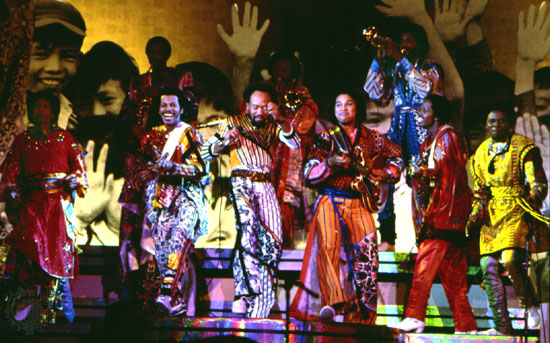
Yesterday started with my wife finally remembering a song that had been chasing around in her head all night: “September”, by Earth, Wind and Fire, whom we see here in concert:

earth wind and fire concert-1

This is a song from “our” generation; it came out in 1978. My wife tracked down a version of it on the web and promptly played it for the rest of the day. Now don’t get me wrong, it’s a great song – a feel-good song, my wife calls it – but after you’ve sung along with the refrain

Ba de ya – say do you remember
Ba de ya – dancing in September
Ba de ya – never was a cloudy day

for the fifth time, it begins to pall – at least for me. But not my wife. Mercifully, she had to turn it off when we went to bed, but then the fireworks, which had been grumbling along all day,

fireworks-5

began to build up to their final roar for midnight.

fireworks-6

Because, for those of you who do not closely follow matters Chinese, yesterday was the Lantern Festival, the last day of the Chinese new year celebrations, whose end is traditionally celebrated with an orgy of fireworks.

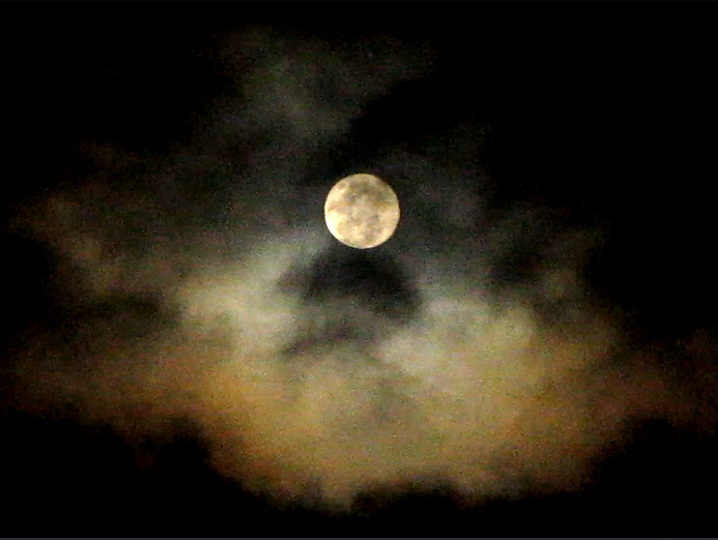
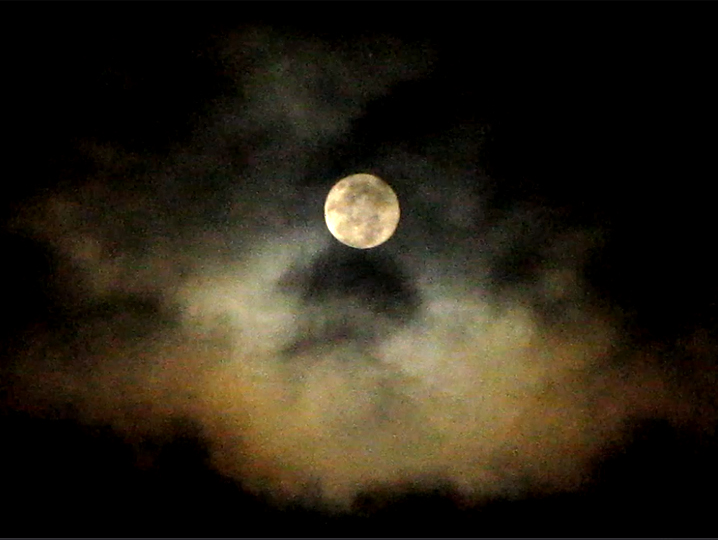
At one moment during the evening I slipped out to the local 7-11 to buy a bottle of our favourite wine (a Spanish tempranillo – but I digress). Coming back, I looked up and glimpsed through the clouds what all this sound and fury was all about: the full moon.

full moon-1

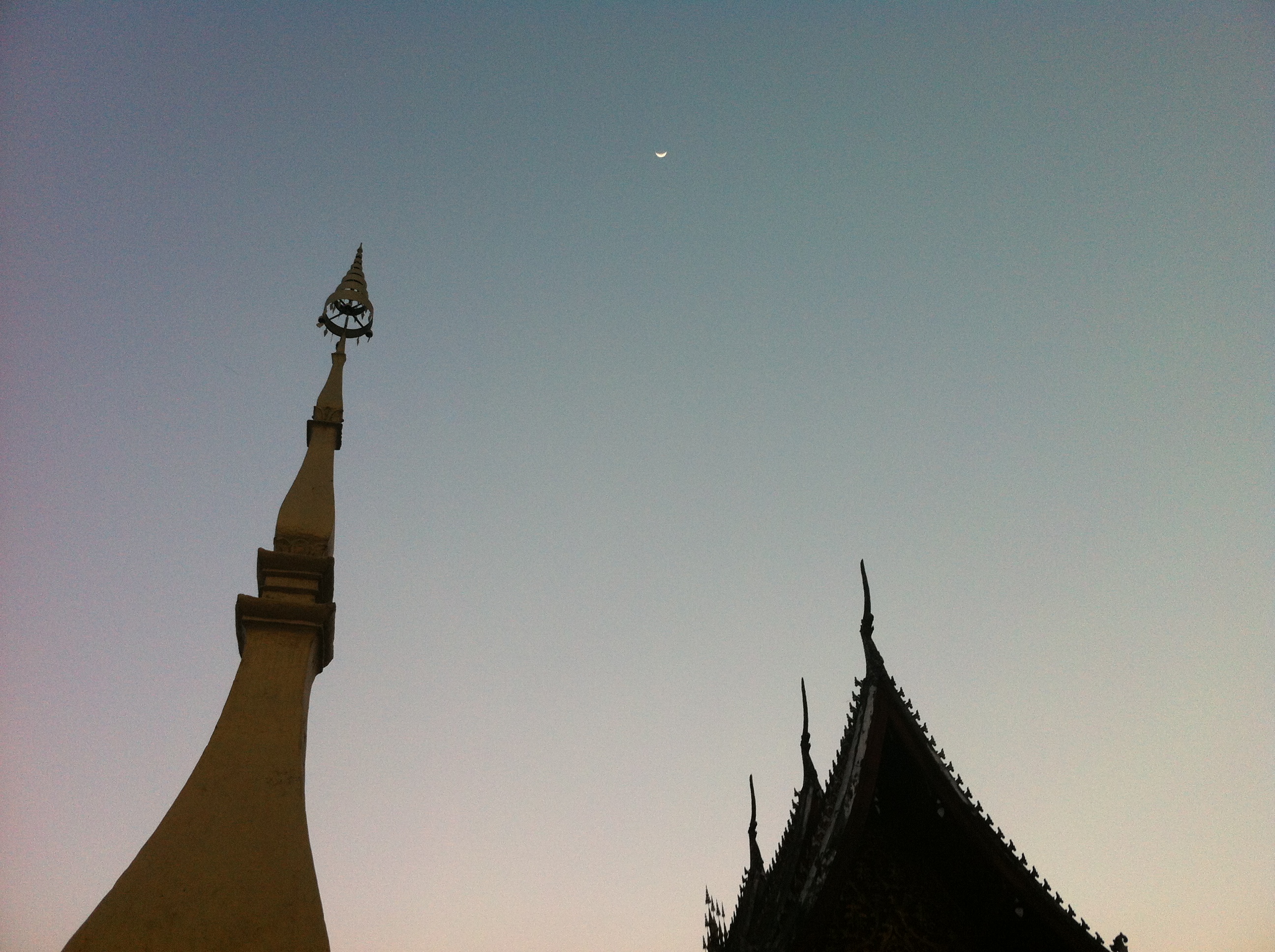
Because the Chinese new year is really a lunar festival. It starts on the second new moon after the winter solstice and ends 15 days later at the full moon. I had picked up the new moon – or newish moon; it had already waxed a few days – in Luang Prabang.

laos 499

And now I was seeing the full moon, shining serenely down on all this silliness.

A full moon is a beautiful thing. It certainly has caught the attention of many poets. A short search on the web brought to light at least 100 poems about the moon by well-known poets; Lord knows how many have been written by bad poets. But the poem which always comes to my mind when I see a full moon is not actually about the moon. I need to explain. One night in Vienna, I woke up and was enchanted by the brilliant nearly full moon pouring its white light into the bedroom. Two nights later, I was in Cambodia on the shore of the Mekong River. Looking up, I saw the full moon and thought to myself “This same moon will be shining down on my wife and children in a few hours” and found that thought immensely comforting. Now for the poem, which is by the Welsh poet Alun Lewis. He wrote it during the Second World War, when he was far away in India, in the city of Poona.

Last night I did not fight for sleep
But lay awake from midnight while the world
Turned its slow features to the moving deep
Of darkness, till I knew that you were furled,

Beloved, in the same dark watch as I.
And sixty degrees of longitude beside
Vanished as though a swan in ecstasy
Had spanned the distance from your sleeping side.

And like to swan or moon the whole of Wales
Glided within the parish of my care:
I saw the green tide leap on Cardigan,
Your red yacht riding like a legend there.

And the great mountains Dafydd and Llewelyn,
Plynlimmon, Cader Idris and Eryri
Threshing the darkness back from head and fin,
And also the small nameless mining valley

Whose slopes are scratched with streets and sprawling graves
Dark in the lap of firwoods and great boulders
Where you lay waiting, listening to the waves
My hot hands touched your white despondent shoulders

And then ten thousand miles of daylight grew
Between us, and I heard the wild daws crake
In India’s starving throat; whereat I knew
That Time upon the heart can break
But love survives the venom of the snake.

When I read the poem for the first time, I was reminded of that night in Vienna with its full moon. And now, when I’m far away from home and see the moon, I think of this poem and of my wife.

_____________________

Earth Wind and Fire concert: http://sharelike.me/image/pics/EarthWindandFireconcertPics1ApCC7Md5iwM.jpg
Fireworks-1: http://cdn.ph.upi.com/sv/em/upi/UPI-16811361735171/2013/1/9eb14390c758aeb27fd87349de4d55bc/China-celebrate-Lunar-New-Year.jpg
Fireworks-2: http://findlaydonnan.files.wordpress.com/2009/03/fireworks-to-celebrate-the-chinese-new-year-light-up-the-sky-above-beijing-china-on-january-26-2009-chinese-welcomed-the-arrival-of-the-year-of-the-ox-with-raucous-celebrations-on-sun.jpg?w=497&h=283
Full moon: http://3.bp.blogspot.com/-gY39tpbGmzg/TnLTHVEnSyI/AAAAAAAABaM/R2kBI2LddYg/s1600/Moon_Lantern_Festival.jpg
New moon Luang Prabang: my photo

ANGEL VOICES

Beijing, 19 December 2012

It was an official dinner like so many I attend, perhaps more significant than most since it was with our main partner in China. I sat to the right of the banquet’s host, in the position of honour. As usual, I checked nervously what alcohol would be served; it’s either red wine – good – or “Chinese wine”, aka Maotai or Baizhou, which is actually an extremely strong, sickly tasting liquor – very bad; the Chinese profess to love it,  I refer to it outside of Chinese earshot as biofuel. Luckily, it was wine; I could relax. We started with the usual speech by the host and then moved to the first of the toasts. My host and I clinked glasses and bottomed-up, before turning to those around us to toast, our glasses having miraculously refilled in the meantime. The Lazy Mary began to turn as we picked at the various delicacies before us and as more arrived. The host got up and began to toast those at other tables, others got up and toasted the host, and me, and everyone else. I was soon standing up and sitting down like a yo-yo as the various guests arrived thick and fast and made me little speeches to which I had to find a suitable response. As usual, I was beginning to run out of platitudes, and when I found myself saying sillier and sillier things I knew it was time for me to escape and do my rounds of the other tables.

One thing was different at this banquet. The host had invited younger members of his staff with a musical skill to show it off. So we had players of the traditional Chinese flute, of the traditional Chinese violin, and of the guitar strutting their stuff. We also had a singer who sang in the operatic mode O sole mio and some Austrian yodeling song set to Chinese words – the last was a surreal interlude. Initially, we listened appreciatively, but as the guests moved around, toasting with all and sundry and chatting ever more animatedly in small clusters, the players were reduced to background musack. Then, uncharacteristically, the host called us to order and invited us to sit down. Two children took to the floor, the son and daughter of staff members, and they began to sing. It was in that moment that I understood why angels must be children. There is a purity, a crystalline clarity, a simplicity, in a child’s voice as it soars into the upper registers and floats above your head that can bring a hushed, attentive silence to even the most unruly crowd, and will always fill my heart with an intimation of the divine.

two-angels-singing

_____________

http://artemisdreaming.tumblr.com/page/69

LITTLE LAMB

Beijing, 15 December 2012

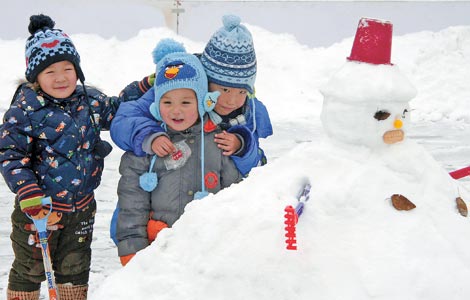
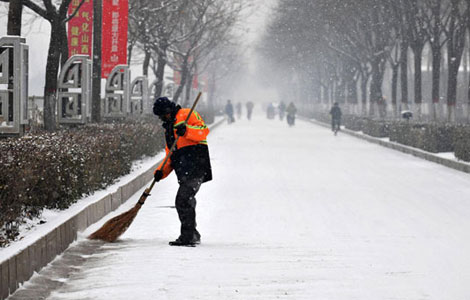
Yesterday, we had the first heavy snowfall of the year in Beijing – there had been some earlier flurries, but no more than that. I don’t want to exaggerate; there wasn’t really a huge amount of snow, which was just as well because Beijing drivers have no idea how to drive in snow and their cars are not equipped for it. But for Beijing it was significant. As the snow began to pile up, people – and not just children – were out on the streets making snowmen and throwing snowballs, while some of the more responsible ones were clearing the pavements; I even saw a snowblower for the first time here!

children and snowman road cleaning

It was all quite picturesque, so I was moved to haul out our old CD “The Essential Carols Collection” which we always played at this time of the year when the children were with us, and gave it a whirl.

carols CD

Out floated those hoary old favourites, “Once in Royal David’s City”, “The Holly and the Ivy”, “Silent Night”, “O Come All Ye Faithful”, and on and on, while the odd tear or two formed in the corner of my eye.

But squeezed in between “O Tannenbaum” and “Ding Dong Merrily on High”, comes John Tavener’s “The Lamb”, an ethereally, achingly beautiful modern carol. Every time I get to this part of the CD, I have stop whatever I’m doing and sit down and just let the music flow through me. Tavener uses the words of William Blake’s The Lamb for the carol:

Little Lamb who made thee
Dost thou know who made thee
Gave thee life and bid thee feed.
By the stream and o’er the mead;
Gave thee clothing of delight,
Softest clothing wooly bright;
Gave thee such a tender voice,
Making all the vales rejoice!
Little Lamb who made thee
Dost thou know who made thee

Little Lamb I’ll tell thee,
Little Lamb I’ll tell thee!
He is called by thy name,
For he calls himself a Lamb:
He is meek and he is mild,
He became a little child:
I a child and thou a lamb,
We are called by his name.
Little Lamb God bless thee.

I always wanted my mother to hear this carol, she loved William Blake. But this will join that long list of regrets, things we wished we had done but left until it was to too late.

_________________

Children with snowman: https://usa.chinadaily.com.cn/

Man sweeping snow in street: https://usa.chinadaily.com.cn