I said in my last post that beauty is in the eye of the beholder. In that case, I was talking about citrons. But this homey dictum is that much truer about the subject of this post, betel chewing. To explain what I mean, consider this picture of a betel chewer.
Now, if I were to meet such a fellow, I would be nervously looking for an escape route, half expecting the man to make a lunge with his pointed canines at my jugular. But in the village where he comes from, where no doubt half the population have red goo drooling from their lips, this man would be seen as a nice, friendly village elder. Perhaps a little less on the extreme side of things, if I were to meet this smiling Indian gentleman
my earlier post on teeth would come to mind and I would make a mental note that he badly needed to see a dentist rather than thinking what a lovely smile he had and what a nice man he must be. As I said, beauty is in the eye of the beholder.
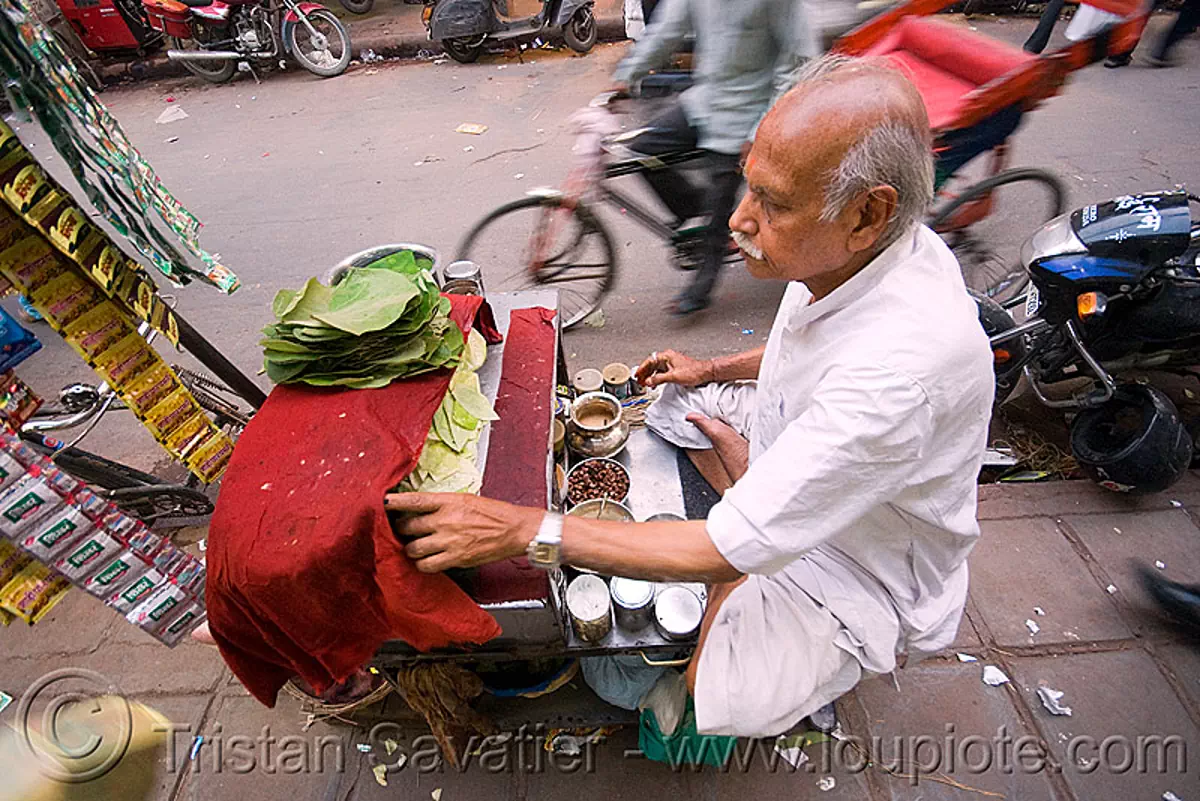
I first came across the habit of betel chewing in Delhi. I was there for a meeting of some sort, and after it was over and I was being walked back to my hotel my colleague stopped at a betel stand such as this one
and ordered himself a betel quid to chew. He asked me if I wished to try one, but I politely declined. I watched with curiosity to see what might happen to him, but nothing untoward did. I did realize, though, that this habit explained his somewhat orange teeth.
I was reminded of this scene from long ago when I was in Myanmar recently and saw the tell-tale signs of betel chewing all around me in Yangon – the orange teeth, the betel stands, and – most revolting of all – these bright red splotches on the pavements.
Betel chewing generates a lot of saliva, which the chewers either swallow or spit out (which if not done vigorously enough no doubt leads to dribbles on the chin as in the case of the old gentleman with whom we started this post). The fact that these are spit is revolting enough, but their bright red colour further gives the impression that half the population have advanced cases of TB and are coughing their lungs out (my childhood memories have retained stories of older generations with consumption coughing hard into their handkerchiefs and seeing with horror that the handkerchiefs were stained by bright red blood from their lungs; the end was nigh for them).
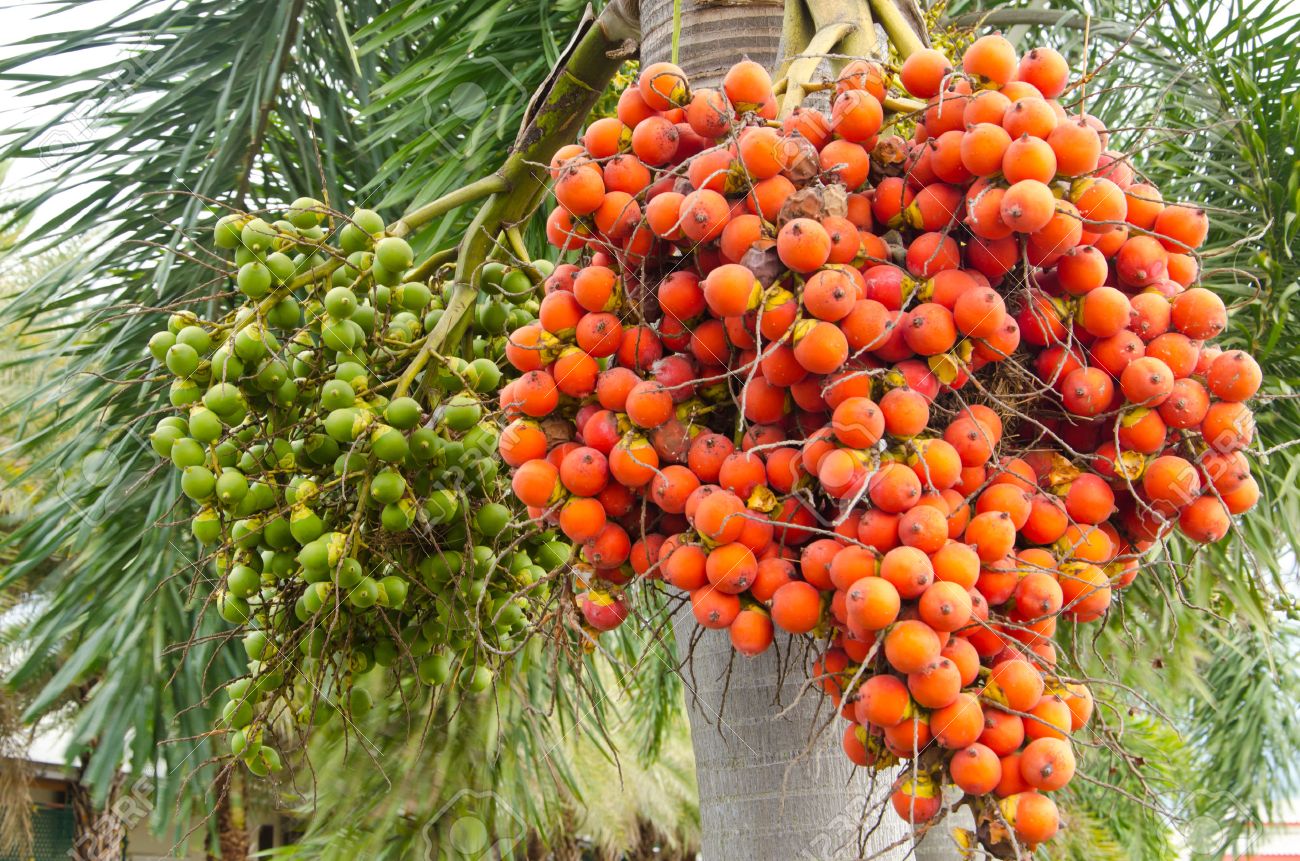
For those – I hope – many readers who have no idea what is in a betel quid, allow me to elucidate. At its most basic, the betel consists of slices of the “nut” (actually fruit) of the Areca palm
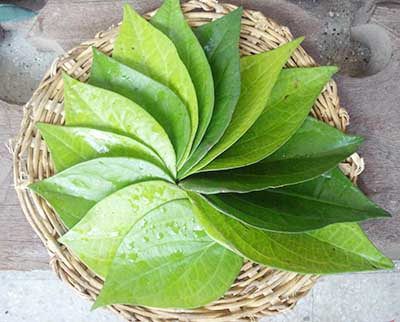
wrapped in leaves of the betel vine
which have been liberally smeared beforehand with slaked lime. Depending on your fancy and which part of the world you come from, your local betel stand holder can add tobacco, spices, and various other ingredients – note the various little pots which our betel stand holder in the picture above has spread out before him.
Since I had first come across the betel chewing habit in India, and since every betel stand holder in Yangon seemed to be of Indian extraction, I sort of assumed that this was an Indian tradition which had been exported elsewhere. Not a bit of it! It’s actually the other way around. Although it’s not yet clear where the Areca palm and the betel vine originated from exactly, there is general agreement that it was in South-East Asia somewhere. But they didn’t originate in the same place. Evidence points to the betel vine and Areca nut being initially consumed separately, their use spreading out from their point of origin until they overlapped, at which point some bright spark had the idea of putting the two together. Early trade between South-East Asia and India brought betel chewing and then the plants to the subcontinent – and migration brought them out to New Guinea and the Pacific Islands, where the dreaded signs of betel chewing are to be found.
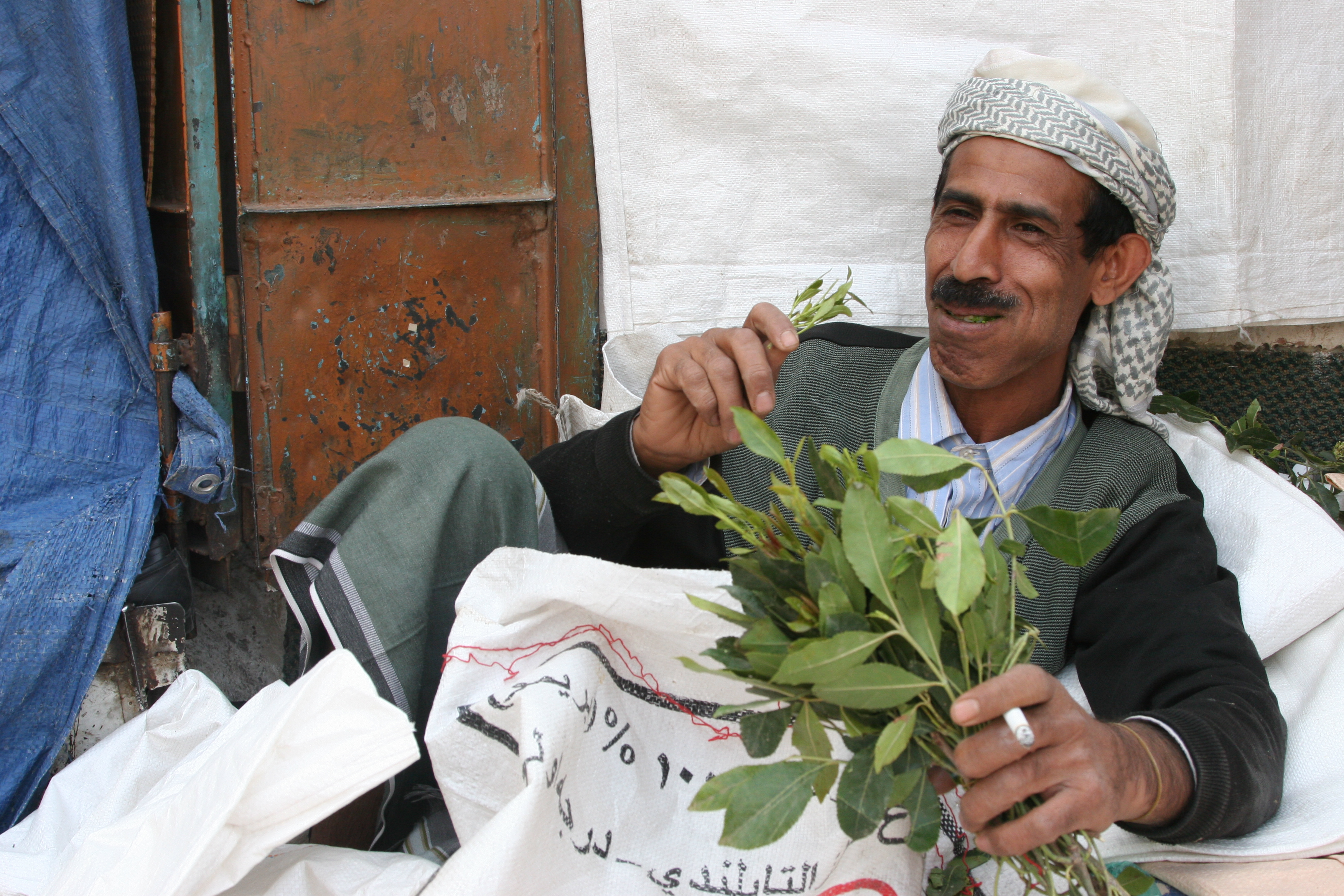
But why, some readers may be asking themselves, does anyone bother to chew betel quids in the first place? Because both plants contain mild stimulants: arecoline in the case of the Areca nut, eugenol in the case of the betel leaf. So chewing the quid gives the chewer a mild high. It joins a number of other plants which are chewed for their stimulating (in some cases very stimulating) effects: coca leaves in the Andes,
khat leaves in the Horn of Africa and the Arabian peninsula (I remember a colleague once telling me that Djibouti came to a halt on Fridays as everyone waited for the weekly supply of khat to be flown in from Ethiopia)
kola nuts in West Africa.
And then there are the plants that are smoked, those that are swallowed, those that are made into infusions and drunk … Early humans were exceedingly resourceful in figuring out how to get a high from the plants which surrounded them. I wonder, though, how they ever figured out which of the thousands of plants around them gave them highs.
Luckily, the practice of betel chewing seems to be dying out. For instance, Thailand was once a hot-spot of betel chewing, but I have never seen anyone in Bangkok, or anywhere else for that matter, chewing it. Nor have I ever seen anyone chewing betel quids in Cambodia or Laos. I say “luckily”, even though this perhaps betrays a cultural imperialism. I mean, one could argue that if people want to chew betel why shouldn’t they, as long as they don’t kill me or their family or themselves in the process, and don’t become a burden on the public purse because of it. Normally, I would indeed be tolerant of cultural diversity, but for this particular practice I draw the line: people with red mouths and teeth à la Dracula generating bright red spit marks all over pavements are beyond the civilized pale. This should be the new normal, everywhere.
Bangkok, 19 March 2016
updated Vienna, 5 February 2025
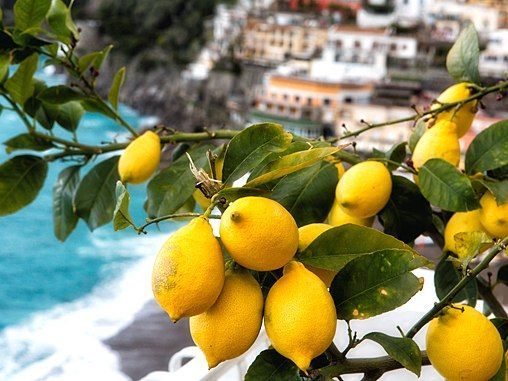
In the recent trip which my wife and I made to Italy, we managed to squeeze in a visit to our apartment near Genoa, where I was particularly delighted to see so many lemon trees in fruit. It’s wonderful to see trees heavy with lemons peeping over a wall or hanging over a garden fence.
Once back in Bangkok, I decided to do some research on the lemon and its history: how did this lovely yellow fruit end up in Liguria? But delving into the lemon’s history inevitably dragged me into the history of the citrus family. It turns out that the lemon does not have a long or distinguished pedigree. It is the citrus equivalent to a mutt, a fairly recent hybrid. In fact, most citrus fruits with which we are familiar are fairly recent hybrids. It seems that the members of this family love to hybridize, and of course humans – being intrusive busybodies by nature – have been only too willing to assist them. The result is a family tree of bewildering complexity.
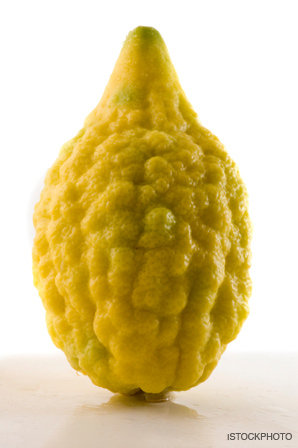
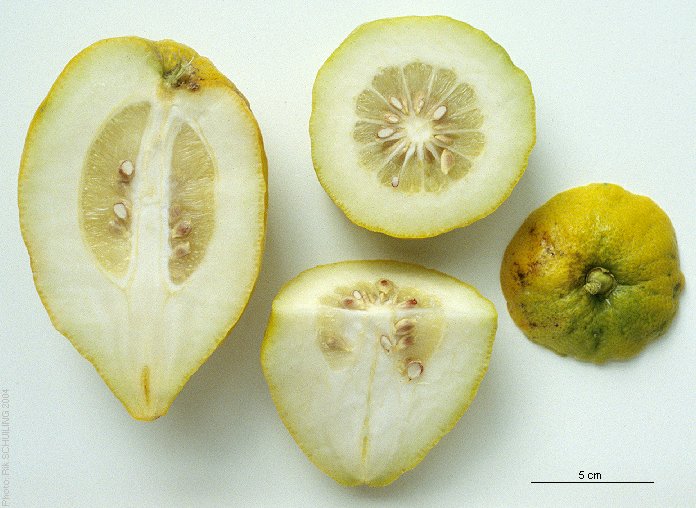
As I tried to make sense of all this, my attention was diverted by something I read about the citron. I think I need to insert here a few words about the citron, since I’m sure there are many readers who are not familiar with this citrus fruit. It is relatively difficult to find these days since it has little use – except for one very special one, which I will come to in a minute. It looks like a large, warty, lemon.
Coming to what I read, it seems that during a ceremony in the Temple of Jerusalem marking the Feast of the Tabernacles, or Sukkot, in one of the years around 100 BC, the Jews pelted the High Priest with citrons and got massacred for doing so. Now that was something worth finding more about! How I would have loved to use citrons, rotten tomatoes, eggs, dog-eared hymn books – anything, really – to pelt the priests with for subjecting me to excruciatingly boring sermons during the Sunday Masses of my childhood! It turns out, though, that the Jews were not horribly bored with what the High Priest was saying, but horrified by what he was doing. It is reported that he deliberately poured the water of libation over his feet rather than over the sacrificial animals. I can’t say that I can get quite as excited about this action as the Jews did, but the fact is that they did, and satisfyingly peppered the High Priest with citrons.
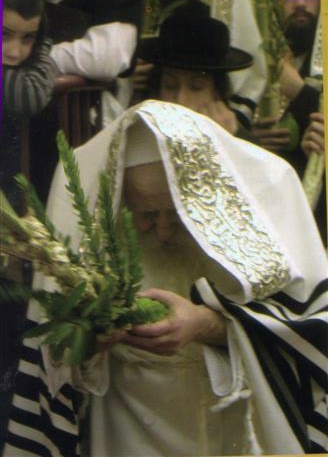
Of course, it does come spontaneously to ask oneself why on earth the Jews were carrying citrons around in the Temple in the first place. It’s certainly not the item that would immediately come to my mind as expecting to see in the hands of Jews within the sacred precincts of the Temple. It turns out that the citron plays an extremely important role in the ceremonies of Sukkot. Every morning of this seven-day Feast, Jews are required to ceremoniously wave the “four species”. Citron is one of these, the other three being the date palm, the myrtle, and the willow. We see here the Tosher Rabbi of Montreal waving the four species.
One can therefore assume that the Jews were carrying their four species when the High Priest poured the water of libation over his feet, and in the horror of the moment they blindly grabbed their citrons and threw them at the impious prelate. It seems that they must have also thrown something harder – stones, no doubt – since it is reported that the stone altar was damaged. I can’t really see citrons doing damage to a stone altar.
It’s a bit of a mystery to me why the citron ever became one of the four species, because it is not native to the Near East, whereas the other three species are. The citron, like all the original citrus fruits, originated somewhere in the region of South-East Asia-Yunnan in southern China-the Himalayan slopes of India. So how did it end up in the Near East? There is general agreement that the fruit was first cultivated in northern India. From there, it migrated, presumably along trade routes, to Persia. What happened next is a hotly debated issue – at least, in certain circles. One hypothesis has the citron migrating to Egypt, where its essential oils were used in embalming, and from whence the Jews brought it with them to the Promised Land when they escaped from bondage in Egypt. A second hypothesis has the citron being carried from Persia to the Mediterranean basin in the baggage of Alexander the Great’s returning soldiers, who somewhere along the way dropped it off in the Levant. Yet another hypothesis has the citron migrating from Persia to Babylonia, where the Jews came across it during their Babylonian captivity and brought it with them when they came back to Israel.
These are all suppositions, with no real evidence to back them up. A very clever piece of archaeological sleuthing suggests a more concrete hypothesis. We need to first recall that after the Persians defeated the Babylonians and allowed the exiled Jews to return home, Israel was a Persian province for several hundred years. Israeli archaeologists have been excavating a site quite close to Jerusalem which turns out to have been a Persian palace with an extensive garden around it. Here is a reconstruction of the site.
The archaeologists wanted to see if they could find evidence of what was planted in this garden. They therefore looked for traces of ancient pollen. None could be found in the earth of the garden – whatever had been there had decomposed long ago. So they decided to try their luck in the plaster with which the walls of an ancient pool in the garden had been coated. The thinking was that pollen grains could have got stuck in the plaster while it was drying and been preserved. They were right – and one of the types of pollen they found was that of the citron. From the other types of pollen found – a number from species not present in Israel – the archaeologists deduced that this was a garden planted with rare plants, designed to show off the wealth and power of the palace’s resident, either a Persian satrap or a Babylonian Jew close to the Persians and sent there to keep an eye on the locals. Perhaps it was here that the Jerusalem Temple elites, coming to pay their respects to the Palace’s resident, first saw the citron and admired this strange and exotic fruit. Maybe it became the rage to have a citron tree in one’s garden in emulation of the Persian masters.
Assuming this is somewhere near correct, how did the chicness of the citron eventually segue into its strong religious symbolism? Here, I shall hazard an explanation which I found written nowhere but which satisfies my fertile imagination. One has to know that the adoption by the Jews of the four species in the rituals of Sukkot derives from a text in the Book of Leviticus, where it is said (in the English translation):
“And you shall take on the first day the fruit of beautiful trees, branches of palm trees and boughs of leafy trees and willows of the brook, and you shall rejoice before the Lord your God for seven days.”
The text specifically names two of the plants: the palm tree and the willow. For the other two, though, it is quite vague. Talmudic tradition eventually settled on the citron as the “fruit of beautiful trees” and on myrtle as “boughs of leafy trees”.
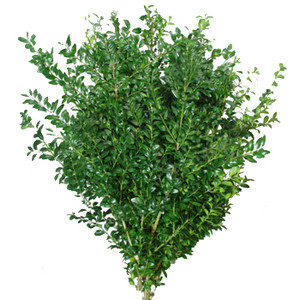
The choice of myrtle makes sense to me – it is satisfyingly leafy.
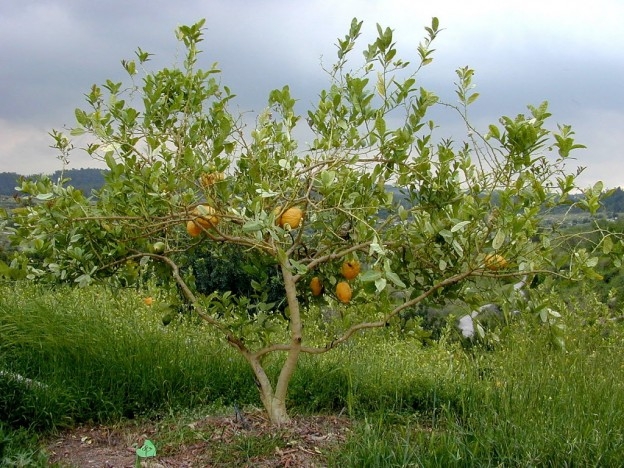
But the choice of citron as the fruit of a beautiful tree? That is really quite odd. In no way can the citron tree be considered a beautiful tree. It is low and scrubby, more bush-like.
It seems, though, that the Hebrew text is grammatically ambiguous. Although the phrase in Leviticus is typically translated as “fruit of a beautiful tree”, it can also be rendered as “a beautiful fruit of a tree.” At first sight, this doesn’t seem to fit the citron either. As the picture above shows only too well, it is warty and knobbly, really quite ungraceful. But beauty, as they say, is in the eye of the beholder. The citron’s name in Persian, turunj, derives from the Sanskrit suranga, “beautifully coloured”. In today’s world, our lives are so saturated in bright colours that it is difficult for us to appreciate the impact on our ancestors of the few naturally brightly coloured things. As the photo above also reveals, the citron does indeed have a lovely yellow colour, and there really aren’t that many fruits that are so beautifully yellow (lemons come to mind, but that doesn’t count because they are a hybrid of the citron). Maybe the Persians, and the Indians before them, and the Jews after them, found the citron’s colour captivating.
If that explanation doesn’t satisfy my readers, let me suggest another reason. Under proper conditions, the citron is the only tree that can flower and bear fruit throughout the year. Even more distinctively, it can retain its fruit from one year to the next. So the citron tree can have buds, blossoms, and mature fruit all at the same time. This is a unique property, and one which may have aroused awe and reverence in our ancestors.
If that explanation doesn’t satisfy my readers, how about this one? Both the Greek philosopher, Theophrastos, and the Roman natural philosopher, Pliny the Elder, mention the citron in their botanical writings. And both stress the fact that the citron, fruit and leaves, has a very strong scent, that typical scent which you also get from the zest of the lemon. It is so strong, they say, that if the fruit is put among clothes it acts as a moth-repellent. This seems a little weak as a reason for nominating the citron as a “beautiful fruit”, although as every woman knows scent can be an important ingredient in beauty. And maybe the elites of India, Persia, and Israel were particularly receptive to the idea that their magnificent – and expensive – clothes could be protected from those pesky moths by the citron.
Either one of these explanations, or all three, must explain not only why the Jews adopted the citron as a religious symbol but also why anyone bothered to cultivate the citron in the first place and then bothered to carry it along to different parts of the world. From a utilitarian point of view, and our ancestors were nothing if not supremely utilitarian when it came to their natural environment, the citron really does seem a singularly useless plant. As I’ve said, the tree is low, scrubby, and bush-like, so it cannot be used as a shade tree. It is sickly and prone to disease, so is difficult to cultivate. The wood is no good for timber. Even the fruit is not much good to eat. It is mostly pith with hardly any flesh, and what flesh there is, is dry with relatively little juice.
Whatever the reason, by the time the High Priest poured the water of libation over his feet (no doubt with a sneer on his lips) the practice of using the citron as one of the four species in the ceremonies of Sukkot was fixed.
It was this deliberately offensive act at the altar of the Temple which set me off on this quest to know more about the citron. But I can’t stop here, because the continuing history of the citron is equally fascinating. So I hope my readers will bear with me if I take them on a journey into the fruit’s more recent history.
From the fall of Jerusalem in AD 70, the European history of the citron has been indissolubly bound up with that of the Jewish communities in Europe, so let me switch to using its Hebrew name, etrog (which, by the way, derives from the citron’s Persian name, turunj, via Aramaic, strengthening the idea that somehow it was the Persians who brought it into the lives of the Jews). The Romans’ destruction of Jerusalem, which ended Temple-centred worship for the Jews, meant that the feast of Sukkot began to be celebrated wherever the Jews happened to live. Since the citron was now indispensable in the celebrations of Sukkot, it followed the Jewish diaspora as the latter spread out through the Roman Empire into Greece, Italy, and Spain. With time, more and more attention was given to ensuring that the etrogim used in Sukkot were the most beautiful: after all, they were offerings to the Lord our God and nothing but the most beautiful should be offered. Detailed guidelines were issued about what constituted a “perfect” etrog, and considerable sums of money were paid for the most perfect ones.
All was under control until the Diaspora began to move northwards into parts of Europe where the climate was too cool for the citron to grow. These more northerly Jewish communities therefore urgently needed etrogim to be brought to them from lands further to the south – no other fruit would do since the four species had been prescribed in the Talmud. This brings us back to where this post started, Genoa. Because of its climate, but also presumably because of its flourishing, and ancient, Jewish community, there were citron orchards around Genoa. It also happened to be a dynamic trading port, so it wasn’t long before Genoa dominated the trade in etrogim to northern Europe. With time, Genoa seems to have gotten out of the business of actually growing etrogim. Instead, it picked up etrogim as far south as Calabria, still a source of etrogim for some Jewish communities, and all points in between, as well as in Corsica, a Genoese colony, and shipped them north. Here we have a painting by Chagall from 1914, of a rabbi, presumably from Vitebsk in Bielorussia, where Chagall grew up, carrying his etrog to the synagogue (and clutching what looks like the local version of myrtle).
my photo
Genoa’s monopoly on the etrog trade began to be undermined when the Sephardic Jews, expelled from Spain, filtered eastward across the Mediterranean to Italy, Greece, and Turkey, and discovered the etrogim being grown in Corfu and other Ionian islands, presumably for the very ancient Jewish communities of Greece. These were very beautiful as defined by the guidelines on etrog beauty, and they began to seriously compete with the Genoese etrogim. At first, there was resistance in some of the Ashkenazic communities in northern Europe. To explain why, I have to go back to what started me on this post initially, the lemon. The first substantial cultivation of the lemon in Europe only occurred in the mid-15th Century, in Genoa – Genoa again (the sour or bitter orange arrived earlier, in the 11th Century, while the sweet orange arrived somewhat later, in the early 16th Century). European growers of citrons discovered – or maybe they picked it up from the Arabs – that grafting citrons onto lemon stock gave plants which were much hardier than pure citron trees. But grafting created an enormous problem for the Jews because the mixing of species was non-kosher, and etrogim used in a religious Feast had to be kosher. We now know that grafting doesn’t actually lead to a mixing of genes, or hybridization, although 400 years ago it was quite easy to think that it did; after all, everyone knew that if you crossed a horse and a donkey, you got a hybrid, the mule. Many in the Ashkenazic communities suspected that the Greek etrogim were actually so beautiful because they were grafted onto lemon trees. Various rabbis were prepared to certify that they were not, and anyway the Napoleonic wars cut off the traditional supply of etrogim from Genoa. And the Greek etrogim really were so very beautiful …
So the Greek etrog triumphed and trade from Corfu flourished. Eventually, this got the Greek farmers greedy. They calculated that they had the Jewish communities over a barrel – they needed beautiful etrogim, the etrogim from Corfu were the most beautiful, hence they would pay whatever it took to get them. In 1875, they therefore created a cartel and jacked up the price. They turned out to be wrong. The Jewish communities reacted vigorously and successfully boycotted the Greek etrogim. They bought from Calabria, from Corsica, and more importantly from Israel, to where we now turn.
As more and more European Jews immigrated to Palestine in the 1800s, they discovered a local variety of etrogim. They surmised that these must be descended from the etrogim used in Temple worship before the Temple’s destruction. A number of rabbis therefore decided to promote these etrogim from Palestine, which were surely more authentic than etrogim grown elsewhere. They also thought it would help the poverty-stricken economy of Palestine to be able to export high-priced etrogim to Jewish communities in Europe. The problem was that although these etrogim might be more authentic they weren’t nearly as beautiful as the Greek etrogim. On top of it, Sephardic communities which had immigrated to Palestine brought in seeds of Greek citron trees and started planting orchards of the beautiful Greek etrog there. The stand-off with Corfu helped boost sales in Palestine, both of the original as well as of the Greek etrogim transferred there. However, authentic Palestinian etrogim were suffering from the competition.
Coming back to Corfu, the Greek farmers eventually backed down and brought their prices down again. But they didn’t forget or forgive. Some 15 years later, when the body of an unknown woman was found just outside the Jewish quarter in Corfu, the local etrog growers claimed that the woman had been murdered by Jews. This sparked off a pogrom against the local Jewish community, which left 139 people dead. And then it was discovered that the dead woman was actually Jewish. That finished off the etrogim trade from Corfu.
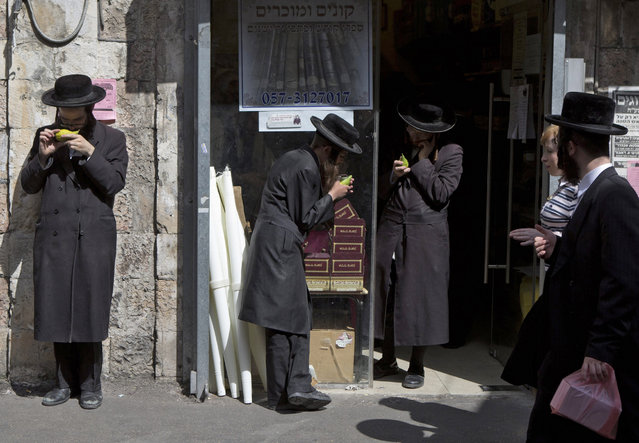
Meanwhile, back in Palestine, the transplanted Greek etrog was pushing the local variety off the market. Eventually, the Greek etrog, which did not adapt very well to the climate in Israel, began to be grafted onto stock of the original etrog, a graft which is kosher. This was a marriage made in heaven: the beautiful Greek etrog with the original, Temple-era etrog. It is this variety which now dominates the modern etrog market, and is no doubt the one being intensely studied by these Orthodox Jews prior to an eventual purchase.
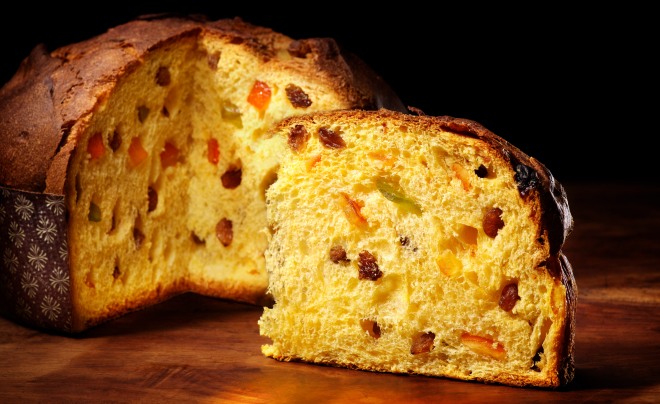
I cannot finish my story of the citron without mentioning the one way of usefully consuming it that was eventually discovered. For this, I have to back up a little and say a few words about the history of cane sugar. Cane sugar, brought west from India by, once again, Alexander the Great’s troops (they seem to have been great collectors of plants …), was first exploited in the Near East. It was the Crusaders, who came across caravans of this “sweet salt”, and who brought sugar to the attention of Europe. Until then, Europeans had only had honey as a sweetener. Genoa’s fiercest rival, Venice, was the first to make sugar available in Europe. It also brought another Arab invention, candying of fruit, to Europe. Not to be outdone by its hated rivals, the Genoese also finally got into the candying business. Somewhere along the line, someone had the idea of candying the citron, or rather its pith, of which there is so much, as the photo above shows. Leghorn (Livorno) became the centre of production: citrons from the south all the way to Sicily, from Corfu and the other Ionian islands in the east, and from Corsica in the west, were sent, de-pulped and brined, to Leghorn. There, the citron pith was de-brined and steeped in progressively more concentrated solutions of cane sugar. Once dried and chopped into small pieces, it was shipped, no doubt in Genoese ships, all over Europe to be added to cakes, sweet bread loaves, and other patisseries. I have a particular reason to mention all this because the panettone, that glory of my wife’s home town, Milan, was originally made with candied citron pith (as well as candied orange and sultana raisins).
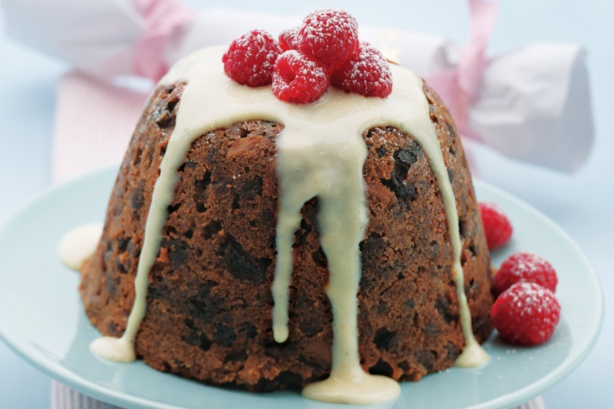
More humbly, the original recipes of the English plum pudding of my youth also called for candied citron from Leghorn.
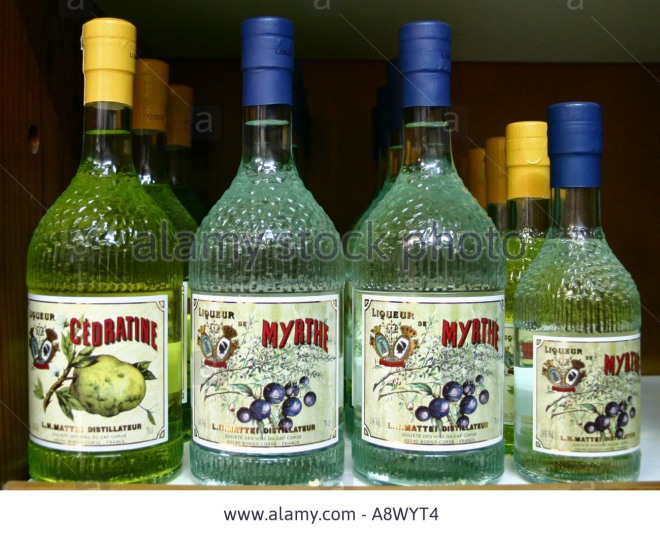
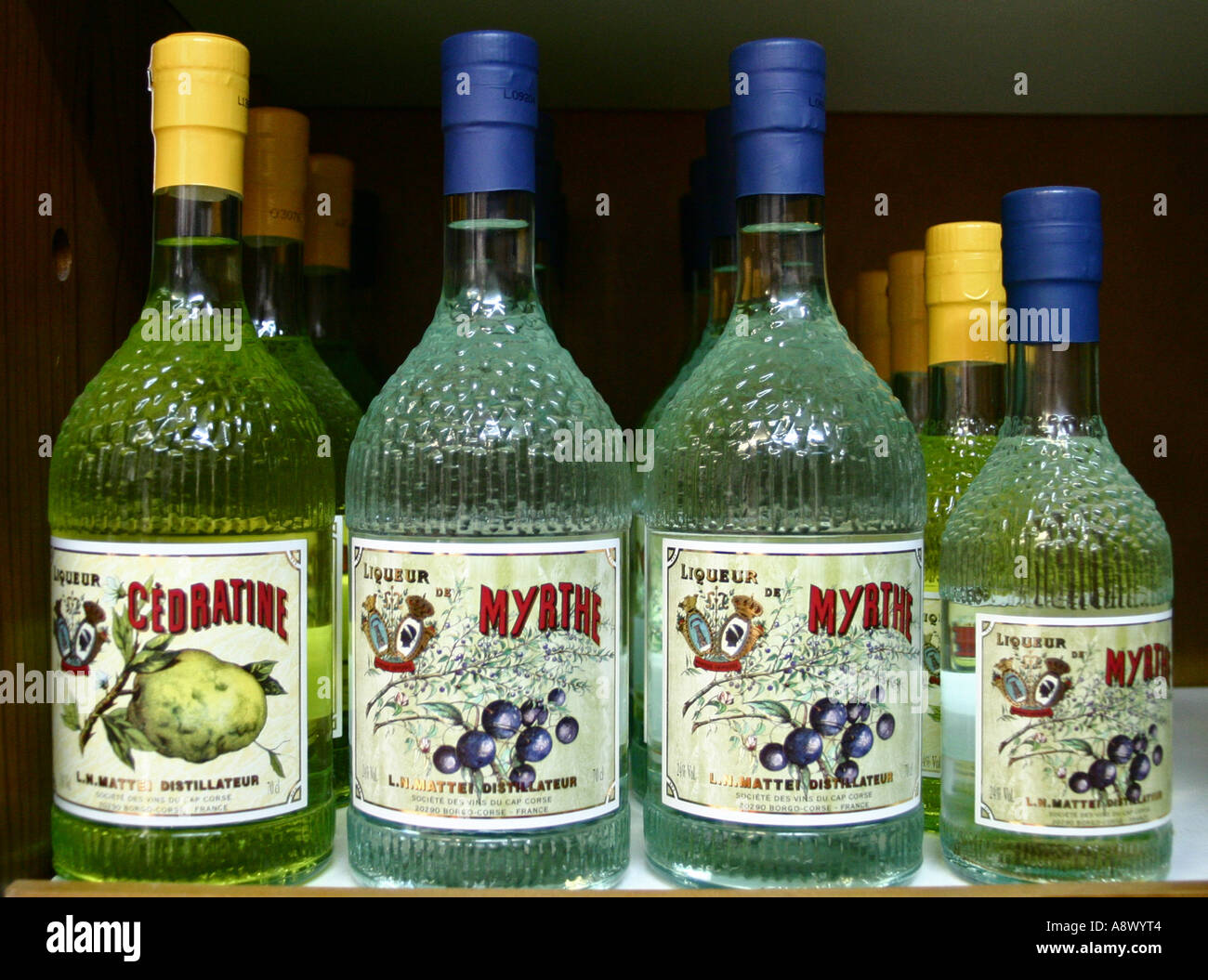
Alas! I believe this market has declined drastically – or perhaps citrons from elsewhere have cornered the candying market. The fact is, Leghorn is no longer a centre for candied citron production, the Calabrian citron hangs on by managing to keep a foot in the etrog market, while the Corsican and Corfu citron production is down almost to nothing; the few which are grown there are only used to make a local liqueur. Here’s the Corsican variety. Somehow, it seems apt that the bottle stands next to one made with myrtle, another of the four species.
Let’s lift a glass to the citron a.k.a. the etrog! Cin-Cin!
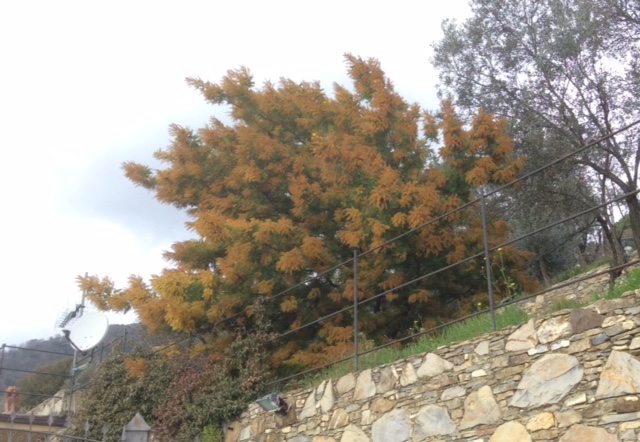
We’re in Italy at the moment, spending a week here to get things in order for my impending retirement. We decided to make a quick visit to our apartment on the sea, by Genova, to check if all was well but also to see the mimosa in flower. The flowering of mimosa on the Ligurian coast is a wondrous sight to behold
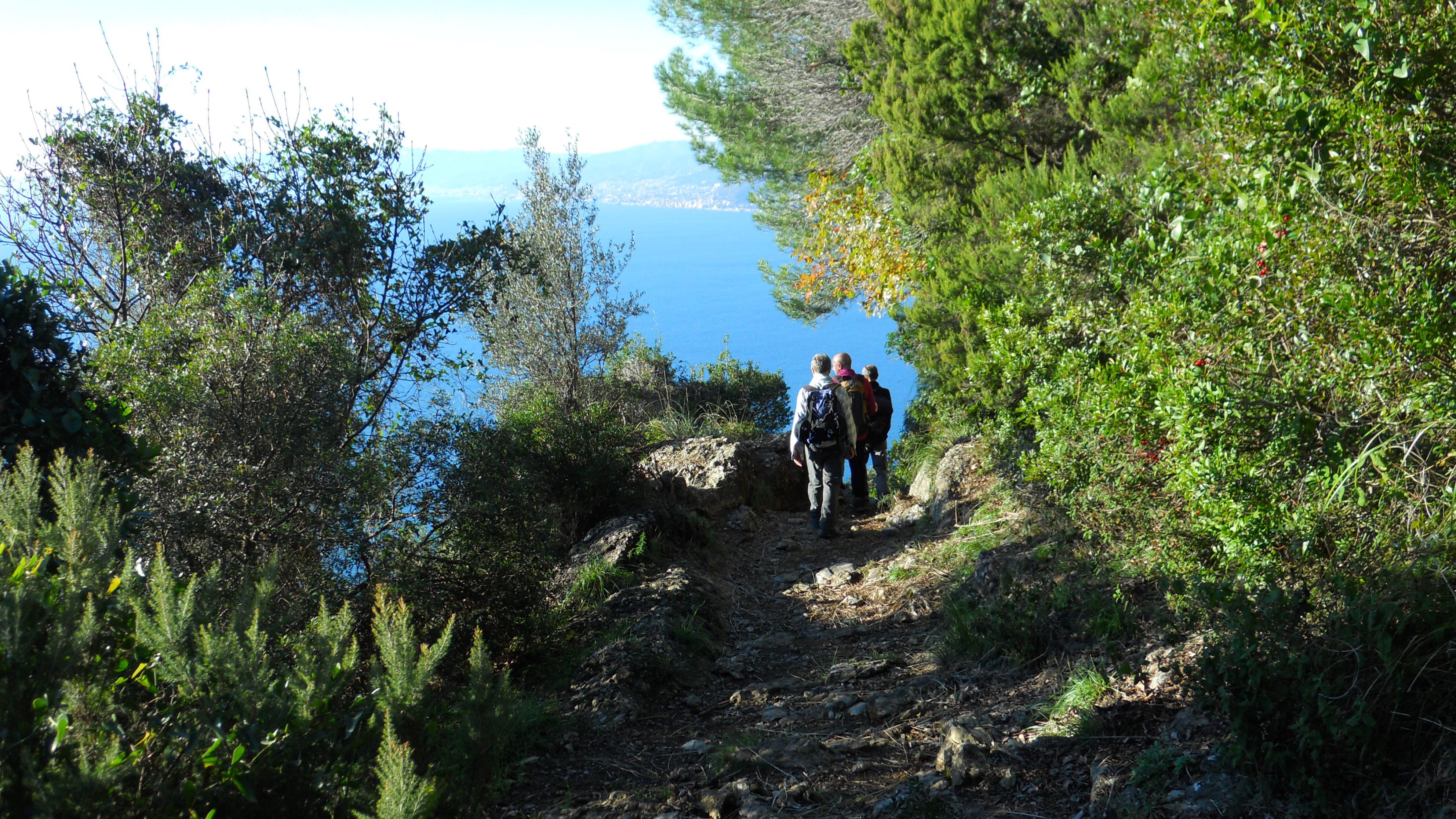
especially when you’re toiling up a hill like these hikers are and find yourself in front of a flash of canary yellow, a harbinger of the Spring to come.
All was well with the apartment but alas! we were too late for the mimosa. It had reached its peak some two weeks before and the flowers were already very much past their best.
Disconsolate, I decided to do the next best thing, a little internet surfing to learn more about mimosa.
I had half expected to discover that mimosa originally came from China. After all, that had already been my experience with several plants, from wisteria to the willow. But no! I was delighted to learn that mimosa comes from south-eastern Australia. Here is a photo of it in the State of Victoria, in what is probably its natural state, cohabiting in this case with mountain gums.
Mimosa is actually a bit of a misnomer, for which it seems we have to thank Carl Linnaeus, the inventor of the modern system for giving scientific names to living things.
What I call mimosa is actually an acacia (or perhaps was an acacia; more on that in a moment). For some reason, Linnaeus decided to also give the genus acacia the name mimosa. The confusion was cleared up later, but not before this particular type of acacia got stuck with the name mimosa. Confusion on nomenclature doesn’t stop there, for it seems that acacia is also a misnomer in this case. I don’t follow taxonomic decisions with bated breath, but Australian acacias should apparently now be called racosperma. The august scientific body which makes these kinds of decisions decided so back in the late 1990s or thereabouts, but the Australian botanists, indignant at the thought of having to change the name of their cherished acacias, managed to get the vote reversed in 2005. However, I now understand that the vote was re-reversed. In all of this confusion, I think we should just go with the common name, the wattle. Since there are nearly 1,000 species of wattle in Australia, I have to be a little more specific and say that the “mimosa” planted here in Liguria is the silver wattle.
How mimosa got to this part of the world is not that clear – at least, I didn’t find any clear description of that journey. Another distinguished botanist, Joseph Banks
who accompanied James Cook on his first voyage to the Pacific and whom I have had cause to mention in an earlier post on kangaroos, brought the wattles to the attention of the Western world. But who actually brought the living plant back, or its seeds, and propagated it I don’t know. Whoever it was, the peoples from Portugal to the west all around the rim of the Mediterranean and up into the Aegean Sea and on into the Black Sea to the east have a huge debt to him (or, who knows? her). Every spring, they can enjoy magnificent bursts of yellow, like this one in Odessa in the Ukraine.
Actually, given that the golden wattle, another member of the large wattle tribe, is now the floral emblem of Australia, I was expecting to find a photo on the net of a mimosa in flower in the ANZAC cemeteries of Gallipoli. But no. Photos there are of the cemeteries
but none with a flowering mimosa. Perhaps no-one visits the cemeteries in the early Spring. But if instead it’s because mimosas are not planted in Gallipoli, I think a move in this direction is in order. Should not an earlier immigrant to Europe from Australia welcome the Spring every year in that corner of the Mediterranean where Australians lie in their eternal sleep?
After reading my last post, my wife asked me a very simple but very penetrating question: “But why are jeans blue?”
One can of course be nit-picking and respond that actually not all jeans are blue. This is undoubtedly true but let’s face it, the huge majority of jeans are dyed some shade of blue. Jeans are not called blue jeans for nothing.
One can also give the trivial answer “because blue dye is used”, which rightfully elicits the riposte “Ha-ha, very funny”. But actually, an interesting tale does hang on the dye used, which I learned while preparing the previous post and which I can’t resist recounting here.
We have to go to Europe for an answer to my wife’s question, because it was from there that the denim material used for blue jeans came to America. So what is the history of blue dye in Europe?
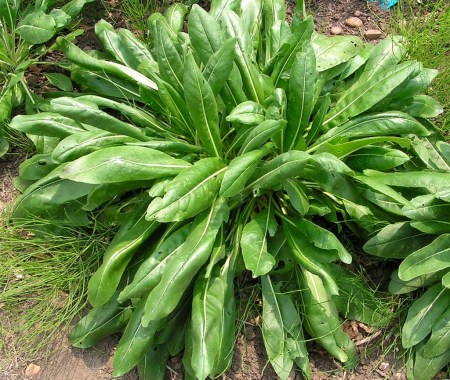
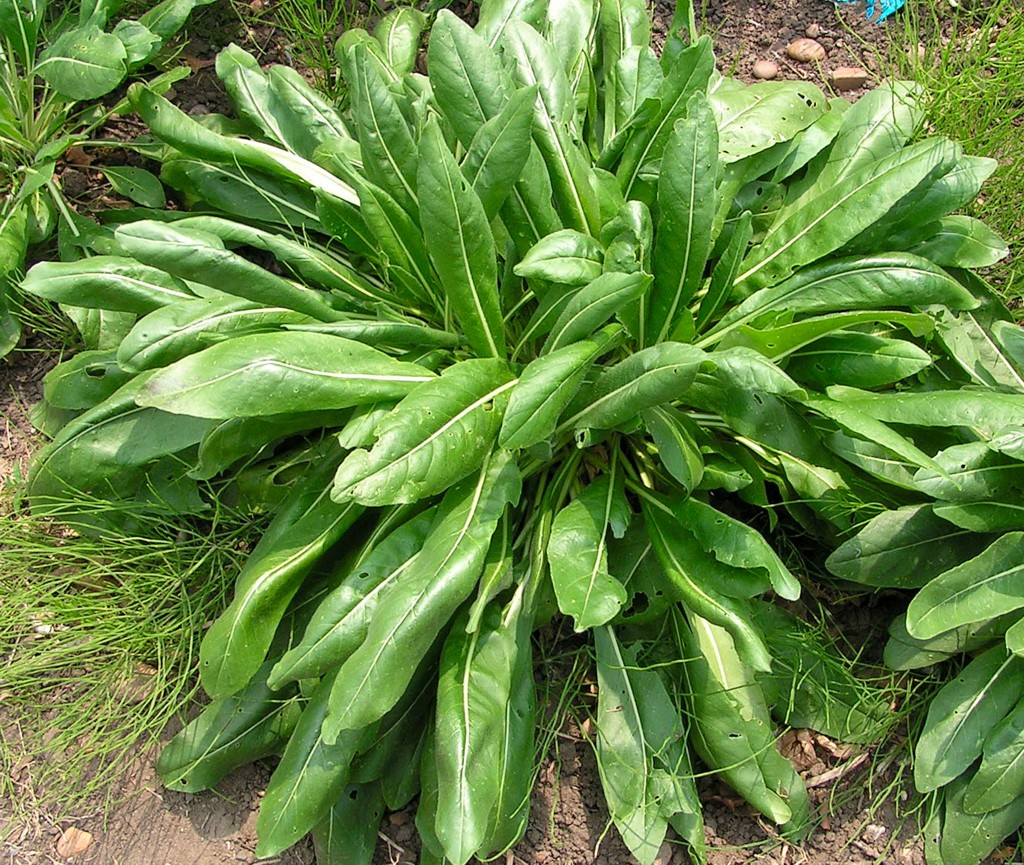
I was delighted to learn that the original blue dye of choice in Europe was extracted from woad. For those – I’m sure many – readers who have no idea what woad is, it is a plant native to many parts of Europe from whose leaves indigo dye can be extracted. I throw in a picture here in case any of my readers might wish to go searching for it.
Personally, I must admit that I only knew woad as the stuff which Julius Caesar, in his De Bello Gallico, tells us the Britons smeared themselves with: “Omnes vero se Britanni vitro inficiunt, quod caeruleum efficit colorem, atque hoc horridiores sunt in pugna aspectu”, “In truth, all the Britons stain themselves with woad that occasions a bluish colour, and thereby they have a more terrible appearance in battle”. But I prefer the way it is put in that sublime history of Great Britain, 1066 And All That: “Julius Caesar advanced energetically, throwing his cavalry several thousand paces over the River Flumen; but the Ancient Britons, although all well over military age, painted themselves true blue, or woad, and fought heroically under their dashing queen, Woadicea, as they did later in thin red lines under their good queen, Victoria.” Mel Gibson in Braveheart shows us how it should be done.
Trivia aside, woad was actually economically a very important crop in many parts of Medieval Europe and made some communities very wealthy. In France, for instance, the trade in the dye from woad built many of the more beautiful buildings in Toulouse
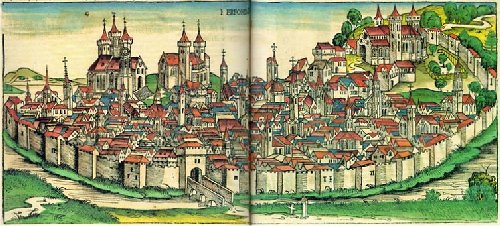
while in Germany woad paid for the University of Erfurt, established back in 1389.
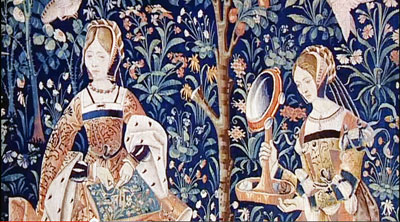
The indigo from woad coloured the best of medieval tapestries.
In sum, all seemed to be going swimmingly for the woad sector!
But there was a worm in the rose: the same indigo dye, but extracted from the leaves of another plant, in much larger quantities per leaf, in India.
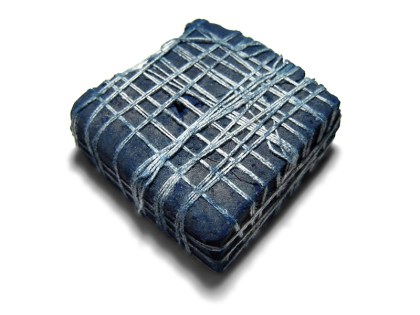
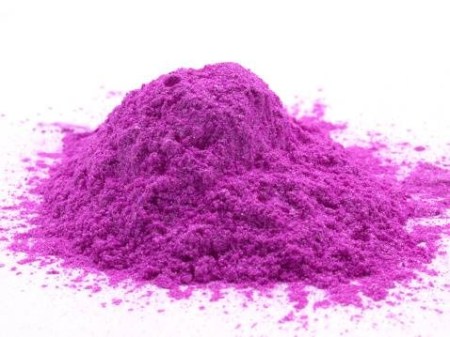
This stuff was already arriving in small and very costly amounts onto Greek, and later Roman, markets, along those same trade routes which I’ve had cause to mention in earlier posts. Because it was so expensive it was used primarily as a pigment in paint and not as a dye of fabrics. The Greeks called it indikon, the Indian dye. The Romans latinized this to indicum, which eventually gave us our indigo. Once the Europeans rounded the Cape of Good Hope and made it safely across the Indian Ocean, they could buy the stuff directly from the producers and cut out all the middle men. Nice packets like this began to arrive in Europe in the hold of European ships.
The price in the European market places duly dropped, woad producers saw their livelihoods threatened, and they resorted to the classic weapons of getting pliant governments to forbid its use (it’s called anti-dumping these days) and putting around rumours that using indigo from India severely affected the quality of the fabric. All to no avail. The higher transportation costs from India were more than offset by the much higher productivity of the Indian plant. Transportation and production costs were then further slashed when the Spaniards started growing the Indian plant in their Latin American colonies and the British in their southern American colonies (Carolina and Georgia), both with slave labour.
The British then went on to use their early stranglehold on Bengal to create vast indigo estates, turning the local farmers into de facto slaves in the process, which further reduced costs.
Woad was doomed and disappeared from the scene.
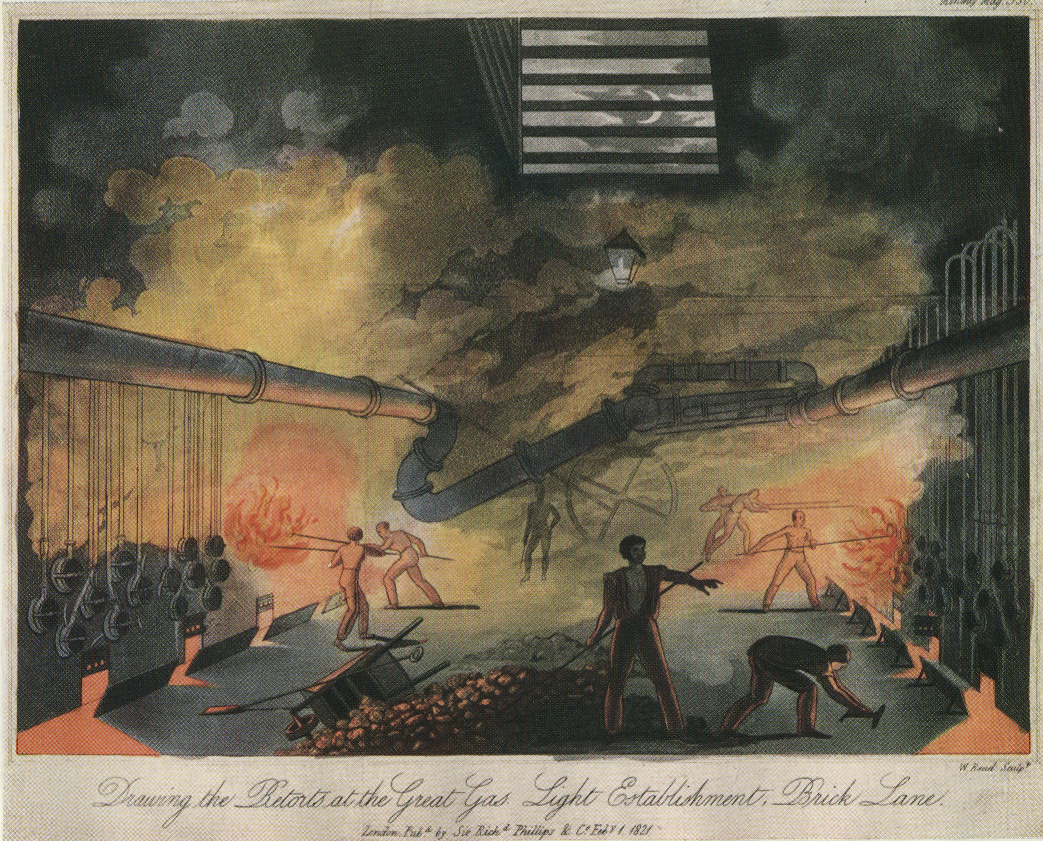
But at this moment of triumph for Asian indigo, there was another worm in the rose, this time in the form of the nascent organic chemical industry. In the early 1800s, when woad was fighting its final rearguard actions against Asian indigo, Europe and North America were starting to adopt town gas to light and later heat homes and businesses. Town gas was produced from coal.
Its production also created various very nasty wastes, some of which I have stumbled across in my professional career buried in old gasworks sites. One of these wastes was coal tar, a nasty, gooey, stinking waste which looks like this.
Chemists started dabbling with coal tar to see what they could extract from it. The breakthrough occurred in 1856 when a young British chemist by the name of Henry Perkin, while trying to make quinine from coal tar, serendipitously produced a purple dye that he later commercialized under the name mauveine.
It must have been so thrilling, almost magic, for Mr. Perkin to extract this beautiful colour from that horrible, nasty black gunk. For sure, in the chemistry lab as a boy I found those moments when the liquid in my test tube turned a beautiful colour to be the most memorable. But perhaps Mr. Perkins only saw the commercial possibilities in this lovely mauve.
In any event, the race was on! Chemists piled in to see what other dyes (and later other organic products) they could make by fiddling around with coal tar. The Germans soon dominated the field, accounting for almost 90% of synthetic dye production at the outbreak of World War I. It took a while for synthetic indigo to be produced, because coal tar didn’t contain a suitable “carbon skeleton”. Finally, in the late 1870s, early 1880s, the German chemist Adolf Baeyer managed to find several routes to synthetic indigo. His Nobel Prize for chemistry in 1905 was partially based on this work. Chemists at the Badische Anilin und Soda-Fabrick (better known to us as BASF) came up with yet another, commercially more viable, route, and BASF marketed its first synthetic indigo in 1897. By the way, just to close the circle, BASF was created in 1865 by one Friedrich Engelhorn, who had established the gasworks for the town of Mannheim in 1861 and saw in Perkin’s discovery of mauveine a way of turning this damned coal tar waste into something useful. As BASF’s name suggests, the company initially focused on aniline-based dyes. This is the original BASF plant at Ludwigshafen in 1866.
Natural indigo was doomed. Synthetic indigo’s better quality, the greater reliability of its supplies, and its lower cost all drove natural indigo off the market, despite the usual attempts, which we’ve seen already with woad, by sympathetic governments to try and block the use of synthetic indigo by fair means or foul. In 1897, the year that synthetic indigo first came onto the market, 19,000 tons of natural indigo were produced. By 1914, this had plummeted to 1,000 tons and the free fall was not over. Asian indigo followed woad-based indigo into oblivion.
At this moment of triumph for synthetic indigo, there lurked yet another worm ready to devour the rose’s heart: other blue synthetic dyes. Indanthrene Blue RS was patented in 1901, Hydron Blue was developed in 1908, and maybe there were others – the world of textile dyes is bewilderingly complex. I’m not quite sure how these various dyes fought it out for the denim market, but in the 1950s BASF and other indigo producers seriously considered promoting other blue dyes for denim because of indigo’s poor fastness properties. This is jargon for meaning that textiles dyed with indigo tend to fade rather easily. What stopped them was the fact that this very property of fading was what was so earnestly desired by the young owners of blue jeans, the product in which indigo was most used. So indigo was saved and the worm crawled off to devour other roses. Because of the popularity of jeans, indigo is in fact king of the heap. It is the textile dye with the highest production volumes in the world, some 30,000 tons a year (when you think that most of it is used to dye jeans and that it only takes 10 grams of indigo to dye one pair of jeans, readers with good mathematical skills will quickly figure out that literally billions of jeans must be made every year).
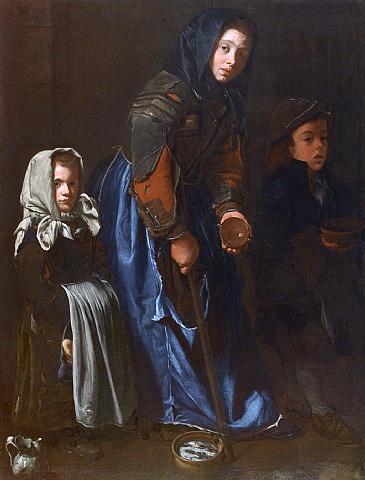
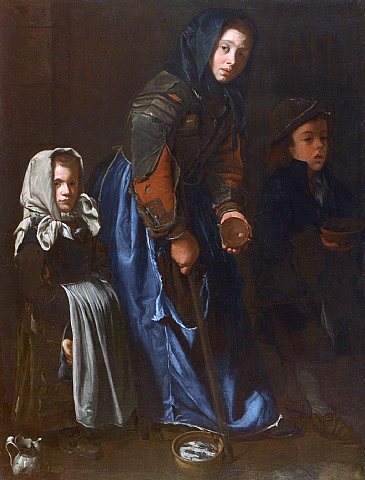
But after that tour through the world of dyes and its cut-throat competition, I am afraid to say that I still haven’t properly answered my wife’s question: “why are jeans blue?” Why are they not red or green or black or yellow? Well I think we have established why they are blue today: because of indigo’s quirk of fading in interesting patterns. But why did the Amoskeag Mills in New Hampshire, which initially supplied Levi Strauss with his denim, use indigo dye? Despite my best efforts, I have not been able to find a satisfactory answer. I suspect it was because by the 1860s, when the mill started supplying Mr. Strauss with his denim, this particular fabric had “always” been dyed with indigo or woad or some other blue dye. “Always” seems to mean at least since the 16th Century. One article I came across says that it was at this time that blue in the UK became the poor’s colour of choice for their clothing. Judging by the paintings of the Master of the Blue Jeans, it was the colour of choice for the poor in Europe more generally.
Why? I don’t know. I have to assume that cost was a factor, but it could also have been simply a fashion trend.
So I’m afraid that I have failed to answer my wife’s question at the deepest level. But I shall keep an eye out, and maybe one day I will come across the answer and be able to update this post. Any leads will be welcome. In the meantime, I invite my readers to enjoy some blue.
A few weeks ago now, my wife and I were greeted with this site when we came out for breakfast on our balcony overlooking the Chao Phraya River
Huge mats – small islands, almost – of water hyacinth were floating by, on their way to the Gulf of Thailand. So big were they that they were interfering with the water buses as they zig-zagged across the river from pier to pier. They had to slowly push their way through the mats, rather like ice-breakers, to reach the piers and let off their passengers. As the days went by the mats got smaller, and now there are only clumps moving to and fro with the tide, some with a white egret perched on them going along for the ride. A flotilla of yellow boats went by yesterday morning loaded up with baskets full of water hyacinth.
They must be part of some collection system. Given the amount of the stuff floating in the river, it seems a doomed effort, more a way for the government to give jobs to the boys than to really clear up the river’s water hyacinth problem.
When we first arrived here a year ago, these mats of water hyacinth floating by were one of the things which had struck us about the river. Then, over the months, they had disappeared. We had almost forgotten about them when those huge mats greeted us at breakfast that morning of a few weeks ago. I suppose the seasonal rains had filled canals and reservoirs upstream enough for someone to open dykes and dams to relieve the pressure and in the process clear out the water hyacinths which had been quietly growing there all year.
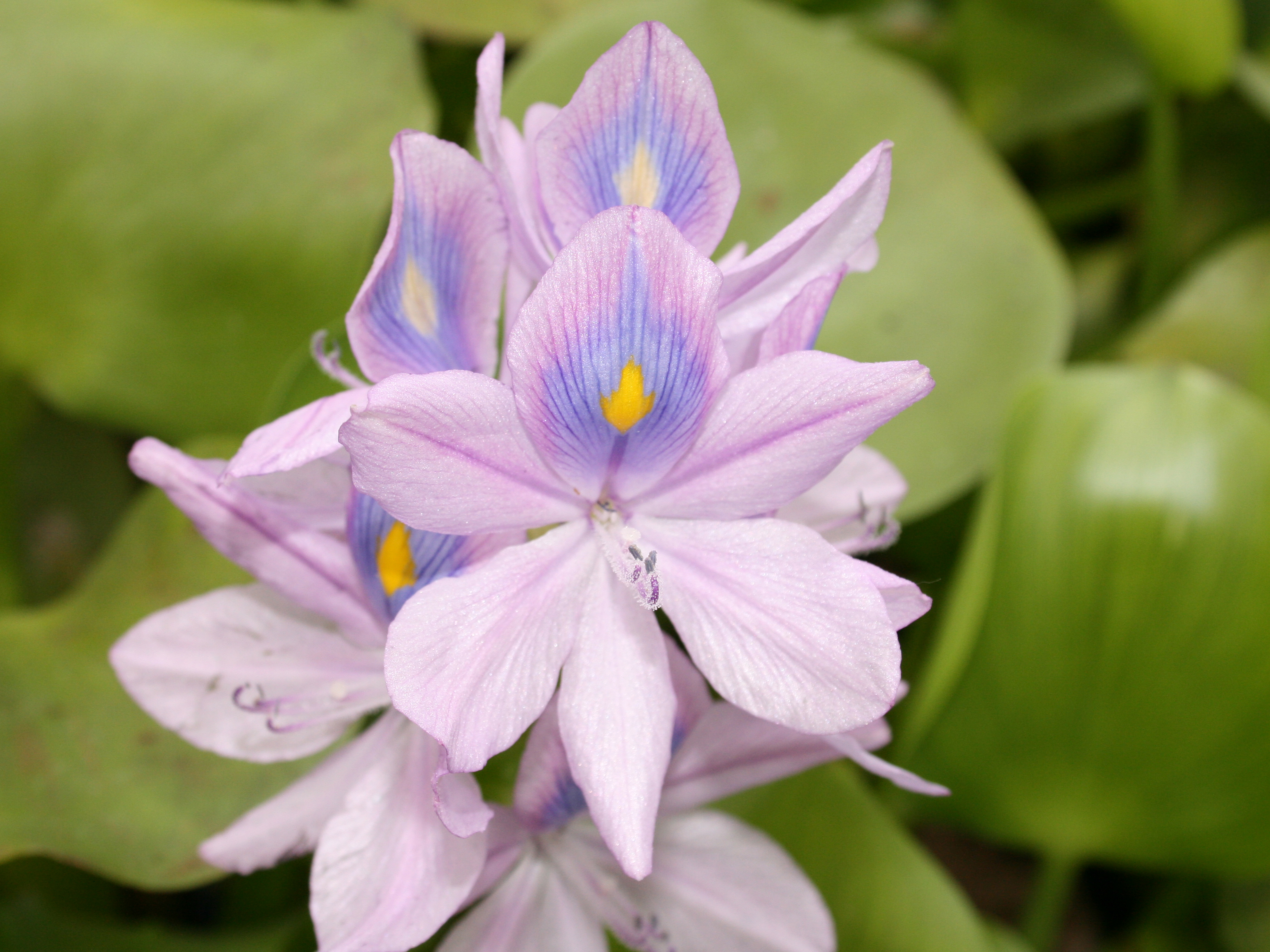
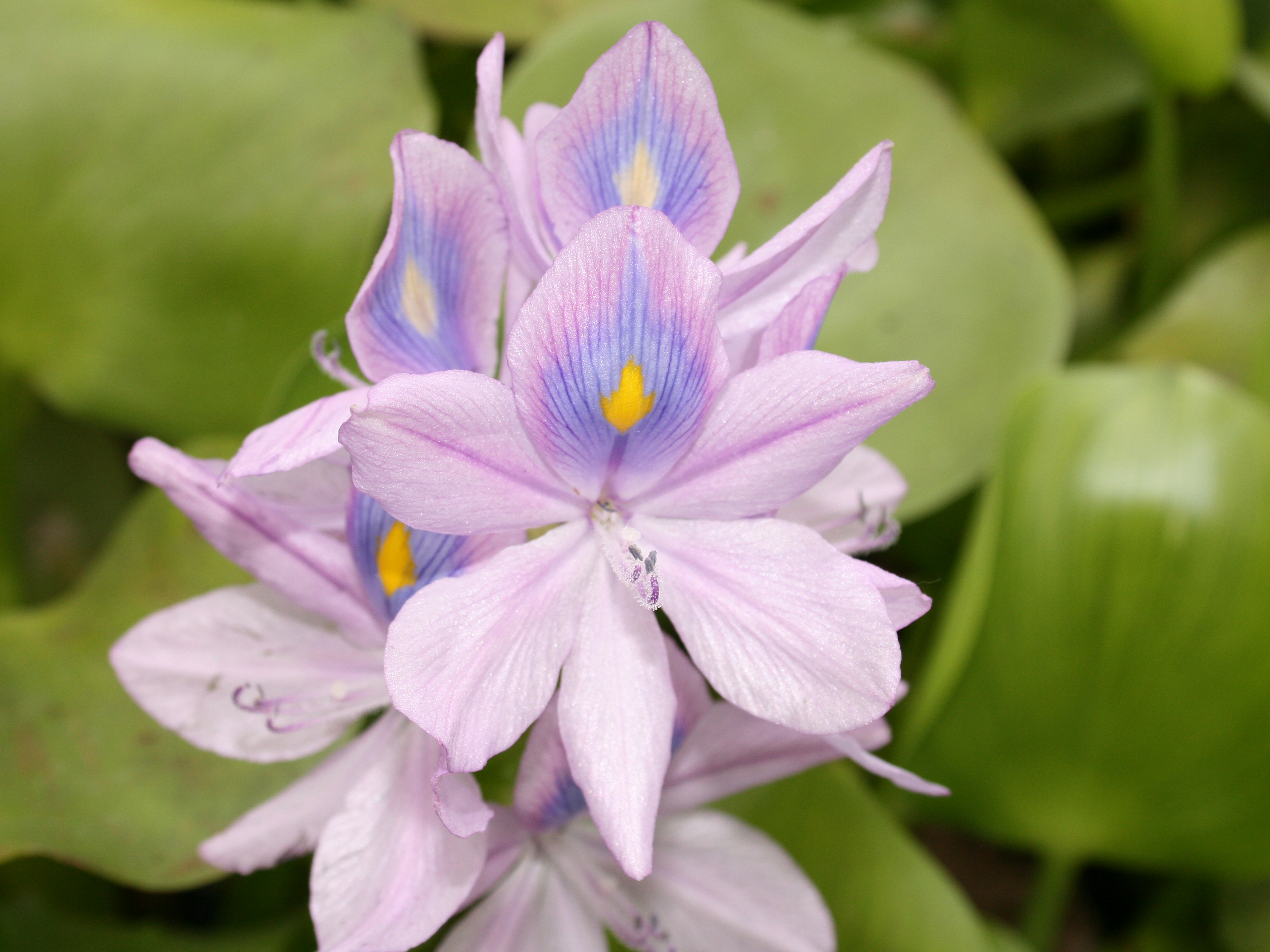
Water hyacinth has a beautiful flower
which is why someone (or someones) took it out of its original habitat, the Amazon basin, and carried it off to botanical and private gardens around the world. But from there, the plant somehow made it out into the big wide world and happily colonized waterways which had never known it and had no biological weapons to combat it. It grows very rapidly and soon was choking up waterways, beautifully of course, but still choking the life out of them.
Water hyacinth is considered an invasive species, that is to say, a species which is not native to a specific location and which has a tendency to spread in that new location to such a degree that it causes damage to the environment, to human health, and/or to the economy. That certainly describes the water hyacinth. It invaded the waterways of Louisiana and Florida in the late 19th Century, choking them up. In Africa, it’s invaded many places. It’s invaded the Nile, all the way from Sudan to Egypt. It invaded Lake Victoria in the 1980s (it was brought to Rwanda by Belgian colonists, who wished to beautify their properties, and then escaped into River Kagera, which led it to the lake). This is Kisumu harbour on the lake.
In India, it has invaded the Kerala backwaters.
In South-East Asia, apart from the Chao Phraya River and many, many other places, it has invaded Tonlé Sap Lake in Cambodia, a lake with a very unique ecology.
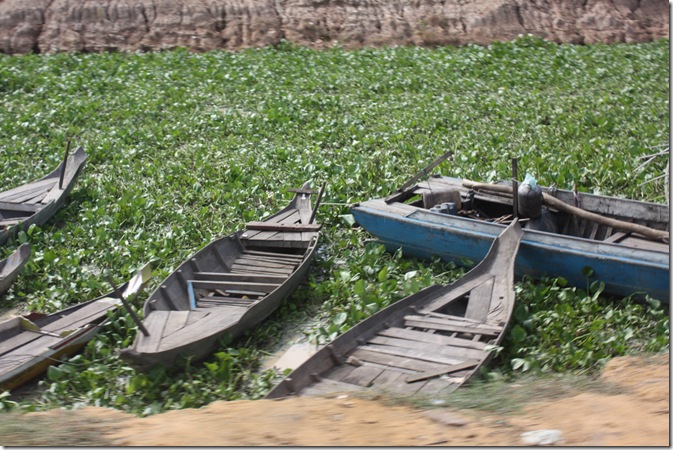
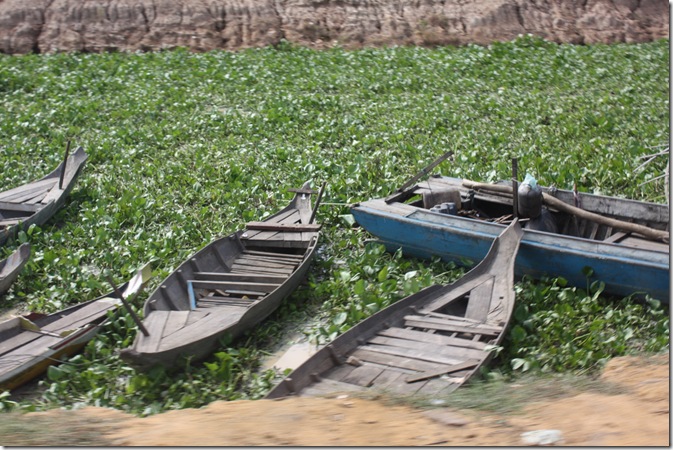
If you don’t control it, water hyacinth will cover lakes and ponds entirely, as these pictures show. This dramatically impacts water flow, it blocks sunlight from reaching native aquatic plants, and it starves the water of oxygen, often killing aquatic species. The mats are also create great places for mosquitos to live, as well as a species of snail known to host a parasitic flatworm which causes schistosomiasis.
I am reminded of a beautiful but evil woman: shall we say Julia Roberts as Snow Queen?
OK, to be gender-neutral let me also suggest a handsome but evil man: shall we say Robert Pattinson as Edward Cullen in Twilight?
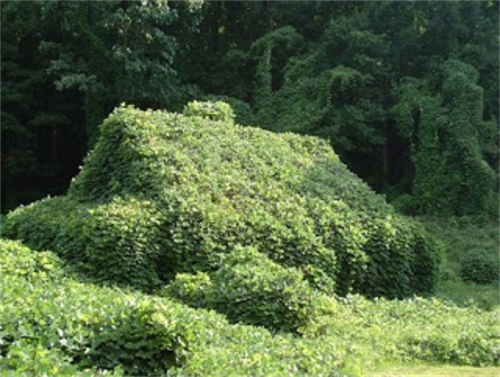
To be fair to water hyacinth, it is not the only invasive species by any manner of means. There must be hundreds if not thousands of species which are considered invasive in some corner of the globe. The International Union for the Conservation of Nature (IUCN) has come up with a list of the 100 worst invasive species, confessing that it had great difficulty in squeezing the list down to a mere hundred (although water hyacinth did make it onto the list). Reading the list is eye-opening and depressing. Let me make a relatively random selection of a few of them. Kudzu, which has been receiving a lot of bad press as an invasive species, is on the list, and if this picture of a house smothered by kudzu is anything to go by, with good reason.
Originally from China, it was introduced to Japan, and from there to the US as an ornamental. Then during the 1930s farmers were paid to plant kudzu to combat soil erosion. Then it went crazy.
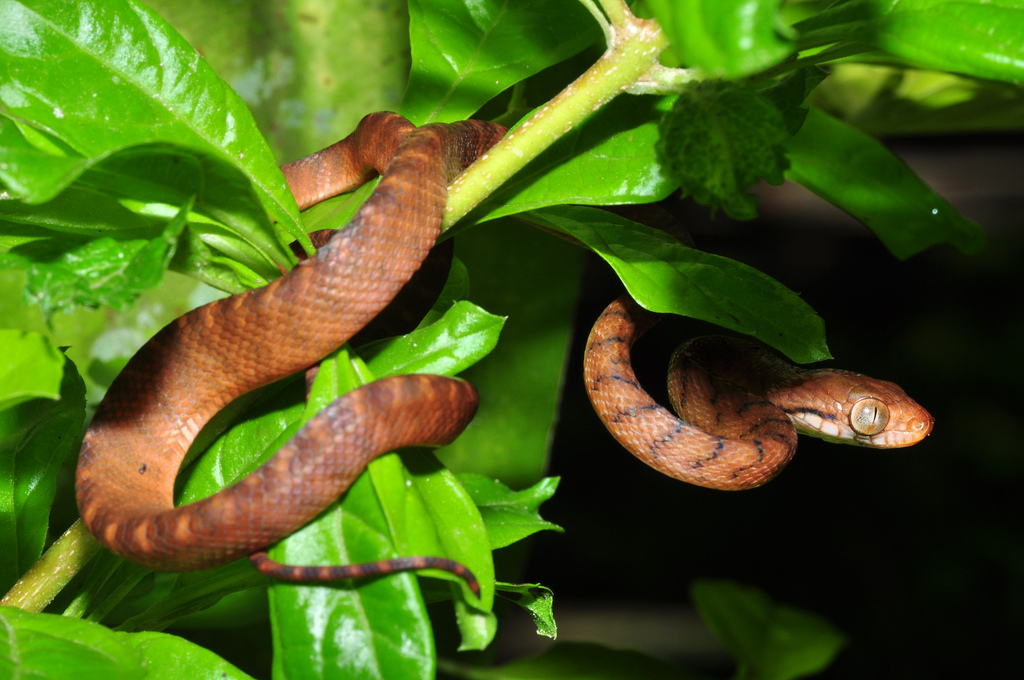
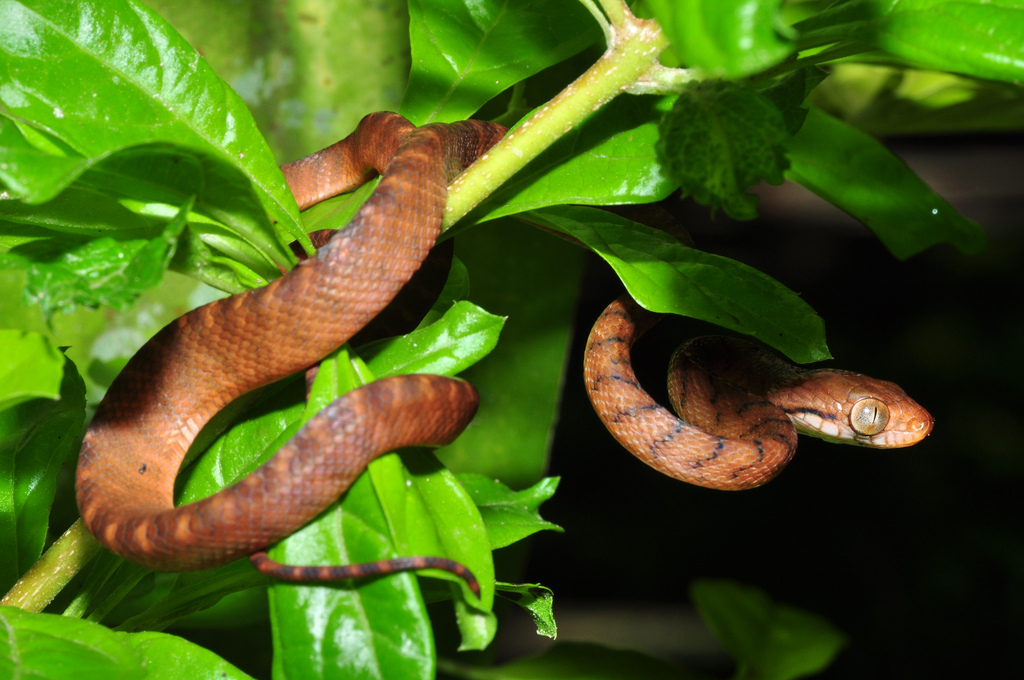
The brown tree snake, which has also received a lot of bad press as an invasive, is on the list too.
Originally from northern Australia, New Guinea, and some of the nearby islands, it was accidentally introduced into the island of Guam in the late forties-early fifties, maybe by crawling into the landing gear of an aeroplane, maybe as a stowaway on a ship. Once on the island, it went crazy, decimating, and in some cases completely eliminating, certain species of birds and rodents. Since Guam is a big transport node, it’s highly possible that the snake will get carried to other islands in the Pacific.
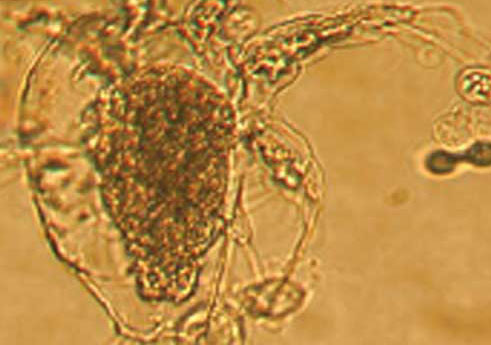
The fungus Batrachochytrium dendrobatidis, or Bd as it is known, is also there.
This little bugger has been wiping out frog populations all over the world, down to extinction in some cases. Only discovered in 1998, it’s thought that Bd originated in Africa and subsequently spread to other parts of the world by trade in the African clawed frog. Another fungus on the list is Ophiostoma ulmi sensu lato, better known as the fungus that causes Dutch Elm Disease. Originally from Asia, it somehow got into Europe in the early 1900s, probably in a shipment of Asian elm, but it was a mild form and was contained. From the Netherlands, it got into the US in the 1920s, through New York, where it has slowly but surely been killing off the North American elms. A much more virulent strain came back into Europe from the US in the late 1960s, probably in some infected wood, and has been killing off European elms ever since. This view of Salisbury Cathedral, for instance, painted by John Constable in 1820, is no more; the magnificent elms to the left have all died.
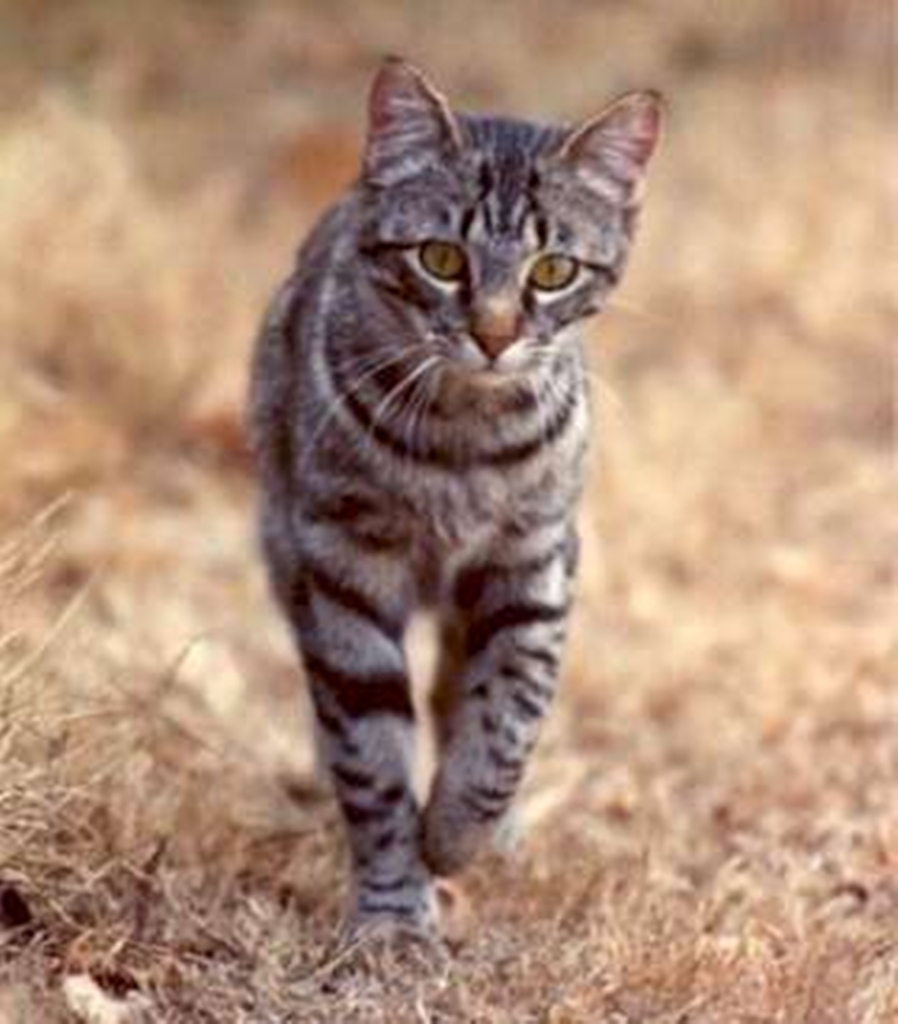
Closer to home, did you know that the cat is an invasive species?
Well, it is in certain parts of the world like New Zealand or Australia, or even the US. European colonists brought them, they have gone feral – or they just hunt for the fun of it – and have decimated, if not obliterated, certain bird species, and continue to do so. It’s so bad that it has made in onto the list of the 100 worst.
Staying with the familiar, the goat – an aggressive “eating machine” – is on the list, as are the rabbit, the red deer, the fox, the starling, and the rainbow trout, all introduced into new habitats by European colonists to make the colonies more like home, and all causing damage to the new ecosystems they found themselves in .
Going small again, I pick a mollusk from the list, the cannibal snail.
I pick it because it teaches us an important lesson in the fight against invasive species. The snail is an invasive in Hawaii, where it was originally introduced to try to eliminate another invasive species, the giant African land snail. Our friend is a fast and voracious predator, hunting and eating other snails and slugs, which gives it its pretty nickname. So the hope was that it would go after the giant African land snail. But instead, it went after the indigenous O’ahu tree snail species. And it went after them so enthusiastically that many of the species were extinct within a year. This is the risk with introducing a new predator to prey on an invasive species. There are chances that the predator will find other, indigenous, prey more yummy or simply easier to hunt, and you now find yourself with two invasives on your hands rather than one. Stoats, also on the list, fall into this category. Introduced into New Zealand to control the invasive rabbits and hares, it went after the indigenous birds instead, so now New Zealanders are left with trying to get rid of the stoat as well as the rabbit and hare.
For another plant on the list, the prickly pear, I refer the reader to an earlier post which I wrote about it. I’ll finish with a small tree, the cedar tree.
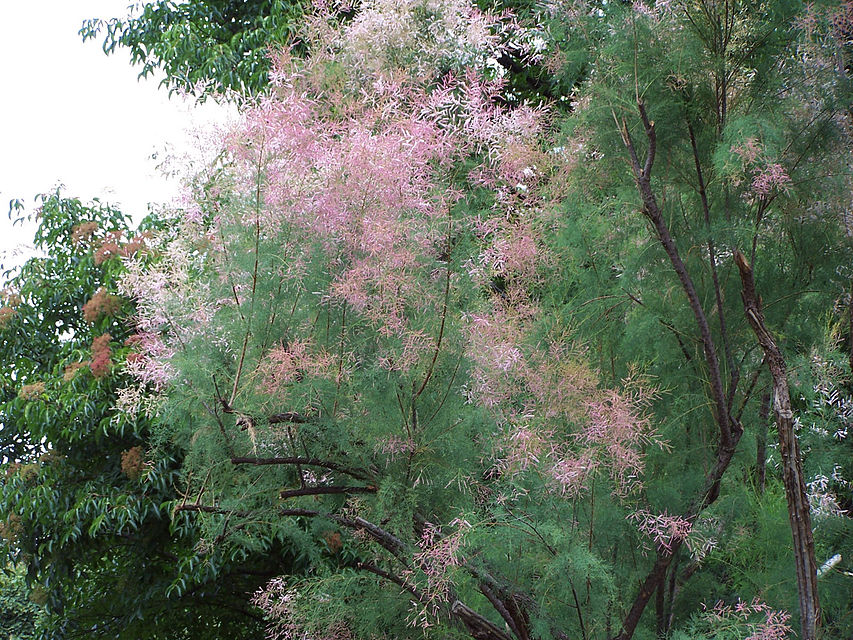
I add it simply because my French grandmother had one in her garden, and I loved climbing it when I was small. It was OK for her to have it, it is native to Europe and Asia. But when this tree, with its lovely pink flowers and feathery leaves, was introduced into the Southwestern US it was a disaster.
I invite readers to look at the list. It is quite sobering. In fact, as I study it, it occurs to me that there is one horribly invasive species that is not on it: homo sapiens sapiens.
This species left its original home in Africa 70,000 years ago and slowly spread all over the world. In at least three places, Australia, North America, and much later New Zealand, its arrival seems to have triggered a massive die-off of the bigger indigenous fauna, probably because they didn’t have sufficient defences against its clever hunting habits. About two hundred and fifty years ago, the species started the so-called scientific and industrial revolutions, which have resulted in it now having unprecedented power over all other species. It has, for its amusement or to make money or to protect one of its enslaved species (its agricultural crops and its livestock) from predatory attack or simply by mistake, moved species around the world, creating all the ecological catastrophes I’ve touched on above. And because it is taking living space away from all other species, crowding them out much more effectively than the kudzu pictured above is, it has set off the greatest die-off of species that the planet has seen in the last 66 million years.
I really think it should be on the list. I must write to the IUCN suggesting it.
For reasons too long to explain, I was recently involved in discussions about the implementation of the Universal Declaration of Human Rights and the several Conventions emanating from that Declaration: the Convention on the Elimination of all Forms of Discrimination against Women, for instance, or the Convention on the Rights of the Child, to name but two. At some point, we got into a vivacious discussion about two issues. The first was the rights of future generations: specifically, do we, today’s generations, have the right to use up all the Earth’s resources and poison the Planet, thus taking away from future generations their right to a dignified life? The answer was fuzzy, the problem being that the Conventions deal only with the rights of existing human beings; the unborn, it would seem, have no rights. But how do we square this with international commitments to sustainable development, whose very definition recognizes the rights of future generations? This conundrum was left unresolved. The second, and to my mind much more fundamental, issue we discussed was the rights of other species: do they have any rights, or are they merely goods and chattel which we humans can dispose of as we wish? The answer was even fuzzier, with the sense in the room being that they did not (yet) have internationally recognized rights, although many countries have enacted legislation recognizing that other species do have certain rights – the prohibitions on cruelty to animals fall into this category.
Fast forward to the visit my wife and I made to the Orang Utan Rehabilitation Centre and the Sun Bear Sanctuary in Sepilok, on the last day of our visit to Sabah. Both centres receive a steady stream of orphaned baby apes and bear cubs, whose mothers were either killed deliberately to make pets of their babies or died as a side effect of the steady deforestation going on in this part of the world. They also receive adult bears and apes marooned in vanishing islands of jungle. They do stirling work of trying to reinsert their charges back into the wild, or at least giving them a life of dignity if they cannot go back. They, along with the many other rehabilitation centres around the world doing the same thing with other species, deserve our thanks for this work of love.
But as I sat there, listening to what these centres do and watching their charges on the feeding platforms
or sunning themselves in enclosures
I was brought to meditate on that essential question which I had recently debated: do other species have rights, like we do? Specifically, do they have the right to life? Personally, I think they do. Of course, this right, like every right, is not absolute. I mean, if a lion jumps on me, or my wife, or my kids, then I have a right to kill that lion (as I do if it were a member of our own species who attacked us). And to eat, I need to kill species, that’s the way our biology works. This holds true even if I were vegan (carrots, just to take one vegetable, are also a species and so have the same rights as a chicken).
We could go on at length about how rights play out in real life: how about this situation? how about that situation? But the thing is, accepting that other species have rights changes the context of the discussion radically. Just to take the right to life, it’s no longer that it would be nice if we didn’t kill orang utans or sun bears, it’s that we have a duty not to kill them. And if that is the case, then we have to ask ourselves if the people of Sabah have the right, for instance, to undertake large-scale destruction of the orang utan’s and sun bear’s habitat so as to be able to plant oil palm in its place.
But this brings us on a collision course with another right, the right of the people of Sabah “to an adequate standard of living … and to the continuous improvement of living conditions” (I am quoting the International Covenant on Economic, Social and Cultural Rights). Is there a way out? Yes there is, at two levels. First, Sabah has to change its model of economic development; the province’s natural habitat must be viewed as an economic asset and not as a nuisance to be swept aside to make place for other economic activities. Sustainable (but truly sustainable) tourism is one possible way of making money from jungle. Sustainable (but truly sustainable) harvesting of forest products is another. Second, and much more fundamentally, Sabah, like just about every other territory on Earth, has to drastically reduce its human population. There are simply too many of us on this planet. I find the following graph one of the most frightening I know.
It shows the growth in the human population over the last nine thousand years. Note the huge, and hugely rapid, jump in our population since the start of the scientific and industrial revolutions (you have to see it on this scale because this is closer to the scales at which evolution works). The result of this growth has been that we are brutally shoving all the other species on this planet into a corner, a corner which is getting rapidly smaller and smaller. They cannot survive these huge shocks to their ecosystems. At this point, then, the right to life of other species trumps our right to create new human life. Many have criticized the Chinese Government for its one-child policy. But not me. We should all have one-child policies until the human population falls to much more acceptable levels, not more than 1 billion (and better 500 million). Yes, we will have old populations. Yes, we will have a problem of spoiled children, the princelings as the Chinese call them. Yes, we will have deflationary economies. Yes, house prices will drop. But our duty to respect the right to life of all species tells us that these are problems we simply have to accept and deal with.
I suppose I’m not painting a pretty picture of our immediate future, but I think it’s better for our species to suffer a little for a little while in the quest for a longer-term happiness than to go on as we are currently doing, destroying everything, which will ultimately destroy us too – because we actually need jungles and all the species in it for our own survival.
___________________
Orang utan at rehabilitation centre: https://sabahbooking.com/tours?actionType=details&tid=20&lang=zh_CN
Borneo bear: https://commons.wikimedia.org/wiki/File:Sepilok_Sabah_BSBCC-photos-by-Wong-Siew-Te-02.jpg
Population chart: http://aryanism.net/politics/population-and-demographics/
I’ve often used the expression “drenched with sweat” in my life, but I’ve never actually been thus drenched. This time, though, on staggering out of the jungle after a six hour trek, my wife and I were were literally soaked through. We couldn’t have been wetter if we’d stood under a shower with all our clothes on.
A bit of background is in order. We were in the Malaysia’s easternmost province of Sabah, on the island of Borneo. We were visiting the Danum Valley Conservation Area, which is in one of the few remaining tracts of primary jungle in the province. We arrived there after driving down from the town of Sandakan, passing mile after mile of oil palm plantations. So dreary! And so depressing to think that beautiful jungle stood there not that long ago. But it’s hard to sell jungle, easy sell palm oil.
Leaving all those oil palms behind us for a few days, we wanted to see some jungle – and maybe, if we were lucky, some orang utans. Danum Valley is one of the few places in Sabah where orang utans still live in the wild, along with pygmy elephants, Sumatran rhinoceroses, clouded leopards, various other species of feline, several species of monkeys, and of course hordes of more humble forms of life, botanical and zoological.
So it was that we attached ourselves to a group of young people, part of that army of gap-yearists*, between-jobbers**, and others, who are all on the move these days across every continent, living cheap, telling tall stories about their travels, and swapping information on the good places to eat, sleep, and have fun along the road. They had hired a ranger from the Danum Valley Field Centre, where we were all staying, to take them on one of the shorter trails. Early the next morning, we took our place in the line which filed across a rickety suspension bridge and set off briskly into the jungle. At first, we commented appreciatively on the surroundings, looked eagerly into the undergrowth for signs of pygmy elephants (they had left dung piles and shattered tree limbs along the track), and inspected fearfully every overhanging leaf for leeches (there had been much excited chatter on the net about the presence of these horrible animals along the trails and we sported a set of bright green leech socks for the occasion). But gradually, in the sauna-like heat of the jungle, as we climbed up and down over successive ridges, our breathing grew raspy, the sweat stains on our clothes grew and coalesced until clothes and stains were one, our speed slowed to a crawl. We neither saw nor cared anymore about what was around us (which in truth was not much; at the very last minute, a macaque monkey was sighted high above us, otherwise a few millipedes and some leeches were the total of our bag). The only thing that mattered was to make sure that we lifted our legs high enough to step over the roots, branches, and other jungle paraphernalia that littered the trail. Some of the group kindly held back so that we didn’t get completely separated from the rest, otherwise we would still be in that jungle stumbling around in a total daze. When we got back to our room, we unsteadily peeled off our sodden clothes, stood for a minute under the shower, and then collapsed onto the bed, lying there in a stupor for a few hours.
So when we heard at dinner that our young friends had booked a ranger for an even longer walk the next day, we smiled and promised to be on hand to wave them off at breakfast. We kept our promise, wishing them a safe journey over our fried eggs. And then, after some more tea, toast and marmalade to fortify us, we ambled slowly back into the jungle to an observation tower, from which we had decided to watch jungle life in peace and tranquillity. Observation tower is a misnomer. It was actually simply an aluminium ladder encased in an iron safety cage, attached to one of the tall, tall trees that dot the jungle.
The ladder led to a wooden observation deck at the top and another half way up. It must have been all of 60 meters to the top deck (110 rungs; I counted). One of our young friends, between jobs, had shinned up the ladder as we lay, inert, on our beds the previous afternoon. His last job was as tester of the mechanical soundness of pipelines, and he informed us at dinner that it was his professional opinion that the whole contraption was exceedingly corroded and ready to peel off the tree at any moment.
With these words still ringing in my ears, I commended my soul to Jesus, Mary, and all the Saints, and started climbing, fixedly looking at the bark in front of me and pulling myself up rung by counted rung. My wife followed. We stopped at the mid-level observation deck for a breather before continuing on. Again, fix the bark and pull up rung by counted rung. We made it in one piece. We took a photo down the ladder we had just climbed.
Terrifying.
But the view compensated for all the fear and the sweat to get there.
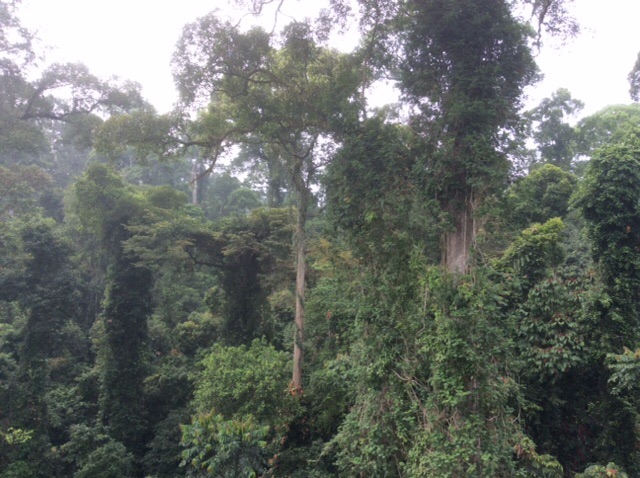
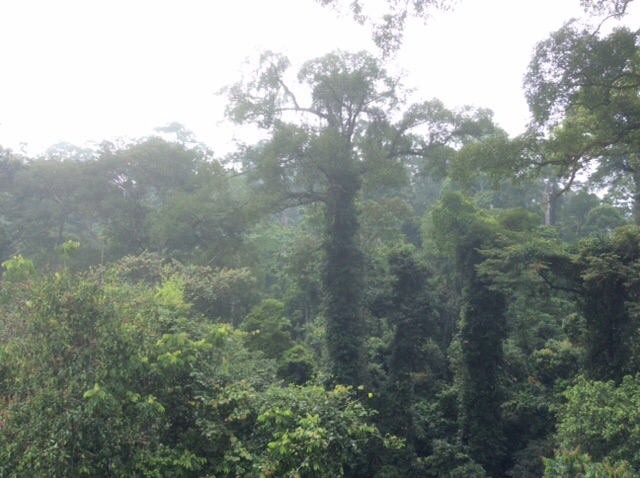
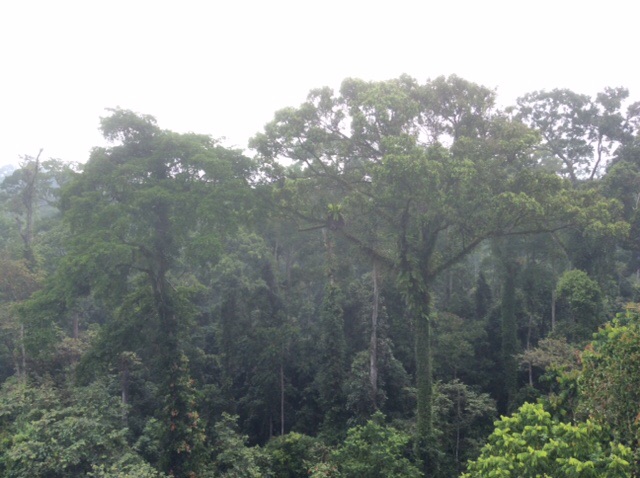
I like being in jungle canopy. At ground level, I find jungle quite monotonous. There are no sweeping vistas through the thick vegetation, and unless you are into insects there is precious little animal life on the jungle floor. Even the plant life is not that interesting, unless you like fungi (are they even plants?). If you happen to spot something in the trees, it’s hard to watch through all the intervening foliage. But in the canopy, or above it as was our case, it’s completely different. You appreciate the grand sweep of the jungle: the tall trees, the Lords of the place, the smaller trees greedily growing towards the light and waiting for their moment of glory when the Lords will be toppled by wind, rain, or sheer old age, the parasitical plants of all descriptions – lianas, vines, ferns – using these trees as their path towards the light, strangling, suffocating, and sucking their life juices from them; flowers, coloured leaves, and fruit peppering the whole. And above and through all this botanical profusion you see the silent flitting of animals. As we stood there, looking out over the canopy, we saw a butterfly which did a long glide past rather than flying drunkenly along as do most butterflies, the bright aquamarine streak of a bird shooting over the canopy (a kingfisher?)
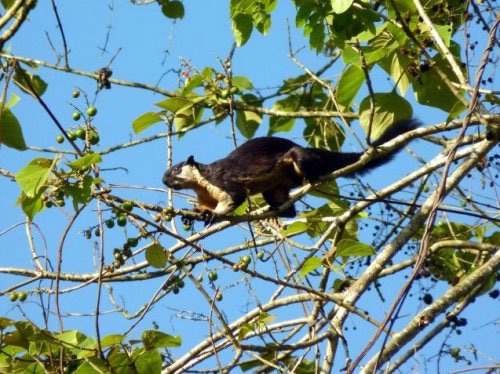
several black squirrels, which scurried fearlessly up tree trunks and out along branches
and at the end, a troop of red leaf monkeys, who suddenly appeared out of the vines loading down a tree, gracefully jumped over onto the next tree, disappeared into the foliage, and then reappeared further along the canopy.
It was time to go. A new prayer, and down we went, rung by rung, all 110 of them.
____________
* young persons, normally school leavers waiting to go on to University, who have decided to take a year off and travel the world. It can also apply to somewhat older persons who have decided to take the year off between undergraduate and graduate schools.
** even older, but still young, persons who have decided that they are fed up with the boring job they have and want to see the world, or have decided to change jobs and want to see the world before they start working again, or simply decide that it’s now or never if they want to see the world.
All those nobbly, horribly hot beach pebbles which I spoke about in a previous post could not stop me from registering the scent of the sea as I finally waded into the waves washing onto the beach. How does one describe that inimitable scent? Salty? Briny? Fishy? Seaweedy? Tarry? All of the above? Whatever descriptors you line up, you know it when you smell it. Of course, what we are actually breathing in is chemicals, which register in our brains as “scent of the sea”. Are we smelling ozone? or maybe iodine? These two chemicals were popular candidates in my youth; my mother-in-law favoured iodine, instructing my wife when she was young and at the seaside to fill her lungs with all that iodine, while my mother inclined to the ozone hypothesis. But actually, if I’m to believe the latest theories, neither of these chemicals are involved. I will not name names; I don’t want to spoil all those rosy memories evoked in us by the scent of the sea with flat, matter-of-fact, totally nerdy chemical names (I cannot resist, though, mentioning that the chemicals in question have to do with sex, death, and natural food additives. If any readers want to know more, they can do no better than consult this website).
Let’s focus instead on those memories, which often first seeped into our subconscious when we were at the sea as young children.
After working my way down the corridors of my memory, opening doors here and there to check what lies behind them, working my way ever further back into the dimmest and darkest recesses of my mind, I have concluded that my Ur-memory, my foundational memory, of the scent of the sea situates itself in Massawa on the Red Sea, in 1960.
I have mentioned in past posts that I was born in Eritrea, where I spent the first six-seven years of my life. We lived in the capital Asmara, up in the highlands. This was one of city’s the main streets
while I remember going to this cinema
and I see that this gas station has become a popular tourist attraction for its 1930s architecture.
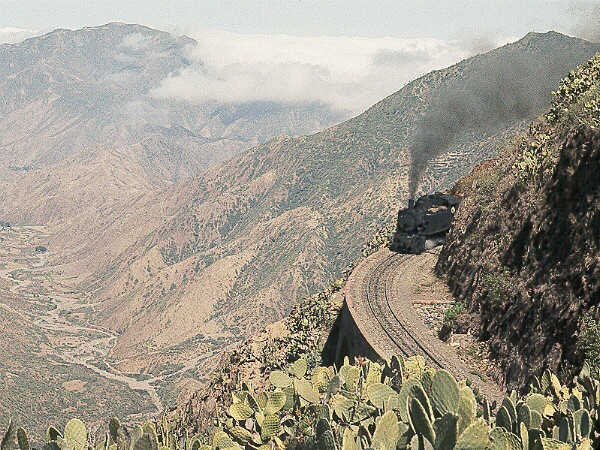
During part of the year, when it was less hot – I’m guessing Christmas time – we would take the little train which I’ve mentioned in an earlier post down to the port of Massawa on the Red Sea.
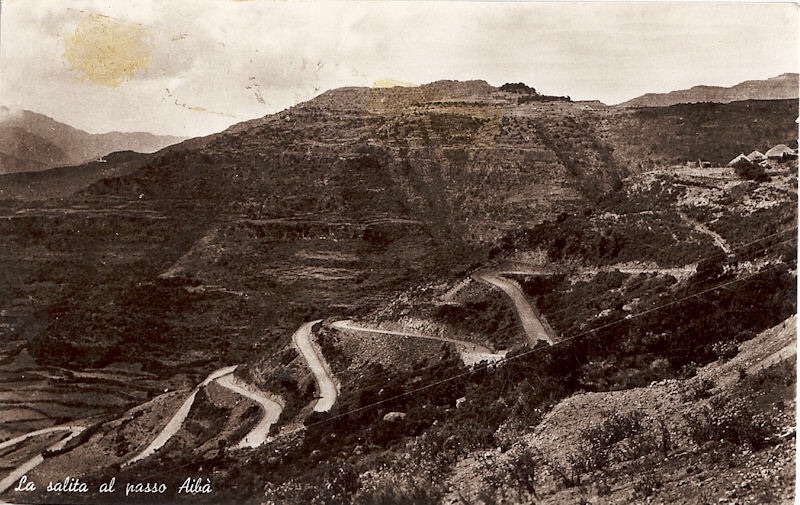
One could also go down by road, but it was an incredibly twisty journey
and it went through countryside still infested by bandits, who were likely to stop you and rob you blind.
Contrary to Asmara, of which I have many memories, I remember nothing of Massawa itself. I know we went to the beach; I have seen the old photos of us children playing and bathing there. The only memory I have of that beach is us passing some rusty barbed wire, a remnant of the War, and my older brother and sisters warning me portentously that there could still be mines hidden under the sand! What a shiver of delighted horror that gave me … But my memory of scent of the sea does not come from there. It comes from the hotel we stayed at.
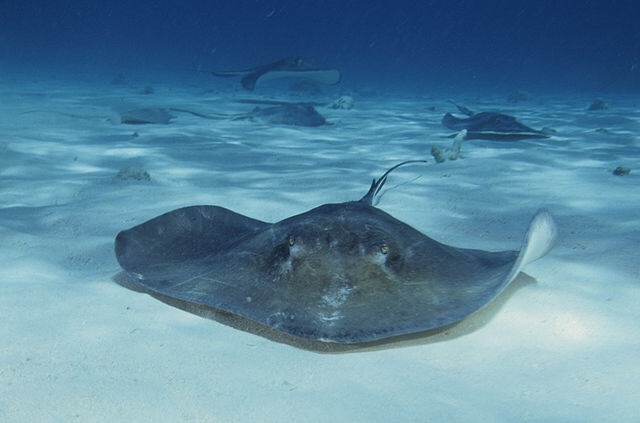
I have no idea what hotel it was. I’ve looked at old maps of Massawa but nothing obviously fits. All I remember is that our room overlooked a small harbour – the hotel’s, I suppose. The memory I have been chasing through the corridors of my mind is of me one morning, very early – just after dawn – sitting on the ledge of the window with my mother’s arms around me. There is not a sound. Looking down, I distinctly see three sting rays lazily undulating their way through the clear water of the little harbour. This photo captures the beauty of these fish.
As I watch, enthralled, my brain is also registering the scent of the sea rising up to me, to be captured for ever in my olfactory memory bank. Sometimes when I’m at the sea, that scent will register in my memory bank and I will suddenly see in my mind’s eye those beautiful sting rays, undulating their way through the sea.
I invite my readers to fetch up their memories of the scent of the sea. In the words of Van Morrison, “smell the sea and feel the sky. Let your soul and spirit fly”.
________________
child on the beach: https://www.pinterest.se/pin/296745062933998571/
Asmara 1960: https://www.delcampe.net
Cinema Impero: http://www.corriere.it/foto-gallery/esteri/17_luglio_11/asmara-unesco-piccola-roma-9d82c6b4-6660-11e7-99cd-8ba21567bad4.shtml
Gas station: https://misfitsarchitecture.com/tag/frank-lloyd-wright/
Train to Massawa: http://www.trainweb.org/italeritrea/ttrain.htm
Road to Massawa: http://www.kagnewstation.com/printed/index.html
Stingrays-1: https://www.haikudeck.com/stingray-uncategorized-presentation-S4dbGGSsiX#slide8
Stingrays-2: http://obrazky.4ever.sk/zvieratka/vodny-zivot/raje-247524
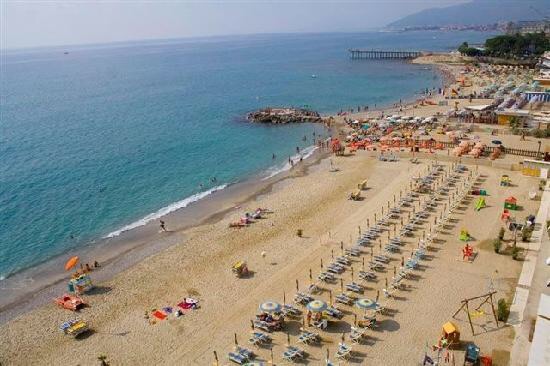
I’m not a beach person. I don’t much like spending time in places like these.
My fair skin, which I inherited from my Anglo-Saxon progenitors, burns immediately. So I spend all my time wearing clothes, which readers will agree is not optimal behaviour on a beach, or sloshing on 30+ sun cream and darting fearful looks at the blazing sun. In any case, I don’t see the pleasure of spending time in a micro-environment whose closest cousin is the middle of the Sahara desert, where sun beats down pitilessly on sand and pebbles, with no sight of tree or bush to give a pool of shade (beach umbrellas don’t count), or of stream of merrily burbling fresh water to give the parched mouth relief (vendors of bottled water don’t count either).
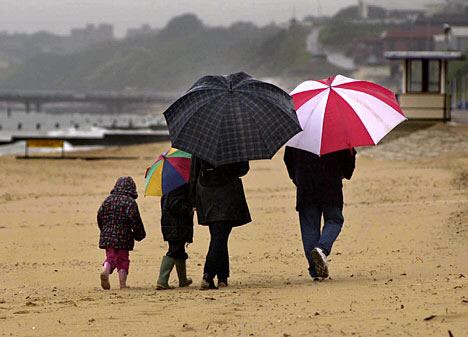
I should clarify that I’m talking here about the ecology of a Mediterranean beach in high summer; the UK or French Atlantic beaches of my youth are quite different micro-environments, closer to Arctic tundra – at least, my memories of these beaches are dominated by glacial seawater, howling winds, and driving rain.
Back to the Mediterranean beaches. There is also the issue of the pebbles. We frequent a pebble beach.
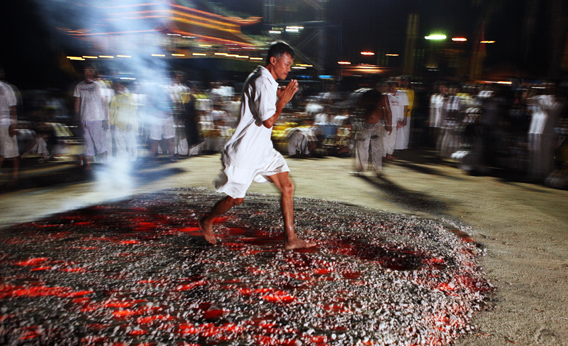
Nice to look at but agony for me to walk on as the pebbles drive into the arches of my feet – I have quite delicate feet, which is why, when in China, I had a foot massage only once, because after the masseuse’s vigorous manipulations I spent the rest of the week hobbling around in pain. The pebbles are also almost glowing they are so hot. Walking to the sea is like being one of those religious devotees who walk on burning coals to prove their devotion to whatever it is that they believe in.
It doesn’t finish when I get to the sea. As I stand there, hesitating before the thermal shock that I know awaits me when I will plunge into the sea, the ebb and flow of the waves makes me stagger back and forth, stepping heavily on those damned pebbles.
As if all this were not enough, I get so BORED on beaches. I’m past the age of building sandcastles (although I did have fun helping the children make theirs when they were young)
or find every excuse to escape the beach – cappuccino time, shopping for lunch and dinner, urgent need to pay parking fines in the municipal office … anything to get away from the beach.
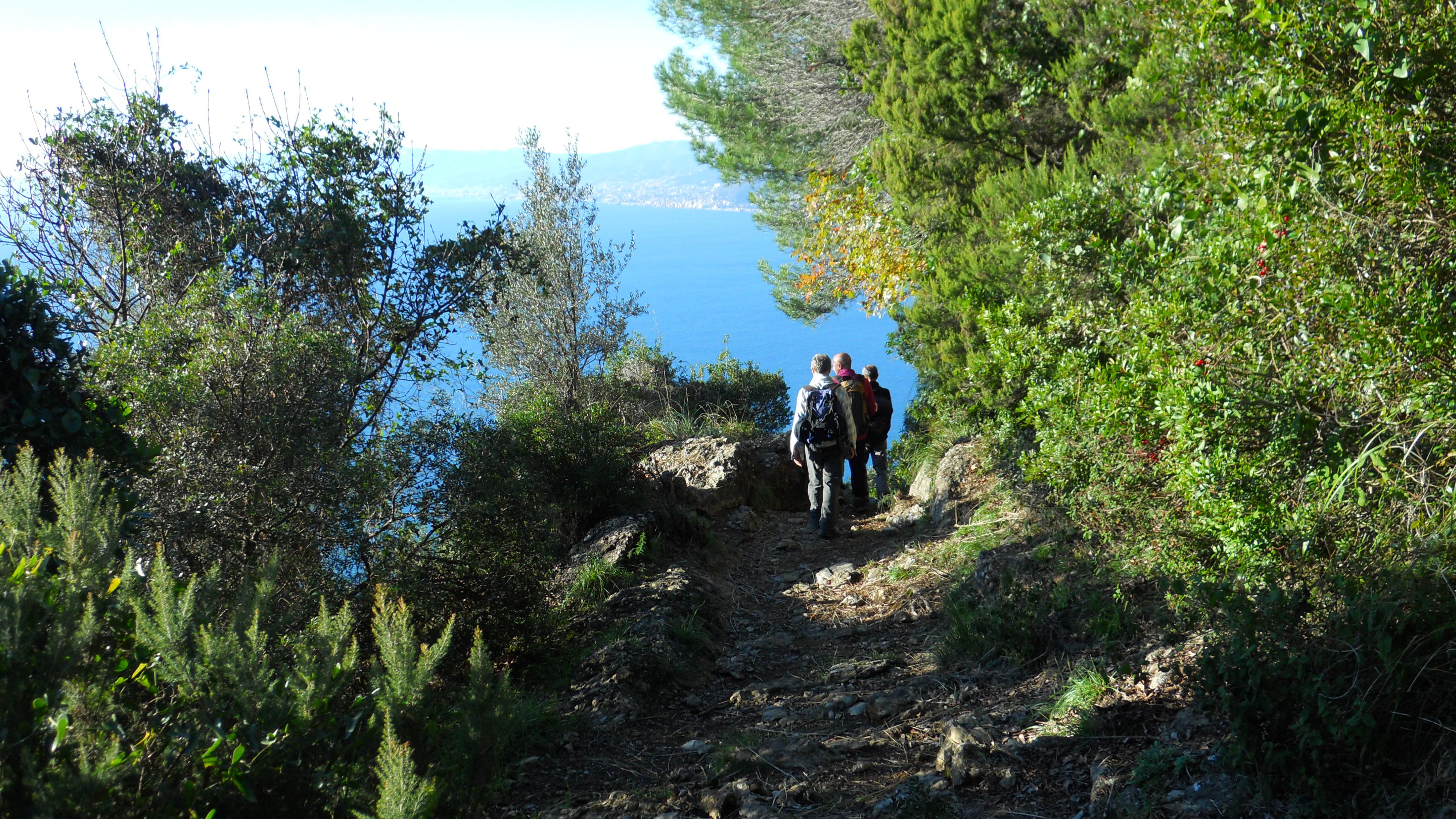
I should clarify that I’m basing myself here mainly on my memories of spending summer holidays with the family at the seaside in Italy. Those holidays stopped some ten years ago, when the children, now grown up, were spending their summer holidays with their friends and later with their girl or boyfriend. My wife and I still came to the seaside, but not for the beach. We went for walks in the hills behind the sea
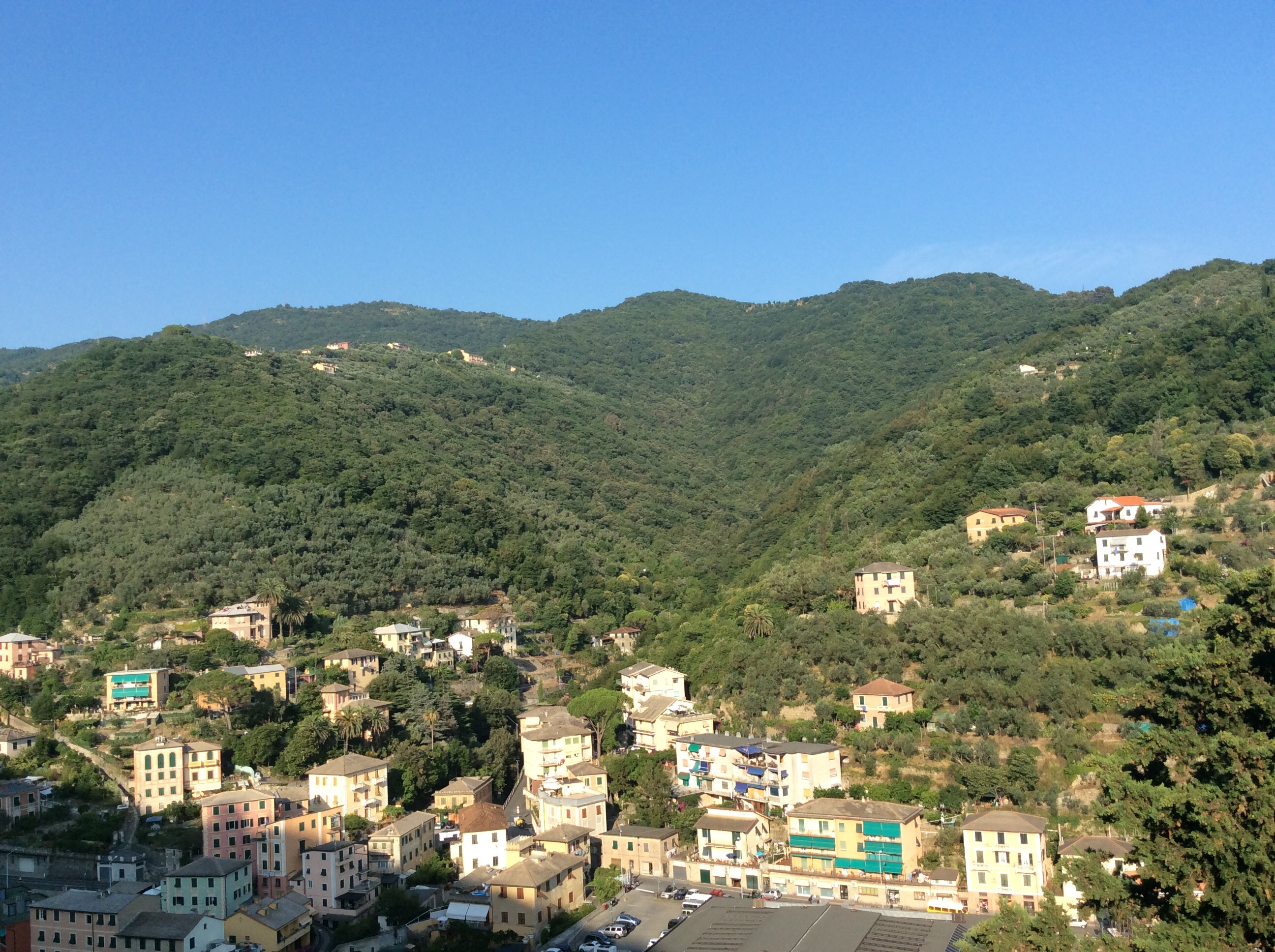
we wandered around the village
we went into Genova to admire the sites
we dined out in the local restaurants
Or we just looked at the view from our balcony.
But we did not visit the beach. At maximum, one evening we would go down and dip a toe in the water.
Yet, as I write this, we are actually on that beach. This year, my wife and I have had the immense luck of having both kids with us at the same time for a week and a half during our and their summer breaks. In an advanced state of gratitude, I was therefore quite happy to tag along when it was suggested that we all go down to the beach and spend the afternoon there. After a dip in the sea, which was surprisingly warm (I am very picky about the temperature of the water), we are now lying in the shade of beach umbrellas, sipping water from a bottle we have just bought at the bar. And I’m feeling surprisingly mellow about it all; the beach seems quite a nice place really, don’t know what I had against it.
All of which proves … what? I suppose that human beings can put up with anything as long as they are happy.
POST SCRIPTUM, 18 July 2015
The mellowness only lasted for another half day. After that, we let the children go to the beach without us.
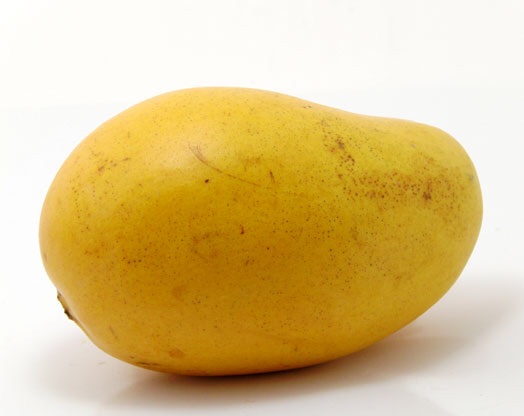
In our short time in Thailand, my wife and I have had the pleasure of trying many wonderful tropical fruits. Some are now known enough in Europe to regularly populate the supermarket shelves: bananas of course, coconuts too, and more recently mangoes
pomeloes
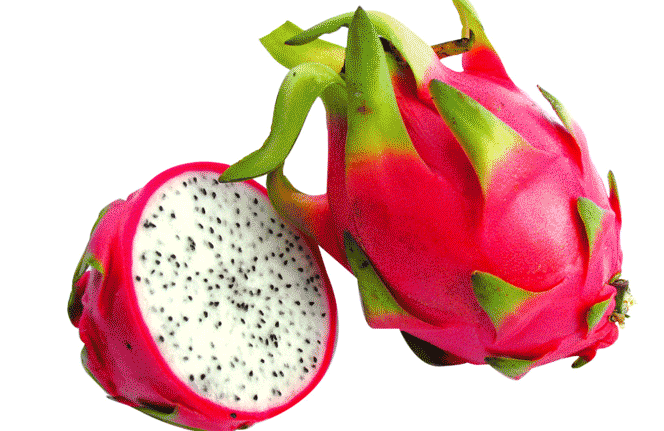
and dragon fruit
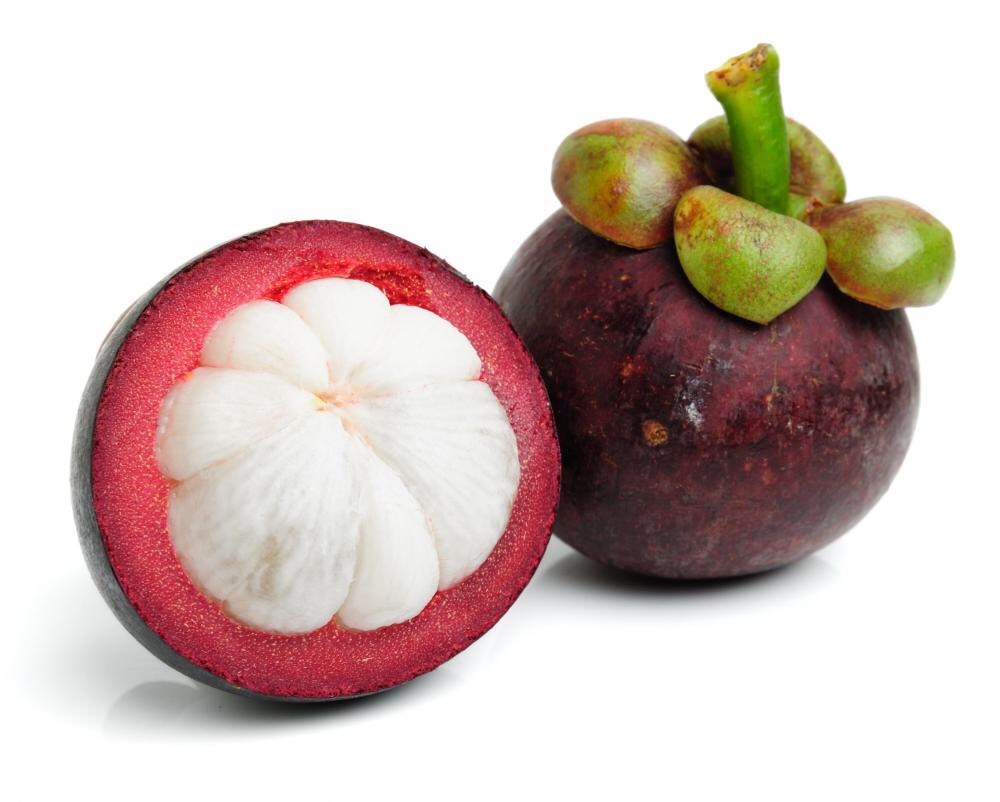
Others, though known to Europeans – primarily through tourism to SE Asia – have not (yet) made it into our supermarkets: the mangosteen, for instance
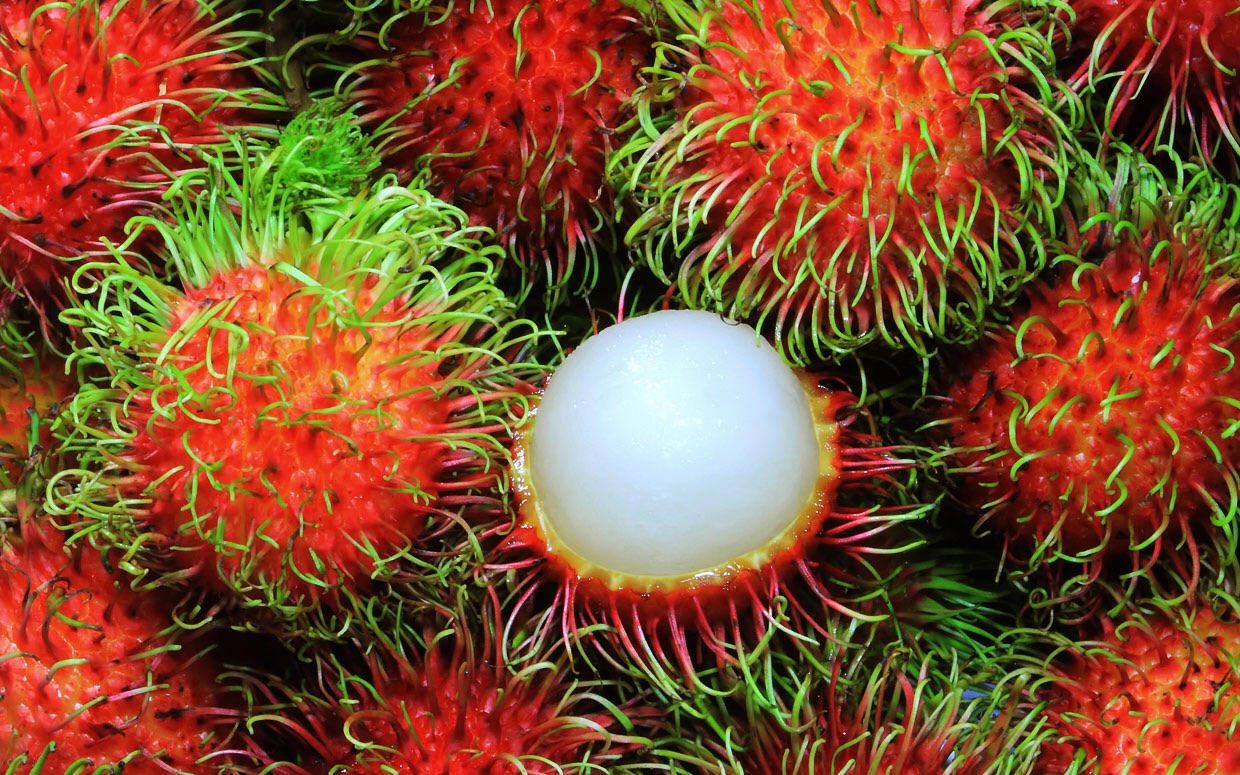
or the rambutan
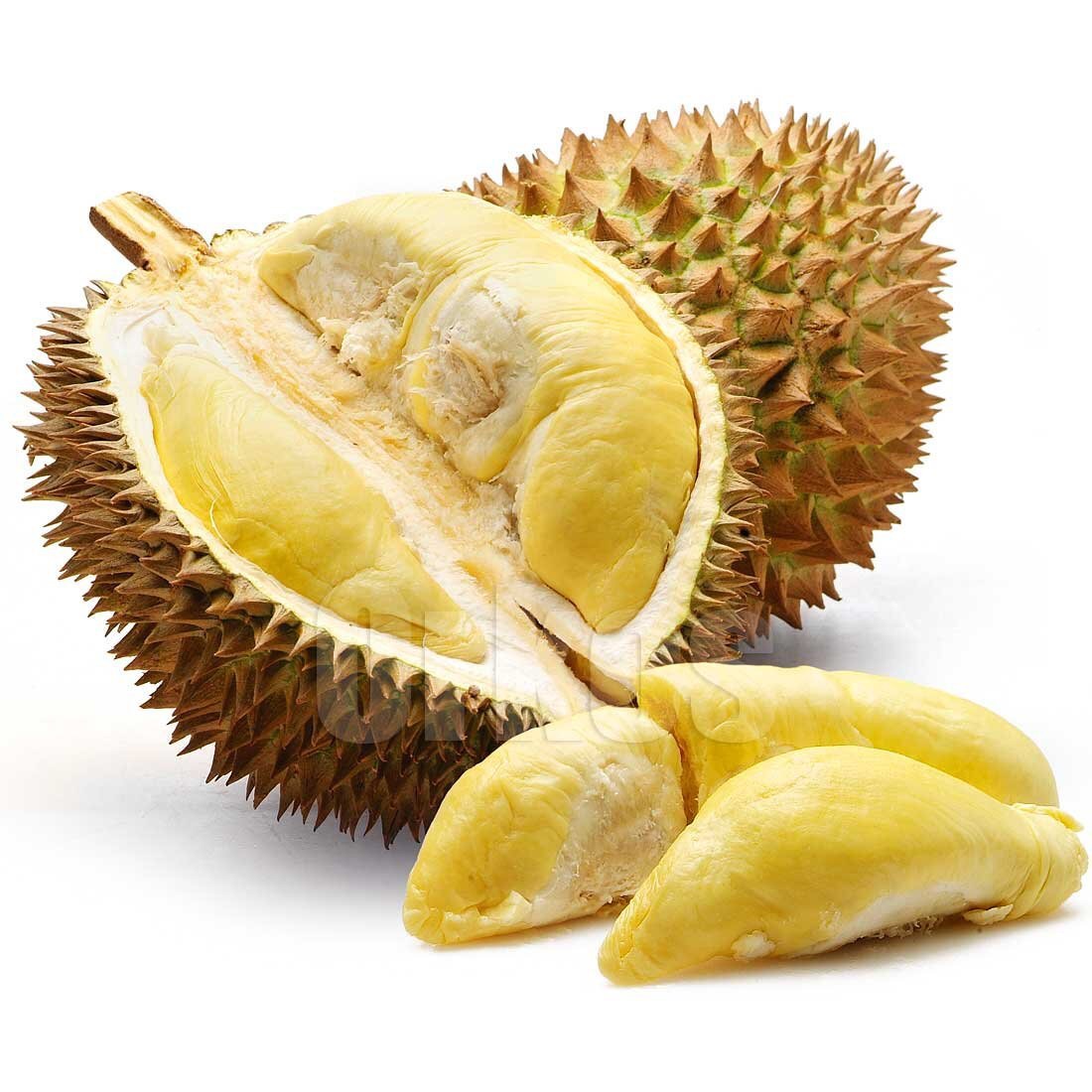
both of which I’ve written about earlier, or the durian, that horribly smelly fruit which I’ve also had a rant about in the same post and which I hope never reaches our supermarkets.
And then there are fruits which, as far as I can tell, are quite unknown in Europe. There’s the sala, a fruit about as large as an apricot, which has a ruddy-brown brittle skin covered in sharp scales (these earn it its English name of snake fruit). The white flesh consists of three lobes, rather like the mangosteen, each of which contains a seed. It has a sweet taste with astringent overtones.
Or there’s the sathon, which from a distance looks like a large yellow apple except that the rind has a matt, velvety look to it and which, when split open, is found to house several seeds encased in a very sweet sticky white goo that itself is ensconced in a yellow, very sour flesh: it is the interplay of sweet and sour as you scoop all this out that makes this fruit so interesting.
Or what about the lamyai (longan in China)? It’s the “other lychee”. Longans come in big bunches. When you shuck the light brown shell, you find something that looks, and tastes, very much like a lychee.
We haven’t been through a full annual cycle yet in Thailand, so maybe a few more fruits unknown to us will pop up in the local markets over the coming months.
I have always been more than ready to try strange, exotic fruits, which proudly affirm that even in this era of globalization the world can still offer us the excitement of discovering new foodstuffs in the corner of some foreign land. But then, on a recent trip to Budapest to give my annual training course, I experienced the old rather than the new. I found a couple of raspberries in my salad at dinner one night and popped them in my mouth … Aah, my friends, that taste … Incomparable … As it coursed through my taste buds to my brain, I found myself in seventh heaven; those soft, velvety beads which, when bitten down on, release that sweetly delicate juice, with a slightly musty aftertaste.
It was as much the memory as the taste which had me floating on clouds. This companion of my youth! I was transported back fifty years, to my French grandmother’s house, to that untidy patch of raspberry bushes which had colonized a corner of her vegetable garden. My cousins and I would sneak over there, despite strict grandmotherly prohibitions, and quickly pop a few into our mouths before tearing off to avoid detection and grandmotherly wrath. Sometimes, just to play with fire, we would also grab in passing a few sprigs of red currants. But that was just boyhood defiance; their acidity did not sit well in our young mouths.
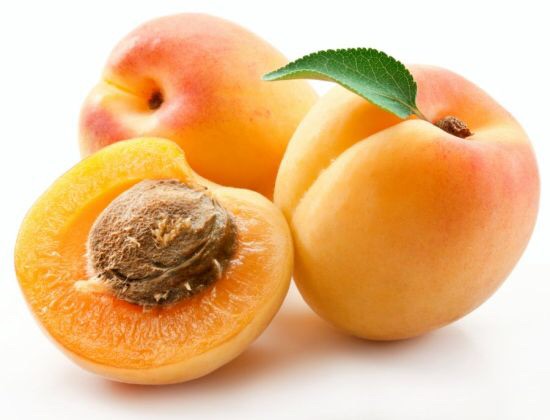
As if this wasn’t enough, the next course of my dinner in Budapest was a dish of braised veal cooked with fennels and fresh apricots. Apricots! As I spooned the slices of the fruit into my mouth, yet another series of sensations coursed through my taste buds and set my nerve synapses afiring. Mmm, that … that … well, that apricoty taste, how else to describe it? Soooo good!
Here too I was transported back in time, to my grandmother’s orchard, which stood next to the vegetable garden, and where she had apricot trees, plum trees, peach trees, pear trees, apple trees. My cousins and I would also raid those trees, keeping a wary eye out for our grandmother, who might come around the corner of the vegetable garden at any moment and be instantly transformed from a gentle old soul into a spitfire, running after us, yelling, and threatening to tell our parents.
As I near retirement, as I start becoming the gentle old soul my grandmother was (most of the time), I realize more and more the truth of Oliver Goldsmith’s dictum (and title of one of his poems) “East, West, home’s best”. After years of globe-trotting, of experiencing the exotic splendours of distant lands, I feel ever more strongly with every passing month the pull of home, that part of the world which is in my genes, where there are seasons of moderate heat and moderate cold, where I understand the languages, where the foodstuffs are old friends and not experiences. No offense, but at the end of the day I prefer to be eating raspberries and apricots rather than salas and sathons.

























































 the heart thrills

























)