DOG DAYS IN BEIJING

Beijing, 27 July 2013

It’s already dog days in Beijing, with the mercury climbing into the high 30s Centigrade. This weather brings out these strange extraterrestrial beings onto the roads

Hot Weather Lands In Nanjing

which on closer inspection turn out to be women riding cycles while wearing special UV-protective sun visors and covering every bit of exposed skin.

sun visor-1

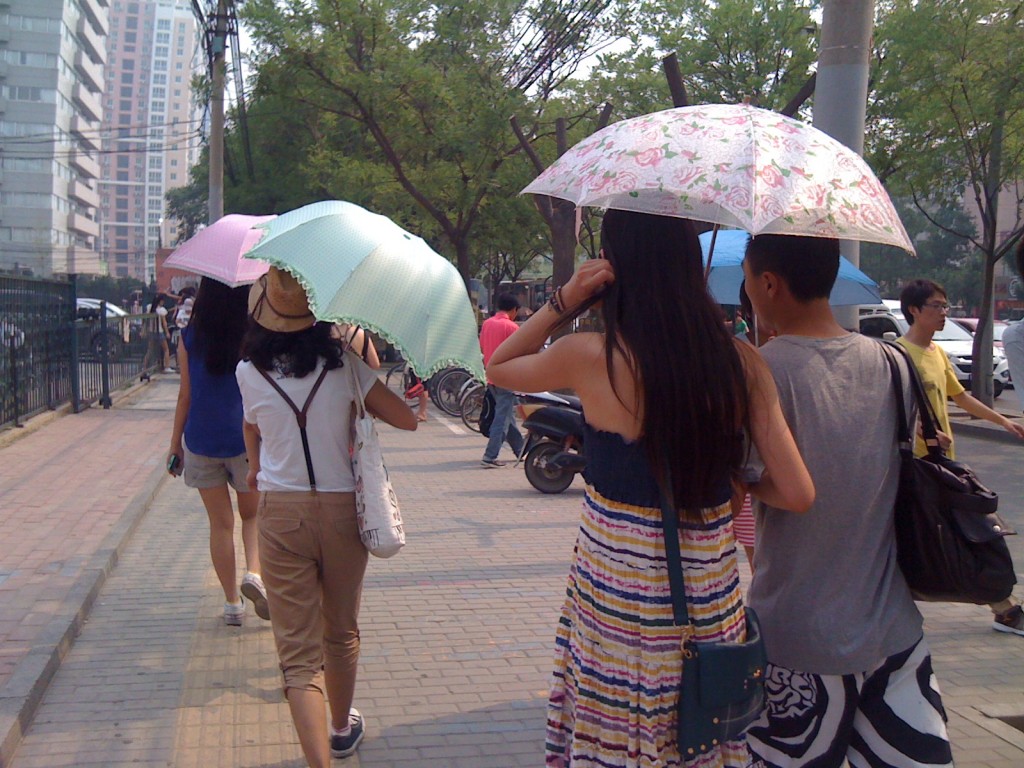
As for the pavements, they host the somewhat odd spectacle of women sheltering below umbrellas under cloudless skies.

chinese women umbrellas-1

The reason is the same in all cases: the desire to protect delicately pale skins from suntan. Chinese women have a fetish for pale skins, not only shunning the sun but also spending large sums on products which claim to whiten their complexion.

skin whitener-2

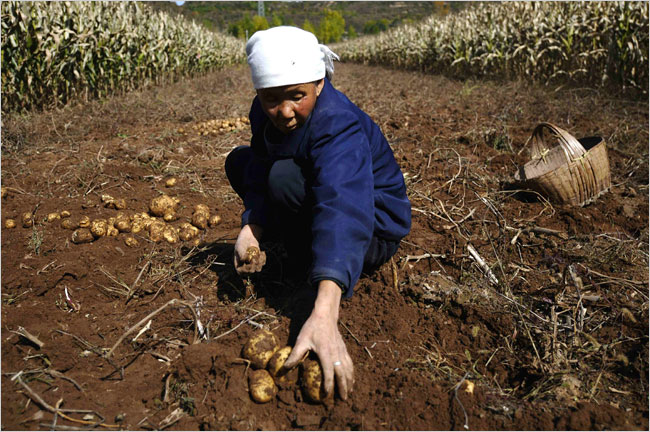
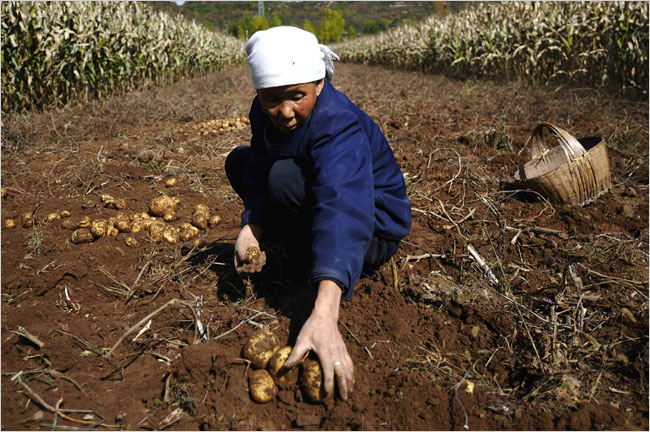
The purpose, of course, even if these women don’t realize it, is to distinguish themselves from their sisters toiling in the fields under the broiling sun and getting a tough, leathery skin for their pains – the peasants, in a word. Despite communist-era claims to the contrary

propaganda poster-3

every Chinese knows that life as a peasant is not particularly pleasant

rural woman-1

which is why China’s rural people escape to the cities the moment they have half a chance, and why city folk look down on their rural cousins.

We who come from cultures which have been worshipping the sun for at least sixty years and have proclaimed far and wide the beauty of a tanned skin

sun tan lotion ad-1

can titter at this Chinese phobia of a darkened skin, which sometimes really goes to extraordinary lengths

facekini

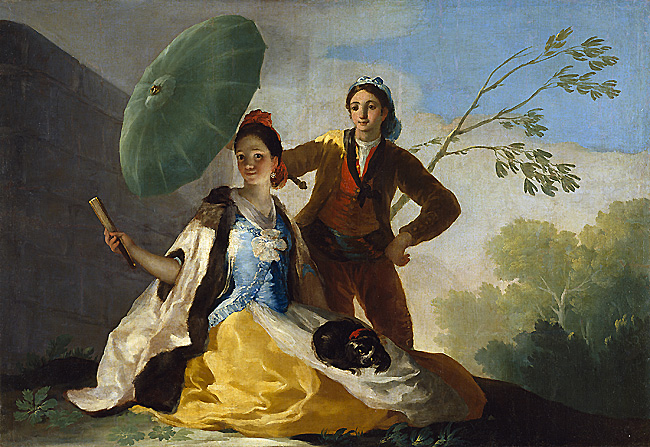
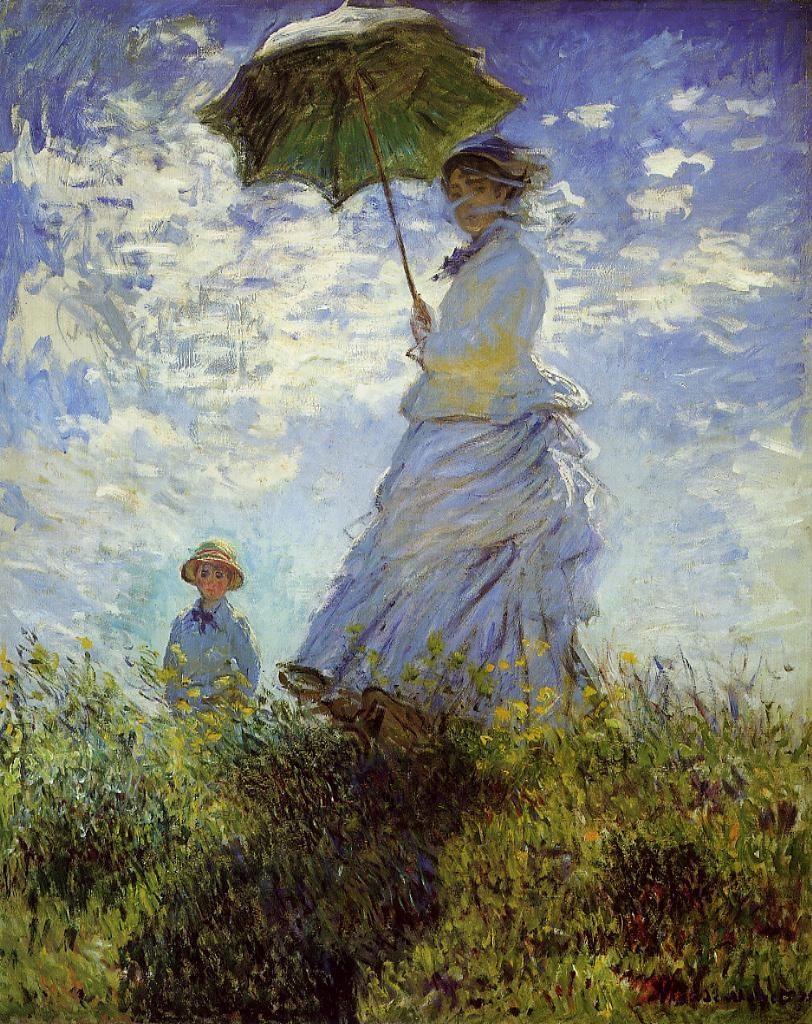
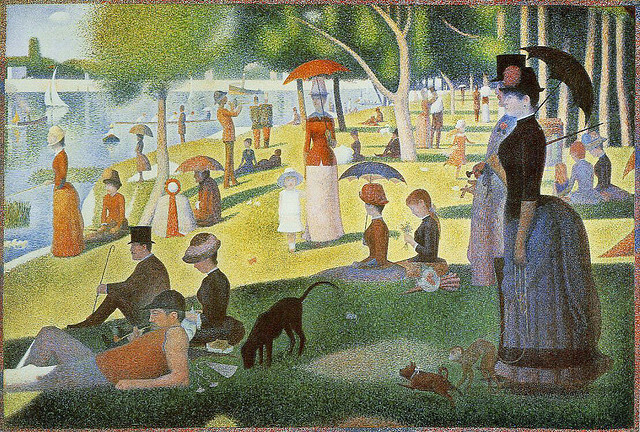
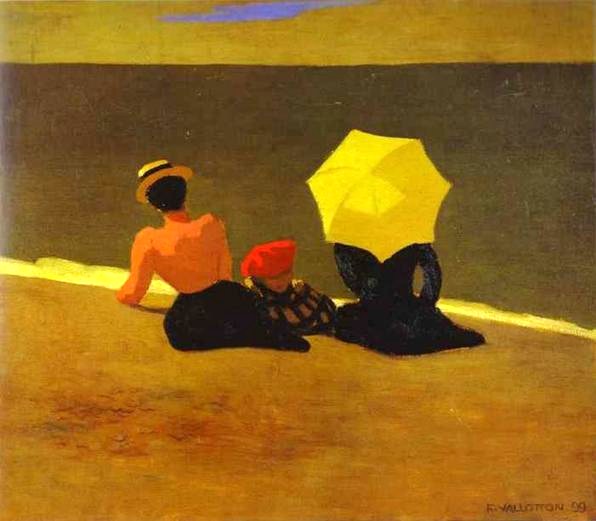
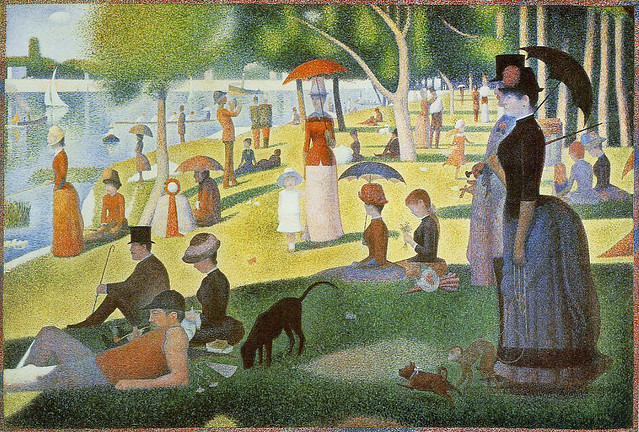
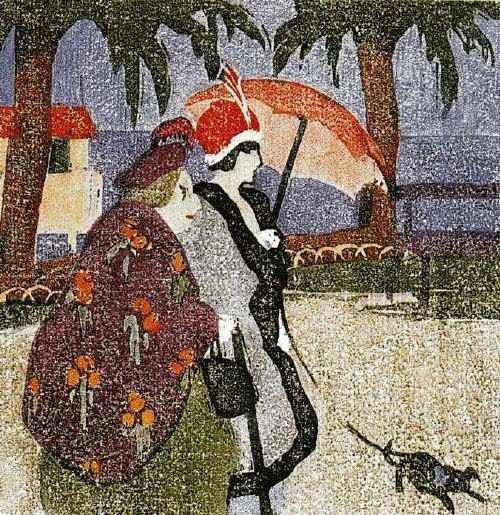
But we should remember that before this sun-loving period of ours our genteel women also avoided the sun, for much the same reason. I am indebted to the blog “It’s About Time”, in a section devoted to parasols in Western art (from which I also got some of the photos below), for the following quote from Randle Cotgrave’s 1614 Dictionary of the French and English Tongues, where the French word ombrelle is translated “An umbrello; a (fashion of) round and broad fanne, wherewith the Indians (and from them our great ones) preserve themselves from the heat of a scorching sunne; and hence any little shadow, fanne, or thing, wherewith women hide their faces from the sunne.” Like the Chinese women I see on the Beijing streets today, for centuries our great ladies liked to walk outside screened from the sun, as these paintings from different periods attest:

Fragonard:

00 Fragonard with parasol

Copley:

00 Copley with parasol

Goya:

00 Goya with parasol

Manet:

00 Manet with Parasol 1881

Monet:

00 Monet with-a-Parasol

Renoir (I had the luck to see this particular painting at the Met in New York a few months ago):

00 Renoir-2 with-parasol

Seurat:

00 Seurat with parasol

Valloton:

00 Vallotton with parasol

the American painter Mars:

00 Mars-twenties-with parasols

Are we so right to love a tan? Of course, the snobbish element of having a pale complexion is to be abhorred, but I’m not sure tanning is such a wonderful idea either. I must admit to being biased on this topic; I have a fair skin which burns rather than tans and I’ve always disliked being in the sun. But the rise in skin cancer incidences and deaths is vertiginous in many of those countries where people routinely cook themselves on a beach all summer. It is made that much worse by the thinning of the ozone layer, which is allowing in far more harmful UV than used to be the case. Which explains this public health ad from Australia, one of the hardest-hit countries: many people with fair skin, a strong outdoors culture, and located far south where the ozone layer is thinnest.

australian ad-1

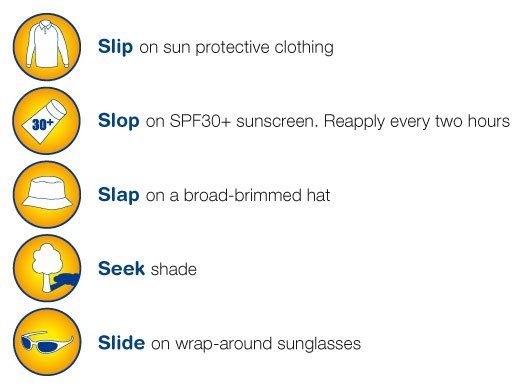
The Slip Slop Slap campaign is another attempt by the Australian government to combat skin cancer:

australian ad-3

Looking at that, it seems to me that maybe our Chinese sisters aren’t so wrong in their sun shunning antics after all.

_____________________

woman with sun visor-1: http://s1.djyimg.com/i6/5100409191528.jpg
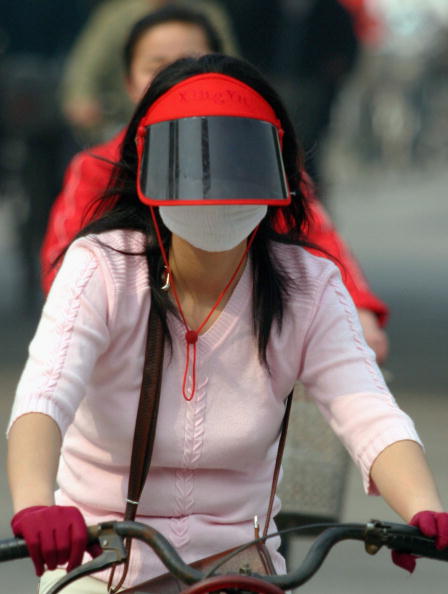
woman with sun visor-2: http://images.nationalgeographic.com/wpf/media-live/photos/000/123/cache/fashion-shanghai-motorcycle_12361_600x450.jpg
Chinese women under umbrellas: http://blog.chinatraveldepot.com/wp-content/uploads/2012/07/103-1024×768.jpg
Skin whitener ad: http://gaia.adage.com/images/bin/image/large/Nivea91008b.jpg?1221045176
Propaganda poster: http://chineseposters.net/images/e11-992.jpg
Rural woman: http://chinadigitaltimes.net/wp-content/uploads/2008/10/13china01-6501.jpg
Sun tan lotion ad: http://file.vintageadbrowser.com/l-2sxa9y5hxoogx7.jpg
Facekini: http://www.ecouterre.com/wp-content/uploads/2012/08/qingdao-china-sun-protection-mask-facekini-2-537×402.jpg
Fragonard: http://farm3.static.flickr.com/2475/4438032996_d685b495fb.jpg
Copley: http://2.bp.blogspot.com/-7FFaKUq3lgs/Th6koRKMutI/AAAAAAAArNs/2WRM4y4ZwUs/s640/p%2B1763%2Bc%2BJohn%2BSingleton%2BCopley%2B1738-1815%2BMary%2BTappan%2BMrs%2BBenjamin%2BPickman%2BYale%2B%25282%2529.jpg
Goya: http://www.aparences.net/wp-content/uploads/goya-parasol-vert.jpg
Manet: http://1.bp.blogspot.com/_CvDCiEFbNy8/TGlqCaT0tMI/AAAAAAAAWls/cEdFU0kuto4/s1600/p+%C3%89douard+Manet+%281832-1883%29+Woman+with+a+Parasol+1881..jpg
Monet: http://www.chinaoilpaintinggallery.com/oilpainting/Claude-Monet/The-Walk-Woman-with-a-Parasol.jpg
Renoir: http://www.renoirgallery.com/paintings/large/renoir-lise-with-parasol.jpg
Seurat: http://farm5.staticflickr.com/4037/4367819565_d255f31c2d_z.jpg?zz=1
Vallotton: http://2.bp.blogspot.com/_CvDCiEFbNy8/TH8YPdMzVyI/AAAAAAAAXno/iOmadhyVbOI/s1600/F%C3%A9lix+Vallotton.+%281865+-+1925%29.+On+the+Beach+Sur+la+plage.+1899..jpg
Mars: http://3.bp.blogspot.com/_CvDCiEFbNy8/TJezx5Y-UgI/AAAAAAAAY1g/HY7j9dPmqIg/s1600/Ethel+Mars+%281876+%E2%80%93+1956%29+Nice.jpg
Australian ad-1: http://www.abc.net.au/reslib/200812/r320709_1428893.jpg
Australian ad-2: http://lavaleandherworld.files.wordpress.com/2013/02/slip-slop-slap-legenda.jpg?w=600

GONE FISHING

Beijing, 8 June 2013

Readers of my posts will no doubt have noticed that I often refer to a piece of canal which runs close by our apartment and along which I walk every day as I go to and from the office. I like my piece of canal, especially during the summer when along the banks the weeping willows have leaved and the water irises stand tall, while the lotuses on the artificial island in the middle of the stream are unfurling.

irises May 2013 004

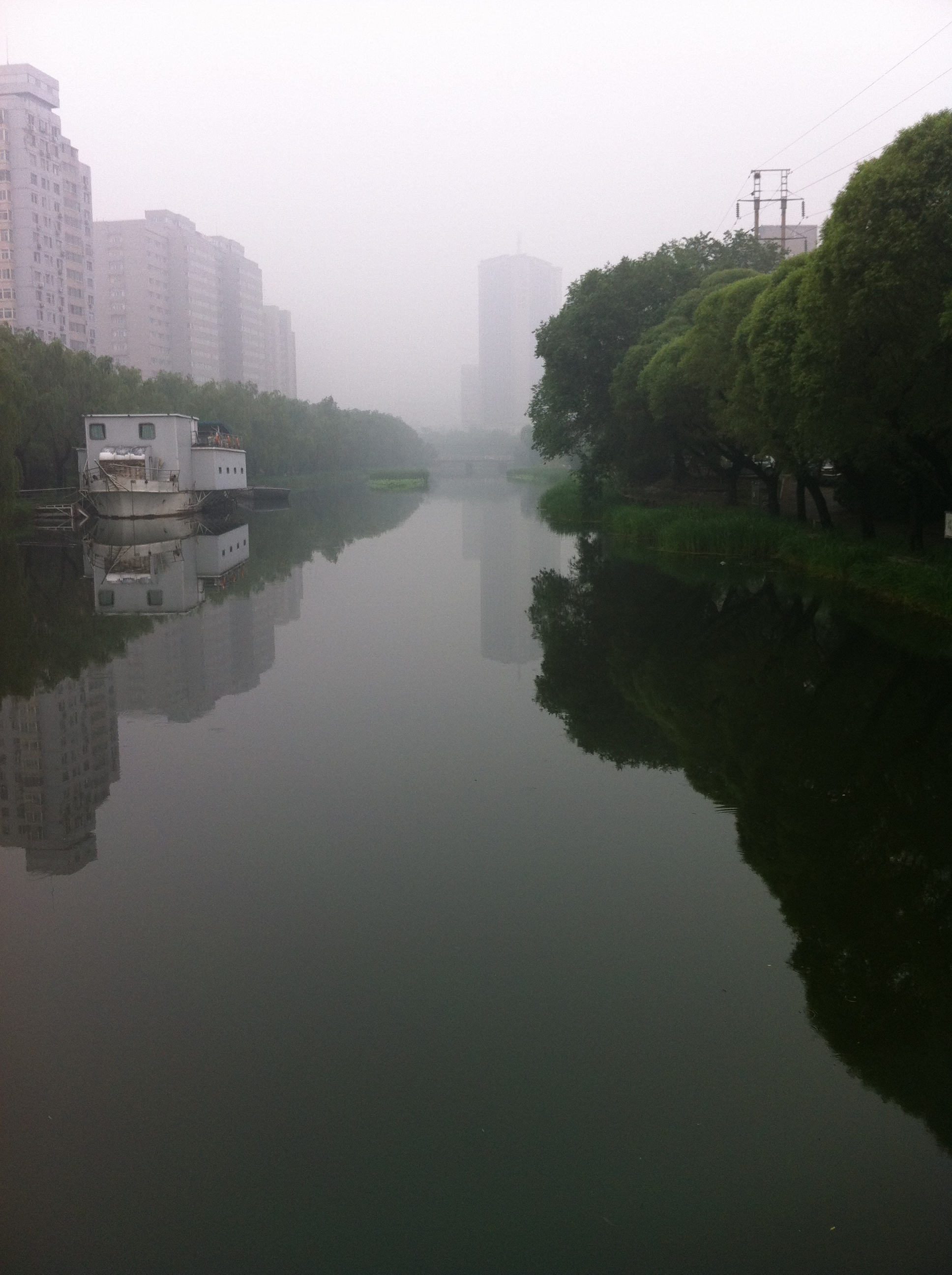
Closing my eyes a little and squinting a bit, I could almost imagine that I am on a placid river running through a quiet wooded landscape rather than in the middle of a highly urbanized setting. This view of the canal today, where to a great degree the fog blots out the buildings,  gives an idea of what I mean.

misty canal 002

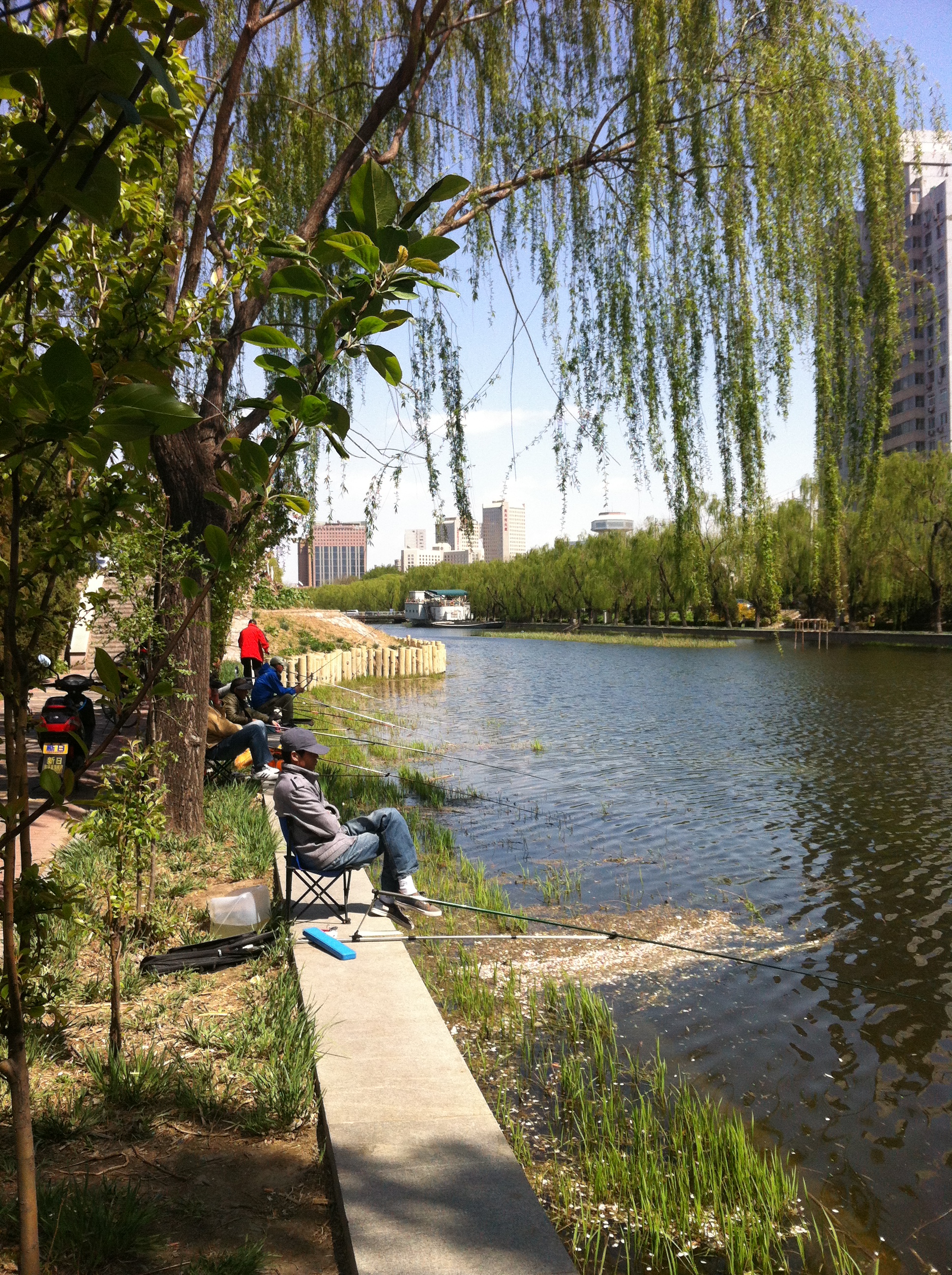
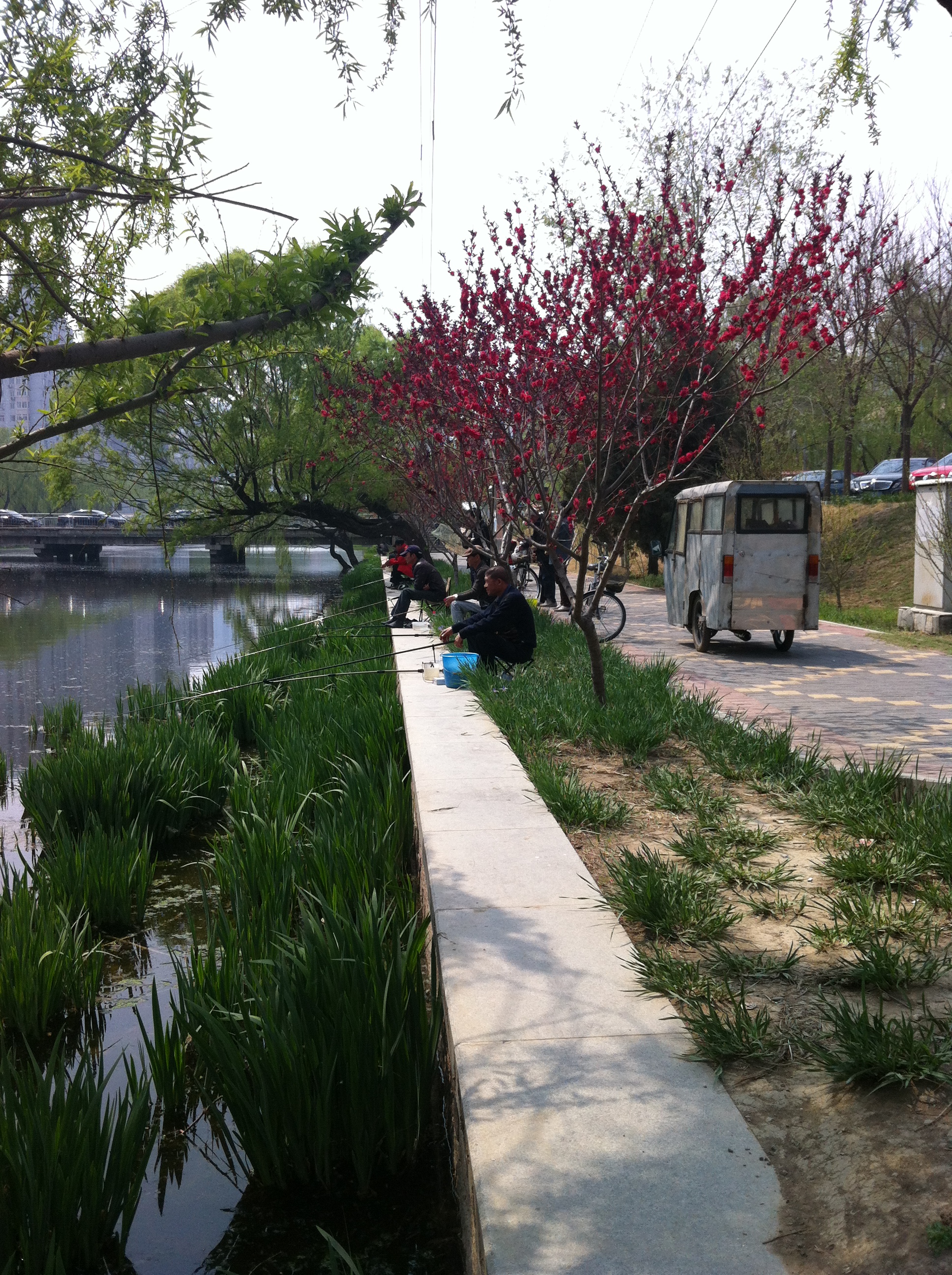
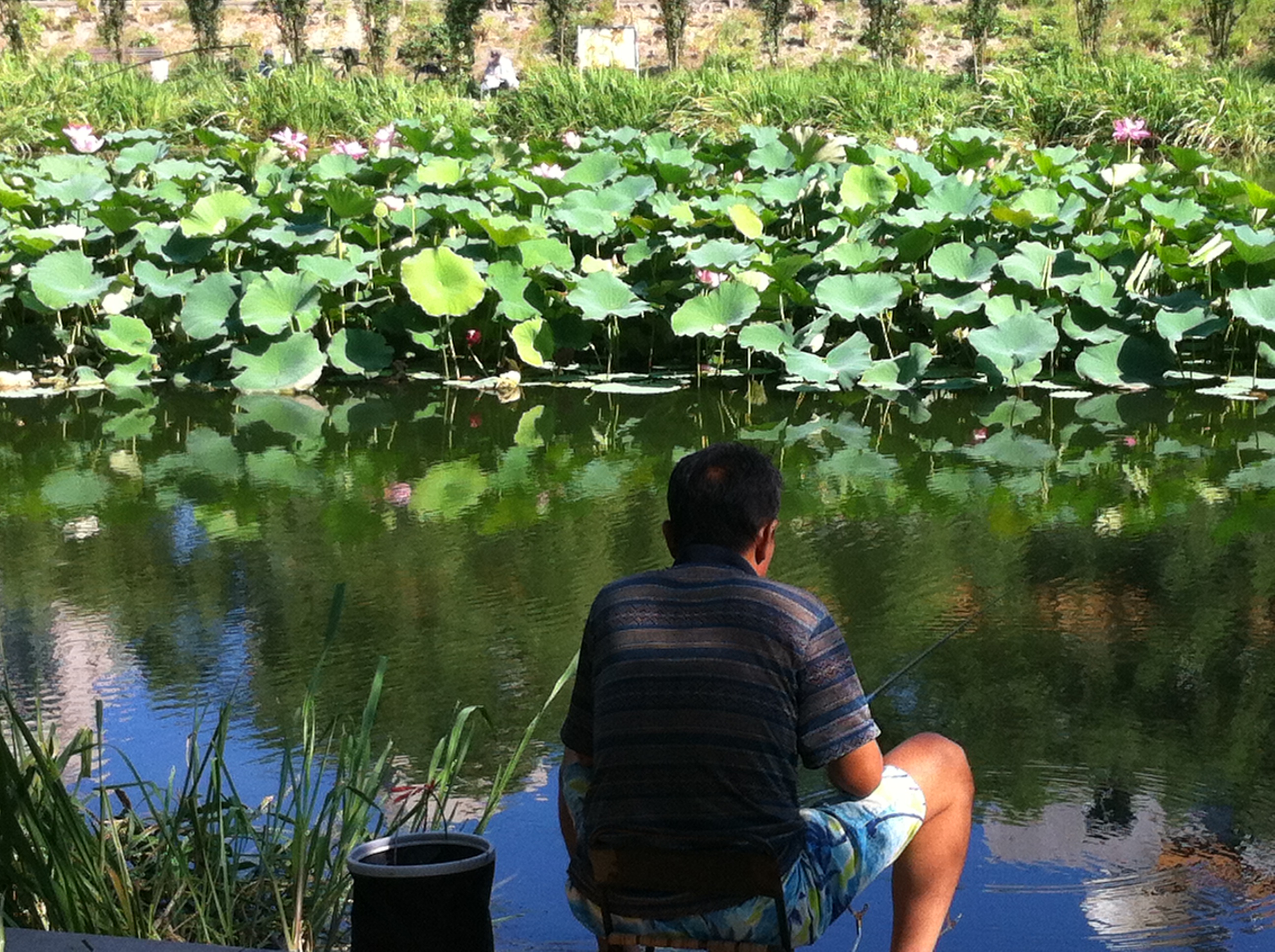
Fishermen also like it. The moment the ice melts and the trees start flowering, they filter out of the surrounding urban jungle and start settling down along the banks.

fishermen 002

fishermen 003

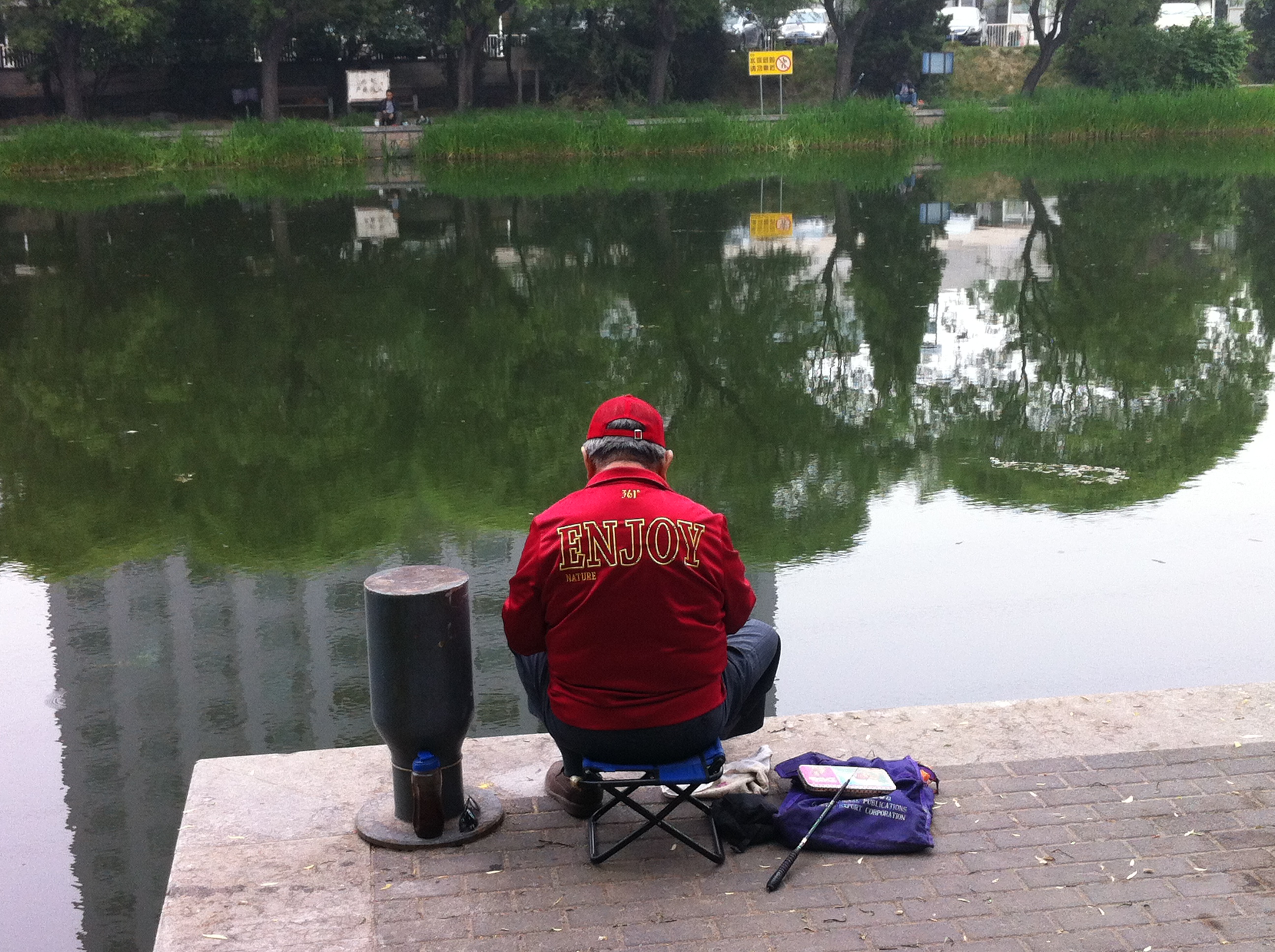
They sport what look to my eyes like state-of-the-art fishing rods (no stick, string, and safety pin for them), nets to hold their haul, and various pieces of fishing tackle.

fishermen 013

And there they sit all summer and well into the autumn, staring out into the middle distance, waiting for a nibble on the end of their lines.

fishermen 010

fishermen 011

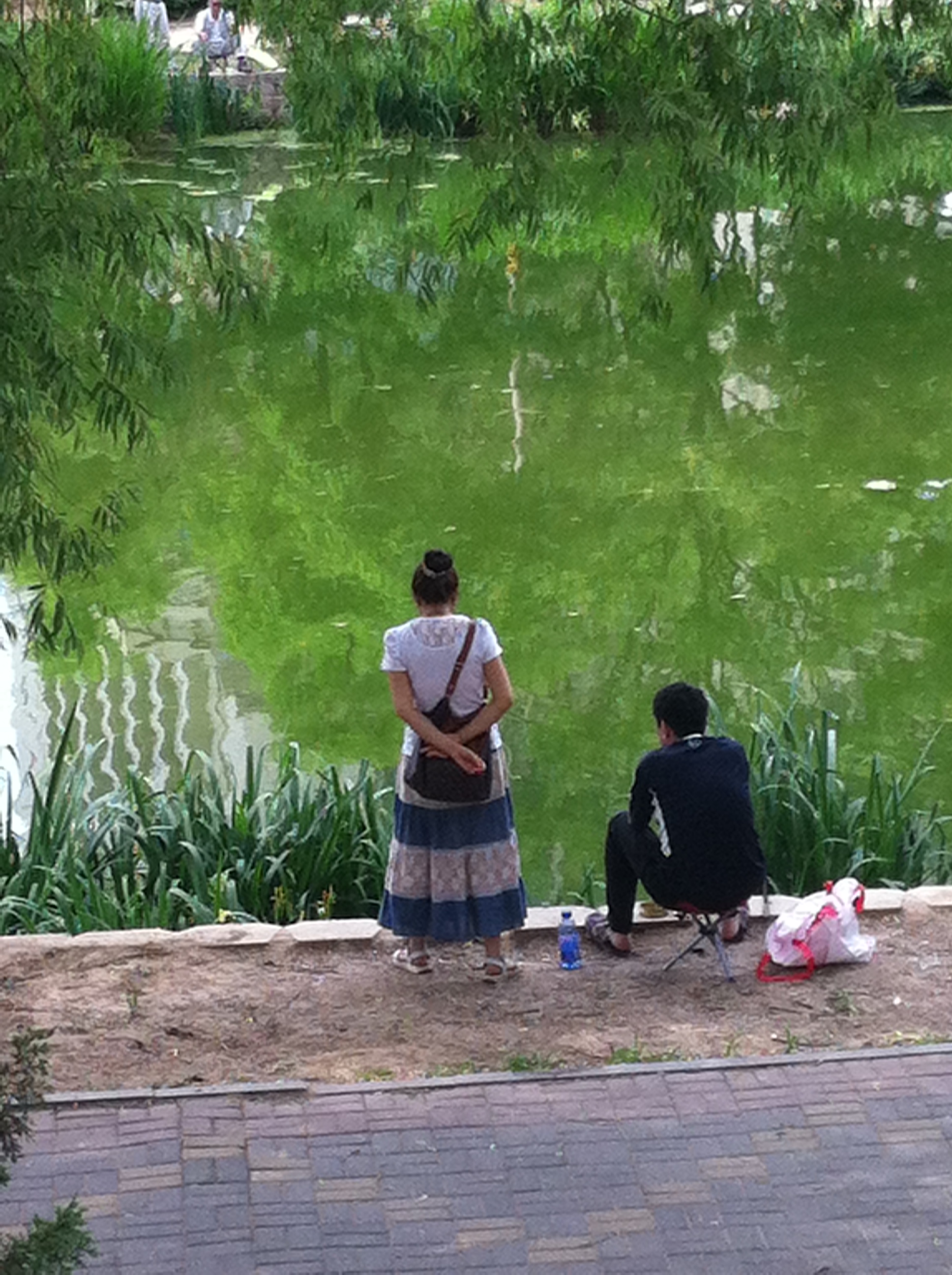
What are they thinking about, I always wonder, as I walk briskly by aiming to arrive in the office on time. Really, what do fishermen think about all day?  This has always been a mystery to me. And what are these particular fishermen catching, for Lord’s sake? The few times I’ve seen a fish on the end of their lines, they were small and malingering. I fervently hope they don’t take them home to the wife to cook.  I should clarify that as my pictures show the overwhelming majority of my fisherpersons are men. I got quite excited one morning when I spotted a woman, and I guess this other woman I saw a week or so ago thought it was better to be with her man than alone at home.

fishermen 009

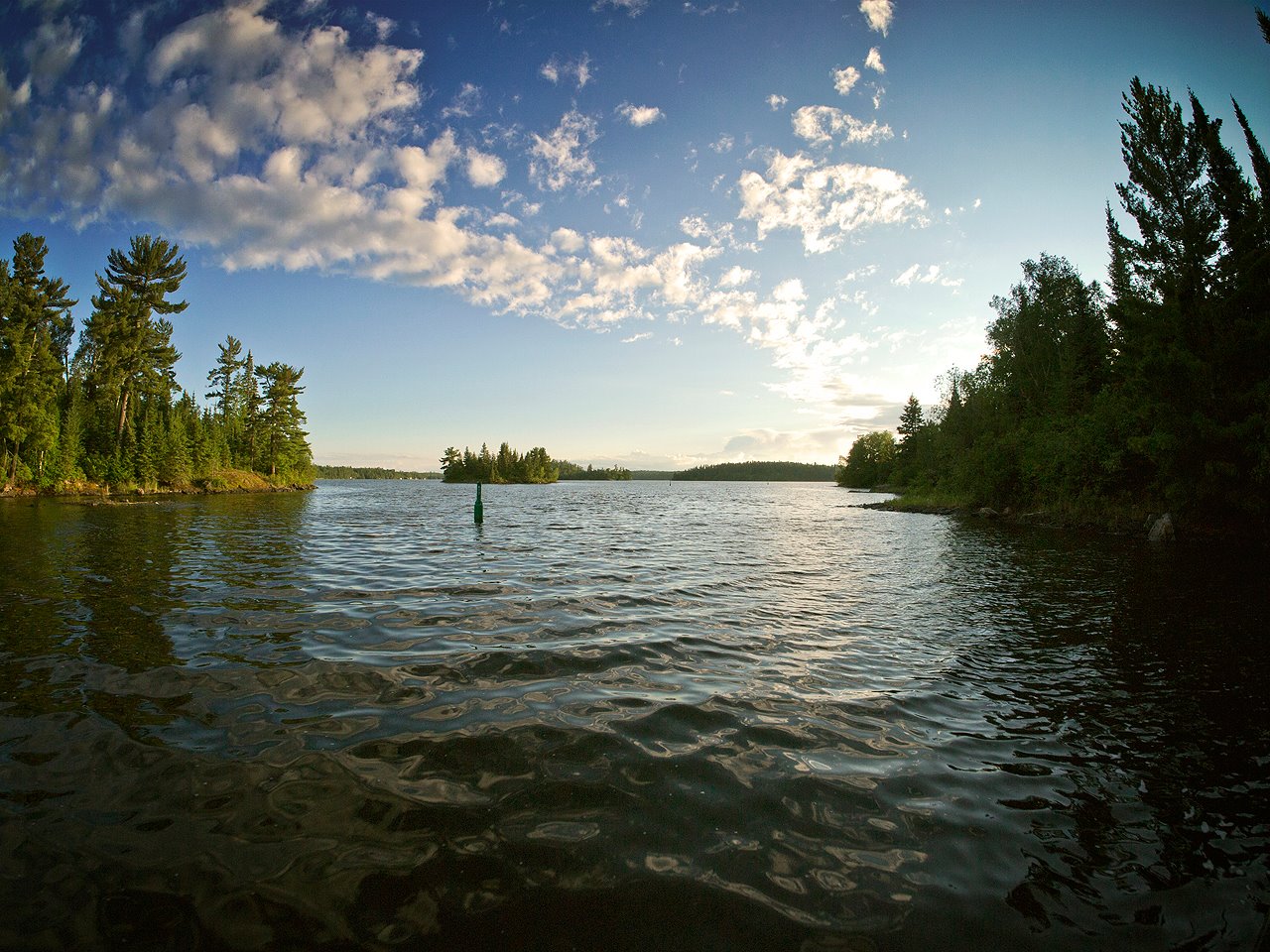
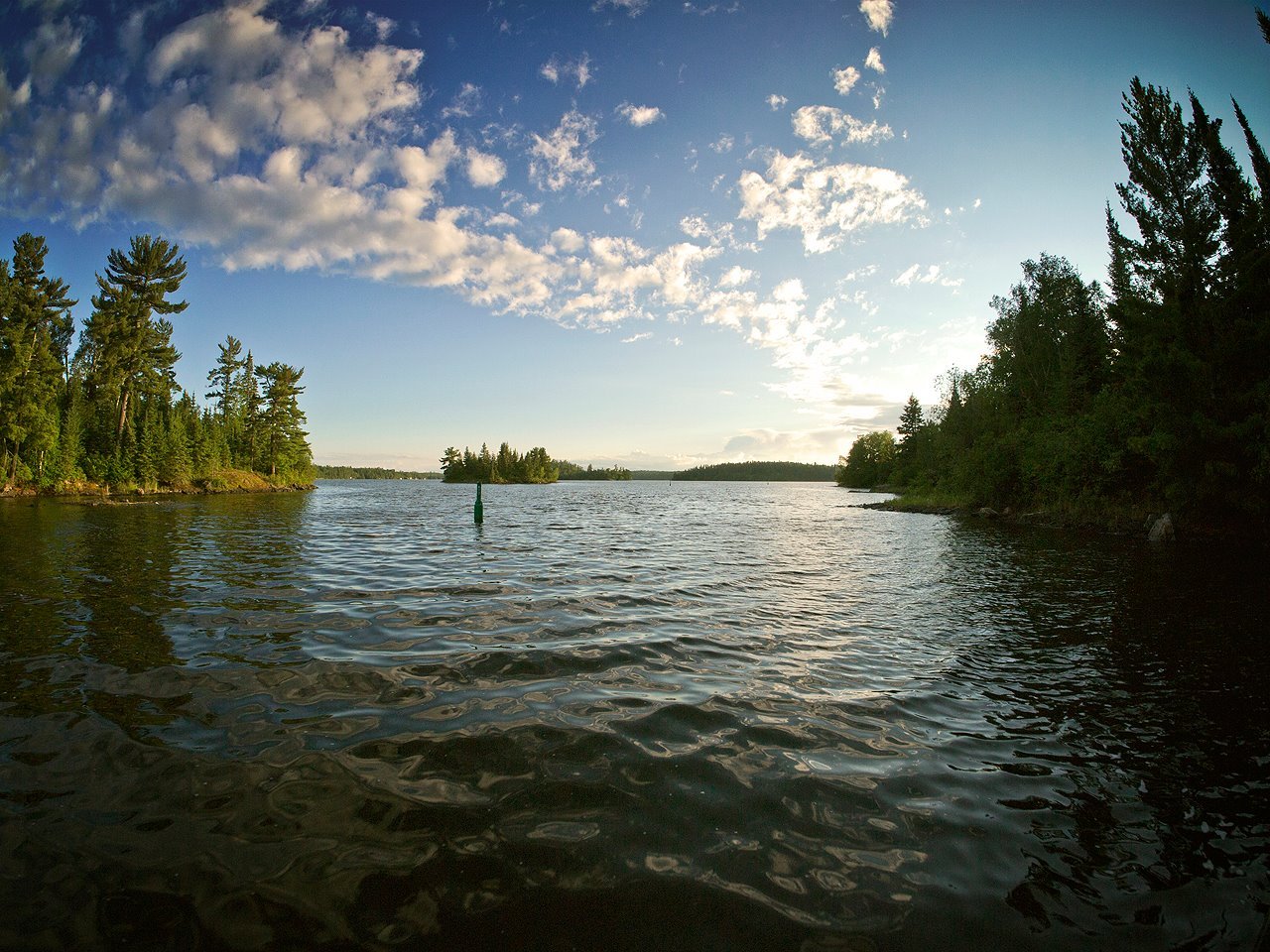
I am no fisherman; I suppose that much is clear. In fact, I have only ever fished once in my life. I was 14 going 15, and I was on a canoe trip on Lake of the Woods in Canada.

lake of the woods

I remember the date very well; it was when Apollo 11 landed on the moon. Me and my travel companion, Steve, must have been the only people in the whole of North America not sitting in front of a TV that day. After a hard morning’s paddling and looking over some Native American rock paintings,

rock paintings

Steve decided to give me a taste of the sport. He hauled out his fishing rod, set me up, and gave me a short lesson in its use. We then sat there for a while – not long, thank goodness – until I got a bite. My fish fought a bit, but after a while I hauled it in. It was a large pike, or so I have thought all these years. It certainly looked like one. But my internet surfing for this posting has convinced me that I caught a muskellunge (or muskie to the experienced fisherman – you see how quickly I catch on to the jargon …), which actually does belong to the pike family.  I suppose my catch was no more than a metre long but in my mind’s eye it has grown over the years to an enormous length. Steve took a photo, with me holding the muskie a trifle nervously but still sporting a smug smile on my face. Where is that photo? Sitting in a shoe box under a bed somewhere, perhaps, or now that both my parents are dead it is probably buried in a landfill in some foreign land. For all intents and purposes, gone. But here is a photo, which seems very similar to mine in my mind’s eye, except that we were sitting in a canoe while this gentleman is standing in a rather swank boat

Muskie on Lake of the Woods

Well, I suppose that will be the only time I ever sit behind a rod staring into the middle distance thinking about … what?

fishermen 008

___________________

Lake of the woods: http://25.media.tumblr.com/tumblr_m5tjkqKB7h1r1ghhbo1_1280.jpg
rock painting: http://www.canoenorthwestontario.ca/sscimages/history/IMG_4260_1.jpg
Muskie: http://harrishillresort.com/files/images/49%20inch%20Muskie%20on%20Lake%20of%20the%20Woods.JPG
the rest: mine

HOLLYHOCKS BY THE WASTEWATER TREATMENT PLANT

30 May 2013

I’m in Zhenjiang at the moment. Readers will be forgiven if they have no idea where that is. Neither did I till I had to come here and decided to look it up on a map. It’s on the Yangtze River, between Nanjing and Shanghai. As far as I can make out, its main claim to historical fame is that it lies at the point of juncture of the Yangtze and the Grand Canal as the latter wends its way northwards to Beijing from Hangzhou.

But I am not here to visit the city’s historic sites, of which – as in most places in China – there are very few left and what there is left is being turned into a made-over tourist spot. I am here to discuss with the management of the largest industrial zones how we could assist them to make their factories greener. As part of the discussions, we were taken to visit a couple of factories which had already taken some steps to reduce their environmental impacts. One of them was a huge – ginormous – paper factory. We were first taken to see the paper-making line, which was absolutely gigantic – the biggest in the world, we were proudly informed. Just to give the reader an idea, the rolls of paper which come off the end of the line for further processing each weigh 130 tonnes.

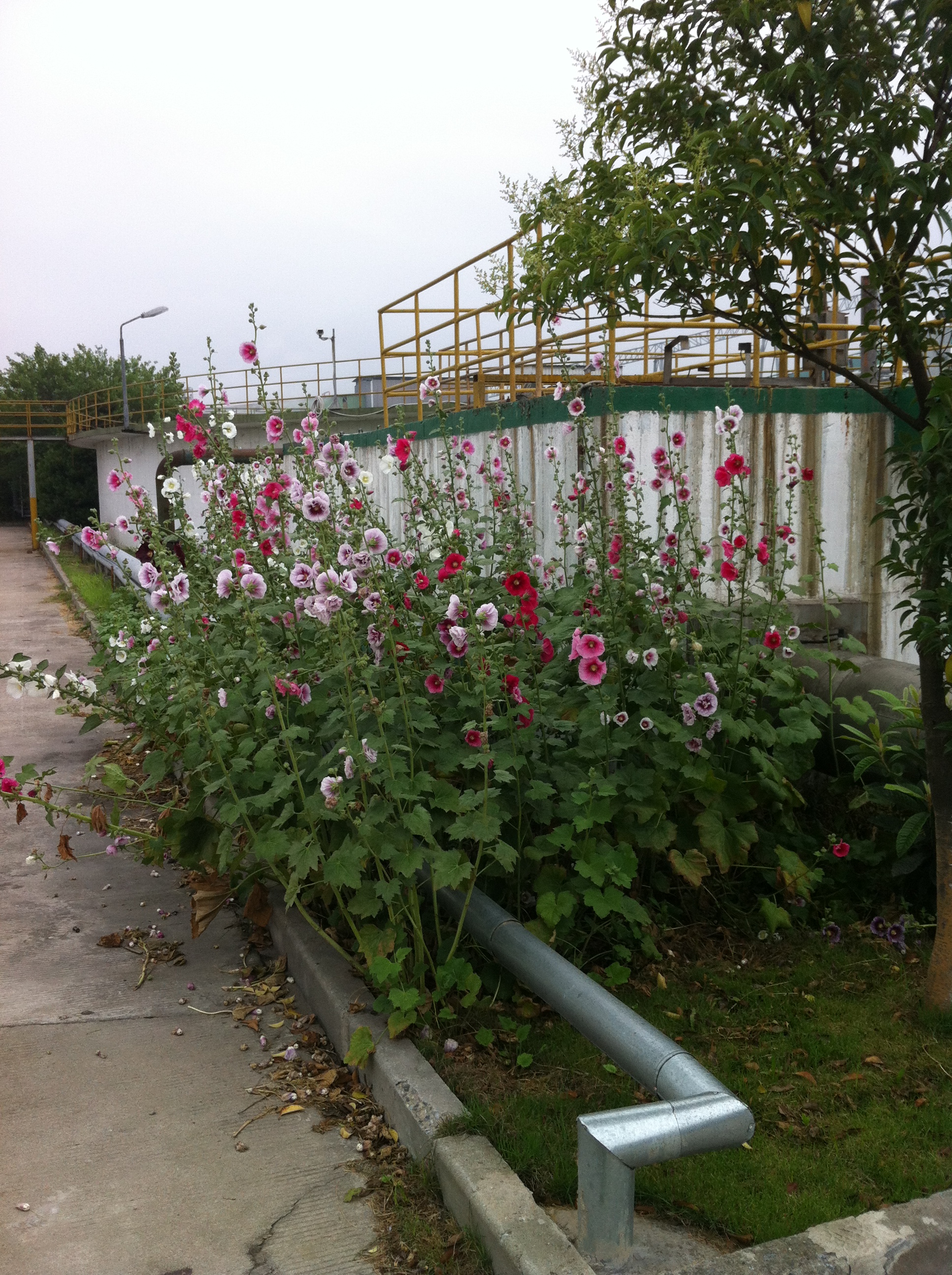
After trying to take in this mind-boggling piece of equipment, we were whisked off to the wastewater treatment plant, part of which has a reverse osmosis line – as part of their greening efforts, the factory recycles much of its wastewater after thoroughly cleaning it and then polishing it with reverse osmosis. We were invited to taste the water coming out of the line, which I did, gingerly, half expecting to keel over. But I survived, and no doubt exhilarated by this close brush with death, I found these hollyhocks, which greeted us at the exit of the building, quite magnificent (you will notice part of the wastewater treatment plant behind them).

Zhjenjiang

As I exclaimed over them and took photos, a French consultant who was with us asked me what they were called in English. I told him and then asked for their name in French. Rose trémière, he replied. Rose trémière … We stood there admiring the flowers and wondering idly where the name came from. Later that evening, I looked it up. It’s a corruption of the name Rose d’Outremer, the rose from overseas. It seems that it was imported into Europe from the Middle East some time in the 1500s, perhaps after the last Crusades. But at least part of its DNA comes from China, where there are paintings of the flower from the 9th Century. As for the English name, it’s from Middle English holihoc:  holi holy + hoc mallow.

You learn something new every day.

PS:

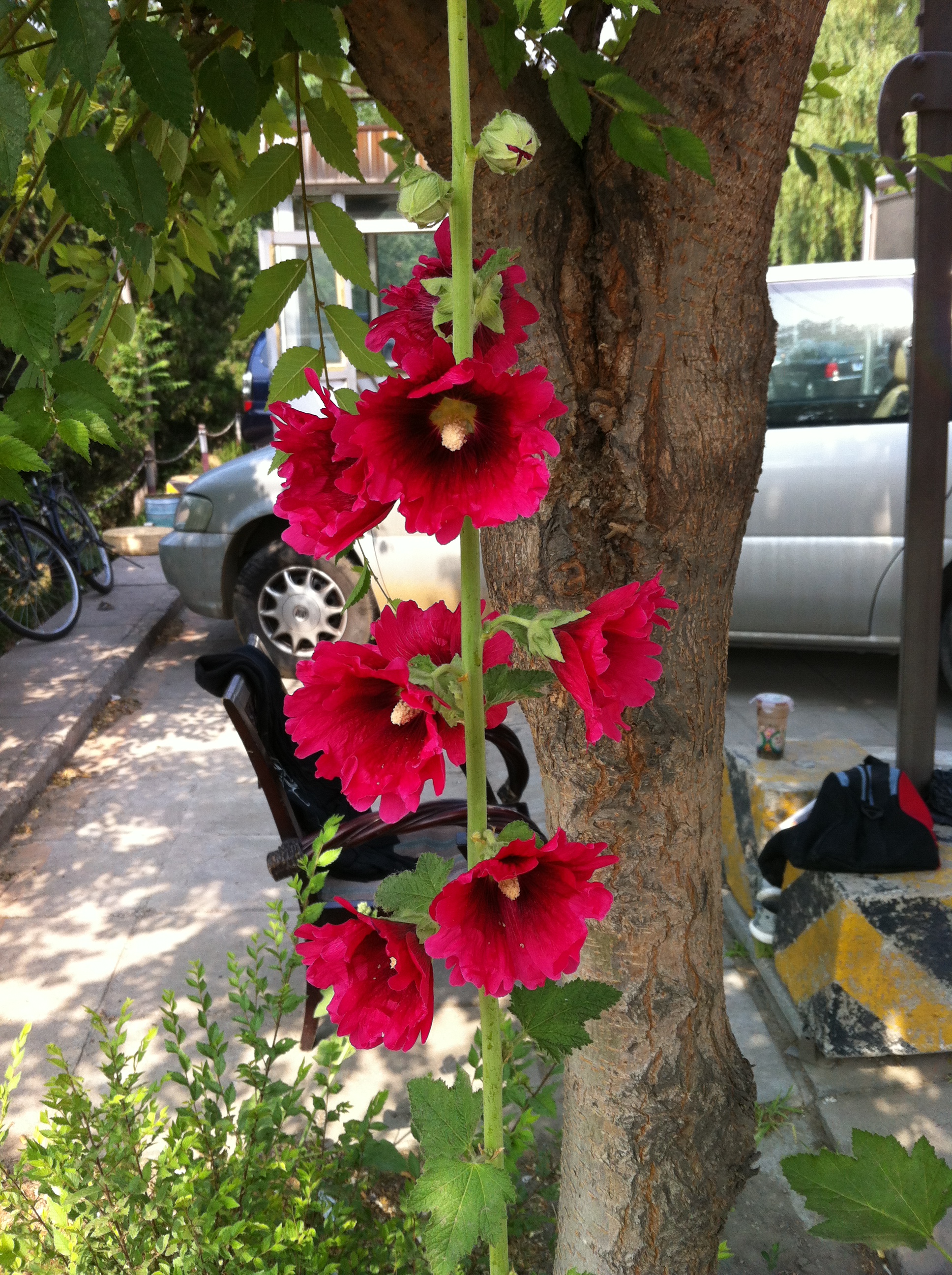
The day after I posted this, and back in Beijing, I came across this lone hollyhock on my way to work. It was sheltering under a tree next to my piece of canal. Fate.

hollyhocks-beijing

A SYMPHONY OF WHITE

Beijing, 16 May 2013

My wife and I are in the US at the moment for our son’s graduation. We were down in Philadelphia over the weekend, together with our daughter, proudly present at the Great Moment.

graduation caps thrown in air

My wife and I had visited Philadelphia some 30 years ago, together with my mother-in-law, on our before-the-marriage honeymoon (I have referred to this in an earlier post). But we didn’t remember much, so we decided to go and visit the old part of town again.

It was all very pretty and peaceful; the streets in the old part of Philadelphia are really very pleasant to stroll along. As we walked, we came across some white roses planted along the pavement, separating it from a parking lot. These were not the sculpted creations one finds in carefully tended gardens but were more the blowsy type found on wild bushes.

white flowers 002

And they smelled heavenly!

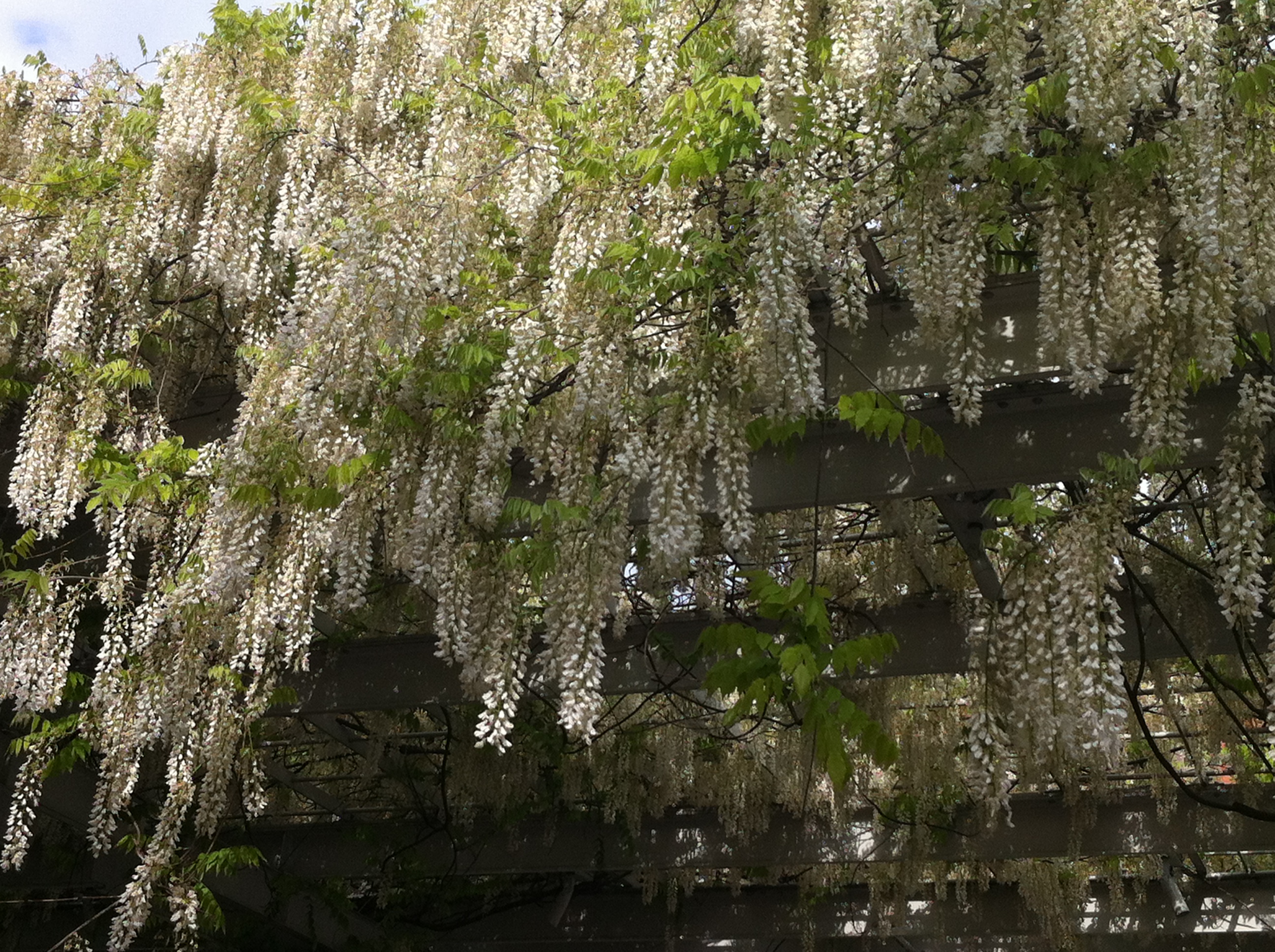
A little later, when we arrived at the visitors’ centre, we stumbled into a magnificent trellis of white wisteria.

white flowers 004

I decided there and then to spend the rest of our visit to the US photographing all the white flowers we would come across, first in Philadelphia and then in New York where we would be staying a few extra days with our daughter. Here is the album of what we found:

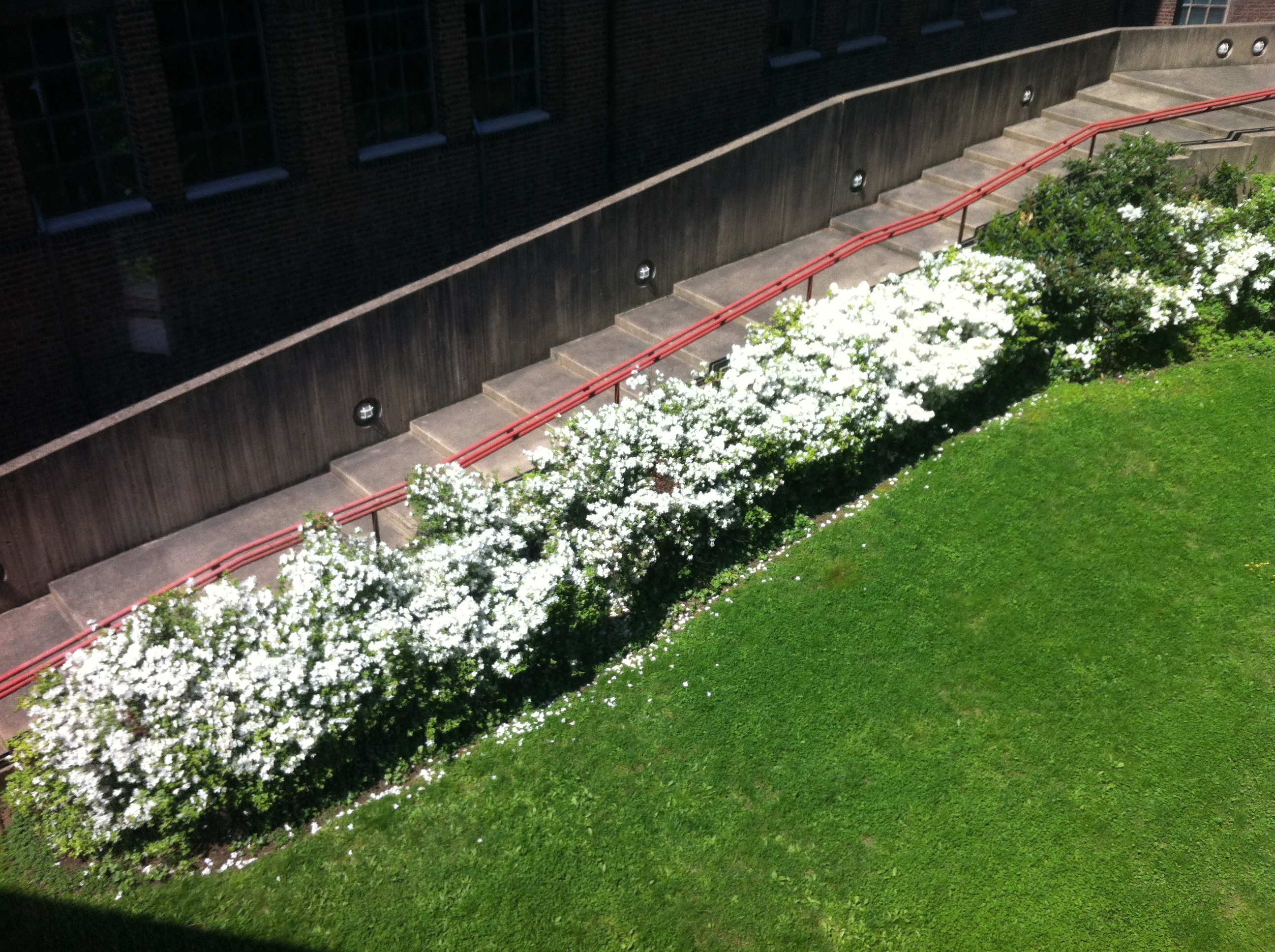
White rhododendron in the courtyard of the museum at the University of Pennsylvania

white flowers 008

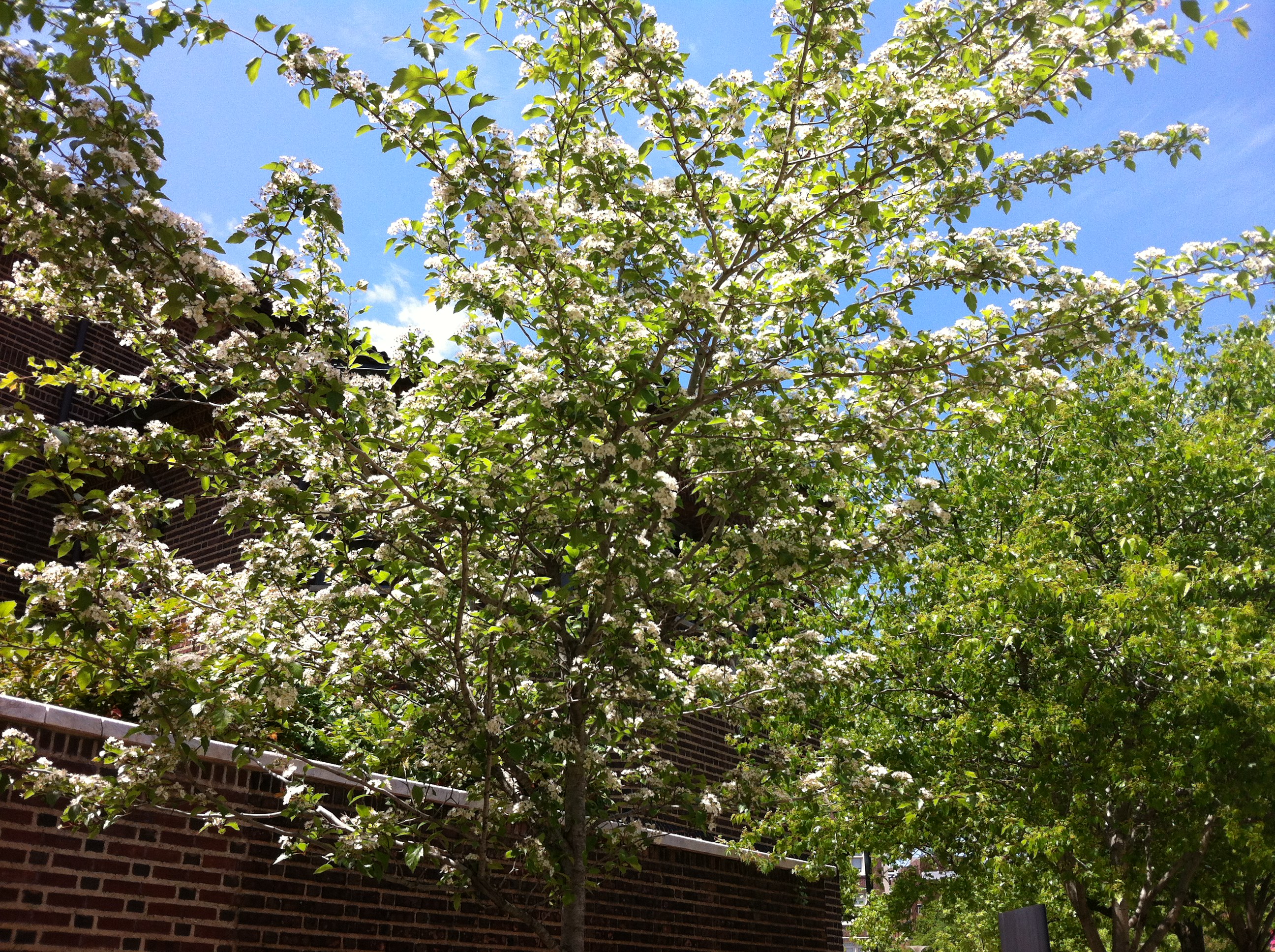
A white-flowered tree along a street in Philadelphia

white flowers 009

Another white-flowered tree on the lower east side of New York

white flowers 011

Some laggard narcissi on the upper east side

white flowers 014

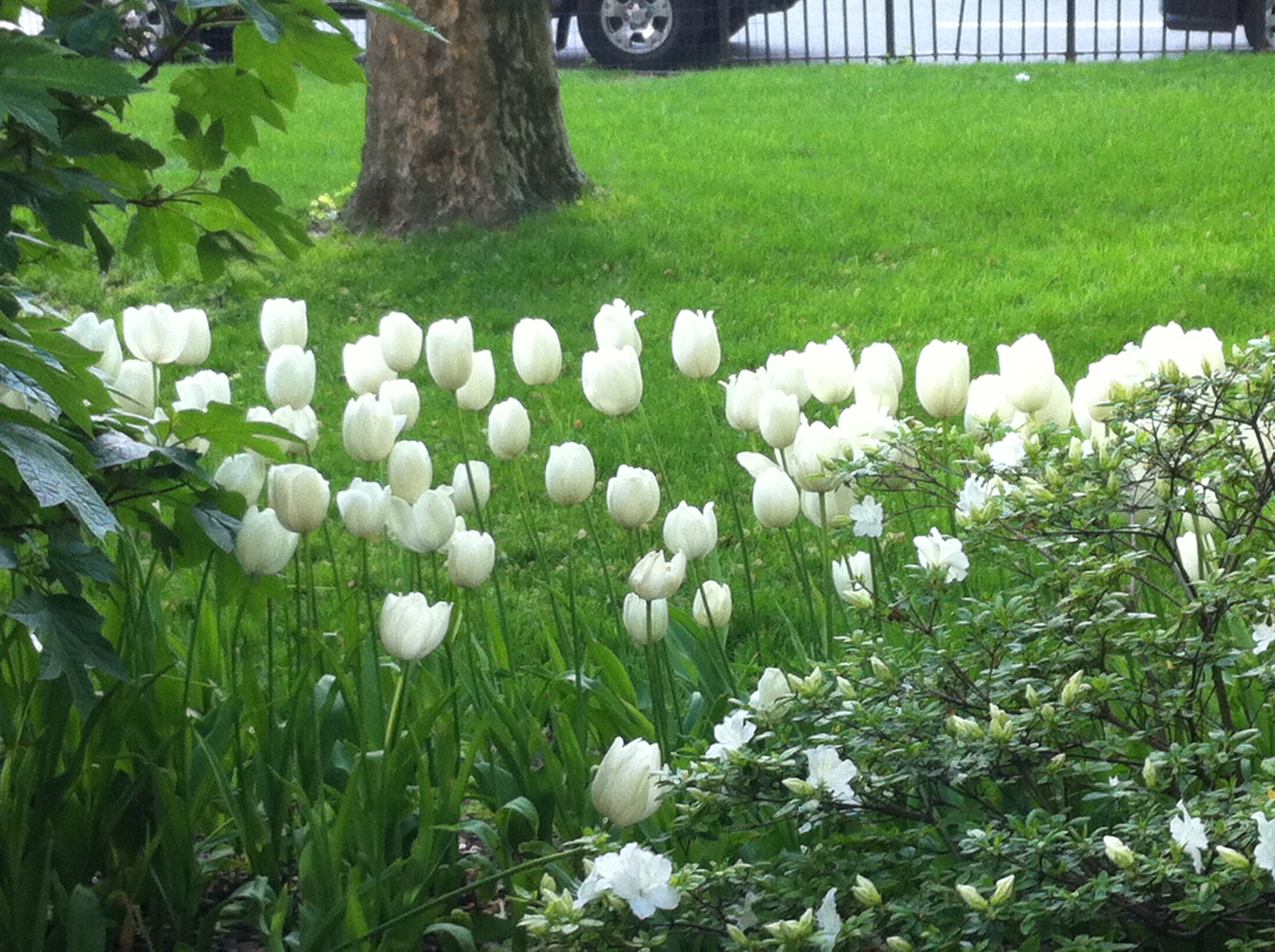
A smorgasbord of white in Central Park, starting with white tulips

white flowers 015

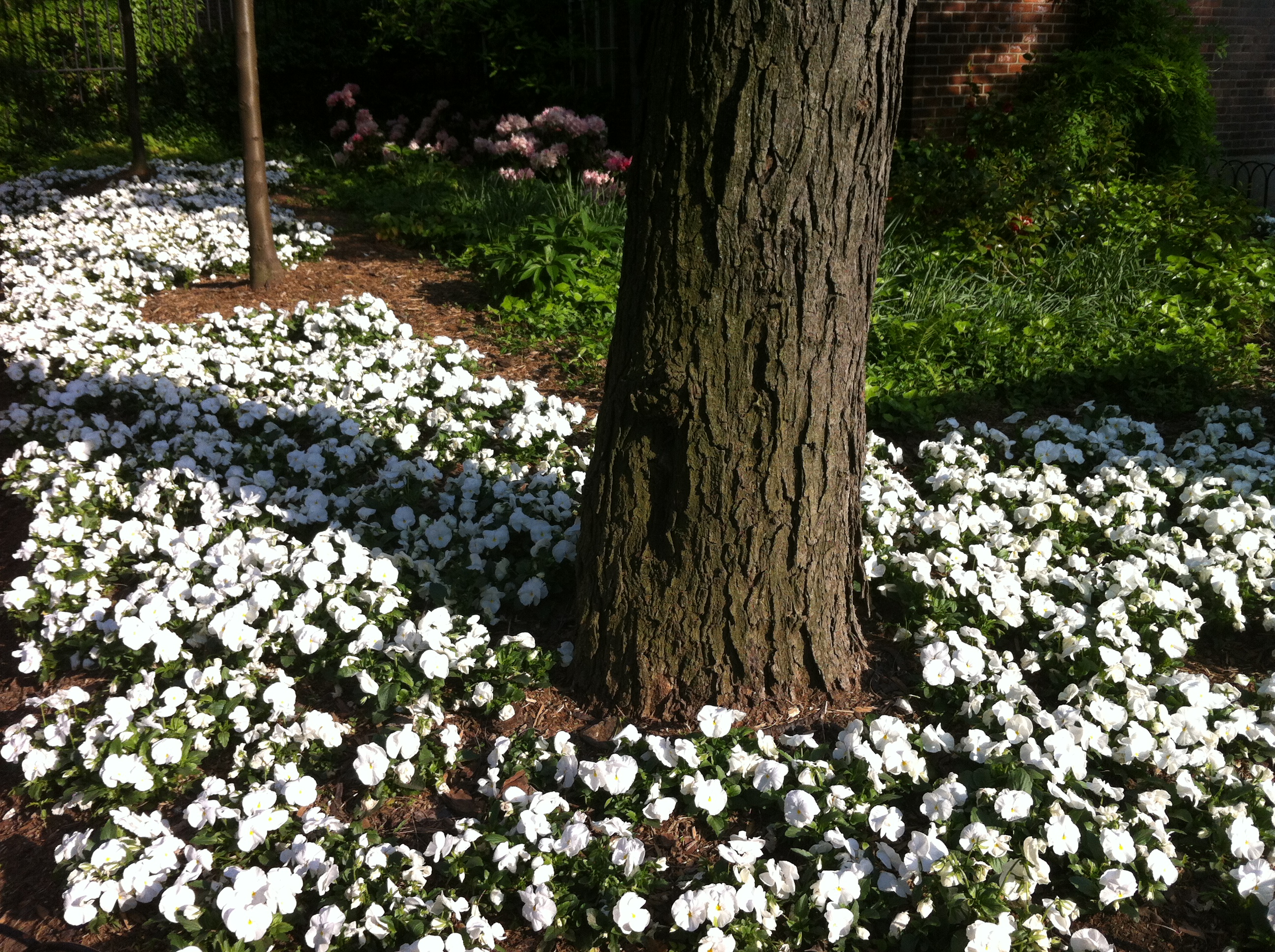
then white pansies

white flowers 021

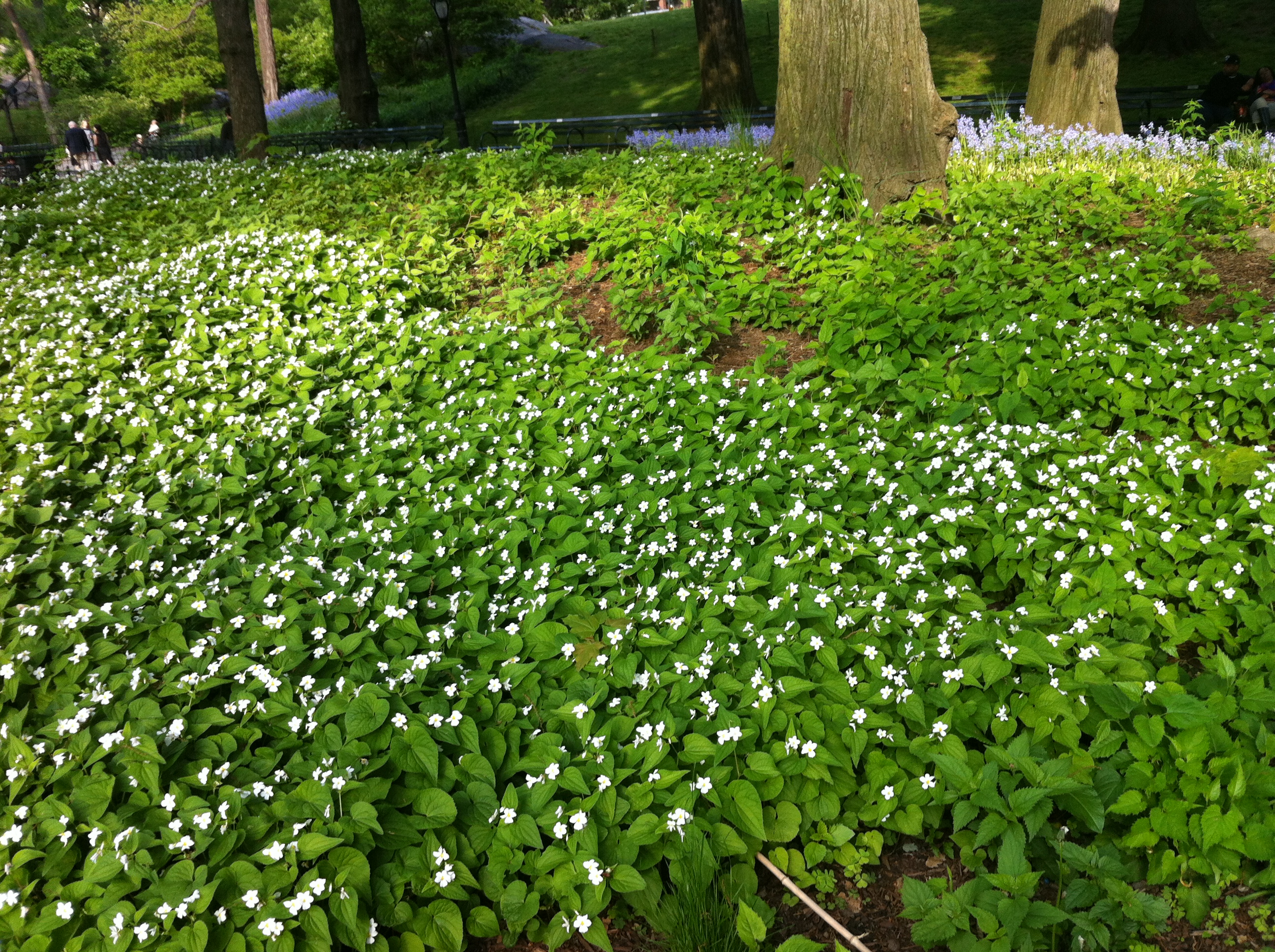
then three flowers whose names I don’t know

white flowers 028

white flowers 029

white flowers 030

a white chestnut at the exit of the park

white flowers 034

white irises around a statue of the Virgin Mary on the corner of a church not too far from the park.

white flowers 035

white daisies of some sort on the High Line (the last time we were here was the dead season)

white flowers 036

and finally white dieffenbachia, seen just before catching the shuttle to Newark airport

white flowers 037

_____________

graduation caps in air: http://www.plantijn.be/images/plantijn2/container1103/images/iStock_000004407014.jpg

other pictures: mine

PINEAPPLE

Beijing, 4 May 2013

Spring is also pineapple time in Beijing. Actually, pineapples play the function of daffodils here. They are the harbinger of Spring. Their arrival tells you that help is on the way, that the temperatures will soon be going up and you can soon start shedding your heavy clothes.

All of a sudden, in lateish March, a swarm of people, mostly migrant workers as far as I can tell, appear on every street corner with a mobile table top. Here is a photo of the young lad who has staked out the corner just south of the bridge over the canal, which I cross every day to go to work.

pineapple seller 002

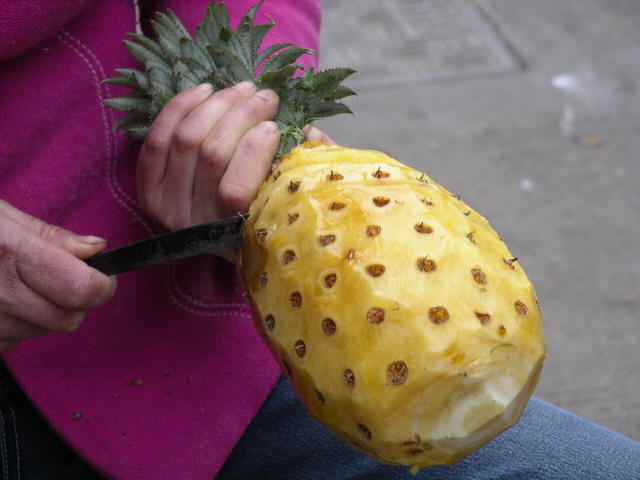
The pineapple sellers use the tables to prepare their pineapples for sale. Because they don’t just sell you a pineapple – if you want that, go to your local supermarket. They will peel their pineapples, carve out the eyes (I take the term from potatoes; that is the closest equivalent I can think of)

pineapple peeled

and sell them to you so prepared, lovely little yellow sculptures with whorls etched deeply into their surfaces.

pineapple unprepared and prepared

Pineapple prepared-01

In this last photo, the pineapple is shown off in a posh display case. In Beijing, as the sharp-eyed reader will observe in the first photo, the pineapple sellers normally put their product in cheap plastic bags – often yellow, which accentuates the yellowness of the pineapple’s flesh; a clever little piece of marketing. If you want, the sellers will go one step further and cut the pineapple up so that you can eat it as you walk along (they will thoughtfully provide you a thin, sharpened stick with which to spear the pineapple chunks).

My first meeting with the pineapple, when I was young, was out of a can, cored and cut into circular slices.

I have since learned that before the advent of large-scale refrigeration infrastructure, canning was the only way of transporting pineapple over long distances because pineapple doesn’t ripen if harvested green. A worthy reason, no doubt, but I was not impressed. I found canned pineapple cloyingly sweet and suspiciously soft. At some point, I discovered fresh pineapple; I think it was early in our marriage, when my wife brought one back from the supermarket. What a revelation! Firm flesh, sweetness with a slightly acidic taste which left a tingle in the mouth … a completely different experience. Since then, I have not touched the canned variety if I can possible avoid it.

I read that pineapple canning was developed in Hawaii. Which clicks a memory of a film, seen late at night on the TV and with Charlton Heston as the main protagonist. A delve through IMDb reveals that the film in question was The Hawaiians.

The Hawaiians movie poster

Apart from vaguely recalling that the film had to do with the development of the pineapple industry in Hawaii, I remember two scenes quite well. One is a visit by Heston to an island used as a leper colony; anyone who has read the bible cannot but be aware of the terrible plight meted out to lepers, and I was shocked by the idea that still in the 19th Century people could just be abandoned on an island because they had leprosy. The second scene I remember is the heroine, a Chinese woman who had emigrated to Hawaii and whose common-law husband it was who had been banished to the leper island, standing at his grave recounting to him news of the family. I found that very touching – and saw the same scene being re-enacted just a month or so ago, when we visited a local cemetery during the tomb sweeping holiday!

Hawaii may have developed the industry but it no longer leads it. As in all things now, China is among the largest producers of pineapples in the world, growing some 1.5 million tonnes a year (for those readers who are, like me, interested in useless information, Thailand is currently the biggest producer, standing at 2.6 million tonnes annually). Here is a picture of a pineapple field in Guandong province.

pineapples in Guandong

The fruits look suspiciously bright, due no doubt to the photo having been doctored. Which – in a country of where watermelons have been known to explode in the fields because of overuse of growth-enhancing chemicals – made me wonder if the pineapple fruit itself is doctored. A little search confirmed my worst suspicions! Stuff called gibberellic acid is used to “enhance fruit growth”. Gibberellic acid! The name itself is a horror, whose ingestion I have no doubt will reduce me to a gibbering wreck. And it’s no good that an official review by the US Environmental Protection Agency soothingly concludes that “the uses of Gibberellic Acids, as currently registered, will not cause unreasonable risk to humans or the environment”. The weasel words are there: “as currently registered”. Here, where farmers just chuck stuff on their fields with wild abandon, that is a meaningless cautionary clause. This Gibberellic acid is a hormone! Lord knows what will happen to me now …

What is the world coming to, that you can’t eat anything without the nagging doubt in your mind that if you don’t die you will turn into some sort of extraterrestrial being?

______________________________

Pineapple seller: my picture
Pineapple peeled: http://jblankenagel.net/IMGP1648.JPG
Pineapple unprepared and prepared: http://us.123rf.com/400wm/400/400/sapsiwai/sapsiwai0512/sapsiwai051200027/286517-ananas-entier-au-dos-et-sculpte-dans-l-avant.jpg
Pineapple prepared-01: http://en.wikipedia.org/wiki/File:Pineapple_prepared_01.jpg
Canned pineapple: http://agriseafood.webs.com/Canned-Pineapple.jpg
The Hawaiians movie poster: http://upload.wikimedia.org/wikipedia/en/f/f3/Poster_of_the_movie_The_Hawaiians.jpg
Pineapples in Guandong: http://www.chinapictorial.com.cn/en/destination/images/attachement/jpg/site133/20120705/00247e701cc9115f7f8455.JPG

FLYING FLUFF

Beijing, 1 May 2013

These last few days we have been suffering from an unpleasant side-effect of Spring: airborne white fluff, which trees around here are shedding in huge quantities in their eagerness to mate and to seed. The fluff drifts down, floats along on the breeze, is whirled about by passing cars, eddies in big clumps around your feet, and – most disagreeably – gets into your eyes, nose and mouth. Yesterday morning, it was so thick that looking up into the sky it seemed to be snowing.

pollen 008

while a few days ago currents in the canal and wind interacted to create a thick layer of fluff along the far bank.

pollen on canal 002

This is the offending tree, photographed in a quiet side street

poplars-Beijing 011

a poplar, a member of the aptly-named cottonwoods, whose more mature specimens carry these very distinctive diamond shapes on their lower bark.

pollen 013

And this is where the fluff is from:

cotton on tree-1

I first became aware of this tree in Vienna, not so much because of white fluff flying around, of which there was a fair amount at this time of the year, but because of some really magnificent specimens growing in the gardens of the posher, greener parts of town. So posh and so exclusive that I have found no photos on the web.

But actually, where the tree really came into its own was down by the Danube, in the last vestiges of the river’s wetlands which land use planners and river engineers of the 19th Century had left alone.

poplars on the Danube-1

Not surprising, really. The tree loves a wet, marshy soil. Which explains why there are so many poplars around Milan and in the Po River plain generally, which is a pretty soggy place. And in Milan, the problem of flying white fluff was truly awful. These pictures are not from Milan but are from that part of the country and give a good sense of the horror of it.

Italian-image-1

Italian-image-3

It’s the poplar’s love of wet soil that makes me wonder what it’s doing here in Beijing. I mean, this city is semi-desertic; lack of water is a constant and growing problem. Yet, there are huge plantations of the tree around the city, part of the reforestation campaigns that the government is so fond of as a way of minimizing the dust storms to which this city is periodically subject. Wise policies no doubt, but surely they could have found a more suitable tree?

____________________________

pix of sky, canal, and poplar tree: mine
Fluff on tree: http://www.naturamediterraneo.com/Public/data7/ciuppy/5.jpg_200941622240_5.jpg
Poplars on the Danube: http://www.quax.at/sites/default/files/images/nationalpark_donau_auen_976_Donauufer2_Baumgartner.jpg
Italian-image-1: http://upload.wikimedia.org/wikipedia/commons/thumb/9/9f/Fioritura_pioppi.JPG/1280px-Fioritura_pioppi.JPG
Italian-image-2: http://www.parmatoday.it/~media/base/19828483952093/curiosita-fioritura-pioppi-1.jpg

MY LITTLE WEED

Beijing, 27 April 2013

After a long, cold gestation, spring has finally arrived with a bang in Beijing. Suddenly, every tree, every bush, every plant is thrusting eagerly out to the sun and warmth. The Beijing authorities have been good enough to plant many flowering plants along and around my piece of canal, so my daily walks to and from the office are currently accompanied by a riot of colour.

flowers along canal 004

flowers along canal 006

flowers along canal 008

flowers along canal 014

flowers along canal 017

But actually, the flower I’m most taken with is a humble weed. It’s that little blue flower in the last picture. Like all good weeds, it grows well on waste land – we saw long swathes of it along roads on the outskirts of Beijing last weekend as we drove past abandoned factories and other land with no obvious use on the way to a restaurant. I found them again, tucked away in a forgotten tongue of land along the canal, where a major bridge crosses it – the kind of place I would expect to find used syringes and condoms in Europe.

flowers along canal 015

They’d also colonized a flower box outside a restaurant close by, growing alongside bamboo.

flowers along canal 001

I don’t know its name. I showed a picture of it to my Chinese colleagues and they looked blank. No idea, they said.

At the restaurant, my flowery weed also carpeted the ground under the apple trees in the restaurant’s orchard.

blue flowered weed-restaurant

It’s a bit fanciful but it made me think of bluebells in European woods and for a minute I wanted to be home.

Bluebells 1

_______________________

Bluebells-1: http://graymonk.mu.nu/photographs/bluebells/Bluebells%201.JPG

Blue flowers at the restaurant: Robert

All other pics: mine

WILD TULIPS

Beijing, 24 April 2013

I am lucky to live close enough to the office in Beijing to be able to go home for lunch. Which means that for the last week I have been walking, four times a day, past the bed of tulips that our buildings management had thoughtfully planted outside the front door and which has finally bloomed.

tulip bed by house 001

The bed has attracted considerable attention from the locals, who have stopped to admire, to photograph, and of course to be photographed in front of.

tulip bed by house 004

I must admit, I am not a huge fan of tulips, especially when they are planted in massed beds like this. These massed plantings are not helped by the strong colours of so many commercially available tulips. I mean, look at the colour combination in our building’s bed: bright red and bright yellow. I’m sure the colours were chosen with very deliberate intention: red for happiness in China’s iconography, yellow for wealth. So, “Happy Spring! Be wealthy and be happy” (as my father was fond of repeating, “money may not be the source of all happiness, but it surely helps a lot”). But it’s just too … much.

I believe that the Netherlands tourist board touts tours of its tulip fields when they are in bloom, travelling around – of course – by bike. I cannot think of anything worse: days of bicycling past acres of strong colours.

tulips in Holland-4-field

It would be the visual equivalent of eating, all alone, a large and very rich chocolate cake.

No, I think I would prefer to be riding a horse and come across this sprinkling of wild tulips on the steppes of southern Russia:

wild tulips-9-steppes s russia

or this carpet of wild tulips in Asia Minor:

wild tulips-3-asia minor

or this scattering of wild tulips in Iran:

wild tulips-5-iran

or this bed of wild tulips in Crete:

wild tulips-2-omalos crete

or this achingly beautiful wild tulip in Cyprus:

wild tulips-8-cyprus

I think it is clear by now to the reader that I prefer wild tulips by far. Apart from being integrated into their environment rather than regimented into artificial beds, I find their shape – coming up into a sharp, delicate point – so much more beautiful than the bulk of commercially available tulips. The artisans in Iznik, Turkey, also recognized the beauty of the tulip in their wonderful ceramics. These are ceramic tiles gracing the walls (or rather the pillars) of Rüstem Pasha Mosque in Istanbul:

tiles-4-Rüstem Pasha Camii Istanbul

The interior of this lovely little mosque is completely lined with ceramic tiles:

???????????????????

The tiles pick up on other flowers, leaving delicate arabesques on the walls:

tiles-2-Rüstem Pasha Camii Istanbul

Several years ago, during the business trip to New York which I mentioned in an earlier post, I stumbled across an exhibition in the Turkish Chamber of Commerce of modern ceramic plates using traditional Iznik designs. I fell for a plate, which looked something like this:

plate-2-with tulip and carnation

and bought it on the spot, cash. It sleeps with all our other stuff in a warehouse in Vienna, waiting to be brought back into the light of day and admired.

I always had the impression that tulips originally came from Asia Minor or thereabouts, but their range is much wider. Here is a wild tulip in a national park in Umbria, Italy

wild tulips-10-umbria

and here is one from southern Norway:

wild tulips-4-tananger coast s norway

Lovely …

___________________________

Tulips in Beijing: my pix
Tulip fields in Netherlands-4: http://1.bp.blogspot.com/-dbs2i3jZ9t0/TbPwj_YIvJI/AAAAAAAAAVI/tMyaQ7M1x40/s1600/Holland%2Band%2BBelgium%2B202.JPG
Wild tulips- steppes of S. Russia: http://static.panoramio.com/photos/1920×1280/35533419.jpg
Wild tulips- Asia Minor: http://www.colorblends.com/img/display/kolpakowskiana.jpg
Wild tulips- Iran: http://icons-ak.wunderground.com/data/wximagenew/p/Photo1224/212-800.jpg
Wild tulips- Omalos, Crete: http://www.west-crete.com/dailypics/photos/1727large.jpg
Wild tulips- Cyprus: http://www.embargoed.org/images/gallery/preview/image_79_1.jpg
Iznik tiles Rustem Pasha mosque Istanbul-1: http://ericrossacademic.files.wordpress.com/2012/05/rustem-pasa-tile.jpg
Rustem Pasha mosque interior: http://sugraphic.com/images/fotolar/2011/08/02/46_1312263234..jpeg
Iznik tiles Rustem Pasha mosque Istanbul-2: http://upload.wikimedia.org/wikipedia/commons/thumb/b/b9/DSC04139_Istanbul_-_R%C3%BCstem_Pasha_camii_-_Foto_G._Dall%27Orto_26-5-2006.jpg/800px-DSC04139_Istanbul_-_R%C3%BCstem_Pasha_camii_-_Foto_G._Dall%27Orto_26-5-2006.jpg
Ceramic plate Iznik style: http://yurdan.com/Content/Uploads/ProductImages/39637/iznik-design-ceramic-plate-tulip-and-carnation–1.jpg
Wild tulips – Umbria, Italy: http://farm1.staticflickr.com/62/185332054_d21bcbf611_z.jpg?zz=1
Wild tulips – Tananger coast, S. Norway: http://mw2.google.com/mw-panoramio/photos/medium/16107947.jpg

LILAC ON EARTH DAY

Beijing, 22 April 2013

I mentioned in an earlier post that when I was young I would sometimes spend Easter with my French grandmother. One of my memories of those visits – apart from collecting coal in the cellar – is the lilac bushes in the garden in flower. Normally, we went to stay with my grandmother during the summer, when the bushes were just boring green leaves separating the proper, formal garden in front of the house from the vegetable garden. But at Easter time, these dull green bushes would come alive with pale purple and white – and would smell heavenly. They looked something like this (my grandmother’s garden was a bit of a jungle):

Lilas buissons

Lilac must also grow in the UK but I have absolutely no memory of any lilacs there. The next time lilacs crossed my radar screen was in Vienna, where it was a very popular bush all over town, from the public gardens in front of the Hofburg, the imperial palace in the centre of town:

lilacs in Vienna-3

To just humble streets nowhere in particular:

lilacs in Vienna-4

During the flowering period, my wife would arm herself with a big pair of scissors and we would go around surreptitiously snipping off a few flowering branches to have in the apartment. For a few days, the house would be filled with the wonderfully delicate scent of lilac.

So it was with pleasure that I noted during our first Spring here, down by my piece of canal about which I have written several times, some lilac bushes coming into flower. At least, they seemed to be lilacs. The scent was quite similar, and there was definitely a family resemblance if you closed your eyes a bit and cocked your head to one side. Yet there was something not quite right. The flowers didn’t look quite the same, and the leaves were definitely smaller and darker.

lilacs by the canal 001

lilacs by the canal 003

I decided to do a little bit of research (well, web-surfing really) and discovered that what was growing in my grandmother’s garden and in Vienna was the common lilac, syringa vulgaris, whereas the lilac growing here was in all likelihood the Yunnanese lilac, Syringa yunnanensis. The photos I found of the Yuannese variety showed a definite similarity:

Yunnan lilac-4

and it makes sense to have a lilac from Yunnan in Beijing.

During my research, I also learned a bit about the common lilac. It was not, as I had thought in that casually cultural-centric way we Europeans suffer from, a European flower. It was actually introduced into European gardens at the end of the sixteenth century from Ottoman gardens. That certainly makes sense since “lilac” derives from the Arabic “lilak”, which in turn derives from the Persian “nilak” meaning bluish. Since I am currently reading a history of Iran/Persia and have just finished the part covering the Arab invasion, in my mind’s eye I can see the beauty of the flower captivating Arabs when they arrived in Persia and their carrying it back with them west of the Tigris and Euphrates; later, when the Ottomans conquered the Arab lands, I can well imagine them in turn falling in love with the flower and carrying it off to their gardens. From whence it came to our European gardens and, after a pause, to the gardens in North America.

Fanciful and probably wrong, but on this day when we celebrate Earth Day a narrative I would like to believe in, seeing as it suggests a certain universal appreciation of the beauty of nature.

Happy Earth Day.

________________________

Lilac in France: http://www.torange-fr.com/photo/5/13/Lilas-buissons-1268053127_24.jpg
Lilac in Vienna-1: http://www.viennatouristguide.at/Quiz/Bezirke/13%20Schoenbrunn/hofb_flieder.jpg
Lilac in Vienna-2: http://www.zeitgedanken.com/weblog/wp-content/uploads/2009/04/flieder-im-april09-01.jpeg
Lilac in Beijing: my pix
Yunnanese lilac: http://static1.plantdatabase.info/plant_imgs/size2/syringa_yunnanensis_var_rosea_I21172P95642.jpg

MANDARIN DUCKS

21 April 2013

One of the funnier scenes for me in the film About a Boy is when the Boy kills a duck after he throws a loaf of bread, which his mother had baked, into the pond. Lord knows what ingredients she had used, but it had the density of a rock and thus the predictable effect when it hit the duck.

about a boy dead duck-1

I laughed loud and long, partly because it reminded me of when I was a boy. During my visits to my grandmother in London, one of her staple ideas for keeping me busy was to take me down to one of the ponds in Central London’s many parks to feed the ducks. She did this with most of her grandchildren who passed through London and kept a stash of stale bread for the purpose. And boy was it stale sometimes! If I’d been a duck I wouldn’t have touched it with the end of my webbed foot.

As I said, she took me to several parks in Central London. Hyde Park was a favourite with its Serpentine lake. Another was the lake in St. James’s Park. The nice thing about that lake was that it played host to many different types of ducks, some of them really beautiful. One of the most lovely was the mandarin duck:

mandarin duck-1

(I knew its name because the park authorities had thoughtfully placed plaques by the lake’s edge, right where little boys and girls threw stale bread to the ducks, which carried a picture of each type of duck along with its name).

I swore to myself that when I owned a duck pond, I would stock it with mandarin ducks. Well, I don’t own a duck pond – yet (hope springs eternal). But I do live by a pond-like body of water here in Beijing. So you can imagine my excitement when on Saturday I noticed a pair of mandarin ducks paddling peacefully along its surface.

Will they be there tomorrow, when I walk to work? Or will they have flown off to greener pastures? I really hope they’ll be there. Feeding them will be a great way to get rid of our stale bread.

PS:

They stayed! Here’s a photo of the male I took the other day, a month or so after writing this post. It’s not a great photo – actually, it’s a lousy photo – but the duck was careful in not coming too close (no doubt it sensed that it could quickly end up in a pot in a Chinese kitchen), but it is evidence of their continued presence.

duck on canal 001

______________________

“About a Boy” dead duck: http://media.tumblr.com/tumblr_lpks23apyX1qiurmy.png

Mandarin duck: http://blogimg.goo.ne.jp/user_image/2f/0e/202ca598a665e53251ea85d5818715ee.jpg