TRISKELES

Milan, 6 November 2025

My wife and I were down in Sicily recently. Our daughter and her partner came over with the grandson and they decided to spend a week down in the very far south of the island, near one of Sicily’s three promontories, Capo Passero (if I mention this detail, it’s because it plays a role later). The house they rented gave directly onto the beach and our grandson spent many happy hours digging holes, making sandcastles, and braving the – relatively small – waves that broke onto the beach.

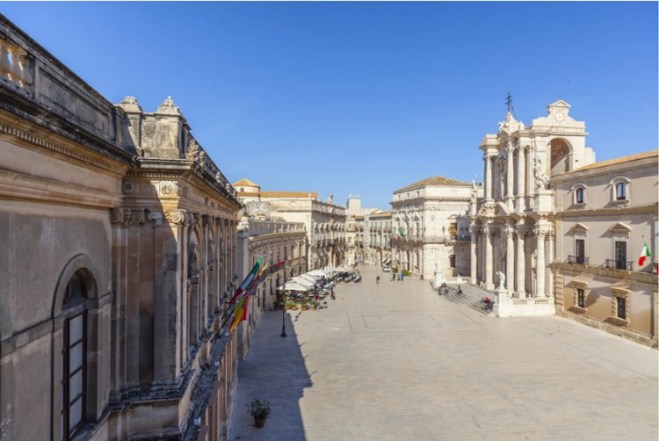
In between these sessions on the beach, we managed to get in brief visits to Noto and Syracuse, both UNESCO World Heritage Sites. Here’s a photo of the cathedral in Noto.

Source

And here is one of the square in front of the cathedral in Syracuse.
Source

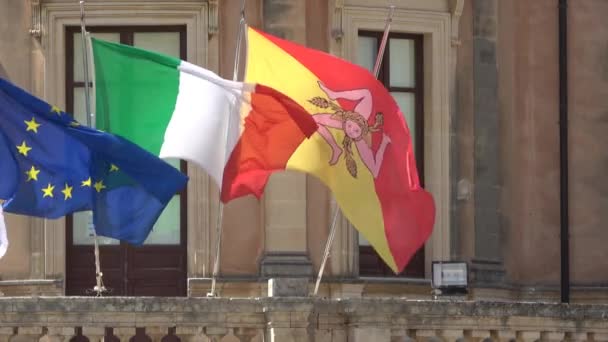
It was while I was wandering the streets of Syracuse that I noticed this flag – every public building had one.

Source

I discovered that it is the official flag of the region of Sicily (which is why I normally saw it flying along with the Italian national flag and the EU flag).
Source

I’m a bit of a flag man – many years ago, quite soon after I started this blog, I wrote a post about what I considered to be the most elegant national flags. So of course I focused in on this flag. What really intrigued me about it was that symbol in the middle: a face from which emanate three legs bent at the knee.
Source

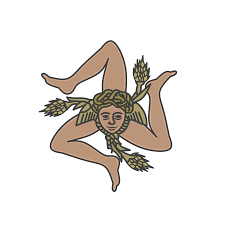
I quickly established that this symbol is called a triskeles, Greek for three-legged. It was a popular symbol on coins. The earliest numismatic representation of it (from around 465 BCE) is on coins from the Greek statelet of Pamphylia, in what is now southern Turkey.
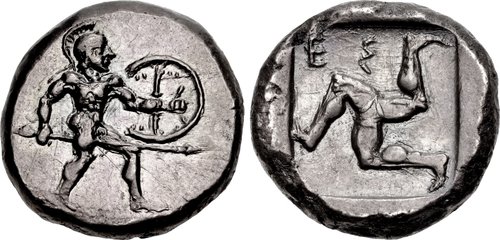
Source

The triskeles was used in varying formats on Greek coins for several centuries thereafter, but it was most closely associated with the coins of Agathocles, Tyrant of Syracuse from 317 BCE, and self-proclaimed king of Sicily from 304 BCE, until his death in 289 BCE. On this coin, it is the main decoration on the reverse side of the coin, because Agathocles adopted it as a personal symbol of his reign.
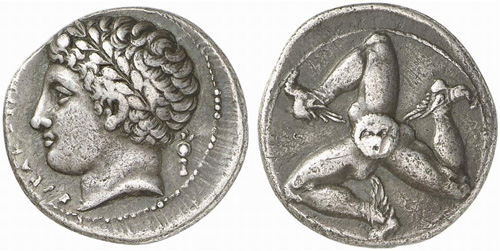
Source

Agathocles brought an important modification to the design, placing a Gorgon’s head as the central hub from which the legs emanate. He also added wings to the feet.

On this Syracusan coin, instead, it is used as the mint mark.

Source


It seems that Agathocles chose the triskeles as his symbol because it mirrored the (roughly) triangular shape of Sicily.

Source

The Greek name for the island was Trinacria, which means three headlands. The three headlands in question were those at the “corners” of the island: Capo Peloro, to the north of Messina, Capo Passero, all the way down south of Syracuse (and close to where we spent our little Sicilian holiday), and Capo Lilibeo, close to Marsala. The choice by Agathocles of the triskeles as his personal symbol was no doubt meant to underline his ambition – realised in the last years of his life – to be ruler of the whole of Sicily.

None of Agathocles’s heirs who were still alive when he died managed to succeed him as king of Sicily. In fact, he was formally reviled after his death, with all statues of him throughout Sicily being destroyed. Nevertheless, his triskeles continued to be used as a symbol for the island. After the Romans had turned the island into a province of its Empire, they added three ears of wheat to the Sicilian triskeles, apparently to underline the province’s role as a granary for Rome (and took the wings off the feet).

Source

With the collapse of the Western Roman Empire, the use of the triskeles seems to have disappeared in Sicily. But it came roaring back in 1282, when, in what has become known as the War of Sicilian Vespers, the Sicilians rebelled against their French Angevin overlords and invited the King of Aragon to take their place. The Sicilians created a flag to carry into battle.

Source

It was made up of the red and yellow colours of Aragon (but also the colours of the communes of Palermo and Corleone, where the revolt started) with a triskeles at its centre (where the Roman ears of wheat had disappeared and the wings brought back, but this time attached to the head).

After twenty years, peace was concluded and the House of Aragon ruled Sicily for the next 400 years or so.

In 1848, some 600 years after that first burst of rebelliousness, and when the whole of Europe was being shaken by revolutionary outbursts, the Sicilians had another bout of rebellion and ousted their Bourbon overlords. The movement of course needed a flag, so the triskeles was rolled out again, but this time it was affixed to the red, white and green tricolour, itself created in 1789 by Italian revolutionaries copying their counterparts in France.
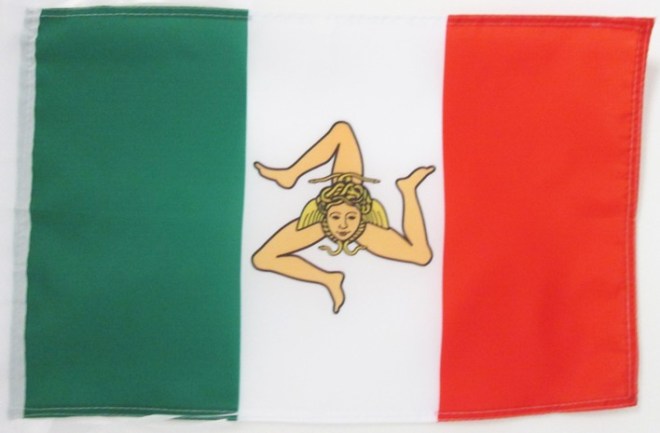
Source

Alas, the revolt, and the flag, lasted only a year, until the Bourbons took back control of the island. But then, a mere ten years or so later, in 1860, when Garibaldi and his thousand volunteers disembarked in Sicily on his way to conquering the island and the boot of Italy, the Sicilian rebels dusted off this flag to fight behind. That rebellion was successful this time. Or maybe it wasn’t, because Sicily shucked off its Bourbon overlords but only to become part of the new Italian State, where national unity was strongly promoted and regional diversity quashed. So of course the triskeles disappeared from the tricolour flag.

Then, at the tail end of the Second World War and after 80 years as part of the new Italian State, separatism reared its head in Sicily. In the chaos created by the Allies’ invasion of Sicily and the collapse of the national government, the Movement for the Independence of Sicily was formed. Of course, it created its own flag which naturally enough sported a triskeles, a bright red one in this case. I’ve no idea why the separatists chose this colour for its triskeles, or the colour of the flag’s background – perhaps simply the red and yellow now traditionally seen as Sicily’s colours?

Source

It was a strange movement, which pulled in people from the left and the right of the political spectrum but also had links with the mafia and the island’s traditional bandits. Indeed, the darker, criminal elements of the movement spawned an armed force, the Volunteer Army for the Independence of Sicily. It, too, created its own, triskeles-bearing, flag.
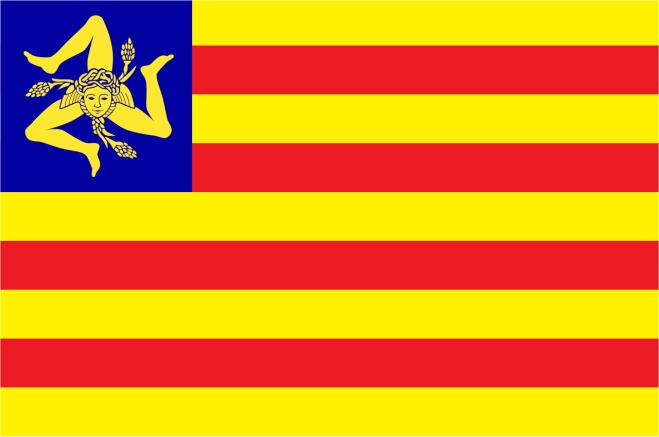
Source

This “army” attacked Carabinieri barracks and made general mayhem but was eventually crushed. In the meantime, the national government bought off the separatists by promising Sicily a special autonomous status (as it did to other regions on the rim of the country: Sardinia, Val d’Aosta, and Trentino-Alto Adige).

In the decades after the War, Italy’s regions, which had been politically moribund since the country’s unification, slowly clawed back their political importance. Finally, in 1970, the country’s first regional elections took place, while in 2001 a constitutional amendment gave the regions greater say in policy-making.

With the regions’ increasing political importance came the desire to create their own flags, banners, armorial bearings, and so on. Sicily was no different. Its regional parliament approved a first flag in 1995.

Source

Its design explicitly harked back to the flag created by the rebels in 1282 (although the colours of the background were switched around), but instead of the triskeles the region’s coat of arms was placed in the flag’s centre. This did include the triskeles but quartered it with the arms of the Normans, the Swabians, and the Aragonese, who had all been overlords of Sicily at some point.

Finally, in 2000 good sense prevailed and the regional parliament approved today’s flag with only the triskeles in the centre.

So there we are. An ancient symbol created back in the mists of time has managed to survive down through the centuries as a symbol of Sicily’s desire to shake off its overlords and now has been given a new lease of life as a symbol of – hopefully – a vibrant region in a more federalist national state.

SAINT TECLA

Milan, 18 November 2024

Ever since 2016, when I wrote a post about Saint Radegund I’ve been meaning on and off – more off than on, I should say – to write a post about Saint Tecla, as part of my sub-category of posts on obscure saints whose names still dot the European landscape; in this particular case, a small road behind Milan’s Duomo is called after her. The last post in the series, from this summer, was about Sankt Ilgen. Two days ago, at the end of a hike which my wife and I did on Lake Como, I came across a church dedicated to Saint Tecla, in the village of Torno. It’s not a particularly interesting church. This is what the exterior looks like.

Source

And this is a view of its interior.

Source

Quite honestly, the view from the church’s door across Lake Como is more interesting.

Source

Nevertheless, I took my bumping into this church as A Sign that I should finally get my finger out and write this post.

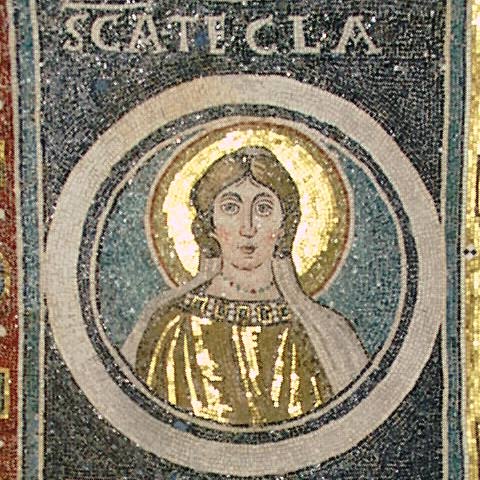
So who was this Saint Tecla? (and by the way, I prefer to use the Italian – and Spanish and Portuguese – spelling of her name rather than the English Thecla) Let me start by inserting a photo of a 6th Century mosaic portrait of her which graces the Basilica Eufrasiana in the town of Poreč in Istria, in Croatia.

Source

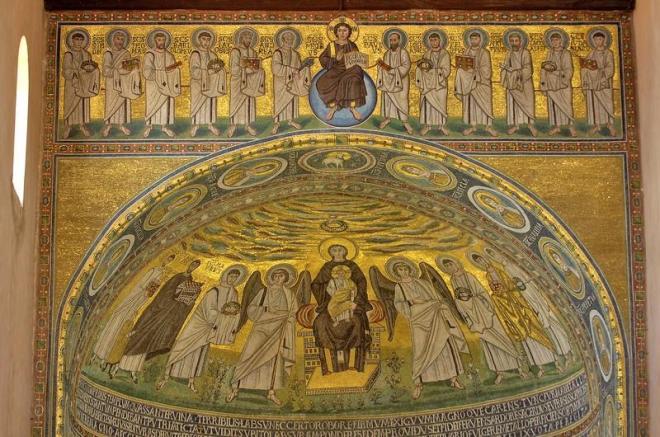
For any of my readers who are interested in early Christian mosaics and have never visited the Basilica Eufrasiana, I suggest that you do so. I throw in a couple of photos of the mosaics there to whet their appetite.

Source
Source
Source

Readers with good eyesight will see that the portrait of Saint Tecla is one of the portraits on the inside of the arch, to the right.

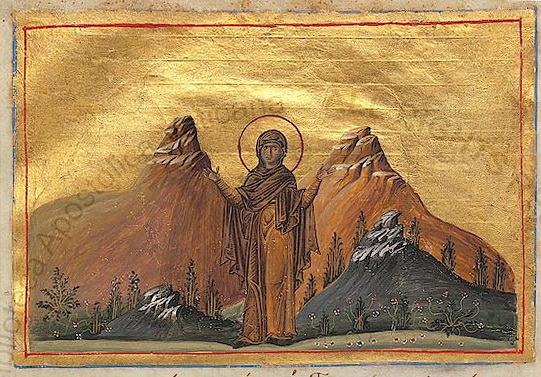
Given her great popularity in Christian Orthodox religions (probably much greater now than it is in Western Christian religions), I also throw in a photo of a depiction of her in a manuscript produced for the Eastern Roman Emperor Basil II in the 11th Century.

Source

Of course, neither of these portraits is from life. And in fact, there is a good chance that Tecla never had a life – the Roman Catholic church quietly dropped her from its official Martyrology back in 1969, which normally occurred because there was a lack of historical evidence that the saint or martyr in question ever existed. But let us put this cavil aside, and see what her various hagiographers had to say about her.

Tecla was believed to have come from Iconium in the Roman province of Galatia (now Konya in the modern country of Türkiye). The story goes that when St. Paul passed through Iconium on his second missionary journey, Tecla was transfixed by his sermons. Here is the scene depicted in an altar carved in the 15th Century for a chapel in the cathedral of Saragossa in Spain, but which now resides in New York’s Metropolitan Museum of Art’s Cloisters. That’s Saint Tecla at the the window of her house. Note the man (I think) stroking his chin pensively down at the right; a nice touch.

Source

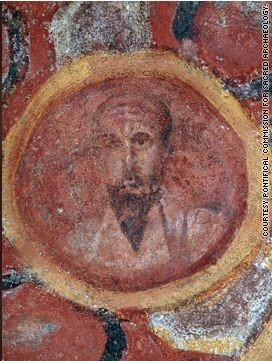
Unfortunately, Saint Paul seems to have lost his head. No worries, let me throw in a photo here of a fresco of St. Paul’s head, recently uncovered through the clever use of a laser-based technology, in a 4th Century catacomb named after St. Tecla, in Rome. This, I read, is the oldest extant solo portrait of the Apostle. I’m intrigued by the very pointy beard; I have never imagined Paul with that kind of beard.

Source

Continuing on with Tecla’s story, she declared to her mother Theocleia and her fiancé Thamyris that she was abandoning her marriage plans and would join Paul. Both Theocleia and Thamyris were alarmed at this attempt at independence and decided to drag both Paul and Tecla before the city governor. Paul was merely sentenced to scourging and expulsion, but Tecla was to be burned at the stake. Turning again to that altar which once resided in Saragossa’s cathedral, we have the scene sculpted in alabaster. The sources say she was stripped naked, but that clearly didn’t play well with the sculptor and/or the donor.

Source

Miraculously, a storm blew up, which doused the pyre. Personally, I would have put her back in gaol, built another pyre, and had a second go. But no, she was freed, whereupon she joined Paul, cut off her hair (I always find it interesting that hair is considered – by male authors? – such a sign of femininity, the cutting of which signifies renunciation of physical attraction), and followed him. And off they went to Antioch in Pisidia (nowadays called Yalvaç). There – even without her hair – she drew the lascivious attention of one Alexander, a nobleman of the city. He attempted to take her by force, but she fought him off, tearing off his cloak and knocking the coronet off his head in the process, much to the amusement of the townspeople. Seemingly, then, Alexander attempted this rape of Tecla, for that is what it seems to have been, in public, which is a little odd. Or maybe the writer of the story wanted to show the arrogance of power.

In any event, Alexander felt greatly injured in his aristocratic pride and had her dragged – yet again – in front of the city’s governor for assaulting a nobleman. This time, the governor condemned her to be thrown to the wild beasts (as an aside, I have to say that hagiographers of the early Christian martyrs all seem to have been working off the same playbook; martyrs were either burned at the stake, tortured in hideous ways, thrown into rivers with heavy weights around them, or thrown to wild beasts, or some combination of these). Interestingly, the women of Antioch rose up as one against the sentence, although it changed nothing (I think the hagiographers’ intention was to intimate that Tecla was a natural leader of women).

And so she was paraded through the streets of Antioch, stripped of her clothes (again), and thrust into the arena. The men in the crowds were baying for blood, the women were weeping for poor Tecla (taken by the spirit of the story, I have added this bit; as far as I know, none of the hagiographers said it, although they do make clear that the women in the crowd were rooting for Tecla). Miracle! Some of the wild animals (female) protected her from other (male) animals. A lioness was especially active in defending Tecla. We see the scene here in a 15th Century altar from the chapel of the Cathedral of Tarragona in Spain (in passing, I should note that Saint Tecla is the patron saint of Tarragona). In this case, the sculptor had no problems making Tecla at least half naked. Note all the animals lying meekly at her feet. I like, too, the crowd pressing in to see what’s happening.

Source

At this point, the story gets somewhat muddled for me. Reading between the lines, and giving my fervid imagination free rein, I’m guessing that the organizers of this spectacle had thought up the idea of having a large vat in the arena full of ravenous seals. They must have thought they could throw the remains of Tecla, once she had been ripped to pieces by the wild beasts, into the vat (although I wonder if seals would eat human remains; but hey, what do I know?). But Tecla had other ideas. She had asked Paul to baptize her, although for some reason he had temporized. Standing in that arena, surrounded by wild – but currently meek – animals, she decided that before she died in that arena, she would baptize herself. Note once again her streak of independence: baptizing yourself?! impossible; only men can baptize people! Nevertheless, she threw herself into the vat. The altar in Tarragona’s cathedral gives us once again a vision of this scene.

Source

I’m not sure what has happened to the arena and its crowds, we seem to have a more sylvan scene. I also get the impression that the sculptor had no idea what seals looked like, he seems to have come up with a bunch of eels. But le’s not niggle, because another miracle occurred! The vat was struck by lightning, which killed all the seals – but of course not Tecla.

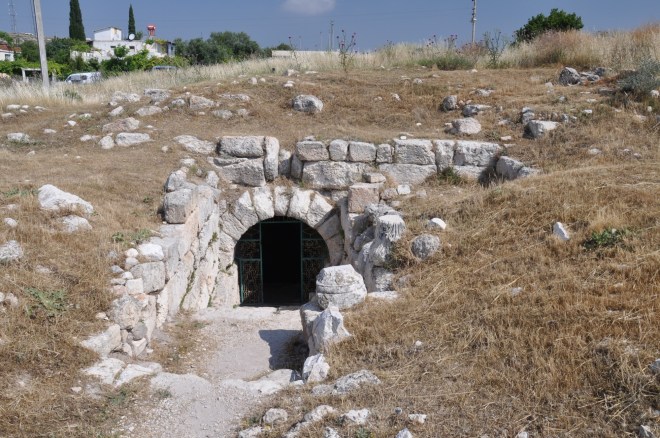
All these miracles were too much for the governor. He ordered her clothed and released her to the rejoicing women of the city. She returned to Paul, “wearing a mantle that she had altered so as to make a man’s cloak” (an important phrase for future generations of some women, who looked to Tecla as an example of breaking the eternal glass ceiling for women). She went on to convert many people, including her mother, to Christianity, and then retired to a cave near Seleucia (today’s Silifke) where she lived for many decades. This is the exterior of the cave.

Source

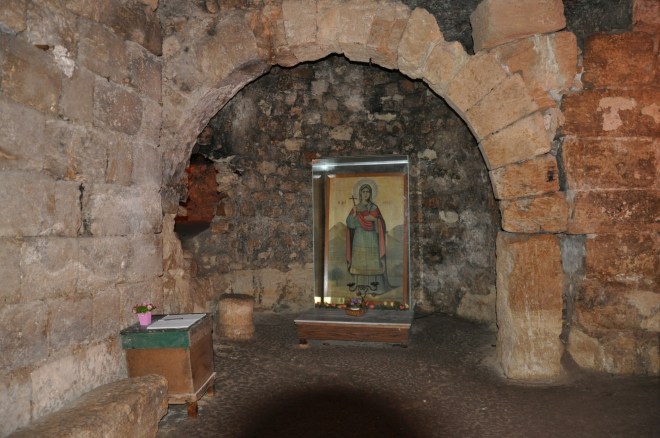
And this is a shot of its interior, which has been turned into a church.

Source

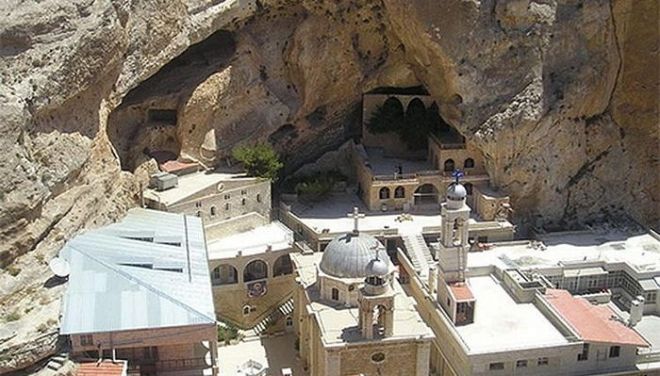
I would be remiss if I didn’t point out that there is a rival story that Tecla did indeed spend her last years in a cave, but in the small town of Maaloula in what was then the kingdom of the Nabateans, close allies of the Romans, and in what is now Syria. It seems a far more dramatic site, and has a Christian Orthodox church and nunnery built next to it.

Source

The site, alas, has fallen prey to modern religious wars. ISIS fighters invaded Maaloula in 2013, going on a rampage against Christian people and buildings, destroying all religious sites in the town. 3,000 fled the city, leaving only Muslims and the nunnery’s forty nuns. Twelve of them were kidnapped, and after negotiations were release in 2014. The nuns were dispersed and were only able to come back to the town in 2018. Horrors continue to be committed in the name of religion …

There’s further bits and pieces to Tecla’s hagiography, but I’ll skip them. Given the story, it’s a bit of a mystery why Tecla was such a popular saint. As far as I can make out, her popularity rested on the fact that she offered early Christian women a strong example, equal to, not subordinate to, men. She offered a female equivalent to the – male – Apostles; she went around converting people just as much as Paul did. She threw off the bonds of what was a strongly patriarchal society – she broke off an engagement arranged by her family, in fact she turned her back altogether on marriage; she didn’t wait to be baptized by a man but just did it herself; she took to the road without a protecting male presence (although she seems to have had to pretend she was a man in order to do this). The Church Fathers, notably Ambrose of Milan, lauded her for her virginity – but I always suspect this approval of virginity by the Church, since it always seems to be tied to retiring from the world into a nunnery and being Wedded to Christ; the idea of being in this world on equal terms with men was anathema to the Church (and to society more generally). I suspect she could easily be the patron saint of this new B4 Movement coming out of South Korea.

Well, I’ll leave readers with a somewhat more modern take on Saint Tecla by El Greco, in his late 16th Century painting “The Virgin and Child with St. Martina and St. Tecla”. It was painted for the Oratory of St. Joseph in the city of Toledo, but is now in the National Gallery of Art in Washington, D.C.

Source

We will, of course, immediately recognize Tecla because of the lioness which is protecting her. She also, rather oddly, is holding a martyr’s palm – oddly, because she actually was never martyred. One of the many strange things about Tecla.

THE MEANDERINGS OF MY MIND

Los Angeles, 31 March 2024 – Easter Sunday

In my previous post, I wrote about the sad end of the earliest paleochristian basilica in Roman-era Milan, the basilica vetus or – as it later came to be called – the basilica of Santa Maria Maggiore. It was torn down to make way for an even more splendid – and bigger – cathedral, today’s Duomo of Milan. What is important for my story today, the basilica’s baptistery, the baptistery of San Giovanni alle Fonti, was also torn down. All that remains of it are a few ruins buried under the Duomo’s floor.

Source

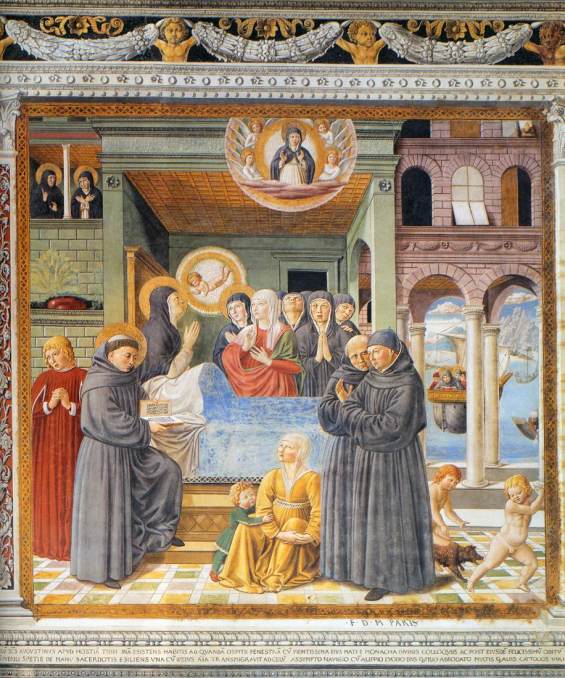
One of the most famous people to be baptised in that baptistery was Saint Augustine of Hippo. He was baptised on Easter Sunday 386 C.E., at the age of 32, by Saint Ambrose, bishop of Milan. It was Ambrose who had finally persuaded Augustine to become a Christian after a lifetime of resistance. Here, we have a fresco painting of that scene by Benozzo Gozzoli from 1464, to be found in the church of Sant’Agostino in San Gimignano.

Source

It is actually the woman at the back who interests us. She is Saint Monica, Augustine’s mother. She was from Rome’s North African province, from a city which today is in Algeria. Christian from an early age, she was married off young to an older man who was violent and unfaithful. To make matters worse, she had to keep house with her mother-in-law, who was as dissolute as her son. But she bore all her trials and tribulations with Christian fortitude. She had three children who survived infancy, Augustine, Navigius, and Perpetua. She wanted them all to be good Christians, and tried to set them on the path of righteousness. But from an early age, Augustine caused her much anguish. He was wayward, lazy, loose in his morals – at the age of 17, he started living with a woman by whom he had a child but whom never married – and worst of all he joined a heretical sect of Christianity. At some point during all these trials and tribulations, she went to see her local bishop and poured out her heart to him. He consoled her with the words, “the child of those tears shall never perish.” Mark those words, dear readers, we will come back to them.

But Augustine had one thing going for him: he was intelligent. After studying in Carthage, he taught rhetoric there, then moved to Rome to set up a school of rhetoric, and then moved again to Milan when he was offered a professorship in rhetoric by the Imperial court. Monica, now widowed, followed him, pushing him to give up his “concubine” (which he did), get properly married with a woman from a good family (which he nearly did), and – last but not least – become a Christian (which, as we’ve seen, he did, thanks to Saint Ambrose). Having become a Christian, Augustine gave up teaching rhetoric and decided to return home. Monica of course accompanied him, but having finally achieved her aim and with nothing left to live for, she died in Ostia while they were waiting for the ship to take them across to North Africa. We see her death depicted here, in the same church in San Gimignano and by the same artist

Source

Not surprisingly, given her history, Monica is the patron saint of difficult marriages, disappointing children, victims of adultery or unfaithfulness, and of lapsed Catholics (I wonder if my mother ever prayed to Saint Monica à propos of my lapsed status?). From the Middle Ages on, her cult grew and spread throughout Christendom. The story of her crying her eyes out over Augustine became part of the popular stories about her. In fact, one can still buy statues of her in tears; here is a modern example: yours, courtesy of the gift shop of the Norbertine sisters, for a mere $180.

Source

-o0o-

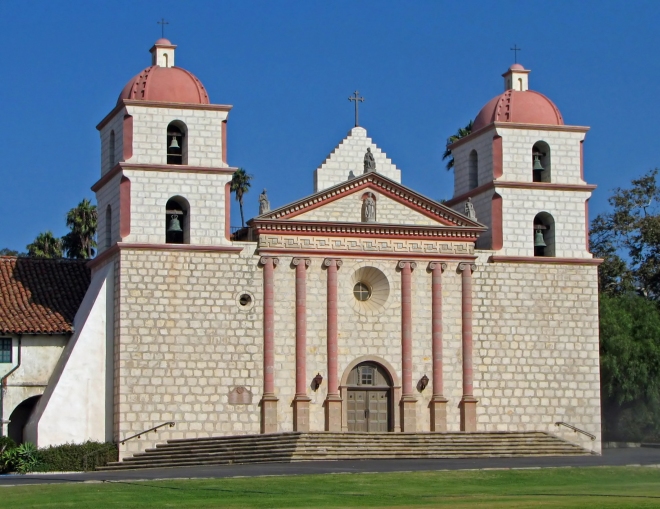
In 1768, as part of its attempts to shore up its claims over the Pacific coast of North America, the Spanish government ordered an expedition to set out from Baja California and lay stake to all of the territories lying between San Diego and Monterey. The expedition set out from San Diego in July 1769 and reached Monterey in October. They actually failed to recognise Monterey (the bay had been previously described by a Spanish navigator sailing up the coast, but they couldn’t match his descriptions with what they were seeing) and kept marching northwards, which led the expedition to its most momentous discovery in November, the huge bay of San Francisco. Somewhat astonishingly, ships from various nations had sailed past the mouth of the bay in the past without ever noticing it – the fog which commonly envelops the area has been given as the reason. Its job done, the expedition marched back to San Diego. The Franciscans who accompanied the expedition used it to lay the groundwork for a string of 21 Missions which they built over the next several decades all the way from San Diego to Sonoma just north of San Francisco. Here’s a photo of the mission church in Santa Barbara.

Source

But it’s not these large-scale events that interest me, it’s a small incident that happened in early August 1769 as the expedition force moved northward. On 2 August, the force arrived at the confluence of the Los Angeles river and the Arroyo Seco, very close to what is now downtown Los Angeles. The next day, the men moved on and camped a mere 4 km from where I’m writing this, at the Tongva village of Kuruvungna. The village was located close to a pair of springs which were sacred to the Tongvta people. The village has vanished, as have all the villages of the First Nations who lived in this part of California, but the springs still exist, now located in the grounds of the University High School on Texas Avenue in Los Angeles.

Source

Juan Crespí, a Franciscan friar who was with the expedition, renamed the springs San Gregorio. But the new name didn’t stick. Someone in the following decades, someone with a poetic bent, saw in those two springs the eyes of Saint Monica with tears continuously welling out of them, and so they became known as the fuentes de las Lágrimas de Santa Mónica, the springs of the Tears of Saint Monica. From there, by a sort of geographical osmosis, the general area around the springs became known as Santa Mónica. So when, in 1839, the Mexican governor of Alta California gave a certain Francisco Sepúlveda II a grant of 33,000 acres of land for a rancho, a grant which included the springs, Señor Sepúlveda called his rancho San Vincente y Santa Mónica (the San Vincente part of the name presumably came from another location on the rancho).

Fast forward another thirty years, to 1872 – California was now a US State – and the Sepúlveda family sold half of the rancho’s lands to a Col. Robert Baker, a businessman with a finger in many pies. In turn, two years later, Col. Baker sold three-quarters of his part of the rancho to another businessman, John Percival Jones, who had made a fortune in silver mining out in Nevada. In 1875, the two agreed to create a new town on part of their land holdings. Again, by geographical osmosis, they decided to call the town Santa Monica (even though the springs are not part of the township). Thus started the town which is now part of the sprawling metropolis of Los Angeles. My wife and I are on the bus from Santa Monica as I write this, having just visited the Cayton Children’s Museum with our grandson, where great fun was had by all. The bus is passing street after street of houses, which have all been built over the 33,000 acres of the rancho of Francisco Sepúlveda II. A lot of people have made a lot of money in real estate.
-o0o-

Over its lifetime, the town of Santa Monica has given its name to a variety of other things in the town. Perhaps the best known is the Santa Monica Pier, which has housed an amusement park out on the ocean’s edge since the 1920s.

Source

But it has also given its name to Santa Monica Boulevard, and this is where I will stop these meanderings of mine.

Source

Santa Monica Boulevard is the final, western end, of the mythical Route 66.

Source

Who hasn’t thrilled at the idea of travelling along Route 66? I certainly have. I’ve told my wife that one of these days, once we’ve finished visiting our daughter in LA, we’ll roar off down Route 66 all the way to Chicago. I think we’ll have to do this trip in a Corvette, a red one if possible.

Source

And of course we’ll be listening to Nat King Cole’s “Route 66” on the radio.

Source

Although we’ll do the trip in the opposite direction to Nat King Cole’s lyrics: LA – San Bernadino – Barstow – Kingman – Winona – Flagstaff, Arizona – Gallup, New Mexico – Amarillo – Oklahoma City – Joplin, Missouri – Saint Louis – Chicago
“Get your kicks
On Route sixty-six”

ORCHIL DYES

Milan, 19 February 2024

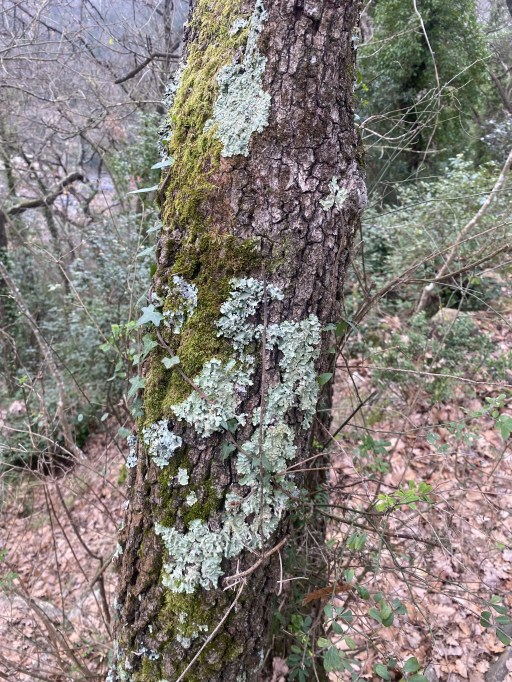
My wife and I were recently hiking in the Vienna woods, which at one point required crossing a large open field. We were halfway across it when I was startled to see an emerald green tree on its edge. It was certainly not leaves which were making it green at this time of year. And what was strange was that all the branches were emerald green. Luckily for my sanity, the path we were taking passed close by it, so I was able to inspect the tree more closely. It turned out that all the branches of the tree were thickly covered with a bright green lichen. Foolishly, I didn’t take a photo of the tree, so I’m afraid this photo will have to do.

Source

This vision got me thinking about lichen. They’re very modest beings for the most part, clinging closely to their rock or branch, so I’ve never given them much thought. They give us some gentle splashes of colour on our winter hikes, when all the trees are bare, wildflowers are still asleep, and the skies are grey.

my photo
my photo
My photo
My photo

Lichens might be modest beings but they are fascinating. I’m bursting with desire to tell my readers all about them, but I already see my wife shifting around in her seat at the thought of hearing all sorts of biological details that she never wanted to hear about. So, since vibrant colour is what started this post, I’ll just focus on lichens’ connection to dyeing. Which, as readers will see in a minute, will also lead me to write about trade, a topic which I’ve written about many times in these posts.

Let me start by saying that I am really filled with admiration for our remote ancestors. They looked around their ecosystems and tried to find a use for everything that Nature offered them. I, a pampered product of an oversupplied culture, who can get anything I want from anywhere in the world with a mere click of my mouse, would never, ever dream of trying to use lichens as a dye. But our ancestors did, particularly those who lived in ecosystems which did not support a huge amount of biodiversity and so didn’t have that many plants or animals to exploit.

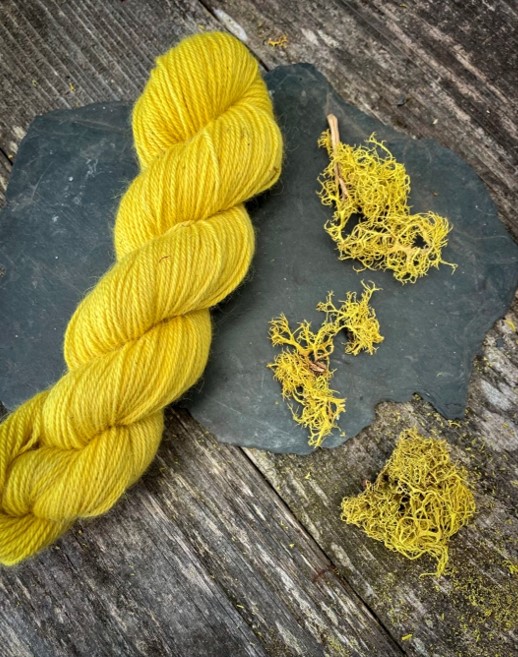
Most of them used lichens as dye sources in the easiest way. They collected them, simmered them in boiling water, waited a while for the lichen to leach out the colour, then added the yarns, simmered, and waited some more (I simplify, but not by much). Modern artisanal dye masters have replicated the processes, with which you can get some quite nice colourings. These photos show some of the lichens used as well as the yarns they have coloured.

Source
Source
Source
Source

But pride of place in lichen dyeing goes to the various species which give us orchil dyes. These are dyes in the red-mauve to dark purple spectrum – this photo shows the range of colours which modern artisanal masters have managed to tease out of these lichens.

Source

Since they are the source of these lovely colours, I feel I should honour the main species of lichen from which orchil dyes are extracted.
Lasallia pustulata

Source

Ochrolechia tartarea

Source

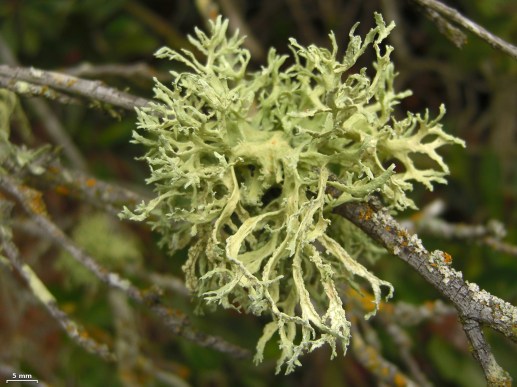
Evernia prunastri

Source

Roccella tinctoria

Source

Unless some of my readers are passionate lichenologists, I think we can all agree that these lichens are not terribly, terribly beautiful. But by the wonders of biochemistry, they can deliver us lovely dyes. Beauty out of the beasts, as it were.

Anyway, the process to extract orchil dyes is much more complex than the simple boil-it-up-and-dunk-the-yarn-in-it process which I just described. One has to crush the lichen in a solution of ammonia and keep the mix well oxygenated for several weeks. The ammonia slowly reacts with chemicals in the lichens, with the product of these reactions being the purple dye. This effect of ammonia was discovered a long, long time ago, at least in Roman times and very probably before. And in those days the source of the ammonia was … stale urine. Yes, the lichen was steeped in stale urine.

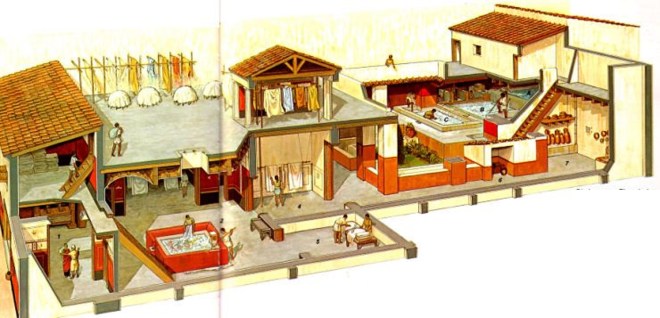
Again, I’m just filled with amazement. How on earth did our ancestors figure this one out? I try imagining scenarios of how someone stumbled across this urine effect by accident – because it had to be by accident. The only thing I can think of is this. Did readers know that in the olden days people used stale urine to “dry clean” their clothes? – ammonia, it seems, is a good stain remover. I came across this … err … interesting procedure when I randomly found myself reading an article about a house which had been excavated in Pompeii. It was a fullery, owned by a fellow called Stephanus. Since the photos of the ruins themselves are not very interesting, I throw in here a reconstruction which some enterprising soul has made.

Source

Readers with good eyes can see the various baths where cloth was fulled. In addition to fulling cloth, Stephanus (or rather his slaves) was dry-cleaning clothes with urine. Given my childish sense of humour (I already see my wife rolling her eyes at this point), I was delighted to read that Stephanus had vases placed in the lane on which the fullery abutted, into which (presumably male) passers-by were invited to pee; I wonder if they ever demanded a payment for their liquid contribution to Stephanus’s business? As for the cleaning itself, this was carried out by some poor bastards whom Stephanus had bought in Pompeii’s slave market. They had to stomp on the urine-soaked clothes for hours. For some reason, another fuller in Pompeii, Veranius Hypsaeus, thought that this operation was a good subject for a fresco in his workshop.

Source

I can’t think of a worse job (well, if I thought hard enough about it, I probably could). But some sources I read brightly informed me that the urine was good for the skin of the feet – a small consolation … And just in case any readers are asking themselves, after the stomping session the clothes were washed in water, to rid them of the smell of urine.

Anyway, my theory is that one day, somewhere, someone used a urine-dry-clean on some clothes which had been dyed with orchil-creating lichens in the traditional way (boil-yarn-and-lichen-and-water-together). For some reason, they left the clothes stewing in the urine for a while – perhaps they were called off to some emergency somewhere and didn’t come back for a week or two – and saw to their astonishment that the clothes had turned purple. It’s a wild guess but it satisfies my fervid imagination.

Orchil really delivers quite a lovely colour. But even more important, that colour is purple. At the time, the best purple dye on the market was Tyrian purple. It was extracted from the gland of a number of shellfish, and it took a huge number of molluscs to extract modest amounts of dye. So readers can understand that it was a very expensive dye. Which meant that only the upper crust could afford it, and eventually in the period of the Roman Empire it was decreed that only the Emperor and his family could wear clothes dyed with Tyrian purple. Unfortunately, the statues we have of Roman Emperors have all lost the colouring they used to have. Luckily, though, we have a coloured picture of one Emperor, Justinian, in the mosaics of the church of San Vitale in Ravenna. As readers can see, his cloak (and even maybe his shoes?) do indeed seem to be purple.

Source

Note, too, the two fellows to Justinian’s right. They were high-level courtiers and were generously allowed to have a broad purple stripe in their cloak. Ah, the complexities of sumptuary regulations …

In this world of strict social hierarchies, orchil allowed society’s wannabes to swan around in purple clothes, aping the manners of their social superiors (it also allowed dyers to use orchil as an initial, or “bottom”, dye, and then use much smaller amounts of the eye-wateringly expensive Tyrian purple to finish the job – and no doubt sell the cloth as 100% dyed with Tyrian purple).

With the collapse of the Roman Empire in the West, the use of orchil dyes, along with the knowledge of how to make them, pretty much disappeared in Europe. One place where that was not the case was Florence. In the Middle Ages, the city was a major textiles manufacturing centre. Raw wool, and later raw silk, came into the city from all over Europe and beyond, it was processed into cloth – which meant among other things dyeing the yarn – and then the finished cloth was exported all over Europe and beyond. Here we have a photo of Florentine dyers at work.

Source

Florence’s famous banking system, created by the Medici and other families, was basically created to finance this international trade in textiles. Here we have Florentine bankers working at their banco.

Source

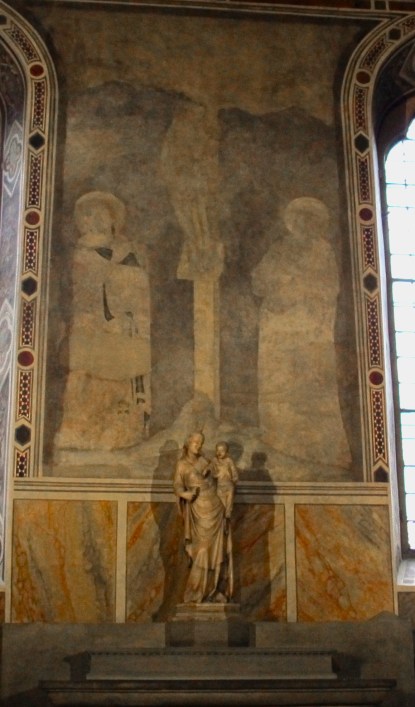
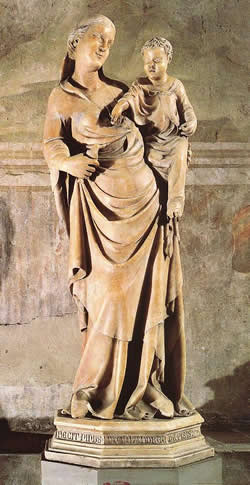
In the 1100s, one of the men working in Florence’s textile industry, a certain Alemanno, rediscovered the techniques of making and using orchil dyes. Quite how he did this is a matter of speculation; business trips to the Levant are invoked, or to the Balearic Islands. Or maybe the techniques hadn’t actually disappeared completely in Italy; he just knew a good business opportunity when he saw one and exploited it effectively. However he did it, Alemanno built a fortune on the purple cloth he made, and his descendants, the Rucellai, became Florentine grandees in the succeeding generations. The family name reflected the original source of their wealth; it is thought to be derived from oricello, the Italian name for the dye (which might in turn be derived from the Italian name for urine, orina). By the 1300s, their wealth and status got them a side chapel in the basilica di Santa Maria Novella. The original frescoes are sadly deteriorated, but there is a rather nice statue of a Madonna with Child by Nino Pisani on the altar.

Source

That Madonna and Child is so charming that I am moved to show a close-up.

Source

By the time the 1400s rolled around, Giovanni Rucellai was the head of the family. While he continued to make money hand over fist from the textile business, like all good Florentines of this golden age he was also a patron of the arts. He paid for the completion of the façade of the Basilica di Santa Maria Novella.

Source

He commissioned the family palazzo in via della Vigna Nuova.

Source

And finally he commissioned his tomb, a small-scale copy of the so-called edicule in the church of the Holy Sepulchre in Jerusalem (any reader interested in comparing the two can do no worse than go to this link).

Source and source

As befits a Great Man, someone – his heirs, no doubt – commissioned a posthumous portrait of him (note the façade of the Basilica di Santa Maria Novella and his tomb in the background).

Source

All of this great – and expensive – art paid for by urine …

This woodcut shows Florence about ten years after Giovanni died, in 1481.

Source

By then, the world was about to change for the worse for Florence and the Mediterranean world in general. A few years after Giovanni’s death, the Portuguese finally reached the Cape of Good Hope, and then a few years after that they crossed the Indian Ocean and reached India, while Christopher Columbus, in an effort to beat the Portuguese to the Indies, crossed the Atlantic Ocean and stumbled across the Americas. Trade patterns were to change profoundly, with the trade and use of orchil-producing lichens being one modest part of those changes.

Already things were changing when Giovanni was born, in 1403. The year before, a Frenchman by the name of Jean de Béthencourt was conquering the Canary Islands in the name of the King of Spain.

Source

Like all conquistadors, he might have been in it for the glory but he was definitely in it for his own personal gain. One of the things he made his money with was orchil-producing lichens, creating a monopoly, controlled by him of course, in the lichen harvesting business. It was not easy harvesting the lichens. They grew close to the sea, and once the easy bunches had been picked the only source left was lichens growing on the sea cliffs. This photo shows a bunch of Rocella tinctoria hanging over a cliff edge.

Source

To get to these lichen, harvesters had to dangle precariously on ropes over cliff edges, hoping no doubt that sudden strong gusts of wind wouldn’t blow them off, and trying not to look into the abyss below.

Source

As readers can imagine, it was only slaves or other poor sods who did this work.

Jean had the harvested lichen shipped back to his domains in Normandy, where there happened to be a village which specialised in textile manufacturing. With the Canarian lichen, the village’s manufacturers were now able to dye their cloth purple; clearly, the secret – if it ever really was a secret – of using urine to make orchil dye was out. The village grew into a prosperous little town on the back of the dye (and let’s not forget the urine), in recognition of which it is now called Grainville-la-Tinturière, or Grainville-the-Dyer (the village is also twinned with two towns in the Canary Islands in recognition of its historic ties to these islands). As far as I can make out, there seems to be absolutely nothing left of the textile industry in the town, so I shall just throw in a photo of an old postcard of  the place.

Source

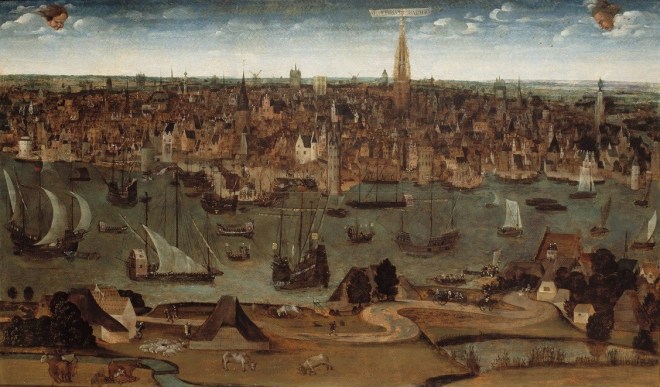
About 50 years later, in 1456, as the Portuguese crept down the coast of western Africa, they discovered and took over the islands of Cabo Verde. There, too, the same orchil-producing lichens clung to sea cliffs, and there, too, poor bastards hung precariously over the cliff edges to harvest them. In this case, the lichens were shipped back to Lisbon, for onward export to Antwerp and other places. I throw in photos of  Lisbon and Antwerp, respectively, in this general period.

Source
Source

As the Portuguese kept creeping down the coast of western Africa, they discovered another source of orchil-producing lichens in Angola, although there – luckily for the harvesters – the lichens grew on trees and were easier to harvest. This photo is from a completely different part of the world, but it gives a good idea of what Angolan harvesters were faced with.

Source

All this meant that for several centuries large quantities of orchil-producing lichens poured into Europe from European colonies. In the meantime, as the science of chemistry progressed, there were improvements to the manufacturing process which led to the production of better dyes. All was going swimmingly until a young English chemist called Henry Perkin kick-started the artificial dye industry by serendipitously creating a completely new dye, which he called mauveine, from coal tar residues. I’ve covered this story in my post on Indigo dye and insert again here the photo I used of this beautiful dye.
That discovery was the death knell of the natural dye industry: artificial dyes were more colour fast, light fast and cheaper. And so making orchil from lichen, and dyeing with lichens more generally, pretty much disappeared. Which actually is probably a good thing. Lichens grow very slowly, so the dye business was decimating them. I never thought I would say this, but for once I’m grateful to chemicals made from fossil fuels. Without them, who knows what would have been the status of lichens today? As it is, they are under threat. Lichens are very sensitive to pollution (one of their modern uses is as indicators of pollution levels), and a good number of species are on the IUCN’s list of endangered species.

So, – ooh, this is hard for me to say – three cheers for the organic chemicals industry!

JERKY AND PEMMICAN

Los Angeles, 29 November 2022

Our daughter is currently in the sleep-eat-repeat mode with her newborn. Since she is breast-feeding and the little one is somewhat dilatory at the breast, she spends a lot of her time sitting on the sofa either feeding him or having skin-time with him. Which in turn means that my wife and I have taken over a lot of the routine household tasks. One of these is doing the shopping at the local supermarket.

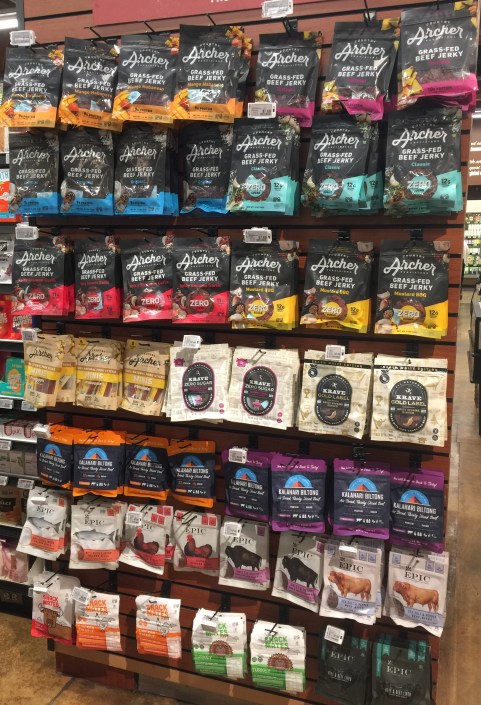
It was while we were on one of these shopping trips, traipsing up and down aisles trying to find things, that I came across these displays.

my photo
my photo

As sharp-eyed readers will see (especially if they blow up the photos), what we have here is a wide array of different brands of beef jerky (along with a couple of bags of turkey jerky and other dried meat products thrown in).

For those of my readers who are not familiar with jerky, it’s basically thin strips of lean meat which have been dried out to stop spoilage by bacteria. In the past, this drying was done by laying the meat out in the sun.

Source

Alternatively, it could be smoked.

Source

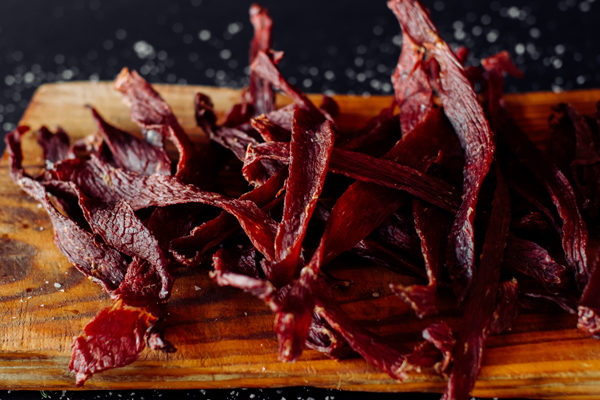
Nowadays, it is more often than not salted. It can be marinated beforehand in spices and – in my opinion, most unfortunately – sugar. The net result looks like this.

Source

Contrary to what one might think, the meat is not that hard or tough; crumbly might be a better description. Depending on what marinades are used, it can be salty or – yech! – sweetish. If prepared and stored properly, jerky can remain edible for months.

My discovery of this display of jerkies got me all excited. Nowadays, it is marketed as a protein-rich snack. But in the old days, when the Europeans were moving west across North America it was a great way of carrying food around with you on your travels: light but rich in protein, long shelf-life, no need for refrigeration. I’m sure it was used by the pioneers as their carriages creaked slowly across the prairies.

Source

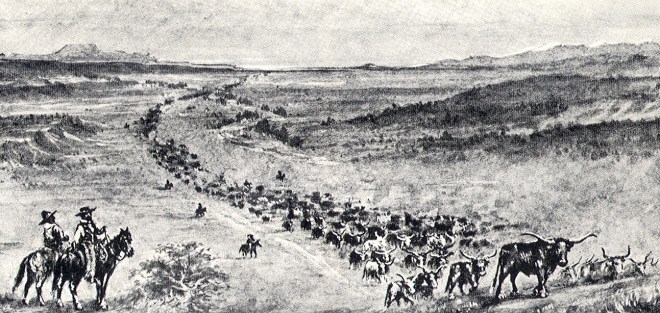
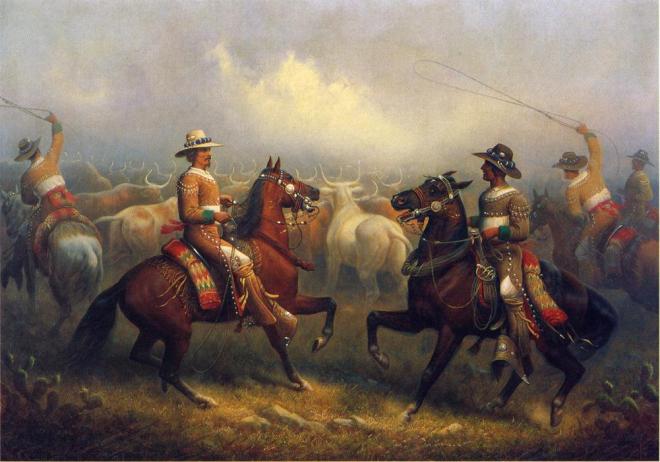
But for me, it evokes more romantic visions of old-time cowboys out on the range driving cattle to the rail heads.

Source

Or perhaps out in a posse hunting down Billy the Kid or some other outlaw.

Source

I’m sure my boyhood cowboy hero Lucky Luke would have eaten jerky, although I don’t recall any of his stories showing this.

Source

The drying of meat (and fish) as a way of preserving it has of course been used in many cultures all over the world, but jerky specifically has its roots in the Americas. The word itself hails from the Andes, coming from the language of the Quechua people.

Source

When the Spaniards conquered the Incan Empire, they found the Quechua making a dried-meat product from the llamas and alpacas which they had domesticated. The Quechua called it (as transliterated into the Roman alphabet) ch’arki, which simply means “dried meat”.

Source

The Spaniards must have been very impressed with this product because they adopted both the product as well as its name, hispanicised to charqui, and spread its use throughout their American dominions. Not surprisingly, though, the source of meat changed along the way, with beef coming to predominate. So did the methods of preparation and drying. The Quechua dried pieces of meat with the bone still in place and they relied on the particular climate of the high Andes for the drying, with the meat slow-cooking in the hot sun during the day and freezing during the night. The Spaniards instead ended up cutting the meat into small thin strips and smoke-drying them.

I have to assume that when, in their migrations through the Americas, other Europeans collided with the Spaniards, they adopted this practice of preparing and eating dried beef; they also adopted the name, although the English-speaking among them eventually anglicized it to jerky. The Romantic-In-Me would like to think that American cowboys picked up the jerky habit from Mexican vaqueros somewhere out in the Far West.

Source

But there is probably a more mundane explanation. Take, for instance, John Smith, who established the first successful colony in Virginia, at Jamestown, in 1612 (and who Disney studios had looking like this in the animated film Pocahontas

Source

but who in reality looked more like this).

Source

Smith had obviously heard of jerky. He had this to say about the culinary habits of the local Native American tribes he met living around the new colony: “Their fish and flesh … after the Spanish fashion, putting it on a spit, they turne first the one side, then the other, til it be as drie as their ierkin beefe in the west Indies, that they may keepe it a month or more without putrifying.” Which suggests that the name “jerky” may have come to North America via the Caribbean island colonies and a good deal earlier than the cowboys.

John Smith’s comment also tells us that the habit of drying fish and meat to preserve it was prevalent throughout the Americas – which is not really surprising; as I said, many cultures the world over have discovered this method for preserving fish and meat. Having no domesticated animals (apart from dogs), the First Nations of North America sourced their meat from the wild animals that roamed free around them: bison, deer, elk, moose, but also sometimes duck. Which brings me in a rather roundabout way to another foodstuff that makes me dream, pemmican.

For those of my readers who may not be familiar with this foodstuff, it is made by grinding jerky to a crumble and then mixing it with tallow (rendered animal fat) and sometimes with locally available dried berries. Like jerky, it can last a long time. This is what pemmican looks like.

Source

The word itself is derived from the Cree word pimîhkân – other First Nation tribes had different names for it, but I suppose the Europeans only started using it when they entered into contact with the Cree people.

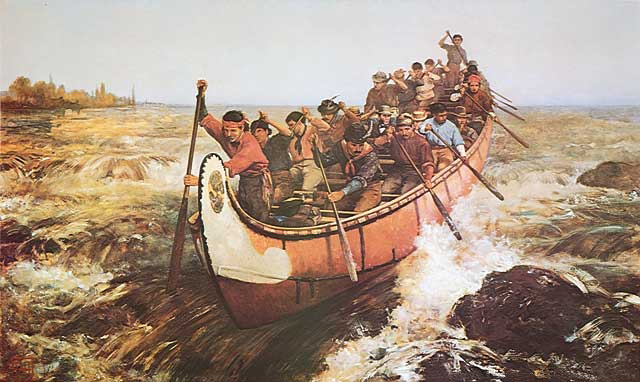
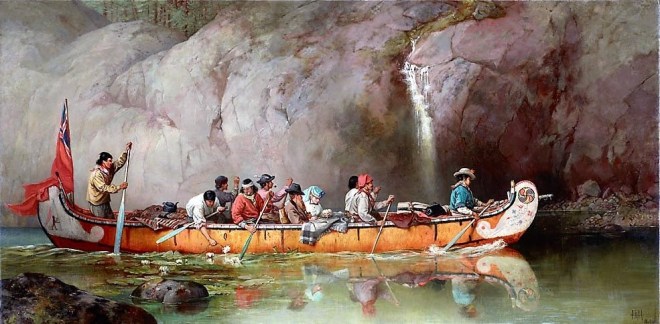
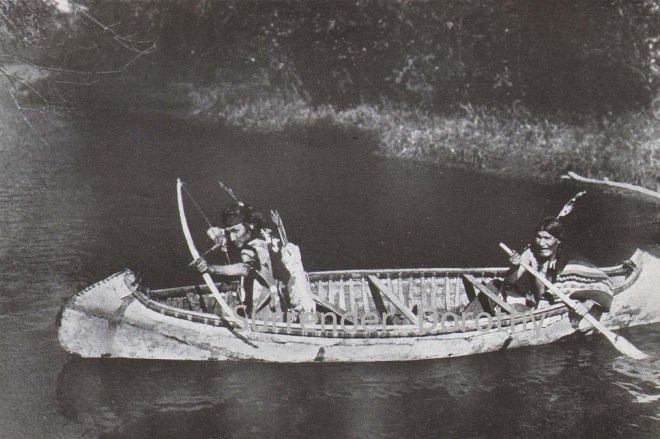
Why, readers may ask, does pemmican make me dream? Here, I have to explain that there was a time in my life, in my early teens, when my parents lived in Winnipeg, capital of the Canadian province of Manitoba. Winnipeg became an important link in the beaver fur trade routes which linked the north-west of Canada with both Montreal and Hudson Bay. A book I read when I was a sober adult, titled “A Green History of the World”, informed me that the trade itself was a catastrophe, leading to collapse after collapse of local beaver populations as they were hunted out of existence in one river system after another. But when I was a young teen, it wasn’t the poor little furry animals that interested me, it was the voyageurs. These were the men (and only men) who held the fur trade together. It was they who paddled the big canoes which in the Spring carried goods out west to trade for the beaver furs and in the Fall carried the furs back east.

Source

To the Young Me, the lives of these voyageurs seemed impossibly romantic: paddling through the vast wilderness that was then Canada

Source

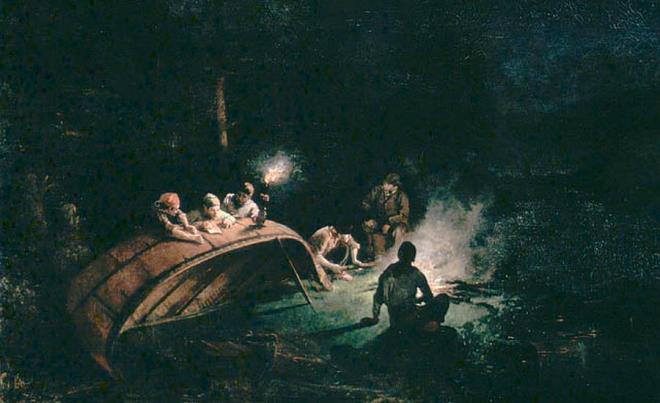
sleeping by the fire under the stars

Source
Source

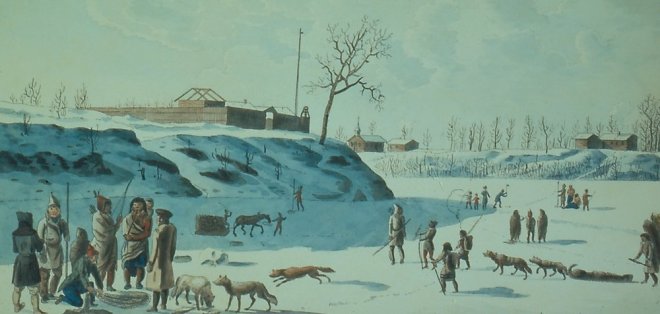
meeting people of the First Nations when they were still – more or less – living their original lives …

Source

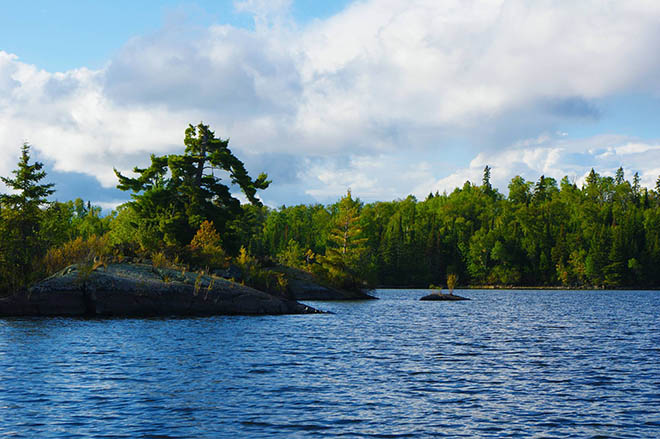
I had one, tiny taste of this life when I was 14 going 15, paddling a canoe for a couple of weeks along the Rainy River and across Lake of the Woods, camping at night on the shore of the river and on islands in the middle of the lake

Source

and one day meeting a very old man on one island who thrillingly remembered as a child hiding from the local First Nations tribes who had gone on the warpath.

Source

Of course, the voyageurs’ life was considerably harder than I ever imagined it as a boy. For instance, coming back to pemmican, they didn’t have space in their canoes to carry their own food, nor did they have time to forage for it. They were expected to work 14 hours a day, paddling at 50 strokes a minute or carrying the canoes and their load over sometimes miles-long portages, from May to October. So they had to be supplied with food along the way. In the region around Winnipeg that meant being supplied with pemmican.

A whole industry sprang up to supply the large quantities of pemmican needed by the voyageurs. It was run by the Métis, another fascinating group of people. As the Frenchmen (mostly, if not all, men) pushed out into the Canadian West, many married, more or less formally, First Nations women from the local tribes. The primary purpose of these marriages was to cement trading relations with local tribes; it was also a way of creating the necessary interpreters. The children of these marriages were the Métis (which is French for people of mixed heritage). They in turn intermarried, or married First Nations people, and over time, created what were essentially new tribes. Although the Métis retained some European customs, the most important of which being the speaking of French, for the most part they adopted the customs of the First Nations.

Source

There were especially large groupings of Métis around what was to become Winnipeg. One of the bigger groupings lived in St. Boniface on the Red River.

Source
Source

This has now become one of the quarters of Winnipeg, and is where my parents used to live. At that time (we are talking the late 1960s), most of the population of St. Boniface was still Francophone and I suspect that many were descendants of the Métis, although they would not have publicized the fact. Being Métis was rather looked down on at the time.

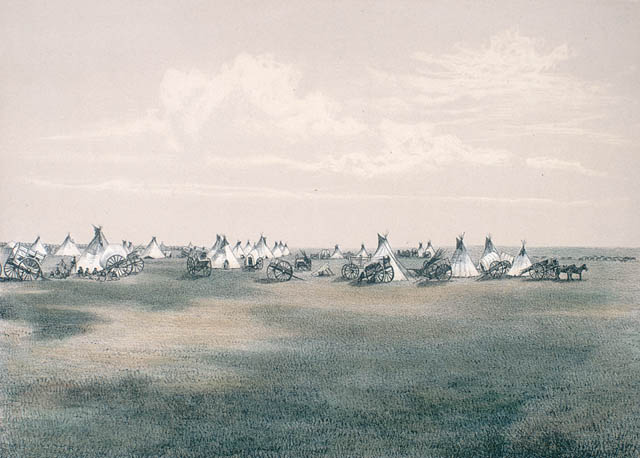
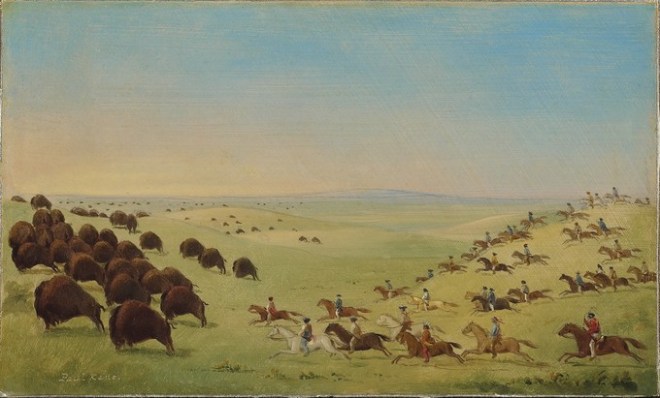
One of the customs which the Métis adopted from the First Nations was the making and eating of pemmican, hunting the numerous bison which then still roamed the central plains of North America for both the meat and the tallow they required. But the demand from the fur trade business upped the ante, and the Métis started producing pemmican on a quasi-industrial scale. Twice yearly, large hunting groups left the Winnipeg area and moved south and west looking for the bison herds. Here we have a series of paintings, watercolours, and lithographs showing the various phases of these bison hunts.

The Métis encamped out on the plains.

Source
Source

The hunts.

Source
Source
Source

Drying the bison meat and creating the tallow, preparatory to mixing them to make pemmican.

Source
Source

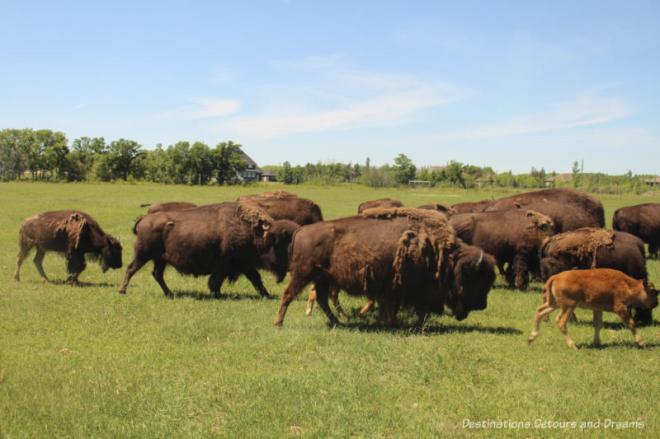
It all seemed glorious to me when I was a boy – a sort of souped-up, months-long Scout camp – but as a sober adult I learned of the very dark side of these twice-yearly hunting expeditions. Huge numbers of bison were killed during these hunts, especially females, which were the preferred target; this was a significant factor in the near-extinction of the bison in North America. Luckily, they have survived, although in much diminished numbers. One summer in Winnipeg, my father took us to a park where bison ranged free; we were able to get quite close – magnificent animals.

Source
Source

On that same trip, we spied a beaver dam somewhat like this one in the photo below through the trees and decided to go and have a peek.

Source

But we were driven back by the swarms of voracious mosquitoes which, literally smelling blood, rose up from the ground as one and closed in on us. The voyageurs were also much troubled by mosquitoes and black flies during the few hours of sleep allowed to them; they used smudge fires to keep them away. As a result, many suffered from respiratory problems – another side to their not-so romantic lives.

My father also used to take us for rides down towards the American border, where the Métis had once travelled for their bison hunts, trekking across prairies which – as the paintings above intimate – had stretched to the horizon. But they’ve nearly all disappeared too; a few shreds remain in some national parks.

Source

What we saw was wheat stretching to the horizon.

Source

Ah, memories, memories … I’ve told my wife that one day I’ll take her to Winnipeg. We can visit St. Boniface and talk French. And drive through the endless waves of wheat towards Saskatchewan. Perhaps go north to Lake Winnipeg, so big you can’t see the other side of it from the shore. And camp out in a provincial park, under the stars.

TURKEY – THE BIRD, NOT THE COUNTRY

Milan, 24 June 2022

I’m catching up with the last couple of week’s news – I’ve been much taken writing a rather heavy report on policy support for eco-industrial parks. Fascinating stuff, but pretty time-consuming.

Anyway, my eye was caught by an article about Turkey’s decision to change its official name (in English, at least) from Turkey to Türkiye. This is in line with an honourable tradition, as various places slough off names given to them during colonial times to adopt more local names. So some decades ago, for instance, Bombay became Mumbai and Madras Chennai (those are the changes I’m most familiar with in India, although I gather that quite a number of places there have localised their names). And quite recently, Swaziland became eSwatini. According to the king, the change was driven by a desire to fully break with the country’s colonial past, while ending international confusion between Swaziland and Switzerland.

In the case of Turkey, it’s not a reaction to a colonial past, or at least not obviously so. Rather, it seems that the country’s leader, Mr. Erdoğan, objects to the country having the same name as a vulgar fowl fit only to be eaten. Worse, “turkey” is used as an epithet to describe people who are (according to the Merriam-Webster dictionary) “stupid, foolish, or inept”. This is what I suspect Mr. Erdoğan – a proud and prickly person – really objects to. He senses that English-speaking people – and Americans in particular, given that this is an Americanism – unconsciously apply the epithet to his country (for the record, the epithet is also used of theatrical productions which are a flop, as in “Well, that musical is a real turkey!”, as well as of three successive strikes in bowling, as in “Wow, Bob, that’s your second turkey this evening, lucky for us you’re not on our bowling team!”).

I rather suspect that the epithet is linked to the bird, since at least the domesticated variety has a reputation for being pretty dumb. I remember once reading that turkeys are so stupid that when it rains they’ll look up and drown.

Source

I’m sure this is an urban legend, but it gives readers a flavour of the generally low esteem in which the bird is held. It doesn’t help that we are shown photos like this of poor battery-raised turkeys.

Source

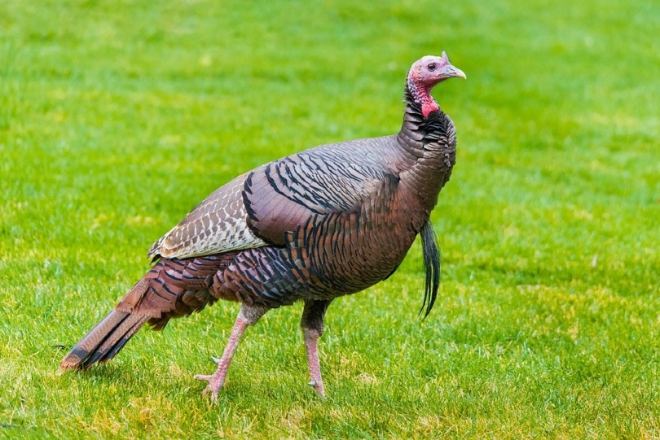
I feel moved to come to the defence of this much maligned fowl. In its natural state, out in the wild, it’s a magnificent looking bird.

Source

Here, we see a male turkey “strutting”, raising his feathers, like peacocks, as a mating ritual. The brilliantly coloured face is an absolute marvel. Here is a close-up.

Source

And by the way, these colours can change, depending on whether the bird is calm or excited.

The female, as is often the case with birds, is more modest in her appearance.

Source

Contrary to domesticated turkeys, the wild progenitors can fly  – not far, but very fast.

Source

So I really think we should stop thinking of the turkey as a stupid, dumb bird.

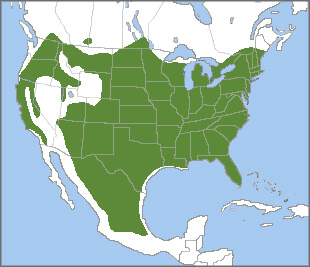
Coming back now to the issue which started this post, readers may be asking themselves why on earth the bird came to have the same name as Mr. Erdoğan’s country (well, I certainly asked myself that, which is why I’m writing this post …). It doesn’t come from Turkey or anywhere near there. The wild progenitor of today’s domesticated turkey was once very common throughout much of the United States and Central America.

Source

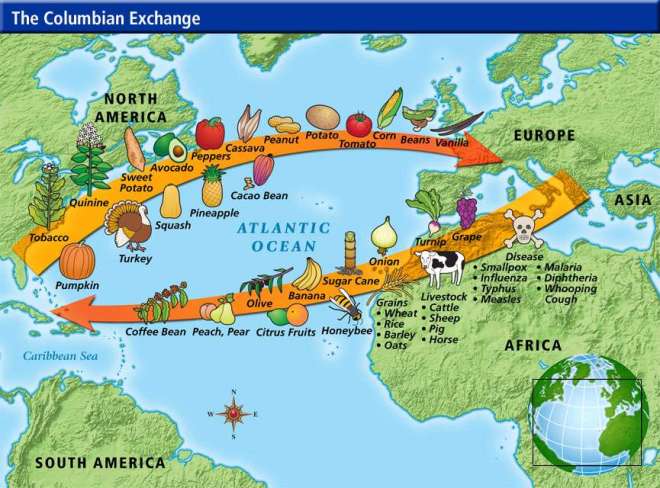
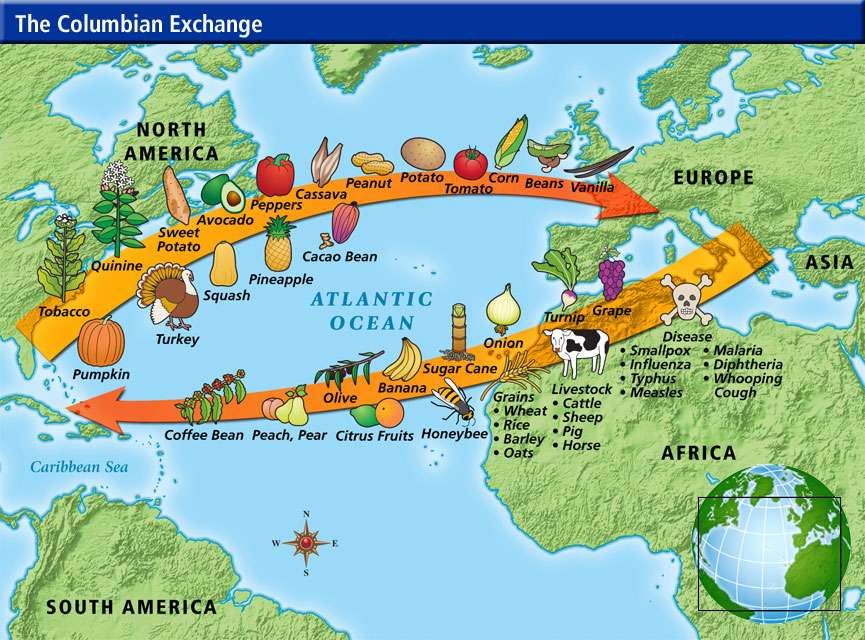
Its spread to the rest of the world is yet another example of the Columbian Exchange, which I’ve written about in several previous posts: all those foodstuffs, plants and animals which were shipped from the Americas to Europe and then to the rest of the world (and all the diseases and enslaved people which were shipped the other way).

Source

The Spaniards found an already domesticated turkey when they conquered Mexico and they brought it back to Europe, from whence it spread throughout the rest of the world.

At this point, let’s imagine that we come across new foodstuffs we’ve never seen before. Basically, there are two ways we’ll give names to these foodstuffs. Either we’ll adopt the local name (often modifying it in the process to fit our modes of speech) or we’ll give it a name based on other things we know which it reminds us of. Both approaches were used with the new foodstuffs which the Europeans discovered in the Americas. For instance, just considering English names, maize, potatoes, cassava, tomatoes, avocados, cacao, are all Anglicized versions of the local names – mahiz, batata, cazzábbi, in the language of the Taino people of the Caribbean islands (whose annihilation I alluded to a few posts ago); tomatl, ahuacatl, cacaua in Nahuatl, the language spoken in the Valley of Mexico and central Mexico at the time of the Spanish conquest. On the other hand, pineapples, peanuts, and bell peppers were given their names based on similarities in looks or tastes to known objects: pineapple was a name already used for pine cones, which look quite similar to smaller pineapples; peanuts were nuts that were pea-sized; anything with a peppery taste was called pepper.

The name “turkey” falls into the latter category. When the bird finally arrived in England, people confused it with another imported bird, the helmeted guineafowl.

Source

Originally from Sub-Saharan Africa, the guineafowl was being imported to England from the Ottoman Empire by the Turkey Company, an English chartered company. Because of that, people often called them turkey cocks or turkey hens. The new arrival from the Americas quickly displaced the guineafowl and added insult to injury by also appropriating to itself the nickname. Thus did the British start raising a bird originally from the Americas which they called “turkey”, much to the future chagrin of Mr. Erdoğan.

Source

His chagrin doesn’t finish with the British. There are of course all the other English-speaking countries which have adopted the same name for this American bird, foremost among them the United States. And then there are the other ex-British colonies; many of these have also adopted the name, suitably transliterated to fit their local languages. Thus, most of the languages from the Indian subcontinent call the bird ṭarki or turkee. So too have a number of languages used in ex-British colonies in Africa: for instance, we have toki in Igbo, tọki in Yoruba, tɔki in Krio, dɔkɔ in Ewe, uturuki in Swahili. And then we have a good number of countries which have no obvious connection to the UK but which for some reason have nevertheless adopted, with the usual linguistic adaptations, the British name for the bird: tierkei in Luxembourgish; ćurka in Serbian and Bosnian; turketi in Georgian; tirka in Kurdish; turīki in Amharic; tuorki in Khmer; tu la ki in Lao. All told, about 40% of the world’s population use the name “turkey” or some variant of it – although, in truth, some of the names have drifted so far from “turkey” as to be almost unrecognizable – some comfort, perhaps, to Mr. Erdoğan.

Luckily, another proud and prickly leader, Mr. Narendra Modi, Prime Minister of India, doesn’t seen to have noticed that a whole series of countries – including, I should note, Turkey – have instead named this “stupid bird” after India! Perhaps he has been too busy beating up on his country’s Muslim population.

Source

I think this naming is the fault of the French, who named the American bird coq d’Inde (or poule d’Inde in the feminine). Later the coq and poule were dropped, as was the apostrophe, and the French simply called the bird dinde (with, as a further modification, dindon becoming the masculine version).

As usual, the French’s logic was impeccable – if we remember that Christopher Columbus confused everyone in Europe by claiming that he had reached the Indies when actually he had stumbled across the Americas. For quite a while thereafter, everything that came from the Americas was thought to come from the Indies (and in English at least this confusion lingers on in our calling the Caribbean islands the West Indies and calling the native populations of the Americas Indians). So when the French said this new bird came from the Indies they were correct given the knowledge of the time. But they were fundamentally wrong: a great example of “rubbish in, rubbish out”.

Unfortunately for any proud and prickly Indians – the real ones, the ones from India – the French’s innocent mistake has percolated into various other languages. Two of these are languages on France’s border, Catalan and Basque, where we have gall dindi and indioilarra, respectively. Then we have a cluster of languages from the ex-Russian Empire: Polish (indyk), Russian (indeyka), Ukrainian (indychka), Belarusian (indyčka), Kyrgyz (ündük), and Armenian (hndkahav). Finally, we have three countries – Turkey, Turkmenistan, Azerbaijan – with close linguistic and cultural ties, which all use the name hindi. Luckily for Mr. Modi, only some 12% of the world’s populations use this potentially offensive name for our bird from the Americas.

That being said, there may be more here to potentially offend Mr. Modi, and we have the Dutch to thank for that. For reasons which I don’t understand at all, the Dutch called our bird from the Americas Kalkoense haan, or “chicken from Calcoen”, the then-used name for the Indian city of Calicut in the state of Kerala (which, in another example of India decolonizing its place names, is now called Kozhikodez). Calcoen-Calicut was a big trading partner in Europe’s first interactions with India, and in the early 1600s the Dutch entered into a treaty with the local ruler to boot out the Portuguese. But none of that explains – to me at least – why the Dutch seemed to think that this bird came from Calcoen. But they did.

The Dutch eventually shortened the name to kalkoen, and in closely related forms it spread far and wide. I suppose because the Dutch were very active traders in the Baltic Sea and took the bird with them on their trading ventures, almost all the countries along that sea’s shores have adopted the Dutch name in the form of kalkun or something similar. But the Dutch also took the bird with them on their colonizing ventures. Thus, Sri Lankan speakers of Sinhalese call the bird kaḷukumā (Sri Lanka was Dutch for a while, after they kicked out the Portuguese, before they were themselves kicked out by the British). For their part, the Indonesians appropriated the name from their former colonial masters and call the bird kalkun (I’ve commented on Indonesian’s cheerful appropriation of foreign words in an earlier post). As you would expect, the descendants of the Dutch settlers in South Africa, the Afrikaaners, call the bird kalkoen, and the name has percolated into at least one of the languages of southern Africa, northern Shona, as kalakune. Still, at the end of the day, only about 5% of the world’s population use this name for our bird from the Americas. On top of it, the connection to India is really not that obvious, so I think Mr. Modi can breathe easy – assuming he has spent any time at all thinking about this potential slight to Indian pride.

If Mr. Modi were ever to get exercised by the link between India and the supposedly stupid bird from the Americas, I really don’t think he could adopt the course taken by Mr. Erdoğan. I just can’t see what changes could be brought to his country’s name which would sufficiently distance it from the India-like names which have been given to our bird. It would be far better for Mr. Modi to initiate an international process (through the UN, perhaps) to change the bird’s name. And I have just the name to propose: huehxōlōtl! This is the Nahuatl name for our bird. It seems to me to fit beautifully with the general move to decolonize our languages. Each language could take this name and fit it into their way of speaking. The Spanish-speaking Latin Americans already did this a while back. Contrary to the Spaniards, who call our bird pavo, they call it guajolote, a hispanicized form of the original Nahuatl name. In English, it could be transliterated to “whexolot”. That’s a bit awkward, but knowing people’s tendency to shorten and simplify words, I’m guessing that over time this could become “whellot”. That rolls off my English tongue fairly easily: “500 grams of whellot, please. I’ll have it tonight with maize and potatoes”.

VANILLA

This post is dedicated to my dearest wife,

the most faithful of my readers

Vienna, 4 September 2021

Some months ago, I was asked by the Student Sustainability Committee of a school in Wales which I’m involved with to help them estimate the carbon footprint of the food eaten in the school. In the case of prepared food, which made up a substantial portion of the food consumed at the school, this exercise required me to plough through a lot of recipes to understand what were the raw ingredients of these prepared foodstuffs (so as to calculate the carbon footprint of each ingredient). Apart from this being a hell of a lot of work, as my wife will testify (“have you still not finished that stuff?!”), I discovered with surprise that many, many prepared foodstuffs of the sweet variety (biscuits, cakes, chocolate, and various sundry others) have vanilla extract as one of their ingredients (and as a side note, I was very surprised to see that these sweet foodstuffs made up a large portion of all the food consumed in the school; it didn’t seem to be a very healthy diet).

These constant references to vanilla extract intrigued me, and I decided that one day I would investigate vanilla a bit more. This decision crystallized into action over the last few weeks, because it so happens that my wife is very fond of vanilla. In the Bad Old Days, before we started our rigorous dieting, she consumed a fair amount of vanilla-based ice creams, normally those covered with a chocolate casing (I will not give free publicity to her favourite brand by naming it; I will leave my readers to guess). Now, in these more virtuous times, diet-wise, her vanilla consumption mainly takes the form of vanilla-flavored yogurt, and this only for lunch on our hikes (which these summer days has meant quite frequently). For the sake of complete transparency, I should state that she still consumes a chocolate-covered vanilla ice cream from time to time, whenever a hike is judged to have been particularly strenuous.

The brand of vanilla-flavored yoghurt which my wife generally favours is this one – I should add that she favours it simply because our local supermarket offers it, at a very reasonable price.

Source

Sharp-eyed readers will have noticed the flower on the tub. This is the vanilla orchid, Vanilla planifolia. Here’s a photo of the Real Thing.

Source

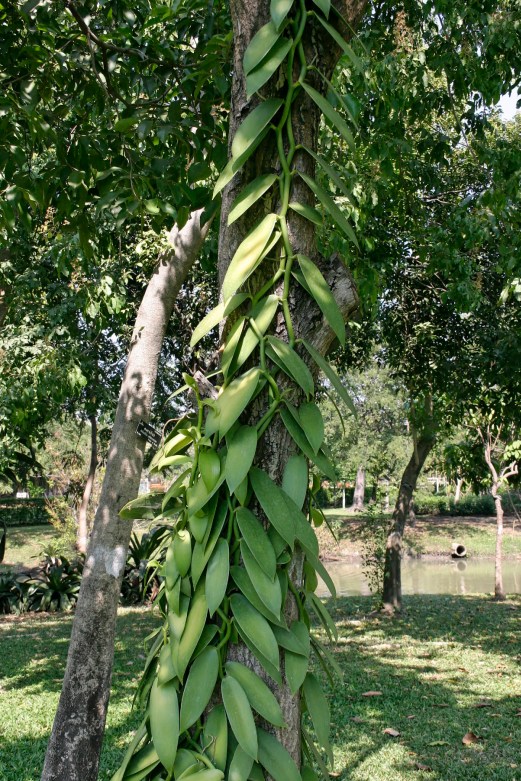
And here is the plant more or less in its natural state (readers will note that this orchid is a type of vine; in Nature it will grow up trees, like the pepper vine).

Source

It’s really a very pretty flower, but it is only of passing interest to the vanilla aficionado. She or he is after the “fruit”, a seed pod really, that the flower creates once it has been pollinated. The three dark-coloured stringy things pictured behind the flower on the yoghurt tub are these seed pods. Again, here is a photo of the Real Thing.

Source

But even the seed pod, if in its natural state, just picked from the vine, does not interest the vanilla aficionado, because it contains very low levels of vanilla flavour and aroma (these, by the way, come mostly from the chemical vanillin, although there are a number of other chemicals present which it is claimed enhance both flavour and aroma). It is only once the seed pod has been cured that the vanilla aficionado becomes interested, because now the levels of vanillin are considerably higher, high enough to add that distinct vanilla flavour and aroma to foods and drinks.

The curing of vanilla seed pods is a rather complicated, months-long process, whose purpose is to bring about an enzymatic reaction in the pods which turns the glucovanillin they contain into vanillin proper (in case any readers were asking themselves, glucovanillin has no flavour or aroma). Curing consists of four basic steps: killing, sweating, slow-drying, and conditioning. In the killing step, the seed pods are generally heated (in hot water or in an oven or by exposing the pods to the sun).

Source

This stops any further vegetative growth in the pods and initiates the necessary enzymatic reactions.

In the sweating step, the pods are kept at temperatures of 45–65°C and at high humidity levels by stacking them densely and insulating them in wool or other cloth. The pods are subjected to this Turkish bath regime for 7 to 10 days, possibly with a daily exposure to the sun or a dip in hot water.

Source

The desired enzymatic reactions love these conditions, so by the end of the sweating step the seed pods have attained much of the desired vanilla flavour and aroma. However, they still have a high moisture content. Which brings us to drying.

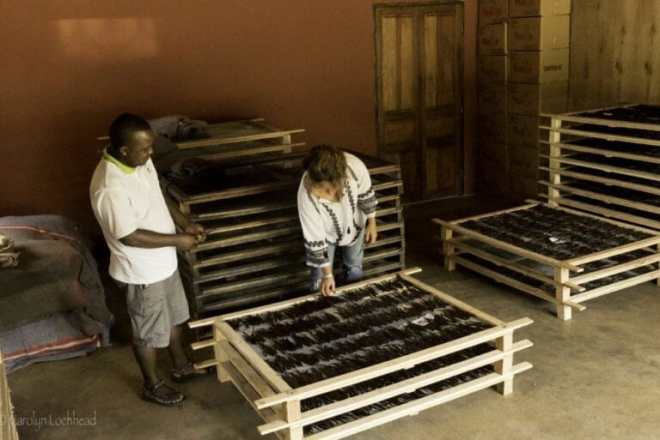
To prevent the pods from rotting and to lock in the vanilla aroma, drying is required. And so, over a period of three to four weeks, the pods are exposed to air and to periods of shade and sunlight.

Source

In the final, conditioning step, the dried pods are stored for five to six months in closed boxes, where the fragrance further develops.

The end result looks like this.

Source

This is what vanilla aficionados lust after, what they dream of incorporating into their dishes, from soup to sweet dishes.  And they are willing to pay top money. Vanilla is the second most expensive spice, after saffron. Those wrinkled-up beans can set you back anywhere from $50 to $500 per kilogram.

When I look at these kinds of convoluted processes, I always ask myself, “How on earth did anyone discover this process?” I mean, really, how did the first vanilla producers stand in front of those aroma-less and flavour-less seed pods and figure out that this long and complicated process would eventually lead them to seed pods with a wonderful aroma and flavour of vanilla? I would have to ask this question to the ancestors of the Totonacs, an Amerindian people who live on the east coast of Mexico. It was they who first “made” vanilla-flavoured seed pods from the vanilla orchid – the orchid’s natural habitat is in this part of the world. Here, we have Diego Rivera’s take on the Totonacs, as part of one of his murals in the National Palace in Mexico City.

Source

Unfortunately, I’m sure today’s Totonacs have no idea; I just have to accept that the answer is lost in the mists of time.

Readers might think that since the vanilla orchid is natural to Mexico’s eastern seaboard, that country would be a major producer of vanilla. Alas, not so! The reason for that is the great Columbian exchange, that massive movement of plants, animals, humans – and diseases – which took place between the New and Old Worlds after the discovery of the Americas by Christopher Columbus. The vanilla orchid was part of that exchange. The Conquistadors, like the Totonacs (and like the Aztecs) loved the flavour and aroma of vanilla and figured that people back home would love it too. They exported the pods back to Europe, where they caused a sensation, at least among the elites, who had the money to burn on this rare and expensive novelty. They put it in everything, from chocolate (also a product of Mexico) to soup. They adopted the Spanish name for it (vanilla is a corruption of the Spanish vainilla, meaning “little pod”). Other Europeans looked on enviously. Eventually, the French laid their hands on some exemplars of the plant and took them to their colonies which had similar climates to Mexico’s eastern seaboard, namely those in the Caribbean and the Indian Ocean, especially the islands of Madagascar, Réunion, and Mauritius.

For a while, Mexico continued to be the main global producer of vanilla, because this transplant of the vanilla orchid to other places was a failure. The plant flowered alright, but it never produced pods. The reason for this is an exquisite example of specialized evolution: vanilla flowers can only be pollinated by this little critter, Eulaema meriana, one of some 25 species of orchid bees.

Source

No other insect is attracted by the sex pheromones emitted by the flower, nor can any other insect successfully navigate the orchid’s complicated geometry and pollinate the flower along the way.

Once non-Mexican wannabe vanilla producers realized the problem, they tried the obvious thing, which was to transplant the vanilla-pollinating orchid bee along with the orchid. But it didn’t work; the bee couldn’t survive outside of its native habitat. The wannabe vanilla producers were stumped. Until 1841.

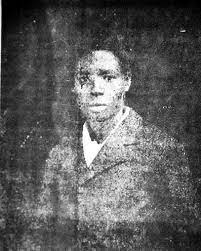
In that year, a 12-year old slave called Edmond (no surname, he was a slave), who had been born into slavery on the Island of Réunion, came up with a quick and easy way of pollinating the vanilla orchid flower by hand. He had been lent out by his master to a botanist by the name of Ferreol Bellier-Beaumont, to help him out. Beaumont had shown him how to hand pollinate a watermelon plant and the boy went off and successfully applied his new skills to the vanilla orchid. (For anyone considering hand-pollinating a vanilla orchid flower, here’s what you do: with a small sliver of bamboo or wood (or even a stem of grass), lift the membrane separating the flower’s anther and stigma; then, using your thumb, transfer the pollinia from anther to stigma.)

Edmond never got anything out of his discovery. Who did were all the the slave-owning planters on Réunion who now got into vanilla growing: for a while, Réunion became the world’s largest producer of vanilla. But the French authorities made sure the method was transferred to its other island colonies in the Indian Ocean and in the Caribbean. Since then, Madagascar has dominated world production (Indonesia, which muscled into the market in the 1980s, is now second in the producers’ league table). Mexico, on the other hand, has pretty much vanished from the scene, which is a crying shame.

As for Edmond, seven years after his discovery, at the age of 19, he got his freedom; the French government finally outlawed slavery in its colonies in 1848. He left the world of plantations to work as a kitchen hand in the island’s main city, and adopted the surname Albius, from the Latin alba or white, in reference to the vanilla orchid’s colour. Beaumont tried to get the governor of Réunion to give Edmond a stipend or at least a reward for his great discovery but the governor ignored the petition. No doubt, he didn’t think it was worth spending public monies on a black ex-slave.

Unfortunately, Edmond fell in with a bad crowd in his new life and got involved in a theft of jewelry. He was caught and sentenced to 10 years in jail, which, after an appeal by Beaumont to the governor, was reduced to five. After doing his time, Edmond moved back to a village close to the plantation and got married.

Edmond’s travails were not over. It seems to have been an irritation in certain quarters that where white professional botanists had failed, a black slave, and a child to boot, had succeeded. Some time in 1860s a well-known French botanist and plant collector by the name of Jean Richard claimed that actually, he had come up with this revolutionary pollination method in the late 1830s, that he had taught it to some planters in Réunion, and that Edmond must have sneaked into the meeting and heard his explanation. Luckily, Beaumont and a few others vigorously defended Edmond’s primacy to the discovery, although Richard’s false claim did get some traction for a while. May Richard’s name be damned forever …

Edmond died in poverty in 1880, at the age of 51. Luckily, he left a physical trace of himself in history, rare for ex-slaves. Here we have a rather grainy photograph of him when young.

Source

And here we have a lithograph of him from a book published in 1863, standing gravely in front of a vanilla orchid vine.

Source

Wonderful story, the vanilla story, no? Except that as far as the vanilla in my wife’s yoghurt is concerned, it is all a big red herring.

Source

I’m afraid to tell her, and any other readers who might be vanilla lovers, that the vast majority of the vanillin used commercially in the world is fake – well, artificial might be a less inflammatory word. Most of the world’s vanillin is produced from crude oil derivatives in chemical plants: benzene is alkylated with propylene to form cumene, which is then oxidized to phenol. Phenol is hydroxylated into catechol, which is further methylated into guaiacol. Finally, guaiacol is reacted with glyoxilic acid by electrophilic aromatic substitution to produce vanillylmandelic acid, which is converted to vanillin by oxidative decarboxylation. The remainder of the world’s artificial vanillin is made from a waste stream generated in the sulphite process to make paper pulp.

Yes, I know, very disappointing. And the worst of it is that when Cooks Illustrated ran some taste tests which pitted natural vanilla against artificial vanillin used in baked goods and other applications, tasters could not tell the difference! Don’t know what the world is coming to … Luckily, the tasters could tell the difference where ice cream was concerned, with natural vanilla winning out; l’onore è salvo, honour has been saved, as my wife might say.

RED WINES FROM SOUTHERN ITALY

Milan, 24 May 2021

In an earlier post, I confessed that the amount of wine my wife and I consumed during the two lockdowns which we have endured over the past year was considerable. In that same post, I said that we focused much of our wine drinking on red wines from the south of Italy – Sicily, Sardinia, Puglia, some Calabria, some Basilicata. I always prefer red wines – white wines give me stomach burns. My wife is quite happy to follow me in my choices, although from time to time she’ll splash out and get herself a bottle of white wine.

I chose to buy wines from southern Italy because I didn’t know them very well, which fed into my general tendency to support the underdog and be contrarian. After sampling a few bottles, I also felt that the red wines of southern Italy had more oomph to them than wines from northern and central Italy – I beg readers not to ask me to translate that into the flowery language of the wine connoisseur because I can’t. As I once confessed in an earlier post, my general method of assessing wines is “mmh! that’s a nice wine!” or “mm … not a good wine”.

Source

Also – and this was important with the tightening of household budgets under lockdown – they were generally cheaper than other Italian wines.

I also felt virtuous in supporting local grape varieties. Not for me the Cabernet Sauvignon, Merlot, Chardonnay, Syrah, Grenache Noir, Sauvignon Blanc, Pinot Noir, and the few others which dominate wine-making worldwide! No sirree, I was going to support the more than 1,500 grape varieties (yes, I kid you not, 1,500) which exist in Italy.

So from Sardinia I was buying wines made with Cannonau grapes (or to be more precise, where the Cannonau made up the largest share; the great majority of Italian wines are blends).

Source

From Sicily, it was wines made with Nero d’Avola grapes.

Source

From Puglia, it was wines made with Primitivo grapes.

Source

From time to time, though, we branched out into wines made with Nero di Troia grapes.

Source

From Basilicata, it was wines made with Aglianico grapes.

Source

From Calabria, it was wines made with Gaglioppo grapes.

source

(For reasons which are now not clear to me through the haze of history, I chose few if any wines from Campania – a lapse to be rectified in any future lockdowns!)

At some point, though, through the wine fumes, I began to wonder how many of these grape varieties really were local. One can make the case that actually no domesticated grape varieties are really autochthonous. Archaeologists tell us that domestication and the related discovery of wine-making took place somewhere in the region between the Black Sea and Iran, between the seventh and the fourth millennia BC. The earliest evidence of domestication has been found in Georgia (the country, not the US state) and of wine production in Iran in the northern Zagros Mountains.

source

Subsequently, domesticated vines and wine-making knowledge spread to other civilizations in the region, first Egypt and Lower Mesopotamia, and then to the Assyrians, Phoenicians and Greeks (at a later period vine and wine-making moved along the Silk Road to China and Japan, but that is a story for another day). The Greeks and the Phoenicians, continues this story, transferred the domesticated grape vine and wine-making technologies further west, to Italy, Spain, and the south of France. The Romans then carried the vine and wine-making further north in Europe to what are more-or-less its northernmost borders today. And then when Europe colonized the rest of the world, the Europeans took their vine and wine-making knowledge with them. So in this view of history, no domesticated grape vines are really autochthonous.

But that’s one Creation Story. Another Creation Story points to the fact that the vine species which was domesticated for wine-making (called, appropriately enough, Vitis vinifera) grows wild from Georgia to Portugal.

Source

So why could wine-making not have been independently discovered in several places?

A third Creation Story, and the one – for what it’s worth – that I feel is most credible, is that wine-making did indeed start in Iran or thereabouts, and cuttings of the domesticated vines were indeed carried westwards. But in their new homes, these vines could well have crossed spontaneously with local wild forms of the vine (or have been made to cross with them by the local viticulturists), thus shaking up their DNA a little and possibly affecting berry size, ripening time, sweetness, and whatever other characteristics viticulturists prized at the time. In this view of history, each locality can have vines which are hybrids of immigrant vines and local ones, which makes them pretty local. And anyway, even if a vine was brought in from somewhere else, if it’s been around in one locality for a long time surely it’s become local? (a bit like all Americans of immigrant stock nevertheless considering themselves locals) And anyway, the grape vine’s DNA is subject to spontaneous mutations (like American immigrants), which over time will distinguish it from its neighbors. All excellent reasons, I think, for declaring that grape vines which have been grown in one locality long enough can be considered autochthonous.

Of course, one could argue that all these Creation Stories are irrelevant because of the American pest phylloxera which devastated vineyards planted with Vitis vinifera in the late 19th Century (we have here a cartoon of the time, whose caption was “The phylloxera, a true gourmet, finds out the best vineyards and attaches itself to the best wines”)

Source

Ever since then, pretty much all commercial vineyards are Frankensteins, with Vitis vinifera grafted onto a root stock of one of the American members of the grape vine family which are resistant to the pest. Under the circumstances, I can hear some people ask, can one really call any commercial vine autochthonous?

I reject this latter argument because first, if I did accept it I wouldn’t have a story to tell, and second, because even with an American rootstock the grapes still express only the DNA of the grafted Vitis vinifera. Just as a person who has had their heart replaced is still expressing their old DNA.

So with all that out of the way, we can now focus on those wines which my wife and I (and not infrequently our son) were imbibing during lockdown, and ask ourselves the question: are the grapes that went into making them local or not? As usual in life, the answer is yes in some cases, no in others.

As one might expect, many of the local vines in southern Italy have their own Creation Stories. The cynic in me suggests that a good number of these were invented to increase a wine’s marketability, although I could well imagine that there is a desire on the part of the local people to have the stories of their vines reflect their own Creation Stories. Thus, many of the Creation Stories reflect the south of Italy’s ancient history as Magna Graecia, that arc of Ancient Greek colonies which stretched from Puglia all the way to Sicily. They suggest that the vines were brought from Greece by these early colonists. Others look to the Phoenicians as the source of their vines; Phoenicians also had colonies in Sicily and further afield. This map shows the situation in about 500 BC.

Source

If these Creation Stories are true, they would place the original migration episodes for the vines in question at some two and a half thousand years ago, quite long enough to claim that they are now fully local. Other Creation Stories suggest instead that the local vines are crosses between local wild stock and immigrant stock. Who can deny that such vines are fully local? Ampelographers have weighed in (these are experts in the study and classification of cultivated varieties of grape). They have given savant judgements on the heredity of countless vines by comparing the shape and colour of their leaves and their grape berries. Wonderful word, ampelographer! It rolls off the tongue like a good wine rolls down the throat. In my next life, I want to be an ampelographer, it must look so cool on a CV.

Anyway, along have come DNA studies, to cut through all the bullshit. We finally have a scientific basis for making judgements about a vine’s genealogy.

Source

And the white-coated scientists in their labs have discovered some very interesting things.

Take Cannonau, the grape variety that is the Sardinian grape par excellence (editorial note: since photos of bunches of grapes get pretty boring pretty quickly, I will instead be throwing in nice photos of the places where the various grapes grow).

Source

DNA studies have shown that actually, it is none other than Garnacha from Spain! (which, by the way, is also none other than Grenache; the French brought the vine from Spain and then frenchified the name) The most likely Creation Story in this case is that the Spaniards brought Garnacha to the island some time during their centuries-long dominion, from 1324 to 1718. Some Sardinians have tried to claim that the move was actually in the other direction, from Sardinia to Spain, but I don’t think that will wash, especially since a number of other “local” Sardinian grape varieties have also turned out to have a Spanish origin. On the one hand, I’m saddened by the fact that although I thought I was supporting a local variety when I bought Cannonaus in fact I wasn’t. On the other hand, I was pleased to learn of this Spanish connection, because I recall thinking, when I first tried Cannonau, that it reminded me of Rioja, and Garnacha grapes are one of the constituent grapes of Rioja.

Skipping to the island of Sicily, what about the Nero d’Avola grape?

source

Well there, I’m happy to say, I have been supporting an autochthonous variety – that is to say, a variety which could well have been introduced several thousands of years ago by the Dorian Greeks who colonized the part Sicily where the town of Avola is located; the town does indeed seem to be the center of this grape’s distribution. The original immigrant grape could actually have been a forefather of today’s Nero d’Avola, since DNA studies have revealed a cousin-like relationship between it and two other ancient Sicilian grapes, Catarratto and Inzolia. As far as I know (although the white-coated scientists publish many of their DNA studies in scientific journals which I don’t have access to), no relationship has (yet) been found between Nero d’Avola and Greek grape vine varieties. It could well be that the forefather has vanished, as old vine varieties were replaced with newer ones; phylloxera also put paid to a large number of varieties.

Vaulting now over to Puglia, in Italy’s heel, we can have a look at the Primitivo grape.

source

And here I must start by admitting that my wine choices were not supporting autochthonous grapes; Primitivo is not an Italian variety. Nevertheless, we have a fascinating story here. DNA studies have shown that actually Primitivo is a Croatian grape variety, more specifically one from the Dalmatian coast. Unfortunately, the devastations of phylloxera mean that there is hardly anything left now of the variety in its homeland – a few vines here and there. We can imagine some adventurous southern Italian sailing across the Adriatic Sea to Dalmatia and bringing cuttings back home. As far as can be judged, this was quite recent, some time in the 18th Century. The grape’s Italian name points to why viticulturists were interested in it – it was an early (“primitive”) ripener.

What makes the Primitivo story really fascinating is that DNA studies have also confirmed that it is pretty much the same as the “Californian” grape Zinfandel! (bar a mutation or two) How a Dalmatian grape variety ended up in southern Italy is not hard to imagine. But how on earth did it end up in California?! The best guess is by quite a circuitous route. Step 1 is that the variety was transferred to the Hapsburgs’ greenhouses in Vienna, when Dalmatia was part of the Austrian Empire. Step 2 is that, as part of a burgeoning global trade in plant species, horticulturalists living on the US’s eastern seaboard requested the Imperial greenhouses to send them cuttings, which they did. They probably also requested cuttings from British greenhouses, which had earlier requested them from the Viennese greenhouses. Step 3 is that one or more of these horticulturalists from the Eastern US joined the gold rush to California but took care to take vine cuttings with them. Presumably, they found that in the end it was more profitable to make wine in California than to pan for gold. (As a quick aside, one of my French cousins many times removed, who came from our family of vignerons in the Beaujolais, did something similar. He joined the gold rush to Australia but ended up making wine; I don’t know if he took cuttings with him or used the vine varieties which others had already brought to Australia. In any event, I have a whole bunch of Franco-Australian cousins whom I have never met)
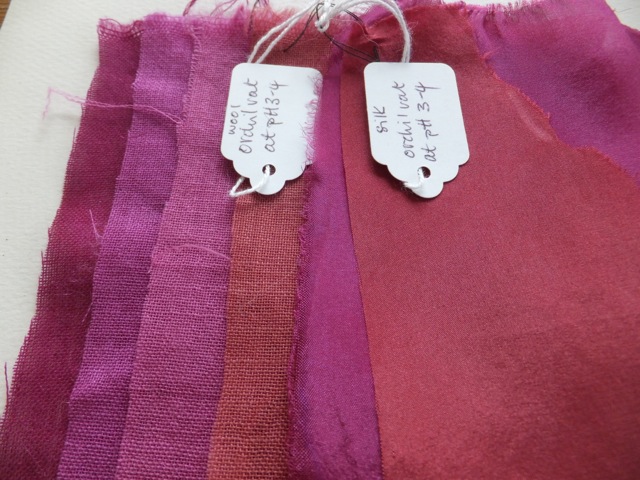
But let’s get back to Puglia, to consider the Nero di Troia grape variety, which we tried from time to time during lockdown.

Source

DNA studies have shown that this grape has an equally fascinating genealogy – and luckily for me and my determination to support autochthonous grape varieties, I think I can safely say that it is definitely an Italian variety. DNA studies have shown that Nero di Troia’s mother is Bombino bianco, an ancient white grape variety found all along the Adriatic coast but especially in Puglia, while its father is Uva rosa antica, now only found as a very minor variety in the province of Salerno in Campania.

So far, so good. But what makes Nero di Troia more interesting than most varieties is that DNA studies have also shown that it has two full siblings (same father vine, same mother vine): Bombino nero and Impigno. Which just goes to show that grapes are like humans: you and your siblings can have the same parents but you can be quite different from each other.

What’s even more interesting is that comparisons of the DNA profile of the father, Uva rosa antica, to those in DNA libraries have revealed that this minor variety from Salerno is one and the same with another minor variety called Quagliano found only in a few Alpine valleys in Piedmont, in the very north of Italy, which in turn is one and the same with a variety called Bouteillan noir found in Provence, in France. Which just goes to show that there must have been quite a vigorous, though completely informal and unmonitored, trade in vine cuttings throughout southern Europe.

Moving on to Basilicata, the wines we tried from that region during the long months of lockdown were based mostly on the Aglianico grape.

Source

This is definitely one of the grapes where the locals have a Creation Story involving its introduction to the region by the Ancient Greeks through their colonies in Basilicata. Alas, DNA studies have revealed little if any relation to other existing Greek varieties, so if Aglianico was imported to Basilicata the original Greek plantings have all disappeared. Which suggests that perhaps Aglianico is actually a cross between some immigrant vine from somewhere and local wild stock. In any event, I think we can count this one as an autochthon.

Finally, Calabria. The wines we were drinking from this region are mostly made with the Gaglioppo grape.

Source

This is another grape variety that the local inhabitants wish to believe came originally from Greece, through the Ancient Greek colonies on the Calabrian coast. However, DNA studies have clarified that Gaglioppo is a very Italian grape, being a cross of the Sangiovese and Mantonico grapes. The latter is a very typical and ancient Calabrian grape. As for Sangiovese, viticulturists have used this grape to sire a whole series of grape varieties. At least ten are known at the moment, including Gaglioppo. There must have been something about Sangiovese grapes that viticulturists liked; if any ampelographer reads this, please tell me what it was. It doesn’t finish there, because in turn DNA studies have revealed that Sangiovese is itself the product of a cross between the Ciliegiolo and Calabrese Montenuovo grape varieties. Ciliegiolo is an ancient variety from Tuscany. Calabrese Montenuovo, on the other hand, has its origins in Calabria; sadly, it is now an almost-extinct relic. We have here another example of the vigorous trade in vine cuttings, this time up and down the Italian peninsula.

I could go on. For instance, each of these grape varieties is blended with various other grapes, and many of these have had their DNA studied. But I’m running out of steam and I fear that I will soon be losing my readers – there’s a limit to how much information about DNA one can absorb before one’s mind begins to whirl like a double helix.

Source

I leave my readers with a final plea: considering that there are 1,500 varieties of grape in Italy, please ignore any wines made with the Top Ten grape varieties and concentrate on trying out all 1,500 Italian varieties. Cin-cin!

Source

STRAWBERRY

Milan, 14 June 2020
Revised in Vienna, 20 October 2020

In the recent hikes which my wife and I have been doing, we’ve come across a lot of these.

My photo

“These” are woodland strawberries (but see the Postscript at the end). I throw in here a much more professional photo of this plant, to give readers a better view.

Source

The fact is, though, that they are really very small, no more than half a centimetre across, as this photo of a whole sheet of them shows: they are just bright red dots against the green of the leaves.

My photo

Those bright red dots always catch my eye as we walk along. From time to time, I’ve picked one of the bigger ones and eaten it. They are pretty bland, I have to say. Their taste is really nothing to write home (or a post) about.

Which – as I tramped along – got me thinking: who were the people who laboured so hard to turn these small, not very tasty berries into the big, juicy and wonderfully sweet berries that we eat today?

Readers of my posts will know that I have a fondness of saluting the almost always anonymous folk who over the millennia have coaxed tasty foodstuffs which we eat today out of small and not so tasty wild plants. The last such foodstuff whose creation I have saluted is the common chicory. I decided to do the same thing for the strawberry. And so I have been beavering away on my computer these last few weeks, surfing the web and seeing what I could find.

The first thing I found was that I had been completely wrong. Today’s strawberries do not descend from those little woodland strawberries we had been spotting on our walks. They are not the result of countless generations of rural people patiently selecting woodland strawberry plants with ever sweeter and ever bigger fruits. The story of today’s plump and juicy strawberries is much more complex. They are actually the result of Europe having colonised much of the rest of the planet.

But let me start where all good stories start, at the beginning. It is true that Europeans had at one time domesticated woodland strawberries. Perhaps the Romans had done so, but if they did these domesticates were lost during the Dark Ages. Medieval Europeans certainly started domesticating them. King Charles V of France, for instance, has his gardeners transplant 1,200 woodland strawberry plants into his gardens some time in the late 1300s. Europeans also started domesticating the other species of strawberries which are found in Europe, the musk, or hautbois, strawberry, which is somewhat bigger than the woodland strawberry

Source

and the creamy strawberry, which as its name suggests can be quite pale; it’s about the same size as the woodland strawberry.

Source

It’s hard to tell from surviving documents, but Medieval and Renaissance gardeners do seem to have created strains of strawberries which were bigger and sweeter than their wild cousins. But by “bigger” I mean something as big as a plump blackberry, no more than that.

Then started the period of European colonisation. In the Americas this led to, among other things, the transfer of a wealth of new foodstuffs to Europe, a phenomenon I’ve touched upon in a couple of past posts. Maize, tomato, and potato are probably the most well known of these arrivals from the Americas. Like these three, most of the new foodstuffs came from Central and South America, but a few also made their way from North America. The best known of these is the sunflower, while I recently wrote a post about another, more modest transfer from North America, the Jerusalem artichoke. And now I have discovered that there was yet another transfer from North America: the Virginian (or scarlet) strawberry! This species of strawberry grows throughout much of North America, but it was of course first seen by Europeans in the colonies strung along the eastern seaboard.

These colonists must have been quite pleased to have this new strawberry plant at hand. We’re still not talking of berries the size of those we’re now used to – its berries were about the same size as those of the European musk strawberry. But no doubt they would have seen them as a useful adjunct to their diet.

Source

When exactly someone brought plants of the Virginia strawberry back to Europe is not clear – the early 1600s seem to be the most probable time frame. And what country they brought them back to is not clear either – the British, French and Dutch all had colonies in the strawberry’s range, so any of these three countries could have been the original entry point, and maybe the plant was introduced into Europe more than once. Wherever its entry point (or points) was, the Virginia strawberry didn’t spread that quickly through the rest of Europe. It seems to have been more of a curiosity, and certainly didn’t replace the European species with which people were familiar.

While the French, British, and Dutch were busy colonising North America, the Spaniards were busy colonising Central and South America. In South America, they first smashed the Inca Empire. Then they turned their attention further southward. It made strategic sense for them to control the whole of the Pacific seaboard down to the Straits of Magellan, to keep an eye on other pesky European nations coming through those straits for who knows what nefarious reasons. So they went on to conquer what is now Chile. In the south of Chile, the Spaniards encountered the Mapuche and Huilliche peoples, who put up a stiff resistance but who were eventually overcome and subjugated.

Source

The Spaniards discovered that these two tribes had domesticated another local species of strawberry, the Chilean (or beach) strawberry. And in this case the berry was pretty damned big!

Source

The Spanish colonists were very happy to add the Chilean strawberry to their local diet, to the point that it was commonly available in local markets in the new Spanish towns of southern Chile. It remained, however, a local delicacy. If anyone ever tried to bring back plants to Spain, there is no sign of them having succeeded.

So things stood until 1712. In that year, King Louis XIV of France sent a certain Amédée François Frézier on a secret mission to Chile. We have here a portrait of Frézier in old age, after a long and successful career.

Source

His orders were to find out all he could about the Spanish military presence there: forts, harbours, military units, and so on (this was part of Louis XIV’s ongoing struggles with Spain). For nearly two years, Frézier followed his orders most diligently, posing as a merchant looking for trading opportunities. But Frézier was a man of many interests, one of these being botany. Naturally enough, the Chilean strawberry, with its very big fruit, caught his attention. As he was to write later:

They there cultivate entire fields of a type of strawberry differing from ours by their rounder leaves, being fleshier and having strong runners. Its fruit are usually as large as a whole walnut, and sometimes as a small egg. They are of a whitish-red colour and a little less delicate to the taste than our woodland strawberries.

Frézier determined to bring some plants back with him when he returned to France. So it was that when in 1714 he finally boarded the ship which would be taking him home, he took five plants of the Chilean strawberry with him, and managed to keep alive on the long – and hot – trip home. When he arrived in France, he kept one of the plants for himself and sent the others to various friends and patrons. News of this new species of strawberry quickly made the rounds among Europe’s little circle of amateur botanists, especially after Frézier’s book was published in which he gave a detailed account of his doings in Chile and included a description of this strawberry plant with such large fruits. Strawberry plants are easy to propagate, so not only did news about the Chilean strawberry get around; so did clones of the various plants he brought back. Anyone with a serious botanical garden had to have the plant in their collection!

Alas! Great disappointment lay in store for many of those eminent botanists who planted the Chilean strawberry in their garden and eagerly awaited it to flower and – especially – to fruit (“usually as large as a whole walnut, and sometimes as a small egg”, Frézier had written). For the most part, their plants yielded nothing – nada, zero! They began to think that maybe the plant’s transfer to Europe had made it sterile.

Here, with the advantage of hindsight, I shall cut through all the intellectual confusion that pervaded the minds of Europe’s finest botanists for several decades. The fundamental problem was this: they hadn’t realized that some species of plants are hermaphrodites, and so can self pollinate, while in other species there are separate male and female plants, so both have to be present – and relatively close to each other – for pollination to occur. It just so happens that all the European species of strawberries are hermaphrodites, as is the Virginian strawberry, but the Chilean strawberry is not. There are both male and female plants in that species. Frézier must have taken only plants which were fruiting, and therefore females. This was sensible enough, given his (and everyone else’s) knowledge of strawberries; he wanted to be sure that the plants he nicked were fertile. But what this meant is that there was no way that those poor female Chilean strawberry plants, along with their clones which all the botanists were busy sending each other, were ever going to fruit in Europe without a male plant handy. This mystery was finally elucidated in the early 1760s by a young Frenchman called Antoine Nicolas Duchesne, who had a fascination for natural history. He was lucky to have access to King Louis XV’s gardens at Versailles and to be mentored by the “Assistant Demonstrator of the Exterior of Plants at the King’s Garden”, Bernard de Jussieu. After making a detailed study of strawberries, he explained all in his book Histoire naturelle des fraisiers published in 1766, when he was a mere 19 years old! Here is picture of him in old age.

Source

But actually there was a way to make the Chilean strawberry produce berries! The discovery had been made some time in the first half of the 1700s by those anonymous farmers whom I love to salute. While all those well-off, educated botanists were tearing their hair out at the Chilean strawberry’s obdurate refusal to fruit, they had found a way to coax it to do so – by interplanting the plants with either Virginian strawberry plants or musk strawberry plants. The pollens of these species were closely related enough to that of the Chilean strawberry to pollinate it. Presumably, by chance a farmer (or his wife) had planted these various species close together in their strawberry patch, had seen that the Chilean strawberry fruited under these conditions, and were sharp enough to draw the right conclusion. Who exactly these clever farmers were will of course never be known. But the chances are that it was one or more farmers from around the French city of Brest, in Brittany (Frézier was posted to Brittany on his return from Chile, which probably explains this Breton connection), although it could (also) have been farmers in the Netherlands.

And what fruits they were! Big, juicy, sweet – everything that Frézier had said of the strawberries he had eaten in Chile. Further experimentation showed that the two species from the Americas, the Virginian strawberry and the Chilean strawberry, gave birth to a fertile hybrid, which could be grown as a separate species. On top of this, this hybrid was hermaphroditic so no need for all that fiddly stuff of making sure to plant males and females together! This hybrid is the garden strawberry, the modern strawberry eaten all around the world today.
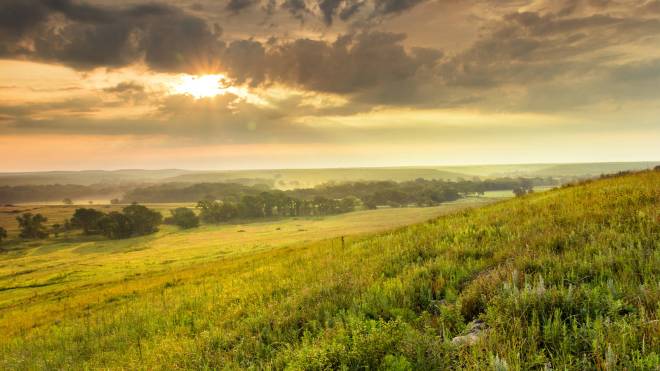
Source

An industry was created, which currently produces some 9 million tonnes of garden strawberries per year, (with – sign of the times – 40% of that being in China).

And what of the strawberries which this hunking hybrid of a strawberry displaced? The woodland strawberry has disappeared back into the woods from whence it came and where I found it at the beginning of this post. As far as I can tell, the same fate has befallen the Virginian strawberry. There is apparently still a small but devoted following of the musk strawberry in gourmet circles in Italy (of which my wife and I are clearly not part since no restaurant in this country has ever offered us this delicacy). And the Chilean strawberry is still eaten in certain parts of southern Chile.

And what of the other species of strawberries? Because there are something like 15 other species of strawberries around the world. Not surprisingly (strawberry plants liking cool to cold conditions), most of these are native to northern Eurasia, in an arc going from western Siberia to northern Japan. But a number are also to be found in the high areas of western China, all the way from Qinghai in the north to Yunnan in the south. A couple of species are also found in the Himalayas proper. There is even one species which inhabits the hill country of southern India and the mountainous regions of the Philippines.

A good few of these species don’t produce a fruit worth eating. Others do, but the steamroller of the garden strawberry hybrid has meant that they have never had a chance to develop commercially. They are only eaten locally. This is especially true in China. I find that a pity. Rather than becoming the biggest global producer of what is essentially an American hybrid, China should look to its own strawberries and bring them to its people, and to the rest of the world. Just a thought.

As for me and my wife, I think we should plan an enormously long hike from Yunnan to Qinghai, sampling the local strawberries along the way. That would certainly keep us busy for quite a while …

POSTSCRIPT 20 October 2020

A sharp-eyed, and knowledgeable, reader recently informed me that I had made a fundamental mistake when I thought that the little red fruits I was seeing on those hikes with my wife were woodland strawberries. Actually, he kindly told me, they were false strawberries (or mock strawberries), Potentilla indica. The fruits look like the Real McCoy, the leaves look like the Real McCoy, but it ain’t the Real McCoy! After a moment of indignation against this plant masquerading as another, I actually felt relieved. I wrote above that the fruits which I had tasted were bland tasting. Actually, eating them was like eating paper filled with sand (the keen-eyed reader felt it was like eating styrofoam; the few times I’ve bitten into styrofoam makes me think that that taste is quite nice compared to what I was tasting). I kept on wondering how our ancestors could ever have thought they were nice to eat. Now I know that what they were eating – the Real Mccoy – probably tastes quite nice, and I look forward to coming across some in next year’s hikes.

This discovery that what I had been looking at was actually Potentilla indica led me of course to do my usual (Wikipedia-based) research. Which in turn led me to discover that this false-friend is actually native to southern and eastern Asia. Another invasive species! Any faithful reader of mine will know that this has been a topic on which I’ve written several posts over the years. If any of my readers happen to live in Minnesota, they should be aware of the fact that that State’s Department of Natural Resources invites people to report this plant (and any other invasive species) to the authorities. I’m not sure if Italy has any such reporting system, but if it does I will be sure to report any more patches of this fake strawberry which I come across to the right authorities, and will gladly help them in uprooting the little bastards.

JASMINE

Sori, 6 June 2020

All the walks my wife and I do around Lake Como (and now Lake Maggiore, to change a bit) start in an urban setting. We take trains, or buses, or boats, to get to our starting points and we are perforce dropped off in small towns or villages. In the last couple of weeks, as we have walked up through the back roads of these towns or villages to get to the woods and meadows above them, we have noticed a marvelous thing: whole walls of the sweetest smelling jasmine.

my photo
my photo
my photo

This person has even made a tunnel covered in jasmine (I’m guessing it’s the garage).

my photo

The scent of so much jasmine has quite gone to my head and my fingers have automatically begun doing a little research on the flower.

Truth to tell, I already did a little research on jasmine for an earlier post, when I researched the only perfume of my wife’s which I have ever liked: Chance Eau Fraîche, by Chanel. One of its ingredients is jasmine oil.

As I noted in that post, there are a large number of different species of jasmine. Some 200 have been catalogued, and who knows how many more are out there waiting to be discovered. My guess, though, is that those walls of jasmine which we have been passing are Jasminum officinale, the common, or white, or summer, or poet’s jasmine (and that’s just the English names).

Source

The logic for my choice is simple: it’s the most common jasmine in Europe.

But it’s not native to Europe. In fact, there is only one species of jasmine which is native to Europe, and only the Mediterranean part of Europe at that, the common yellow jasmine.

Source

Even in this case it’s difficult to say it’s a European flower. Its range stretches all the way to northern Iran.

The biggest “hotspot” of jasmine species is actually in South and Southeast Asia, although the west of China, especially Yunnan, hosts quite a few species. A number of species are present in Central Asia, but I suspect they may have been carried there from the Indian subcontinent. Australia is home to a few species, I suppose as a southward extension of their presence in Southeast Asia. And then there’s a good dozen species in Africa, especially southern Africa. To complete this world tour, no jasmine species are native to the Americas, alas.

If the jasmine my wife and I are seeing is not native to Europe, how did it get here? It seems that common jasmine, along with a couple of other jasmine species – sambac (or Arabian) jasmine, and Spanish (or Royal, or Catalan) jasmine – originally entered Europe via Sicily and Spain, when these were Arabian kingdoms: common and sambac jasmines through Sicily, and Spanish jasmine through (appropriately enough) Spain. Since I inserted a picture of the common jasmine earlier, I feel I owe it to these two other species to insert a picture of them too:
sambac jasmine

Source

Spanish jasmine

Source

But none of these jasmines were native to the Arabian-dominated lands either. The Arabs had discovered them even further to the east and had brought the flowers back to their homelands. They brought common jasmine back from Persia after they conquered it (a similar post-conquest westward transfer occurred with the lilac, as I narrated in an earlier post). In fact, the European name “jasmine” is a corruption of the flower’s Arabic name, which is itself a corruption of the Persian name for the flower, Yasameen, which means “gift from God” (such poets, the Persians!). And it’s possible that the Persians had come across the flower further east still. As for sambac and Spanish jasmines, it seems that trade, not conquest, brought them westwards, in the holds of the ships of Arab traders doing business with the Indian subcontinent.

Jasmines didn’t just ride westwards on trade routes. Common jasmine and sambac jasmine also rode on them out to the east, into China (another result of the ancient trade routes across the Eurasian continent – the “Silk Roads” – about which I’ve written previously). Here, too, the Chinese adopted the Persian name: Yeh-hsi-ming.

It’s interesting that the Chinese felt the need to import jasmines, given that they had quite a few of their own. Perhaps it was the pure white colour of these imported jasmines which attracted the Chinese – many of their jasmines are yellow as far as I can tell; I throw in a photo of one of the more common Chinese jasmines, winter jasmine.

Source

By the way, it’s called winter jasmine because it actually flowers from November to March. In fact, its Chinese name, Yingchun, means “the flower that welcomes Spring” (the Chinese, too, can be quite poetic). This quirk has meant that winter jasmine has now also been carried off to many a corner of the world.

But coming back to the jasmines imported into China, no doubt their heady scent helped too; perhaps they had a stronger scent than the native species. Or perhaps it was these jasmines’ close links with Buddhist ritual (something which the early Indian Buddhists had no doubt picked up from the Hindus). Anyone who has been to a Buddhist (or Hindu) temple in South and South-East Asia will have noticed the liberal use they make of jasmine flowers.

Source

By this reasoning, the use of these jasmines entered into China along with Buddhism, something else which was transported along trade routes (I have written earlier about a slightly different botanical story, the cooption by Chinese Buddhists of the ginkgo tree as a replacement for the bo-tree tree so beloved of South Asian Buddhists).

No doubt the Arabs were attracted by the colour of the jasmines (white seems to symbolise purity in so many cultures). But they were assuredly also attracted by their scent (which, I have to say, is indeed sublime). The name “sambac” points to this. It is a corruption of the Medieval Arabic term “zanbaq”, which means jasmine oil. As attested by the perfume Chance Eau Fraîche, which I mentioned earlier, the modern thirst for jasmine oil in perfumery is as great as it was in the Arabian kingdoms – actually far greater, since there are so many billions more of us on this planet now. Here is a field of  jasmine flowers in Grasse, in the south of France, waiting for their oils to be extracted (a field owned, by the way, by Chanel).

Source

But there is so little oil in each flower! As many as 8,000 flowers will have perished to produce this little, 1ml vial of jasmine oil (jasmine absolute, in the jargon of perfumery).

Source

Perhaps the way the Chinese use jasmine to scent tea is a little more “humane”. I watched a no-nonsense Chinese video on the making of jasmine tea. Cutting out all the marketing bla-bla, they mix together about an equal measure of tea (usually green tea) and jasmine buds (common or sambac), they let the mixture sit for a while so that the tea leaves get impregnated with the jasmine’s scent, and then they dry it. The result looks something like this.

Source

In truth, I’m not a great fan of jasmine tea. I like the scent of the flower on the air, but the scent of it in tea I find rather sickly. But perhaps this is because I have never had a really high-quality jasmine tea. I am ready to be pleasantly surprised one day.

Is it possible that such lovely flowers with such a delightful scent could have an evil side? Alas, it is possible: some species of jasmine have been declared invasive species in a couple of countries and are subject to eradication programmes. It is not the fault of the jasmines. It is our desire to fill our gardens with foreign flowers that is to blame. Take Brazilian jasmine, a lovely member of the family.

Source

For starters, it’s not Brazilian at all. It’s one of the African jasmines, no doubt taken to Brazil from one of Portugal’s African colonies (remember that the Americas have no native jasmines; perhaps a colonial administrator wanted to enliven his garden in Brazil). In the 1920s, the “Brazilian” jasmine was imported into Florida. Initially, it was planted in people’s gardens, but inevitably – as I’ve recounted in other posts in the case of other invasive species – the “Brazilian” jasmine “jumped over” the garden fence and began to spread. It has now invaded intact, undisturbed hardwood forests in the south of Florida, where it can climb high into the tree canopy, completely enshrouding native vegetation and reducing native plant diversity. Here is a picture of this jasmine at work in the forests of Florida.

Source

I was thinking about this this afternoon as my wife and I were walking high up in the hills. We were surrounded by beautiful wild flowers of all descriptions. Why do gardeners have to fill their gardens with foreign flowers when there are so many beautiful ones right on their doorstep? Another mystery to be solved one day.

Well, the evening is drawing in. It’s time for me to get ready to test something. I’ve read that the jasmine flower opens at night, so the scent is most powerful then. I shall persuade my wife to accompany me on a hunt for a wall – or just a modest bush – of jasmine, to see if this is true. I shall report back.