MYANMAR: A FOREST OF STUPAS

Bangkok, 8 March 2015

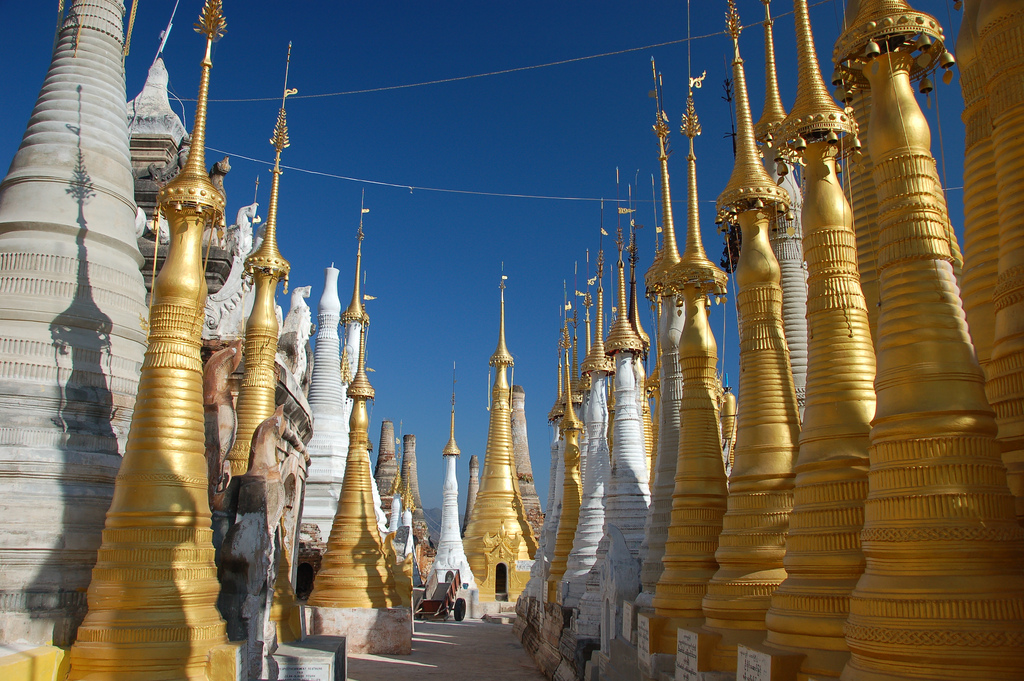
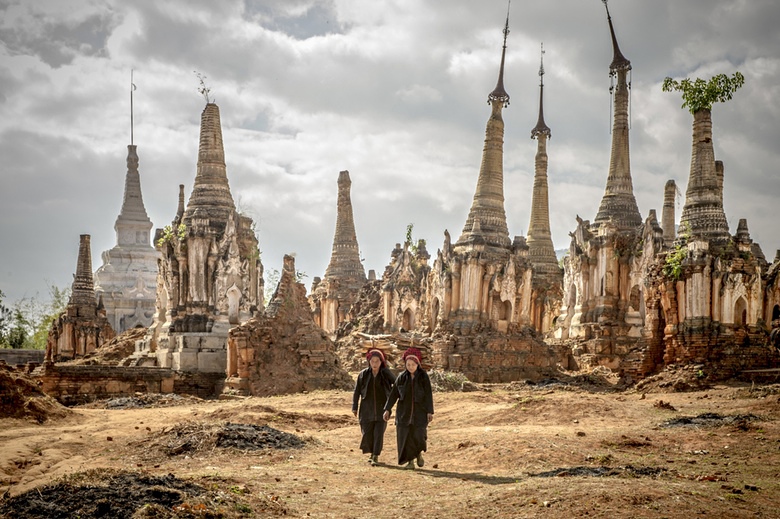
It was this photo that brought us to Myanmar.
Shwe Indein Pagoda, Inle Lake, Burma
My wife said, “We are going to Myanmar, and we are going here!”

“Here” was Inn Dein, a village on the edge of Inle Lake, in Shan State, which is why we found ourselves staying at a hotel on the lake

06-inle lake-inn dein-flav 003

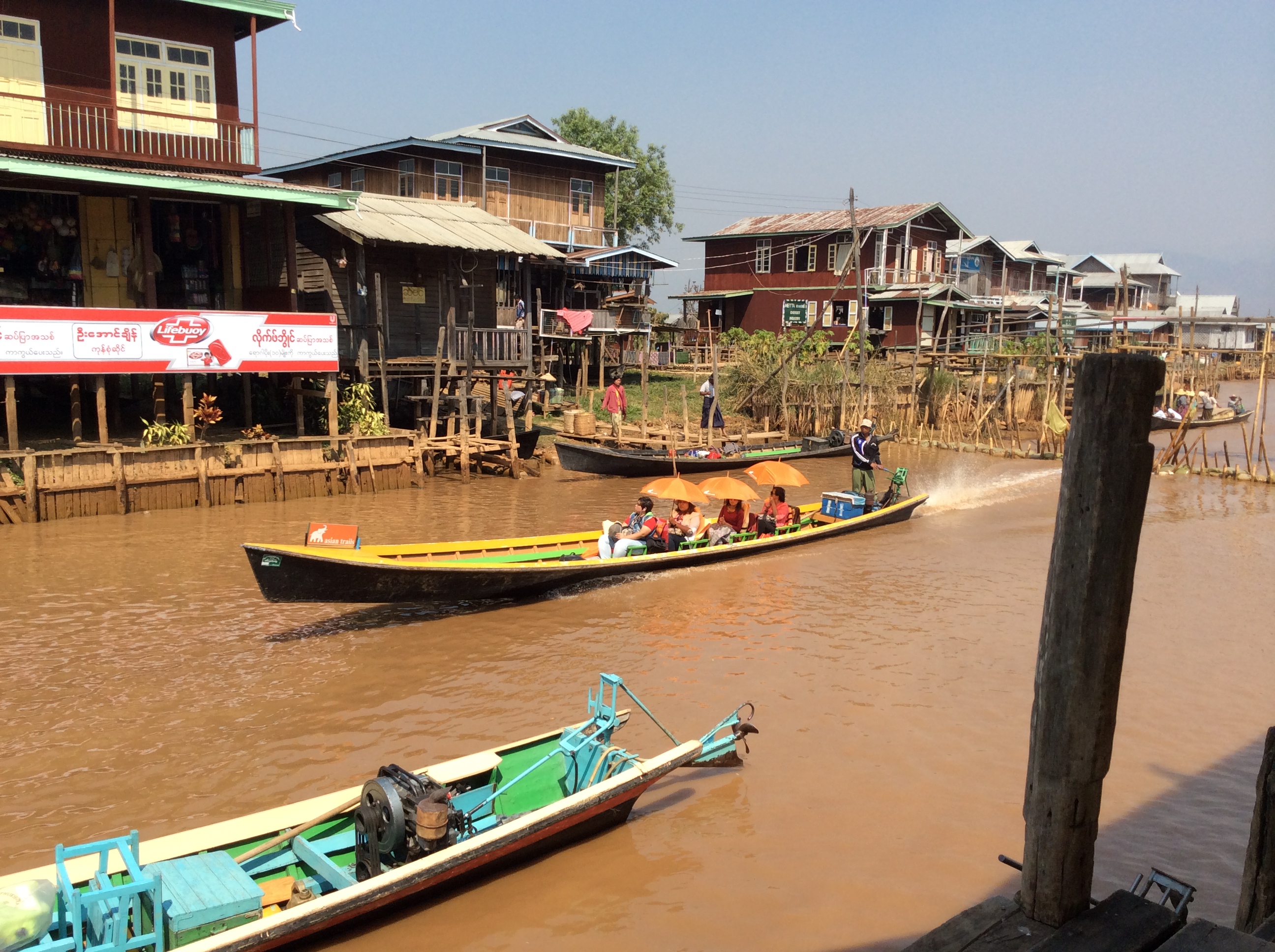
ready to take one of these boats to the village.
06-inle lake-day 3 006
In truth, our travel was a little different that day, because Inn Dein is actually on the old edge of the lake. Over the last fifty years or so, that edge has been creeping forward as farmers have created floating gardens on the lake’s edge

06-inle lake-day 2-flav 021

which after a while have become solid land, leading the farmers to create yet more floating gardens further out. So to get to Inn Dein, we had to travel up a shallow canal, the artificial continuation of the stream that runs through the village, which meant our travel was more like this.

06-inle lake-day 1 002

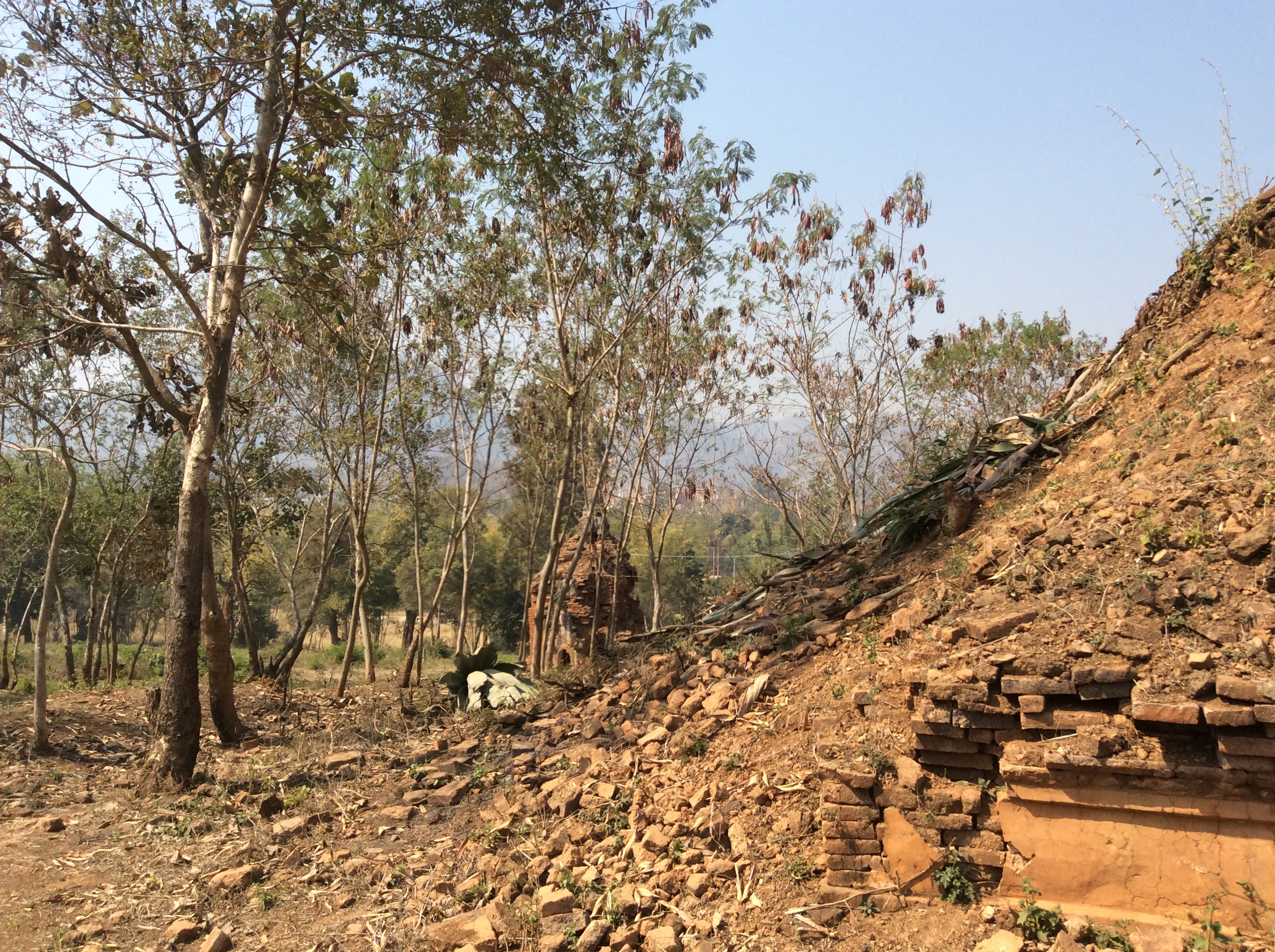
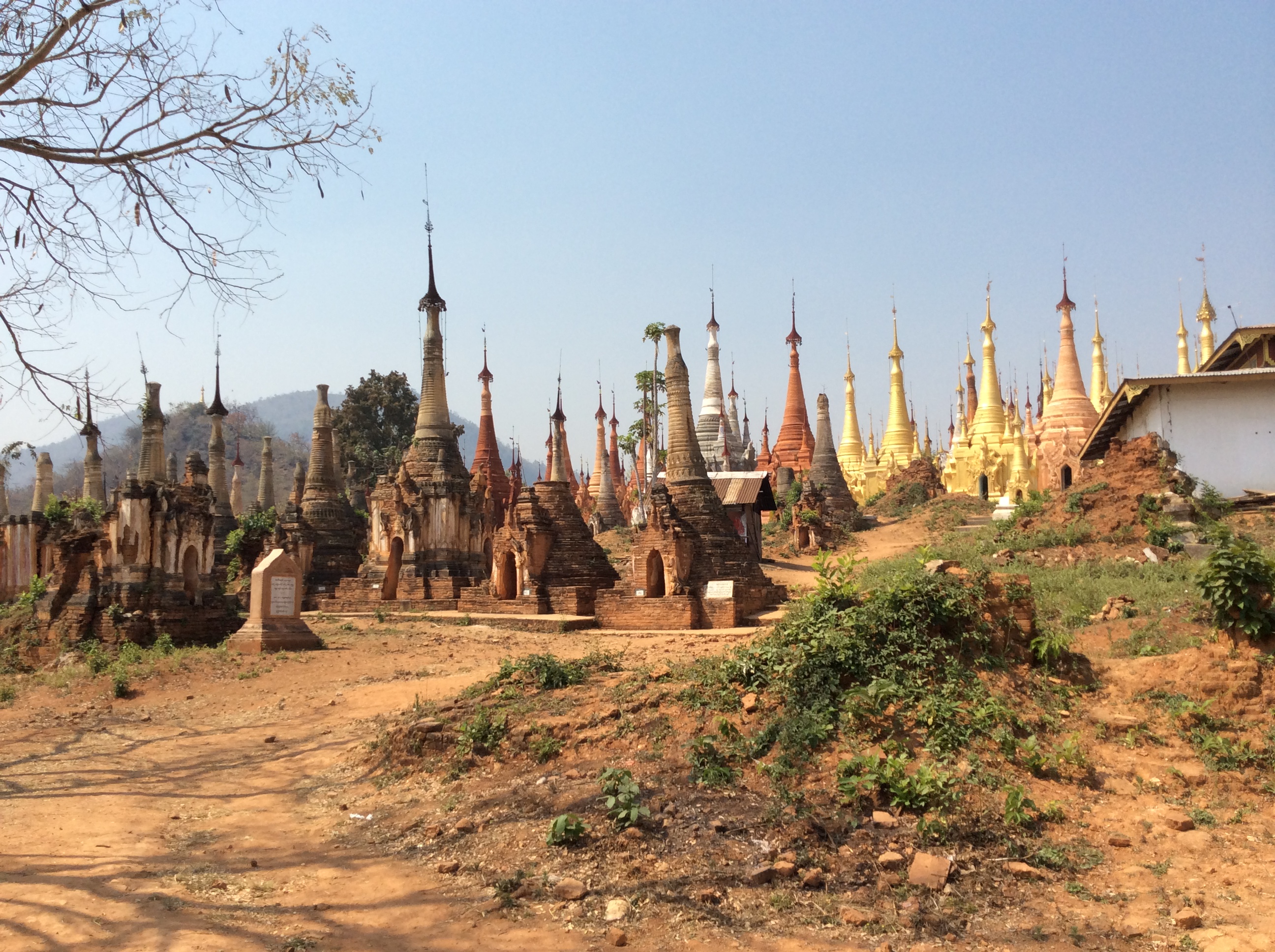
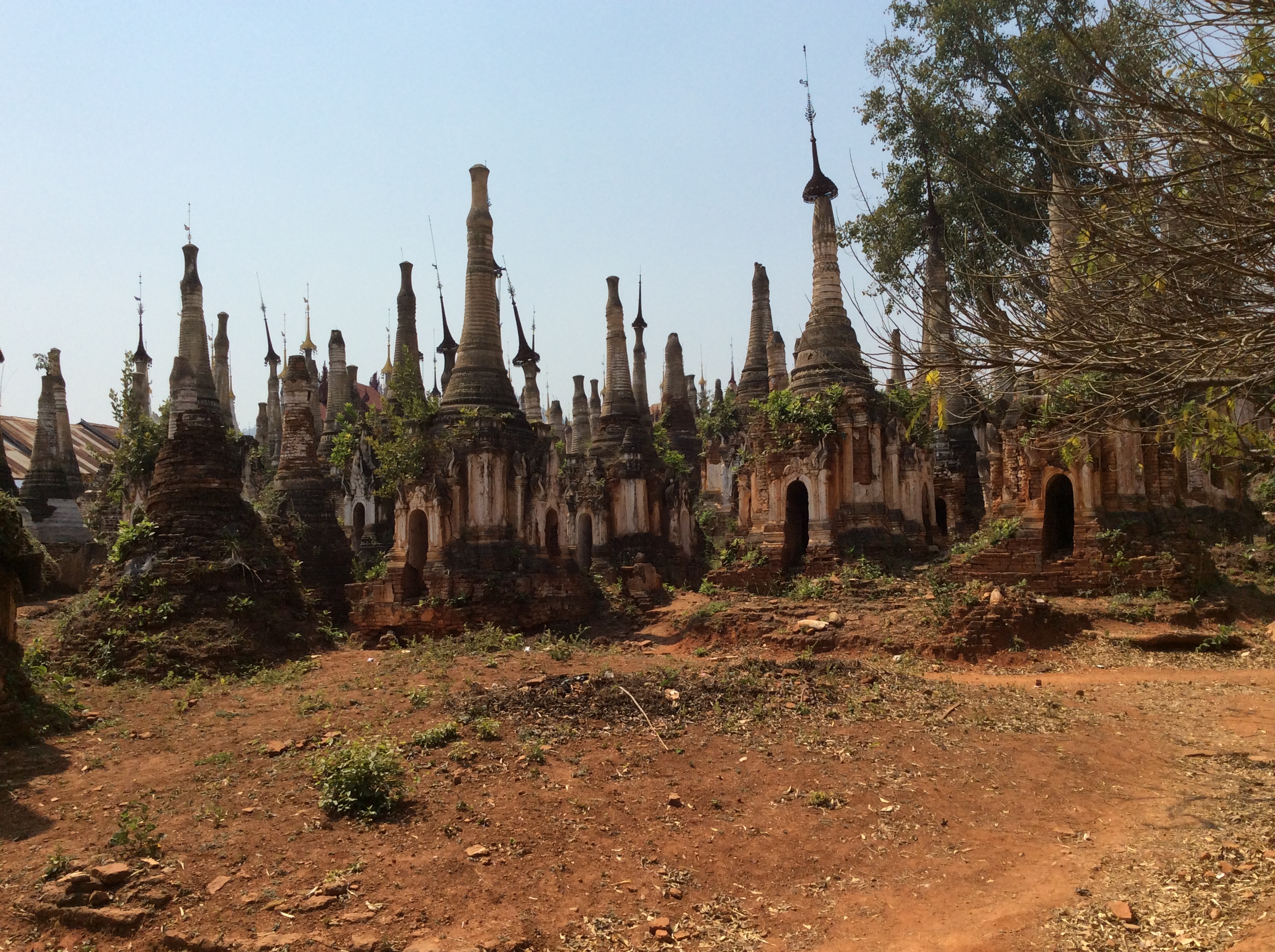
After we disembarked, we crossed Inn Dein’s one and only bridge and soon found ourselves wandering through a field of neglected, mouldering stupas.
06-inle lake-inn dein 007

06-inle lake-inn dein 009

06-inle lake-inn dein-flav 049

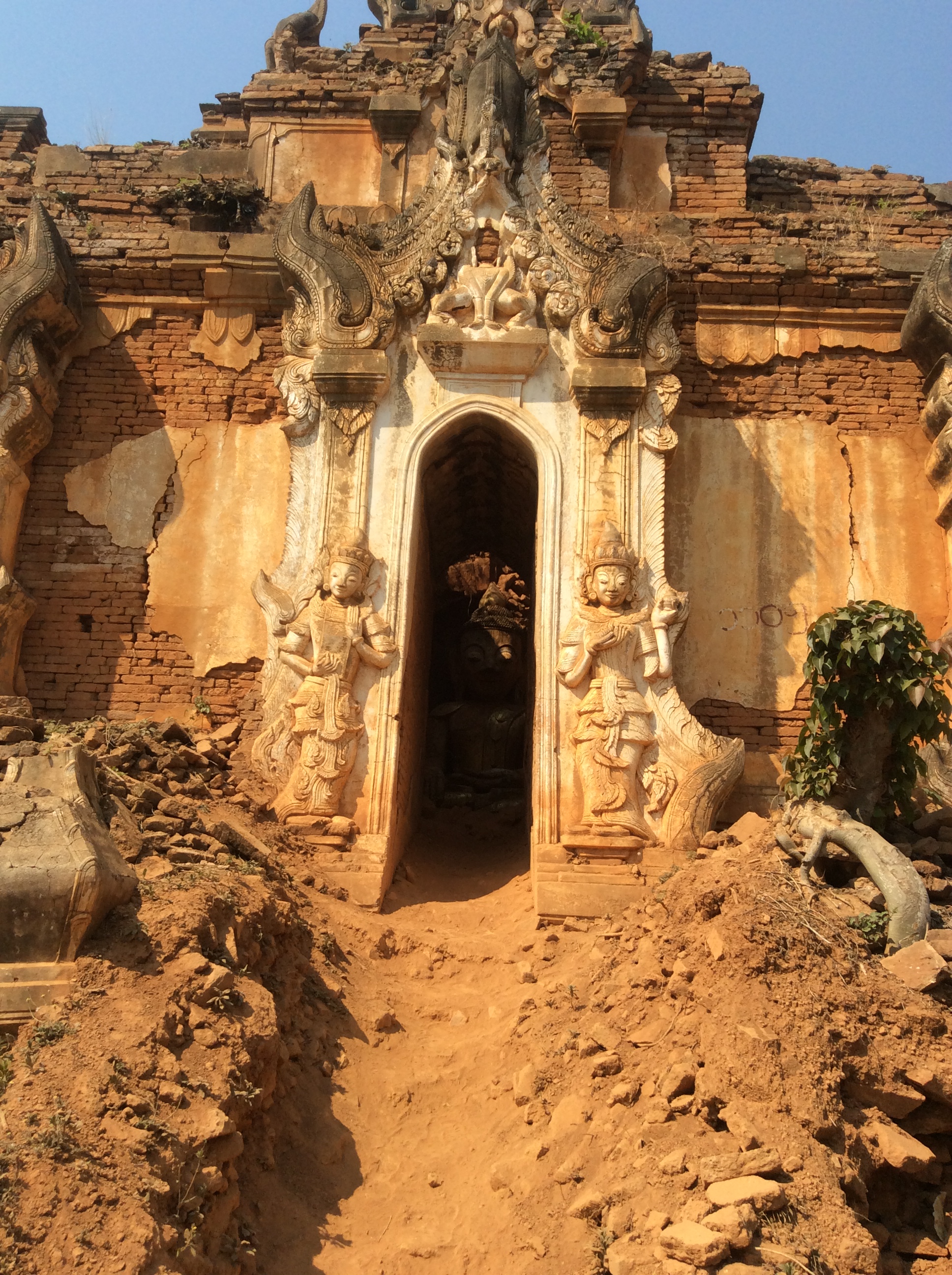
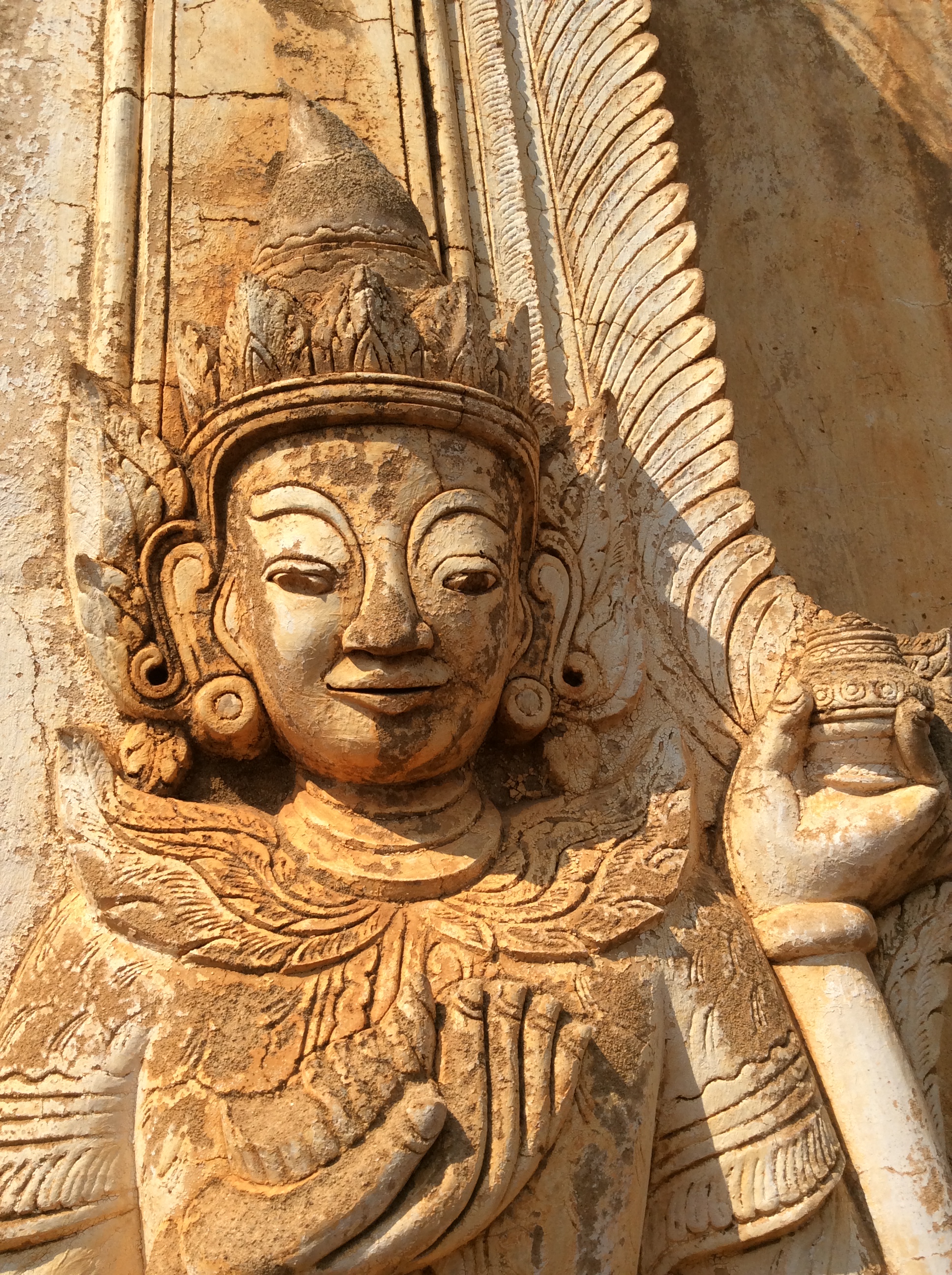
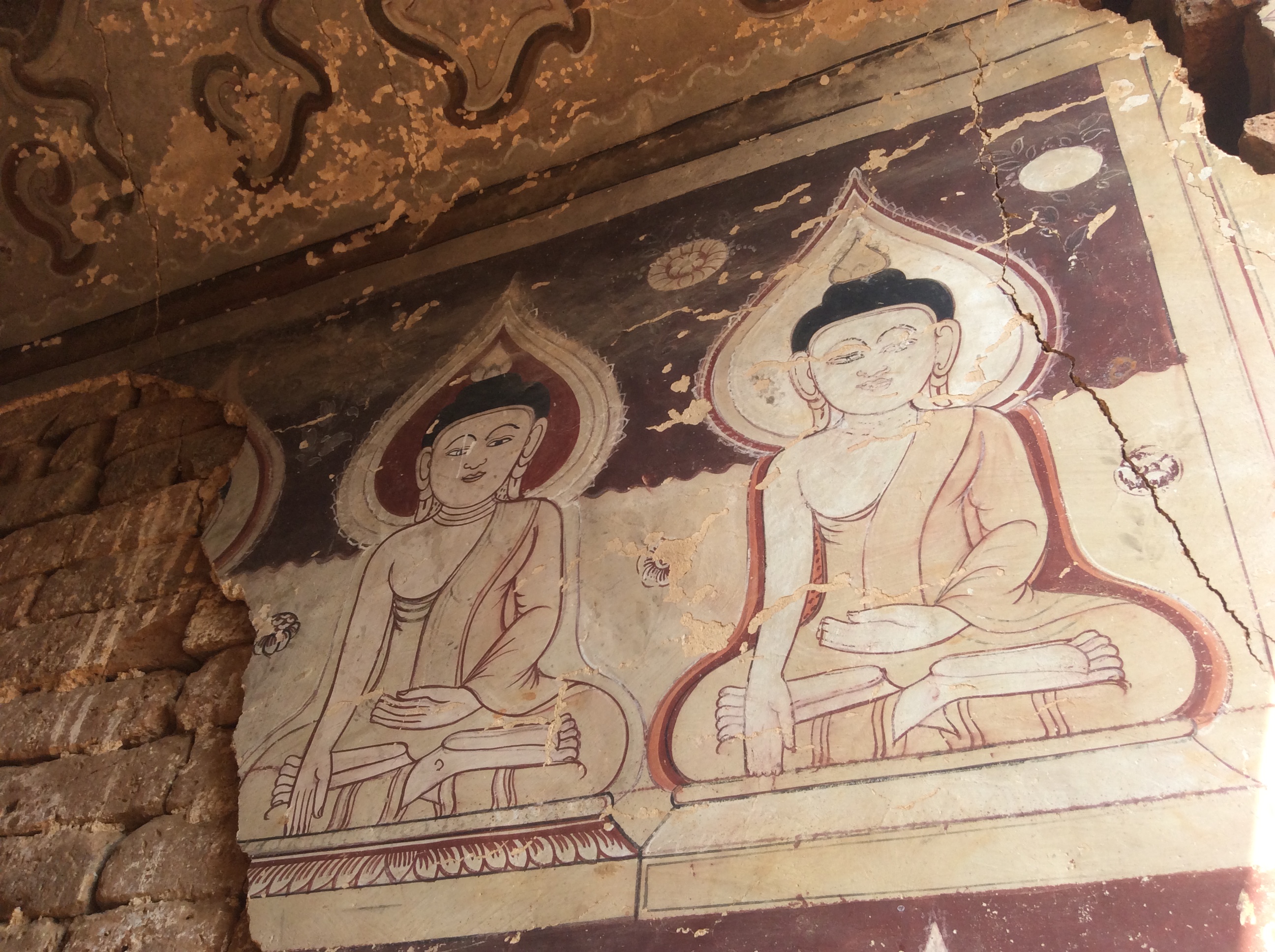
To some still clung fragments of their original ornamentation

06-inle lake-inn dein-flav 041

06-inle lake-inn dein 025

06-inle lake-inn dein-flav 043

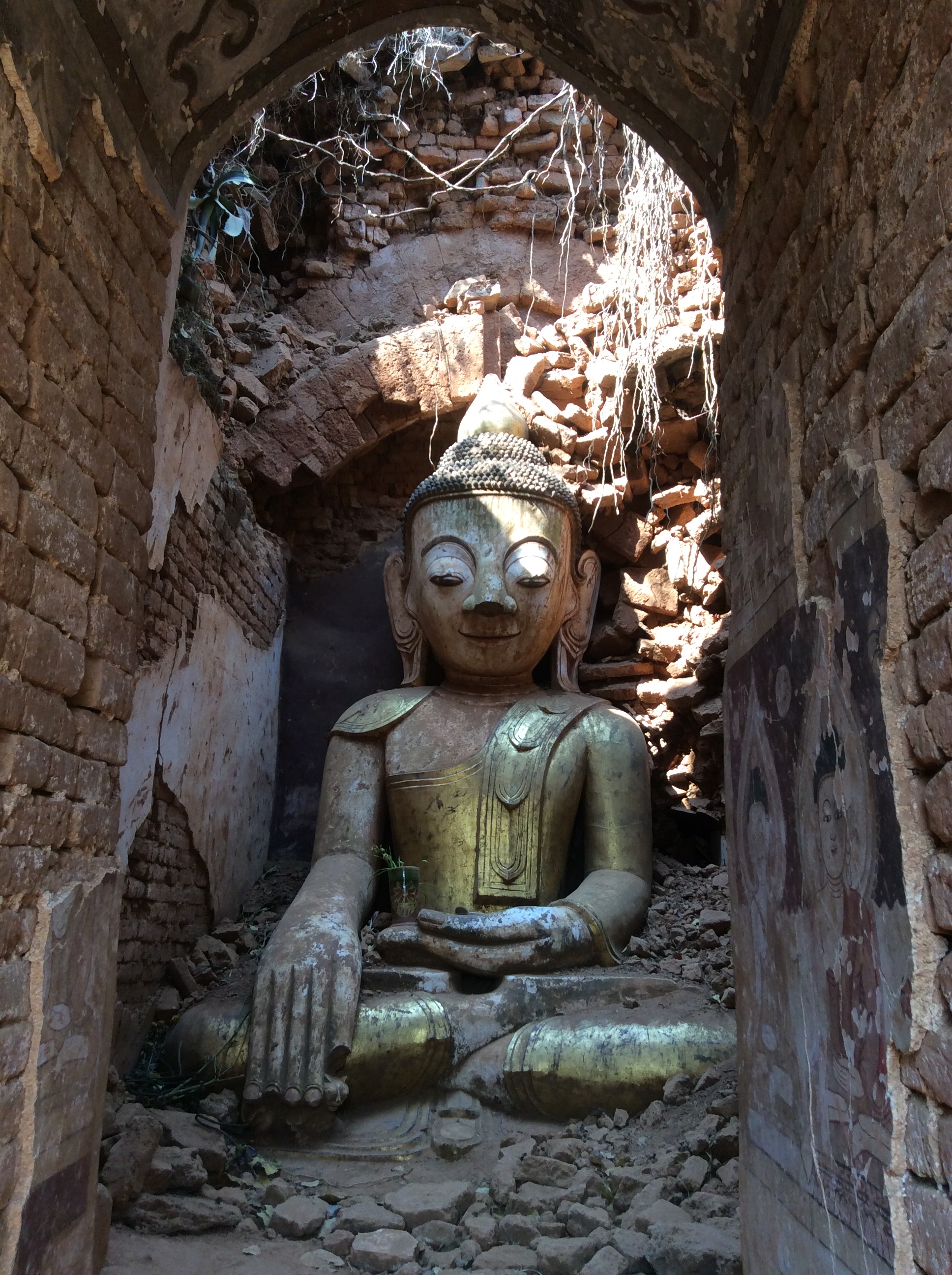
while others housed Buddhas in varying states of repair.

06-inle lake-inn dein-flav 042

06-inle lake-inn dein-flav 052

06-inle lake-inn dein 008

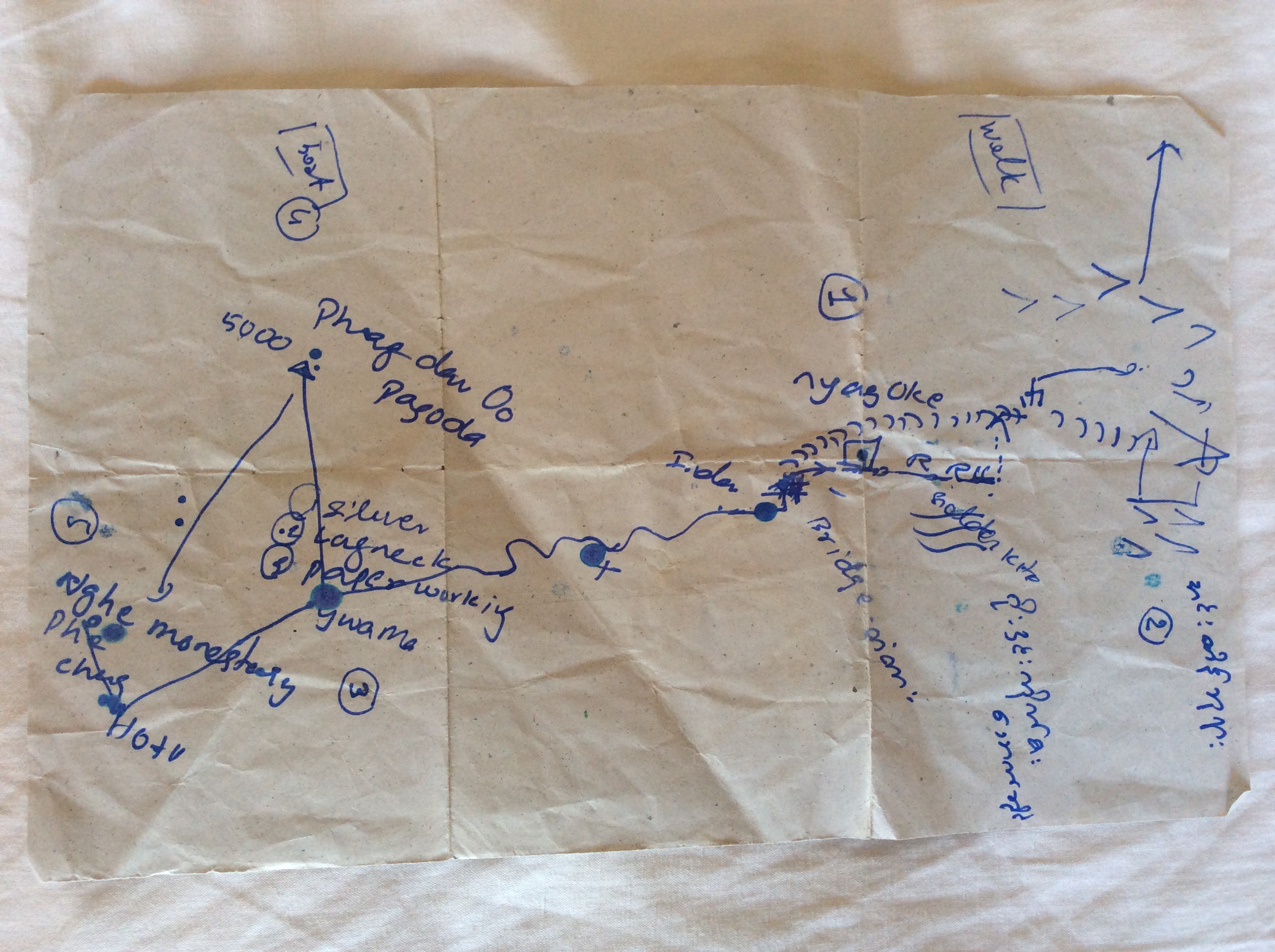
Though beautiful in their neglect, my wife and I agreed that this was not where the photo which had brought us here was taken. So we started walking up the hill behind the village, following the hand-drawn map we had been given at the hotel.
hand drawn map
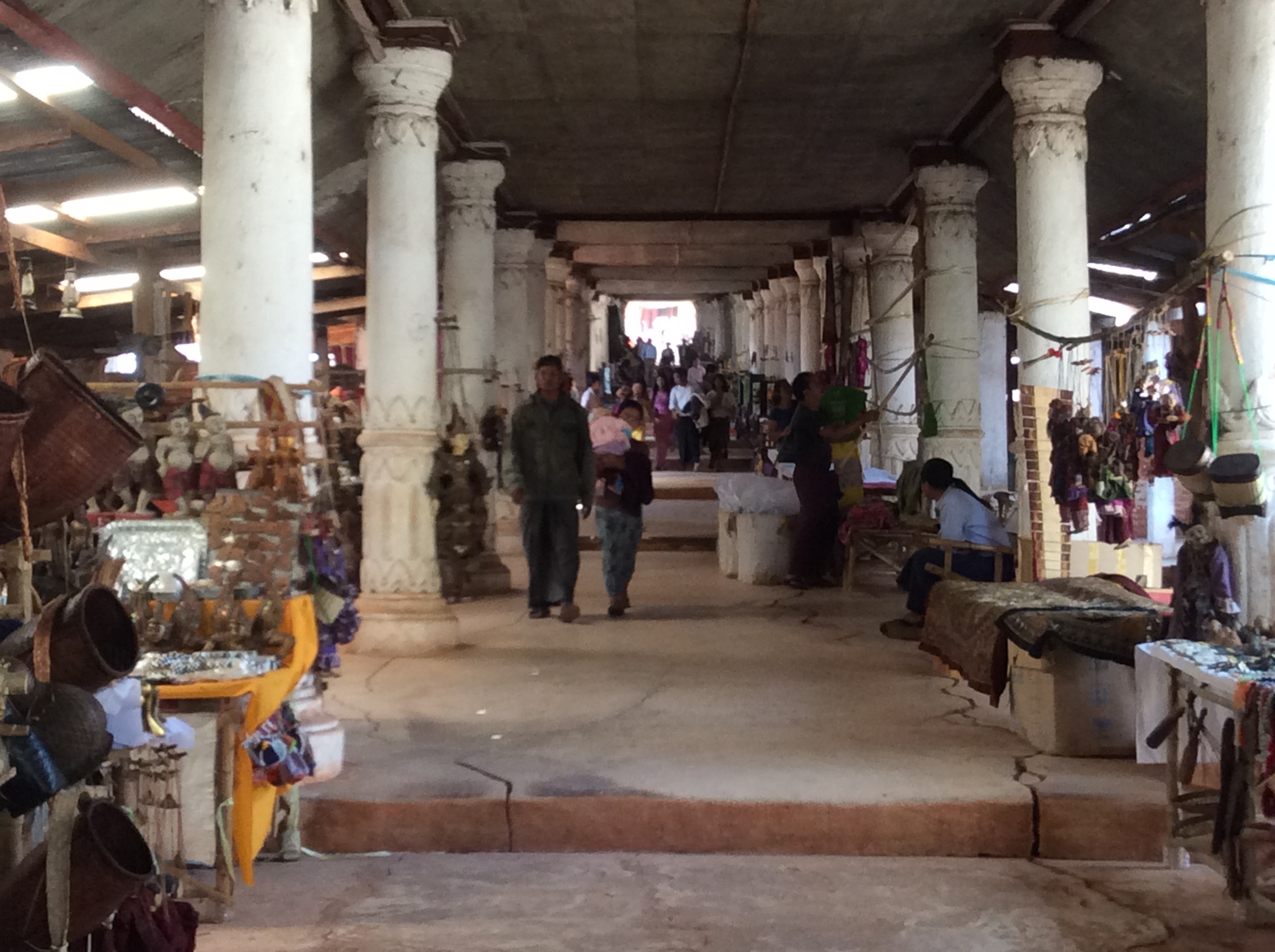
To get out of the sun’s glare, we ducked into a covered walkway that leads up the hill. It was cooler but it exposed us to stall after stall of hideous tourist tat.
06-inle lake-inn dein-flav 058
To console ourselves, I reminded my wife of a similar covered walkway which we had seen in Bologna in Italy, which leads up to the Sanctuary of Saint Luke on a nearby hill.
bologna santuario di S.Luca
No doubt, I told her, when in the old days pilgrims wended their way up the walkway to the Sanctuary (nowadays only tourists do so), there were similar stalls along the side selling hideous religious tat.

When we reached the top, we were greeted by a veritable forest of stupas.
06-inle lake-inn dein 040
The first were mouldering away as romantically as the ones down the hill
06-inle lake-inn dein-flav 071

06-inle lake-inn dein-flav 069

with some of the decoration clinging on

06-inle lake-inn dein-flav 070
Very beautiful, but not, we agreed once more, the place where the original photo which brought us here had been taken.

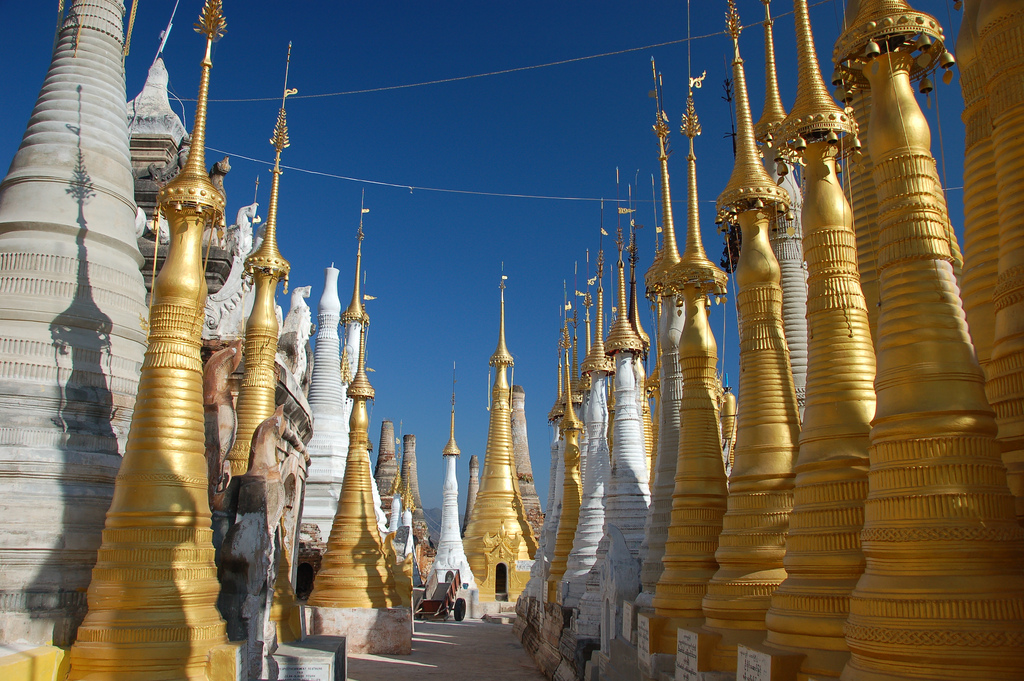
We began to walk up the hill, and soon found ourselves only among renovated stupas. My wife and I had mixed feelings about this wave of renovation that had washed over the hill. The decaying stupas are impossibly romantic, but we can understand that to devout Buddhists it must be dismaying to see such neglect. I suppose the only criticism we have (but it is a large criticism) is that it would have been good to renovate the stupas to their original form, something which quite obviously is not the case. We were so unenthusiastic about these renovated stupas that neither of us took a single photo of them, so what follows comes care of the internet.
Shwe Inn Thein stupas at Indein, Inle Lake
After threading our way, disconsolate, through the packed crowd of renovated stupas, we climbed a nearby hill to get an overview of the stupa forest.
06-inle lake-inn dein 070
Even from here we could not really understand from where the fateful photo had been taken. So we went back down, walked through the temple at the centre of the forest, and visited the stupas on the other side. These were once again pleasingly decrepit, so we pleasurably ambled our way down the hill through them, picking our way over broken brick and stucco and around bushes and weeds which had taken root in the brick dust.
06-inle lake-inn dein 075
When we broke out of the forest and turned around, there at last we saw the view which had brought us here. Finally …

06-inle lake-inn dein-flav 086a

_____________________

Bologna Santuario san Luca: http://www.laltraitaliatour.it/main2/images/stories/foto_viaggi/centro/tour_cuore_italia/bologna%20santuario%20di%20S.Luca%20panorama%20%28Small%29.jpg (in http://www.laltraitaliatour.it/main2/index.php?option=com_content&view=article&id=100%3Agran-tour-nel-cuore-dellitalia&catid=53%3Aviaggi-centro-italia&lang=en)
Renovated stupas: http://kiplingandclark.com/wp-content/uploads/2014/03/4013943890_7ab483e2b5_b.jpg (in http://kiplingandclark.com/itineraries/myanmar-laos-cambodia-private-tour/)
All other photos: ours

MYANMAR: MRAUK U

Yangon, 7 March 2015

In 1430, King Saw Mon founded a new capital at Mrauk U, in what is now the State of Rakhine, for a Kingdom of Arrakan of which he was the first ruler. Mrauk U lay at the head of several navigable tributaries of the Kaladan River, and so could command the trade routes in the Bay of Bengal, on which the kingdom’s wealth was founded. It became a transit point for goods such as rice, ivory, elephants, tree sap and deer hide from Burma, and of cotton, slaves, horses, cowrie, spices and textiles from Bengal, India, Persia and Arabia. It also lay at the edges of a broad plain, where abundant rice could be grown to feed the city’s population. The area was dotted throughout with hillocks, ideal for capping with splendid pagodas which earned their founders much merit, but also for acting as watchtowers in strong defensive walls which linked hillocks together and could keep the kingdom’s jealous or rapacious neighbours at bay. It was, in all senses, a happy choice for the new kingdom’s capital.

Exactly two hundred years after the city’s founding, a Portuguese monk, Fray Sebastian Manrique, who was to live in India for forty years, visited Mrauk U, as part of an official mission. In a book he wrote about his time in Asia, “Itinerario de las missiones del India Oriental”, he dedicated several chapters to his visit to Mrauk U. “This great city”, he starts, “stands in a lovely valley, some fifteen leagues wide, wholly enclosed by high rocky mountains, which serve as natural fortifications”. The city was bisected by a network of waterways linked to the nearby river, which were “the principal means of traffic, both public and private”. Most of the houses were thatched bamboo and wood structures, held together by “Bengal cane, as we call it in Portugal”. Even the palaces “are made of these reedy materials”. The size and ornamentation of the houses, and not their materials of construction, were what proclaimed the station and wealth of their owners. Inside, wall mats were hung “of the finest texture and of many colours”. No doubt, the richer and more important the owner, the finer and more elaborate the wall mats. The better houses and the palaces also had rooms of wood “ornamented with carving, gilt mouldings, and enamel work in various tints”. Some of the palaces went one further, having rooms of sandalwood and other aromatic woods. One of the richer palaces included a “House of Gold”, a pavilion decorated from floor to ceiling with gold, which housed golden statues, dishes and other vessels. The royal palace boasted a ceremonial hall, with a golden roof “ornamented with flowers of different colours”, supported by thirty gilded wooden pillars. The monks didn’t do too badly for themselves either. A number of the temples and monasteries in which they lived were as sumptuous as the palaces, richly endowed as they were by their wealthy and important founders, who were seeking thereby to gain merit. Most of the temples were “pyramidal in shape”, with a spire that ended in a gilt metal globe on which small bells hung that tinkled in the wind (I presume the good Friar was referring to the stupas, which sit at the centre of temple complexes). The temples’ interiors were decorated with “frescoes done in gold and colours”. Several years later, he again visited Mrauk U on an official mission, and this time he was lucky to be there when the king was crowned. He described in breathless detail all the pomp and ceremony which accompanied the crowning. This print, by the Dutchman Wouter Schouten, gives an idea of what Mrauk U looked like at this time.

mrauk u old print

The happy times did not last. Warfare between the local kingdoms was endemic, as each king tried to grow at the expense of his neighbours. In one of these local wars, King Bodawpaya of the neighbouring kingdom of Burma got the upper hand, helped along, it must be said, by vicious internecine struggles, all worthy of a Shakespearean history play, that were being played out between Arrakanese kings and their impatient heir-apparents, and between them and various usurpers. In 1784, the Burmese army attacked

war elephants

and eventually took the city, razing it to the ground. They took care, though, not to destroy the stupas and associated temples; the soldiers did not want to lose merit. But they stripped them and the rest of the city of all the movable loot they could lay their hands on. What part of the population they did not kill, they enslaved. And so, laden with vast quantities of booty and 20,000 slaves, King Bodawpaya and his army returned home to celebrate, leaving death and desolation behind them. The kingdom of Arrakan and its capital city were no more.

The site was too good to abandon completely. Gradually, people moved back into the city and partially repopulated it. But now it was just a small market town, with the modest lives and modest dreams and modest destiny of such towns. Its citizens lived out their lives in the shadow of monuments from Mrauk U’s royal past, which slowly crumbled away and were overgrown by vegetation.

But Mrauk U’s glorious past was not completely forgotten. Echoes of its history were passed down. Now that Myanmar has come out of its self-imposed isolation from the outside world, and the world has accepted the country back into the community of nations, Mrauk U has become a tourist destination. Not like Bagan, which hosts the ruins of another vanished kingdom, nor like Inle Lake, another popular tourist destination, nor even like the capital Yangon. A much more modest destination, because it has little tourist infrastructure and is hard to get to: seven hours by private boat from Sittwe, several more by the public boat; six hours by car on a spine-crushing road, several more by public bus. But a trickle of tourists do make it through.

We have just been part of that trickle. We hired bicycles, a wonderful way to move around this town whose dimensions are small and whose traffic is contained, and we slowly criss-crossed it, riding down potholed roads, side streets of beaten earth

02-mrauk u-flav 016

half-finished roads on which toiled labour gangs of women

02-mrauk u-flav 059

even across desiccated paddy fields when the half-finished roads were impassible

03-chin villages-flav 001

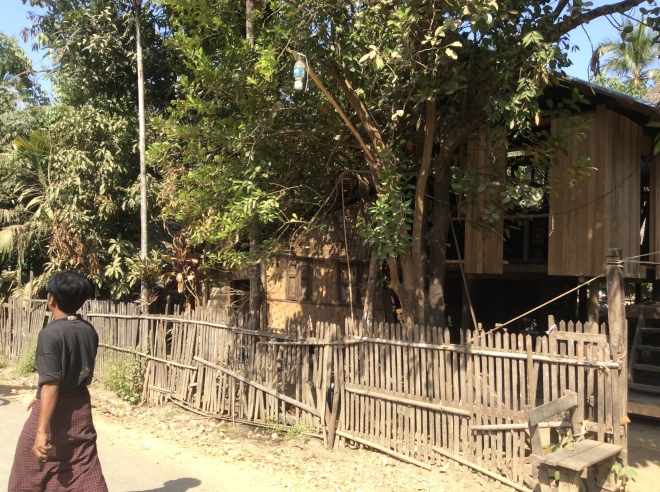
observing all the very rural life that passed us by. Most of the houses are still made of wood and “reedy materials”
02-mrauk u-flav 050

but from the few modern houses we saw brick and concrete are clearly now the building materials of choice for the wealthy. The network of waterways are still being used, although now sadly choked with plastic and other debris of modern life.

02-mrauk u-flav 052

Bicycles and motor bikes are the mode of transport of choice

02-mrauk u-flav 078

with two-seater bicycle rickshaws playing the role of local taxi

02-mrauk u-flav 067

and ten-seater tuk-tuks playing that of local buses (ten seats is a nominal number; the drivers seemed to be able to squeeze twice that number into them).

03-chin villages-flav 003

As in all ages and in all places, the wealthier disdain these proletarian forms of transport, although they now favour four-wheel drive cars with tinted windows rather than the palanquins and elephants of old. On the edges of town (which were reached after no more than ten minutes by bike from the town centre – and we rode slowly), chickens, pigs, and the odd cow join the human melée. And everywhere, young girls and women (never men and very rarely boys) are walking slowly to or from the wells and reservoirs which dot the town, ferrying the households’ water, no doubt as they had been doing nearly four hundred years ago when Friar Manrique criss-crossed the town – such a waste of women’s time! And the water they were collecting fitted no definition of “drinking water” that I know of.

02-mrauk u-flav 025

The town has schools, but all in a shocking state of decrepitude

02-mrauk u-flav 048

and in any case many children were put to work in various trades: child labour seems the norm here, not the exception. This country’s military dictators have much, much to answer for.

And so it was that we rode and we observed, and we meditated on what we observed, until the next stupa, or temple, or ordination hall from Mrauk U’s past loomed out in front of us. We visited many during our two days, but I will mention only three. The first is Mro U-hnauk Phara
02-mrauk u-flav 037
because it was the first temple we visited, but also because we were intrigued by the very ornate edifice constructed out of galvanized corrugated iron sheets that preceded the ancient stupa.

02-mrauk u-flav 038

The materials of construction may be humble but the designs are really quite complex. We got used to seeing these structures in front of many of the stupas in town. Both my wife and I immediately remarked on how much these constructions reminded us of the stavkirke in Norway.
Borgund_stavkirke
The second site I will mention is Koe Thaung temple, which sits out in the middle of paddy fields a little way out of town.
koe thaung temple
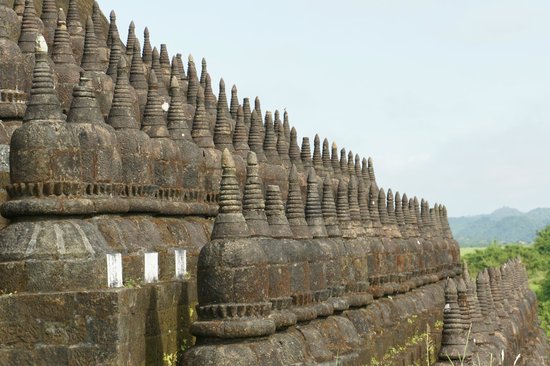
Its design is said to be based on Borobudur in Indonesia. We wouldn’t know, not having been able to visit Borobudur because of a volcanic eruption. But Koe Thaung certainly has charm, what with the serried ranks of stupas lining its terraces

koe-thaung-temple-stupas

and the hundreds of Buddhas, each with a different face, lining the galleries that encircle the edifice.

02-mrauk u-flav 107

When the rice paddies around the temple are planted and green, it must be very beautiful.

The third is actually a grouping of temples and stupas, all situated in a large open space. From the vantage point of the high terrace of one of these, I could see most of the group laid out before me.

02-mrauk u-flav 228

Immediately ahead is the Laymyekhna, with the four Buddhas in its internal gallery facing the four cardinal points, and its attendant Nyidaw Phara. Just behind it the Htukkanthein, a fortress-monastery.  At the base of the hill in the background, is the Shite-thaung temple, the most important religious edifice of the old city and known for its three encircling galleries with Buddhas and friezes.  This is where the coronation during Friar Manrique’s second visit took place. Over to the left is the Ratanabon Temple.

But what also struck me was the apparent indifference of the townsfolk to these venerable monuments. The open space was turned over to the growing of rice and vegetables. There was constant traffic along the roads and tracks which crossed the space as people went about their business. There were goats and cows cropping the grass around the edifices. And I was suddenly reminded of those paintings from the 17th and 18th Centuries, which were also recording the remains of a fallen city, ancient Rome in this case, mouldering slowly away as a new city lived its life around them
Roman forum Claude Lorrain
This particular painting, by Claude Lorrain, is a view of the Forum, with the arch of Septimus Severus in the left foreground, the three remaining columns of the Temple of Castor and Pollux in the middle ground, the arch of Titus in the background, and at the very back the Colosseum. And all around these ruins, the Romans are leading their lives.

Now I don’t want to make too much of a parallel between Rome and Mrauk U. Rome had been a huge city, many times bigger than Mrauk U had ever been. It had also held sway over a much larger territory than Mrauk U had ever done. On the other hand, the collapse of Rome, although over a longer period, was probably as total as Mrauk U’s. Medieval Rome, and perhaps even Baroque Rome, was probably no bigger than Mrauk U is today and just as backward. If it hadn’t been for the Pope, there are good chances that Rome would have disappeared. The Pope kept Europe’s attention on the town, while the pilgrims were a handy source of income, along, later, with the sons of Europe’s aristocracy. They flocked to Rome in the 18th and 19th Centuries because it was the thing for an educated young man to do, and paintings like the one above were produced for them by the hundreds.  Rome was also lucky to have become the capital of the newly unified Italy, which brought it the power (and wealth) of national government. In contrast, Mrauk U seems to have been forgotten by all once its last king fell. If the new government of Myanmar can ensure that Mrauk U shares in the country’s upcoming economic development, then it has the chance to become a prosperous little town.

__________

Mrauk U old print: http://upload.wikimedia.org/wikipedia/commons/0/0c/Vista_de_Mrauk-U,_ou_Arrakan_%28cidade_de_Arrac%C3%A3o%29_no_primeiro_plano_o_bairro_portugu%C3%AAs.jpg (in http://commons.wikimedia.org/wiki/File:Vista_de_Mrauk-U,_ou_Arrakan_%28cidade_de_Arrac%C3%A3o%29_no_primeiro_plano_o_bairro_portugu%C3%AAs.jpg)
War elephants fighting: http://ic2.pbase.com/o6/93/329493/1/131322898.yAQdtZvd.BKKAug10128.jpg (in http://www.alternatehistory.com/discussion/showthread.php?t=240558)
Stavkirke: http://upload.wikimedia.org/wikipedia/commons/b/bb/Borgund_stavkirke.JPG (in http://no.wikipedia.org/wiki/Borgund_stavkirke)
Koe Thaung Temple: http://www.vietnamjettravel.com/images/products/20147141754135.jpg (in http://www.vietnamjettravel.com/voyage-birmanie/a-travers-la-birmanie-de-yangon-a-mrauk-u.79.html)
Koe Thaung temple stupas: http://media-cdn.tripadvisor.com/media/photo-s/04/ab/0c/d1/koe-thaung-temple.jpg (in http://www.tripadvisor.com/LocationPhotoDirectLink-g1390118-d2557685-i78318801-Koe_Thaung_Temple-Mrauk_U_Rakhine_State.html)
Claude Lorrain view of the Roman Forum: http://upload.wikimedia.org/wikipedia/commons/b/ba/Claude_-_The_Campo_Vaccino,_Rome_-_Google_Art_Project.jpg (in http://commons.wikimedia.org/wiki/File:Claude_-_The_Campo_Vaccino,_Rome_-_Google_Art_Project.jpg)
All other photos by my wife
MYANMAR: A JOURNEY

Yangon, 7 March, 2015

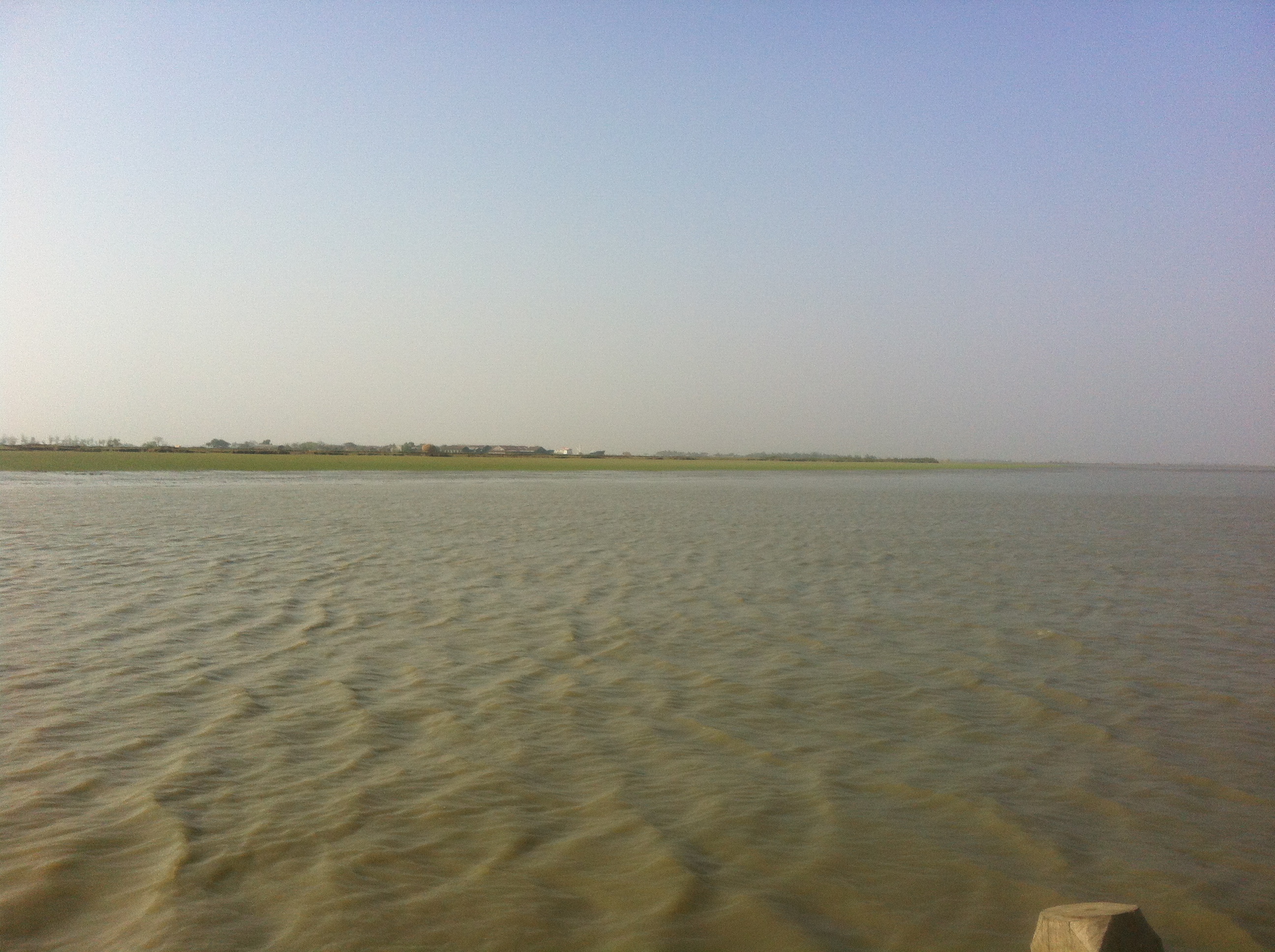
We slipped our moorings at half past three in the afternoon, two hours late – the flight from Yangon to Sittwe had left very late. As we drove from the airport to the jetty, our guide told us apologetically that the tide was running out now. This, coupled with the strong current down the Kaladan River, meant we were facing a seven-hour journey up to Mrauk U – if the boat’s engine didn’t break down on the way. Accepting the inevitable, we settled down on the boat’s small focsle, as far away as possible from the engine, which was knocking hard and strong, while the boat chugged its way down the busy creek. It was a beautiful afternoon, cloudless, slightly hazy, not too hot; it was going to be a good ride.

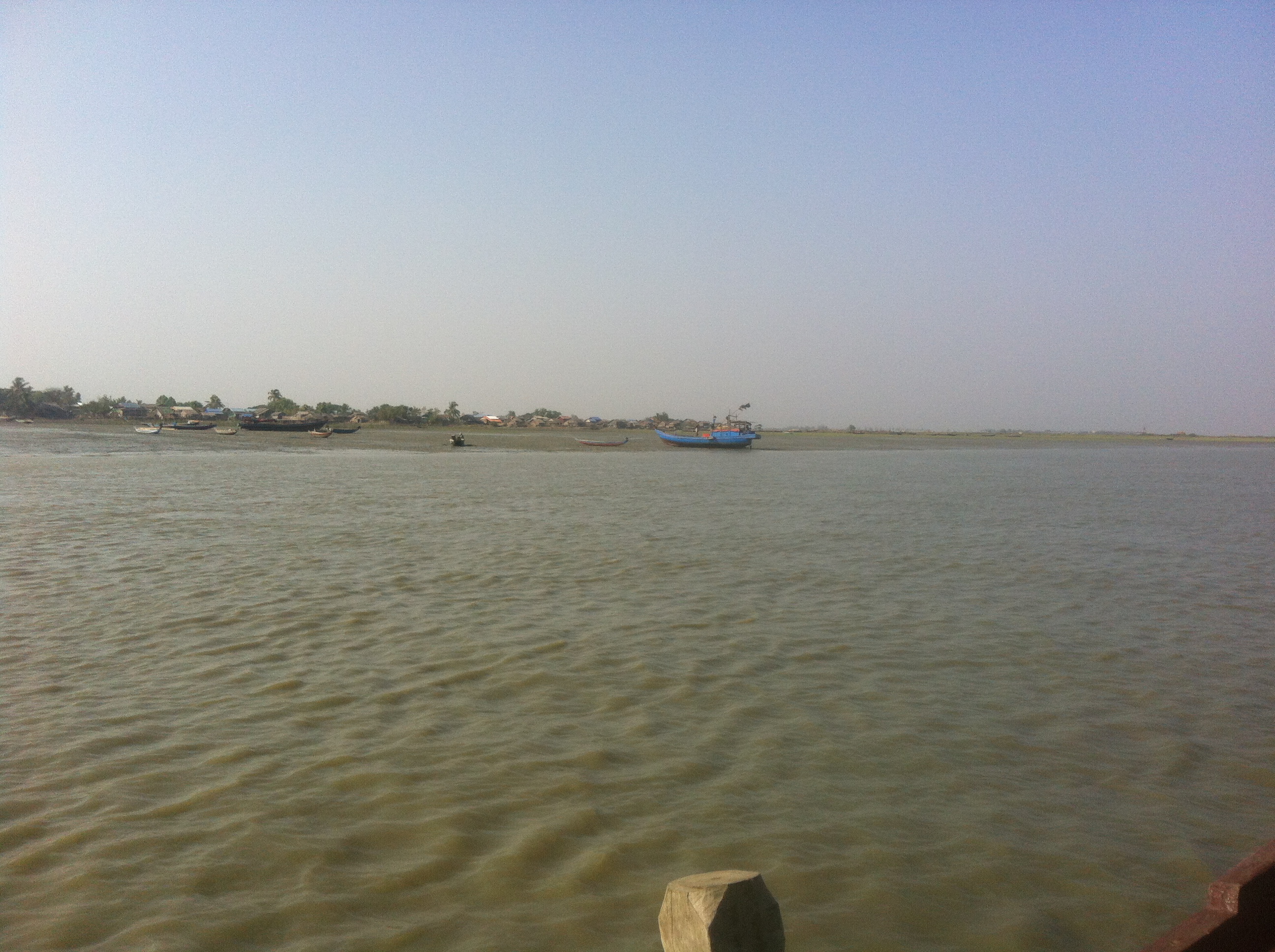
We exited the creek into the mouth of the river, so big that at first we thought we had entered the sea. Surprised, we looked around us as the boat turned northward and started following the shore closely, skirting small fishing boats and their nets. Out to sea, some islets, or maybe headlands, lay humped on the horizon, while to our left extended a grassy plain

01-sittwe-mrauk u 008

on which stood a few small lean-to’s for the fishermen and some fishing boats, sitting upright, waiting to be dragged down to the shore.

01-sittwe-mrauk u 003

We waited for something more riverlike to appear. And gradually, without us noticing it, a low bank crept up on our right, far away in the distance. And so we realized that we had finally entered the Kaladan River. But such a wide river! The far bank kept following us, but always at a respectful distance.

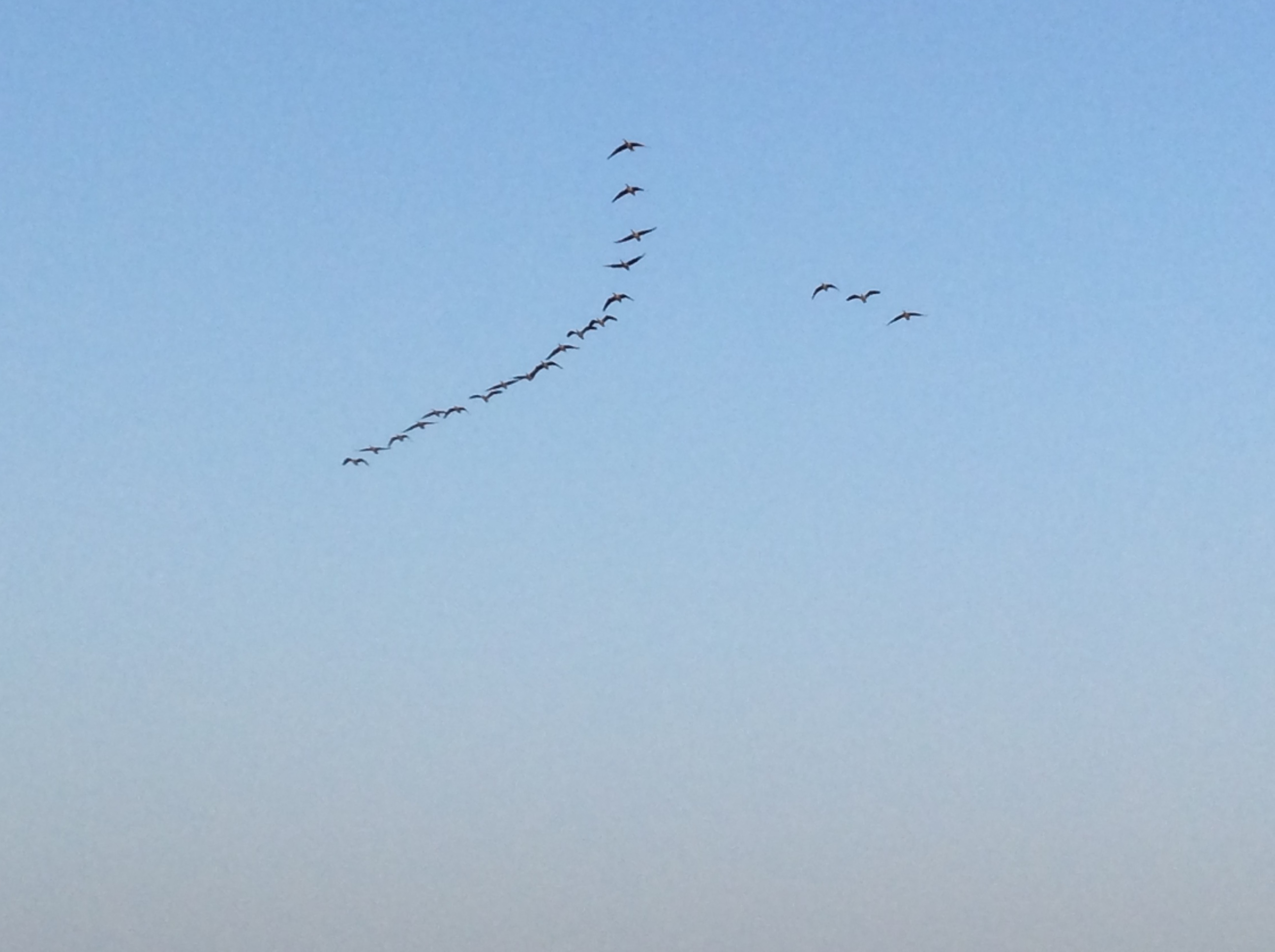
The boat continued crawling up the shore, no doubt to keep out of the strong currents. A flock of birds, sand martins perhaps, dived and swooped close to the water’s surface, flashing from brown to white and back to brown as they rolled and wheeled in tight formation, before settling on the mud of the river bank. Another flock of birds flapped quietly over us in formation, homing in on some faraway destination.

01-sittwe-mrauk u-flav 017

Now and then, a boat would pass us or we would pass one

01-sittwe-mrauk u-flav 020

otherwise we had the river in all its wideness to ourselves. The same flat deserted plain kept us company to our left, but by now the grass had narrowed to a strip of emerald green along the shoreline, backed by a vast expanse of dry paddy fields, dotted with rice-hay ricks.

04-mrauk u-sittwe 013

The flatness was broken now and again by a tall tree standing guard over the landscape.

01-sittwe-mrauk u 012

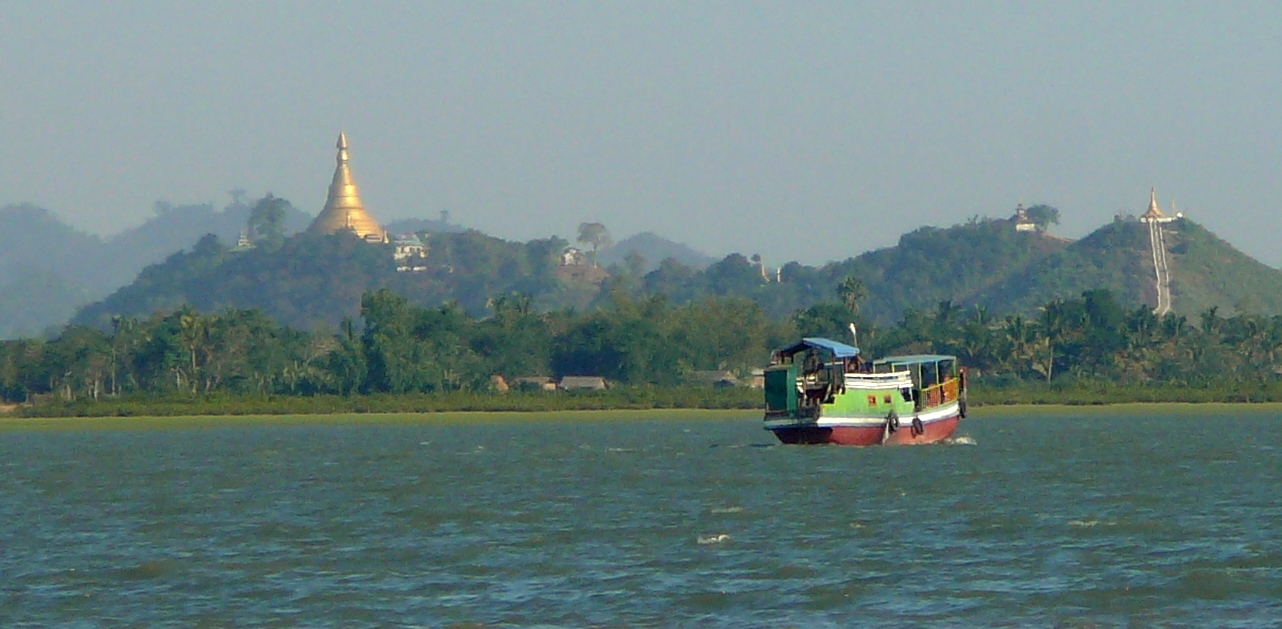
For a brief moment – but only a very brief moment – I imagined ourselves to be chugging along some river in the Netherlands, scanning the flat Dutch farmland. But then a range of small hills hove into sight, with two of them topped by gold-covered stupas and the image of Holland faded.

pagodas

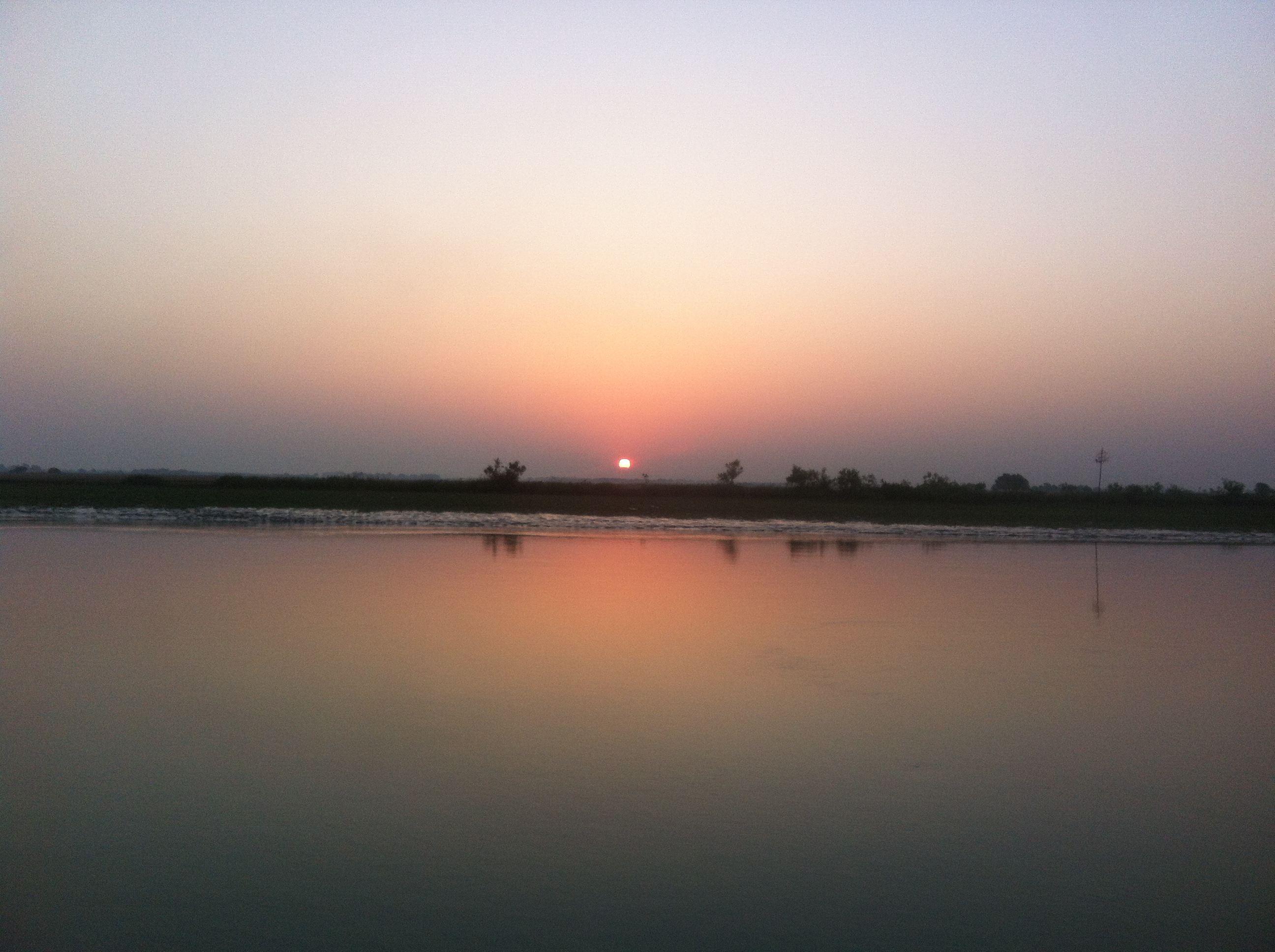
As we approached, the sun began to set, slowly at first and then ever quicker, reddening the stupas’ gold to copper.

04-mrauk u-sittwe 003

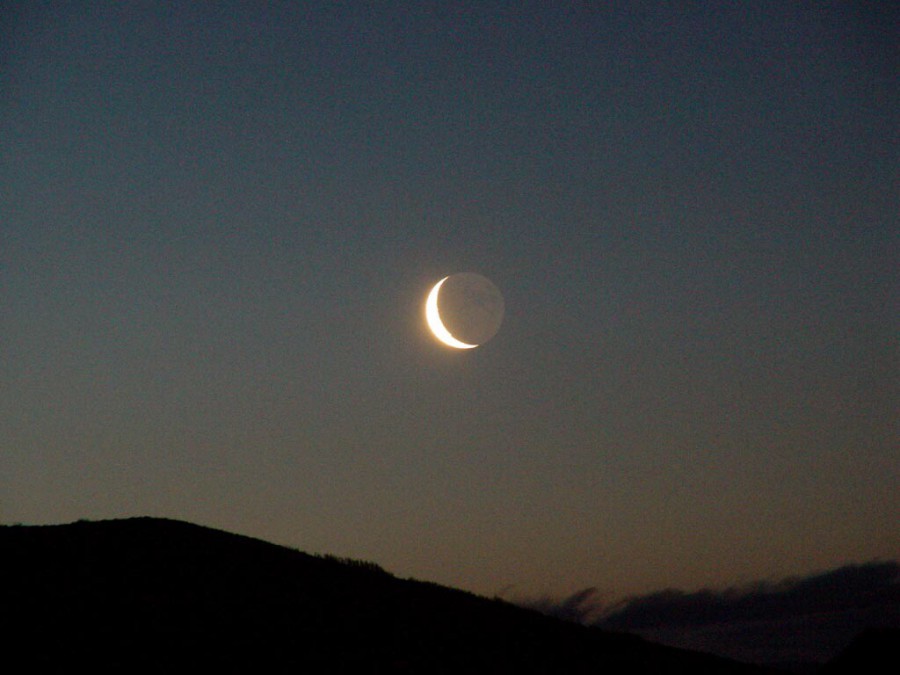
At last, the sun sank below the horizon, leaving us in the moon’s company. She had been waiting quietly for her moment. She was waxing crescent, having reached her dark point a week before. Although only a small sliver was shining down on us, we could make out the ghostly outline of the rest of her lying in that sliver, “the new moone wi’ the auld moone in her arme” as the Scottish ballad puts it.

image

We sat there, enjoying her company, but she was already a spent force when she became visible to us. She stayed with us for just an hour before she too sank below the horizon.

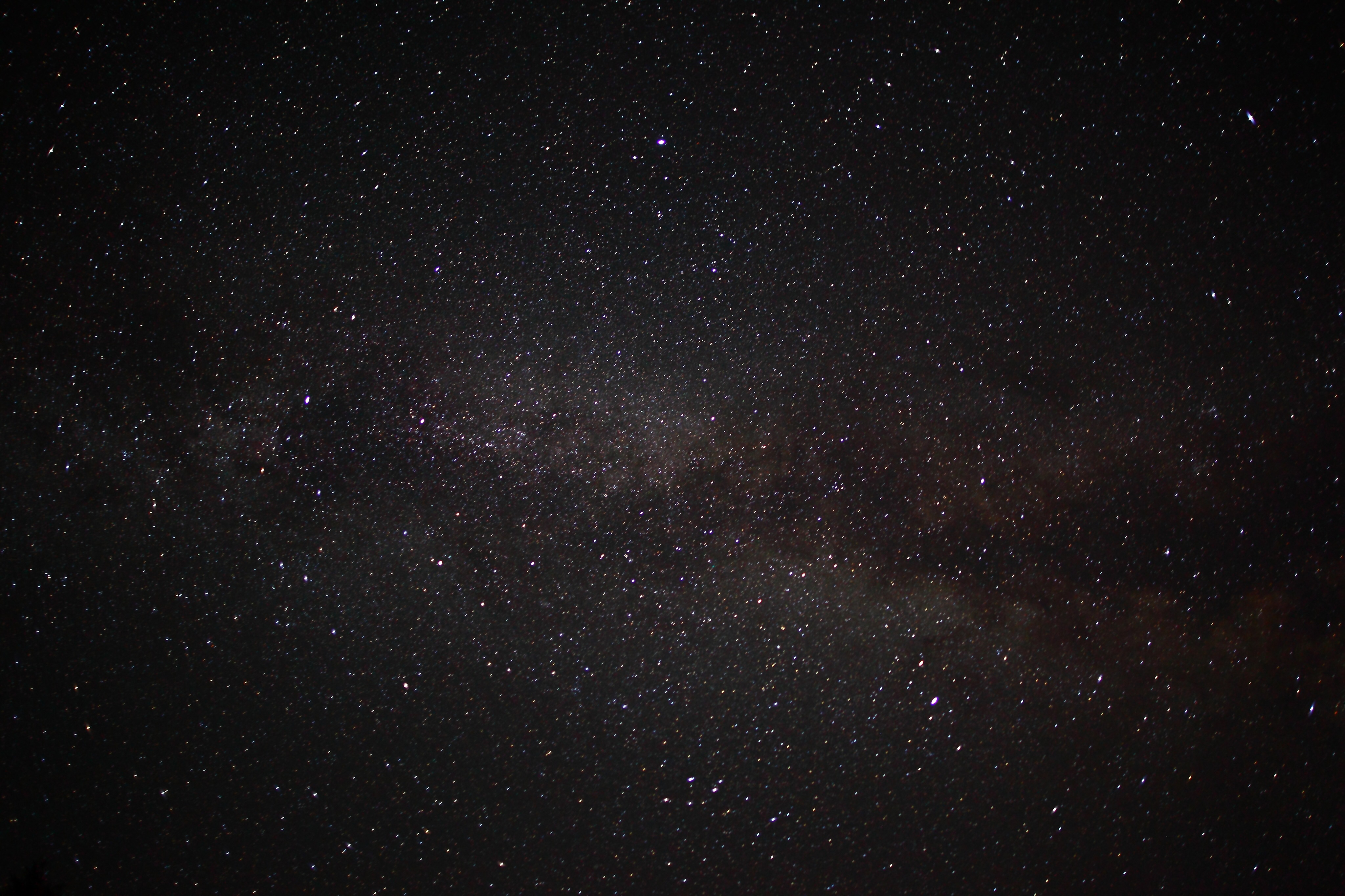
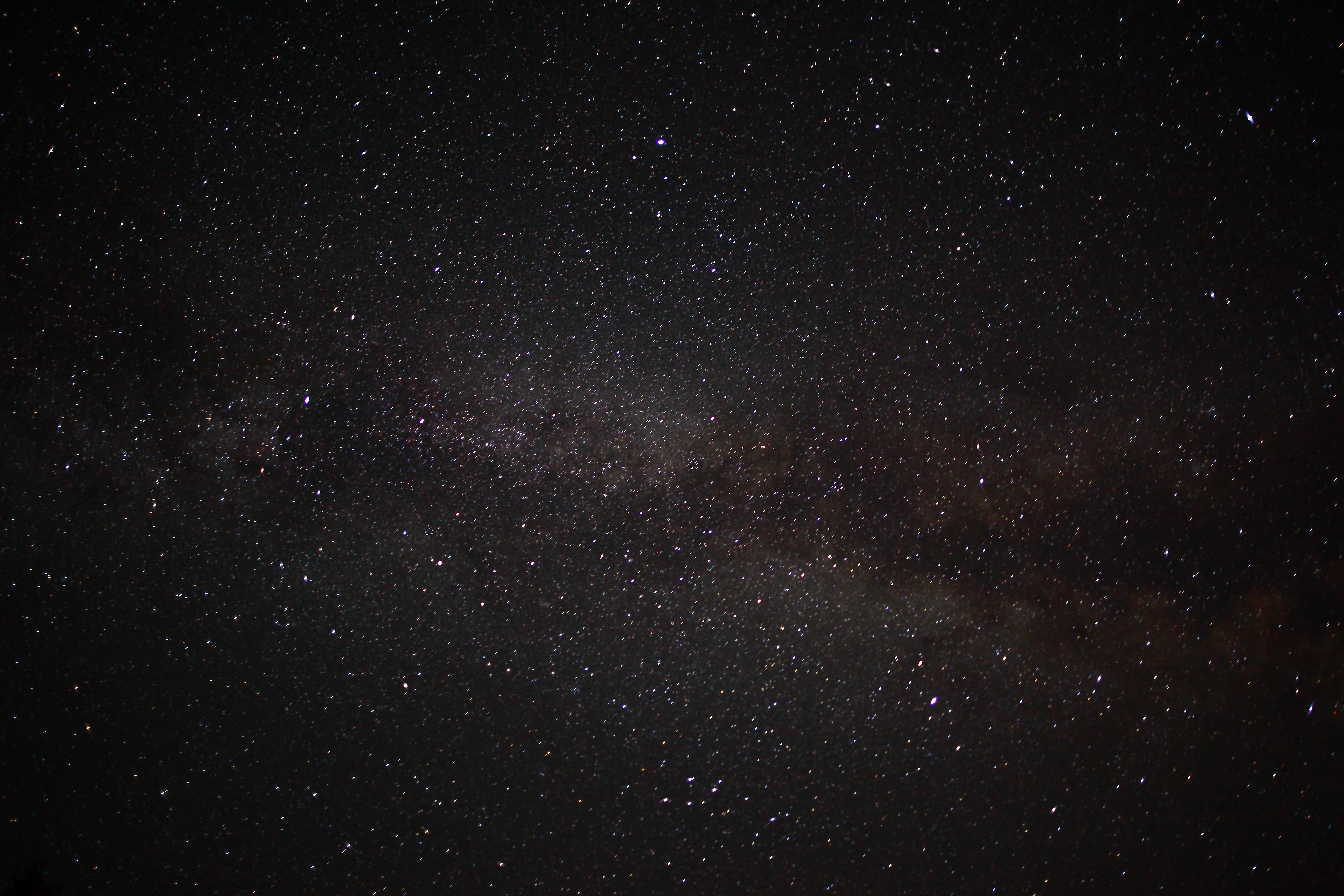
Venus, the star of the evening, had been keeping the moon company, along with some of the brighter stars, but now, with the extinction of the last bright light in the sky, the full panoply of stars was able to appear in all its glory. Such a spectacle! The sky’s dome was studded with stars, some bright, some dim, some big, some small, some quarters of the sky were dense with stars, others were pools of darkness. And arcing across the sky from end to end was the Milky Way

image

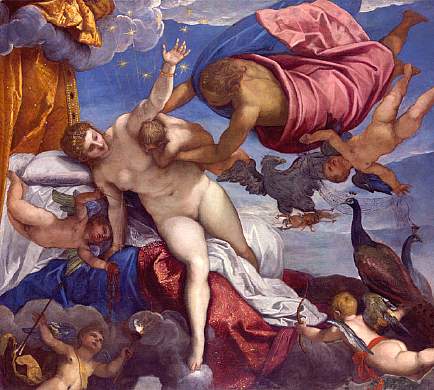
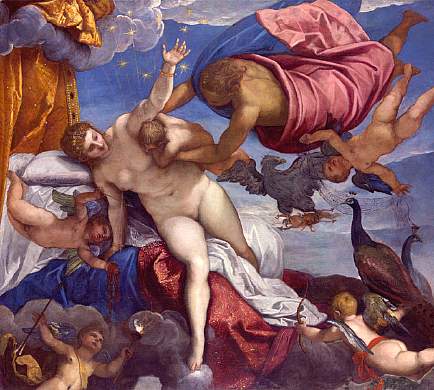
created by the drops of milk, so the Ancient Greeks averred, that sprayed from the breast of the Goddess Hera when she snatched it away from baby Hercules’s mouth, who was suckling her while she slept, put there surreptitiously by Zeus.

milky way tintoretto

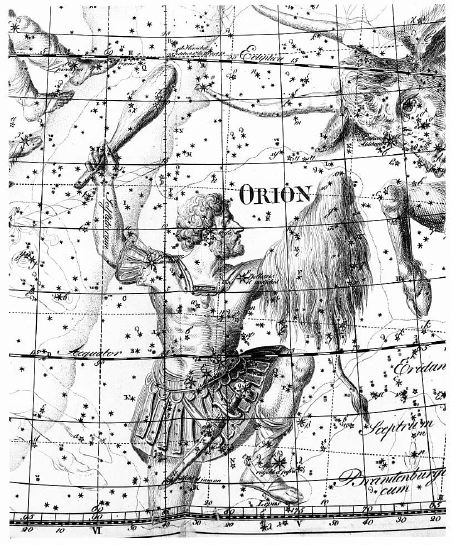
We sat entranced. How rarely we see the stars now! The strong lights of our modern life block out all but the brightest stars. Neither my wife nor I know our constellations at all well, but we could make out the three stars in Orion’s Belt

image

part of a much larger set of stars denoting Orion fighting the heavenly bull in the constellation Taurus

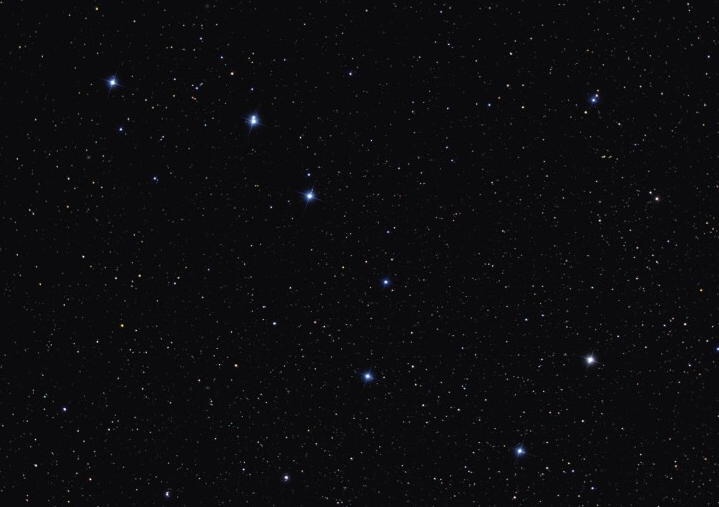
OrionLower on the horizon, we could make out the Great Plough, or Great Wagon (Carro Maggiore) to my Italian wife (and Big Dipper to my American friends).

image

As we pointed and guessed, the Milky Way wheeled this way and that above our heads: the boat was turning strongly now as the river began to meander.

As the river meandered, so did our talk. We talked about the Big Bang, which scientists say occurred some 14 billion years ago. They tell us a fascinating story about what happened afterwards. After a mere microsecond, the first protons and neutrons were being formed. A few minutes later, they began to coalesce into nuclei. Four hundred thousand years later, these combined with electrons to create the first hydrogen atoms. But it was only 150 million years later that the first stars began to form. And it was only 10 billion years later that the process of life creation began on this Earth, eventually leading to my wife and I sitting on the focsle of this boat, gazing at these stars. Scientists tell us that these stars are still rushing away from each other as the Universe continues to expand. What will happen next? Will we see the Big Crunch, where the Universe’s expansion will finally come juddering to a halt and then everything will hurtle back together again? It seems not; current observations suggest that the Universe’s expansion will continue or even accelerate. So will we see the Big Rip, where the Universe expands faster and faster, finally ripping galaxies, stars, and even atoms apart? Or will we see the Big Freeze, where expansion continues more moderately but existing stars burn out, no new ones are created, and the Universe goes dark and very cold? Or something else?

Nearer at home, we talked of our star, the sun. Scientists have a story for its future too. Over the next five billion years or so, they tell us, after it has burned all its hydrogen, our sun will grow into a Red Giant, making the Earth so hot in the process as to become uninhabitable. Then it will suffer a helium flash and collapse inward on itself. After it has stabilized, it will start to consume its helium for several billion years more before starting to expand again. But this time, the expansion will be unstable. At some point, it will shed its outer envelope as a planetary nebula while the core will collapse brutally to become a White Dwarf. It will survive as a White Dwarf for several trillion years before becoming a Black Dwarf. And so, sitting on that little focsle, with our backs against the cabin wall and our eyes on the sky, we followed in the footsteps of our distant ancestors, who for hundreds of thousands of years had gazed up at the stars and weaved beautiful stories to explain them.

Back on Earth, at river level, all was now inky black. No light shone from the shore. From time to time, we would see blinking red lights from fishing boats working the night shift. Once, a strong torch sprang to life ahead of us sweeping the waters, and suddenly a sea-going fishing boat loomed out of the darkness beside us. I dozed on and off, while my wife kept a look-out on the focsle, staring at the stars. At last, a faint glare of light ahead signaled Mrauk U. The wide, wide river had narrowed to a creek, trees were reaching out to us from either bank. The captain throttled the motor and the boat nosed into the jetty, where we could make out the car waiting to take us to our hotel.

_____________

Pagodas: https://www.flickr.com/photos/40867816@N07/4454825335 (in http://flickrhivemind.net/Tags/rakhiang/Interesting)
Old moon in new moon’s arms: http://www.lunarland.com/images/Earthshine.jpg (in http://www.lunarland.com/earthshine-and-the-moon)
http://upload.wikimedia.org/wikipedia/commons/5/51/Night-sky-milky-way-galaxy-astrophotography_-_West_Virginia_-_ForestWander.jpg (in http://feedback.arma3.com/view.php?id=12717)
Tintoretto’s Milky Way: http://www.ianridpath.com/startales/image/milkyway.JPG (in http://www.ianridpath.com/startales/milkyway.htm)
Orion: http://www.scienceinthebible.net/KNOWLEDGE_BIBLE/bigdipper_december.jpg (in http://www.scienceinthebible.net/KNOWLEDGE_BIBLE/NoteChildren2B.htm)
Mythical Orion: http://www.ianridpath.com/startales/image/Orion2.jpg (in http://www.ianridpath.com/startales/orion.htm)
all other photos: ours

MEXICO: PAINTED SIGNS

Bangkok, 13 January 2015

It was at Tlaxcala that I began to notice it.

We’d taken a bus from Mexico City to visit this small town, since it was described as a nice example of colonial Mexican architecture and town planning. It certainly was pleasant enough, as were Chiapas de Corzo and San Cristóbal de las Casas, two other colonial-era towns which we visited later. The latter two have been declared “pueblos magicos”, magic towns, a slogan dreamed up by the Mexican tourism authorities (clever branding, although I do feel duty-bound to whisper that the pueblos in Tuscany, for instance, or any number of pueblos which my wife and I have visited in Spain, are more magico than Tlaxcala and the two official pueblos magicos that we visited).

In any event, my point in mentioning the visit to Tlaxcala is another. What I began to notice as we walked around the town was the lack of modern signage on the shops. To understand what I mean, let me insert here a picture of the shopping street in Vienna, the Graben, where we often went for a stroll and coffee when we lived there.
image
Notice the abundant use of neon shop signs, tacked onto the shop fronts. For better or for worse (and in my opinion for worse; it drives me crazy in this age of climate change to see all those illuminated shop signs blazing out into the night), this is now the accepted and expected type of design for shop signs.

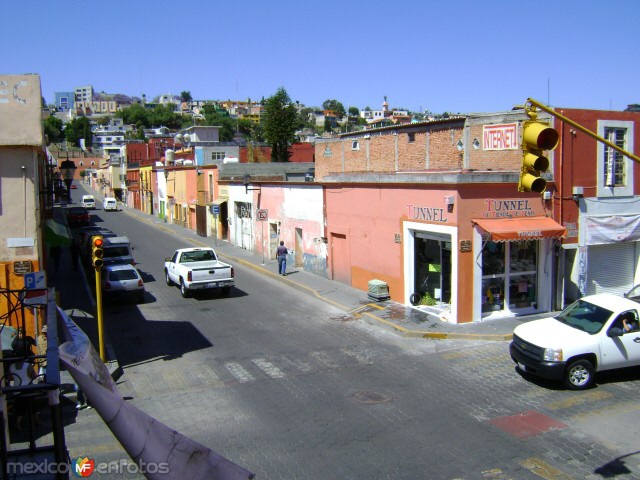
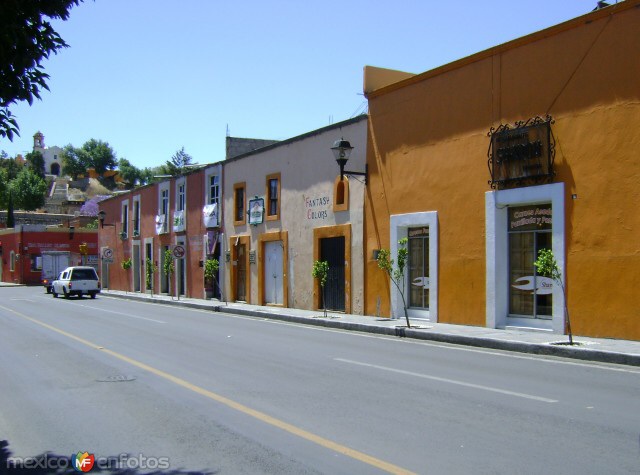
So it was with great interest that I saw in Tlaxcala that shop signs tended to be of the old-fashioned type, painted by hand
image
image
Alerted to this phenomenon, I made sure to get some close-ups of such signs in San Cristóbal
image
image

I began to notice that advertisements were often painted too. The following style of painted advertisement was definitely my favorite, with this particular example coming from San Lorenzo Zinacantán.
image
These types of advertisements, to be found on otherwise bare walls, seem always to be announcing some upcoming event. Notice the large, rounded, friendly, inviting font, but placed at a slight angle denoting future excitement, and with a very pleasing colour scheme which starts with a dark colour and shades off into a lighter one. I throw in here some other signs of this genre that I spotted from buses or trains flashing by.
image
image

It would seem that the honorable profession of sign painter is alive and well in Mexico! (this reminds me of a wonderful novel from India, another country with a great sign painting tradition, “The Painter of Signs”, by R.K. Narayan; great novelist, by the way, I highly recommend him to my readers).

Of course, painting on walls has a long and noble tradition in Mexico. This art form must have reached its apogee with the great Mexican muralists Diego Rivera, José Orozco, and David Siqueiros. Already 35 years ago, when we first visited Mexico, we had reverently visited a number of the murals by these artists. This time around, we visited Rivera’s murals in the Secretaría de Educación Pública, just behind the cathedral on the Zocalo in Mexico City. As was his style, they are very political, very “leftie”; they made me and my wife smile as they brought back memories of the excited discussions of our youth. These two murals, “The Capitalist’s Dinner” and “Death of the Capitalist”, epitomize them all.
image
image
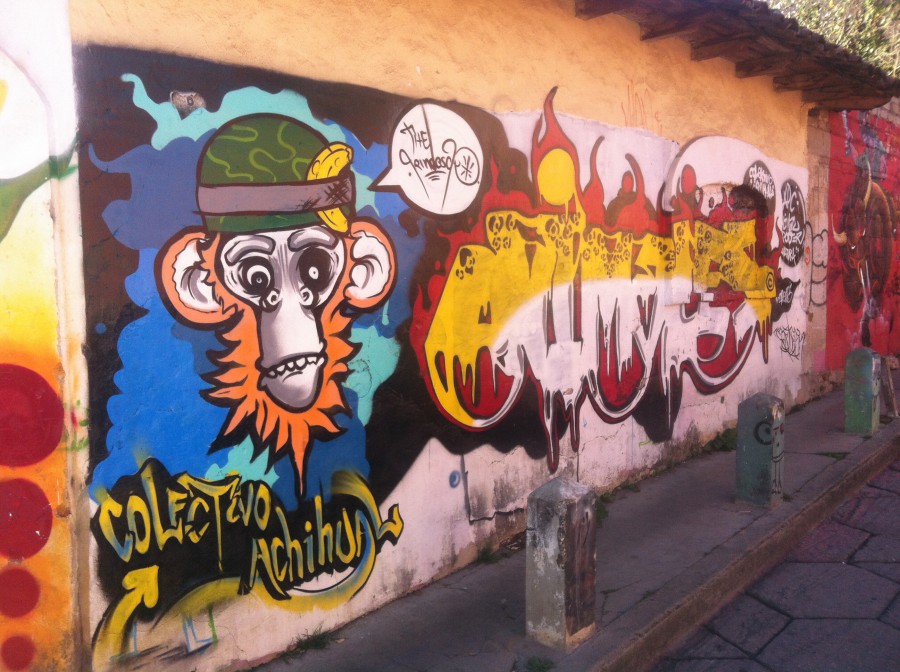
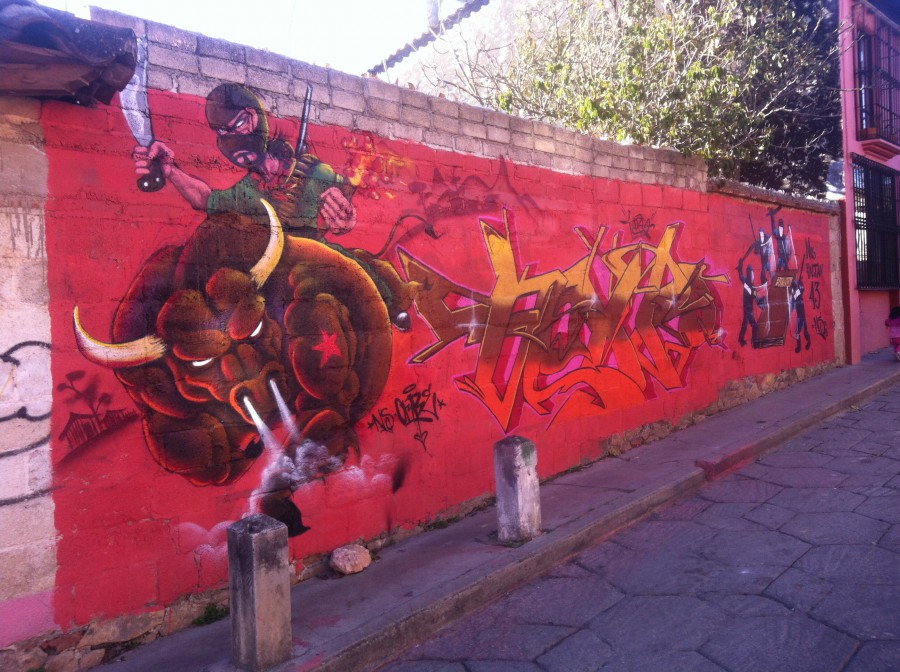
In San Cristobal, up some back streets, I saw what I fear are today’s inheritors of Rivera, Orozco, and Siqueiros
image
image
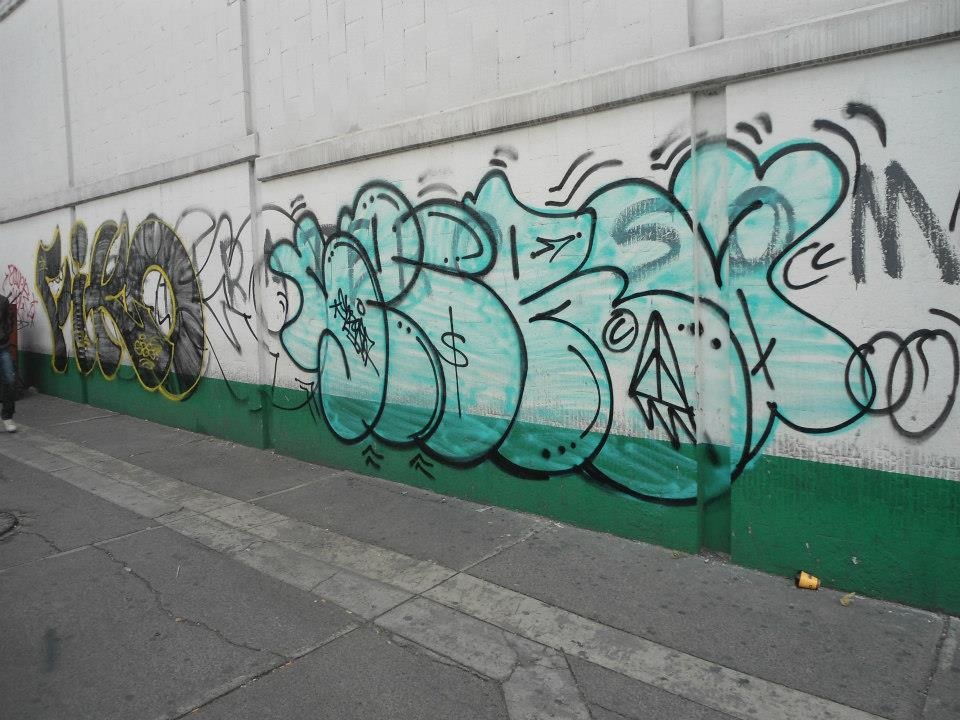
It’s sad really. All that grand, elevated talk of our youth has degenerated into the childish babble of these cartoons. But the rot doesn’t finish there, for Mexico suffers from the same mindless graffiti which defaces so many of our cities

image
“Fuck you. I exist”

What are our civilizations reduced to?

__________________

Mariahilfestrasse 1: http://austriacazare.ro/wp-content/uploads/2012/10/mariahilfer-strasse.jpg (in http://austriacazare.ro/shopping/mariahilferstrasse/#photoGallery%5Bgallery-503%5D/3/)
Calle 20 de noviembre , Tlaxcala: http://www.mexicoenfotos.com/estados/tlaxcala/tlaxcala/MX13379190432534&album=01&province=tlaxcala&city=tlaxcala&pagina=6
Avenida Vicente Guerro, Tlaxcala: http://www.mexicoenfotos.com/estados/tlaxcala/tlaxcala/MX13362760603306&album=01&province=tlaxcala&city=tlaxcala&pagina=6
Shop signs, San Cristobal: my photos
Painted advertisement signs: my photos
Cartoon wall paintings, San Cristobal: my photos
Graffiti, Mexico City: http://3.bp.blogspot.com/-hsTD7FnkGKs/UIEueVASNkI/AAAAAAAAAQs/PJ0N-K0omig/s1600/150559_545018925524744_786800387_n.jpg (in http://thevilgang.blogspot.com/2012/10/el-graffiti-de-la-ciudad-de-mexico.html)

MEXICO: MUSEO DE ARTE POPULAR

Bangkok, 10 January, 2015

While in Mexico City over the Christmas break, my wife and I visited two museums, the Palacio de Bellas Artes and the Museo de Arte Popular. The Bellas Artes is the more Worthy of the two, having vast panels by Great Mexican Painters such as Diego Rivera, David Siqueiros, José Orozco, and others. When we visited, it also had some Worthy exhibitions, one of these being on modern art from cubism onwards, which mixed global titans like Picasso and Pollock with Mexicans. I have mentioned in a previous post how so much of the world looks the same everywhere nowadays, especially where clothes are concerned: everyone, everywhere, dresses the same, particularly the young. I was struck by the same sensation in this exhibition of modern art. Everyone’s modern art was the same everywhere: Diego Rivera’s cubism looked just like Braque’s, Frida Kahlo’s surrealism was indistinguishable from Magritte’s, Gunther Gerzso’s abstract expressionism is no different from Willem de Kooning’s or Mark Rothko’s. In a word, there was nothing particularly Mexican about any of the art on show from Mexican artists. Another, depressing, effect of globalization.

So you can imagine my relief when we visited the Museo de Arte Popular (which I think we can translate as the Museum of Folk Art) and saw pieces which were quite typically Mexican, pieces I would not find in a museum of folk or other art in Europe or the US or Japan or even Thailand where we currently live. (In truth, I’m sure I would find similar pieces in the other Latin American countries, but that’s OK; these countries do after all share a fair amount of cultural history, Hispanic and pre-Hispanic).

So it is with pleasure that I can share with readers photos of some of the pieces I most liked. I hope I will be excused their generally poor quality. They are all taken with my iPhone, and in many instances through the glass of the exhibition cases which often created irritating problems of reflections.

I start with that typical form of folk art, ceramics. Here are some pots and a plate I particularly fancied:
image
image
image
with this one being my favorite of the genre
image
There was also a lot of woven rattan and similar objects. I’m not a big fan of this art form, but I do add here a picture of a container made with a mix of bark and fibres, which had a certain attraction
image
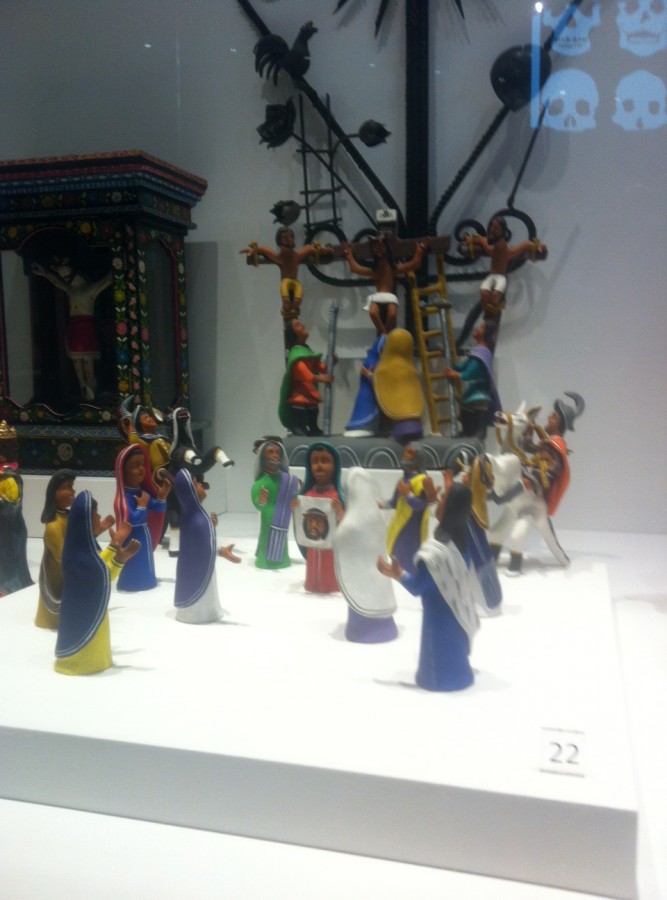
Not particularly Mexican all this, you might argue, so let me continue with a subject very close to the average Mexican’s heart, religion. In the museum collection, it was captured for the most part with that typically Mexican (or perhaps Latin American) fondness for little set scenes. So we have a crucifixion
image
a last supper – but why are they eating watermelon??
image
and a last judgement
image
while the Tree of Life was a very popular motif, made into a lovely candelabra in this example
image
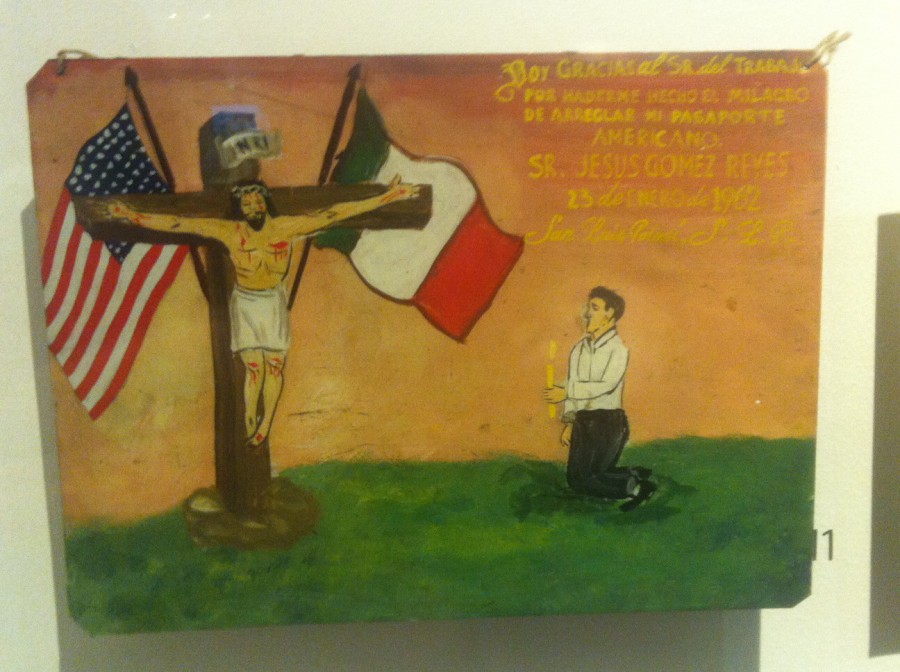
Then there were several examples of ex-votos, that exceedingly popular genre of folk religious painting (and not just in Mexico; Italian churches are littered with them, as are churches in Austria and probably every other Catholic country). Normally, they record a person being saved from some catastrophe or illness, but in this particular case a certain Mr. Jesus Gomez Reyez was thanking the Good Lord for getting his American passport regularized back in 1962, a touching commentary on so many Mexicans’ yearnings to escape to America
image
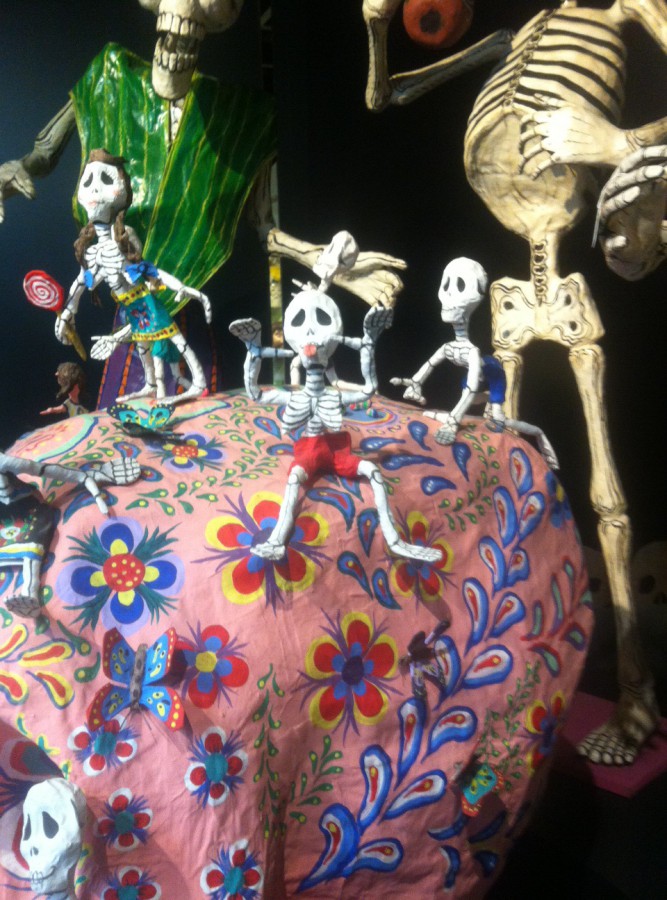
Religion has much to do with death, and the Mexicans have turned death into a high art, especially that most striking vision of the death which awaits us all, the skeleton. The museum has a particularly rich collection of this art form, of which I show a small selection, starting with this wonderful variation on that insipid form of religious art, the statues of saints in churches
image
I must say, despite the grimness of the topic these skeletons are always remarkably cheerful. Here we have a bunch of skeletons thoroughly enjoying a huge meal – echoes of the last supper?
image
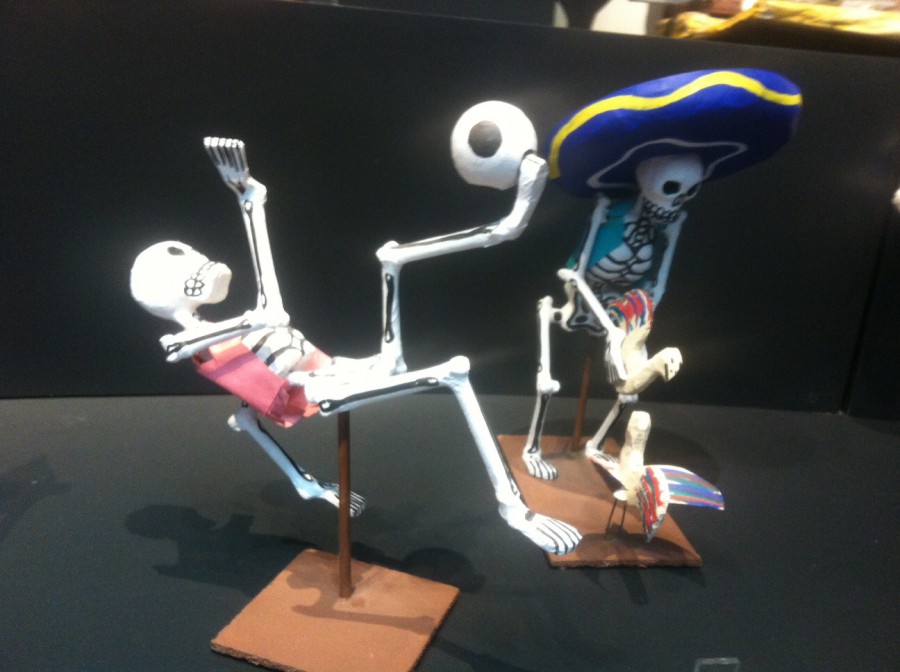
another happily kicking a football around
image
yet another, a child’s skeleton, blowing us a raspberry
image

while here we have an earnest swain declaring his undying love to a simpering and blushing maiden
image
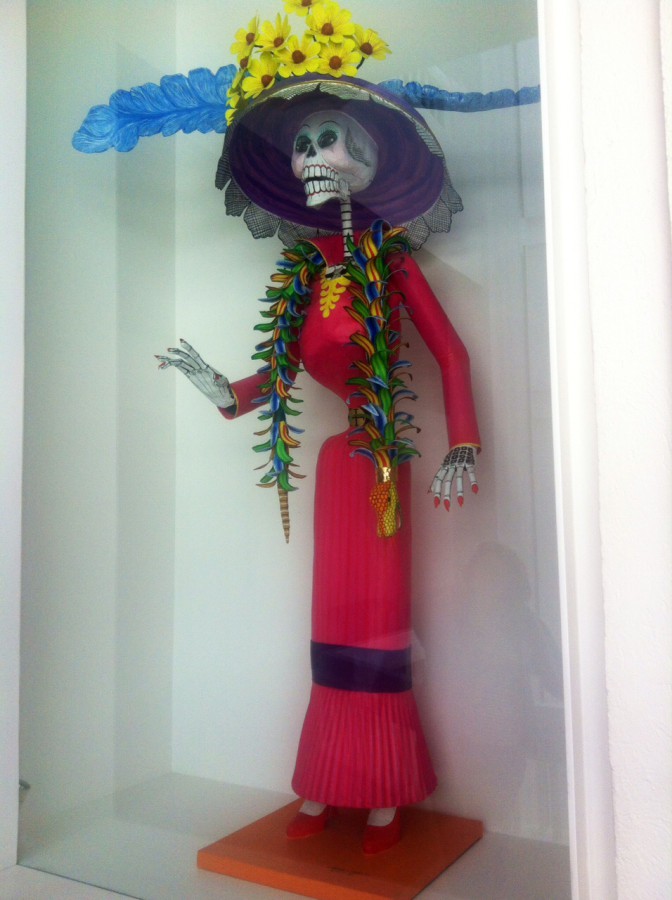
and finally, a very popular character in the skeleton cast of characters, a “Catrina”, a female skeleton dressed to the nines in a 19th Century style
image
We loved these Catrinas so much that we bought a ceramic version and carried it back to Bangkok, where it now stands on our dressing room table.

Keeping to the broad religious theme, devils are also a popular topic. I include three, one blowing a raspberry, something which I have never particularly associated with devils (but a common theme it would seem; does blowing raspberries have some deeper meaning in Mexico?)
image
another showing a bunch of devils taking part in a last-supper type of meal – eating watermelon again! (what’s with this business of watermelon?)
image
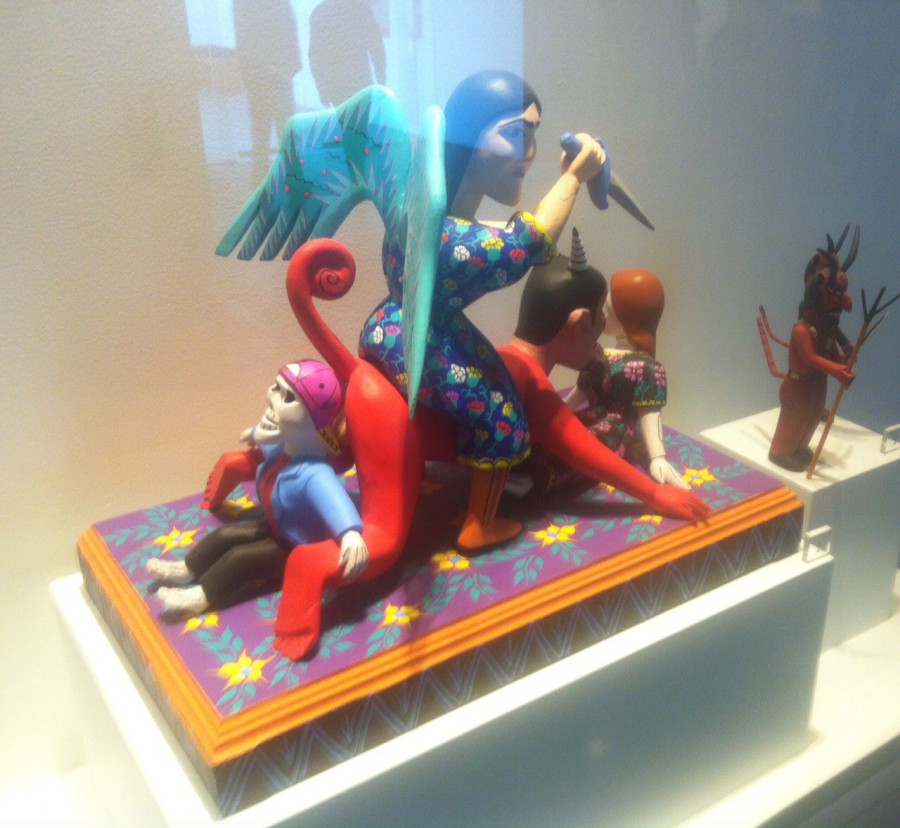
and a grimmer scene, a devil rapist (I suppose rape is as bad a problem in Mexico as anywhere else).
image

The little scenes which seem such a popular subject spill over into normal, day-to-day life. We have here a seller in the market (watermelon-eating again …)

image

Fairgrounds seem a popular topic, especially Ferris wheels

image
while here we have a grimmer scene from life, a fire. Many escape from the doors of these towers but one person has had to throw himself off the top.
image
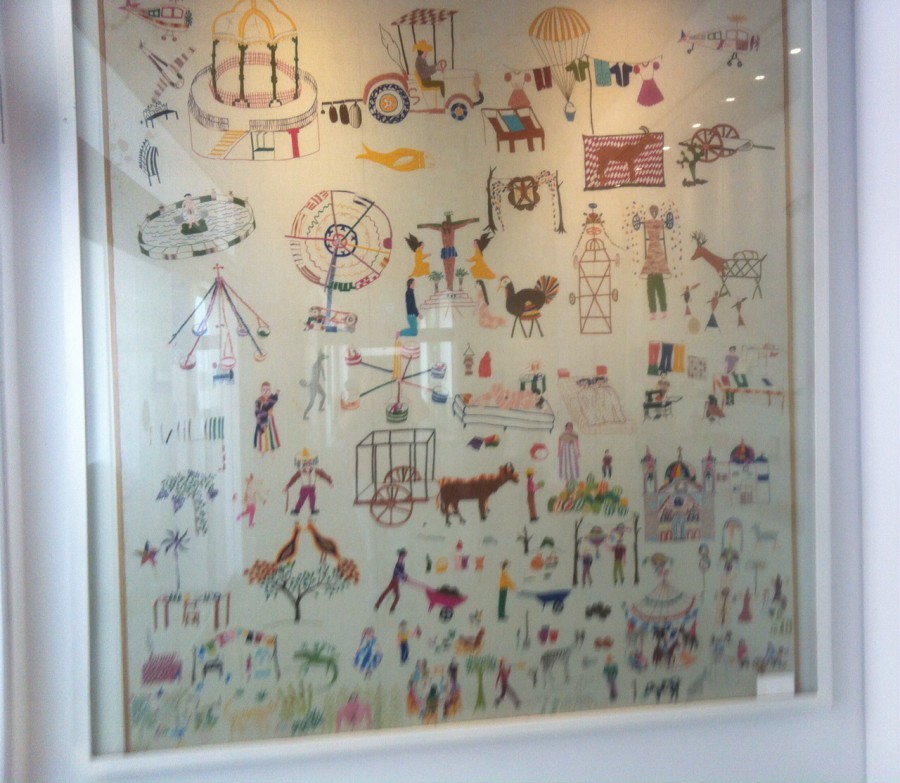
This large needlework piece wonderfully captures the myriad activities of daily life
image
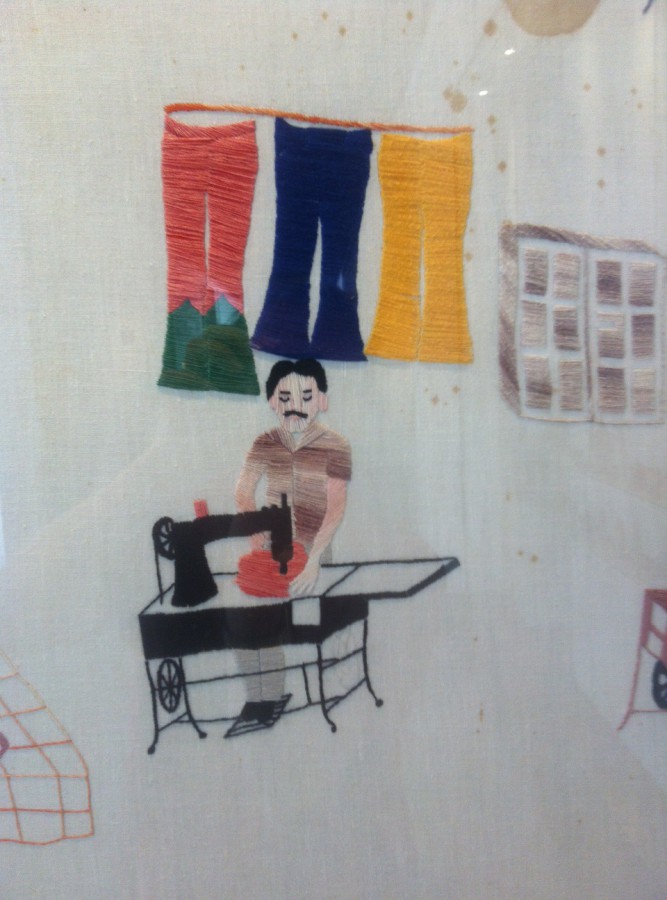
I add one close-up of the many scenes on this piece
image

The final theme is animals, which are a popular subject for folk artists. I feel I should start with a turkey, which was first domesticated in pre-Hispanic Mexico.
image
I continue with a cat, because my wife reminded me that when we were last in Mexico 35 years ago we bought a ceramic cat, which currently faithfully sits in storage in Vienna waiting for our return to Europe.
image
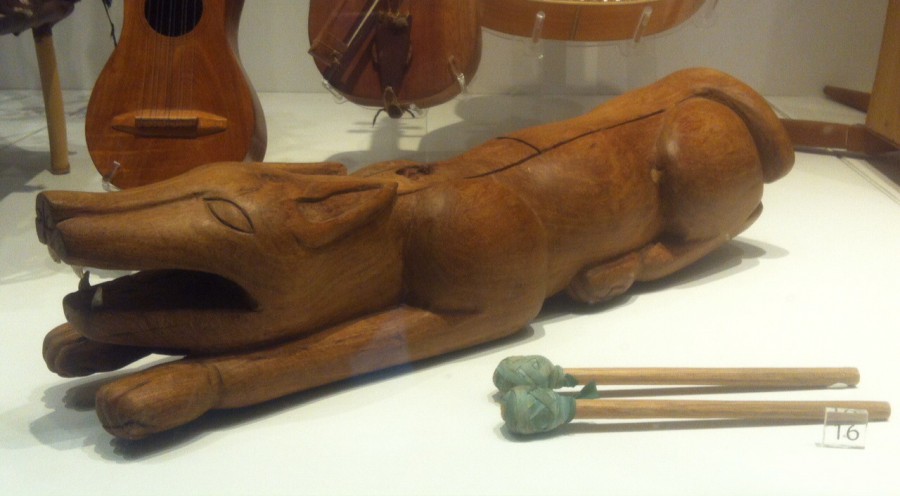
But I also add a dog, in this case in the form of a teponatzle (a type of musical instrument),
image
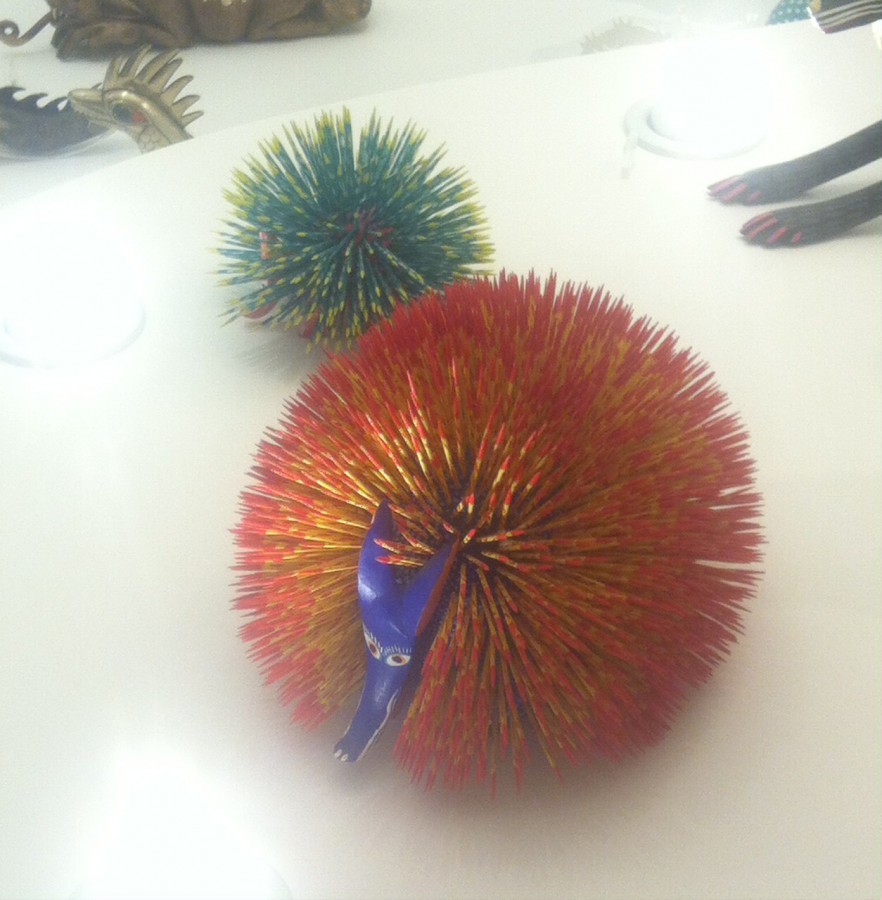
continue with what appears to be a brightly coloured hedgehog
image
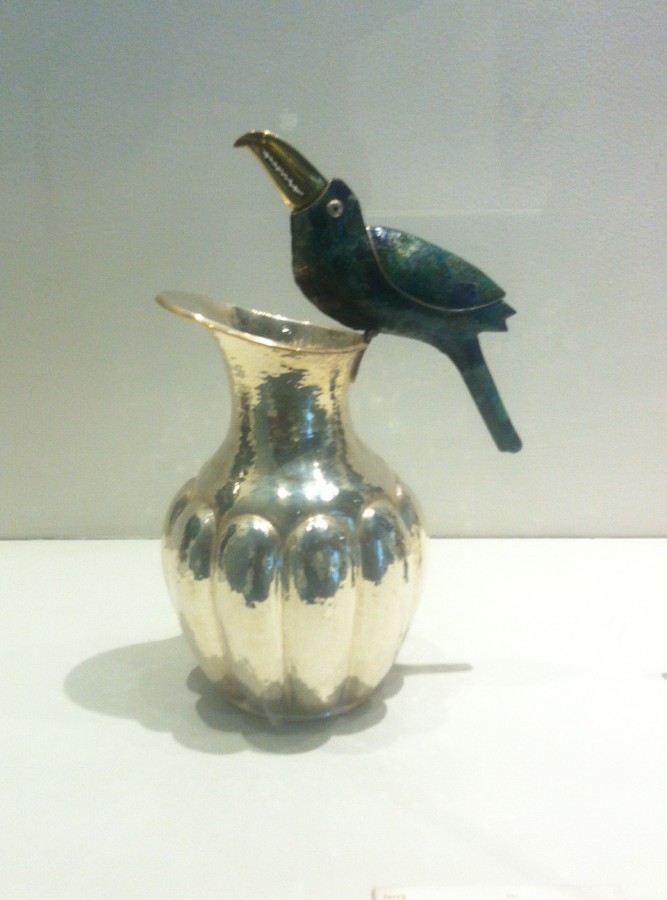
and finish with a couple of birds: what looks like a macaw, fashioned as a handle of a jug
image
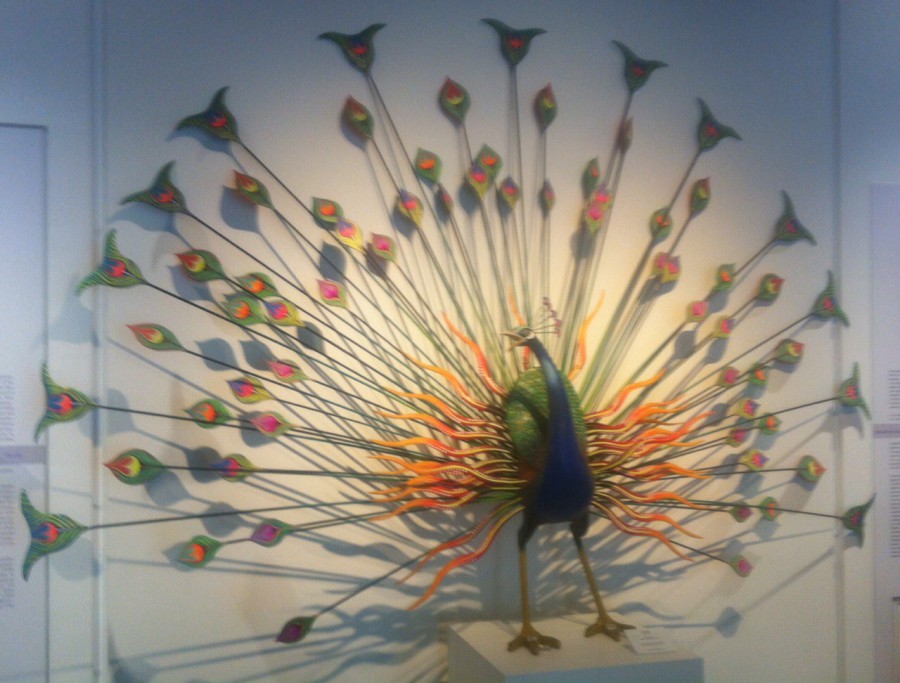
and this truly magnificent peacock
image
On the topic of animals, I feel I have to include a picture of this monster
image
The Mexicans seem to have a great fondness of such monsters, which we saw in a number of places, on a much larger scale, being used as floats of some sort.

Well, I don’t want to give everything away about this museum. I hope I’ve persuaded some readers to visit it if they happen to be in Mexico City: Calle Revillagigedo 11, Cuauhtémoc, very central; open every day except Monday.

___________

pictures: all mine

MEXICO: BASHING THE PIÑATA

Mexico City, 4 January, 2015

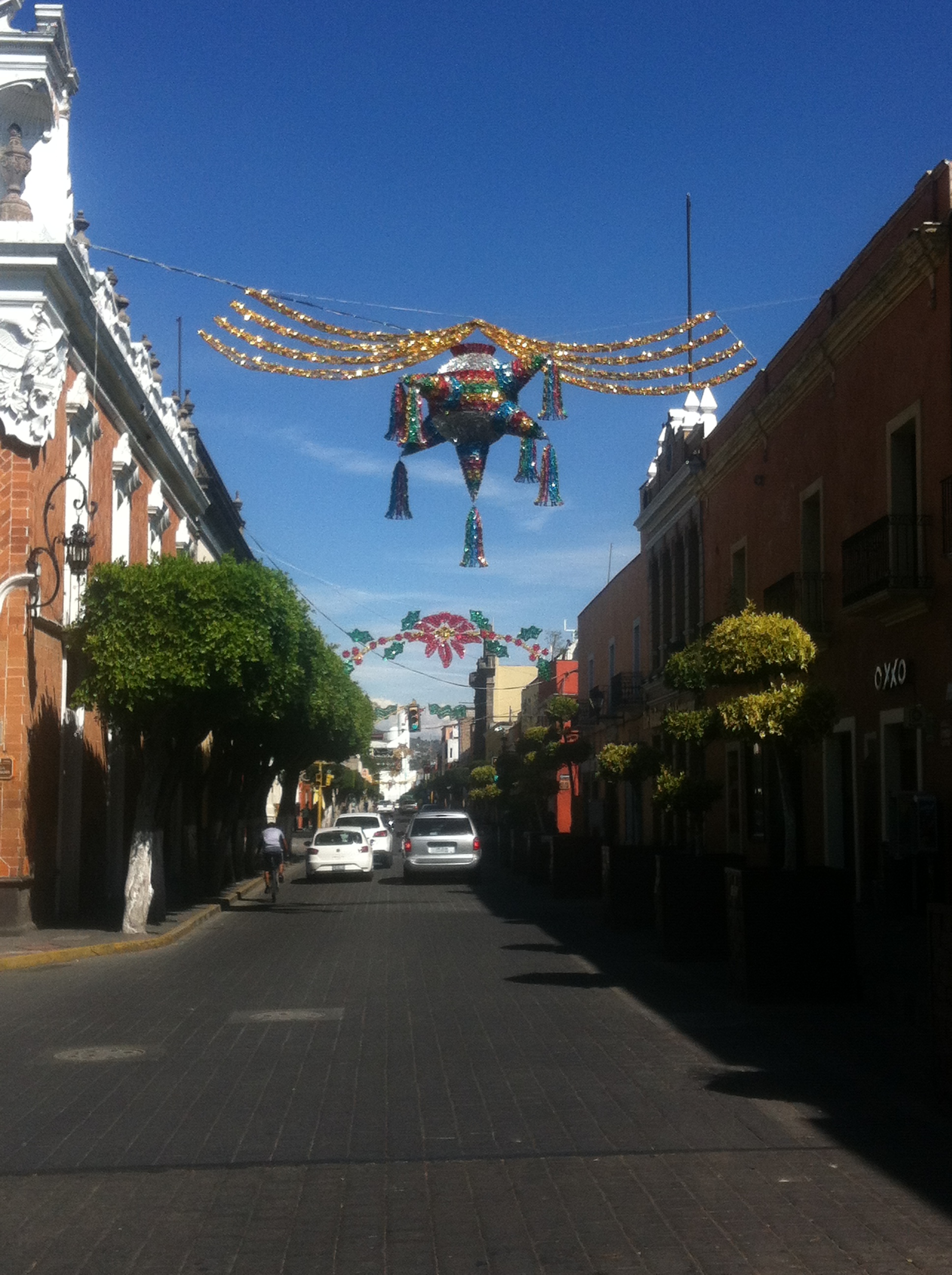
As my wife and I wandered around Mexico City this last week, we were struck by these strange ornaments which we saw hanging in many places. This particular one, for instance, was hanging in a street somewhere

pinata 002

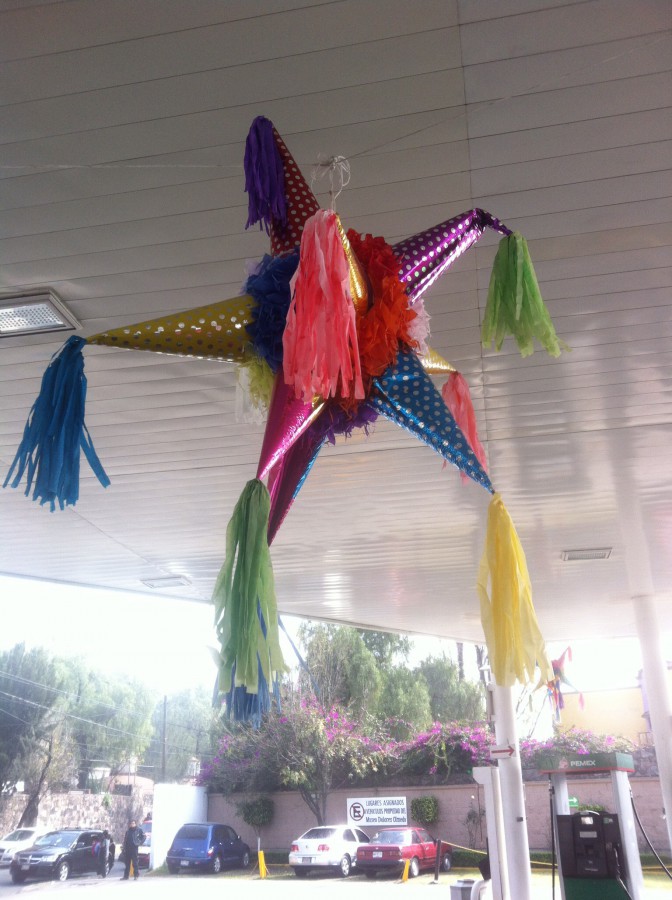
while this one, somewhat incongruously, swung over the cars in a gas station.

image

Intrigued, I asked our son what they were. Piñata, he told us.

Ah. I had never heard of them.

Undeterred, I rolled up my sleeves and did some research (i.e., browsed the web). I am now ready to report my findings.

What we have here is an example of the strategy used by the Catholic church in the early years of the Spanish conquest of Mexico to christianize the local populations. The church adopted, with the necessary adaptations, those local religious traditions which happened to have similarities with Catholic traditions. The thinking was that this would make Catholicism more familiar, more “user friendly” for the local populations, who would therefore convert more readily (and if necessary, a little gentle pressure from the sharp end of a sword could no doubt be used to help along in the decision-making process).

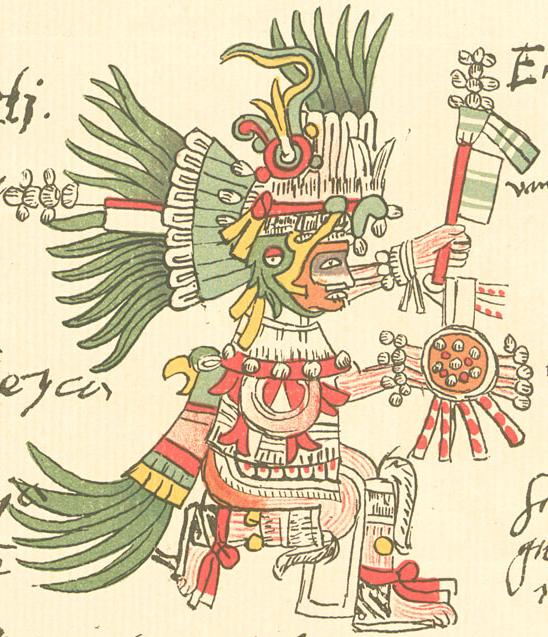
In the case of the piñata, the local religious tradition in question was part of the Aztec festival for their patron god Huitzilopochtli, sun god, god of war, and god of human sacrifice.
image
The whole of the Aztec month of Panquetzaliztli, which ran from 7 to 26 December in today’s calendar, was dedicated to this festival. The people decorated their homes and trees with paper flags, there were ritual races, processions, dances, songs, prayers, and to top it all off there were human sacrifices.

Only one of the festival’s activities is of interest us here. In it, priests would place a clay pot on a pole in front of the statue of the god. The pot was filled with tiny treasures inside and decorated with colorful feathers outside. The pot would be ritually broken with a stick or club, and the treasures would fall to the feet of the statue as an offering.

It so happened that the Spaniards had a very similar custom, the Dance of the Piñata, which took place during Lent. There, too, a decorated clay pot, the piñata, was suspended and during some kind of dance routine got broken with a stick. Quite what the religious significance of this was is unclear to me, nor do I know if there was anything in the pot.

The canny Franciscan monks who were spearheading the conversion efforts in Mexico (along with Dominicans) figured that they could harness this Lenten custom from Old Spain to a new Christmas custom in New Spain and in so doing help to draw away the indigenous people from their old, “pagan”, “idolatrous”, “devil-worshipping”, etc. religion. They also borrowed from a superficially similar Mayan custom. The Mayans had a game rather like blind man’s buff, where a player was blindfolded, perhaps spun around to disorient him, and then left to try and hit and break a suspended clay pot. No doubt his blundering misses made spectators roar with laughter. Again, I don’t know if there was anything in the pot.

The Franciscans used all these threads to weave together a new, fun custom which the indigenous people were encouraged to practice, in the church grounds no doubt, in the run-up to Christmas. A clay pot, filled with sweets and other goodies, and decorated on the outside, was suspended. The “players” were blindfolded, and guided by the onlookers, would try and bash the pot and release the goodies. If successful, everyone would throw themselves on the goodies. But of course the Franciscans gave the whole thing a religious twist, using the new piñata “game” to inculcate in the locals some Christian catechism. Thus, the clay pot represented Satan, with the outer decorations now transmuted into seven colorful cones or horns representing the seven deadly sins (for those of my readers who have momentarily forgotten which these are, we have, in alphabetical order: envy, gluttony, greed, lust, pride, sloth, and wrath). The outside was made beautiful to remind the viewer that evil is tempting, and the goodies inside the pot represented the temptations of wealth and earthly pleasures. Once the game started, it became a morality play for demonstrating the three theological virtues of Faith, Hope, and Charity. The blindfolded players represented Blind Faith, groping their way towards salvation. The piñata now represented Hope. The onlookers looking up at the hanging piñata were actually gazing towards Heaven, yearning for the salvation that would come from the smashing the pot and the triumph of Faith over Evil. The sweets and other goodies that showered forth now suddenly became the rewards of maintaining the Faith. But everyone shared in the goodies, thus symbolizing Charity. After this dose of religion, it seems to me only correct to include this statue of a Franciscan monk having a bash at a piñata.

image

If any of the players impatiently waiting to have a go at smashing the pot understood any of these theological subtleties I take my hat off to them. If my own youthful experience of catechism is anything to go by, I would guess that they quietly let the priest blather on about whatever he wanted to blather on about and then they got down to the serious business of having some fun. These two photos, which I took in the Museo de Arte Popular (about which more later in a future post), capture nicely the fun aspect of this religious game.

image

image

I’m sure it is the jolliness of smashing something and scrambling around for goodies that makes older Mexicans remember piñata with fondness rather than the catalogue of the seven deadly sins and the triumph of Faith over Evil. In fact, at some point it seems to me that the piñata lost much of its religious connotations and simply became a game to play at parties, and at the same time there was a switch from a ceramic pot to hold the goodies to one made of papier-mâché or cardboard – no doubt fond mothers were worried about having their dear ones and those of their neighbors showered with pottery shards during the children’s parties they organized.
image
Indeed, I have this vague memory of a similar game being played at the birthday party of one of my son’s friends years ago in Italy. By the way, for those of you who like me are fond of useless facts, the Spaniards borrowed the piñata from the Italians, where it was called pignatta. And it seems that the ultimate source of the custom was China, although how it got from the Middle Kingdom to Italy is a bit of a mystery to me (my sources suggest Marco Polo, but he gets mentioned whenever no-one has a good idea how things got transmitted from China to Europe).

In any event, it now looks like the piñata is morphing into a simple Christmas decoration. I certainly don’t think that all the piñatas we’ve seen hung up are there to be bashed vigorously with a stick. In this new identity they have become the equivalent of those stars which seem such a popular Christmas street decoration.
image
Soon, they will morph once more, becoming tame Christmas tree decorations. Indeed, if this Christmas tree at one of Mexico City’s bus stations is anything to go by, the morphing has started already.
image
From reverent offering to the sun god to cheesy decoration on a Christmas tree, the fall has been long and hard.

_____________

Piñata: my photo
Huitzilpochtli: http://upload.wikimedia.org/wikipedia/commons/c/cb/Huitzilopochtli_telleriano.jpg (in http://en.m.wikipedia.org/wiki/Huitzilopochtli)
Franciscan monk hitting piñata: http://en.m.wikipedia.org/wiki/Piñata#/image/File:MonkPiñataAcolman1.JPG (in http://en.m.wikipedia.org/wiki/Piñata)
pix from the museo de arte popular: mine
Children hitting a piñata: http://en.m.wikipedia.org/wiki/Las_Posadas#/image/File:Las_Posadas_Pinata.jpg (in http://en.m.wikipedia.org/wiki/Las_Posadas)
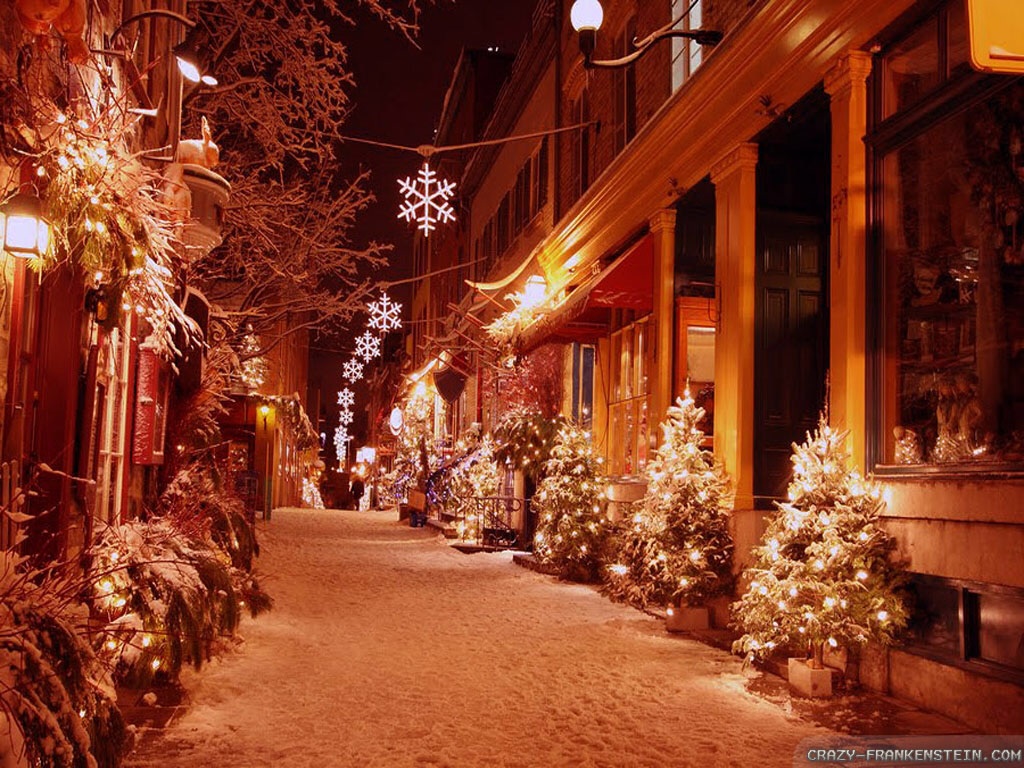
Christmas street decorations: http://wallpaperest.com/wallpapers/street-outdoor-christmas-decorations_074228.jpg (in http://toplowridersites.com/iphone-5-38528-christmas-christmas-street-decoration-jpg/)
piñata on Christmas tree: my picture

MEXICO: BOUGAINVILLEA

Mexico City, 25 December, 2014

My wife and I are spending Christmas in Mexico City. Parental love is what draws us to Mexico. Our son has his business here, and this year it is his turn to hold the fort over the busy Christmas period. As the Turkish saying goes, “Dağ sana gelmezse, sen dağa gideceksin”, “If the mountain won’t come to you, you must go to the mountain”. These last few days, together with our daughter (she has been able to escape from her job in New York, but at the price of being often on FaceTime and email with her colleagues), we have been roaming the city and appreciating its delights, both visual and gastronomic. Yesterday, for instance, we visited Frida Kahlo’s house, La Casa Azul, which presents a compact collection of her paintings (including one which I’ve mentioned in a previous post) as well as of paintings by her husband Diego Rivera. And while we stood in the long, long line to get in, we tucked into an assortment of delicious tacos, including one where the filling was a mix of cheese and cactus pads. Cactus pads! That was a first for me.

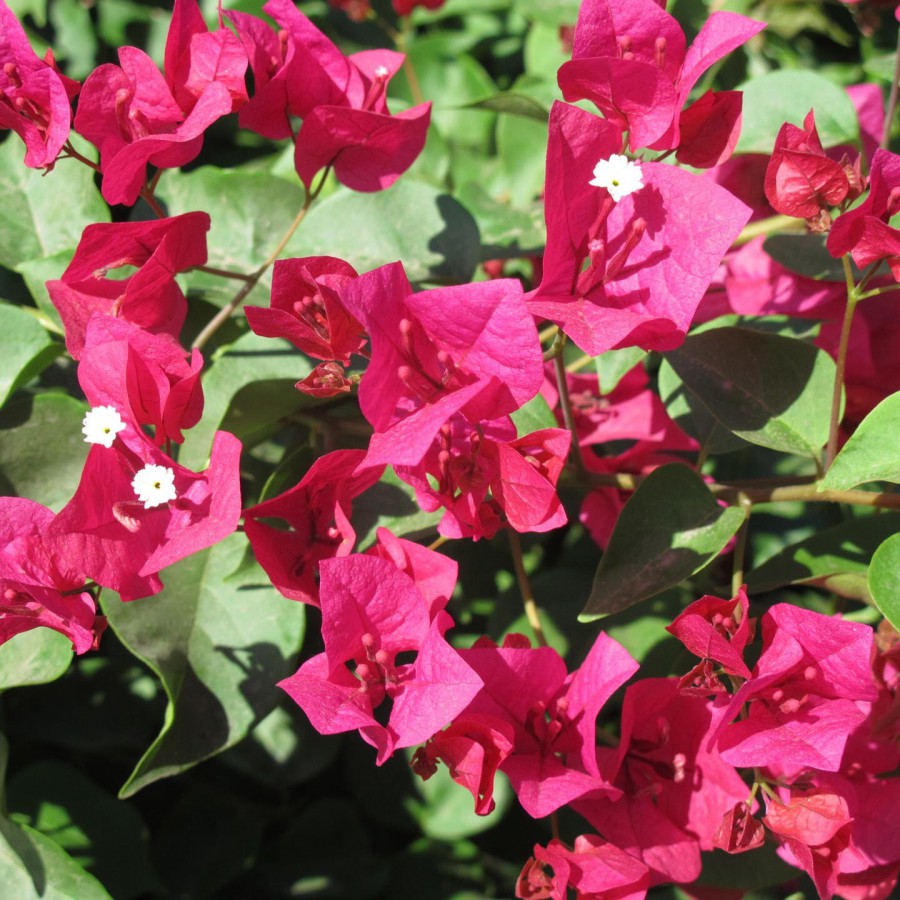
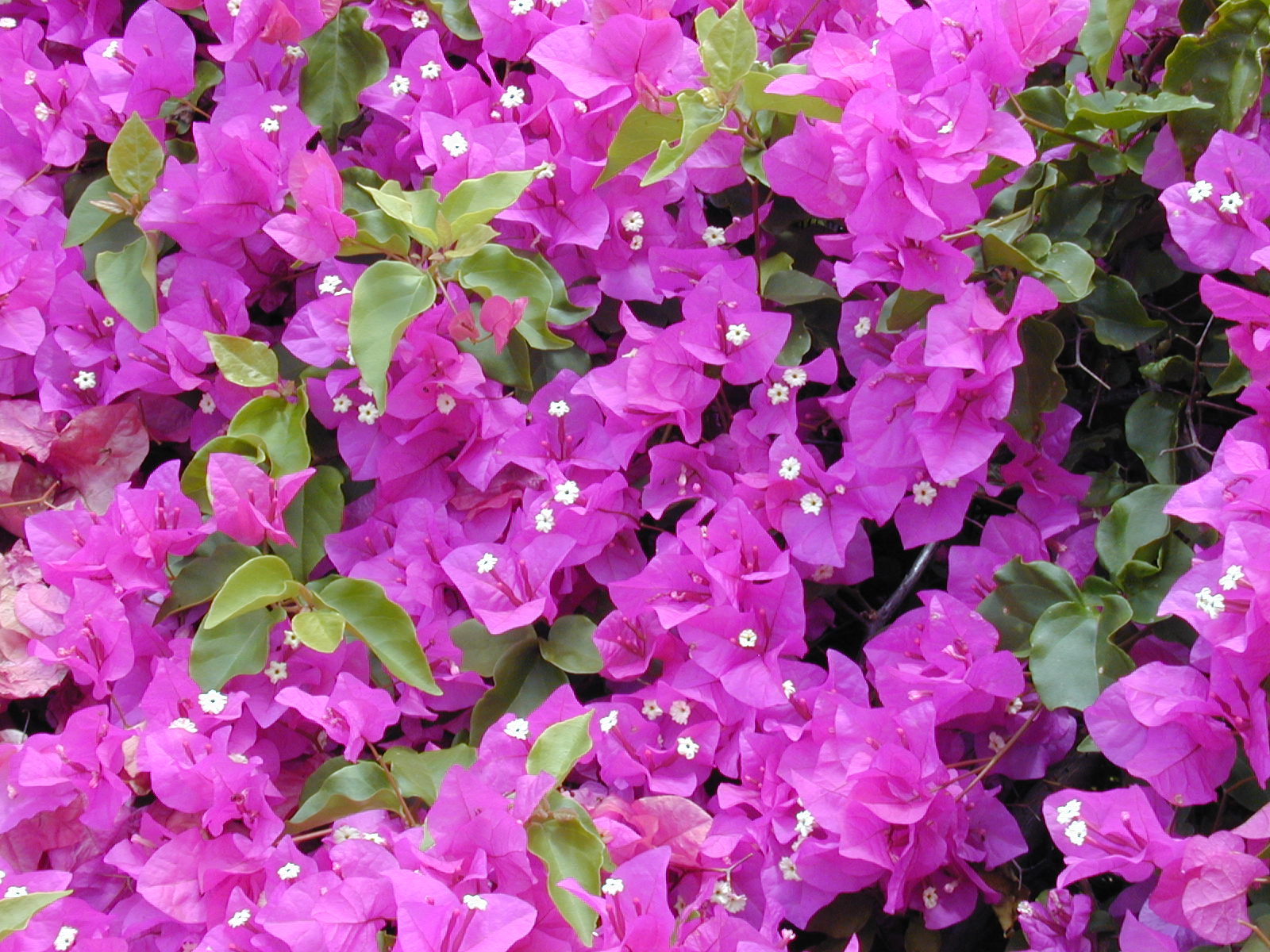
Everywhere we have been in the city, we have been delighted with great clouds of bougainvillea, mauveimage

red

image
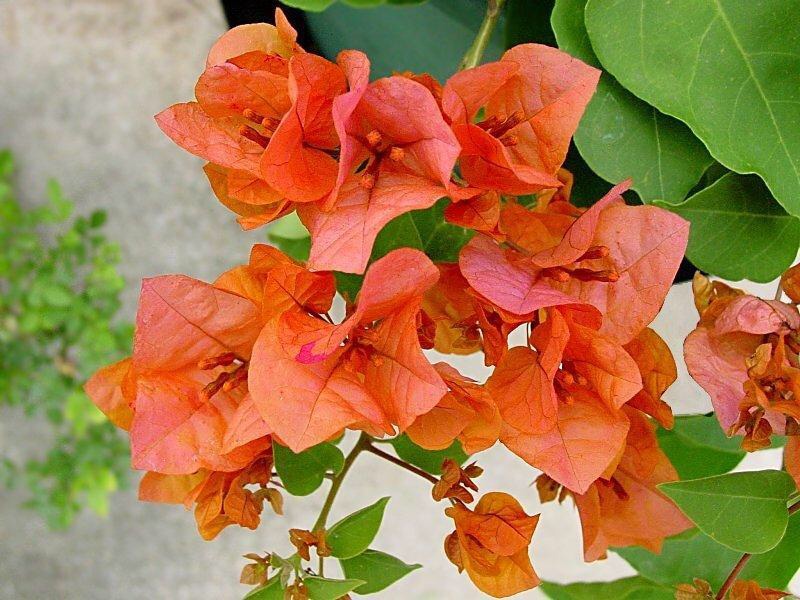
orange
image

white

image

clawing their way over roofs, snaking along balconies, tumbling over walls, strangling trees, or simply sculpted into staid bushes.

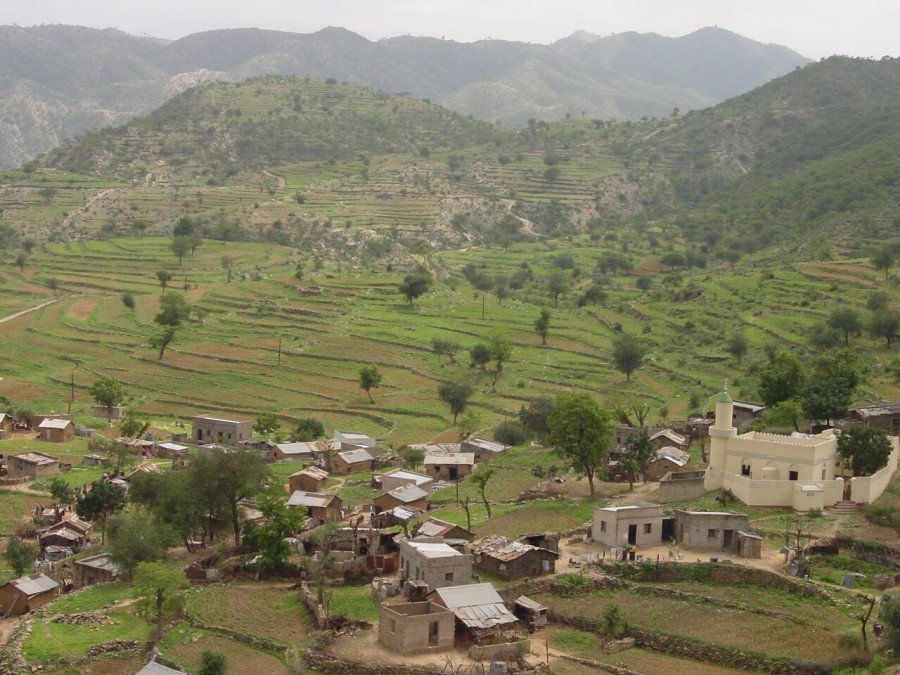
I’m very fond of bougainvillea. It’s an old friend which I’ve run into in various parts of the world, always places with the sunny, warm climates which I feel very comfortable in, like Eritrea where I was born
image
or Liguria which my wife introduced me to nearly 40 years ago and to which we return again and again
image
or Thailand where we live at the moment.
image

This latest meeting with bougainvillea in Mexico has moved me to use my free time during this holiday period, between visits to the sites and shopping for Christmas lunch and dinner, to explore this beautiful plant’s history. I had always known that its rather fancy name came from the French Admiral Louis Antoine, Comte de Bougainville.
image
France’s response to Britain’s James Cook, Bougainville was the first Frenchman to circumnavigate the globe, in the late 1760s, and it was during this trip that bougainvillea was discovered (by Europeans; the locals knew it already of course). It was actually Bougainville’s on-board botanist, Philibert Commerson, who discovered it.

image

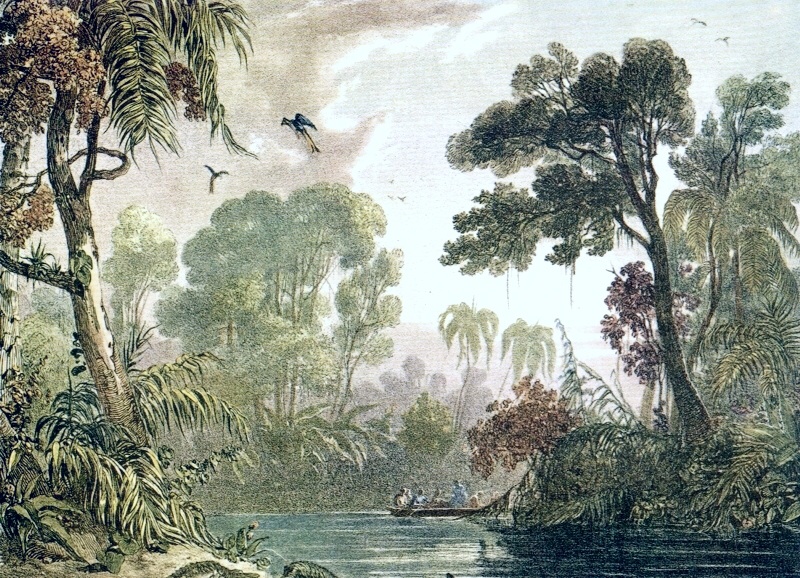
The discovery occurred during an enforced stopover in the Bay of Rio de Janeiro, where Bougainville had decided to regroup and carry out urgent repairs to his two ships. Like most European botanists of the time, Commerson was dazzled by the huge biological diversity he found in Brazil: “this country is the most beautiful in the world”, he wrote home. Something of what he found before him can be gathered from this more-or-less contemporary painting.
image
Commerson took advantage of the stop in Rio to go out botanizing along the coast and islets of the bay. As he reported to a friend in a letter home, one day he stumbled on this vine, “a wonderful plant with big flowers of a sumptuous violet colour”. He decided to honour Bougainville by naming the plant after him (Bougainville also gave his name to a couple of islands, a couple of straits between islands, and a town in the Falkland Islands). Commerson’s dried sample eventually made it back to France, where it can still be viewed, faded but nevertheless recognizable.

image
We can leave the story of bougainvillea there; suffice to say that the first period of globalization which came with European colonialism spread the pretty plant far and wide. But its discovery in the Bay of Rio de Janeiro gives me pause. That wonderful botanical diversity which so took Commerson’s breath away has been sadly depleted. Before the arrival of the Europeans, the bay of Rio de Janeiro was enveloped by the Mata Atlântica, the Atlantic Forest. This mighty forest stretched unbroken from north-east Brazil all the way down the Atlantic coastline as far as Uruguay, and spread into north-eastern Argentina and eastern Paraguay. It once covered some one and a half million square kilometres, but three hundred years of deforestation for logging and farming have seen it become the second most threatened biome in the world, after Madagascar. Today, less than a tenth of the original forest area remains.

There is some light in all the gloom. Despite all the loss and habitat fragmentation, the region is still ranked in the top five of the world’s biodiversity hotspots. It is particularly remarkable for its bird species. In 2001, wanting to preserve what was left if not reverse some of the damage (to which his own ancestors had contributed), a farsighted owner of farmland at the base of the mountains, in the valley of the Guapiaçu river, some 80 kilometres north-east of Rio, established an ecological Reserve, the Reserva Ecológica de Guapiaçu (REGUA). REGUA’s objective is to protect the remaining forest and biodiversity from deforestation, hunting, and over-extraction of natural resources. With funds from the World Land Trust and others, REGUA has bought land to consolidate and extend the Reserve. Over 100,000 trees, all native species, have been planted, wetlands have been recreated, some animal species have been reintroduced, hunters have been turned into guides, and visitors are encouraged to come and share in this wonderful effort. If I know all this, it is because my wife and I financially supported the planting of a modest number of trees and stayed at the Reserve’s lodge for several days, going out on a birding expedition, inspecting our tree seedlings and the-then nascent wetlands, and just generally enjoying ourselves.
image
We hope to go back there one day, to see how our trees are doing. And maybe we’ll spot some bougainvillea in its natural state, ruthlessly climbing over some unfortunate tree, choking the life out of it.

_______________________________
Mauve bougainvillea: http://upload.wikimedia.org/wikipedia/commons/f/f8/Starr_030418-0058_Bougainvillea_spectabilis.jpg (in http://en.m.wikipedia.org/wiki/Bougainvillea_spectabilis)
Red bougainvillea: http://www.boethingtreeland.com/media/catalog/product/cache/1/image/1440x/9df78eab33525d08d6e5fb8d27136e95/B/o/Bougainvillea-Temple-Fire.jpg (in http://www.boethingtreeland.com/bougainvillea-temple-fire.html)
Orange bougainvillea: http://pics.davesgarden.com/pics/2007/02/01/htop/a25dea.jpg (in http://davesgarden.com/guides/pf/showimage/139848/#b)
White bougainvillea: http://www.phytoimages.siu.edu/users/paraman1/7_13_09/Upload13July09A/BougainvilleaWhite1.jpg (in http://www.phytoimages.siu.edu/imgs/paraman1/r/Nyctaginaceae_Bougainvillea_spectabilis_16879.html)
Eritrean highlands: http://4.bp.blogspot.com/_iNSpfNcQ0Sg/SmH-m6Qdw7I/AAAAAAAABk0/m6818sz2DR8/s1600-h/asmara+114.jpg (in http://www.concretegardener.com/2009/07/glimpse-of-massawa-eritrea.html)
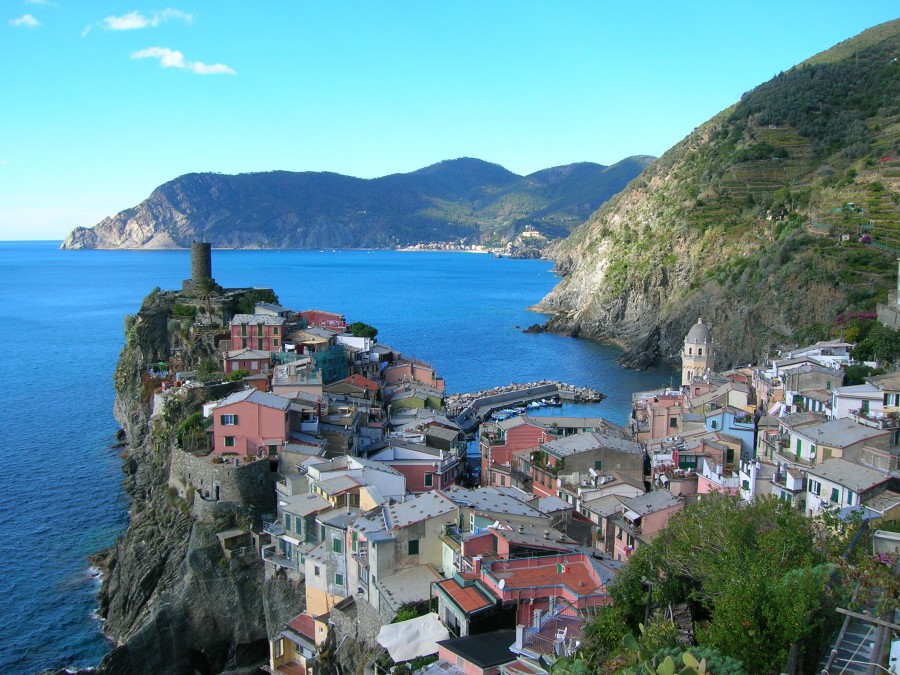
Liguria: http://upload.wikimedia.org/wikipedia/commons/e/ea/Vernazza.JPG (in http://commons.m.wikimedia.org/wiki/File:Vernazza.JPG)
Thailand: http://ichef.bbci.co.uk/wwtravel/624_330/images/live/p0/15/w6/p015w6lz.jpg (in http://www.bbc.com/travel/feature/20130304-the-perfect-trip-thailand)
Bougainville: http://en.m.wikipedia.org/wiki/Louis_Antoine_de_Bougainville#/image/File:Louis_Antoine_de_Bougainville_-_Portrait_par_Jean-Pierre_Franquel.jpg (in http://en.m.wikipedia.org/wiki/Louis_Antoine_de_Bougainville)
Commerson: http://en.m.wikipedia.org/wiki/Philibert_Commerçon#/image/File:Commerson_Philibert_1727-1773.png (in http://en.m.wikipedia.org/wiki/Philibert_Commerçon)
Brazilian jungle: http://fr.m.wikipedia.org/wiki/Philibert_Commerson#/image/Fichier:Rugendas_-_Embouchure_de_la_riviere_Caxoera.jpg
Commerson’s dried sample: http://dsiphoto.mnhn.fr/sonnera2/LAPI/scanG/G20090518/P00169376_a.jpg
REGUA: http://media-cdn.tripadvisor.com/media/photo-s/06/3f/61/18/regua-reserva-ecologica.jpg (in http://www.tripadvisor.com.au/LocationPhotoDirectLink-g954096-d2557905-i104816920-REGUA_Reserva_Ecologica_de_Guapiacu-Cachoeiras_de_Macacu_State_of_Rio_de.html)

FOUR FACES

Bangkok, 5 December 2014

I’ve just come back from a trip to Phnom Penh. My wife accompanied me, so for a couple of days, while I was doing the official rounds and meeting the official people, she was nosing around the city enjoying herself. She regaled me every evening with her discoveries, making me green with jealousy. But we had decided that I would take a day off at the end of my official rounds and spend a long weekend together being tourists, so I told myself to be patient and bide my time. On Friday, Andy (not his real name, but tour guides in this part of the world will often adopt a Western name to make it easier for us dumb Westerners), Andy as I say, was waiting for for us at the door of the hotel with his tuk-tuk
image

in which he swept us off (well, “swept off” may be exaggerated, given the venerable speed at which tuk-tuks go) for a visit to Oudong, Cambodia’s capital prior to Phnom Penh. After puttering across the flat plain surrounding Phnom Penh for a while, we finally sighted in the distance the phnom (“hill” in Khmer) which had been the centre of Oudong.
image
After some more puttering, we arrived at the base of this hill, and were immediately surrounded by a cloud of boys shouting greetings, asking us where we came from, and directing us to the loo (after nearly two hours of puttering, we were both more than ready to answer calls of nature).

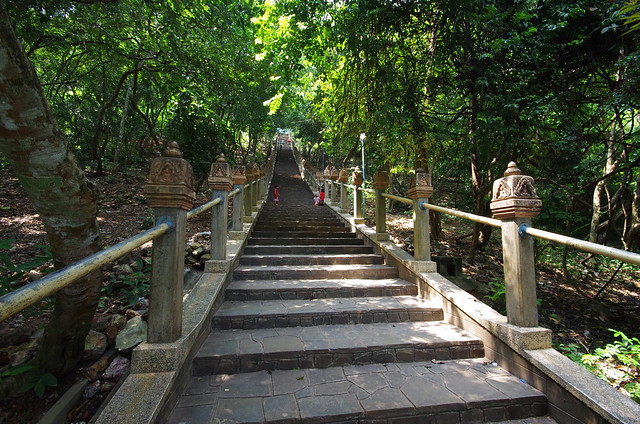
Following this pit stop, we made for the steps which would carry us to the top of the phnom. We huffed and we puffed slowly up the steps – all 509 of themimage
accompanied by a charming little boy, one of the cloud, who went by the name of Monette. His English was approximate, but he used it bravely to explain to us the sights we passed, the first of which was some exceedingly cheeky monkeys who hung around the steps like a pack of bad boys, ready to snatch lotus flowers from the unwary passer-by and snack on their stamens (or do I mean their pistils?)

image

One did just that to a group of young women in front of us, who came running back down the stairs screaming and clutching at each other. I moved forward bravely towards the insolent monkey as he sat on the steps munching the stamens (or do I mean pistils?). He looked me in the eye, and calmly walked off into the surrounding bushes holding his booty and showing me his bum. I mustered as much of my dignity as I could and Carried On.

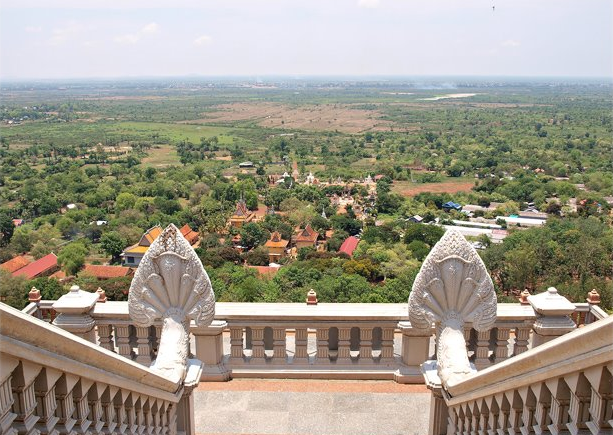
With one final heaving huff and one further ragged puff, we staggered to the top. With the excuse of admiring the view

image
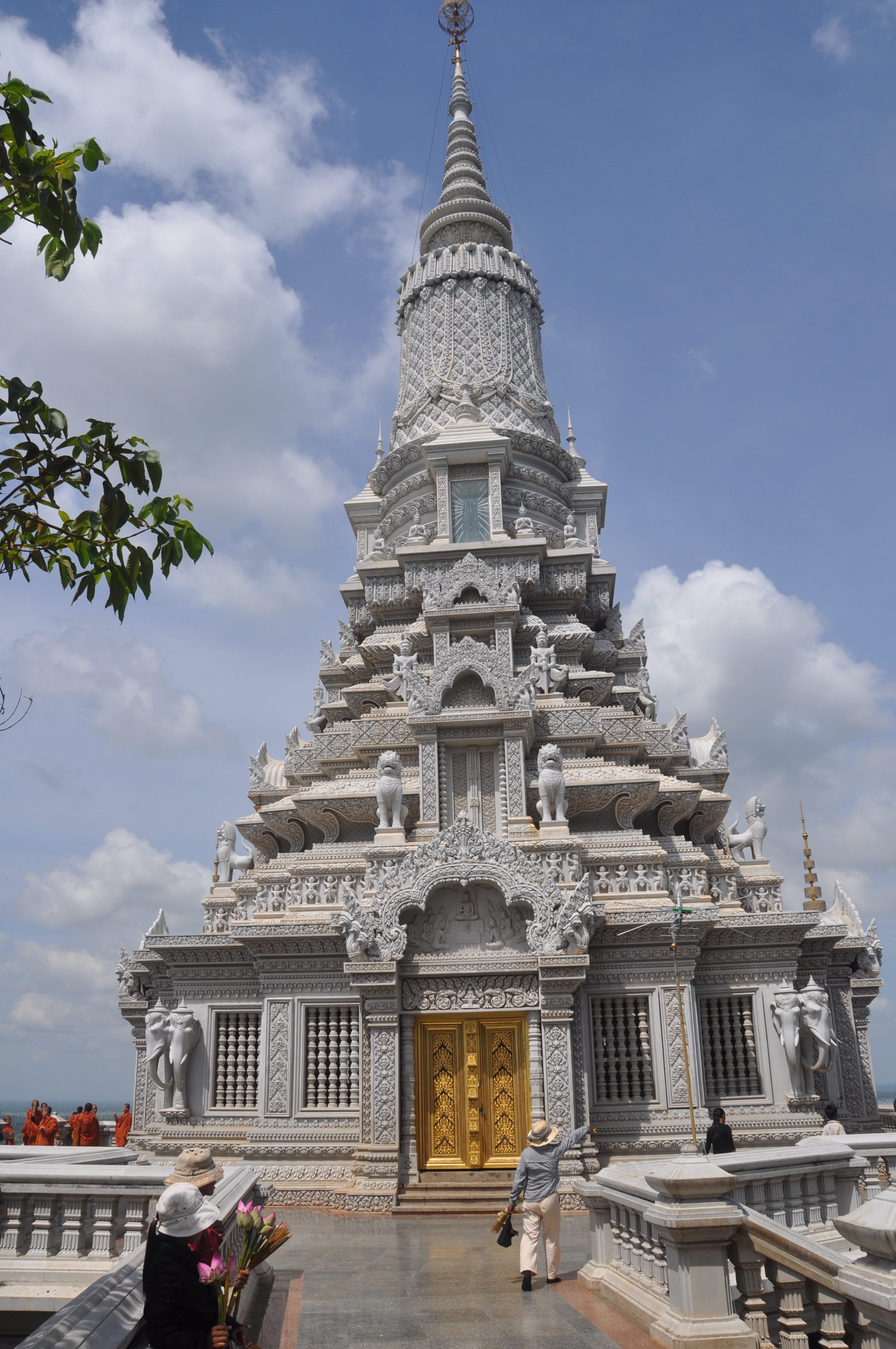
we took a break. But soon we turned around and took in the first of five stupas which crown the hill.

image

After walking around it, we wended our way along the crest, from one stupa to the next, with Monette scampering along and giving us fractured, splintered explanations, until we got to the last, a stupa with four faces.

image

Well! This was a pleasant discovery! Those four faces staring benevolently out to the four cardinal points were intriguing indeed.

image

I must confess, my first – wholly irreverent – thought was that they reminded me of Thomas the Tank Engine of my youth.

image

But then another memory floated to the surface, from several years ago when my wife and I visited Angkor Wat, several hundred kilometers upriver from where we were currently standing, on the edges of Tonle Sap lake: Prasat Bayon, the shrine to Mahayana Buddhism, the temple of the 200 faces of Lokesvara, the bodhisattva of compassion. Yes, this must have been the model of the stupa before me.

image

image

image

Ah, what a lovely, lovely temple is Prasat Bayon! The bodhisattva who embodies the compassion of all Buddhas smiling at you wherever you stand, wherever you look. A thousand rays of compassion sweeping us visitors and what had been the surrounding city.

But King Jayavarman VII, who built the temple and who replaced the Khmers’ state religion of Hinduism with Mahayana Buddhism (and whose face, many think, was the model of the bodhisattvas at Prasat Bayon)

image

merely copied from a previous model for his design, that of Brahma, the Hindu god of creation. Brahma is very often represented with four heads, each reading one of the four Vedas. Temples dedicated to him are rare, but there was one close to Angkor Wat, on Phnom Bok. The quadruple-headed bust below, from that temple, is now in the Musée Guimet in Paris, no doubt “taken in for its protection” (or do I mean filched?) by the-then French colonial masters.

image

There is also a regionally famous Brahma-derived statue here in Bangkok, down the road (as it were) from where we live: Phra Phrom (a Thai rendition of Brahma).

image

He is considered the deity of good fortune and protection. Since he has a solid following among the Chinese of Singapore, Hong Kong and Taiwan, and knowing the proclivity of the Chinese to gamble, I rather suspect that Brahma has gone from being the god of creation to the god of gamblers. How the mighty have fallen …

And on this melancholy note, it was time to leave my reveries and move on. My wife and I made our way back down the hill, at the bottom of which we gave Monette 10 dollars for his services, enjoining him to use it for his schooling (he had informed us that he was going to a paying school) but fearing that it might end up instead in the pockets of his “minders”. We picked our way past the rubbish left by previous visitors and a monkey snacking on the boiled rice thrown away by one of them, we climbed into Andy’s tuk-tuk, and we puttered our way back to Phnom Penh.

____________________
Andy’ tuk-tuk: https://www.facebook.com/AndyFriendlyTukTukPhnomPenh/photos/pcb.290625764427281/290625417760649/?type=1&theater (in https://www.facebook.com/AndyFriendlyTukTukPhnomPenh)
Oudong from a distance: http://static.panoramio.com/photos/large/32298005.jpg (in http://www.panoramio.com/m/photo/32298005)
Stairs at Oudong: http://farm3.staticflickr.com/2825/10724616273_e3e9cf04b7_z.jpg (in http://iwandered.net/2013/11/07/day-trip-to-oudong-cambodia/)
Monkey: https://c2.staticflickr.com/8/7420/8993459951_7619376cd4_b.jpg (in https://www.flickr.com/photos/kamimura4401/8993459951/)
View from the top: http://1.bp.blogspot.com/-Yk57J-xzt4Y/UFLx1bIbIrI/AAAAAAAABPA/Mdq0Z5_DBuM/s1600/Oudong6.png (in http://www.camtravel.info/2012/09/oudong-mountain-cambodia.html#.VIB9hGIaySM)
First stupa: http://upload.wikimedia.org/wikipedia/commons/3/30/Sanchak_Mony_Chedei.jpg (in http://en.m.wikipedia.org/wiki/Oudong)
Stupa with faces: https://c2.staticflickr.com/4/3018/3087092115_26ee767788_b.jpg (in https://www.flickr.com/photos/zapata_k/3087092115/)
Stupa with faces – close up: http://1.bp.blogspot.com/-aAJEmmCf6h8/Um5lWw9rdxI/AAAAAAAAxbg/FBPq3MXQ0_U/s1600/23+Close+Up+of+Four-faced+Top+Cambodia+Oudong+Temple+Cycling-358.jpg (in http://jotarofootsteps.blogspot.com/2013/10/sites-oudong-temple-cambodia.html)
Thomas the tank engine: http://3.bp.blogspot.com/-KiFNIBZmqPI/TxKoxis-FrI/AAAAAAAAAJY/sVCzG4VTLd0/s1600/ThomastheTankEngine.jpg (in http://latestnewsfromtpandt.blogspot.com/2012/01/thomas-tank-engine-review.html)
Bayon temple-1: http://www.rickmann-uk.com/wp-content/uploads/Bayon-three-faces.jpg (in http://www.rickmann-uk.com/index.php/2007/06/05/angkor-temples-cambodia/)
Bayon temple-2: http://jcinnamonphotography.files.wordpress.com/2011/10/bayon-temple-faces-2.jpg (in http://jcinnamonphotography.wordpress.com)
Bayon temple-3: http://en.m.wikipedia.org/wiki/Bayon#/image/File:Das_Lächeln_von_Angkor.jpg (in http://en.m.wikipedia.org/wiki/Bayon)
King Jayavarman VII: http://en.m.wikipedia.org/wiki/Bayon#/image/File:JayavarmanVII.jpg (in http://en.m.wikipedia.org/wiki/Bayon)
Brahma: http://en.m.wikipedia.org/wiki/Brahma#/image/File:Brahma_Musée_Guimet_1197_1.jpg (in http://en.m.wikipedia.org/wiki/Brahma#Temples)
Phra Phrom: http://en.m.wikipedia.org/wiki/Brahma#/image/File:Thai_4_Buddies.jpg (in http://en.m.wikipedia.org/wiki/Brahma#Temples)

WISTERIA

Beijing, 13 April 2014

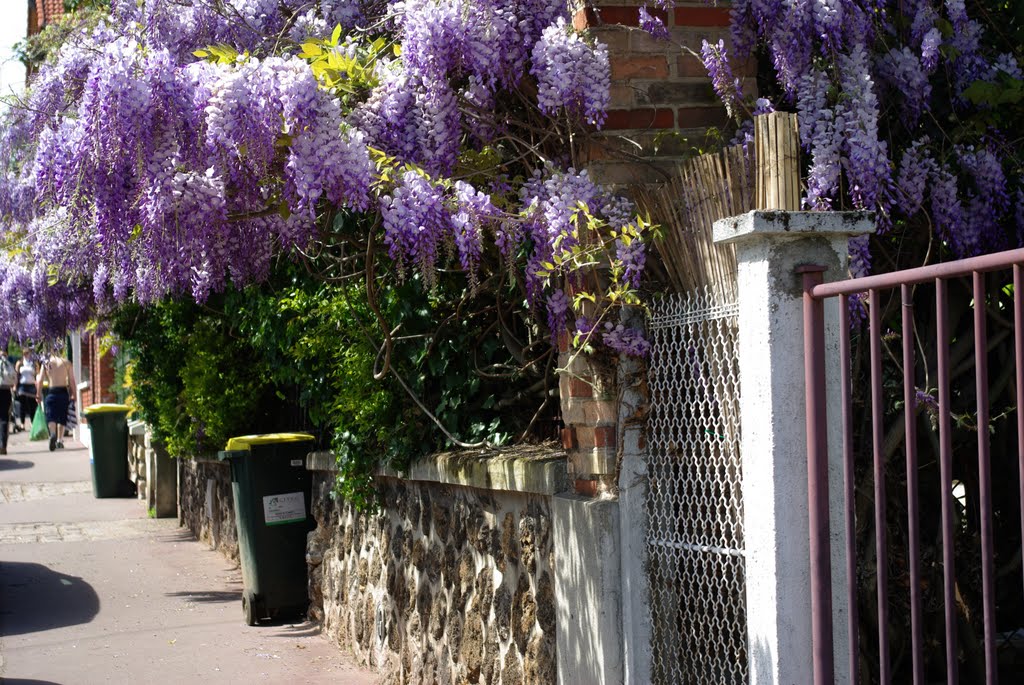
My French grandmother’s house was … old-fashioned, shall we say. Among its many quirks was the fact that it did not have a flush-toilet. Instead, you eased yourself into this small, cluttered space, and you parked your derriere (your backside) on this beautiful wooden seat to do your besoins (your needs), as the French delicately put it. Once finished, you pulled a lever to open a trap door at the bottom of the porcelain bowl and off went your besoins, helped along with a generous portion of water you poured in from a large enameled metal jug. The exhalations emanating from the opened trap door were sometimes eye-wateringly powerful, and there was always a generally musty smell in the loo. However, the olfactory downsides were more than offset by the beautiful view from the window, framed as it was by the bright green leaves of a wisteria vine which snaked up the outside wall and onto the roof. The view was that much more beautiful in spring when clusters of the wisteria’s light purple flowers thrust themselves at the window. When my mother inherited the house, one of the first things she did was to install a flush toilet. But the wisteria remained. In fact, after my parents retired there my mother encouraged it to spread to other walls nearby, which made it a rare pleasure to go and visit my parents in spring. This is not a photo of the house, but it gives an idea of what would greet my wife and I, with children in tow, after a long drive up from Italy in May.
glycine sur mur-2
Since those moments in my grandmother’s loo, I have always had a weak spot for wisteria. At the right moment of the year, I keep an eager lookout for a sudden froth of light purple flowers popping up over a wall or in the corner of a garden. I have a particularly powerful memory of a bike trip which my wife and I made many years ago along the Loire valley, where between one Renaissance chateau

chateau_amboise

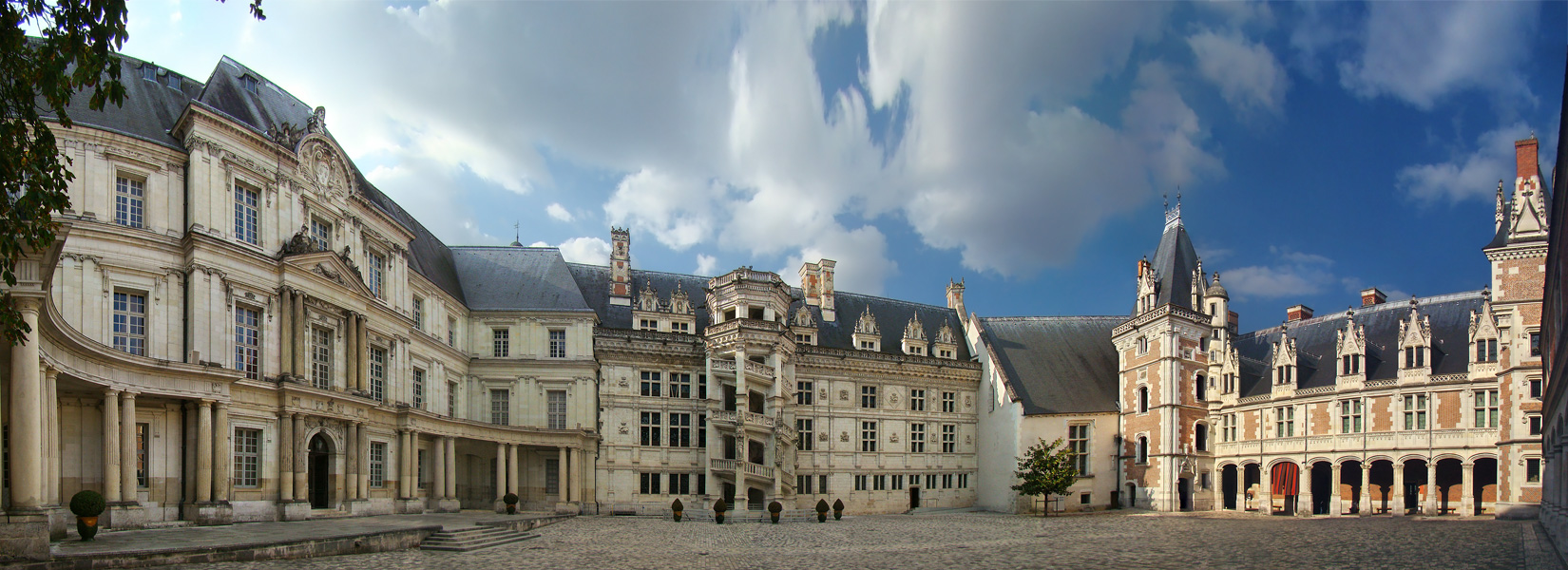
and another

chateau_Blois

we would run into cascades of wisteria – every garden seemed to have a wisteria.
glycine dans la vallee de la Loire-1

glycine dans la vallee de la Loire-2
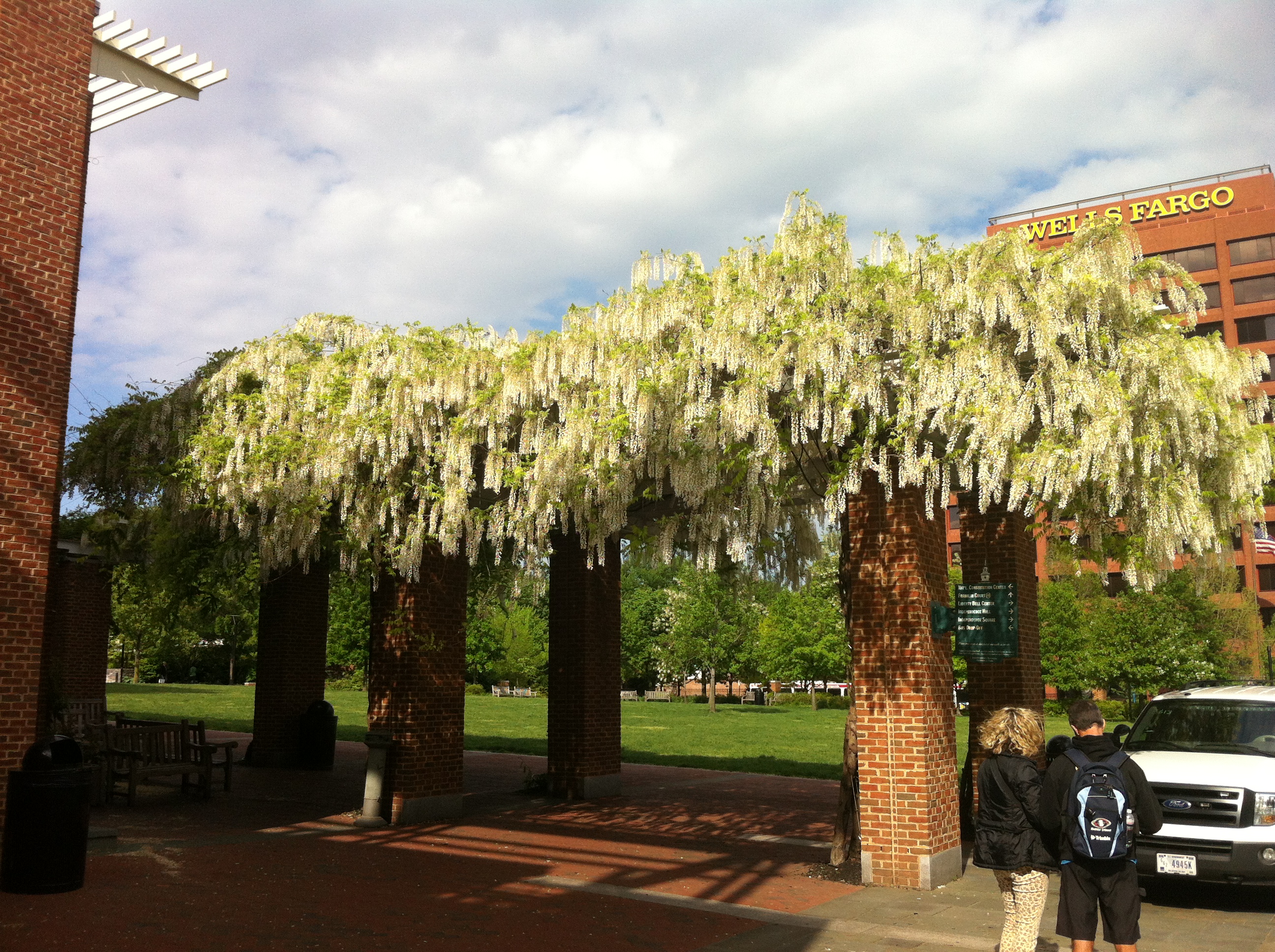
And just last year, when we were in Philadelphia, we stumbled onto a pergola covered by a thick coat of white wisteria, which was a first for me (I’ve mentioned this in an earlier post but I repeat the photo)
white flowers 003
And the neighbours to our rooftop garden in our last apartment in Vienna had planted a wisteria, which coiled and twisted its way onto our side, an intrusion we gladly accepted since it rendered so pleasant those first days in spring when my wife (with a very little help from me) toiled at her garden tubs, planting and repotting, after the long sleep of winter. In fact, jealous at their success, I purchased a modest wisteria plant for our side, with dreams of it eventually smothering our balcony. Alas, it perished miserably that summer while we were away for our holidays.

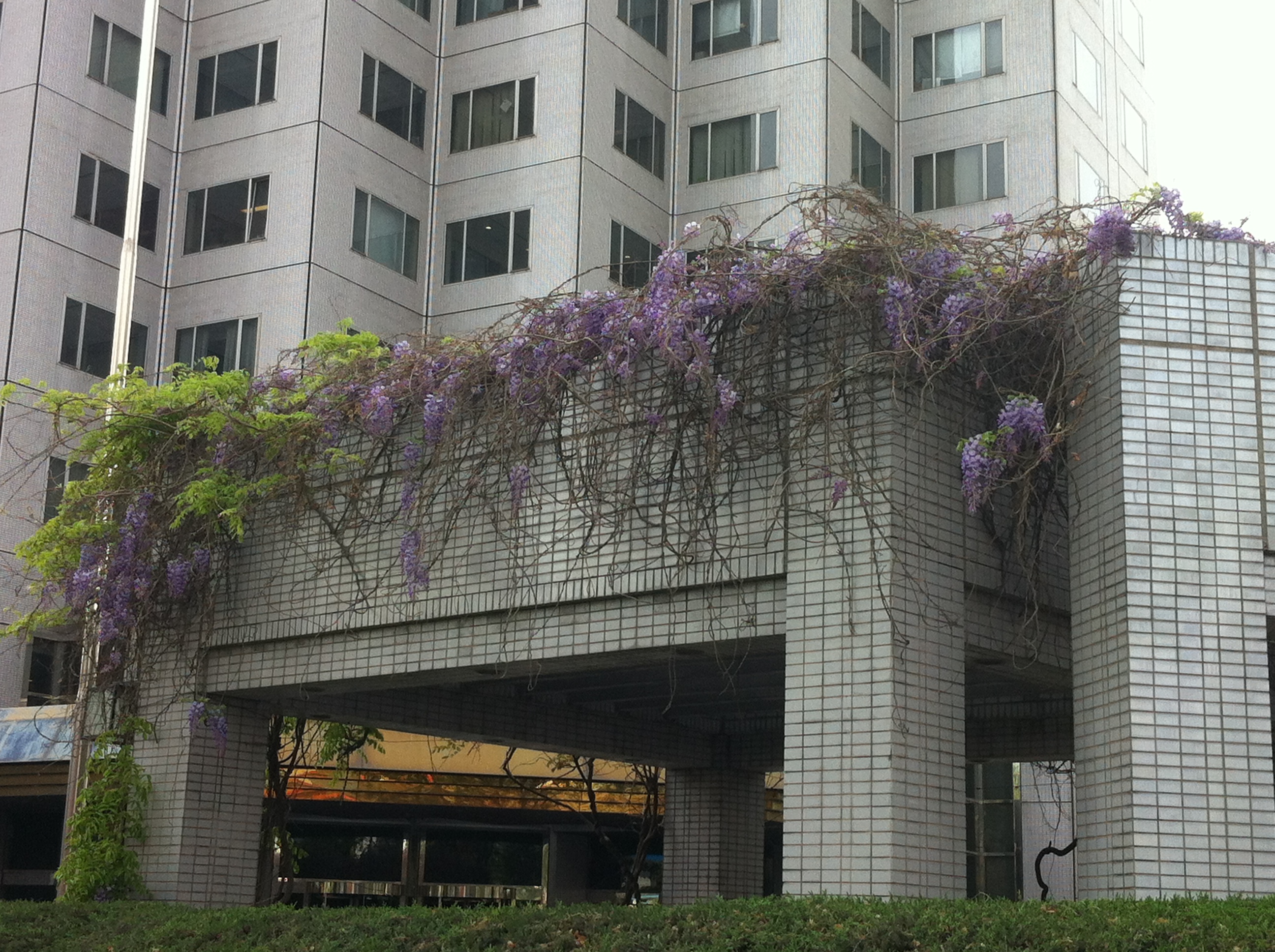
So you can understand my pleasure when I saw that the wisteria across the road from our apartment in Beijing had flowered
wisteria beijing

although I mentally castigated the management of the building for not doing a little pruning.

For the first time in my life, I read up a bit on wisteria. And the first thing I discovered is that wisteria is Chinese! Well, there’s also a Japanese wisteria. And two American wisterias. But no European wisteria! So once again, like the weeping willow which I wrote about in my last post and the magnolia which I wrote about a few posts earlier, Europeans have borrowed a plant from China, or maybe in this case from Japan (but not from the US; American wisteria don’t seem to be gardeners’ favourites, even in the US itself, since their flowers are of more modest size, bloom for less time, and are scentless). When you read these cases, you begin to understand why the poorer countries complain about pharmaceutical and other companies from the richer countries coming and “borrowing” their flora and making a fortune selling them, or their chemical components, back home.

But now I’m left with a tricky question: was the wisteria at my grandmother’s house Chinese or Japanese? The literature tells me that the flower-clusters (racemes in the horticultural lingo) of the Japanese wisteria are longer than those of the Chinese wisteria, but I’m buggered if I remember the length of those racemes nodding at the loo window. And anyway, I’m sure raceme lengths are all averages, so I don’t think this would be a good way for an uneducated plant man like me to distinguish a Chinese wisteria from its Japanese cousin. A far more powerful way of distinguishing the two seems to be the direction of twining which the vine adopts. Chinese wisteria twine clockwise, while Japanese wisteria twine counter-clockwise! (I love it; isn’t that a great way of figuring out where a plant comes from? But why would one twine one way and the other the other? The mysteries of genetics). I must remember to send my sister an email (she inherited the house, did further massive works, but kept the wisteria) and ask her which way the wisteria twines. This will no doubt be the moment she concludes that I have finally lost it …

______________

Wisteria on the house: http://img.over-blog-kiwi.com/0/53/56/12/201305/ob_bbf5590f142c0c0c464830009f54793b_img-8686.JPG [in http://mounic.over-blog.com/lieu-saint-de-provence%5D
Château d’Amboise : http://www.chateau-amboise.com/oktThemes/p-c094-01/images/chateau_amboise_accueil.jpg [in http://www.chateau-amboise.com/en/%5D
Château de Blois : http://upload.wikimedia.org/wikipedia/commons/f/fb/Loire_Cher_Blois1_tango7174.jpg [in ] http://en.wikipedia.org/wiki/Ch%C3%A2teau_de_Blois
Wisteria along the road-1: http://mw2.google.com/mw-panoramio/photos/medium/22548315.jpg [in http://www.panoramio.com/user/701296/tags/Season%20Spring?photo_page=2%5D
Wisteria along the road-2: http://static.panoramio.com/photos/large/34926262.jpg [in http://www.panoramio.com/user/701296/tags/Season%20Spring?photo_page=2%5D
Wisteria in Philadalphia: my photo
Wisteria in Beijing: my photo

INDONESIA – THE TEMPLES: SO NEAR AND YET SO FAR

Beijing, 26 February 2014

A major reason why we came to this part of Indonesia was to visit Borobudur, Prambanan, and other smaller Buddhist and Hindu temples scattered around the Kedu plain, north of Yogyakarta. Well, Mt. Kelud’s eruption put paid to that plan! With equal indifference the volcano covered all temples, Buddhist and Hindu alike, with a layer of ash. Result: all the sites were closed to visitors while clean-up crews moved in to wash off the ash.

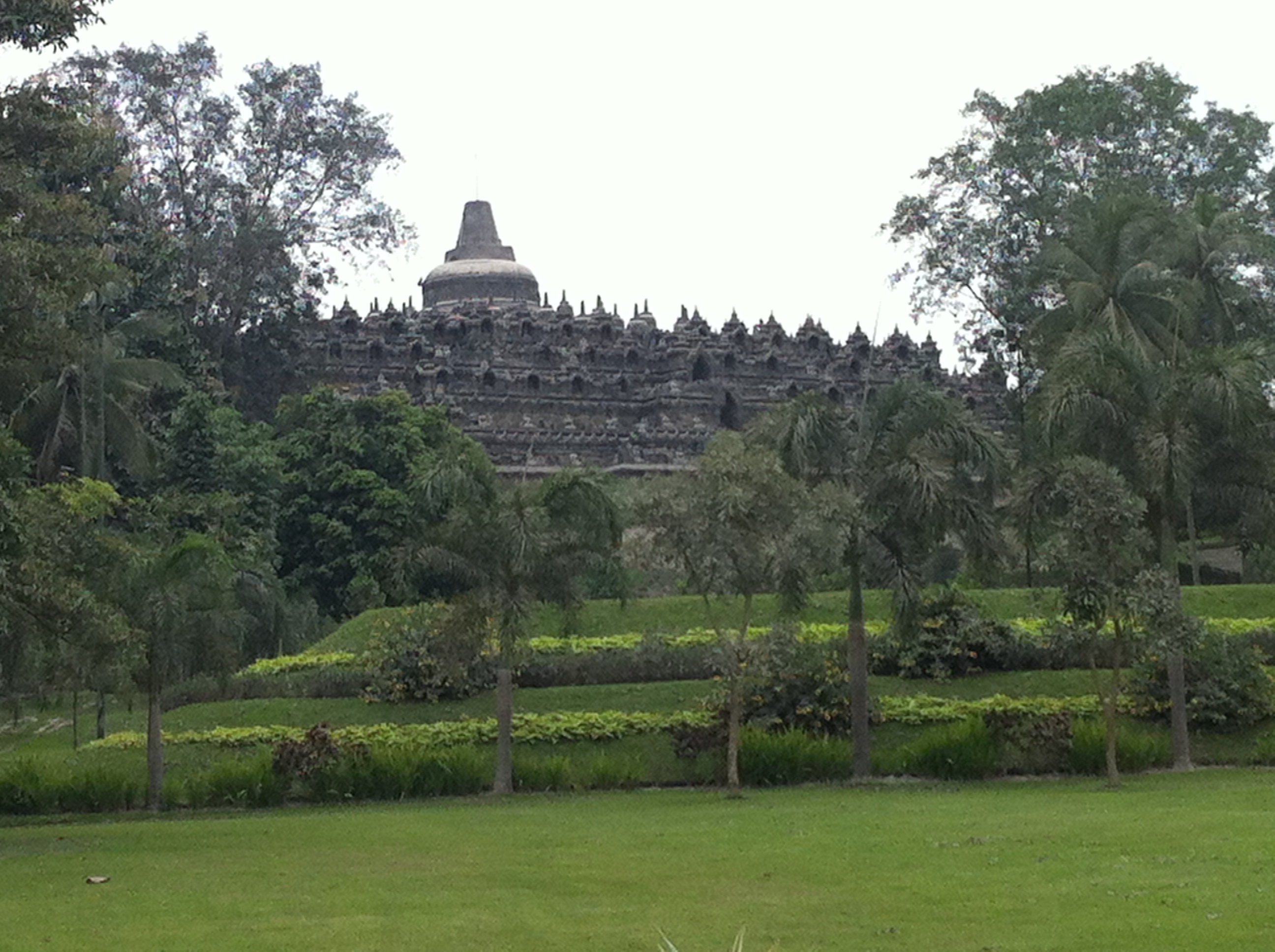
What to do, what to do? Well, hope springs eternal, as they say. We kept telling each other that surely they would reopen the temples quickly, within a few days, maximum! I mean, all those disappointed tourists milling around! All their money not being spent on entry tickets and ancillaries! So on the first day, we walked down to Borobudur to check out the situation. Not brilliant.  It would be a long time before the temple itself would be reopened, we were informed, although the grounds might be re-opened in a few days. The locals helpfully guided us to a spot on a side road from which one could see the temple quite well. They were right, with the foreground of tender green rice shoots being particularly appealing.
Borobodur across rice paddies 002
We then decided to go to a hotel abutting the temple grounds to have a late lunch, and discovered to our astonishment an excellent view of the temple from the back of the hotel.
Borobodur from Manohara 002
So, sitting on some steps I read out to my wife a description of all the things we were missing: the 2,760 bas-reliefs, “exquisite, considered to be the most elegant and graceful in the ancient Buddhist world”, as well as the 461 Buddha statues circling the middle and upper levels of the temple. Rather masochistic reading, I grant you, but I wasn’t having me carry that heavy guidebook all the way to Indonesia for nothing. And anyway, we kept telling each other, we might get closer still when they opened the park later in the week.

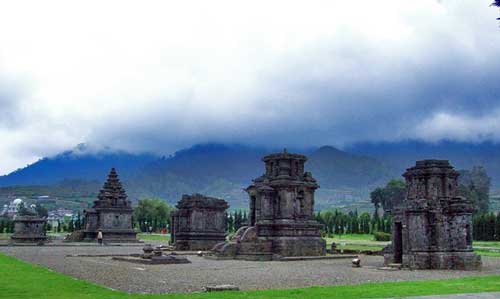
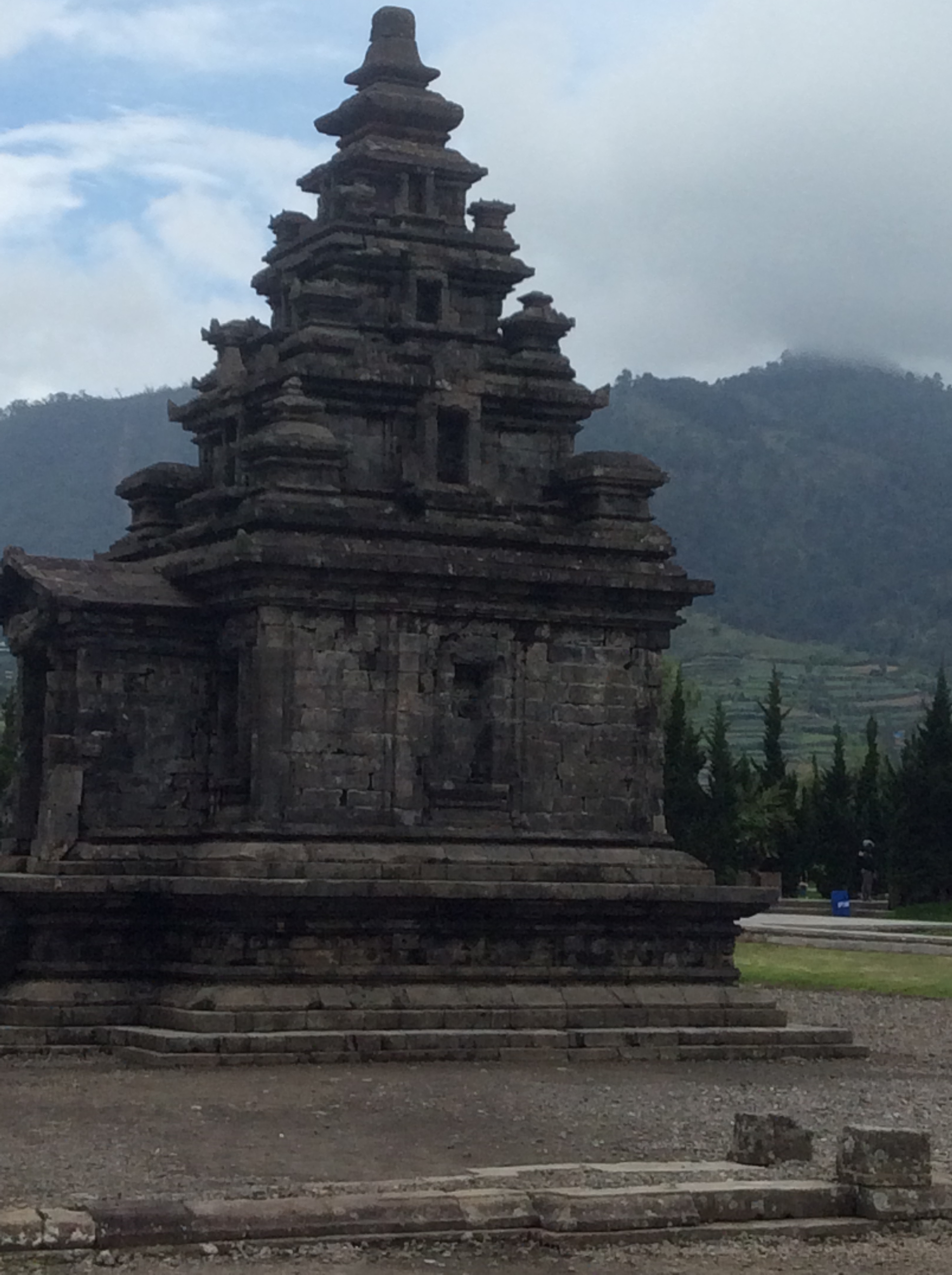
The next day, a local guide took us up to Dieng Plateau, which was a very pleasant drive up to 2,100m. After visiting a smoking solfatara (the plateau is an ancient volcanic caldera complex) and a volcanic lake, we visited a series of small Hindu temples, “the oldest known standing stone structures in Java”, so the guidebook informed us. Here, Mt. Kelud’s ash had not reached, so we could visit them no problem.

Dieng plateau temples 000
Dieng plateau temples 002

This was the closest we ever got to bas-reliefs

Dieng plateau temples 006

Intriguing. Each temple was rather small, with very dark interiors. It wasn’t clear to us why anyone would expend all that effort and stone for such a small inner space. We had to be missing something, and the heavy guidebook did not enlighten us.

The next day, hope as I say springing eternal, we again walked down to Borobdur, to check if the park was open (yes) and if we could get any closer to the temple (no). Giving up on Borobudur, we went to visit Yogyakarta for the day (where we had the delicious fried chicken I have previously mentioned).

We now put our faith in our local guide, who said that he might, just might, get us into Prambanan. He also said we should have no problem visiting the smaller temples in the surroundings; the guards there were more relaxed. So, with hope springing etc., we set out the next day to visit Prambanan and a series of smaller temples. Alas, our guide was too optimistic. At Prambanan, we could go into the grounds but couldn’t get close at all to the main temples, so we decided to forget it. And as for the other temples, the universal answer was no, we couldn’t enter, the boss might come and it wasn’t worth their while risking it (after hearing this for the fourth time, we started asking ourselves who was this boss who seemed omni-present and ever so fierce?). We contented ourselves with looking at the temples from the fences, except in the case of Prambanan where we sneaked through an open unguarded gate around the back and were rewarded with a great view of the temple ensemble.

So here are the photos we took:

Mendut
Mendut temple 003
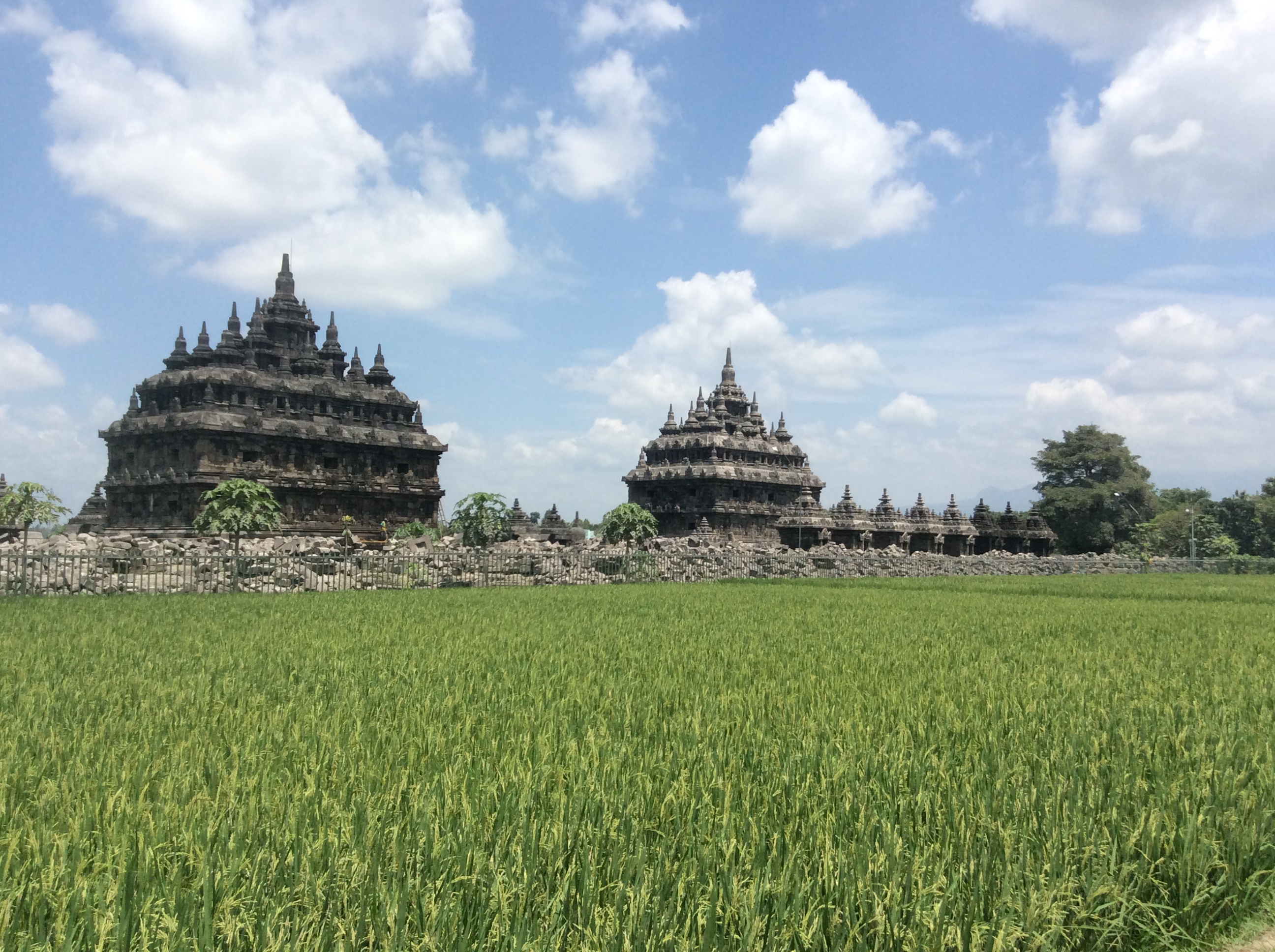
Plaosan
Plaosan temple 004
Sewuu
Sewuu temple 001
Prambanan
Prambanan temple 002
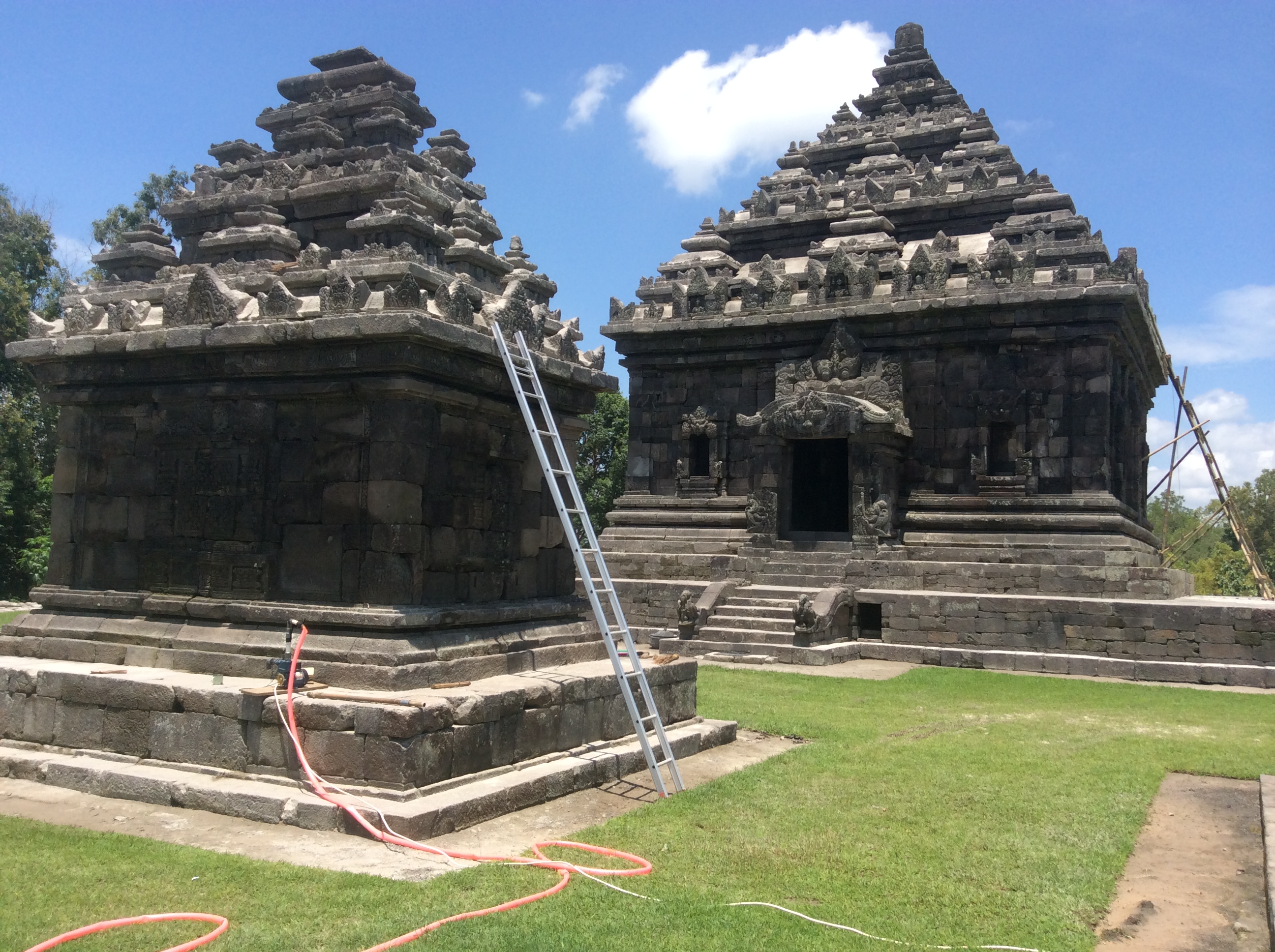
Ijo

Ijo temple 001

high, high, on a hill
Ijo temple-view of surroundings
Sari
Sari temple 001
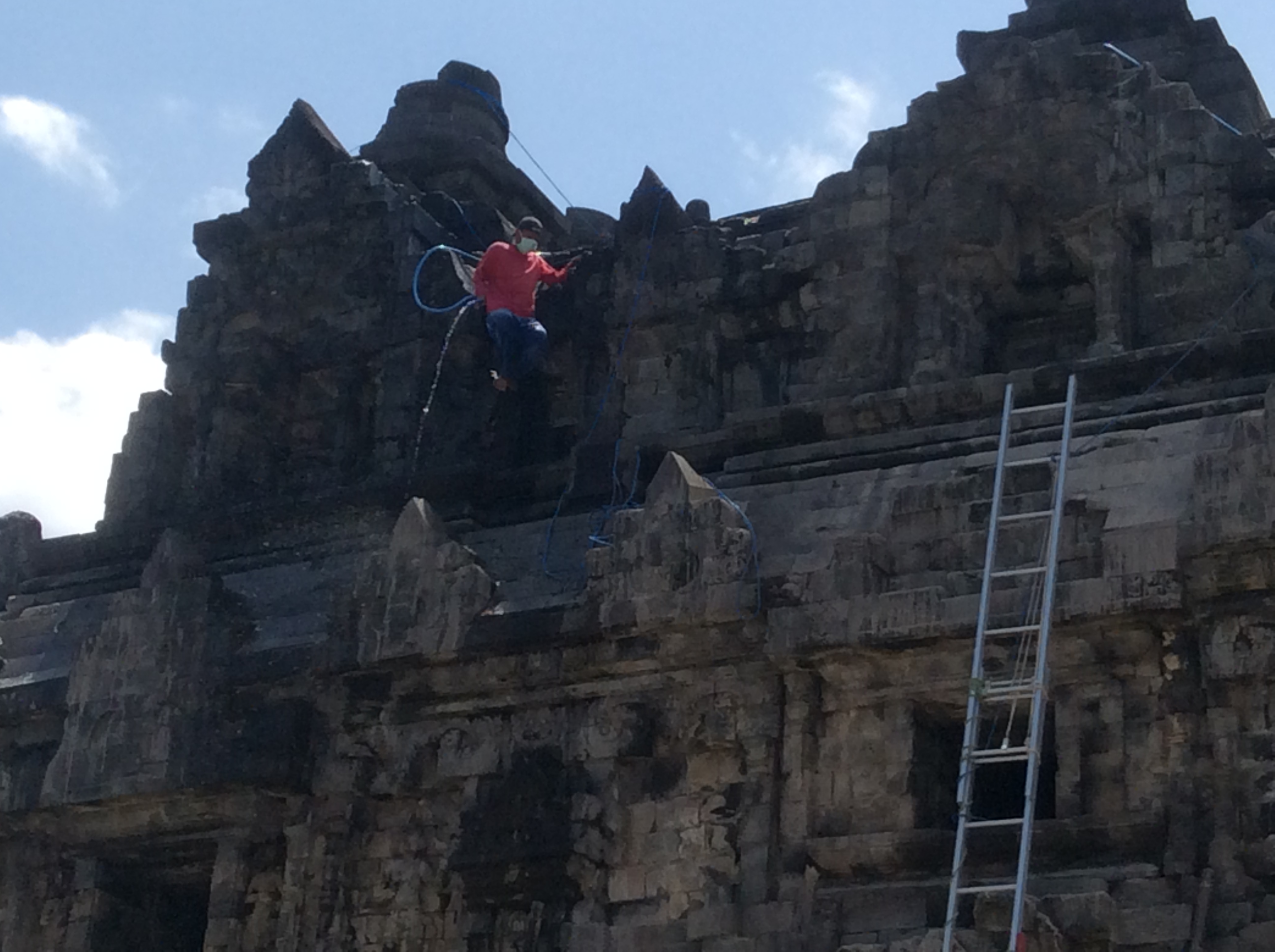
being cleaned by crazy cleaners – no safety harness, no ropes, nothing!

Sari temple 005

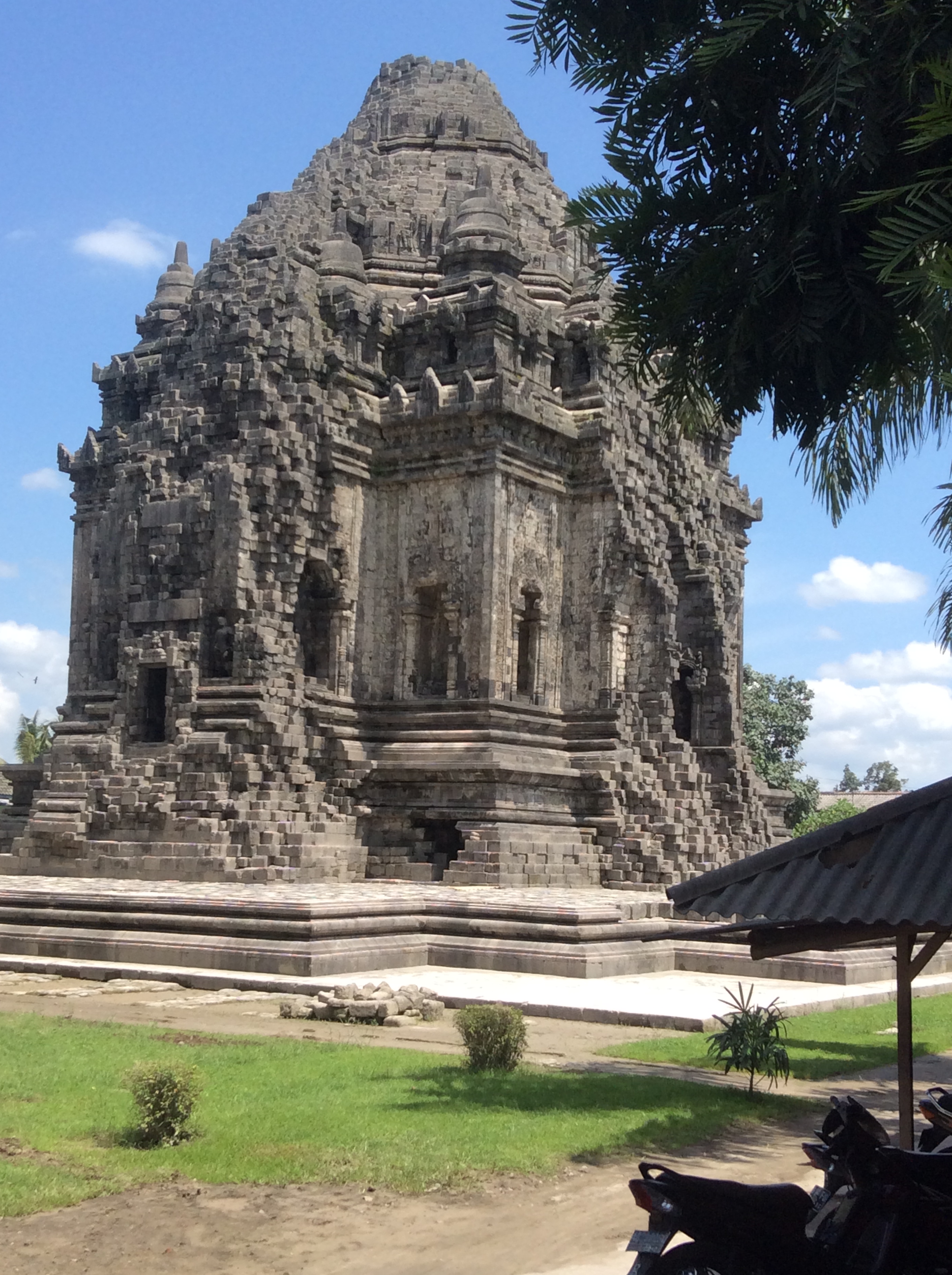
Kalasan
Kalasan temple 001
being cleaned by even crazier cleaners

Kalasan temple 009

and finally Sambisari
Sambisari temple 002
an odd temple, this one, seemingly sunken 5m below ground level but actually completely buried long ago during a volcanic eruption. This must have been a Pompeii-like event.

Actually, you know, this wasn’t such a bad way of seeing the temples, just an overview as it were. The drives between the temple alone were worth it – it’s really a lovely part of the world. And seeing all these temples with no other tourists around was definitely a plus. My only regret was not being able to see the bas-reliefs from closer up. But I take the Buddhist precept to heart that desire is the ultimate source of all unhappiness, and I will not let myself desire to see the bas-reliefs. Anyway, I’m sure their pictures are all on the internet …

______________________

All pictures ours, except:

Dieng plateau temples overview: http://allindonesiatravel.com/images/arjuna-temples-dieng-plateau-java-indonesia.jpg [in http://allindonesiatravel.com/dieng-plateau-central-java/%5D