DRAGONFLY SWARMS

Beijing, 14 August 2013

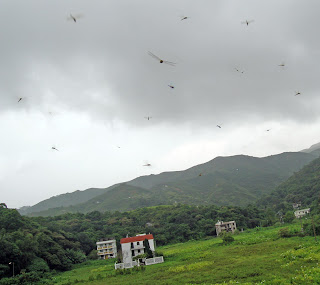
As we swelter in the heat and humidity of a Beijing August, my wife and I have noticed over the last week or so a singular natural phenomenon: the appearance of swarms of dragonflies. They are particularly thick around my piece of canal, which I suppose is not surprising since their larvae are aquatic. Neither my wife nor I have ever seen dragonfly swarms in Europe, so we are fascinated by this phenomenon. I tried taking photos with my iPhone but it was a miserable failure. My wife looked at the photos and said, “Sorry, where are the dragonflies?” The swarms are invisible. So I’ve borrowed a few photos taken by people who clearly knew how to go about it (even then, in the first one you really have to look hard to see the dragonflies).
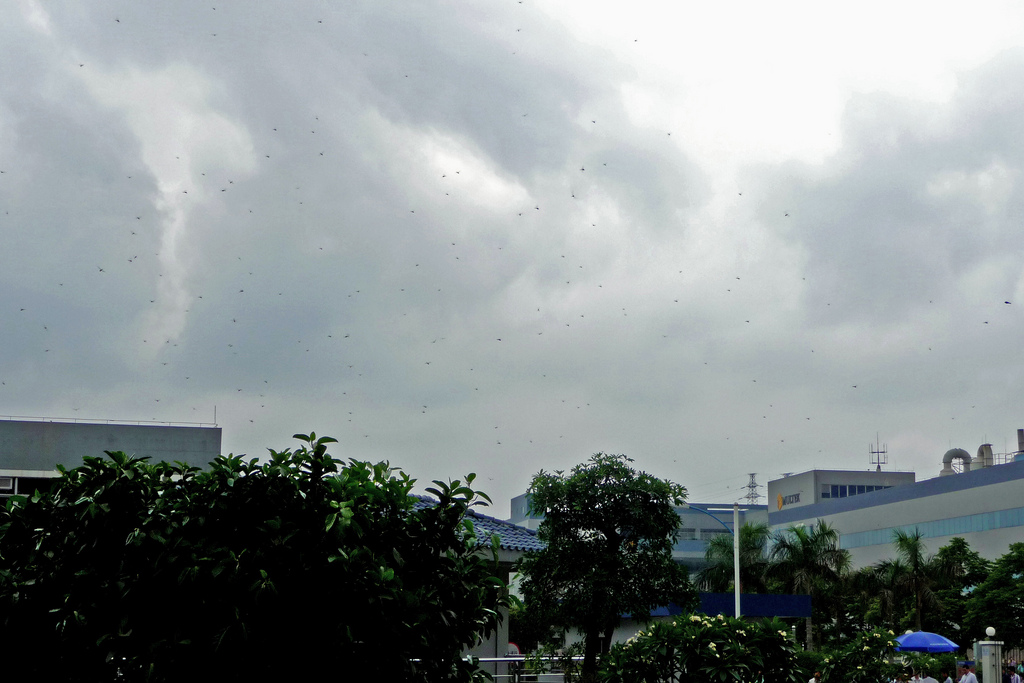
swarm of dragonflies-4

swarm of dragonflies-1

I like dragonflies. They look so awkwardly designed, the kind of thing a kid would put together with a meccano set (does anyone under the age of 50 know what that is?): a bumbling insect, with a big head attached to a thin, thin body, the whole pushed around by those funny double wings. But let me tell you, they are survivors! They’ve been around for 300 million years or so. And the design must be pretty good, because it hasn’t changed much over those millions of years. Look at these fossil dragonflies.


dragonfly fossil-1

dragonfly fossil-2

With a bit of luck, they will still be around when we’ve disappeared off the face of the earth.

I suppose the number of species is also a good indicator of success, and here dragonflies also do pretty well: some 6,000 different species, from every continent (except the Antarctic, of course). The species we are seeing here don’t look anything special, but take a look at these photos. There are some really lovely specimens.
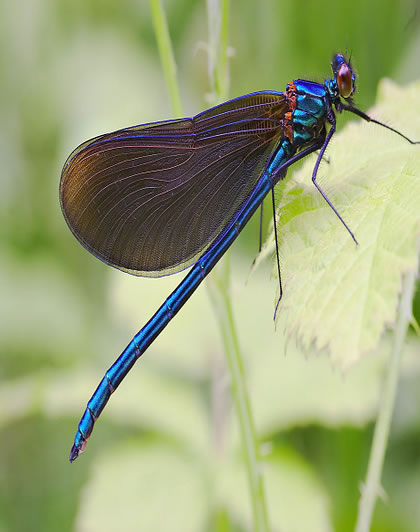
beautiful dragonfly-1

beautiful dragonfly-2

beautiful dragonfly-3

I can’t resist throwing in some close-ups

dragonfly closeup-2

Look at those eyes!

dragonfly closeup-1

My English grandfather, who was a scientist and an expert on high-powered microscopes, took beautiful black and white photographs of insects. I found them by chance in a shoe box in my grandmother’s house. I asked to have them. I took them to school. Somewhere along the line, I lost them – all those changes of addresses …

I’m glad to report that a Serious English Poet (whose poems were included in the magisterial Oxford Book of English Verse, no less) also liked dragonflies. Walter Savage Landor wrote this poem some time in the late 1700’s when a dragonfly landed on the page of his book:

Life (priest and poet say) is but a dream;
I wish no happier one than to be laid
Beneath a cool syringa’s scented shade,
Or wavy willow, by the running stream,
Brimful of moral, where the dragon-fly,
Wanders as careless and content as I.
Thanks for this fancy, insect king,
Of purple crest and filmy wing,
Who with indifference givest up
The water-lily’s golden cup,
To come again and overlook
What I am writing in my book.
Believe me, most who read the line
Will read with hornier eyes than thine;
And yet their souls shall live for ever,
And thine drop dead into the river!
God pardon them, O insect king,
Who fancy so unjust a thing!

Well, I can’t argue with the Poet’s point. Either all living things have souls or none do.

There’s one thing, though, in all this that worries me. It is said that dragonfly swarms prefigure earthquakes. In fact, there is a Chinese film, Aftershock, which starts in late July 1967 with swarms of dragonflies and segues into the destruction of the city of Tangshan. A magnitude 7.8 earthquake. A quarter of a million deaths. So I keep looking around me nervously, waiting for things to start shaking.

_____________________

Swarm of dragonflies-1: http://www.flickr.com/photos/dcmaster/3534906552/sizes/l/in/photostream/
Swarm of dragonflies-2: http://2.bp.blogspot.com/_bto9jE_yKYY/TNn-8Eg-EuI/AAAAAAAAAY0/cWleFwXL82I/s320/100903-dragonflies.jpg
Dragonfly fossil-1: http://www.bernstein.naturkundemuseum-bw.de/odonata/isophleb.htm
Dragonfly fossil-2: http://www.bernstein.naturkundemuseum-bw.de/odonata/cymato.jpg
Beautiful dragonfly-1: http://www.dragonfly-site.com/graphics/pictures-17.jpg
Beautiful dragonfly-2: http://www.dragonfly-site.com/graphics/pictures-18.jpg
Beautiful dragonfly-3: http://rateeveryanimal.com/wp-content/uploads/2013/07/Dragonfly-pink.jpg
Dragonfly closeup-1: http://jcgator1.files.wordpress.com/2012/08/dragonfly-stare.jpg
Dragonfly closeup-2: http://img.over-blog-kiwi.com/0/01/15/99/201211/ob_cdf5ef5226bf6ca6c7789ee543e3da5e_image-0.jpg
BIRTHDAY MARGARITAS

Beijing, 4 August 2013

It was my birthday a few days ago: one year closer to my sixtieth year, that age which impelled me to start this blog; one year closer to my retirement and the end of my professional life. As the years go by, I remember ever more insistently a line from the last chapters of the book The Ocelot, by Giuseppe Tomasi di Lampedusa. The book’s melancholy hero Don Corbera, Prince of Salina, has always seen his life as a stream that is flowing, flowing away. Now, old and sick and terribly, terribly tired, he muses that the stream has become a river, flowing ever more swiftly past. A few pages later he is dead.

Yes indeed, I think to myself on every birthday now, life does seem to whizz by ever faster as I grow older.

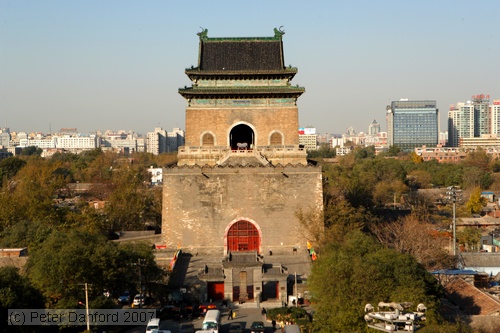
My wife was having none of these gloomy thoughts and philosophical musings! She arranged for a wonderful lunch in a restaurant located in an old temple buried in the maze of lanes behind Beijing’s Drum and Bell Towers.

Bell Tower

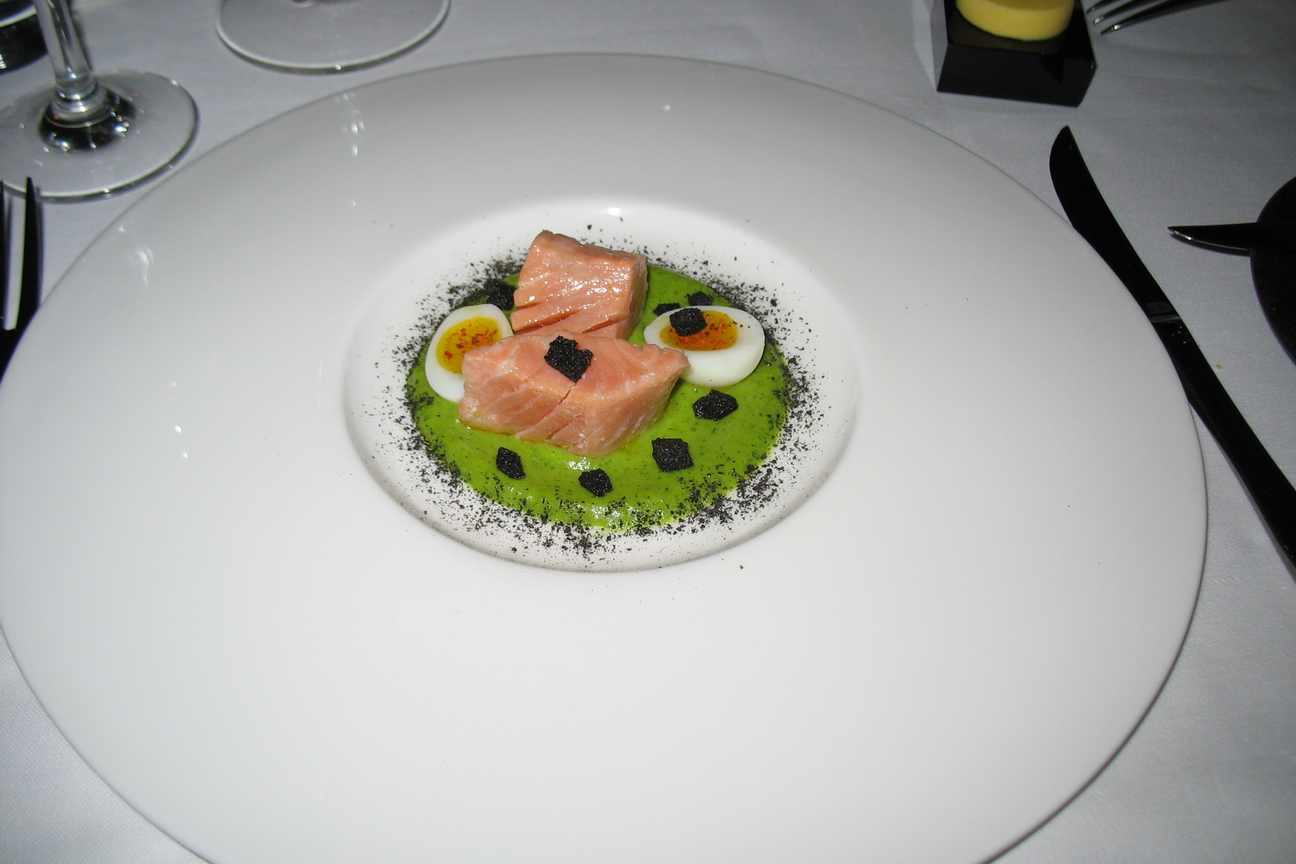
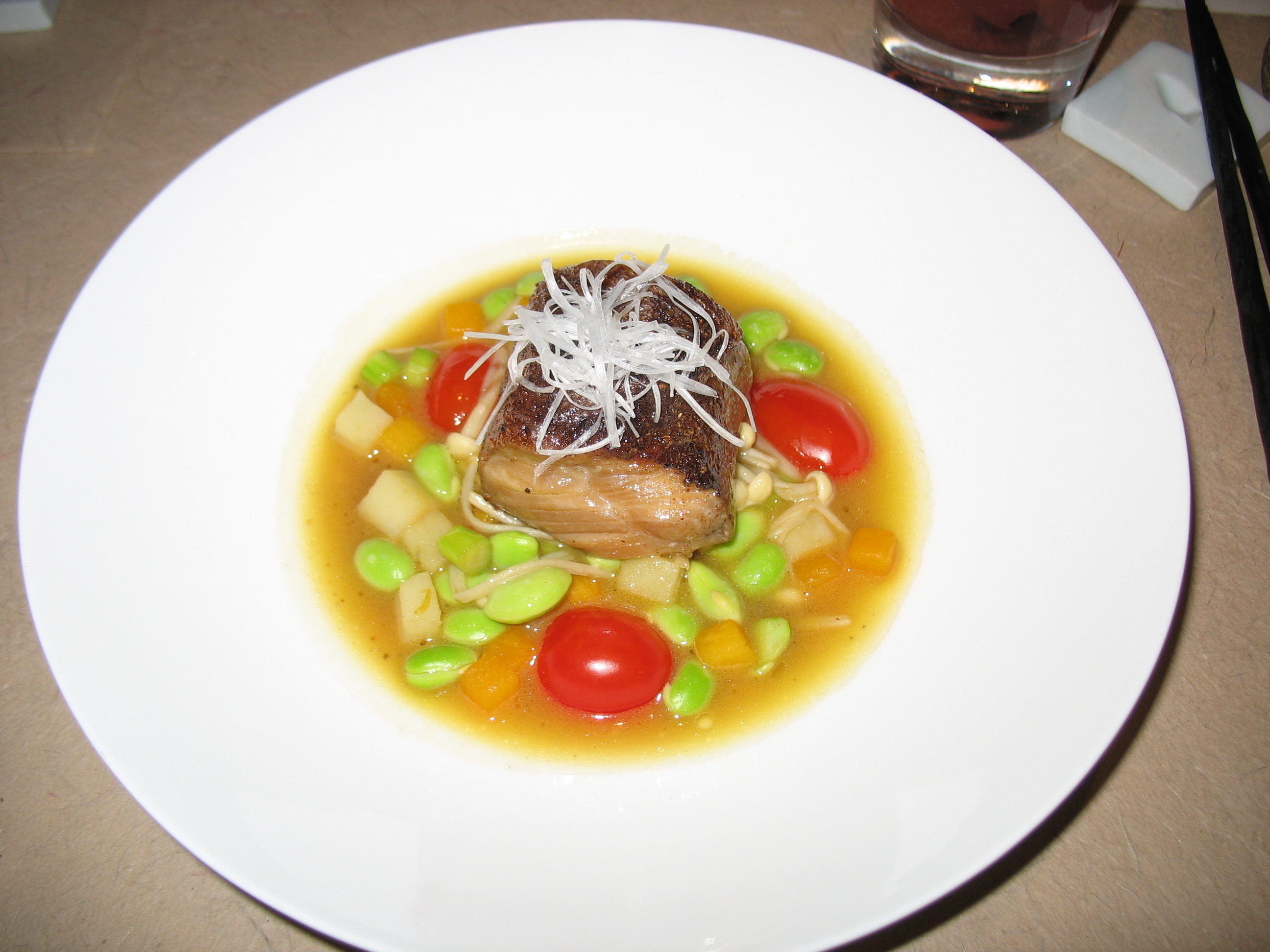
It is one of the city’s fancier restaurants, with a menu to match. To start, my wife had (I quote from the menu) “chilled asparagus soup, salmon tartar, sour cream”, while I opted for “cream soup of mussels, saffron, white wine, vegetable julienne”.  For the main course, we both chose “assorted seafood, bouillabaisse jus, aioli”. We topped it all off with a selection of cheese. The whole accompanied by a glass of French rosé wine for my wife and a glass of Spanish red wine for me. Delicious. But definitely not filling. As is the case with such restaurants, portion size was in inverse proportion to the final bill.

temple restaurant-2

temple restaurant-1

Having then spent the rest of the afternoon in the office pretending to work, I met my wife somewhere close to the Kempinski Hotel and she took me to a fancy bar for a drink. Having scanned the drinks list, we unanimously plumped for a margarita. The waitress anxiously informed us that since it was Happy Hour – buy one, get one free – we would actually get four if we ordered two. She wanted to make sure that we were aware of this. We confirmed that this was indeed the outcome we desired.

margarita

Marvelous drink, the margarita! The sweetness of the Cointreau hits the tartness of the lime juice, only discovered after breaking through the salt coating the glass’s rim; the whole covering the powerful kick of the tequila. We discovered the drink some twenty-five years ago when we were in New Mexico for a holiday. As we sat in the bar of the hotel in Santa Fe wondering idly what to drink, the barman suggested a margarita. Why not, we said. We have never looked back. Everywhere we have been, the margarita has followed us like a faithful old friend, turning up on the drinks list of just about every bar we have ever been to since.

As we drank our – four – margaritas on the terrace of the bar, we watched the evening slowly draw in over Beijing. It was a beautifully clear evening, following a beautifully clear day. Feeling a tad hungry, we ordered two bowls of noodles. After which, hand in hand, we walked slowly back home.

_________________

Bell tower: http://www.thechinaguide.com/drum_tower/Drum_Bell_Tower_Beijing_07.jpg
A starter: http://old.cityweekend.com.cn/files/images/image-20120224-0h1d4tf09s9jmtfv1bib.JPG
A main course: http://cwstatic.cityweekend.com.cn/files/images/2011/12/16/image-20111216-fyrz2miltyybbz6hjzlh.jpg
Margarita: http://images.nationalgeographic.com/wpf/media-live/photos/000/224/cache/margarita-drink-beach_22442_600x450.jpg
GONE FISHING

Beijing, 8 June 2013

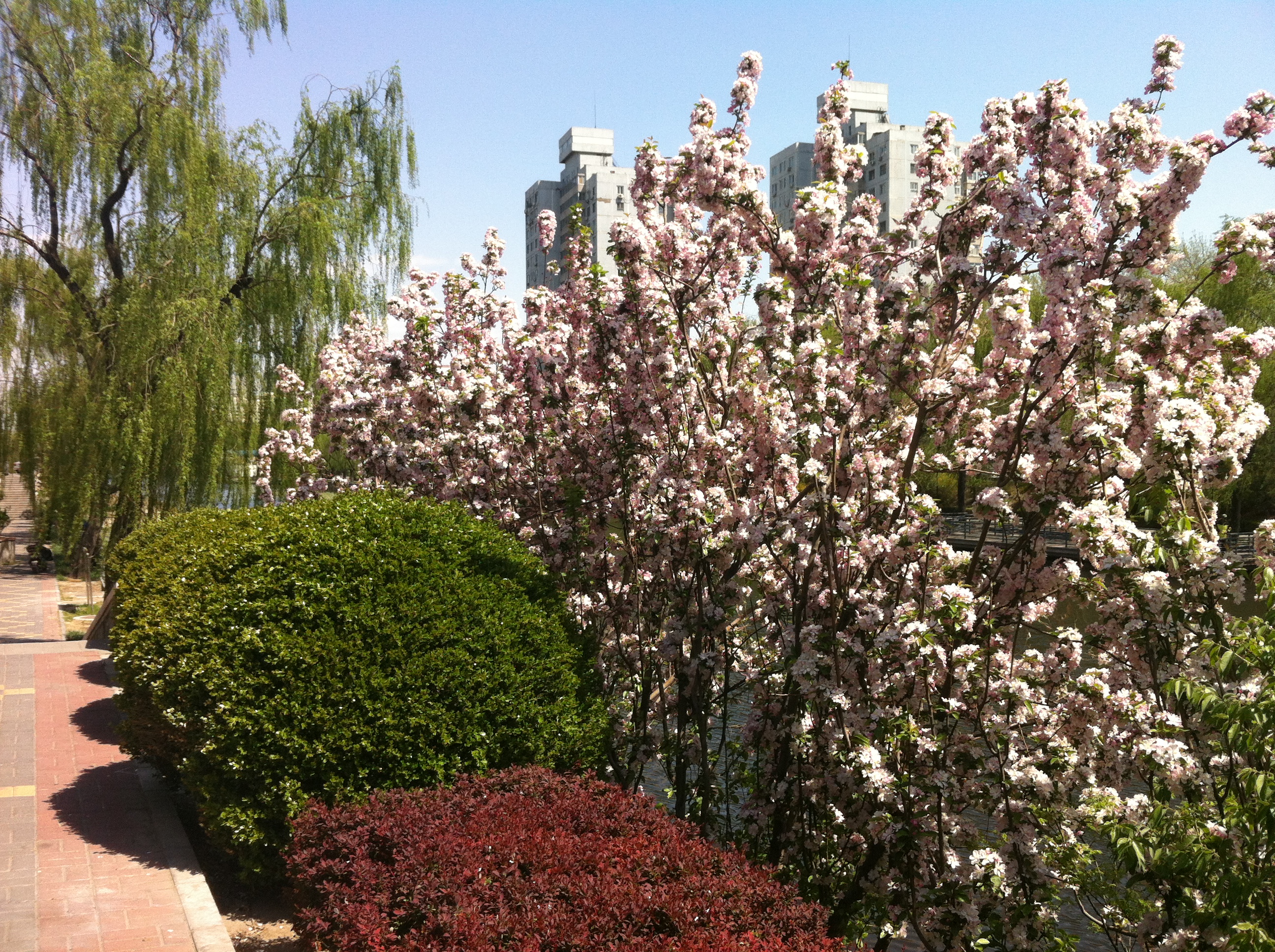
Readers of my posts will no doubt have noticed that I often refer to a piece of canal which runs close by our apartment and along which I walk every day as I go to and from the office. I like my piece of canal, especially during the summer when along the banks the weeping willows have leaved and the water irises stand tall, while the lotuses on the artificial island in the middle of the stream are unfurling.

irises May 2013 004

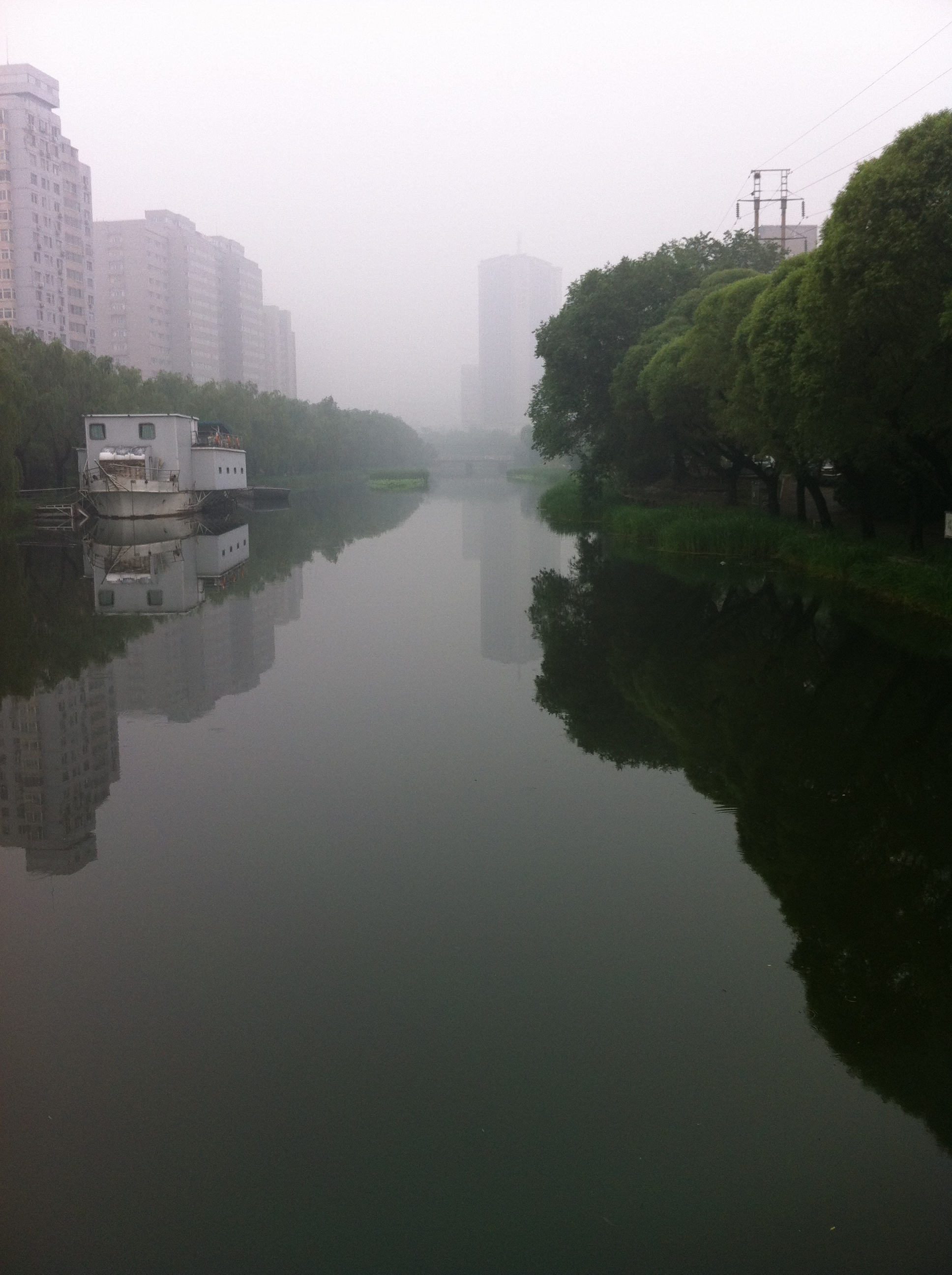
Closing my eyes a little and squinting a bit, I could almost imagine that I am on a placid river running through a quiet wooded landscape rather than in the middle of a highly urbanized setting. This view of the canal today, where to a great degree the fog blots out the buildings,  gives an idea of what I mean.

misty canal 002

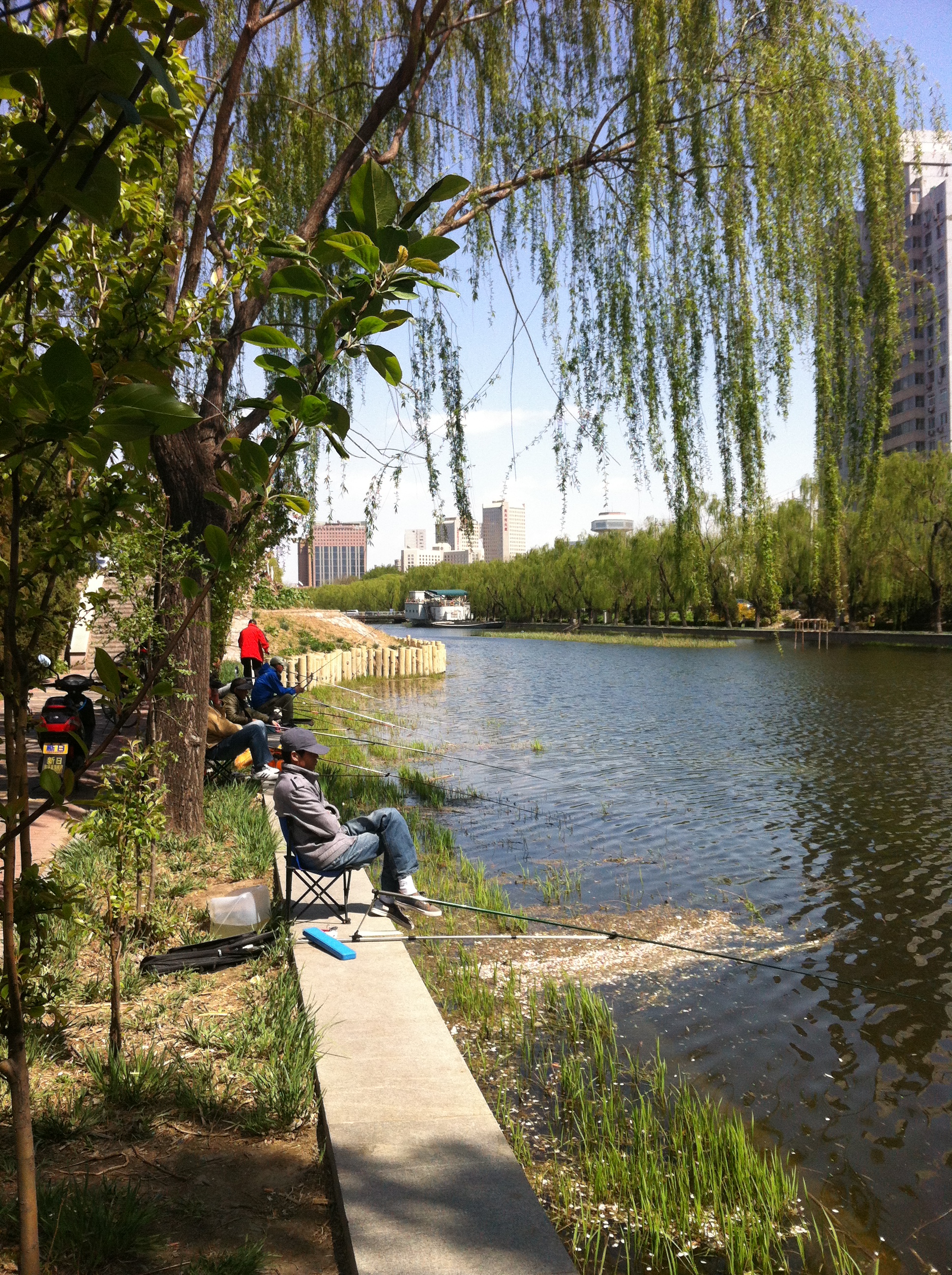
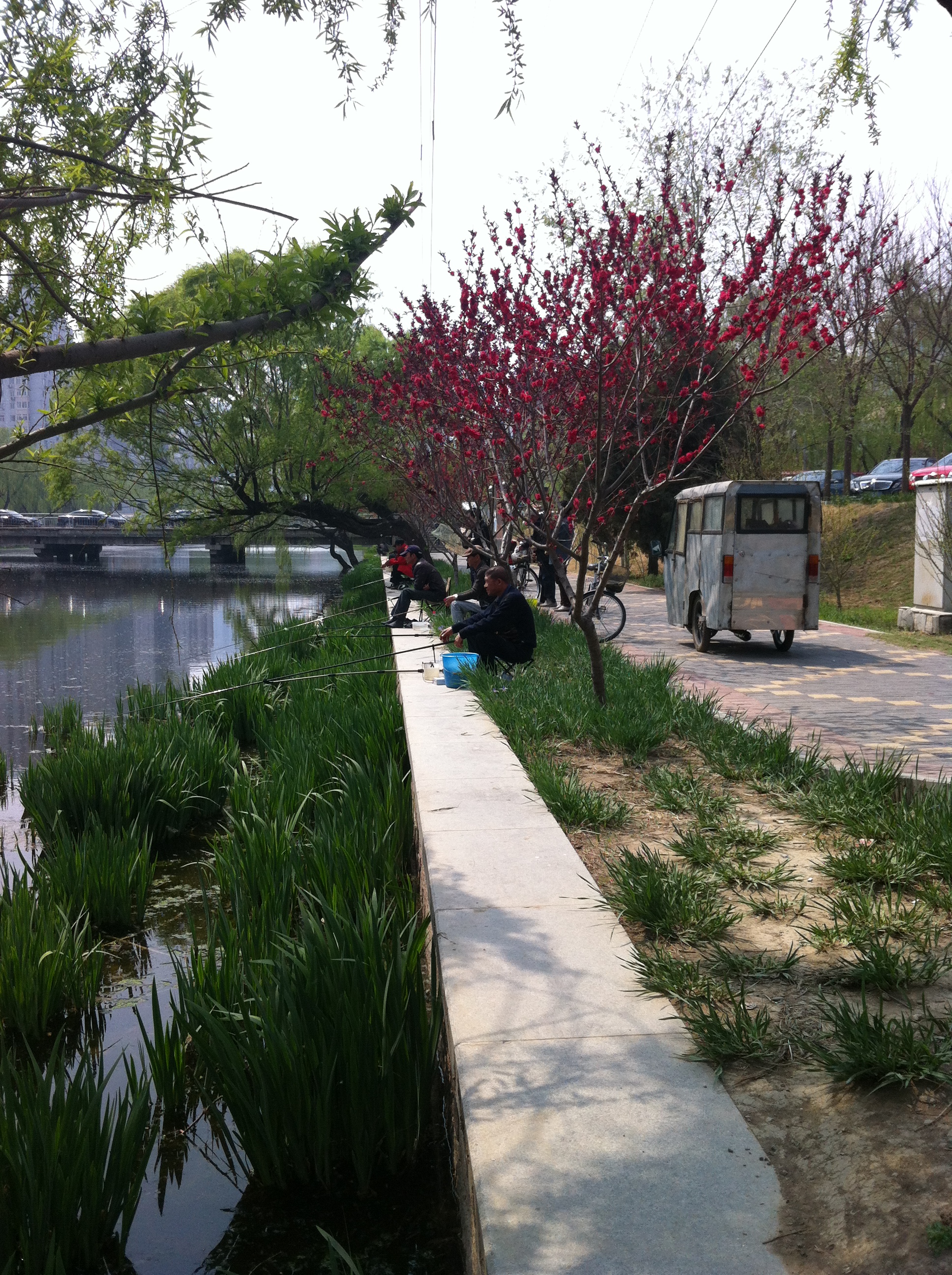
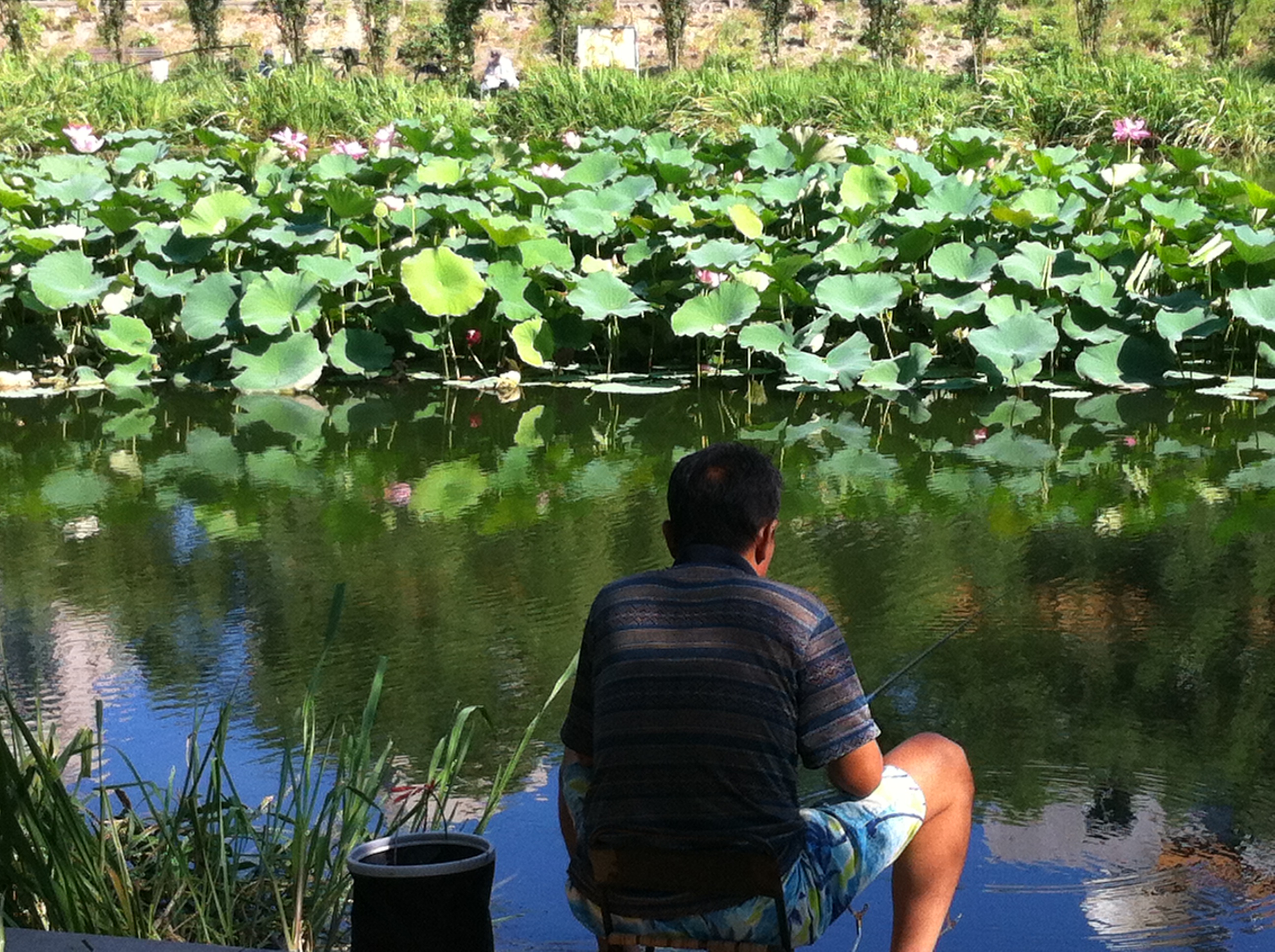
Fishermen also like it. The moment the ice melts and the trees start flowering, they filter out of the surrounding urban jungle and start settling down along the banks.

fishermen 002

fishermen 003

They sport what look to my eyes like state-of-the-art fishing rods (no stick, string, and safety pin for them), nets to hold their haul, and various pieces of fishing tackle.

fishermen 013

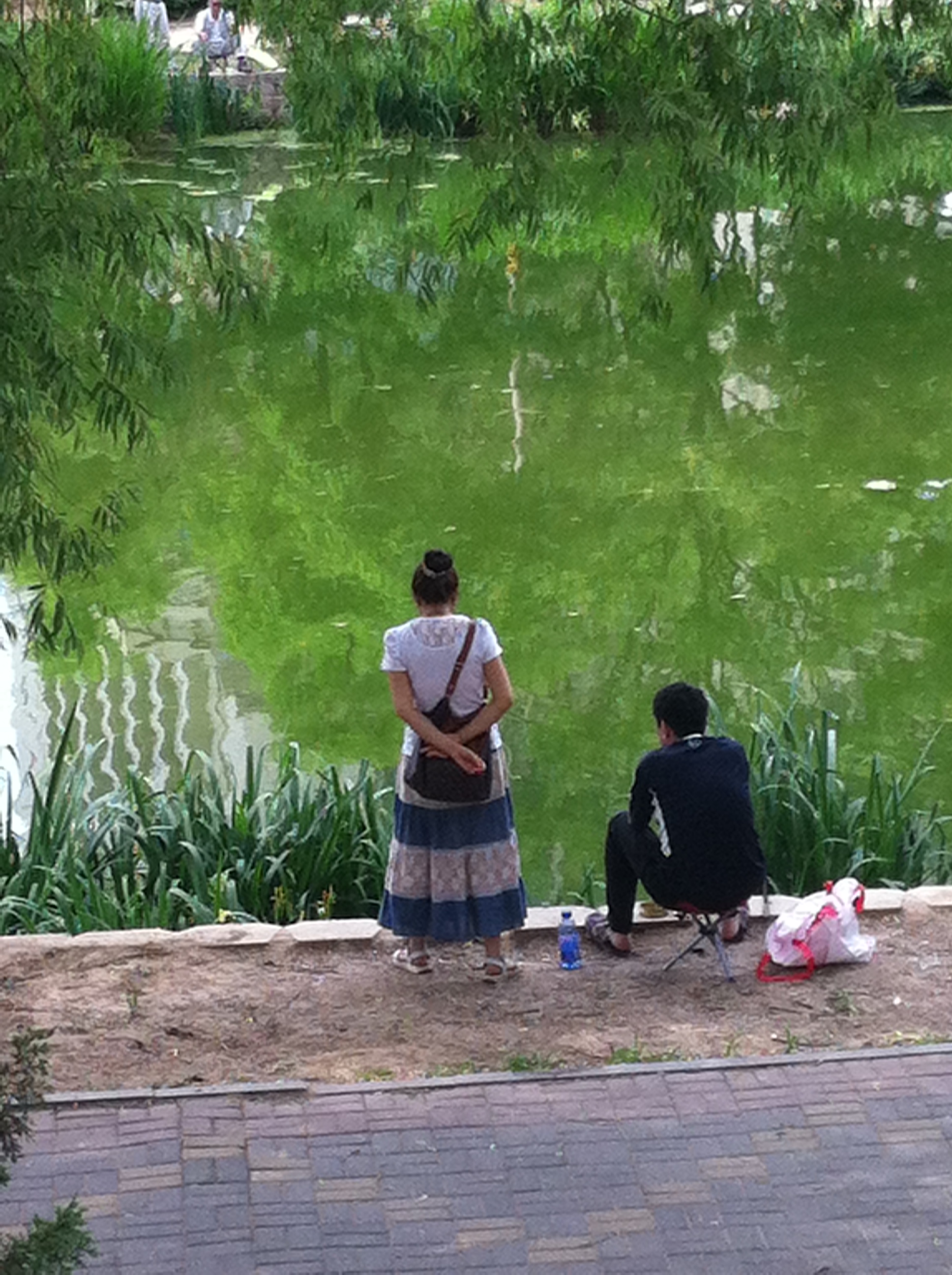
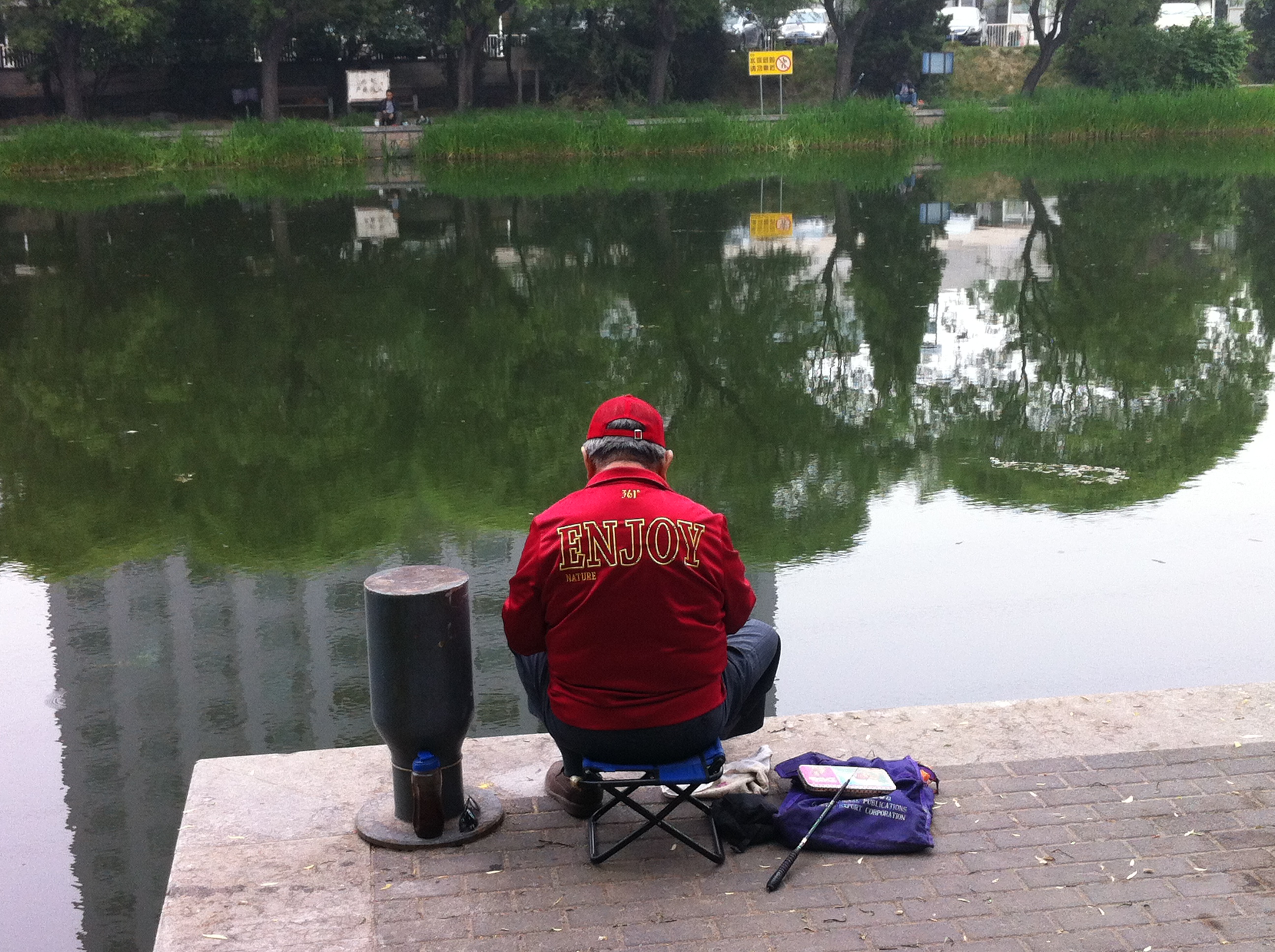
And there they sit all summer and well into the autumn, staring out into the middle distance, waiting for a nibble on the end of their lines.

fishermen 010

fishermen 011

What are they thinking about, I always wonder, as I walk briskly by aiming to arrive in the office on time. Really, what do fishermen think about all day?  This has always been a mystery to me. And what are these particular fishermen catching, for Lord’s sake? The few times I’ve seen a fish on the end of their lines, they were small and malingering. I fervently hope they don’t take them home to the wife to cook.  I should clarify that as my pictures show the overwhelming majority of my fisherpersons are men. I got quite excited one morning when I spotted a woman, and I guess this other woman I saw a week or so ago thought it was better to be with her man than alone at home.

fishermen 009

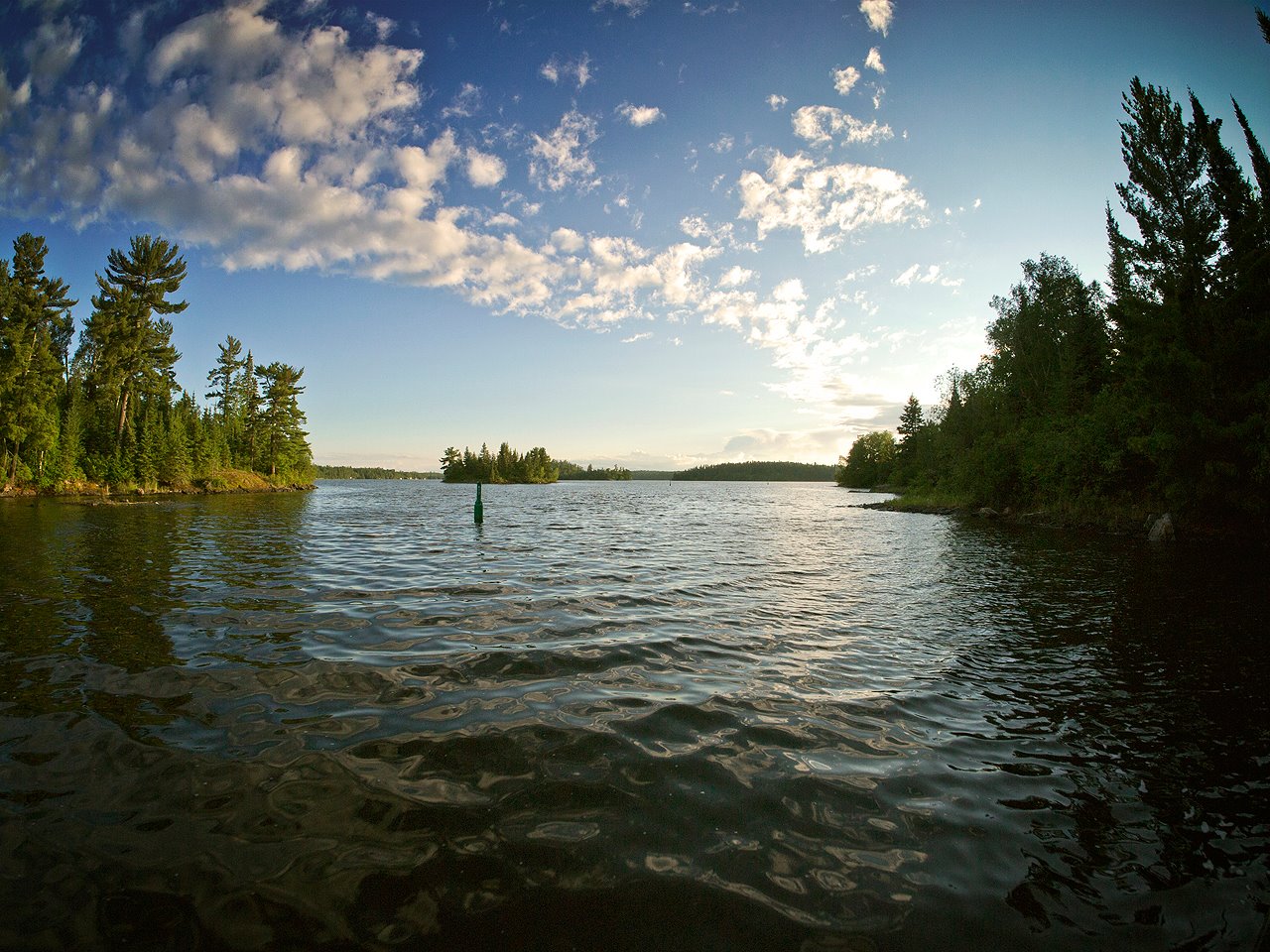
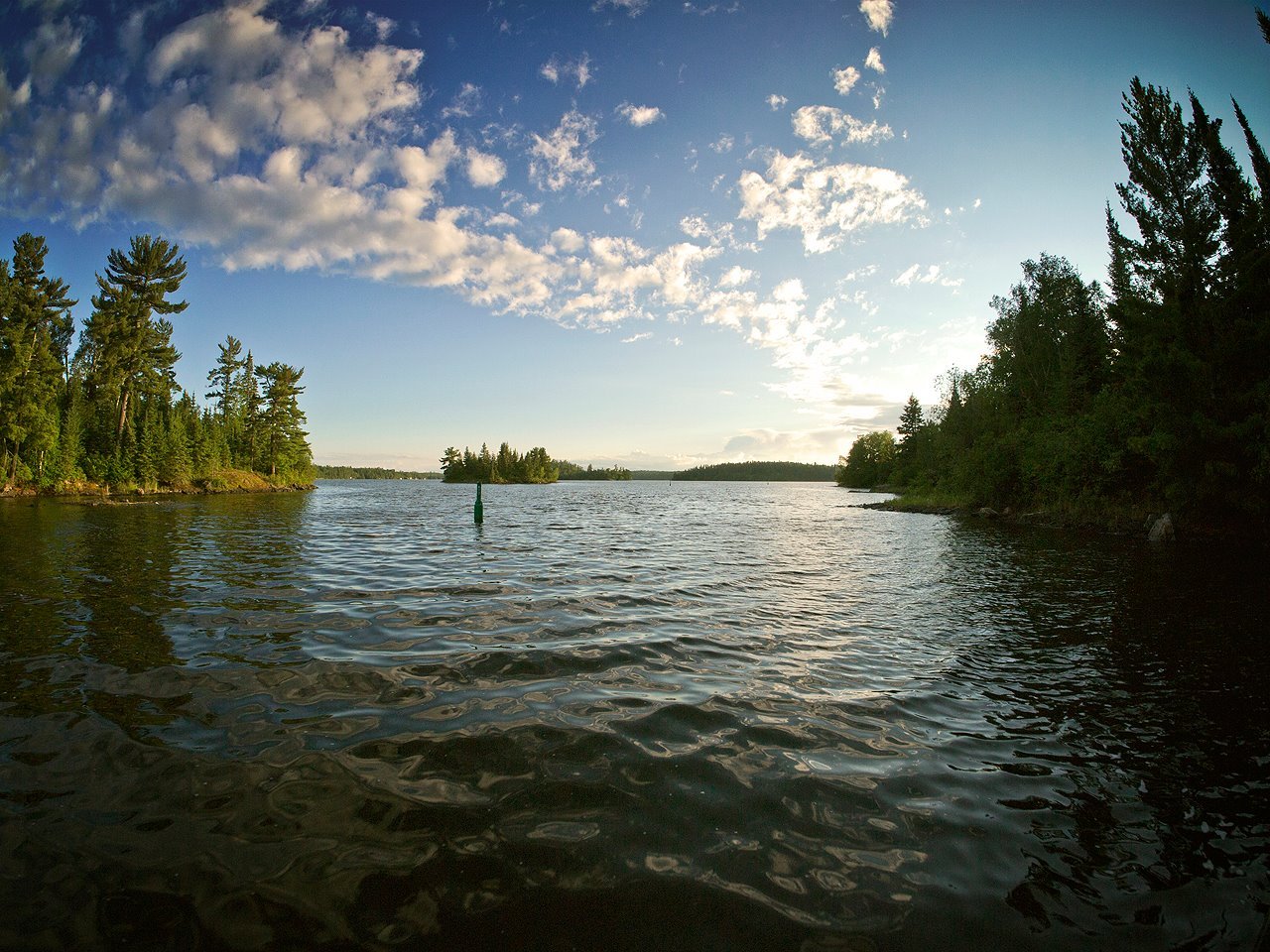
I am no fisherman; I suppose that much is clear. In fact, I have only ever fished once in my life. I was 14 going 15, and I was on a canoe trip on Lake of the Woods in Canada.

lake of the woods

I remember the date very well; it was when Apollo 11 landed on the moon. Me and my travel companion, Steve, must have been the only people in the whole of North America not sitting in front of a TV that day. After a hard morning’s paddling and looking over some Native American rock paintings,

rock paintings

Steve decided to give me a taste of the sport. He hauled out his fishing rod, set me up, and gave me a short lesson in its use. We then sat there for a while – not long, thank goodness – until I got a bite. My fish fought a bit, but after a while I hauled it in. It was a large pike, or so I have thought all these years. It certainly looked like one. But my internet surfing for this posting has convinced me that I caught a muskellunge (or muskie to the experienced fisherman – you see how quickly I catch on to the jargon …), which actually does belong to the pike family.  I suppose my catch was no more than a metre long but in my mind’s eye it has grown over the years to an enormous length. Steve took a photo, with me holding the muskie a trifle nervously but still sporting a smug smile on my face. Where is that photo? Sitting in a shoe box under a bed somewhere, perhaps, or now that both my parents are dead it is probably buried in a landfill in some foreign land. For all intents and purposes, gone. But here is a photo, which seems very similar to mine in my mind’s eye, except that we were sitting in a canoe while this gentleman is standing in a rather swank boat

Muskie on Lake of the Woods

Well, I suppose that will be the only time I ever sit behind a rod staring into the middle distance thinking about … what?

fishermen 008

___________________

Lake of the woods: http://25.media.tumblr.com/tumblr_m5tjkqKB7h1r1ghhbo1_1280.jpg
rock painting: http://www.canoenorthwestontario.ca/sscimages/history/IMG_4260_1.jpg
Muskie: http://harrishillresort.com/files/images/49%20inch%20Muskie%20on%20Lake%20of%20the%20Woods.JPG
the rest: mine

PINEAPPLE

Beijing, 4 May 2013

Spring is also pineapple time in Beijing. Actually, pineapples play the function of daffodils here. They are the harbinger of Spring. Their arrival tells you that help is on the way, that the temperatures will soon be going up and you can soon start shedding your heavy clothes.

All of a sudden, in lateish March, a swarm of people, mostly migrant workers as far as I can tell, appear on every street corner with a mobile table top. Here is a photo of the young lad who has staked out the corner just south of the bridge over the canal, which I cross every day to go to work.

pineapple seller 002

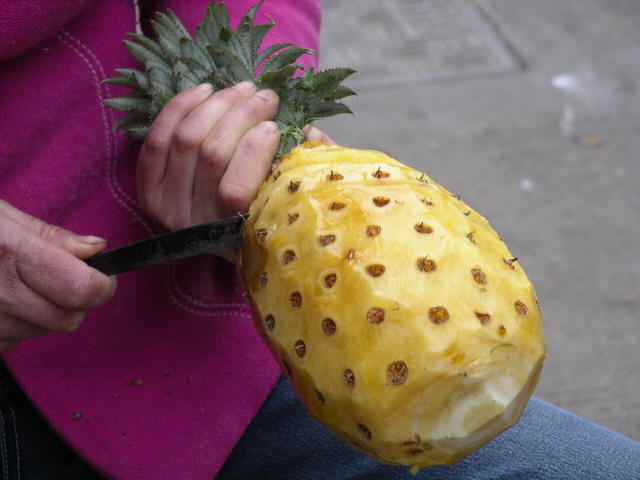
The pineapple sellers use the tables to prepare their pineapples for sale. Because they don’t just sell you a pineapple – if you want that, go to your local supermarket. They will peel their pineapples, carve out the eyes (I take the term from potatoes; that is the closest equivalent I can think of)

pineapple peeled

and sell them to you so prepared, lovely little yellow sculptures with whorls etched deeply into their surfaces.

pineapple unprepared and prepared

Pineapple prepared-01

In this last photo, the pineapple is shown off in a posh display case. In Beijing, as the sharp-eyed reader will observe in the first photo, the pineapple sellers normally put their product in cheap plastic bags – often yellow, which accentuates the yellowness of the pineapple’s flesh; a clever little piece of marketing. If you want, the sellers will go one step further and cut the pineapple up so that you can eat it as you walk along (they will thoughtfully provide you a thin, sharpened stick with which to spear the pineapple chunks).

My first meeting with the pineapple, when I was young, was out of a can, cored and cut into circular slices.

I have since learned that before the advent of large-scale refrigeration infrastructure, canning was the only way of transporting pineapple over long distances because pineapple doesn’t ripen if harvested green. A worthy reason, no doubt, but I was not impressed. I found canned pineapple cloyingly sweet and suspiciously soft. At some point, I discovered fresh pineapple; I think it was early in our marriage, when my wife brought one back from the supermarket. What a revelation! Firm flesh, sweetness with a slightly acidic taste which left a tingle in the mouth … a completely different experience. Since then, I have not touched the canned variety if I can possible avoid it.

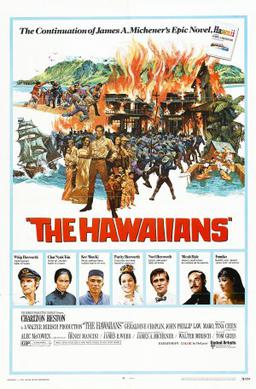
I read that pineapple canning was developed in Hawaii. Which clicks a memory of a film, seen late at night on the TV and with Charlton Heston as the main protagonist. A delve through IMDb reveals that the film in question was The Hawaiians.

The Hawaiians movie poster

Apart from vaguely recalling that the film had to do with the development of the pineapple industry in Hawaii, I remember two scenes quite well. One is a visit by Heston to an island used as a leper colony; anyone who has read the bible cannot but be aware of the terrible plight meted out to lepers, and I was shocked by the idea that still in the 19th Century people could just be abandoned on an island because they had leprosy. The second scene I remember is the heroine, a Chinese woman who had emigrated to Hawaii and whose common-law husband it was who had been banished to the leper island, standing at his grave recounting to him news of the family. I found that very touching – and saw the same scene being re-enacted just a month or so ago, when we visited a local cemetery during the tomb sweeping holiday!

Hawaii may have developed the industry but it no longer leads it. As in all things now, China is among the largest producers of pineapples in the world, growing some 1.5 million tonnes a year (for those readers who are, like me, interested in useless information, Thailand is currently the biggest producer, standing at 2.6 million tonnes annually). Here is a picture of a pineapple field in Guandong province.

pineapples in Guandong

The fruits look suspiciously bright, due no doubt to the photo having been doctored. Which – in a country of where watermelons have been known to explode in the fields because of overuse of growth-enhancing chemicals – made me wonder if the pineapple fruit itself is doctored. A little search confirmed my worst suspicions! Stuff called gibberellic acid is used to “enhance fruit growth”. Gibberellic acid! The name itself is a horror, whose ingestion I have no doubt will reduce me to a gibbering wreck. And it’s no good that an official review by the US Environmental Protection Agency soothingly concludes that “the uses of Gibberellic Acids, as currently registered, will not cause unreasonable risk to humans or the environment”. The weasel words are there: “as currently registered”. Here, where farmers just chuck stuff on their fields with wild abandon, that is a meaningless cautionary clause. This Gibberellic acid is a hormone! Lord knows what will happen to me now …

What is the world coming to, that you can’t eat anything without the nagging doubt in your mind that if you don’t die you will turn into some sort of extraterrestrial being?

______________________________

Pineapple seller: my picture
Pineapple peeled: http://jblankenagel.net/IMGP1648.JPG
Pineapple unprepared and prepared: http://us.123rf.com/400wm/400/400/sapsiwai/sapsiwai0512/sapsiwai051200027/286517-ananas-entier-au-dos-et-sculpte-dans-l-avant.jpg
Pineapple prepared-01: http://en.wikipedia.org/wiki/File:Pineapple_prepared_01.jpg
Canned pineapple: http://agriseafood.webs.com/Canned-Pineapple.jpg
The Hawaiians movie poster: http://upload.wikimedia.org/wikipedia/en/f/f3/Poster_of_the_movie_The_Hawaiians.jpg
Pineapples in Guandong: http://www.chinapictorial.com.cn/en/destination/images/attachement/jpg/site133/20120705/00247e701cc9115f7f8455.JPG

FLYING FLUFF

Beijing, 1 May 2013

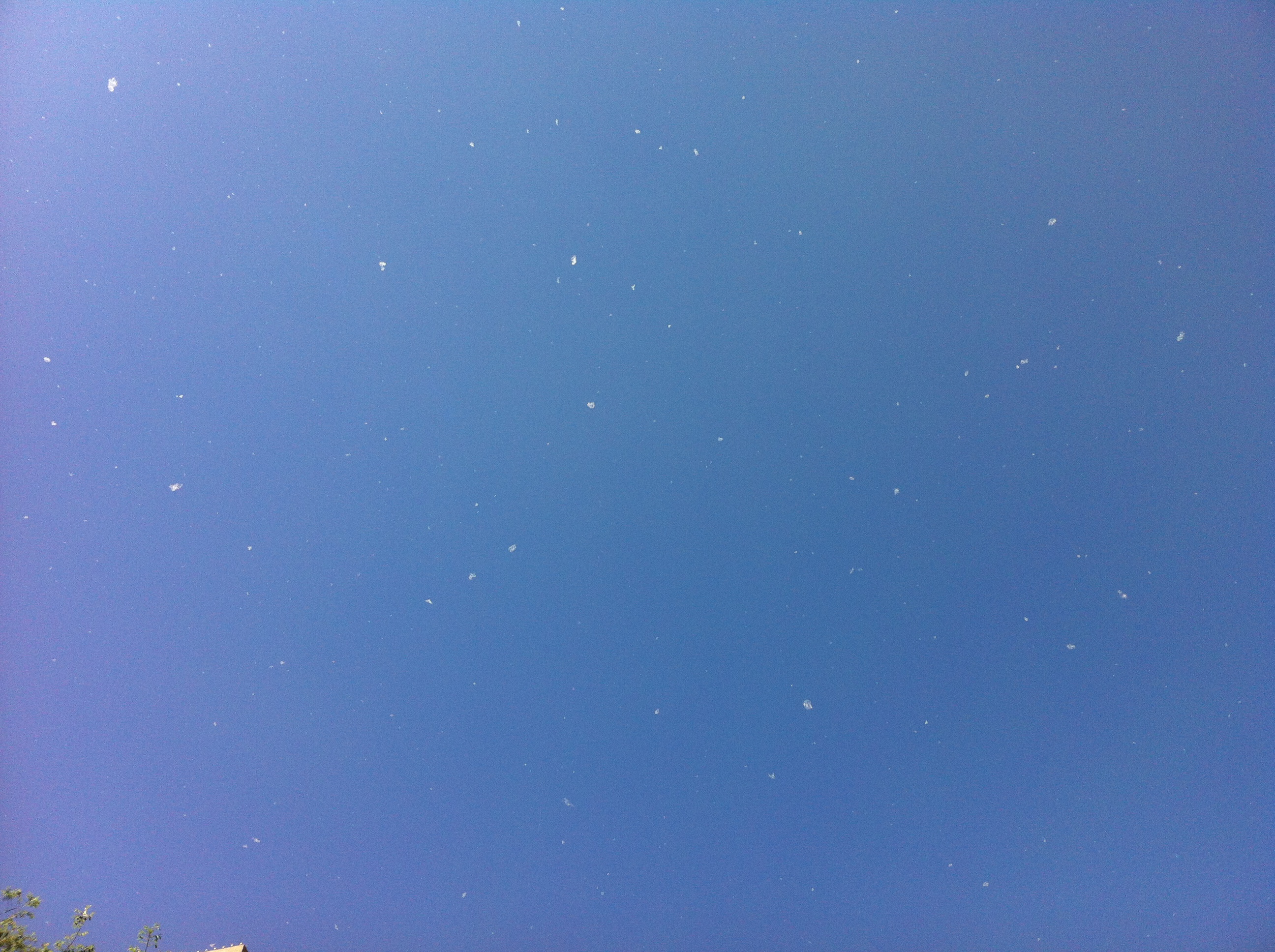
These last few days we have been suffering from an unpleasant side-effect of Spring: airborne white fluff, which trees around here are shedding in huge quantities in their eagerness to mate and to seed. The fluff drifts down, floats along on the breeze, is whirled about by passing cars, eddies in big clumps around your feet, and – most disagreeably – gets into your eyes, nose and mouth. Yesterday morning, it was so thick that looking up into the sky it seemed to be snowing.

pollen 008

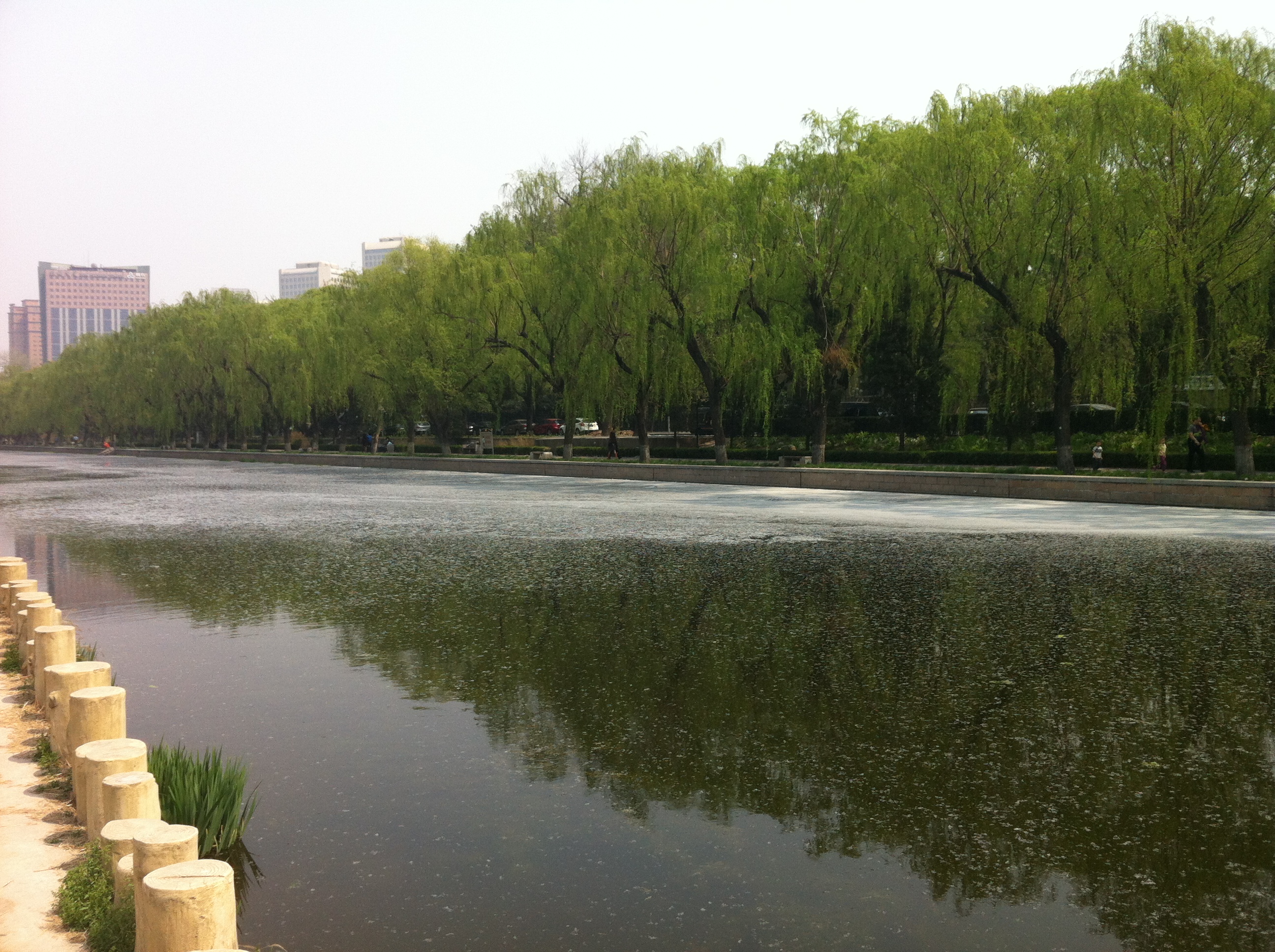
while a few days ago currents in the canal and wind interacted to create a thick layer of fluff along the far bank.

pollen on canal 002

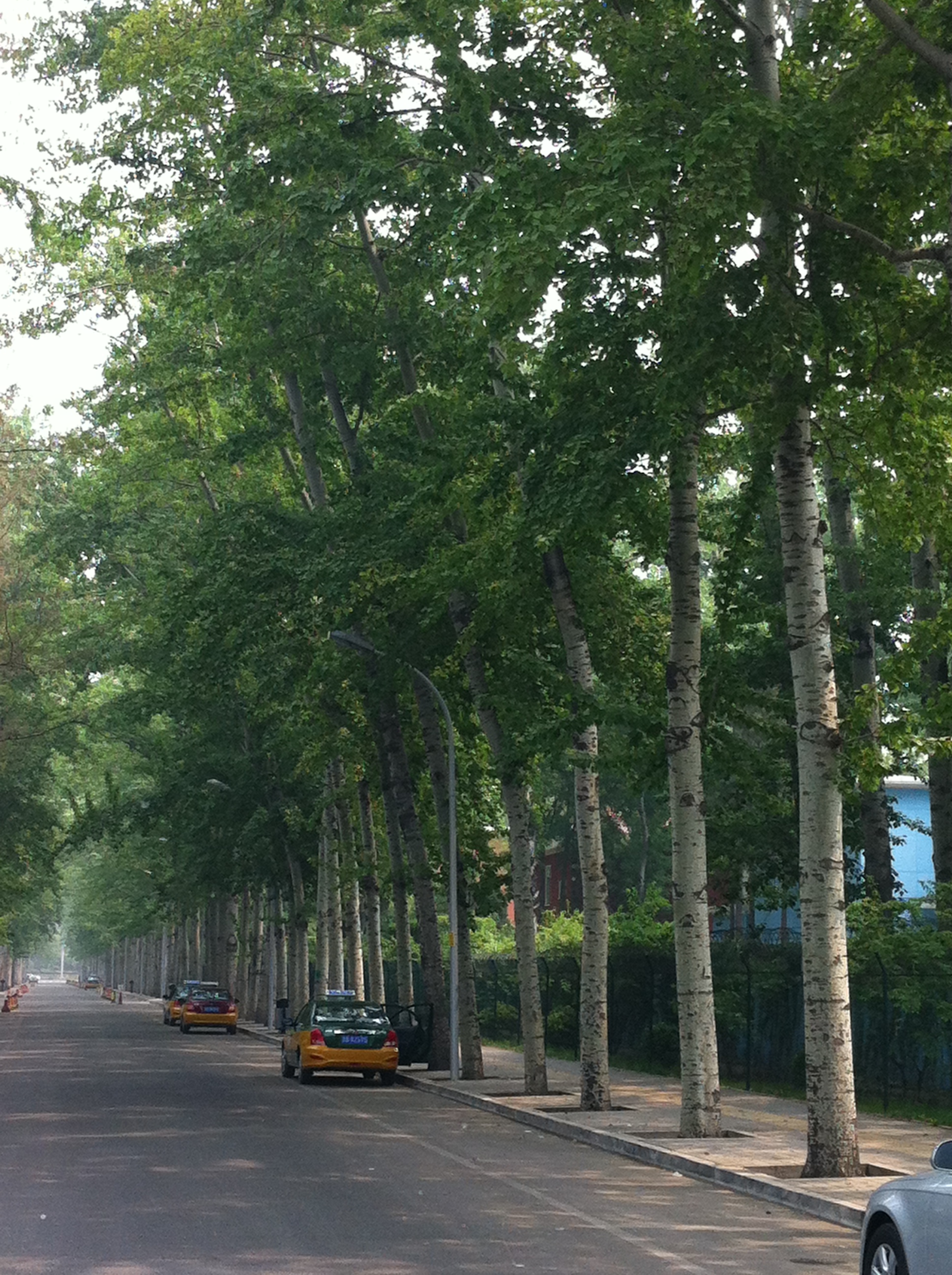
This is the offending tree, photographed in a quiet side street

poplars-Beijing 011

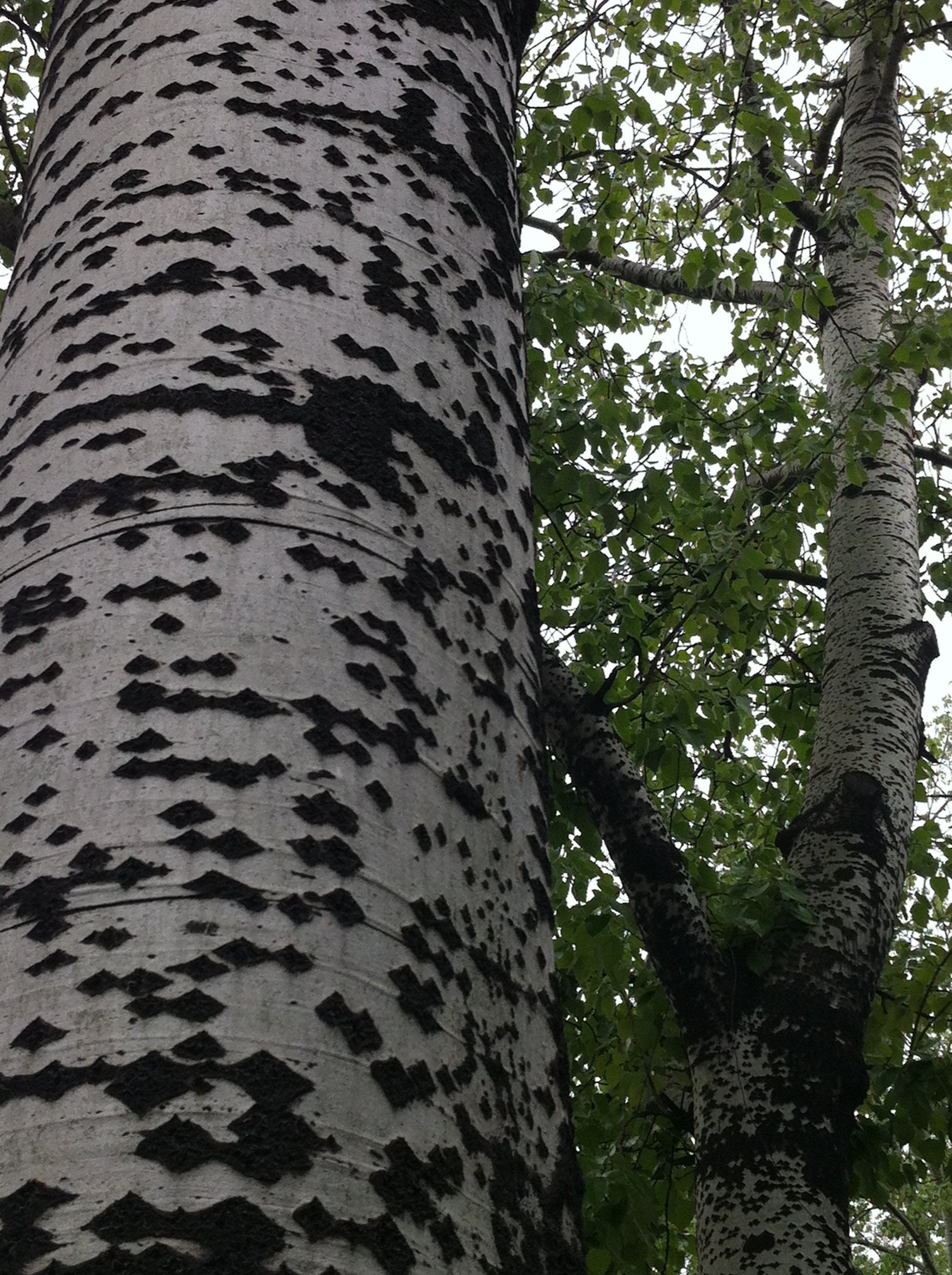
a poplar, a member of the aptly-named cottonwoods, whose more mature specimens carry these very distinctive diamond shapes on their lower bark.

pollen 013

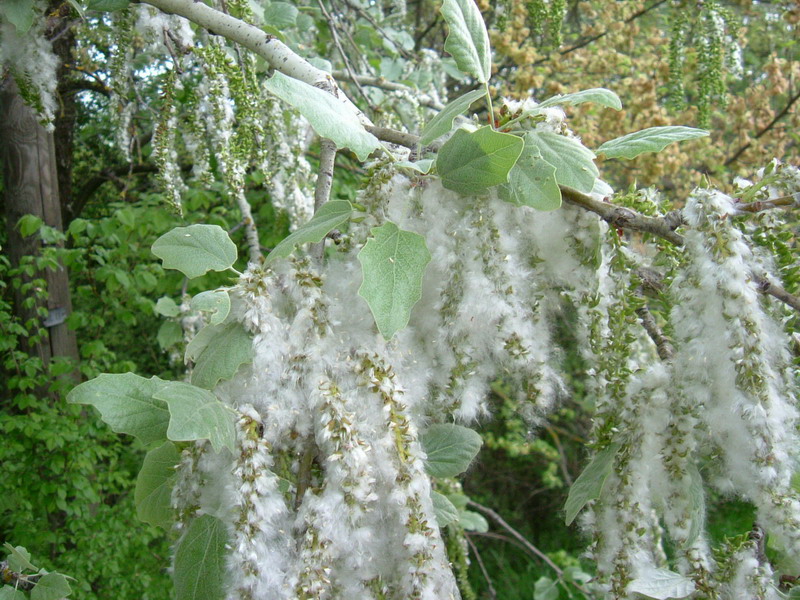
And this is where the fluff is from:

cotton on tree-1

I first became aware of this tree in Vienna, not so much because of white fluff flying around, of which there was a fair amount at this time of the year, but because of some really magnificent specimens growing in the gardens of the posher, greener parts of town. So posh and so exclusive that I have found no photos on the web.

But actually, where the tree really came into its own was down by the Danube, in the last vestiges of the river’s wetlands which land use planners and river engineers of the 19th Century had left alone.

poplars on the Danube-1

Not surprising, really. The tree loves a wet, marshy soil. Which explains why there are so many poplars around Milan and in the Po River plain generally, which is a pretty soggy place. And in Milan, the problem of flying white fluff was truly awful. These pictures are not from Milan but are from that part of the country and give a good sense of the horror of it.

Italian-image-1

Italian-image-3

It’s the poplar’s love of wet soil that makes me wonder what it’s doing here in Beijing. I mean, this city is semi-desertic; lack of water is a constant and growing problem. Yet, there are huge plantations of the tree around the city, part of the reforestation campaigns that the government is so fond of as a way of minimizing the dust storms to which this city is periodically subject. Wise policies no doubt, but surely they could have found a more suitable tree?

____________________________

pix of sky, canal, and poplar tree: mine
Fluff on tree: http://www.naturamediterraneo.com/Public/data7/ciuppy/5.jpg_200941622240_5.jpg
Poplars on the Danube: http://www.quax.at/sites/default/files/images/nationalpark_donau_auen_976_Donauufer2_Baumgartner.jpg
Italian-image-1: http://upload.wikimedia.org/wikipedia/commons/thumb/9/9f/Fioritura_pioppi.JPG/1280px-Fioritura_pioppi.JPG
Italian-image-2: http://www.parmatoday.it/~media/base/19828483952093/curiosita-fioritura-pioppi-1.jpg

MY LITTLE WEED

Beijing, 27 April 2013

After a long, cold gestation, spring has finally arrived with a bang in Beijing. Suddenly, every tree, every bush, every plant is thrusting eagerly out to the sun and warmth. The Beijing authorities have been good enough to plant many flowering plants along and around my piece of canal, so my daily walks to and from the office are currently accompanied by a riot of colour.

flowers along canal 004

flowers along canal 006

flowers along canal 008

flowers along canal 014

flowers along canal 017

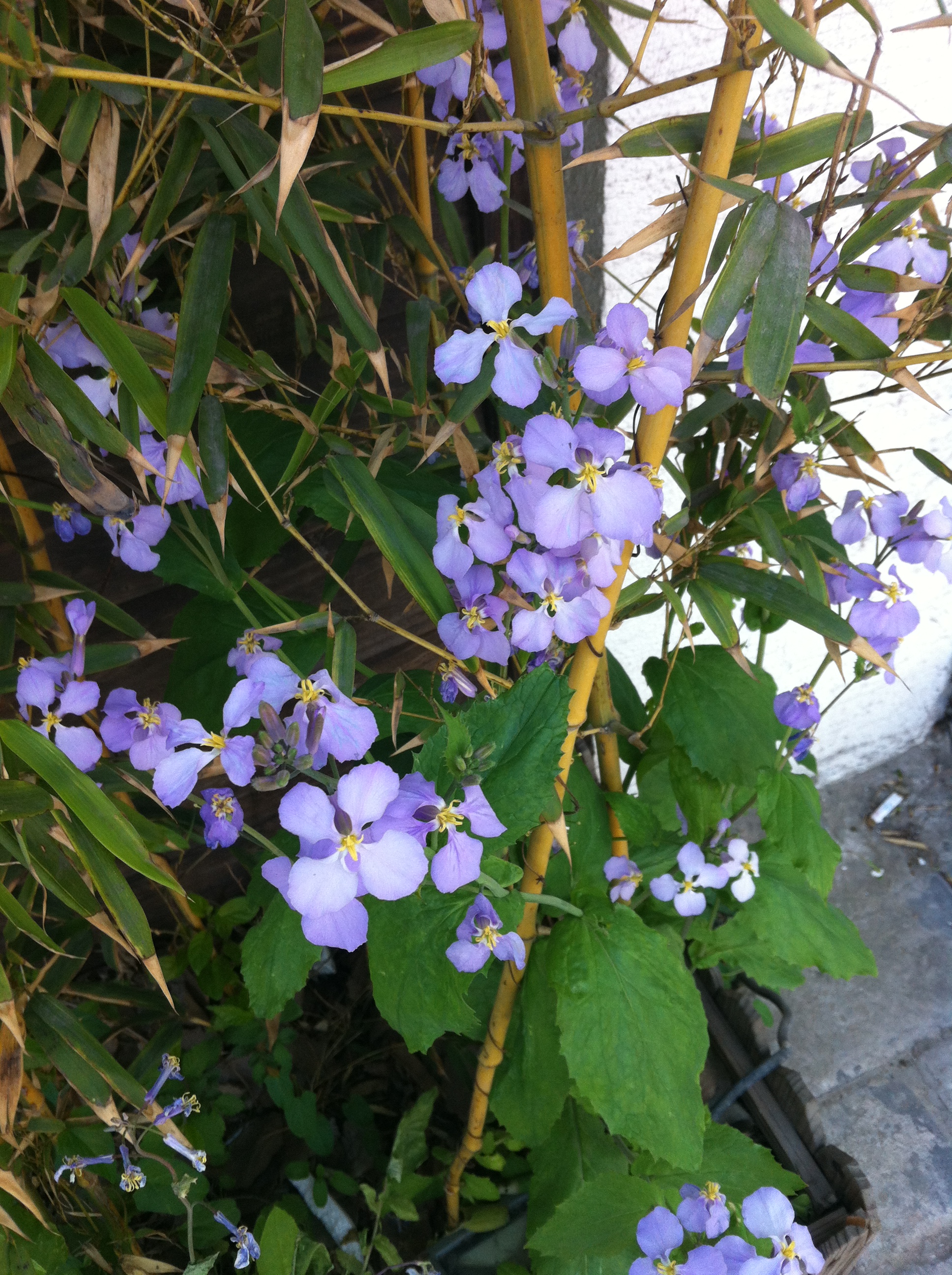
But actually, the flower I’m most taken with is a humble weed. It’s that little blue flower in the last picture. Like all good weeds, it grows well on waste land – we saw long swathes of it along roads on the outskirts of Beijing last weekend as we drove past abandoned factories and other land with no obvious use on the way to a restaurant. I found them again, tucked away in a forgotten tongue of land along the canal, where a major bridge crosses it – the kind of place I would expect to find used syringes and condoms in Europe.

flowers along canal 015

They’d also colonized a flower box outside a restaurant close by, growing alongside bamboo.

flowers along canal 001

I don’t know its name. I showed a picture of it to my Chinese colleagues and they looked blank. No idea, they said.

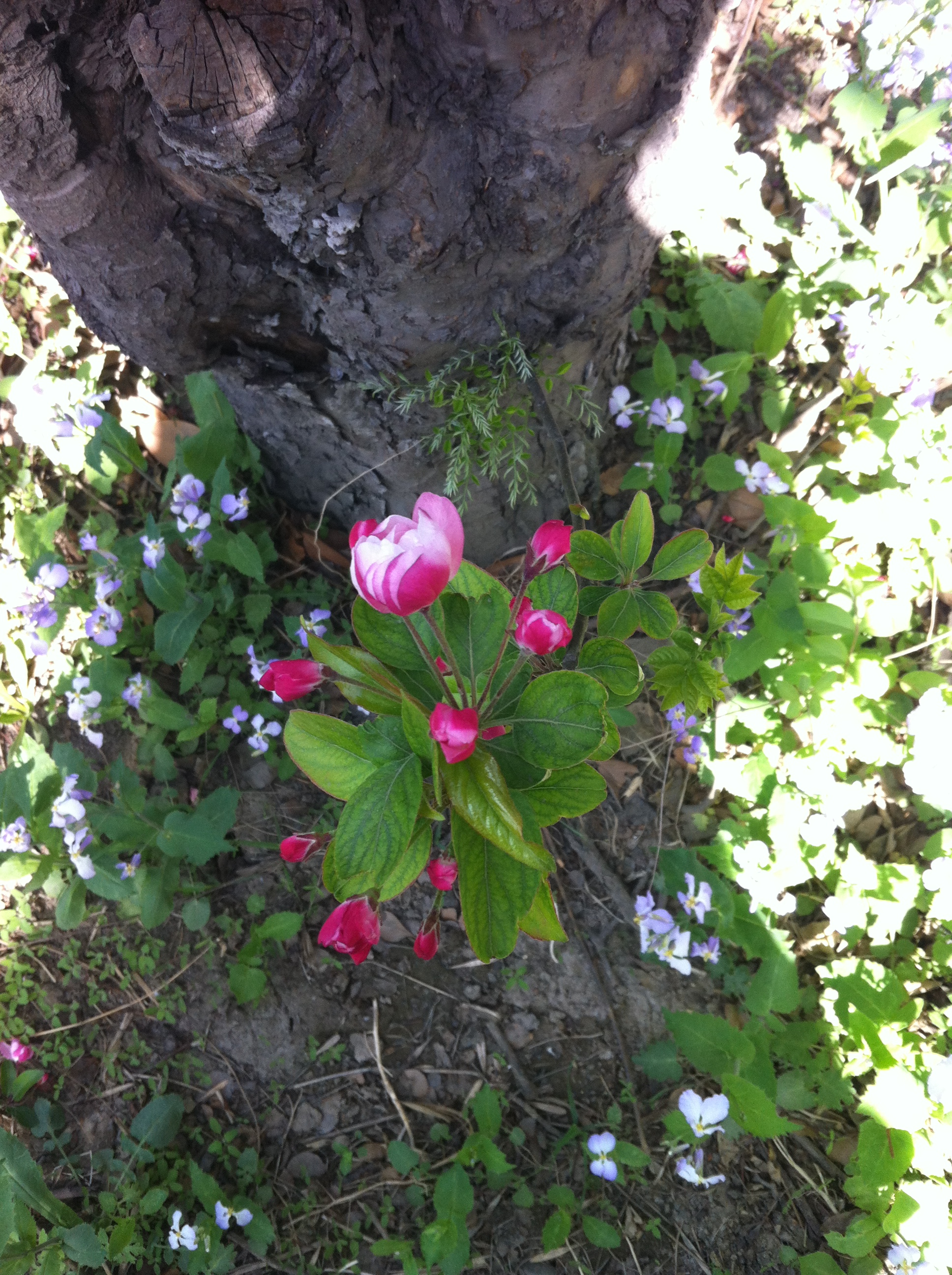
At the restaurant, my flowery weed also carpeted the ground under the apple trees in the restaurant’s orchard.

blue flowered weed-restaurant

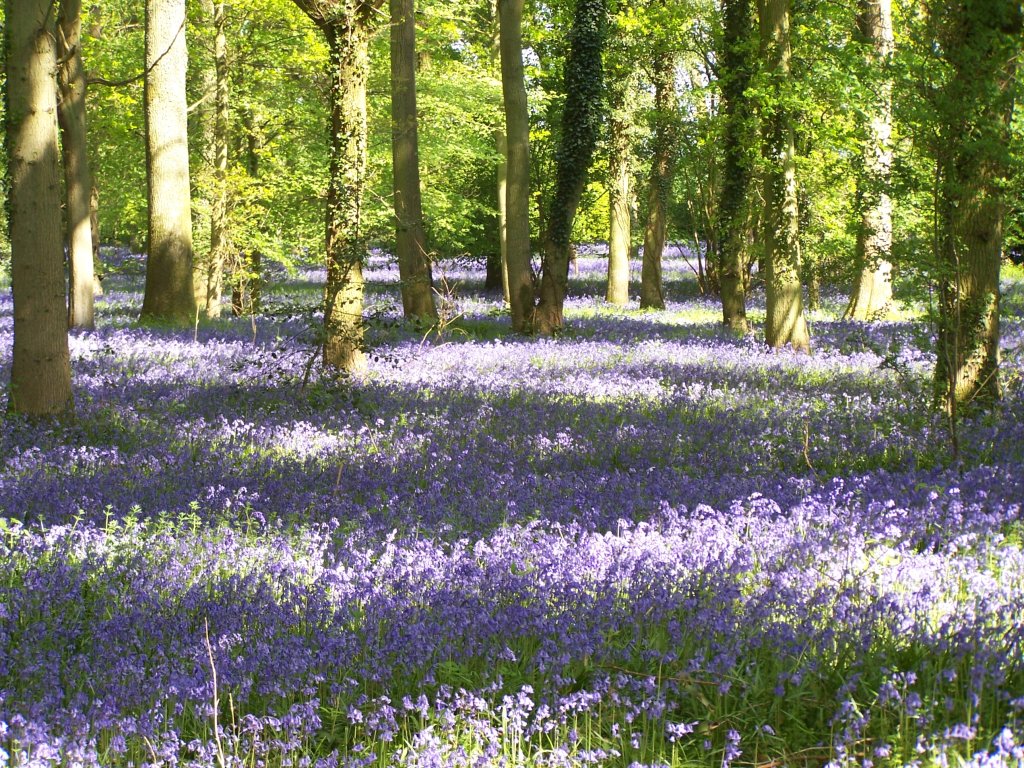
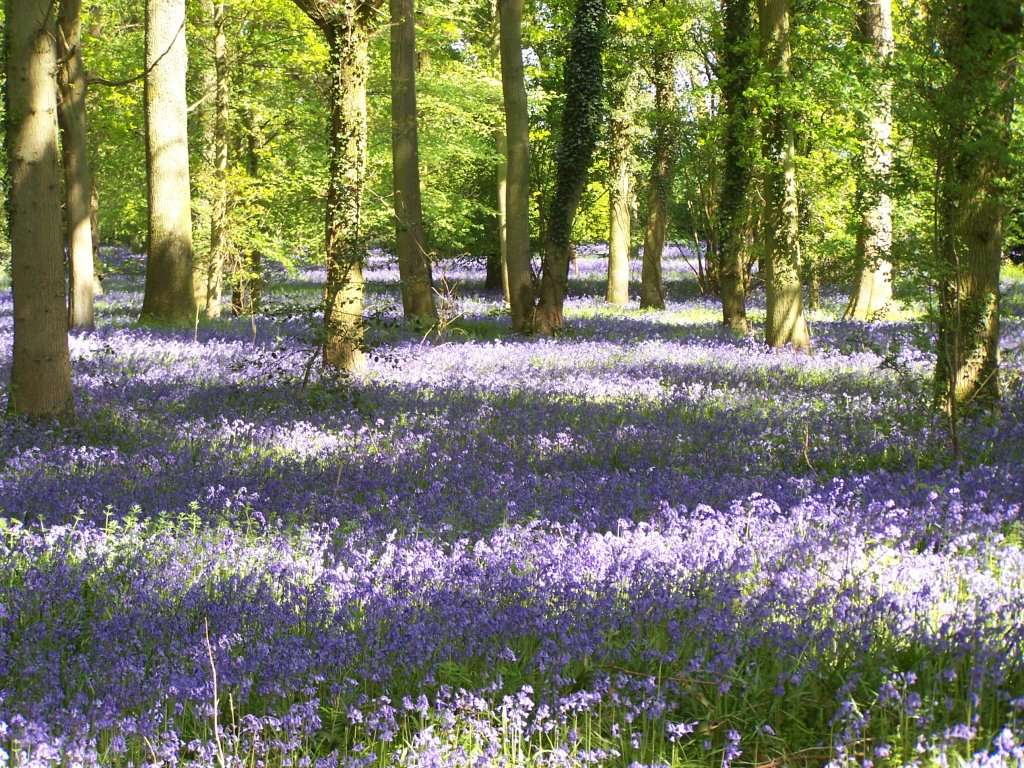
It’s a bit fanciful but it made me think of bluebells in European woods and for a minute I wanted to be home.

Bluebells 1

_______________________

Bluebells-1: http://graymonk.mu.nu/photographs/bluebells/Bluebells%201.JPG

Blue flowers at the restaurant: Robert

All other pics: mine

LILAC ON EARTH DAY

Beijing, 22 April 2013

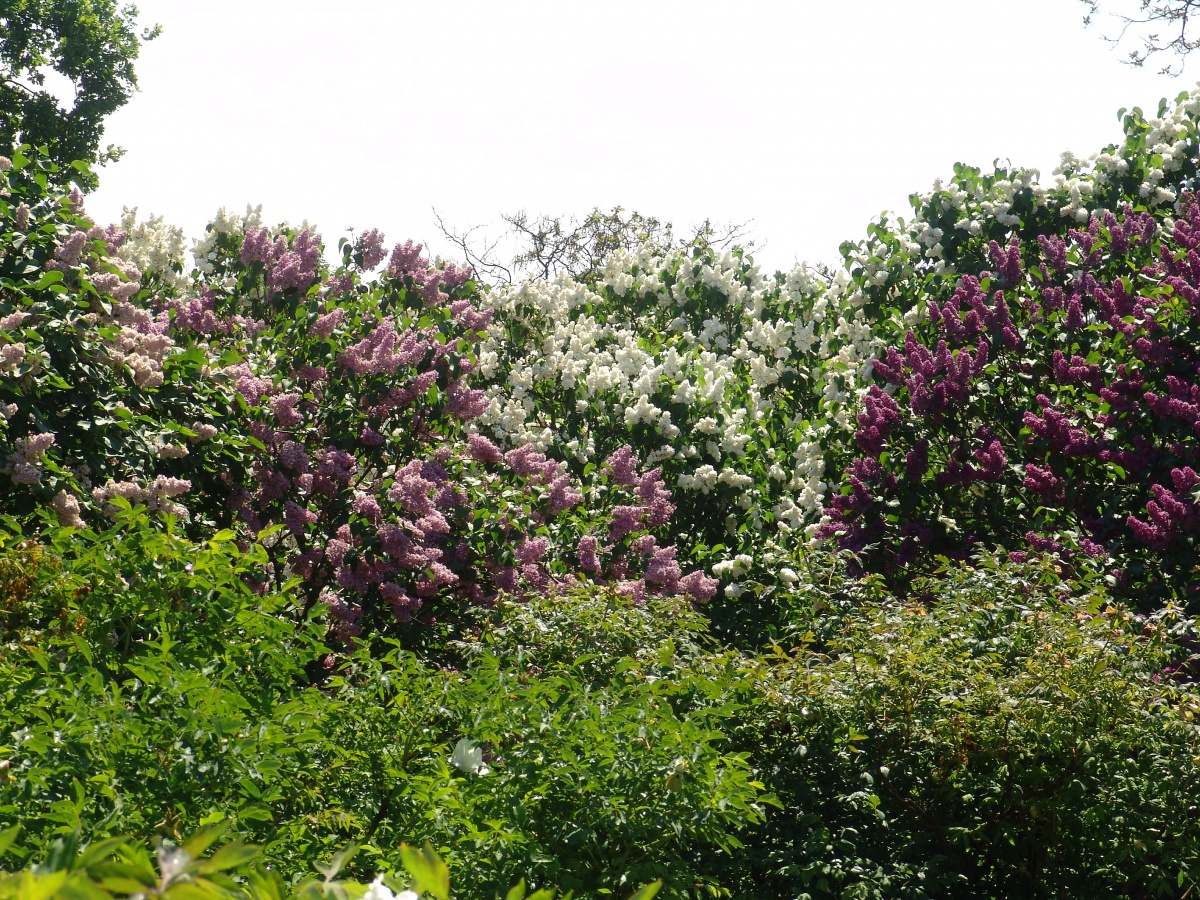
I mentioned in an earlier post that when I was young I would sometimes spend Easter with my French grandmother. One of my memories of those visits – apart from collecting coal in the cellar – is the lilac bushes in the garden in flower. Normally, we went to stay with my grandmother during the summer, when the bushes were just boring green leaves separating the proper, formal garden in front of the house from the vegetable garden. But at Easter time, these dull green bushes would come alive with pale purple and white – and would smell heavenly. They looked something like this (my grandmother’s garden was a bit of a jungle):

Lilas buissons

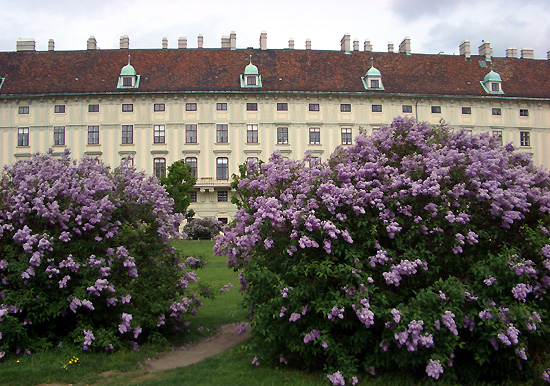
Lilac must also grow in the UK but I have absolutely no memory of any lilacs there. The next time lilacs crossed my radar screen was in Vienna, where it was a very popular bush all over town, from the public gardens in front of the Hofburg, the imperial palace in the centre of town:

lilacs in Vienna-3

To just humble streets nowhere in particular:

lilacs in Vienna-4

During the flowering period, my wife would arm herself with a big pair of scissors and we would go around surreptitiously snipping off a few flowering branches to have in the apartment. For a few days, the house would be filled with the wonderfully delicate scent of lilac.

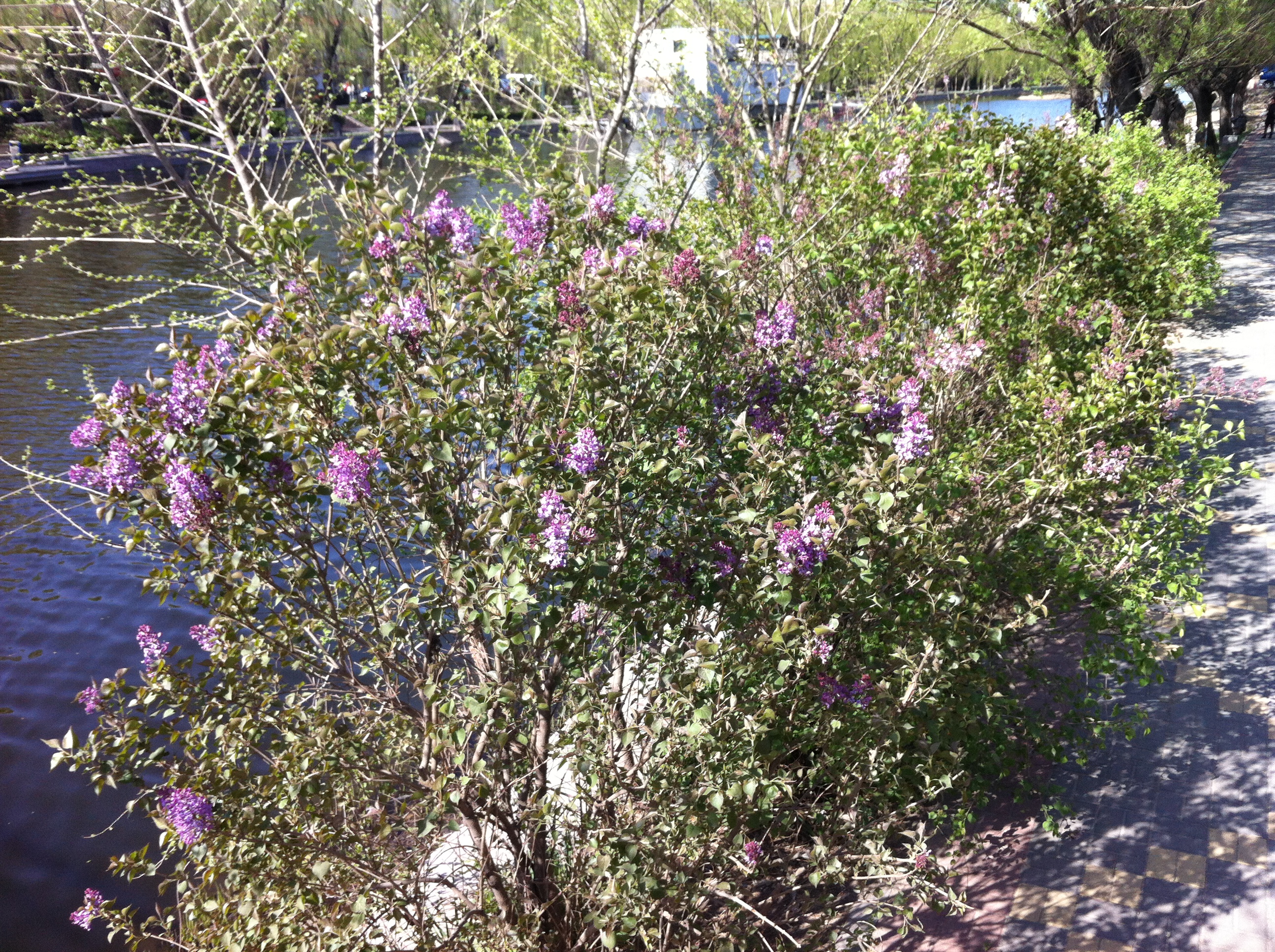
So it was with pleasure that I noted during our first Spring here, down by my piece of canal about which I have written several times, some lilac bushes coming into flower. At least, they seemed to be lilacs. The scent was quite similar, and there was definitely a family resemblance if you closed your eyes a bit and cocked your head to one side. Yet there was something not quite right. The flowers didn’t look quite the same, and the leaves were definitely smaller and darker.

lilacs by the canal 001

lilacs by the canal 003

I decided to do a little bit of research (well, web-surfing really) and discovered that what was growing in my grandmother’s garden and in Vienna was the common lilac, syringa vulgaris, whereas the lilac growing here was in all likelihood the Yunnanese lilac, Syringa yunnanensis. The photos I found of the Yuannese variety showed a definite similarity:

Yunnan lilac-4

and it makes sense to have a lilac from Yunnan in Beijing.

During my research, I also learned a bit about the common lilac. It was not, as I had thought in that casually cultural-centric way we Europeans suffer from, a European flower. It was actually introduced into European gardens at the end of the sixteenth century from Ottoman gardens. That certainly makes sense since “lilac” derives from the Arabic “lilak”, which in turn derives from the Persian “nilak” meaning bluish. Since I am currently reading a history of Iran/Persia and have just finished the part covering the Arab invasion, in my mind’s eye I can see the beauty of the flower captivating Arabs when they arrived in Persia and their carrying it back with them west of the Tigris and Euphrates; later, when the Ottomans conquered the Arab lands, I can well imagine them in turn falling in love with the flower and carrying it off to their gardens. From whence it came to our European gardens and, after a pause, to the gardens in North America.

Fanciful and probably wrong, but on this day when we celebrate Earth Day a narrative I would like to believe in, seeing as it suggests a certain universal appreciation of the beauty of nature.

Happy Earth Day.

________________________

Lilac in France: http://www.torange-fr.com/photo/5/13/Lilas-buissons-1268053127_24.jpg
Lilac in Vienna-1: http://www.viennatouristguide.at/Quiz/Bezirke/13%20Schoenbrunn/hofb_flieder.jpg
Lilac in Vienna-2: http://www.zeitgedanken.com/weblog/wp-content/uploads/2009/04/flieder-im-april09-01.jpeg
Lilac in Beijing: my pix
Yunnanese lilac: http://static1.plantdatabase.info/plant_imgs/size2/syringa_yunnanensis_var_rosea_I21172P95642.jpg

MANDARIN DUCKS

21 April 2013

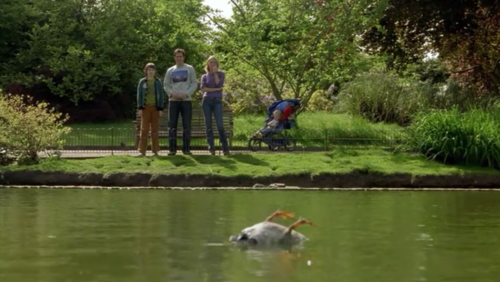
One of the funnier scenes for me in the film About a Boy is when the Boy kills a duck after he throws a loaf of bread, which his mother had baked, into the pond. Lord knows what ingredients she had used, but it had the density of a rock and thus the predictable effect when it hit the duck.

about a boy dead duck-1

I laughed loud and long, partly because it reminded me of when I was a boy. During my visits to my grandmother in London, one of her staple ideas for keeping me busy was to take me down to one of the ponds in Central London’s many parks to feed the ducks. She did this with most of her grandchildren who passed through London and kept a stash of stale bread for the purpose. And boy was it stale sometimes! If I’d been a duck I wouldn’t have touched it with the end of my webbed foot.

As I said, she took me to several parks in Central London. Hyde Park was a favourite with its Serpentine lake. Another was the lake in St. James’s Park. The nice thing about that lake was that it played host to many different types of ducks, some of them really beautiful. One of the most lovely was the mandarin duck:

mandarin duck-1

(I knew its name because the park authorities had thoughtfully placed plaques by the lake’s edge, right where little boys and girls threw stale bread to the ducks, which carried a picture of each type of duck along with its name).
I swore to myself that when I owned a duck pond, I would stock it with mandarin ducks. Well, I don’t own a duck pond – yet (hope springs eternal). But I do live by a pond-like body of water here in Beijing. So you can imagine my excitement when on Saturday I noticed a pair of mandarin ducks paddling peacefully along its surface.

Will they be there tomorrow, when I walk to work? Or will they have flown off to greener pastures? I really hope they’ll be there. Feeding them will be a great way to get rid of our stale bread.

PS:

They stayed! Here’s a photo of the male I took the other day, a month or so after writing this post. It’s not a great photo – actually, it’s a lousy photo – but the duck was careful in not coming too close (no doubt it sensed that it could quickly end up in a pot in a Chinese kitchen), but it is evidence of their continued presence.

duck on canal 001

______________________

“About a Boy” dead duck: http://media.tumblr.com/tumblr_lpks23apyX1qiurmy.png

Mandarin duck: http://blogimg.goo.ne.jp/user_image/2f/0e/202ca598a665e53251ea85d5818715ee.jpg

WHITE AND GREEN

Beijing, 12 April 2013

We were discussing weighty matters yesterday afternoon, the security situation of our organization here in China. It’s a review we carry out once a year, in the Spring. Not unnaturally, the new outbreak of bird flu in the Shanghai area was the first topic on the agenda. After a review of where things stand, we concluded that the new flu virus H7N9 currently represents a moderate threat to our staff members and their dependents, but we agreed that we will need to closely follow the flu’s progress. Next on the agenda: North Korea and the recent ratcheting up of tensions there which I alluded to in a previous post. Conclusion: low to moderate concern for us in China, but the Security Officer to monitor the situation and report back. And so on, down the list of possible threats, both natural, like earthquakes, and man-made, like the outbursts of violent agitation in the Eastern provinces over land use.

All the while, I admired the magnolia in the garden outside the window, with its silky white flowers standing out against the tender green of a weeping willow tree unfurling into leaf. At the meeting’s start, both were picked out with vivid intensity by the sun. But as the meeting wore on and the sun moved in its arc across the sky, the shadows drew in and cast a pall of grey over the white and green.

picture 004

And so our security review was done for another year.

WATER AND I

Beijing, 30 March 2013

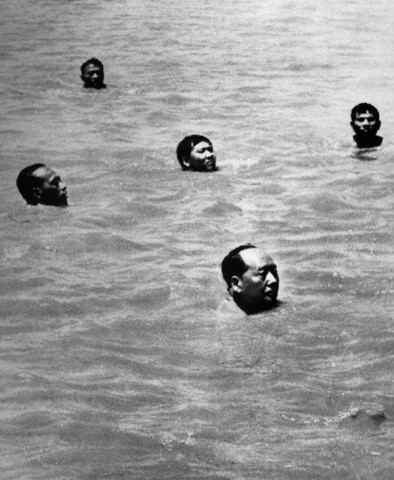
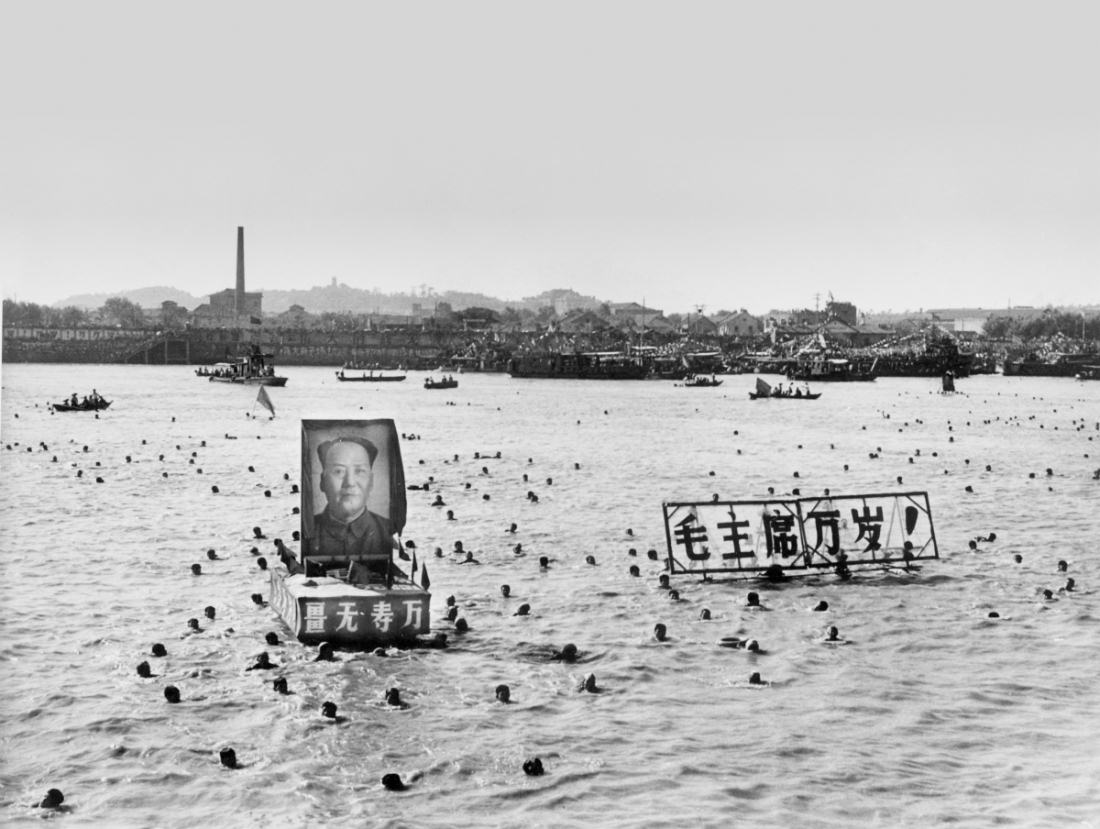
There is a famous photo of Chairman Mao swimming across the Yangtze River at Wuhan in the summer of 1966.

mao-swimming-2

He joined the annual Cross-Yangtze swimming competition, which had been going since the 1930s (and continues to this day). Actually, he had already taken part in this competition twice before, in 1956 and in 1958. But this time, the locals really pulled out the stops for the Chairman, dragging this huge picture of him across the river along with a placard wishing him 10,000 years of life (I wonder if they made it to the other side or if they sank like a stone halfway across):

mao-swimming-4

The photo is famous because it signaled the start of that national catastrophe that was the Cultural Revolution. With this swim, Mao was signaling that even though he was 72 he was still strong and healthy enough to lead the country. After it, he went up to Beijing and unleashed the Revolutionary Guards.

This photo came to my mind last weekend, when my wife and I went for a walk, which after several random turns to the left and right brought us to Qianhai lake, one of the string of small lakes that lie to the north-west of the Forbidden City. There, we came across a group of pensioners (it always seems to be pensioners; I have never seen young people doing it) who were swimming to an island in the middle of the lake and back. The poor fellows were having to contend with pesky pedalos – these in the hands of young people; much more fun than swimming – which swarm over these lakes during weekends.

Qianhai lake swimmer 001

We joined the curious crowds watching the swimmers, and I followed their progress with horrified fascination. Professional deformation made me mentally compute all the pollutants that were probably in the water and what they could be doing to the swimmers. But the waters in these lakes are actually much cleaner than the water in that stretch of canal near our apartment which I’ve written about several times in previous posts. The water there is often of a dubious hue, and the sight of dead fish floating on its surface is common. Yet even here, once the ice has gone and the weather gets a little warmer, a group of pensioners emerge from the nearby housing estate and go for stately swims in the canal.

swimmers in canal summer 2013 004

I usually avert my eyes when I see them, since their fate is too terrible for me to contemplate. On this point, I am moved to insert a photo from the summer of a few years ago in Qingdao when there was a terrible algal bloom. Even the Chinese thought this was a bit much.

chinese boy with algae

Yet the pensioners seem to survive. Come to think of it, when I was a young lad and accompanied my English grandmother on her boat on the Norfolk Broads (I have written an earlier post on this), we used to happily swim in lakes and rivers which were uniformly a brown peaty colour and into which all the boats would discharge their … well, you understand where I’m going with this one. My grandmother lived to a ripe old age and I am still alive to tell the tale.

Even so, I would not swim in the canal or in the Beijing lakes for all the money in Christendom. Not because of the pollution but because of the temperature. The Chinese – again, the older folk, as far as I can tell, not the young – feel that cold water is invigorating. The ice is barely broken that they are swimming. In fact, in the north they take a pride in swimming even when there is ice!

chinese swimming Harbin-1

This is definitely not for me. I am, I freely admit it, a wimp when it comes to cold water. Cold water and I do not mix. I have two memories from my youth, seared into my brain. One is swimming in the outdoor swimming pool at primary school. It had just opened, so it must have been early May. I was among the first to go in. I could hardly breathe it was so cold, and by the time I got to the other end of the pool I could not feel anything in any part of my body. The second memory is of a trip to the North Sea beaches of Norfolk with my grandmother – a day off from sailing on the Broads. Entering the water was like being flailed alive. Years later, watching the film Titanic I could viscerally empathize with those poor people who landed in the icy waters of the Atlantic and lasted no more than a few minutes.

titanic sinking

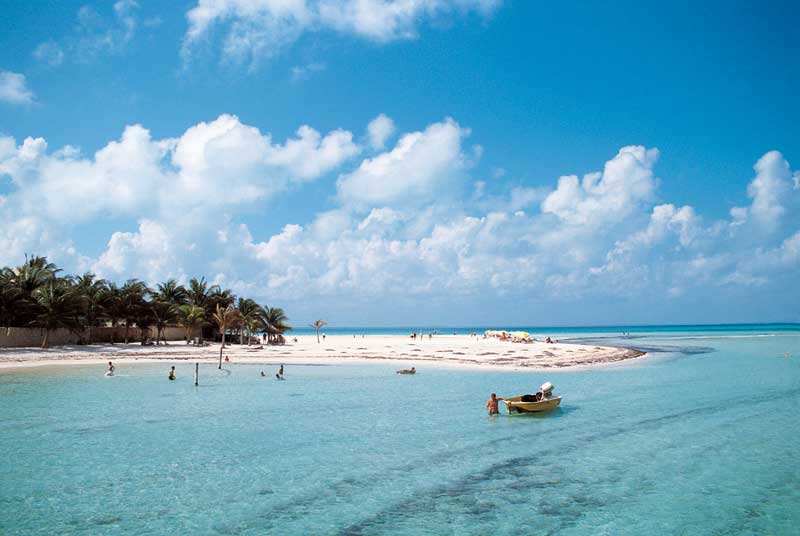
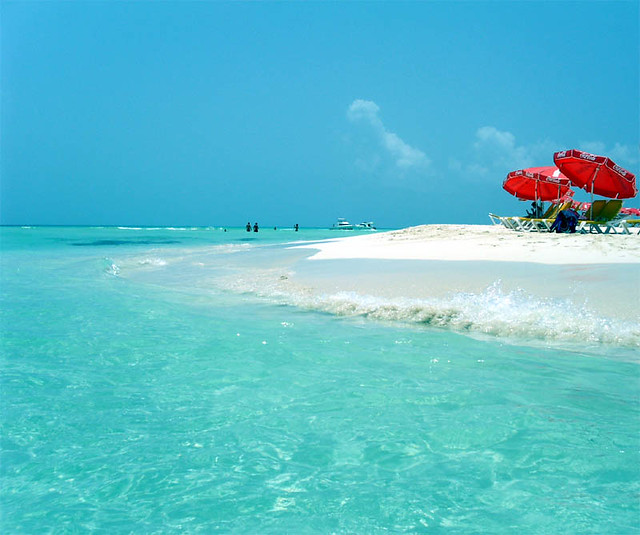
I find even the waters of the Mediterranean in August cold. My children would mock my skittishness about entering the water during our summer holidays in Liguria. The only time I have ever felt really relaxed in seawater was during a trip many, many years ago to Mexico with my wife and mother-in-law, when we went to Isla Mujeres, an island just off the coast from Cancún.

isla muheres-2

isla muheres-1

My knees go weak just thinking about that deliciously warm water. It was just like taking a bath. Wonderful.

___________________________

Mao swimming-1: http://www.china360online.org/wp-content/gallery/history/maoswimming.jpg
Mao swimming-2: http://www.historytoday.com/sites/default/files/mao_0.jpg
Swimmer in Qianhai lake: my pic
Swimmer in canal: my pic
Chinese boy with algae: http://www.trust.org/resize_image?path=/dotAsset/2c48ca45-6959-4bc0-8172-15165d151805.jpg&w=649
Chinese swimming Harbin: http://msnbcmedia.msn.com/j/MSNBC/Components/Photo/_new/pb-121217-winter-swim-china-jsa-2.photoblog900.jpg
Titanic sinking: http://0.tqn.com/d/movies/1/0/n/n/Y/titanic-sinking2.jpg
Isla muheres-1: http://www.luxuriousmexico.com/wwwluxuriousmexico/Luxurious%20Mexico/PicsQuintanaRoo/Quintana%20Roo,%20Isla%20Mujeres,%20Beach,%20Playa%20Norte,%20view%20-%20Photo%20by%20Fideicomiso%20Isla%20Mujeres.jpg
Isla muheres-2: http://farm2.staticflickr.com/1258/776340728_2b813a7873_z.jpg?zz=1