PHOTO ALBUM OF A HIKE

Vienna, 8 June 2025

My wife and I recently completed a four-day hike around the Danube, in the reaches of the river some 20 km upstream from Linz. We started in the village of Ottensheim, made our way to Eferding and then to Aschach, ending the hike in the village of Sankt Martin. I can’t resist inserting here a composite photo I’ve created of the hike.

My composite

As readers can see, we wandered rather drunkenly along the Danube.

The wonderful thing about hiking is that you move slowly across the landscape, which allows you to notice things which you probably wouldn’t notice on a bike, let alone a car. I give my readers here a taste of what my wife and I came across – quite serendipitously – as we slowly crossed this Danubian landscape.

Thursday

We arrive in Ottensheim, which sits on the Danube river, in the early afternoon. We take advantage of our early arrival to go for a walk on the high lands behind the town. Here is the view of the Danube which greets us at the top. You can see the hydroelectric dam spanning the river. We’ll be passing that dam tomorrow.

My photo

We have pizza at the place we’re staying the night, down by the river’s bank. We chat with the staff, all Neapolitans, who all left Naples because of a lack of opportunities there. A story we’ve heard so many times. Such a tragedy for Naples, this steady draining away of their youth.

Friday

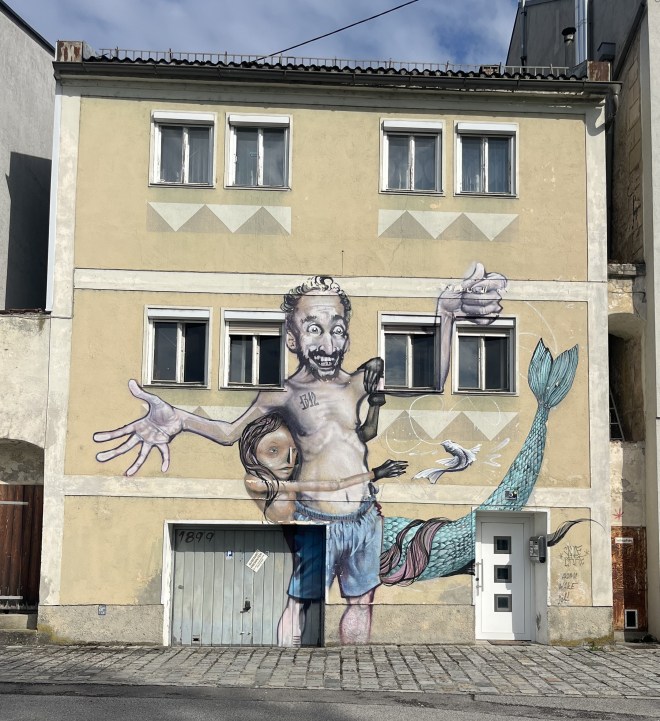
We’re greeted at the exit of the hotel by this strange painting on the wall of a house.
My photo

Not sure what happened to the mermaid’s nose …

We’re waiting to board the ferry, which will carry us over to the other bank.

My photo

While waiting, we spy a statue of St. Johann Nepomuk, protector of those who cross streams and rivers, so common in this part of the world. This statue is coloured, though, which is rare.

My photo

The view from the ferry’s deck, looking upstream. The hydroelectric dam is in the far distance.

My photo

We can also see a peek of Ottensheim’s local castle in that last photo. We get a better view as we start walking along the river’s bank.

My photo

Its recent history has been quite eventful. Owned by a British family in the 1930s, it was confiscated by the Nazis at the beginning of the war. They used it as a forestry office for the Wermacht. After the war, the Soviets, who occupied that side of the Danube, used it as a barracks. After they left in 1955, when Austria got back its independence, the castle reverted to its pre-war owners. By then it was in a pretty sad state, but its owners didn’t have the money to restore it. It was only in 1988, when the castle was sold to a group of families with deeper pockets, that the castle could be restored. It is still in private hands.

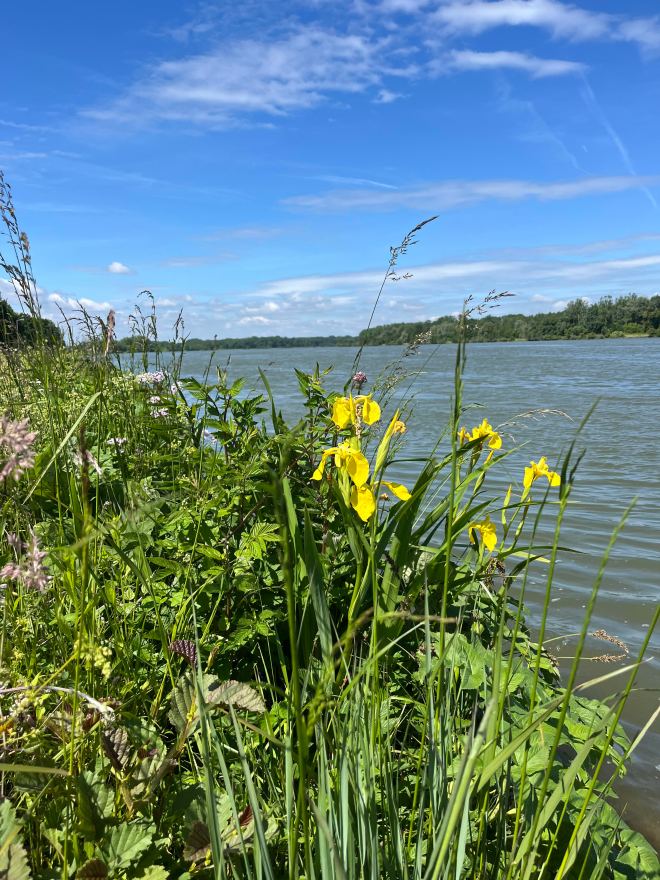
Yellow irises blooming along the water’s edge, the first of many wildflowers we will be seeing on this hike.
My photo

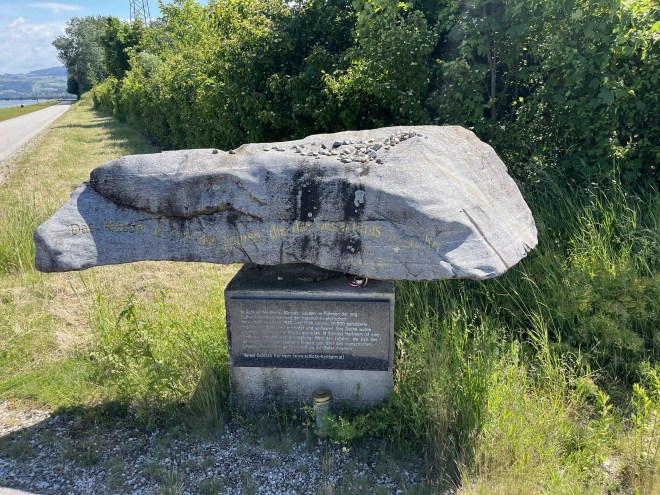
Close by, a memorial on the side of the path.
My photo

It commemorates the nearly 30,000 people murdered through poisoning with carbon monoxide by the Nazi regime in nearby Hartheim castle, between May 1940 and December 1944. Once their bodies had been cremated the ashes were brought to this spot and dumped into the Danube. Until September 1941, it was a “euthanasia” centre, where 8,000 physically and mentally handicapped people, almost all from Bavaria and Austria, were murdered. After Hitler closed down the Nazis’ euthanasia programme (because of protests from the Roman Catholic Church in Germany), the centre quickly “pivoted” to become a centre for the killing of inmates from nearby concentrations camps, primarily Mauthausen or its satellite camps, who were too sick or injured to work any longer. By December 1944, they had murdered a further 12,000 people, most of them Soviet Prisoners of War.

Wildflowers by the side of the path

My photo

Outside a fire station, an intriguing monument to firemen and women, as well as to officers of the Austrian river authority.

My photo

An old farmhouse on the edge of the road.

My photo

Eferding, the end point of today’s hike, with the parish church’s bell tower dominating the town.

My photo

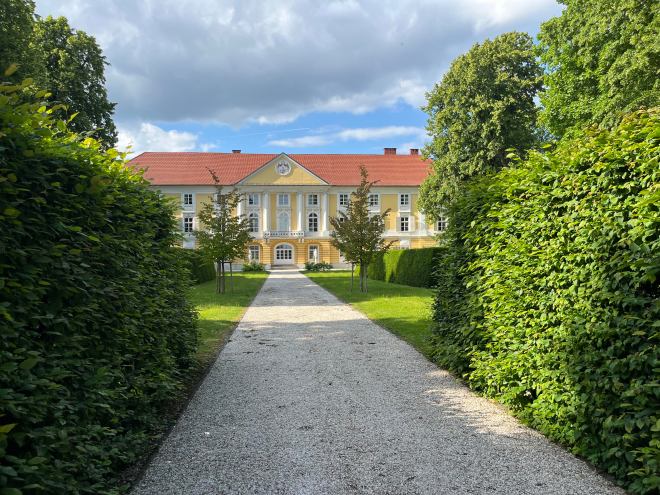
A photo of Eferding’s castle, taken by slipping my iPhone through the big gates that barred entry.
My photo

The castle is still owned by the Starhemberg family, who inherited it and the lands that came with it in 1559. Interesting family. They’ve been involved in Austrian politics for the last 1,000 years or so. The latest (in)famous member of the family was Ernst Rüdiger Prince von Stahremberg, who was born in 1899 in the castle and died in 1956 in Voralberg. He was a right-wing politician with great admiration for Mussolini’s fascism. He served in Austria’s right-wing governments from 1930 until 1936. Although fascistic, he really disliked the Nazis and made his dislike very public, so after the Anschluss of 1938 he fled to Switzerland to avoid vengeful retaliation by the Nazis (and perhaps also to protect his wife, who was Jewish). At the beginning of World War II, he served in some capacity in the British and Free French Air Forces, but he resigned in disgust after the UK and the US allied themselves with the Soviet Union in 1941 – he viewed communism and Nazism as equally evil. Thereafter, he and his wife left for Argentina; not unnaturally, he felt a great affinity with the politics of Juan Peron. In 1956, after Peron had been ousted by the army, he travelled to Austria for an extended visit, no doubt to explore the possibility of coming back. He was staying at a spa in Schruns (the bell tower of whose parish church I had so admired last year). During a walk, he was photographed by a journalist who worked at a communist newspaper. In a rage, he attacked the journalist with his walking stick, but this triggered a cardiac arrest and he died there on the pavement.

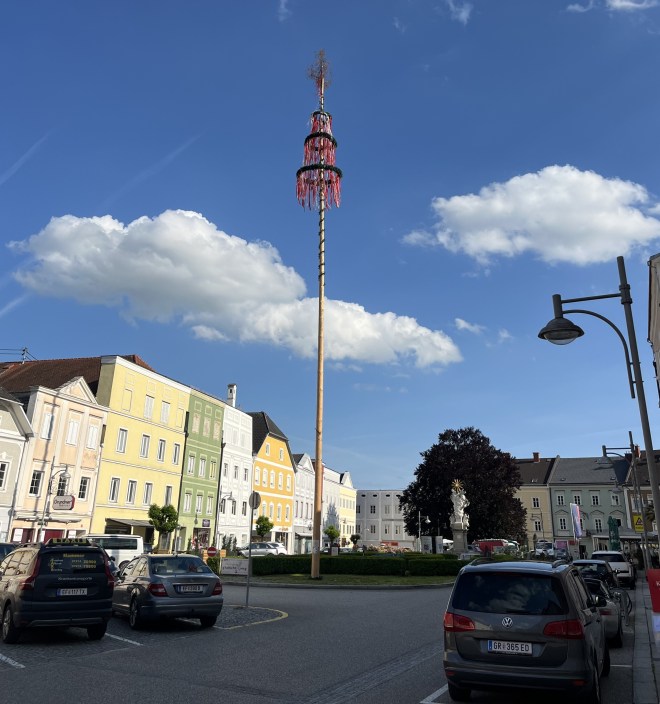
Turning my back on the Stahremberg castle, a view of Eferding’s main square

My photo

with its maypole still standing

My photo

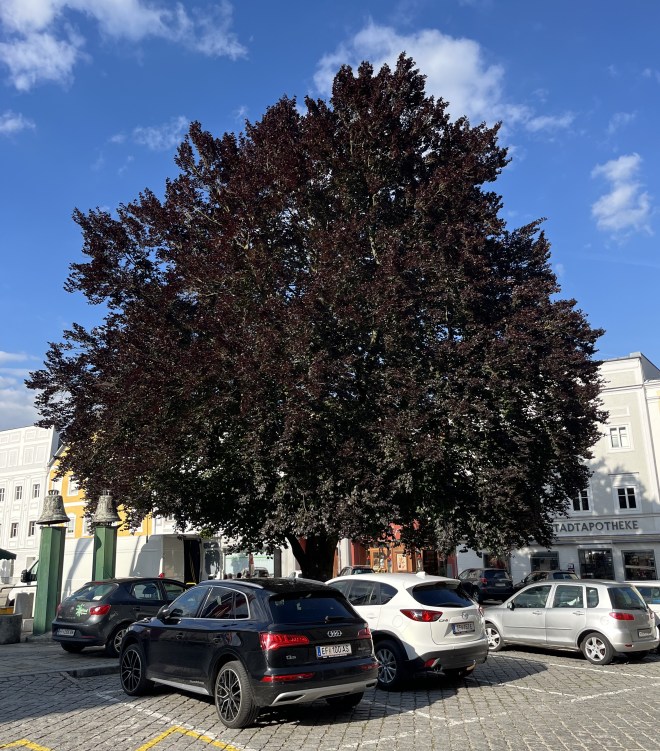
and a magnificent copper beach at the far end.
My photo

Eferding’s parish church

Source

with its beautifully carved pulpit (although not as beautiful as the one my wife and I saw in Traunkirchen several years ago)

Source

and the tombstone of some long dead knight.

My photo

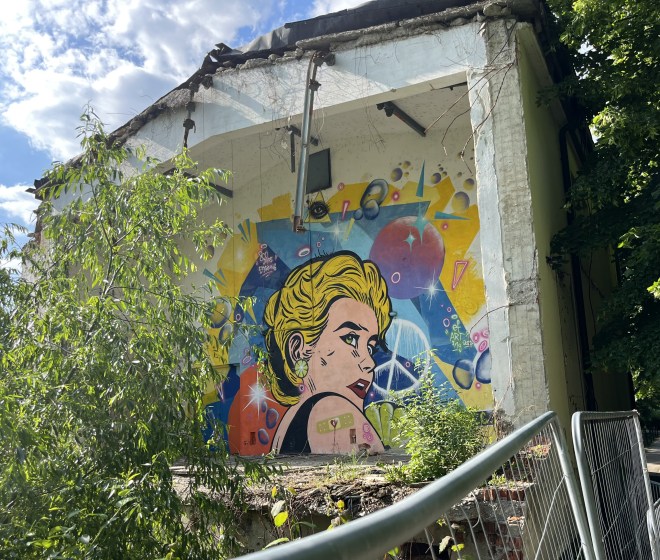
A Lichtenstein-like mural on the wall of a ruined house
My photo

An amusing ad for a shop offering orthopaedic services.

My photo

And so to dinner and bed.

Saturday

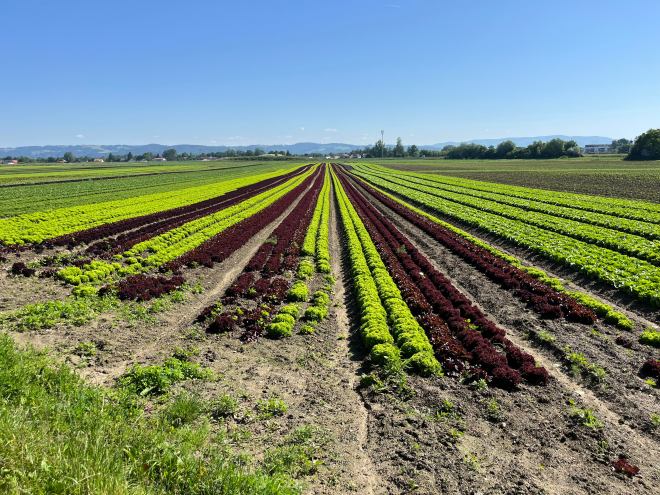
We start the day by walking over the rich farmland around Eferding. We pass these multicoloured rows of lettuces.
My photo

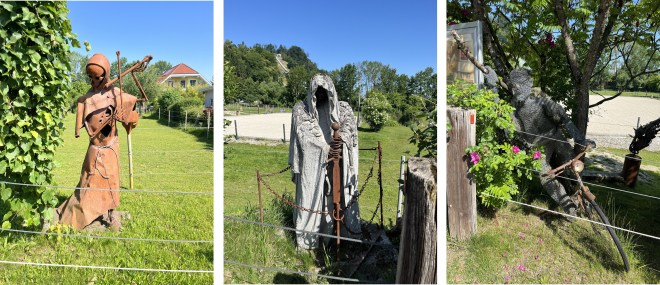
We go past a garden whose owner must be an amateur sculptor with a fondness for using scrap metal.
My photos

Nearby, beauty among the garbage.

My photo

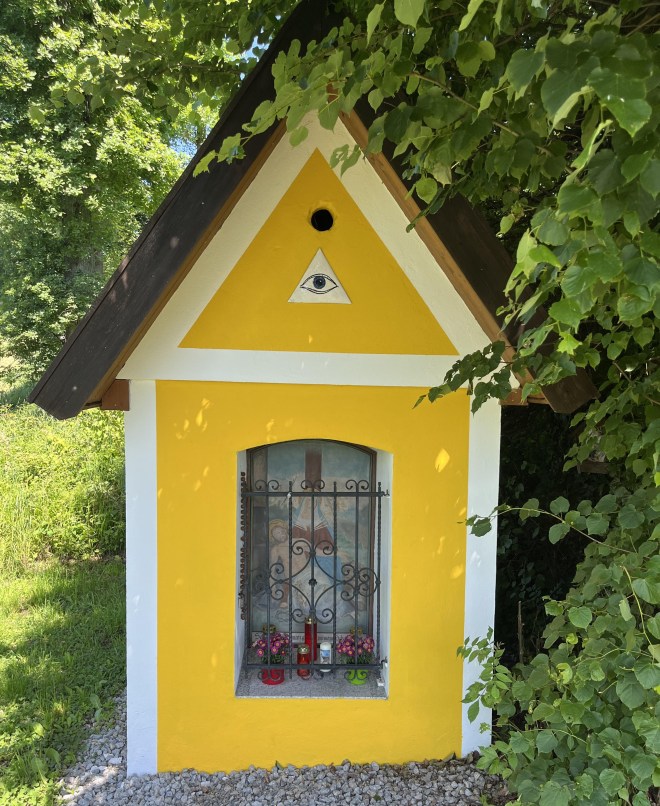
We begin to climb a steep ridge. We pass a shrine on the side of the road.
My photo

Shrines are common throughout Austria, but I notice that in this region shrines – like this one – have an eye painted on them. I suppose it represents God, the “All-Seeing Eye”. But I find it rather unnerving: “You can’t hide from me, I can see everything that you do” – just like Big Brother in George Orwell’s “Nineteen Eighty-Four”.

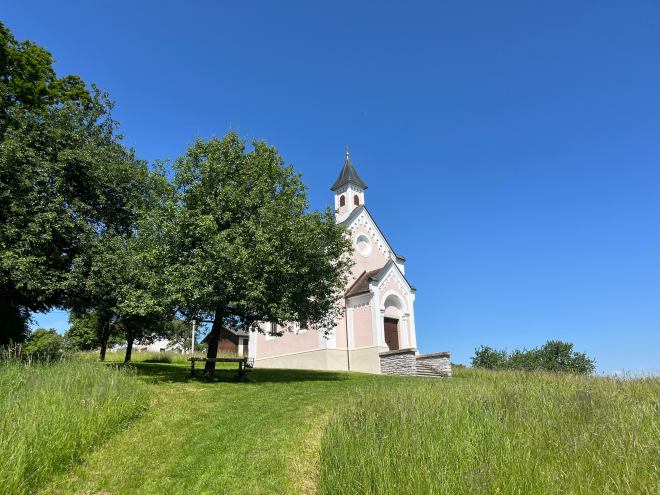
A chapel at the top of the ridge.
My photo

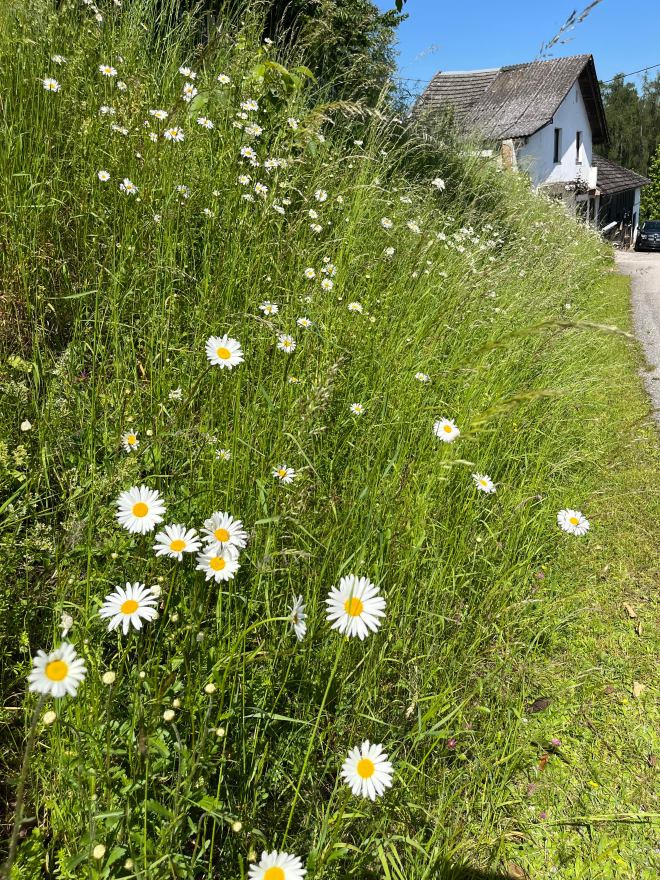
A spray of daisies on the side of the road.
My photo

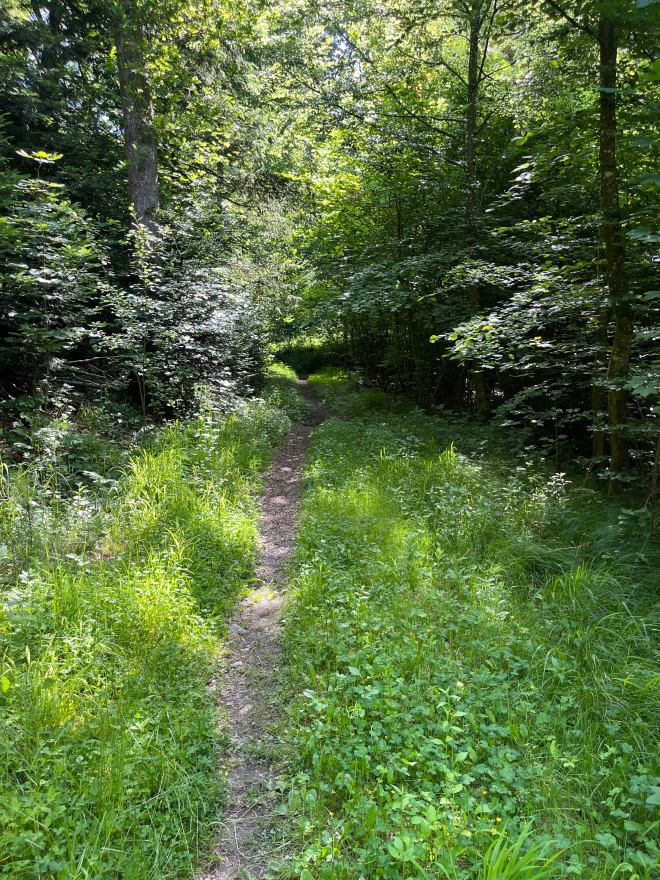
We plunge into the woods.

My photo
My photo

A view over the plain around Eferding.

My photo

We come down the ridge and pass the small airfield – literally, in this case – of a gliding club.

My photo

We have been watching the gliders soaring over us all morning; my iPhone, alas, cannot capture their ethereal beauty.

We look back at the ridge we walked along, with a castle ruin sitting on it.

My photo

We stop for lunch in the village of Pupping, finding a bench in the parish church’s garden to sit on. I, of course, cannot pass up the opportunity of visiting the church after lunch. I find a mix of old and new.

A statue of St. Wolfgang, who, it is said, died at the altar of the (original) church in 994 CE.

My photo

A statue of St. Christopher, looking less than pleased with having to carry the Child Jesus.

My photo

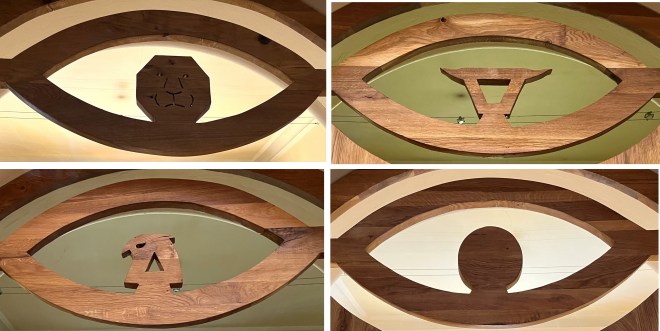
Four carved door lintels, displaying the symbols of the four Evangelists: clockwise from the top left, the lion of St. Mark (you have to look hard to see the lion’s face), the ox of St. Luke, the angel of St. Matthew, and the eagle of St. John.
My photos

It takes me a while to understand that Luke’s angel is represented by an eye – the eye again …

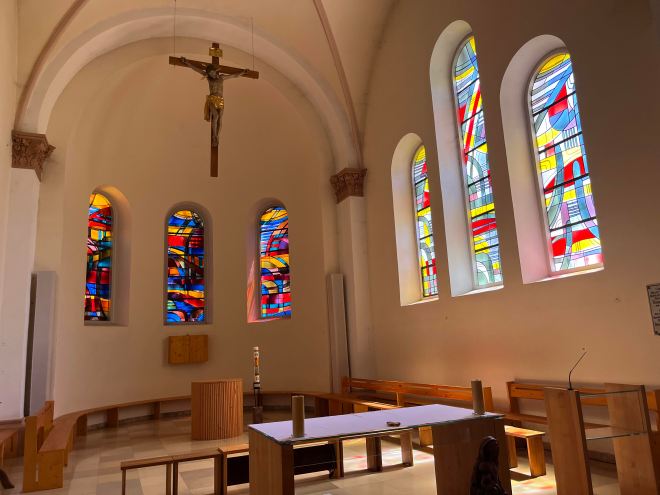
Rather pleasant stained-glass windows.
My photo

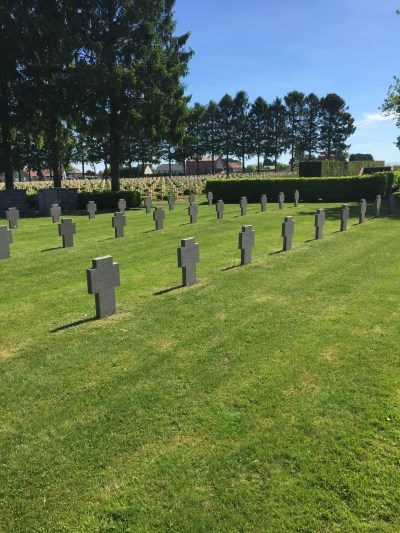
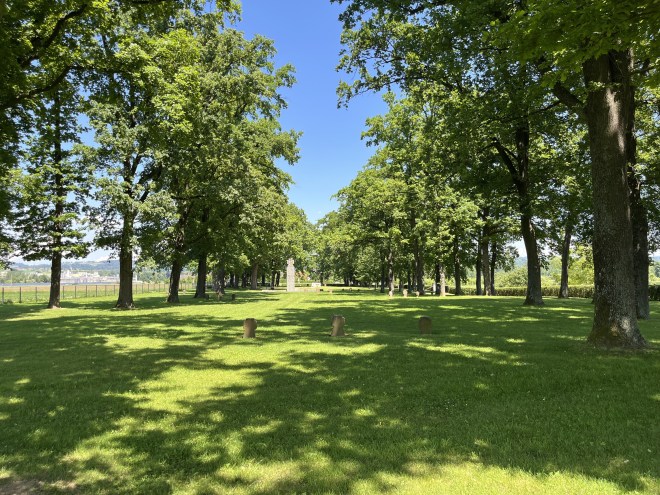
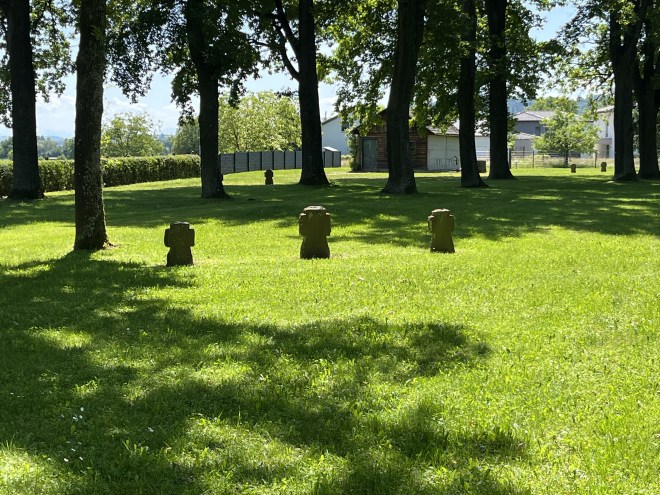
We continue the hike towards our end point today, Aschach, on the Danube. Quite by chance, our route takes us past a war cemetery.

It has the look and feel of the German war cemeteries which my wife and I had visited on the Western Front: tall oak trees, shading a lawn, in which are planted stone crosses.
My photo
My photo
My photo

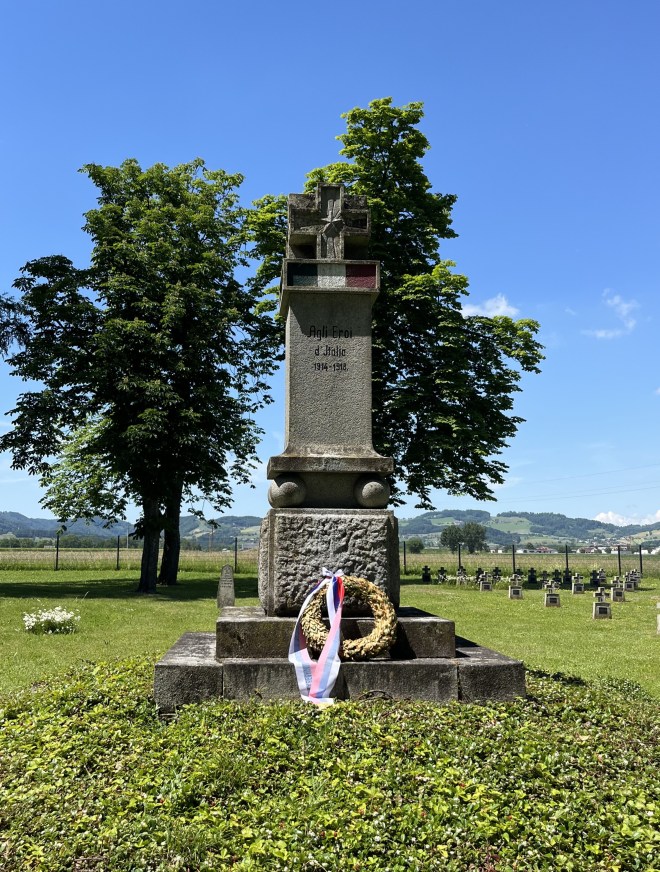
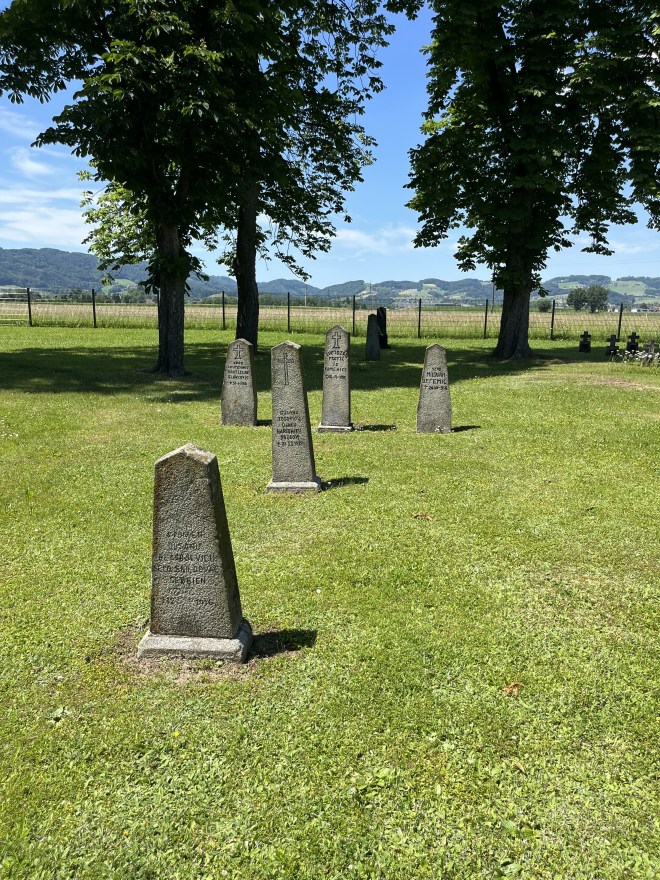
But actually, although the cemetery is looked after by the German association for war graves (hence the look), none of the soldiers buried there are Austrian or German. And none of the dead who are commemorated fell on the frontline; they were all prisoners of war who died in a POW camp which the Austro-Hungarians built close by for use during the First World War. They were mainly Italians

My photo

with their memorial

My photo

and Serbians

My photo

with theirs.

My photo

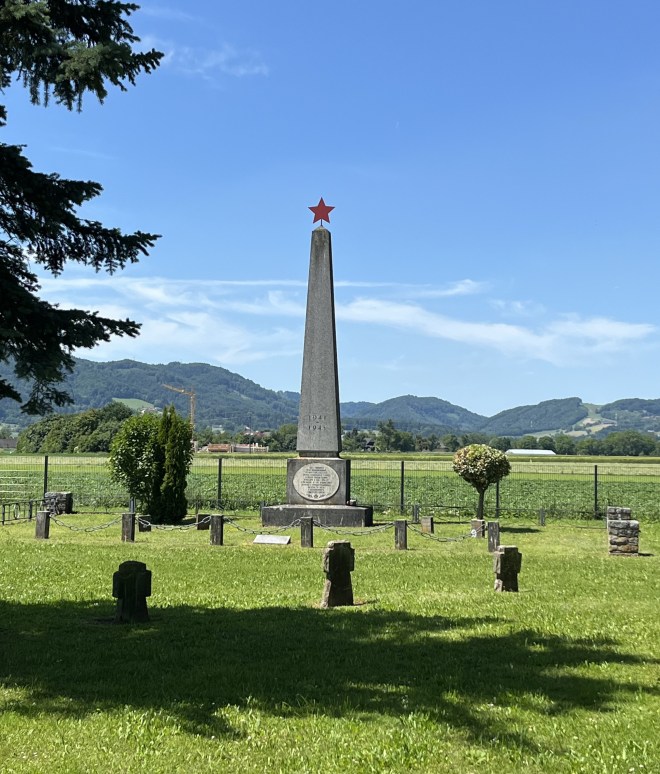
After the Second World War, the Soviets put up a memorial to their POWs who had been murdered in Mauthausen and other nearby concentration camps.
My photo

Of course, the thousands of murdered Soviet POWs didn’t get an individual grave, their names were not even inscribed on a monument. But some Russian family had come and attached a photo of one Soviet prisoner to a stone cross, with the epitaph “We remember, we love, we grieve. The grandchildren”.

My photo

We walk on to Aschach.

Sunday

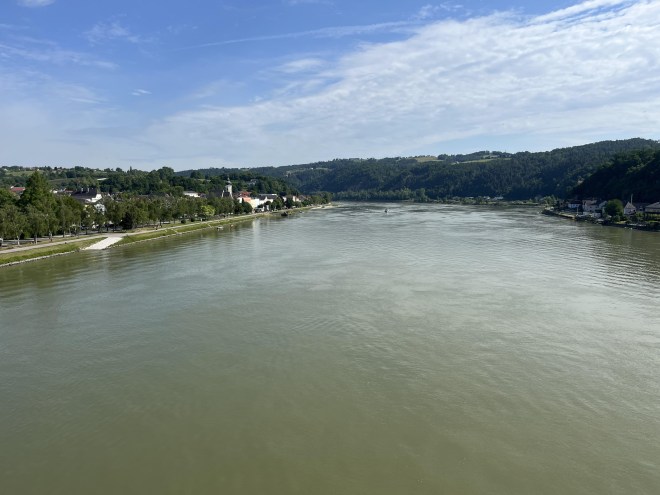
We start the day by once again crossing the Danube, but this time using a bridge rather than on a ferry.
My photo

Some purple irises catch my eye as we walked along the river bank.

My photo

We climb up to the high lands overlooking the river, past fields of wheat studded with corn flowers and daisies.
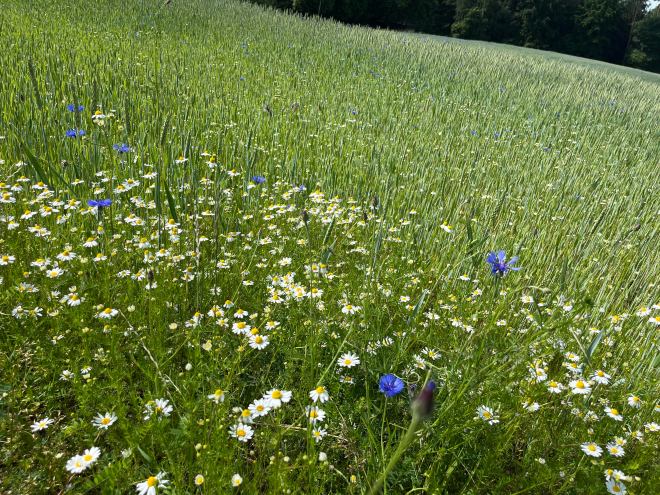
My photo

We enter the woods.

My photo

The path eventually leads us off the high lands and down to a stream at the bottom of a valley. We start following the stream towards its source. At first, the stream cheerfully burbles along.
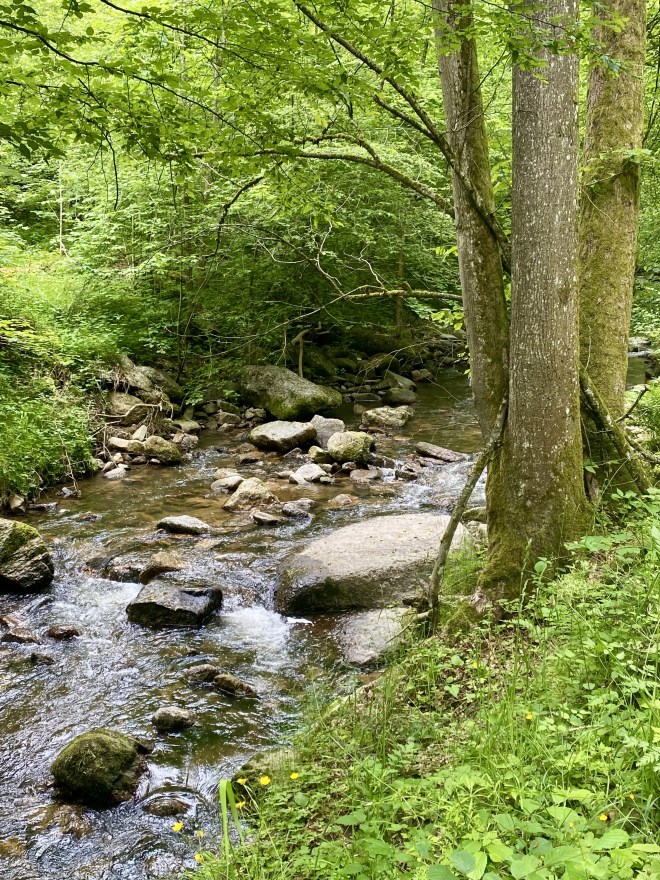
My wife’s photo

But soon the stream bed becomes rough as stones from above have tumbled down, and the water jumps around.

My photo
My photo

The path mimics the roughness of the stream.
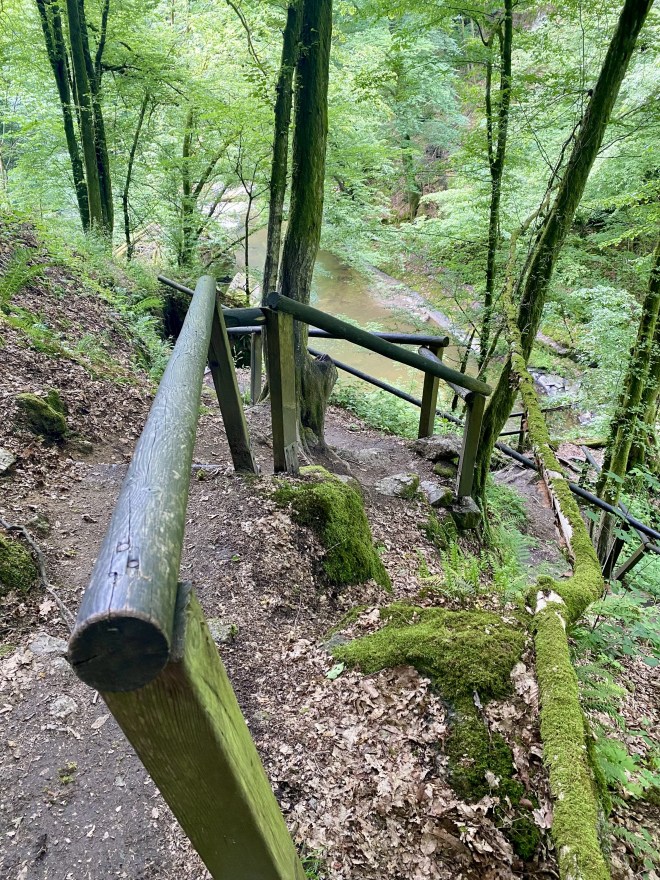
My wife’s photo

Once we reach the high lands, the stream quietens down, the path likewise.
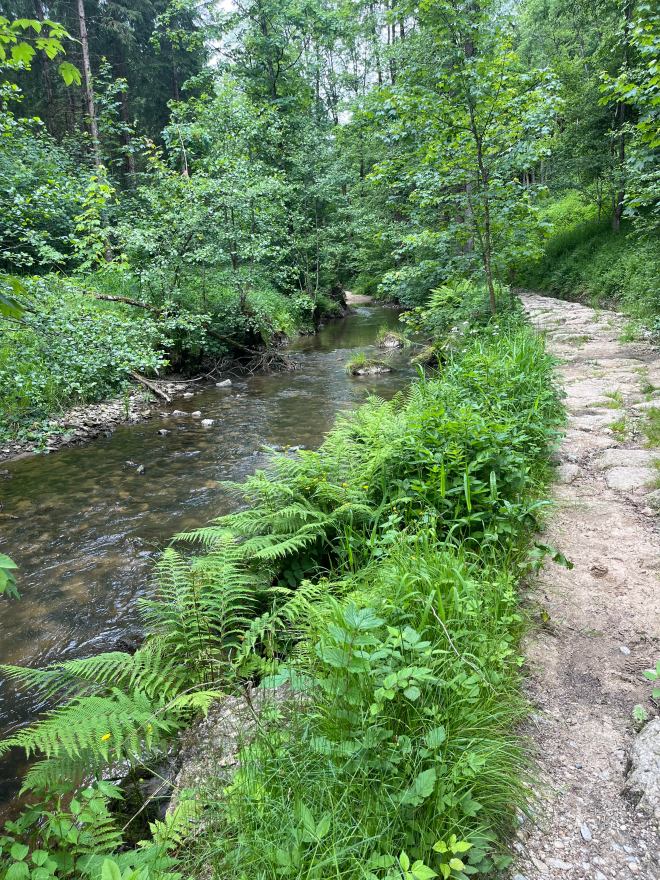
My photo

We pass meadows along the stream’s banks. Some have been turned into lawns.

My photo

Here, another anonymous sculptor has turned a tree trunk into a whimsical totem pole.

My photo

One of the meadows is carpeted in pink flowers.

My photo

Finally, we leave the stream and climb up onto a ridge. An alpine pasture falls away to our right. It is impossibly green.

My photo

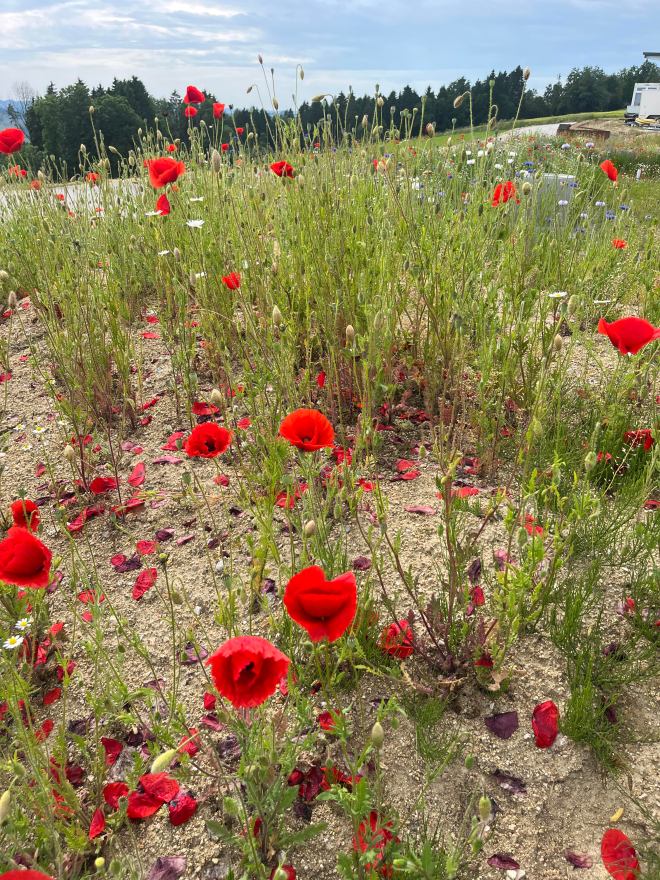
We pass through Sankt Martin and start walking along a main road. This is the only way to our hotel. We pass a building site, where a riot of poppies grow: beauty clothing the ugliness.
My photo

We reach the hotel. Our hike is finished.
LYING TOGETHER, FOREVER

Milan, 20 May 2017

Last week my wife and I visited, together with a French cousin of mine and his wife, the First World War battlefields of Verdun and Chemin des Dames. For me, it was a follow-on to a trip we made a few years ago to the battlefields around Ypres in the British sector. For my cousin, it was a chance to visit Verdun, a battlefield still deeply etched in the French psyche.

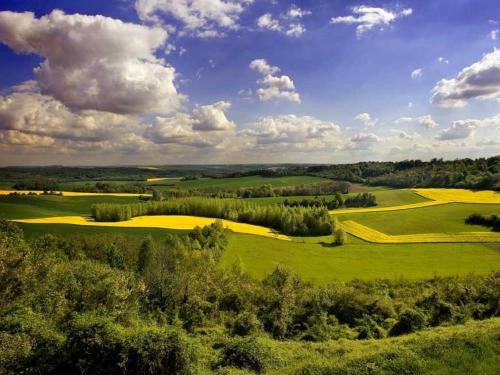
As during my previous visit to Ypres, I was struck by how peaceful the countryside now looks. Traveling along the Chemin des Dames, but also on the west side of the River Meuse at Verdun, with their rich rolling farmland on every side, it was difficult to imagine the large-scale death and destruction visited upon these lands a mere hundred years ago. The farmer’s plough has smoothed away the millions of shell holes that pockmarked the earth, wheat and rapeseed cover the land with carpets of green and yellow.

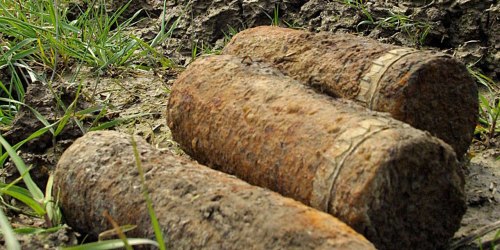
Yet that farmer’s plough still brings to light every year unexploded ordnance and other detritus of war, and by some estimates will continue to do so for seven hundred years.


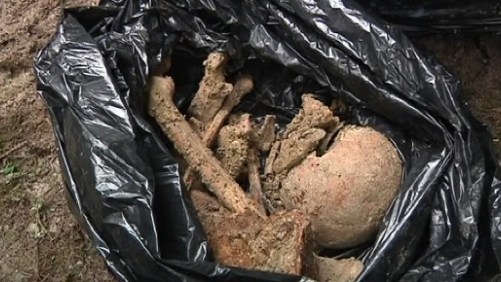
And it still brings to light remains of men who died in these now peaceful fields.

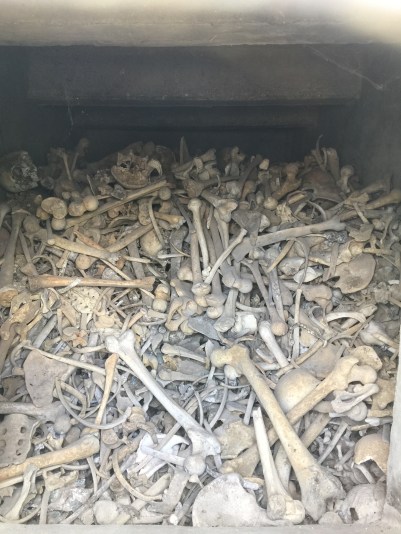
At Verdun, these will be added to the Ossuary of Douaumont, where the visitor can gaze upon mountains of human bones, German and French alike.

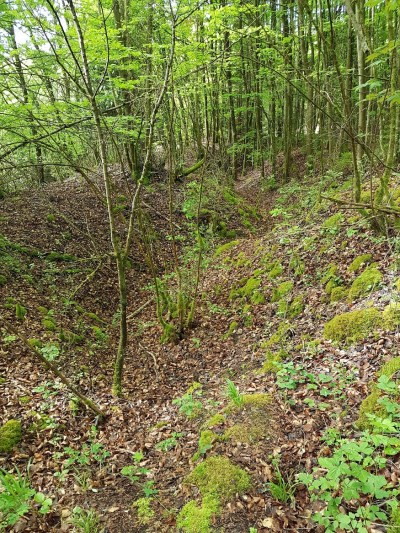
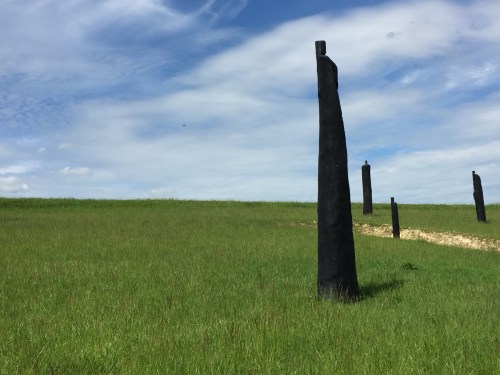
In certain places, especially on the East bank of the River Meuse but also at Mort-Homme and Cote 304 on the West Bank, and at the Plateau de Californie on the Chemin des Dames, the land was too smashed, and too dangerous, to give back to agriculture. There, trees cover the land with their green foliage and birdsong fills the air. But if you peer beneath the tangle of branches, you can see the cratered, pot-holed landscape the trees hide from our view.

You can begin to imagine what it must have been like for those poor soldiers who cowered there, and fought like savages when they met each other, and died horrible deaths, and whose bodies were ripped into ever smaller shreds by incoming shells.

The official memorials which the French put up in the immediate aftermath of the war ring false to my modern ear: “Glorious Sacrifice!”, “Victory!” Where was the glory in the stinking mud and blizzard of shrapnel? What victory was this which brought us another World War thirty years later? Even that oft repeated phrase “Eternal Remembrance” rings hollow – who remembers any more the individual young men who died here? Their parents are long gone and the last of the soldiers who fought here passed away ten years ago. I find the small, private memorials put up by families whose sons disappeared without trace into the mire of the battlefield much more touching: “Jean Dauly, 350th Infantry Regiment, killed 6th May 1917 in the little wood across the way, aged 20. Mourned by his mother, all his family, and his friends. Pray for him”, “Marcel Duquenoy, from Calais, aged 20, of the 350th infantry regiment. In memory of our son, who disappeared 6th May 1917, in the wood across the way”. As a parent, I can empathize with the agonies of a mother who had lost her son and didn’t have a body to decently bury and a tombstone to grieve over.

The modern iconography is much more sensitive to the sheer, wanton waste of life of this war. There is a superb museum-memorial near Douaumont, which gives a balanced French and German account of the battle of Verdun and shows in great detail the life of ordinary soldiers on both sides. There is a modern sculpture, the Constellation of Suffering, at the museum of the Cave des Dragons on the Chemin des Dames.

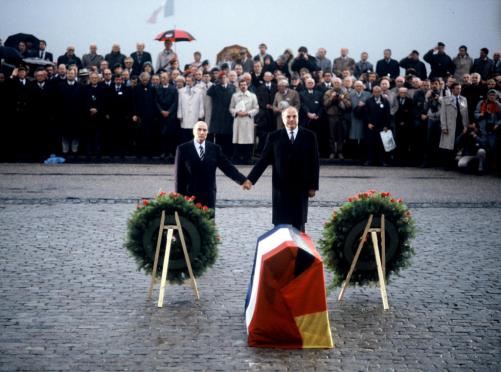
It commemorates the 16,000 African soldiers, mostly from the ex-French colonies in West Africa, who were totally decimated in this battle: the ultimate act of colonialism, using colonial troops to fight your wars. And there is of course that iconic picture of Franco-German reconciliation: President François Mitterrand and Chancellor Helmut Kohl holding hands at the annual anniversary of the battle of Verdun in 1984.

You cannot visit World War I battlefields without coming across the military cemeteries both big and small which dot the countryside. I like these cemeteries. They are oases of peace and beauty, but they are also the one place where I can connect, if only for a moment, with the individual men – boys, often – who died in this carnage. I go down rows reading the names. I feel I owe this to them, so that they can exist again for a brief instant before returning to the cold earth. I’m always sorry that I can’t read all the names, there are simply too many and time too short. We visited many French cemeteries, of course

but also the very big American cemetery at Romagne-sous-Montfaucon, product of the Americans’ Meuse-Argonne offensive in 1918 (with so many who died just a few days before the war’s end)

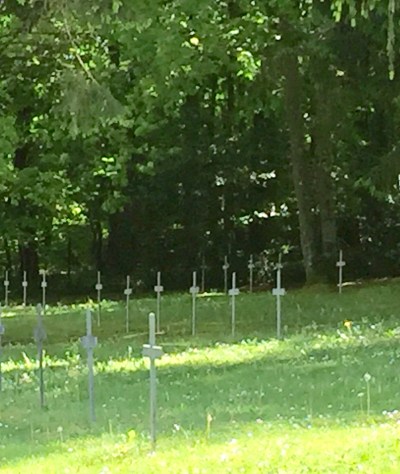
a few small, modest German cemeteries – the penalty of the vanquished leaving their dead in the victor’s country

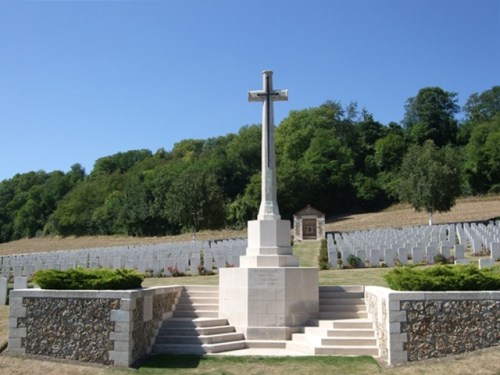
and a small British cemetery, the result of the frantic rearguard fighting in the first month of the war.

But the cemeteries I most liked were across the road from the memorial chapel on the Chemin des Dames. All the military cemeteries I have ever visited stand in isolation, each country mourning its dead separately. But here, a German cemetery touched upon a French cemetery. They were not side by side – that would have been unthinkable a hundred years ago, perhaps even today – but they touched in one corner, so that you could walk from one to the other.


It makes me think of a poem by the French poet René Arcos, “Les Morts…”, “The Dead…”

Le vent fait flotter
Du même côté
Les voiles des veuves

Et les pleurs mêlés
Des mille douleurs
Vont au même fleuve.
Serrés les uns contre les autres
Les morts sans haine et sans drapeau,
Cheveux plaqués de sang caillé,
Les morts sont tous d’un seul côté.

Dans l’argile unique où s’allie sans fin
Au monde qui meurt celui qui commence
Les morts fraternels tempe contre tempe
Expient aujourd’hui la même défaite.

Heurtez-vous, ô fils divisés!
Et déchirez l’Humanité
En vains lambeaux de territoires,
Les morts sont tous d’un seul côté.

Car sous terre il n’y a plus
Qu’une patrie et qu’un espoir
Comme il n’y a pour l’Univers
Qu’un combat et qu’une victoire.

Here are my very modest efforts at translation:

In the same direction
Does the wind make
The widows’ veils float.

And the mixed tears
Of a thousand pains
Flow into the same stream.
Wedged one against the other
The dead without hate and without flag,
Hair smeared with clotted blood,
The dead, they are all on one side.

In the same clay where come together without end
The world that dies and that which begins
The fraternal dead temple to temple
Expiate today the same defeat.

Clash, divided sons!
And tear Humanity
Into vain rags of territory,
The dead, they are all on one side.

For underground there is
But one fatherland and one hope
As there is for the Universe
But one battle and one victory.

What more fitting monument could there be than these twinned cemeteries for today’s Europe, which sees us inching cautiously closer together, with the goal of making this war (and its successor, the ’39-’45 war) la Der des Ders, as the French called it, la Dernière des Dernières, the absolutely last war.

______________________

Photos: ours or our cousins’, except:

Landscape Chemin des Dames: http://1418.aisne.com/discovery-routes/ASCPIC002FS000JG/detail/laffaux/le-front-du-chemin-des-dames
Unexploded shells: http://www.europe1.fr/faits-divers/pas-de-calais-plusieurs-obus-explosent-naturellement-dans-un-champ-2638741
Soldiers’ remains: http://www.bfmtv.com/societe/une-vingtaine-corps-poilus-retrouves-meuse-527266.html
Kohl and Mitterrand hold hands: http://www.cvce.eu/en/obj/francois_mitterrand_and_helmut_kohl_verdun_22_september_1984-en-2f9050c7-d5cb-4899-9bb2-e1e05bb9cb26.html
British cemetery Vendresse-Beaulne: http://www.ww2cemeteries.co.uk/ww1frenchextension/vendressebrit.htm


THE WESTERN FRONT

Beijing, 3 August 2012

These last few evenings I’ve been sorting through the photographs we took during our summer vacation. Much of our time was taken up with doing necessary things – checking repairs to our apartment, visiting relatives, that sort of thing – but we managed to squeeze in a three-day visit to the battlefields of the Western Front. It’s something I’ve been wanting to do for at least forty years, since I first started reading the English poetry and prose of the War.

Because my knowledge of the War is primarily British, our visit ran along the line of the British sector, from the Ypres Salient – the battles of Passchendaele, Ypres, Messines Ridge – to the battlefields of Neuve-Chapelle, Loos, Vimy Ridge, and finally to the battlefields of the Somme.

I’m not a military historian; I’m not interested in the lay of the land, nor do I want to know which regiment swept over this hill to take that objective, or what weapons they used to do it. In any event, as you gaze across today’s peaceful countryside it’s hard to imagine the scenes of a hundred years ago. Even at Vimy Ridge, or Delville Wood, or the Newfoundland Memorial, where the land has been left as it was at the end of hostilities, the ground does not speak to you.

No, what really drew me to this strip of land is the iconography of death. How did the belligerents deal with the enormity of their military dead after the guns fell silent? 2 million dead in Germany, 1.4 million in France, 1.1 million in the British Empire.

Wilfred Owen wrote:

What passing-bells for these who die as cattle?
Only the monstrous anger of the guns
Only the stuttering rifles’ rapid rattle
Can patter out their hasty orisons.
No mockeries now for them; no prayers nor bells;
Nor any voice of mourning save the choirs, –
The shrill, demented choirs of wailing shells;
And bugles calling for them from sad shires.

But each country made sure that there would be memorials for their dead. Indeed, the length of the Western Front is thickly dotted with memorials and cemeteries. We visited only a handful of the bigger ones, mostly British Empire but also a few French and German. As we drove, signs to many, many others beckoned: Le Trou Aid Post Cemetery, Post Office Rifles Cemetery, Crump Trench British Cemetery, L’Homme Mort British Cemetery, Dud Corner Cemetery, Happy Valley British Cemetery … “so many, I had not thought death had undone so many”.

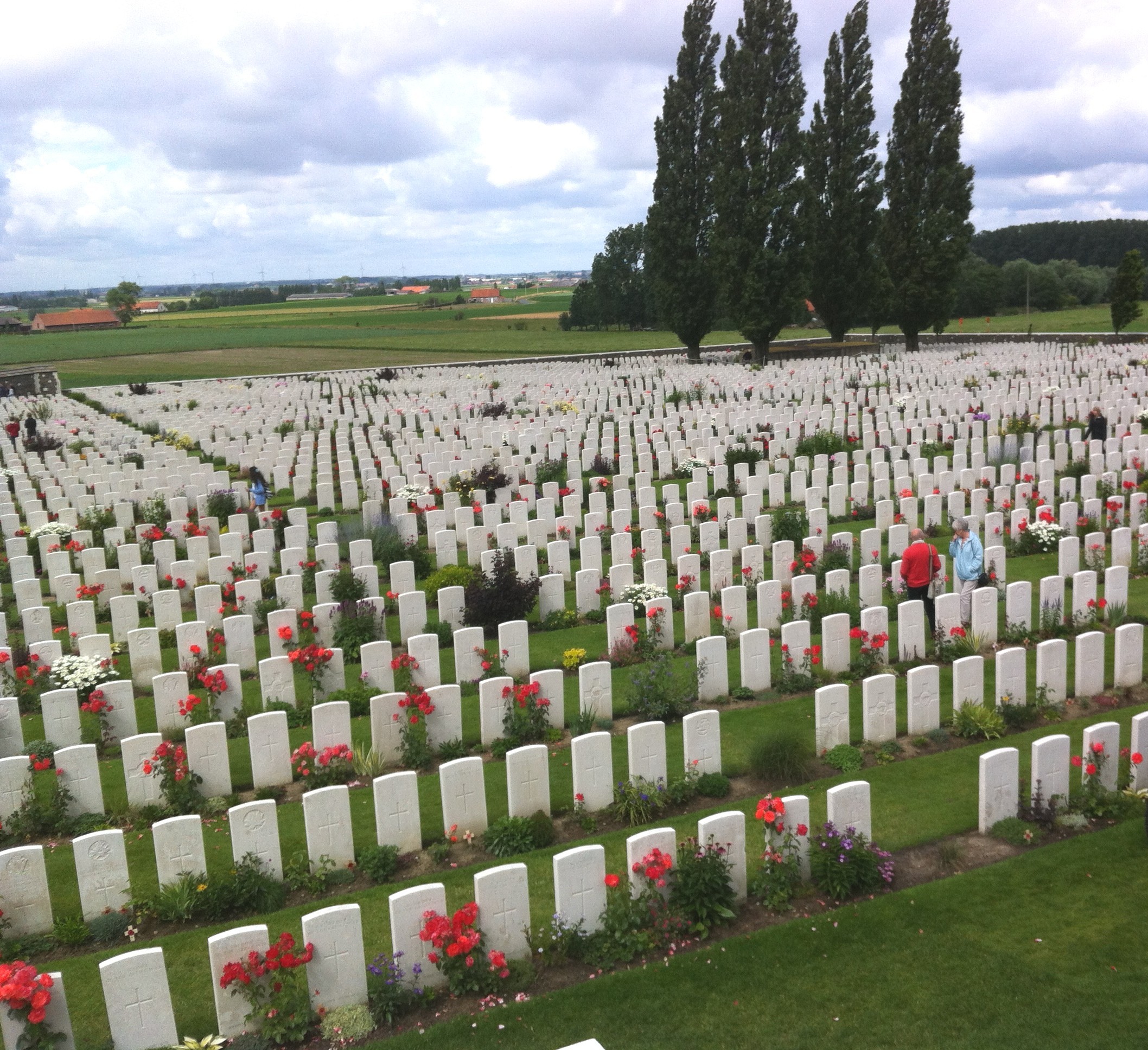
How did Governments choose to present these dead millions to their citizens? As I flip through my photos, in the British Empire cemeteries I see a predominance of white and green: white stone and green grass, leavened by splashes of colour from the roses and other flowers planted at the base of each gravestone. I see few trees.

07 Tyne Cot memorial-cropped

The buildings echo those of that other, Roman, Empire that the British so aspired to emulate: columns, rounded arches, cupolas, brick mixed with stone.

Thiepval_Memorial-3

And I see grand phrases written on the walls, commemorating victory, heroic sacrifice, eternal remembrance, and the gratitude of a nation. But I also see scrolling on and on, from one wall to another, the names of the missing, those with no known grave, whose macerated flesh disappeared into the mud of the Western Front. And I see the ages of those who died – so young most of them, my children’s age.

Menin_Gate_names

The colours white and green are echoed in the French memorials. But here the Christian motifs are stronger: white crosses for the buried (or white gravestones for the non-Christians) and churches or church-like structures for the memorials. Here too grass dominates the green – trees are rare. And here too the grass’s green is splashed with colour from flowers at the base of the crosses. And here too grand rhetoric is carved into the walls.

notre_dame_de_lorette

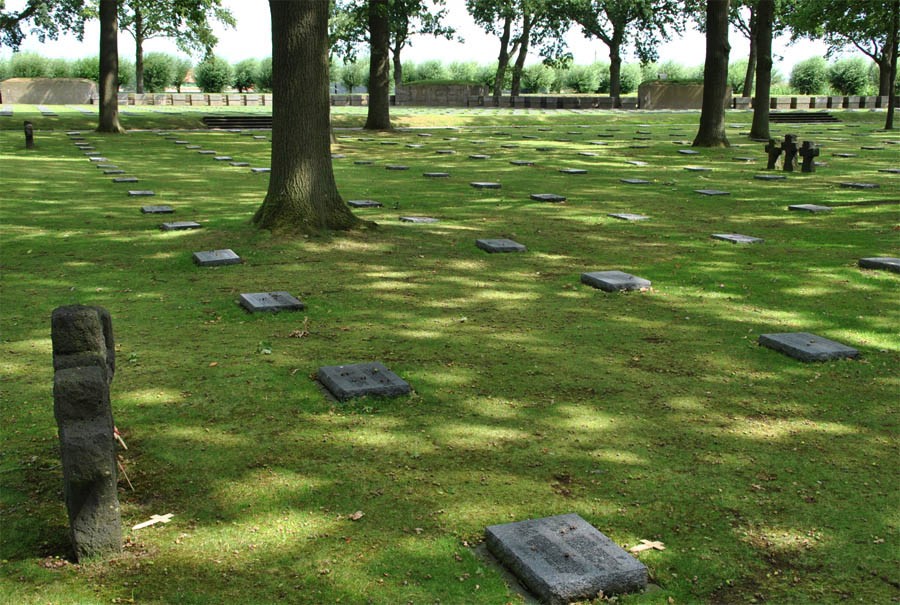
German cemeteries differ radically. Everything about them is much more sombre. Black, not white, is the dominant colour of crosses, gravestones and buildings. Although as elsewhere green is ever present, it is a darker green, for trees grow throughout the cemeteries. Their leaves, their bark, their shadows darken hues throughout the enclosures. And there are no flowers to brighten the scene, no triumphant language on the walls.

Langemark_German_cemetery

I suppose the sombre tone of the German cemeteries reflects their defeat. The British and the French could at least claim that their dead were justified by their victory. But the Germans had nothing to show for their dead. Yet to me, the Germans show the better sensibility. For are the deaths of so many young people ever justifiable? They represent a terrible loss for us all, echoing down through the decades. And despite all the protestations to the contrary, they will be forgotten. Already now, how many of the soldiers lying in the soil of northern France and Belgium are remembered by family members or friends? They are just becoming names on a wall or gravestone, and even those names will one day erode away.  The poet Carl Sandburg caught the idea well in his poem “Grass”:

Pile the bodies high at Austerlitz and Waterloo,
Shovel them under and let me work –
I am the grass; I cover all.

And pile them high at Gettysburg
And pile them high at Ypres and Verdun.
Shovel them under and let me work.
Two years, ten years, and passengers ask the conductor:
What place is this?
Where are we now?

I am the grass.
Let me work.

77 Neuville St Vaast cemetery

__________________
Pictures:
Tyne cot memorial: mine
Thiepval memorial: http://www.euro-t-guide.com/See_Photo/France/NW_Amiens/Thiepval_Memorial_2011_16.jpg
Menin Gate names: http://upload.wikimedia.org/wikipedia/en/e/ee/Menin_Gate_names.jpeg
Notre dame de Lorette: http://arras-france.com/wp-content/uploads/2008/05/notre_dame_de_lorette.JPG
Langemark:  http://www.euro-t-guide.com/See_Photo/Belgium/NW_Ypres/Langemark_German_War_Graves_2011_08.jpg
Neuville St. Vaast: mine