Milan, 30 October 2026
My wife and I are back in Milan, and one of the first things we did was to scan the internet to see what exhibitions were on that we could go and see when the weather wasn’t propitious for hiking. One caught our eye, an exhibition at the Palazzo Reale dedicated to Francis Picabia.
I must confess, Picabia was not an artist I ever knew much about. I knew he was a modern artist, having seen one or two of his paintings hanging in rooms dedicated to early 20th Century art, but for the life of me I couldn’t remember a single one of them. I didn’t know what nationality he was (it turns out he was half Spanish, half French, but spent most of his life in France). I didn’t even know how to pronounce his name: was it Pica-bÌa? Pic-Àbia, Picab-yÀ? (it turns out the last – the French pronunciation – is correct).
Before going, I decided to ask AI what were Picabia’s five major paintings (I often ask AI questions now; I am being inexorably sucked into the AI universe). This is the answer I got:
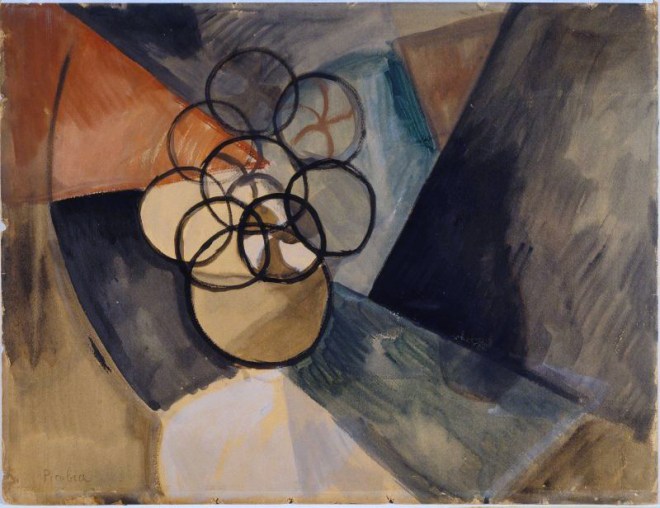
Caoutchouc (c. 1909)
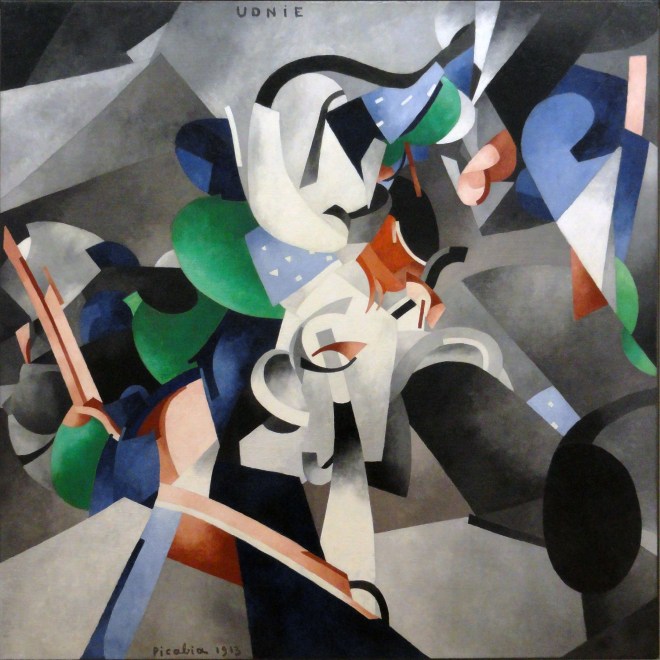
Udnie (or Young American Girl, or The Dance) (1913)
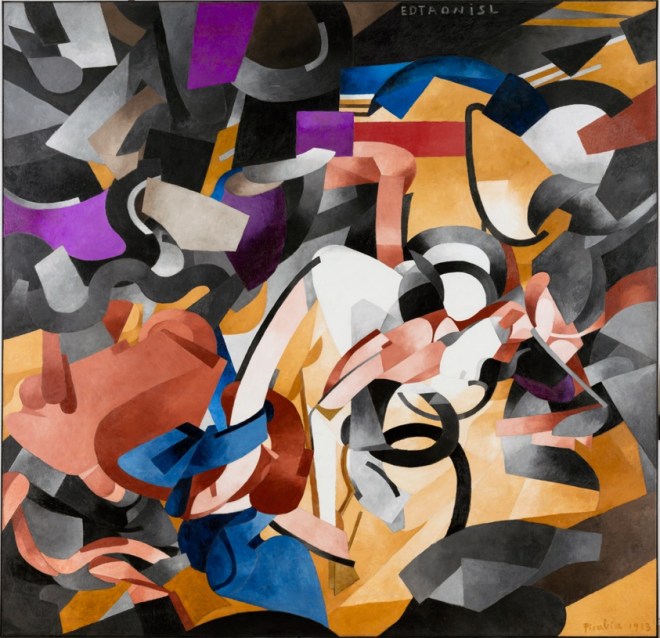
Edtaonisl (1913)
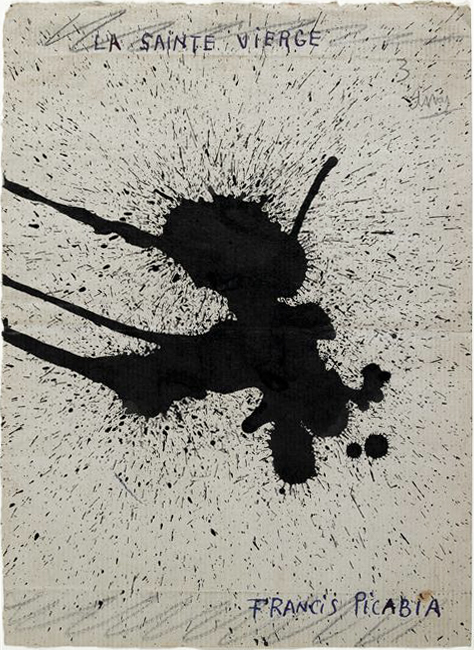
La Sainte Vierge [The Blessed Virgin] (1920)
Aello (1930)
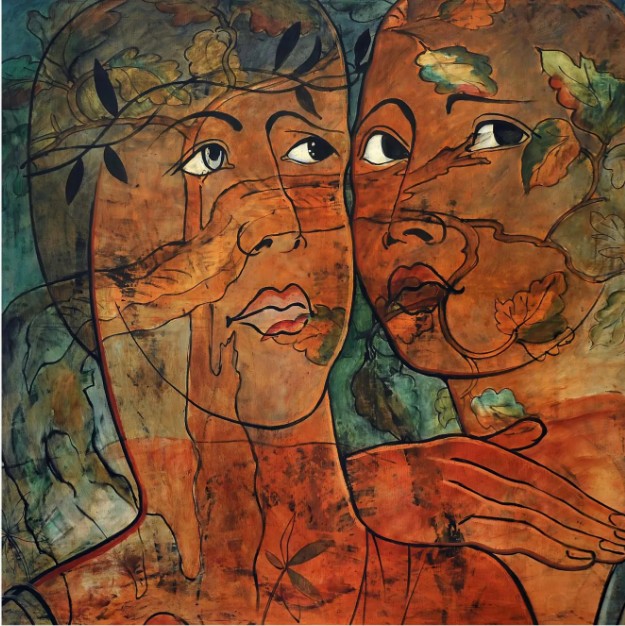
OK, so some abstraction, some Dadaism, some Surrealism. I had it covered.
But not really. There were no abstract paintings, no cubist paintings (apparently, he also dabbled in cubism). There was some Dadaist stuff – so tiresome; maybe they struck, or shocked, people back in the early 20th Century, but now they look rather childish. There was some surrealist works. But for the most part, my wife and I found ourselves faced with quite a variation of styles. Clearly, Picabia explored many styles over his lifetime. I must confess, I found myself skipping along quite quickly. But luckily, there were some paintings that had me stop and look more closely. Here they are, in no particular order.
Maternité (La Femme en Rouge avec l’Enfant) (c. 1935-36)
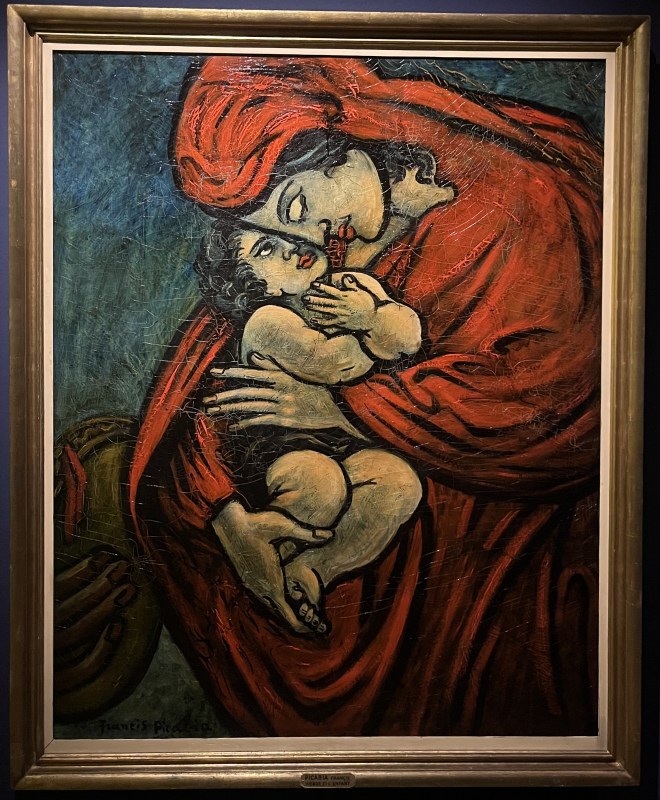
I was much struck by the pose, which reminded me a Virgin and Child by Donatello, which my wife and I saw a few years ago at an exhibition in Florence.

Pierrot Pendu (c. 1940-41)
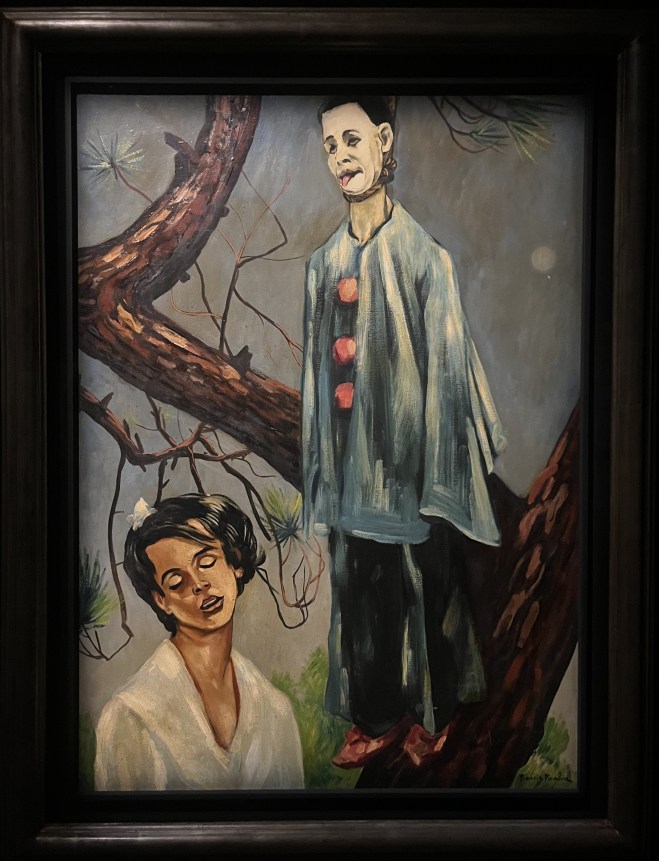
Strange subject, although quite in line with the current Halloween season; I saw a hanged skeleton for sale yesterday.
Mère et Enfant (c. 1936-37)
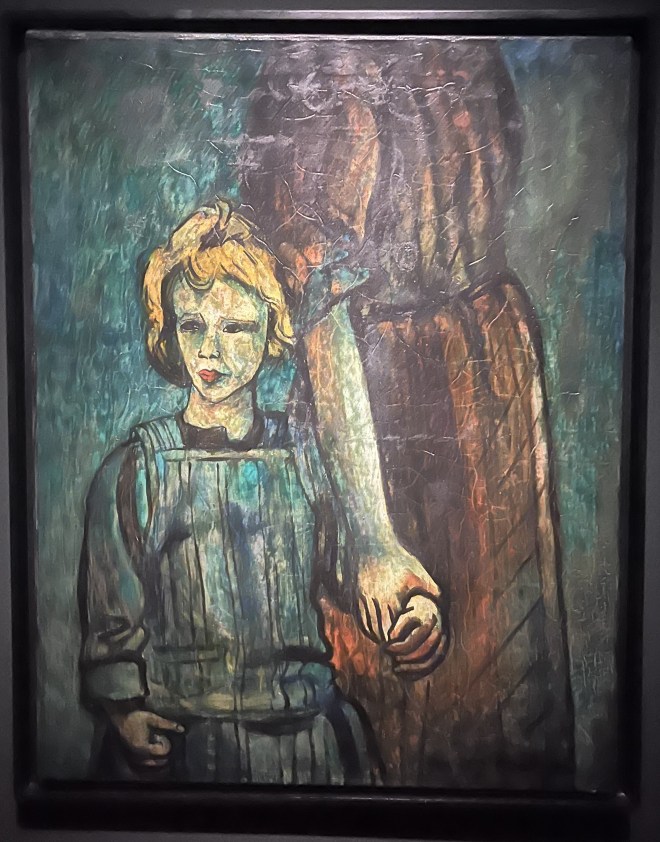
Such a grown-up look in that child’s face!
L’éclipse (1922)
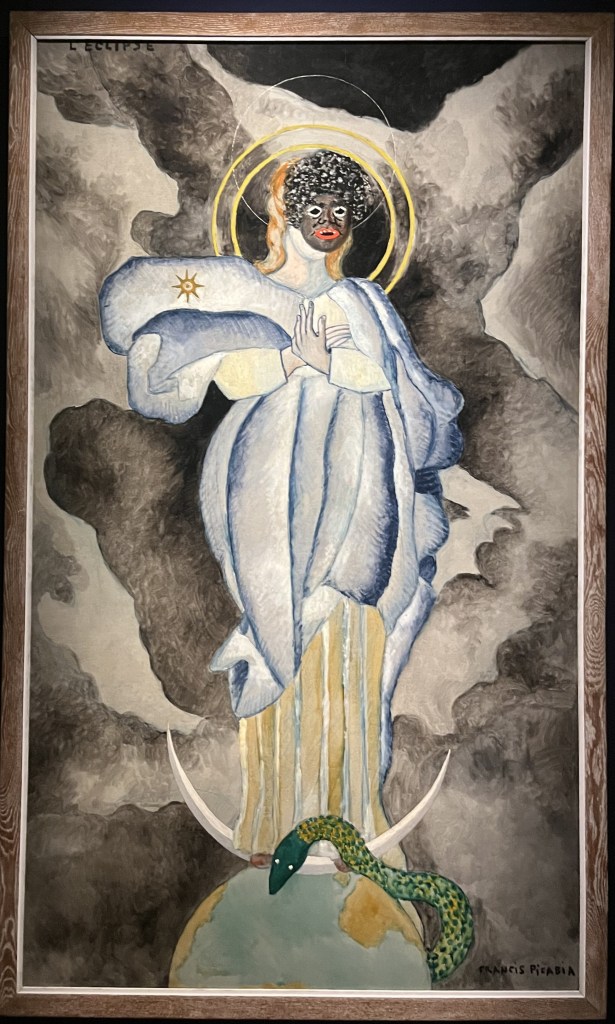
Another strange painting. It seems that, in a typically Dadaist way, it is commenting on the eclipse of Christianity. But why use a black face to do the eclipsing?
Mardi Gras (Le Baiser) (c. 1924-25)
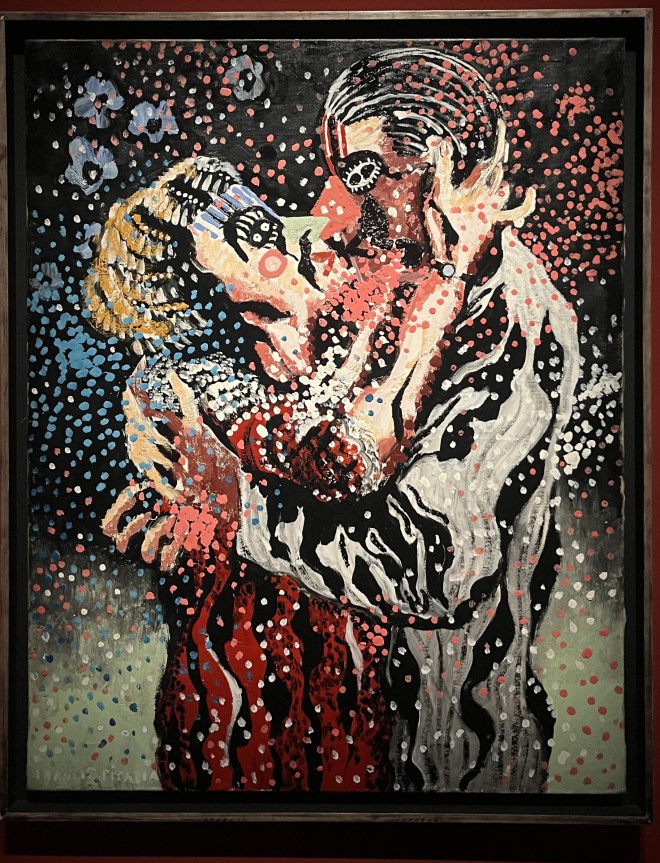
A charming portrayal of two people kissing in a cloud of Carnival confetti.
Salicis (1929)
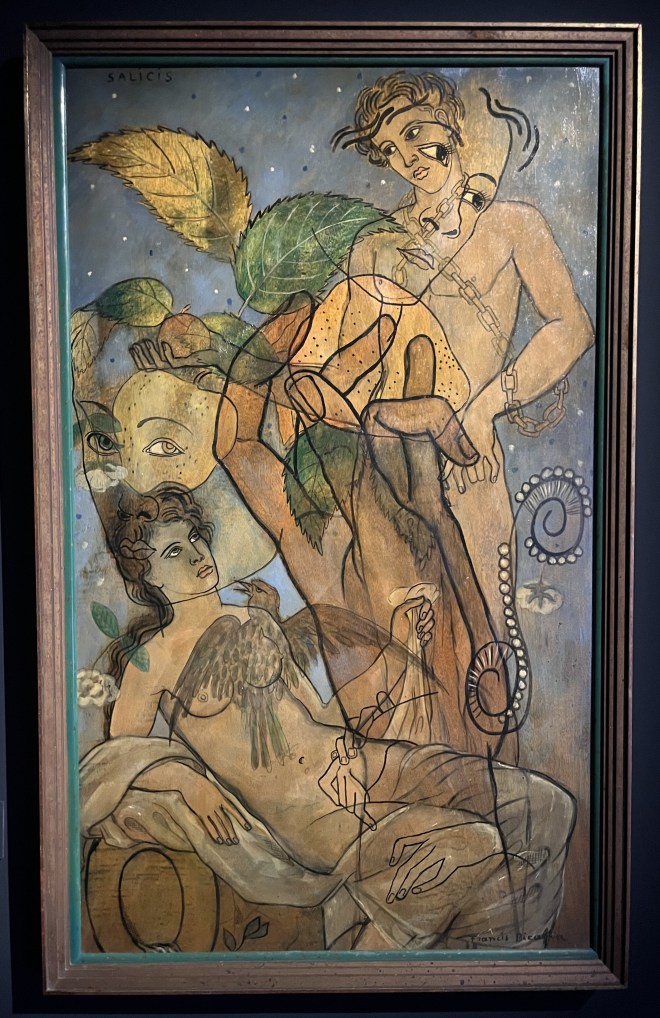
It’s one of Picabia’s “Transparency” series, like Aello above. I read that the artist claimed he had come to this style after noticing, while sitting at an outside table of a Parisian café, how the reflections of passers-by in the café’s window were juxtaposed on the people inside the café.
And then there was this very odd painting, La Femme au Bull (Femmes au Bulldog) of 1940-41.
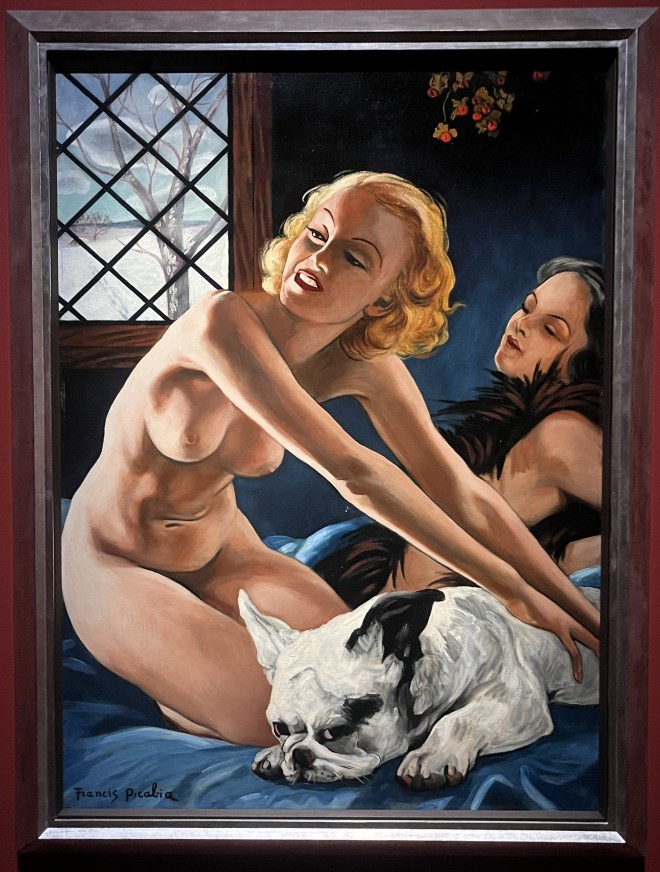
Apart from the odd subject for such a “serious” painter, it really strikes one as being quite amateurish. It’s of a piece with a whole series of really bad portraits of women which he executed during the same period.
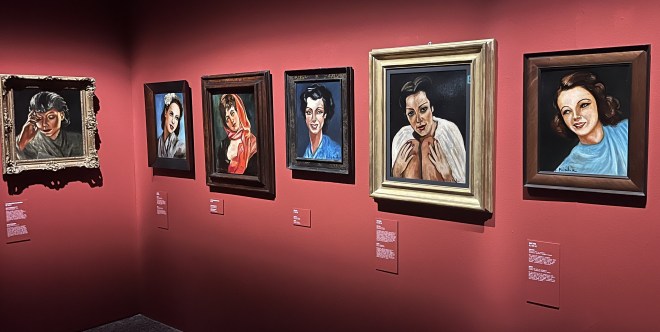
These are the kind of works produced by some anonymous amateur painter that you might pick up in a flea market for a song. And yet the man could draw very well, as some drawings in the show testify. So what was he playing at?! In any event, he painted a number of the “girlie” paintings, many of which were bought by an Algerian merchant; they ended up gracing various brothels in North Africa.
And that’s it. The exhibition was worth the visit, although I’m not sure I’ll be scouring museums and art galleries for more of Picabia’s paintings.


