TITAN ARUM

Los Angeles, 18 July 2026

Serendipity has struck again!

I was perusing the Guardian newspaper a few days ago when my eye fell on the following title: “Thousands flock to see brief and rare blooming of corpse flowers in California”. Corpse flowers?! What on earth are they? It had me diving into the article to discover more.

It turns out that the corpse flower is the titan arum, or Amorphophallus titanum, which translates as the Giant Misshapen Phallus. This photo of the plant explains its scientific name.
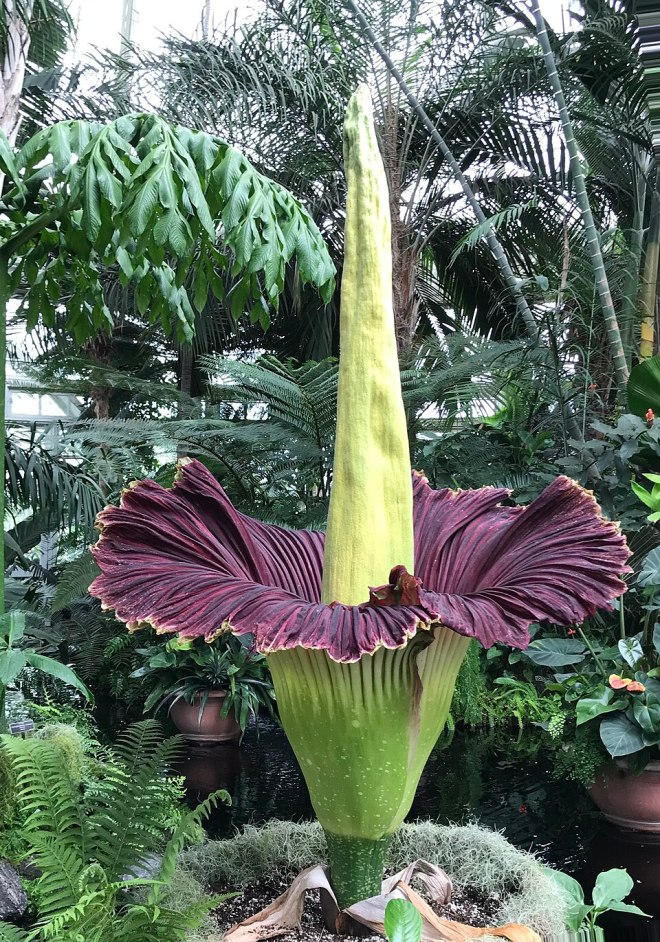
Source

This is a bit of a naughty name, and one of course that immediately brought out my extremely childish side. Readers might be interested to know that the plant’s English name, titan arum, is said to have been coined during the filming of David Attenborough’s 1995 documentary “The Private Life of Plants” because the genera’s name Amorphophallus was considered to be “too rude” for prim British TV audiences …

But why corpse flower? Well, that’s what the locals in Sumatra, which is where the plant comes from, call it. And they call it that because when the plant flowers, it emits a veritable stench. Scientists have analysed the stench and found it to contain dimethyl trisulfide (a component of the stink given off by the very smelly limburger cheese), dimethyl disulfide (garlic; anyone who has walked through a field of flowering garlic knows how pungent that smell can be), trimethylamine (rotting fish), isovaleric acid (sweaty socks), and indole (faeces). Eew!

Source

The plant has evolved the ability to give off this stink so as to attract its main pollinators, carrion beetles and flesh flies; they lay their eggs in rotting meat. What a mean trick! When these insects arrive, expecting to find a nice chunk of putrid flesh they run into a bunch of boring flowers. It must be really frustrating for them.

The titan arum is in good company. Several plants worldwide have come up with the same smelly strategy: the South African carrion plant (“flowers that smell like roadkill”)
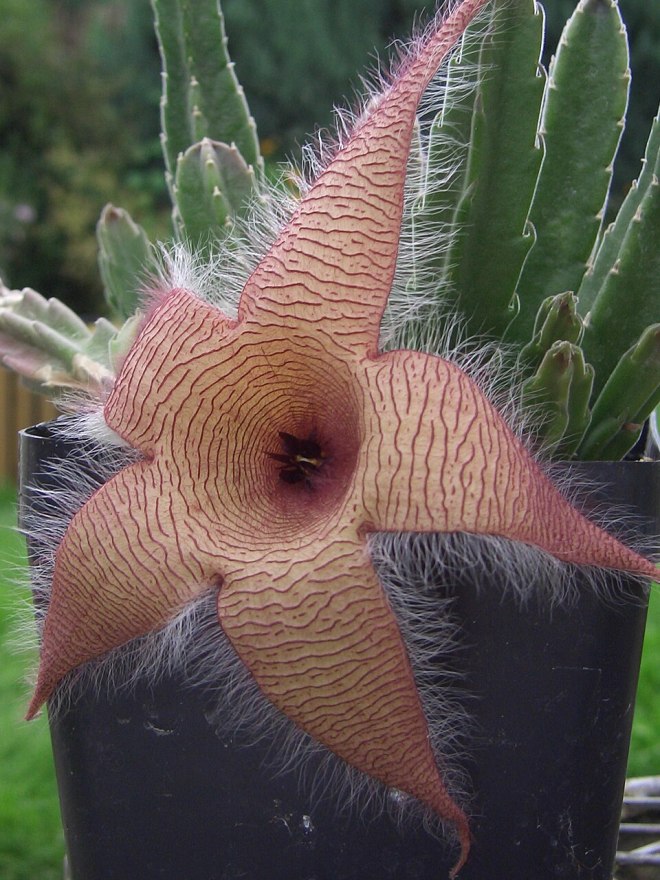
Source

the Indonesian monster flower (“releases a highly pungent smell of rotting meat”)
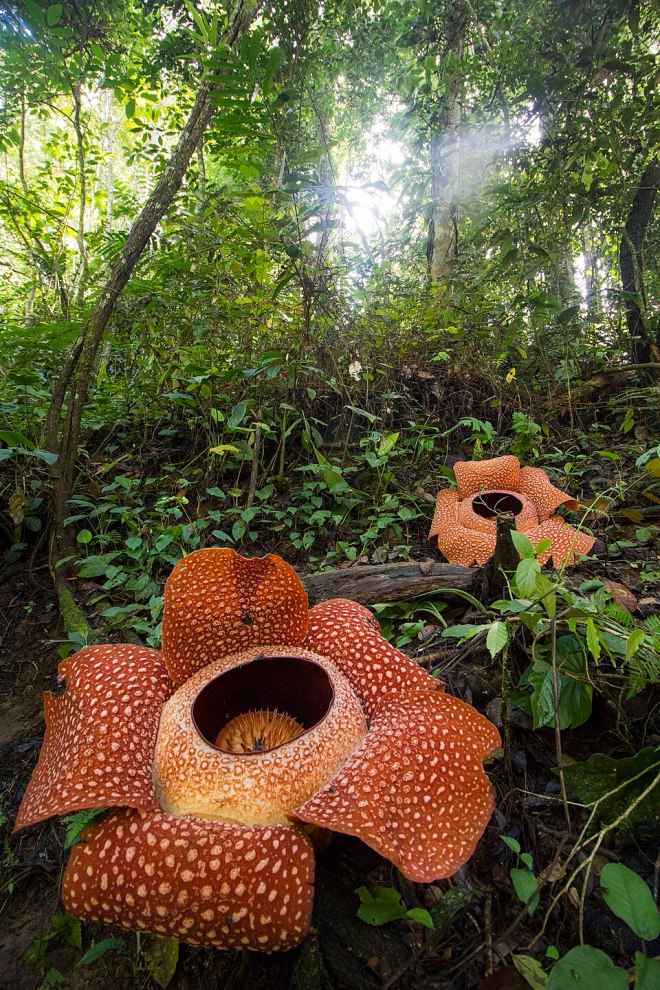
Source

the Mediterranean dead horse arum (“foul scent”)
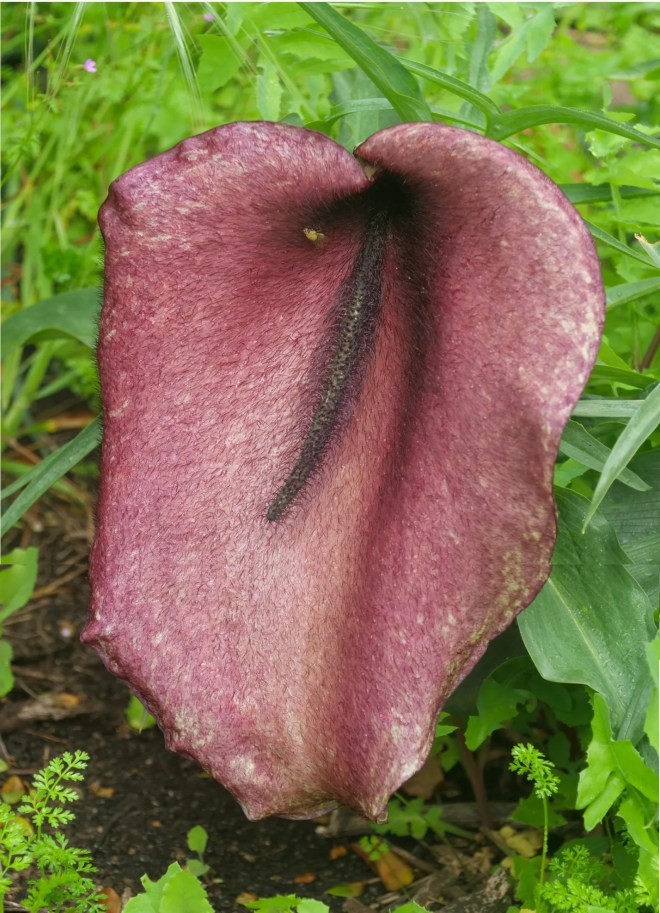
Source

the North American eastern skunk cabbage (“emits a strong skunk-like odour”)
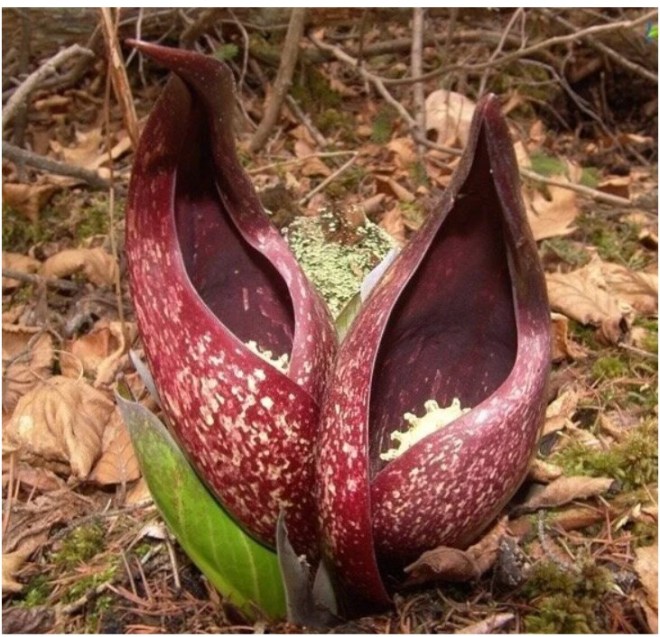
Source

Well! A must-see (and must-smell) plant! And it’s a once-in-a-lifetime experience! The plant only flowers every five years or so and the flowers last just a few days. I read further into the Guardian article. It so happened that two of the plants were flowering at the Huntington Library, Art Museum, and Botanical Gardens. Fantastic! My wife and I had been wanting to visit the Huntington again on this trip, but had never quite got around to it. Now we had our excuse. And our daughter wanted to come too! Time being of the essence (that short flowering period …), we decided to go the next day. Our little grandson would be coming with us – he needs to feed and sleep on a strict schedule.

And so the next day, we set off – a little behind schedule, but hey! the baby takes precedence. Once arrived, we hurried to the greenhouse where the two Giant Misshapen Phalluses were being exhibited. Luckily, there were no lines. So we were able to inspect the plants at our ease. The staff had named one Odora and the other Odorysseus (no doubt in honour of the film The Odyssey which has just come out and which we will be seeing next weekend). Odorysseus stood tall and proud waiting for its spathe to open up
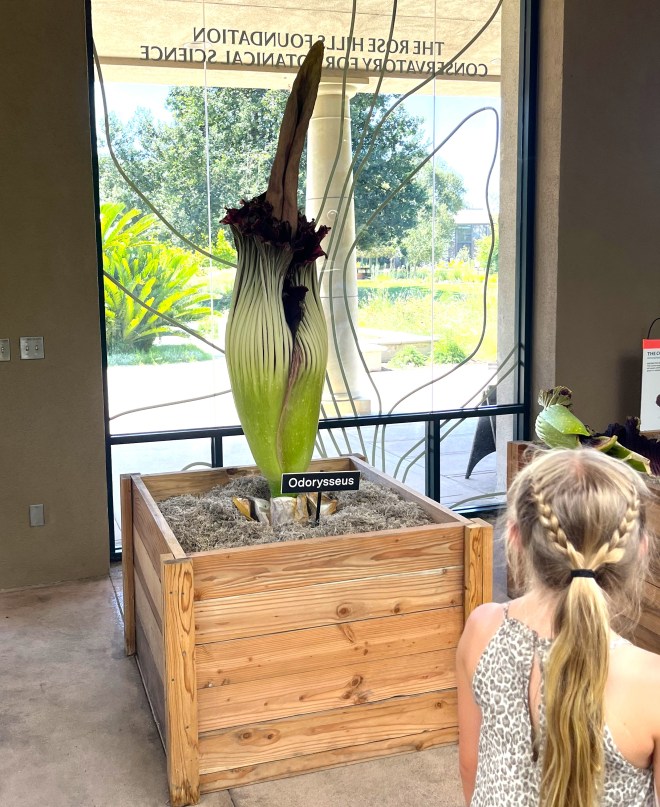
My photo

while Odora’s spathe had fallen off, exposing the rows of flowers at the very bottom of the spadix (all terms I have since learned from the plant’s Wikipedia entry).
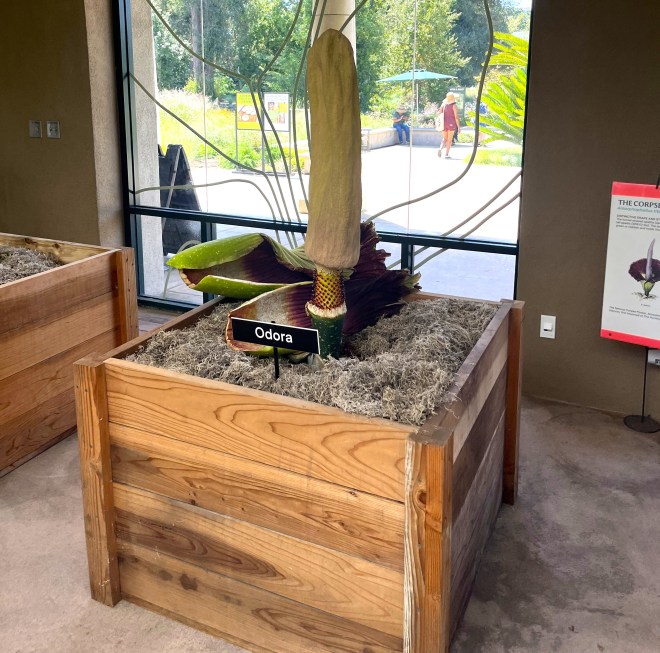
My photo

But wait! Something was missing, where was the foul smell? Alas, to my consternation, I discovered that the plant gives off its noxious scent only at night, because that is when its pollinators, the carrion insects, are active. So, short of ducking behind one of the greenhouse’s palms and staying hidden until after the museum had closed and night had fallen, I wasn’t going to experience its revolting odour. Sad! as the current inhabitant of the White House might say.

And our grandson in all this kerfuffle? He slept serenely through it all …
WILLIE BIRCH, ARTIST

Los Angeles, 7 July 2026

Serendipity.

I love it. When we least expect it, my wife and I stumble across something that is just wonderful and we give thanks to the mysterious ways of the universe that led us to this pleasure. Looking back through my posts, I would say the last time this happened was quite recently, when we visited an exhibition involving dragons back in February.

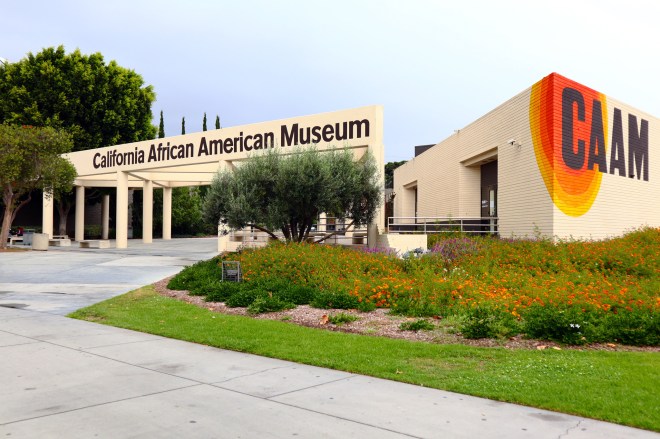
It happened again a few weeks ago, when we visited Los Angeles’s California African American Museum. We had been using the LA Metro Rail to go downtown. Each time we got to the Expo Park/USC stop, the recorded announcement would tell us that this was the stop for, among other places, the museum. After the third or fourth time we heard the announcement, I suggested to my wife that we should visit it on our next free day. And so one Sunday we found ourselves on the Metro Rail heading for the museum.

Source

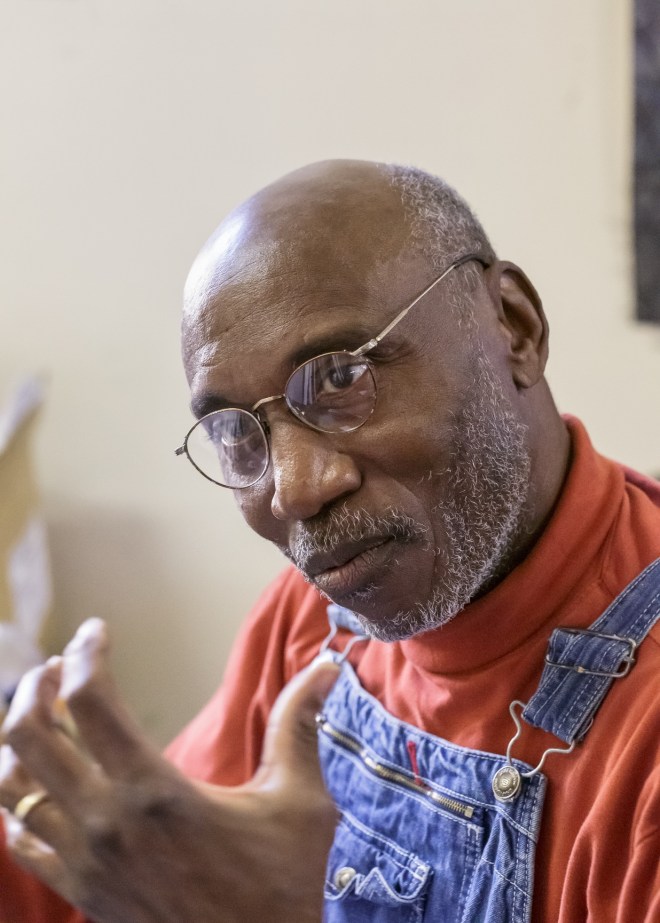
Neither of us had done any research beforehand, so we didn’t know what to expect. I half thought we would get to see exhibitions on the history of African Americans in Los Angeles and California – that’s pretty much what we got at the Japanese American National Museum in Los Angeles, which we visited several years ago. Well, we got none of that. Instead, enveloped in our blissful ignorance, we wandered into a wonderful exhibition of works by an African American artist we had never heard of: Willie Birch. Here is a recent photo of him. He’s 84 this year.

Source

A thumbnail biography: he was born and raised in New Orleans, moved to New York in the mid-1970s after getting a Master of Fine Arts in Baltimore, lived in the Big Apple for 20 years, before returning to New Orleans in 1993. Surprisingly, this is his first-ever career retrospective, bringing together works from 1968 to the present. His style has evolved dramatically over the years. At some point in the exhibition, there was a comment to the effect that whenever art critics proclaimed he had finally found his style he promptly changed it. An artist after my own heart! Many exhibitions of modern artists get so tedious: they find some signature style, and then they repeat it over and over again with small variations for the rest of their careers.

Reflecting these changes in style, the exhibition was broken down into three sections: early, middle, and late years. What follows is my purely personal selection of likes from each section.

Early years

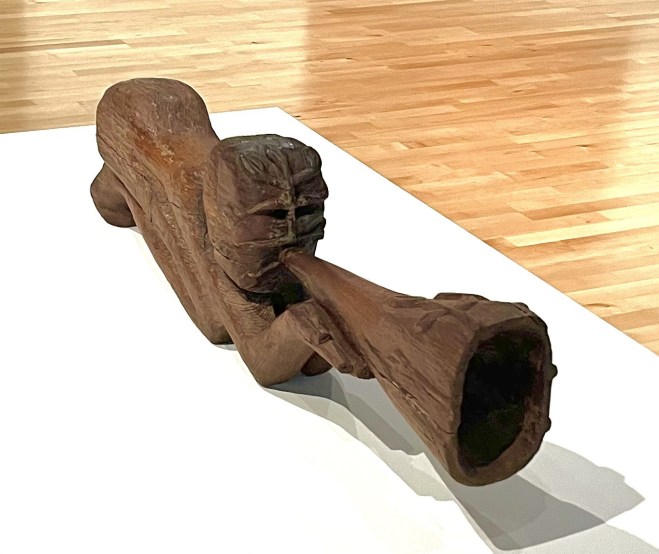
Willie Birch tried out a number of styles in his early years. The one I found most catching was his use of found wood to carve sculptures. Here is his piece Ancestors Calling “inspired by Southern Black craft traditions, African spirituality, and the symbolic and sculptural forms of Ancient Egypt” (I’m quoting the text panel).

My photo

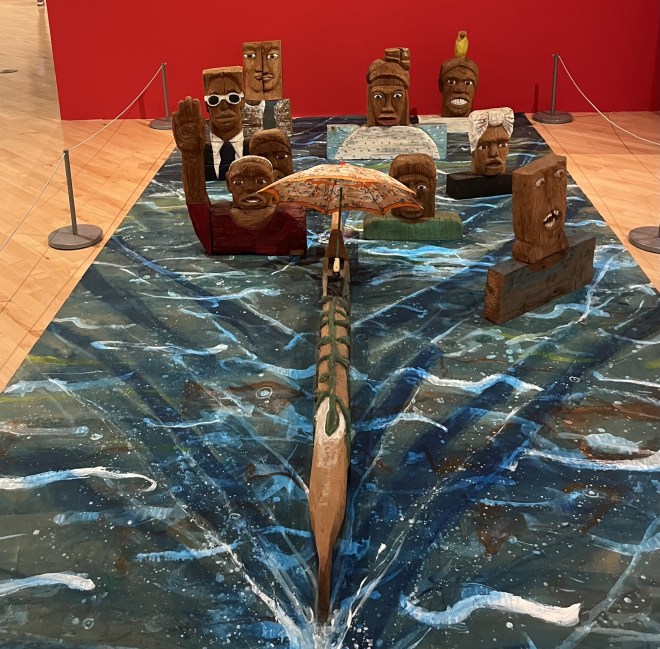
And this piece is titled Passages.

My photo

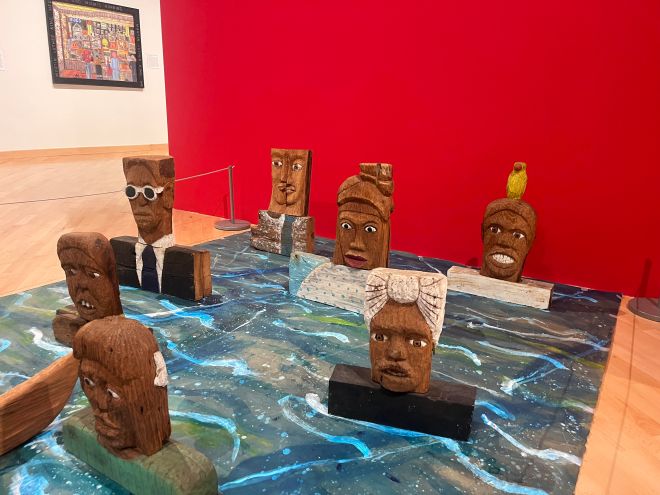
The “work addresses both the threat and survival of his ancestors and the customs of Black Americans in New Orleans … The layout of the sculptures resembles a New Orleans second line parade, the traditional processional after a funeral service … but the representation of water imparts another, more somber, meaning to the work. The word “passages” in [the] title can refer to the transition from life to death, but also to the Middle Passage, the forced transition across the Atlantic Ocean by Africans”.  Here is a close-up of some of the wonderful faces which Birch has carved.

My photo

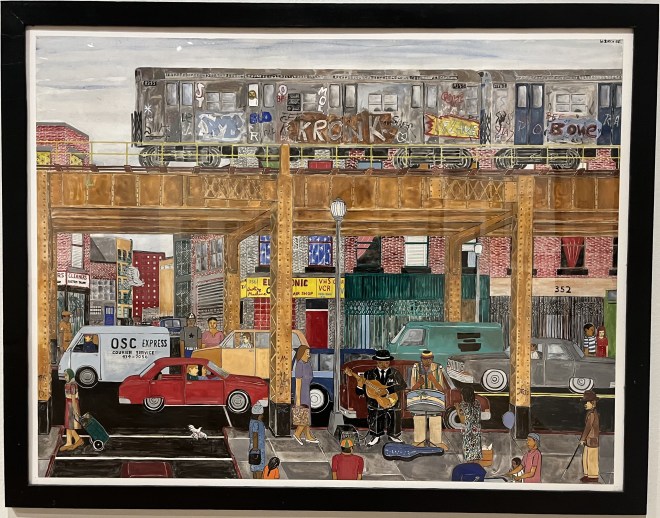
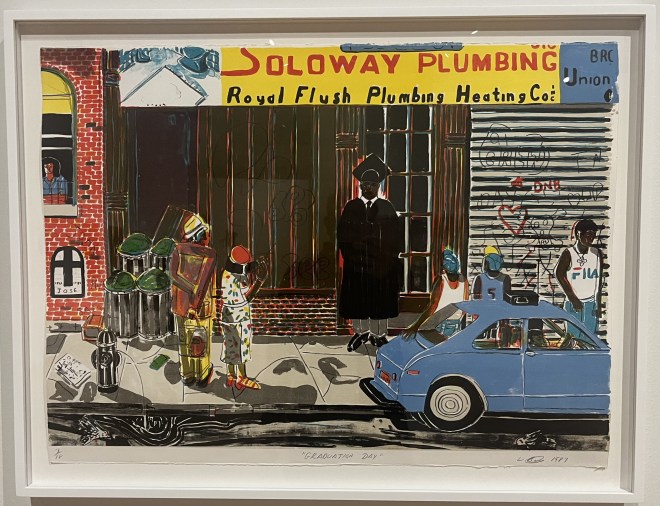
A few years later, Birch pivoted to a  new style, creating his so-called Folkloric series. This wonderful piece, Music under the El, reminded us so powerfully of our days in New York that for a few mad minutes we discussed the possibility of buying a print version – a discussion, however, that came to nothing because prints don’t seem to exist.

My photo

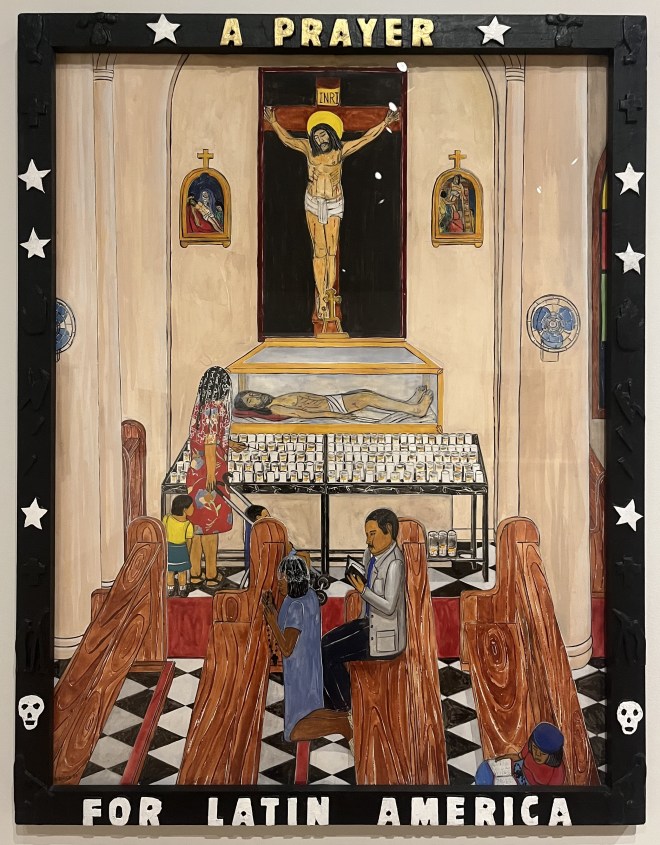
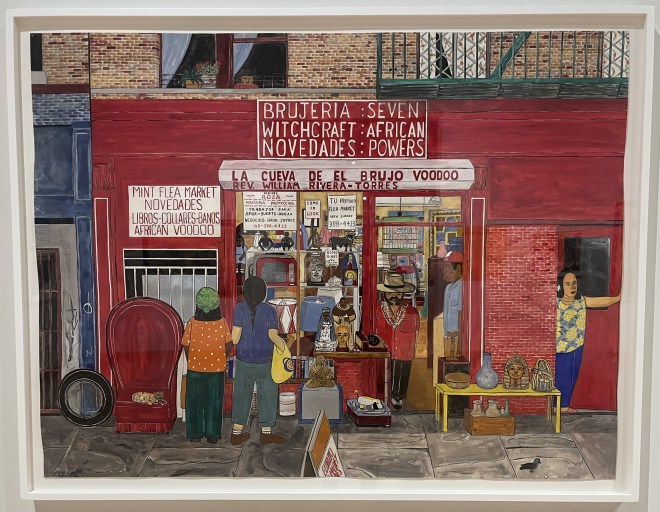
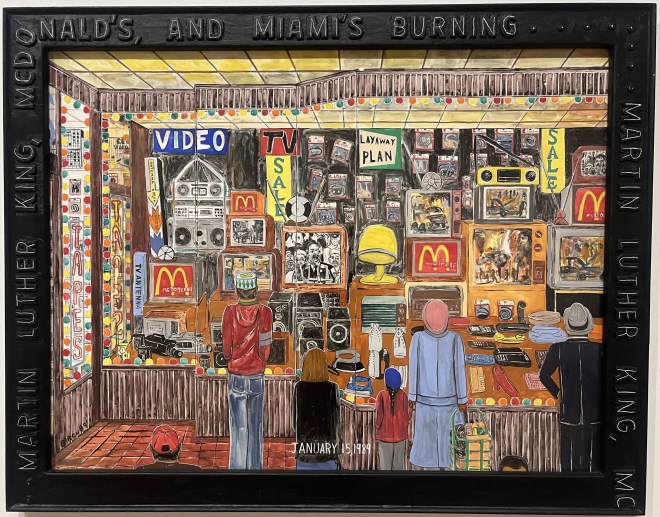
Here are a number more from the same series.

A Prayer for Latin America

My photo

La Cueva de Brujo VooDoo

My photo

Martin Luther King, MacDonald’s, and Miami’s Burning

My photo

Graduation Day

My photo

Middle years

In the early 1990s, Birch switched style again. He started creating sculptures out of papier-mâché, apparently after seeing a papier-mâché crucifix in New Orleans’s cathedral. Here is a selection.

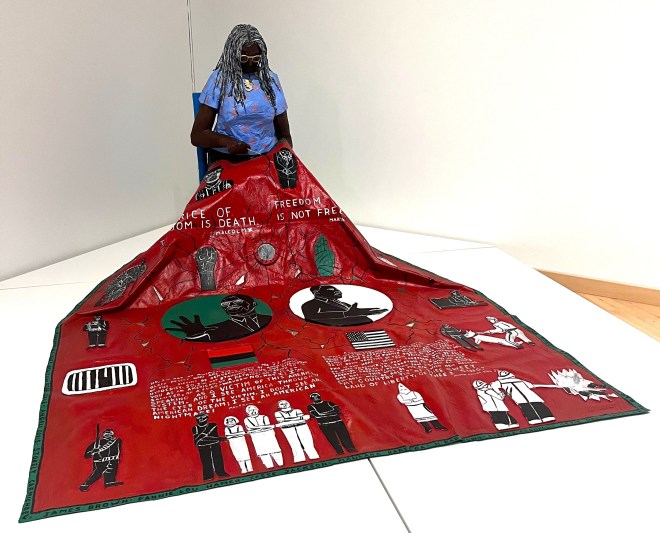
Memories of the ’60s

My photo

Here, a quilt maker is creating a quilt celebrating Malcolm X and Martin Luther King while commemorating scenes from the civil rights struggles of the 1960s.

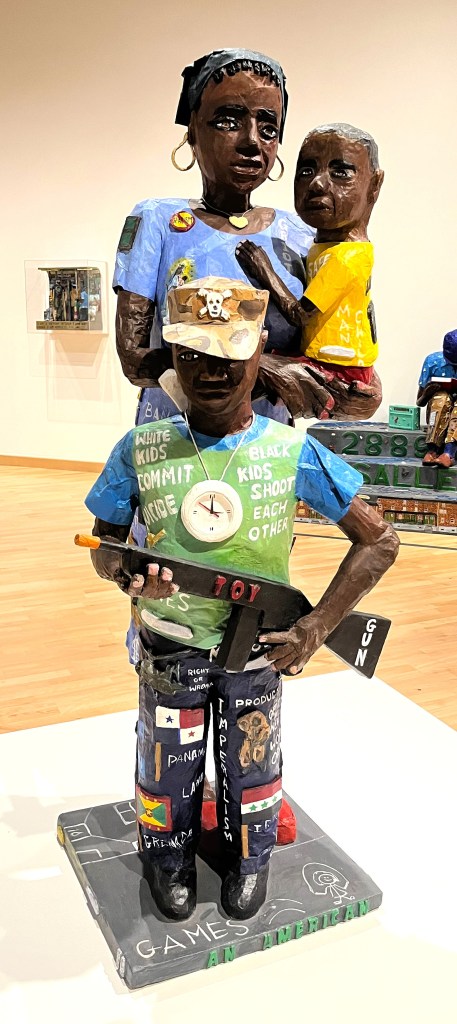
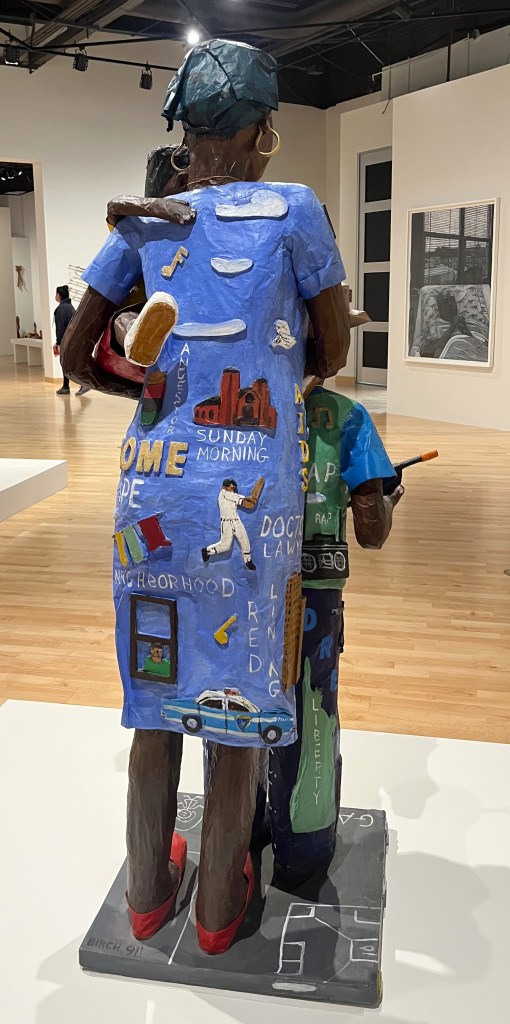
Going South

My photo
My photo

The commentary is now on the persons being sculpted. The comment I find most heartbreaking is on the boy’s T-shirt. He holds a gun, helpfully signed as a toy gun, while on his T-shirt it says “White kids commit suicide. Black kids shoot each other”.

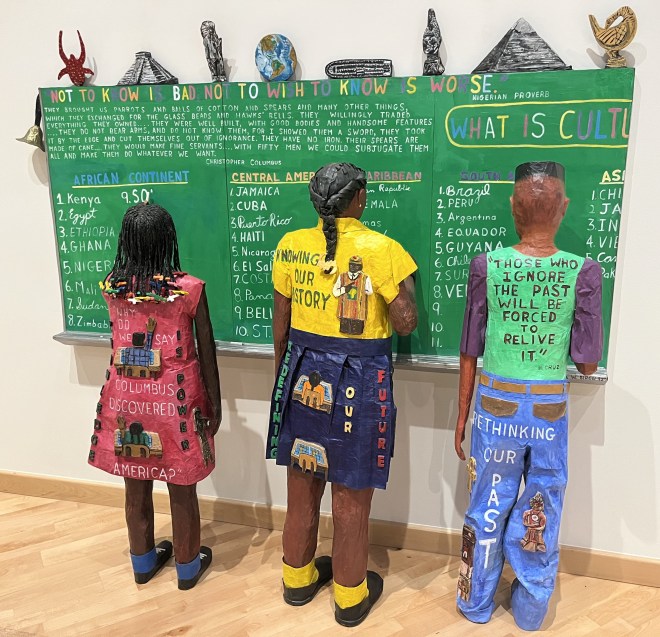
Knowing our History, Teaching our Culture

My photo

The commentary here has a political sharpness to it. I encourage readers to look carefully at the various statements written on the children’s clothes as well as on the blackboard.

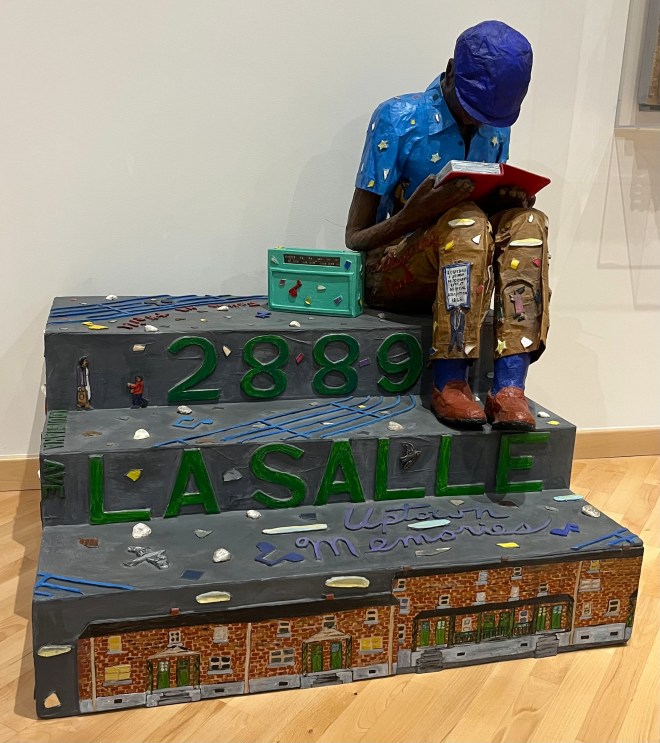
Uptown Memories

My photo

To a person like me who loves books, I felt a great tenderness for this young man who was plunged so deeply into his reading.

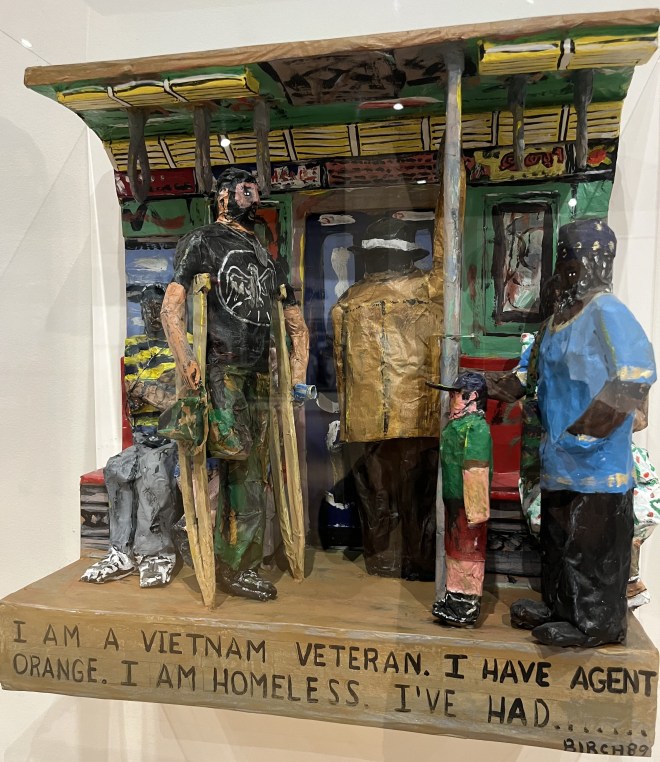
Birch didn’t just prepare these large-scale sculptures. He also made small, intimate sculptures that would fit in a shoe box. Here is what I consider to be the best example in the exhibition, Subway Scene, Vietnam Vet.

My photo

Later years

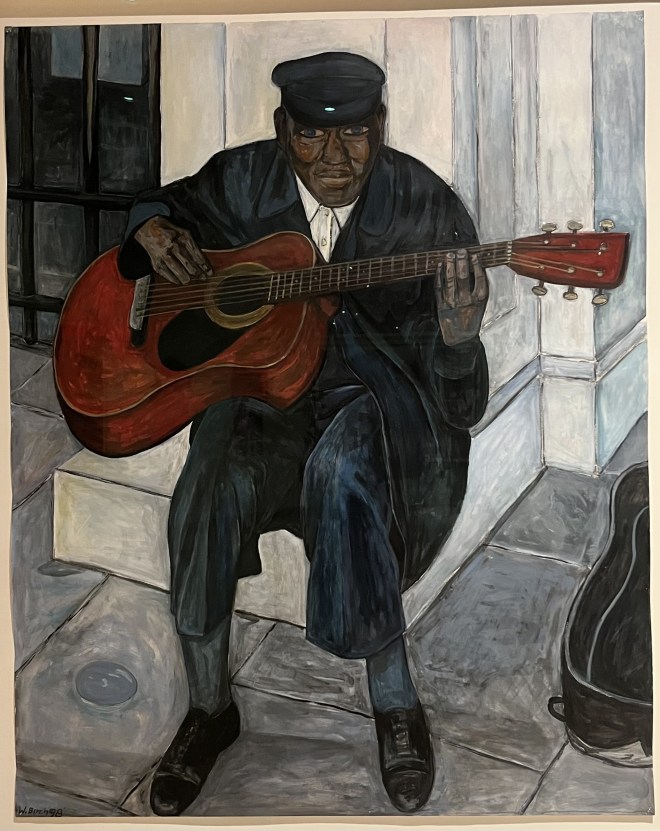
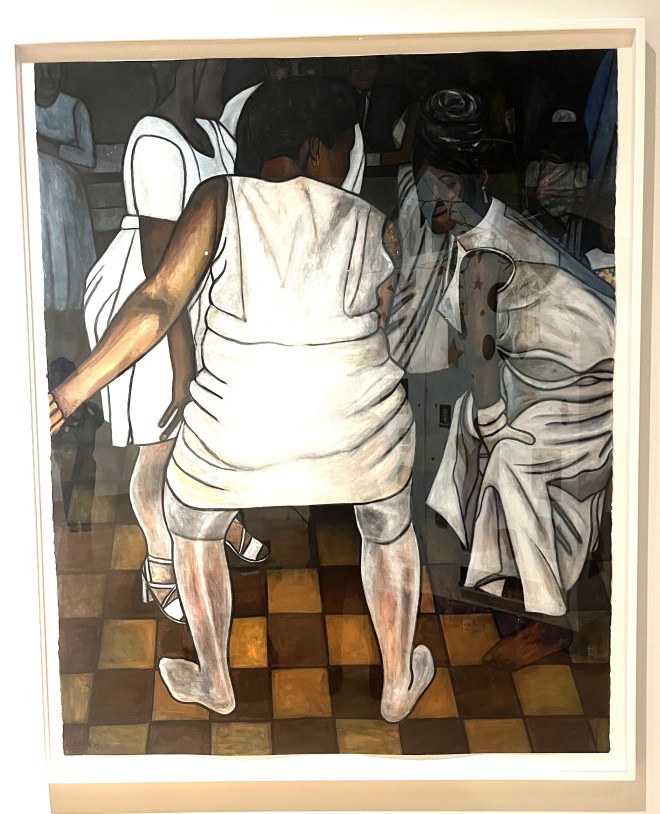
When Birch left New York to return to New Orleans, his style changed dramatically once more. He started creating large-scale charcoal and acrylic works on paper, initially in colour and later in black and white only. Here are two of the works in colour.

Street Musician with Guitar

My photo

Batty Moves III

My photo

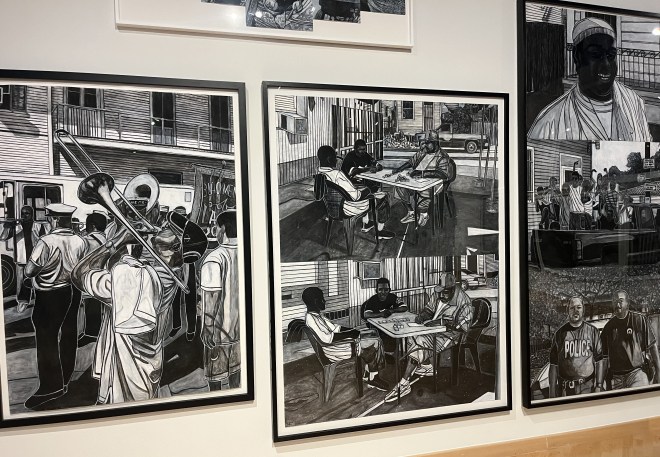
The works in black and white have focused mainly on scenes from the part of New Orleans he lives in, the Seventh Ward, with him working off photographs he has taken.

My photo

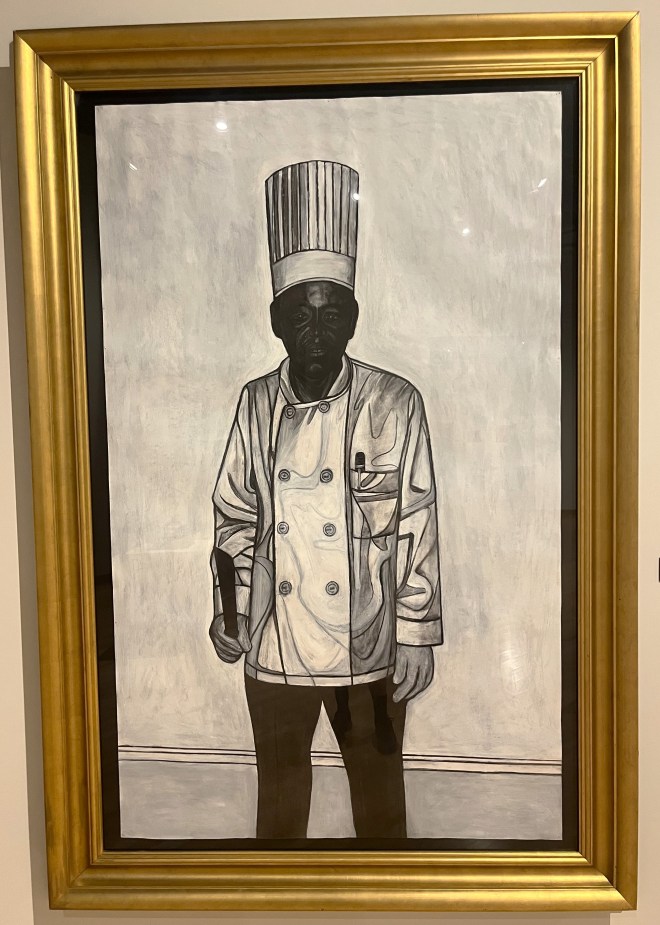
This work, however, The Chef with the Knife, is more of a formal portrait.

My photo

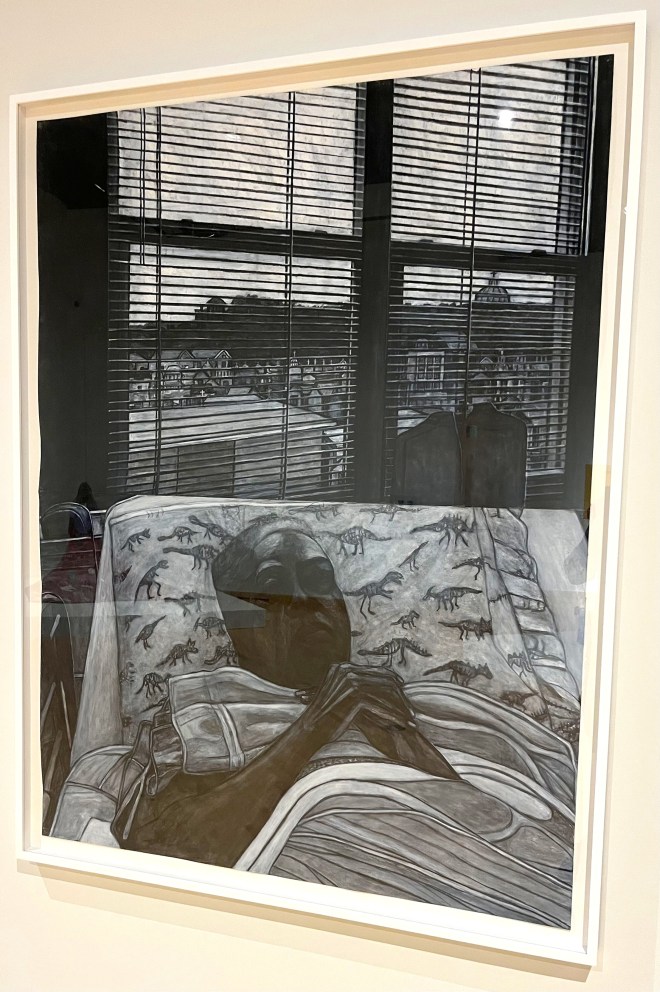
The last work in the exhibition, which you pass as you leave, is Transiting.

My photo

Given Birch’s age, perhaps it is fitting for the exhibition to finish with this work, reminding us that he is nearing the end of his life. What does that small detail of a pillowcase covered in dinosaurs tell us, I wonder, if anything at all? That we are all heading for extinction? Maybe I’m being too fanciful.

Well, if any of my readers happen to pass through Los Angeles over the next couple of months, I highly recommend that you take in this exhibition, It’s on until 21 October.