I like writing, but I’ve spent most of my life writing about things that don’t particularly interest me. Finally, as I neared the age of 60, I decided to change that. I wanted to write about things that interested me.
What really interests me is beauty. So I’ve focused this blog on beautiful things. I could be writing about a formally beautiful object in a museum. But it could also be something sitting quietly on a shelf. Or it could be just a fleeting view that's caught my eye, or a momentary splash of colour-on-colour at the turn of the road. Or it could be a piece of music I've just heard. Or a piece of poetry. Or food. And I’m sure I’ve missed things.
But I’ll also write about interesting things that I hear or read about. Isn't there a beauty about things pleasing to the mind?
I started just writing, but my wife quickly persuaded me to include photos. I tried it and I liked it. So my posts are now a mix of words and pictures, most of which I find on the internet.
What else about me?
When I first started this blog, my wife and I lived in Beijing where I was head of the regional office of the UN Agency I worked for. So at the beginning I wrote a lot about things Chinese. Then we moved to Bangkok, where again I headed up my Agency's regional office. So for a period I wrote about Thailand and South-East Asia more generally. But we had lived in Austria for many years before moving to China, and anyway we both come from Europe my wife is Italian while I'm half English, half French - so I often write about things European. Now I'm retired and we've moved back to Europe, so I suppose I will be writing a lot more about the Old Continent, interspersed with posts we have gone to visit.
What else? We have two grown children, who had already left the nest when we moved to China, but they still figure from time to time in my posts. I’ll let my readers figure out more about me from reading what I've written.
As these readers will discover, I really like trees. So I chose a tree - an apple tree, painted by the Austrian painter Gustav Klimt - as my gravatar. And I chose Abellio as my name because he is the Celtic God of the apple tree.
I hope you enjoy my posts.
http://ipaintingsforsale.com/UploadPic/Gustav Klimt/big/Apple Tree I.jpg
We took our grandson to Milan’s Museo dei Bambini a few weeks ago (our daughter and her partner came over from Los Angeles to attend the wedding of a very dear friend of hers and left us their boy – one year old already! – to babysit; a key bullet point in the job descriptions of all grandparents). It’s not actually a museum, it’s a place where – at a price – toddlers and little children can have fun for 75 minutes playing around with industrial scrap: lots of plastic pieces left over from various industrial operations. It sounds terrible, like the urban poor in developing countries sifting through landfills.
But actually it works beautifully. The kids can have great fun with these various bits and bobs – who needs toys, for Lord’s sake?! A nice example of the repurposing of waste; I think I shall use it in my next lecture on circular economies.
But that’s not what I want to talk about in this post. I want to recount something that occurred as we wheeled our grandson home. Just to change things, I took the second of the routes suggested to me by Google Maps, having taken the first to get there. It so happened that this made us pass close to the Università degli Studi, Milan’s most venerable university established hundreds of years ago.
Suddenly, I remembered the street we were walking along from long, long ago, 1975 to be exact, the year when I first came to Italy and was staying with one of my university flatmates who, a few years later, was to become my wife. One day, she took me to this street, into a little shop which made and sold panzerotti. She got two and passed me one. I took a bite …. ah, my friends, what a revelation!
As I bit through the crisp pastry, my taste buds encountered tomatoes and mozzarella. Nothing else. But it was soooo good! I was in a trance until I had finished it. Here are two, much younger, Italians, also savouring their panzerotti.
I knew then and there that for the rest of my life I had to be part of the culture which created such delights. Two weeks later, my future wife and I were an item (it wasn’t just because of the panzerotto, I should clarify).
(And eleven years after we had made our vows we had a daughter, who one year ago gave birth to that son who I was now wheeling home).
To those of my readers who aren’t familiar with the panzerotto, I suppose the easiest way to describe it is that it looks like a small calzone. Now, I am here assuming that all my readers are familiar with pizza. I mean, is there any angle of the world where pizza isn’t known? maybe in the depths of the Amazon jungle; I show here the most traditional of pizzas, the pizza Margherita (tomato, mozzarella, a couple of basil leaves).
I am further assuming – and this may be a bit more of a stretch than my last assumption – that my readers are familiar with that rather particular form of pizza, the calzone, which is basically a pizza which has been folded over and closed along the edges.
I think this photo shows the superficial similarity between the panzerotto and the calzone. But apart from the size difference, there is actually one big – one enormous – difference between the two. The calzone, like all pizzas, is cooked in an oven (preferably fired with wood).
The panzerotto’s origins lie somewhere in the south of Italy, probably Puglia. Food historians think it was invented by a baker or a housewife who had a small amount of dough left over from their bread making. Rather than throwing the dough away, they made a casing of it, stuffed it with tomato sauce and mozzarella, and deep-fried it. Ecco! A simple, cheap food was born, and its design – easy to hold in one hand while walking – made the panzerotto an obvious candidate for street food. Which is what it became, and which was why I ate that panzerotto where I did nearly fifty years ago; that venerable university just around the corner was the home to hordes of poor, hungry students, who were the shop’s primary clients.
Alas! In the intervening decades, the panzerotto has become chic. That little shop has disappeared and I suppose the students go to the local supermarket to buy ready-made sandwiches. On the other hand, a smart shop has sprung up not too far away, near Milan’s Duomo, where the tourist hordes swirl through the little streets. Every time I go by, it has a long line of tourists in front of it, patiently waiting for their panzerotti.
I have vowed never to buy a panzerotto there. But where, then, will we introduce our grandson to the panzerotto when he is old enough? I still have a few years left in which to do the necessary research.
It rained the day we visited Petra. Not a huge amount, just a sprinkle. But it was enough to keep the skies covered and the temperatures moderate. This was the one time in my life that I’ve been pleased to have rain when I visited somewhere. It was the last days of May, and my wife and I had been worried that we would be visiting the site under a burning sun.
We entered the site through the Siq, that long, long gash in the mountains.
my photo
We followed its meanderings, hopping out of the way of the electric vehicles ferrying tourists back and forth, all the while craning our necks backwards to look at the walls of rock soaring above us.
my wife’s photo
And so we came to the end of the Siq and found ourselves in front of the Khazneh, the Treasury, the building that “is” Petra. It was a gradual unfolding, as we exited from the narrowness of the Siq.
My wife’s photoMy wife’s photoMy wife’s photo
It wasn’t actually a treasury. That’s what the local Bedouins believed. They thought there was treasure hidden in that urn on the very top of the rotunda, as witnessed by the pockmarks on it caused by Bedouins firing at it to try to break it open – a waste of time and bullets since the urn is solid sandstone. In reality, it was a mausoleum for the Nabatean king Aretas IV Philopatris (“friend of his people”, which probably means he wasn’t their friend at all). We have – possibly – a likeness of this friend of the people on one of his coins.
Anyone with a passing knowledge of the New Testament will be interested to know that Aretas’s daughter married Herod Antipas, and it was the latter’s decision to divorce her and marry his stepbrother’s wife Herodias that eventually led to the beheading of John the Baptist. Here’s Caravaggio’s take on this execution.
I actually first came across the Treasury in the Tintin album “Coke en Stock”. For reasons which are too convoluted to explain, Tintin, with Captain Haddock in tow, is crossing the fictional Middle Eastern country of Khemed on horseback to get to the Red Sea. On the way, they pass through a narrow gorge. The relevant page from the album recounts the rest of the incident.
my photomy photo
As I say, the story is highly convoluted, and I invite curious readers to go back to the original album to understand who is who and what is going on. Let’s just focus on the Treasury (although I have to say, I’ve always asked myself what that lady was saying to Captain Haddock).
When I read the album, I had no idea that this was the Treasury in Petra. Neither it nor Petra itself is mentioned by name. Captain Haddock says it is a Roman temple, and that is all we are told. It was only years later, when I happened to see a guidebook on Petra, that I realised where Hergé had got his inspiration. Here is one of the many, many guidebooks on Petra with the Treasury on its cover.
The official photos of the plaza in front of the Treasury normally have few if any people. But as my wife’s photo above shows, when we there it was like a souk, although a very modern one. Large crowds of tourists were milling around, taking photos, taking selfies, reading guide books, listening to guides they had rented, or chattering among themselves, before they moved on to the next ruin. In the middle of all this, and rather getting in the way, camels and donkeys waited patiently, with the local Bedouins hawking a ride on them down to the rest of the ruins. Other Bedouins called out from the cliffs above, inviting tourists to climb up and have a drink. Others still manned the stalls lining the side of the canyon which brought us all to the rest of Petra, selling tourist tat.
I noticed that getting one’s eyes lined with kohl was a popular offering when we were there, with all the Bedouins – men and women – heavily eyelined in kohl to advertise the service.
We ignored the tourist tat and the calls to climb onto a camel, or donkey, or horse, and walked down the Street of Facades, the canyon leading away from the Treasury with buildings cut into the canyon walls.
We finally made it to the path leading to the Monastery and then slowly made our way up the long, long – 850-steps-long – climb, part of a steady stream of tourists struggling upwards in panting silence (thank God for the cloud cover!).
My photo
As we climbed we had to squeeze our way through yet more tourist stalls jammed onto the narrow path, with their Bedouin owners loudly advertising their wares.
We finally emerged onto the plaza abutting the Monastery.
It was of course never a monastery, although quite what it was is not clear. Experts’ best guess is that it was dedicated to the cult of the deified King Obodas I. Once again, we can possibly get an idea of what he looked like through his coinage.
Obodas’s people deified him because he was a Mighty Kicker of Ass. He gave the Hasmonean king Alexander Jannaeus, who ruled over Judea, a severe drubbing near the Sea of Galilee, from which Alexander barely managed to escape alive (I’ve mentioned Alexander before; he was the High Priest who was pelted by the faithful with citrons). Then a few years later, after the Seleucid king, Antiochus XII Dionysus, had invaded the Nabatean kingdom, Obodas attacked his army. Antiochus was killed and the remains of his army perished miserably in the desert.
After a well-deserved rest and drink, we joined the stream of tourists going back down, now skipping along and chattering as they went. Once back down to the Colonnaded Street, we headed up onto the hillside to the north, to have a view down on the site.
My photo
Looking at all these dusty ruins, it’s difficult to understand what Petra looked like when it was a living, thriving city, so I have resorted to showing a reconstruction.
At the very top of the photo, in the middle, one can just make out the Treasury. Coming down the canyon from the Treasury, we have the royal tombs to the right and the theatre to the left. We are looking down at the red roofs of the Colonnaded Street, with the colonnades finishing at the Temenos Gate. The path to the Monastery, which is not visible here, is off at the bottom right of the photo.
The water in the stream running along the Colonnaded Street is ridiculously blue, like a swimming pool. I wonder how much water there even was in that stream bed. Water was a precious resource in Petra, and its citizens had created a complex network of dams, reservoirs, cisterns, and basins, the whole connected by some 200 km of channels and pipes, to collect, store, and distribute the little amount of rain which fell in the environs.
In its heyday, this network was able to support a population of some 20-30,000 people, about the same size as the small town of Wadi Musa situated on the edge of Petra, where we stayed the night. Not large by today’s standards, but populations were much, much smaller back then.
There was also an important transient population – of both man and beast – to supply water to, for Petra’s importance – and wealth – came from it being at the crossroads of important trade routes.
From Yemen in the south came frankincense and myrrh, those precious incenses so desired for religious ceremonies throughout the Middle East and beyond. It’s no coincidence that in his Gospel, Matthew has the Three Wise Men bringing frankincense and myrrh, along with gold, as presents fit for Christ the King.
The goods moved west to Gaza, or north to Damascus and then west to the coast of what is now Lebanon, from whence they were shipped across the Mediterranean. The Nabateans welcomed all these traders who crossed their kingdom and offered them protection, shelter, and water – for a price. And that price paid for all the buildings and infrastructure in Petra.
Nearly all gone now. The earthquake of 363 CE did massive damage, changes in trade routes did the rest. Once sailors understood how to sail the monsoons in the Arabian Sea, ships from India could sail up the Red Sea and transit through Alexandria, cutting out the Nabateans, while Palmyra to the north drew away much of the rest of the east-west trade. By the time of the Muslim conquest of the Levant in 634 CE, Petra had been forgotten. Sic transit gloria mundi.
We slowly made our way back to the Siq and left the site. Tomorrow, we were on our way to Amman, where I was going to give a training course on green industry policies.
It was an exploded view of a hamburger which I saw recently at a fast food joint while my wife was getting coffees that set me off. The hamburger was separated, accordion-like, so that each of its ingredients was clearly separated from the others while still being part of a recognisable whole. I just managed to take a photo before the subway arrived – a bit wonky, given I was in a hurry.
my photo
This exploded hamburger got me asking myself: “How many of the ingredients in that most American, most iconic, of hamburgers, McDonald’s Big Mac, originated in the US?”. Here is a photo of this deliciously yummy – but frightfully-bad-for-you – fast food offering.
Of course, I’m sure that many if not most of the ingredients which are used in a Big Mac sold in the US are grown or raised there, but how many of them originally came from the North American continent in the distant past?
The answer, dear reader, is none. Not a single one of its main ingredients, or even of its not-so-main ingredients, originated in the North American continent.
In case any readers don’t believe me, here is a list of the Big Mac’s ingredients, courtesy of MacDonald’s website. We are informed that the Big Mac contains:
two beef patties
pasteurised process American cheese
shredded lettuce
minced onions
pickle slices
Big Mac sauce
three slices of sesame-seed bun
Now let’s see where all the foodstuffs behind these ingredients came from. Let’s start with the beef patties, which surely – with the bread – are the heart of a hamburger; the rest are just add-ons.
The cattle which give us the beef patties were originally domesticated from the wild auroch in about 8,500 BCE, somewhere in the Levant and/or central Anatolia and/or Western Iran (aurochs were domesticated once more, possibly twice more, but the cattle MacDonald’s use almost certainly come from that first domestication event). Aurochs were hunted by our Cro-Magnon ancestors, who left us beautiful paintings of these beasts on the walls of caves like Lascaux.
Alas, they are now extinct, the last one having perished in 1627 in the Jaktorów forest in Poland. All that’s left are some miserable skeletons in museums.
There is a minor, but important ingredient that goes along with the patties, and that is black pepper, which MacDonald’s tells us that their patties are grilled with. The black pepper vine is native to South and South-East Asia and it was there that farmers began to intentionally grow the vine to harvest its crop. We see it here in the wild.
The domestication of cattle not only led to the patties but also to dairy products, so it’s fitting to deal next with the “pasteurised process American cheese” in the Big Mac.
Source
I don’t know what readers think, but these slices of stuff don’t look like any cheese I’ve ever seen. Nevertheless, McDonald’s assures us that it is actually 60% cheese – 51% cheddar and 9% other, unspecified, cheese. The remaining 40% includes various other milk-related products – whey powder, butter, milk protein – as well as water and of course various other crap – sorry, food additives – which act as emulsifiers, anti-caking agents, colourants, and Lord knows what else. We’ll ignore all those horrors and focus on the milk-related products.
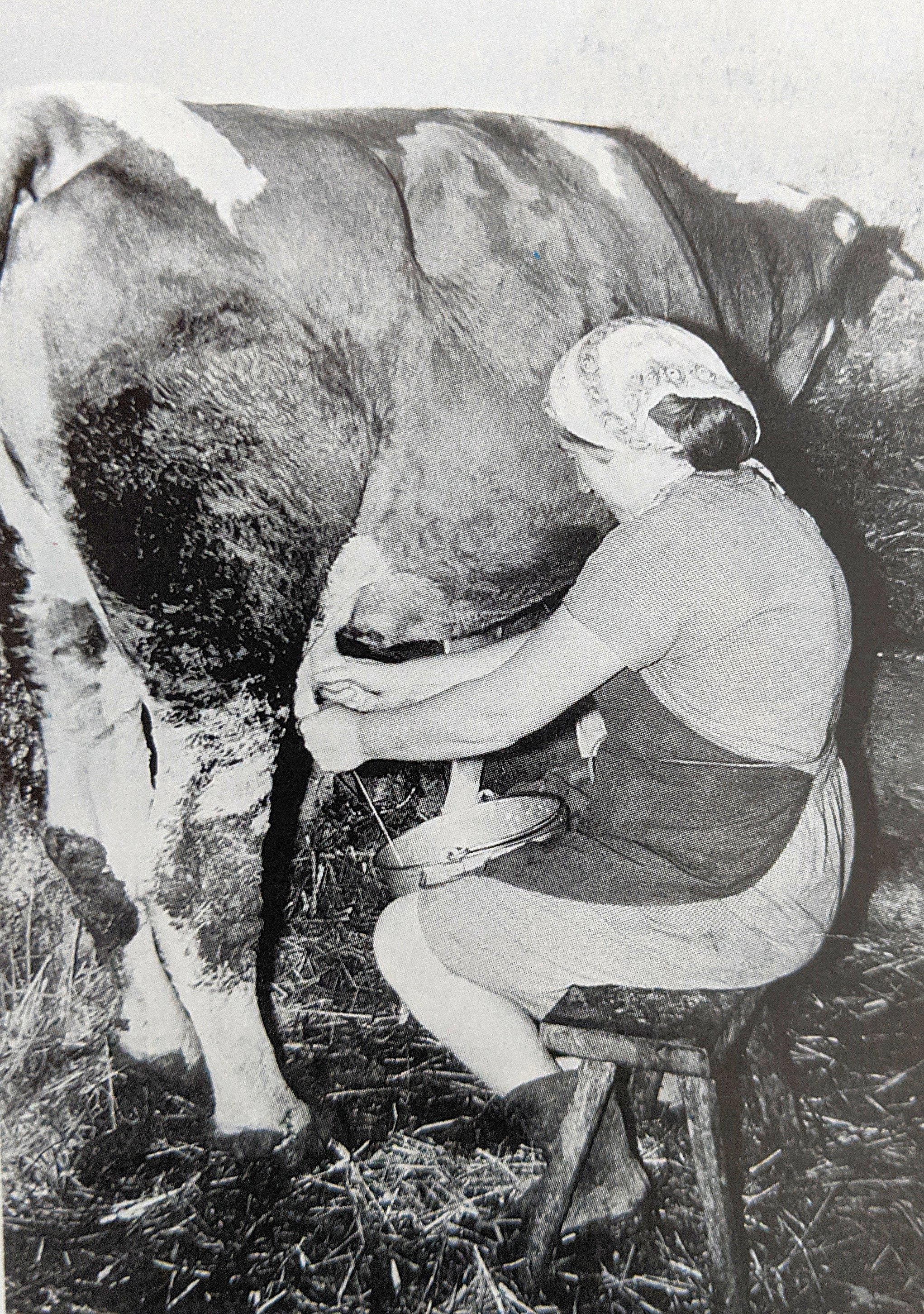
It makes sense to think that the domestication of aurochs – and of the other two main dairy animals, sheep and goats – pretty quickly led our ancestors to exploit their milk as well as their meat. And in fact, our earliest archaeological evidence of dairying is lipid residue in prehistoric pottery found in Southwest Asia, dated to the seventh millennium BCE. This all suggests that once again the Middle East – broadly defined – was the point of origin of all the cow milk-related products – cheese, whey, butter – in that slice of pasteurized process American cheese. To celebrate all these milk products, I throw in various photos. the first is of a farmer’s wife milking a cow. I remember this from my childhood. My French grandmother would send me to the nearby farm with a small jug, which the lady would fill, milking her cow in front of me in the barn.
The third photo celebrates Little Miss Muffet who was eating curds and whey, with curds being the first step in cheese production, before that pesky spider frightened her away.
McDonald’s tells us it uses iceberg lettuce, but for our purposes it doesn’t matter which variety of lettuce they use because all lettuces descend from the same domestication event. We have the ancient Egyptians to thank for first cultivating the lettuce, with the earliest evidence of its cultivation being from about 2700 BCE. Here is a photo of what the first domesticated lettuces looked like (those plants to the left).
I should hastily explain that apart from eating lettuce, the ancient Egyptians believed the plant to be the sacred to Min, the god of reproduction; I don’t think I need to point him out in the photo. The Egyptians thought lettuce helped the god “perform the sexual act untiringly”, because it stood straight and tall and when cut it oozed a semen-like latex. (I wonder if some echo of these beliefs explains why my wife’s maternal grandfather liked to eat a head of lettuce every day?) In any event, as readers can see the ancient lettuce looked quite different from modern lettuces; we have to thank the patient work of countless generations of farmers for that.
We can now turn our attention to the minced onion.
There is no general agreement about where the onion was first domesticated. Many experts think the domestication event took place in Central Asia, but there are partisans for Iran and western Pakistan. As to when it was domesticated, traces of onions have been recovered from Bronze Age settlements in China dated to 5000 BCE, so domestication must have occurred quite a good deal earlier. I throw in a photo of a wild onion plant, although not the plant which was domesticated; it’s not clear to experts which onion plant was.
The wild plant is native to the Himalayan foothills, with a range that stretches from western India all the way to China, but it was the Indians who domesticated it, by at least 3000 BCE. As an example of the Himalayan foothills, I throw in here a picture of a rope bridge across the Alaknanda River near Srinagar in Kashmir, from the late 18th/early 19th Centuries.
This picture is actually a plate in a six-volume book entitled Oriental Scenery, but I have an aquarelle of exactly the same scene, which I picked up at the Dorotheum auction house for a pittance.
But back to the topic in hand. Of course, it’s not just cucumbers we need here, we also need vinegar to pickle them (pickling is also possible with salt and other things, but MacDonald’s lists vinegar as one of the ingredients for its pickle slices). The first documented evidence of the deliberate making of vinegar (rather than an alcoholic beverage spoiling and turning into vinegar) was in Mesopotamia, in about 3000 BCE. Not surprisingly, the earliest evidence of pickling in vinegar has also been found in Mesopotamia, from around 2400 BCE, with archaeological evidence of cucumbers in particular being pickled there from 2030 BCE.
We now have to tackle the special Big Mac sauce, which I think readers will agree – or at least those who will admit to having eaten a Big Mac – is the clou of this fast food offering. Let’s be frank, without that yummy, finger-lickin’ly-delicious sauce the Big Mac would be rather bland.
Of course, MacDonald’s keeps the precise recipe a closely guarded secret, a commercial tactic which I’ve commented on before, and their bald list of ingredients doesn’t really tell you how exactly the sauce is put together. Luckily, however, litres of electronic ink have been spilled all over the internet detailing people’s attempts to recreate the sauce, and these give us the basic “design” of the sauce. It is just a mix of mayonnaise and “sweet relish”.
The mayo part gives us a number of new ingredients to consider: egg yolks, oil, and mustard (as part of a “spice mix”). Vinegar is of course also required to make mayonnaise, but we have already covered that. As for the sweet relish part, that’s just our friend pickled cucumber with sugar added. So all we need to consider is the sugar which is added as sweetener. (In all this, I am ignoring the evil food additives which MacDonald’s throws into the mix, to emulsify and thicken and make even sweeter and preserve and firm up and, and, and …).
Egg yolks is really the story of the domestication of the chicken; this is one case where the chicken comes before the egg. The chicken was domesticated from the red junglefowl in about 6,000 BCE in Southeast Asia. There are still wild red junglefowl padding through the jungle undergrowth. They are magnificent creatures – at least, the males are.
My wife and I were lucky enough to see junglefowls, or chickens that were still quite junglefowlish, in Indonesia. Really lovely creatures.
Interestingly enough, the red junglefowl may have originally been domesticated not for food but for cockfighting. Here is a Roman mosaic of a cock fight, when the practice was already centuries old.
It was only later that chickens became a major source of eggs and later still a major source of meat – the earliest archaeological evidence of large-scale eating of chickens is only from about 400 BCE.
As for the oil which goes into the mayonnaise, recipes in different parts of MacDonald’s website list soybean oil in one place and rapeseed oil in another. I presume this simply means that the choice of oil depends on availability. Let’s start with soybean oil. Given the popularity of soy products in East Asia, I’m sure it will come as no surprise to readers to learn that it was in that part of the world that soybean plants were first domesticated. In fact, it seems to have been domesticated several times. The oldest domestication event was in China, some time between 7000 and 6000 BCE, with another domestication event in Japan some 2000 years later and yet another in Korea some 6000 years later. Here we have modern Chinese farmers bringing in the soybean harvest.
For rapeseed, on the other hand, the honour for first domestication seems to go to India, which is where the earliest evidence of domesticated rapeseed, dated at 2000 BCE, has been found. That being said, it should be pointed out that it was only very, very recently – in the 1970s, in Manitoba, Canada – that a cultivar of rapeseed was created that produced edible oil, which is really what interests us for the Big Mac special sauce. Before that, a chemical naturally present in rapeseed oil gave it a disagreeable taste, so it was only used for such things as oil for lamps. Which explains why it’s only in the last 50-some years that the European countryside has become covered with acre after monotonous acre of yellow-flowered rapeseed being grown to produce edible oil.
The mustard-spice mix is such a small part of the overall Big Mac that it doesn’t get a picture om MacDonald’s website. But mustard is an interesting plant, which I’ve written about in an earlier post. It’s a complicated plant. For starters, focusing for a minute on the seeds – which is what we are interested in from a condiments point of view – there are three types: black, brown and white seeds. Each come from different plants with their individual domestication histories.
Sources: various Amazon sites
The first two are the most common, and of these two MacDonald’s almost certainly uses brown seeds, for the simple reason that a cultivar of the plant has been developed where the seed pods don’t shatter when harvested, whereas such a cultivar doesn’t exist for black mustard (having seed pods which don’t shatter during harvesting is incredibly important; the last thing you need when you harvest a seed crop is to have the pods shatter and the precious seeds scatter all over the ground). So here is the plant Brassica juncea which was domesticated to give us brown seeds.
But it was also separately domesticated for its edible root, leaves, and stem, and it has been difficult for scientists to distinguish between these various domestication events. Nevertheless, the latest analyses suggest that the plant was first domesticated for its seeds in what is now Afghanistan, in about 2000 BCE.
All that being said, the critical point about mustard – what makes mustard powder become the fiery condiment we know today – is its mixing with liquids, often nowadays vinegar. Although the vinegar in the mayonnaise is playing another role, I have to assume that when the powdered mustard seeds are added to the mix, their fire is unleashed (my earlier post explains the biochemistry). The Ancient Romans were the first to come up with this innovation – “mustard” comes, via the French, from the Latin “mustum ardens”, fiery must. It seems that the Romans liked to use must as the liquid to set mustard seeds off.
Which brings us to the sugar in the sweet relish part of the Big Mac sauce. Here, too, there is a complication, because MacDonald’s could easily be sourcing their sugar from two quite different sources: sugar extracted from sugar cane or from sugar beet. Let’s start with sugar cane, the oldest of the two sources. Modern sugar cane is the result of an initial domestication event and then a key hybridisation event. The initial domestication event took place in New Guinea, in about 4000 BCE, when the Papuans domesticated the wild grass Saccharum robustum to create S. officinarum. This domesticate travelled west to Island Southeast Asia (mostly what we call today Indonesia), where, at some point, it hybridised with S. spontaneum, another species of the family. Without this hybridisation, sugar cane would not have become the global crop it is today because S. spontaneum gave the resultant cross high tolerance to environmental stress. We have here a rather pretty botanical painting of S. officinarum, much nicer than photos of fields of sugar cane, which are really monotonous.
One further important technical innovation took place in about 350 CE, in India. Until then, people had drunk the juice squeezed from the cane. It was the Indians who first figured out how to turn the juice into the granulated sugar we know and use today. A useless factoid: the word “sugar” derives from the Sanskrit word sharkara, which means “gravel” or “sand”.
How about sugar from beetroot? This has a much, much shorter history than any of the other ingredients considered up to now, with the exception of the edible form of rapeseed oil. It wasn’t until the 18th Century, in Prussia, that a cultivar of the beetroot was developed which contained high enough levels of sugar to make it competitive with sugar cane. This is a rare case where we know the names of the people who were responsible. It was the Prussian scientists Franz Karl Achard and Moritz Baron von Koppy and his son, although the initial impulse – and funds – for their efforts came from Frederick the Great, who wanted to develop a local source of sugar. That being said, the French really pushed the development of sugar beet. It started with Napoleon, who was looking for another source of sugar to take the place of the Caribbean cane sugar whose import into France was being blockaded by the filthy English. Here is a French sugar beet factory from 1843.
This is what sort of holds all the other ingredients together (I say sort of, because my experience with Big Macs is that, well lubricated by the Big Mac sauce, the other ingredients tend to slide out from between the bread slices onto the table or, worse, onto my trousers). Going back once again to the list of ingredients on MacDonald’s website, I can see that there are only two primary ingredients in the bun that I need to discuss, the wheat flour and the sesame seeds sprinkled over the top bun. I’ve already covered the other major ingredients, sugar and oil (soybean or rapeseed). (And of course I am once again ignoring all the filthy food additives which are also part of the recipe. I’ve also decided not to go on a rant about the fact that MacDonald’s uses wheat flour fortified with iron and various B vitamins. I will limit myself to say that if they used whole grain flour, all these micro-nutrients would still be in the flour and there would be no need for the flour producers to add them back in).
Although there are a number of different wheats, it’s almost certain that MacDonald’s uses common wheat, Triticum aestivum, to make their buns; this variety makes up about 95% of wheat produced worldwide; the remaining 5% is durum wheat. The origin story of common wheat is similar to that of cane sugar: an initial domestication, in this case of emmer wheat, followed by a hybridisation with wild goat-grass. Emmer wheat was first domesticated in about 10,000 BCE, in what is now southern Turkey, while archaeological evidence from the same general area suggests that its hybridisation with wild goat-grass had already occurred by about 6500 BCE. Here is a photo of wild emmer wheat in its natural environment.
Which brings us to our final ingredient, the sesame seeds sprinkled on top of the bun. The plant on which the seeds grow, Sesamum indicum, originated – as its scientific name indicates – in India. Archaeological evidence suggests that the Indians had domesticated the plant by at least 3500 BCE. This photo shows another side of the plant, its rather lovely flower.
So, like I said at the beginning, not one of the ingredients in that uber-American fast food product the Big Mac originated in North America. Which in a way is strange; I read somewhere that approximately 60% of the food consumed worldwide originated from the Americas. I’m guessing that the massive consumption of maize around the world is primarily responsible for that, with potatoes, sweet potatoes, and tomatoes adding to it. But actually, given the history of North America’s colonisation, it is not so strange.
When we step back and look at where all the Big Mac’s ingredients originated, we can see that the great majority of them came from somewhere between the Middle East and Southwest Asia. Over the millennia, the domesticates moved west into Europe (as well into East Asia and Africa, but it’s the movement into Europe which interests us). My sense – perhaps completely unfounded – is that much of this movement came about peacefully, in many possible ways. A farmer got hold of seeds from their neighbour and tried them out, and then other farmers got seeds from that farmer, and so on, spreading seeds in a sort of ripple effect. Or maybe seeds moved with marriages, with women (probably) bringing seeds from their village. Or maybe people picked up new seeds as they travelled to foreign places for trade or other reasons. Maybe new foodstuffs were actually part of trades: “I give you this fine bronze dagger for seeds of that new foodstuff you have there”. Or maybe foodstuffs were gifts between rulers.
No doubt some movement of foodstuffs also came about through aggression. For instance, there could have been forced displacement of one group of people by another carrying their own seeds. This could have been the case when farming people, bringing their foodstuffs, cereals especially, migrated into Europe from Anatolia and replaced the original hunter-gathering people there – although I’ve also read that the hunter-gatherers simply got absorbed into the new farming societies; I’ve also recently read that perhaps there were few if any hunter-gatherers left to replace because they had been wiped out by bubonic plague – a bit like what happened in the Americas. Or maybe new foodstuffs were part of the booty of conquest. If you conquered a new land, you checked out its foodstuffs and brought back what you thought could be used by your people. I can imagine that the Ancient Egyptians’ wars against the Assyrians could have been one way new foodstuffs entered Egypt. And it is often suggested that Alexander the Great’s armies came back from the East with new foodstuffs in their baggage (I mentioned something similar in my recent post on Tabasco peppers, suggesting that American soldiers fighting in Mexico in the Mexican-American War of 1846-48 could have brought seeds of the Tabasco pepper back to the US).
However it happened, by the time European colonists arrived in North America, all the foodstuffs in the Big Mac were part of their agricultural baggage. Quite naturally, they brought their foodstuffs with them as well as their culinary habits. Initially, when the colonists were few and the balance of forces more even between them and the Native Americans, they were happy to try Native American food – isn’t that what Thanksgiving celebrates? But as more and more colonists arrived, they pushed aside the Native Americans and created a “little Europe”, mostly eating the foods of their homelands. It was in this context that the Big Mac was born. Basically, it was a European dish created in the USA by Americans of European heritage.
It’s a pity, I think, that not more of the foodstuffs Native Americans were eating have stayed in the American diet. Apart from anything else, it could help make American food systems more resilient in the face of climate change, since the native foodstuffs belong to the American ecosystem while the imported foodstuffs do not. But it would require a lot of work. Many of the foods that Native Americans were eating were wild – there was little farming in North America when the Europeans started arriving, the Native Americans were primarily hunter-gatherers – so the whole process of domesticating them would have to be undertaken. With modern, scientific methods, maybe that could be done faster than in the past. But it would still require time, effort – and money. Who would spend the money? But still, if you take a spin through the internet, you find a lot of people trying to recover Native American foods and dishes. How about merging the old with the new? Could we redesign the Big Mac to make it only with North American ingredients, I wonder?
My wife and I recently completed our annual hike in the Dolomites. It was, as usual, a wonderful trip. I throw in a couple of photos to give readers a taste of what we saw.
My photoMy photoMy photoMy photo
But, wonderful though it was, the hike is not the subject of this post. The subject is a flower.
It was on our last day and we were heading down back into the valley. We had passed the tree line and were walking through woods when we came across this stand of lupins, the flowers glistening blue, pink, and white in the sun.
my photo
I have to tell readers that lupins are one of my favourite flowers, especially when they grow wild like this on the side of the road. Upon seeing them, I was immediately reminded of a similar stand of lupins we drove past one summer holiday when my wife and I (the children had already flown the coop) were driving around the north of Scotland. I don’t think I took a photo, and even if I did I have no idea where it is, so this photo from the internet will have to stand in for that Scottish vision of yesteryear.
It also reminded me of an incident from a long, long time ago when I was a boy – maybe 12 years old? – at boarding school. We were on our way back by bus from an away game of cricket when I spotted, close to the roadside and not far from the turn-off to the school, a lupin or two. I decided I would try to dig one of them up and put it in the little patch of land I had been assigned to grow things in (I remember carrots but also marigolds and sweet williams). But the lupins being off school property, I had to get permission from the headmaster. He looked at me doubtfully if not downright suspiciously, but he eventually gave me permission. Thinking about it, I don’t think I would have got permission today. It required me to cross and walk along a main road for 50-100 metres. I suppose school authorities were more lackadaisical then. They trusted us students more, parents were much less likely to sue, and there were considerably less cars on the roads sixty years ago. In any event, off I went, armed with a spade, up through the little wood where we did our scouting on Sundays, crossed the road and walked along it till I reached the patch of lupins, and got to work with my spade. It was a complete washout. I hadn’t reckoned with the stone-hard ground and the plant’s very long tap root. After sweating away ineffectually for 20 minutes, I gave up and went back to the school. I just hope I didn’t fatally wound the lupin which I had targeted. In memory of this incident, I throw in a photo of lupins on the verge of a road.
Of course, lupins have been used as ornamentals in formal gardens for a long, long time. Here is a modern example, lupins in the gardens of Chatsworth House in England.
Personally, I prefer them wild: “We were born / Born to be wild / We can climb so high / I never wanna die”, as Steppenwolf sang a year or so after my futile attempt to dig up that roadside lupin.
I may find lupins beautiful, but I’m not sure that this was an emotion which stirred early inhabitants of the Balkan peninsula who domesticated Lupinus graecus some time before 2000 BC, more or less at the time of the transition to the Bronze Age. Here is a photo of L. graecus in modern Greece.
I would imagine that these Balkan inhabitants, rather than saying “wow! that’s a lovely patch of flowers” would have said something like “hmm, can this plant feed me?”, “can it cure my ills?” or maybe even (given that I’m reading a book about fungi) “can it bend my mind and let me commune with the gods?” Food seems to have been the main reason lupins were domesticated: after the flowers come the beans – not as beautiful but certainly more useful, loaded as they are with plant-based protein.
Or at least potentially more useful, because the beans are actually difficult and possibly even dangerous to eat! Unlike other beans in the legume family, they contain alkaloids which make them bitter to the taste and even toxic. Somehow, though, our early ancestors figured out that if they soaked the beans and washed them well they became edible.
And so started a habit which continues to this day throughout the Mediterranean region, the eating of brined or pickled lupin beans.
Source
I discovered through a colleague of mine who works in Egypt that eating lupin beans is very popular there, especially during the very ancient Sham el-Nessim festival, which marks the beginning of spring. Here, we have Egyptians going out for the traditional picnic, in which lupin beans play a role along with many other foodstuffs.
But my colleague, who is from the south of Italy, told me that they also eat lupin beans in her part of the world, commonly as a snack to be served with a beer, rather than peanuts as might be the case elsewhere. And Peroni beer is the go-to beer.
And you will find lupin bean eaters from Spain to Portugal, from Morocco to Algeria, from Lebanon to Israel and Palestine. And of course in Greece, the original European source of this foodstuff.
I say “European” because it wasn’t only in Europe that people figured out a way of eating lupin beans. The European lupins have a lot of distant cousins in the Americas. They got separated from each other when plate tectonics broke up the ancient continent of Laurasia and the pieces that later became North America and Europe drifted away from each other. Later still, the North American lupins migrated into South America. Which allowed the inhabitants of the high Andes in what is today Peru to domesticate their local lupin some time in 600-700 BC.
Like the Europeans, they learned to eat the beans by washing them thoroughly. The habit of eating lupin beans spread to other parts of the Americas. For instance, there were tribes in Arizona which grew and ate the beans. Eating lupin beans in the Americas nearly died out – it seems the European colonisers and their descendants weren’t particularly interested in this particular crop – but there is now a bit of a comeback. We have here a photo from a project by the Inter-American Development Bank promoting the lupin.
I could witter on at length about the other ways we have made lupins useful to us: as a green manure (like all legumes, lupins have the ability to fix nitrogen from the air), as a source of feed for farm animals (but only after scientists were able to crack the problem of producing a form of lupin with alkaloid-free beans in the 1920s and ’30s). I could also trill on about how they might be even more useful to us in the future: as an alternative to soybean as a feed (this hopefully helping to reduce deforestation rates in the Amazon, where much of the world’s soybean is now grown), as a raw material for making vegan alternatives to meat, egg, and dairy products (lupin beans contain high levels of plant-based protein). But I won’t, because in the end what I love about lupins is their beauty and not their utility (I can now confess to never having eaten a single lupin bean in my life). So I invite any readers who are interested in knowing more about the utilitarian aspects of the lupin to read this post, and I finish with another photo of beautiful lupins, this time from Prince Edward Island in Canada.
In our wanderings across the Austrian landscape, my wife and I have from time to time come across villages (or, in the case of Vienna, districts) called Sankt Veit. Here’s one such village in the region of Salzburg.
In the past, there has been no more than a flicker in my subconscious as some neurones somewhere registered the name. But the last time it happened, a neurone or two formulated the question, “who was this Sankt Veit?”, a question which led me to my usual desultory surfing of the web. The conclusion has been this post, which can be added to my various past posts on obscure saints whose names pepper the Austrian landscape and end up being our companions on our hikes across it.
Sankt Veit was originally Saint Vitus, a martyr from the late 3rd Century-early 4th Century. His story – or rather his hagiography – is quickly told. He was born in the far west of Sicily, in the town of Mazara del Vallo (and so, of course, in his italianised form San Vito, he is the town’s patron saint). I’ve never been there, but judging from photos on the web it has a nice central piazza.
In any event, Vitus’s mother died when he was a child. The times being what they were, his father wasn’t going to bring him up. Instead, he delegated this task to a nanny, Crescenzia, and a teacher, Modestus. Unbeknownst to him, the pair were Christians and converted Vitus when he was 12. Even though just a young lad, Vitus was of course very holy and began performing miracles. One such miracle took place in a locality near Catania on the eastern side of the island. Quite what he was doing there when he lived in the far west of the island isn’t explained. In any event, he met some shepherds who were in a frenzy because some dogs had torn a child to pieces. Vitus called the dogs over, had them hand over the remains of the child, and then brought the child back to life. This story explains why it’s common for him to be depicted with dogs. We see him here, for instance, on a capital in the church which was built on the site where Vitus met the shepherds, bringing those wild dogs to heel.
I presume being a Christian was a big no-no at the time, because when Vitus’s father found out, he had the three of them arrested and brought before the local judge, who ordered Vitus to recant. When Vitus refused, the judge invited his father to punish him severely, which he was glad to do, beating him to within an inch of his life. Still Vitus refused to recant. So his father imprisoned all three of them. At this point, an angel intervened and got them out of jail. Whereupon they fled, taking a ship to the ancient Roman province of Lucania, which more or less corresponds to today’s Italian region of Basilicata. There, all three continued their work of proselytism, with Vitus continuing to cure people.
Vitus’s fame as a healer grew to the point where the Emperor Diocletian up in Rome heard about him. We have here a bust of Diocletian. I must say, he looks rather grim, which fits nicely with the rest of the story.
It so happened that Diocletian’s son was possessed by a demon. Diocletian had Vitus and his two companions brought to Rome, where he implored Vitus to cure his son. This Vitus did, but the only reward he got was a demand from Diocletian that the three of them give up their faith (the ingratitude of it! but what could you expect from a pagan?). Vitus of course refused, so then started all those grisly tortures which hagiographers love to pile onto martyrs: see the tortures inflicted on Saint Blaise, Saint Florian, and Saint Pancras. First, Diocletian had Vitus and his two companions thrown into cauldrons of boiling pitch, which gave painters and sculptors of later centuries a very satisfying subject to work on.
But they remained unharmed! So then Diocletian had them thrown to the lions. But these ferocious beasts suddenly became meek and mild, licking Vitus’s feet!
But even though their bodies were close to breaking they survived! And so angels carried them off back to Lucania, where they died.
The End.
I won’t bother readers with a secondary complicated story of a princess who some four centuries after Vitus’s death was involved in carrying his remains from Lucania to San Polignano a Mare, some 30 km south of Bari, on the other side of Italy. I rather suspect that the story was a complete fabrication which nevertheless allowed the monks of a monastery in San Polignano to claim that they had the saint’s relics. This encouraged a vigorous relics-based tourism from which the monastery no doubt profited. The monastery has gone through many rebuilds in the intervening centuries, but it is still a rather arresting building, at least from a distance.
Whatever the truth is about the historical Vitus, assuming he even existed, the fact is that his veneration spread rapidly in Sicily and southern Italy. And then, once the great craze for relics started in the 3rd Century or so, his relics started circulating in Europe. In the 490s, Pope Gelasius I mentions a reliquary of Saint Vitus in the chapel of a deaconry dedicated to him in Rome. In 756, Fulrad, one of the great Abbots of the Abbey of Saint-Denis in what is now the outskirts of Paris, brought relics of St. Vitus to the Basilica there. This is what the abbey church looks like now, after its gothic makeover in the 12th Century.
About a century later, in 836, these relics were presented to Abbot Warin of Corvey on the river Weser. Founded in 822, this was the first Benedictine monastery in Saxony. It later became a princely Imperial Abbey in the political crazy quilt that was the Holy Roman Empire. The abbey has survived the vicissitudes of time, and is an imposing set of buildings. And Saint Vitus is still the patron saint of the abbey today.
The abbey of Corvey played a very important role in the Christianisation of eastern and northern Germany. Monks fanned out from the mother house, and to help along in their missionary work they took with them parts of the relics of Saint Vitus, thus also spreading the veneration of the saint throughout the German lands.
The same proselytising impetus brought Saint Vitus to the Slav lands, where he became extremely popular. It’s been theorised that this is because the German Sankt Veit was translated as Sveti Vid, which sounded very similar to Svetovid, the name of the Slav god of abundance and war.
Sveti Vid certainly became very popular in Prague after king Henry I of Germany gifted to Wenceslaus, Duke of Bohemia, the bones of one of Saint Vitus’s hands in 925. As a result, he became patron saint of Prague’s cathedral. To this hand was added Vitus’s head in 1355, when Charles, King of Bohemia (the Dukes had traded up to Kings in 1212) became the Holy Roman Emperor Charles IV. He filched it from a church in Pavia – the town “belonged” to the Holy Roman Emperors at that time (in turn, the head had been brought to Pavia in 755 by the Longobard King Astulfus, God knows where from; I’m sure many PhDs have been written about the European trade in relics). This same Charles IV, by the way, was the man behind Prague cathedral’s Gothic makeover, which is more or less the version of the cathedral that we see today.
Relics don’t carry the same weight these days – at least, they don’t with me – but some of the reliquaries that were made to house relics are wonderful works of gold and silversmithing. Here’s one such reliquary holding a relic of Saint Vitus from the Treasury of the Cathedral. The artist even gave the young man a dimple in his chin!
Quite why Saint Vitus was plucked out from among all the martyrs of the early church and became so popular is not clear to me. Nevertheless, something in the stories and legends that accreted to his person got him connected to diseases where convulsive, uncoordinated movements were part of the symptoms. Thus, he became the go-to saint when you had epilepsy, chorea, and ergotism, all illnesses giving rise to uncoordinated movements. Chorea especially gives rise to rapid, jerky movements in the face, hands and feet, and so it was often called Saint Vitus’s dance. He was also your saint when you had been bitten by rabid or venomous animals, a fate which can also lead to convulsions. Somewhat more randomly, it seems to me, his intercession was also invoked in cases of bedwetting.
His connection to cases of uncoordinated, jerky movements also led him to be invoked in the strange European phenomenon of dancing mania. Although the first episodes were recorded in the 8th century and occurred intermittently in the succeeding centuries, there was an enormous increase in incidences between the 14th and 17th centuries, after which it disappeared abruptly. I’m not sure dancing mania is really such a good term. Dancing requires music, while here people were just hopping and writhing around. The phenomenon involved groups of people, sometimes numbering in the thousands, who went on “dancing” sometimes for days on end, until they collapsed from exhaustion or injuries. The condition was often considered a curse sent by Saint Vitus, and was therefore also, somewhat confusingly, called St. Vitus’s Dance. Victims of dancing mania often made their way to places dedicated to the saint, who was prayed to in an effort to end the “dancing”. Here, we have a drawing by Pieter Bruegel the Elder of women overtaken by dancing mania being taken to a church.
Not surprisingly, outbreaks often started around the time of the feast of Saint Vitus, on 15th June.
Even today, there is no consensus about what was going on here. It is speculated to have been a mass psychogenic illness, also known as epidemic hysteria, in which physical symptoms with no known physical cause affect a group of people, as a form of social influence. But what started off these bouts of epidemic hysteria? To my mind, the most reasonable suggestion that has been made is that people started “dancing” when their stress levels, induced by chronic poverty and political instability, got too high – although why, then, did the phenomenon abruptly disappear in the 17th Century? People were just as stressed in the succeeding centuries. Mystery …
Of course, people at the time had no idea how to stop an outbreak of dancing mania once it caught hold – other than praying to Saint Vitus. One possible remedy that was tried was music – in the drawing above, one can see a couple of men playing bagpipes. It was theorised that music would get people to channel their chaotic flailing around into a regular rhythm and so bring them down from their hysterical high. The type of music was important; as one writer put it, “lively, shrill tunes, played on trumpets and fifes, excited the dancers; soft, calm harmonies, graduated from fast to slow, high to low, prove efficacious for the cure” (one unintended side-effect of playing music, though, was that sometimes onlookers would now join in, swelling the numbers dancing). It’s not really relevant, but I thought this would be a good place to throw in a wonderful painting (by Pieter Bruegel the Elder again) of peasants dancing.
In the south of Italy, dancing mania was known as tarantism (because it was believed to be caused by the bite of a poisonous spider, the tarantula – confusingly, not a member of the well-known family of tarantulas). The music used there to tame the dancers was thus called the tarantella, which in the intervening centuries has become a well-known musical export from Italy. Many twee paintings of people dancing the tarantella have been produced, normally in a Neapolitan context, like this one.
But back to Saint Vitus after this interesting digression into phenomena of mass hysteria!
In the 14th Century, largely because of the shocks caused by the Black Death, Germans in the Rhineland created a collection of fourteen saints called the Nothelfer, or Helpers in times of need; their formal name in English is the Holy Helpers. Basically, these fourteen saints were tasked with helping people with all the ills they suffered from. We’ve already seen what Saint Vitus was meant to help you with. Another of the Holy Helpers which I’ve dealt with in a previous post, Saint Blaise, was to help with any illnesses of the throat. Staying with the head, Saint Catherine of Alexandria was charged with illnesses of the tongue, Saint Ciriac of Rome with illnesses of the eye, Saint Acacius with migraines, Saint Denis with normal headaches, Saint Barbara with fevers, and Saint Giles with mental illnesses (and with nightmares, I suppose by extension of his powers over mental illnesses). Moving to other parts of the body, Saint Erasmus (or Saint Elmo) was invoked in cases of stomach and intestinal illnesses and Saint George when it came to diseases of the skin. Saint Margaret of Antioch was prayed to when backaches were the problem and when childbirth was looming (this was by extension, I suppose, since many pregnant women suffer from backaches). Meanwhile, Saint Pantaleon was the go-to saint when cancers and consumptive diseases were the problem.
But requests for help from our fourteen Holy Helpers didn’t stop there. They were also invoked to prevent risks to life and limb caused by events in the outside world. You prayed to Saint Barbara to avoid a sudden and violent death at work. When travel was necessary, you prayed to Saint Christopher to avoid the many dangers of travelling. I suppose by extension you also prayed to him to avoid the plague – a sensible thing; we all saw during Covid how plagues spread through travel. For good measure, terror of the plague being great, you also prayed to Saint Giles to avoid the plague. Storms and lightning must have been a common problem because you also prayed to Saint Christopher to avoid the consequences of storms (a good extension of his powers since storms are a common enough danger when travelling), to Saint Vitus to avoid both storms and lightning (a sensible combination) and to Saint Barbara to avoid lightning. Fire, too, must have been an ever-present threat when houses were made primarily of wood, because two of the saints looked after the risk of fire for you: Saint Barbara (by extension, no doubt, of her protective powers against lightning) and Saint Eustace. Interestingly enough, Saint Eustace was also the saint to go to for protection from family discord – this must have been quite a common problem if it warranted a Holy Helper. And of course, since this was a time when the great majority of people were peasants, and since much of their wealth was tied up in livestock and domestic animals, no less than five of the Holy Helpers could be invoked to protect these animals: Saint Blaise, Saint Elmo, Saint George, Saint Pantaleon, as well as our friend Saint Vitus. In fact, in the small Italian town of San Gregorio Magno in the province of Salerno, there is still an annual festival when people come with their animals and go round the local church of St. Vitus three times, followed – given the saint’s connection to dogs – by dog owners with their dogs. We have here goats doing the rounds.
But the help requested from the Holy Helpers didn’t end there. People were profoundly Christian and specifically believed in the afterlife, where depending on how good or bad you had been in this life you would either go to heaven or to hell. Here is a mosaic from the church on the island of Torcello in the Venice Lagoon of the Last Judgement, where parishioners could see just what would happen to them if they were judged to be bad.
And it was for all eternity! So it was incredibly important to end up on the right side of Divine Judgement. The Holy Helpers were duly invoked to help here. You prayed to Saints Barbara and Catherine of Alexandria to avoid a sudden death (i.e, one where you had not confessed your sins and received extreme unction). You prayed to Saint Giles to make a good confession: generally a desirable thing, but especially desirable just before you died. You prayed to Saint Ciriac of Rome to avoid temptation on your death-bed, which would indeed be a very ill-judged moment to give in to temptation since you might not have time to confess (but who on their death-bed would have the energy to be tempted, I ask myself?). You also prayed to Saint Ciriac as well as to Saint Denis to avoid demonic possession. I suspect in Saint Ciriac’s case this was as an extension of his powers to protect you from diseases of the eye (the eye could be an entry point for the devil, the Evil Eye) while in Saint Denis’s case, I see it as an extension of his powers to prevent headaches (I mean, when I’ve had bad headaches it’s often felt as if some small monster was pounding on the insides of my head). Saint Barbara of Antioch, meanwhile, was invoked for escape from the clutches of devils in general. Finally, you prayed to Saint Eustace to prevent you ending up in the eternal fires of Hell, a very natural extension, it seems to me, of his powers to protect people from fires in the terrestrial realm.
So there you have, in a nutshell, the fears that wracked the great majority of Europeans in the 14th and later centuries. The idea of a bevvy of saints who could help you with all the trials and tribulations of life proved to be so popular that it spread rapidly from its point of origin in the Rhineland to the rest of Europe, with local additions and subtractions from the basic list. Here is a collection of statuettes of the fourteen Holy Helpers from a chapel in Baden-Württemberg, where centuries ago you could have gone and asked the relevant saint, or saints, for help with your problems.
However, all I can say is, thank God for modern medicine, and thank God for governments which enact (and hopefully enforce) laws to protect us, and thank God for insurance companies which can cushion us from the risks of everyday life – as long as we read the fine print. As for fears of Hell, all I can say is, thank God Europe is dechristianising – although the fear of death is still there, in a different form, but still there.
Let me end this post with some examples of well-known people who have been named after Saint Vitus.
For Vitus, I tried to find a well-known Roman who was called that but failed to find one. So I choose Vitus Bering.
Bering was a Dane but spent most of his working life in the Russian Imperial Navy. His explorations in the northern Pacific Ocean gave us the Bering Strait, the Bering Sea, and Bering Island (on which he died and was buried).
For Vito, I choose the very famous fictional character Vito Corleone, as played by Marlon Brando in the film The Godfather.
I’m sure it’s no coincidence that Mario Puzo, who wrote the book on which the film is based, chose the name Vito for his character. As readers can imagine, it is a popular name in Sicily since Saint Vitus hailed from there (assuming, of course, that he ever really existed).
For Veit, I had difficulties finding someone who was really, really famous. So I choose Veit Bach, for the simple reason that he founded the Bach family, one of the most important musical families in history. There is no portrait of him, so I choose instead a portrait of Johann Sebastian Bach, who was his great-great grandson.
I also choose Veit Bach because he was a victim of Europe’s religious wars. He was a Protestant who lived in the Kingdom of Hungary, then ruled by the staunchly Catholic Hapsburgs. Religious persecution drove him to relocate his family to the Protestant state of Thuringia. He will contrast neatly with another personage I will mention in a second.
For Vid, I had even more difficulties finding someone who is even modestly famous. For lack of anything better, I choose Petar Vid Gvozdanović, a Croatian who was born at a time when Croatia was part of the Hapsburg Empire.
He joined the army, where his name was Germanified to Peter Vitus Quosdanovich, and he fought in the Seven Years’ War, then the War of the Bavarian Succession, then the Austro-Turkish war, rising steadily through the ranks. By the time the wars with the French revolutionaries started, he was a major-general and had been made a baron. After successfully fighting the French on their northern frontiers, he was made Field Marshall Lieutenant and sent to Italy to fight Napoleon. Alas! Napoleon was his nemesis, beating him repeatedly and leaving his reputation in tatters. After his final defeat at the battle of Rivoli, he was “retired”; he does look a little mournful in his photo.
The name game doesn’t end there! At some point during the invasions of Italy by the Germanic Longobards, the Latin name Vitus got inextricably mixed up with the Longobard name Wito or Wido and was transmuted into the name Guido. The French turned that into Guy, today pronounced very much like the Indian clarified butter ghee. The Normans brought the name with them when they invaded England, but its pronunciation over the centuries changed to the same as “buy” or “hi!” or “lie”. So now we have three more variants!
For Guido, I choose Guido Reni, a baroque painter from Italy. Here is a self portrait.
He is a Famous Author, and as a result I have never read any of his stuff. If any of my readers are curious to read him, Wikipedia informs me that his first published story, “Boule de Suif”, or “The Dumpling”, is often considered his most famous work. I welcome anyone who has read it to tell me what it’s like. Who knows, one day, at the next pandemic-induced lockdown, I might get around to read it.
For the English Guy, I choose Guy Fawkes. He, like Veit Bach, was a victim of Europe’s religious wars, although his situation was the mirror image of Veit Bach’s: he was a Catholic in a Protestant kingdom. He was also definitely more militant than Bach was in his response. He was one of the main conspirators in the Gunpowder Plot, where the plan was to blow up King James I and the House of Lords. His role was to light the fuse which would set off the barrels of gunpowder which the conspirators had stashed away under the House of Lords. He was caught red-handed at the last minute, tortured, and hanged, drawn, and quartered. He is the third to the right in this contemporary engraving of eight of the thirteen conspirators (he was also known as Guido, because he had fought many years on the continent in Spanish armies).
Ever since, on 5th November, the day Guy Fawkes was caught, big bonfires are burned all over the UK on which are perched effigies, originally of the Pope but later of Guy Fawkes, and nowadays of just about any public figure whom the bonfire-makers dislike (in case readers don’t recognise her, it’s Margaret Thatcher in the photo).
So there we have it. I’ve taken my readers through quite a wander of things related to Vitus – sometimes rather remotely. And now my wife and I can wander over the Austrian landscape in our hikes, knowing that the next time we come across a village called Sankt Veit or a church dedicated to Sankt Veit we’ll be able to say “Ah yes! Remember that post?”
POSTSCRIPT
A week or so after writing this post, my wife and I went down to the Dorotheum auction house for tea and a nose around to see what was new. In a small section they have devoted to religious art, I came across this painting on glass.
My photo
It was a painting of the fourteen Holy Helpers plus God the Father with the Holy Ghost, Mary with the Baby Jesus, and Jesus with his cross. I can’t figure out who is who except in a few cases. The young man at the very bottom holding a palm must be St. Vitus; he’s always depicted as a boy. The bishop holding a candle must be St. Blaise (see my post about him to understand the meaning of the candle). The fellow with a baby on his shoulder must be St. Christopher. After that, I’m a bit lost. I leave it to my readers to figure out the rest.
The painting was being sold with a companion piece depicting the Last Judgement.
My photo
Somewhat more succinct than the mosaic in Torcello, it nevertheless passes on the vital message: “if you’re bad, you burn”.
I had to have them! So I forked out the €166 being requested, and they now hang proudly on our wall, on either side of another painting on glass I bought several years ago of God the Father blessing all and sundry.
I’ve mentioned elsewhere my little collection of art – nothing hugely expensive, I hasten to add; the most I have ever paid for a painting is €2,000, and I went back and forth in an agony of indecision for several days before made the final plunge. I love all my paintings, but there is one that I am particularly proud of because of the sleuthing which I carried out to properly identify its subject.
A little bit of background is in order. I bought the painting at the Dorotheum auction house in Vienna – although not during an actual auction, but rather in the part of the Dorotheum where paintings and other objects are sold at fixed prices. I throw in a photo of it.
my photo
It’s an aquarelle, not very big – 46 by 63 cm. I loved its naïve style, I found the colour scheme cheerful, and I was intrigued by the scene it depicted. The description the Dorotheum gave it was:
“Belgien, 19. Jhdt.
Panoramablick von einer Brücke an einem Fluss, links and rechts Häuserzeilen, im Vordergrund Spaziergänger”
Or:
“Belgium, 19th C.
Panoramic view from a bridge on a river, left and right rows of houses, in the foreground strollers.”
The first thing I did was to take it to a framer who has a shop down the road from our apartment, for him to take off the frame and check the painting over. And here came a big surprise. On the back of the painting, someone had written “Vor Stadt im Paris”, which can be translated “In front of the City in Paris”. So the painting probably wasn’t of somewhere in Belgium as the Dorotheum’s description had suggested, but of Paris!
But where in Paris was this scene painted? Answering this question meant first understanding what waterways existed in Paris in the early 1800s – from the clothes the people in the painting are wearing it’s clear that the scene was painted some time in that period. A bit of sleuthing led me to the conclusion that the only waterway of any substance which existed in Paris in this period was the River Seine. The three canals which currently exist in and around Paris – Canal Saint-Martin, Canal Saint-Denis, Canal de l’Ourq – only got the go-ahead to be built in 1802 (from the-then First Consul Napoleon Bonaparte), and were only completed in the early 1820s, which is a bit late for the painting. So not only Paris but the River Seine! More and more exciting!
I won’t bore my readers with a summary of the hours I spent trying to find out where on the River Seine my painting was executed. Suffice to say that, given that the painting depicted a bridge, I became a real expert on all the bridges crossing the Seine in Paris in the early 1800s. But actually the breakthrough came from digging around for information on the shop to the far right of the painting – I throw in a close-up of it.
my photo
As readers can see, the shop’s name was “DUHAMEL MD [MARCHAND] FAYENCIER” while underneath it says “Magazin de Porcelan …” (the rest to me is unreadable; however, if any of my sharper-eyed readers can make out what’s written please do tell me). So it seems that the shop was owned by a certain Duhamel and he sold porcelain and possibly earthenware. And here I had a real stroke of luck. Searching away on the internet, I discovered that the Bibliothèque de France had scanned a series of “Almanach du Commerce de Paris”. Here is the front page of the Almanac for 1798-1799, or Year VII in the Revolutionary Calendar, the first of these Almanacs that the Library had scanned.
These Almanacs were the period’s equivalent to the old Yellow Pages that we used to have before the internet came along (minus the phone numbers, of course). They listed all the businesses and shops in Paris, with – very important for me – their addresses. And here, in the Almanac for the Year VII, in the category of “Fayanciers” (the spelling wasn’t yet settled, it seems), I found an entry for a Duhamel. This was extremely encouraging! The name and trade fitted the name of the shop in the painting. The shop was listed as being in rue de la Lanterne. This street no longer exists. It is now the northern section of the rue de la Cité, which runs across the Île de la Cité, linking two bridges, the Pont Notre-Dame to the north and the Pont Cardinal-Lustiger to the south. I held my breath. Could the bridge in the painting be the Pont Notre-Dame? To make sure, I started working my way through successive Almanacs, and I soon got confirmation that the shop had been located at the foot of Pont Notre-Dame. Already in the Almanacs for the years 1806 to 1808 (the Revolutionary Calendar had been dropped by then), the address of the shop was given as “rue du Pont-Notre-Dame, 1” rather than rue de la Lanterne (although they went back to this address in later years), which strongly suggested that the shop was right next to the bridge itself. But the clincher came in the Almanac of 1812, where the address was given as “rue de la Lanterne 1 (Cité) et pont Notre-Dame”, while the Almanac of 1813 gave the address as “rue de la Lanterne, 1, au coin du quai Napoléon”, which at that time was the name of the quay that ran alongside the Seine from Pont Notre-Dame to Pont Saint-Louis at the far end of the island.
So I could finally identify the bridge! It is Pont Notre-Dame. This identification was strengthened by another feature of the painting. Readers will notice that a number of people crossing the bridge are holding plants. I throw in a close-up of two of them.
My photo
It just so happens that behind viewers’ right shoulders as they look at the painting, a flower market was located! (and is still located.) Here is a drawing of that market done in 1829.
So now we can understand that the people in the painting holding plants have just bought something at the flower market and are presumably taking them home. The vicinity of the flower market to the shop is emphasised in the entry in the Almanac of 1817, where the address of the shop is given as “au bas du pont Notre-Dame, en face le marché aux Fleurs” (the emphasis is in the original), or “at the foot of Notre-Dame bridge, facing the flower market”. This connection, by the way, tells us that the aquarelle must have been executed after 1809, which is when the market was created.
Identifying the bridge in the painting as the Pont Notre-Dame also clarifies the rather odd wording of the phrase written on the back of the painting, “In front of the City in Paris”. Clearly, the “city” in this case is the Île de la Cité, which takes up most of the right-hand side of the painting.
A few years ago, during a visit my wife and I made to Paris, we visited the Pont Notre-Dame. I was curious to see how much the view had changed. Unfortunately, there were roadworks going on on the bridge and the traffic was horrendous, so I wasn’t able to get a clear view from the point where our artist must have been more or less standing. So I’ve turned to Google Maps Street View for today’s view from the bridge. It’s not brilliant, but it will have to do.
As readers can see, the view has changed quite considerably in the intervening 200 years. At the back of the painting, readers will note a somewhat humpbacked bridge – I throw in a close-up of it.
My photo
That bridge is the Pont Marie, which connects the right bank of the Seine to the Île Saint-Louis. Here is a rather more professional painting of it from 1757.
The bridge in this painting has five arches and a slight hump. The painter of the aquarelle faithfully gave the bridge five arches but made the hump much more pronounced. This particular version of the bridge still exists, although the houses on the bridge, some of which you can still see in the 1757 painting, were all torn down by the time the aquarelle was painted, and more recently the hump has been flattened.
Since the aquarelle was painted, two more bridges have been built between Pont Notre-Dame and Pont Marie. One of them, Pont d’Arcole, is visible in the Google Street View photo.
The banks of the river have also been built up in the intervening 200 years. The most obvious change is on the left of the painting, where viewers can see a sort of beach (which is also visible in the 1757 painting of Pont Marie).
My photo
This used to be the Place de Grève, a place where boats could be pulled up onto the beach and cargo loaded or unloaded. I presume that those white cocoon-looking things on the beach are some sort of cargo, Lord knows what. Here’s a more sophisticated view of the beach, by the same painter who painted the Pont Marie.
This whole area was “tidied up” in the 1830s, when today’s quays were built up.
The dome one can see above the Place de Grève is the dome of the church of St. Paul St. Louis.
My photo
As the Google Street View indicates, you can’t see it any more from the Pont Notre-Dame because the intervening buildings have all increased in height, so here is a photo of it from nearby.
More or less opposite that dome on the other side of the painting, readers will see a spire peeking over the roofs. I think that is the spire of the cathedral of Notre-Dame – looking at maps of the period, I can’t see what else it could be.
Source
Alas, this spire no longer exists, having come crashing down when the cathedral’s roof burned down four years ago. This photo shows the spire enveloped in flames.
As for the building in which Duhamel’s shop was located, it has disappeared. The whole block was torn down to make space for a hospital, which was built in 1878. But it looks like Duhamel had already sold up in 1823 or ’24. Certainly, by 1824 the building housed a new shop, called À la BelleJardinière, which sold ready-made clothes. I suppose this was a revolutionary idea at the time. In any event, it did roaring business, bought up the surrounding houses and turned them into one big shop. When the hospital was built, the shop moved elsewhere and continued to do business until 1972.
The Duhamel involvement in the sale of earthenware and porcelain didn’t stop with the closure of the shop at the foot of Pont Notre-Dame. The Almanacs show an interesting story. A younger brother got involved in the business in 1804. Then one of the two moved out in 1809 or ’10 and set up another shop in what is now the first Arrondissement near the Halles. Then in 1820, a son of one of the two Duhamels set up a third shop on Boulevard des Italiens. The disappearance of the first shop in 1824 was followed by the disappearance of the shop on Boulevard des Italiens in 1827. The shop near the Halles kept going until 1837, after which it, too, disappeared from the record. Who knows what happened to the Duhamels after that?
There is one thing which the painter must have got wrong. You can’t see it in the modern photo from the bridge because the Pont d’Arcole blocks the view, but there is a small channel to the back right. This is the arm of the Seine which runs between Île St Louis and Île de la Cité – you see it very well in the painting of the Place de Grève. I can’t believe the painter didn’t see it; I have to assume that he first sketched the scene “en plein air” and then later painted the aquarelle proper, at which point he either forgot about the channel or decided it was making the painting too complicated.
Which brings us back – sort of – to the cast of colourful characters our painter has peopled the bridge with. I’ve already mentioned the persons carrying plants. We also have what seems to me to be a Gendarme on horseback.
My photo
Gendarmes were (and are still) a type of policeman with military connections. Here is a modern picture of what the Gendarmes looked like in the early 1800s.
I have no idea what the other military-looking fellow behind our Gendarme could be, the one going for a walk with his Missus. I welcome inputs from any of my readers who are experts in military uniforms.
There is also what looks like a vitrier, or glazier.
My photo
Here is a photo of a vitrier from a later period. You can see better the contraption on his back with which he carried his spare window panes.
I was rather pleased to see him. As I’ve mentioned in an earlier post, my mother often used to sing old French songs, and there was one song in her repertoire about vitriers. It was only one verse, which was repeated ad infinitum, and which went like so.
Encore un carreau d’cassé, v’là l’vitrier qui passe
Encore un carreau d’cassé, v’là l’vitrier d’passé
V’la l’vitrier, v’la l’vitrier, v’la vitrier qui passe
V’la l’vitrier, v’la l’vitrier, v’la l’vitrier d’passé!
which can be loosely translated as:
Another broken pane, here’s the glazier passing
Another broken pane, here’s the glazier’s gone past
Here’s the glazier, here’s the glazier, here’s the glazier passing
Here’s the glazier, here’s the glazier, here’s the glazier gone past!
Then we have an itinerant shoe-shiner.
My photo
This is another trade which survived into the era of photography. I have chosen a photo of Neapolitan boys offering the service. Readers will see the word Sciuscià written on their box. It’s a term which came into use in Naples during the Second World War; it’s an adaptation into the local vernacular of the English word “shoeshine”, which shoeshine boys picked up from American troops. Vittorio De Sica made a powerful film in 1946 about these Neapolitan shoe-shine boys; I highly recommend it to my readers.
Which brings us to the person whose shoes – or rather boots – are being shone.
This character intrigued me. I thought perhaps he could help me date the painting. As I said, I’m not an expert on military uniforms, and even if I were we don’t know if the painter painted the uniform at all accurately. All that being said, I rather think we are dealing with a lancier rouge (although in the painting the man has a red feather in his shako while it should have been white or white and red). Here is a more sophisticated rendition of this uniform.
The regiment, properly known as the 2e régiment de chevaux-légers des Lanciers de la Garde Impériale (2nd regiment of Light Horse Lancers of the Imperial Guard), was known colloquially – and for obvious reasons – as the Red Lancers, or somewhat more irreverently as the écrevisses, or crayfish. The regiment has a grim but romantic history. It was originally formed in 1810 from hussars of the Dutch Royal Guard, after Napoleon merged Holland with France, and at the beginning it was primarily made up of Dutch recruits. The regiment served in Napoleon’s Russian campaign, where it was decimated, the depleted ranks being filled by Frenchmen (particularly from Paris and its environs). The regiment was dissolved a first time in 1814 at the Restoration, reformed during the Cent Jours, fought at the battle of Waterloo where it was again decimated, and finally dissolved at the end of 1815. If I’m right about the regiment, this means that the painting can’t have been painted that long after 1815 (soldiers from the disbanded regiment might have continued wearing their uniforms for a few years, either out of defiance or simply because they had nothing else to wear).
Which brings me finally to the anonymous painter. Who was he? (or maybe she, although I rather doubt it). Given the the phrase written on the back of the painting, I’m guessing that he was a German speaker, and given where I picked the painting up that he was a citizen of the Austrian Empire. Looking at the window of 1809 (when the flower market opened) to a few years after 1815 (when the Red Lancers regiment was disbanded) as the time period when the aquarelle was probably painted, I wonder if my anonymous painter was not an officer in one of the Austrian regiments that occupied Paris after Napoleon’s defeat at Waterloo. In which case, the painting – or at least the initial sketch – would have been executed between 1815 and 1818, when the Allies maintained troops on French soil. But I have no name to give to my painter, who has given me so much pleasure since I purchased his aquarelle, and he will probably remain anonymous forever.
It is the 50th anniversary of Pablo Picasso‘s death this year and the art world is overflowing with Picasso exhibitions. My wife and I recently visited one at the Albertina in Vienna (just before the minor operation which has kept me “indisposed” for a while). Meanwhile, one of my sisters announced the other day in our WhatsApp group that she and her husband had just visited the newly refurbished Musée Picasso in Paris, to which another of my sisters replied that she and her husband had just visited the Picasso museum in Malaga, Picasso’s birthplace. No doubt there will be more announcements along these lines throughout the year. However, in this post I do not propose to follow the tide and celebrate Picasso’s artistry. Rather, I want to celebrate his dress sense, and in particular his fondness for wearing, in his later years, a long-sleeved cotton shirt with blue and white horizontal stripes, what the French call la marinière.
If I give it its French name, it’s because it was the French who turned this originally humble shirt into something that cultural movers and shakers like Picasso wore and eventually into an item of high fashion.
I will skip the history of stripes in clothes – or rather the lack of them – in Europe’s earlier history, fascinating though that is, and will cut straight to the chase, in this case an Ordinance emitted in 1858 by the French Ministry of the Navy. This Ordinance decreed that from now on not just Navy officers but also the more humble petty officers and ordinary seamen would wear a uniform, and described in good bureaucratese what this uniform should look like. Here we have a French sailor from a few decades after the Ordinance’s publication.
The 1858 Ordinance of course also dictated the precise design of this uniform. As far as the marinière was concerned, it was to be made of a fabric knitted in the “jersey” style, and have, front and back, 21 white stripes, each 20 mm wide, interspersed with 21 indigo-blue stripes half as wide, while 14 white and blue stripes of the same widths should run on the sleeves. Why this number of stripes? Lord knows. In the case of the 21 stripes, it has been suggested that they stand for the 21 battles which Napoleon won, although I don’t see how that can be since by my count he won more like 30 battles (and anyway, this is the Navy; why should they memorialise land battles?). In the old days, the blue of the stripes (and probably the blue of the jacket and trousers) came from using my old friend indigo as the dye, but I suppose modern dyes are used today.
It seems that pretty much every Navy has adopted this type of uniform for its seamen. As a result, for the last one hundred and seventy years or so it has become typical in towns near Navy bases to see off-duty seamen in their dashing uniforms lounging about ogling the girls and being ogled back.
But now to the marinière’s upgrade into a fashion item. It seems that Coco Chanel was the first fashionista to take this humble piece of clothing and turn it into a fashion statement. The story goes that during the First World War Chanel would often leave Paris to go and spend time on the Normandy coast; she had a second shop in Deauville, a seaside resort which was the hang-out of the rich and famous. This is a poster for Deauville from the 1920s, when it was once again the place for the rich to go and have fun.
It being wartime when Chanel was going, Deauville must have looked much more sober than in this poster, and I suppose that since the locals were sea folk many of the men would have been called up to the Navy and would have been seen walking around the town in their uniform. Chanel was much struck by the marinière and added her version of it to her collections for women from 1916 onwards. This was quite audacious of her, since she was taking an article of clothing for men, and working men at that, and using it as a fashion item for respectable bourgeois ladies. Initially, she also made her marinières out of jersey fabric; this scandalised people because at the time this was a fabric strictly associated with underwear. She argued that the war made it difficult to source more upscale fabrics – and perhaps it was unpatriotic to use such fabrics at a time when many people were suffering great privation. After the war, she quietly moved to using posher fabrics, especially silk. Here, we have her wearing one of her marinières, along with a pair of trousers, no doubt another cause of scandal (when I was young it was still thought that proper young women did not wear trousers, and certainly not in the workplace).
Of course, Picasso and Chanel knew each other; the artsy world is a small one, everywhere. Jean Cocteau was a firm friend of Picasso’s; he was one of the witnesses to Picasso’s marriage with his first wife, Olga Khokhlova. He was also a firm friend of Chanel’s, so naturally he introduced the two to each other … It so happened that Olga was a devoted client of Chanel’s, and Chanel regularly visited the couple after they were married … Some of Chanel’s creations were inspired by Picasso’s cubism … Chanel and Picasso collaborated with Cocteau in his 1922 adaptation of Sophocles’s Antigone: Chanel designed the costumes, Picasso designed the sets and masks; here we have the costume for Antigone …
She was Sara Murphy, he Gerald Murphy, both from wealthy American families, who in the 1920s decided to escape from their disapproving parents and live on the French Riviera for a while. They hosted a fashionable bohemian set at their home there: Picasso, of course, was a guest, but so was the painter Fernand Léger, despite his communist sympathies; as readers can guess, Cocteau also turned up (he happened to own a villa in the same general area); Cole Porter – an intimate friend of Gerald’s – was a frequent visitor; a bevvy of American poets and writers travelling through Europe dropped by: F. Scott Fitzgerald and his wife Zelda, Ernest Hemingway, John Dos Passos, Archibald MacLeish, John O’Hara, Dorothy Parker, Robert Benchley; and on and on. Chanel could well have also been a guest – she, too, owned a villa on the French Riviera – but I’ve found no trace of her being on the guest list.
The story goes that on a shopping trip to Marseilles – a port city, let’s remember – Gerald was charmed by the marinières that he saw all around him. So he bought a bunch of them and distributed them to his guests, thereby transforming the humble marinière into chic leisurewear. We have here a photo of Gerald wearing a marinière, with his wife on the beach.
I should say in passing that the Murphys are credited with getting the smart set to visit the French Riviera during the summer and not just the winter, as had been the case until then. Prior to their arrival, lying on a beach to enjoy the sun was not done. Occasionally, someone went swimming, but the joys of hanging out on a beach just to soak up the sun were still unknown. It was the Murphys who introduced this as a fashionable activity. We have here Gerald and Picasso on the beach at Antibes.
And here, to complement the photo above of the poster advertising the charms of Deauville, we have a photo of a UK poster from the late 1920s advertising the – warm – charms of the French Riviera.
Even though Gerald may have given Picasso a marinière to wear back in the 1920s, we don’t have a photo of him wearing one then – or at least I haven’t found such a photo. The photos with him in a marinière, like the one I started this post with, are from the 1950s and later. Perhaps it was only when Picasso moved down to the Riviera after World War II that he started wearing one regularly.
In fact, the marinière only seems to have become a common fashion statement in France in the 1950s, and from what I can gather we mainly have Brigitte Bardot to thank for this. She turned up at a Cannes Film Festival – and was photographed – in a marinière. Here, we have a few of these photos.
But it was Jean-Paul Gaultier who really put the marinière on the high fashion map from the late 1970s onwards. He went crazy for it after seeing Rainer Werner Fassbinder’s film “Querelle de Brest”, a film which plays to another side, the homoerotic side, of the Navy uniform.
There are lots more of Gaultier’s takes on this once humble piece of clothing. Any reader who is interested in dreaming about what flash piece of Gaultier marinière-themed wear they could look for in their local vintage clothes shop can do no worse than surf this site. And there are lots of other high fashion dudes who’ve had a go at the marinière: Karl Lagerfeld for Chanel (unsurprisingly), Kenzo Takada, Sonia Rykiel, Prada, Dolce & Gabbana, Michael Kors, and on and on. I shall let readers explore.
Meanwhile, although I said at the beginning that I didn’t want to celebrate Picasso’s artistry in this post, it seems to me appropriate to finish up with a couple of his works in which he celebrated the marinière.
Here, we have a man in a marinière smoking a cigarette.
I don’t understand it, my wife and I have not yet received our invitation to attend King Charles III’s coronation in Westminster Abbey! It’s taking place very soon, on 6 May!
Source
This is a huge problem, because I won’t get a chance to surreptitiously inspect the Cosmatesque pavement laid in front of the Abbey’s High Altar while the assembled Archbishops drone their way through the coronation liturgy.
The fact is, the pavement is covered up almost all the time, to protect it. It’s only during a coronation or other exceptional events that it is uncovered. In fact, the last time it was uncovered was when William and Kate were married in the Abbey back in 2011 (another event to which my wife and I were not invited; have they mislaid our address, I wonder?)
Why my anxiety to inspect the pavement? Well, the Abbey’s Cosmatesque pavement is quite remarkable, simply because it really shouldn’t be there. One finds this style of pavement primarily in and around Rome, where it was developed from the end of the 11th Century to the 13th Century by a number of families of artisans, the most well-known of which were the Cosmati, who have given their name to the style. As a rule, Cosmatesque pavements have white or light-coloured marbles for background, into which have been inlaid triangles, squares, parallelograms, and circles of darker stones. These are surrounded by ribbons of mosaic composed of coloured and gold-glass tesseræ. The result are lovely geometrical designs of swirling colours over the floor. Here are some of the best examples that have come down to us.
The artisans laying down these pavements recycled much of the stones they used from the copious ancient Roman ruins that still littered Rome and its environs; the circles in particular were sliced off columns that couldn’t be used as columns any more. The artisans would dig through old ruins, looking for marble to salvage (with one of their side businesses being selling off the statues which they came across during their digs). This painting by Canaletto is from many centuries later, and it just shows people visiting the ruins in Rome rather than digging into them, but it gives a nice impression of what it must have been like to live with all those ruins around one.
The sources I’ve read talk airily about examples of Cosmatesque work also existing north of the Alps, although the only example they ever cite is Westminster Abbey. I haven’t been able to find a single other example of Cosmatesque pavement outside of the Roman heartlands, not even in the north of Italy (if any readers know of examples outside Italy, please let me know). So the presence of a Cosmatesque pavement in Westminster Abbey is indeed pretty remarkable. How come there is this one isolated example north of the Alps?
The answer to that question lies in the history of Westminster Abbey. The Abbey has always had a special relationship with the English (and later, British) crown, ever since King Edward the Confessor in the 1040s established his royal palace by the banks of the river Thames west of the city of London and decided to re-endow and greatly enlarge a small Benedictine monastery already located there. This included building the first cathedral, the “west minster” (as opposed to the “east minster”, St. Paul’s cathedral, in the city of London). Here, we have a scene from the Bayeux tapestry, showing the funeral procession of Edward the Confessor, bringing him to his cathedral where he was buried.
Thereafter, the English kings patronised the abbey and its cathedral, with all the coronations of English (and then British) monarchs from 1066 onwards (bar two) taking place in the cathedral.
Presumably as a reflection of its special royal status, in the period we’re interested in, namely the second half of the 13th Century, the Abbot reported directly to the papacy and not to any local bishop as would normally have been the case. This meant that it was the Pope who approved the choice of abbot made by Westminster’s monks. Which explains why, in 1258, a certain Richard de Ware, whom the monks of Westminster had chosen as their new abbot, travelled down to Rome to obtain the necessary papal approval. It just so happened that the pope and his court were residing in the town of Agnani, some 60 km south-east of Rome, when Richard arrived (for a while, it was a popular place for Popes to spend their summers). So Richard made his way there. He of course visited the cathedral in Agnani, where he was captivated by its Cosmatesque pavement. I deliberately left this pavement out from the examples I gave above so that I could show it here in all its splendour and imagine Richard de Ware’s feelings when he set eyes on it. The first photo shows the pavement in the main church, the second the pavement in the crypt.
It seems that Richard lusted after this pavement: “I must have it in my abbey church!”, I can hear him cry (in Latin) to the assistants who travelled with him (ever since the beginning of time, Important People have had what the Italians call portaborse, or bag carriers, to accompany them wherever they go).
Richard was probably encouraged to have these lustful thoughts because Westminster Abbey was in the middle of a total makeover. In 1245, England’s king, Henry III, had launched a rebuilding programme of the cathedral, adopting the-then ultramodern Gothic style. I presume that when Richard got back from Agnani, he persuaded Henry that a Cosmatesque pavement in front of the high altar was de rigeur if the cathedral was to be fully at the architectural cutting edge. But it took another ten years for the pavement to be laid. Work on the cathedral’s makeover proceeded fitfully; Henry was always chronically short of funds, and he was constantly at war with his Barons (at one point, he was even their prisoner). But finally, in 1268, after Richard got a team of artisans headed by a certain Odoricus to come from Rome to do the work, the pavement in front of the high altar was finished.
If I’ve repeated the photo of Westminster Abbey’s pavement, it’s to allow readers to compare it better to the pavement in the cathedral of Agnani and the other Roman and Lazian examples which I gave earlier. One fundamental difference jumps out: in Westminster, the background stone – the stone in which the rest of the stones are inlaid – is dark while in the Roman and Lazian examples it is white. I have to say, personally I feel that the Abbey’s pavement suffers from this change in background colour. A white background allows the geometric patterns and swirls to stand out much more effectively. The only reason I’ve found in my readings for this change of colour is that the white Carrara marble used in Italy suffers in damp climates – and heaven knows the UK is damp! But maybe English tastes were anyway for dark stone. Certainly the stone used – Purbeck marble, which comes from a quarry near Bournemouth in Dorset – was popular in English church architecture; it’s to be found in virtually all of the cathedrals in the south of England. Here, we have quarriers of Purbeck marble from 150 or so years ago.
Considering now the design of the pavement, I can assure readers that there is a meaning to the way it was laid out. Cutting through all the symbolic froth, it evokes a sacred centre of the world, what the Ancient Greeks called the omphalion, the navel of the world, which in turn is at the centre of the universe. And it is on that omphalion in the centre of Westminster Abbey’s pavement that the clergy will place coronation chair on which Charles will sit to be crowned, as they have for all the English and British monarchs (bar two, as I said earlier) who have come before him. I show here a photo of the previous coronation, of Queen Elizabeth II – as readers will note, the pavement was covered up that time.
There’s more heavy symbolism to the pavement’s design, alluded to by the Latin inscription which ran around it but of which very little is left today. Luckily, several hundred years ago, someone transcribed it while it was still legible. It said (translated from the original Latin):
In the year of Christ one thousand two hundred and twelve plus sixty minus four, the third King Henry, the city [of London, presumably], Odoricus [the head of the crew which laid the pavement] and the abbot [Richard de Ware] put these porphyry stones together. If the reader wisely considers all that is laid down, he will find here the end of the primum mobile; a hedge [lives for] three years, add dogs and horses and men, stags and ravens, eagles, enormous whales, the world: each one following triples the years of the one before.
According to scholars who have spent many hours parsing this gobbledygook, it shows that the pavement was meant to symbolise not only the world and the universe, but also to predict the number of years to its end. Very reminiscent of Dan Brown’s “Da Vinci Code”!
The stones set into the dark Purbeck marble tell us another story, a story of trade, one of the many which I have recounted in these posts. Looking at the Westminster pavement, we can trace a story of a trade in stones across the Roman Empire, the breakdown of that trade as the Roman Empire collapsed, and – as Europe developed economically – its replacement by a European trade in stones. To appreciate these trade flows, readers have to know that the pavement we see today in the Abbey is not exactly the original. Three limited restorations have been carried out over the ages – one in the mid-17th Century, one at the turn of the 18th Century, and a final one in the mid-19th Century – where some of the original stones, worn or lost, were replaced by other stones.
In the original parts of the pavement, purple and green porphyry are the most abundant inlaid stones. Purple porphyry was the “imperial” stone in the Roman and Byzantine Empires (purple being the imperial colour), and it could only be used in connection with the Emperors and their closest family.
That’s why, for instance, the sculpture of the four Tetrarchs (who between them reigned over the Roman Empire in the late 290s, early 300s AD), which today is set into the corner of St. Mark’s Basilica in Venice, is made with porphyry.
This stone is found in only one set of quarries, located in Egypt’s harsh Eastern Desert. The Romans, and the Byzantines after them, mined it there and transported it all over the Empire. This is a photo of the mountain that the Romans called Mons Porphyris, with remains of the Roman mining town in the foreground.
When the Byzantines lost control of Egypt to the Arabs in the 7th Century, they lost access to porphyry. Thereafter, they were forced to recycle the porphyry already scattered around the Empire.
The green porphyry, on the other hand, originally came from quarries in the Greek Peloponnese.
This stone too was traded all over the Empire, a trade that sputtered to a halt after the 5th Century AD as the Empire began to fall apart. The location of the quarries was forgotten and they were only recently rediscovered.
Surprisingly, given the highly symbolic nature of the pavement, porphyry was not used in the central roundel, where the monarchs are crowned. Instead, an alabaster stone was used.
The precise provenance of this alabaster (also used in several other places in the pavement) is not known, but in all probability it was mined somewhere in what is now Turkey but what was in Roman times called Asia Minor.
Odoricus and his crew used a few other stones in minor quantities: africano, a red and black marble breccia, which was also quarried in Asia Minor near what is today Izmir; breccia corallina, a breccia of white marble in a coral-pink matrix, also quarried in Asia Minor, but in what used to be the ancient kingdom of Bythinia; and gabbro, another stone that was quarried in Egypt’s Eastern Desert.
By the time the Westminster pavement was laid down, the trade in these stones had been dead for some 800 years. So contemporary trade was not their source. Just as the stones in the Cosmatesque pavements in Rome were extracted from the Roman ruins scattered around the city, they could have come as spolia from England’s sparse Roman ruins. But Richard de Ware left us a message which suggests that Rome was the source. His grave (which lies on the north side of the pavement) once carried an inscription, which read (in Latin): “Abbot Richard de Ware, who rests here, now bears those stones which he himself bore hither from the City”, in this case the Eternal City, Rome. I can’t believe that Richard’s entourage personally carried the stones back from Rome, like bags of swag slung over their shoulders. I take the inscription to mean that when he got Odoricus and his crew to come from Rome, they brought with them the necessary stones, excavated from the Roman ruins in and around the city.
Interestingly enough, one stone which is common in Rome’s Cosmatesque pavements, but which for some reason Odoricus brought very little of, is giallo antico, a yellow limestone. Here is a nice example of a Cosmatesque use of this stone, in a roundel in the church of San Benedetto in Piscinula.
The few pieces of this stone in the Westminster pavement have been supplemented by an English stone, Tadcaster limestone from North Yorkshire.
Fast-forward 3½-4 Centuries, to when repairs needed to be carried out to the pavement, and the picture had changed. Stones were being traded once again across Europe. And so, to fill in pieces of missing purple porphyry, ammonitico rosso from the Alps near Verona was used, as was rouge royale, a red limestone from the area around Dinant in Belgium. Any missing green porphyry was substituted either by verde genova, which comes from the mountains lying between Piedmont and Liguria, or verde di Prato, which is mined on the Tuscan side of the Appenines. Where dark-coloured stones needed replacing, a couple of black/grey-black limestones from Belgium were used.
So many interesting things to ponder on! Medieval symbolism, international trade through the ages, political ties between England and Rome in the Middle Ages, and who knows what else! But I can’t do any of this pondering if my wife and I don’t get invited to Charles’s coronation! What can I do to unhook an invite? What favours owed to me can I call in? Let me check my list of contacts for Important Persons whom I can importune to help me get invites. Two measly invites is all I’m looking for!
STOP THE PRESSES! I have just learned that for a limited period just after the coronation, tours are being offered of Westminster Abbey which will include visiting the pavement (shoeless, of course). Unfortunately, all the tickets are already sold out. Who can I buy tickets from, no doubt at highly inflated prices?
A few days ago, I realised with a start that it was my father’s birthday. He would have been 106 years old had he made it this far – a venerable age indeed. But he shuffled off this mortal coil some twenty years ago already, and hopefully is singing with the choirs invisible (although he was terribly tone deaf; hearing him sing was a sufferance).
I am now at an age when I can reflect on my father more as an equal than as a Father Figure. We were never really that close: a generational thing, I think – he was a child of the severe, repressed, melancholic post-War 1930s, I was a child of the optimistic 1960s. But the gap between us was intensified by our different characters – he was a brooder, I never brood. I don’t suppose it helped that I hardly grew up with him. From the ages of 8 to 18 I spent three-quarters of the year away from the family. Most of that was in boarding school, but one school holiday a year was also spent with relations; for all of my life my father worked outside the UK.
But in one thing, I recognise a deep similarity; he was, and I am, a romantic. In my case, I feel it is of a piece with my cheerful character. But in his case, it was quite surprising. Normally, he was a measured man, carefully balancing all things, and pronouncing well argued verdicts; not surprisingly, he had spent much of the first half his working life as a judge and spent the second half ensconced in a law school as a professor. But when it came to poetry, my father’s romantic side emerged into the light and he was floridly, lushly, ridiculously romantic. It seems to me that his 106th birthday is a good excuse to pay tribute to his poetic inclinations (very different from mine, I have to say), through flashbacks of moments when he bared his romantic soul to me through poetry.
Omar Kahyam’s Rubaiyat, or rather Edward Fitzgerald’s translation of it, was a favourite of his. I still have memories, fond ones now, pleasantly blurred by the passage of time, of my father declaiming quatrains from Edward Fitzgerald’s – very loose – translation of the Rubaiyat. This was one of his favourite quotes – I still see him in my mind’s eye declaiming it at lunch one day.
A Book of Verses underneath the Bough,
A Jug of Wine, A Loaf of Bread—and Thou
Beside me singing in the Wilderness—
Oh, Wilderness were Paradise enow!
He once asked me what I thought of Fitzgerald’s poetry. In the callowness of my youth, I found it precious and somewhat ridiculous, but I smiled diplomatically and I think – at least, I hope – I managed not to sound too, too negative (although I have to say that even with the wisdom of old age I find Fitzgerald’s poetry too precious for my tastes). After his death, when my mother invited me to go through his books and take those I wanted, I took his copy of the Rubaiyat. It still graces my shelves.
My photo
Once my father retired, he gave freer rein to his poetic inclinations. On one of my infrequent trips to visit my parents, he confessed to me an adoration of Dante’s Inferno and Paradiso. He declared that when he read Dante – in the original, old Italian; he was a gifted linguist – the verse would grip him in his vitals. I was rather startled by this turn of phrase from such a measured man. One of my sisters bought him a large, expensive, limited edition, book of Dante’s Inferno and Paradiso, complete with pictures. But that I didn’t take. In the first place, it weighed a ton. But in addition I was also mindful of what my father said to my mother-in-law when my parents came down to Milan to meet her for the first time. She had proudly shown him one of her treasured possessions, an exact replica of the Bible of Borso d’Este. It’s a beautiful book, enlivened throughout with lovely miniatures.
My photo
But my father told her that he was interested in reading books rather than admiring them. The poor woman was quite deflated.
I join him in loving Dante – although in my case, in modern Italian “translation” – but our differing characters brought us to diverge on which parts we liked most. Thoroughly romantic as he was, it was the parts where Dante dwells on his impossible love for Beatrice in Paradise which he delighted in most.
There was also a time when the opening lines of Inferno resonated with me:
When half way through the journey of our life
I found that I was in a gloomy wood,
because the path which led aright was lost.
Have we not all asked ourselves at some point in the later years of our lives if we have strayed from the path we should have taken? What if I had taken that other job, gone to that other university? … What if … what if …?
Another set of books – notebooks, actually – that I took after my father’s death was the diary he wrote from the ages of 16 to 22. This is the first volume.
My photo
The diaries start abruptly at the beginning of 1934 – perhaps the result of a New Year’s resolution – and finish equally abruptly in 1939, a piece of blotting paper still sitting between the pages waiting to dry the next entry. Reading them was wonderful. Suddenly, the older man with such gravitas that I had known became a young lad doing silly things with his friends. It is really quite endearing. In the later diaries, when he’s at University, he tells of how he meets my mother, the French friend of his sister’s who is in the UK to brush up her English. Knowing how the story ends (and personally very thankful that it ends that way, allowing me as it does to be born!), it’s a treat to read “hot off the press” how their relationship unfolded. The first thing my father did was to take my mother up to his rooms for tea and cake (I was quite surprised he was allowed to do this, perhaps he smuggled her in) and they read poetry out loud. He chose to read “The Isles of Greece” by Byron.
The isles of Greece! the isles of Greece
Where burning Sappho loved and sung,
Where grew the arts of war and peace,
Where Delos rose, and Phoebus sprung!
Eternal summer gilds them yet,
But all, except their sun, is set.
The Scian and the Teian muse,
The hero’s harp, the lover’s lute,
Have found the fame your shores refuse:
Their place of birth alone is mute
To sounds which echo further west
Than your sires’ ‘Islands of the Blest’.
The mountains look on Marathon—
And Marathon looks on the sea;
And musing there an hour alone,
I dream’d that Greece might still be free;
For standing on the Persians’ grave,
I could not deem myself a slave.
It goes on a good deal longer but I think my readers get the picture. Definitely not a poem I would have chosen, but my father was overwhelmed with emotion, confiding to his diary that “there were tears in my eyes most of the time and I was quivering all over when I had finished.”
My father writes that my mother read a French poem, although he doesn’t report which one she chose. I’m sure it was in a romantic vein; my mother also had a wide romantic streak running through her soul.
My father’s diaries show that the Young Him imagined himself as quite the man about town. Even while building the relationship with my mother, he continued flirting outrageously with other women. In some cases, he was even moved to turn his hand to writing poems about them. As I went through his papers after his death, I came across a cache of these poems, typed up; my father was an intensive user of the typewriter, the rapid click of its keys being a constant soundtrack to my youth. In truth, the poems are not very good, but I treasure them. And at least he tried to write poetry. I have never dared, except for one light-hearted “poem” (rhyming doggerel, really) which I wrote many years ago in response to a poem my son had written at primary school – both poems hang on the wall, side by side, in our apartment.
In his fifties, my father turned back to an earlier love, that of Latin poetry; he had studied Latin and Greek at school and did Classics at University, and he had never lost his deep admiration of the Classics (an admiration he tried to instil in me with embarrassing results; I barely scraped a pass in Latin and Greek at O-levels and then escaped from these hated subjects forever). He was particularly fond of the love poems of Catullus and dedicated his spare moments in his later years to translating them. I remember him trying out one of his translations on me. I think it was of this poem, which is one of Catullus’s better known love poems (I give it in translation, although not translated by my father).
Let us live, my Lesbia, let us love,
and all the words of the old, and so moral,
may they be worth less than nothing to us!
Suns may set, and suns may rise again:
but when our brief light has set,
night is one long everlasting sleep.
Give me a thousand kisses, a hundred more,
another thousand, and another hundred,
and, when we’ve counted up the many thousands,
confuse them so as not to know them all,
so that no enemy may cast an evil eye,
by knowing that there were so many kisses.
I remember that his version had the line “Kiss me, Kate” in it somewhere. I suppose he was trying to modernise the poem, Lesbia not being a name one hears nowadays. Why Kate? Maybe it gave him a rhyme, maybe he found the double K pleasing. In any event, I smiled and murmured something noncommittal before escaping. Quite recently, I laughed out loud when on a family WhatsApp group my younger sister confessed to doing the same when my father buttonholed her to try out one of his translations on her. Where did those translations go, I wonder? I found no trace of them among his papers. Perhaps he despaired and threw them away.
I wanted to finish this post with a poem written by a son to his father, but the only one I could find which was half-way satisfying was the poem by Dylan Thomas where he is talking to his dying father. It starts:
Do not go gentle into that good night,
Old age should burn and rave at close of day;
Rage, rage against the dying of the light.
Alas, the poem is too late for my father, the dying of the light happened twenty years ago for him. And anyway I’m not sure he would have burned and raved at the close of his day. He believed in God and an afterlife (another difference between him and me) and I’m sure he saw Death as merely a doorway to be passed through to another life.
So let me finish instead with a poem which I dedicate to my wife – my Lesbia, my Kate, my Beatrice. It is a sonnet written by Shakespeare, and it speaks of the love one has in the late autumn of our lives. More satisfying, I think, than the lush romance my father delighted in.
That time of year thou mayst in me behold
When yellow leaves, or none, or few, do hang
Upon those boughs which shake against the cold,
Bare ruined choirs, where late the sweet birds sang.
In me thou see’st the twilight of such day
As after sunset fadeth in the west;
Which by and by black night doth take away,
Death’s second self, that seals up all in rest.
In me thou see’st the glowing of such fire,
That on the ashes of his youth doth lie,
As the death-bed, whereon it must expire,
Consum’d with that which it was nourish’d by.
This thou perceiv’st, which makes thy love more strong,
To love that well, which thou must leave ere long.
Sharp-eyed readers will no doubt have noticed that in my last post I mentioned the Mexican State of Tabasco; I was saying in passing that we had visited the state’s capital Villahermosa.
Source: Google Maps
As I wrote that, a little voice in my head asked, “What’s the connection, I wonder, between the State of Tabasco and Tabasco sauce?” I am, of course, referring to the world-famous little bottle of red, and very spicy, sauce that one frequently comes across in restaurants, in people’s spice and condiment racks, in bars (to add to Bloody Marys), and who knows where else.
Source
I personally never, ever use the stuff. As I’ve mentioned in an earlier post, I hate hot spices with a passion. But you’d have to be a hermit living on top of some remote mountain since the age of five to never have come across this cute little bottle at some point in your life.
In any event, a short answer to the little voice in my head is that Tabasco, the State, and Tabasco, the Sauce, are connected by tabasco, the chilli peppers, which are used in the sauce.
For those of my readers who are not majorly into chilli peppers, the tabasco pepper is a domesticated cultivar of the wild species Capsicum frutescens. It’s actually quite a pretty plant, with its strangely upright fruit (a characteristic of all C. Frutescens cultivars) going from pale yellow-green to yellow, to orange, and finally to bright red when the fruit is fully ripe. In fact, some people choose it as an ornamental plant.
In terms of heat, the tabasco pepper scores 30,000-50,000 on the so-called Scoville scale, which is a way of measuring scientifically the heat levels of chilli peppers. That’s mildly hot, in the same range as cayenne pepper. There are peppers with insanely higher scores on the Scoville scale: 1,000,000 and more. I simply don’t understand why people let such chilli peppers get anywhere near their mouths. But they do.
Just when the tabasco pepper was domesticated is unknown, although it was surely before the Europeans arrived in the Americas. Where it was domesticated is equally unknown, although one can guess that it was somewhere in the natural range of C. frutescens. As this map shows, that range is strongly focused on the region which is now the State of Tabasco, although it also extends quite a bit into the neighbouring State of Veracruz.
As I said, that was the short answer. But it doesn’t tell us how a chilli pepper domesticated in the general region of Tabasco ended up being put in a sauce created in the late 1860s in coastal Louisiana.
I have to tell my readers that the fame of Tabasco sauce is such that it has led to a bunch of armchair historians trying to figure out every aspect of the sauce’s life and times as well as to a multitude of people spinning yarns about the sauce to liven up their websites. I am merely reporting what I’ve read, although I have tried to sort the grain from the chaff.
There is a general consensus among the armchair historians that tabasco peppers had turned up in New Orleans by the late 1840s. I throw in a few prints of the city to set the scene.
How the peppers got there is unknown, and probably unknowable. But that hasn’t stopped various theories being propounded.
The fanciest of these is that the pepper’s arrival was linked somehow to the Mexican-American War of 1846-48. I invite any readers who are curious about this rather obscure war to google it. For our purposes, all we need to know is that an American army disembarked in Veracruz to march on Mexico City, that in parallel there was a navy blockade of Mexico’s Gulf coast which resulted on two attacks by American marines on Villahermosa (at that time called San Juan Bautista), and that at the end of the war many of the American soldiers were shipped back home via the port of New Orleans. Just to get us in a military mood, I throw in photos of paintings from this war. The first shows an assault on the city of Veracruz, the second of the second assault on San Juan Bautista.
The thinking is that someone involved in those military actions – and there were a good number of volunteers from Louisiana who fought in the war – still took time out to sample the local cuisine and, appreciating this new chilli pepper, decided to bring some of its seeds back to Louisiana to grow on the family farm (we have to remember that most of the volunteers were rural folk).
Now, I don’t want to be a party pooper – I like the storyline of army veterans coming home with their pockets stuffed with tabasco pepper seeds, I really do – but I’m thinking that the explanation could just as well be something much more prosaic, like a Louisiana merchant who was doing business in Tabasco before the war thinking that the pepper would be popular back home and bringing back some seeds.
In any event, we know that the tabasco pepper was present in the coastal area of Louisiana by the late 1840s. We now fast forward 20 years to Avery Island, located some 200 km west of New Orleans in the heart of Cajun Country. It’s actually not really an island, just a piece of higher ground rising out of the surrounding bayous and marshes. Here we have a rather suggestive photo of Avery Island from the mid 1970s.
It was here that a certain Edmund McIlhenny created Tabasco sauce in 1867-68, a few years after the end of the American Civil War. McIlhenny originally hailed from Maryland but had moved to New Orleans in around 1840. He got into banking, made a small fortune, and started a bank of his own. He married into the Avery family, who owned the eponymous island and ran a sugar plantation there. Here, we have what he looked like in this period, a solid member of the New Orleans bourgeoisie.
Unfortunately for McIlhenny, the South’s economic collapse after its defeat in the American Civil War ruined him; having no more than the proverbial shirt on his back, he was forced to go and live with his in-laws on their island. There, with time on his hands, he started cultivating tabasco peppers and turning them into a fiery sauce, which he immediately started selling through grocers in New Orleans.
Quite what brought him, a banker by profession, to the idea of making a chilli pepper based sauce is not clear, at least not in the documentation available on the internet. But he did. For what it’s worth, my take is that in 1869, when McIlhenny’s Tabasco sauce first came out on the market, there “was something in the air”, as the band Thunderclap Newman sang in my youth: somehow, either through the increasing presence on dining tables of similar home-made sauces, or because of chatter among the Right Sort of People, a demand for a spicy sauce had been created and McIlhenny saw a business opportunity – and he was unemployed, broke, and had a family to maintain.
It’s time to see how McIlhenny made his fiery sauce. But before even the processing, there was the picking. McIlhenny was most particular that only fully ripe, bright red peppers should be used to make his sauce.
Initially, all of the peppers McIlhenny used in his sauce making were grown on Avery Island. To ensure high levels of ripeness, McIlhenny gave his labourers a “little red stick” by which they could judge if a pepper was ready to pick or not. A cute idea. The McIlhenny Company says that while their peppers are now grown in many different parts of the world, they still insist on their peppers being picked by hand and still give their growers a little red stick to judge pepper ripeness.
Once picked, the ripe chilli peppers were crushed and the resulting “mash” mixed with salt (the salt was actually mined on the island, which sits atop a huge dome of rock salt). The mixture was then left to ferment for a month, using whatever containers were at hand – earthenware crocks and jars, recycled molasses barrels. At the end of the month, the fermented mixture was skimmed to remove the layer of mold that had formed on top. The skimmed mash was then mixed with white wine vinegar. The resulting mixture was aged for another month. Finally, any new mold that had formed was removed, the chilli skins and seeds were strained out through a fine sieve, and the sauce was bottled.
Interestingly enough, the little bottles which McIlhenny used were actually cologne bottles. As far as I can make out, because the sauce was so strong, he wanted a bottle from which the sauce could be sprinkled onto the food, not poured; cologne bottles were perfect for the task because the necks were so small. To make doubly sure that users only sprinkled the sauce, he also had a sprinkler system fitted onto the bottles. Finally, he designed a diamond-shaped label to put on his bottles. In 1869, he sent out 658 of his little bottles to grocers in and around New Orleans, under the name Tabasco brand pepper sauce.
We need not dwell long on the rest of the little bottle’s history. Through savvy marketing, the sauce spread throughout the US and then the world. The look of the product has hardly changed at all in the intervening years; here we have an early bottle next to a modern one.
As for the process to make the sauce, that has not changed materially. The one big difference is that the initial mash of peppers and salt is now aged for three years rather than the original month. It is still only made in the factory on Avery Island, which looks pleasingly retro.
That being said, I wonder how long production of the sauce will manage to stay on the island? Because of climate change, the storms crashing through southern Louisiana are getting more and more extreme. Already back in 2005, the island was hit so hard by Hurricane Rita that the company built a 5 m-high levee around the low side of the factory to protect it.
What is heartening is that the company is still a family-owned business, with the current CEO being a cousin of some sort of Edmund McIlhenny’s direct descendants. As I’ve bewailed in an earlier post, it’s a tragedy that once proud brands have simply become part of the large “portfolios” of multinational behemoths, to be traded between themselves like schoolboys trading marbles in the schoolyard.
What is less nice is that ever since the death of Edmund McIlhenny, the company, with the help of a bevy of lawyers, has aggressively gone after any other company which dared use the word “Tabasco” in the name of a sauce, even if was made with tabasco peppers. Somehow, with the agreement of the courts, they managed to turn a place-name, something which by definition is in the public sphere, into a Trademarked name! The wonders of commercial law … I wonder if this legal transmutation doesn’t explain why the company has also done a verbal transmutation and always writes Tabasco in capital letters, as in TABASCO®.
Normally, I would stop this post here, having replied in considerable detail to my original question. But I ask for readers’ indulgence to go back a little in this story, because one of the many things which my “research” (i.e., falling down rabbit holes on the internet) did was to throw a harsh light on the issue of slavery, a topic much in the news these days.
As I said earlier, the tabasco pepper had arrived in southern Louisiana by the late 1840s. However it arrived, once there it found an enthusiastic supporter in a certain Col. Maunsel White. White had come to the US from Ireland as a penniless teenager, but he had lived the American dream. Through hard work (and no doubt some luck), he first became a successful businessman and then entered Louisiana’s political establishment. By the time he posed for this painting he was a well-known personage in New Orleans’s upper crust.
And of course, this being antebellum Louisiana, no doubt as a mark of the fact that he had made it, White had bought himself several plantations as well as the slaves to go with them. He was a large slave owner; on one of his plantations alone, lying close to the Mississippi River downstream of New Orleans, he had nearly 200 slaves (to give readers an idea, less than 1% of white Southerners owned more than 100 slaves, so White was definitely a one-percenter).
In this same plantation, White grew sugar. We have here a Louisiana sugar plantation from that period.
When he discovered tabasco peppers, he put aside several acres to grow them. White actually seems to have made the first sauce from tabasco peppers, for use at his, and his friends’, table as a condiment. But from what I can make out, that was not his main objective at all. White seems to have primarily seen the peppers as a cheap way of keeping his slaves healthy. In 1849, a letter was printed in the New Orleans Daily Delta newspaper.
It purported to be from a visitor to White’s plantation, in which the letter writer said the following: “I must not omit to notice the Colonel’s pepper patch, which is two acres in extent, all planted with a new species of red pepper, which Colonel White has introduced into this country, called Tobasco [sic] red pepper. The Colonel attributes the admirable health of his [slave] hands to the free use of this pepper.” In the same newspaper, in 1850, the same or another letter writer reported, “Col. White has not had a single case of cholera among his large gang of negroes since the disease appeared in the south. He attributes this to the free use of this valuable agent.” In this, White was merely following a common belief of the time that the well-known cayenne chilli pepper was a convenient and inexpensive “medicine” that helped keep slaves fit for work. In fact, his enthusiasm for tabasco peppers may have had to do with the fact that he mistakenly believed them to be hotter than cayenne peppers (the letter writer of 1850 referred to “the celebrated tobasco red pepper, the very strongest of all peppers”) and therefore likely to work even better as a “medicine”.
And why the sauce? The letter writer of 1850 helpfully explains: “Owing to [the pepper’s] oleaginous character, Col. White found it impossible to preserve it by drying” (tabasco peppers are indeed the only variety of chilli pepper which is “juicy”, not dry, on the inside). The letter writer went on to say: “but by pouring strong vinegar on it after boiling, he has made a sauce or pepper decoction of it, which possesses in a most concentrated form all the qualities of the vegetable. A single drop of the sauce will flavor a whole plate of soup or other food. The use of a decoction like this, particularly in preparing the food for laboring persons, would be found exceedingly beneficial in a relaxing climate like this.” Again, the stress is on the pepper’s beneficial effects for “laboring persons”. I’m not sure if the word “relaxing” is being used more or less as it is used today, but I certainly read between the lines that not only did White believe that having his slaves eat tabasco peppers avoided them getting sick but the kick of the chilli also made them work harder.
It’s hard not to read these lines with great discomfort, but before casting stones at White and his kind I for one am minded to remember the Biblical injunction: “Let he who is without sin cast the first stone.” I don’t know if any of my readers have read the articles which have been appearing recently in the British press, telling of well-to-do families which have been shocked to discover that their current financial security was greatly enhanced if not originally created by their forefathers building their fortunes on the backs of slaves. Do I have any slave owners in my family tree, I wonder?
Taking a strictly patriarchal view and looking only at the male line of descent, I think not. Those ancestors of mine were part of the rural poor in Derbyshire when British fortunes were being made in the sugar plantations of the Caribbean. But what if I were to look more broadly, taking all the lines of descent to lil ol’ me?
Would I find a slave owner or two lurking somewhere back there? I have a memory of my father saying that there was some connection to slavery in the family – not on the British side, actually, but on the French side. I have made a mental note to ask my brother, who is the historian in the family, what he knows. But even if I were to find that some part of my DNA comes from slave owners, what would I do?





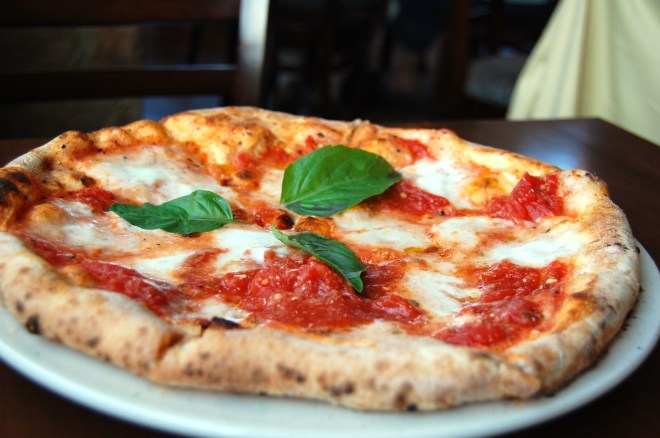
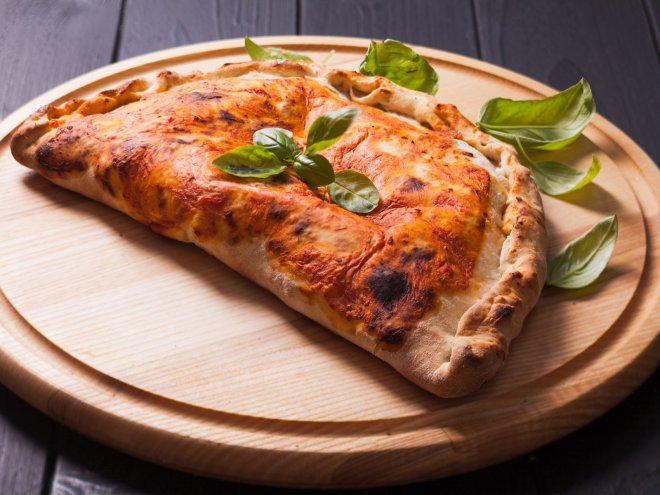





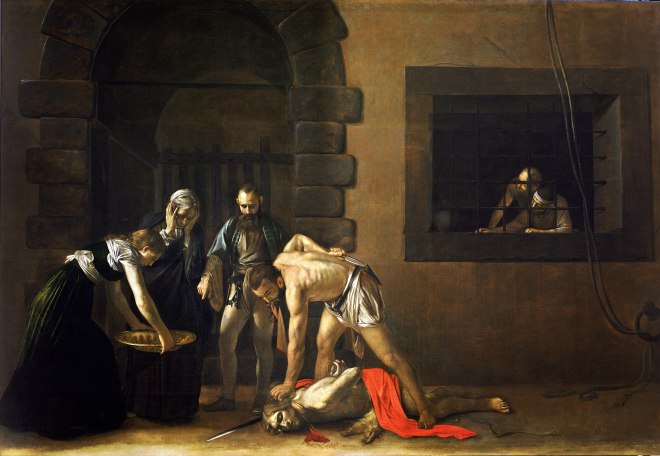


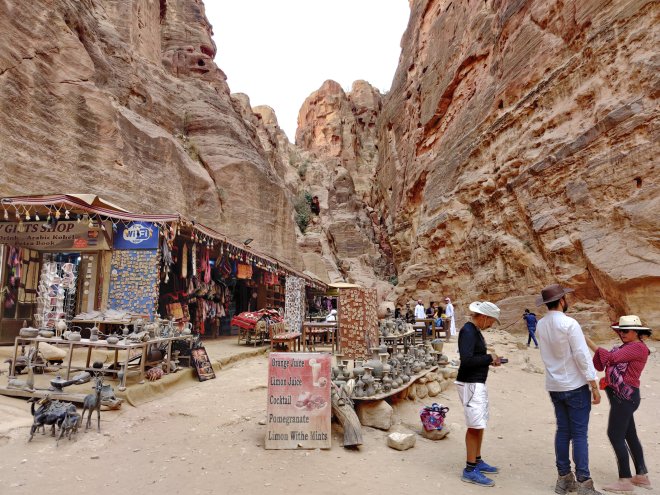

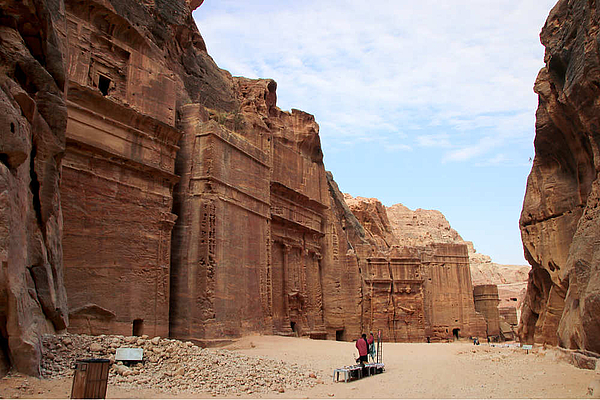


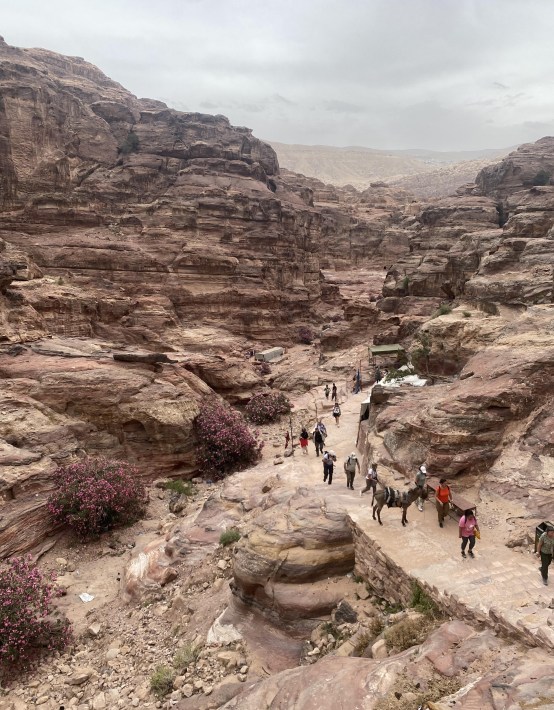


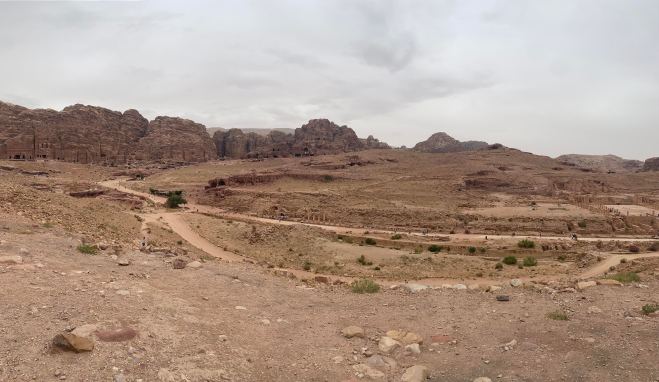






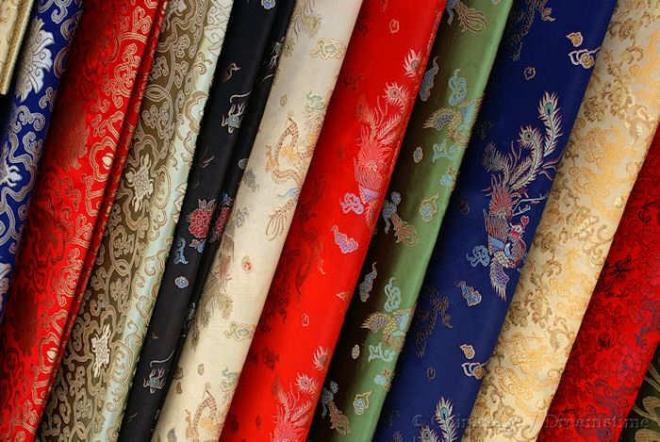








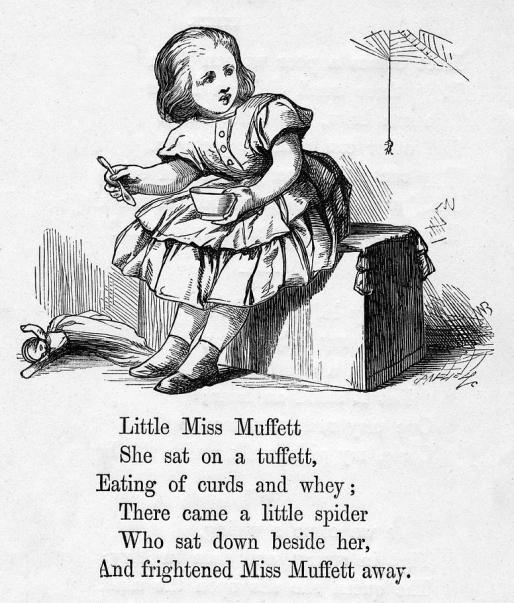

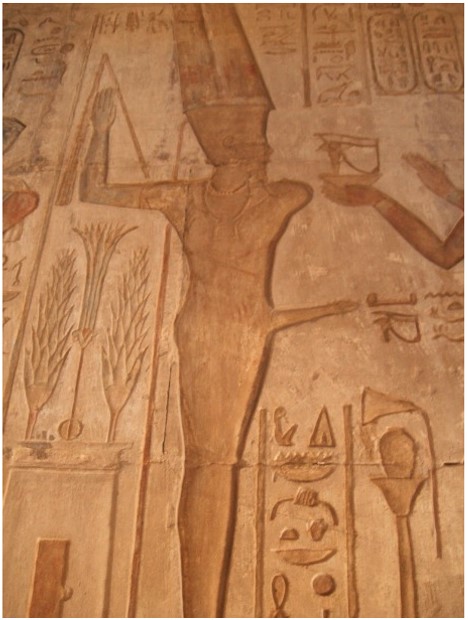




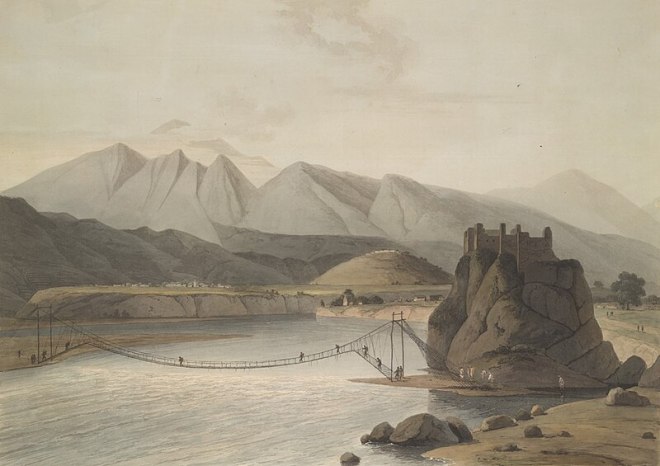


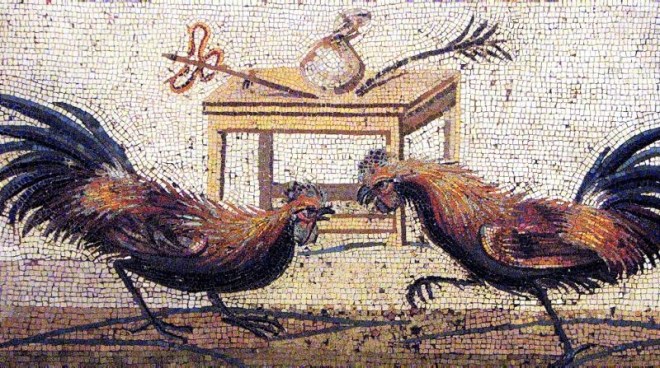



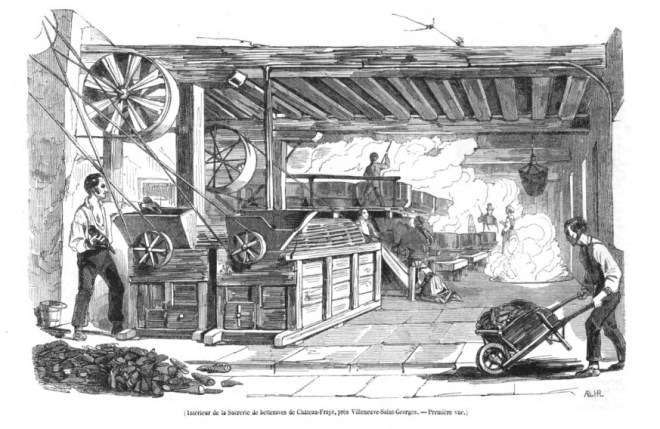

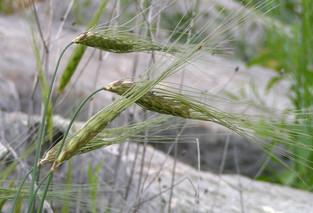


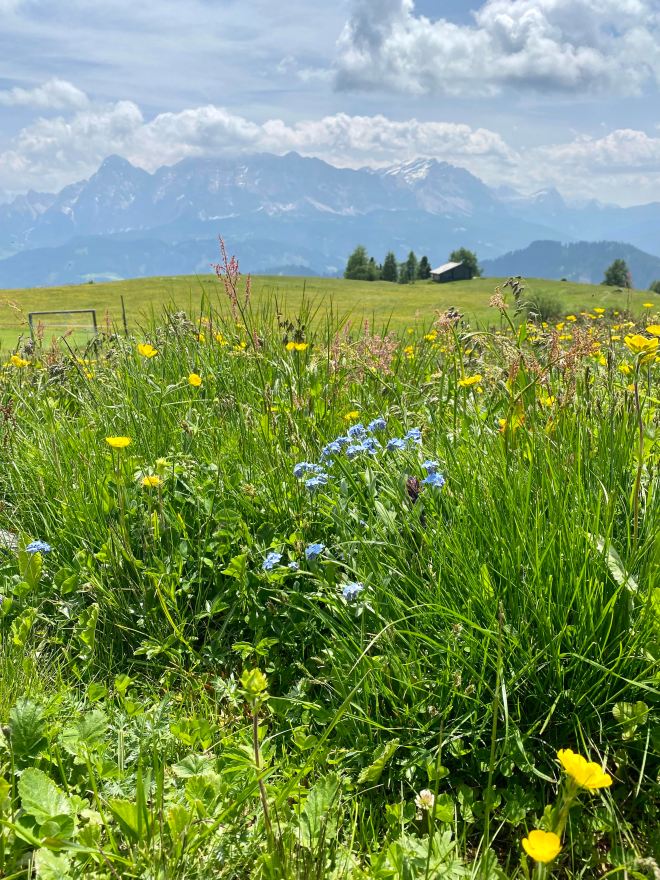

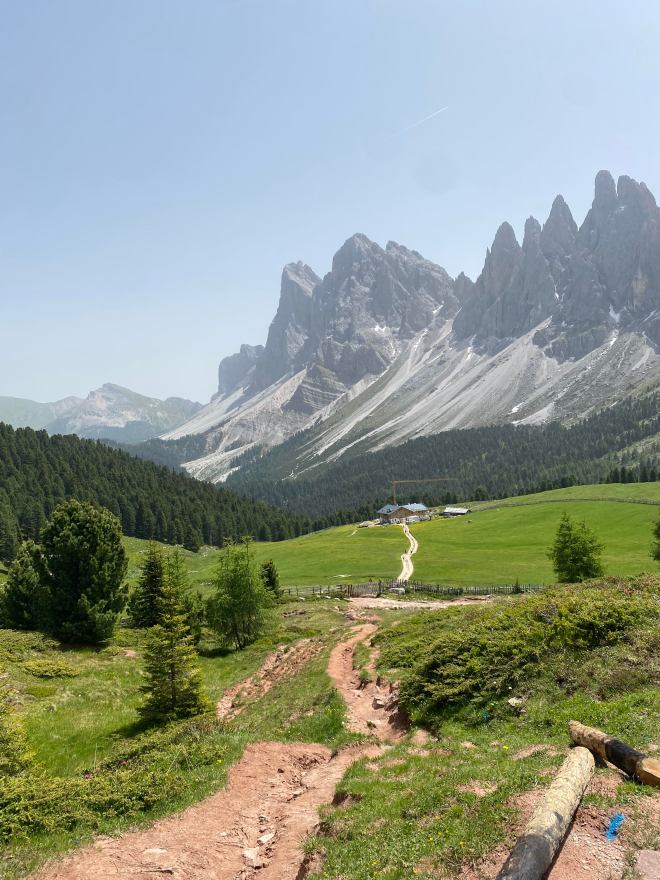


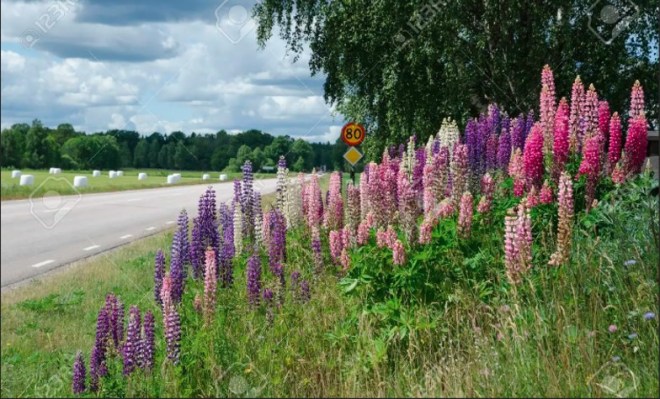

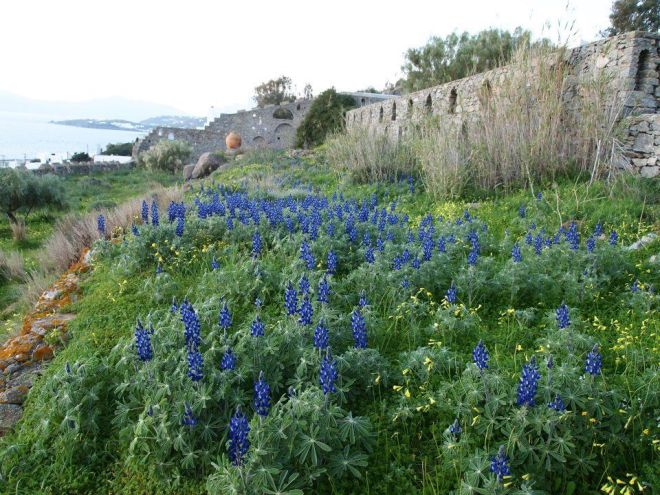


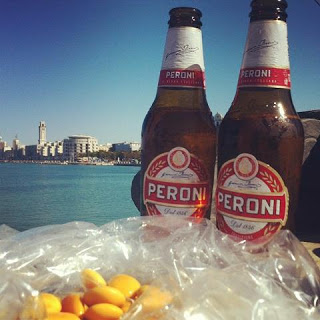



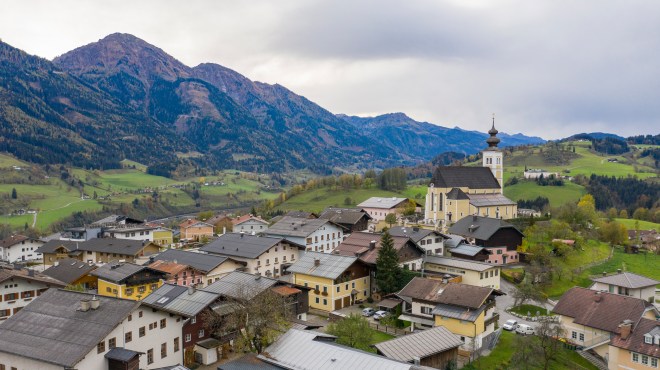


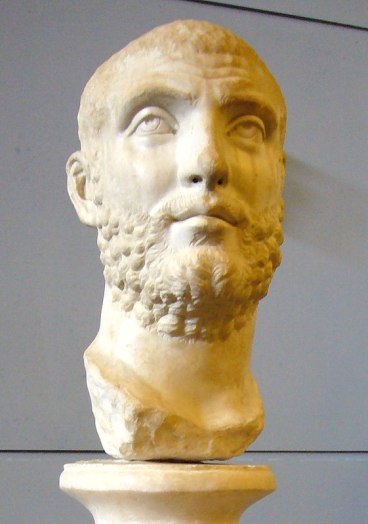

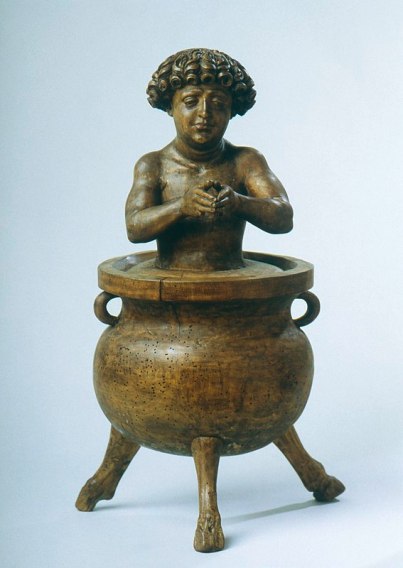


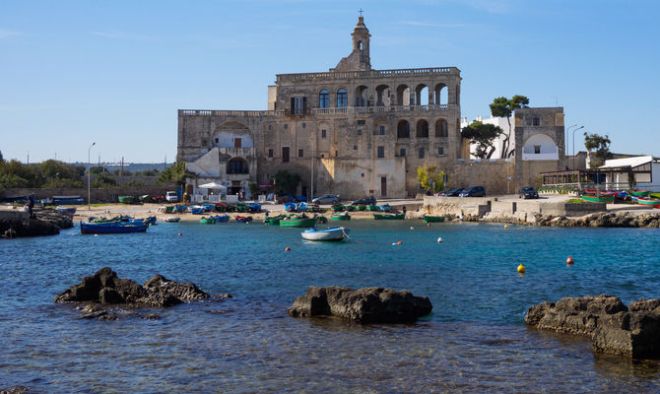
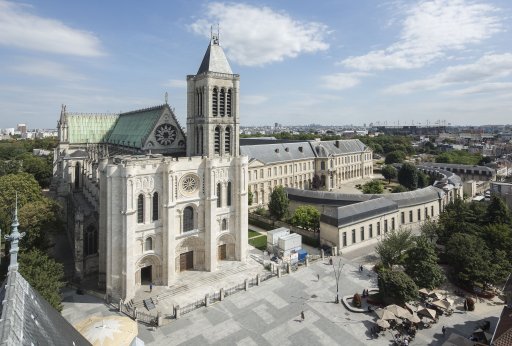



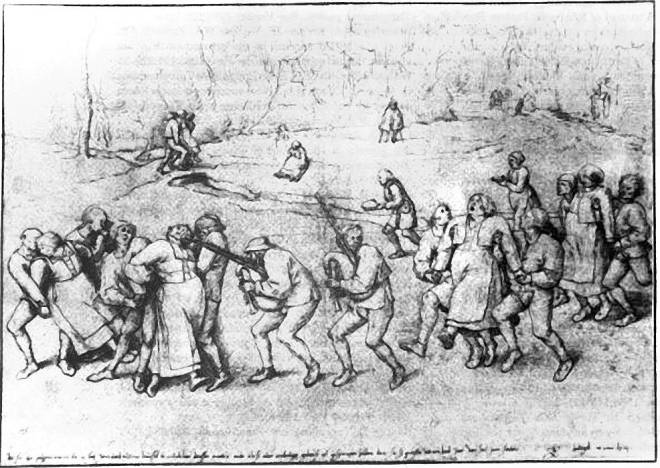


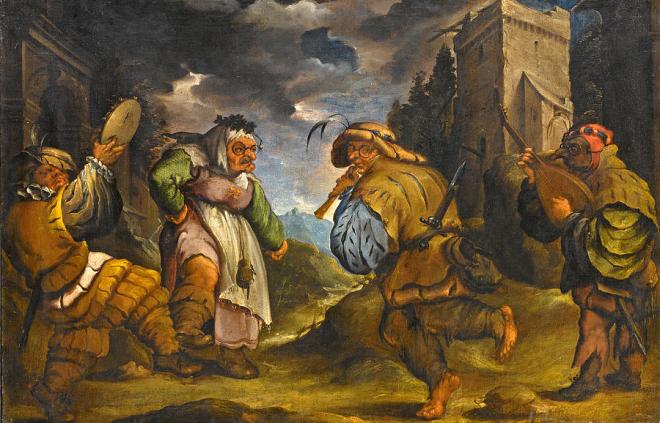

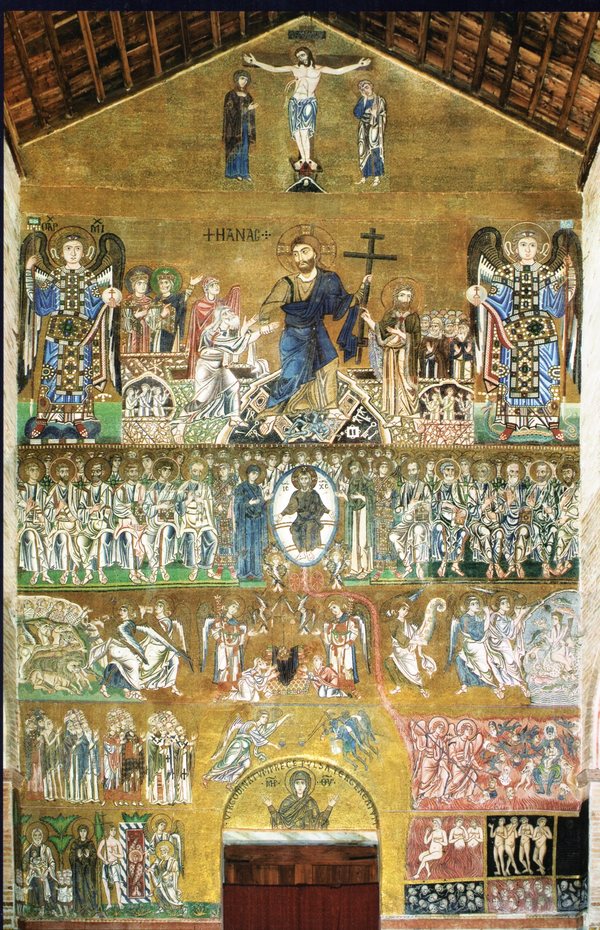
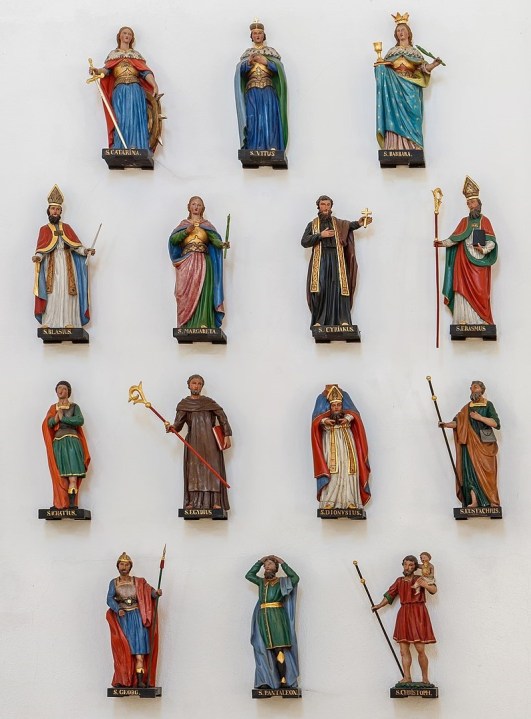
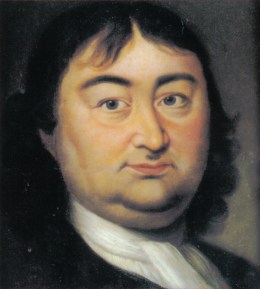


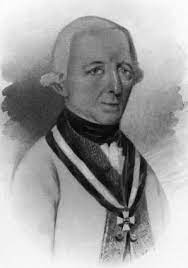


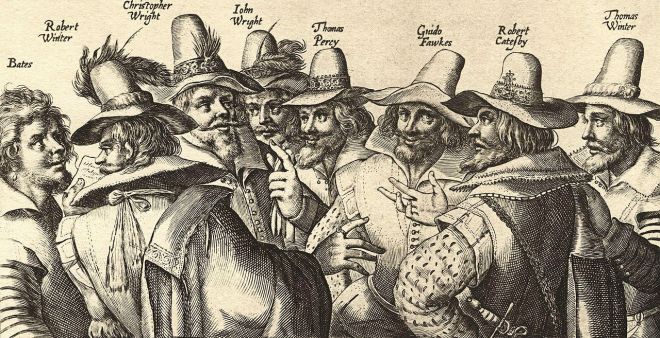

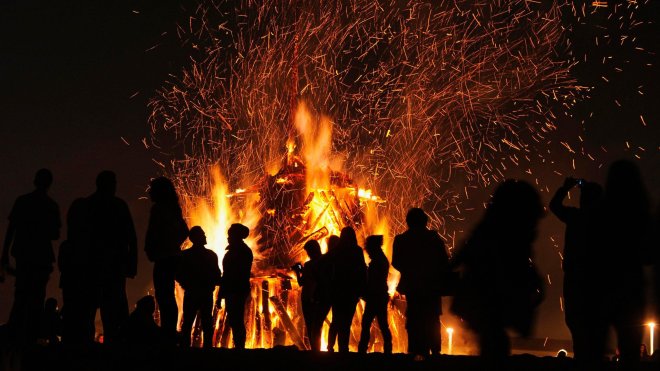


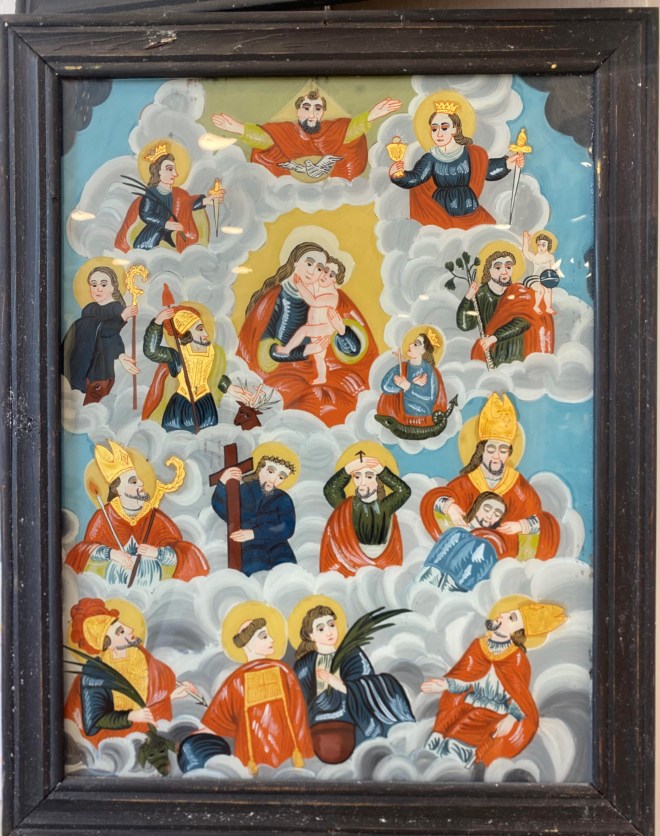


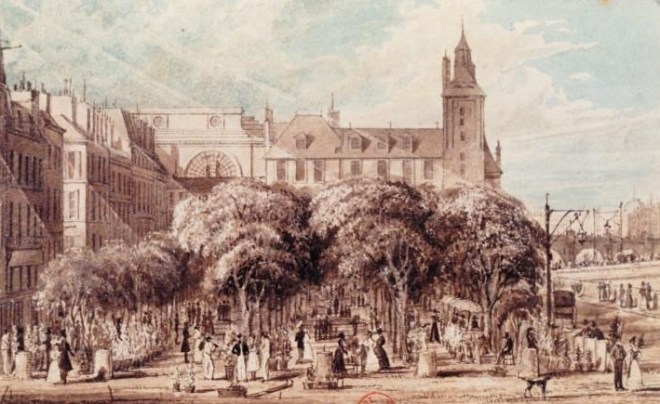

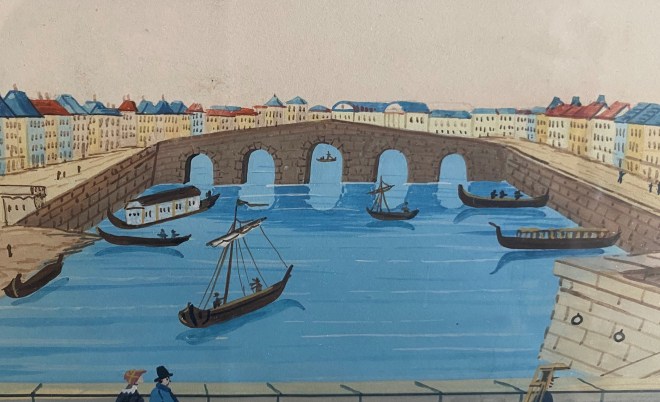

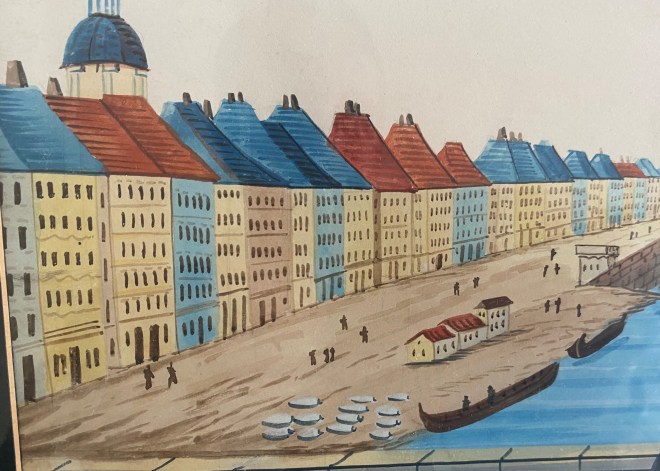
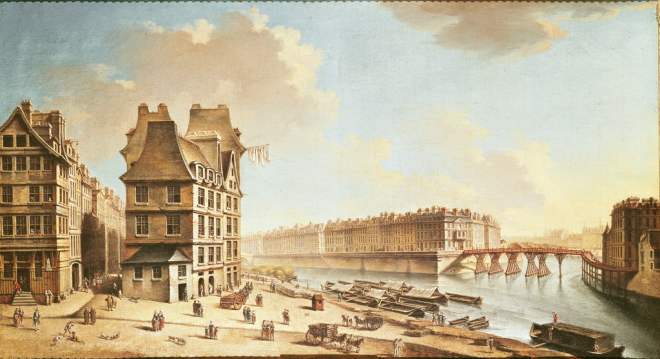
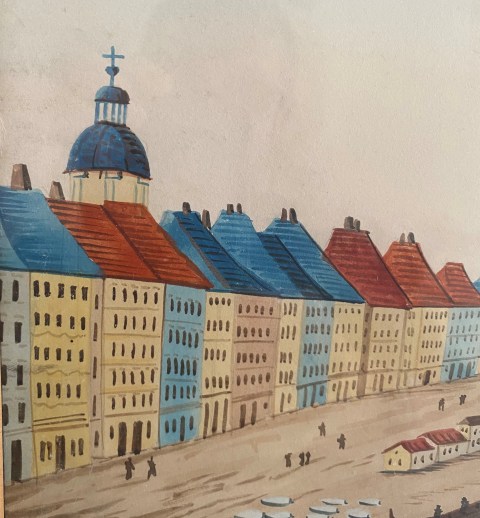


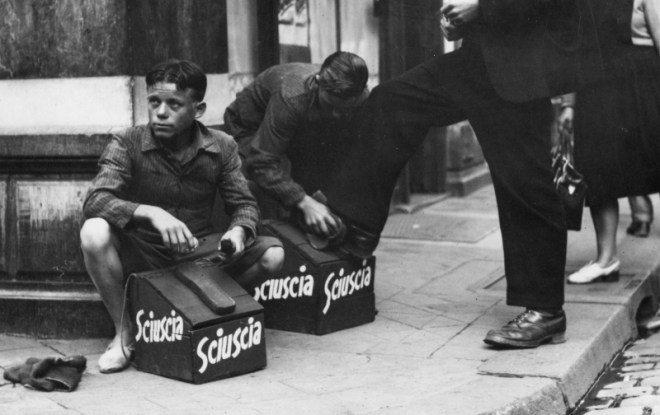
















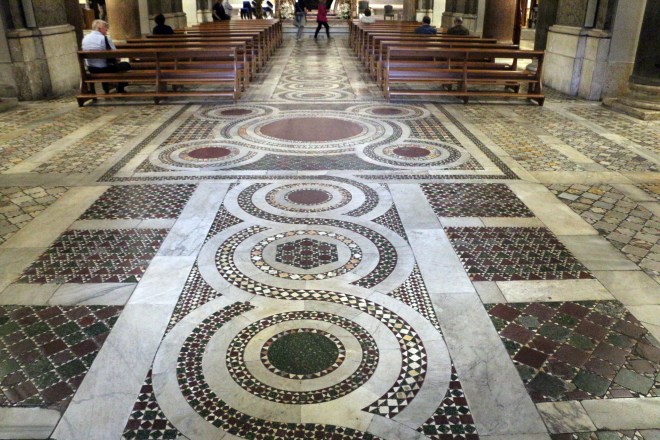


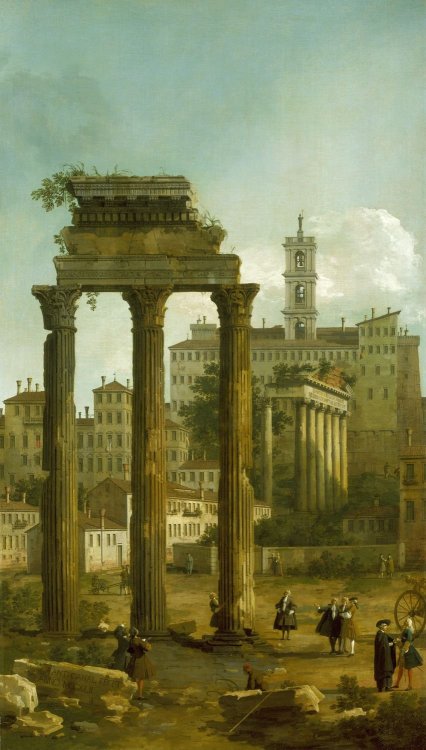



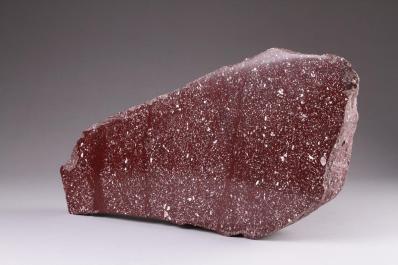
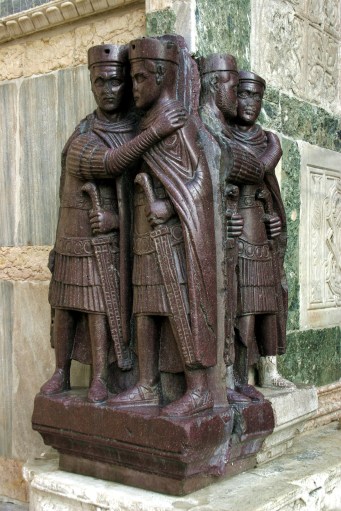


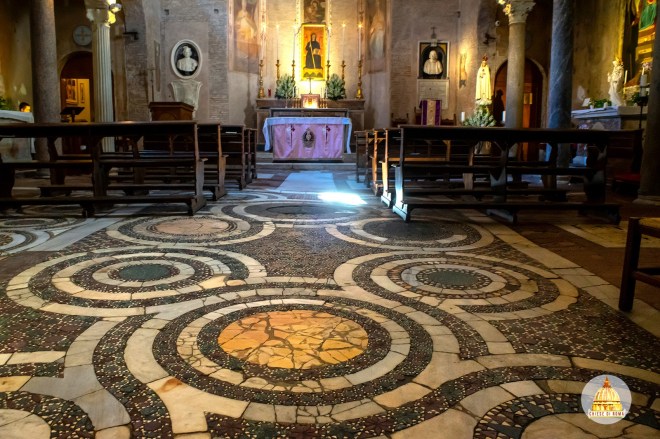


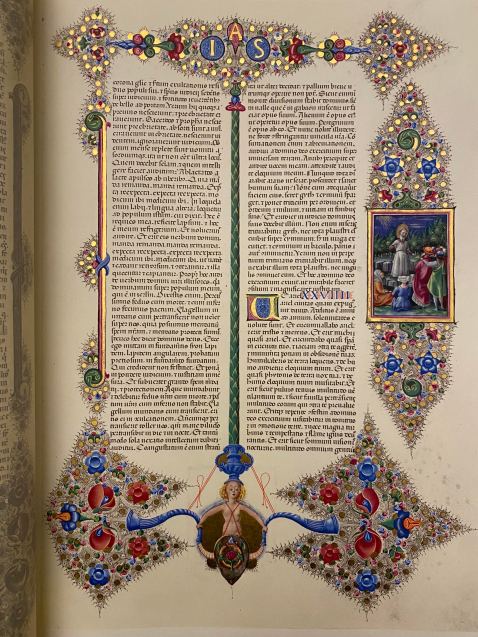

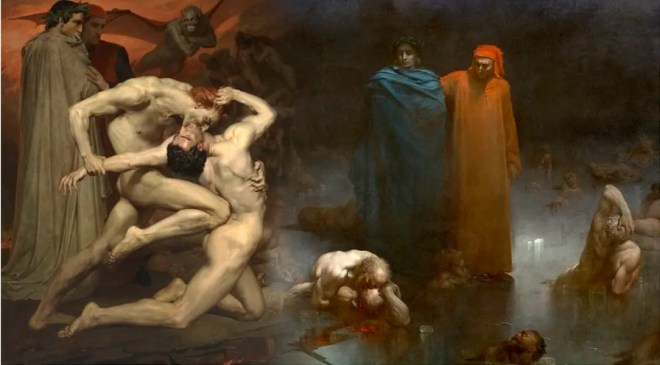



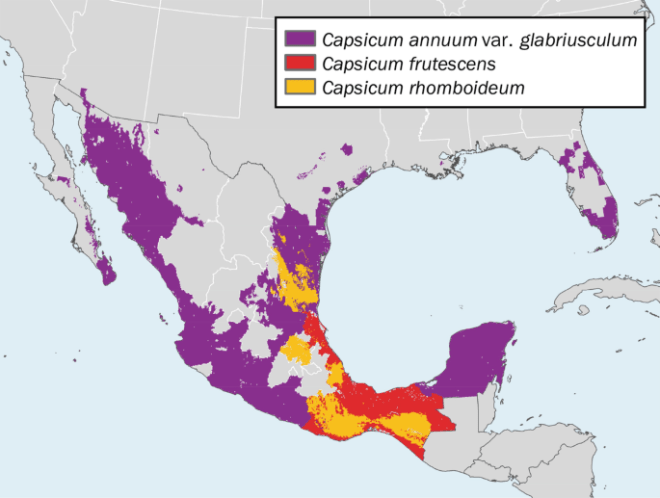




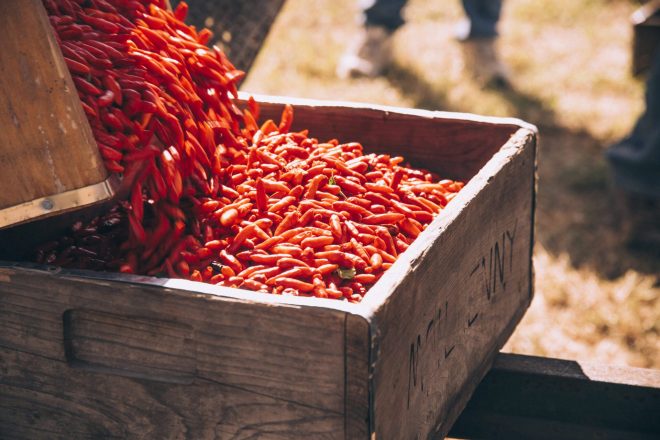




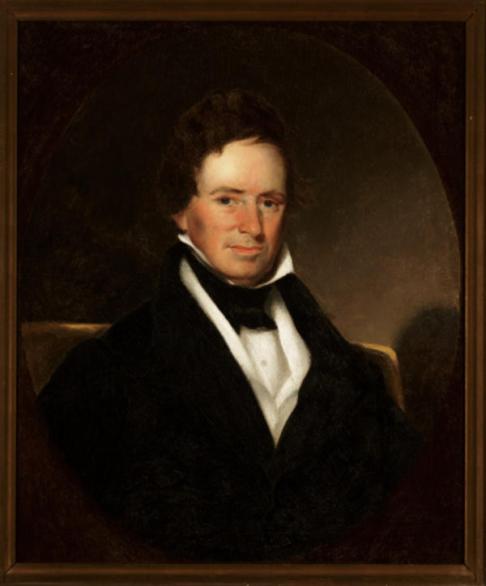
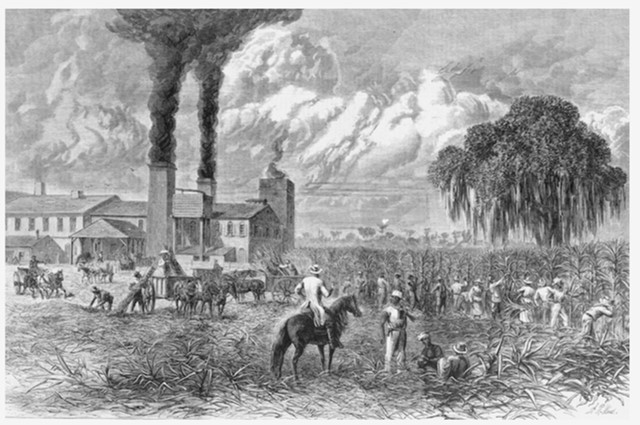


 the heart thrills