IT SHOULD FIT OVER MY SOFA

New York, 28 December 2015

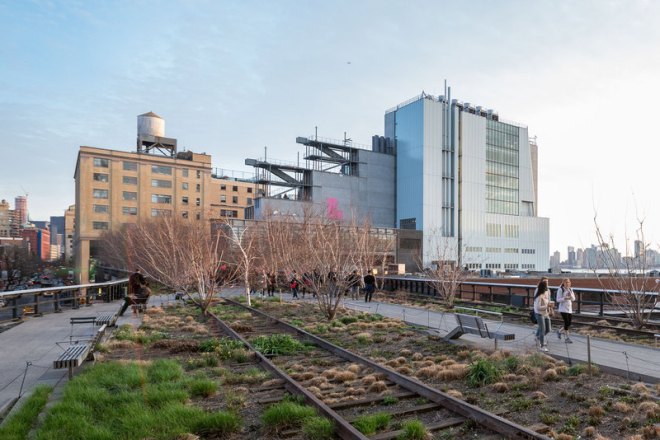
I’ve described in a previous post the beautiful, and really very unique, High Line Park in New York. On our first visit to the park, we heard that the Whitney museum was planning to relocate from uptown to new premises bang on the High Line. Now, two years later, the plans have come to fruition, and since we are once again in town to celebrate Christmas and New Year with the children we decided to go and visit.

The building itself was designed by the architect Renzo Piano, he of the Centre Pompidou in Paris (along with fellow architect Richard Rogers)
image
and, less felicitously, of the Shard in London
image
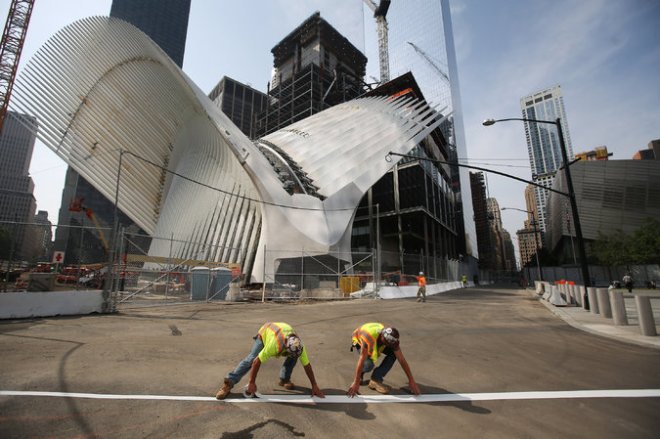
along with a string of projects in between. The new Whitney is not as spectacular as these two, giving the impression of being more of a workmanlike project – how to give the museum lots of exhibition space – and blending in quite well with its surroundings.
image
image
One also gets beautiful views across the Hudson River from its windows.
image
Perhaps it’s just as well. I mean, the main purpose of going to a museum is not so much to see the container as to see what is contained (I grant, though, that a handsome packaging can add lustre to what’s in the package). So let me focus on the contents.

Actually, I don’t really want to focus on the contents as such, but rather use them to meditate on something which gets under my skin when it comes to really modern art – let’s say, stuff produced in the last sixty years i.e., during my lifetime.

I happen to think that the primary purpose of any piece of art should be to adorn one’s abode in a way that gladdens the heart and puts a spring in one’s step. The key, though, is that the piece of art should fit through the door of one’s abode and, once in, should fit on a wall of that abode (or, if a sculpture, on a small table or shelf). The core of the Whitney’s collection, from the ’30s and ’40s, would do this admirably. For instance, there was a lovely Hopper on view which would could be passed through the door of our apartment quite easily and would fit quite nicely on one of its walls.
image
It’s one of several delectable Hoppers in the collection. Or I wouldn’t mind at all putting this painting by Charles Demuth on our wall.
image
Getting it into the apartment would be a breeze – I think it could probably even fit it into the small elevator we have in our building, thus avoiding us having to carry it up three flights of stairs.

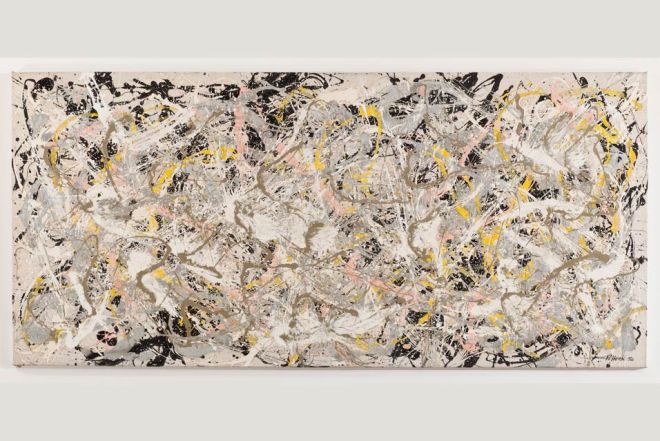
But as we get into the late ’50s, early ’60s, the pieces begin to grow. We would just about be able to manhandle this Pollock which the Whitney has through our apartment door, but I think we would have difficulty finding a place for it on the wall.
image
And this painting by his wife Lee Krasner would be impossible to hang in our apartment, it’s just too damned big let alone of a size to get through the door.
image
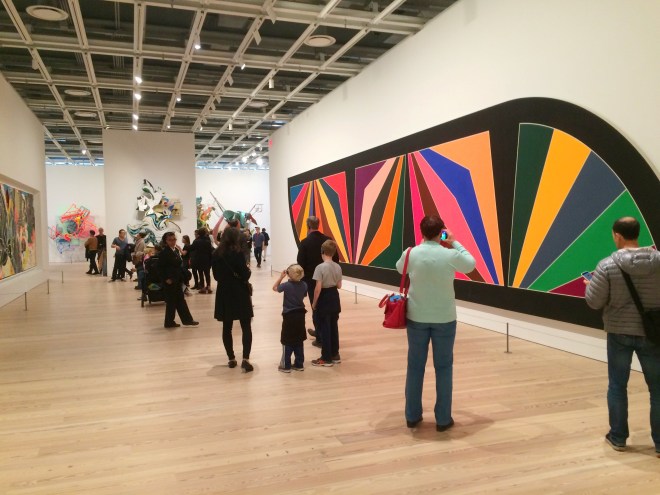
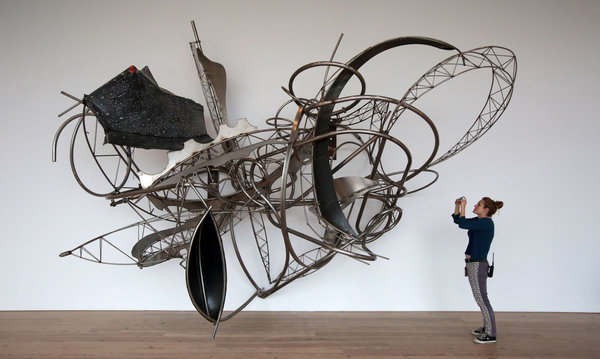
The pieces in the Frank Stella show which the Whitney is currently organizing were even worse. They were huge lumbering monsters, which would not even fit through the front doors of our apartment building, leave alone through the door of our apartment.
image

And even if by some miracle we got them into the apartment, many of his pieces jut out, making it hard to have any furniture around them.
image
Of course, given the stellar prices for modern art, only plutocrats can afford to buy these pieces. But do even they live in such palatial abodes as to make it possible for such a piece to fit snugly in the living room, say? I find it hard to believe.

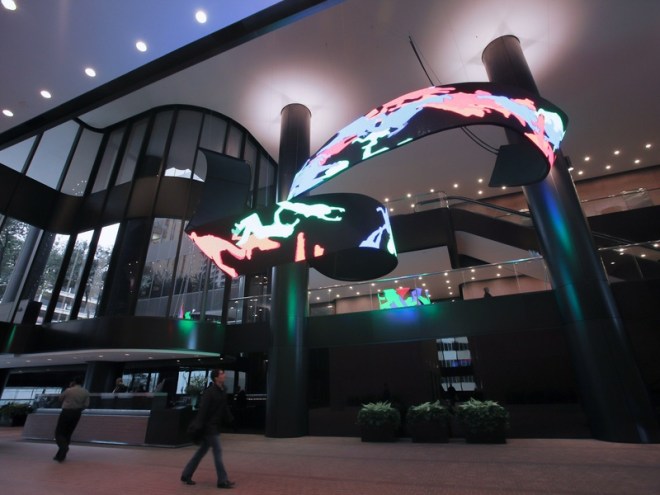
I can only assume that much modern art is either made for large and powerful multinational corporations, whose huge atriums or corporate boardrooms in their Headquarters have enough space for such pieces
image

image

or it is made for museums such as the Whitney which have large exhibition spaces. Either way, art for the people it is not. And that’s a pity, because at the end of the day art should be for us, something which we can hang on our wall and admire for decades or even centuries before perhaps donating it to a museum.

I think it’s time for a new art movement, the FOTS (“Fits Over The Sofa”) movement.

image

_____________________
Centre Pompidou: http://www.leparis.pl/centre-georges-pompidou-muzeum-sztuki-wspolczesnej/
The Shard: https://en.m.wikipedia.org/wiki/Renzo_Piano
The Whitney (both views): http://whitney.org/About/NewBuilding
View across the Hudson: http://elizabethbarton.blogspot.com
Edward Hopper “Early Sunday Morning”: http://collection.whitney.org/artist/621/EdwardHopper
Charles Demuth “My Egypt”: http://collection.whitney.org/object/635
Jackson Pollock “Number 27, 1950”: http://www.allartnews.com/pollock-and-the-irascibles-the-new-york-school-opens-at-palazzo-reale-in-milan/
Lee Krasner “The Seasons”: http://www.brooklynstreetart.com/theblog/2015/04/30/the-new-whitney-opens-may-1-america-is-hard-to-see/#.VoE8i3o8KrU
Frank Stella: http://www.nytimes.com/2015/10/30/arts/design/tracking-frank-stellas-restless-migrations-from-painting-and-beyond.html?_r=0
Frank Stella: http://www.hedgefundintelligence.com/Article/3503103/Steve-Cohen-sponsors-Frank-Stella-exhibition-at-the-Whitney-Museum.html
Headquarter atrium art: http://houston.culturemap.com/news/entertainment/03-02-13-image-bending-spanish-artist-transforms-downtown-houston-office-atrium-with-iwavesi/slideshow/
Corporate boardroom art: http://www.artworks-solutions.com/news/view/corporate-art-works
Space over sofa: http://www.utrdecorating.com/blog/hanging-pictures-sofa/

CHOFAHS

Bangkok, 13 December 2015

I’m not a great fan of Thai religious art. Much of it seems to be made up of endlessly repeated and very dense geometricized forms, like on this temple door

Vine Pattern Door

or on this one, where the temple guardians or whatever they are have been surrounded by dense geometricized foliage

temple door-2

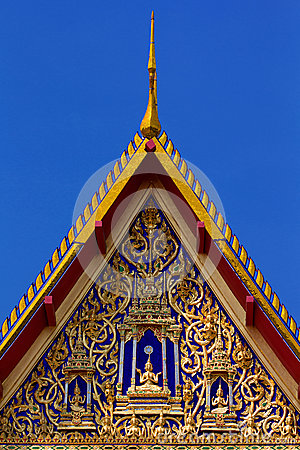
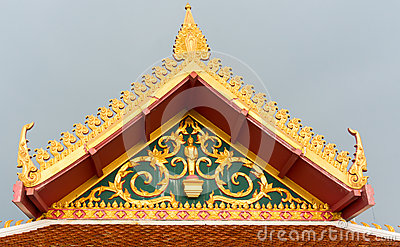
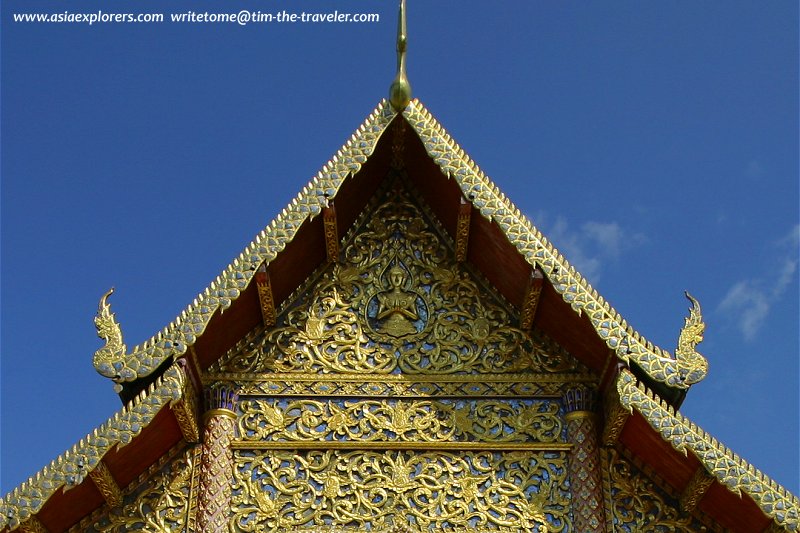
or here on a temple’s roof gable, where it is now a representation of the Buddha that is surrounded by endless curlicues

gable

and which often in Bangkok are terrifically bling, being made with reflecting coloured mosaic tesserae (I understand that only temples with royal connections can use these reflecting tesserae).

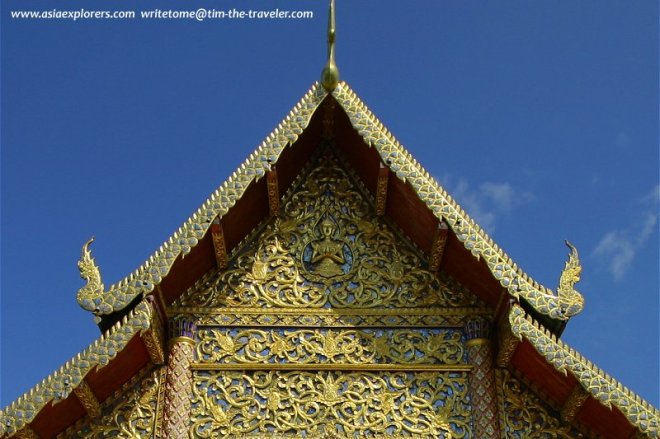
Or on the so-called bargeboards which run along the gables

bargeboards

the designs often representing, as is clearly the case here, a naga snake; the naga snake design is less obvious in this next photo.

bargeboards-2

The interiors of the temples are not much better, with the walls normally being densely carpeted either with an endlessly repeating series of Bodhisattvas or some such, or with very dense scenes of the life of the Buddha or some similarly holy personage.

temple interior-1

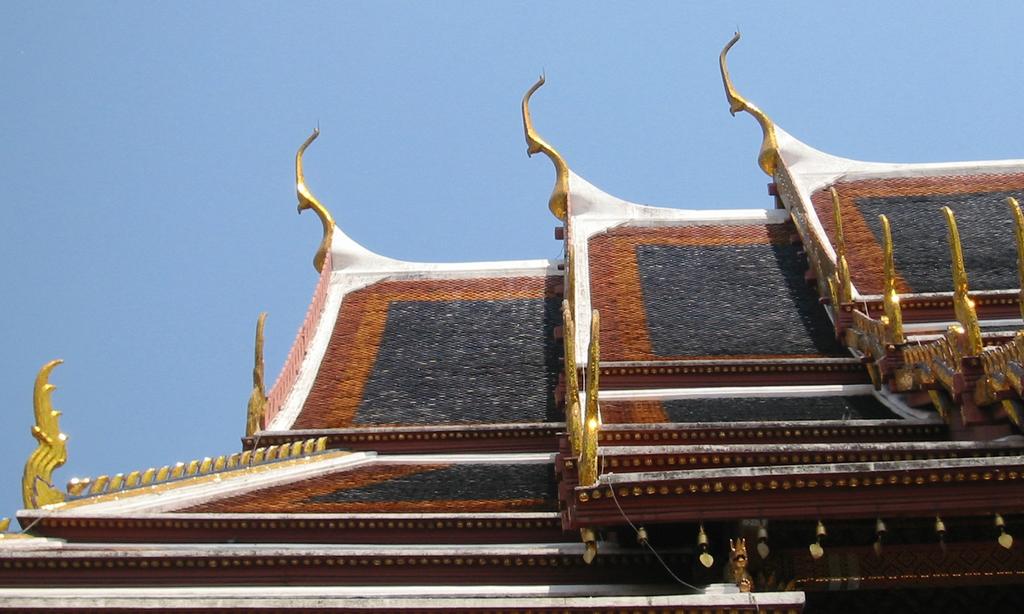
As I’ve mentioned in at least one previous posting, I’m not a great fan of busy artwork, so I generally feel uncomfortable in Thai temples. The one exception is my feelings for the chofah. Chofahs are the very distinctive finials added to the end of temple roofs, and which are quite striking, especially from a distance. Here are two views of Wat Phra Kaew in Bangkok, showing that temple’s chofahs, this one from a certain distance

Wat Phra Kaew from a distance

and this one from closer up.

Wat Phra Kaew - chofahs

What exactly are they? What do they represent? Well, the literal meaning of chofah is “bunch of air” although someone has given it the more poetic translation of “sky tassel”. The name may be poetic but I don’t feel it helps much, since I don’t see any obvious connection between what I see before me and bunches of air or tassels, skywise or otherwise. More helpfully, they are generally considered to be representations of the Garuda, the half-bird, half-man which the Indian God Vishnu is said to fly on (and which is now the national emblem of Thailand), although there is a competing theory that actually they represent the hamsa, which is a goose, or a gander, or maybe even a swan, which in Hindu mythology is the mount of the God Brahma. Whichever it is, there is a definite resemblance to a bird. Looking at the last picture, I think it’s easy to see a head, a beak, a neck, and a breast of a bird (what’s a little less birdlike is the long tuft-like extension on the head; we’ll come back to that in a minute). Contrary to the baroque ornateness of everything else in Thai temples, we have here a simple ornament, where resemblance is implied with a few graceful strokes chiseled into wood.

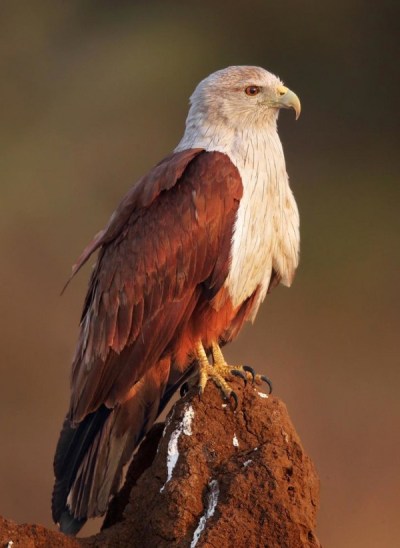
Just to make the bird connection a bit stronger, I throw in a picture here of a brahminy kite sitting on a stone.

Brahminy Kite

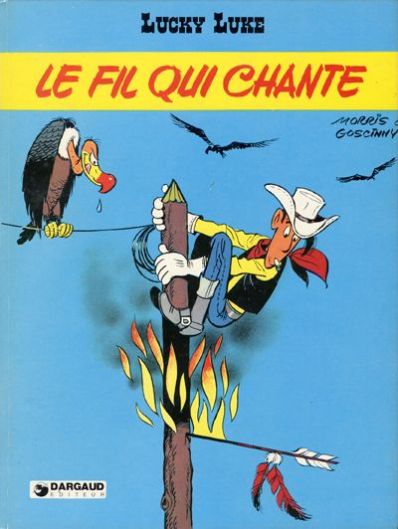
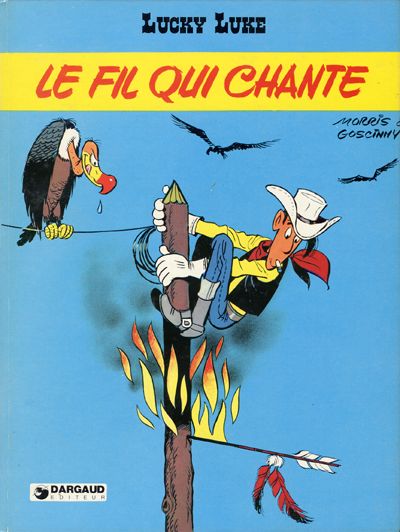
I choose this particular bird because it is currently considered the contemporary representation of the Garuda. More irreverently, I also throw in a picture of the cover page from one of Lucky Luke’s comic books, where the reader will note another raptor, the vulture.

Lucky Luke vulture

Vultures are always hovering around in Lucky Luke’s stories, waiting for their next meal in the form of a dead Lucky Luke or other dead meat; note the drop of saliva falling from the beak – it’s looking forward to that meal of dead meat …

If I introduce comic books, it’s because that tuft-like extension on the chofah stirs a vague memory in me of some comic-book bird with a long tuft on its head. Maybe I’m thinking of Woody Woodpecker.

woody woodpecker

But Thai temple builders definitely weren’t thinking of Woody or anyone else when they added that long tuft to their chofah design. They originally believed that the tuft would actually act as a skewer and protect the temple from flying demons by impaling them should they get too close.

So maybe the chofah is a sort of lightning conductor before its time.

____________

Temple door-1: http://static5.depositphotos.com/1031223/456/i/950/depositphotos_4560014-Golden-Buddhist-temple-door-at-Wat-Phoechai-Loa..jpg (in http://depositphotos.com/4560014/stock-photo-golden-buddhist-temple-door-at.html)
Temple door-2: http://previews.123rf.com/images/trahcus/trahcus1007/trahcus100700017/7330394-Thai-style-painted-door-Stock-Photo-door-golden-temple.jpg (in http://www.123rf.com/photo_7330394_thai-style-painted-door.html)
Roof gable: http://thumbs.dreamstime.com/x/wat-thai-temple-decorations-phra-kaew-bangkok-thailand-30782920.jpg (in http://www.dreamstime.com/stock-photo-decorations-wat-phra-kaew-details-temple-emerald-buddha-bangkok-thailand-image47184437)
Bargeboards-1: http://www.asiaexplorers.com/pics/gable-northern-thai-temple.jpg (in http://www.asiaexplorers.com/thailand/northern-thai-temple-architecture.htm)
Bargeboards-2: http://thumbs.dreamstime.com/x/buddhist-temple-roof-detail-thailand-46162088.jpg (in http://www.dreamstime.com/stock-images-buddhist-temple-thailand-phra-choeng-chum-ornate-thai-town-sakon-nakhon-image35533934)
Temple interior: my wife’s pic
Chofahs – Wat Phra Kaew from a distance: http://www.gigaplaces.com/place/144_max.jpg (in http://www.gigaplaces.com/en/gigaplace-wat-phra-kaew-144/)
Chofahs – Wat Phra Kaew: http://photos1.blogger.com/blogger/6018/1224/1600/Bangkok%20-%20Wat%20Phra%20Kaew%20301.jpg (in http://marcsala.blogspot.com/2005/09/temple-guardians-in-thailand.html)
Brahminy kite: http://voices.nationalgeographic.com/files/2013/05/Brahminy-Kite-Gururaj-Moorching-600×822.jpg (in http://voices.nationalgeographic.com/tag/macaw/feed/)
Vulture in Lucky Luke: http://1.bp.blogspot.com/-m2HaZEeDsfk/VYQHOyjtjAI/AAAAAAAASMo/NJ805YwsIWs/s1600/LuckyLuke46a.jpg (in http://mysterycomics-rdb.blogspot.com/2015/06/critique-648-lucky-luke-tomes-43-46-le.html)
Woody Woodpecker: http://vignette4.wikia.nocookie.net/woodywoodpecker/images/4/44/477098-villi.jpg/revision/latest?cb=20141107234707 (in http://woodywoodpecker.wikia.com/wiki/Woody_Woodpecker)

VIENNA, “WORTH THE TRIP”

Phnom Penh, 7 December 2015

My wife and I have just come back from a trip to Vienna. I had to be there for work, but luckily we also got to stay over a weekend. This allowed us to taste once more the artistic delights of the city. Wonderful, truly wonderful … Enough to give one heart palpitations.

We had first tasted the artistic glories of the city back in March of 1985 (I am certain of the date, because I was in Vienna to witness the signing of the Vienna Convention for the Protection of the Ozone Layer). That time too we had had a weekend to ourselves, which we used to first visit the Kunsthistorisches Museum, Austria’s national Museum of Fine Arts. I have to tell you, we were gobsmacked – that’s the only word – as we walked from room to room and saw one marvel after another hanging on the walls. It was one of those cases of “Really? They have this painting here? Wow …” I just can’t stop myself from showing you some of my favourites; there are many, many more, for all tastes.

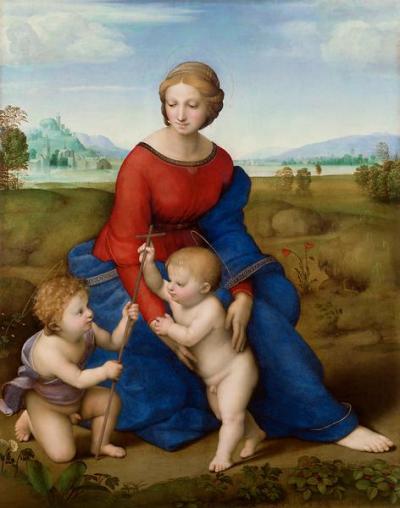
Here’s Raphael’s “Madonna del Prato”
image
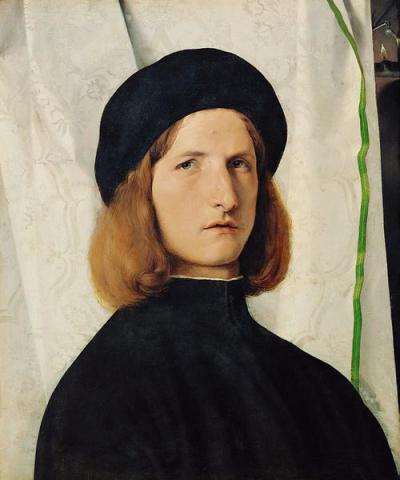
Lotto’s “Portrait of a Young Man with a Lamp”
image
Arcimboldo’s “Summer”
image
Canaletto’s “Vienna, seen from the Belvedere”
image
A whole slew of Titians, most of which are of disagreeably sucrose blondes, but which also include this powerful portrait of Johann Frederich, Elector of Saxony
image
Caravaggio’s “Madonna of the Rosary”
image
as well as one of his several versions of “David with the head of Goliath” (another of which I’ve mentioned in an earlier post)
image
A wondrous collection of Peter Bruegel the Elder, of which I throw in only his “Hunters in the Snow (Winter)”

image

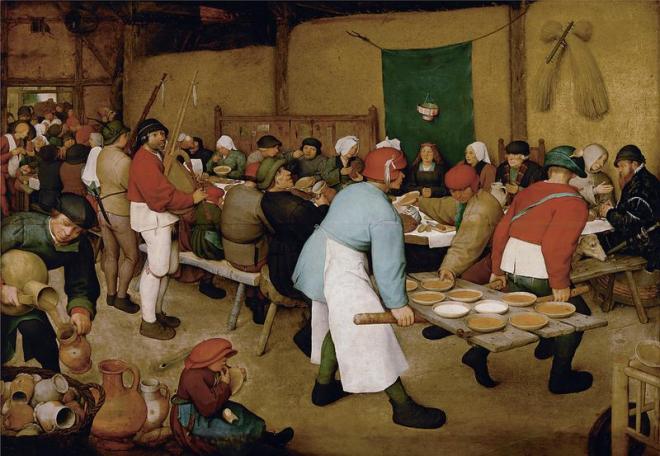
and his “Peasant Wedding”

image

A magisterial self-portrait by Rembrandt
image
Vermeer’s “The Art of Painting”
image
Cranach the Elder’s “Judith with the Head of Holophernes” (although I still prefer the same scene which I came across years ago in the Queen’s Gallery in London)
image
Dürer’s “Kaiser Maximilian I”
image
as well his “Portrait of a Venetian Lady”
image
I stop, otherwise I will bore my readers. But, without wanting to sound too much like an advert for Vienna, I would really urge any of them who are lovers of art but have somehow never made it to Vienna to hurry on over, if only to visit the Kunsthistorisches Museum. As the Michelin Guides would say, it alone “is worth the trip”.

But Vienna has much, much more. That same weekend back in 1985 we discovered Egon Schiele. We saw an exhibition of his paintings somewhere in the Grinzing area of Vienna, and I was just blown away. This particular painting of his, “The Embrace”, has remained imprinted in my memory ever since.
image
The most extensive collection in the world of Egon Schiele’s work is in the Leopold Museum, part of Vienna’s Museums Quartier, MQ. MQ opened when we were living in Vienna, some 20 years after our first visit. Along with the Leopold Museum, MQ houses MUMOK, the Museum Moderner Kunst Stiftung Ludwig Wien. Personally, I always preferred the Leopold Museum; MUMOK was a little too aggressively modern for my tastes. So I suppose it comes as no surprise to hear that after visiting the Kunsthistorisches Museum last week we visited the Leopold. The Egon Schieles are wonderful. This one painting of his, “Seated Male Nude”, can stand in for the whole collection.
image
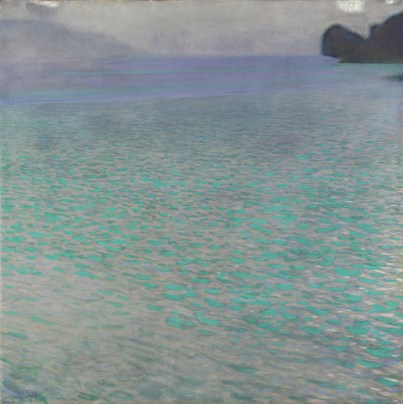
You cannot go to the Leopold just for the Schieles, wonderful as they are. You must visit the whole collection. This is where I discovered a host of Austrian artists from the late 1800s up to World War II: Gustav Klimt of course, but also Richard Gerstl, Koloman Moser, Oskar Kokoschka, Albin Egger-Lienz, Anton Kolig, and many others. The Leopold holds the painting of Gustav Klimt which I adopted as my gravatar for this blog. Those who are interested to see it can visit my Home Page. Here, I will insert another of his paintings in the museum’s collection, a beautiful painting of early morning on Lake Attersee
image
and I add to this, as a stand-in for all the others, a painting by Richard Gerstl, “Semi-Nude Self-Portrait” with its hypnotic eyes.
image
It’s not finished! Vienna also has the Belvedere Museum. We wanted to visit it too last week – they were holding an Exhibition on “The Women of Klimt, Schiele and Kokoschka”, which included Schiele’s “Embrace” – but we ran out of time. The Belvedere has a collection which stretches all the way from the Middle Ages to the present day. It competes strongly with the Ludwig Museum, having an excellent collection of paintings from the late 19th Century to the Second World War (the Klimts and Schieles are not to be missed), but it also has interesting paintings from the Baroque to the Biedermeier period. I will not show any of these, however. Instead, I will throw in a picture of a piece from its Medieval collection, a statue of St. Leonhard, from South Tyrol.
image
I chose this picture because the Belvedere has some beautiful pieces of that most Germanic of art forms, religious sculpture made of wood, originally painted in bright polychrome. The picture also gives me an excuse to cycle back to the Kunsthistorisches Museum. Because that museum is more, much more, than a gallery of paintings! There’s the collection of arms and armour, which one has to visit simply to gawp at the brilliant metalworking skills of past armourers. There’s the collection of historical musical instruments, which my mother-in-law, a lover of music, frothed at the mouth about. And then there’s the collection of sculpture and decorative arts, a disparate collection of artifacts, ranging from the seriously bling to the exquisite. Probably the most well-known piece in this collection is Benvenuto Cellini’s salt cellar, currently famous because it was recently stolen dramatically, only to dramatically reappear, unharmed, a few years later.
image
I prefer, though, this “Vanitas”, made, like St. Leonhard above, of wood and beautifully polychromed.
image
It reminds us that while we may be beautiful now, and well-toned, one day we will be old and sag in all directions (in my case, I’m already at that point, so I suppose the piece reminds me regretfully of what I once was).

I like these two ivory pieces even more. The first shows Gregory the Great feverishly scribbling away (he was a very prolific writer, this Pope), with scribes below him feverishly joining in.
image
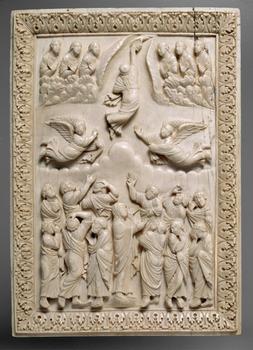
The second shows the Ascension of Jesus, with the disciples weeping bitterly below. But rather than having Jesus levitate, which is the way this scene is normally depicted, Jesus is being swept up by God (note His hand), rather like a gymnast being elegantly swept up by a trapeze artist.
image
If readers were to think that it finishes there, they would be wrong! The Kunsthistorisches also runs the Imperial Treasury, another smorgasbord of golden baubles smothered in precious stones. Because of my fondness of cabochon stones, I only show here the Crown of the Holy Roman Emperor, of the 10th-11th Centuries
image
and St. Stephan’s  Purse, actually a reliquary, from the 9th Century.
image
Along with various other items, these were taken in the early 1800s from Aachen, Charlemagne’s original Imperial capital, to keep them from falling into the hands of the revolutionary French, and somehow they never made it back.

I suspect that my readers’ attention might be beginning to drift, so I quickly throw in two other wonders to be found in Vienna. One, located in the Museum für Völkerkunde or the Museum of Ethnology, is the so-called headdress of Montezuma, an exquisite piece from Mexico made of the feathers of quetzals and other birds mounted in a base of gold studded with precious stones.
image
As we once heard from Austria’s Ambassador to Mexico (whose apartment we were renting at the time), the piece is a source of continuing friction between the two countries, Mexico claiming that it was somehow stolen and Austria claiming that it was legitimately purchased (by the Archduke Ferdinand of Austria in at least 1575 and maybe before, i.e., no more than 90 years after Columbus discovered America – how did our good Archduke lay his hands on it?).

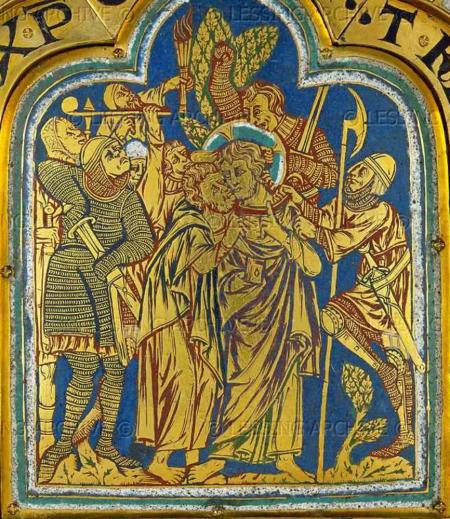
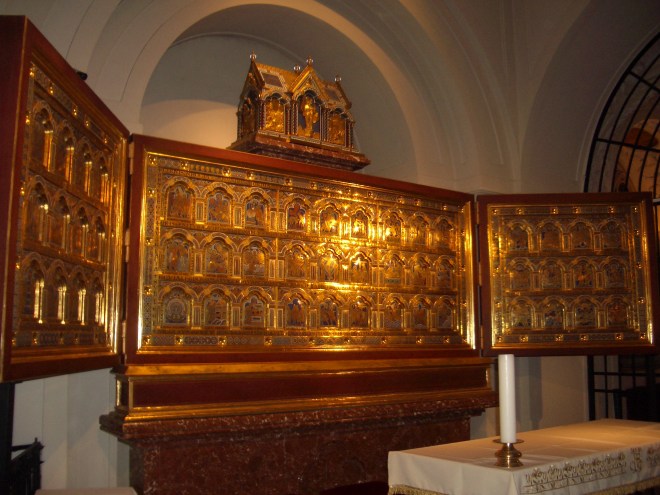
The second piece is actually to be found a little outside Vienna, in the imperial abbey of Klosteneuburg. It is the 12th Century Verdun altar, so called because it was made by Nicholas of Verdun, one of the most famous goldsmiths and enamelists of the Middle Ages.

image

The altar consists of 45 beautifully enameled panels, telling the biblical story. This one, for instance, relates the kiss of Judas (a theme I have mentioned in a previous post, in this case in a painting by Caravaggio).
image
If any of my readers have finished visiting the altar and still feel ready for more, they can always consider visiting the Samlung Essl, a museum of (very) modern art in Klosteneuburg, which, like the MQ, opened while we were living in Vienna. On the other hand, if like me they find this museum’s art too aggressively modern, or if they are simply too tired, they can just head back into town and with a bit of luck they will sight a most interesting piece of art, the municipal incinerator of Spittelau, decorated by the Austrian artist Hundertwasser.
image
I’ve seen many municipal incinerators in my time, and I must say this is definitely one of the prettiest; it certainly helped to gain its acceptance by the local population.

There’s more, much more art to visit in Vienna, but I’ll leave it at that. Like I’ve already said, I don’t want to sound like an advert for Vienna, but really it’s a wonderful destination for lovers of art.

And don’t get me started on the music …

____________
Paintings in the Kunsthistorisches Museum: http://www.khm.at/en/visit/collections/picture-gallery/selected-masterpieces/
Egon Schiele “The Embrace”: http://www.wikiart.org/en/egon-schiele/the-embrace-1917
Egon Schiele “Seated Male Nude”: http://www.leopoldmuseum.org/en/leopoldcollection/masterpieces/35
Gustav Klimt, “Attersee”: http://www.leopoldmuseum.org/en/leopoldcollection/focus/Klimt
Richard Gerstl “Semi-Nude Self-Portrait”: https://commons.m.wikimedia.org/wiki/File:Richard_Gerstl_-_Semi-Nude_Self-Portrait_-_Google_Art_Project.jpg
St. Leonhard, Belvedere: https://www.belvedere.at/en/sammlungen/belvedere
KHM, Collection of Sculpture and Decorative Arts: http://bilddatenbank.khm.at/
Imperial Treasury: http://www.kaiserliche-schatzkammer.at/en/visit/collections/secular-treasury/selected-masterpieces/
Moctezuma’s crown: https://en.m.wikipedia.org/wiki/Montezuma%27s_headdress#/media/File%3AFeather_headdress_Moctezuma_II.JPG (in https://en.m.wikipedia.org/wiki/Montezuma%27s_headdress#)
Verdun altar: https://en.m.wikipedia.org/wiki/Klosterneuburg_Monastery
Verdun altar – detail: http://armourinart.com/248/397/
Spittelau Incinerator: http://www.epd.gov.hk/epd/english/environmentinhk/waste/prob_solutions/WFdev_overseas.html

TROMPE L’OEIL AND STINGINESS

Bangkok, 27 July 2015

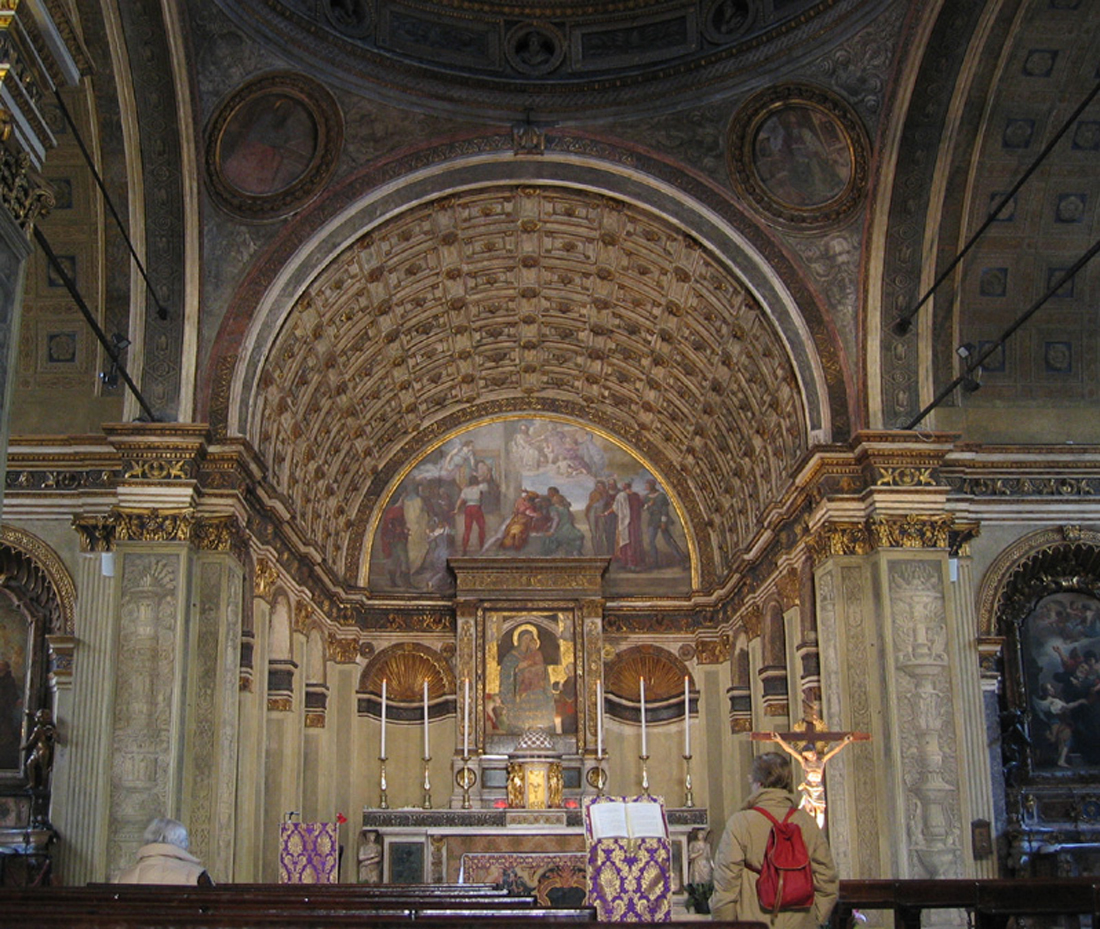
Trompe l’oeil is a very respectable art form, with a long and distinguished presence in the world of art, at least in Western art. I am told that the Greeks and Romans practiced it, although I do not recall ever having seen an example. In any event, artists took it up again with a vengeance during the Renaissance, and art thereafter is littered with pieces which “fool the eye”, tricking the viewer to see three-dimensional depth where there is none. We have a beautiful example just up the road from our apartment in Milan, in the church of Santa Maria presso San Satiro. My not-yet wife took me there on my first trip to Milan in 1975 and my eyes were indeed fooled.
image
What I had taken to be a deep apse behind the altar is actually an almost flat wall. The clever artist in question was Bramante, who painted it in the 1480s. In this case, he didn’t do it just to show how good he was, it was to give a feeling of greater depth to a church which was squeezed in between the adjoining buildings.

I could go on giving other examples from High Art, but actually I want to focus on a lower form of the art found in the province of Liguria. We’ve just come back from spending a week by the sea, near Genova, the province’s capital (and from where I managed to launch several of the previous posts).

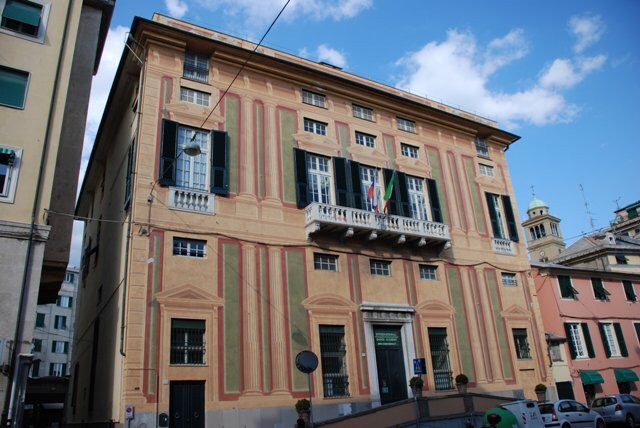
One of my recurring pleasures as I walk the streets of any conurbation in Liguria, from Genova down to the smallest village, is to come across houses like these.
image
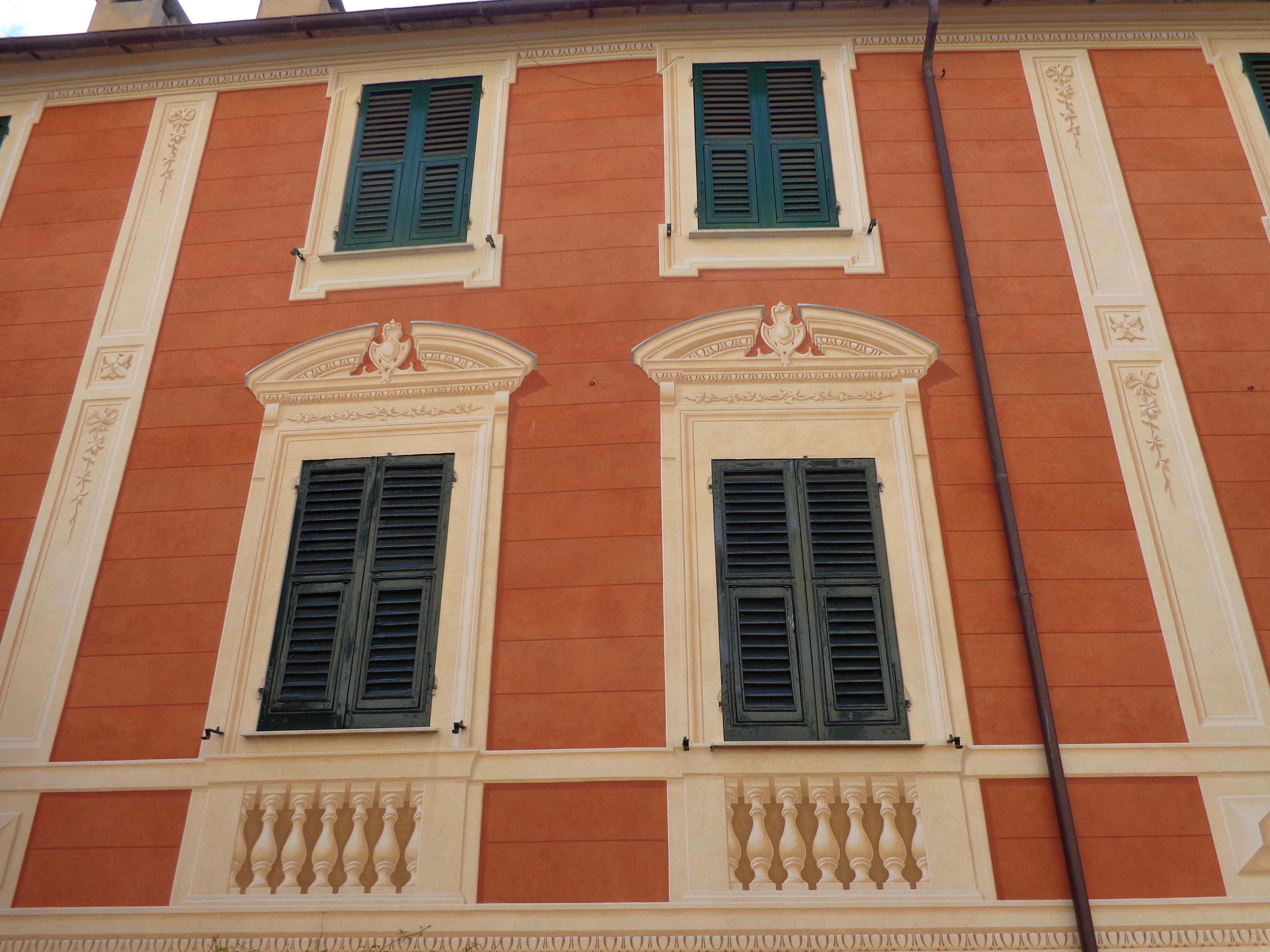
This form of trompe l’oeil is only found in Liguria, to the extent that the practice is almost a D.O.C.. In these cases, the painter (I hesitate to call him artist) embellishes what is otherwise the drab and flat facade of a house (you see an example to the right in the photo) with architectural elements which are painted so cleverly as to fool the eye into thinking that they are three-dimensional and “real”. The result is to make an ordinary house look more imposing, which in the old days no doubt (and perhaps even today) raised the residing family’s social standing a notch or two. It is even a way of making up for unfortunate blemishes in a facade, like the absence of a window which mars the symmetry of a house.
image
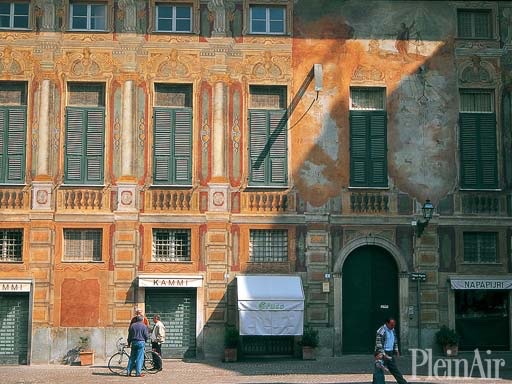
What is nice is to see is examples which run from the fresh and new to various states of weathering and finally decrepitude brought about by sun, rain, and more recently pollution.
image
image
image

image

Of course, one has to ask oneself why this art form is so popular in Liguria and nowhere else. My theory, for what it’s worth, is that it is a reflection of the well-known stinginess of the Genoese (and more generally Ligurians). In Italy, the Genoese have the same reputation as the Scots in England for being tight fisted, and there are loads of jokes about it, as indeed there are in the case of the Scots (“There was an Englishman, an Irishman, and a Scotsman in a pub. The Englishman stood a round, the Irishman stood a round, but the Scotsman just stood around”; sorry, I thought I would just quickly throw that one in). According to this theory, then, the Genoese (and by reflection the Ligurians) preferred to paint architectural elements onto their facades à la trompe l’oeil rather than go with the real things, because it cost them less.

I’m sure the Genoese must feel that this typing of them as scrooges by the rest of Italy is grossly unfair and they probably find it very irritating to be the butt of incessant jokes about it. But as they say, “there is no smoke without fire”. There must surely be some reason why they got this reputation. Curious to see what I could find out, I did an internet search on the topic (in truth, my wife did it since she’s very good at internet searches). Several suggestions popped up. One is that Liguria is in general a very poor land, made up of steep hills and little good agricultural land. People who live in such lands tend to be more careful with their hard-earned wealth scratched out of an unforgiving earth than those of us from richer lands (I’m sure this is the basis for the Scots’ reputation for stinginess). Another suggestion is that the Genoese in particular made much of their wealth in banking (they were the bankers of the Spaniards in the 16th century), and like all bankers got into the habit of not throwing their money around like we foolish non-bankers do. A third, which I like so much that I have adopted it, is a variant on the second (I have to thank Grimaldina, a citizen of Genova, for bringing it to my attention).

In 1586 or thereabouts Philip II, King of Spain, decided that he was going to invade England, to uphold the Catholic cause of course, but also to teach the damned English a lesson for attacking Spanish treasure fleets and shipping more generally. The worst offender was this gentleman, Sir Francis Drake

image

A great Englishman for the English, but nothing more than a damned pirate for the Spaniards.

To invade England, Phillip was going to need a navy, and a big one. As I said, the Genoese were the bankers of the Spaniards, so he came to them for the funds to build the necessary ships. I suspect the King made the Genoese an offer they couldn’t refuse. In any event, after much hesitation because it was a huge amount of money, and no doubt after extracting juicy concessions about trading monopolies for Genova in England once conquered, the Genoese accepted to fund the venture. Thus was built the Spanish Armada, or the Grande y Felicísima Armada, the “Great and Most Fortunate Armada”, as the Spaniards called it. And here, just for the hell of it, I throw in pictures of Philip II and Elizabeth I (it’s clear already from the pictures who’s going to win; I mean, look at Phillip II, have you ever seen such a nasty scowl?)
image

image

Alas, the Spanish Armada was perhaps great but it was not fortunate. After several engagements in the English Channel, where overall the Spaniards got the worst of it
image
the Armada was driven by the winds up into the North Sea, all the way up to Scotland. At that point, the Spanish commander decided to give up and go home. His idea was to round the top of Scotland, head out into the Atlantic, and then turn south. He turned too soon. His remaining ships found themselves too close to the west coast of Ireland, where, hit by terrible Atlantic gales, many were driven ashore. Of the 130 ships which left Spain only 67 limped home. The English cheered, but the Genoese cried; their fortunes had sunk to the bottom of the sea along with the ships. Genova went into a steep economic decline thereafter, from which it never really recovered. Thus was born the Genoese’s parsimony (and not stinginess, as stressed by Grimaldina). Like all great families which fall on hard times, it had to keep up appearances with less money in its pocket: ideal conditions for heavy adoption of trompe l’oeil.

________________

Santa Maria presso San Satiro: https://upload.wikimedia.org/wikipedia/commons/2/27/Sansatiro5.jpg (in https://it.m.wikipedia.org/wiki/Bramante#Santa_Maria_presso_San_Satiro_.281482-1486.29)
Genoese facade-1: http://www.sampierdarena.ge.it/joomla/images/phocagallery/villesamp/litoraneo/pallavicinocreditoitaliano/thumbs/phoca_thumb_l_dsc_0617.jpg (in http://www.sampierdarena.ge.it/joomla/index.php?option=com_content&view=article&id=94:villa-pallavicino-sec-xvi-via-sampierdarena-71&catid=48:litoraneo&Itemid=59)
Fake windows: https://dearmissfletcher.files.wordpress.com/2015/03/finestre-6.jpg (in https://dearmissfletcher.wordpress.com/2015/03/page/5/)
Genoese facade-2: https://timelessitaly.files.wordpress.com/2013/11/20131103-175731.jpg (in http://timelessitaly.me/tag/nervi/)
Genoese facade-3: http://rotellando.vanityfair.it/files/2015/06/IMG_6719.jpg (in http://rotellando.vanityfair.it/2015/06/16/piemonte-10/)
Genoese facade-4: http://cdn.pleinair.it/wp-content/uploads/106011.jpg (in http://www.pleinair.it/meta/viaggi-camper-l-impero-dipinto/)
Genoese facade-5: http://www.liguria.beniculturali.it/getImage.php?id=779&w=100&h=100&c=0&co=1&f=0 (in http://www.liguria.beniculturali.it/index.php?it/136/percorsi-tematici/3/5/3)
Sir Francis Drake: https://en.m.wikipedia.org/wiki/Spanish_Armada#/media/File:Gheeraerts_Francis_Drake_1591.jpg (in https://en.m.wikipedia.org/wiki/Spanish_Armada)
Phillip II: https://en.m.wikipedia.org/wiki/Spanish_Armada#/media/File:Philip_II,_King_of_Spain_from_NPG.jpg (in https://en.m.wikipedia.org/wiki/Spanish_Armada)
Elizabeth I: https://en.m.wikipedia.org/wiki/Spanish_Armada#/media/File:Elizabeth_I_(Armada_Portrait).jpg ( in https://en.m.wikipedia.org/wiki/Spanish_Armada#/media/File:Elizabeth_I_(Armada_Portrait).jpg)
Spanish Armada fighting English ships: https://en.m.wikipedia.org/wiki/Spanish_Armada#/media/File:Invincible_Armada.jpg (in https://en.m.wikipedia.org/wiki/Spanish_Armada)

FOOTPRINTS

Bangkok, 6 July 2015

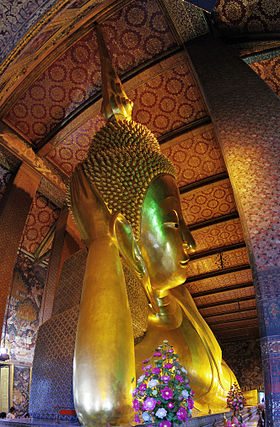
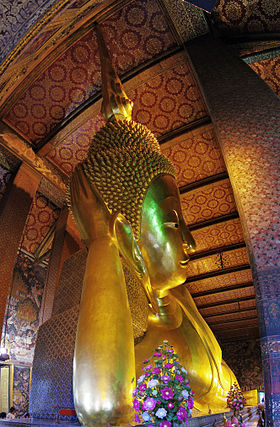
A couple of river-bus stops downriver from where my wife and I live in Bangkok stands the temple Wat Pho, whose main claim to fame is a large reclining Buddha.

wat pho reclining buddha

It is, I read, 46 metres long and 15 metres high, and walking along it certainly is impressive. But I much prefer the soles of the statue’s feet.

wat pho buddhas feet

These soles have been divided into 108 panels each of which contains, in the form of mother-of-pearl inlays, the 108 auspicious symbols by which the Buddha can be identified, like flowers, dancers, white elephants, tigers and altar accessories.

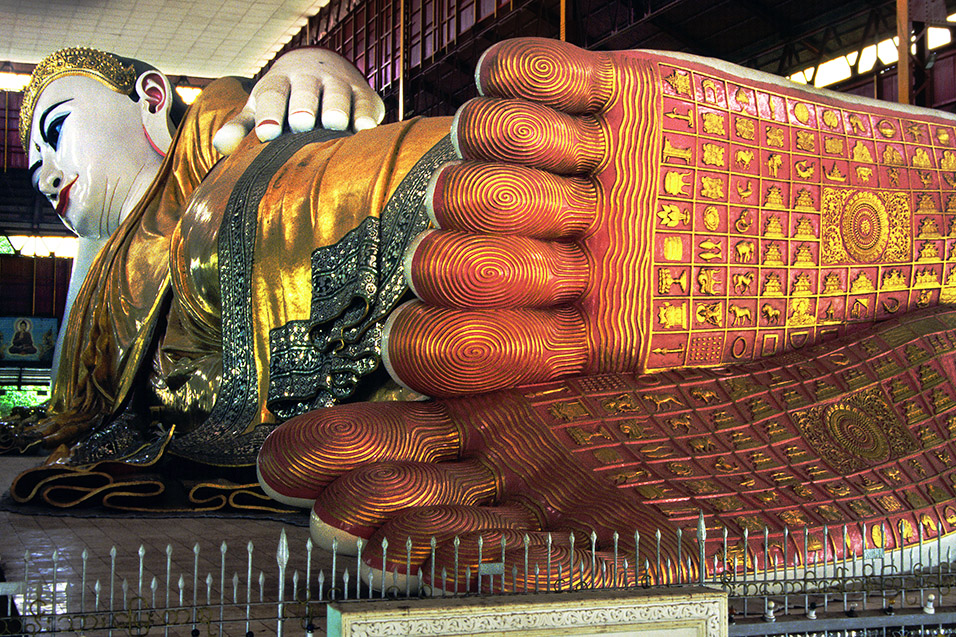
Wat Pho’s reclining Buddha was the first time I saw this interesting art form. But actually it is quite common for reclining Buddhas to have the soles of their feet so decorated. For instance, I find this particular reclining Buddha in Yangon in Myanmar more naturalistic – certainly the pose of the feet is more pleasing to the eye than those stiff blocks in Wat Pho.

yangon_reclining_buddha_feet

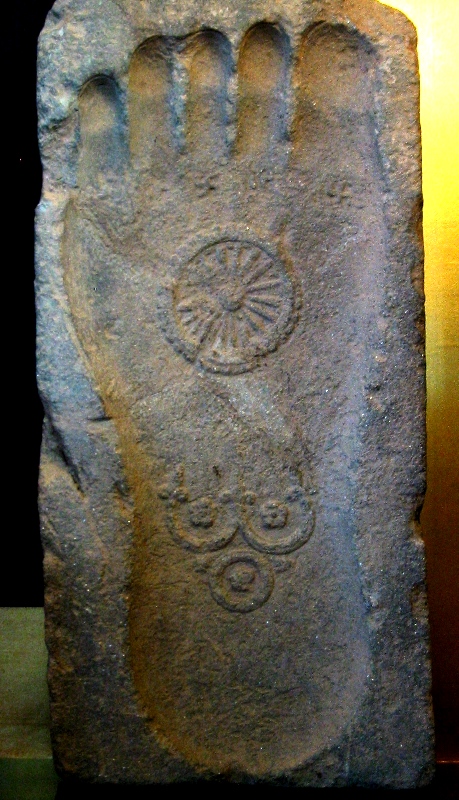
I later learned that the decorations of the feet of Buddha statues are actually a reflection – almost literally – of a much older iconography for depicting the Buddha, that of his footprint. Before anyone made statues of the Buddha, they made his footprints. They were a powerful way to remind the faithful that the Buddha had been present on earth: “the Buddha passed this way”. Quite quickly, the footprints were decorated with some of the symbols used to identify the Buddha. For instance, this footprint of the Buddha made in the 1st Century AD in the kingdom of Gandhara, in what is now the Swat valley in Pakistan, carries the Darmachakra, the “wheel of law”, and the triratna, the “triple gem” of Buddhism: Buddha (the Enlightened One), Dharma (the Teaching), and Sangha (the Community).

Buddha-Footprint

As time went on, more and more symbols were squeezed onto the footprints. And then some bright spark came up with the “positive print”, as it were, where the soles of reclining Buddhas carry the symbols of the Buddha.

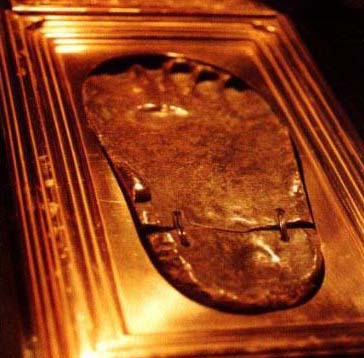
Buddhism is not the only religion that has used footprints of its religious leaders as iconography, although it surely has used them more than any other (there is an estimate of 3,000 Buddha footprints throughout the Buddhist lands). My wife and I came across a footprint of the Prophet Muhammad in the Topkapi museum in Istanbul

Muhammad footprint

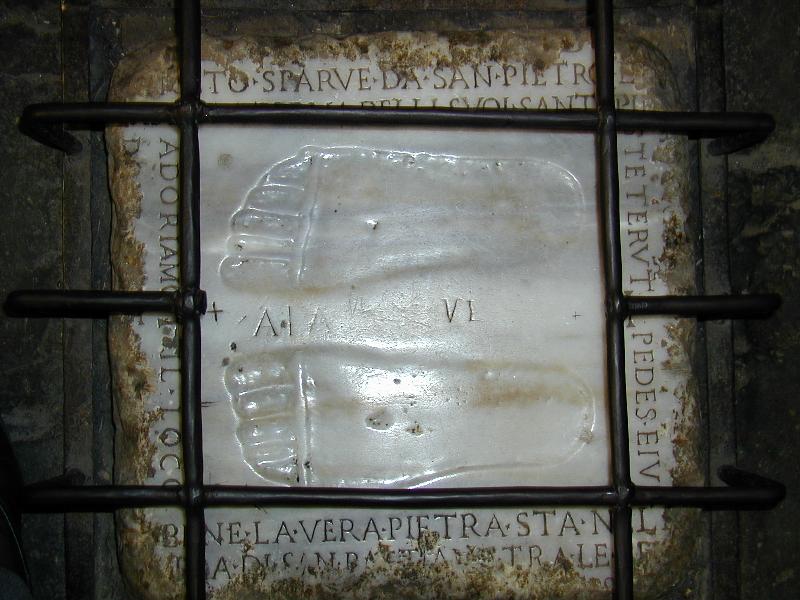
and there is a pair of footprints of Jesus in the Church of Domine Quo Vadis (“Lord, where are you going?”) on the outskirts of Rome.

jesus footprint

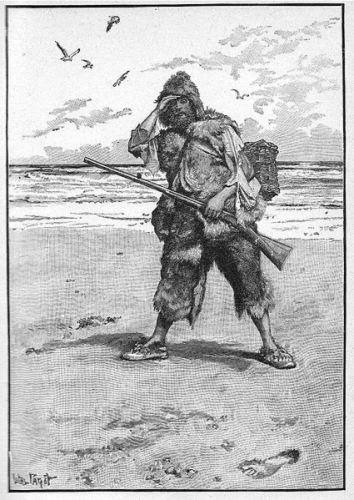
It is true to say that footprints are an incredibly powerful symbol of someone passing, of having been close by. One of the best remembered stories in Robinson Crusoe is of his finding a footprint on the beach.

crusoe and footprint

“It happened, one day about noon going towards my boat, I was exceedingly surprised, with the print of a man’s naked foot on the shore, which was very plain to be seen in the sand. I stood like one thunder-struck, or as if I had seen an apparition; I listened, I looked round me, I could hear nothing, nor see anything; I went up to a rising ground to look farther; I went up the shore and down the shore, but it was all one, I could see no other impression but that one. I went to it again to see if there were any more, and to observe if it might not be my fancy; but there was no room for that, for there was exactly the very print of a foot, toes, heel, and every part of a foot; how it came thither I knew not, nor could in the least imagine. But after innumerable fluttering thoughts, like a man perfectly confused and out of myself, I came home to my fortification, not feeling, as we say, the ground I went on, but terrified to the last degree, looking behind me at every two or three steps, mistaking every bush and tree, and fancying every stump at a distance to be a man.”

That footprint struck fear in Robinson Crusoe, fear of the unknown, fear of attack, fear of savagery. But I get a thrill when I see the footprints that some 15 people left 2,000 years ago in the ash and mud on the shore of Lake Managua in Nicaragua.

nicaragua footprints

I get goose bumps on seeing the footprints left 1.5 million years ago by Homo erectus near the village of Ileret in Northern Kenya on the eastern shore of Lake Turkana.

homo erectus ileret kenya

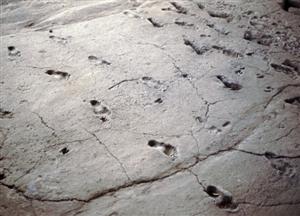
The hairs on my neck rise at the sight of footprints left 3.7 million years ago by three members of the species Australopithecus afarensis at Laetoli in Tanzania, which show that already then bipedalism, such a distinctive feature of our species, was in place.

laetoli footprints

I find these footprints a much more powerful reminder of the Family of Man than a piece of jawbone or a tooth. I can imagine my distant, distant ancestors going about their business, as I will go about mine today.

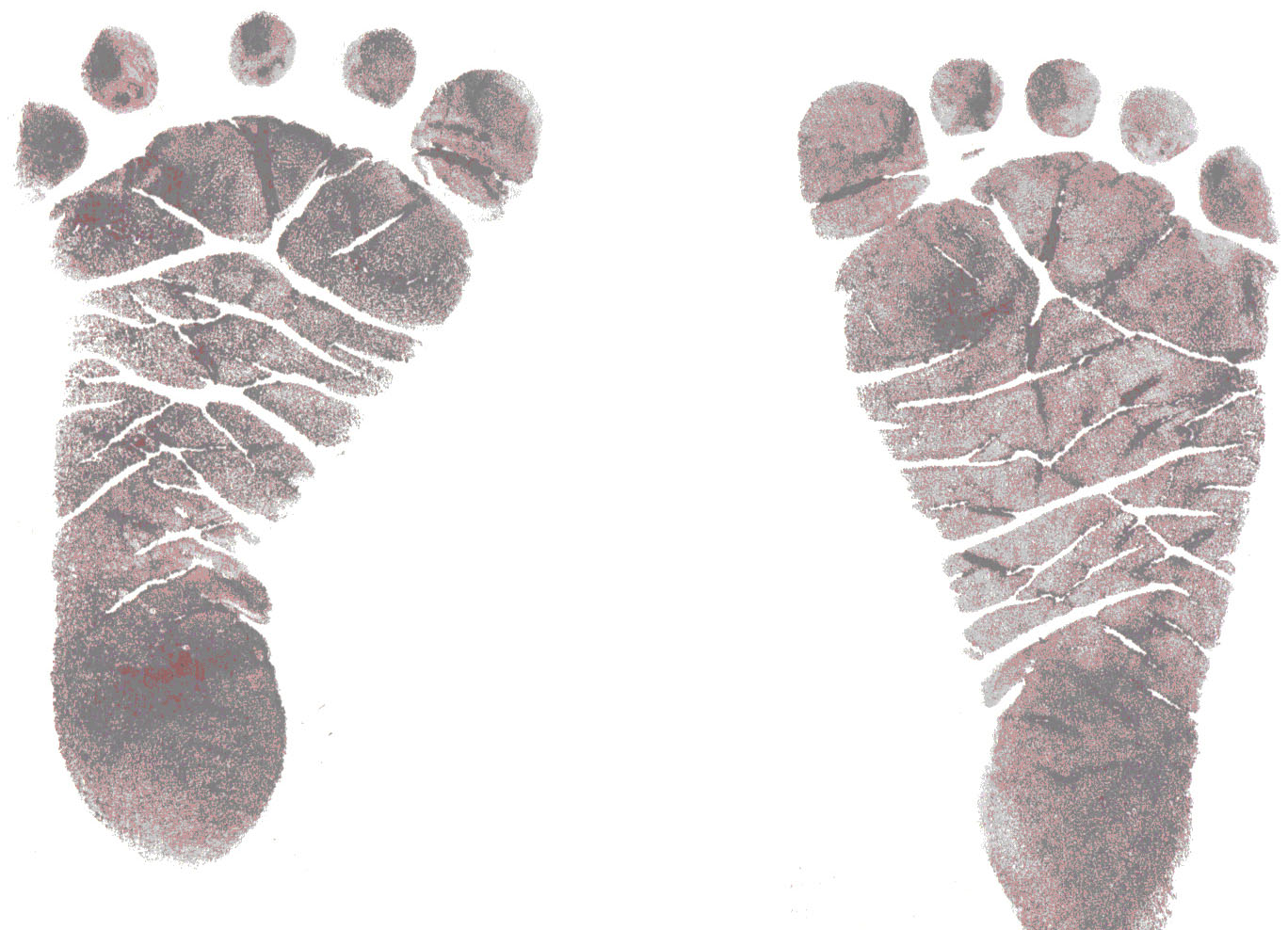
And within the much narrower circuit of my family, my wife and I have two relics, which currently slumber with all our stuff in a warehouse in Vienna but which we will keep preciously until the end of our lives. These are the footprints which the hospital gave us of our children’s feet, made just after they were born; they look like this

newborn footprints

They will forever remind us of the great joy which we experienced when our two children entered our lives and for a few decades walked with us before taking their own path in life.

___________

Reclining Buddha, Wat Pho, Bangkok: https://upload.wikimedia.org/wikipedia/commons/thumb/8/8d/Bangkok_Wat_Pho_reclining_Buddha.jpg/280px-Bangkok_Wat_Pho_reclining_Buddha.jpg (in https://en.wikipedia.org/wiki/Wat_Pho)
Reclining Buddha’s feet: http://s4.perpetualexplorer.com/wp-content/uploads/2013/03/wat_pho.jpg (in http://perpetualexplorer.com/2013/03/03/buddhist-temples/)
Reclining Buddha, Chaukhtatgyi Paya, Yangon: http://www.heybrian.com/lib/images/travels/myanmar/yangon_reclining_buddha_feet.jpg (in http://www.heybrian.com/travels/myanmar/)
Buddha footprint, 1st century, Gandhāra: https://upload.wikimedia.org/wikipedia/commons/7/73/Buddha-Footprint.jpeg (in https://en.wikipedia.org/wiki/Buddha_footprint)
Muhammad footprint, Istanbul: http://www.usna.edu/Users/humss/bwheeler/images/footistanbul.jpg (in http://www.usna.edu/Users/humss/bwheeler/footprints_pm.html)
Jesus footprints, church of Domine Quo Vadis: https://upload.wikimedia.org/wikipedia/commons/b/b1/I_piedi_del_quo_vadis.jpg (in https://en.wikipedia.org/wiki/Church_of_Domine_Quo_Vadis)
Crusoe and the footprint: http://www.bookdrum.com/images/books/92999_m.jpg (in http://www.bookdrum.com/books/the-graveyard-book/16401/bookmark/92998.html)
Nicaragua footprints: http://www.geog.cam.ac.uk/research/projects/eruptions/figures/thumbnails/05_11.jpg (in http://www.geog.cam.ac.uk/research/projects/eruptions/figures.html)
Homo erectus Ileret Kenya: https://nutcrakerman.files.wordpress.com/2014/10/ileret.jpg (in http://nutcrackerman.com/2014/10/14/the-oldest-human-footprints-by-continent/comment-page-1/)
Hominid footprints, Laetoli: http://auth.mhhe.com/socscience/anthropology/image-bank/kottak/chap07/kot37055_0705ta.jpg (in http://auth.mhhe.com/socscience/anthropology/image-bank/kottak/chap07/image7.htm)
Newborn footprints: http://semma.com/Joey/images/Joey/Joey%27s%20Footprints.jpg (in http://semma.com/Joey/photo2.html)

THE FLESH CRIES OUT

Bangkok, 21 June 2015

After years of bugging by our children, especially by our daughter, and after watching a couple of our friends Go the Way of All Flesh or nearly so, my wife and I have committed to a serious training regime. Twice a week, a personal trainer turns up at our apartment block, and in the very rudimentary gym which we have (it’s really just a common space where some exercise machines have been installed) he puts us through one hour of rigorous exercises. In addition, my wife goes to a gym every day for an hour, while I do (more or less, depending on my schedule) half an hour’s worth of exercises at home in the evening. We’ve been at it for three and a half months.

I don’t know, I feel that after a suitable period of shock at the beginning – we have, to be very, very frank, done bugger-all exercise for nigh on forty years – we should now be looking forward to going to our twice-weekly routine and feel happy after it
happy exercisers
perhaps not as blissfully happy as this couple, but at least somewhat satisfied.

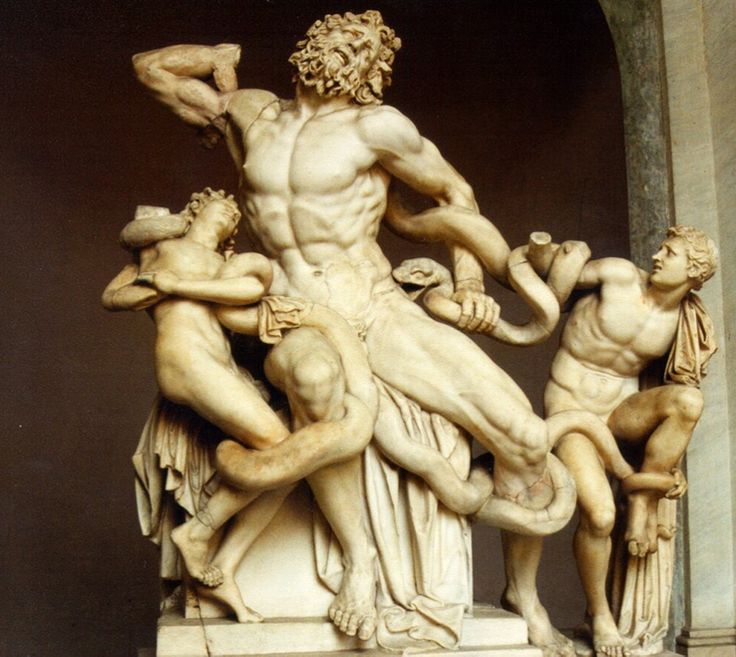
Yet it is not so. As we go down to the makeshift gym we feel like what those poor people in Singapore must feel like as they go to get 100 lashes for dropping chewing gum on the pavement or whatever, and the exercises themselves are still excruciating. We both feel like poor old Laocoön and his sons as we put our protesting bodies through the routines
laocoon
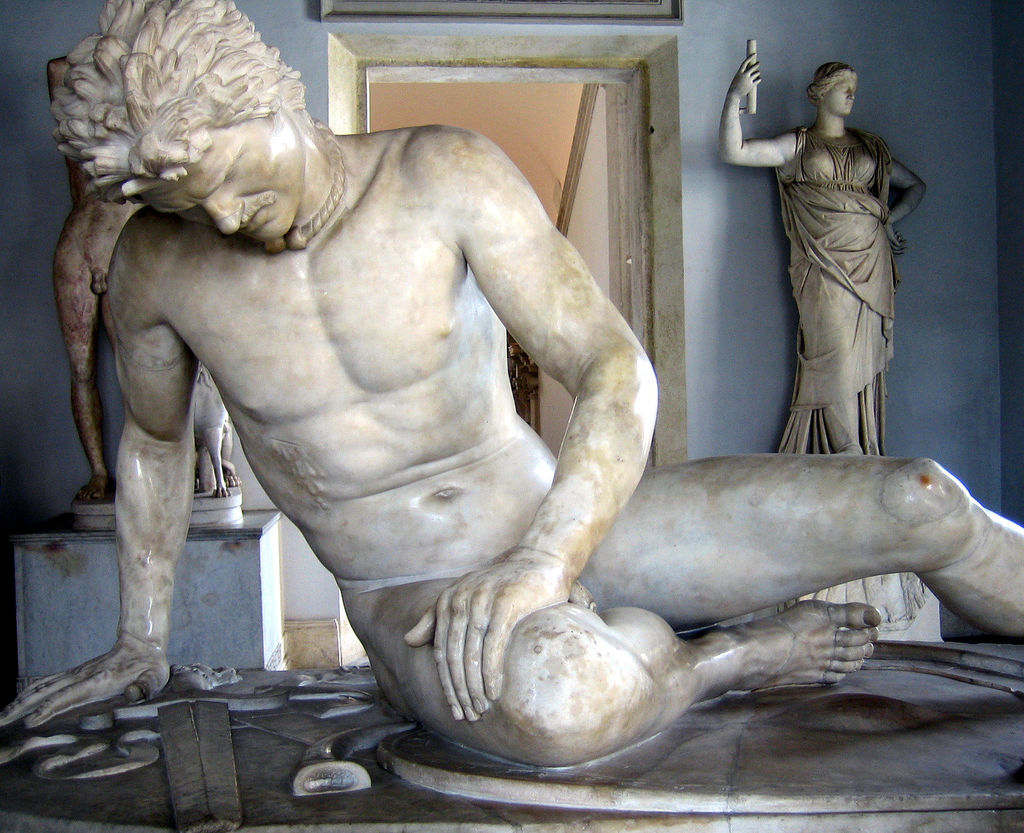
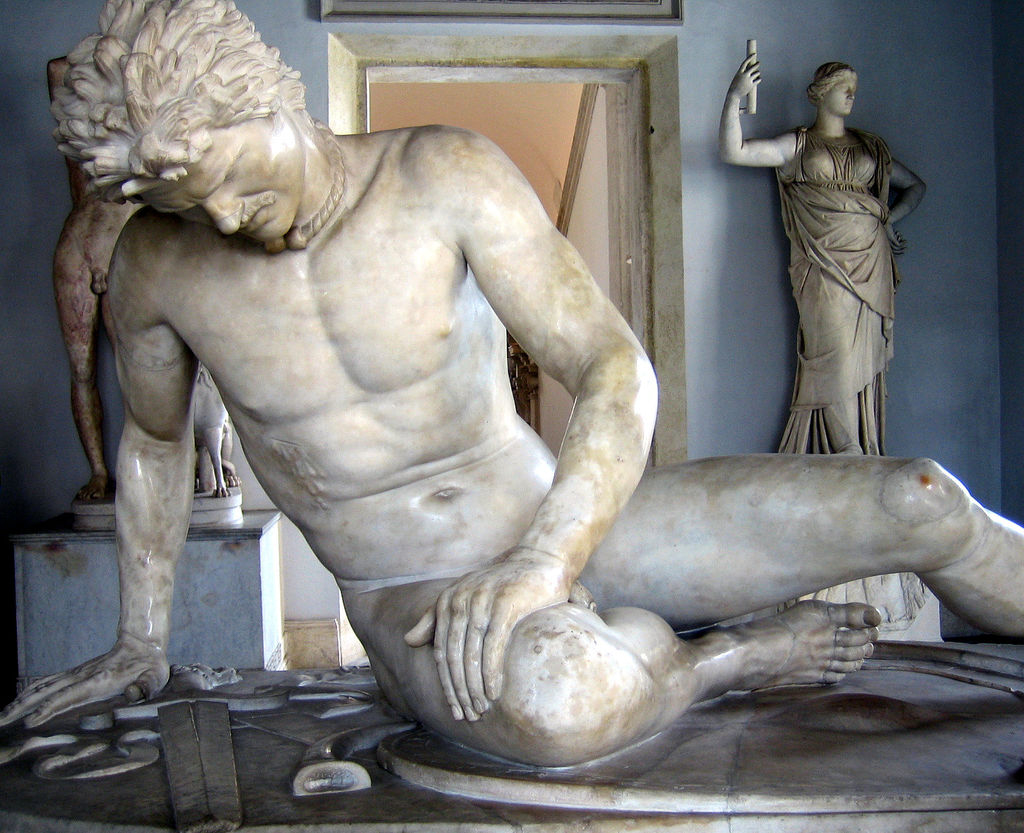
while when we try to get up from a floor exercise we both look and feel like this dying Gaul
Dying gaul
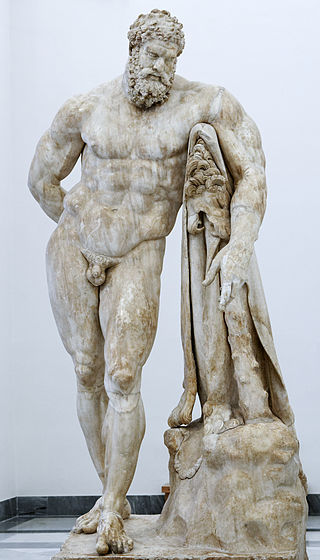
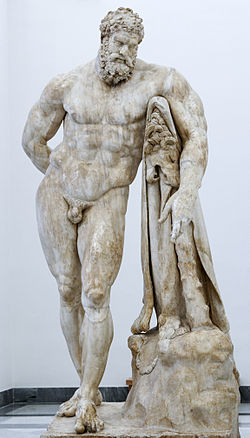
Understand me, I’m not hoping to look like Hercules by the end of all this
Herakles Farnese
Something like this would do me very nicely
God
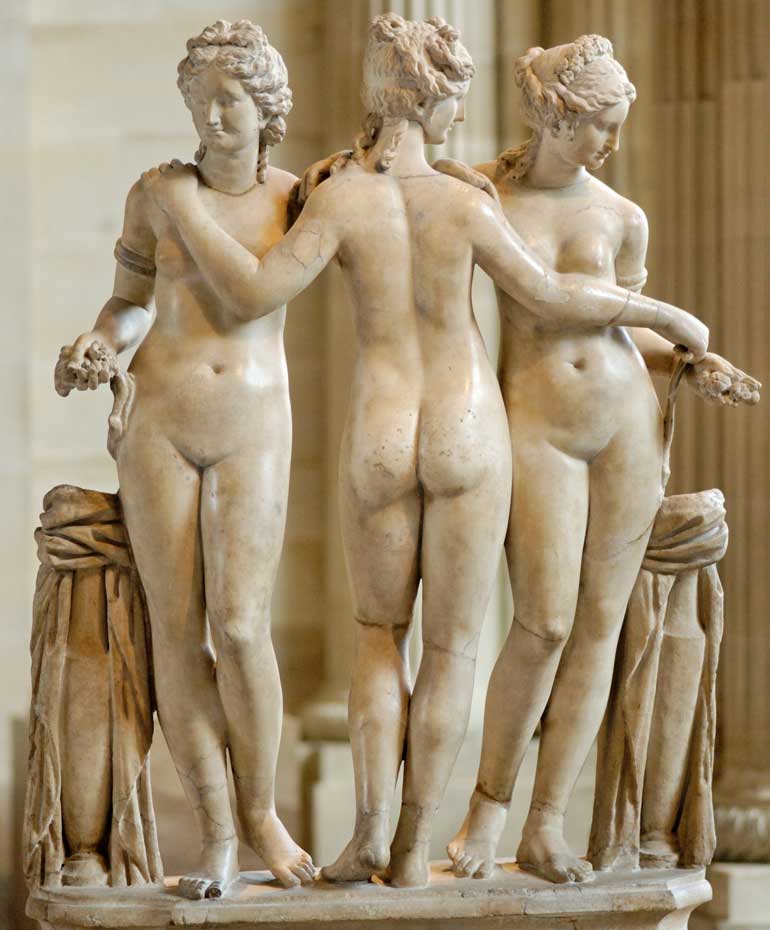
while my wife would be more than happy to end up looking like any of these three Graces
Three Graces
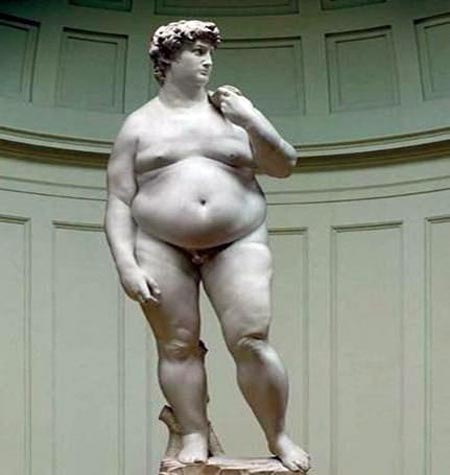
In fact, to be completely honest, I wouldn’t mind ending up looking like this as long as I was feeling good.
fat david
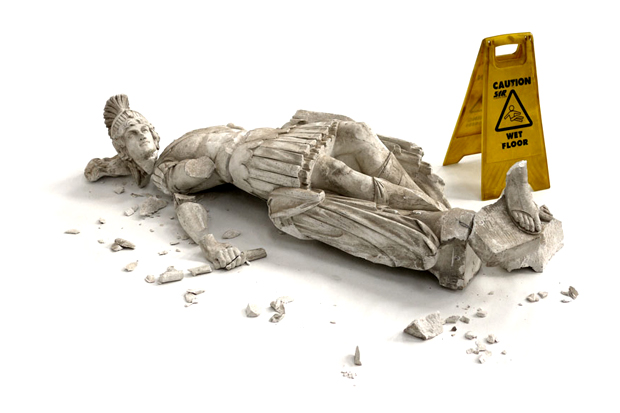
But I don’t feel good, I just feel like this at the end of the one hour
banksy-fallen-sculpture-1
and continue to feel like this for the rest of the day.

Will it ever be different?

_____________

Happy exercisers: https://experiencelife.com/wp-content/uploads/2011/11/Apr10_ExGorg1.jpg (in https://experiencelife.com/article/8-ways-exercise-makes-you-gorgeous/)
Laocoön: https://s-media-cache-ak0.pinimg.com/736x/bf/aa/24/bfaa2441e5e25a8ec7be0f9fb81db7dd.jpg (in https://www.pinterest.com/heotang/the-death/)
Dying Gaul: http://anadio.com/004b%20Ancient%20Greek%20sculpture%20web%20ss/resources/images/medium/Dying_gaul.jpg (in http://anadio.com/004b%20Ancient%20Greek%20sculpture%20web%20ss/index.html)
Herakles: https://upload.wikimedia.org/wikipedia/commons/thumb/a/ad/Herakles_Farnese_MAN_Napoli_Inv6001_n01.jpg/250px-Herakles_Farnese_MAN_Napoli_Inv6001_n01.jpg (in https://en.wikipedia.org/wiki/Farnese_Hercules)
God: http://cdn.theatlantic.com/static/mt/assets/culture_test/100ideasart_2.jpg (in http://www.theatlantic.com/entertainment/archive/2012/10/from-greek-sculpture-to-graffiti-100-ideas-that-changed-art/264165/)
Three Graces: http://www.mlahanas.de/Greeks/Mythology/Images/ThreeGracesLouvreMa287.jpg (in http://www.mlahanas.de/Greeks/Mythology/ThreeGracesLouvreMa287.html)
Fat David: http://www.clevelandseniors.com/images/funny/fat-david.jpg (in http://bellasvitas.blogspot.com/2011/03/michael-angelo-sculptures.html)
Broken sculpture: http://www.visualtherapyonline.com/wp-content/uploads/banksy-fallen-sculpture-1.jpg (in http://www.visualtherapyonline.com/?p=20403)

JOHAN ET PIRLOUIT

Bangkok, 26 May 2015

A week or so ago, I was in Cambodia for some official business relating to a project we are about to start there to reduce dioxin emissions. But actually, that is irrelevant to this post. What is relevant is that I was staying in a hotel room half of whose lights were blue. Why, is a mystery. Perhaps it has something to do with the fact that the hotel claimed to also be a spa; perhaps people in spas like the rather cold light that blue creates. Or perhaps it had something to do with the modern furniture that graced the room; it was Nordic-looking in its design, cool, remote, and the blue light made it all that much cooler. But I’m just hazarding guesses here; perhaps blue bulbs were simply the cheapest on the market at the time the hotel was purchasing its light bulbs.

Whatever the reason, this blue light turned me blue. I only realised it when, skyping my wife, I noticed with astonishment that in the small icon which held my image I was a lovely blue hue. Basically, I looked like this fellow:

schtroumpfThe very youngest amongst us will immediately tell us that he is a Smurf. They are wrong – well, not quite right. He is a Schtroumpf; Smurf is the Dutch translation, adopted later by the English-speaking world.

Aah, the Schtroumpfs …they are my youth! This fellow may look young, but actually I am just a few years older than him. I burst onto the scene in 1954, the Schtroumpfs burst onto the cartoon scene in 1957, invented by the Belgian cartoonist Peyo.

But here I have to clarify something. My real love was not the Schtroumpfs. It was Johan and Pirlouit, invented some years earlier by Peyo. Johan came first, hustling into the lives of little fellows like me in 1952, before I was even a gleam in my parent’s eyes, in the story Le Châtiment de Basenhau, The Punishment of Basenhau. This was the cover of the album (Johan is the young fellow dressed in ragged brown).

01-chatiment de basenhau

The details of the story are irrelevant. The important point is that Johan lived in the Middle Ages and that he was a dashing young fellow. After Le Châtiment de Basenhau came Le Maître de Roucybeuf, The Master of Roucybeuf, in 1953

02-maitre de roucybeuf

and then in 1954, when my mother was heavily pregnant with me, came Le Lutin du Bois aux Roches, The Imp of Rocks’ Wood, in which Peyo introduced us to Pirlouit, who was to become Johan’s bosom buddy.

03-lutin du bois aux roches

Pirlouit is the little blond-haired fellow holding the very large hammer. While Johan was the serious, Boy Scout type, straight as an arrow, Pirlouit was the joker, a hilarious guy who was always doing silly things. But when push came to shove, he was there by Johan’s side, as they fought off the assorted Medieval baddies they had to deal with. From now on, the two were to be inseparable.

Their stories of derring-do, wielding sword, shield, bow, and other assorted medieval weaponry, galloping through dark, forbidding forests – Johan on a horse, Pirlouit on a goat (he was a little person, remember), dealing with sorcerers and their potions, … these were so thrilling to that young me – I was, what? ten-eleven years old when I discovered these albums, when Peyo was already famous throughout the length and breadth of France. I whiled away many a wonderful summer afternoon at my cousins’ house, tearing my way through the collection:

La Pierre de Lune, The Moonstone

04-pierre de lune

Le Serment des Vikings, The Oath of the Vikings

05-serment des vikings

La Source des Dieux, The Spring of the Gods

06-source des dieux

La Fleche Noire, The Black Arrow

08-fleche noire

Le Sire de Montrésor, The Lord of Montresor

08-sire de montresor

to arrive at La Flûte à Six Schtroumpfs, The Flute with Six Schtroumpfs

09-flute a six schtroumpfs

This is where the Schtroumpfs first made their entry onto the world stage. And this is where I start to cry.

Understand me, the Schtroumpfs were nice enough, they added a fun element to the story. But in my view they were minor characters. It was Johan and Pirlouit who were firmly centre stage.

Alas! I was in a minority. The junior readers of Spirou magazine – the stories originally came out in serialized format – wrote letters to the magazine enthusing about the little Schtroumpfs. The editors of the magazine, and Peyo himself, saw the commercial possibilities. And so Peyo took the first steps down the slippery slope. He started with minor albums of Schtroumpf stories. He graduated to major albums. He got involved in animated films. First, in Belgium. Then in the US. Then the breakfast cereal companies came knocking on the door: they wanted Schtroumpf statuettes in the Cornflake packages.schtroumpf statuettes

And after that the advertising firms came knocking at the door, asking to use the Schtroumpfs in various advertising campaigns. As this photo shows, the demand from advertizers continues unabated.

schtroumpf advertisement-1

Peyo always said yes. And John and Pirlouit disappeared; he was too busy with the Schtroumpfs. Peyo managed one more great album, La Guerre des 7 Fontaines, the War of the 7 Fountains.

10-guerre des sept fontaines

To me, it was his best, a wonderful story of Fall and Redemption. After that, he managed only a few more albums, pale copies of what had come before. The Schtroumpfs had eaten up his life. He had his first heart attack when he was 41, his last when he was 64.

And I am left with the memories of my youth, those golden afternoons in the France of the early ’60s, with medieval jousts and battles echoing faintly across the fields.

______________________

Schtroumpf: http://www.tattoo-kids.com/581-1284-thickbox/tatouages-schtroumpfs-pack.jpg (in http://www.tattoo-kids.com/pochette-de-tattoos/581-tatouages-schtroumpfs-pack.html)
Chatiment de Basenhau: http://www.bdzone.com/images/tout/9782800100951g1.jpg (in http://www.bdzone.com/chop/couvranteswap.php?serie=JOHA&debut=0&fin=9)
Maitre de Roucybeuf: http://www.bdzone.com/images/tout/9782800100968g1.jpg (in http://www.bdzone.com/chop/couvranteswap.php?serie=JOHA&debut=0&fin=9)
Lutin du Bois aux Roches : http://www.bdzone.com/images/tout/9782800100975g1.jpg (in http://www.bdzone.com/chop/couvranteswap.php?serie=JOHA&debut=0&fin=9)
Pierre de Lune : http://www.bdzone.com/images/tout/9782800100982g1.jpg (in http://www.bdzone.com/chop/couvranteswap.php?serie=JOHA&debut=0&fin=9)
Serment des Vikings : http://www.bdzone.com/images/tout/9782800100999g1.jpg (in http://www.bdzone.com/chop/couvranteswap.php?serie=JOHA&debut=0&fin=9)
Source des Dieux : http://www.bdzone.com/images/tout/9782800101002g1.jpg (in http://www.bdzone.com/chop/couvranteswap.php?serie=JOHA&debut=0&fin=9)
Fleche Noire : http://www.bdzone.com/images/tout/9782800101019g1.jpg (in http://www.bdzone.com/chop/couvranteswap.php?serie=JOHA&debut=0&fin=9)
Sire de Montresor : http://www.bdzone.com/images/tout/9782800101026g1.jpg (in http://www.bdzone.com/chop/couvranteswap.php?serie=JOHA&debut=0&fin=9)
Flute a Six Schtroumpfs: http://www.bdzone.com/images/tout/9782800101033g1.jpg ((in http://www.bdzone.com/chop/couvranteswap.php?serie=JOHA&debut=0&fin=9)
Guerre des 7 Fontaines: http://www.bdzone.com/images/tout/9782800101040g1.jpg (oin http://www.bdzone.com/chop/couvranteswap.php?serie=JOHA&debut=9&fin=9#)
Schtroumpf statuettes: http://img0.ndsstatic.com/wallpapers/e40969b9033ccdd352337e6494a54def_large.jpeg (in http://www.ohmymag.com/les-schtroumpfs/wallpaper)
Schtroumpf advertisement: http://img.xooimage.com/files51/2/4/e/lg-optimus-01-22e2217.jpg (in http://schtroumpfmania.soforums.com/t1518-Smartphone-LG.htm)

DREAM JOURNEY: PART IV

Bangkok, 22 May 2015

Normally, we would be rather groggy as we drive our MG off the ferry in Bari at 8 am in the morning, coming in from Dürres and the previous post. I certainly would be; I never sleep well on ships. But this is a dream, so I decree that we are bright-eyed and bushy-tailed as we roar off the ferry. Our goal is Otranto, very near the end of Italy’s high heel. We head down the old Via Traiana, now more boringly called the Strada Statale 16, as far as Brindisi. There we take the SS 613, which follows the trace of a previous local Roman road that was too modest to have a name. We pass through Lecce, where we pause. Lecce is known for its plentiful baroque buildings constructed in the 1600s, all using a beautiful local white stone, so I throw in a picture of a square there as a visual memorial to this city.

Lecce

We continue on to Otranto, and drive straight up to the Cathedral. For this is the objective of our visit to Otranto – or rather the floor of the church is. When visitors enter the church, they are greeted by this magnificent floor.

otranto-mosaic-1

It is the largest floor mosaic in Europe. It brings me back to that other floor mosaic which we visited in the first leg of our trip in Aquileia, although eight centuries separate them. Some clever fellow took this photo from the ceiling, showing more or less the full extent of the mosaic.

otranto-mosaic-2

The subject of the mosaic is a Tree of Life, and you can indeed see the trunk of the tree working its way up the nave. Strangely enough, the narrative of this tree flows from the top down, and so near the high altar we have various scenes from the story of Adam and Eve, of which I throw in one photo.

otranto-mosaic-3-adam eve snake

Honestly speaking, the story is difficult to read, so I shall just insert a couple of photos of other parts of the floor. This is King Arthur

otranto-mosaic-4-King Arthur

and this, Satan

otranto-mosaic-5-Great Satan

while this is said to be a self-portrait of the floor’s designer, a monk by the name of Pantaleone who hailed from the monastery of San Nicola di Casole, a little to the south of Otranto.

otranto-mosaic-6-Pantaleone_ self-portrait

The mosaic was laid down in the 12th Century when this part of Italy was Norman, along with Sicily. In fact, the design of the floor rather reminds me of that other great masterpiece of Norman art, the Bayeux tapestry. I include here one photo of that tapestry, the famous scene where Harold Godwinson is killed by a Norman arrow through his eye.

Tapisserie de Bayeux - Scène 57 : La mort d'Harold

Next stop: Palermo in Sicily. We’ll get there by cutting across Italy’s heel to Taranto and then along the instep and sole of the Italian boot all the way to Reggio Calabria, where we’ll catch the ferry over to Sicily. I take the back roads to get to Taranto, because I want to drive through the small town of Copertino. As far as I know, this town is known for nothing special except a large castle and a saint. But to us, it has a great importance: my wife’s maternal grandfather came from Copertino and so it is the source of one-eighth of my children’s DNA. He emigrated to Milan in the early 1900’s, part of the massive migrations out of the south of Italy at the turn of the 20th Century. In typical migratory fashion, his departure eventually brought all his brothers and sisters up north. Family lore has it that his father ruined the family by taking the new Italian State to court over the expropriation of some of his land. He took the case all the way to the Court of Cassation, where he eventually lost the case, by which time he had also burned through all his money. Even though this is a very modest place with nothing special to write home about, I feel I must throw in a photo to commemorate it.

copertino

Onwards to Taranto, although in truth as we approach the city we turn our heads away and drive on. Taranto has been devastated by the plans of successive Italian government in the post-war period to develop the south of Italy through the implantation of heavy industry (I’ve already mentioned this in another post on Sicily). What were then the biggest steel works in Europe were plonked down here in the 1960s, and other heavy industry followed. By the 1980s, when my wife and I went to Taranto for the first time, the investment was in trouble. But the government couldn’t let it go down the tubes, it was politically too important. So money – half of it wasted through corruption and graft – was poured in to prop everything up. It’s stayed propped up – just – but in the meantime the industrial complex has poisoned half the population. Talk about sustainable development …

taranto

We are now driving through what was once Magna Graecia, Greater Greece, that string of Greek colonies which dotted the underside of the Italian boot as well as the coasts of Sicily (and even the shin and calf of that shapely Italian boot). The glittering stone in this string of cities was undoubtedly Syracuse in Sicily, where Archimedes – he of the original eureka moment – was born and was killed. But all the cities along here, from Taranto in the East to Selinunte in the West, were once flourishing and prosperous city-states. One of them, Sybaris, even became a byword for self-indulgent opulence – it was said of one of its citizens that he slept on a bed of rose petals, and if even one of them was folded over he could not sleep. The town’s name has entered the English language, a sybarite being a voluptuary or a sensualist. Now, Sybaris lies under four meters of mud. The only claim to fame of the surviving Calabrian towns is that they are infested by the ‘Ndrangheta, Calabria’s answer to Sicily’s mafia. It is said that John Paul Getty III, kidnapped in Rome back in 1973, was kept hidden in these parts. He was returned after his family forked over a ransom of $3 million – paid a good deal reluctantly (his grandfather is reported to have said, “I have 14 grandchildren. If I pay one penny now, I’ll have 14 kidnapped grandchildren”) and only after one of his ears had been cut off and sent to a newspaper. It is whispered that many a new house around here was built with Getty money.

We stop for a moment in Crotone, on the ball of Italy’s foot, not because it’s any less dreary than the other towns we’ve passed through, but because something momentous happened here: Pythagoras set up his first school and came up with all those clever mathematics, among which was his theorem which I, like every child of 11 or so, learned in geometry class: “a2 + b2 = c2“, or in plain English, “in a right triangle, the square of the hypotenuse is equal to the sum of the square of the other two sides”. At least, that’s what I was told by proud Crotonesi when I was here 20 years ago to do an environmental audit. Alas! It was not so. Pythagoras did indeed come to Crotone, but all he did was to set up some sort of mystical, esoteric sect which dabbled in the quasi-magic of whole numbers. It’s very unlikely that he personally came up with any of the mathematical cleverness attributed to him; his disciples did, but later. I think this painting, by a 19th Century Russian painter, captures nicely the strongly mystical (and to my way of thinking, rather weird) overtones of the initial Pythagorean movement.

pythagoreans celebrating sunrise

What Pythagoras and his sect did do in Crotone was to eventually take over the city’s government, and it was during his time in office that Crotone destroyed Sybaris. Several other cities in the area also espoused Pythagorean forms of government, but after a while there was a backlash. Back in Crotone Pythagoras was chased out, to end his days in nearby Metapontum, another city now lying under meters of mud. But Pythagorean schools continued, although they restricted themselves to maths and “natural philosophy” and left politics to others. Probably better that way …

I take one last look at the industrial plant I audited all those years ago – another industrial works plonked down here, and another one that has closed, leaving nothing but bitterness in its wake.

pertusola

It’s time to move on.

When we reach Reggio Calabria, although my wife is reluctant I insist: we must go to the Museum of Magna Graecia to see the two Bronzes of Riace. Neither of us have ever seen them, and it would be a pity not to take advantage of our passing through Reggio to have a peek. I know the objective of our trip is early Christian mosaics, but other wonders along the way should not be ignored. No sooner said than done! With a click of the mouse, I have us parked in front of the museum and magically transported past the queues of people waiting to enter the climate-controlled, earthquake-proofed room where they stand.

bronzi di riace

What magnificence! And what we see today are stripped down versions of the original. Each would have been coiffed with a Corinthian-style helmet, would have carried a shield on that raised left arm, and would have held a lance in the other. The latest theories hypothesize that they represent two of the Seven Heroes who set off from Argos to fight against Eteocles, king of Thebes and son of Oedipus (he of the complex), and died at the city’s seven gates. One expert suggests that they were originally part of a group of seven statues which stood in the Agora of the city of Argos. How they ended up on the sea bed off the coast of Calabria is anyone’s guess. My guess, for what it’s worth, is that during Roman times Argos was hard up, and rich Romans, avid for Greek art, came along and offered to buy the statues. Why not … In later centuries hard-up Italians sold their Renaissance treasures to rich Englishmen, avid for Italian art, and later still these Englishmen, hard up in their turn, sold these same treasures to rich Americans. In any event, they were being shipped to Rome, but when the ship was off the coast of Calabria a violent storm blew up, and the captain, rather than losing his ship and his life, tossed the heavy stuff overboard.

Time to catch the ferry over to Sicily, home to some of the most beautiful Byzantine-style mosaics still extant, created when the Normans controlled Sicily. The web helpfully informs us that there is a ferry over to Messina every hour or so. In this dream trip, we will not have any difficulty in catching the ferry, unlike real life 30 years ago when my wife and I decided to take her mother to spend Christmas and the New Year in Sicily. We arrived in Reggio Calabria on the evening of 23 December, along with a horde of Sicilian migrant workers returning home from Northern Europe for the holidays. We discovered to our horror that the ferry boat crews had just decided to strike for more pay. Those bastards had chosen this particular time to strike because they knew it put the owners under huge pressure to settle. Settle they did, but not before we had spent a miserable night in the ferry car park. When those ferry boat crews arrive, as they assuredly will one day, before the Pearly Gates, I hope they will be kicked off down to Hell, to roast in its fires for Eternity (anyone curious to know what that might look like can refer back to the posting with which I started this dream journey and study the photo I inserted there from the back wall of the church on the island of Torcello).

Once on the other side,  we set off for Palermo. I firmly decide that we will take the normal roads to get there. In this dream we’re in no hurry, and I prefer by far the “reeling roads”, the “rolling roads”, that “ramble round the shire”, as G.K. Chesterton wrote in his most famous poem “The Rolling English Road”. Yes, I prefer by far his “merry roads” and his “mazy roads” to the smooth monotony of sterile highways. We pass Milazzo, where you can catch the boat to the Aeolian Islands – a trip for another day – and where I did yet another environmental audit 20 years ago for another struggling industrial complex, which mercifully has not closed – yet. We hum along until we arrive at the small town of Cefalù, nestling under the mighty headland which gives it its (Greek) name. We head, yet again, for the Cathedral, constructed by the Normans in the first half of the 1100s. There, some beautiful mosaics still cling to the apse and the last bay of the choir.

cefalu-duomo-1

The Pantocrator gracing the apse is “for many the greatest portrait of Christ in all Christian art”, in the words of John Julius Norwich (I am quoting from his history of Sicily).

cefalu-duomo-2

The style is clearly mature Byzantine, a style we’ve already seen in Istanbul as well as in the lagoons of Venice, and would have seen in Daphni and Saint Luke in Greece had we made the detour from Thessaloniki. The Normans got Byzantine artists, or artists trained in Byzantine workshops, to make the mosaics.

It’s time to go on to Palermo, which is our final destination on this leg of the journey. We hug the coast, coming into the city on its seaward side. Once we reach the port, we swing up Via Vittorio Emanuele (there’s one of these in every village, town, and city in Italy, along with a Via Garibaldi), which is the main thoroughfare through the city’s old center. When we get near the Martorana church, we miraculously find – free! – parking (this is a dream, after all) for our little MG and head over to the church.

The church has been much modified over the centuries, not least of which by a brutal Baroque make-over in the front part of the nave in the 17th Century. But once we get past these horrors and enter the upper nave, we are greeted by some lovely mosaics: Christ in majesty in the dome of the church

palermo-martorana-1

the annunciation

palermo-martorana-4

the nativity

palerno-martorana-7

the dormition of the Virgin Mary

palerno-martorana-6

As we leave, I want particularly to see these two mosaics. In this first one, we have the greatest of all the Norman kings of Sicily, Roger II, having himself cheekily crowned by Christ himself, as if he were a Byzantine emperor

palermo-martorana-2

It was he who first brought this Byzantine art form to Sicily.

And here we have the original donor of the church, George of Antioch, Roger II’s admiral, humbly offering his church to the Virgin Mary (much like we saw in Cariye Kamii in Istanbul)

palermo-martorana-5

A final note about this church: it belongs to the Italian-Albanian community in Sicily, the remnants of the Albanians who fled to Italy in the 15th and later Centuries as the Ottomans methodically went about conquering their home country. So it is not just geographical proximity which led the modern Albanians back in late 1990s to escape by their thousands to Italy as Albania imploded after the collapse of Communism (with many of these new arrivals squatting in and around Otranto, as it so happens).

We go back to the car and continue up Via Vittorio Emanuele to the Palazzo dei Normanni, the Palace of the Normans, which actually was originally built by the Arabs. This rather severe building houses the Cappella Palatina, which was built by Roger II as the King’s private chapel. It houses some magnificent 12th Century mosaics.

palermo-cap-palatina-1

palermo-cap-palatina-6

palermo-cap-palatina-5

This last one shows also the ceiling, a wonderful piece of Arab carpentry work, an example of which we last saw in the Alhambra palace in Granada.

palermo-cap-palatina-4

Roger II understood that in this island with large Greek and Arab populations, he had to be open to their cultures if he was going to maintain the peace. Indeed, he welcomed this mixing of cultures. It is part of Sicily’s tragedy that later rulers did not continue this practice of toleration and openness.

We are not finished yet! We vault into the car (after constant badgering by our children we’ve taken to doing a lot of exercise recently, so I can imagine ourselves vaulting jauntily over the doors and dropping into our seats) and we keep on going up Via Vittorio Emanuele, which has now morphed into Via Calatafimi. We go on and on until we hit the hills behind Palermo, at which point we start climbing and finally find ourselves in Monreale, once a village on the outskirts of Palermo but now a suburb. We head – of course – for the cathedral and casually park the car in front of the cathedral. We walk into this late 12th Century church and I suddenly feel that I am back in the church of Sant’Apollinare in Ravenna, where we started our dream journey.

monreale-duomo-1

Biblical scenes on fields of gold unfurl along upper tiers of the nave

monreale-duomo-6

OLYMPUS DIGITAL CAMERA

to reach the theological high point in the apse, with its assembled saints and angels presided over by a rather severe Pantocrator.

monreale-duomo-2

But how the styles have changed in the intervening six centuries! Then, it was still Roman art, although of a rough-and-ready sort. Now, it is early medieval art in all its stiff, hieratic splendour.

After all that gold, we go up on the roof of the church and drink in the astringent blue of the sky, which is rather like eating a lemon sorbet after a heavy main course so as to cleanse the mouth of all that richness. We gaze out across Palermo and over the “wine-dark” Tyrrhenian Sea beyond (to borrow Homer’s rather strange description of the sea’s colour).

monreale-panoramic-view

Tonight, we will catch the ferry and cross that sea to Naples – another Greek colony long, long ago – and from there drive up to Rome, our last stop on this exhaustive, and mentally exhausting, tour of early Christian mosaics.

_________________

Lecce: https://youthfullyyoursgr.files.wordpress.com/2013/05/lecce-it.jpg (in https://youthfullyyoursgr.wordpress.com/%CF%80%CF%81%CE%BF%CE%B3%CF%81%CE%AC%CE%BC%CE%BC%CE%B1%CF%84%CE%B1/get-up-stand-up-be-healthy-guys-youth-exchange-lecce-%CE%B9%CF%84%CE%B1%CE%BB%CE%AF%CE%B1-22-29072013/)
Otranto-mosaic-1: http://www.paradoxplace.com/Perspectives/Sicily%20&%20S%20Italy/Puglia/Otranto/Cattedrale/Images_Mosaics/800/Mosaic_Floor-Nov06-DC9997sAR800.jpg (in http://www.paradoxplace.com/Perspectives/Sicily%20&%20S%20Italy/Puglia/Otranto/Otranto.htm)
Otranto mosaic-2: http://www.swide.com/wp-content/uploads/2014/06/Reasons-to-travel-puglia-apulia-italy-mosaics-Otranto.jpg (in http://www.swide.com/food-travel/reasons-to-travel-to-puglia-apulia-italy-top-20-things-to-do/2014/06/30)
https://canvas.harvard.edu/courses/305/pages/the-mosaic-of-otranto
Bayeux Tapestry: http://upload.wikimedia.org/wikipedia/commons/b/bb/Bayeux_Tapestry_scene57_Harold_death.jpg (in http://en.wikipedia.org/wiki/Bayeux_Tapestry)
Copertino: http://www.amedeominghi.info/wp-content/uploads/2014/05/PiazzaMazzini.jpg (in http://www.amedeominghi.info/nuovedate/)
Taranto: http://it.wikipedia.org/wiki/Ilva#/media/File:ILVA_-_Unit%C3%A0_produttiva_di_Taranto_-_Italy_-_25_Dec._2007.jpg (in http://it.wikipedia.org/wiki/Ilva#Unit.C3.A0_produttiva_di_Taranto)
“Pythagoreans celebrating the sunrise”, by Fyodor Bronnikov(1827–1902): http://en.wikipedia.org/wiki/Pythagoras#/media/File:Bronnikov_gimnpifagoreizev.jpg (in http://en.wikipedia.org/wiki/Pythagoras)
Pertusola: http://www.ilcirotano.it/wp-content/uploads/2012/06/Ex-Pertusola.jpg (in http://www.ilcirotano.it/2012/10/09/viaggio-nella-pertusola-sud/)
Bronzi di Riace: https://news.artnet.com/wp-content/news-upload/2014/08/Riace-bronzes-e1408562456865.jpg (in https://news.artnet.com/art-world/italy-risks-priceless-riace-bronzes-for-cash-82747)
Cefalù-duomo-1: http://commondatastorage.googleapis.com/static.panoramio.com/photos/original/74677063.jpg (in https://geolocation.ws/v/P/74677063/abside-del-duomo-di-cefal-cristo/en)
Cefalù-duomo-2: http://it.wikipedia.org/wiki/Duomo_di_Cefal%C3%B9#/media/File:Cefalu_Christus_Pantokrator_cropped.jpg (in http://it.wikipedia.org/wiki/Duomo_di_Cefalù)
Palermo-Martorana-1: http://upload.wikimedia.org/wikipedia/commons/thumb/c/c0/Chiesa_della_Martorana_cupola.jpg/640px-Chiesa_della_Martorana_cupola.jpg (in http://en.wikipedia.org/wiki/Martorana#Interior)
Palermo-Martorana-2: http://it.wikipedia.org/wiki/Chiesa_della_Martorana#/media/File:Palerme_Martorana168443.JPG (in http://it.wikipedia.org/wiki/Chiesa_della_Martorana)
Palermo-Martorana-3: https://classconnection.s3.amazonaws.com/848/flashcards/3299848/jpg/palermo_chiesa_20martorana_mosaic_nativity-13F311CF74763DF1FB7.jpg (in https://www.studyblue.com/notes/note/n/ecb-final-review/deck/8598474)
Palermo-Martorana-4: http://www.wga.hu/art/zgothic/mosaics/8/2martor2.jpg (in http://www.wga.hu/html_m/zgothic/mosaics/8/2martor2.html)
Palermo-Martorana-5: http://upload.wikimedia.org/wikipedia/commons/b/b3/Chiesa_della_Martorana_Christus_kr%C3%B6nt_Roger_II.jpg (in http://commons.wikimedia.org/wiki/File:Chiesa_della_Martorana_Christus_kr%C3%B6nt_Roger_II.jpg)
Palermo-Martorana-6: http://it.wikipedia.org/wiki/Chiesa_della_Martorana#/media/File:George_of_Antioch_and_Holy_Virgin_2009.jpg (in http://it.wikipedia.org/wiki/Chiesa_della_Martorana)
Palermo-Cappella Palatina-1: http://en.wikipedia.org/wiki/Cappella_Palatina#/media/File:Cappella_Palatina_in_Palermo_Sicily.JPG (in http://en.wikipedia.org/wiki/Cappella_Palatina)
Palermo-Cappella Palatina-2: http://www.scherminator.com/italy/sicily/cappellaPalatina/cappellaPalatina5.jpg (in http://www.scherminator.com/italy/sicily/cappellaPalatina/cappellaPalatina.html)
Palermo-Cappella Palatina-3: http://www.scherminator.com/italy/sicily/cappellaPalatina/cappellaPalatina0.jpg (in http://www.scherminator.com/italy/sicily/cappellaPalatina/cappellaPalatina.html)
Palermo-Cappella Palatina-4: http://www.scherminator.com/italy/sicily/cappellaPalatina/cappellaPalatina10.jpg (in http://www.scherminator.com/italy/sicily/cappellaPalatina/cappellaPalatina.html)
Monreale-Duomo-1: http://it.wikipedia.org/wiki/Duomo_di_Monreale#/media/File:MonrealeCathedral-pjt1.jpg (in http://it.wikipedia.org/wiki/Duomo_di_Monreale)
Monreale-duomo-2: https://ofsplendourinthegrass.files.wordpress.com/2012/08/p1110054.jpg (in https://ofsplendourinthegrass.wordpress.com/2012/08/30/monreale/)
Monreale-duomo-3: http://giazza.se/wp-content/uploads/2012/05/pal-dome-2.jpg (in http://giazza.se/?p=1506)
Monreale-duomo-4: http://it.wikipedia.org/wiki/Duomo_di_Monreale#/media/File:Sicilia_Monreale2_tango7174.jpg (in http://it.wikipedia.org/wiki/Duomo_di_Monreale)
Monreale-panoramic view: http://media-cdn.tripadvisor.com/media/photo-s/07/87/3f/dc/panoramic-view-from-the.jpg (in http://www.tripadvisor.it/LocationPhotoDirectLink-g666663-d4470498-i126304220-Norman_Cathedral_of_Monreale-Monreale_Province_of_Palermo_Sicily.html)

DREAM JOURNEY: PART III

Bangkok, 6 May 2015

May has arrived, the most beautiful month in the Mediterranean. It’s time for my wife and I to come out of our long, long hibernation in Istanbul and continue on our dream journey, the next leg of which will be Greece.

It’s warm enough now for us to travel by open-topped car again, so with a click of my mouse I materialize the little MG which carried us so long ago from Venice to Aquileia.

OLYMPUS DIGITAL CAMERA

I have it pop up in front of the Hagia Sophia (probably not possible in real life but hey, this is a dream). We hop in and drive off. We will be following the trace of the Via Egnatia, the Roman road which once linked Constantinople to Dyrrachium (now Durrës in Albania) on the Adriatic coast, from whence a short ship ride could bring Roman legions and you to Bari in Italy. As always where map reading is required, my wife is driving. I have her take Divanyolu Avenue, which overlies the trace of the Mese, the main Roman street of Constantinople. Like the Mese, the Divanyolu Avenue starts just in front of Hagia Sophia. When we reach Murat Pasha Mosque, at what was once Constantinople’s Forum of the Ox, and where the Mese angled south-west, I have my wife turn left down Cerrapasha Avenue (never mind that the web informs me that the street is one way against us: this is a dream). The traffic is heavy I would imagine, we are inching along. At Koca Mustafa Pasha Mosque, things get complicated. The modern street plan no longer follows the old streets. Looking at the city map on the web, I muse on what to do next. The cars are beeping behind us, my wife is asking urgently, “which way?” I decide: go left, keep going until you somehow manage to reach Imrahor Ilyas Bey Avenue, turn right and keep going until you come to the old Theodosian city walls, which protected the city until its fall to the Ottomans. There, pass through a break in the walls, leaving to our left the remains of the Golden Gate, through which the Via Egnatia once entered the city.

golden gate theodosian walls istanbul

We are now at the official starting point of the Via Egnatia. But I must say everything is very confused. The recent huge, jumbled expansion of the city has completely effaced any traces of the ancient road. What the hell, I know where I want to go, so I tell my wife to hang a left and head down to John Kennedy Avenue, which runs along the Sea of Marmara. After a while we pick up the trace of the Via Egnatia, and so we bowl along to Tegirdağ, where we regretfully leave the sea’s edge and cut across to Ipsala at the border with Greece (a border which has only existed a hundred years or so and whose creation left much bitterness behind). Now in Greece, we go on through Komotini and Kavala (close to which, at the Battle of Philippi, in 42 BC, Mark Antony and Octavian beat the assassins of Julius Caesar, Brutus and Longinus, thus starting the process which destroyed the Roman Republic and put in its place the Roman Empire). Finally, we arrive at our destination, Thessaloniki.

Thessaloniki … Thessalonica to the Roman and Byzantine elites, just plain old Salonika to the locals, Selânik to the Ottomans. Its nascent Christian community the recipient in the first decades of the Christian era of two of St. Paul’s most famous Epistles, the First and Second Epistles to the Thessalonians. Birthplace in the 9th Century of Saints Cyril and Methodius, who converted Eastern Europe to Orthodox Christianity, but also in the 19th Century of Mustafa Kemal Atatürk, the founding father of modern Turkey.

Like Ravenna and Aquileia where I started this dream journey, Thessaloniki has suffered from the ravages of man and nature ever since it was founded by King Cassander of Macedon in 315 BC. Its history under the Romans and early Byzantines was relatively peaceful, apart from some raiding by Thracian tribes in the 50s BC, and a terrible incident in 390 AD, when some 10,000 of its citizens were massacred in the hippodrome as a punishment for starting a revolt. Its troubles really started when the Roman Empire weakened and the Barbarian tribes from the north began their incursions. Like Aquileia, it suffered from repeated attacks in the 7th Century by Barbarian tribes, Slavs in this case, but unlike Aquileia it managed to hold them off. As if the Slavs were not enough, the city suffered a catastrophic earthquake in 620, which did much damage. There followed a few centuries of respite, but after the Byzantines lost control of the Aegean Sea, Saracens seized the city in 904. After a ten day sack they left, but not before freeing thousands of Muslim prisoners while enslaving thousands of Christians and carrying off huge amounts of booty. In 1185, at another moment of Byzantine weakness, it was the turn of the Normans of Sicily to attack and take the city. Their rule, though short, led to considerable destruction. After Constantinople was captured by the Fourth Crusade in 1204, the city became the centre of one of the feudal fiefs which the Crusaders created. It was short-lived. The city and its territory were seized in 1224 by the Greek Despot of Epirus (who in turn was subjugated by the Tsar of Bulgaria). In 1246, a reinvigorated Byzantine Empire recovered the city. After a century and a half, the Byzantines lost it again, this time to the new regional power, the Ottomans. The Ottomans’ tenure was initially short-lived. They were forced to hand the city back to the Byzantines after their disastrous defeat by Tamerlane the Lame in 1402 at the gates of Ankara. But too weak by now to hold it, the Byzantines sold the city to Venice in 1423. Seven years later, in 1430, the Ottomans definitively recaptured the city.

There followed nearly five centuries of relative tranquility, during which the city became one of the great emporia of the Mediterranean and a melting pot of different ethnicities: Greeks of course, but also Turks, as well as Jews – the Ottomans welcomed the Sephardic Jews fleeing from Spain and Portugal – and later Bulgarians. Then, as Ottoman power went into terminal decline, irredentist feelings in Greece and Bulgaria grew. Both felt the city and its surrounding territory was theirs. After various acts of provocation and terrorism, matters came to a head in the two Balkan Wars of 1912 and 1913. For a while, things hung in the balance but the city finally went to Greece. In 1917, during the First World War, a huge fire, accidentally started in a kitchen, destroyed almost the entire city. This led to an exodus of the city’s Jewish population, many of whom lost everything in the conflagration. They were soon followed by the Moslem, Turkish population as a result of the massive exchange of populations which followed the end of the Greco-Turkish War in 1922. In their place came Greeks expelled from Asia Minor, making the city once again a predominantly Greek city. During the Second World War, the Germans occupied it. As a result, its port facilities were heavily if haphazardly bombed by the Allies. For their part, the SS rounded up what was left of the city’s ancient Jewish population and shipped them all off to the gas chambers. After two millennia of presence (Jews had chased St. Paul out of the city after he had preached there), the Jews effectively vanished from Thessaloniki. The city had not finished to suffer. In 1978, it was hit by a powerful earthquake, which did considerable damage to its structures, both old and new.

With this history, it’s little short of a miracle if any of the city’s early Christian mosaics are left at all. I direct my wife to enter the city along the trace of the Via Egnatia, which leads us straight to the Arch of Galerius and the Rotunda of St. George. Google Maps doesn’t show any parking lots around there, but this is a dream, so we easily find a little parking spot in one of the side streets for our MG. We enter the Rotunda, and walk through to the main cupola. This is what greets us: a badly damaged band of mosaics in its upper registry.

St. George-0St. George-1a

St. George-2

Sad. But what can you expect, these mosaics were installed 1700 years old, in the late 300s AD. Funnily enough, the little that there is left of them may have been saved by the church becoming a mosque. The Turks just whitewashed over mosaics and frescoes, after pilfering whatever gold tesserae there still were.

But let’s get up close – which we can, since this is a dream, we can just float up there. Look at the faces!

St. George-5

St. George-3

St. George-4

Here, we still have Roman art, but with Christian characteristics.

The internet warns me that traffic is terrible in Thessaloniki, so I decide that we will walk to the other churches. On strictly chronological grounds, I further decide that the next church we will visit is St. David’s, built in the late 4th Century. I open Google Maps’ Street View and find that we are walking through a modern, really quite pleasant city, the product of the Great Fire of 1917 and modern planning for the city’s reconstruction. Anyway, we plunge into St. David’s. It has one remarkable mosaic left, tucked away in a lunette in a corner, depicting the vision of Ezekiel

St David-1

After admiring it for a while, we head on to St. Demetrius, which celebrates the city’s patron saint. The church has just a few, rather wonderful mosaic panels left, probably installed in the late 600s, early 700s, just after the Slavs had given up trying to sack the city.

St. Demetrios-2

St. Demetrios-4

St. Demetrios-3

The first is still Roman art, while the other two are beginning to look Byzantine.

Next stop: Hagia Sophia, Thessaloniki’s not Istanbul’s (although it seems that the design of the Thessalonian version was based on its Constantinopolitan namesake). On the way, we pop into the early 5th Century Church of Acheiropoietos, but there are really only shreds of mosaics left. Discouraged, we go on. And so we come to Hagia Sophia, built in the 8th Century, and whose glory is the late 8th Century mosaic in the cupola.

Hagia Sofia-1

As we can in dreams, my wife and I drift up to see the Christ up close.

Hagia Sofia-2

And we see a Christ who is becoming ever more Byzantine in his look and posture. The glories of Rome seem to be becoming a distant memory. This is even more apparent in this Virgin Mary, which reminds me of that other Virgin Mary we visited on the island of Torcello in the lagoons of Venice on the first leg of this dream trip.

Hagia Sofia-3

At this point, I have to make a decision. My original idea for this dream trip was for my wife and I to go south and visit the walled monastery of St. Luke in Boeotia and further south still to the convent of Daphni, close to Athens. They have lovely, if late-style, mosaics, this one an example from St. Luke’s, a rendering of the Pentecost

OLYMPUS DIGITAL CAMERA

and this one from Daphni, of Christos Pantocrator, Christ the All-Powerful

Daphni-Christ Pantrocrator

I also wanted to take this road to follow a little in the footsteps, or rather the tyre marks, of my father. In 1937, when still a university student, he spent the Easter holidays driving his Ford, in company of a cousin, all the way from Cambridge to Athens and on to Sparta, and then back. To get there, he drove through the old lands of the Austro-Hungarian Empire, across Bulgaria, and down to Thessaloniki. I feel his young shadow passing by us and want to follow it a little while. But it’s too much of a detour, and I want to get to Italy before it gets too hot. So I choose. We will continue along the trace of the Via Egnatia, to the Adriatic, and pick up the ferry to Bari.

No sooner said than done. We are whisked over to the car and are now heading out of the Thessaloniki. Studying Google maps in conjunction with Omnes Viae (“The Roman Route Planner”, which I had occasion to use in the first leg of this dream journey), I get my wife to make for Edessa, which in ancient times guarded the entrance of the Via Egnatia to the Pindus mountains but is now known more picturesquely as the “city of waters”. On the web, I watch people cavort in the city’s waters (highly mineralized by the look of it)

Edessa

before continuing on. We skirt the pretty lakes of Vegoritida and Petron

lake Vegoritida

and veer northwards. We cross the border into Macedonia (sorry, “the Former Yugolsav Republic of Macedonia”; political tempers run high in this region), a border which only came into existence in 1918, and we arrive at the city once called Heraclea Lyncestis but now known more prosaically as Bitola. It was an important way station on the Via Egnatia, so I take a pause and look at a panoramic view

Bitola Panorama

before moving on. We’re heading west now, towards the Adriatic Sea. We skirt the beautiful Lake Ohrid

Lake Ohrid

passing through the city of Ohrid, once Lychnidos, another important stop on the Via Egnatia. I’m tempted to visit the 5th Century Polyconch Basilica to see the remains of its mosaic floor, but everything I read suggests that the remains are too fragmentary. We take to the road again and soon find ourselves crossing yet another border that only came into existence in 1918, this one into Albania.

We pass over gloriously wild mountains

Librazhad

before dropping into the narrow valley of the Shkumbin River, known to the Romans as the Flumen Genusus.

Shkumbin river

We follow the river as it hurries down to the sea, but shortly before getting there we turn sharp right and head for the port of Durrës. In the summer, the place is submerged in beach-goers

Durres

but luckily there aren’t so many people yet. We drive to the ferry port. The web helpfully informs me that there is a ferry leaving tonight at 10 pm, which gets into Bari at 8 am tomorrow morning. Ferrying my wife, me, and our little MG over to Italy will cost us the princely sum of £131.72 (for some reason, the site I visited quotes the prices in pounds sterling). We have time for a bite to eat before we leave. But what do you eat in Albania?

_____________________

MG: http://www.mgownersclub.co.uk/sites/default/files/member-images/1105377623_27223.jpg (in http://www.mgownersclub.co.uk/member-images/mg-t-series/1954-tf-0)
Golden gate Istanbul: http://www.livius.org/a/turkey/istanbul/walls/istanbul_wall_theodosius_s_of_golden_gate.JPG (in http://www.livius.org/cn-cs/constantinople/constantinople_land_walls.html)
St. George Rotunda-1: http://cdn1.vtourist.com/4/5034576-St_Georges_Rotunda_Thessaloniki.jpg
St. George Rotunda-2: http://www.sacred-destinations.com/greece/thessaloniki-rotunda/photos/mosaic-sts-onesiphoros-and-porphyrios-c5-wc-pd)
St. George Rotunda-3: http://dic.academic.ru/pictures/wiki/files/84/ThessHagGeorgMosCosDamien.jpg
St. George Rotunda-4-Saint Cosmas: http://www.ics.forth.gr/isl/fayum/images/image_59.jpg
St. George Rotunda-5-Saint Therinos: http://www.ics.forth.gr/isl/fayum/images/image_60.jpg
St. George Rotunda-6-Saint Philip Bishop: http://www.ics.forth.gr/isl/fayum/images/image_57.jpg
St David: https://yameee.files.wordpress.com/2014/09/hd1.jpg (in https://yameee.wordpress.com/2014/09/20/сравнительный-анализ-мозаик-церквей/
St Demetrios-1-dedicating children to Demetrios: http://4.bp.blogspot.com/-EYa9zdAwg9w/Ty_EdArv9MI/AAAAAAAAAJM/Bgpaw1ttHAU/s1600/03.jpg
St. Demetrios-2-Demetrios and children: http://1.bp.blogspot.com/-i536vAoKGRc/Ty_FkFneuOI/AAAAAAAAAJs/I68I0jWcfxU/s1600/07.jpg
St. Demetrios-3-Demetrios and donor: http://1.bp.blogspot.com/-0C51ycpEZKQ/Ty_FNdSgPEI/AAAAAAAAAJk/rl66Pq0HZlA/s1600/06.jpg
Hagia Sophia-1: http://www.inthessaloniki.com/images/Churches/AgiasSofias/Inthessaloniki_Hagia_Sofia_C.jpg (in http://www.inthessaloniki.com/en/agia-sofia)
Hagia Sophia-2-cupola-christ detail: http://2.bp.blogspot.com/-TgUH5cPxxv0/T3i6LzYE-TI/AAAAAAAABj8/5B_CxlT_GcM/s1600/%CE%91%CE%93%CE%99%CE%91+%CE%A3%CE%9F%CE%A6%CE%99%CE%91+%CE%A8%CE%99%CE%A6%CE%97%CE%94.8.JPG
Hagia Sophia-3-catino-Virgin: http://farm6.staticflickr.com/5104/5737609091_a1ff106e1b_z.jpg
Convent of Daphni: Cupola-2-detail: http://farm4.static.flickr.com/3131/2618506302_de85e9decf.jpg
St. Luke-cupola-pentecost: http://users.sch.gr/geioanni/sel-ekpaideusi/sxolikes_ergasies/TRITH-GYMNASIOY-THRHSKEYTIKA/EIKONES_ENOTHTA_1/PENTHKOSTH_8.jpg
Edessa: http://2.bp.blogspot.com/-R7o-WczsSEk/UT85DRLhV2I/AAAAAAAAUPs/X5W2oHAFcLs/s1600/lydialith.jpg (in http://paspartounews.blogspot.com/2013/03/blog-post_8742.html)
Lake Vegoritida: http://en.wikipedia.org/wiki/Lake_Vegoritida#/media/File:Ostrovskoto_ezero.JPG (in http://en.wikipedia.org/wiki/Lake_Vegoritida)
Bitola: http://upload.wikimedia.org/wikipedia/commons/thumb/4/4e/BitolaPanorama.jpg/950px-BitolaPanorama.jpg (in http://en.wikipedia.org/wiki/Bitola)
Lake Ohrid: http://www.rego-bis.pl/bin/images/c77bd7ecc_d95f83717734355.jpeg (in http://www.rego-bis.pl/hotel,hotelcaliforniaresortpobytobjazd2w1,ALBCALR.html?ofrid=0e04c3c867866ee4b5a8f79f6b760f260257028d331141b288f4e709ba8a3720)
Librazhd: http://mw2.google.com/mw-panoramio/photos/medium/40520594.jpg (in http://www.panoramio.com/user/4935966/tags/Shebenik%20National%20Park)
Shkumbin river: http://en.wikipedia.org/wiki/Shkumbin#/media/File:Shkumbin.jpg (in http://en.wikipedia.org/wiki/Shkumbin)
Durrës beach: http://www.shkendijatravel.com/wp-content/uploads/2014/12/durres_albania_plaze.jpeg (in http://www.shkendijatravel.com/durres-port/)

MYANMAR: A FOREST OF STUPAS

Bangkok, 8 March 2015

It was this photo that brought us to Myanmar.
Shwe Indein Pagoda, Inle Lake, Burma
My wife said, “We are going to Myanmar, and we are going here!”

“Here” was Inn Dein, a village on the edge of Inle Lake, in Shan State, which is why we found ourselves staying at a hotel on the lake

06-inle lake-inn dein-flav 003

ready to take one of these boats to the village.
06-inle lake-day 3 006
In truth, our travel was a little different that day, because Inn Dein is actually on the old edge of the lake. Over the last fifty years or so, that edge has been creeping forward as farmers have created floating gardens on the lake’s edge

06-inle lake-day 2-flav 021

which after a while have become solid land, leading the farmers to create yet more floating gardens further out. So to get to Inn Dein, we had to travel up a shallow canal, the artificial continuation of the stream that runs through the village, which meant our travel was more like this.

06-inle lake-day 1 002

After we disembarked, we crossed Inn Dein’s one and only bridge and soon found ourselves wandering through a field of neglected, mouldering stupas.
06-inle lake-inn dein 007

06-inle lake-inn dein 009

06-inle lake-inn dein-flav 049

To some still clung fragments of their original ornamentation

06-inle lake-inn dein-flav 041

06-inle lake-inn dein 025

06-inle lake-inn dein-flav 043

while others housed Buddhas in varying states of repair.

06-inle lake-inn dein-flav 042

06-inle lake-inn dein-flav 052

06-inle lake-inn dein 008

Though beautiful in their neglect, my wife and I agreed that this was not where the photo which had brought us here was taken. So we started walking up the hill behind the village, following the hand-drawn map we had been given at the hotel.
hand drawn map
To get out of the sun’s glare, we ducked into a covered walkway that leads up the hill. It was cooler but it exposed us to stall after stall of hideous tourist tat.
06-inle lake-inn dein-flav 058
To console ourselves, I reminded my wife of a similar covered walkway which we had seen in Bologna in Italy, which leads up to the Sanctuary of Saint Luke on a nearby hill.
bologna santuario di S.Luca
No doubt, I told her, when in the old days pilgrims wended their way up the walkway to the Sanctuary (nowadays only tourists do so), there were similar stalls along the side selling hideous religious tat.

When we reached the top, we were greeted by a veritable forest of stupas.
06-inle lake-inn dein 040
The first were mouldering away as romantically as the ones down the hill
06-inle lake-inn dein-flav 071

06-inle lake-inn dein-flav 069

with some of the decoration clinging on

06-inle lake-inn dein-flav 070
Very beautiful, but not, we agreed once more, the place where the original photo which brought us here had been taken.

We began to walk up the hill, and soon found ourselves only among renovated stupas. My wife and I had mixed feelings about this wave of renovation that had washed over the hill. The decaying stupas are impossibly romantic, but we can understand that to devout Buddhists it must be dismaying to see such neglect. I suppose the only criticism we have (but it is a large criticism) is that it would have been good to renovate the stupas to their original form, something which quite obviously is not the case. We were so unenthusiastic about these renovated stupas that neither of us took a single photo of them, so what follows comes care of the internet.
Shwe Inn Thein stupas at Indein, Inle Lake
After threading our way, disconsolate, through the packed crowd of renovated stupas, we climbed a nearby hill to get an overview of the stupa forest.
06-inle lake-inn dein 070
Even from here we could not really understand from where the fateful photo had been taken. So we went back down, walked through the temple at the centre of the forest, and visited the stupas on the other side. These were once again pleasingly decrepit, so we pleasurably ambled our way down the hill through them, picking our way over broken brick and stucco and around bushes and weeds which had taken root in the brick dust.
06-inle lake-inn dein 075
When we broke out of the forest and turned around, there at last we saw the view which had brought us here. Finally …

06-inle lake-inn dein-flav 086a

_____________________

Bologna Santuario san Luca: http://www.laltraitaliatour.it/main2/images/stories/foto_viaggi/centro/tour_cuore_italia/bologna%20santuario%20di%20S.Luca%20panorama%20%28Small%29.jpg (in http://www.laltraitaliatour.it/main2/index.php?option=com_content&view=article&id=100%3Agran-tour-nel-cuore-dellitalia&catid=53%3Aviaggi-centro-italia&lang=en)
Renovated stupas: http://kiplingandclark.com/wp-content/uploads/2014/03/4013943890_7ab483e2b5_b.jpg (in http://kiplingandclark.com/itineraries/myanmar-laos-cambodia-private-tour/)
All other photos: ours