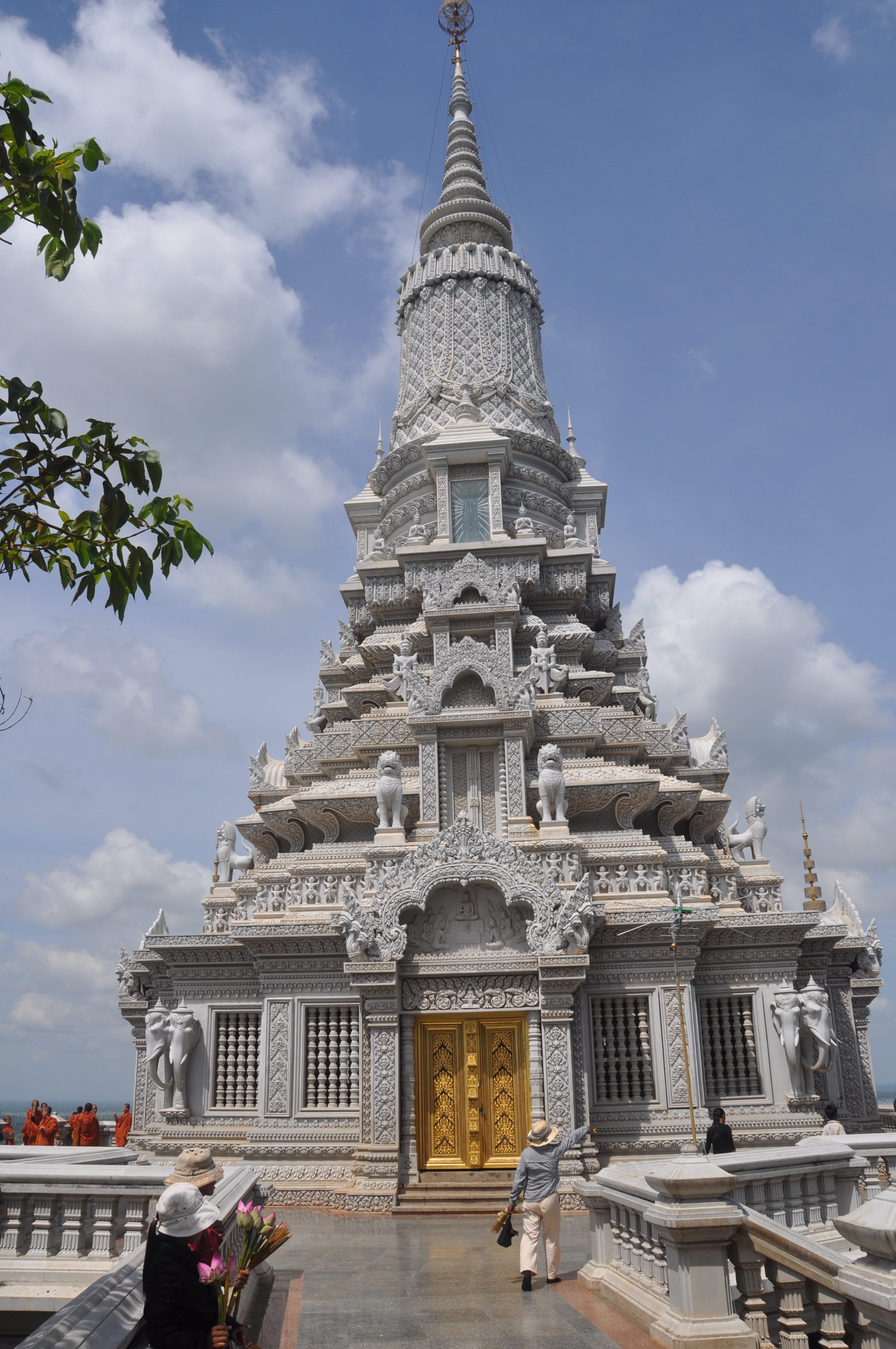
A STREET PHOTOGRAPHER

Bangkok, 21 December, 2014

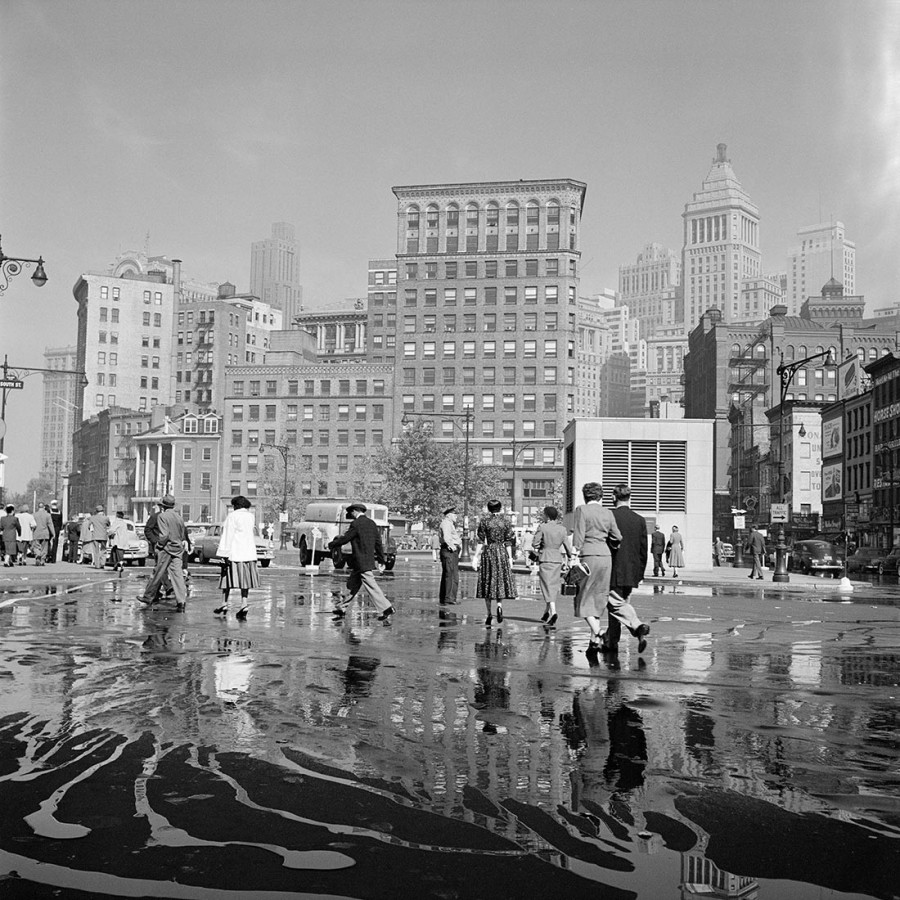
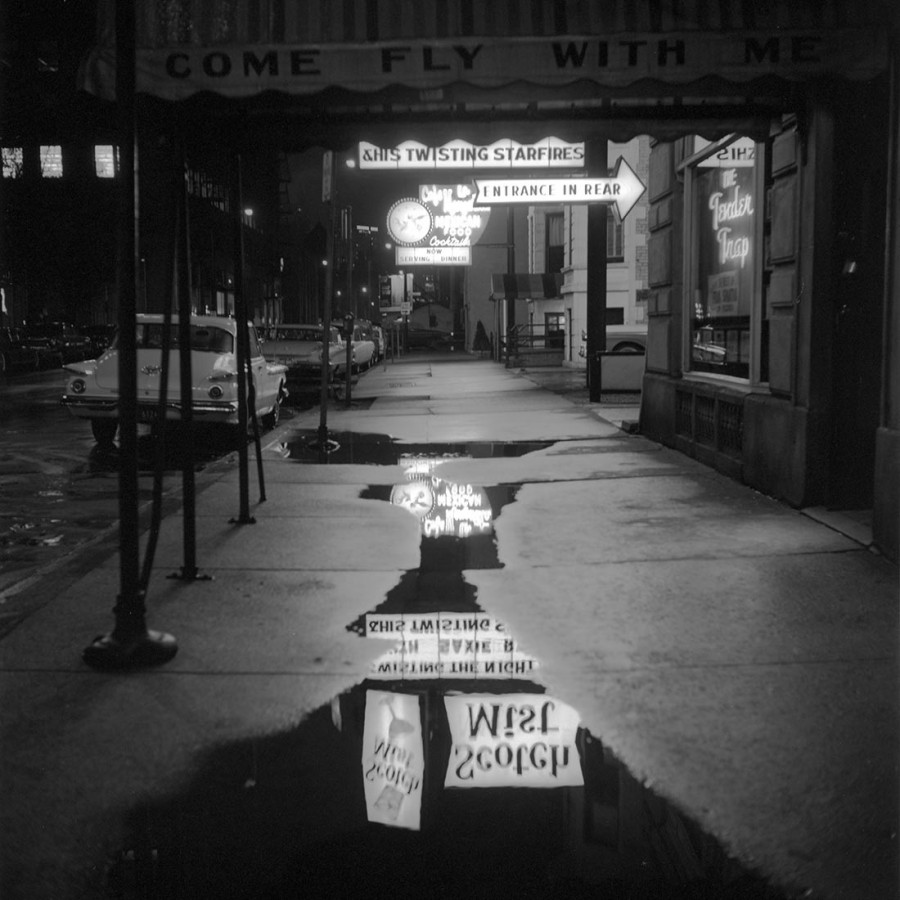
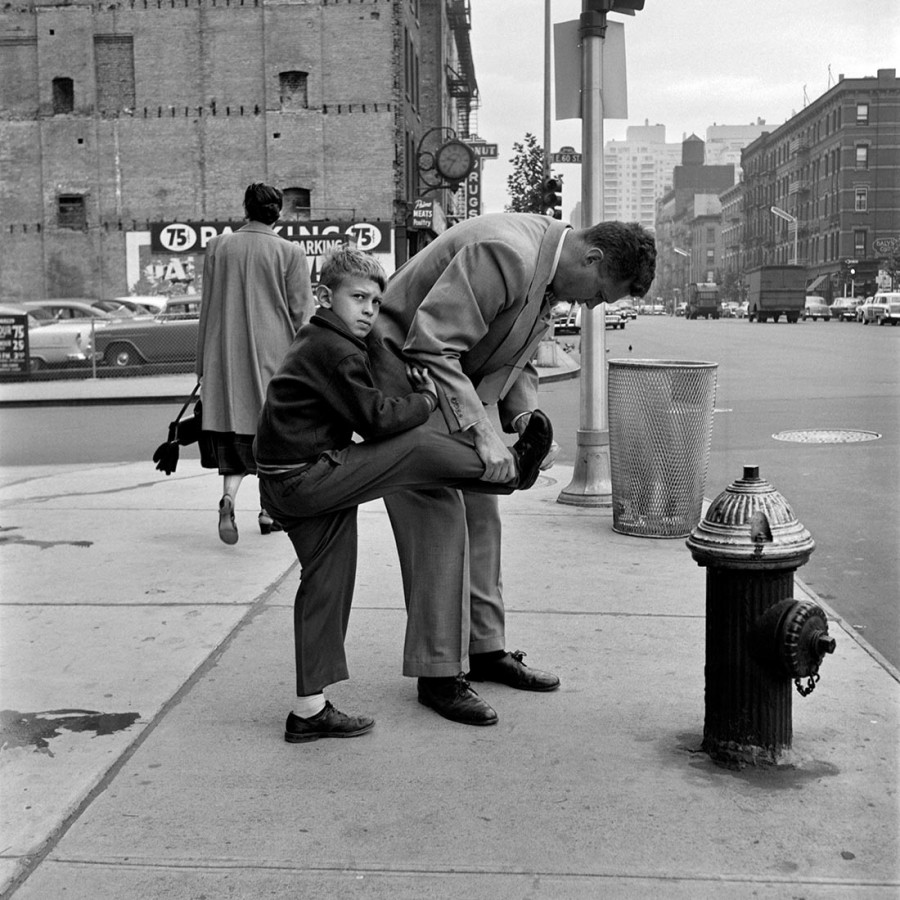
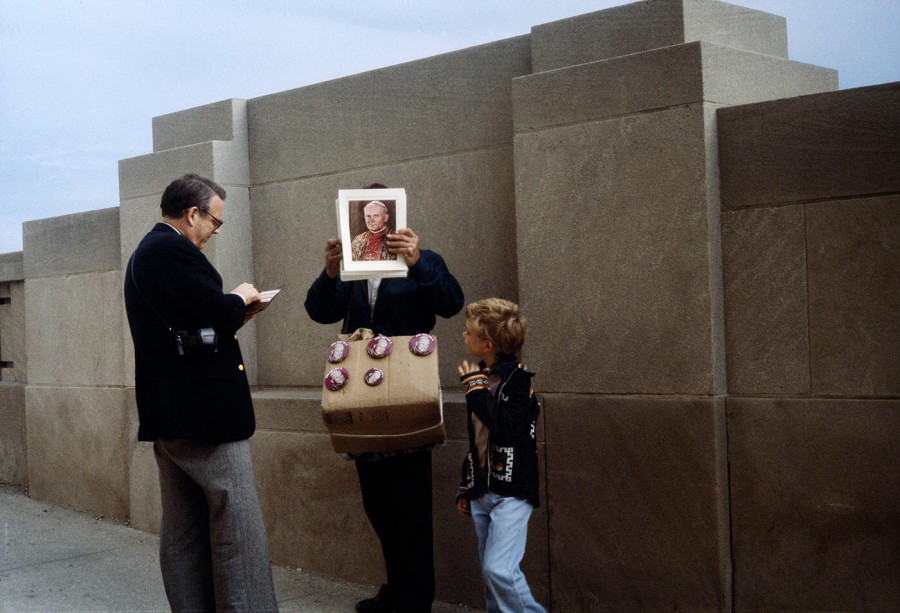
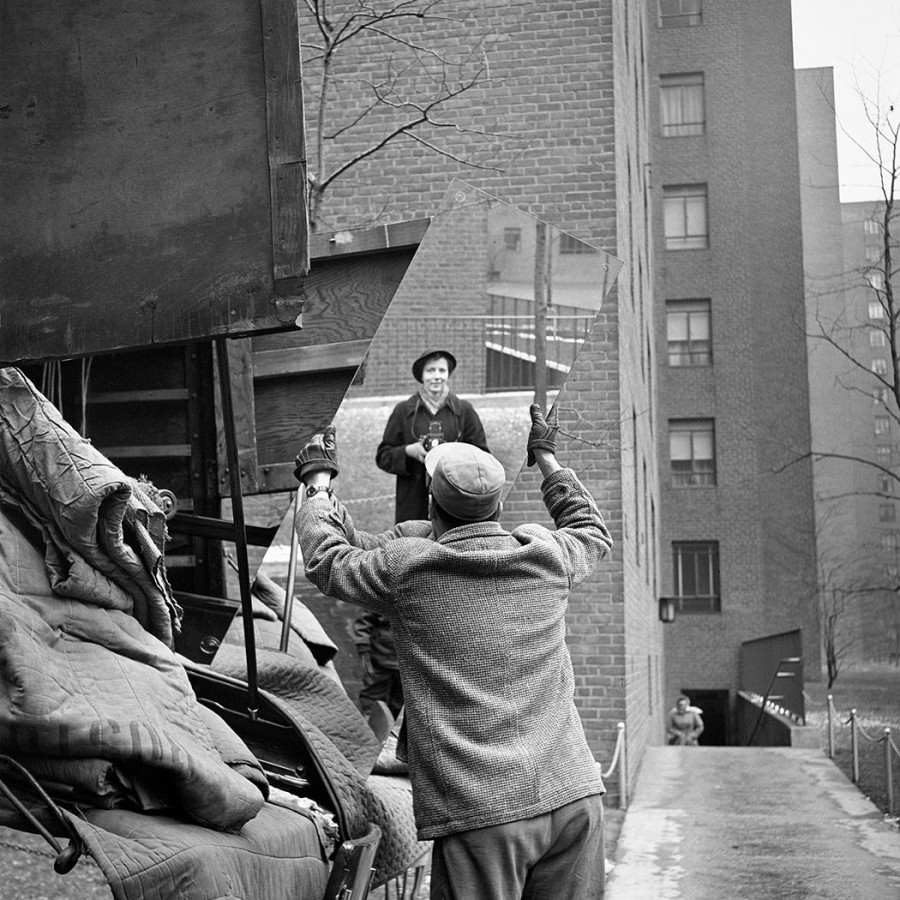
Her name was Vivian Maier. She died not long ago, in 2009, at the age of 83, a spinster and childless, and penniless. She had spent some forty years, from the mid-1950s on, being a nanny for various well-off families in the Chicago area.

And she was a gifted photographer of the streets, mainly those of Chicago and New York.

She spent every possible minute that she could taking photos: in all her free time, but also when she was taking her charges for walks or to the playgrounds, as well as on her one big trip around the world, which she made in the early sixties. She took hundreds of thousands of photos. But hardly any of these made it past the stage of negatives, and many didn’t even get that far; they just stayed as rolls of unprocessed film.

She was a compulsive hoarder. She kept all the negatives and all the film rolls, and the 8 mm films she made, and the audio tapes she recorded, and just about everything else she had ever owned or collected, in cardboard boxes, old suitcases, and other containers. As she moved from one nannying job to another, she offloaded her accumulating stuff into a commercial storage space. In 2007, after she failed to keep up with her payments, the storage company auctioned her stuff off.

It looked like her work was about to disappear. But a number of photo collectors bought at the auction. They recognized a spark of genius in her photos and started trying to publicize them. A first attempt by Ron Slattery in 2008, who posted some of her photos on the internet, failed to generate much interest. Then in October 2009, six months after she died, another of the collectors, John Maloof, put some of his trove of her photos on Flickr, linked them to his blog, and the results went viral (this is a very modern story). Things snowballed from there, and her work is now beginning to garner a fair amount of critical and popular praise.

Would Vivian Maier have wanted this recognition? That is one of the questions touched upon in a fascinating documentary which John Maloof put together entitled “Finding Vivian Maier”. He tells the story of how after his initial purchase of her stuff he went on a voyage of discovery of who she was and what she did – quite a detective story – and he interviews a number of the children she nannied and their parents to try to understand what kind of person she was. It was seeing this film that moved me to write this post. I highly recommend my readers to see it if they have not done so already. And, by the way, according to the people who had known her, the answer to the question with which I started this paragraph is, probably yes for her work, but she would have intensely disliked to have the light of publicity shone on her; she was a very private person.

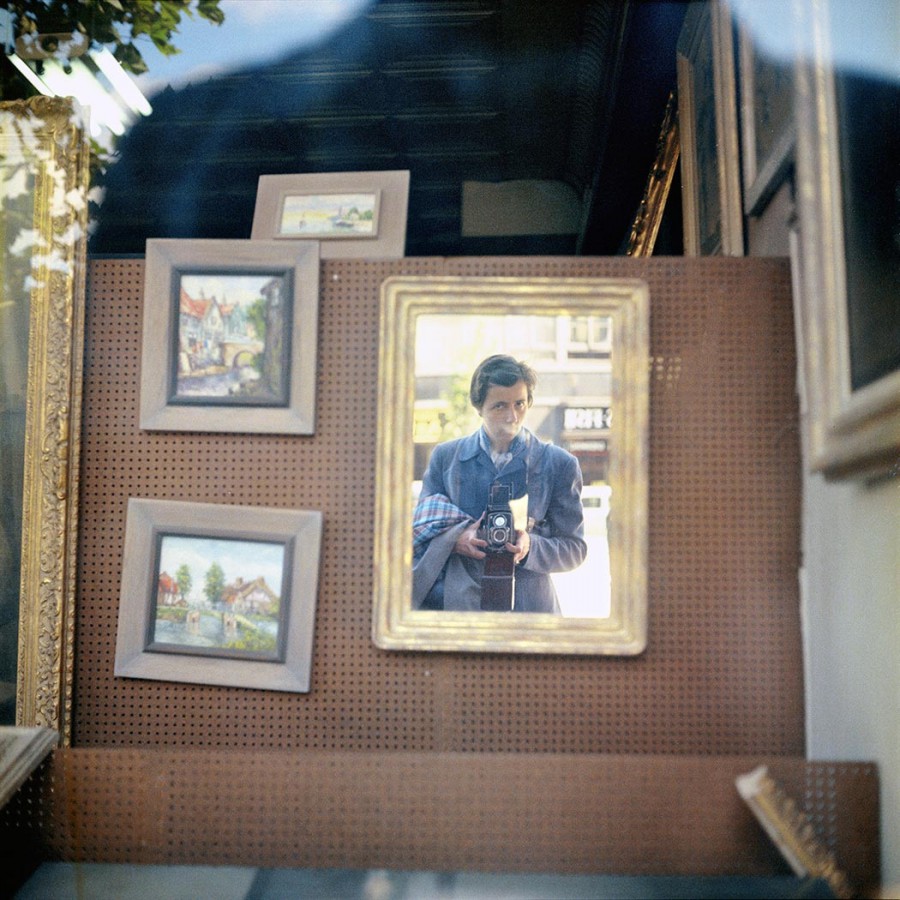
For those readers who want to get a taste of her work, I suggest you visit the site http://www.vivianmaier.com. I add here, from that same site, some of her photos which most struck me, to whet your appetite.
image

image

image

image

image

image

image

image

I prefer her black-and-white photos, but I add a few of her colour photos
image

image

image

That last one, with her shadow, leads naturally to a few of her self-portraits. She took a lot of photos of herself.
image

image


image

In a sad postscriptum, I have just read that Vivian Maier’s estate has got entangled in a challenge about who owns the copyright to her photos. The result is that it will be probably harder to see her works for the next several years. If my readers get a chance to see an exhibition, on no account miss it. It might be a long time before you get another chance.


COLOURING POLITICS

Bangkok, 9 December 2014

We have just finished celebrating H.M. the King’s birthday here in Bangkok. Truth to tell, “celebrating” may be a little of an overstatement. My wife and I found it quite a muted affair. For instance, the fireworks in the evening were really quite brief and modest, while a drive-by of high officials, which we just happened to find ourselves witnesses to, was greeted with silence by the folk lining the road side. What was out in full force, though, were the yellow shirts. They had already been popping up with greater and greater insistence in the days running up to the great day. But on the birthday itself the pavements were a sea of yellow.
image
Many were wearing yellow T-shirts made specifically for the purpose, but many others (who didn’t get included in the official photos) gave the impression of having grabbed the first yellow, or near-yellow, shirt or blouse they could find in their wardrobe. So the palette of yellows went all the way from pastel yellow through to citrine. Given the recent history of Thailand, one began to wonder if the choice of hue was a political statement of some sort. That man with the orange shirt, for instance, was it just the closest thing he had to yellow in his drawer, or was it actually the closest he dared get to the dreaded colour red? Or that woman over there with the pastel yellow blouse, had she simply been caught short without anything really yellow in her closet, or was she actually signalling her lack of enthusiasm for the whole exercise? Or what about the few people without yellow shirts? What, if anything, was their message? That student, for example, with the green shirt, what was he trying to tell us?

Thus are the seeds of paranoia sown ….

(By the way, for those of you who may be interested, the King’s colour is yellow because he was born on a Monday. Based on Hindu mythology, Thai (and Khmer) tradition assigns different colours to each day. For those of you who may be fascinated by this arcane point, I recommend you visit the following site on Wikipedia)

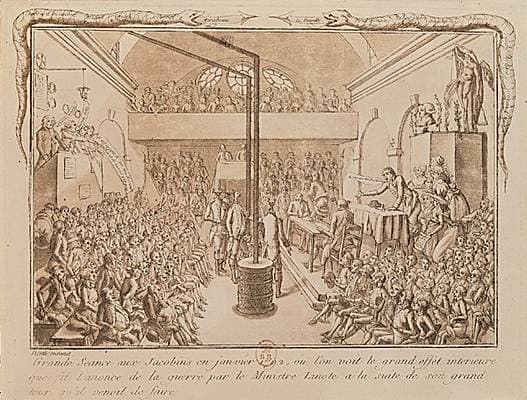
Colours have been recruited to support political quarrels since time immemorial. When I was young, red was the colour of Marxism in all its forms (Social-Democratic, Socialist, Marxist-Leninist, Maoist, Vietminh, Khmer Rouge, …). We have the French Jacobins
image
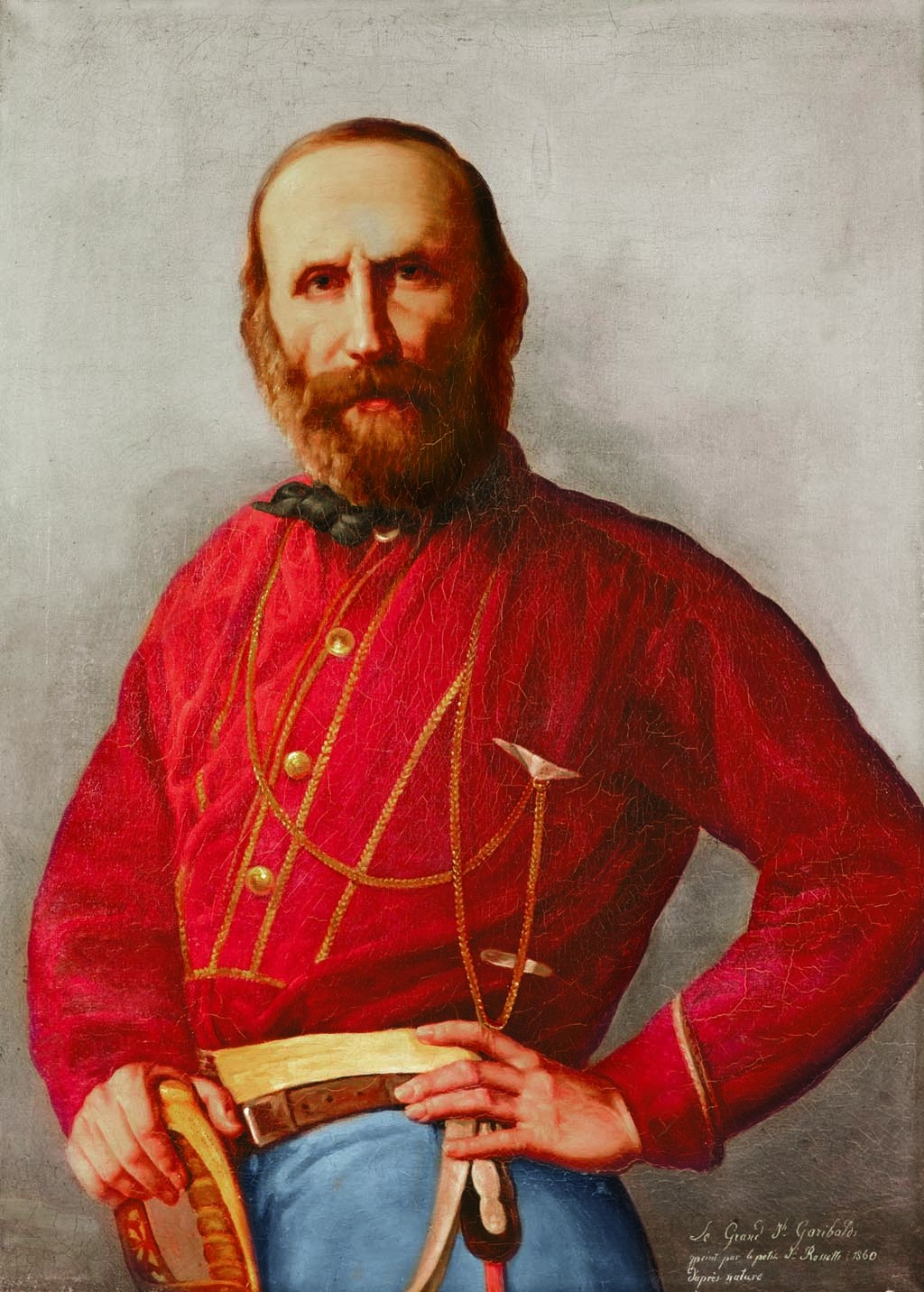
to thank for this association of red with the left of the political spectrum. For reasons which are too complicated to explain here, the Jacobins adopted the red flag as their own during the French Revolution, and the tradition continued in the European Left thereafter. I suppose we are all aware of the red symbols of the Left: the flags, the official art, the scarves, the buttons. But my preferred symbol of redness are the Garibaldini, those 1,000 or so red-shirted volunteers who, led by Giuseppe Garibaldi, sailed away in 1860 from Genoa to Sicily and in a few short months of fighting completed the unification of Italy.
image
I have to add here a painting of the Great Man himself, whose statue graces at least one square, and whose name graces at least one street, in every village, town, and city of Italy.

image

I like Garibaldi, I’ve liked him ever since as a teenager I studied the unification of Italy for my O level History. By way of introduction to Garibaldi, our teacher told us about his earlier exploits in South America. The only thing that sticks in my mind about these worthy endeavors is our teacher’s description of how Garibaldi met his wife. He was on a boat on the Río de la Plata, where he was inspecting something or other through a telescope. He noticed his future wife on the bank, washing clothes or some such. After one look at her, he said (and here the teacher put on a thick Italian accent and struck an operatic pose), “Brring me to herr!”

But back to colours and politics. In the interwar years the red of the Socialists and Communists was violently opposed by various other colours. It was the black-shirted Fascists in Italy, seen here in the March on Rome in 1922
image
and the black-shirted Fascists in Spain, seen here jubilating at the fall of Irun during the Spanish Civil War.
image
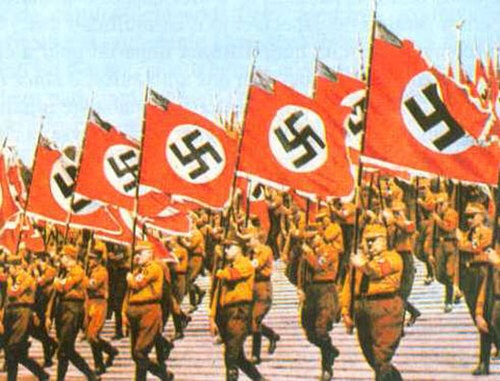
In Germany, it was the brown-shirted Nazis.
image
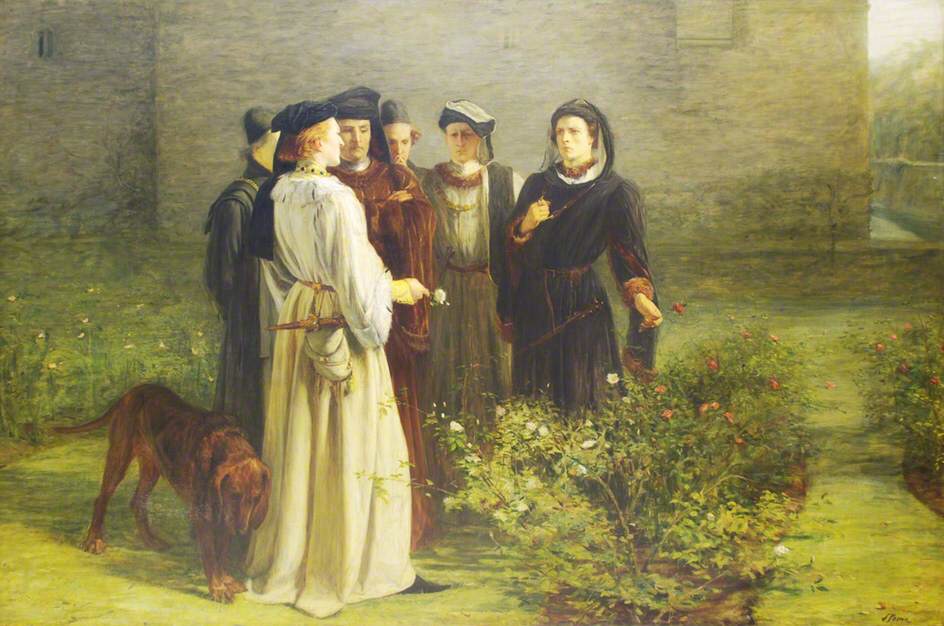
From here my memory leaves coloured shirts and vaults back some 500 years or so to the gardens at the Inner Temple in London, where – at least, according to Shakespeare in Henry VI, Part I – the Lords of Court chose which side to be on in the upcoming War of the Roses, by plucking either a white rose (the Yorkists) or a red rose (the Lancastrians) from rose bushes growing in the garden. Colours again, defining which side you would be taking in the looming political struggle. The scene is caught in this much romanticized painting from the 1870s.

image
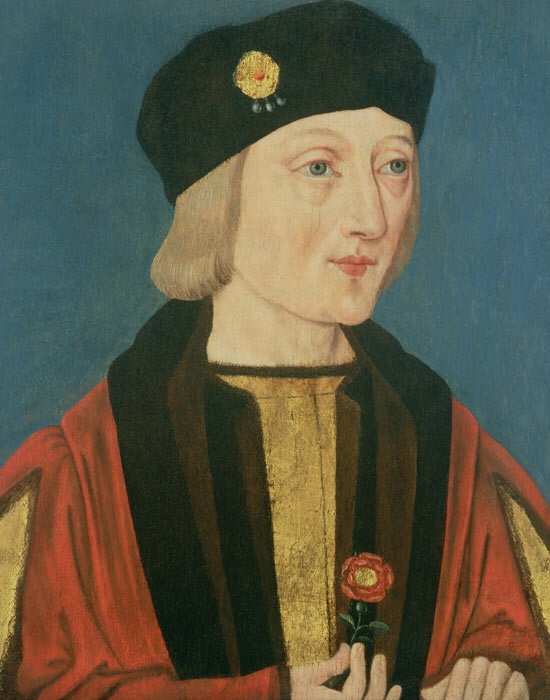
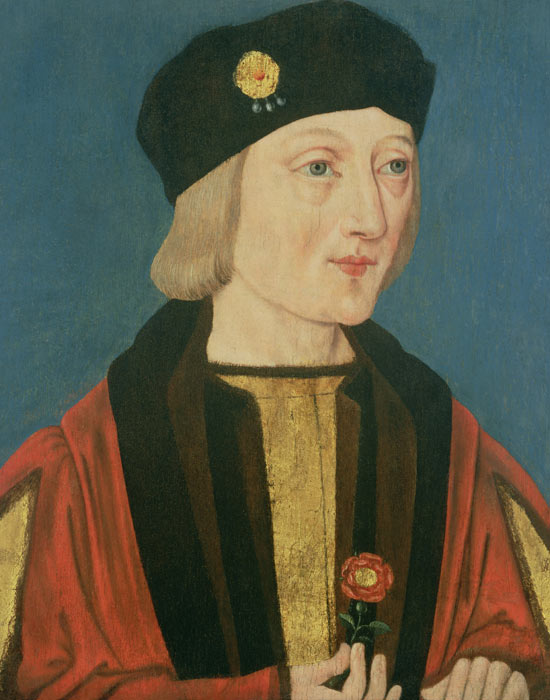
The Lancastrian Red Roses and the Yorkist White Roses fought it out for 30 years until Richard III was unhorsed and killed at the Battle of Bosworth Field, and Henry VII was crowned in his place. As a symbol of a once-more unified country, Henry devised a new badge for his dynasty, a mixed red-and-white rose now called the Tudor Rose.
image
A very clever piece of political manipulation through colour …

Talking of using colours for political purposes, we can fast-forward 300 years to the French Revolution and watch the storming of the Bastille.
image
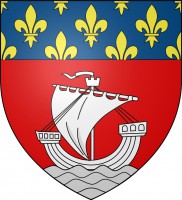
The Paris militia played a prominent role in the attack. To distinguish themselves from other groups taking part, they wore a blue and red cockade in their hats, Paris’s traditional colours.

image

The people of Paris were elated by this victory. But the more moderate – more aristocratic – elements of the revolutionary camp were alarmed by what they saw as rampaging – and armed – mobs. It was decided to create a National Guard out of the Paris militia under the command of the Marquis de Lafayette, a moderate revolutionary with military experience (gained during the American Revolution) and with the trust of King Louis XVI. Lafayette proposed to add white to the militia’s blue and red cockade. His argument was that this would turn what was mainly a Parisian militia into a national force: white was then the national colour.
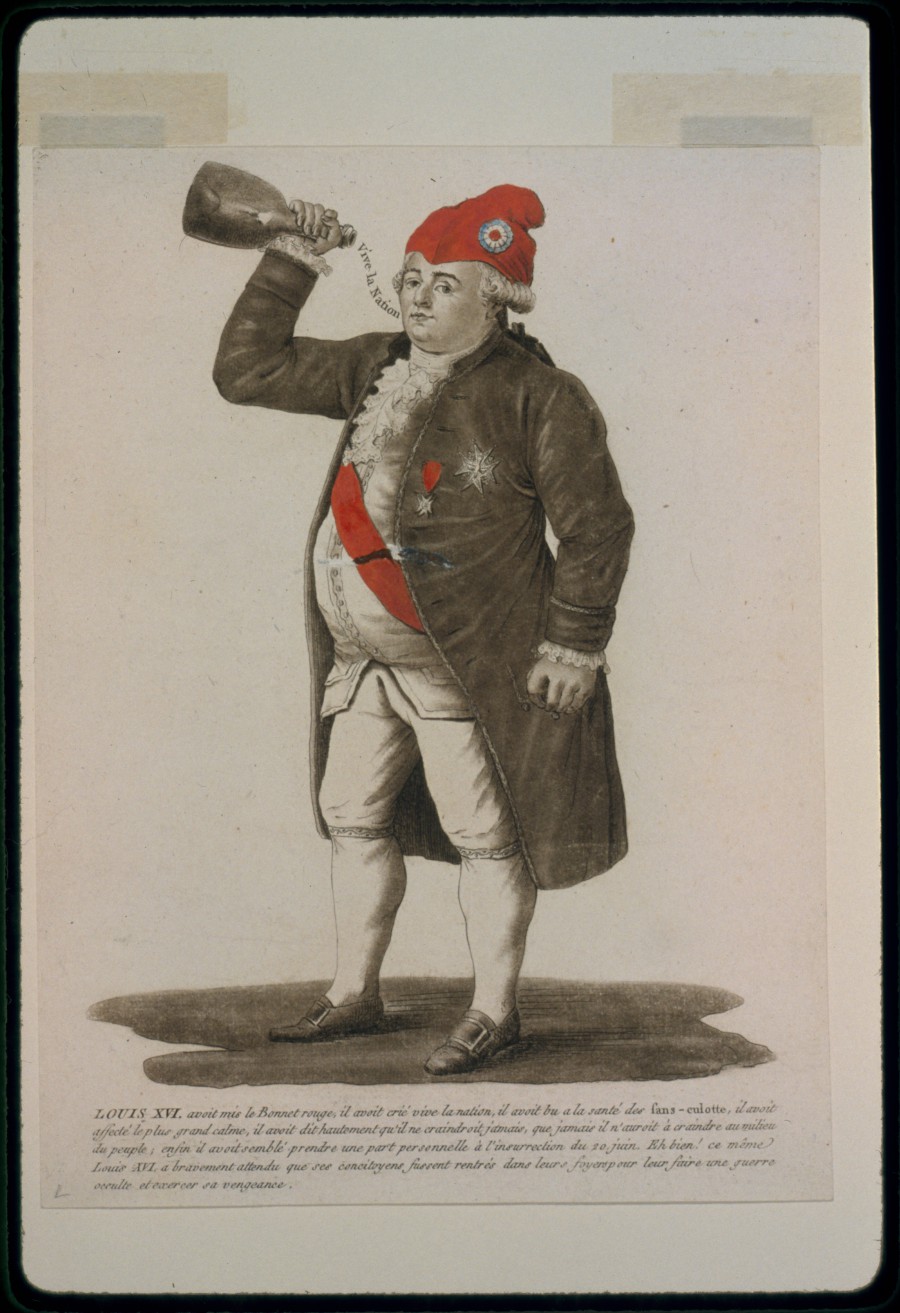
imageBut in a political system where all things national were the King’s, this was also a way of saying “revolutionaries yes, but still loyal to the King”. Well, things didn’t quite work out that way, but thus was born the red, white, and blue cockade, which even King Louis gracefully accepted to wear – at least for a little while.

image

The cockade morphed into the flag, which became a symbol of hope for some

image
and the dread of many more as French troops unfurled like a tsunami over much of Europe.

image

Rampaging mobs makes my mind spin back more than a thousand years to Constantinople and to its hippodrome, home of the city’s chariot races. Chariot racing was to the Romans and the Byzantines what soccer is today to many people the world over, a mania, a fixation. All over the Roman world, there were four factions, the Greens, the Blues, the Whites, and the Reds, and all chariots in a race belonged to one of these four factions. The charioteers, as well as the fans, wore the colours of their faction, like in this mosaic in Lyon.

image

Like soccer players today, charioteers could and did change faction, but like soccer fans today the fans never did. If you chose to follow the Greens, you were a Green for life. Like soccer today, the enthusiasm of the fans inside the hippodrome often turned into hooliganism and gang warfare outside it. Like soccer today in some parts of the world where there is no recognized outlet for political and social frustrations, factional fighting became a way to vent political anger and score political points.

So it was in Constantinople in 532 AD, when Justinian I was Emperor. By now, there were only really two chariot factions that counted, the Blues and the Greens. Justinian supported the Blues so his enemies at court naturally supported the Greens. Justinian was in the midst of negotiating a badly-needed peace settlement with the Persians, and he had to have peace on the home front. But the people of Constantinople were angry: taxes were crushingly high. There had been politically motivated rioting after some earlier chariot races and a number of rioters had been hanged. But this did not calm excited spirits. For some strange reason, Justinian thought another day of chariot races would pour oil over troubled waters. The races started alright, with Blues and Greens vociferously supporting their teams, even though they also hurled insults at the Emperor, sitting – no doubt a bit nervously – in the imperial box. By the end, though, the two factions united in a common roar of “Nika! Conquer!” With that, the spectators burst out of the hippodrome and assaulted the palace, which conveniently abutted the hippodrome. For the next five days, they laid siege to it, demanding reductions in taxes and the dismissal of the prefect responsible for collecting the taxes and the quaestor responsible for rewriting the tax code. For good measure, they declared Justinian deposed and raised a new Emperor in his place. In the resulting mayhem, fires broke out which eventually burned down half the city.

Initially, Justinian panicked and was looking to scarper. But his wife Theodora was made of sterner stuff and stiffened his spine. Once his funk had passed, Justinian reverted to a true-and-tried method: gold. He got his eunuch Narses to go into the hippodrome, where the Greens and Blues were about to crown the new Emperor, with a large bag of gold. Narses quietly joined the heads of the Blue faction. He reminded them that Justinian was a Blue and that he had always supported them, he pointed out that the new Emperor was a Green and they could surely imagine what would happen to them under him, and then he distributed the gold. The faction leaders held a quiet conference, then spread the word among their followers. In the middle of the coronation, the Blues suddenly all stormed out of the hippodrome, leaving the Greens sitting stunned in their seats. At which point, imperial troops under trusted generals burst into the hippodrome and massacred all and sundry. It is reported that thirty thousand people died that day.

All in the name of colours …

Colours have been hitched to the wagon of many other political causes. Green has morphed from the colour of Byzantine charioteering factions to the colour of modern environmental factions, and we now hear of Deep Green and Light Green factions, each trading barbed – and not so barbed – insults about the depth of their commitment to the cause. We have Hindu fanatics cladding themselves in the colour saffron, a colour with deep religious connotations in Hinduism, and going on rampages against non-Hindus. And on and on … Readers who are interested in the topic can do no worse than go to this Wikipedia site.

But, misquoting Elton John, all I want to say is “Don’t shoot me, I’m only a colour”.

_______________
Yellow-shirts celebrating the King’s birthday: http://www.bangkokpost.com/multimedia/photo/447447/king-birthday
Meeting of a Jacobin club: http://www.larousse.fr/encyclopedie/data/images/1004994-Club_des_Jacobins.jpg (in http://www.larousse.fr/encyclopedie/divers/club_des_Jacobins/125450)
Garibaldini fighting: http://www.ondadelsud.it/wp-content/uploads/2011/04/Marsala-1860-Sbarco-dei-Mille.jpg (in http://www.ondadelsud.it/?p=4664)
Garibaldi: http://www.museotorino.it/images/86/94/ce/b0/8694ceb03de848108691d55482fd1c40-1.jpg?VSCL=100 (in http://www.museotorino.it/view/s/238dcc0376d444d2b6decf0378c13e6c)
The March on Rome: http://www.history.com/news/wp-content/uploads/2012/10/mussolini-march-on-rome.jpg (in http://www.history.com/news/9-things-you-may-not-know-about-mussolini)
Spanish fascists in Irun: http://pix.avaxnews.com/avaxnews/6a/1d/00001d6a_medium.jpeg (in http://avaxnews.net/educative/Spanish_Civil_War_2.html)
Brown shirts marching: http://img2.blog.zdn.vn/37516513.jpg (in http://me.zing.vn/zb/dt/toyotasolara/17039283?from=my)
Scene in the Temple Garden: http://ichef.bbci.co.uk/arts/yourpaintings/images/paintings/warg/large/nml_warg_wag_2712_large.jpg (in http://www.bbc.co.uk/arts/yourpaintings/paintings/scene-in-the-temple-garden-98909)
Henry VII and Tudor rose: http://static.guim.co.uk/sys-images/Admin/BkFill/Default_image_group/2012/3/1/1330616510280/Henry-VII-001.jpg (in http://www.theguardian.com/books/2012/mar/02/tudors-henry-vii-wars-roses)
Storming of the Bastille: http://media-1.web.britannica.com/eb-media/98/90498-004-CEB880DC.jpg (in http://global.britannica.com/EBchecked/topic/55622/Bastille)
Arms of Paris: http://upload.wikimedia.org/wikipedia/commons/thumb/c/ca/Blason_paris_75.svg/931px-Blason_paris_75.svg.png ( in http://en.m.wikipedia.org/wiki/File:Blason_paris_75.svg)
Royal standard of France: http://en.m.wikipedia.org/wiki/Royal_Standard_of_France#/image/File:Pavillon_royal_de_France.svg (in http://en.m.wikipedia.org/wiki/Royal_Standard_of_France#Middle_Ages)
Louis XVI: http://upload.wikimedia.org/wikipedia/commons/7/74/Louis_le_dernier.jpg (in http://commons.m.wikimedia.org/wiki/File:Louis_le_dernier.jpg)
Liberty guiding the People: http://upload.wikimedia.org/wikipedia/commons/thumb/c/cc/Eugène_Delacroix_-_La_liberté_guidant_le_peuple-2.jpg/967px-Eugène_Delacroix_-_La_liberté_guidant_le_peuple-2.jpg (in http://commons.m.wikimedia.org/wiki/File:Eugène_Delacroix_-_La_liberté_guidant_le_peuple-2.jpg)
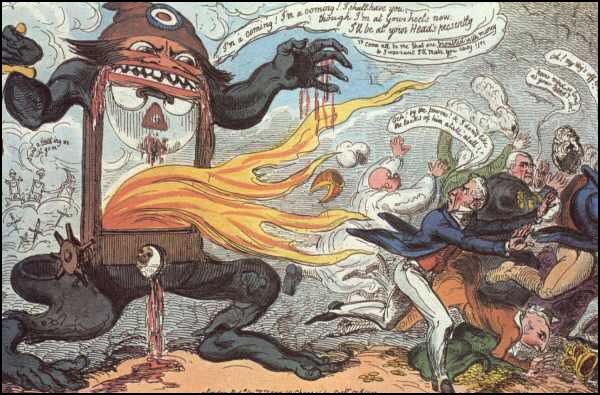
Revolution as ogre: http://goodcomics.comicbookresources.com/wp-content/uploads/2008/10/cruikshank14.jpg (in http://pixgood.com/french-revolution-political-cartoon.html)
Mosaic of chariot race: http://travellingman.jalbum.net/Lyon%202011/slides/P1120092.JPG (in http://travellingman.jalbum.net/Lyon%202011/slides/P1120092.html)

FOUR FACES

Bangkok, 5 December 2014

I’ve just come back from a trip to Phnom Penh. My wife accompanied me, so for a couple of days, while I was doing the official rounds and meeting the official people, she was nosing around the city enjoying herself. She regaled me every evening with her discoveries, making me green with jealousy. But we had decided that I would take a day off at the end of my official rounds and spend a long weekend together being tourists, so I told myself to be patient and bide my time. On Friday, Andy (not his real name, but tour guides in this part of the world will often adopt a Western name to make it easier for us dumb Westerners), Andy as I say, was waiting for for us at the door of the hotel with his tuk-tuk

image

in which he swept us off (well, “swept off” may be exaggerated, given the venerable speed at which tuk-tuks go) for a visit to Oudong, Cambodia’s capital prior to Phnom Penh. After puttering across the flat plain surrounding Phnom Penh for a while, we finally sighted in the distance the phnom (“hill” in Khmer) which had been the centre of Oudong.
image
After some more puttering, we arrived at the base of this hill, and were immediately surrounded by a cloud of boys shouting greetings, asking us where we came from, and directing us to the loo (after nearly two hours of puttering, we were both more than ready to answer calls of nature).

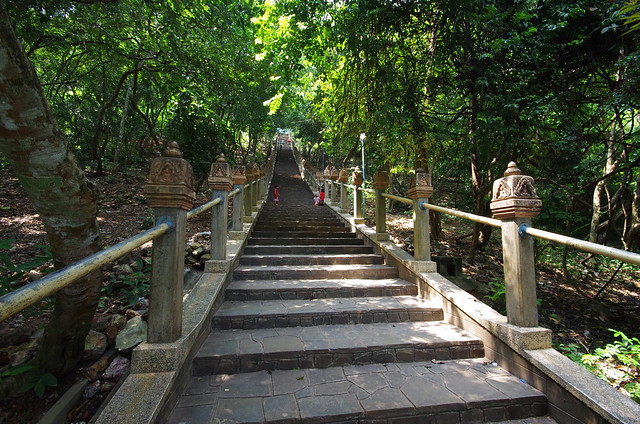
Following this pit stop, we made for the steps which would carry us to the top of the phnom. We huffed and we puffed slowly up the steps – all 509 of themimage
accompanied by a charming little boy, one of the cloud, who went by the name of Monette. His English was approximate, but he used it bravely to explain to us the sights we passed, the first of which was some exceedingly cheeky monkeys who hung around the steps like a pack of bad boys, ready to snatch lotus flowers from the unwary passer-by and snack on their stamens (or do I mean their pistils?)

image

One did just that to a group of young women in front of us, who came running back down the stairs screaming and clutching at each other. I moved forward bravely towards the insolent monkey as he sat on the steps munching the stamens (or do I mean pistils?). He looked me in the eye, and calmly walked off into the surrounding bushes holding his booty and showing me his bum. I mustered as much of my dignity as I could and Carried On.

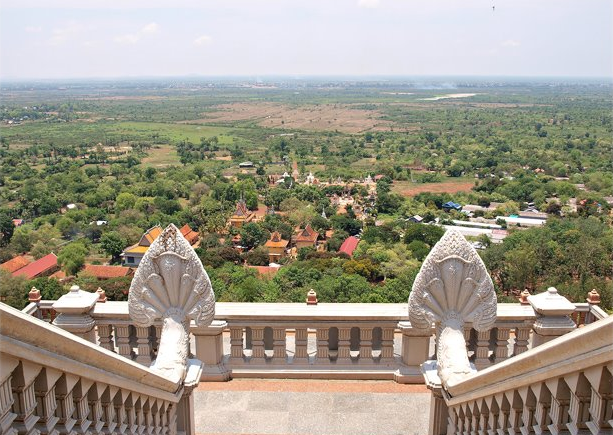
With one final heaving huff and one further ragged puff, we staggered to the top. With the excuse of admiring the view

image
we took a break. But soon we turned around and took in the first of five stupas which crown the hill.

image

After walking around it, we wended our way along the crest, from one stupa to the next, with Monette scampering along and giving us fractured, splintered explanations, until we got to the last, a stupa with four faces.

image

Well! This was a pleasant discovery! Those four faces staring benevolently out to the four cardinal points were intriguing indeed.

image

I must confess, my first – wholly irreverent – thought was that they reminded me of Thomas the Tank Engine of my youth.

image

But then another memory floated to the surface, from several years ago when my wife and I visited Angkor Wat, several hundred kilometers upriver from where we were currently standing, on the edges of Tonle Sap lake: Prasat Bayon, the shrine to Mahayana Buddhism, the temple of the 200 faces of Lokesvara, the bodhisattva of compassion. Yes, this must have been the model of the stupa before me.

image

image

image

Ah, what a lovely, lovely temple is Prasat Bayon! The bodhisattva who embodies the compassion of all Buddhas smiling at you wherever you stand, wherever you look. A thousand rays of compassion sweeping us visitors and what had been the surrounding city.

But King Jayavarman VII, who built the temple and who replaced the Khmers’ state religion of Hinduism with Mahayana Buddhism (and whose face, many think, was the model of the bodhisattvas at Prasat Bayon)

image

merely copied from a previous model for his design, that of Brahma, the Hindu god of creation. Brahma is very often represented with four heads, each reading one of the four Vedas. Temples dedicated to him are rare, but there was one close to Angkor Wat, on Phnom Bok. The quadruple-headed bust below, from that temple, is now in the Musée Guimet in Paris, no doubt “taken in for its protection” (or do I mean filched?) by the-then French colonial masters.

image

There is also a regionally famous Brahma-derived statue here in Bangkok, down the road (as it were) from where we live: Phra Phrom (a Thai rendition of Brahma).

image

He is considered the deity of good fortune and protection. Since he has a solid following among the Chinese of Singapore, Hong Kong and Taiwan, and knowing the proclivity of the Chinese to gamble, I rather suspect that Brahma has gone from being the god of creation to the god of gamblers. How the mighty have fallen …

And on this melancholy note, it was time to leave my reveries and move on. My wife and I made our way back down the hill, at the bottom of which we gave Monette 10 dollars for his services, enjoining him to use it for his schooling (he had informed us that he was going to a paying school) but fearing that it might end up instead in the pockets of his “minders”. We picked our way past the rubbish left by previous visitors and a monkey snacking on the boiled rice thrown away by one of them, we climbed into Andy’s tuk-tuk, and we puttered our way back to Phnom Penh.

____________________
Andy’ tuk-tuk: https://www.facebook.com/AndyFriendlyTukTukPhnomPenh/photos/pcb.290625764427281/290625417760649/?type=1&theater (in https://www.facebook.com/AndyFriendlyTukTukPhnomPenh)
Oudong from a distance: http://static.panoramio.com/photos/large/32298005.jpg (in http://www.panoramio.com/m/photo/32298005)
Stairs at Oudong: http://farm3.staticflickr.com/2825/10724616273_e3e9cf04b7_z.jpg (in http://iwandered.net/2013/11/07/day-trip-to-oudong-cambodia/)
Monkey: https://c2.staticflickr.com/8/7420/8993459951_7619376cd4_b.jpg (in https://www.flickr.com/photos/kamimura4401/8993459951/)
View from the top: http://1.bp.blogspot.com/-Yk57J-xzt4Y/UFLx1bIbIrI/AAAAAAAABPA/Mdq0Z5_DBuM/s1600/Oudong6.png (in http://www.camtravel.info/2012/09/oudong-mountain-cambodia.html#.VIB9hGIaySM)
First stupa: http://upload.wikimedia.org/wikipedia/commons/3/30/Sanchak_Mony_Chedei.jpg (in http://en.m.wikipedia.org/wiki/Oudong)
Stupa with faces: https://c2.staticflickr.com/4/3018/3087092115_26ee767788_b.jpg (in https://www.flickr.com/photos/zapata_k/3087092115/)
Stupa with faces – close up: http://1.bp.blogspot.com/-aAJEmmCf6h8/Um5lWw9rdxI/AAAAAAAAxbg/FBPq3MXQ0_U/s1600/23+Close+Up+of+Four-faced+Top+Cambodia+Oudong+Temple+Cycling-358.jpg (in http://jotarofootsteps.blogspot.com/2013/10/sites-oudong-temple-cambodia.html)
Thomas the tank engine: http://3.bp.blogspot.com/-KiFNIBZmqPI/TxKoxis-FrI/AAAAAAAAAJY/sVCzG4VTLd0/s1600/ThomastheTankEngine.jpg (in http://latestnewsfromtpandt.blogspot.com/2012/01/thomas-tank-engine-review.html)
Bayon temple-1: http://www.rickmann-uk.com/wp-content/uploads/Bayon-three-faces.jpg (in http://www.rickmann-uk.com/index.php/2007/06/05/angkor-temples-cambodia/)
Bayon temple-2: http://jcinnamonphotography.files.wordpress.com/2011/10/bayon-temple-faces-2.jpg (in http://jcinnamonphotography.wordpress.com)
Bayon temple-3: http://en.m.wikipedia.org/wiki/Bayon#/image/File:Das_Lächeln_von_Angkor.jpg (in http://en.m.wikipedia.org/wiki/Bayon)
King Jayavarman VII: http://en.m.wikipedia.org/wiki/Bayon#/image/File:JayavarmanVII.jpg (in http://en.m.wikipedia.org/wiki/Bayon)
Brahma: http://en.m.wikipedia.org/wiki/Brahma#/image/File:Brahma_Musée_Guimet_1197_1.jpg (in http://en.m.wikipedia.org/wiki/Brahma#Temples)
Phra Phrom: http://en.m.wikipedia.org/wiki/Brahma#/image/File:Thai_4_Buddies.jpg (in http://en.m.wikipedia.org/wiki/Brahma#Temples)

KEEP IT SIMPLE

Bangkok, 19 November, 2014

I was in Myanmar last week for the first time in my life, with a team of colleagues. Unfortunately, our trip coincided with an ASEAN Summit in the new capital Nay Pyi Taw, which was attended by sundry political worthies, including President Obama and Premier Li Keqiang. We seemed to have spent most of the week fleeing from these worthies. We hurriedly visited various government Ministries in Nay Pyi Taw in the two days before the Summit started and rode out of town to Yangon the night the politicos started arriving. We were congratulating ourselves on having missed the craziness which usually accompanies the presence of political heavyweights, but we had not reckoned on President Obama following us down to Yangon. His motorcading around the city to meet with Aung San Suu Kyi and do various other things like visit a church snarled Yangon’s already chronically congested traffic and made our lives a misery as we threaded our way through back roads to arrive more or less on time at our various meetings.

But actually this post has nothing to do with President Obama or any other Big Cheese. It has to do with a stop we made somewhere in all this threading, at a market. One member of the team had made promises to his wife to bring a little something back to her, and the other team members thought this was an ideal occasion to pick up some Burmese bibelots. Unwillingly, I tagged along. As I feared, the market was a tourist trap: store after store of rubbish and store keepers hovering ready to pounce. But I preferred to walk around grouchily than sit in the van grouchily.

I had a faint glimmer of hope when I came across a store which sold lacquerware from Bagan. I’d read about the ancient Burmese king who had conquered his way through northern Thailand, Laos and over to Yunnan, and brought back skilled lacquerware craftsmen in his baggage train, using them to create a new luxury industry in his capital Pagan. Might I find something worth contemplating in the store?

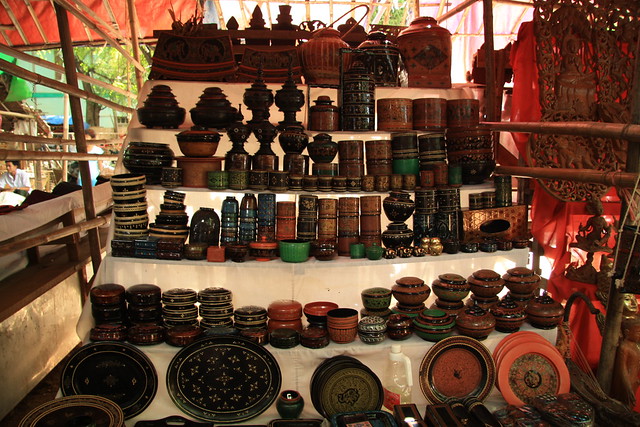
Alas not. For one thing, I cannot stand places which look like this.

image

All that stuff pressing claustrophobically in on you! The feeling of being the proverbial elephant in a china shop, bumping into something and bringing mounds of breakables crashing down around your ears! My immediate reaction is to run out of such places. But I controlled my urge to run and looked. And liked not what I saw. This picture shows the typical designs being offered for sale.
image
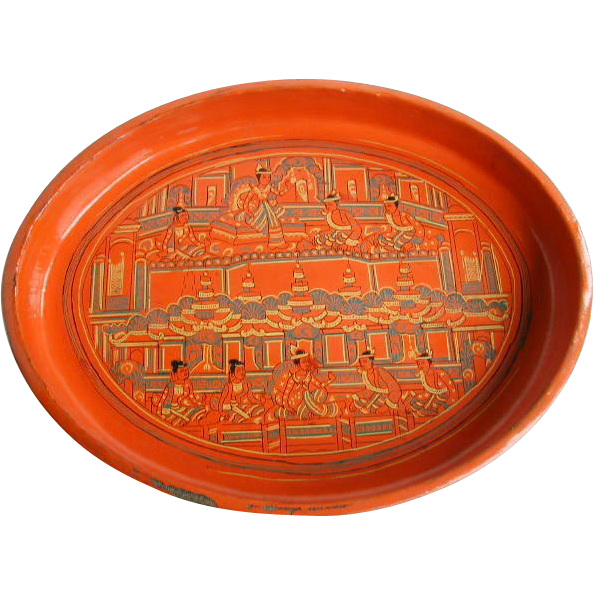
Too much, too much! Too – damned – much! All those dense, dense designs. It makes me think of Australian Aboriginal art, which I wrote about in an earlier post. In art, in design, the KISS principle applies (Keep It Simple, Stupid!). Now it could just be that modern makers of Bagan lacquerware use these designs because tourists have shown a preference for them, and he who pays the piper calls the tune. But a look at older designs suggests that the Burmese kings and their aristocracy also liked busy designs, although this is a good deal better than the modern stuff.
image
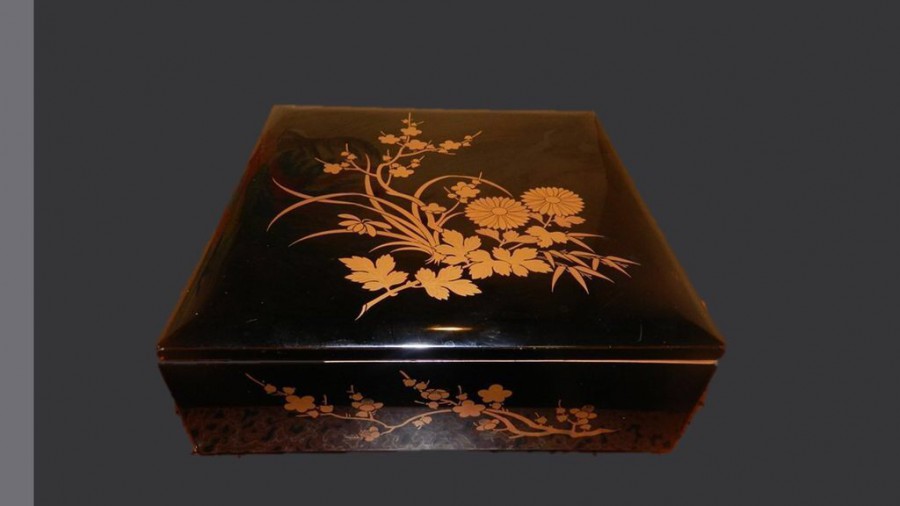
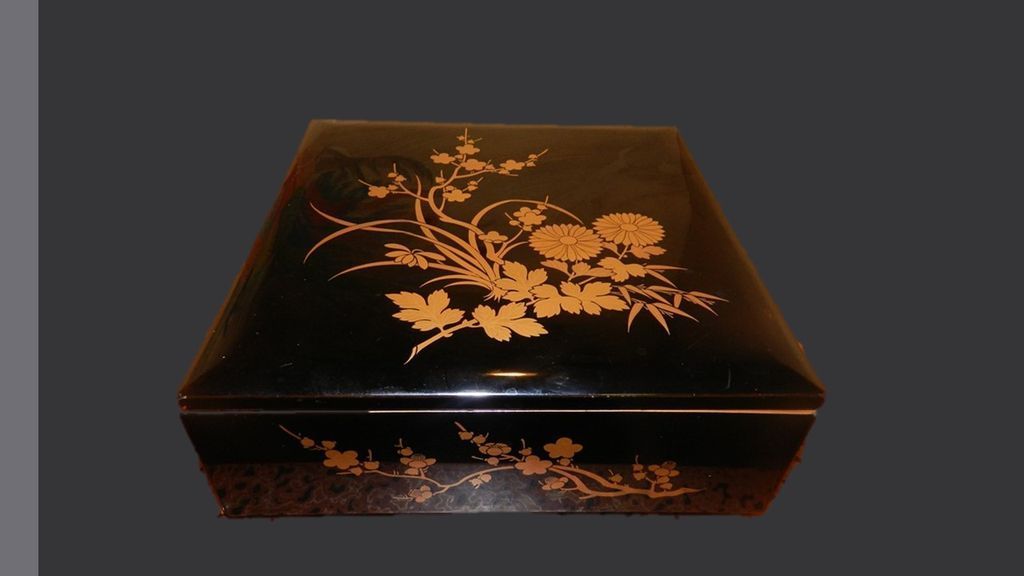
No, give me Japanese lacquerware any day. Look at this bento box in the maki-e style
image
Or this box in the Aizu style
image
Or this tray in the Negoro style (where the upper red layers of lacquer are intended to gradually wear away with use, revealing the black lacquer underneath).
image
These are old fashioned if not antiques. Modern Japanese lacquerware is just as lovely. Look at this:
image
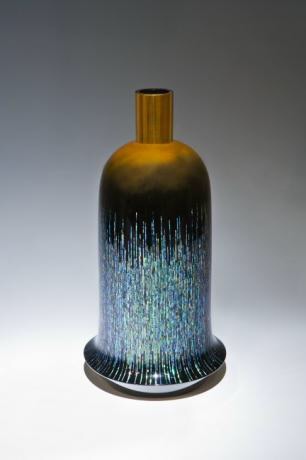
Or if you find that this has strayed too far from lacquerware, how about this vase?
image
Or if you find the design too modern, how about this?
image
Beauty is in simplicity of form and of pattern.

I have spoken.

_____________________________

Myanmar lacquerware store: https://c1.staticflickr.com/5/4106/4989036093_92231568aa_z.jpg (in https://www.flickr.com/photos/kelvinlls/4989036093/)
Typical modern Bagan lacquerware: http://www.travelwireasia.com/wp-content/uploads/2012/06/IMG_6223.jpg (in http://www.travelwireasia.com/2012/07/5-great-arts-and-crafts-to-buy-in-burma/)
Yun lacqerware tray: http://image0-rubylane.s3.amazonaws.com/shops/owensantiques/263.1L.jpg (in http://www.rubylane.com/item/197251-263/Burmese-Red-Lacquer-Tray-Court-Scenes)
Maki-e bento box: http://image0-rubylane.s3.amazonaws.com/shops/781325/ju7.1L.jpg (in http://www.rubylane.com/item/781325-ju7/Japanese-Traditional-Laquer-Maki-e-Bento)
Aizu box: http://www.swarthmore.edu/library/exhibitions/japan/gallery/images/lacquer-box-2f.jpg (in http://www.swarthmore.edu/library/exhibitions/japan/gallery/lacquer-box.php)
Negoro tray: http://content.ngv.vic.gov.au/col-images/xl/EPUB000495.jpg (in http://publications.ngv.vic.gov.au/essays/negoro-lacquer-the-refined-beauty-and-rustic-ambience-of-medieval-japan/#.VGyipmIaySM)
Modern Japanese lacquerware-1: http://www.materialtimes.com/files/files/2014/03brezen/uru.jpg (in http://www.materialtimes.com/vsimame-si/jedovata-kraska.html)
Modern Japanese lacquerware-2: http://www.orientaltreasurebox.com/item.php?id=1601&cat_id=8 (in http://www.orientaltreasurebox.com/category.php?page=3&cat_id=8)
Modern Japanese lacquerware-3: http://toku-art.up.n.seesaa.net/toku-art/image/mutsumi20104.jpg?d=a75 (in http://toku-art.seesaa.net/archives/200709-1.html)

THEY HAVE TOO MANY SEEDS

Beijing, 26 August 2014

Suddenly, there are vendors on every street corner of Beijing hawking pomegranate juice.

pomegranate pressers 004

As certainly as the appearance of vendors selling pineapples on Beijing’s streets is a signal that Spring is coming, so this new apparition is a sign that Summer is drawing to a close, with the pomegranate trees now heavy with fruit.

pomegranate orchard

My wife and I have bought our cup of pomegranate juice. Peering down into that dark red liquid

pommegranate-juice

I have as usual begun to ask myself questions about this fruit. It’s not from my basket of inherited foods. I never remember eating it as a child. Which is not surprising, really. It doesn’t grow well in the UK or France – certainly, my French grandmother had no pomegranate trees in her garden; peaches, plums, apples and pears, but no pomegranates. I have never eaten them in Italy either, even though they were brought to Italy during Roman times; their cultivation is limited to the far south.

That’s the thing, pomegranates are not a European fruit. I thought for a moment – given my previous discoveries – that they originated in China. But actually their historical tap root is sunk in Persia (today’s Iran), and the Himalayan foothills of the Indian subcontinent.

It’s been cultivated as a fruit for an awfully long time; they say it’s probably one of the very first fruits which we humans cultivated. And it caught on, being carried enthusiastically along the ancient trade routes. It was already being eaten in Jericho in 3,000 BC or thereabouts and in Cyprus some while later (in both cases, archaeologists found remains of the fruit in the cities’ ancient garbage dumps).

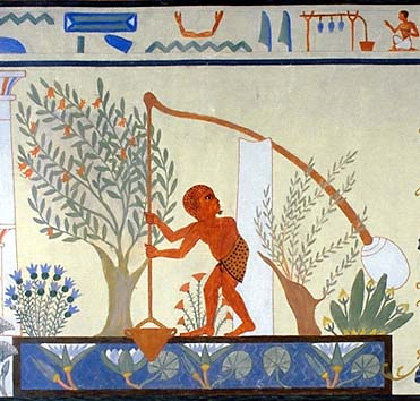
From the Middle East, it was but a hop, skip and a jump to bring the pomegranate to Greece in one direction and to Egypt in the other. This piece of fresco from a tomb painting in Egypt shows the delights of a private garden, with a pomegranate tree tucked away in one corner, no doubt a prelude of the delights which awaited Nebamun, the owner of this particular tomb, in the after-life.

Egyptian wall painting 'Pond_in_a_Garden'

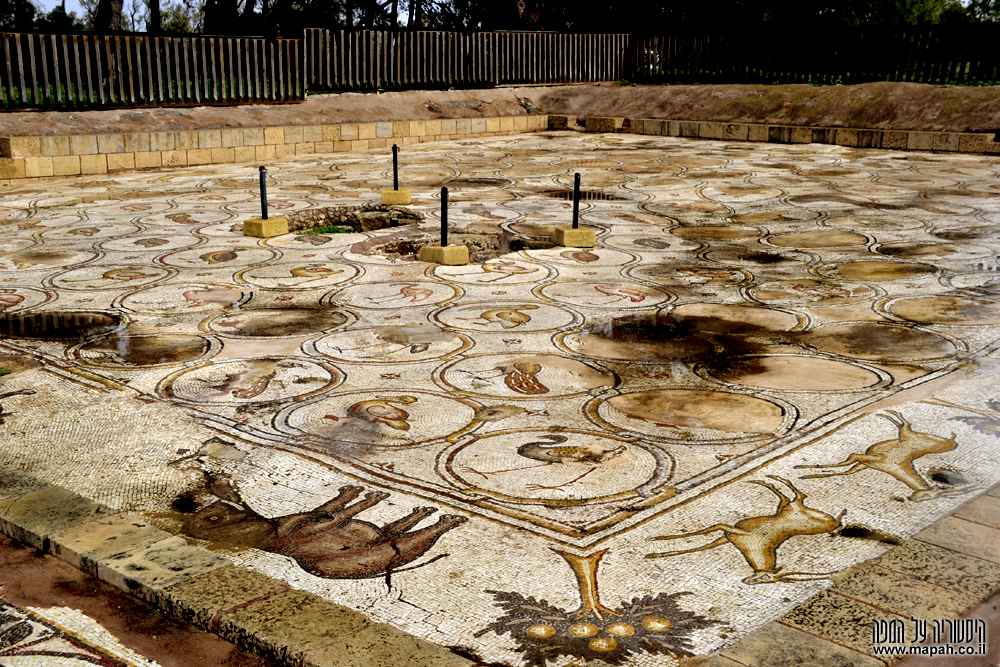
Meanwhile, from their base in Lebanon, the Phoenicians carried the fruit to their overseas territories, notably Carthage. And it was from Carthage that the pomegranate arrived in Rome. Everything comes full circle in this picture, where a mosaic in the Roman style, laid down in the city of Caesarea in Rome’s near eastern province of Judaea (in what is now Israel)

Roman Bird-Mosaic-in-Caesarea

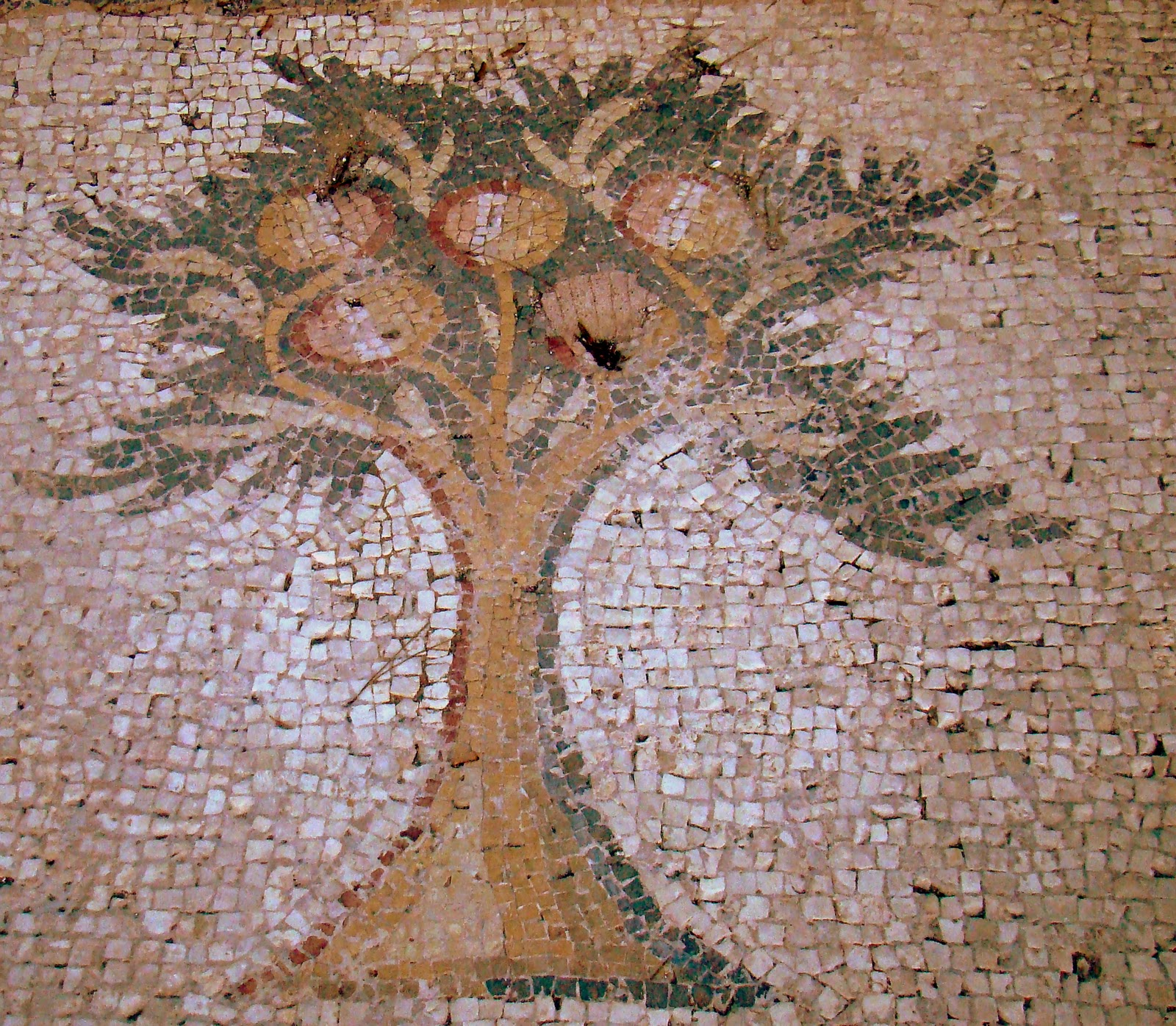
depicts among other delights a pomegranate tree.

Roman Bird-Mosaic-detail

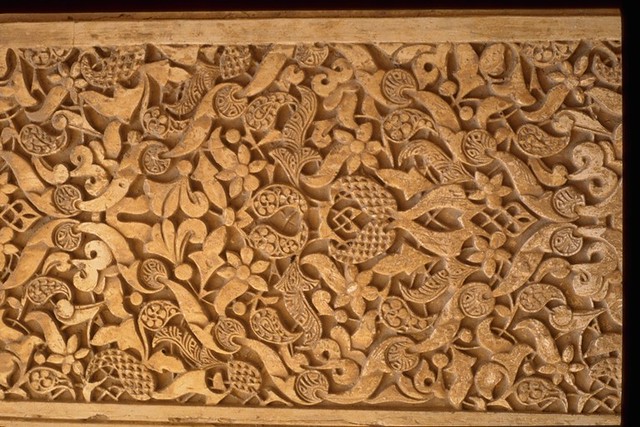
For their part, having welcomed the pomegranate into the homeland – the delights of the pomegranate are mentioned no less than three times in the Quran – the Arabs carried the pomegranate with them in their conquests of North Africa. Later on, the Muslimised Berbers of North Africa brought it to Spain. And it is in their palace of Alhambra in the city of Grenada, the last Muslim stronghold in Spain, that we find, weaved into the intricate designs on the walls, this pomegranate

alhambra-detail

To be found in the palace’s Golden chamber.

alhambra-cuarto dorado

Perhaps it comes as no surprise to know that Spain is now Europe’s biggest producer of pomegranates.

Meanwhile, the pomegranate also travelled east from Persia, along the fabled Silk Road, through Central Asia and finally entered China through Xinjian. But after becoming one of the three blessed fruits of Buddhism, it also tumbled off the Himalayas and travelled into the heart of India, and probably from there it sailed, via the Maritime Silk Route, to south China and Southeast Asia. And from China it was but another hop, skip, and a jump for the pomegranate to be carried to Japan and Korea, where in truth it was appreciated more as a good candidate for bonsai-ism than for its fruit.

bonsai pomegranate

In passing, we should acknowledge that the pomegranate tree does have beautiful flowers

OLYMPUS DIGITAL CAMERA

another reason that the ancients loved the tree, as evidenced by this other wall painting from Egypt

Egyptian wall painting pomegranate in flower

To be honest, I’m not sure I understand what all the enthusiasm is about. I mean, the juice is OK, but what I really like about a fruit is to sink my teeth into it. And all those seeds in the pomegranate

pomegranate-seeds

make that an unpleasant experience – bits of seeds getting stuck in my teeth, a sort of gritty munching experience, that sort of thing … I know the seeds are edible, but psychologically I’m not ready to crunch my way through a whole bunch of seeds. I’ll pick up a peach instead, thank you.

In my opinion, though, it’s precisely those seeds that made it so popular in the old days and encouraged its dissemination out of its Persian-Himalayan homeland. Not, I should clarify, because people liked to crunch their way through a pile of seeds 5,000 years ago (although maybe they did), but because those seeds were a potent symbol of fertility to those eaters. Remember one of the cardinal principles of sympathetic magic, which was potent then: if I eat something (or spread it on my skin, or wear it), I will absorb its powers. Clearly, all those seeds meant that the pomegranate was suffused with fertility. So it would be good to eat it, for instance, if I wanted to have lots of children. This old, old idea has been continued as a quaint custom played out in Greek and Armenian weddings

greek wedding

where at some point the bride breaks open a pomegranate and the seeds spill out (I’m sure I do not need to explain the symbolism of this). But this wish for fertility can be more generalized, and in this guise the pomegranate tree has been cast in the role of Tree of Life. Here, for instance, on this ancient Assyrian seal we see priests standing before a pomegranate as the tree of life, with the sun – another symbol of life – gently beaming down

Assyrian priests with pomegranate tree

And here we see the same symbolism woven into this carpet, made several thousand years later and several thousand kilometres away in the southern corner of the Chinese province of Xinjian.

Khotan carpet

Good ideas have staying power.

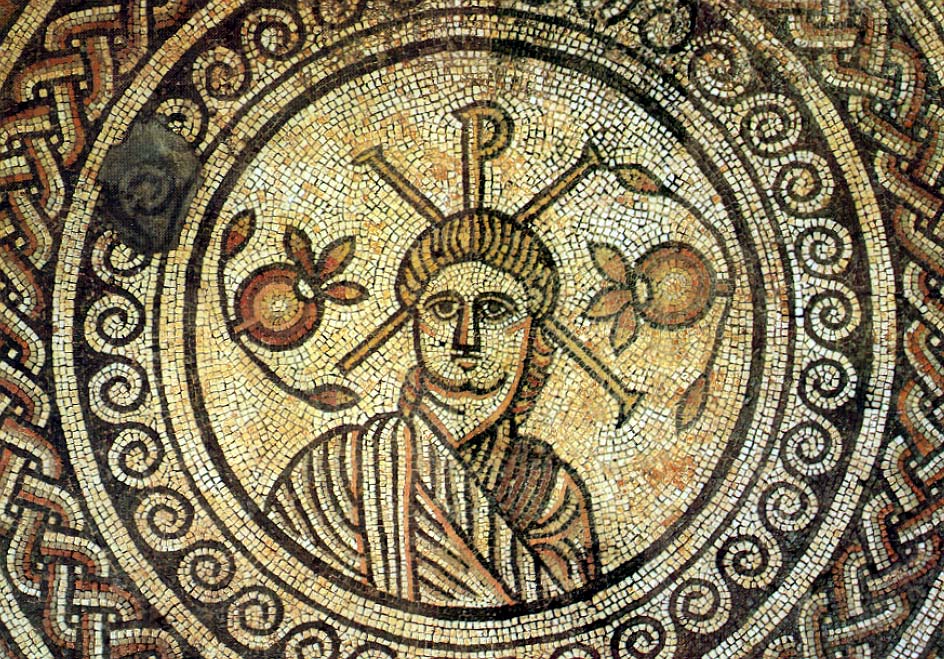
The fertility attributed to the pomegranate led to even more abstruse symbolism. Already in Egypt the pomegranate’s fertility transmuted it into a symbol of life after death: eternal fertility – which is why they liked having it represented in their tombs. Somehow, somewhere along the line, the pomegranate took on a similar symbolism for Christians, becoming a representation of Christ’s resurrection and promise of life after death. So here we have a pomegranate along with Christ in a Roman mosaic (again) from the 4th Century AD, from, of all places, a small village in Dorset.

Christian mosaic hinton st mary-detail

Christian mosaic hinton st mary

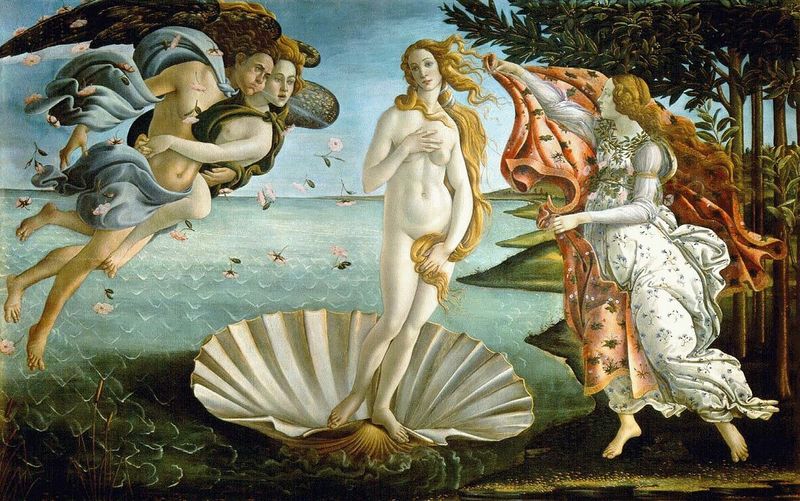
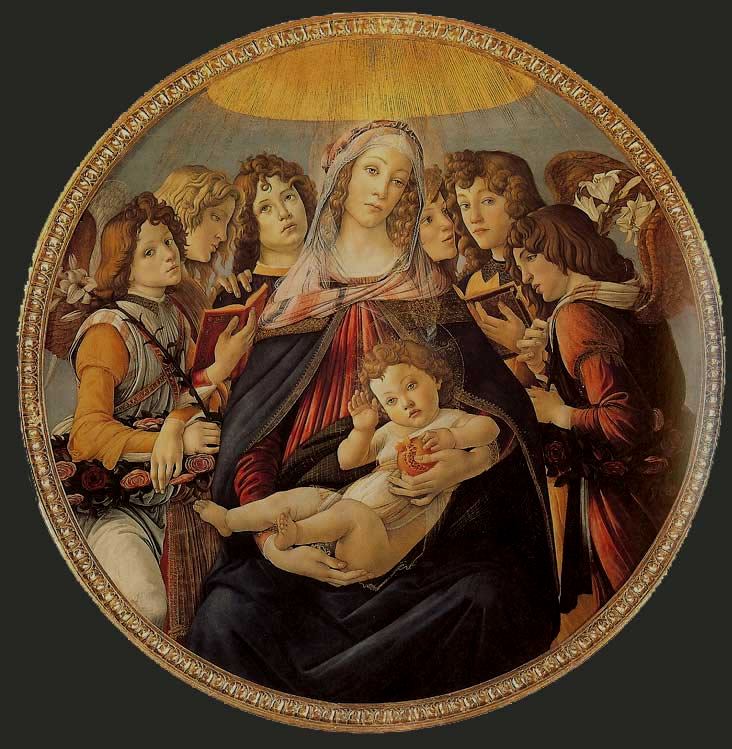
And here we have an incomparably more beautiful version from 1487 by Sandro Botticelli

Botticelli

Botticelli-detail

Botticelli is telling us that both the Madonna and her child know of the suffering to come, but the pomegranate tells us that it will not have been in vain.

All of this doesn’t change the fact that pomegranates have too many seeds in them to make them a nice eat.

________________

Pomegranate presser: my picture
Pomegranate orchard: http://www.agritay.com/pomegranate2.JPG [in http://www.agritay.com/ie3.htm%5D
Pomegranate juice: http://www.simplecomfortfood.com/wp-content/uploads/2011/12/fresh-pommegranite-juice.jpg [in http://www.simplecomfortfood.com/2011/12/04/fresh-pomegranate-juice/%5D
Egyptian wall painting “Pond in a garden”: http://upload.wikimedia.org/wikipedia/commons/5/51/”Pond_in_a_Garden”_(fresco_from_the_Tomb_of_Nebamun).jpg [in http://en.wikipedia.org/wiki/Gardens_of_ancient_Egypt%5D (fresco from the Tomb of Nebamun, Thebes, 18th Dynasty).jpg
Roman bird mosaic: http://www.mapah.co.il/wp-content/uploads/2013/01/Bird-Mosaic-in-Caesarea-DSC-3039.jpg
Roman bird mosaic-pomegranate: http://1.bp.blogspot.com/_V0EJcthPaew/TPtykNgTYNI/AAAAAAAAHtM/FDksj7TzZA0/s1600/DSC00340.JPG [in http://pazzapazza2.blogspot.com/2010/12/bird-mosaic.html%5D
Alhambra-detail: https://c2.staticflickr.com/6/5178/5533757498_c68f320ab9_z.jpg [in https://www.flickr.com/photos/psulibscollections/5533757498/%5D (Alhambra: Cuarto Dorado, detail of stucco decoration, Date: 14th century, Alhambra: Cuarto Dorado (Golden Chamber), detail of carved stucco decoration with pomegranate motifs, 14th century, Nasrid period.)
Alhambra-cuarto dorado: http://myspanishadventures.com/wp-content/uploads/2012/08/IMG_4741.jpg [in http://myspanishadventures.com/the-alhambra/%5D
Bonsai pomegranate: http://1.bp.blogspot.com/_nruXh-jwU5o/S_nWTS_IdSI/AAAAAAAAWB8/L1sJwhwiWVA/s1600/pomegranate5222010.jpg [in http://bonsaibeginnings.blogspot.com/2011_07_01_archive.html%5D
Pomegranate flower: http://ladyofthecakes.files.wordpress.com/2013/06/p1010002.jpg [in http://ladyofthecakes.wordpress.com/2013/06/22/pomegranates-in-the-making/%5D
Egyptian wall painting pomegranate tree in flower: http://www.vashsad.ua/downloads/image/7396/main3.jpg [in http://www.vashsad.ua/landscape-design/styles/articles/show/7396/%5D
Pomegranate seeds: http://m.cdn.blog.hu/ga/gasztrobakancslista/image/pomegranate-photos-5111.jpg [in http://gasztrobakancslista.blog.hu/2014/02/27/20_granatalma%5D
Greek wedding: http://simerini.com.cy/files/imagecache/full_image/files/node_images/6/5/5/329655/1_______________________________________.JPG [in http://www.simerini.com.cy/simerini/politismos/agenda/329655%5D
Assyrian priests with pomegranate tree: http://tabloidenoticias.files.wordpress.com/2014/02/sumerio.jpg [in http://tabloidenoticias.wordpress.com/%5D
Khotan carpet: http://www.metropolitancarpet.com/assets/images/Khotan7.jpg [in http://www.metropolitancarpet.com/html/body_pomegranate__antique_oriental_rugs.html%5D
Christian mosaic Hinton St Mary: http://upload.wikimedia.org/wikipedia/commons/6/60/Mosaic2_-_plw.jpg [in http://en.wikipedia.org/wiki/Hinton_St_Mary_Mosaic%5D
Christian mosaic Hinton St Mary-detail: http://www.vanderbilt.edu/AnS/Classics/roman_provinces/britain/hintonst.marymosiac.JPG [in http://www.vanderbilt.edu/AnS/Classics/roman_provinces/britain/image16.htm%5D
Botticelli: http://4.bp.blogspot.com/-b-2sXs3aQeo/T-Yv5SWbaEI/AAAAAAAAAc4/tLnT8Advf0c/s1600/Botticelli.jpg [in http://aggiehorticulturegoestoitaly.blogspot.com/2012_06_01_archive.html%5D
Botticelli-detail: http://www.backtoclassics.com/images/pics/sandrobotticelli/sandrobotticelli_madonnaofthepomegranatedetail.jpg [in http://www.backtoclassics.com/gallery/sandrobotticelli/madonnaofthepomegranatedetail/%5D

SMOOTH ROUND GEMS

Beijing, 14 August 2014

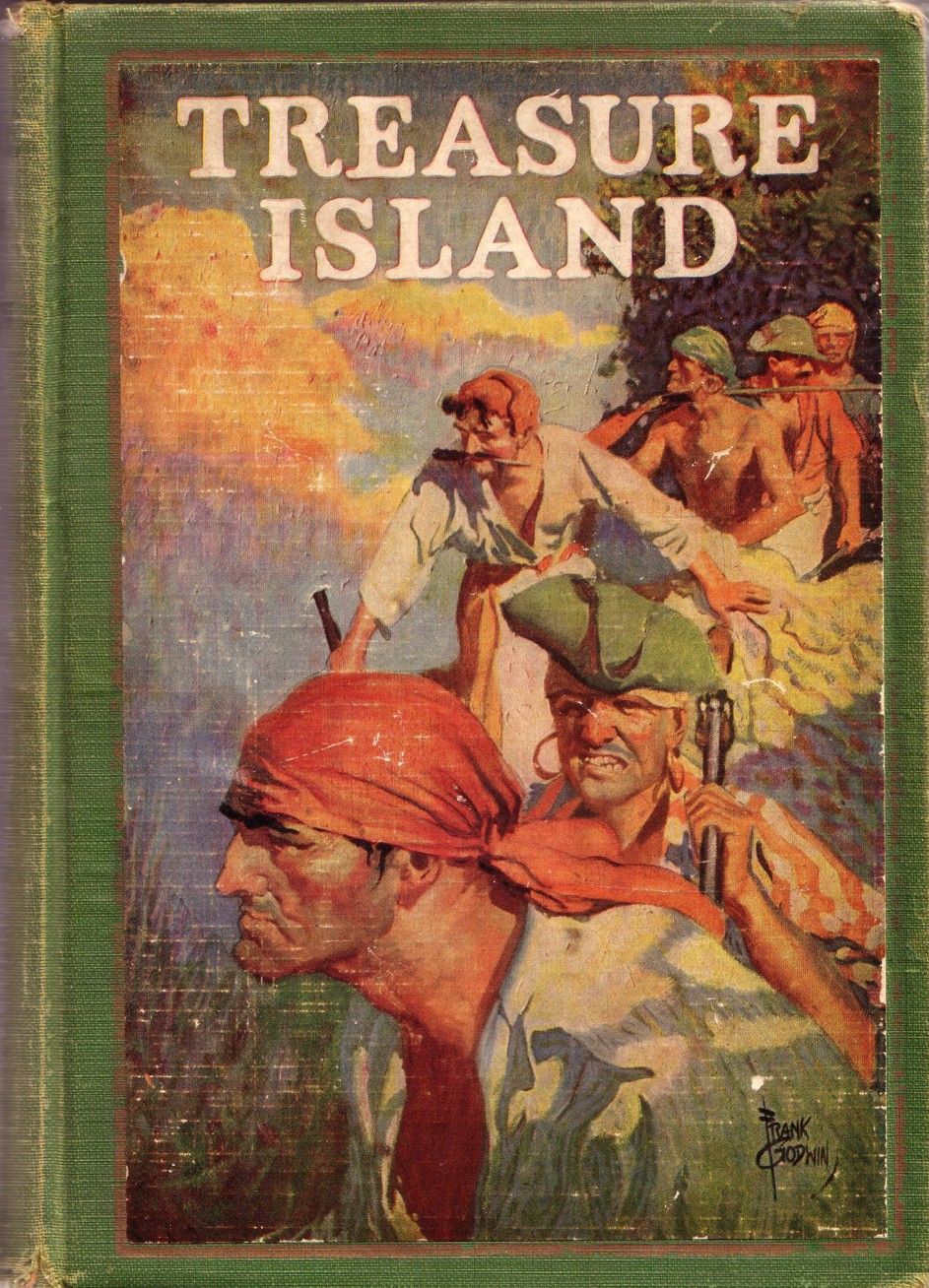
There was a board game I used to play when I was young, I forget its name, but it had to do with pirates and their treasure. I suspect that the game was loosely based on Robert Louis Stevenson’s Treasure Island, which the boys of my generation had all read.

Treasure.Island frank godwin 1925

“Harr, me hearties, pull strong, pull straight! Yohoho an’ a bottle o’ rum!” etc.

The purpose of the game was to capture the treasure, and like all good board games it had miniature treasure – miniature gold bars, miniature rubies, miniature diamonds, and so on. You stockpiled your treasure on islands, and you attacked each other to lay your grubby hands on everyone else’s treasure. I was fascinated by all that miniature treasure. I most lusted after the rubies. “Get in thar, lads, and grab t’ treajaye!”

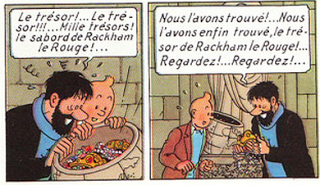
This fascination of small boys like me with pirates and treasure was brilliantly tapped into by Hergé, the author of Tintin, who in two volumes caught the whole buccaneering spirit

Le-Secret-de-La-Licorne

and the subsequent hunt for buried treasure

Le_Tresor_de_Rackham_le_Rouge

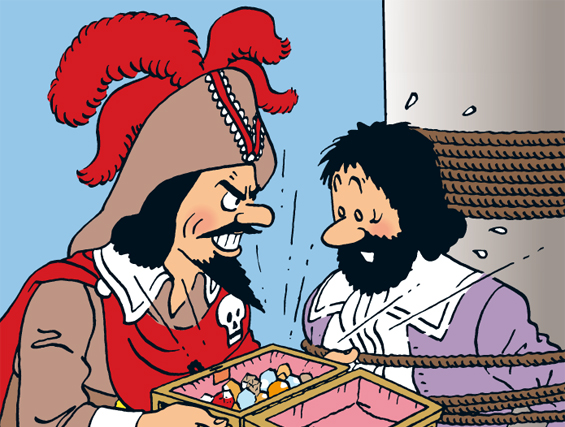
Ah, look how that evil pirate Rackham the Red shows off his treasure to Captain Haddock!

rackham montre le tresor

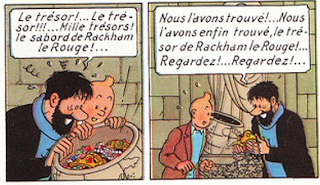
And look how his great-great-great etc. grandson Captain Haddock’s head is sent spinning when he finally finds this treasure!

Capt Haddock trouve le tresor de Rackham le rouge

All that glinting gold! All those sparkling gems!

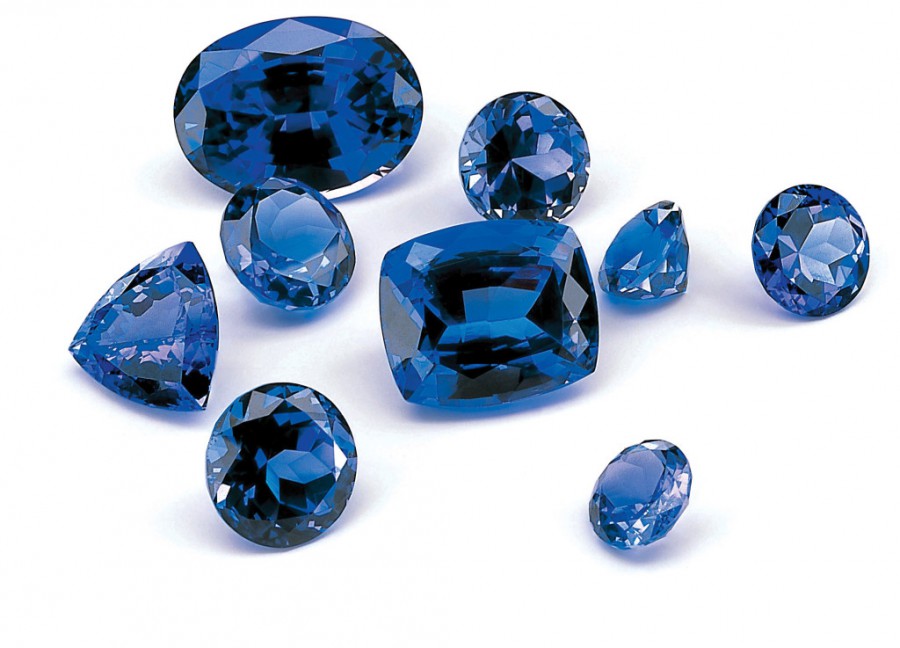
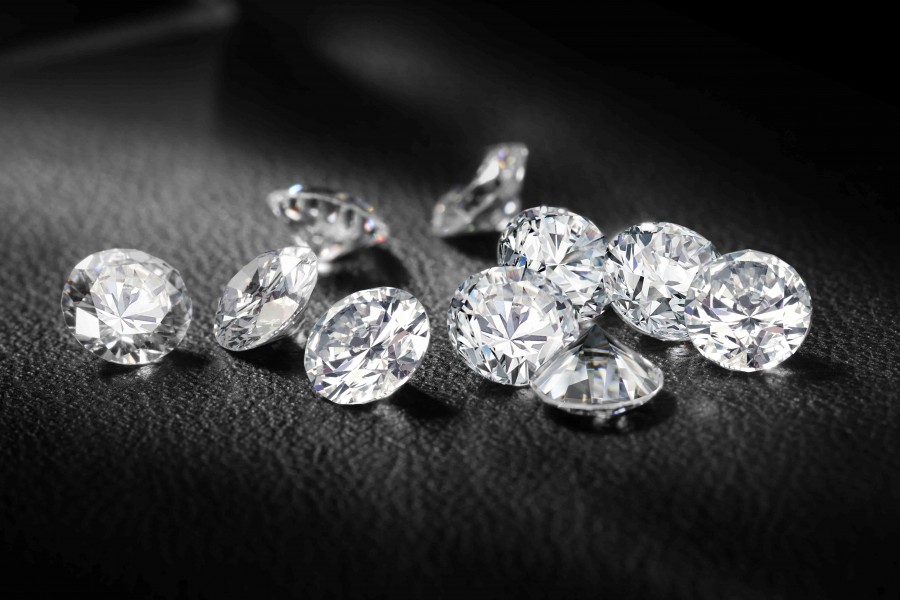
But I grew up, and grew more sensible, and found that I didn’t actually like sparkling gems (I still like gold, though …). I’m told that gemstones are cut and faceted to bring out their sparkle – or to use the correct language, their brilliance and their fire. Some fellow called Marcel Tolkowsky even went so far as to work out mathematically the best faceting to give gems so as to use the light’s reflection and refraction to maximize their fire and brilliance. But when I now look at my once-favourite rubies

WellsFargoInsertRuby, July

or sapphires

sapphires-blueor emeraldsemeraldsor diamonds

diamonds

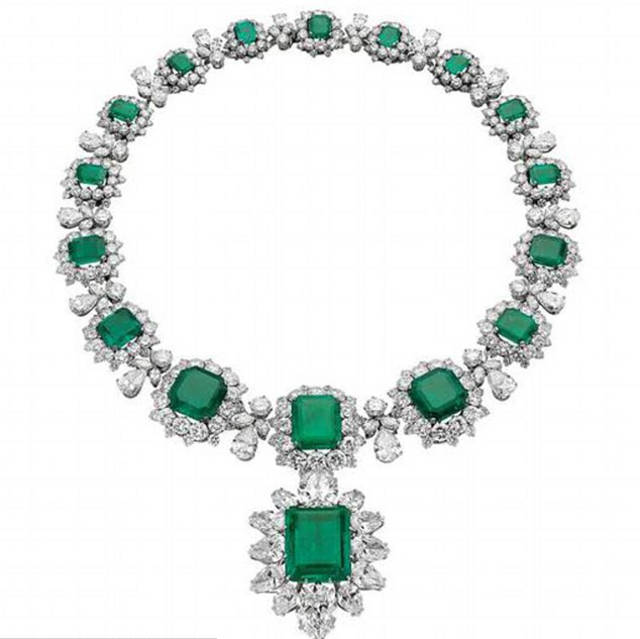
I see nothing but cold, hard precision, stuff for the Rich Bitch.

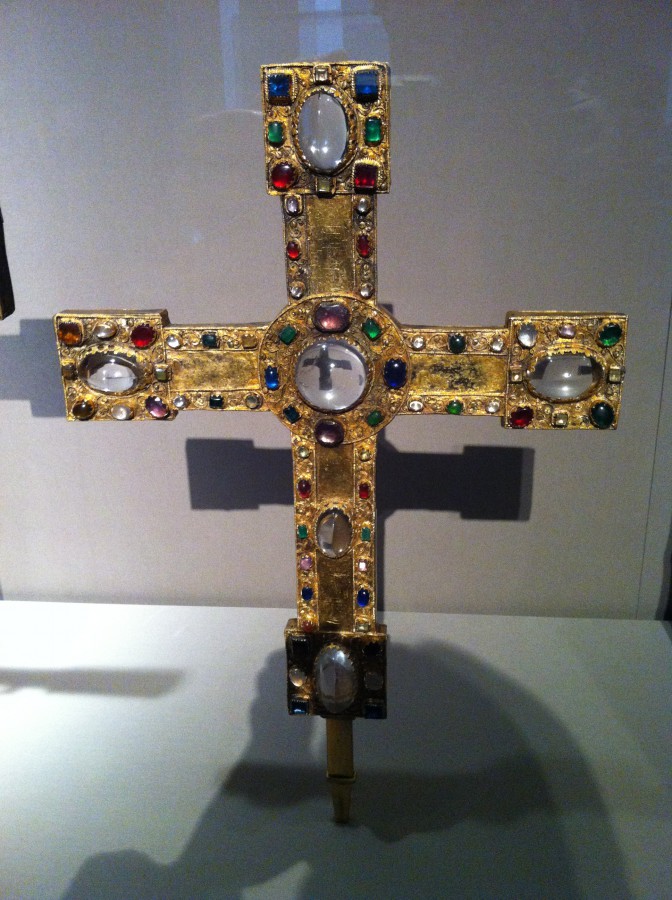
This was forcefully brought home to me last Christmas when my wife and I visited the Metropolitan Museum of Art during what has become our annual visit to our daughter in New York. The museum happened to be holding an exhibition of the medieval treasures from the Cathedral of Hildesheim in Germany. At that time – we are talking the 1100s – people didn’t know how to facet stones, so gems were mainly polished and rounded into cabochons. Take a look at these photos to see what I mean.

Here is a bible cover.

photo 012

This is a cross.

photo 004

This a reliquary.

photo 010

This a liturgical fan.

photo 007

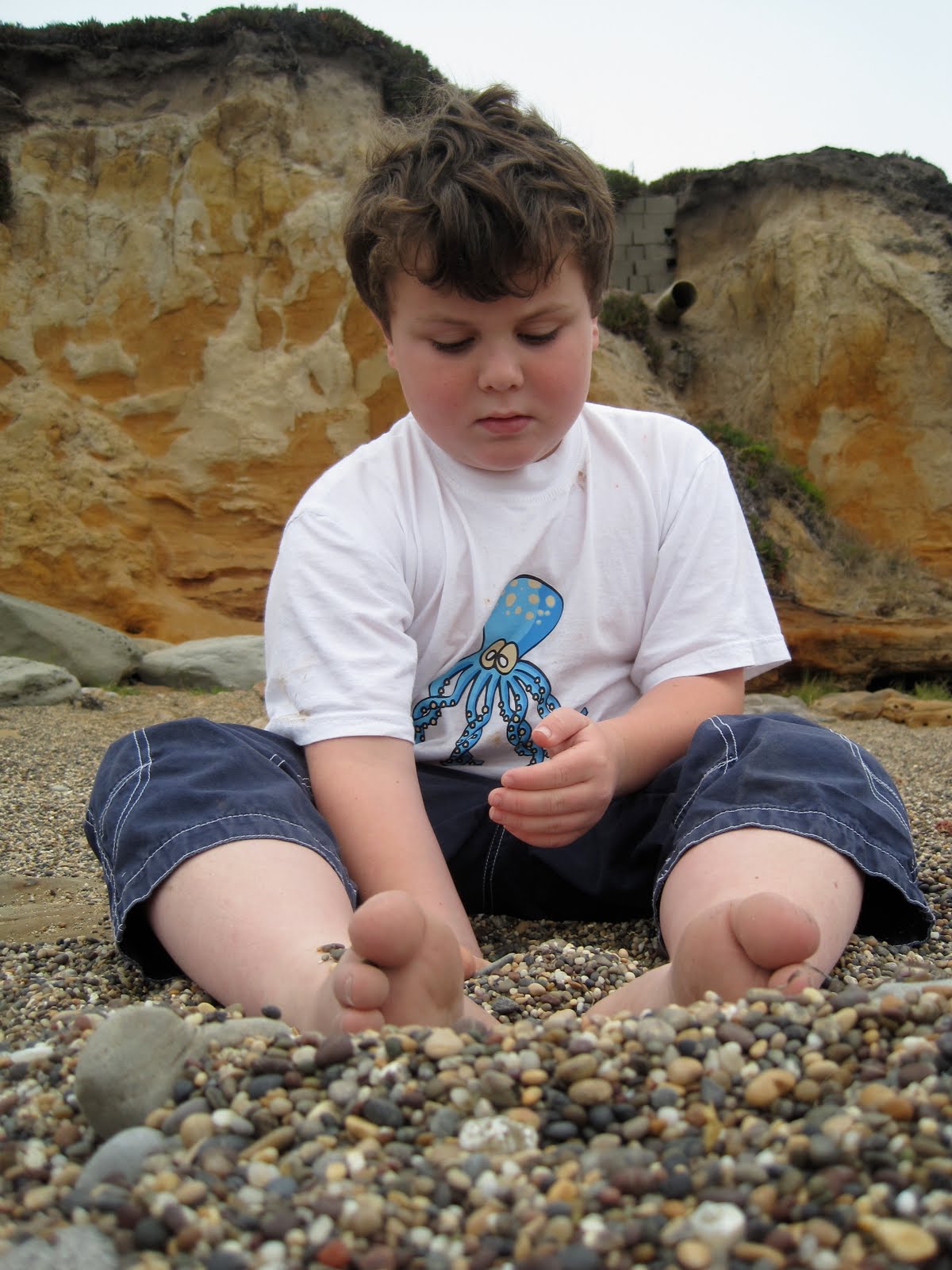
The rounded shape in a gem is so much more simpatico, I feel, warmer, more approachable, so much more like us. I mean, we’re sort of round – more round than faceted. OK, it’s all a bit fanciful, but it is true that cabochons are much more like all those rounded, smooth, coloured pebbles that I’m sure we all picked up as kids on the beach and dreamily turned over and over in our hands.

boy on beach

I was certainly an assiduous pebble collector, a habit which I have kept up all my life. Everywhere I have gone, I have collected stones smoothed by the passage of water. I am always looking for interesting colours, striking striations, or curious shapes. Every time I find myself on a beach, my eyes will automatically drop and scour the sand or pebbles for interesting stones (or shells, or any curious flotsam thrown up by the sea). Even here in Beijing, far away from any beach, I have my collection of smooth stones, collected here and there.

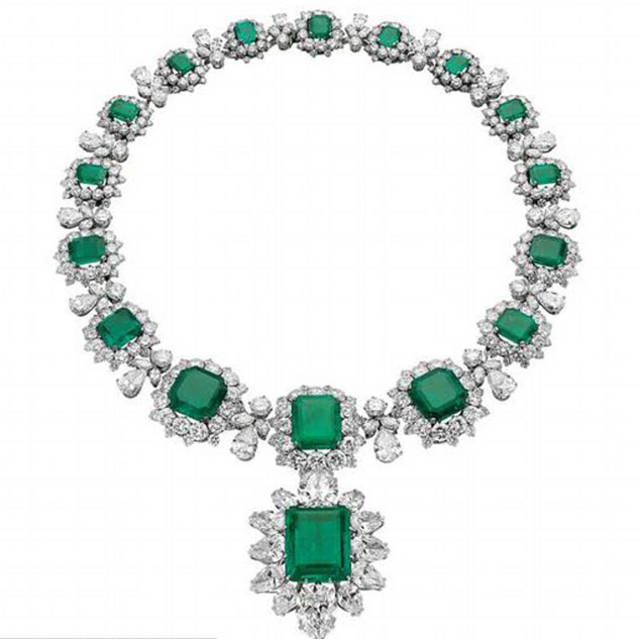
So you can understand that in my sensible adulthood I have not been so interested in Rich Bitch jewelry like this

emerald necklace elizabeth-taylorpreferring “ethnic jewelry” like this.

ethnic necklace

(there is also a small matter of the price tag, but we’ll put that aside for the time being)

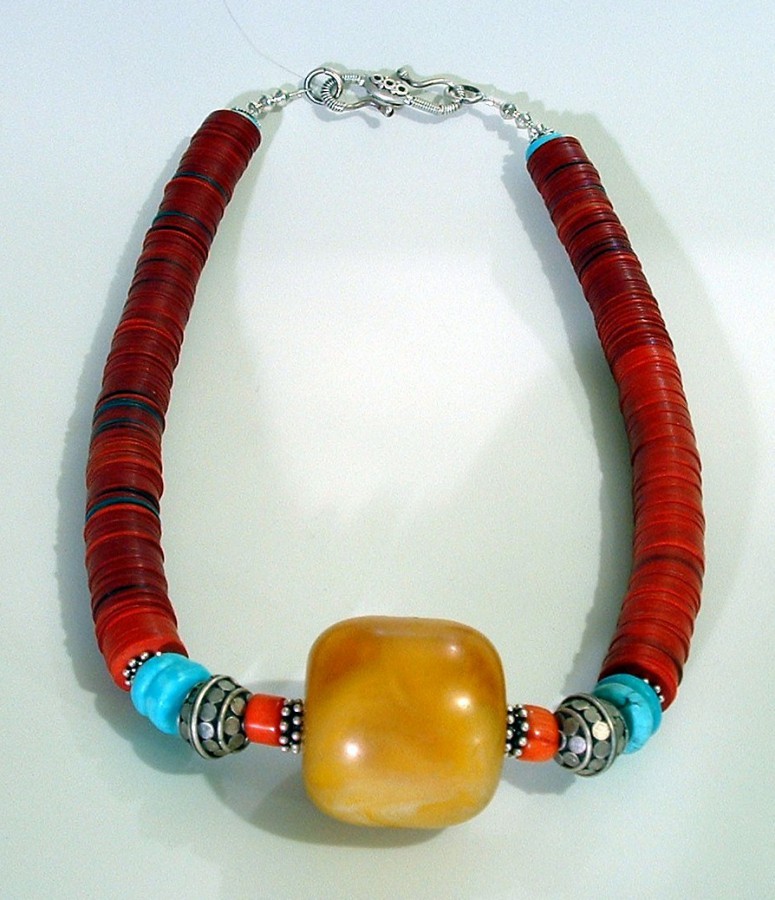
I insert here a photo of a wonderful necklace I bought my wife some five years ago. It’s a string of red agate stones. Very pebble-like, don’t you think? You see it here gracing her wonderful neck. I bought it in a little shop in Vienna which specializes in Asian ethnic jewelry.

my wifes necklace 001

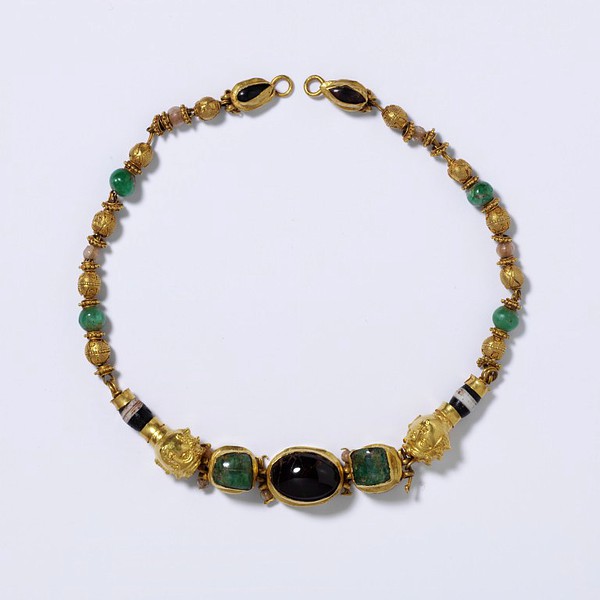
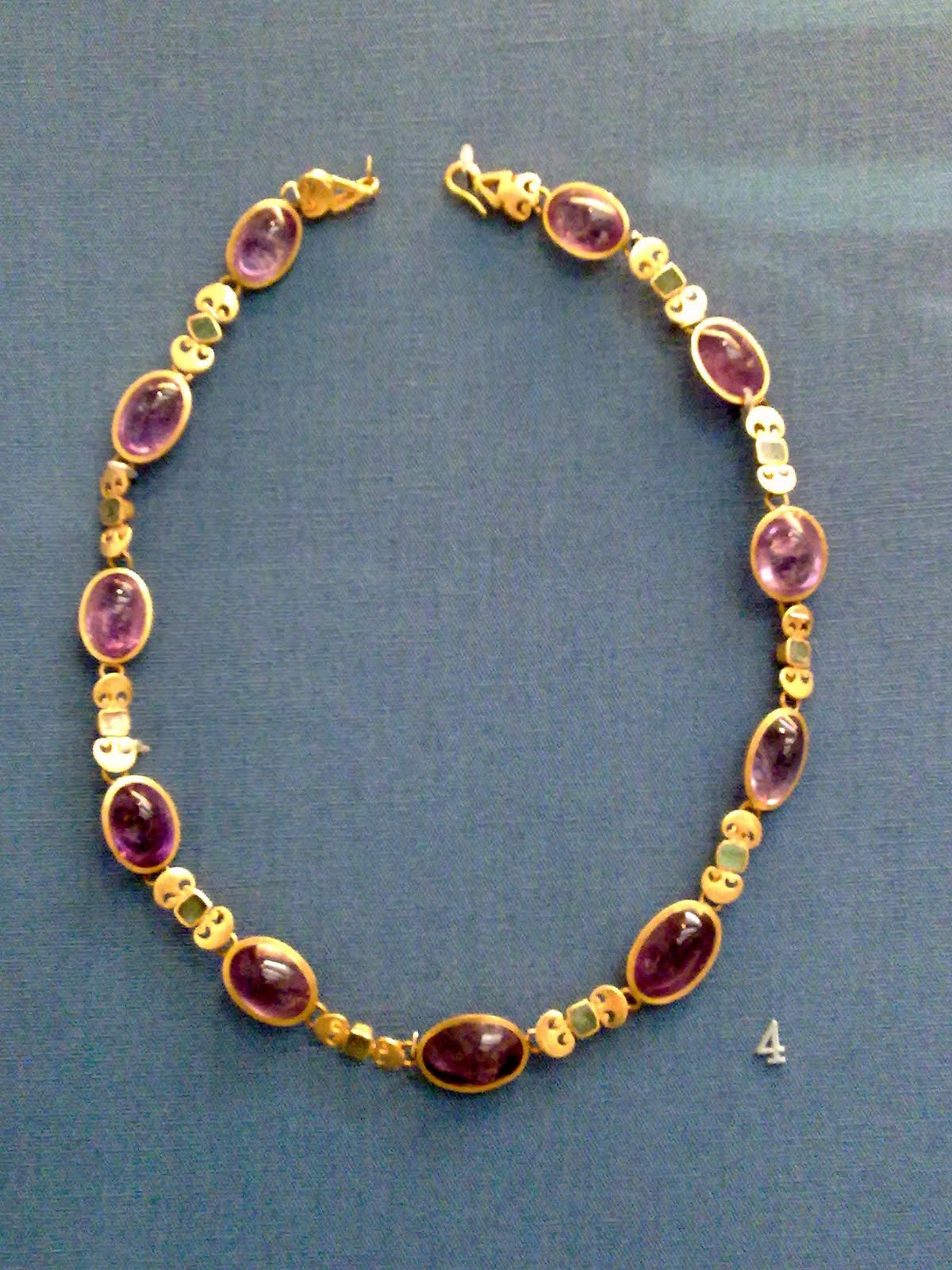
In these preferences I feel a bond with my faraway ancestors. But back, back we have to go, beyond the Romans

Roman necklace

and the Greeks

Helenistic gem and gold necklace

where too much gold intrudes.

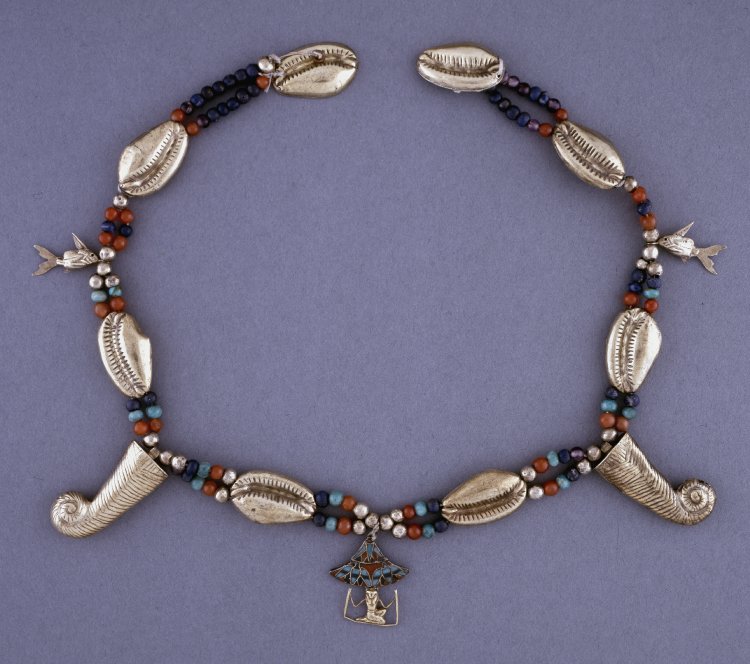
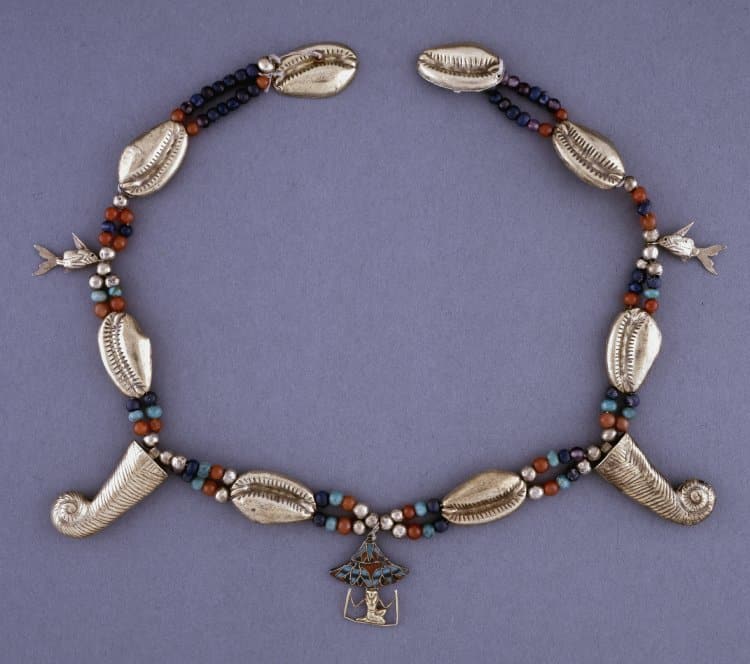
Beyond even the Egyptians, where silver gets in the way

Egyptian Electrum Cowrie Shell Necklace

We have to go back to the Celts two Centuries before Christ.

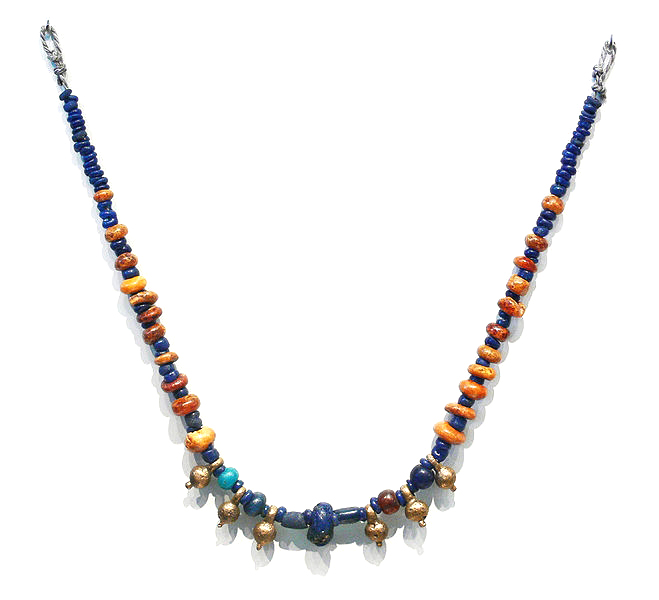
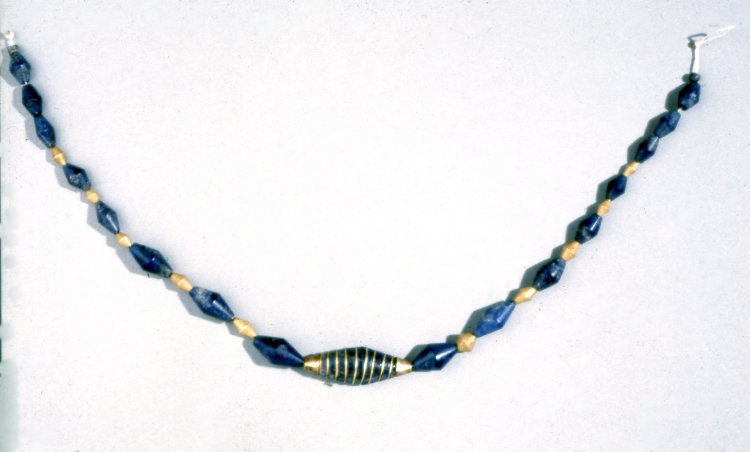
celtic necklace 2nd C BC Switzerlandand even further back to our prehistoric ancestors, 4,000 BC in this case

Late Prehistoric Beadsand 2,600 BC in this case

Late Prehistoric Beads-2

I’ve always felt myself to be a bit of a Cro-Magnon man. I think my wife sometimes agrees …

___________________

Treasure Island book cover: http://1.bp.blogspot.com/-LJJbNTjjGqQ/ThSexvsS_4I/AAAAAAAACC4/fKhA1cFGaFo/s1600/Treasure.Island+frank+godwin+1925.jpg [in http://inkspiredmusings.blogspot.com/2011/07/happy-birthday-party-for-peter.html%5D
Le Secret de la Licorne: http://images.ya-too.com/art/mou/mou-22100.jpg [in http://www.ya-too.com/fr-bd-Affiche-Tintin-Le-Secret-de-La-Licorne_68582.php%5D
Le Trésor de Rackham le Rouge: http://media.senscritique.com/media/000000024931/source_big/Le_Tresor_de_Rackham_le_Rouge_Les_Aventures_de_Tintin_tome_1.jpg [in http://www.senscritique.com/bd/Objectif_Lune_Les_Aventures_de_Tintin_tome_16/203208%5D
Rackham shows Haddock the treasure: http://fr.tintin.com/images/journal/journal/00697/C10%2021%20D3COLOR.jpg [in http://fr.tintin.com/news/index/rub/100/id/3825/0/james-bond-est-il-le-nouveau-rackham-le-rouge%5D
Capt. Haddock finds the treasure: http://3.bp.blogspot.com/-Nv7QFVzGXBM/UNCiRtR2VJI/AAAAAAAArZM/rEF0fZDSSCI/s320/Capt+-tresor+de+Rackham+le+rouge.PNG [in http://pasidupes.blogspot.com/2012/12/le-nouveau-site-de-lelysee-fait-une.html%5D
Rubies: http://tomshanesworld.com/wp-content/uploads/2011/07/The-Incomparable-Beauty-of-Natural-Rubies.jpg [in http://www.pixmule.com/blog-archive-the/11/%5D
Sapphires-blue: http://www.whatismybirthstone.com/wp-content/uploads/2013/04/Tanzanite-1024×737.jpg [in http://www.whatismybirthstone.com/emerald-birthstones-may%5D
Emeralds: http://eh-zhiznya.ru/091/izumrud_kamen-7.jpg [in http://eh-zhiznya.ru/index/izumrud_opisanie_i_foto/0-177%5D
Diamonds: http://www.aisource.com/images/default-source/default-album/diamonds.jpg?sfvrsn=0 [in http://www.aisource.com/managed-futures/news/aisource-news/2013/09/27/why-arent-diamonds-an-exchange-traded-commodity-%5D
The Hildesheim treasures: my photos
Boy on beach: http://4.bp.blogspot.com/_3mACnZBMOnA/TDlO_MugAII/AAAAAAAAAw8/_vT-Z9OMwWA/s1600/IMG_1391.JPG [in http://www.squidalicious.com/2010_07_01_archive.html%5D
Emerald necklace (Elizabeth Taylor): http://www.agentiadepresamondena.com/wp-content/uploads/2013/10/elizabeth-taylor-bijuterii-expozitie1.jpg [in http://www.agentiadepresamondena.com/expozitie-bulgari-bijuterii-elizabeth-taylor/%5D
Ethnic necklace: http://ornamento.files.wordpress.com/2008/12/n.jpg [in http://ornamento.wordpress.com/2008/12/05/make-your-own-clasps/%5D
Necklace on my wife: my pic.
Roman necklace: http://1.bp.blogspot.com/-YhPDENmZiN0/TjKcLenlDPI/AAAAAAAAB6k/n9NLLGciOZc/s1600/britmuseum4.jpg [in http://historicalclothinganduniforms.blogspot.com/2011/07/classical-influence.html%5D
Hellenistic necklace: http://www.langantiques.com/university/images/c/cb/Helenistic_gem_and_gold_necklace.jpg [in http://www.langantiques.com/university/index.php/Necklaces%5D
Egyptian electrum and beads necklace: http://www.langantiques.com/university/images/5/50/Egyptian_Electrum_Cowrie_Shell_Necklace.jpg [in in http://www.langantiques.com/university/index.php/Necklaces%5D
Celtic necklace 2nd C BC Switzerland: http://www.langantiques.com/university/images/6/65/Halsschmuck_Molinazzo_d_Arbedo(1).jpg [in http://www.langantiques.com/university/index.php/Ancient_Jewelry%5D
Late prehistoric necklace: http://www.langantiques.com/university/images/thumb/d/da/Late_Prehistoric_Beads.jpg/704px-Late_Prehistoric_Beads.jpg [in http://www.langantiques.com/university/index.php/Necklaces%5D
Late prehistoric beads-2: http://www.langantiques.com/university/images/e/e5/Lapis_Beads_Ur.jpg [in http://www.langantiques.com/university/index.php/Necklaces%5D

THE BOOK AS SCULPTURE

Beijing, 13 July 2014

As I mentioned in the postscript to my previous posting, I was in Budapest these last few days. One evening, in search of a restaurant, I came across this fountain:

Budapest 2014 fountain 001

Budapest 2014 fountain 002

As the pictures suggest, the fountain consists of a sheet of water moving as if it were the page of a book being turned. I rather like that idea. I didn’t notice it at the time, but I have since discovered that two venerable Hungarian universities, Eötvös Loránd University and Péter Pázmány Catholic University, both of whose foundations reach back to the 1600’s, are located across the street from the fountain. I would guess that the fountain is linked to them: aren’t Universities places which revere books? Maybe the fountain is telling us that books water our intellectual life. But that’s a bit too fanciful, perhaps.

My curiosity piqued, I started looking around for pictures of other sculptures where books play the lead role. And of course someone has already helpfully put together a gallery of such photos! It’s on a site called Book Riot, which promotes reading of book reading and writing about them, my kind of site. I have shamelessly lifted a number of their photos to put here. Most of them have obvious connections to book-related institutions.

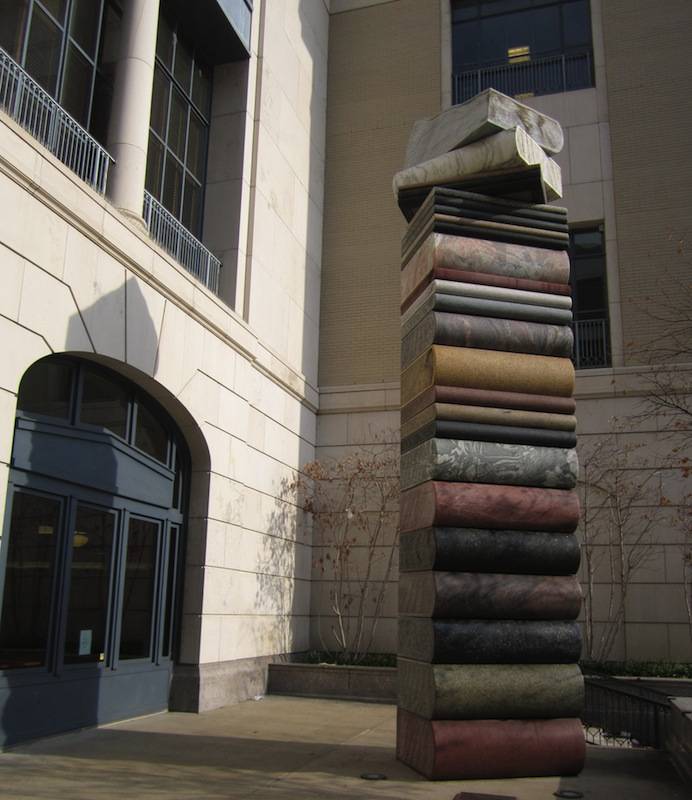
Stacking books is clearly a popular design motif. Here’s a fairly straightforward stack in a sculpture in front of the Nashville public library

nashville-public-library-book-statue

Here is another, a little bit more untidy and making the connection between books and children (which perhaps explains the untidiness of the stacking?). It adorns the public library in Coshocton, which is (and I had to look this up on Google Maps) in Ohio. The sculpture is composed of 100 books, each one representing one year of the library’s service to the community.

coshocton-public-library

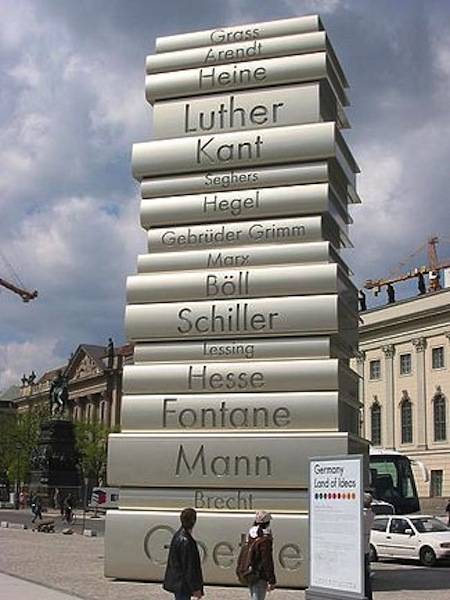
Here is another stack of books, this time from Berlin.

berlin-book-statue

This particular sculpture no longer exists, alas. It was part of a set of six sculptures celebrating the football World Cup of 2006. After a few months, they were taken away, who knows where to. This particular sculpture, set up in Bebelplatz opposite Humboldt University, celebrated Johannes Gutenberg who invented the modern letterpress in the German city of Mainz in around 1450.

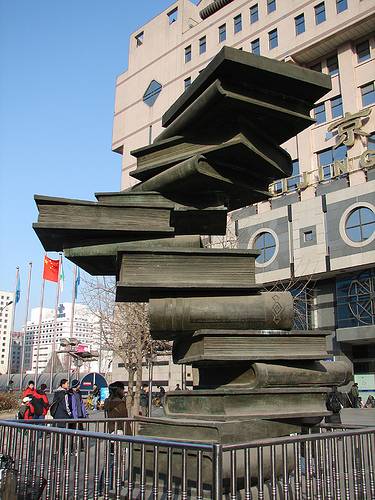
The stacking motif continues with this sculpture, although a spiraling twist has been given to the whole.

beijing-xinhua-bookstore-statue

The sculpture is in front of Beijing’s Xinhua bookstore, although I must confess to never having noticed it.

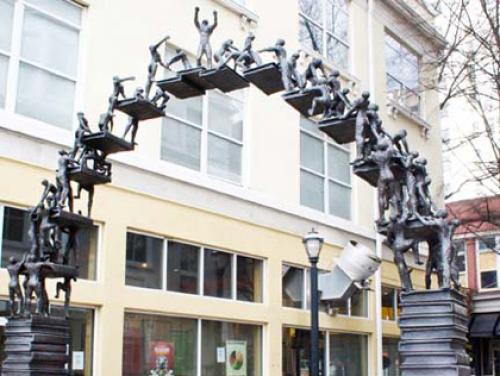
Here, the stacking has turned into a triumphal arch, located in Atlanta, at Georgia State University.

georgia tech atlanta

This is a very obviously symbolic statue. It was created by the sculpture students at the University and is entitled “No Goal Is Too High If We Climb With Care And Confidence”. A visual metaphor dear to the hearts of many a University Professor, I’m sure.

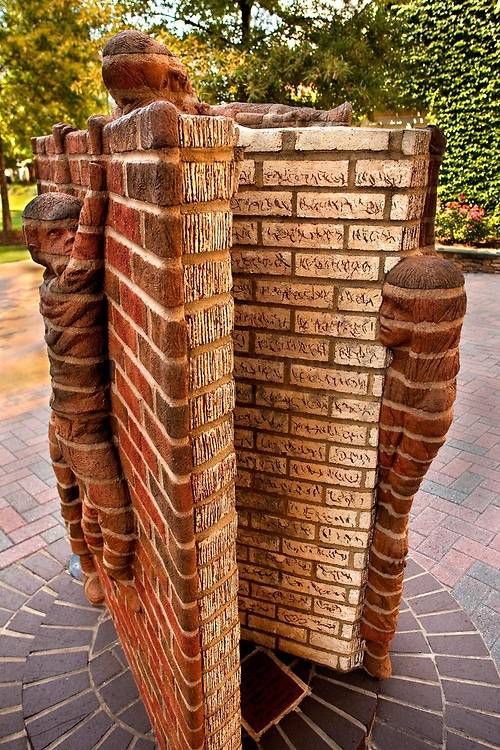
This one, from Charlotte North Carolina, is quite different. Like the sculpture in Coshocton, it makes a connection between books and children, but here it becomes equivalent to playground equipment, showing books as something for children to play with, on, in.

brick-book-statue

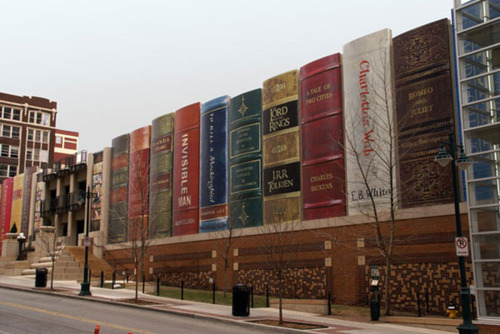
As for Kansas City library, it dispenses with sculptures altogether and has just built the books right into its façade

kansas city public library

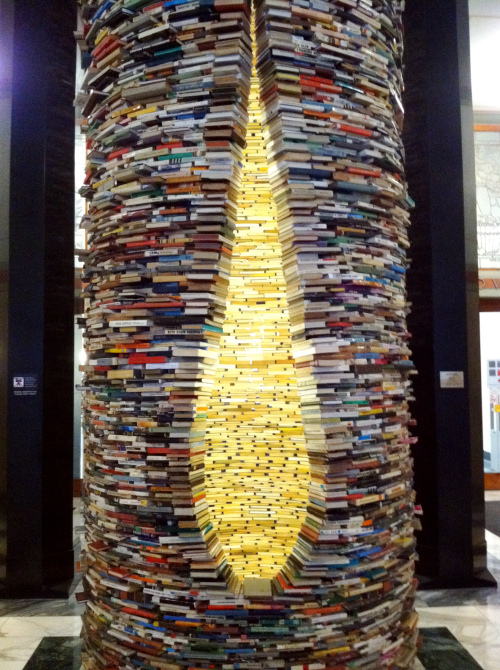
Another approach to book-sculptures is to consider the book a brick to be used to build structures. The Czech-Slovak artist Matej Kren has created a number of such structures, a couple of which I have photos for. The first is in the Prague municipal library

prague city library

I’ve not seen it, but I read that if you look inside you get the impression of an infinite tower. It seems that Kren has made clever use of mirrors to get this optical effect.

I don’t know where the structures in these other two photos are to be found

matej kren-1

matej kren-2

The last could easily be an old farm house in southern Europe somewhere. The following site shows a couple more such structures made with books by Kren and other artists.

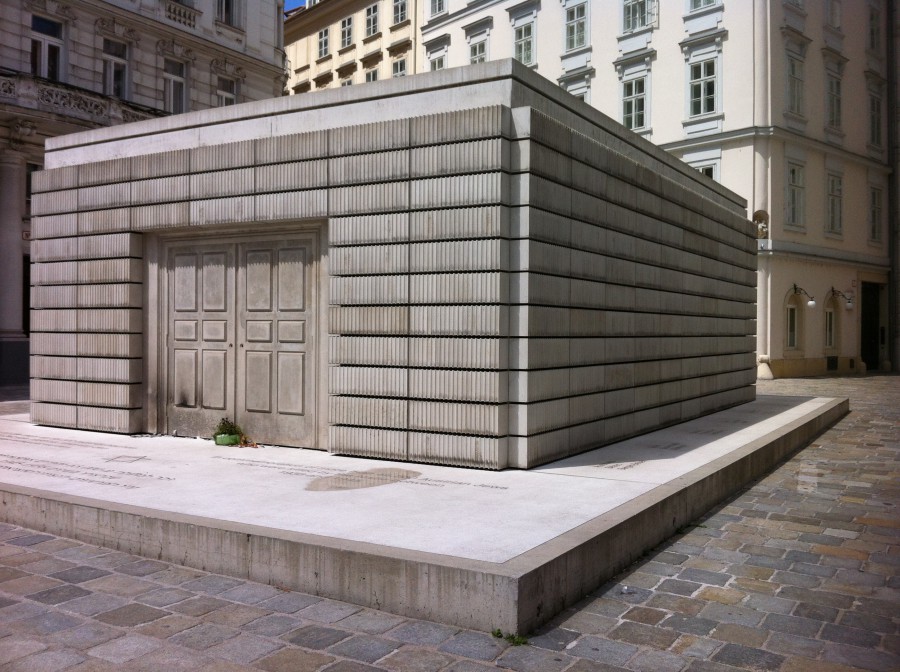
This last photo brings me to another structure made with books, but of an altogether darker tenor. It is the Holocaust memorial in Judenplatz, Vienna, a memorial to the more than 65,000 Austrian Jews killed by the Nazis before and during World War II. On my way back from Budapest to Beijing through Vienna, and with the book fountain still fresh in my mind, I decided on the spur of the moment to quickly revisit the memorial before boarding the bus for the airport.

holocaust memorial 001

From far away, it looks like one of those squat, windowless blockhouses which dotted the battlefields of World War II. But when you get closer, you see something else.

holocaust memorial 002

You see that the walls of this blockhouse are made of shelves of books. But the books are facing outwards rather than inwards as would normally be the case on a shelf. So unlike the sculpture pictured above in Berlin’s Bebelplatz, we know neither the author nor the title of any of the books. The shelves of the memorial simply appear to hold endless copies of the same book, which can stand for the vast array of faceless victims. The choice of books as the design motif perhaps alludes to the idea of the Jews being a “People of the Book”. Fittingly, another name for this memorial is the Nameless Library. Around the edges of the structure are carved the names of the camps where Austrian Jews died

holocaust memorial 003

At the other end of Judenplatz is a statue of the writer Lessing, staring so it seems at the Holocaust memorial.

Lessing statue Judenplatz

This is the same Lessing whose name appears on one of the spines of the sculpted stack of books in Berlin’s Bebelplatz, a photo of which I included earlier. A connection which allows me to segue into my next memorial, in that same Bebelplatz, a memorial to the campaign of book burnings, orchestrated by the German Student Union, which took place there and in 34 other German university towns in May 1933, shortly after the Nazis had taken power. The purpose was to ceremonially burn books by classical liberal, anarchist, socialist, pacifist, communist, Jewish, and other German and non-German authors whose writings were viewed as subversive to the new regime. Many came from Humboldt University’s libraries. The students first marched in torchlight parades “against the un-German spirit”. Some 40,000 people then gathered in Bebelplatz to hear Joseph Goebbels deliver a fiery address:

“The era of extreme Jewish intellectualism is now at an end. The breakthrough of the German revolution has again cleared the way on the German path…The future German man will not just be a man of books, but a man of character. It is to this end that we want to educate you. As a young person, to already have the courage to face the pitiless glare, to overcome the fear of death, and to regain respect for death – this is the task of this young generation. And thus you do well in this midnight hour to commit to the flames the evil spirit of the past. This is a strong, great and symbolic deed – a deed which should document the following for the world to know – Here the intellectual foundation of the November Republic is sinking to the ground, but from this wreckage the phoenix of a new spirit will triumphantly rise.

Then the students joyfully threw the books onto the pyre, with band-playing, songs, “fire oaths”, and incantations.

bebelplatz book burning-1

DEU NS ZEIT BUECHERVERBRENNUNG JAHRESTAG

In Berlin, some 20,000 books were burned. Looking back at the stack of books which make up the sculpture put in this same square 83 years later, Heinrich Heine’s books were burned, as were those of Anna Seghers, Karl Marx, Heinrich Mann, and Bertolt Brecht. In all, the works of some 60 German authors and 25 non-German authors were consigned to the flames.

The memorial to this shameful episode consists simply of a glass plate set into the square’s cobble stones, below which are visible empty bookcases, enough of them to hold the total of the 20,000 burned books.

Bebelplatz_Night_of_Shame_Monument-2

Next to it is a plaque, with a line from Heinrich Heine’s 1821 play Almansor: “That was only a prelude; where they burn books, they will in the end also burn people.” Heine was referring to the burning of the Muslim Quran by the Christian Inquisition in Spain. But looking back at the Holocaust memorial in Vienna’s Judenplatz, how prescient is that line! And the book burnings haven’t stopped, as a Wikipedia article eloquently shows.

______________________

Budapest book fountain: my photos
The following five photos are from bookriot.com/2013/03/06/10-superbly-bookish-statues
– Nashville public library: http://bookriotcom.c.presscdn.com/wp-content/uploads/2013/03/nashville-public-library-book-statue.jpg
– Coshocton public library: http://bookriotcom.c.presscdn.com/wp-content/uploads/2013/03/centennial-statue-coshocton-public-library-317×1024.jpg
– Berlin Walk of Ideas http://bookriotcom.c.presscdn.com/wp-content/uploads/2013/03/berlin-book-statue.jpg
– Xinhua bookstore, Beijing: http://bookriotcom.c.presscdn.com/wp-content/uploads/2013/03/beijing-xinhua-bookstore-statue.jpg
– Brick book statue: http://bookriotcom.c.presscdn.com/wp-content/uploads/2013/03/brick-book-statue.jpg
Georgia Tech University, Atlanta: http://www.himalayanrestaurantct.com/article_images/best-bizarre-statues-or-public-art-in-atlanta.jpg [in http://www.himalayanrestaurantct.com/arts-culture/best-art-museums-in-atlanta-449.php%5D
Kansas city library: http://media.tumblr.com/tumblr_m37ijcSOnV1qc4g44.jpg [in http://callmeabsurd.tumblr.com/post/22000303273/beautiful-structures-made-of-books%5D
Prague city library: http://davidgutterman.files.wordpress.com/2011/11/book-statue-library.jpg?w=500&h=670 [in http://davidgutterman.wordpress.com/2011/11/16/prague-blog-7/%5D
Matej Kren-1: http://avisualjournal.files.wordpress.com/2011/09/artwork_images_425933222_663093_matej-kren.jpg [in http://avisualjournal.wordpress.com/page/43/%5D
Matej Kren-2: http://pitchdesignunion.com/wp-content/uploads/2010/10/book-cell-02.jpeg [in http://pitchdesignunion.com/2010/10/matej-kren/%5D
Holocaust memorial, Judenplatz, Vienna: my photos
Lessing statue Judenplatz: http://en.wikipedia.org/wiki/Judenplatz#mediaviewer/File:WienLessingDenkmal.jpg [in http://en.wikipedia.org/wiki/Judenplatz#Lessing_monument%5D
Bebelplatz book burning-1: http://upload.wikimedia.org/wikipedia/commons/2/2b/1933-may-10-berlin-book-burning.JPG [in http://en.wikipedia.org/wiki/Nazi_book_burnings%5D
Bebelplatz book burning-2: http://cdn2.spiegel.de/images/image-485121-galleryV9-ohuq.jpg [in http://www.spiegel.de/fotostrecke/photo-gallery-erich-kaestner-and-the-nazi-book-burnings-fotostrecke-95652-2.html%5D
Bebelplatz memorial to book burning: http://en.wikipedia.org/wiki/Nazi_book_burnings#mediaviewer/File:Bebelplatz_mit_Mahnmal_B%C3%BCcherverbrennung_Aug_2009.jpg [in http://en.wikipedia.org/wiki/Nazi_book_burnings%5D

GIFTS FROM THE GREAT

Beijing, 28 June 2014

The first time my wife and I went to North Korea, we were given the royal treatment – well, not royal since we were in a Socialist paradise, but out of the ordinary. We were taken to the place where the Great Leader Kim Il-sung was born. We were taken to the national museum which showed Korea’s glorious history from the earliest times up to the defining moment when the Great Leader (and his family) took over. And we were taken to the International Friendship Exhibition Hall outside of Pyongyang.
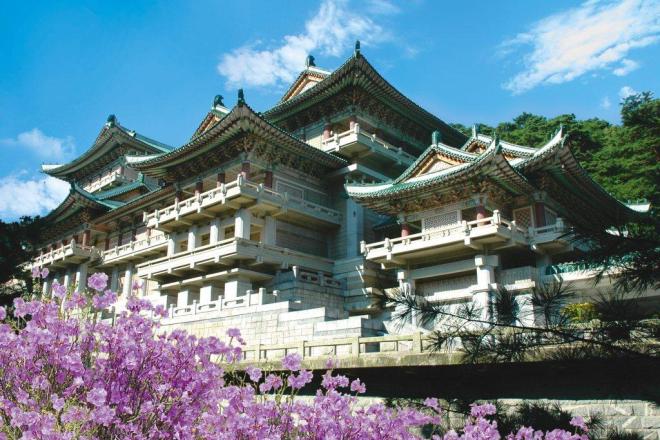
international frienship exhibition hall-exterior

The point of this massive building was to show the people of North Korea, and ignorant visitors like ourselves, that contrary to what the cynical capitalists might say about the Great Leader being a political pariah he was actually very much loved by peoples from all over the world. As testimony to this blindingly obvious fact, the building housed the tens of thousands, maybe hundreds of thousands, of gifts which he had received during his reign, from the mightiest of mighty personalities (heads of state and suchlike) to the lowliest of the lowly (a local communist youth league from some benighted country, for instance). These are all lovingly laid out in high-end display cabinets which are spread out through hundreds of rooms over seven or eight floors. Someone with a tidy frame of mind, perhaps the Great Leader himself, had neatly divided all the gifts by geographical region of provenance (Africa, Asia, and so on). When we arrived, the guide asked us what region we wanted to visit. Much to her surprise, I plumped for Africa, continent of my birth. Rather disappointed she took us there, but once we had visited that part of the collection, she beamed her approval when we said we now wanted to visit Europe, obviously where we should have been the whole time.

The whole experience was totally surreal. The place was spotlessly clean, so clean, so antiseptic, that we were required to put on shoe-covers. We were there in early November, and it was nice and warm inside the Exhibition Hall, in stark contrast to every other building in the country which we had visited, which were cold and dank – the population was expected to save on precious imported fuel. The lights were motion-sensitive, so rooms instantly lit up the moment we walked in and blacked out the moment we left them (there wasn’t a single window in the place). All of this hoopla for displaying gifts which were really very, very ordinary and in some cases in embarrassingly bad taste. If I had been given these gifts, after thanking the giver politely and waving him off at the door, I would have promptly put 99% of them in the attic for future “recycling”. We had to keep reminding ourselves that the whole point of this grotesque exercise was to show the viewer – again and again, obsessively – that the Great Leader was adored by all the peoples of the world. As a grand finale to all of this, the guide ushered us into a large room with a diorama at one end of Korea’s famous Mount Paektu and a Mme Tussauds-like wax reproduction of the Great Leader standing in front of it with a benign, grandfatherly smile on his face. As we walked in, piped concert music swelled to a crescendo and the North Koreans who were with us bowed deeply (we stood there, not knowing quite what to do, shifting from foot to foot, rather like atheists in a church).

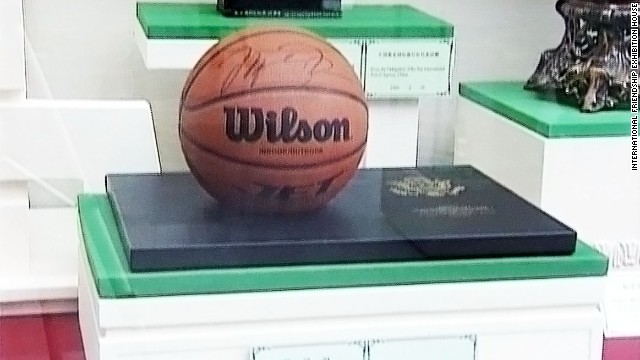
Apart from the discomfort we felt at seeing all this money being poured into a project of pharaonic proportions in a country where the people are dying of hunger, we were amazed by the strangeness, not to say the bad taste, of many of the gifts. I can understand that communist youth leagues might only be able to afford a cheap ashtray as a gift, but even the high and mighty gave odd gifts. How, for instance, did Madeleine Albright, US Secretary of State, arrive at the idea of giving the Great Leader a basketball signed by Michael Jordan?
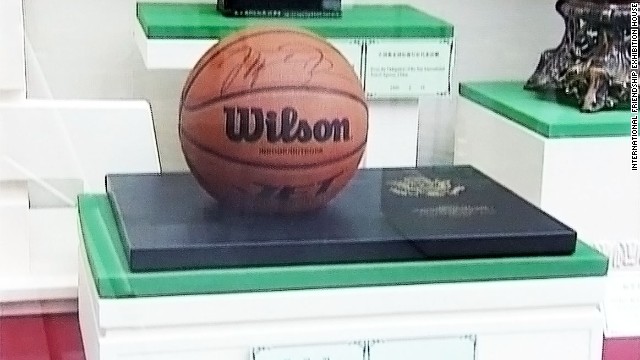
Kim present-basketball

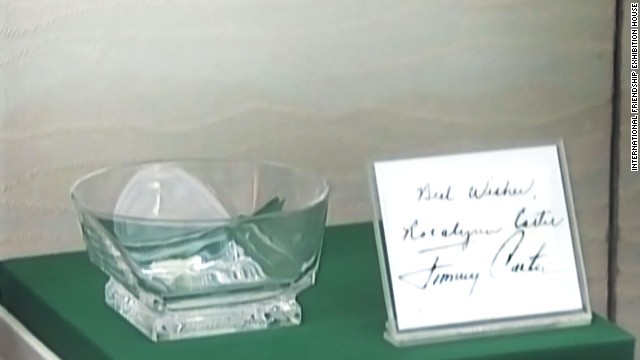
Maybe President Carter’s gift explains it all: you have no idea what to give, so you choose the most colourless thing you can think of – in his case, literally so:

Kim present-glass bowl

Or you become so desperate trying to figure out what to give that you end up giving something completely ridiculous, like the Sandanistas of Nicaragua, who gave the Great Leader a grinning alligator standing up, holding out a wooden tray of cocktail glasses.

Kim present-alligator

The strange world of official gift-giving …

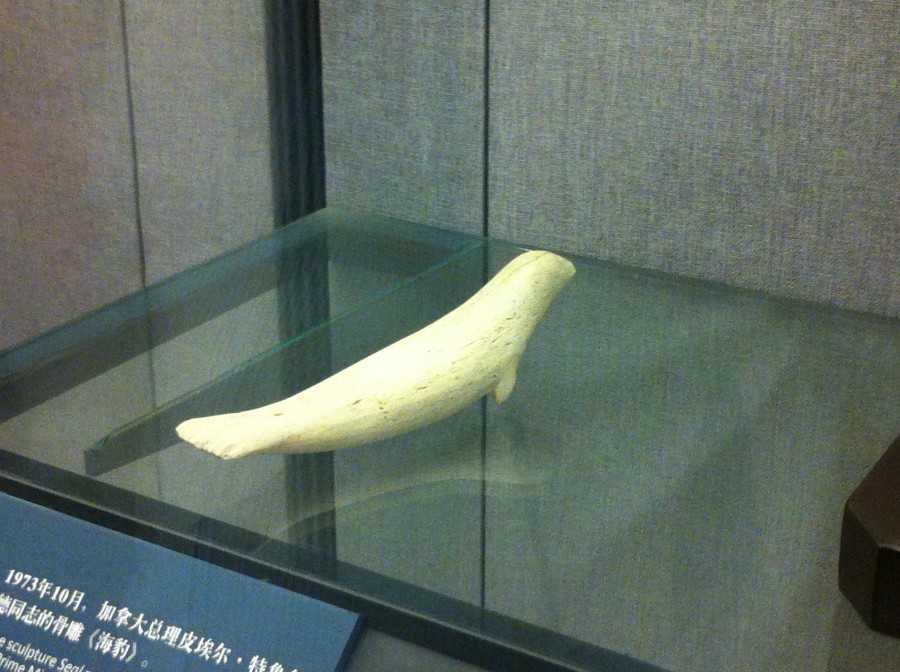
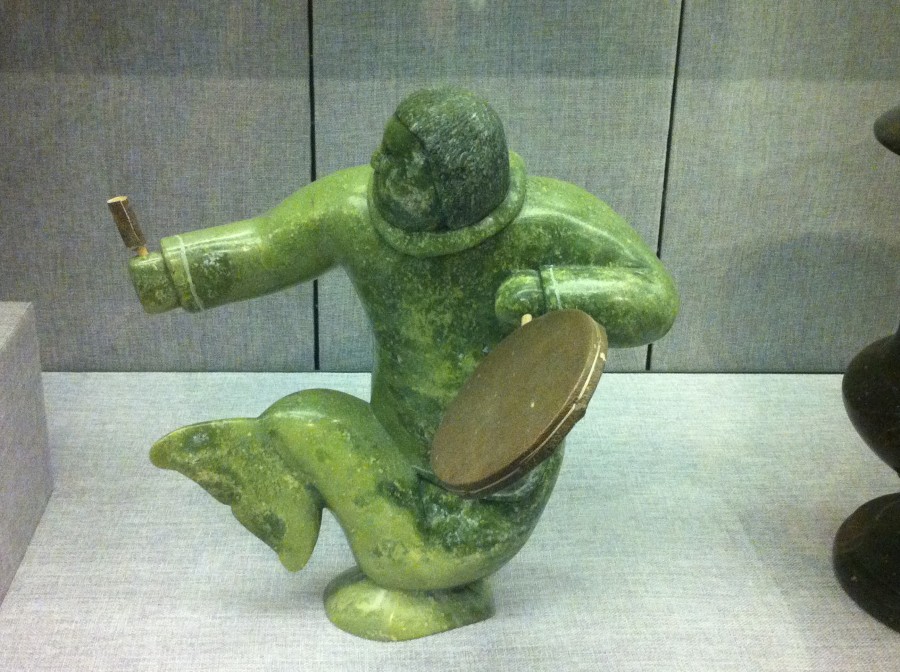
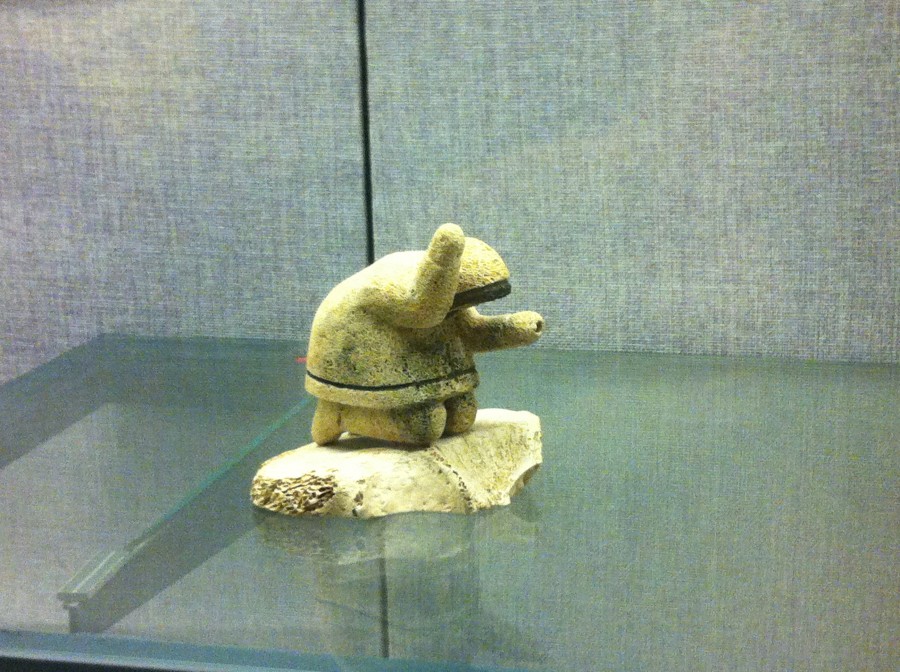
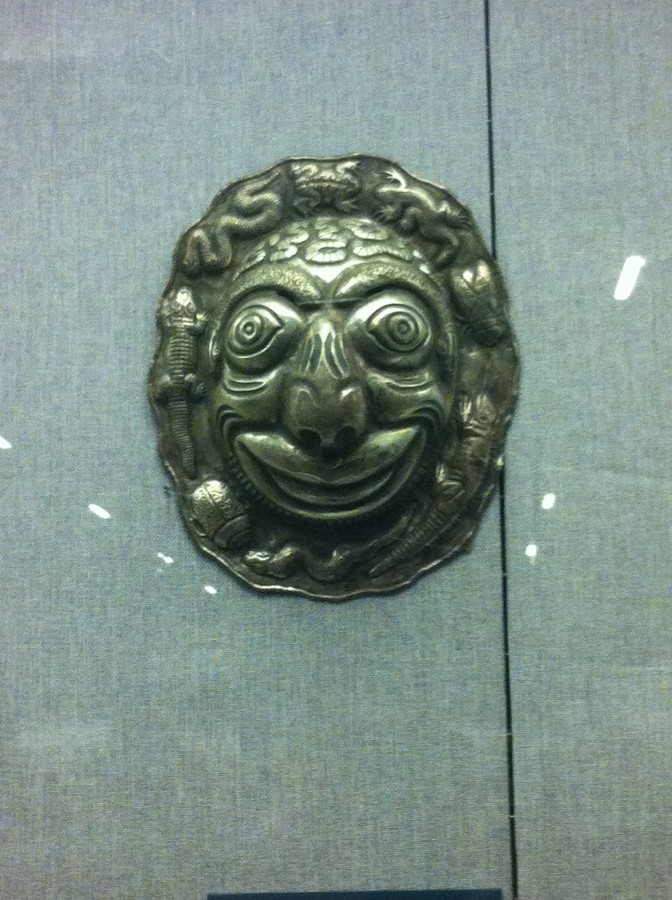
I was reminded of all this last weekend, when my wife and I visited China’s National Museum on Tiananmen Square. We actually went there to see if we could buy a copy of one of the Tang-era porcelain horses, to complement the copy of a Tang-era camel which we had purchased there a few years ago. Alas! The only one on sale was far too big for our modest dwelling. Disconsolate, we went around seeing what was new. Which brought us to a new exhibition of the official gifts received over the years by China’s Greats: Mao Zedong, Zhou Enlai, Deng Xiaoping, the recent Presidents and Prime Ministers, and other luminaries whose names meant nothing to me. The same general bad taste which assailed us in North Korea prevailed, although it wasn’t quite as bad as in the International Friendship Exhibition Hall. Either the cheap ashtrays had been quietly and sensibly “recycled” or people were more eager to be friends with China than with North Korea and were more careful about the gifts they made. Or both. But it still amazed us how much bad taste leaders of the world exhibit. I have to put it down to gift choosing being a decision made by a government committee somewhere, and we all know that government committee decisions lead to the Least Common Denominator, and the Great Person not having the time to check the gifts before he or she packs the bags, kisses the partner on the cheek, hugs the kids, pats the pet, and heads for the airport for the next official visit.

Luckily, though, in all this morass of dubious taste a few pieces stood out, pieces which we wouldn’t have minded keeping rather than storing in the attic for “recycling” etc. I note these here for posterity with photos taken with my iPhone.

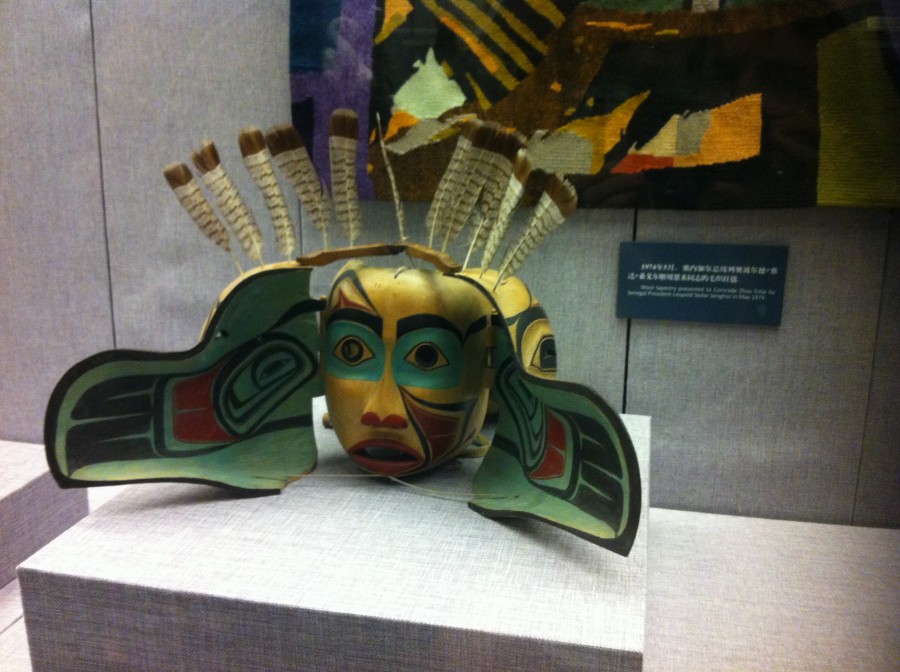
In general, I feel that the Canadians did better than everyone else in their choice of gifts. Here is the one that Pierre Trudeau gave Zhou Enlai, a beautiful Native Indian double mask, from the style I would guess from the Pacific coast

canadian mask 002

while here is a small but lovely sculpture, also given by Pierre Trudeau but this time to Zhu De, of a seal carved in  bone

canadian seal 001

This piece was given by Governor-General Romeo LeBlanc to Jiang Zemin, a beautiful carving in jade stone of what appears to be a merman dancing.
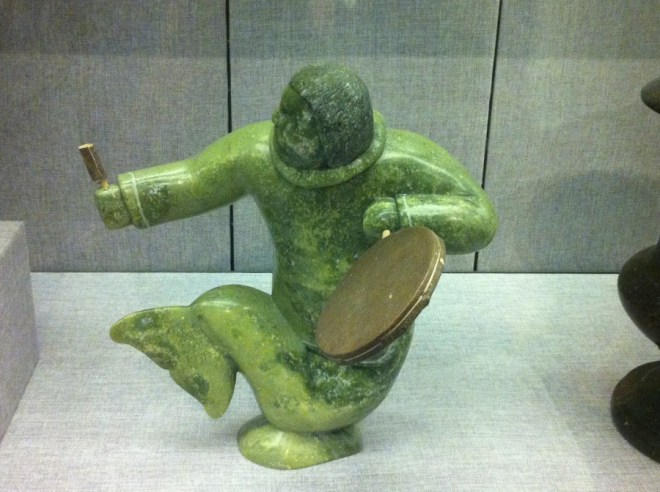
canadian merman 001

Keeping to the regional focus used in North Korea (the exhibition had the pieces laid out temporally), we can continue with North America, where the only other piece worthy of mention actually came from the same part of the world as the previous two, Alaska. It is a gift from that State’s Government to Deng Xiaoping, of an Inuit ice fishing, made of walrus bone

alaskan inuit 001

There was nothing else of note from the rest of the USA, or from Central America, so we can fly over to South America to land in Bolivia, where President Jaime Paz Zamora gave Yang Shangkun this lovely silver mask

bolivian mask 001

and then to Brazil, where President Jao Baptista de Oliveira Figueiredo gave Deng Xiaoping this delicate gift of a silver crane with crystal feathers

brazilian crane 001

(another Brazilian tried the same style some years later, but the result was not nearly as noteworthy)

After which I propose to fly over to Africa, which gave some of the best – but also many of the worst – gifts. Here are the best:

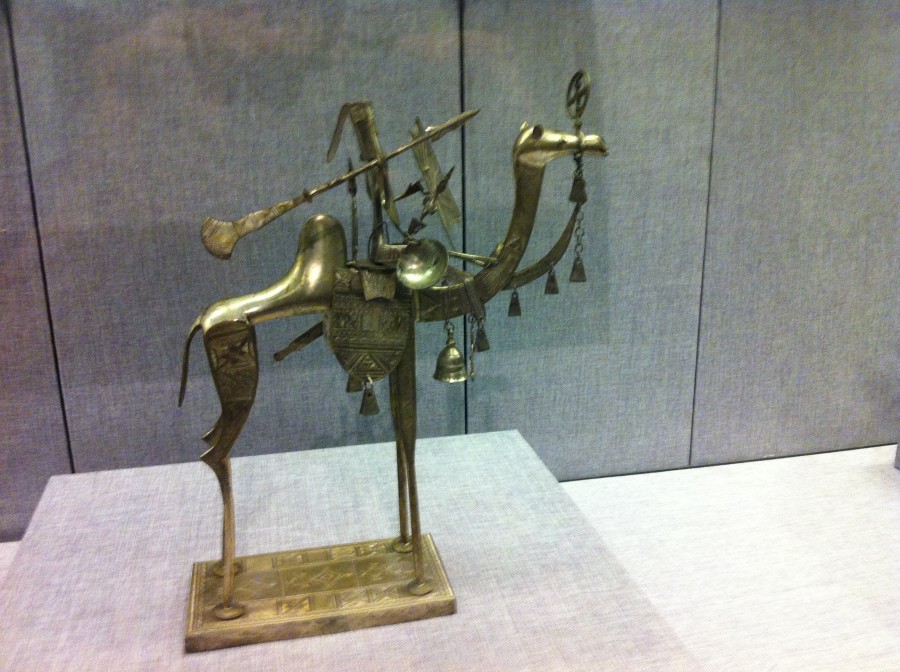
– a silver warrior riding his camel, from Niger, given by Head of State Seyni Kountche to Deng Xiaoping

nigerois warrior and camel 001

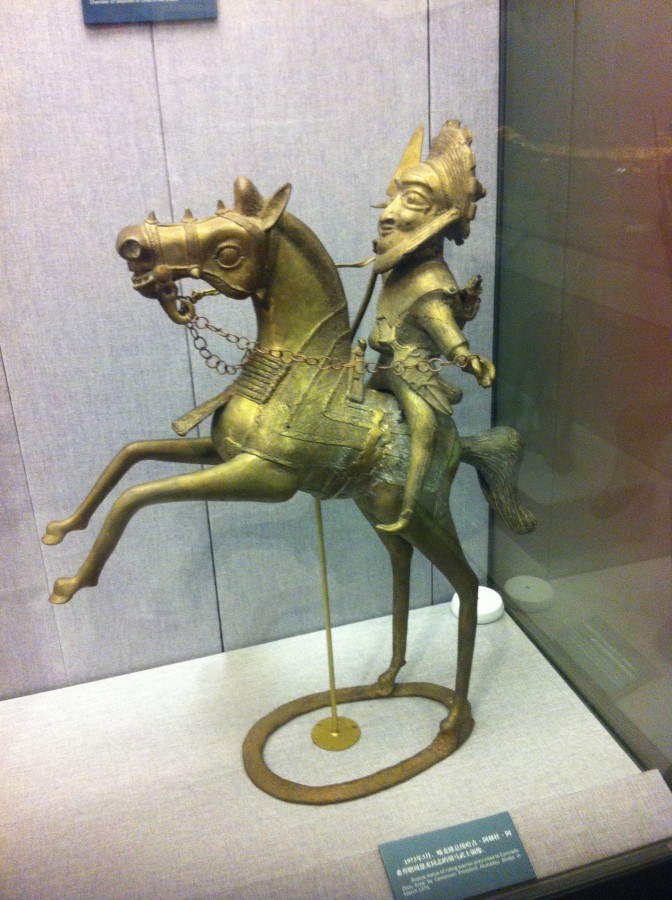
– somewhat in the same style but on a grander scale, a brass horse and rider from Cameroon, given by President Ahmadou Ahidjo to Zhou Enlai
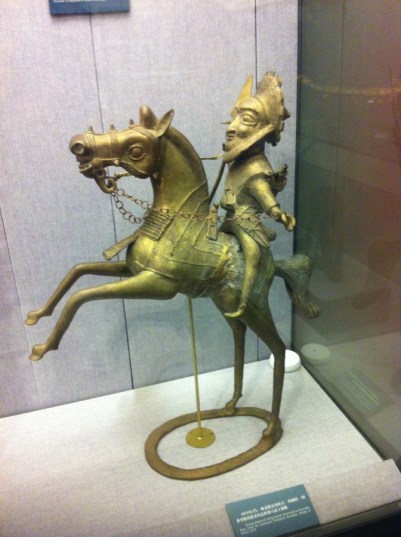
cameroon brass horse 001

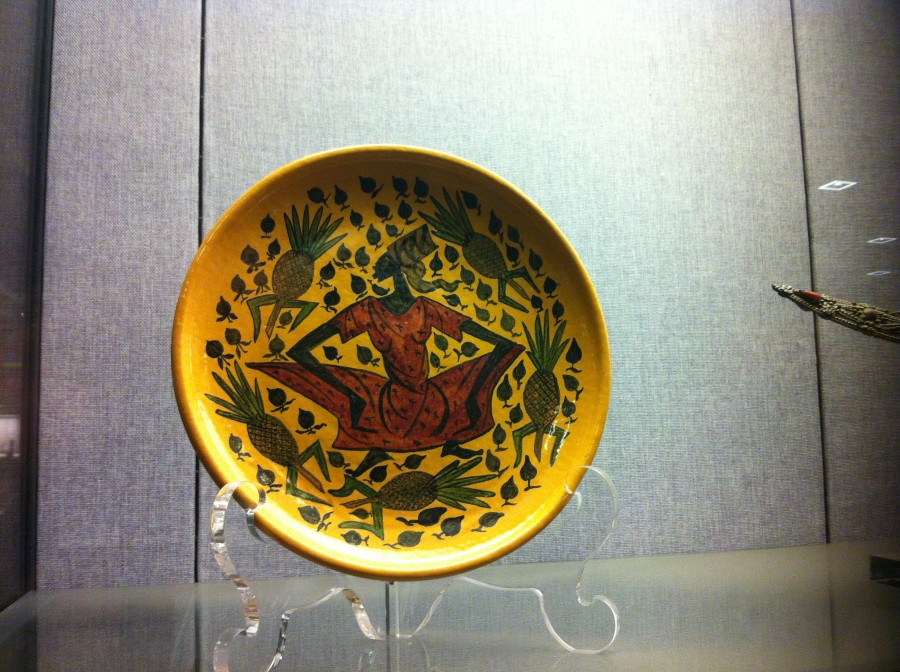
– a plate from the Republic of Congo, given by President Alphonse Massamba-Debat to Mao Zedong
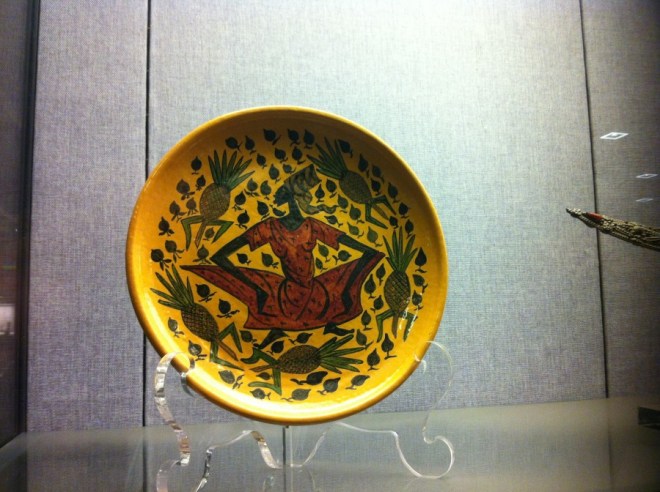
congolese plate 001

– bust from Gabon, given by President El Hadj Omar Bongo Ondimba to Jiang Zemin

gabon bust 001

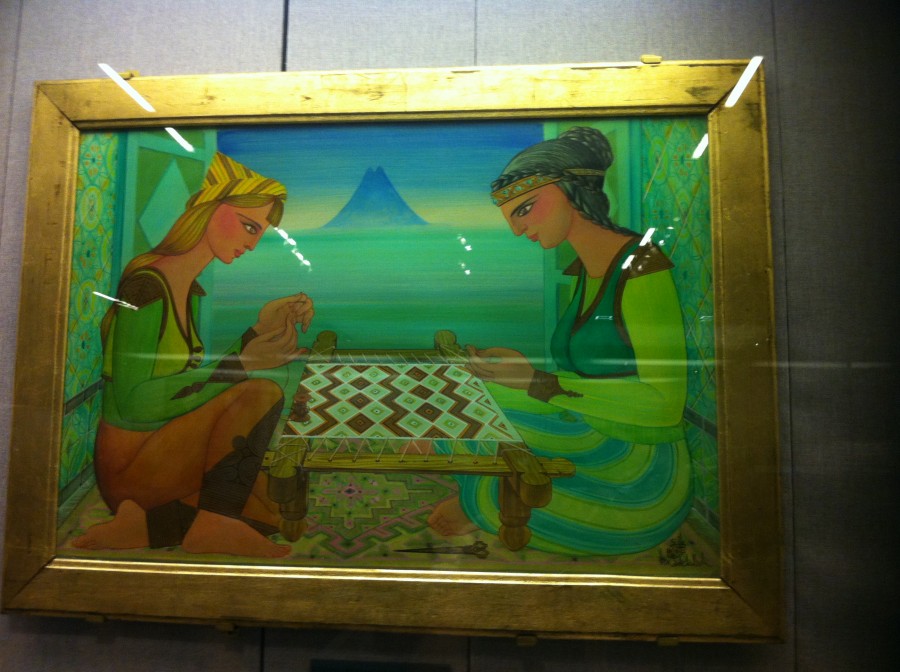
– and finally a gift from North Africa, a painting from Tunisia, given by Prime Minister Hedi Nouira to Zhou Enlai
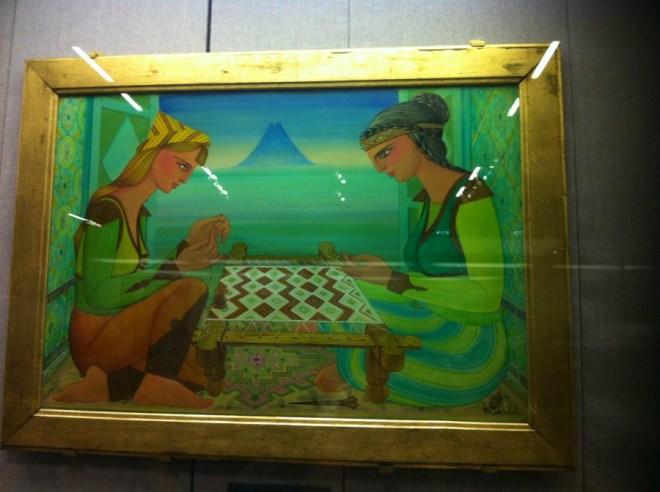
tunisian painting 001

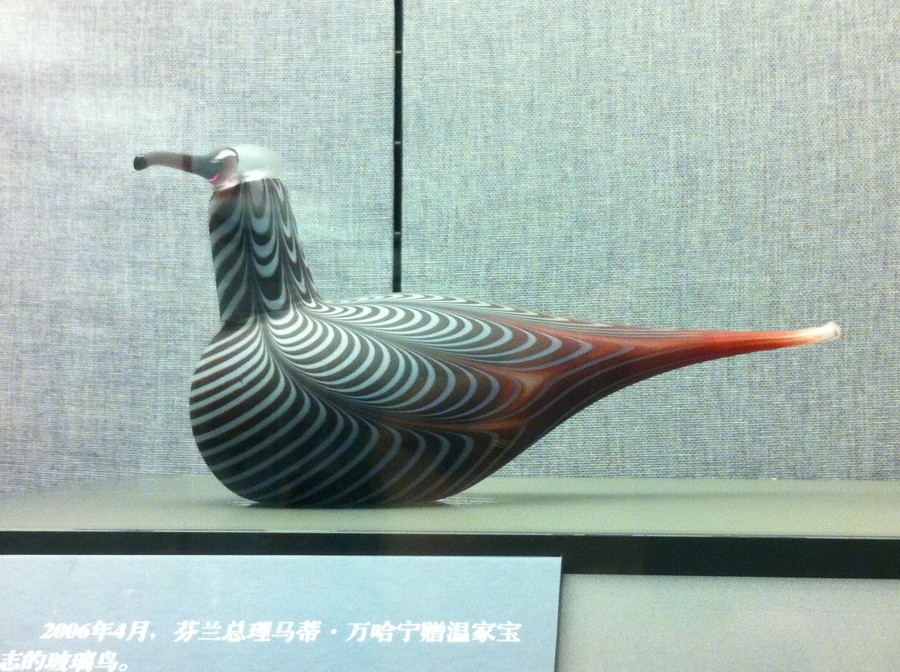
Tunisia is close to Europe, so why not do a hop, skip and a jump north over the Mediterranean. There was precious little that was nice from there, though. The best was this glass bird, a curlew, from Finland, a gift from Prime Minister Matti Vanhani to Wen Jiaobao
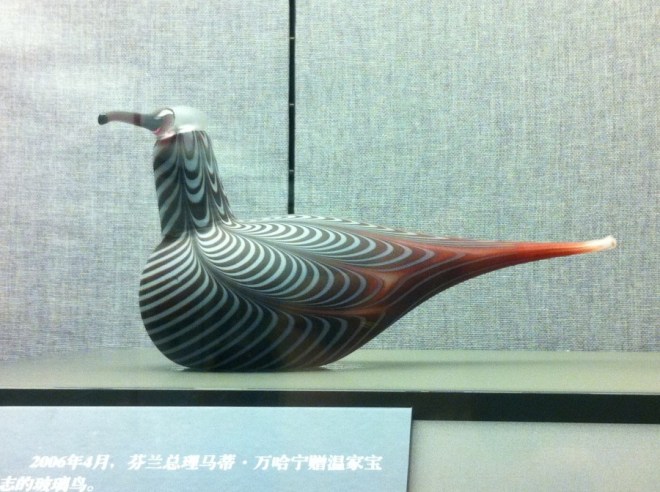
finnish bird 001

(there was another Finnish gift in the same style, but unfortunately the photo came out blurred so I haven’t added it; the Swedes, by the way, also gave a gift in glass, of fish in this case, but of appalling taste)

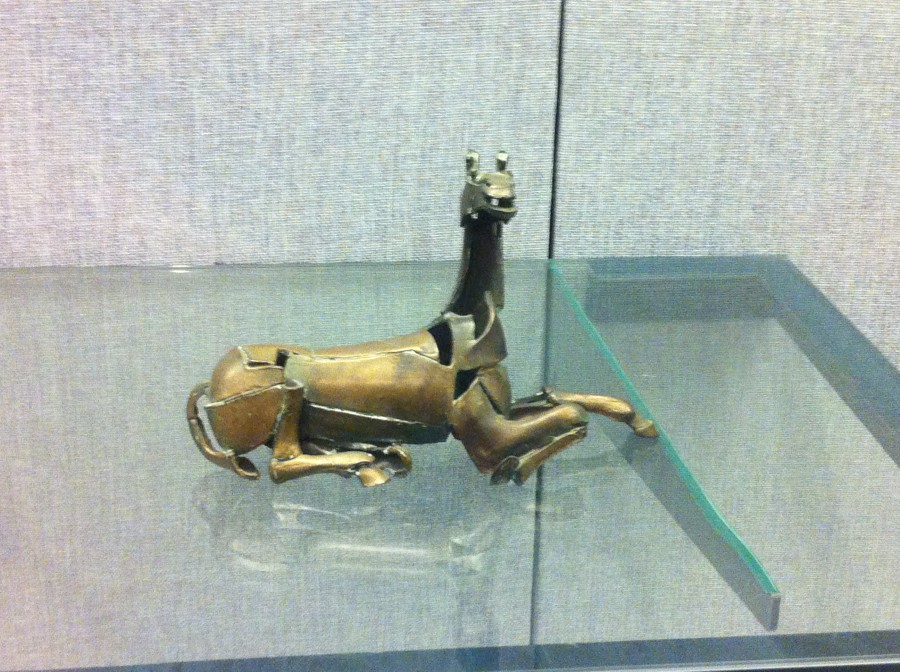
The Belgians, through the good office of King Baudoin, made a gift to Deng Xiaoping of a small but beautiful statue of a sitting horse
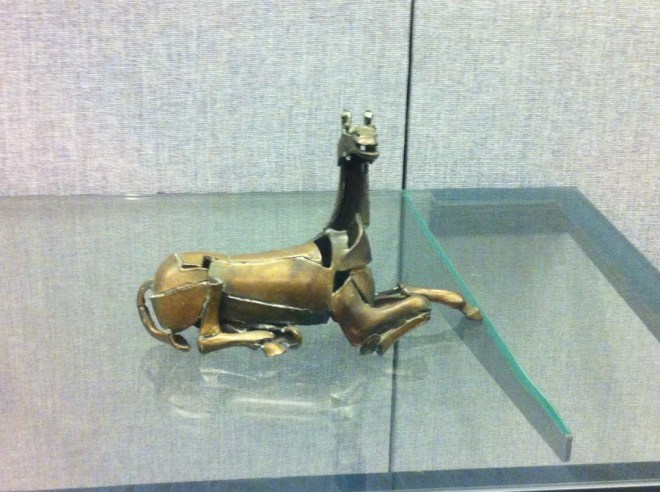
belgian horse 001

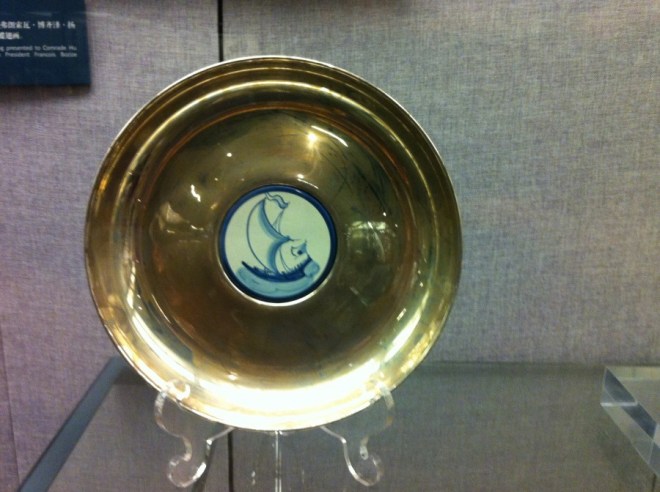
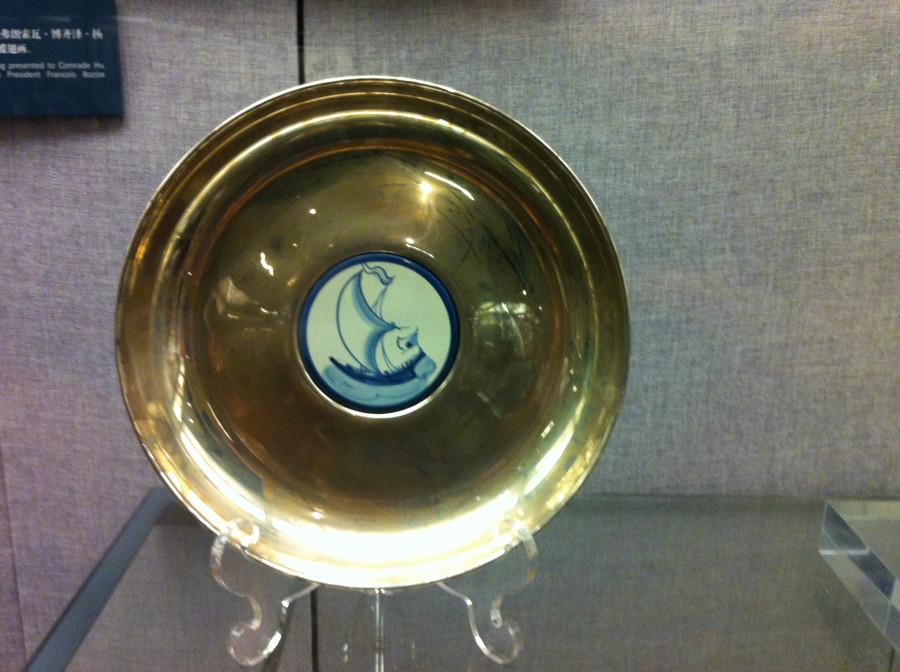
while from Portugal came this gift from Prime Minister Jose Socrates to Hu Jintao of a silver plate with a lovely azulejo­-inset of a boat in full sail

portuguese plate 001

Which leaves Asia, from where there was even less than Europe. The best was this silver bowl with a glass liner of a lustrous blue, from Vietnam, a gift from the Government to Liu Shaoqi.

vietnamese silver bowl 001

And that was it, as far as we were concerned. Really sad to see how little taste our Great Leaders have.

By the way, readers might be interested to know that, not to be outdone by his father, the Supreme Leader Kim Jong-il also built himself a hall, next to his father’s, to house his collection of rubbish … I mean, gifts. Luckily, we didn’t have to visit that one. No doubt Kim Jong-un, the current Supreme leader of North Korea, is currently hard at work with a team of architects designing his hall. Meanwhile, his people die of starvation and neglect.

______________

International Friendship Exhibition Hall: http://www.bestinsighttours.com/UpLoadFile/2013011818361673499.jpg [in http://www.bestinsighttours.com/ProductsView.Asp?id=44%5D
Kim present-basketball: http://i2.cdn.turner.com/cnn/dam/assets/130806190158-secretary-of-state-basketball2-horizontal-gallery.jpg [in http://www.cnn.com/2013/08/06/travel/north-korea-kim-gifts/%5D
Kim present-glass bowl: http://i2.cdn.turner.com/cnn/dam/assets/130806190133-jimmy-carter-gift2-horizontal-gallery.jpg [in http://www.cnn.com/2013/08/06/travel/north-korea-kim-gifts/%5D
Kim present-alligator: http://comtourist.com/images/large/north-korea-04/mt-myohyang-int-friendship-exhibition-04.jpg [in http://comtourist.com/mt-myongyang%5D
all other photos: mine
SCULPTURE AND NATURE

Beijing, 15 June 2014

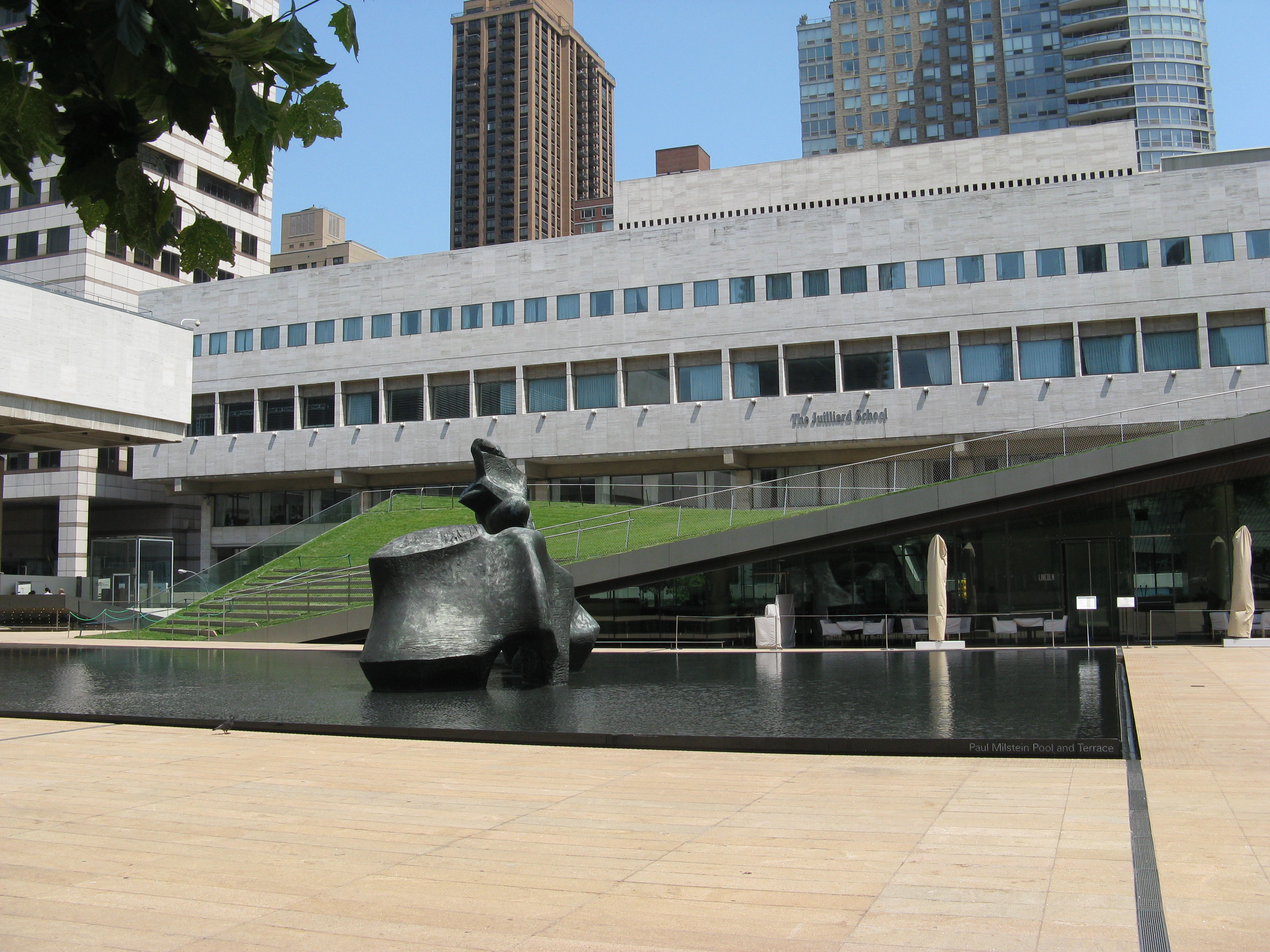
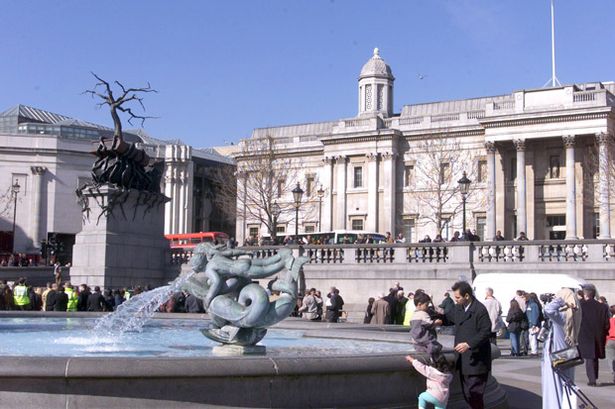
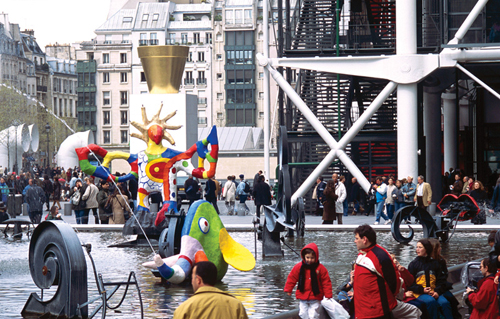
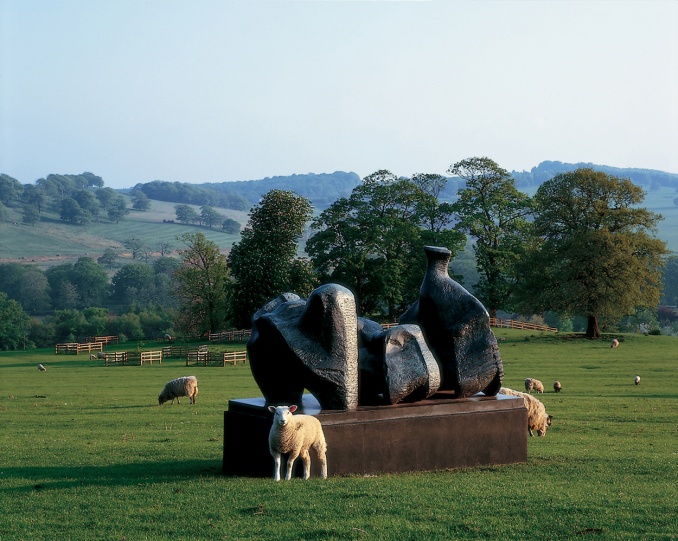
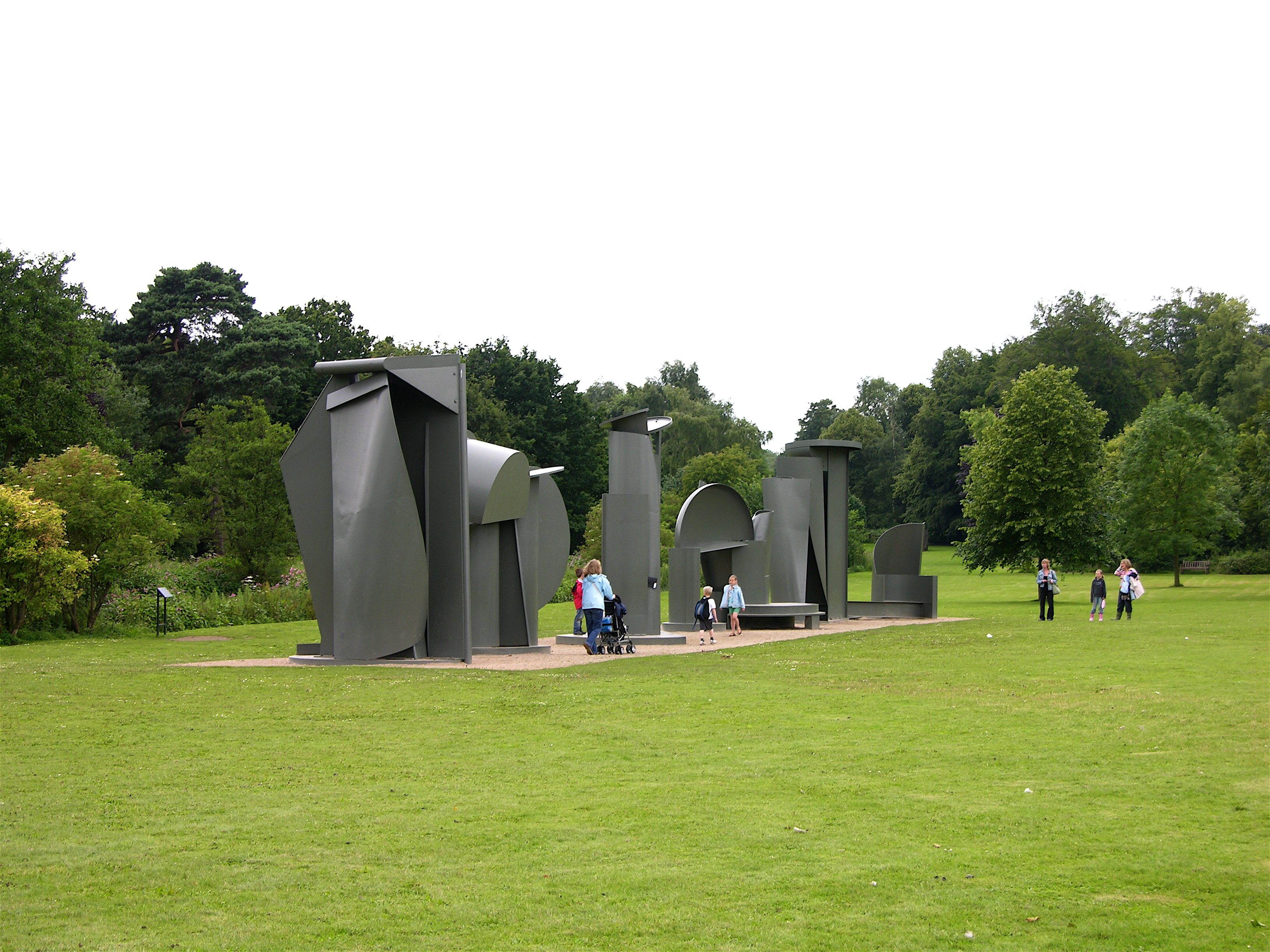
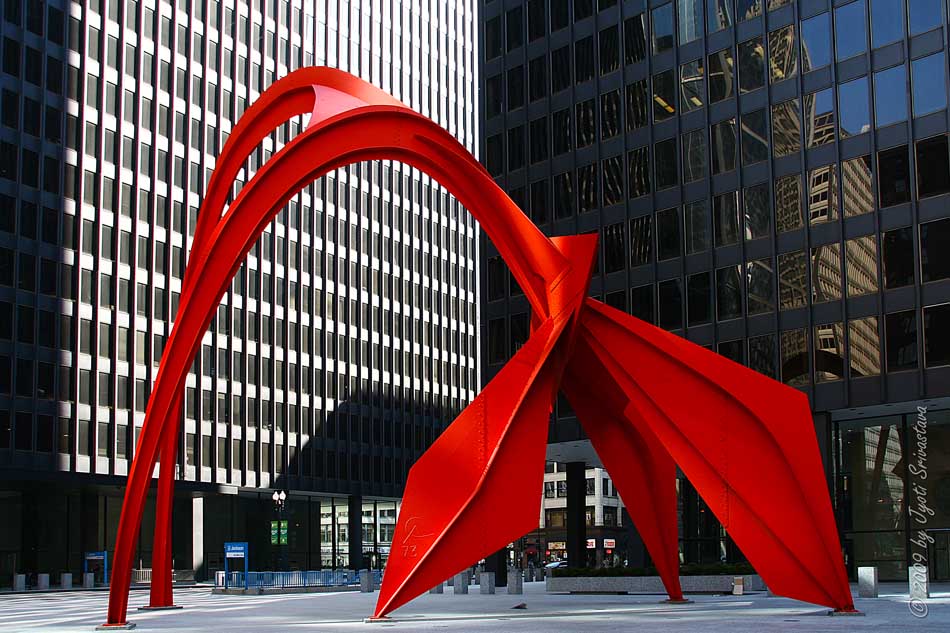
My wife and I were watching TV with one eye the other day when the BBC passed a programme which caught our attention. It was about the Yorkshire Sculpture Park in the north of England. I think a few words of explanation are required for those readers who have never heard of this Park (our situation before watching the BBC programme). It was established back in 1977 in the grounds of a stately home the last of whose aristocratic owners (Viscount Allendale) had sold it to the local council after World War II, no doubt to save his financial skin (I mentioned the financial woes of the UK’s stately homes in an earlier posting of mine). The idea is a simple one: rather than displaying modern sculpture in open spaces in cities like plazas
sculpture in cities-1

sculpture in cities-2

or squares

sculpture in cities-3

sculpture in cities-4

or using the atriums of posh buildings

sculpture in cities-6

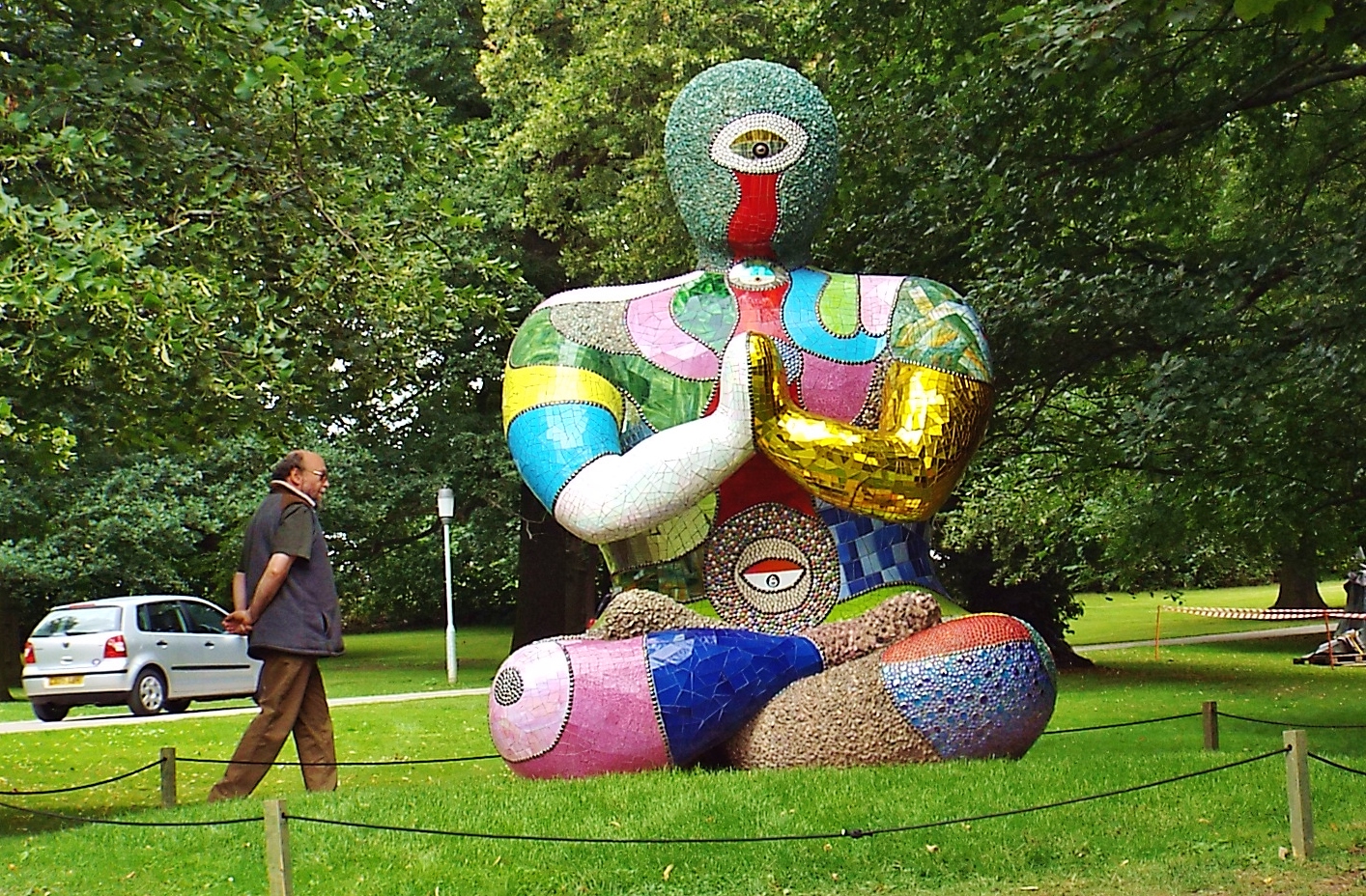
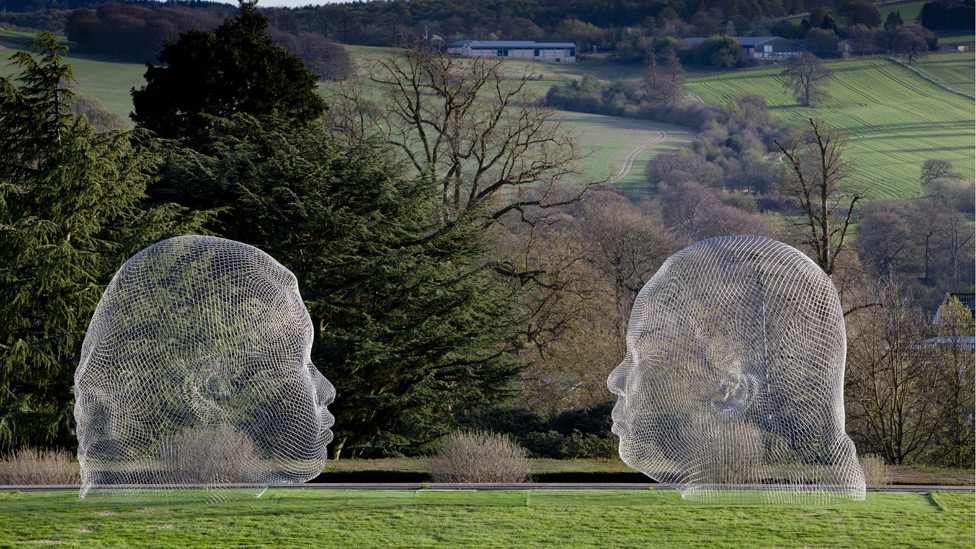
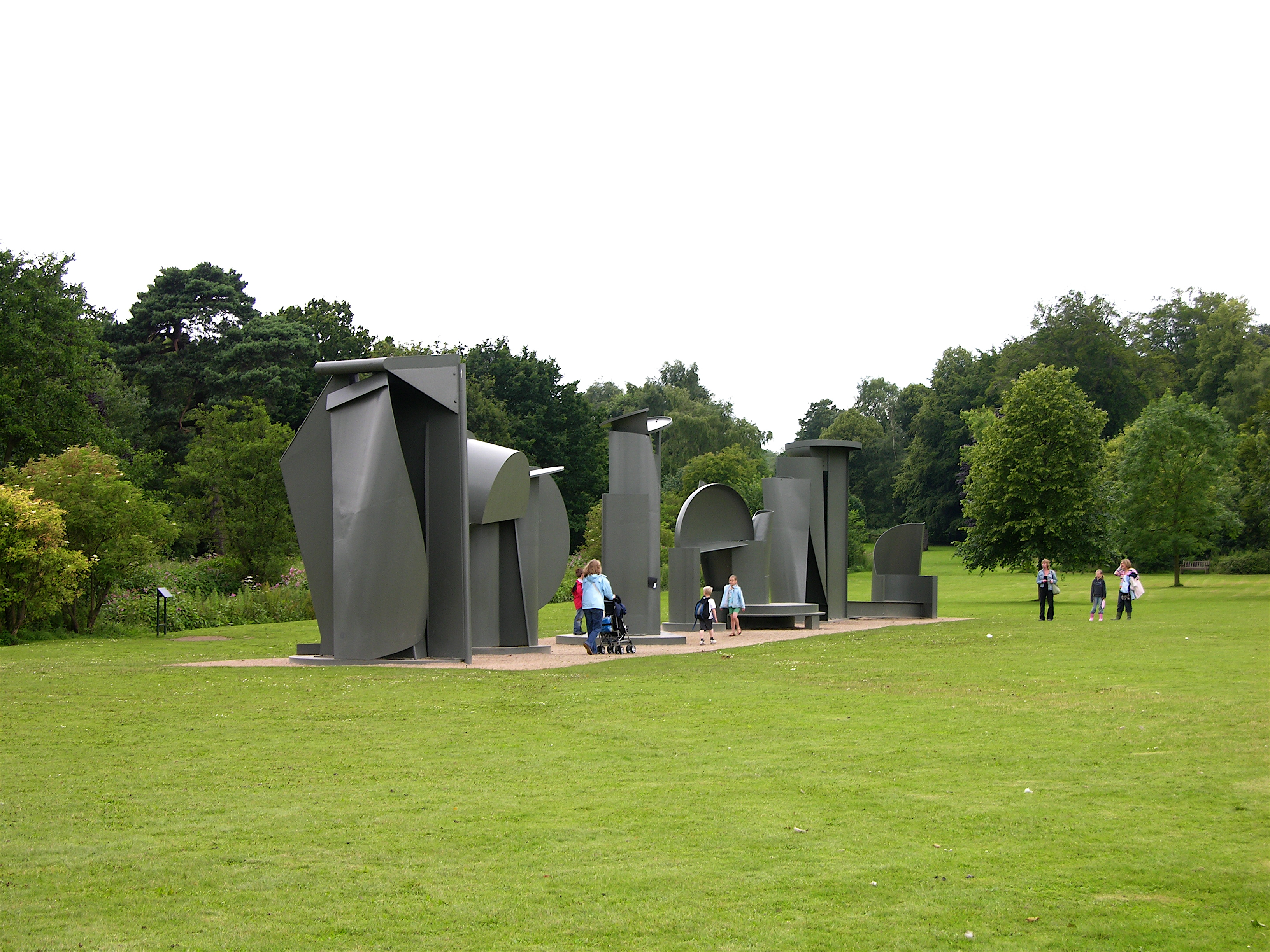
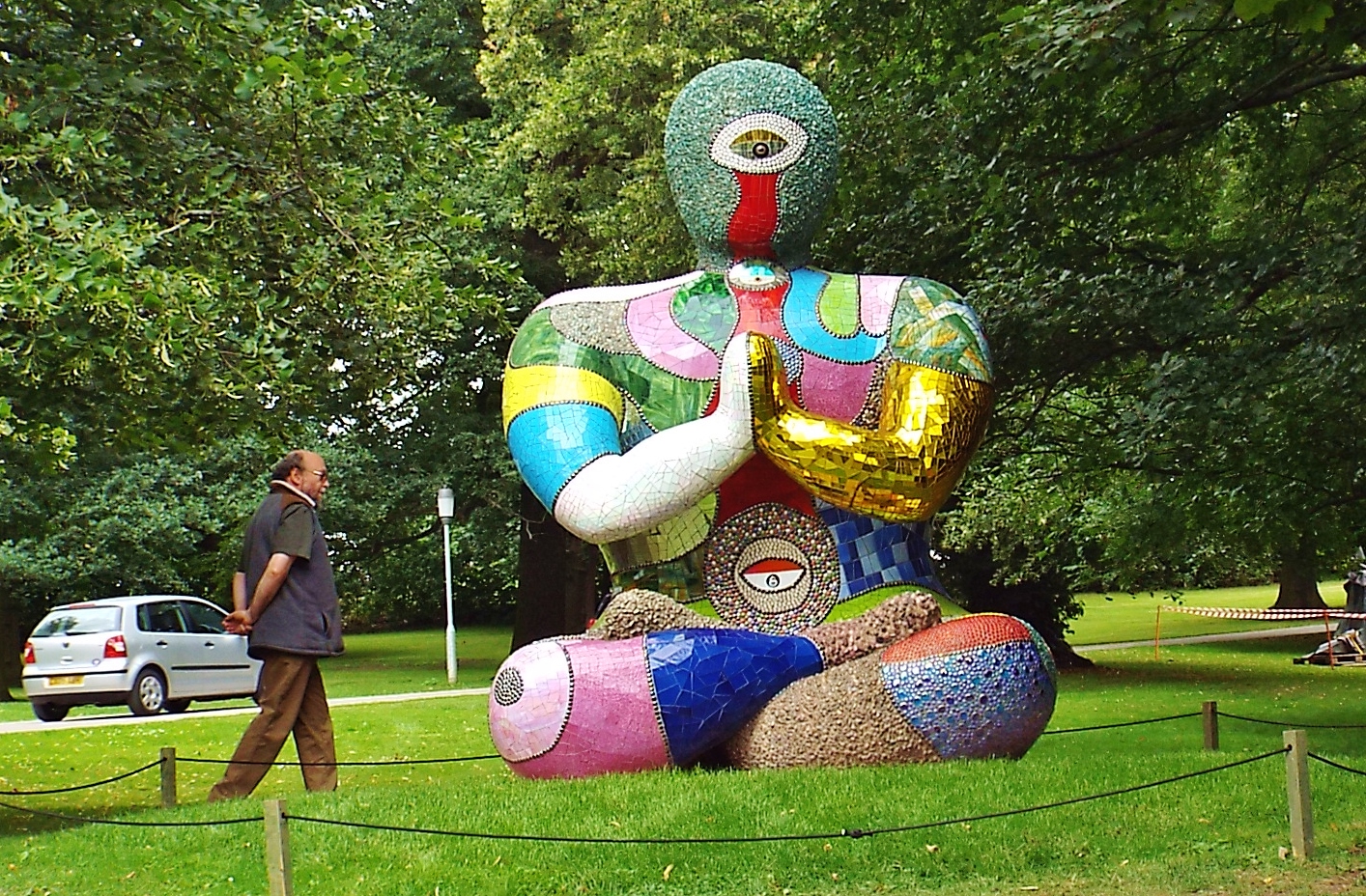
use the sweeping, open vistas of the countryside to display them. Here are some of the pieces at the Yorkshire Sculpture Park:
YSP-4
DSCN2327.JPG
YSP-6

YSP-9

YSP-10

YSP-14

YSP-1
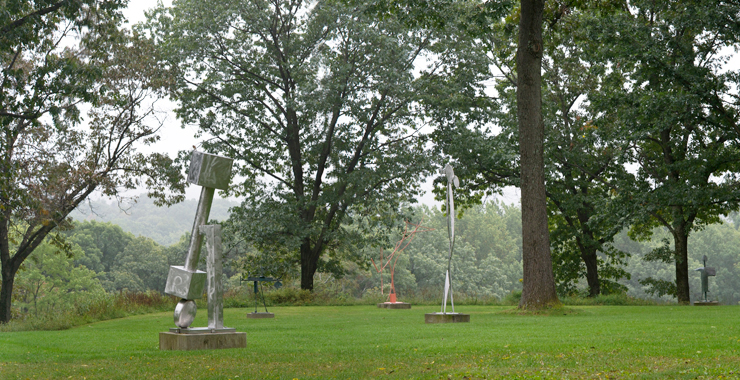
My wife and I agree on many things, and one of them is that modern sculptures are enhanced by being seen in a natural, organic setting rather than in the built urban environment. Personally, I think it has to do with the contrast between the dead surfaces of the sculptures and the much softer, living surfaces of the surrounding landscapes. It sounds a bit fancy, but the dead sculpture comes alive when in contact with organic life.

This was brought home to us very strongly when, 25 years ago, and on the advice of a friend who worked at the Metropolitan Museum of Art, we visited the Storm King Art Centre, which is an hour’s drive north of New York City, near the Hudson River. Here again, a few words of introduction. It’s really the classic American story (as much as the history of the Yorkshire Sculpture Park is the classic British story of modern times – decay of the old order and birth of a new one). A certain Mr. Ogden, after a successful career in the family business, purchased the land and property of Storm King and started collecting. He initially bought small sculptures which he exhibited around the house. At some point, he expanded out into the surrounding landscape, installing much bigger pieces. That’s it, in a nutshell. But the result – for us at least – was epiphanic.

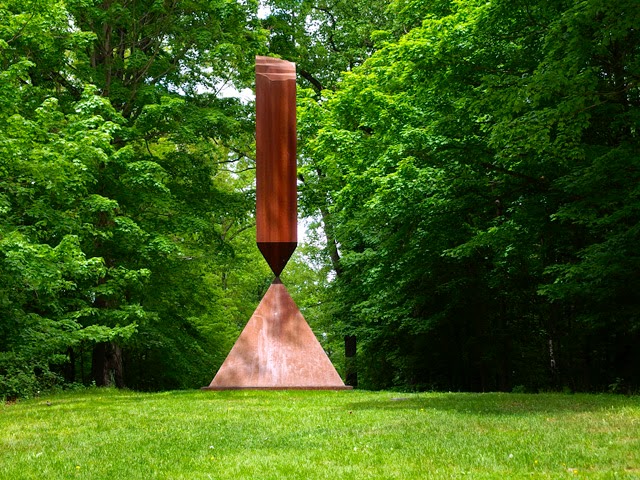
In wonder we wandered along the rides mown through the grass, walking from one towering sculpture to another

SK-1

SK-4

from hilltops, we discovered long views across the surrounding landscape, where sculpture and land merged into one

SK-2

we walked through glades in the woods, each with their own sculpture

SK-8

SK-9

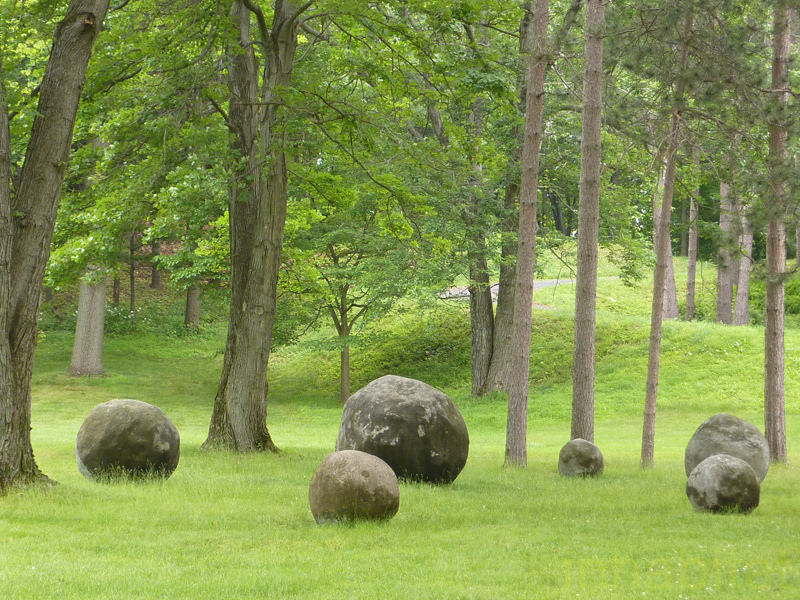
we entered the woods to find smaller, more intimate sculptures scattered under the trees

SK-7

SK-10

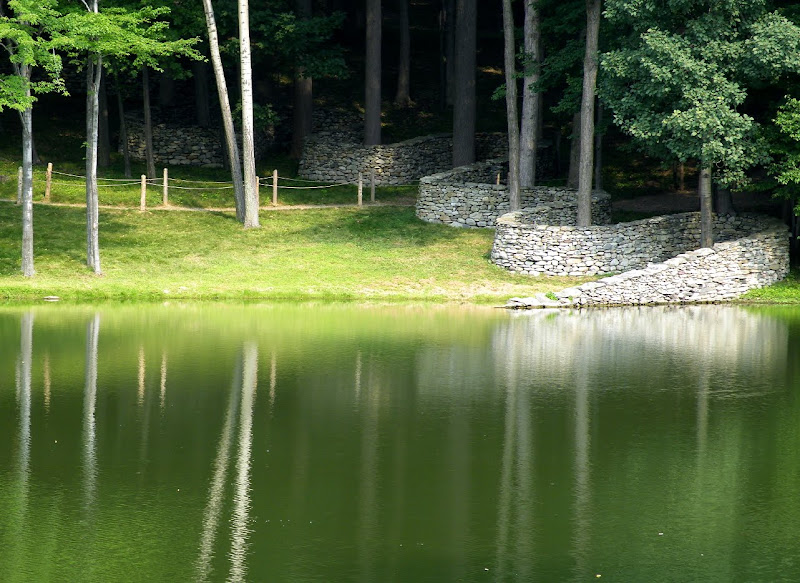
we also found a sculpture-wall meandering through them

SK-5

(better seen in this photo taken during the winter)

SK-14

we turned our steps back to the house, discovering other smaller sculptures set down in more formal gardens around the house.

SONY DSC

SK-11

And finally, we entered the house and fell upon a sculpture which in all these years I have never forgotten: a group of robotic-looking statues with small motors making their jaws work up and down and with a closed-loop recording of voices quietly droning “chatter, chatter, chatter, chatter, chatter, chatter …” on and on, endlessly. Wonderful.  Every time I find myself in one of those meetings where people blather on and on and on I recall this statue group with intense clarity.

So taken were we with Storm King that the very first time we went back to New York after an absence of fifteen years we made sure to find time to go up there. It cast the same spell over us – although sadly the chattering statues had vanished (smashed to smithereens, no doubt, by an employee crazed by their endless droning).

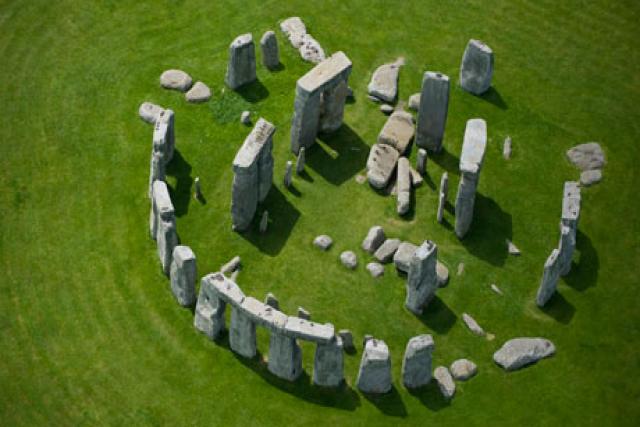
As I contemplate these photos, it occurs to me that many of the megalithic structures scattered across the face of Europe could pass as modern sculptures set down in the surrounding landscape. Stonehenge, the most iconic of all megalithic structures, is probably too much like a ruin to make this comparison
Stonhenge-2
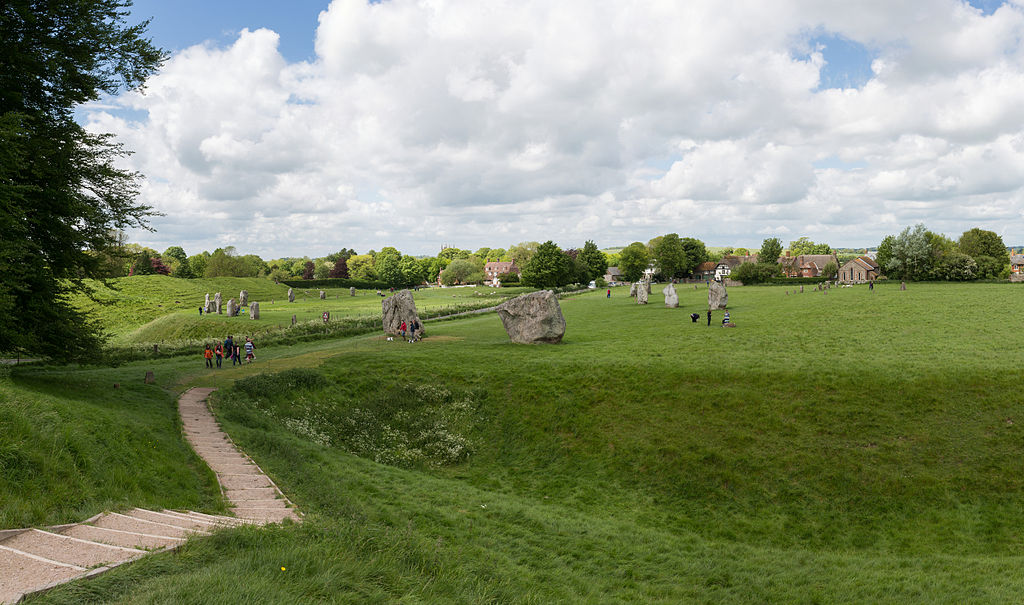
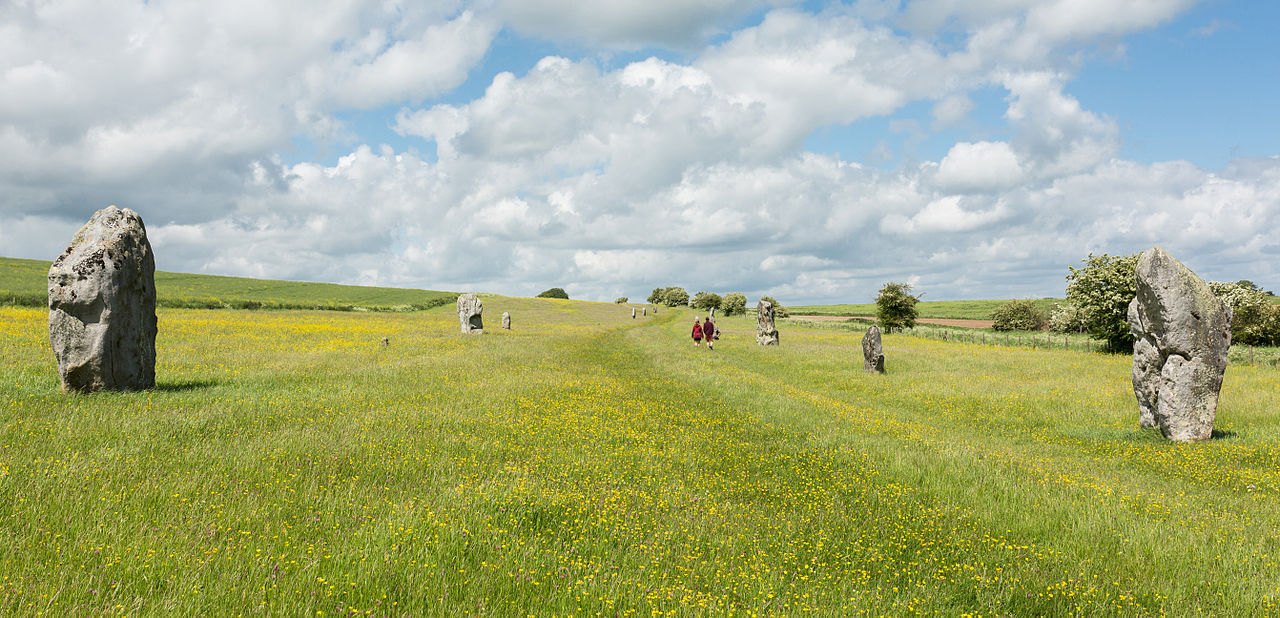
but Avebury, like Stonehenge located in Wiltshire, has something of the abstraction of sculpture parks

Avebury-2

Avebury-1

and how about Carnac, in Brittany?
carnac-1

carnac-2
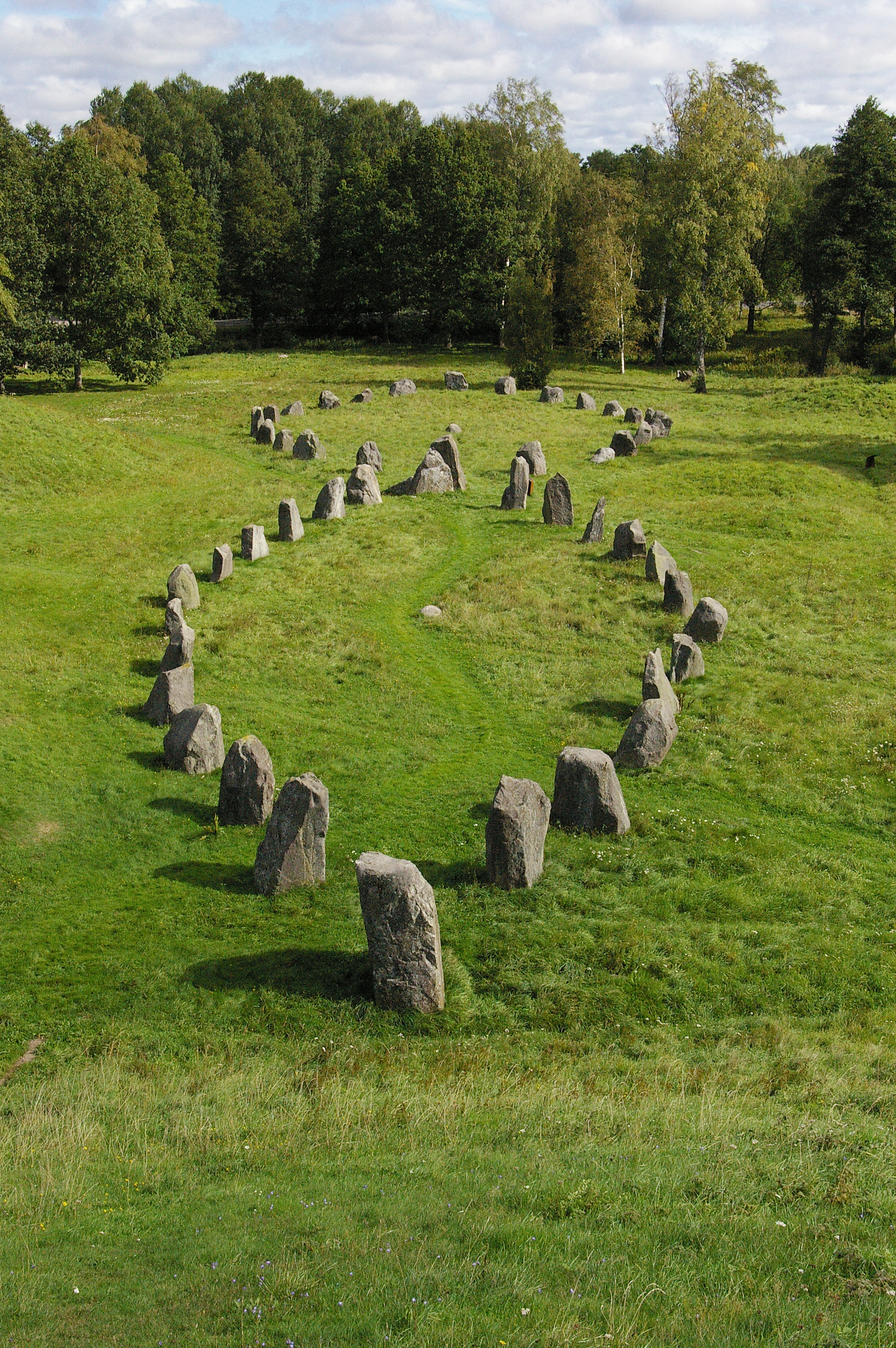
or Badelunda in Sweden?

Badelunda Västmanland

or the Ring of Brodgar, in the Orkney islands?

Ring of Brodgar

And even further afield, although not from the Mesolithic period, we have this intimate collection of upright stones in Toraja, Indonesia

OLYMPUS DIGITAL CAMERA

Of course, the people who built these structures were not building sculpture parks, but I have to think that they too were stirred by the same feeling of connectedness between their standing stones and nature as we have between sculpture and nature. They attributed this feeling to a divine grace in the place, we simply enjoy the feeling.

____________________________

Sculpture in cities-1: http://percivalhenry.files.wordpress.com/2014/03/52af841ee4b0b09acc808041-lost3f3f3f-1387234862071-flamingo.jpg [in http://percivalhenry.wordpress.com/2014/03/20/art-history-martch-madness-first-round-new-york-regional/comment-page-1/%5D
Sculptures in cities-2: http://upload.wikimedia.org/wikipedia/commons/2/26/Juilliard_School-Manhattan-New_york.jpg [in http://commons.wikimedia.org/wiki/File:Juilliard_School-Manhattan-New_york.jpg%5D
Sculpture in cities-3: http://i3.mirror.co.uk/incoming/article740970.ece/alternates/s615/A%20new%20sculpture%20on%20the%20fourth%20plinth%20in%20Trafalgar%20Square,%20central%20London%20The%20work%20by%20sculptor%20Bill%20Woodrow,%20entitled%20%27Regardless%20of%20History%27,%20%20shows%20a%20tree%20resting%20on%20a%20head%20and%20a%20book [in http://www.mirror.co.uk/news/uk-news/love-it-or-hate-it-bronze-rocking-741129%5D
Sculpture in cities-4: http://womenworld.org/image/082012/Paris%20-%20Beaubourg%20and%20Les%20Halles_1.jpg [in http://womenworld.org/travel/paris—around-town—beaubourg-and-les-halles-%28part-1%29.aspx%5D
Sculpture in cities-5: http://www-news.uchicago.edu/releases/06/images/cis/sculpture.jpg [in http://www-news.uchicago.edu/releases/06/060426.cis-photos.shtml%5D
YSP-1: http://www.yorkshireattractions.org/images/cms/attractions_21_3_large.jpg [in http://www.yorkshireattractions.org/visitor-attractions/21/yorkshire-sculpture-park%5D
YSP-2: http://upload.wikimedia.org/wikipedia/commons/0/0a/Yorkshire_Sculpture_Park_Caro_Promenade.jpg [in http://commons.wikimedia.org/wiki/File:Yorkshire_Sculpture_Park_Caro_Promenade.jpg%5D
YSP-3: http://antonyjwaller.files.wordpress.com/2012/06/nik_5931-copy.jpg [in http://antonyjwaller.wordpress.com/travel-articles/yorkshire-and-northern-england/the-yorkshire-sculpture-park/%5D
YSP-4: http://www.sculpture-info.com/upload/1008/image/Yorkshiresculpturepark.jpg [in http://www.sculpture-info.com/news-626/yorkshire-sculpture-park.html%5D
YSP-5: http://2.bp.blogspot.com/-6GgifPCMTc8/UgZKx2yojhI/AAAAAAAACDg/WYBKhXaNWp8/s1600/2+Buddha+and+Rob.JPG [in http://expertslife.blogspot.com/2013/08/picture-of-week-10-august-2013.html%5D
YSP-6: http://www.thomasharveydesign.co.uk/wp-content/uploads/2011/05/YSP6.jpg [in http://www.thomasharveydesign.co.uk/2011/05/09/yorkshire-sculpture-park-wakefield/%5D
YSP-7: http://news.bbcimg.co.uk/media/images/52104000/jpg/_52104252_7cbb7745-313f-43e9-8974-d144adf6c05f.jpg [in http://www.bbc.co.uk/news/entertainment-arts-13034363%5D
SK-1: http://brooklynimbecile.files.wordpress.com/2011/10/img_4256.jpg [in http://brooklynimbecile.com/2011/11/05/weekend-spread-storm-king-art-center/%5D
SK-2: http://3.bp.blogspot.com/-OWDq8YQCBog/UA6M17c9N6I/AAAAAAAAYI4/OqODfTIunKU/s1600/Mountainville_NY_A_Calder_Storm_King_AC_photo_S_Gruber_June_2012_+%2888%29.JPG [in http://publicartandmemory.blogspot.com/2012_07_01_archive.html%5D
SK-3: http://www.greenstrides.com/images-wp/Storm-King.jpg [in http://www.greenstrides.com/2013/07/10/sculpture-parks-can-inspire-your-own-garden-design/%5D
SK-4: http://4.bp.blogspot.com/-4sgNF1ufdU4/U4T1ul7DPRI/AAAAAAAAP8w/JzGsmMOY6No/s1600/Newman.jpg [in http://nycgarden.blogspot.com/2014/06/storm-king.html%5D
SK-5: http://i.vimeocdn.com/video/332835418_1280.jpg [in http://vimeo.com/48015694%5D
SK-6: http://inhabitat.com/nyc/wp-content/blogs.dir/2/files/2011/07/storm-king-boulders.jpg [in http://inhabitat.com/nyc/storm-king-art-center-a-summer-retreat-for-the-artsy-nature-loving-new-yorker/storm-king-boulders/%5D
SK-7: http://faeriemooncreations.blogspot.com/2010_11_01_archive.html [in http://faeriemooncreations.blogspot.com/2010_11_01_archive.html%5D
SK-8: http://4.bp.blogspot.com/_sVe9wO8fJls/S4zMOOgpUZI/AAAAAAAAEDo/IaUESi6KOGQ/s800/goldsw3.jpg [in http://lettuce-eating.blogspot.com/2010_03_01_archive.html%5D
SK-9: http://stormking.weebly.com/uploads/2/3/8/8/23889452/6893557.jpg [in http://stormking.weebly.com/permanent-collection.html%5D
SK-10: http://www.stormking.org/wp-content/uploads/2013/07/smith-lawn1.jpg [in http://www.stormking.org/collection-conversation/%5D
SK-11: http://eof737.files.wordpress.com/2011/09/img_2564.jpg?w=800 [in http://mirthandmotivation.com/2011/09/04/happiness-installation-art-at-storm-king/img_2564/%5D
Stonehenge: http://st-listas.20minutos.es/images/2013-06/362538/4049632_640px.jpg?1370571567 [in http://listas.20minutos.es/lista/maravillas-del-mundo-362538/%5D
Avebury-1: http://en.wikipedia.org/wiki/Avebury#mediaviewer/File:Avebury_Panorama,_Wiltshire,_UK_-_Diliff.jpg [in http://en.wikipedia.org/wiki/Avebury%5D
Avebury-2: http://en.wikipedia.org/wiki/Avebury#mediaviewer/File:Avebury,_West_Kennet_Avenue,_Wiltshire,_UK_-_Diliff.jpg [in http://en.wikipedia.org/wiki/Avebury%5D
Carnac-1: http://weadorefrance.com/es/images/w.800/h.600/c.1/d.guide_photos/sd./i.carnac-brittany-standing-stones-20130325.jpg [in http://weadorefrance.com/es/brittany-bretagne/g.31%5D
Carnac-2: http://media.tinmoi.vn//2012/02/27/4_28_1330310626_92_20120224114942_l6.jpg [in http://www.tktyt1haiduong.edu.vn/?p=888%5D
Badelunda, Sweden: http://upload.wikimedia.org/wikipedia/commons/d/d3/Badelunda_V%C3%A4stmanland_Sweden.jpg [in http://some-landscapes.blogspot.com/2011_10_01_archive.html%5D
Ring of Brodgar, Orkney: http://en.wikipedia.org/wiki/Ring_of_Brodgar#mediaviewer/File:RingofBrodgar.jpg [in http://en.wikipedia.org/wiki/Ring_of_Brodgar%5D
Toraja, Indonesia: http://tribudragon.files.wordpress.com/2013/03/2-tt-6.jpg [in http://tribudragon.wordpress.com/category/indonesia/%5D

SPRING IS IN THE AIR!

Beijing, 20 March 2014

It’s the first day of Spring! The day of the vernal equinox! The moment in the year when, after a slow climb out of the short days and long nights of the winter solstice, night equals day. From now on, the days will get longer and the nights shorter, until the summer solstice in the month of June is reached and the cycle reverses.

equinox

And actually, apart from cold astronomical considerations, today in Beijing it really was a spring day! A beautiful, sunny spring day! When I walked out of the apartment building this morning, the sun shone out of a blue, unclouded sky, but there was a chill in the air. When I left the office as evening drew in, the sky was still an unclouded blue, but now there was a soft breath of warm air on my cheek. Verily, I felt like Boticelli’s Venus stepping off her shell, with the zephyrs blowing over me
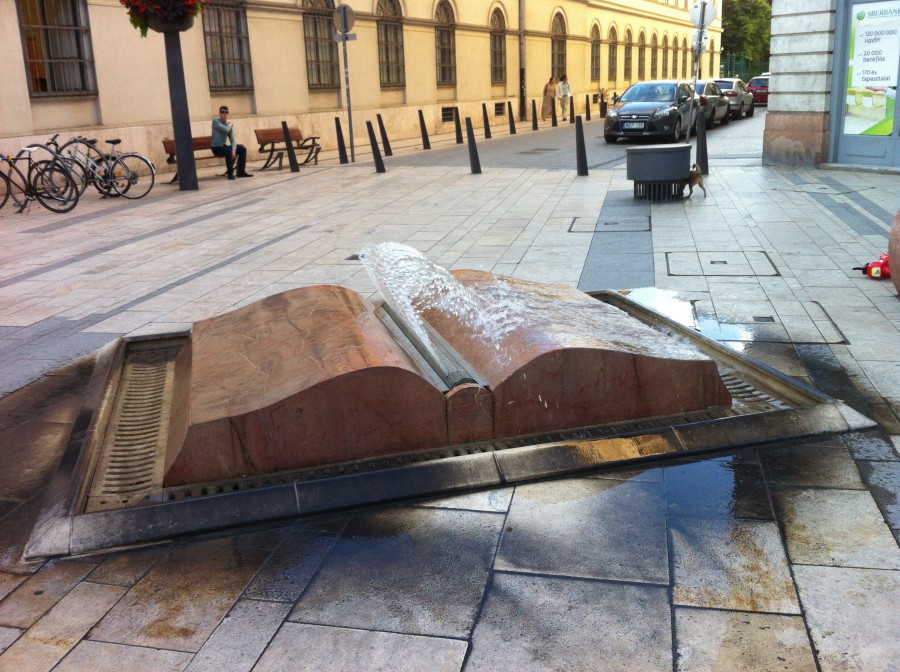
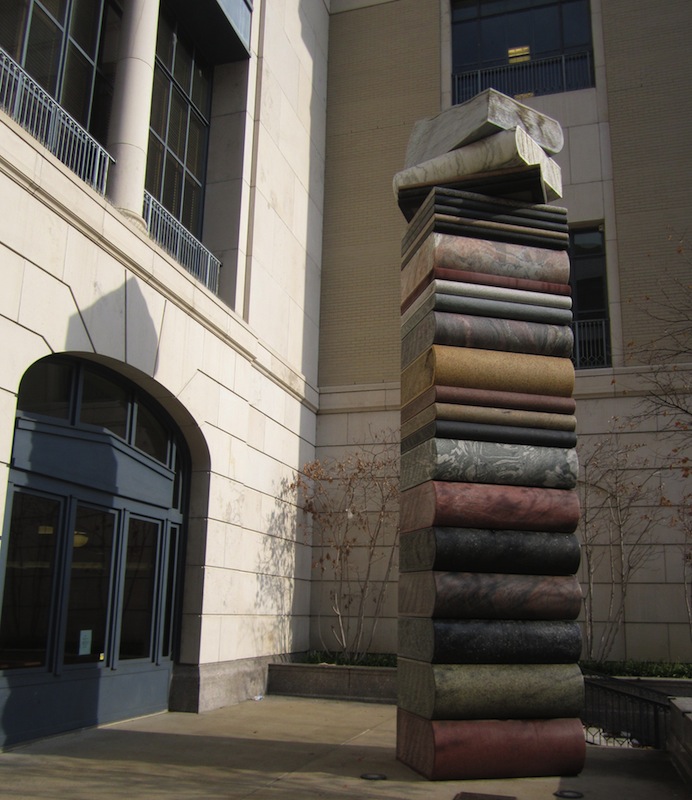
birth of venus

although I will admit that she has a considerably better body than mine.

Humming quietly to myself, I made my way home, pausing for a moment under the willow trees on which the zephyr’s warm breath had worked its magic, covering the branches with a light green furze.

greening willows

Nature awakes from its winter sleep. Venus walks the land. Flora, goddess of flowers and Spring, follows in her wake.

primavera

_____________

Equinox: http://www.imd-corp.com/figures/ARIX0020.jpg [in http://www.imd-corp.com/formx_ind_display_flexible_getmethod.php?category=name&fname=%%5D
Birth of Venus: http://www.artble.com/imgs/9/b/3/416525/birth_of_venus.jpg [in http://www.artble.com/artists/sandro_botticelli/paintings/primavera%5D
Greening willows: my picture
Primavera: http://www.artble.com/imgs/6/c/a/616543/primavera.jpg [in http://www.artble.com/artists/sandro_botticelli/paintings/primavera%5D