I’ve mentioned in previous posts the migratory habits which regulate our lives since we retired: when it begins to get cold in the late autumn we migrate south to Italy, when it begins to get hot in the early summer we migrate north to Austria.
It’s me, really, that’s imposed this pattern on our lives. I have a great dislike of intense cold, so I prefer to abandon Austria to its fate in the winter. But equally, I have a great dislike of intense heat, so I hasten to vacate Italy when the mercury begins to climb vertiginously. I suppose it’s my Anglo-Saxon genes that dictate this behaviour: the breeding of generations have led them to feel most at home in places with mild, not too sunny weather.
I was thinking of this as my wife and I hiked this last week in the Hohe Tauern region of Austria, high up along the edges of the Salzach valley. The weather was cool, cloudy, with patches of sun, but also a little rain now and then, ideal weather for hiking. I throw in a couple of photos which we took.
my photomy photomy photo
Yes, I was glad to be out of the furnace that is Italy at this time of the year. Even the lure of the Mediterranean Sea in Liguria, our favourite site for hiking, cannot overcome my dislike of Italy’s summer heat.
my photo
That being said, there is one thing I do miss from our hikes in Liguria: the scent of fig trees. It’s actually one tree in particular which I miss. It borders the path leading from behind our apartment up to the village of Pieve Alta.
I cannot even begin to describe the cloud of scent that will suddenly envelop us as we pass that fig tree in late May, early June. It is a scent which for me evokes a dollop of fig jam dissolved in coconut milk, with a pinch of vanilla added, along – perhaps – with a sprinkling of cinnamon. It is like someone passing under my nose a plateful of very ripe figs, all cut open.
I used to think that it was the fruit giving off this scent, but after reading up on fig trees I now think it is more likely to be the tree’s beautiful, deeply lobed leaves that are emitting the scent.
Wherever the scent is coming from, and for whatever reason the tree is giving it off (surely not to attract me), I thank the Good Lord that I can get such pleasure from passing a fig tree. Sometimes, as I stride across high Alpine pastures or thread my way through dark stands of tall fir trees, I feel a point of nostalgia for that humble fig tree growing along the path between our apartment and Pieve Alta.
During this year’s week-long hike in the Dolomites (which I also mentioned in passing in my previous post), I managed to squeeze in a visit to the parish church of Sesto (or Sexten, to give its German name; we are in Sud Tirol, after all). Let me repeat here a message I have tried to pass in previous posts: always visit every church you come across in Europe, no matter how small it is, because there is a good chance that you will discover an artistic gem (or two). The church in Sesto / Sexten was no exception.
The church itself was OK – it had some interesting frescoes on the ceiling.
My photo
But what really made the visit worth while was the cemetery. My wife will tell you that I have a morbid streak, and indeed I don’t deny having a certain preoccupation with death – a preoccupation which, naturally enough I think, is growing with age. But cemeteries do also often contain wonderful art, as people try to lessen the pain caused by the departure of loved ones and reduce the fear of death itself through art. Things started with a bang at the entrance to the cemetery, which took the form of a small circular pavilion reached by a covered staircase from the road.
My photo
The ceiling of the pavilion was adorned with a Totentanz, or Dance of Death (danza macabra in Italian). This type of artistic depiction flourished in Europe during the 15th and 16th Centuries, probably in response to the Black Death and the lesser outbreaks of the plague which continued to periodically sweep through the continent. They were a form of memento mori, a reminder to us that we must all die sooner or later: “Remember, man, that thou art dust and to dust thou shalt return”. I came across a typical example of the form several years ago, in a church in Milan.
My photo
The phrase on the left says “I was what you are”, while the one on the right says “You will be what I am” (I emailed the photo to a dear friend of mine as an attachment to a lighthearted note; he died a year later – death catches us all, some of us sooner than later).
Dances of Death were different because they stressed that Death was the Great Leveller: whatever your social position, however powerful you were, you could not hide from Death. I suppose this idea was thrown into sharp relief by the Plague: here was a disease which made no distinctions, remorselessly scything down rich and poor, powerful and powerless, old and young, sick and healthy. And so Dances of Death would depict men and women – and children – from all ranks of society and all walks of life dancing with, being embraced by, skeletons. Here are typical examples of the genre.
In the earlier versions, each person would be accompanied by a short poem, often written in an ironic tone, commenting on him or her and their incipient death. And the skeletons would be quite jolly, not only dancing but frolicking about.
Even though the example on the ceiling of that pavilion in the cemetery of Sesto / Sexten was quite modern – it was painted soon after the First World War – its author, Rudolf Stolz, followed the traditional iconography quite faithfully. Thus, we have a ruler.
My photo
He is accompanied by a rhyming couplet in German, which states (in my rather free translation)
“The sands have run out,
Lay aside your scepter.”
The skeleton is holding an hourglass, so we can interpret these couplets as something the skeletons are saying to their charges.
Then we have a mature woman, a “matron” as they used to be called.
My photo
Her skeleton is saying to her
“Woman, your devotions are over
Idly burns your candle”
To make the point, it pinches the candle’s wick. Like many a matron in a village like Sesto, she must have been a regular churchgoer.
Next we have a mature man, no doubt a local farmer, dressed the way locals would have dressed until quite recently.
My photo
With a scythe slung over its shoulder, his skeleton is intoning
“Your virility, your creativity
Cut like grass by a stroke of my scythe”
He is followed by the most poignant of the depictions, that of a baby.
My photo
The skeleton is crooning to the baby
“Sleep, my angel, sleep sweetly
You’ll awake in paradise”
At a time when the death of babies and children was still quite common, I can only hope that this painting was of some comfort to grieving mothers on their way to tend the graves of their children.
On goes the dance! We move on to a young man.
My photo
His friendly skeleton, bony arm wrapped around his shoulder, is telling him
“Not so sad, young blood
Go homewards with cheerful heart”
Presumably “homewards” in this context means home to the kingdom of God.
Which brings us to a young woman.
My photo
Her skeleton is telling her
“Fair maiden with the myrtle wreath
Follow me to the wedding dance”
And indeed the skeleton seems to be about to start the kind of square dance that was common in these parts. But no doubt it is referring to a wedding with Death.
And so we come to the final character, a bishop.
My photo
His skeleton is telling him
“Bishop with the shepherd’s crook
Set aside your heavy burden”
and is helpfully taking away his crosier (his crook), no doubt as a first step in divesting him of his other accoutrements.
When I saw this Dance of Death, I was immediately reminded of another Dance of Death which recently went under the hammer at the Dorotheum auction house in Vienna, a version of Albin Egger-Lienz’s “Totentanz 1809”.
The affinity between these paintings is no surprise. As his name indicates, Egger-Lienz was born just down the road from Sesto / Sexten, in Lienz, now in Austria. Most of the themes of his paintings were Tyrolese. Rudolf Stolz was a great fan of his.
Suitably reminded of my own approaching demise, I passed into the cemetery itself. Tyrolese cemeteries are a joy to visit. Each grave is a little garden, carefully tended by relatives. This one was particularly well kept, and the view on the Dolomites of Sesto was magnificent.
My photo
In addition, the crosses over the graves are often masterpieces of ironwork. I throw in a few examples I came across.
My photoMy photoMy photo
I have to assume that all those flowery curlicues are to remind the Christian viewer that the wooden cross is the bearer of (eternal) life, rather like a stick which – when stuck in the ground – sprouts leaves.
Behind the first cross you can see an example of the frescoes that are painted on some of the cemetery’s family tombs. Rudolf and his two brothers Albert and Ignaz painted a good number of these (Albert also painted the frescoes on the ceiling of the church). I rather like this fresco by Ignaz Stolz, a nice take on the story of the Sermon on the Mount.
My photo
In the end, though, I rather preferred the sculptures in wood – another great art form in the Tirol; not surprising, given the wealth of wood here – that adorned some of the family tombs.
My photo
I’m not sure I would want a sculpture on my family tomb strongly suggesting that I would be burning in Hell …
My photo
The story of the women coming to the grave of Jesus to prepare him, only to find an angel sitting at the mouth of the tomb.
My photo
A pietà.
Yes, if I am finally laid to rest in a cemetery – which is not a given; cremation is a strong possibility – I think a Tyrolese grave, surrounded by mountain flowers, will do me very well. And I want a brass band to see me off! Once, many years ago, when I was convalescing at home after a knee operation, my wife took me for a spin through the countryside around Vienna. Quite by chance, we came across a funeral procession that had just reached the village cemetery. We stopped to watch. Suddenly, the sombre silence was broken by a duet between trumpet and trombone. What a way to go, to the sound of brass!
I have often told my wife of this desire, but I suspect she has been dismissing it as an emanation of the Monty-Pythonesque side of me, not to be taken seriously. But really, what better way to say that that final goodbye than through the booming notes of a brass band? Since she and I like jazz so much, maybe she could fly in one of those New Orleans funeral bands. Now that would be something!
My wife and I, together with our daughter this year, have just finished our annual week-long hike in the Dolomites. We went back to the valley where we had started our hike last year, the Val Fiscalina in Alto Adige (or Sud Tirol).
I will hopefully post my usual photo-essay of the hikes we did, once our daughter sends us the photos – as she repeatedly reminded us, the camera in her iPhone is way better than ours, so she took most of the photos. But here I want to talk about something that happened during an easy hike we took on one of our five days of hiking, to give our muscles a rest. It was along the side of the valley between Sesto and Dobbiaco. Along the way, we crossed this panel.
It was announcing that we were crossing the sources of the Drava River. The Drava River! … I knew this river as a tributary of the Danube, somewhere in the Balkans. Yet here was its source, some 500 km away as the crow flies. To memorialize the moment, I took this picture, just when a young boy happened to be messing around with the stream of water.
my photo
I immediately recognized that pastime from my own childhood, damming and undamming streams; I still enjoy undamming the rivulets that trickle down the side of tracks we hike along, poking away at the amassed debris with my walking sticks. I would also float sticks on streams and watch them disappear around the nearest bend. Where would those sticks end up, I wondered.
Once, when I was a bit older, I spent hours poring over maps of England, trying to figure out how I might be able to kayak down the stream which ran along the bottom of the valley in front of my school, all the way to London. Ah, the foolishness of youth! I’m not sure a kayak would have even fitted in that stream.
A few years later again – I was in my mid teens by then – I was consumed with envy when I discovered that my two cousins had spent a couple of weeks tubing down some river in France. Just the thing I had wanted to do with my kayak!
That evening, I was once again studying maps, to see where the Drava river went. And suddenly, I found myself dreaming up an imaginary tubing journey down the Drava with my wife, all the way to its mouth on the Danube. This picture gives my readers an idea of what I’m talking about, although this particular tubing expedition is taking place in Tuscany.
I decide that we will start our imaginary tubing journey in San Candido. At its very beginning, the Drava is really a miserable little stream, there’s no way we could float two tubes in it – plus a third one carrying our stuff. But at San Candido, it receives the waters of the much bigger Sextner Bach.
After Lienz, the Drava, a river now, although still a small river, will carry us into the upper Drava valley. We’ll first pass through the Kärntner Tor, or Carinthian Gate, which is a narrowing in the Drava Valley and the entry point into the province of Carinthia.
The river runs between the Kreuzeck range of the High Tauern in the north and the Gailtal Alps in the south. After carrying us past various picturesque villages like the village of Greifenburg
We’ll be traveling faster on the more rapid currents and we’ll burst out of the narrows, spinning perhaps in our tubes, to find ourselves floating past Sachsenburg itself.
Maybe a few flecks of gold will cling to our tubes at this point! The Möll, but also the Isel earlier and other streams coming out of the High Tauern Mountains, carry alluvial gold out of these mountains. For several thousand years, pan handlers have earned a modest but honest living along the Drava River downstream of the High Tauern Mountains, panning the river’s detritus for gold, all the way down into Croatia. Even today, some hardy souls try their luck.
After Villach, the Drava River becomes more of a lowland river, running slower and beginning to twist and turn across the landscape. Our tubes will follow it in these twists and turns, eventually entering the Rosental valley and running along the northern side of the Karawanken mountain ranges. Here, the river, and my wife and I, will end our travels in Austria. We will float gently by Völkermarkt
before following the river south as it slips through a gap in the mountains and enters Slovenia. In total, we will have travelled 255 kilometres in Austria.
Onwards into Slovenia! We will soon reach our first Slovenian town, Dravograd.
For 130 kilometers or so, the river now becomes the border between Croatia and Hungary. It has become a very slow-moving river, meandering its way across the landscape, which has become a pleasant forest- and marsh-filled environment.
From now on, we’ll have to be careful not to be run over by the ships which begin to ply the Drava for trade. Further on, we will glide past the small Croatian town of Donji Miholjac.
Source
The river now stops being the border with Hungary. On it goes, looping and relooping as it crosses the region of Slavonia.
I think I’ll stop our imaginary journey here. We’ve already travelled some 160 kilometres through Croatia, and some 7 kilometres beyond Osijek the Drava finally flows into, and loses itself in, the Danube.
I don’t think there would be anywhere for us to get off the river there, and I don’t feel like continuing all the way down the Danube to the Black Sea.
Well, that was a nice dream! Alas, I suspect that doing a trip like this in real life wouldn’t be possible. For one thing, the river has been dammed to within an inch of its life, for hydropower. There are no less than 22 hydroelectric stations along the river. Assuming one is even allowed onto the lakes behind the dams, at some point we would somehow have to schlepp our tubes around the dams and down onto the river again – assuming that there would be enough water downstream of the dams to plonk our tubes into. For another, I rather suspect that having one’s bum in the water all day, for something like two weeks (my guess as to how long this little trip would take), might not be too good for the skin of the bum. For a third, the waters of the Drava up to at least the Möll River are all from glacial or snow melt and so would be pretty damned cold. But hey! What would life be like without dreams?
I read, however, that they are constructing a bike path all the way down the river. Maybe it would be more sensible for my wife and me to simply bike down the Drava …
In an earlier post, I confessed that the amount of wine my wife and I consumed during the two lockdowns which we have endured over the past year was considerable. In that same post, I said that we focused much of our wine drinking on red wines from the south of Italy – Sicily, Sardinia, Puglia, some Calabria, some Basilicata. I always prefer red wines – white wines give me stomach burns. My wife is quite happy to follow me in my choices, although from time to time she’ll splash out and get herself a bottle of white wine.
I chose to buy wines from southern Italy because I didn’t know them very well, which fed into my general tendency to support the underdog and be contrarian. After sampling a few bottles, I also felt that the red wines of southern Italy had more oomph to them than wines from northern and central Italy – I beg readers not to ask me to translate that into the flowery language of the wine connoisseur because I can’t. As I once confessed in an earlier post, my general method of assessing wines is “mmh! that’s a nice wine!” or “mm … not a good wine”.
Also – and this was important with the tightening of household budgets under lockdown – they were generally cheaper than other Italian wines.
I also felt virtuous in supporting local grape varieties. Not for me the Cabernet Sauvignon, Merlot, Chardonnay, Syrah, Grenache Noir, Sauvignon Blanc, Pinot Noir, and the few others which dominate wine-making worldwide! No sirree, I was going to support the more than 1,500 grape varieties (yes, I kid you not, 1,500) which exist in Italy.
So from Sardinia I was buying wines made with Cannonau grapes (or to be more precise, where the Cannonau made up the largest share; the great majority of Italian wines are blends).
(For reasons which are now not clear to me through the haze of history, I chose few if any wines from Campania – a lapse to be rectified in any future lockdowns!)
At some point, though, through the wine fumes, I began to wonder how many of these grape varieties really were local. One can make the case that actually no domesticated grape varieties are really autochthonous. Archaeologists tell us that domestication and the related discovery of wine-making took place somewhere in the region between the Black Sea and Iran, between the seventh and the fourth millennia BC. The earliest evidence of domestication has been found in Georgia (the country, not the US state) and of wine production in Iran in the northern Zagros Mountains.
Subsequently, domesticated vines and wine-making knowledge spread to other civilizations in the region, first Egypt and Lower Mesopotamia, and then to the Assyrians, Phoenicians and Greeks (at a later period vine and wine-making moved along the Silk Road to China and Japan, but that is a story for another day). The Greeks and the Phoenicians, continues this story, transferred the domesticated grape vine and wine-making technologies further west, to Italy, Spain, and the south of France. The Romans then carried the vine and wine-making further north in Europe to what are more-or-less its northernmost borders today. And then when Europe colonized the rest of the world, the Europeans took their vine and wine-making knowledge with them. So in this view of history, no domesticated grape vines are really autochthonous.
But that’s one Creation Story. Another Creation Story points to the fact that the vine species which was domesticated for wine-making (called, appropriately enough, Vitis vinifera) grows wild from Georgia to Portugal.
So why could wine-making not have been independently discovered in several places?
A third Creation Story, and the one – for what it’s worth – that I feel is most credible, is that wine-making did indeed start in Iran or thereabouts, and cuttings of the domesticated vines were indeed carried westwards. But in their new homes, these vines could well have crossed spontaneously with local wild forms of the vine (or have been made to cross with them by the local viticulturists), thus shaking up their DNA a little and possibly affecting berry size, ripening time, sweetness, and whatever other characteristics viticulturists prized at the time. In this view of history, each locality can have vines which are hybrids of immigrant vines and local ones, which makes them pretty local. And anyway, even if a vine was brought in from somewhere else, if it’s been around in one locality for a long time surely it’s become local? (a bit like all Americans of immigrant stock nevertheless considering themselves locals) And anyway, the grape vine’s DNA is subject to spontaneous mutations (like American immigrants), which over time will distinguish it from its neighbors. All excellent reasons, I think, for declaring that grape vines which have been grown in one locality long enough can be considered autochthonous.
Of course, one could argue that all these Creation Stories are irrelevant because of the American pest phylloxera which devastated vineyards planted with Vitis vinifera in the late 19th Century (we have here a cartoon of the time, whose caption was “The phylloxera, a true gourmet, finds out the best vineyards and attaches itself to the best wines”)
Ever since then, pretty much all commercial vineyards are Frankensteins, with Vitis vinifera grafted onto a root stock of one of the American members of the grape vine family which are resistant to the pest. Under the circumstances, I can hear some people ask, can one really call any commercial vine autochthonous?
I reject this latter argument because first, if I did accept it I wouldn’t have a story to tell, and second, because even with an American rootstock the grapes still express only the DNA of the grafted Vitis vinifera. Just as a person who has had their heart replaced is still expressing their old DNA.
So with all that out of the way, we can now focus on those wines which my wife and I (and not infrequently our son) were imbibing during lockdown, and ask ourselves the question: are the grapes that went into making them local or not? As usual in life, the answer is yes in some cases, no in others.
As one might expect, many of the local vines in southern Italy have their own Creation Stories. The cynic in me suggests that a good number of these were invented to increase a wine’s marketability, although I could well imagine that there is a desire on the part of the local people to have the stories of their vines reflect their own Creation Stories. Thus, many of the Creation Stories reflect the south of Italy’s ancient history as Magna Graecia, that arc of Ancient Greek colonies which stretched from Puglia all the way to Sicily. They suggest that the vines were brought from Greece by these early colonists. Others look to the Phoenicians as the source of their vines; Phoenicians also had colonies in Sicily and further afield. This map shows the situation in about 500 BC.
If these Creation Stories are true, they would place the original migration episodes for the vines in question at some two and a half thousand years ago, quite long enough to claim that they are now fully local. Other Creation Stories suggest instead that the local vines are crosses between local wild stock and immigrant stock. Who can deny that such vines are fully local? Ampelographers have weighed in (these are experts in the study and classification of cultivated varieties of grape). They have given savant judgements on the heredity of countless vines by comparing the shape and colour of their leaves and their grape berries. Wonderful word, ampelographer! It rolls off the tongue like a good wine rolls down the throat. In my next life, I want to be an ampelographer, it must look so cool on a CV.
Anyway, along have come DNA studies, to cut through all the bullshit. We finally have a scientific basis for making judgements about a vine’s genealogy.
And the white-coated scientists in their labs have discovered some very interesting things.
Take Cannonau, the grape variety that is the Sardinian grape par excellence (editorial note: since photos of bunches of grapes get pretty boring pretty quickly, I will instead be throwing in nice photos of the places where the various grapes grow).
DNA studies have shown that actually, it is none other than Garnacha from Spain! (which, by the way, is also none other than Grenache; the French brought the vine from Spain and then frenchified the name) The most likely Creation Story in this case is that the Spaniards brought Garnacha to the island some time during their centuries-long dominion, from 1324 to 1718. Some Sardinians have tried to claim that the move was actually in the other direction, from Sardinia to Spain, but I don’t think that will wash, especially since a number of other “local” Sardinian grape varieties have also turned out to have a Spanish origin. On the one hand, I’m saddened by the fact that although I thought I was supporting a local variety when I bought Cannonaus in fact I wasn’t. On the other hand, I was pleased to learn of this Spanish connection, because I recall thinking, when I first tried Cannonau, that it reminded me of Rioja, and Garnacha grapes are one of the constituent grapes of Rioja.
Skipping to the island of Sicily, what about the Nero d’Avola grape?
Well there, I’m happy to say, I have been supporting an autochthonous variety – that is to say, a variety which could well have been introduced several thousands of years ago by the Dorian Greeks who colonized the part Sicily where the town of Avola is located; the town does indeed seem to be the center of this grape’s distribution. The original immigrant grape could actually have been a forefather of today’s Nero d’Avola, since DNA studies have revealed a cousin-like relationship between it and two other ancient Sicilian grapes, Catarratto and Inzolia. As far as I know (although the white-coated scientists publish many of their DNA studies in scientific journals which I don’t have access to), no relationship has (yet) been found between Nero d’Avola and Greek grape vine varieties. It could well be that the forefather has vanished, as old vine varieties were replaced with newer ones; phylloxera also put paid to a large number of varieties.
Vaulting now over to Puglia, in Italy’s heel, we can have a look at the Primitivo grape.
And here I must start by admitting that my wine choices were not supporting autochthonous grapes; Primitivo is not an Italian variety. Nevertheless, we have a fascinating story here. DNA studies have shown that actually Primitivo is a Croatian grape variety, more specifically one from the Dalmatian coast. Unfortunately, the devastations of phylloxera mean that there is hardly anything left now of the variety in its homeland – a few vines here and there. We can imagine some adventurous southern Italian sailing across the Adriatic Sea to Dalmatia and bringing cuttings back home. As far as can be judged, this was quite recent, some time in the 18th Century. The grape’s Italian name points to why viticulturists were interested in it – it was an early (“primitive”) ripener.
What makes the Primitivo story really fascinating is that DNA studies have also confirmed that it is pretty much the same as the “Californian” grape Zinfandel! (bar a mutation or two) How a Dalmatian grape variety ended up in southern Italy is not hard to imagine. But how on earth did it end up in California?! The best guess is by quite a circuitous route. Step 1 is that the variety was transferred to the Hapsburgs’ greenhouses in Vienna, when Dalmatia was part of the Austrian Empire. Step 2 is that, as part of a burgeoning global trade in plant species, horticulturalists living on the US’s eastern seaboard requested the Imperial greenhouses to send them cuttings, which they did. They probably also requested cuttings from British greenhouses, which had earlier requested them from the Viennese greenhouses. Step 3 is that one or more of these horticulturalists from the Eastern US joined the gold rush to California but took care to take vine cuttings with them. Presumably, they found that in the end it was more profitable to make wine in California than to pan for gold. (As a quick aside, one of my French cousins many times removed, who came from our family of vignerons in the Beaujolais, did something similar. He joined the gold rush to Australia but ended up making wine; I don’t know if he took cuttings with him or used the vine varieties which others had already brought to Australia. In any event, I have a whole bunch of Franco-Australian cousins whom I have never met)
But let’s get back to Puglia, to consider the Nero di Troia grape variety, which we tried from time to time during lockdown.
DNA studies have shown that this grape has an equally fascinating genealogy – and luckily for me and my determination to support autochthonous grape varieties, I think I can safely say that it is definitely an Italian variety. DNA studies have shown that Nero di Troia’s mother is Bombino bianco, an ancient white grape variety found all along the Adriatic coast but especially in Puglia, while its father is Uva rosa antica, now only found as a very minor variety in the province of Salerno in Campania.
So far, so good. But what makes Nero di Troia more interesting than most varieties is that DNA studies have also shown that it has two full siblings (same father vine, same mother vine): Bombino nero and Impigno. Which just goes to show that grapes are like humans: you and your siblings can have the same parents but you can be quite different from each other.
What’s even more interesting is that comparisons of the DNA profile of the father, Uva rosa antica, to those in DNA libraries have revealed that this minor variety from Salerno is one and the same with another minor variety called Quagliano found only in a few Alpine valleys in Piedmont, in the very north of Italy, which in turn is one and the same with a variety called Bouteillan noir found in Provence, in France. Which just goes to show that there must have been quite a vigorous, though completely informal and unmonitored, trade in vine cuttings throughout southern Europe.
Moving on to Basilicata, the wines we tried from that region during the long months of lockdown were based mostly on the Aglianico grape.
This is definitely one of the grapes where the locals have a Creation Story involving its introduction to the region by the Ancient Greeks through their colonies in Basilicata. Alas, DNA studies have revealed little if any relation to other existing Greek varieties, so if Aglianico was imported to Basilicata the original Greek plantings have all disappeared. Which suggests that perhaps Aglianico is actually a cross between some immigrant vine from somewhere and local wild stock. In any event, I think we can count this one as an autochthon.
Finally, Calabria. The wines we were drinking from this region are mostly made with the Gaglioppo grape.
This is another grape variety that the local inhabitants wish to believe came originally from Greece, through the Ancient Greek colonies on the Calabrian coast. However, DNA studies have clarified that Gaglioppo is a very Italian grape, being a cross of the Sangiovese and Mantonico grapes. The latter is a very typical and ancient Calabrian grape. As for Sangiovese, viticulturists have used this grape to sire a whole series of grape varieties. At least ten are known at the moment, including Gaglioppo. There must have been something about Sangiovese grapes that viticulturists liked; if any ampelographer reads this, please tell me what it was. It doesn’t finish there, because in turn DNA studies have revealed that Sangiovese is itself the product of a cross between the Ciliegiolo and Calabrese Montenuovo grape varieties. Ciliegiolo is an ancient variety from Tuscany. Calabrese Montenuovo, on the other hand, has its origins in Calabria; sadly, it is now an almost-extinct relic. We have here another example of the vigorous trade in vine cuttings, this time up and down the Italian peninsula.
I could go on. For instance, each of these grape varieties is blended with various other grapes, and many of these have had their DNA studied. But I’m running out of steam and I fear that I will soon be losing my readers – there’s a limit to how much information about DNA one can absorb before one’s mind begins to whirl like a double helix.
I leave my readers with a final plea: considering that there are 1,500 varieties of grape in Italy, please ignore any wines made with the Top Ten grape varieties and concentrate on trying out all 1,500 Italian varieties. Cin-cin!
My wife and I went for a hike recently along a section of the Jakobsweg, the Trail of St. James, one of the network of pilgrim trails that lead from all over Europe to Compostela in north-western Spain. This particular Trail of St. James starts in Hungary and leads the pious walker to Vienna. From there, it goes on along the Danube, joins the Jakobsweg coming down from the Czech Republic (parts of which we hiked last year), and then wends its way across the Alps.
The particular section we walked this time took us through the village of Petronell, which lies not too far from the Danube River, downstream of Vienna. It also happens to be quite close to the remains of the old Roman town of Carnuntum, which was in its heyday (about 50 AD to 374 AD) an important hub in Rome’s line of defences along its Danubian border. Just to give readers an idea of its importance, the Emperor Marcus Aurelius used it as his headquarters for three years during his war against the Marcomanni in the early 170s (and wrote part of his Meditations there), Septimius Severus was proclaimed emperor there by his soldiers in 193, while in 308, Diocletian chaired a historic meeting there, with his co-emperors Maximian and Galerius, to resolve the rising tensions within the tetrarchy. Over the centuries, several Legions were stationed at Carnuntum: the 15th Legion “Apollinaris”, the 10th Legion “Gemina”, the 7th Legion “Gemina”, and the 15th Legion “Gemina”. A civilian town sprang up around the Castrum, no doubt aided by the fact that the main branch of the very profitable Amber Road, which I’ve written about in an earlier post, crossed the Danube at Carnuntum and entered the Roman Empire, bringing Baltic amber to Aquileia in what is now north-eastern Italy. The town eventually became the capital of the local Roman province, Pannonia. At its height, it boasted a population of 50,000.
All came to an end for Carnuntum in 374, when the town – already badly damaged by an earthquake in 350 – was put to the sword by a host of “barbarians” who crossed the Danube. By then, the Roman Empire itself was decomposing. Within a century it was all over for its western portion.
The modern trace of the Jakobsweg takes the walker past this mouldering remain of Carnuntum’s greatness.
It is the Heidentor, or Heathens’ Gate, a triumphal arch that stood on the outskirts of the town. The information board proudly informs us that it is the largest Roman remain in Austria. Indeed, the other remains in the country hardly poke out above the ground – archaeologists have had to dig them out. Here are other remains of Carnuntum.
It gives me pause to see so very little left of what was once a great Empire. If you superimpose the Peutinger map, the old Roman map of the Empire’s road system, onto today’s Austria, you can see that the Romans had quite a presence in the country.
Yet hardly a trace of any of this remains now. “How are the mighty fallen!” laments David in the Book of Samuel. And indeed how far has mighty Rome fallen.
They are part of our line of defence against the greatest existential threat which our planet faces, climate change. Will we succeed in reining in climate change, I wonder? Or will we fail and see our civilization, like the Western Roman Empire before it, crumble under the strain of the resulting economic dislocations and social disorders? These mighty works of our civilization will eventually come tumbling down – some already have.
Perhaps a thousand years from now, when our civilization will have been forgotten during the dark ages which will follow its collapse, descendants of the few who managed to survive will stumble across the ruins of these windmills, covered in brambles and ivy, and they will stand there marveling, wondering what they were all for.
One of the things which my wife and I agree went up during our first Covid lockdown last spring was our consumption of wine. Those long evenings when we couldn’t go out anywhere tended to encourage larger suppers accompanied by copious servings of wine, servings which were repeated when we had finished eating and had settled down for our evening’s entertainment – old TV series which we found on YouTube. When we got out of lockdown, our wine consumption went back down to normal. But when we went into our second lockdown, the wine consumption went up again. What to do, we have to pass the time as pleasantly as possible.
We get our wines from the two or three local mini-markets which are close at hand. I make a bee-line for the sections devoted to red wines from the south of Italy – Sicily, Sardinia, Puglia, some Calabria, some Basilicata. I always prefer red wines – white wines give me stomach burns – and I find that that red wines from the south of the country have more depth and body to them than the better-known reds from northern Italy; they are considerably cheaper, too. My wife is quite happy to follow me in my choices, although from time to time she’ll splash out and get herself a bottle of white wine. One day, I will write a post about southern Italian red wines, but today I want to write about something quite different.
A few weeks ago, as I was scouring the shelves of one of the mini-markets, looking for a wine we hadn’t tried, I came across this:
my photo
“This” is a bottle of red wine from Puglia, with a classification of Indicazione Geografica Tipica, i.e., pretty good but not up there among the stars. Nothing out of the ordinary so far. But what caught my attention was the phrase on the label da uve leggermente appassite: “from grapes that have been slightly dried”. I vaguely knew about the “passito” method of making wine, which meant that the grapes have been dried out before being crushed and pressed. After polishing off the bottle with my wife (more on this later), I decided to do a bit of research on the “passito” method (which for the most part consisted of reading a bunch of Wikipedia articles). I can now happily share my newfound knowledge with those of my readers who, like me, are not super experts on wine (those who are super experts had better just skip to the end).
The first thing I discovered is that “appassimento” (the procedure of drying grapes and making them “passiti”) is actually one of three procedures which are used in grape-growing regions with the primary purpose of concentrating the sugars in the grapes. And the reason for concentrating the sugars is to be able to make strong, sweet wines, usually drunk with desserts (hence often being called “dessert wines” in English).
“Appassimento” is the most obvious, and therefore the oldest, of these three procedures: there is evidence of sweet wines being made this way already 6,000 years ago in Cyprus. There are various ways of carrying out “appassimento”. One is simply to leave the grapes on the vine longer than you normally would, so that they overripen and have higher than normal sugar levels; they also tend to lose water and shrivel, which also increases sugar concentrations. Canny wine-makers can play with the amount of “appassimento” they allow. They can have just a bit of “appassimento” (which is probably how the Puglia wine I mentioned earlier was made).
Of course, the longer wine-makers wait, the greater the risk that something will go wrong (bad weather, mould, etc.). But the more interesting can be the flavours so generated. A variant to this approach is to leave the grape bunches on the vine but twist their stem, to “strangle” them as it were. If I understood correctly, this hastens the “appassimento” process, so that you can avoid the risks but enjoy the advantages – having your cake and eating it.
You can also harvest the grapes at the normal time but then let them dry in the sun.
Wines made this way are called straw wines (vin de paille in the original French), because the grape bunches were originally laid down on straw to dry out.
As readers can imagine, all this works better in places with lots of sun, which is no doubt one of the reasons why Cyprus holds the prize for the earliest use of the procedure.
Let me at this point throw in some examples of sweet wines made this way. Since my investigations were started with an Italian wine, I’ll give Italy pride of place, while recognizing that all of the southern European countries, as well as the New World wine-making countries, make this kind of wine. Even in Italy, there are numerous such wines, so I’ll just mention a couple, chosen for the completely banal reason that they are from lovely places. Thus, we have the various Vinsanti from Tuscany.
In the second procedure used to concentrate sugars in grapes, you allow your grapes to be attacked by a fungus, the Botrytis cinerea. The fungus shrivels the grapes and increases sugar concentrations, thus allowing wine-makers to make a sweet wine. For rendering this useful service, the fungus has been named the “noble rot”.
Source
For the noble rot to work properly, you need specific humidity conditions at specific times of the day at specific times of the year, so there are only a few places in the world where you can use this procedure. And you have to be damned careful that the fungus doesn’t run riot in your vineyards, otherwise you get another form of the fungus, “grey rot”, which completely ruins your harvest. It seems that Hungarian winemakers were the earliest to figure out how to harness Botrytis cinerea to make sweet wines, having done so by the 16th Century.
You really have to ask yourself how anyone – Hungarian or otherwise – figured this procedure out. My assumption is that when one year some wine makers found themselves with a harvest of grapes on their hands which had been attacked by the fungus, rather than just throw the grapes away they decided to go ahead and make wine anyway, reasoning that even a bad wine was better than none at all, and were pleasantly surprised by the result.
As examples of what are, sensibly enough, called botrytised wines, I’ll mention Tokaji from Hungary, because that seems to be the granddaddy of this kind of wine.
The third and final procedure is used to make so-called ice wines. Here, you leave the grapes on the vines until January/February. The precise time you pick the grapes crucially depends on the outside temperature: picking must take place the first time the temperature drops to -7°C, which normally means picking the grapes at night, picking them quickly, and pressing them immediately.
What is happening is that the water in the grapes is turned to ice but not the sugars. When you press the grapes, the iced water stays with the must, and the resulting grape juice has very high levels of sugars. The procedure is a relative newbie: it was only discovered at the very end of the 18th Century, in Germany.
As an example of an ice wine, I’ll mention Canadian ice wines.
This may seem a surprising choice, but it allows me to slip in a mention of what is probably the greatest environmental disaster staring us in the face: climate change. Because of climate change, it is getting more and more difficult to make ice wine reliably in the northernmost wine-growing regions of Europe where the procedure was first developed, because it is becoming rarer and rarer for the temperatures there to drop sufficiently low. But because temperatures still drop reliably every year to -7°C in Canada, its wine regions, particularly those in Ontario, have stepped into the breach and have become the world’s major producers of ice wine.
Readers will no doubt have noticed that all the examples I have given so far are of white wines, and indeed most of the wines made in these three ways are white, using grape varieties like muscat, malvasia, and riesling. But – as my discovery in the mini-market shows – some red wines are also made this way. Since, as I pointed out earlier, I’m more of a fan of red wines than white wines, I want to finish this post by fighting for the red corner, and will do so by mentioning three red wines, all from northern Italy, and all passito wines.
Two come from the Valpolicella region, which lies north of Verona and east of Lake Garda – in this photo, you can see the lake in the distance.
The first of the two red passito wines from here is Recioto della Valpolicella. This, like most passito wines, is a sweet wine, and indeed this photo suggests its use as a dessert wine.
Perhaps at this point I should reveal that I’m not a great fan of sweet wines. I don’t deny that they can be very tasty, but I feel that somehow – and I’m sure this is just a ridiculous prejudice – sweet wines are not serious. This prejudice of mine is most extreme when it comes to red wines; I’ve signaled this already in an earlier post about sparkling Italian red wines, most of which are sweet. To my mind, for red wines to be serious they must be dry. So it comes as a relief for me to able to introduce the second wine from Valpolicella, the Amarone della Valpolicella.
This is a dry wine. Its name signals this, Amarone being derived from the Italian word “amaro”, which means bitter or sour. The wine is not really bitter or sour; it probably refers to the fact that this wine originally came from batches of Recioto della Valpolicella where the fermentation hadn’t stopped and so the sugars had all been turned into alcohol: so from sweet to sour.
Which leads me naturally to my final red passito wine, another dry wine, the Sfursat. This comes from the Valtellina valley in upper Lombardy, upstream of Lake Como (and of the hike along the Sentiero del Viandante which my wife and I did last year).
At this point, I have to make another revelation. Neither my wife nor I have ever tried any of these three wines. But now we have an excuse to try some different wines during lockdown! (we’ll have to accept to fork out considerably more cash than we are used to, though, but hey! no pain, no gain).
And what about the Puglia wine that started this whole post? As I poured it into our glass wines I was half afraid that it would be sweet, but no, it turned out to be a dry wine, which was a relief. As we sipped it, we felt that the intense and bright red colour of the wine, characterized by delicate purplish hues, was the perfect expression of its complex and fruity bouquet. Balsamic notes of blackberries, spirited cherries and plum jam were smartly dressed by elegant sweet spicy scents. It was warm, round, and with a good balance of tannins … OK, I confess, I just copied all that last bit from the label on the back. As I commented in a post written years ago, I’m always impressed by the bullshit wine merchants come up with. My wife and I, we just went mmm, yummy! And the next day, I bought another couple of bottles.
Wagram: A region close to the River Danube upstream of Vienna, where there are steep terraces made up of deposits of loess laid down millions of years ago.
“Wagram” is a composite of two Middle High German words: “wac” (moving water, river) and “rain” (meadow, slope). So Wagram means Slope by the Water or Bank. No doubt these terraces were created centuries ago by a meander of the Danube which then changed course at some point, because there’s not much water by these slopes now. Vineyards have been planted on many of the terraces where the slopes are not too abrupt.
SourceI suppose the sandy soil of the loess is good for vines. The wine – mostly made with Grüner Veltliner grapes – is good enough to have given the region its own wine name, “Wagram”. In some of the steeper slopes wine cellars have been dug directly into the loess.
We’ve been climbing up and down these terraces throughout the summer, principally because we’ve been hiking along sections of the pilgrim path to St. James of Compostela, known as Jacobsweg in this part of the world. The path happens to run along the loess terraces.
Many a village which stands at the foot of these terraces has added “Wagram” to its name. So we’ve walked through Fels am Wagram, Kirchberg am Wagram, Königsbrunn am Wagram, Stetteldorf am Wagram, Eggendorf am Wagram, … (there’s even a Wagram am Wagram, which seems a bit exaggerated).
Deutsch-Wagram: Sharp-eyed readers will no doubt have noticed that on the map above, a village of this name is marked. It is across the Danube from Vienna and a little to the north-east of it. It too sits on deposits of loess, although the slopes of the terraces here are very gentle, almost imperceptible. The village stands on the northern edge of a flat plain, the Marchfeld plain, which is rich agricultural land. There’s really nothing much to say about this village. I’ve looked at its Wikipedia entry and sifted through photos of the place online, but I could find nothing of any substance to report – except for one thing: it gave half of its name to one of Napoleon I’s major battles.
Battle of Wagram: It was fought in early July 1809 not too far from where I’m writing this. Napoleon had captured Vienna in May, but the Austrian Emperor had not capitulated, and the bulk of the Austrian army was undefeated and was camped on the Marchfeld plain across the Danube from Vienna. Napoleon concluded that until he had beaten this army no peace could be concluded. He therefore decided to get his army across the Danube onto the Marchfeld plain and give battle. His first attempt, in May, using the island of Lobau as his entry point into the plain, was a costly failure. This has come down in history as the battle of Essling, taking its name from the village of Essling around which much of the fighting took place.
Learning from his mistakes, Napoleon prepared his army’s crossing of the Danube through Lobau with far more care and this time the crossing was successful. And so by the early hours of 5 July the two armies were facing each other across the Marchfeld plain. This rather fine old map shows the battleground nicely.
The Austrian commander, Archduke Charles, knew that Napoleon would cross again at Lobau and had set up his positions along the slight ridge of loess, placing himself at the centre of the Austrian line, in the village of Deutsch-Wagram. That slight ridge, along with a marshy stream which ran at its foot and which acted as a fine defensive barrier, put the Austrians in a good position. I do not propose to give a detailed blow-by-blow account of the battle. A few fanciful paintings of a propagandist nature will suffice.
The reality of the battle was grimmer. After two days of hard fighting, the Austrian army retired in good order while the French army was too knackered to properly pursue it. The French claimed victory, and although that was technically correct the “victory” didn’t change the strategic situation. After another inconclusive battle 5 days later at Znaïm, the two sides agreed to an armistice.
The battle of Wagram and the previous battle of Essling had been very costly. The casualties were very high on both sides, but for the French, after more than 10 years of almost continuous fighting, it was harder to make up the losses. Napoleon’s enemies had finally understood his strategies and were beginning to emulate them. There were going to be no more spectacular victories with relatively light losses as there had been in the past. Many see the battle of Wagram as the beginning of the end for Napoleon.
Avenue de Wagram: One of the twelve avenues that radiate out from the Arc de Triomphe in Paris. Although now largely forgotten, the avenue’s naming in 1864 was originally a piece of propaganda by the-then Emperor Napoleon III. It was always useful for him to glorify the deeds of his uncle Napoleon I, it was a way of burnishing his rather more doubtful credentials. Baron Haussmann was busy creating a new urban landscape for Paris at the time, which, among other things, meant that the area around the Arc de Triomphe was being remodeled. The Arc had originally been built as a memorial to one of Napoleon I’s greatest victories, the battle of Austerlitz. When his ashes were returned from the island of St. Helena in 1840, they passed through the Arc de Triomphe on their way to his final resting place in Les Invalides.
Source
Why not, then, turn the area around the Arc into a memorial to the first Napoleon’s military genius? And so, in 1864, a number of the new avenues radiating out from the Arc were named after Emperor Napoleon’s more famous battles (his earlier battles when he was a mere revolutionary general or even First Consul were ignored): along with the Avenue de Wagram, there was the Avenue d’Essling which I’ve already mentioned, the Avenue d’Iéna, celebrating the battle of 1806 fought at Jena in Thuringia, during which Napoleon pulverized the Prussian army, the Avenue de Friedland, celebrating the battle of 1807 fought in what was then eastern Prussia, during which Napoleon decisively beat the Russian army, and the Avenue d’Eylau, commemorating a battle fought four months prior to Friedland in the same neck of the woods. One other avenue was named the Avenue de la Grande Armée, to commemorate Napoleon’s imperial army which had fought in all of these battles and more during his campaigns from 1804 to 1814. To cap it off, a circular road which runs around the Arc de Triomphe had one half of the circle named rue de Presbourg, commemorating the treaty of Presbourg signed with Austria after the victory at Austerlitz, and the other half named rue de Tilsit, commemorating the treaty of Tilsit signed with Russia after the victory at Friedland. As a cherry on the Napoleonic propaganda cake, a number of the remaining avenues were named after members of the Napoleonic clan. Quite understandably, all these last avenues had their names changed later when Napoleon III was toppled, along with the avenues commemorating the battles of Essling and Eylau (not surprising really; as we’ve seen, Napoleon actually lost the battle of Essling and he only just won the battle of Eylau).
I’m sure all this propaganda from the past is lost on the avenue’s current inhabitants. The only thing that seems to matter today is that Avenue de Wagram is a very chic place to live. While not situated in the “seizième arrondissement”, the 16th district of Paris, the city’s toniest district, it is still a very desirable place to put on your calling card. Real estate on the avenue is eyewateringly expensive. This is a view of the avenue from the top of the Arc de Triomphe.
Salle Wagram: Whatever the Napoleonic propagandists might have wanted, for the people of Paris the area around what became Avenue de Wagram near the Arc de Triomphe had been a place where you went and had fun ever since the Revolution. The ball got rolling with a drinking hole where you could also dance. Then came theatres, music halls, concert-cafés, and then cinemas. Perhaps the most famous of these palaces of fun was the Salle Wagram, a large hall built in 1865. It was located at 39bis, avenue de Wagram.
The money took over from the fun. All the places of entertainment other than Salle Wagram and a couple of others have disappeared, leaving space for expensive offices and apartments. C’est la vie, as the French philosophically remark.
Station Wagram: The name of a station in Paris’s subway system, one of many.
It serves Avenue de Wagram, although it’s actually located on a small street that crosses the avenue – the avenue’s greater name recognition decided the station’s naming. Opened in 1911, many of the initial travellers no doubt used the station to go to Salle Wagram or the other entertainment spots in the area. But now it probably only services workers whose offices are in the area and the cleaners and other domestics who work in the surrounding rich apartments. The station itself is nothing to write home about. Perhaps it was more interesting architecturally when first opened, but the modernizations of the 1960s have left it a bog-standard station.
Vienna, 14 November 2020
Updated: 13 June 2025
Updated again: 23 September 2025
As befits a mountainous country with a coolish climate, Austria has acres of forests covering its many hills and mountains. As a consequence, it once had a vibrant tradition of building in wood. Nowadays, of course, wood as a building material has been almost completely superseded by stone, brick and concrete. The only places you still see wooden buildings are in the small villages which dot the countryside, wooden barns being still quite common there. My wife and I come across them quite often on our hikes, as these photos taken on a couple of recent hikes attest.
my photomy photomy photo
I love these old barns. My French grandmother had one just like them attached to the side of her house. We went in there often because that was where the bicycles and the ping-pong table were kept. It was – to the small me – a vast, cavernous place. All sorts of weather-beaten garden tools and other odds-and-ends lurked in the shadows. There was a pile of hay – quite why I don’t know; my grandmother had no animals. But it made the barn smell of hay, into which was mixed the smell of beaten earth rising from the floor. Then one summer I arrived for the summer holidays, only to find the barn gone. My grandmother told me that it had been sagging sideways and threatening to pull the rest of the house down with it. But this perfectly rational explanation didn’t take away the desolation I felt at the disappearance of this wonderful building.
As I say, there was a time when many more buildings in this country were made of wood, especially in the mountain regions. A number of Austrian artists have captured them on their canvases. Oskar Mulley was especially assiduous in his painting of mountain huts and barns, partly or wholly made of wood.
Alas, as we all know only too well, wood burns very well. The older and drier it is, the better it burns, as we all learnt watching the roof of the cathedral of Notre-Dame in Paris go up in smoke.
The previously common use of wood in construction in Austria and its tendency to burn well must explain why every municipality in this country, down to the smallest village it would seem, has a fire station. As an extreme example, a couple of days ago my wife and I passed through a small village on one of our hikes, which had not one
my picture
not two
my photo
but three fire stations!
my photo
And each one is bigger than the last. Are fires getting bigger in this village, I wonder, or is it that fire engines are getting bigger and need a more spacious building to house them, or (a somewhat uncharitable thought) have municipal budgets been growing?
Of course, as befits a traditionally Catholic country, Austrians have a saint whom they can invoke to protect them from fire: St. Florian. Austrians should be particularly proud of this saint since he is a native son. The annals tell us that he was born in the latter part of the 3rd Century C.E. in Lorch, near Linz, on what was then the edges of the Roman Empire – the Danube River, which flows just north of Lorch, was the frontier of that Empire. Since so many Roman army units were garrisoned along the frontier his father could have been an army officer. Florian was active, possibly also as an army officer, in St. Pölten (or Aelium Cetium, as it was then called) when one of the periodic rounds of persecution against Christians broke out. This one occurred in 303–304 C.E., under the Emperor Diocletian (the same round of persecution that put paid to St. Pancras, about whom I wrote an earlier post). Without going into the details, which are anyway of dubious validity, it is recorded that Florian was arrested as a Christian. After a trial and various tortures, he was drowned in the Danube by being thrown off a a bridge with a stone tied around his neck. Thus did he become a martyr and a saint.
Sensibly enough, Florian was initially invoked to protect people from the dangers of water. At some point, though, he was pivoted (to use that most modern of terms) and used instead to protect people from fire. My theory – for which I have absolutely no evidence – is that another saint, John of Nepomuk, about whom I’ve written in an earlier post and who died in almost exactly the same way as Florian – thrown from a bridge and drowned – won the competition for protecting people from the dangers of water, leaving Florian without a role. Well of course, one critical use of water was to put out fires, so hey presto! he became the protector from the dangers of fire.
The Austrians have not only used wood to build, they have used it to carve, and their churches (and museums) are full of wonderfully carved statues and bas-reliefs. I throw in here a couple of bas-reliefs (from southern Germany in this case) which were recently auctioned at Vienna’s Dorotheum auction house.
Naturally enough, the saints who got a place in churches tended to be people’s favourites, ones whom they prayed to regularly. Given the ever-present danger of fire, one of these is St. Florian. My wife and I came across this lovely example of a St. Florian statue during one of our hikes this Autumn, down by Neusidler See (the same hike where we picked up bagfuls of walnuts).
my photo
We see here all the typical attributes of such a statue. Florian is dressed as a Roman soldier and gripping a banner, he is holding a bucket of water, and he is thoughtfully pouring that water over a little burning house situated at his feet. Delightful! My wife and I have come across scores of such statues during our wanderings over Austria’s hills and dales. In fact, we came across a fresco of him on the wall of a house just this afternoon.
my photo
One statue of St. Florian which we haven’t seen, though, and which I have put on my bucket list stands in the town of Bad Tölz in Upper Bavaria. The statue was set up in a square, in front of the town’s tax office. Since the statue gave its back to the tax office the sculptor thought it fitting to have the saint flash his bum to the tax men, to show them what he – and the rest of the town – thought of them.
I think we can all sympathize with the citizens of Bad Tölz, especially since St. Florian’s feast day is 4th May, a few days after 30th April, which for many in the world is the deadline for turning in their income tax returns.
Luckily, making statues of St. Florian has continued into the modern age. Down the street from us is a modern church dedicated to St. Florian. Outside the parish offices is this bronze statue of the saint.
My photo
It must be obvious by now that the firemen and women of Austria (and I’m guessing Germany) have Saint Florian as their patron saint. And in fact many of Austria’s fire stations have a depiction of Saint Florian on their walls. Here’s a very traditional depiction.
My photo
Here’s a more modern take.
My photo
By extension of his duties as heavenly fireman, St. Florian is also the patron saint of many trades where fire was once used: bakers, brewers, coopers (the staves which coopers used to make barrels were steamed to make them pliable), potters, forges, soap boilers (who knew that was once a profession?). He is also, naturally enough, the patron saint of chimney sweeps, which, dear readers, contrary to coopers, soap boilers, and the rest is not a profession that has disappeared – not in Austria, at least. They are alive and well and thriving here.
When my wife and I first came to Austria, we were struck by these young blokes we would see (there have also been some young ladies in recent years) walking the streets and wearing this strange outfit: black overalls with a white head covering.
Upon enquiry, we were told that they were chimney sweeps. Chimney sweeps?! Well, both my wife and I have been around the block a couple of times (I won’t admit to how many) and neither of us have any memory of our parents calling in chimney sweeps. I don’t know about my readers, but to me the term “chimney sweeps” conjures up a Dickensian vision of little boys being forced to climb down narrow chimneys by a nasty master and getting stuck and dying.
In fact, they should have died out along with the coal industry. But no, these Austrian fellows are around in large numbers and are lick-spittle clean; they don’t give the impression of ever getting within a mile of an actual chimney. What is going on here?
I don’t want to be uncharitable, but I rather get the impression that we have here a great example of a union using its political muscle to avoid extinction. The way I see it, when chimney sweeps saw that their days were numbered, they got the governments – municipal, for the most part – to pass laws requiring homeowners to have their chimneys – used for gas water heaters for the most part these days – as well as the water heaters themselves checked at least once a year by a “chimney sweep”. As a homeowner in Vienna, I have had the doubtful pleasure of having Viennese “chimney sweeps” come over, solemnly open a little trap door in the wall, perfunctorily take a look in, declare all to be well, and require to be paid handsomely for this service. And on top of it all they expect a tip at Christmas! This year, I found this “service” particularly grating because just a few days before the “chimney sweep” had come around we’d had the water heater maintained by a man who spent a good deal more time on the job and got paid proportionately a good deal less. But we can’t get out of it, because if we were to have a fire – Oh St. Florian, spare us this disaster! – and if it turned out to have been due to something the chimney sweep would have checked if we had called him, then the insurance wouldn’t pay – they have you over a barrel (made by one of those coopers who have since disappeared).
Not wishing to end on this sour note, writing about chimney sweeps reminds me that in the old days, when they really did sweep chimneys out, they would have cleaned chimneys connected to those wonderful tiled stoves which they used to have here in Austria. Some places actually still have them. We came across one this summer while staying in a hotel on a hike near Innsbruck; the stove is at the back of the room in the picture.
As readers can see, they have a bench around the bottom where one can sit with one’s back against the stove wall keeping nice and warm. I understand people would even sleep on these benches. But what is really lovely about these stoves is their decoration. I throw in a few pictures of such stoves.
Once, when we were looking for an apartment in Vienna to rent, my wife and I were shown one with such a stove. For one mad moment, we thought of taking the apartment just for the stove. But good sense prevailed; it would have been too small, the children wouldn’t have had their own rooms. Sometimes, though, my wife and I reminisce about that stove we never had. Another thing on our bucket list.
It’s been many years since my wife and I have been in Vienna in November – 12, to be exact; I have to go back to the year before we left for China. Like many things which have been done differently this year, the cause lies in Covid. Had it not been for that damned virus, we would have flown to Japan in early October for my teaching course, and we would have flown back to Milan in late October. As it is, constrained by the “new normal”, I am giving my course online, from my living room.
I see, though, that one advantage of being here in Vienna during the month of November is that I can continue my annual habit of memorializing the end of the First World War. But this time, rather than writing about the Western Front with which I am more familiar, I can write about the fronts in which the Austro-Hungarian Empire was involved, principally the Eastern Front.
Not that I know terribly much about the war on the Eastern Front, which was for the most part a war between the Germans and Austro-Hungarians, on one side, and the Russians, on the other. I have bought books on the subject over the years, but by a twist of Fate those books are down in Milan: all the books which we put into storage when we left for China went to Milan and all the books which we bought in China have ended up here in Vienna, and of course I bought books on the Eastern Front when we lived in Vienna before going to China.
So little do I know about the war in this part of the world that I got the date of the ceasefire between the Austro-Hungarian Empire and the Allies wrong. I thought it was on 7 November and was planning to post on that day, but actually it was on 3 November, so this post is actually two days late.
I’ve read that the Eastern Front was so long – it stretched all the way from the Baltic Sea to the Black Sea, so some 1,600 km – that trench warfare never really developed there. The density of soldiers along the Front was much lower than it was along the Western Front, so it was easier to break through the enemy’s lines, and then once a breakthrough was made it was difficult to stop it because the very sparse lines of communication made it difficult to rush the necessary reinforcements to plug the hole in the line. The result was a much more fluid Front.
That’s as may be, but a few years ago I took pity on a very faded aquarelle by the Austrian painter Rudolf Weber, an official War artist for Austro-Hungary, which was on sale at the Dorotheum Auction House. Its subject was a scene from 1916 on the Eastern Front, in Galicia to be precise. I felt that I owed it to the men who died there to give the aquarelle a decent home. It now hangs on the wall, in the shadows to protect it from the light. Although the colours are bleached, you can see a trench snaking across what appears to be a high plateau.
my photo
Weber must have been capturing a moment just after a local skirmish. In the lower left-hand corner one can make out dead soldiers lying on the edge of the trench as well as in it.
my photo
So there must have been some trench warfare on the Eastern Front.
What happened to those dead soldiers, I wonder? I suppose most of them must have been buried close to the front, just as they were on the Western Front. But are there military cemeteries like those lovely, well tended cemeteries that we see on the Western Front?
I fear not. The Eastern Front runs through the modern-day countries of Latvia, Poland, Bielorussia, Ukraine, and Romania. A number of these countries suffered through the Russian Revolution and its many years of chaotic aftermath. Then this whole region was embroiled in the incredibly bitter fighting of the Second World War. I suspect that whatever military cemeteries were created along the Eastern Front vanished in the decades that followed.
Even if they had existed, they would have been too far away from Austria for most parents to visit and mourn over the graves of their dead sons. The Eastern Front was some 600 km away from Vienna at its nearest point, and as we’ve seen the means of communication we’re not good in that region.
Where did parents mourn their dead sons, then? I suppose they had to make do with the war memorials that dot every Austrian town and village (memorials that a mere 25 years later were lengthened, sometimes by a good deal, through the addition of the names of those who died in the Second World War).
And what of the grand public memorials, by which the warring States memorialized the citizens which they sent to the slaughter? Austria has two. It has a War Memorial, erected in 1925 in the Central Cemetery, which is not central at all, being located on the edges of the city.
And it has a Tomb of the Unknown Soldier, which has been placed within the building of the old city gates that give access to the old Imperial Palace, the Hofburg.
Perhaps I’m reading too much into this, but I can’t help but wonder if the locations of these two monuments reflect the differing political contexts of the years in which they were built. Of course, there is a logic in having a memorial to the war dead in a cemetery, but in 1925 the elites were struggling to make a go of the new democratic Republic of Austria. Perhaps these politicians didn’t want any reminder too near the centres of power of the war which destroyed the Empire, leaving them with a small runt of a country to run: better to tuck it away in a cemetery on the outskirts of the city. By 1934, however, Austria was effectively a Fascist dictatorship, and no doubt the elites of this dictatorship wanted a monument glorifying the valiant “warriors” who fought and died for the fatherland in that war. Thus are monuments used to project political ideas.
The First World War spawned a slew of war poetry and war art in the UK and, to a lesser degree, in France, which wrestled with the moral outrage of this war. Did the same thing happen in Austria? I cannot judge if Austrians created any war poetry (I know the Germans did; I have translations of some of it). As for war art, few if any of the well-known Austrian artists who lived through the war seem to have produced anything war-related. Egon Schiele painted a few portraits of the Russian POWs that he was in contact with (because of his weak heart and his excellent handwriting, Schiele was given a job as a clerk in a POW camp).
Gustav Klimt doesn’t seem to have created any war paintings – but then he was not personally involved in the war effort. Oskar Kokoschka, who actually fought on the Eastern Front, seems to have created only one painting, Knight Errant, with the war as its theme, but I find it too heavy on the symbolism for my taste.
The same with Alfred Kubin, who seems to have only created this illustration, End of the War from 1918 – but, like Klimt, he was too old and had no direct experience of the fighting.
Every time I see it, I am reminded of a commentary I read on the American Civil War, about an attack by Unionist troops on a Confederate-held fort. As they ran towards the fort, the soldiers leaned forward as if running against a strong hailstorm – which in a way they were, although it was a hail of lead rather than of ice.
Egger-Lienz was also sensitive to the havoc the war wrought on home life. Here is his painting War Women, the women left behind when the men left for the war.
Otherwise, we have to go down a level, to artists who are not all that well known outside Austria. A number of these were official war artists like Rudolf Weber, others fought in the war. Here, in no particular order, are some of the better paintings (and drawings) which I found on the net.
Höger was an official war artist and no doubt was trying to show the soldiers in a good light, as brave “warriors”. But all I see is the sheer brutish thugishness of it all.
Basel was also an official war artist. In a way, his subject is no different from Höger’s, yet it seems more of a ballet in his hands.
This other work by Basel, After the Breakthrough at Tagliamento, reminds me of the work of another war artist, C.R.W. Nevinson, about whom I’ve written an earlier post.
Pretending to be a man, Hollenstein joined a rifle brigade in 1915. After a few months, her officers discovered the deception and threw her out. But she returned to the Front, this time as an official war artist. No doubt she drew this on one of her visits to the Front.
As these paintings show, soldiers suffered and died in the same way on the Eastern Front as they did on the Western Front. But if there is one thing that has always struck me living here is how little the Austrians commemorate their war dead compared to the UK. Are the Austrians trying to forget their past? Or is it simply that they have decided that they cannot forever lament the dead? I sometimes think the British commemorate their war dead too much, in the process glorifying war. That is not good. But I don’t think we can just blank out the death and suffering of millions. We owe it to them not to forget. So I’m glad that, once again – although a little late in this case – I have spent some time this year remembering the millions who died or were maimed, physically and mentally, in the war that was meant to end all wars.
Question: What connects this tumbledown church, which my wife and I stumbled across during a multi-day hike we did this summer in the Wachau region of Austria
my photo
and this train station in London, well known to all those who take Eurail to go to London?
Answer: Their names: they are both called Saint Pancras.
I must say, when we came across that half-ruined church and discovered its name my curiosity was piqued. I mean, Pancras is a funny name, no? I’ve never met anyone face-to-face called Pancras, I’ve never even heard of someone called Pancras. And those websites which will breathlessly list you famous persons having a certain name all came up blank for Pancras. I had only ever heard the name due to the station, and that only because it’s right next to King’s Cross Station, which I used a lot at a certain moment of my life. And I only remember the name because of its close similarity to the name of that organ we all have and whose precise purpose I have never really understood. Yet here were two places some 1,500 km apart with the same name. Yes, my curiosity was piqued, I had to investigate – “Google it!”, as my son always says. And I am now ready to report.
First of all, who was this Saint Pancras? Well, he was an obscure fellow about whom relatively little is known. Like Saint Blaise, another obscure fellow whom I have written about in an earlier post, he was born in what is now central Turkey some time in the 3rd Century. When still a boy and after his parents died, he moved to Rome to be with his guardian. There, again like Saint Blaise, he was caught up in one of the periodic persecutions against Christians, in this case by the Emperor Diocletian. It seems that he and his guardian were giving shelter to Christians and as a result he (and presumably his guardian, but he disappears from the story) were arrested. Pancras was 14. Here, the story gets fanciful. His hagiographer claims that Pancras was hauled in front of the Emperor himself, that the two had a long discussion during which Pancras impressed the Emperor with his youth and determination. Finally, annoyed (enraged, says the hagiographer) by the teenager’s refusal to refute his Christianity, he ordered Pancras’s execution. Pancras was promptly dragged off and beheaded. I find it hard to believe that the Emperor ever bothered to speak to this unknown youth; in fact, as one of the commentators diplomatically put it, it would have been very difficult for him to do so since he was not actually in Rome in the year that Pancras was beheaded. Whatever actually happened, it seems that Pancras was buried along the Via Aureliana.
For reasons that are just as obscure to me as the details of his life, his grave became a hub of pilgrimage and supposed miracles. Pope Symmachus built a basilica over the grave in 500 AD, a basilica that was expanded and much remodeled over the centuries. A church still stands on the spot (a church which, I must admit, I have never visited; perhaps the next time I’m in the Eternal City …).
If things had remained there, Pancras might have ended up as simply a minor regional saint. But for reasons which are yet again obscure to me Saint Gregory of Tours in France wrote in a famous book on Christian martyrs which was published in about 590 AD, that anyone making a false oath at the saint’s tomb would be seized by a demon and would collapse and die. Well! In an age where oaths were taken incredibly seriously and where everyone believed in the existence of demons and Hell, this was equivalent to saying that Saint Pancras was a divine lie detector: who in their right minds would dare to lie if asked to take an oath on the saint’s tomb? An oath on Saint Pancras’s tomb was considered so potent that it could be held up in court as proof of a witness’s testimony.
There was one slight problem: Saint Pancras’s tomb was in Rome and Rome was far away. No matter! In an age in which trade in the relics of saints flourished, relics of Saint Pancras were considered just as potent. There was therefore a huge and urgent demand from all over Western Christendom for relics of Saint Pancras to be sent to them. The Romans were not slow to oblige, and soon relics purported to be of Saint Pancras were on their way to every corner of Western Europe. As one source I read commented: “The whole body of the Saint was apparently in at least twenty churches; the head, in at least ten cities. As for the individual bones, they were without number. Of course, only a small part of these relics could be authentic .”
Of course, such potent relics needed to be housed appropriately! As a result, many a church was built and dedicated to Saint Pancras, with his relics enclosed in the main altar. In great pomp and ceremony, swearers of oaths could be solemnly brought before the altar and required to take their oaths. In our more cynical age, we can smile at the credulity of our ancestors but I have to say if I had been around in the Middle Ages and had been required to take an oath before the relics of Saint Pancras I’m pretty sure I wouldn’t have lied. Who wants to spend eternity in Hell, even if you are being asked to swear that you didn’t kill someone?
It wasn’t just churches who owned relics. Rich aristocrats also had their collections of relics, housed in richly made reliquaries like this one.
I have absolutely no basis for making the following claim, but I would like to believe that one of the most famous of all oaths taken during the Middle Ages, that taken by Harold Godwinson in Normandy in 1064 before Duke William, was taken on relics of Saint Pancras. For readers who are not familiar with this story, let me quickly summarize the salient points. In 1064, the-then king of England, Edward the Confessor, was clearly nearing the end of his life and didn’t have a son to succeed him. Various regional powers were jockeying to get into position to take the crown on Edward’s death. One of these was Duke William of Normandy, who was related to Edward, although in a rather indirect way. Another was Harold Godwinson, head of the most powerful family in England. For reasons which are not entirely clear, Harold went to Normandy (some say he was actually on his way to France but got shipwrecked on the Normandy coast). Duke William promptly laid hands on him and held him prisoner, although he went through the motions of treating him as a valued guest. Harold’s “stay” ended with him swearing an oath on a series of relics. The Bayeux tapestry captures this moment.
Quite what he swore is not clear. William claimed that Harold swore fealty to him and agreed that he would support him to be king. Consequently, he cried foul when Edward died and Harold took the throne. Harold retorted that he had been made to take the oath under duress and therefore (whatever it was that he was made to promise) it was not valid. William took this “betrayal” as an excuse to legitimize his invasion of England. We all know how that finished. The two armies met at Hastings, Harold took an arrow in the eye and died, and his army collapsed. Again, this key moment in English history was caught in the Bayeux tapestry.
We’ll never know what oath Harold really took. As they say, history is written by the victors. But coming back to the relics that Harold took his oath on, it certainly seemed to have been important enough to have warranted the use of Saint Pancras’s relics. The poet Lord Alfred Tennyson believed that they were of Saint Pancras. In his verse-drama “Harold,” when it comes to the moment of the oath he has William exclaim:
“Lay thou thy hand upon this golden pall!
Behold the jewel of St. Pancratius
Woven into the gold. Swear thou on this!”
Continuing in the obscurity department, when the Church hierarchy got around to assigning saints to all the days in the year, something which they seemed to have done quite early on, they assigned St. Pancras to 12th May. Why St. Pancras got 12th May is completely mysterious to me. In any event, 12th May was already St. Pancras day in 896 AD, when the Holy Roman Emperor Arnulf of Carinthia conquered Rome. Arnulf belonged to that delightful period of European history when everyone had fantastic names, something I have noted in an earlier post about Saint Radegund (itself a wonderful name). His father was called Carloman, his mother Liutswind, his son Zwentibold. He deposed Charles the Fat as Holy Roman Emperor and took his place, he was saving Pope Formosus from the clutches of Lambert and his mother Ageltrude when he conquered Rome. And on and on: there are literally dozens more such colourful names attached to Arnulf’s life and times.
But I digress. Arnulf attributed his success in conquering Rome to the intercession of that day’s saint, that is to say Saint Pancras. This made Saint Pancras even more popular than he already was in the German lands, and could well explain in a roundabout way why my wife and I came across this dilapidated church in the Wachau dedicated to him.
The fact that May 12th is Saint Pancras’s day meant that for centuries he also played an important role in the agricultural calendar of large swathes of Europe, from Lombardy and Liguria as well as Slovenia and Croatia in the south to Sweden and Poland in the north, from Belgium and France to the west to Hungary in the east. He, St. Mamertus (May 11th), St. Servatius (May 13th), and St. Boniface of Tarsus (May 14th) became collectively known as the Ice Saints, and Saint Sophia (May 15th) as Cold Sophy. They were so called because the middle days of May were believed to often bring a brief spell of colder weather, and there were warnings against sowing too early in case young crops were caught in a frost. These were translated into a series of colourful sayings, no doubt repeated around the hearth by the wise men (and perhaps wise women) of the village:
Pankraz, Servaz, Bonifaz
only make way for summer.
No summer before Boniface
No frost after Sophie.
You’re never safe from night frost
Until Sophie is over.
Servaz must be over
If you want to be safe from night frost.
Pankrazi, Servazi and Bonifazi are three frosty Bazi.
And finally, Cold Sophie is never missing.
Pankraz and Servaz are two bad brothers
What spring brought they destroy again.
Never plant before Cold Sophie.
Readers get the picture. Alas, science seems to disprove peasants’ belief that there was a tendency to a cold spell in that period. In fact, science has generally stopped us from giving any credence to saints. Which is generally a good thing. But it does mean that names like Pancras, Mamertus, Servatius, and Boniface have sunk into obscurity, so much so that when I came across a church dedicated to Pancras I scratched my head and muttered to myself “Who on earth was he?” Luckily there was Google to help me find the answer.
Oh, in case any readers are asking themselves why the railway station in London is called after St. Pancras, it seems that it was so called because the surrounding district was so called, and the district was so called because there was once in the vicinity a very ancient church dedicated to Saint Pancras. So there you are.
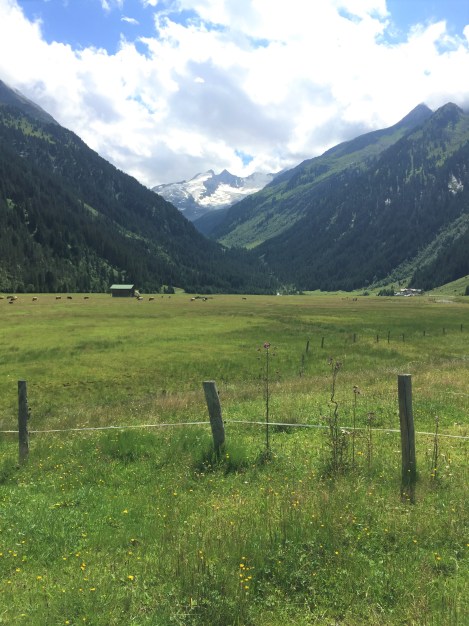
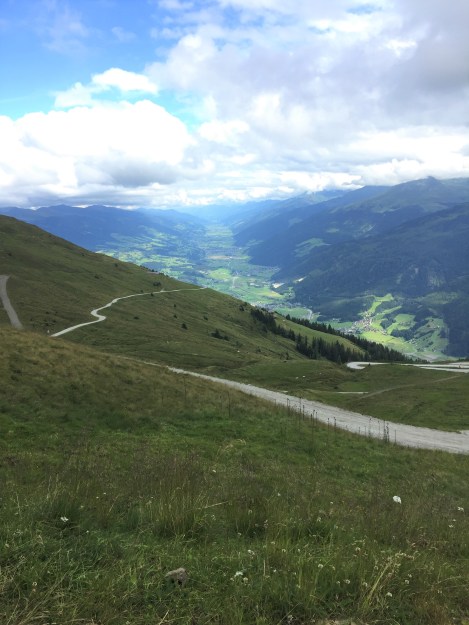
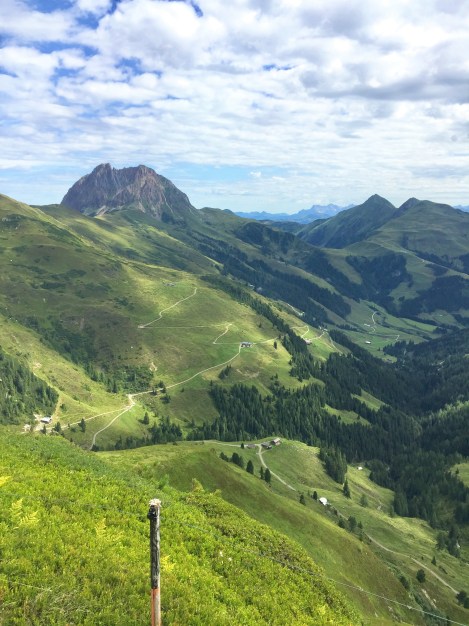
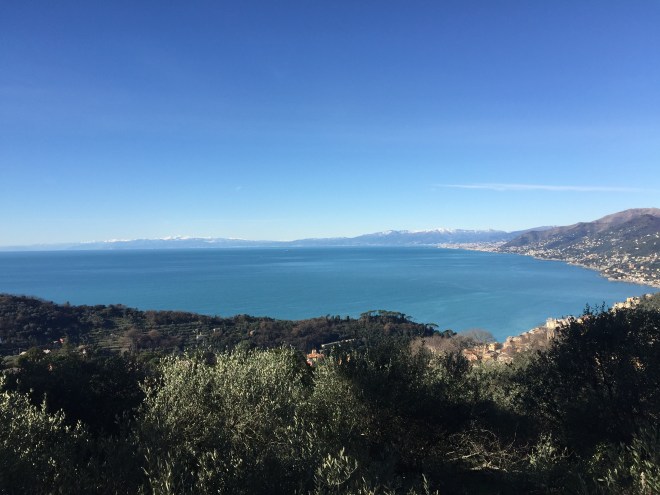


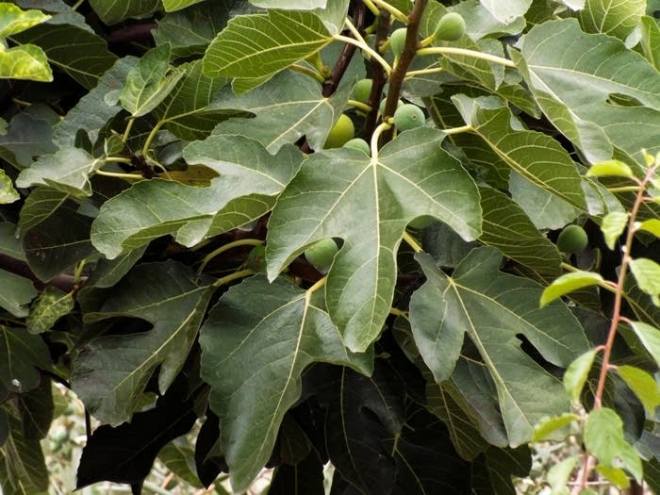
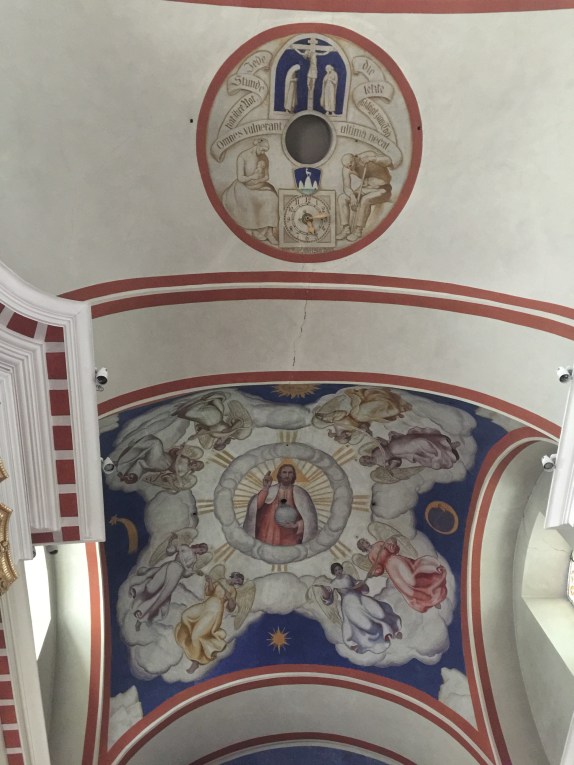

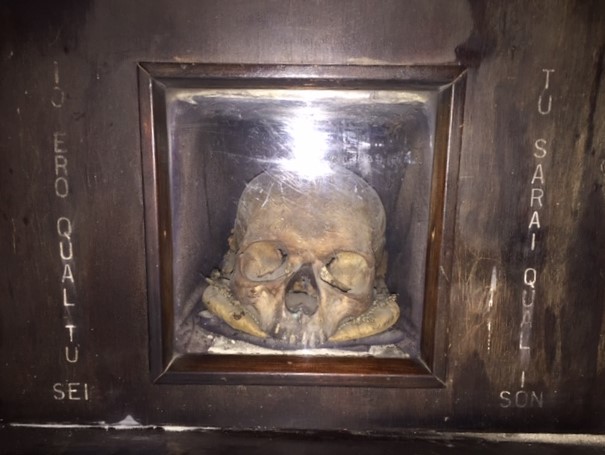


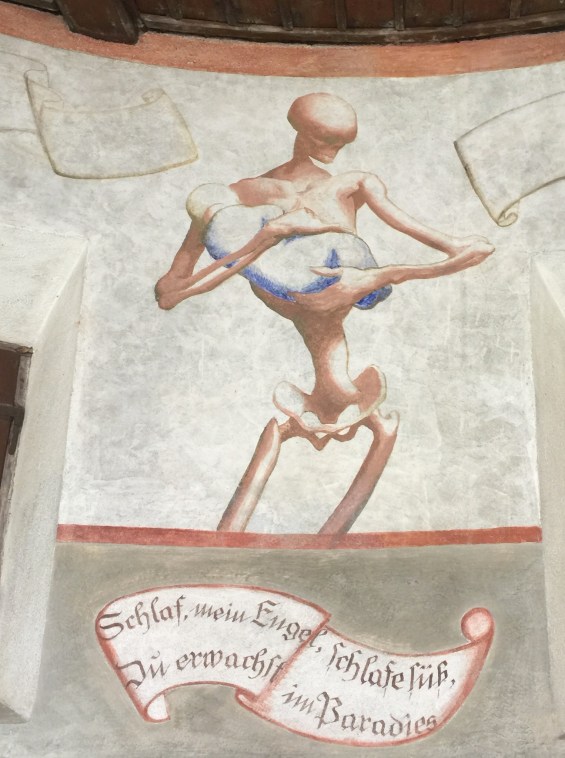
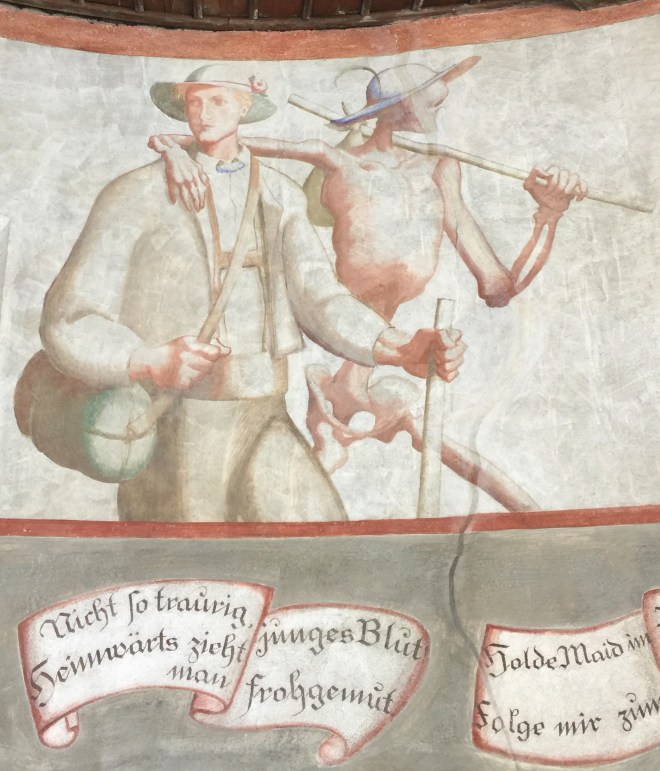


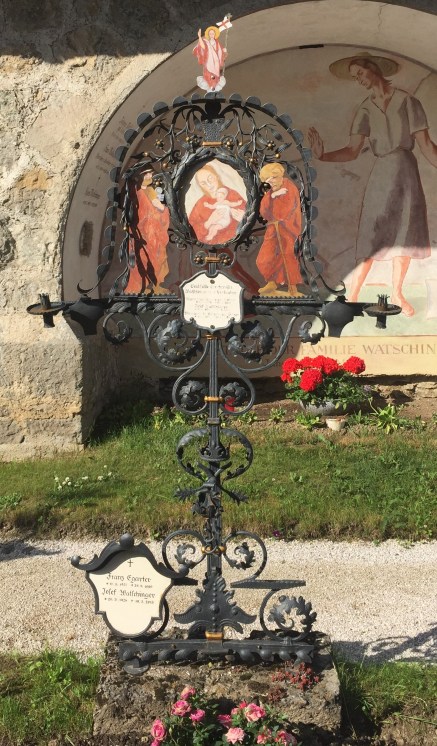

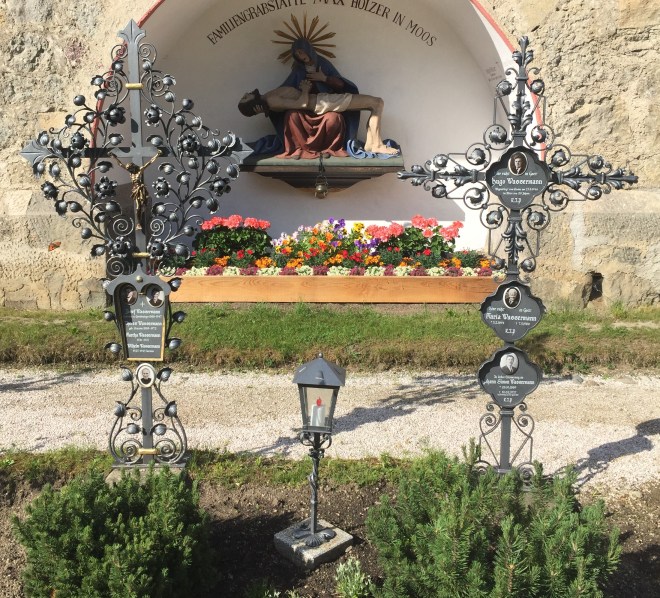

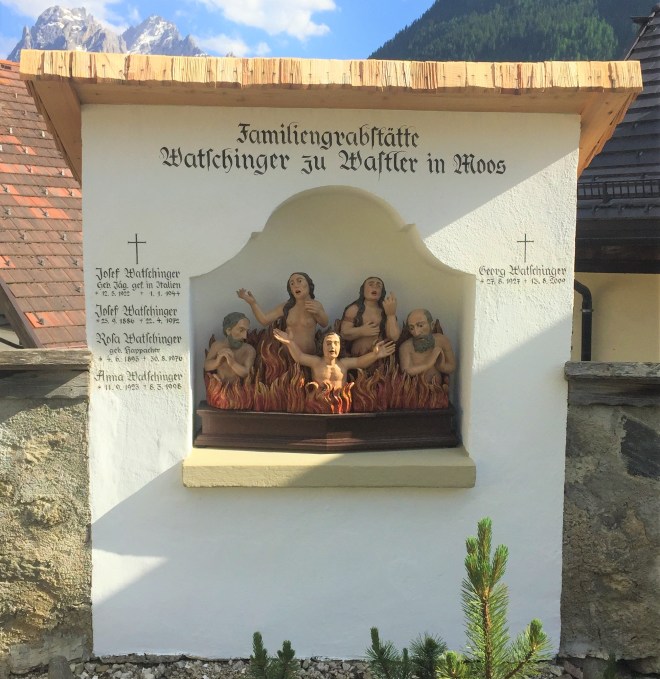


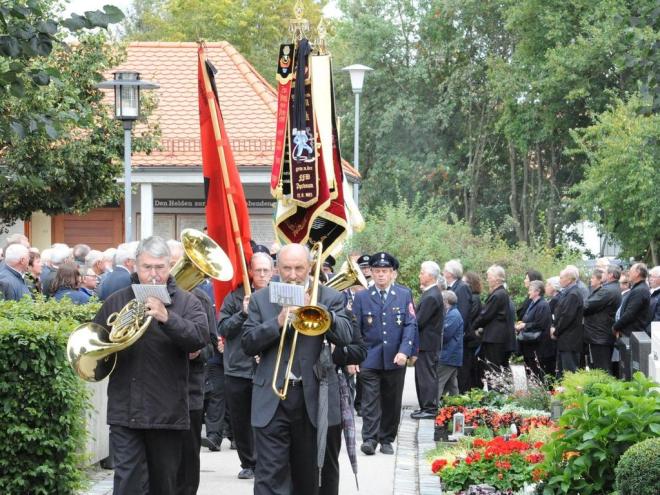
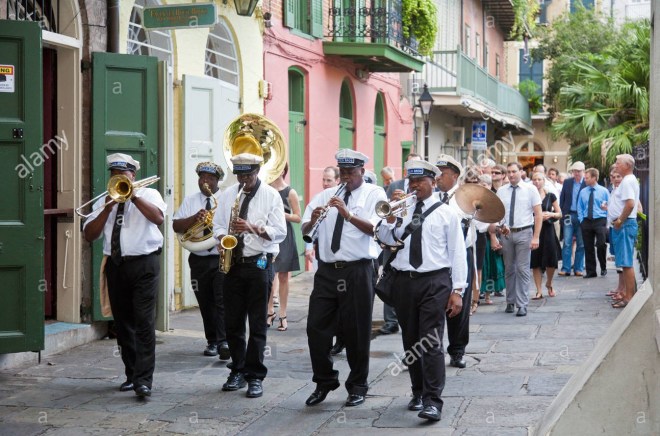


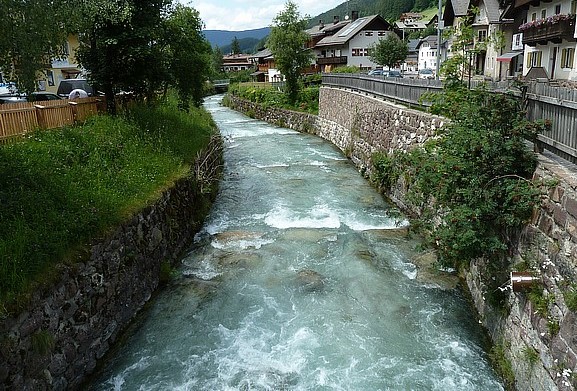
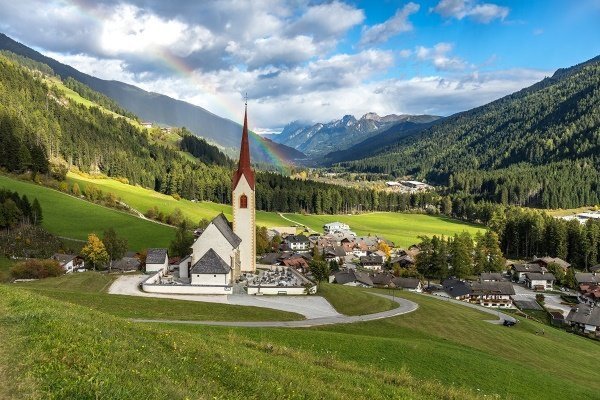
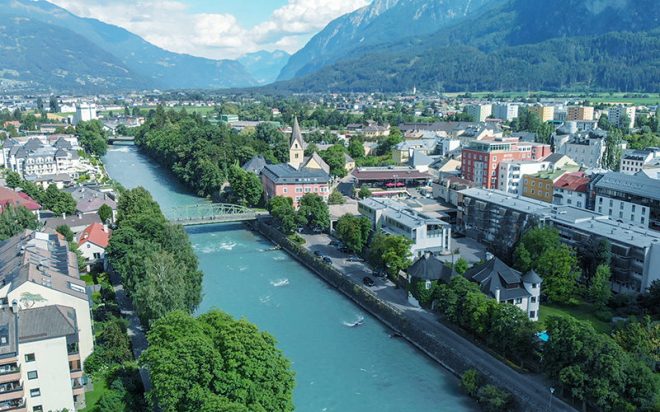

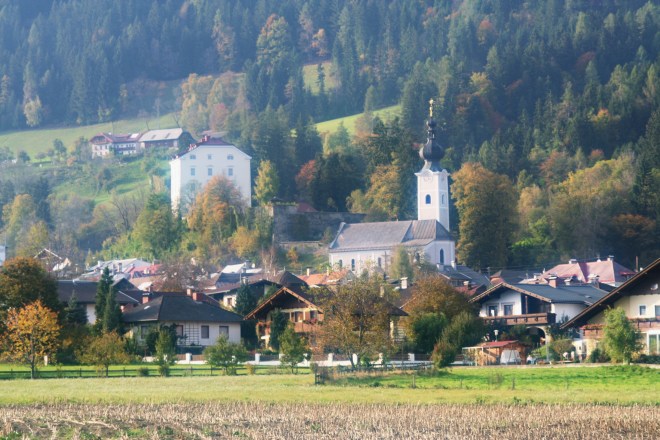
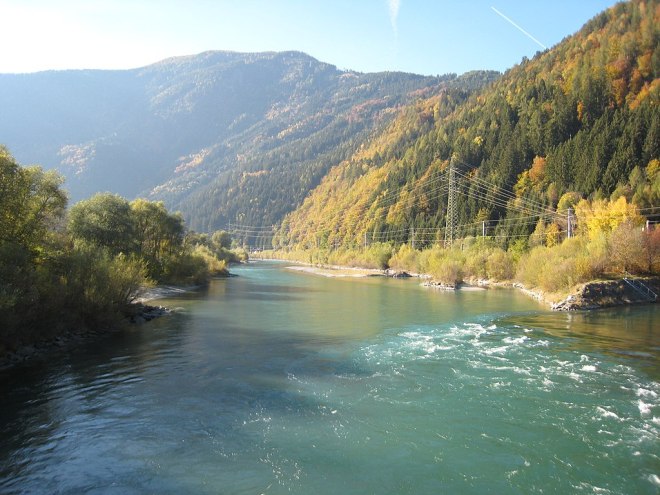
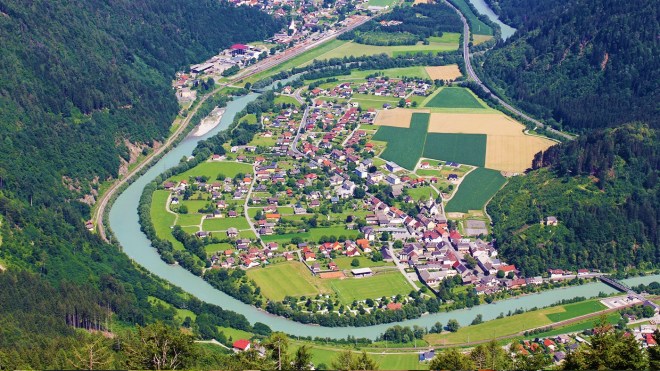


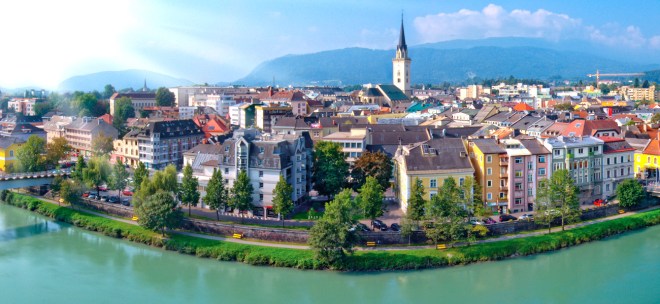


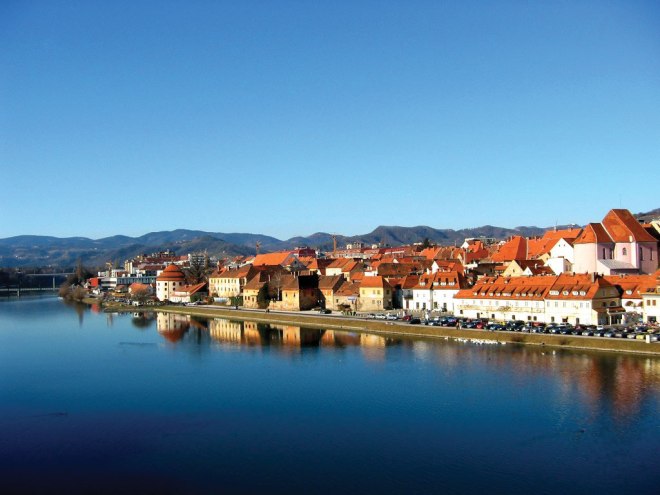

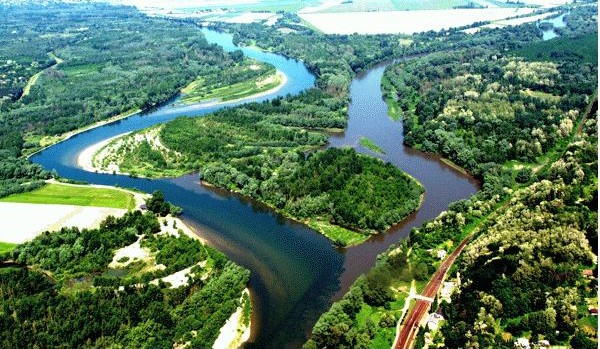

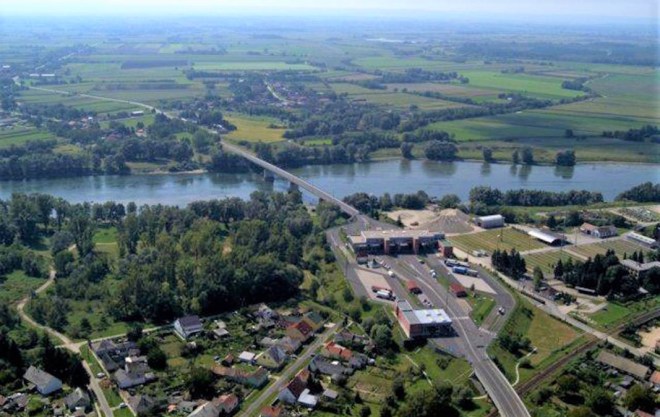
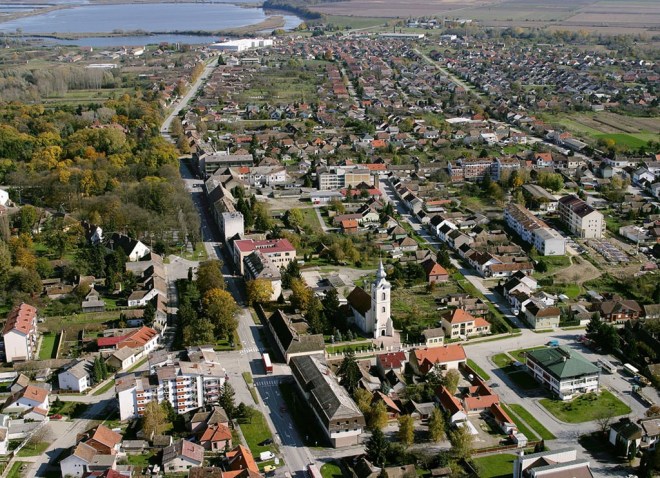


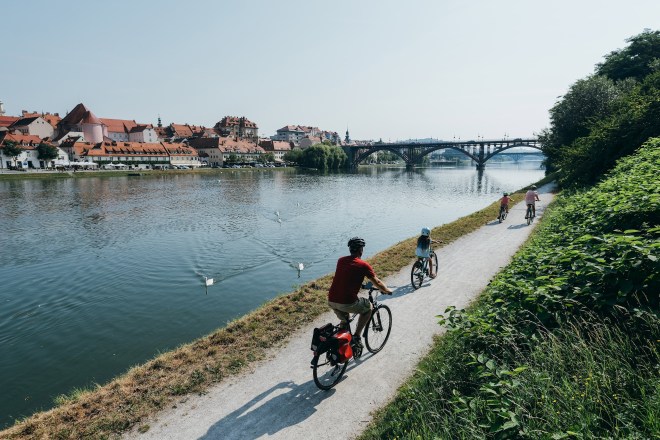

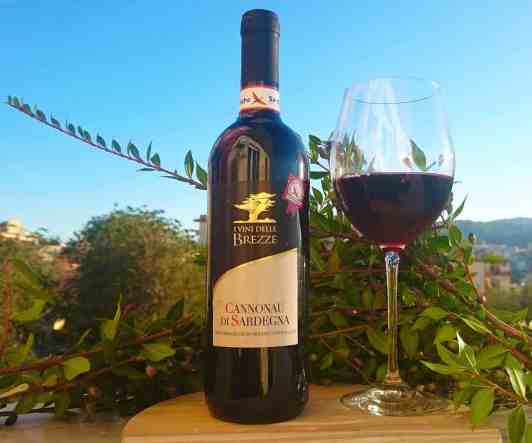


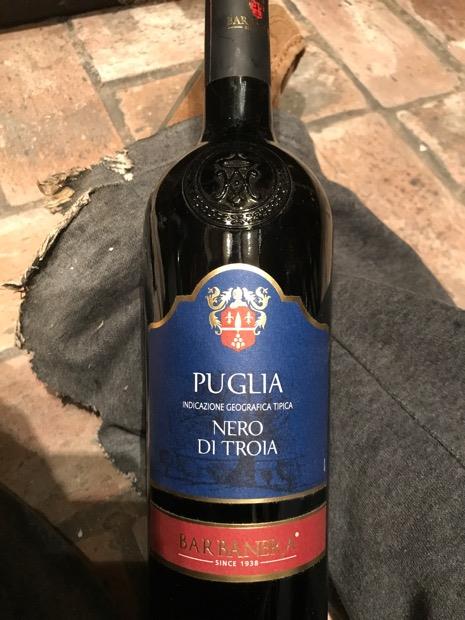

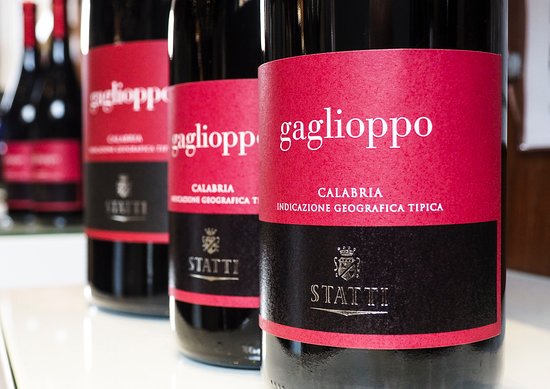
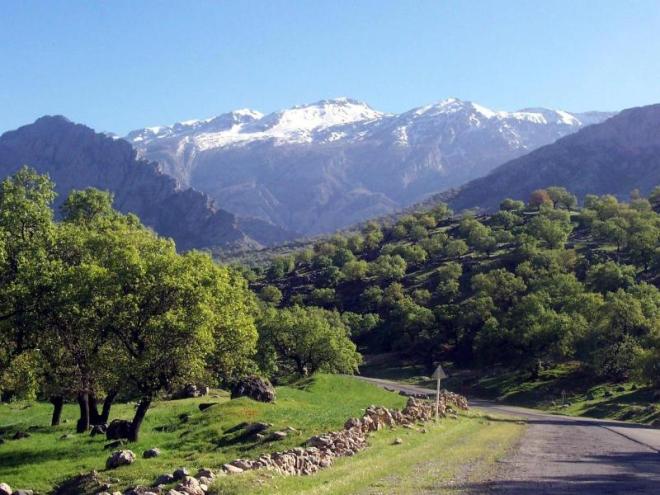
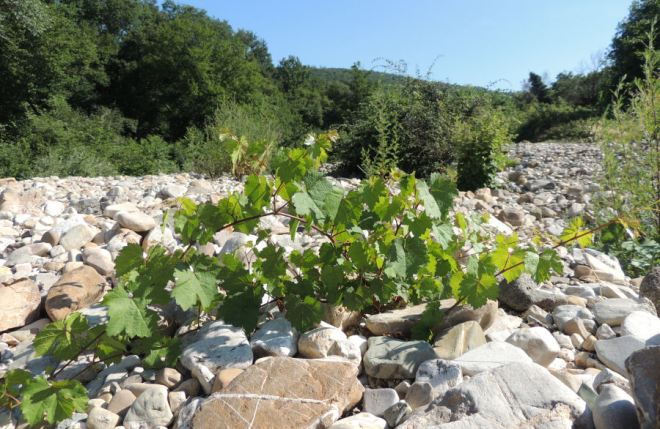


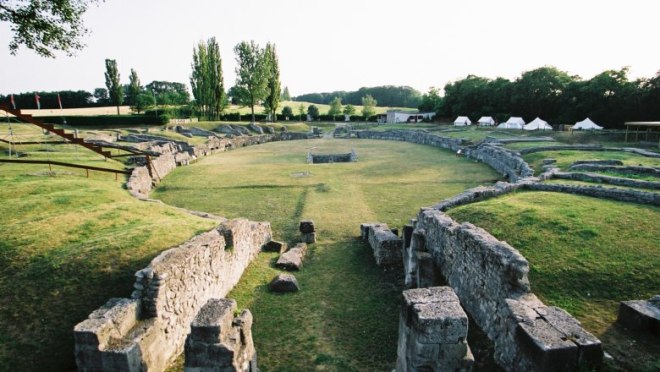


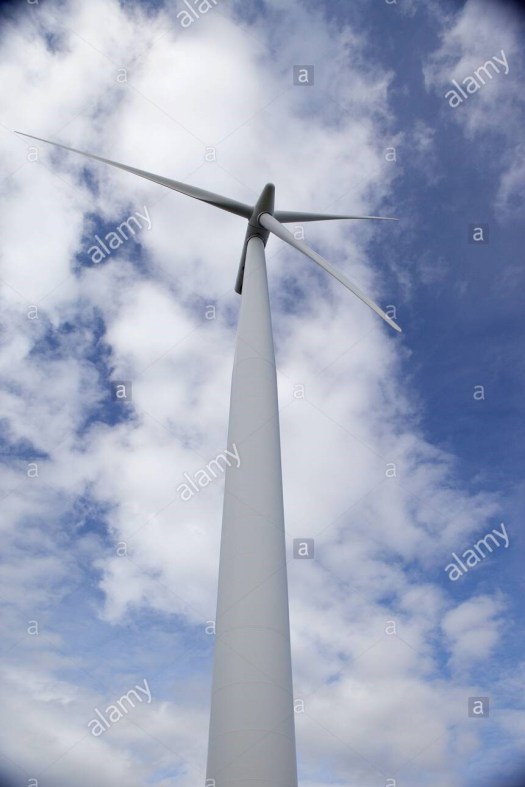


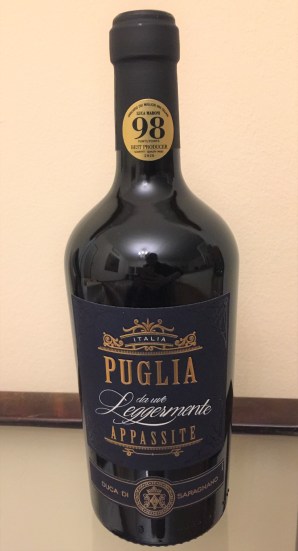


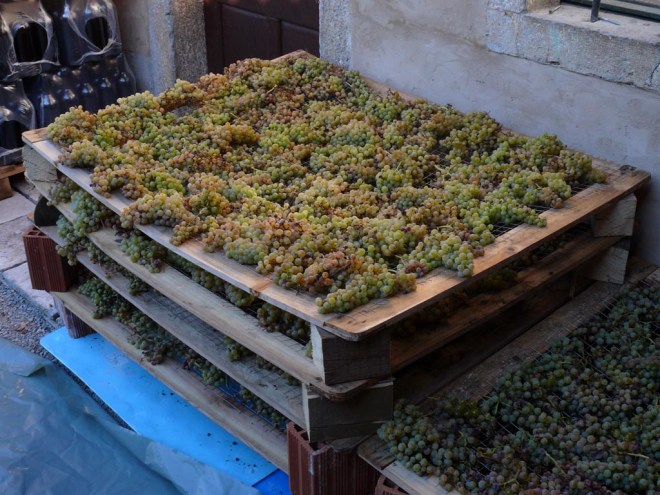
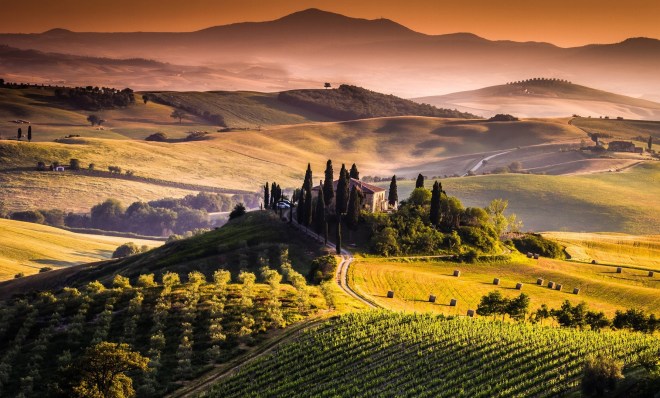
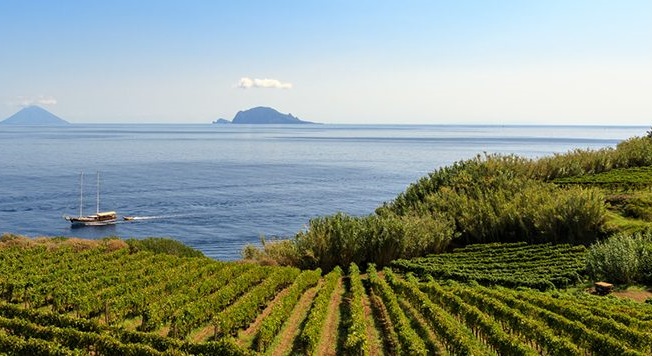


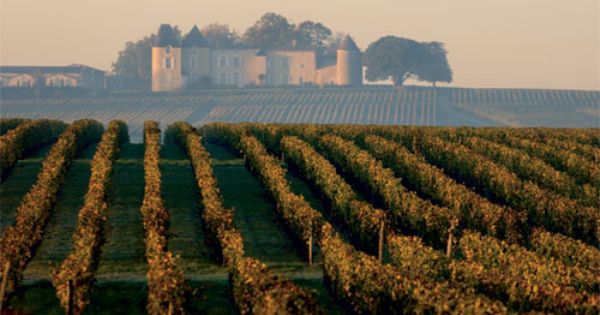
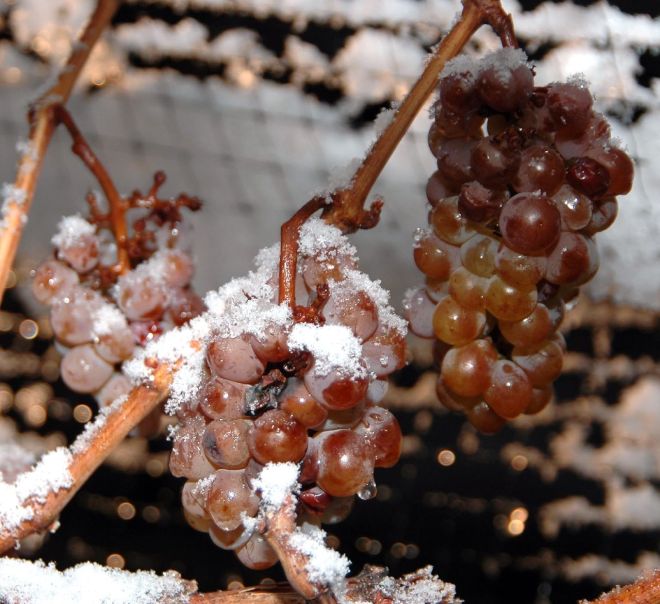

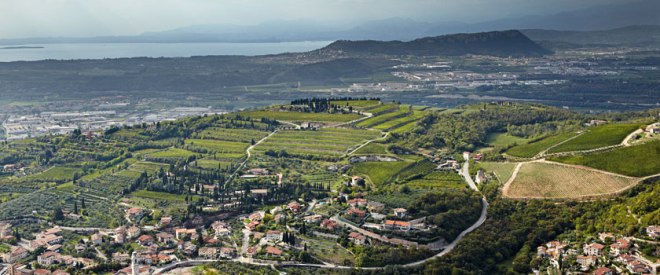
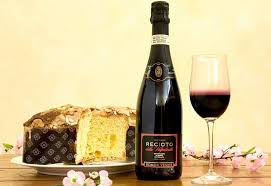
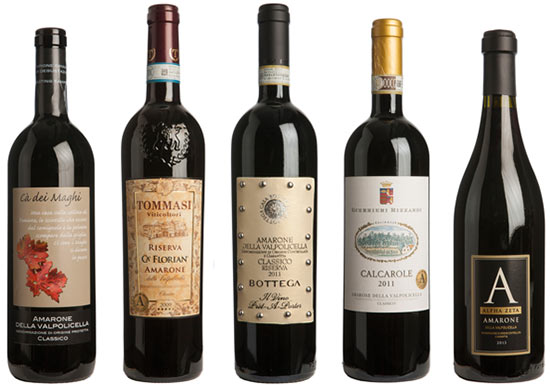


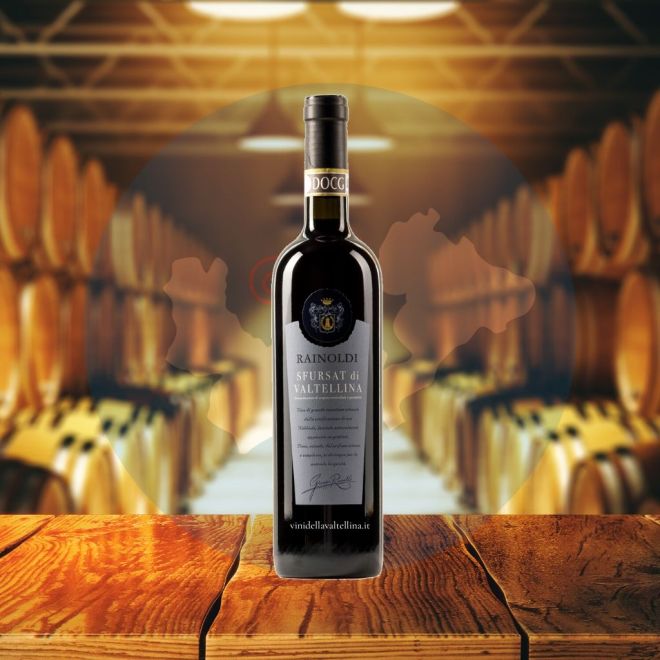


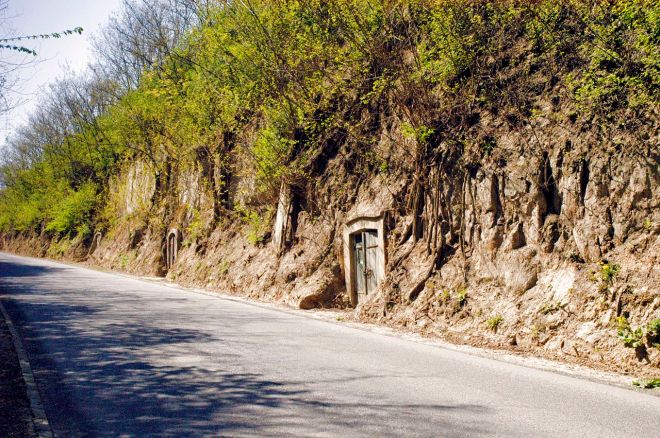

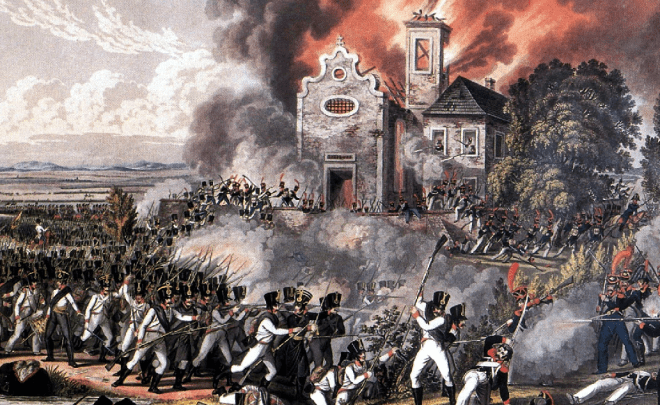

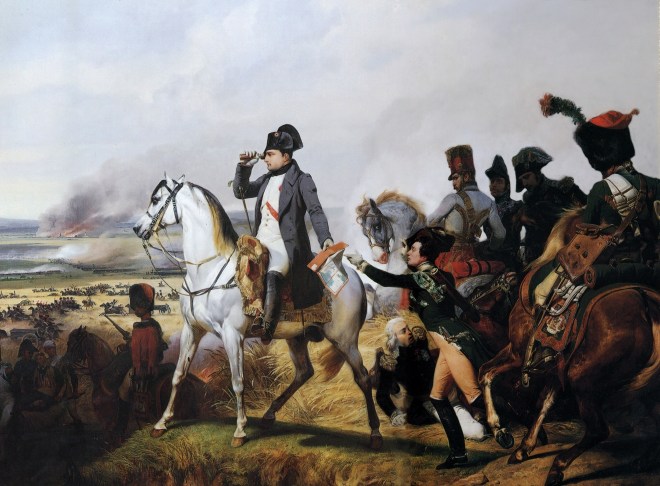
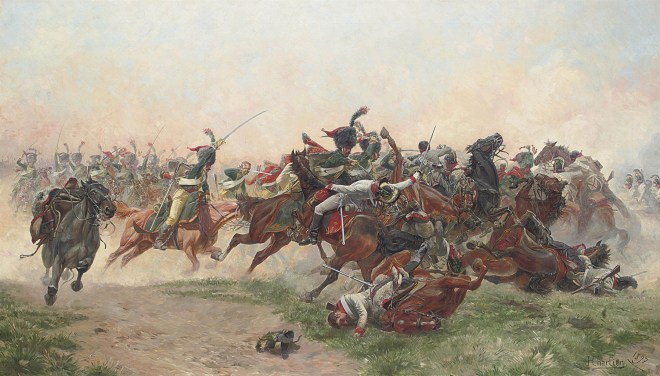


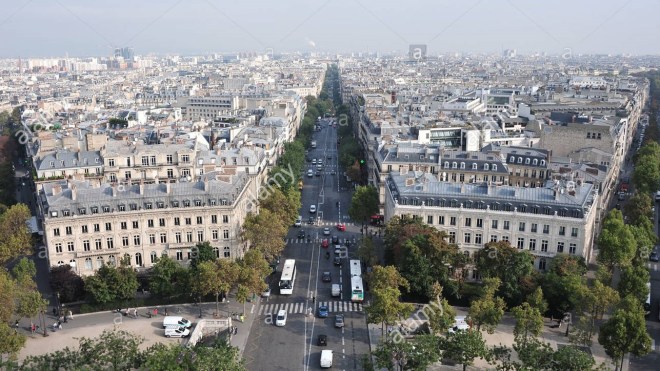

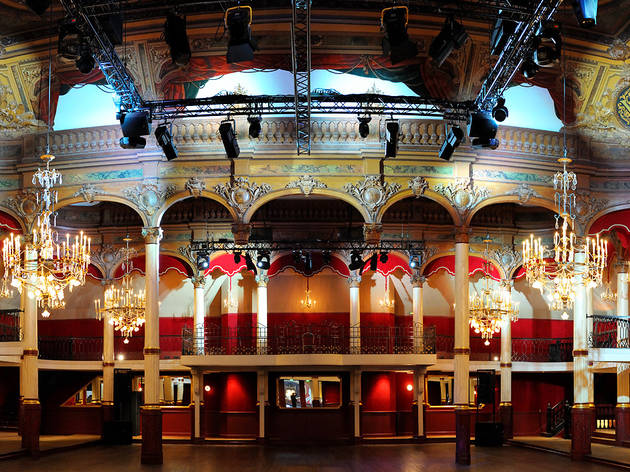

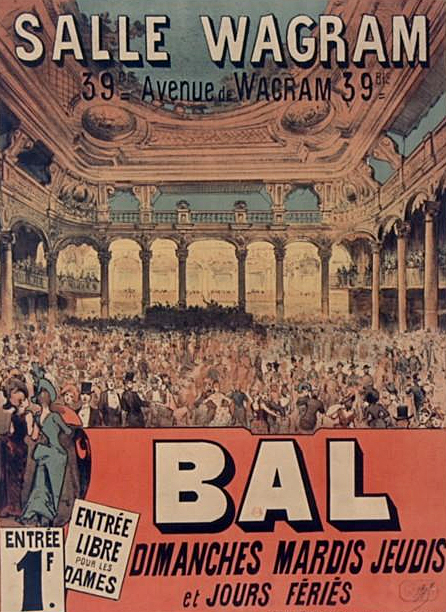



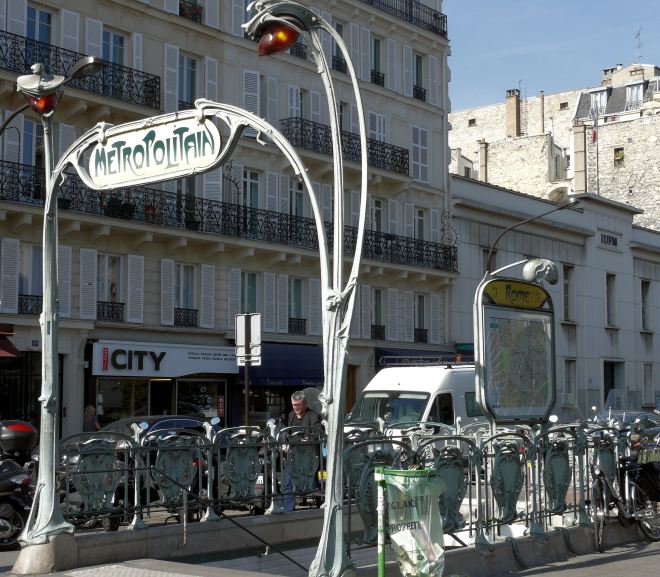

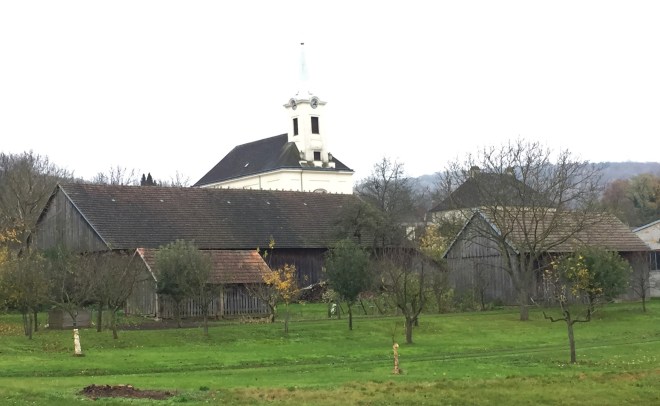


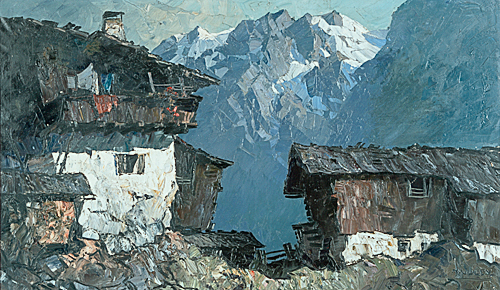
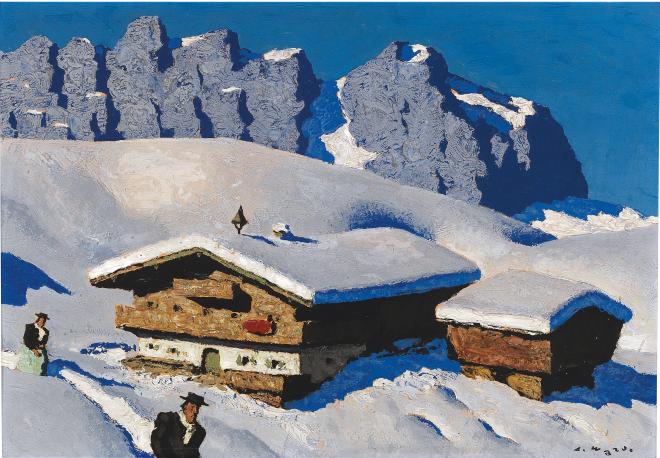


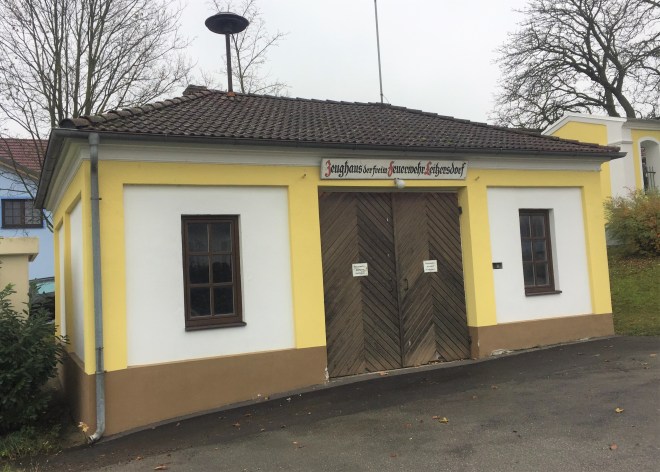
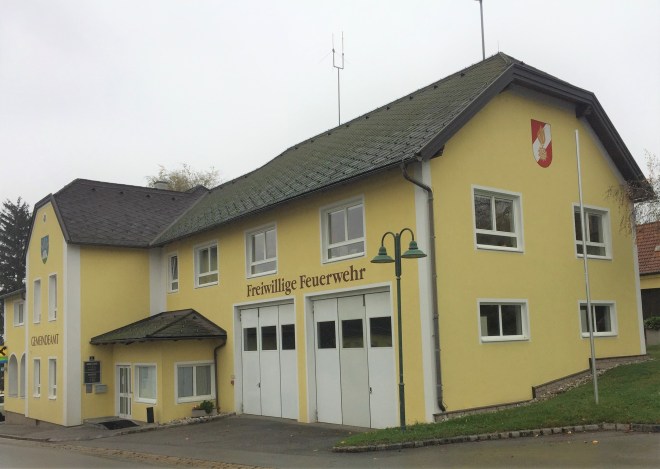

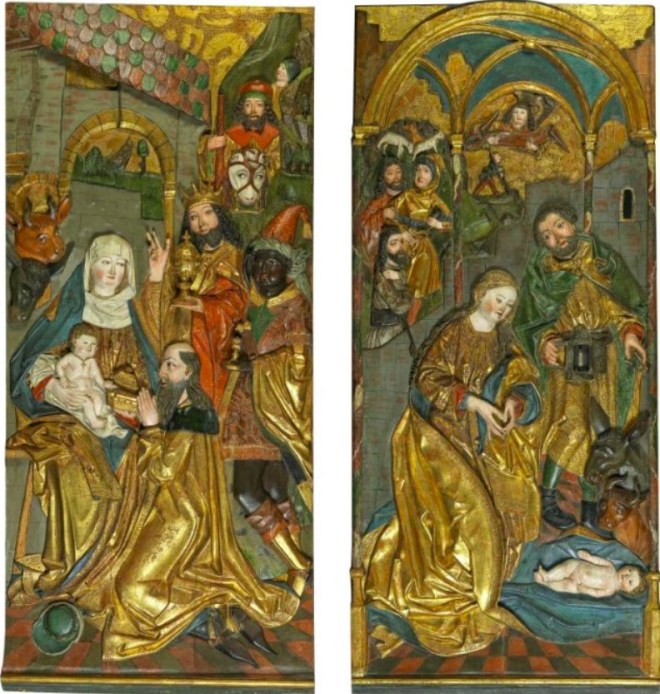


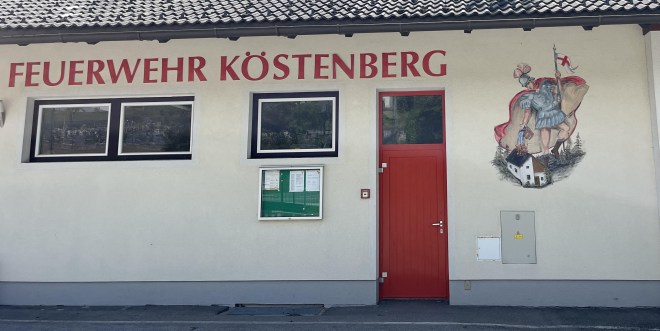
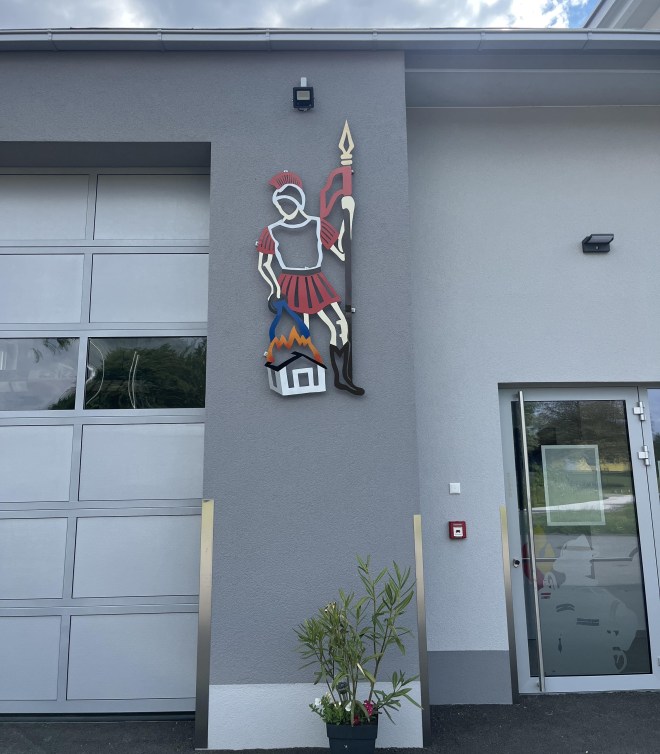
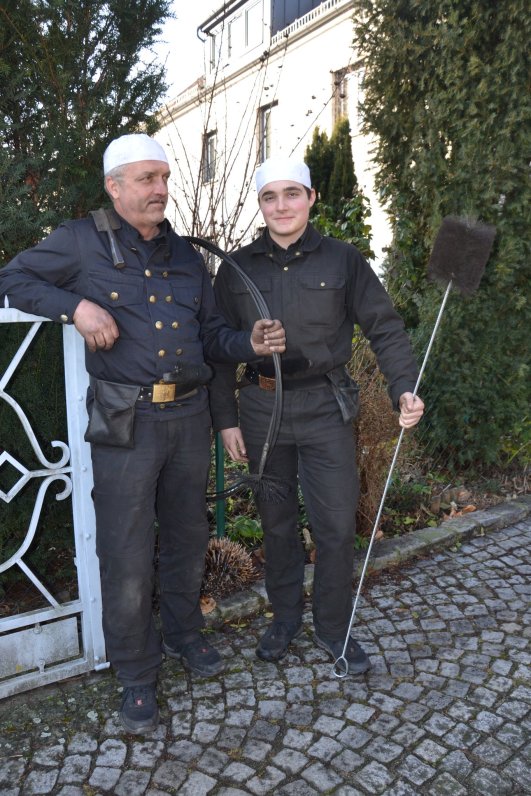
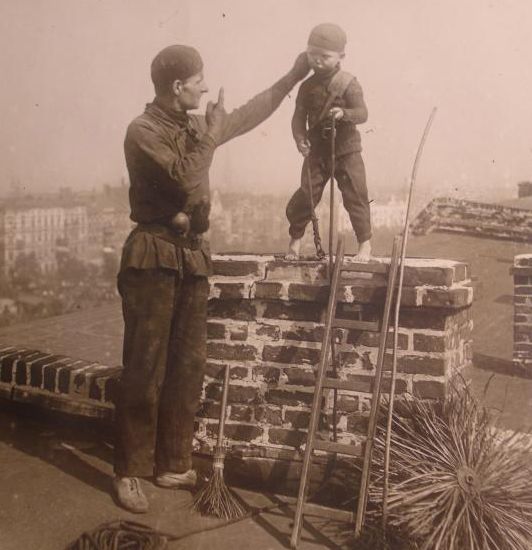

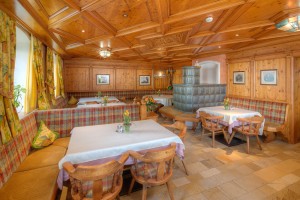


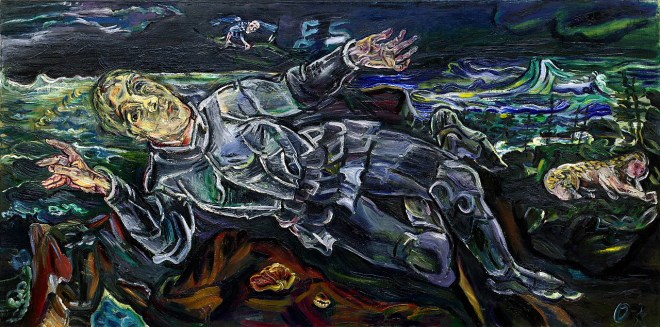
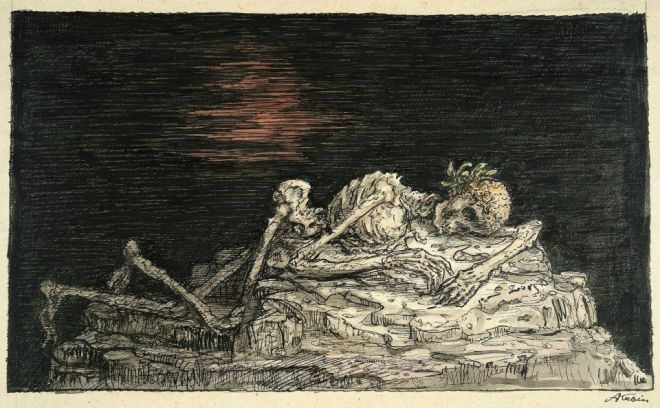


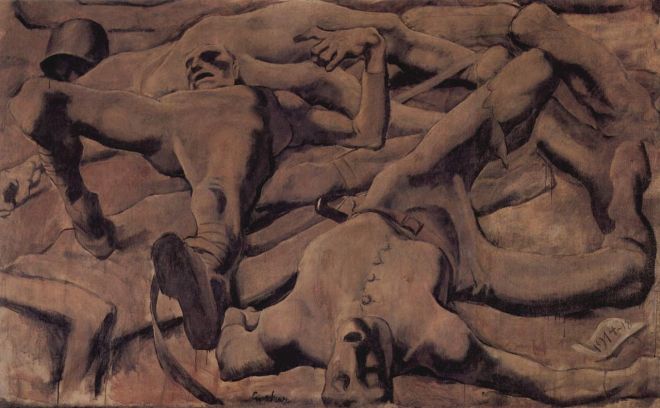
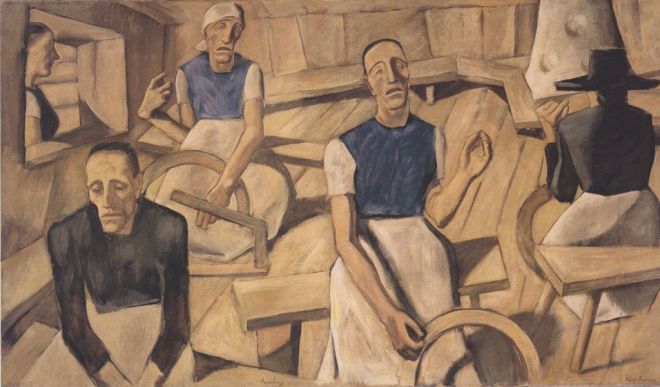

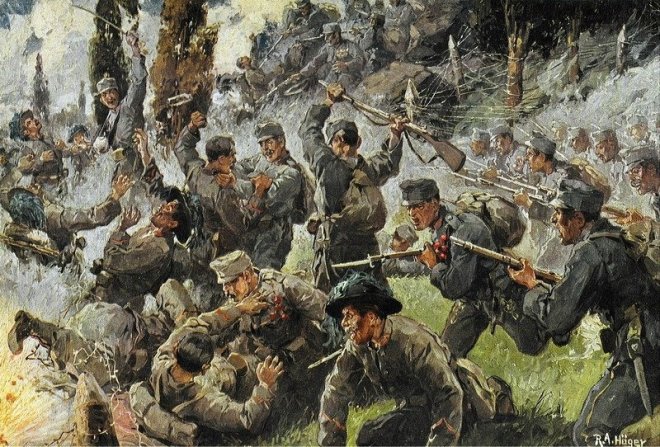


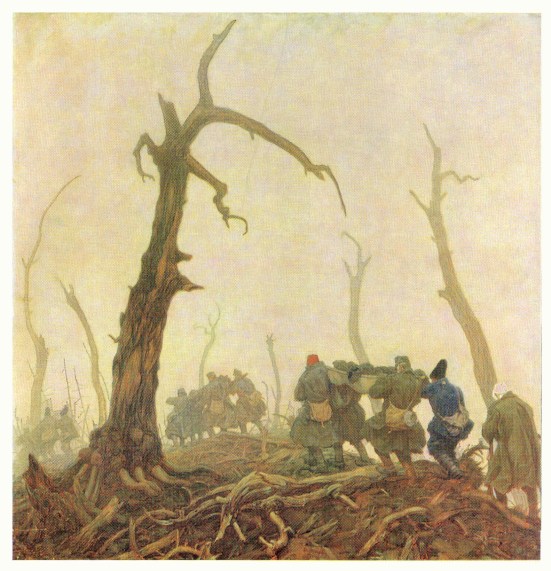


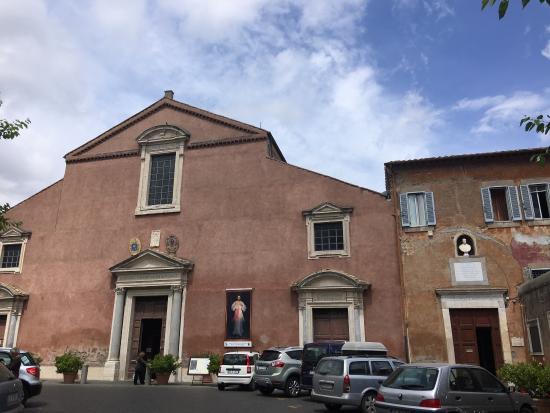

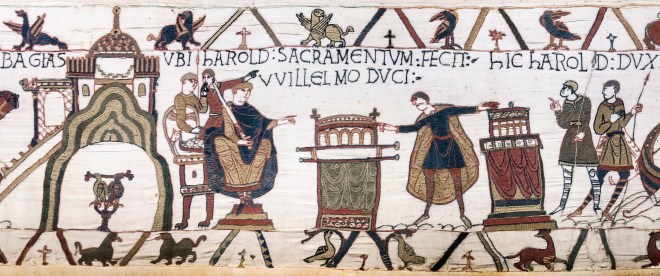
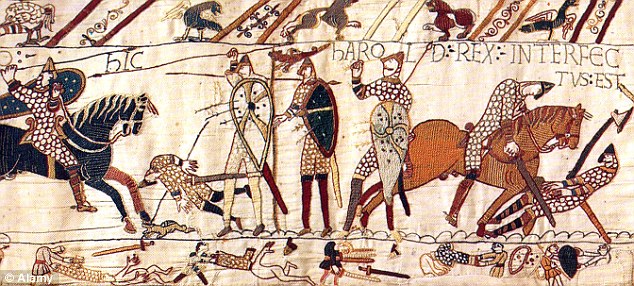
 the heart thrills


