BATTLE OF VIENNA, 1683

Vienna, 23 September 2018

My wife and I have spent much of the summer crisscrossing the Wiener Wald, that mantle of woods draped over the hills to the north and west of Vienna, sampling the myriad paths that meander through the cool green of its beech and oak trees.

But one place I’ve tended to avoid if at all possible in our wanderings is Kahlenberg. For those of my readers who are not familiar with Vienna, this is a spot on the northern ridge of the hills where you get a magnificent view over Vienna.
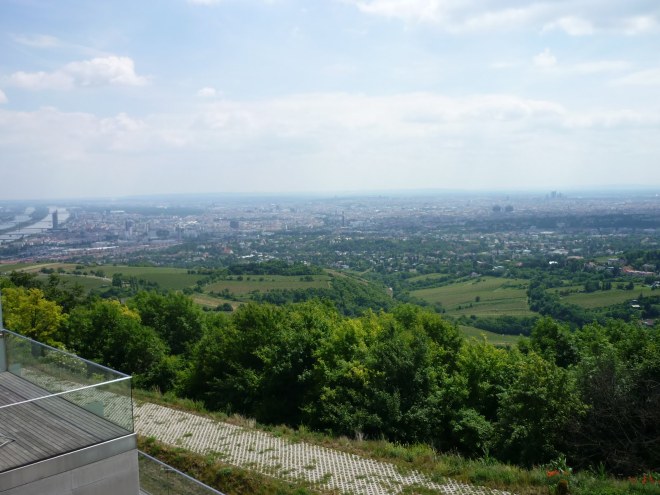
But precisely because of that, and because it is easy to access by car, Kahlenberg is often very crowded with urbanites who can’t be assed to walk (here speaks the militant walker) as well as with tourists brought there by the busload to gawp at the view. If that weren’t enough, the place is imbued with a rather nasty form of nationalism, due to its role in the Battle of Vienna, fought on 12 September 1683. In this battle, a combined force of Austrians, Germans and Poles, under the overall command of Jan III Sobieski, King of Poland, comprehensively trounced the Ottoman army which was besieging Vienna. In these days of anti-Islamic feeling in Europe, the place has become a magnet for far-right groups extolling the virtues of a Europe in which Islam pointedly does not have a place. Here, for instance, is a picture of a march by a group calling itself the Identitarian Movement, which took place last year on Kahlenberg a few days before the battle’s anniversary date.
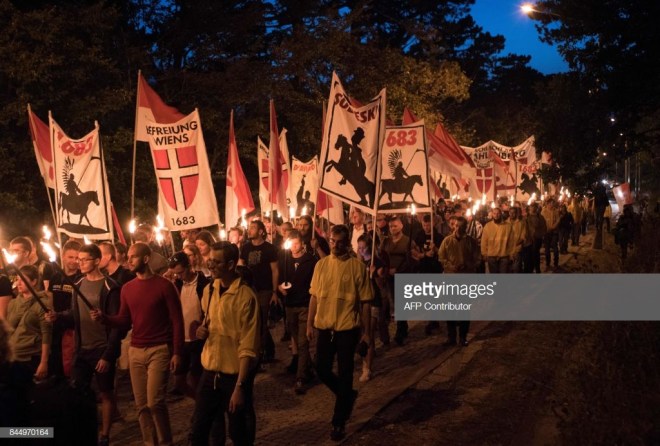
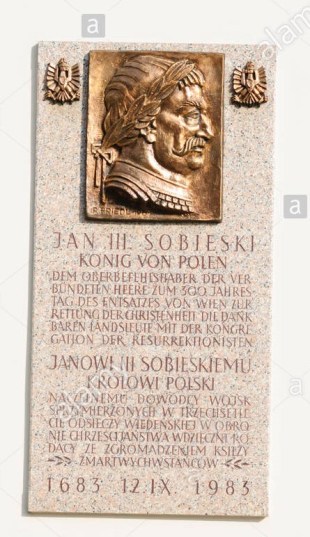
Given the role which the Poles played in the battle, and the fact that Sobieski, a national hero in Poland, had overall command, Kahlenberg is also the setting for a specifically Polish form of nationalism. The Polishness of the place was given a big boost in 1983, when on the 300th anniversary of the battle the Polish Pope John Paul II met there with what were then exiles from Communist Poland. In that same year, a plaque was unveiled on the side of the church at Kahlenberg to commemorate Sobieski. Although modest in size and design, the plaque contains inflammatory words: “To the commander-in-chief of the allied army on the 300th anniversary of the relief of Vienna for the salvation of Christendom, his grateful compatriots with the congregation of the Resurrectionists” [the latter own the church]. Salvation of Christendom … big words!
It seems that this was not enough, so at the instigation of the Poles the Vienna Municipal Council decided some years ago that a more glorious monument to Sobieski should be placed on Kahlenberg. The monument, designed and executed by a Polish sculptor, would have looked like this.
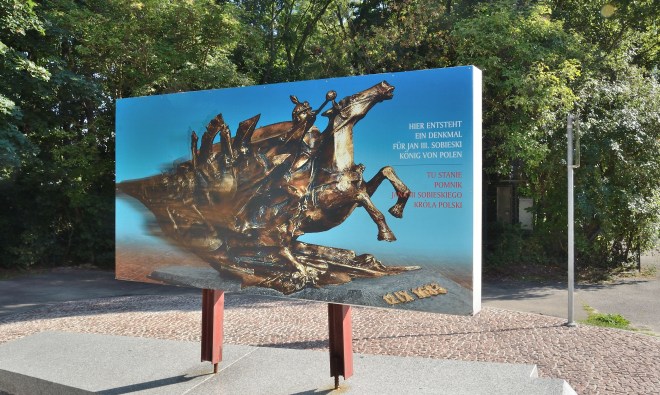
It was meant to have been unveiled this September on the anniversary of the battle.  Luckily, cooler heads prevailed and the project was cancelled at the last minute, leaving just the base. But of course this led to much gnashing of teeth in the far-right media, especially the electronic media. In this time of European history, I must say that I find this xenophobic nationalism, which we see everywhere in Europe but is the official government line in Poland, really distasteful.

So, for all these reasons, I have, as I said, been avoiding Kahlenberg on our walks. Nevertheless, it just so happened that we were walking through it on 11 September, on a walk towards Klosterneuberg. When I noticed that we there the day before the battle’s anniversary date, I began to be intrigued by this battle, about which, it must be said, I knew very little, other than its outcome and what seemed to me the strange claim that the relief forces came down from Kahlenberg to give battle. I say strange because what has always struck me at Kahlenberg is how steep the drop is down towards Vienna and how far the old city seems to be. I simply could not imagine troops careering down the hill and catching the Ottoman troops unawares. There was nothing for it, I decided; I was going to have to do some reading. Now, after a few weeks of desultory consultation of whatever I could find online. I am ready to report back (in passing, I should note that I am particularly indebted to Ludwig H. Dyck’s article on the topic which I suggest battle buffs read if they want to know more).

Vienna had been under siege since July, and by September the situation was looking increasingly desperate for the defenders. This painting gives a rather fanciful view of the besieging forces, with Vienna in the distance. Readers will note some camels in the foreground.
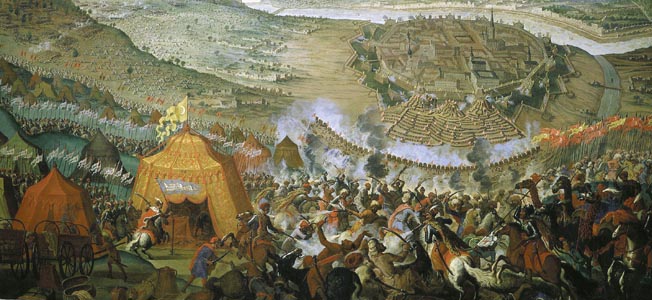
Readers should also note two other things in this picture: the hills to the left, and the small river passing to the right of Vienna, the Vienna River. These will play an important role in the upcoming drama.

Luckily for Vienna, help was on the way. On 6th September, the Polish forces under Sobieski crossed the Danube at Tulln, some 35 km upstream of Vienna, and linked up with the Austrian and German contingents. To give readers an idea of the multinationalism of this army, the Austrians, naturally enough, made up the largest contingent, with 20,000 men, under the command of Duke Charles V of Lorraine. The Poles came a close second, with 18,000 men, the great majority of whom were cavalry. Then came troops from a number of the German states: 11,000 Bavarians, under the command of their Elector Max Emanuel, 9,000 Saxons, under the command of their Elector John George III, and finally 8,000 Franconians and Swabians, under the command of Prince George Friedrich von Waldeck. With a sprinkling of other troops from here and there, the relief force was composed of close to 70,000 men. What I want to emphasize here is that the Poles were by no means in the majority on the battlefield despite their modern proclamations that it was they who saved Vienna.

The army commanders’ first order of business was deciding who should have overall command. With all these aristocratic primadonnas around, one could imagine that reaching agreement on this would have been an almost impossible task. But the Duke of Lorraine managed, through tact, diplomacy, and a certain amount of abnegation (he was well qualified to do the job himself and he was commanding the Austrians, after all), to get everyone to agree to Sobieski being given overall command. Being a King, he could pull rank on everyone else, he had charisma, and he had beaten the Ottomans in battle ten years earlier. I throw in here a Polish painting of Sobieski, which I would say falls into the realm of propaganda, painted in the days when Poland no longer existed and Poles dreamed of having a country once more.

In truth, Sobieski was well past his physical prime by this time; he was so fat that he couldn’t get into his saddle without help. But luckily his mind was still sharp. This painting from an earlier era probably gives a more faithful rendering of what he looked like, although I doubt his horses did much prancing.

In order to soothe any ruffled aristocratic feathers, it was agreed that each Prince, Elector and Duke would nevertheless lead their own men while respecting the overall battle plan. A potential recipe for disaster, I would have thought, but one which in the circumstances actually worked.

Where was the Austrian Emperor Leopold I, readers might wonder? Should he not have been leading the army on its way to relieve his capital?

Well, at the first sign of danger he had scarpered from Vienna, along with his whole court, to the safety of Passau far in the west of Austria and a long way from the Ottoman forces. Which was probably just as well, because he was a useless soldier and had an aptitude for quarreling with all and sundry, as we shall see. Since the Duke of Lorraine played such an important role in the planning and execution of the upcoming battle, I feel it is only fair to also throw in a picture of him.
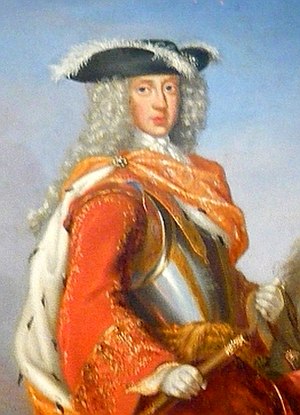
Now that the issue of command structure had been sorted out, agreement was needed on the plan of battle. The Duke of Lorraine had come up with a plan, which can be understood from this old map below.
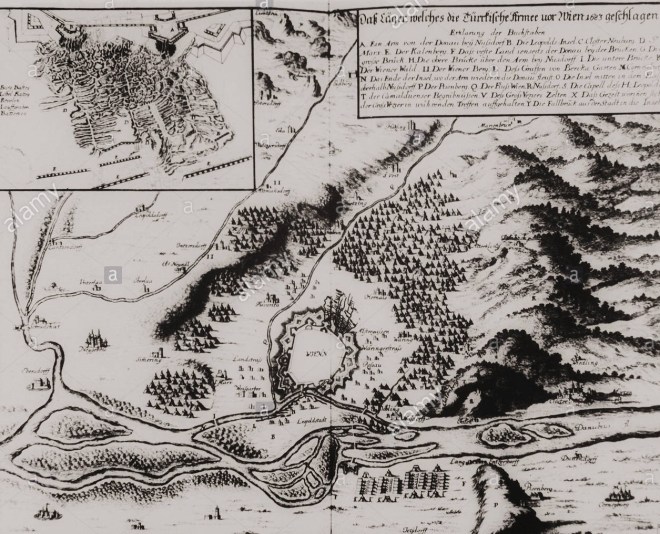
Lorraine’s idea was to have the relief force appear on the ridge of hills to the north of Vienna (to the right of this map) and give battle on the plain below, forcing the Ottomans to have at their back the Vienna River (that rather weedy stream passing to the south (left) of Vienna), the city of Vienna itself, and the Danube beyond that: caught in a vice, as it were. It was a good plan, and in the end all agreed to it. But it carried a big risk. As this next map shows, the roads from Tulln (just off to the left of this map) to Vienna all pass through the hilly country that lies to the north-west of Vienna.
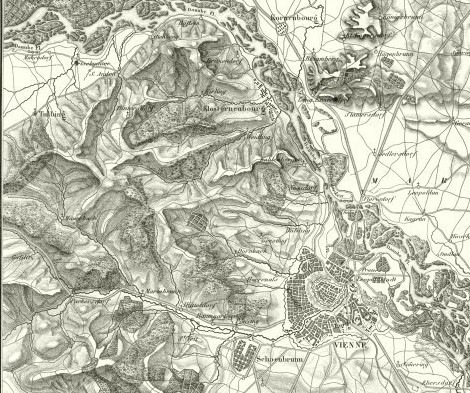
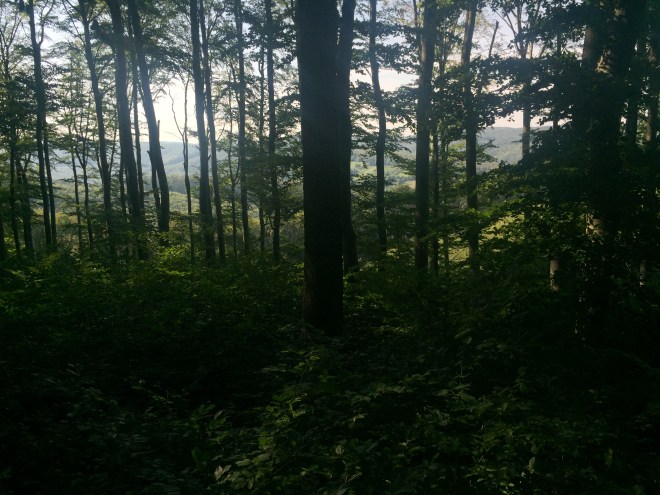
This meant that the army, all 70,000, plus all the horses of the cavalry as well as the lumbering cannons of the artillery and the baggage trains, had to cross heavily wooded, steeply hilly country intersected by numerous gullies and stream beds, along roads that were probably little more than forest roads. During walks which my wife and I have done behind Kahlenberg over the last week or so, after I had mugged up on the battle a little, I have kept marveling that the relief force had made it through this rough and rugged terrain. Here are some photos which might help readers appreciate its ruggedness.

I don’t want to pass for an armchair general but I also find it incredible that the commander of the Ottoman forces, Grand Vizier Kara Mustafa, didn’t take any steps to block their passage. He knew the Poles had crossed the Danube at Tulln and had linked up with the Austrians and Germans (I use this as a shorthand for all those troops from the German states). His scouts would surely have told him which way the relief forces were heading. It would have been easy enough to block the few roads which they would have had to take. A few well-placed cannon would have kept the relief force at bay for a considerable time. But no, no significant moves were made on the Ottoman side to bar their passage. One book I read suggests that Ottoman commanders had no experience of laying siege to a city while having a relief force threatening their rear. Well, let’s accept that. But this inactivity on the part of the Ottomans was strange indeed and was one of the factors which cost them the battle.

In any event, the relief force did make it through, although it does seem that a fair amount of muskets, cannons, and other baggage were abandoned along the way and that a good number of stragglers only managed to rejoin their regiments a few hours before the battle started.

And so it was that on 11 September, as their troops were still struggling up the flanks of the final range of hills to reach the ridge, Sobieski and his army commanders congregated on Kahlenberg to review the battlefield below them and make final arrangements. I suppose that is why Kahlenberg is host to memorials to the battle. That, plus the fact that the first inkling which the Viennese had that help was on the way was bonfires lit on Kahlenberg by an advance party.

It would be nice to think that the assembled commanders soberly reviewed plans and calmly agreed to next steps. But actually, Sobieski got into a terrible snit because he saw that the terrain below the ridge was much rougher and steeper than he had been led to believe from the rather crappy maps he had been given. He wanted to put off the attack to have more time to get his troops in position. In the event, the other commanders persuaded him to keep to the plan of attacking the next day, although at the cost of their agreeing to transfer a certain number of German regiments to his wing to screen his cavalry as they picked their way down the hill.

So it was that on 12 September the Austro-German-Polish army gave battle. I do not plan to go into excruciating detail about what happened. A brief summary will suffice, and this map should help in general understanding.

The forces under the Duke of Lorraine kicked things off on the left wing (GLW on the map) with an attack at sunrise on the village of Nussdorf, a village which I have had cause to write about in an earlier post concerning a walk we did in the Wiener Wald. The Germans in the centre (GRW) followed suit. An eyewitness on the Ottoman side, describing the soldiers coming down from the ridge, wrote that it seemed “as if an all-consuming flood of black pitch was flowing down the hills.” An arresting simile I find. This painting of the battle, while somewhat confused, does at least show this human flood down the hills (to the left).

The Ottomans fought hard and the battle went back and forth, but by noon the Turkish right wing was destroyed. Meanwhile the Poles (PLW, PC, PRW on the map) were still struggling to get down from the ridge and out of the forest. They only got in line on the right wing by about 4 in the afternoon.

By this time,the Austro-Germans were well rested from their morning exertions and eager to advance on the centre of the Ottoman line. Specifically, they wanted to capture the Ottomans’ Holy Banner, which was flying on what is now called the Türkenschanz (and where we lived for a number of years on a street called, appropriately enough, Waldeckgasse). At more or less the same time, after a few initial cavalry skirmishes, Sobieski, his armour covered by a blue, luxurious semi-oriental garb, personally led his whole cavalry in what was one of the biggest cavalry charges in history: some 14,000 cavalrymen were involved. Here’s a modern take on what the leading line of these Polish cavalrymen looked like. Readers will note those strange wing-like attachments on the riders. They were the so-called winged hussars, and were the elite of the Polish cavalry.
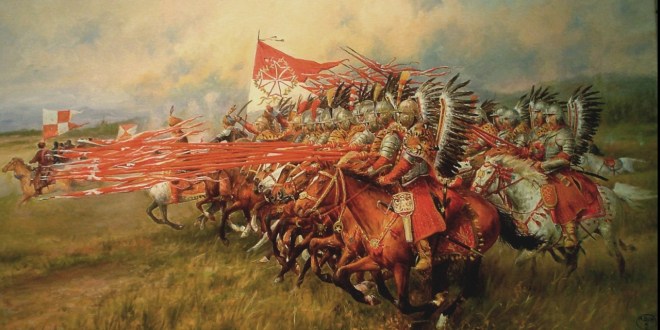
The Polish cavalry charge on one side and the renewed attacks by the Austro-Germans on the other side, broke the Ottoman forces, who took to their heels. The usual cutting down of fleeing soldiers took place. There was also wanton butchery. Before fleeing, the Ottomans had massacred hundreds of their captives. In retaliation, the commander of what remained of the Vienna garrison burned alive 3,000 sick and wounded Ottoman soldiers found in the Ottoman camp.

One would think that after such a great victory, all would be sweetness and light between the victors. Not a bit of it! By happenstance, the Poles stopped their advance right in the middle of the Ottoman encampment. An orgy of looting followed, the lion’s share of which went to Sobieski himself. The other commanders didn’t object to the looting per se – that was acceptable behaviour in those days – but they were really pissed off that the Poles hadn’t given them a chance to take part in the looting. After all, as far as they were concerned they had been as responsible as the Poles for the victory, and I can’t say I disagree with that. Then on the next day, on 13 September, Sobieski decided on holding a triumphal entry into Vienna, casting himself in the role of savior of the city. We have here a take on this event by a Polish artist from the late 1890s: another romanticized view with strong propaganda overtones.
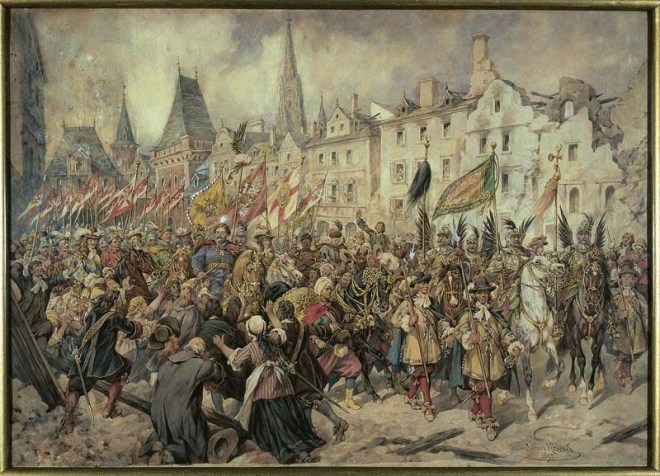
I doubt it was quite as joyous an affair, because Sobieski once more seriously pissed off all the Austrian and German grandees. They felt – quite rightly – that they had been as much saviors of Vienna as Sobieski, and should have had a strong presence in the entry into Vienna. The Austrians were also angered by what they saw as an insulting breach of protocol. In their view, it should have been Leopold I as Emperor to have headed such a triumphal entry. And the Duke of Lorraine was highly irritated that Sobieski had preferred this display of narcissism to the more sensible military objective of pursuing the demoralized Ottoman forces (to be fair, Sobieski did eventually get around to going after the Ottomans, and some two weeks later he and the Duke of Lorraine annihilated an Ottoman corps).

The next day, 14 September, Leopold I arrived back from his hiding place in Passau. He was furious when he heard about Sobieski’s triumphal entry into Vienna. He was so agitated about it that he refused to pay attention to the Duke of Lorraine’s pressing problems of how to provision the relief force. He also brushed aside the Elector of Saxony, who as a devout Protestant wanted to discuss the matter of Leopold’s treatment of Protestant Hungarians. Fed up, the Elector marched his troops back to Saxony. As Protestants, they hadn’t been treated well anyway by the other, Catholic troops.

Then, on 15 September Leopold finally got around to visiting Sobieski in his camp. The meeting did not go well. Leopold ignored the presence of Jakob, Sobieski’s son, whom Sobieski had hoped to marry off to Leopold’s daughter. Sobieski, egged on by his Francophile aristocrats (France and the Hapsburg Empire were perennially at loggerheads), took umbrage to such a degree that his relations with Leopold were strained for evermore.

So a great victory, though less because of tactical brilliance on the part of the relief force than because of stupid mistakes on the part of the Ottoman commander. I’ve already mentioned his inaction in blocking the routes through the Wiener Wald. There was also his decision to leave 15,000 crack Janissary troops in the trenches around Vienna to continue the siege. And a victory, whatever Polish propagandists might proclaim, that was due as much to the Austrian and German troops as it was to the Polish troops.

In retrospect, the battle of Vienna was the beginning of the end of the Ottoman Empire, although I doubt any observers of the time saw it that way. A great victory over the Turk for sure, the greatest since Lepanto a hundred years before. But the end of the Turk? The immediate aftermath instead showed up glaringly the fissures between Catholics and Protestants, fissures which would only really heal when most of Europe simply dechristianized last century. And contrary to what one might expect, relations between Poland and the Holy Roman Empire actually got worse rather than better, just because of the childishness of the rulers involved.

So I don’t think chest-thumping memorials on Kahlenberg are really what we need. The Municipality of Vienna have in my opinion struck the right tone by having inscribed on the pediment which was meant to hold the triumphalist monument to Sobieski the following words:

“The battle of Vienna at Kahlenberg Mountain on 12 September 1683 was the culmination and turning point of the struggle between two Empires, the Ottoman Empire striving to expand to the west, and the Hapsburg Empire forced onto the defensive. A coalition army formed to protect Cracow and Vienna, led by John III Sobieski, King of Poland, came to Vienna’s aid.

More than 50,000 men from many nations lost their lives in the battles fought to break the siege.

May this historical event be a reminder for the people of Europe to live together peacefully!”

____________________________

view of the woods: our pic
View from Kahlenberg: http://ourviewfromwien.blogspot.com/2011/05/stadtwanderweg-1.html
Far-right march on Kahlenberg: https://www.gettyimages.fr/detail/photo-d’actualit%C3%A9/some-250-members-of-the-far-right-identitarian-photo-dactualit%C3%A9/844970164#some-250-members-of-the-farright-identitarian-movement-attend-a-on-picture-id844970164
Plaque to Sobieski: https://www.alamy.com/stock-photo-wien-vienna-commemorative-table-for-the-polish-king-jan-iii-sobieski-130947975.html
Planned memorial to Sobieski: https://commons.wikimedia.org/wiki/File:Planned_John_III_Sobieski_Monument_in_Vienna,_Kahlenberg_01.jpg
Siege of Vienna: https://warfarehistorynetwork.com/daily/the-1683-battle-of-vienna-islam-at-viennas-gates/
Jan III Sobieski on his horse: https://ludwigheinrichdyck.wordpress.com/2016/03/26/the-1683-battle-of-vienna-islam-at-viennas-gates/
Jan III Sobieski: https://en.wikipedia.org/wiki/Georg_Philipp_Rugendas
Leopold I: https://www.giantbomb.com/leopold-i-holy-roman-emperor/3005-11949/
Charles Duke of Lorraine: http://backgroundimgfer.pw/Election-of-Stanisaw-August-Poniatowski-as-King-of-Polanddetail.html
Old map of Vienna and surroundings: https://www.alamy.com/stock-photo/turkish-siege-of-vienna.html
View of the woods: our pics
Battle plan: https://ludwigheinrichdyck.wordpress.com/2016/03/26/the-1683-battle-of-vienna-islam-at-viennas-gates/
Battle of Vienna: https://en.wikipedia.org/wiki/Battle_of_Vienna
Polish cavalry charge: https://about-history.com/the-battle-of-vienna-1683-and-europes-counter-attack/
Sobieski entering Vienna: https://culture.pl/en/artist/juliusz-kossak

ART TOUR OF THE NETHERLANDS

Vienna, 9 August 2018

My wife and I have just finished a little holiday in the Netherlands. It was a birthday present for me, so we spent most of the time in art museums. A veritable smorgasbord of art my wife offered me! The Rijksmuseum, the Van Gogh Museum, and the Stedelijk Museum of contemporary art, all in Amsterdam; the Kröller-Müller Museum and sculpture park in Otterlo, close to Arnhem; the Mauritshuis and the Gemeente Museum in The Hague. The art we saw spanned some five centuries, from Rogier Van der Weyden’s Lamentation of Christ from about 1460

to Steven Aalders’s Phi Painting of 2016.

What this sensory overload has confirmed to me is that if I were asked the question “what of all this stuff would you want to hang on your walls?”, my very personal answer would be “pieces produced between about 1885 and the beginning of World War I”.

Don’t get me wrong, the paintings the Dutch produced during their Golden Age of the 17th Century, the kind of paintings which constitute the highlights of the Rijksmuseum and the Mauritshuis, are marvels of technique, of drama, of light effects, and I know not of what else. I mean, as you wander through the Rijksmuseum how can you not admire creations such as Rembrandt’s The Night Watch

or Jan Vermeer’s The Milkmaid

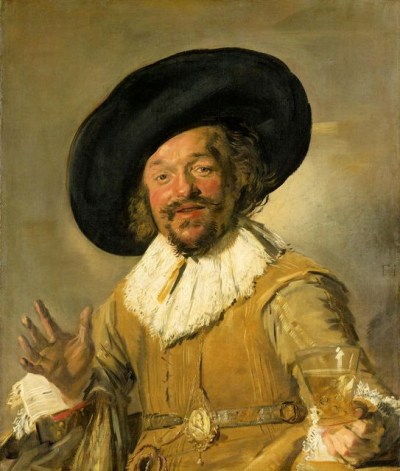
or Frans Hals’s Militiaman holding a Berkemeyer


or Adriaen Coorte’s Still Life with Asparagus?

And over at the Mauritshuis, how can you not murmur approvingly before Rembrandt’s The Anatomy Lesson of Dr. Nicolaes Tulp

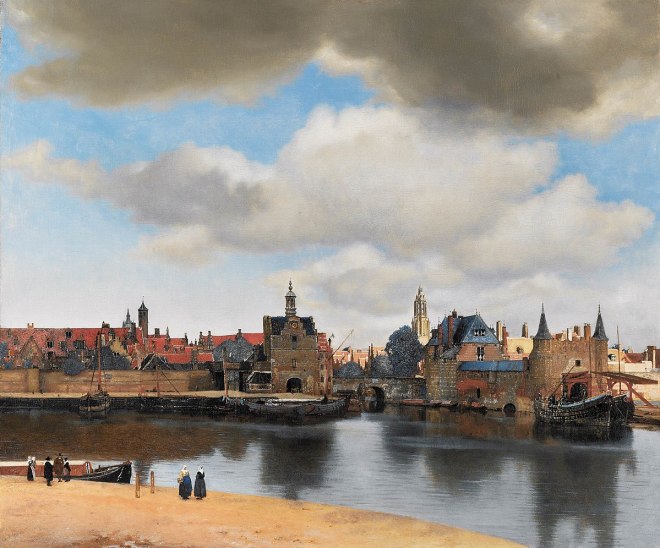
or Vermeer’s View of Delft

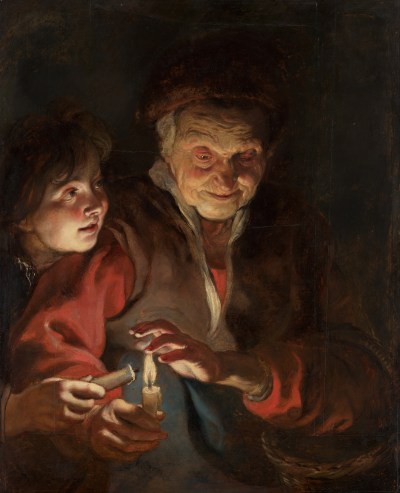
or Rubens’s Old Woman and Boy with Candles?

Yes, all very impressive.

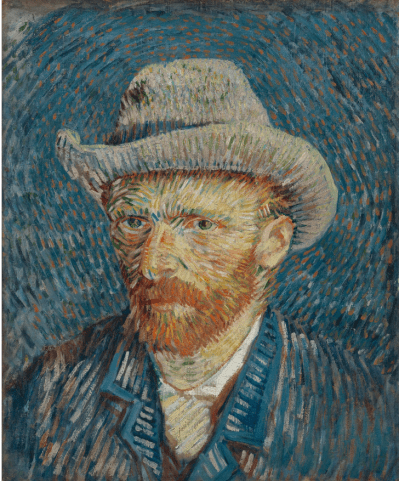
BUT, when push comes to shove I can’t say I would want any of these paintings on my wall. They just don’t make me vibrate internally. Not so with the best Van Goghs that we saw, bursting with colour and intensity! So what if the perspective wasn’t perfect, if the figures were not necessarily well-proportioned, if the finishing was rough. His paintings spoke to my soul. One of his many self-portraits, for instance, from the Van Gogh Museum, would be welcome on my wall

as would be this painting of his from the Kröller-Müller museum, of the café at Arles where he no doubt whiled away a good few hours

or this one of an olive grove somewhere around Arles, hanging in the same museum

or of this wonderful landscape hanging in the Van Gogh Museum, which he painted in the last few months of his life in Auvers-sur-Oise.

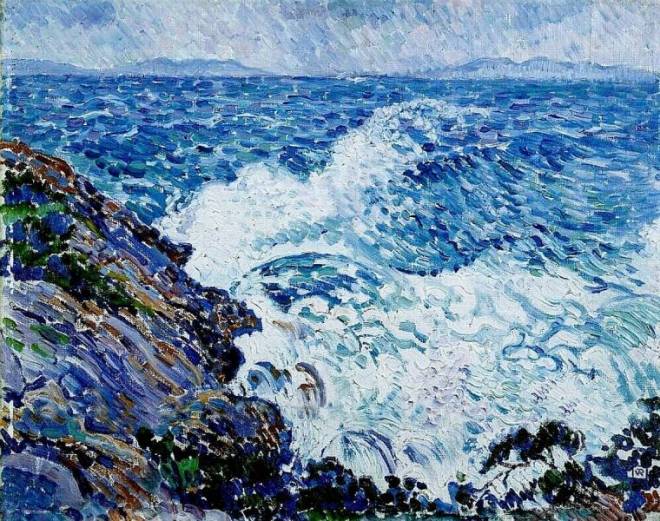
Younger painters were dazzled by Van Gogh’s use of colour and pushed through the door he opened, with some wonderful results. I could joyously put this lovely seascape on my wall; it’s Gale from the East, by Théo van Rysselberghe, and hangs in the Kröller-Müller museum

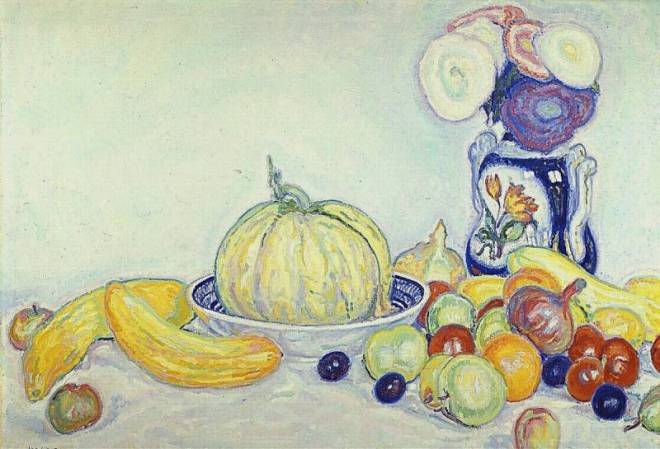
I would also willingly take this luminous Still Life with Fruits, by Leo Gestel, in the same museum

or this wonderfully brooding work by Kandinsky, exhibited in the Stedenlijk; he painted it before he went and spoiled everything by becoming an abstract artist.

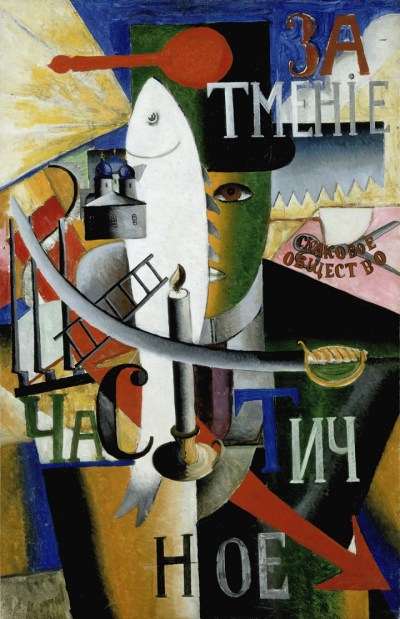
I could even welcome this painting by the Russian Constructivist artist Kazimir Malevich, from the Stedenlijk (and titled, rather bizarrely, An Englishman in Moscow).

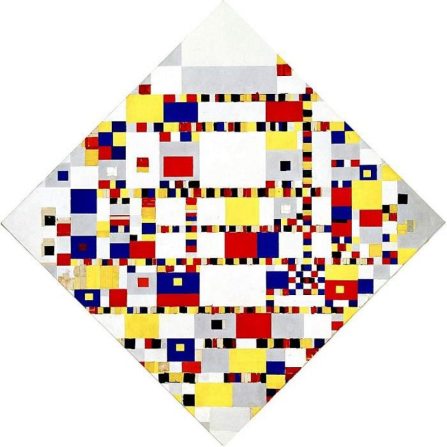
There is even a period in Mondrian’s long life when he turned out paintings which I would gladly hang on my walls. The Gemeente Museum has a particularly rich collection of Mondrians, running from his very first works like this Basket with Apples

to his very last works like this Victory Boogie-Woogie.

His very first paintings are quite standard and should be disregarded, while his last paintings – all those abstract works he is so famous for – should equally, in my humble opinion, be ignored. It is works like these that I would hang on my wall:
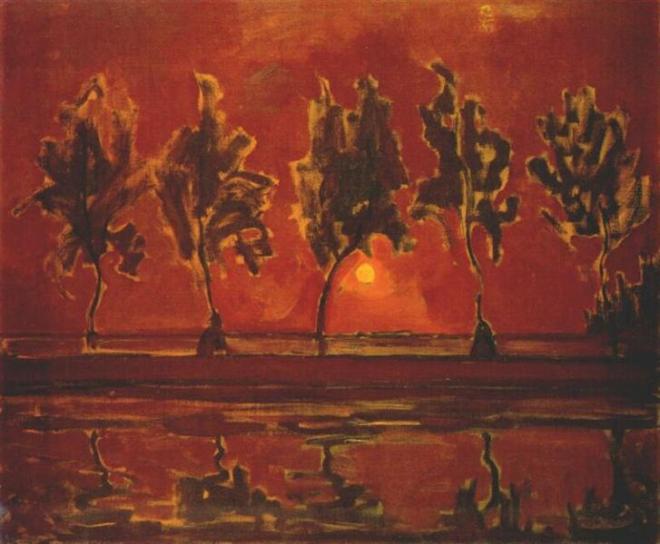
Trees on the Gein: Moonrise

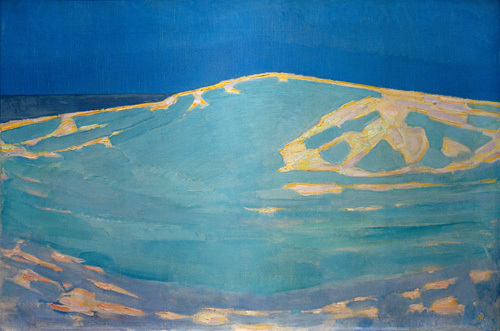
Dunes near Domburg

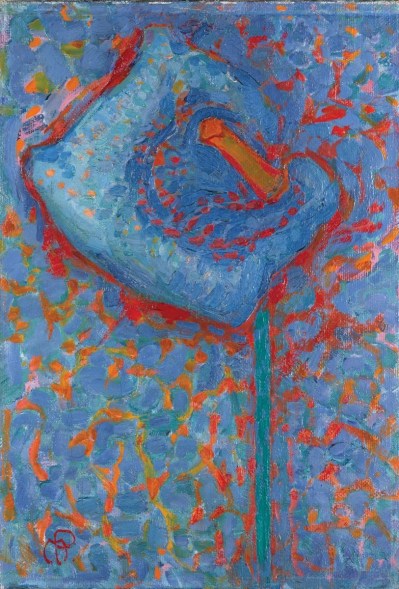
Arum, Blue Flower

Mill in Sunlight

Yes, it is that period, when artists discovered pure undiluted colour and before they tumbled into meaningless abstraction, which would have pride of place on my wall. It is a relatively narrow window of time – only thirty years or so – but many jewels of paintings were created. I could have added many other paintings which we saw in our whirlwind tour of the Netherlands, but I shall desist otherwise I risk losing my readers. I will, though, in a later post take up another theme which I am very fond of and about which I have written an earlier post: the human face in art. I think that I would have to expand my answer to the question I posed myself at the beginning of this post, to say that in addition at least one of my walls would have to be devoted to portraits. I will give my readers a taste of the art of portraiture we came across in our six-day art blitz of the Netherlands.

____________________

Roger Van der Weyden, “Descent from the Cross”: http://www.twgram.me/tag/lamentation/
Steven Aalders, “Phi Painting”: https://www.stedelijk.nl/en/collection/99578-steven-aalders-phi-painting-%28ryb%29
Rembrandt, “The Night Watch”: http://www.dutchamsterdam.nl/139-rembrandt-night-watch
Jan Vermeer, “The Milkmaid”: https://en.wikipedia.org/wiki/The_Milkmaid_(Vermeer)
Frans Hals, “Militiaman holding a Berkemeyer”: http://www.jiekley.com/product/a-militiaman-holding-a-berkemeyer-known-as-the-%C2%91merry-drinker%C2%92-karya-frans-hals-1628-1630/
Adriaen Coorte, “Still Life with Asparagus”: https://www.rijksmuseum.nl/en/collection/SK-A-2099
Rembrandt, “The Anatomy Lesson of Dr. Nicolaes Tulp”: https://www.mauritshuis.nl/en/explore/the-collection/artworks/the-anatomy-lesson-of-dr-nicolaes-tulp-146/#
Jan Vermeer, “View of Delft”: https://en.wikipedia.org/wiki/View_of_Delft
Peter Paul Rubens, “Old Woman and Boy with Candles”: https://www.mauritshuis.nl/en/explore/the-collection/artworks/old-woman-and-boy-with-candles-1150/
Van Gogh, “Self Portrait with a Grey Felt Hat”: https://vangoghmuseum.nl/en/search/collection?q=&artist=Vincent%20van%20Gogh&genre=self-portrait&_ga=2.88217629.705702266.1533842349-1924679497.1533842349
Van Gogh, “Place du Forum”: https://krollermuller.nl/en/vincent-van-gogh-terrace-of-a-cafe-at-night-place-du-forum-1
Van Gogh, “Olive Grove”: https://krollermuller.nl/en/vincent-van-gogh-olive-grove
Van Gogh, “Wheatfield under Thunderclouds”: https://vangoghmuseum.nl/en/collection/s0106V1962
Theo van Rysselberghe: https://krollermuller.nl/en/theo-van-rysselberghe-gale-from-the-east
Leo Gestel, “Still Life with Fruits”: https://krollermuller.nl/en/leo-gestel-still-life-with-fruits
Wassily Kandinsky, “Painting of Houses”: https://www.stedelijk.nl/en/collection/4540-wassily-kandinsky-bild-mit-hausern
Kazimir Malevich, “Englishman in Moscow”: https://www.tate.org.uk/whats-on/tate-modern/exhibition/malevich/malevich-room-guide/malevich-room-4
Piet Mondrian, “Basket with Apples”: https://www.gemeentemuseum.nl/en/collection/basket-apples?origin=gm
Piet Mondrian, “Victory Boogie-Woogie”: https://www.piet-mondrian.org/victory-boogie-woogie.jsp
Piet Mondrian, “Trees on the Gein: Moonrise”: https://www.wikiart.org/en/piet-mondrian/trees-by-the-gein-at-moonrise-1908
Piet Mondrian, “Dunes near Domburg”: https://www.worldgallery.co.uk/art-print/piet-mondrian-dunes-near-domburg-1910-436728
Piet Mondrian, “Arum, Blue Flower”: https://www.pinterest.co.uk/pin/424534702365855604/
Piet Mondrian, “Mill in Sunlight”: https://www.gemeentemuseum.nl/en/collection/molen-mill-mill-sunlight?origin=gm

GUILDS AND THEIR PAINTINGS

Vienna, 14 July 2018

In our recent rapid tour of Belgium, our little group (my wife and I, a cousin of mine and his wife) visited Antwerp’s cathedral.

I suppose I could go on about it being “a masterpiece of Gothic architecture”, about its tower, “jewel of the monument, light, thin and beautifully sculpted”, about its “exceptionally large” interior whose “majestic coldness is warmed gently by numerous works of art”.

But that’s not really what caught my eye during the visit. That distinction goes to an exhibition which the cathedral was hosting of paintings from the late 16th-early 17th centuries. These paintings had for the most part been commissioned by Antwerp’s guilds and were to be mounted in side-chapels of the cathedral dedicated to these guilds. For obvious reasons, the painters had chosen scenes from the Bible that in some way reflected the work of the guilds. A straightforward example is the “Multiplication of the Loaves”, by Ambrosius Francken, commissioned by the city’s Guild of Bakers and Millers.
Here, obviously, the loaves – the backbone of the bakers’ and millers’ business – play a star role in this story from the New Testament. Guild members must have been proud to bathe in the reflected glory of the Lord through their humble product, the loaf of bread.

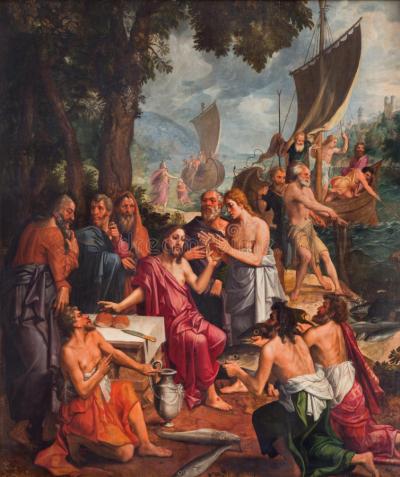
The same can be said of the “Miraculous Draught of Fishes”, by Hans van Elburcht, commissioned by the Guild of Fishmongers.
Here, too, the fishmongers’ product plays a star role in another story from the New Testament. No doubt, guild members were pleased to remind non-guild members of the holiness of their product because of its close relationship to the Lord.

A rather straightforward, though more racy, connection between guild and subject matter is also made in the “Wedding at Cana”, by Maerten de Vos.
The commissioning guild in this case was the Guild of Innkeepers, who of course would be selling large quantities of wine (and other alcoholic drinks) on their premises (just to remind those readers who may not be too familiar with biblical stories, this is the story where Jesus turned water into wine). Perhaps this was a way for inn-keepers to gently suggest that their business was nothing if not holy.

A pretty straightforward relationship also exists between the subject and the commissioning guild in the next painting, the “Fall of the Rebel Angels” by Frans Floris.
Look at that mass of writhing flesh! So thrilling. It must have been very difficult for church goers to concentrate on the mass with this painting to look at. It was commissioned by the Guild of Fencers, whose job it was to maintain public order and defend the city. So the painter has chosen as his subject the Archangel Michael and his men, arch-defender of Good, beating back the arch-representatives of Evil, Satan and his hordes, using, of course, the arms which the fencers themselves would be using. In this case, the painter had to stray from the Old and New Testaments into the Book of Revelation for his subject matter; no matter, it was part of the accepted Canon. I mean, didn’t Milton use this story for his poem “Paradise Lost”?

The painting by Frans Francken, “Christ among the scribes”, highlights another issue: what to do if you wanted a painter to paint a nice painting for your guild but you weren’t rich enough to afford him, and you weren’t rich enough to support a side-chapel? The answer, obviously, was for a couple of guilds to share the costs. This is exactly what the Guilds of Schoolmasters and Soap Makers did. They shared a side-chapel in the cathedral and they shared the cost of the painting. To make sure that each guild was represented in the painting, they had a triptych painted.  Since the schoolmasters were willing to pay a greater share of the painter’s fee, they got more square centimetres of painted surface for their subject matter.
More specifically, the schoolmasters got the centre panel and the right-hand panel, while the soap makers only got the left-hand panel. The scene in the centre panel is Jesus as a young boy instructing the teachers in the temple – no doubt the dream of every schoolboy and girl, and a rather strange subject for schoolmasters I have to say, unless Antwerp’s schoolmasters were a very humble lot. The scene in the right-hand panel is Saint Ambrose, patron saint of teachers and one of the Doctors of the Church (doctor as in PhD rather than in MD), baptising Saint Augustine, another of the Doctors of the Church.

The poor old soap makers had to make do with a very obscure story from the First Book of Kings (obscure at least to me). It has to do with the prophet Elijah, who miraculously ensured that the poor widow Sarepta was able to fill numerous pitchers of oil from the small jar that she had, thus allowing her to pay off her debts. For those of my readers who may not immediately see the connection to soap making, I should remind them that soap is made from boiling lye with oil (at least, it used to; God knows how chemists make it nowadays).

After that, the relationship between the subject of the paintings we saw in the cathedral and the guild commissioning it got a little more tenuous. For instance, we have the “Adoration of the Magi”, by Artus Wolffort.
This was commissioned by the Guild of Tailors. What does this subject have to do with tailors, readers may be asking.  Well, through the expensive clothes that the painter can have the Magi wearing! Viewers could be reminded of the wonderful (and expensive) clothes the city’s tailors could make. And perhaps the tailors, admiring the painting during a particularly boring mass, could find in it a confirmation of their skills.

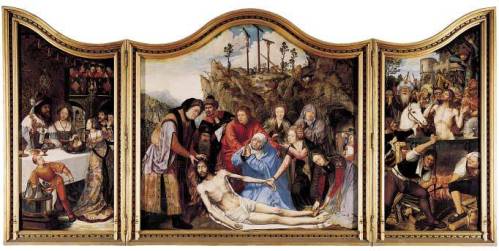
A painting with what seems to me an even more tenuous connection between subject matter and commissioning guild is the “Lamentation” by Quinten Metsijs.
The painting was commissioned by the Guild of Carpenters. I puzzled over this one for a while, and concluded that the only connection with carpentry and wood working were the three crosses far away in the background. I guess it is a carpenter who have sawed the wood from which the crosses were made. But why not simply a painting of Saint Joseph? He was a carpenter. Maybe that was too banal a topic. Interestingly enough, he doesn’t even seem to have been the patron saint of the guild. That honour went Saint John the Baptist and Saint John the Evangelist, who are the subjects of the two side-panels.

Having done the tour of the exhibition, I wondered out loud to my cousin what could have been a suitable biblical theme for the guild he would have been a member of had he lived and worked in Antwerp in the 16th-17th Centuries. I should explain that until he retired my cousin had worked for many years for a company that makes trucks like these.

Of course, this particular mode of transport did not exist in biblical times (or indeed even in 16th century Antwerp) but I think we can all agree that the equivalent would have been the cart, rather like the one we have in that famous Constable painting, the “Hay Wain”.

And I’m sure there was a guild for cart-makers (or maybe carriage and cart makers).

Nothing came to our minds on the spot, but in my spare moments in Vienna I have returned to the question. What biblical scene has carts in it, which could have been a suitable subject for some famous Antwerp painter to paint? Not knowing the bible by heart, I have done the next best thing, which is to search on-line versions of it put there by various Christian associations earnestly hoping that you will dip into the Good Book. Dip I did, using “cart” as the search word. And I came up trumps! Not in the New Testament, where the word cart doesn’t appear once (no doubt a reflection of Jesus’s poverty; he walked everywhere and owned nothing to speak of), but in the Old Testament, specifically in the First Book of Samuel. The story is part of the eternal wars between the Israelites and the Philistines. The Philistines have captured the Ark of the Covenant and have borne it back in triumph to the temple of their god Dagon. But strange things happen in the temple, horrible diseases and other calamities strike the Philistines. The Philistine rulers decide to send the Ark back to the Israelites. Their diviners tell them to put the Ark on a cart drawn by two cows, add a chest of treasure as a guilt offering, and let the cows go free. If the cows go back towards Israelite territory, then all their troubles have indeed been caused by the Israelites’ God. And of course that is exactly what the cows do. The story more or less finishes as follows (I quote this for reasons which will become clear in a minute): “Now the people of Beth Shemesh were harvesting their wheat in the valley, and when they looked up and saw the ark, they rejoiced at the sight. The cart came to the field of Joshua of Beth Shemesh, and there it stopped beside a large rock. The people chopped up the wood of the cart and sacrificed the cows as a burnt offering to the Lord [poor cows!]. The Levites took down the ark of the Lord, together with the chest containing the gold objects, and placed them on the large rock. The large rock on which the Levites set the ark of the Lord is a witness to this day in the field of Joshua of Beth Shemesh.”
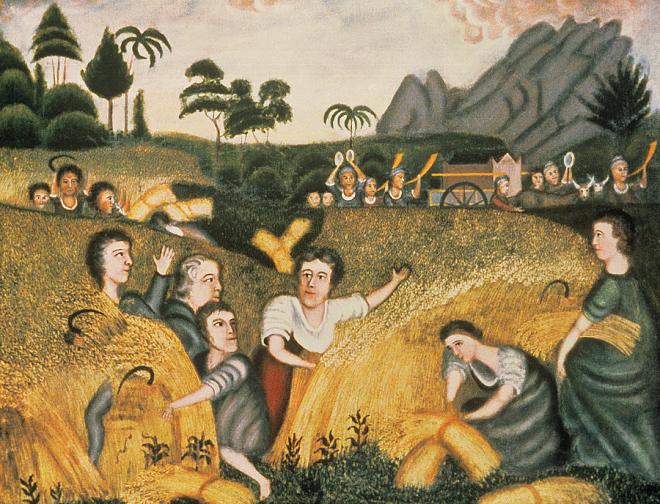
Unfortunately, I could find no painter of the 16th or 17th centuries who depicted this scene. The best I could come up with was this depiction by a 19th century American folk artist who goes by the wonderful name of Erastus Salisbury Field.

From the short piece of text I cited above, I think readers will immediately see that Erastus was depicting the moment when the cart arrived in Beth Shemeth.

Well, after this success at finding a painting to fit my cousin’s presumed guild, what about me? First of all, what could have been my guild? Well, my last job was for the UN, and that certainly didn’t exist in the golden age of guilds, so that couldn’t be an entry point for me. I suppose UN work could be associated to government work. But government workers didn’t get a guild either – they did (and still do) nothing practical, just write and file documents of one form or another. My job before that – as a consultant – doesn’t help either. Consultants just advise, with the real work being done by others. As I wrote in my home page, I suppose the one thing which has run like a thread through all my jobs is that I had to write. So maybe I could have been a member of the Guild of Scriveners!

So now the question is, what could have been a suitable biblical scene to have painted for this guild? Scriveners are the same as scribes, and the New Testament is full of stories of scribes. But they are all negative stories, scribes being depicted as nasty people on the same level as the Pharisees. I don’t want negative publicity for my guild! So I turned once more to the on-line bible and did a search in the Old Testament. The best I could come up with is another obscure story in the Second Book of Kings involving King Josiah. Josiah instructs that the money which has been collected in the Temple be used for the Temple’s maintenance. While gathering the money, the High Priest finds the Book of Law (presumably the book had fallen out of use and this particular copy was gathering dust in some corner of the Temple). He gives it to Shaphan the scribe along with a report on how much money has been given to the maintenance crew. Shaphan comes before Joshua and reads the report but also reads him the Book of Law. Josiah tears his clothes because he realises that the Israelites haven’t been following the Law and “great is the wrath of the Lord that is kindled against us because our fathers have not obeyed the words of this book by doing according to all that is written concerning us.” I presume Josiah does something about this but I didn’t read any further. As my painting, I came up with this one, painted by the 17th Century Dutch painter Leonaert Bramer, showing Shaphan humbly reading the Book to a rather concerned-looking Josiah.
Well, this painting certainly fits with the period in which the other paintings in Antwerp cathedral were painted. Frankly, though, I prefer the painting I found for my cousin. But there you go.

Oh, and the rest of Antwerp was very nice.

POSTSCRIPT, 22 July 2018

After reading this post, a good friend of mine gave me some excellent suggestions for alternative paintings, both for my cousin’s guild as well as for my own. He was kind enough not to say it, but the key was to “think out of the box”, to put aside the straitjacket of finding a story in the Bible and to allow more creative ideas in. His suggestion for my cousin was Hieronymus Bosch’s “The Haywain Triptych”.
Pride of place in this triptych goes to a magnificent cart full of hay, the haywain, in the centre panel. The whole work is a rather delirious take – typical of Bosch – on the rather sad story of Man. On the left, after the rebel angels have been cast out of heaven (also the subject of that muscular painting above for the Guild of Fencers) we have Adam and Eve in the Garden of Eden, with them eventually being thrown out for having disobeyed God’s instructions. Then, in the middle, as the haywain of our lives trundles inexorably along towards death on the right, we have people enacting out every possible sin of which we are capable, busily ignoring Christ our Saviour up in the clouds. The result of all this is shown on the right, where we are all burning in Hell. I suppose you could say that this is the Medieval version of “Life’s a bitch and then you die”. I will leave it to my cousin to decide if he wants his guild to be represented by such a pessimistic vision of life.

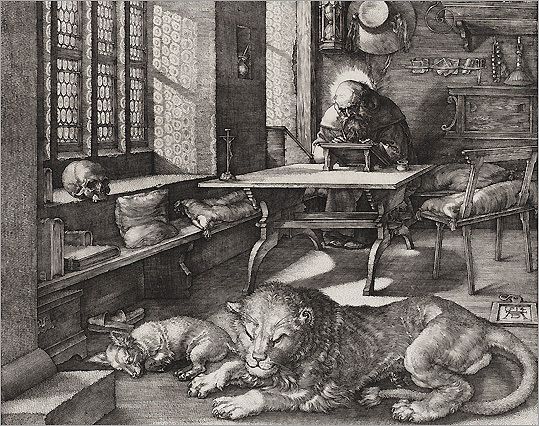
As to my guild, my friend suggested Dürer’s “St. Jerome in his Study”.

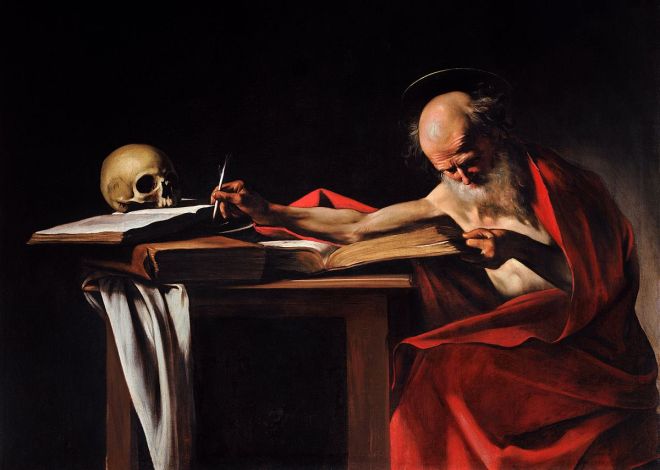
This is an excellent suggestion! St. Jerome’s main claim to fame these days is his translation of the Bible into Latin, which he spent years over in the Holy Land, busily scribbling away. I think I can definitely live with Dürer’s vision of learned and saintly paper scratching in a library-like environment as the image that my guild would want to project in its side-chapel in Antwerp cathedral. It’s a pity that Dürer only did an engraving, a painting would have been better. I could of course go for one of the hundreds of paintings on this theme which litter every self-respecting museum, but they all rather irritatingly show St. Jerome half-naked. I understand this is due to a confusion: this Saint Jerome has been conflated with another saint of the same name who did indeed go around half naked and who spent his time beating himself as penitence. To show what I’m talking about, I show a take by on the topic by Caravaggio, where the painter at least had the decency to pretty much cover Saint Jerome up.

But writing semi-naked is definitely not my style.

This mention of Caravaggio has suddenly made me think of another exciting possibility! I had quite forgotten that there are other very saintly acts of writing in the Christian Story, namely the writing of the four gospels by the Evangelists Mark, Matthew, Luke and John. Caravaggio did an excellent painting of St. Matthew writing his gospel. Actually, he did two. The first was unfortunately destroyed in Berlin during the Second World War.

The patrons who commissioned the painting rejected it because it made St. Matthew look too stupid. It is certainly true that the St. Matthew in this painting looks completely befuddled as the young angel pretty much takes his hand and writes the story for him. So Caravaggio painted another version, still to be seen in all its glory in the chapel dedicated to Saint Matthew in the church of San Luigi dei Francesi in Rome.

As a caravaggiophile, I would love to have a Caravaggio represent my Guild of Scriveners! I have a feeling that my guild would have chosen the second Caravaggio for the same reasons as the original patrons, although personally I would have preferred the first. I love that completely confused look on St. Matthew’s face – writing is such a difficult task, you never know where your hand (left hand in my case) will lead you.
_____________________

Antwerp cathedral exterior: http://www.visitflanders.com/en/things-to-do/attractions/top/the-cathedral-of-our-lady.jsp
Antwerp cathedral interior: http://www.medievalists.net/2011/01/medieval-origins-of-the-cathedral-of-our-lady-in-antwerp-belgium/
Ambrosius Francken, “Multiplication of the Loaves”: https://commons.wikimedia.org/wiki/ File:Multiplication_of_the_Loaves_(Ambrosius_Francken)_July_2015-1a.jpg
Hans van Elburcht and School of Ambrosius Francken, “Miraculous Draught of Fishes”: https://www.dreamstime.com/stock-photo-antwerp-belgium-paint-miracle-fishing-scene-hans-van-elburcht-abbrosius-francken-year-september-cathedral-image77028241
Maerten de Vos, “Wedding at Cana”: https://www.gettyimages.at/detail/nachrichtenfoto/the-wedding-at-cana-oil-on-canvas-after-maarten-de-vos-nachrichtenfoto/526962934#/the-wedding-at-cana-oil-on-canvas-after-maarten-de-vos-kadriorg-art-picture-id526962934
Frans Floris, “Fall of the Rebel Angels”: https://commons.wikimedia.org/wiki/ File:Fall_of_rebel_Angels_(Frans_Floris)_September_2015-1a.jpg
Frans Francken, “Christ among the scribes”: https://commons.wikimedia.org/wiki/ File:Christ_among_scribes_(Frans_Francken)_September_2015-5.jpg
Artus Wolffort, “Adoration of the Magi”: https://commons.wikimedia.org/wiki/ File:Adoration_of_the_Magi_(Artus_Wolffort)_July_2015-1a.jpg
Quinten Metsijs, “Lamentation”: https://www.kmska.be/en/collectie/highlights/Schrijnwerkers.html
Truck: https://www.abrbuzz.co.za/mobility-beat/5689-volvo-trucks-retains-top-position-in-sales-service-and-parts-according-to-q4-scott-byers-results
John Constable, “The Hay Wain”: https://www.planet-puzzles.com/grafika-john-constable-la-charette-de-foin-1821-puzzle-1000-pieces.p46141.html
Erastus Salisbury Field, “The Ark of the Covenant”: https://fineartamerica.com/featured/ark-of-the-covenant-erastus-salisbury-field.html
Leonaert Bramer, “The Scribe Shaphan Reading the Book of Law to King Josiah”: https://www.passionforpaintings.com/en/art-gallery/leonaert-bramer-painter/the-scribe-shaphan-reading-the-book-of-law-to-king-josiah-oil-painting-reproduction

POSTSCRIPT
Hieronymus Bosch, “the Haywain Triptych”: https://www.museodelprado.es/en/the-collection/art-work/the-haywain-triptych/7673843a-d2b6-497a-ac80-16242b36c3ce
Albrecht Dürer, “St. Jerome in his Study”: https://www.pinterest.at/pin/208995238931007942/?lp=true
Caravaggio, “St. Jerome writing”: https://commons.wikimedia.org/wiki/File:Saint_Jerome_Writing-Caravaggio_(1605-6).jpg
Caravaggio, “Saint Matthew and the Angel”: https://en.wikipedia.org/wiki/Saint_Matthew_and_the_Angel#/media/File:Caravaggio_MatthewAndTheAngel_byMikeyAngels.jpg
Caravaggio, “The Inspiration of Saint Matthew”: https://commons.wikimedia.org/w/index.php?curid=136502

BRUGES AND BRICKS

Vienna, 5 July 2018

My wife and I have just returned from a whirlwind tour of Belgium with a cousin of mine and his wife – the battlefield of Waterloo, Tournai, Bruges, Ghent, Antwerp, Louvain (or Brugge, Gent, Antwerpen, Leuven, to give them their Flemish names), all in a mere six days. (in case any reader asks himself or herself, we left Brussels out because we had all been there before). I think the next couple of posts will be about various aspects of our trip (the exact number depending on how strongly my creative juices flow).

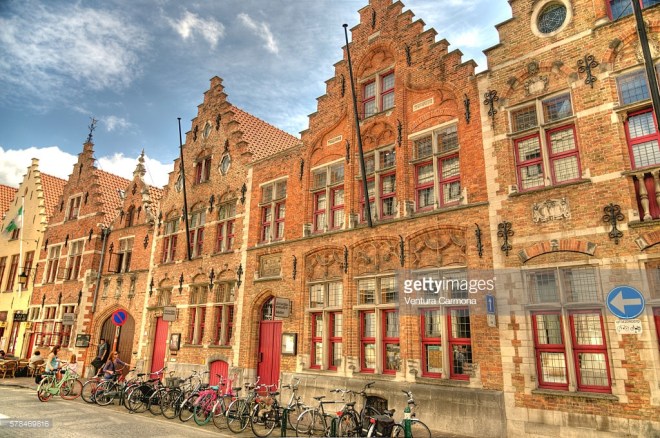
In this post, I want to focus on bricks. These became a source of fascination for me in Bruges. For those of my readers who haven’t yet been to Bruges, I should state that Bruges is a brick city par excellence. Much of it has been built in what is called the brick Gothic style, of which this – a picture of some street in Bruges – is a typical example.

Actually, I would call it the Dutch style. I know I’m entering a minefield here, since many Flemings would be indignant at having something of theirs called Dutch, but I’m afraid to say that I visited Amsterdam before I visited the lands of Flanders so for me the style is indelibly linked with the Netherlands. Perhaps, to try to avoid landing myself in the middle of local quarrels, I could call the style the Hanseatic style since our brief forays into other Hanseatic towns suggest that this is a style common to them all. (In passing, I should say that I was surprised to learn that Bruges was part of the Hanseatic league. I hadn’t known that it had extended this far south. I have made a mental note to buy myself a book on the Hanseatic league).

But actually it’s not the style of brick building that fascinated me in Bruges. It was the colour of the bricks. To put this in context, I should say that my feelings about brick colour have been very much shaped by the brick buildings in the UK, where bricks first impinged themselves on my retinae. Although it’s no doubt a gross exaggeration, I would classify British brick colours as pleasant, unpleasant, and frankly awful. In the pleasant category, I would put the country’s older brick buildings. Christchurch Mansion near Ipswich in Suffolk is a fine example.

Readers will note that the brick is not too red, you could almost say it has pink overtones, and the colour is pleasingly non-uniform.

In the unpleasant category, I would put just about every brick building put up in the UK since the Industrial Revolution. This picture of an old brick chimney – icon, I would say, of the industrial revolution – can stand in for this type of brick.

To make the point even more strongly, though, I also throw in a picture of an old factory

of one of the buildings in the original red brick universities (in this case Sheffield)

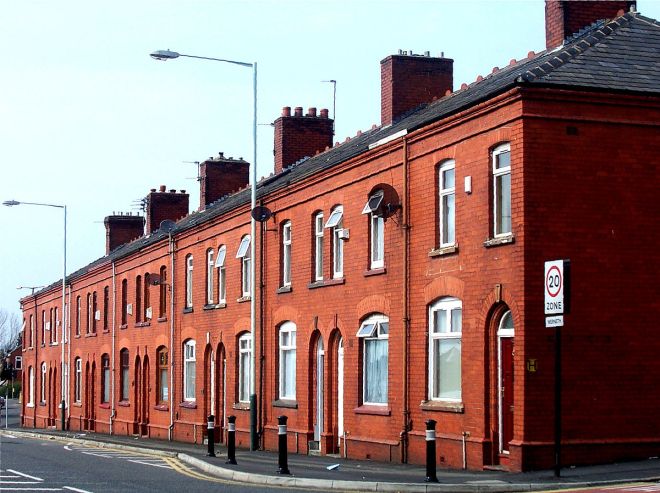
and of a row of normal houses.

Readers will note that the red is harsh, strong, crude, and that the bricks are much more uniform in colour than the older bricks. As far as I can make out, the much stronger red colour comes mainly from the bricks having been fired at higher temperatures, although it could also be due to the original clay holding more haematite (the iron mineral which mostly turn bricks red, although nowadays dyes – rather depressingly – are increasingly being used). As I understand from the little bit of technical literature I have boned up on, higher firing temperatures were used to make the bricks stronger and so more usable in larger structures. But I also read – though can scarce believe it – that at least in London redder bricks were used to make the buildings more visible in the fog (Peter Ackroyd’s Biography of London is given as the source of this nugget of information. I shall check it in my copy in Milan).

As for the frankly awful category, I would put all those bricks which are an unpleasant off-white. My grandmother’s old house in London can stand in for the genre.

But this brick was used extensively throughout London. Here’s a part of Waterloo Station.

It’s not just yesteryear that they used this brick. I throw in a picture of a modern use of bricks with this sickly colour.

I know there are readers out there who will indignantly tell me that it’s a beautiful colour, but as they say, “beauty is in the eye of the beholder” and in my eye that’s sick colour.

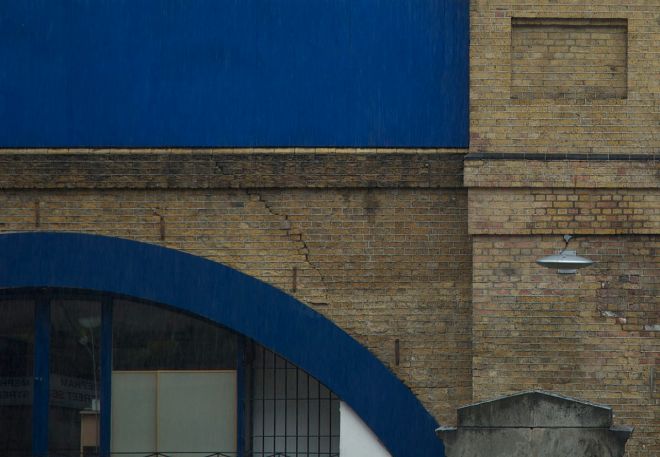
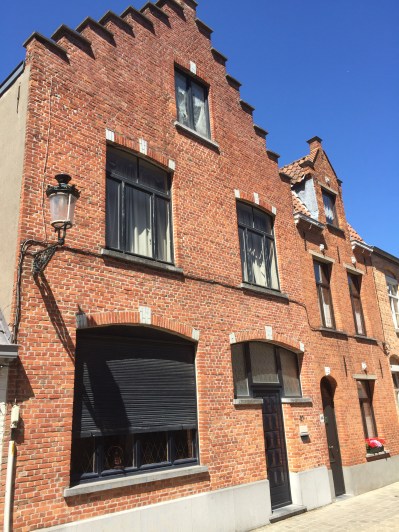
Now, after my trip to Bruges, I can add another brick hue to my pleasant category – indeed, perhaps I should create a new category, “very pleasant”, for this hue. This picture is an example of the type.

As I hope readers can see, the buildings in this case give off a very definite orange “glow”. A somewhat hasty study of such buildings as we moved from one place to another has led me to conclude that the colouring comes from a brick which indeed has more orange than pink hues but also from a savant mix of this brick with bricks of the hideous sick colour the effect of which is to give rise to a paler orange than might otherwise be the case. I throw in pictures which I took of some other buildings with the same light orange hue.


Very nice …

And oh, by the way, Bruges is a very pleasant place to visit. A bit overrun by tourists, perhaps, but at least in June still acceptable. Don’t be fooled by such idiot titles as “the Venice of Flanders”. The place has a few canals but in no way do they compare to Venice.

___________________

Bruges street: https://www.gettyimages.at/detail/foto/old-street-with-crow-stepped-gable-houses-in-bruges-stock-fotografie/578469816
Christchurch mansion: https://www.tripadvisor.co.uk/LocationPhotoDirectLink-g190725-d1575683-i74779233-Christchurch_Mansion-Ipswich_Suffolk_East_Anglia_England.html
Old factory chimney: https://www.istockphoto.com/at/foto/alte-industrielle-gemauerten-schornstein-gm932649592-255603992
Old factory: http://www.antiqueslink.com/antiques/antique-archaeology-492420.html
Firth Court, University of Sheffield: http://www.geograph.org.uk/photo/2889648
Brick houses: https://en.wikipedia.org/wiki/Accrington_brick
My grandmother’s house: https://www.buildington.co.uk/london-sw7/40-montpelier-square/40-montpelier-square/id/3544
Waterloo station: By Alex.muller – Own work, CC BY-SA 3.0, https://commons.wikimedia.org/w/index.php?curid=4350988
modern use of london yellow stock: https://wienerberger.co.uk/inspiration/tower-bridge
Bruges houses: my photos

HEIDI HORTEN’S COLLECTION

Vienna, 20 June 2018

This is the second posting where I write with wistful envy about a person who was rich enough to build up an art collection and who had enough taste to build up a great art collection. The first posting was about Ms. Kröller-Müller, whose museum we will visit in a few weeks’ time when we go to the Netherlands. This second posting is about Ms. Heidi Horten, a selection of whose collection my wife and I recently visited at Vienna’s Leopold Museum. (In passing, Mr and Mrs Leopold are another couple who used their riches to build up a ravishing collection now housed in this same museum.)

A few words about Ms Horten. As a 19 year-old, this Austrian girl married the much older Mr Helmut Horten, a German who had made his fortune after the war with a chain of department stores (I will skitter delicately over the fact that the start of his business empire was his purchase – I would assume on the cheap – of a department store owned by two Jewish partners who were forced to give it up in the wake of the Nazis’ antisemitic policies and prior to their emigration to the US). Here, we have the Horten couple.

As a couple, they did some collecting but nothing major. The serious collecting only really started when Mr Horten went the way of all flesh in 1987 and Ms Horten inherited the bulk of his fortune – some $ 1 billion, it is reported. Here is a photo of her in those years: quite a glamorous lady, I would say.

And what a collection Ms Horten has amassed! Like Ms Kröller-Müller and the Leopolds, she has focused her purchases on modern and contemporary art. I presume that the exhibition at the Leopold Museum is only a portion of her collection, but what they are showing is impressive. After doing a round of the exhibition, I went around again, taking pictures of the pieces which had particularly struck me. I post them below, in the order of their creation.

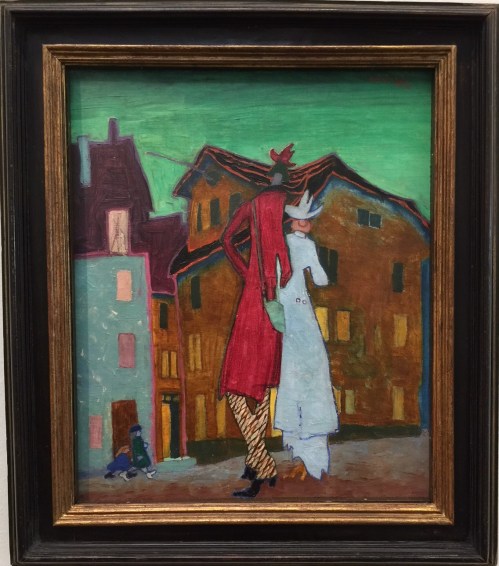
Lyonel Feininger’s The Honeymooners, from 1908.

Wonderful expression of the happiness of two honeymooners, dressed in bright clothes and towering over their surroundings.

Egon Schiele’s aquarelle of Seated Male Nude from Behind, painted in 1910.

Schiele painted a whole series of these aquarelles, a number of which I was fortunate enough to see several years ago on one of my periodic visits back to Vienna from China.

Emile Nolde’s Red Evening Sun, painted in 1913.

My wife was particularly struck by the painting’s dark, dark sea.

Gustav Klimt’s Church in Unterach am Attersee, painted in 1916.

Klimt painted a number of these views, which he saw, it is said, through a telescope to get that foreshortening effect.

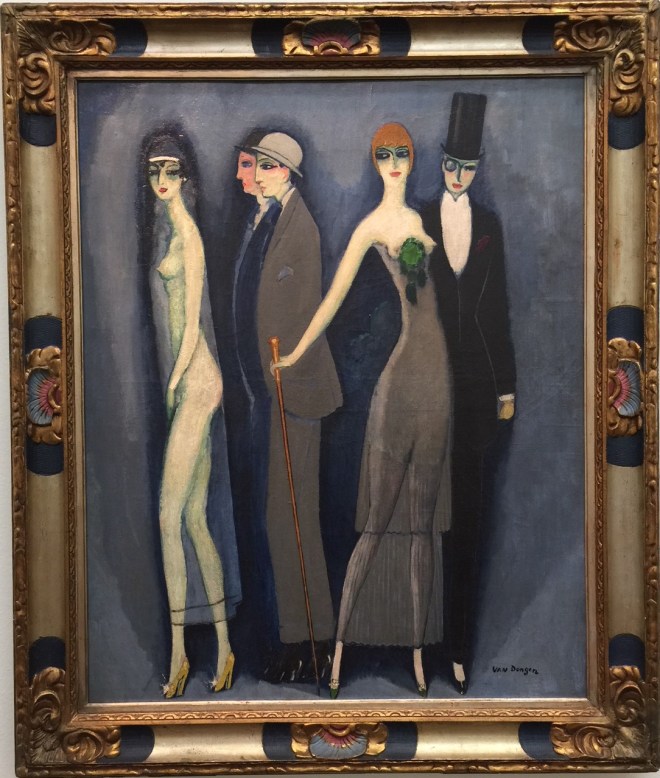
Kees van Dongen’s Commedia (Montparnasse Blues), painted in 1925.


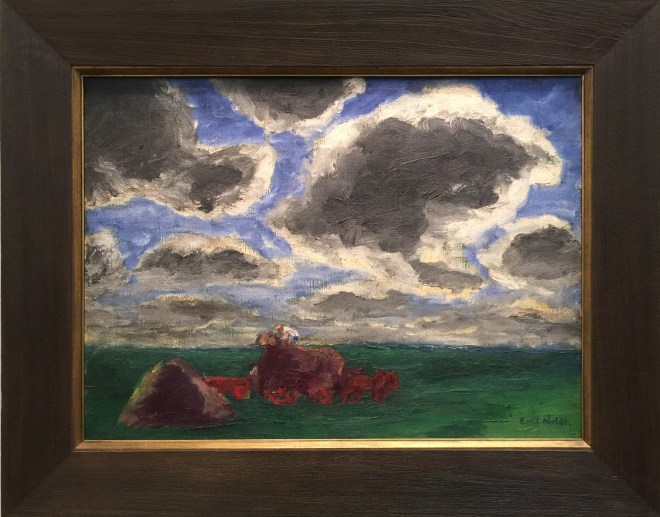
Emile Nolde again, Summer Day with Hay Cart, painted in 1926, more than ten years after the earlier painting.

Chaim Soutine’s Doorkeeper – Woman in Blue, from 1935.


Soutine captured perfectly the sour look which all the French doorkeepers of my youth constantly displayed.

After that, things begin to get grim. I’ve often complained (the latest time last December) that as Western modern art gets ever more modern it slips off into irrelevance and silliness. I feel that the rest of the exhibition demonstrates this pattern all too well. Nevertheless, I show here pictures of some of these later pieces, often for no better reason than they amused me.

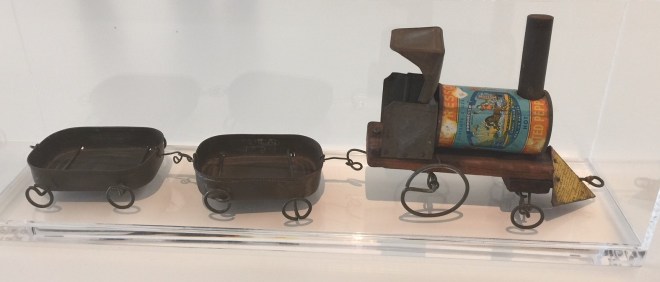
Alexander Calder’s Untitled (Toy Train) from around 1946. A fine way to reuse old tins and cans.


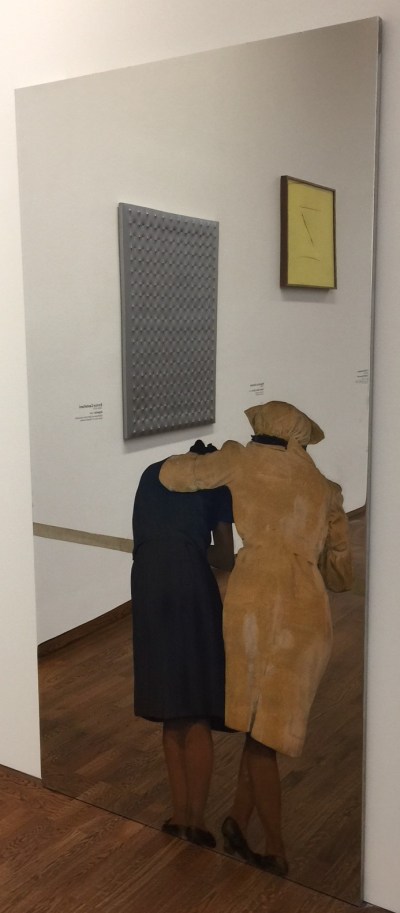
Michelangelo Pistoletto’s Nurse and Girl from 1965.

What, I wonder, were the two discussing?

Pablo Picasso’s Bust of a Man, from 1969.

As I’ve commented elsewhere, among the dreariness of abstract art Picasso shines out as having stayed true to representational art.

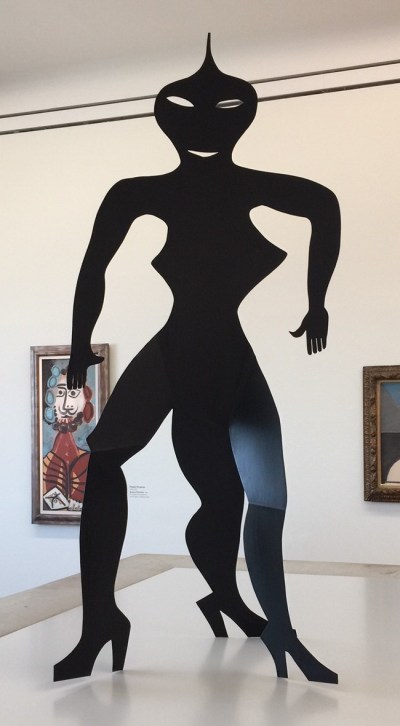
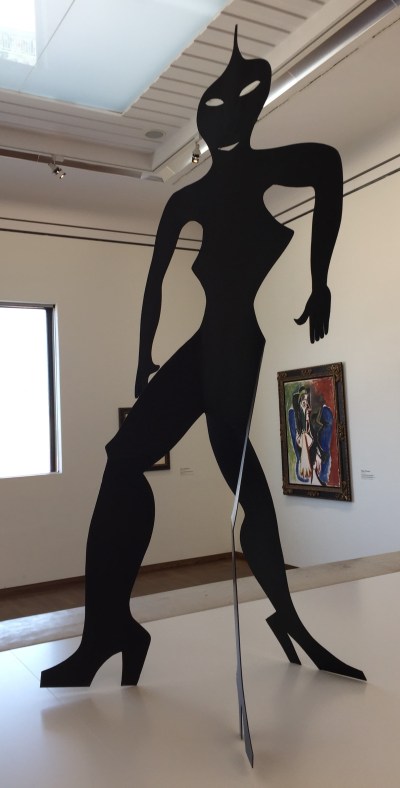
Another Alexander Calder, Critter with Peaked Head, from 1974.

Funny title, and interesting change of view as one goes around the critter and as one of her three legs disappears (I assume the critter is feminine since she is wearing high heels; but perhaps male critters also wear heels).

Roy Lichtenstein’s Forest Scene, painted in 1980.


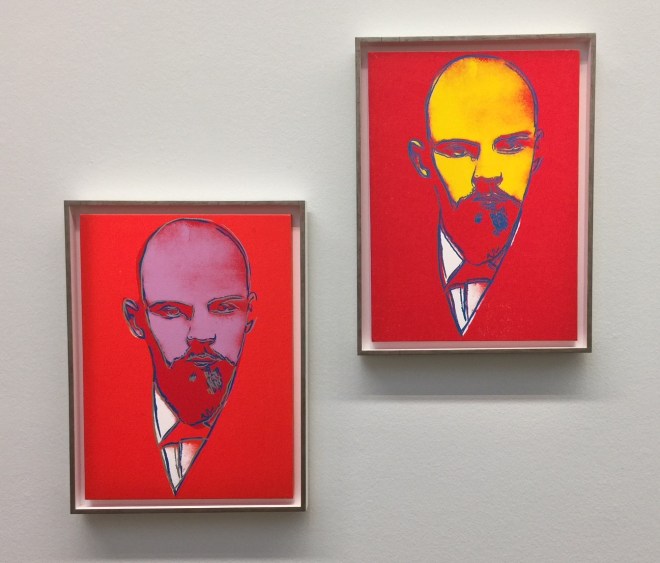
Andy Warhol’s Lenin, from 1986.

Normally, I find Warhol’s portraits wearisome and repetitive, but I found these two portraits of Lenin quite arresting.

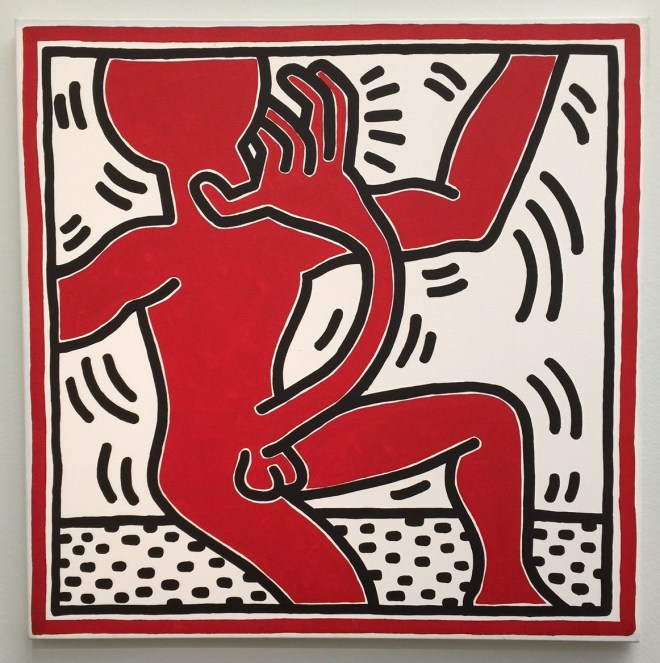
Keith Haring’s Untitled, painted in the same year as Warhol’s Lenins.

Untitled, but I presume a commentary on the AIDS epidemic that was then sweeping through the US’s gay community and which counted him as one of its victims four years after he completed this painting.

Not Vital’s Untitled (Fuck You), from 1991-2.

I don’t know if this is what Vital intended, but I see this piece as a commentary on those awful collections of deer antlers which you see in many conservative Austrian homes, testimony to the enthusiasm with which the home owner and his ancestors have hunted deer.

If I were a deer, I too would want to have those seven letters dangling from my horns as I faced my hunter.

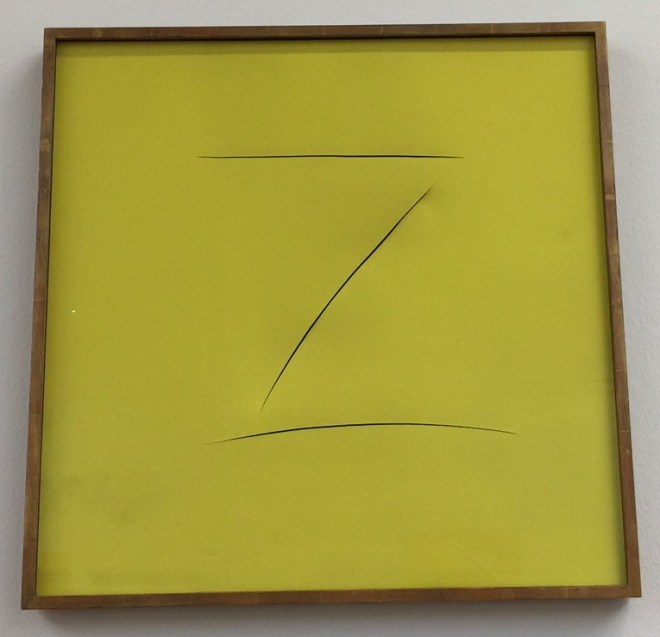
Maurizio Cattelan’s Untitled (Zorro) from 1997.

I’m assuming that Cattelan was taking the piss out of Lucio Fontana, he of the cut canvases. I feel this ever more strongly given that this painting was hung beside some four or five Fontanas.

Cattelan, by the way, is the same artist who sculpted that hand with its finger raised in front of Milan’s stock exchange; it was the subject of an earlier posting of mine. He seems to be quite a joker.

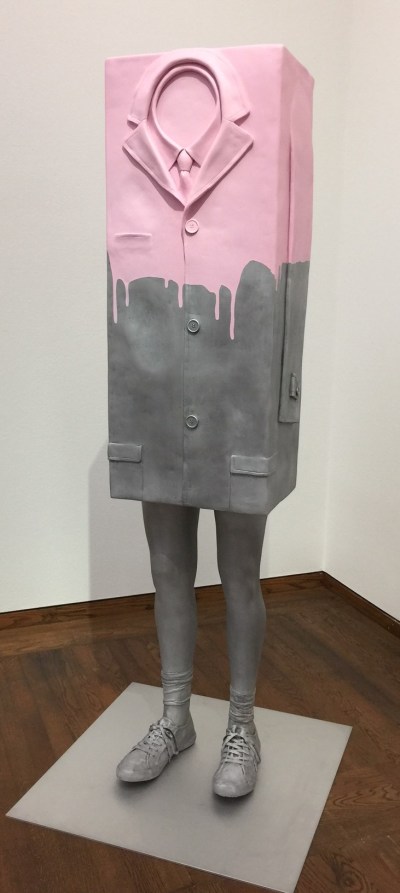
And finally, Erwin Wurm’s Kastenmann, or Box Man, from 2010.

I don’t know what Mr. Wurm is trying to tell us, it just looks amusing.

I now invite my readers to scroll through all these pictures again. Did something not go wrong with the art we produced in the developed countries some time after the Second World War? Is all that’s left to our art is whether it’s a good joke or not?

_______________________________

Pictures: all mine except:
Horten couple: https://www.falter.at/archiv/wp/das-maerchen-von-helmut-und-heidi
Heidi Horten: https://www.vindobona.org/article/heidi-horten-collection-leopold-museum-vienna
Deer antlers: https://www.alamy.com/stock-photo-trophies-of-deer-hanging-on-a-wall-in-a-hunting-lodge-styria-austria-18704002.html

BIKERS AND CENTAURS

Milan, 26 May 2018

A week or so ago, my wife and I were at our place at the seaside near Genova; my next to last post was about one of the walks we did in the hills while we were there. One morning, being sore of leg from our walks and uncertain as to what walk to do next, we decided to go down into the village centre instead to have ourselves our morning cappuccino. Being in no hurry, we dawdled along looking in shop windows and at anything else that caught our attention. One such thing was the door of the local police station, which was festooned with various notices about Important Local Things. As I idly scanned the notices, one caught my attention in particular. It stated, in Italian of course, something to the effect that the part of the main road lying between km X and km Y was particularly risky for centaurs, and that the public authorities were devoting their attention to how to minimize the risks.

Centaurs??

Puzzled, I turned to my wife to ask for elucidations, and she informed me that this was a term used in Italian to describe motorcyclists. What a wonderful idea! What, I wondered, had led an Italian at some point in recent history to make this connection? I mean, early motorcyclists didn’t really much look like centaurs, although with a bit of poetic fancy once could sort of see a human torso on top of a beast on wheels.

For once, the internet was not of great help. One thread suggested that it had to do with the huge amounts of horsepower in the engines, allowing the rider to roar off much as a horseman could gallop off. Another thread claimed it had to do with fanatical motorcyclists hardly ever getting off their bikes and thus being seemingly welded to them much as centaurs were human torsos welded to a horse’s body.

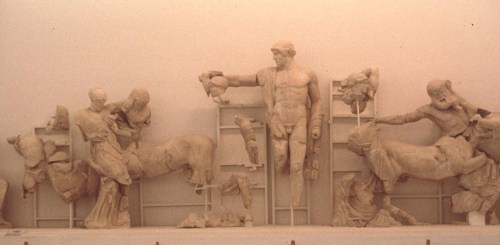
Of course, either or both of these explanations could be correct. I can think of another, which has to do with the Bad Boy reputation of both motorcyclists and centaurs. For most Ancient Greeks, who invented centaurs, these creatures were the epitome of barbarism. They were wild, lusty, overly indulgent drinkers and carousers, violent when intoxicated, and generally uncultured delinquents, living on the edges of the civilized world and needing to be kept under control. Greek myths were replete with stories of heroic warriors taking on centaurs and beating the shit out of them. Greek sculpture and painting naturally followed suit. Here, from a pediment of the temple of Zeus at Olympia, we have a representation of the story of the centaurs fighting with the Lapiths (a popular story in which centaurs are invited to a wedding, get drunk, and one of them tries to rape the bride, with – as may be expected – mayhem ensuing). The calm fellow in the middle is the god Apollo.

Here, we see the right hand part of the pediment showing more clearly the naughty centaur carrying off a woman and a noble Greek warrior about to make him pay for it.

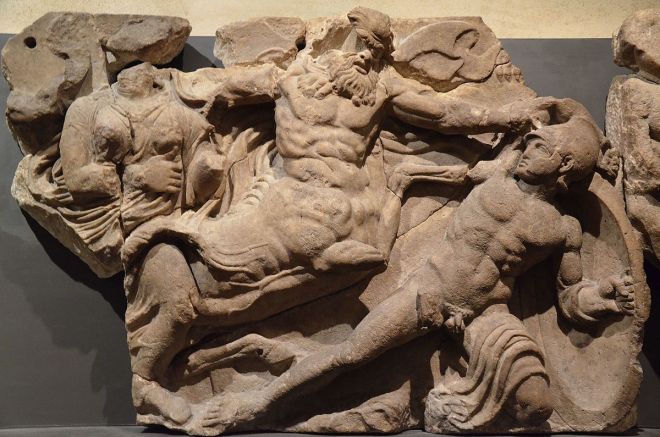
Here, to equal things up a bit, we have the same story from a frieze at the temple of Apollo in Bassae, with the centaur seemingly the one winning.

Here, we have a more humble piece of Ancient Greek art, a painting on a vase, showing the same story.

Here again, to equal things up, is a painting on another vase where the centaur seems to be besting his opponent.

Just in case readers are thinking that the fight between centaurs and the Lapiths is the only Greek story about the centaurs, I throw in here a picture of a vase painting showing Hercules fighting with a centaur (the centaur was a certain Nessus, who carried away Hercules’s wife Deianeira, and Hercules killed him).

In any event, whatever the medium, I think we can all agree that the centaurs are made to look fairly rough types. The centaurs’ bad reputation and the need to beat the shit out of them pursued the poor beasts into the Roman period and on into Europe’s medieval period and beyond. This sculpture from the early 1800s by Antonio Canova greets us every time my wife and I climb up the grand staircase at Vienna’s Kunst Historisches Museum. It shows Theseus about to brain a centaur – for some reason, Theseus was at the Lapith wedding feast.

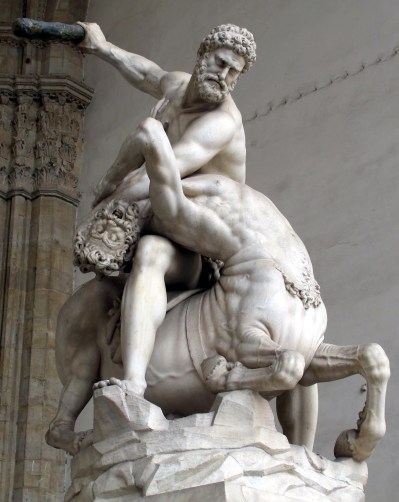
This sculpture, on the other hand, depicts Hercules about to brain Nessus.

It was sculpted in 1599 by the Flemish Jean Boulogne, known to the world as Giambologna. It graces the Loggia dei Lanzi in Florence.

Painting also got into the act. Here, we have a painting by Sebastiano Ricci from 1705 showing the brawl at the Lapith wedding.

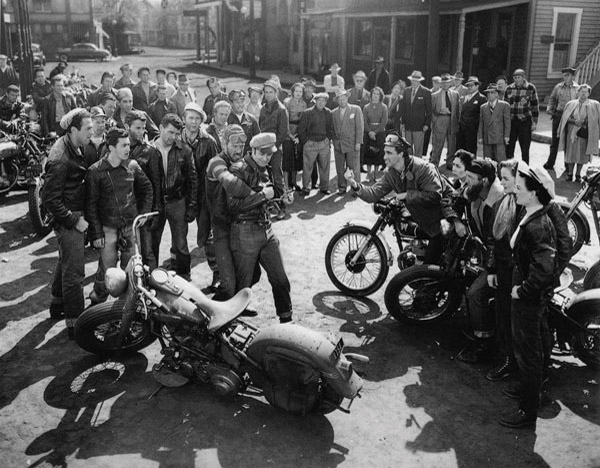
Perhaps some classics-loving Italian saw similarities between these badly behaved centaurs and the badly behaving modern bikers – at least as they were often represented in popular culture. Think of the 1953 film “The Wild One”, in which Marlon Brando is the leader of a motorcycle gang terrorizing a small town.

Or consider the 1966 film “The Wild Angels”, in which Peter Fonda is the nihilistic leader of a chapter of the Hell’s Angels causing mayhem in some small town.

Or more extremely, we have the 1973 film “Psychomania”, where a gang of bikers kill themselves, only to become alive again as zombies and go around wreaking havoc on the living.

Personally, and without a shred of evidence to back me up, I prefer to think that the Italian who gave bikers the new title of centaurs made quite another connection between the two: the fact that both are gentle, peaceful souls. On the centaur side, there was a view, an admittedly minority view, in Classical times that centaurs – at least some of them – were wise and noble creatures. The centaur Chiron was particularly famous in this regard. It was said that he was so wise that had taught great heroes like Achilles, Ajax, and Jason. This fresco from Hercolaneum, destroyed like Pompeii by the eruption of Vesuvius in AD 79, shows him teaching Achilles how to play the lyre.

This strand of thinking which saw centaurs as wise and gentle beasts was taken up with enthusiasm by C.S. Lewis in his children’s books about Narnia, and it was in my reading of these books as a child that I first got to know of centaurs. I still remember with fondness the wise and noble centaurs which peppered the Narnia books. Here, for instance, is Roonwit, who graces the pages of “The Last Battle”, talking strategy with Prince Tirian and the unicorn Jewel.

Given my age, I think it no shame to admit that I have never read any of the Harry Potter books (although I did accompany my daughter to a few of the films when she was young). I understand, though, that J.K. Rowling also included wise and gentle centaurs in her books (confirmed through WhatsApp by my daughter). This is the centaur Firenze with Harry in (I think) the Forbidden Forest.


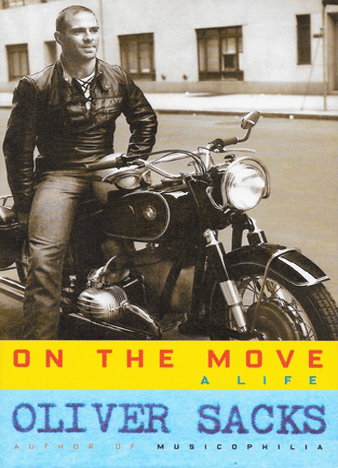
As for bikers, there are those who argue forcefully for a gentle, peaceful, soulful side to motorcycling. Many is the motorcycling writer who has written lyrically about the joy of being out on the open road, with the wind in your hair and your thoughts your only company. My most recent read in this vein was Oliver Sack’s autobiography, “On The Move: A Life”, where he writes about the long motorcycle rides he took in the American West in his early days in California. Appropriately enough, the cover photo is the author on his beloved bike.

There is even a semi-serious book of philosophy, “Zen and the Art of Motorcycle Maintenance” which, according to Wikipedia, “is a fictionalized autobiography of a 17-day journey the narrator made on a motorcycle from Minnesota to Northern California along with his son. … The trip is punctuated by numerous philosophical discussions on topics including epistemology, ethical emotivism and the philosophy of science”.

(I must confess that although I have started the book a couple of times I have never finished it).

Films, too, have played their part in depicting the lyrical side of motorbiking. We have the 1969 film “Easy Rider”, in which Peter Fonda stars once again, but this time accompanied by Dennis Hopper. The two set out from Los Angeles to New Orleans on Harley Davidsons to discover America (and get killed by rednecks in the process).


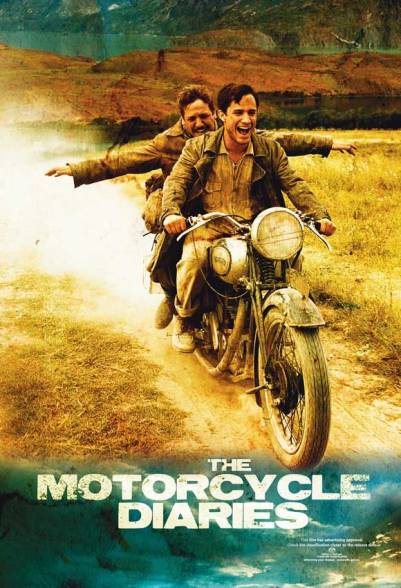
Or there is the 2004 film “The Motorcycle Diaries”, about the bike journey which Che Guevara and a friend made in the 1950s across Latin America, and which opened his eyes to the poverty, hardship, and political oppression experienced by many on that continent.

As I said, I have not a shred of evidence that gentleness, nobility, peacefulness, wisdom, etc. etc. were the common threads that some Italian of yesteryear saw between bikers and mythical centaurs. But it pleases my contrarian spirit for it to be so, and so it shall be.

_________________

Early biker: https://rocket-garage.blogspot.com/2011/08/pionieri-del-xx-secolo.html
Centaur fighting Lapith – Bassae: https://commons.wikimedia.org/wiki/File:The_Bassai_sculptures,_marble_block_from_the_frieze_of_the_Temple_of_Apollo_Epikourios_at_Bassae_(Greece),_Lapiths_fight_Centaurs,_about_420-400_BC,_British_Museum_(14073581678).jpg
Centaur fighting Lapith – Olympia: http://dtcox.com/report-on-ancient-corinth-ancient-olympia-ancient-sparta-byzantine-mystra-monemvasia-greece-oct-30-2015/centaur-lapith-woman-west-pediment-temple-of-zeus-battle-be/
Centaur fighting Lapith – Olympia-2: https://www.oneonta.edu/faculty/farberas/arth/arth200/politics/images_authority_2_greek.html
Centaur fighting Lapith-vase-1: https://www.myartprints.co.uk/a/red-figurevasedepictingth.html
Centaur fighting Lapith-vase-2: http://www.theoi.com/Gallery/O12.10.html
Hercules fighting Centaur: https://www.pinterest.com/pin/423268064950273744/
Canova-Theseus fighting the centaur: https://it.wikipedia.org/wiki/File:Canova_-_Theseus_defeats_the_centaur_-_close.jpg
Giambologna-Hercules fighting Nessus: https://www.tuttartpitturasculturapoesiamusica.com/2015/09/Giambologna-Sculpture.html
Sebastiano Ricci-Lapiths and Centaurs: By The Yorck Project (2002) 10.000 Meisterwerke der Malerei (DVD-ROM), distributed by DIRECTMEDIA Publishing GmbH. ISBN: 3936122202., Public Domain, https://commons.wikimedia.org/w/index.php?curid=158347
“The Wild One”: https://www.jpcycles.com/product/712-685/the-wild-one-fight-poster
“The Wild Angels”: https://www.pinterest.co.uk/pin/112308584430632278/
“Psychomania”: http://theggtmc.blogspot.it/2011/09/psychomania-1972.html
Chiron and Achilles: By upload by muesse – http://www.focus.de, Public Domain, https://commons.wikimedia.org/w/index.php?curid=8328492
Roonwit: http://narnia.wikia.com/wiki/File:Tirian,_Jewel_and_Roonwit.jpg
Firenze: http://harrypotter.wikia.com/wiki/File:Firenze_harry_ps.jpg
Oliver Sacks, “On the Move; A Life”: https://medium.com/@PunkChameleon/book-review-on-the-move-a-life-by-oliver-sacks-93bb828fb85b
“Zen and the Art of Motorcycle Maintenance”: https://www.harpercollins.com/9780061907999/zen-and-the-art-of-motorcycle-maintenance
“Easy Rider”: http://flavorwire.com/472622/boomer-audit-despite-the-self-indulgence-and-the-cliches-easy-rider-retains-its-pulse
“The Motorcycle Diaries”: http://www.moviepostershop.com/the-motorcycle-diaries-movie-poster-2004

GERANIUMS – SORRY, PELARGONIUMS

Sori, 14 May 2018

I’ve written about cacti in an earlier post. In that case it was in a plug for more cactus growing in LA. The micro (really micro) climate on the balcony of our apartment at the sea, coupled with the long periods when no-one is here to water plants, also makes this an ideal space for cactus growing. My mother-in-law introduced cacti to the balcony several decades ago, and my wife expanded the collection by borrowing a few cacti from our next-door neighbour. However, I am saddened to report that a particularly harsh winter this year, when Jack Frost managed to lay his bony fingers on the balcony, has put paid to some of the cacti. We were faced with blackened cacti corpses when we arrived a few days ago and have been mournfully wondering what to do ever since. As part of this wondering, we visited the local flower shop, to see if they had any suggestions about how we might be able to breathe some life back into our blackened cacti – and to see if they sold any cacti should we decide that there was nothing for it but to replace them. The answer was negative in both cases.

In any event, as is usual in these cases the discussion went off on several tangents. For reasons which I can no longer remember now, one of these tangents was geraniums. I’m rather fond of geraniums. My mother had large beds (or what I remember as large beds) of geraniums in her garden in Eritrea, which the memory bank of my mind suggests looked something like this.

The bright red of the flowers pleased me no end – I suppose bright primary colours appeal to five and six year-olds – and I really liked the scent which emanated from broken leaves and stems. I must confess to having been a terror in the garden. I was not above decapitating flowers or casually tearing off leaves and stems. I must have driven my mother wild with my antics.

But coming back to our local flower shop: the lady in charge said that geraniums had a hard time in this climate because it was too humid. This rather surprised me, I thought that all geraniums needed was a lot of sun. I started looking around, and I discovered that it was indeed rare to see geraniums around here. Her comments also got me to engage in my favourite pastime: surfing the web to find out more about geraniums. I am ready to report back.

The first thing I discovered is that geraniums should not actually be called geraniums. Their correct name is pelargoniums. It seems that when the first pelargoniums were brought back to Europe in the 17th Century, gardeners thought they were cousins to the geraniums already present here. By the time botanists realized their mistake, it was too late. The name geranium has stuck. To make up for this mistake, let me throw in a picture here of one of the many real geraniums, the Geranium platypetalum.

The introduction of pelargoniums to Europe is the story of European colonization of the rest of the world. It was the Dutch who first brought pelargoniums back to Europe, after they had established themselves in what was to become Cape Town.

They, like European colonizers everywhere, looked around to see what plants they could find that might have a utility back home – and this included selling them to wealthy individuals who cultivated large gardens full of exotic plants. Over the years, they and the English who came after them found many different species of pelargonium in South Africa – some 90% of the 300 or so species in the family are to be found in South Africa. But I will concentrate here on the three pelargoniums which are the ancestors of pretty much all the pelargoniums we grow today.

There is Pelargonium inquinans, seen here in the wild

and here somewhat closer up.

There is Pelargonium zonale.

These two, hybridized together, have formed all the “common geraniums” or “zonal geraniums” which you will find in flower beds. My mother’s geraniums must have been of this type.

Then there is Pelargonium peltatum

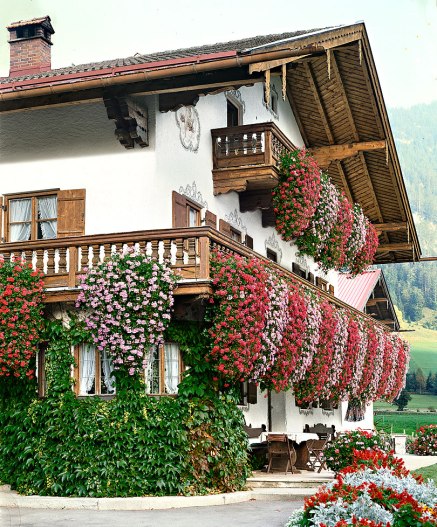
which is the ancestor of all those “ivy-leaved geraniums” which trail delightfully from balconies such as the ones we shall shortly be seeing in Vienna and in every Austrian town and village.

As I said earlier, it was wealthy individuals with a passion for gardening who in the early decades of European colonization drove the domestication and spread of the myriad foreign plants which poured into Europe from every corner of the globe. In the pelargonium story, two in particular stand out. The first is the Right Reverend Henry Compton, Bishop of London.

Compton was born in 1632 into an aristocratic family, being the sixth and youngest son of the 2nd Earl of Northampton. At the age of 43 he was appointed, in short order, Lord Bishop of London, Dean of the Chapel Royal, and member of the Privy Council, and he was entrusted with the education of the two royal princesses, Mary and Anne, nieces of the King, Charles II. He clearly moved in high circles! His career suffered a dip when, ten years later, Charles’s brother, James II, acceded to the throne. Compton was strongly opposed to Roman Catholicism. Consequently, James, a Catholic convert, relieved him of all his political positions. Luckily for him, James II lasted a mere six years before being ousted during the “Glorious Revolution” by James’s daughter Mary and her Dutch husband William of Orange (great-grandson of William the Silent, Prince of Orange, whom I mentioned in an earlier post). As might be expected, Compton fervently embraced the cause of William and Mary; in fact, he was one of the “Immortal Seven” who invited William to invade England. In recognition of his support, he got to perform the ceremony of their coronation (normally, this duty falls to the Primate, the Archbishop of Canterbury, but the-then Archbishop refused to take the oath to the new monarchs, so he was “deprived of his office”, i.e., was kicked out). The new monarchs also restored Compton to all his old political positions. And so Compton lived out the remaining 24 years of his life holding high religious and political offices (although, to his bitter disappointment, his hopes to become the Archbishop Canterbury were twice dashed). He died in 1713 at the ripe old age of 81.

Throughout all this political ferment, Compton managed to maintain a 36-acre garden at Fulham Palace, the country home of the Bishops of London, which stood on the edges of the Thames River.

The building still exists. The garden also still exists, though much reduced, and is a lovely corner of London.

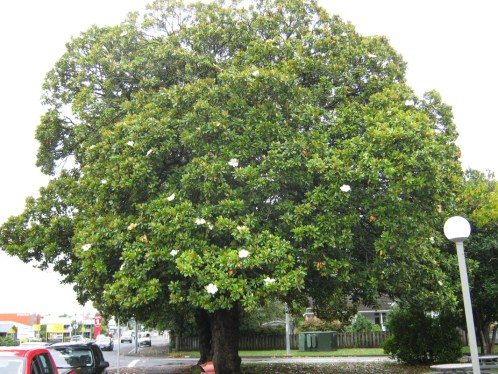
Compton was an avid plant collector and was the first in Britain to grow many imported species. Because his diocese included the American colonies, his focus was very much on North America. He used his parish priests and missionaries in the colonies to send home seeds. Among other North American plants, he was the first in Europe to grow the Virginia Magnolia

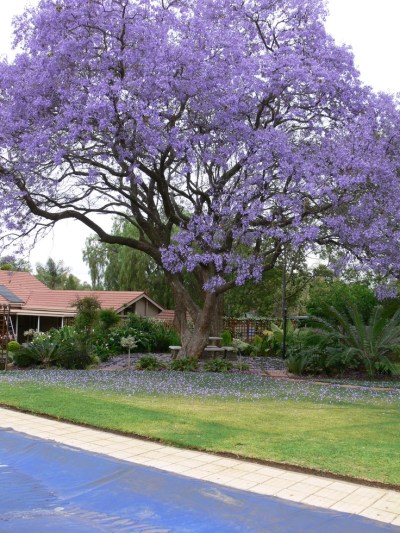
the jacaranda

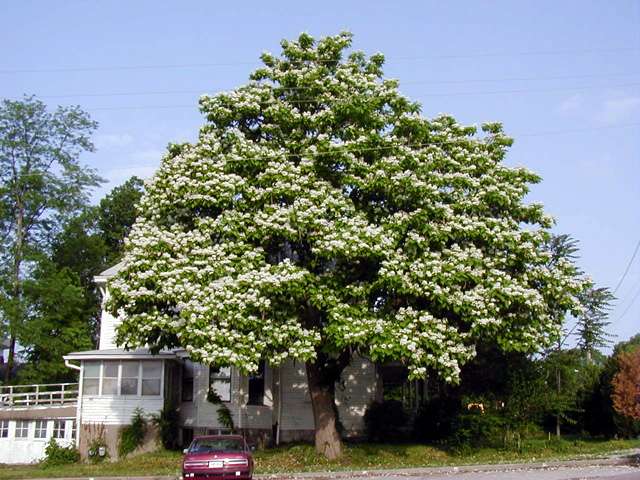
and the catalpa.

But Compton also built up a large collection of the-then rare pelargoniums, including Pelargonium inquinans pictured above. He probably was able to do this because through his support for William and Mary he had built up a good network of contacts in the Netherlands – remember that it was the Dutch, first settlers in Cape Town, who had sent the first pelargonium species back to Europe.

The second important early cultivator of pelargoniums was Mary Capell, daughter of Sir Arthur Capell, 1st Baron Capell of Hadham, who through marriage became first Mary Seymour, Lady Beauchamp, and then, after her husband’s death and her remarriage, Mary Somerset, Duchess of Beaufort. She was born two years before Henry Compton, in 1630. Here we have her with her sister Elizabeth – Mary is on the left of the painting.

Mary’s political vicissitudes started somewhat earlier than Henry Compton’s. Her father supported Charles I and lost his head for it, while her first husband, also a Royalist, was imprisoned. Her second husband successfully navigated the politically choppy waters of Cromwell’s Protectorate, during which he lost his titles, and ended up supporting the successful restoration of Charles II. The King eventually rewarded him with a Dukedom. He loyally supported James II but managed to avoid exile for this when William and Mary took the throne. He died in 1700 with his head still on his shoulders and none of his estates forfeited, which was pretty good going for a highly political man such as he. Mary was a loyal wife throughout all this, following him through all the twists and turns of his political fortunes and all the while bearing him six children. She survived her husband by fifteen years, dying in 1715 at the seriously old age of 84.

Mary began serious plant collection some ten years before her second husband died, and her interest in gardening intensified in her widowhood. She gradually accumulated one of the largest collections of exotic plants in England, with the support, it must be said, of some well-known gardeners. Through her aristocratic circles she traded and swapped in seeds (much like I did, in far less hallowed circles at primary school, in stamps). For instance, Compton sent specimens to his sister-in-law, Mary Compton, Countess of Dorset, who passed them on to Mary. But she also managed to have seeds sent to her from all the corners of Britain’s growing empire and trading interests: the West Indies, South Africa, India, Sri Lanka, China, Japan. In the specific case of pelargoniums, she too, like Compton, built up a large collection of them. She is credited with introducing into British gardens the other two pelargoniums of major interest which I mentioned above, Pelargonium zonale and Pelargonium peltatum. She did her plantings in the gardens of two houses owned by the Duke, Badminton House in Gloucestershire and Beaufort House in Chelsea. The Duke was rich enough and high enough in the aristocratic hierarchy to have Badminton House painted by Canaletto

although this more humble picture shows the all-important gardens as well as the house.

Badminton House still exists. Beaufort House does not. It was a large property in Chelsea, right on the Thames River – no doubt Mary could have gone to visit Henry’s garden by boat if she had wanted to (and maybe she did, for all I know).

Later urban developments wiped out the house and gardens, although Mary might be pleased to know that the Chelsea flower show takes place not too far from where she was – with the help of her gardeners – busily growing wondrous plants come from far and wide.

Well, while I have been whiling away my time researching this post, my wife has been busy and pulled out the dead cacti which started this post. We now have to decide what to put in the gaping holes which have been left. Not geraniums –  sorry, pelargoniums – dear! It’s too damp.

_____________________________

Red “geraniums”: http://www.parkswholesaleplants.com/spring-plants/annuals-ai/geranium-zonal-americana-dark-red/
Geranium platypetalum: https://en.wikipedia.org/wiki/Geranium#/media/File:Geranium_platypetalum1.jpg
Cape Town 1790s: http://www.artvalue.com/auctionresult–english-school-18-united-kingd-view-of-cape-town-with-table-m-1538907.htm
Pelargonium inquinans: http://natureswow2.blogspot.it/2013/10/scarlet-pelargonium-pelargonium.html
Pelargonium zonale: http://www.africanbulbs.com/page67.html
Pelargonium peltatum: https://kumbulanursery.co.za/plants/pelargonium-peltatum
Ivy-leaf “geraniums”: https://www.pinterest.com/pin/226094843769770841/
Henry Compton: https://en.wikipedia.org/wiki/Henry_Compton_(bishop)
Fulham Palace: http://www.fulhampalace.org/palace/history/
Fulham Palace Gardens: https://sequinsandcherryblossom.com/2016/05/15/five-fabulous-london-gardens-to-visit-this-spring/
Virginia Magnolia: https://www.pinterest.com/pin/413627547007792612/
Jacaranda: https://www.pinterest.com/royaljewel36/jacaranda-trees/
Catalpa: http://www.7arth.com/?product=50-%D8%A8%D8%B0%D9%88%D8%B1-%D8%B4%D8%AC%D8%B1%D8%A9-%D8%A7%D9%84%D9%83%D8%AA%D8%A7%D9%84%D8%A8%D8%A7
Mary and Elizabeth Capell: https://commons.wikimedia.org/wiki/File:Peter_Lely_portrait_of_Mary_and_Elizabeth_Capel.jpg
Badminton House by Canaletto: https://commons.wikimedia.org/wiki/File:Canaletto_-_Badminton_House,_Gloucestershire.jpg
Badminton House: https://landscapenotes.com/2015/10/31/book-review-a-natural-history-of-english-gardening-by-mark-laird/
Beaufort House: https://www.pinterest.com/pin/463518986626622713/

ORANGE CARROTS

Istanbul airport, 5 May 2018

I was in the capital of Kyrgyzstan, Bishkek, over the last few days, working with some old colleagues on supporting the government to develop a national action plan to minimize the effects on the population of the country’s pollution. Fascinating stuff, but not the subject of this post.

As part of the work, it was necessary to schmooze with the local diplomatic community, preparing the ground for future requests of assistance to deal with the country’s pollution. I therefore found myself one evening attending the event put on by the Dutch to celebrate the King’s National Day. As is customary on such occasions, the Dutch Ambassador made a speech, thanking us for coming, listing the important Dutch-Kyrgyz partnerships, and of course – given the occasion – mentioning the Royal family. He did so in an interesting way. Having mentioned partnerships in the agricultural field, he segued smoothly from this to inform those of us who didn’t know it that carrots were orange because patriotic Dutch farmers had selectively bred this root crop to turn it orange, in honor of William the Silent, Prince of Orange, patriarch of the Dutch Royal family.

Well! This was interesting indeed. As anyone who has even a passing interest in sporting events knows, the Dutch national color is indeed orange.


And this patriotic show of orange is indeed linked to William the Silent’s feudal title of Prince of Orange, although the orange in this case is the pretty little town of Orange in southern France, which was William’s fiefdom (and an old Roman city).

But to say that Dutch farmers had turned carrots orange as a patriotic gesture … Such is the dominance of orange carrots in our supermarkets, groceries, and farmers’ markets that it had never, ever occurred to me that carrots could have been anything but orange!

In other posts, I have demonstrated my interest in the humble history of vegetables. The Ambassador had now given me a wonderful opportunity to study the history of the carrot. So these last few days I have been spending time which I should have been more usefully devoting to the pollution problems of Kyrgyzstan to happily digging into the carrot’s history instead. I am now ready to report back.

The first thing I have to say is that the Ambassador was indeed correct in his basic contention, that Dutch farmers had turned the carrot orange. This happened in the 17th Century and, for reasons that I shall explain in a minute, the orange carrot took over the carrot world. But first let me throw in some pictures of different colored carrots:
Purple carrots


Yellow carrots

Red carrots

White carrots

Black carrots, even!

Here we can see all these different carrots in glorious technicolour.

Personally, I have never seen any of these. I suppose they are like heirloom tomatoes: there are some enthusiastic aficionados out there who are growing these in their vegetable plots and trading seeds with other carrot enthusiasts. Perhaps one day, like I’ve seen in upscale Californian supermarkets, there will be a corner of the vegetable section devoted to these – to my eye – strange and wonderful carrots.

But why did the Dutch farmers breed these orange carrots? Here, I have to say that, with all due respect to his august person, the Ambassador seems to have got it wrong (along with 99% of the Dutch population). The farmers did not do it to honor William the Silent and his House of Orange. They were looking to breed carrots which were sweeter and whose core was smaller and less woody. The root of wild carrot is actually quite bitter, so since time immemorial farmers had been trying to breed the bitterness out of the root, and as anyone knows who has eaten a big and mature carrot, its core can take up a good part of the carrot and be disagreeably tough to eat.

It just so happened that the carrot they bred was orange. I suppose the carotene which gives the carrot its color also gives it its sweetness. It was only later generations of Dutch who saw the political dimension of the carrot’s color, and actually saw it in a negative sense. Dutch burghers of strong Republican sentiment frowned upon carrots because of their too Royal orangeness – in their Republican zeal they also went after other orange plants, discouraging the planting of marigolds for instance.

Another example of the politics of color.

Before I leave orange carrots, I should report that analysis of carrot genomes strongly suggest that the Chinese independently bred orange carrots. It pleases me no end to know this, because in my years in China I was always puzzled by Chinese carrots. They somehow seemed different from the European carrots that I was familiar with. I throw in a picture of Chinese carrots to show what I mean.

They are a darker orange – the fact that the Chinese obtained the orange color by changing different genes from the ones which give European carrots their orange color probably explains this. And they were much stockier than European carrots, a fact that I put down to the Chinese breeding carrots more as animal feed (like the wonderfully named mangelwurzels) than as human food.

I could not resist the temptation of using this research into the orangeness of carrots to carry out research into the broader history of the carrot. It turns out that the wild carrot is at home in Central Asia – so it is indeed apposite that this little piece of research was kicked off by a chance remark made in Kyrgyzstan, which happens to be one of the homes of the wild carrot. For those of my readers who, like me, have never seen a wild carrot, I throw in a picture.

It seems that its root is bitter and woody, but I suppose that hunger makes one tolerant of not-so-tasty food – better than having nothing in one’s stomach. The wild carrot, perhaps in some domesticated form, was carried far and wide from its Central Asian homeland. Carrot seeds have turned up in archaeological digs of prehistoric lake dwellings in Switzerland.

The Babylonians knew of it; it is mentioned in a cuneiform tablet listing the plants growing in the garden of King Marduk-apla-iddina (King Merodach-baladan in the Old Testament).

Seemingly, the Egyptians knew of it, although the evidence is rather weak. The Greeks and the Romans knew of it. But in all these cases, it seems that it was the leaves and seeds which they were interested in; the root was too bitter. They used the root or the seeds for medicinal purposes and ate the leaves much as we would eat spinach (I am reminded of a story my mother used to tell us young children, of how during the War, when she was trapped in occupied France, one could not find carrots in the market. Only the leaves were on sale. She and her mother made do and ate those – better than having nothing in one’s stomach).

All this time, our ancestors were tinkering with this foodstuff as they were tinkering with all their foodstuffs. Finally, possibly as early as the 6th Century, one or more farmers somewhere in today’s Iran and Afghanistan bred a carrot with a sweeter, less woody, more edible root. This plant was destined to become the ancestor of all modern carrots. From there, the seeds were carried by passing traders and travelers both east and west, no doubt along the Silk Roads which I have had cause to mention in earlier posts. In the case of its carriage to the west, Arab traders seem to have been the vector after the Arab conquest of Persia in the 7th Century, much as was the case for the lilac bush, the subject of an earlier post. More tinkering and crossbreeding took place in today’s Turkey before a carrot with an even more edible root continued on its journey to Europe. It arrived there in the 10th Century, eventually ending up in Northern Europe in the 13th Century. It came in two colours, yellow and purple, with a rarer white variety thrown in. For some reason, the Dutch got heavily into carrot production and the rest is orange history.

Since the Dutch started this post, let me finish by throwing in some of those still lives so beloved by the Dutch, of kitchens full of vegetables and fruit. Normally, I pass these over with a yawn (I have never understood our ancestors’ fascination with this type of paintings), but it seems appropriate to admire them in this case. I invite my readers to locate the carrot in each of the paintings.


_____________________

William the Silent: https://owlcation.com/humanities/The-Death-of-William-the-Silent
Dutch football players: http://www.football-oranje.com/sweden-v-netherlands-match-preview/
Dutch fans: http://www.newsweek.com/dutch-men-latvian-women-are-tallest-world-study-483868
The city of Orange: http://be.france.fr/fr/a-decouvrir/orange
orange carrots: https://www.well-beingsecrets.com/health-benefits-of-carrots/
purple carrots: https://www.youtube.com/watch?v=HU03lczH6mk
yellow carrots: https://www.bukalapak.com/p/hobi-koleksi/berkebun/benih-tanaman/fs8sg5-jual-biji-2-benih-wortel-kuning-yellow-carrot
Red carrots: http://www.gardenpicsandtips.com/18-vegetables-that-are-colorful-and-worth-eating/2/
White carrots: http://blue-myhanh.blogspot.com.tr/2014/08/khi-trai-cay-co-mau-khac-voi-chung-ta.html
Black carrots: https://www.amazon.co.jp/%E8%BE%B2%E6%A5%AD%E5%B1%8B-%E3%81%AB%E3%82%93%E3%81%98%E3%82%93-%E7%A8%AE-%E3%83%96%E3%83%A9%E3%83%83%E3%82%AF%E3%82%AD%E3%83%A3%E3%83%AD%E3%83%83%E3%83%88-%E5%B0%8F%E8%A2%8B%EF%BC%88%E7%B4%84300%E7%B2%92%EF%BC%89/dp/B00NHD5BCY
Carrot spectrum: http://sezahrana.tumblr.com/page/130
Split carrot: http://www.thesweetbeet.com/carrot-recipes/
Marigold: http://www.thesweetbeet.com/carrot-recipes/
Chinese carrot: https://www.pinterest.com/kurskinlab/spa-men/
Wild carrot: https://myediblebackyard.net/2014/05/02/wild-carrot/
Swiss prehistoric lake dwellings: https://commons.wikimedia.org/wiki/File:Swiss_prehistoric_lake_dwellings._Wellcome_M0015374.jpg
Cuneiform tablet: http://www.britishmuseum.org/research/collection_online/collection_object_details.aspx?objectId=3066115&partId=1&searchText=Merodach-Baladan+II&view=list&page=1
Pieter Aersten, Christ in the House of Martha and Mary: https://www.tumblr.com/search/christ%20in%20the%20house%20of%20mary%20and%20martha
Anonymous, Kitchen scene in Parable of Rich Man and Lazarus: http://www.carrotmuseum.co.uk/art1.html
Pieter Cornelizs. Van Rijk, Kitchen Scene: http://www.carrotmuseum.co.uk/art1.html

ROCKY OUTCROPS

Milan, 28 January 2018
Amended 5 June 2024

I’ve just come back from Yangon, where I was giving a training course on the implementation of cleaner production methods. An interesting topic, but not actually the subject of this post. It so happens that on the first night I was there I stumbled across this picture.

This is Popa Taung Kalat, a monastery perched atop an old volcanic plug some 50 km away from Bagan. I immediately sent my wife a WhatsApp asking why we had not visited this place on our visit to Bagan. The question was rhetorical since I know the answer: we didn’t go because neither of us knew that Popa Taung Kalat existed until I came across this photo.

Which is a great pity, because I have a certain fascination for places perched on knolls, buttes, tors, or other rocky outcrops, especially if they sit in a flat plain and are visible from miles around. My wife and I recently spent a very pleasant evening in a similar place to Popa Taung Kalat, the small town of Laon close to Reims, when we did our tour of French battlefields of the First World War.

In this case, although it sports a wonderful 12th Century cathedral

the outcrop’s original use by the Gauls was martial rather than religious; they built a fortress on the top. The outcrop’s military vocation continued for centuries thereafter. Given its position, this is not really surprising. Whoever commanded Laon controlled one of the major entry points into the Île de France.

Polignac, in the Auvergne, is another rocky outcrop where military considerations seem to have been paramount in its original colonization. The Velay family built the first castle in the 11th Century and continued to live there and rule the surrounding country for some six centuries.

Edinburgh, too, where my wife and I met more years ago than I care to remember, when we were both university students there, sports a magnificent castle atop an ancient volcanic plug.

Here, though, that rather special effect of being able to see it from miles away is lost, the old sight lines having been obscured by the urban jumble that has spread out from the historic core of the city which lay huddled at the base of the castle or which clustered along the long road, the Royal Mile, that led down from the castle to the royal palace below.

A similar stony promontory lies close to my French grandmother’s (now my sister’s) house near Mâcon, the Roche de Solutré, one which I spent many happy hours in my youth climbing.

It was first used by our ancestors 20,000 years ago to kill wild animals in large numbers. They would drive the poor beasts up towards the edge where, in their panic, they would fall off to their deaths below, to be butchered on the spot. The archaeological finds gave the name Solutrean to a phase in the Upper Paleolithic. But coming back to our martial theme, it is of greater interest that a certain Raoul de Bourgogne built a castle on its top in 930, and his descendants used its dominating position to harass those passing by and demand protection money. Philip the Fair, Duke of Burgundy, finally decided that enough was enough and ordered its destruction in 1434. Popular jubilation was such that several people were killed in the crazed desire to rip the castle apart, stone from stone. Since then, no human constructions have gone up on the Roche; as the picture above shows it only sports vineyards on its lower slopes, vineyards which, I may say, make excellent wines – Pouilly-Fuissé, Saint-Véran, Mâcon-Solutré – and which have made millionaires of the local viticulturists.

Thousands of kilometers away, in Sri Lanka, another outcrop similar to that of Popa Taung Kalat, Sigiriya, is now the site of peaceful gardens.

There was a time, though, back in the 5th Century, when it was a fortress built by King Kashyapa. But it seems he was also a lover of the arts. There is only a small piece of fresco left now in a concavity

but apparently the whole western side of the rock was once frescoed. It must have been an incredible sight. Perhaps for the good of his soul King Kashyapa turned his palace over to monks at his death, who installed a monastic community. They stayed until the 14th Century, then moved on. It’s a pity that the last time I was in Sri Lanka the country was still being torn apart by the civil war, making travel outside of the capital Colombo risky. Who knows, one day maybe I’ll go back there with my wife and we can go and visit this enchanting place.

But actually, coming back to where I started this piece, at Popa Taung Kalat in Myanmar, while I understand the cold logic which drove warlords to view these outcrops as natural fortresses, I prefer the more mystical impulses which have driven men, and sometimes women if they have been allowed to, to perch a monastery, a church, or just a simple hermitage on top of such outcrops, where they can pray in peace far from the madding crowd. It’s given us some wonderful blends of nature and architecture. There are the Orthodox monasteries in Meteora in Greece.

There is the chapel of Saint Michel d’Aiguilhe in Le Puy-en-Velay, in France, which was first established in 969.

There is the little hermitage/monastery in Katskhi, Georgia.

The last picture makes me think of Simeon Stylites, the 5th Century Christian monk who, it is reported, spent some 30 years on top of a column, and who started quite a craze in holy men perching themselves on columns. There is of course no picture from the period but this is an imaginative rendering.

As for his column, this is all that is left of it after centuries of devout pilgrims chipping off pieces as relics.

Over the ages, monks have shown an enduring enthusiasm to climb up to inaccessible places to be left alone, leaving behind wonderful creations in the process. When my wife and I were in China, we once visited the Hanging Temple near Datong, a Buddhist monastery literally clinging to the side of a cliff.

The monks had excavated a series of caves in the cliff face, connected by a series of suffocatingly narrow internal staircases or alarmingly rickety walkways pegged to the rock, and then had clamped a temple facade onto the exterior. The effect is quite magical.

Meanwhile, in Cappadocia in what is now Turkey, Christian monks had also burrowed into mountain sides to create their communities far from the world.

Some of the churches they dug out of the rock still carry their frescoes.

And up in the Ethiopian highlands monks have built their churches high up on cliff faces, like the Abuna Yemata Guh church in Tigray province, which can only be reached after an arduous climb

and some sphincter-clenching shuffling along narrow ledges with long, long, long falls if you take a false step.

But once there, you are greeted with delightful frescoes in the Ethiopian style.

How much trouble those monks went to to get away from it all! I can’t complain since they created such wonderful places for me to visit one day. But surely they could have made their lives a little bit easier and still managed to pray and contemplate to their heart’s content. But hey, who am I to judge? The contemplative life never attracted me; the real world, with all its troubles and vicissitudes, but also with all its joys and satisfactions, is much more my scene.

____________________

Popa Taung Kalat: http://www.wondermondo.com/Countries/As/Burma/Mandalay/PopaTaungKalat.htm
Laon: https://www.tourisme-paysdelaon.com/Cote-histoire/Historique-du-Pays-de-Laon/La-mutation-en-ville-prefectorale
Laon cathedral exterior: https://it.wikipedia.org/wiki/Cattedrale_di_Laon
Polignac: http://www.panoramio.com/photo/33272295
Edinburgh Castle: https://erasmusu.com/en/erasmus-edinburgh/erasmus-photos/princes-street-gardens-and-edinburgh-castle-75483
Old print of Edinburgh: https://phrenologyandcrime.com/2014/08/31/edinburgh/
Solutre: https://www.geo.fr/environnement/france-nature/les-paradis-nature-de-bourgogne/solutre-rocher
Sigiriya: http://www.gocaribou.com/blog/2015/7/4/the-cultural-triangle-of-sri-lanka
Sigiriya frescoes: https://en.wikipedia.org/wiki/Sigiriya#Frescoes
Holy Trinity Monastery, Meteora, Greece: http://www.touropia.com/meteora-monasteries/
St-Michel de l’Aiguilhe: https://commons.wikimedia.org/wiki/File:Le_Puy-en-Velay,_%C3%89glise_Saint-Laurent_et_Aiguilhe_PM_48569.jpg
Katskhi Pillar Church: http://orthochristian.com/89130.html
Simeon Stylites: https://www.vimaorthodoxias.gr/theologikos-logos-diafora/agios-simeon-o-stilitis/
Remains of the column of Simeon Stylites: https://en.wikipedia.org/wiki/Church_of_Saint_Simeon_Stylites
Hanging temple, China: https://en.wikipedia.org/wiki/Hanging_Temple
Cave churches of Cappadocia: https://www.expedia.com/things-to-do/full-day-tour-of-cappadocia-region-goreme-open-air-museum-with-lunch.a395058.activity-details
Cappadocia cave church frescoes: http://www.aydinligoremetravel.com/goreme-open-air-museum/
Climbing to Abuna Yemata Guh: https://www.youtube.com/watch?v=pN67Zsxx-Vo
Arriving to the Abuna Yemata Guh: https://www.youtube.com/watch?v=y_GxzdGS84M
Abuna Yemata Guh inside: http://www.dailymail.co.uk/travel/travel_news/article-2823326/Abuna-Yemata-Guh-church-sky-Ethiopia-world-s-inaccessible-place-worship.html

FRAGMENTS OF A GREEK HOLIDAY

Milan, 20 September 2017

Fragments of memories from our brief trip to Greece:

– The constant presence above your head of the Parthenon on its Acropolis.

What a sight it must have been for people riding towards Athens across the plains of Attica 2,000 years ago!

– The Parthenon up close.

Like a famous actress from long ago, a bit of a shock to get too near and see the ravages of time.

– The new Acropolis museum.

It’s handsome – but that only makes it even more painful to look at the Parthenon’s smashed and crumbling architectural reliefs which it was built to house and preserve.

– The National Archaeological Museum, visited 40 years ago when I was a young teenager, but still with the power to fascinate:
The “face of Agamemnon”

The smiling, smiling, ever smiling Kouroi


Zeus calmly throwing his lightning bolt

The young jockey

Emperor Augustus, looking benign but whose empty eye sockets make him rather sinister.

– The Goulandris museum, with its collection of statues from the Cycladic islands

which so fascinated the likes of Modigliani, Hepworth, and Moore.

– On the outskirts of Athens, the remains of the monastery of Daphni; the few remaining shards of 11th Century Christian mosaics clinging to its walls have managed to withstand earthquakes, marauding Barbarian, Crusader, and Ottoman troops, and more recently just general indifference.


– The Byzantine and Christian museum, with its collection of icons.


– At the Islamic collection at the Benakis museum (a reminder of how close to the Muslim world Greece is), having an omg moment when I spotted the 16th Century Ottoman plates which look exactly like the plate I bought 12 years ago in New York.

– The kilometers of small streets, once no doubt bursting with local life but now bursting with tourist tat.

– The shocking amount of graffiti, disfiguring so many buildings.

– Empty shops everywhere, mute testimony to the country’s dire economic straits.

– The ridiculous marching by the two soldiers guarding the Tomb of the Unknown Soldier at the Parliament


so reminiscent of Monty Python’s Ministry of Silly Walks.

– The island of Spetses

where the wedding which brought us to Greece in the first place was held, in this open air theatre overlooking the sea.

– The sea from the ridge running along the centre of the island


the sight of which brought to my mind the famous lines from Xenophon’s Anabasis. He is recounting how a Greek mercenary army, stranded in northern Mesopotamia by the death of their Persian employer, Cyrus the Younger, fights its way back to the safety of the Greek cities lying along the coast of the Black Sea: “When the men in front reached the summit … there was great shouting. Xenophon and the rearguard heard it and thought that there were some more enemies attacking in the front … So Xenophon mounted his horse and, taking Lycus and the cavalry with him, rode forward to give support, and, quite soon, they heard the soldiers shouting out “Thalassa! Thalassa! The sea! The sea!” and passing the word down the column. Then certainly they all began to run, the rearguard and all, and drove on the baggage animals and the horses at full speed; and when they had all got to the top, the soldiers, with tears in their eyes, embraced each other and their generals and captains …” They could finally believe that, like Odysseus, they would sail home.

___________________

Shards of Ancient Greek pottery: https://umfablog.wordpress.com/2011/01/13/collection-highlight-amphora-depicting-shrine-with-warrior-paying-respects-to-deceased-man/
Parthenon from streets below: https://brigitaozolins.wordpress.com/2013/10/02/athens-and-the-oracle-at-delphi/
Greek chariot: http://factsanddetails.com/world/cat56/sub367/item2000.html
Parthenon up close: https://www.hexapolis.com/2014/06/27/8-fascinating-facts-about-the-parthenon-the-cultural-icon-from-ancient-greece/
Acropolis museum: http://yourhellas.com/listings/acropolis-museum/
Museum contents: http://andrewprokos.com/photo/acropolis-museum-parthenon-gallery-athens/
Face of Agamemnon: https://en.m.wikipedia.org/wiki/Mask_of_Agamemnon
Kouros: https://www.athensguide.com/archaeology-museum/athens-national-museum050b_jpg_view.htm
Kouros close up: my wife’s photo
Zeus: http://ancientrome.ru/art/artworken/img.htm?id=6131
Young jockey: https://www.tripadvisor.co.uk/LocationPhotoDirectLink-g189400-d198713-i237853952-National_Archaeological_Museum-Athens_Attica.html
Emperor Augustus: http://www.aviewoncities.com/gallery/showpicture.htm?key=kvegr1128
Cycladic statue: https://www.pinterest.co.uk/claude2744/cylades/?autologin=true
Modigliani portrait of a woman: https://www.wikiart.org/en/amedeo-modigliani/portrait-of-a-polish-woman
Daphni monastery mosaics: my photos
Byzantine and Christian museum : mine
Benakis museum: http://www.mesogeia.net/athens/places/thissio/islamikomousio_en.html
Tourist street: https://www.athensguide.com/ermou/index.htm
Graffiti: http://www.greece-is.com/news/athens-mayor-gets-tough-graffiti/
Empty shops: http://www.doomsteaddiner.net/blog/tag/troika/
Soldiers at the Tomb of Unknown Soldier-1: https://brigitaozolins.wordpress.com/2013/10/02/athens-and-the-oracle-at-delphi/
Soldiers at the Tomb of the Unknown Soldier-2: http://www.alamy.com/stock-photo-changing-of-the-evzon-honour-guard-tomb-of-unknown-soldier-athens-12450649.html
Ministry of Silly Walks: https://www.google.co.uk/amp/s/www.pinterest.com/amp/pin/453034043738797177/
Spetses: http://www.ermioni.info/spetses-island
Open air theatre Spetses: http://www.spetsesdirect.com/out-about/theatre/
Sea from Spetses: my photo
Sailing ships: http://www.bbc.co.uk/schools/primaryhistory/ancient_greeks/sea_and_ships/