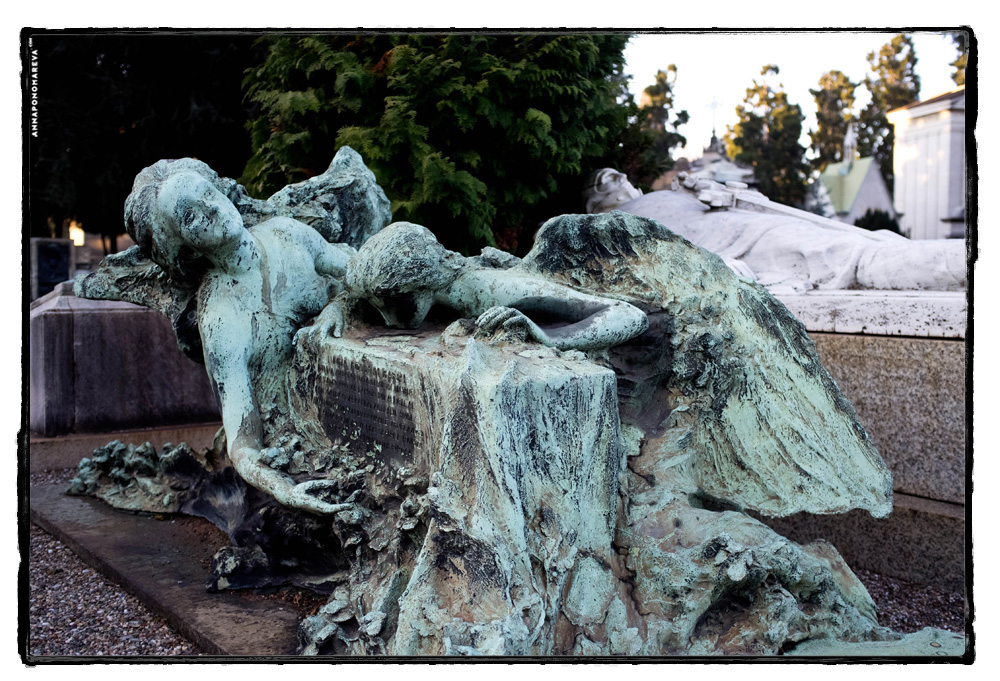
DREAM JOURNEY: PART IV

Bangkok, 22 May 2015

Normally, we would be rather groggy as we drive our MG off the ferry in Bari at 8 am in the morning, coming in from Dürres and the previous post. I certainly would be; I never sleep well on ships. But this is a dream, so I decree that we are bright-eyed and bushy-tailed as we roar off the ferry. Our goal is Otranto, very near the end of Italy’s high heel. We head down the old Via Traiana, now more boringly called the Strada Statale 16, as far as Brindisi. There we take the SS 613, which follows the trace of a previous local Roman road that was too modest to have a name. We pass through Lecce, where we pause. Lecce is known for its plentiful baroque buildings constructed in the 1600s, all using a beautiful local white stone, so I throw in a picture of a square there as a visual memorial to this city.

Lecce

We continue on to Otranto, and drive straight up to the Cathedral. For this is the objective of our visit to Otranto – or rather the floor of the church is. When visitors enter the church, they are greeted by this magnificent floor.
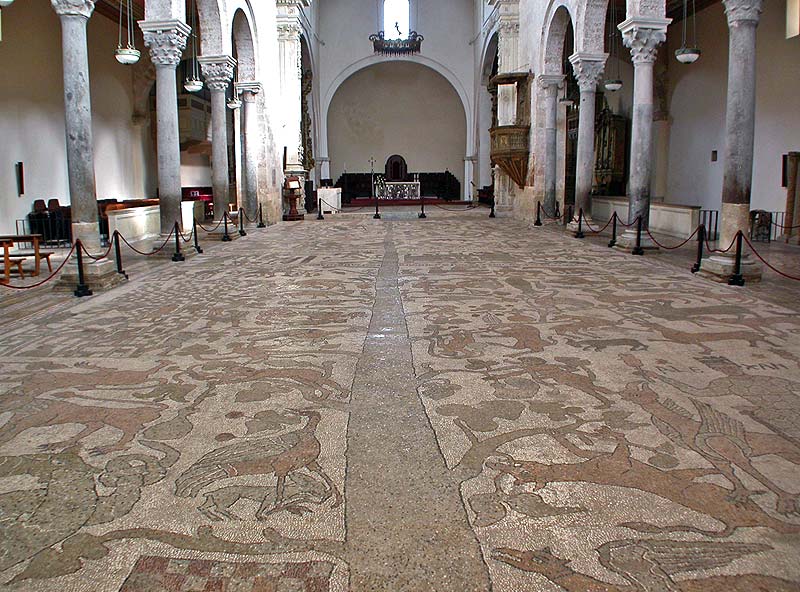
otranto-mosaic-1

It is the largest floor mosaic in Europe. It brings me back to that other floor mosaic which we visited in the first leg of our trip in Aquileia, although eight centuries separate them. Some clever fellow took this photo from the ceiling, showing more or less the full extent of the mosaic.

otranto-mosaic-2

The subject of the mosaic is a Tree of Life, and you can indeed see the trunk of the tree working its way up the nave. Strangely enough, the narrative of this tree flows from the top down, and so near the high altar we have various scenes from the story of Adam and Eve, of which I throw in one photo.

otranto-mosaic-3-adam eve snake

Honestly speaking, the story is difficult to read, so I shall just insert a couple of photos of other parts of the floor. This is King Arthur

otranto-mosaic-4-King Arthur

and this, Satan

otranto-mosaic-5-Great Satan

while this is said to be a self-portrait of the floor’s designer, a monk by the name of Pantaleone who hailed from the monastery of San Nicola di Casole, a little to the south of Otranto.

otranto-mosaic-6-Pantaleone_ self-portrait

The mosaic was laid down in the 12th Century when this part of Italy was Norman, along with Sicily. In fact, the design of the floor rather reminds me of that other great masterpiece of Norman art, the Bayeux tapestry. I include here one photo of that tapestry, the famous scene where Harold Godwinson is killed by a Norman arrow through his eye.

Tapisserie de Bayeux - Scène 57 : La mort d'Harold

Next stop: Palermo in Sicily. We’ll get there by cutting across Italy’s heel to Taranto and then along the instep and sole of the Italian boot all the way to Reggio Calabria, where we’ll catch the ferry over to Sicily. I take the back roads to get to Taranto, because I want to drive through the small town of Copertino. As far as I know, this town is known for nothing special except a large castle and a saint. But to us, it has a great importance: my wife’s maternal grandfather came from Copertino and so it is the source of one-eighth of my children’s DNA. He emigrated to Milan in the early 1900’s, part of the massive migrations out of the south of Italy at the turn of the 20th Century. In typical migratory fashion, his departure eventually brought all his brothers and sisters up north. Family lore has it that his father ruined the family by taking the new Italian State to court over the expropriation of some of his land. He took the case all the way to the Court of Cassation, where he eventually lost the case, by which time he had also burned through all his money. Even though this is a very modest place with nothing special to write home about, I feel I must throw in a photo to commemorate it.

copertino

Onwards to Taranto, although in truth as we approach the city we turn our heads away and drive on. Taranto has been devastated by the plans of successive Italian government in the post-war period to develop the south of Italy through the implantation of heavy industry (I’ve already mentioned this in another post on Sicily). What were then the biggest steel works in Europe were plonked down here in the 1960s, and other heavy industry followed. By the 1980s, when my wife and I went to Taranto for the first time, the investment was in trouble. But the government couldn’t let it go down the tubes, it was politically too important. So money – half of it wasted through corruption and graft – was poured in to prop everything up. It’s stayed propped up – just – but in the meantime the industrial complex has poisoned half the population. Talk about sustainable development …

taranto

We are now driving through what was once Magna Graecia, Greater Greece, that string of Greek colonies which dotted the underside of the Italian boot as well as the coasts of Sicily (and even the shin and calf of that shapely Italian boot). The glittering stone in this string of cities was undoubtedly Syracuse in Sicily, where Archimedes – he of the original eureka moment – was born and was killed. But all the cities along here, from Taranto in the East to Selinunte in the West, were once flourishing and prosperous city-states. One of them, Sybaris, even became a byword for self-indulgent opulence – it was said of one of its citizens that he slept on a bed of rose petals, and if even one of them was folded over he could not sleep. The town’s name has entered the English language, a sybarite being a voluptuary or a sensualist. Now, Sybaris lies under four meters of mud. The only claim to fame of the surviving Calabrian towns is that they are infested by the ‘Ndrangheta, Calabria’s answer to Sicily’s mafia. It is said that John Paul Getty III, kidnapped in Rome back in 1973, was kept hidden in these parts. He was returned after his family forked over a ransom of $3 million – paid a good deal reluctantly (his grandfather is reported to have said, “I have 14 grandchildren. If I pay one penny now, I’ll have 14 kidnapped grandchildren”) and only after one of his ears had been cut off and sent to a newspaper. It is whispered that many a new house around here was built with Getty money.

We stop for a moment in Crotone, on the ball of Italy’s foot, not because it’s any less dreary than the other towns we’ve passed through, but because something momentous happened here: Pythagoras set up his first school and came up with all those clever mathematics, among which was his theorem which I, like every child of 11 or so, learned in geometry class: “a2 + b2 = c2“, or in plain English, “in a right triangle, the square of the hypotenuse is equal to the sum of the square of the other two sides”. At least, that’s what I was told by proud Crotonesi when I was here 20 years ago to do an environmental audit. Alas! It was not so. Pythagoras did indeed come to Crotone, but all he did was to set up some sort of mystical, esoteric sect which dabbled in the quasi-magic of whole numbers. It’s very unlikely that he personally came up with any of the mathematical cleverness attributed to him; his disciples did, but later. I think this painting, by a 19th Century Russian painter, captures nicely the strongly mystical (and to my way of thinking, rather weird) overtones of the initial Pythagorean movement.
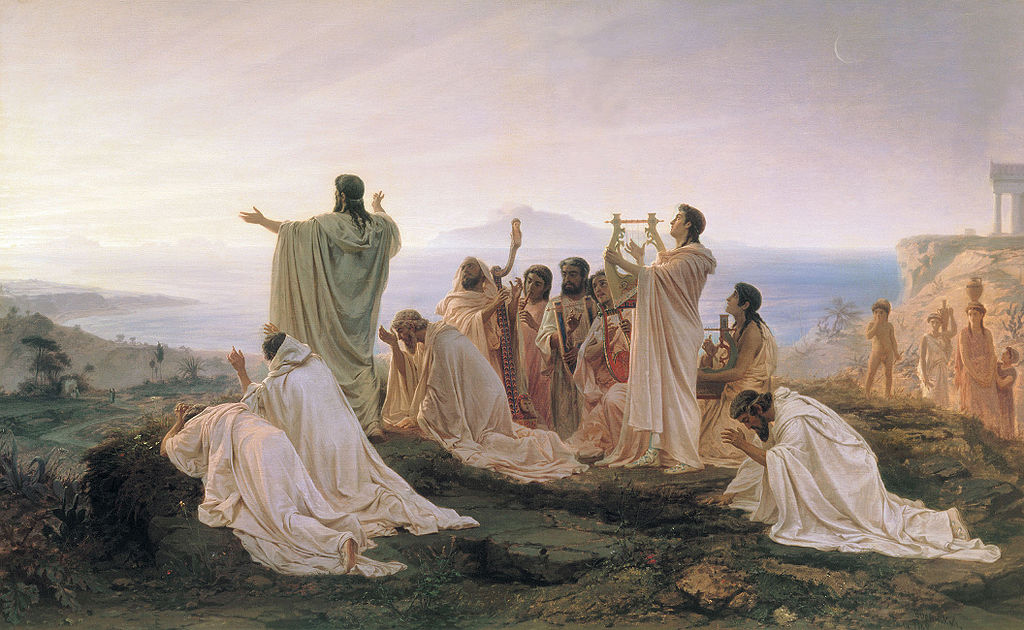
pythagoreans celebrating sunrise

What Pythagoras and his sect did do in Crotone was to eventually take over the city’s government, and it was during his time in office that Crotone destroyed Sybaris. Several other cities in the area also espoused Pythagorean forms of government, but after a while there was a backlash. Back in Crotone Pythagoras was chased out, to end his days in nearby Metapontum, another city now lying under meters of mud. But Pythagorean schools continued, although they restricted themselves to maths and “natural philosophy” and left politics to others. Probably better that way …

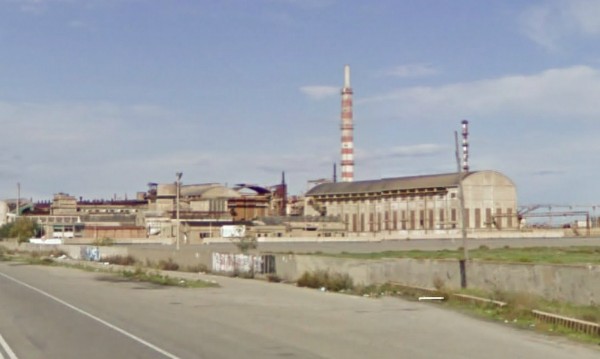
I take one last look at the industrial plant I audited all those years ago – another industrial works plonked down here, and another one that has closed, leaving nothing but bitterness in its wake.

pertusola

It’s time to move on.

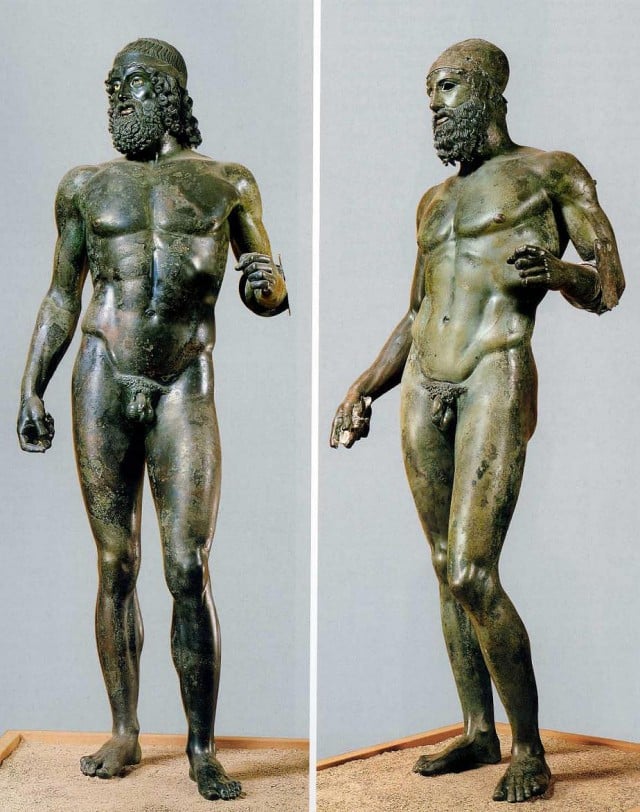
When we reach Reggio Calabria, although my wife is reluctant I insist: we must go to the Museum of Magna Graecia to see the two Bronzes of Riace. Neither of us have ever seen them, and it would be a pity not to take advantage of our passing through Reggio to have a peek. I know the objective of our trip is early Christian mosaics, but other wonders along the way should not be ignored. No sooner said than done! With a click of the mouse, I have us parked in front of the museum and magically transported past the queues of people waiting to enter the climate-controlled, earthquake-proofed room where they stand.

bronzi di riace

What magnificence! And what we see today are stripped down versions of the original. Each would have been coiffed with a Corinthian-style helmet, would have carried a shield on that raised left arm, and would have held a lance in the other. The latest theories hypothesize that they represent two of the Seven Heroes who set off from Argos to fight against Eteocles, king of Thebes and son of Oedipus (he of the complex), and died at the city’s seven gates. One expert suggests that they were originally part of a group of seven statues which stood in the Agora of the city of Argos. How they ended up on the sea bed off the coast of Calabria is anyone’s guess. My guess, for what it’s worth, is that during Roman times Argos was hard up, and rich Romans, avid for Greek art, came along and offered to buy the statues. Why not … In later centuries hard-up Italians sold their Renaissance treasures to rich Englishmen, avid for Italian art, and later still these Englishmen, hard up in their turn, sold these same treasures to rich Americans. In any event, they were being shipped to Rome, but when the ship was off the coast of Calabria a violent storm blew up, and the captain, rather than losing his ship and his life, tossed the heavy stuff overboard.

Time to catch the ferry over to Sicily, home to some of the most beautiful Byzantine-style mosaics still extant, created when the Normans controlled Sicily. The web helpfully informs us that there is a ferry over to Messina every hour or so. In this dream trip, we will not have any difficulty in catching the ferry, unlike real life 30 years ago when my wife and I decided to take her mother to spend Christmas and the New Year in Sicily. We arrived in Reggio Calabria on the evening of 23 December, along with a horde of Sicilian migrant workers returning home from Northern Europe for the holidays. We discovered to our horror that the ferry boat crews had just decided to strike for more pay. Those bastards had chosen this particular time to strike because they knew it put the owners under huge pressure to settle. Settle they did, but not before we had spent a miserable night in the ferry car park. When those ferry boat crews arrive, as they assuredly will one day, before the Pearly Gates, I hope they will be kicked off down to Hell, to roast in its fires for Eternity (anyone curious to know what that might look like can refer back to the posting with which I started this dream journey and study the photo I inserted there from the back wall of the church on the island of Torcello).

Once on the other side,  we set off for Palermo. I firmly decide that we will take the normal roads to get there. In this dream we’re in no hurry, and I prefer by far the “reeling roads”, the “rolling roads”, that “ramble round the shire”, as G.K. Chesterton wrote in his most famous poem “The Rolling English Road”. Yes, I prefer by far his “merry roads” and his “mazy roads” to the smooth monotony of sterile highways. We pass Milazzo, where you can catch the boat to the Aeolian Islands – a trip for another day – and where I did yet another environmental audit 20 years ago for another struggling industrial complex, which mercifully has not closed – yet. We hum along until we arrive at the small town of Cefalù, nestling under the mighty headland which gives it its (Greek) name. We head, yet again, for the Cathedral, constructed by the Normans in the first half of the 1100s. There, some beautiful mosaics still cling to the apse and the last bay of the choir.

cefalu-duomo-1

The Pantocrator gracing the apse is “for many the greatest portrait of Christ in all Christian art”, in the words of John Julius Norwich (I am quoting from his history of Sicily).

cefalu-duomo-2

The style is clearly mature Byzantine, a style we’ve already seen in Istanbul as well as in the lagoons of Venice, and would have seen in Daphni and Saint Luke in Greece had we made the detour from Thessaloniki. The Normans got Byzantine artists, or artists trained in Byzantine workshops, to make the mosaics.

It’s time to go on to Palermo, which is our final destination on this leg of the journey. We hug the coast, coming into the city on its seaward side. Once we reach the port, we swing up Via Vittorio Emanuele (there’s one of these in every village, town, and city in Italy, along with a Via Garibaldi), which is the main thoroughfare through the city’s old center. When we get near the Martorana church, we miraculously find – free! – parking (this is a dream, after all) for our little MG and head over to the church.

The church has been much modified over the centuries, not least of which by a brutal Baroque make-over in the front part of the nave in the 17th Century. But once we get past these horrors and enter the upper nave, we are greeted by some lovely mosaics: Christ in majesty in the dome of the church
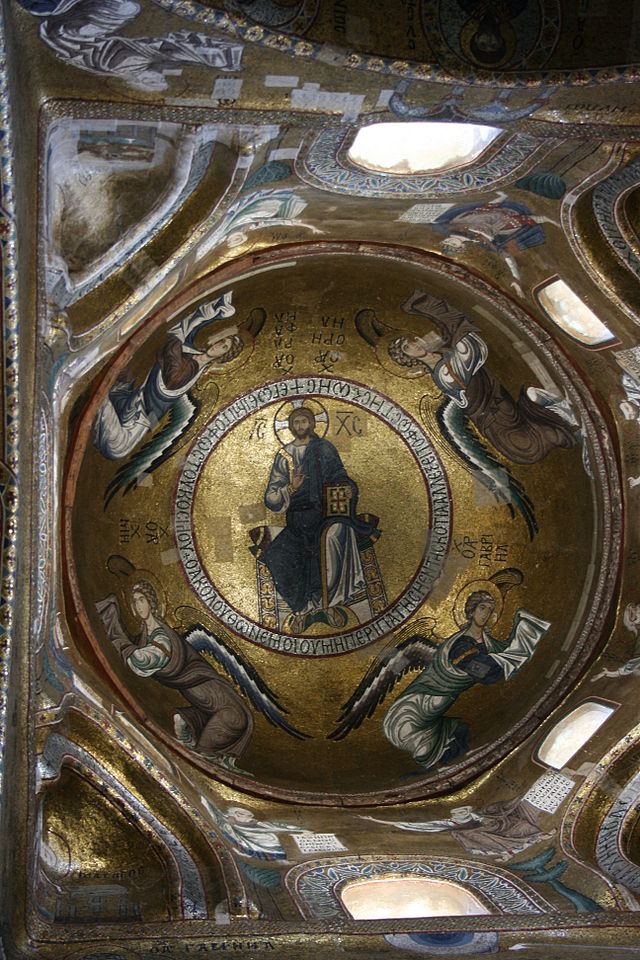
palermo-martorana-1

the annunciation

palermo-martorana-4

the nativity

palerno-martorana-7

the dormition of the Virgin Mary

palerno-martorana-6

As we leave, I want particularly to see these two mosaics. In this first one, we have the greatest of all the Norman kings of Sicily, Roger II, having himself cheekily crowned by Christ himself, as if he were a Byzantine emperor

palermo-martorana-2

It was he who first brought this Byzantine art form to Sicily.

And here we have the original donor of the church, George of Antioch, Roger II’s admiral, humbly offering his church to the Virgin Mary (much like we saw in Cariye Kamii in Istanbul)

palermo-martorana-5

A final note about this church: it belongs to the Italian-Albanian community in Sicily, the remnants of the Albanians who fled to Italy in the 15th and later Centuries as the Ottomans methodically went about conquering their home country. So it is not just geographical proximity which led the modern Albanians back in late 1990s to escape by their thousands to Italy as Albania imploded after the collapse of Communism (with many of these new arrivals squatting in and around Otranto, as it so happens).

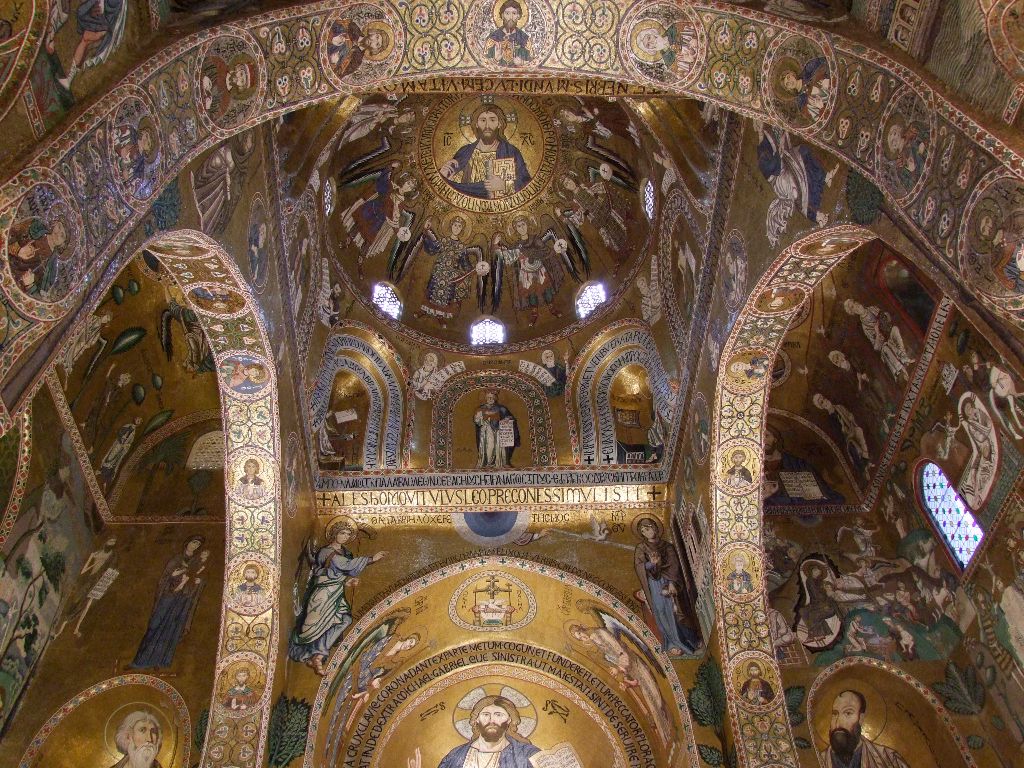
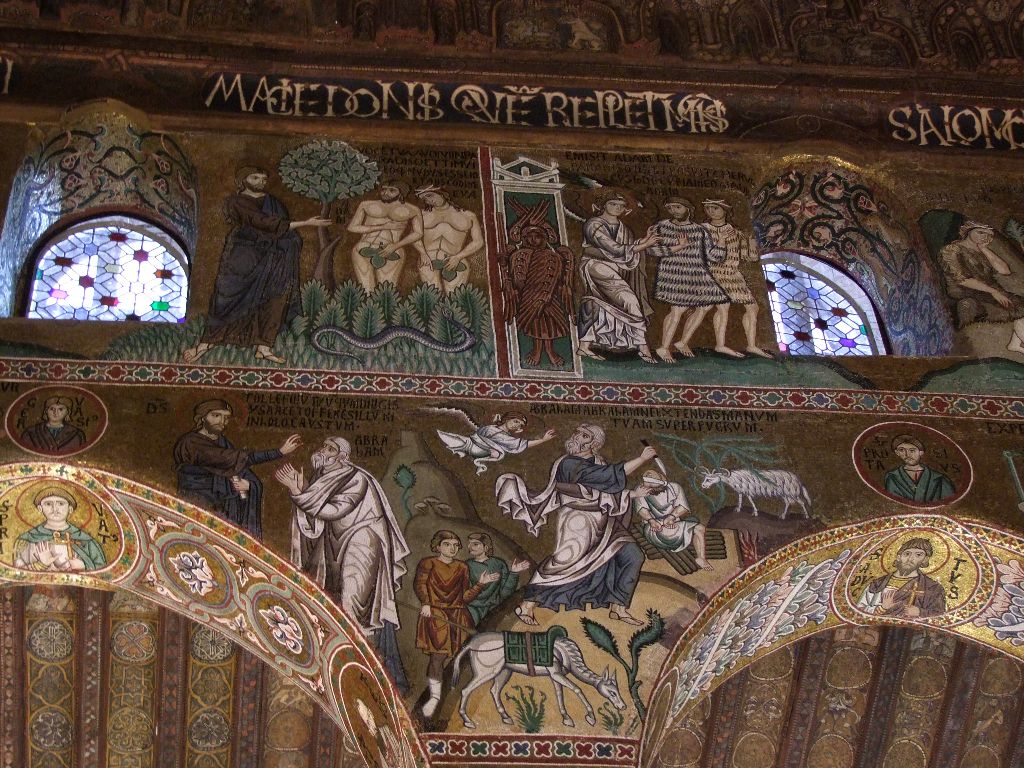
We go back to the car and continue up Via Vittorio Emanuele to the Palazzo dei Normanni, the Palace of the Normans, which actually was originally built by the Arabs. This rather severe building houses the Cappella Palatina, which was built by Roger II as the King’s private chapel. It houses some magnificent 12th Century mosaics.

palermo-cap-palatina-1

palermo-cap-palatina-6

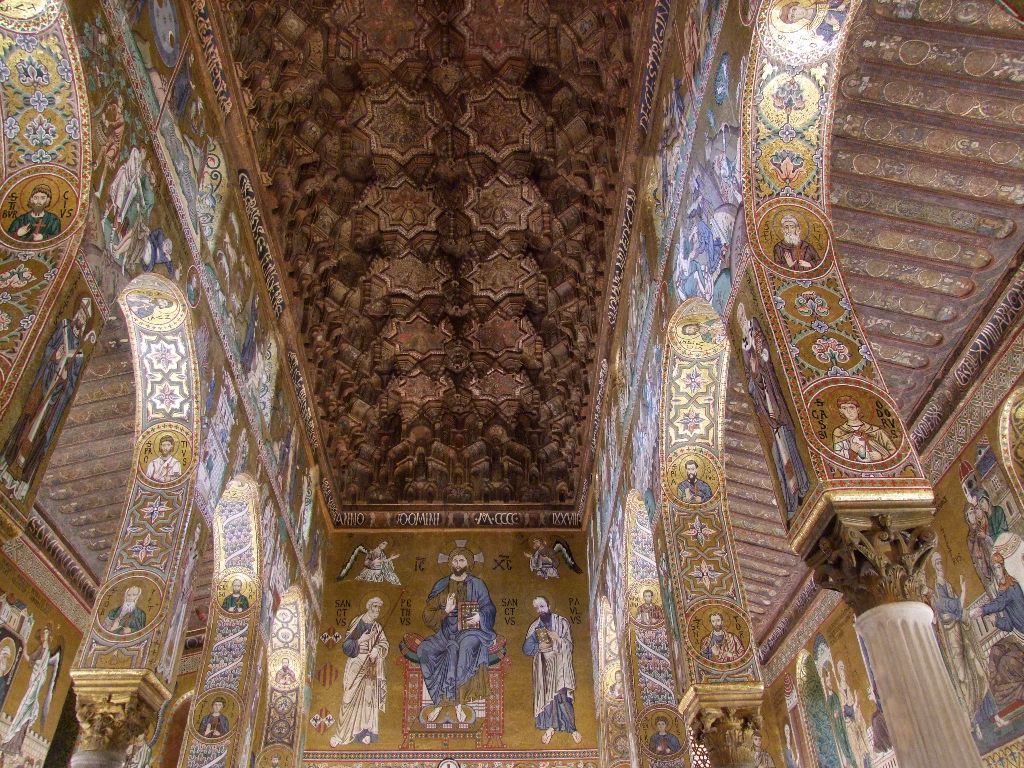
palermo-cap-palatina-5

This last one shows also the ceiling, a wonderful piece of Arab carpentry work, an example of which we last saw in the Alhambra palace in Granada.
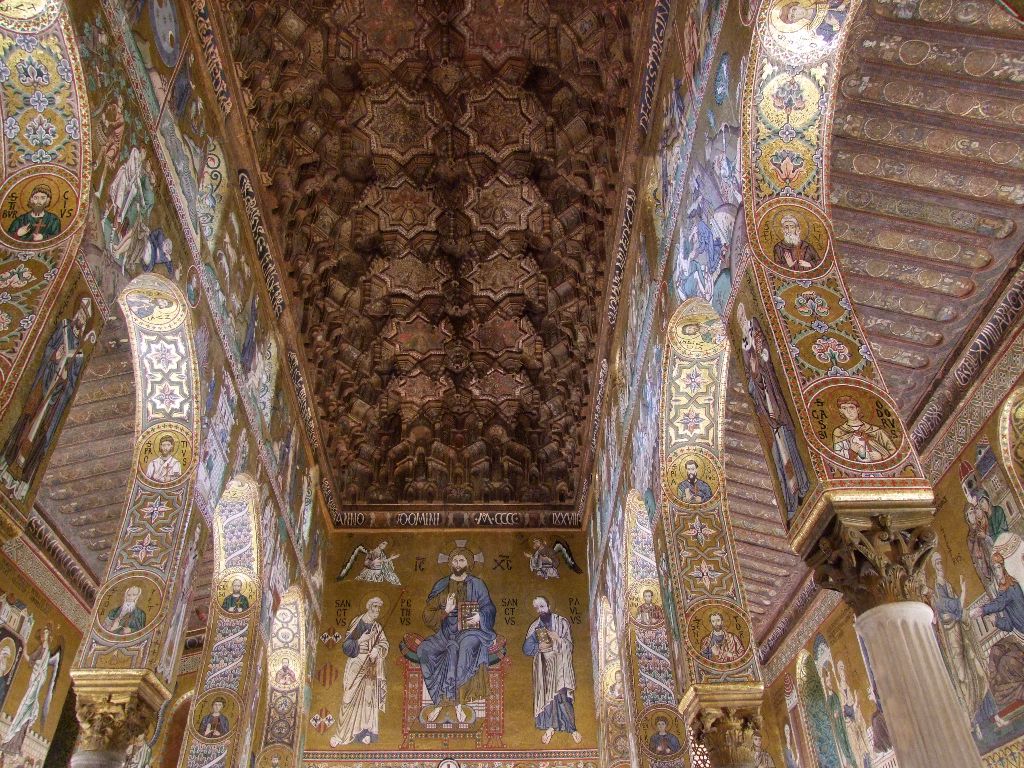
palermo-cap-palatina-4

Roger II understood that in this island with large Greek and Arab populations, he had to be open to their cultures if he was going to maintain the peace. Indeed, he welcomed this mixing of cultures. It is part of Sicily’s tragedy that later rulers did not continue this practice of toleration and openness.

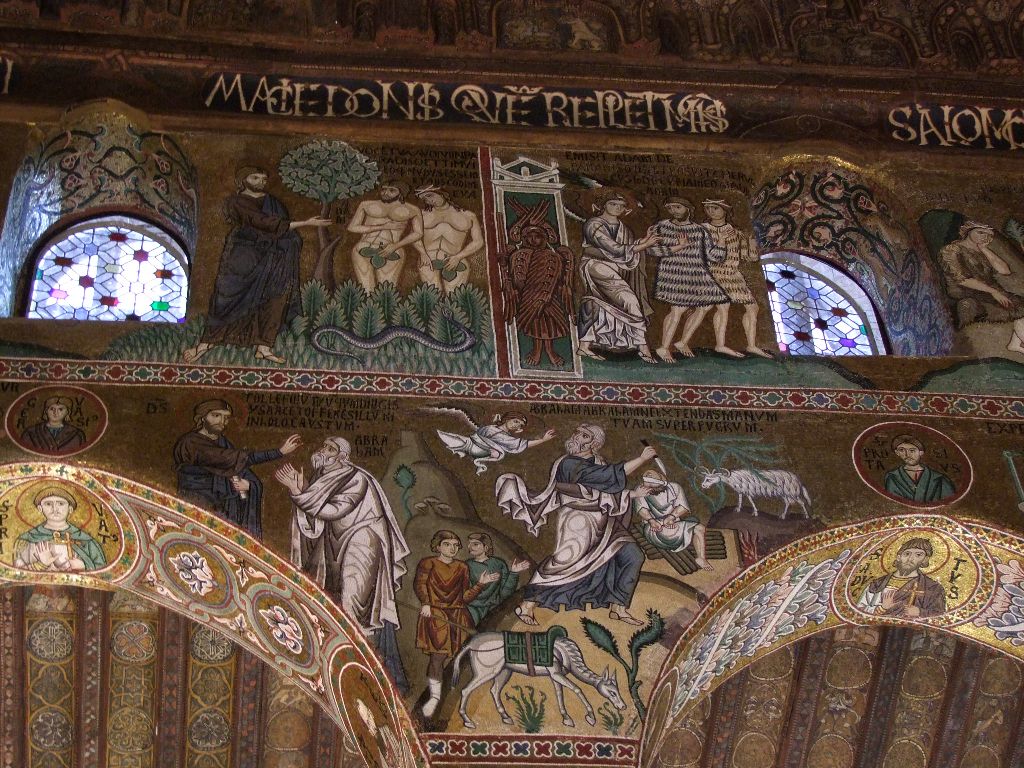
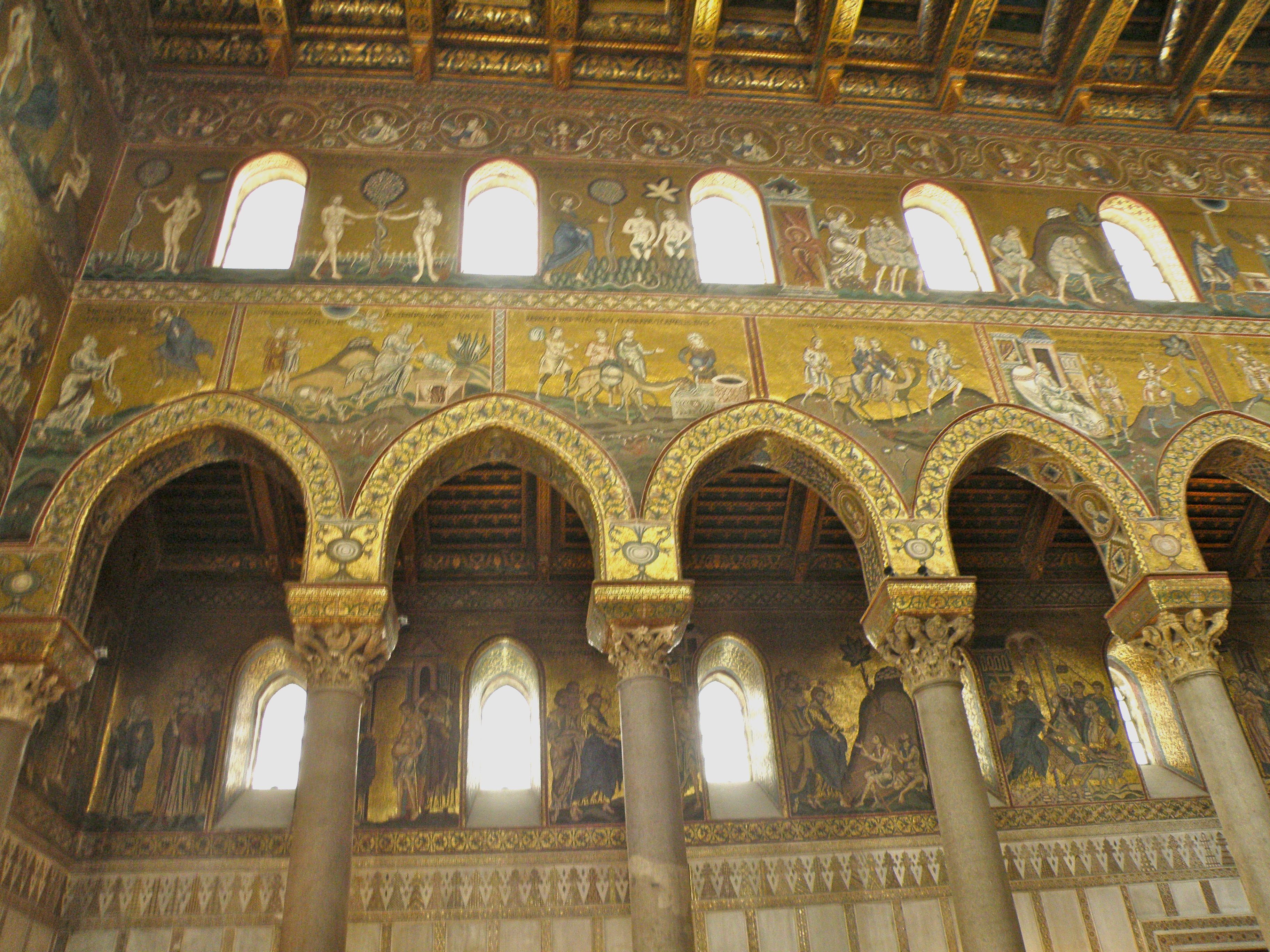
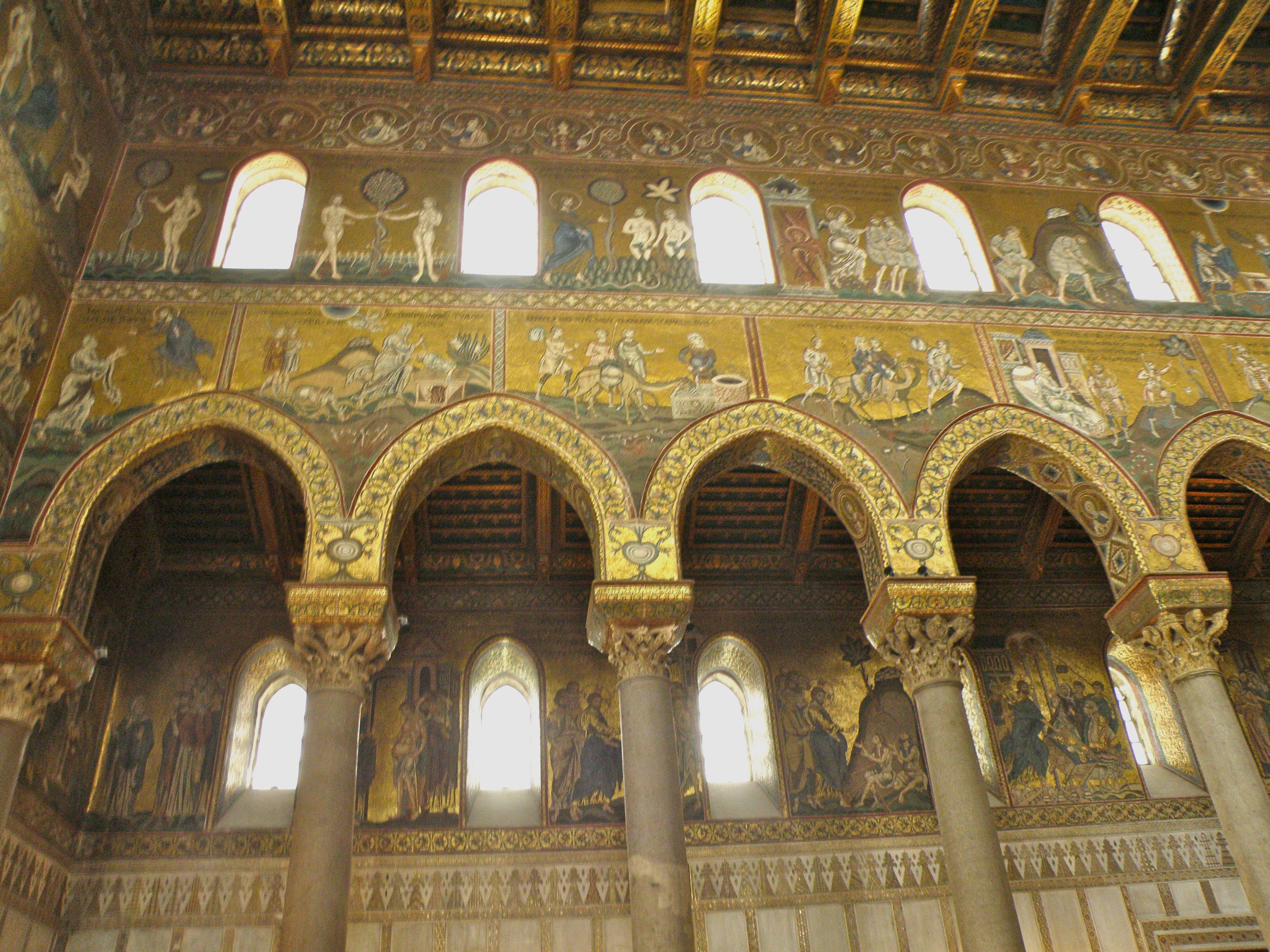
We are not finished yet! We vault into the car (after constant badgering by our children we’ve taken to doing a lot of exercise recently, so I can imagine ourselves vaulting jauntily over the doors and dropping into our seats) and we keep on going up Via Vittorio Emanuele, which has now morphed into Via Calatafimi. We go on and on until we hit the hills behind Palermo, at which point we start climbing and finally find ourselves in Monreale, once a village on the outskirts of Palermo but now a suburb. We head – of course – for the cathedral and casually park the car in front of the cathedral. We walk into this late 12th Century church and I suddenly feel that I am back in the church of Sant’Apollinare in Ravenna, where we started our dream journey.
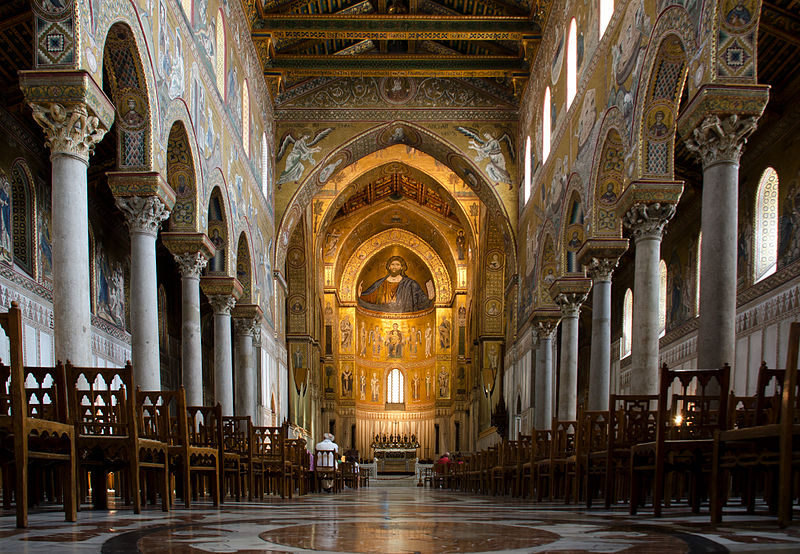
monreale-duomo-1

Biblical scenes on fields of gold unfurl along upper tiers of the nave

monreale-duomo-6

OLYMPUS DIGITAL CAMERA

to reach the theological high point in the apse, with its assembled saints and angels presided over by a rather severe Pantocrator.
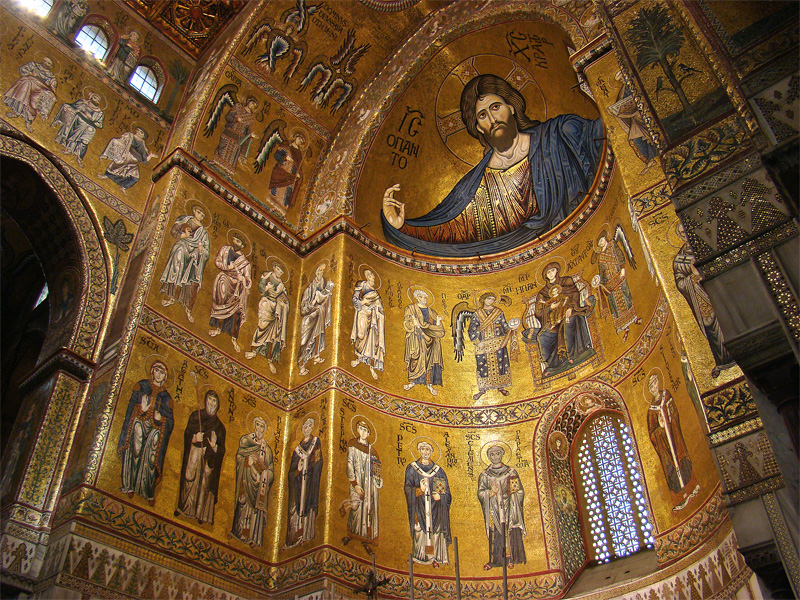
monreale-duomo-2

But how the styles have changed in the intervening six centuries! Then, it was still Roman art, although of a rough-and-ready sort. Now, it is early medieval art in all its stiff, hieratic splendour.

After all that gold, we go up on the roof of the church and drink in the astringent blue of the sky, which is rather like eating a lemon sorbet after a heavy main course so as to cleanse the mouth of all that richness. We gaze out across Palermo and over the “wine-dark” Tyrrhenian Sea beyond (to borrow Homer’s rather strange description of the sea’s colour).
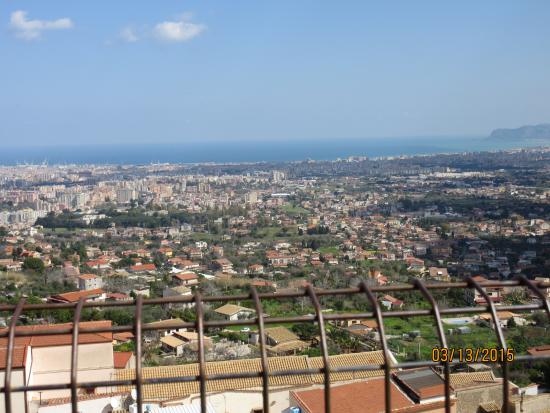
monreale-panoramic-view

Tonight, we will catch the ferry and cross that sea to Naples – another Greek colony long, long ago – and from there drive up to Rome, our last stop on this exhaustive, and mentally exhausting, tour of early Christian mosaics.

_________________

Lecce: https://youthfullyyoursgr.files.wordpress.com/2013/05/lecce-it.jpg (in https://youthfullyyoursgr.wordpress.com/%CF%80%CF%81%CE%BF%CE%B3%CF%81%CE%AC%CE%BC%CE%BC%CE%B1%CF%84%CE%B1/get-up-stand-up-be-healthy-guys-youth-exchange-lecce-%CE%B9%CF%84%CE%B1%CE%BB%CE%AF%CE%B1-22-29072013/)
Otranto-mosaic-1: http://www.paradoxplace.com/Perspectives/Sicily%20&%20S%20Italy/Puglia/Otranto/Cattedrale/Images_Mosaics/800/Mosaic_Floor-Nov06-DC9997sAR800.jpg (in http://www.paradoxplace.com/Perspectives/Sicily%20&%20S%20Italy/Puglia/Otranto/Otranto.htm)
Otranto mosaic-2: http://www.swide.com/wp-content/uploads/2014/06/Reasons-to-travel-puglia-apulia-italy-mosaics-Otranto.jpg (in http://www.swide.com/food-travel/reasons-to-travel-to-puglia-apulia-italy-top-20-things-to-do/2014/06/30)
https://canvas.harvard.edu/courses/305/pages/the-mosaic-of-otranto
Bayeux Tapestry: http://upload.wikimedia.org/wikipedia/commons/b/bb/Bayeux_Tapestry_scene57_Harold_death.jpg (in http://en.wikipedia.org/wiki/Bayeux_Tapestry)
Copertino: http://www.amedeominghi.info/wp-content/uploads/2014/05/PiazzaMazzini.jpg (in http://www.amedeominghi.info/nuovedate/)
Taranto: http://it.wikipedia.org/wiki/Ilva#/media/File:ILVA_-_Unit%C3%A0_produttiva_di_Taranto_-_Italy_-_25_Dec._2007.jpg (in http://it.wikipedia.org/wiki/Ilva#Unit.C3.A0_produttiva_di_Taranto)
“Pythagoreans celebrating the sunrise”, by Fyodor Bronnikov(1827–1902): http://en.wikipedia.org/wiki/Pythagoras#/media/File:Bronnikov_gimnpifagoreizev.jpg (in http://en.wikipedia.org/wiki/Pythagoras)
Pertusola: http://www.ilcirotano.it/wp-content/uploads/2012/06/Ex-Pertusola.jpg (in http://www.ilcirotano.it/2012/10/09/viaggio-nella-pertusola-sud/)
Bronzi di Riace: https://news.artnet.com/wp-content/news-upload/2014/08/Riace-bronzes-e1408562456865.jpg (in https://news.artnet.com/art-world/italy-risks-priceless-riace-bronzes-for-cash-82747)
Cefalù-duomo-1: http://commondatastorage.googleapis.com/static.panoramio.com/photos/original/74677063.jpg (in https://geolocation.ws/v/P/74677063/abside-del-duomo-di-cefal-cristo/en)
Cefalù-duomo-2: http://it.wikipedia.org/wiki/Duomo_di_Cefal%C3%B9#/media/File:Cefalu_Christus_Pantokrator_cropped.jpg (in http://it.wikipedia.org/wiki/Duomo_di_Cefalù)
Palermo-Martorana-1: http://upload.wikimedia.org/wikipedia/commons/thumb/c/c0/Chiesa_della_Martorana_cupola.jpg/640px-Chiesa_della_Martorana_cupola.jpg (in http://en.wikipedia.org/wiki/Martorana#Interior)
Palermo-Martorana-2: http://it.wikipedia.org/wiki/Chiesa_della_Martorana#/media/File:Palerme_Martorana168443.JPG (in http://it.wikipedia.org/wiki/Chiesa_della_Martorana)
Palermo-Martorana-3: https://classconnection.s3.amazonaws.com/848/flashcards/3299848/jpg/palermo_chiesa_20martorana_mosaic_nativity-13F311CF74763DF1FB7.jpg (in https://www.studyblue.com/notes/note/n/ecb-final-review/deck/8598474)
Palermo-Martorana-4: http://www.wga.hu/art/zgothic/mosaics/8/2martor2.jpg (in http://www.wga.hu/html_m/zgothic/mosaics/8/2martor2.html)
Palermo-Martorana-5: http://upload.wikimedia.org/wikipedia/commons/b/b3/Chiesa_della_Martorana_Christus_kr%C3%B6nt_Roger_II.jpg (in http://commons.wikimedia.org/wiki/File:Chiesa_della_Martorana_Christus_kr%C3%B6nt_Roger_II.jpg)
Palermo-Martorana-6: http://it.wikipedia.org/wiki/Chiesa_della_Martorana#/media/File:George_of_Antioch_and_Holy_Virgin_2009.jpg (in http://it.wikipedia.org/wiki/Chiesa_della_Martorana)
Palermo-Cappella Palatina-1: http://en.wikipedia.org/wiki/Cappella_Palatina#/media/File:Cappella_Palatina_in_Palermo_Sicily.JPG (in http://en.wikipedia.org/wiki/Cappella_Palatina)
Palermo-Cappella Palatina-2: http://www.scherminator.com/italy/sicily/cappellaPalatina/cappellaPalatina5.jpg (in http://www.scherminator.com/italy/sicily/cappellaPalatina/cappellaPalatina.html)
Palermo-Cappella Palatina-3: http://www.scherminator.com/italy/sicily/cappellaPalatina/cappellaPalatina0.jpg (in http://www.scherminator.com/italy/sicily/cappellaPalatina/cappellaPalatina.html)
Palermo-Cappella Palatina-4: http://www.scherminator.com/italy/sicily/cappellaPalatina/cappellaPalatina10.jpg (in http://www.scherminator.com/italy/sicily/cappellaPalatina/cappellaPalatina.html)
Monreale-Duomo-1: http://it.wikipedia.org/wiki/Duomo_di_Monreale#/media/File:MonrealeCathedral-pjt1.jpg (in http://it.wikipedia.org/wiki/Duomo_di_Monreale)
Monreale-duomo-2: https://ofsplendourinthegrass.files.wordpress.com/2012/08/p1110054.jpg (in https://ofsplendourinthegrass.wordpress.com/2012/08/30/monreale/)
Monreale-duomo-3: http://giazza.se/wp-content/uploads/2012/05/pal-dome-2.jpg (in http://giazza.se/?p=1506)
Monreale-duomo-4: http://it.wikipedia.org/wiki/Duomo_di_Monreale#/media/File:Sicilia_Monreale2_tango7174.jpg (in http://it.wikipedia.org/wiki/Duomo_di_Monreale)
Monreale-panoramic view: http://media-cdn.tripadvisor.com/media/photo-s/07/87/3f/dc/panoramic-view-from-the.jpg (in http://www.tripadvisor.it/LocationPhotoDirectLink-g666663-d4470498-i126304220-Norman_Cathedral_of_Monreale-Monreale_Province_of_Palermo_Sicily.html)

SALT AND SWEET

Bangkok, 5 February, 2015

A few weeks ago, I visited a couple of electric arc furnaces which were recycling scrap steel. It was a very interesting visit, the first time I had seen this type of furnace in action.

EAF

They are a nice example of a vital step in what the Chinese call a “circular economy”, an economy in which the materials we use do not simply get thrown away after we’ve finished with them, but are collected, recovered, and reused.

But actually, what I want to focus on in this post is the dinner we were served during the visit, or rather on one course of that dinner. I should explain that since these furnaces work on electricity and since electricity is expensive in Thailand during the day, the furnaces are run at night. So the visit of the furnaces started at 8 o’clock in the evening, and the first company we visited kindly offered us dinner to fortify us for the hot and dusty visit which awaited us. Since this was a Chinese-owned company, we were served a Chinese-style dinner which, after my five years spent in China, brought a nostalgic mist to my eye. As is usual in China, the dinner ended with fresh fruit. But this fruit course had an interesting twist. We were served fresh pineapple with a soy sauce dip. Soy sauce! That is not something I had ever thought of combining with pineapple. But actually it was delicious.

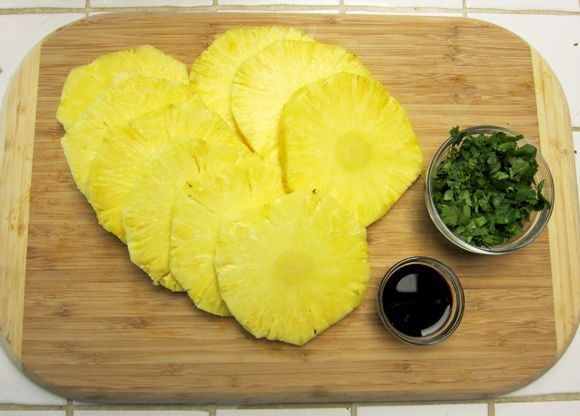
Pineapple and Soy Sauce

This is the only photo I could find on the (English-language) web which in any way resembled what we found before us at dessert time, but even this is for a recipe where the pineapple is fried, which explains the presence in the photo of the coriander (to be used as a final garnish). I take this lack of photos to be an indicator that I may be one of the few in the English-speaking world who has tried this particular combination of sweet and salt. But readers are free to disabuse me of my belief.

In any event, as I let my taste buds deal with this interesting sweet-salt combination, I remembered a conversation we had had around the Christmas lunch table about precisely this issue: the mixing of salt and sweet. Our son had maintained that it was not natural to mix sweet and salt, and more generally that different flavours should be kept separate. Our daughter maintained that there were many dishes where salt and sweet were combined, which suggested that actually it was quite natural to mix sweet and salt. I was torn. As my long-suffering wife knows only too well, I object to mixing things on my plate: the vegetables are to be kept neatly separated from the meat and from each other, the dressing from the salad should not be allowed to leak over to the meat, etc. So on these grounds, I also feel that sweet and salt should not mix. Yet I have to acknowledge that there are dishes where the sweet and salt combination is exceedingly pleasing. After the pineapple and soy sauce dip experience, I resolved to do some research (a.k.a. web browsing) on the topic.

I’ve now done the research and am ready to report back, although I must confess to not having much to report. All agree that “common sense” suggests that salt and sweet do not mix, yet all agree that actually many of us do like to mix the two. Why is this? As far as I can make out, no-one has really figured it out. One possible answer is biochemical. The sodium ions of salt somehow enhance all taste buds: “there’s evidence that applying a sodium-channel blocker (TTX) can dramatically inhibit the activity of all taste receptors, suggesting that sodium plays a key role in the cellular detection of every taste (and not just the taste of salty things) … This would explain why food without any salt is so hopelessly boring: it might be literally harder for our various taste receptors to get excited.” So mixing salt with sweet enhances sweet because of a biochemical pathway we are born with. Just to make the whole discussion sound even more scientific, I throw in here a close-up of a taste bud on a tongue, which is what sodium ions seem to be enhancing.

tongue-taste-bud

But why would we have evolved to have that biochemical pathway? One possible answer is that because we humans are omnivores, we’re wired to desire many different foods and tastes. It’s bad for us to eat just one thing, so our sense of taste has evolved to give us greater gratification if we mix tastes. My wife will be very pleased to hear that there is a scientific underpinning to her insistence on mixing foods and tastes.

Let me celebrate this new understanding on my part of my biological processes by sharing with readers some of the wonderful sweet-salt dishes which I have stumbled across in my life. Where to start? Well, at the beginning, I guess, with the first such dish I ever remember trying, lamb with mint sauce. My English grandmother had taken me to visit an uncle and aunt and assorted cousins, and my aunt served us lamb with mint sauce for lunch.

lamb and mint

She served it with two veg, as is de rigeur for any English meat dish. In this case, I remember distinctly that the veg in question were that most English of combinations, peas and potatoes (she also made a magnificent apple crumble, by the way; no apple crumble I have ever eaten since has tasted so good).

Mint sauce is really easy to make, by the way, about as easy as lamb chops. I give an executive-summary recipe at the end of the post for those readers who are interested. What I think is important to point out here is that the recipe calls for a mix of sugar and vinegar. In my humble opinion the best combination is actually sweet, salt, and acid or tartness. To my mind, that’s what made the pineapple and soy sauce so good, the fact that the pineapple is also tart. Dragon fruit, a much milder fruit, was being served along with the pineapple. When I asked if that too should be dipped in the soy sauce, our hosts pursed their lips and gave it as their considered opinion that it wouldn’t work.

Lamb with mint sauce is incredibly English (and I mean English. I don’t think the Scots or the Welsh eat it). It is so English that the French made fun of Les Anglais because of it – the French consider the use of mint sauce to be beyond the cooking pale. Our friends Goscinny and Uderzo, who wrote the Asterix and Obelix stories, had mint sauce play a major role in our heroes’ adventures in Britain, with the governor of province at one point shouting that if his men did not find the pair (who had just disappeared from prison) he would have his commanders boiled and served with mint sauce to the lions. To which the commanders commented how horrible that would be – for the lions.

asterix sauce a la menthe

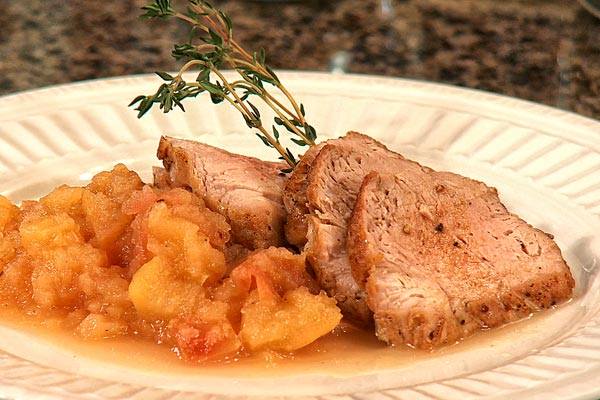
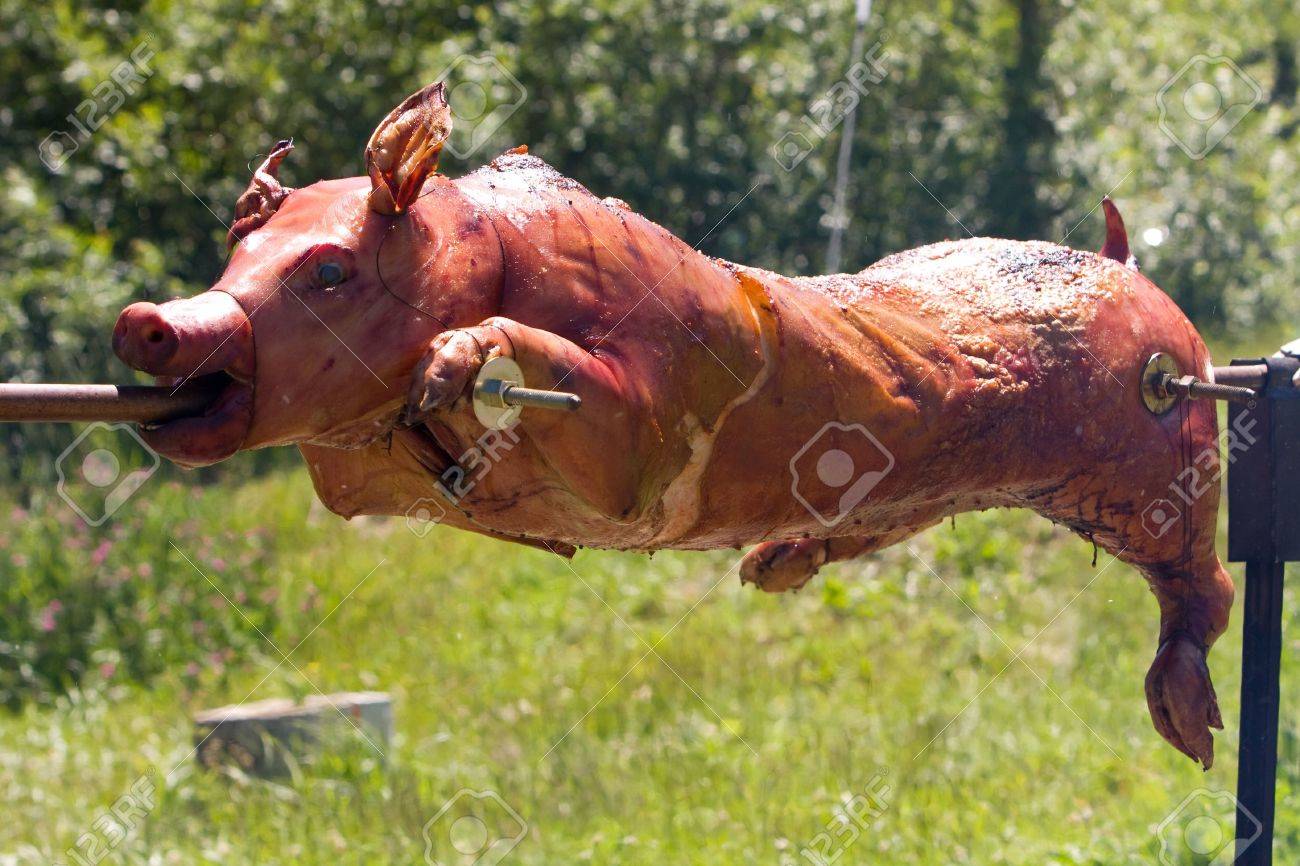
The French loved it, lapping up the fun being poked at English cuisine. But I will ignore the smirking French and concentrate on another great example of English cuisine which is also a sweet-salt dish, roast pork and apple sauce. I first had this delicious dish as a boy scout. It was summer, the end of the school year, that time in the calendar when England can often be bathed in golden light rather than be grey and sodden.  For our last outing of the year, the scout master had the brilliant idea of buying a whole pig and roasting it on a spit in the woods. I have this crystal clear memory of sitting around the spit, listening to the fat crackle, breathing in the smell of cooking meat, watching the scout master sharpen the large carving knife, while the sunlight dappled the ground all around us. It’s the closest I have ever felt to being a Cro-Magnon man.

roasted pig

And then there was the discovery of the exquisite taste of roast pork and apple sauce, a large dollop of which was dumped onto our metal field plates along with a big slab of pork meat and crackling.

roast pork and apple sauce

Those readers interested in knowing how to make this sauce should scroll down to the end of the post. I just want to note that cooking apples should be used. They are tarter than eating apples. It’s the tartness thing again. One can also add lemon zest, presumably to add yet more tartness.

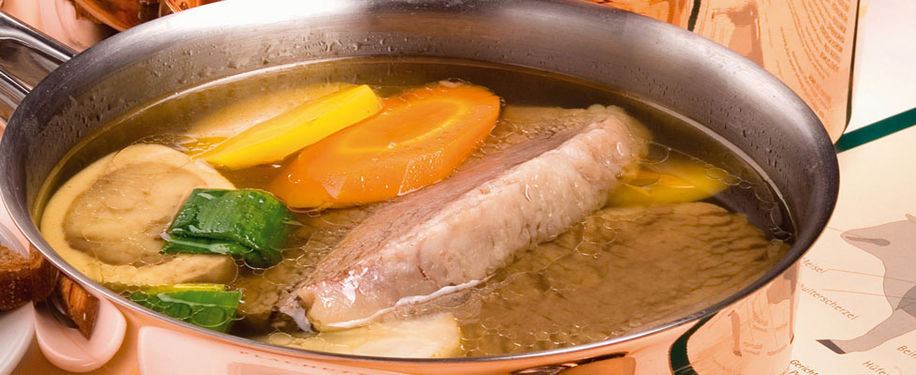
Of course, the English do not have a monopoly in Europe on sweet-salt dishes. Allow me to introduce here a dish I discovered and came to love when we moved to Vienna: Tafelspitz. There is a venerable ritual to cooking Tafelspitz, but when you reduce it to its essentials it is beef meat (topside or top round) boiled slowly over many hours with a medley of root vegetables – carrot, celeriac, parsnip and the like – and a piece of marrow bone. It is normally served like this:

tafelspitz

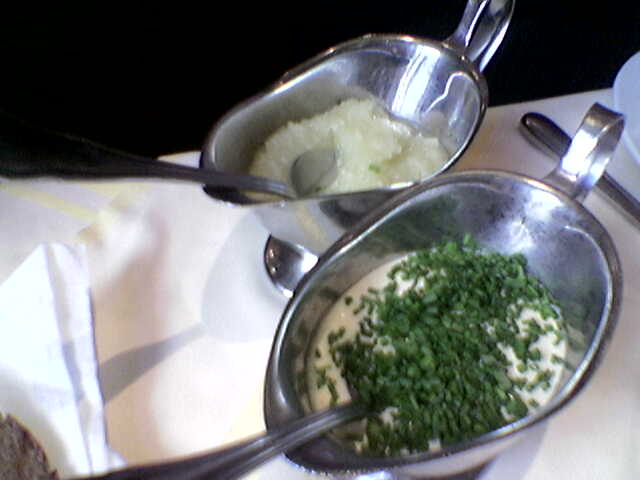
You can start with a cup of the broth which is engendered by the boiling of the meat, just to whet your appetite. You can then turn your attention to the meat proper, which you will eat with the vegetables, possibly some fried grated potatoes, and – to spice up what is otherwise a rather bland dish – two types of sauce, a cream-based chive sauce and apple-horseradish sauce.

tafelspitz sauces

My earnest suggestion is that you ignore the chive sauce in the front of the photo and go with the apple-horseradish sauce behind it. It is just a variant of the apple sauce I described earlier; you simply add grated horseradish. If you make this sauce at home, my further suggestion is to be generous with the amount of horseradish you add. The best Tafelspitz I ever had was served with an apple-horseradish sauce that made my eyes water slightly. I don’t want to sound like a broken record, endlessly repeating myself, but tartness really helps appreciation of the sweet-salt taste.

Both the French and the Italians have a similar dish of boiled meat, pot-au-feu in the first case and bollito misto in the second. My French grandmother made an excellent pot-au-feu and I am very fond of it, but since it is normally eaten with mustard I will drop it from this discussion. We shall focus instead on bollito misto, a dish which is very popular in northern Italy and (as the name suggests) consists of a variety of boiled meats: cuts of beef and veal, cotechino (a pork-based sausage), and sections of hen or capon.

bollito misto

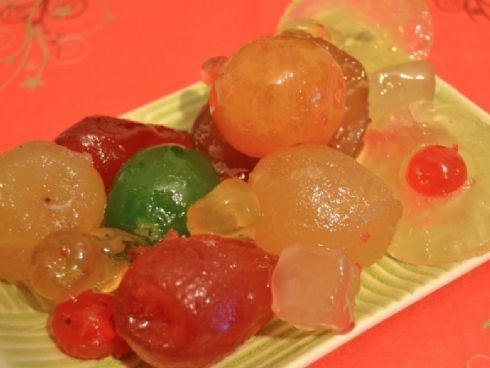
My wife reminisces from time to time that her father was very fond of bollito misto, eating it like most northern Italians do with a sauce called mostardaactually, mostarda di Cremona. In a country known for the fierce independence of its cities, it will come as no surprise to the readers that probably every city in northern Italy has its own variety of mostarda. Despite its name, the sauce has only a little to do with mustard. It is really a mix of candied fruit which is given a kick by the addition of mustard powder (that tartness thing again…). Those slices of fruit in the photo above are the mostarda, but I give here a more direct picture.

mostarda di cremona

My wife confesses to never having liked mostarda; she can’t even stand the smell. Personally, I have never tried it, but a number of sites do support my wife’s assertion, mentioning that the taste of mostarda is an “acquired taste”. This is normally code for saying that something tastes revolting the first several/many times you try it. In any event, if my wife says it’s not nice, then that’s good enough for me! No spoonful of it shall ever pass my lips. For those readers who will ignore these warnings and wish to try it, though, I give a brief recipe at the end of the post.

I feel that I cannot move away from mostarda without mentioning the somewhat similar chutney sauce one finds in the UK, or at least one found when I was a boy. Although “chutney” as a word has Indian roots, what I ate as a boy was several removes from things Indian. The most popular brand back then was a mango chutney which went by the name of Major Grey’s Chutney and was sold by Crosse & Blackwell. The story went that a certain Major Grey, a British officer in India, had surveyed the local Indian chutneys and then invented his own, more British, chutney, which he proceeded to bring back to the motherland when he retired, to remind him of the Good Old Days. When I was a boy I rather imagined this Major Grey to look like this

British soldier India-1

fighting heroically against savage natives on the Northwest frontier and getting a VC for his –quite literal – pains. But alas! this appears to be pure legend. It seems that something similar to mostarda, some sort of fruit conserve, existed already in the UK and the Brits in India took the idea with them and adapted it to local ingredients. So what this chutney will usually have as ingredients is mangoes, raisins, vinegar, onions, sugar, and spices. Crosse & Blackwell also include lime juice and tamarind juice. As you can imagine from the ingredients, this chutney is both sweet and tart. Again, for heroic readers who want to make this sauce from scratch, scroll to the end of the post.

I haven’t eaten this kind of chutney in many decades, but when I was young my favourite way of eating it was with slices of cold meat (the chutney is in the round bowl to the left of the photo below).

cold meat and chutney

This was an especially popular dish in pubs, where this photo was taken. Sitting here in Thailand, I feel a sudden nostalgia for the English country pubs whose bars I propped up in my youth, so I am moved to throw in a photo of a nice country pub.

Bridge Inn

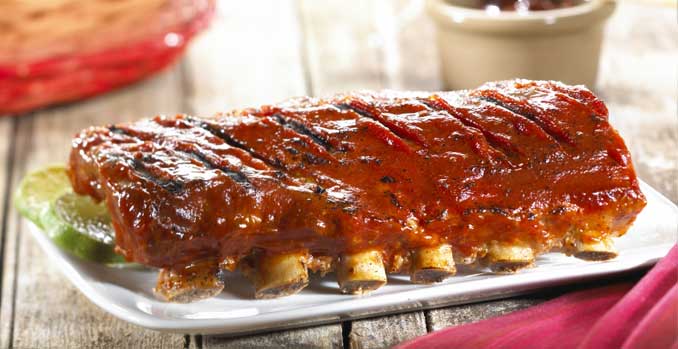
Like Superman, I now vault over to the US and alight somewhere in the open ranges of the Midwest, for no better reason than having this feeling that my next salt-sweet sauce – barbecue sauce – was invented around there somewhere. That being said, my wife and I didn’t try it there. We were just discussing this point and we reckon that it was somewhere between Boston and Washington in the early 1980s. Wherever it was, we stared open-mouthed at these large racks of ribs smothered in this dark reddish brown sauce.

ribs and barbecue sauce

But very soon we were closing our mouths over those ribs. Ah, that sauce! … But I should say: those sauces. In this little research I’ve done I have discovered that there are dozens of different barbecue sauces. I thought the Italian quarrels about where the best mostarda is made were fierce, but boy! the arguments about what place in the US makes the best barbecue sauce are right up there. I’m going to keep my head low without backing any particular sauce. I’m merely going to say that wherever the sauces are made they all seem to have sugar (preferably brown), tomato ketchup, vinegar, and some salt, to which various spices are added in varying levels and in different combinations (Worcestershire sauce, pepper, paprika, mustard, chili, cayenne, and on and on). That combination of sweet and tart again, to challenge the salt of the meat. Readers can look at the end of a post for condensed recipe of an excellent sauce from Kansas City (but don’t tell anyone I said it).

Deary me, I seem to have gone on for quite a while here, and I’m sure I haven’t covered one-hundredth of the sweet-salt dishes enjoyed around the world. On top of it, I’ve only mentioned meat dishes; it makes me sound a total carnivore, red in tooth and claw. But there was that fish dish in Shanghai … and there are all those sweet salad sauces to pour on vegetables … But I have to stop. I’ll just add two final combinations of salt and sweet which show that meat (or fish) is not the only food the delight of which is heightened by the salt-sweet experience: one which probably every person on the planet has enjoyed by now, what with the prevalence of fast food joints, french fries and ketchup

french fries and ketchup

and one which I’ve mentioned in an earlier post, chocolate and French baguette

chocolate and baguette

Mmm, so good!

So give your taste buds a whirl and douse them with sugar and salt – and a dash of vinegar, or horseradish, or something tart. Enjoy!

-o0o-

Mint sauce: Strip the leaves off a bunch of mint, sprinkle them with a pinch of salt, and chop finely. Place the result in a bowl, add 1 level tablespoon of caster sugar and pour over the mix 4 tablespoons of boiling water. Stir and leave to cool. Stir in 4 tablespoons of vinegar. Add more water or vinegar to suit your taste.

Apple sauce: Take a number of cooking apples, peel them, core them, and chop them up. Put the apples in a saucepan and add water. Once can also add lemon zest. Cover and cook over a low heat until the apples have gone soft and mushy. At which point take off the heat and beat in a knob of butter and a teaspoon of sugar. Cool.

Mostarda di Cremona: Begin by washing the various fruit: pears, quinces, cherries, apricots, figs, and peaches (although I’m sure you can vary the fruit as you wish). Cut the apricots and peaches into halves or quarters (depending on their size) and remove their stones, peel. Core and quarter the pears and quinces. Dry all the fruit after preparation. Add the sugar – a lot of sugar! half a kilo for every kilo of fruit, more if you want your mostarda sweet (but for reasons suggested above, I would go easy on the sweetness and maybe go heavier on the mustard powder). Pour some squeezed orange juice over it. Let the whole rest for 24 hours, gently turning the pieces a couple of times. By the end of this time the sugar will have dissolved. Drain the fruit well – without losing the syrup! Bring the syrup slowly to a boil, and let it boil gently until its volume is reduced by half. Pour the remaining syrup back over the fruit. The sugar in the now-concentrated syrup will extract more moisture from the fruit, which will begin to shrink and firm up. Concentrate the syrup again and steep the fruit in it overnight again. Dissolve several tablespoons of mustard powder in some white wine vinegar. Bring the mixture gently to a boil and let it bubble for a few minutes. In the meantime, drain the fruit again, and concentrate the syrup again. Put the candied fruit into jars, add the mustard powder infusion, and then add the hot syrup. The amount of infusion you add will determine of course how much of a kick your mostarda will have. Cover the jars and put them on a cool dark shelf. The mostarda will be ready to eat in two weeks’ time.

Major Grey’s chutney: (this is one of many recipes for this kind of chutney) Combine 4 cups of 5-6 medium-sized chopped mangoes, 1 cup of brown sugar, half a cup of molasses, 1 cup of vinegar, 1 cup of coarsely chopped onions, three-quarters of a cup of golden raisins, half a cup of seeded and chopped limes, half a cup of peeled, seeded and chopped orange, a quarter of a cup of peeled, seeded and chopped lemon, and finally a bunch of spices: half a cup of grated ginger root , 3 cloves of minced garlic, 1 tablespoon of mustard seed, 1 tablespoon of dried red pepper flakes. Cook for about 30 minutes, stirring often. Add 2 tablespoons finely chopped fresh cilantro, 1 teaspoon of ground cinnamon, a quarter of a teaspoon of ground cloves, a quarter of a teaspoon of ground allspice. Cook for another 10 minutes or so, until chutney starts to thicken. Ladle chutney into a jar and close it air-tight.

Barbecue sauce: (from Kansas City) In a saucepan over medium heat, stir together ½ cup of ketchup, 2 tablespoons of brown sugar, 1 tablespoon of cider vinegar, 2 tablespoons of Worcestershire sauce, ¼ teaspoon of salt, ¼ teaspoon of mustard powder, 1 teaspoon of garlic powder, and a dash of hot pepper sauce. Bring to a simmer, then remove from heat and allow to cool.

_________________

Electric arc furnace: http://ih.constantcontact.com/fs163/1101151826392/img/505.jpg (in http://ricorant.blogspot.com/2014/11/fwd-dominance-of-steel-111114.html)
Pineapple and soy sauce: http://static.squarespace.com/static/51107688e4b0e3b888c1183b/t/519f0a2ee4b0bb6d74d9bdcf/1369377327493/Grilled+Soy-Sauce+Pineapple (in http://larkspurcompany.com/blog/2013/5/20/grilled-soy-sauce-pineapple)
Taste bud closeup: http://cdn1-www.webecoist.momtastic.com/assets/uploads/2010/01/tongue-taste-bud1.jpg (in http://webecoist.momtastic.com/2010/01/11/biological-photography-magnificent-microscopic-ultraminiature-photos/)
Lamb and mint sauce: http://www.thetimes.co.uk/tto/multimedia/archive/00050/table_townsend_74217_50069c.jpg (in http://www.thetimes.co.uk/tto/life/food/recipes/article2701689.ece)
Asterix sauce a la menthe: http://www.prise2tete.fr/upload/NickoGecko-Saucementhe.jpg (in
Roasted pig: http://previews.123rf.com/images/azlightning/azlightning0908/azlightning090800003/5315340-whole-golden-roasted-pig-on-a-spit-spit-roasting-is-a-traditional-hawaiian-luau-method-of-cooking-a-.jpg (in http://www.123rf.com/photo_5315340_whole-golden-roasted-pig-on-a-spit-spit-roasting-is-a-traditional-hawaiian-luau-method-of-cooking-a-.html)
Roast pork and apple sauce: http://www.growingagreenerworld.com/wp-content/uploads/2010/10/123-dishAppleSauce_Pork.jpg (in http://www.growingagreenerworld.com/pork-tenderloin-spiced-applesauce-recipe/)
Tafelspitz: http://www.plachutta.at/typo3temp/pics/1115b4ecd0.jpg (in http://www.plachutta.at/en/about/)
Tafelspitz sauces: http://thepassionatecook.typepad.com/sauces.jpg (in http://thepassionatecook.typepad.com/thepassionatecook/traditional_austrian_food/page/2/)
Bollito misto: http://www.buonissimo.org/archive/borg/XRqDUZ2JX8O3MtcV7PuMgNvG9IvTytvNm6Rhlcw8yOzcxGV4vWA1kg%253D%253D (in http://www.buonissimo.org/lericette/5685_Bollito_misto)
Mostarda di Cremona: http://www.cremonacitta.it/intranet/immagini/_resized/1/scheda/58/w/490x/Prodotti_De_Co_di_Cremona_la_Mostarda_cremonese-img58-01-1.jpg (in http://www.cremonacitta.it/it/gusto_e_sapori_a_cremona/prodotti_de_co_a_cremona_mostarda_tradizionale_sc_58.htm)
Cold meat and chutney: http://media-cdn.tripadvisor.com/media/photo-s/07/0d/d8/5a/blairs-inn.jpg (in http://www.tripadvisor.ie/LocationPhotoDirectLink-g186599-d2014376-i118347866-Blairs_Inn-Blarney_County_Cork.html)
Bridge Inn: http://www.hallflatfarm.co.uk/IMAGES/The%20local%20-%20the%20Bridge%20Inn.jpg (in http://www.hallflatfarm.co.uk/location.html)
British officer in India: http://i80.photobucket.com/albums/j199/matteaston/Afghan1.jpg (in http://www.fioredeiliberi.org/victorian/)
Ribs and sauce: http://www.cooldeals.es/Images/deal-images/eef5c31f-f992-46a5-8993-db0198715a35/20140818133044604.jpg (in http://www.cooldeals.es/Deals/Marbella-Estepona/9fd8ffad-612a-42de-8755-55153751c9e6)
French fries and ketchup: http://scms.machteamsoft.ro/uploads/photos/652×450/652x450_7b63084e7d5012a126811947191414.jpeg (in http://stiri.acasa.ro/social-125/afla-ce-alimente-ascund-sute-de-kilocalorii-110745.html)
Baguette with chocolate: http://a142.idata.over-blog.com/600×449/2/90/63/97/Autrefois-./Chocolat/Le-Bon-Chocolat–13-.JPG

PRICKLY PEAR AND THE COLUMBIAN EXCHANGE

Bangkok, 23 January, 2015

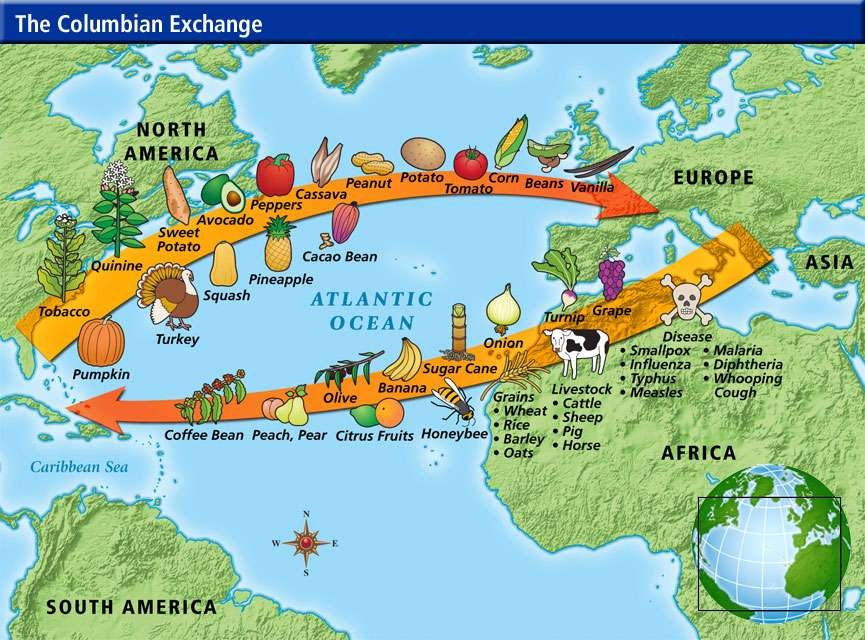
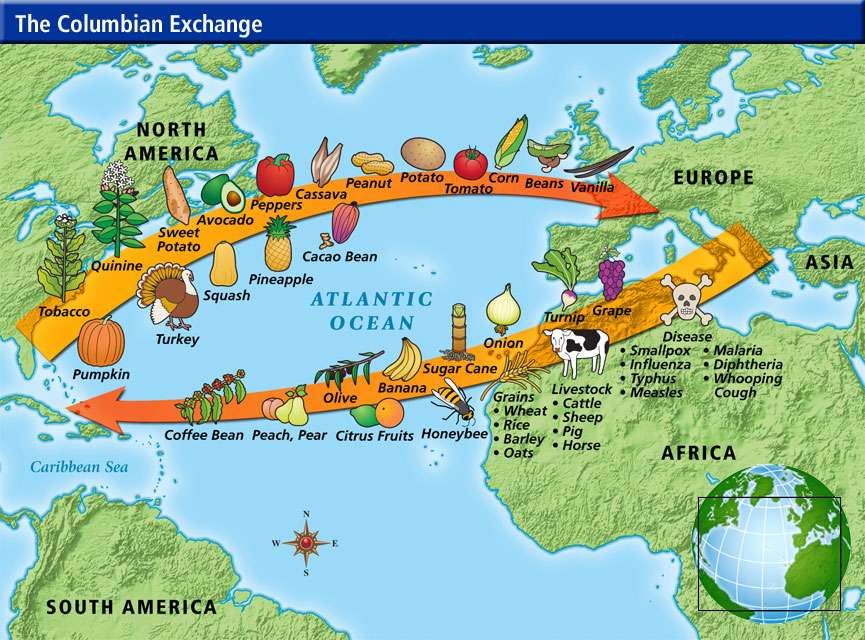
One of the most far-reaching effects of Christopher Columbus’s discovery of the Americas was the so-called Columbian Exchange, the exchange of plants and animals (and bacteria and viruses) between the Americas and the rest of the world. This map shows some of the major crops and livestock which made the journey in either direction between the Americas and Europe.
image
We see, for instance, that the tomato crossed to Europe from the Americas, along with the turkey and corn (and possibly syphilis), while the cow, the horse, and the onion, went the other way, along with smallpox, measles, typhus, and a whole series of other diseases (the diseases nearly wiping out the Amerindian populations).

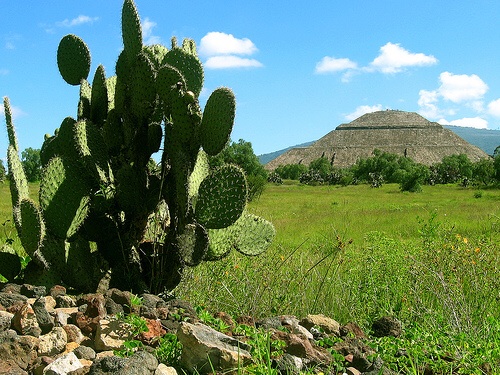
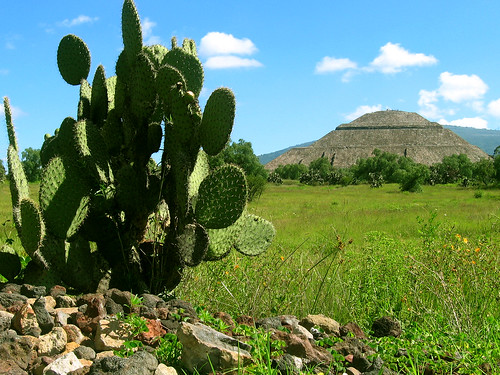
But I want to focus on a plant which normally doesn’t get mentioned in discussions of the Columbian Exchange: the prickly pear, a plant whose history is very much centered on Mexico. Here, we have an exemplar standing guard, as it were, at the site of Teotihuacan.
image
In fact, the prickly pear is so centered on Mexico that it graces the Mexican flag as part of the latter’s central emblem (for those with “mature” eyesight like mine, it’s what the eagle is grasping with its talons at the same time as it grasps that snake in its beak).
image
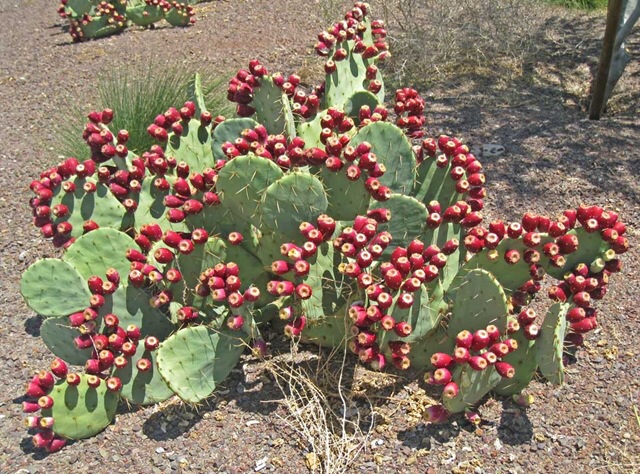
Maybe the prickly pear’s low profile in Columbian Exchange discussions is because it’s such a nasty, spiny plant, which really doesn’t endear itself to anyone.
image
Or maybe because it’s not much of a commercial crop; the Food and Agricultural Organization, which collects global statistics on some 160 crops, collects no statistics on the prickly pear, for instance.

Whatever the reason, I wish to right this injustice and pay tribute to the prickly pear and its role in the great Columbian Exchange. It may perhaps have played a modest economic role, but it helped to fill many an empty stomach, and it sure as hell has played an important ecological role, sometimes wreaking havoc in the ecosystems into which it was thoughtlessly thrust.

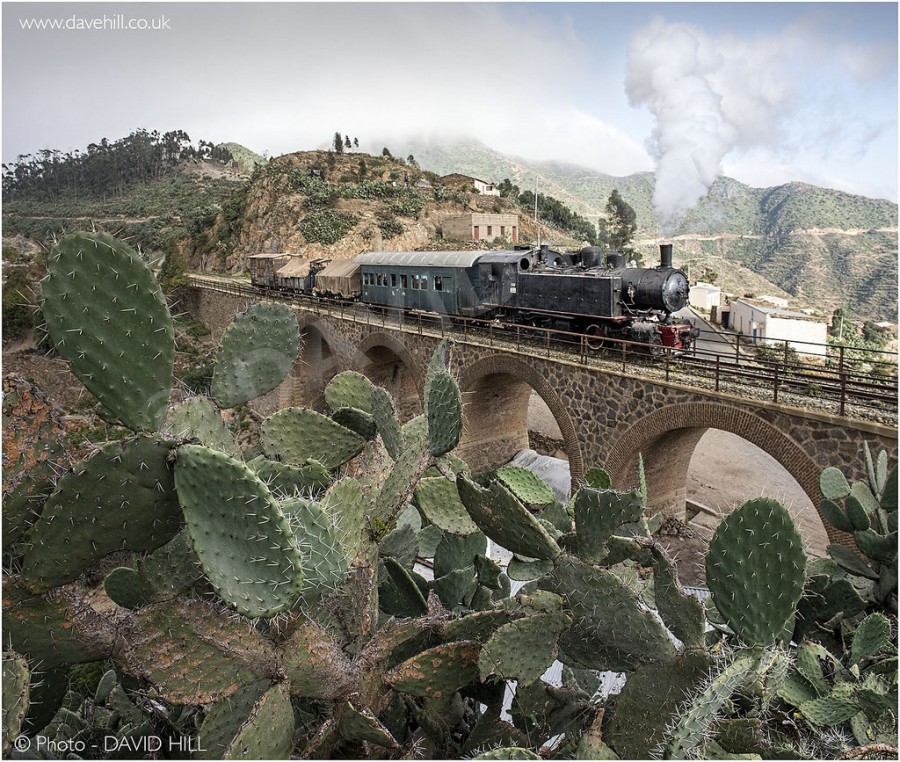
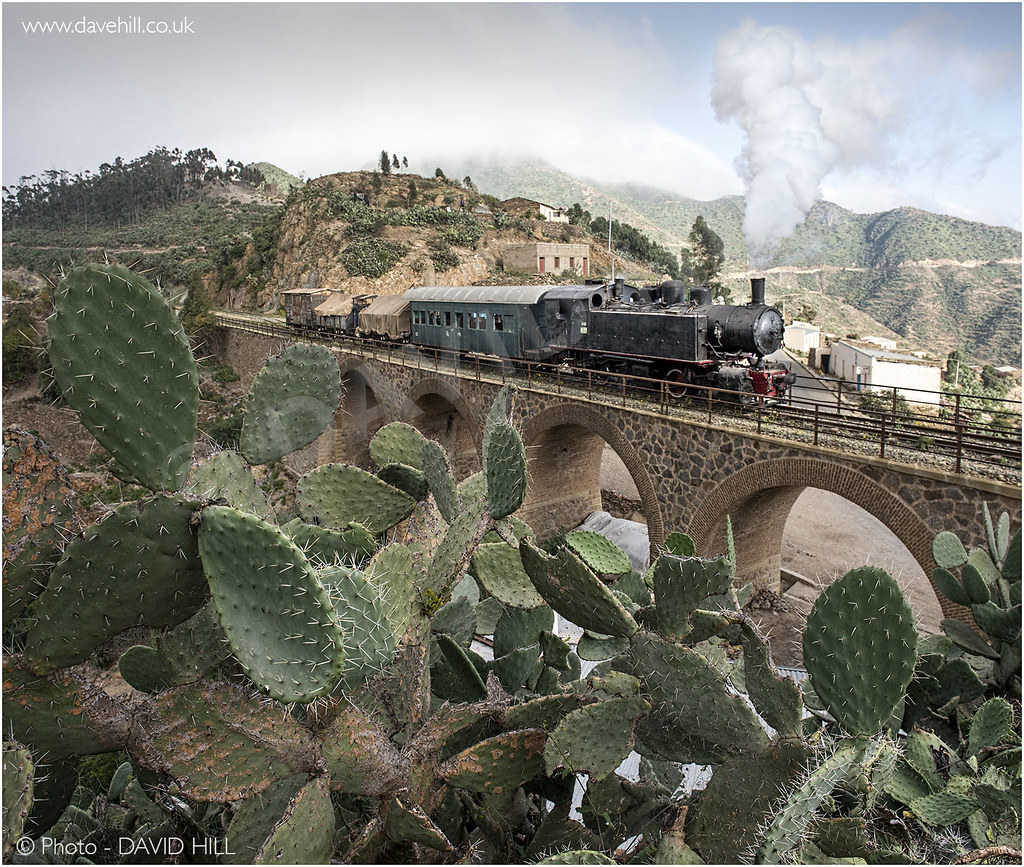
I first met our prickly friend in the country of my birth, Eritrea. Here, you see a specimen in front of the delightful little train which runs from Asmara down to the seaport of Masawa on the Red Sea.
image
I have a vivid memory of taking that train to go down to the coast for a holiday on the beach.

It was the Italians who, as colonial masters
image
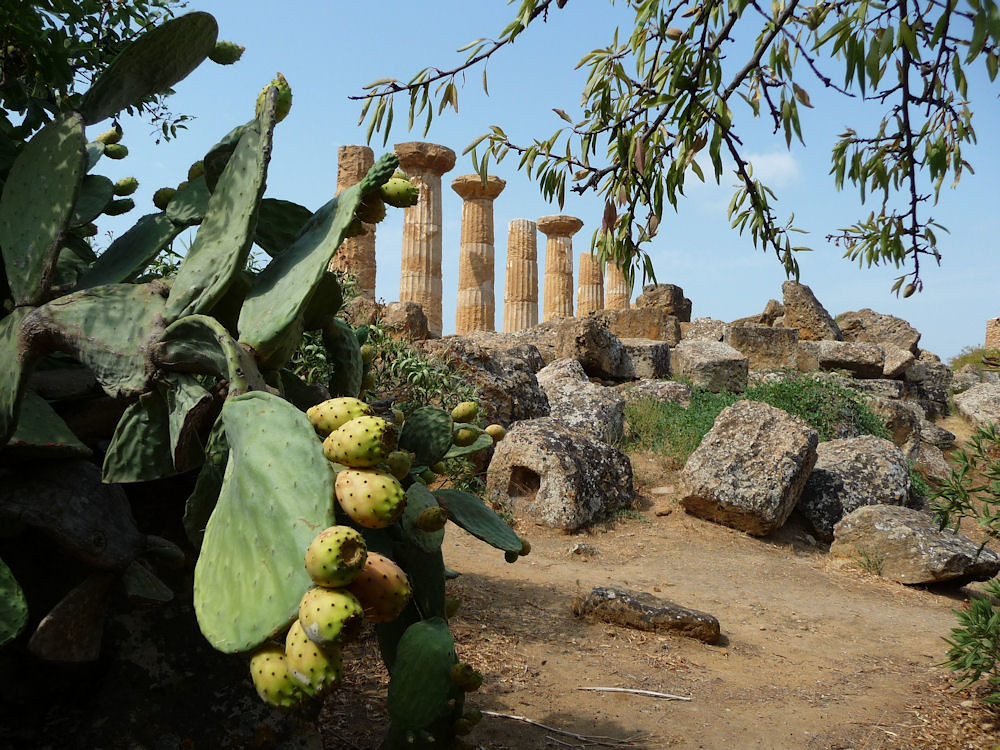
introduced the prickly pear (please note the plant waving at us from behind the colonial troops and their Italian officer). The Italian colonialists brought it from the mother country, of course, where it grows in profusion in the more arid southern regions of the country. We have here an example gracing the ruins of Agrigento in Sicily.
image
But southern Italy was just a later stop on the prickly pear’s journey out of Mexico. It must surely have reached Italy from Spain, which was the first port of call for many of the biological journeys out of the Americas. Here we have a Spanish prickly pear, nudging its way into a photo of Sagunto castle in the province of Valencia.
image
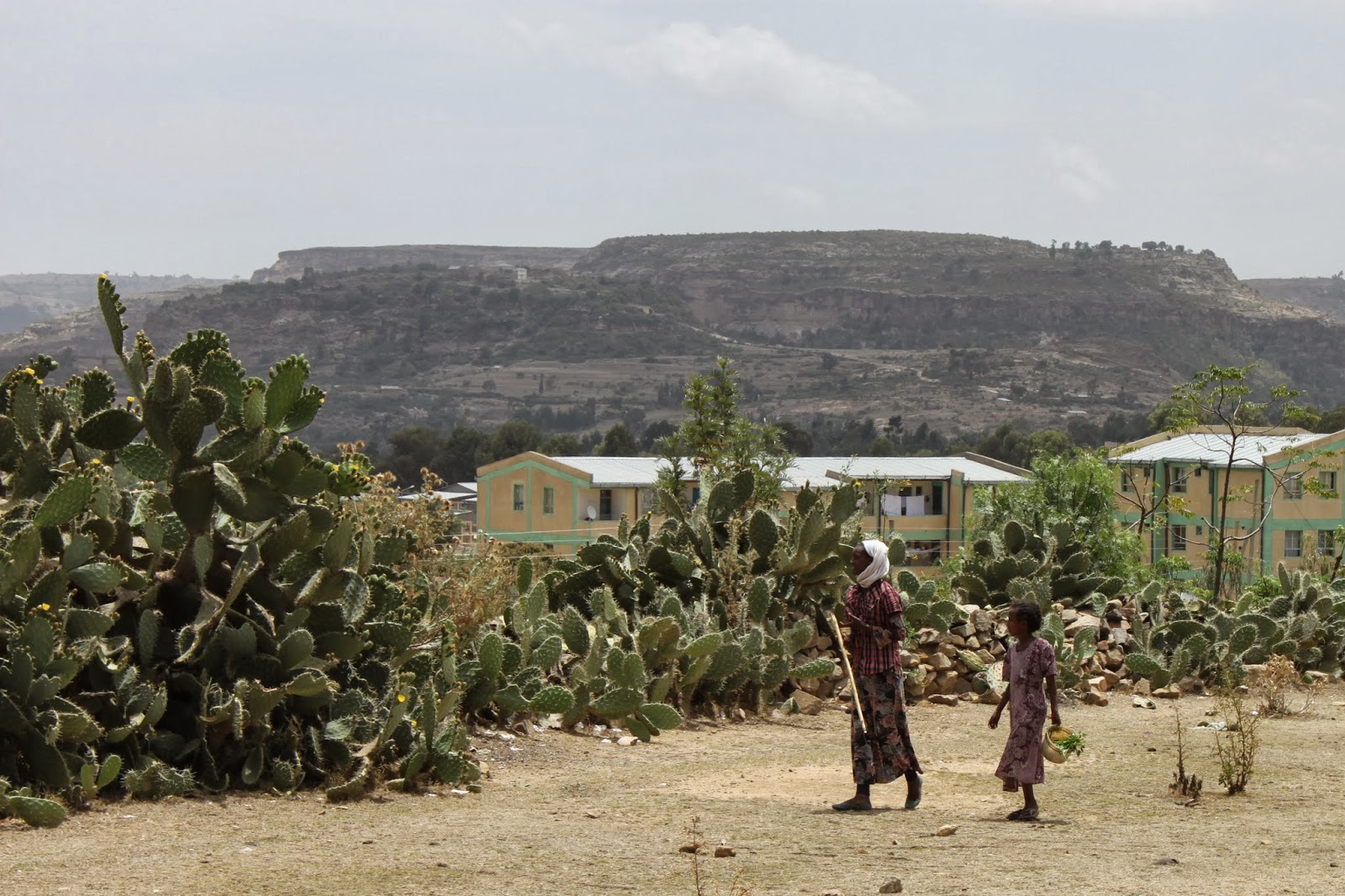
In truth, I have chosen pictures which show off the prickly pear to advantage, but normally the plant is much more unprepossessing. This photo of a ragged, messy patch of prickly pear in a village of Ethiopia is much more typical of how the plant presents itself
image
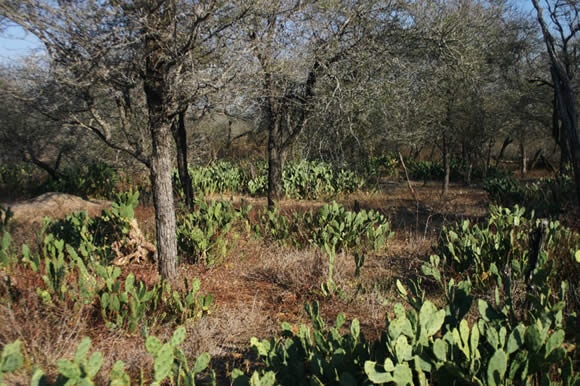
especially when its population levels begin to explode out of control in some foreign ecosystem which has no natural biological defenses against it. The Global Invasive Species Database lists several countries where the prickly pear is now considered an invasive species. Eritrea is one of them, along with the neighboring countries of Ethiopia and Somalia – the Italians, who colonized all three countries had little idea of the damage they were wreaking. But South Africa also considers it an invasive species (here is a picture of prickly pear invading the Kruger national park).
image
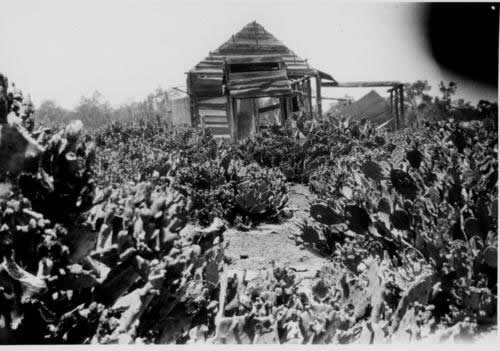
And Australia had a catastrophic invasion. The prickly pear was initially introduced as an ornamental plant for gardens. Then some bright spark thought of using the plant as natural fencing (sensibly enough, cattle and other animals desist from pushing through breaks of prickly pear because of the nasty spines, and they don’t eat them for the same reason) and to start a cochineal dye industry (the little beasties from which the dye is extracted munch the prickly pear’s pads). But the prickly pear went crazy. It eventually converted some 260,000 square kilometers of farmland (which for those readers, who like me don’t think in square kilometers, is more or less equivalent to a square 500 km by 500 km) into an impenetrable green jungle. Farmers were driven off their land by this “green hell” and their abandoned homes were crushed under the cactus growth.
image
The authorities finally managed to get the plague under control in the 1920s by introducing a South American moth, the Cactoblastis cactorum, whose larvae feast on prickly pear. This led to a crash in prickly pear populations, and while the plant has not been eradicated from Australia it has been brought under control (the Australians were lucky, by the way; there is always a risk in this kind of biological control that the agent will find another native plant much more to its liking and wipe that out instead, or once it’s dealt with the original pest will turn its hungry eye on to something else and become an invasive species in its own right).

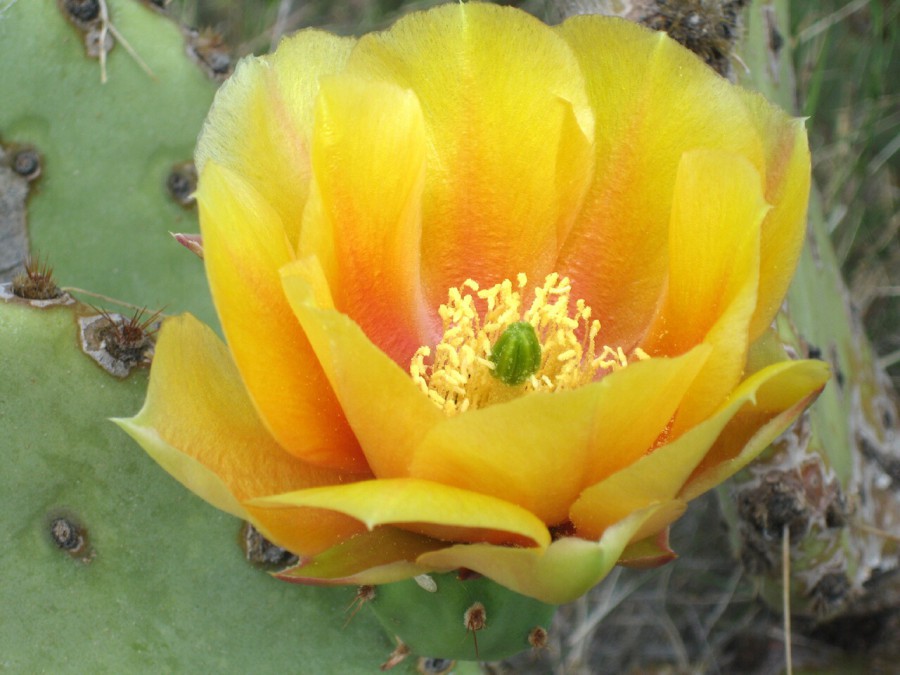
Why did some Spaniard ever bring the prickly pear back to Europe in the first place? Because, as far as I can tell, he thought he could brighten up a Spanish garden somewhere. But it cannot have been because of the beauty of the plant itself. More likely it was the flowers, for indeed the web is full of pictures of the flower of the prickly pear. Here are a few of the more pleasing examples.
image
image
image
At some point, though, people, especially the poor with bellies to fill, began to also focus on the fruit, the “figs” of the prickly pear
image
These had been enjoyed by the Mesoamericans for millennia before Hernan Cortes and his conquistadores arrived and have been enjoyed by the Mexicans ever since.
image

I add here a close-up of the fruit
image
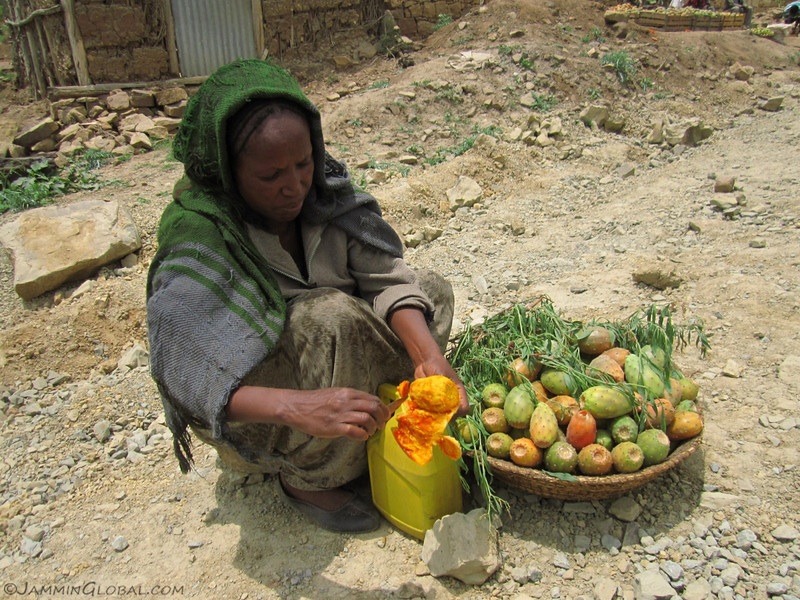
first because it’s a nice photo, but second because the sharp-eyed reader will notice the hair-thin spines which nestle lovingly around the crown of the fruit. Their scientific name is glochids. They are the nastiest little buggers imaginable. They come off easily and lodge under the skin of the unwary picker, where they cause exquisite and unending agony as the said picker tries and tries and tries again to extract them, always in vain. Bloody little bastards … Readers may have gathered from this little burst of ill humour that I have personally experienced this exceedingly painful trial. It was in Eritrea as a matter of fact, where as a young and foolish lad I tried picking the fruit.  I then ran to my Mummy to get the horrible little things out, which she eventually did after much wailing on my part and cross admonitions on her part for me to keep still. I had tried picking the fruit because my mother had earlier bought some, perhaps from a lady like this
image
and I had liked them – a little too many seeds perhaps but nicely fresh and sweet.

Personally, while I like the taste, that early brush with glochids has always made me wary of the fruit. The pain in the hands was bad enough but the thought of those things getting stuck in your tongue or gums because the fruit was badly cleaned is dreadful. And the thought of them getting stuck in your throat is simply too horrible to contemplate.

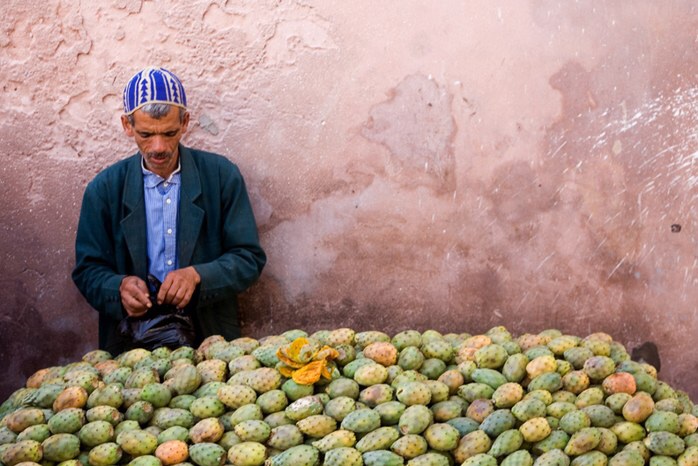
But others around the world consume the fruit without a second thought, especially around the Mediterranean rim. Here, we have some cheerful young lads selling the fruit in Egypt

image
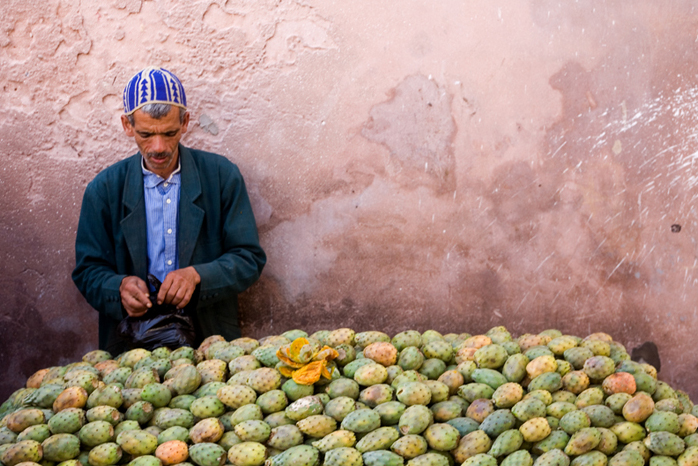
While here we have a more solemn Moroccan doing the same
image
And here a smiling Sicilian ditto
image
As readers can imagine, over the centuries people in the countries where the prickly pear was introduced eventually got around to putting the fruit into alcoholic drinks – at least in those countries where such drinks are tolerated. Thus, we have a prickly pear-flavoured liqueur called “Ficodi” in Sicily, we have a prickly-pear flavored herbal liqueur called “bajtra” in Malta (another country, by the way, where the prickly pear has been declared an invasive species), out in the lonelier reaches of the Atlantic, on the island of St. Helena (where Napoleon Bonaparte was banished), the potent “Tungi Spirit” is produced with the fruit, while prickly pear fruit is the main ingredient of a popular Christmas beverage in the British Virgin Islands called “Miss Blyden”. Looking at how all these various drinks are made, I think I would plump for Miss Blyden: prickly pear steeped in rum and sweetened with sugar. Mmm, sounds good …Yohoho, and a bottle of Miss Blyden, is what I say.

But actually, these drinks are all derivative, if I can put it that way: you just plunk prickly pear fruit in an alcoholic medium; it could actually be any fruit that is plunked. The Mesoamericans, on the other hand, came up millennia ago with colonche, an alcoholic drink using just the juice of the prickly pear fruit, fermenting it over a number of days. I have read that it is a sweet, fizzy, red beverage. Here’s a photo of a glass of colonche, together with the fruit from which it is derived.
image
I regret to say that I did not try the drink while I was in Mexico. However, I have asked my son to try it and report back. If the feedback is good, we can discuss about getting into the business of exporting it!

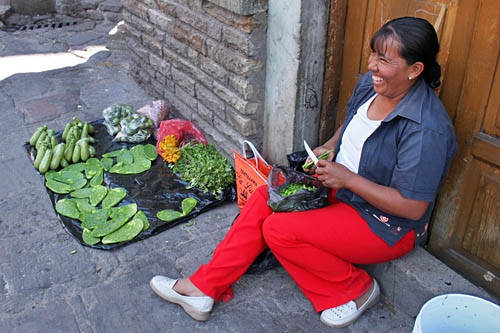
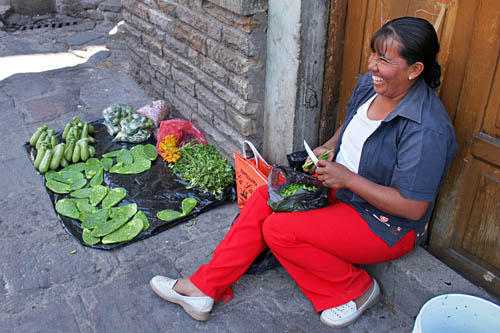
What I will not promote, through export or otherwise, is the eating of the pads (that is to say the fleshy leaves) of the prickly pear. They eat them in Mexico – and in New Mexico too (and perhaps some of the other southwestern States of the US). The original peoples of Mexico were eating them when Cortes burst in on the scene, and it’s still quite popular. I saw them sold in the supermarket around the corner from where we were staying in Mexico City and took a photo, but I prefer this more sympathetic photo of a Mexican lady on the street selling them.
image
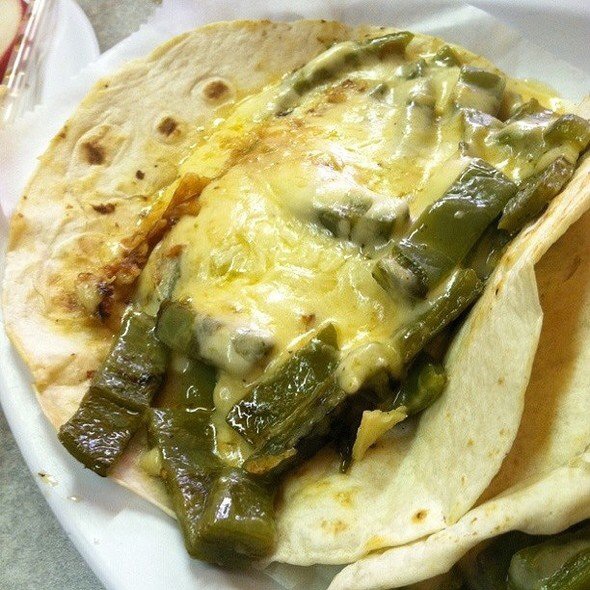
I mentioned in an earlier post that I had tried the pads, cooked and with melted cheese, in a taco. I also tried them, with cheese but without the taco. It didn’t change the taste much.
image
I’m all for trying things once (with the exception of insects). But not necessarily more than once. Pads of the prickly pear fall into the latter category.

But who knows? As the Mediterranean countries slowly go down the economic drain, and more generally as we 99 percenters slowly get poorer, perhaps we will join our Mesoamerican friends and start eating prickly pear pads – as the poor of the Mediterranean lands turned to the fruits of the prickly pear some three hundred years ago to fill their empty stomachs.

_______________
Columbian exchange: http://globerove.com/wp-content/uploads/2010/03/Columbian-Exchange.jpg (in http://www.slideshare.net/mobile/cbgobble/columbian-v-triangle)
Prickly pear in Teotihuacan: https://farm1.staticflickr.com/214/444712763_0a91a8353e.jpg (in https://www.flickr.com/photos/eternal_sunshine_of_the_spotless_mind/444712763/
Mexican flag: http://www.freepressers.com/wp-content/uploads/2011/10/mexican-flag-640.jpg (in http://www.worldtribune.com/worldtribune/WTARC/2011/k1302_10_21.asp)
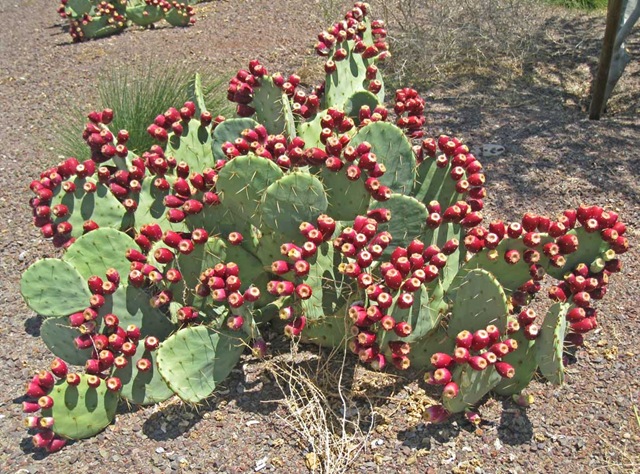
Prickly pear: https://seekraz.files.wordpress.com/2012/10/prickly-pear-cacti-in-tucson-desert.jpg (in https://seekraz.wordpress.com/tag/prickly-pear-cactus/)
Prickly pear by Asmara-Masawa railway: https://c1.staticflickr.com/9/8633/16089064905_44b9e68e48_b.jpg (in https://www.flickr.com/photos/dave-hill/16089064905/)
Italian colonial masters: http://upload.wikimedia.org/wikipedia/it/6/6c/Ascari_penne_di_falco.jpg (in http://it.m.wikipedia.org/wiki/Regio_corpo_truppe_coloniali_d’Eritrea)
Prickly pear in Sicily: https://c1.staticflickr.com/9/8299/7826141194_33f0e36a8d_b.jpg (in https://www.flickr.com/photos/mari-mora/7826141194/)
Prickly pear in Spain: https://themostbeautifulplacesineurope.files.wordpress.com/2013/07/dsc_0048.jpg (in https://themostbeautifulplacesineurope.wordpress.com/tag/castle/)
Prickly pear in Ethiopian village: http://4.bp.blogspot.com/-YutF1G9Qjbo/Up44cIZUf_I/AAAAAAAAMPA/fydBOTfLCNY/s1600/00041775.jpg (in http://jhodgesagame.blogspot.com)
Prickly pear in Kruger National Park: http://academic.sun.ac.za/cib/news/images/20120611_opuntia_stricta_impacts_fig1.jpg (in http://academic.sun.ac.za/cib/news/20120611_opuntia_stricta_impacts.htm)
Prickly pear in Australia – the green hell: http://chinchillalibrary.chinchilla.org.au/Images/Local%20History/johnty%20turner’s.jpg (in http://chinchillalibrary.chinchilla.org.au/HTML/HeritagePricklyPear.html)
Prickly pear in flower-1: http://www.fotothing.com/photos/4aa/4aa38f6709881bcb9b0dc2f7bce87dea.jpg (in http://www.fotothing.com/AzViper/photo/4aa38f6709881bcb9b0dc2f7bce87dea/)
Prickly pear in flower-2: http://photosbygarth.com/travels/DesertGardens4-23-11/prickly_pear_cactus_flowers_0887.jpg (in http://photosbygarth.com/wordpress/)
Prickly pear in flower-3: http://www.summitpost.org/prickly-pear-cactus-flower/294673
Prickly pear fruit-1: http://2.bp.blogspot.com/-_NFH_ZhWJCU/T1kjB-HTOWI/AAAAAAAAA84/rBf30_8f5qg/s1600/5.jpg (in http://docsfitnesstips.blogspot.com/2012/03/prickley-pear.html)
Mexicans selling prickly pear fruit:
http://i.gonoma.net/i/destinations/1106/zacatecas-images/prickly.jpg (in http://gonomad.com/destinations-xxx/3205-zacatecas-mexico-rsquo-s-overlooked-colonial-gem)
Prickly pear fruit-2: http://cdn.c.photoshelter.com/img-get/I0000O2m8f8jI.vU/s/600/600/PPCA-021548.jpg (in http://rolfnussbaumer.photoshelter.com/image/I0000O2m8f8jI.vU)
Ethiopian lady selling prickly pear: http://jamminglobal.com/2012/05/ethiopia-part-6-historical-axum-and-mountainous-twisties.html
Prickly pear seller Egypt: http://weekly.ahram.org.eg/Media/NewsMedia/2013/7/16/2013-635095893366005272-600_resized.jpg (http://weekly.ahram.org.eg/News/3357/25/The-fruit-beneath-the-thorns.aspx)
Prickly pear seller Morocco: http://upload.wikimedia.org/wikipedia/commons/b/b1/Prickly_pear_seller.jpg (in http://en.m.wikipedia.org/wiki/Opuntia_ficus-indica)
Prickly pear seller Italy: http://www.fotografieitalia.it/foto/3126/3126-08-20-44-1557.jpg (in http://www.fotografieitalia.it/foto.cfm?idfoto=65383&idfotografo=3126&crono=1)
Colonche: http://173.236.14.43/fotos/nota/2014/9/18/4d68094af571428.jpg (in http://www.am.com.mx/aguascalientes/especiales/espiritus-de-la-republica-144117.html)
Seller of cactus pads: http://holeinthedonut.com/wp-content/uploads/2010/06/Nopal_Cactus_Seller_Mercado_Hidalgo_Guanajuato.jpg (in http://holeinthedonut.com/2010/06/01/mexico-food-nopal-cactus/)

Cactus pad and cheese: http://s3.amazonaws.com/foodspotting-ec2/reviews/846163/thumb_600.jpg?1315336866 (in http://www.foodspotting.com/150802-amandahugnkiss)/)


CHEESE, GLORIOUS CHEESE!

Beijing, 24 June 2014

My wife and I were having our usual chat with our daughter via FaceTime when she announced that she and her flat mate had been discussing the vital question of why cheeses were different from each other.

Well! That was more than enough bait for a nerd like myself to rise to. With eyes a-shinin’ and lips a-lickin’, I started to research the topic. It was actually a question I had also often posed myself: how on earth did you get so many different-tasting products out of the same rather bland starting material, milk?

I am proud to announce the results of my research. The answer is …. “The most important agents include the four following elements: rennet, starter bacteria and associated enzymes, milk enzymes, second starter bacteria and associated enzymes, and non-starter bacteria”. OK, that’s not very clear, so let me expand a little.

The first step in cheese making is curdling. In fresh, unpasteurized milk, curdling happens naturally. Attack by bacteria floating around in the air and settling on the milk leads to the formation of lactic acid, and it is heightened acidity that causes milk to curdle, separating out into solid curds and liquid whey. But we humans have learned to help the process along. Rennet, which is a complex of enzymes, seems to have been an early favourite for inducing curdling. An interesting theory I read is that our ancestors discovered the milk-curdling properties of rennet when they used animal stomachs as storage vessels for milk. FYI, mammalian stomachs naturally contain rennet as an evolutionary response to milk drinking (which is what makes a mammal a mammal rather than, say, a bird or a reptile). It allows young mammals to digest their mothers’ milk.

Or you can use acids. Given that you want to eat the result, you probably don’t want to use sulphuric acid or hydrochloric acid, even though I’m sure they would do the trick. Naturally-occurring (and edible) acids like vinegar and lemon juice will do nicely.

Or you don’t wait for some random bacteria floating around to attack the milk. Instead, you deliberately inoculate milk with so-called starter bacteria (often adding rennet in a second step). Presumably from previous trials and errors which occurred who knows how many centuries ago in monastery cellars or elsewhere

monks in cellar

these various strains of bacteria are known to give specific tastes to the final cheese. They will chemically attack the milk, and later the curds, in differing ways, giving rise to chemical products with different tastes.

In any event, one way or the other you will end up with curds

curds

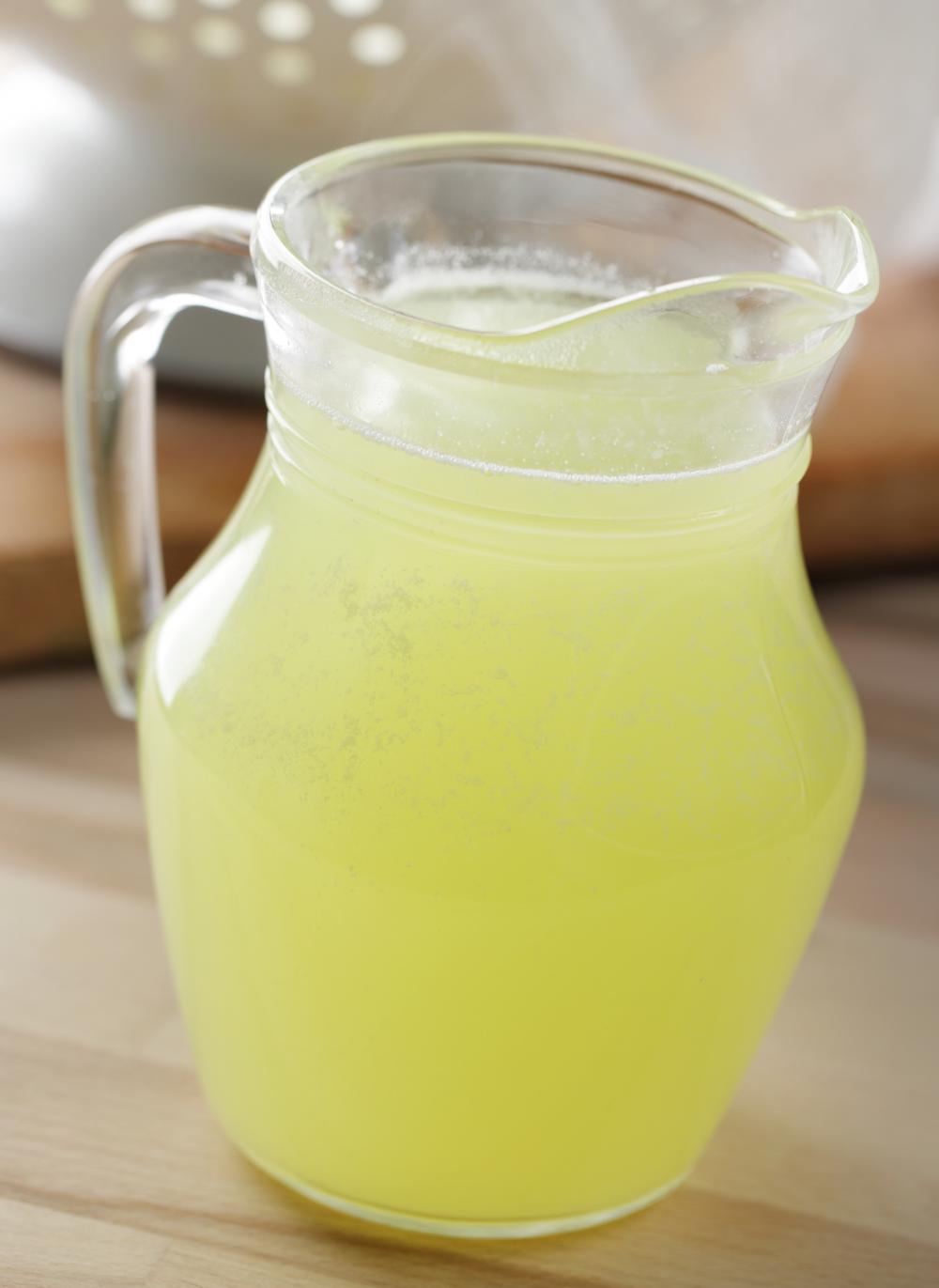
and whey

Whey

Like little Miss Muffet who sat on a tuffet, you can already eat the curds and whey if you so wish, preferably before a spider turns up and spoils your appetite.

little miss muffet

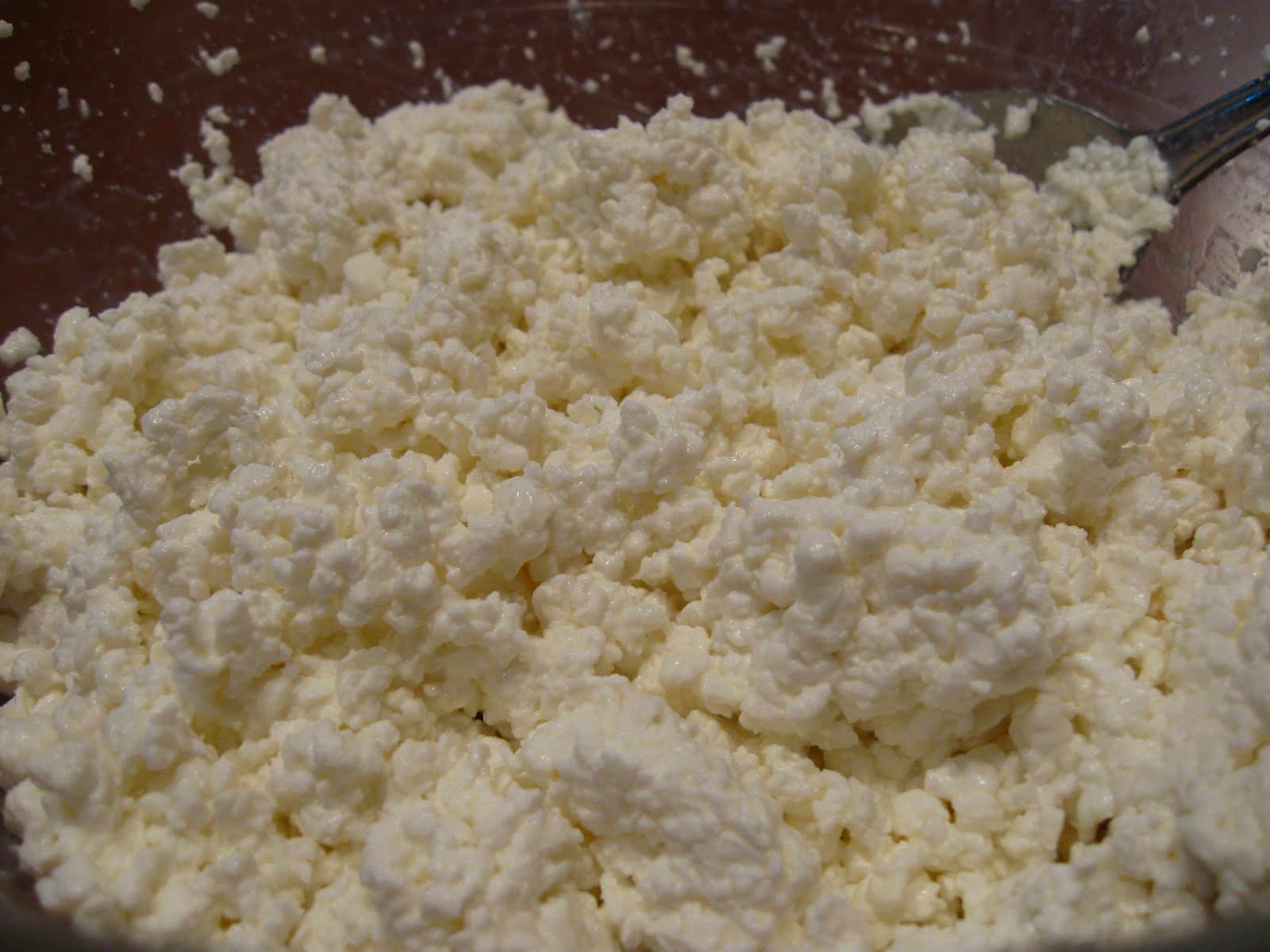
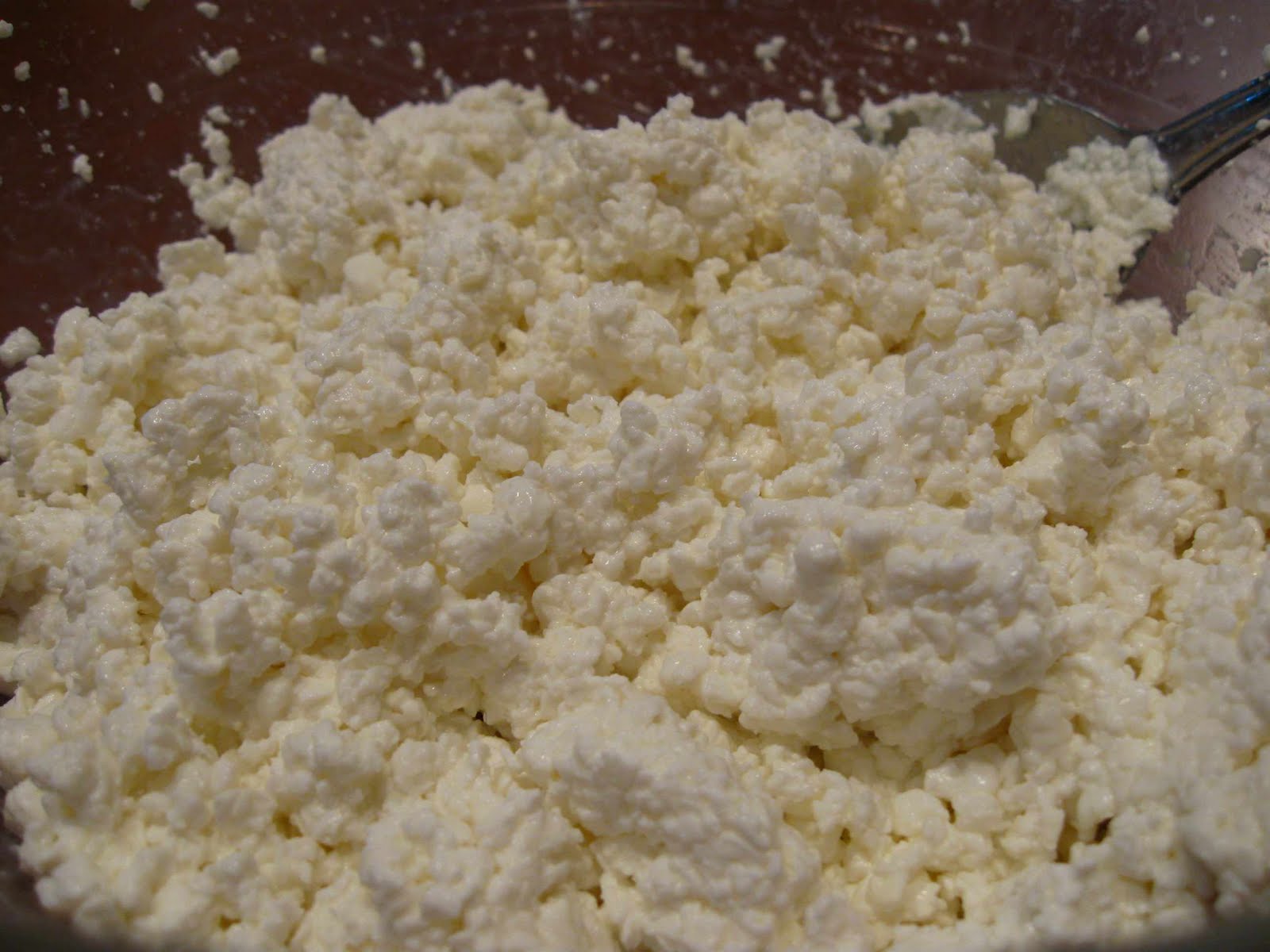
That is basically what cottage cheese is, loose curds

cottage cheese

while after a period when whey was considered only good for poor peasants, whey-based drinks are gaining a certain popularity with the health conscious.

whey-based drink

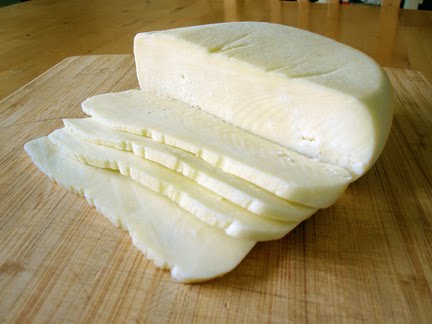
Alternatively, you can take the curds and start pressing them to get rid of liquid. Depending on how much you press them and process them thereafter, you’ll get a whole series of fresh cheeses: pot cheese, farmer’s cheese, hoop cheese, sour milk cheese, curd cheese, cream cheese, and a thousand others made in non-English cultures. I will mention three of these, the Italian mozzarella (where the curds are actually stretched and kneaded), the French fromage blanc, and the Austrian topfen: mozzarella, because it has to be the best cheese in the world; fromage blanc, because my French grandmother used to serve it when I was young and I always have it when I go back to France; topfen, because I discovered this cheese in the form of the dish topfenstrudel when we moved to Vienna. I will let this photo of farmer’s cheese stand for the whole class of fresh cheeses.

Farmer Cheese

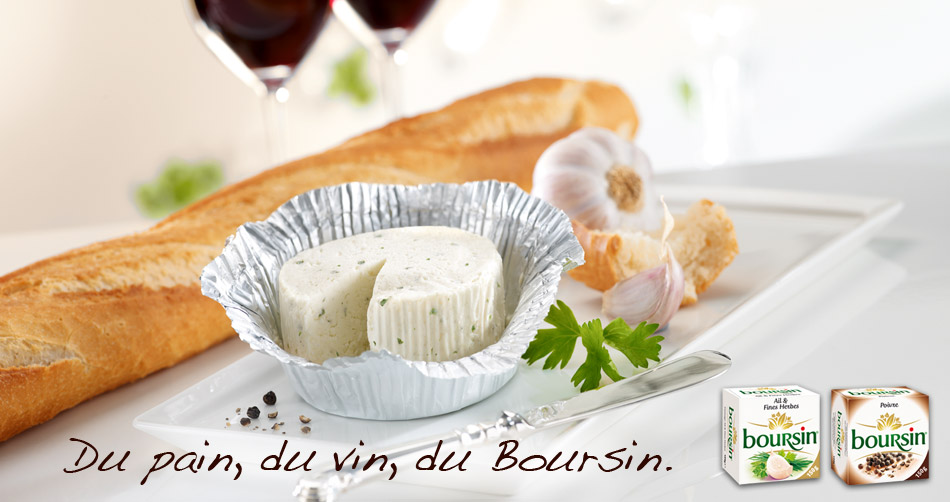
Let me also mention boursin cheese, because (a) my daughter, who set me off on this posting, likes it, (b) it is a good example of the mixing of other ingredients – in this case garlic and fines herbes – with fresh cheese to make a new product (walnuts is another popular ingredient in this category) and (c) when I was young it had a really cool advertising line, “Du pain, du vin, du boursin”

boursin pub

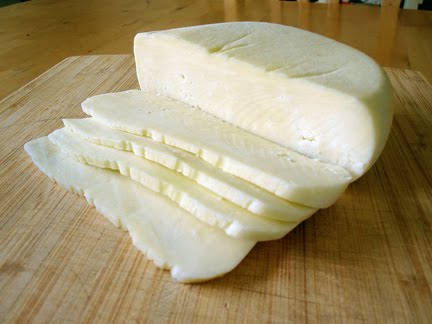
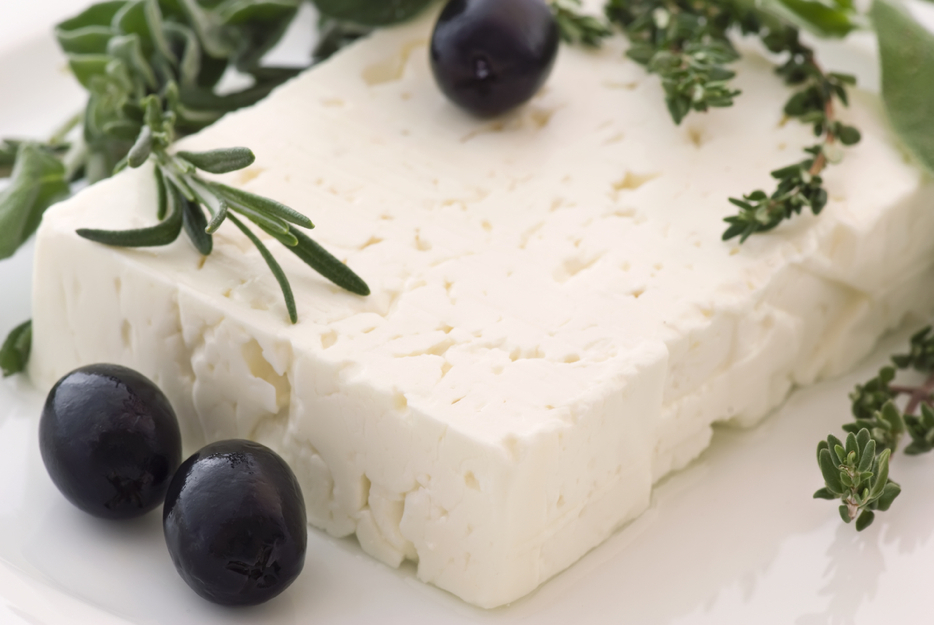
Fresh cheese is just that, fresh. If you don’t process it further, it will spoil. The most basic preserver of cheese is salt, which has been used for millennia to preserve all sorts of food (salt also firms up the texture of cheese, by the way). So as a salute to salt, let me first deal with brined cheeses, which are cheeses that are matured in a brine solution. This is the main type of cheese produced in the Middle East and the Mediterranean areas: Greek feta, Cypriot halloumi, South-Eastern European sirene, Romanian telemea, Middle Eastern akkawi, Egyptian mish (which is also pickled), …. I will let a photo of feta cheese stand in for the class of brined cheeses.

feta

In other cases, … well, the pressed curds seem to be processed in a bewilderingly different number of ways. They will always be salted (to put off spoilage). Some will be heated (which will kill off some, but not all, bacteria). Others will be washed (getting rid of acid and so making them milder to eat). Some are gently set in moulds (soft cheeses), others have the curds ruthlessly crumbled before being subject to moulding (hard cheeses). Then the cheeses are left to ripen for anything from three weeks to several years. But they aren’t left alone, oh no! Many are regularly washed, which helps to form the rinds and keep the cheese moist and no doubt to impart specific tastes. Brine is a common washing solution. In some cases, just to complicate things, the brine is aromatized with herbs. Alcoholic beverages are also popular rinses: wine, cider, beer, and just about any other alcoholic drink known to man. Or the cheeses are sprayed or injected with molds, or smeared with bacteria or molds or yeasts. Or some are smoked. And after all of this, cheese makers still keep fiddling: with humidity levels, with temperature, and with I don’t know what else. All of which gives rise to a dizzying variety of cheeses: they can be soft, or semi-soft, or medium-firm, or firm, or hard; their texture can be brittle, chalky, chewy, creamy, crumbly, flaky, grainy, runny, sticky; they can taste ammoniated, buttery, clean, complex, fermented, herbal, mild, musty, nutty, ripe, robust, salty, smoky, sour, spicy, sweet, tangy, tart, yeasty.

And I haven’t mentioned the effect on taste and texture of what is really the very, very first step in cheese-making, the choice of milk. I think you can make cheese from any mammalian milk (some clever fellows have even made cheese from human milk), but in practice cow’s milk dominates. Goat’s milk is also popular in many parts of the world, while sheep’s milk gets an honourable mention. Water buffalo’s milk is a must for mozzarella. Yak’s milk is used by the Mongolians and Tibetans. The Mongolians also use horse mare’s milk, while Afghanis and Pakistanis use camel’s milk. The Finns use reindeer’s milk, while Serbians have a tradition of making cheese with donkey’s milk. As anyone knows who has eaten goat’s cheese, for instance, the choice of milk sure changes the taste of the cheese. And of course milk isn’t just milk! There are those who insist that what the animals ate – hay versus grass versus any old crap – will affect the milk and therefore the taste of the cheese, so there are cheeses where – it is claimed – only milk from cows eating grass is used. And the time of the year in which the milk is produced, others say, affects its biochemical makeup, so there are cheeses which, I read, should only be made in March, or October, or …

All of this is enough to give one a strong headache …

Out of all of this seeming chaos, I have managed to extract a few categories of ripened cheeses to describe in more detail. Let me start with those cheeses which have molds sprayed onto them, principally of the penicillin family, and which give rise to rinds with white blooms on them. The best known of these has to be the French Camembert, whose surface is sprayed with a mold that is so linked to the cheese that it is named after it, Penicillium camemberti.

Camembert

After years of eating it too, I feel I should also mention the French Brie.

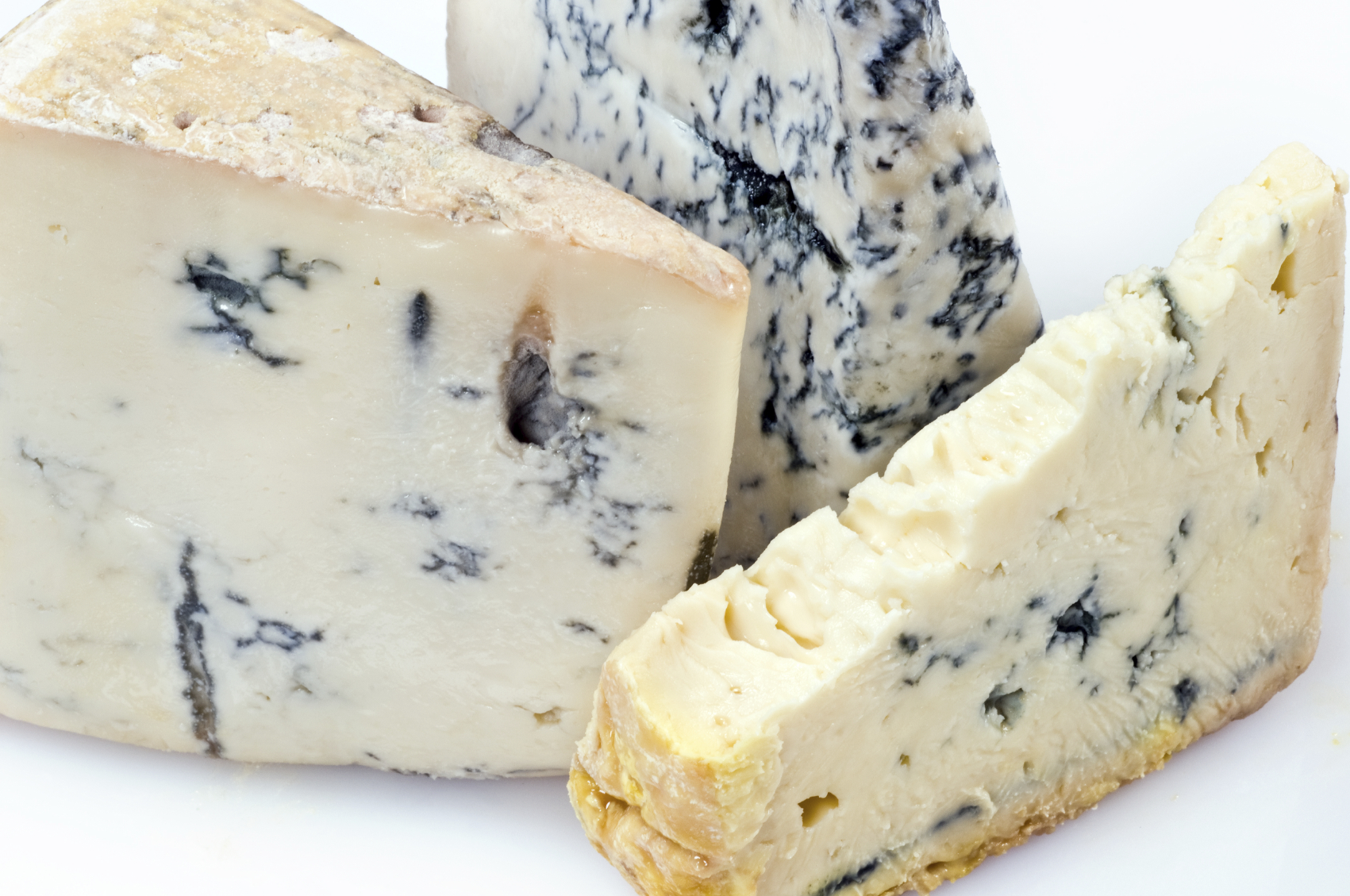
Then there are the cheeses where the mold is injected into them. The French Roquefort and English Stilton fall into this category, although I will have a picture of the Italian Gorgonzola stand in for this group

gorgonzola

for the completely trivial reason that when I drove through the village of Gorgonzola (which is near Milan) for the first time, I belatedly realized that actually the cheese was named after a real place.

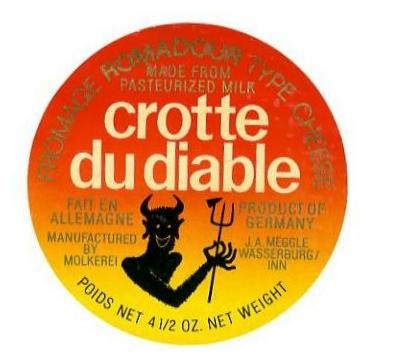
Then there are the cheeses whose rinses encourage the growth on the rinds of another bacterium, Brevibacterium linens, which gives these cheeses their characteristic pinkish-reddish tint. This bacterium is ubiquitous on the human skin, so no prizes for guessing how it ended up on the cheeses. It is also why our feet smell when sweaty, which no doubt explains why the cheeses in this category tend to stink (it looks like we weren’t so wrong when as boys at school we accused each other of having socks which smelled of old cheese). There are some well-known cheeses in this category like Munster, Limburger, and Port-du-Salut, but I will use as a stand-in for this group a cheese that sadly no longer seems to exists but was a family favourite when I was young: crotte du diable, devil’s droppings (I have mentioned this cheese in a previous post).

crotte du diable

The cheese was very aptly named, having an incredibly foul-smelling rind, so foul that you had to wash your hands very thoroughly after eating it. But the cheese itself was wonderfully smooth.

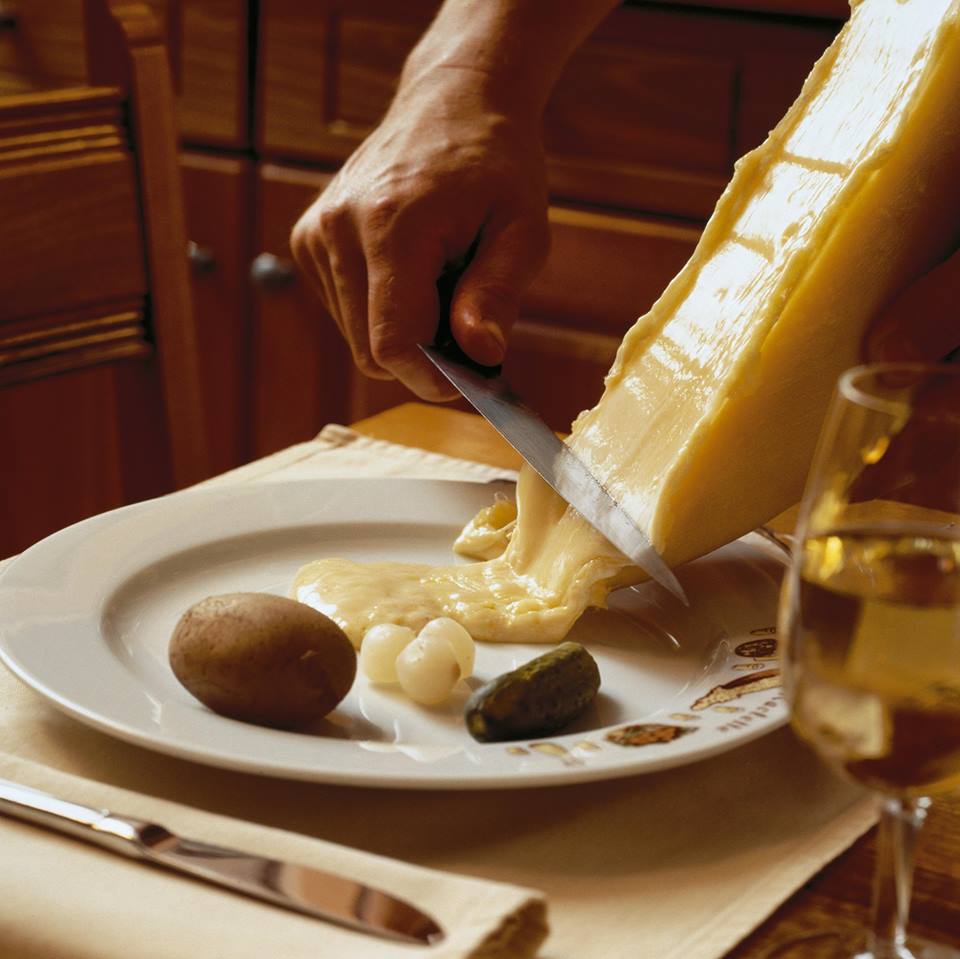
I have to mention another cheese in this category, the Swiss Raclette. My wife introduced me to this cheese. She had got to know it well during her skiing days in the Alps. During our time in Paris, in the early 1980s, we discovered a little restaurant just off the Champs Elysées where you could get a glorious raclette, served just the way it should be, scraped (raclé) onto your plate and served with gherkins, pickled onions, and potatoes in their jacket.

Raclette

When we went back to Paris many years later, we homed in on the place for lunch like bees for their hive. Alas! the restaurant was gone. Glumly, we wandered into a nearby restaurant and had ourselves a totally non-descript lunch. Sic transit gloria mundi.

I can’t think what other categories to extract from this mass of cheeses (over 700 of them according to www.cheese.com). So I’ll just salute a few cheeses which I personally consider deserve special mention:

The great, the glorious, the incomparable, Parmigiano Reggiano

Parmigiano reggiano

not to be grated onto some anonymous pasta, and not to be shaved onto some anonymous salad, but to be eaten alone, flake by grainy flake, slowly and with hushed reverence. When, a few years ago, my wife and I saw that a rare earthquake in Emilia Romagna had wrecked a couple of Parmigiano Reggiano storehouses, we briefly toyed with the idea of jumping onto the first airplane back to Italy and picking up some slightly damaged wheels of the cheese on the cheap. Good sense eventually prevailed.

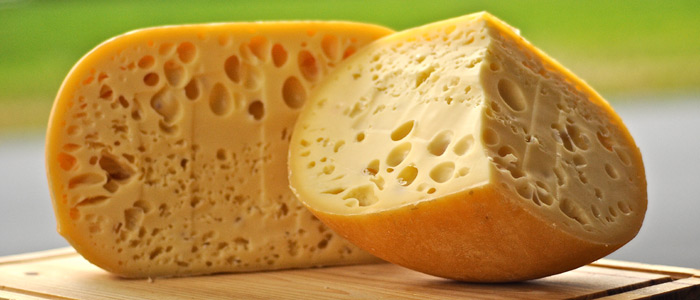
Emmental

Emmental

which for me somehow is my youth (my mother was a generous purchaser of the cheese), and whose holes (which I have just learned are called “eyes” in the trade) fascinated me. With old age, I have become boringly scientific and now know that the eyes are caused by the use in the starter bacteria of the bacterium Propionibacterium freudenreichii, which consumes lactic acid and excretes CO2; the latter creates bubbles, which we see as eyes (if you get my drift). In the old days, these eyes were considered defects to be avoided, but no doubt after seeing how the eyes made the cheese popular with children and therefore with their parents, emmental makers began to encourage their presence.

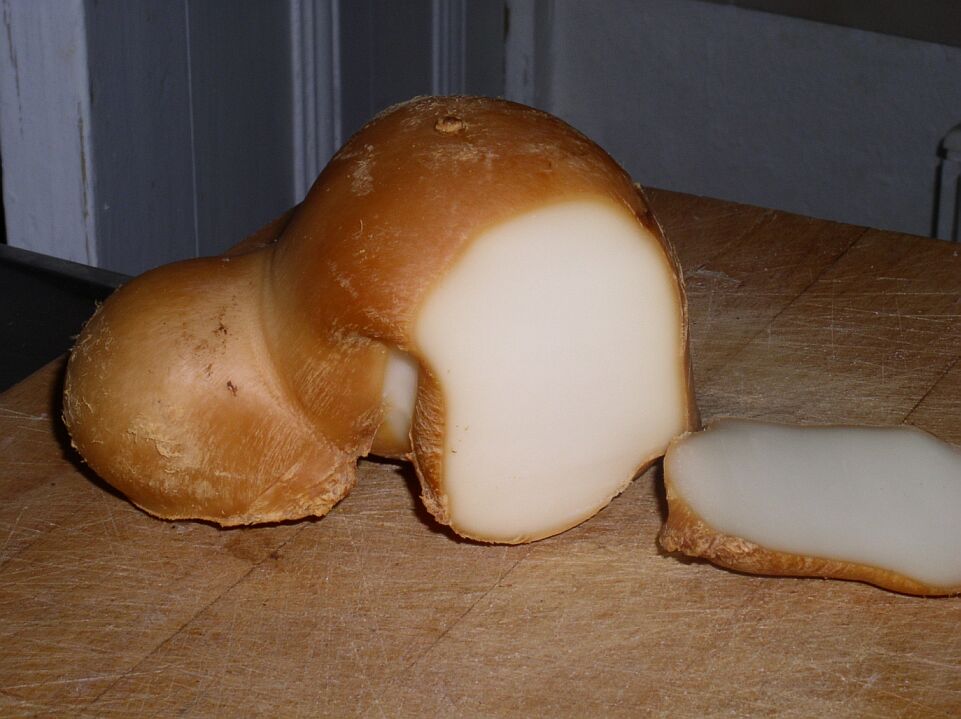
Then I pass on to scamorza affumicata, which is not that well-known outside of Italy. Like mozzarella, it’s a stretched curd cheese which is then allowed to ripen. Makers form a ball and then tie a string around it to hang up in the store room, which explains its “strangled” shape.

scamorza

It looks like this inside.

OLYMPUS DIGITAL CAMERA

It is best when smoked, and best eaten grilled on bread. It was one of the Italian foodstuffs which my wife introduced me to when we first met.

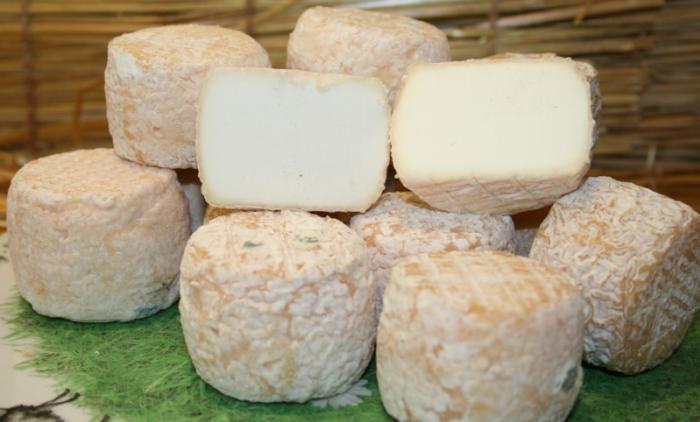
And finally, goat’s cheese. Not those fussy little rolls you find in upscale shops, often covered in herbs or pepper or some other thing. No, I mean the goat’s cheese which I would eat at my grandmother’s house in France, which looked like this

fromage de chevre

The ones I ate were made by the farmer’s wife down the road. When we needed some, my mother or grandmother would give me the money, I would hop on my Solex and speed over to the farm, and after a little chit-chat – “how are you? how are the children?’ – she would take me out to the yard, where in an old bird cage sat a number of goat cheeses of differing ages. After some thoughtful discussion, I would choose a few, ranging from the fresh to the somewhat aged. Ah, those cheeses were soooo good!

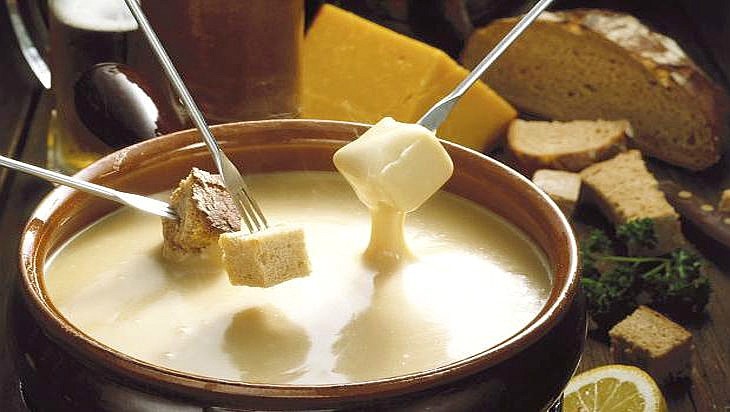
I cannot end without a mention of Fondue, even though it’s a cheese dish rather than a cheese, because it’s just so … damned … good. It can be made from quite a number of cheeses, often mixed together, produced in the Alps or in the nearby Jura mountains: the Swiss Gruyère, Emmental, Vacherin, Sbrinz, and Appenzeller; the French Comté, Beaufort, and Reblochon; or the Italian Fontina. The key, of course, is the white wine. Here’s how you prepare a fondue: (1) Rub the inside of the pot with garlic. (2) Lightly heat the white wine with cornstarch (used to prevent separation of wine and cheese). (3) Add the grated cheese or cheeses and stir until it is all melted. (4) Top off with a bit of kirsch. Start eating, dipping chunks of bread into the pot.

fondue

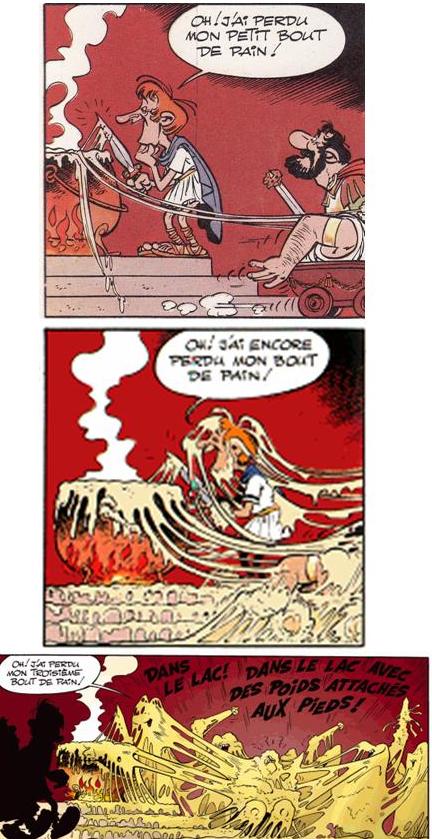
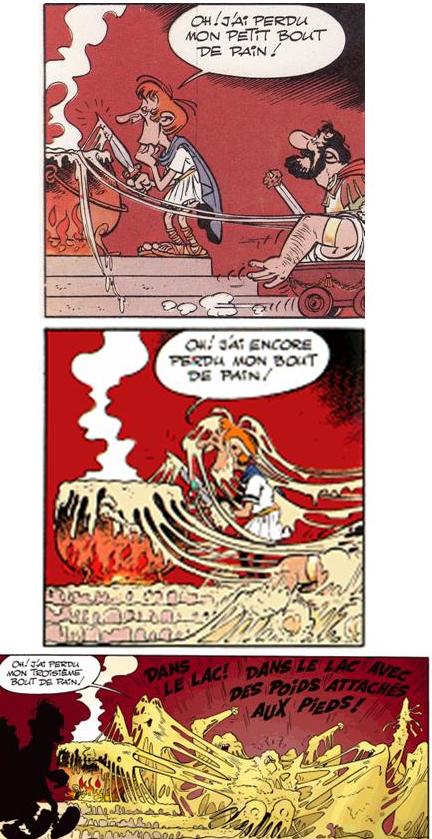
Fondue has become so linked with Switzerland that Astérix, that bellwether of popular European culture, has fondue playing a prominent part in the album Astérix chez les Hélvètes. But in a bout of creative delirium the writer, Goscinny, and the illustrator, Uderzo, laced this most Swiss of traditions with debauchery borrowed from Federico Fellini’s much-discussed film Satyricon, which came out a year before the Asterix album was published and scandalized many. Satyricon included a series of Roman orgies, full of painted faces, feelings of ennui, mechanical gorging of elaborate food, and sado-masochistic punishments. So the fondue parties organized by Goscinny-Uderzo’s Roman governor of Helvetia take the form of orgies – although, to the governor’s great irritation, they are much too clean; this is Switzerland, after all.

asterix and fondue

The scenes pick up on a tradition that if you lose your bread in the fondue pot, you are punished in some way: for instance, a man has to buy a round of drinks, while a woman has to kiss her neighbours. In the case of Asterix, the young fool is thrown into Lake Geneva with weights attached to his feet, another nod to the casual brutality which filled Satyricon.

Anyway, these are my choices. I’m sure each one of my readers has his or her own list of favourites. I earnestly suggest that they immediately rush out, buy one or more of their favourites, and gorge themselves in a wild bout of cheese-eating.

And I hope I’ve answered my daughter’s question about how cheese is made.

_________________________

Monks in a cellar: http://p9.storage.canalblog.com/95/74/180464/28709536.jpg [in http://toutinfrimage.canalblog.com/archives/2008/08/07/10163569.html%5D
Curds: http://3.bp.blogspot.com/-e_yg4m7wR4g/Toy0E_DhaOI/AAAAAAAAChs/Qmjyg7II6Gw/s1600/salting_curds.jpg [in http://cooking-from-scratch.blogspot.com/2011/10/cottage-cheese.html
Whey: http://4.bp.blogspot.com/-n-UC59ZGNzg/T7sTeo1GtWI/AAAAAAAABCM/9qzvn0wQ3U0/s1600/Whey.jpg [in http://www.hybridrastamama.com/2012/05/making-whey-protein-and-cream-cheese-try-these-unique-food-products.html%5D
Little Miss Muffet: http://bloximages.chicago2.vip.townnews.com/nwitimes.com/content/tncms/assets/v3/editorial/e/b6/eb652bda-d380-5344-a681-06a4de4af8d6/52e7fed631b22.preview-699.jpg [in http://www.nwitimes.com/lifestyles/food-and-cooking/from-the-farm-reader-looking-for-healthy-blender-drink-recipe/article_e8c2a9b9-4658-54a3-9d24-8f00640a8484.html%5D
Cottage cheese: http://uptownmagazine.com/files/2014/05/uptown-kraft-cottage-cheese-recall.jpe [in http://uptownmagazine.com/2014/05/kraft-recall-cottage-cheese/%5D
Whey-based drink: http://www.ebperformance.com/wp-content/uploads/2011/05/proteinjuice-bottles.png [in http://www.ebperformance.com/products/protein-drinks/%5D
Farmer’s cheese: http://3.bp.blogspot.com/_a-oLImtGrzM/S_Mpn-DOErI/AAAAAAAAAr0/ivqGKz6av4s/s1600/Blog+Raw+Milk+Farmer+Cheese+8.jpg [in http://artistta.blogspot.com/2010/05/homemade-raw-milk-farmer-cheese.html%5D
Feta cheese: http://www.yiannislucacos.gr/sites/default/files/ingredient318_feta2.jpg [in http://www.yiannislucacos.gr/en/ingredient/2404/feta-cheese%5D
Boursin publicity: http://www.boursin.ch/uploads/pics/Indexbild_ganze_Breite_2011_01.jpg [in http://www.boursin.ch/%5D
Camembert: http://upload.wikimedia.org/wikipedia/commons/8/88/Camembert.JPG [in http://en.wikipedia.org/wiki/Camembert%5D
Gorgonzola: http://blog.fairwaymarket.com/wp-content/uploads/2011/10/GorgonzolaCheese.jpg [in http://blog.fairwaymarket.com/2011/10/blue-cheese-moldy-cheese-day/%5D
Crotte du diable: http://p1.storage.canalblog.com/18/34/180464/7469035.jpg [in http://toutinfrimage.canalblog.com/archives/2006/10/15/2911082.html
Raclette: http://www.gentlemansgazette.com/wp-content/uploads/2013/12/Traditional-Raclette.jpg [in http://www.gentlemansgazette.com/dinner-party-ideas-how-to-host/%5D
Parmigiano Reggiano: http://upload.wikimedia.org/wikipedia/commons/5/5b/Parmigiano_reggiano_piece.jpg [in http://en.wikipedia.org/wiki/Parmigiano-Reggiano%5D
Emmental: http://cheesecrafters.ca/wp/wp-content/uploads/2012/06/full_Emmental.jpg [in http://cheesecrafters.ca/products/emmental/%5D
Scamorza affumicata: http://www.lascelta.com/media/catalog/product/cache/1/image/700×477/9df78eab33525d08d6e5fb8d27136e95/f/o/for022aff.jpg [in http://www.lascelta.com/formaggi/semi-stagionati/scamorza-bianca-1.html%5D
Scamorza-inside: http://upload.wikimedia.org/wikipedia/commons/8/85/Scamorza.jpg [in http://en.wikipedia.org/wiki/Scamorza%5D
Goat’s cheese: http://www.fromagerie-martin.com/photos/crottindechevre_23071.jpg [in http://www.fromagerie-martin.com/fiche_produit.php?id=23071%5D
Fondue: http://postfiles15.naver.net/20140430_30/cheesemarket_1398825823552cruRM_JPEG/%C6%FE%B5%E04.JPG?type=w2 [in http://blog.naver.com/PostView.nhn?blogId=cheesemarket&logNo=90194981830&categoryNo=0&parentCategoryNo=21&viewDate=&currentPage=1&postListTopCurrentPage=1%5D
Asterix and fondue: http://3.bp.blogspot.com/-94znst74TRI/TwEM1x4890I/AAAAAAAAPzA/OoSEUFiQkN0/s1600/asterix+chez+les+helvetes.jpg [in http://heavenlypalate.blogspot.com/2012/01/cheese-fondue-great-cheesy-meal-during.html%5D

CAPERS

Beijing, 7 June 2014

It never ceases to amaze me that there are certain ingredients which one adds to recipes in small quantities but which make a huge difference to the final taste. Spices are the obvious example – although I often wish that the hot spices had never existed – but there are others. Parsley, for instance, or coriander, or anise. Or capers.

Capers are a particular favourite of mine ever since a business trip I made many years ago to Malta. I was there to do an environmental audit of a factory. After a long day of inspecting the wastewater treatment plant, the waste segregation area, the toxic chemicals storage area, and I don’t know what else, my colleagues and I were finally free for dinner. We left the hotel and wandered around, but it was a dead time of the year and there wasn’t much available. We finally came across a modest restaurant, which proclaimed itself to be a fish restaurant. Why not? we said, after all, we were in an island, presumably the fish would be good. And it was, it was! We all ordered Orata al cartoccio, where a bream is cooked – steamed in its own juices, really – in a closed aluminium foil package together with cherry tomatoes, capers, and olives. It’s really a very simple recipe. Having washed and cleaned the bream, you lay it on a big piece of aluminium foil, you place a little rosemary inside the fish, drizzle it with olive oil, place the sliced cherry tomatoes, rinsed capers, and olives around the bream, wet the whole with a little white wine, wrap up the foil and close it well (so that none of the juices escape), and cook it in the oven at 200°C for about 45 minutes. Voilà!

orata pomodorini capperi olive

Simple, but absolutely delicious. The capers in particular impart a taste to the fish’s flesh which even to this day, after all these years, I can summon up at will for my private delectation.

The marvelous effect of the capers was actually quite a surprise to me. I had first come across capers as a young boy, at my English grandmother’s house. At some earlier moment, my elder brother had evinced a love of capers, so every time he came to stay with her she bought a small jar of them. This time, I was in tow so I got to try some. Salty! So salty! How could anyone like these tiny balls of salt? I made sure to steer clear of them after that, pushing them carefully aside if I came across them in a salade Niçoise, for instance. Until that fateful encounter in a modest fish restaurant in Malta. Such is life …

After that gastronomic epiphany in Malta, I feel that I owe it to the caper to write its hagiography, which like all good hagiographies should start from its birth. The caper comes from a bush, the caper bush to be precise, capparis spinosa. The bush is not much to write home about. Here is an example from the island of Salina, one of the Eolian Islands off the north-west coast of Sicily

caper bush-1

and here’s another from near Brindisi in southern Italy

caper bush-2

Both pictures admirably depict the poor, rocky soils and harsh environments that the bush grows well in. They also tell us that you find the bush around the Mediterranean. But that’s not only place you find C. spinosa; the bush has quite a wide range, down through eastern Africa, across central, southern, and southeastern Asia, all the way out to the Pacific Islands and Australia. But as far as I know, and I’m very willing to be corrected, the caper is not used in the local cuisine in any of these areas.

The last picture also tells us that the bush sports flowers. Small, but actually very lovely, with a cluster of long mauve stamens reaching out to the world (this is one of many beautiful photos of the caper flower on the internet; the efforts of my photographic e-friends have turned me quite poetic).

caper flowers-2

This last picture also modestly introduces us to the hero our story. Because the caper is that green flower bud behind. It gets picked, salted, and pickled for our delight. I think it deserves a picture of its own

caper buds

I have to say, I always marvel at things like this. How did the women in some far-off time think of picking the flower buds of this bush to eat? (I’m sure it was the women; the men were just lazing around the camp fire cracking stupid jokes and farting.) Maybe desperation, to stave off starvation. Or maybe … but I’m getting ahead of myself.

Capers are sold sorted by size. Either because the French got into the game of commercializing capers before anyone else, or because some canny marketer thought French names would sell better, or for some other reason unknown to me, the grades mostly have French names. From smallest to biggest we have: “non-pareil”, incomparable; “surfine”, very delicate (those hideously salty little balls which my grandmother bought for my brother must have been either surfines or non-pareils); “capucine”, which is a little pointed cowl, like the ones worn by Franciscans nuns – looking at the photo below and squinting a little, I suppose you could say that the capers in question look cowl-like; “capote”, which is a rather bigger cowl with a definite point (it is also French slang for a condom for reasons which I’m sure the readers can divine after a little bit of thought); “fine”, delicate (like the oysters). And at the very end of the grades we have “grusas”, which is not a French word. My guess is that it’s Provençal and has a meaning similar to the Spanish “gruesos”, fatty. Of course, the French were not going to use their delicate language for such a coarse member of the caper family. As one could guess from the grading nomenclature, the smallest sizes are considered to be the most desirable; I’m sure it is no coincidence that the smallest sizes come from southern France …

graded capers

Malta brought me my culinary epiphany with the caper. It also introduced me to the caper berry, which I find to be a much more delicious product of the caper bush. My Italian colleague, whom I have had cause to mention in an earlier post as the person who introduced me to durian, was with me on this Maltese environmental audit. Rather than asking the staff of the wastewater treatment plant to see the data on wastewater treatment efficiency he asked them to get him several jars of pickled Maltese caper berries. On the promise of my not revealing this professional faux-pas of his he shared one of the jars with me, which I took home to my wife. We have been hooked ever since.

caper berries-2

As the name suggest, caper berries are the fruit of the caper bush. This photo shows the berry in its natural state.

caper berries-natural state

I understand they are perfectly edible, although I have never seen them sold in a shop. I’ve only eaten the pickled variety. They are much bigger than capers, less salty, more crunchy (because of the seeds they contain) and can be eaten as a snack – and my wife and I have indeed snacked happily and often on them, in front of the TV or other such snack-happy locations.

Coming back to my meditation on how anyone ever came up with the idea of pickling flower buds to eat, I suspect the path was through the berry: step 1 – eat the berries; step 2 – salt the berries to preserve the excedent harvest before they rot; step 3 – hang on, why don’t we try the same thing with the flower buds?

My in-depth research (i.e., Wikipedia) has revealed to me that in Greece and Cyprus they also eat the pickled leaves of the caper bush.

caper leaves

This I have never tried. I read that they are particularly used in salads and fish dishes. A web-site called Good Greek Stuff proclaims that “these tangy cured leaves of the caper plant are less salty than the buds, and lend a citrusy undertone to such foods as Greek country salad, dakos (barley rusks with tomato, olive oil and feta), fish sauces, and cabbage slaws. It gives an astringent, piquant note to herb pestos and pasta dishes. And you’ll be amazed at what it does to the humble spaghetti aglio, olio e peperoncino or how well it works as a garnish to fried squid.”

I have another culinary epiphany awaiting me in some Greek island.
__________________
Orata, pomodorini, capperi, olive: http://www.cucinanonnapapera.it/wp-content/uploads/2011/07/PICT1017.jpg [in http://www.cucinanonnapapera.it/?p=464%5D
Caper bush Salina: http://atasteoftravel.files.wordpress.com/2011/07/20110717-082956.jpg [in http://atasteoftravelblog.com/2011/capers-on-salina/%5D
Caper bush Brindisi: http://2.bp.blogspot.com/-2Nr_U2AWCUs/Uaid3mGYgqI/AAAAAAAAASM/NBQh22nv_Rk/s1600/Caper+Bush+growing+from+Rocks.jpg [in http://lisainitalymay2013.blogspot.com/%5D
Caper flower: http://kojikisans2.files.wordpress.com/2013/01/caper11.jpg?w=1008 [in http://kojikisans2.wordpress.com/%5D
Caper flower buds: http://en.wikipedia.org/wiki/Caper#mediaviewer/File:%E1%83%99%E1%83%90%E1%83%9E%E1%83%90%E1%83%A0%E1%83%98_Capparis_spinosa_Kapernstrauch.JPG [in http://en.wikipedia.org/wiki/Caper%5D
Graded capers: http://www.asofood.com/aso_images/capers.gif [in http://www.asofood.com/capers.html%5D
Caper berries: http://www.photo-dictionary.com/photofiles/list/1401/4818marinated_capers.jpg [in http://www.photo-dictionary.com/phrase/1401/marinated-capers.html%5D
Caper berries-natural state: http://2.bp.blogspot.com/_Okhm7AjHzv8/R1kZdfwxBCI/AAAAAAAAAac/Eu8RWxYi6f4/s320/e-caperberries.jpg [in http://medcookingalaska.blogspot.com/2007/12/recipes-caper-tart-capers-and-eggs.html%5D
Caper leaves: http://eshop-santorini.gr/media/catalog/product/cache/1/image/9df78eab33525d08d6e5fb8d27136e95/k/a/kaparofilla-caper-leaves.jpg [in http://eshop-santorini.gr/index.php/authentic-food-1/more/santorini-wild-capers-1.html%5D

TROUBLES IN THE MEDITERRANEAN

Beijing, 27 May 2014

Ten days ago, this was.

We walked into Camogli from Recco, getting a first glimpse of the little harbour from the road.

Recco-Camogli

We walked down to the harbour, skirted its edge.

camogli port

We passed on to the boardwalk on the other side of the church.  Glancing back, this was the sight which greeted us.

camogli-boardwalk

Our goal was San Rocco, sitting high above Camogli on a steep spur of Monte di Portofino.

san rocco from the sea

We started climbing, slowly, stopping often, huffing and puffing, using one of the old mulattiere, mule trails, which criss-cross the hills around here.

Camogli-San Rocco path-2

We toiled up past rather decrepit houses and semi-abandoned olive groves until we finally reached San Rocco.

There, from the little piazza in front of the church, we had these gorgeous views, south-east towards Punta Chiappa

monte di portofino-1

and north-west towards Genova.

monte di portofino-2

We sank onto the bench and drank in view and sun. And as we sat there, in my mind’s eye I overflew the seaboard of the Mediterranean. Burning, burning, all burning …

Egypt

egypt-2

The West Bank

west bank

Syria

syria

Lebanon

lebanon

Turkey

turkey

Morocco

morocco

Algeria

algeria

Tunisia

Protesters shout slogans during a demonstration to call for the departure of the Islamist-led ruling coalition in Avenue Habib-Bourguiba in central Tunis

and finally Libya

libya

libya-2

from where, amidst all this rage and pain and despair, poor souls are struggling against all odds to cross the Mediterranean and sneak into Europe

pantelleria

a Europe which is itself sinking under its own weight of troubles: Greece of course

Greece Financial Crisis

but also Italy itself

italy

as well as France

France Strike

and Spain

spain

I closed my mind’s eye. Tomorrow, tomorrow, I said to myself, my wife and I would worry about the state of the universe tomorrow. Today, sitting on the bench and enjoying sun and sea, we just let the world go hang.

san rocco-1

____________________________

Recco-Camogli: http://www.mareblucamogli.com/images/Camogli_porto_oggi.jpg?129 [in http://www.mareblucamogli.com/page_31.html%5D
Camogli port: http://blog.marinayachting.it/media/458191_246746435438893_111283799_o.jpg [in http://blog.marinayachting.it/ai1ec_event/13-trofeo-challenge-nicola-dodero/?instance_id=%5D
Camogli-boardwalk: http://www.portofinotrek.com/trek/17-category/da-camogli-san-rocco.jpg [in http://www.portofinotrek.com/trek/17-da-camogli-san-rocco%5D
San Rocco from the sea: http://www.villagoduria.it/media/img/dintorni/s-rocco%20dal%20mare.jpg [in http://www.villagoduria.it/i_dintorni.php?lang=it%5D
Camogli-San Rocco path: http://www.alpioccidentali.it/escursioni/images-esc/Camogli-SanFruttuoso_glicine.JPG [in http://www.alpioccidentali.it/escursioni/Camogli-SanFruttuoso.htm%5D
Camogli San Rocco path-2: http://www.portofinotrek.com/trek/10-246-thickbox/da-camogli-a-san-rocco.jpg [in http://www.portofinotrek.com/trek/10-da-camogli-a-san-rocco.html%5D
San Rocco-1: http://static.panoramio.com/photos/large/3427674.jpg [in http://www.panoramio.com/photo/3427674%5D
Egypt: http://www.cairoportal.com/media/k2/items/cache/296cd9de158e249f3870555c2eeb013a_XL.jpg?t=-62169984000 [in http://www.cairoportal.com/news/9739#.U4NTHXYUZ40%5D
West Bank: http://stat.ks.kidsklik.com/statics/files/2011/07/1309663247638250606.jpg [in http://elmustakeem.blogspot.com/2011/07/sekolah-anak-anak-palestina.html%5D
Syria: http://www.dw.de/image/0,,17607086_303,00.jpg [in http://www.dw.de/syrias-war-economies-add-fuel-to-the-conflict/a-17609218%5D
Lebanon: http://gdb.voanews.com/B5FAA55E-7326-4D3F-B6F4-97DD2C6863FA_w974_n_s.jpg [in http://www.zeriamerikes.com/media/photogallery/june-23-2013-day-in-photos/1687666.html%5D
Turkey: http://82.222.152.134/imgsdisk/2014/05/22/220520141648544381677.jpg [in https://twitter.com/gokmen%5D
Morocco: http://i.cdn.turner.com/cnn/2011/WORLD/africa/02/21/morocco.protests/t1larg.morocco.feb20.gi.afp.jpg [in http://www.cnn.com/2011/WORLD/africa/02/21/morocco.protests/%5D
Algeria: http://l1.yimg.com/bt/api/res/1.2/Z.PSaSbzYDbmat1.7F6nKg–/YXBwaWQ9eW5ld3M7Zmk9ZmlsbDtoPTQyMTtweG9mZj01MDtweW9mZj0wO3E9NzU7dz03NDk-/http://media.zenfs.com/en_us/News/ap_webfeeds/cb75ae006f10880a4e0f6a7067006b93.jpg [in http://news.yahoo.com/algeria-activists-stage-rare-anti-govt-protest-145742769.html%5D
Tunisia: http://revolution-news.com/wp-content/uploads/2013/10/3540ab5d-15a8-49c8-91ff-a9649aea4186_16x9_600x338.jpg [in http://revolution-news.com/category/middle-east/tunisia/%5D
Libya: http://wartime.org.ua/uploads/posts/2012-01/1325936226_vyskova-operacya-v-lvyi-rozkrila-slabku-boyegotovnst-nato-5.jpg [in http://wartime.org.ua/648-vyskova-operacya-v-lvyi-rozkrila-slabku-boyegotovnst-nato.html%5D
Libya-2: http://www.bigpicture.si/wp-content/uploads/2012/02/1241.jpg [in http://www.bigpicture.si/archives/tag/sirija%5D
Pantelleria: http://292fc373eb1b8428f75b-7f75e5eb51943043279413a54aaa858a.r38.cf3.rackcdn.com/world_03_temp-1303281776-4dae8070-620×348.jpg [in http://www.timesofmalta.com/articles/view/20110420/world/Nationalism-comes-of-age-in-anti-immigrant-bailout-Europe.361418%5D
Greece: http://latimesphoto.files.wordpress.com/2011/10/greek-crisis08.jpg [in http://framework.latimes.com/2011/10/19/protest-in-greece/%5D
Italy: http://www.ctvnews.ca/polopoly_fs/1.1773564!/httpImage/image.jpg_gen/derivatives/landscape_960/image.jpg [in http://www.ctvnews.ca/world/anti-austerity-protest-in-rome-italy-turns-violent-1.1773562%5D
France-Marseille: http://static.guim.co.uk/sys-images/Guardian/Pix/pictures/2013/9/10/1378816498459/3befa5d8-0b5b-4ca9-be36-9ef459246334-620×421.jpeg [in http://www.theguardian.com/business/2013/sep/10/french-unions-hold-protests-over-pension-reforms—live%5D
Spain: http://img.rt.com/files/news/1e/1d/30/00/000_dv1422028.si.jpg [in http://rt.com/news/spain-protest-austerity-corruption-347/%5D
San Rocco: http://static.panoramio.com/photos/large/3427674.jpg [in http://www.panoramio.com/photo/3427674%5D

SCENT OF ANISE

Beijing, 16 May 2014

Several scents have followed me through my life. I wrote earlier of the scent of water. Another scent which has been a lifelong companion, gladly greeted when met, is the scent of anise.

I first became aware of the scent of anise during those long summer holidays of my youth which I spent at my grandmother’s house in France. To while away the summer days, my cousins and I would go for long bike rides through the surrounding countryside. We would often stop at bistrots in the villages we passed through, to have a break and slake our thirst. Given our young age, we would ask for soft drinks: a lemonade for me, while my cousins would opt for a sirop à la menthe, a peculiar French drink, violently green in colour and based on mint. Propping up the bar, meanwhile, there would always be a couple of locals, drinking, regardless of the time of day, un petit rouge (a glass of red wine), or un petit blanc (ditto, but white), or a beer, or a pastis.
image
They were normally also enveloped in a thick cloud of cigarette smoke which emanated from the unfiltered Gauloises cigarettes hanging from a corner of their mouths.

I was particularly fascinated by the pastis. For those of my readers who are not familiar with this drink, pastis is a typically French liquor very much associated with the south of France.
image
It gives off this wonderful aroma, being flavoured with aniseed (as well as licorice). It is strong (40-45% alcohol by volume), but it is never drunk neat. The drinker will add a fair amount of cold water before drinking it, at which point the liquor’s original dark transparent yellow colour clouds to a milky soft yellow.
image
As a boy, I would never tire of watching this wondrous, almost alchemical, change take place before me and breathe in the sweet scent of anise.

Since my family never used anise or the closely related fennel in cooking, I only next stumbled across the scent of anise when I came to Italy for the first time, nearly forty years ago. My wife to-be (as it turned out, although I didn’t know it then) introduced me to finocchio, or Florence fennel, a special cultivar of the fennel which was developed in Italy.
image
Many people (my late mother-in-law for one) eat finocchio cooked or braised but I prefer it raw, sliced very thin, almost shaved, with a simple oil and vinegar dressing.
image
Like that, it maintains the scent of anise, which begins to waft out as you prepare it in the kitchen, rises appetizingly from the plate as you spear the fennel slices, and is liberated in your mouth as you crunch down on them. Whenever I’m in Italy, and if it’s the right time of year, I will eat finocchio. In fact, it was my having a finocchio in salad last night that moved me to write this post.

Years later, just after coming to China, I stumbled across the scent of anise in another guise. During one of the early banquets to which I was invited, I noticed a star-shaped thing sitting in my dish.
image
Intrigued, I asked what it was. Star anise, I was told, a spice which is commonly used in Chinese cooking (and actually in the cuisine of much of Asia, as I later discovered). It’s actually a very pretty spice:
image
In any event, even more intrigued, I took a tentative bite and suck, and it did indeed taste of anise. But later research showed me that similar taste and scent do not a botanical relationship make. Anise, Pimpinella anisum, and Fennel, Foeniculum vulgare, are flowering plants which are both members of the Apiaceae family, and in fact look quite similar:
Anise:
image
Fennel:
image
Star anise, on the other hand, is the fruit of a medium-sized tree or big bush, Illicium verum, of the Schisandraceae family:
image
image
The same-scentedness arises from the happy chance that all three plants (as well as licorice to some degree) contain the organic chemical anethole – and here I get distinctly nerdy and add a diagram of this chemical
image
Why these unrelated plants should all contain anethole I don’t know – and why we smell it and taste it as pleasant I don’t know either. Somewhere out there in the ether there may be papers which explain. But I have neither the patience nor the energy to trawl through the depths of the internet to find them.

But what I have found out is that there is at least one other plant out there whose leaves contain anethole. This is the rare tree from the Australian rainforest, the ringwood or (appropriately) aniseed tree, Syzygium anisatum – although confusingly, the leaf, which contains the anethole, is called anise myrtle.
image
image
Feeling rather like one of those birders who will travel to the ends of the Earth to sight a bird which they have never seen, I am thinking (although I have not yet told my wife this) that she and I should travel to Australia again, this time to try this new, exotic source of anise scent. I read with interest that anise myrtle is considered a bush tucker spice in Australia, that is to say a spice from a native plant which can be used to spice a dish of native fauna and flora. Anyone for a stew of kangaroo and warrigal greens spiced with anise myrtle, followed by a couple of quandong fruit for dessert?

_____________________
A village café: http://wwwdotgretagarburedotcom.files.wordpress.com/2013/04/les-vieux-de-la-vieille-jean-gabin-noc3ablnoc3abl-pierre-fresnay-via-pkcine-com.jpg (in http://gretagarbure.com/tag/comptoir/)
Pastis poster: http://www.posterclassics.com/Images-Drinks-French/bigPastisOlive.jpg (in http://journals.worldnomads.com/theglobetrottingtexan/story/69164/France/Marseille-Pastis-Capital-of-the-World#axzz31oe3iEng)
Pastis going cloudy: http://www.frenchmoments.eu/wp-content/uploads/2013/04/Pastis-©-Peng-CC3.0.jpg (in http://www.frenchmoments.eu/pastis-from-provence/)
Finocchio: http://www.dietagratis.com/wp-content/uploads/2014/01/Finocchi08-450RCS.jpg (in http://www.dietagratis.com/ricette-light/3552-insalata-di-finocchi/)
Finocchio salad: http://www.ilcuoreinpentola.it/images/stories/ricette/2013/maggio/insalata-finocchi.jpg (in http://www.ilcuoreinpentola.it/ricette/contorni/insalata-di-finocchi/)
Star anise in a dish: http://www.withaglass.com/wp-content/uploads/2013/10/tenderloinsoyp.jpg (in http://www.withaglass.com/?p=15273)
Star anise alone: http://foodie-isms.com/wp-content/uploads/2011/04/star-anise1.jpg (in http://foodie-isms.com/?p=5085)
Anise plant:http://herbgardening.com/HerbGardeningImages/AnisePimpinellaanisum.jpg (in http://herbgardening.com/growinganise.htm)
Fennel plant: http://herbgardening.com/HerbGardeningImages/Foeniculum_vulgare520.jpg (in http://herbgardening.com/growinganise.htm)
Illicium verum: http://thegardenpalette.files.wordpress.com/2009/06/watermark_303.jpg?w=500&h=468 (in http://thegardenpalette.wordpress.com/tag/star-anise/)
Star anise on tree: http://www.cnseed.org/wp-content/uploads/Star%20Anise%20seed%20Illicium%20verum.jpg (in http://www.cnseed.org/star-anise-seed-illicium-verum.html)
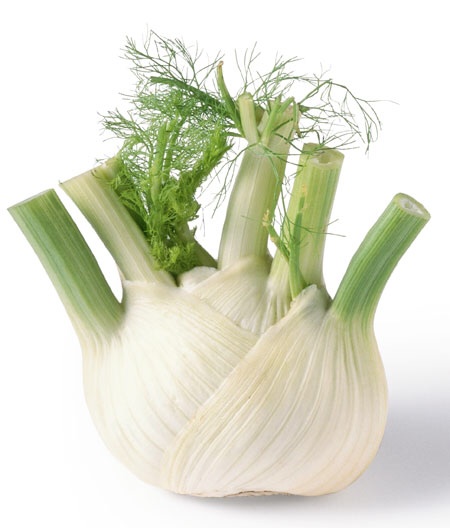
Anethole structure: http://structuresearch.merck-chemicals.com/cgi-bin/getStructureImage.pl?owner=MDA&unit=CHEM&product=800429 (in http://www.merckmillipore.com/chemicals/trans-anethole/MDA_CHEM-800429/p_BwWb.s1L3_sAAAEWfeEfVhTl)
Aniseed tree: http://floragreatlakes.info/rfsimages/ringwood1.jpg (in http://floragreatlakes.info/html/rfspecies/ringwood.html)
Anise myrtle: http://www.anfil.org.au/wp-content/uploads//flushing-tree.bmp (in http://www.anfil.org.au/key-native-species/flavour-of-the-month-february/)

I LOVE ITALY

Milan, 13 May 2014

My wife and I have finally arrived in Italy. On our way home from the station last night we dropped into our local supermarket to buy stuff for supper. We chose simple fare which required no cooking. We started with mozzarella di bufala, mozzarella made in the south of Italy from the milk of water buffaloes

image

My wife pours a teaspoonful of extra virgin olive oil on her mozzarella, but I like it on its own. Like that you can really appreciate the delicate milky juices oozing from the cheese when you put a slice of it in your mouth.

We then had a plate of bresaola, air-dried beef from the Valtellina, an Alpine valley to the north of Milan. It is at its best with a drizzle of lemon juice and olive oil.
image
We followed this up with a plate of cooked ham and cantaloupe melon. Italians will normally eat their melon with raw ham
image
but I prefer it with cooked. That was always the way I ate it in France.

Our dessert consisted of nespole (loquat in English), a fruit I had never tried before coming to Italy thirty years ago.
image
Its yellow flesh is succulent and quite tart, and it contains very beautiful large, brown, glistening stones.

We washed this all down with a Dolcetto red wine from the Langhe region in Piedmont.
image
That’s all. Quite simple, as I said. And all from the local supermarket.

I love Italy.

____________________

Mozzarella di bufala: http://giacomoleopardi.provincia.venezia.it/trasformazioni%20alimentari/IMMAGINI/Formaggi%20Alberto,%20Alessio%20&%20Mattia/mozzarella%20di%20bufala.bmp (in http://giacomoleopardi.provincia.venezia.it/trasformazioni%20alimentari/mozzarella_di_bufala.htm)
Bresaola, lemon, oil: http://www.livingalifeincolour.com/wp-content/uploads/2013/09/meimanrensheng.com-bresaola.jpg (in http://www.livingalifeincolour.com/recipes/bresaola-air-dried-beef-with-olive-oil-and-lemon-lombardia/)
Melon and ham: http://www.cookingwithpatty.com/italian/wp-content/uploads/2009/11/prosciuttomelone.jpg (in http://www.cookingwithpatty.com/italian/recipe/cantaloupe-with-ham-prosciutto/)
Nespole: http://casabenessere.files.wordpress.com/2013/06/nespole.jpg (in http://casabenessere.wordpress.com/2013/06/11/nespole/)
Langhe region: http://blog.wineowine.com/wp-content/uploads/2014/04/le-langhe.jpg (in http://blog.wineowine.com/le-langhe/)

ROOTLESS IN BEIJING

London, 4 May 2014

I like George Orwell. His novels are good, no doubt about it – some of them, like 1984 and Animal Farm, are classics – but it is really his non-fiction work that I appreciate the most. When I was young and going to school in the UK, I particularly liked those books of his like Down and Out in Paris and London and The Road to Wigan Pier in which he excoriated the smug, self-satisfied, class-ridden Britain of the 1930s, a Britain which still existed, albeit in a milder form, when I was going to school.

Orwell had a particular animus against colonialism, in part no doubt because of his first-hand experience with it as an officer in the Burmese police. But he still showed a certain compassion for the colonial administrators. I particularly remember his description of one of his superiors who had spent his whole working life in the colonies, who by necessity believed he had a deep connection with the Mother Country (wasn’t he out there on His Majesty’s Service?), but who in his rare visits home would sit friendless and familyless in his Club in London, looking out at a country he no longer recognized or felt part of, nursing a gin and tonic while waiting for the boat to carry him back.

I am not a colonial administrator but I have been out of the UK for nigh on forty years. I didn’t mean it to be so. When I left after University I was quite expecting to come back, but you know how it is, life just takes over. And now, on one of my rare visits back to the UK, I too, like that colonial administrator of long ago, no longer feel any connection to the country. I too sit there, not participating in the social, economic and political life going on around me, but merely observing it. Even my own language is becoming foreign to me. I don’t get many of the jokes any more, referring as they do to situations I am not familiar with. Much of today’s slang is a closed book to me. I’m even beginning to experience difficulties in understanding some of the stronger British accents!

This alienation from Britain sometimes fills me with melancholy, as it did today walking around the streets of London. Where do I belong? I am just a stone rolling around the world gathering no moss. I am Rootless in Beijing today, I will be Rootless in some other city tomorrow.

It’s not as if I can even mourn the loss of British roots, because I’ve never really had any. My parents left the UK before I was born and I only went to school there. When I tell people I’m British, they normally ask me where I’m from in Britain. I just say London. Everyone has heard of London and I did spend some time there with my grandmother. But I’m no real Londoner.

To make it all worse, I’m only half British, with my other half being French. At school, they sometimes called me froggie in that way children have of unerringly picking up differences and using them to pick on you. The fact is, I did feel different from most of my schoolmates. They were so much more English than I was! But my French side gave me no comfort. I was even less French than I was English. I just spent summer holidays there.

When I was younger, I didn’t mind my rootlessness. In fact, I was quite proud to be a citizen of the world, of belonging nowhere and everywhere, and I quite liked the fact that I could often ignore the social conventions of the places I lived in because I was foreign and not expected to conform.

But with age, I feel ever more urgently a need for roots. I want to have a place where I can say, “here, I will lay down my head; here, I will lay my bones to rest”. Luckily, my wife has given me strong roots in Italy. That is where I will finally come to rest when my tour of duty in Beijing is finished.

Goodness me, what is all this maundering self-pity? Time to pour myself another gin and tonic and discuss with my wife what we shall do tomorrow.

TOMB SWEEPING DAY

Beijing, 6 April 2014

I think it must be a universal characteristic of human beings to want to remember their dead. Perhaps it’s part of a refusal, deep down in our psyche, to accept that we die, so remembering the dead is a way to declare defiantly that we too, when we will be among the dead, will not really be dead. Whatever it is, and I’m certainly not competent to explore this side of our collective consciousness, we do have ritual days in our calendars when we are called upon to remember our dearly departed. For us in Western Europe, it’s All Souls’ Day, November 2nd.
All souls day Germany-3
For those following the Christian Orthodox tradition, it’s the Saturday of Souls, commemorated some time in Spring
Greek orthodox saturday of souls-2
For the Chinese, it’s the Qingming Festival, or tomb sweeping day. It falls on the 15th day following the Spring equinox, which this year turned out to be yesterday. The pious Beijingers flocked to the tombs of their loved ones, while the rest of us, who don’t have any tombs to sweep in the immediate vicinity, took the day off. My wife and I fall into the latter category, our parents and grandparents lying in peace (I hope) in Italy, France and the UK. Nevertheless, we thought it would be interesting to observe this Chinese festival at first-hand. So we visited a cemetery in the farther reaches of the city, arriving there after a long journey by bus and under the curious stares of the locals.

The cemetery was indeed full of people
tomb sweeping day-1
and it was fascinating to watch what they did. They burned incense
tomb sweeping day-3
As well as leaving normal flowers, they garlanded the graves with paper flowers (I suppose cheaper than real flowers, and certainly a good deal more colourful)
picture 001
They left food on the graves
picture 005
They left money (fake, alas, as we determined after surreptitiously picking up a few notes under the suspicious gaze of one of the gardeners)
tomb sweeping day-5
They paid their respects
tomb sweeping day-4-woman bowing
And even in one case we heard an old woman talking to her husband (I presume), I suppose updating him on what had been happening since she had last visited. The loneliness of old age can indeed be hard …

Well, the flowers we could relate to. After all, we do that in Europe too on All Souls Day – although the garlands of fake flowers was new to us.
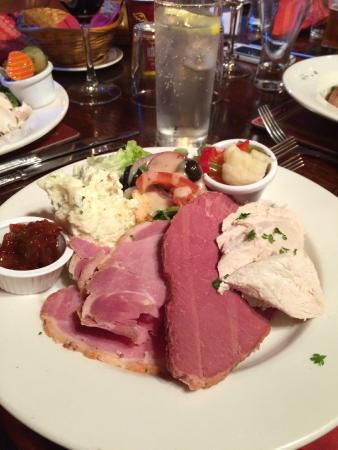
All souls day Austria-2
We could also sort of understand the incense – I remember piles of incense being burned in the churches of my youth, although I never saw it used on tombs.

But the food and the money we found really strange. Especially the food. There was something almost animistic about this. It was like the ancient Egyptians who buried their dead with food for the afterlife.
bringing food to the dead egypt
Mind you, it’s not as if we don’t have our own strange cemetery habits. For instance, what I missed were the little candles which we leave on our graves in Europe
All souls day Germany-2-night
But if a Chinese were to ask me what those candles signify I would have to confess to not knowing. To keep away the bad spirits? To help God remember that they are there? To light up the darkness in which they lie?

Something else I missed was the statuary. The tombs we saw were very sober affairs.
picture 012
Compare this to the almost baroque constructions I’m familiar with, especially in Italy. Here are a few examples from the cemetery where my wife’s parents are buried
Giorno-dei-morti-Milano
statua monumentale Milano-2
statua monumentale Milano-3
From the style of these examples you might think that this was a habit of the past, but one of the tombs near my father-in-law’s has a life-size statue of a fisherman standing on it.

around nonno's grave 003

I presume the tomb’s incumbent loved fishing. Another close by, sadder to contemplate, is the statue of the young man buried there, whose life was tragically cut short.

around nonno's grave 006

My father-in-law’s tomb itself has a beautiful statuary group of angels singing in the heavenly choir.
angels with trumpets
We are going back to Milan in a few weeks to recuperate it after cremating his remains. My father-in-law has had thirty-five years of peaceful repose and now it is the turn of someone else to lie there: the iron law of increasing populations and decreasing real estate in which to rest the dead. But we’ll have the singing angels by which to remember him – and my mother-in-law, who chose the statuary’s theme. They had a common love of music. We will try to have his ashes relocated next to hers, so that after a separation of thirty-five years they can be together in death as they had been in life.

I wish I could say the same for my parents. Deaths ten years apart and the same real-estate forces which I just alluded to has meant that, after a life together, they were buried in different places. It fills me with melancholy and makes me think of Thomas Hardy’s poem In Death Divided

I shall rot here, with those whom in their day
You never knew,
And alien ones who, ere they chilled to clay,
Met not my view,
Will in your distant grave-place ever neighbour you.

No shade of pinnacle or tree or tower,
While earth endures,
Will fall on my mound and within the hour
Steal on to yours;
One robin never haunt our two green covertures.

Some organ may resound on Sunday noons
By where you lie,
Some other thrill the panes with other tunes
Where moulder I;
No selfsame chords compose our common lullaby.

The simply-cut memorial at my head
Perhaps may take
A Gothic form, and that above your bed
Be Greek in make;
No linking symbol show thereon for our tale’s sake.

And in the monotonous moils of strained, hard-run Humanity,
The eternal tie which binds us twain in one
No eye will see
Stretching across the miles that sever you from me.

I hope that, one day, I can bring them together so that finally one robin can haunt their two green covertures.

___________________________

All Souls Day Germany: http://images.fotocommunity.de/bilder/architektur/friedhoefe/allerheiligen-auf-dem-gratweiner-friedhof-1cf8be4b-d04b-430a-93e0-b3685f0f992f.jpg [in http://www.fotocommunity.de/pc/pc/display/14858389%5D
Greek Orthodox Saturday of souls: http://1.bp.blogspot.com/-Co-zt3nzWXs/T1EaVmrfyRI/AAAAAAAAAVA/M9gA4b1_m2I/s1600/%CF%83%CE%AC%CF%81%CF%89%CF%83%CE%B70003.jpg [in http://fiestaperpetua.blogspot.com/2012/03/blog-post.html%5D
Tomb sweeping day-1: http://www.wildchina.com/blog/wp-content/uploads/2010/04/pb-120404-qingming-da.photoblog900.jpeg [in http://www.wildchina.com/blog/tag/tomb-sweeping-day/%5D
Tomb sweeping day-2: http://www.fashion-bop.com/wp-content/uploads/2010/04/Tomb-Sweeping-Day.jpg [in http://www.fashion-bop.com/fashion-bop-things-about-us/tomb-sweeping-day/%5D
Tomb sweeping day-3: our picture
Tomb sweeping day-4: our picture
Tomb sweeping day-5: http://farm6.static.flickr.com/5193/7044748643_b7415e94a9.jpg [in http://easternjourney.com/2012/04/tomb-sweeping-day-2012/%5D
Tomb sweeping day-6: http://i.telegraph.co.uk/multimedia/archive/01864/Bowing_1864893i.jpg [in http://www.telegraph.co.uk/news/picturegalleries/worldnews/8429441/The-Qingming-festival-The-Chinese-honour-their-ancestors-by-sweeping-their-tombs.html%5D
All Souls Day Austria-flowered graves: http://www.mariazellerland-blog.at/wp-content/gallery/allerheiligen/allerheiligen-mariazell_1501.jpg [in http://www.mariazellerland-blog.at/allerheiligen-und-allerseelen-in-mariazell/allgemein/3588/%5D
Bringing food to the dead in Egypt: http://static.guim.co.uk/sys-images/Guardian/Pix/pictures/2010/10/11/1286794872587/Extra-British-Museum-Book-006.jpg [in http://www.theguardian.com/extra/2010/oct/11/extra-event-british-museum-book-of-the-dead%5D
All Souls Day Germany-night lights: http://images.fotocommunity.de/bilder/specials/mystische-orte/allerheiligen-am-friedhof-1436be22-b4bf-4a77-aba9-500ebdb2f3e7.jpg [in http://www.fotocommunity.de/pc/pc/display/19329266%5D
General view of Chinese cemetery: our photo
Statues cemetery Milan-1: http://www.milanospia.it/wp-content/uploads/2011/10/Giorno-dei-morti.jpg [in http://www.milanospia.it/2011/10/31/ponte-di-ognissanti-al-cimitero-di-milano-diventa-un-business/%5D
Statues cemetery Milan-2: http://farm8.staticflickr.com/7141/6655629153_17775801fa_o.jpg [in http://italia-ru.com/blog/ankh/2012/01/25/cimitero-monumentale-di-milano%5D
Statues cemetery Milan-3: http://milanosotto.files.wordpress.com/2013/08/cimitero-monumentale-scorcio.jpg [in http://milanosotto.wordpress.com/2013/08/13/il-cimitero-monumentale-di-milano-tra-storia-leggende-e-simboli-massonici/%5D
Statues cemetery Milan-4, 5 & 6: our photo