WHITE AND GREEN

Beijing, 12 April 2013

We were discussing weighty matters yesterday afternoon, the security situation of our organization here in China. It’s a review we carry out once a year, in the Spring. Not unnaturally, the new outbreak of bird flu in the Shanghai area was the first topic on the agenda. After a review of where things stand, we concluded that the new flu virus H7N9 currently represents a moderate threat to our staff members and their dependents, but we agreed that we will need to closely follow the flu’s progress. Next on the agenda: North Korea and the recent ratcheting up of tensions there which I alluded to in a previous post. Conclusion: low to moderate concern for us in China, but the Security Officer to monitor the situation and report back. And so on, down the list of possible threats, both natural, like earthquakes, and man-made, like the outbursts of violent agitation in the Eastern provinces over land use.

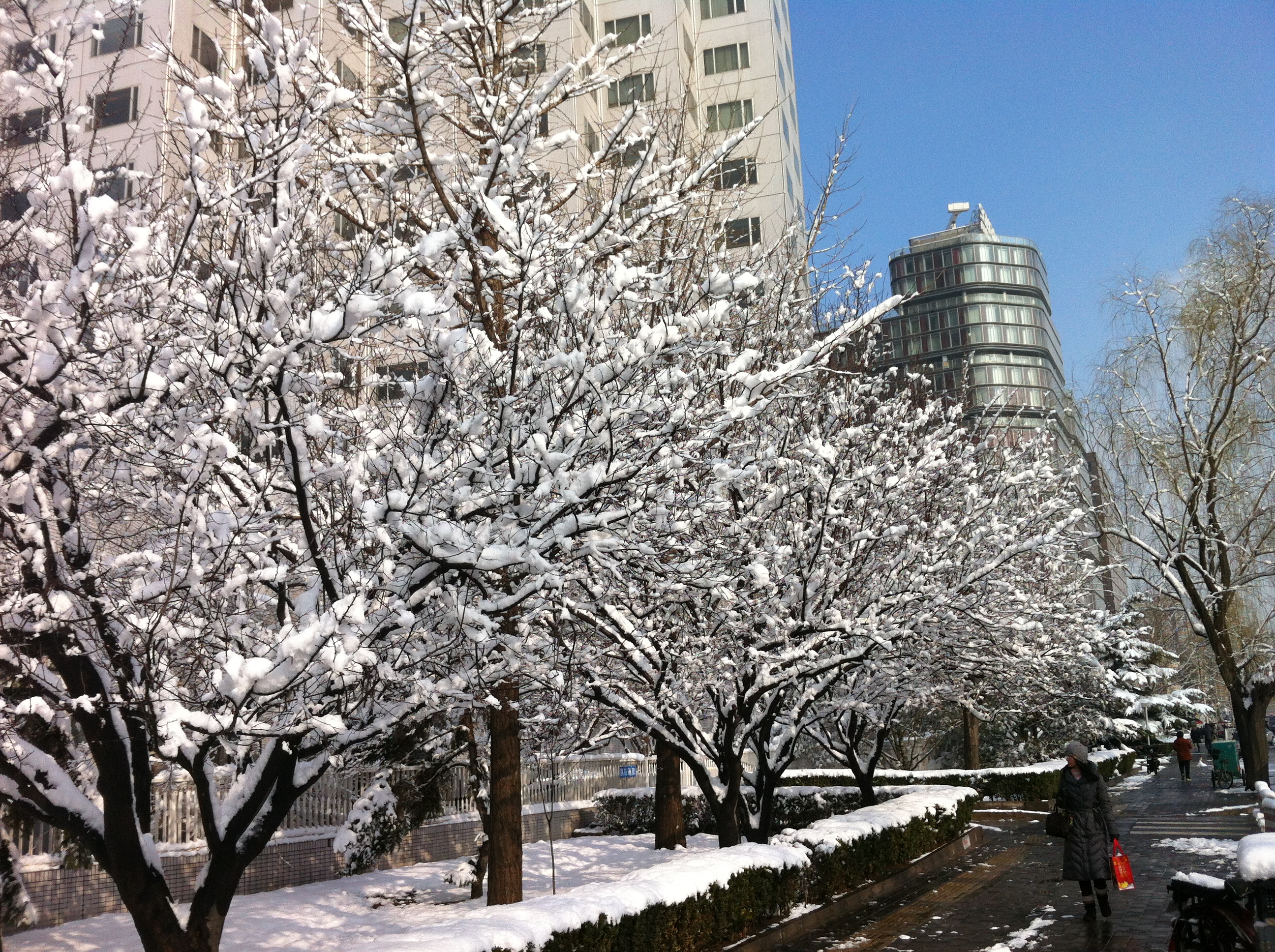
All the while, I admired the magnolia in the garden outside the window, with its silky white flowers standing out against the tender green of a weeping willow tree unfurling into leaf. At the meeting’s start, both were picked out with vivid intensity by the sun. But as the meeting wore on and the sun moved in its arc across the sky, the shadows drew in and cast a pall of grey over the white and green.

picture 004

And so our security review was done for another year.

STARRY, STARRY NIGHT

Beijing, 9 April 2013

The thing about my current position is that it requires me to get involved in a lot of issues about which I know absolutely nothing, or close to it. In a previous post I described a trip to Dali, in the province of Yunnan, where I went to discuss with the local government what could be done to increase markets for the prefecture’s walnuts. I am an ignoramus when it comes to walnuts but I can read up on the topic and learn enough to sound intelligent for half an hour’s discussion. But this afternoon, at the request of our Legal Advisor, I attended a meeting about the regulation of internet domains. This was fated to be one of those meetings where I understand the single words that people are uttering but find that when they string the words together it turns into gibberish. Luckily, someone else was leading our group, and my role was principally to fill a chair.  So I let it all wash over me and allowed my mind to wander. For some reason, the organizers of the meeting had put a slide of a galaxy on the screen. It looked something like this:

galaxy-1

I sat there as the meeting droned on, admiring the simple, pulsating symmetry of it all. It reminded me of a book I had bought in Vienna which was filled with photos of the Universe like this one.

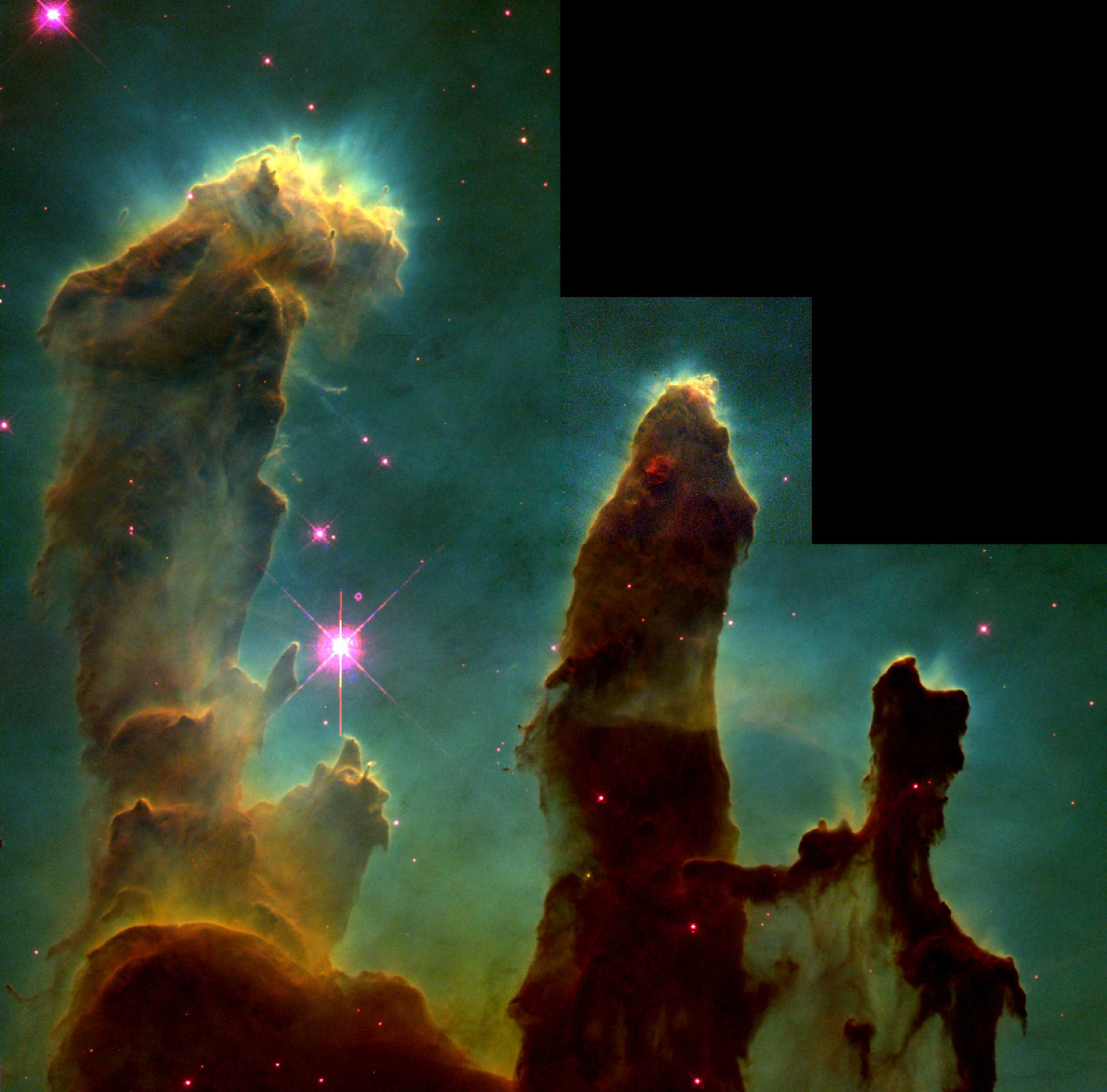
Nebula-1

Look at those towering clouds of intergalactic dust. Wonderful …

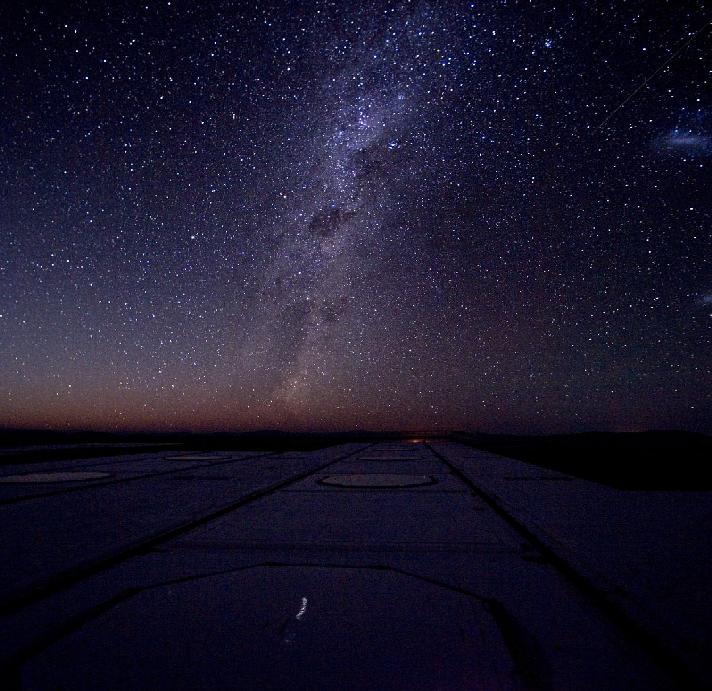
But actually, the Universe seen from Earth is just as nice. I mean, on a clear, cloudless, moonless night the Milky Way is absolutely lovely

milky way-2

Even simple stars can take your breath away. I remember a night on the shores of Lake Sevan in Armenia, where we were seeing what could be done to get the economy going again and the environment back in shape after the devastations wrought upon both by the central planning of the Soviet Union. We walked down to the lakeshore one night, and the sky looked like this:

desert-sky-2

The tragedy was that we could see the sky so clearly because the economy was bankrupt – no-one could afford electricity so there was no light pollution.

Well, that was a nice, relaxing daydream. Lord knows what I’ll write to the Legal Advisor tomorrow, when I report on the meeting.

___________________________________

Galaxy: http://files.myopera.com/FranklinBR/albums/12602222/Andromeda%20Galaxy.jpg
Nebula: https://upload.wikimedia.org/wikipedia/commons/b/b2/Eagle_nebula_pillars.jpg
Milky way: http://cdn1.hdwallpaperspics.com/uploads/2013/01/eso_night_sky.jpg
Desert sky: http://farm8.staticflickr.com/7217/7002623630_a9f14610f3_h.jpg

MY CRUISE OF FIRSTS

Beijing, 5 April 2013

My previous post about chocolate Easter eggs led me to take a page from Charles Dickens and I allowed myself to be visited by the ghost of Easters past. He took me back through memories of previous Easters, some very pleasant and others not so much. One in particular has stayed with me, the Easter I passed on a cruise in the Mediterranean when I was 14.

My English grandmother had decided that she would like to go on a cruise but wanted company. So she took me and my older brother along with her. It was a wonderful trip, one of those golden-hued memories that each one of us has. Easter itself was celebrated without much fuss and bother in Brindisi, in southern Italy – we were just a few Catholics among a sea of Anglicans and so were packed off to a small room on the ship and a local priest was brought in for the occasion.  A surf through the web tells me that Easter occurred on April 14, two weeks later than this year. We were already towards the end of the cruise. There were a couple more stops in what was then Yugoslavia and is now Croatia, at Split and Dubrovnik, and then it was back to Venice where we had boarded ship. Before Brindisi, we had visited Olympia, Crete, Athens, Istanbul, Ephesus, and then finally Rhodes before starting back (there was also a visit to one of the smaller Ionian islands but I no longer remember which one).

For me, this was a trip of many firsts (well, the whole trip was a first but there were certain things which were more first than others, if you get my drift).

It was my first trip to Venice, one which my wife and I have repeated many, many times, sometimes with the children, first from Milan when we lived there and then later from Vienna. What I fell in love with that first time and keep going back to is not the grand theatricality of St. Mark’s Square

venice-st marks square

or of the laguna, which the cruise ship sailed down as we left Venicevenice-the lagoon

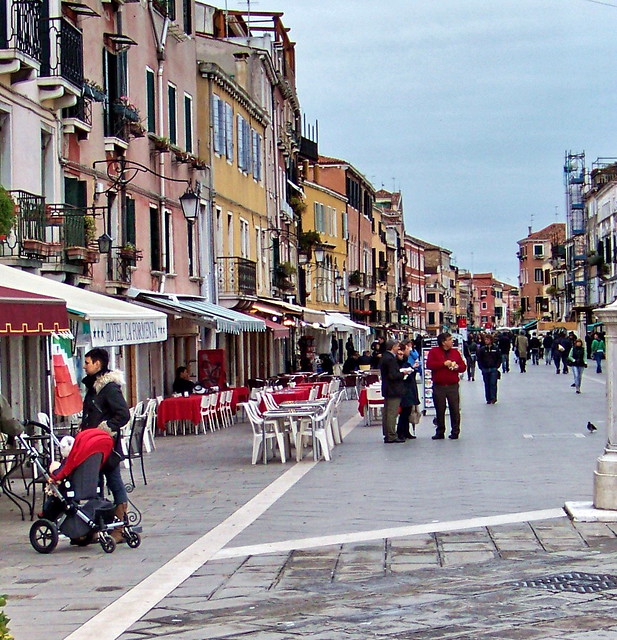
No, what always bring us back is the humbler Venice, the alleys and lanes (it’s hard to talk of streets when there are no cars) far away from the tourist haunts, which widen and narrow with no apparent rhyme or reason, which loop and re-loop over narrow canals, which suddenly bring you, blinking in the light, into small piazzas teeming with life.

venice-calle-1

venice-calle-2

venice-calle-3

venice-calle-4

We spent the afternoon before setting sail wandering around, map in hand – a map is always necessary in Venice, although my wife is not really of that opinion: ask people the way, that’s her motto.

The cruise also took me on my first visit to classical ruins. England and the parts of France I was then familiar with don’t have any Roman ruins to speak of; an odd crumbling wall here and there is about the sum of it. Here, we had a feast!

Olympia

olympia-column-2

Knossos

Knossos-palace-1

Mycenae

mycenae-lion-gate-4

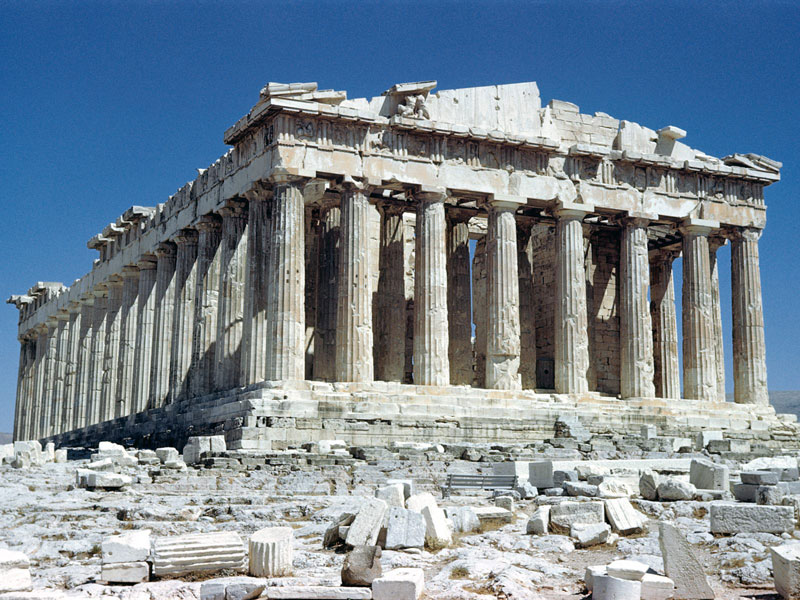
The Acropolis in Athens

athens-acropolis-1

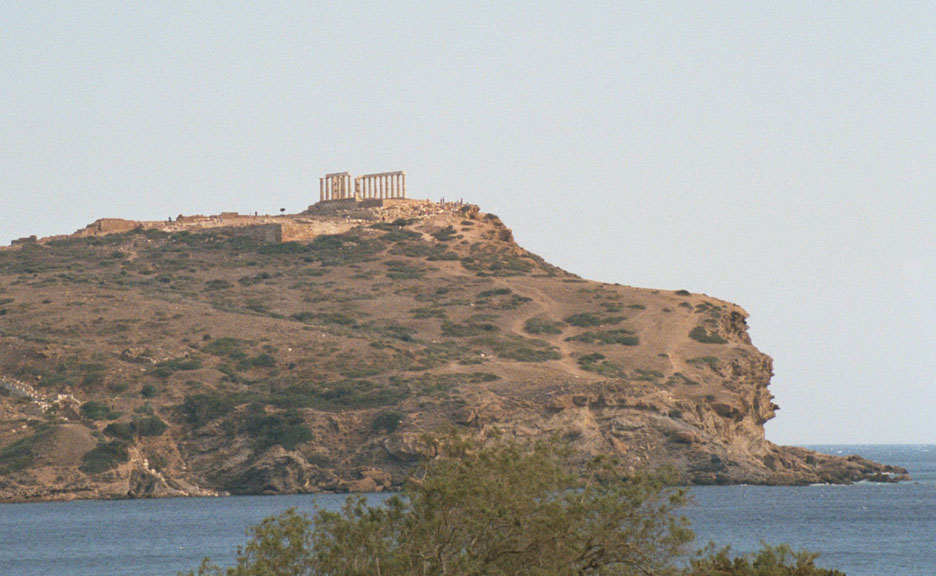
Cape Sounion

cape-sounion

Ephesus

ephesus

Actually, it was more a surfeit than a feast. To be very honest, after I’ve seen three broken columns and five fallen walls the experience begins to pall. Many decades later, when I got to know Shelley’s poem Ozymandias I could relate to all these ruins and many others I have seen since all over the world in a different way:

I met a traveller from an antique land
Who said: Two vast and trunkless legs of stone
Stand in the desert. Near them, on the sand,
Half sunk, a shattered visage lies, whose frown,
And wrinkled lip, and sneer of cold command,
Tell that its sculptor well those passions read
Which yet survive, stamped on these lifeless things,
The hand that mocked them and the heart that fed:
And on the pedestal these words appear:
“My name is Ozymandias, king of kings:
Look on my works, ye Mighty, and despair!”
Nothing beside remains. Round the decay
Of that colossal wreck, boundless and bare
The lone and level sands stretch far away

But, in all this blur of broken stone one memory stands out, etched for ever more in my mind: wildflowers growing in profusion among the ruins of Olympia. A search of the web shows that I am not the only traveler to Olympia who has been struck by the flowers there:

olympia-wildflowers-6

olympia-wildflowers-5

SANYO DIGITAL CAMERA

The trip was also my first real exposure to Greek sculpture. My grandmother had taken me a few times to the British Museum but somehow we always seemed to end up in the section of the Egyptian mummies – at least, that’s all I remember of those early visits. But the visit to the National Archaeological Museum in Athens was a real eye-opener for me. Two pieces I remember particularly well. One was the statue of Zeus (or is it Poseidon?):

Athense-bronze_statue_of_Zeus_or_Poseidon-1

Look at that face!

Athense-bronze_statue_of_Zeus_or_Poseidon-3

Speaking of faces, the other piece that impressed itself on me was the gold mask which Schliemann dug up in Mycenae (our Greek and Latin teacher had often quoted the phrase “I have gazed upon the face of Agamemnon”, said to have been uttered by Schliemann when he first set eyes on the mask)

agamemnon-1

Another notable first on this trip was my exposure to Byzantine mosaics, in the cavernous interior of Hagia Sophia in Istanbul.

istanbul-hagia sophia-interior-1

istanbul-hagia sophia-mosaics-1

istanbul-hagia sophia-mosaics-4

istanbul-hagia sophia-mosaics-5

This started an interest – an obsessive interest, my wife might observe – in early Christian mosaics, which I have tracked down in various parts of the Mediterranean basin since then.

Istanbul was the site of yet another first, my first exposure to Muslim architecture, in the form of the incomparably beautiful Sultan Ahmed Mosque.

istanbul-sultan ahmed mosque-exterior-2

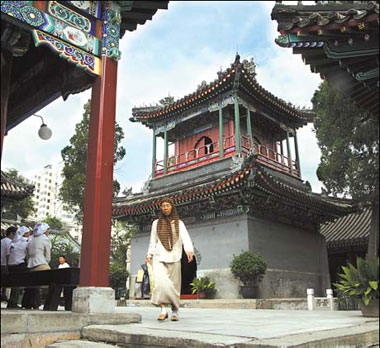
Since then, I have been lucky enough to admire Muslim architecture in all its wonderfully different variations in many parts of the world – even here in Beijing, where it has taken on decidedly Chinese characteristics.

beijing mosque

Iran and Central Asia await me still …

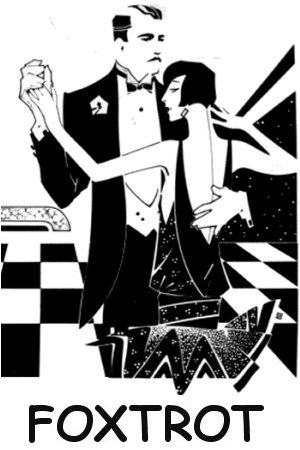
On a lighter note, the cruise was the first – and probably last – time I saw the foxtrot being danced. Every evening a three-man band played in the dance room. It started with oldies, and a retired English Major and his wife were assiduous dancers. As the band started up, they would step out, glide through a number of foxtrot numbers, and then retire to the bar.

foxtrot-1

They looked surprisingly like this picture, just somewhat longer in the tooth.

After they had left, the tempo changed and us young things would take over the dance floor and dance the night away. Well, I didn’t. I was far too shy. I would look on enviously at the elder young things. At last, one took pity on me and led me to the floor to dance my first modern dance. Another first …
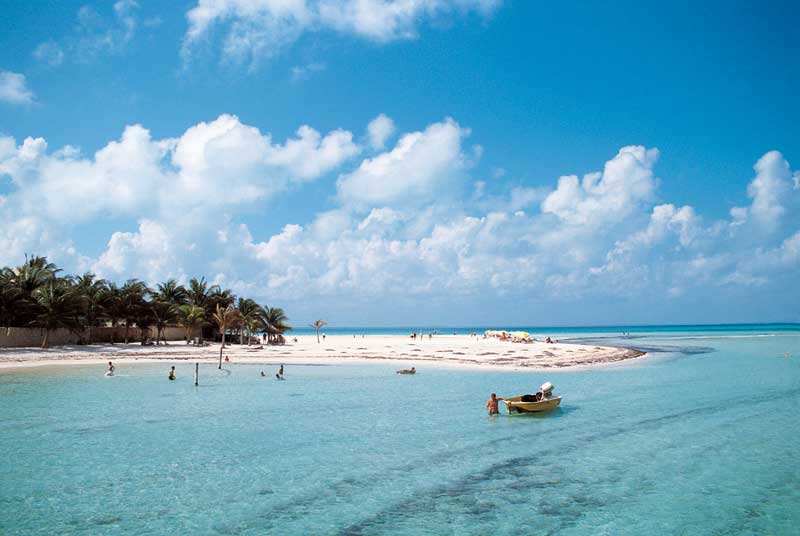
Last, but definitely not least, it was on that cruise that I first set eyes on the Mediterranean. It was love at first sight.

mediterranean sea-3

______________________

Venice-St Mark’s square: http://www.instablogsimages.com/1/2012/04/25/sunset_on_st_marks_square_image_title_upyro.jpg
Venice-Lagoon: http://cdn2.vtourist.com/4/3990973-looking_back_from_the_water_bus_Venice.jpg
Venice-calle-1: http://renaissancerules.files.wordpress.com/2011/01/venice-2009-294.jpg
Venice-calle-2: http://picasaweb.google.com/lh/photo/Vx_htYT8ClwJ1DwCpMcy1A
Venice-calle-3: http://www.cepolina.com/photo/Europe/Italy/Venice/Venice-mix/3/Venice-street-narrow-calle-rill.jpg
Venice-calle-4: http://farm2.staticflickr.com/1265/5186001188_065ec8a290_z.jpg
Olympia: http://images.fanpop.com/images/image_uploads/Olympia-greece-585497_1024_768.jpg
Knossos-palace: http://ant3145crete.wikispaces.com/file/view/Knossos_1.jpg/68392549/Knossos_1.jpg
Mycenae-lion-gate: http://www.civilization.org.uk/wp-content/uploads/2012/02/Mycenae-Lion-gate-028.jpg
Athens-acropolis: http://www.limotaxi.gr/wp-content/uploads/2010/10/athens1.jpg
Cape Sounion: http://www.grisel.net/images/greece/sounion11.JPG
Ephesus: http://historyoftheancientworld.files.wordpress.com/2012/09/theatre2.jpg
Olympia-wildflowers-1: http://farm3.staticflickr.com/2245/2331955314_1629efb4ab_z.jpg
Olympia-wildflowers-2: http://farm3.staticflickr.com/2380/2331125289_93eb068ca2_z.jpg
Olympia-wildflowers-3: http://www.touringtykes.com/wp-content/uploads/2010/02/olymipia-flowers.jpg
Athens-statue of Zeus/Poseidon-1: http://upload.wikimedia.org/wikipedia/commons/6/67/Bronze_statue_of_Zeus_or_Poseidon.jpg
Athens-statue of Zeus/Poseidon-2: http://cdn.arstechnica.net/wp-content/uploads/2011/11/zeus_or_poseidon_national_archaeological_museum_athens-4ecd0b1-intro.jpg
Athens- Gold Mask “Agamemnon”: http://hernandopages.com/agamemnon.jpg
Istanbul Hagia Sophia-interior: http://hansmast.com/images/istanbul/hagia_sophia/IMG_1846_Enhancer-IMG_1857_Enhancer-2.jpg
Istanbul-Hagia Sophia-mosaics-1: http://www.mosaicartsource.com/Assets/html/artists/lilian/mosaic_hagia_sophia.jpg
Istanbul-Hagia Sophia-mosaics-2: http://www.sacred-destinations.com/turkey/istanbul-hagia-sophia-photos/slides/imperial-entrance-mosaic-c-hbetts.jpg
Istanbul-Hagia Sophia-mosaics-3: http://www.turkey4travel.com/wp-content/uploads/2009/05/hagia-sofia-mosaic.jpg
Istanbul-sultan ahmed mosque: http://www.viitoaremireasa.ro/images/articole/large/2084/Istanbul-Orasul-care-se-intinde-pe-doua-continente-5.jpg
Beijing mosque: http://www.chinadaily.com.cn/cndy/attachement/jpg/site1/20080815/000802ab80450a0f185656.jpg
Foxtrot: http://ssqq.com/archive/images/foxtrot.jpg
Mediterranean Sea-3: http://1.bp.blogspot.com/-4O6DVn4JTeQ/UG6WCS6K7yI/AAAAAAAAFaQ/NHquXzafTsA/s1600/43923144.jpg

WATER AND I

Beijing, 30 March 2013

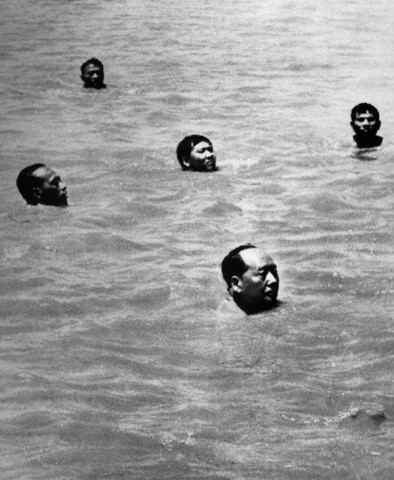
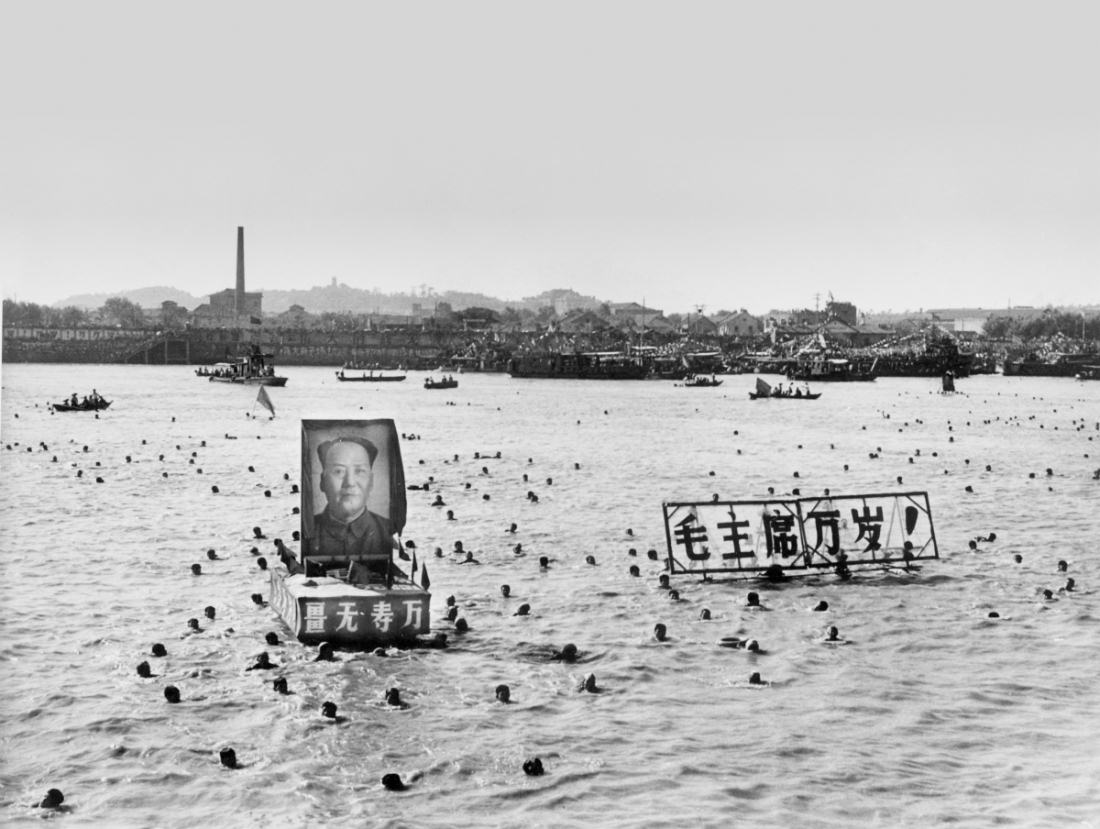
There is a famous photo of Chairman Mao swimming across the Yangtze River at Wuhan in the summer of 1966.

mao-swimming-2

He joined the annual Cross-Yangtze swimming competition, which had been going since the 1930s (and continues to this day). Actually, he had already taken part in this competition twice before, in 1956 and in 1958. But this time, the locals really pulled out the stops for the Chairman, dragging this huge picture of him across the river along with a placard wishing him 10,000 years of life (I wonder if they made it to the other side or if they sank like a stone halfway across):

mao-swimming-4

The photo is famous because it signaled the start of that national catastrophe that was the Cultural Revolution. With this swim, Mao was signaling that even though he was 72 he was still strong and healthy enough to lead the country. After it, he went up to Beijing and unleashed the Revolutionary Guards.

This photo came to my mind last weekend, when my wife and I went for a walk, which after several random turns to the left and right brought us to Qianhai lake, one of the string of small lakes that lie to the north-west of the Forbidden City. There, we came across a group of pensioners (it always seems to be pensioners; I have never seen young people doing it) who were swimming to an island in the middle of the lake and back. The poor fellows were having to contend with pesky pedalos – these in the hands of young people; much more fun than swimming – which swarm over these lakes during weekends.

Qianhai lake swimmer 001

We joined the curious crowds watching the swimmers, and I followed their progress with horrified fascination. Professional deformation made me mentally compute all the pollutants that were probably in the water and what they could be doing to the swimmers. But the waters in these lakes are actually much cleaner than the water in that stretch of canal near our apartment which I’ve written about several times in previous posts. The water there is often of a dubious hue, and the sight of dead fish floating on its surface is common. Yet even here, once the ice has gone and the weather gets a little warmer, a group of pensioners emerge from the nearby housing estate and go for stately swims in the canal.

swimmers in canal summer 2013 004

I usually avert my eyes when I see them, since their fate is too terrible for me to contemplate. On this point, I am moved to insert a photo from the summer of a few years ago in Qingdao when there was a terrible algal bloom. Even the Chinese thought this was a bit much.

chinese boy with algae

Yet the pensioners seem to survive. Come to think of it, when I was a young lad and accompanied my English grandmother on her boat on the Norfolk Broads (I have written an earlier post on this), we used to happily swim in lakes and rivers which were uniformly a brown peaty colour and into which all the boats would discharge their … well, you understand where I’m going with this one. My grandmother lived to a ripe old age and I am still alive to tell the tale.

Even so, I would not swim in the canal or in the Beijing lakes for all the money in Christendom. Not because of the pollution but because of the temperature. The Chinese – again, the older folk, as far as I can tell, not the young – feel that cold water is invigorating. The ice is barely broken that they are swimming. In fact, in the north they take a pride in swimming even when there is ice!

chinese swimming Harbin-1

This is definitely not for me. I am, I freely admit it, a wimp when it comes to cold water. Cold water and I do not mix. I have two memories from my youth, seared into my brain. One is swimming in the outdoor swimming pool at primary school. It had just opened, so it must have been early May. I was among the first to go in. I could hardly breathe it was so cold, and by the time I got to the other end of the pool I could not feel anything in any part of my body. The second memory is of a trip to the North Sea beaches of Norfolk with my grandmother – a day off from sailing on the Broads. Entering the water was like being flailed alive. Years later, watching the film Titanic I could viscerally empathize with those poor people who landed in the icy waters of the Atlantic and lasted no more than a few minutes.

titanic sinking

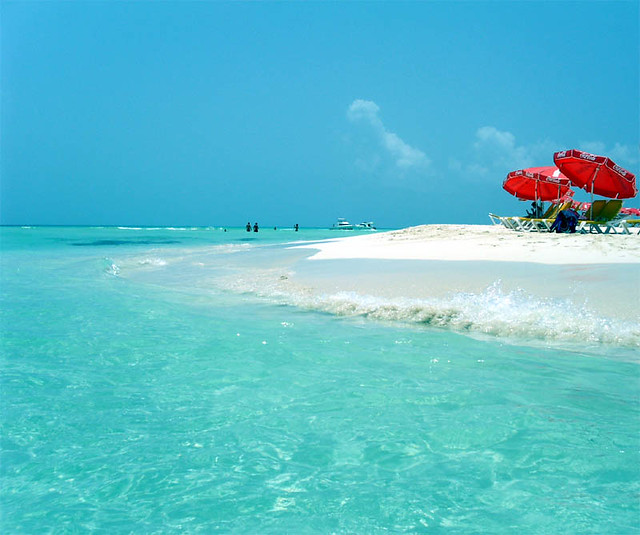
I find even the waters of the Mediterranean in August cold. My children would mock my skittishness about entering the water during our summer holidays in Liguria. The only time I have ever felt really relaxed in seawater was during a trip many, many years ago to Mexico with my wife and mother-in-law, when we went to Isla Mujeres, an island just off the coast from Cancún.

isla muheres-2

isla muheres-1

My knees go weak just thinking about that deliciously warm water. It was just like taking a bath. Wonderful.

___________________________

Mao swimming-1: http://www.china360online.org/wp-content/gallery/history/maoswimming.jpg
Mao swimming-2: http://www.historytoday.com/sites/default/files/mao_0.jpg
Swimmer in Qianhai lake: my pic
Swimmer in canal: my pic
Chinese boy with algae: http://www.trust.org/resize_image?path=/dotAsset/2c48ca45-6959-4bc0-8172-15165d151805.jpg&w=649
Chinese swimming Harbin: http://msnbcmedia.msn.com/j/MSNBC/Components/Photo/_new/pb-121217-winter-swim-china-jsa-2.photoblog900.jpg
Titanic sinking: http://0.tqn.com/d/movies/1/0/n/n/Y/titanic-sinking2.jpg
Isla muheres-1: http://www.luxuriousmexico.com/wwwluxuriousmexico/Luxurious%20Mexico/PicsQuintanaRoo/Quintana%20Roo,%20Isla%20Mujeres,%20Beach,%20Playa%20Norte,%20view%20-%20Photo%20by%20Fideicomiso%20Isla%20Mujeres.jpg
Isla muheres-2: http://farm2.staticflickr.com/1258/776340728_2b813a7873_z.jpg?zz=1

HUDDLING AROUND THE RADIATOR

Beijing, 23 March 2013

One of the first stories that you hear when you move to China is that the North gets central heating during the winter while the South doesn’t, the line between North and South running along the Huai River. The decision is normally attributed to Mao Zedong himself, taken in the early days of the “New China” (post-1949). This is normally followed by a shake of the head at such simplistic policies and war stories about winters spent in “the South” where the storyteller spent the whole winter, night and day, indoors and out, wearing multiple layers. I can empathize. I once went on a business trip in February to Morocco, where there is also no central heating, and I still remember the highly unpleasant meetings in these damply cold rooms where my internal warmth slowly but steadily leaked out into the surrounding room leaving me a block of ice by the end of the meetings.  I suppose there was a time when the Chinese endured, but with rising wealth and expectations there is now a fair amount of grumbling about this policy. I remember being struck by a story reported in the China Daily where a man originally from Shanghai but now living in Beijing told the reporter that he had decided not to spend the Chinese New Year with his parents because he found their apartment so unpleasantly cold. It might be colder in Beijing but at least he had heating, he said. For a country where spending the New Year with parents is still sacrosanct, that was quite a statement.

In all of this, one tends to forget that the rules for central heating in the North are quite rigid and are rigidly applied. By some mysterious calculus known only to the denizens of the Ministry of Central Heating (or whatever Ministry it is that made this decision), 15 November is the date on which the heating is turned on and 15 March the date on which it is turned off. Never mind what the actual temperatures might be; that is irrelevant. The first year my wife and I were here, on November 1 it snowed – artificially induced, by the way; the Minister of Meteorology decided that Beijing needed precipitation and so seeded the clouds. But she told no one of her decision, consequently throwing all the surrounding airports into chaos since none of them were expecting snow. But I digress. Beijingers, faced with 15 days with no heating, started to complain louder and louder; eventually, the Beijing municipal authorities decided to throw the switch early.

This year, as March 15 drew closer my wife and I scanned the meteorological prognostications to know whether or not the switching-off of the heating this year would be a prelude to an unpleasant several weeks of cold in the apartment. It was looking good; outside temperatures were quite acceptable even though the smog levels were disagreeably high. March 15 came and went, the heating went off, the temperatures inside the apartment stayed pleasant. We were congratulating ourselves when this sight greeted us on the morning of the 20th.

march-20-morning 002

It was actually very pretty, really just like a Christmas card. When I walked to work later, it seemed that every person on the street had their camera out, from super-duper machines to mere phones, and were busily photographing the magical effects. I joined in with my phone. Here are a couple of photos I took.

march-20-morning 003

march-20-morning 006

But even as I walked, the snow was steadily raining down off the trees (as it were) and melting rapidly. By evening, the snow was gone.

But the cold remained. So for the last few days, come nightfall my wife and I throw on thick sweaters and huddle around the electric radiator which we bought for this purpose soon after we arrived. When it comes to bedtime we throw off our clothes and throw on our pajamas in frenzied speed, dive under our duvets, and lie there shivering for a while until out body warmth heats up the space around us. When it’s time to get up, we poke our noses out from under the duvets, groan at the still-low temperatures, and make a dash for the shower. That and a hot cuppa sort of prepares us for the day.

The big question now is, where can we go for lunch which will be warm?

I, TOO, CHOSE THE NAME OF FRANCIS

19 March 2013

In a previous post, I have admitted to being a lapsed Catholic, to having fallen off the straight-and-narrow when I was a young man. But this does not stop me from taking an interest in moments of high Catholic drama such as papal elections. These are held against one of the world’s most beautiful backdrops (St. Peter’s square in Rome)

st-peters-square

They have quaint customs like black and white smoke to announce the results of ballots (“is it white? is it black?”)

white-smoke

There are all these old, principally white, men wandering around in bright red and purple cassocks, surrounded by toy soldiers dressed in renaissance garb

cardinals-and-swiss-guards

There are the Latin pronouncements (“habemus papam” et cetera).

St. Peters Square, Pope Francesco

So when Benedict XVI made his surprise announcement about retiring, sending the world media into fibrillation (“first pope to retire in 600 years!”), I settled down to enjoy the show. My wife – also a lapsed Catholic although less militant about it than I – joined me on the sofa as we surfed around the international TV stations, dropping in on their twitterings about various aspects of popes, the papacy and papal elections.

I left for a business trip just as the cardinals were processing into the Sistine chapel, sure that they would still be at it when I got back two days later. I mean, there was that election back in the Middle Ages during which the cardinals had been balloting for ages without coming to an agreement; they were finally locked into the chapel by irritated guards and told they would get only bread and water until they had agreed on a candidate. So you can judge my surprise, and disappointment, when my wife announced to me as I walked in the door that the new pope had already been chosen. I had missed the smoke! The blessing from the window! The announcement of the papal name! My wife made sympathetic noises and then dropped a bomb. He had chosen the name Francis!

I suppose it can be considered a crime of lèse majesté for me to compare myself to the pope, but I have to tell you that many years ago, in the one time in my life that I got to choose a name for myself, I too had chosen the name Francis.

Before turning away irrevocably from the faith, I had been through all the rituals required of a good Catholic child. I had done my First Confession, my First Communion, and – critically for this story – my Confirmation.  I was 14 when I went through this last ritual, so getting towards an age when I more or less knew what I was doing. On the great day itself, which took place at school, my parents came; they had arranged to be in the country for the event. Our local bishop presided. He sat enthroned before the altar of the school’s church as each one of us (we were a group of some 20 boys) came up before him to be confirmed. My father came up to the altar with me as my sponsor, and stood solemnly behind me as I knelt before the bishop and his hovering acolytes and announced to him the confirmation name I had chosen: Francis.  The bishop read through the ritual words, anointed me, and then it was time to leave the place to the next boy.

Francis doesn’t appear on any official document of mine, but I am particularly proud of it since it is the only name I have ever gotten to choose. My parents chose all the others before I was even born: one to commemorate various fusty old ancestors, one to commemorate my godfather, and one to commemorate a fusty old saint that my mother particularly venerated. But Francis, that was my choice.

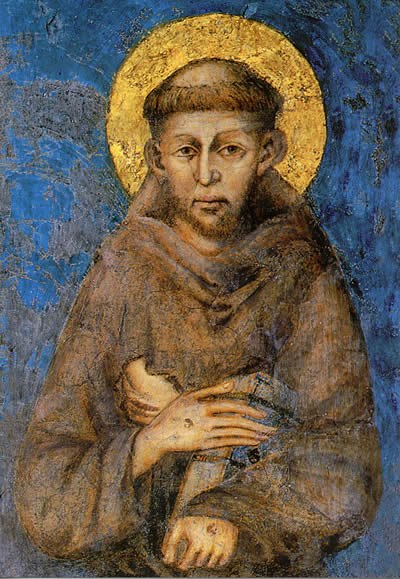
Like the pope, I chose Francis in memory of St. Francis of Assisi. I chose him because, as my children might have said some ten years ago, I thought he was a pretty cool dude.  I mean, here was a guy who had had everything – money, intelligence, friends, wit, all the women he could want, doting parents who let him do whatever he wished – and he turned away from it all, to live a life of complete poverty and simplicity, among the poorest of the poor and the outcasts of society. Without really trying to, he gathered around him hundreds and eventually thousands of followers and started a huge movement in Europe striving for a simpler life. In many ways he reminds me of the Buddha.

st-francis-of-assisi

And he wrote a wonderful poem, one of the earliest in the Italian language, or rather in the Umbrian dialect spoken in his native Assisi: the canticle of the sun. Here are a few lines from the original:

Laudato sie, mi Signore cum tucte le Tue creature,
spetialmente messor lo frate Sole,
lo qual è iorno, et allumini noi per lui.
Et ellu è bellu e radiante cum grande splendore:
de Te, Altissimo, porta significatione.

Laudato si, mi Signore, per sora Luna e le stelle:
in celu l’ài formate clarite et pretiose et belle.

Let me continue with a translation:

Be praised, my Lord, through all your creatures,
especially through my lord Brother Sun,
who brings the day; and you give light through him.
And he is beautiful and radiant in all his splendour!
Of you, Most High, he bears the likeness.

Be praised, my Lord, through Sister Moon and the stars;
in the heavens you have made them bright, precious and beautiful.

Be praised, my Lord, through Brothers Wind and Air,
and clouds and storms, and all the weather,
through which you give your creatures sustenance.

Be praised, My Lord, through Sister Water;
she is very useful, and humble, and precious, and pure.

Be praised, my Lord, through Brother Fire,
through whom you brighten the night.
He is beautiful and cheerful, and powerful and strong.

Be praised, my Lord, through our sister Mother Earth,
who feeds us and rules us,
and produces various fruits with coloured flowers and herbs.

It goes on a bit more, but I’ll stop there because these are some of the loveliest lines I know about the environment.

It is said that Francis preached to the birds and talked to the wolves. I take this all with a pinch of salt. But he did love nature passionately, which is really why I chose his name for my confirmation.

I hope the new pope is worthy of the name he chose.

___________________

St. Peter’s Square: http://readytour.ru/images/italy/excurs/6-800.jpg
White smoke: http://l.yimg.com/bt/api/res/1.2/zaEY7ikCWZpTeGB8NMi3pw–/YXBwaWQ9eW5ld3M7Zmk9aW5zZXQ7aD00MjA7cT04NTt3PTYzMA–/http://media.zenfs.com/en_us/News/gettyimages.com/conclave-cardinals-elected-pope-lead-20130313-112050-018.jpg
Cardinals and Swiss Guards: http://www.capuanaweb.insulareport.it/media/k2/items/cache/c230427c303c0684b5582388f5d0dfd7_XL.jpg
Habemus papam: http://timeglobalspin.files.wordpress.com/2013/03/cm_vatican_pope_03_13_13_178.jpg?w=753
St. Francis: http://www.thomryng.com/amateurmonk/wp-content/uploads/2012/10/Francis.jpg

MAGPIES

Beijing, 17 March 2013

I am desolate.

This morning, we managed to hook up with our son on Skype, and then he managed to hook up our daughter, so that we could have a three-way conversation! This is quite beyond me and my wife. We have no idea what he did to make it happen, but we are very happy that he did it.

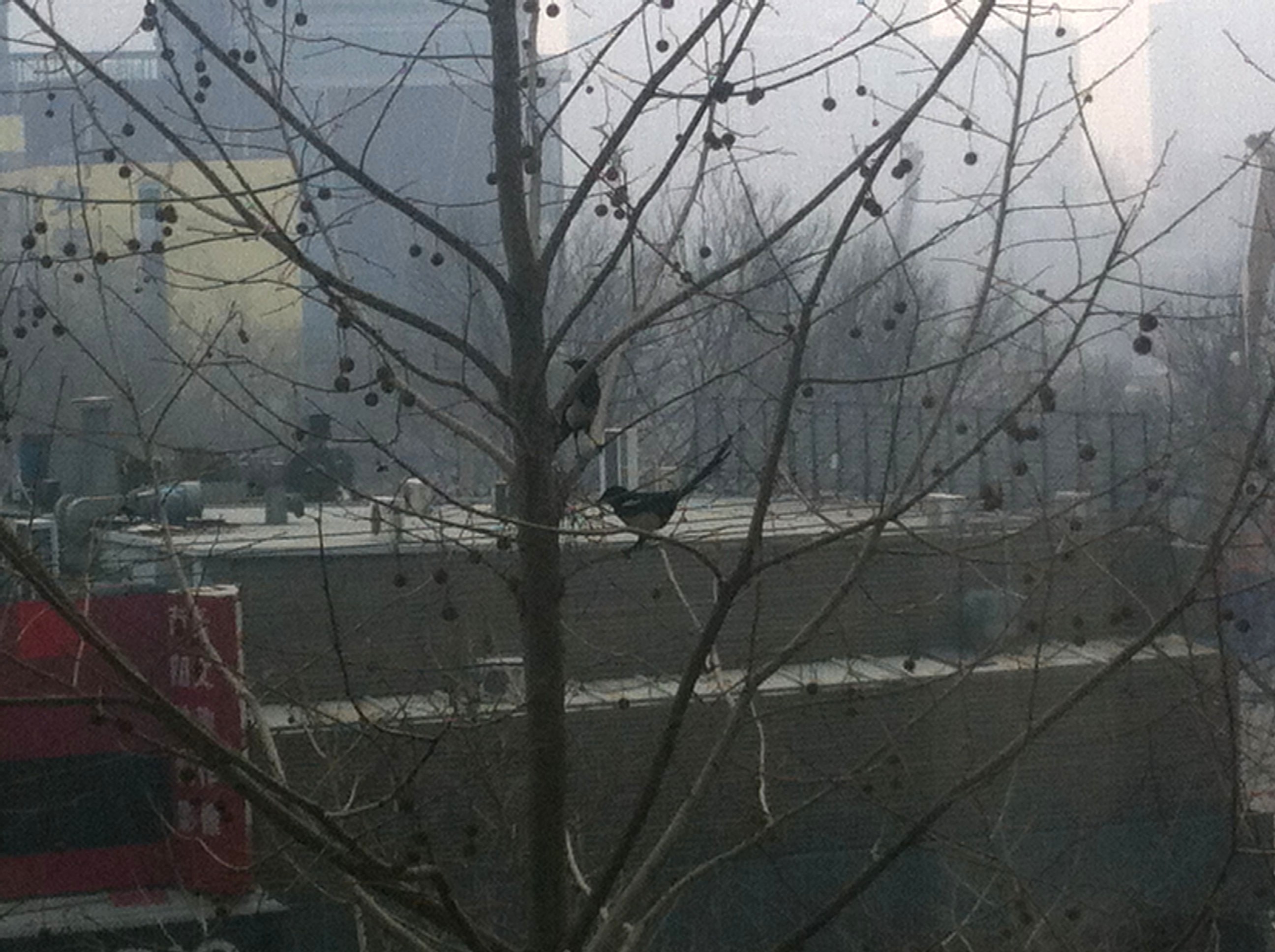
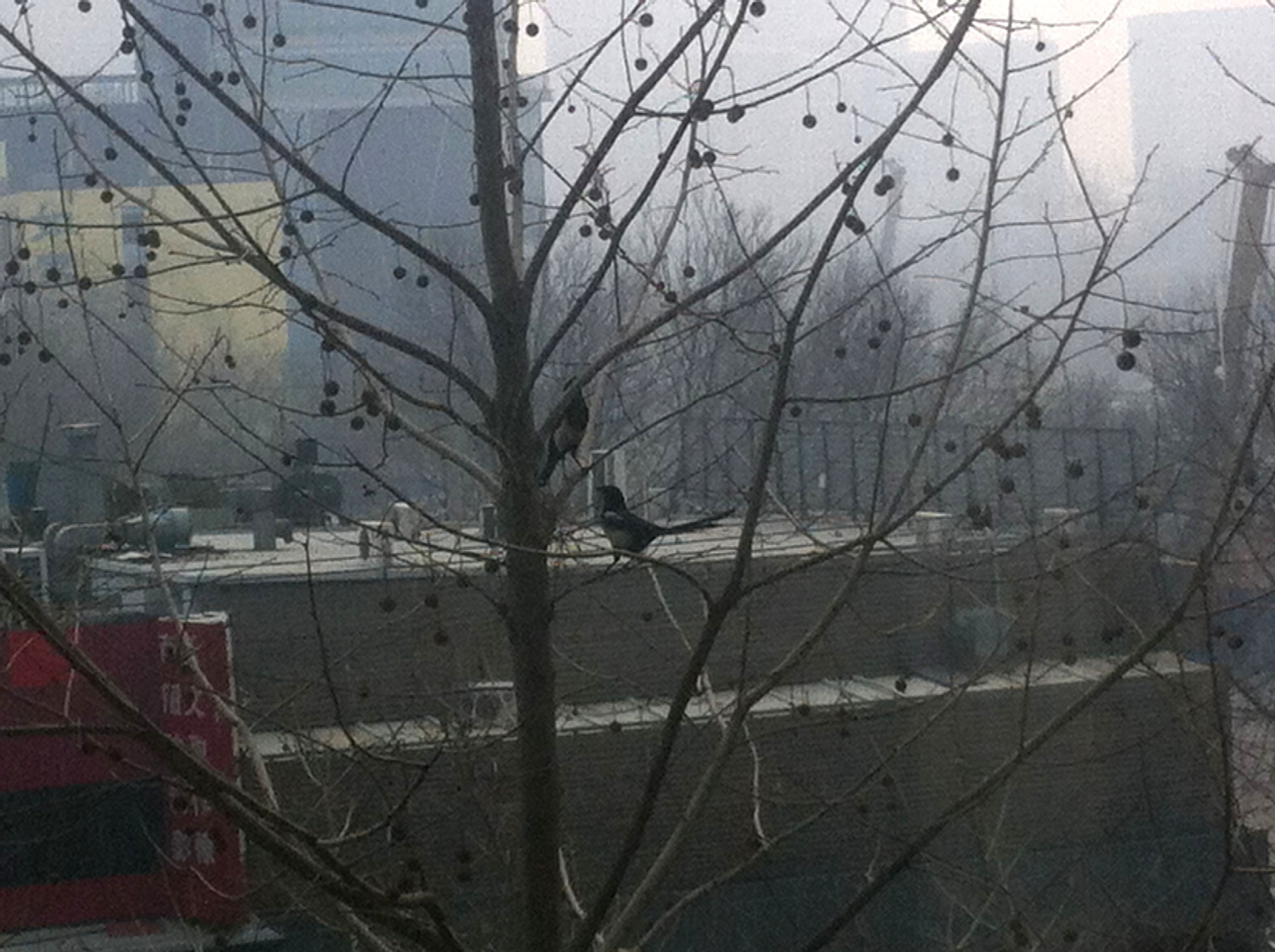
So we were having a pleasant conversation about this and that, catching up on what they were up to. And then I noticed that in a crook of the tree just outside our window a pair of magpies had begun to build a nest! This was really exciting, the height of our floor being such that we would have a front-seat view to the whole thing. Each magpie was bringing a twig or two and weaving it into the other twigs already there.

As my wife continued to talk to the children, I grabbed my phone and took some photos.

magpies nesting 009

magpies nesting 010

magpies nesting 011

I was happily looking forward to making a pictorial diary of the nest building. Then I was already imagining the egg laying, the birth of the little ones, their first flutter (as it were), all immortalized in photos.

Then our son had to sign off and we continued with our daughter, who told us about the latest events in her job (exciting, but also unsettling, changes have taken place). When we finished, I went back to the window to check how the nest building was progressing.

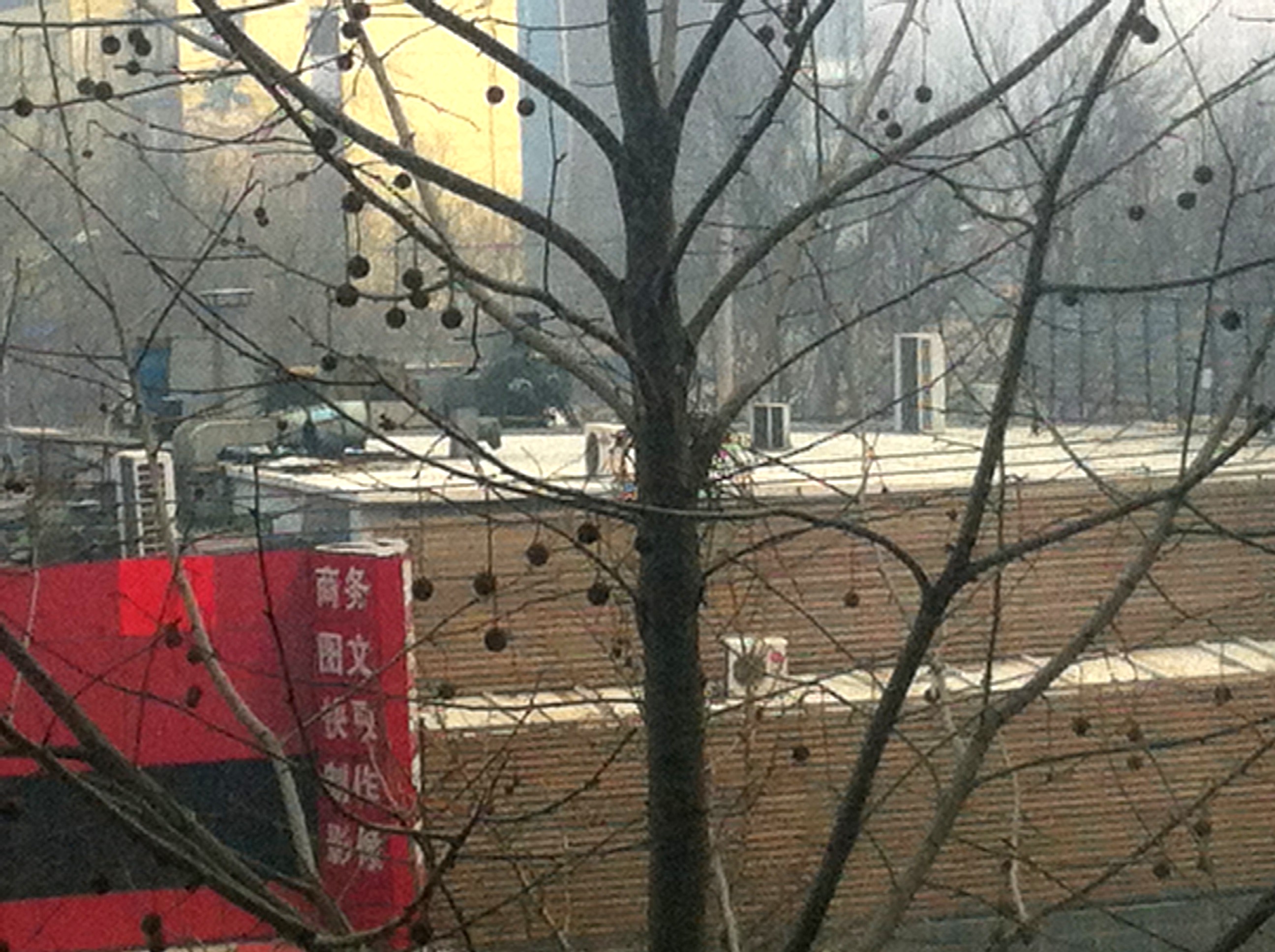
But the magpies were not there and the scaffolding of twigs was sagging at the edges. I looked around anxiously. No magpies to be seen. Perhaps they had gone off to get extra good twigs, I thought.

We went out to lunch, and when we came back the first thing I did was to go to the window. No magpies, and the construction was drooping even further.

abandoned nest 002

They’re not coming back. Something drove them off. Was it me? Did they notice a rather large shadow lurking in the near distance? I had tried to be careful, used no flash, and I think our windows are partially tinted. Was it a bad location choice? As they say of real estate – and I guess it’s as true for birds as it is for humans – it’s location, location, and location. Maybe the tree crook was a little too crooked. Or maybe it was the smog; you can see from the first pictures that it’s pretty bad today. Maybe they thought it was better to move out of town.

Whatever it was, they are not coming back. I’m really desolate.

FULL MOON

Beijing, 25 February 2013

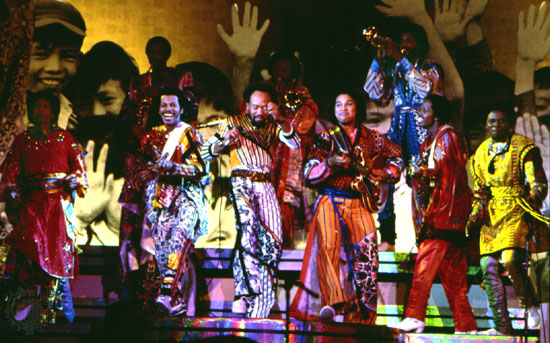
Yesterday started with my wife finally remembering a song that had been chasing around in her head all night: “September”, by Earth, Wind and Fire, whom we see here in concert:

earth wind and fire concert-1

This is a song from “our” generation; it came out in 1978. My wife tracked down a version of it on the web and promptly played it for the rest of the day. Now don’t get me wrong, it’s a great song – a feel-good song, my wife calls it – but after you’ve sung along with the refrain

Ba de ya – say do you remember
Ba de ya – dancing in September
Ba de ya – never was a cloudy day

for the fifth time, it begins to pall – at least for me. But not my wife. Mercifully, she had to turn it off when we went to bed, but then the fireworks, which had been grumbling along all day,

fireworks-5

began to build up to their final roar for midnight.

fireworks-6

Because, for those of you who do not closely follow matters Chinese, yesterday was the Lantern Festival, the last day of the Chinese new year celebrations, whose end is traditionally celebrated with an orgy of fireworks.

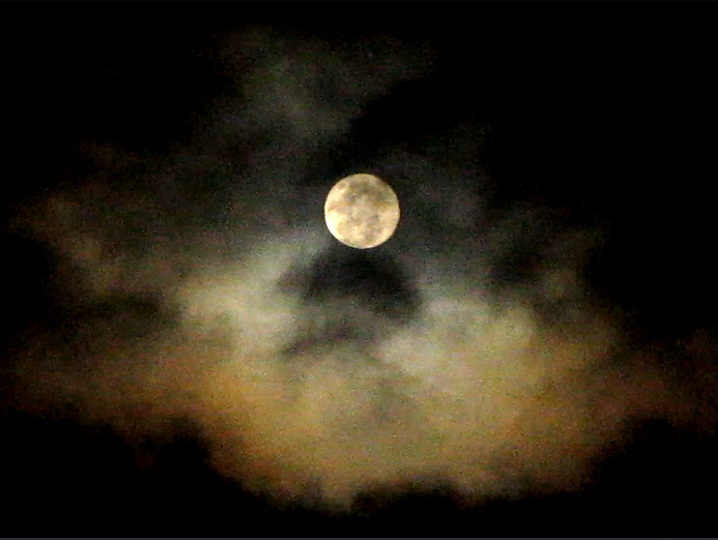
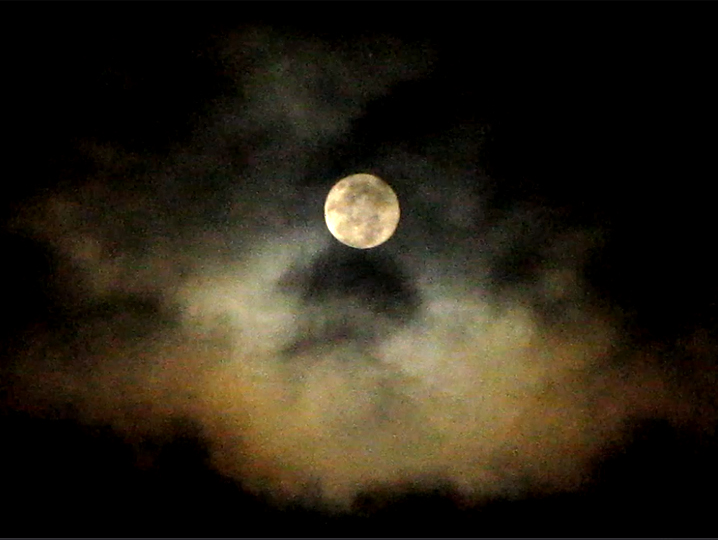
At one moment during the evening I slipped out to the local 7-11 to buy a bottle of our favourite wine (a Spanish tempranillo – but I digress). Coming back, I looked up and glimpsed through the clouds what all this sound and fury was all about: the full moon.

full moon-1

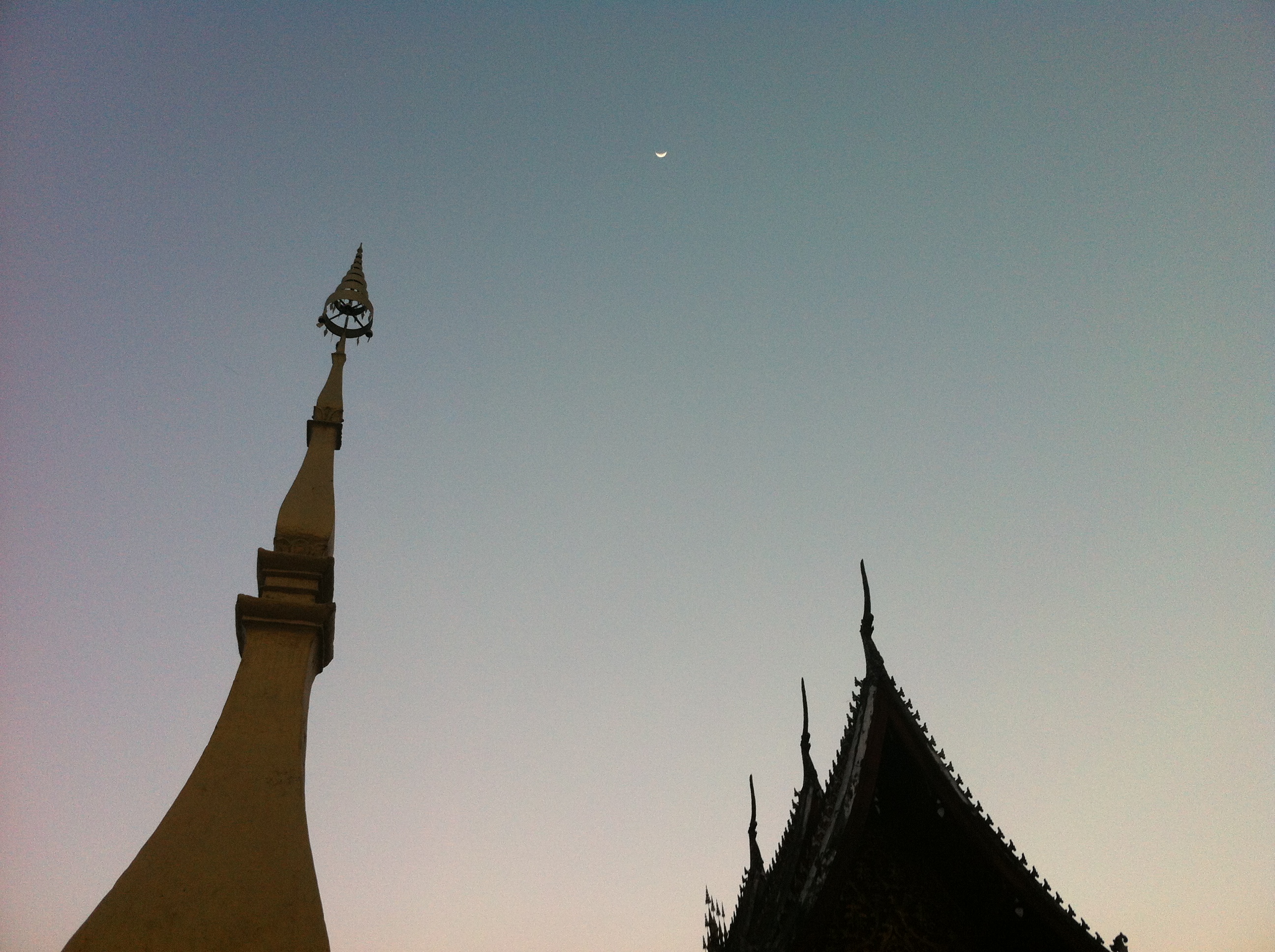
Because the Chinese new year is really a lunar festival. It starts on the second new moon after the winter solstice and ends 15 days later at the full moon. I had picked up the new moon – or newish moon; it had already waxed a few days – in Luang Prabang.

laos 499

And now I was seeing the full moon, shining serenely down on all this silliness.

A full moon is a beautiful thing. It certainly has caught the attention of many poets. A short search on the web brought to light at least 100 poems about the moon by well-known poets; Lord knows how many have been written by bad poets. But the poem which always comes to my mind when I see a full moon is not actually about the moon. I need to explain. One night in Vienna, I woke up and was enchanted by the brilliant nearly full moon pouring its white light into the bedroom. Two nights later, I was in Cambodia on the shore of the Mekong River. Looking up, I saw the full moon and thought to myself “This same moon will be shining down on my wife and children in a few hours” and found that thought immensely comforting. Now for the poem, which is by the Welsh poet Alun Lewis. He wrote it during the Second World War, when he was far away in India, in the city of Poona.

Last night I did not fight for sleep
But lay awake from midnight while the world
Turned its slow features to the moving deep
Of darkness, till I knew that you were furled,

Beloved, in the same dark watch as I.
And sixty degrees of longitude beside
Vanished as though a swan in ecstasy
Had spanned the distance from your sleeping side.

And like to swan or moon the whole of Wales
Glided within the parish of my care:
I saw the green tide leap on Cardigan,
Your red yacht riding like a legend there.

And the great mountains Dafydd and Llewelyn,
Plynlimmon, Cader Idris and Eryri
Threshing the darkness back from head and fin,
And also the small nameless mining valley

Whose slopes are scratched with streets and sprawling graves
Dark in the lap of firwoods and great boulders
Where you lay waiting, listening to the waves
My hot hands touched your white despondent shoulders

And then ten thousand miles of daylight grew
Between us, and I heard the wild daws crake
In India’s starving throat; whereat I knew
That Time upon the heart can break
But love survives the venom of the snake.

When I read the poem for the first time, I was reminded of that night in Vienna with its full moon. And now, when I’m far away from home and see the moon, I think of this poem and of my wife.

_____________________

Earth Wind and Fire concert: http://sharelike.me/image/pics/EarthWindandFireconcertPics1ApCC7Md5iwM.jpg
Fireworks-1: http://cdn.ph.upi.com/sv/em/upi/UPI-16811361735171/2013/1/9eb14390c758aeb27fd87349de4d55bc/China-celebrate-Lunar-New-Year.jpg
Fireworks-2: http://findlaydonnan.files.wordpress.com/2009/03/fireworks-to-celebrate-the-chinese-new-year-light-up-the-sky-above-beijing-china-on-january-26-2009-chinese-welcomed-the-arrival-of-the-year-of-the-ox-with-raucous-celebrations-on-sun.jpg?w=497&h=283
Full moon: http://3.bp.blogspot.com/-gY39tpbGmzg/TnLTHVEnSyI/AAAAAAAABaM/R2kBI2LddYg/s1600/Moon_Lantern_Festival.jpg
New moon Luang Prabang: my photo

COAL

Beijing, 23 February 2013

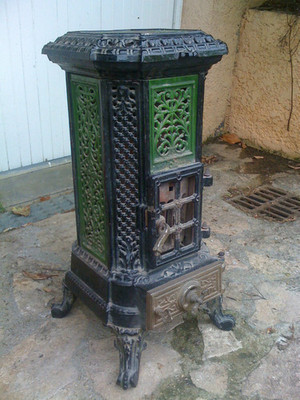
Whenever I visited my French grandmother at Easter, we used to stay in her house in the countryside. It was still cold enough for us to need heating, which meant that we spent much of our time in the living room, huddled around a venerable stove. It looked like this:

coal stove

although it had a chimney that came out of the back, which after a metre or so took a right-angle turn and exited through the living room wall.

During the day, my grandmother burned wood scrap – fallen branches, pinecones, bark, whatever lay around the garden after the winter storms – which she sent me out to collect on a regular basis. At night, though, she would load the stove up with coal, and it was my job to fill the coal scuttle. This meant taking the scuttle down to the cellar, where the coal was stored, to fill it up. This is what the scuttle looked like:

coal scuttle-3

I loved that cellar. It was really the ground floor of the house – there was a door at the back which gave onto the road outside. From the garden side, though, you had to open a door with a large key, of the kind gaolers had in medieval times, go down a few stairs past dark corners where all the garden utensils were stored, and through a second door into the cellar proper. And there, stretched out in the semi-darkness, was a world of enchantment. For starters, the cellar had a dirt floor, which gave it a very particular smell. Then all around, strange and wonderful things loomed out of the dark. The coal was stored in an untidy pile to the left of the door, and beyond it was an old wooden table on which were stored my grandmother’s cache of goat cheeses bought from a nearby farm, the bottled fruit which she prepared during the summer, and a small wooden barrel in which she made her vinegar. Wonderful, wonderful, that vinegar was! It seemed to me total magic that my grandmother would pour the local red wine in, let it stand for a while, and hey-presto! out came delicious vinegar. I tried making vinegar of my own decades later in Vienna. The results were … mixed, let us say. Next to the vinegar barrel was the wine rack, good rough Beaujolais wines from the local vineyards. Over on the cellar’s right were piles of wood, various pieces of old furniture, ancient utensils whose use I could not figure out, an old bike or two, some hay, and I don’t know what else.

I always spent a few moments poking around in the corners seeing what new things I might stumble across, before filling up the scuttle and hauling it back up to the living room. The coal was, of course, dusty and left all your fingers black, but it came in nice, neat egg-shaped pieces. I never thought about it at the time, but I suppose this was pulverized coal pressed and molded; I remember the mold lines running around the pieces. Here’s what it looked like, in a coal scuttle; really heavy to carry! (appropriately enough, this is a photo from a museum; we are talking history here):

As for my English grandmother’s house, it had no coal. The use of coal had been banned in London after the last big smog of 1952. I remember my mother telling us about that smog when we were children, how she had had to walk down the road and almost panicked at not being able to see a thing. Soon thereafter, my parents escaped to the sunnier climes of Africa where I was born.

london smog 1952

The house had no coal but still had a coal cellar, which was located under the pavement. A manhole in its ceiling had once allowed the coal-man to handily pour in the coal without coming into the house. My grandmother didn’t really use the coal cellar for much. The only thing I ever saw her put in there were the French cheeses which my father bought when we visited. He had a fondness for the smellier French cheeses like Roquefort:

roquefort

My grandmother, in true English style, detested smells, so she banished his cheeses to the coal cellar between meals. Lucky for her that my father didn’t eat the aptly-named Crotte du diable, or devil’s droppings!

crotte du diable

Truly, evilly smelly – in fact, it seems not to exist anymore, which is a tragedy because it tasted absolutely wonderful (you had to wash your hands very well after eating it, though …).

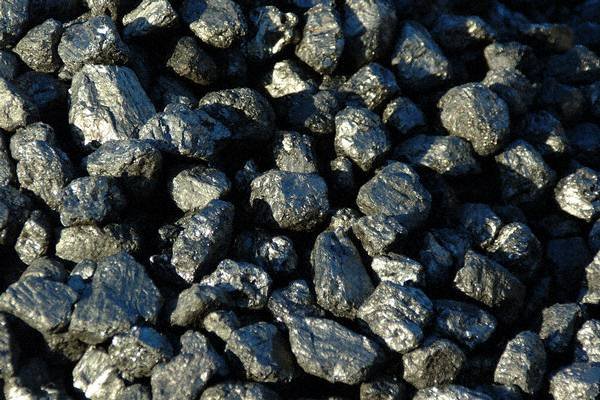
In any event, things changed and moved on. My French grandmother had a heart attack while picking strawberries in her vegetable garden and was eventually moved into a home, and the stove stopped being used. I came across coal one more time, at school, where we had an open fire in the school monitors’ room and a ration of coal to feed it with. The coal looked more like the stuff that’s dug out of the ground, rough chunks:

coal at school

I liked to pick up a chunk and turn it in the light. Coal can be very beautiful, with black, glistening surfaces, reminiscent of obsidian:

bituminous coal

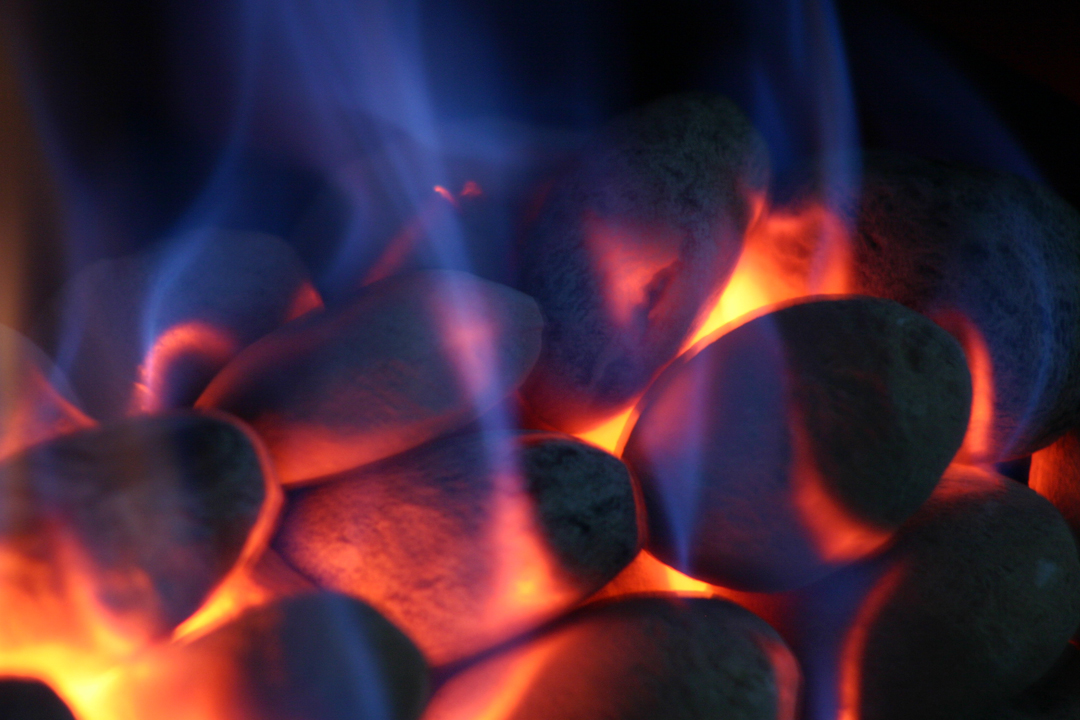
I also liked to sit next to the fire and gaze deep into the glowing coals rather than study for my A-levels:

glowing coal-2

which may partially explain why I didn’t do too well in my A-levels.

After that, coal disappeared from my life, as it did from the lives of all us in Europe.

Then we came to China.

Some statistics, courtesy of Wikipedia [1]: China is third in the world in terms of total coal reserves. It is the largest coal producer in the world, with the world’s largest (and deadliest) coal mining industry. It is also the largest consumer of coal in the world. Over half of the coal is used to make electricity, another third is used by industry, some is used in district heating plants, leaving a mere 3% to be used in residences. But you sure see that 3%.

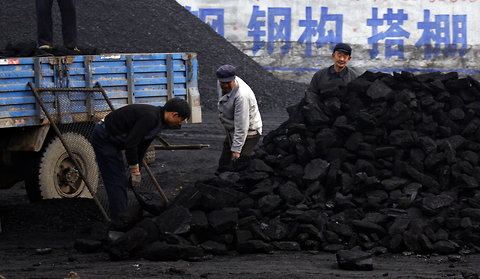
You see them shoveling up huge chunks of coal – I was astonished at how big the chunks are; they have come straight from the coal face – you see them trucking it around, and piled up in street corners.

china-shoveling coal

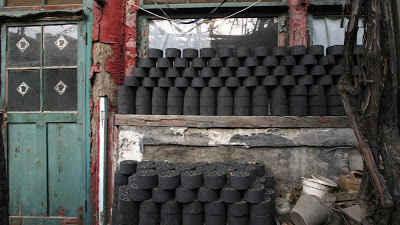
And more than anything you see China’s version of molded coal, which looks like this:

molded coal china-1

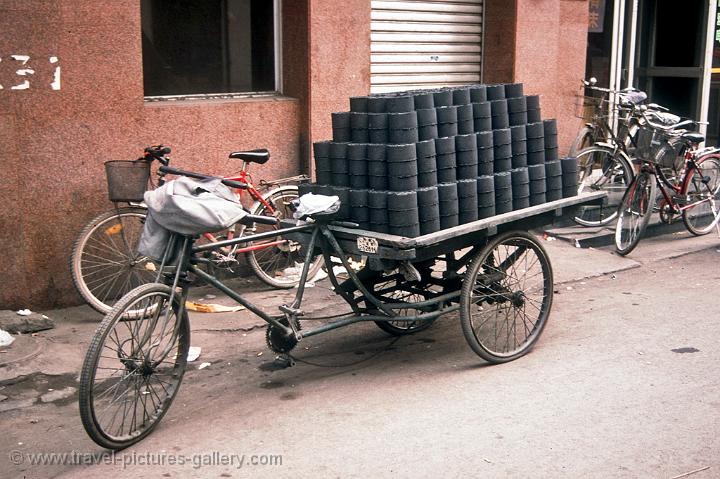
You see them transporting it around on the tricycles which I wrote about in an earlier post:

tricycle with coal

You see it piled up outside houses:

molded coal china-3

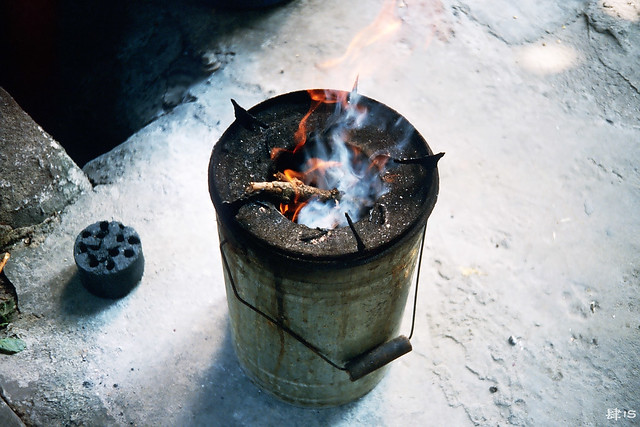
Then it’s burned in these special stoves:

stoves china-1

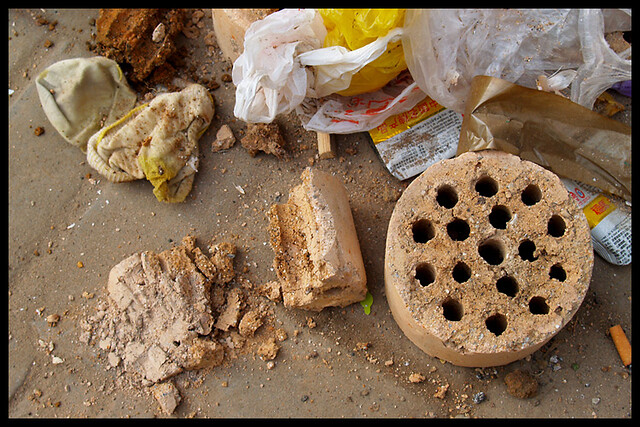
which leaves behind the consumed molds which you see in the bottom right-hand corner of the picture. Cities’ rubbish is littered with these discards.

molded coal china-consumed

All this coal burning leaves a taste in the air, a taste which instantly takes me back to my early years in the UK, when you would walk through a town or village and smell the sharp, acidic taste of coal being burned.

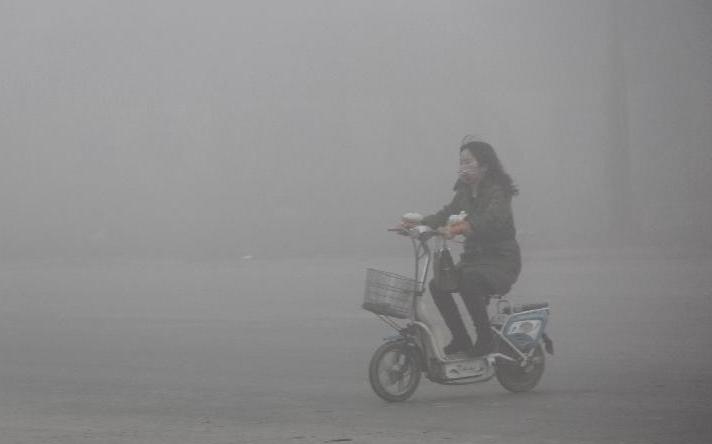
And it gives rise to smog:

beijing smog-2

Not much different from London’s smogs.

I’m optimistic. Like the UK did, China will eventually get rid of the smogs – probably by stopping to burn coal.

______________________

1. http://en.wikipedia.org/wiki/Coal_in_China

coal stove: http://img.fr.clasf.com/2012/11/22/poele-a-charbon-ancien-maill-20121122191235.jpg
coal scuttle: http://gillesrenaud9.free.fr/Seau%20%C3%A0%20charbon/P1050541.jpg
coal scuttle-fullhttp://a406.idata.over-blog.com/600×879/1/05/04/45/photos-blog-N-21/le-seau-a-charbon-boulets-musee-de-la-mine.jpg
London smog 1952: http://www.thefloridastandard.com/files/2013/02/smogdm1403_468x673.jpg
Roquefort: http://img.dooyoo.co.uk/GB_EN/orig/0/1/0/2/8/102828.jpg
Crotte due diable: http://i.ebayimg.com/00/s/MTYwMFgxMTgy/$%28KGrHqF,!iUE8cj4nvorBPVlcwEB,!~~60_35.JPG
Coal at school: http://i01.i.aliimg.com/photo/v0/112891981/Tissue_Paper_Coal_Palm_oils_Pail.jpg
Bituminous coal: http://www.ua.all.biz/img/ua/catalog/1865574.jpeg
Glowing coal: http://bargainsbegin.co.uk/wp-content/uploads/2013/01/Heater-3-edit.jpg
Chinese shoveling coal: http://graphics8.nytimes.com/images/2011/12/21/business/coal/coal-blog480.jpg
Molded coal China: http://lexpansion.lexpress.fr/pictures/1455/745377_des-briques-de-charbon-dans-un-commerce-de-huaibei-en-chine.jpg
Tricycle with molded coal: http://www.travel-pictures-gallery.com/images/china/beijing/beijing-0042.jpg
Molded coal China against the wall: http://4.bp.blogspot.com/-ASl1mhpkw5k/TkRxVCEtoII/AAAAAAAAA14/pgggOooaKE0/s400/Hutong%2Bcoal.jpg
Stove for burning molded coal: http://farm6.staticflickr.com/5164/5261127408_36ccd1d718_z.jpg
Molded in coal China-consumed: http://farm1.staticflickr.com/68/424608074_e7f49e2f9a_z.jpg?zz=1
Beijing smog: http://feww.files.wordpress.com/2013/02/china-smog-17feb2013.jpg

SUNSET OVER THE MEKONG

Luang Prabang, 16 February 2013

I first came into contact with the Mekong some ten years ago, in Phnom Penh, Cambodia. I remember looking in awe at this hugely wide river and planning some day to take a boat down it to Vietnam; a plan still waiting to be executed. In the meantime, our lives have crossed the Mekong many times. Several years ago, my wife and I had a close brush with it when we cruised on Tonle Sap Lake while we were visiting Angkor Wat. This lake has a strange relationship with the Mekong: during the dry season it drains into the Mekong, but during the rainy season the Mekong’s current is so strong that the flow reverses and it is the river that runs into the lake.  Two years ago, in September, we came across the Mekong again, red-brown and very silty, at Xishuangbanna in the far south of Yunnan province, down by the border with Myanmar, Thailand and Laos. While we were there, a story broke of the captain and crew of a Chinese ship plying the Mekong being executed by shooting one night under mysterious circumstances; a story of drug running, it turned out, in that wild part of the world. And now we were in Laos, a country traversed by the Mekong and much of whose borders are defined by the river. While we were in Vientiane a few days ago, we walked along its bank and looked over to Thailand on the other shore.  And we have spent the last two days in Luang Prabang, the country’s ancient royal capital, which lies at the confluence of the Nam Khan River and the Mekong. As we have criss-crossed the narrow tongue of land between the two rivers on which the old town was founded, we have found ourselves gazing down on the Mekong many times.  We have watched the ferry crossing it:

laos 428

laos 430

We have watched ships taking tourists up and down the river:

laos 476

laos 475

We have crossed a spindly bamboo bridge spanning the Nam Khan:

laos 258

to gaze down on the confluence of the two rivers:

laos 263

And now, on our last evening, we have been sitting on steps leading down to the river and have been watching the sun set behind the hills on the far shore.

laos 480

laos 485

laos 491

laos 497

And with that last flash of light there has floated into my mind some lines from a hymn we used to sing at school when I was young, sung to a serenely tranquil tune:

Lord of all gentleness, Lord of all calm,
Whose voice is contentment, whose presence is balm,
Be there at our sleeping, and give us, we pray,
Your peace in our hearts, Lord, at the end of the day.