MOSS

Milan, 16 December 2024

I’ve been meaning to write this post for a while, but I could never figure out what my angle should be. The thing is, I want to write about mosses, but once you’ve said that mosses can be really beautiful, there’s nothing much more to say about them. I could blather on about their biology and ecology, but only muscophiles would find that interesting. Looking at them from a historical point of view doesn’t help much, either: as far as I can tell, they haven’t played a significant role in anyone’s history. They do have some practical uses, like bedding and wound dressings, but nothing that really stands out. And forget the dietary angle: no-one eats moss unless they are starving, so there are no interesting dishes to report on. So the post has remained unwritten.

But now, finally, I’ve decided. Since there’s not much to write about on mosses, I’ll focus on photos instead. This post will be a photo essay celebrating their beauty! (That being said, I’ll still write some stuff – I can’t stop myself – but it will be more like extended titles to the photos).

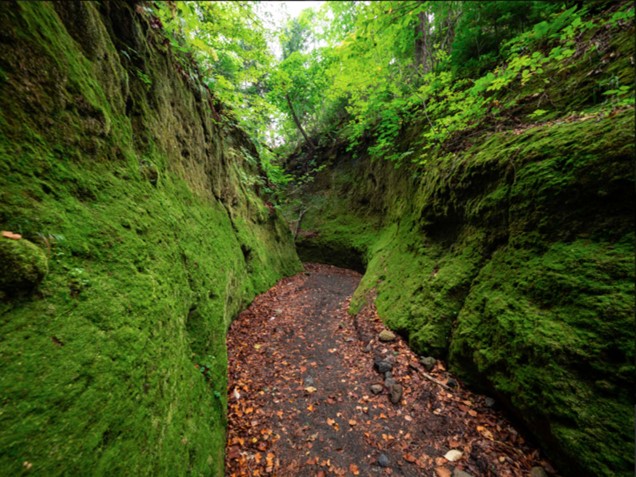
I have to start in Japan, because it is moss country par excellence: something like 1,800 species of moss, or around 15% of the world’s total, grow on its islands. It was there, back in 1985 when my wife and I toured the country for a month, that we first appreciated the beauty of mosses. Our first experience was on the island of Hokkaido, where we were taken to visit the Moss Canyon in Shikotsu-Tōya National Park. It’s more of a gorge, really, about 200 metres long with walls some 5 metres high. These walls are covered in velvety green moss.

Source
Source
Source

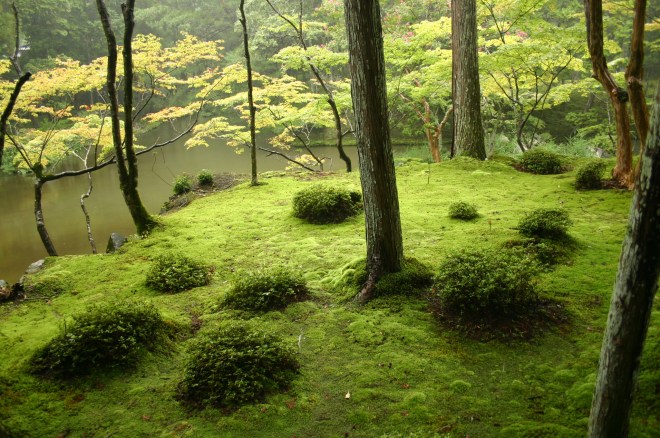
Later, when we went to Kyoto, one of the temples we visited was Saihōji, whose entire garden is cloaked in moss.

Source
Source
My photo

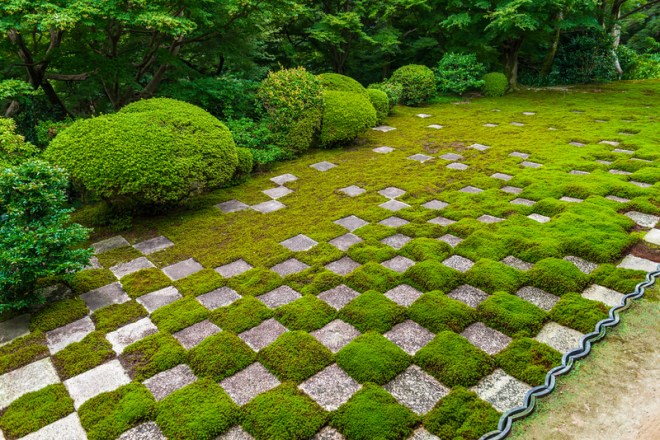
Other temples we have visited in Kyoto over the years have integrated moss into the overall design of their gardens. This example, from Tofukuji temple, is one of the more intriguing.

Source

Many have even integrated moss into what you might think of as a most unmossy place, their dry rock gardens, where moss is often used to create islands in the sea of pebbles, like this example, also from Tofukuji temple.

my photo

Here are the islands up close.

My photo

Here is another example, from Ryoanji temple.

Source

But moss found out in Japan’s nature can be just as beautiful. Here are various photos I’ve taken over the last few years during our annual stay in Japan.

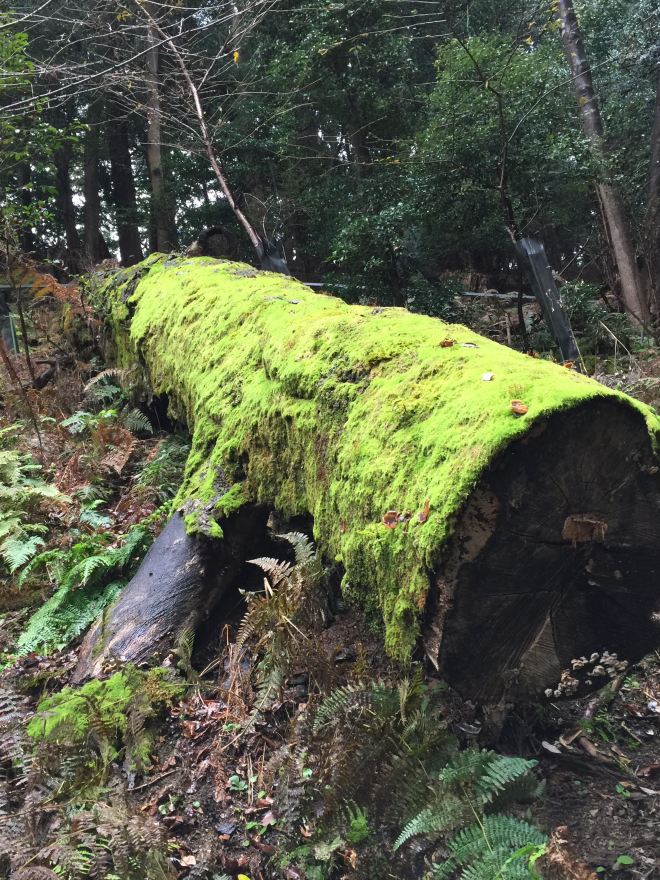
A moss-covered log on the flanks of mount Kurama, north of Kyoto.

My photo

Fallen Japanese maple leaves smothering a field of moss, out in Ararshiyama in the north-west of Kyoto.

My photo

A tree stump crowned with moss, on the Kumano kodo trail.

My photo

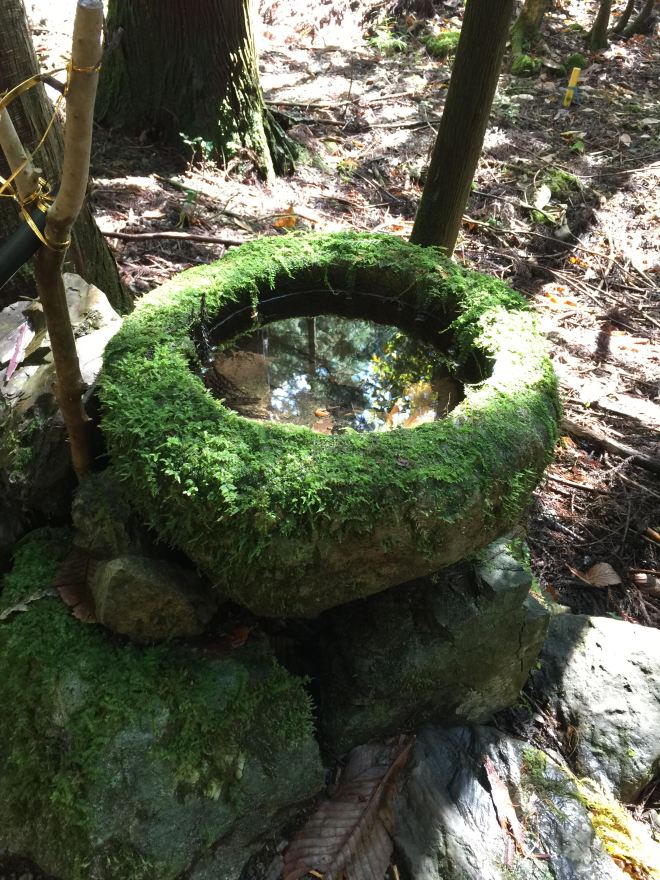
A stone basin with a moss-covered rim, seen on the same trail.

My photo

A stone lantern, being slowly colonized by moss.

my photo

An abandoned motorbike, also being slowly colonized by moss.

my photo

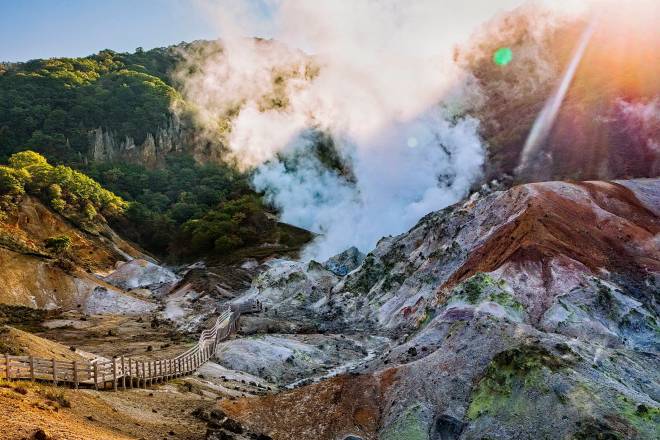
Japan is the land of moss, but it is also the land of fire, as we saw up close on that visit to Hokkaido’s Shikotsu-Tōya National Park

Source

Iceland, too, is a land of fire, as we have recently been reminded.

Source

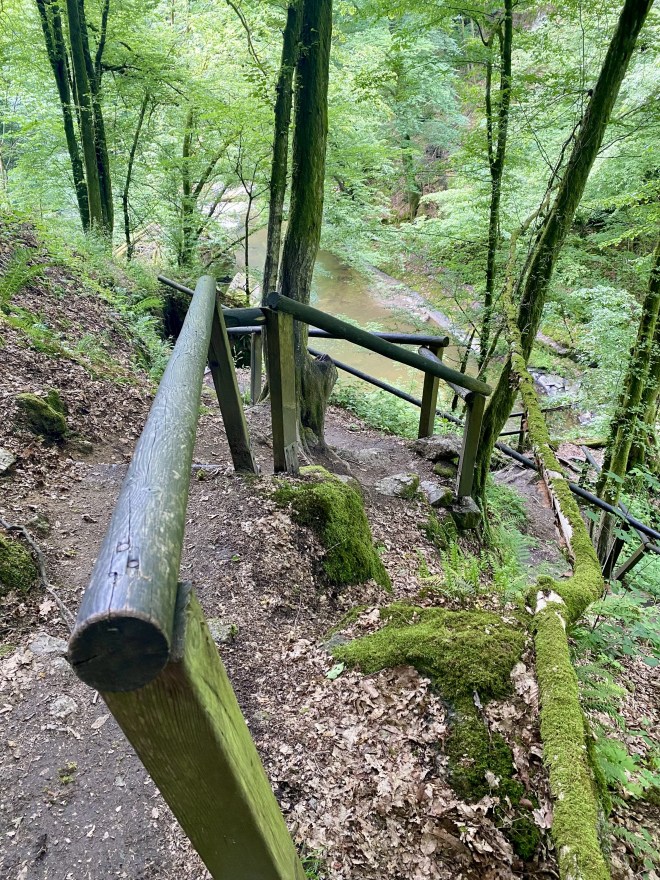
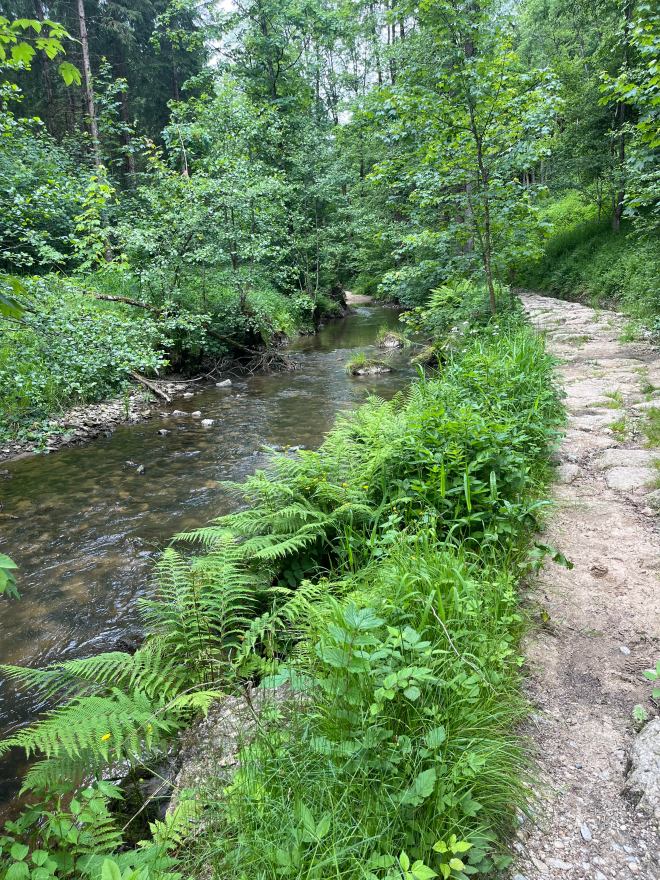
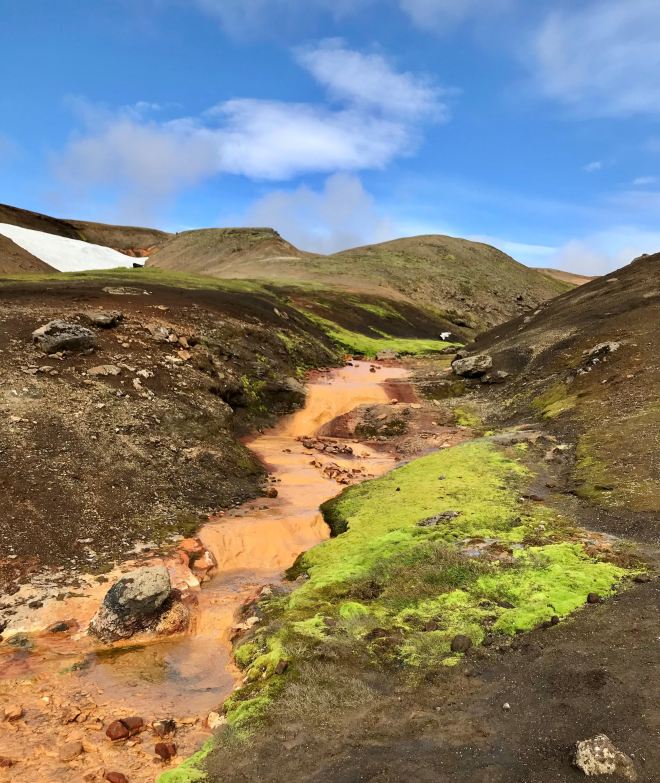
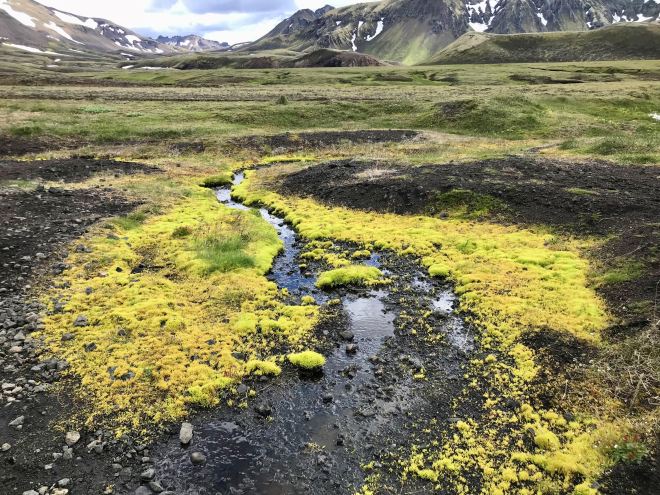
But, as my wife and I discovered when we hiked the Laugavegur trail a few years ago, Iceland is also a land of moss.

The contrast could not be starker. One island country has lush vegetation of which moss is but a part. The other has little vegetation, its climate being too harsh. And yet mosses manage to thrive. Which was just as well for us because wherever there was water they covered with ethereal green the otherwise denuded landscape which we hiked past.

My photo
My photo
My photo
My photo
My photo
My photo

Well, that’s our photo album with mosses. If we ever come across beautiful mosses elsewhere, I will add photos to the album.

LENTILS FOR MY FERRITIN LEVELS

Milan, 4 November 2024

It is a sad fact of life that as one gets older, the machine that is our body begins to falter. Machine parts begin to show signs of wear and tear, leading to unfavourable results in blood, urine or other samples of our vital fluids. One such unfavourable result which has been dogging me for a number of years is the levels of ferritin in my blood. My old doctor had been monitoring it, and shortly before he retired he decided that the time had probably come for me to do some regular blood-letting to bring the ferritin levels down. Luckily, the liver specialist which he sent me to – high ferritin levels being normally due to some malfunction in the liver – didn’t agree, recommending continuing monitoring. At which point, I decided to see what I could do to bring down my ferritin levels naturally, through my diet. I had already pretty much completely eliminated red meat, which is high in heme iron. That was pretty sad, but I comforted myself with the thought that it was good for the planet. My daughter found a scientific article online, which recommended a diet high on berries, especially blueberries, and the liberal use of cocoa powder – it seems that the polyphenols which these contain can help bring ferritin levels down. I did that for several months and then did the blood tests again. There was a modest decrease in my ferritin levels. I asked my new doctor what else I could do. She suggested imbibing lots of tea and eating lots of pulses – they, too, contain high levels of polyphenols. Well, my wife and I are already regular tea-drinkers, carrying on a fine British tradition.

Source

So I didn’t see much scope for improvement there. Pulses were a different story. Quite frankly, we don’t eat many of those; we’re not terribly, terribly fond of them. We’ll eat pasta e fagioli once or twice a year, normally when winter sets in; this particular version has used penne rigate and cannellini beans.

Source

And come Christmas time, we’ll often have ourselves a popular Christmas dish in northern Italy, cotechino e lenticchie, a type of sausage with lentils. I’ve already covered this dish exhaustively in a previous post, so I won’t say any more here. I just invite readers to drool over this photo.

Source

That is pretty much the sum total of our annual pulse intake. After some discussion, my wife and I agreed that I could go with lentils. I quite like lentils in salad, so I’ve been regularly eating a lentil salad for lunch and dinner. But I fear I’ll get rather bored with having this all the time, and might need to branch out. What other lentil dishes could I try?

Well, for starters, I could eat nice mixed salads like this one, of fennels and lentils.

Source

But that is really just a modest change to the original dish. What else?

Well, given that the original wild lentil plant comes from the Middle East and was domesticated there (like so many of our foodstuffs), I’m thinking I should start by looking there for a lentil dish I could try. And in fact, it so happens that there is a very popular lentil dish in the Middle East which goes by the name of mujaddara. It’s a very simple dish: it’s a mix of lentils and rice, with a topping of caramelised onions. You can season it with cumin, mint, or coriander (although I would skip the coriander, which I don’t like).

Source

It’s considered a poor person’s dish, but if you’ve got money to burn you can add meat to the mix. The dish is generally served with a side of yoghurt or a salad.

Going off on a tangent, I’m blown away by the etymology of the dish’s name. Mujaddara means “pockmarked”, a reference to the look of the dish, brown lentils pockmarking the white rice. It would be nice to think that whoever came up with this name was thinking of a face pockmarked by bad acne, but I rather fear that they were referring instead to pockmarks caused by the dreaded smallpox, like in this recreation from earlier centuries.

Source

But back to mujaddara. I have to say, I’m intrigued by the Egyptian variant, koshari. To the rice, lentils and caramelised onions, the Egyptians add pasta (macaroni or vermicelli), and tomato sauce. You can make it even more complicated, by adding other odds and ends as this photo shows.

Source

In all of this, it’s the tomato sauce that attracts me, I’m a great fan of the tomato in all its forms. But this is not the type of tomato sauce I’m used to. To the basic sauce base is added garlic vinegar or even a lemon sauce. Garlic vinegar I will forget, but the addition of a lemon sauce … that’s worth considering.

Hang on, though. I think I’m getting rather far away from the lentils, which is the whole point here but which seems to be getting drowned out by all the other stuff that’s being added in. In Obelix’s day, it did indeed seem much simpler in Egypt; it was just lentils – although Obelix is finding that a tough diet to keep to.

my photo

In any event, I need to keep my eye fixed on the simpler mujaddara.

Talking of which, it seems that the simple, no-frills mujaddara has a long, long history. It looks like the Palestinian version of mujaddara is closer to the original version of this dish. Instead of the rice, they use bulgur, which is parboiled and cut durum wheat – rice probably wasn’t in common use in the Middle East until Roman times. It would seem, then, that mujaddara is a member of the broad family of pottages, where various grains are boiled up together to form a sort of porridge (various vegetables can be added, too). So it must be a descendant of the “mess of pottage” for which Esau gave away his birthright to his twin brother Jacob. Here is how the story is recounted in the King James version of the Old Testament (I always find the KJV text so much more satisfying to read; it’s rather like Shakespeare):

And Jacob sod [prepared] pottage. And Esau came from the field, and he was faint. And Esau said to Jacob, “Feed me, I pray thee, with that same red pottage; for I am faint” … And Jacob said, “Sell me this day thy birthright”. And Esau said, “Behold, I am at the point to die: and what profit shall this birthright do to me?” And Jacob said, “Swear to me this day”; and he sware unto him. And he sold his birthright unto Jacob. Then Jacob gave Esau bread and pottage of lentiles; and he did eat and drink, and rose up, and went his way. Thus Esau despised his birthright.

Just for the hell of it, I throw in a painting by the Dutch painter Jan Victors that depicts this scene; Jacob is to the right, Esau to the left.

Source

As much as domesticated rice travelled westward from India to the Middle East (and beyond), so the domesticated lentil travelled eastward from the Middle East to India. The peoples along the way continued mixing lentils with rice, with some changes to the basic recipe. Which means that there are possible mujaddara variants for me to try. For instance, Iranians have a dish they call adas polo, where dates, raisins, cinnamon and saffron are added to the basic lentil-rice mix.

Source

The sites I’ve read up on adas polo say that it has a very different flavour profile from mujaddara, which, looking at the ingredients, I can well believe. Adas polo certainly looks enticing, but I feel that, like koshari, it’s too complicated. Maybe I’ll just leave it to the next time I go to a Persian restaurant (there are some really good Persian restaurants in Vienna).

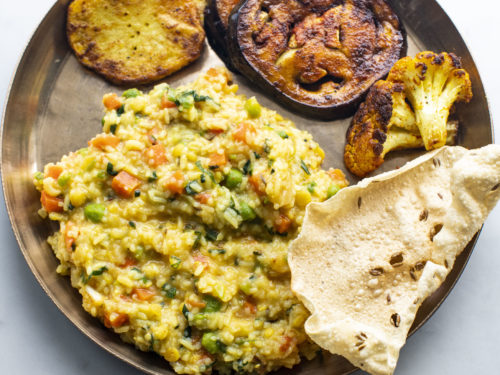
Going further east, the Indians also have their lentil-rice dish, khichdi. I mentioned khichdi in a post I wrote a number of years ago about a pale British imitation of this dish, kedgeree. Basically, you bring together rice, lentils in the form of a dal, some vegetables like cauliflower or peas or potato, and spices.

Source

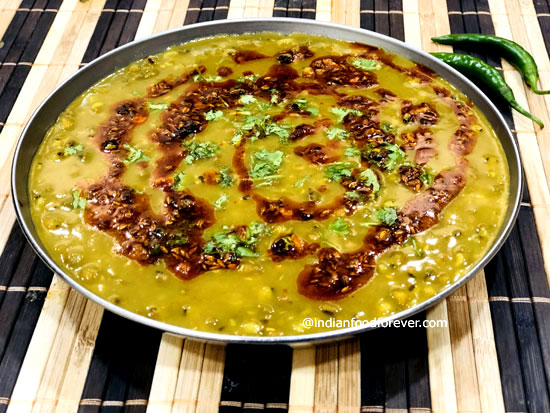
Bringing in khichdi has allowed me to surreptitiously slip in that glory of Indian cuisine, dal. Quite honestly, there are probably as many variations of dal as there are Indian families. The base is always the same: lentils or other pulses like peas or beans which are cooked with turmeric until mushy. The endless variations come with the fried garnish which is added at the end of the cooking process. I throw in a photo of a moong dal, where the garnish has been made by frying asafoetida, cumin seeds, chopped green chilies, and chopped garlic in ghee.

Source

If I go for dal, I would have to find a garnish with no – and I mean no – hot spices in it; as I’ve recalled several times in this blog, I actively dislike hot spices.

Which would also create me a problem with another dish, misir wot or kik wot, which hails from Ethiopia.

Source

Just as domesticated lentils travelled east and west out of the Middle East, they must have travelled south, too. I suspect they got to Ethiopia via Yemen. In any event, here, too, you cook the lentils (or other pulses) with a garnish made of onions, garlic, ginger, tomatoes and berbere fried in niter kibbeh (the Ethiopian equivalent to ghee). The red flag here is berbere, which is a spice mixture liberally used throughout the Ethiopian highlands and usually containing “chili peppers, coriander, garlic, ginger, Ethiopian holy basil seeds, korarima, rue, ajwain or nadhuni, nigella and fenugreek”, according to berbere‘s Wikipedia entry. I’m not sure what some of the more local spices taste like, but chili peppers … that’s bad news for me.

Stepping back here and reviewing all the alternatives I’ve mentioned makes me realise that most if not all of them are based on making a soupy or slurry-like lentil dish. Remembering the adage “East, West, Home’s best“, maybe I should just opt for a simple lentil soup like my mother used to make (she actually didn’t, but readers get the idea). The internet is stuffed with recipes for lentil soups without horrible, nasty, hot spices in them; without onions and garlic, which don’t agree with my digestive system; without a bunch of spices which, if we buy, would mean a row of bottles that would sit on our kitchen shelves for ever more. Maybe this is the way I should go when I get bored with my lentil salads. And maybe, when the world just gets too much for me, I could retreat into my infancy and eat my lentils in milk, a comfort food which my mother actually did make for me and my siblings years and years ago.

Source

PLUMS – IT’S AUTUMN

Vienna, 23 September 2024

It’s that time of the year again. The time of plums here in Central Europe (or strictly speaking, European plums; there are so many different types of plums). On our hikes now we often see small plum trees covered in the dark purple fruit.

Source

I can never understand if these trees have seeded wild after the passage of some plum-munching, stone-spitting person, or if they were part of now abandoned communal orchards which were once a common feature in this part of the world (the so-called Streuobstwiesen, the scattered-fruit-meadows, meadows through which villages have sprinkled plum and other fruit trees for their communal use – a nice idea, I think).

Source
Source

However the plum trees got there, they are welcome indeed. When we come across them, we will fill our rucksacks with a few days’ worth of dessert and walk on.

Normally, when the plums arrive the weather is turning towards Autumn here. The days are drawing in, the temperatures are beginning to bite, it’s time to wear trousers when I hike and take a sweatshirt with me in case a cold wind picks up; time, too, to carry a waterproof jacket to counter the occasional shower.

As I eat my plums, I will often feel a pang of regret that the Summer is drawing to a close. But this Summer has been ferociously hot in Central Europe. So it is with a certain sense of relief that I bite into my plums these days, even as I grieve the massive damage caused by the recent floods to man, beast, and vegetation (including plum trees, no doubt).

Source

About a month ago, during our hikes we were coming across what looked like mirabelle plums: small, round, yellowish.

Source

They seemed to be wild, or at least feral, being used as fencing around gardens or just mixed up with other trees and bushes on the side of the paths. There were never any plums within reach, evidence that other gatherers had hiked these paths before us. All we were left with were plums that had been knocked off by wind or the heavy rains that we have been having this summer (a result of the intense heat). Many of these little plums were damaged and, judging by the taste, not necessarily all that ripe. We picked them up anyway; it breaks our heart to see this free bounty from Nature just being trampled underfoot. Our gatherer ancestors would never have countenanced such waste.

Talking of our ancestors, it seems that we human beings have been chomping on plums and spitting out the stones for a long, long time.  Archaeologists digging in Neolithic sites in Bulgaria, for instance, have found plum stones from 8,000 years ago. Some of the stones seem to belong to a wild plum called cherry plum.

Source

They do indeed look cherry-like, small and red. I don’t think I’ve ever seen this plum tree on our hikes. But that’s not too surprising since its natural range is South-West Europe (which includes Bulgaria, of course) and West Asia. So the Neolithic farmers who were drifting into Europe from Anatolia must have been very familiar with this tree. From articles I’ve read, I sense that most cherry plums tend to be on the sour side. But I also get the sense that our ancestors, until not too, too long ago, before the massive production of sugar, preferred sourer food, or at least were more tolerant of sourer food. That sourness still resonates with the descendants of our Neolithic ancestors in Romania and Georgia. They use cherry plums in their recipes as a souring note. The Georgians, for instance, use cherry plums to make Tkemalu sauce, a sour sauce, which is then a main ingredient in kharcho soup (mmm, looks good, I wonder if there’s a Georgian restaurant here in Vienna where I could try it?).

Source

Some other stones in those Bulgarian Neolithic sites, no doubt in the more recent archaeological layers, seem to show that domestication of the plum had begun to occur. It’s not very clear what species exactly got domesticated to give us the various types of plums we have in Europe: European plums, damsons, bullaces, egg plums, greengages, spillings, mirabelle plums, just to give the names we use in English. It could have been the cherry plum alone whose DNA was manipulated. Or it could have been that cherry plums were crossed with sloe plums.

Source

I came across a couple of bushes of sloe plums this summer as we crossed a meadow or two – not scattered-fruit-meadows, I should add, just ordinary meadows. The bushes were on the edges of these meadows, in that indeterminate zone between meadow and woods. I looked at them, thinking “they look like miniature plums” and wondering if they were edible. I went back and forth on trying them, but in the end I felt that discretion was the better part of valour. I didn’t want to keel over in a meadow, poisoned by some unknown plant. But now that I’ve done a bit of reading on plums, next time I come across them – next year at this point, God willing – I’ll give them a little nibble. I don’t expect the experience to be all that pleasant, I have read that sloe plums are quite tart. Maybe I’ll just drink sloe gin, a gin in which sloe plums have been marinated. That sounds a much more pleasant experience.

Source

SANKT ILGEN

Vienna, 10 September 2024

It had to happen. On our latest wandering across the Austrian landscape, this time in Styria, my wife and I came across yet another obscure saint, Saint Ilgen. This good saint had given his – or was it her? – name to a village located in the similarly named Ilgental, the valley of Ilgen, along which we were walking to get to the jump-off point for our three-day hike around the Hochshwab. I throw in a photo of the jump-off point, the Bodenbauer inn. As readers can see, it’s a popular place.

Source

And here are a couple of photos of the mountains we climbed over.

My wife’s photo
My wife’s photo
My photo
my wife’s photo
My photo

But now, settled in the train back to Vienna, I have had the time to investigate this mysterious Saint Ilgen. My first inkling of who we might be talking about came about this morning, as we walked back through the village of Saint Ilgen. I noticed a small shrine on the side of the road that I had missed the first time we came passed through the village.

My photo

For readers whose sight, like mine, is not quite what it used to be, the writing above the statue says, in German, “Saint Aegidius pray for us”. Ah! So Ilgen was probably the same as Aegidius! A little bit of train-based internetting has confirmed this.

Aegidius was a name that rang a bell. And indeed, a little bit of e-riffling through my past posts has confirmed this. Last year, I had come across Saint Aegidius when researching another obscure saint, Saint Veit, whose name my wife and I would quite often come across on our wanderings across the Austrian landscape. Saint Aegidius, like Saint Veit, was one of the fourteen Holy Helpers who Medieval Europeans turned to, to deal with life’s many miseries. Here is a photo of those Holy Helpers from a chapel in Baden-Württemberg. Saint Aegidius is in the third row from the top, the second from the right, wearing a monk’s brown tunic but holding a bishop’s crozier. I only know this because I blew up the photo enough to be able to read the names helpfully added to the base of each statue. Readers will notice that the statue is decked out in very much the same way as the statue in the photo above. This was no doubt the standard way of depicting the saint.

Source

I don’t know why the saint was called Aegidius, because most Medieval Europeans didn’t call him that. The British knew him as Giles, and many other Europeans knew him by variants of that name. For instance, the French knew him as Gilles – as we shall see in a minute, he was a French saint. And since our story starts in Austria, I feel I ought to mention some of the German variants: Jillies, but also Gilg or Gilgen which in some places – like that valley which my wife and I had been walking up and down – morphed into Ilg or Ilgen. So I shall drop Aegidius and continue with Giles.

Who exactly was this saint Giles? Quite honestly, I’m not sure he ever existed. But the story put out by the monastery of Saint-Gilles, which lay between Nîmes and Arles in the south of France and whose tomb the monks claimed to have in their church crypt, was that he was a hermit who in the 7th Century AD was living a saintly life in the thick forests around Nîmes. His only companion was a female deer, to whom he was very attached. One day, hunters of the local king – or maybe the king himself – were pursuing the deer, which ran to Giles for protection. Giles put himself between the hunters and the deer and got wounded in the hand by an arrow. Full of remorse for having wounded such a holy man, the king gave him land and money to build a monastery, which Giles proceeded to do. He then became its first abbot, leading the monastery until his death, carrying out miracles etc. along the way. There are other, more fanciful details in his hagiography, but I’ll leave it at that. Here, we have a painting by an unknown, possibly French, possibly Dutch, painter from about 1500 depicting our good saint.

Source

We see him protecting the deer, with the arrow in his hand and presumably the chastened king kneeling at his feet.

Saint Giles was one of the Medieval Europe’s most popular saints. As far as I can make out, this can be traced back to the fact that the monastery of Saint-Gilles was strategically placed at the crossroads of a number of pilgrim routes. One of the branches of the Camino de Santiago de Compostela, used by pilgrims from Provence and northern Italy, passed by the monastery. I throw in a map of the three main routes in France for the Camino de Santiago. The one which passed by Saint-Gilles is the bottom, maroon-coloured, one.

Source

The same route could of course be used in the opposite direction, and indeed was so used by Spanish pilgrims going to Rome. At Saint-Gilles they could either go overland through northern Italy or they could sail to central Italy, embarking at a port located close the monastery. French pilgrims, and Northern European pilgrims more generally, on their way to Rome also often used this marine route. The same with pilgrims on their way to the Holy Land, who would frequently pass through Rome first. I mention all of this because I want to use this occasion to see if I can’t persuade my wife to do some hiking in this part of the world. To whet her appetite, I insert a photo here of a pensive hiker near the Col du Mont Genèvre, which pilgrims from northern Italy would have crossed. I’m sure we could find a hiking trail which would take us down the French side maybe as far as Sisteron.
Source

But back to Saint Giles. I don’t think I’m being too cynical if I suspect that the good monks of Saint-Gilles, watching all this pilgrim traffic going by, felt the need to more effectively tap into the riches it represented. They therefore created the backstory of Giles the saintly hermit, with the requisite tomb and relics, et voila! Pilgrims began to stop at the monastery’s church to pray and leave a few pence in the offerings box. Of course, the pilgrims also needed places to stay and eat, so a small town sprang up around the monastery to service these (and no doubt other) needs, giving the monastery another source of income via tithes, taxes, and whatnot.
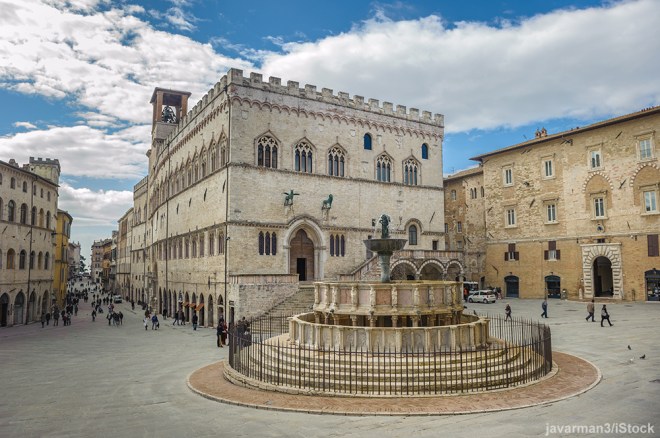
Over the next few centuries, the fame of the monastery of St-Gilles grew to such a degree that it became an important pilgrimage destination in its own right, up there with with Jerusalem, Rome, and Santiago de Compostela. It’s not surprising, then, that Giles was such a popular saint – and that so many boys came to be called after him.

Of course, with all this pilgrim traffic the monastery grew rich and powerful, and large building programmes were undertaken. But, as Giles the Hermit could have told them if he had ever really existed, all power, all riches are transitory. The fashion of pilgrimages passed and the port silted up, so the monastery’s main source of income dried up. The number of monks dropped off, so those large monastic buildings were half empty. And then vicious religious wars were fought, with Huguenot forces burning the monastery buildings to the ground. Whatever was left of them were razed during the French Revolution. Only a few mouldering remains are left.

Source

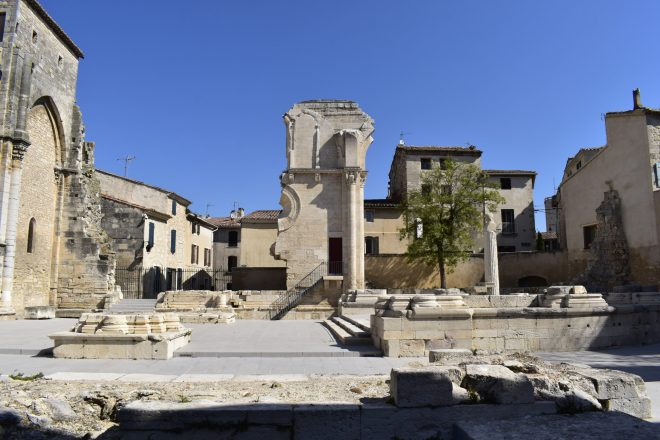
The Abbey church, although also badly damaged a few times, has remained. Here we see the beautiful Romanesque portico.

Source

While here we have the interior, where the gothic style has begun to intrude.

Source

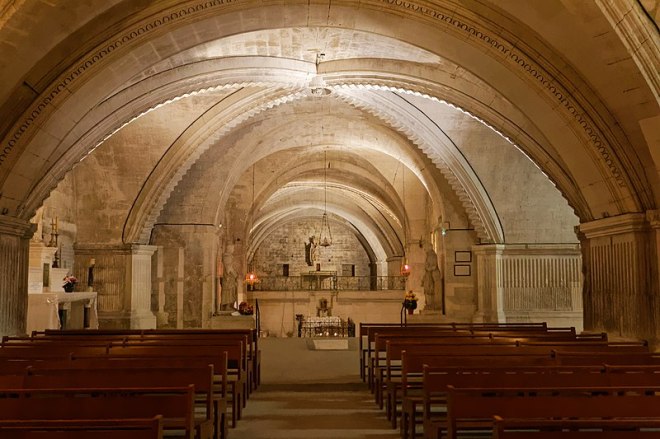
And here we have the crypt, where the Saint’s tomb – rediscovered in 1865 – is located.

Source

Maybe I could persuade my wife to make a quick visit to the church after we’ve hiked down from the Col du Mont Genèvre …

And the name of the goodly hermit, once so popular? Well, I’m afraid it has dropped way down in the rankings. In the UK, only 8 baby boys were given the name Giles in 2023. In France, it was slightly better, with 50 little Gilles being registered. As for the German-speaking lands, Ilgen seems to be only a surname these days. Like the hermit, the name seems to have retreated far, far away from human societies.

I guess that means my wife and I will have to leave future sightings of the name to our wanderings across the face of Europe.

Source

THE COMMON RHODODENDRON – PRETTY FLOWER, INVASIVE SPECIES

Vienna, 30 July 2024

I mentioned briefly in my last post that our grandson had spent some time with us. Wonderful! But tiring. After we had waved him and his parents goodbye, my wife and I headed into the Austrian Alps for a few days of well-deserved R&R. Specifically, we went to a place called Schruns, which – for those readers who are interested – lies in the Austrian province of Vorarlberg. But provincial boundaries – or any boundaries, really – are just lines in our heads, abstractions we impose on the landscape which surrounds us. It would be better to say that Schruns sits in the lower part of the valley of the river Ill, a river that starts its course at the head of the high Alpine valley of Ochsental, up on the slopes of the Piz Buin (Ox Peak in the local Rhaeto-Romance language), the highest peak in Voralberg, and then runs through the 40-km long Montafon valley.

Sorry, let me immediately be clear that this post is not going to be a rant about the foolishness of borders. I just got carried away a bit as I wrote that last paragraph. No, it is actually the result of a hike that my wife and I did high up above Schruns, at 2300 m, on a beautiful, sunny day. Here we are at the top, looking down at Schruns in the Montafon valley below.

My photo

In case any readers are wondering, we did not hike up the 1600 metres up to the top of the mountain from Schruns. Dedicated hikers we may be, but not fanatics. We took a gondola lift up 1200 metres and then hiked up the rest of the way. In that climb, we passed through a huge field of dwarf rhododendron.

My photo
My photo
My photo
My photo

I have to say that, although the sight was very pretty, my heart sank when I saw those rhododendrons. You see, I was under the impression that all rhododendrons originally came from the Himalayas, that I was in front of an introduced species, and – based on something I had read somewhere – that rhododendrons in Europe were now an invasive species, a topic I have written about in several posts. I was biased towards this thinking by my sighting, the previous day, on a hike along the river Ill of thick stands of Himalayan Balsam, which as I’ve reported in an earlier post is indeed an invasive species here in Europe. So it was with a certain grimness that I photographed another patch of rhododendrons on a hillside in front of where we had lunch on the edges of a small Alpine pond.

My photo

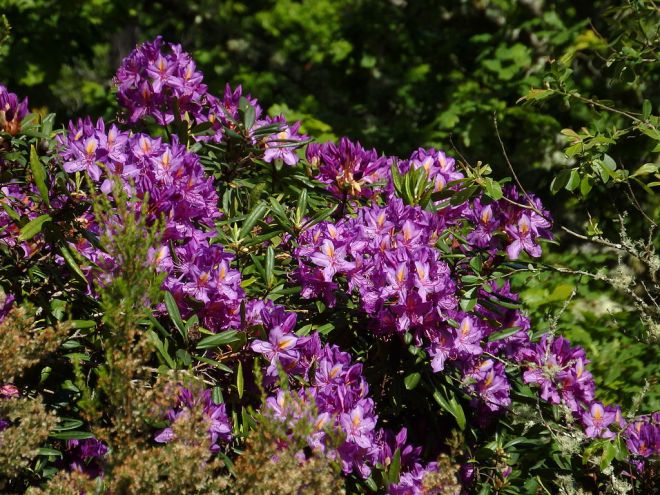
Well, I’m glad to report that I was completely wrong. Yes, the Himalayas do host a large number of rhododendron species, as – surprisingly to my mind – do Papua New Guinea and Borneo. But there are a number of rhododendron species native to North America, and – key to this post – a few rhododendron species native to Europe. I am extremely glad to tell readers that two of these, closely related to each other, are native to the Alps, so no invasive species on our hike! They are the alpenrose, Rhododendron ferrugineum

Source

and the hairy alpenrose, R. hirsutum.

Source

I think readers will agree that there doesn’t seem to be much difference between the two. The biggest difference seems to be in the leaves. The undersides of the alpenrose’s leaves are covered in rust-brown spots, while the hairy alpenrose’s leaves have hairy edges. The pH of the soil is a prime decider of what Alp they will grow on, with the alpenrose favouring acidic soils and the hairy alpenrose alkaline soils. I suspect that once upon a time the two were one and the same species, and then they began to diverge as they adapted to different soils. They are still close enough so that they will hybridise where their ranges overlap. Since I have absolutely no idea what the pH of the soil is in the mountains above Schruns, I have correspondingly no idea which of the two alpenroses my wife and I were looking at on our hike. And I certainly didn’t get down on my knees to have a closer look at their leaves.

But where did I get this idea that rhododendrons are an invasive species? I can’t have dreamed it. Well, it turns out that there is another European species, the common or pontic rhododendron, R. ponticum, which is indeed invasive. Actually, as in the case of the alpenroses, there are two closely related species. One, the subspecies ponticum, is found around the southern Black Sea basin (hence its name) and all the way to Georgia and the northern Caucasus, with a presence also in Lebanon.

Source

The other, subspecies baeticum, is found in a few damp valleys in a couple of mountain ranges in central and southern Portugal and southern Spain.

Source

It is this latter subspecies that has become an invasive species in the UK and more generally in Western Europe. Its story is typical of the period when Europeans went around the world hunting for “pretty plants”, plants which simply gave pleasure because of their flowers, foliage, shape, or other characteristics. This started in the early 18th century; of course, the global trade in plants had started several centuries earlier, immediately after Europe’s discovery of the Americas, but in those earlier centuries people were interested only in plants that were commercially interesting. The common rhododendron ssp. baeticum was an early example of this massive movement of pretty plants around the world. It seems that it was brought to England in 1763 through that British foothold on the Iberian peninsula, Gibraltar, which is located quite close to its natural range. A new plant nursery in Hackney, run by a German émigré by the name of Joachim Conrad Loddiges, was the first to make the common rhododendron’s seeds available. One of the early buyers from Loddiges was the 2nd Marquess of Rockingham, who had the distinction of being British Prime Minister twice.

Source

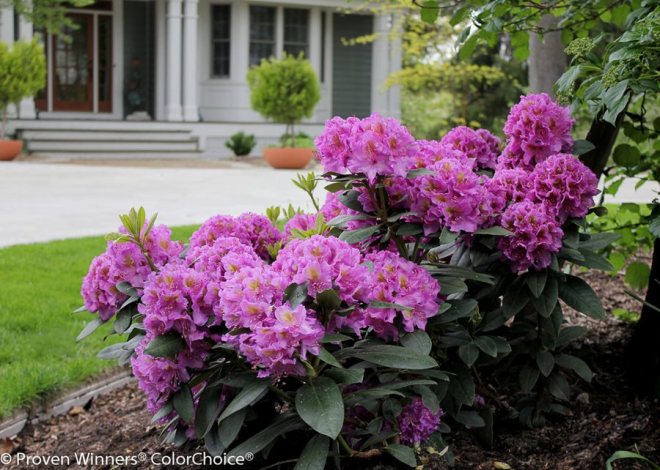
As readers can imagine, in those days, when Respect for one’s Betters was much more engrained, where such a Distinguished Personage went others were sure to follow.  The result was that the planting of common rhododendrons in posh and then not so posh gardens quickly spread. Of course, it helped that it had a really pretty flower. But then most rhododendrons do. The craze for rhododendrons expanded as new species of rhododendrons, from North America and then from Asia, poured into the UK and Europe more generally. Rhododendrons hybridise quite easily, which added to the excitement as gardeners hybridised rhododendrons with abandon to create plants with ever more glamorous  flowers. Often, to speed things up, new species were grafted onto the rootstock of common rhododendrons; the latter were tough and often there already, so it made for a quick way to turn your garden into a splendid glade of multi-hued rhododendrons. I throw in here photos of some modern examples of such dazzling displays of rhododendrons. The first, fittingly, is from Wentworth House in Yorkshire, one of two country houses that our friend the 2nd Marquess of Rockingham once owned.

Source
Source
Source

Just to remind ourselves that it’s not just grand gardens that have rhododendrons, here’s one – maybe a common rhododendron, but you can’t tell, what with all the hybrids around – in someone’s back garden.

Source

Alas! As far as the common rhododendron was concerned, it all turned out to be too good to be true. By the 1970s if not before, people had realised that it was a horribly invasive species. Primarily because of its huge production of seeds, it quite easily “hops over” garden fences and – if the soil and climate on the other side is welcoming – it goes feral. Then, once the plant has rooted, the roots send up suckers, which in no time at all grow into new bushes. The branches of all these bushes layer tightly together, blocking out sunlight and stopping anything else from growing. And to cap it all, many of the rhododendrons which were grafted onto the rootstock of common rhododendrons reverted to common rhododendrons if they weren’t looked after, creating yet more common rhododendron plants ready to hop over garden fences. The net result was thick stands of common rhododendrons taking over large swathes of land.

Source

Here, a stand of common rhododendron is slowly engulfing a bus stop.

Source

Well, who cares about a bus stop? But the common rhododendrons are choking stream beds and the understory of woods. They also carry a family of pathogens that can kill certain species of trees. This map shows the distribution of the common rhododendron, both inside gardens and out, throughout the UK and Ireland in the early 1970s.

Source: J.R. Cross, “Rhododendron Ponticum L.”, Jnl. Ecology, Vol. 63, No. 1, pp.345-364, Mar. 1975

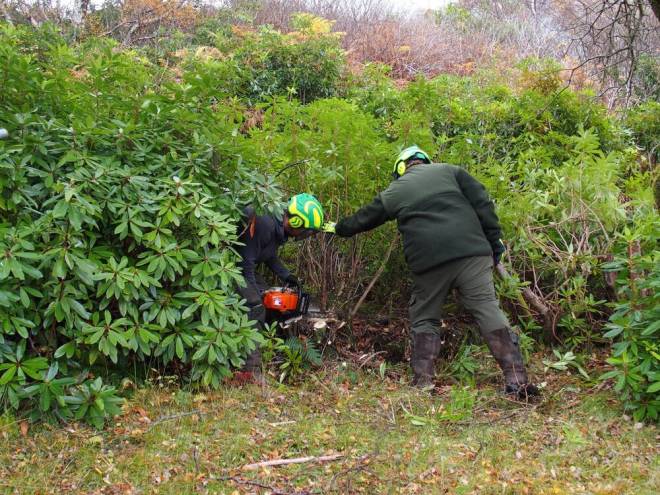
Readers will notice dense patches of dots in many places in the UK, as well as in Ireland. Western Scotland and Snowdonia in Wales have been especially badly affected. Eradication programmes are underway. But it’s hard (and therefore expensive) work.

Source
Source

And you have to come back for at least five years after you’ve cleared a patch, to ensure that no roots were left which have thrown up suckers and no seeds were left which have sprouted. And now scientists have discovered that after you’ve cleared  a patch it’s not a given that the cleared land will revert back to its original composition of plants; the balance has been disturbed and some plants may move back in faster than others and stop the slower movers from recolonising the land. So more work will be required to ensure that the original plant composition returns.

There is something really quite ironic about the common rhododendron letting rip and taking over large swathes of British, and other European, countryside. Back in the Iberian peninsula, where the plant came from originally, it is hanging on by its fingernails. It is a relict population from the the original laurissilva forests which covered the Iberian peninsula 66 million years ago, It is no longer suited to the dry climate in Iberia and has retreated into a few damp valleys. Reproduction is largely confined to the roots sending out suckers as the climate is now too dry for seedlings to survive. With climate change turning the southern part of the Iberian peninsula into a semi-desert, I suspect it will expire there. But, luckily for it, and unluckily for other plants, a bunch of ignorant plant traders brought it into an ecological niche where it just thrives, thank you very much! Of course, we can’t really blame the people who back in 1763 carried the plant to the UK, no-one then had the knowledge of what impacts there can be from moving plants around the planet. But now we do know, and yet we still do it. Are we stupid or what?!

Sorry, I can sense another rant coming on, time to stop. But if any of my readers have common rhododendrons in their gardens I beg them to rip them out without delay. If they really want rhododendrons, there are many, many equally pretty rhododendrons which do not “go forth and multiply”, as the Bible has it.

OUR DOLOMITES HIKE, 2024

Vienna, 27 June 2024

My wife and I recently completed our annual hike in the Dolomites. We returned to old stamping grounds this year, to the Val di Fassa, in the autonomous province of Trento. This was where we started our annual pilgrimages to the Dolomites five years ago. That year, however, our carefully constructed six-day hike was thrown into chaos and confusion by two mega-meteorological events. The first was a hugely powerful windstorm, Vaia, which swept through the Italian Alps in late October of 2018 and brought millions of trees crashing to the ground – the official tally talks of 8 million cubic metres of trees being downed.

Source

The second was a monster snowfall in May of 2019, a mere month before we were meant to start our hike.

As we saw over and over again during our severely modified hike, the Val di Fassa was badly hit by Vaia.

My photo

A good number of the trails we were meant to take were blocked off over long sections by downed trees. The local tourism authorities had planned to use the month of May to clear the trails, but the monster snowfall of that month put paid to their plan. On top of it, that unexpectedly heavy snowfall meant that a good number of the huts we were meant to spend nights at, and the trails leading into them and out from them, were still blocked with snow when we arrived in the Val di Fassa.

Five years on, the weather behaved better in the preceding months, and we were able to do a good number of the trails blocked to us back in 2019. We got off to an iffy start, hiking in fog so thick that we could have been in a park in Milan during the month of November.

My photo

But after that, the weather cleared and glorious sights awaited us!

My wife’s photo
My wife’s photo
My wife’s photo
My wife’s photo
My wife’s photo
My photo
My wife’s photo
My photo
my wife’s photo
My wife’s photo

It wasn’t just towering mountains and emerald valleys far below us that left us breathless (although some of the breathlessness was also due to our climbing hundreds of metres of steep slopes). It was also the streams and small lakes we passed by.

my photo
My photo

Or the wild flowers that greeted us along the paths we passed along.

My photo
My photo
My photo
my photo
My photo

Even the smallest beings we came across had the power to enchant us.

My photo
My wife’s photo

There were shadows among all this wonderfulnness, though, notably the clusters of dead European spruce trees we saw dotting the woods that clothed the steep flanks of the valleys.

Source

All was not right. There hadn’t been so many standing dead trees in 2019. What was going on? A massive infestation by another beetle was what was going on. A beetle not nearly as cute-looking as the other beetles we had seen and photographed.
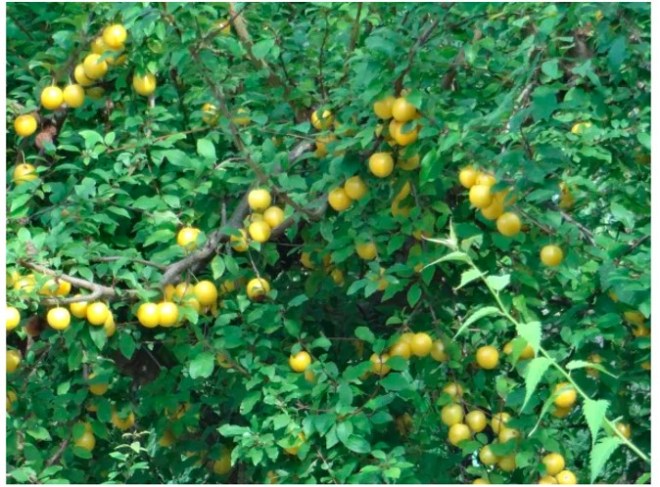
Source

A beetle which goes by the name of European spruce bark beetle in English and bostrico tipografo in Italian. The English name is rather prosaic, merely confirming the beetle’s preferred victim to be the European spruce. The Italian name is much more interesting. The second part of the name rather colourfully indicates the type of intriguing “calligraphy” which the beetle and its offspring create in the tree as they burrow into it – and kill it.

Source

The first part of the Italian name also harks back to the elegant whorl-shaped channels which other members of this family of wood-burrowing beetle creates. It is an italianization of the name that Aristotle gave to the family, βόστρυχος, which is the Greek word for “curl”.

I hope my readers will excuse this little riff on the etymology of the beetle’s name, but I feel that often the origin of words tells us a lot about how our ancestors perceived the world around them. In any event, for all its intriguingly shaped burrows, this beetle kills the European spruces (and other trees) which it infects, and it kills them quite quickly, within a few months. The trees first look peeky, their crown wilting and turning rust-coloured, then they start massively losing their needles, then they dry out, at which point, to borrow – with the necessary adaptations – John Cleese’s speech about the dead Norwegian parrot, the trees are no more, they have ceased to be, they’re expired and gone to meet their maker, they are late trees, bereft of life they rest in peace, they’ve rung down the curtain and joined the choir invisible: they are ex-trees.

Source

Under normal circumstances, healthy European spruce can beat off the nefarious beetle’s attacks, which usually only burrows into dead trees or trees that are already dying. The infestations are endemic but under control. But after huge destructions of trees which massive storms like Vaia bring about, there is suddenly vast amounts of dead and dying trees available for the beetle to feast on. Worse, the trees which have remained standing are – unsurprisingly – stressed and unable to defend themselves effectively, so the beetle also merrily attacks apparently healthy standing trees. The result: an uncontrolled epidemic of the beetle, with huge increases in its population, and the large patches of dead trees we were seeing everywhere.

Locals grimly told us that it could be five years or more before the situation rights itself and beetle populations drop back down to endemic levels again. By then, perhaps as many trees will have been killed off as were brought down by Vaia. I fear that if we come back to Val di Fassa in the coming years, we’ll find valleys which look like they have a bad case of the mange, with big, bald patches speckling the hillsides.

I don’t want to sound smugly virtuous, but the people who manage these forests haven’t done a very good job. Anxious to maximise profits, they have planted monocultures of European spruce and trees all of the same age, to make it easy to clear cut any particular patch of forest. If instead they had planted a mix of different species and ensured a mix of trees with different ages, they might have made less profits short-term but they would have been better able to weather big disruptions like those caused by Vaia. This is especially urgent since with climate change massive, intense storms like Vaia (wind velocities of over 200 km/hr were recorded) are going to happen more frequently.

But who is listening to old farts like me? I fear that on our future hikes, my wife and I will be mournful witnesses to ever more examples of short-term thinking: downed trees, dead trees, bad erosion, flooding, desertification, and on and on. I despair sometimes at the world we are leaving our little grandson and any other grandchildren who may soon come along.

LIME TREES TO SHOE POLISH

Milan, 11 June 2024

What is the matter with me?!

Over the last few days, we’ve been passing down alleys of lime trees.

My photo

The trees are all in flower – this one was covered with them.

My photo

The flowers fill the air with their scent, I breathe it in … and I am reminded of shoe polish.

Source

No-one under the age of 40 will remember a world where most of the shoes we wore were made of leather. As I look around the subway carriage where I’m writing this, I can only see one pair of leather shoes among perhaps 70 pairs of feet. I, on the other hand, being well over the age of 40, still remember a time when we mostly wore leather shoes – and remember the concomitant joys and anguish of shoe polishing. At my boarding primary school (prep school in British parlance), a specific period of every week was set aside for shoe polishing. We all had to go to a room dedicated to this task, where we picked up a cloth – to spread the polish – and a brush – to put a high gloss on our shoes – before getting to work. As I picked up the tin, there was that ineffable smell of the polish. That was the joy – or at least the pleasant sensation. No doubt it was caused by the solvent which the manufacturers used to keep their polish pasty. After the spreading of the polish on my shoes came the vigorous polishing. That was the agony, as my arm very soon began to ache. But I couldn’t slow down, there was always a master on hand to bark at me to put my back into it. And then came again the joy, as I admired my well-polished shoes glowing on my feet. Of course, I have no photo of this weekly exercise. I did find this photo, though, which will give readers a sense of what it was like – although the boy in question looks to be enjoying it far too much.

Source

After the passage of so many decades, I can’t remember the brand of polish we used. I’m guessing it was Kiwi; that was certainly the brand that my English grandmother used, and it seems to have been the most popular brand in the UK.

Source

In passing, I should say that I learned to my surprise that Kiwi was originally an Australian brand (and was given its name by the owner to honour his wife who hailed from New Zealand). Merely another example of my unconscious Euro-centric biases …

Old brands of consumer products always have me searching for the posters they used in their advertising campaigns. I find these old posters a fascinating sub-genre of popular art. In another life I would have been an avid collector of old posters. In this case, though, I didn’t find any really scintillating Kiwi posters online. The best I found was this one.

Source

Not so in the case of a now extinct brand of Italian shoe polish called Taos, manufactured by the now also extinct company Edoardo Pessi. Look at this lovely poster! It’s a riff on the fact that the biggest purchaser of Pessi’s shoe polish was the Italian army.

Source

In a rush of enthusiasm, I throw in photos of a few more posters for Taos and other Italian shoe polishes.

Source
Source
Source

At this point, I have to admit to having played a very small part in Edoardo Pessi’s demise. It was early on in my career as an environmental consultant. My company was hired by the multinational corporation Sara Lee (now also extinct) to carry out an environmental assessment of the Pessi factory. Sara Lee was in negotiations to purchase Edoardo Pessi, and the idea was to figure out what environmental liabilities Sara Lee might also be buying and bring down the purchase price by a corresponding amount. This is the factory where I carried out my assessment.

Source

I don’t think I’m giving away any trade secrets when I say that there were some problems with underground tanks leaking solvents (out in the back yard there, next to that sliver of lawn; I remember it well). I guess a couple of 100,000 dollars were knocked off the purchase price because of that.

In any event, the purchase by Sara Lee went through. But it was really just an exercise in asset stripping. Quite quickly after the purchase, Sara Lee concluded that this factory had no future – which made a lot of sense; I mean, look at it, hemmed in as it is on all sides by houses. So they closed the factory down. But they didn’t shift operations to an industrial site on the outskirts of town as they could have done. Instead, the packed all the equipment off to their other factories, they laid off the workers, and sold the land to a developer, who proceeded to raze the factory to the ground and put up some swanky apartment buildings in its place. Sara Lee even stopped making the Taos shoe polish – who polishes their shoes anymore? (and they already owned Kiwi; one shoe polish brand was more than enough).

Well, all of this, although  an enjoyable little trip down Memory Lane, still doesn’t explain why, when I breathe in the scent of lime tree flowers, I think shoe polish. The  mysteries of olfactory chemistry …

NOTES FROM OUR HIKES

Sori, 28 May 2024

Lizards are constant companions of ours on the hikes my wife and I do during the Spring and Summer, wherever we happen to be in Italy or in Austria. We see them especially where we are moving over stony, sunny ground. They streak across our path, they scurry away from us into the surrounding vegetation or down a crevice in the rocks. Sometimes we just hear a rustle in the grass or dry leaves. In rare cases, they sit on a rock and warily watch us pass, ready to move away at lightning speed were we to suddenly make a lunge at them.
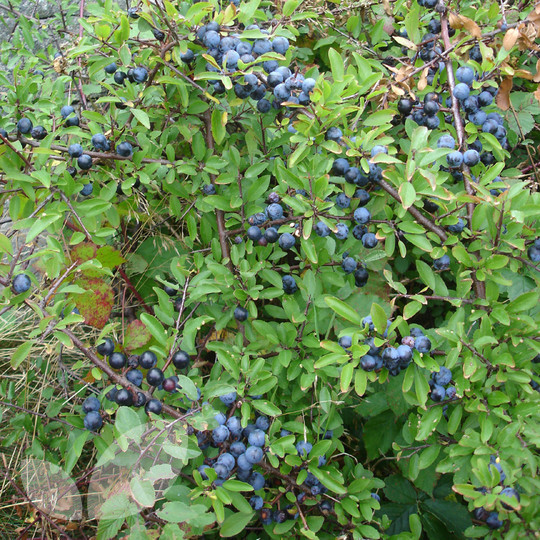
Source

Very, very occasionally, we are not at the centre of their beady-eyed attention, but that’s only because they are embroiled in battles with other lizards, fighting over territories or mates I suppose.

Source

We’re not talking about spectacular animals here; Komodo dragons they definitely are not.

Source

But that’s fine. I think I would get quite nervous if I came across lizards that big. I mean, they can weigh 70kg! I’m not even sure I would want to come across monitor lizards. The ones we regularly saw swimming in the canals in Bangkok were a good metre in length. Luckily, the species we see are quite small, I’m guessing some 6cm long from snout to tail. They are not particularly beautiful, although recently I have seen some lovely green species.

Source

Lizards always take me back to my boyhood, those long summer holidays at my French grandmother’s house. She had some walls in her garden which were the haunts of many a lizard.

Source

One of the games my cousins and I played was trying to catch them. Was that difficult! “Streaked lightning” sums lizards up well. The few times we did manage to catch one, it would more often than not break off its tail to escape. How we laughed at this! The casual cruelty of little boys

I’ve been reading up about lizards, their biology, their ecology. Fascinating stuff! It’s at times like these that I wish I had studied biology. I did some biology at O-level and wanted to carry on with it at A-level, putting myself down for the triad of Physics, Chemistry, and Biology – anything to get away from odious mathematics. But the head of the Science department collared me  – Fr. Michael, it was, I still remember his name and the talk we had. He asked me if I wanted to be a doctor, and when I said no, he said I would have more opportunities if I dropped Biology for the dreaded Mathematics. And so, like the good boy that I was, I followed his advice. My good friend Mark, on the other hand, did biology. He already knew he wanted to be a doctor, and a damned fine doctor he became.

I can’t say Fr. Michael was completely wrong. And in the end, looking back now over the intervening 50-odd years, I don’t regret the path I took. But sometimes – when I’m reading up about lizards, for instance – I do wistfully wish I had studied biology.

NOTES FROM THE SEASIDE

Sori, 21 May 2024

It’s flowering time for the rockrose. This is a lovely flower that we come across at this time of the year on our hikes close to the sea.

My photo

Wikipedia tells me that the plant is typical of the Mediterranean maquis. And indeed, we tend to find it on the dry, stony slopes giving directly on the sea, particularly where the Monte di Portofino plunges down into the sea.

Source

The plant’s formal botanical name is cistus salviifolius, and as readers can see from the photo above its leaves are indeed quite sage-like (salvia in Latin – and in Italian). Its formal Italian name – the one you use when you’re with the urban elites – is cisto femmina; I can see where “cisto” comes from, but what is feminine about this plant? Mystery. More interestingly, ordinary Italians – country folk and such like – call it scornabecco. The Dizionario Treccani – the Italian equivalent to the Oxford English Dictionary – tells me the word is derived from scornare, to unhorn or to break horns, and becco, a name for a ram: so, ram unhorner. As I look at this small plant with its pretty flower, I can’t quite imagine how it got that name. Another mystery. Perhaps it can grow into a tough, tangled bush, which rams can get their horns caught in and broken off. Here is another photo of the plant, which is looking more bushy and tangled.

My photo

All this makes me think of the story in the Bible, of Abraham and his son Isaac. Abraham is about to sacrifice Isaac when an angel stops his hand; I leave the original text take up the story: [The angel] said, “Do not lay your hand on the boy or do anything to him, for now I know that you fear God, seeing you have not withheld your son, your only son, from me. And Abraham lifted up his eyes and looked, and behold, behind him was a ram, caught in a thicket by his horns. And Abraham went and took the ram and offered it up as a burnt offering instead of his son.” This gives me an excuse to throw in a photo of a painting of the scene, by my favourite artist Caravaggio.

Source

Wikipedia also tells me that the plant is drought-resistant and likes sunshine. A perfect candidate for our terrace here! The sun can beat down mercilessly, especially in the summer, and we are away for long periods and so we cannot ensure a steady supply of water. It was for these reasons that decades ago my mother-in-law planted various succulents in a couple of vases on the terrace wall; they have survived all these years.

My photo

They may have survived but as readers can see they’re rather modest, boring even. For many years now, my wife and I have wanted to complement them with something a little more cheerful. Rockroses might be just the thing! I must nose around the local florist, to see if they sell packets of rockrose seeds. If not, just before we flee Italy for the summer (it really gets too hot here), we’ll go for a hike on the Monte di Portofino and collect seeds from the wild.

And what vase to put them in? Someone down in the village has this magnificent vase outside their front door.

My photo

After we were let out from the first Covid confinement, and finally were were able to travel down to the sea again, my wife asked the owners of that vase where they had bought it. Armed with this information, she had sent the manufacturers an email, requesting prices, delivery times, etc.. They never replied, we assume because of all the disruptions caused by Covid. We’ve never tried again, but I’m thinking that, now that I have an idea of what we could plant in that vase other than succulents, I should egg her on to have another go. Because that vase would really look magnificent on our terrace wall.

THE MEANDERINGS OF MY MIND

Los Angeles, 31 March 2024 – Easter Sunday

In my previous post, I wrote about the sad end of the earliest paleochristian basilica in Roman-era Milan, the basilica vetus or – as it later came to be called – the basilica of Santa Maria Maggiore. It was torn down to make way for an even more splendid – and bigger – cathedral, today’s Duomo of Milan. What is important for my story today, the basilica’s baptistery, the baptistery of San Giovanni alle Fonti, was also torn down. All that remains of it are a few ruins buried under the Duomo’s floor.

Source

One of the most famous people to be baptised in that baptistery was Saint Augustine of Hippo. He was baptised on Easter Sunday 386 C.E., at the age of 32, by Saint Ambrose, bishop of Milan. It was Ambrose who had finally persuaded Augustine to become a Christian after a lifetime of resistance. Here, we have a fresco painting of that scene by Benozzo Gozzoli from 1464, to be found in the church of Sant’Agostino in San Gimignano.

Source

It is actually the woman at the back who interests us. She is Saint Monica, Augustine’s mother. She was from Rome’s North African province, from a city which today is in Algeria. Christian from an early age, she was married off young to an older man who was violent and unfaithful. To make matters worse, she had to keep house with her mother-in-law, who was as dissolute as her son. But she bore all her trials and tribulations with Christian fortitude. She had three children who survived infancy, Augustine, Navigius, and Perpetua. She wanted them all to be good Christians, and tried to set them on the path of righteousness. But from an early age, Augustine caused her much anguish. He was wayward, lazy, loose in his morals – at the age of 17, he started living with a woman by whom he had a child but whom never married – and worst of all he joined a heretical sect of Christianity. At some point during all these trials and tribulations, she went to see her local bishop and poured out her heart to him. He consoled her with the words, “the child of those tears shall never perish.” Mark those words, dear readers, we will come back to them.

But Augustine had one thing going for him: he was intelligent. After studying in Carthage, he taught rhetoric there, then moved to Rome to set up a school of rhetoric, and then moved again to Milan when he was offered a professorship in rhetoric by the Imperial court. Monica, now widowed, followed him, pushing him to give up his “concubine” (which he did), get properly married with a woman from a good family (which he nearly did), and – last but not least – become a Christian (which, as we’ve seen, he did, thanks to Saint Ambrose). Having become a Christian, Augustine gave up teaching rhetoric and decided to return home. Monica of course accompanied him, but having finally achieved her aim and with nothing left to live for, she died in Ostia while they were waiting for the ship to take them across to North Africa. We see her death depicted here, in the same church in San Gimignano and by the same artist

Source

Not surprisingly, given her history, Monica is the patron saint of difficult marriages, disappointing children, victims of adultery or unfaithfulness, and of lapsed Catholics (I wonder if my mother ever prayed to Saint Monica à propos of my lapsed status?). From the Middle Ages on, her cult grew and spread throughout Christendom. The story of her crying her eyes out over Augustine became part of the popular stories about her. In fact, one can still buy statues of her in tears; here is a modern example: yours, courtesy of the gift shop of the Norbertine sisters, for a mere $180.

Source

-o0o-

In 1768, as part of its attempts to shore up its claims over the Pacific coast of North America, the Spanish government ordered an expedition to set out from Baja California and lay stake to all of the territories lying between San Diego and Monterey. The expedition set out from San Diego in July 1769 and reached Monterey in October. They actually failed to recognise Monterey (the bay had been previously described by a Spanish navigator sailing up the coast, but they couldn’t match his descriptions with what they were seeing) and kept marching northwards, which led the expedition to its most momentous discovery in November, the huge bay of San Francisco. Somewhat astonishingly, ships from various nations had sailed past the mouth of the bay in the past without ever noticing it – the fog which commonly envelops the area has been given as the reason. Its job done, the expedition marched back to San Diego. The Franciscans who accompanied the expedition used it to lay the groundwork for a string of 21 Missions which they built over the next several decades all the way from San Diego to Sonoma just north of San Francisco. Here’s a photo of the mission church in Santa Barbara.

Source

But it’s not these large-scale events that interest me, it’s a small incident that happened in early August 1769 as the expedition force moved northward. On 2 August, the force arrived at the confluence of the Los Angeles river and the Arroyo Seco, very close to what is now downtown Los Angeles. The next day, the men moved on and camped a mere 4 km from where I’m writing this, at the Tongva village of Kuruvungna. The village was located close to a pair of springs which were sacred to the Tongvta people. The village has vanished, as have all the villages of the First Nations who lived in this part of California, but the springs still exist, now located in the grounds of the University High School on Texas Avenue in Los Angeles.

Source

Juan Crespí, a Franciscan friar who was with the expedition, renamed the springs San Gregorio. But the new name didn’t stick. Someone in the following decades, someone with a poetic bent, saw in those two springs the eyes of Saint Monica with tears continuously welling out of them, and so they became known as the fuentes de las Lágrimas de Santa Mónica, the springs of the Tears of Saint Monica. From there, by a sort of geographical osmosis, the general area around the springs became known as Santa Mónica. So when, in 1839, the Mexican governor of Alta California gave a certain Francisco Sepúlveda II a grant of 33,000 acres of land for a rancho, a grant which included the springs, Señor Sepúlveda called his rancho San Vincente y Santa Mónica (the San Vincente part of the name presumably came from another location on the rancho).

Fast forward another thirty years, to 1872 – California was now a US State – and the Sepúlveda family sold half of the rancho’s lands to a Col. Robert Baker, a businessman with a finger in many pies. In turn, two years later, Col. Baker sold three-quarters of his part of the rancho to another businessman, John Percival Jones, who had made a fortune in silver mining out in Nevada. In 1875, the two agreed to create a new town on part of their land holdings. Again, by geographical osmosis, they decided to call the town Santa Monica (even though the springs are not part of the township). Thus started the town which is now part of the sprawling metropolis of Los Angeles. My wife and I are on the bus from Santa Monica as I write this, having just visited the Cayton Children’s Museum with our grandson, where great fun was had by all. The bus is passing street after street of houses, which have all been built over the 33,000 acres of the rancho of Francisco Sepúlveda II. A lot of people have made a lot of money in real estate.

-o0o-

Over its lifetime, the town of Santa Monica has given its name to a variety of other things in the town. Perhaps the best known is the Santa Monica Pier, which has housed an amusement park out on the ocean’s edge since the 1920s.

Source

But it has also given its name to Santa Monica Boulevard, and this is where I will stop these meanderings of mine.

Source

Santa Monica Boulevard is the final, western end, of the mythical Route 66.

Source

Who hasn’t thrilled at the idea of travelling along Route 66? I certainly have. I’ve told my wife that one of these days, once we’ve finished visiting our daughter in LA, we’ll roar off down Route 66 all the way to Chicago. I think we’ll have to do this trip in a Corvette, a red one if possible.

Source

And of course we’ll be listening to Nat King Cole’s “Route 66” on the radio.

Source

Although we’ll do the trip in the opposite direction to Nat King Cole’s lyrics: LA – San Bernadino – Barstow – Kingman – Winona – Flagstaff, Arizona – Gallup, New Mexico – Amarillo – Oklahoma City – Joplin, Missouri – Saint Louis – Chicago
“Get your kicks
On Route sixty-six”