At the end of October, my wife and I did a two-day hike from Gubbio to Assisi, along the Via di San Francesco. As the trail’s name suggests, it centres around the life and times of St. Francis of Assisi. As befits any saint from the Middle Ages, he was the protagonist of a great number of stories, many of which became the subject of the late 13th Century frescoes painted in Assisi and elsewhere after his death in 1226. I will choose some of these to illustrate stories which took place in the localities linked by the trail.
To the north of Assisi, the trail starts at La Verna, where Francis received the stigmata.
As for the southern portion of the trail, it starts in Rome, where Francis went a number of times to keep his movement on the right side of the Church authorities – this fresco depicts his critical first meeting with Pope Innocent III, to receive the pope’s blessing for his nascent movement.
It goes on to Rieti, where Francis came many times. His last visit was shortly before his death, to have an operation on his eyes – he had become nearly blind (the operation failed, alas).
Nearby, while resting and preparing for his operation, he worked on his Canticle of the Sun:
“Be praised, my Lord, through all your creatures,
especially through my lord Brother Sun,
who brings the day; and you give light through him.”
He goes on to praise “Sister Moon”, “Brother Wind”, “Sister Water”, “Brother Fire”, “Sister Mother Earth”. He completed the last verse on “Sister Bodily Death” as he lay dying in Assisi soon after.
In nearby Greccio, he created the first living crèche, using locals as the actors in the drama. It was his way of telling the Christmas story to rural folk, who couldn’t understand the Latin in which the story was normally told.
And it, too, of course ends in Assisi, where Francis’s spiritual journey began and ended. Of the many stories about him that happen in the town, I choose two:
His renunciation of his father and family, stripping himself naked in the town’s piazza and giving his clothes back to his father;
And then there is the tiny church of Porziuncola down in the valley below the town, which Francis had rebuilt and where he loved to spend time. Here is an artist’s rendering of what it looked like in his day. Those two rows of little huts are where the friars stayed.
It was in that church – chapel, really – that Francis heard the priest read out from the Gospel of Matthew the passage where Christ sends his disciples far and wide to proclaim the Good News, with the following instructions: “You received without charge, give without charge. Provide yourselves with no gold or silver, not even with coppers for your purses, with no haversack for the journey or spare tunic or footwear or a staff, for the labourer deserves his keep.” Then and there, he decided that he and his followers would do the same. Thus was born the order of mendicant friars which was to take his name, the Franciscan Order.
Funnily enough, this momentous decision doesn’t feature in any of the frescoes about him – at least, none that I have found. But other stories involving Porziuncola have been the subject of frescoes. I choose three:
His welcoming of Clare when she ran away from her family to join Francis’s movement and eventually established the Order of Poor Clares;
After our two days of hiking, my wife and I spent a day in Assisi. Alas, I can’t say that I liked the town in its modern guise. It’s just a tourist trap, crowded, full of shops selling tourist tat and restaurants selling overpriced food.
Francis would have been horrified at all these shops pushing tourists to consume – and in his name at that. I rather think – I hope – that like Jesus in the Temple in Jerusalem he would have gone after all these sellers of tat. Turning once again to Matthew: “Jesus then went into the Temple and drove out all those who were selling and buying there; he upset the tables of the money-changers and the seats of the dove-sellers. He said to them, ‘According to scripture, my house will be called a house of prayer; but you are turning it into a bandits’ den.'” I throw in a painting by El Greco of Jesus wielding the whip in the Temple, one that always comes to my mind when I see these shops in places that are supposed to be havens of religion.
But even the basilica of St. Francis, which one reaches after braving the tourist shops and overpriced restaurants, disappointed me. Yes, it is full of art whose creation supposedly kick-started the Italian Renaissance, and I’ve used many of its frescoes above as illustrations. But I was struck by something I read. In his testament, Francis had specified where he wanted to be buried in Assisi. It was at the far end of the town, its lower end. It was here that convicts were executed and the town’s lepers and other outcasts congregated. Its noisome reputation led to the area being called the “collis Inferni”, the hill of Hell. Francis had often spent time on that hill, ministering to the wretched who eked out a living there. It was of a piece with his beliefs to want to be put to rest in a humble grave among the lowest of the low. Yet, the Church authorities, actively supported by the Franciscan Order’s hierarchy, were having none of that. It was decreed that a splendid basilica would rise on the collis Inferni, turning it into the “collis Paradisi”, the hill of Paradise.
Poor Francis must have been spinning in his coffin when he was finally interred in that basilica, four years after he died. It was a betrayal of everything he stood for.
As for Porziuncola, that humble chapel so beloved by Francis, Pope Pius V in the 16th Century ordered a huge church to be built, Santa Maria degli Angeli.
The ostensible reason for building the church was to better control the flow of pilgrims. The guide books are at pains to point out the bareness of the interior of this mastodontic church, as proof of its respect for Francis’s vows to Lady Poverty. But, standing on the square in front of the church, it is difficult not to see this as one more example of the Church authorities glorifying themselves. I’m certain that Francis would have been horrified.
As I’ve said in an earlier post, I am a great admirer of Francis – not the religious side of him; as I’ve said in another post, I am an atheist and have been since I fell off the straight-and-narrow as a student at University. But his turning away from the material side of life – a core part of the Rule he wrote for his friars being that they should own nothing – makes him truly a man for our times.
I hardly ever allow my professional work to leak into my posts, but today will be different; I suppose it’s because I’m writing this post in Kyoto where I am giving my annual course to university students on precisely this: how we can build a society that has a much smaller footprint. What I tell my students is that after working for 45 years in the environmental field, I have become convinced that our excessive consumption is literally destroying our planet. Look at these photos taken by Peter Menzel. He travelled to different countries and invited households whom he met to put everything they owned out on the street in front of where they lived. This photo is of a family somewhere in North America, a place with one of the highest levels of per capita consumption in the world.
This is all worrying enough. But what’s even more worrying is that people who live in less developed countries, whose levels of ownership and consumption of stuff are still modest, like South Africa
they want to have the same levels of consumption as the richer countries.
That impulse is perfectly understandable. But it cannot be. We cannot all consume at the levels of that North American family, or even of that Japanese family. We must heed Francis’s call to adopt a life shorn of stuff. We must – we must – reduce our levels of consumption, or else we will face an ecological catastrophe. Here, too, Francis is a man for our times because of his views on Nature. Unlike most of his contemporaries, and indeed unlike most of humanity even today, he saw the rest of Nature as equal to us humans. His Canticle to the Sun is an ode to Nature, as relevant today as it was when he wrote it 800 years ago. Of course, his reverence of Nature sprang from his reverence of God – if God created Nature, his argument went, we should revere Nature as God’s work. My position is rather different. Whether we like it or not, we are an intimate part of the world’s biosphere, and if it dies we die. Yet, because of our huge levels of consumption, growing ever huger with every passing year, we are ripping our biosphere apart, one result being that the Earth is losing species at rates which have not been seen in the last 10 million years. Francis, I’m sure, would have been appalled. If we go on like this, we are going towards a general collapse of the world’s ecosystems, which will sweep away our civilisations – for all our cleverness, we will not survive breakdowns in our biological life-support systems.
And finally Francis is a man for our times because he felt closest to the poor, the outcasts, the lowest of the low. Today, we live in a world riven by inequalities. In the photos above, I showed one type of inequality, the inequality between countries. Seemingly, this type of inequality is narrowing, but only to be replaced by a much more insidious inequality, the inequality between the citizens of these countries. Already rich individuals are getting ever richer at the expense of everyone else and don’t care anymore about their fellow citizens. We have to change that. We must – we must – pay more attention to the greater societal good rather than to our own individual desires. Frankly, this is not – as was the case for Francis – a disinterested decision, an “act of love for our fellow men”; it is very self-interested. If we don’t look after those who have been left behind, they will eventually come for us with their pitchforks.
And this should not be an average. Every one of us should have this level of consumption, from the Bezoses and Musks of this world to the homeless that haunt our streets.
In our wanderings across the Austrian landscape, my wife and I have from time to time come across villages (or, in the case of Vienna, districts) called Sankt Veit. Here’s one such village in the region of Salzburg.
In the past, there has been no more than a flicker in my subconscious as some neurones somewhere registered the name. But the last time it happened, a neurone or two formulated the question, “who was this Sankt Veit?”, a question which led me to my usual desultory surfing of the web. The conclusion has been this post, which can be added to my various past posts on obscure saints whose names pepper the Austrian landscape and end up being our companions on our hikes across it.
Sankt Veit was originally Saint Vitus, a martyr from the late 3rd Century-early 4th Century. His story – or rather his hagiography – is quickly told. He was born in the far west of Sicily, in the town of Mazara del Vallo (and so, of course, in his italianised form San Vito, he is the town’s patron saint). I’ve never been there, but judging from photos on the web it has a nice central piazza.
In any event, Vitus’s mother died when he was a child. The times being what they were, his father wasn’t going to bring him up. Instead, he delegated this task to a nanny, Crescenzia, and a teacher, Modestus. Unbeknownst to him, the pair were Christians and converted Vitus when he was 12. Even though just a young lad, Vitus was of course very holy and began performing miracles. One such miracle took place in a locality near Catania on the eastern side of the island. Quite what he was doing there when he lived in the far west of the island isn’t explained. In any event, he met some shepherds who were in a frenzy because some dogs had torn a child to pieces. Vitus called the dogs over, had them hand over the remains of the child, and then brought the child back to life. This story explains why it’s common for him to be depicted with dogs. We see him here, for instance, on a capital in the church which was built on the site where Vitus met the shepherds, bringing those wild dogs to heel.
I presume being a Christian was a big no-no at the time, because when Vitus’s father found out, he had the three of them arrested and brought before the local judge, who ordered Vitus to recant. When Vitus refused, the judge invited his father to punish him severely, which he was glad to do, beating him to within an inch of his life. Still Vitus refused to recant. So his father imprisoned all three of them. At this point, an angel intervened and got them out of jail. Whereupon they fled, taking a ship to the ancient Roman province of Lucania, which more or less corresponds to today’s Italian region of Basilicata. There, all three continued their work of proselytism, with Vitus continuing to cure people.
Vitus’s fame as a healer grew to the point where the Emperor Diocletian up in Rome heard about him. We have here a bust of Diocletian. I must say, he looks rather grim, which fits nicely with the rest of the story.
It so happened that Diocletian’s son was possessed by a demon. Diocletian had Vitus and his two companions brought to Rome, where he implored Vitus to cure his son. This Vitus did, but the only reward he got was a demand from Diocletian that the three of them give up their faith (the ingratitude of it! but what could you expect from a pagan?). Vitus of course refused, so then started all those grisly tortures which hagiographers love to pile onto martyrs: see the tortures inflicted on Saint Blaise, Saint Florian, and Saint Pancras. First, Diocletian had Vitus and his two companions thrown into cauldrons of boiling pitch, which gave painters and sculptors of later centuries a very satisfying subject to work on.
But they remained unharmed! So then Diocletian had them thrown to the lions. But these ferocious beasts suddenly became meek and mild, licking Vitus’s feet!
But even though their bodies were close to breaking they survived! And so angels carried them off back to Lucania, where they died.
The End.
I won’t bother readers with a secondary complicated story of a princess who some four centuries after Vitus’s death was involved in carrying his remains from Lucania to San Polignano a Mare, some 30 km south of Bari, on the other side of Italy. I rather suspect that the story was a complete fabrication which nevertheless allowed the monks of a monastery in San Polignano to claim that they had the saint’s relics. This encouraged a vigorous relics-based tourism from which the monastery no doubt profited. The monastery has gone through many rebuilds in the intervening centuries, but it is still a rather arresting building, at least from a distance.
Whatever the truth is about the historical Vitus, assuming he even existed, the fact is that his veneration spread rapidly in Sicily and southern Italy. And then, once the great craze for relics started in the 3rd Century or so, his relics started circulating in Europe. In the 490s, Pope Gelasius I mentions a reliquary of Saint Vitus in the chapel of a deaconry dedicated to him in Rome. In 756, Fulrad, one of the great Abbots of the Abbey of Saint-Denis in what is now the outskirts of Paris, brought relics of St. Vitus to the Basilica there. This is what the abbey church looks like now, after its gothic makeover in the 12th Century.
About a century later, in 836, these relics were presented to Abbot Warin of Corvey on the river Weser. Founded in 822, this was the first Benedictine monastery in Saxony. It later became a princely Imperial Abbey in the political crazy quilt that was the Holy Roman Empire. The abbey has survived the vicissitudes of time, and is an imposing set of buildings. And Saint Vitus is still the patron saint of the abbey today.
The abbey of Corvey played a very important role in the Christianisation of eastern and northern Germany. Monks fanned out from the mother house, and to help along in their missionary work they took with them parts of the relics of Saint Vitus, thus also spreading the veneration of the saint throughout the German lands.
The same proselytising impetus brought Saint Vitus to the Slav lands, where he became extremely popular. It’s been theorised that this is because the German Sankt Veit was translated as Sveti Vid, which sounded very similar to Svetovid, the name of the Slav god of abundance and war.
Sveti Vid certainly became very popular in Prague after king Henry I of Germany gifted to Wenceslaus, Duke of Bohemia, the bones of one of Saint Vitus’s hands in 925. As a result, he became patron saint of Prague’s cathedral. To this hand was added Vitus’s head in 1355, when Charles, King of Bohemia (the Dukes had traded up to Kings in 1212) became the Holy Roman Emperor Charles IV. He filched it from a church in Pavia – the town “belonged” to the Holy Roman Emperors at that time (in turn, the head had been brought to Pavia in 755 by the Longobard King Astulfus, God knows where from; I’m sure many PhDs have been written about the European trade in relics). This same Charles IV, by the way, was the man behind Prague cathedral’s Gothic makeover, which is more or less the version of the cathedral that we see today.
Relics don’t carry the same weight these days – at least, they don’t with me – but some of the reliquaries that were made to house relics are wonderful works of gold and silversmithing. Here’s one such reliquary holding a relic of Saint Vitus from the Treasury of the Cathedral. The artist even gave the young man a dimple in his chin!
Quite why Saint Vitus was plucked out from among all the martyrs of the early church and became so popular is not clear to me. Nevertheless, something in the stories and legends that accreted to his person got him connected to diseases where convulsive, uncoordinated movements were part of the symptoms. Thus, he became the go-to saint when you had epilepsy, chorea, and ergotism, all illnesses giving rise to uncoordinated movements. Chorea especially gives rise to rapid, jerky movements in the face, hands and feet, and so it was often called Saint Vitus’s dance. He was also your saint when you had been bitten by rabid or venomous animals, a fate which can also lead to convulsions. Somewhat more randomly, it seems to me, his intercession was also invoked in cases of bedwetting.
His connection to cases of uncoordinated, jerky movements also led him to be invoked in the strange European phenomenon of dancing mania. Although the first episodes were recorded in the 8th century and occurred intermittently in the succeeding centuries, there was an enormous increase in incidences between the 14th and 17th centuries, after which it disappeared abruptly. I’m not sure dancing mania is really such a good term. Dancing requires music, while here people were just hopping and writhing around. The phenomenon involved groups of people, sometimes numbering in the thousands, who went on “dancing” sometimes for days on end, until they collapsed from exhaustion or injuries. The condition was often considered a curse sent by Saint Vitus, and was therefore also, somewhat confusingly, called St. Vitus’s Dance. Victims of dancing mania often made their way to places dedicated to the saint, who was prayed to in an effort to end the “dancing”. Here, we have a drawing by Pieter Bruegel the Elder of women overtaken by dancing mania being taken to a church.
Not surprisingly, outbreaks often started around the time of the feast of Saint Vitus, on 15th June.
Even today, there is no consensus about what was going on here. It is speculated to have been a mass psychogenic illness, also known as epidemic hysteria, in which physical symptoms with no known physical cause affect a group of people, as a form of social influence. But what started off these bouts of epidemic hysteria? To my mind, the most reasonable suggestion that has been made is that people started “dancing” when their stress levels, induced by chronic poverty and political instability, got too high – although why, then, did the phenomenon abruptly disappear in the 17th Century? People were just as stressed in the succeeding centuries. Mystery …
Of course, people at the time had no idea how to stop an outbreak of dancing mania once it caught hold – other than praying to Saint Vitus. One possible remedy that was tried was music – in the drawing above, one can see a couple of men playing bagpipes. It was theorised that music would get people to channel their chaotic flailing around into a regular rhythm and so bring them down from their hysterical high. The type of music was important; as one writer put it, “lively, shrill tunes, played on trumpets and fifes, excited the dancers; soft, calm harmonies, graduated from fast to slow, high to low, prove efficacious for the cure” (one unintended side-effect of playing music, though, was that sometimes onlookers would now join in, swelling the numbers dancing). It’s not really relevant, but I thought this would be a good place to throw in a wonderful painting (by Pieter Bruegel the Elder again) of peasants dancing.
In the south of Italy, dancing mania was known as tarantism (because it was believed to be caused by the bite of a poisonous spider, the tarantula – confusingly, not a member of the well-known family of tarantulas). The music used there to tame the dancers was thus called the tarantella, which in the intervening centuries has become a well-known musical export from Italy. Many twee paintings of people dancing the tarantella have been produced, normally in a Neapolitan context, like this one.
But back to Saint Vitus after this interesting digression into phenomena of mass hysteria!
In the 14th Century, largely because of the shocks caused by the Black Death, Germans in the Rhineland created a collection of fourteen saints called the Nothelfer, or Helpers in times of need; their formal name in English is the Holy Helpers. Basically, these fourteen saints were tasked with helping people with all the ills they suffered from. We’ve already seen what Saint Vitus was meant to help you with. Another of the Holy Helpers which I’ve dealt with in a previous post, Saint Blaise, was to help with any illnesses of the throat. Staying with the head, Saint Catherine of Alexandria was charged with illnesses of the tongue, Saint Ciriac of Rome with illnesses of the eye, Saint Acacius with migraines, Saint Denis with normal headaches, Saint Barbara with fevers, and Saint Giles with mental illnesses (and with nightmares, I suppose by extension of his powers over mental illnesses). Moving to other parts of the body, Saint Erasmus (or Saint Elmo) was invoked in cases of stomach and intestinal illnesses and Saint George when it came to diseases of the skin. Saint Margaret of Antioch was prayed to when backaches were the problem and when childbirth was looming (this was by extension, I suppose, since many pregnant women suffer from backaches). Meanwhile, Saint Pantaleon was the go-to saint when cancers and consumptive diseases were the problem.
But requests for help from our fourteen Holy Helpers didn’t stop there. They were also invoked to prevent risks to life and limb caused by events in the outside world. You prayed to Saint Barbara to avoid a sudden and violent death at work. When travel was necessary, you prayed to Saint Christopher to avoid the many dangers of travelling. I suppose by extension you also prayed to him to avoid the plague – a sensible thing; we all saw during Covid how plagues spread through travel. For good measure, terror of the plague being great, you also prayed to Saint Giles to avoid the plague. Storms and lightning must have been a common problem because you also prayed to Saint Christopher to avoid the consequences of storms (a good extension of his powers since storms are a common enough danger when travelling), to Saint Vitus to avoid both storms and lightning (a sensible combination) and to Saint Barbara to avoid lightning. Fire, too, must have been an ever-present threat when houses were made primarily of wood, because two of the saints looked after the risk of fire for you: Saint Barbara (by extension, no doubt, of her protective powers against lightning) and Saint Eustace. Interestingly enough, Saint Eustace was also the saint to go to for protection from family discord – this must have been quite a common problem if it warranted a Holy Helper. And of course, since this was a time when the great majority of people were peasants, and since much of their wealth was tied up in livestock and domestic animals, no less than five of the Holy Helpers could be invoked to protect these animals: Saint Blaise, Saint Elmo, Saint George, Saint Pantaleon, as well as our friend Saint Vitus. In fact, in the small Italian town of San Gregorio Magno in the province of Salerno, there is still an annual festival when people come with their animals and go round the local church of St. Vitus three times, followed – given the saint’s connection to dogs – by dog owners with their dogs. We have here goats doing the rounds.
But the help requested from the Holy Helpers didn’t end there. People were profoundly Christian and specifically believed in the afterlife, where depending on how good or bad you had been in this life you would either go to heaven or to hell. Here is a mosaic from the church on the island of Torcello in the Venice Lagoon of the Last Judgement, where parishioners could see just what would happen to them if they were judged to be bad.
And it was for all eternity! So it was incredibly important to end up on the right side of Divine Judgement. The Holy Helpers were duly invoked to help here. You prayed to Saints Barbara and Catherine of Alexandria to avoid a sudden death (i.e, one where you had not confessed your sins and received extreme unction). You prayed to Saint Giles to make a good confession: generally a desirable thing, but especially desirable just before you died. You prayed to Saint Ciriac of Rome to avoid temptation on your death-bed, which would indeed be a very ill-judged moment to give in to temptation since you might not have time to confess (but who on their death-bed would have the energy to be tempted, I ask myself?). You also prayed to Saint Ciriac as well as to Saint Denis to avoid demonic possession. I suspect in Saint Ciriac’s case this was as an extension of his powers to protect you from diseases of the eye (the eye could be an entry point for the devil, the Evil Eye) while in Saint Denis’s case, I see it as an extension of his powers to prevent headaches (I mean, when I’ve had bad headaches it’s often felt as if some small monster was pounding on the insides of my head). Saint Barbara of Antioch, meanwhile, was invoked for escape from the clutches of devils in general. Finally, you prayed to Saint Eustace to prevent you ending up in the eternal fires of Hell, a very natural extension, it seems to me, of his powers to protect people from fires in the terrestrial realm.
So there you have, in a nutshell, the fears that wracked the great majority of Europeans in the 14th and later centuries. The idea of a bevvy of saints who could help you with all the trials and tribulations of life proved to be so popular that it spread rapidly from its point of origin in the Rhineland to the rest of Europe, with local additions and subtractions from the basic list. Here is a collection of statuettes of the fourteen Holy Helpers from a chapel in Baden-Württemberg, where centuries ago you could have gone and asked the relevant saint, or saints, for help with your problems.
However, all I can say is, thank God for modern medicine, and thank God for governments which enact (and hopefully enforce) laws to protect us, and thank God for insurance companies which can cushion us from the risks of everyday life – as long as we read the fine print. As for fears of Hell, all I can say is, thank God Europe is dechristianising – although the fear of death is still there, in a different form, but still there.
Let me end this post with some examples of well-known people who have been named after Saint Vitus.
For Vitus, I tried to find a well-known Roman who was called that but failed to find one. So I choose Vitus Bering.
Bering was a Dane but spent most of his working life in the Russian Imperial Navy. His explorations in the northern Pacific Ocean gave us the Bering Strait, the Bering Sea, and Bering Island (on which he died and was buried).
For Vito, I choose the very famous fictional character Vito Corleone, as played by Marlon Brando in the film The Godfather.
I’m sure it’s no coincidence that Mario Puzo, who wrote the book on which the film is based, chose the name Vito for his character. As readers can imagine, it is a popular name in Sicily since Saint Vitus hailed from there (assuming, of course, that he ever really existed).
For Veit, I had difficulties finding someone who was really, really famous. So I choose Veit Bach, for the simple reason that he founded the Bach family, one of the most important musical families in history. There is no portrait of him, so I choose instead a portrait of Johann Sebastian Bach, who was his great-great grandson.
I also choose Veit Bach because he was a victim of Europe’s religious wars. He was a Protestant who lived in the Kingdom of Hungary, then ruled by the staunchly Catholic Hapsburgs. Religious persecution drove him to relocate his family to the Protestant state of Thuringia. He will contrast neatly with another personage I will mention in a second.
For Vid, I had even more difficulties finding someone who is even modestly famous. For lack of anything better, I choose Petar Vid Gvozdanović, a Croatian who was born at a time when Croatia was part of the Hapsburg Empire.
He joined the army, where his name was Germanified to Peter Vitus Quosdanovich, and he fought in the Seven Years’ War, then the War of the Bavarian Succession, then the Austro-Turkish war, rising steadily through the ranks. By the time the wars with the French revolutionaries started, he was a major-general and had been made a baron. After successfully fighting the French on their northern frontiers, he was made Field Marshall Lieutenant and sent to Italy to fight Napoleon. Alas! Napoleon was his nemesis, beating him repeatedly and leaving his reputation in tatters. After his final defeat at the battle of Rivoli, he was “retired”; he does look a little mournful in his photo.
The name game doesn’t end there! At some point during the invasions of Italy by the Germanic Longobards, the Latin name Vitus got inextricably mixed up with the Longobard name Wito or Wido and was transmuted into the name Guido. The French turned that into Guy, today pronounced very much like the Indian clarified butter ghee. The Normans brought the name with them when they invaded England, but its pronunciation over the centuries changed to the same as “buy” or “hi!” or “lie”. So now we have three more variants!
For Guido, I choose Guido Reni, a baroque painter from Italy. Here is a self portrait.
He is a Famous Author, and as a result I have never read any of his stuff. If any of my readers are curious to read him, Wikipedia informs me that his first published story, “Boule de Suif”, or “The Dumpling”, is often considered his most famous work. I welcome anyone who has read it to tell me what it’s like. Who knows, one day, at the next pandemic-induced lockdown, I might get around to read it.
For the English Guy, I choose Guy Fawkes. He, like Veit Bach, was a victim of Europe’s religious wars, although his situation was the mirror image of Veit Bach’s: he was a Catholic in a Protestant kingdom. He was also definitely more militant than Bach was in his response. He was one of the main conspirators in the Gunpowder Plot, where the plan was to blow up King James I and the House of Lords. His role was to light the fuse which would set off the barrels of gunpowder which the conspirators had stashed away under the House of Lords. He was caught red-handed at the last minute, tortured, and hanged, drawn, and quartered. He is the third to the right in this contemporary engraving of eight of the thirteen conspirators (he was also known as Guido, because he had fought many years on the continent in Spanish armies).
Ever since, on 5th November, the day Guy Fawkes was caught, big bonfires are burned all over the UK on which are perched effigies, originally of the Pope but later of Guy Fawkes, and nowadays of just about any public figure whom the bonfire-makers dislike (in case readers don’t recognise her, it’s Margaret Thatcher in the photo).
So there we have it. I’ve taken my readers through quite a wander of things related to Vitus – sometimes rather remotely. And now my wife and I can wander over the Austrian landscape in our hikes, knowing that the next time we come across a village called Sankt Veit or a church dedicated to Sankt Veit we’ll be able to say “Ah yes! Remember that post?”
POSTSCRIPT
A week or so after writing this post, my wife and I went down to the Dorotheum auction house for tea and a nose around to see what was new. In a small section they have devoted to religious art, I came across this painting on glass.
My photo
It was a painting of the fourteen Holy Helpers plus God the Father with the Holy Ghost, Mary with the Baby Jesus, and Jesus with his cross. I can’t figure out who is who except in a few cases. The young man at the very bottom holding a palm must be St. Vitus; he’s always depicted as a boy. The bishop holding a candle must be St. Blaise (see my post about him to understand the meaning of the candle). The fellow with a baby on his shoulder must be St. Christopher. After that, I’m a bit lost. I leave it to my readers to figure out the rest.
The painting was being sold with a companion piece depicting the Last Judgement.
My photo
Somewhat more succinct than the mosaic in Torcello, it nevertheless passes on the vital message: “if you’re bad, you burn”.
I had to have them! So I forked out the €166 being requested, and they now hang proudly on our wall, on either side of another painting on glass I bought several years ago of God the Father blessing all and sundry.
I love serendipity, those moments in life when, quite by chance, something wonderful happens to you. Such a moment occurred a month or so ago now, when my wife and I, free for the day from our babysitting duties, headed off to LA’s Chinatown, to have our hair cut and to nose around a little. Pleasant as this all was, it was not where the serendipitous moment occurred. It was later, when we decided to walk from Chinatown to Bunker Hill, hoping to catch an exhibition at the Broad Museum or the Museum of Contemporary Art, which both sit on that hill. There was indeed a wonderful exhibition at MOCA, but fascinating as it was, it was also not there that the serendipitous moment occurred. It happened on the way; by sheer chance, I chose a route which took us past LA’s Catholic Cathedral of Our Lady of the Angels.
I cannot stress strongly enough, one should never go past a church without visiting it. For two thousand years, churches have been the repositories of some of the best art our cultures have produced (as indeed have temples and other sites of worship the world over), so there are very good chances that there will be something interesting to see in every church. The Cathedral of our Lady of the Angels was a brilliant example of the truth of my injunction, “Enter that church! Do not walk past it!”
The cathedral itself, opened in 2002, is certainly an interesting example of postmodern design by the Spanish architect Rafael Moneo (who also designed the fantastic museum of Roman Art in Merida, Spain, which my wife and I visited some 15 years ago; but that is another story). These two photos give an idea of what the cathedral looks like inside and out.
As I said, interesting. But the real jewel – that serendipitous moment – were the tapestries that lined the two walls of the nave. They were magnificent. They were designed by the Californian artist John Nava and woven in Belgium, a country with a centuries-old tradition in the making of tapestries.
Readers with good eyes will be able to see that the tapestries depict a procession of people – women, men, children – moving towards the cross above the high altar. Closer inspection shows that most of these people are saints (or in certain cases blesseds). These photos show some of the panels (there are 26 of them in all).
Some of the tapestries on the southern wall:
With the more modern saints, Nava used photos or contemporary paintings to create their likeness, otherwise he used family members, acquaintances, and models. He wanted his saints to look like real people, where we the viewers could say “hey, that looks awfully like so-and-so”.
The tapestries show quite a mix of saints and blesseds, from all over the world (although Europe does predominate) and across all ages. A good number I’m familiar with. My mother, may she rest in peace, used to ply me with comic books (graphic novels might be a more respectable term, given the subject matter) of the lives of various saints, to give me good examples to live up to. So, for instance, I’m familiar with Jean Vianney, the Curé d’Ars (the saint on the far right in this photo). Source
Then there’s Saint Francis, a saint I am particularly fond of as I’ve written about in an earlier post (again, the saint on the far right of this photo).
Then there’s San Carlo Borromeo; you cannot live in Milan for any length of time without coming across him multiple times (he’s the second from the left in the photo below).
I’ve mentioned San Carlo a few times in my posts, and I think Nava has made his nose too small – all the paintings of the saint I’ve ever seen show that he had a monstrous conk.
Some are saints who were alive during my lifetime and with whom I have a certain familiarity – Mother Theresa and Pope John XXIII, for instance.
I like the fact that Nava has mixed in a number of anonymous people with his saints and blesseds – mostly children, as we see in the first of these close-up photos – to remind us that we can all be saints (although, as history has sadly taught us, we can all be devils too; but we’ll draw a veil over that today).
Readers will see that while the faces which Nava created are intact, the clothes of many show gaps and scars, reminiscent of old frescoes which have been partly destroyed; a nice touch, I found.
Stumbling across these tapestries was wonderful enough. But what was even more delightful was that this modern procession of saints immediately brought to my mind another such procession, in a church nearly 10,000 km away and erected some 1,500 years before the cathedral of our Lady of the Angels: Sant’Apollinare Nuovo in Ravenna, a church which has been the subject of several of my earlier posts.
Ravenna is one of my most favorite places in the world, filled as it is with early Christian churches whose interiors house mosaics. Any long-term readers of my blog will know that early Christian mosaics hold a special place in my heart. I still remember that morning in early July of 1975 when I walked into Sant’Apollinare Nuovo for the first time: another serendipitous moment. Callow youth that I was, I had put Ravenna on my itinerary because the Michelin Green Guide, which I was religiously following, assigned the town its maximum of three stars. I had no idea what to expect, and I was overcome by what I found before me. The walls of Sant’Apollinare glitter with wonderful mosaics showing a line of virgins and martyrs processing solemnly towards the high altar. In a sign of how things have changed in the intervening 1,500 years, whereas in the tapestries all the saints are mixed companionably together, in Ravenna they are rigorously segregated by gender, with the virgins processing down one wall and the martyrs (all male) processing down the other (they are also all white, showing the much more local reach of the Christian church then than now).
I throw in a couple of close-ups to give readers a better sense of what the mosaics are like. Here, are some of the virgins, with names that we would recognize today – Christina, Caterina, Paulina.
And here are some of the martyrs, with names like Clement and Laurence but also others which are far less familiar to us today – Sistus, Hypolitus, Cornelius.
The other mosaics I discovered that day – in the churches of Sant’Apollinare in Classe and of San Vitale, in the Mausoleum of Galla Placidia, in the Baptistery of Neon and the Arian Baptistery – were just as magnificent and are forever etched in my mind.
Ah, the thrill of serendipity! Remember, readers: never pass a church (or a mosque, or a synagogue, or a temple, or a gurdwara) without going in! (if they allow you, that is) Chances are you’ll see something interesting, and sometimes you’ll find something wonderful.
Just before my wife and I hurried over to Los Angeles to help our daughter, we spent a very pleasant long weekend in Innsbruck, celebrating our wedding anniversary. We actually weren’t visiting Innsbruck itself but rather using it as a base to do some hiking. As the city’s name indicates, it is situated on the river Inn. The valley down which the river flows is flanked on both sides by mountains, and it was these that we were there to hike, up, down and along.
Nevertheless, on the way to and from our hikes we found ourselves enjoying various parts of the old town through which we strode (on the way out) or shuffled (on the way back), and on the last morning we had time enough before our train left for Vienna to visit one museum. Being a fanatic believer in the Green Michelin Guide, I quickly looked up what museums it suggested to visit in Innsbruck, and discovered that this august publication bestowed its maximum encomium, three stars, on only one museum in the city: the Museum of Tyrolean Arts and Handicrafts. So the Museum of Tyrolean Arts and Handicrafts it was!
As usual, the Michelin Green Guide was spot on. I earnestly recommend any of my readers who are spending some time in Innsbruck to visit this museum. But this post is not really about the museum. It is about one particular painting which I chanced upon, of St. Notburga.
My photo
Well! As any faithful reader of my posts will know, I have a very soft spot for obscure saints, the obscurer the better. In my time, I have written posts about Saints Radegund, Pancras, Blaise (who is also, incidentally, the subject of a small painting in the museum), John of Nepomuk, Hubert, Peter of Verona, Fructuosus, and a few other odds and ends in the Saints’ Department. So it was clear from the moment I clapped eyes on the painting that I would have to write a post about her. The train journey back to Vienna gave me all the time I needed to do the background research.
St. Notburga’s story is quickly told, and hinges around three miracles. If she existed at all, and I for one have my doubts about that, she was born in 1265 or thereabouts, into a humble family living in the small town of Rattenberg situated on the river Inn some 50 kilometres downstream from Innsbruck. So she was a Tyrolean girl.
Some time in her teens, she went to work as a servant in the household of the local aristocrats, the Count and Countess of Rottenburg. She was – of course – a very good girl and was scandalized by the fact that the leftover food from the Count’s meals was fed to the pigs when there were lots of townsfolk who went hungry. So with the Count and Countess’s blessing, she collected the leftovers and distributed them to the poor. (From here on, I show, very blown-up, some of the scenes which circle the painting above. They are somewhat dark and fuzzy; if I had known about Notburga beforehand, I would have taken close-ups from the painting itself. Ah well …)
My photo
Alas! the Count died, and his son inherited his father’s title, lands, and servants. The new Count and his lady wife didn’t approve of Notburga’s good works at all. They wanted all the leftovers to go to their pigs. So the Countess, who was in charge of running the household, told Notburga to stop.
My photo
Being – of course – a very obedient girl, Notburga did as she was commanded. But how she suffered! So she decided to put aside some of her own food instead, especially on Fridays – being not only good but pious, she fasted on Fridays – and gave this to the poor. The nasty Count and Countess didn’t like that either. As far as they were concerned, she was giving away their food, not hers, and saw this as theft. The Count decided to catch her in the act of leaving the castle with the food.
FIRST MIRACLE: So one Friday, Notburga was as usual carrying the food she had put aside for the poor in her apron and a jug of wine in her hand, when she encountered the Count and his entourage in the castle’s courtyard. He demanded to know what she was carrying. Notburga replied, “wood shavings and lye, Master”. The Count scoffed and commanded her to open her apron. Notburga obeyed, but in place of food, the Count saw only wood shavings and sawdust! Then he tried the wine, but tasted only lye!
My photo
Of course, the Count being a nasty man, he suspected that Notburga had played a trick on him and fired her. She accepted her fate with forbearance, and left the castle and moved to a small village of Eben on Lake Achen, some 20 kilometres from Ratenberg. Here we have her (I think) walking to Eben.
My photo
There, she was employed as a farm worker by a local farmer. She looked after the cattle and helped with the field work. Being, as I say, a very pious girl, Notburga only asked that the farmer let her stop work to pray when the bell first rang in the evening and let her go to Mass on Sunday and holy days, to which he graciously agreed.
SECOND MIRACLE: One afternoon, as always, Notburga stopped work when the first bell rang. But the weather was threatening to change, so the farmer demanded that no one stop until all the grain had been collected. Seeking divine assistance to make her case, Notburga raised up her sickle and said: “Let my sickle be judge between me and you.” She let go – and the sickle remained suspended in mid-air, caught on a ray of sunshine!
My photo
Frightened half out of his wits, the farmer let her stop working, and he never tried that one again!
In the meantime, things were going very badly for Count Rottenburg. His pigs – the ones to whom the leftover food was given – were ravaged by some mysterious disease. His wife’s half-brother set the castle on fire after a bitter quarrel. Here, we have the half-brother attacking the castle.
My photo
Finally, his wife sickened and died. Many residents decided that the Count had been cursed and left. The Count began to ascribe all his misfortunes to his dismissal of Notburga. He sought her out, together with his new wife, and implored her to return to work for him.
My photo
She accepted, but only on condition that he let her resume her care for the poor. The Count immediately agreed, and of course his fortunes took a great turn for the better when Notburga came back. For 18 years, she served in the castle as nanny for the Count’s children, then cook, all the while continuing her charitable good works. She also succeeded in reconciling the Count with his first wife’s half-brother, the one who had very nearly burned the castle to the ground.
THIRD MIRACLE: In September of 1313, sensing that death was approaching, Notburga requested her master to place her corpse on a wagon drawn by two oxen and to bury her wherever the oxen would stand still. The Count did as she had asked. So off went the oxen, followed by the funeral procession.
My photo
When the cart reached the Inn, the river parted and all the mourners were able to cross to the other shore without harm!
My photo
The oxen continued on their way, covering at a leisurely pace the 20 kilometres to Eben (the mourners must have all had sore feet by now). There, just outside a wayside chapel on the outskirts of Eben they finally stopped. With much pomp and ceremony, she was laid to rest in the chapel; it is even said that angels carried her coffin into the chapel.
My photo
And that’s Notburga’s life wrapped up. Readers will have noted by now the importance of the sickle in Notburga’s life. Hence her being represented in the painting above prominently waving a sickle around. I insert here a statue of her which I also came across in the museum, again waving that sickle around.
My photo
I have told her story somewhat tongue-in-cheek. Quite honestly, it’s difficult for me to see what was so saintly about her life. I find the miracles ascribed to almost akin to conjurors’ tricks. But somethings about her definitely captured the imagination of the rural folk of the Tyrol and contiguous areas. Pilgrimages to that little chapel in Eben started up and became big enough for Maximilian I (whose own mausoleum sits in the church next to the museum) to decide to have a bigger church built in the village at the beginning of the 16th Century. It got a late Baroque makeover a few centuries later. Here is an aerial view of the church, set in the beautiful Tyrolean landscape (it really is a beautiful part of the world).
Her skeleton (or someone’s skeleton) was unearthed from the original chapel and, dressed in rich clothing, now rather macabrely presides over the church’s interior.
Notburga was until recently one of the most revered saints in Tyrol and South Bavaria, as well as in East Styria and Slovenia (I would imagine that the general dechristianization of Europe has put paid to this, although a quick search on LinkedIn and Facebook show that there are still quite a lot of people called Notburga). Rural folk would ask for her intervention in many situations of distress, from human or animal sickness to threatening storms. Apart from her representation on religious furniture and furnishings (paintings, votive images, statues, stained glass windows, church bells, even offering boxes and holy water basins) her image could be found on all sorts of objects of everyday use like salt shakers, stove tiles, and cupboards. There are even tiny, 2 by 2.8 cm., pictures of her to be swallowed or “inhaled” from; they were used as part of religious folk medicine and belonged in the home apothecary. It was believed that consuming or breathing in from these little images would release Notburga’s healing powers. Little silver Notburga sickles were worn on watch chains and rosaries as amulets. Many songs, prayers and litanies were dedicated to her.
There are those who say that Notburga was a Christian personification of much older goddesses who were prayed to in the mountains. Her sickle, for instance, is considered as pointing to a connection with a moon goddess, a common goddess throughout Europe and indeed the world; we have here the Roman goddess Luna.
This could well all be true. But I see another thread in her story, the constant struggle of rural folk with hunger, linked at least in part to their exploitation by landowners, both big (aristocrats) and small (rich farmers). Those rich folk were wasting food? Ha! She took it all and redistributed it to us poor folk! The Count fired her? Ha! He sure suffered for having done that! The farmer insisted that his workers work long hours? Ha! She sure put the fear of God in him for doing that, and after that he behaved himself! It’s no coincidence that she is the patron saint of the downtrodden in rural areas: servants, female agricultural workers, and the peasantry in general. I can understand that people would pray to her to deal with the richer folk making their life miserable. Personally, though, I think unionization is the better way to go.
My son commented to me yesterday morning that I hadn’t posted in a while, and he’s right. It’s been over a month! The fact is, I’ve been busy these days (or B-U-S-Y as my son used to write in reply when we fond parents sent him a WhatsApp message suggesting a chat; luckily, he wasn’t B-U-S-Y yesterday morning). I’ve been helping students at a school in Wales figure out how the school could reduce its carbon footprint and I’ve had to prepare and deliver quite a number lectures for webinars on the topic of Circular Economies. All fascinating stuff, but it has eaten into my blogging time.
Anyway, it seems to me that as the days shorten, the temperatures fall, and my wife and I have our last hikes in the woods around Vienna before we migrate south to Italy for the winter, it would be good to celebrate Saint Hubert, the patron saint of all things linked to forests:
– Of hunters and their hounds, here painted by Paolo Uccello.
– Of trappers (another type of hunter who lurked in forests trapping beavers and other animals for their furs), here seen in a painting at the Metropolitan Museum of Art.
Here is a photo of Hubert on one side of a small forest shrine that we came across during one of our recent hikes.
my photo
And this is the shrine.
My photo
Hubert’s story, which explains why he was made patron saint of all things to do with forests, is quickly told. He was born in the 650s AD in Toulouse, into a family that was part of the high Frankish aristocracy. Initially, he joined the Neustrian court centered on Paris, but because of quarrels with the Mayor of the Neustrian palace he transferred to the Austrasian court centered on Metz, where he was warmly welcomed by the Mayor of the Austrasian palace, on the grounds of “the enemy of my enemy is my friend” – the two Mayors were constantly fighting each other. He seems to have quickly inserted himself into the local elites, marrying the daughter of the Duke of Leuven (if you’re a Flemish speaker, Louvain if you’re a French speaker).
Like all good aristocrats of the time (indeed, like all good aristocrats of all ages), Hubert loved to hunt, and he seems to have spent most of his time roaming the forests of the Ardennes looking for some red meat to shoot. His predilection for hunting only increased after his wife died in child birth, to the point that one Good Friday, when he really should have been in a church on his knees praying for his soul, he instead vaulted onto his horse and rode off into the forest in pursuit of game.
The story goes that he spied a magnificent stag and was riding full tilt after it, when the animal suddenly turned. Hubert was astounded to see a crucifix hovering between its antlers. This scene has captivated various artists over the centuries – or more probably, it captivated their clients and the artists merely executed their clients’ wishes. Here’s a version by Albrecht Dürer.
In any event, the story goes on that Hubert heard a Voice, telling him to clean up his act or else he would be going straight to Hell. When he humbly asked the Voice what he should do, It told him to go find Lambert, Bishop of Maastricht, who would straighten him out.
And straighten him out he did! Under Lambert’s direction, Hubert gave away all his worldly possessions, entered a monastery, led an ascetic life, evangelized among the heathen folk who lived in the depths of the forest of Ardennes where he had once joyously hunted, etc., etc.
In about 705 AD, Lambert was assassinated, the victim of some quarrel between different Frankish factions. The event is depicted in all its gory detail in this painting by Jan van Brussel.
Hubert became bishop in Lambert’s place. At some point, he moved Lambert’s remains from Maastricht to Liège, where Lambert had been killed, as we see here in this manuscript miniature.
He built a magnificent basilica, which was soon turned into a cathedral, of which he naturally became the bishop (in the process, he kick-started the rise to greatness of Liège, which was then just a pissy little village). Alas, this cathedral was demolished by revolutionaries in 1794.
Much to his disappointment, Hubert wasn’t martyred but died peacefully in his bed in the late 720s AD. He was, as might be expected, initially buried in Liège, but about 100 years later his bones were dug up and transferred to the Benedictine Abbey of Amdain. This event was depicted in this wonderful painting by Rogier van der Weyden.
Not surprisingly, the town around the abbey renamed itself Saint-Hubert in his honour and became a focus for pilgrimages over the succeeding centuries (no doubt making the Abbey rich in the process).
I think readers will now understand why Hubert is patron saint of all things forest. He was a very popular saint among the little people in the Middle Ages, probably because forests played an important role in people’s livelihoods until deforestation shrank those forests, first to woods and then to woodlots on the margins of rural lives. Not surprisingly, given his passion for hunting, Hubert was also very popular among the aristocracy, and several Noble Orders dedicated to hunting were named after him. Take, for instance, the Venerable Order of Saint Hubertus, which was founded in 1695 by Count Franz Anton von Sporck.
The Order brought together the Holy Roman Emperor Charles VI and hunting enthusiasts from various other noble families throughout the Holy Roman Empire. It still exists, its current Grand Master being Istvan von Habsburg-Lothringen.
Given that in the early days of the European presence in Canada so many French Canadians were involved in the fur trade as trappers, I also now understand why Saint Hubert was a popular saint in French Canada; in the teen years I spent there, I was intrigued by the number of places called Saint-Hubert (there is even a chain of chicken restaurants in Quebec called Saint Hubert). No doubt the saint’s protection was invoked by the Catholic trappers as their canoes set off on their way to the beaver grounds out west.
Of course, since the regions we now call Belgium and southern Netherlands were the saint’s favoured hunting grounds, both literally and figuratively, many places there are also called Saint-Hubert (French) or Sint Hubertus (Flemish/ Netherlandish). One beer has taken its name from the town of Saint-Hubert around the abbey where Hubert was eventually buried. Here is a bottle of one of the company’s brews (triple amber for any beer enthusiasts among my readers).
Source
There is also a brew that is popular here in Vienna, the Hubertus Bräu.
I’m not sure why it’s called Hubert’s Brew. It’s certainly not named after the place it’s brewed in, which is Laa an der Thaya (nice area; we’ve been on a couple of hikes around there). But it has a very distinguished pedigree. The town obtained the right to brew it back in 1454, from Ladislaus Postumus, Duke of Austria (and for this privilege they had to deliver the good Duke a keg of beer on each holiday, which doesn’t sound much – but maybe there were lots of holidays back then).
As readers will note, both these beers have as a symbol the famous stag’s head with the crucifix hovering between its antlers. So does the digestive Jägermeister, that concoction of herbs macerated in alcohol, which for some strange reason became popular with the student crowd.
In this case, the connection to Hubert is via its name, which means Master of the Hunt.
Of course, I understand why any alcoholic drink which has some sort of connection to Hubert would use the symbol of the stag with the hovering crucifix. But I wonder if the makers of these drinks have thought this idea through. For me, the implication is that drinking the beer or digestive will make you see things which aren’t there (rather like that hoary chestnut that alcoholics see pink elephants).
Not perhaps the best image one wants to give to an alcoholic drink. On the other hand, putting a picture of Hubert as a bishop, like the one in the photo which I started this post with, could well put a damper on one’s enthusiastic desire to drink. A tricky marketing conundrum …
With that, I lift a good glass of wine to my readers and go and join my wife to do the packing. Auf wiedersehen, arrivederci, we will see each other again once we’ve moved down to Italy!
As is our habit, my wife and I have been spending these dying days of 2020 hiking around the edges of Lake Como. We did the Green Way again recently (this is a walk which goes from Colonno to Griante).
And once again, as we passed through the village of Ossuccio, we noticed this sign on a wall.
My photo
It was advertising (if that’s the right word) some kind of pilgrims’ path which snaked its way up from the village to a church, the Sanctuary of Our Lady of Perpetual Help, located high above it.
My photo
The path was studded with 14 little chapels, which the pilgrim could stop at and pray – or the modern hiker like us could inspect.
My wife and I debated whether or not we should take the path. The last time we had passed through Ossuccio we had been running late. But this time, we were ahead of schedule, and anyway we needed to do a bit of climbing – the Green Way is quite flat. So we decided to make a little detour up the hill.
I had thought that we would be doing a Stations of the Cross – a common thing to find on hills and mountains in this part of the world. But no, the whole enterprise is actually dedicated to the Virgin Mary, and the fourteen chapels plus the church are built around the mysteries of the Rosary. I’m afraid I’m getting into a Catholic tradition which is quite foreign to anyone who has not been brought up a Catholic, but I have to explain these mysteries a little if readers are to understand the iconography of what I am about to describe.
If any of my readers have ever entered a Catholic church in the early evening, they may have encountered the following scene: a darkened church with a pool of light in the first few rows of pews, a handful of older women (and, rarely, a few men) sitting in the light, possibly a priest acting as MC, and a steady drone emanating from the group. They are reciting the Rosary (capital “r”), which is the recital of a couple of different prayers in a certain order. To help them recite the Rosary correctly, the little group in the church will be using a rosary (little “r”). This is a string of beads which looks like this.
The point of a rosary is to help its users recite the right number of prayers in the right order. The drone emanating from the group in the church is the result of them repeating the prayers over and over again, with the rosary beads slipping through their fingers as they keep count of the prayers.
This litany of prayers is built around the so-called four mysteries of the Virgin Mary: the joyful, luminous, sorrowful, and glorious mysteries. In turn, each mystery is based on five episodes in the life of the Virgin Mary and her son Jesus. As the name of the mysteries imply, these episodes are joyful, luminous, sorrowful, and glorious. As the picture above shows, a rosary normally consists of five groups of ten small beads separated by one bead. Readers with an arithmetical bent will no doubt have understood that one tour of the rosary through the fingers of that little droning group in the church covers the five episodes of a mystery, with one set of prayers being droned out for each episode (somehow, as they drone their way through the prayers, the members of the little group are meant to meditate on the episode in question). Which mystery the droners will be covering when you walk into that darkened church depends on which day of the week it is: Mondays or Saturdays, the joyful mystery; Tuesdays or Fridays, the sorrowful mystery; Wednesdays or Sundays, the glorious mystery; Thursdays, the luminous mystery (as readers can see, the whole Rosary programme is very well organized).
Coming back to the fourteen chapels and church on the hill behind Ossuccio, they are built around three of the four mysteries: the joyful, sorrowful, and glorious mysteries (the luminous mystery is not included, but simply because it didn’t exist when the chapels and church were built; it was only added by Pope John-Paul II in 2002). My arithmetically inclined readers will of course have figured out that fourteen chapels plus a church is 15, which equals the three times five episodes in the mysteries. And in fact it turns out that each chapel (plus the church) are dedicated to one of the episodes covered by the three mysteries.
“But what are these episodes?!” I can hear my readers cry. Well, for that it is best that we visit the chapels and the church. But before we set out on our visit, I just want to say that we are about to see mises-en-scène, pieces of theatre frozen in place by the use of life-sized painted terracotta statues: 230 in all, 163 of people, 52 of angels, and 15 of animals.
Let me start with an overview picture of the chapels and the church.
My photo
The small white structure up the stairs and behind the tree is one of the chapels. In the background on the hill we see the church, the end-point of the pilgrim path. Sharp-eyed readers can spy similar chapels on the hillside below the church – unfortunately, modern houses have also been built on the hillside, so the view is not as harmonious today as it must have been in the late 17th, early 18th centuries when the chapels were first built.
When pilgrims – or modern hikers – approach a chapel, they will see a very closed building: a blank wall, with a locked door and a couple of grated windows on either side of the door.
My photo
It is those grated windows which allow pilgrims – and hikers – to see what’s going on inside the chapels. Peering through them, they will behold a mise-en-scène of statues describing an episode of the mysteries. The grates on the windows are often of fine mesh. On the one hand, this is a good thing, in that it stops birds, rodents, and other pesky animals from entering the chapels and making a mess of the statues and everything else. On the other hand, this is a bad thing, in that it made it difficult for me to take good photos of the mises-en-scène with my i-Phone’s camera.
My photo
So I shall be relying heavily on photos taken by other photographers who were given permission to go inside the chapels and posted their photos online.
Now, finally, we can visit the individual chapels and the church!
We start with five chapels which are dedicated to the five episodes making up the joyous mystery. Thus, we have:
Chapel 1: the Annunciation, where an Angel announces to Mary that she has been chosen to be the mother of Jesus.
Chapel 2: the Visitation, where Mary visits her much older cousin Elizabeth, who is pregnant with John the Baptist, and where Elizabeth recognizes Mary as the mother of the long-awaited Messiah.
This chapel has the amusing detail of having a young boy sitting in the foreground who seems to be laughing at all these wise old men, and a dog which is crossing the scene. Presumably the artist who created this chapel wanted to give pilgrims a bit of light relief. I also like a detail at the back of the scene, in the dialogue between the young Jesus and the elder next to him.
That elder is wearing a pince-nez, no doubt as much a symbol in the late 17th, early 18th Centuries of the bookish type as it is today (and on a darker note, let’s remember the Khmer Rouge’s decision to kill anyone who wore glasses, because they clearly had to be bourgeois intellectuals).
The next five chapels are dedicated to the episodes of the sorrowful mystery. So we have:
Chapel 6: the Agony in the garden of Gesthemane, where Jesus prays that he might be spared his impending death.
Chapel 10: the Crucifixion, where Jesus dies on the cross.
My photo
I’m sure the pilgrims’ attention would have rapidly shifted from the crucifixion in the background to the soldiers throwing dice for Jesus’s cloak in the foreground. The sculptor created some very interesting-looking characters there. It’s certainly where my attention went.
The final four chapels and the church are dedicated to the five episodes of the glorious mystery:
Chapel 11: the Resurrection, where Jesus rises from the dead.
My photo
The soldier sprawled on the ground in the foreground with his leg in the air is a nice touch, although the statue is in dire need of restoration.
By now, we are high enough to get a good view across the lake and of the mountains – snow-capped at this time of the year – behind it.
My photo
Chapel 12: the Ascension, where Jesus ascends into heaven.
My photo
Chapel 13: the Descent of the Holy Ghost on Mary and the Apostles.
Finally, after having huffed and puffed our way up the sometimes very steep path, we reach the church.
My photo
A typically baroque church greets us when we enter – the chairs set at the required safety distances in these times of Covid-19.
my photo
At the far end, over the main altar, we have the representation of the last episode of the glorious mystery, the Crowning of Mary as queen of heaven and earth.
These little scenes we’ve witnessed as we’ve climbed up the hill are really wonderful pieces of theatre. In fact, that was their purpose, to teach a largely illiterate population the main stories from the New Testament through pictures: another example of the Poor Man’s Bible, which I commented on in a post long ago about San Gimignano in Tuscany.
Set-ups like this one in Ossuccio were very much promoted by San Carlo Borromeo, Archbishop of Milan (known affectionately as “el Nasùn” because of his very large nose).
He saw these as an important way of reaching out to the poor and downtrodden, who might otherwise be tempted by Protestantism, and as a way to talk to them about Christianity in a “language” which they understood. As a result, Ossuccio is one of a good number of so-called Sacred Mountains that dot the landscape of northern Italy; it bordered Protestant lands in Switzerland and was in danger of Protestant infection. The religious passions have died away but these masterpieces of baroque sculpture have remained. They have been declared a group UNESCO World Heritage site.
The funny thing is, this whole programme was tacked over a much earlier veneration of the Virgin Mary on the site of the church. The current church replaced an earlier church, which archaeological digs have shown in turn replaced an even earlier Roman temple to the goddess Ceres (Ossuccio was originally a Roman township by the name of Ausucium). She was the goddess of agriculture and by extension fertility. But since crop failures could have calamitous repercussions, she was also prayed to to avert catastrophes and was given thanks when catastrophes were averted. Somehow, in the shift to Christianity, this latter aspect of the cult of Ceres was transferred to the only “goddess” which Christians had, the Virgin Mary. It was to her that you prayed if something terrible happened to you, and if you survived you would often donate an ex-voto to her shrine as a memento of her presumed intercession. Since remotest time, then, the church high on the hill above Ossuccio has been a shrine dedicated to the Virgin Mary and it has continued to be a place where people have come to pray for her intercession in times of danger. As a result, there is a little chapel off the main nave of the church which is stuffed full of ex-voto. I love these ex-voto, which tell us, sometimes in touching detail, of terrible misfortunes averted. I include here just some of the ex-voto which lined the walls of that little chapel.
The earlier ones seem to focus on recovery from grave illnesses.
My photoMy photo
Later ones seem to focus more on run-ins with modern technologies of one sort or another – I suppose people were getting healthier while their environment was getting more dangerous.
My photoMy photoMy photo
A couple have to do with falling from great heights.
My photoMy photo
This last one speaks to us in particular. I presume the poor man has fallen from some sort of cliff. The area is littered with old quarries, and the slopes can anyway often be very steep. As my wife and I hike above and below these old quarries and along some very steep slopes, we are uncomfortably aware of the steep drops to our sides. One foot wrong …. Oh Blessed Virgin, keep us safe! (hey, you never know, a little prayer might help.)
“The holly and the ivy,
When they are both full grown,
Of all the trees that are in the wood,
The holly bears the crown.”
Holly is a nice plant. With its lovely shiny green leaves and strongly red berries, it really does bring a brightness to our lives just when we most need it. I was struck by this most forcefully last December, when my wife and I were hiking through the woods around Lake Maggiore and Lake Como (a pleasure that is currently denied us by the latest round of Covid lockdowns). The trees were all bare and drear, the rustling underfoot as we trod over dead leaves reminding us of the lovely greenery that had covered them just a few months before. Suddenly, we spied a bright cheerful green among the trees. It was a holly tree.
My photo
Quite soon, a few more popped up between the bare trees.
my photoMy photo
No doubt we were traversing a zone where soil and climate conspired to give the holly a competitive advantage.
It was a pleasure to see holly in the wild. Before then, I’d only ever seen holly trees tamed and manicured to within an inch of their lives in a garden, a splash of dark green against the lighter green of lawn
This connection between Christmas and holly is very old. When you strip away all the layers of religiosity that envelop Christmas, it’s really a feast about the winter solstice, a celebration of when the sun, which has been dying and allowing the days to get ever shorter and nature to die, is reborn, slowly making the days become longer and nature come alive again. In our festivities welcoming the rebirth of the sun, it made perfect sense for us to use plants like holly which are still green at the winter solstice, to remind the sun of the job it had to do to make everything else green again.
Thus we have the Romans decorating their homes with holly during their feast of Saturnalia, a winter solstice feast where there was a lot of gift-giving, feasting and merrymaking (a lot of other things happened during Saturnalia which need not detain us here, but any reader interested in Roman goings on can read about them here).
Funnily enough, when early Christians followed Roman practice and hung holly in their homes and churches, the pagans around them told them not to – I suppose they thought these bloody Christians were desecrating their festival. But at the same time the Church Fathers were also telling them not to, finding this ritual really too pagan for words. Luckily for us, the Christian-on-the- street ignored both the pesky pagans and kill-joy Church Fathers and continued to hang holly in their homes and houses of worship. Which in turn has allowed us to sing over the ages (in my case, somewhat off-key),
“Deck the halls with boughs of holly
Fa la la la la, la la la la
‘Tis the season to be jolly
Fa la la la la, la la la la”
Presumably, as the legions marched outwards from the Roman heartlands they took with them their Saturnalia festival. Holly (at least the species which grows around Rome) is present in just about all the European regions and some of the North African regions which the Romans conquered (the green crosses mean isolated populations, and the orange triangles indicate places where the holly was introduced and became naturalized).
So no doubt halls were also decked with holly in the Roman colonies of western Europe and North Africa. In fact, it is possible that our Christmas love affair with holly in Western Europe has its roots in the Romans’ Saturnalia festival.
Or perhaps not. Because holly was also a special plant for the Celtic tribes of Northern Europe: the map above shows that holly was very much present in their heartlands. They too decked their halls with holly, and for much the same reasons as the Romans: the plant’s evergreen leaves and bright red berries brought cheer to an otherwise dreary time of the year, and they were a reminder that greenery had not disappeared for ever, that it would soon be back, warmed by a re-born and newly vigorous sun.
The Celts saw holly as a symbol of fertility and eternal life, and imparted many magical powers to the plant. Hanging holly in homes was believed to bring good luck. During winter, branches of holly in the house would provide shelter from the cold for fairies, who in return would be kind to those who lived in the dwelling. In the same vein, holly was believed to guard people against evil spirits. So Druids wore holly garlands on their heads, as did chieftains. Holly trees were often planted around homes; because holly was believed to repel lightning this would protect homes from lightning strikes. Just as the oak tree was considered the ruler of summer, so the holly was seen as the ruler of winter, the dark time. As such, holly was associated with dreams and Druids would often invoke the energy of holly to assist them in their dream work and spiritual journeying. Here is one rather fanciful modern depiction of the magical powers of holly.
“O Christmas tree, o Christmas tree
Thy leaves are so unchanging
Not only green when summer’s here
But also when it’s cold and drear”
The custom of using pine trees in Christmas celebrations started in modern-day Estonia and Latvia, by the way, during the Middle Ages and spread out from there. The trees were traditionally decorated with flowers made of colored paper, apples, wafers, tinsel and sweetmeats. I would say that the original idea was to remind us that trees would soon be a-fruiting again.
“When I close my eyes
It’s just you and I
Here under the mistletoe
Magic fills the air
Standin’ over there
Santa hear my prayer
Hеre under the mistlеtoe”
Our wanting to steal a kiss under the mistletoe is a pale reflection of an ancient belief that mistletoe brought fecundity into a home – its white berries were considered to be the sperm of the oak tree.
Kissing under the mistletoe will never feel the same again now that I’ve read that.
I actually have a sense that just about any evergreen plant was made part of Christmas celebrations in some place and at some time – after all, if the point of having evergreen plants around was to remind us of the newly green world just around the corner, any evergreen plant should surely do the trick. I rather like a Christmas decoration that was once popular and summed up all the ideas around the use of evergreens in a celebration of the re-birth of the sun. This was the Kissing Bough. It was a popular Christmas decoration before the pine tree dethroned it and came to dominate our Christmases. To make one, five wooden hoops were tied together in the shape of a ball (four hoops vertical to form the ball and the fifth horizontal to go around the middle). The hoops were then covered with whatever evergreen plants were at hand: holly, ivy, rosemary, bay, fir or anything else (signifying the vegetation to come). An apple was hung inside the ball (signifying the fruits to come) and a candle was placed inside the ball at the bottom (signifying the re-birth of light). The Bough was finished by hanging a large bunch of mistletoe from the bottom of the ball (signifying the fecundity to come).
Coming back to holly, before we get carried away with all this magical imagery and mystical meanings (and let me tell you, the Internet is awash with reams of magico-mystico stuff on holly), let’s go back even beyond our Celtic and Roman forebears to a time when we were mere hunter-gatherers. Etymologists believe that the word “holly” has its origins in the Old English word hole(ġ)n. This is related to the Old Low Franconian word *hulis, and both are related to Old High German hulis, huls. These Germanic words appear to be related to words for holly in the Celtic languages, such as Welsh celyn, Breton kelen(n) and Irish cuileann. Probably all come from Proto-Indo-European root *kel- “to prick”.
What an eminently sensible lot, the hunter-gatherers were, to give this plant a name which stressed its prickliness! Yes, holly is nice to look at, but get close and you immediately notice something else: its leaves have very sharp spines.
This is not a tree to hide under or climb: something I learned as a child when I was once violently pushed into a holly hedge by another, very nasty, child. Ouch, it bloody hurt!
Question: What connects this tumbledown church, which my wife and I stumbled across during a multi-day hike we did this summer in the Wachau region of Austria
my photo
and this train station in London, well known to all those who take Eurail to go to London?
Answer: Their names: they are both called Saint Pancras.
I must say, when we came across that half-ruined church and discovered its name my curiosity was piqued. I mean, Pancras is a funny name, no? I’ve never met anyone face-to-face called Pancras, I’ve never even heard of someone called Pancras. And those websites which will breathlessly list you famous persons having a certain name all came up blank for Pancras. I had only ever heard the name due to the station, and that only because it’s right next to King’s Cross Station, which I used a lot at a certain moment of my life. And I only remember the name because of its close similarity to the name of that organ we all have and whose precise purpose I have never really understood. Yet here were two places some 1,500 km apart with the same name. Yes, my curiosity was piqued, I had to investigate – “Google it!”, as my son always says. And I am now ready to report.
First of all, who was this Saint Pancras? Well, he was an obscure fellow about whom relatively little is known. Like Saint Blaise, another obscure fellow whom I have written about in an earlier post, he was born in what is now central Turkey some time in the 3rd Century. When still a boy and after his parents died, he moved to Rome to be with his guardian. There, again like Saint Blaise, he was caught up in one of the periodic persecutions against Christians, in this case by the Emperor Diocletian. It seems that he and his guardian were giving shelter to Christians and as a result he (and presumably his guardian, but he disappears from the story) were arrested. Pancras was 14. Here, the story gets fanciful. His hagiographer claims that Pancras was hauled in front of the Emperor himself, that the two had a long discussion during which Pancras impressed the Emperor with his youth and determination. Finally, annoyed (enraged, says the hagiographer) by the teenager’s refusal to refute his Christianity, he ordered Pancras’s execution. Pancras was promptly dragged off and beheaded. I find it hard to believe that the Emperor ever bothered to speak to this unknown youth; in fact, as one of the commentators diplomatically put it, it would have been very difficult for him to do so since he was not actually in Rome in the year that Pancras was beheaded. Whatever actually happened, it seems that Pancras was buried along the Via Aureliana.
For reasons that are just as obscure to me as the details of his life, his grave became a hub of pilgrimage and supposed miracles. Pope Symmachus built a basilica over the grave in 500 AD, a basilica that was expanded and much remodeled over the centuries. A church still stands on the spot (a church which, I must admit, I have never visited; perhaps the next time I’m in the Eternal City …).
If things had remained there, Pancras might have ended up as simply a minor regional saint. But for reasons which are yet again obscure to me Saint Gregory of Tours in France wrote in a famous book on Christian martyrs which was published in about 590 AD, that anyone making a false oath at the saint’s tomb would be seized by a demon and would collapse and die. Well! In an age where oaths were taken incredibly seriously and where everyone believed in the existence of demons and Hell, this was equivalent to saying that Saint Pancras was a divine lie detector: who in their right minds would dare to lie if asked to take an oath on the saint’s tomb? An oath on Saint Pancras’s tomb was considered so potent that it could be held up in court as proof of a witness’s testimony.
There was one slight problem: Saint Pancras’s tomb was in Rome and Rome was far away. No matter! In an age in which trade in the relics of saints flourished, relics of Saint Pancras were considered just as potent. There was therefore a huge and urgent demand from all over Western Christendom for relics of Saint Pancras to be sent to them. The Romans were not slow to oblige, and soon relics purported to be of Saint Pancras were on their way to every corner of Western Europe. As one source I read commented: “The whole body of the Saint was apparently in at least twenty churches; the head, in at least ten cities. As for the individual bones, they were without number. Of course, only a small part of these relics could be authentic .”
Of course, such potent relics needed to be housed appropriately! As a result, many a church was built and dedicated to Saint Pancras, with his relics enclosed in the main altar. In great pomp and ceremony, swearers of oaths could be solemnly brought before the altar and required to take their oaths. In our more cynical age, we can smile at the credulity of our ancestors but I have to say if I had been around in the Middle Ages and had been required to take an oath before the relics of Saint Pancras I’m pretty sure I wouldn’t have lied. Who wants to spend eternity in Hell, even if you are being asked to swear that you didn’t kill someone?
It wasn’t just churches who owned relics. Rich aristocrats also had their collections of relics, housed in richly made reliquaries like this one.
I have absolutely no basis for making the following claim, but I would like to believe that one of the most famous of all oaths taken during the Middle Ages, that taken by Harold Godwinson in Normandy in 1064 before Duke William, was taken on relics of Saint Pancras. For readers who are not familiar with this story, let me quickly summarize the salient points. In 1064, the-then king of England, Edward the Confessor, was clearly nearing the end of his life and didn’t have a son to succeed him. Various regional powers were jockeying to get into position to take the crown on Edward’s death. One of these was Duke William of Normandy, who was related to Edward, although in a rather indirect way. Another was Harold Godwinson, head of the most powerful family in England. For reasons which are not entirely clear, Harold went to Normandy (some say he was actually on his way to France but got shipwrecked on the Normandy coast). Duke William promptly laid hands on him and held him prisoner, although he went through the motions of treating him as a valued guest. Harold’s “stay” ended with him swearing an oath on a series of relics. The Bayeux tapestry captures this moment.
Quite what he swore is not clear. William claimed that Harold swore fealty to him and agreed that he would support him to be king. Consequently, he cried foul when Edward died and Harold took the throne. Harold retorted that he had been made to take the oath under duress and therefore (whatever it was that he was made to promise) it was not valid. William took this “betrayal” as an excuse to legitimize his invasion of England. We all know how that finished. The two armies met at Hastings, Harold took an arrow in the eye and died, and his army collapsed. Again, this key moment in English history was caught in the Bayeux tapestry.
We’ll never know what oath Harold really took. As they say, history is written by the victors. But coming back to the relics that Harold took his oath on, it certainly seemed to have been important enough to have warranted the use of Saint Pancras’s relics. The poet Lord Alfred Tennyson believed that they were of Saint Pancras. In his verse-drama “Harold,” when it comes to the moment of the oath he has William exclaim:
“Lay thou thy hand upon this golden pall!
Behold the jewel of St. Pancratius
Woven into the gold. Swear thou on this!”
Continuing in the obscurity department, when the Church hierarchy got around to assigning saints to all the days in the year, something which they seemed to have done quite early on, they assigned St. Pancras to 12th May. Why St. Pancras got 12th May is completely mysterious to me. In any event, 12th May was already St. Pancras day in 896 AD, when the Holy Roman Emperor Arnulf of Carinthia conquered Rome. Arnulf belonged to that delightful period of European history when everyone had fantastic names, something I have noted in an earlier post about Saint Radegund (itself a wonderful name). His father was called Carloman, his mother Liutswind, his son Zwentibold. He deposed Charles the Fat as Holy Roman Emperor and took his place, he was saving Pope Formosus from the clutches of Lambert and his mother Ageltrude when he conquered Rome. And on and on: there are literally dozens more such colourful names attached to Arnulf’s life and times.
But I digress. Arnulf attributed his success in conquering Rome to the intercession of that day’s saint, that is to say Saint Pancras. This made Saint Pancras even more popular than he already was in the German lands, and could well explain in a roundabout way why my wife and I came across this dilapidated church in the Wachau dedicated to him.
The fact that May 12th is Saint Pancras’s day meant that for centuries he also played an important role in the agricultural calendar of large swathes of Europe, from Lombardy and Liguria as well as Slovenia and Croatia in the south to Sweden and Poland in the north, from Belgium and France to the west to Hungary in the east. He, St. Mamertus (May 11th), St. Servatius (May 13th), and St. Boniface of Tarsus (May 14th) became collectively known as the Ice Saints, and Saint Sophia (May 15th) as Cold Sophy. They were so called because the middle days of May were believed to often bring a brief spell of colder weather, and there were warnings against sowing too early in case young crops were caught in a frost. These were translated into a series of colourful sayings, no doubt repeated around the hearth by the wise men (and perhaps wise women) of the village:
Pankraz, Servaz, Bonifaz
only make way for summer.
No summer before Boniface
No frost after Sophie.
You’re never safe from night frost
Until Sophie is over.
Servaz must be over
If you want to be safe from night frost.
Pankrazi, Servazi and Bonifazi are three frosty Bazi.
And finally, Cold Sophie is never missing.
Pankraz and Servaz are two bad brothers
What spring brought they destroy again.
Never plant before Cold Sophie.
Readers get the picture. Alas, science seems to disprove peasants’ belief that there was a tendency to a cold spell in that period. In fact, science has generally stopped us from giving any credence to saints. Which is generally a good thing. But it does mean that names like Pancras, Mamertus, Servatius, and Boniface have sunk into obscurity, so much so that when I came across a church dedicated to Pancras I scratched my head and muttered to myself “Who on earth was he?” Luckily there was Google to help me find the answer.
Oh, in case any readers are asking themselves why the railway station in London is called after St. Pancras, it seems that it was so called because the surrounding district was so called, and the district was so called because there was once in the vicinity a very ancient church dedicated to Saint Pancras. So there you are.
A little while back, I wrote a post about balsamic vinegar – a disapproving post, since I don’t like the stuff. But I used the post to confess to a hankering to make my own vinegar. I attribute this to the fact that my French grandmother made her own vinegar, down in that dark cellar of hers which I’ve had occasion to describe in an even earlier post. She used the local Beaujolais wine as her raw material, putting it in a miniature barrel and leaving it there to sour to vinegar. From time to time, she would send me down the cellar to replenish the dining room’s vinegar cruet. I tried making vinegar once, in our early years in Vienna, following the rather vague instructions I had been given by a colleague. As my wife and children will attest, it was a miserable failure. The resulting liquid had a strange taste and not much of that vinegary punch. Although I put a brave face on it and determinedly continued drizzling it on my salads until it was all gone, I half expected to keel over dead at any moment, poisoned by some mysterious fermentation product I had unknowingly created. So, as readers can imagine, my hankering to make vinegar remains.
It really shouldn’t be all that difficult, I keep saying to myself. Vinegar making has been around since at least Babylonian times and it’s been made just about everywhere in the world where there is a source of sugars (the route to vinegar being first a yeast-catalyzed fermentation of sugars to alcohol and then a bacterial-catalyzed fermentation of the alcohol so produced to acetic acid, which is what gives vinegar its sour taste). In fact, it’s been truly fascinating to discover what people have made vinegar out of. Personally, I have always consumed vinegar made from grapes via wine, preferably red wine, although I’m intrigued to see that people are making vinegar with fortified wines like port, madeira, sherry, and marsala. In the Middle East, they even make vinegar with raisins (it’s famous in Turkish cuisine).
various sources
I’m also familiar with vinegars made from apples via cider and pears via perry, which have been commonly made in northern Europe. But actually just about every fruit known to man (and woman) has been used at some point to make vinegar. I just mention here the ones which intrigued me – or allowed me to create links to some of my earlier posts. The Babylonians used dates, which continue to be used for vinegar-making in the Middle East. The Israelis use pomegranates, testimony to an enduring relationship between this fruit and Judaism. The South Koreans use persimmon. The Chinese use jujube and wolfberry. The New Zealanders use kiwi fruits.
various sources
A couple of enterprising Italian and German companies even use tomato to make vinegar. I must say, I find this one strange. I know that tomato is technically a fruit, but I just can’t imagine a vinegar made from it. I would really like to try it one day, to see what it tastes like (as I would like to try tomato oil extracted from the seeds).
Sort of linked to fruit-based vinegar is honey vinegar made via the production of mead. It’s made in a couple of countries in Southern Europe (France, Spain, Italy, Romania), although it’s not all that common.
Grains of one sort or another are also used to make vinegar (an extra step is needed here, to turn the starches in the grain into sugars). This kind of vinegar is made primarily in East Asia, where rice, wheat, millet or sorghum (or a mix of these) are used. many of these vinegars are black, but there are red and white rice vinegars too.
various sources
The East Asians have been making vinegar for a very long time. Already two and a half thousand years ago, royal and noble households in China’s Zhou dynasty had a professional vinegar maker on their staff. Perhaps there were also professional vinegar tasters. Such tasters certainly became metaphors for the three main religions in China, leading to a very common depiction (the one I insert here is actually Japanese, from the Edo period, but I rather like the style).
The three men dipping their fingers in a vat of vinegar and tasting it are Confucius, Buddha, and Laozi, leaders of China’s three main religions. The expression on the men’s faces represents the predominant attitude of each religion. Confucius reacts with a sour expression – Confucianism sees life as sour, in need of rules to correct the degeneration of people. Buddha reacts with a bitter expression – Buddhism sees life as bitter, dominated by pain and suffering due to desires. Laozhi reacts with a sweet expression – Taoism sees life as fundamentally perfect in its natural state. I leave it to my readers to work out who is who in the painting I’ve inserted, based on their expressions.
But coming back to vinegar from grains, Europe also has its grain-based vinegars. For instance, the British have been making vinegar from malted barley for ever and a day. In my youth, no self-respecting fish-and-chip shop was without a bottle of malt vinegar which patrons could use to drown their fish and chips in – I cannot deny that I did this in my wild and foolish youth.
A series of vinegars which I find quite intriguing are made in South-East Asia and to some degree South Asia, from the sweet sap of various types of palms: coconut, nipa, and kaong palms (and to a lesser degree buri palms; so lesser I wasn’t able to find a picture of it).
various sources
The Philippines is the big producer and user; I read that Malaysia and Indonesia are smaller markets because the palm sap must first be transformed into an alcoholic beverage, something which is forbidden in these Muslim countries. Perhaps. But then why is Saudi Arabia, the strictest of all Muslim countries, a big producer of date vinegar?
The Philippines is also a big user of sugar cane vinegar. Well, it certainly makes sense to make vinegar from the mother of all sugar sources.
I would imagine that all sugar-cane growing countries make vinegar that way. Brazil certainly does. I wonder if anyone makes vinegar from beetroots? (as opposed to pickling beetroots in vinegar) An odd vinegar that I suppose can be classified as a sugar-based vinegar is kombucha vinegar. Kombucha is a Mongolian drink. It is made by fermenting sugary tea with a SCOBY – a Symbiotic Culture of Bacteria and Yeast. This yucky slimy mat will ferment the sugar in your tea to alcohol and start fermenting the alcohol to acetic acid. Normally, you drink the fermented tea before too much acetic acid is produced, but if you let the SCOBY carry on its work all the alcohol will be turned into acetic acid and you will have a vinegar.
I find it intriguing that in all the articles on vinegars which I’ve read, there is no mention of traditional vinegars being made in Africa or the Americas (as opposed to them copying vinegars originally made in Europe). Neither continent lacks traditional alcoholic beverages. The Africans made them (and to some degree continue to make them) from fermented honey water, fermented fruits, fermented sap of various species of palm (as well as a species of bamboo), fermented milk, as well as from grains and other starch sources. As for the Americas, alcoholic beverages existed in at least Mesoamerica. There, the common alcoholic beverages were pulque, which was made out of fermented agave sap, chicha, which was a kind of maize-based beer, and fermented drinks made out of cacao beans and sometimes honey. I cannot believe that these drinks didn’t sometimes get inoculated with acetic-acid making bacteria and turn into vinegar. And I cannot believe that the Africans and Amerindians didn’t figure out ways to use this vinegar, as people everywhere else did. At a minimum, they surely would have discovered – as did everyone else – that vinegar can be used to pickle food and so extend its useful life, a vitally important discovery for societies in the days before refrigeration. If any of my readers are from Africa or the Americas and have information on this point, I would be glad to hear from them.
It’s not only the making of vinegar which I find interesting, it’s also how it’s used. But here one could write a book! (and in fact a quick whip around the internet shows me that several people already have) Since I’ve already written a couple of posts, on mustard and Lea & Perrins Worcestershire sauce, showing how vinegar can be used to make condiments, I reckon I’ve covered the use of vinegar as a condiment on food. I have also mentioned pickling in several posts, in my post on capers for instance, so I will skip the use of vinegar as a pickling agent. I will instead explore its use as a drink, for the simple reason that at first sight I find it rather incredible that anyone would ever want to drink vinegar. I certainly never have; the closest I have got to it is gargling once with vinegar when I had a sore throat, and even then I spat it out; I wasn’t going to swallow it. But people have drunk vinegar, and continue to do so.
The trick, of course, is to dilute it. Roman legionaries did this the simplest way, by just adding water (and maybe some herbs). This drink was known as posca and was drunk during military campaigns, as a thirst-quencher. There was a popular saying about posca: posca fortem, vinum ebrium facit – posca gives you strength, wine makes you drunk. No doubt these legionaries on Trajan’s column in Rome made heavy use of posca during their campaigns.
Interestingly enough, soldiers at the very other end of the Eurasian continent, the samurai in Japan, also believed in the restorative effects of drinking vinegar, in this case rice vinegar. They drank it (whether straight or diluted, I do not know) to relieve fatigue and for an energy boost.
By the way, this business of posca being a drink of Roman legionaries gives quite a different slant to one of the stories in the narrative of the Crucifixion of Christ. All four Gospels say that as Jesus hung, dying, on the cross, someone put vinegar on a stick and held it to his lips to drink. Luke is the only one who says explicitly that it was one of the soldiers on guard at the crucifixion; the others say “one of the people there” or simply “they”. But it would have had to be one of the soldiers, no-one else would have been allowed to get that close. In the three synoptic Gospels, this simple gesture was turned into a gesture of mockery. John, on the other hand, has a more credible line. Jesus said “I thirst” and he was given vinegar. So now I see here a gesture of simple humanity on the part of the soldiers. They had a job to do, to crucify Jesus and the two robbers. But that didn’t stop them from trying to alleviate just a little the agony of being crucified by offering Jesus some posca for his thirst. It’s a moment in the Crucifixion story that has not often been painted, but here is a fresco by Fra Angelico.
The next step up in efforts to make vinegar drinkable is to mix the vinegar with something sweet. Here, too, the Romans had a popular drink, called mustum. It was a mix of low-quality must, fresh from the press, and vinegar. The must sweetened the vinegar, the vinegar clarified the turbid must (a case of “you scratch my back, I’ll scratch yours”).
For their part, the Ancient Greeks mixed vinegar with honey and water to make a drink called oxymel. The beverage passed into European Medieval and Renaissance medicine as a medicament, and indeed the internet is full of articles promoting the health benefits of oxymel as well as bottles of the stuff. Here is a typical example.
But the Ancient Greeks simply drank it for enjoyment. The Iranians still do. They have a drink called sekanjabin, which is a mix of vinegar and honey, to which mint leaves are often added. Apparently, a side order of fresh, crisp lettuce is a must.
It’s an ancient drink, quaffed by Iranians when they were still called Persians. Perhaps the richest and most powerful Persians drank their sekanjabin from magnificent cups like this one (my wife and I saw similar cups in a wonderful museum near Kyoto).
It wasn’t just the Ancients who drank sweetened, diluted vinegar. Under the name of shrubs, drinks like these were drunk quite often until relatively recently in Europe and North America. It was only the rise of carbonated drinks that killed them off, and now they are a bit of a recherché drink. I suspect there is currently a bit of a comeback because apple cider vinegar is being touted widely for its supposed health benefits. As the Ancients had discovered, it’s easier to drink vinegar when it’s been sweetened. Here is one example of the current commercial offer of shrubs.
For those who, like the Iranians, want to make their own drinks, shrubs are made by simply mixing honey water or sugar water with a small amount of vinegar. Or they can be made by soaking fruit in vinegar for several days, sieving off the solid part, and adding a lot of sugar.
For those readers who, like I was, are puzzled by the name “shrubs”, allow me to explain the etymology. It is actually a corruption of the Arabic word sharab, which means “to drink”. The Arabic version of this drink hails back to the use of vinegar as a pickling agent. In cases where fruit was pickled, the vinegar drew out the taste from the fruit during the pickling. So once the pickled fruit had been consumed, people would drink the fruity vinegar – after adding water to dilute it.
I must say, I thoroughly approve of this reuse of the pickling liquid. I have been telling my wife for some time now that we should find something to do with the pickling liquid left over after we’ve eaten pickled gherkins or onions or even olives. So far, she has ignored me, pouring the pickling liquid down the drain. Perhaps I can get her to reconsider if I argue that we can turn the liquids into some kind of shrub. Of course, our pickling liquids are salty rather than sweet, but no fear, I have a solution to this! In order to explain it I have to introduce another set of soldiers, the Spartans this time.
The Roman legionaries had posca, the Spartan soldiers had melas zomos, a black brothy soup (or perhaps black soupy broth). Made of boiled pigs’ trotters, blood, salt, and vinegar, it was an integral part of their diet. We could make melas zomos! Our various spent pickling liquids could give the salt and vinegar, we would just need to find the blood and the pigs’ trotters. Of course, if we still lived in China, we wouldn’t have any problems finding these (I remember several times eating a delicious Chinese dish of pigs’ trotters in a restaurant around the corner from our place in Beijing, and I’m sure we could have found blood if we’d looked for it). But in Europe, as I’ve related elsewhere, we’ve become more fastidious about the meat products we eat, so finding these ingredients might be a problem.
Of course, even if we could find the ingredients and made the soup, would it be yummy? Well, I can only report here a comment made by a citizen of Sybaris, an Ancient Greek city located on the coast of what is now Puglia (but which has since disappeared, alas), which I’ve mentioned in passing in an earlier post. After tasting a bowl of melas zomos, this man declared disgustedly, “Now I do perceive why it is that Spartan soldiers encounter death so joyfully; dead men require no longer to eat; black broth is no longer a necessity.” Now, given that the citizens of Sybaris were famous for their luxury and gluttony (so famous that they gave us theword “sybarite”), this confrontation of polar opposites is perhaps merely an Ancient urban legend. However, it is true that the Spartans gave us the word “spartan”, which suggests that yumminess in their soldiers’ food was not necessarily high in the order of priorities of the Spartan army’s high command. The idea was to give them strength, to beat the shit out of, say, those weakling Persians who drank sekanjabin, as we saw so thrillingly in the film 300 – the Spartans in that film must have been stuffed full of melas zomos.
Luckily, if we weren’t able to find pigs’ trotters and blood (and if I wasn’t able to persuade my wife to eat the soup, a highly probable outcome since she doesn’t much like these kinds of meat products), a quick whip around the Internet has shown me that many vinegar-containing soup recipes exist which involve perfectly ordinary ingredients like vegetables (I suspect that the craze for apple cider vinegar and its purported health properties has struck again; how to find pleasant ways to ingest apple cider vinegar). I can bring to bear my skills in making soups from left-overs and find a yummy way of recycling our pickling liquids into soups. Watch this space!
This second mention of mine of apple cider vinegar makes me think that before I finish I must just touch upon the supposed medicinal benefits of vinegar. In Europe at least, this love affair with vinegar-as-medicine has been going on since the Ancient Greeks; the current touting of apple cider vinegar is merely the latest iteration in a very ancient tradition. I do not propose to go through all the health benefits that are claimed for vinegar. In this time where we are living through a modern plague, Covid-19, I will only mention vinegar’s use during the bubonic plagues that regularly swept through Europe from the 14th to the 18th centuries. For some reason, people felt that vinegar would keep the terrible distemper at bay, so anyone who came into contact with people sick with plague, or with the bodies of people who had died of it, would wash their hands in vinegar, or put towels soaked in vinegar around their heads, or cover their mouths with a handkerchief soaked in vinegar, or gargle with vinegar. It was mostly doctors or nurses who did this, as well as the poor bastards (many of them convicts) who had to load the bodies onto the carts to take them to the cemeteries. I throw in here a picture from the Italian book I Promessi Sposi by Alssandro Manzoni, which takes place during an outbreak of the plague in Milan. We see the men loading up the dead bodies onto the cart.
My wife will no doubt be thrilled to bits to see this reference to I Promessi Sposi, a book which was a Must Read for all schoolchildren of her generation. In a sillier vein, I also throw in a still from the Monty Python film The Holy Grail, where a man is trying to get rid of his old father who isn’t dead.
Anyway, it’s not clear if this use of vinegar helped at all – it indubitably has disinfectant properties, but would they have been enough to kill Yersinia pestis, the bacterium that causes the plague? At some point, people began to add herbs to the vinegar to increase its plague-killing power. Eventually, these vinegar concoctions got a name, Four Thieves vinegar, as well as a legend to go with the name. The legend goes like this: Four of the poor bastards picking up the dead bodies, who also happened to be thieves (it was a “profession” which tended to attract the criminal classes), hit upon a herb mixture which kept them safe. They therefore began robbing the houses they entered with impunity. Caught and threatened with horrible punishment, they offered to give up their secret recipe in exchange for leniency. The judge promptly accepted. Here is a recipe that was posted on the walls of Marseilles, site of the last great outbreak of the plague in Europe in 1720:
“Take three pints of strong white wine vinegar, add a handful of each of wormwood, meadowsweet, wild marjoram and sage, fifty cloves, two ounces of campanula roots, two ounces of angelic, rosemary and horehound and three large measures of camphor. Place the mixture in a container for fifteen days, strain and express, then bottle.”
And here is a modern version of the stuff, using apple cider vinegar (and with a different bunch of herbs: rosemary, sage, thyme, mint, cinnamon, pepper, garlic, clove)
Hey, you never know, it might help keep Covid-19 at bay, although the producers are careful not to claim this. Soak your face mask in the stuff before putting it on.
In these days of Covid-19, when the rules here in Italy forbid us from traveling from one region of the country to another, my wife and I have been cut off from the usual hikes we do at this time of the year along the sea in Liguria. We’ve had to make do with hikes in Lombardy, which in practice has meant hiking along the edges of Lake Como. Not that we’re complaining (too much), it’s a beautiful part of the world to be hiking in. Anyway, a week or so ago, my wife and I decided to retrace our steps along one of the segments of the Wayfarer’s Trail which we had first attempted back in January (for any readers who are interested, I mention our hikes along the Wayfarer’s Trail in an earlier post). Towards the end of the walk we passed through a small village called Corenno Plinio, which lies just north of a somewhat larger village by the name of Dervio, where we were planning to catch the train to go back home.
The last time we passed through Corenno Plinio, back in January, the light had been failing and we were in a hurry to get to Dervio station before dark. So we had ignored the village’s sights and pressed on. And quite some sights there are, to whit a castle from the 14th Century, a little church from the late 12th-early 13th Century attached to the castle, plus the winding cobbled streets of what was once a Medieval village huddling under the castle’s protective walls. This time, with the days being considerably longer, we decided to take a little break when we hit Corenno Plinio and at least visit the church.
For such a little church, it was quite a treat. Before we even went inside, there were three funerary monuments, dating from the 13th and 14th Centuries, to inspect. Readers can see two of them in the photo above. As for the interior of the church, there were some charming frescoes from the 14th Centuries on both walls of the nave. I particularly liked this Adoration of the Wise Men.
I’ve mentioned Saint Gotthard in an earlier post, but I had never come across Saint Apollonia before. For those of my readers who are not up to speed on their Christian martyrology, Saint Apollonia was one of a group of virgin martyrs from Alexandria who was caught up in a riot by the Alexandrian mob against Christians in the early 200s AD. In her case, the mob pulled out her teeth. This explains that mean-looking fellow who is shoving a large pair of pliers into the her mouth (she is, by the way, the patroness of dentistry, which I find highly appropriate; I feel just like that painting every time I sit in my dentist’s chair).
Further along the same wall, there was this line of apostles. I rather liked their piercing gaze.
The only one I recognized was the one holding the knife. That’s Saint Bartholomew, who met with a particularly hideous end by being flayed alive (readers who are interested in knowing more can read my post on him).
And then, next to the apostles, there was this bishop.
It is St. Thomas Becket, Archbishop of Canterbury, slain on 29 December 1170 in his cathedral. In fact, I discovered, my wife and I were in the Church of St. Thomas of Canterbury.
Well! It gave me a little turn to find a church dedicated to this oh, so English saint on the shores of Lake Como. I had learned about him in my history classes many, many years ago in primary school. At University I had read T.S. Eliot’s Murder in the Cathedral and Jean Anouilh’s Honour of God, plays which both explored his tortuous relationship with his king, Henry II. It seemed such an English story. Why would the Italians be interested in Thomas Becket?
For any of my readers who might not know his story, it is quickly told. Born into a London merchant family, Thomas rose to become Chancellor to Henry II. He served the king faithfully, but more than that, he and the king were genuinely friends. When the Archbishop of Canterbury died, Henry had the bright idea of putting Thomas up for the post. He thought Thomas would enthusiastically implement his agenda of strengthening royal powers at the expense of the Church’s. Henry felt – with some merit, I would say – that the Church was too powerful and independent: a state within a state, as it were. But the moment Thomas became Archbishop, he became a zealous defender of the Church’s independence and prerogatives. Not surprisingly, Henry was outraged and relations between the two men soured rapidly, to the point where Thomas finally fled England and sought the protection of the French king. For six long years thereafter, the two men brought to bear against each other all the punitive measures in their power short of violence. Finally a peace, or rather an armed truce, was negotiated and Thomas came back to England. But just before he landed, he excommunicated three bishops for reasons which are not completely apparent. When Henry heard the news, he flew into a towering rage and is said to have cried out, “Will no one rid me of this turbulent priest?” Actually, he is more likely to have shouted, “What miserable drones and traitors have I nourished and brought up in my household, who let their lord be treated with such shameful contempt by a low-born cleric?”, which I feel sounds rather better. In any event, four knights (who play a major role in Eliot’s Murder in the Cathedral) interpreted this royal outburst as an invitation if not an order to act. They immediately saddled up and left for Canterbury.
When they arrived, they placed their weapons under a tree outside the cathedral before entering to challenge Thomas, who was on his way to Vespers. They demanded that he submit to the king’s will and come with them to Winchester to give an account of his actions. Thomas of course refused. The knights then rushed out, grabbed their weapons, and rushed back inside, shouting “Where is Thomas Becket, traitor to the King and country?!”. When they found him, one knight grabbed him and tried to pull him outside, but Thomas held fast to a pillar. One eyewitness, who was wounded in the attack, wrote this about what happened next: “…the impious knight… suddenly set upon him and shaved off the summit of his crown which the sacred chrism consecrated to God… Then, with another blow received on the head, he remained firm. But with the third, the stricken martyr bent his knees and elbows, offering himself as a living sacrifice, saying in a low voice, “For the name of Jesus and the protection of the church I am ready to embrace death.” But the third knight inflicted a grave wound on the fallen one; with this blow… his crown, which was large, separated from his head so that the blood turned white from the brain yet no less did the brain turn red from the blood; it purpled the appearance of the church… The fifth – not a knight but a cleric who had entered with the knights… placed his foot on the neck of the holy priest and precious martyr and (it is horrible to say) scattered the brains with the blood across the floor, exclaiming to the rest, “We can leave this place, knights, he will not get up again!””
Well!! That is a most satisfyingly dramatic end to a story of a Medieval bromance gone terribly, horribly wrong.
It may have been a very English story (although in truth the French were a good deal involved, as was the papacy), but this hideous murder, in a cathedral of all places, of the highest prelate in the land of all people, apparently on the orders of a king of all things, sent shock waves around Europe. Not only was it a damned good yarn, to be declaimed to a rapt audience around the evening fire, but it contained – for Medieval Europeans steeped in Christianity – the elements of sacrilege: murder in the holiest of places, of Christ’s highest representative in England. A delicious shiver of horror must have travelled up every Medieval European spine when the spines’ owners heard the tale, and many signs of the cross must have been rapidly made and prayers breathlessly uttered to keep the devil at bay.
The fallout was immediate and immense. Almost overnight, the spot where Thomas was murdered became a place of pilgrimage. The Church made the most of it and had Thomas canonized in the record time of two and a bit years. The murderers fled to safety in Yorkshire, but eventually gave themselves up and submitted to a heavy penance. As for Henry, like any modern politician he tried to distance himself from the whole affair and urged everyone to move on, but like all modern electorates no-one really believed him and didn’t want to move on. So he made peace with the Pope, swearing to go on a crusade (a promise he never kept), and scaling back some of his more anti-Church policies. And he bought off the Becket family by making Thomas’s sister the abbess of a rich nunnery. But it wasn’t enough. When his three surviving sons, Geoffrey, Richard the Lionheart, and John Lacklands, along with his estranged wife Eleanor of Aquitaine, rebelled against him, Henry found the rebels were supported by many people who were still shocked by the murder of Thomas. Henry’s difficult relations with his wife and sons is recounted in the play Lion in Winter – I show here Christopher Walken in the first production of the play in 1966 (for no better reason than my wife is a great fan of Walken).
So Henry decided that more extreme measures were required. In 1174, four and a half years after Thomas’s murder, he went to Canterbury, publicly confessed his sins, and then received five blows from a rod from each bishop present, and three blows from each of the 80 monks of Canterbury Cathedral (that seems an awful lot of blows, but I’m sure they went easy on him; I mean, how hard would you hit a king?). Then Henry offered gifts to Thomas’s shrine and spent a night at vigil at his tomb (which is where Anouihl’s Honour of God starts).
In the rest of Europe, scores of churches were dedicated to the now Saint Thomas of Canterbury, the little church in Corenno Plinio being one of them, and some wonderful artwork was created recording scenes of his life and death. In truth, his death seems to have excited artists (and no doubt their patrons) much more than his life. That seems perfectly in keeping with an age which enjoyed seeing paintings of St. Apollonia having her teeth pulled out and St. Bartholomew being flayed alive. In any case, let me run through a selection of these artworks, starting from the moment Thomas was consecrated archbishop.
This panel, of alabaster, was made in the second half of the 15th Century and was originally brightly painted. Many such panels were produced in England – the country was famous for them – and exported all around Europe.
Here, in a contemporary manuscript, we have Thomas now arguing with Henry.
In this other manuscript from the 1220s, the relationship between the two men has completely broken down and Thomas is excommunicating some of the king’s men.
A fresco from the late 12th century in the Church of Saints John and Paul, in Spoleto, Italy.
Source
From a reliquary, also of the late 12th Century, decorated with champlevé enamel. It was made in Limoges, France, which was a centre for this kind of work in Europe (I mention another wonderful piece of enamel work, this time made in the north of France, in an earlier post).
Finally, we have Thomas, now St. Thomas, joining the pantheon of saints in heaven, in a mosaic from the late 12th Century in the apse of the Cathedral of Monreale in Sicily (a church which I have mentioned at some length in a previous post). This is a wide view of a rows of saints on the apse’s wall – Thomas is the one in green to the right of the window.
Once all the fuss died down, what happened? I think the fashion of dedicating churches to Thomas died away, but Canterbury became a high place of European pilgrimage, rather like Compostella in Spain is today. I’m sure there were many people who went on pilgrimages for religious reasons. But I’m sure there were just as many who went for the fun of it – Medieval Europe’s equivalent to our mass tourism of today. Geoffrey Chaucer’s Canterbury Tales, written in the late 1300s, supports this. It follows a party of pilgrims on their way to Canterbury. To pass the time, they regale each other with stories. Some are religious. Most are not. And they are hilarious.
Then, another king came along, another Henry, Henry VIII this time. Another king who believed that the church should be a servant of the State, who broke with Rome and “nationalised” English Christianity. As readers might imagine, he didn’t care for Thomas Becket. In 1540, he had Thomas’s shrine in Canterbury Cathedral destroyed and he ordered that what was left of his bones were to be destroyed. He then had all mention of his name obliterated.
Now, all that is left in Canterbury Cathedral is this sculpture and a stone set in the floor where he was killed, bearing his name.
And there still are, scattered across Europe, churches like the one in Corenno Plinio dedicated to him and some wonderful artwork in these churches or in museums celebrating his life – and death.

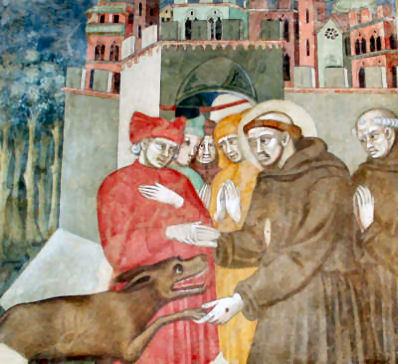

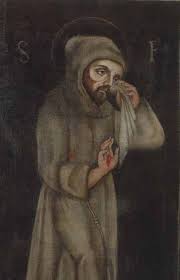
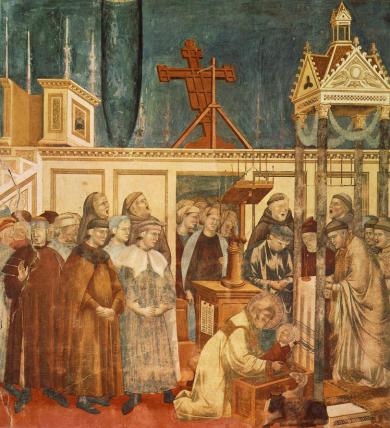
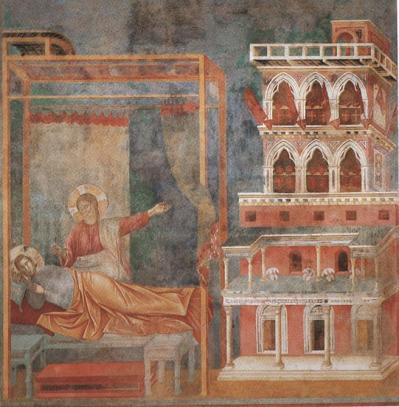
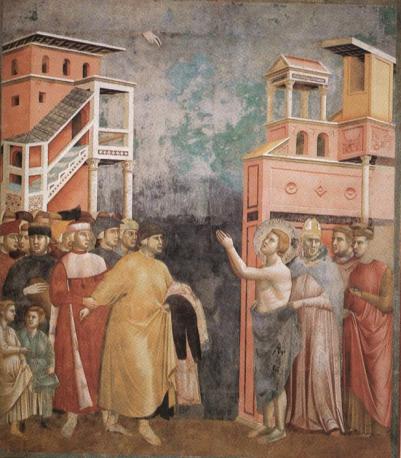


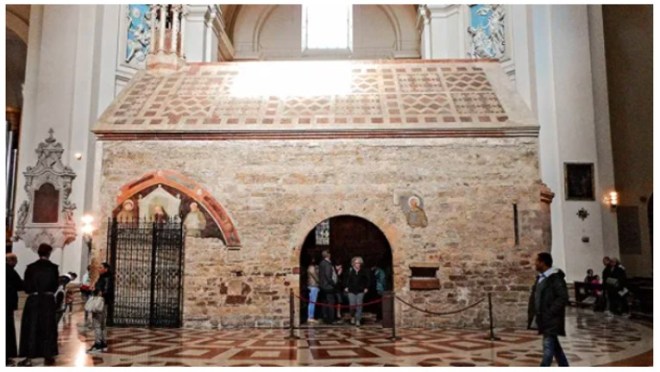
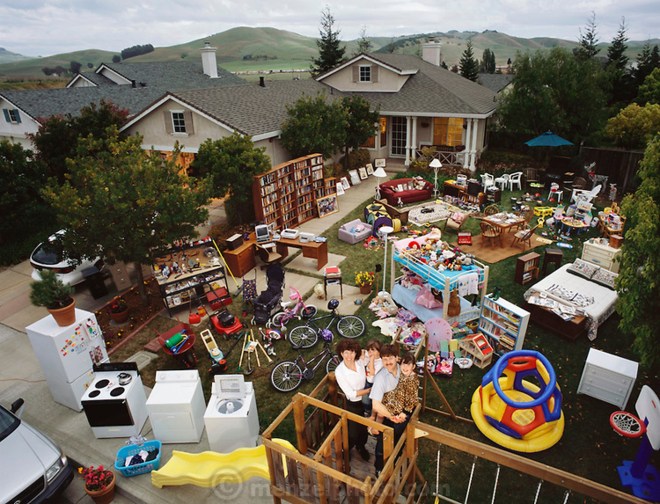

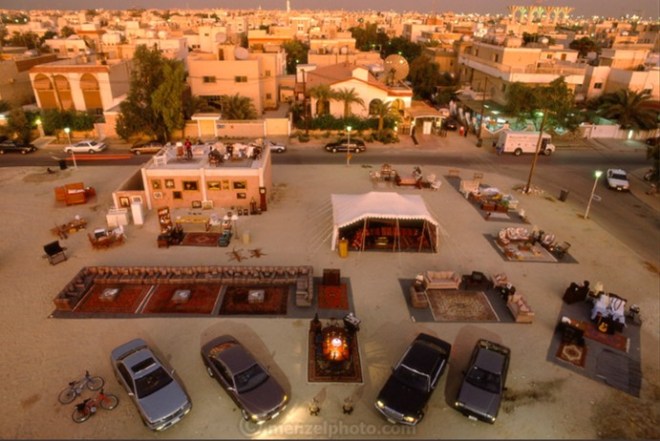


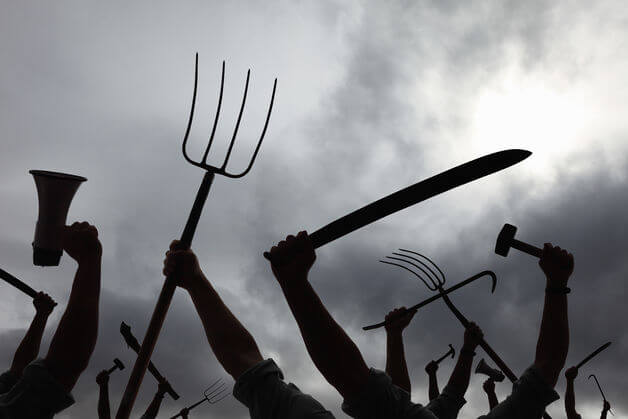

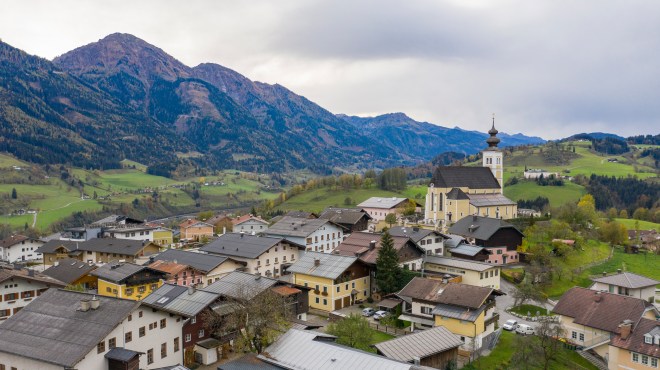


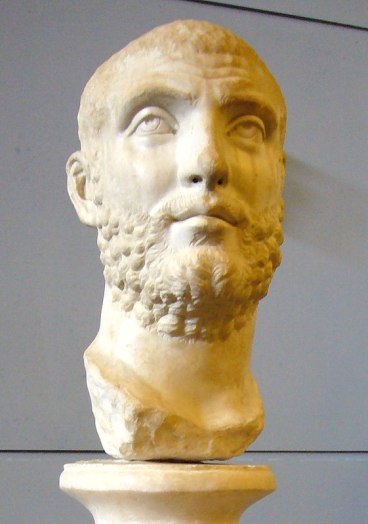

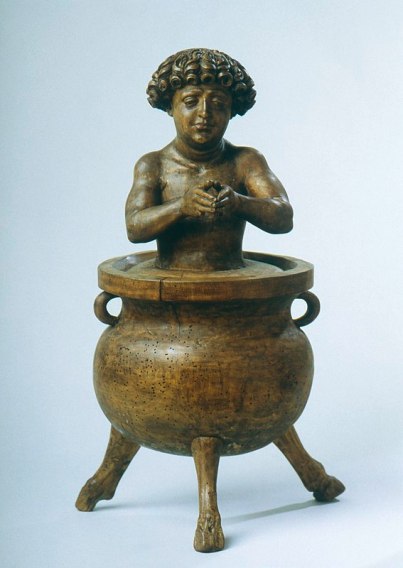


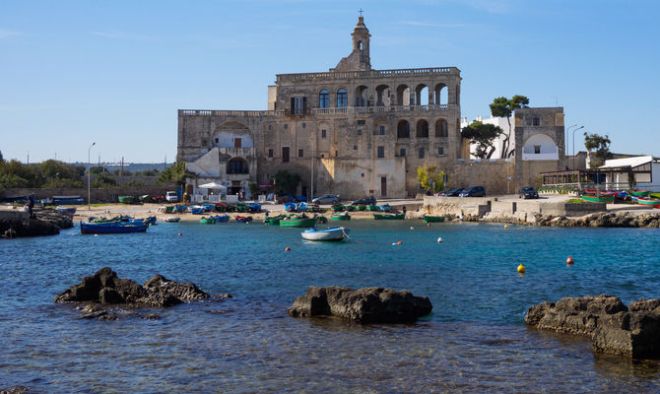
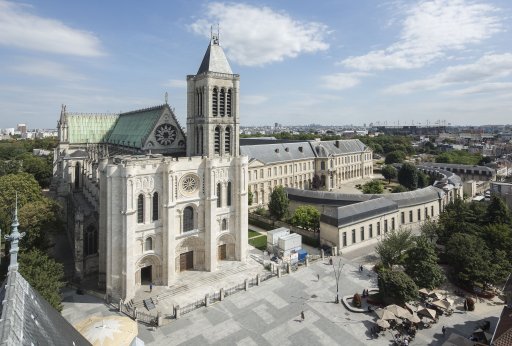
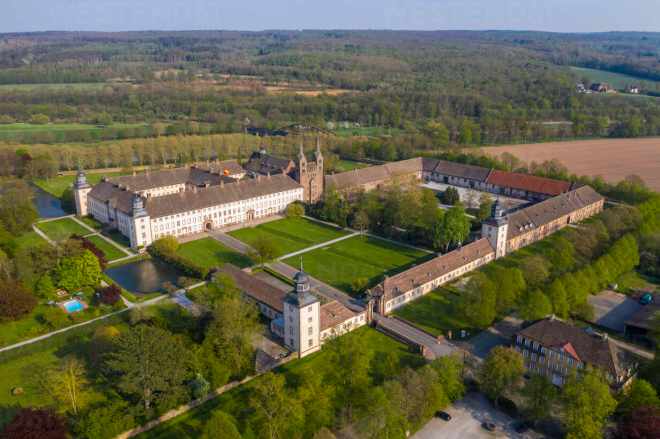


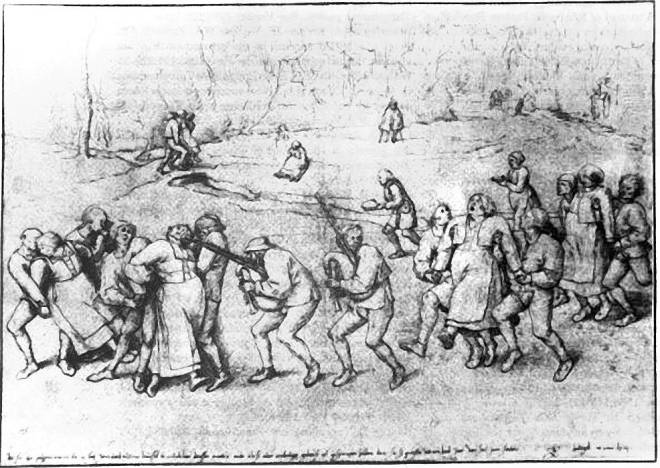


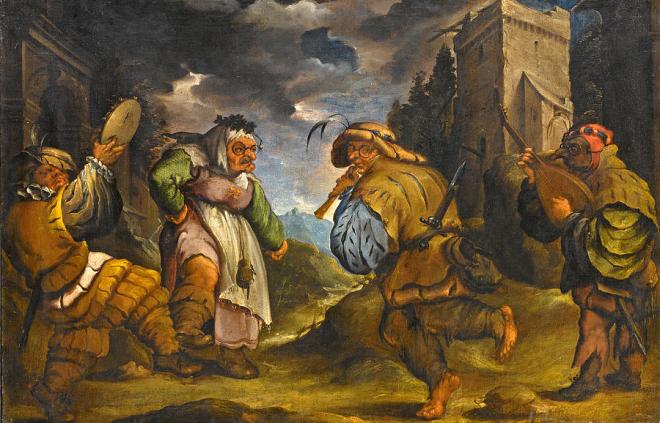

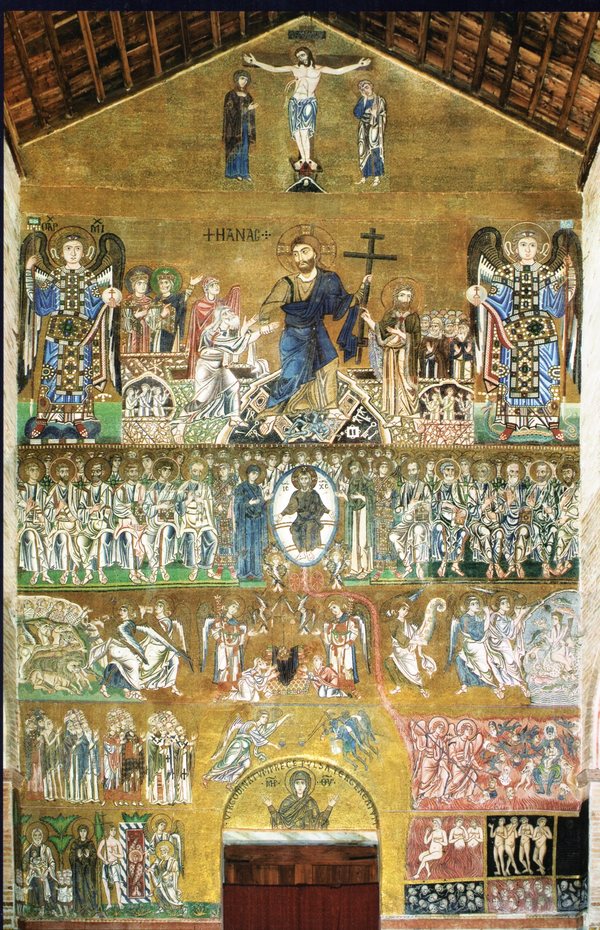
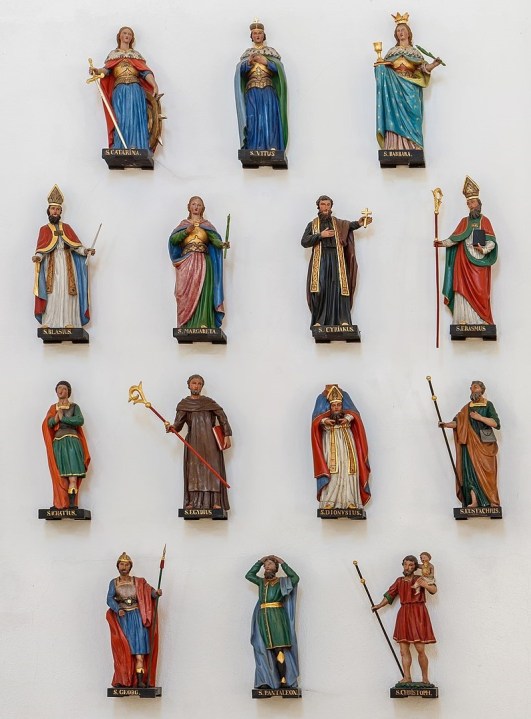
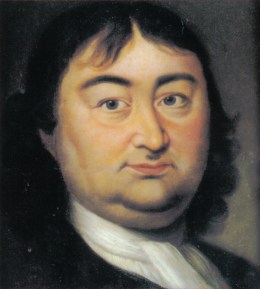


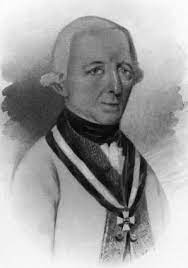


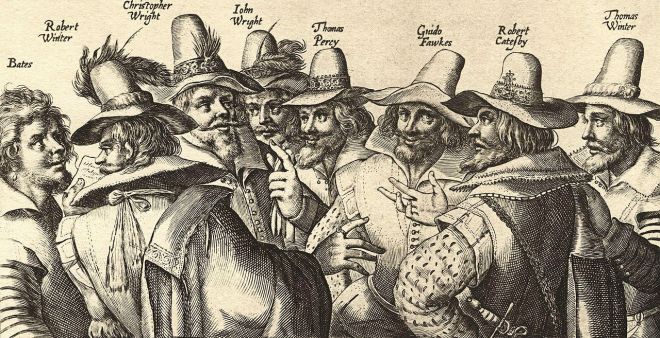

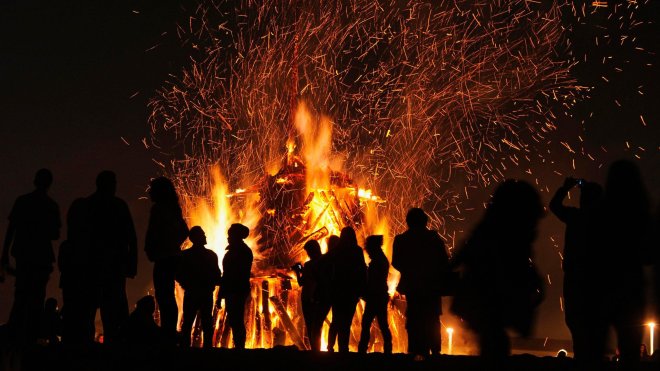


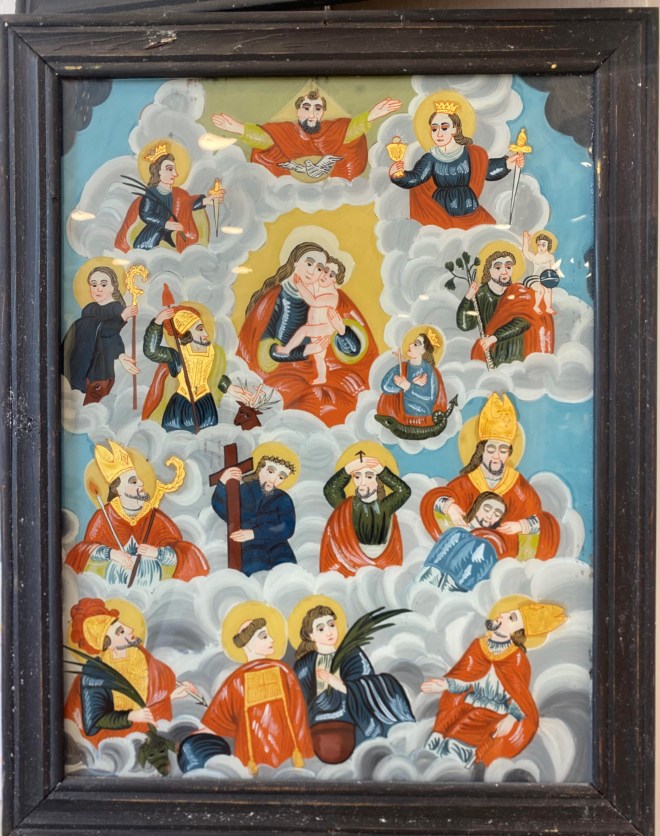

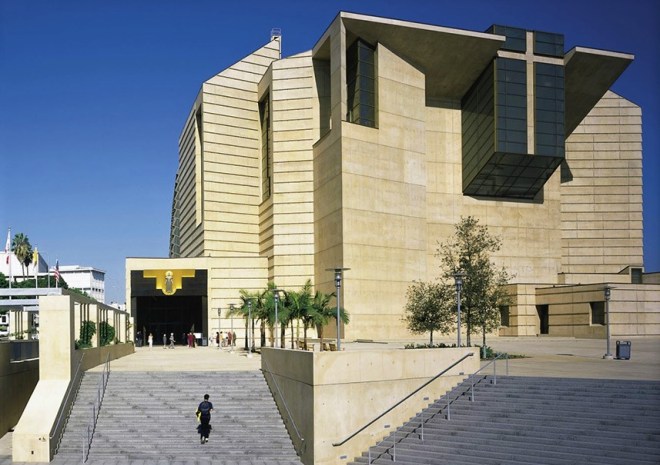
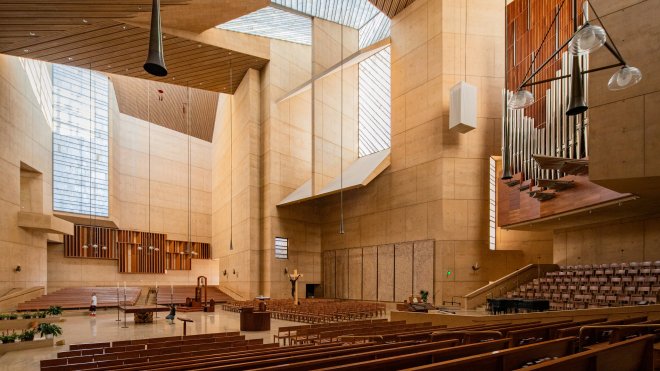
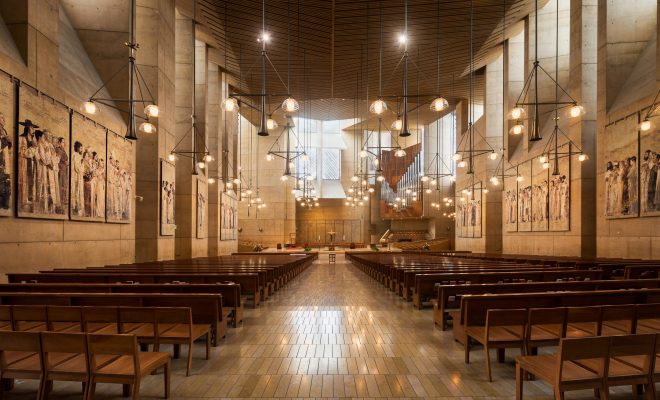
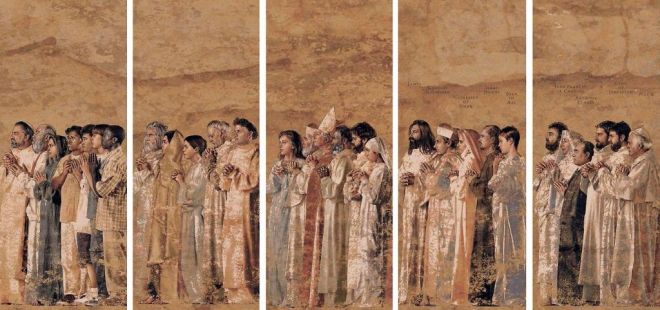
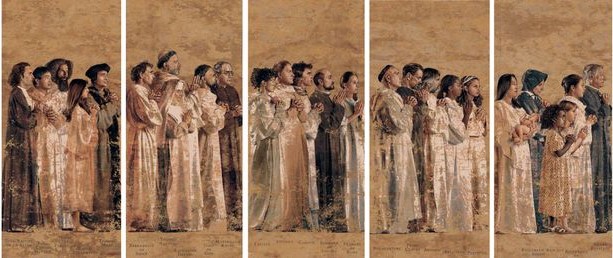


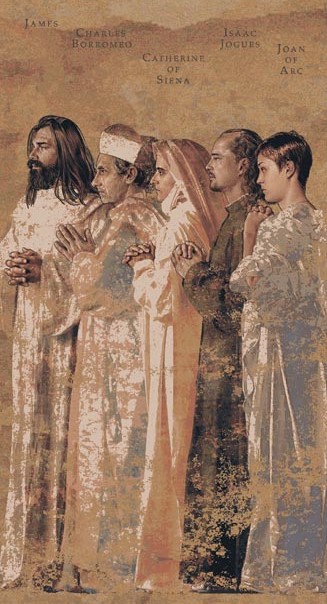


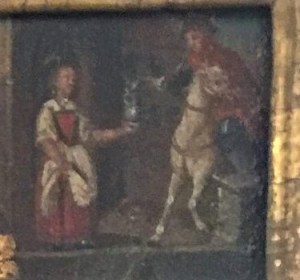
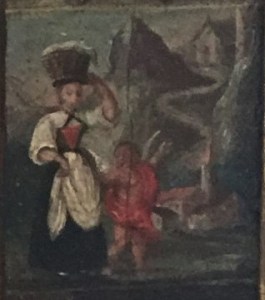
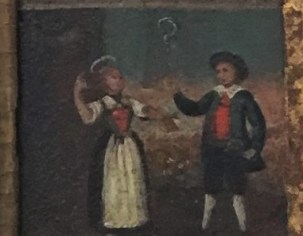
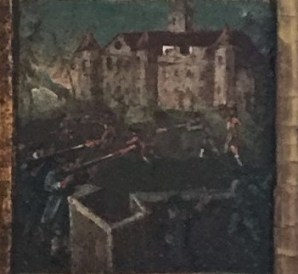

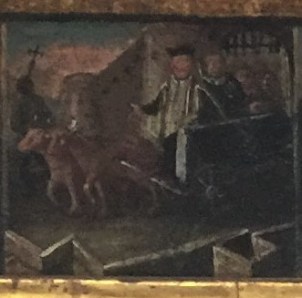
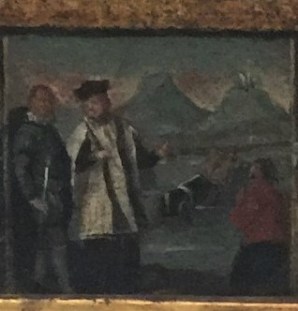

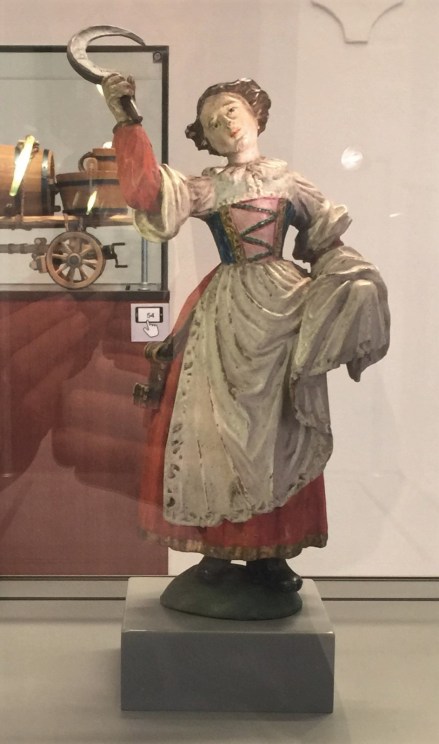
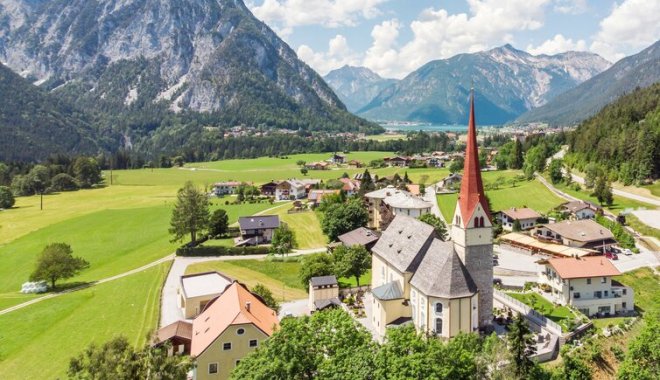

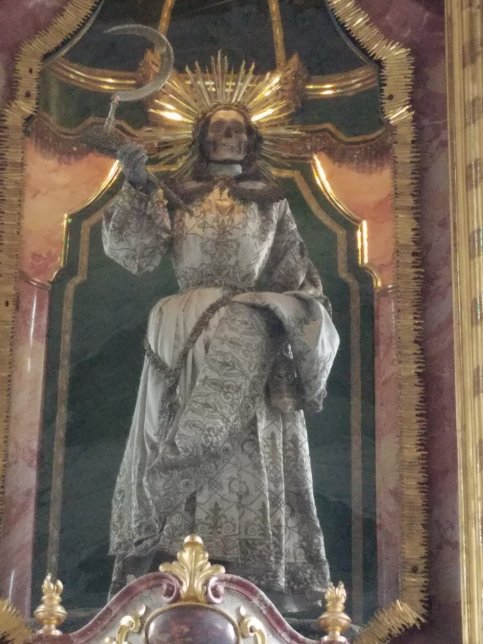


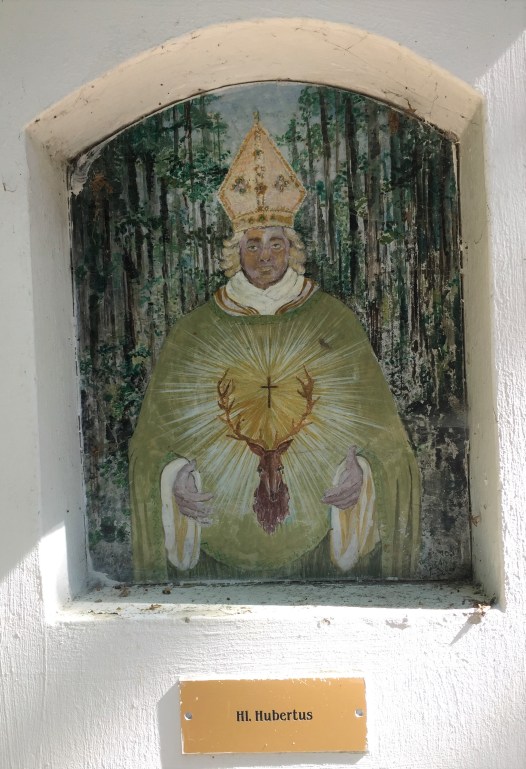

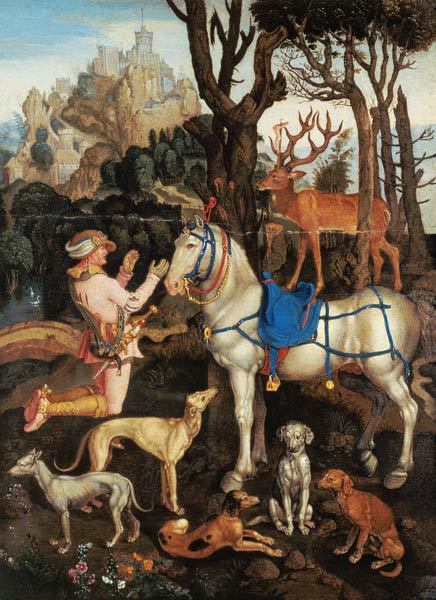
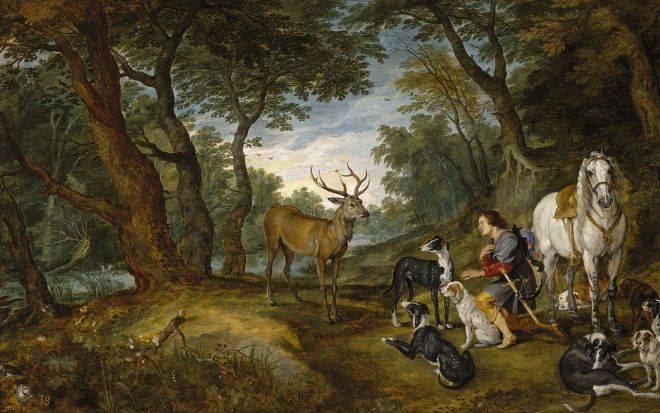


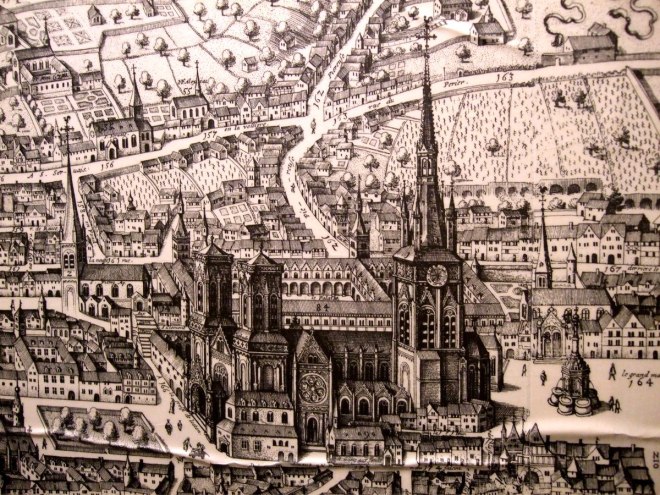
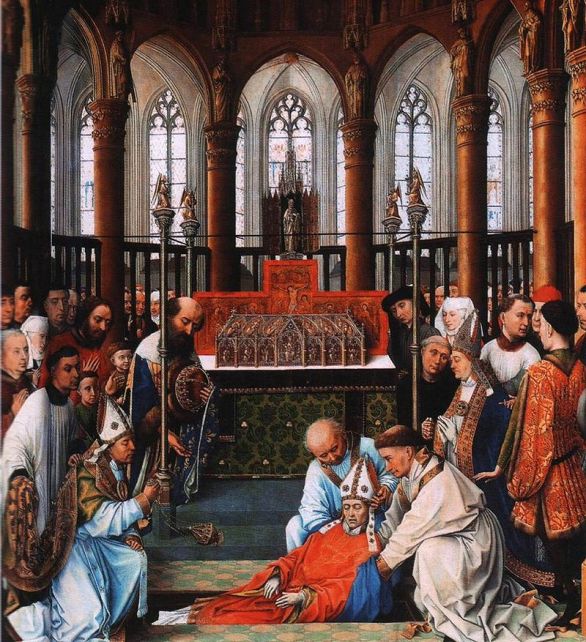
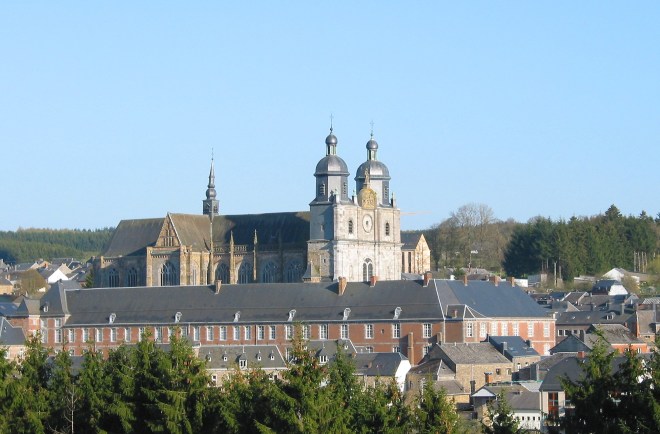






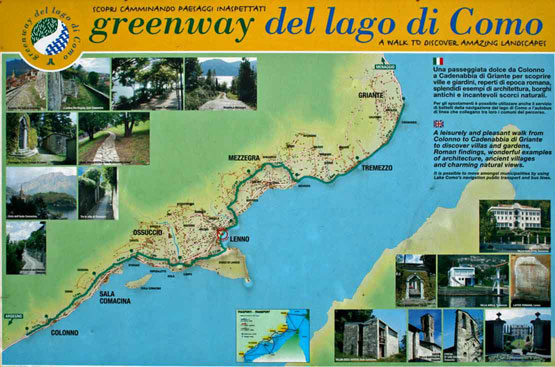
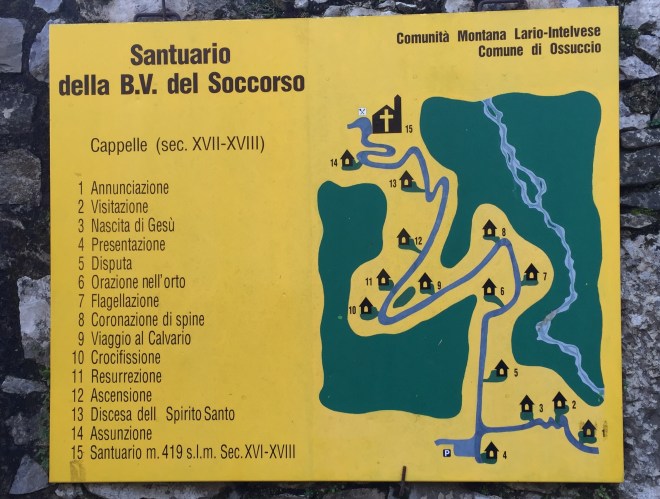

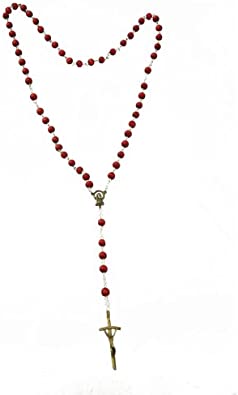
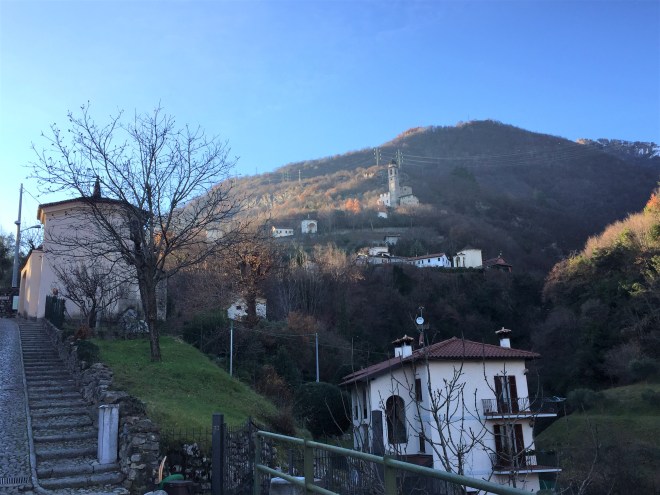
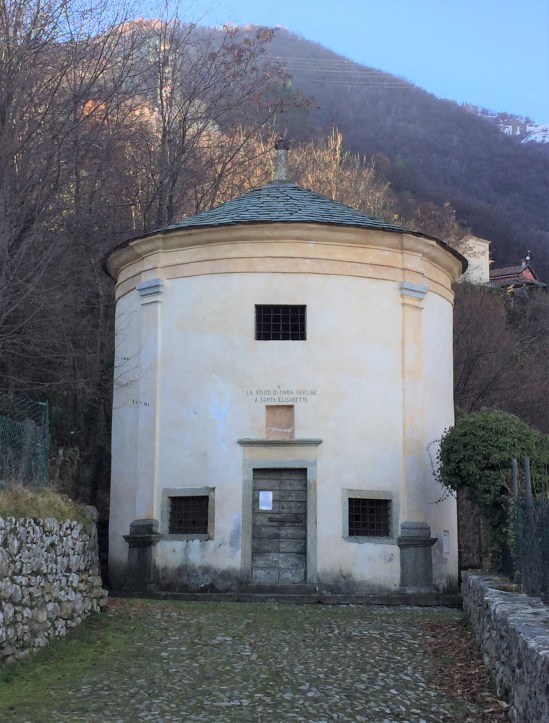

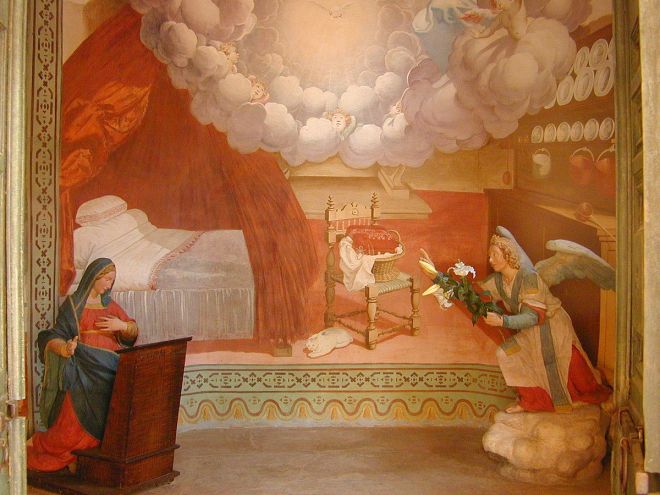

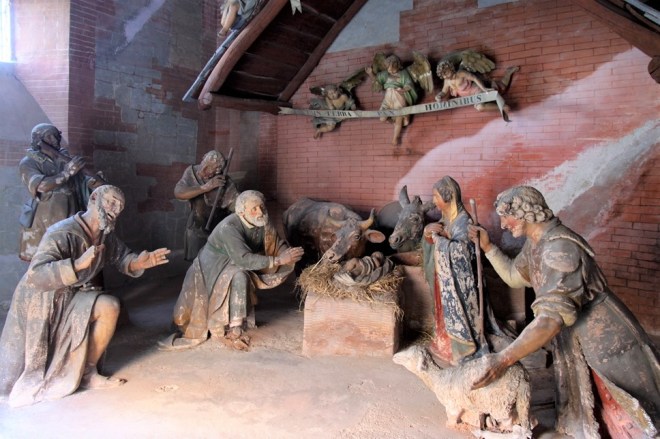

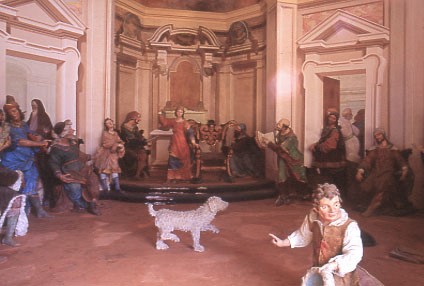
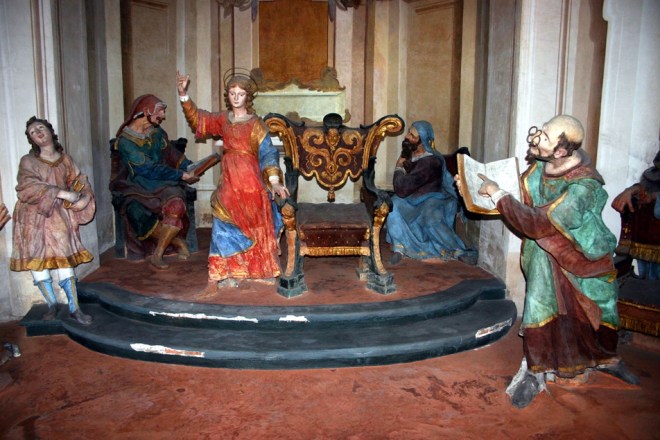
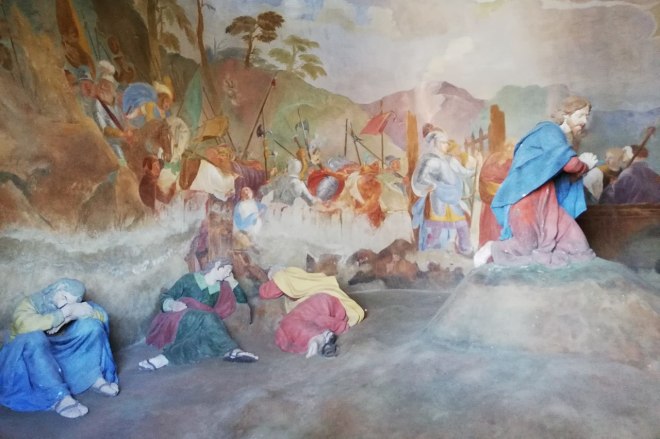
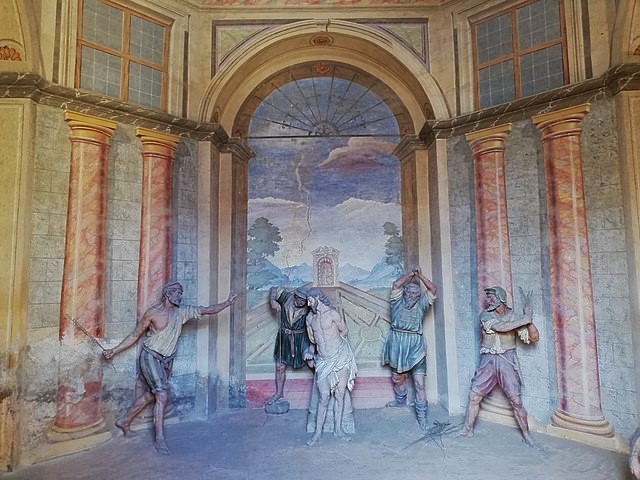
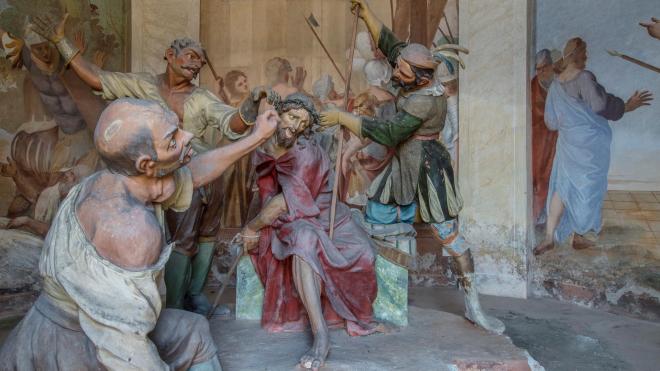

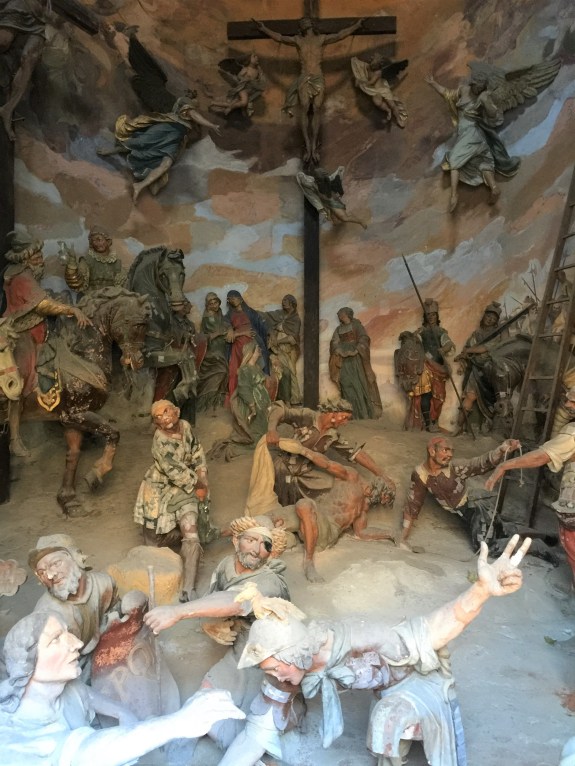
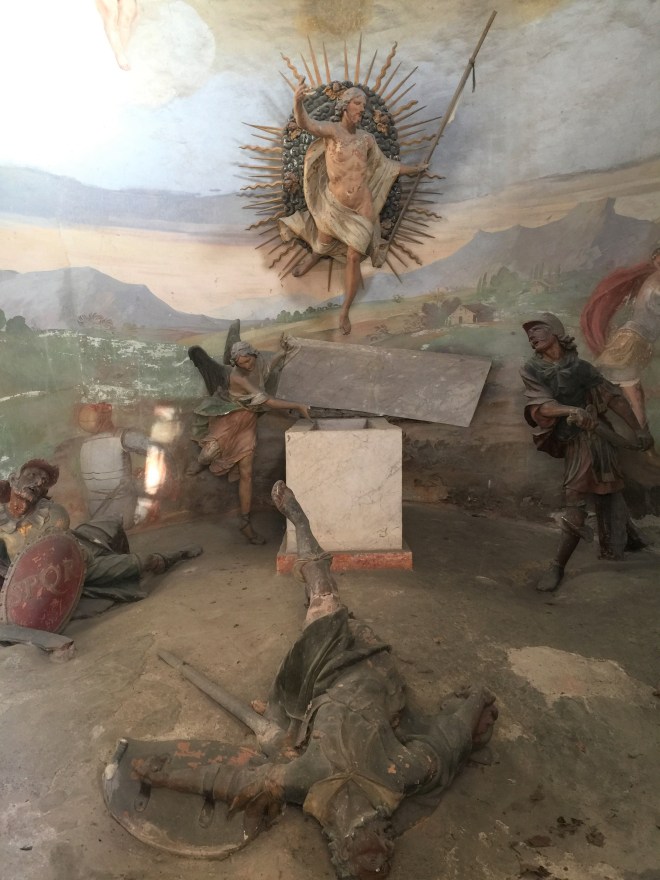
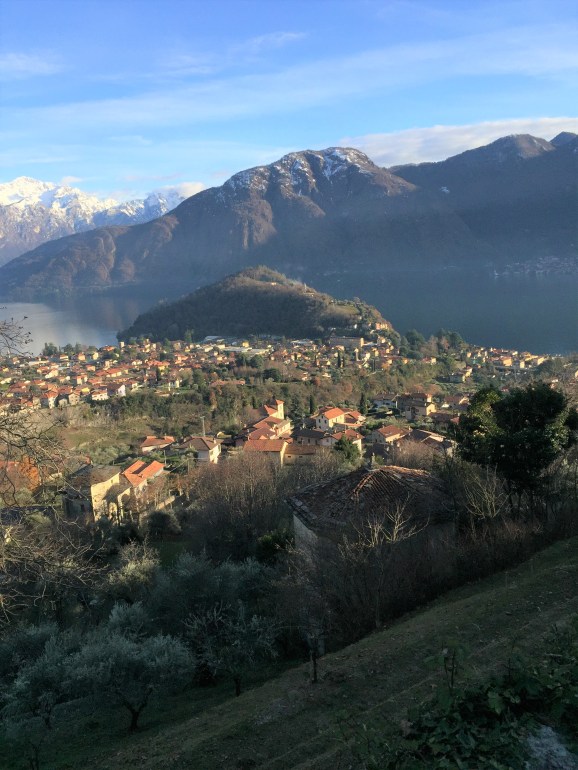

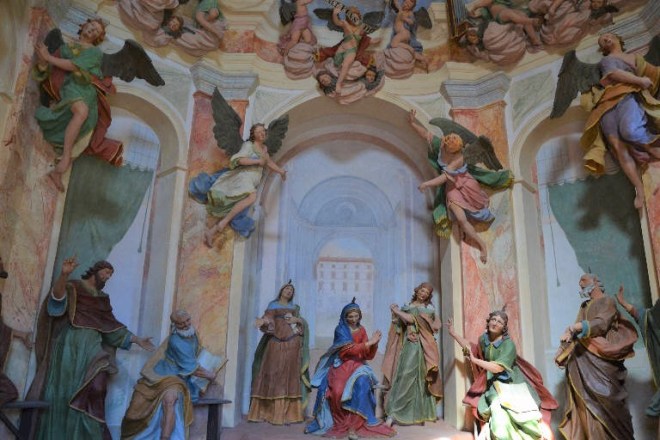
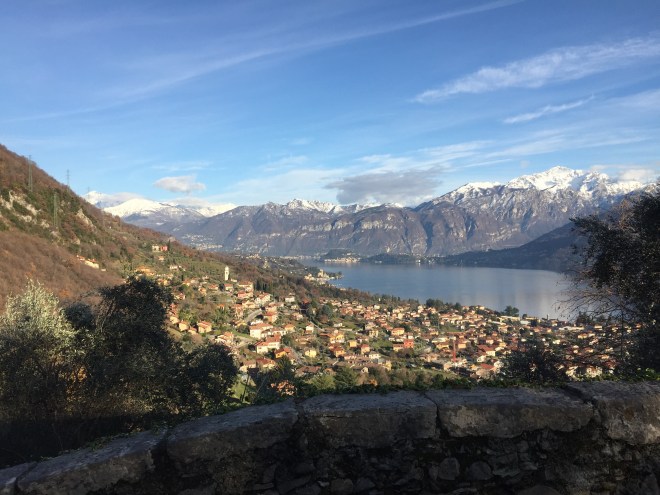
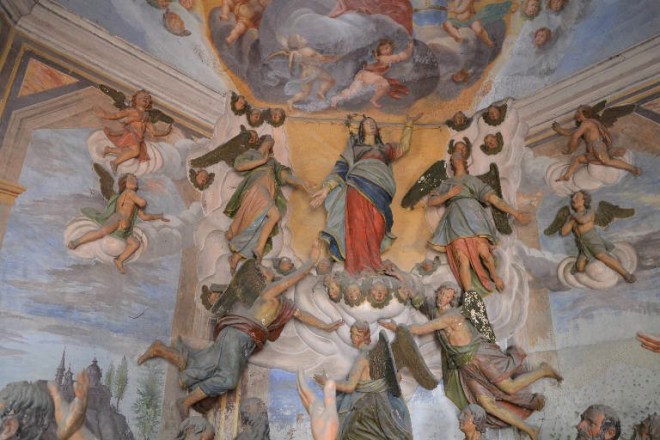
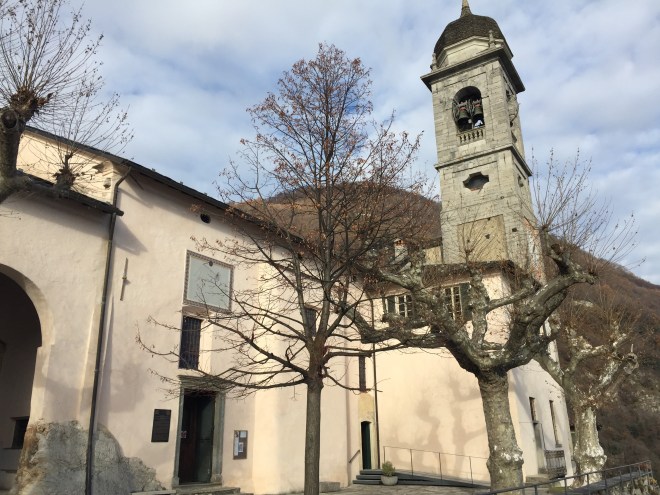
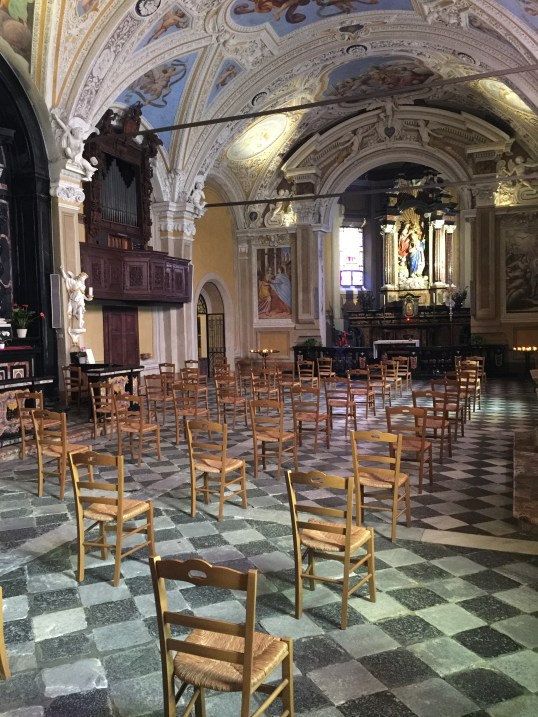
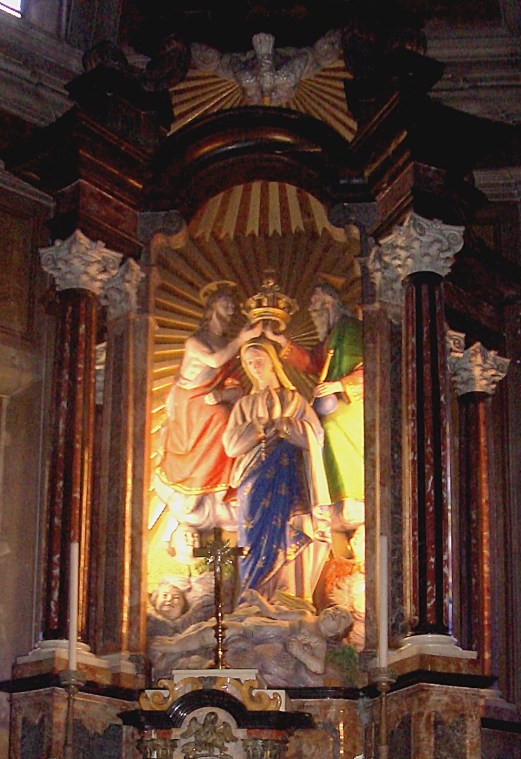
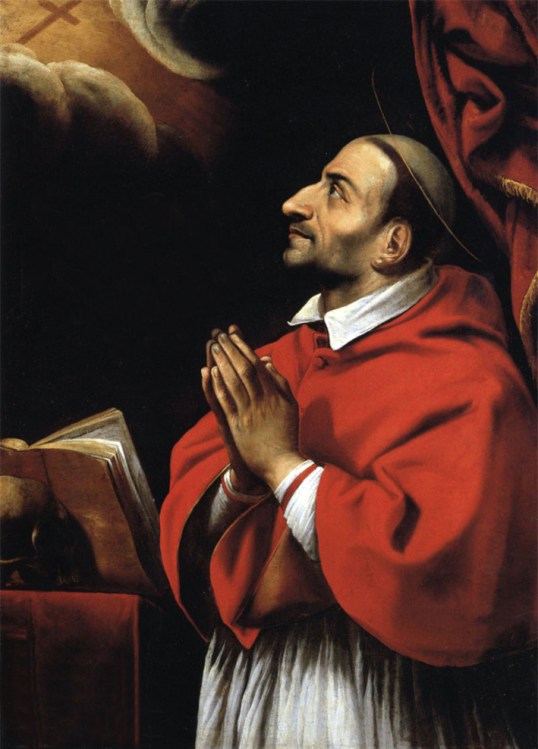
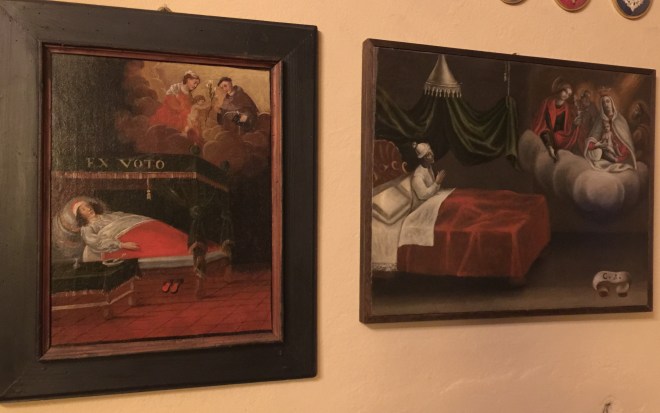
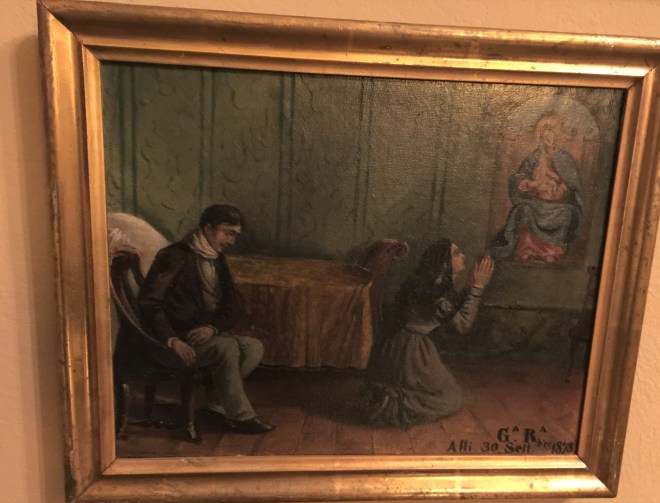
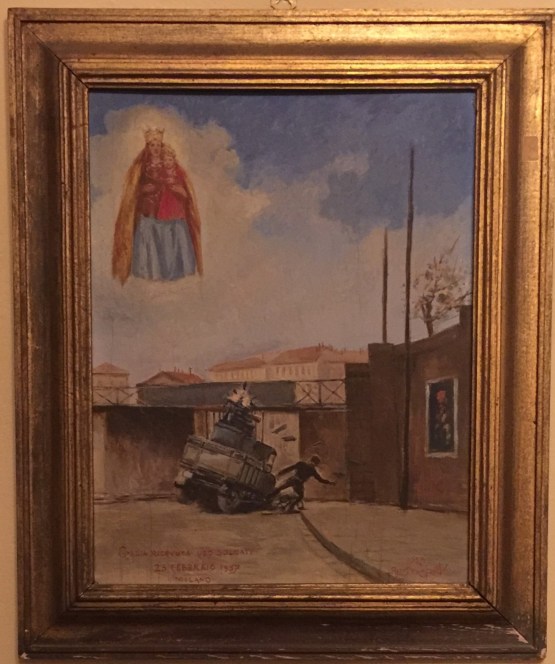
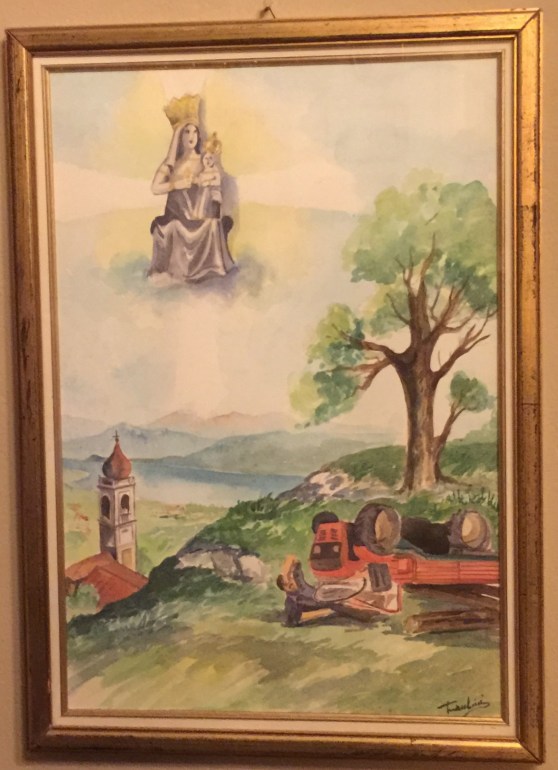
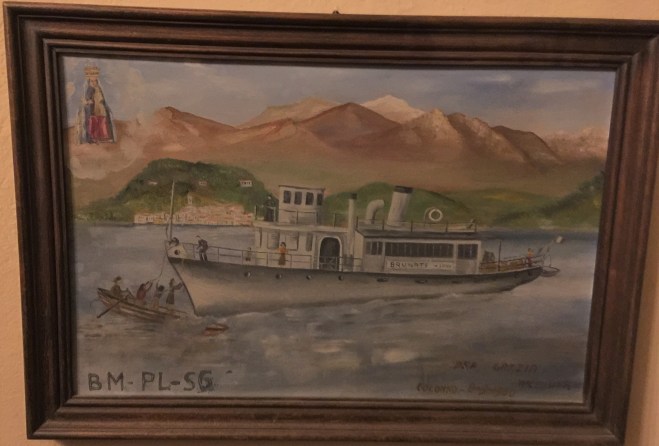
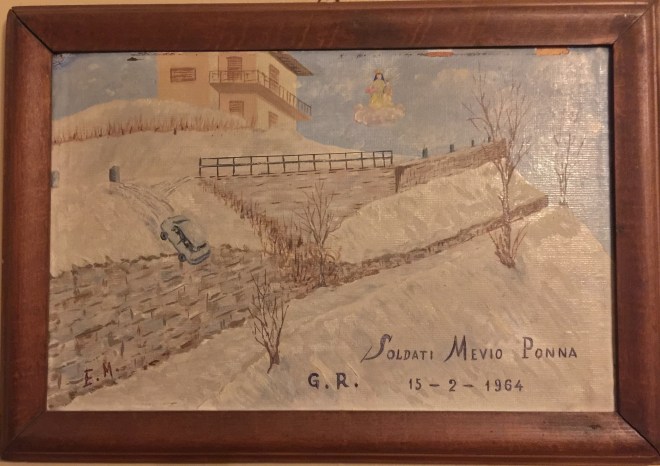
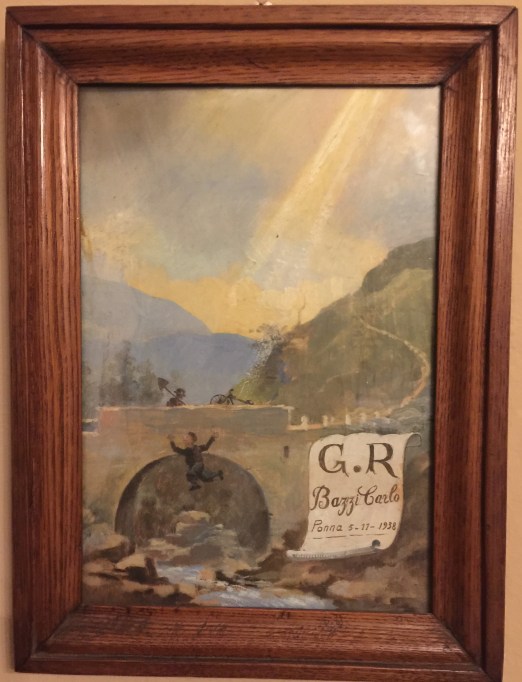
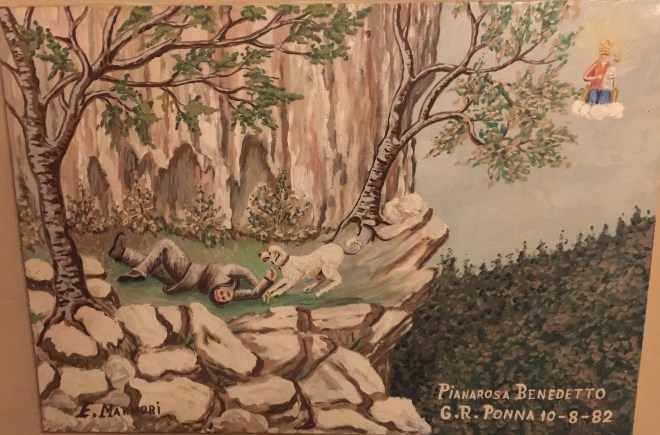







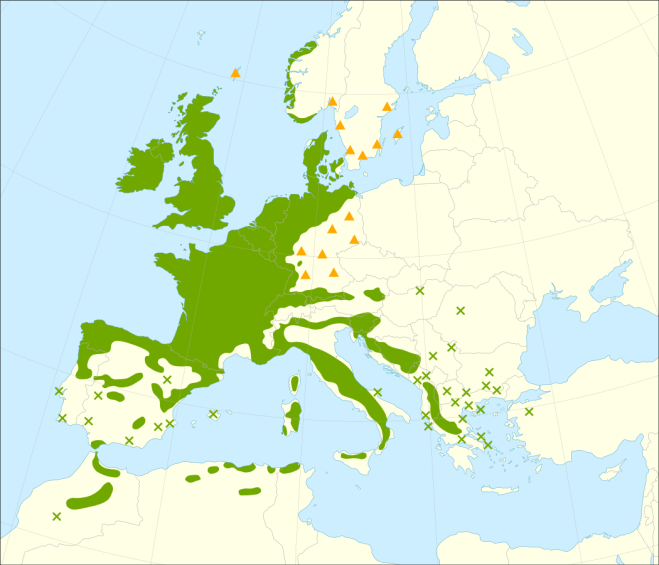








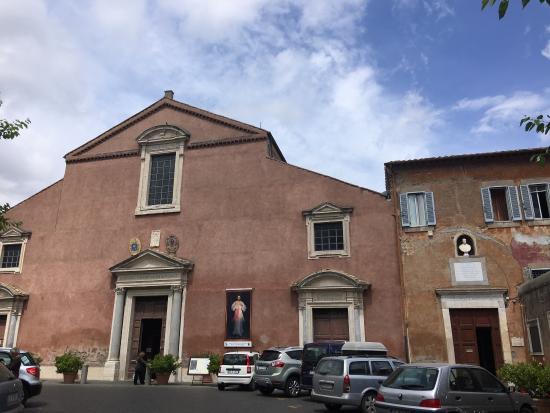

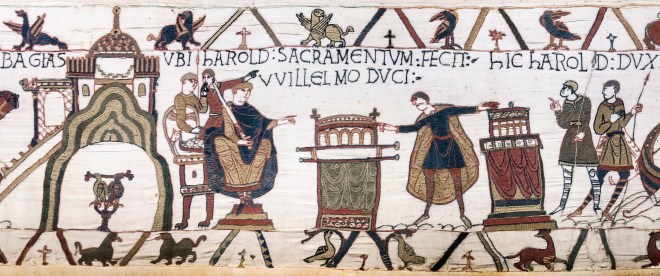
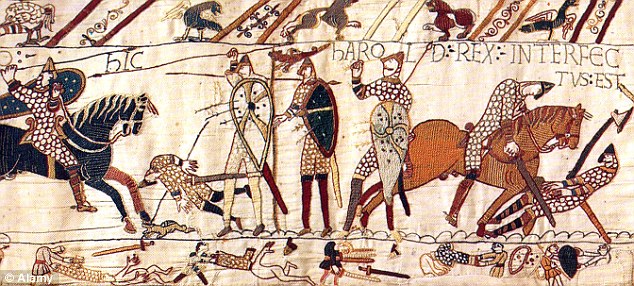









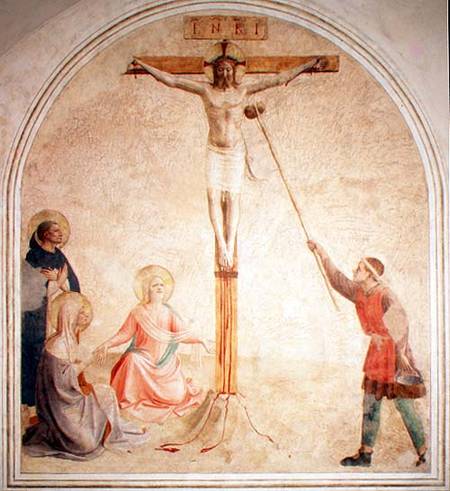


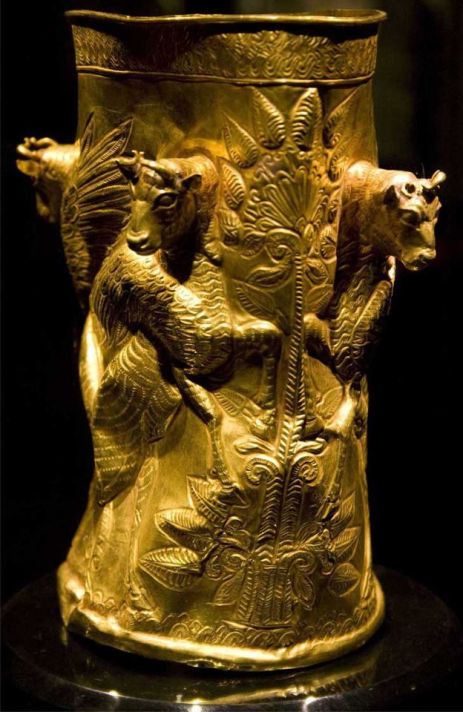






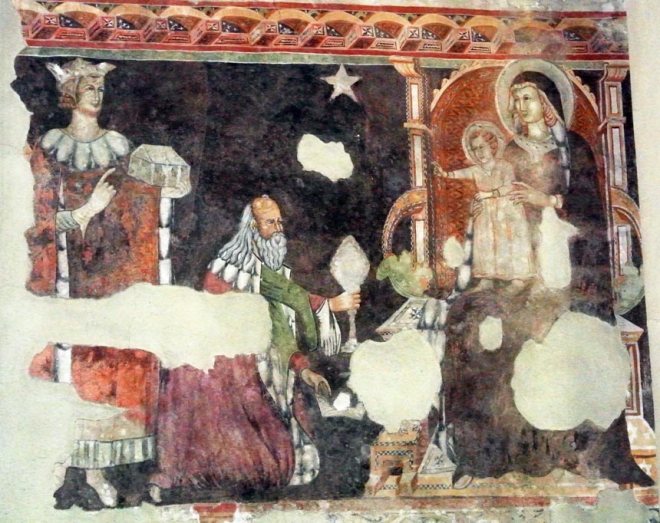


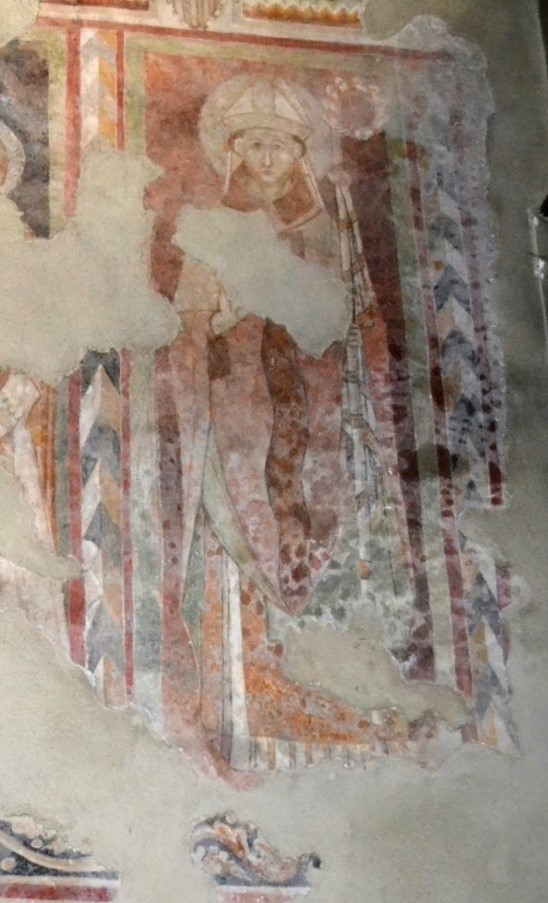

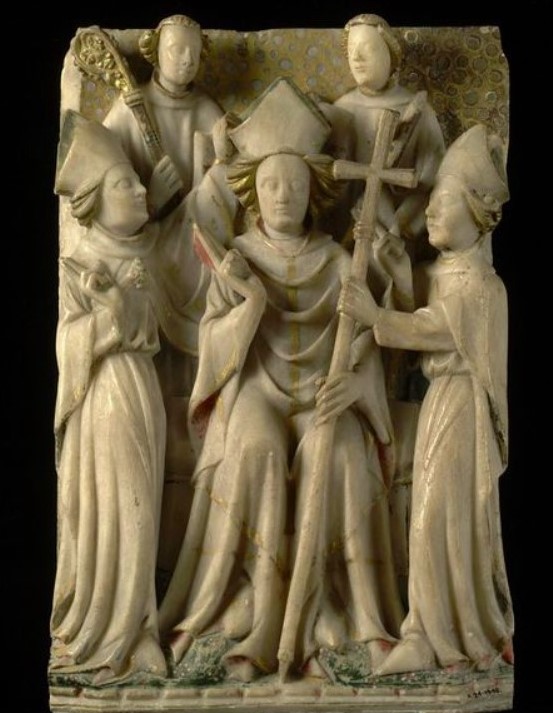

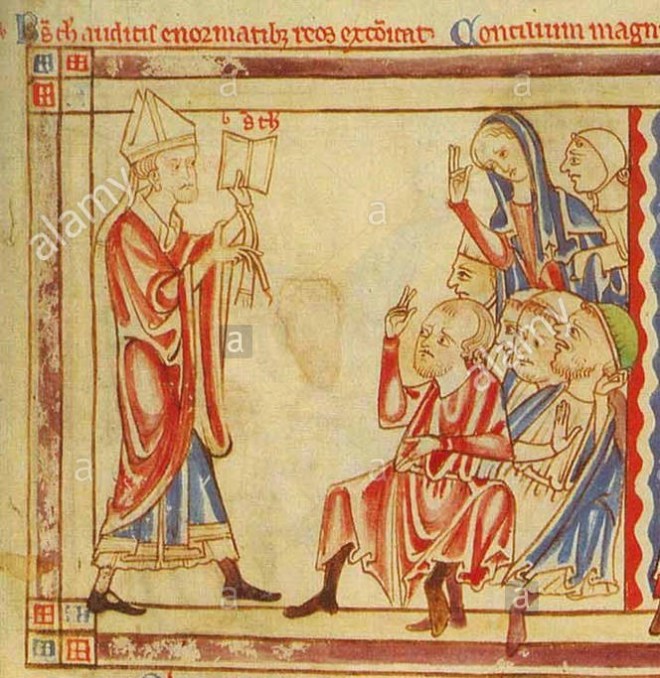
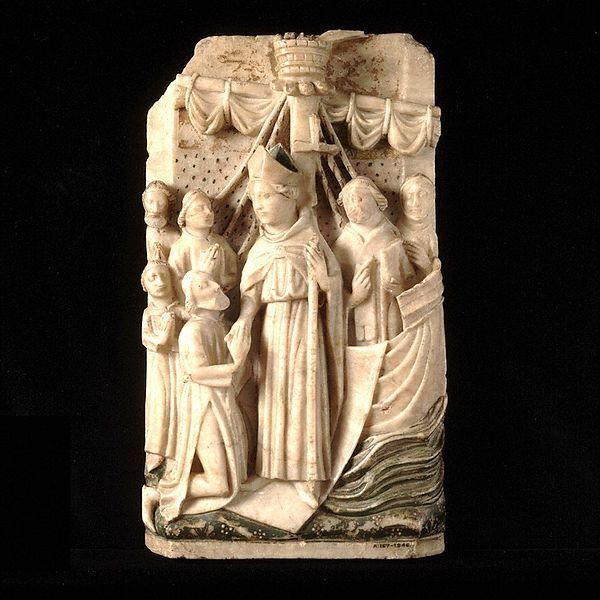
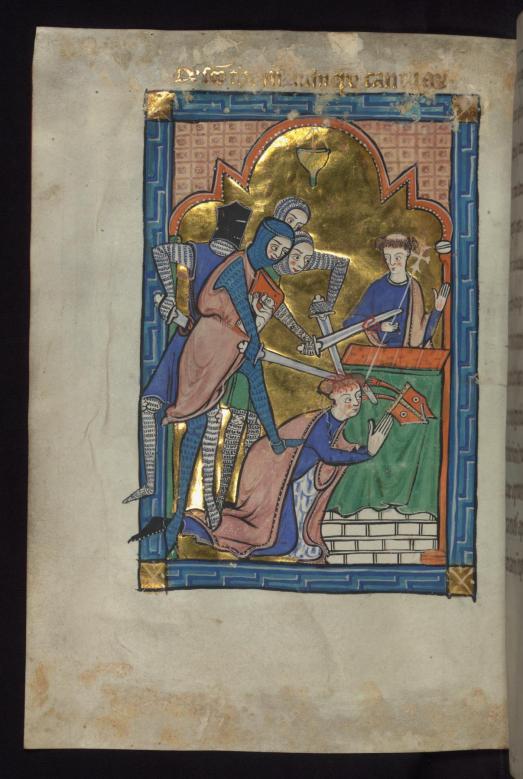
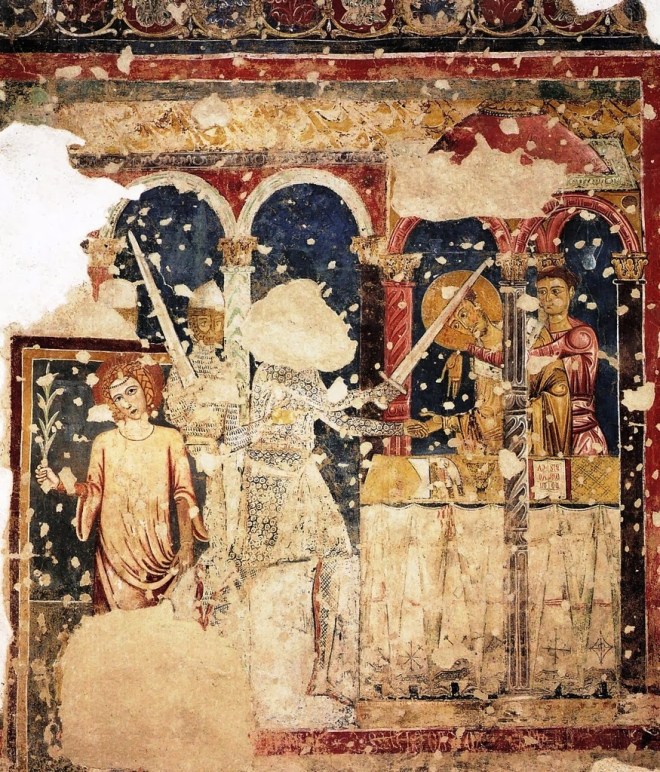
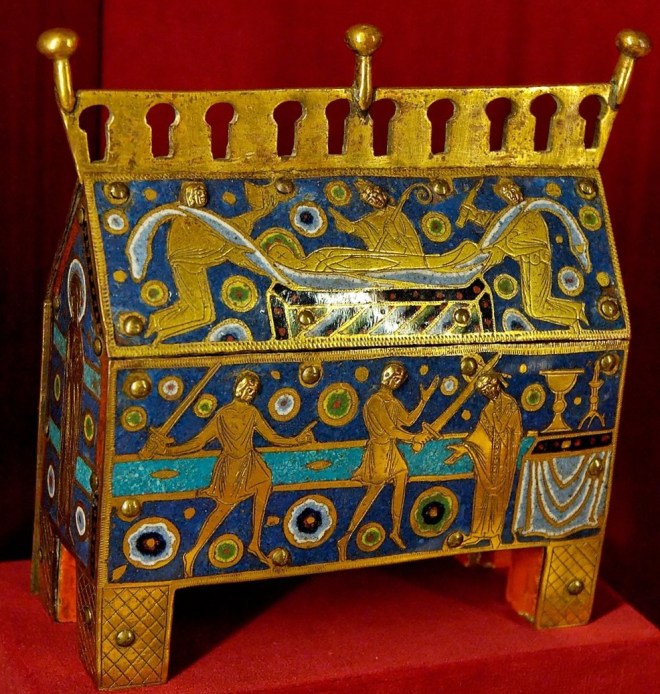


 the heart thrills


.JPG)

_03_Orazione_di_Ges%C3%B9_nell%27orto.jpg)
_06_Flagellazione.jpg)


