We’re out at last! First day post-lockdown in Italy. Like Basil Fotherington-Tomas, I was saying, “Hello clouds! Hello sky!” as I skipped (well, walked) along.
For those of my readers who are not familiar with this character, he appears in the book “Down with Skool!”, written in the 1950s, purportedly by one Nigel Molesworth, a boy in an English Prep school.
The delightful cartoons which pepper the book’s pages are by the great Ronald Searle.
Molesworth’s judgement of Fotherington-Tomas is severe: “you kno he say Hullo clouds hullo sky he is a girlie and love the scents and sounds of nature … he is uterly wet and a sissy” (Molesworth’s spelling is also quite erratic).
Well, I’m not utterly wet and a sissy (although I do admit to being a bit of a nerd), but my joy of finally being let out of my apartment is uncontainable.
Hello sky!
my photo
Hello birds! (even if they are filthy urban pigeons)
My photo
Hello tree!
My photo
Hello ancient church!
My photo
Hello canal of Milan!
my photo
Hello bridge over the canal! (even if you are a pretty ugly bridge)
my photo
It’s great to be out here and see you all again!
We now just have to hope that we don’t get too much of a spike back up in the numbers, otherwise they’ll send us once more into lockdown …
Nine days to go before – maybe – we’re let out onto the streets again …
Well, I’ve gone for another wander around the apartment, this time looking for pieces involving animals – that seems to me a suitable way to follow up the last two posts devoted to humans.
I should start by pointing out that neither my wife nor I are really animal people. My wife’s parents never had any pets when she grew up. My mother used to tell me that we had a dog in the house when I was very young, but I have no memory of it. My wife used to go riding as a child and liked it. I used to go and hated it. We never had pets when the children were growing up – apart from a goldfish which our daughter brought home triumphantly after a field trip somewhere and which very rapidly died. We still don’t have any pets. As a result, I think, we don’t really have that many pieces in the apartment that have to do with animals. But let me show readers what we have!
As usual, I start this wander in the living room, with a piece we bought – once again – in the Museum Art shop in Vienna (several pieces I mentioned in the last two posts were also bought in the shop; there was a time when I visited it very often).
my photo
Like all the pieces we bought in the Museum Art shop, it is a modern copy of a very old original, which in this case is in the Louvre Museum in Paris. My copy is made of resin, but the original is in terracotta covered with a red slip. It comes from the Iranian plateau and dates from the 12th Centry BC. The Louvre’s website has this to say about the piece: “their terracotta objects were highly original. Used for funerary libations, they were often in the shape of animals, the most remarkable being the hump-backed bulls with a “beak” for the ritual pouring of water”. I love it for the simplicity of its lines, while still portraying the power of the animal. Here’s a photo of the real thing, a magnificent Zebu bull.
It was once again bought at the Museum Art shop, by my son and wife, as a birthday present for me. It is also, once again, a copy. The original, a Chi Wara Bamana headdress made of wood, hails from Mali. It is held in the Musée des Arts Africains et Oceaniens in Paris. The blurb which the shop gave us states: “Originally fixed to a wicker cap, this sculpture is a headdress that is used in the agricultural rites of the Bambara, organized by a society of initiates called Chi Wara, “champion of cultivation”. This figure is a combination of three animals that inhabit the bush: the antelope, the pangolin, and the anteater.” Here is a photo of one of them in use.
My wife and I bought the next piece during a trip we made (with my mother-in-law) to Mexico in the early 1980s.
my photo
I definitely don’t like cats (I tolerate dogs), but I’ve always been fond of this ceramic stand-in. We’ve had him quietly sit on a shelf wherever we’ve been.
We bought this next piece at the UN in New York, back in the mid to late 1980s.
my photo
At the time, there was a shop in the building well stocked with “ethnic art”. It’s a delightful piece, from Peru if I remember correctly. Formally it is a candlestick, and we have used it for that purpose a couple of times. But really it’s just a wonderful piece of art, with a cheerful bird as its crowning figure (which is of course the reason why I include it here).
We move on to the kitchen, where we have several animal-themed knick-knacks on our shelves. My favourite is this one.
my photo
It is a ram with extremely long fleece standing on a pile of rocks. My wife and my mother-in-law bought it when they went for a holiday to Scotland in the mid to later 1970s. It stayed with my mother-in-law and we inherited it when the good woman died. It is signed “P. Nelson” on the bottom, but who he or she is I have no idea.
My mother-in-law bought the next two pieces.
My photo
For obvious reasons, we have the two rabbits sitting on the same shelf. Interestingly, they both serve the same function, as a receptacle. The rabbit to the right is ceramic, but I’m not sure what the rabbit to the left is made of. Could it be zinc? My wife thinks it’s silver; if it is, it must be alloyed with something else. Rabbits are animals I’m quite fond of. My French grandmother had a number of them in a hutch, and I would go and stroke them. I was shattered when one of their babies died of myxomatosis. I remember still my wails when the poor thing was taken out and buried. Of course, my grandmother didn’t keep rabbits because she was fond of them, she kept them to eat. And I have to say that rabbit is very yummy.
These next two cups were a gift – along with two other cups – from a friend of my wife’s. There was one cup for each member of our family. The two seen in the photo are the cups of our children.
my photo
They were made by the Hadley Pottery Company, which is based in Louisville, Kentucky. My wife’s friend chose the duck for our son and the lamb for our daughter (their names are on the other side of the cups, that’s how I know). I let readers guess what might have been the reasoning behind the choice, although I suspect that it might be something as prosaic as the lack of any other suitable animals to choose from. The cups are too precious a memory for us to use them now. In fact, one them (mine!) fell to the floor one day and broke. I glued it back together again, but there are pieces missing.
Gluing things back brings me to the last piece (sharp-eyed readers will notice that the beak has been glued back on).
my photo
It is a loon, a common bird on the lakes of North America, and one with a wonderfully haunting cry. I remember it vividly from my little canoe trip on Lake of the Woods (which I wrote about in an earlier post). It was made by an Inuit artist, although which one I don’t know. Because of this Arctic connection, I insert here a photo of an Arctic loon.
I bought it as a Christmas present for my soon-to-be-wife in the same shop, the Snow Goose, where some six months later we bought the much larger Inuit piece which kicked off my post on the human face. In fact, it was because I had bought this piece there that we went back to that shop. Fate then led my wife to the Face Spirit.
Well, that completes that tour. I let my readers guess what the subject of my next post will be.
Some seven years ago (Goodness me, in my mind’s eye it doesn’t seem that long ago), I wrote a post about a visit which my wife and I made to New York’s Metropolitan Museum. The post was made up of a collection of photos which I took of human faces, from all periods and all regions of the world, looking out at us from the art spread out before us, as we criss-crossed the museum going from one exhibition to another.
Now, in this period of lockdown, I have done the same thing, wandering from room to room in the apartment and taking photos of pieces which my wife and I – and my mother-in-law before us – have collected of the human face.
I start my wanderings in the living room, with this piece from Canada.
my photo
I went there with my wife (who was then still my girlfriend) during the summer of 1977. It was she who spotted the piece in a shop close to the National Art Gallery in Ottawa which sold Inuit art, called the Snow Goose. The blurb we were given at the time of purchase gave its title as Face Spirit and stated that it was handmade by an Inuit artist called Sharky who lived in Cape Dorset in Canada’s far north. When we brought it back, my mother-in-law fell in love with it. Since we were both going on to graduate school that Autumn and therefore by definition would be “of no fixed abode”, living in cheap, rented accommodation, we were happy to give it to her on a long-term loan. We took back possession of it some 15 years later when our life was finally on a more even keel. Some 15 years after that, when I was in Montreal for a conference, I spotted a gallery which sold Inuit pieces and visited it. The pieces were all quite modern. When I said that I had bought a piece of Inuit art back in 1977, the lady exclaimed, “Oh, you have an antique!” Readers can imagine how that made me feel about myself.
My wife bought this next piece for me as a birthday present in Vienna in the Noughties.
My photo
There was at the time a shop behind the Kunsthistorisches Museum which sold copies of pieces from various world-famous museums (sadly, the shop has stopped offering such pieces). One of these was the Metropolitan Museum of Art, where the original of this piece is located. In fact, as I report in the post I mentioned earlier, I came nose to nose with the original during our 2013 visit to the Met, which gave me a bit of a shock. The blurb from the museum’s website has this to say about the original: “This magnificent head portrays a king of the late third millennium BC. Its heavy-lidded eyes, prominent but unexaggerated nose, full lips, and enlarged ears all suggest a portrait of an actual person. While the date and place of manufacture of this piece have been much debated, its close similarity to the magnificent bronze head found at Nineveh make a late third millennium date most likely.”
This next piece is also a copy, but this time of a piece in the Musée Guimet in Paris.
My photo
I bought the piece online (probably the first thing I ever bought online, come to think of it). It is the head of Jayavarman VII, who was a king in the Khmer Empire. He reigned at the end of the 12th/beginning of the 13th Centuries. He is probably best known for the Bayon temple at Angkor Wat, where this same face is repeated over an over, and on a much large scale, all across the temple.
In fact, I bought this piece after my wife and I had visited Angkor Wat, also during the Noughties. I had found this slightly smiling face totally fascinating.
After Asia we go to Africa. This group of pieces were give as presents to my mother-in-law by an old boyfriend of my wife’s.
my photo
They are of wood, but of a wood so dense that they seem to be made of iron. Appropriately enough, they are probably made from a type of ironwood, although which type I have no idea. One day, I’ll try putting them in a basin of water to see if they sink: true ironwoods are denser than water.
This next piece is also from Africa, but is in a completely different, quasi abstract, style.
my photo
The unknown artist who made it wound copper wire around a wooden core and used copper parts to make the eyes and nose. It is a really striking piece. I bought it in Ghana in the dying years of the 20th Century during a business trip there.
The next piece brings us back to Europe, although it actually refers to the wars between Europeans and “Africans”.
my photo
They were bought by my mother-in-law. They are modern copies of the heads of “Saracens” (i.e., peoples from North Africa) which were used in the Sicilian puppet shows of the 19th Century.
These shows retold the stories of the wars between European knights and their Saracen adversaries (guess who always won), and were roughly based on Medieval classics such as the Chanson de Roland, Gersualemme liberata and Orlando furioso. To the heads of the puppets, normally elaborately carved, would be attached clothes and a reticulated set of arms and legs.
My mother-in-law also bought the next piece. My wife thinks she bought it in Sardinia in the second half of the 1970s.
my photo
It’s a very small piece, only some 10 cm high, and very dark, so it’s quite easy to miss on our cluttered shelves. It represents a woman whose face is hidden in the deep folds of a very big shawl she has wrapped around her head. I find the mystery which emanates from it quite tantalizing. Who was she? Why was she so anxious to hide her face?
You couldn’t miss this next piece, even if you tried.
my photo
I bought it for my wife a few years ago, as a present for her first birthday in our retirement. The artist, Caterina Zacchetti, entitled it “Vento tra i Capelli”, Wind in her Hair.
Which sort of brings us to the world of ceramics (the last piece being terracotta). My wife and I bought this next piece in Vienna.
my photo
The shop we bought it at is Harro Berger Keramik, located in the old town, which specializes in bright and cheerful ceramic objects.
I have always lusted after these stoves. Once, when we were apartment hunting in Vienna, we were shown one which had just such a stove in the corner of the living room. I was sorely tempted to take the apartment just for the stove, but good sense prevailed – it was too small for us.
My wife made this next piece during the one and only ceramics class we have ever taken together, in Vienna.
my photo
She made some excellent pieces during that course, which are now scattered here and there. From an inscription on the bottom of this piece I rather think that my wife made it for our daughter. As our mother-in-law did for us, I think we can keep it on a long-term loan and our daughter can take it back when we finally shuffle off this mortal coil.
Talking of my mother-in-law, it was she who bought the next two pieces, in New York as I recall, when she was visiting us there once.
my photo
They are wonderful cups, so precious that we never use them for their intended purpose. I’ve no idea who their maker was. There is a mark on the bottom, OCI (I think), and a date, 1984. My memory tells me that there were originally three cups. If there were, one has disappeared along the road of life.
My mother-in-law also bought the next three pieces, which – at least formally – were all made for the same purpose, to hold liquids.
my photo
The piece on the far right is a typical Toby jug, from the Royal Doulton porcelain works. My mother-in-law picked it up during a trip she made to the UK with my wife in the mid-1970s. The other two pieces are Italian. We’ve seen very similar jugs to the one in the middle being sold at the Dorotheum auction house in Vienna, so it must be a popular design. It is Sicilian, if my memory serves me right. I have no information on the piece to the far left.
Sometimes, a face is used to hide your face. I mean, of course, masks. We have a few of those. My wife and picked up this typical set of Venetian masks on one of our trips to Venice – there was a time in our lives when we went there quite frequently.
my photo
The top-left mask, the baùtta, was a mask frequently worn, by both men and women of the Venetian aristocracy, as this painting by the Venetian painter Pietro Longhi attests.
The other three masks are from characters in Venice’s commedia dell’arte. From top right clockwise, we have the Plague Doctor, Brighella, and Arlecchino. Here, we have a line-up of the many characters that populated commedia dell’arte.
My wife bought it at the Dorotheum. The brief blurb that accompanied the piece states: “Helmet mask, Tribe: Ibo, Nigeria. Wood, polychrome, hints of facial features, towering, tapering top, jagged ornaments, dark crusty patina, original repairs, 2nd half of the 20th century”. Quite what ceremony this mask would have been worn in I don’t know. Perhaps one day, if and when I buy a thick tome on African masks, I will find out.
I finish where I started, in Canada. We bought this mask on that same trip of 1977.
my photo
It is a modern copy of a corn husk face, which would have been used in the Mohawk Tribe’s Gajesa Society rituals as the mask of a medicine man. It was made by Ga’haur (I’m not sure I got the spelling right, the original label has faded during the intervening decades), a woman from the Mohawks’ Turtle clan.
Well, that’s taken me around the whole apartment as I’ve scoured it for examples of the human face. By my reckoning, we have only two and a half weeks to go before they let us out (if they let us out), time enough to wander a few more times around the apartment and report back on some of the other things we’ve collected here.
I cannot believe it! We’ve been condemned to another three weeks of lockdown!! We are now scheduled to creep out of this apartment – pale from lack of sun, low on muscle mass, masked, jittery around other people – on 3 May. What a misery … I feel that I have been robbed of my Spring this year.
The worst of it is that I have written so little on this blog. I have been cut off from the outside world, which has nearly always been the source of my inspiration. (It’s true that I’ve also been sick; we’ve been debating ever since what I got: Covid-19 or just an ordinary flu? I was very asymptomatic – no fever, no cough – so I plump for the latter, but we will have to wait for a confirmatory test some time in the future when there are enough tests to go around). For the last three weeks, we have been forced to turn inwards, wandering from room to room in the apartment. This photo, which was emailed to me by an old colleague and is no doubt doing the rounds on social media, captures the feeling well. Well, I’ve finally decided to make the best of a bad job. If I can’t go outside, I shall look for inspiration for this blog in our apartment, and more specifically in all the knick-knacks which my wife and I have collected over our years together, as well as those which we inherited from my mother-in-law, a great collector of knick-knacks. I will start with our little collection of … egg cups.
I start with this trio of egg cups.
my photo
These were bought by my mother-in-law, who had a great eye for the picturesque knick-knack. I find them really cute, especially the middle one, with its blue and white striped socks. It’s my favourite egg cup for my boiled egg at breakfast. We didn’t really know much about them until that time we went to visit my friend Mark in the UK (who tragically died a few weeks ago). His wife Helen, who in retirement had gone into the antiques trade, had one exactly like them. She told us that they were collector’s items. I have since learned that they were made by Carlton Ware, a pottery manufacturer based in that bastion of English pottery, Stoke-on-Trent. The company was established in 1890, went into receivership in 1989, and was resurrected in 1997. My mother-in-law can’t possibly have bought them here in Italy. We have concluded that she must have come across them during a trip she did to the UK in the early 1980s with a busload of friends. They must have caught her eagle eye in some shop they visited.
My next trio of egg cups completes our egg-cup collection – as I said, a small collection.
my photo
My mother-in-law picked up the two bald-headed newspaper readers. Where she picked them up we have no idea. The pieces carry no identification marks, so its designer and manufacturer must remain in the shadows (unless a kind reader could help identify them?). I love them, but I musty admit they are not very practical. As anyone who eats boiled eggs knows, you really need 360 degrees access to the top of the egg to be able to eat the insides of the egg with ease. The newspaper rather blocks that access. So I do use them for my boiled egg at breakfast, but only from time to time.
The middle piece is my one and only addition to my mother-in-law’s egg-cup collection, and I must confess that I bought it more out of a sense of desperation than anything else. I had promised myself a number of years earlier that I would add to my mother-in-law’s collection, but I had failed to come across any picturesque egg cups. This one sort-of fitted the bill. It’s a little too obvious in its picturesqueness, and its actual depiction of a face rather spoils the idea of using the egg to complete a human figure with a faceless head. But it was the only egg cup I had come across after years of looking around that came anywhere close to the central theme of my mother-in-law’s collection. As a result, I hardly ever use it.
There is one piece that waits to be added to the collection. Last year, during our annual visit to our daughter in LA, I had accompanied her to the ceramics classes she was taking at the time. I used the occasion to make myself an egg cup, basing myself on the design idea behind my mother-in-law’s collection (the egg is the faceless head of a human body). We had already left when the piece was finally fired, but the idea was that when we went to visit our daughter this year, I would pick it up and bring it back. But this damned Covid-19 virus put a spoke in the wheels of that plan! Our flights were cancelled and we had to give up the whole trip. Hopefully, I can pick it up next year when we go and visit her.
If any of my readers know of any picturesque egg cups which would fit into my mother-in-law’s collection, I would be glad to hear about them. When we finally get out of this bloody apartment, I might be able to track them down.
A few days ago, my wife entered a greengrocer’s to get some fruit and came out with fruit but also with a gleam in her eye. “I have bought some Jerusalem artichokes”, she announced, and I was delighted to hear it.
It was a University flatmate who many, many (many …) years ago introduced us to this tuber. One evening, it must have been about this time of the year, he appeared in the kitchen with these strange-looking things.
As we looked at them curiously, he asked us if we had ever tried them. When we confessed that we had not, he promised us a plateful. He was as good as his word. I cannot remember now how he cooked them – more on this later – but it allowed us to appreciate that delicate artichoke taste which is the hallmark of this tuber.
Its name in English recognizes this gustatory affinity to the artichoke. And it is that artichoke taste which drew me to this lumpy, knobbly little tuber; as I have written in a previous post, I am very partial to artichokes.
Not that we’ve eaten Jerusalem artichokes all that often since that first tasting 40-plus years ago. It is one of the few foodstuffs that is still only found seasonally – it’s available from late Autumn to late Winter, and very difficult to keep once out of the earth – so unless you maintain a sharp lookout, you’re liable to miss it. Because of that, and because, frankly, of a bad press – it has a reputation of being something you feed to animals and only eat if you’re literally starving – it’s not grown in large quantities and supermarkets rarely stock it. Once, I bought a whole load of ginger because I thought they were Jerusalem artichokes. They really do look quite similar, as I think this photo shows; the resemblance between the two has often been noted.
I cannot remember where it was that I bought this ginger, but it must have been somewhere where I couldn’t read the labels – Thailand, maybe? I also cannot remember what we did with all the ginger: probably, after a few half-hearted attempts to drink tea with a lot of ginger in it, we threw it away.
I must confess to also rather liking the name, which I find satisfyingly quirky. I initially thought that the “Jerusalem” part of the name indicated a Levantine origin for the tuber; maybe, I romantically mused, it was a foodstuff brought to Europe by returning Crusaders. But no, I discovered, North America is its place of origin. It is actually the tuber to a rather lovely flower, the Helianthus tuberosus.
It is part of the Great Columbian Exchange, that massive intercontinental move of plants and animals (and diseases … and people) which took place after we Europeans discovered the Americas: plants and animals mostly travelling from the Americas to Europe and the rest of the world, and vice versa for diseases and people. I’ve written an earlier post about a minor representative of this exchange, the prickly pear. The Jerusalem artichoke is another minor representative. It is the relative of a much more important representative, also an emigrant from North America, the common sunflower, planted in vast quantities for its oil-bearing seeds.
The French explorers of North America seem to have been the first Europeans to report on this tuber, and French colonists the first to send exemplars back to Europe. Samuel de Champlain, the explorer of the Saint Lawrence River and the Great Lakes, first came across it on Cape Cod. As related on the US National Park Service website, “after rounding the headlands of Cape Cod in 1605, the French explorers sailed south along the ocean side of the outer Cape. Avoiding shoals and sandbanks, they managed to enter the first embayment they encountered. They called the place Malle Barre and left the ship to go onshore to inspect the Native American settlement. Champlain described the scene:
Before reaching their wigwams we entered a field planted with Indian corn … The corn was in flower and some five and a half feet in height. There was some less advanced, which they sow later. We saw an abundance of Brazilian beans, many edible squashes of various sizes, tobacco, and roots which they cultivate, the latter having the taste of artichoke. The woods are full of oaks, nut-trees, and very fine cypresses, which are of reddish colour and have a very pleasant smell. There were also several fields not cultivated, for the reason that the Indians let them lie fallow … Their wigwams are round, and covered with heavy thatch made of reeds. In the middle of the roof is an opening, about a foot and a half wide, through which issues the smoke of their fire.”
Champlain helpfully included a map of the embayment in his printed report.
Another Frenchman, Marc Lescarbot, met Champlain soon after this in Port-Royal, a new settlement on the coast of what is now Nova Scotia. I throw in here a map of Port-Royal which Lescarbot included in the book he wrote some years later.
Among other things, Champlain introduced him to the tuber. Lescarbot described it as follows: “a sort of root, as big as a beet or truffle, tasting rather like chard but more agreeable”. Chard is a vegetable which I’m fond of, fond enough to have written a post about it a little while back. Lescarbot was onto something, I think: the two share a similarly delicate taste. Nevertheless, in the end I would plump for the artichoke connection, so Jerusalem artichoke it should be, not Jerusalem chard.
Europeans were responsible for the global redistribution of the Jerusalem artichoke, but in truth humans had already started to move the plant out of its natural range before Europeans discovered the Americas. When Champlain, Lescarbot, and all the other anonymous European colonists came across the native plantations of the Jerusalem artichoke on the East coast, it looked to them like the plant had always been there. But actually that was not so. The plant’s natural range is somewhere in central North America, straddling the modern US-Canada border. However, the American Indians, recognizing the tuber’s value as a foodstuff, and especially its availability during the winter months when other food is often scarce, had centuries earlier carried it out of its natural range, all the way to the east and west coasts of North America, and down south into Mexico too.
Fascinating stuff, but none of it explains that “Jerusalem” bit of the name. Unfortunately, the chroniclers of the 17th century – the time when the Jerusalem artichoke arrived in Europe and was diffusing across the Continent – were more interested in the Great Men (and possibly Great Women) as well as the Great Events of their time rather than in the names being given to new vegetables. So it has been left to modern historians and etymologists to make some educated guesses. I give two of these guesses here, the two that seem to me the most likely – or perhaps the least unlikely. The first guess has it that the tuber made its way to Rome, as a foodstuff which had miraculously saved the French (Catholic) colonists of North America from starvation. It was planted in the Vatican gardens, whose gardeners gave the plant the name girasole articiocco – “girasole” being the Italian name for the sunflower (readers will recall that the plant is a cousin to the sunflower). The usual mangling of foreign words in British mouths meant that girasole articiocco became Jerusalem artichoke. This is quite neat and is the guess I would normally lay my money on, but I can’t explain to myself how Protestant Britain would have picked up a name being bandied about in the Catholic Vatican. The second guess has it that the tuber originally entered the UK from the Netherlands and more specifically from the town of Terneuzen (the Dutch botanist Petrus Hondius, who lived there, reported in the early 1600s on having successfully planted a shriveled tuber which he had received, no doubt from Dutch colonists in North America). In British mouths, Terneuzen artisjokken got mangled into Jerusalem artichokes. Trade between the two countries was brisk, so a transfer such as this of a new foodstuff sounds quite reasonable to me. But a mangling of Terneuzen into Jerusalem seems a bit of a stretch.
One of the rare places where my wife and I came across the Jerusalem artichoke was in Paris. The French name for the tuber is equally quirky: topinambour. Here again the mists of time have veiled over the origin of the name. The best guess is that the tuber began to appear on Parisian plates at around the time that a delegation of three Amerindians from the Tupinambá tribe, which had settled on the Brazilian coastline, were paraded before King Louis XIII and his court in the Tuileries (three others had died en route). They were sent there by some missionaries, who were competing with the Portuguese for the souls of the local “savages”. No doubt the idea was to get the king interested in defending French interests in Brazil. I’m not sure they succeeded in that, but the Tupinambá created a sensation. One of the missionaries commented enthusiastically: “Who would have thought that Paris, used to the strange and the exotic, would go so wild over these Indians?”. After being paraded before the king and his court, no doubt in their “savage” state, the three Tupinambá were taken off to a church, baptized, and dressed in more “civilized” garb.
Parisians, being vague about the geography of this New World that was being discovered before their very eyes but knowing that the tuber came from somewhere over there, simply decided that the Topinambá had brought the tuber with them and began to call it the topinambour.
Helianthus tuberosus grows extremely well in Europe, it is very easy to grow, and as I said earlier its tuber is available in the winter months when other foods can be scarce. As a result, the plant’s popularity grew, especially in France, where it saw its heyday in the 18th Century. Not only were people eating it, but it was given as feed to livestock. It was so widespread in France that one of the days in the Revolutionary calendar – the thirteenth day in the month of Brumaire, to be precise – was dedicated to it. But by then, its days were numbered. The potato (another representative of the Great Columbian Exchange), after facing a century or so of hostility in France, finally won wide acceptance. It eventually completely eclipsed the topinambour.
Which is sad really, because the Jerusalem artichoke/topinambour is really quite good to eat. I personally prefer the tubers steamed (they can be boiled, too, but they risk crumbling in the water).
or prepared in just about any other way one can think of – there are recipes out there for all tastes.
I feel that I cannot in all fairness finish this post without mentioning one negative thing about the Jerusalem artichoke: the plant has a tendency to be invasive, a problem I’ve written about several times. It’s the tubers – if you leave just one little piece in the ground, they will proliferate. This is fine if you have them planted in your garden or in a field; it means you don’t have a problem getting another harvest next year. But it is not fine if the tuber somehow jumps the garden fence or the field boundary. Like another invasive species which I recently wrote about, the Himalayan balsam, Helianthus tuberosus is particularly troublesome if the plant colonizes river banks, for the same reason. It dies back during winter, leaving the river banks much more exposed to the danger of erosion during winter and spring floods.
So, dear readers, bon appetit! But if you want to grow these tubers please make sure they don’t escape from your garden!
Picking up where I left off at the end of my last post, my wife and I were on our way back to our hotel from our little tour of Traunkirchen when I spied on the side of the road these beds of wild flowers.
my photo
They were really very pretty, with the flowers going from magenta to almost white, passing through a candy pink. Even as I admired and took a couple of photos I had to admit to myself that I no idea what they were.
The next day, at breakfast, I showed our host the pictures. Ah, she said, that’s a Drüsige Springkraut. She had no idea what its English name was, but the German name was enough for my wife. A few clicks later, she handed me her iPad and I was reading a Wikipedia entry on the flower.
Its official name is Impatiens glandulifera. It has many colourful names in English. Three – Policeman’s Helmet, Bobby Tops, Copper Tops – reflect the flower’s apparent resemblance to British policemen’s helmets. Here’s a close-up of the flower itself.
I leave my readers to decide, but I really don’t see this resemblance – unless the helmets have changed considerably since I last lived in the UK. Another name, Gnome’s Hatstand, makes more sense to me. It presumably harks back to the decidedly florid hats which some gnomes in children’s books sometimes sport, and I definitely can see a florid hat in the flower’s shape. And of course the plant then becomes the hatstand for these florid hats. Two other names, Himalayan Balsam and Kiss-me-on-the-mountain, refer to the mountainous origin of the plant; more on this later. Another name listed in Wikipedia is Ornamental jewelweed. I’m guessing this was inspired by the fact that we have a beautiful flower grafted onto a decidedly weedy-looking stem.
The English-speaking world seems to have been particularly poetic in its choice of names. The names in German and French (the only other two languages I checked) are decidedly more prosaic and seem mostly variations on balsam and glands (the latter being also found in the official name). I read that the plant does indeed carry glands, under the leaf stem, which produce a sticky, sweet-smelling, and edible nectar (the latter presumably being the origin of the balsam names). Eager to try this nectar, I poked around under various leaf stems the next time we walked past the flowers but failed to detect anything; a puzzle to be solved another day. The only exception to the list of prosaic Franco-German names is the German Bauernorchidee, Farmer’s orchid. We’ll come back to this link to orchids in a minute.
A beautiful flower – but alas an invasive species! Invasive species are a terrible problem; they have been the subject of an earlier post of mine. The flower’s original home is the Himalayas, specifically to the areas between Kashmir and Uttarakhand. I am ashamed to say that it was an Englishman who unleashed this particular botanical scourge on the rest of the world in 1839. He was no doubt part of that legion of Europeans who followed in the footsteps of conquering European armies, scouring the newly-colonized lands for plants. Initially, they were looking for plants from which some monetarily useful product could be extracted but later they also looked for pretty plants which they could sell to the growing ranks of gardeners looking for an extra splash of colour or texture in their gardens.
The Himalayan Balsam, to use one of its many names, was thus first grown outside of its natural range in the UK but eventually spread to many other parts of the world. Coming back to that German name, Farmer’s orchid, it seems that its popularity was at least in part due to it allowing gardeners of modest income to have a flower that looked very orchid-like; I throw in here a photo of an orchid, to allow readers to see the resemblance.
Real orchids were the playthings of the rich, who could afford not only the stiff purchase price but also the high maintenance costs (and by the way, the picture above is actually of a Victorian orchid hunter; orchids commanded prices which allowed serious expeditions to be funded).
As with water hyacinth which I wrote about in that earlier post on invasive species, the Himalayan balsam eventually escaped from the confines of gardens and began to spread through the countryside. As far as the UK is concerned, it has become one of the country’s most invasive species. It colonizes damp woodlands (which is where we came across it in Traunkirchen, although in beds that were not nearly as thick as this).
The flower’s crowding along the banks of rivers is particularly problematical. When the plants die back in autumn they leave the banks bare and subject to erosion from winter and spring floods. I read that the plant is a terrible pest in the Norfolk Broads. That gives me pause; I used to go there as a young boy – 50+ years ago – and I never remember seeing it. The Himalayan balsam is marching across the landscape …
People are trying to do what they can to stop the plant. In some places, there are regular “balsam bashes”, where volunteers go out and physically pull up the plant. Here, for instance, we have a group of volunteers in Yorkshire, who by the size of the pile in front of them have had a hard day’s work.
More extreme measures are required, though, if the invasion is truly to be stopped. The basic problem is that the plant has escaped from all those predators which back home in the Himalayas keep it in check, and none have taken their place in the rest of the world. Researchers in the UK have gone off to the Himalayas to see if they can’t bring at least one of the original predators back to the UK. They have found a very promising candidate: the Himalayan balsam rust. It attacks the plant at various points: the stem, the leaves, the seedlings. This is what the leaves look like once they are under attack.
The scientists are currently conducting field tests. I wish them the best of luck. And I really pray that they will not unwittingly release into the British environment a rust that will find other, native species much more to their liking and which will then forget about attacking the Himalayan balsam. As I pointed out in my previous post on invasive species, this has happened before, and you end up with two invasive species instead of one!
While we wait for the results of the tests to come in, I invite readers to locate their nearest “balsam bash”, or whatever they might be called in the local language, and take part. You will be doing us all a favour and getting a breath of fresh air at the same time.
A beautiful flower, but to be admired in its native habitat and not in our gardens.
Back in April, I was up in Vienna to make a presentation at a workshop on ecodesign and its role in promoting circular economies. Fascinating topic, but what I actually want to write about is the fact that at this meeting I met an old contact of mine, Wolfgang, who many years ago had run a training programme for me on ecodesign in Sri Lanka. After the workshop, we repaired to a bar to catch up on the past 15 years or so over a beer. Wolfgang first told me all about what he’s been up to in the ecodesign world, but then added, “What’s really exciting me at the moment is my production of mead.”
Mead … I don’t know what visions this conjures up in my readers, but for me I immediately see Vikings wassailing the dark Nordic nights away, drinking mead out of horns or possibly the skulls of their enemies, and preparing for the battle of tomorrow where they will die heroically and go to Valhalla. These fine fellows will stand in nicely for such a scene.
I had certainly never drunk the stuff myself; I didn’t know anyone made it anymore.
Thoroughly intrigued, I pressed Wolfgang for more information. As is the case with all enthusiasts, I didn’t have to press very hard. With a pint of beer inside him, he waxed lyrical on the subject. He had to start at the very beginning, with what mead is made from – I didn’t even know that. It’s a mixture of honey and water to which yeast is added to turn the sugars in the honey into alcohol. The relative ratios of honey to water will determine the level of sweetness of the final product. Sweetness can be further increased by the addition of fruits. On the other hand, the mix can be made dryer by adding astringent berries or herbs. Wolfgang was very dismissive about the modern trend of making sweet meads. In fact, he said, he started making mead because he was appalled at how horribly sweet most modern meads are, which in his opinion obliterates the wonderful underlying tastes of the honey. He decided he was going to swim against the current and make a dry mead. He had been at it for a couple of years, and was beginning to sell his product to other enthusiasts.
Well, this all sounded very interesting! I was definitely going to have to try this stuff. Unfortunately, I was going back down to Milan the next day. But we agreed that when my wife and I came up to Vienna for the summer, I would contact him and we would arrange a mead-tasting event.
In the meantime, down in Milan, I did some research. Mead, it turns out, is very ancient, probably the first alcoholic drink that human beings ever quaffed. It’s also a pretty universal drink. The tribes that settled Europe certainly all drank mead. I’ve already mentioned the Vikings. They loved mead so much, they wrote a whole saga about it – Kvasir and the Mead of Poetry. It’s a story that has dwarves, giants, the god Odin, thievery, murder, and various other bits and bobs. A shaggy dog story if ever I heard one, good to while away those long Nordic nights while quaffing mead. The bottom line of the saga is that mead can turn you into a poet or a scholar: a feeling that I’m sure all of us have had when we have drunk too much alcohol; a feeling we normally have just before we are sick or pass out, or both. And much of Beowulf, that Anglo-Saxon poem greatly revered by lovers of the English language, takes place in a mead hall; it was in these specially-built halls that Viking chieftains and their retinue of warriors drank mead, listened to long, long – long – sagas, and generally wassailed the nights away, before collapsing onto the benches or even onto the floor in a drunken stupor. Here is an artist’s representation of a mead hall.
And here is an excellent summary of the first part of Beowulf: “The fantastical mead hall of Heorot forms an integral part of the epic Old English poem Beowulf, serving as both the setting and instigation of the action. It is the carousing of Heorot’s denizens as they slug back mead in the hall which awakens the terrible ire of the monster Grendel – with predictably gruesome results. The solution to the problem – in typical Old English style – was not to put down the mead horns and cease partying, but to slay the monster (and his mother) before throwing an even bigger and more mead-soaked party to celebrate.”
The Vikings may be the best known quaffers of mead, but the Celts were no slouches, and nor were the Germanic tribes. There is riddle-poem in the Exeter Book, a 10th-century anthology of Anglo-Saxon poetry, about honey and mead. I quote the first couple of lines:
Ic eom weorð werum, wide funden,
brungen of bearwum ond of burghleoþum,
of denum ond of dunum. Dæges mec wægun
feþre on lifte, feredon mid liste …
But since I’m sure that 99.99% of my readers are like me not able to read Anglo-Saxon, I insert here a translation of the poem into modern English:
I am valuable to men, found widely,
brought from groves and from mountain slopes,
from valleys and from hills. By day, was I carried
by feathers up high, taken skillfully
under a sheltering roof. A man then washed me
in a container. Now I am a binder and a striker;
I bring a slave to the ground, sometimes an old churl.
Immediately he discovers, he who goes against me
and contends against my strength,
that he shall meet the ground with his back,
unless he ceases from his folly early;
deprived of his strength, loud of speech, his power bound,
he has no control over his mind, his feet, or his hands.
Ask what I am called, who thus binds slaves
to the earth with blows, by the light of day.
The Anglo-Saxons clearly recognized the power of mead to bring you crashing to the floor of the mead hall or any other establishment where you drank the stuff in excess.
The Slavs also drank the stuff – they still do, with Poland having an especially developed culture of mead drinking. We have here a painting of a couple of early 19th Century Polish noblemen enjoying a flagon of mead, a scene inspired by that great nationalist Polish poem, Pan Tadeusz by Adam Mickiewicz. I don’t even bother with the Polish here, I just launch straight into an English translation, and cut out much of the saga-like talk between the two old men who are our subject:
Two old men sat outside the house, tankards
of strong mead resting on their knees; …
The old men drink their mead and dip their snuff
from a bark case, continuing their chat.
“Yes, yes, Protazy, it is true enough,”
said the Warden. “I can agree with that,”
replied Protazy the Apparitor.
“Yes,” they repeated in unison, “Yes,”
nodding their heads. …
…. The turf bench in the yard
on which they sat adjoined the kitchen wall;
from an open window, steam filled the air,
billowing like a conflagration. When all
the smoke was gone, a white chef‟s hat was there,
flitting like a dove. It was the Seneschal,
who stuck his head out through the kitchen window,
eavesdropping on this private conversation.
Finally, he handed them a plate with two
biscuits. “Have this cake with your libation,”
He said …
It wasn’t just tribes in Europe’s north who drank mead. The Ancient Greeks drank it – I read that Dionysios was the God of mead before becoming the God of wine. Greek followers of Dionysios, and Roman followers of Bacchus (same God, different name), used to hold festivals – the Dionysia or Bacchanalia – where much drinking and dancing and cavorting about (nudge, nudge, wink, wink, say no more) was the key. Here is a take on a Bacchanalia by Hendrik Balen (he did the figures) and Jan Breughel the Elder (he did the landscape), painted in about 1620.
As I say, the Romans partook enthusiastically in Bacchanalia, but there were more sober Roman citizens who left us some serious commentary on mead. Here is my favourite, by the Roman naturalist Lucius Junius Moderatus Columella, who included a recipe for making mead in his tome on agriculture, De re rustica, which he wrote in about 60 CE (again, I skip the Latin and go straight into an English translation).
Take rainwater kept for several years, and mix a sextarius [ca. ½ litre] of this water with a [Roman] pound [ca. ⅓ kg] of honey. For a weaker mead, mix a sextarius of water with nine ounces [ca. ¼ kg] of honey. The whole is exposed to the sun for 40 days, and then left on a shelf near the fire. If you have no rain water, then boil spring water.
I am appalled and fascinated in equal measure by this idea that one could take several-year old rainwater and use it to make something to drink; I suppose this was a way of inoculating the honey-water mix with natural yeasts which somehow found their way into the rainwater. I presume Columella drank his own mead and survived, so it cannot have been as deadly as it sounds.
And it wasn’t just the Europeans who drank it. The Chinese did – in fact, the oldest archaeological evidence tentatively pointing to mead drinking has been found in China: some honey, rice, and fermentation residues found on the inside of a pot 9,000 years old. The Mandaya and Manobo people in the island of Mindanao in the Philippines still drink mead, which they call bais.
In Africa, the Xhosa in South Africa have an ancient tradition of drinking mead, or iQhilika in Xhosa, and the Ethiopians have been, and continue to be, enthusiastic drinkers of mead (or tej as it’s called locally). Here we have Ethiopians enjoying a wee dram of the stuff.
What I find particularly delicious in this painting is that normally the figures in Ethiopian paintings are very solemn; no-one breaks into a smile. Yet here, at the thought of the pleasures to come, we see a hint of a smile on the acolytes’ faces (while the priest looks troubled, which is perhaps how it should be: “Guys, should we be doing this? What if someone sees me drinking this stuff? I have an important position in the community.”).
Even in the Americas mead was, and still is consumed. Prior to the Spanish conquest, the Maya made a drink called balché made by soaking the bark of a special tree in a honey-water mix and allowing it to ferment. Apparently, the Maya consumed balché in enema form to maximize its inebriating effect (just think if the Vikings had cottoned on to that …). For some reason, the Conquistadores banned the drink, but it never went away completely. Here is an Amerindian from the Chiapas region of Mexico making balché the old way: in a hollowed log, place the bark of the tree, add water and honey, cover and wait. Balché may be making a comeback, although one of the reasons the Spaniards didn’t like it is that it smelled foul to them. They popularized a variant, xtabentún, which replaced the tree bark with anise (they also added rum, which makes the drink more of a liqueur).
In a way, it’s not surprising that mead is drunk in so many parts of the world. Honey, its basic ingredient, is to be found pretty much everywhere on this planet, as this map of the global distribution of the honeybee attests (the different colours refer to sub-species of the honeybee; the pinkish colour, the most dominant, gives the range for apis mellifera).
For reasons that are not completely clear to me, the drinking of mead went into steep decline in Europe some time after the Middle Ages. Somehow, it got squeezed out by wine on one side and beer on the other. So now there are a few traditional hold-outs where mead never completely died out and enthusiasts like Wolfgang who are trying to bring mead back.
Coming back to Wolfgang, when June came around and my wife and I came up to Vienna for the summer, I contacted him. But one thing and another – he was away, then I was away; he was busy, then I was busy – meant that we weren’t able to arrange the mead tasting until last week. But it was finally arranged! Wolfgang keeps his mead in an old wine cellar in a small village outside Vienna, so we took a bus with him one evening and sallied forth. It was a lovely cellar, very deep, at the end of which he had a table with chairs where we sat down to do our mead tasting. He got us some glasses and a bottle of his best mead. He uncorked it, poured us a generous portion, and invited us to taste. We ceremonially picked up the glass, sniffed it, swirled it around, and took a sip.
It was … interesting. I think that’s the best I can say. I don’t know if readers can imagine this, but it tasted like honey without the sweet taste. What gets left behind if you take out the honey’s sweetness is a slightly acrid, slightly “waxy” taste. If any of my readers have ever nibbled at wax, that was the predominant taste of the mead.
The first mead we tried was made with honey where the bees had been feeding on the nectar from lime-tree (linden) flowers (I have waxed lyrical about the flower of the linden tree in a past post). We then tried a mead made with honey where the bees had feasted on rhododendron nectar up in the Alps. It was much clearer in colour, but the taste did not change much. As a finale, we tried a mead to which chokeberries had been added. These turned the mead’s colour redder and made the taste smokier – but it did not change the basic facts. Well, we bought two bottles from Wolfgang. We felt we owed him that for the trouble he had gone to. We plan to take the bottles down to Milan, where we’ll try them on our son and see what he thinks.
In the meantime – but I have to hide this from Wolfgang – I think we should find some sweet mead to try. I feel that despite Wolfgang’s tut-tutting, people are not so wrong to drink their mead sweet. And that Ethiopian mead looks really interesting! I wonder if the Ethiopian restaurant we go to in Milan has any?
Yesterday, by sheer happenstance, my wife and I took in an exhibition entitled “Soul of a Nation: Art in the Age of Black Power 1963-1983)” at the Broad museum in Los Angeles. In one section, this was written on the wall: “During this period, centering the Black figure – historically marginalized in Western painting – was radical. Many artists created powerful images of Black Americans, including portraits of writers, artists, and everyday people.” It is true that the non-whites in almost all the paintings I showed in the last two posts are not centre-stage. So as a follow-up to my last two posts, I have decided to do some centering of my own, extracting the portraits of non-whites which are to be found in Art UK’s database. Here is the result: not quite all the ones I found; I chose the best.
Interesting fellow, Ira Frederick Aldridge, whose portrait this almost certainly is. An African American, he found himself constantly discriminated against as an actor in New York and so came to the UK in 1825. Thereafter, he had a very successful acting career, both in the UK as well as in the rest of Europe. There was of course a dearth of black characters in plays, so occasionally he took on roles as white European characters, for which he would be appropriately made up with greasepaint and wig. I love the idea: blackface in reverse …
After this, we have a number of portraits of anonymous people who sat as models.
Portrait of an African (c. 1861), by George Harrison (1840-1910). Photo credit: Royal Cambrian Academy of Art
Even though the model’s face is hidden in this next portrait, I thought of including it because it is the first portrait of a woman.
Female Figure Seated (1898), by Evelyn Cheston (1875-1929). Photo credit: UCL Art MuseumNegro in White (c. 1922), by Francis Campbell Boileau Cadell (1887-1937). Photo credit: Dundee Art Galleries and Museums Collection (Dundee City Council)
The next portrait is the first I found of a South Asian.
Intriguing woman, Bapsybanoo Pavry. She was born in Bombay, daughter of a Parsi Zoroastrian “Head Priest”. She came to the UK at a young age, determined to use her great beauty (and presumably great riches) to break into high society. She was about 30 when Augustus John painted her portrait. 20 years later, aged 51, she managed what she thought was a great coup: she married the Marquess of Winchester. Admittedly, he was marrying for the third time, was 90 years old, impotent, and bankrupt. But he was la crème de la crème of British aristocracy. Alas! Within weeks of marrying her, he eloped with his former fiancée Eve Fleming, mother of Ian Fleming (of James Bond fame), first to Monte Carlo and then to the Bahamas. Bapsybanoo followed them there, but was reduced to pacing up and down in front of their house and shaking her fist at them. Of course, she became a figure of ridicule in British high society, who no doubt felt that this Indian parvenue had got what she deserved. She eventually returned to India and died in 1995.
The artist who painted this last picture, Glyn Philpot, spent most of his career in the UK as a pretty conventional Edwardian portrait painter. Then in his last five years or so, he moved to Paris, his palette lightened and his style became more modern. He painted numerous paintings of people of African origin in this period, a good number of which are in Art UK’s database. This painting is of a young Jamaican, Henry Thomas, who was his lover.
I include the next painting, of Nurse Brown, to remind ourselves of the huge role non-whites played, and continue to play, in the UK’s health service. Although the painting is undated, I’m guessing it is from the immediate post-World War II period.
I include the next two paintings because they intrigue me. They are both set in what we could consider an iconic UK context, Trafalgar Square. One shows three Indian women and the other Caribbean family in the square, with white families forming a background. I wonder what the artist was trying to tell us? That non-whites were now a part of the UK landscape?
It’s in this period that we see the first non-white councillor, the first step on the political ladder. It is David Pitt, who was councillor, the first non-white councillor ever, and later chairman of the Greater London Council. He was later made a member of the House of Lords, the pinnacle, one might say, of the British political establishment.
David Pitt tried twice to be elected as an MP. It seems that the British population was not ready for that. More or less overt racism seems to have been behind his loss both times.
As we enter the 1980s, the pace picks up, and non-white artists begin to make an appearance.
This next portrait is the first in this series to celebrate a sportsman, in this case the boxer Randy Turpin. Interestingly enough, it was painted some 40 years after his triumphs and 30 years after his death: British Middleweight champion 1950-54, World Middleweight champion 1951 and 1953. Why did it take so long to get around to painting his portrait, I wonder? I rather suspect that Warwick Town Council rather tardily remembered one of its more famous local sons.
This next painting certainly brings back memories for me, of the corner shops that were suddenly being run by South Asians. But we’re talking of the 1970s, while this portrait was only painted in 2000.
And here we arrive at the pinnacle the British political elites. Paul Boateng was able to be elected MP, he became the first non-white member of the Cabinet, and after a spell as High Commissioner to South Africa he became a member of the House of Lords.
There is another elite, the military elite, which we have not had examples of yet. As of 2016, there wasn’t a single non-white in the British army’s top 133 positions. Perhaps it’s improved slightly since then although I doubt it. But there is also an elite of courage. Here, we have Johnson Beharry, who I believe is the first black British recipient of the Victoria Cross, the UK’s highest award for gallantry in the face of the enemy. He won it during the Iraq war (there have been a good number of non-white recipients of the Victoria Cross, but they have all been Commonwealth troops).
In this post, I’ll continue looking at how non-white people were represented in British art, covering the period from the early 1800s, which more or less coincides with the formal abolition of slavery throughout the British Empire, to the present day. I want to focus on group paintings, that is, paintings where a number of people are present, because I feel that these more than anything else tell us how much non-white people were “visible” in society; if the paintings show them, it means that the painters – presumably as a reflection of those who commissioned the paintings – noticed that non-white people were present in British society. These types of paintings also show the “power relationships” between the people in the paintings. In the previous post, for example, I showed mostly group paintings, where the non-white participants – young black pages for the most part – were clearly in a subsidiary position to the whites in the painting. When do the paintings in Art UK’s database show that these power relations change, and how do they change?
In the previous post, the last of the group paintings with a non-white person in it was from 1794. There is then a big gap in the Art UK database; the next group painting in which I identified some non-whites was from 1875, some 80 years later. They were in what I would call a society painting entitled “Hush!”.
Hush! (1875), by James Tissot (1836-1902). Photo credit: Manchester Art Gallery. Distributed under a CC BY-NC-ND 4.0 licence
The sharp-eyed reader will notice two Indians sitting on the sofa to the right. From their dress (and the fact that they were even at this type of high-society gathering), they must have been high-class Indians, Maharajahs or such-like. Like the little black pages of the previous post, they were no doubt an exotic addition to the gathering, but their presence in the UK also suggests that they were presumably part of the British elite’s attempts, throughout the Empire, of co-opting the traditional ruling classes of the colonised countries and turning them into philo-Britishers. There is a similar painting in Art UK’s database, from some forty years later – similar in the sense of celebrating a high-society occasion and including a sprinkling of ethnic exotica. It is a painting celebrating a formal luncheon in London’s Guildhall in honour of King George V’s coronation.
Straining a bit, readers can see a group of Indian grandees, dressed in their colourful ethnic costumes, to the left and towards the back (of course). I presume they are there to remind readers that ever since Queen Victoria British monarchs had appropriated to themselves the title of Emperors of India; the Indian grandees were there, then, to celebrate “their” Emperor.
What about group paintings of normal people? Well, the very first I could find after the “black page period” is this one, from 1880 – once again, some 80 to 90 years after the “black page period” petered out.
This is actually a very intriguing painting, since it positively bursts with ethnic pluralism. Three of the main figures – the old man, the man with an injured arm, and the boy – are white, but the young man on whom the old man is leaning is Middle Eastern, while immediately behind the injured man are an East Asian man and an African, there is another African on the second flight of stairs on the top left, while some of the other characters at the back could also be of Middle Eastern or South Asian origin. Of course, the artist is stressing the Christmas angel’s message of “On earth, peace and goodwill to all men” but I cannot believe that he merely invented this ethnic diversity. I have to think that this Old Sailors’ Home in Greenwich really did look after sailors with very diverse ethnic backgrounds. As I highlighted in the previous post, life on the high seas seems to have been a place where ethnic diversity was common.
Thereafter, there is another gap of 90 years in Art UK’s database until I find the next group painting with a non-white person in it. This painting is from 1971. By this time, the immigration of non-whites into the UK to fill low-class jobs that white British people didn’t want to take anymore or to fill gaps in the growing labour market had been going on for some 20 years. The West Indians first started to arrive in the 1950s, followed by the South Asians (Indians and Pakistanis) in the 1960s and ’70s. This particular painting is not very flattering, as it turns out.
It seems sad that the first group painting with non-whites in it that I could find in the modern, post-War, post British Empire era should be about prostitution. But perhaps it is an apt if somewhat harsh descriptor of the position in British society of non-whites at the time. And perhaps it continues to reflect the old idea of non-whites as exotic: the exotic is a popular selling point in the sex trade.
Thereafter, things get more normal. In 1985, for instance, we have this painting of a South Asian family walking down a road, with a white couple behind them.
It is a scene showing equality among the painting’s participants – although perhaps the artist, in having the adults in the South Asian family wearing traditional dress and the children in “British” dress, is making a point about integration? I certainly see integration as the issue in this next, undated, painting by the same artist.
White children are using the slide. The South Asian children are looking on. Do they want to go on the slide? Is the little fair-haired girl at the bottom of the slide inviting the smaller South Asian girl to join in? What about the mother? Is she urging her children to get on the slide?
As we get into the 1990s, the presence of different ethnicities in the UK becomes more recognized in Art UK’s database. For instance, we have this painting from 1990 shows the mix of ethnicities in football.
This next two paintings show the presence of different ethnicities in the political process. This painting, from 1993-94, shows what we might call the politics of the street.
I suppose this last painting represents a key moment in the integration of non-whites into British society. I started this series of posts with paintings from the mid 1600s to the early 1800s where non-whites were clearly in a subordinate – actually, a subjugated – position. This painting shows that by the 1990s non-whites were entering the British elites. It is not enough to have racial integration “on the street”, as this next painting from 2001 would suggest.
Only when non-whites are consistently present at the elite levels, as suggested by this 2008 painting, can one say that racial integration is truly occurring.
It has certainly been a long journey from subjugation to equality for non-whites in the UK. After a presence as slave-servants in the mid-1600s to early 1800s, non-whites disappear from British art, apart from brief appearances as upper-class exotica, until the 1970s. Thereafter, their presence becomes more felt and a steady progression up the social ladder is apparent. The process is not yet complete; it would be nice, for instance, in the last painting to have more non-whites in the front rows rather than finding them all in the back rows. But it is happening, which is heartening.
Several weeks ago, I read about an exhibition opening at the Musée d’Orsay in Paris. Titled “Black Models: From Géricault to Matisse”, its purpose is, according to the Guardian where I read the article, to “tackle the depiction of black and mixed-race people in French art from the country’s final abolition of slavery in 1848 until the 1950s.” One of the paintings in the exhibition, for instance, is Manet’s “Olympia”, showing the said Olympia, a courtesan (or high-end prostitute in today’s parlance), naked on her bed and being attended by a black servant.
The painting has been renamed “Laure” for the exhibition, after the name of the black model who posed for the servant in the background. The exhibition renames several other paintings where the curators managed to discover the name of the black person in the painting. Once more from the Guardian article: “the influence of people of colour has been eclipsed from art history by racism and stereotyping, Murrell [one of the exhibition’s curators] said. Instead their identities were hidden behind “unnecessary racial references” such as negress or mixed-race “mulatresse” – which comes from the French word for mule.” For any readers who are interested in this exhibition, here is the link.
After reading the article, it occurred to me that I could use the data base of Art UK, which I used for a different purpose several posts ago, to carry out the same sort of study: see how non-white folk have been represented in British art over the centuries. Just a quick explanation to those readers who are not familiar with Art UK: it is a pictorial data base of all the pieces of art held by the UK’s public bodies. For those interested in perusing it, this is the link. I would imagine that it is probably a statistically valid sample of the art which has been created in the UK ever since painting started in the country.
Just as I did in my previous foray into Art UK’s data base, I will spread my results over several posts, each with a somewhat different subject. This post will cover the period from the very first representations of non-white people in British paintings until the end of the 18th century, beginning of the 19th. I choose to end it there because in 1772 there was a famous case in England, Somerset vs. Stewart, which in effect concluded that slavery was not allowed under law in England, while in 1833 Parliament passed a law banning slavery throughout the British Empire.
The earliest British painting I found with a non-white person in it is this one. It depicts a certain Lady Tollemache being served by a young black page.
If one was rich, it must have been quite the thing to have a little black page in one’s household to show off to one’s friends. A number of such paintings are to be found in the Art UK data base, stretching from 1651 to 1740. I don’t think those dates are a coincidence. 1651 is about when there was a large increase in the transatlantic slave trade to feed the sugar plantations in the Caribbean. Many English landowners had important economic interests in these plantations, while English ships – in which, again, landowners had interests – began to dominate the slave trade. It would therefore have been increasingly normal for rich and important families to be involved with black slaves. It is but a small step from this to start thinking that it would be cute to have a black child as your slave-servant. At the other end of this period, 1740 marks the time when abolitionists were becoming increasingly vocal and when it became “not done” to be so visibly seen as involved with black slaves.
The next painting of this type is from about 1660 and is of a certain Elizabeth Risby and her son, being served by both a black page and a maidservant who also looks non-white.
Quite what the ethnicity of the maidservant is, is not clear. I wonder if she was not the companion to the manservant in this next painting, also of Elizabeth Risby but this time with her daughter.
Given the date of the painting and the manservant’s hair style, I wonder if he, and therefore she, were not Native Americans, signaling perhaps that either Elizabeth or her husband had lands (and slaves) both in the Caribbean and in the American colonies.
From some 40 years later, 1695, we have this painting of the 3rd Earl of Chesterfield and his family, being served once again by a black page.
It is interesting to see in this last painting the presence of some exotic bird (a parrot? a cockatoo?), something which you also see in the second of the two paintings of Elizabeth Risby and see again in the painting below of Lady Grace Carteret. I wonder if that puts black pages into the category of exotica, with the families using these paintings to show off all the exotic things they owned?
The next painting, from 1711, is a portrait of Sir John Chardin, a Frenchman. He travelled to Persia and the Near East and wrote learned tomes about these places. He was also a Protestant, who emigrated to the UK because of the persecution of Protestants in France. That experience of persecution didn’t stop him from taking part in the persecution of enslaved Africans, though.
Sir John Chardin (1711), British School. Photo credit: The Ashmolean Museum of Art and Archaeology
This next painting of Lady Grace Carteret, from 1740, is the last I could find of this type.
Apparently, it wasn’t just the aristocracy and the landed gentry who had young black slave-servants. I found one painting of a doctor who is letting the blood from a patient’s arm and whose assistant is a young black boy.
For the sake of completeness, I should say that it wasn’t just black children who were taken on as servants. I’ve already shown one example in the second of the two paintings of Elizabeth Risby. In the Art UK database, there are two other examples of children of other ethnicities being taken on as servants. One is of a certain Colonel Blair and his family. Colonel Blair worked for the East India Company and commanded a brigade at one of the early battles through which the UK eventually took over India.
The painting’s title suggests that the little Indian girl in the painting is an ayah, a maid or nursemaid. She looks too young to be either; perhaps she played the same role as the black pages, a cute little addition to the family belongings which also allowed the Blairs to signal to the viewer their connection with India.
The other is of a Lady Staunton and her son George, with a Chinese servant lurking in the background.
This picture was painted a year after her 12 year old son George had come back from China. George had accompanied his father, who was Secretary on Lord Macartney’s mission to the Chinese imperial court. Macartney’s instructions were to wrest trade concessions from the Emperor, which he signally failed to achieve (I’ve mentioned the diplomatic spat about whether or not Lord Macartney should kowtow to the Emperor in an earlier post). Presumably, George’s father, Sir George Staunton, got himself a young Chinese servant while in China and had him inserted into the painting to show off his connection with that country.
Coming back to the black pages, assuming that the idea of having one was that it was cute, like having a parrot, what happened to these black pages when they grew up and lost their cuteness?
From what I can gather from the painterly record in Art UK’s database, it seems that some of them at least continued on as servants of one kind or another to the rich folk. We have, for instance, this painting by William Hogarth of an aristocratic captain in the Navy, who has, among other appurtenances, a black servant ringing what looks like a dinner gong – or is he giving the beat to the fellow singing?
We have this painting by Jacopo Amigoni, an Italian painter who spent some ten years in London, of three gentlemen whose precise relationship to each other is not clear to me. In any event, the painting-within-the painting of one of the three is being held up by a black adult servant.
We have a painting of Baron Nagell’s running footman. The Baron was the Dutch Ambassador to England, while according to Art UK’s entry on this painting “a running footman could be expected to serve as a messenger and to accompany his employer’s coach”. I presume the poor man had to run alongside the coach.
Servants to the rich does not seem to have been the only niche that Black slaves or ex-slaves filled. Art UK’s database throws up a few other examples. This next painting suggests that Blacks worked in taverns or inns or maybe even brothels (given that he is trying to attract a soldier), presumably as servants to their owners.
Wallis, George; The Fall of Napoleon (1836), by George Wallis (1811-1891). Photo credit: Wolverhampton Arts and Heritage
The sea also seems to have been a home for Black people. A recent article in the Guardian suggests that already in Tudor times (so 200 or so years before the period we are considering here), foreigners – specifically, North Africans – were present among the sailors in the English fleet. This sympathetic drawing of a Black sailor – the first of our subjects whose name we know: Thomas Williams – suggests that Black men found a profession at sea. Probably, the British Navy, always short of men (we remember stories of the press gangs roaming the countryside and kidnapping men for the Navy), was quite happy to take on Black men in their crews.
I suspect the next one tells us that some Black sailors, like all sailors, were mutilated at sea, either by cannon fire or in some other way.
The Negro Boat Builder (c. 1850), by William Parrot (1813-after 1891). Photo credit: Brighton and Hove Museums and Art Galleries
It seems appropriate at this point to insert what is thought to be the portrait of Ignatius Sancho, the second black person in all these paintings for whom we have a name.
Ignatius Sancho was well known in his time. I think it instructive to cite a somewhat shortened version of his biography in Wikipedia:
“Charles Ignatius Sancho was born [in about 1729] on a slave ship crossing the Atlantic Ocean. His mother died not long after in the Spanish colony of New Granada. His father reportedly killed himself rather than live as a slave. Sancho’s owner took the young orphan, barely two years old, to England and gave him to three unmarried sisters in Greenwich, where he lived from ca. 1731 to 1749. John, Duke of Montagu, impressed by Sancho’s intellect, frankness, and his amiability, not only encouraged him to read, but also lent him books from his personal library. Sancho’s informal education made his lack of freedom in Greenwich unbearable, and he ran away to the Montagus in 1749. For two years until her death in 1751, Sancho worked as the butler for Mary, Duchess of Montagu, where he flourished by immersing himself in music, poetry, reading, and writing. At her death in 1751 he received an annuity of £30 and a year’s salary, which he quickly squandered.
During the 1760s Sancho married a West Indian woman, Ann Osborne. He became a devoted husband and father. They had seven children. Around the time of the birth of their third child, Sancho became a valet to George, Duke of Montagu, son-in-law of his earlier patron. He remained there until 1773.
In 1766, at the height of the debate about slavery, Sancho wrote to Laurence Sterne encouraging the famous writer to use his pen to lobby for the abolition of the slave trade. Laurence Sterne’s widely publicised response to Sancho’s letter became an integral part of 18th-century abolitionist literature. Following the publication of the Sancho-Sterne letters, Sancho became widely known as a man of letters.
In 1774 with help from Montagu, Sancho opened a greengrocers shop, offering merchandise such as tobacco, sugar and tea. These were goods then mostly produced by slaves. As shopkeeper Sancho enjoyed more time to socialise, correspond with his many friends, share his enjoyment of literature, and he attracted many people to his shop. He wrote and published a Theory of Music and two plays. As a financially independent male householder living in Westminster, he qualified to vote in the parliamentary elections of 1774 and 1780; he was the first person of African origin known to have voted in Britain. At this time he also wrote letters and in newspapers, under his own name and under the pseudonym “Africanus”. He supported the monarchy and British forces in the American Revolutionary War.
Ignatius Sancho died from the effects of gout in 1780. He was the first person of African descent known to be given an obituary in the British press. He gained fame in his time as “the extraordinary Negro”, and to eighteenth-century British abolitionists he became a symbol of the humanity of Africans and immorality of the slave trade. The Letters of the Late Ignatius Sancho, an African, edited and published two years after his death, is one of the earliest accounts of African slavery written in English by a former slave.
Sancho noted that despite being in Britain since the age of two he felt he was “only a lodger, and hardly that.” In other writings he describes: “Went by water – had a coach home – were gazed at – followed, etc. etc. – but not much abused.” On another occasion, he writes: “They stopped us in the town and most generously insulted us.””
His life encapsulates what a Black person could expect his or her life to be at this time in the UK. Although Sancho was unquestionably a man of great intellectual ability, he rose no higher than a greengrocer. Of course, in those times this was not the fate of Black people alone, it was generally true of any poor person: the top 1% controlled every important position. But what I find really chilling is his commentary on how Black persons were treated back then, almost as animals in a zoo. And of course, there was overt racism.
The debates that Sancho was involved in to abolish slavery were intensifying from the 1760s onward and no doubt were putting moral pressure on slave owners in the UK itself. This probably explains why the kinds of paintings I have shown up to now disappeared. It was “not done” anymore to own little black pages – or at least not to be painted with one at one’s side. They were replaced by paintings such as these criticizing slavery and the slave trade.
In the next post, I’ll trace the presence of non-whites in UK art after slavery was formally abolished throughout the British Empire up until the present day.

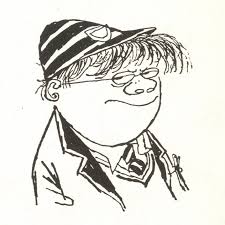

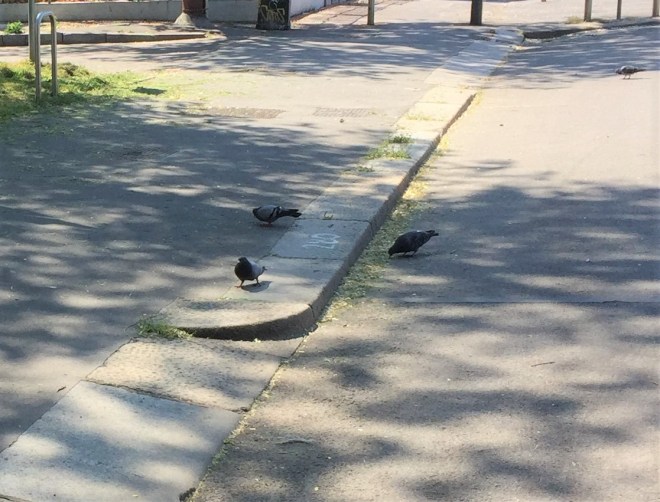


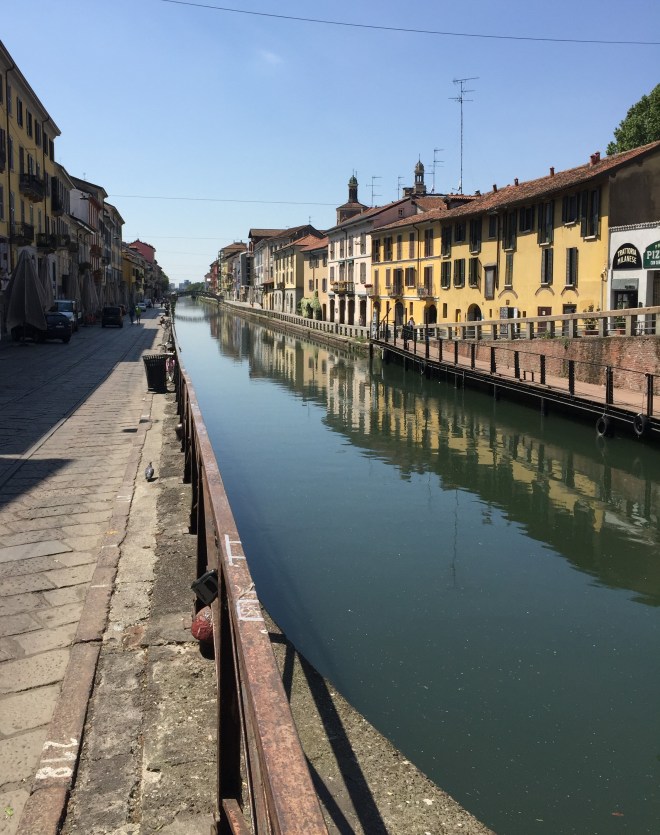

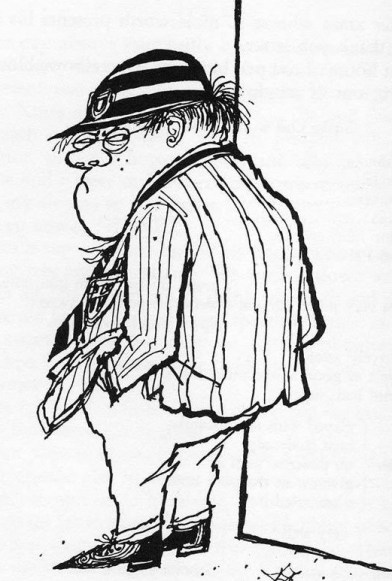
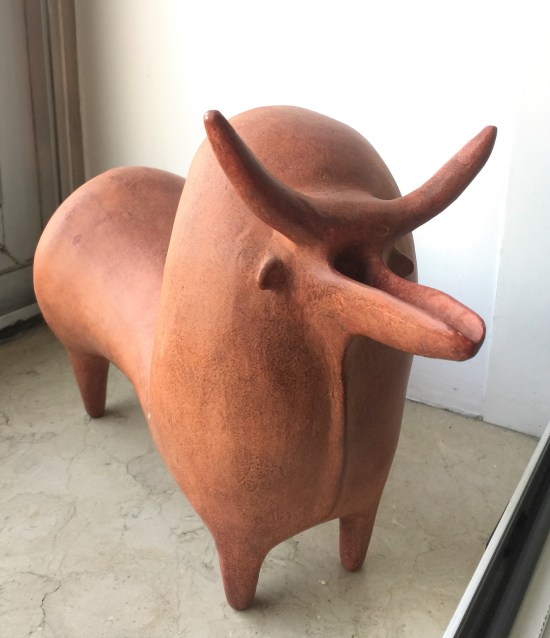
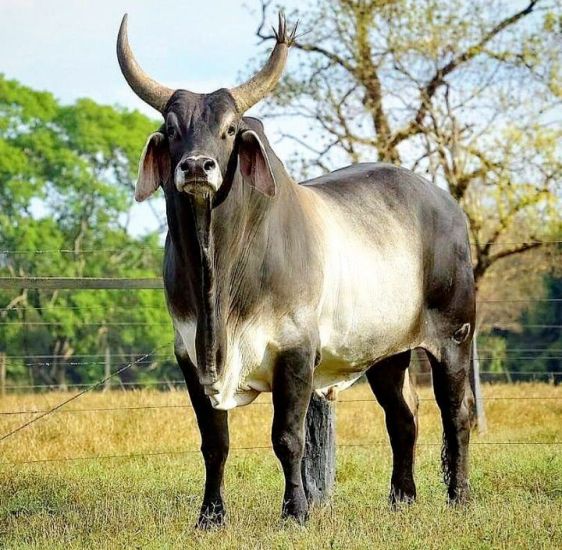


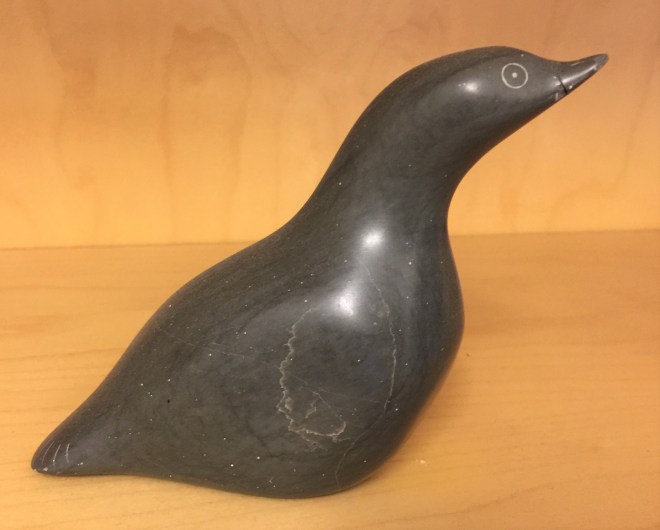




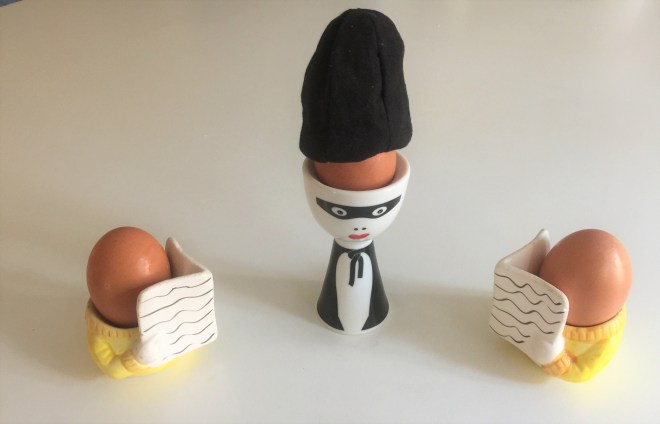

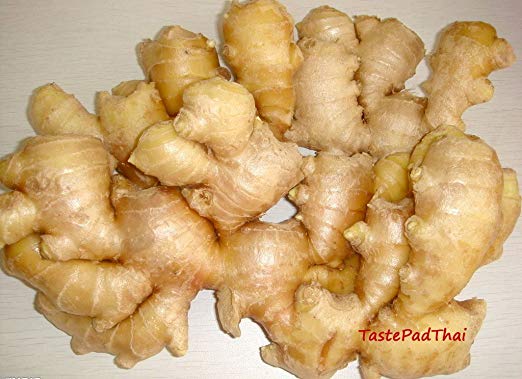




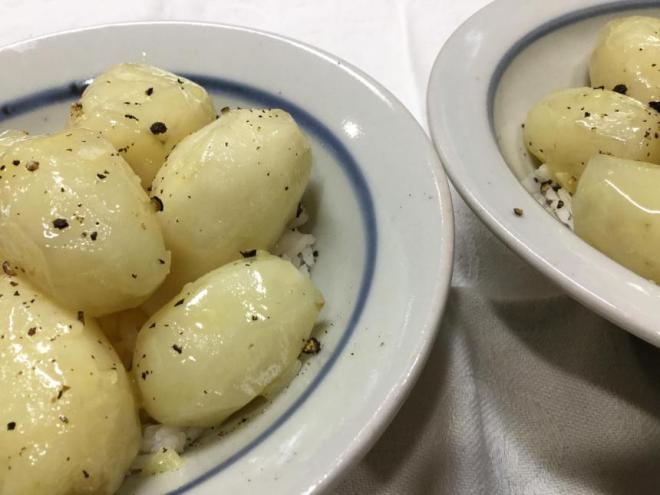


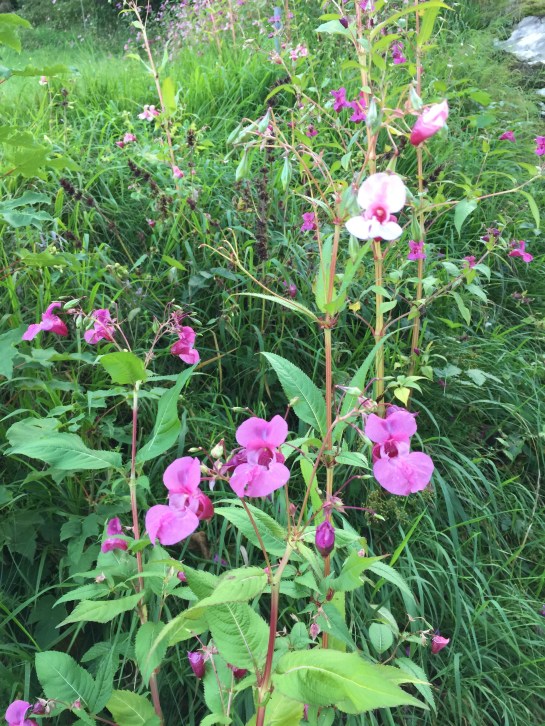

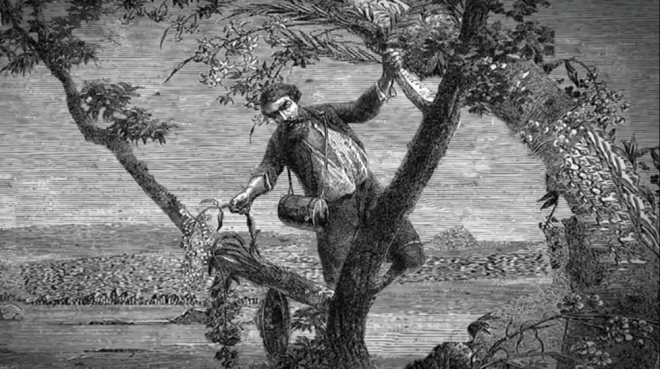


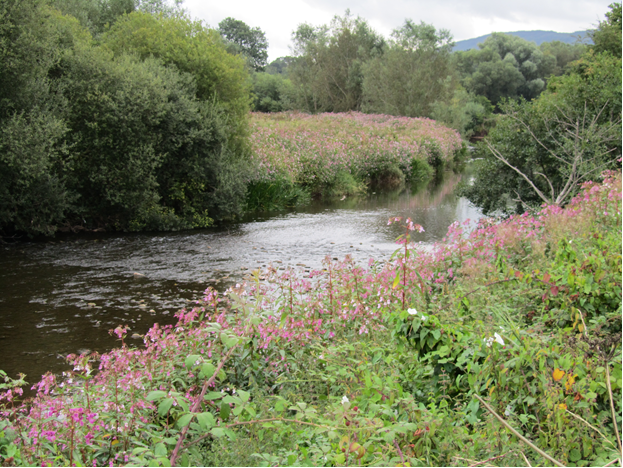

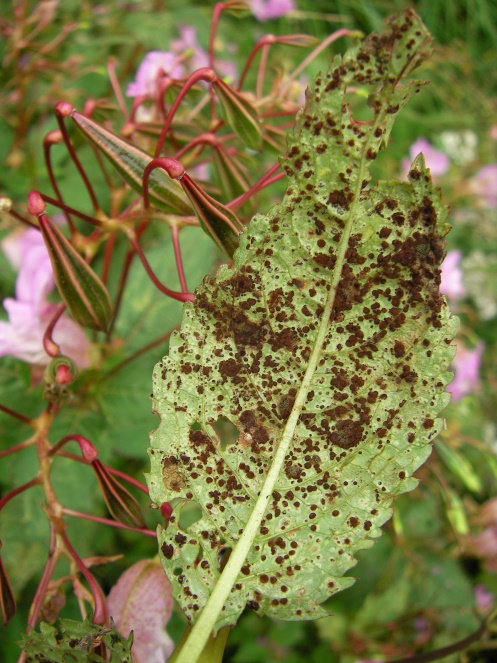

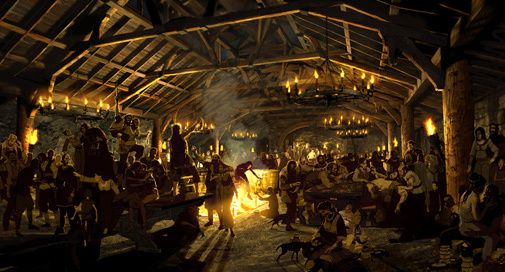




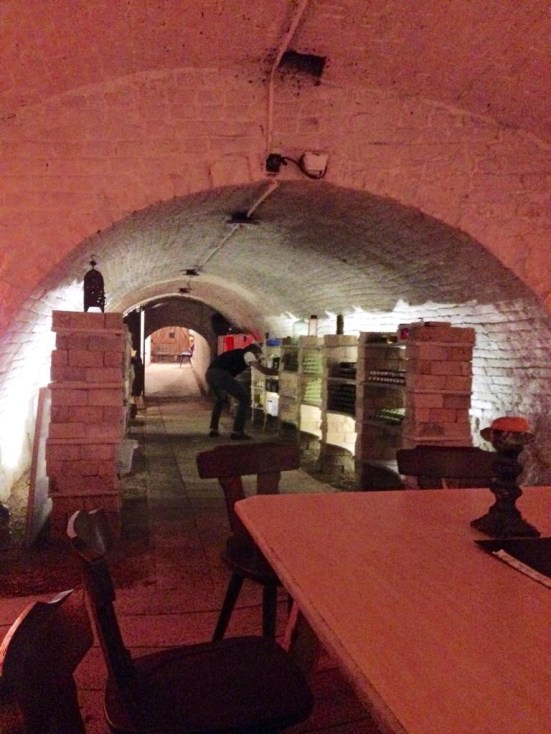


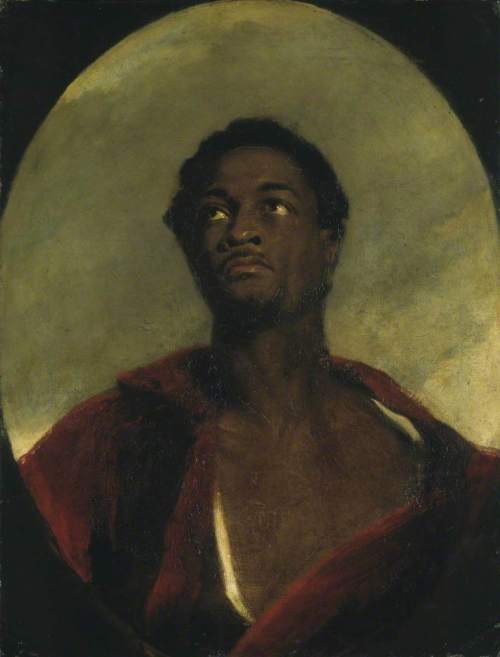


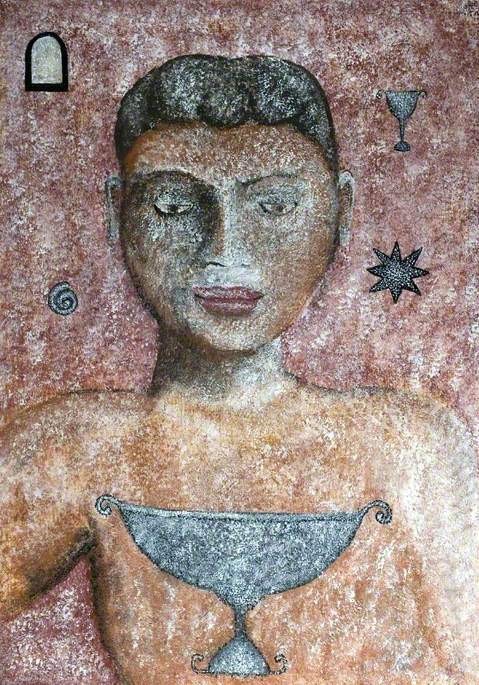



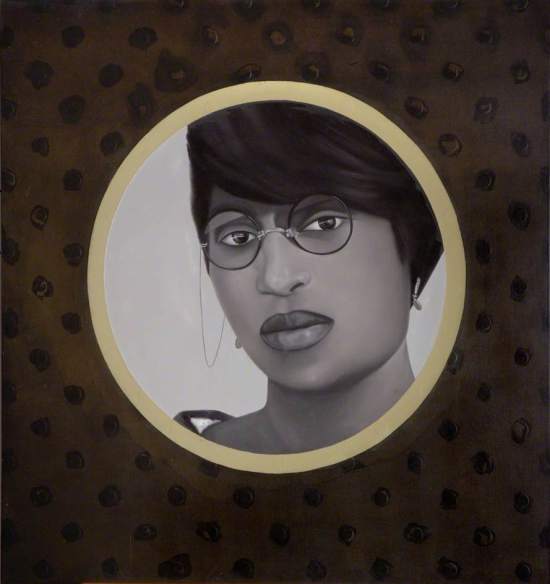

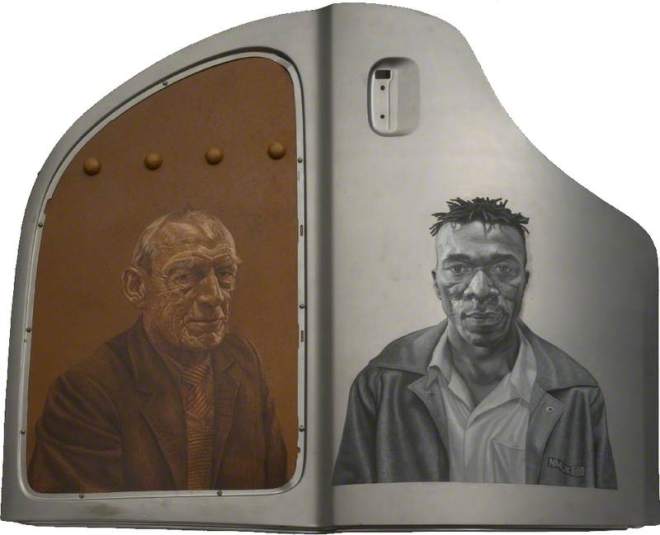


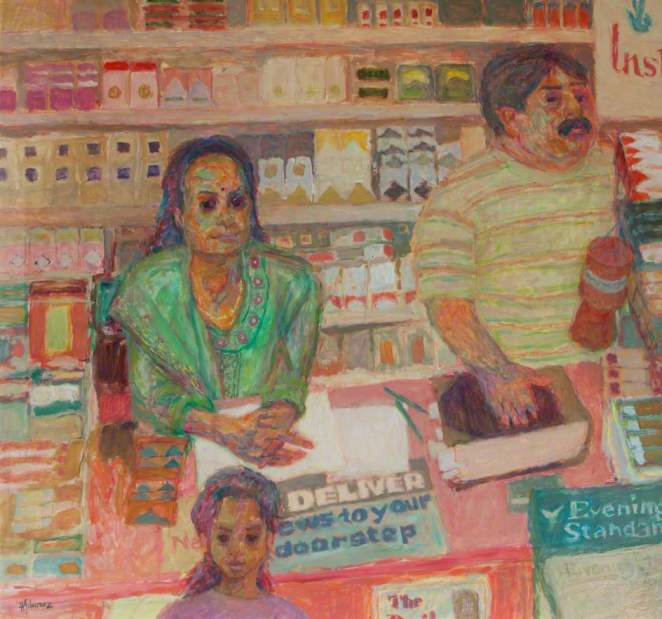
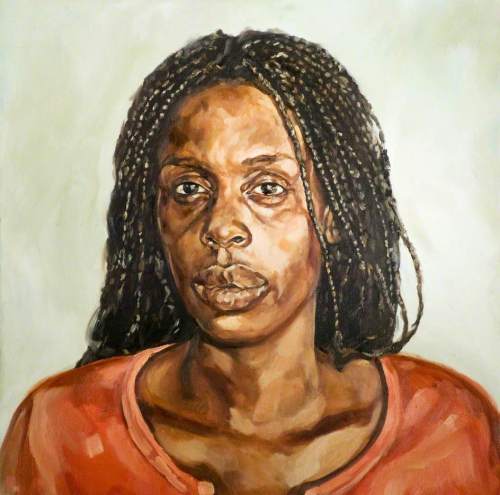

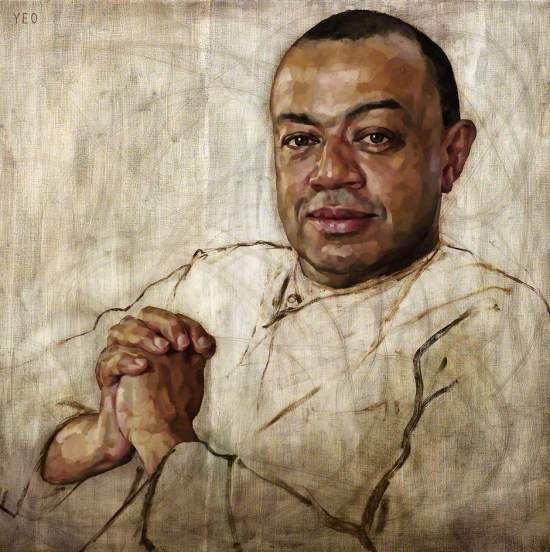





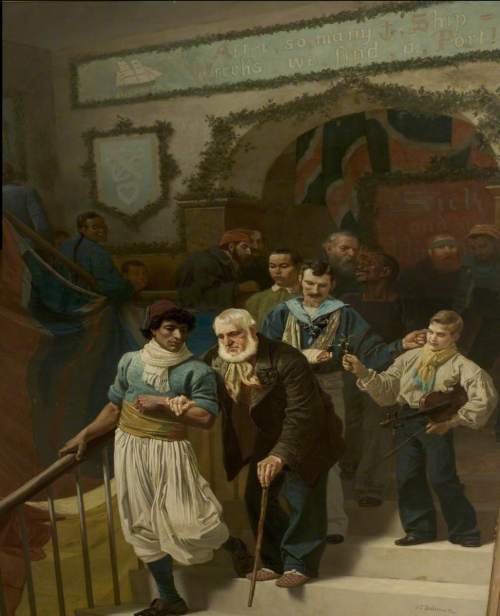

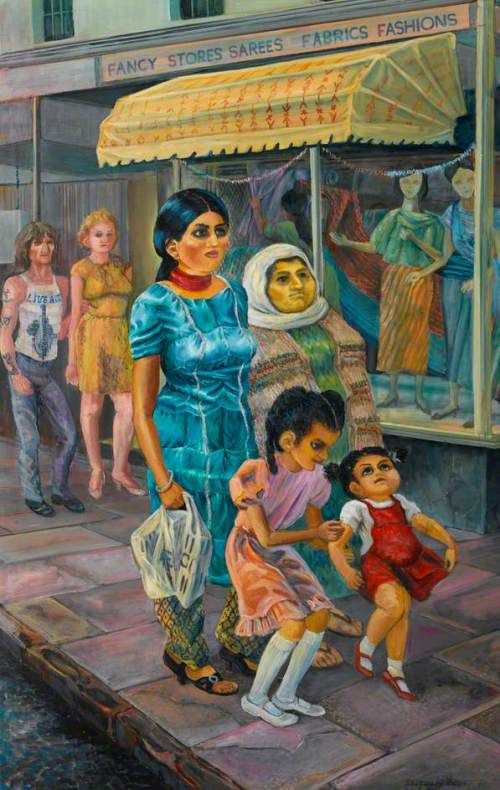
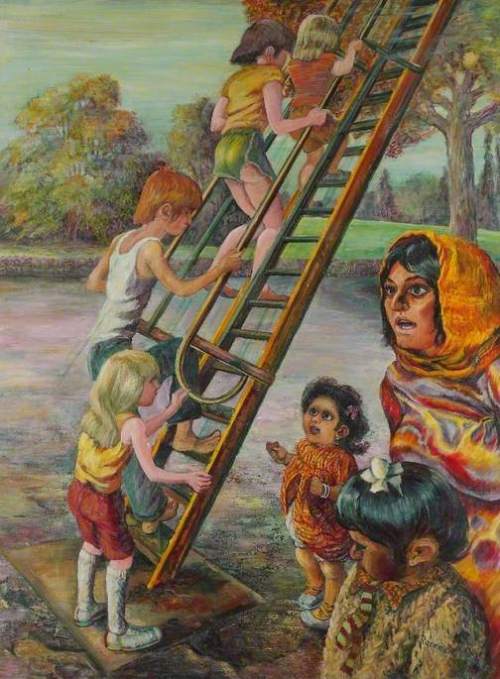

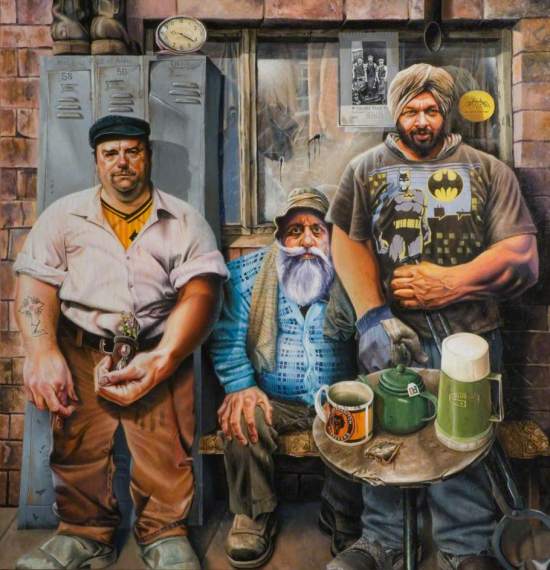

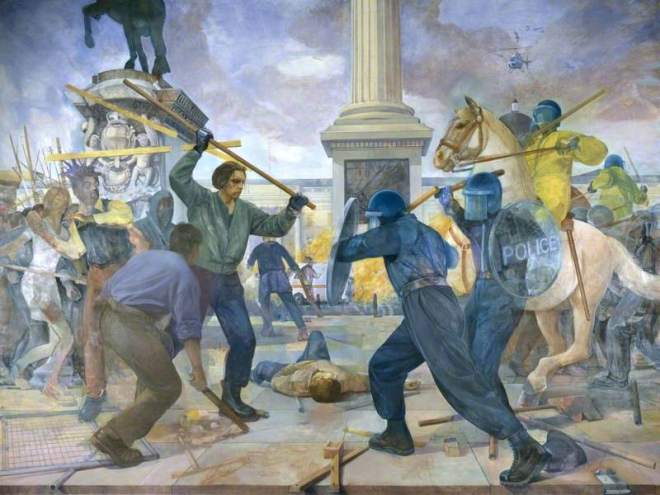
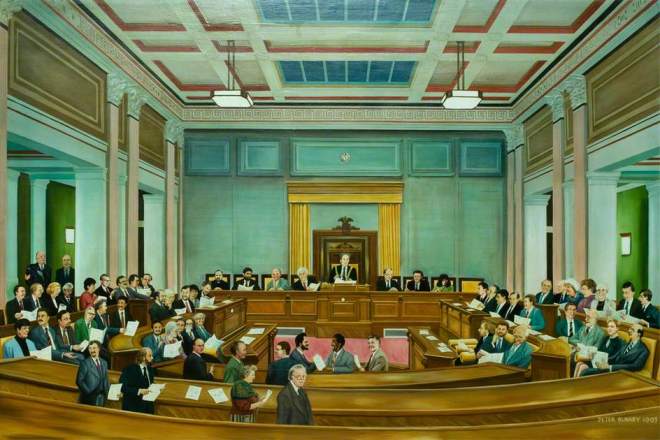


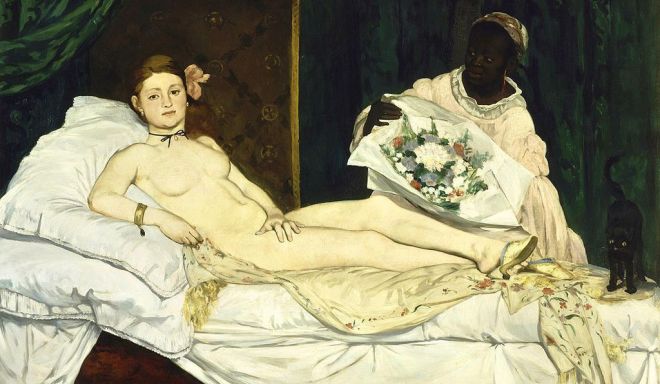
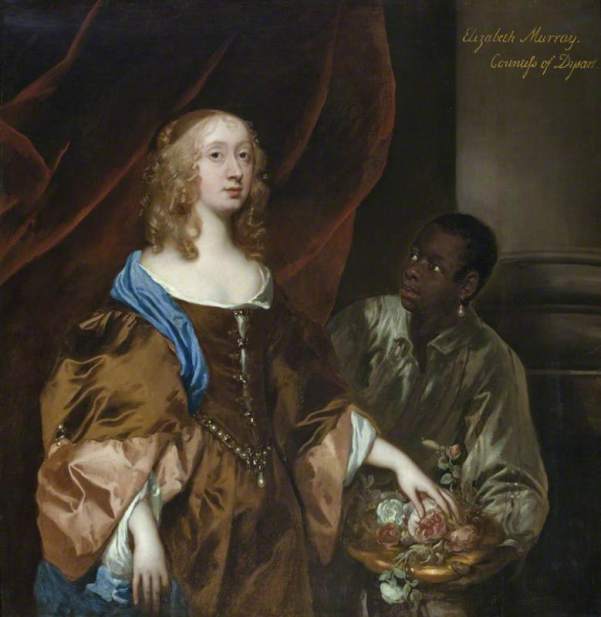
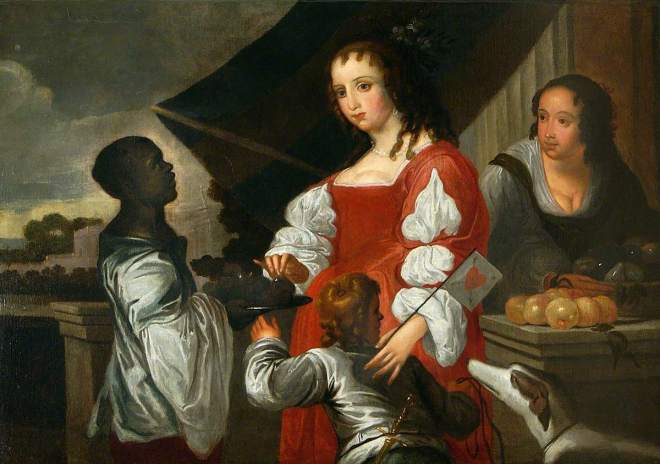
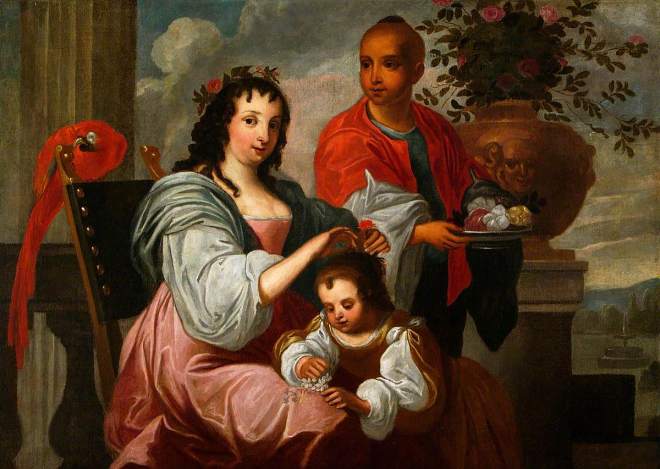

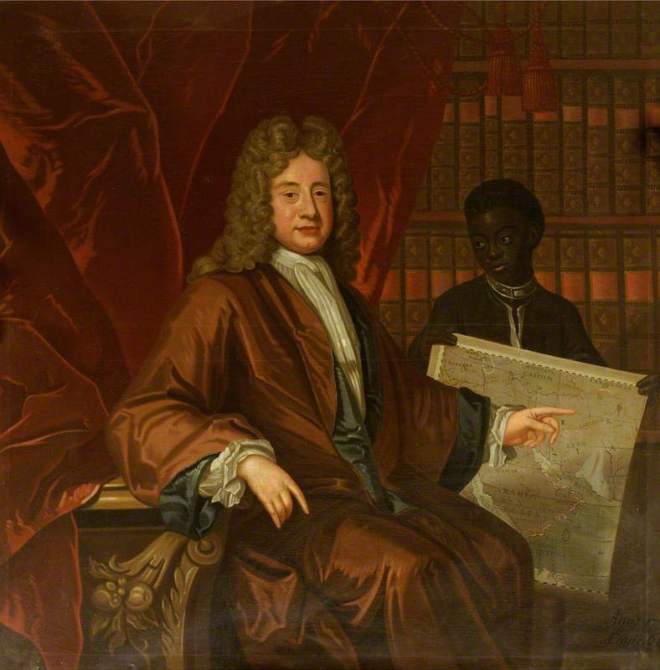


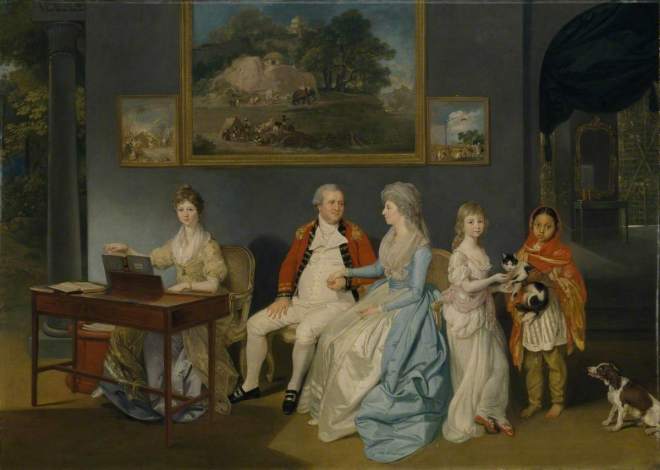
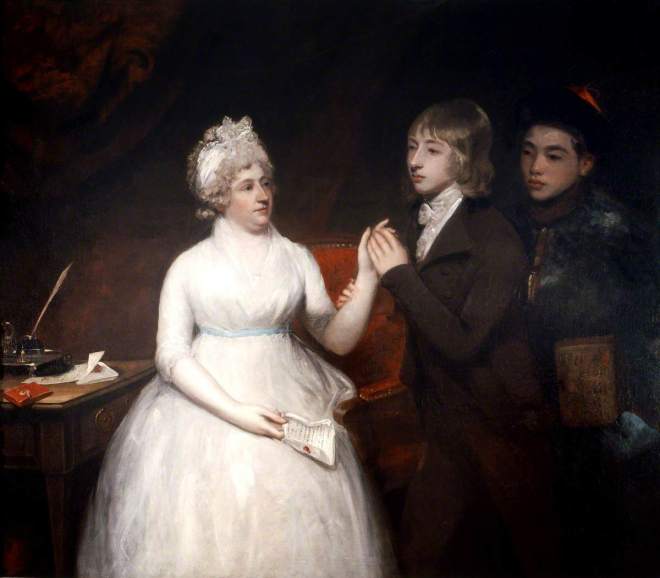


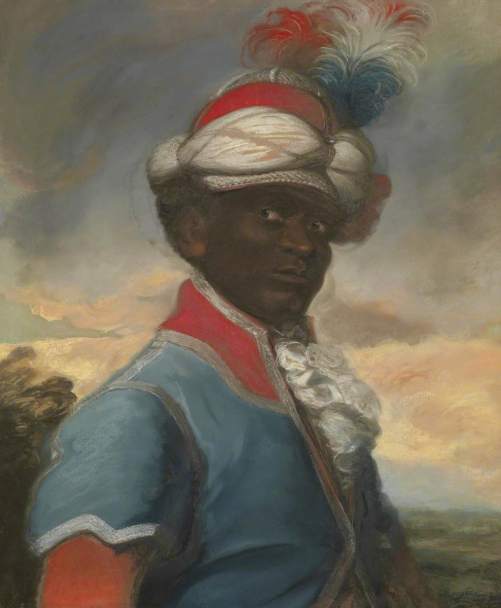

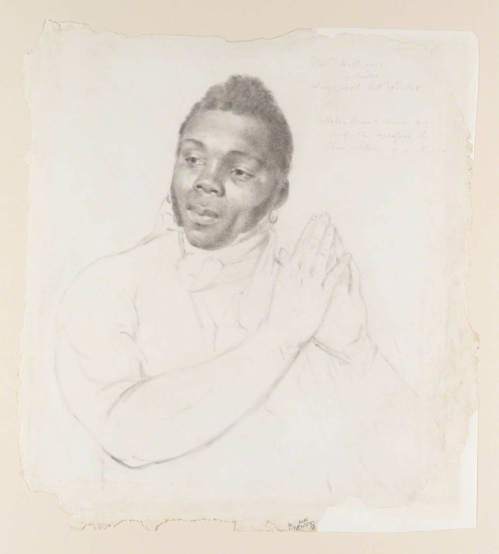

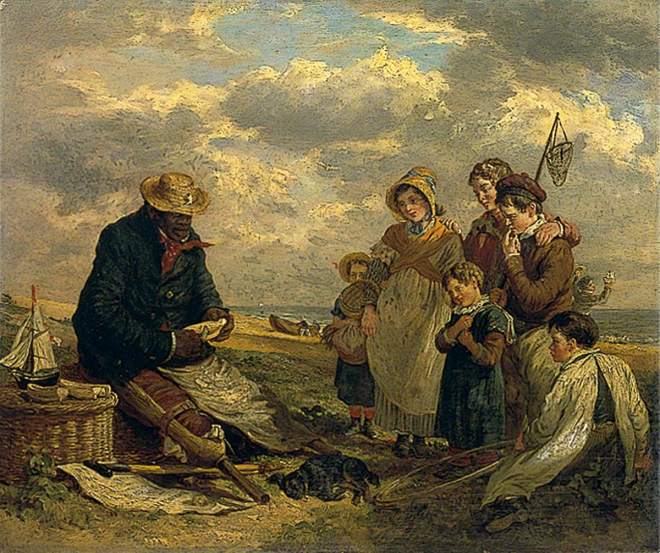

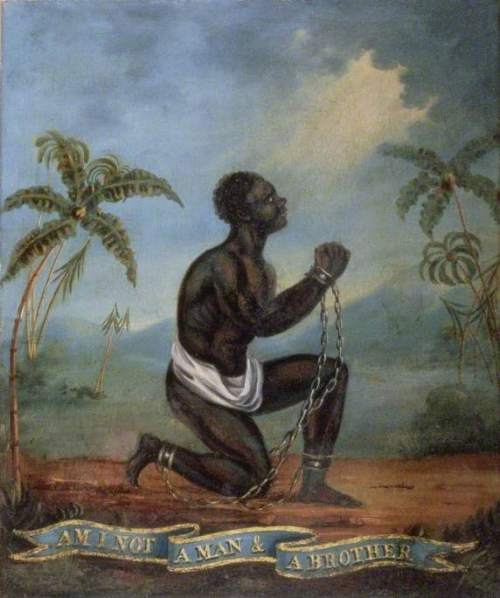
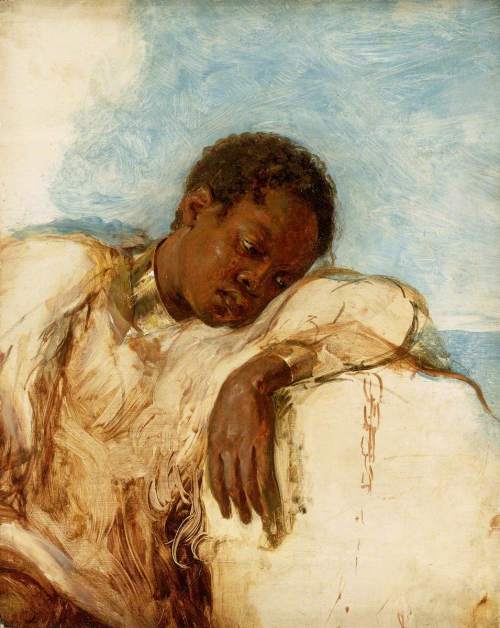


 the heart thrills
.jpg)
