Autumn is a wonderful time to go a-gathering. The last of the year’s fruits have ripened and are ready to be eaten – a cornucopia of Nature’s goodies waiting to be sampled!
In the various hikes my wife and I have been making during this autumn season, we have been taking advantage of this bounty, gathering fruits that have (more or less) fallen into our laps.
Our gathering started with grapes; not table grapes but wine grapes. I would admit, if my arm were twisted, that we took a few bunches from vines that were waiting to be harvested.
But we soon discovered that quite often there were bunches at the very bottom of the vines which the harvesting machines they use nowadays didn’t catch.
So we helped ourselves to those. I mean, they were obviously not going to get picked, and there was no point letting them rot on the vine, right? We ate white and red grapes indiscriminately, grapes that had been destined to become Zweigelt or Blaufränkisch in the red wines, Riesling or Grüner Veltliner in the whites. They were full of pips and had thick, rubbery skins but were wonderfully sweet.
Later on, we walked along hiking trails flanked by walnut trees
So many walnuts! It was terrible to see this bounty given to us free by Nature just being left to rot. So we got to work and collected several bags’ full, which we brought home to eat – waste not, want not, as my grandmother used to say!
my wife’s photo
That being said, I cannot in all honesty claim that they were a good find. Most of them were small, hard to crack, and the meat inside clung for all it was worth to the shell, a meat that after a while left a metallic taste in your mouth. Once we had dutifully finished our trove of nuts, my wife went out to buy some commercial walnuts, to remind ourselves how easy they were to open, how smoothly the meat fell out of the shell, and how delicious their taste was – sometimes, I have to admit, the products of the agro-industrial complex are tastier than the original …
Lately there have been apples and pears. In so many spots on our walks we came across apple or pear trees growing by the side of the path, groaning under their load of fruit and dropping them to the ground.
my photo
All these gifts from Nature, just going bad … It really broke our hearts to see this waste. I suppose the trees were planted in a time when more people lived on the land and when they grew more of what they ate. Now there is hardly anyone left in the countryside and those who are left can’t be bothered to pick the fruit from the trees their ancestors planted. Well, in memory of those ancestors, we gathered up a bag or so of both. The apples were really delicious: red-cheeked and slightly tart in their sweetness, just the way I like them.
Not for me the vacuously mild Golden Deliciouses of this world!
The pears were not so good. A few are mixed in with the picture of our walnuts: small, green-skinned, with a flesh which was both granular and set the teeth on edge. But my wife whipped up a fruit salad, mixing them with some of the apples and adding a sprinkling of sugar and a dash of lemon juice. Mm-mm-goood! (pity we don’t have any gin in the house; a slug of that would have made the salad even more delicious).
The fruit-picking time is nearly over. Now it’s leaf-watching time. This afternoon, we immersed ourselves in a world of yellow, gold, and russet (not too many reds in this part of the world).
my photomy photoMy photoMy photo
We finished where our autumn adventures had started, in the vineyards, yellow now but with a dash of red.
My photo
The leaves are falling faster and faster, driven off the trees by wind and rain. Soon it will be time to search out mugs of glühwein, the hot wine toddy of this part of the world.
Hopefully, if lockdowns and other Covid restrictions allow it, we’ll be able to drink the winter season away, waiting for Spring to roll around again and the cycle to start all over again.
Question: What connects this tumbledown church, which my wife and I stumbled across during a multi-day hike we did this summer in the Wachau region of Austria
my photo
and this train station in London, well known to all those who take Eurail to go to London?
Answer: Their names: they are both called Saint Pancras.
I must say, when we came across that half-ruined church and discovered its name my curiosity was piqued. I mean, Pancras is a funny name, no? I’ve never met anyone face-to-face called Pancras, I’ve never even heard of someone called Pancras. And those websites which will breathlessly list you famous persons having a certain name all came up blank for Pancras. I had only ever heard the name due to the station, and that only because it’s right next to King’s Cross Station, which I used a lot at a certain moment of my life. And I only remember the name because of its close similarity to the name of that organ we all have and whose precise purpose I have never really understood. Yet here were two places some 1,500 km apart with the same name. Yes, my curiosity was piqued, I had to investigate – “Google it!”, as my son always says. And I am now ready to report.
First of all, who was this Saint Pancras? Well, he was an obscure fellow about whom relatively little is known. Like Saint Blaise, another obscure fellow whom I have written about in an earlier post, he was born in what is now central Turkey some time in the 3rd Century. When still a boy and after his parents died, he moved to Rome to be with his guardian. There, again like Saint Blaise, he was caught up in one of the periodic persecutions against Christians, in this case by the Emperor Diocletian. It seems that he and his guardian were giving shelter to Christians and as a result he (and presumably his guardian, but he disappears from the story) were arrested. Pancras was 14. Here, the story gets fanciful. His hagiographer claims that Pancras was hauled in front of the Emperor himself, that the two had a long discussion during which Pancras impressed the Emperor with his youth and determination. Finally, annoyed (enraged, says the hagiographer) by the teenager’s refusal to refute his Christianity, he ordered Pancras’s execution. Pancras was promptly dragged off and beheaded. I find it hard to believe that the Emperor ever bothered to speak to this unknown youth; in fact, as one of the commentators diplomatically put it, it would have been very difficult for him to do so since he was not actually in Rome in the year that Pancras was beheaded. Whatever actually happened, it seems that Pancras was buried along the Via Aureliana.
For reasons that are just as obscure to me as the details of his life, his grave became a hub of pilgrimage and supposed miracles. Pope Symmachus built a basilica over the grave in 500 AD, a basilica that was expanded and much remodeled over the centuries. A church still stands on the spot (a church which, I must admit, I have never visited; perhaps the next time I’m in the Eternal City …).
If things had remained there, Pancras might have ended up as simply a minor regional saint. But for reasons which are yet again obscure to me Saint Gregory of Tours in France wrote in a famous book on Christian martyrs which was published in about 590 AD, that anyone making a false oath at the saint’s tomb would be seized by a demon and would collapse and die. Well! In an age where oaths were taken incredibly seriously and where everyone believed in the existence of demons and Hell, this was equivalent to saying that Saint Pancras was a divine lie detector: who in their right minds would dare to lie if asked to take an oath on the saint’s tomb? An oath on Saint Pancras’s tomb was considered so potent that it could be held up in court as proof of a witness’s testimony.
There was one slight problem: Saint Pancras’s tomb was in Rome and Rome was far away. No matter! In an age in which trade in the relics of saints flourished, relics of Saint Pancras were considered just as potent. There was therefore a huge and urgent demand from all over Western Christendom for relics of Saint Pancras to be sent to them. The Romans were not slow to oblige, and soon relics purported to be of Saint Pancras were on their way to every corner of Western Europe. As one source I read commented: “The whole body of the Saint was apparently in at least twenty churches; the head, in at least ten cities. As for the individual bones, they were without number. Of course, only a small part of these relics could be authentic .”
Of course, such potent relics needed to be housed appropriately! As a result, many a church was built and dedicated to Saint Pancras, with his relics enclosed in the main altar. In great pomp and ceremony, swearers of oaths could be solemnly brought before the altar and required to take their oaths. In our more cynical age, we can smile at the credulity of our ancestors but I have to say if I had been around in the Middle Ages and had been required to take an oath before the relics of Saint Pancras I’m pretty sure I wouldn’t have lied. Who wants to spend eternity in Hell, even if you are being asked to swear that you didn’t kill someone?
It wasn’t just churches who owned relics. Rich aristocrats also had their collections of relics, housed in richly made reliquaries like this one.
I have absolutely no basis for making the following claim, but I would like to believe that one of the most famous of all oaths taken during the Middle Ages, that taken by Harold Godwinson in Normandy in 1064 before Duke William, was taken on relics of Saint Pancras. For readers who are not familiar with this story, let me quickly summarize the salient points. In 1064, the-then king of England, Edward the Confessor, was clearly nearing the end of his life and didn’t have a son to succeed him. Various regional powers were jockeying to get into position to take the crown on Edward’s death. One of these was Duke William of Normandy, who was related to Edward, although in a rather indirect way. Another was Harold Godwinson, head of the most powerful family in England. For reasons which are not entirely clear, Harold went to Normandy (some say he was actually on his way to France but got shipwrecked on the Normandy coast). Duke William promptly laid hands on him and held him prisoner, although he went through the motions of treating him as a valued guest. Harold’s “stay” ended with him swearing an oath on a series of relics. The Bayeux tapestry captures this moment.
Quite what he swore is not clear. William claimed that Harold swore fealty to him and agreed that he would support him to be king. Consequently, he cried foul when Edward died and Harold took the throne. Harold retorted that he had been made to take the oath under duress and therefore (whatever it was that he was made to promise) it was not valid. William took this “betrayal” as an excuse to legitimize his invasion of England. We all know how that finished. The two armies met at Hastings, Harold took an arrow in the eye and died, and his army collapsed. Again, this key moment in English history was caught in the Bayeux tapestry.
We’ll never know what oath Harold really took. As they say, history is written by the victors. But coming back to the relics that Harold took his oath on, it certainly seemed to have been important enough to have warranted the use of Saint Pancras’s relics. The poet Lord Alfred Tennyson believed that they were of Saint Pancras. In his verse-drama “Harold,” when it comes to the moment of the oath he has William exclaim:
“Lay thou thy hand upon this golden pall!
Behold the jewel of St. Pancratius
Woven into the gold. Swear thou on this!”
Continuing in the obscurity department, when the Church hierarchy got around to assigning saints to all the days in the year, something which they seemed to have done quite early on, they assigned St. Pancras to 12th May. Why St. Pancras got 12th May is completely mysterious to me. In any event, 12th May was already St. Pancras day in 896 AD, when the Holy Roman Emperor Arnulf of Carinthia conquered Rome. Arnulf belonged to that delightful period of European history when everyone had fantastic names, something I have noted in an earlier post about Saint Radegund (itself a wonderful name). His father was called Carloman, his mother Liutswind, his son Zwentibold. He deposed Charles the Fat as Holy Roman Emperor and took his place, he was saving Pope Formosus from the clutches of Lambert and his mother Ageltrude when he conquered Rome. And on and on: there are literally dozens more such colourful names attached to Arnulf’s life and times.
But I digress. Arnulf attributed his success in conquering Rome to the intercession of that day’s saint, that is to say Saint Pancras. This made Saint Pancras even more popular than he already was in the German lands, and could well explain in a roundabout way why my wife and I came across this dilapidated church in the Wachau dedicated to him.
The fact that May 12th is Saint Pancras’s day meant that for centuries he also played an important role in the agricultural calendar of large swathes of Europe, from Lombardy and Liguria as well as Slovenia and Croatia in the south to Sweden and Poland in the north, from Belgium and France to the west to Hungary in the east. He, St. Mamertus (May 11th), St. Servatius (May 13th), and St. Boniface of Tarsus (May 14th) became collectively known as the Ice Saints, and Saint Sophia (May 15th) as Cold Sophy. They were so called because the middle days of May were believed to often bring a brief spell of colder weather, and there were warnings against sowing too early in case young crops were caught in a frost. These were translated into a series of colourful sayings, no doubt repeated around the hearth by the wise men (and perhaps wise women) of the village:
Pankraz, Servaz, Bonifaz
only make way for summer.
No summer before Boniface
No frost after Sophie.
You’re never safe from night frost
Until Sophie is over.
Servaz must be over
If you want to be safe from night frost.
Pankrazi, Servazi and Bonifazi are three frosty Bazi.
And finally, Cold Sophie is never missing.
Pankraz and Servaz are two bad brothers
What spring brought they destroy again.
Never plant before Cold Sophie.
Readers get the picture. Alas, science seems to disprove peasants’ belief that there was a tendency to a cold spell in that period. In fact, science has generally stopped us from giving any credence to saints. Which is generally a good thing. But it does mean that names like Pancras, Mamertus, Servatius, and Boniface have sunk into obscurity, so much so that when I came across a church dedicated to Pancras I scratched my head and muttered to myself “Who on earth was he?” Luckily there was Google to help me find the answer.
Oh, in case any readers are asking themselves why the railway station in London is called after St. Pancras, it seems that it was so called because the surrounding district was so called, and the district was so called because there was once in the vicinity a very ancient church dedicated to Saint Pancras. So there you are.
My wife and I have been doing a lot of hiking since I retired. It’s a great way to keep fit, and it’s a great way to see Nature – slowly, with the time to appreciate what you are seeing. Initially, we hiked without sticks but alas! Time has taken its toll, in my case especially in the knees. So we finally bit the bullet and bought ourselves a set of walking sticks each.
Shortly afterwards, when we were out on hikes I would often hear a low moaning, coming seemingly from close by. It sounded like the noise a kid would make on Halloween when dressed up as a ghost, a sort of ‘woo-hoo-oo’ noise.
To make matters more confusing, the moaning came and went. After a bit, when I did hear it I would look around me to see what the source of the sound could be, but I could never identify anything. I began to think I was imagining the sound. Perhaps something was going wrong with my inner ear? Or was a tumour growing in my brain and pressing on some part of the brain that had to do with hearing sounds?
Luckily for my sanity, I finally figured out was going on. To explain, I need to throw in a picture of the upper part of our walking sticks.
my photo
Those holes allow me to modify the length of my sticks, by moving a button clip from hole to hole. It was the wind blowing over the holes that was causing the sound – my sticks were acting as flutes. This discovery led first to relief that I was neither mad nor sick, and then to a certain curiosity about flutes. As is my habit, I began to investigate (God, what a hopeless nerd I am …). I discovered a whole world out there that I had never known existed. I read that flutes belong to a bewilderingly complex family of musical instruments called aerophones. Someone even nerdier than me has come up with a scientific classification of musical instruments (the Hornbostel-Sachs system, so presumably the nerds in question are Messrs Hornbostel and Sachs). Aerophones are allocated the number 4, ‘non-free’ aerophones (“the vibrating air is contained within the instrument”) the number 42, and ‘edge-blown’ aerophones, which is the scientific name for flutes, the number 42.1. So as not to bore readers, I will at this point stop drilling down into the Hornbostel-Sachs classification system, but they should be aware of the fact that I could go down five – yes, five – more levels: the permutations on the design and operation of flutes seem almost endless.
Out of this welter of information, I have seized upon one comprehensible fact: that while all cultures on all continents have at some point in time come up with ‘end-blown’ flutes (“the player blows against the sharp rim at the upper open end of a tube”; number 421.11 ), only Asian cultures came up with ‘side-blown’ (or transverse) flutes (“the player blows against the sharp rim of a hole in the side of the tube”; number 421.12). Since my sticks were making a noise because the wind was blowing across the sharp rim of my sticks’ holes, and if therefore I were mad enough to classify them as a musical instrument it would be somewhere under number 421.12, I have decided to focus on this family of flutes (I also happen to very much like the music from one member of this family in particular, as we shall see in a minute).
Before I go off to explore transverse flutes, I want to pause a minute and muse on how come our very distant ancestors ever invented flutes in the first place. I mean, what possessed someone to take a hollow tube, drill some holes in it, and start blowing into it? And we are talking about very distant ancestors. The earliest known flutes are some 43,000 years old. They were unearthed in a cave in Germany. Two are made from mute swan bones, the third from a mammoth’s ivory tusk. This is one of those flutes.
Since bone seems to have been a common initial material flutes were made from, I am now going to make a huge mental jump, unsubstantiated by any evidence that I know of, and suggest that actually the holes in bones were made by a predator with large, sharp incisors, that the bone dried out and the marrow disappeared thus hollowing out the bone, that the wind, blowing over the holes, made the same kind of noise I was hearing on our hikes, that an ever-curious early ancestor, attracted by the noise, picked up the bone and started playing around with it, blowing into it, trying to imitate the noise, … The rest is history, as we say. I also have to presume that the creation story of flutes happened independently many times over in different places and that Stone-age bone flutes will eventually be found in many places other than Germany. I should also say that I have not created this story completely out of nothing. There is a cave bear femur with holes in it that was uncovered in a cave in Slovenia, also about 43,000 years old.
Initially, it was thought to be a primitive flute. This is now questioned, with the current argument being that the holes were made by some predator or other.
I can’t figure out if these German Paleolithic flutes were end-blown flutes or transverse flutes. There is a video online showing a pretend-Paleolithic woman playing one of these flutes (or presumably a copy) transversely.
Which makes sense to me: if my story of how flutes first started is at all correct, our ancestors who picked up “singing bones” would have imitated the wind and blown across the holes. But then why did most cultures end up with end-blown flutes? Or perhaps more accurately, why did our ancestors, except those in Asia, abandon initial transverse flute playing for end-blown flute playing? I will let that question hang there, because I have absolutely no idea of the answer. Any readers who have an insight to this puzzle are welcome to weigh in.
Well, after those musings on the Ur-story of the flute, I can finally turn my attention to transverse flutes. My research (i.e., the reading of Wikipedia entries) have led me to identify some 20 types of transverse flutes. Here again, I do not propose to bore readers with breathless descriptions of each and every one of them. I will just mention two, for reasons which I hope will become clear.
I start with India. There, the bansuri reigns supreme. It’s been an integral part of Indian music for at least 3,500 years. It has an almost mystical standing among instruments, being closely associated with the God Krishna. We have here a modern take on this, from a temple in Singapore.
The bansuri does indeed produce divine music, although that of course is a very personal judgement and has as much to do with the instrument as it has with Indian music in general. I’m not sure when I became aware of Indian flute music. All I can say is that I have a very clear recollection of seeing an Indian black-and-white film in my early twenties, no doubt in some rundown arty cinema somewhere, where the soundtrack was this achingly lovely, haunting flute music. I tried to rediscover the film and its music while writing this post but failed. I throw in instead this video of the bansuri being played.
Close your eyes and let the music flow over you, let it envelop you, let it transport you to some secret place in your soul where the music of heaven resides. Without being too morbid about it, I would be more than happy if such a piece of Indian flute music were to be played at my funeral.
My old Chinese connection brings me to the second transverse flute which I want to write about, the dizi. It’s been in use in China for at least 7,000 years, although I throw in here a photo of it being played considerably more recently. This is a late 15th-early 16th Century painting of the Daoist Immortal Han Xiangzi nonchalantly walking on water as he plays his dizi.
It’s not only because of my connection with China that I mention the dizi, it’s also because of a very distinctive design feature this flute has. The dizi uses a mokong, which is a paper-thin membrane traditionally made from the inner skin of bamboo cells that is pasted over a hole located between the hole across which the player blows (the “embouchure” – such an elegant way of saying it, try saying it a few times, you sound really erudite) and the finger holes.
Don’t ask me to explain what exactly this does to the sound, I simply quote here what someone else has said: ”The mokong has a distinctive resonating effect on the sound produced by the dizi, making it brighter and louder, and adding harmonics to give the final tone a buzzing, nasal quality”. Readers may judge for themselves from this recording.
Like many things Chinese, the dizi (and flutes in general) migrated to the surrounding countries: Japan, Korea, and Viet Nam all have dizi-like flutes with the membrane and/or transverse flutes which had a membrane but where it has been abandoned. I throw in a couple of photos to record the use of transverse flutes in these countries. Here we have a transverse flute being played at a convivial meeting (a meal, I suspect) of Japanese men in the pre-modern era.
Of course, there is a question as to where the Chinese in turn got the transverse flute from. I’m sure the Chinese would argue that they invented it locally. They certainly invented the use of the mokong – the earliest dizis didn’t have it. But as for the flute itself some music historians think that actually the Chinese got it from Central Asia. I will carefully refrain from taking any position on this issue. Let’s simply say that it is an open question.
Which leads me – sort of – to my last point. The transverse flute, I’m happy to say, allows me to bring up one of my favourite topics, covered many times in these posts, namely the transfer across Eurasia of various products and ideas. The transfer mainly took place along the Silk Road, that network of trading routes which stretched out across Central Asia from China to Europe, with most of the transfer going from east to west, but sometimes in the other direction. Readers will no doubt remember what I wrote above, that the transverse flute only existed in Asia. However, any reader who has been to a concert hall knows that the transverse flute is often used in Western classical music. So am I mistaken? Was the transverse flute also invented in Europe? It seems not, according to historians of music. They believe that the bansuri somehow made its way to Byzantium (they think it was the bansuri rather than the dizi, say, or some other transverse flute from Asia, because of how the flute is depicted in Byzantine sources) and from there spread slowly to the rest of Europe. I find this intriguing. There were contacts, although indirect as far as I know (i.e., through some intermediary country), between Rome and India, contacts which no doubt would have continued with Byzantium. I have to assume that as part of these contacts Indian flautists came to Byzantium and showed the Byzantines how to make and play the transverse flute. In any event, here we have someone – probably Orpheus – playing a transverse flute in an 11th Century Byzantine manuscript.
From Byzantium, the transverse flute made its way to Germany and France first, and from there – a good deal later – to the rest of Western Europe. The mention of Germany allows me to slip in a mention of the Pied Piper of Hamelin. Most representations have him playing an end-blown flute, but some have him playing a transverse flute.
The use of transverse flutes got a big leg up from the military use of fifes. Armies in southern Germany and Switzerland began using fifes in the 15th Century, as a way of signaling maneuvers (fifes can be extremely piercing in the higher registers and so can be heard over the noise of battle). From then on, every serious European army began to have a fifing unit. It was only in the early 19th Century that fifes were displaced as a military signaling device. Nevertheless, many regiments continued to have a band of fifers (which is where the musical use of the word “band” comes from – a useless factoid which readers can cite at their next party). If I report all this, it’s only because it gives me an excuse to insert a photo of that wonderful painting by Manet of a young military fifer.
The Baroque period saw a makeover of the transverse flute, with it being completely redesigned. Various types of transverse flute were created. Music was written especially for the flute. And – once again – the rest is history. Just to round out the story, I throw in here a picture from an opera which has as one of its main protagonists a flute, Mozart’s Magic Flute. Without going into the details of its highly convoluted plot, the prince Tamino is given a magic flute which he plays at various moments. The opera is a delightful piece of nonsense, allowing Opera companies to go over the top with decors and costumes, as is the case here with a production by the Metropolitan Opera in New York.
As readers can see, in at least some productions the flute in question is a transverse flute (although I seem to remember that in the production I saw it was an end-blown flute).
Well, I leave my readers with a link to a lovely piece of Western, modern flute music: Claude Debussy’s “Syrinx”.
In the meantime, my wife and I will be plotting our next hike, where perhaps our sticks will sing in the wind.
A little while back, I wrote a post about balsamic vinegar – a disapproving post, since I don’t like the stuff. But I used the post to confess to a hankering to make my own vinegar. I attribute this to the fact that my French grandmother made her own vinegar, down in that dark cellar of hers which I’ve had occasion to describe in an even earlier post. She used the local Beaujolais wine as her raw material, putting it in a miniature barrel and leaving it there to sour to vinegar. From time to time, she would send me down the cellar to replenish the dining room’s vinegar cruet. I tried making vinegar once, in our early years in Vienna, following the rather vague instructions I had been given by a colleague. As my wife and children will attest, it was a miserable failure. The resulting liquid had a strange taste and not much of that vinegary punch. Although I put a brave face on it and determinedly continued drizzling it on my salads until it was all gone, I half expected to keel over dead at any moment, poisoned by some mysterious fermentation product I had unknowingly created. So, as readers can imagine, my hankering to make vinegar remains.
It really shouldn’t be all that difficult, I keep saying to myself. Vinegar making has been around since at least Babylonian times and it’s been made just about everywhere in the world where there is a source of sugars (the route to vinegar being first a yeast-catalyzed fermentation of sugars to alcohol and then a bacterial-catalyzed fermentation of the alcohol so produced to acetic acid, which is what gives vinegar its sour taste). In fact, it’s been truly fascinating to discover what people have made vinegar out of. Personally, I have always consumed vinegar made from grapes via wine, preferably red wine, although I’m intrigued to see that people are making vinegar with fortified wines like port, madeira, sherry, and marsala. In the Middle East, they even make vinegar with raisins (it’s famous in Turkish cuisine).
various sources
I’m also familiar with vinegars made from apples via cider and pears via perry, which have been commonly made in northern Europe. But actually just about every fruit known to man (and woman) has been used at some point to make vinegar. I just mention here the ones which intrigued me – or allowed me to create links to some of my earlier posts. The Babylonians used dates, which continue to be used for vinegar-making in the Middle East. The Israelis use pomegranates, testimony to an enduring relationship between this fruit and Judaism. The South Koreans use persimmon. The Chinese use jujube and wolfberry. The New Zealanders use kiwi fruits.
various sources
A couple of enterprising Italian and German companies even use tomato to make vinegar. I must say, I find this one strange. I know that tomato is technically a fruit, but I just can’t imagine a vinegar made from it. I would really like to try it one day, to see what it tastes like (as I would like to try tomato oil extracted from the seeds).
Sort of linked to fruit-based vinegar is honey vinegar made via the production of mead. It’s made in a couple of countries in Southern Europe (France, Spain, Italy, Romania), although it’s not all that common.
Grains of one sort or another are also used to make vinegar (an extra step is needed here, to turn the starches in the grain into sugars). This kind of vinegar is made primarily in East Asia, where rice, wheat, millet or sorghum (or a mix of these) are used. many of these vinegars are black, but there are red and white rice vinegars too.
various sources
The East Asians have been making vinegar for a very long time. Already two and a half thousand years ago, royal and noble households in China’s Zhou dynasty had a professional vinegar maker on their staff. Perhaps there were also professional vinegar tasters. Such tasters certainly became metaphors for the three main religions in China, leading to a very common depiction (the one I insert here is actually Japanese, from the Edo period, but I rather like the style).
The three men dipping their fingers in a vat of vinegar and tasting it are Confucius, Buddha, and Laozi, leaders of China’s three main religions. The expression on the men’s faces represents the predominant attitude of each religion. Confucius reacts with a sour expression – Confucianism sees life as sour, in need of rules to correct the degeneration of people. Buddha reacts with a bitter expression – Buddhism sees life as bitter, dominated by pain and suffering due to desires. Laozhi reacts with a sweet expression – Taoism sees life as fundamentally perfect in its natural state. I leave it to my readers to work out who is who in the painting I’ve inserted, based on their expressions.
But coming back to vinegar from grains, Europe also has its grain-based vinegars. For instance, the British have been making vinegar from malted barley for ever and a day. In my youth, no self-respecting fish-and-chip shop was without a bottle of malt vinegar which patrons could use to drown their fish and chips in – I cannot deny that I did this in my wild and foolish youth.
A series of vinegars which I find quite intriguing are made in South-East Asia and to some degree South Asia, from the sweet sap of various types of palms: coconut, nipa, and kaong palms (and to a lesser degree buri palms; so lesser I wasn’t able to find a picture of it).
various sources
The Philippines is the big producer and user; I read that Malaysia and Indonesia are smaller markets because the palm sap must first be transformed into an alcoholic beverage, something which is forbidden in these Muslim countries. Perhaps. But then why is Saudi Arabia, the strictest of all Muslim countries, a big producer of date vinegar?
The Philippines is also a big user of sugar cane vinegar. Well, it certainly makes sense to make vinegar from the mother of all sugar sources.
I would imagine that all sugar-cane growing countries make vinegar that way. Brazil certainly does. I wonder if anyone makes vinegar from beetroots? (as opposed to pickling beetroots in vinegar) An odd vinegar that I suppose can be classified as a sugar-based vinegar is kombucha vinegar. Kombucha is a Mongolian drink. It is made by fermenting sugary tea with a SCOBY – a Symbiotic Culture of Bacteria and Yeast. This yucky slimy mat will ferment the sugar in your tea to alcohol and start fermenting the alcohol to acetic acid. Normally, you drink the fermented tea before too much acetic acid is produced, but if you let the SCOBY carry on its work all the alcohol will be turned into acetic acid and you will have a vinegar.
I find it intriguing that in all the articles on vinegars which I’ve read, there is no mention of traditional vinegars being made in Africa or the Americas (as opposed to them copying vinegars originally made in Europe). Neither continent lacks traditional alcoholic beverages. The Africans made them (and to some degree continue to make them) from fermented honey water, fermented fruits, fermented sap of various species of palm (as well as a species of bamboo), fermented milk, as well as from grains and other starch sources. As for the Americas, alcoholic beverages existed in at least Mesoamerica. There, the common alcoholic beverages were pulque, which was made out of fermented agave sap, chicha, which was a kind of maize-based beer, and fermented drinks made out of cacao beans and sometimes honey. I cannot believe that these drinks didn’t sometimes get inoculated with acetic-acid making bacteria and turn into vinegar. And I cannot believe that the Africans and Amerindians didn’t figure out ways to use this vinegar, as people everywhere else did. At a minimum, they surely would have discovered – as did everyone else – that vinegar can be used to pickle food and so extend its useful life, a vitally important discovery for societies in the days before refrigeration. If any of my readers are from Africa or the Americas and have information on this point, I would be glad to hear from them.
It’s not only the making of vinegar which I find interesting, it’s also how it’s used. But here one could write a book! (and in fact a quick whip around the internet shows me that several people already have) Since I’ve already written a couple of posts, on mustard and Lea & Perrins Worcestershire sauce, showing how vinegar can be used to make condiments, I reckon I’ve covered the use of vinegar as a condiment on food. I have also mentioned pickling in several posts, in my post on capers for instance, so I will skip the use of vinegar as a pickling agent. I will instead explore its use as a drink, for the simple reason that at first sight I find it rather incredible that anyone would ever want to drink vinegar. I certainly never have; the closest I have got to it is gargling once with vinegar when I had a sore throat, and even then I spat it out; I wasn’t going to swallow it. But people have drunk vinegar, and continue to do so.
The trick, of course, is to dilute it. Roman legionaries did this the simplest way, by just adding water (and maybe some herbs). This drink was known as posca and was drunk during military campaigns, as a thirst-quencher. There was a popular saying about posca: posca fortem, vinum ebrium facit – posca gives you strength, wine makes you drunk. No doubt these legionaries on Trajan’s column in Rome made heavy use of posca during their campaigns.
Interestingly enough, soldiers at the very other end of the Eurasian continent, the samurai in Japan, also believed in the restorative effects of drinking vinegar, in this case rice vinegar. They drank it (whether straight or diluted, I do not know) to relieve fatigue and for an energy boost.
By the way, this business of posca being a drink of Roman legionaries gives quite a different slant to one of the stories in the narrative of the Crucifixion of Christ. All four Gospels say that as Jesus hung, dying, on the cross, someone put vinegar on a stick and held it to his lips to drink. Luke is the only one who says explicitly that it was one of the soldiers on guard at the crucifixion; the others say “one of the people there” or simply “they”. But it would have had to be one of the soldiers, no-one else would have been allowed to get that close. In the three synoptic Gospels, this simple gesture was turned into a gesture of mockery. John, on the other hand, has a more credible line. Jesus said “I thirst” and he was given vinegar. So now I see here a gesture of simple humanity on the part of the soldiers. They had a job to do, to crucify Jesus and the two robbers. But that didn’t stop them from trying to alleviate just a little the agony of being crucified by offering Jesus some posca for his thirst. It’s a moment in the Crucifixion story that has not often been painted, but here is a fresco by Fra Angelico.
The next step up in efforts to make vinegar drinkable is to mix the vinegar with something sweet. Here, too, the Romans had a popular drink, called mustum. It was a mix of low-quality must, fresh from the press, and vinegar. The must sweetened the vinegar, the vinegar clarified the turbid must (a case of “you scratch my back, I’ll scratch yours”).
For their part, the Ancient Greeks mixed vinegar with honey and water to make a drink called oxymel. The beverage passed into European Medieval and Renaissance medicine as a medicament, and indeed the internet is full of articles promoting the health benefits of oxymel as well as bottles of the stuff. Here is a typical example.
But the Ancient Greeks simply drank it for enjoyment. The Iranians still do. They have a drink called sekanjabin, which is a mix of vinegar and honey, to which mint leaves are often added. Apparently, a side order of fresh, crisp lettuce is a must.
It’s an ancient drink, quaffed by Iranians when they were still called Persians. Perhaps the richest and most powerful Persians drank their sekanjabin from magnificent cups like this one (my wife and I saw similar cups in a wonderful museum near Kyoto).
It wasn’t just the Ancients who drank sweetened, diluted vinegar. Under the name of shrubs, drinks like these were drunk quite often until relatively recently in Europe and North America. It was only the rise of carbonated drinks that killed them off, and now they are a bit of a recherché drink. I suspect there is currently a bit of a comeback because apple cider vinegar is being touted widely for its supposed health benefits. As the Ancients had discovered, it’s easier to drink vinegar when it’s been sweetened. Here is one example of the current commercial offer of shrubs.
For those who, like the Iranians, want to make their own drinks, shrubs are made by simply mixing honey water or sugar water with a small amount of vinegar. Or they can be made by soaking fruit in vinegar for several days, sieving off the solid part, and adding a lot of sugar.
For those readers who, like I was, are puzzled by the name “shrubs”, allow me to explain the etymology. It is actually a corruption of the Arabic word sharab, which means “to drink”. The Arabic version of this drink hails back to the use of vinegar as a pickling agent. In cases where fruit was pickled, the vinegar drew out the taste from the fruit during the pickling. So once the pickled fruit had been consumed, people would drink the fruity vinegar – after adding water to dilute it.
I must say, I thoroughly approve of this reuse of the pickling liquid. I have been telling my wife for some time now that we should find something to do with the pickling liquid left over after we’ve eaten pickled gherkins or onions or even olives. So far, she has ignored me, pouring the pickling liquid down the drain. Perhaps I can get her to reconsider if I argue that we can turn the liquids into some kind of shrub. Of course, our pickling liquids are salty rather than sweet, but no fear, I have a solution to this! In order to explain it I have to introduce another set of soldiers, the Spartans this time.
The Roman legionaries had posca, the Spartan soldiers had melas zomos, a black brothy soup (or perhaps black soupy broth). Made of boiled pigs’ trotters, blood, salt, and vinegar, it was an integral part of their diet. We could make melas zomos! Our various spent pickling liquids could give the salt and vinegar, we would just need to find the blood and the pigs’ trotters. Of course, if we still lived in China, we wouldn’t have any problems finding these (I remember several times eating a delicious Chinese dish of pigs’ trotters in a restaurant around the corner from our place in Beijing, and I’m sure we could have found blood if we’d looked for it). But in Europe, as I’ve related elsewhere, we’ve become more fastidious about the meat products we eat, so finding these ingredients might be a problem.
Of course, even if we could find the ingredients and made the soup, would it be yummy? Well, I can only report here a comment made by a citizen of Sybaris, an Ancient Greek city located on the coast of what is now Puglia (but which has since disappeared, alas), which I’ve mentioned in passing in an earlier post. After tasting a bowl of melas zomos, this man declared disgustedly, “Now I do perceive why it is that Spartan soldiers encounter death so joyfully; dead men require no longer to eat; black broth is no longer a necessity.” Now, given that the citizens of Sybaris were famous for their luxury and gluttony (so famous that they gave us theword “sybarite”), this confrontation of polar opposites is perhaps merely an Ancient urban legend. However, it is true that the Spartans gave us the word “spartan”, which suggests that yumminess in their soldiers’ food was not necessarily high in the order of priorities of the Spartan army’s high command. The idea was to give them strength, to beat the shit out of, say, those weakling Persians who drank sekanjabin, as we saw so thrillingly in the film 300 – the Spartans in that film must have been stuffed full of melas zomos.
Luckily, if we weren’t able to find pigs’ trotters and blood (and if I wasn’t able to persuade my wife to eat the soup, a highly probable outcome since she doesn’t much like these kinds of meat products), a quick whip around the Internet has shown me that many vinegar-containing soup recipes exist which involve perfectly ordinary ingredients like vegetables (I suspect that the craze for apple cider vinegar and its purported health properties has struck again; how to find pleasant ways to ingest apple cider vinegar). I can bring to bear my skills in making soups from left-overs and find a yummy way of recycling our pickling liquids into soups. Watch this space!
This second mention of mine of apple cider vinegar makes me think that before I finish I must just touch upon the supposed medicinal benefits of vinegar. In Europe at least, this love affair with vinegar-as-medicine has been going on since the Ancient Greeks; the current touting of apple cider vinegar is merely the latest iteration in a very ancient tradition. I do not propose to go through all the health benefits that are claimed for vinegar. In this time where we are living through a modern plague, Covid-19, I will only mention vinegar’s use during the bubonic plagues that regularly swept through Europe from the 14th to the 18th centuries. For some reason, people felt that vinegar would keep the terrible distemper at bay, so anyone who came into contact with people sick with plague, or with the bodies of people who had died of it, would wash their hands in vinegar, or put towels soaked in vinegar around their heads, or cover their mouths with a handkerchief soaked in vinegar, or gargle with vinegar. It was mostly doctors or nurses who did this, as well as the poor bastards (many of them convicts) who had to load the bodies onto the carts to take them to the cemeteries. I throw in here a picture from the Italian book I Promessi Sposi by Alssandro Manzoni, which takes place during an outbreak of the plague in Milan. We see the men loading up the dead bodies onto the cart.
My wife will no doubt be thrilled to bits to see this reference to I Promessi Sposi, a book which was a Must Read for all schoolchildren of her generation. In a sillier vein, I also throw in a still from the Monty Python film The Holy Grail, where a man is trying to get rid of his old father who isn’t dead.
Anyway, it’s not clear if this use of vinegar helped at all – it indubitably has disinfectant properties, but would they have been enough to kill Yersinia pestis, the bacterium that causes the plague? At some point, people began to add herbs to the vinegar to increase its plague-killing power. Eventually, these vinegar concoctions got a name, Four Thieves vinegar, as well as a legend to go with the name. The legend goes like this: Four of the poor bastards picking up the dead bodies, who also happened to be thieves (it was a “profession” which tended to attract the criminal classes), hit upon a herb mixture which kept them safe. They therefore began robbing the houses they entered with impunity. Caught and threatened with horrible punishment, they offered to give up their secret recipe in exchange for leniency. The judge promptly accepted. Here is a recipe that was posted on the walls of Marseilles, site of the last great outbreak of the plague in Europe in 1720:
“Take three pints of strong white wine vinegar, add a handful of each of wormwood, meadowsweet, wild marjoram and sage, fifty cloves, two ounces of campanula roots, two ounces of angelic, rosemary and horehound and three large measures of camphor. Place the mixture in a container for fifteen days, strain and express, then bottle.”
And here is a modern version of the stuff, using apple cider vinegar (and with a different bunch of herbs: rosemary, sage, thyme, mint, cinnamon, pepper, garlic, clove)
Hey, you never know, it might help keep Covid-19 at bay, although the producers are careful not to claim this. Soak your face mask in the stuff before putting it on.
My wife and I have been doing quite a lot of hiking in high alpine meadows this year, which of course means that we’ve been passing a lot of cows. Here is a photo I took of one such cow at one of the huts we recently stayed in.
my photo
Every time I see cows, I am struck by the same thing: they never smile (or laugh, for that matter). I am particularly aware of this lack of hilarity in cows because of the French cheese product, La Vache Qui Rit, the Laughing Cow.
For readers who may not know this product, it’s a delicious spreadable cheese that comes in wedges. Each wedge is wrapped in silver foil; the foil is removed by pulling on a red plastic thread. It’s normally given to children. That was certainly the case for me; my French grandmother routinely fed her grandchildren pieces of French baguette thickly spread with this cheese: mmmm, soo good!
But it’s not the cheese I want to talk about. It’s the round box which holds the wedges.
As readers can see, the box is covered by a picture of a cow laughing heartily (she also has a faintly gypsy-esque look, with boxes of the cheese dangling from her ears like large earrings). I would always study the picture as I munched on my cheese-smothered piece of baguette, fascinated by that laugh. Why couldn’t the cows in the field below the house laugh like that, I wondered? Or at least smile. Or the neighbour’s dog? Or the rabbits my grandmother kept in a hutch in the vegetable garden? Or the horse I would pass on my way to get milk at the nearby farm?
As one does as a child, I quickly forgot these philosophical musings. But during my recent continued meetings with cows in high alpine meadows the question has resurfaced, although since I am now considerably older and (I hope) wiser, I ask myself the question differently: why do human beings appear to be the only species who smile?
sources – see below
I should say at this point that my response to this question is completely based on an article by Michael Graziano, who is a Professor of Neuroscience at Princeton University, entitled The First Smile.
I should also remind readers that we are, for all of the airs and graces that we give ourselves, fundamentally great apes. We share 99% of our DNA with chimpanzees and bonobos, 98% with gorillas, and 97% with orangutans. When Charles Darwin first revealed this relationship to horrified Victorians, one wit came up with this cartoon.
One aspect that we share with all the other great apes (and indeed with all primates) is our sociability. We are intensely social animals and much of our instinctive (DNA-driven) behaviour comes from us having lived in bands on the African veld. This behaviour regulated the all-important interpersonal relations. One such relation was when someone else in the band approached you and entered your personal space. Here, I let Professor Graziano take up the tale.
“Imagine two monkeys, A and B. Monkey B steps into the personal space of Monkey A. The result? … a classic defensive reaction. Monkey A squints, protecting his eyes. His upper lip pulls up. This exposes the teeth, but only as a side-effect: in a defensive reaction, the point of the curled lip is … to bunch the facial skin upward, further padding the eyes in folds of skin. The ears flap back against the skull, protecting them from injury. The head pulls down and the shoulders pull up to protect the vulnerable throat and jugular. The head turns away from the impending object. The torso curves forward to protect the abdomen. Depending on the direction of the threat, the arms may pull across the torso to protect it, or may fly up to protect the face. The monkey snaps into a general defensive stance that shields the most vulnerable parts of his body.
Monkey B can learn a lot by watching the reaction of Monkey A. If Monkey A makes a full-blown protective response, cringe and all, it’s a pretty good sign that Monkey A is frightened. He’s uneasy. … He must view Monkey B as a threat, a social superior. On the other hand, if Monkey A reveals only a subtle response, perhaps squinting and slightly pulling back his head, it’s a good sign that Monkey A is not so frightened. He does not consider Monkey B to be a social superior or a threat.
That kind of information is very useful to members of a social group. Monkey B can learn just where he stands with respect to Monkey A. And so the stage is set for a social signal to evolve: natural selection will favour monkeys that can read the cringe reactions of their peers and adjust their behaviour accordingly. This, by the way, is perhaps the most important point of the story: the primary evolutionary pressure is on the receiver of the signal, not the sender. The story is about how we came to react to smiles.
Then again, nature is often an arms race. If Monkey B can glean useful information by watching Monkey A, then it’s useful for Monkey A to manipulate that information and influence Monkey B. Evolution therefore favours monkeys that can, in the right circumstances, pantomime a defensive reaction. It helps to convince others that you’re non-threatening. Finally we see the origin of the smile: a briefly flashed imitation of a defensive stance.
In people, the smile has been pared down to little more than its facial components — the lifting of the upper lip, the upward bunching of the cheeks, the squint. These days we use it mainly to communicate a friendly lack of aggression rather than outright subservience.
And yet we can still see the monkey gesture in us. We do sometimes smile to express subservience, and that servile smile can come with a hint of the whole-body protective stance: head pulled down, shoulders up, curved torso, hands pulled in front of the chest. Just like monkeys, we react to such signals automatically. We can’t help feeling warmer towards someone who beams [a genuine, friendly smile involving the eyes]. We can’t help feeling contemptuous of a person who makes a servile cringe, or suspicious of someone who fakes a warmth that never reaches those vulnerable eyes.”
To underline Professor Graziano’s point about the servile cringe, I insert here a picture of Uriah Heep from Charles Dickens’s David Copperfield, the epitome of the servile cringer.
As for people with the fake smile which never reaches the eyes, I can think of a few people I’ve worked with over the decades who would fit that description very well – I name no names so as not to be sued for libel.
In any event, Professor Graziano’s explanation of why we smile seems to me a good one. And it turns out that chimps and monkeys have something which looks remarkably like a human smile.
They mini Mt. Fujis were really quite arresting in their symmetry among the gentle anarchy of the forests.
A closer look at them told us that these were ant nests; there were columns of ants radiating out from them into the surrounding undergrowth and their surfaces were pullulating with ants.
A bit like the statues of John of Nepomuk that I have written about earlier, once we noticed one nest we began noticing them everywhere we went on our subsequent walks. We always came across them in wooded areas, mostly among conifers or mixed woodland. Sometimes the nests were modest mounds, at other times they were really quite large.
A little surfing of the web has taught me that these nests belong to wood ants, of which there are some 32 species distributed in the colder reaches of the northern hemisphere: 13 in the Eurasian continent, spread all the way from Japan to Ireland, and 19 in North America. My favourite of all these species has to be Formica lugubris, the lugubrious ant. I wonder what its namer had in mind when they came up with that name. This particular species seems no more lugubrious than any of the others. I throw in a close-up of another species, Formica rufa.
I must confess to putting in this close-up photo simply to gross out my wife, like I did with close-ups of crickets and dragon flies in earlier posts (so childish of me …). However, the first of these photos also allows me to point out the ants’ black and red colouring – although I have to say, I didn’t notice this colouring scheme when inspecting the ants milling about on top of the nests.
Coming back to Formica lugubris, I must say if I were a wood ant I think I would feel pretty lugubrious. The great majority of the ants are – female – worker ants. They spend their whole short lives (a couple of months) looking after the queens and their babies (or grubs, to give them their more scientific name), feeding them, moving them from one good spot in the nest to another, watching over them as they finally pupate and metamorphose into adult ants, and generally fussing over everyone; marching off into the surrounding forest to collect food; building up the nest, mending its thatch (more on that in a minute) … and all this and more with hardly a moment’s rest (a power nap from time to time is all they get). No wonder they croak after a few months! As for the few males, they are of course completely feckless, doing bugger-all to maintain the nest or feed the kids (typical …). Mind you, they have even shorter lives than worker ants – a couple of weeks. They have only one role in life, which is to impregnate the queens. This they do with savage abandon, with these mating rites becoming a huge free-for-all. Once that is over, they expire – if they haven’t already become lunch for birds and other predators who hang around during the mating rites and pick them off. As for the even fewer queens, they only need to go through the mating rite once in their much longer lives (they can live up to 15 years or so); the sperm they so collect lasts them a lifetime. Thereafter, they bunk down in the nests, and spend the rest of their lives begetting children and sleeping. What a life, for all of them!
Of course, to think of ants in human terms is very silly: ants are ants, humans are humans. But this tendency of projecting human foibles onto animals has a very honourable history. Take the French poet Jean de La Fontaine, for instance. He wrote many animal-centered poems whose point was to skewer human weaknesses and stupidities. One of his best-known poems is La Cigale et la Fourmi, the Cricket and the Ant:
La Cigale, ayant chanté
Tout l’été,
Se trouva fort dépourvue
Quand la bise fut venue
Etc.
The point of the poem is that the cricket spent the whole summer singing the days away while the ant industriously spent it collecting food to see it through the winter.
Come autumn, the cricket comes piteously to the ant, asking it to give it some food, and the ant tells the cricket to bugger off (the moral of the tale for us humans is made clear in this old drawing, by dressing up both cricket and ant in humans’ clothes and having the ant live in a human house).
My French grandmother often quoted the poem in approving tones, making it clear to me that I should be the industrious ant and not the feckless cricket. Personally, I think the story lacks Christian charity, but perhaps in La Fontaine’s day, when most people lived very close to the edge, they simply didn’t have enough to be able to generously share with feckless idiots who had failed to lay in the necessary provisions.
But back to the wood ants.
Let me describe their nests, which are marvels of engineering. First let me insert a cut-away diagram of a nest.
The whole structure is designed to maintain optimum temperature and humidity levels for the grubs and pupae. So, the nests are somewhat flatter on their southern side, to have the sun’s rays hit the nest as directly as possible; the worker ants lay the pine needles and other debris which make up the nest’s thatch in the direction which maximizes the latter’s ability to heat up in the sun’s rays; the nests are often built around a tree stump – the heat given off by the rotting process adds to the nest’s heat; and if that is not enough, worker ants will “sunbathe” on the thatch and when they are nice and hot will go back into the nest and cool down where heat is needed. As for control of dampness, the ants carefully choose sites which are not damp in the first place. Then the same thatch will act as thatch on a human house, keeping out the rain. Since the bottom of the nest, which is in the ground, tends to be damper the worker ants will carry damp material from the lower floors to the upper floors to even out dampness differences.
These wonderful nests have attracted a number of hangers-on. Some are useful, like the worm Dendrodrilus rubidus, for instance. It gets (steals?) food in the nest but it keeps moulds and fungi in check. So it pays for its keep, as it were. Others are not, like several species of beetles, which spend their larval stage in wood ant nests. Most are just a nuisance, eating plant food they find there. Several species of beetle, though, are real little bastards. They eat the pupae, and to avoid being killed by the ants they produce chemicals which disguise their presence. Some of these little buggers go so far as to secrete a scent which the ants can’t resist. The poor ants then allow the beetle to roam freely about the nest unharmed. Little shits … In the case of other species, it’s not clear if they play a role – bad or good – in the nests. There’s the tiny shining guest ant, for instance. It has its own tiny nests and tiny broods in the wood ants’ nests. If a queen and a bunch of worker ants take off to set up a new test, a bunch of shining guest ants will go with them. But when the going gets tough – when conditions in the nest deteriorate – the shining guest ants get going: “hasta la vista, baby, been nice knowin’ ya!” And then there’s a species of woodlouse which has been cohabiting with wood ants in the dark chambers of their nests for so long that it has lost its eyes and colouring (I remember reading about the same thing happening to some species of fish which were discovered living in completely dark caverns off the coast of Mexico somewhere).
As I said, if you look at a nest you’ll see columns of ants marching off to forage – and marching back with what they’ve foraged. Wood ants play an incredibly important role in keeping in check certain species which are bad for the health of the trees – more on this in a minute. But they actually get most of their food from stroking the bums of aphids. This is an absolutely fascinating relationship, probably the only known example of farming by a species other than humans.
Aphids feed by sucking the sap from trees and shrubs. They extract what they need from the sap and excrete the rest as “honeydew” – the name gives one an idea of the taste of this stuff, which is packed with sugars, acids, salts and vitamins. Wood ants love this stuff, and it makes up the major portion of their diet. Over time, wood ants and aphids have developed a symbiotic relationship. Wood ants look after the aphids; they protect them from predators and they move them around to places with more or better sap.
In return, aphids will excrete their honeydew when gently stroked by the ants. It’s hard not to think of human beings and their cows when you read about this relationship.
The ants will fill themselves up with the honeydew, march back to the nest, disgorge it and feed it to the queens and grubs.
One reads lurid stories about ants biting and stinging people. Wood ants can certainly bite – they have the necessary mandibles – but they also have a secret chemical weapon. They keep a store of formic acid in their gaster (that bulbous end section of theirs), which they can spray at attackers or prey.
As the photo shows, they can shoot our their formic acid over quite a considerable distance, relatively speaking. If they were my size, they would be squirting formic acid over a distance of 20 metres – not half bad! As you can imagine, a concerted attack like the one in the photo would be enough to keep most predators away. But some birds have figured out how to turn this spray of formic acid to their advantage. They alight close to the nest, and use the resulting formic acid shower as a way of killing off parasites which they’ve picked up. This European Jay, for instance, is having its formic acid spray-over and seems to be quite enjoying the experience.
Source
Of course, formic acid gets its name from the Latin name for the ant, formica. Formic acid was discovered by one John Ray, an English naturalist, in 1671. He obtained the acid by getting hold of a large number of wood ants, crushing them, and distilling off the acid from the resulting mess. Poor ants! sacrificed to the advancement of science. Here is the painting of the man about to do something awful to a foxglove.
I’m sure myrmecologists (which I have learned is what experts in ants are called) would find a thousand and one other things which are fascinating about the wood ant. But I’ll stop here. There is one final thought, though, which I want to leave with my readers because it goes close to the work I’ve been doing these last forty years.
The fate of wood ants is a great example of human beings thinking they are very clever and know everything when in fact they know very little. This is particularly true of the workings of the natural world. Thus, in the case of wood ants, people didn’t realize that they probably play a key role in the health of forests. I say “probably” because actually we don’t know all that much about the life and times of wood ants, so it’s difficult to judge their true role in forest health. Nevertheless, they certainly seem to keep down the populations of insects which would otherwise attack trees, like caterpillars of moths such as the pine looper and sawfly. Their farming of sap-sucking aphids also appears to affect tree growth. They help in distributing the seeds of plants. They of course provide food to a whole suite of animals. Yet we have thoughtlessly – and ignorantly – been destroying their habitat. As a result, wood ants are on the International Union for Conservation of Nature’s Red List, although thankfully at the milder end of that List. Some species are already extinct locally – the black-backed meadow ant, for instance, is extinct in the UK since 1988. Not only is it really troubling that these ants could be facing extinction (“extinction is forever”), but foresters are also finding that the health of forests has been impacted as a result of the drops in ant population. In this day and age, when we desperately need every tree we have to combat climate change, that is truly worrying. In fact, efforts are now underway to protect these ants and get them to help us protect our forests. I can only hope for the best.
A few posts ago, while I was describing the origins of Lea & Perrins sauce, I mentioned in passing that the story of tomato ketchup was an equally fascinating tale and thought that its telling could be the subject of one of my posts. Well, that moment has come!
I find the story of tomato ketchup worth telling because it intertwines two themes which I am passionate about and which have been the subject of a number of my posts in the past: the rich history of the humble, mundane articles which we have surrounded ourselves with, and the role which global trade has played in spreading such articles around the planet – for better or for worse. The story of tomato ketchup serves up both of these themes in spades.
Tomato ketchup is of course primarily associated with the United States, and indeed it is there that we have seen the greatest growth in the consumption of ketchup. But the roots of ketchup are buried in a land far, far away, on the other side of the world, in southern China.
The word ketchup is an Anglicisation of the Hokkien word kôe-chiap (as written in its Romanised form; 鮭汁 in Chinese characters). The homeland of Hokkien speakers, the Hoklo, is southern Fujian, although Hoklo communities also exist in Guangdong and Hainan. In southern Fujian, they live cheek by jowl with other groups like the Hakka (I only mention the latter because my wife has never forgiven me for visiting the typical Hakka roundhouses near Xiamen without her). Hokkien is only one of a mass of different languages and dialects that are found in China.
Kôe-chiap means “brine of pickled fish or shell-fish”. We have the Chinese-English Dictionary of the Vernacular or Spoken Language of Amoy (now called Xiamen), published in 1873, to thank for this explanation; I throw in a picture of the dictionary’s title page, along with the relevant entry in the dictionary.
“Brine of pickled fish” basically means a sauce made by fermenting fish in salt and collecting the liquid which is so created. So we can consider kôe-chiap to be a fermented fish sauce. The same sauce is still made in southern China, although it’s now often called yu lu (which translates as “fish dew” – such a poetic name! especially since the sauce probably smells strongly …). Here is a picture of a modern version.
In its most elemental form, as simply the liquid which oozes from brined fermenting fish, this kind of sauce is found in all the cultures in South-East Asia. So we have nuoc-mam in Viet Nam, naam-plaa in Thailand, tuk-trey in Cambodia, padaek in Laos, patis in the Philippines, budu in Malaysia, ngapi in Myanmar, and – very importantly for our story – kechap ikan in Indonesia. It’s also found in Japan (shottu kuru), Korea (aek jeot) to the east, Iran (mahyawa) and Italy (colatura di alici) to the west. In fact, until the 18th Century or thereabouts, fermented fish sauce was common in the UK and throughout the rest of Europe, after which its use died out (and it was incredibly popular in Roman times, when it was known as garum; the Romans put it in just about everything). To show the sauce’s ubiquity, I throw in a photo of the cover of a cookery book dedicated to recipes from around the world which use fish sauce.
I would ask my readers to make a mental note of the fact that fermented fish sauces also existed in Europe and in particular in the UK, because I will come back to this point later. But right now, I want to focus on how the Hoklo version of fermented fish sauce, kôe-chiap, spread throughout South-East Asia, because it is almost certainly there and not in southern Fujian that English traders and sailors came across it and liked it so much that they brought it back to the UK.
The Hoklo were intrepid traders. They traded throughout South East Asia and beyond. They also emigrated to all the polities making up South East Asia. They did this even though successive Chinese dynasties blew hot and sometimes very cold about their subjects trading overseas and emigrating, going so far in some moments as to declare that Chinese who emigrated were no longer worthy of being considered Chinese. The Hoklo were no doubt firm believers in the Chinese proverb, 山高皇帝远 shān gāo, huángdì yuǎn, meaning “the mountains are high and the emperor is far away” (a proverb which is still relevant in China today; I heard it uttered quite a few times in my time there): Beijing (or whatever was the Imperial capital of the moment) was far away and communications were difficult, so they could safely ignore emperors’ fulminations. I hasten to add that they were not the only southern Chinese people to trade and emigrate. Other peoples from the south, like the Cantonese and the Hakka, did the same. But the Hoklo people seem to have done it more than any other group, so they are now the largest (Indonesia, Singapore, Philippines, southern Thailand) or one of the largest (Malaysia, Viet Nam, Myanmar) groups in the various Chinese diasporas in South East Asia. For the most part, the Hoklo settled in the bigger trading ports in these countries.
As emigrants from all parts of the world have done in all times, the Hoklo no doubt took their foodstuffs with them, and that will have included their fermented fish sauce. At least in Indonesia, it looks like the local population took to the sauce with such enthusiasm that the word kôe-chiap entered the Indonesian language as kechap (or kicap, or kecap, or ketjap; I presume there is some difficulty in finding a satisfactory Romanised form of the Indonesian word). This seems to be another example of Indonesians’ enthusiasm for adopting foreign words, something I have written an earlier post about. Over time, the meaning of kechap has evolved to cover just about any type of sauce, which is why the modern Indonesian name for fermented fish sauce is kecap ikan (“ikan” meaning fish in Indonesian); they now have to specify that the sauce is fish-based.
So by the 1500s (the relevance of this date will become clear in a minute), kôe-chiap was probably present throughout South-East Asia, particularly in the region’s trading ports, thanks to Hoklo traders settling in these ports. What happened next?
Well, by the early 1500s, European ships finally began to arrive in South-East Asia, having managed to make it around Africa’s Cape of Good Hope and across the Indian Ocean. They were after eastern spices, especially pepper, nutmeg, mace and cloves. These spices had always arrived in Europe via India and the Middle East, and European traders wanted to go direct to the source, thus cutting out all the middlemen and making themselves huge fortunes in the process (just to give readers an idea of the size of the profits, in 1620 a cargo of 250,000 pounds of pepper, bought for ₤26,401 in the “East Indies”, was sold for ₤208,333 in London, a profit of 690%; in the same period, a cargo of 150,000 pounds of cloves, bought for ₤5,126, was sold in London for ₤45,000, a profit of 780%). The Portuguese arrived first, followed by Spaniards (who actually arrived the other way, finding a route around the tip of South America and sailing across the Pacific). The Portuguese ruled the roost for about a hundred years; the Spaniards contented themselves with the Philippines and left the rest of South-East Asia alone. Then the Dutch and English arrived on the scene (as did the French, but they quickly disappeared). The Dutch eventually strong-armed the Portuguese out of the way. As for the English, they were actually quite modest players. They managed to do some trading and to set up a few “factories” (which in this case meant warehouses where they could store their spices and other merchandise and hold markets with the locals) in the Indonesian islands of Java and Sumatra; these islands were at the very centre of the spice trade. But the Dutch squeezed them out by the 1600s (so the English focused on India instead, as a consolation prize; they ended up controlling the whole of the subcontinent and used that as a stepping stone to the foundation of a global Empire – what an irony).
Just for the fun of it, I throw in here a painting of a factory – it is actually a Dutch factory, in India, but I think it rather nicely gives the idea of what the factories looked like.
And for the hell of it, I add a print of Batavia, modern-day Jakarta, which was the centre of Dutch power in South-East Asia, as the town looked like in 1754.
Of course, even as they were busy trading and fighting one another, the European sailors and traders had to fill their stomachs. In their idle moments in the various South-East Asian ports they visited, or during their down time in the factories, they must have been sampling local cuisine, as modern tourists do today. Certainly in the case of the English, this included a sauce which they variously spelled as catchup, katchup, ketchup, kitchup, and maybe in a few more ways. They really liked it! In the case of sailors, it was certainly sufficiently part of their lives that a dictionary of slang used by British sailors, the New Dictionary of the Terms Ancient and Modern of the Canting Crew, published in 1698, had an entry for catchup (as it is spelled), where it is described simply as “A high East-India Sauce”. I include a photo of the relevant page of the dictionary (the relevant word is highlighted).
(by “high”, the writers of the dictionary were no doubt referring to the fact that the fermented fish in the sauce made it smell “off” or quite strong)
At this point, then, this ketchup sauce made the jump from South East Asia to England, as traders or sailors or both brought it back home. Once it arrived in England, it caught on big time. But now we have to ask ourselves what exactly was this sauce that English sailors and traders got so excited about? I cannot believe that it was just plain fermented fish sauce. As I said earlier, that already existed in the UK, where it was known as fish pickle and was made much in the same way as kôe-chiap was. Why would English sailors and traders get enthusiastic about a sauce they already knew, and more importantly why would they bother to bring it home? And why would people in England get excited about it? I have to think that as kôe-chiap moved around South-East Asia in the trunks of Hoklo traders and emigrants, other ingredients began to be added to the original sauce. My money would be on this having happened most in Indonesia. After all, many different kinds of kechap sauce began to be made there, to the point where the word kechap simply came to mean any sauce (and interestingly enough, it seems that until the 1950s the Chinese community in Indonesia, the majority of whom were Hoklo, made most of the different kechaps consumed in the country). So in my romantic mind’s eye, I see English traders and sailors in their Javan and Sumatran factories, or in some port somewhere in those islands, tasting the local kechap and saying “Yum! Must bring this back to Blighty”.
But what ingredients might have been added? Unfortunately, no-one in the 1600s, when the sauce caught on with the English, thought of publishing the recipe somewhere (or if they did, I haven’t found it). From the recipes which appeared in English cookery books, examples of which I give below, my guess is that a lot of spices – that pepper, nutmeg, mace and cloves which the Europeans had sailed to South-East Asia to find – were added.
In any event, English cooks began to try to copy this kechap sauce which appeared on their shores, with locally available ingredients. Here, for instance, is the earliest published recipe for katchup (as it was spelled) in an English cookery book. The book in question is The Compleat Housewife; or, Accomplished Gentlewoman’s Companion, written by Eliza Smith and published in 1727. I love the book’s frontispiece, so I’ll throw it in here.
Take a wide-mouth’d bottle, put therein a pint of the best white-wine vinegar ; then put in ten or twelve cloves of eschalot peeled and just bruised ; then take a pint of the best Langoon white-wine [a French white wine], boil it a little, and put to it twelve or fourteen [salted] anchovies wash’d and shred, and dissolve them in the wine, and when cold put them in the bottle ; then take a quarter of a pint more of white-wine, and put in it mace, ginger sliced, a few cloves, a spoonful of whole pepper just bruised, let them boil all a little ; when near cold, slice in almost a whole nutmeg, and some lemon-peel, and likewise put in two or three spoonfuls of horse-radish ; then stop it close, and for a week shake it once or twice a day ; then use it: T’is good to put into fish sauce, or any savoury dish of meat ; you may add to it the clear liquor that comes from mushrooms.
So we have the fish (although not in the form of fish sauce but rather as the fish itself) and the spices from South-East Asia (now readily available thanks to those brave English sailors), to which some local spices have been added (horse radish and shallots). Interestingly, alcohol, in the form of wine in this case (beer was used in other recipes), has been added; I suspect alcohol was not present in the original kechap.
Quite quickly, mushrooms – or rather the liquid extracted from mushrooms – which was mentioned almost as an afterthought in Eliza Smith’s recipe, started playing a more important role. In fact, in some recipes the fish disappeared completely, to be replaced by mushrooms. An example is a recipe from the cookery book The Art of Cookery Made Plain and Easy by Hannah Glasse, published in 1747. Before giving the recipe, let me show the book’s frontispiece, another wonderful piece of minor art.
Source
And now the recipe.
To make Ketchup.
Take the large Flaps of Mushrooms, pick nothing but the Straws and Dirt from it, then lay them in a broad earthen Pan, strew a good deal of Salt over them, let them lie till next Morning, then with your Hand brake them, put them into a Stew-pan, let them boil a Minute or two, then strain them thro’ a coarse Cloth, and wring it hard. Take out all the Juice, let it stand to settle, then pour it off clear, run it thro’ a thick Flannel Bag, (some filter it thro’ brown Paper, but that is a very tedious Way) then boil it, to a Quart of the Liquor put a quarter of an Ounce of whole Ginger, and half a quarter of an Ounce of whole Pepper, boil it briskly a quarter of an Hour, then strain it, and when it is cold, put it into Pint Bottles ; in each Bottle put four or five Blades of Mace, and six Cloves, cork it tight, and it will keep two Years. This gives the best Flavour of the Mushrooms to any Sauce. If you put to a pint of this Ketchup a pint of Mum [Beer], it will taste like foreign Ketchup.
In fact, as far as the UK was concerned mushroom ketchup became the norm. It was in common use until some 30 years ago. It’s rather disappeared from view now, although you can still buy it online, as “Geo. Watkins Mushroom Ketchup”.
I suppose cooks are infinitely curious and will try all sorts of variations to true and tried recipes. Certainly, once people got over their diffidence about eating tomatoes (for a long while, it was thought they were poisonous), cooks tried making a ketchup with tomatoes. And here it is time to finally bring in the United States. At about the same time as English sailors and traders were going east to search for spices, they were also going west, to the newly discovered continent of America. Emigrants were going too and eventually set up the American colonies. The English colonists tended to look back to the Mother Country for their cooking habits and recipes. Both The Compleat Housewife and The Art of Cookery Made Plain and Easy were published in the American colonies. On both sides of the Atlantic, cooks were experimenting with tomatoes. It seems that the prize for First Published Recipe for Tomato Ketchup goes to an American, a certain James Mease. In his book Archives of Useful Knowledge, published in 1812, he gave the following recipe for a tomato ketchup (he called tomatoes love apples, an early name for them):
Slice the apples thin, and over every layer sprinkle a little salt; cover them, and let them lie twenty-four hours; then beat them well, and simmer them half an hour in a bell-metal kettle; then add mace & allspice. When cold, add two cloves of raw shallots cut small, and half a gill of brandy to each bottle, which must be corked tight, and kept in a cool place.
Mease had already dropped the fish (a recipe for “tomata catsup”, in the cookery book Apicius Redivivus, or the Cook’s Oracle, published in the UK in 1817, is quite similar to Mease’s but still includes the fish) and considerably reduced the spices. It sounds more like what I would call a tomato sauce. A recipe for “tomato catsup”, given in The Virginia Housewife, written by Mary Randolph (Thomas Jefferson’s cousin) and first published in 1824, is even more like a tomato sauce, with the brandy now dropped.
TOMATO CATSUP
Gather a peck of tomatoes, pick out the stems, and wash them; put them on the fire without water, sprinkle on a few spoonfuls of salt, let them boil steadily an hour, stirring them frequently; strain through a colander, and then through a sieve; put the liquid on the fire with half a pint of chopped onions, half a quarter of an ounce of mace broke into small pieces; and if not sufficiently salt, add a little more — one table-spoonful of whole black pepper; boil all together until just enough to fill two bottles; cork it tight. Make it in August, in dry weather.
At some point, Americans began adding sugar to their tomato ketchup. By the time, Mr. Henry J. Heinz began making his tomato ketchup in the mid 1870s, sugar was standard. Here is a handwritten description of the recipe Heinz was using in 1895.
It’s a little difficult to read and the picture doesn’t have the whole write-up, but it seems to say the following:
100 gals of thin tomato pulp
8 oz Ambonia cloves broken
7 oz Garden Allspice
6 oz broken Saigon cinnamon
4½ oz broken Penang mace
1½ oz powd Cayenne pepper
3 oz fresh chopped garlic
4½ lbs fresh chopped onions
This is all put into a 250 gal capacity kettle and boiled fast. After a while, add 4 gals of 10 %[?] vgr [vinegar] and cook, again for a while, when having almost the proper thickness add 38 lbs sugar … [I cannot read the rest]
Heinz seems to have stayed with the spicier types of ketchups. According to those who have recreated this sauce, this is a sauce with some punch to it, much more than the “timid smooth sauce” of today. But in 1895, hamburgers, hot dogs and french fries weren’t where tomato ketchup was mainly being used. No doubt the spiciness has had to be toned down.
In any event, Heinz’s tomato ketchup was a huge success and continues to be so. The company caught the wave of women no longer wanting to slave over the stoves to make their sauces at home when they could buy perfectly good ready-made sauces in the shops and then the supermarkets.
So there we have it. By the twists and turns of history, what started out as a sauce oozing out of fermenting fish ended up as a thickish sweet tomato-sugar-vinegar-based sauce, changing as different cultures met, swapped foodstuffs, and people carried new foodstuffs home and modified them to meet their needs.
A week or so ago, I accompanied my wife to an upscale (i.e., swanky) supermarket in the central district of Vienna to buy bresaola (an Italian delicacy which I have covered in an earlier post). As she waited to be served, I wandered around looking idly at what was on offer in the condiments section, where I was much struck by this array of mustards.
my photo
Mustards of all types, from all corners of the world, were on display. So many, so inviting! (I have touched upon the delights of mustard in at least one previous post). I had to investigate this wonderful condiment, I decided. Now, after many hours of surfing the internet’s electronic waves, I am ready to report back.
We have to begin, of course, at the beginning, that is to say with the plant which produces the mustard seeds. Actually, it’s three plants: Brassica nigra, Brassica juncea, and Sinapis alba, and they produce black, brown, and white mustard seeds, respectively. The first two are closely related, the third is a distant cousin of the other two. This is what the plants look like (from left to right Brassica nigra, Brassica juncea, Sinapis alba)
various sources
Those readers who see a distinct resemblance to the rapeseed plant will be right. Rapeseed is a close relative to the black and brown mustard plant. A rarity until the 1970s, it is now grown in huge quantities around the world, giving rise to field after monotonous field of the stuff
as well as to the questionable delights of colza and canola oil (why this sudden rise to fame of the rapeseed is a story for another day).
(A quick parenthesis: the Brassica family, to which black and brown mustard as well as rapeseed belong, seems to have a hugely elastic genome; farmers have managed to coax all sorts of different yummy foodstuffs from members of this family, as I have related in a previous post. The precise genomic relationships between the various members of the family were first described in the delightfully-named Theory of U, so called because it was published in 1935 by the Korean botanist Woo Jang-choon, writing under the Japanized name Nagaharu U – readers will recall that Korea was a Japanese colony in 1935).
Anyway, back to mustard. For readers – like me – who have never actually seen mustard seeds in the flesh (as it were), I throw in a mug shot of all three together. From left to right, we have black, brown, and white mustard seeds; I think the photo explains the colour-coded names they have been given.
Sources: various Amazon sites
The seeds are tiny, by the way, 1 mm or so in diameter. Readers with a Christian background will no doubt recall the parable in the synoptic Gospels (I quote here the version from Matthew): “The Kingdom of Heaven is like a grain of mustard seed, which a man took, and sowed in his field; which indeed is smaller than all seeds. But when it is grown, it is greater than the herbs, and becomes a tree, so that the birds of the air come and lodge in its branches.” Most people believe the parable refers to the black mustard plant, which can grow up to 3 m tall.
The seeds not only differ in colour, they also differ in “punch”, that sharp, hot, pungent flavour which we associate with mustard, with white mustard seeds being milder than the other two. Here I have to explain a little where that punch comes from, because it is important to our story of mustard condiment. The seed itself has punch, so if you ate a seed or two you would feel a bite in your mouth. But much of the punch that we associate with mustard actually comes from a series of chemicals which are produced when an enzyme naturally present in the seeds reacts with other chemicals also naturally present in the seeds. These reactions only occur when the enzyme is activated by the presence of water. Thus, the real kick from mustard only comes if you break up the seeds and mix them with water or with a liquid containing water. The enzyme can be denatured, thus making the mustard’s kick milder, by applying heat (using hot water or heating the mixture) or by using acid – the more concentrated the acid, the more denatured the enzyme.
Interestingly enough, of all our ancestors only the Romans stumbled onto this trick for getting mustard to pack a more powerful punch – or at least they were the only ones who used the trick routinely. Others – the Indians and the Ethiopians, for instance – used mustard seeds as a spice and so relied mainly on the seeds’ “dry” punch, while others still – the East Asians in particular – used mustard plants as a leaf vegetable and ignored the seeds.
The name “mustard” gives us a possible clue to what liquid the Romans used to make their mustard condiment. “Mustard” derives from the old French word “moustarde” (which has become the modern French “moutarde”), which in turn comes from the Latin “mustum ardens”, or “fiery must”. Must is the fresh juice that is squeezed out of grapes in the wine presses. Here we have a Roman mosaic showing men merrily (and probably somewhat tipsily) stomping on the grapes to expel the must, which is flowing into receptacles below.
Source
The ground mustard seeds presumably added piquancy to the must. I find this quite intriguing, because as far as I know no-one makes mustard in this way anymore. It just so happens that come Autumn, when the grape harvest is in, must is a popular drink to quaff in the wine taverns which dot the outskirts of Vienna and the woods surrounding it.
I must make a mental note to try making my own Roman-style mustard this Autumn, to see what it tastes like. Since must is quite sweet, I would imagine that I would end up with a sweet mustard.
On the other hand, the two recipes for making mustard which are to be found in surviving Roman cookbooks actually use vinegar as the liquid. I quote here (in translation) the shorter of these recipes, from Palladius’s book on agriculture, Opus agriculturae, written some time in the late 4th, early 5th Century AD.
“Grind one sextarium [2 quarts] of mustard seeds with five pounds of honey and one of Hispanic oil, diluting with one sextarium [2 quarts] of strong vinegar. Grind everything together diligently and use.”
The honey suggests to me that this mustard would also be sweet. Perhaps the Romans liked their mustard sweet.
So what “accelerant” (to use a term from fire-making) did the Romans use to fire up their ground mustard seeds? Must? Vinegar? Perhaps they used either one or the other, depending on the tastes of the cook. Perhaps they used both; a popular Roman drink was must clarified with vinegar. Perhaps they used other liquids, now lost to us in the mists of time. We shall probably never know.
What is important for the history of mustard is that the Romans took both vines and winemaking, and probably their mustard seeds as well, north into Gaul after they had conquered it, and the making of both wine and mustard took hold there. There was a certain desire – at least among the Gaulish elites – to emulate their Roman conquerors, as Goscinny and Uderzo brilliantly showed us in their Asterix album Le Combat des Chefs.
Luckily for us, the Gauls, who were soon to become the French, continued with their love of mustard long after the Romans had departed and their Empire had collapsed. The symbiotic relationship between wine and mustard seed continued. Must as the accelerant seems to have been forgotten and vinegar took its place; mustard making was a good way of using wine that had soured and turned to vinegar.
While many of the emerging wine regions of France also became mustard making regions, the prince among them all was Burgundy, with its capital Dijon. For want of a photo of Dijon mustard from the 14th Century, I thrown in a photo of the delightfully coloured roofs of Dijon’s cathedral instead.
Dijon mustard seems to have become the gold standard for mustard makers, with everyone else around Europe trying to emulate them. But what did you do if you lived in a part of Europe to the north of where vines would grow? The following map shows roughly where the current northernmost boundary of vine growing is. I don’t think it’s changed much over the centuries, although it is now creeping northwards because of climate change (but that is a discussion for another day).
my map
What did you use instead of wine vinegar?
Well, of course these northern regions all had fruit or grain, and you can ferment either to make alcohol, and you can ferment alcohol to make vinegar. As an example, let me use the English mustard from Tewkesbury (which, for those readers who are somewhat hazy about English geography is a quiet market town in the county of Gloucestershire). I choose this particular mustard for a number of reasons, as will become clear in a minute.
I haven’t talked at all about all the other herbs, spices, and other goodies which mustard makers have added over the centuries, and continue to add, to their mustards, to amend the taste. As readers can imagine, though, they all have their secret list of additional ingredients. Tewksebury mustard is interesting in that its makers added large amounts of horseradish (and for this reason it got a mention in an earlier post about this potent root). This seems to me to be an example of creating a double-whammy, because the chemicals created by that enzyme in mustard are very similar to the chemicals in horseradish. From which I deduce that Tewkesbury mustard must be pretty damned strong. So that’s one reason for my choosing to talk about Tewkesbury mustard.
To make Tewkesbury mustard, its citizens would steep grated horseradish in vinegar made from apple cider for some two days and then mix this infusion with powdered mustard seed (ground, I am delighted to report, by using an iron cannonball as the pestle in a mortar). So here we have an example of a non-wine vinegar being used as the accelerant. Other vinegars have been used by other mustard makers.
Tewkesbury mustard was famous all over England. Why, it was famous enough to get mentioned by the Bard of Avon himself! The citation comes from Shakespeare’s Henry IV, part II, where at some point Falstaff says of his companion Ned Poins, “He a good wit? Hang him, baboon. His wit’s as thick as Tewksbury mustard. There’s no more conceit in him than is in a mallet” (for readers interested in looking the citation up, it appears somewhere in Act 2, scene 4).
To get around the tricky problem of how to transport their mustard all around the kingdom, the citizens of Tewkesbury rolled it into balls and then allowed them to dry. The dried balls could then be transported quite easily and would keep a long time. Customers would purchase a ball, cut off a slice whenever needed, and then steep it once again in any manner of liquids of their choosing: water, milk, cider, cider vinegar, wine, ale, beer, or fruit juice. Once soft enough, it would be whipped to a thick, creamy consistency (as we know from the quote from Shakespeare).
At some point, the round shape of the product, allied to its horseradish-enhanced pungency, led wits to use Tewkesbury mustard as slang to describe incendiary fire-balls. Here, for instance, we have the great philosopher David Hume, in his History of England, writing about a rumour that the Great Fire of London of 1666 was started by foreign arsonists trained by Jesuits: “Fire-balls were familiarly called among them Tewkesbury mustard pills”. That certainly tells us something about their fiery nature …
I find this idea of offering mustard in the form of balls quite delightful. Sadly, the manufacture of Tewkesbury mustard died out at the beginning of the 19th century, possibly under the pressure of having to compete with newfangled powdered mustards liked Colman’s. Luckily, however, some brave souls are trying to revive its manufacture in Tewksebury (although also wisely offering the mustard in the modern form: ready-made in jars, ready to slather on). They are also trying to brand the mustard by applying for Protected Geographic Indication status. Here is a photo of a pile of these balls.
It’s certainly the case that for some reason finely powdered mustard became the norm in England (as well as in certain British colonies like Australia). Colman’s mustard dominated the market, selling its mustard in these iconic yellow tins.
One of my first memories of mustard was a small yellow tin just like these in my English grandmother’s kitchen cupboard. She used it in her vinaigrettes and she taught little 8-year old me how to make them (I still remember the recipe: “1 teaspoon of vinegar, dissolve in a pinch of salt, a pinch of sugar, 2 pinches of Colman’s mustard powder, add 3 teaspoons of oil”). A whip around the web shows me many people of about my age fondly recalling their mothers using Colman’s mustard powder in all manner of dishes. It seems to me, though, that those mothers of yesteryear were using mustard powder more like a spice – like a curry powder – than a condiment. Interestingly enough, the first Mr. Colman, Jeremiah Colman, was not in the vinegar business as were many of the mustard makers of the time. He was a miller instead; clearly, he was only interested in the milling of the mustard seeds; what liquid was used to fire up the powder didn’t interest him (this connection between mustard and milling rather than mustard and vinegar was at the basis of at least one other well-known mustard, la moutarde de Meaux in France; Meaux was well-known since Carolingian times as a place which sat on a rock formation which made excellent grinding stones).
In 1756, some 60 years before Jeremiah Colman set up his mustard grinding business in Norwich, a revolution occurred in the heart of the mustard business, Dijon. There, a certain Jean Naigeon switched from using vinegar to using “verjus”, or verjuice in English. Verjuice is an acidic juice made from pressing unripe fruit or sour fruit of one variety or other (“verjus” translates as “green juice”). During the Middle Ages it was widely used all over Europe as an ingredient in sauces, as a condiment, or to deglaze preparations. Over time it fell out of fashion, with cooks replacing it with either wine or some variety of vinegar or lemon juice. Jean Naigeon moved in the other direction, shifting from vinegar to verjuice. Specifically, he used verjuice prepared with green, unripe grapes hailing from the Côte d’Or (home to most of the greatest Burgundy wines). For readers who are curious about what this verjuice might look like, I throw in a photo of a bottle of the stuff made by one of the few local mustard manufacturers left in the Dijon area, Edmond Fallot. It looks quite like a normal white wine; it is simply much more acidic.
From then on, mustard makers in Burgundy, as well as in many other places which were copying Burgundy’s mustards, used verjuice, possibly mixed with vinegar, possibly mixed with wine, as the accelerant in their preparations. When mustards proclaim on their labels that they are made with wine, they may have some real wine in them, but most of the “wine” will actually be verjuice.
This shift to verjuice leaves me thinking. As I said, verjuice can be made from any unripe or sour fruit. A quick whip around the web has shown me that there are makers of crab apple verjuice and apple verjuice. Perhaps other fruits have been used. Has anyone tried making mustard with other verjuices? I have not found any being marketed on the web. Is there a reason for this, I wonder? I cannot think of one. Perhaps some clever entrepreneur will give it a go (and if I find a bottle of non-grape verjuice here in Vienna, I might also give it a go, before I try making my mustard with must).
The one other big change that happened to mustards took place in Munich, in the mid-19th Century. This was the development of Bayerischer Süßer Senf, or Bavarian sweet mustard, a mustard which goes exceedingly well with the traditional Bavarian white sausage, or Weißwurst (normally eaten with a large soft pretzel, the Laugenbrezel).
This is the type of mustard we currently have on our dining table. We don’t eat it with white sausage (we wish!); my wife uses it to give taste to her rather bland diet of chicken and turkey (which I suppose has always been the purpose of mustard, ever since Roman times, to give otherwise bland food some oomph).
This mustard was developed by one Johann Conrad Develey. He was from an old Huguenot family which had escaped from France to Switzerland (hence his French-sounding name). He himself came to Munich from Switzerland via Lindau and Augsburg, where he had done his schooling. He started by making Dijon-style mustard, but he sensed that there was an unfulfilled demand for a sweet mustard. He played around with various ingredients, of which sugar was naturally one. He finally hit the jackpot when he caramelized the sugar by plunging red-hot pokers into it. The caramelization process gave his concoction a depth of taste he couldn’t get with sugar alone. Thus, it seems, that mustard development had gone back to where it started in Roman times, with a sweet mustard.
The rest of the mustard story is rather depressing. It is a story of industrialization, developing machines that could make mustard ever more quickly and in ever greater quantities (this is what made Maurice Grey, of Grey-Poupon mustard, famous), which in turn meant ever greater concentration: the micro mustard makers didn’t have sufficient capital to buy the new machines and went to the wall, allowing the remaining firms to capture more market and grow ever bigger. It is then a story of building up brands through advertizing of one form or another.
Amora started selling its mustard in pots which housewives could reuse as drinking glasses. Themed glasses were made, where you could collect the whole set.
It is finally a story of ever bigger companies buying up the smaller companies.
Now all that’s left are vast, faceless multinationals which have no sense of place, of “terroir” as the French call it, which are only interested in owning famous mustard brands – made famous through clever advertizing – and which will make the mustards wherever it is cheaper to make them, with ingredients it will source from the cheapest place, and will look to substitute the more expensive ingredients with others which “give more or less the same taste”. I know, I’ve been there. I once did environmental due diligence work for a multinational company whose name will not pass my lips, which was intent on buying up an Italian shoe polish company with a well-known brand. The company had been making the polish from the very start in Padova, using a local workforce. The purchase went through. The last time I passed Padova by car – you could see the factory from the motorway – the factory was gone; the polish is probably now made in China or somewhere similar.
Luckily, though, there are courageous entrepreneurs fighting back, trying to make mustards again locally, with local ingredients where possible, aiming to put on the market a product which is good and not just branded. I wish them luck. I urge all my readers to buy these non-branded mustards. I also urge them to have a go at making their own mustard rather than getting it off a supermarket shelf. There are tons of recipes online for making mustard at home. And I will try to make mustard with must this Autumn and with non-grape verjuice if I can find it. I will report back if I succeed (a big part of the success will be to persuade my wife to help).
Last year, at about this time, my wife and I undertook our first hike in the Dolomites. Readers can see the commented photos of that hike in an earlier post. At the time, we promised ourselves to come back this year, to explore another part of the Dolomites. We were true to our promise, even though Covid-19 threatened to upset our plans, particularly since we were joined by one of my French cousins and his wife: would the borders be open on time? would they have to quarantine in Italy? or in France on their way back? But all was well; restrictions on travel were lifted in time. And it was great that they could come, because I have shamelessly used a good number of the photos they took.
This year, we explored the Dolomites around the Val Pusteria as well as the Ampezzine Dolomites close to Cortina d’Ampezzo. I have a fondness of bird’s-eye view maps like the one below, but they do allow me to mark the route we took.
Cousins’ photo
We started in San Candido at the bottom of the map (which is Innichen to the local, mostly German-speaking population; we are in the South Tyrol here). We hiked over the group of mountains south of the town, where the Tre Cime di Lavaredo, the Three Peaks, were the star of the show, and down into Cortina d’Ampezzo at the top right of the map. Then we hiked around another group of mountains to the west of Cortina; I’ll show a map of that in a minute. But let’s have the photos tell the rest of the tale!
21 June
On the evening we arrive, the setting sun brightens the tops of the mountains behind San Candido / Innichen
our photo
22 June
First stage, hiking up the Val Campo di Dentro up to the Drei Schuster Hütte / Rifugio Tre Scarperi: gradual climb of about 450 m. Here we are, arriving at the hut in time for lunch.
Cousins’ photo
The mountain blocking the end of the valley. After lunch we climbed up to the top of the saddle to the left of that mountain: a brutally steep climb of 840 m!
Our photo
We have started climbing. The valley floor is dropping away below us
Cousins’ photo
Clambering over an impossibly lovely stream, hoping not to fall in …
Cousins’ photo
And we climb …
Our photo
The valley is far below now …
Our photo
… but still we climb … we begin to hit snow patches …
Cousins’ photo
Last sighting of the valley far, far below
Cousins’ photo
… and still we climb …
Our photo
Finally, the top!
Cousins’ photo
Our first sighting of the Three Peaks of Lavaredo. We will be walking to the saddle to the left of them, to reach the mountain hut we will be sleeping in.
our photo
Our first clear view of of these three majestic peaks
Cousins’ photo
Getting closer to them, while the weather is turning …
Cousins’ photo
… also looking back at the route we’ve taken.
Cousins’ photo
Nearly at the top of the saddle …
Our photo
Looking over the other side of the saddle, down onto the Rifugio Lavaredo where we will be staying the night. Nearly the end of a long day.
Our photo
23 June
Beautiful day. We go back to the top of the saddle.
That’s the path we’ll be taking today, snaking away to the far left.
Our photo
The Three Peaks keep us company on our left as we walk
Our photo
We pass a lovely spray of pink flowers
Cousins’ photo
A last look at the Three Peaks …
Our photo
… and at the panorama behind us, with the path we’ve just taken winding across it
Our photo
Lake Misurina, glinting in the sunlight, beckons to us from far below in the valley. It is time to start climbing down.
Our photo
We drop about 600 m before finally arriving at the lake.
We take the chairlift to the Rifugio Col de Varda, the mountain hut where we will be staying the night.
24 June
Today is taken up with a walk to the Rifugio di Città di Carpi and back via Lake Misurina. It’s a walk primarily through forest but with some fine views across the valley …
Cousins’ photo
… as well as sightings of some beautiful flowers – this is a particularly lovely example of the globe flower
our photo
We arrive at the Rifugio di Città di Carpi in time for coffee – to be purchased with masks on the face; Covid-19 haunts us even here.
Today the weather forecast is for rain, so we kit ourselves up. We are walking mostly through forest, up to the Passo Tre Croci and then down to Cortina d’Ampezzo.
A tank trap near the pass, built by Mussolini to keep out the Germans – the most obvious sign we came across of this area being a border region, with all the tensions that come with that. During our walks around the Tre Cime we were crossing now vanished World War I trenches and spied dugouts carved into the rocks.
Cousins’ photo
Some lovely forest land around the Agritur El Brite de Larieto (closed, alas, when we passed by; I had rather been hoping to have lunch there), which mixed woods and pastures – a delightful combination, especially when we saw the cows wandering between the trees; and what a heavenly smell they gave off! Of fresh milk.
By the time we reached the Rifugio Mietres (also closed), the weather was turning decidedly to the stormy, with thunder rumbling away in the mountains above us.
Our photo
Our first view of Cortina d’Ampezzo in the valley below, our objective for today
Our photo
Going down a ski track. In the middle distance a flock of sheep
Cousins’ photo
A closer look at the sheep. They must be on their way to the high alpine meadows for the summer
Cousins’ photo
The main street in Cortina d’Ampezzo, where we had a late lunch before driving up to the hotel at the Passo Falzarego
This post was going to be about the oleander, but as often happens when I surf the web I disappeared down some fascinating rabbit holes along the way. So while I will discuss the oleander I will also throw in a couple of disparate facts linked more or less tenuously to the oleander.
First the oleander. The walks which my wife and I have been taking recently on the Ligurian coast have led us past many an example of this fine plant, whose showy red and pink flowers have lit up our way, especially when we have been traversing urban sections of our walks.
various sources
As usual, after quietly enjoying at this display from Nature, I looked to the plant’s history, to see where it had originally come from (not believing for a minute that it could be native to Liguria). What I found was, I suppose, a testimony to its enduring attraction to humans as well as to its toughness and endurance: enduring attraction to humans because it’s been domesticated for such a long time that no-one can make out its original home – South to South-West Asia seems to the best guess; toughness and endurance because even when taken out of its native habitat it has survived and thrived and created new homes for itself – here is a picture of oleander which has gone native in northern Israel, growing along the side of streams.
It has gone similarly native in many places, from Portugal and Morocco in the west to Yunnan in China in the east.
Its toughness and endurance has made it a popular plant to use in unforgiving environments, like the median strips of highways: you can’t get much tougher than that – poor, stony soil, little water, fumes from the passing cars, collection point for all the rubbish that people throw out of their cars, or that drop off their cars. As a bonus, it almost makes highways look pretty.
One of the first things that struck me when I went to Sicily was the oleander bushes along the highways there, the flowers turning what was really a very sterile environment into a pleasure to look at as the car whizzed down the highway.
The only other thing to note about oleander is its poisonous effects on humans and other animals. Every part of the plant is poisonous: in a word, beautiful but deadly. A couple of books have had as plot devices the murder of someone with oleander. For me, the best is Dragonwyck, not so much for the book as for the 1946 film made from the book. It has Vincent Price, a slimy smoothie if there ever was one, who does in his wife with oleander. We have him here staring broodingly at the fatal oleander plant.
Actually, oleander’s deadliness has been exaggerated. It’s not really that bad. Very few people have certifiably died from ingesting oleander. The worst that normally happens is that you feel horribly sick, you vomit, you get diarrhea … I’m sure I don’t have to spell it out, readers get the picture.
And that’s it, really, for the oleander. Now I can turn to the rabbit holes I fell down!
The first is related to the plant’s effects on humans. But I must start with a little bit of context. I want to take my readers to Delphi, in Greece.
Now the place is just a mass of romantic ruins, but in its heyday, from about 600 BCE to about 200 CE, it was really famous in the Ancient World, a place to go to if you wanted divine advice about something important to you: should our city go to war with our neighbour? should we start a new colony? or, on a more personal level, should I marry her? The temple there was dedicated to the god Apollo, and one of the temple’s priestesses, the Pythia, would answer your question. After offering a splendid goat for sacrifice and paying a suitable tribute (there’s no such thing as a free lunch), supplicants would be led down into the inner sanctum of the temple, this dark small room, where they would find the Pythia sitting on a tripod and flanked by a couple of priests. The tripod was placed across a cleft in the floor through which vapours or fumes would be rising and enveloping the Pythia. She would be holding a branch of laurel in one hand (the laurel was sacred to Apollo) and a small basin of clear water from a nearby sacred stream in the other. Rustling the laurel branch and gazing into the basin of water, she would answer your question. Here is the scene depicted on the bottom of an ancient Greek drinking cup, the supplicant to the right, the Pythia to the left.
Now, this was not like having a pleasant conversation with someone. The Pythia would be pretty agitated: “her hair stood on end, her complexion changed, her heart beat hard, her bosom swelled, and her voice became seemingly more than human”. Here is a much more satisfyingly dramatic rendering, painted by a certain John Collier in 1891, of what the Pythia might have looked like.
The whole experience must have been quite unnerving and overpowering for the supplicants. On top of it, the answer they got was often quite cryptic, leaving the supplicants scratching their heads trying to understand the true meaning of what Apollo had told them through the Pythia.
Why am I recounting all this? Because there has been considerable discussion about how the Pythia got herself all worked up. What was she eating, drinking, or smoking to get herself into that state? Some of the ancient sources say that the Pythia was chewing laurel leaves. But as we all know – bay leaves, which are actually laurel leaves, being used in cooking – laurel leaves don’t have any effect on someone who eats them. Which is where oleander comes in. The Greeks were rather slipshod in their use of the name “laurel”, using it to denote several plants including the oleander (the leaves of the oleander and the laurel do look quite similar). So one clever chap has suggested that the Pythia was actually chewing oleander leaves, which could indeed give you all the symptoms the Pythias exhibited.
I would be remiss if I didn’t mention the vapours and fumes emanating from the cleft under the Pythia’s seat (and which are very evident in the painting by John Collier). Some have argued that it could have been these that (also) set the Pythia off. Given that Delphi sits on two geological faults which cross each other, it is thought in certain circles that the cleft which the Pythia sat astride was a natural opening into the bowels of the Earth. There has therefore been much discussion about what naturally formed fumes and vapors could have been seeping out from the Earth’s interior and been having this effect on the Pythia – ethylene? benzene? something else? – but it’s all been quite inconclusive. The above-mentioned clever chap suggests what seems to me a much simpler solution, that maybe under the room where the Pythia sat was another room, connected to the former through the cleft, and in which a priest was burning oleander leaves. By inhaling these fumes the Pythia was adding to the effects from chewing the leaves.
That’s one interesting rabbit hole connected to the oleander.
The other involves Hiroshima. As I would hope everyone knows, the first atom bomb ever dropped came down on Hiroshima on 6 August 1945. Here is a picture of the dreaded mushroom cloud which formed over the city.
The city’s botanical gardens were not spared. So bad was the destruction that the garden’s directors thought that nothing would grow there again for decades. Yet lo and behold, the year after the bomb was dropped the oleanders in the gardens grew out from their blasted roots and flowered! The oleanders became a symbol of hope for Hiroshima’s citizens, convincing them that the city could be reborn even after this terrible catastrophe – as indeed it has. Ever since, the oleander has been the city’s official flower.
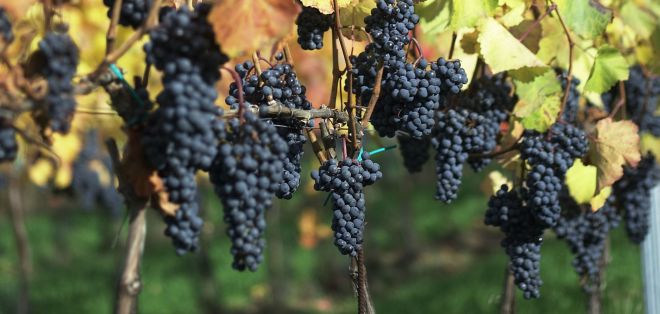


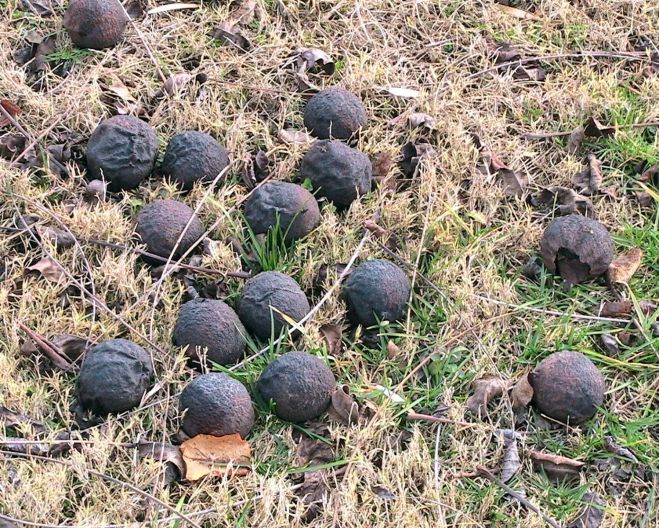


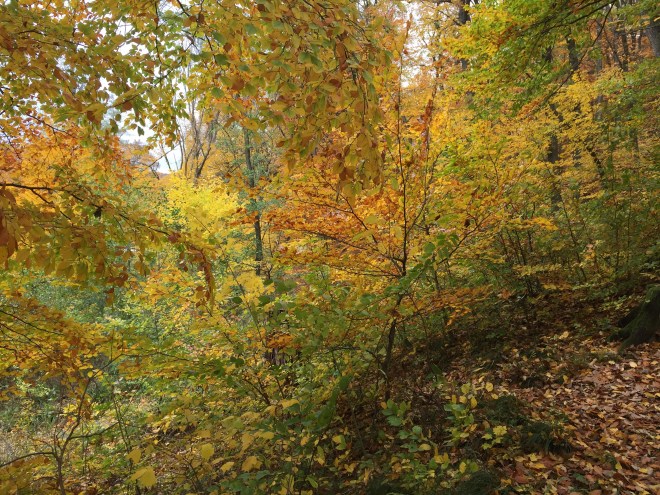
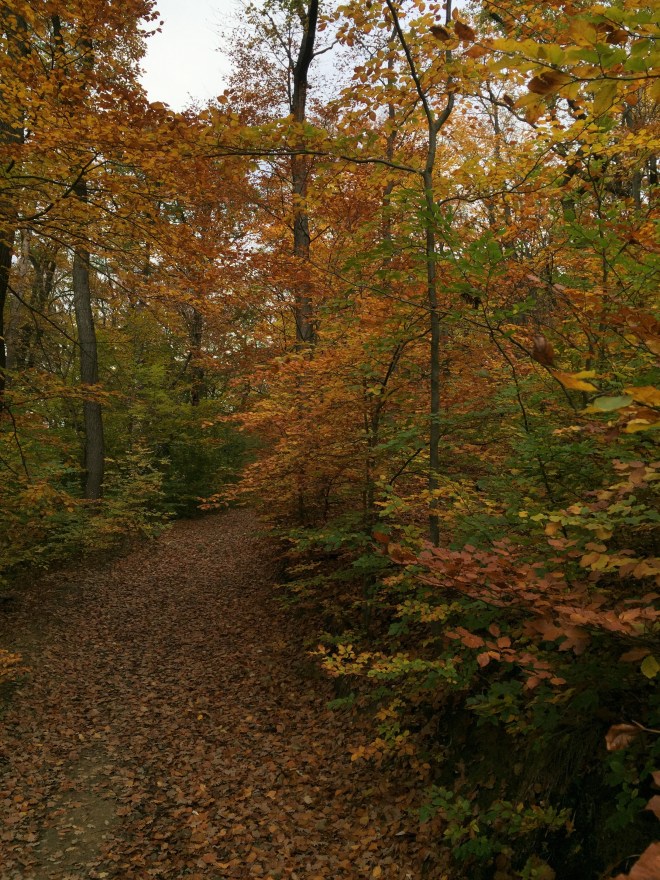


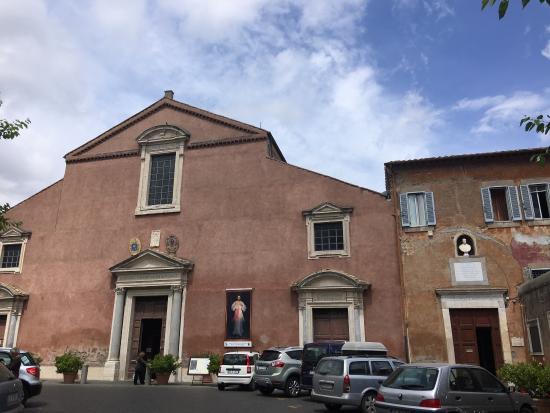






_(9420310527).jpg)




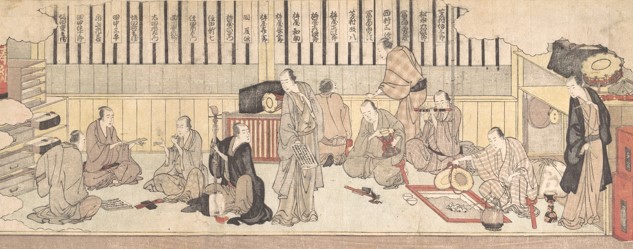







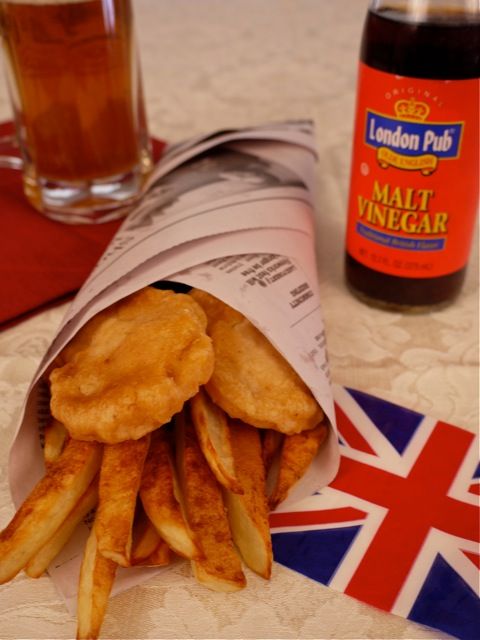

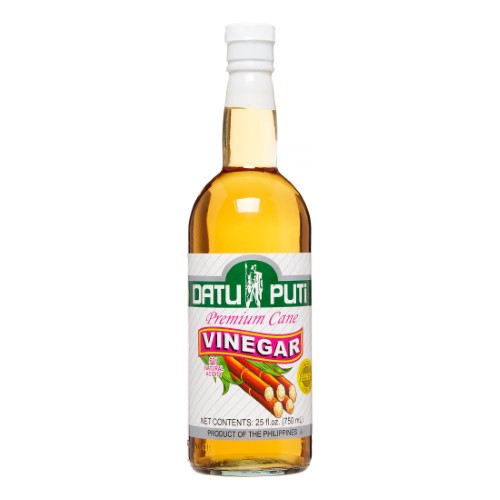

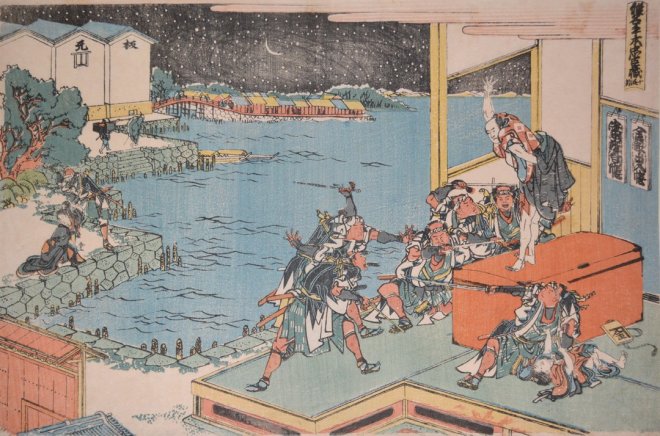


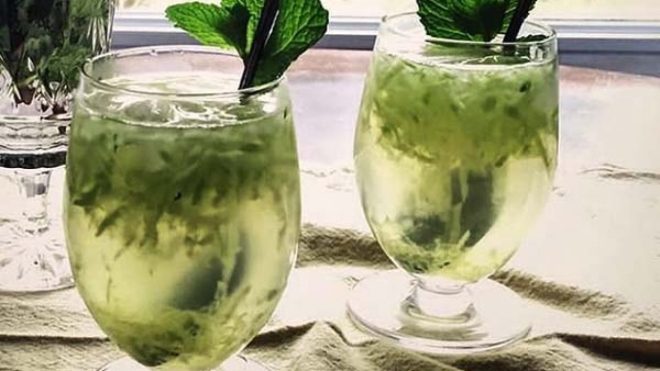


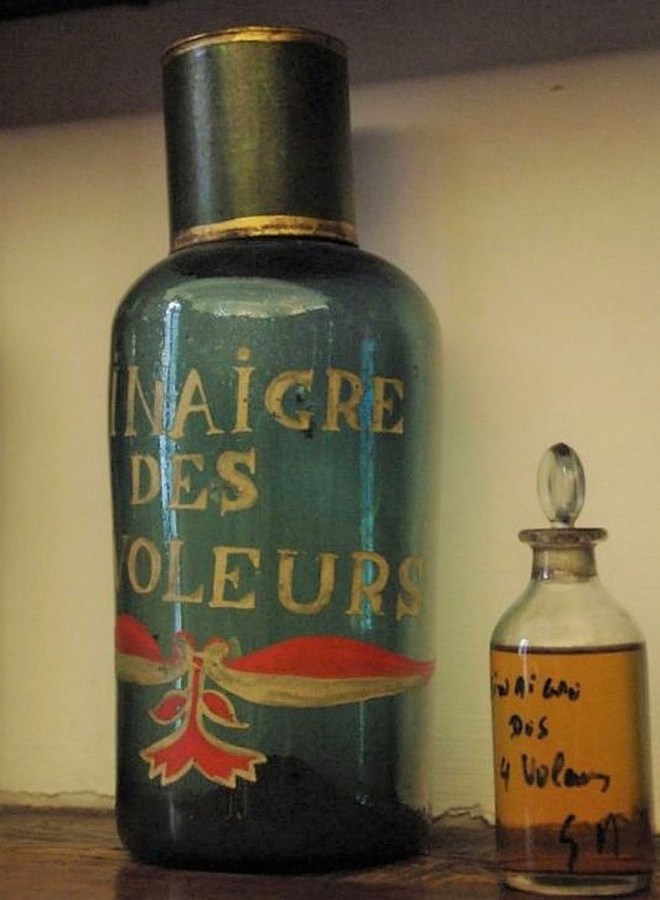

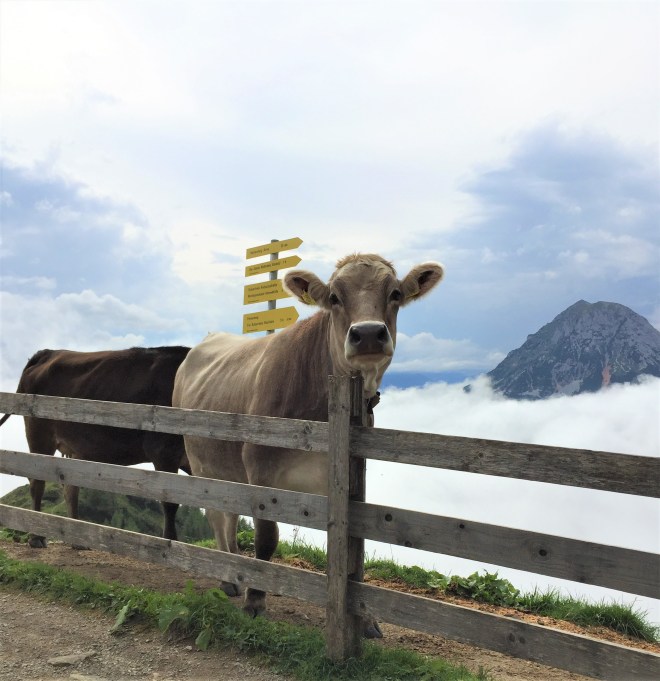
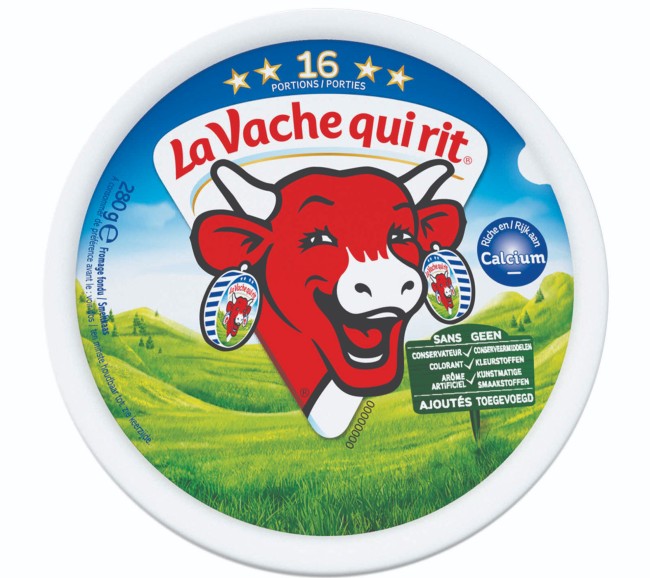


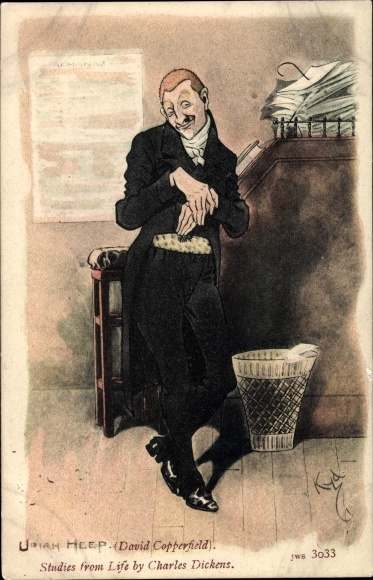

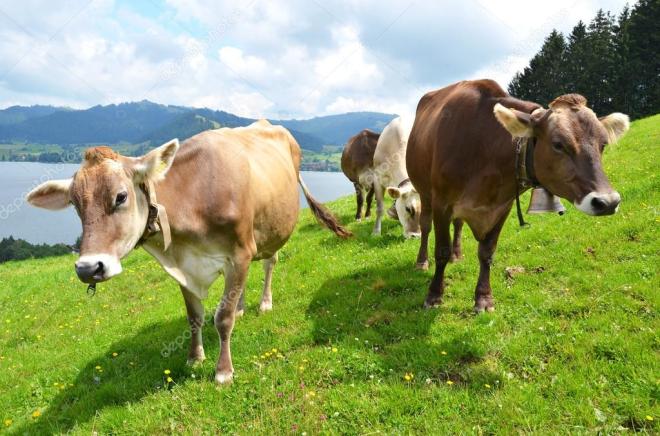


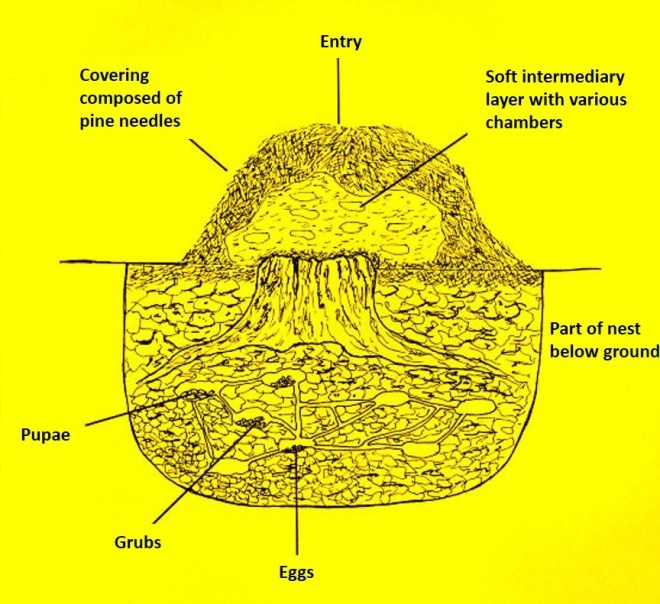
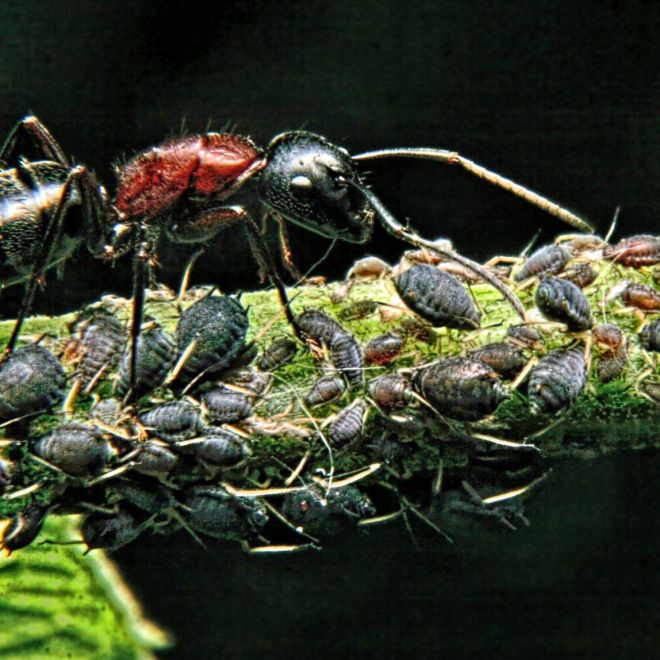
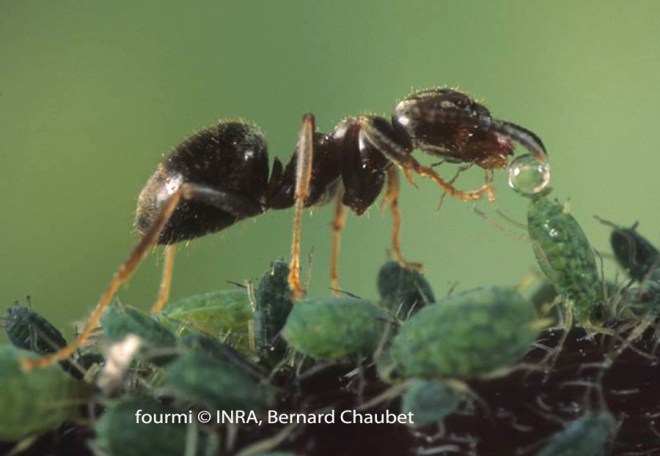
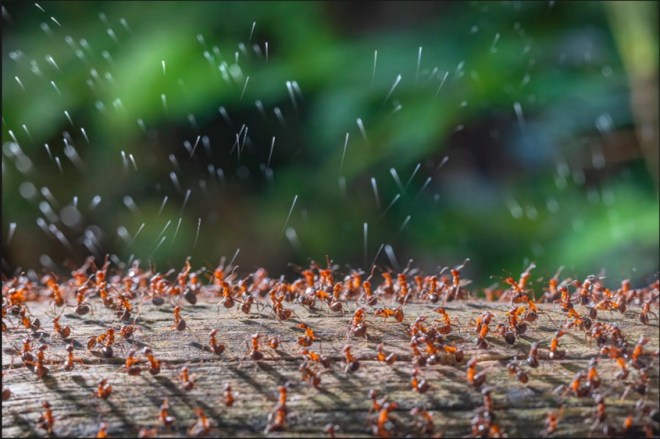




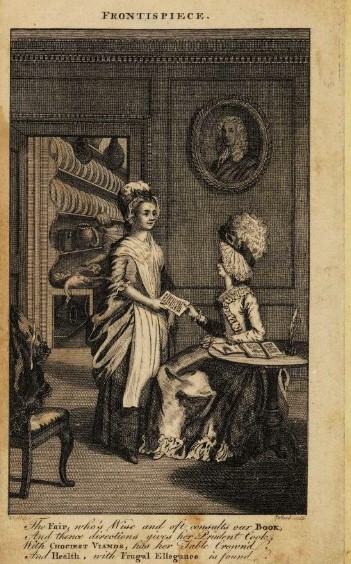
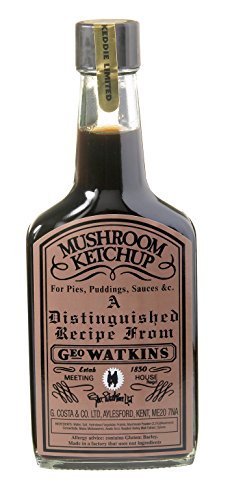
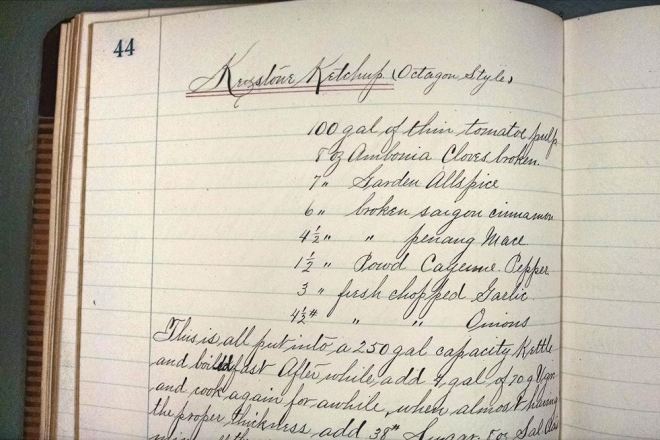

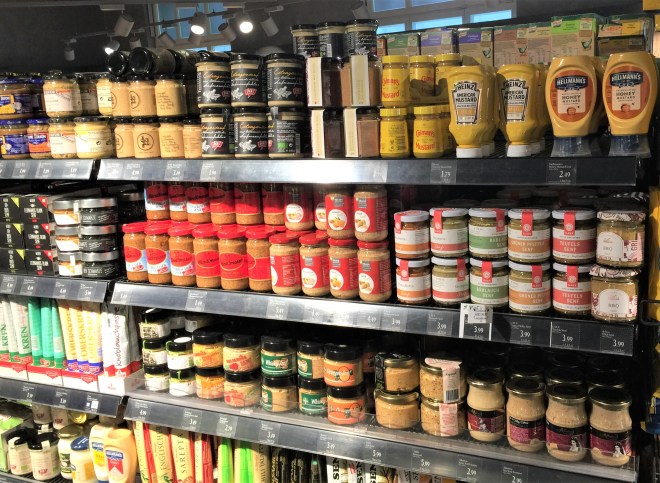
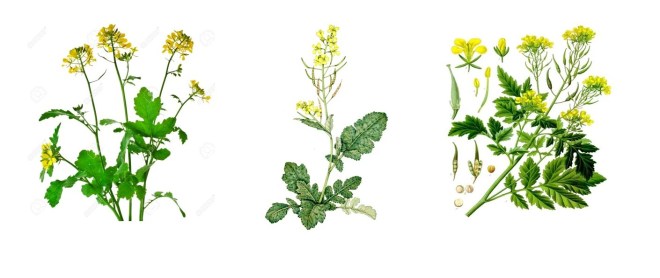
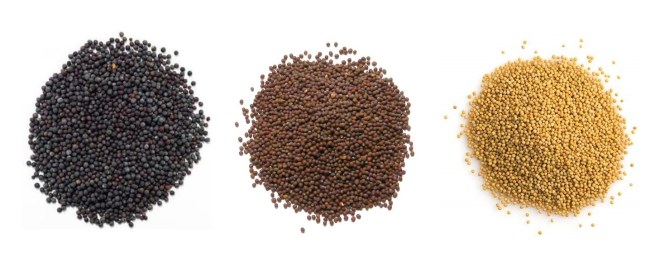
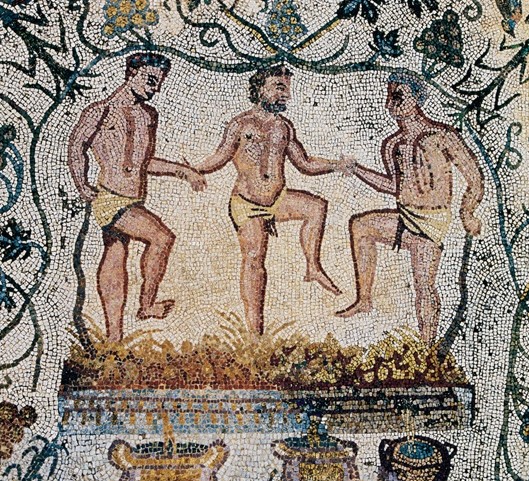

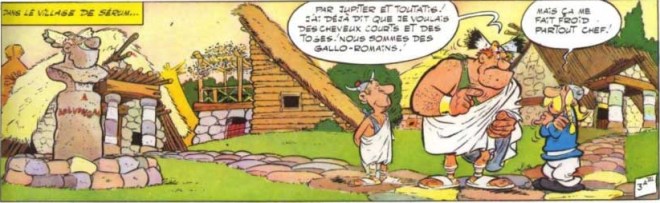

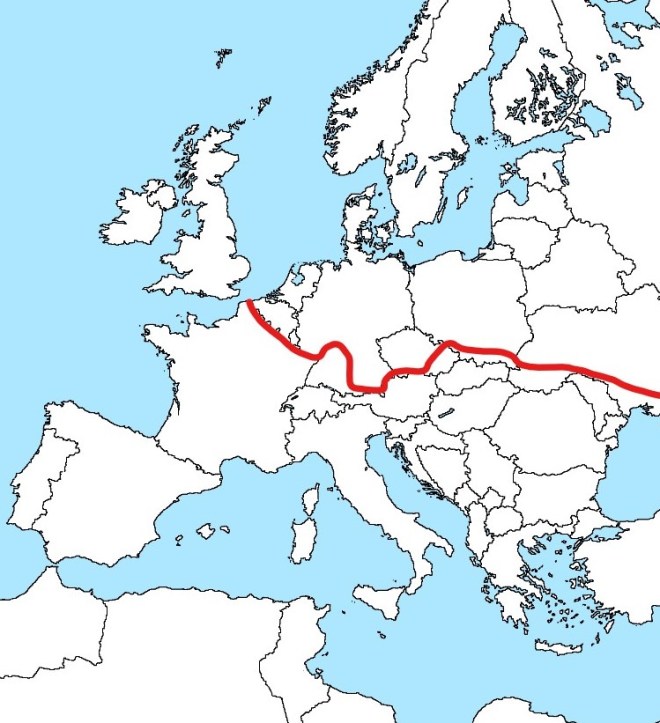
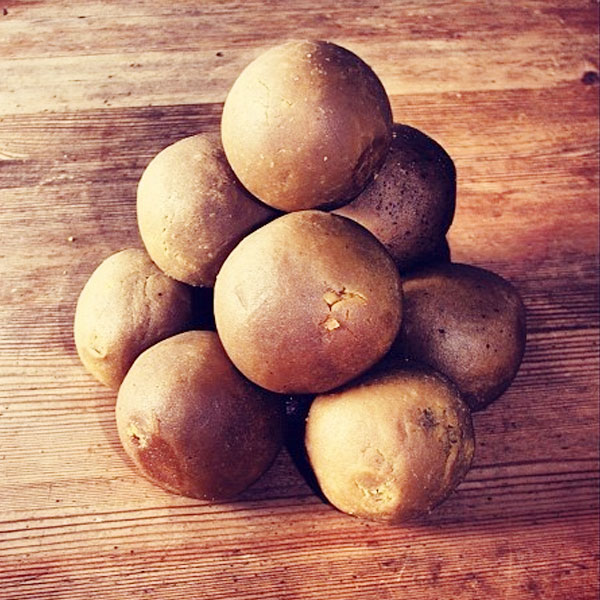

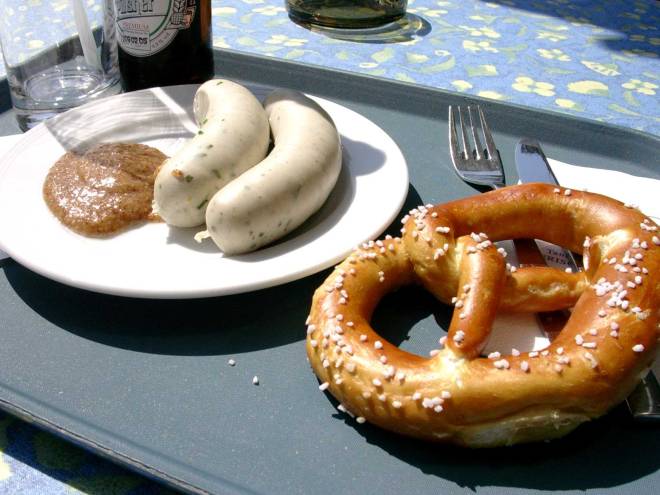



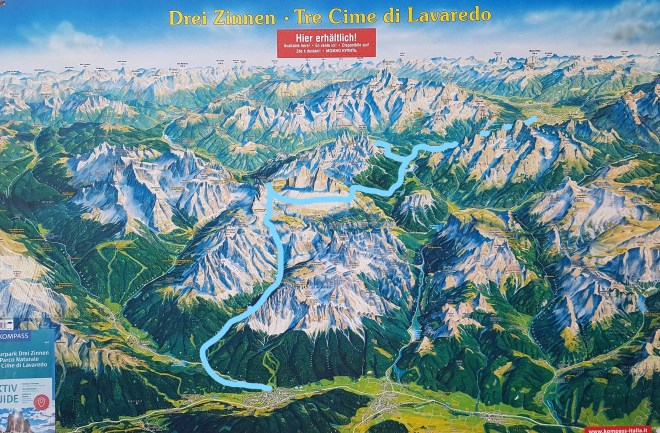

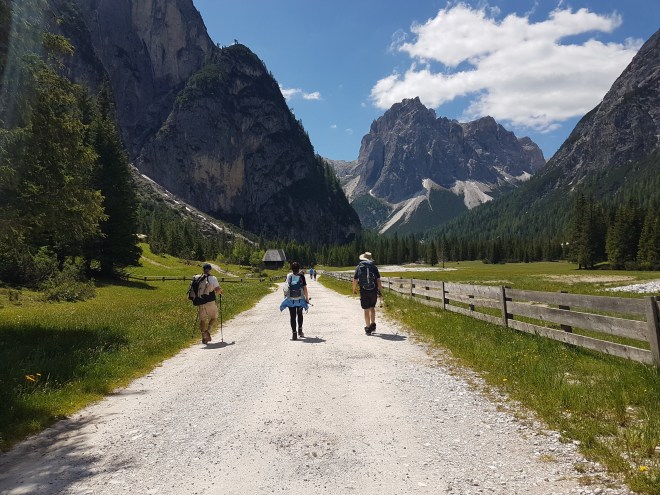
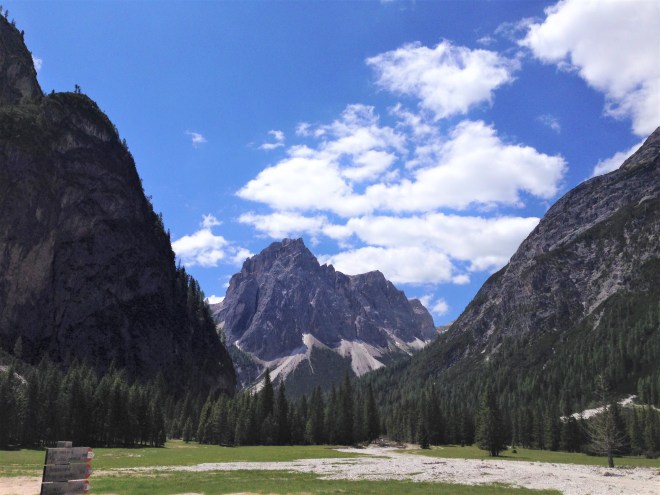


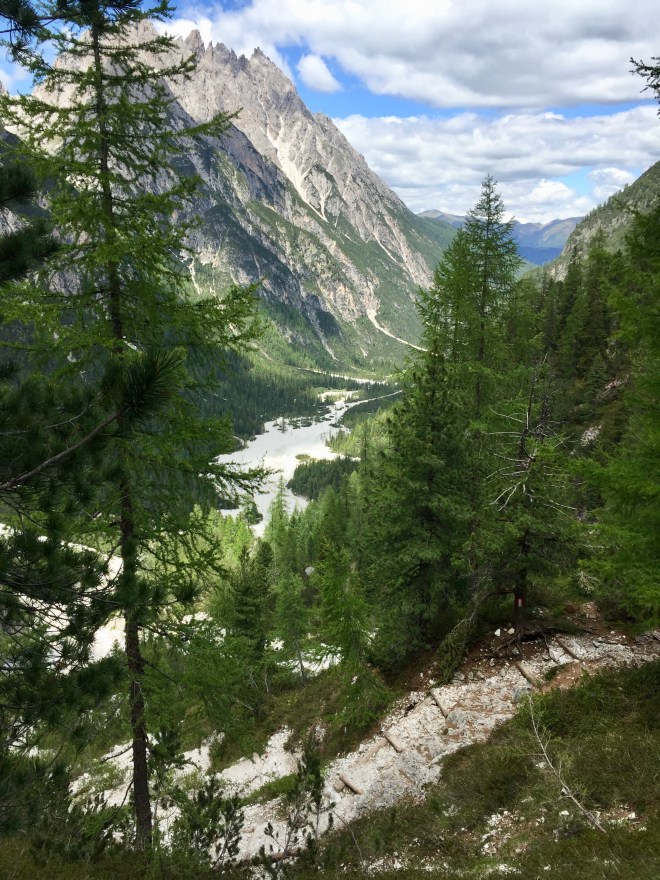








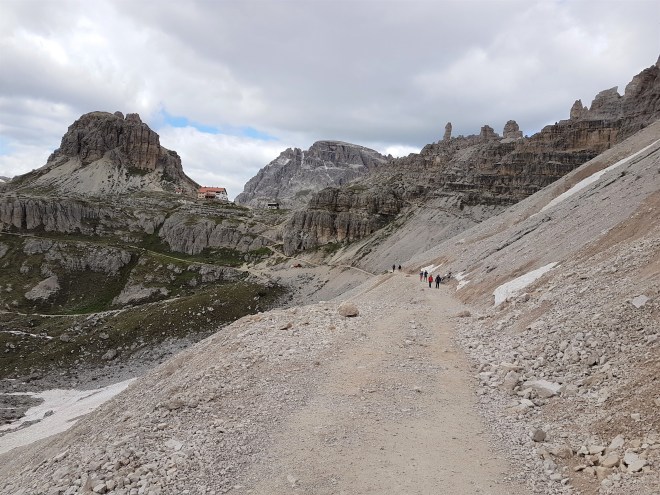








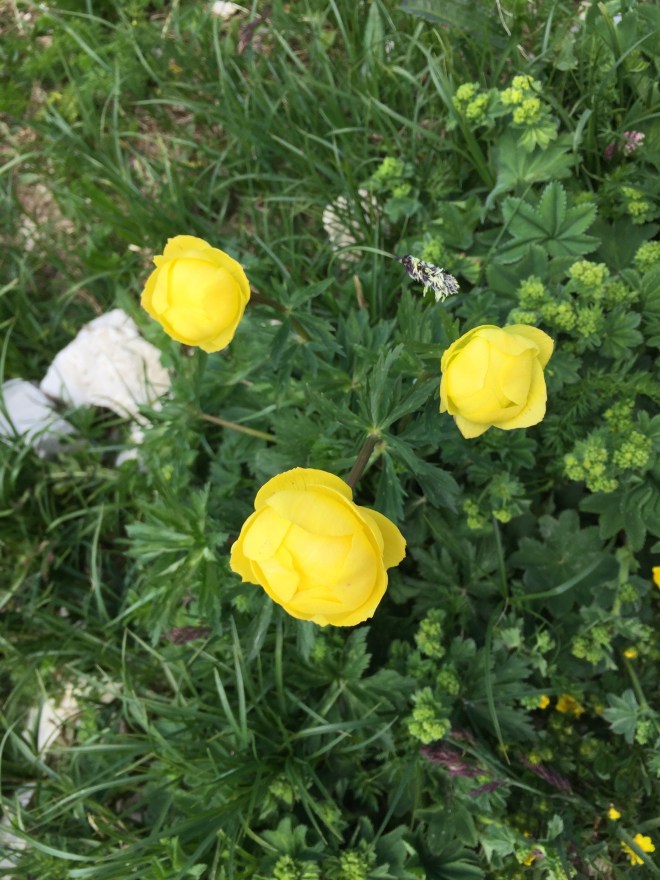


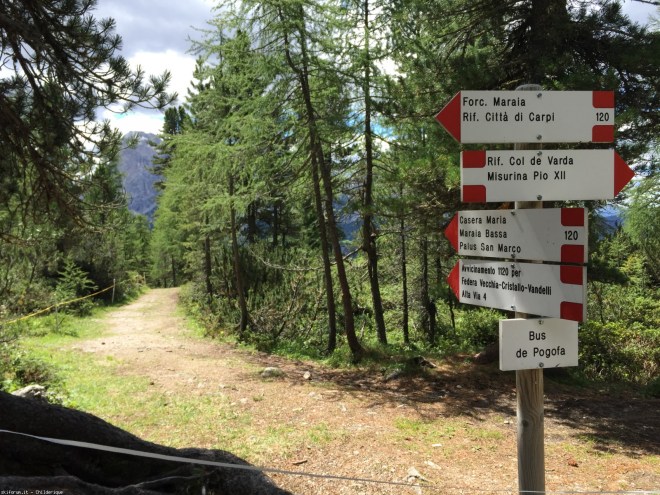

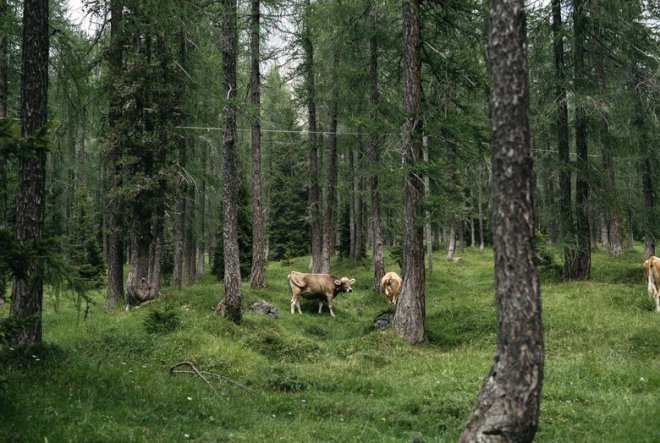
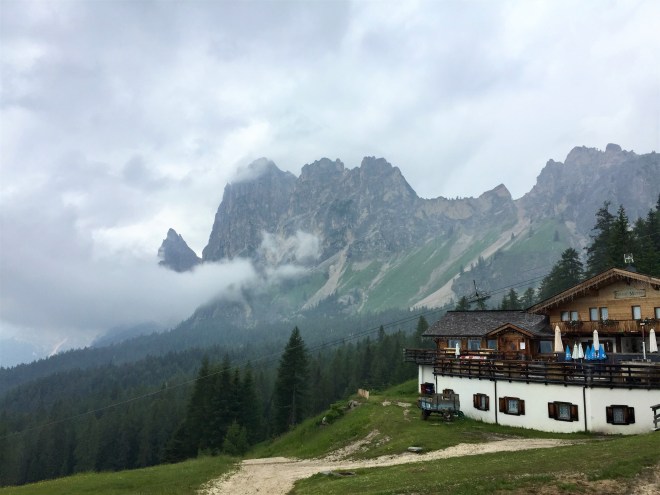











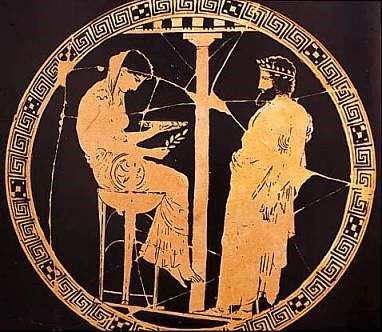






 the heart thrills


.jpg)

(Hendrik_van_Schuylenburgh,_1665).jpg)


