POSTS

CHEESE, GLORIOUS CHEESE!

Beijing, 24 June 2014

My wife and I were having our usual chat with our daughter via FaceTime when she announced that she and her flat mate had been discussing the vital question of why cheeses were different from each other.

Well! That was more than enough bait for a nerd like myself to rise to. With eyes a-shinin’ and lips a-lickin’, I started to research the topic. It was actually a question I had also often posed myself: how on earth did you get so many different-tasting products out of the same rather bland starting material, milk?

I am proud to announce the results of my research. The answer is …. “The most important agents include the four following elements: rennet, starter bacteria and associated enzymes, milk enzymes, second starter bacteria and associated enzymes, and non-starter bacteria”. OK, that’s not very clear, so let me expand a little.

The first step in cheese making is curdling. In fresh, unpasteurized milk, curdling happens naturally. Attack by bacteria floating around in the air and settling on the milk leads to the formation of lactic acid, and it is heightened acidity that causes milk to curdle, separating out into solid curds and liquid whey. But we humans have learned to help the process along. Rennet, which is a complex of enzymes, seems to have been an early favourite for inducing curdling. An interesting theory I read is that our ancestors discovered the milk-curdling properties of rennet when they used animal stomachs as storage vessels for milk. FYI, mammalian stomachs naturally contain rennet as an evolutionary response to milk drinking (which is what makes a mammal a mammal rather than, say, a bird or a reptile). It allows young mammals to digest their mothers’ milk.

Or you can use acids. Given that you want to eat the result, you probably don’t want to use sulphuric acid or hydrochloric acid, even though I’m sure they would do the trick. Naturally-occurring (and edible) acids like vinegar and lemon juice will do nicely.

Or you don’t wait for some random bacteria floating around to attack the milk. Instead, you deliberately inoculate milk with so-called starter bacteria (often adding rennet in a second step). Presumably from previous trials and errors which occurred who knows how many centuries ago in monastery cellars or elsewhere

monks in cellar

these various strains of bacteria are known to give specific tastes to the final cheese. They will chemically attack the milk, and later the curds, in differing ways, giving rise to chemical products with different tastes.

In any event, one way or the other you will end up with curds
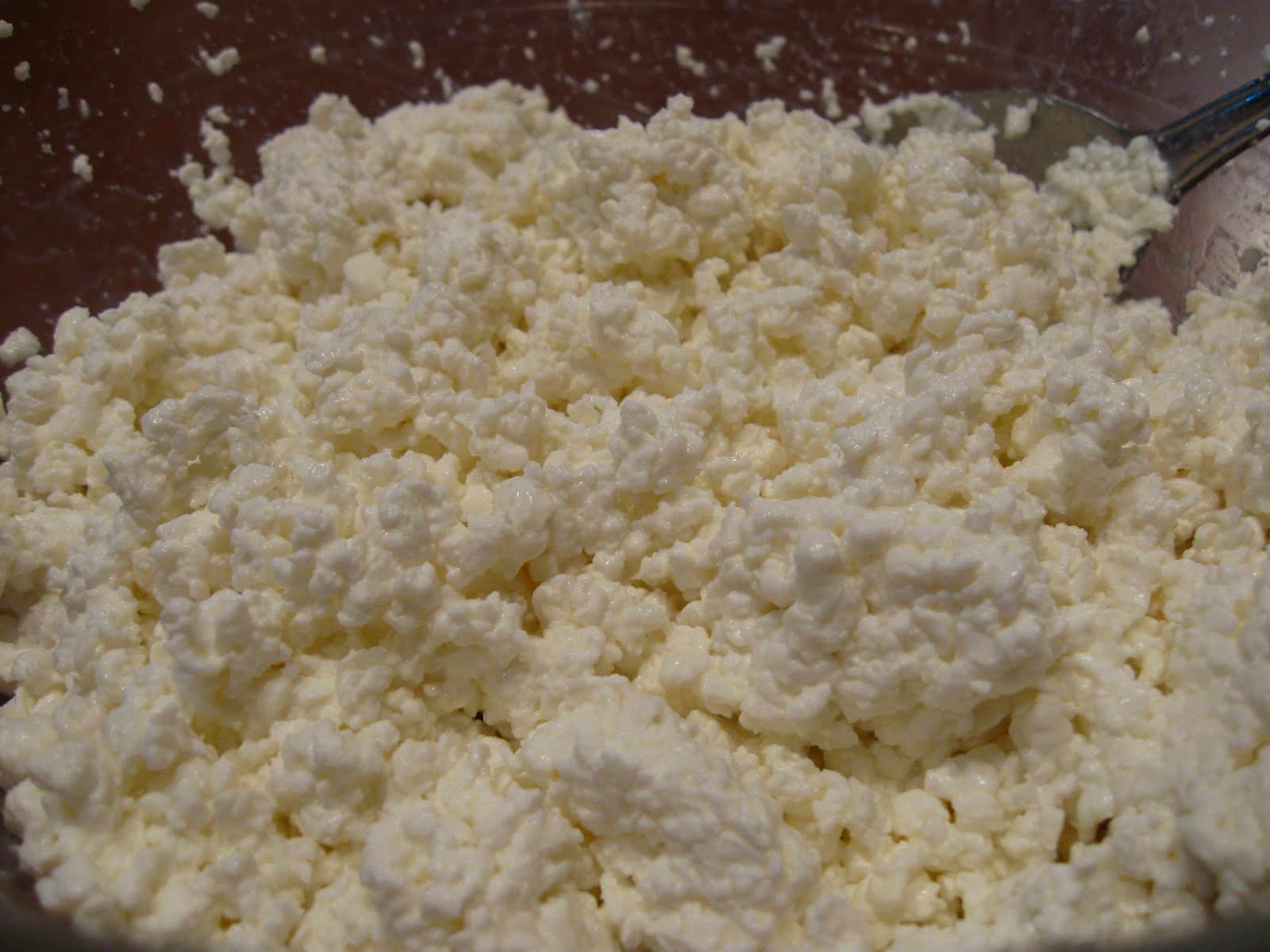
curds

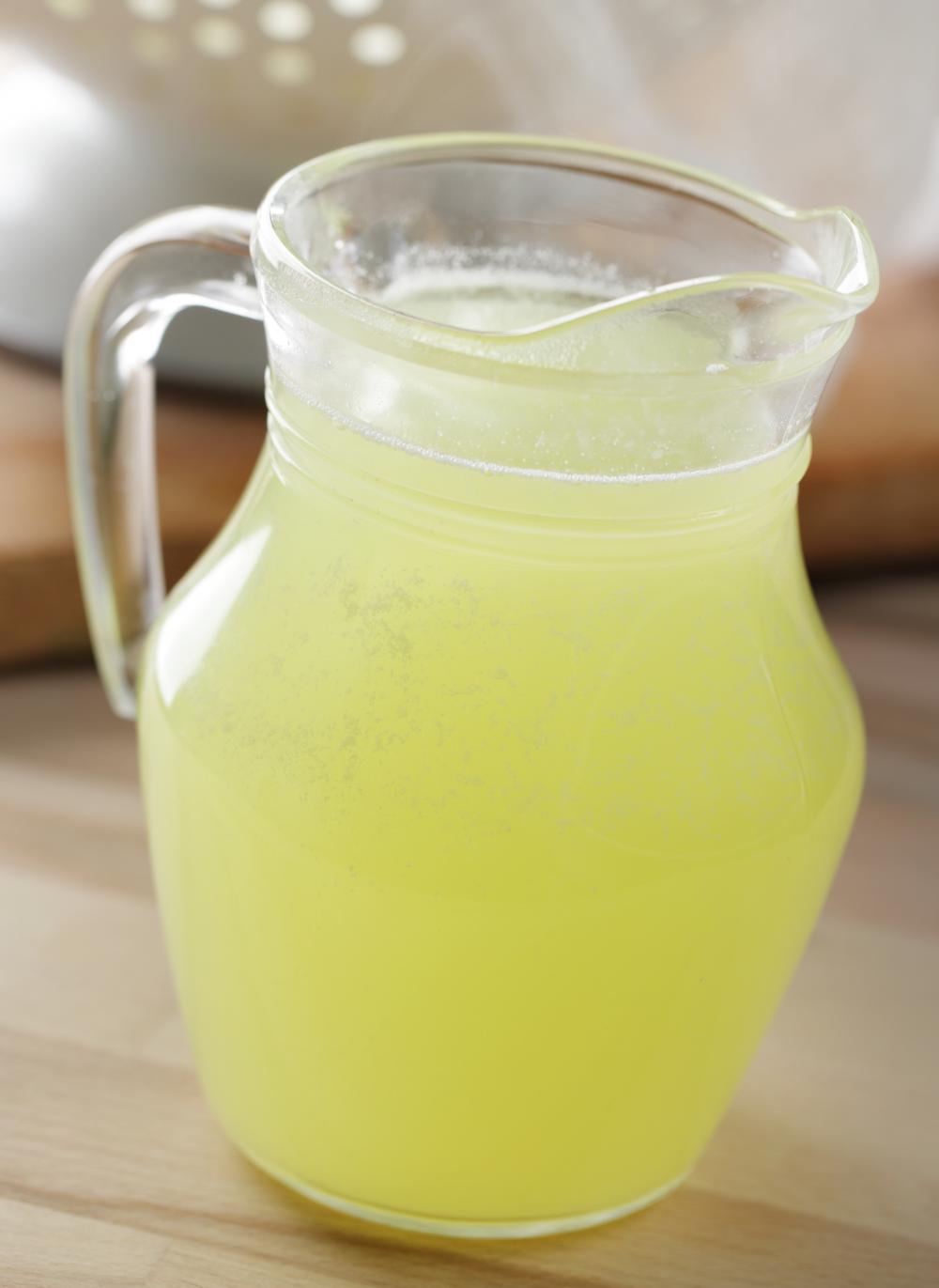
and whey

Whey

Like little Miss Muffet who sat on a tuffet, you can already eat the curds and whey if you so wish, preferably before a spider turns up and spoils your appetite.

little miss muffet

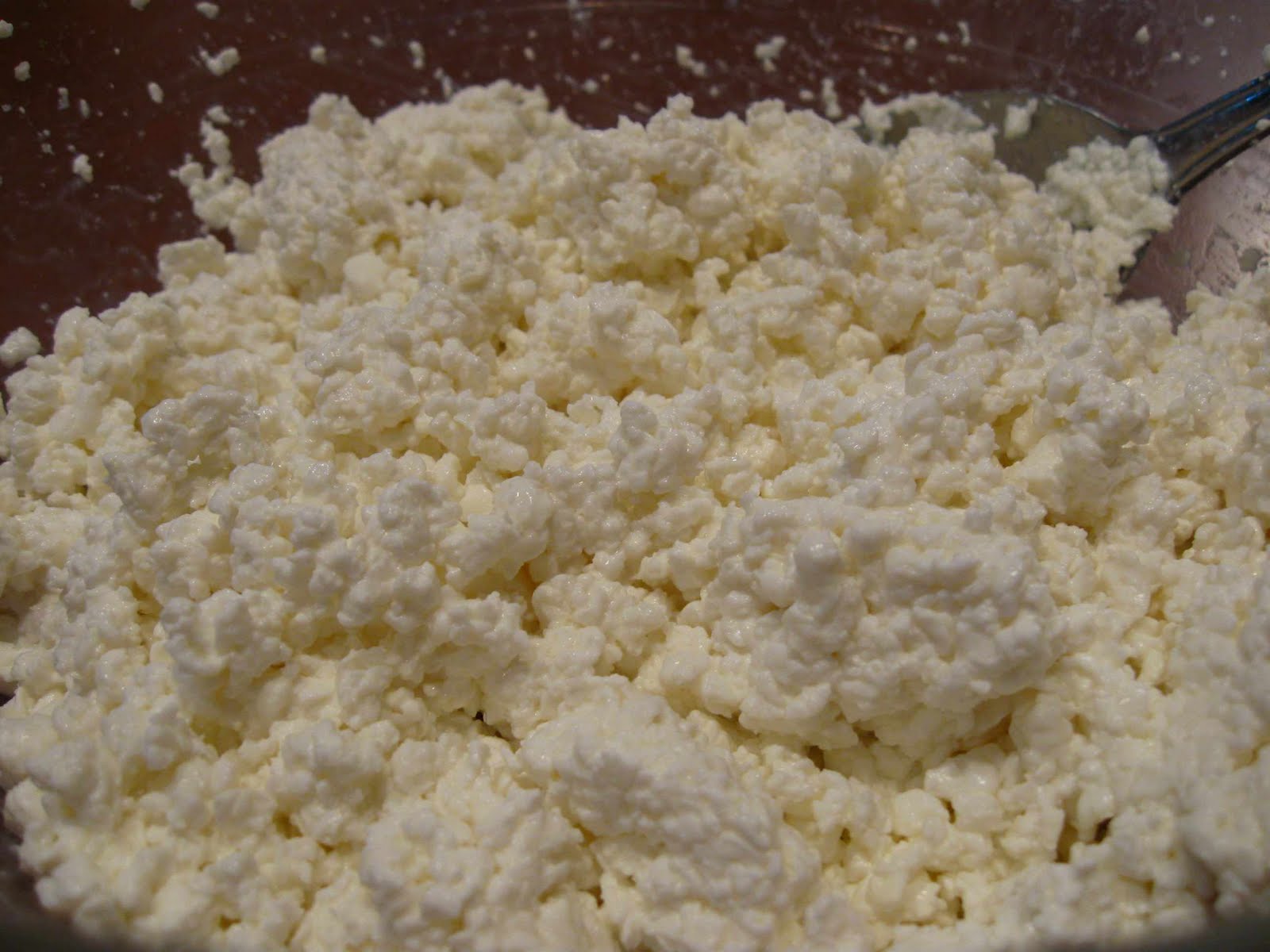
That is basically what cottage cheese is, loose curds

cottage cheese

while after a period when whey was considered only good for poor peasants, whey-based drinks are gaining a certain popularity with the health conscious.

whey-based drink

Alternatively, you can take the curds and start pressing them to get rid of liquid. Depending on how much you press them and process them thereafter, you’ll get a whole series of fresh cheeses: pot cheese, farmer’s cheese, hoop cheese, sour milk cheese, curd cheese, cream cheese, and a thousand others made in non-English cultures. I will mention three of these, the Italian mozzarella (where the curds are actually stretched and kneaded), the French fromage blanc, and the Austrian topfen: mozzarella, because it has to be the best cheese in the world; fromage blanc, because my French grandmother used to serve it when I was young and I always have it when I go back to France; topfen, because I discovered this cheese in the form of the dish topfenstrudel when we moved to Vienna. I will let this photo of farmer’s cheese stand for the whole class of fresh cheeses.
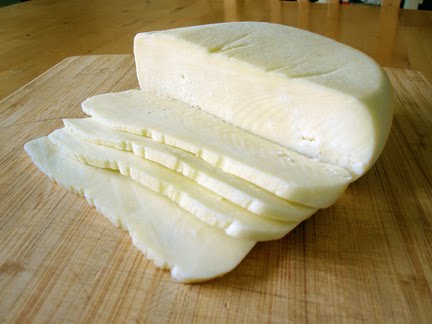
Farmer Cheese

Let me also mention boursin cheese, because (a) my daughter, who set me off on this posting, likes it, (b) it is a good example of the mixing of other ingredients – in this case garlic and fines herbes – with fresh cheese to make a new product (walnuts is another popular ingredient in this category) and (c) when I was young it had a really cool advertising line, “Du pain, du vin, du boursin”
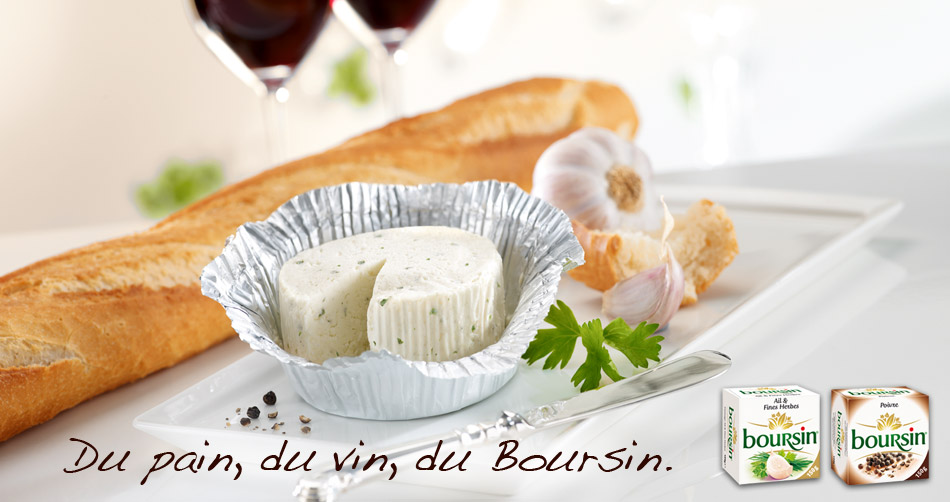
boursin pub

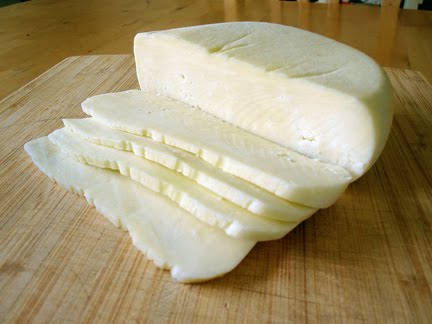
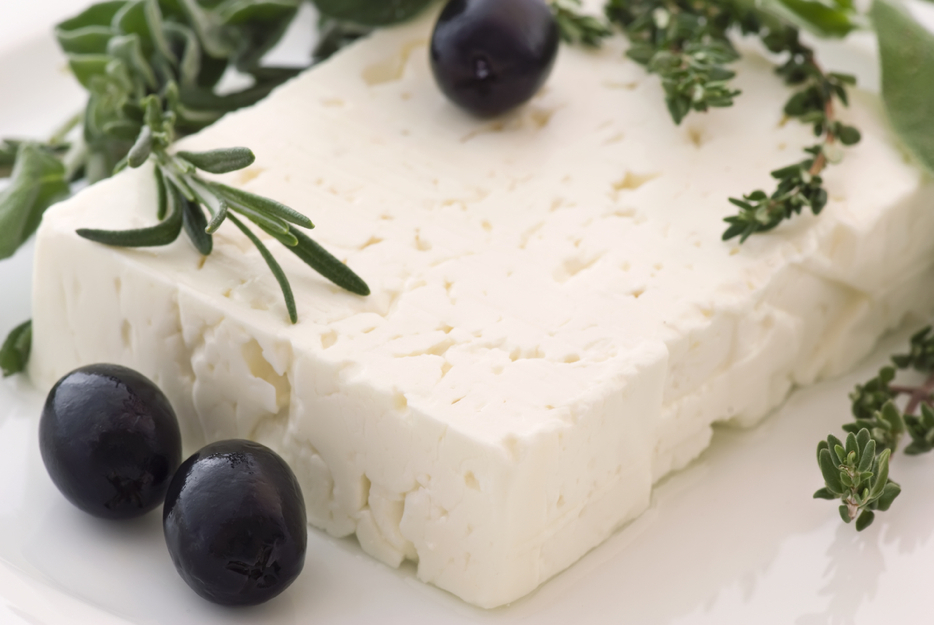
Fresh cheese is just that, fresh. If you don’t process it further, it will spoil. The most basic preserver of cheese is salt, which has been used for millennia to preserve all sorts of food (salt also firms up the texture of cheese, by the way). So as a salute to salt, let me first deal with brined cheeses, which are cheeses that are matured in a brine solution. This is the main type of cheese produced in the Middle East and the Mediterranean areas: Greek feta, Cypriot halloumi, South-Eastern European sirene, Romanian telemea, Middle Eastern akkawi, Egyptian mish (which is also pickled), …. I will let a photo of feta cheese stand in for the class of brined cheeses.

feta

In other cases, … well, the pressed curds seem to be processed in a bewilderingly different number of ways. They will always be salted (to put off spoilage). Some will be heated (which will kill off some, but not all, bacteria). Others will be washed (getting rid of acid and so making them milder to eat). Some are gently set in moulds (soft cheeses), others have the curds ruthlessly crumbled before being subject to moulding (hard cheeses). Then the cheeses are left to ripen for anything from three weeks to several years. But they aren’t left alone, oh no! Many are regularly washed, which helps to form the rinds and keep the cheese moist and no doubt to impart specific tastes. Brine is a common washing solution. In some cases, just to complicate things, the brine is aromatized with herbs. Alcoholic beverages are also popular rinses: wine, cider, beer, and just about any other alcoholic drink known to man. Or the cheeses are sprayed or injected with molds, or smeared with bacteria or molds or yeasts. Or some are smoked. And after all of this, cheese makers still keep fiddling: with humidity levels, with temperature, and with I don’t know what else. All of which gives rise to a dizzying variety of cheeses: they can be soft, or semi-soft, or medium-firm, or firm, or hard; their texture can be brittle, chalky, chewy, creamy, crumbly, flaky, grainy, runny, sticky; they can taste ammoniated, buttery, clean, complex, fermented, herbal, mild, musty, nutty, ripe, robust, salty, smoky, sour, spicy, sweet, tangy, tart, yeasty.

And I haven’t mentioned the effect on taste and texture of what is really the very, very first step in cheese-making, the choice of milk. I think you can make cheese from any mammalian milk (some clever fellows have even made cheese from human milk), but in practice cow’s milk dominates. Goat’s milk is also popular in many parts of the world, while sheep’s milk gets an honourable mention. Water buffalo’s milk is a must for mozzarella. Yak’s milk is used by the Mongolians and Tibetans. The Mongolians also use horse mare’s milk, while Afghanis and Pakistanis use camel’s milk. The Finns use reindeer’s milk, while Serbians have a tradition of making cheese with donkey’s milk. As anyone knows who has eaten goat’s cheese, for instance, the choice of milk sure changes the taste of the cheese. And of course milk isn’t just milk! There are those who insist that what the animals ate – hay versus grass versus any old crap – will affect the milk and therefore the taste of the cheese, so there are cheeses where – it is claimed – only milk from cows eating grass is used. And the time of the year in which the milk is produced, others say, affects its biochemical makeup, so there are cheeses which, I read, should only be made in March, or October, or …

All of this is enough to give one a strong headache …

Out of all of this seeming chaos, I have managed to extract a few categories of ripened cheeses to describe in more detail. Let me start with those cheeses which have molds sprayed onto them, principally of the penicillin family, and which give rise to rinds with white blooms on them. The best known of these has to be the French Camembert, whose surface is sprayed with a mold that is so linked to the cheese that it is named after it, Penicillium camemberti.

Camembert

After years of eating it too, I feel I should also mention the French Brie.

Then there are the cheeses where the mold is injected into them. The French Roquefort and English Stilton fall into this category, although I will have a picture of the Italian Gorgonzola stand in for this group
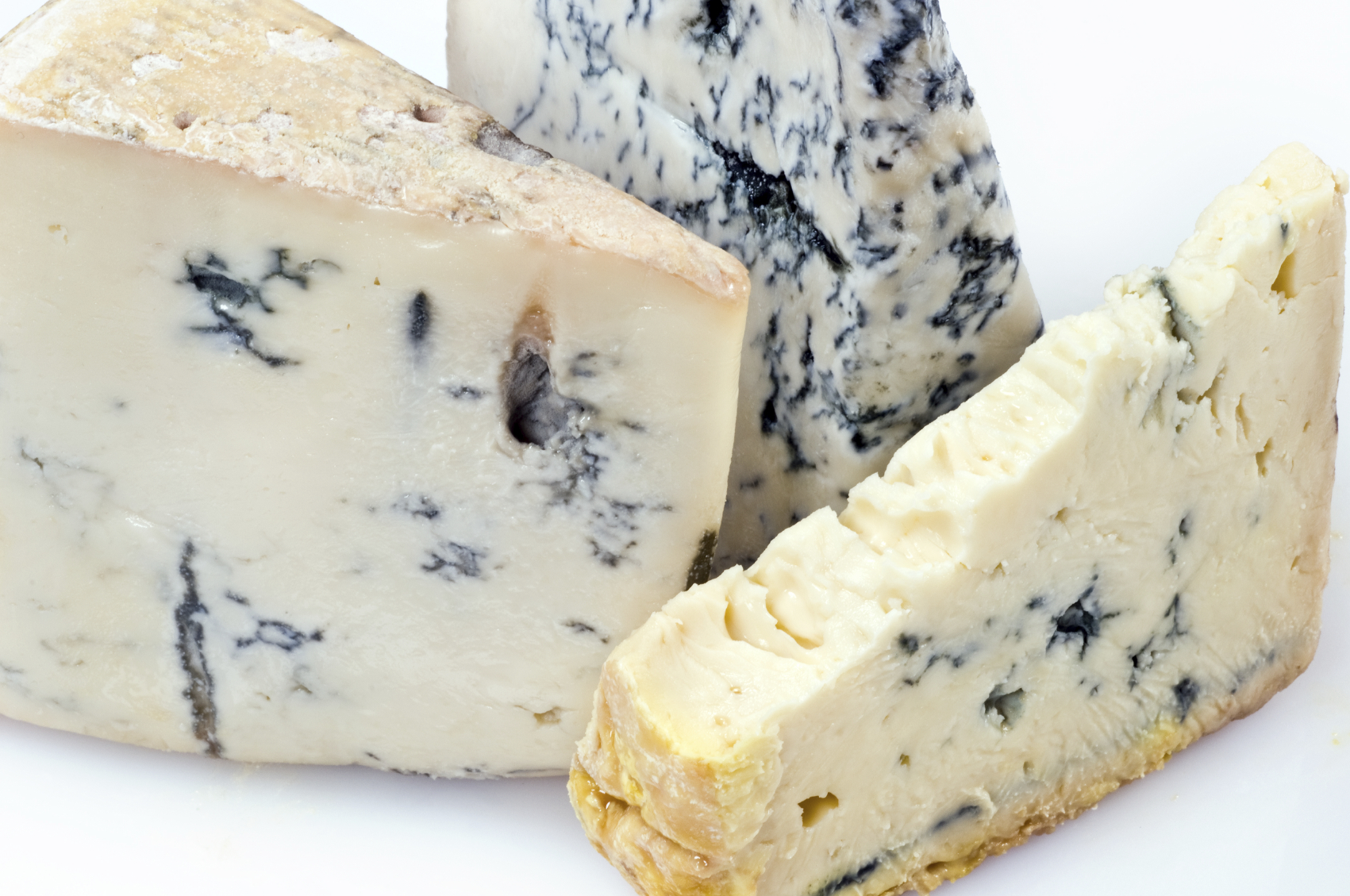
gorgonzola

for the completely trivial reason that when I drove through the village of Gorgonzola (which is near Milan) for the first time, I belatedly realized that actually the cheese was named after a real place.

Then there are the cheeses whose rinses encourage the growth on the rinds of another bacterium, Brevibacterium linens, which gives these cheeses their characteristic pinkish-reddish tint. This bacterium is ubiquitous on the human skin, so no prizes for guessing how it ended up on the cheeses. It is also why our feet smell when sweaty, which no doubt explains why the cheeses in this category tend to stink (it looks like we weren’t so wrong when as boys at school we accused each other of having socks which smelled of old cheese). There are some well-known cheeses in this category like Munster, Limburger, and Port-du-Salut, but I will use as a stand-in for this group a cheese that sadly no longer seems to exists but was a family favourite when I was young: crotte du diable, devil’s droppings (I have mentioned this cheese in a previous post).

crotte du diable

The cheese was very aptly named, having an incredibly foul-smelling rind, so foul that you had to wash your hands very thoroughly after eating it. But the cheese itself was wonderfully smooth.

I have to mention another cheese in this category, the Swiss Raclette. My wife introduced me to this cheese. She had got to know it well during her skiing days in the Alps. During our time in Paris, in the early 1980s, we discovered a little restaurant just off the Champs Elysées where you could get a glorious raclette, served just the way it should be, scraped (raclé) onto your plate and served with gherkins, pickled onions, and potatoes in their jacket.
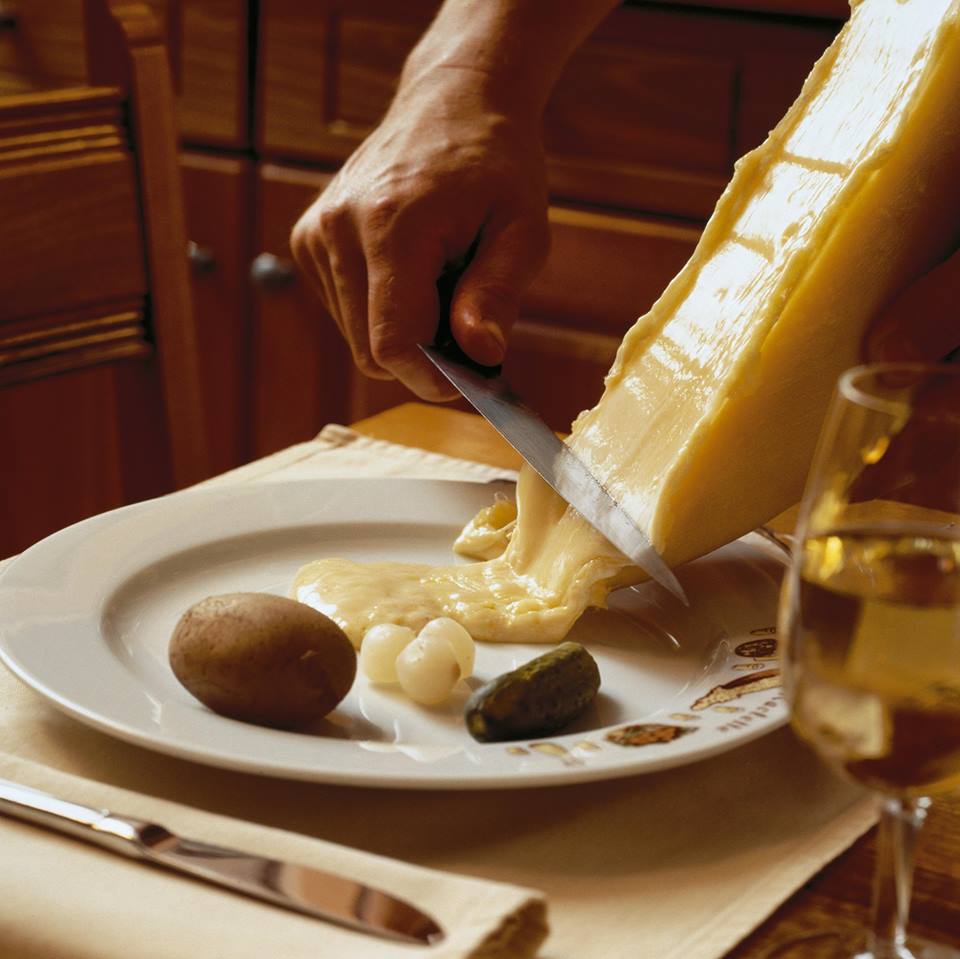
Raclette

When we went back to Paris many years later, we homed in on the place for lunch like bees for their hive. Alas! the restaurant was gone. Glumly, we wandered into a nearby restaurant and had ourselves a totally non-descript lunch. Sic transit gloria mundi.

I can’t think what other categories to extract from this mass of cheeses (over 700 of them according to www.cheese.com). So I’ll just salute a few cheeses which I personally consider deserve special mention:

The great, the glorious, the incomparable, Parmigiano Reggiano

Parmigiano reggiano

not to be grated onto some anonymous pasta, and not to be shaved onto some anonymous salad, but to be eaten alone, flake by grainy flake, slowly and with hushed reverence. When, a few years ago, my wife and I saw that a rare earthquake in Emilia Romagna had wrecked a couple of Parmigiano Reggiano storehouses, we briefly toyed with the idea of jumping onto the first airplane back to Italy and picking up some slightly damaged wheels of the cheese on the cheap. Good sense eventually prevailed.

Emmental
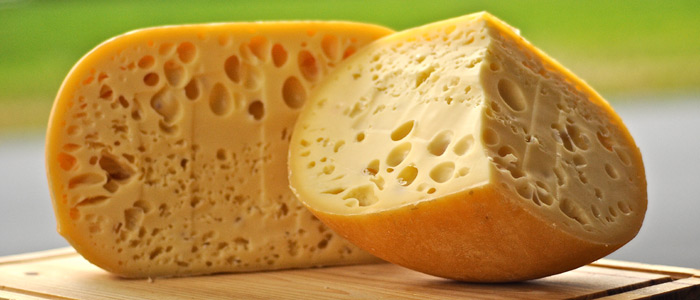
Emmental

which for me somehow is my youth (my mother was a generous purchaser of the cheese), and whose holes (which I have just learned are called “eyes” in the trade) fascinated me. With old age, I have become boringly scientific and now know that the eyes are caused by the use in the starter bacteria of the bacterium Propionibacterium freudenreichii, which consumes lactic acid and excretes CO2; the latter creates bubbles, which we see as eyes (if you get my drift). In the old days, these eyes were considered defects to be avoided, but no doubt after seeing how the eyes made the cheese popular with children and therefore with their parents, emmental makers began to encourage their presence.

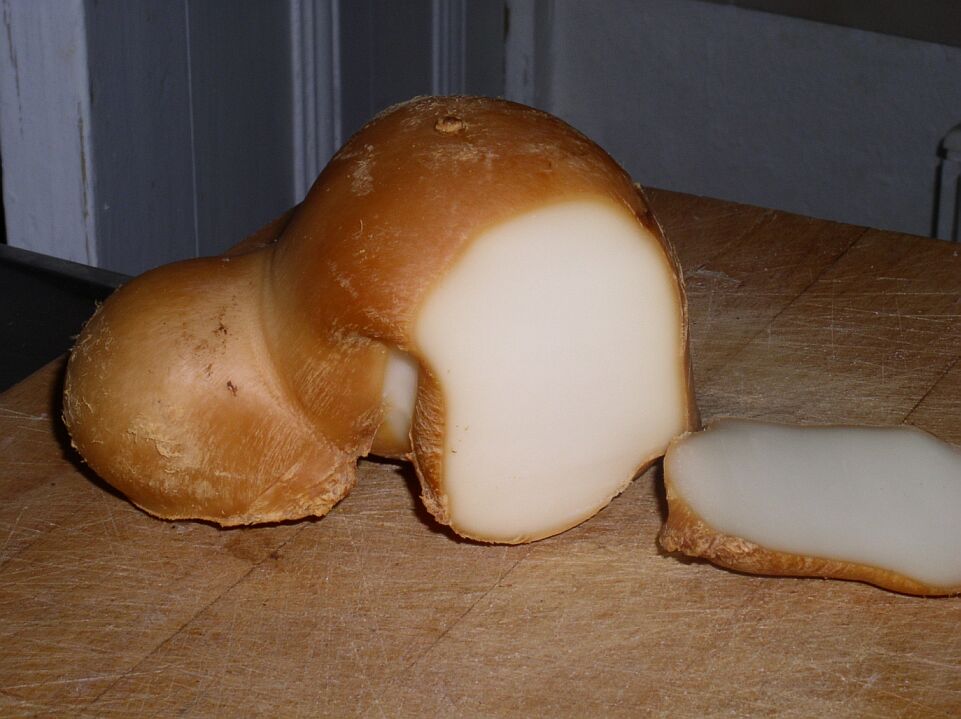
Then I pass on to scamorza affumicata, which is not that well-known outside of Italy. Like mozzarella, it’s a stretched curd cheese which is then allowed to ripen. Makers form a ball and then tie a string around it to hang up in the store room, which explains its “strangled” shape.

scamorza

It looks like this inside.

OLYMPUS DIGITAL CAMERA

It is best when smoked, and best eaten grilled on bread. It was one of the Italian foodstuffs which my wife introduced me to when we first met.

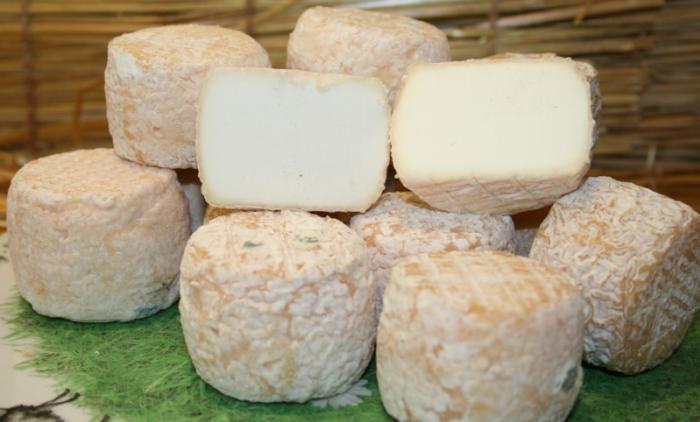
And finally, goat’s cheese. Not those fussy little rolls you find in upscale shops, often covered in herbs or pepper or some other thing. No, I mean the goat’s cheese which I would eat at my grandmother’s house in France, which looked like this

fromage de chevre

The ones I ate were made by the farmer’s wife down the road. When we needed some, my mother or grandmother would give me the money, I would hop on my Solex and speed over to the farm, and after a little chit-chat – “how are you? how are the children?’ – she would take me out to the yard, where in an old bird cage sat a number of goat cheeses of differing ages. After some thoughtful discussion, I would choose a few, ranging from the fresh to the somewhat aged. Ah, those cheeses were soooo good!

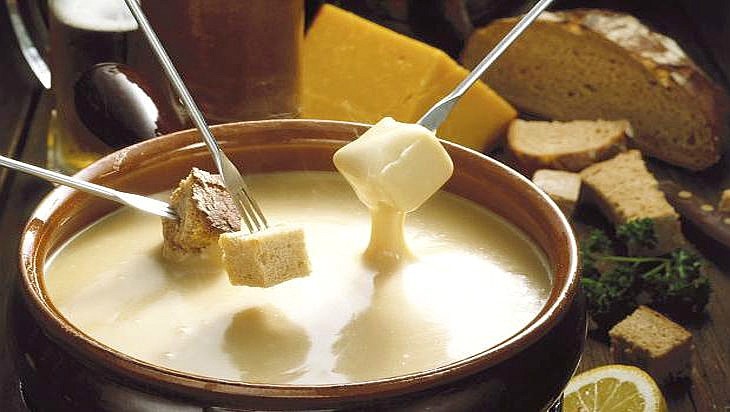
I cannot end without a mention of Fondue, even though it’s a cheese dish rather than a cheese, because it’s just so … damned … good. It can be made from quite a number of cheeses, often mixed together, produced in the Alps or in the nearby Jura mountains: the Swiss Gruyère, Emmental, Vacherin, Sbrinz, and Appenzeller; the French Comté, Beaufort, and Reblochon; or the Italian Fontina. The key, of course, is the white wine. Here’s how you prepare a fondue: (1) Rub the inside of the pot with garlic. (2) Lightly heat the white wine with cornstarch (used to prevent separation of wine and cheese). (3) Add the grated cheese or cheeses and stir until it is all melted. (4) Top off with a bit of kirsch. Start eating, dipping chunks of bread into the pot.

fondue

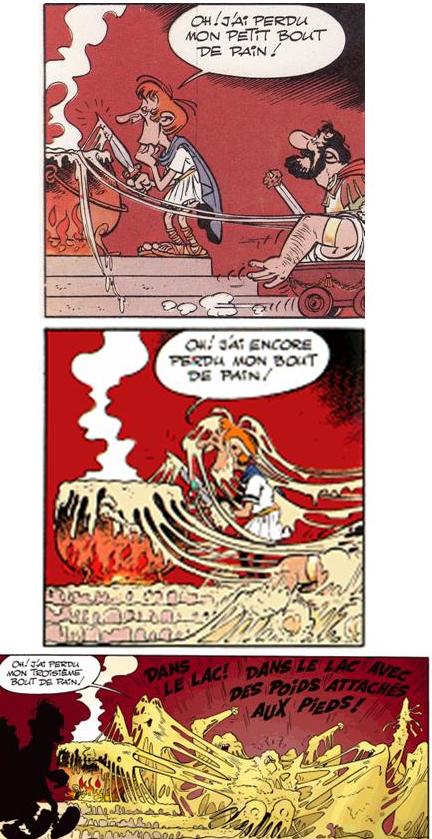
Fondue has become so linked with Switzerland that Astérix, that bellwether of popular European culture, has fondue playing a prominent part in the album Astérix chez les Hélvètes. But in a bout of creative delirium the writer, Goscinny, and the illustrator, Uderzo, laced this most Swiss of traditions with debauchery borrowed from Federico Fellini’s much-discussed film Satyricon, which came out a year before the Asterix album was published and scandalized many. Satyricon included a series of Roman orgies, full of painted faces, feelings of ennui, mechanical gorging of elaborate food, and sado-masochistic punishments. So the fondue parties organized by Goscinny-Uderzo’s Roman governor of Helvetia take the form of orgies – although, to the governor’s great irritation, they are much too clean; this is Switzerland, after all.
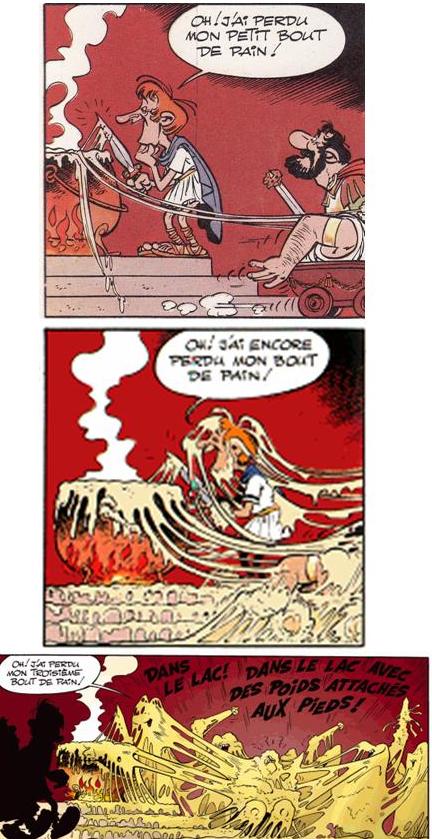
asterix and fondue

The scenes pick up on a tradition that if you lose your bread in the fondue pot, you are punished in some way: for instance, a man has to buy a round of drinks, while a woman has to kiss her neighbours. In the case of Asterix, the young fool is thrown into Lake Geneva with weights attached to his feet, another nod to the casual brutality which filled Satyricon.

Anyway, these are my choices. I’m sure each one of my readers has his or her own list of favourites. I earnestly suggest that they immediately rush out, buy one or more of their favourites, and gorge themselves in a wild bout of cheese-eating.

And I hope I’ve answered my daughter’s question about how cheese is made.

_________________________

Monks in a cellar: http://p9.storage.canalblog.com/95/74/180464/28709536.jpg [in http://toutinfrimage.canalblog.com/archives/2008/08/07/10163569.html%5D
Curds: http://3.bp.blogspot.com/-e_yg4m7wR4g/Toy0E_DhaOI/AAAAAAAAChs/Qmjyg7II6Gw/s1600/salting_curds.jpg [in http://cooking-from-scratch.blogspot.com/2011/10/cottage-cheese.html
Whey: http://4.bp.blogspot.com/-n-UC59ZGNzg/T7sTeo1GtWI/AAAAAAAABCM/9qzvn0wQ3U0/s1600/Whey.jpg [in http://www.hybridrastamama.com/2012/05/making-whey-protein-and-cream-cheese-try-these-unique-food-products.html%5D
Little Miss Muffet: http://bloximages.chicago2.vip.townnews.com/nwitimes.com/content/tncms/assets/v3/editorial/e/b6/eb652bda-d380-5344-a681-06a4de4af8d6/52e7fed631b22.preview-699.jpg [in http://www.nwitimes.com/lifestyles/food-and-cooking/from-the-farm-reader-looking-for-healthy-blender-drink-recipe/article_e8c2a9b9-4658-54a3-9d24-8f00640a8484.html%5D
Cottage cheese: http://uptownmagazine.com/files/2014/05/uptown-kraft-cottage-cheese-recall.jpe [in http://uptownmagazine.com/2014/05/kraft-recall-cottage-cheese/%5D
Whey-based drink: http://www.ebperformance.com/wp-content/uploads/2011/05/proteinjuice-bottles.png [in http://www.ebperformance.com/products/protein-drinks/%5D
Farmer’s cheese: http://3.bp.blogspot.com/_a-oLImtGrzM/S_Mpn-DOErI/AAAAAAAAAr0/ivqGKz6av4s/s1600/Blog+Raw+Milk+Farmer+Cheese+8.jpg [in http://artistta.blogspot.com/2010/05/homemade-raw-milk-farmer-cheese.html%5D
Feta cheese: http://www.yiannislucacos.gr/sites/default/files/ingredient318_feta2.jpg [in http://www.yiannislucacos.gr/en/ingredient/2404/feta-cheese%5D
Boursin publicity: http://www.boursin.ch/uploads/pics/Indexbild_ganze_Breite_2011_01.jpg [in http://www.boursin.ch/%5D
Camembert: http://upload.wikimedia.org/wikipedia/commons/8/88/Camembert.JPG [in http://en.wikipedia.org/wiki/Camembert%5D
Gorgonzola: http://blog.fairwaymarket.com/wp-content/uploads/2011/10/GorgonzolaCheese.jpg [in http://blog.fairwaymarket.com/2011/10/blue-cheese-moldy-cheese-day/%5D
Crotte du diable: http://p1.storage.canalblog.com/18/34/180464/7469035.jpg [in http://toutinfrimage.canalblog.com/archives/2006/10/15/2911082.html
Raclette: http://www.gentlemansgazette.com/wp-content/uploads/2013/12/Traditional-Raclette.jpg [in http://www.gentlemansgazette.com/dinner-party-ideas-how-to-host/%5D
Parmigiano Reggiano: http://upload.wikimedia.org/wikipedia/commons/5/5b/Parmigiano_reggiano_piece.jpg [in http://en.wikipedia.org/wiki/Parmigiano-Reggiano%5D
Emmental: http://cheesecrafters.ca/wp/wp-content/uploads/2012/06/full_Emmental.jpg [in http://cheesecrafters.ca/products/emmental/%5D
Scamorza affumicata: http://www.lascelta.com/media/catalog/product/cache/1/image/700×477/9df78eab33525d08d6e5fb8d27136e95/f/o/for022aff.jpg [in http://www.lascelta.com/formaggi/semi-stagionati/scamorza-bianca-1.html%5D
Scamorza-inside: http://upload.wikimedia.org/wikipedia/commons/8/85/Scamorza.jpg [in http://en.wikipedia.org/wiki/Scamorza%5D
Goat’s cheese: http://www.fromagerie-martin.com/photos/crottindechevre_23071.jpg [in http://www.fromagerie-martin.com/fiche_produit.php?id=23071%5D
Fondue: http://postfiles15.naver.net/20140430_30/cheesemarket_1398825823552cruRM_JPEG/%C6%FE%B5%E04.JPG?type=w2 [in http://blog.naver.com/PostView.nhn?blogId=cheesemarket&logNo=90194981830&categoryNo=0&parentCategoryNo=21&viewDate=&currentPage=1&postListTopCurrentPage=1%5D
Asterix and fondue: http://3.bp.blogspot.com/-94znst74TRI/TwEM1x4890I/AAAAAAAAPzA/OoSEUFiQkN0/s1600/asterix+chez+les+helvetes.jpg [in http://heavenlypalate.blogspot.com/2012/01/cheese-fondue-great-cheesy-meal-during.html%5D

SCULPTURE AND NATURE

Beijing, 15 June 2014

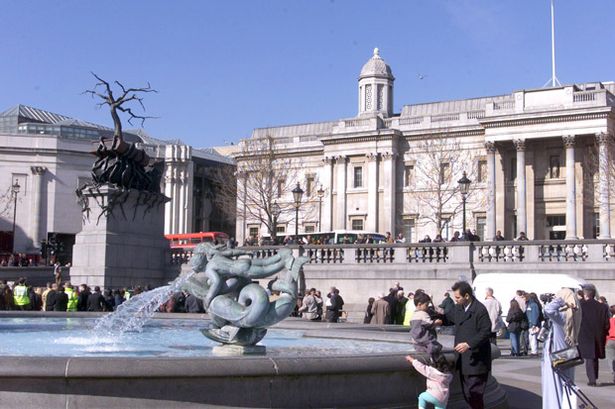
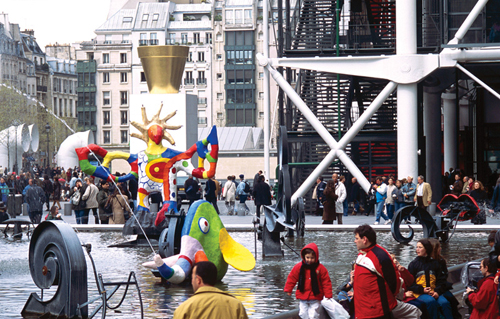
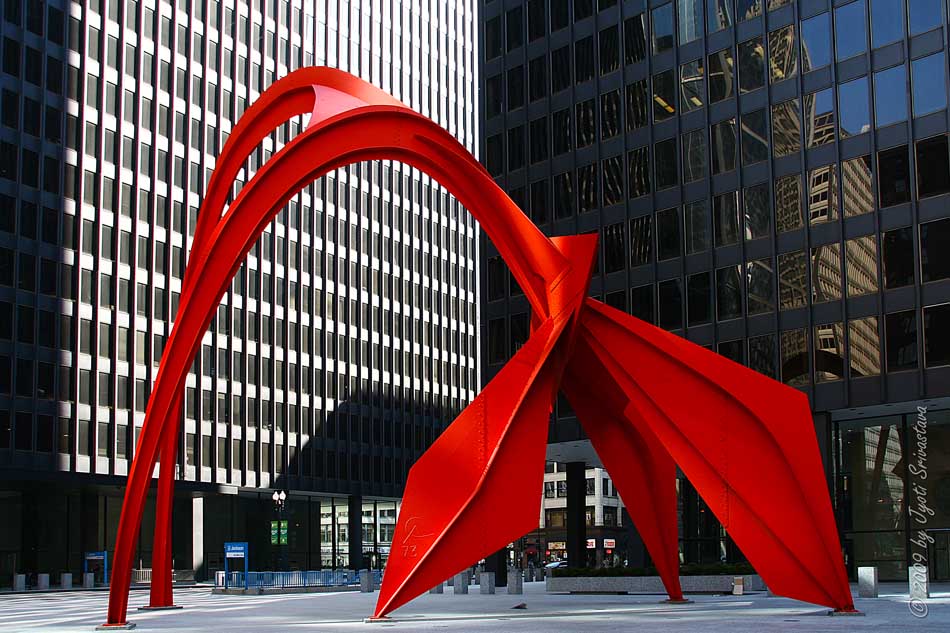
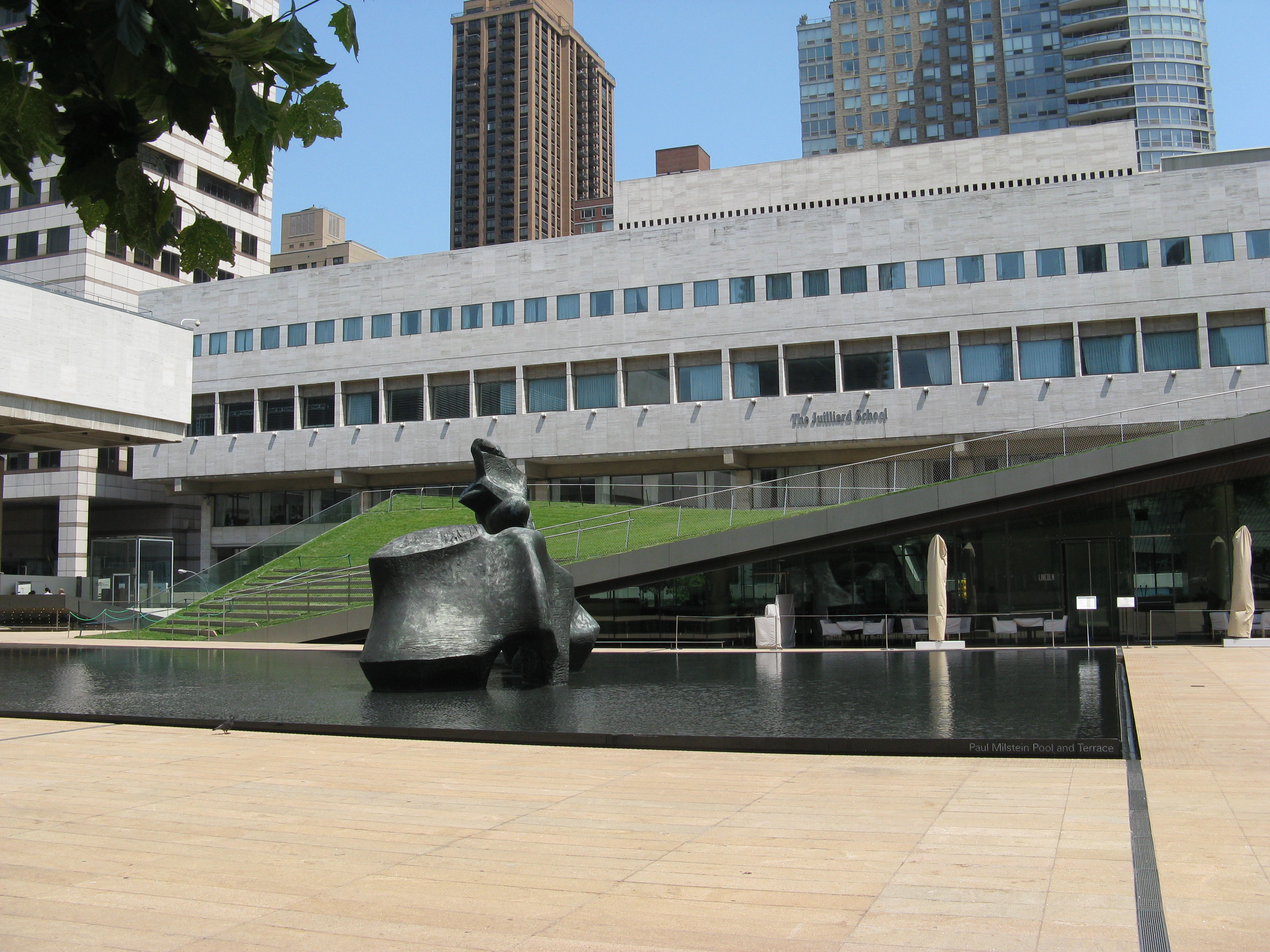
My wife and I were watching TV with one eye the other day when the BBC passed a programme which caught our attention. It was about the Yorkshire Sculpture Park in the north of England. I think a few words of explanation are required for those readers who have never heard of this Park (our situation before watching the BBC programme). It was established back in 1977 in the grounds of a stately home the last of whose aristocratic owners (Viscount Allendale) had sold it to the local council after World War II, no doubt to save his financial skin (I mentioned the financial woes of the UK’s stately homes in an earlier posting of mine). The idea is a simple one: rather than displaying modern sculpture in open spaces in cities like plazas
sculpture in cities-1

sculpture in cities-2

or squares

sculpture in cities-3

sculpture in cities-4

or using the atriums of posh buildings

sculpture in cities-6

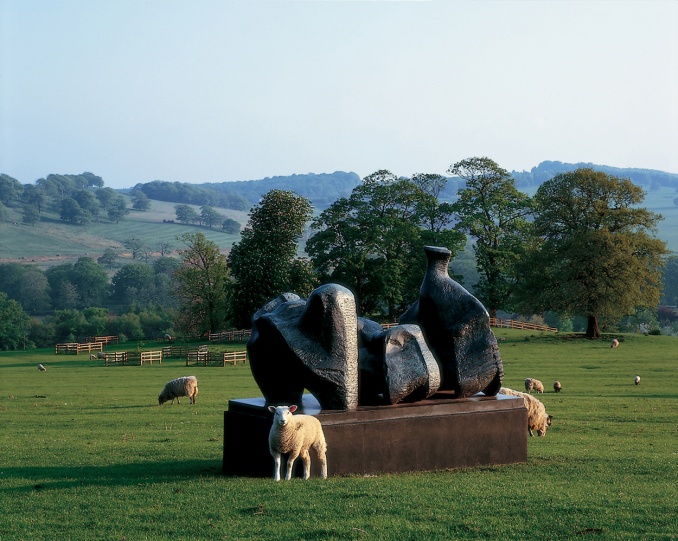
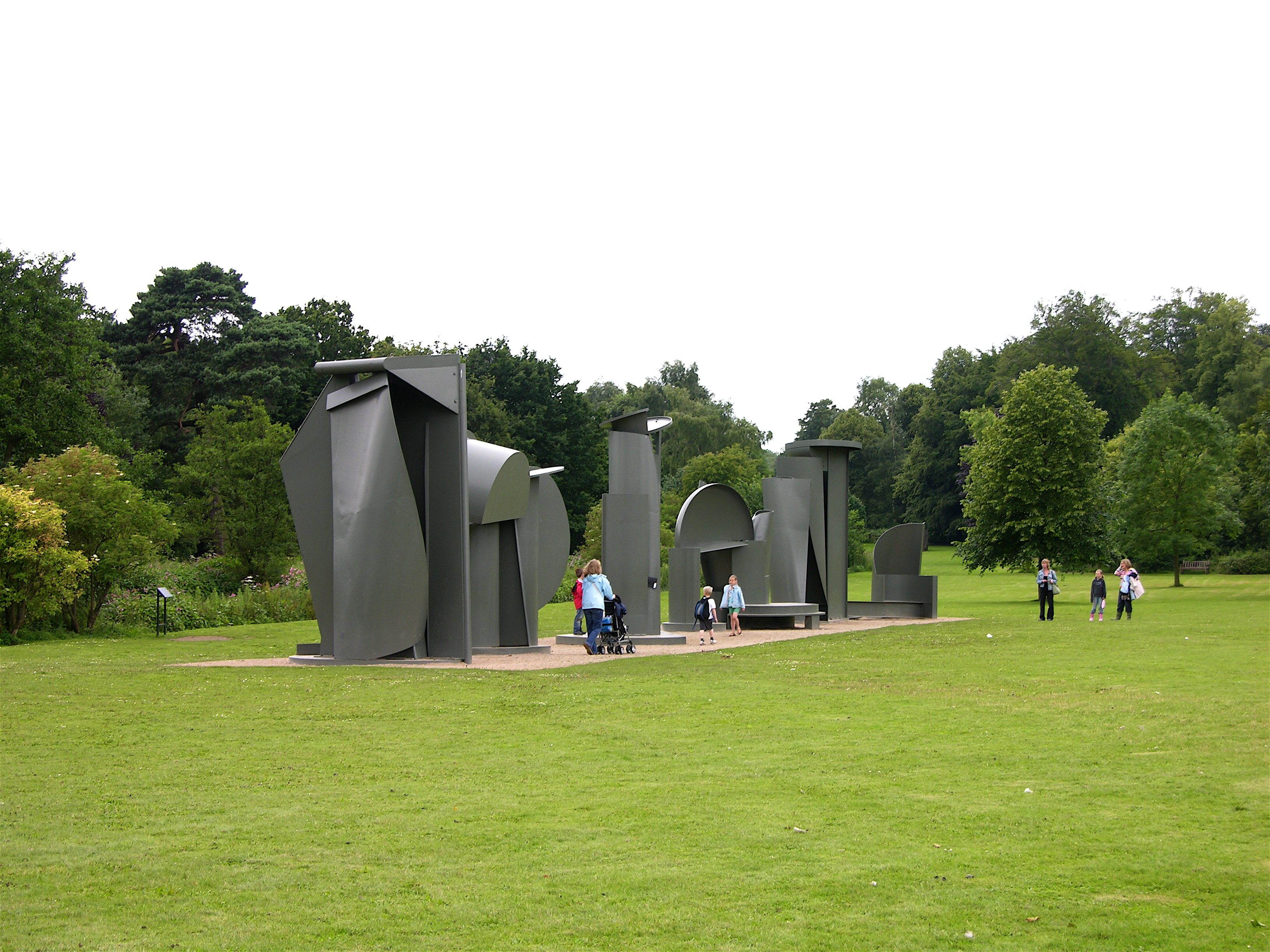
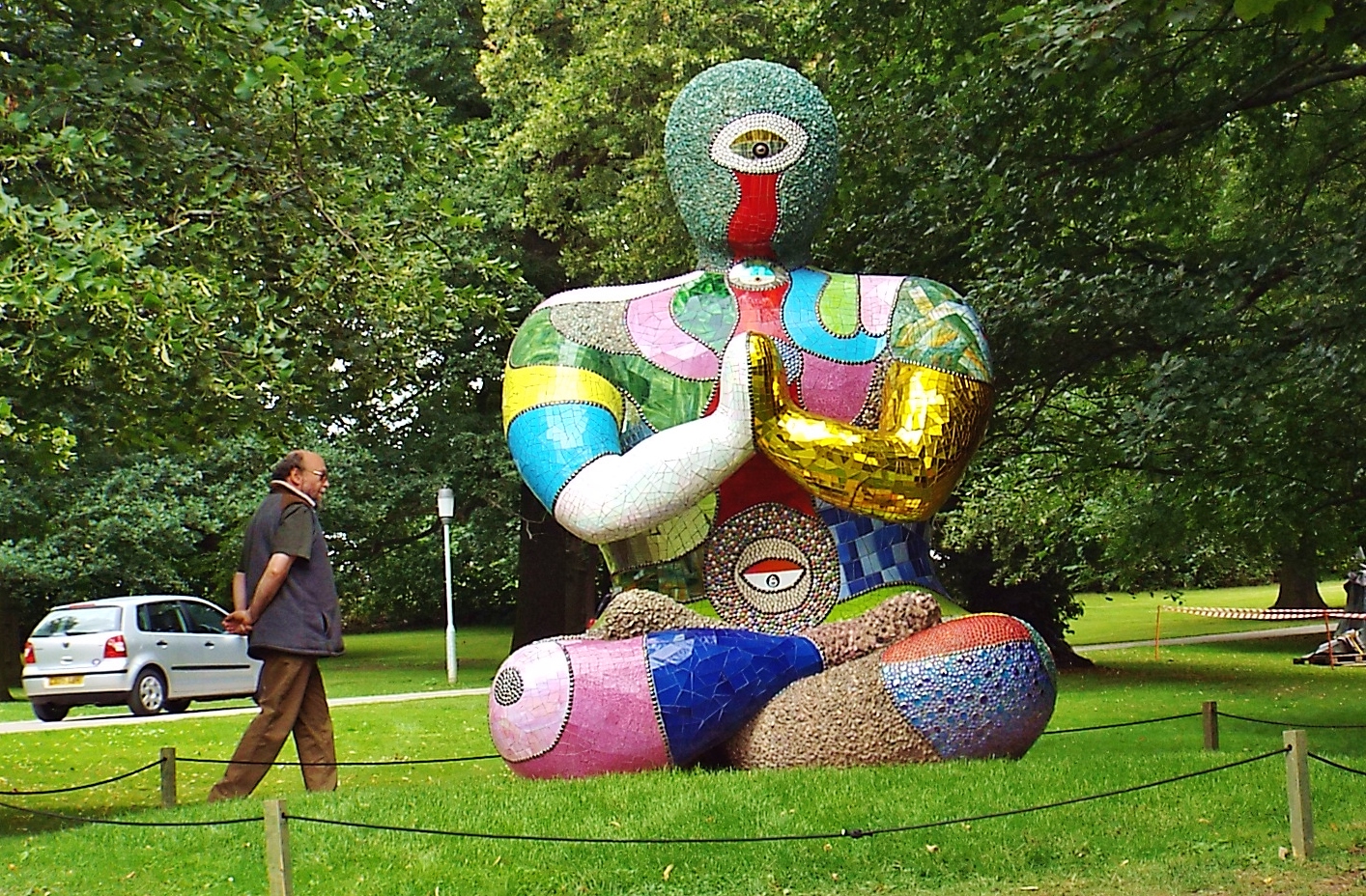
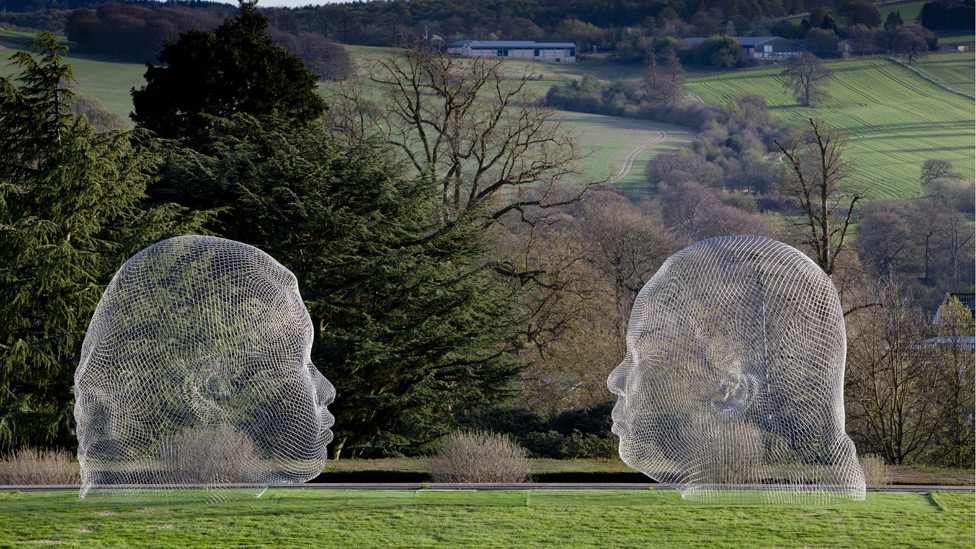
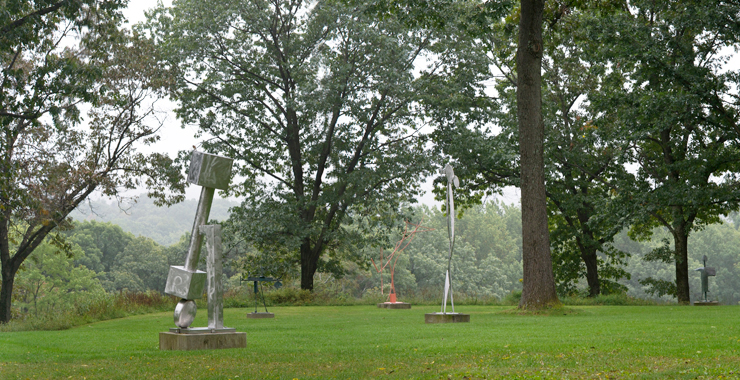
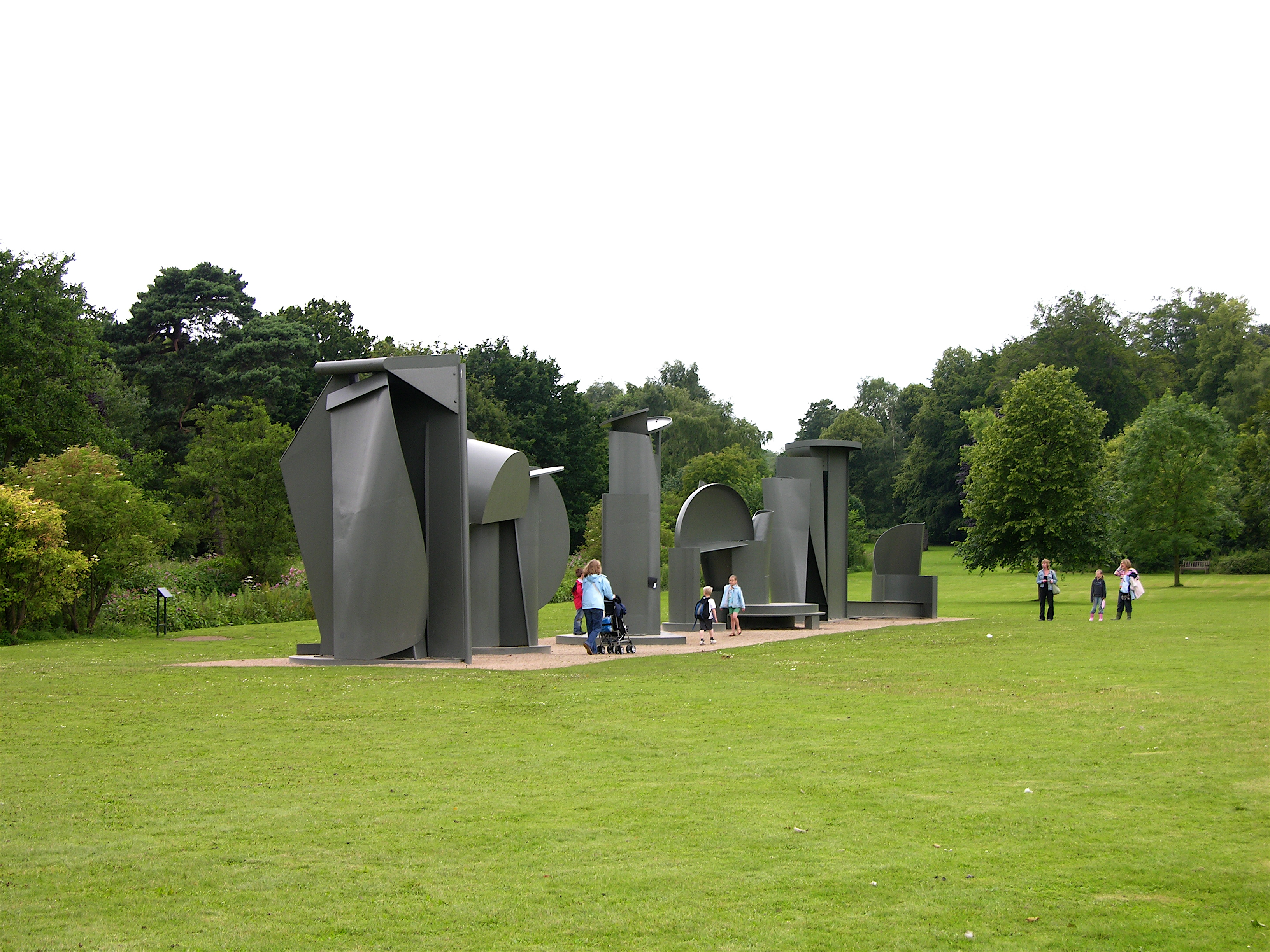
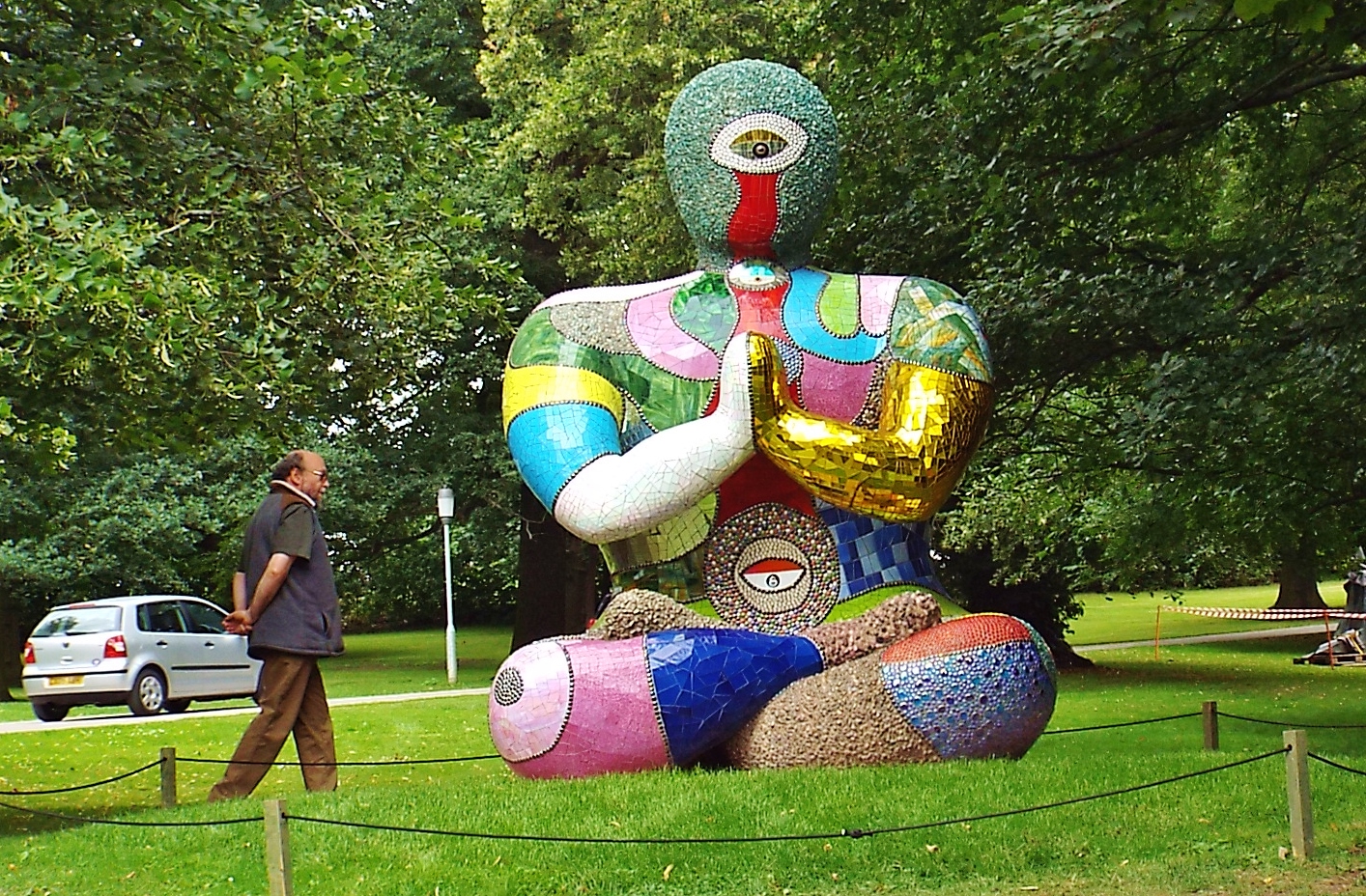
use the sweeping, open vistas of the countryside to display them. Here are some of the pieces at the Yorkshire Sculpture Park:
YSP-4
DSCN2327.JPG
YSP-6

YSP-9

YSP-10

YSP-14

YSP-1
My wife and I agree on many things, and one of them is that modern sculptures are enhanced by being seen in a natural, organic setting rather than in the built urban environment. Personally, I think it has to do with the contrast between the dead surfaces of the sculptures and the much softer, living surfaces of the surrounding landscapes. It sounds a bit fancy, but the dead sculpture comes alive when in contact with organic life.

This was brought home to us very strongly when, 25 years ago, and on the advice of a friend who worked at the Metropolitan Museum of Art, we visited the Storm King Art Centre, which is an hour’s drive north of New York City, near the Hudson River. Here again, a few words of introduction. It’s really the classic American story (as much as the history of the Yorkshire Sculpture Park is the classic British story of modern times – decay of the old order and birth of a new one). A certain Mr. Ogden, after a successful career in the family business, purchased the land and property of Storm King and started collecting. He initially bought small sculptures which he exhibited around the house. At some point, he expanded out into the surrounding landscape, installing much bigger pieces. That’s it, in a nutshell. But the result – for us at least – was epiphanic.

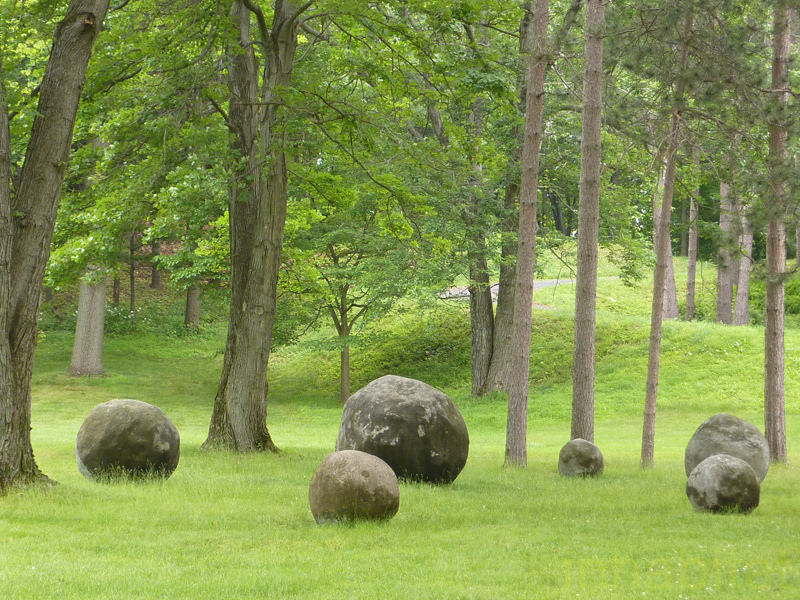
In wonder we wandered along the rides mown through the grass, walking from one towering sculpture to another

SK-1

SK-4

from hilltops, we discovered long views across the surrounding landscape, where sculpture and land merged into one

SK-2

we walked through glades in the woods, each with their own sculpture

SK-8

SK-9

we entered the woods to find smaller, more intimate sculptures scattered under the trees

SK-7

SK-10

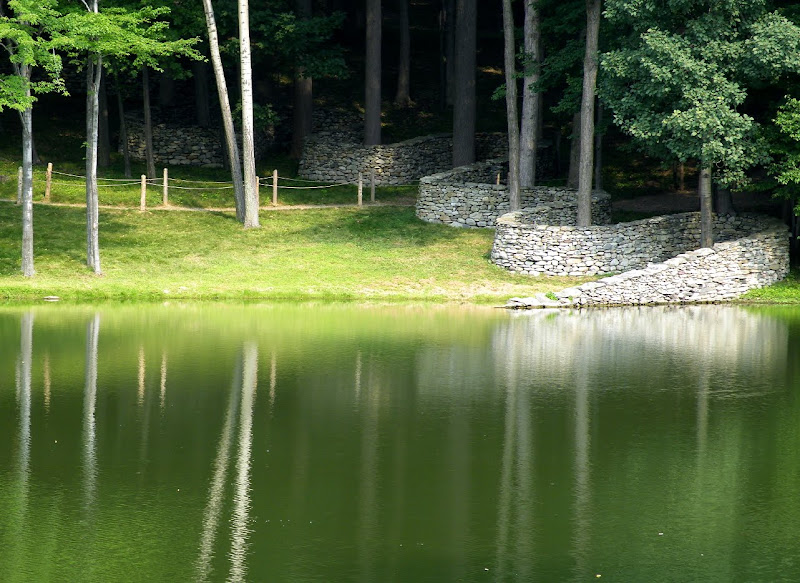
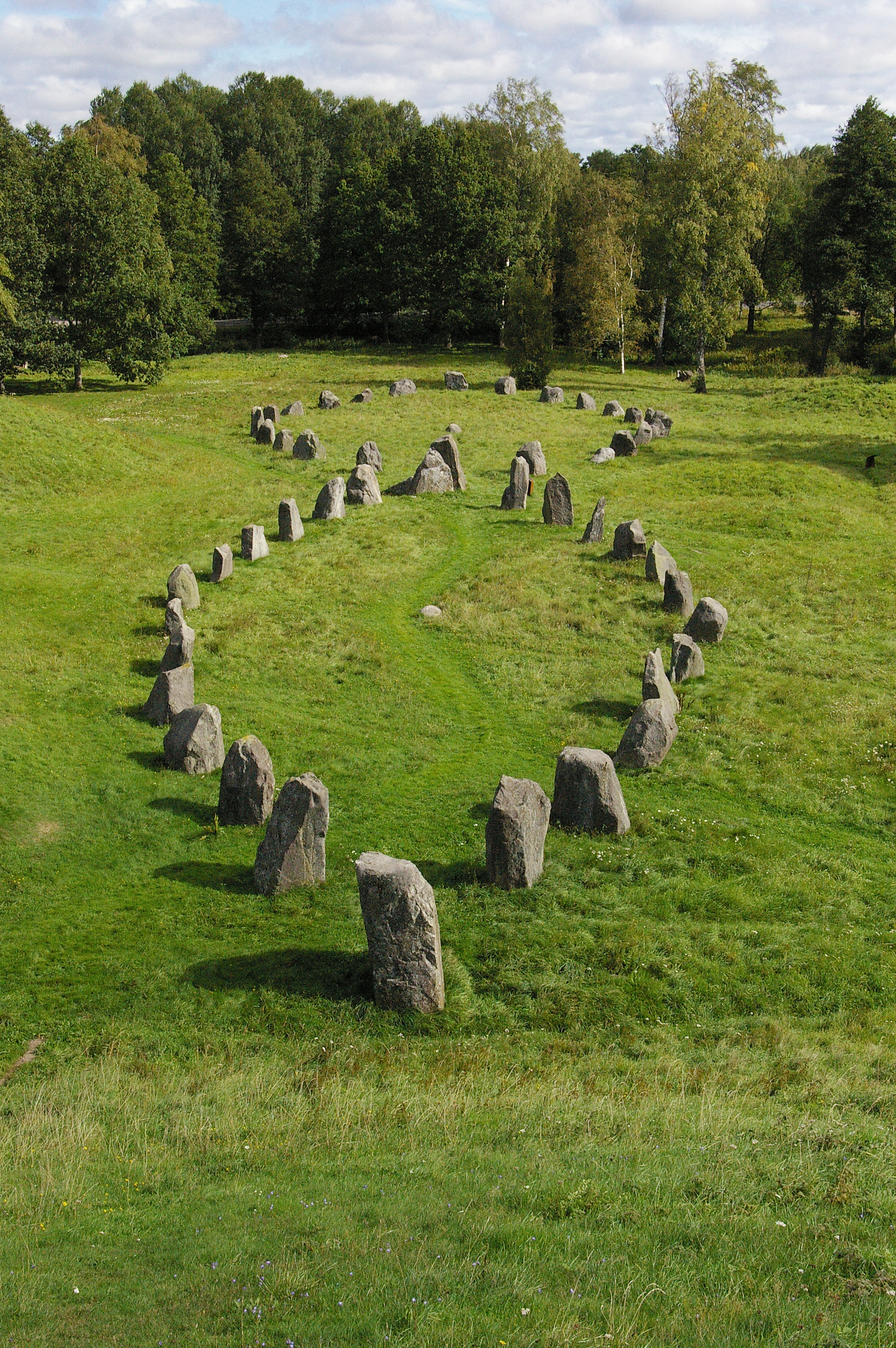
we also found a sculpture-wall meandering through them

SK-5

(better seen in this photo taken during the winter)

SK-14

we turned our steps back to the house, discovering other smaller sculptures set down in more formal gardens around the house.

SONY DSC

SK-11

And finally, we entered the house and fell upon a sculpture which in all these years I have never forgotten: a group of robotic-looking statues with small motors making their jaws work up and down and with a closed-loop recording of voices quietly droning “chatter, chatter, chatter, chatter, chatter, chatter …” on and on, endlessly. Wonderful.  Every time I find myself in one of those meetings where people blather on and on and on I recall this statue group with intense clarity.

So taken were we with Storm King that the very first time we went back to New York after an absence of fifteen years we made sure to find time to go up there. It cast the same spell over us – although sadly the chattering statues had vanished (smashed to smithereens, no doubt, by an employee crazed by their endless droning).

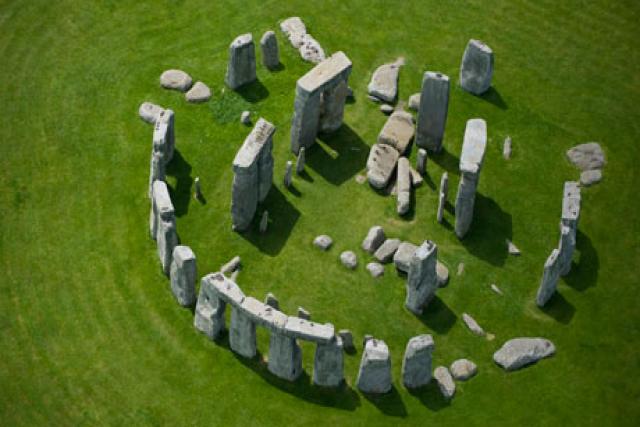
As I contemplate these photos, it occurs to me that many of the megalithic structures scattered across the face of Europe could pass as modern sculptures set down in the surrounding landscape. Stonehenge, the most iconic of all megalithic structures, is probably too much like a ruin to make this comparison
Stonhenge-2
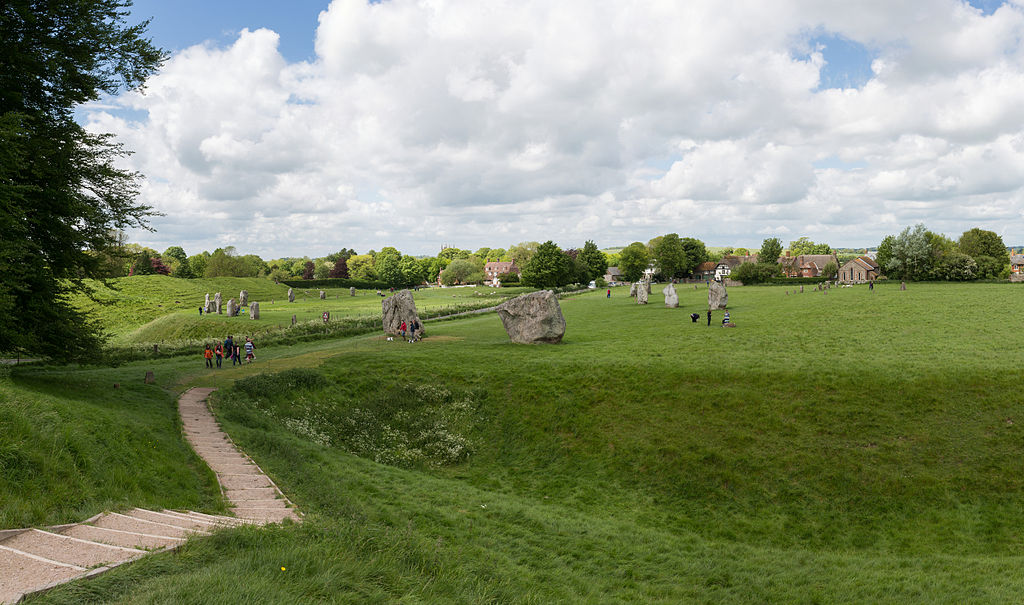
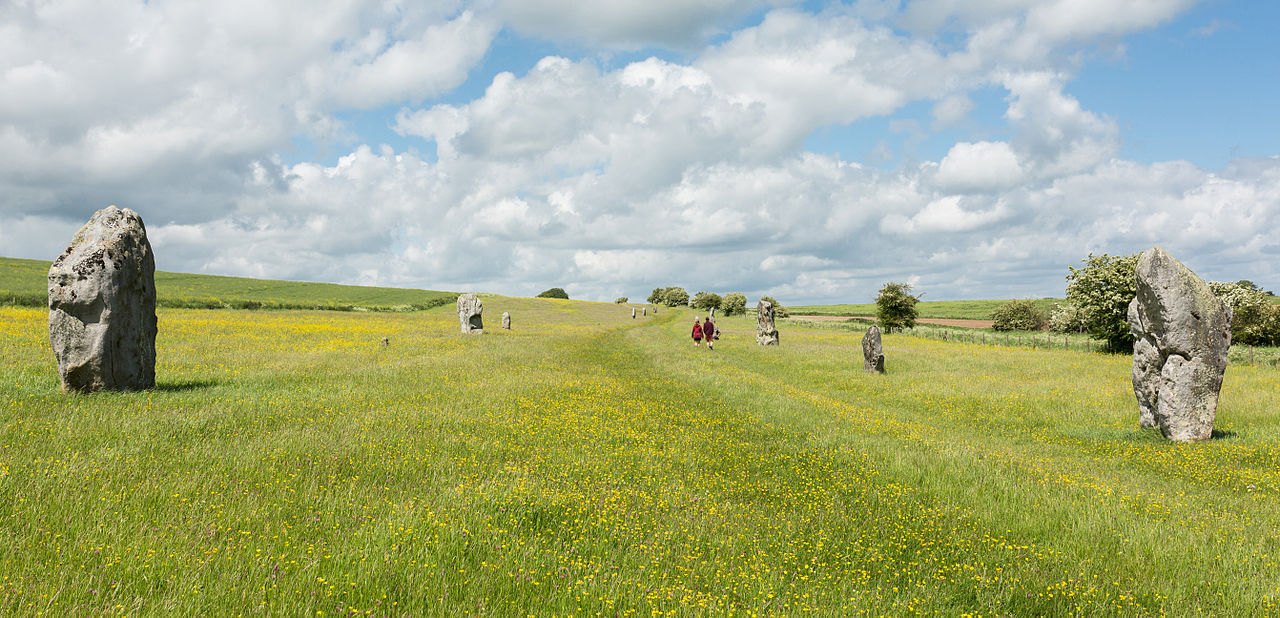
but Avebury, like Stonehenge located in Wiltshire, has something of the abstraction of sculpture parks

Avebury-2

Avebury-1

and how about Carnac, in Brittany?
carnac-1

carnac-2
or Badelunda in Sweden?

Badelunda Västmanland

or the Ring of Brodgar, in the Orkney islands?

Ring of Brodgar

And even further afield, although not from the Mesolithic period, we have this intimate collection of upright stones in Toraja, Indonesia

OLYMPUS DIGITAL CAMERA

Of course, the people who built these structures were not building sculpture parks, but I have to think that they too were stirred by the same feeling of connectedness between their standing stones and nature as we have between sculpture and nature. They attributed this feeling to a divine grace in the place, we simply enjoy the feeling.

____________________________

Sculpture in cities-1: http://percivalhenry.files.wordpress.com/2014/03/52af841ee4b0b09acc808041-lost3f3f3f-1387234862071-flamingo.jpg [in http://percivalhenry.wordpress.com/2014/03/20/art-history-martch-madness-first-round-new-york-regional/comment-page-1/%5D
Sculptures in cities-2: http://upload.wikimedia.org/wikipedia/commons/2/26/Juilliard_School-Manhattan-New_york.jpg [in http://commons.wikimedia.org/wiki/File:Juilliard_School-Manhattan-New_york.jpg%5D
Sculpture in cities-3: http://i3.mirror.co.uk/incoming/article740970.ece/alternates/s615/A%20new%20sculpture%20on%20the%20fourth%20plinth%20in%20Trafalgar%20Square,%20central%20London%20The%20work%20by%20sculptor%20Bill%20Woodrow,%20entitled%20%27Regardless%20of%20History%27,%20%20shows%20a%20tree%20resting%20on%20a%20head%20and%20a%20book [in http://www.mirror.co.uk/news/uk-news/love-it-or-hate-it-bronze-rocking-741129%5D
Sculpture in cities-4: http://womenworld.org/image/082012/Paris%20-%20Beaubourg%20and%20Les%20Halles_1.jpg [in http://womenworld.org/travel/paris—around-town—beaubourg-and-les-halles-%28part-1%29.aspx%5D
Sculpture in cities-5: http://www-news.uchicago.edu/releases/06/images/cis/sculpture.jpg [in http://www-news.uchicago.edu/releases/06/060426.cis-photos.shtml%5D
YSP-1: http://www.yorkshireattractions.org/images/cms/attractions_21_3_large.jpg [in http://www.yorkshireattractions.org/visitor-attractions/21/yorkshire-sculpture-park%5D
YSP-2: http://upload.wikimedia.org/wikipedia/commons/0/0a/Yorkshire_Sculpture_Park_Caro_Promenade.jpg [in http://commons.wikimedia.org/wiki/File:Yorkshire_Sculpture_Park_Caro_Promenade.jpg%5D
YSP-3: http://antonyjwaller.files.wordpress.com/2012/06/nik_5931-copy.jpg [in http://antonyjwaller.wordpress.com/travel-articles/yorkshire-and-northern-england/the-yorkshire-sculpture-park/%5D
YSP-4: http://www.sculpture-info.com/upload/1008/image/Yorkshiresculpturepark.jpg [in http://www.sculpture-info.com/news-626/yorkshire-sculpture-park.html%5D
YSP-5: http://2.bp.blogspot.com/-6GgifPCMTc8/UgZKx2yojhI/AAAAAAAACDg/WYBKhXaNWp8/s1600/2+Buddha+and+Rob.JPG [in http://expertslife.blogspot.com/2013/08/picture-of-week-10-august-2013.html%5D
YSP-6: http://www.thomasharveydesign.co.uk/wp-content/uploads/2011/05/YSP6.jpg [in http://www.thomasharveydesign.co.uk/2011/05/09/yorkshire-sculpture-park-wakefield/%5D
YSP-7: http://news.bbcimg.co.uk/media/images/52104000/jpg/_52104252_7cbb7745-313f-43e9-8974-d144adf6c05f.jpg [in http://www.bbc.co.uk/news/entertainment-arts-13034363%5D
SK-1: http://brooklynimbecile.files.wordpress.com/2011/10/img_4256.jpg [in http://brooklynimbecile.com/2011/11/05/weekend-spread-storm-king-art-center/%5D
SK-2: http://3.bp.blogspot.com/-OWDq8YQCBog/UA6M17c9N6I/AAAAAAAAYI4/OqODfTIunKU/s1600/Mountainville_NY_A_Calder_Storm_King_AC_photo_S_Gruber_June_2012_+%2888%29.JPG [in http://publicartandmemory.blogspot.com/2012_07_01_archive.html%5D
SK-3: http://www.greenstrides.com/images-wp/Storm-King.jpg [in http://www.greenstrides.com/2013/07/10/sculpture-parks-can-inspire-your-own-garden-design/%5D
SK-4: http://4.bp.blogspot.com/-4sgNF1ufdU4/U4T1ul7DPRI/AAAAAAAAP8w/JzGsmMOY6No/s1600/Newman.jpg [in http://nycgarden.blogspot.com/2014/06/storm-king.html%5D
SK-5: http://i.vimeocdn.com/video/332835418_1280.jpg [in http://vimeo.com/48015694%5D
SK-6: http://inhabitat.com/nyc/wp-content/blogs.dir/2/files/2011/07/storm-king-boulders.jpg [in http://inhabitat.com/nyc/storm-king-art-center-a-summer-retreat-for-the-artsy-nature-loving-new-yorker/storm-king-boulders/%5D
SK-7: http://faeriemooncreations.blogspot.com/2010_11_01_archive.html [in http://faeriemooncreations.blogspot.com/2010_11_01_archive.html%5D
SK-8: http://4.bp.blogspot.com/_sVe9wO8fJls/S4zMOOgpUZI/AAAAAAAAEDo/IaUESi6KOGQ/s800/goldsw3.jpg [in http://lettuce-eating.blogspot.com/2010_03_01_archive.html%5D
SK-9: http://stormking.weebly.com/uploads/2/3/8/8/23889452/6893557.jpg [in http://stormking.weebly.com/permanent-collection.html%5D
SK-10: http://www.stormking.org/wp-content/uploads/2013/07/smith-lawn1.jpg [in http://www.stormking.org/collection-conversation/%5D
SK-11: http://eof737.files.wordpress.com/2011/09/img_2564.jpg?w=800 [in http://mirthandmotivation.com/2011/09/04/happiness-installation-art-at-storm-king/img_2564/%5D
Stonehenge: http://st-listas.20minutos.es/images/2013-06/362538/4049632_640px.jpg?1370571567 [in http://listas.20minutos.es/lista/maravillas-del-mundo-362538/%5D
Avebury-1: http://en.wikipedia.org/wiki/Avebury#mediaviewer/File:Avebury_Panorama,_Wiltshire,_UK_-_Diliff.jpg [in http://en.wikipedia.org/wiki/Avebury%5D
Avebury-2: http://en.wikipedia.org/wiki/Avebury#mediaviewer/File:Avebury,_West_Kennet_Avenue,_Wiltshire,_UK_-_Diliff.jpg [in http://en.wikipedia.org/wiki/Avebury%5D
Carnac-1: http://weadorefrance.com/es/images/w.800/h.600/c.1/d.guide_photos/sd./i.carnac-brittany-standing-stones-20130325.jpg [in http://weadorefrance.com/es/brittany-bretagne/g.31%5D
Carnac-2: http://media.tinmoi.vn//2012/02/27/4_28_1330310626_92_20120224114942_l6.jpg [in http://www.tktyt1haiduong.edu.vn/?p=888%5D
Badelunda, Sweden: http://upload.wikimedia.org/wikipedia/commons/d/d3/Badelunda_V%C3%A4stmanland_Sweden.jpg [in http://some-landscapes.blogspot.com/2011_10_01_archive.html%5D
Ring of Brodgar, Orkney: http://en.wikipedia.org/wiki/Ring_of_Brodgar#mediaviewer/File:RingofBrodgar.jpg [in http://en.wikipedia.org/wiki/Ring_of_Brodgar%5D
Toraja, Indonesia: http://tribudragon.files.wordpress.com/2013/03/2-tt-6.jpg [in http://tribudragon.wordpress.com/category/indonesia/%5D

CAPERS

Beijing, 7 June 2014

It never ceases to amaze me that there are certain ingredients which one adds to recipes in small quantities but which make a huge difference to the final taste. Spices are the obvious example – although I often wish that the hot spices had never existed – but there are others. Parsley, for instance, or coriander, or anise. Or capers.

Capers are a particular favourite of mine ever since a business trip I made many years ago to Malta. I was there to do an environmental audit of a factory. After a long day of inspecting the wastewater treatment plant, the waste segregation area, the toxic chemicals storage area, and I don’t know what else, my colleagues and I were finally free for dinner. We left the hotel and wandered around, but it was a dead time of the year and there wasn’t much available. We finally came across a modest restaurant, which proclaimed itself to be a fish restaurant. Why not? we said, after all, we were in an island, presumably the fish would be good. And it was, it was! We all ordered Orata al cartoccio, where a bream is cooked – steamed in its own juices, really – in a closed aluminium foil package together with cherry tomatoes, capers, and olives. It’s really a very simple recipe. Having washed and cleaned the bream, you lay it on a big piece of aluminium foil, you place a little rosemary inside the fish, drizzle it with olive oil, place the sliced cherry tomatoes, rinsed capers, and olives around the bream, wet the whole with a little white wine, wrap up the foil and close it well (so that none of the juices escape), and cook it in the oven at 200°C for about 45 minutes. Voilà!

orata pomodorini capperi olive

Simple, but absolutely delicious. The capers in particular impart a taste to the fish’s flesh which even to this day, after all these years, I can summon up at will for my private delectation.

The marvelous effect of the capers was actually quite a surprise to me. I had first come across capers as a young boy, at my English grandmother’s house. At some earlier moment, my elder brother had evinced a love of capers, so every time he came to stay with her she bought a small jar of them. This time, I was in tow so I got to try some. Salty! So salty! How could anyone like these tiny balls of salt? I made sure to steer clear of them after that, pushing them carefully aside if I came across them in a salade Niçoise, for instance. Until that fateful encounter in a modest fish restaurant in Malta. Such is life …

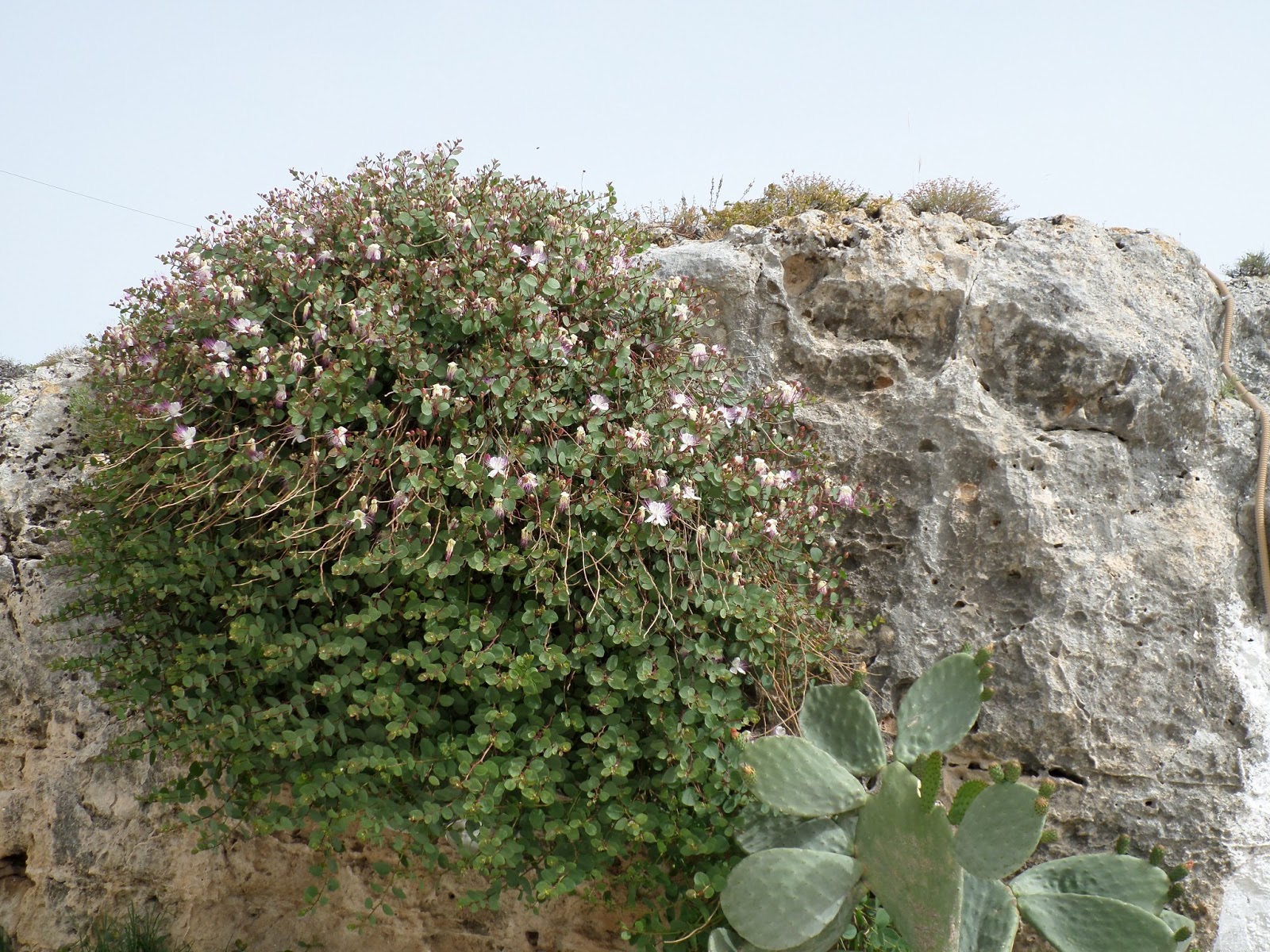
After that gastronomic epiphany in Malta, I feel that I owe it to the caper to write its hagiography, which like all good hagiographies should start from its birth. The caper comes from a bush, the caper bush to be precise, capparis spinosa. The bush is not much to write home about. Here is an example from the island of Salina, one of the Eolian Islands off the north-west coast of Sicily

caper bush-1

and here’s another from near Brindisi in southern Italy

caper bush-2

Both pictures admirably depict the poor, rocky soils and harsh environments that the bush grows well in. They also tell us that you find the bush around the Mediterranean. But that’s not only place you find C. spinosa; the bush has quite a wide range, down through eastern Africa, across central, southern, and southeastern Asia, all the way out to the Pacific Islands and Australia. But as far as I know, and I’m very willing to be corrected, the caper is not used in the local cuisine in any of these areas.

The last picture also tells us that the bush sports flowers. Small, but actually very lovely, with a cluster of long mauve stamens reaching out to the world (this is one of many beautiful photos of the caper flower on the internet; the efforts of my photographic e-friends have turned me quite poetic).

caper flowers-2

This last picture also modestly introduces us to the hero our story. Because the caper is that green flower bud behind. It gets picked, salted, and pickled for our delight. I think it deserves a picture of its own

caper buds

I have to say, I always marvel at things like this. How did the women in some far-off time think of picking the flower buds of this bush to eat? (I’m sure it was the women; the men were just lazing around the camp fire cracking stupid jokes and farting.) Maybe desperation, to stave off starvation. Or maybe … but I’m getting ahead of myself.

Capers are sold sorted by size. Either because the French got into the game of commercializing capers before anyone else, or because some canny marketer thought French names would sell better, or for some other reason unknown to me, the grades mostly have French names. From smallest to biggest we have: “non-pareil”, incomparable; “surfine”, very delicate (those hideously salty little balls which my grandmother bought for my brother must have been either surfines or non-pareils); “capucine”, which is a little pointed cowl, like the ones worn by Franciscans nuns – looking at the photo below and squinting a little, I suppose you could say that the capers in question look cowl-like; “capote”, which is a rather bigger cowl with a definite point (it is also French slang for a condom for reasons which I’m sure the readers can divine after a little bit of thought); “fine”, delicate (like the oysters). And at the very end of the grades we have “grusas”, which is not a French word. My guess is that it’s Provençal and has a meaning similar to the Spanish “gruesos”, fatty. Of course, the French were not going to use their delicate language for such a coarse member of the caper family. As one could guess from the grading nomenclature, the smallest sizes are considered to be the most desirable; I’m sure it is no coincidence that the smallest sizes come from southern France …

graded capers

Malta brought me my culinary epiphany with the caper. It also introduced me to the caper berry, which I find to be a much more delicious product of the caper bush. My Italian colleague, whom I have had cause to mention in an earlier post as the person who introduced me to durian, was with me on this Maltese environmental audit. Rather than asking the staff of the wastewater treatment plant to see the data on wastewater treatment efficiency he asked them to get him several jars of pickled Maltese caper berries. On the promise of my not revealing this professional faux-pas of his he shared one of the jars with me, which I took home to my wife. We have been hooked ever since.

caper berries-2

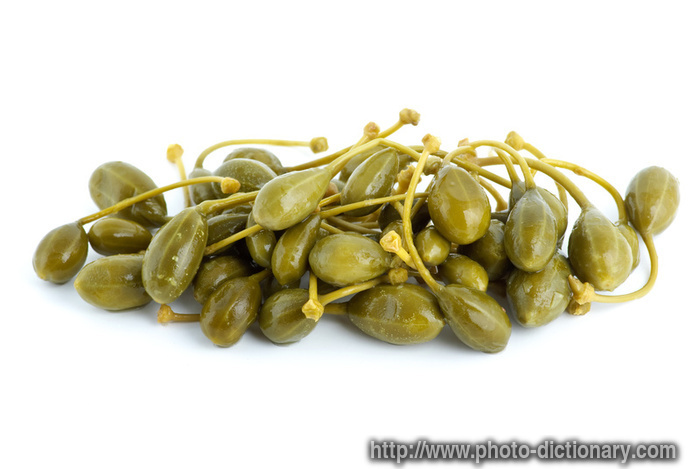
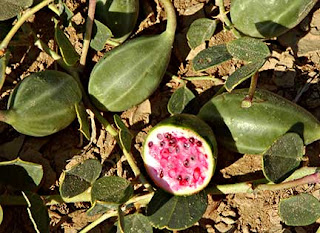
As the name suggest, caper berries are the fruit of the caper bush. This photo shows the berry in its natural state.

caper berries-natural state

I understand they are perfectly edible, although I have never seen them sold in a shop. I’ve only eaten the pickled variety. They are much bigger than capers, less salty, more crunchy (because of the seeds they contain) and can be eaten as a snack – and my wife and I have indeed snacked happily and often on them, in front of the TV or other such snack-happy locations.

Coming back to my meditation on how anyone ever came up with the idea of pickling flower buds to eat, I suspect the path was through the berry: step 1 – eat the berries; step 2 – salt the berries to preserve the excedent harvest before they rot; step 3 – hang on, why don’t we try the same thing with the flower buds?

My in-depth research (i.e., Wikipedia) has revealed to me that in Greece and Cyprus they also eat the pickled leaves of the caper bush.

caper leaves

This I have never tried. I read that they are particularly used in salads and fish dishes. A web-site called Good Greek Stuff proclaims that “these tangy cured leaves of the caper plant are less salty than the buds, and lend a citrusy undertone to such foods as Greek country salad, dakos (barley rusks with tomato, olive oil and feta), fish sauces, and cabbage slaws. It gives an astringent, piquant note to herb pestos and pasta dishes. And you’ll be amazed at what it does to the humble spaghetti aglio, olio e peperoncino or how well it works as a garnish to fried squid.”

I have another culinary epiphany awaiting me in some Greek island.
__________________
Orata, pomodorini, capperi, olive: http://www.cucinanonnapapera.it/wp-content/uploads/2011/07/PICT1017.jpg [in http://www.cucinanonnapapera.it/?p=464%5D
Caper bush Salina: http://atasteoftravel.files.wordpress.com/2011/07/20110717-082956.jpg [in http://atasteoftravelblog.com/2011/capers-on-salina/%5D
Caper bush Brindisi: http://2.bp.blogspot.com/-2Nr_U2AWCUs/Uaid3mGYgqI/AAAAAAAAASM/NBQh22nv_Rk/s1600/Caper+Bush+growing+from+Rocks.jpg [in http://lisainitalymay2013.blogspot.com/%5D
Caper flower: http://kojikisans2.files.wordpress.com/2013/01/caper11.jpg?w=1008 [in http://kojikisans2.wordpress.com/%5D
Caper flower buds: http://en.wikipedia.org/wiki/Caper#mediaviewer/File:%E1%83%99%E1%83%90%E1%83%9E%E1%83%90%E1%83%A0%E1%83%98_Capparis_spinosa_Kapernstrauch.JPG [in http://en.wikipedia.org/wiki/Caper%5D
Graded capers: http://www.asofood.com/aso_images/capers.gif [in http://www.asofood.com/capers.html%5D
Caper berries: http://www.photo-dictionary.com/photofiles/list/1401/4818marinated_capers.jpg [in http://www.photo-dictionary.com/phrase/1401/marinated-capers.html%5D
Caper berries-natural state: http://2.bp.blogspot.com/_Okhm7AjHzv8/R1kZdfwxBCI/AAAAAAAAAac/Eu8RWxYi6f4/s320/e-caperberries.jpg [in http://medcookingalaska.blogspot.com/2007/12/recipes-caper-tart-capers-and-eggs.html%5D
Caper leaves: http://eshop-santorini.gr/media/catalog/product/cache/1/image/9df78eab33525d08d6e5fb8d27136e95/k/a/kaparofilla-caper-leaves.jpg [in http://eshop-santorini.gr/index.php/authentic-food-1/more/santorini-wild-capers-1.html%5D

TROUBLES IN THE MEDITERRANEAN

Beijing, 27 May 2014

Ten days ago, this was.

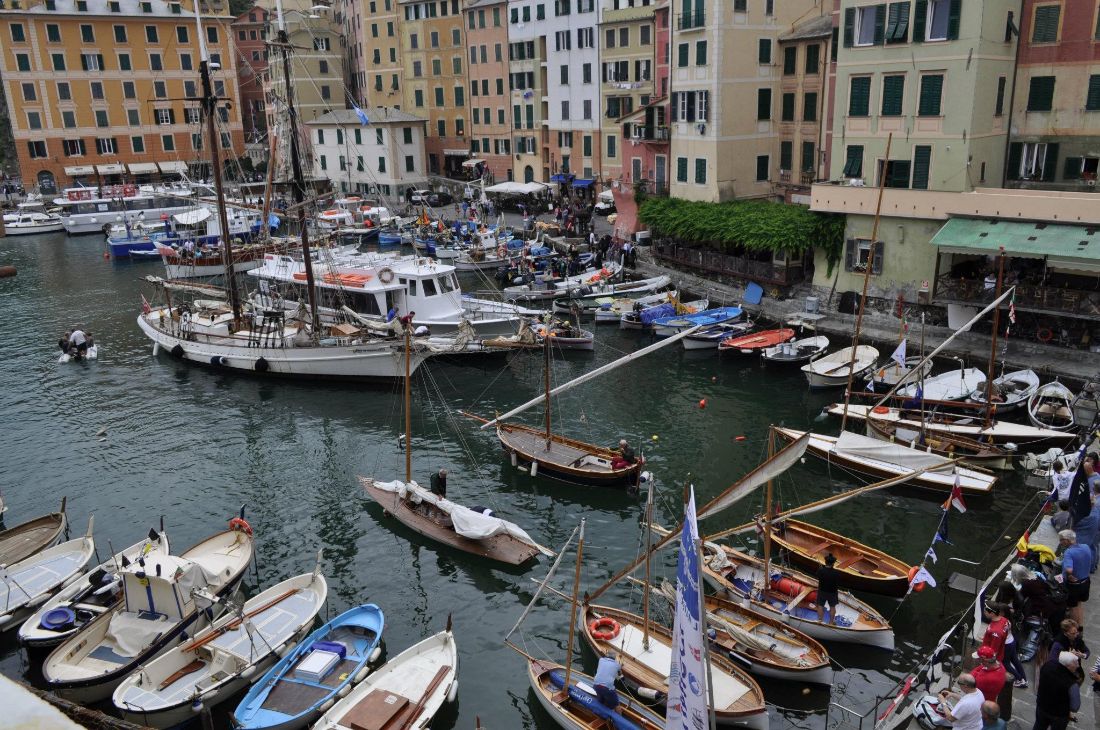
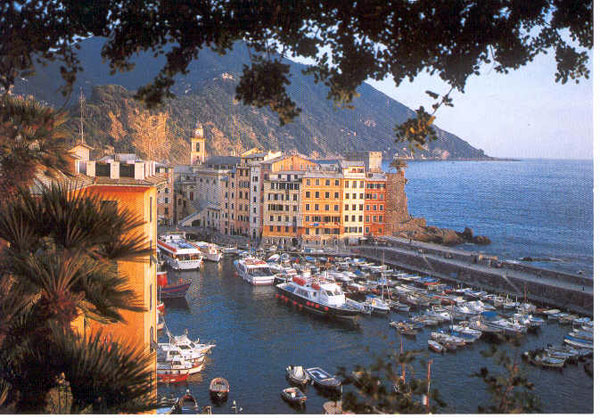
We walked into Camogli from Recco, getting a first glimpse of the little harbour from the road.

Recco-Camogli

We walked down to the harbour, skirted its edge.

camogli port

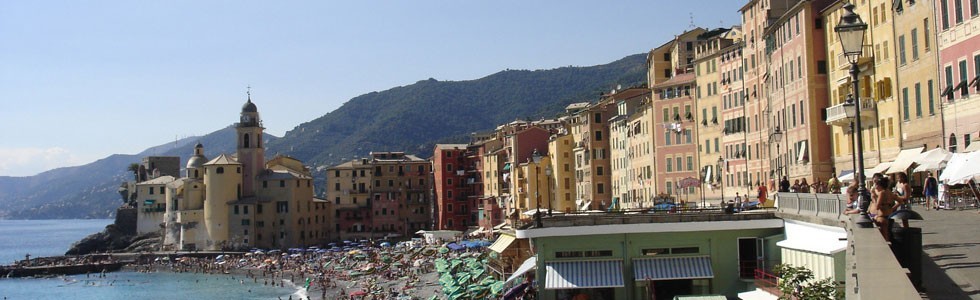
We passed on to the boardwalk on the other side of the church.  Glancing back, this was the sight which greeted us.

camogli-boardwalk

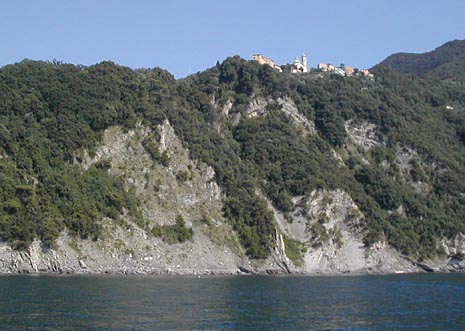
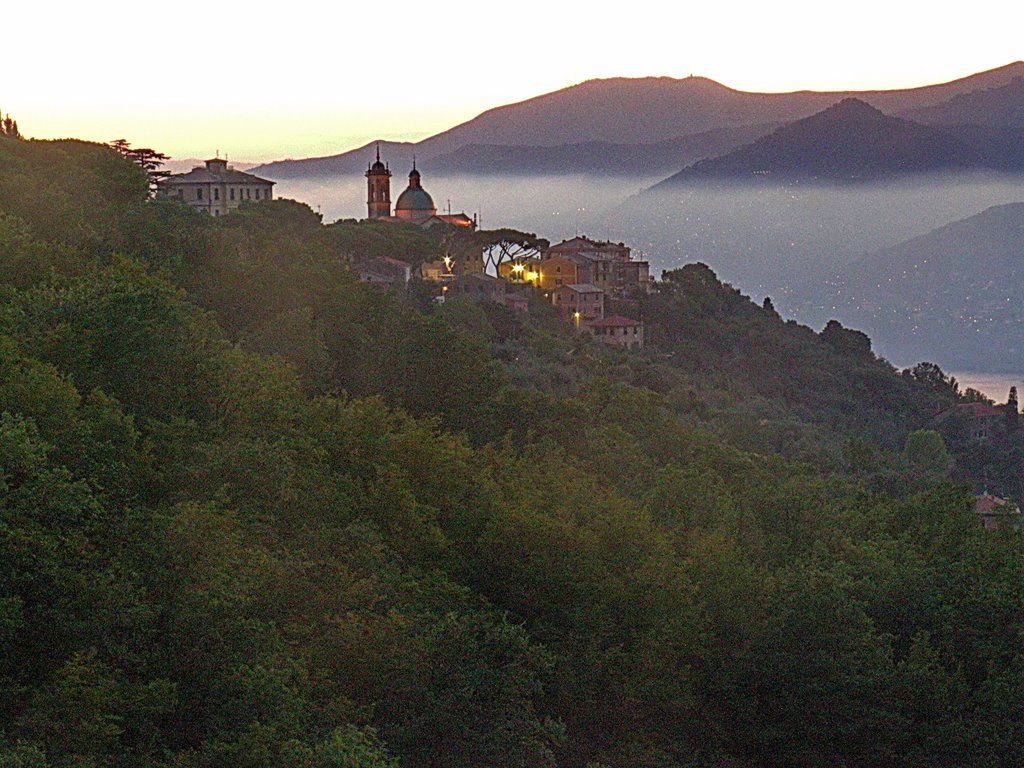
Our goal was San Rocco, sitting high above Camogli on a steep spur of Monte di Portofino.

san rocco from the sea

We started climbing, slowly, stopping often, huffing and puffing, using one of the old mulattiere, mule trails, which criss-cross the hills around here.

Camogli-San Rocco path-2

We toiled up past rather decrepit houses and semi-abandoned olive groves until we finally reached San Rocco.

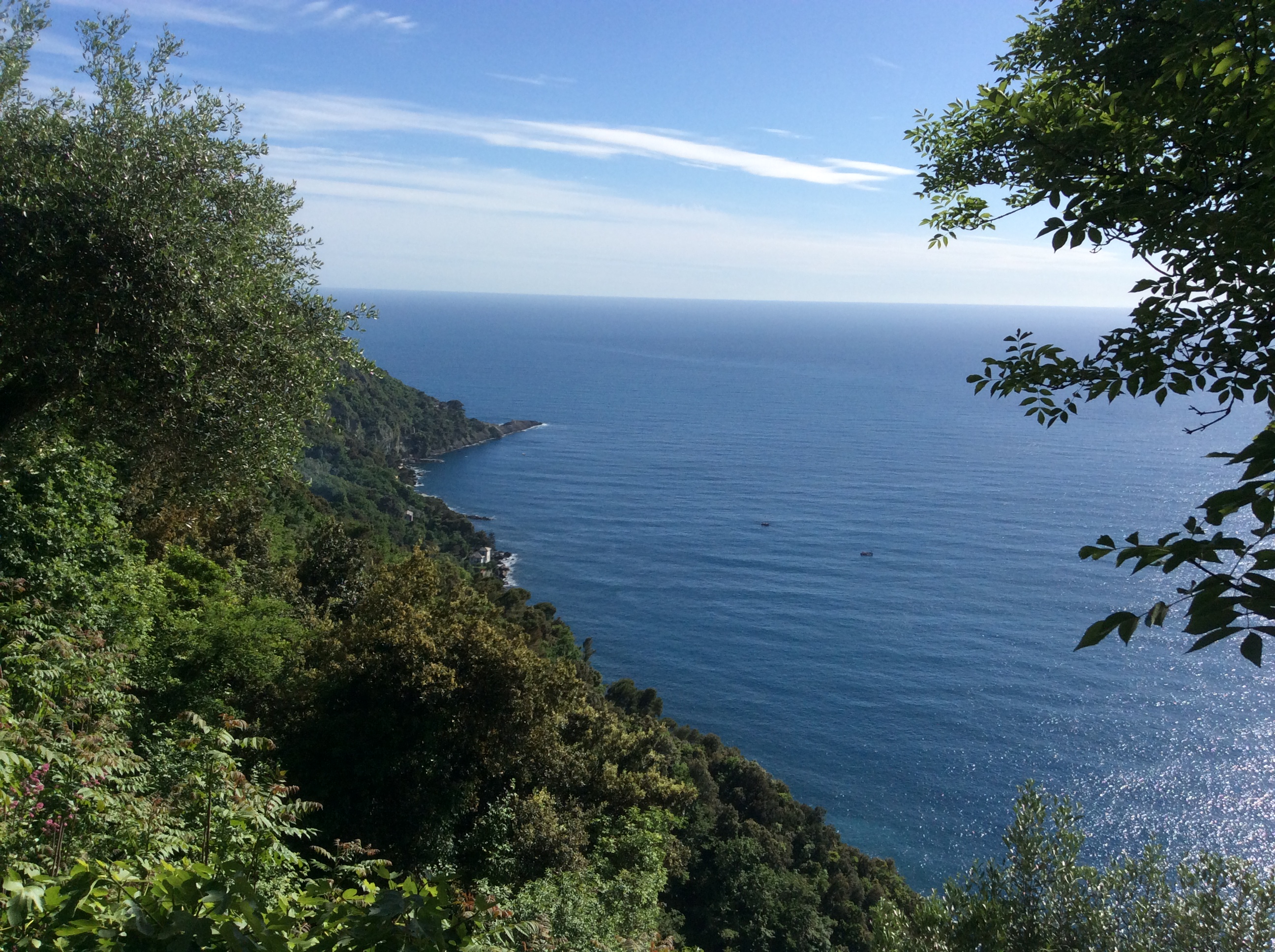
There, from the little piazza in front of the church, we had these gorgeous views, south-east towards Punta Chiappa

monte di portofino-1

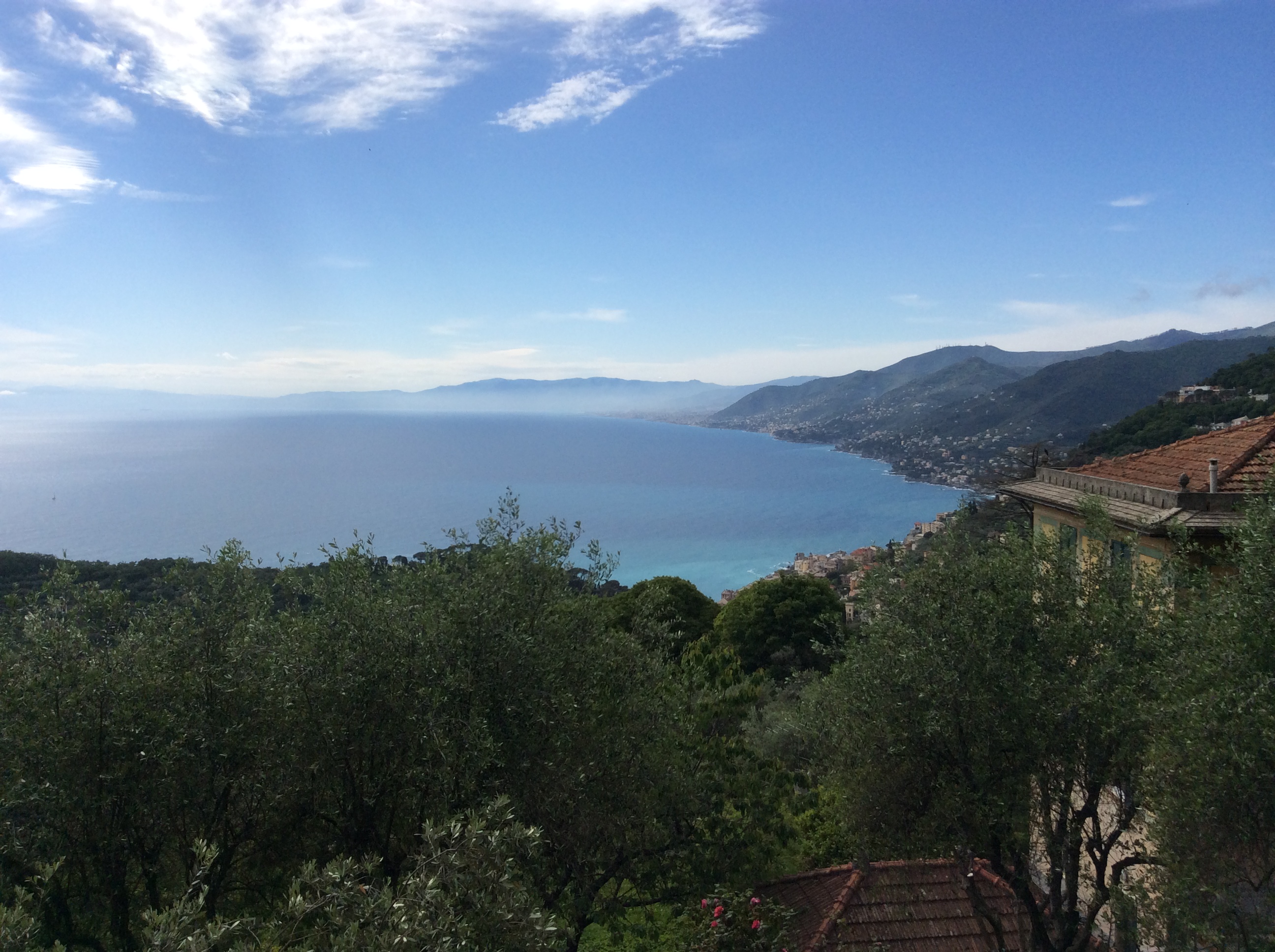
and north-west towards Genova.

monte di portofino-2

We sank onto the bench and drank in view and sun. And as we sat there, in my mind’s eye I overflew the seaboard of the Mediterranean. Burning, burning, all burning …

Egypt

egypt-2

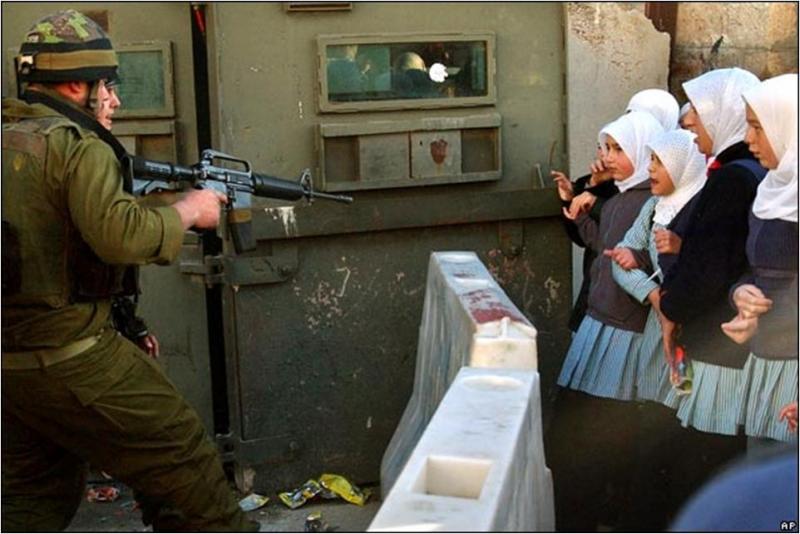
The West Bank

west bank

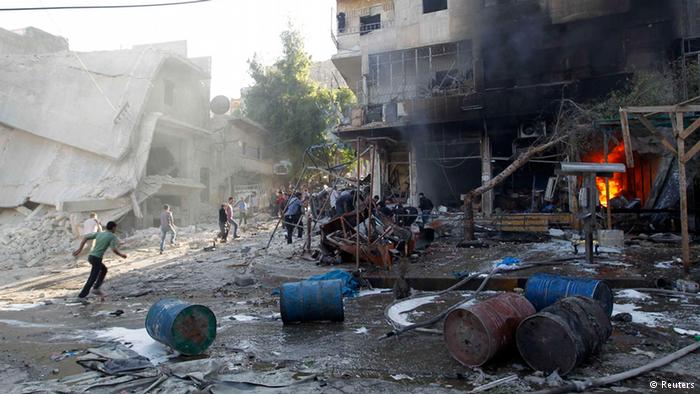
Syria

syria

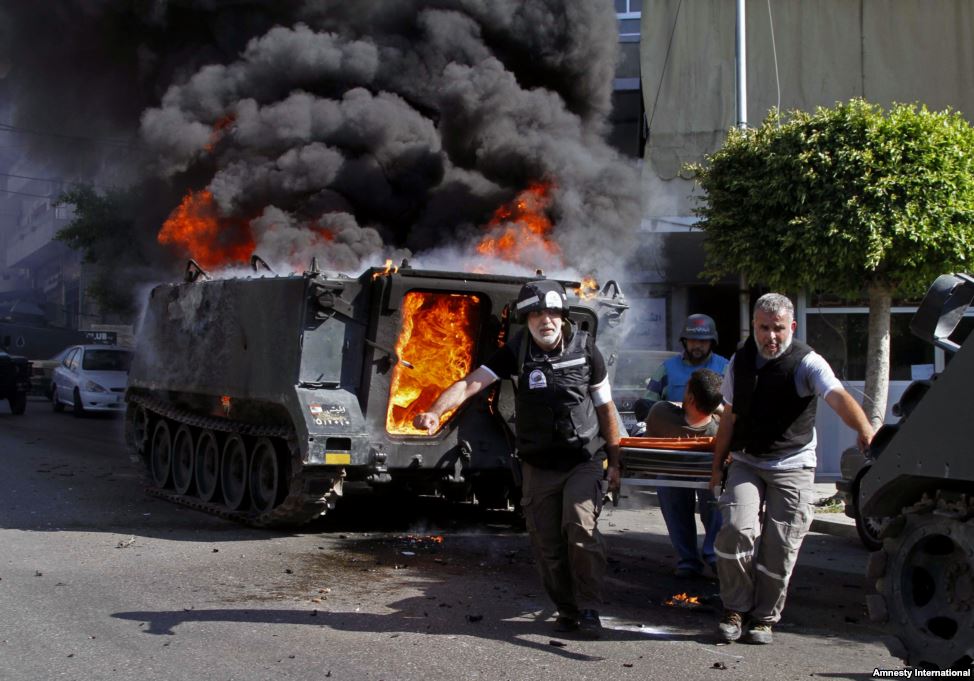
Lebanon

lebanon

Turkey

turkey

Morocco

morocco

Algeria

algeria

Tunisia

Protesters shout slogans during a demonstration to call for the departure of the Islamist-led ruling coalition in Avenue Habib-Bourguiba in central Tunis

and finally Libya

libya

libya-2

from where, amidst all this rage and pain and despair, poor souls are struggling against all odds to cross the Mediterranean and sneak into Europe

pantelleria

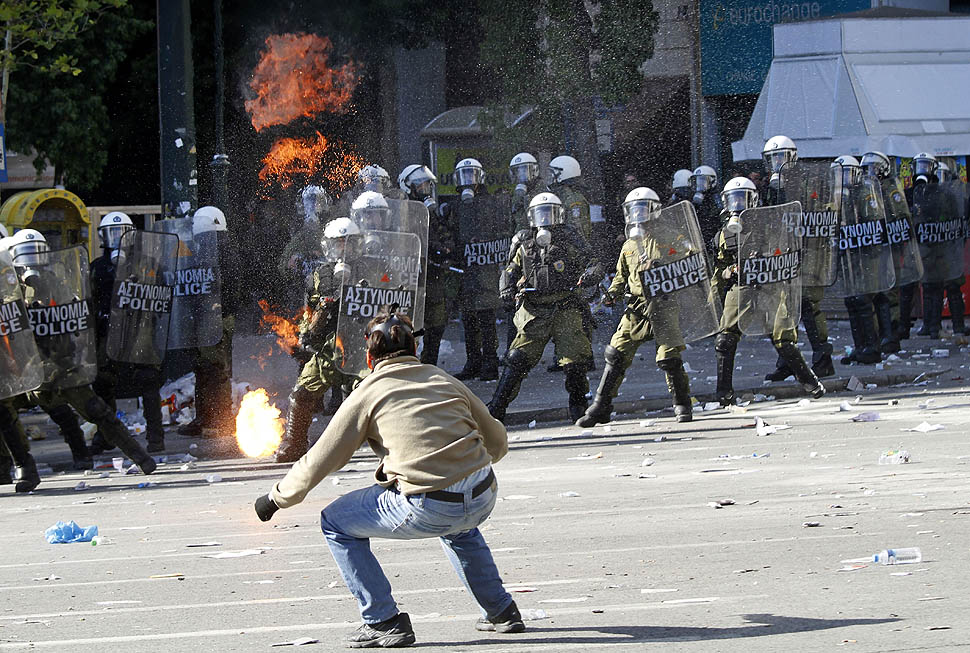
a Europe which is itself sinking under its own weight of troubles: Greece of course

Greece Financial Crisis

but also Italy itself

italy

as well as France

France Strike

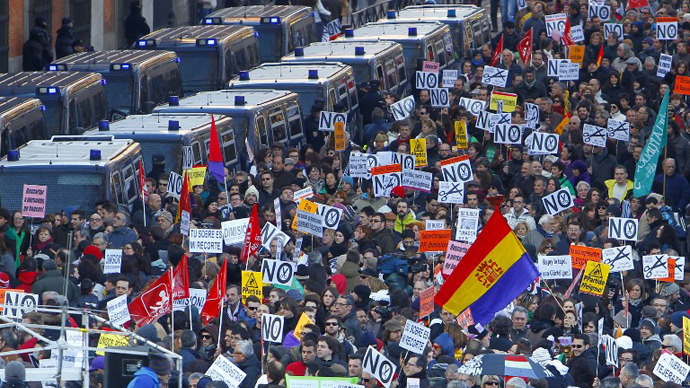
and Spain

spain

I closed my mind’s eye. Tomorrow, tomorrow, I said to myself, my wife and I would worry about the state of the universe tomorrow. Today, sitting on the bench and enjoying sun and sea, we just let the world go hang.

san rocco-1

____________________________

Recco-Camogli: http://www.mareblucamogli.com/images/Camogli_porto_oggi.jpg?129 [in http://www.mareblucamogli.com/page_31.html%5D
Camogli port: http://blog.marinayachting.it/media/458191_246746435438893_111283799_o.jpg [in http://blog.marinayachting.it/ai1ec_event/13-trofeo-challenge-nicola-dodero/?instance_id=%5D
Camogli-boardwalk: http://www.portofinotrek.com/trek/17-category/da-camogli-san-rocco.jpg [in http://www.portofinotrek.com/trek/17-da-camogli-san-rocco%5D
San Rocco from the sea: http://www.villagoduria.it/media/img/dintorni/s-rocco%20dal%20mare.jpg [in http://www.villagoduria.it/i_dintorni.php?lang=it%5D
Camogli-San Rocco path: http://www.alpioccidentali.it/escursioni/images-esc/Camogli-SanFruttuoso_glicine.JPG [in http://www.alpioccidentali.it/escursioni/Camogli-SanFruttuoso.htm%5D
Camogli San Rocco path-2: http://www.portofinotrek.com/trek/10-246-thickbox/da-camogli-a-san-rocco.jpg [in http://www.portofinotrek.com/trek/10-da-camogli-a-san-rocco.html%5D
San Rocco-1: http://static.panoramio.com/photos/large/3427674.jpg [in http://www.panoramio.com/photo/3427674%5D
Egypt: http://www.cairoportal.com/media/k2/items/cache/296cd9de158e249f3870555c2eeb013a_XL.jpg?t=-62169984000 [in http://www.cairoportal.com/news/9739#.U4NTHXYUZ40%5D
West Bank: http://stat.ks.kidsklik.com/statics/files/2011/07/1309663247638250606.jpg [in http://elmustakeem.blogspot.com/2011/07/sekolah-anak-anak-palestina.html%5D
Syria: http://www.dw.de/image/0,,17607086_303,00.jpg [in http://www.dw.de/syrias-war-economies-add-fuel-to-the-conflict/a-17609218%5D
Lebanon: http://gdb.voanews.com/B5FAA55E-7326-4D3F-B6F4-97DD2C6863FA_w974_n_s.jpg [in http://www.zeriamerikes.com/media/photogallery/june-23-2013-day-in-photos/1687666.html%5D
Turkey: http://82.222.152.134/imgsdisk/2014/05/22/220520141648544381677.jpg [in https://twitter.com/gokmen%5D
Morocco: http://i.cdn.turner.com/cnn/2011/WORLD/africa/02/21/morocco.protests/t1larg.morocco.feb20.gi.afp.jpg [in http://www.cnn.com/2011/WORLD/africa/02/21/morocco.protests/%5D
Algeria: http://l1.yimg.com/bt/api/res/1.2/Z.PSaSbzYDbmat1.7F6nKg–/YXBwaWQ9eW5ld3M7Zmk9ZmlsbDtoPTQyMTtweG9mZj01MDtweW9mZj0wO3E9NzU7dz03NDk-/http://media.zenfs.com/en_us/News/ap_webfeeds/cb75ae006f10880a4e0f6a7067006b93.jpg [in http://news.yahoo.com/algeria-activists-stage-rare-anti-govt-protest-145742769.html%5D
Tunisia: http://revolution-news.com/wp-content/uploads/2013/10/3540ab5d-15a8-49c8-91ff-a9649aea4186_16x9_600x338.jpg [in http://revolution-news.com/category/middle-east/tunisia/%5D
Libya: http://wartime.org.ua/uploads/posts/2012-01/1325936226_vyskova-operacya-v-lvyi-rozkrila-slabku-boyegotovnst-nato-5.jpg [in http://wartime.org.ua/648-vyskova-operacya-v-lvyi-rozkrila-slabku-boyegotovnst-nato.html%5D
Libya-2: http://www.bigpicture.si/wp-content/uploads/2012/02/1241.jpg [in http://www.bigpicture.si/archives/tag/sirija%5D
Pantelleria: http://292fc373eb1b8428f75b-7f75e5eb51943043279413a54aaa858a.r38.cf3.rackcdn.com/world_03_temp-1303281776-4dae8070-620×348.jpg [in http://www.timesofmalta.com/articles/view/20110420/world/Nationalism-comes-of-age-in-anti-immigrant-bailout-Europe.361418%5D
Greece: http://latimesphoto.files.wordpress.com/2011/10/greek-crisis08.jpg [in http://framework.latimes.com/2011/10/19/protest-in-greece/%5D
Italy: http://www.ctvnews.ca/polopoly_fs/1.1773564!/httpImage/image.jpg_gen/derivatives/landscape_960/image.jpg [in http://www.ctvnews.ca/world/anti-austerity-protest-in-rome-italy-turns-violent-1.1773562%5D
France-Marseille: http://static.guim.co.uk/sys-images/Guardian/Pix/pictures/2013/9/10/1378816498459/3befa5d8-0b5b-4ca9-be36-9ef459246334-620×421.jpeg [in http://www.theguardian.com/business/2013/sep/10/french-unions-hold-protests-over-pension-reforms—live%5D
Spain: http://img.rt.com/files/news/1e/1d/30/00/000_dv1422028.si.jpg [in http://rt.com/news/spain-protest-austerity-corruption-347/%5D
San Rocco: http://static.panoramio.com/photos/large/3427674.jpg [in http://www.panoramio.com/photo/3427674%5D

EAR LOBES

Beijing, 24 May 2014

As readers of my previous post will know, every time I go back to Europe now after four years of living in China, I am intensely aware of physical differences between Europeans and Chinese. In the previous post it was differences in nose size that I dwelt on. In this post, I will dwell on ears. Or more specifically what people in Europe are doing to their ear lobes.

Let me explain.

I don’t think I’ve ever seen a Chinese person here with ear lobes looking like this

Young_woman_with_stretched_ear_piercing

whereas it is a common enough sight now in Europe for it to impinge itself on my consciousness: “hang on, didn’t I just see one of those?”

young woman with stretched ear lobes-2

When I was young, the most that people pierced of their bodies, at least in Europe, was their ears, and even then it was only women. And even then, many women didn’t – my mother didn’t, my sisters didn’t, my grandmothers didn’t; my future wife didn’t, my future mother-in-law didn’t. I suspect it was a social thing. Nice Young Ladies didn’t pierce their ears, Gypsies and Peasant Girls did. When I was at University, I once voiced the idea of having my ear discreetly pierced and wearing a small ring; it was beginning to come in as an alternative fashion. My then-girlfriend decisively nixed the idea – I would look queer, she said (“queer” being then what “gay” is now). Then, quite suddenly, in the early 1980s as I recall (my wife and I were recently discussing the timeline), we began to see young people with multiple rings in their ears, then sporting rings or studs in their noses, then in their eyebrows, cheeks, tongues, belly-buttons, … we even read about people piercing more intimate parts of their anatomies, the mere thought of which I find too horrible to contemplate.

At the beginning, piercing, whichever part of the anatomy was concerned, was very much an alternative lifestyle, the sort of thing squatters and punks would do.

Pierced punk

But slowly it entered into the mainstream. I mean, didn’t Mathew Broderick, in the 1997 film Addicted to Love, discover, when he kissed his soon-to-be ex-girlfriend,  a primary school teacher and therefore quite mainstream, that she now sported a tongue stud?

matthew broderick and kelly preston

Or look at Zara Phillips, granddaughter to “Her Majesty Queen Elizabeth the Second of the United Kingdom of Great Britain and Northern Ireland” (to give the old lady her full title). She has a tongue stud

zara phillips with tongue stud

as well as a belly-button stud. More mainstream than that is difficult to find.

But this stretching of ear lobes seems quite a new phenomenon in the piercing movement (although I read somewhere while preparing this post that it started back in the 1990s; if it did, it was happening in parts of town that I didn’t visit). I was particularly struck by it because it is undoubtedly more spectacular than many other forms of piercing, but also because it reminded me of a book which I had read long, long ago, Aku-Aku: The Secret of Easter Island, by Thor Heyerdahl.

When I was young and still dreamed of becoming a polar explorer or finding the long-lost El Dorado in the Amazon forest or accomplishing some such feat of derring-do (although exploring the moon was never on my bucket list; my feet were always planted firmly on this planet), I loved Heyerdahl’s book The Kon-Tiki Expedition, the story of his 1947 trip across the Pacific on a balsawood raft, to prove that the indigenous peoples of South America could have sailed to Polynesia. So I eagerly read Aku-Aku when I came across it in the library at school. The book is about an archaeological expedition which Heyerdahl led to Easter Island in the Pacific Ocean. The book is quite light on serious archaeology, but it is full of exciting “discoveries” of one form or another. What I particularly remember, though, was Heyerdahl’s description of what the first European discoverer of the island, Admiral Roggeveen, found when he arrived. The Admiral was greeted by a chief:

He was ornamented with a crown of feathers on his head, which otherwise was close-shaven, and he had in his ears round white pegs as large as fists. This man showed by his bearing that he was a prominent person in the community, and the Dutchmen thought that he might be a priest. The lobes of his ears were pierced and artificially lengthened so that they hung down to his shoulders, and the Dutch noted that many of the islanders had ears artificially lengthened in this manner. If their long ears got in the way when they were at work, they just took out the pegs and tied the long flap up over the upper edge of the ear.

Heyerdahl’s book contained a picture of a drawing made at around the time of these first European trips to Easter Island. I don’t know if it was this particular one, drawn in 1777, but it’s close enough.

Easter Islander with long ears

And to show no gender bias, I include a photo of a companion drawing, of a woman.

Easter Islander woman with long ears

The idea of looping the extended ear lobes over the top of the ear to get them out of the way flipped me out.

These “long ears” seem to be reflected in Easter Island’s famous stone heads.

Easter Island Statues

So when I began to see these extended ear lobes around me in Europe, I was transported in my mind’s eye back to Easter Island (which I’ve never visited, by the way; some day maybe …).

I may be wrong but I think it will be a long time before a granddaughter of the Queen of the United Kingdom etc. has stretched ear lobes and even longer before we see this on an Obama or a Cameron or a Xi Jinpin. A discreet tongue stud is one thing, a large in-your-face ear lobe plug is another. This will stay in the alternative life style for a while.

Yet it was not always so. I mean, King Tutankhamun, King of Upper and Lower Egypt, Lord of the forms of Re, Strong bull, Perfect of birth, He whose beneficent laws pacify the two lands, He who wears the crowns, who satisfies the gods (King Tut to you and me) had stretched ear lobes if his mummy casings are to be believed

Tutankhamen-stretched-ear-lobe

And it seems to have been common among the rich and powerful in Mesoamerican cultures. For instance, Olmec stone heads show clear evidence of ear lobe plugs

olmec head

as do Mayan bas-reliefs such as this one from Bonampak

maya bas relief

(I don’t think you had your head sculpted in stone if you were a peasant …)

The Buddha also had stretched ear lobes. His statues always show long ear lobes, such as this one in Japan

buddha-of-kamakura-japan

and this one which I just recently saw in Bangkok

bangkok buddha 003

In his early life as a rich aristocrat the Buddha had worn heavy jewelley in his ears as a status symbol, the weight of which had stretched his ear lobes. When he eventually renounced his wealth and discarded his jewelry, his ear lobes were permanently stretched. By showing the Buddha’s stretched ear lobes without jewellery, images of him memorialize his renunciation of worldly wealth. Nice idea …

So anyway, one day maybe the rich and powerful of the world will sport ear lobe plugs (and loop the ear lobes over the top of their ears when they are working). But for the time being the best we can hope from them is a bright tie.

????????

__________________________________

Young woman with stretched ear lobes: http://upload.wikimedia.org/wikipedia/commons/thumb/a/aa/Young_woman_with_stretched_ear_piercing.jpg/634px-Young_woman_with_stretched_ear_piercing.jpg [in http://en.wikipedia.org/wiki/Stretching_(body_piercing)%5D
Young woman with stretched ear lobes-2: http://2.bp.blogspot.com/-FBF5-mgmLZY/T7Z9s5JL_OI/AAAAAAAAAcI/ri7vlCt8CtQ/s1600/Tina-1.jpg [in http://www.urbanfieldnotes.com/2012/05/dream-of-90s-is-alive-in-philadelphia.html%5D
Pierced punk: http://www.lilies-diary.com/wp-content/uploads/2012/04/Punk-Iro-Piercing.jpg [in http://www.lilies-diary.com/festival-in-berlin/%5D
Matthew Broderick and Kelly Preston: http://www.hotflick.net/flicks/1997_Addicted_to_Love/997ATL_Kelly_Preston_006.jpg [in
Zara Phillips with tongue stud: http://www.hellomagazine.com/imagenes/royalty/201012224698/zara-phillips/life-in-pictures/engagement/0-14-900/tongue–a.jpg [in http://www.hotflick.net/pictures/997ATL_Kelly_Preston_006.html%5D
http://www.hellomagazine.com/royalty/gallery/201012224698/zara-phillips/life-in-pictures/engagement/10/%5D
Easter Islander with long ears: http://www.chauvet-translation.com/figures/Figure006.jpg [in http://www.chauvet-translation.com/figurelegends.htm%5D
Easter Islander woman with long ears: http://www.chauvet-translation.com/figures/Figure007.jpg [in http://www.chauvet-translation.com/figurelegends.htm%5D
Easter Island statues: http://images.nationalgeographic.com/wpf/media-live/photos/000/597/cache/easter-island-statues_59766_990x742.jpg [in http://travel.nationalgeographic.com/travel/365-photos/easter-island-statues/%5D
Tutunkhamen pierced ears: http://www.jobananas.com/images/Tutankhamen-stretched-ear-lobe.jpg [in http://www.jobananas.com/ear-stretching.html%5D
Olmec statue: http://ruedasdetiempo.files.wordpress.com/2012/04/img_1033.jpg [in http://ruedasdetiempo.wordpress.com/2012/04/25/skwinkles-milch/%5D
Maya ears: http://maya.nmai.si.edu/sites/default/files/null/bonampak_s2.jpg [in http://maya.nmai.si.edu/gallery/bonampak%5D
Buddha Japan: http://4.bp.blogspot.com/-5wZTLBPOMWY/T5zMran9GwI/AAAAAAAAP5M/ZTe32OseUs4/s1600/buddha-of-kamakura-japan.jpg [in http://bonniesbooks.blogspot.com/2012_04_01_archive.html%5D
Buddha Bangkok: my picture
Obama with red tie: http://4.bp.blogspot.com/-LTcV1taYCGc/UXM3OME3p7I/AAAAAAABHRA/w42CCIaMczI/s1600/1.jpg [in http://johnbrownnotesandessays.blogspot.com/2013/04/chairman-jared-speaks.html%5D

A SCHNOZZLE, A CONK, A HOOTER!

Beijing, 21 May 2015

I’ve just come back to Beijing from Europe. I’ve been living long enough in China now that whenever I’m back in Europe I acutely notice differences, especially physical differences. For instance … noses. We white folk have really big schnozzles, you know! This was one of the first things which the Japanese noticed when the Portuguese showed up on their shores in the late 1500’s. The Japanese paintings of the time stress differences in nose sizes.

Jesuit in Japan

And now, after just four years in Asia, I feel that everyone in Europe is Cyrano de Bergerac

cyrano de bergerac

or San Carlo Borromeo, the cardinal saint from Milan whose conk sticks out mightily from every painting of him in every church of Milan

San_Carlo_Borromeo

As I see these large noses all around me back home, the lines from Cyrano come to mind, where he mocks his own gigantic hooter in front of an appreciative audience, on stage and off:

Ah ! Non ! C’est un peu court, jeune homme !
On pouvait dire… oh ! Dieu ! … bien des choses en somme…
En variant le ton, —par exemple, tenez :
Agressif : « moi, monsieur, si j’avais un tel nez,
Il faudrait sur le champ que je me l’amputasse ! »
Amical : « mais il doit tremper dans votre tasse :
Pour boire, faites-vous fabriquer un hanap ! »
Descriptif : « c’est un roc ! … c’est un pic… c’est un cap !
Que dis-je, c’est un cap ? … c’est une péninsule ! »
Etc.

 Or, in English:

Ah no! young blade! That was a trifle short!
You might have said at least a hundred things
By varying the tone. . .like this, suppose,. . .
Aggressive: “Sir, if I had such a nose
I’d amputate it!’ Friendly: ‘When you sup
It must annoy you, dipping in your cup;
You need a drinking-bowl of special shape!’
Descriptive: ”Tis a rock!. . .a peak!. . .a cape!
–A cape, forsooth! ‘Tis a peninsular!’
Curious: ‘How serves that oblong capsular?
For scissor-sheath? Or pot to hold your ink?’
Gracious: ‘You love the little birds, I think?
I see you’ve managed with a fond research
To find their tiny claws a roomy perch!’
Truculent: ‘When you smoke your pipe. . .suppose
That the tobacco-smoke spouts from your nose–
Do not the neighbors, as the fumes rise higher,
Cry terror-struck: “The chimney is afire”?’
Considerate: ‘Take care,. . .your head bowed low
By such a weight. . .lest head o’er heels you go!’
Tender: ‘Pray get a small umbrella made,
Lest its bright color in the sun should fade!’
Pedantic: ‘That beast Aristophanes
Names Hippocamelelephantoles
Must have possessed just such a solid lump
Of flesh and bone, beneath his forehead’s bump!’
Cavalier: ‘The last fashion, friend, that hook?
To hang your hat on? ‘Tis a useful crook!’
Emphatic: ‘No wind, O majestic nose,
Can give THEE cold!–save when the mistral blows!’
Dramatic: ‘When it bleeds, what a Red Sea!’
Admiring: ‘Sign for a perfumery!’
Lyric: ‘Is this a conch?. . .a Triton you?’
Simple: ‘When is the monument on view?’
Rustic: ‘That thing a nose? Marry-come-up!
‘Tis a dwarf pumpkin, or a prize turnip!’
Military: ‘Point against cavalry!’
Practical: ‘Put it in a lottery!
Assuredly ‘twould be the biggest prize!’
Or. . .parodying Pyramus’ sighs. . .
‘Behold the nose that mars the harmony
Of its master’s phiz! blushing its treachery!’

_________________________

Jesuit priest in Japan: http://upload.wikimedia.org/wikipedia/commons/3/3a/Jesuit_with_Japanese_nobleman_circa_1600.jpg [in http://en.wikipedia.org/wiki/Hidden_Christians_of_Japan%5D
Cyrano de Bergerac: http://www.lecture-academy.com/wp-content/uploads/2014/05/logo_13453.jpg [in http://www.lecture-academy.com/livre/poche-cyrano-de-bergerac-texte-integral/%5D
San Carlo Borromeo: http://biografieonline.it/img/bio/s/San_Carlo_Borromeo.jpg [in http://biografieonline.it/biografia.htm?BioID=3135&biografia=San+Carlo+Borromeo%5D

SCENT OF ANISE

Beijing, 16 May 2014

Several scents have followed me through my life. I wrote earlier of the scent of water. Another scent which has been a lifelong companion, gladly greeted when met, is the scent of anise.

I first became aware of the scent of anise during those long summer holidays of my youth which I spent at my grandmother’s house in France. To while away the summer days, my cousins and I would go for long bike rides through the surrounding countryside. We would often stop at bistrots in the villages we passed through, to have a break and slake our thirst. Given our young age, we would ask for soft drinks: a lemonade for me, while my cousins would opt for a sirop à la menthe, a peculiar French drink, violently green in colour and based on mint. Propping up the bar, meanwhile, there would always be a couple of locals, drinking, regardless of the time of day, un petit rouge (a glass of red wine), or un petit blanc (ditto, but white), or a beer, or a pastis.
image
They were normally also enveloped in a thick cloud of cigarette smoke which emanated from the unfiltered Gauloises cigarettes hanging from a corner of their mouths.

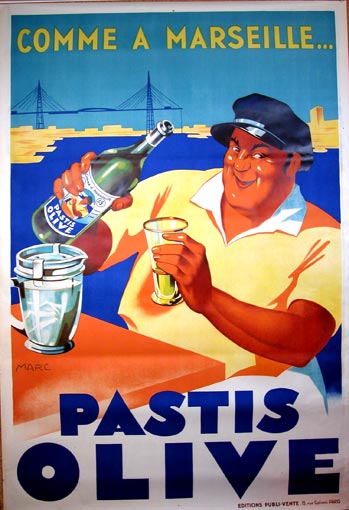
I was particularly fascinated by the pastis. For those of my readers who are not familiar with this drink, pastis is a typically French liquor very much associated with the south of France.
image
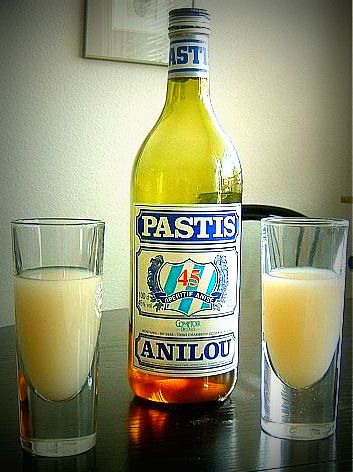
It gives off this wonderful aroma, being flavoured with aniseed (as well as licorice). It is strong (40-45% alcohol by volume), but it is never drunk neat. The drinker will add a fair amount of cold water before drinking it, at which point the liquor’s original dark transparent yellow colour clouds to a milky soft yellow.
image
As a boy, I would never tire of watching this wondrous, almost alchemical, change take place before me and breathe in the sweet scent of anise.

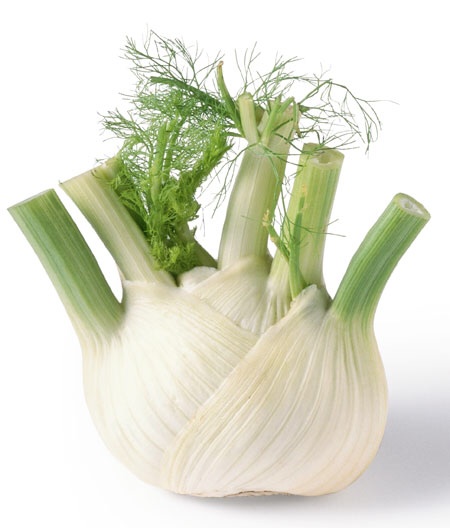
Since my family never used anise or the closely related fennel in cooking, I only next stumbled across the scent of anise when I came to Italy for the first time, nearly forty years ago. My wife to-be (as it turned out, although I didn’t know it then) introduced me to finocchio, or Florence fennel, a special cultivar of the fennel which was developed in Italy.
image
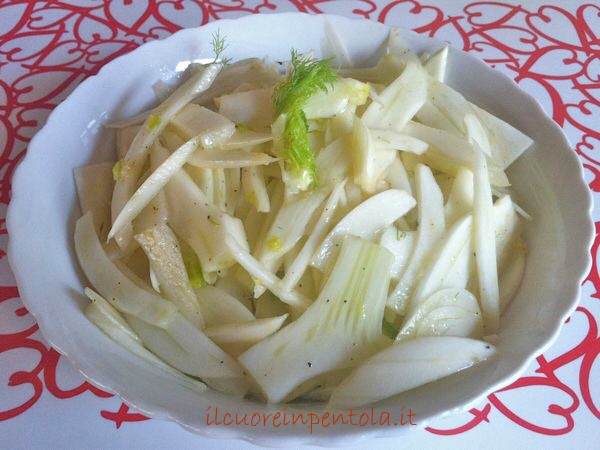
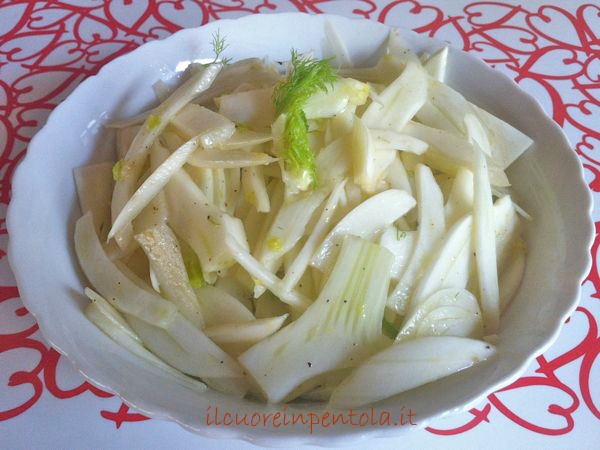
Many people (my late mother-in-law for one) eat finocchio cooked or braised but I prefer it raw, sliced very thin, almost shaved, with a simple oil and vinegar dressing.
image
Like that, it maintains the scent of anise, which begins to waft out as you prepare it in the kitchen, rises appetizingly from the plate as you spear the fennel slices, and is liberated in your mouth as you crunch down on them. Whenever I’m in Italy, and if it’s the right time of year, I will eat finocchio. In fact, it was my having a finocchio in salad last night that moved me to write this post.

Years later, just after coming to China, I stumbled across the scent of anise in another guise. During one of the early banquets to which I was invited, I noticed a star-shaped thing sitting in my dish.
image
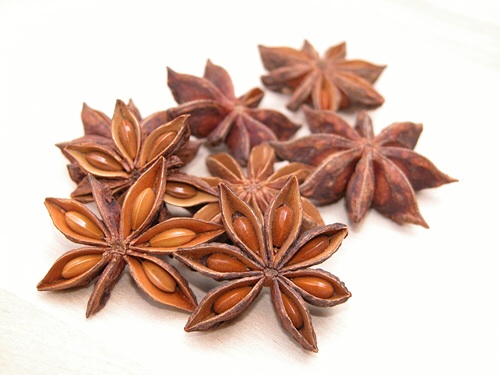
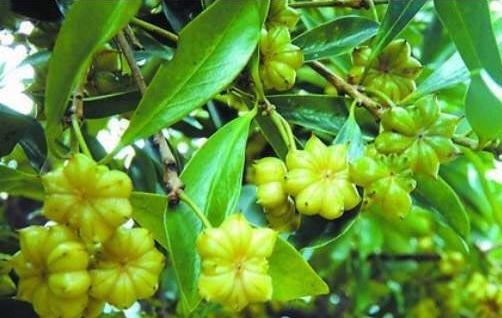
Intrigued, I asked what it was. Star anise, I was told, a spice which is commonly used in Chinese cooking (and actually in the cuisine of much of Asia, as I later discovered). It’s actually a very pretty spice:
image
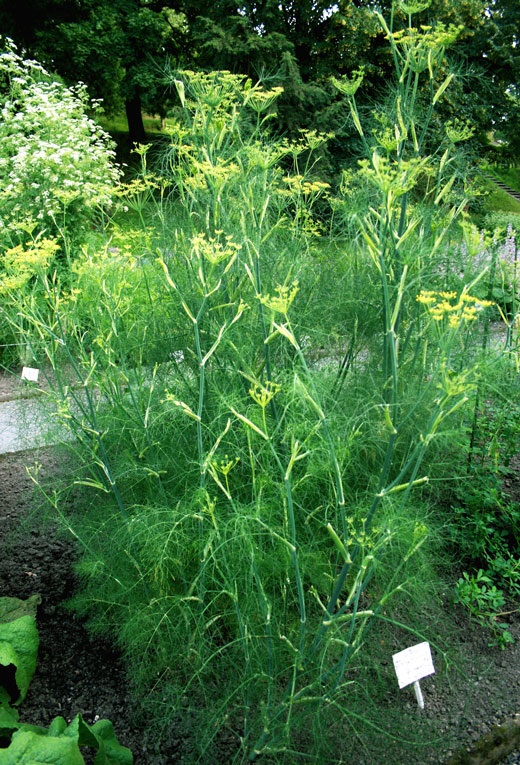
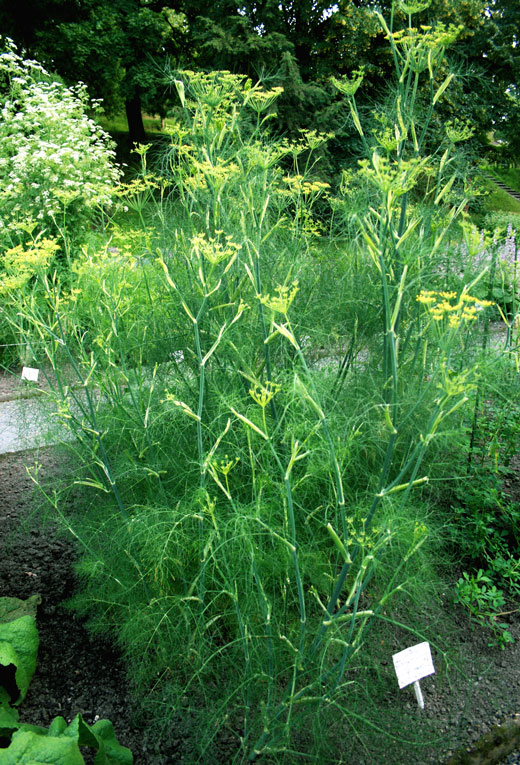
In any event, even more intrigued, I took a tentative bite and suck, and it did indeed taste of anise. But later research showed me that similar taste and scent do not a botanical relationship make. Anise, Pimpinella anisum, and Fennel, Foeniculum vulgare, are flowering plants which are both members of the Apiaceae family, and in fact look quite similar:
Anise:
image
Fennel:
image
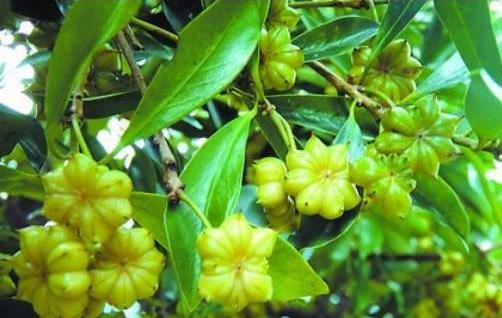
Star anise, on the other hand, is the fruit of a medium-sized tree or big bush, Illicium verum, of the Schisandraceae family:
image
image
The same-scentedness arises from the happy chance that all three plants (as well as licorice to some degree) contain the organic chemical anethole – and here I get distinctly nerdy and add a diagram of this chemical
image
Why these unrelated plants should all contain anethole I don’t know – and why we smell it and taste it as pleasant I don’t know either. Somewhere out there in the ether there may be papers which explain. But I have neither the patience nor the energy to trawl through the depths of the internet to find them.

But what I have found out is that there is at least one other plant out there whose leaves contain anethole. This is the rare tree from the Australian rainforest, the ringwood or (appropriately) aniseed tree, Syzygium anisatum – although confusingly, the leaf, which contains the anethole, is called anise myrtle.
image
image
Feeling rather like one of those birders who will travel to the ends of the Earth to sight a bird which they have never seen, I am thinking (although I have not yet told my wife this) that she and I should travel to Australia again, this time to try this new, exotic source of anise scent. I read with interest that anise myrtle is considered a bush tucker spice in Australia, that is to say a spice from a native plant which can be used to spice a dish of native fauna and flora. Anyone for a stew of kangaroo and warrigal greens spiced with anise myrtle, followed by a couple of quandong fruit for dessert?

_____________________
A village café: http://wwwdotgretagarburedotcom.files.wordpress.com/2013/04/les-vieux-de-la-vieille-jean-gabin-noc3ablnoc3abl-pierre-fresnay-via-pkcine-com.jpg (in http://gretagarbure.com/tag/comptoir/)
Pastis poster: http://www.posterclassics.com/Images-Drinks-French/bigPastisOlive.jpg (in http://journals.worldnomads.com/theglobetrottingtexan/story/69164/France/Marseille-Pastis-Capital-of-the-World#axzz31oe3iEng)
Pastis going cloudy: http://www.frenchmoments.eu/wp-content/uploads/2013/04/Pastis-©-Peng-CC3.0.jpg (in http://www.frenchmoments.eu/pastis-from-provence/)
Finocchio: http://www.dietagratis.com/wp-content/uploads/2014/01/Finocchi08-450RCS.jpg (in http://www.dietagratis.com/ricette-light/3552-insalata-di-finocchi/)
Finocchio salad: http://www.ilcuoreinpentola.it/images/stories/ricette/2013/maggio/insalata-finocchi.jpg (in http://www.ilcuoreinpentola.it/ricette/contorni/insalata-di-finocchi/)
Star anise in a dish: http://www.withaglass.com/wp-content/uploads/2013/10/tenderloinsoyp.jpg (in http://www.withaglass.com/?p=15273)
Star anise alone: http://foodie-isms.com/wp-content/uploads/2011/04/star-anise1.jpg (in http://foodie-isms.com/?p=5085)
Anise plant:http://herbgardening.com/HerbGardeningImages/AnisePimpinellaanisum.jpg (in http://herbgardening.com/growinganise.htm)
Fennel plant: http://herbgardening.com/HerbGardeningImages/Foeniculum_vulgare520.jpg (in http://herbgardening.com/growinganise.htm)
Illicium verum: http://thegardenpalette.files.wordpress.com/2009/06/watermark_303.jpg?w=500&h=468 (in http://thegardenpalette.wordpress.com/tag/star-anise/)
Star anise on tree: http://www.cnseed.org/wp-content/uploads/Star%20Anise%20seed%20Illicium%20verum.jpg (in http://www.cnseed.org/star-anise-seed-illicium-verum.html)
Anethole structure: http://structuresearch.merck-chemicals.com/cgi-bin/getStructureImage.pl?owner=MDA&unit=CHEM&product=800429 (in http://www.merckmillipore.com/chemicals/trans-anethole/MDA_CHEM-800429/p_BwWb.s1L3_sAAAEWfeEfVhTl)
Aniseed tree: http://floragreatlakes.info/rfsimages/ringwood1.jpg (in http://floragreatlakes.info/html/rfspecies/ringwood.html)
Anise myrtle: http://www.anfil.org.au/wp-content/uploads//flushing-tree.bmp (in http://www.anfil.org.au/key-native-species/flavour-of-the-month-february/)

I LOVE ITALY

Milan, 13 May 2014

My wife and I have finally arrived in Italy. On our way home from the station last night we dropped into our local supermarket to buy stuff for supper. We chose simple fare which required no cooking. We started with mozzarella di bufala, mozzarella made in the south of Italy from the milk of water buffaloes

image

My wife pours a teaspoonful of extra virgin olive oil on her mozzarella, but I like it on its own. Like that you can really appreciate the delicate milky juices oozing from the cheese when you put a slice of it in your mouth.

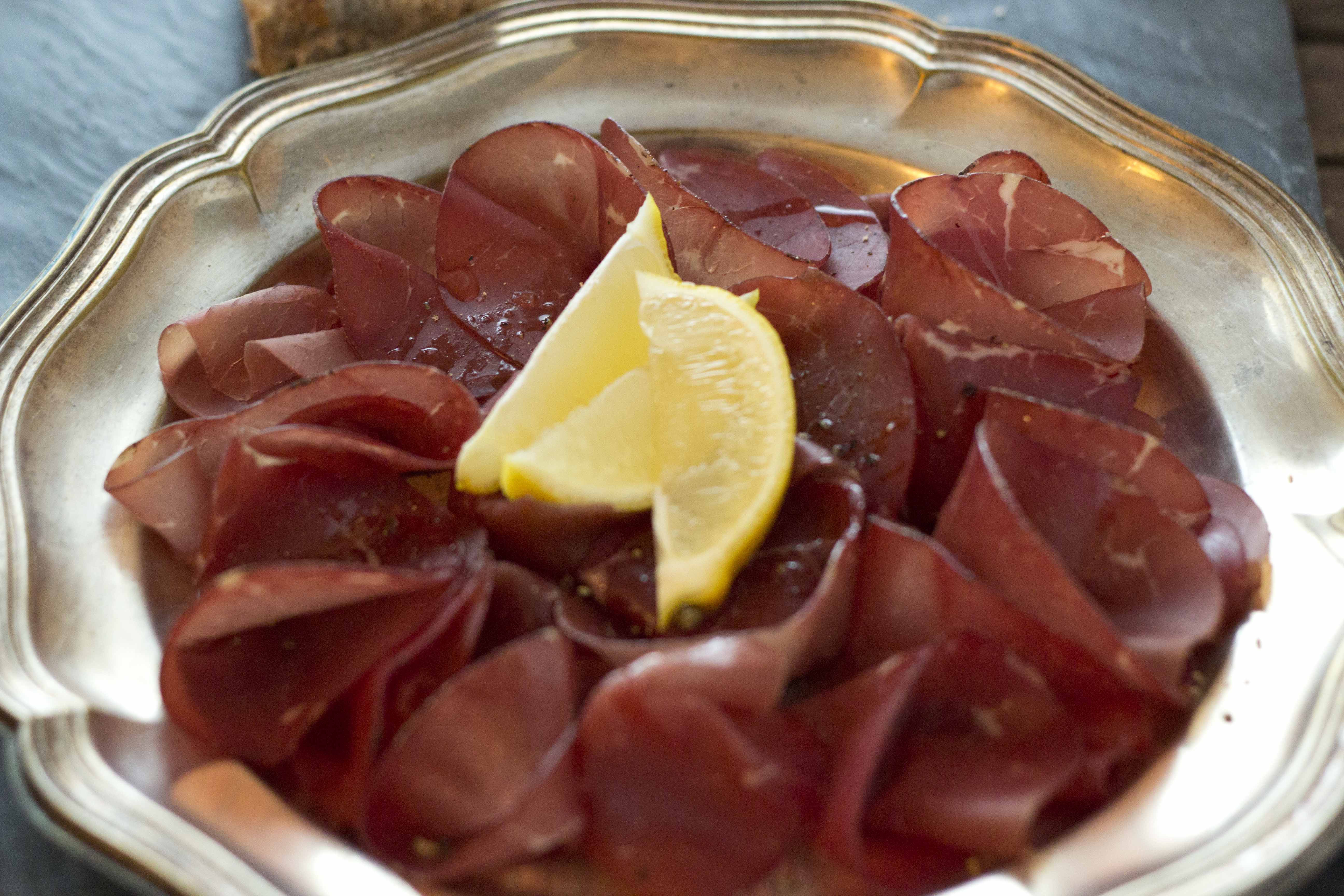
We then had a plate of bresaola, air-dried beef from the Valtellina, an Alpine valley to the north of Milan. It is at its best with a drizzle of lemon juice and olive oil.
image
We followed this up with a plate of cooked ham and cantaloupe melon. Italians will normally eat their melon with raw ham
image
but I prefer it with cooked. That was always the way I ate it in France.

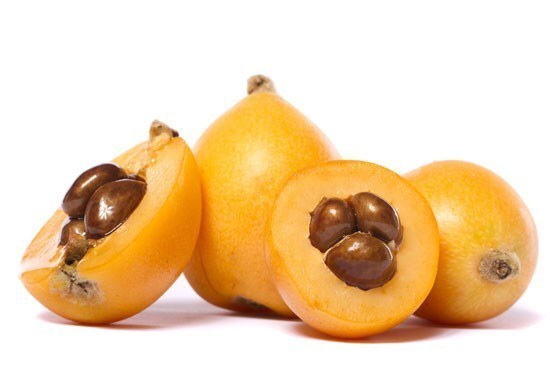
Our dessert consisted of nespole (loquat in English), a fruit I had never tried before coming to Italy thirty years ago.
image
Its yellow flesh is succulent and quite tart, and it contains very beautiful large, brown, glistening stones.

We washed this all down with a Dolcetto red wine from the Langhe region in Piedmont.
image
That’s all. Quite simple, as I said. And all from the local supermarket.

I love Italy.

____________________

Mozzarella di bufala: http://giacomoleopardi.provincia.venezia.it/trasformazioni%20alimentari/IMMAGINI/Formaggi%20Alberto,%20Alessio%20&%20Mattia/mozzarella%20di%20bufala.bmp (in http://giacomoleopardi.provincia.venezia.it/trasformazioni%20alimentari/mozzarella_di_bufala.htm)
Bresaola, lemon, oil: http://www.livingalifeincolour.com/wp-content/uploads/2013/09/meimanrensheng.com-bresaola.jpg (in http://www.livingalifeincolour.com/recipes/bresaola-air-dried-beef-with-olive-oil-and-lemon-lombardia/)
Melon and ham: http://www.cookingwithpatty.com/italian/wp-content/uploads/2009/11/prosciuttomelone.jpg (in http://www.cookingwithpatty.com/italian/recipe/cantaloupe-with-ham-prosciutto/)
Nespole: http://casabenessere.files.wordpress.com/2013/06/nespole.jpg (in http://casabenessere.wordpress.com/2013/06/11/nespole/)
Langhe region: http://blog.wineowine.com/wp-content/uploads/2014/04/le-langhe.jpg (in http://blog.wineowine.com/le-langhe/)

CAPABILITY BROWN

London, 12 May 2014

When I studied history in primary school, it was still taught the old way, by rote. So one learned royal genealogies by heart (“William the Conqueror, William Rufus, Henry I, Stephen, Henry II, Richard I, John Lackland”, etc.) as well as names of battles and the year they were fought (“Battle of Hastings 1066, Battle of Bannockburn 1314, Battle of Crecy 1346, Battle of Agincourt 1415, Battle of Naseby 1645, Battle of Culloden 1746” etc.). It was all very 1066 And All That, which is why I so dote on that book. One especially tricky set of battles to remember were those won by the Glorious Duke of Marlborough, who really stuck it in the eye of the French King, rah-rah (it was especially trying to be half French in these moments of our history classes when the Brits were triumphing over the French). For those of my readers who might have forgotten these battles (or much more probably have never heard of them), we are talking about the Battles of Blenheim, Ramillies, Oudenaarde, and Malplaquet, fought in the years 1704, 1706, 1708, and 1709. To help us remember the names of these battles and their dates, our history teacher taught us an ingenious mnemonic in the form of a telephone number: BROM-4689 (only British readers as old as me will remember that there was a time when UK telephone numbers were a mix of letters and numbers). So now, for the rest of my life I will remember the dates of these four battles, glorious victories for the British, rah-rah. A quick whip through the internet shows me that my history teacher wasn’t the only one who used this mnemonic, which has somewhat deflated the admiration I have had for him all these years.

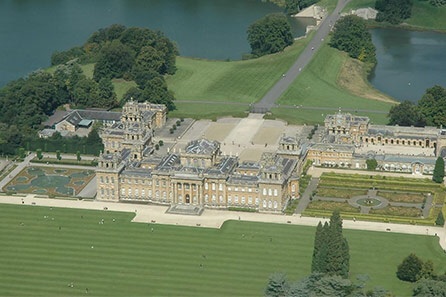
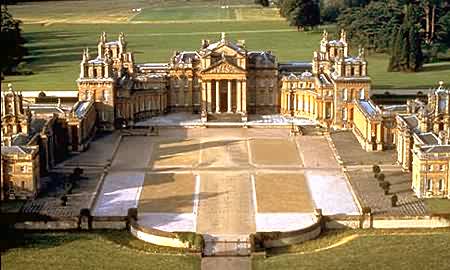
If I am recounting this old story, it is to explain the emotion which I felt when my wife and I visited Blenheim Palace a few days ago. After all those years of having BROM-4689 uselessly rattling around my brain, I could finally see a concrete output of at least one of these battles, the Battle of Blenheim.  For the Duke of Marlborough was given a modest manor and its grounds by a grateful Queen and a promise of funds from “the nation” (i.e., the taxpayer) to knock down the manor and build a grand new home and garden, worthy of the victor of the glorious Battle of Blenheim, rah-rah. In the event, the Duke and Duchess (because she was heavily involved) got little if any funds from the “grateful nation” and the Duke paid for most of the works from his own pocket. The story of the building’s construction is worthy of an opera, but I will skip over that to focus on the end result, here seen in all its glory from the air

image

image

image

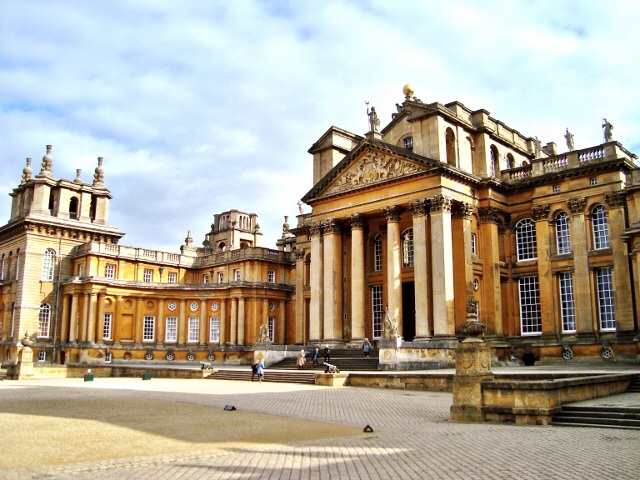
To be honest, I think it’s really only from the air that one can appreciate this ducal pile. My wife and I found that from ground level it’s all rather overpowering. Here’s a shot of the front taken by another visitor. Note the size of the persons compared to the building.

image
We visited the inside, looking respectfully at all the nice things displayed – the portraits of worthy grandees, the tapestries, the long library with its organ, the expensive baubles scattered over various surfaces – but all the time my wife and I kept saying to each other “how did the Dukes keep this place warm and lit?” The bills for the upkeep must have been staggering. And in fact the current Duke has had to do all sorts of things (add a little train, build a butterfly house and a maze) to attract the tourists and get their entry fee. And you can get married there – for a fee. Etc., etc.

What really caught me was the garden. It would, of course. It was designed by Lancelot “Capability” Brown. I love his style, which is so very naturalistic. He creates these undulating fields of grass which sweep up to the house. He scatters clumps or belts of trees, or even individual trees, over these fields. He will often create lakes by invisibly damming small rivers or streams running through the property. His garden at Blenheim Palace has all of these. This is a modern photo

image

But I prefer this old painting

image

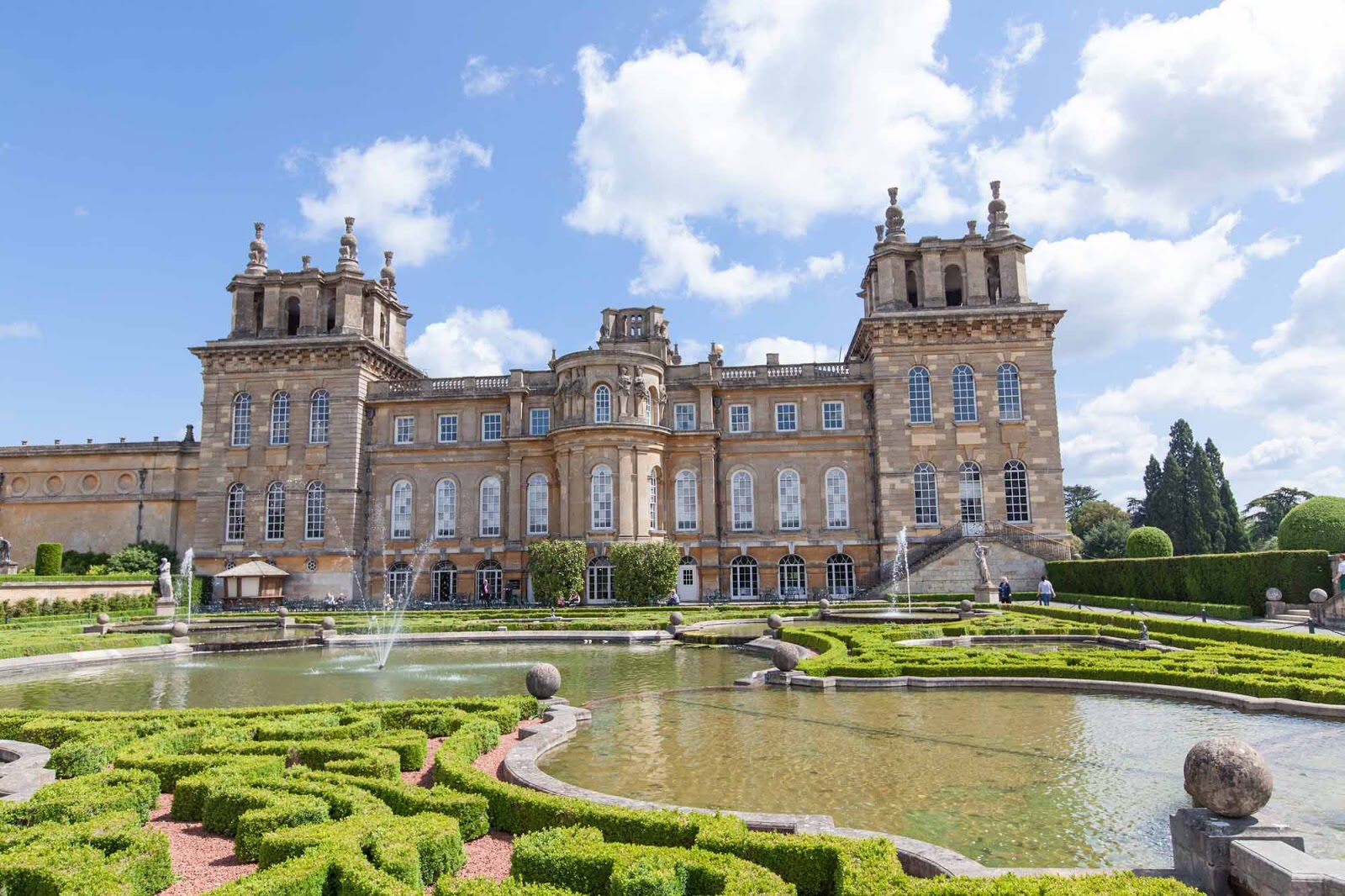
For me, Capability Brown’s gardens are the quintessence of the English garden, preferable by far to the strict and sterile geometry of a French garden, of which Blenheim Palace also has an example.

image

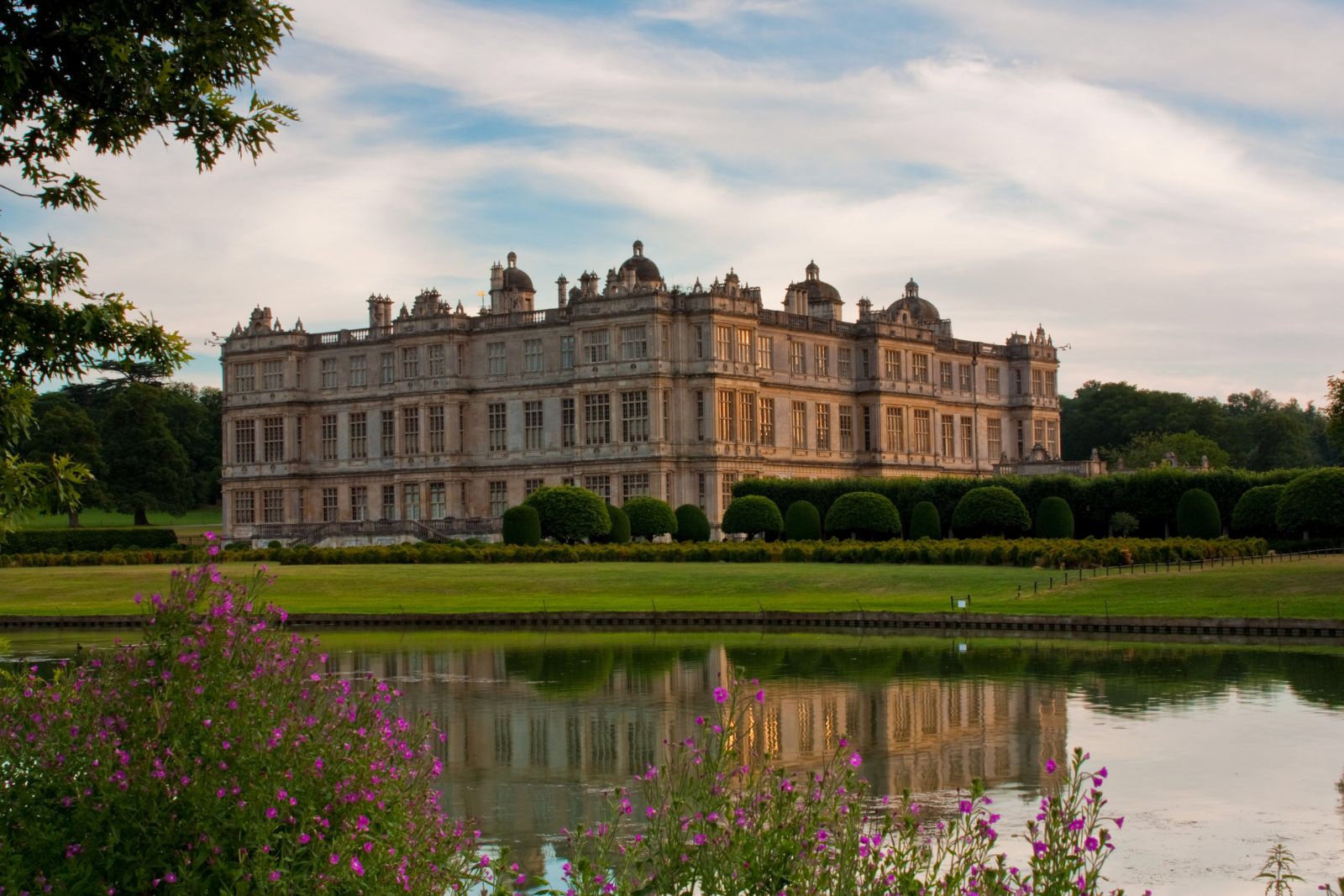
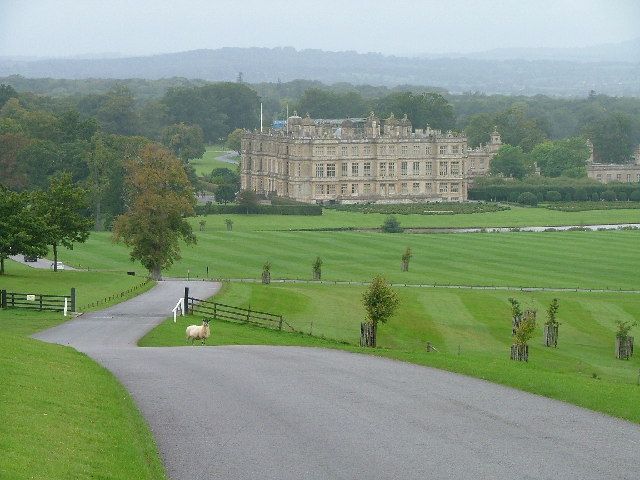
By one of those strange twists of Fate which one’s life is filled with, I had first come across Capability Brown at the same time that I was learning BROM-4689. My grandmother had come down for the weekend to visit me in my primary school and she took me to visit Longleat House, another of those stately homes which dot the English countryside, this time belonging to the Marquesses of Bath.

image

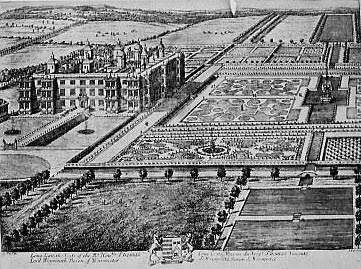
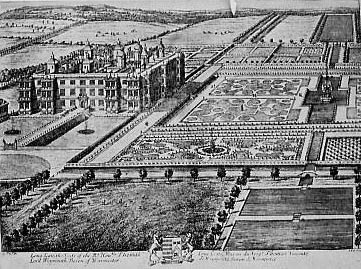
As required by the fashion of the times, Longleat had boasted of a very large, formal French garden

image

but luckily good sense had prevailed and the 1st Marquess of Bath (they had been mere Viscounts before that …) had hired Capability Brown to replace the formal gardens with one of his creations.

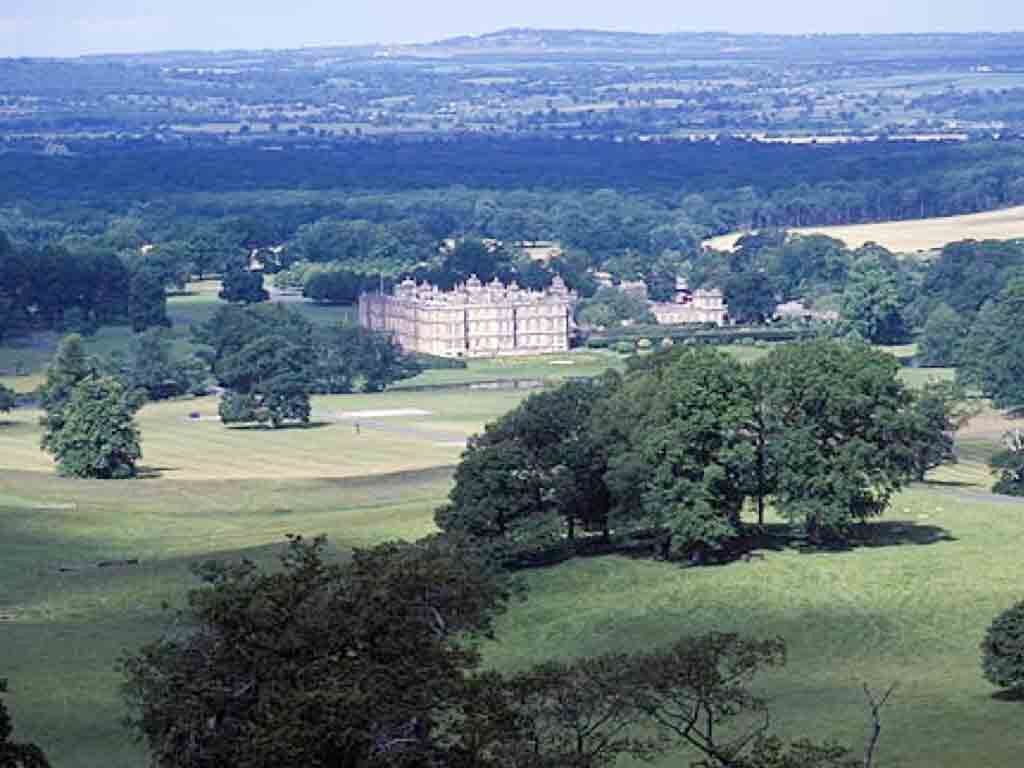
image

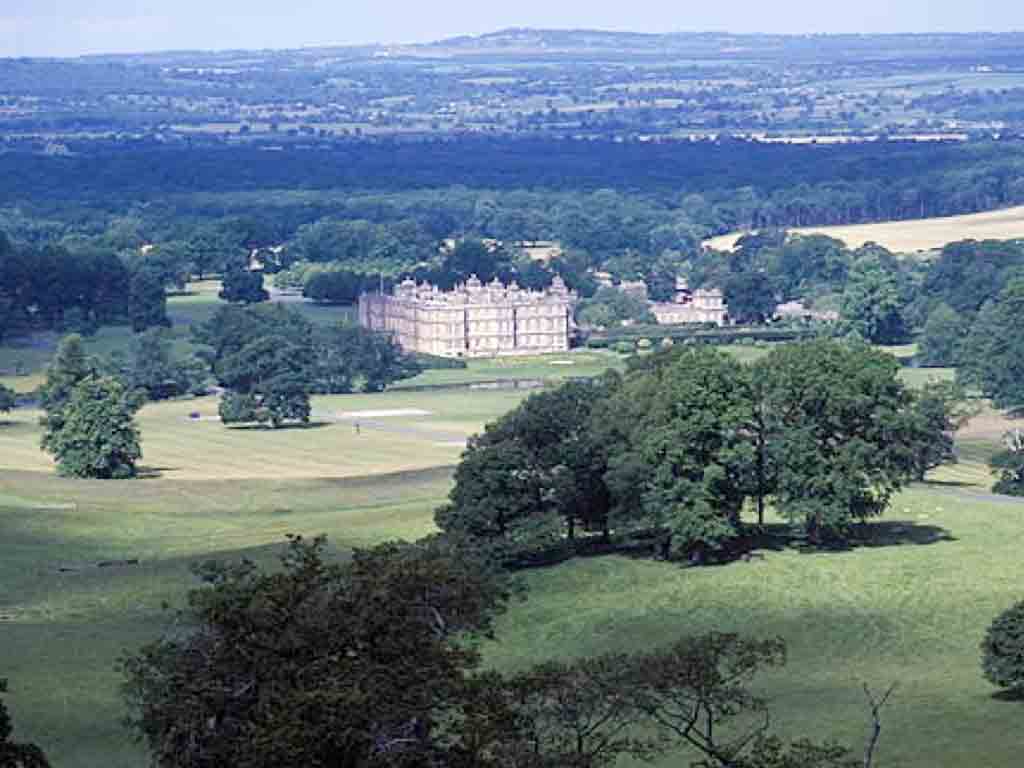
See how Brown’s work fits seamlessly into Britain’s natural landscape.

image

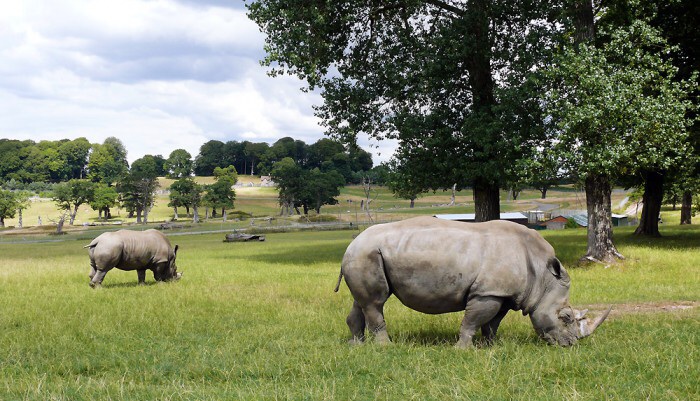
Of course, the Marquesses of Bath have been under the same financial pressure as the Dukes of Marlborough. At Longleat, the Marquesses have adopted the same kind of tourist attractions as the Dukes at Blenheim: little trains, mazes, weddings, and so on. But the Marquesses went one step further and created one of the first Safari Parks in the UK in the grounds of Longleat. So in Capability Brown’s landscape we now find lions, giraffes, zebras, and more.

image

How fallen are the mighty. But what to do, even Dukes and Marquesses (finally) have to make a living like everyone else.

___________________

Blenheim Palace aerial view-1: http://4.bp.blogspot.com/-khCnNCcHPyE/T9bWqchSzrI/AAAAAAABYSY/dPjnMkUU-ME/s1600/011_blenheim-palace_theredlist.jpg (in http://loveisspeed.blogspot.com/2012/06/blenheim-palace-england.html)
Blenheim Palace aerial view-2: http://s1.acorneplc.info/content/img/product/main/visit-to-blenheim-palace-31143824.jpg (in http://www.virginexperiencedays.co.uk/visit-to-blenheim-palace-with-a-deluxe-picnic-for-two)
Blenheim Palace aerial view-3: http://bestvaluetours.co.uk/images/products/gt-bpct-n/xl-p-233-blenheim-palace.jpg (in http://bestvaluetours.co.uk/search-the-cotswolds-and-bleheim-palace-day-tour-129)
Blenheim Palace front door: http://satnavandcider.files.wordpress.com/2012/05/blenheim-palace-front-8973-640×480.jpg (in http://satnavandcider.wordpress.com/2012/05/03/at-blenheim-palace-keep-off-the-gravel/)
Blenheim Palace-gardens-modern photo: https://www.english-heritage.org.uk/content/news/2011/images/blenheim-palace (in https://www.english-heritage.org.uk/about/news/exclusive-members-event-woodstock-literary-festival/)
Blenheim Palace-gardens-old painting: http://upload.wikimedia.org/wikipedia/commons/6/6a/Blenheim_PalaceDE.jpg (in http://en.wikipedia.org/wiki/Blenheim_Palace)
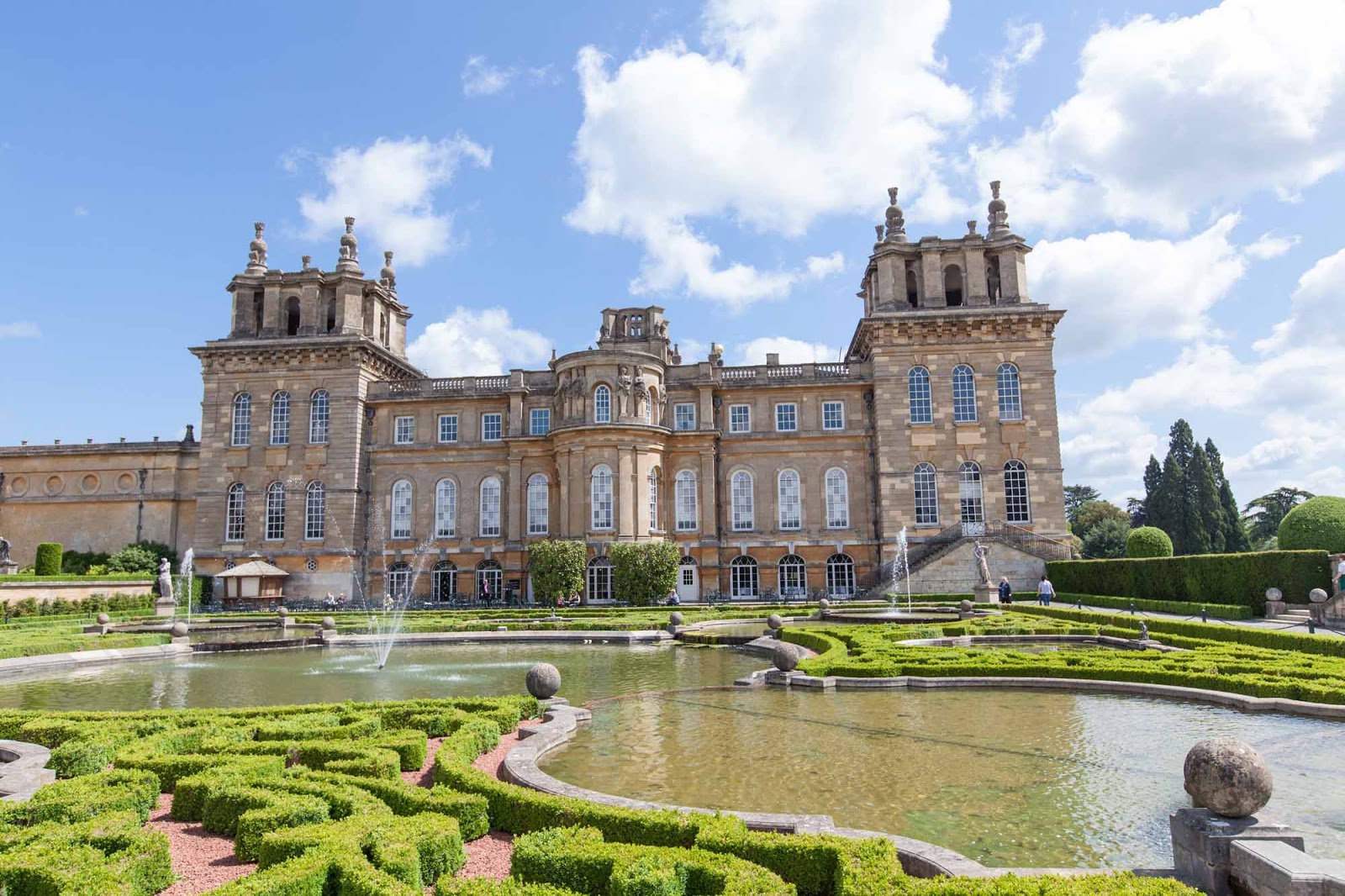
Blenheim Palace-formal gardens: http://3.bp.blogspot.com/-DNgdli09UZA/UQwuWAE-IaI/AAAAAAAAK-s/DfxInZN3z7s/s1600/photo+email.jpg (in http://www.weddingblogdesigner.com/2013/02/bleneim-palace_4.html)
Longleat House: http://www.chch.ox.ac.uk/sites/default/files/images/development/dev2011/longleat-house.jpg (in http://www.chch.ox.ac.uk/development/events/future/2005/7-july-longleat-house-visit)
Longleat old French gardens: http://upload.wikimedia.org/wikipedia/commons/e/e2/Longleat_by_Knyff_edited.JPG (in http://en.wikipedia.org/wiki/Longleat)
Longleat gardens: http://www.writework.com/uploads/3/39734/english-longleat-house-wiltshire-longleat-house-home-lord-ba.jpg (in http://www.writework.com/essay/ao1-investigating-business-actais-and-longleat-aims-and-ob)
Longleat aerial view: http://4.bp.blogspot.com/-MO9gG__FJ7U/T03YIfdx_kI/AAAAAAAAAQc/9U-JgcFxX6Y/s1600/Brown+-+Longleat.001.jpg (in http://www.gardenhistorymatters.com/2012/12/lancelot-brown-is-blogging.html)
Rhinos at Longleat: http://www.millfarmglamping.co.uk/wp-content/uploads/2012/09/longleat-700×401.jpg (in http://www.millfarmglamping.co.uk/in-this-area/longleat/)

BREAKING IN BOOTS ON THE YORKSHIRE MOORS

London, 7 May 2014

My wife and I were on Oxford Street yesterday, where she did one of her favorite things, namely she entered a shoe shop to inspect its contents. In this case, the inspection led to her purchasing two pairs of moccasins. Flushed with this success, she emerged from the shop wearing one of her purchases. After a few hours of further walking around London, the inevitable happened. My wife’s face started taking on a strained look, and she eventually confessed to sore feet. The new shoes, she announced, needed breaking in. I then suggested, in a moment of flippancy, that she should find someone to break in her shoes for her. She waved this off as the flippant suggestion that it was.

And yet … it was not so foolish a suggestion. I, for one, had done exactly this at school. I had broken in a pair of shoes for someone else. Boots, actually.

I should explain.

It was June 1972. My classmates and I had just finished taking our A-levels and we were about to leave school for good. A bunch of us got together and decided to celebrate this rite of passage by crossing the Yorkshire moors (which lay just to the north of our school) from one side to the other, all in one go. This may not sound like much, but actually it was a bit of bravado. We’re talking of a distance of some 60 kilometers, so to do it in one go meant starting at 3 in the morning with the hope of finishing in the late afternoon. I realize now that what we did was the Lyke Wake Walk or some variant of it. This walk runs from the village of Osmotherley, which lies on the western edges of the moors, all the way to the sea which laps at the moors’ eastern border. We started feverish preparations, which brings us to the topic of boots and their breaking-in. I suddenly realized that I had no adequate footgear. Gym shoes were far too light (the heavy running shoes of today did not yet exist), but I didn’t want to buy a pair of walking boots just for this. At the last moment, the younger brother of one of the walking team offered to lend me his brand new boots. By using them I would be doing him the favour of breaking them in. Damned good deal, I thought.

So at 3 am of a Saturday morning, we were dropped off from an old army truck, me in my brand-new borrowed boots, with the escarpment of the moors looming up in front of us in the darkness. Feeling a bit like a bunch of commandos on a special mission to knock out the enemy’s gun positions, we quietly filed up the path which carried us to the top of the escarpment and then started walking across the heather. And we walked.

The sky slowly lightened up until we could see around us. It was really very beautiful, bleak perhaps, certainly remote, but beautiful.

image image

We stopped for breakfast, munching on some sandwiches we had brought with us. A squall swept through, luckily the only one of the day. After which we started walking again, with stunning views around us

image image

And we walked. And walked. The sun in the meantime slowly climbed to its zenith, the clouds clearing away and leaving a beautiful sunny day in their wake.

image

At lunchtime, we reached a road on which the old army truck was parked, waiting for us. As we each trudged in, we clustered around the truck and took the food and drink being handed out. We sank down on the heather, glad to have an excuse to rest our aching legs a while. Eventually, though, we had to lever ourselves back on to our feet and walk on. And so we walked. And walked.

image

An hour or so later we reached Fylingdales, those strange “golf balls” in the middle of the moors, which are actually part of an RAF radar station.

image

We stopped a moment, with the excuse to admire the balls but really just to be able to stop walking for a bit. But we soon had to push on. The earlier joshing and joking had died away hours ago. We now just walked, oblivious to the beauty around us

image

By this point, the new, being broken-in boots were hurting me so much that I took them off and walked barefoot. How much further, dear God? How much further? My friends began to stumble past me as I shuffled on slower and slower, and they weaved off unsteadily ahead of me through the heather. At last, at last, I crested a rise and there, down on the road, was the old army truck. Thank God, thank God, and thank God!! Still after all these years, I can remember with perfect clarity the exhausted joy of sighting that truck. I sank down in the heather beside it and promptly fell asleep.

And the next day, after I had crawled stiffly out of bed and had had some breakfast, I solemnly handed over the boots to their owner, who was very pleased by the impeccably thorough breaking-in I had given them.

So all of this to say that I’m sure my wife could find a penniless student who would break in her shoes for her, for a price.

_________________

http://www.sub3000.com/balbum/England/37/images/UraCW.jpg [in http://www.sub3000.com/balbum/England/37/Urra.html%5D
http://www.sub3000.com/balbum/England/37/images/uraSummit.jpg [in http://www.sub3000.com/balbum/England/37/Urra.html%5D
http://www.walterthompson.co.uk/images/uploads/lykewake.jpg [in http://www.walterthompson.co.uk/news/article/lyke_wake_walk_2011%5D
http://4.bp.blogspot.com/-nJnaXzkEn04/Uek1cHLm7hI/AAAAAAAACT8/TDpegiXR8F4/s1600/Lyke+Wake+Race+2013+016+small+farndale.jpg [in http://mike-viewfromtherear.blogspot.com/2013/07/lyke-wake-race-13th-july-2013.html%5D
http://4.bp.blogspot.com/-nWhv6e9B5h0/Uek1rONGZ3I/AAAAAAAACUE/yrAlHv5C59I/s1600/Lyke+Wake+Race+2013+017+small+esk+valley+walk.jpg [in http://mike-viewfromtherear.blogspot.com/2013/07/lyke-wake-race-13th-july-2013.html%5D
http://2.bp.blogspot.com/-ok8cGHAg8x4/Ue1JtqkDs5I/AAAAAAAACWw/1XzKPvV8r5s/s1600/Lyke+Wake+Race+2013+037.jpg [in http://mike-viewfromtherear.blogspot.com/2013/07/lyke-wake-race-13th-july-2013.html%5D
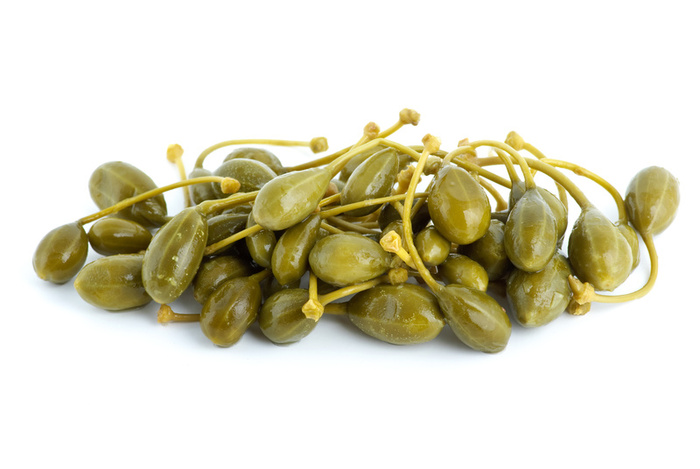
http://www.raf.mod.uk/raffylingdales/rafcms/mediafiles/98EEDACF_DEA3_0ABB_4AF9D7034C1B3316.jpg [in http://www.raf.mod.uk/raffylingdales/aboutus/history.cfm%5D
http://2.bp.blogspot.com/-MEwBIIEDv60/Uek4z8Dc7YI/AAAAAAAACUk/2xdScmj96ao/s1600/Lyke+Wake+Race+2013+022+small+lion.jpg [in http://mike-viewfromtherear.blogspot.com/2013/07/lyke-wake-race-13th-july-2013.html%5D