HUDDLING AROUND THE RADIATOR

Beijing, 23 March 2013

One of the first stories that you hear when you move to China is that the North gets central heating during the winter while the South doesn’t, the line between North and South running along the Huai River. The decision is normally attributed to Mao Zedong himself, taken in the early days of the “New China” (post-1949). This is normally followed by a shake of the head at such simplistic policies and war stories about winters spent in “the South” where the storyteller spent the whole winter, night and day, indoors and out, wearing multiple layers. I can empathize. I once went on a business trip in February to Morocco, where there is also no central heating, and I still remember the highly unpleasant meetings in these damply cold rooms where my internal warmth slowly but steadily leaked out into the surrounding room leaving me a block of ice by the end of the meetings.  I suppose there was a time when the Chinese endured, but with rising wealth and expectations there is now a fair amount of grumbling about this policy. I remember being struck by a story reported in the China Daily where a man originally from Shanghai but now living in Beijing told the reporter that he had decided not to spend the Chinese New Year with his parents because he found their apartment so unpleasantly cold. It might be colder in Beijing but at least he had heating, he said. For a country where spending the New Year with parents is still sacrosanct, that was quite a statement.

In all of this, one tends to forget that the rules for central heating in the North are quite rigid and are rigidly applied. By some mysterious calculus known only to the denizens of the Ministry of Central Heating (or whatever Ministry it is that made this decision), 15 November is the date on which the heating is turned on and 15 March the date on which it is turned off. Never mind what the actual temperatures might be; that is irrelevant. The first year my wife and I were here, on November 1 it snowed – artificially induced, by the way; the Minister of Meteorology decided that Beijing needed precipitation and so seeded the clouds. But she told no one of her decision, consequently throwing all the surrounding airports into chaos since none of them were expecting snow. But I digress. Beijingers, faced with 15 days with no heating, started to complain louder and louder; eventually, the Beijing municipal authorities decided to throw the switch early.

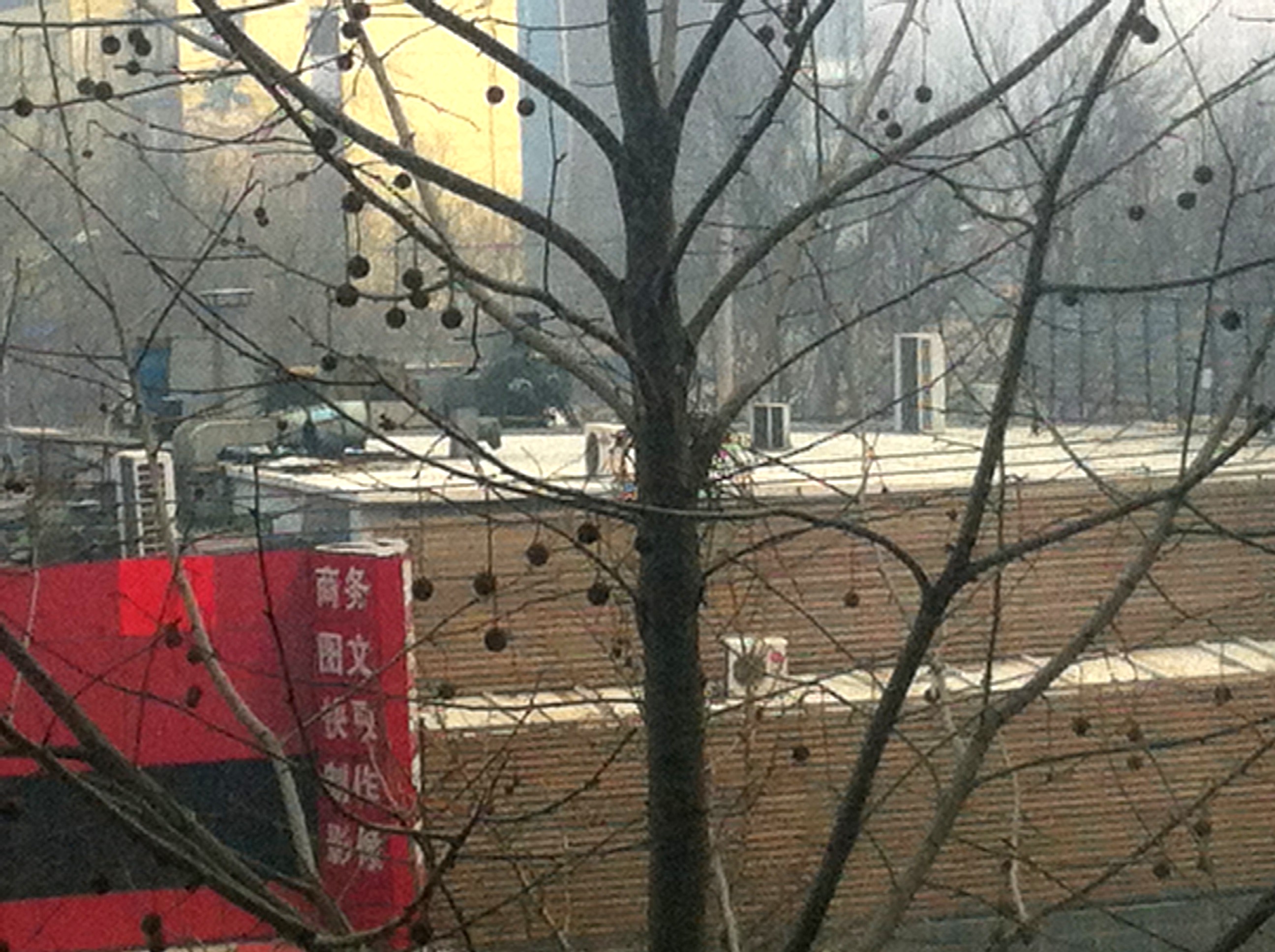
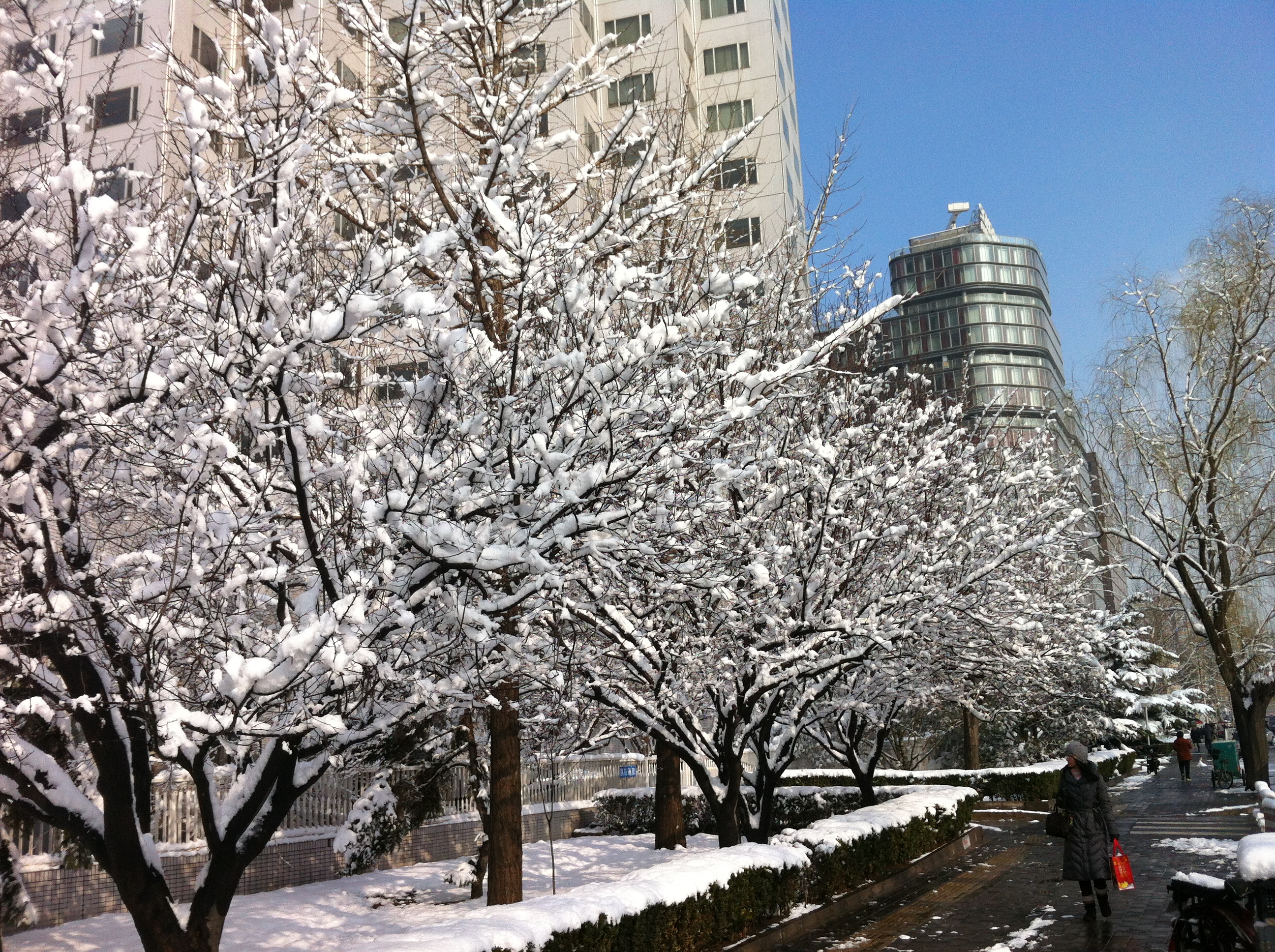
This year, as March 15 drew closer my wife and I scanned the meteorological prognostications to know whether or not the switching-off of the heating this year would be a prelude to an unpleasant several weeks of cold in the apartment. It was looking good; outside temperatures were quite acceptable even though the smog levels were disagreeably high. March 15 came and went, the heating went off, the temperatures inside the apartment stayed pleasant. We were congratulating ourselves when this sight greeted us on the morning of the 20th.

march-20-morning 002

It was actually very pretty, really just like a Christmas card. When I walked to work later, it seemed that every person on the street had their camera out, from super-duper machines to mere phones, and were busily photographing the magical effects. I joined in with my phone. Here are a couple of photos I took.

march-20-morning 003

march-20-morning 006

But even as I walked, the snow was steadily raining down off the trees (as it were) and melting rapidly. By evening, the snow was gone.

But the cold remained. So for the last few days, come nightfall my wife and I throw on thick sweaters and huddle around the electric radiator which we bought for this purpose soon after we arrived. When it comes to bedtime we throw off our clothes and throw on our pajamas in frenzied speed, dive under our duvets, and lie there shivering for a while until out body warmth heats up the space around us. When it’s time to get up, we poke our noses out from under the duvets, groan at the still-low temperatures, and make a dash for the shower. That and a hot cuppa sort of prepares us for the day.

The big question now is, where can we go for lunch which will be warm?

MAGPIES

Beijing, 17 March 2013

I am desolate.

This morning, we managed to hook up with our son on Skype, and then he managed to hook up our daughter, so that we could have a three-way conversation! This is quite beyond me and my wife. We have no idea what he did to make it happen, but we are very happy that he did it.

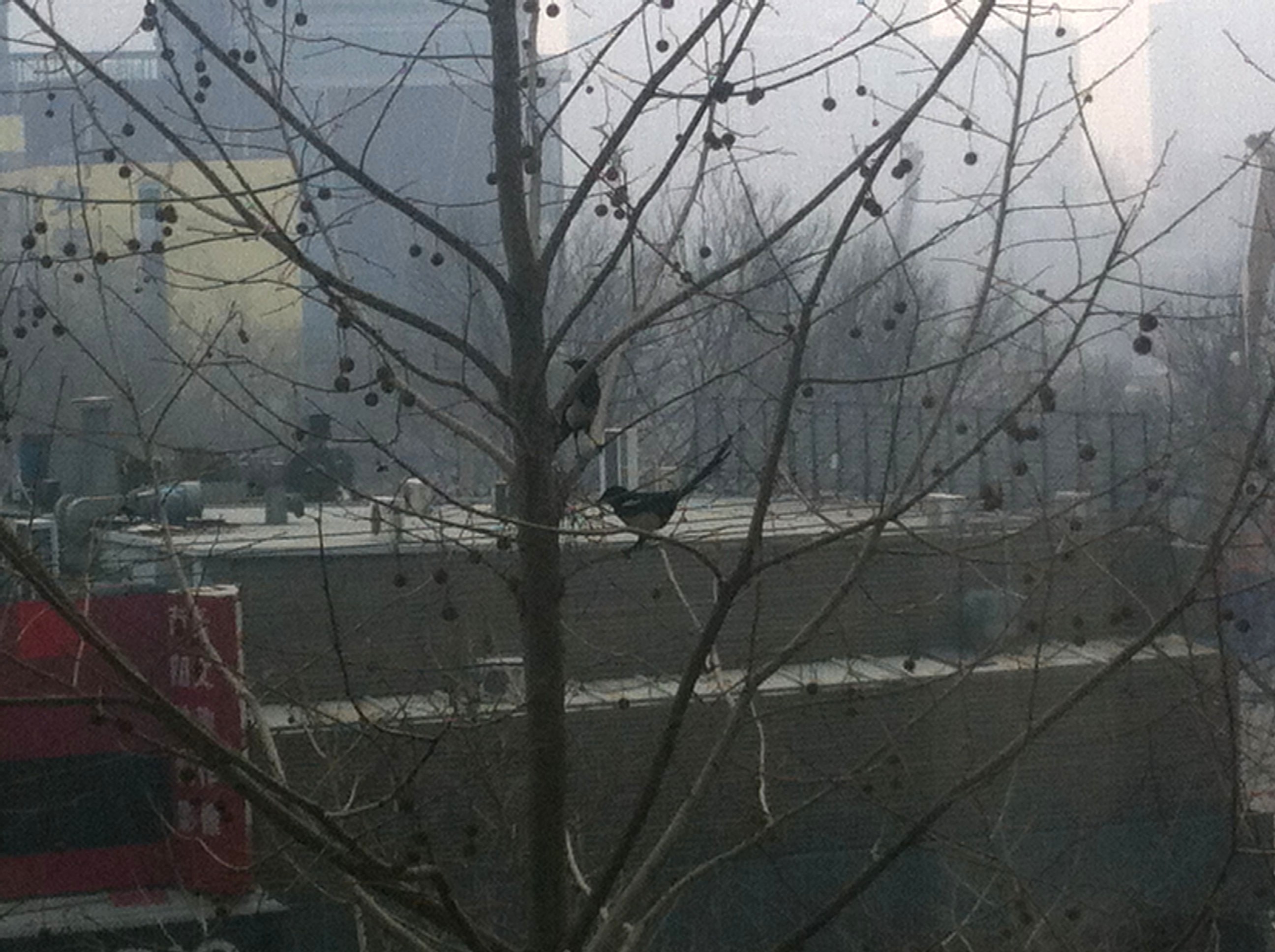
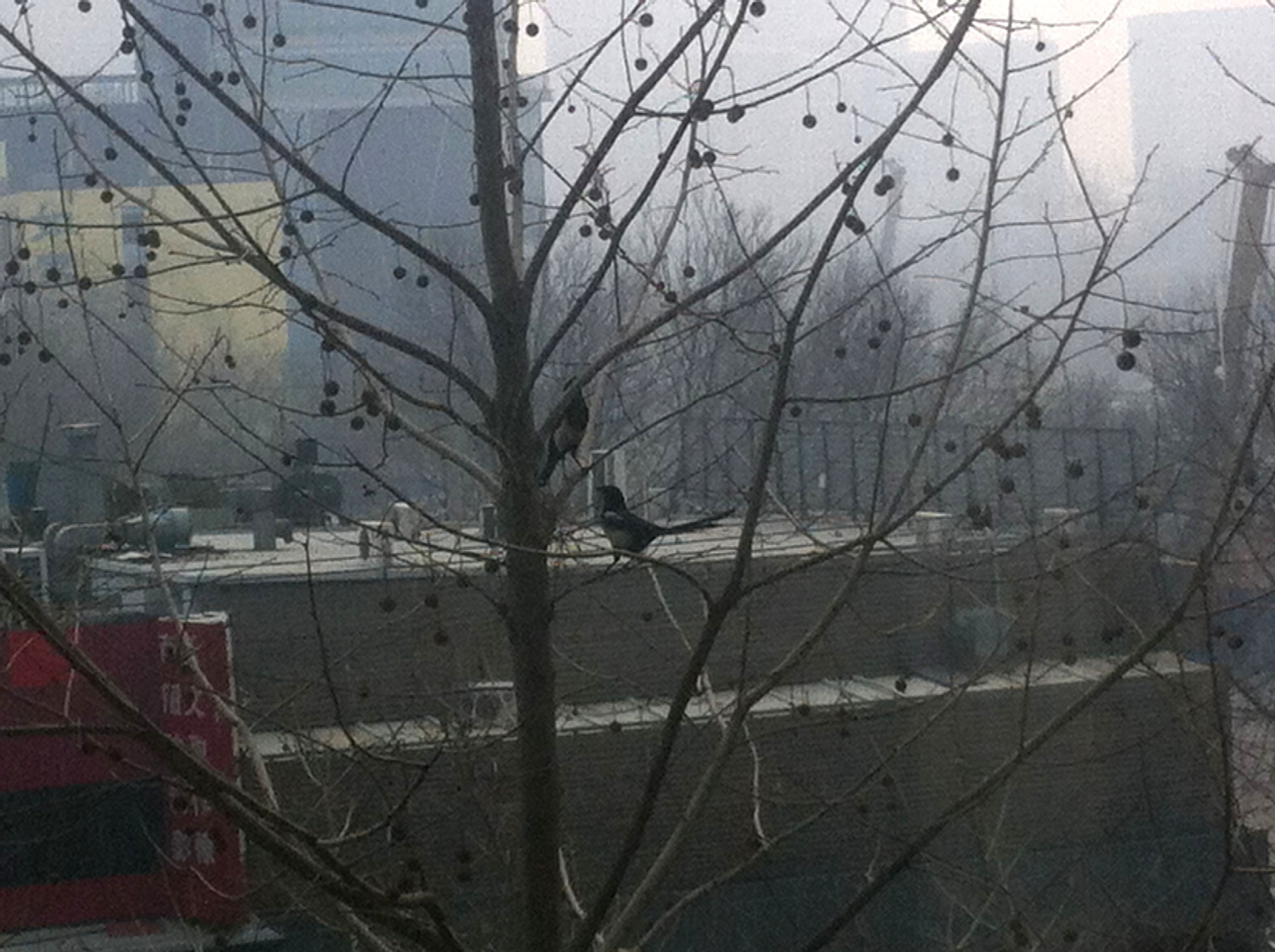
So we were having a pleasant conversation about this and that, catching up on what they were up to. And then I noticed that in a crook of the tree just outside our window a pair of magpies had begun to build a nest! This was really exciting, the height of our floor being such that we would have a front-seat view to the whole thing. Each magpie was bringing a twig or two and weaving it into the other twigs already there.

As my wife continued to talk to the children, I grabbed my phone and took some photos.

magpies nesting 009

magpies nesting 010

magpies nesting 011

I was happily looking forward to making a pictorial diary of the nest building. Then I was already imagining the egg laying, the birth of the little ones, their first flutter (as it were), all immortalized in photos.

Then our son had to sign off and we continued with our daughter, who told us about the latest events in her job (exciting, but also unsettling, changes have taken place). When we finished, I went back to the window to check how the nest building was progressing.

But the magpies were not there and the scaffolding of twigs was sagging at the edges. I looked around anxiously. No magpies to be seen. Perhaps they had gone off to get extra good twigs, I thought.

We went out to lunch, and when we came back the first thing I did was to go to the window. No magpies, and the construction was drooping even further.

abandoned nest 002

They’re not coming back. Something drove them off. Was it me? Did they notice a rather large shadow lurking in the near distance? I had tried to be careful, used no flash, and I think our windows are partially tinted. Was it a bad location choice? As they say of real estate – and I guess it’s as true for birds as it is for humans – it’s location, location, and location. Maybe the tree crook was a little too crooked. Or maybe it was the smog; you can see from the first pictures that it’s pretty bad today. Maybe they thought it was better to move out of town.

Whatever it was, they are not coming back. I’m really desolate.

LISA

Beijing, 16 March 2013

Let me tell you about Lisa.

That’s not her real name, by the way, it’s her Western name. Like many Chinese, she has adopted a Western name for her interactions with laowai, or foreigners, like us. Which is just as well, frankly, because I personally never remember Chinese names and always mispronounce them dreadfully, which must be trying for the person being mispronounced.

Lisa is one of the army of young people who act as receptionists in our building. My wife and I are not entirely sure what any of these people do. Part of the day they sit at the desk by the entry door, monitoring who comes in and out. Then they disappear to do who knows what somewhere else in the building. They are perched at a somewhat higher level in the building’s management hierarchy than the doormen. They get to sit at the desk in the entry hall, while the doormen (always men, by the way) only get to stand by the door swinging it open for anyone who goes in or out. The two worker categories are distinguished by their uniforms. Lisa and her cohorts wear a white shirt, dark suit (men and women; no tailleurs here), and a dark coat during the winter months. The doormen, on the other hand, wear what looks like army fatigues and a red beret (although we have noticed that one doorman seems to have moved up the ranks and now wears an outfit more akin to the receptionists; but he still opens the doors).

Lisa is a godsend to us, because she speaks pretty good English. Whenever the electricity stops, or the hot water cuts off (which has happened to me twice when I was well soaped under the shower), or the TV mysteriously loses half of its channels, or the air conditioning system doesn’t blow any air out, my wife knows whose mobile number to call to explain what the problem is. In no time at all, Lisa will marshal the right buildings management crew or add some more Yuan to our electricity card, or water card, or hot water card (they have a rather bewildering system here for utilities; money gets credited onto a card, which then is used to credit an account we have somewhere in the building, and the utility magically works again). We always know which are her days off, and we anxiously hope that nothing will happen during those days; dealing with the other young men and women at the reception desk is hard going since they speak hardly any English. Some six months ago, we were also very afraid – as was Lisa herself – that she would be rotated out of the building to another of the host of buildings owned by our real estate company, but luckily this did not come to pass.

Over the year we’ve been in this building, my wife has struck up a good relationship with Lisa. She is a very friendly person and loves to chat. In the process my wife has found out a few things about her. She lives far away on the outskirts of Beijing, with her parents and twin sister. Given her miserable wages (real exploitation; I don’t know what Karl Marx would have said about it), and the fact that real estate in central Beijing now costs the same as in Manhattan, there is no way she can afford to live alone closer to work. And I think there is still an expectation that as an unmarried woman she should live with her parents. She went to a second-tier university to study languages, so it’s a bit depressing to see that the only job she could get was as a building receptionist, admittedly in one of Beijing’s tonier buildings. But the press often has articles about the army of young Chinese whose parents struggled to send them to university – but, crucially, one of the second-tier universities – and who haven’t managed to land a job (or at least a job that fits their expectations after a university degree). They live like ants (the term used in a study of this phenomenon), jammed together in colonies on the outskirts of Beijing and other big cities, as squatters in buildings condemned to demolition, eking out a living with small jobs here and there, often not daring to tell their parents what the true condition of their lives are.  So I suppose Lisa can consider herself lucky to have a regular job, even though she’s paid miserably, works long hours, and hardly gets any time off.

One thing about Lisa that warms the cockles of our hearts is that she has an enthusiastic curiosity about the rest of the world. I think her dream would be to travel all over the world if she could. She took her first small step in this direction some six months ago, when she left the country for the first time in her life and visited Thailand. She had managed to scrape together a week of holidays. She went with a group, of course, and they didn’t do anything very adventurous – Bangkok and a beach somewhere was the sum total of the trip. But she was so happy. She emailed us a photo of her standing somewhat awkwardly next to a guard at the King’s palace in Bangkok, beaming at the camera. And when we met her after she got back she told us all about the trip with a big smile on her face. She said she was looking forward to her next trip, once she had scraped together some more holiday time (she was on duty during the Chinese new year, when most of the receptionists took time off). My wife persuaded her to think of traveling alone, telling her that her English was good enough for her to manage without a group. She showed Lisa where she could buy her own flight tickets on-line and book her own hotels. Lisa was a little hesitant but seemed game to try. She was thinking of going to Viet Nam, she told us.

Yesterday, when my wife was leaving the building, Lisa came running over, beaming with joy. She announced to my wife that she had found a travel companion – traveling alone was too much for her. It was one of the other women at the reception. They were going to Viet Nam, Lisa announced, she had chosen the flights using the websites my wife had given her, everything was going swimmingly. But when my wife came back that afternoon, Lisa was completely crushed; my wife told me she had never seen her so down. When her travel companion had announced to her parents the plan of going to Viet Nam, her mother had nixed the idea: too dangerous, she had pronounced. It is true that China and Viet Nam had had a little war back in the late 1970s and that there is a certain amount of animosity at the moment because of disputes over islands in the South China Sea, but to say that Viet Nam is dangerous is ridiculous. But the parental veto had been cast and that was that. My wife urged Lisa to reconsider the destination. Lisa mournfully said she had thought of Malaysia; China wasn’t having any fights with them. But she had really set her heart on Viet Nam. It’s Lisa’s day off today. Let’s see if the night has brought her counsel, as the Italians say.

GLOBALIZATION BY MANNEQUINS

Beijing, 12 March 2013

My wife and I often lament the homogenizing effect globalization is having on our world. One of our common comments here in Beijing is: “Look at those young people. They dress just like our children!” [or children from the UK, or Italy, or the US, depending on the context]. We have an Ikea just up the road, which is thronged with young – and not so young – Chinese families buying the exact same things we were buying from our local Ikea in Vienna. And of course we can dine, if we wish to (which we sometimes do, I will admit), in that icon of globalization MacDonalds, which serves the same burger absolutely everywhere – it is so uniform that the Economist has created the Big Mac Index, which uses the cost of the Big Mac worldwide to check if currencies are at their right exchange level. And we can wash down our burger with a cappuccino in a Starbucks which looks and tastes exactly like a cappuccino in the Starbucks round the corner from our daughter’s place.

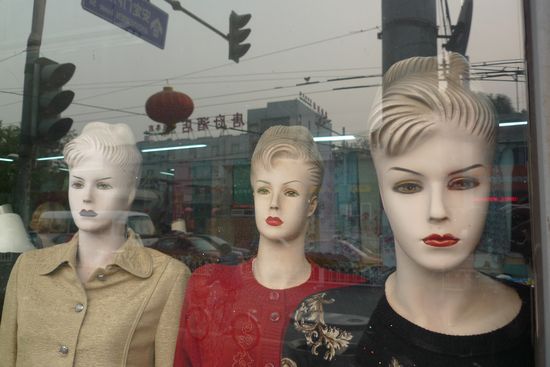
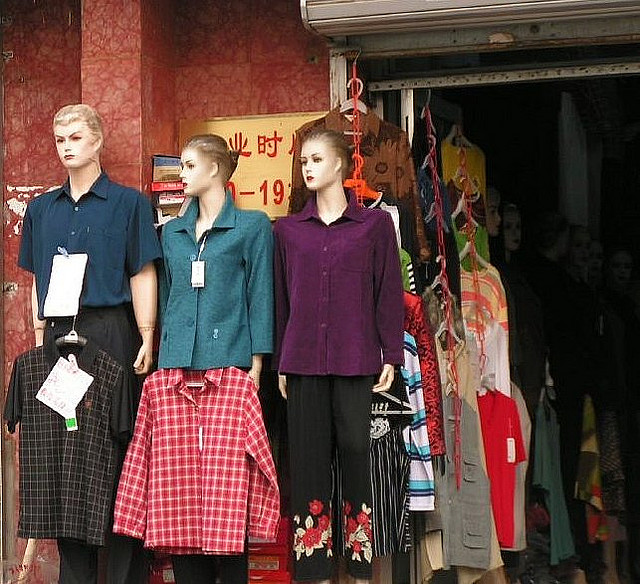
But for me the strangest aspect of globalization is … store mannequins. Often, when we are walking around in Beijing or anywhere else in China, I will come nose-to-nose with a store mannequin which is obviously European.

mannequin-beijing

Why on earth would Chinese women (I presume they are the ones who are targeted) be more inclined to buy clothes they see on a European mannequin than on a Chinese mannequin? (By the way, I have never seen a Chinese mannequin). I have to assume that the globalization of US movies, of TV shows, of magazines and so on give European women a greater glamour. Either that, or a Chinese company bought (or perhaps “borrowed”) the rights to a mannequin designed in the West somewhere and is turning them out by the millions.

I’m not the only one who has been struck by these European mannequins in China. Here are some photos taken by others which I found after a trawl through the internet.

mannequins-china-2

mannequins-china-3

mannequins-china-5

mannequins-china-1

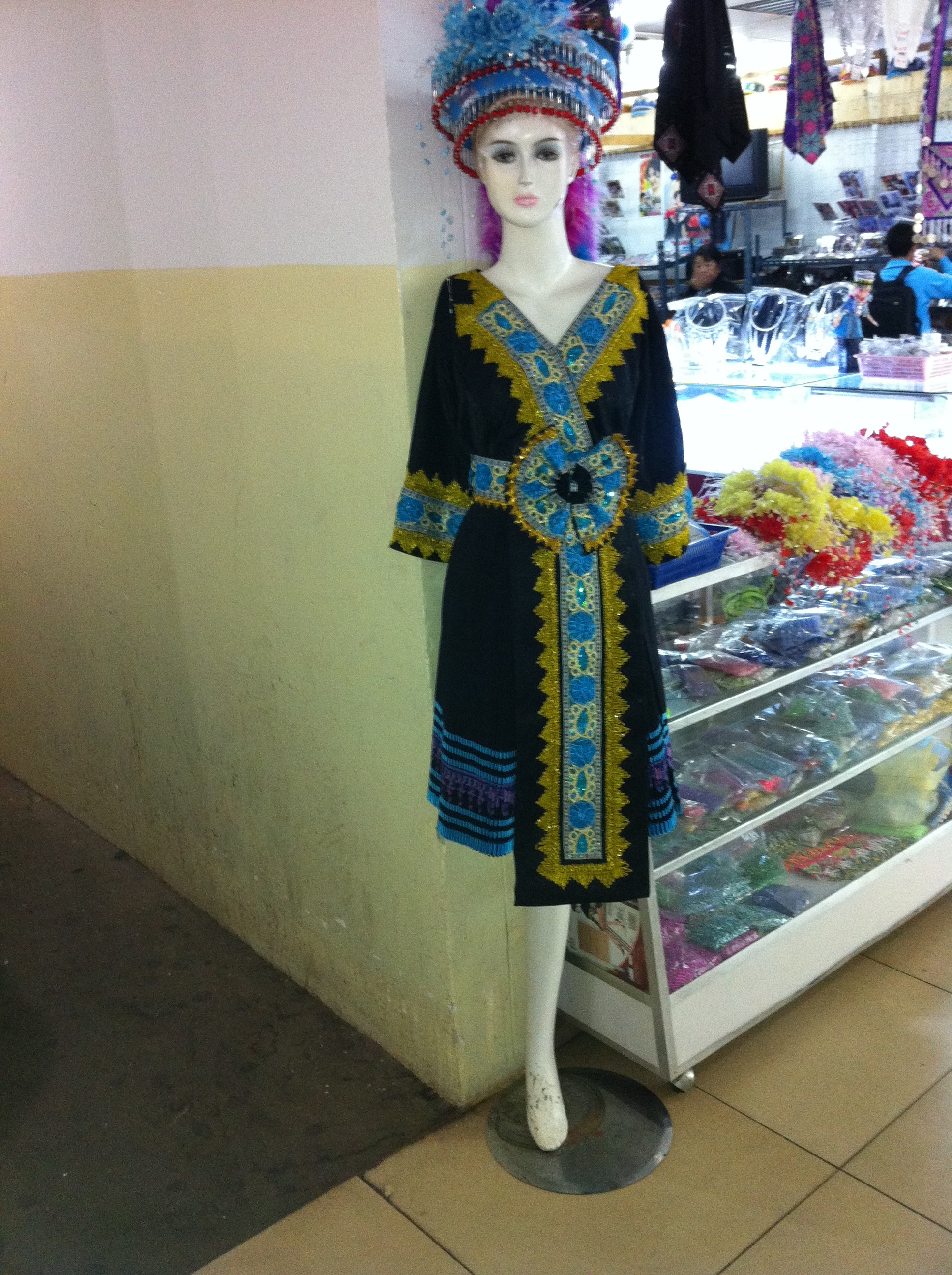
And it’s not just in China that you find these European mannequins. Here’s one I stumbled across in Laos, rather worse for wear and covered in pseudo-ethnic bling.

laos 068

The internet threw up these photos from other Asian countries.

The Philippines:

mannequins-philippines-1

Malaysia:

mannequins-malaysia-1

India:

Mannequins-india-2

Even Iran!:

mannequins-iran-1

This presence is so strange that a quilt maker, Robin Schwalb, made this quilt about it (and got a prize for it, too!)

mannequins-china-quilt

Here’s what Mr. Schwalb has to say about his creation:

“That suit, that hair, that mole; you immediately recognize Chairman Mao. But who – or what – are those pouty women, with their Western features, retro hairdos, and dead-eyed stares? They’re store mannequins, manufactured in China for the Chinese market, never appearing solo, but always arrayed in chorus lines. Perhaps the discordantly comical images have a darker point – if you have that system of government, you get this kind of dehumanized citizen.” [1]

I will pass over the political comment, which is disputable. Let me tell you the strangest thing about all this. This “pouty woman” looks exactly like a colleague of mine in Vienna. It is so odd to suddenly see her staring at me out of a shop window in some corner of China. I have never dared tell her. I don’t think she would appreciate being compared to a store mannequin.

______________________________

[1] http://www.dairybarn.org/quilt/index.php?section=226&page=280

Mannequin-china-1: my photo
Mannequin-china-2: http://dianepernet.typepad.com/.a/6a00d8341c76e453ef0153927b5e38970b-550wi
Mannequin-china-3: http://farm5.staticflickr.com/4024/4448484644_653a40a274_z.jpg?zz=1
Mannequin-china-4: http://www.dvafoto.com/wp-content/0011.jpg
Mannequin-china-5: http://farm3.staticflickr.com/2243/2129603065_45eaf9420e_z.jpg?zz=1
Mannequin-laos: my photo
Mannequin-philippines: http://2.bp.blogspot.com/-IqILwlOYkz4/TqYJjLcRMkI/AAAAAAAAERw/kdYvkh71BvM/s1600/retro_mannequin.jpg
Mannequin-malaysia: http://www.lemonicks.com/photos/Kuala%20Lumpur/P1000852.2.jpg
Mannequin-india: http://www.bminusc.com/wp-content/uploads/2013/02/Store-Mannequins1.png
Mannequin-iran: http://latimesblogs.latimes.com/.a/6a00d8341c630a53ef0120a59ffcee970b-pi
Mannequin-china-quilt: http://www.dairybarn.org/upload_files/images/QN07-Schwalb.jpg

LAPSANG SOUCHONG

Beijing, 5 March 2013

Whenever I stayed with my English grandmother in London, one of my tasks was to do the food shopping for her. She expected this service from all her visiting grandchildren, along with other services such as doing the washing-up and hoovering the floors. My grandmother was of a generation that expected grandchildren to serve her and not her to serve them. A lesson, I think, for the Chinese who to my British eye dote far too much on their little princeling children and grandchildren. In any event, my grandmother would write out a detailed shopping list and I would hurry down – no loitering, please – to the nearby high street to buy the necessary. And there they were, all lined up: the fishmonger, with his marble slabs on which were slapped the fish surrounded by ice, the butcher, with his pieces of meat hanging in the window, the baker, with his loaves neatly stacked up behind him, and the green grocer, with all manner of greens in boxes outside as well as in. I would join the polite throng of people, wait my turn – another lesson for the Chinese, many of whom seem not to have heard of the concept of queuing – and paid out in pounds, shillings, and pence.

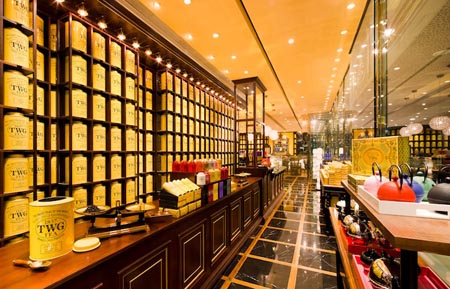
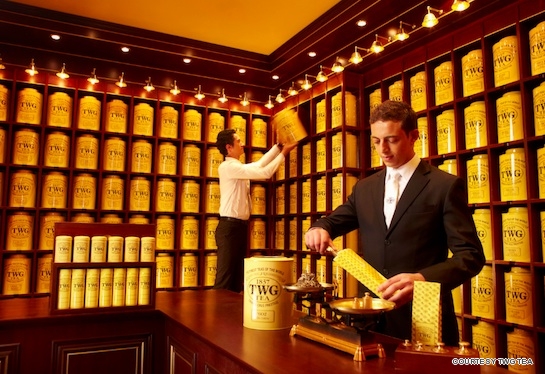
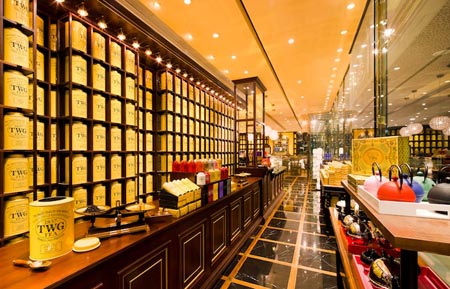
I went back to that high street a few years ago – a walk down memory lane. All gone, I am sad to report, their place taken by “boutiques”. As I survey high streets around Europe, it seems to me that no-one eats any more, they just dress. What saddened me even more was the disappearance of the tea emporium of which my grandmother had been a faithful client. Buying tea was not a task that she delegated to her grandchildren. It was a job for Grown Ups. But I did accompany her once or twice on her tea-buying expeditions. It was certainly a very majestic place. First of all, it was not a tea shoppe; this was not a place where one came to drink tea and eat cakes and sit about nattering. It was a place to buy tea – and not, God forbid, tea bags, but loose tea. One wall was covered with shelves holding large copper caddies which contained the teas. There was a series of counters in front of this wall, each carrying a set of old-fashioned brass scales, and the employees – all wearing white coats – would bring the caddies to the counter and reverently ladle the teas onto the scales. It was all very hushed and murmury. These photos give a sense of what greeted us when we entered the shop, although these are really altogether too modern and smart.

tea store-3-hk-1

measuring out tea-4-hk-1

My grandmother bought only one tea – lapsang souchong. This is one of China’s few black teas, some say its first. It comes from the Wuyi region in the southeastern province of Fujian. It has a very distinctive smoky flavour – which is not surprising since the leaves have been smoked over a pinewood fire.
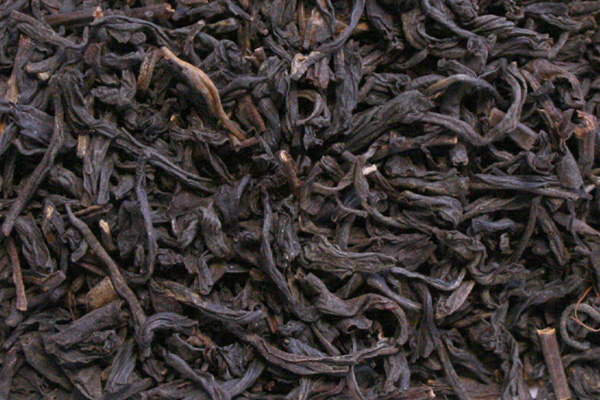
lapsang souchong

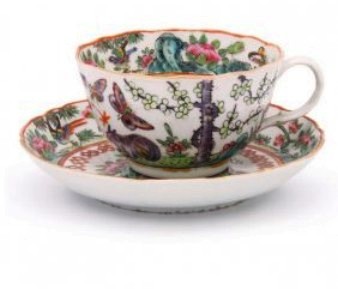
My grandmother took her tea twice a day: at breakfast, which she always took in bed, and at 4 o’clock, which she always took in the living room. She drank her tea in porcelain cups with proper saucers and little spoons – no mugs for her.  She had some rather handsome cups and saucers with a Chinese design, perhaps not quite as handsome as this example:
cup and saucer-3She taught me her ritual for making tea, which I have since discovered was a bastardization of the complicated rituals used in China. First, warm the teapot by swirling boiling water in it, then add the leaves to the teapot and pour in a small amount of boiling water, just enough to cover the leaves. Leave them to soak for three minutes, and then add the remaining boiling water. One thing she did, which would have had all the Chinese tut-tutting into their tea, was to add milk and sugar, a habit which I have gladly embraced.

My wife first met my grandmother over a cup of her lapsang souchong tea. She was flying into Gatwick from Milan the autumn after we started going out together; after a day or two in London, we were going up to Edinburgh University. The plan was for me to meet her at Gatwick. In what was to become a regular feature of our married lives, I missed her. Disconsolate, I came back up to London, only to find wife and grandmother happily ensconced in the living room drinking tea.  My wife took a shine to my grandmother and I believe the feeling was mutual. My wife also took a shine to my grandmother’s tea, and later on, when we finally had some money in our pockets, we started to buy lapsang souchong.  But we have never been as rigid as my grandmother was. We drink lapsang souchong but also quite happily drink Twinings tea bags. And we don’t heat up the teapot before adding the leaves.

twinings tea bag

In my very first visit to Beijing, back in 2002, I visited – as was expected of all foreigners – one of the markets. In my case, I visited the pearl market where I actually bought my wife a string of grey freshwater pearls, for the first and probably last time in my life. When I saw a stall selling teas, on a whim I approached them and tried buying lapsang souchong. I mean, what better place to buy Chinese tea than in China, right? But they all looked at me blankly, shook their heads, and muttered “meyo, meyo” [no, no]. So I gave up; it must have been my tone-less pronunciation, I thought. And I had made the cardinal mistake of not bringing with me a piece of paper with the name written on it in Chinese, to show to my interlocutors and thus solve these little problems of tones or lack thereof.

Seven years later, we moved to China. The Empire of Green Tea.

green-tea

In the face of an ocean of green tea, my wife courageously set about finding a local source of lapsang souchong. Her first step was to visit a street listed in our guidebook as a promising source of tea. She took a pinch of our precious lapsang souchong along with her and went door-to-door showing it. “Meyo, meyo”, was always the answer. But she didn’t come back empty-handed. She bought this lovely stoneware tea caddy.

stoneware caddy

After this rather discouraging start, my wife took a break in the lapsang souchong search. To keep us going, we bought a large stock in Milan during our next visit there, in a little shop we know around the corner, and then in London when we visited our daughter six months later. The next round in the lapsang souchong search started when I found the name written in Chinese on the web. Armed with a piece of paper on which I’d cut and pasted the Chinese name, my wife sallied forth again. Surely that would do the trick, we thought. “Meyo, meyo” was again the discouraging reply.

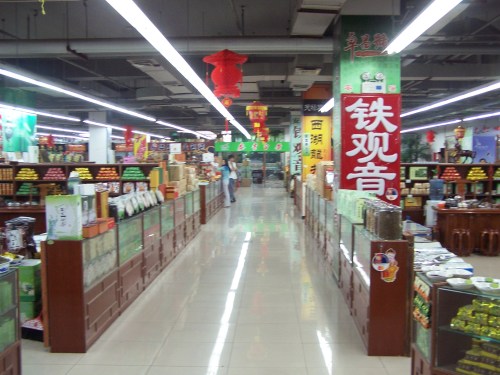
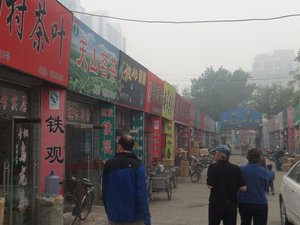
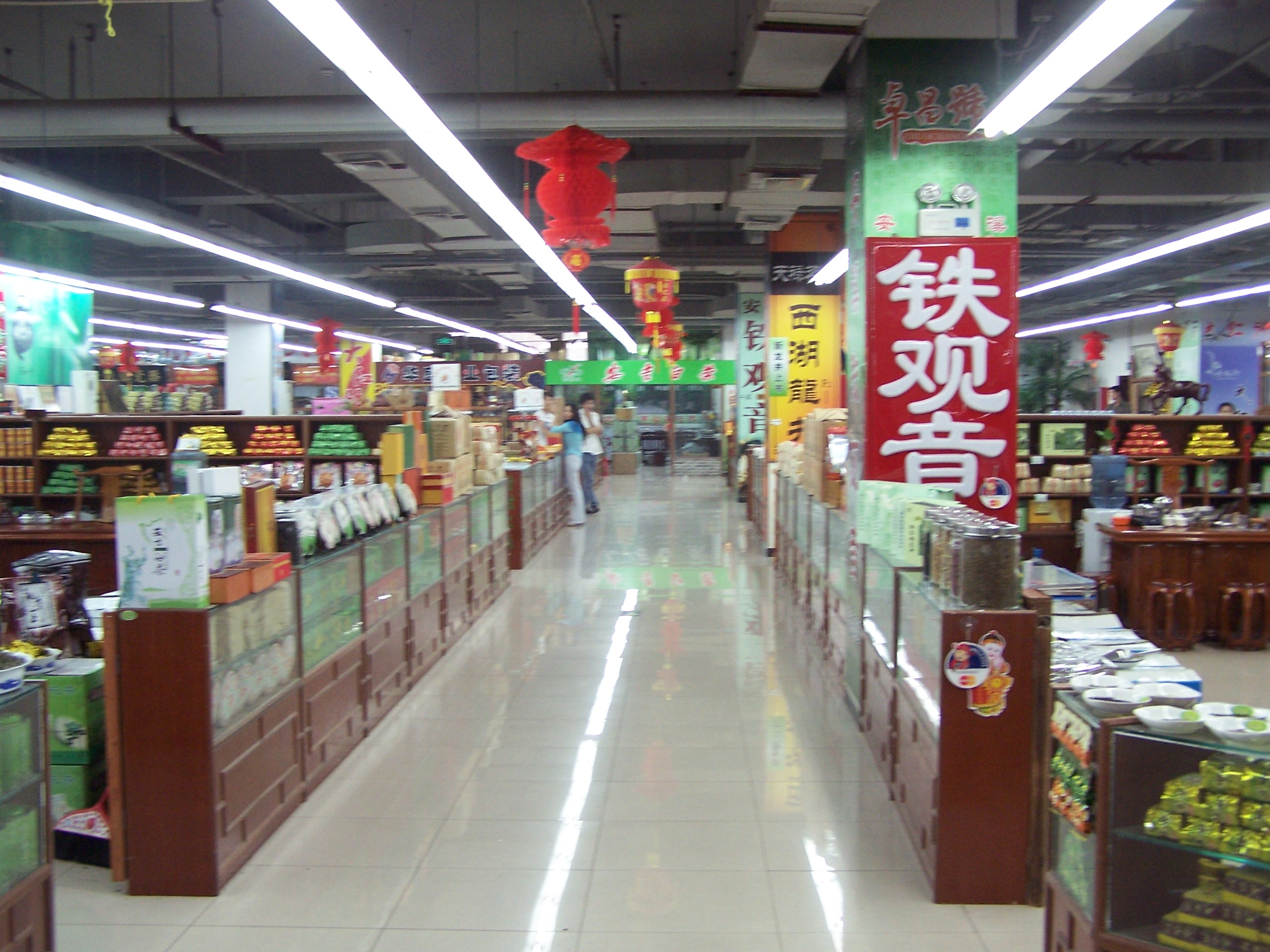
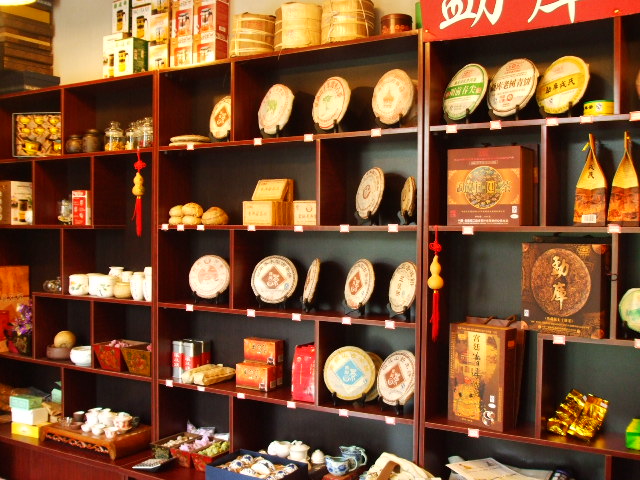
After yet another pause, we discovered Beijing’s tea market. This time we would succeed! Armed with a bag of lapsang souchong, a piece of paper with the name written in Chinese, and determined smiles, we marched through grand shops
beijing tea market-5

the supermarkets of tea

beijing tea market-3

and myriad poky little stalls

beijing tea market-1

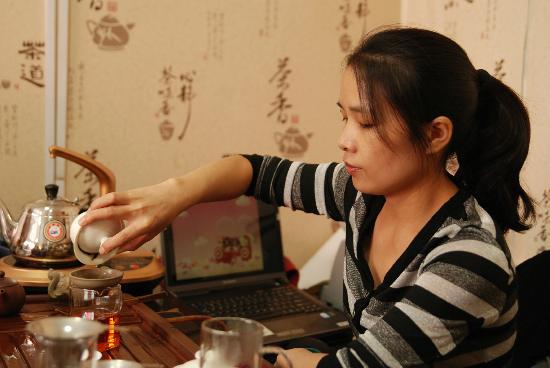
showing everywhere our tea and our piece of paper. “Meyo, meyo” always came back the reply. But still we went on. Finally, a girl in a stall shook her head but made us understand that that shop down the hall there and to the right probably had it. With beating hearts, we made our way to the indicated shop and went through our little routine for the nth time. The two girls looked at us, looked at, felt, and smelled our  tea,  had a rapid-fire discussion, and then one of them went off. The other motioned us to sit down at the tasting table. The first came back with a package, shook some tea leaves out, and the second started the routine of preparing tea.
beijing tea market-6

After a little while, she offered my wife a small cup of the tea …

Meyo, meyo! It was, and yet it was not. We tasted it this way and that way, we gave some of ours to the girls so they could make tea with it. We compared. It was clearly of the same family, but it was not the same. Weaker it was, with less punch but also less sweetness.

Ah well, we can just keep stocking up whenever we go back to Europe and maybe, just maybe, before we leave, we’ll find a local source.

________________________

Tea store: http://3.bp.blogspot.com/-LrBKXYQoYaw/T557zpa75oI/AAAAAAAABNg/cjbSvJayuuw/s1600/twg-tea_hk-ifc_tea-boutique-01.jpg
Measuring out tea: http://sg.lifestyleasia.com/var/lifestyleasia/storage/images/media/images/import/article/33/image_339679-twg-tea-master-twg-tea/1837667-1-eng-GB/image_339679-twg-tea-master-twg-tea.jpg
Lapsang Souchong: http://www.chadotea.com/images/T-25-Lapsang-Souchong.jpg
Cup and saucer: http://p2.la-img.com/1870/37984/16159143_1_m.jpg
Twinings tea bag: http://1.bp.blogspot.com/-btpdmHKOX9w/T7dGdhyLXgI/AAAAAAAABdw/OvNObW_-3ck/s1600/IMG_2335.jpg
Green tea: http://www.allaboutladies.net/wp-content/uploads/2012/04/green-tea1.jpg
Stoneware tea caddy: my photo
Beijing tea market-1: http://www.beijingtravelhotelinformation.com/uploads/2009/0706/beijinghighlifeblogMountainTeaintheBigCity.jpg
Beijing tea market-2: http://shinshinshingan.files.wordpress.com/2010/11/jun14_tea_market_interior1.jpg
Beijing tea market-3: http://photos.travelblog.org/Photos/168424/660393/t/6550014-Of-all-the-tea-shops-0.jpg
Beijing tea market-4: http://media-cdn.tripadvisor.com/media/photo-s/03/11/1c/e0/beijing-culture-exchange.jpg

FULL MOON

Beijing, 25 February 2013

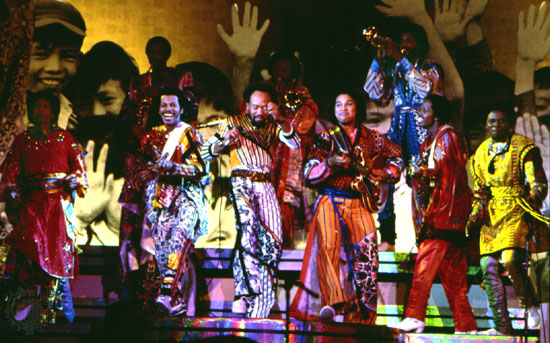
Yesterday started with my wife finally remembering a song that had been chasing around in her head all night: “September”, by Earth, Wind and Fire, whom we see here in concert:

earth wind and fire concert-1

This is a song from “our” generation; it came out in 1978. My wife tracked down a version of it on the web and promptly played it for the rest of the day. Now don’t get me wrong, it’s a great song – a feel-good song, my wife calls it – but after you’ve sung along with the refrain

Ba de ya – say do you remember
Ba de ya – dancing in September
Ba de ya – never was a cloudy day

for the fifth time, it begins to pall – at least for me. But not my wife. Mercifully, she had to turn it off when we went to bed, but then the fireworks, which had been grumbling along all day,

fireworks-5

began to build up to their final roar for midnight.

fireworks-6

Because, for those of you who do not closely follow matters Chinese, yesterday was the Lantern Festival, the last day of the Chinese new year celebrations, whose end is traditionally celebrated with an orgy of fireworks.

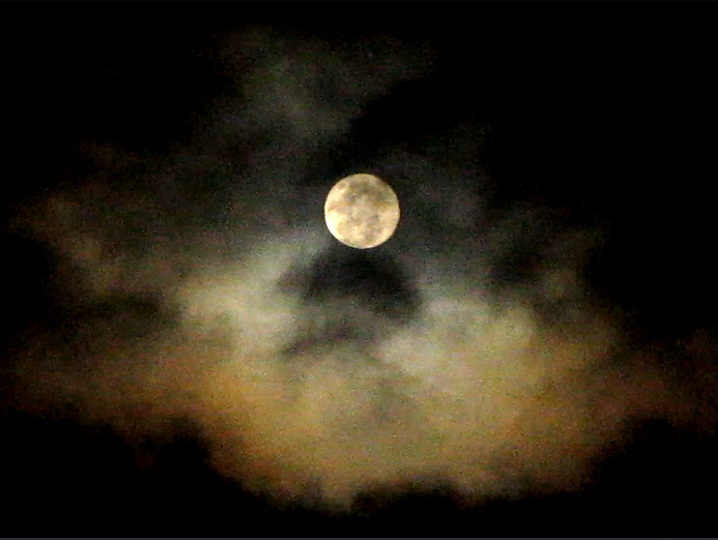
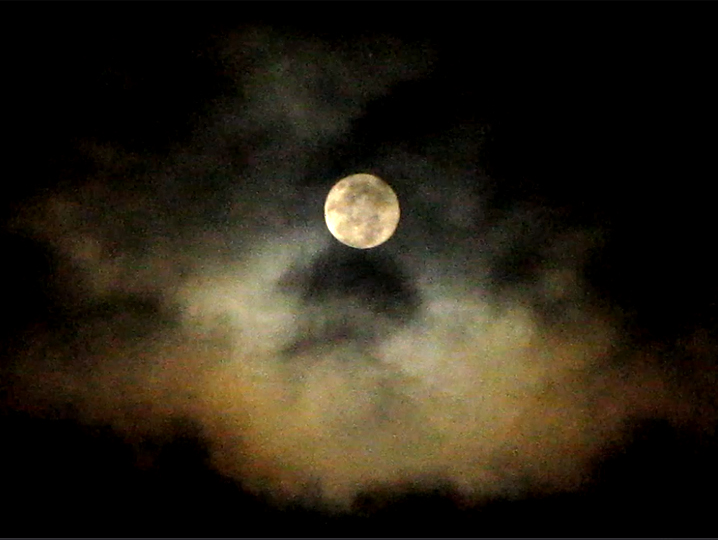
At one moment during the evening I slipped out to the local 7-11 to buy a bottle of our favourite wine (a Spanish tempranillo – but I digress). Coming back, I looked up and glimpsed through the clouds what all this sound and fury was all about: the full moon.

full moon-1

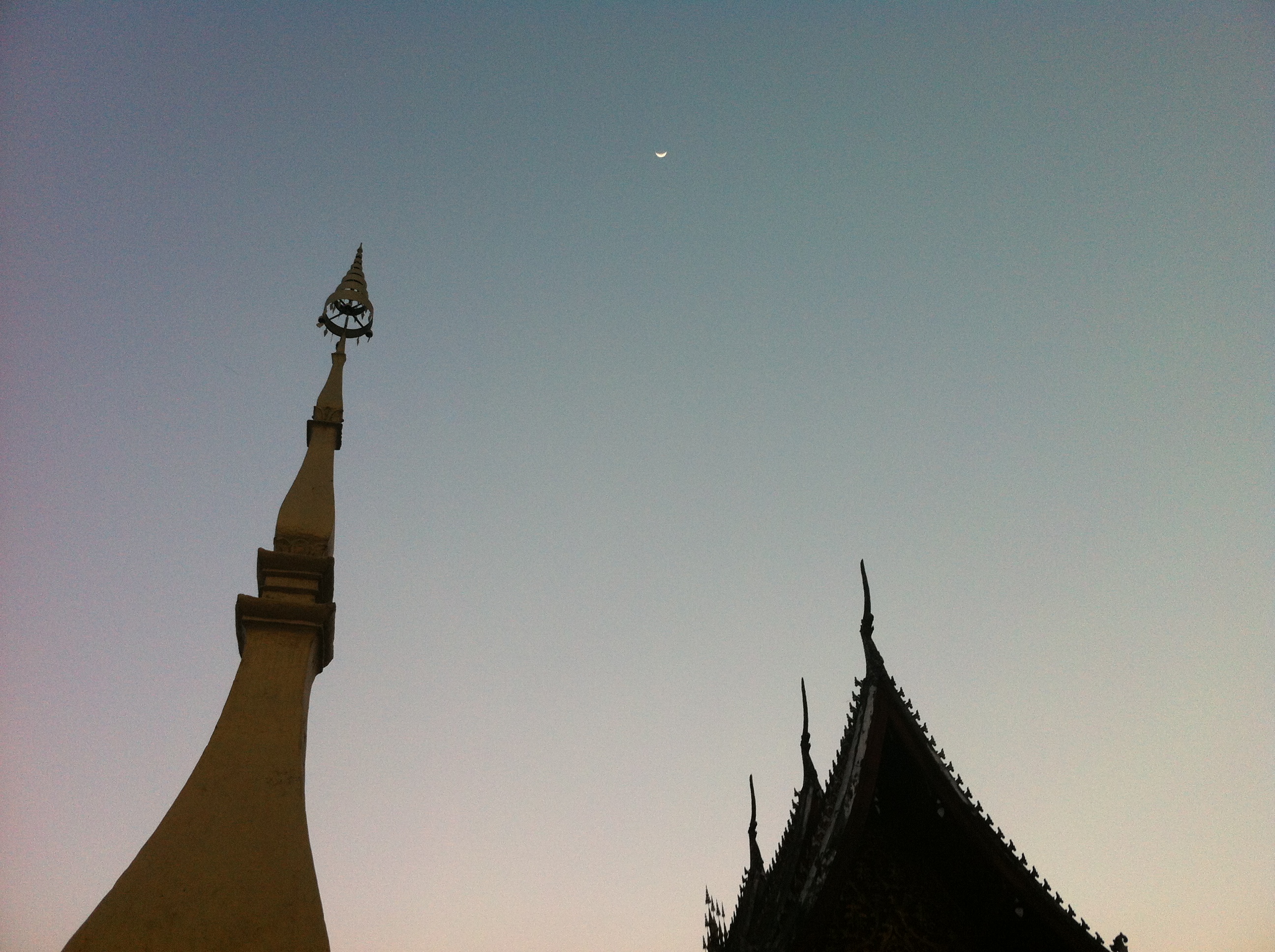
Because the Chinese new year is really a lunar festival. It starts on the second new moon after the winter solstice and ends 15 days later at the full moon. I had picked up the new moon – or newish moon; it had already waxed a few days – in Luang Prabang.

laos 499

And now I was seeing the full moon, shining serenely down on all this silliness.

A full moon is a beautiful thing. It certainly has caught the attention of many poets. A short search on the web brought to light at least 100 poems about the moon by well-known poets; Lord knows how many have been written by bad poets. But the poem which always comes to my mind when I see a full moon is not actually about the moon. I need to explain. One night in Vienna, I woke up and was enchanted by the brilliant nearly full moon pouring its white light into the bedroom. Two nights later, I was in Cambodia on the shore of the Mekong River. Looking up, I saw the full moon and thought to myself “This same moon will be shining down on my wife and children in a few hours” and found that thought immensely comforting. Now for the poem, which is by the Welsh poet Alun Lewis. He wrote it during the Second World War, when he was far away in India, in the city of Poona.

Last night I did not fight for sleep
But lay awake from midnight while the world
Turned its slow features to the moving deep
Of darkness, till I knew that you were furled,

Beloved, in the same dark watch as I.
And sixty degrees of longitude beside
Vanished as though a swan in ecstasy
Had spanned the distance from your sleeping side.

And like to swan or moon the whole of Wales
Glided within the parish of my care:
I saw the green tide leap on Cardigan,
Your red yacht riding like a legend there.

And the great mountains Dafydd and Llewelyn,
Plynlimmon, Cader Idris and Eryri
Threshing the darkness back from head and fin,
And also the small nameless mining valley

Whose slopes are scratched with streets and sprawling graves
Dark in the lap of firwoods and great boulders
Where you lay waiting, listening to the waves
My hot hands touched your white despondent shoulders

And then ten thousand miles of daylight grew
Between us, and I heard the wild daws crake
In India’s starving throat; whereat I knew
That Time upon the heart can break
But love survives the venom of the snake.

When I read the poem for the first time, I was reminded of that night in Vienna with its full moon. And now, when I’m far away from home and see the moon, I think of this poem and of my wife.

_____________________

Earth Wind and Fire concert: http://sharelike.me/image/pics/EarthWindandFireconcertPics1ApCC7Md5iwM.jpg
Fireworks-1: http://cdn.ph.upi.com/sv/em/upi/UPI-16811361735171/2013/1/9eb14390c758aeb27fd87349de4d55bc/China-celebrate-Lunar-New-Year.jpg
Fireworks-2: http://findlaydonnan.files.wordpress.com/2009/03/fireworks-to-celebrate-the-chinese-new-year-light-up-the-sky-above-beijing-china-on-january-26-2009-chinese-welcomed-the-arrival-of-the-year-of-the-ox-with-raucous-celebrations-on-sun.jpg?w=497&h=283
Full moon: http://3.bp.blogspot.com/-gY39tpbGmzg/TnLTHVEnSyI/AAAAAAAABaM/R2kBI2LddYg/s1600/Moon_Lantern_Festival.jpg
New moon Luang Prabang: my photo

TEMPLES IN LAOS

Luang Prabang, 20 February 2013

I must confess to a certain weakness for the Buddhist temples in this part of the world. I first came across them nearly thirty years ago (Good Lord, is it really that long ago?) when my wife and I visited Japan. My photos of that trip are packed away with all the rest of our stuff in Vienna, so I’ve borrowed a few pictures from the web to refresh my memory, all from Kyoto, a wonderful place. This is Kiyomizu-ji.

kyoto-temple-1

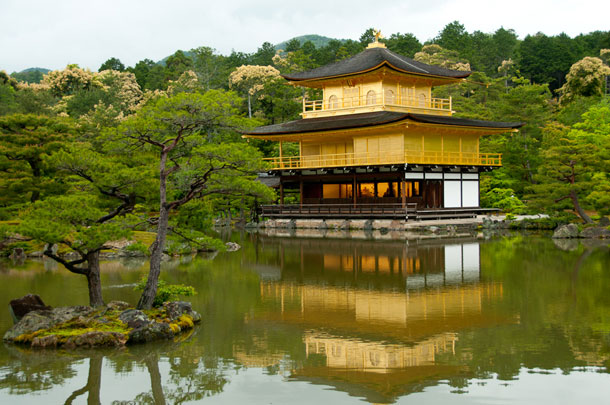
But probably the most iconic temple of them all in Kyoto is Kinkaku-ji, the Temple of the Golden Pavilion.

kyoto-temple-2

Look at that delicate architectural tracery embedded so naturally, so lightly, in the surrounding greenery.

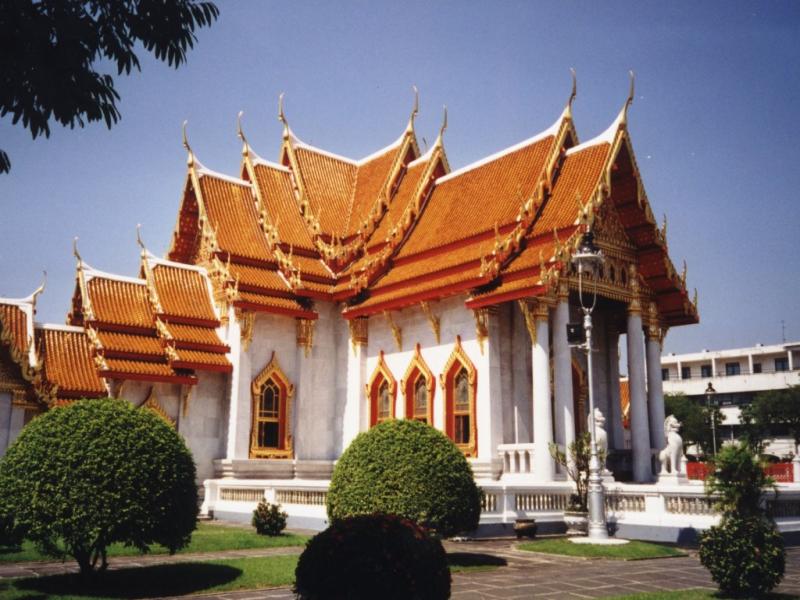
Many years later, my wife and I saw another style of Buddhist temple in Bangkok during a brief stay there on our way to Angkor Wat. This is Wat Benchamabophit:

bangkok-temple-1

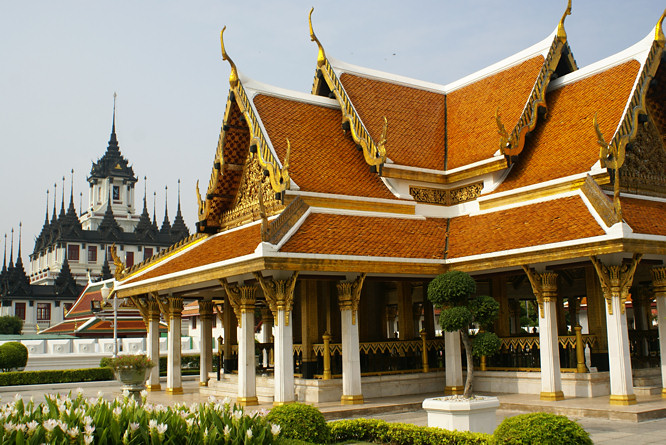
And this Wat Ratchanatdaram:

bangkok-temple-2

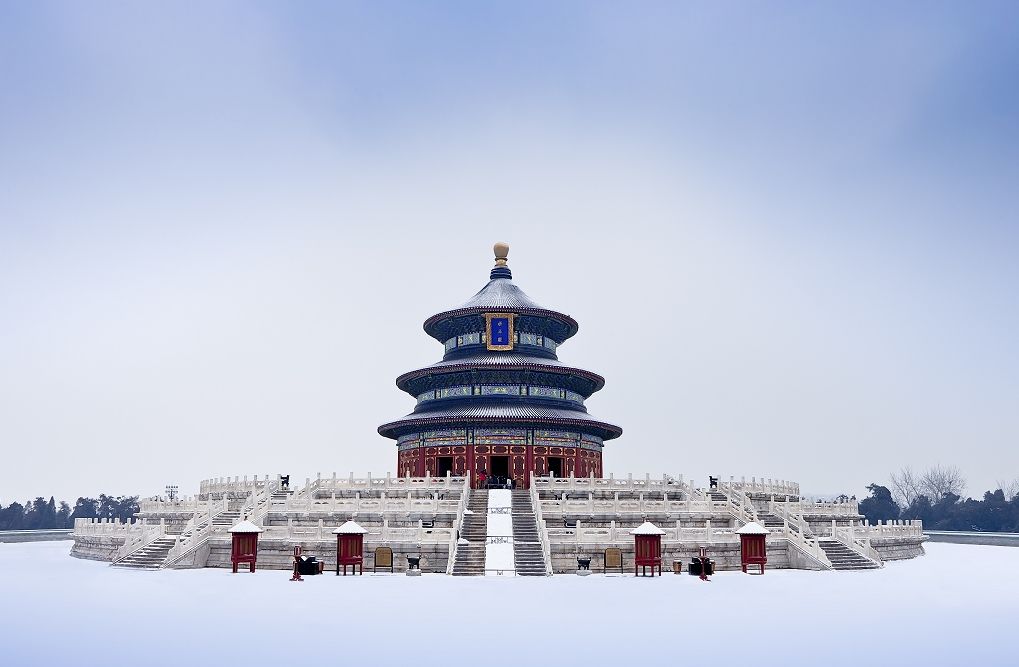
And then, once here in China, we saw yet another style, a heavier, more “imperial” style. The Temple of Heaven in Beijing is one of the nicer examples.

Temple-of-heaven-3

All quite different. But I think you will agree that there is a common thread: the raking of the roofs. I don’t know what it is, but this lift of a roof at its tip really gives a wonderful grace to a building, even a rather heavy, stodgy building like the Temple of Heaven.

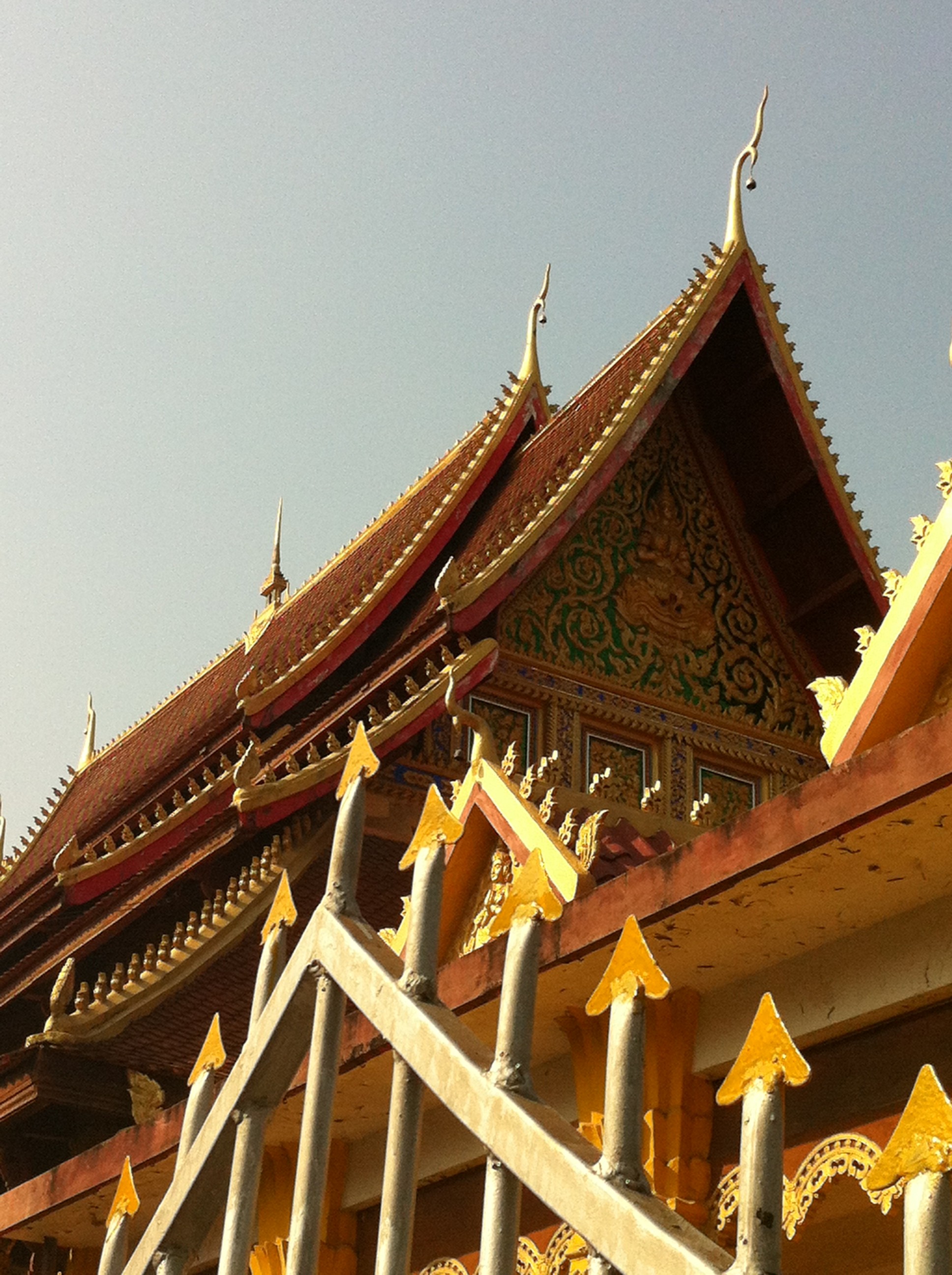
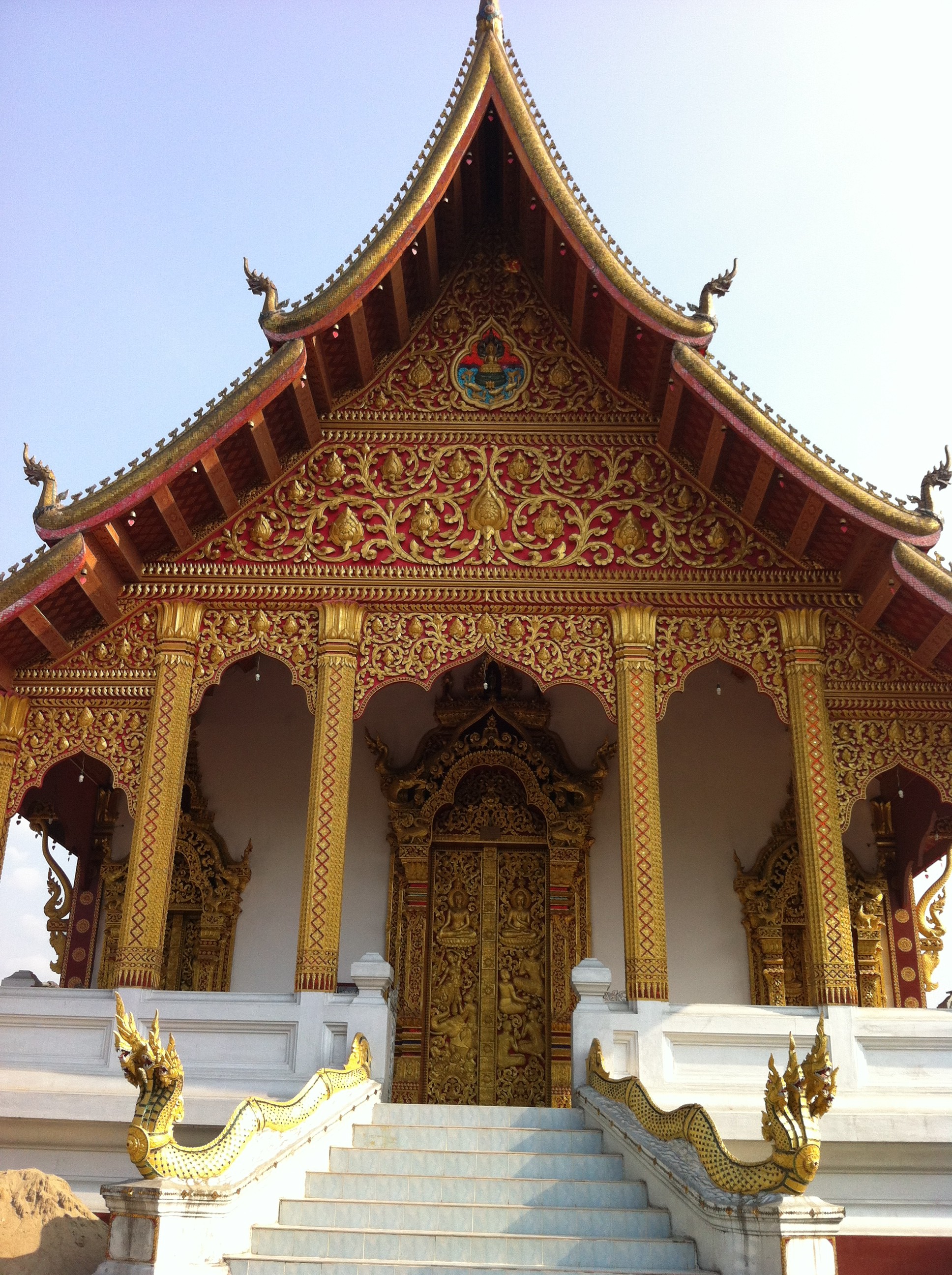
So it was with pleasure that we saw this again in Laos, first in Vientiane:

laos 076

laos 103

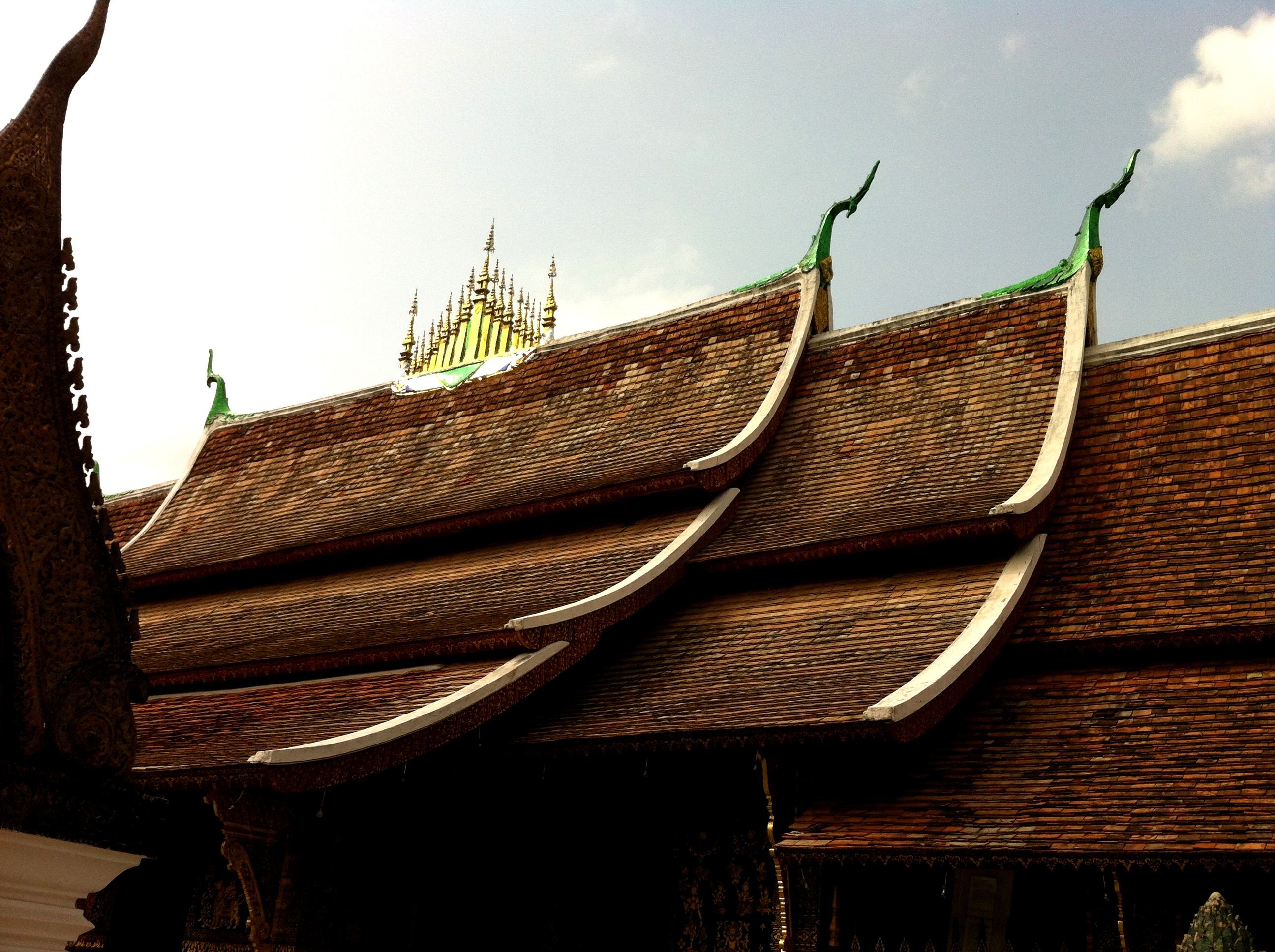
Then in Luang Prabang:

laos 287

laos 319

I saw other things that warmed the cockles of my heart, like this for instance:

laos 412

laos 405

This is where I can refer the reader back to my previous post. What we’re seeing is the similar use of paintings to educate the faithful in two places that are nearly 9,000 kilometres apart. The Italians have an expression for this, tutto il mondo è paese, the whole world is but a village; in the end, we’re all the same wherever we live. In the previous post, it was my young daughter who was illiterate. In this case, it was me – and alas, I had no-one who could explain the story which the paintings were telling.

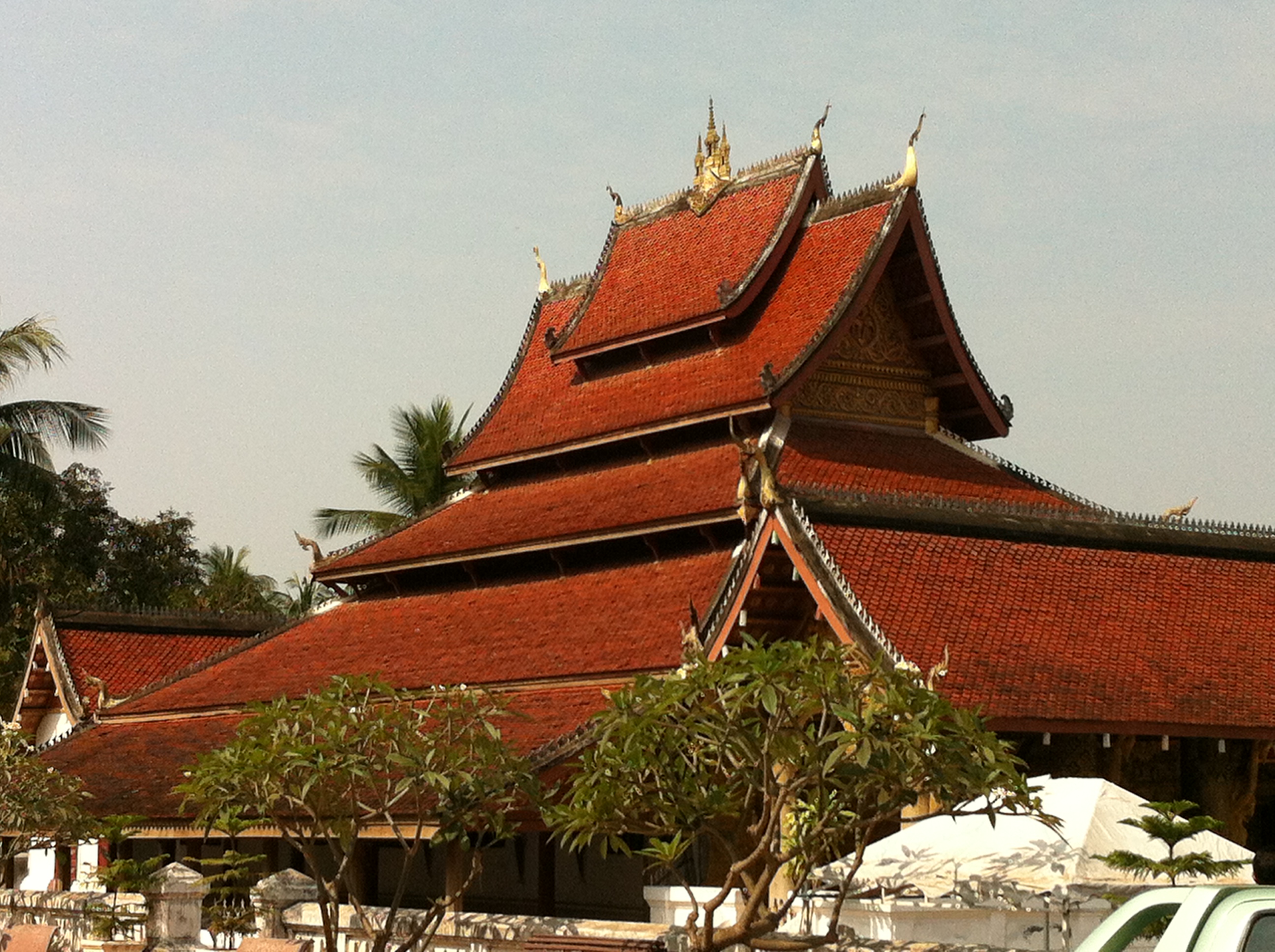
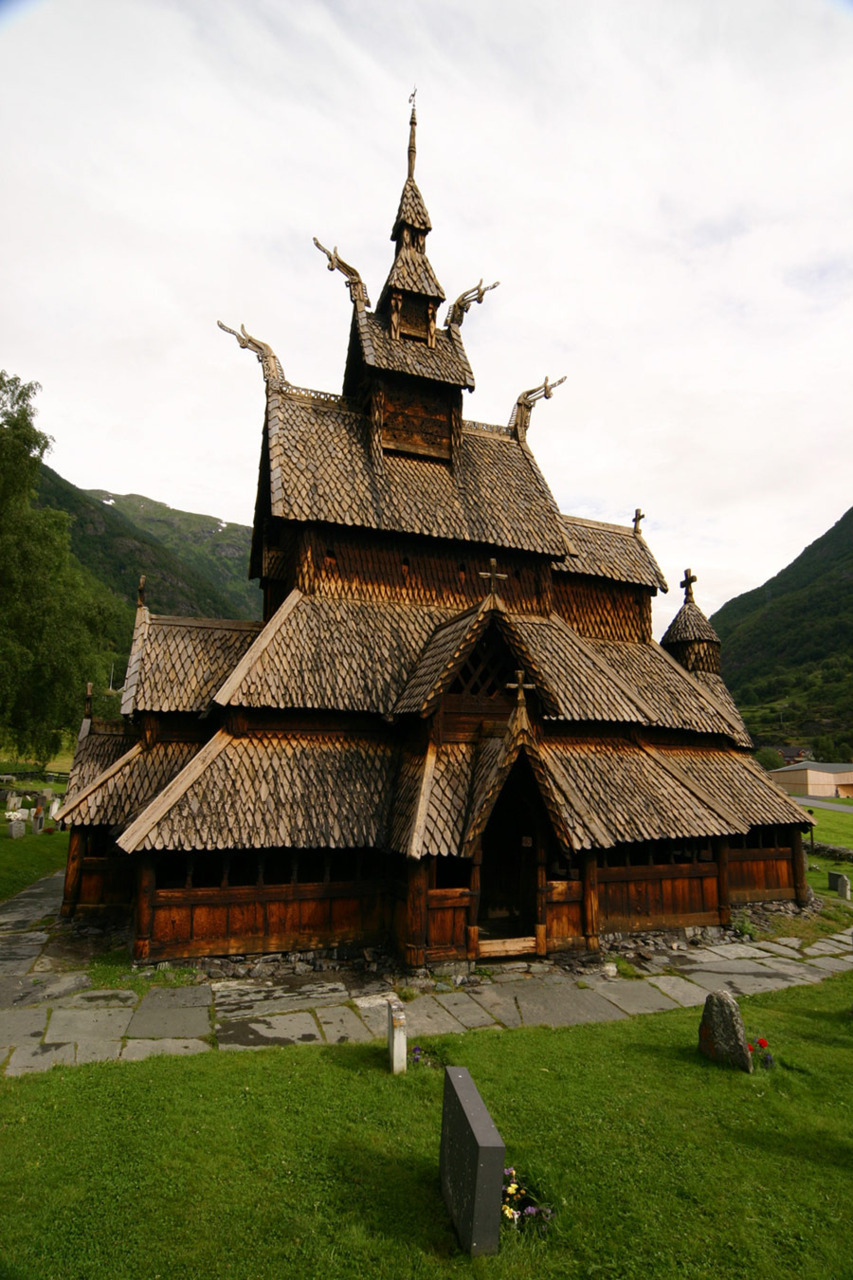
We also liked the way that the temples had different roofs piled one on the other.

laos 365

It quite reminded us of the stave churches in Norway, several of which we had visited some five years ago:

norwegian-stave-church

Tutto il mondo è paese.

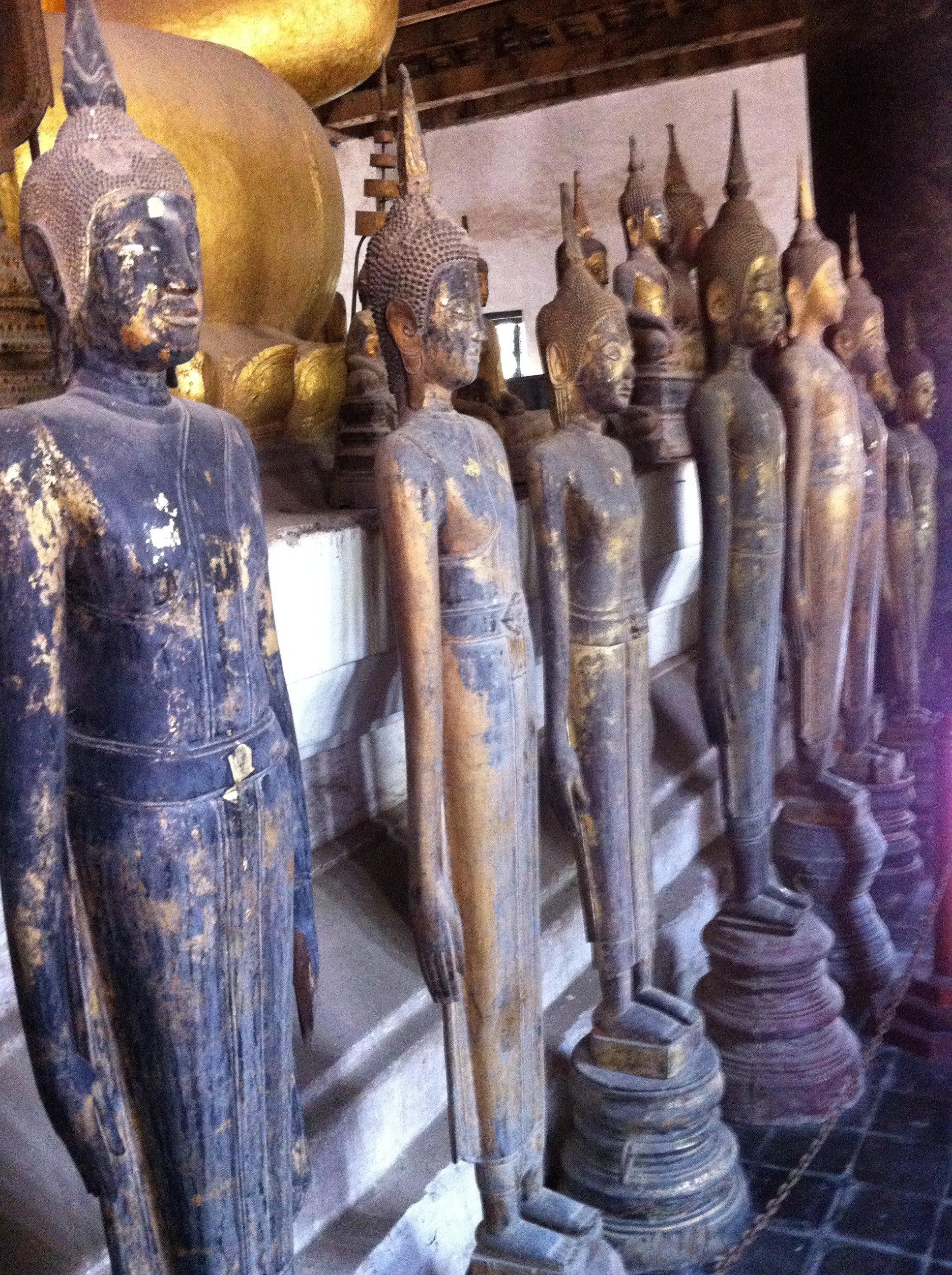
We also liked a certain set of Buddha statues that we came across. These are in the “praying for rain” position:

laos 382

And these are in the “no war” position:

laos 390

Well, I suppose that’s what we all want, isn’t it? We want to eat our fill and live in peace.

Tutto il mondo è paese.

_______________________________

Kyoto-temple-1: http://anime.aplus.by/uploads/posts/2011-01/1293979203_xigasiyama.jpg
Kyoto-temple-2: http://www.gadventures.com/blog/wp-content/uploads/2012/07/Kyoto_GoldenTemple.jpg
Bangkok-temple-1: http://misto-market.com.ua/turizm/images/interestplace/98/1.jpg
Bangkok-temple-2: http://travel-tips.s3-website-eu-west-1.amazonaws.com/holidays-Bangkok-Thailand-hotel-package-deal-travel-tips-guide-Wat-Ratchanatdaram-Temple.jpg
Temple of heaven: http://templeofheavenbeijing.com/wp-content/uploads/2011/11/Temple-of-Heaven.jpg
Norwegian stave church: http://25.media.tumblr.com/tumblr_llqkm5GrsA1qzxqgco1_1280.jpg
the other pictures: mine

DOUBLE HAPPINESS

Beijing, 7 February 2013

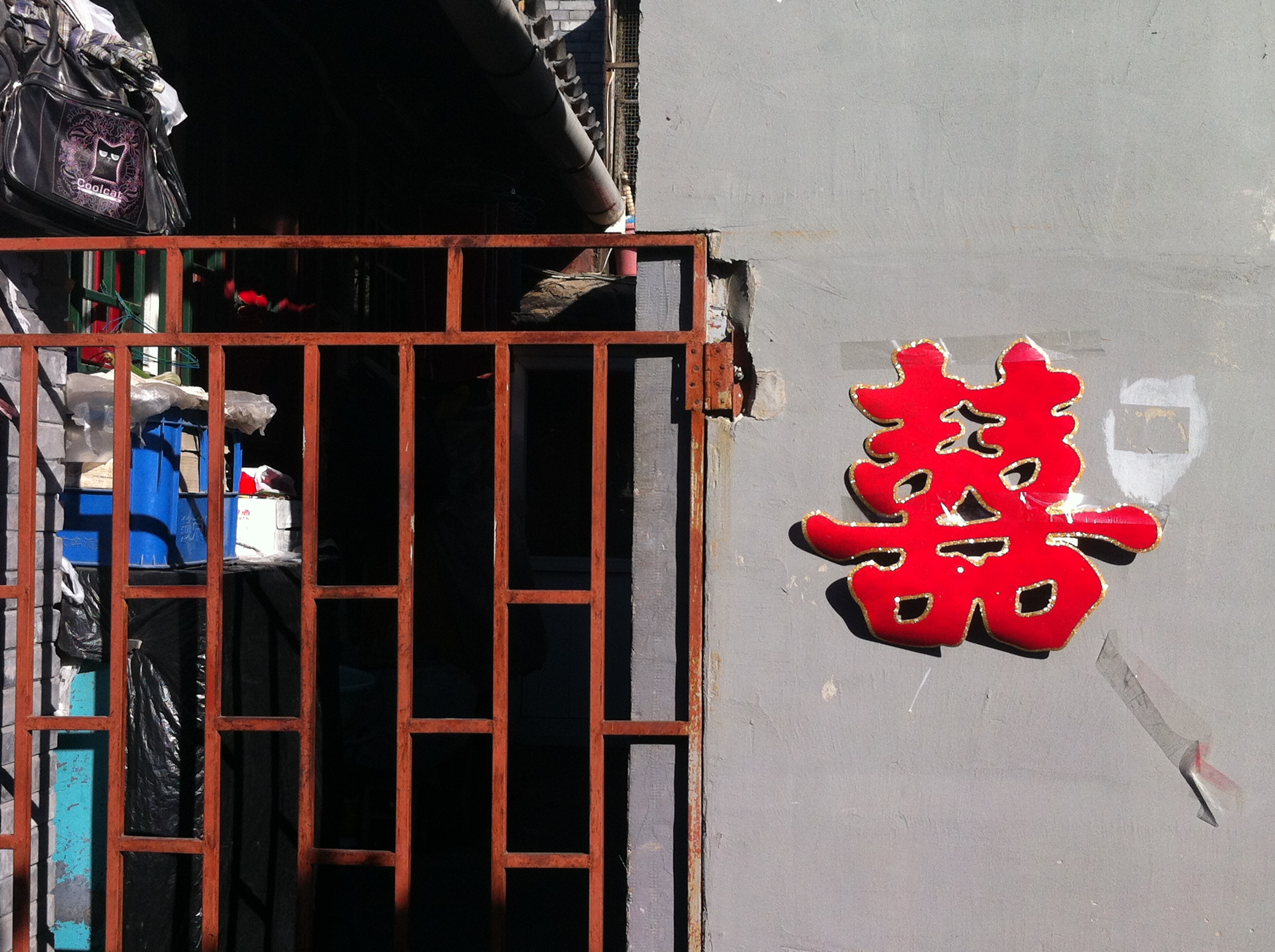
A little while back, when the weather was still pleasantly autumnal, my wife and I decided to take a stroll through a hutong (one of the old districts of Beijing, rather worse for wear now). As we wandered from lane to lane, we came across this sign sellotaped to the wall of a house.

N-S transect 037

Intrigued, I took the photo for later clarification. We also picked up another of these signs which had fallen down, to add to our collection of urban flotsam and jetsam which we have found lying in our paths during our walks across the city: an abandoned set of Chinese chequers, some large chunks of raw coal, bits of brick from destroyed hutongs, broken pieces of ceramic

This was a weekend. On Monday, I went to my usual expert source on Chinese calligraphy, namely my secretary, and showed her the picture. “Double happiness”, she told me with a smile. After a certain amount of clarifications from her and some reading on the web, I can report back.

As I think is clear from the picture, this Chinese character is actually a composition of two identical characters, which both stand for , or ‘joy’. Hence its meaning of double joy or double happiness. It is very often used in weddings – this was almost certainly the case in the hutong – which I think is very sweet: marriage as the union of two happy people. Of course, we know that marriage is not all sweetness and light but two happy people is a good start. The colour red is also significant. The Chinese are somewhat mediaeval (at least to my way of thinking) in attributing moods to colours. Red stands for happiness (so Chinese communists no doubt saw a much deeper meaning in the communist flag than the original European communists ever did).

So we took our trophy back to the apartment and laid it down for future hanging. By the time we got around to doing that, we had forgotten which way was up – being illiterate in Chinese, we couldn’t read it of course. After some debate, we decided to hang it up like so.

double-happiness-house 009

Only then did I remember to check the photo.  The alert reader will immediately have spotted what we discovered, that we had hung it upside down. After a moment of consternation, we decided that actually this way it looks even more like two happy people arm in arm. So we’ve left it that way. Lord knows what our cleaner thinks; she’s been too polite to say.

We’re away next week, so I use this post to wish everyone a happy St. Valentine’s day, the two-happy-people day.

TULIPS AND MANDARINS

Beijing, 2 February 2013

The last week has been dreadful for air quality in Beijing. The brief break we had which I wrote about a few posts ago was but a temporary remission and we soon plunged back into the murk. My wife was a little more philosophical about it than I. She remarked that it reminded her of her childhood in Milan, when smog was frequent, and reminisced about having to cross the road to go to primary school and not being able to see if the light had changed. But still, we both suffered.

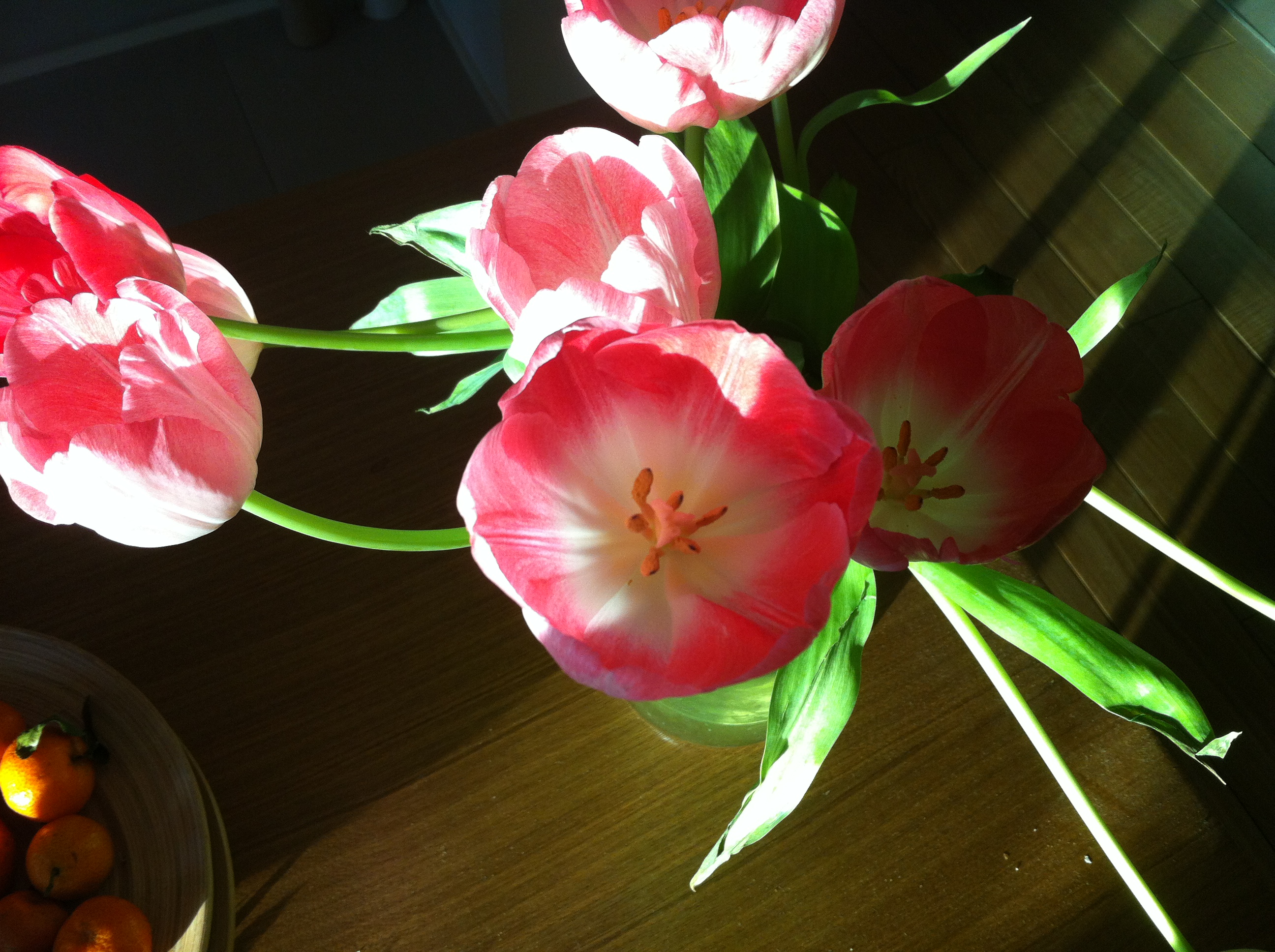
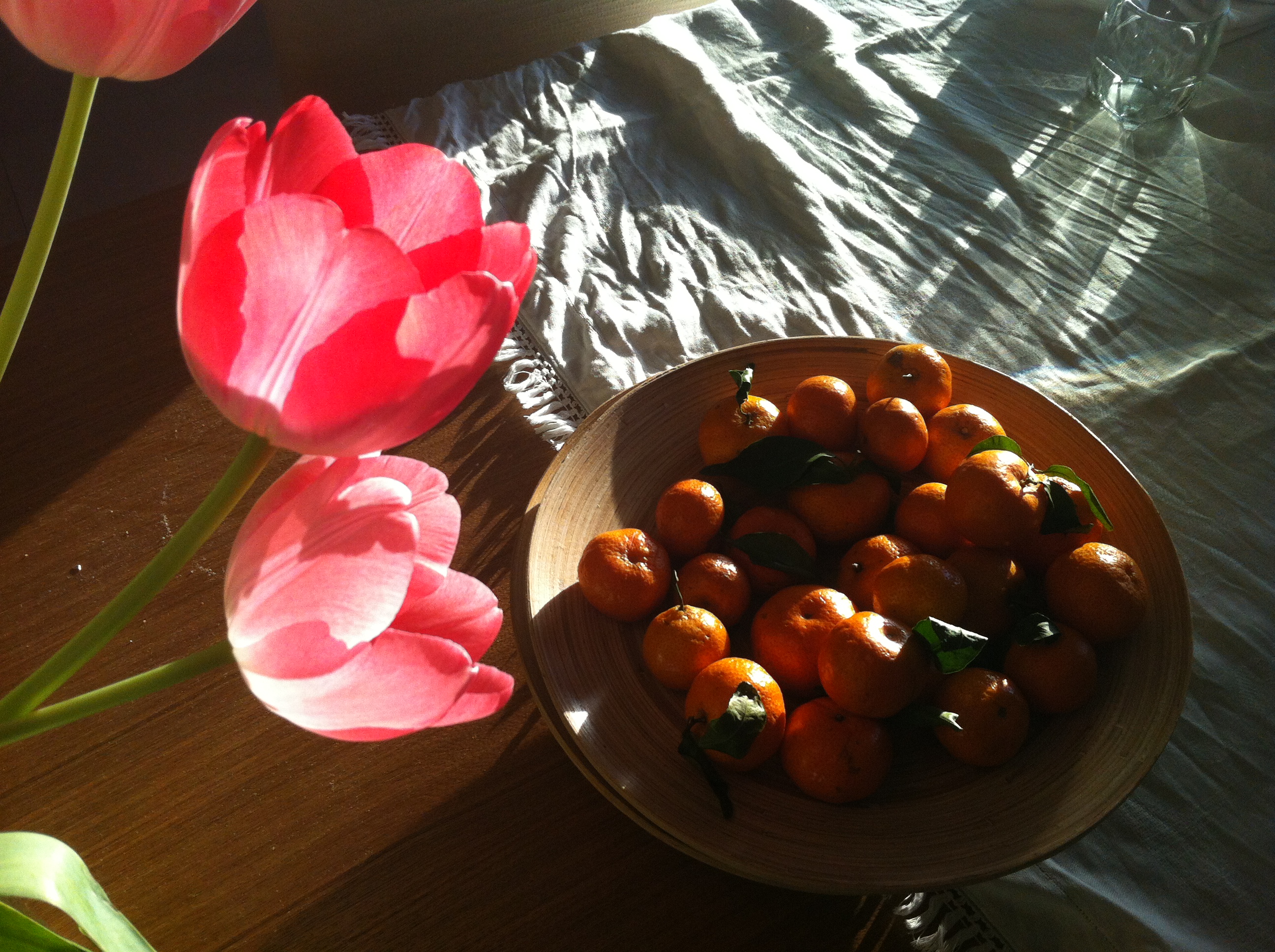
To cheer us up, my wife bought a bunch of tulips. They were still closed when she brought them home, but she placed them in a jar and we watched them slowly open over the following few days. Yesterday morning, we woke up to a gloriously bright and clear day. Thanking all the spirits I could think of, I stepped humming into the dining room, only to be greeted by the tulips which had fully opened over night. The sunlight pouring in through the windows was picking out their delicate pinks, whites and greens. I just had to memorialize the occasion.

   tulips 003

tulips 002

The mandarins which were also on the table kept nudging themselves into the frame, so eventually, I brought them in too.

tulips 005

Wonderful, wonderful fruit, those! They don’t look up to much, but aah the taste, my friends! First comes the delicate mandarin aroma which breaks out as you begin to peel the fruit and prepares you for what lies ahead. Then comes the citrically acidic taste with sharp mandarin overtones which hits your taste buds as you pop one segment in after the other. They are completely addictive; between my wife and I, that plate of mandarins lasted but one breakfast. She has found a greengrocers up the road which sells them. Sorry, the address will remain a secret.

BLUE SKY DAY!

Beijing, 24 January 2013

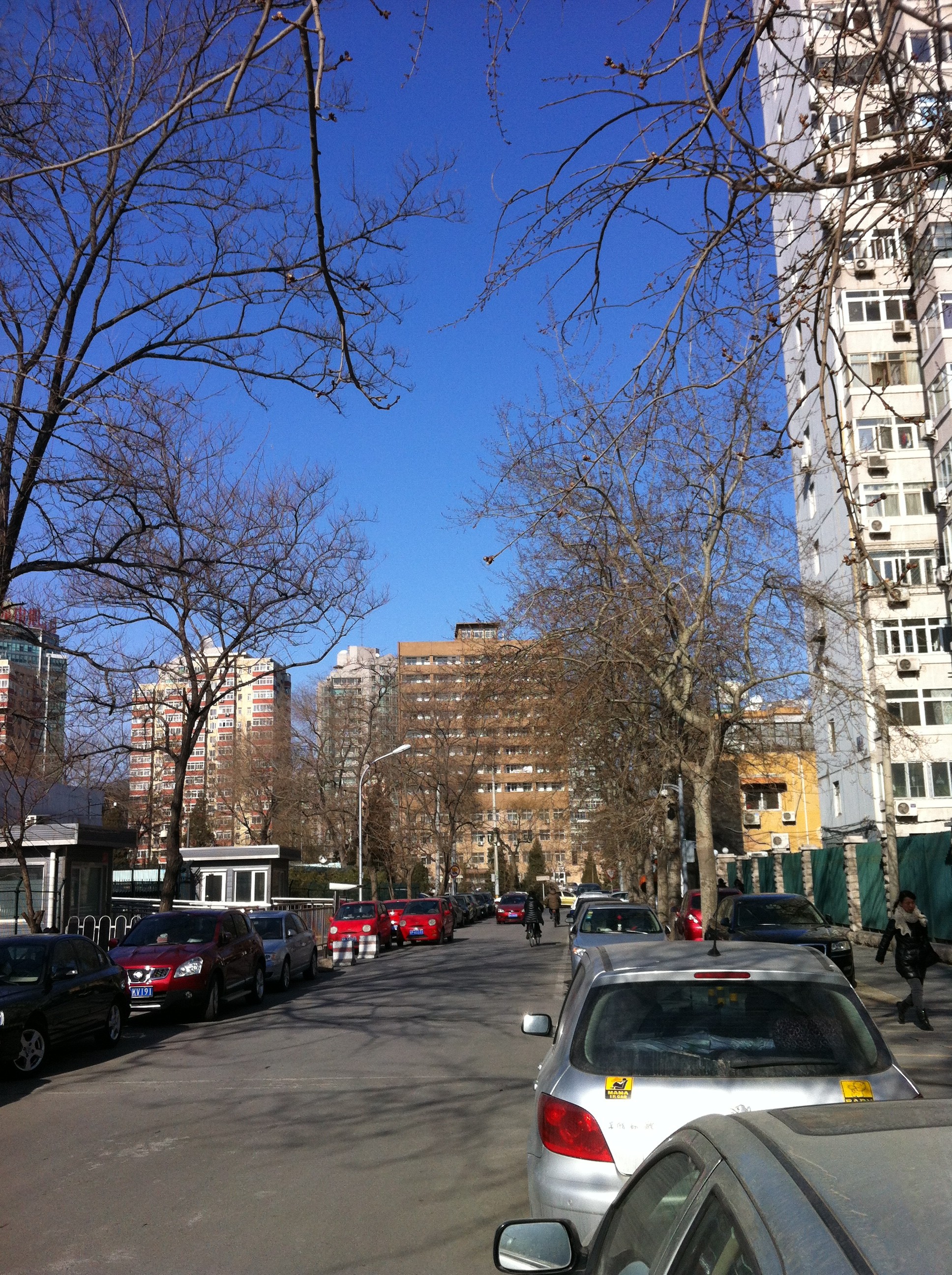
The air is clear, the sky is blue! Finally, the grey murk of the last week or so has gone! I don’t know where it’s gone and I don’t care. All I know is it’s gone. When I walked out into the street this morning, my heart jumped on seeing the blue, blue sky. I’d almost forgotten what a blue sky looked like.

As I walked along my piece of canal, a man on the other side burst into song. If I’d known the tune I would have hummed along. As it is, I smiled benignly at the lady who was walking her dog and she smiled benignly back. I didn’t even mind the very uneven paving stones in the canal path which threaten to trip me up every day.

As I walked into my secretary’s office, she cried out “it’s only 62!” She had already checked the PM 2.5 readings on the US Embassy’s twitter feed and was preparing her daily air quality report to all staff. We laughed in sheer pleasure.

The air is clear, the sky is blue, hallelujah!

blue sky 002

blue sky 003