Los Angeles, 23 June 2026
The other day, my wife and I were doing our usual shopping in our daughter’s local supermarket, after having dropped off our grandson at the daycare. My wife had tasked me with getting the pickles – olives, capers, and anything else that might catch my fancy – which we could use to spice up our bland chicken. I was idly perusing the shelves when my eyes alighted on this:
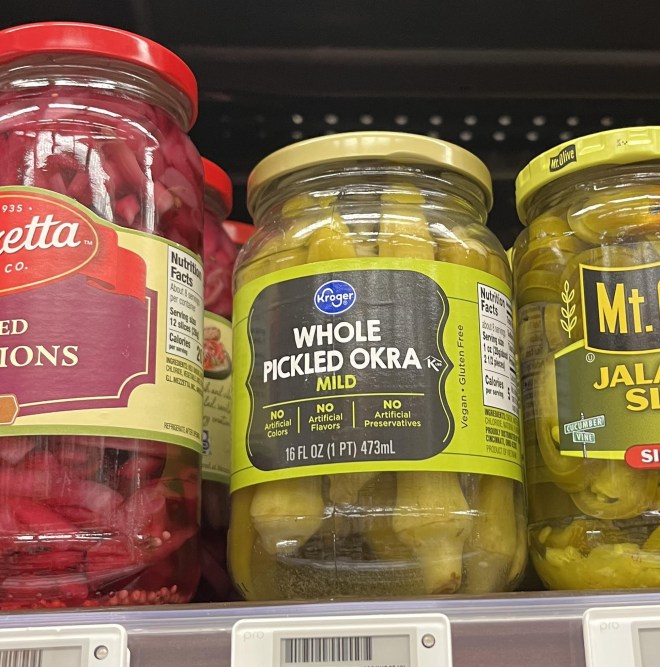
“This”, as readers can see, is a jar of pickled okra.
My eyes lit up at this discovery, my heart rate went up, a thrill of excitement coursed through my body!
I need to explain this strange reaction.
Many decades ago, when my wife and I were living in New York, we discovered pickled okra in our local supermarket. Neither of us had ever eaten okra – it doesn’t grow much in Europe and our parents had never fed it to us – so we were intrigued: what was this American vegetable like? We bought a jar of the pickles and tried them. Delicious! Nice and crunchy with a vegetable taste steeped in vinegar. From then on, it became a staple of our diet in the Big Apple.
One day, the supermarket was also selling fresh okra.
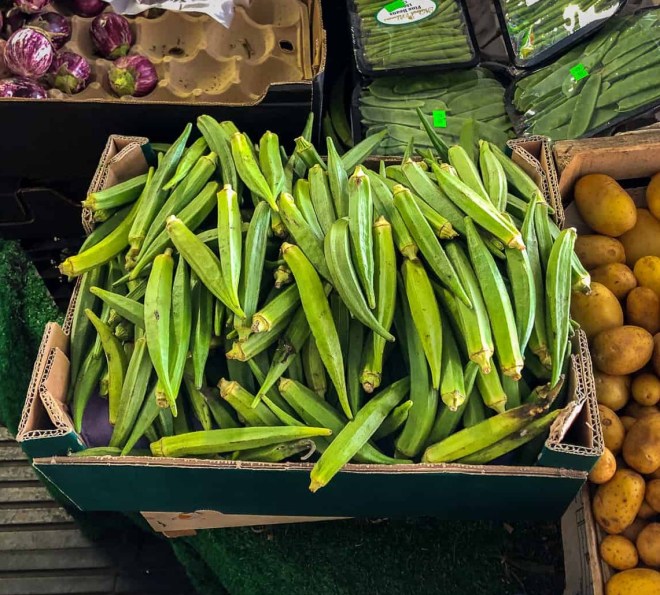
We thought this would be an excellent occasion to try the fresh version of the vegetable. We took some home and cooked it. We thought that while we wouldn’t get the pickly taste we would at least get the firm crunchiness. What we got instead was a slimy mess.
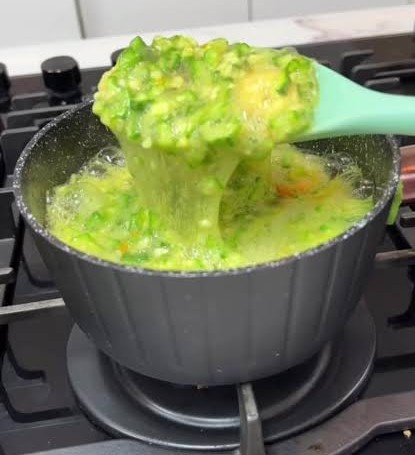
What a disappointment! But our bad, I have to say, because we hadn’t done any research on okra and so had no idea that this sliminess is a key constituent. Since we found the slime quite revolting, we decided to just eat pickled okra.
Once we settled back in Milan after our New York stay, I spent some time searching the shelves of our local supermarkets for pickled okra. No luck. I was disappointed but not surprised: like I said, okra was not a thing in Europe. And that was the end of our relationship with okra. Until now …
At the table that evening, as I waxed lyrical about pickled okra and helped myself to one pickle after the other, my son-in-law shot me a glance and predicted that I would be writing a post about okra. How right he was! How could I pass up this chance to write a hymn of praise to this pickled vegetable? But of course I was going to need to do some research about it first – the research I never did some 40 years ago.
And the first thing I discovered was that okra isn’t American at all, as I had naively thought so many years ago! But excitingly, I also discovered that in all probability it originally came from my country of birth, Eritrea! Or rather, it came from the highlands where the Blue Nile rises; these encompass parts of Eritrea, Ethiopia, and Sudan. I’m afraid I can’t show a photo of okra’s wild ancestor, because it has no direct ancestor as such. It’s a naturally occurring hybrid between multiple ancient species. So I throw in a photo of one of its probable ancestors instead, white wild musk mallow.
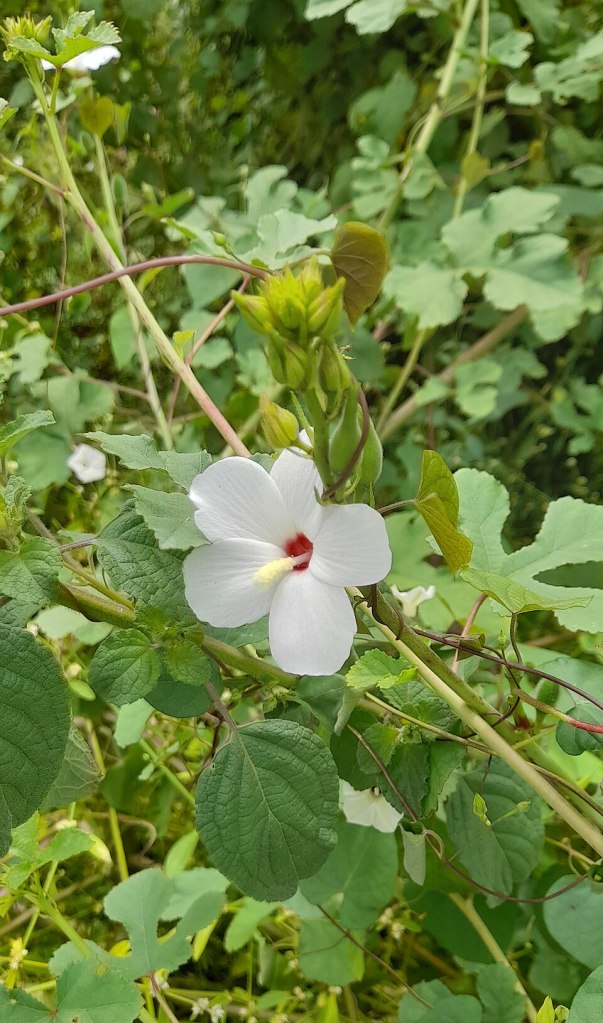
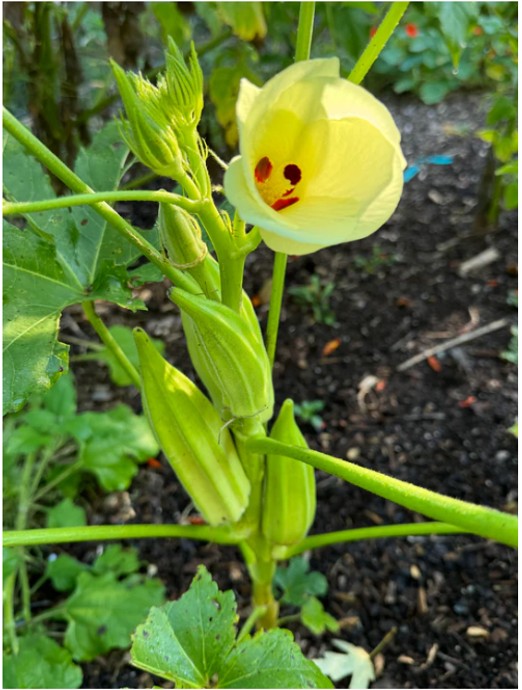
As readers can see, the plant has a lovely flower. The domesticated okra plant also has a beautiful flower, although it’s the seed pods below the flower that really interests us.
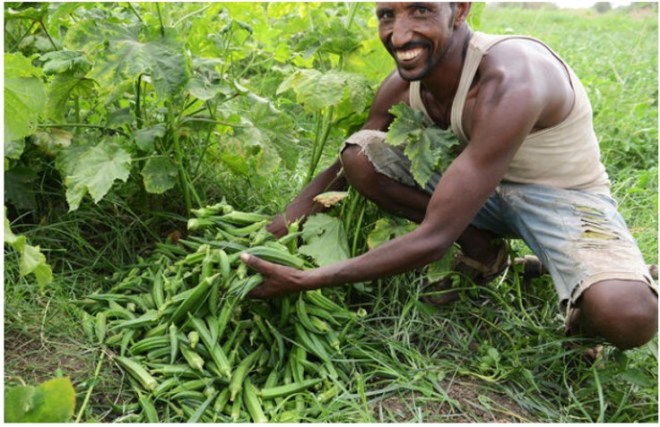
To celebrate the long-gone Ethiopian farmers who domesticated okra, I throw in a photo of a modern Ethiopian farmer happily harvesting okra.
Of course, the peoples of the Ethiopian highlands couldn’t keep this vegetable to themselves. Through war, trade, travel, or what-have-you, its seed pods radiated out of the Ethiopian highlands in every direction. To the north, they travelled down the Nile river, to Ancient Egypt (where experts believe it was being grown and consumed by at least the 12th Century BCE, although unlike the lettuce there is no archaeological evidence of its use); from there, they went west into the rest of North Africa and east into the Middle East. To the east of the highlands, the seed pods went down to the shores of the Red Sea, and they were then ferried across the sea into southern Arabia, from where they moved on into the Middle East (like another product of the Ethiopian highlands, coffee). From the Middle East, the seed pods kept travelling eastward to the Indian subcontinent (with the net result that India is now the largest producer by far of okra, being responsible for 60% of global production) and eventually to South-East Asia and southern China. To the south and west of the Ethiopian highlands, the seed pods spread into the whole of sub-Saharan Africa.
For reasons that will become clear in a minute, I want to go back to the Indian subcontinent, to discuss how okra got there. The most commonly-held theory on this is that it was brought by Arab traders; there was a lot of trade between the two regions, especially after the establishment of Muslim principalities in the subcontinent. But there is another theory, which holds that okra (also) arrived with the Siddi. The Siddi are an ethnic group of about 300,000 people living between Pakistan and India. They are primarily descended from enslaved Africans who were brought to the Indian subcontinent by Arabs as part of the Indian Ocean slave trade. Although they have maintained some African traditions, they have now pretty much adopted the local customs and languages.

In this reading of history, enslaved Africans brought okra with them to the Indian subcontinent, as a food they were familiar with and could grow themselves.
I bring up this alternative theory about the spread of okra to the Indian subcontinent for several reasons. First, I was really intrigued to find out about these pockets of ethnic Africans living in the Indian subcontinent, and I thought I would share this little nugget of information with my readers. Second, it serves as a useful reminder of the fact that the trade in enslaved Africans went east as much as it went west; in fact, about the same number of enslaved Africans were shipped eastward as were shipped westward, although over a considerably longer period of time.

Finally, it acts as an introduction to another dark chapter of okra’s history, its transfer to the one continent where it wasn’t yet present, the Americas.
When European traders arrived in Western and Central Africa to start shipping enslaved Africans to the Americas, they found okra being grown throughout the region. Either they brought okra seeds to the Americas as a food source for the slaves, or the enslaved Africans brought them to have a foodstuff with which they were familiar, or both.

Either way, okra arrived in the Americas on the slaving ships and took root there. Initially, the slave owners and free people kept away from okra, considering it to be a “slave food”. This view of the vegetable is reflected in many of the names it was given in the Americas. “Okra”, (or “ocro”, or “ocher”) – used in the US as well as in the ex-English and Dutch Caribbean colonies – derives from the vegetable’s name in Igbo, a language primarily spoken in the south-east of what is today Nigeria, in West Africa – where many of the enslaved Africans came from. A cluster of connected names – “quimbombó”, “quingombó”, “chimbombó”, or “guingambó” used in countries such as Venezuela, Cuba, Mexico, and Puerto Rico; “quiabo” in Brazil; “gombo” in Louisiana and in the ex-French Caribbean colonies, – all trace back to the name of the vegetable in Kimbundu, a language spoken in what is now Angola – another African region where many enslaved Africans came from.
Well, the “slave food” eventually went mainstream. Okra is now a respected part of dishes in many countries of the Americas. For instance, there’s Brazil’s caruru, a dish where okra is stewed in a stock made up of palm oil, coconut milk, salted dried shrimp, onions, nuts, cilantro, and ginger.
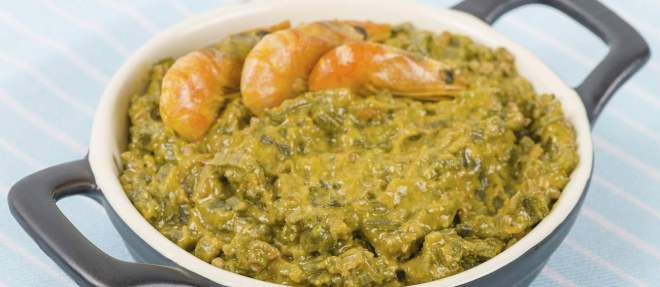
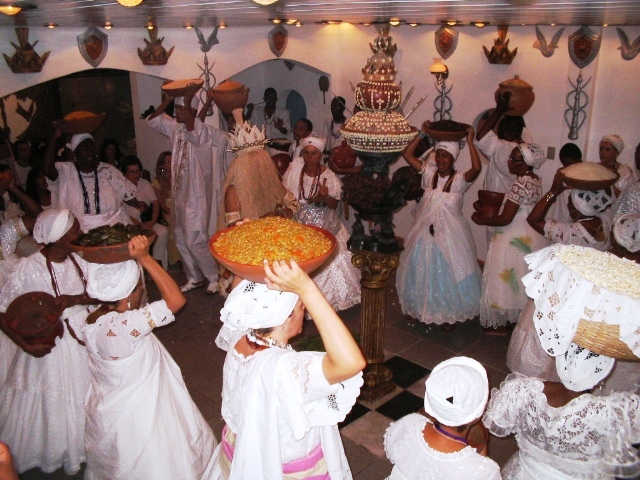
Not only is caruru a staple in many parts of Brazil, it is also a ritual food in Candomblé, an Afro-Brazilian religion that blends traditional West African beliefs (especially Yoruba, Fon, and Bantu) with elements of Roman Catholicism.
Then there is callaloo, a soup which is eaten throughout the Caribbean islands. So integral is it to their culinary cultures that in at least two countries – Dominica and Trinidad and Tobago – it has been declared the national dish. While each island offers its own regional twist on the recipe, the soup is typically made by simmering indigenous leafy greens with okra, coconut milk, and various seasonings. Depending on the specific locale, it can be served as a vegetarian dish, or cooks can add crab, prawns, or salted meats.
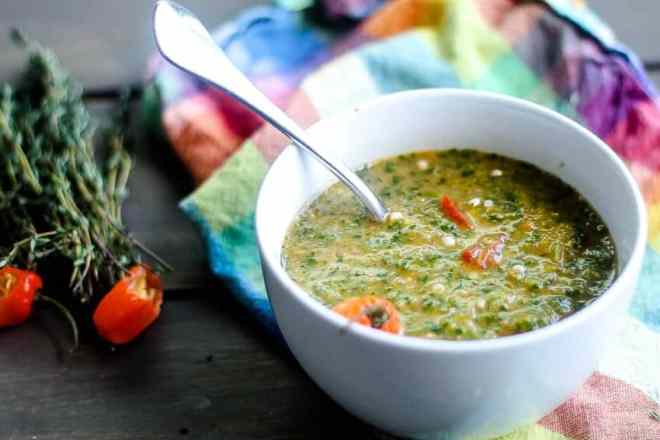
Then there is gumbo, which is highly popular among the U.S. Gulf Coast community. Gumbo consists primarily of a very dark, very flavoured, roux, to which are added seafood or meat (or sometimes both), a thickener, and the Creole “holy trinity” of vegetables: celery, bell peppers, and onions. When seafood is used, the thickener is normally okra – all that sliminess makes for a good thickener! (which in all probability is a role it also plays in caruru and callaloo)
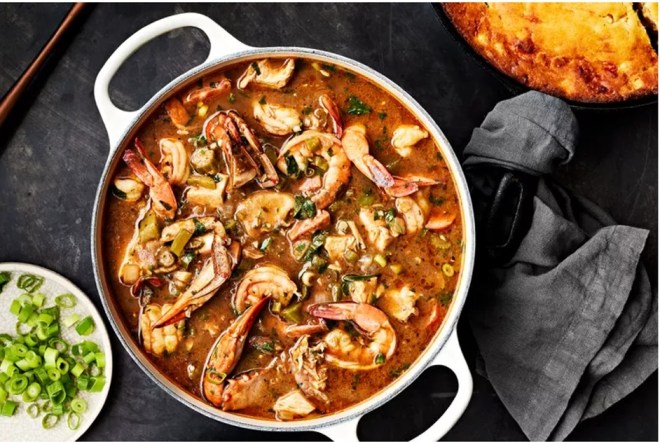
Gumbo is now so highly prized in Louisiana that, like Dominica and Trinidad and Tobago, the State’s Legislature has elevated the dish to the exalted status of being the official state cuisine.

Not to be outdone, the Oklahoma State Legislature has included fried okra in the Oklahoma State meal.
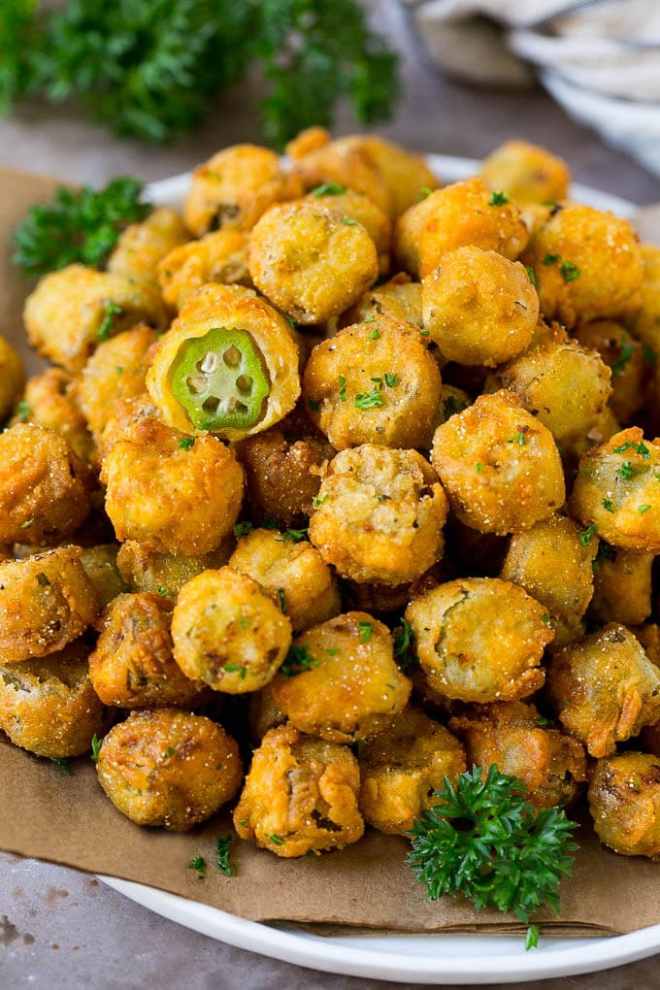
(For those of my readers who are interested, the State meal also includes cornbread, barbecued pork, chicken-fried steak, sausage with biscuits and gravy, the vegetables black-eyed peas, corn, grits, and squash, with pecan pie and strawberries for dessert; all dishes which are typical of Southern cuisine). I read that this is a delicious way of eating the vegetable, although I also read that the result is a crisp exterior with a slimy interior. In which case, count me out …
And pickled okra, in all of this? Pickling is not a traditional way of preserving food in sub-Saharan Africa, so this must have been a process which enslaved Africans picked up from their owners. It’s particularly useful in the case of okra, because the harvest comes quickly and it spoils even quicker. Drying can be used, and dried okra powder is still common in many parts of the world. But, as my wife and I discovered all those years ago in New York, pickling retains the vegetable’s satisfying crunch while imparting a tart, zesty flavour. So pickling okra became a staple in family cellars and pantries all across the Deep South. But my wife and I have to thank a certain Dick and Mitzi Grimes from San Angelo, Texas, for finding pickled okra on our supermarket shelves 40 years ago and then again just the other day. This husband-and-wife team were the first to make pickled okra available commercially in 1950, through the company, Talk O’ Texas, which they set up.

They managed to secure a major contract with the luxury department store Neiman Marcus, which popularized mass-market pickled okra across the state and then the country. And the rest, as they say, is history.
Well, it’s taken me two jars of pickled okra to complete this post. My current jar has only few pickles left.
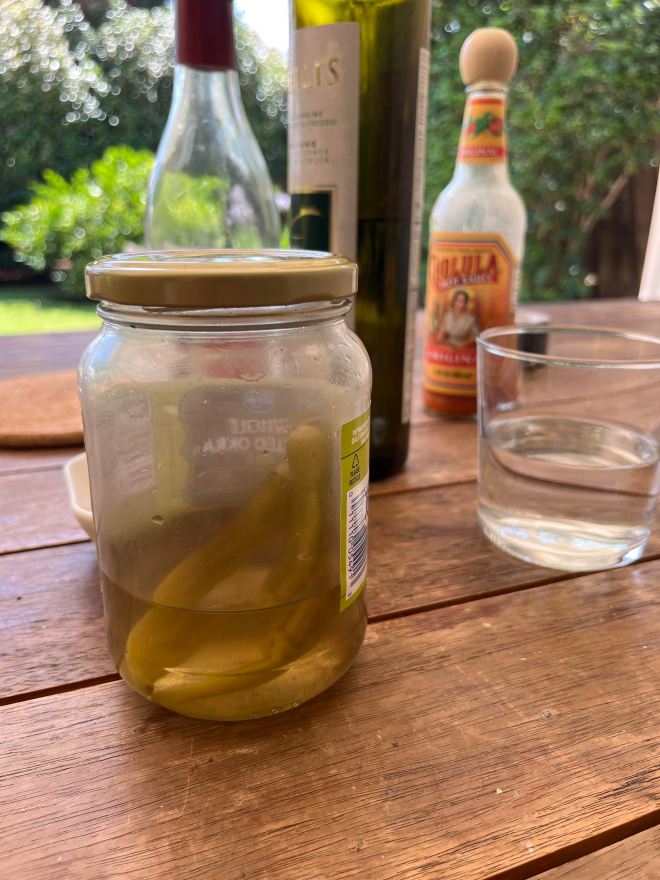
Time for me to pick up another jar tomorrow after we have dropped off our grandson at the daycare!


