BLUE EYES: PERSONAL MEMORIES

Beijing, 18 November 2012

In my last posting, I did not reveal if I am or not one of the millions who carry that little mutation in my DNA which codes for blue eyes. Well, … I think I do. My mother certainly carried the mutation because she had beautiful baby blue eyes, as did her brother. She once told me that her father also had blue eyes, although I have no direct confirmation of this. He died in the 1930s of tuberculosis. The only indirect confirmation I could have would be from photos. But photos with him in them are black and white and taken from a distance, and all I can see is his illness in his hollowed face. In any event, he must have carried the blue-eye gene, because otherwise my mother could not have had blue eyes. The gene for blue eyes is recessive and must be inherited from both parents to be expressed. So my maternal grandmother must have carried it too, although she definitely did not have blue eyes. As I dig into my memory for her face, I think I see hazel eyes.

My father’s eyes were brown, as were those of his brother and sisters. He inherited the gene for that from his father, although here too I have to depend on indirect evidence: a painting of him that hung in my paternal grandmother’s living room, in which his eyes were definitely brown. He also died in the 1930s, from leptospirosis, which he caught on the Norfolk Broads. From my grandmother my father inherited a blue-eye gene because she had beautiful blue eyes. By the time I knew her they had faded a little and her hair had turned completely white. But as a younger woman, she had dark hair: blue eyes and dark hair, she must have been a striking woman.

So my father had one brown-eye gene and one blue-eye gene, while my mother had two blue-eye genes. One of my sisters inherited my father’s brown-eye gene because her eyes are brown. My two brothers inherited the blue-eye genes from both sides pure and unadulterated, because they both have blue, blue eyes. The rest of my sisters have eyes with varying shades of green: I guess part of their DNA is pushing for some level of melanine in their irises.

As for me, my mother used to say that the colour of my eyes was caca d’oie, or goose poop. Anyone who has looked closely at defecations from geese will immediately recognize the allusion: green with brown streaks.

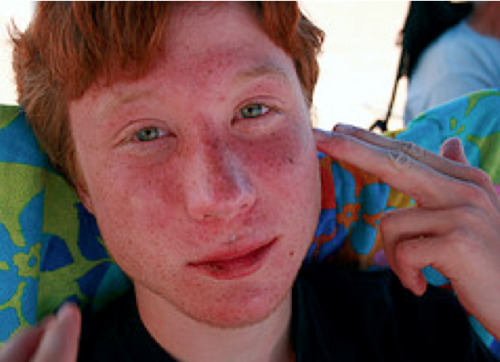
my eyes

BLUE EYES, BLUE SKY

Beijing, 15 November 2012

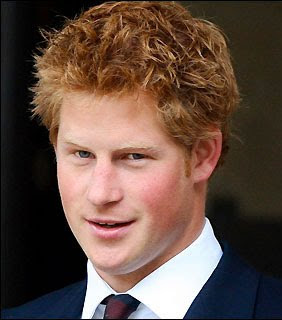
My wife and I have one fundamental difference: I notice people’s looks and she notices people’s characters. One result of this is that after living in a part of the world where everyone has black hair and dark eyes, I have become intensely aware of differences in hair and eye colouring, whereas my wife is quite indifferent to it. So it was that yesterday, when my wife and I were sitting at our favourite café and we found ourselves sitting across from a European expat, I was transfixed by his blue eyes while she didn’t notice. After spending a suitable moment marvelling at the sight, I began to ask myself some questions. Questions which my wife’s iPad, which I commandeered, and the café’s wifi allowed me to find answers to.

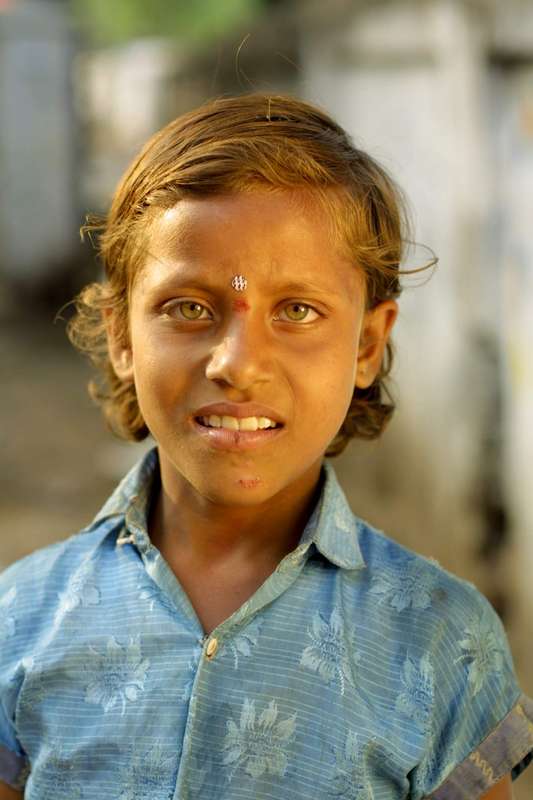
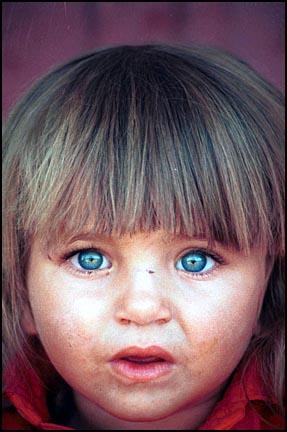
Perhaps the most amazing fact is this. Every person in the world with blue eyes (and the closely linked grey and green eyes) has one single, common ancestor! A mutation occurred in some corner of this person’s DNA and that little mutation has been passed on down the generations ever since. Up to that point, the colour of all humans’ eyes had been dark. And then, some ten thousand years ago somewhere in the north-western part of the Black Sea region (geneticists have managed to pinpoint the source that accurately), someone was born with blue eyes.  Can you imagine what that must have been like? Was the person treated as a wonder or as a dangerous freak, I ask myself? I have to think the former, since this person was able to sire children who passed on the mutation.
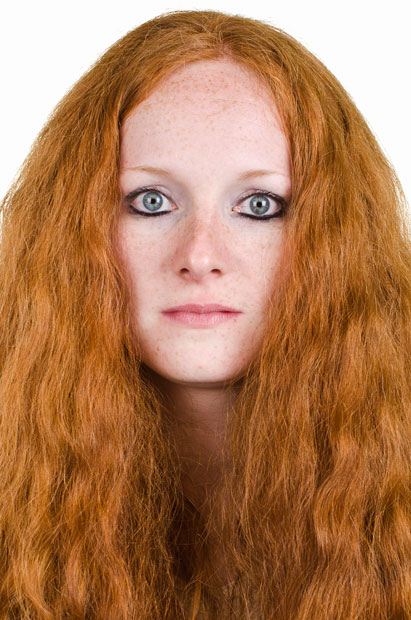
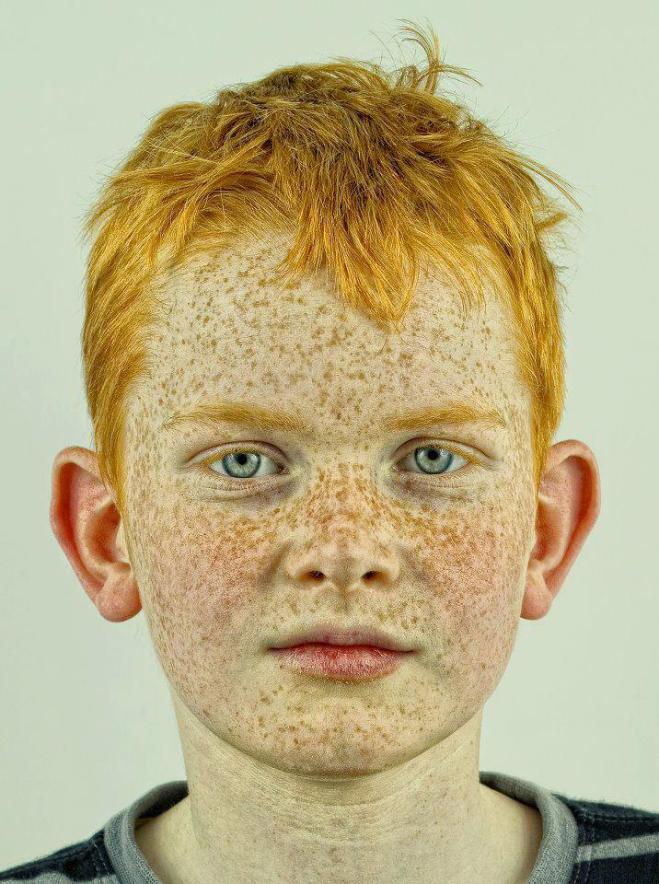
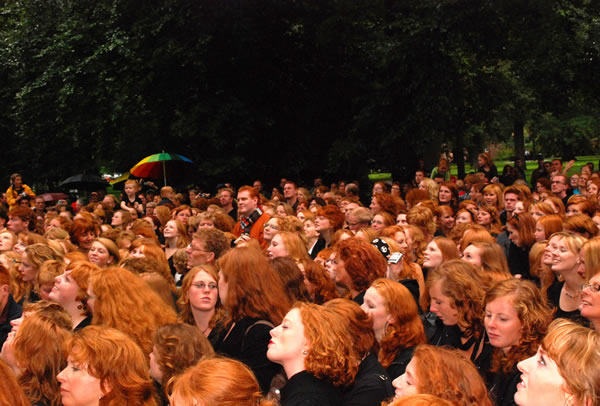
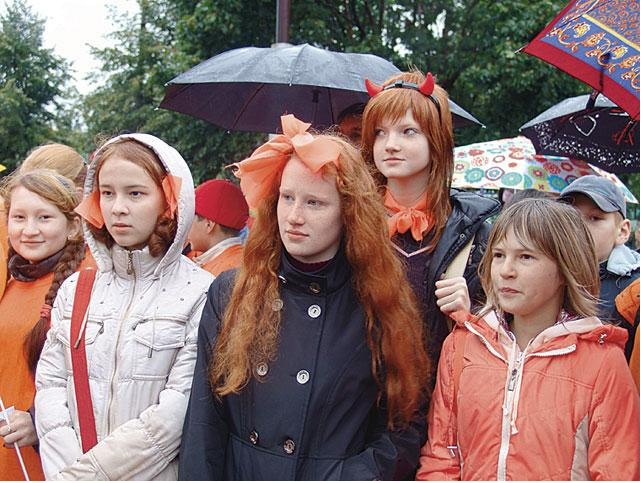
I suppose blue eyes are most associated with Europe: blondes or the red-heads with blue eyes.

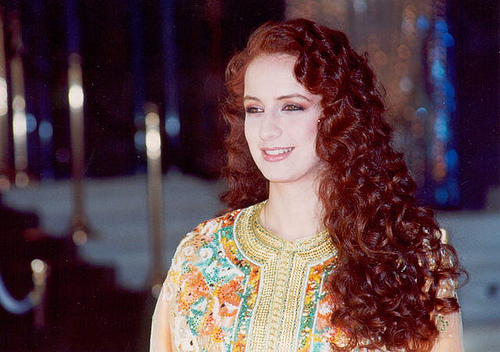
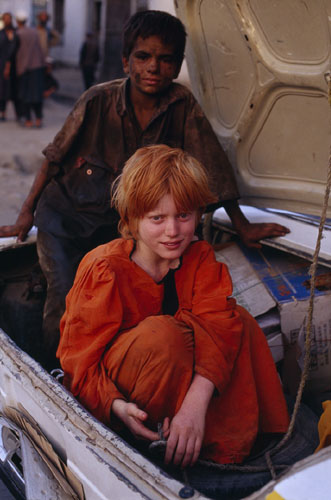
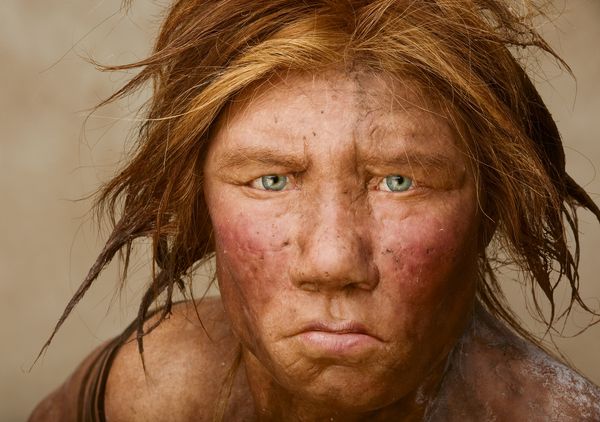
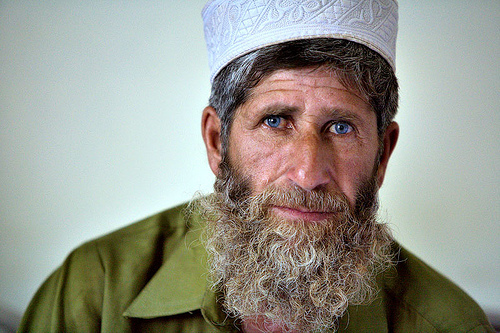
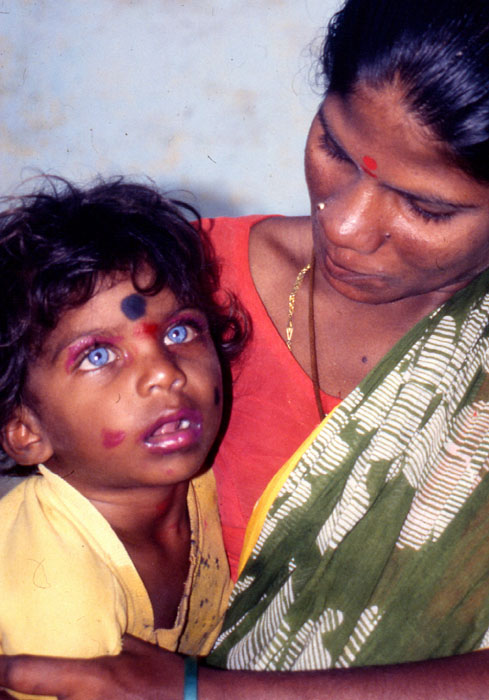
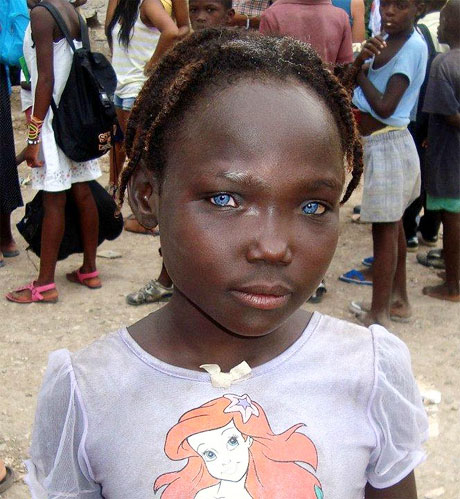
But actually, according to very recent research, the original Ol’ Blue Eyes was probably dark skinned and dark haired. And in fact blue eyes are found everywhere:

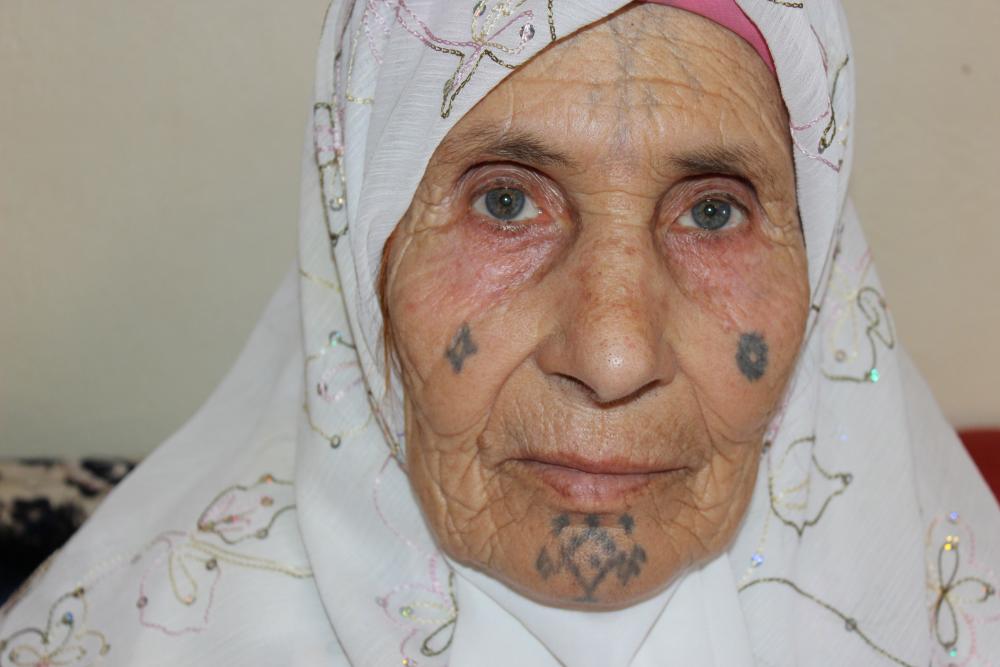
Algeria …

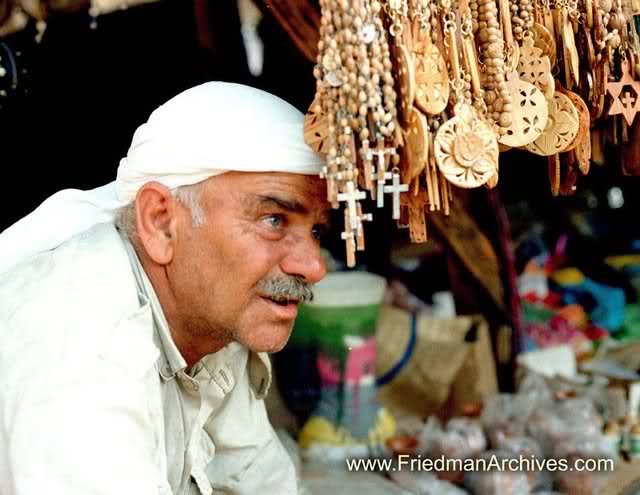
Palestine …

Lebanon …

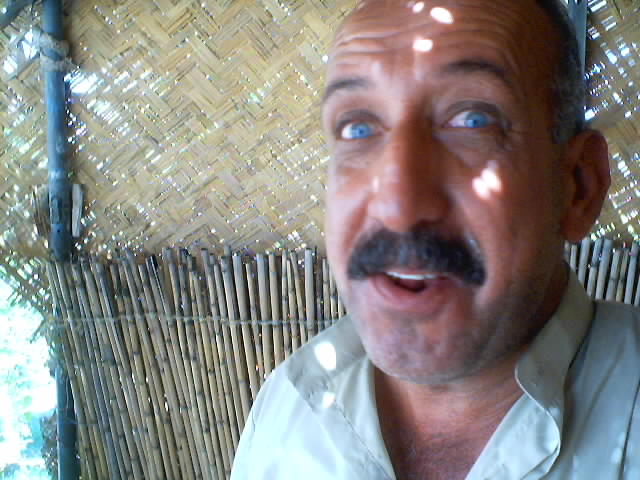
Syria …

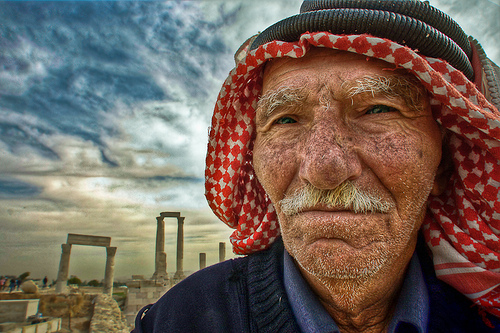
Jordan …

Iran …

Afghanistan …

India …

Central Asia …

Even China! (although more green than blue) …
Even Africa!! …

But most basic of all, why are eyes blue? Because the irises lack melanin. It’s melanin which makes the human eye – and skin, and hair – dark. But why aren’t blue eyes colourless then? Because of the same effect that makes the sky blue: “longer wavelengths of light tend to be absorbed by the dark underlying epithelium, while shorter wavelengths are reflected and undergo Rayleigh scattering in the turbid medium of the stroma. This is the same frequency-dependence of scattering that accounts for the blue appearance of the sky” (1). So eyes are blue because the sky is blue. Now how cool is that …

______________
1. http://en.wikipedia.org/wiki/Eye_color#Blue

Links for the pix:
Little European blonde girl: http://ts3.mm.bing.net/th?id=I.4963638661679662&pid=1.7&w=237&h=155&c=7&rs=1
Little European red-headed girl: http://ts3.mm.bing.net/th?id=I.4615243792843710&pid=1.7
Algerian old woman: http://pulitzercenter.org/reporting/algeria-aures-mountains-facial-tattoos-culture-portrait-series
Palestinian man: http://i56.tinypic.com/2vao8av.jpg
Syrian man: http://www.hobotraveler.com/123_07baghdadistanbul/0077.JPG
Jordanian man: http://www.lurvely.com/photo/4259694961/A_face_from_Jordan/
Little Iranian girl: http://www.worldisround.com/articles/73022/photo653.html
Afghan woman: http://en.wikipedia.org/wiki/Nuristani_people
Afghan man: http://farm5.static.flickr.com/4041/4696088197_24f3ecf0c4.jpg
Little Indian girl: http://i2.asntown.net/h3/fun/12/beautiful-eyes/asian-people-with-blue-eyes05.jpg
Indian woman in Sari and Indian boy: http://www.asiafinest.com/forum/lofiversion/index.php/t8178-100.html
Indian man with green eyes: http://i.images.cdn.fotopedia.com/flickr-4833454489-hd/Countries_of_the_World/Asia/Portrait-Asia-Demographics_of_Asia-Demographics_of_India-Human-India-Portrait_photography-Rajasthan-Rajasthani_people-hd.jpg
Central Asian man: http://anthrocivitas.net/forum/showthread.php?t=7853
Chinese woman: http://ts1.mm.bing.net/th?id=I.4981686084830908&pid=1.7
African girl: http://korraisnottan.tumblr.com/post/21640006035/anonymous-asked-korra-is-not-tan-korra-is-not

CHINA PAVILION REBORN

Shanghai, 6 November 2012

I have mentioned in an earlier post that I had to visit the Shanghai Expo from time to time when it was on. “Had to” is the operative phrase: I was there for work and got no joy in being there. On one of my visits with my more important Boss, we were given the VIP visit of China’s pavilion. I confess immediately to remembering nothing – but then I don’t remember anything of any of the pavilions which I visited. My one memory of the visit is of one of our party who lost his wife in the pavilion. We left him sitting disconsolately at the exit waiting for Wife to appear (I heard later that having got separated from us she had left by another exit).

But my wife and I were now visiting the pavilion (with me telling her to stay close …) in its new guise, as the China Art Museum. It was an interesting visit: not fantastic, not five stars, but interesting. The collection is certainly huge; we thanked the Lord that looming closing time gave us an excuse to go faster and faster towards the end, skimming along. Even so, we didn’t finish. Another reason to go back to Shanghai, I suppose.

Starting from the top, the logic behind the flow of the visit seems to be:

1.      China meets the West and starts to modify traditional art forms using a more Western sensibility;

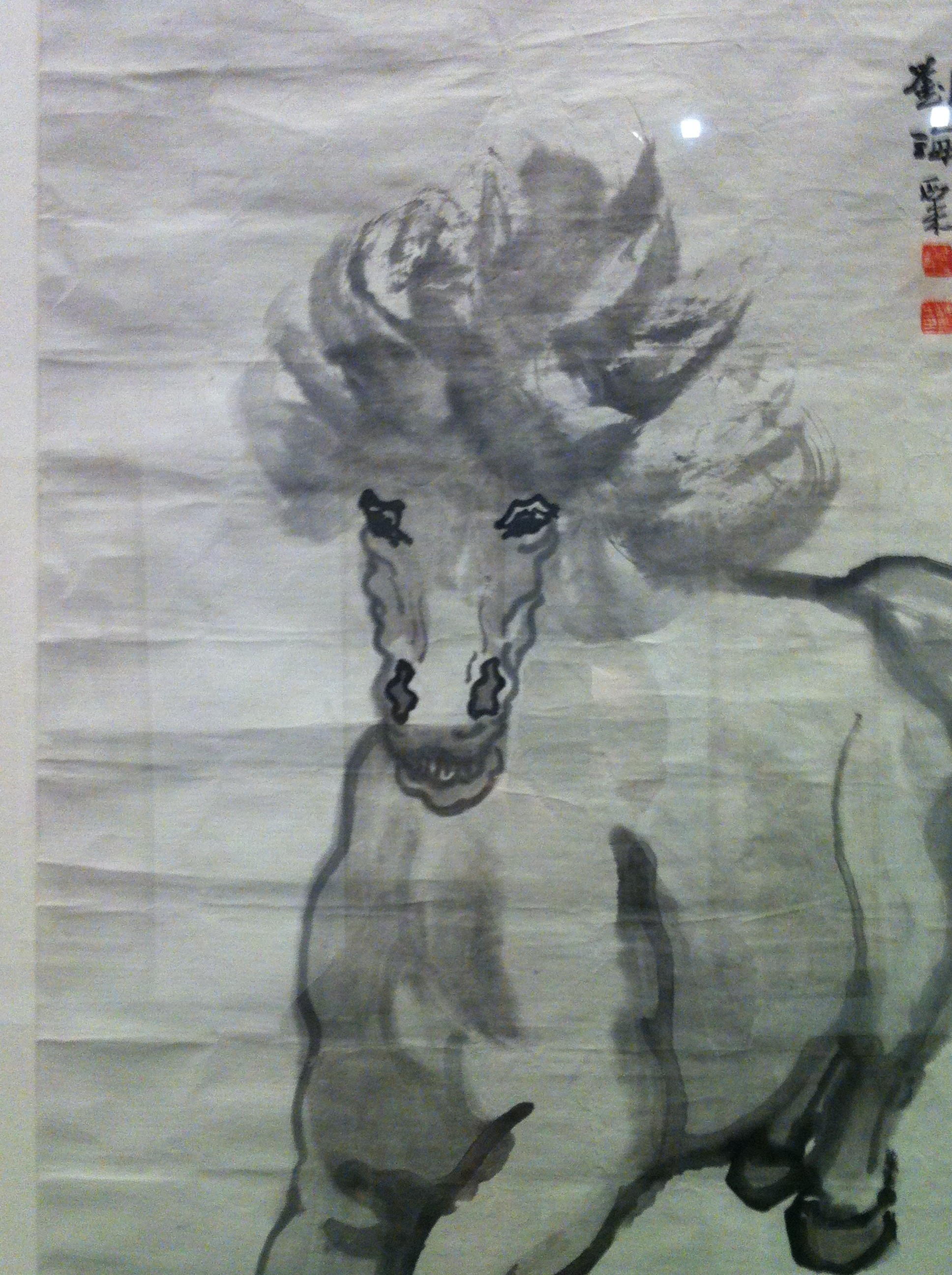
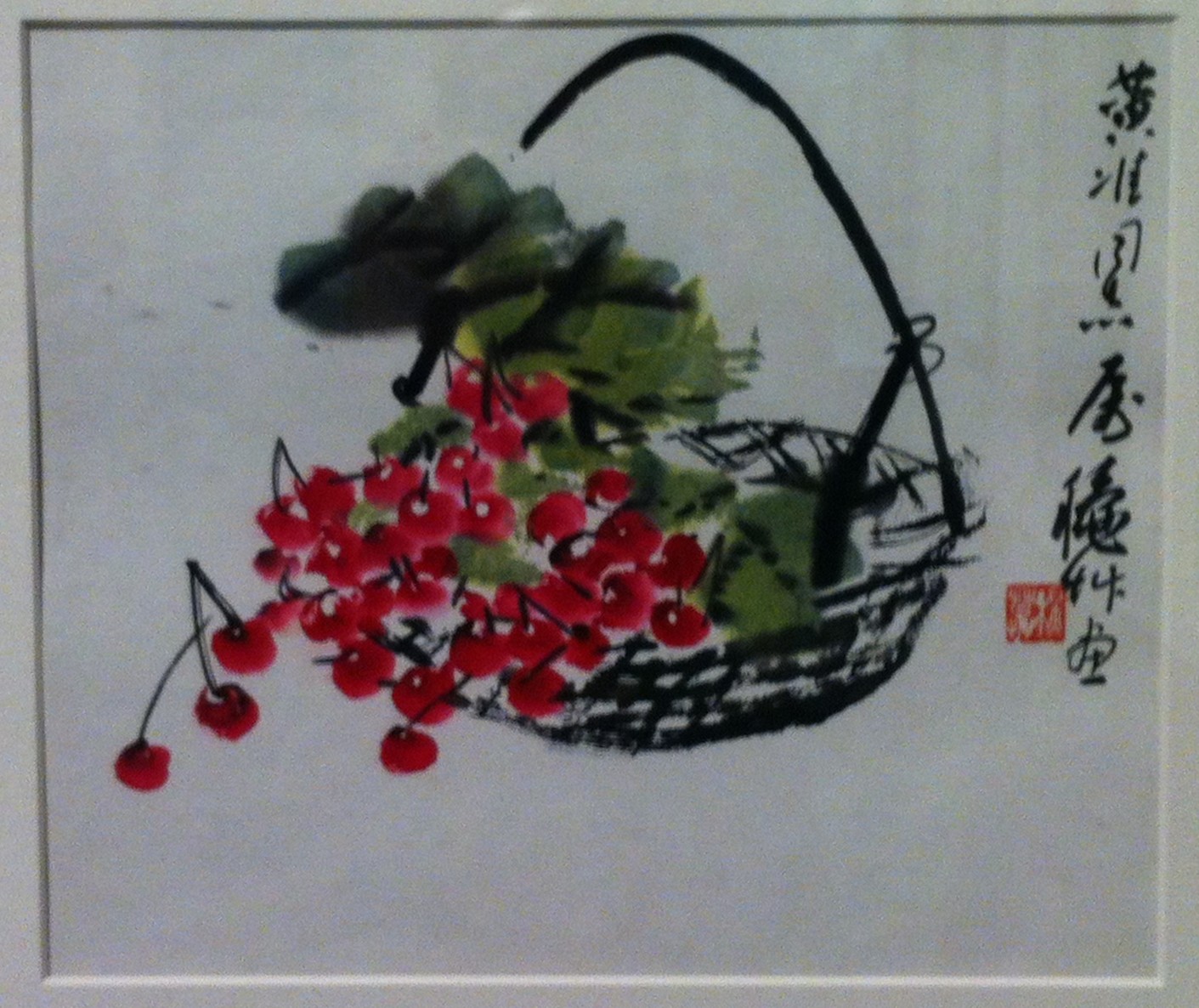
2.      China also tries out the new Western ways (oils versus watercolour, many colours versus the traditional monochrome or at least no more than two tones, impressionism);

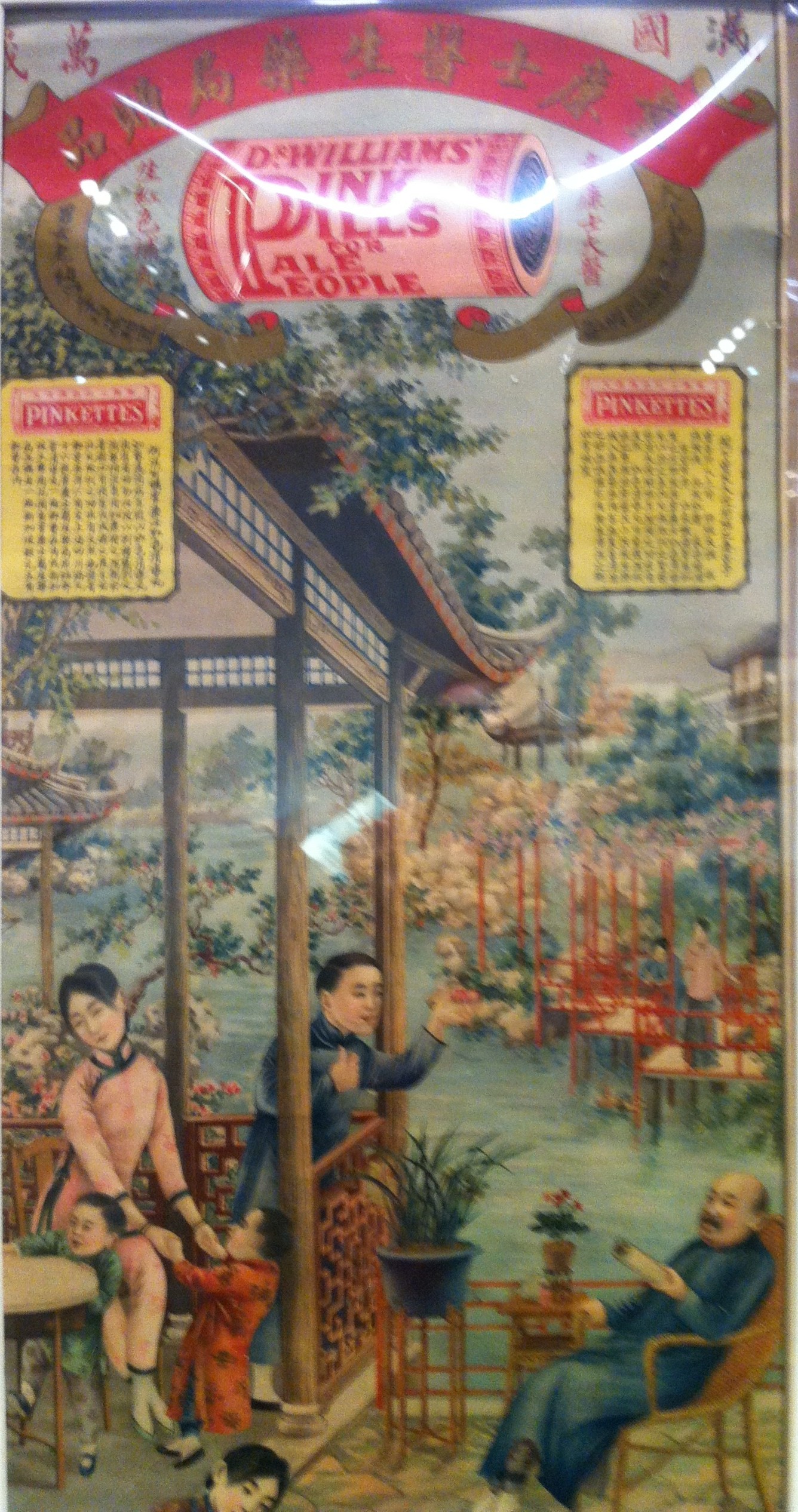
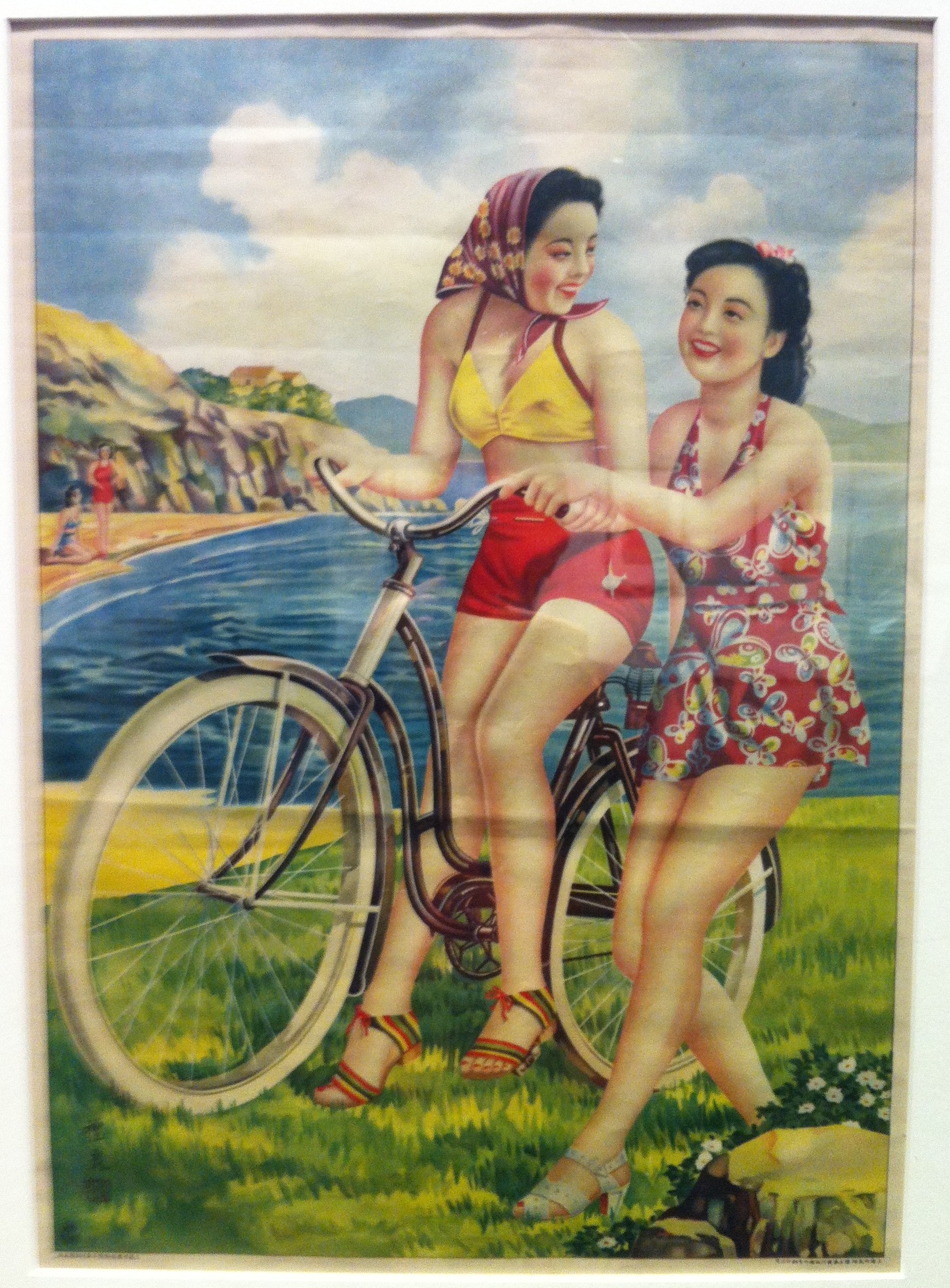
3.      China also enthusiastically adopts some of the more low-brow forms of Western art, especially advertising and calendars, as well as animated cartoons;

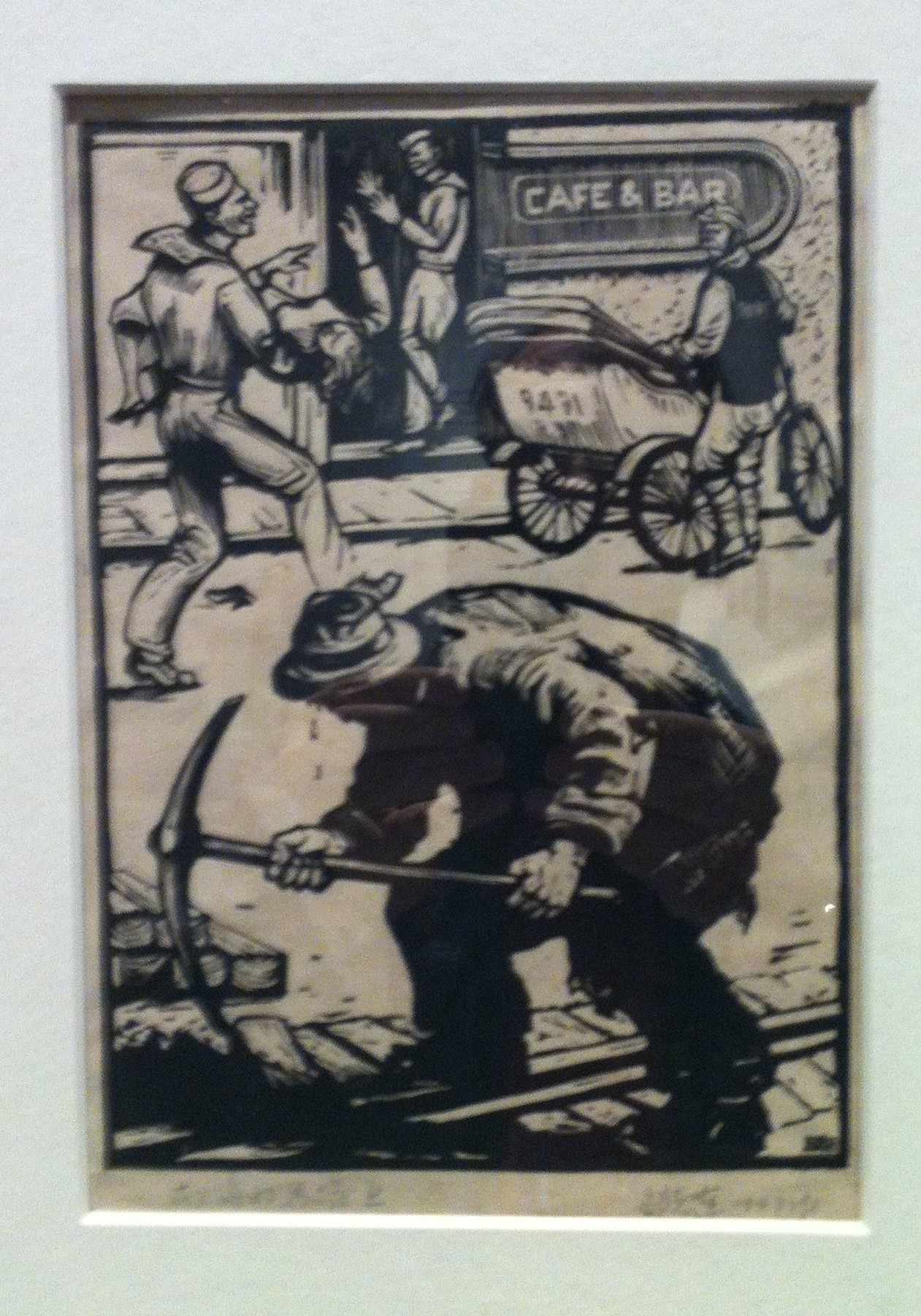
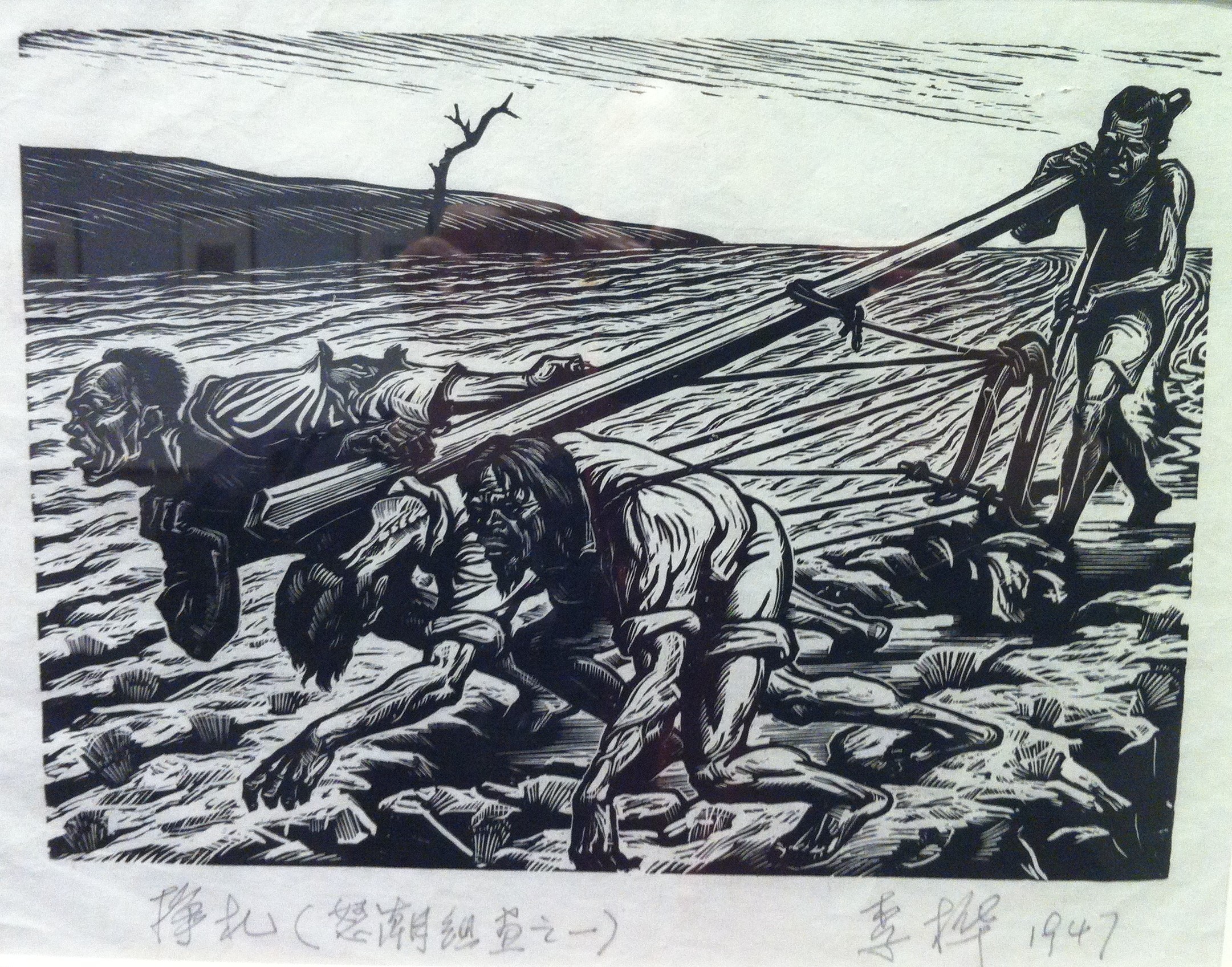
4.      But China also tries out wood cuts, turning out among other things some dark political commentaries – signs of the gathering storm;

5.      The New China triumphs and artists turn to social realism to support and teach the Revolutionary Masses, often using the traditional models in a new guise;

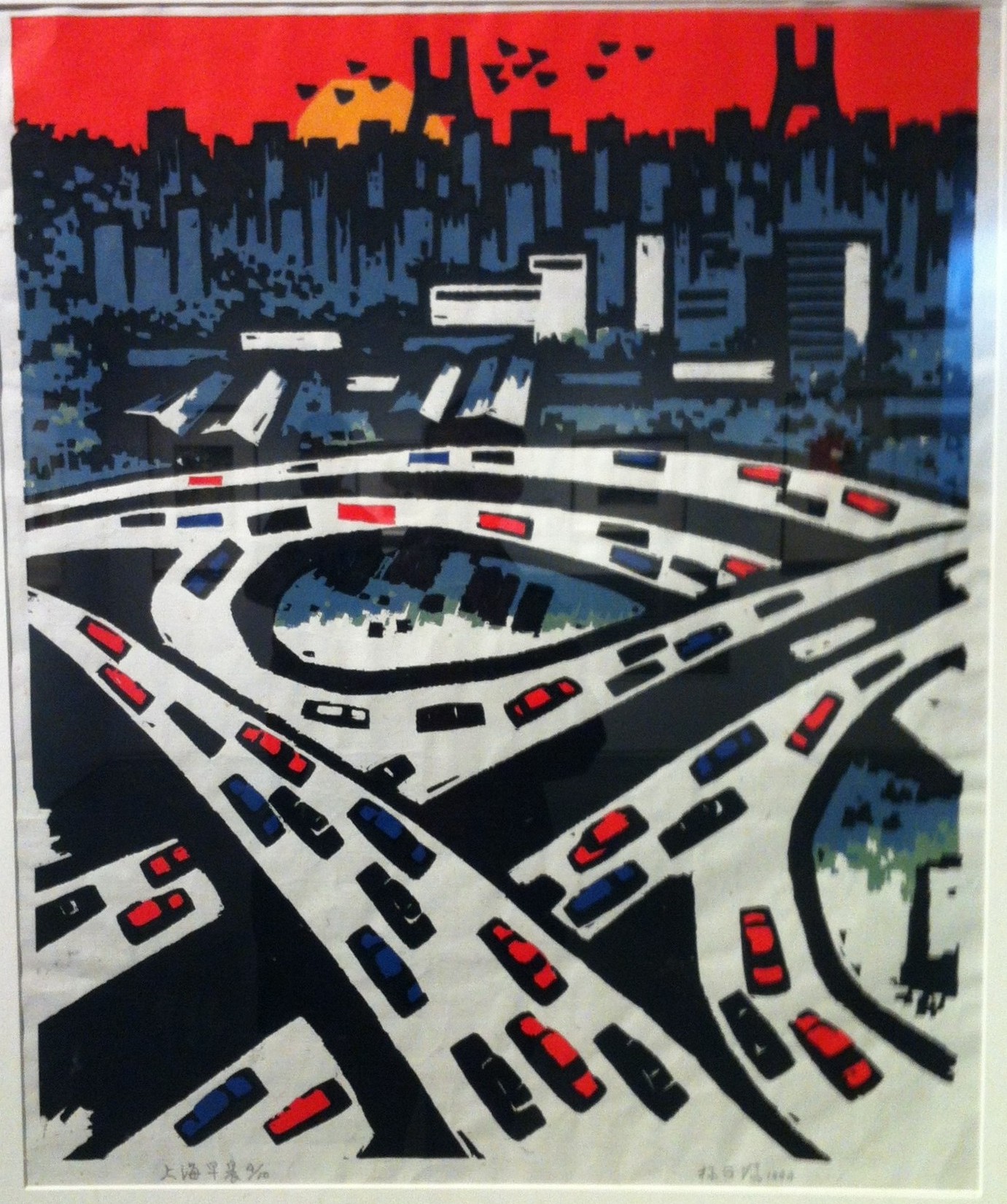
6.      Art as a teacher of the masses continues, up to the present day.

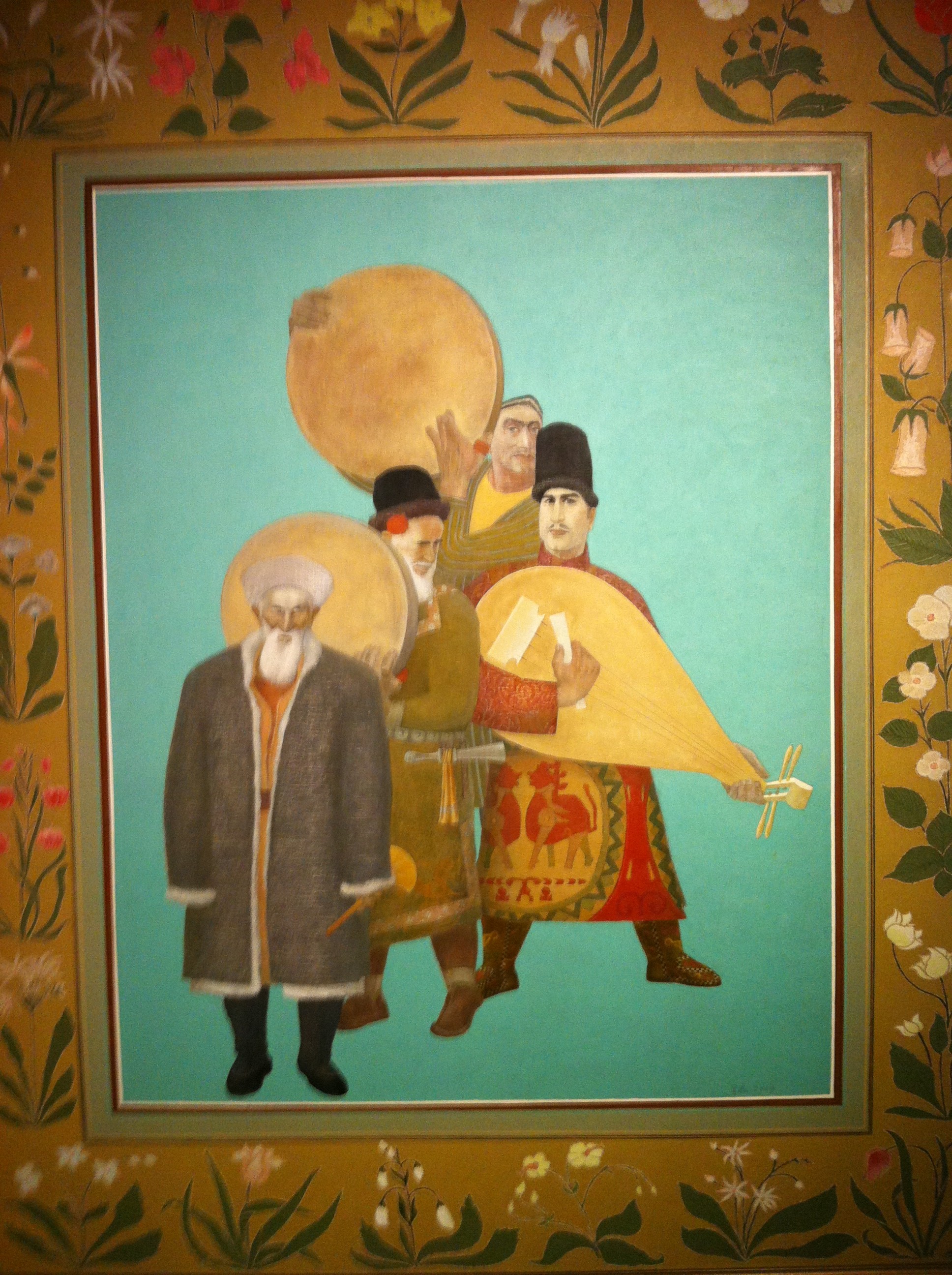
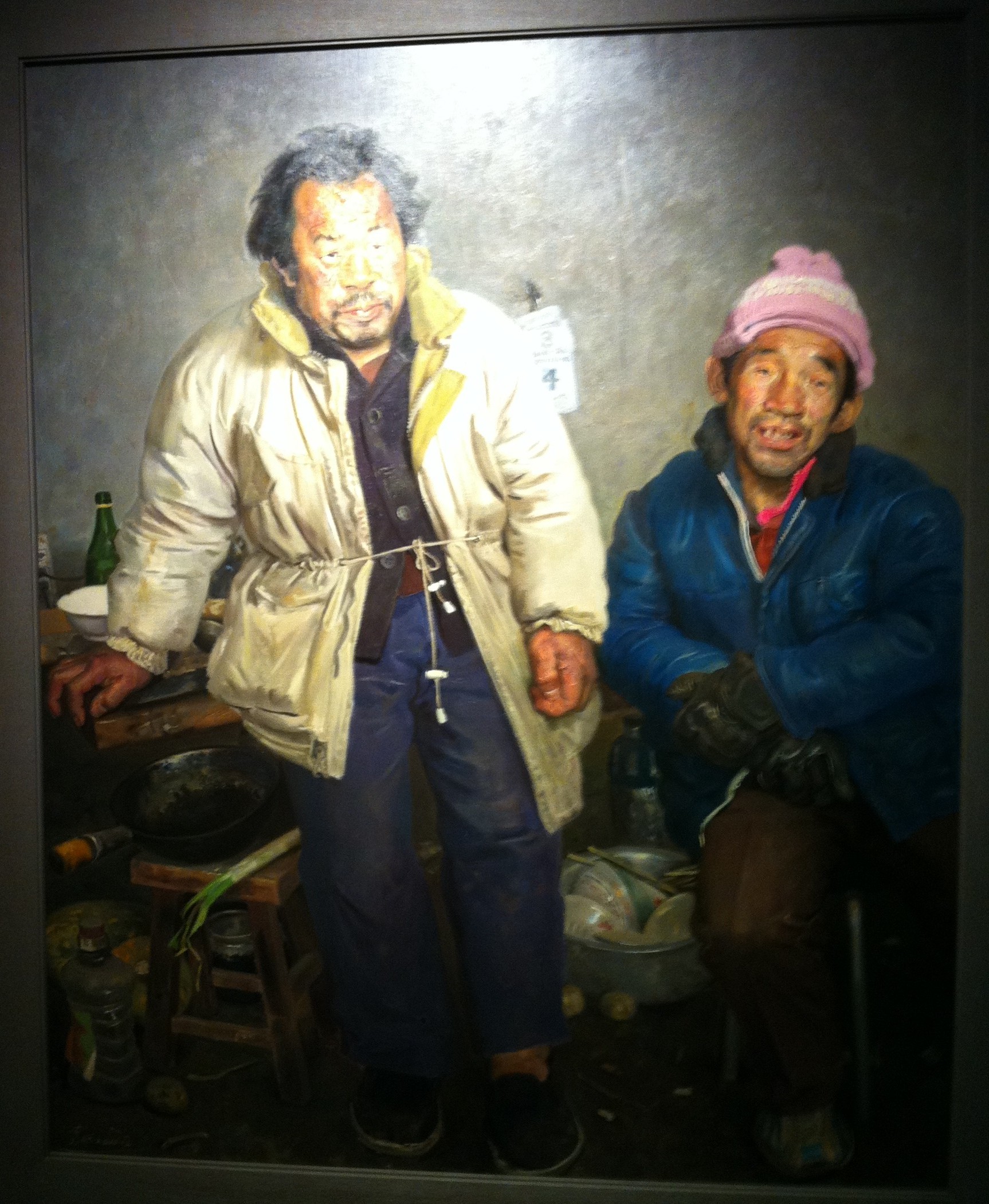
Here are some photos I took – not as many as I would have liked, because there was a no-photo rule, with people in each room walking around to enforce it. I have to say it was a rule more honoured in the breach by many of the Chinese visitors, and many of the enforcers seemed to take their duties very lightly. But from this point of view I am an old-fashioned Englishman: a rule is a rule and I feel guilty and uncomfortable breaking it. My wife, now, is very Italian in this respect: rules are merely to be treated as guidelines. Thinking about it, the Italians have affinities with the Chinese on this point, whereas the English are more like the Japanese. But I digress.

Type 1:

cool hair-do …

Type 2:

best painting in the whole collection

more traditional

Type 3:

“Pink Pills for Pale People” – I love it.

China at Bournemouth?

Type 4:

Type 5:

rather blurred; the enforcer of no-photos was stricter in this room.

Type 6:

a modern painting, part of a triptych, telling the story of some famous revolutionary. If we understood the captions in this section of the museum correctly, this was part of a government programme to immortalize in paint various Great Moments or Great People from the Glorious Past. This particular painting caught well the idea of painting memories, already beginning to fade, already beginning to blur. There were several in this style.

another modern painting of some Great Moment in which, judging from the soldiers’ uniforms, the Brits were involved. I liked the cartoonish style.

The caption was more interesting than the painting.

What surprised me in this line-up was the lack of any revolutionary posters. If you’re going to have advertising and calendars, why not have a collection of good revolutionary posters? I took these off the net.

This seems a natural follow-on to the earlier wood-cuts

– o O o –

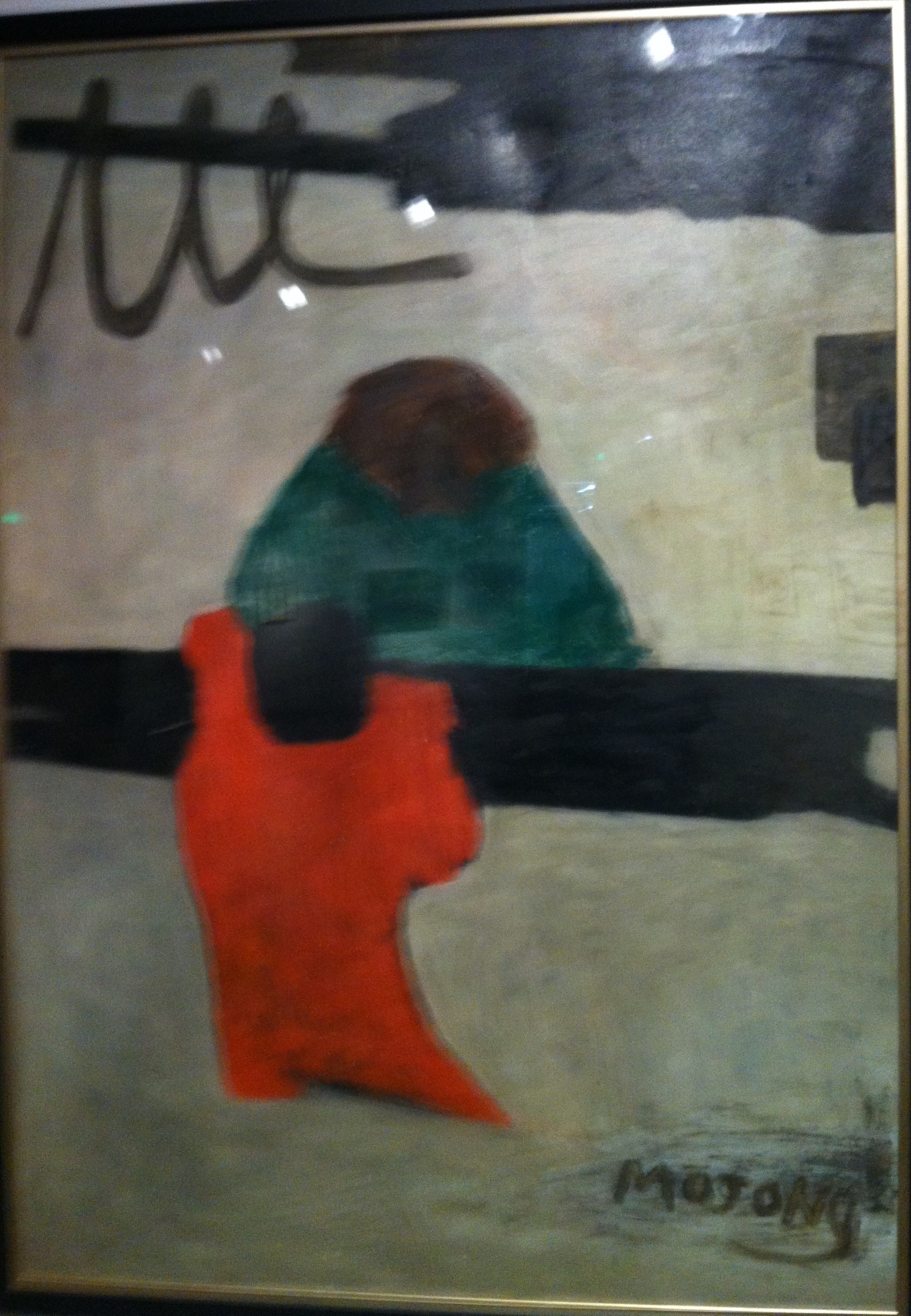
Of course, life never follows neat patterns, and the museum’s exhibits were no exception. Here, in no particular order, are some paintings we came across during our tour which don’t seem to fit the 6-phase approach I’ve outlined above:

very amusing depiction of the subway

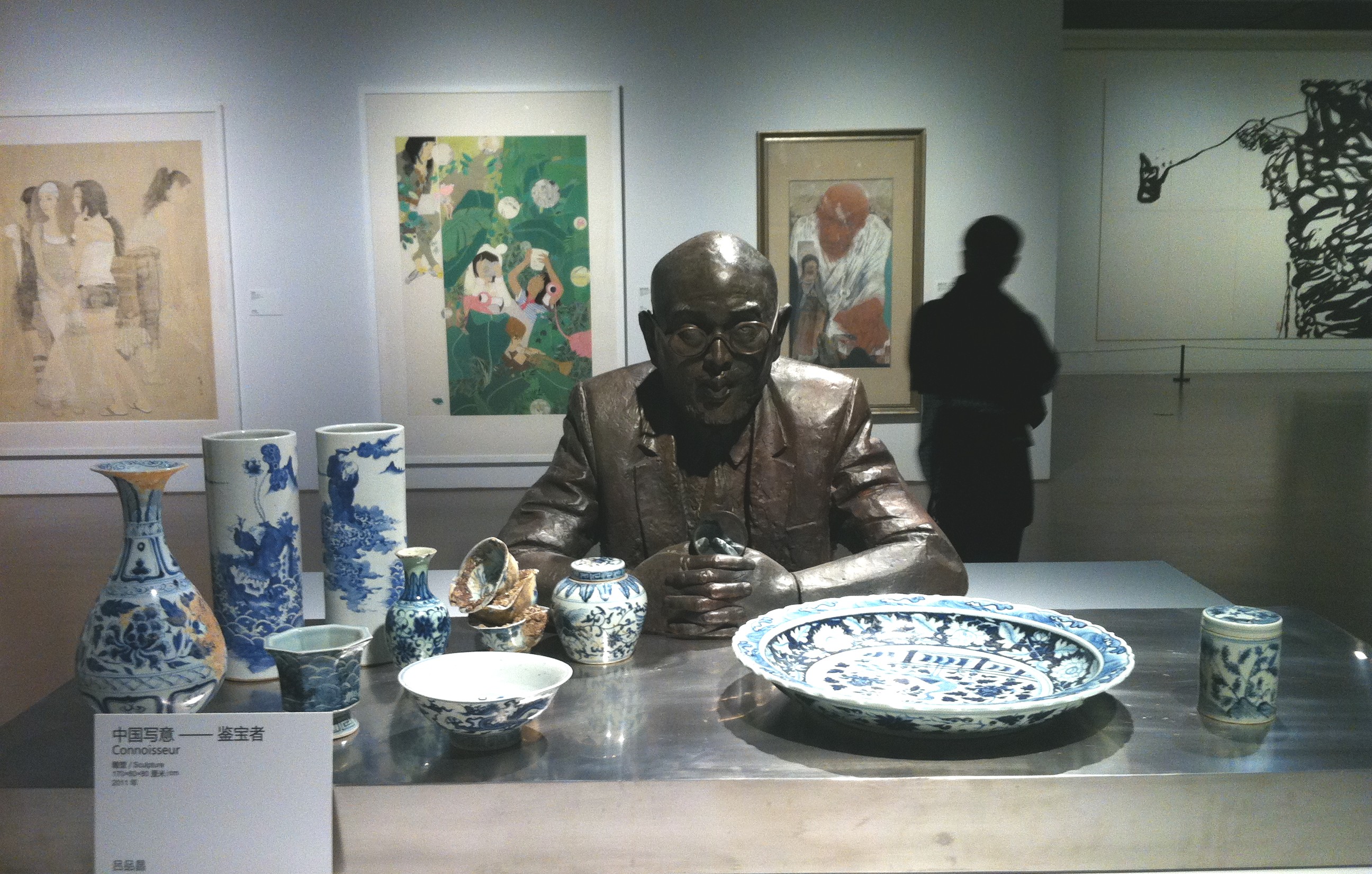
The collector is rather “dark”. I wonder if that’s what the sculptor wanted. Had he had some run-ins with collectors?

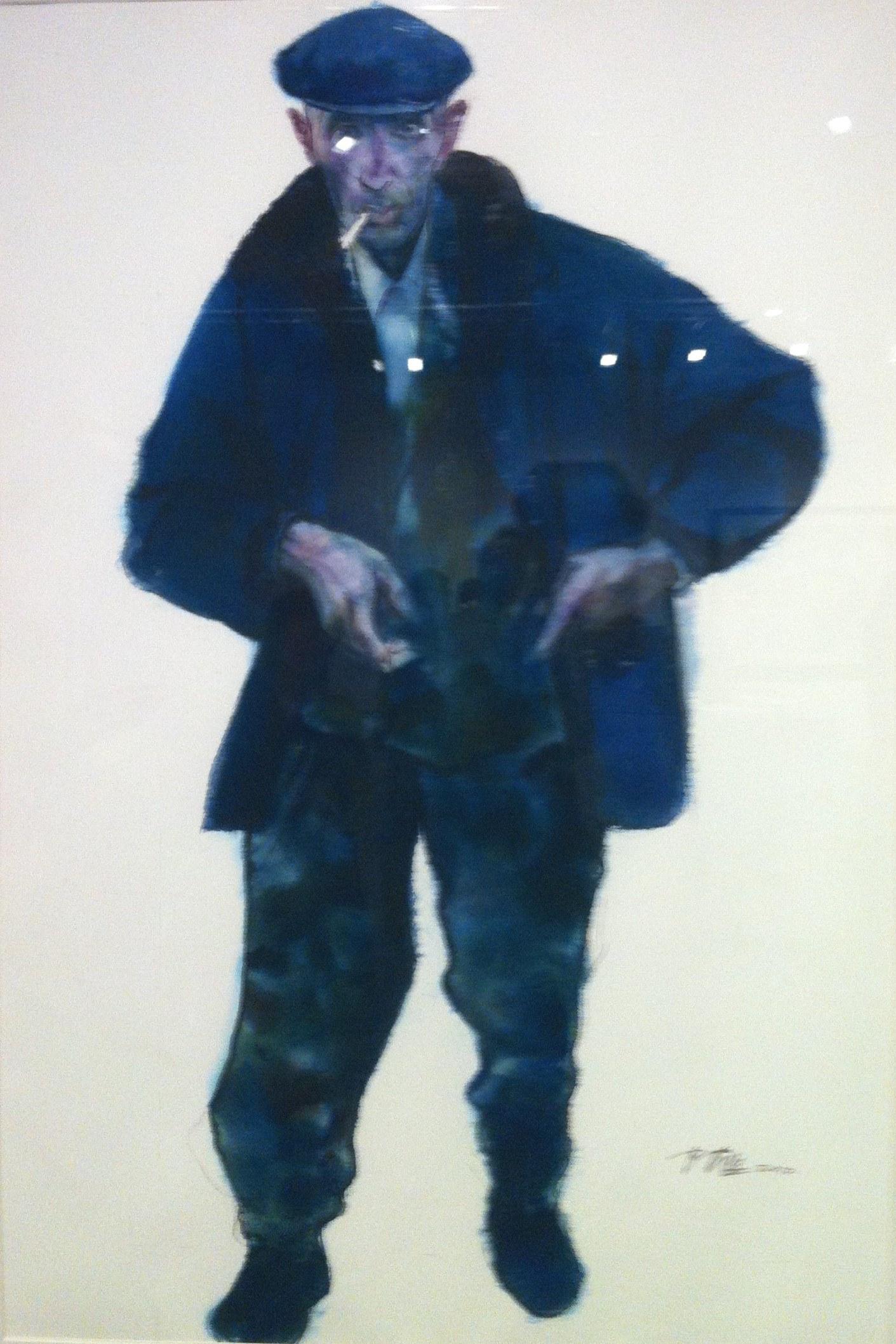
wonderful watercolour; it captures the spirit of the man beautifully

A timeless vision of mother and daughter, in modern garb.

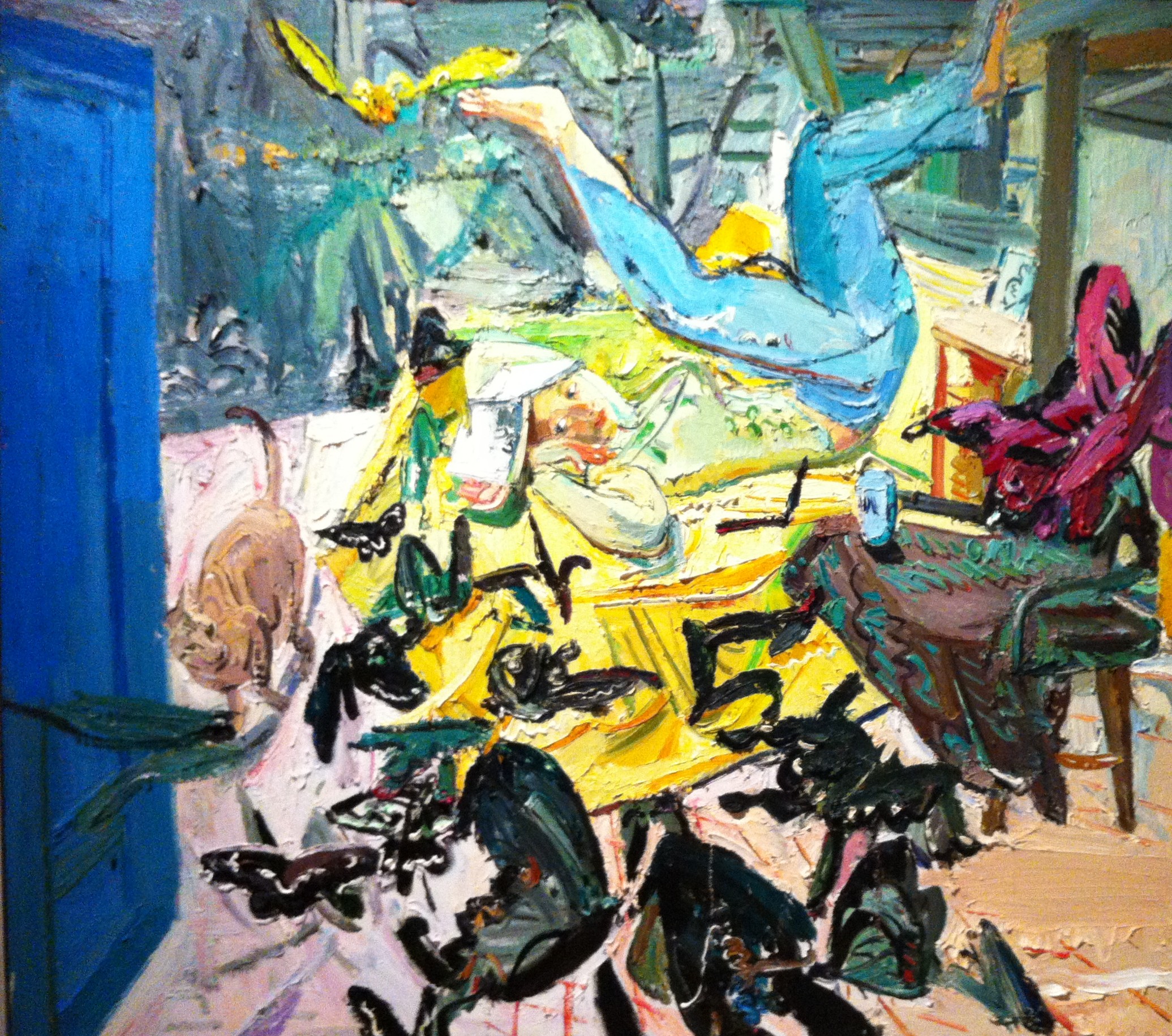
Given her weightlessness, I thought she was reading Milan Kundera’s “Unbearable Lightness of Being”. But according to the caption she was reading Gabriel Garcia Marquez’s “One Hundred Years of Solitude” …

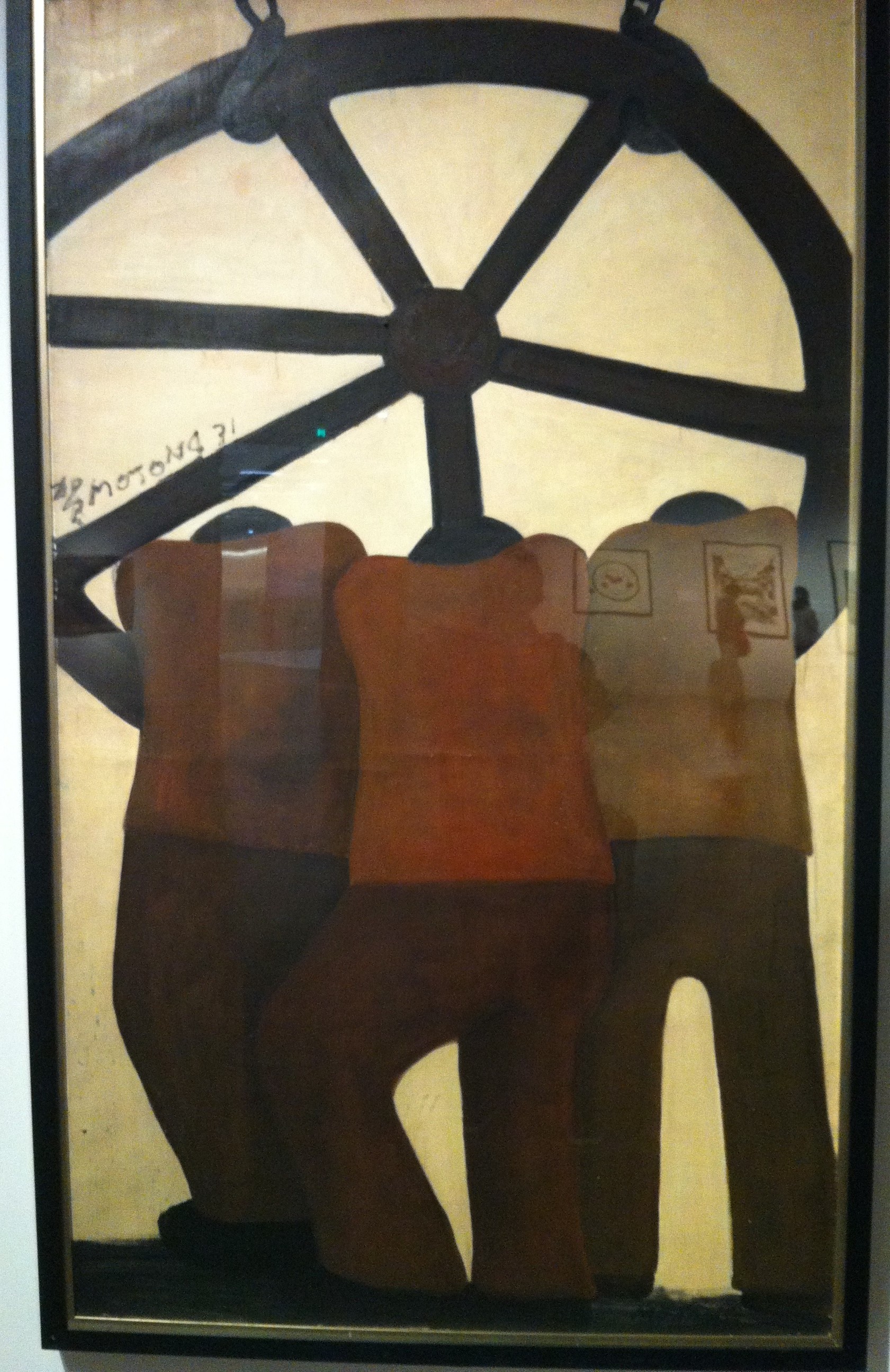
A painting of generations. I rather like the idea that our parents are intently looking on from behind our shoulders.

How come they have two children? …

76

– o O o –

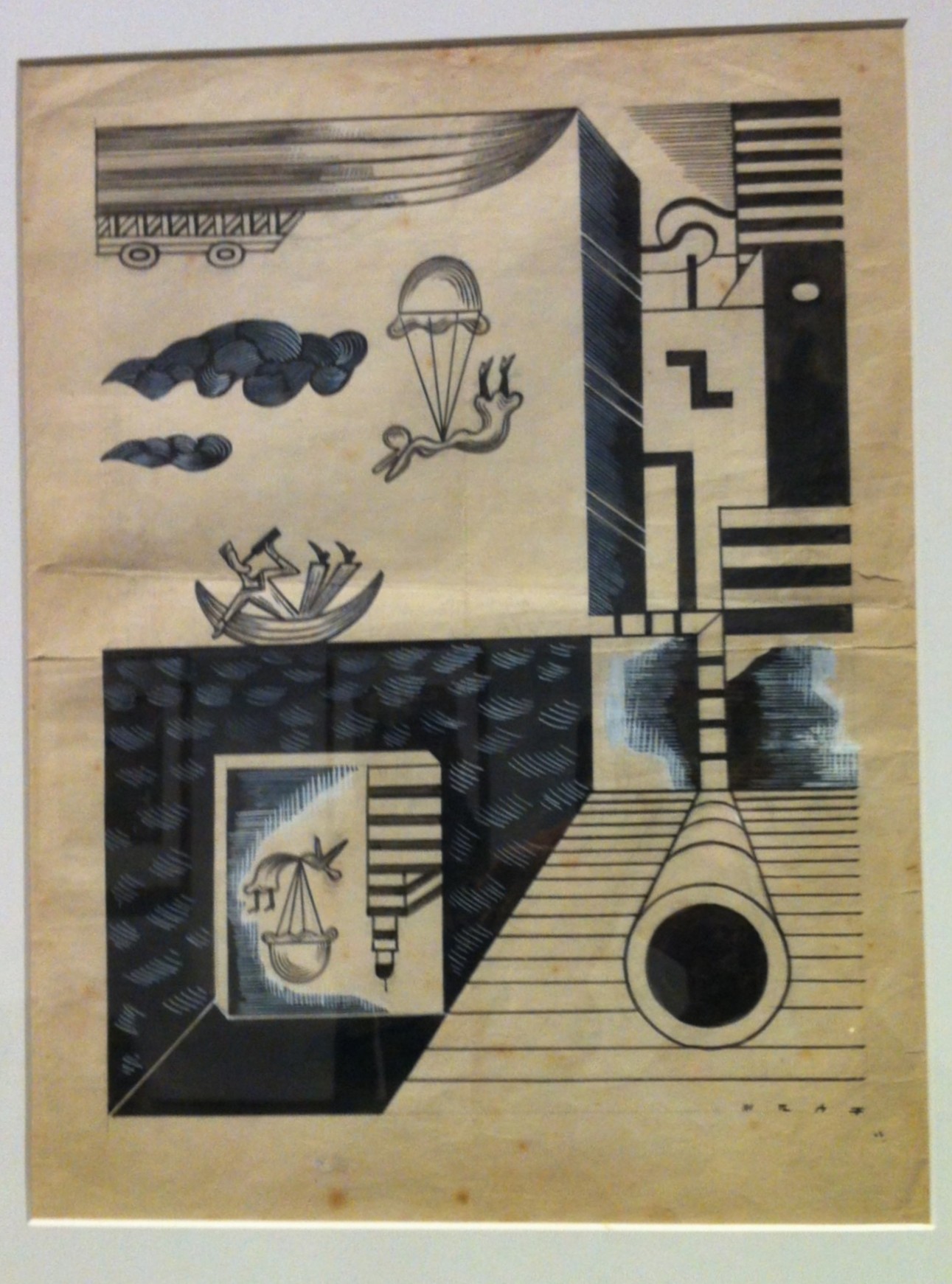
What strikes me about the whole collection is the complete absence of any abstract art. In the whole museum I came across only two exhibits which could claim to be abstract, two small pre-WWII wood cuts:

Now, I’m not particularly fond of abstract art, so its absence doesn’t bother me much. But it is strange that the museum’s curators saw fit to exclude such art. And it is not as if there have not been Chinese abstract artists. I don’t know about the pre-war art world, but there have been a number of well-respected Chinese abstract artists since China’s opening up (none, of course, during the Communist period; like in the Soviet Union, social realism was the only approved style). Indeed, at one point Shanghai was a hotbed of abstract art. I can only assume that the Government still disapproves of abstract art. But why?

_____________

pix of revolutionary posters:

http://xaharts.org/va/prog.html

mikeb302000.blogspot.com

“THE POWER HOUSE OF ART”

Shanghai, 5 November 2012

It was difficult for my wife and I not to make comparisons with the Tate Modern when we visited the newly opened Shanghai Museum of Contemporary Art. Like the Tate Modern, the museum is housed in an old power station on the edges of a river running through a big city. And in this country where copying is a way of life, it was hard not to see the whole enterprise as just a me-too Tate Modern.

But let’s not be too negative. Let’s just go and make our visit.

Our understanding is that the mission of the Power Station of Art, as it is cutely called, is to focus on post-1980 contemporary art, mainly from China. It is not clear to us if the museum will use just the power station or if it will spread to some of the other adjacent old Expo pavilions. When we visited they were using just the power station, but there seemed to be works going on in the near-by spaces. I suppose this gives us an incentive to come back another time to check things out.

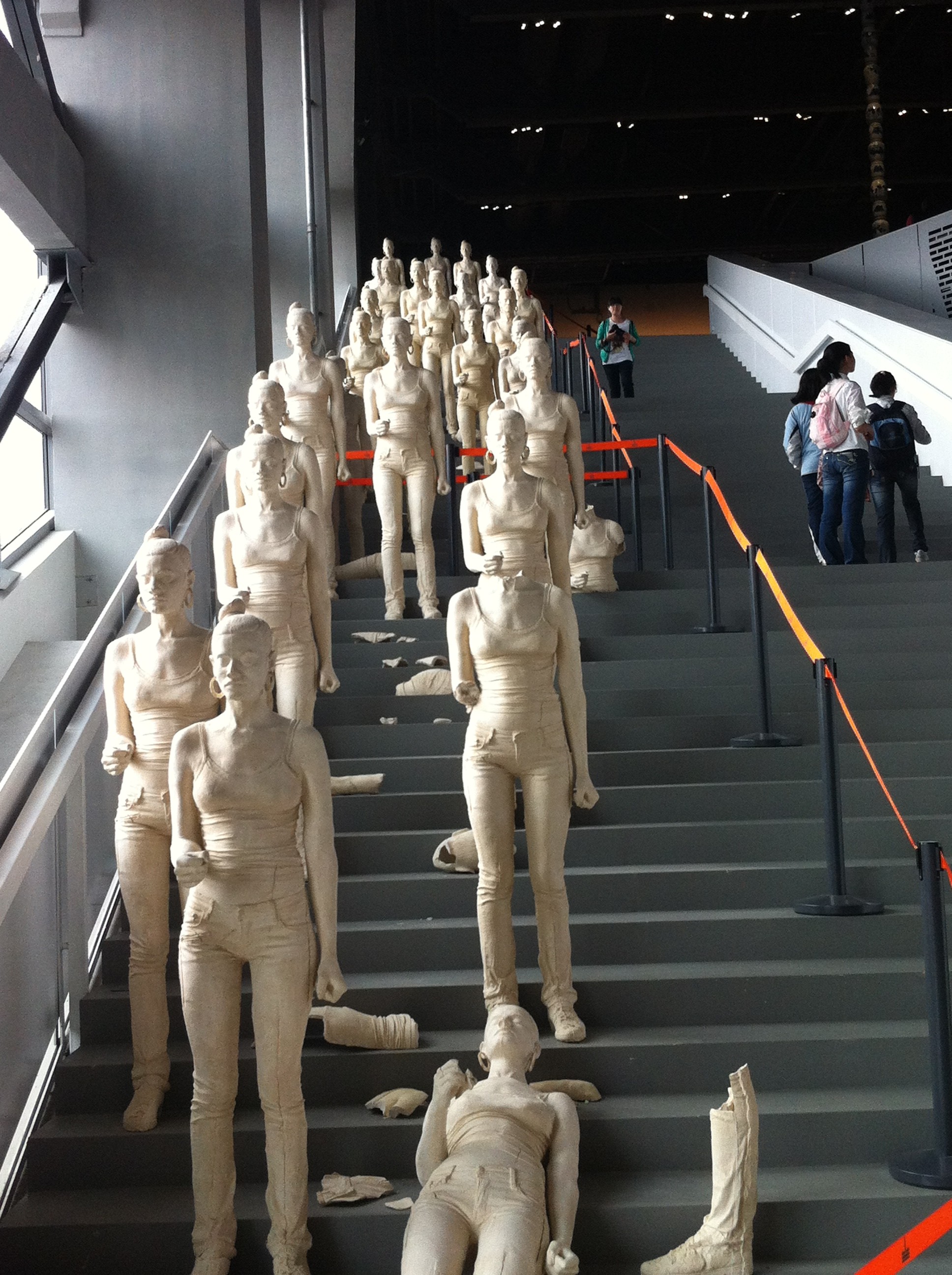
Anyway, when we went they were holding the Ninth Shanghai Biennale, or Biennalé as the Voice on the show’s audio-guide called it. There was a lot of dross as there always is in these kinds of shows, but a few things stood out. I show some photos below in no particular order.

This greeted you as you entered the building.

In the entry hall – hugely high, it must have been the generator room – there was this sculpture; I’m sure I saw a smaller version of it in San Francisco.

This intriguing sculpture, made with a series of neon strip lights, hung in a very high well which I suspect had been linked to the old chimney somehow.

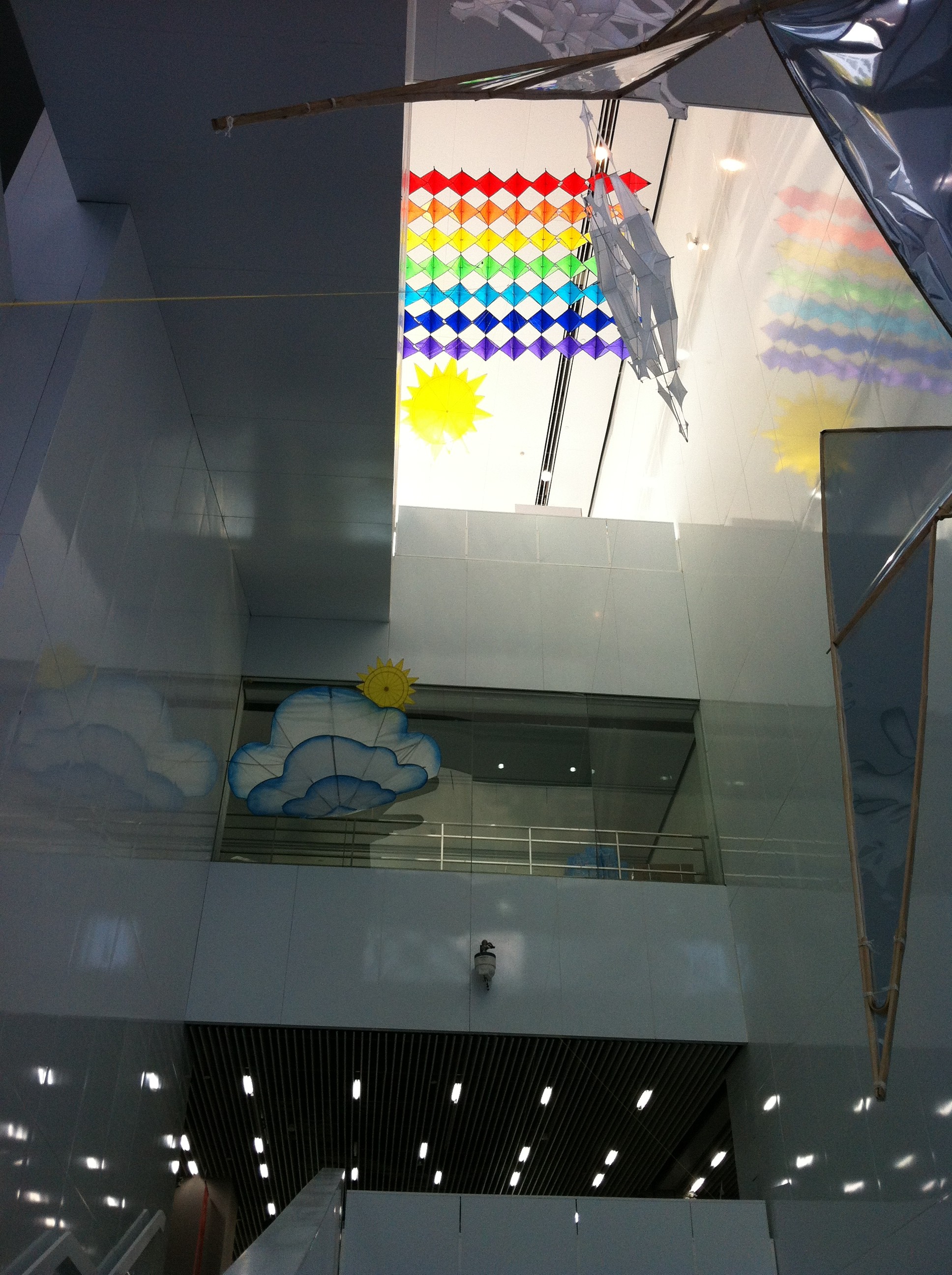
In another stairwell was this series of kites, quite striking.

This was a lovely idea, using Chinese pots to make a very high totem pole, using the high ceilings of the generator room to maximum effect.

A smaller version has been placed on the museum’s huge terrace, which by the way has a great view over the river and Pudong. My wife and I are thinking of doing an even smaller version in our apartment – we had better start collecting the pots.

Moving to the smaller scale, here is a great picture from the Italian section of the show (Palermo, to be precise). Using just thick paint the artist has created a nice 3D effect of the sea.

While another of the Italian contingent created this amusing triptych commenting on the Jesuit priests who came to China.

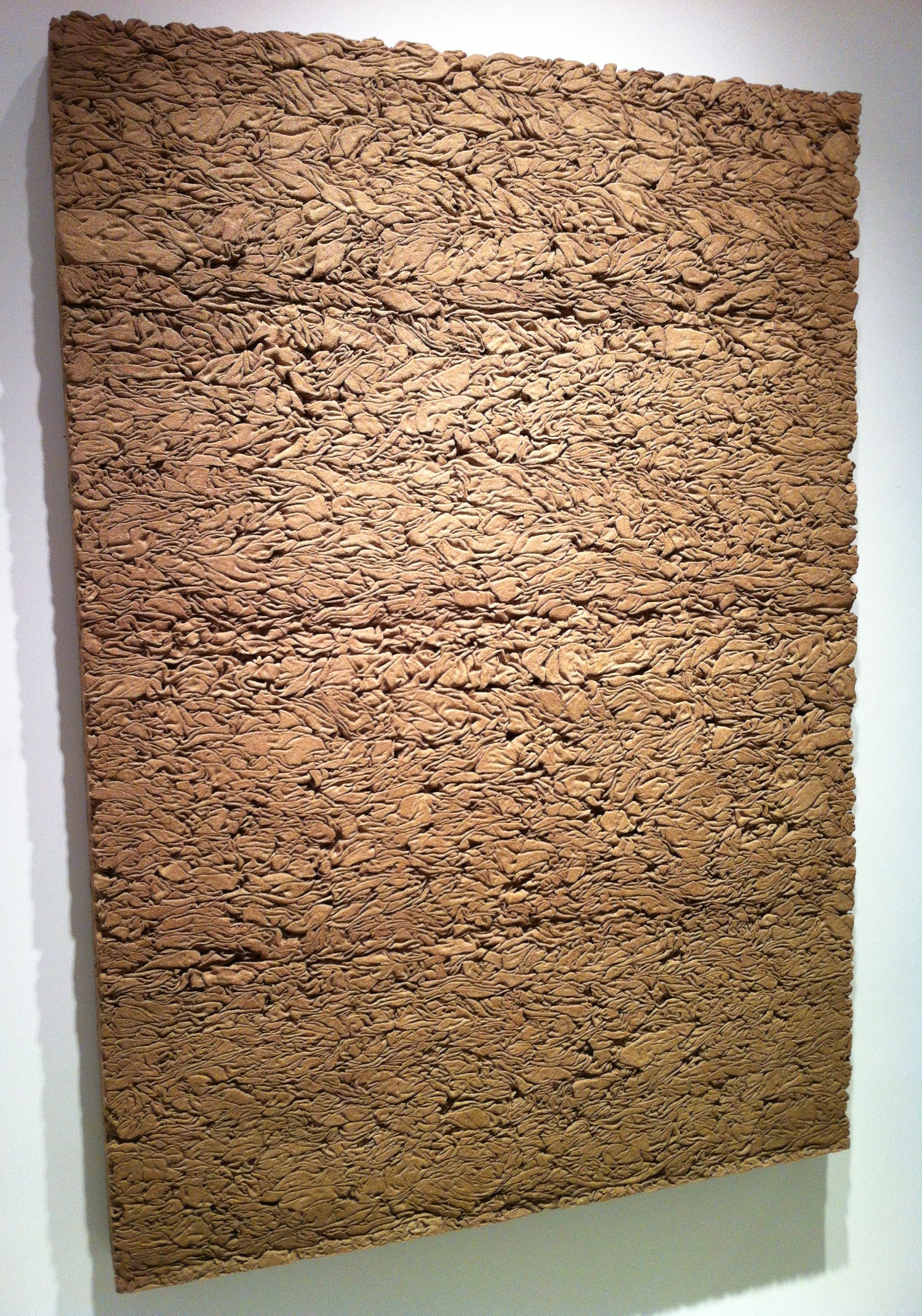
From the Indian (“Mumbai”) section of the show came this piece, made of pressed burlap bags. It had a wonderful “feel” to it.

This sculptural piece was by a Japanese artist. I don’t what it is, but it seems so very “Japanese”: maybe it’s the neatness of it, allied to the strict geometry.

And finally, this small piece. It was actually one of a number of such pieces, all with the same subject of Christ on the Cross and all made with bits and pieces. It reminded me of an Italian expression, “povero christo” or “por’ christ’ ” in the dialects of northern Italy, which can be roughly translated as “poor bugger”.

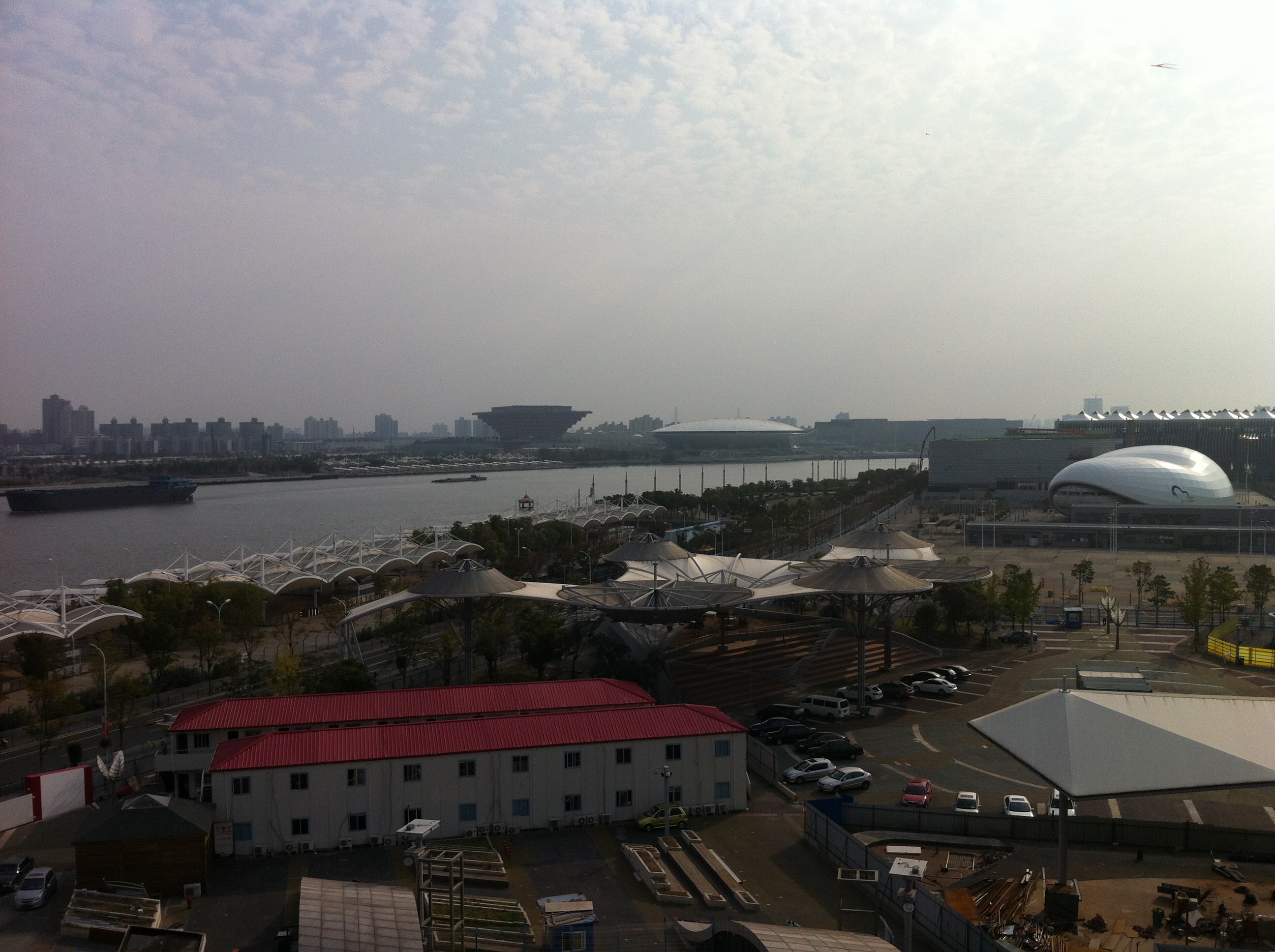
One final note. From the museum’s terrace one could see, in the distance, China’s pavilion at the Expo.

It now houses the China Art Museum. That’s where my next post will come from.

A BLAST OF MY TRUMPET AGAINST THE MONSTROUS REGIMENT OF HOT SPICES

Beijing, 3 November 2012

Dedicated to my dearest daughter who, like me, dislikes hot spices

In 1558, John Knox, one of the founders of the Protestant faith in Scotland, wrote The First Blast of the Trumpet against the Monstrous Regiment of Women, a diatribe against women rulers. He wrote choice rants such as these:

“Wonder it is, that amongst so many pregnant wits as the isle of Great Britain has produced, so many godly and zealous preachers as England did sometime nourish, and amongst so many learned, and men of grave judgment, as this day by Jezebel are exiled, none is found so stout of courage, so faithful to God, nor loving to their native country, that they dare admonish the inhabitants of that isle, how abominable before God is the empire or rule of a wicked woman (yea, of a traitress and bastard) … We see our country set forth for a prey to foreign nations; we hear of the blood of our brethren, the members of Christ Jesus, most cruelly to be shed; and the monstrous empire of a cruel woman (the secret counsel of God excepted) we know to be the only occasion of all those miseries … And therefore, I say, that of necessity it is that this monstiferous empire of women (which amongst all enormities that this day do abound upon the face of the whole earth, is most detestable and damnable) be openly revealed and plainly declared to the world, to the end that some may repent and be saved … we are debtors to more than princes: to wit, to the multitude of our brethren, of whom, no doubt, a great number have heretofore offended by error and ignorance, giving their suffrages, consent, and help to establish women in their kingdoms and empires, not understanding how abominable, odious, and detestable is all such usurped authority in the presence of God.”

The book goes on in this vein for many pages. Boiling it down to its essentials, his thesis was that women should be in the kitchen and not running countries.

Knox was fond of diatribes and had a nasty habit of whipping people up into a frenzy of destruction with them. The picture below captures nicely what he must have been like when he was in full spate, beady-eyed, beetled brow, and frothing at the mouth.

He reminds me of another tribe of hirsute religious leaders who are currently whipping people into frenzies. I’m sure he would have got on with them like a house on fire – and then promptly burned them at the stake for heresy.

I would have disliked him intensely. I have an aversion to people who shout and scream and hate. And yet … when it comes to the use of hot spices in food I feel my beard growing, my eyes beading, my brow beetling, and froth forming in the corners of my mouth.

By hot spices, I mean those spices that numb your mouth, that put your tongue, palate, inner cheeks and throat on fire and have you groping for water, that make you cry, that make you choke, and generally that kill all enjoyment of the food you are eating.

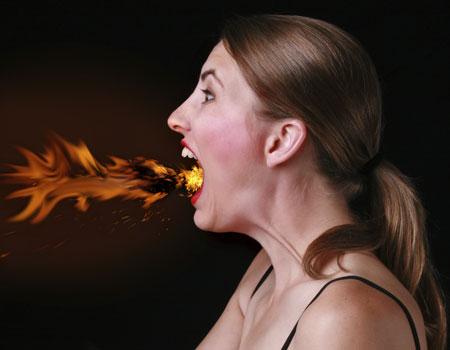
What in the name of God got into the human species to add this stinking scum to their food??!! What did we do that we now have to punish ourselves for eternity in this way??!! And no-one can tell me that they add taste, because they DO NOT!!!! As for people who actually enjoy hot spices, they are like drug addicts, their enjoyment of this filth is a deviancy; they need to be locked up until they have cold turkeyed!!

I NAME – and SHAME – the Piper genus: 1,000 species! The genus has spread its evil tentacles far and wide. Asia has given the world black pepper, P. nigrum; may a curse fall on those who spread it around the world! But in Asia, deluded, lost souls also eat the Indian long pepper, P. longum, Balinese long pepper, P. retrofractum, Cubeb, P. cubeba, and Prik Nok, P. caninum. In Latin America, poor fools eat Mecaxochitl, P. amalgo, and Matico, P. aduncum. As for Africa, miserable inhabitants of that miserable continent eat West African pepper, P. guineense, and Voatsiperifery pepper, P. borbonense. And who knows how many of the other 1,000 species are eaten only locally by poor, benighted villagers who know no better.

I NAME – and SHAME – the Zanthoxylum genus: only (thank God) 250 species! But at least two of these, Z. simulans and Z. bungeanum, I curse again and again for producing Sichuan pepper, which makes my life a misery at every banquet I go to in Sichuan and other western provinces of China! I emerge from these with numbed mouth and lips, having enjoyed not a whit of the food on offer. The Chinese use other species for the same foul purpose: xiang-jiao-zi (“aromatic peppercorn”), Z. schinifolium, chun ye hua jiao (“Ailanthus-leaved pepper”), Z. ailanthoides, while the Japanese use sanshō (the Japanese pricklyash), Z. piperitum. I am horrified to see that the genus is also present in the Americas and Africa, where no doubt there are wretches who eat the fruits.

But my heaviest, longest, most profound curses of all fall on the Capsicum genus, home of the dreaded chili pepper. There is C. annuum, whose varieties include banana pepper, cayenne pepper, jalapeño pepper, and the ferocious chiltepin; C. frutescens, which contains malagueta pepper, tabasco pepper, and the African piri piri; C. sinense, which incorporates hideously hot peppers like the naga, habanero, Datil, and Scotch bonnet peppers; C. pubescens, whose most notorious variety is the rocoto; and finally C. baccatum, which includes the deceptively named but nastily hot Lemon drop pepper and the Aji Amarillo as varieties. May Diego Álvarez Chanca, a physician on Christopher Columbus’s second voyage who first brought chili peppers to Spain, reside in the deepest circles of Hell for eternity!! And may the Portuguese forever beat their breast for spreading chili peppers to the rest of the world through their rapacious traders!!! And may the idiots who boast of being able to eat the hottest of hot chili peppers have their mouths (and the other end of their alimentary canals) on fire forever and ever!!!!

Amen.

________
pix:
http://revhelio.blogspot.com/2011/02/john-knox-o-reformador-da-escocia.html

http://www.wikipaintings.org/en/hans-memling/the-last-judgment-triptych-right-wing-casting-the-damned-into-hell-1470

WORKING TO MAKE CHINA GREAT

Shanghai, 3 November 2012

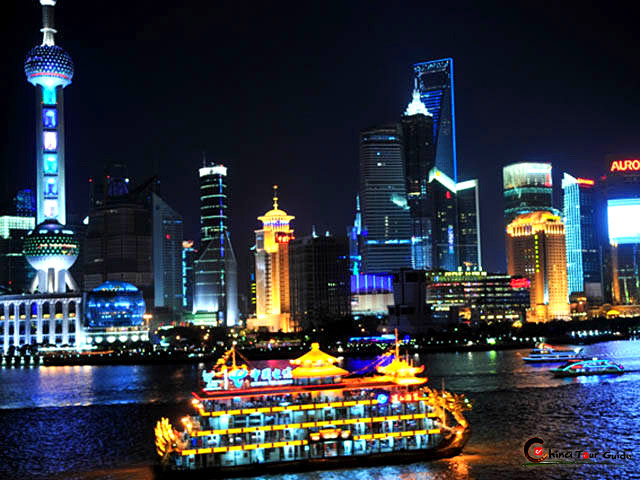
Even though it was dark now, there were still dozens of them up and down the Bund, couples headed for wedlock who were preparing their wedding albums. Striking a thousand poses, most with Her in a red dress and Him in a matching dinner jacket, they used the river and Pudong as a background as they gazed dreamily, coquettishly, lovingly, laughingly at the cameras. Their future – young parents with babies, parents with teenagers, grandparents with grown children and small grandchildren – strolled along behind the snapping cameras. Yesterday’s buildings of the Bund, lit up as theatrical backdrops, and tomorrow’s skyscrapers on Pudong, glowing and pulsing with lights, looked down on them all benignly, while tourist ships with their outlines picked out with bright green, blue, white and red strings of lights glided back and forth along the river. Pretty, so pretty …

All the while, burly ships hauling sand, coal, ore, and other sinews of the economy threaded their way through the happy throng, rumbling quietly by, lightless silhouettes against the lights – floating daguerreotypes – working to make China great.

ships-2013-11 006

ships-2013-11 013

_______________________
first two pix:
http://farm8.staticflickr.com/7153/6431300581_41f2593603_z.jpg”
http://www.chinatourguide.com/china_photos/shanghai/attractions/hrc_shanghai_huangpu_night_cruise.jpg”

ALL THOSE SQUIGGLES …

Beijing, 21 October 2012

For my fiftieth birthday my wife took me to revisit the mosaics at Ravenna. I had seen them for the first time during that first magic visit to Italy which I have written about in an earlier post, and many times since then I had emitted the desire to see them again. Our two children were with us, and an extraordinary thing happened to them when we entered the first church. It was as if they had entered a parallel world whose gravity was ten times that of Earth. They collapsed onto every horizontal surface and were as if glued to them, hardly able to drag themselves to the next church …

If I mention this it’s because it is exactly the way I feel every time I enter a room in a museum dedicated to Chinese calligraphy. Partly it’s the light, which is always subdued, no doubt to protect the fragile materials on which the texts have been written. But mostly it’s because the texts do not touch me in any way. They are merely squiggles on pieces of paper. As I stand there, willing myself to see something in the scrolls in front of me, a terrible lassitude overcomes me and my eyes start cutting left and right, searching desperately for a bench to sit on.

I have been with Chinese when they start to wax lyrical about the penmanship of the calligraphy on a scroll: the brush strokes, the ink, the I don’t-know-what-else. Apart from not understanding what is written, which I think makes it difficult to appreciate good penmanship, handwriting is an art form that touches me not a bit. I put it down to being the first generation – in the West, anyway – for whom writing became strictly utilitarian. My first years were spent struggling with ink pens, different colours of ink, different nibs, and cursive writing – all made more difficult by my being left-handed – but at the age of 12 came the liberation of the ballpoint pen, at the age of 17 the further liberation of the typewriter, and at the age of 25 the even greater liberation of electronic word processing. The squiggles on the sheet of paper are strictly functional to me (although I will admit to sometimes critically comparing different fonts in my word processing).

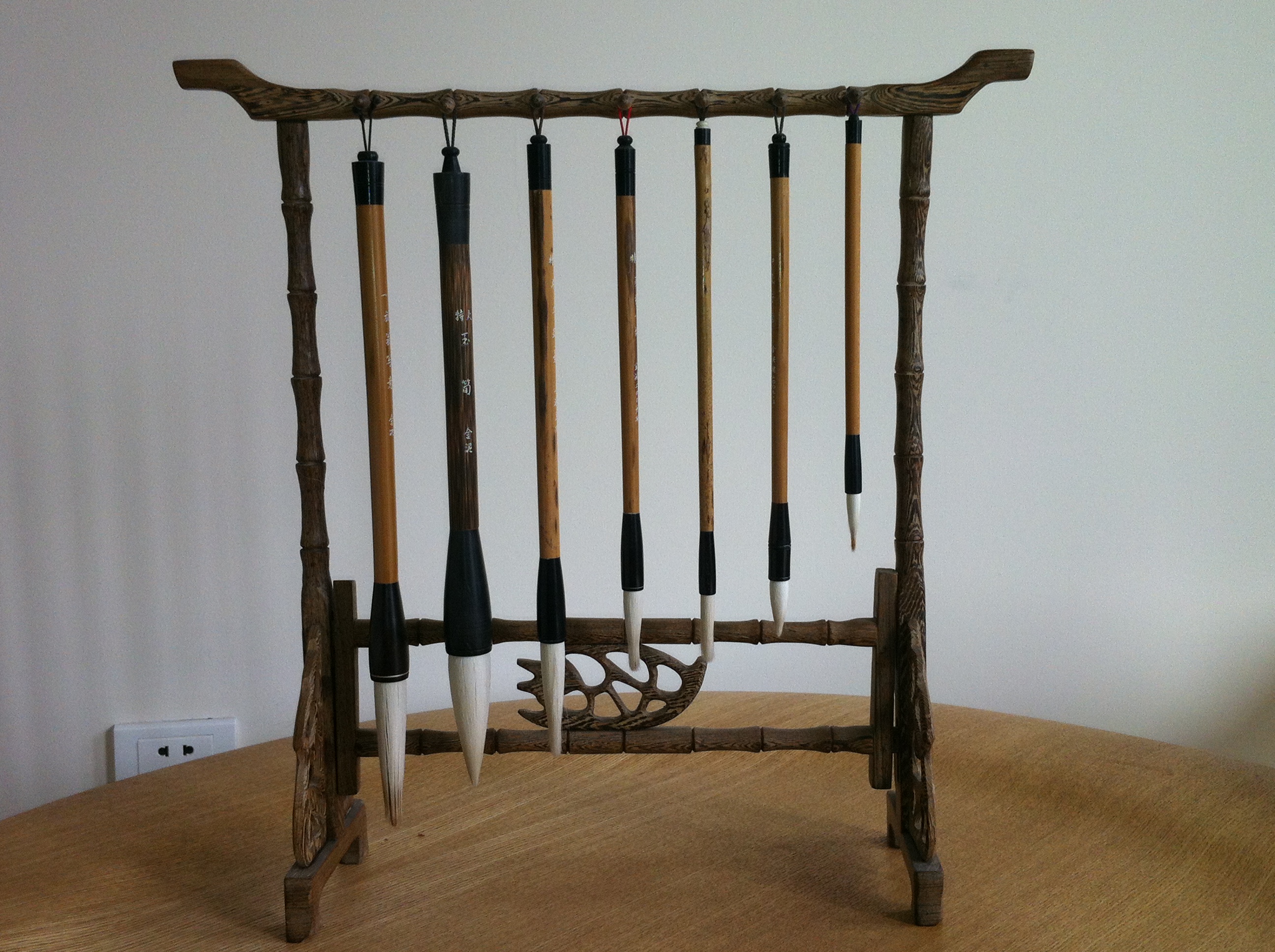
The divide between me and the Chinese on this is symbolized by the rack of writing brushes which I have purchased here in China. My rack has the brushes arranged so that they run from the biggest to the smallest, emphasizing the strict geometry of my composition. Even more important, I have kept the bristles in the point which they had when I bought them (bar a few which distressingly have fallen off the rack and had the point blunted). I find the shape of the brush, coming to a point in the bristles, quite beautiful to look at.

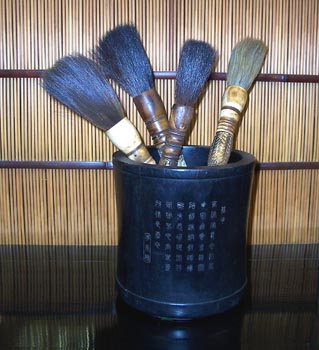
But for a Chinese this is meaningless. The brush is there to be used so it must have the bristles undone, flowing, possibly slightly bent from use. Mine is a sterile composition to them. They delight to keep their brushes untidily in a mug, bristle-side up, ready to be snatched up and used.

And yet … in different contexts, I have found Chinese writing quite beautiful to look at, just as a composition of abstract lines. For instance, I’m often attracted by the boards which hang over the entrance to temples with a phrase carved on them; the meaning of the phrase is of no matter to me, it’s just the composition I find striking. This is an example from South Korea.

Or I’ve sometimes seen just a character or two written on a wall which I feel “says” something to me as a composition, like in this example.

Or I have seen sculptures of characters; Chinese characters seem to lend themselves very well to being sculpted. Here are a couple of examples.

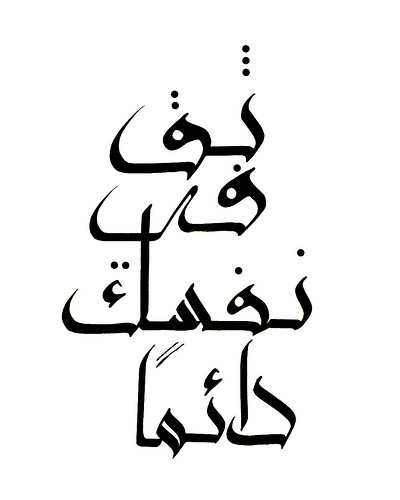
I have the same occasional attraction to Arabic, another script in which I am illiterate. Here’s a nice example I found surfing the web.

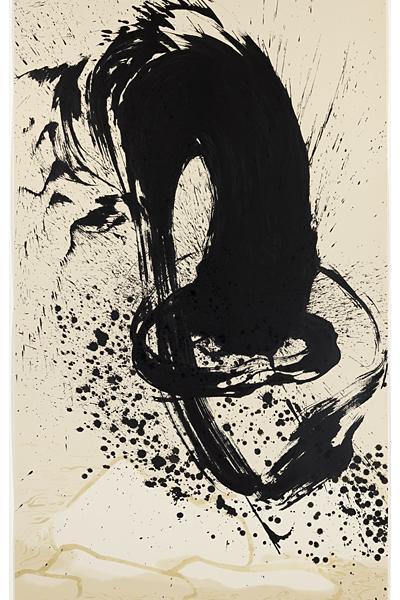
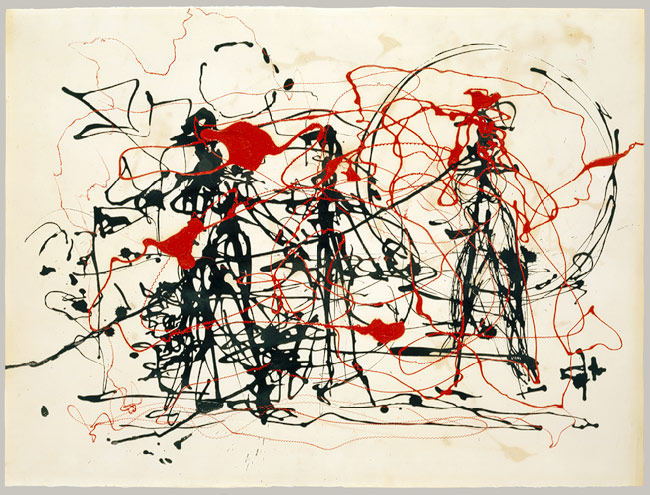
I suppose I am heir to a hundred years of abstract art, which tells me that it’s “alright” to just enjoy squiggles on a canvas as long as the overall composition has balance, a good colour scheme, and generally “works” for me. I mean, what’s a Jackson Pollock but an infinity of squiggles on a canvas? I show again here the Pollock I showed in an earlier post.

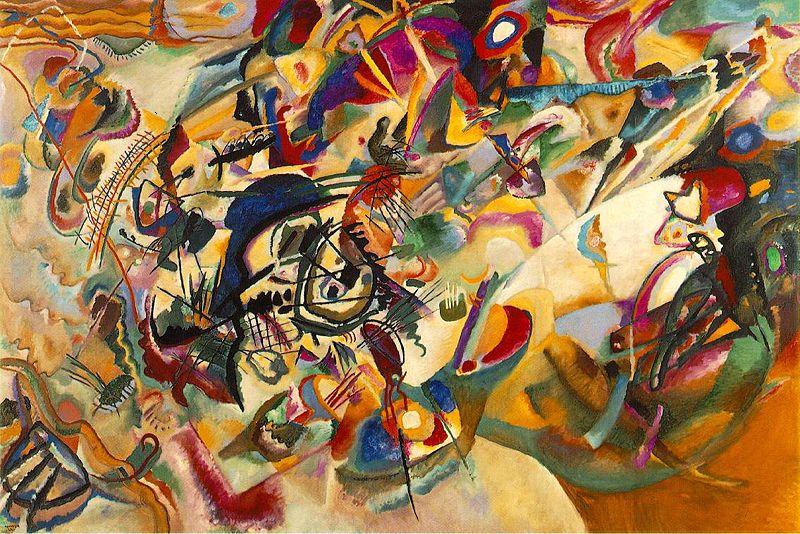
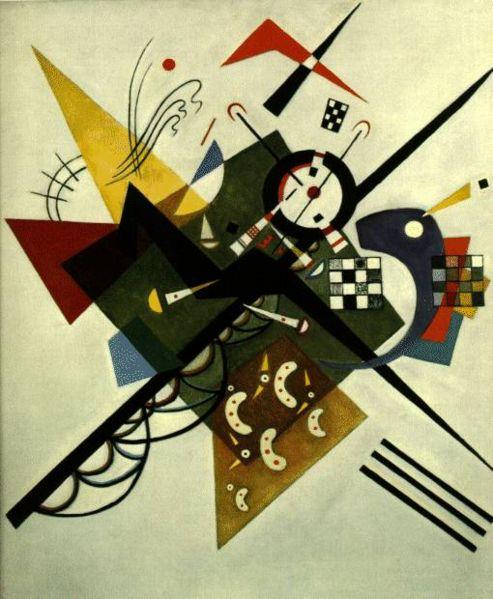
Wassily Kandinsky was also quite fond of squiggles.

Paul Klee was also into squiggles

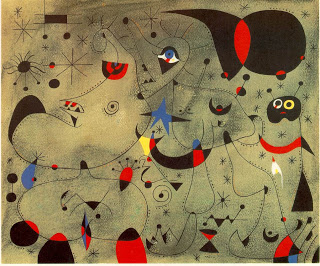
As of course was Joan Miro, who must be the squiggler-in-chief.

And I haven’t even started on the sculpture …

So with that, I will go out and seek more Chinese writing compositions that I like … but I will keep away from those dimly-lit calligraphy rooms in museums. All those scrolls hanging there one after another are just too much for me.

POSTSCRIPT

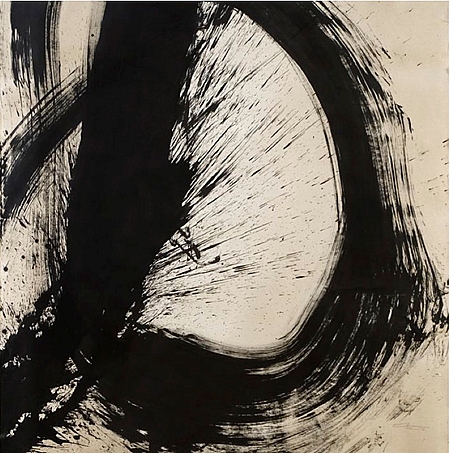
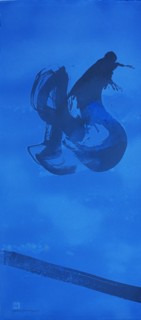
Since writing this, I have come across the Chinese artist Qin Feng. In at least one period of his life he brought together calligraphy and abstract art. Here’s a couple of his paintings from that period:

______
Pix (except for my brush rack):
Calligraphy rooms in museums: http://www.sfgate.com/art/article/Out-of-Character-Asian-Art-Museum-3936470.php
brushes in a holder: http://www.lovellhall.com/product_list.php?cat=40&start=10
plaques at temples: http://tripwow.tripadvisor.com/slideshow-photo/chinese-characters-in-korean-temples-by-travelpod-member-akrn-seoul-south-korea.html?sid=12667092&fid=tp-7
Chinese characters on walls: http://www.flickr.com/photos/35464002@N08/6124930840/
Chinese character sculptures: http://www.shho.cuhk.edu.hk, http://www.flickr.com/photos/fotofish64/7292747450/sizes/m/in/photostream/
Arabic calligraphy: http://jchristinahuh.blogspot.com/2010/08/arabic-calligraphy.html
Pollock painting: http://www.metmuseum.org/toah/works-of-art/1982.147.27
Kandinsky paintings: http://en.wikipedia.org/wiki/Wassily_Kandinsky
Klee painting: http://en.wikipedia.org/wiki/Paul_Klee
Mirò painting: http://mercoledis.blogspot.com/2010/10/joan-miro-palazzo-blu-pisa.html
Qin Feng’s paintings:

http://asimg.artsolution.net/tsmedia/GoedhuisGoephoto/goedhuis692011T1437.jpg?qlt=100&ftr=4&cell=450,480&cvt=jpeg

FLY THE FLAG – AS LONG AS IT’S BEAUTIFUL

Beijing, 14 October 2012

Those of you who have read my posts will surely have realized by now that I live cheek by jowl with many of the embassies in Beijing. One of the things that you always see when you walk by embassies is the national flags which they all proudly fly at their gates. After a while, seeing so many flags got me to look at them more closely. Flags drip with history and meaning. Their colours are not chosen by chance, nor are the shapes (the crosses, the stripes, the triangles); these all have historical roots. As for the symbols that litter many flags, they all have some deep national meaning. But that is not what interested me. What I was asking myself was, are they aesthetically appealing? Would I fly them at my gate simply because they looked good fluttering in the breeze?

So I started studying the 203 national flags (there are hundreds if not thousands of other flags, but I decided to stay with my ambassadorial starting point). And I have concluded that there are at maximum five flags which I would find beautiful enough to fly on my front lawn.  I consider the most beautiful to be the Japanese flag.

It is very simple, two colours and one shape. And the colour combination – small circle of red on a large white background – works beautifully. Yes, we know that the circle represents the rising sun and so exemplifies Japan’s name for itself: Nippon, or the Land of the Rising Sun. But who cares? It’s just a beautiful design. Bangladesh has a very similar design, except that the red circle is on a green background. I read that the green symbolizes the greenery of Bangladesh with its vitality and youthfulness, while the red circle represents the rising sun and the blood that the Bangladeshis have shed in order to gain independence. But sorry, that red and green combination doesn’t work for me. Nor does the combination on South Korea’s flag; it too is basically a circle on a white background, but the circle is fussy (it is the yin and yang symbol in blue and red) and it is surrounded by four black symbols which I discovered are trigrams representing fire, water, earth, wood, and metal. All very interesting but it simply makes for a cluttered design.

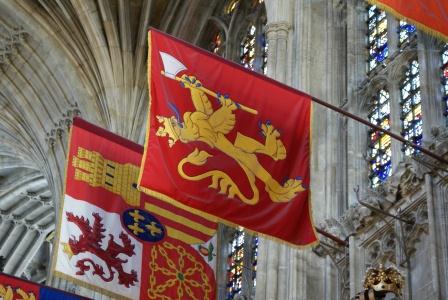
I feel moved here to write in passing about the imperial standard of Japan, another example of simple but beautiful design. My wife and I came across this standard on a visit to Windsor Castle. There, in Saint George’s chapel, hang the standards of all the member of the Knights of the Garter. The Emperor of Japan’s standard is a simple design of a golden chrysanthemum on a light red background.

It stands in stark contrast to the fussy heraldic standards hanging all around it.

But I digress. Returning to the topic in hand, after Japan I place Qatar.

The colour combination of this flag – maroon, covering two-thirds of the flag’s area, and white covering the rest – is really very handsome. But I also like it because it is only one of two national flags where the colours meet at a serrated rather than a straight edge. This adds a certain vivacity to the design. I read that the white portion of the flag symbolizes peace and the maroon represents the Kharijite Muslims of Qatar and the bloodshed in Qatar’s many wars (in case any reader is wondering if Qataris have different blood from us all, the flag’s colour was formerly red). As for the serrated edge, it represents Qatar as the ninth member of the ‘reconciled Emirates’ of the Arabian Gulf at the conclusion of the Qatari-British treaty in 1916. So what? It’s just a beautiful design. And thank God they changed the red to maroon. Bahrain has a very similar flag, but it has red rather than maroon. With red, it doesn’t work.

Next on my list is Finland’s flag.

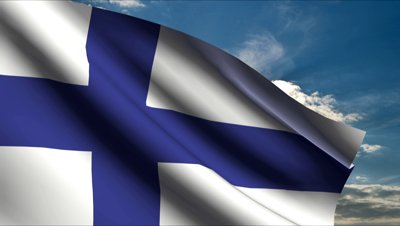
Again, just two colours, a blue cross on a white background. The colour combination works well because, as in the case of Japan, there is only a small amount of blue so the chromatic balance remains good. I read that the blue represents the myriad lakes in Finland and the white the country’s snow. That may be so, but personally I think the flag would be more beautiful if the blue were of a paler hue, although it still works well as it is. Luckily, the cross is also somewhat off-centre. If it the cross had been fully centred (like it is, for instance, in the Swiss flag) the design would have been much more boring. But having an off-centred cross doesn’t necessarily make this design work. The Swedish flag has the same off-centre cross, but in that case – yellow cross on blue background – the overall design doesn’t convince.

Fourth place on my list goes to the flag of the small Himalayan kingdom of Bhutan.

Here again we have two main colors! What is refreshing in this case is that the flag’s field is divided diagonally between the two colours. There is only one other national flag that is so divided, that of Papua New Guinea. The colour combination – saffron yellow and orange – works very nicely (regardless of the fact that they are meant to represent, respectively, the country’s temporal and spiritual powers). Normally, I don’t like symbols on flags, but in this case I rather like the white dragon flying along the flag’s diagonal (by the way, the country’s name in the local dialect means Land of the Dragon). I’m rather fond of dragons anyway, but in this particular case the dragon breaks up what might otherwise be a rather blocky design, and the dragon’s whiteness lightens up the colour scheme (in the earliest version of the flag the dragon was bottle green and was crossing the flag’s field horizontally; the overall effect is awful).

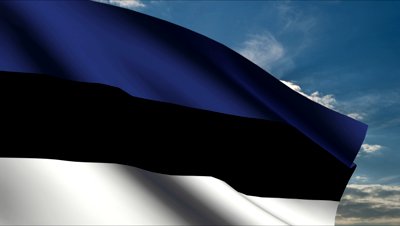
The final flag on my list is Estonia’s.

Normally, I would reject out of hand any three-striped flag. Such flags thickly litter the landscape of national flags.  An astonishing 84 national flags are composed of three stripes, either vertical or horizontal. That’s more than two-thirds of all national flags! Some have a triangular wedge on the left, while others have various symbols sprinkled on them. These variations break up the monotony somewhat, but you really have to ask yourself about flag designers. Couldn’t they dream up something different? I suppose that’s what you get when bureaucrats or politicians become designers.

In any case, the Estonian flag, even if three-striped, works because of the colour combination: equal bars of blue, black and white. Black and white always go well together, and the blue adds a splash of difference. Botswana has the same three colours, but the blue – and a light blue at that – is much more dominant. The flag is OK but no more than that.

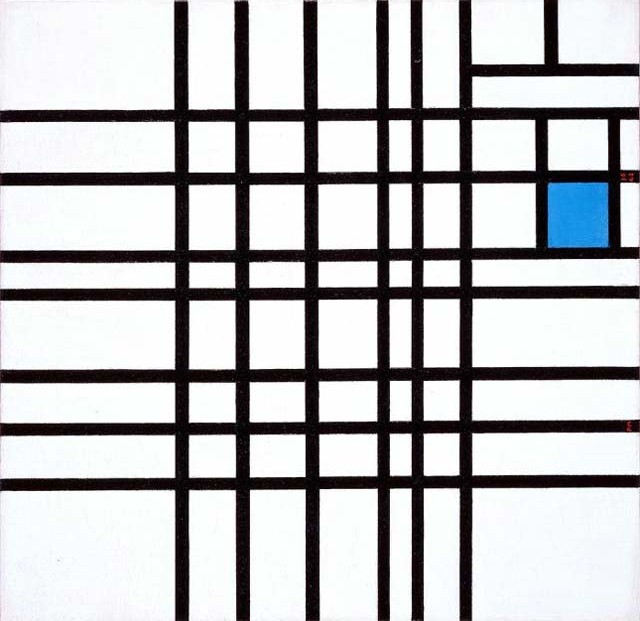
The recent flurry of news about a Rothko painting defaced in the Tate Modern leads me to a final thought. Why don’t governments get modern artists to design their flags? They would make wonderful flags. Here is a Rothko, Mondrian and Pollock “flag”. I think they would look gorgeous.

______
pix, in order of appearance:
http://diamondgirl55.mlblogs.com/tag/yankees/
http://www.stgeorges-windsor.org/worship-and-music/st-georges-chapel-feature/chapel-articles/international-links-at-st-georges.html
http://galmudugtv.com/?attachment_id=1075
http://footage.shutterstock.com/clip-450343-stock-footage-finland-flag-animation-with-real-time-lapse-clouds.html
http://www.flag-images.com/national_flag/download/flag_of_bhutan/
http://footage.shutterstock.com/clip-450310-stock-footage-estonia-flag-animation.html
http://www.wikipaintings.org/en/mark-rothko/no-8-1952
http://artissilentpoetry.tumblr.com/
http://www.metmuseum.org/toah/works-of-art/1982.147.27

THE SCENT OF WATER

Beijing, 12 October 2012

How would you describe the scent of water? This evening, as I reached the bridge which crosses my piece of canal a gentle breeze lifted the scent off the water’s surface and wafted it over to me. And I asked myself that question.

Let me take a leaf out of wine reviews and try a little of their purple prose: “I sense a hint of moss, with an undercurrent of peat, perhaps a whiff of algal respiration”. But actually what I was smelling was my childhood. Don’t you find that scents are a powerful trigger of memories? I do: a drift of scent will suddenly have me awash in memories. And so it was that as I crossed the bridge I was suddenly ten years old again, on my grandmother’s sail boat on the Norfolk Broads, moored at her buoy on Barton Broad. The sun has set, a light breeze is blowing off the water bringing me the scent of the Broad’s peaty water, and small waves are slapping quietly at the boat’s hull. A grebe calls out in the night.

I loved the Broads. My grandmother spent most of her summer on the boat, taking her numerous grandchildren in shifts of two weeks. I must have gone five years in a row. The sailing didn’t really excite me; it was kayaking among the rushes and in the little creeks on the edges of the Broads that I loved, watching the wildlife and discovering small marsh flowers at every turn.

But I grew up, and my grandmother grew old, and life moved on.  I stopped going and haven’t been back since. Yet I am sure that the Broads made me what I am today: an environmental engineer who for more than thirty years has tried to push back the tide of waste threatening to wash away the natural beauties that are around us.
__________________
pix from:
http://maalie.blogspot.com/2010/08/kayaking-on-norfolk-broads.html
http://news.bbc.co.uk/local/norfolk/hi/people_and_places/nature/newsid_8090000/8090224.stm

LAKE KHOVSGOL: A REMOTE CORNER OF A REMOTE LAND

Lake Khövsgöl, 9 October 2012

We left at 9 o’clock, with Purev driving us in a right-hand 4×4: standard fare in Mongolia, in this case imported second-hand from Japan. For two hours we drove northwards, towards Mongolia’s border with Russia. The road was tarred most of the way, although it was still being completed; there were sections where we had to career off the road and drive on the prairie alongside the road; Purev’s driving seemed more fluid and certain on these sections, he’s not in his element on tarred roads. Endless vistas of an empty land accompanied us along the way: this country, which six times bigger than the UK, is home to less than three million people, half of whom live in the capital alone.  Here and there, we would see the white ger, the traditional Mongolian tents, of herders dotting the landscape, with herds of yak or sheep browsing the dry grass.

As we drove, dark clouds started coming towards us.

“Snow”, said Purev, but it held off. Finally, we arrived at a village. Purev swerved off the road and raced up a muddy track which coasted a nearby ridge. Down the other side, the track deteriorated rapidly and we crawled along, bumping from one puddle to another, from one rock to another. But we made it in one piece to the ger camp which was our destination.

And there in front of us, lapping at the edges of the camp, was the southernmost tongue of Lake Khövsgöl, which is what had drawn us to this remote part of a remote country.

A few facts. The lake, 136 km long and 262 m deep, is the second-most voluminous freshwater lake in Asia, and holds 0.4% of all the fresh water in the world. It is one of seventeen lakes worldwide that are more than 2 million years old (nearby Lake Baikal is part of this select club, as are Lake Tahoe in the US, Lake Titicaca in Peru, and Lake Tanganyika in Africa, among others; but I digress). Lake Khövsgöl is one of the most pristine of these ancient lakes. It has very low levels of nutrients and primary productivity and so very high water clarity.

But forget the facts! Remember only that the Tuvans, a Turkic people who lived around the lake, gave it its name: Khövsgöl, “Blue Water Lake”. And startlingly blue it is indeed, the blue of the Mediterranean on a sunny day, probably because the water is so clear and the sky in Mongolia so blue.

But blue was not the only colour that greeted us. There was the smooth greyness of the pebbles on the beaches, which reminded us so much of the pebble beach of our village in Liguria, echoed in the weathered, grey tree trunks that littered the shore.

There was the white of the first snow of the year, which finally blew in with a vengeance and fell all night as we slept, huddled under the bedclothes in our ger. It greeted us under lowering clouds in the morning when we stuck our nose out.

But it was quickly melting away during the day when the clouds blew away and the sun shone in a blue, blue sky.

There was the glorious autumnal yellow, with rare light green tinges, of the Siberian larches which flowed down from the northern taiga and lapped up against the lake’s sides: golden yellow for those needles still clinging to the trees, straw yellow for those that now clothed the forest floor.

And finally, there was a droplet of violet offered by a small flower that contrary to all expectations bravely blossomed by the water’s edge.